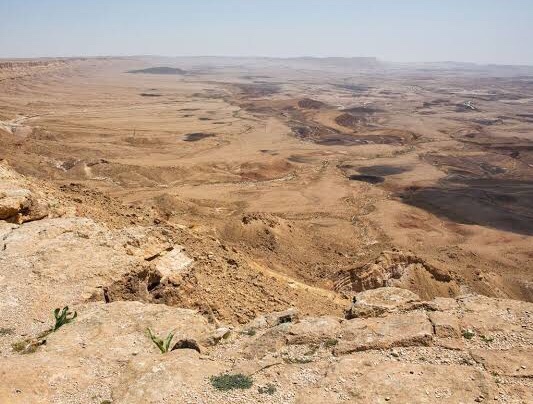
The story of Jesus being “tempted in the wilderness” is told early on in three canonical Gospels. The shortest and most focussed version is in the earliest of these Gospels—the account of the good news of Jesus, the anointed one, the Son of God, which we attribute to the evangelist Mark.
This brief and focussed account (Mark 1:12-13) simply notes the bare minimum. The location is “the wilderness”. The duration is “forty days”. Present with Jesus throughout these days were both “wild beasts” and “angels”. What was the purpose of this challenging, difficult experience? Mark says that Jesus was there to be “tempted by Satan”. Under whose auspices did this all take place? The first line of the Markan account is, “the Spirit drove him out into the wilderness”.
So this short, succinct, concentrated version already gives us key pointers to the significance of this story. The forty days in the wilderness stand at the start of the public activity of Jesus, as a declaration of what he is on about. And these days are part of the intention that God has, for Jesus, to prepare for his role.
The story also appears in the book of the origins of Jesus, the anointed one, the son of David, the son of Abraham, which we attribute to Matthew, and place as the first Gospel in canonical order in our scriptures. But this wasn’t the first Gospel written; the author (by tradition, Matthew) quite clearly knew, and made use of, the earlier account of “the good news” which we link with Mark.
So in this later work, the details of the story are expanded and the plot line is filled out (Matt 4:1-11). The forty days in the wilderness becomes a time when Jesus fasted (Matt 4:2; something not mentioned in the earlier Markan account). Here, Jesus engages in a disputation with “the tempter” (Matt 4:3, which uses the language already found in the Markan version)
Of course, the role that is enacted by this figure—the tempter, the devil, the tester, the Satan—is the role of divine advocate, the one we know from the book of Job as the prosecuting attorney, the accuser, the one who puts the case that Job needs to answer. The whole of that book demonstrates how such a courtroom setting plays out, as the argument is investigated, the evidence is explored, the case for a verdict is painstakingly built.
The forty days in the wilderness was undoubtedly an intense experience for Jesus. The role of “the tempter” in this story is not actually to tempt Jesus to stray into immoral or unethical or unrighteous actions. On the contrary, the role of “the tempter” is actually to test Jesus, to probe and analyse his understandings, in to hypothesise and offer alternative strategies, to help Jesus to clarify and focus on what is central for him. It is a test of his character, his core qualities, and of his commitment to the mission to which he has been called.
Indeed, the devil here fills the role more of “the tester” than “the tempter”—and the Greek word used here (peirasmos) is quite capable of this alternative translation. It is most often used in Greek literature to describe the process of testing as to whether something is viable or possible, and that is the way it is intended elsewhere in the Gospels when it occurs. It only gains the secondary sense of “tempting” or soliciting something that is sinful, in relatively few instances, mostly within the letters of Paul and James.
The way this testing is worked out, in the book of the origins of Jesus, the anointed one (the Gospel of Matthew) is largely the way that the story is recounted in the orderly account of the things that have been fulfilled among us, another later version of the story of Jesus.
This Gospel, placed third in order in our New Testaments, is the book we attribute to Luke. This author clearly knew the earliest account (in Mark); it may well be that he also knew a version such as we have in Matthew, and he has reshaped and reinterpreted it at various points throughout his account. This may be one such instance.
In the version of the story of the forty days in the wilderness which appears at Luke 4:1-14, there are words added, sentences rewritten, and the order of things is slightly varied. But there is still the same process of back-and-forth between accuser and accused, shaped by the scripture texts that are cited.
So Luke and Matthew both give us deeper insight into the testing that Jesus experienced during those forty days in the wilderness. They show that “the tester” utilised scripture as the basis for the trial that Jesus is undertaking. And this, it must be said, is thoroughly predictable—given that we are dealing with a text from the first century of the common era, emerging out of the context of faithful Judaism, telling the story of a faithful Jewish man—Jesus—and his earliest circle of followers—Jewish men and women. They all express the piety and faith of the Judaism of the time, for that was their religion and their culture.
Scripture sits at the heart of Jewish life and faith. Young Jewish boys, like Jesus, were taught to read the Hebrew text of scripture, and to memorise it. They were grounded in the Torah, the books of the Law, which set out the way of life, the way of faithful living, that they were to follow. They needed to know this, to have it deep within their hearts. That would have been the upbringing experienced by Jesus.
As they grew older, these Jewish boys were taught the next stage, the midrashim, the teachings which provided explanation and application of the laws and stories embedded in Torah. There were two types of midrashim: there was haggadah, which was telling stories (and the Jewish teachers, the rabbis, were excellent at telling stories!); and there was halakah, which was discussion and debate about how best to interpret and apply the laws found in Torah.
It is this latter form of teaching that we encounter, in the story of the forty days in the wilderness. The back and forth between the person on trial—Jesus—and the person charged with testing and probing his case—the accuser—is couched entirely in terms of sacred scripture. Each time an accusation is put before Jesus, the accuser quotes a passage of scripture. And each time the person on trial—Jesus—responds, another text from sacred scripture is quoted. [I have written a second post that deals with the details of these scriptural texts: see https://johntsquires.wordpress.com/2019/03/08/sacred-place-and-sacred-scripture-forty-days-in-the-wilderness-2/%5D
Think about that for a minute: both the accuser and the accused are citing scripture, arguing on the basis of what is found in the tradition and heritage and sacred story of the people of Israel. They are both engaged in this task, to get to the heart of the matter; to penetrate to the essence of the issue, through exploration of scripture and its relevance to Jesus and his mission.
This is typical Jewish midrashic argumentation. This is the way that, throughout the centuries, Jews have sought to encounter the truths of scripture—through discussion and debate, by one posing a proposition and then another arguing back in counter-proposition, through the adding of additional scripture passages into the argument, in a process of refining, sharpening, and clarifying the intent of the initial scripture text.
This was par for the course for ancient Jews. This is still the way that faithful Jews engage with scripture. My years as a member of the Uniting Church Dialogue with the Jewish Community immersed me into precisely this culture on a regular basis. It was quite an experience! To us polite, constrained Westerners, it seems like an unruly mess. To Jews, schooled in this process since their early years, it is natural, and results in deep and profound understandings of scripture.
So this is what was happening in the story that our Gospels recount: a time of testing, a testing which was designed to cut through to the centre of the issue, to engage deeply with the heart of the matter. It wasn’t an attempt by the devil to get Jesus to go off the rails, to misbehave badly, to succumb to unrighteous behaviour, to sin. Rather, this was the way that ancient Jews sought to crystallise the issue and define key matters of faith and life. That’s what was going on for Jesus during those forty days in the wilderness.
Most versions of the Bible, today, put a heading at the beginning of this story: “The Temptation of Jesus”. I wouldn’t label it as such. I would prefer to call it, “The Testing of Jesus”. What is his mission all about? Is he clear about how he will carry out that mission? What strategy does he have, as he enters into the public proclamation of his good news about God’s kingdom? These are the issues that are at stake in this particular story.
The Gospel writers believed that the forty days in the wilderness was a time for Jesus to face testing, and that this testing was mandated by God. The final point that underlines this way of understanding the story, comes when we look at the top-and-tail of each account.
The shortest and earliest account states that “the Spirit drove him into the wilderness” (Mark 1:12). There is a violence, an aggression, in the term used here. But it is an action of the Spirit, forcing Jesus to enter this trial. It is something that he had to do, under the impulse of God’s direction.
One later account modifies this, and softens the verb to say that “Jesus was led up by the spirit into the wilderness” (Matt 4:1). We find this in Matthew; and that version ends with “the devil left him, and suddenly angels came and waited on him” (Matt 4:11). That picks up on what Mark had said, that “the angels waited on him” (Mark 1:13). So the story ends with an implicit approval, by the divine, through the vehicle of the angels, regarding what has transpired in the wilderness.
Another later account makes this quite clear and explicit. The version we attribute to Luke begins “Jesus, full of the Holy Spirit, returned from the Jordan, and was led by the Spirit in the wilderness” (Luke 4:1). That intensifies the sense of divine guidance and approval in what is about to take place. And the account ends with a similar note: “The devil departed from him … then Jesus, filled with the power of the Spirit, returned to Galilee” (Luke 4:13-14). Could it be any clearer?
Indeed, a still later account, which is not in the canon of New Testament books, but was revered by some in the early church, includes a section that reports on something from this story, placed onto the mouth of Jesus: “even so did my mother, the Holy Spirit, take me by one of my hairs and carry me to the great Mount Tabor”—a reflection of the section of the story that talks about Jesus being taken up to a high mountain (Matt 4:8). [That comes from the Gospel according to the Hebrews, and is quoted by Origen in his Commentary on John 2:12.] So in this version, the testing of Jesus is actually carried out, not by the devil, but by the Spirit!
My proposal is that, as we read this story, we need to banish thoughts of “temptation” and the notion that Jesus might choose a false and unrighteous pathway. What is actually taking place, is a strenuous and engaged encounter, in which Jesus is challenged to clarify his divine calling and better equipped to live out the mission that he has been given, by God, during his adult life. He is being tested.
In that sense, this story is not a remote, back-then, archaic account …. it is a living, here-and-now, immediate insight into how we, ourselves are to live out our faith in the hustle and bustle of our own lives. That is precisely the pathway that we are encouraged to enter, as we stand at the start of the season of Lent, and as we experience our own time of re-evaluation and reassessment of our own walk of faith today. What is God calling us to do? Who is God calling us to be? How can we best live that out in our lives?
See also
https://johntsquires.wordpress.com/2019/01/31/an-orderly-account-a-quick-guide-to-luke-and-acts/
https://johntsquires.wordpress.com/2019/02/01/scripture-fulfilled-in-your-hearing-luke-416-30
https://johntsquires.wordpress.com/2019/02/05/costly-discipleship-according-to-luke/
https://johntsquires.wordpress.com/2019/02/07/leave-everything-follow-jesus-luke-51-11/
https://johntsquires.wordpress.com/2019/02/12/on-a-level-place-with-a-great-crowd-luke-6/
https://johntsquires.wordpress.com/2019/02/14/the-plain-the-synagogue-and-the-village-luke-6-4-and-1/
https://johntsquires.wordpress.com/2019/02/19/the-beloved-physician-the-lover-of-god-and-loving-our-enemies-luke-6/
https://johntsquires.wordpress.com/2019/02/26/bringing-his-exodos-to-fulfilment/