Reflecting this ANZAC Day on wars and conflicts: frontiers abroad … and at home

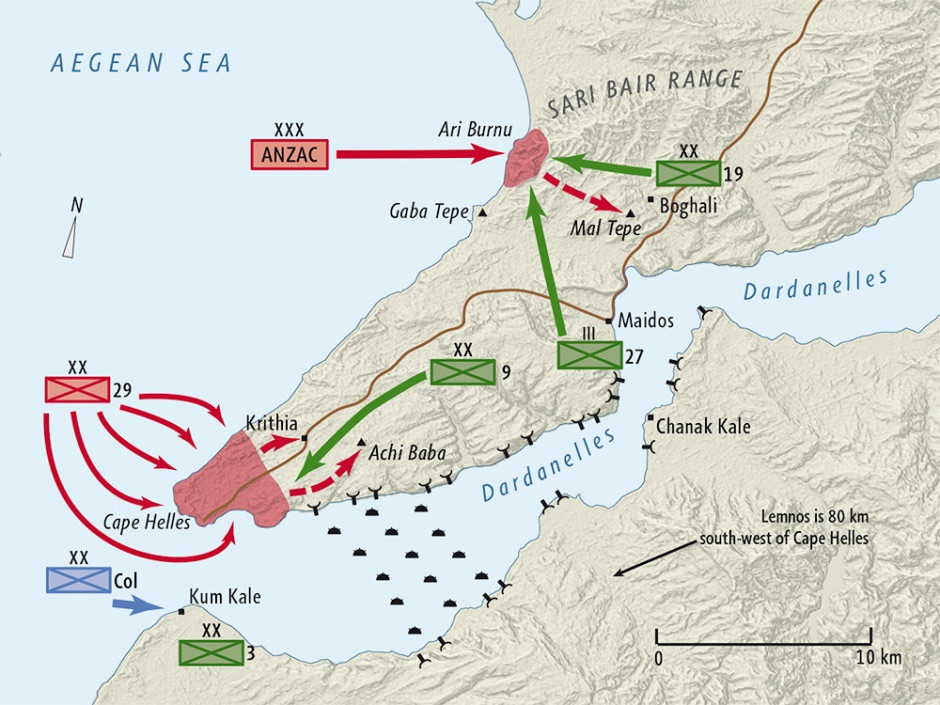
Today is ANZAC Day. It is an annual commemoration that has been held since 1916, which was the first anniversary of the landing of Australian and New Zealand troops on the Gallipoli Peninsula during the early stages of World War I. These troops were the first of approximately 70,000 Allied soldiers whose service included time at Gallipoli; more than 20,000 of these troops were Australian and New Zealand soldiers.

The website of the Australian War Memorial states: “The Australian and New Zealand forces landed on Gallipoli on 25 April, meeting fierce resistance from the Ottoman Turkish defenders. What had been planned as a bold stroke to knock Turkey out of the war quickly became a stalemate, and the campaign dragged on for eight months.

“At the end of 1915 the allied forces were evacuated from the peninsula, with both sides having suffered heavy casualties and endured great hardships. More than 8,000 Australian soldiers had died in the campaign. Gallipoli had a profound impact on Australians at home, and 25 April soon became the day on which Australians remembered the sacrifice of those who died in the war.” See

https://www.awm.gov.au/commemoration/anzac-day/traditions

The first ANZAC Day was observed in 1916 in Australia, New Zealand and England and by troops in Egypt. That year, 25 April was officially named ‘Anzac Day’ by the Acting Australian Prime Minister, George Pearce. It has been held every year since then on the same date, 25 April. It has become, in Australia, a day that commemorates the roles played by Australian servicemen and servicewomen in many arenas of conflict beyond World War I.

So we rightly pause, today, to remember all that is involved warfare: the contributions of these service people, but also the many victims of war, those who lost their lives, those who lost their health and livelihood, those who lost their loved ones, those who lost all hope.

War has many consequences. It damages individuals, communities, societies, and nations. It has many more innocent victims than the casualty lists of enrolled personnel indicate. And there is abundant evidence that one war might resolve one issue, but often will cause other complications which will lead to another war. Look at the outcome of the Armistice at the end of World War One: we can trace a direct sequence of events that led from World War One to World War Two.

In recent years, in ANZAC Day ceremonies, there has at last been due recognition given to Indigenous men who enlisted in our armed services. The War Memorial has an educational programme on this topic for schoolchildren; see

https://www.awm.gov.au/visit/schools/programs/indigenous-service

For many years, the Australian War Memorial insisted that its concern is solely with “Australians serving overseas in peacekeeping operations or in war”. A decade ago, a previous Director, Dr Brendan Nelson, infamously asserted that “the Australian War Memorial is concerned with the story of Australians deployed in war overseas on behalf of Australia, not with a war within Australia between colonial militia, British forces, and Indigenous Australians.” See

https://www.theguardian.com/world/2013/sep/12/australian-war-memorial-ignores-frontier-war

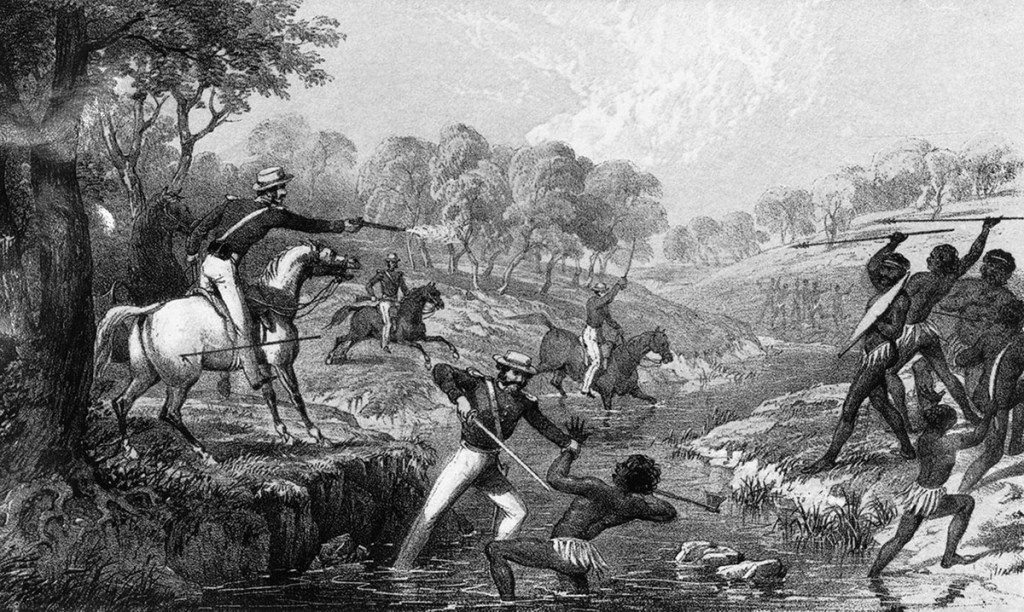
This means that the War Memorial does not include any memory of the thousands of indigenous people who were killed on Australian soil over many decades, in The Frontier Wars (nor, indeed, those white colonials who also died in these encounters). You can read more about this at https://www.awm.gov.au/blog/2013/12/17/response-question-about-frontier-conflicts/

More recently, in 2023, the recently-appointed chair of the War Memorial, Kim Beazley, says he supports “proper recognition of the frontier conflict” as part of the institution’s $500m expansion, questioning how the institution can “have a history of Australian wars without that”. See https://www.theguardian.com/australia-news/australian-war-memorial

Studies have indicated that, over those decades, more indigenous people died here, in Australia, at the hands of the colonisers, than the 60,000+ Australians who died in 1915—1919 on foreign soil, fighting a European war at the behest of our imperial overlords.

[Raymond Evans and Robert Ørsted-Jensen used statistical modelling to hypothesize that total fatalities suffered during Queensland’s frontier wars were no less than 66,680. See http://treatyrepublic.net/content/researcher-calls-recognition-frontier-wars]

The Australian War Memorial blog cited above states, “The ‘Frontier Wars’ were a series of actions that were carried out by British colonial forces stationed in Australia, by the police, and by local settlers. It is important to note that the state police forces used Indigenous Australians to hunt down and kill other Indigenous Australians; but the Memorial has found no substantial evidence that home-grown military units, whether state colonial forces or post-Federation Australian military units, ever fought against the Indigenous population of this country.”

The myth that there was no official, state-sponsored military force which was charged with the task of dealing with “the troublesome natives” (or however else they were described in derogatory terms), is, however, punctured by this Wikipedia note: that on 3 October 1831, Governor Stirling appointed Edward Barrett Lennard as Commanding Officer of the Yeomanry of the Middle Swan, a citizens militia to pursue and capture Aboriginal offenders, with Henry Bull appointed as Commander of the Upper Swan.

The orders were that on being called out, the Yeomanry were “to cause the offending tribe to be instantly pursued, and if practicable captured and brought in at all hazard, and take such further decisive steps for bringing them to Punishment as the Circumstances of the Case may admit.” [Wikipedia here quotes from Michael J. Bourke (1987). On the Swan: a History of the Swan District of Western Australia. Nedlands, WA: University of Western Australia Press.]

The evidence is clear: Australian servicemen have been party to an officially-organised programme to attack First Nations people. And the evidence is also clear, that across the continent over many decades, thousands upon thousands of Indigenous people have been massacred by the invading British settlers and troopers. See the careful historical work of the late Prof. Lyndall Ryan and her team in the Centre for 21st Century Humanities in the Newcastle University, at

https://c21ch.newcastle.edu.au/colonialmassacres/map.php

So today, as we remember those who served in war and the many victims of war, let us remember also the victims of The Frontier Wars, indigenous and white alike … especially the many thousands of First Nations people who died in these wars.

See more at

The true vine (John 15; Easter 5B)

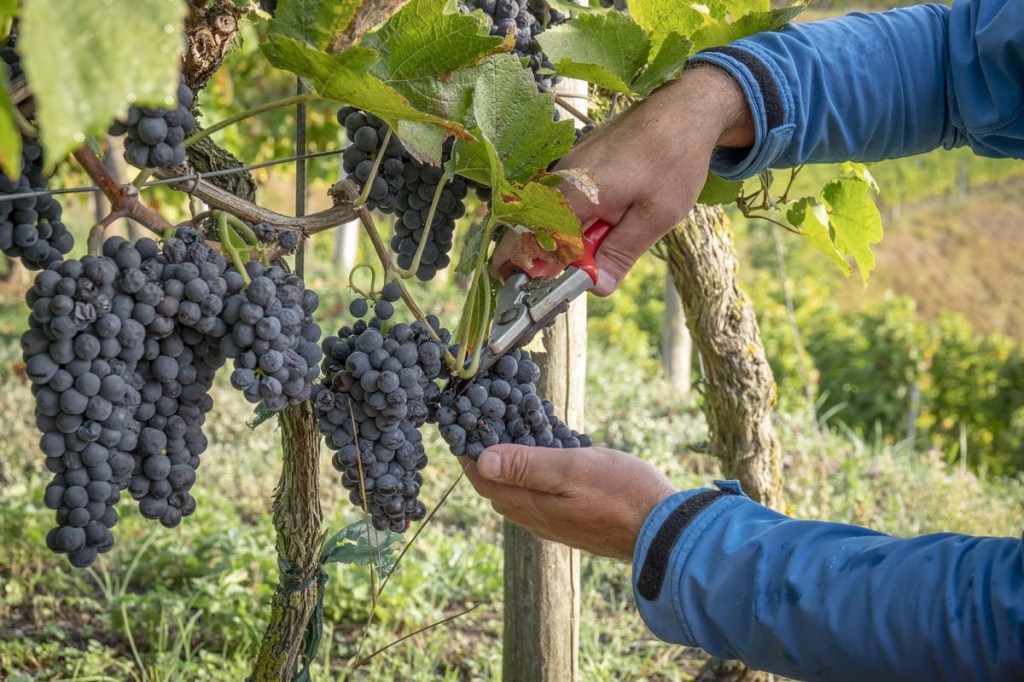
The Gospel passage that the lectionary designates for reading this coming Sunday opens with the statement by Jesus, “I am the true vine, and my Father is the vinegrower” (15:1). In a later verse, the statement is reworked: “I am the vine, you are the branches” (15:5).

“I am the vine” is the last in a series of seven I AM statements found within the book of signs, the Gospel we attribute to John. “I am the bread of life” (6:48) is the first such instance in this series. The others are “the light of the world” (8:12), “the door of the sheep” (10:7, 9), “the good shepherd” (10:11, 14), “the resurrection and the life” (11:25), “the way, the truth, and the life” (14:6), and “the true vine” (16:1).

The vine, of course, was a standard image for Israel. The psalmist sings, “you brought a vine out of Egypt; you drove out the nations and planted it; you cleared the ground for it; it took deep root and filled the land; the mountains were covered with its shade, the mighty cedars with its branches; it sent out its branches to the sea, and its shoots to the River” (Ps 80:8–10). The prophet Hosea reflects a similar understanding, declaring, “Israel is a luxuriant vine that yields its fruit; the more his fruit increased, the more altars he built; as his country improved, he improved his pillars” (Hosea 10:1–2).

In the book of Judges, Jotham, the youngest son of Jerubbaal, tells a parable in which the trees seek a king, asking first the olive tree and the fig tree, before approaching to the vine, saying, “You come and reign over us”. However, the vine replied, “Shall I stop producing my wine

that cheers gods and mortals, and go to sway over the trees?”, before the bramble ultimately accepted the role (Judg 9:8–15).

Various prophets portray Israel as a vine. Isaiah sings God’s “love-song for my beloved … concerning his vineyard”, in which Israel is portrayed as the vineyard. He ends it by declaring that God “expected justice, but saw bloodshed; righteousness, but heard a cry!” (Isa 5:1–7).

In similar vein, Jeremiah laments the state of Israel, conveying God’s plea, “I planted you as a choice vine, from the purest stock. How then did you turn degenerate and become a wild vine?” (Jer 2:21). In a later oracle, the lament continues: “I wanted to gather them, says the Lord, there are no grapes on the vine, nor figs on the fig tree; even the leaves are withered, and what I gave them has passed away from them” (Jer 8:13).

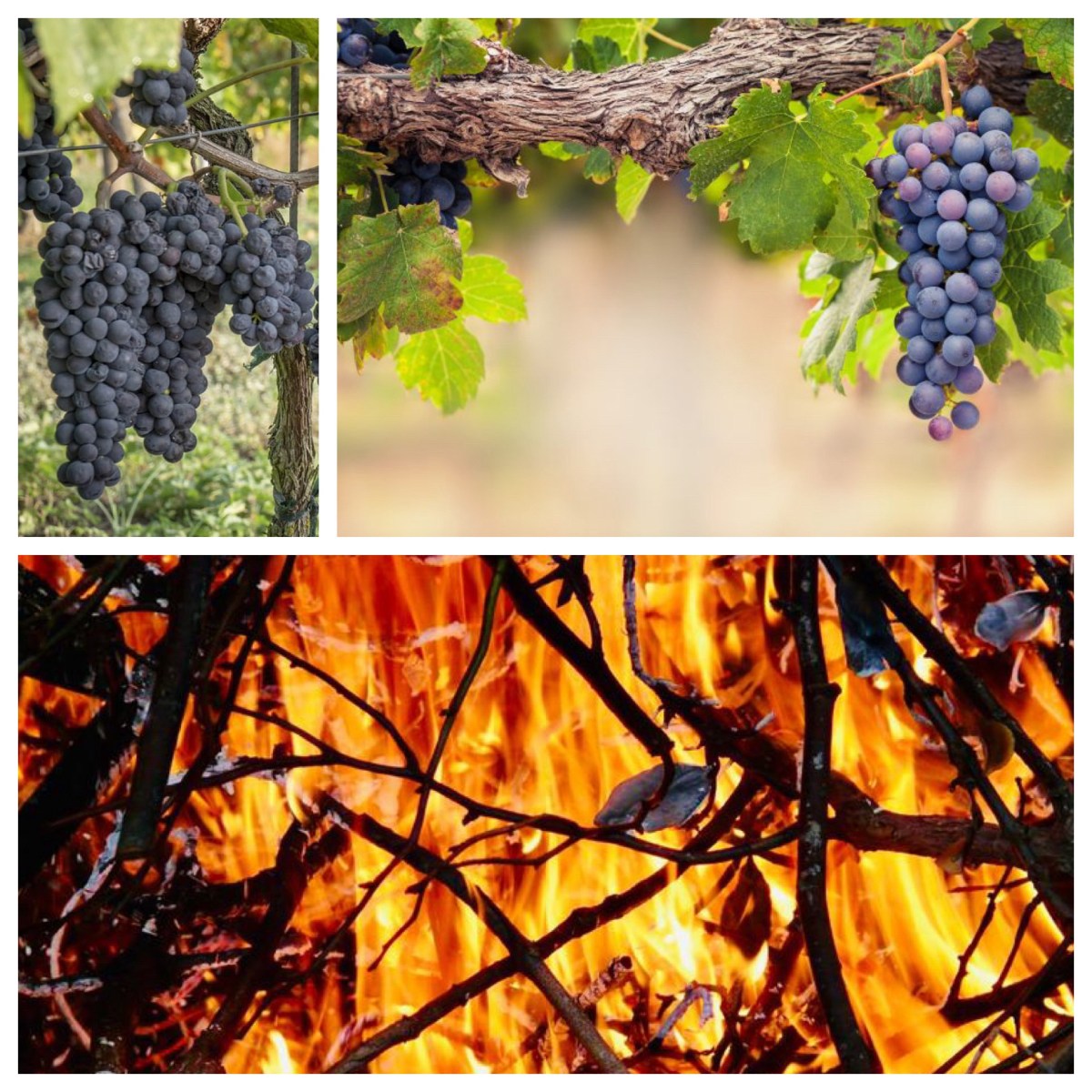
Fellow prophet Ezekiel also utilises the imagery of the vine as a way to berate Israel for its sinful state. He reflects on the uselessness “the vine branch that is among the trees of the forest”—nothing useful is made from it, it simply provides wood for the fire (Ezek 15:1–8). The prophet draws the pointed comparison: “thus says the Lord God: like the wood of the vine among the trees of the forest, which I have given to the fire for fuel, so I will give up the inhabitants of Jerusalem; I will set my face against them” (Ezek 15:7–8).

Another parable told by Ezekiel involves a vine, planted and flourishing; it bore fruit and became a noble vine (Ezek 17:3–19). The parable ends with the rhetorical questions, “Will it prosper? Will he not pull up its roots, cause its fruit to rot and wither, its fresh sprouting leaves to fade? No strong arm or mighty army will be needed to pull it from its roots” (Ezek 17:9). Regarding the king who presides over this situation, God declares, “I will surely return upon his head my oath that he despised, and my covenant that he broke. I will spread my net over him, and he shall be caught in my snare; I will bring him to Babylon and enter into judgment with him there … all the pick of his troops shall fall by the sword, and the survivors shall be scattered to every wind” (Ezek 17:19–21).

A third use of the image begins positively, as Ezekiel speaks to the people, “Your mother was like a vine in a vineyard transplanted by the water, fruitful and full of branches from abundant water. Its strongest stem became a ruler’s sceptre; it towered aloft among the thick boughs; it stood out in its height with its mass of branches” (Ezek 18:10–11). But the sins of the people meant that God plucked out the vine and burnt it in fury, “so that there remains in it no strong stem, no sceptre for ruling” (Ezek 18:12–14).

In developing this parabolic image, Jesus applies it to his followers, both positively and negatively. The negative application comes directly from the way the prophets used this image in their parables and oracles; Jesus declares that “whoever does not abide in me is thrown away like a branch and withers; such branches are gathered, thrown into the fire, and burned” (John 15:6).

The more positive dimension of the imagery receives a more extended treatment by Jesus, both in this chapter and in other places in John’s Gospel. “Those who abide in me and I in them bear much fruit, because apart from me you can do nothing”, says Jesus (John 15:5b). “If you abide in me, and my words abide in you, ask for whatever you wish, and it will be done for you”, he continues (15:7).

The close relationship of the vine and the branches thus provides significant statements about the mutual indwelling of the Son with the disciples, in these verses. This is a theme that runs throughout John’s Gospel. “Abide in me as I abide in you. Just as the branch cannot bear fruit by itself unless it abides in the vine, neither can you unless you abide in me. I am the vine, you are the branches.” (15:4–5a).

The sense of “abiding in” is a mysterious inner connection that binds followers to their master; but because that master has likewise been bound with the Father, the intimacy of connection between Father, Son, and disciples is clear. In an earlier chapter, where the saying “I am the bread of life” is prominent, the Johannine Jesus had introduced this theme in relation to Eucharistic practice: “those who eat my flesh and drink my blood have eternal life, and I will raise them up on the last day … those who eat my flesh and drink my blood abide in me, and I in them” (6:54, 56).

Thus, in the extended explanation that Jesus had provided in response to the request of Philip, “Lord, show us the Father” (14:8), he affirms that “you will know that I am in my Father, and you in me, and I in you” (14:20). Those who are linked inextricably with the Son, who abide in him, are linked through his intimate connection with the Father, as he abides in the Father. Father, Son, and Disciples: this is what I refer to as the Johannine version of the trinity; it comes to full fruition in the chapter that provides the Gospel,passage for the Sunday after this coming Sunday (John 17).

On the way that this three-part unity of Father, Son, and Disciples is developed in John’s Gospel, see more detail at

I am the good shepherd [who] lays down his life for the sheep (John 10; Easter 4B)

Each year, on the fourth Sunday of the season of Easter, the Revised Common Lectionary provides a section of John 10 as the Gospel reading for the Sunday. That chapter is where Jesus teaches about his role as “the good shepherd” who lays down his life for the sheep. The chapter is divided over the three years: 10:1–10 in Year A, then 10:11–18 in Year B, and 10:22–30 in Year C. For this reason, this particular Sunday is sometimes called the Good Shepherd Sunday.

The section offered in Year A concludes with the classic claim of Jesus, “I came that they may have life, and have it abundantly” (10:10). The passage set for Year B, this year, begins with the famous affirmation, “I am the good shepherd; the good shepherd lays down his life for the sheep” (10:14-15).

Both passages develop the image of Jesus as the shepherd of the sheep, in intimate relationship with the sheep; the shepherd knows his own (10:15), calls them by name (10:3), shows them the way of salvation (10:9), and lays down his life for the sheep (10:11, 15, 17–18).

These two sections of this chapter (10:1–10, 11–18) follow on from the story of the man born blind (9:1–41), which itself has emerged out of the conflicts between Jesus and Jewish authorities (7:10—8:59), reported as taking place in Jerusalem during the Festival of Booths (7:2). That sequence of conflicts had culminated with the Jewish authorities picking up stones to throw at Jesus (8:59).

The story told in chapter 9, like the whole Gospel, reflects the situation of a group of followers of Jesus towards the end of the first century CE, inheriting the richness of the Jewish faith, convinced that they have found The Teacher of the way that God requires, in Jesus of Nazareth. As a result, they have encountered opposition, argumentation, and expulsion from their familiar faith community, and through this they have engaged in verbal warfare with those who have pushed them out.

Retelling the story of the man born blind, who encounters Jesus and claims faith in him, validates their perspective on life and faith. The story reveals what God intends and desires, through the way that an unknown member of their community has constructed this narrative. The story reinforces the views that have been developed by members of the community, as they hope that others might “come to believe that Jesus is the Messiah, the Son of God, and that through believing [they] may have life in his name” (20:31).

See

John’s Gospel is known for its series of I AM statements. In the first offering from John 10 (verses 1–10), Jesus has said, “I am the gate” (v.9)—the avenue for entry into the sheepfold, which was a place of care and protection for the sheep.

But “I am the gate” makes sense only because of what goes before it; the gatekeeper, who opens the gate for the sheep (v.3). This image then morphs into the more familiar image of the shepherd of the sheep (vv.11, 14)—the one who knows the sheep, calls them by name, and guides them in the paths that they should follow.

In fact, Jesus refers to his followers as “sheep” 13 times throughout the chapter. This draws on the common description of the people of Israel as sheep, found in a number of psalms. The exodus from Egypt is described as the time when “he led out his people like sheep, and guided them in the wilderness like a flock; he led them in safety, so that they were not afraid” (Ps 78:52–53).

The psalmist encourages the people to sing with joy, for “he is our God, and we are the people of his pasture, and the sheep of his hand” (Ps 95:7). The people rejoice that it is this God who “made us, and we are his; we are his people, and the sheep of his pasture” (Ps 100:3; see also Ps 44:11, 22; 74:1).

Alongside this, in Hebrew Scripture, God is explicitly identified as a shepherd; the psalmist declares that God is the “Shepherd of Israel, who lead[s] Joseph like a flock” (Ps 80:1). Elsewhere, the opening line of perhaps the best-known psalm is simply, “the Lord is my shepherd” (Ps 23:1).

But many other passages contain mentions of shepherds. As he was dying, with his sons gathered around him, Jacob spoke to his son Joseph, praying, “the God before whom my ancestors Abraham and Isaac walked, the God who has been my shepherd all my life to this day … bless the boys [Ephraim and Manasseh]” (Gen 48:15–16).

Later, Jacob indicated that Joseph’s strength came “by the hands of the Mighty One of Jacob, by the name of the Shepherd, the Rock of Israel, by the God of your father, who will help you, by the Almighty who will bless you” (Gen 49:24–25). Then, when David was anointed as king, Samuel said to him “it is you who shall be shepherd of my people Israel, you who shall be ruler over Israel” (2 Sam 5:2; 1 Chron 11:2).

Subsequent rulers in Israel were accorded this title; yet key prophets during the exile lamented that there had been “stupid shepherds” with “no understanding” (Jer 10:21; Isa 56:11) and had done evil (Jer 12:10–13; 23:1–2; 50:6–7; Ezek 34:1–10). Some prophets in the Exile then looked beyond this to a better kind of shepherd-leader.

The anonymous exilic figure we know as Second Isaiah declared that the Lord God “will feed his flock like a shepherd; he will gather the lambs in his arms, and carry them in his bosom, and gently lead the mother sheep” (Isa 40:11). Later, he declares that Cyrus, king of Persia, would be anointed as Messiah, to carry out God’s purpose (Isa 44:28–45:1). He is the one of whom the Lord says, “he is my shepherd and he shall carry out all my purpose” (Isa 45:28). That is a striking extension of the strong scriptural imagery of the shepherd, normally applied to the God of Israel or rulers within Israel, which is now placed onto a foreign ruler.

Also during the exile, the prophet Jeremiah looked to the time when God would restore “shepherds after my own heart” in their midst (Jer 3:15) and Ezekiel prophesied God’s intentions: “I myself will search for my sheep, and will seek them out. As shepherds seek out their flocks when they are among their scattered sheep, so I will seek out my sheep. I will rescue them from all the places to which they have been scattered on a day of clouds and thick darkness.” (Ezek 34:12). Ezekiel then extends this role to the king when he reports God’s words: “my servant David shall be king over them; and they shall all have one shepherd” (Ezek 37:24).

This is the scriptural heritage that Jesus draws on in his famous statement, “I am the good shepherd” (John 10:11, 14). Jesus refers to his followers as “sheep” 13 times throughout the chapter, drawing on the equally common description of the people of Israel as sheep, found in a number of psalms (Ps 44:11, 22; 74:1; 78:52; 95:7; 100:3).

Jews would have recognised immediately the claim that he was making for himself—and the way that he has intensified it by noting that “the good shepherd lays down his life for the sheep” (John 10:11; see also v.15). The passage thus looks forward to the death he will suffer on the cross—the example supreme of “the good shepherd”.

See also

and

Affirming the kaleidoscopic array of gender identities and sexual orientations: a forthcoming book

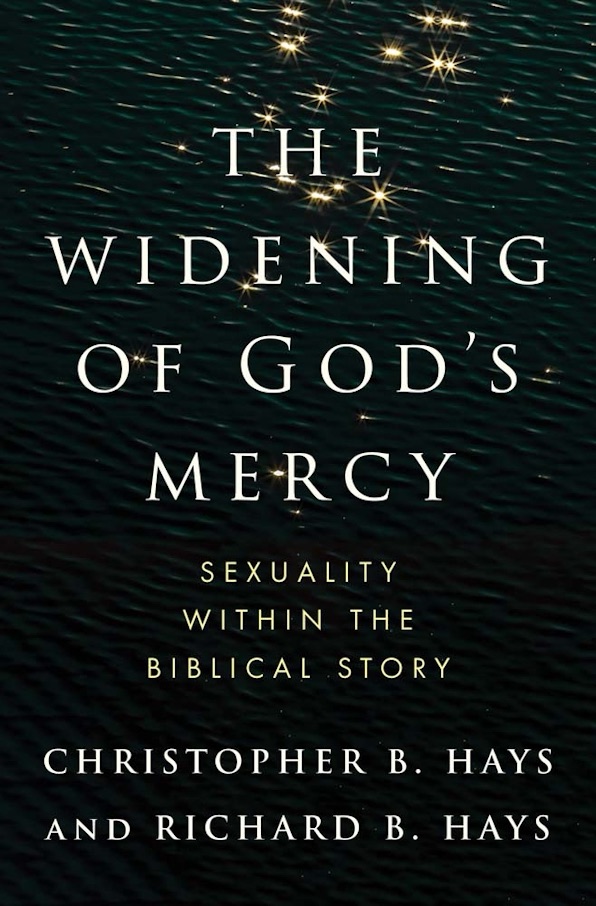
There’s an interesting new book to be published in September: The Widening of God’s Mercy. Sexuality Within the Biblical Story. It is written by two eminent, conservative-ish American professors, Richard Hays and his son Christopher Hays.

Richard Hays is one of the most well-respected NT scholars in the world. He famously argued *against* LGBTQ inclusion in his landmark ethics book, The Moral Vision of the New Testament, 30 years ago. He teaches at Duke Divinity School. He now is a proponent of affirming and inclusion. His son, Christopher Hays, is one of the most well-respected OT/Ancient Near Eastern scholars in the world. He teaches at Fuller Seminary, an institution founded as a strongly conservative seminary, which has become less “conservative” in recent years.

In 1996, Richard Hays wrote about a range of ethical matters in his work The Moral Vision of the New Testament. A number of biblical scholars, theologians and ethicists provided positive reviews of the work, and it has been an important work for students in each of these disciplines.

In chapter 16 of this book, Hays discusses relevant New Testament passages and comes to a conclusion that homosexuality cannot be affirmed by any New Testament text. Reviewing that chapter, American scholar Dr Anna Sieges notes, “His careful argumentation and generous posture toward LGBTQ individuals (by 1996 standards, at least) made the chapter a fan favorite among those who wanted to respectfully and biblically exclude LGBTQ people from public spaces (religious or political) for what they deemed sexual immorality.”

(See “An oft-quoted biblical scholar changes his mind on LGBTQ inclusion in the church”, https://baptistnews.com/article/an-oft-quoted-biblical-scholar-changes-his-mind-on-lgbtq-inclusion-in-the-church/)

Personally, I was surprised that Richard Hays had come to this conclusion about LGBTIQA+ people. I knew him in the 1980s when I was a doctoral student studying at Yale University, where he was a member of Faculty. I took a particularly lively seminar on “War and Peace in the Bible”, where we explored biblical texts and the full sweep of theological and ethical interpretations of this area.

Prof. Hays was consistently careful and compassionate as he explored key texts with critical acumen and a clear connection to contemporary thought. On that basis, as well as personal interactions with him in other contexts, the book was published, I had thought that he would have come to a different conclusion about the biblical texts relating to sexuality and gender. But he did not.

Thirty years later, he is publishing a work in which he argues differently. The book, we are told, will provide an argument for a theological and ethical position that supports, affirms, and encourages LGBTIQA+ people of faith as they exercise their ministries; and also in terms of how we relate to people of diverse secularities and gender indentures in society. It is an encouraging move.

The publisher’s blurb says:

“In this learned and beautifully written book, Richard and Christopher Hays explore a more expansive way of listening to the overarching story that scripture tells. They remind us of a dynamic and gracious God who is willing to change his mind, consistently broadening his grace to include more and more people. Those who were once outsiders find themselves surprisingly embraced within the people of God, while those who sought to enforce exclusive boundaries are challenged to rethink their understanding of God’s ways.

“The authors—a father and son—point out ongoing conversations within the Bible in which traditional rules, customs, and theologies are rethought. They argue that God has already gone on ahead of our debates and expanded his grace to people of different sexualities. If the Bible shows us a God who changes his mind, they say, perhaps today’s Christians should do the same. The book begins with the authors’ personal experiences of controversies over sexuality and closes with Richard Hays’s epilogue reflecting on his own change of heart and mind.”

“I think everyone in Hays’ circles in the 90s knew, to affirm gay people was career-suicide in their institutions. It still kinda is. I’m not suggesting it was deceptive or anything, but I think it’s very hard to imagine a theological conclusion when you subconsciously know you’re whole faith community will not go with you. Fear doesn’t inspire courageous thinking.”

Certainly, within the Uniting Church as a whole, and in formal decisions by councils of the church over the years, we have long accepted, affirmed, and encouraged LGBTIQA+ people within the life of the church.

See

And yes, I am aware that this has been seen as a slow and imperfect process by some, whilst others have fought tenaciously against each step with dogmatic aggression. But formally, and substantially, the Uniting Church has a position that would welcome the argument of Hays and Hays, when it is ultimately published.

*****

I need to note that Prof. Richard Hays was one of the examiners of my PhD thesis in 1988, while Karl Hand wrote a PhD under my supervision in the years 2008 to 2011.

*****

For my discussion of the “clobber texts” that feature so often in this area, see