#nuptothecup

The post below comes from 2019. I have updated it here with statistics relating to 2022, taken from Deathwatch 2022.

Click here to read our Deathwatch 2022 Report.

It is important to note that this and previous years death tolls are almost entirely made up of the deaths we learn of from official race day reports. Countless others are taken away from the racetrack and killed behind the scenes when it is clear they cannot (or were chosen not to) be saved, indicating that although high and devastating, these findings are still grossly understated.

Key Findings

  • At least 139 horses were killed on track for a number of reasons, most commonly for catastrophic front limb injury (46)
  • On average at least one horse will die on Australian racetracks every 2.5 days
  • At least nine horses died from cardiac causes
  • The state with the highest recorded deaths was NSW (55) followed by VIC (37) and QLD (20)
  • Fifty-five of the horses that were reported to have been killed had been raced as two-year-olds
  • Ten horses were only two years old when they died on track
  • Two horses are still listed as ‘active’ on the Racing Australia website at the time of writing,
  • All states failed on several occasions to upload race replays where a horse died. NSW was the worst culprit, editing or failing to upload replays where a horse died on at least seven occasions.

*****

Remembering Medora, Dispatch, Dulcify, Verema, Admire Rakti, Araldo, Red Cadeaux, Regal Monarch, and Cliffsofmoher–who each died during or soon after racing in the Melbourne Cup.

Today the Melbourne Cup takes place. It has become known as the race that stops a nation. But the reality is, it really should be the nation that stops a race—and all other horse races—because of the cruelty that is integral to the horse racing industry. A brief history indicates this.

The race was first run in 1861 to a crowd of 4,000 people. Two horses died in that first race. An article in the Australian Dictionary of Biography describes the race: Medora’s front legs gave way and she fell heavily, bringing down her jockey, Henderson. Dispatch rounded the turn and somersaulted over her, careered into the picket fence and threw her jockey, Morrison. Next came Twilight who collapsed on top of them, bringing Haynes down with her. Unhurt, she broke loose before heading off across the course and was disqualified. Nearby spectators anxiously dragged the fallen horses off the track before the others came round the course again. The jockeys also sustained injuries; Henderson’s shoulder was dislocated and Morrison’s right collar broken. The injury to his right side was such that he could only walk with assistance and had to be taken to Melbourne Hospital. (see http://adb.anu.edu.au/essay/1)

In 1881, Jockey John Dodd died as a result of injuries received while riding Suwarrow in the race. The horse survived.

In 1979, Dulcify broke his hip 400m from the finishing post in the 1979 Melbourne Cup and was taken to the Melbourne stables of his trainer, where he was euthanased by a vet in the back of a horse float.

In 2013, a horse named Verema was euthanased right on the Flemington racetrack, although green tarps prevented the crowd from seeing what was happening.

Two horses died due to racing in the 2014 Melbourne Cup. Cup favourite Admire Rakti, who was carrying the heaviest weight since Think Big (1975), died of heart failure in his stall after the race, and Araldo broke his leg and had to be euthanased after being spooked by a flag in the crowd after the race.

In 2015, Red Cadeaux, the only horse to finish 2nd in the race on 3 occasions, and a public favourite, did not finish due to a fetlock injury and had to be euthanased 2 weeks later.

In 2017, Regal Monarch broke his right leg and had to be euthanased. Such deaths take place because it is difficult for a horse’s fractured bone to heal. So a broken bone spells death.

In 2018, Cliffsofmoher had to be put down after fracturing a shoulder early in the Cup. He was euthanased on the track, right in front of the grandstand, behind a large green sheet.

In 2015, 132 racehorses died on race courses across Australia due to repeat injuries, according to the Coalition for the Protection of Racehorses. That’s about one death every three days.

Has that terrible figure produced a response from racing authorities, to lessen the death toll? Not at all—in fact, the number of death has grown in the intervening years. From July 2016 until July 2017, 137 horses died on Australian racetracks. That is an outrageous number.

The most recent set of figures kept by the Coalition for the Protection of Racehorses indicate that over the past year, the most common reason for a racehorse dying was catastrophic front limb injury (61), whilst 7 horses collapsed and died on the track, 10 horses died from cardiac causes, and 5 horses died from bleeds.

We need to stop this cruelty. This is actually the race that shames a nation. The whole industry, however, is riddled with practices and customs that perpetuate cruelty and cause regular deaths, as the recent ABC 7:30 report has demonstrated. (see https://www.abc.net.au/7.30/the-dark-side-of-the-horse-racing-industry/11614022)

Say Nup to the Cup.

See also

https://www.animalsaustralia.org/events/?event=159

https://horseracingkills.com/issues/deathwatch/

https://www.abc.net.au/news/2018-11-06/the-cliffsofmoher-euthanased-on-track-after-melbourne-cup/10470260

https://www.news.com.au/sport/sports-life/the-melbourne-cup-hit-by-protests-after-horse-deaths/news-story/f9948e85ad3a3b68cde5d197292e65f2

“Fresh words and deeds”: for Reformation Day

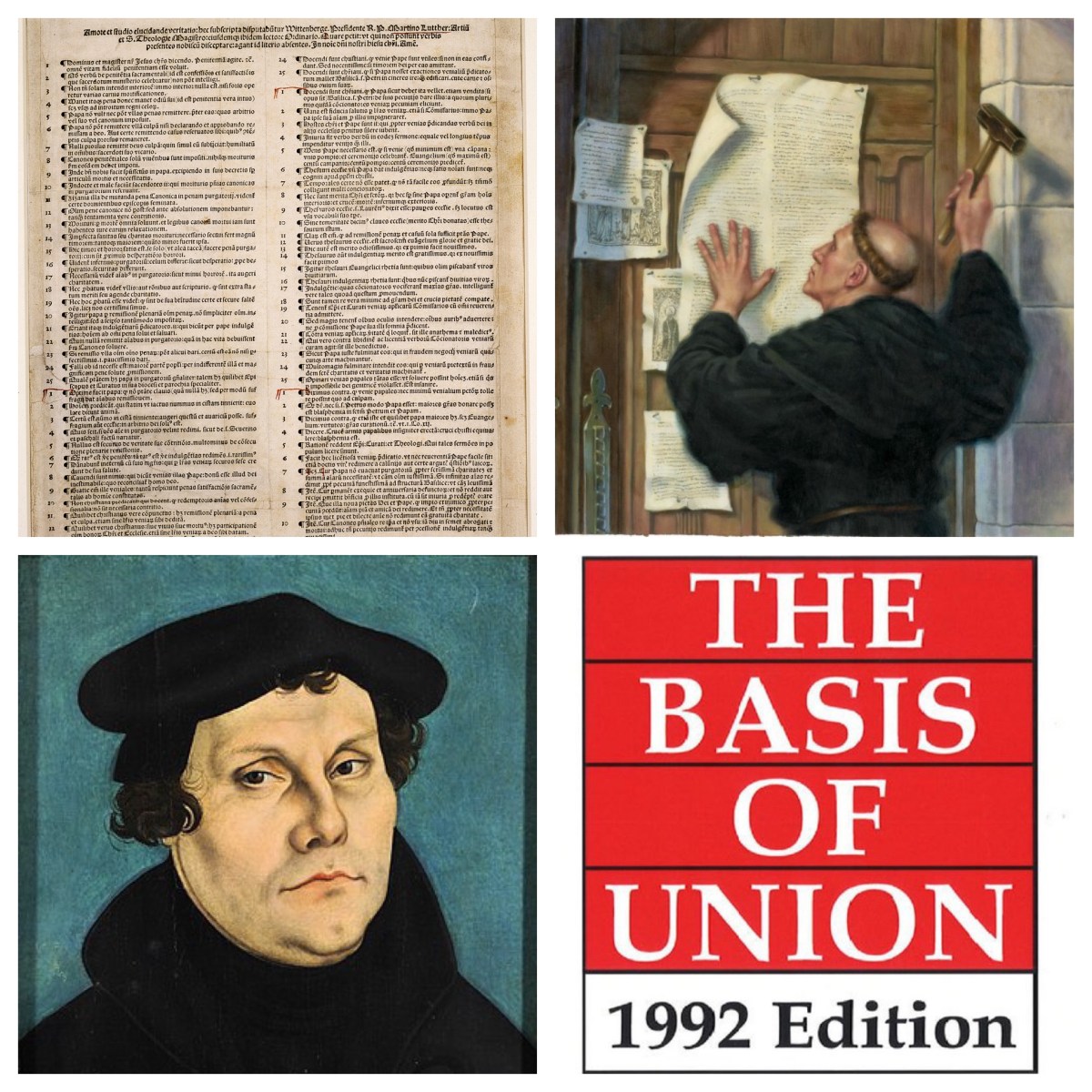
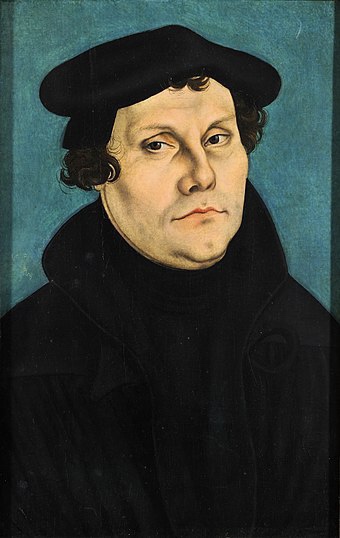
Over five centuries ago, allegedly on 31 October 1517, the Reformation began. That day, a German priest, Martin Luther, sent his Ninety-Five Theses on the Power and Efficacy of Indulgences his to the Archbishop of Mainz. In these theses, Luther criticised the common practice of his fellow priests, who sold indulgences to their parishioners.

He also disputed the teaching of the church about purgatory (an intermediate state after death, before entering heaven or hell), and criticised the authority which had been claimed by the Pope. As a result, he was excommunicated by the Pope and condemned as an outlaw.

Actions from that time unleashed a series of protests and changes across the church. This Reformation led to the formation of numerous Reformed churches. The Uniting Church stands with these churches, as a Protestant church, an heir of the Reformation. Our forebears held firm to the belief that the church was always to be seeking renewal; that supreme authority rested in the Bible; that salvation was possible only because of God’s abundant grace.

As we recall this event, on Reformation Day (31 October), we might well ask: is it time for a new Reformation? Have we come to a point in time when we need to kick off the shackles of old traditions and practices? Is it time to set forth on a new venture, as the people of God, to protest what we have left behind, to reform ourselves once more?

There are some very clear pointers in this direction, I believe, within my own denomination, which is a relatively young (45 years old) denomination. In the Basis of Union, the foundational document for the Uniting Church, for instance, I can find 12 occurrences of words like “new, anew, reform or renew”, as well as one “fresh” and one “afresh”.

Para 1 declares that the three denominations which united in 1977 “remain open to constant REFORM under his Word” and affirms that “they look for a continuing RENEWAL in which God will use their common worship, witness and service to set forth the word of salvation for all people”.

Foundational theological affirmations about Jesus which are included in Para 3 reiterate this perspective: Jesus is “the beginning of a NEW creation, of a NEW humanity”, “a pledge and foretaste of that coming reconciliation and RENEWAL which is the end in view for the whole creation”, and “a representative beginning of a NEW order of righteousness and love”. Para 4 concludes with a similar affirmation, that “in his own strange way Christ constitutes, rules and RENEWS them as his Church.

Para 15 locates us in “a period of RECONSIDERATION of traditional forms of the ministry, and of RENEWED participation of all the people of God” in the various aspects of ministry. And since the Basis was written, we have renewed the Diaconate and invited ongoing experimentation with other forms of ministry (Lay Pastor, Community Minister and Youth Worker—all now ended, and taken up in the umbrella Ministry of Pastor).

In para 11, the church declared that it “prays that it may be ready when occasion demands to confess the Lord in FRESH words and deeds”. Para 15 enjoined the councils of the church to “enter a period of self-examination in which members are asked to consider AFRESH their common commitment to the Church’s mission and their demonstration of its unity”. All of these phrases point to a hope for ongoing renewal, refreshment, and revitalisation.


There’s one reference to “history”, but it is in the phrase “the CHANGES of history”, and three uses of “tradition”, one of which is in the phrase “a period of RECONSIDERATION of traditional forms of the ministry”. So these excerpts are oriented towards change and reform.

“Inheritance” pops up twice: once, “the inheritance of the Kingdom” (hardly an advocate for the status quo) and once in “the inheritance of literary, historical and scientific enquiry which has characterised recent centuries”, which promotes a sense of exploration and discovery.

Then, of course, there are the widely-known references to being a “pilgrim people” (once) who are “on the way” (twice). This imagery clearly points to the hope for still more reforming and renewing within the church.

The closing sentence in the opening paragraph of the Basis sets the horizons of openness to the future: the church “awaits with hope the day of the Lord Jesus Christ on which it will be clear that the kingdom of this world has become the kingdom of our Lord and of the Christ”. It is this openness to whatever the future will bring which is most clearly to characterise the Uniting Church.

I think the primary orientation is very clear: as people of the Uniting Church, we are oriented towards the future with hope, and we are called to work for a different future. We are people with an inheritance from the Reformation and with a calling to continue to reform the church.

So, let’s protest, reform, and head on our way!!

The sincerest form of flattery? Or a later, imperfect imitation? (2 Thessalonians; Pentecost 21C to 23C)

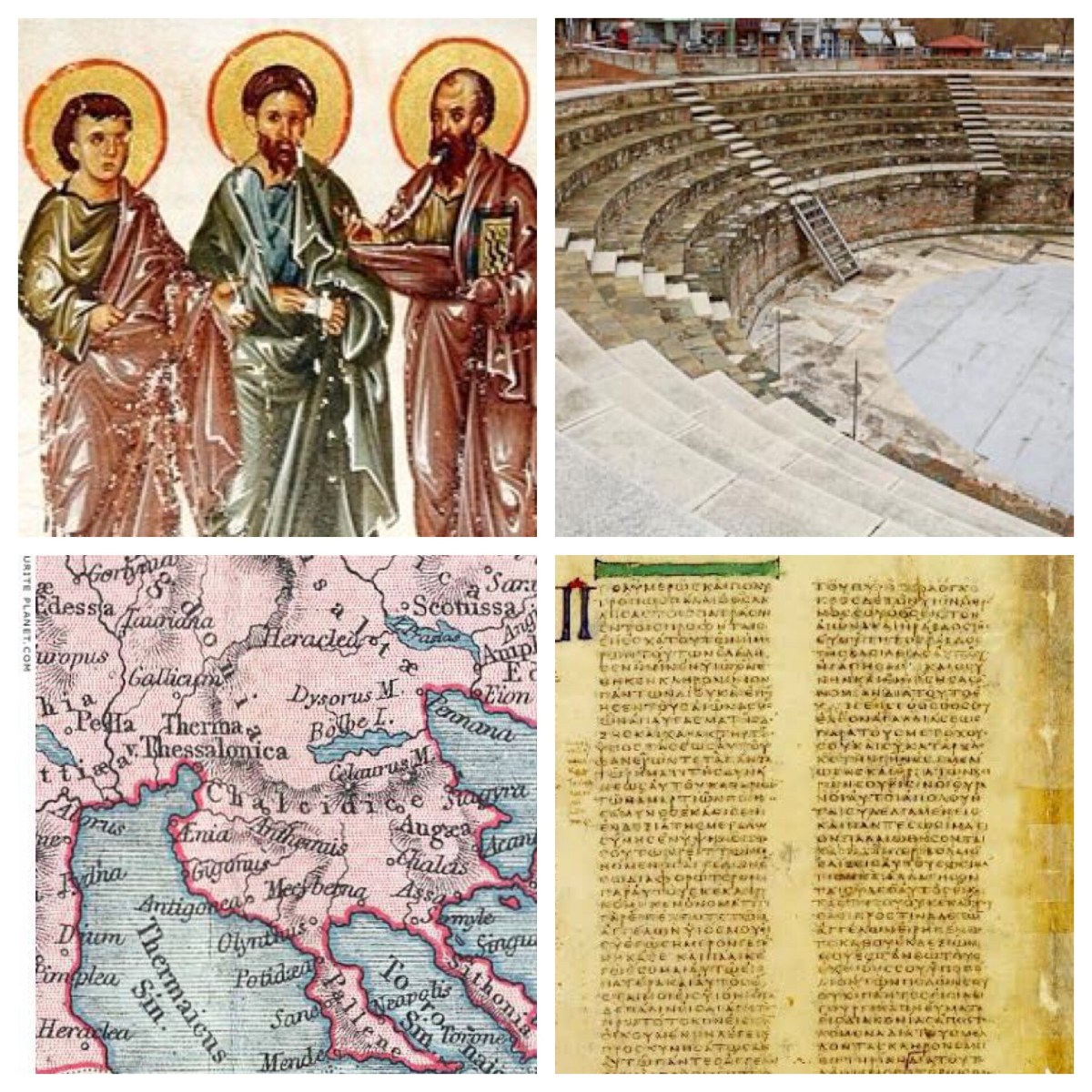
Paul, Silas and Timothy arrived in Thessalonika in the year 50 CE. Acts indicates that they went to the synagogue, where Paul declared that the Jewish scriptures pointed to Jesus as Messiah (Acts 17:2–3). This stirred up antagonism amongst the Jews of the city (Acts 17:5).

Those who accepted Paul’s message, realising that he was just recovering from the experience of prison in Philippi (Acts 16:19–24), sent him and Silas on to their next stop in Beroea after only three weeks in Thessalonica (Acts 17:2). Paul then travelled to Athens (Acts 17:15) and Corinth (Acts 18:1).

Little of this is reflected in Paul’s letters to the Thessalonians, apart from a direct comment about his difficulties in Philippi (1 Thess 2:2) and some generalised references to the persecution he was suffering (1 Thess 3:4, 7). Although it is likely that Paul wrote letters before he had visited Thessalonica, none of them are known to us.

1 Thessalonians, dating from the same year (50 CE) as his visit to Thessalonica, is the earliest example of Paul’s letter writing that we have. The letter itself contains no explicit indication of the time or place of its writing; tradition has it that Paul wrote from Athens, although it is more likely that he penned it in Corinth just months after his departure from Thessalonica. His visit was still fresh in Paul’s mind, and he writes with love and concern for the community of believers that he left behind in Thessalonica.

It is obvious that Paul had developed a strong bond with this community, and he is anxious to keep in touch with them (3:5). The letter was in reply to what he had learned from Timothy about their recent progress (3:6).

The letter known as 2 Thessalonians appears in the lectionary this Sunday and in the two following weeks. It seems to run in parallel to 1 Thessalonians in a number of ways. Some of the themes from the first letter are replicated, and varied, in the second letter to the Thessalonians. Both letters present Paul as a role model (1 Thess 1:6; 2 Thess 3:7); both criticise the Thessalonians for the idleness evident in their community (1 Thess 5:14; 2 Thess 3:6–12); and both letters contain reminders about Paul’s teachings (1 Thess 2:5–7, 12; 4:1–2; 5:1–2; 2 Thess 2:15). The general eschatological orientation is present in both letters (1 Thess 4:13–5:11; 2 Thess 1:5–2:16), but there are significant developments–a hardening of the apocalyptic mindset–in 2 Thessalonians.

The commonality of both general themes and specific words and phrases leads to a question about the relationship between these two letters: is this stylistic variation on common themes written by the same author, or a deliberate attempt to copy the first letter by another scribe at a later date?

Scholars answer the question differently; there are different views on the authorship of 2 Thessalonians. The opening and closing sections of 2 Thessalonians are revealing.

The letter concludes with an insistence that it was written by Paul: “I, Paul, write this greeting with my own hand” (3:17). At first glance, this looks similar to the reference to Paul’s “large letters” in his “own hand” at Gal 6:11; but this is a brief passing comment, whereas the claim is laboured in 2 Thessalonians by the addition of extra phrases, so that we start to have a sense of “methinks he doth protest too much”.

The first twenty words of the opening address of 1 Thess 1:1 are repeated exactly in 2 Thess 1:1–2a; this is unusual amongst the seven authentic letters of Paul, for in every other case there are variations of both minor and major significance in this opening section. (See Rom 1:2–6; 1 Cor 1:2b; 2 Cor 1:b; Gal 1:1 and 1:4; Phil 1:1b; Phlmn 2.)

In the thanksgiving (2 Thess 1:3–4), a string of key words evokes themes from 1 Thessalonians. There is virtually nothing in the thanksgiving of 2 Thessalonians which is not present, in some way, in 1 Thessalonians. This is unparalleled amongst the authentic letters of Paul; his usual practice was to contextualise this section of the letter by indicating key issues which will be dealt with in the body of the letter.

There are differences in content in the bodies of the two letters. The friendly relationship evident throughout the first letter differs from the highly critical attitude towards the community in 2 Thessalonians. The eschatological orientation of 1 Thessalonians is present in general terms in 2 Thessalonians, but the difference is that the second letter is marked by a much stronger apocalyptic character. And twice in 2 Thessalonians (2:15 and 3:6), claims are made that Paul taught the Thessalonians material which is not found in 1 Thessalonians.

In my assessment, then, these differences mark 2 Thessalonians as coming from a different hand, in a situation where different issues were at stake. It appears to be a later imitation of 1 Thessalonians. We still read it in the cycle of readings provided by the Revised Common Lectionary–it is still an integral part of Christian scripture–but we read it with a critical lens, aware of the way that this particular writer is developing the earlier thought of Paul.

See also https://johntsquires.com/2019/06/17/harness-the-passion-but-restrain-the-rhetoric-musing-on-the-role-model-which-paul-offers-in-galatians/

https://johntsquires.com/2018/11/17/let-your-gentleness-be-known-to-everyone/

https://johntsquires.com/2019/10/01/in-the-name-of-the-apostle/

The righteous live by their faith (Habakkuk 2; Pentecost 21C)

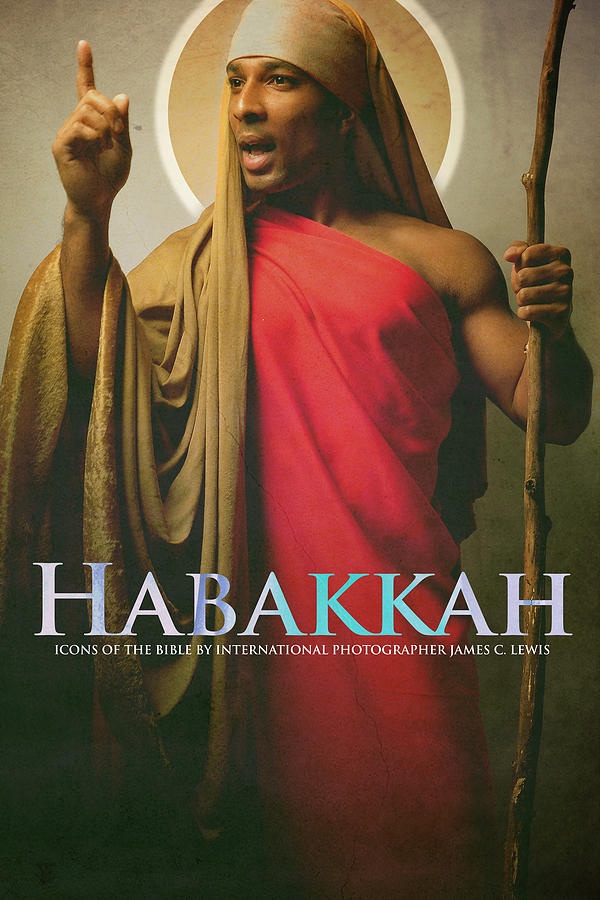
This Sunday, the lectionary invites us to hear two sections of the prophet Habakkuk (Hab 1:1–4, 2:1–4). Habakkuk is a shadowy figure, known, really, for only one statement—just half of one verse. That short statement, “the righteous live by their faith [or faithfulness]” (2:4b), stands as the text upon which Paul developed his important theological statement in Romans: “in it [the gospel] the righteousness of God is revealed through faith for faith; as it is written, ‘the one who is righteous will live by faith’” (Rom 1:17). As well, Paul quotes this verse in his letter to the Galatians (Gal 3:11) and the verse is cited in the “word of exhortation” sent to the Hebrews (Heb 10:38). So it appears in significant writings if the early Christian movement.

From an ancient Israelite figure about whom very little is known, this one short phrase has played such a foundational role in articulating a central tenet of Christian faith. It runs from Paul’s assertion that “the righteous live by their faith”, through Augustine’s affirmation that we are justified by grace through faith, to Luther’s central claim of “sola fide, sola scriptura, solus Christus, sola gratia”, into the contemporary evangelical doctrine of “justification by faith alone”.

Habakkuk was one of a number of Israelite prophets who were active in the few decades leading up to the conquering of the southern kingdom by Babylon in 587 BCE, and the removal into exile of the people as a result of that event. In this context, Habakkuk declares, “I will stand at my watch post, and station myself at the rampart” (Hab 2:1). From his watch post, he declaims the words of judgement given to him by God: the wealthy will be called to account by their creditors, violent terrors will arise, and “the cup in the Lord’s right hand will come around to you, and shame will come upon your glory” (Hab 2:15).

Amidst these thundering pronouncements, Habakkuk does offer hope, declaring that “the earth will be filled with the knowledge of the glory of the Lord, as the waters cover the sea” (2:14), and imploring the people, “the Lord is in his holy temple; let all the earth keep silence before him!” (2:20). He affirms that God’s “glory covered the heavens, and the earth was full of his praise” (3:3)—but that glory will swiftly lead to “the days of calamity” (3:16). The threat of Exile looms large for this prophet.

In the context of Habakkuk’s prophetic activity, the affirmation that “the righteous live by their faith [or faithfulness]” (2:4b) is the word that God gives to the prophet, responding to his complaints about what sufferings are taking place. God is “rousing the Chaldeans, that fierce and impetuous nation, who march through the breadth of the earth to seize dwellings not their own” (1:6), and through their dreadful and fearsome activities, God is “destroying nations without mercy” (1:17).

That God is using foreigners to deal with Israel is a striking theological development—one that is at odds with the traditions that emphasise Israel as a chosen nation, holy and set apart, dedicated to the Lord; the nation alone through whom the Lord God works. That this God will use foreigners is a theme found also in the later writings of Deutero-Isaiah (Isa 40–55), where Cyrus, the Persian ruler, is acclaimed as the one chosen by God, the Messiah, to allow the people of Judah to return to their land (Isa 44:24–45:13).

Habakkuk laments and complains; God instructs him to “look at the proud—their spirit is not right in them”, and to be assured that “the righteous live by their faith” (2:4). The theme of righteousness that is signalled here by the prophet is a central motif in Hebrew Scriptures. It appears in the ancestral stories concerning the key figures of Abraham (Gen 15:6), Saul (1 Sam 26:23), David (2 Sam 22:21–26; 1 Ki 3:6), and Solomon (1 Ki 10:9).

Further, Job exults in his righteousness (Job 27:6; 29:14) and the psalmists petition God on the basis of their righteousness (Ps 5:8; 7:8; 112:1–10). Righteousness is praised in assorted proverbs (Prov 1:3; 8:20; 11:4–6; 12:28; 15:9; 16:8; 21:3, 21) and figures in numerous prophetic oracles (Isa 1:22; 5:7; 28:17; 32:16–17; 54:14; Jer 22:3; Ezek 18:19–29; Dan 9:24; 12:3; Hos 10:12; Amos 5:24; Zeph 2:3; Mal 4:1–3). The message given to Habakkuk holds strong throughout Israelite history, and then continues to sound out, as we have seen, throughout the 20 centuries of Christian history.

Women’s voices speaking with love to the world this Christmas

For a little over a year now, I have been editing a quarterly publication called With Love to the World. It provides short commentaries on the biblical passages offered in the Revised Common Lectionary, which is used by mainstream denominations of the Christian church around the world. The four passages offered each week are read in worship and one or more of them usually form the basis for the sermon in that service of worship. The publication seeks to prepare people to think about the passages in the week before they hear them in Sunday worship.

Recently, I have been working with material submitted by a group of contributors who have been working with the four lectionary passages, and an additional three biblical texts drawn from a recently-created lectionary, known as the Women’s Lectionary for the Whole Church. The contributions received form a special all-female issue of With Love to the World. (Well, all female, except for the Editor, yours truly!) This issue covers the seasons of Advent, Christmas, and Epiphany, and runs from mid November to mid February.

WLW has historically had more male contributors than females; in some issues, the ratio has been very one-sided. I have been seeking, since beginning as Editor, to have a better balance of gender amongst the contributors. So this issue is an attempt to provide a pendulum swing-to begin to redress the balance by having an all-female list of contributors.

Alongside that, I invited the contributors to “play” a little with the biblical texts offered each week. Amongst the seven passages each week, the four set lectionary readings need to be included; that is the staple of weekly reading for our many thousands of subscribers, and, of course, that is what is read and preached on in those churches which follow the Revised Common Lectionary.

The other three readings for each week come from the work of Professor Wilda C. Gafney, a Hebrew Bible scholar and Episcopal priest in the USA, who both serves in an AME Zion Church and teaches at Brite Divinity School. She has published a series of Women’s Lectionary for the Whole Church (Church Publishing, NY, 2021) in which she offers four readings for each week, following the usual pattern of Hebrew Bible, Psalm, Epistle, and Gospel.

The readings seek to offer the people of God “a lectionary centering women’s stories, chosen with womanist and feminist commitments in mind, fram[ing] the presentation of scriptures for proclamation and teaching” (Women’s Lectionary Year A, p.xxi). You can see the work that Prof. Gafney does at https://www.wilgafney.com/womenslectionary/

In a recent interview, published in Christian Century, she explains the theological and hermeneutical aspects of her approach; see https://www.christiancentury.org/article/interview/new-lectionary-centers-women

I’ve been enjoying the challenge, and the refreshing vitality, in the way that she highlights women in the texts, invites readers to imagine God in ways beyond the limited patriarchal understandings, and engages us with the creative imagination for understanding that we all possess.

She writes, “Part of what I want to accomplish is for people to know that even though the Bible is androcentric—parts of it are patriarchal, parts of it are paternalistic, and parts of it are misogynist—it’s possible to frame preaching texts around passages that include women and tell some new stories, while reckoning with how women are treated. If the gospel isn’t good news to the women in the passage, is it still good news? If it’s not good news to those who are enslaved in the passage, is it still good news?”

So, for the cover of this issue, Geraldine Wheeler has contributed a wonderful “Madonna and child”, contextualised to Australia, just as artists of other times and places have contextualised the story for their own settings (see below). Inside, Barbara Allen tells readers about her unusual spiritual discipline of writing haikus during Advent.

To start the series of commentaries, Anne Wright invites us to ponder, “if darkness, death, and despair have been defeated, how shall we live in the kingdom of light?” Continuing during the four weeks of Advent, Anita Monro meditates on “the way of the Womb of Life” as the theme for the season and explores “the responsibility we are given to act in and for” this way; and then Sarah Agnew ponders the paradox of a genealogy in which women “disrupt the male-dominated narrative of ancestry”, yet Mary is silenced and almost written out of the story of the birth of Jesus (Matt 1–2).

During the rather short Christmas season, Monica Melanchthon notes “the enormity of Israel’s need for a mothering God” (Isa 63); she observes how, in the Christmas story, “the divine mother changes grief into consolation” while “Joseph paves the way for a new understanding of masculinity”.

As we enter the season of Epiphany, Janice Mcrandal reflects on how we might read scripture in a way that “avoids simplistic readings and points us to a faith in Jesus that is not tied to idolatrous ideals of masculinity”, drawing from Elisabeth Schüssler Fiorenza’s critique of kyriarky. Kylie Crabbe then muses about what it might mean to read key biblical texts with an informed understanding of trauma, noting how “foreign occupation, violation, removal from country, and slavery” are narrated in Hebrew Scripture (and in the story of Jesus).

Elaine Ledgerwood follows the lead offered by Wilda Gafney by reading biblical texts, noting that “women’s voices were silenced in the patriarchal society of ancient cultures”, and inviting readers to replace male-focussed language with female-oriented terms; she asks, “what difference does this make for you?”

Reflecting on the image on the cover of the issue, Radhika Sukumar White comments “when a girl birthed the Saviour, they showed the world that the human body is not unclean, but holy, regardless of gender, orientation, ethnicity, and ability”. Alex Sangster concludes the issue with an invitation to “be in comfortable, curious contact with ‘negative’ emotions”, and then to “imagine Jesus holding your hand and saying, ‘you are my Beloved Child’”.

This issue of With Love to the World is now available. It can be ordered as a printed resource for just $24 for a year’s subscription (see http://www.withlovetotheworld.org.au/wp-content/uploads/2020/07/Ordering-and-paying-for-Website-7.vii_.2020.pdf) or it can be accessed on phones and iPads via an App, for a subscription of $24.49 per year (go to the App Store or Google Play).

Personal notes from Paul (II): Luke and John Mark (2 Tim 4; Pentecost 20C)

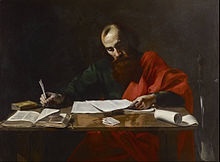
The second letter in the New Testament that is addressed to Timothy presents a scenario that sees Paul in prison (1:8; 2:9), where he is in contact with a group otherwise unknown from his letters—Phygelus and Hermogenes (1:15), Crescens (4:10), Carpus (4:13), Eubulus, Pudens, Linus and Claudia (4:21)—as well as with others known from letters of Paul and/or that narrative of Acts—Onesiphorus (1:16), Demas and Titus (4:10), Luke and Mark (4:11), Tychicus (4:12), Prisca and Aquila (4:19), Erastus (4:20), Trophimus (4:20), and Timothy himself (1:2).

We have already considered a number of these people connected with Paul; see https://johntsquires.com/2022/10/19/personal-notes-from-paul-i-timothy-and-titus-demas-and-crescens-2-tim-4-pentecost-20c/

In this post, we encounter two figures who are well-known in Christian history—because their names have been attached to two of the four Gospels that are included in the New Testament.

Luke

The author appears to have been a part of a larger group of co-workers, now somewhat diminished; “only Luke is with me” (4:11). There are two other mentions of Luke in Pauline material. One comes at the end of the personal letter to Philemon: “Epaphras, my fellow prisoner in Christ Jesus, sends greetings to you, and so do Mark, Aristarchus, Demas, and Luke, my fellow workers” (Phlm 23–24). So Luke was a real historical figure, and a fellow worker alongside Paul at some stage.

The other is in the letter to the Colossians, where the writer reports that “Luke, the beloved physician, and Demas greet you” (Col 4:14). This short note appears in a longer concluding section (Col 4:10–18) which shares many qualities with 2 Tim 4:9–22, since a number of individuals are identified as a way of strengthening relationships across the communities of faith as a way to conclude the letter.

The Colossians description of Luke as “the beloved physician” was swiftly adopted in the developing second century apologetic which sought to identify each of the four canonical Gospels with figures in the apostolic age. Matthew and John were attributed to individuals named within “the twelve”, whilst Mark was associated with Peter, another of “the twelve”. (Outside the canon, the same apologetic move is undertaken in relation to the Letter of Barnabas; similar apologetic claims are placed in opening verse of the Gospel of Thomas.)

The third Gospel was linked with Paul through the purported author, “Luke, the beloved physician, companion of Paul”—a description which collates the mentions of Luke in Philemon, Colossians, and 2 Timothy, into one person, claimed (with no supporting evidence in the actual manuscript texts) to have been the author of “the orderly account of the things being fulfilled” which was addressed to “most excellent Theophilus” (Luke 1:1–4).

The authorship of Colossians is debated; I see this as a letter written by a student of Paul after his life, evoking many of his ideas and using much of his familiar language, although reworked for the different context that was in view in that letter. (Others claim it as an authentic letter of the historical Paul). The description of Luke as a physician is thus, in my view, later than Paul’s time. Likewise, the notion that Luke, the companion of Paul, is reflected in the “we passages” in Acts, is based on a misreading of the purpose of those passages.

John Mark

Alongside Luke, the letter mentions Mark: “get Mark and bring him with you, for he is useful in my ministry” (4:11). The figure of Mark appears at various places in other New Testament documents. In Acts, where he is introduced as John Mark, he is accompanying Barnabas and Saul (as he was then known) as they return to Jerusalem (Acts 12:25) after the year they have spent in Antioch (Acts 11:25–26).

Some time later, we are told, after a meeting in Jerusalem concerning preaching activity amongst the Gentiles (Acts 15:1–36), as Paul invites Barnabas to revisit the places they had been previously, “Barnabas wanted to take with them John called Mark” (15:37), but Paul disagreed. “Paul decided not to take with them one who had deserted them in Pamphylia and had not accompanied them in the work” (15:38). This refers to the fact that John Mark left them in Perga, before they went on to Antioch in Pisidia (13:13–14).

“The disagreement became so sharp”, the author of Acts reports, “that they parted company; Barnabas took Mark with him and sailed away to Cyprus; Paul chose Silas and set out” through Syria and Cilicia (15:41), and eventually across into Macedonia (16:9-10). Why John Mark had decided to leave the group in Perga is never explained. Presumably Barnabas and Mark were active in Cyprus and other places, not reported in Acts.

Two documents dated to the 5th and 6th centuries respectively, the Acts of Barnabas and the Encomium of the Apostle St. Barnabas, do pick up from Acts 13:14, recounting the missionary journey and indeed the martyrdom of Barnabas in Cyprus. In the Encomium, John Mark continues on from Cyprus to Ephesus, and eventually writes the second Gospel. But none of this is evident in any New Testament text.

In both Philemon (1:24) and Colossians (4:10), Mark is mentioned along with Aristarchus; the latter reference identifies Aristarchus as “my fellow prisoner” and Mark as “the cousin of Barnabas” (4:10). Whatever breach had occurred between Paul and Mark appears not to have been enduring, as the directive to the Colossians concerning Mark is, “if he comes to you, welcome him”.

Mark is also mentioned at the end of the first letter attributed to Peter, where greetings are sent to “the exiles of the dispersion” from “your sister church in Babylon … and my son Mark” (1 Pet 5:13). The relationship evident here between Peter and Mark seems to have contributed to the second century perception, attributed to Papias of Heirapolis, who in turn claimed that “John the Elder … in his capacity as Peter’s interpreter, wrote down accurately as many things as he recalled from memory—though not in an ordered form—of the things either said or done by the Lord” (quoted by Eusebius of Caesarea in his Ecclestiastical History 3.39).

*****

still more to come … … …

Personal notes from Paul (I): Timothy and Titus, Demas and Crescens (2 Tim 4; Pentecost 20C)

The second letter in the New Testament that is addressed to Timothy presents a scenario that sees Paul in prison (1:8; 2:9), where he is in contact with a group otherwise unknown from his letters—Phygelus and Hermogenes (1:15), Crescens (4:10), Carpus (4:13), Eubulus, Pudens, Linus and Claudia (4:21)—as well as with others known from letters of Paul and/or that narrative of Acts—Onesiphorus (1:16), Demas and Titus (4:10), Luke and Mark (4:11), Tychicus (4:12), Prisca and Aquila (4:19), Erastus (4:20), Trophimus (4:20), and Timothy himself (1:2).

The letter suggests that the writer was previously in Corinth and Miletus (4:20) and is in Rome as he writes (1:17); the posture within the letter suggests a mature believer, imparting wisdom to a younger co-worker, writing at a time near the end of his life. This some commentators date this to the latter stage of Paul’s life, while he was under house arrest in Rome (Acts 28:16).

The excerpt from 2 Timothy which is offered by the lectionary this coming Sunday includes reference to quite a number of named individuals. Careful study of this group can reveal quite a lot about the activities of Paul and those who were involved with him. This section of the letter is one of the parts of this letter that seem to reflect, very strongly, the historical figure of Paul.

The options for interpreting this are (1) the whole letter was actually written by Paul (a view that I don’t hold, for reasons explained elsewhere); (2) that the letter as a whole was written after the lifetime of Paul, but a scrap of papyrus with specific names and details from Paul’s lifetime was known to the writer, who skilfully integrated into the letter to give it the feel of an authentic letter; or (3) the late first century letter writer crafted this letter on the basis of his knowledge of Paul, drawing on letters that we know as well as other material no longer extant. My own choice is the middle option.

Timothy

We know from the authentic letters of Paul that he regarded Timothy as his “co-worker” (Rom 16:21) and fellow-preacher (2 Cor 1:19). Timothy provided an invaluable role as a regular intermediary between Paul and believers in Thessalonica (1 Thess 3:1–6), Corinth (1 Cor 4:17; 16:10) and Philippi (Phil 2:19–24). Timothy is described as the co-writer, with Paul, of three authentic letters (2 Cor 1:1; Phil 1:1; 1 Thess 1:1) as well as two debated letters (Col 1:1; 2 Thess 1:1). In Acts, he appears regularly as an associate of Paul (Acts 16:1–2, 14–15; 17:5; 19:22; 20:5).

The letter as a whole is addressed to Timothy, but he seems to stand as a cipher for those in leadership roles in the church, most likely later in the first century. The passage in this Sunday’s lectionary begins with a direct construction to Timothy: “do your best to come to me soon” (6:9), and later in the passage (just after the lectionary selection ends) there is a reiteration of this instruction with a timeframe added: “do your best to come before winter” (6:21).

Demas

The reference to Demas is not flattering; he is “in love with this present world, has deserted me and gone to Thessalonica” (4:10). Demas is mentioned also in a group of four men in the letter to Philemon, when Paul notes that “Mark, Aristarchus, Demas, and Luke, my fellow workers” send their greetings (Phlm 24). He is mentioned again in Col 4:14, sending greetings along with “Luke the beloved physician”. The negative description of Demas in 2 Tim 4:10 indicates that Paul did not have universal success in his missionary efforts. Demas appears to have parted ways from Paul and others in unhappy circumstances.

Crescens and Titus

The neutral note that “Crescens has gone to Galatia” (4:10) reveals little other than the fact of the mobility of the circle of believers associated with Paul. That is strengthened by the next clause, “Titus [has gone] to Dalmatia”. Titus, like Timothy, accompanied Paul during his ministry. He went with Paul and Barnabas to Jerusalem (Gal 2:1, 3) and was a fellow-worker with Paul in ministry to the Corinthians (2 Cor 2:13; 7:6, 13–15; 8:6, 16, 23; 12:18). The capacity for mobility, evidenced in these notes of Titus and Crescens, is reflected in the constant travels of Paul across his letters and Acts.

…..

more to come … see