This Sunday, the lectionary invites us to hear a section of the prophet Joel. It is a passage which contains words well known to Christians, as the words about dreams and visions and prophesies (Joel 2:28–32) are quoted by Peter when speaking on the Day of Pentecost (Acts 2:14–21).
The words that Joel speaks to the people of his day begins with lament; he calls for repentance amongst the people of Judah as the day oft he Lord approaches. Nothing in this book provides any clues as to the time when Joel was active. The identification of the prophet as “son of Pethuel” (Joel 1:1) gives no clue, as Pethuel appears nowhere else in the Hebrew Scriptures—indeed, the name Joel, itself appears nowhere else. The name appears to combine the divine names of Jah and El, suggesting that it may be a symbolic creation. Was Joel an historical person?
Lament, as we have noted, is the opening note sounded by Joel, as he calls on the “ministers of God” to “put on sackcloth and lament” (1:13). This call reminds us of the response of the pagans in Nineveh (Jonah 3), whilst his remonstrations that “the day of the Lord is near” (1:15) echoes the motif of “the day” already sounded by other prophets (Amos 5:18–20; Isa 2:12, 17; 13:6–8; 34:8; Zeph 1:7, 14–15; Jer 35:32–33; 46:10).
This day forms the centrepiece of Joel’s undated prophecies, as he describes that day as “a day of darkness and gloom, a day of clouds and thick darkness!” (Joel 2:2), when “the earth quakes before them, the heavens tremble, the sun and the moon are darkened, and the stars withdraw their shining” (2:10). He describes the response of the people “in anguish, all faces grow pale” (2:6).
However, Joel adheres to the constant thread running through Hebrew Scriptures, that the Lord is “gracious and merciful, slow to anger, and abounding in steadfast love, and relents from punishing” (2:13). Because of this, he yearns for the people to “turn with all your heart, with fasting, with weeping, and with mourning” (2:12), sensing that there might be hope of restitution for the people.
Joel calls for the people to gather (2:15–16); the oracle that follows paints a picture of abundance and blessing (2:18–27), affirming that “my people shall never again be put to shame” (2:27).
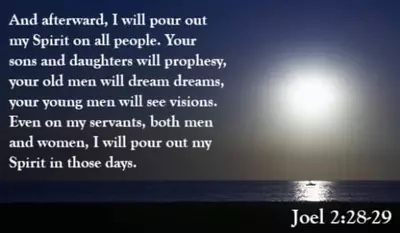
The prophet then speaks the words which are offered to us in this Sunday’s first reading; words which have been given a central place in the later story of the Christian church. Here, the prophet foreshadows that the blessings of God will be manifest through the outpouring of the spirit: “your sons and your daughters shall prophesy, your old men shall dream dreams, and your young men shall see visions; even on the male and female slaves, in those days, I will pour out my spirit” (2:28–29).
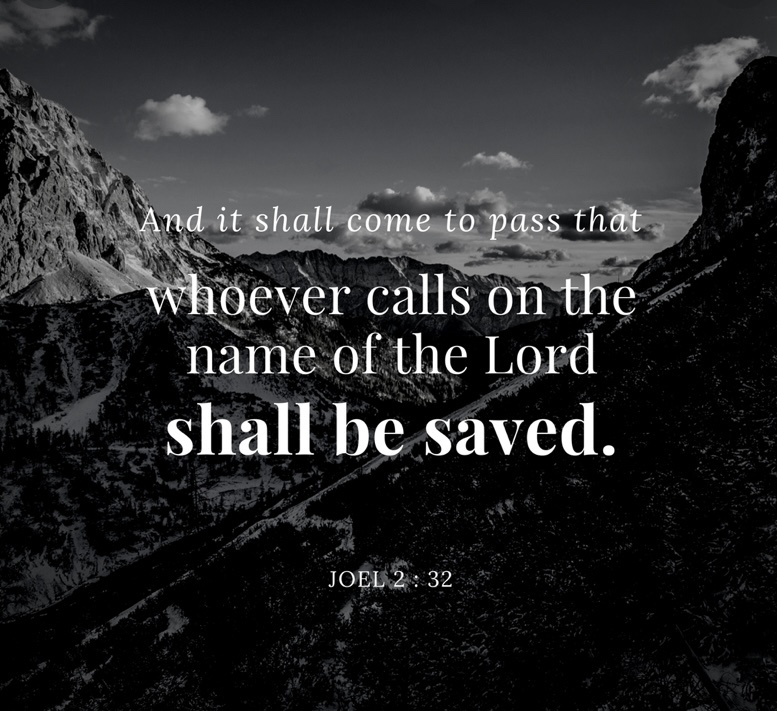
This promise is specifically for “all flesh”; this universal vision informs the whole outward impulse of the movement of followers of Jesus, after the day of Pentecost, which Peter interprets as being a fulfilment of this prophecy (Acts 2:14–21). Events following on from that day, as recorded in Acts, show how those words come to be fulfilled in the movement initiated by Jesus and his followers. And in the early days of this movement, in a letter written by Paul, the promise that “everyone who calls on the name of the Lord shall be saved” is reiterated (Rom 10:13, quoting Joel 2:32; and note a different version quoted at 2 Tim 2:19).
The day of the Lord that is envisaged by Joel (2:31) will signal a significant reversal for Israel. The Lord laughs at other nations (3:1–8), a reversal that pivots on a turn from despair to hope, from the threats of judgement to a glorious future (3:9–21). Joel repeats the irenic vision of swords being beaten into ploughshares (3:10; see Isa 2:4; Mic 4:3); he sees a ripe harvest (3:13), the land will drip with sweet wine, and there will be milk and water in abundance (3:18). The voice of the Lord “roars from Zion, and utters his voice from Jerusalem, and the heavens and the earth shake” (3:16; cf the similar pronouncement of Amos at Am 1:2; 3:8).
The last word of this book, “the Lord dwells on Zion” (3:21), provides assurance and certainty for the future. These words of hope promises a peaceful future for the nation. When Joel might have been speaking these words cannot be definitively determined; it could have been under the Assyrian threat, during the Babylonian dominance, in the time of exile, or after the return to the land.
Whenever the prophet spoke these words, the promise of hope holds good in each of these scenarios. And that promise of hope has been taken up in the movement that was initiated by Jesus, in Peter’s Pentecost speech—which provides a programmatic announcement of what then takes place as the good news spreads from Jerusalem and Judea, into Samaria, and out to the ends of the earth. God’s Spirit continues to be active. And so, “everyone who calls on the name of the Lord shall be saved”.
A post from my guest blogger, the Rev. Karyl Davison, a Deacon who is in placement as one of the Ministers at Kippax Uniting Church.
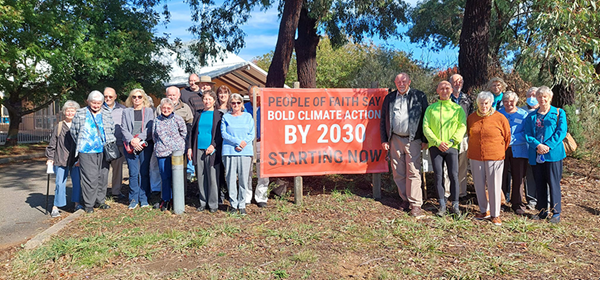
The Kippax congregation has been celebrating the Season of Creation for almost 10 years, but this year’s theme, Listen to the Voice of Creation, inspired us to do things a little differently in 2022. Because it seems to us that the Voice of Creation is crying out to take urgent and meaningful action on climate change and its impact on the whole created order.
In Week 1, Rev. Dr Ockert Myer observed “that inexplicable thing that permeates all of creation and all of life, that inexplicable thing that Job longed for, that Luther longed for, that all of us long for,” is grace. “And this grace, Job discovered, is revealed in the crevasses of creation itself – from the springs of the sea or the songs of the stars.”
Ms Alison Weeks, Chair of the Catholic Archdiocesan Caring for Creation Movement in the Canberra-Goulburn Archdiocese, spoke to us in Week 2 about the Pope’s climate encyclical,Laudato Si’, which means Praise Be to You! The subtitle of the encyclical is On Care For Our Common Home, and represents “a seismic shift in the nature of Catholic encyclicals and the concerns of the Church.”[1] Alison outlined the seven goals of Laudato Si’: 1. the Cry of Earth 2. the Cry of the Poor 3. Ecological Economics 4. Simple Lifestyles 5. Ecological Education 6. Ecological Spirituality; and 7. Community Involvement and Participation.
The Canberra-Goulburn Archdiocese has signed up to this platform, and has committed itself to developing an action plan to implement these goals.
I was struck by the simplicity of just one line in the encyclical: “Purchasing is always a moral act – not simply an economic one.”[2] It’s one we have repeated each subsequent week at Kippax.
As I planned out the Season, I reflected that taking action on climate change is one of the places where faith and politics meet. The Christian Church has a unique perspective to bring to dialogue around climate because we believe that God at the centre of everything. Yet the reality is that meaningful change has to occur in the political realm.
And so for Week 3 we invited Karen Middleton, Press Gallery Journalist of the Year and member of the Kippax congregation, to talk to us about climate policy in the light of a change of government. Karen gave us an overview of climate policies since 2007. We were reminded that Kevin Rudd introduced legislation for a Carbon Pollution Reduction Scheme, legislation that was rejected in the Senate with the help of the Greens because it didn’t go far enough.
As we know, last month, the Albanese government’s greenhouse gas emissions reduction legislation passed, this time with the support of the Greens who insisted that the new legislation says the target is a cut of at least 43%, leaving room for more. ACT Senator, David Pocock, won support for some amendments including strengthening the advisory role of the Climate Change Authority. Voting against the amended bill was the Liberal-National Coalition, the two One Nation Senators and the United Australia Party Senator. Tasmanian Liberal, Bridget Archer crossed the floor to vote for it.
From a tweet by Zoe Daniel (Photo by Auspic) “The moment at which the Australian parliament’s lower house finally voted to enshrine a climate target (floor not ceiling) in legislation. #auspol“
While there is a long way to go, it seems that the Albanese government is beginning to take meaningful action in response to climate change, and there are signs that this will continue.
At the same time as we Listen to the Voice of Creation, we felt it was critical to hear the voice of those who will be most affected by the warming of the climate – our young people. So in the final week of the Season of Creation young people from the Kippax congregation were invited to tell the congregation how they felt about climate change.
Sam (aged 10) created a video of him interviewing people at BILT, our intergenerational worship community. Most of those interviewed (all under 40) told us they were worried about climate change and the future of the planet, and want we adults to do whatever we can to reduce the warming of our planet. We also heard from Luke who, rather than worrying about the future, has faith that what we do now will form the groundwork for a positive future for our planet.
*****
[1] Alison Weeks, Presentation on Laudato Si’, 11 September 2022
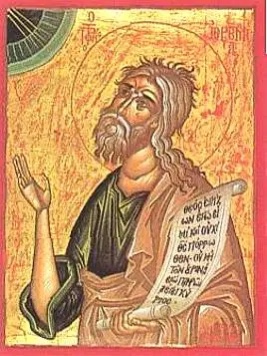
Jeremiah lived at a turning point in the history of Israel. The northern kingdom had been conquered by the Assyrians in 721 BCE; the elite classes were taken into exile, the land was repopulated with people from other nations (2 Kings 17). The southern kingdom had been invaded by the Assyrians in 701 BCE, but they were repelled (2 Kings 18:13–19:37). King Hezekiah made a pact with the Babylonians, but the prophet Isaiah warned that the nation would eventually fall to the Babylonians (2 Kings 20:12–19). Babylon conquered Assyria in 607 BCE and pressed hard to the south; the southern kingdom fell in 587 BCE (2 Kings 24–25) and “Judah went into exile out of its land” (2 Ki 25:21).
Jeremiah lived in the latter years of the southern kingdom, through into the time of exile—although personally, he was sent into exile in Egypt, even though most of his fellow Judahites were taken to Babylon. The difficult experiences of Jeremiah as a prophet colour many of his pronouncements. He is rightly known as a prophet of doom and gloom.
And yet, in the midst of his despair, Jeremiah sees hope: “the days are surely coming, says the Lord, when I will restore the fortunes of my people, Israel and Judah, says the Lord, and I will bring them back to the land that I gave to their ancestors and they shall take possession of it” (30:3).
He goes on to report that the Lord says to the people, “I will be the God of all the families of Israel, and they shall be my people”, for “the people who survived the sword found grace in the wilderness; when Israel sought for rest, the Lord appeared to him from far away” (31:1–2).
This grace was made known to the people in the affirmation that God makes, “I have loved you with an everlasting love; therefore I have continued my faithfulness to you” (31:3).
In this context, Jeremiah indicates that the Lord “will make a new covenant with the house of Israel and the house of Judah … I will put my law within them, and I will write it on their hearts; and I will be their God, and they shall be my people” (31:31–34). This covenant will give expression to the love and faithfulness of the Lord, which is how God’s grace is to be known by the people. This renewal of covenant is offered in grace; the requirements of the covenant make clear and tangible the grace-filled relationship that the people have with their God.
Clear appreciation for the grace that is offered to the people by the laws which guide the people to keep the covenant can be seen in the affirmation of the Torah as “perfect, reviving the soul … sure, making wise the simple … right, rejoicing the heart … clear enlightening the eyes … pure, enduring forever … true and righteous altogether … more to be desired than gold … sweeter also than honey” (Ps 19:7–14), and then by the majestically grand affirmations of Torah in the 176 verses which are artistically-arranged into acrostic stanzas of Psalm 119 (“happy are those … who walk in the way of the Lord … I long for your salvation, O Lord, and your law is my delight”, vv.1, 174). The laws shape the way that the covenant is kept; the covenant gives expression to the steadfast love and grace of God.
*****
The renewal of the covenant was not a new idea in the story of Israel. God had entered into covenants with Abraham, the father of the nation (Gen 15:1–21) and before that, in the story of Noah, with “you and your descendants after you, and with every living creature that is with you … that never again shall all flesh be cut off by the waters of the flood” (Gen 9:8–11). The covenant given to Moses on Mount Sinai (Exod 19:1–6), accompanied by the giving of the law (Exod 20:1–23:33), is sealed in a ceremony by “the blood of the covenant” (Exod 24:1–8).
The covenant with the people that Moses brokered is renewed after the infamous incident of the golden bull (Exod 34:10–28), then it is renewed again under Joshua at Gilgal, as the people enter the land of Canaan after their decades of wilderness wandering (Josh 4:1–24). It is renewed yet again in the time of King Josiah, after the discovery of “a book of the law” and his consultation with the prophet Huldah (2 Chron 34:29–33).
The covenant will be renewed yet another time, after the lifetime of Jeremiah, when the exiled people of Judah return to the land under Nehemiah, when Ezra read from “the book of the law” for a full day (Neh 7:73b—8:12) and the leaders of the people made “a firm commitment in writing … in a sealed document” which they signed (Neh 9:38–10:39). So renewing the covenant, recalling the people to their fundamental commitments made in relationship with God, is not an unknown process in the story of ancient Israel.
However, the particular expression of renewal that Jeremiah articulates is significance, not only for the exiled Israelites, but also centuries later, for the followers of the man from Nazareth who came to be recognised as God’s Messiah. Jeremiah’s articulation of the promise of a “new covenant” will prove to be critical for the way that later writers portray the covenant renewal undertaken by Jesus of Nazareth (1 Cor 11:25; Luke 22:20; 2 Cor 3:6–18; Heb 8:8–12).
Especially significant is the claim that this renewed covenant “will not be like the covenant that I made with their ancestors when I took them by the hand to bring them out of the land of Egypt—a covenant that they broke” (Jer 31:32), for God “will put my law within them, and I will write it on their hearts; and I will be their God, and they shall be my people” (31:33). It is a covenant which has “the forgiveness of sins” at its heart (31:34)— precisely what is said of the “new covenant” effected by Jesus (Matt 26:28; and see Acts 5:31; 10:43; 13:38; 26:18).
*****
To signal his confidence in this promised return, Jeremiah buys a field in his hometown of Anathoth from his cousin Hanamel (32:1–15). the purchase serves to provide assurance that the exiled people will indeed return to the land of Israel; “houses and fields and vineyards shall again be bought in this land” (32:15).
Jeremiah exhorts the people to “give thanks to the Lord of hosts, for the Lord is good, for his steadfast love endures forever!” (33:11). Here, Jeremiah makes use of a phrase that recurs in key places throughout Hebrew Scripture, where it crystallises what the Israelites appreciated about the nature of God. The Lord is said, a number of times, to be “gracious and merciful, slow to anger and abounding in steadfast love” (Exod 34:6; 2 Chron 30:8–9; Neh 9:17, 32; Jonah 4:2; Joel 2:13; Ps 86:15; 103:8, 11; 111:4; 145:8–9). This is the Lord God who enters into covenant, time and time and again, with the people.
There is a strong sequence of affirming, hopeful oracles which characterise this section of Jeremiah, from “the days are surely coming … when I will restore the fortunes of my people, Israel and Judah, and I will bring them back to the land that I gave to their ancestors” (30:3) to “I will restore their fortunes, and will have mercy on them” (33:26). All of this is done because, as the Lord declares, “only if I had not established my covenant with day and night and the ordinances of heaven and earth, would I reject the offspring of Jacob and of my servant David” (33:25–26). It is the covenant which holds the Lord and the people together.
So Jeremiah offers a clear sign of hope for the future; in the places laid waste by the Babylonians, “in all its towns there shall again be pasture for shepherds resting their flocks … flocks shall again pass under the hands of the one who counts them, says the Lord” (33:12–13). As the people return to the land, the Lord “will cause a righteous Branch to spring up for David; and he shall execute justice and righteousness in the land” (33:15).
This oracle, also, is significant for the later community that developed from the followers of the man from Nazareth; the promise of a “righteous branch for David” becomes the title “Son of David”, which is then applied to Jesus in all three Synoptic Gospels (Mark 10:47–48; 12:35; Matt 1:1, 20; 9:27; 12:23; 15:22; 20:30, 31; 21:9, 15; 22:42; Luke 18:38–39). The whole sequence of oracles in this section of Jeremiah is of key significance for followers of Jesus in later ages.
Every year during October, Mental Health Month is held. It is based around World Mental Health Day, which was first celebrated in 1992, as an initiative of the World Federation for Mental Health, a global mental health organization with members and contacts in more than 150 countries. World Mental Health Day falls on 10 October every year and is now promoted internationally by the World Health Organisation.
The day, and the month, offers a way of raising awareness of mental health issues around the world through government health departments and civil society organizations across the globe. The WHO says that “World Mental Health Day provides an opportunity for all stakeholders working on mental health issues to talk about their work, and what more needs to be done to make mental health care a reality for people worldwide.”
This year, the theme for World Mental Health Day is Making Mental Health & Well-Being for All a Global Priority. The hope is that focussing attention on the mental health of people will result in a better general awareness in society as well as improvements in services offered. 2019, before the COVID-19 pandemic, it was estimated that one in eight people globally were living with a mental disorder. So this is a much-needed focus on a long-established matter. See https://www.who.int/news-room/feature-stories/mental-well-being-resources-for-the-public
Certainly, the years of the pandemic have exacerbated short- and long-term stresses, undermining the mental health of millions. As mental health services were disrupted by restrictions and lockdowns, so the treatment gap for mental health conditions has widened. The need for ongoing attention to providing good mental health support is even more evident.
In NSW, people are being encouraged to Tune In this mental health month, with resources providing Tips to Tune In (practise self-compassion, take time to rest, notice your boundaries, connect with friends) as well as tips for a less-stressed workplace and colourful posts for social media, to spread awareness of the month. See https://mentalhealthmonth.wayahead.org.au/downloadable-resources/
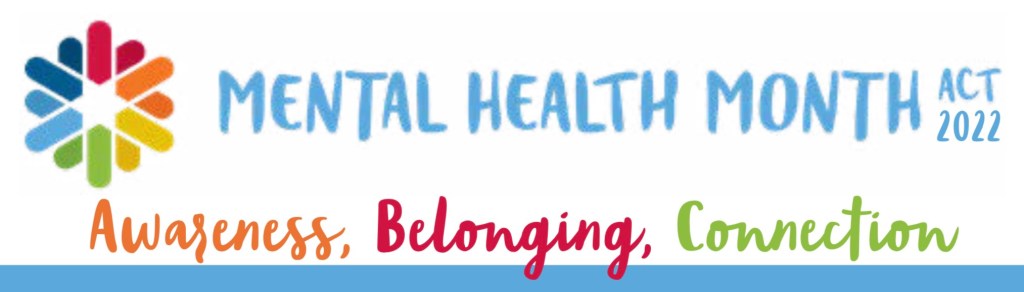
In the ACT this year, the theme for the month is as simple as A—B—C: namely, Awareness—Belonging—Connection. Awareness is about understanding how to maintain and boost our mental wellbeing, realising when we need to reach out for help, and knowing where to get it. Belonging is about looking out for each other, feeling safe and supported, and knowing that we’re not alone: there are others going through the same thing. Connection is about our relationships: not just with our friends, families and those we care about, but also the groups, clubs, and networks we rely on to help us stay happy and healthy. See https://www.mentalhealthmonthact.org/
Loneliness is one significant cause of mental health issues. The Australian Institute of Health and Welfare reports that most Australians will experience loneliness at some point in their lives. 1 in 3 (33%) Australians reported an episode of loneliness between 2001 and 2009. 40% of these people reported experiencing more than 1 episode. In surveys undertaken since the onset of the COVID-19 pandemic, just over half (54%) of respondents reported that they felt more lonely since the start of the pandemic. See https://www.aihw.gov.au/reports/australias-welfare/social-isolation-and-loneliness-covid-pandemic
Friendship, care and support is something that the church can offer to people—especially to people who are experiencing loneliness. A supportive community can help lonely people to strengthen their mental health and have a more positive life. It’s something that every local congregation can easily do. Look around in your community; who are the lonely people? How can you offer them friendship and support? How can you live out the Gospel by giving compassionate care to such people?
*****
For myself, I have lived with an awareness of the importance of taking care of my own mental health for some decades. Long before the pandemic, I recognised the importance of accessing support services and taking steps to ensure that my mental health remained robust. It hasn’t always been so—there have been some difficult periods of depression, anxiety, and dysfunction that I have experienced. Some of those times were really tough. Fortunately, there were other times—more times, I am pleased to say—that were positive, enjoyable, hope-filled times.
I am most grateful for the consistent, loving support and the always perceptive guidance that I have had over all those years from my wife Elizabeth. There have been a number of times when she has made sure that I was safe, helped me to seek professional assistance, and let people know that I wouldn’t be able to carry through some of my responsibilities at those times. I am sure that I wouldn’t have made it through all those years without her.
I was also very fortunate that the church made generous provision for me to have extended periods of leave when that was necessary, following medical advice. I am so glad that I came through those periods of time and was able to continue in ministry and have the opportunity to serve in a variety of roles.
There are various learnings that I have taken from these experiences. In the early times, when I had no explanation for what was happening, working with various professionals to explore matters was certainly very hard work. In time, when a clear diagnosis was made and then a workable treatment regime was put into place, there was a clear pathway to enjoying better mental health. But it would take quite some time to get there.
Those were difficult and, at times, scary times. Coming to grips with the realities of life—learning to be honest about myself, with myself, and with trusted others—was a slow process, full of challenges, but ultimately a very important pathway to follow.
Integral to my particular process of therapy was dealing with memories of the past that surfaced. This can be a real challenge—especially when there has been no clear, present memory of those traumatic experiences back in the past. I had to be prepared to learn new things about myself. This was hugely confronting. Eventually, realising that many of these learnings provide insightful explanations about “the way I am”, and especially my specific idiosyncrasies, proved to be a helpful process. Difficult, costly, but ultimately quite rewarding.
In this process, I learnt the importance of building resilience to engage at deeper levels with what life presents. Dealing with a series of shocks that surfaced during periods of deepened depression, increased anxiety, and gradually-clarifying memories, needed constant inner strength. It was draining and demanding. Over time, looking back, I can see how I learnt to accept and integrate those learning experiences into my sense of who I am as a whole person.
For myself, I found that balancing personal and professional needs was very important. In crisis periods, prioritising the personal over the professional was essential. As each of those crises lessened in intensity, the integration of specific professional tasks became possible, so a phased “return to work” could take place in an appropriate way.
At times, my work in ministry, either in educational or in organisational/oversight roles, presented challenging emotional situations. In the regular run of things, being aware of the saturation level of emotional intensity in my life was quite important. I needed to know when to plunge in to such situations, and when to step back from those situations and leave others to deal with them.
This has helped me develop, I believe, a growing capacity to balance honesty and care: to know when it was most important to confront the truth in a situation, and when it was wiser to offer pastoral care to a person, or persons, caught in such a situation. I like to think that my own psychological journey, exploring and strengthening my own mental health, has given me some capacity to empathise with hurting people, to engage sensibly with angry people, to speak clearly to confused people. I don’t for one second imagine that I am world’s best at these kind of things— far from it! But I have tried to develop skills in such things over the decades.
When I look back on the three decades during which good mental health has been an important focus for me, I think that I can see how I began to forge a new way of being, in the midst of realising that I was actually a rather motley collection of battered and bruised pieces dating from various incidents in my life, long, Iong ago. I have thus had a focus on “becoming integrated” as a person (or, at least, becoming “more integrated” than previously). I think that this has been important for me to do as a person, and it has helped me to function effectively as a minister. I hope that has been the experience of other people.
So this year, on World Mental Health Day, I join with interested people around the globe in emphasising the importance of taking care of our own mental health, being alert to the signs of stress in other people’s mental health, and advocating for the provision of strong mental health services in our society. I hope you will share in that same commitment.
There have been some great speeches by politicians over the years. It was before my time, but Chifley’s “light on the hill” speech at a 1949 Labor Conference in Sydney, is often cited. “We have a great objective”, Prime Minister Chifley declared, “the light on the hill, which we aim to reach by working the betterment of mankind [sic.] not only here but anywhere we may give a helping hand. If it were not for that, the Labor movement would not be worth fighting for.” The Labor party has referenced this speech regularly in the ensuing decades.
So too, also before my time, but also regularly referenced in the decades that followed, was a 1941 speech by Prime Minister Menzies, identifying “the forgotten class — the middle class — those people who are constantly in danger of being ground between the upper and the nether millstones of the false war; the middle class who, properly regarded represent the backbone of this country.”
Alongside them, who could forget other Prime Ministerial offerings? One of huge significance was Kevin Rudd’s 2008 Apology to the Stolen Generations: “we say, sorry; to the mothers and the fathers, the brothers and the sisters, for the breaking up of families and communities, we say sorry; and for the indignity and degradation thus inflicted on a proud people and a proud culture, we say sorry.”
Another, also filled with rhetorical power and cultural significance, was Paul Keating’s Redfern Speech in 1997: “we committed the murders, we took the children from their mothers, we practised discrimination and exclusion; it was our ignorance and our prejudice.”
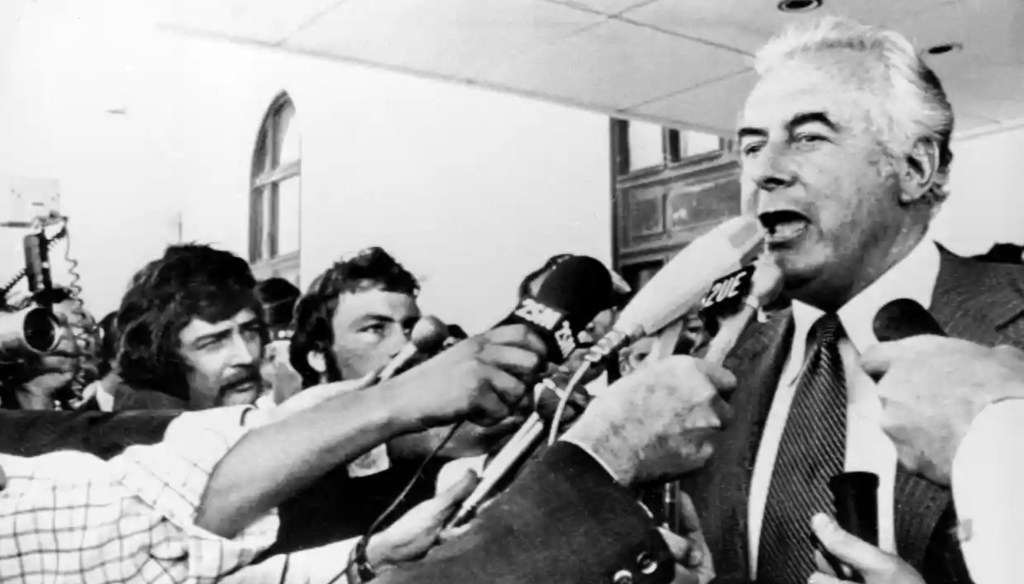
And, of course, there is Gough Whitlam, a master wordsmith, whose quick wit and rhetorical prowess was evident on the steps of Old Parliament House, immediately after the treachery of The Dismissal in November 1975; “well may we say God Save the Queen, because nothing will save the Governor-General.”
All memorable speeches, on (mostly) memorable occasions, eliciting words which live on in Australian culture and memory. They point to the best in Australian society, the most worthy aspects of our developing national culture.
There have been other signal speeches with a very different perspective—speeches that I won’t quote from, such as Pauline Hanson’s 1996 inaugural speech making outrageously discriminatory racist claims; John Howard, opportunistically picking up and running with this xenophobic streak with his declaration, in 2001, that “we will decide who comes to this country”; and Fraser Anning’s terrible reference to “the final solution” in his 2018 speech. These speeches live on in infamy. They reflect the worst of who some of us are.
Today is the tenth anniversary of the most recent memorable, and utterly praiseworthy, speech by a federal political leader: a speech by Julia Gillard that has come to be known as the Misogyny Speech. This speech was delivered on 9 October 2012, with the penetrating declaration, “I will not be lectured about sexism and misogyny by this man; I will not—not now, not ever ”, searing the air in the House of Representatives chamber, as Prime Minister Gillard spoke directly and forcefully to the Opposition Leader, Tony Abbott.
Katherine Murphy has written a fine analysis of the moment, and how the speech was a turning point in the cultural change that focussed the nation’s attention on male privilege, misogynistic practices, and sexist words and actions, especially in the federal political arena. From that speech to the Enough is Enough! rallies on 15 March 2020, a significant shift has taken place. There is momentum for deep-seated cultural change, despite the troglodyte resistance of the pathetic remnant of conservative members currently in the post-Morrison federal parliament.
Julia Gillard’s potent impromptu speech is well worth reading once again on this anniversary—and worth remembering each day as a pointer to what is of fundamental importance in our society, if we really do want to commit to a fully equitable society. We remember this fine political speech, with gratitude. We anticipate ongoing cultural change, with hope. And so may it be.
The Hebrew Scripture reading which the lectionary offers this coming Sunday is largely a letter—from Jeremiah, to some fellow-Jews, but written in the name of Jeremiah’s God. It is this letter which invites us to consider some important aspects of how we live our faith.
Jeremiah wrote this letter twenty-five centuries ago, a long, long time ago. Does this letter still hold relevance to us, today? Jeremiah wrote in the ancient Hebrew language, running from right to left across the page. It is most likely that the letter was written on a scrap cut from a roll of papyrus, or possibly leather; but there was no neat sheet of paper with carefully-inscribed words, or neatly-typed paragraphs, carefully folded into an envelope, such as we would expect of a letter today.
And not only does it look different, this letter was written to a very specific group of people, who were quite different from us. It was addressed to people in a very different situation from most of us; a group of people who had grown up in Israel, but were now refugees, sent into exile, forcibly removed from their homeland, mourning all that they had lost, and now trying to come to grip with their new life in the faraway land of Babylon.
Do you remember Psalm 137? By the waters of Babylon, we sat down and wept? This would have been the way that many of these people responded when they arrived in Babylon. And the fact that this Psalm is still in our Bible tells us that the people sang this song, for a long time; it was not just a top-40 wonder for a few weeks or months, but it was sung over and over, and became one of the sacred songs of the people for generations—through into our own time, in fact!
So this letter seems a somewhat unusual choice for the focus of our attention today, as the way in which the word of the Lord might possibly address us, in our settled, comfortable lives. What could it possibly have to offer us, as we reflect on our faith in the world of the 21st century?
And yet, the words have a distinctively contemporary, relevant feel about them. They speak of ordinary life, of family and home, of a life which is comfortable, settled, and peaceable. They speak of building relationships, undertaking good, honest work, and living with responsibility for those under our care. Hear again the heart of the letter: Build houses and live in them; plant gardens and eat what they produce. Take wives and have sons and daughters; take wives for your sons, and give your daughters in marriage, that they may bear sons and daughters; multiply there, and do not decrease. But seek the welfare of the city where I have sent you into exile, and pray to the Lord on its behalf, for in its welfare you will find your welfare.
Perhaps the heart of Jeremiah’s letter is in this simple phrase: seek the welfare of the city. This was the word of the Lord which addressed the disturbed and dispossessed Israelites who had tearfully followed their deposed Israelite King Jeconiah and his court into exile under the Babylonian King Nebuchadnezzar, wondering what awaited them there in this strange land. Could it be that this is also the word of the Lord which addresses comfortable, settled Australians, enjoying the fruits of hard work over many years, living in a time of ongoing material prosperity?
Some knowledge of the original language of the letter might be relevant as we ponder this matter. In the last verse of the letter, Jeremiah three times uses the one Hebrew word that probably most of us have heard and would recognize: the word shalom. Each time the NRSV translates this word in this letter, it uses the English term welfare. We know this word, perhaps more familiarly, through the slightly different translation, peace.
And perhaps we are also aware that the ancient sense of shalom encompasses not just peace (the absence of conflict), but also wholeness, fulfillment, security, satisfaction, a co-operative spirit, a sense that all is well with the world. This is what the fearful exiles were being encouraged to work towards.
What would it have meant for those homesick Israelites, long ago, to have been prepared to seek the welfare [the shalom—the peace—the wholeness] of the city?
I think that it might have meant things like this: Get ready for a long period of time away from “home”; there will be no quick fixes, no easy answers, no instant gratification. You are here, in this strange land, for the long haul. Settle down, make your peace with the locals. Be prepared to make this the new “home” for yourselves and your descendants.
I wonder how would we feel if that were the situation we were facing? It could mean: Be prepared to work co-operatively and constructively with the very people who have inflicted pain and suffering on you and your people. They dragged you away from home and set you to work in this strange place. They are the ones who forced you into this bad situation. They are “the enemy”. But God is telling you to work with them. To co-operate with your enemies. To love your enemies, perhaps? To co-operate with those who hold different points of view from yourself—in precisely the way that various groups in our society are learning that they must do.
The word of the Lord presents a serious challenge, then, to the exiles in Babylon.
Even more than this; Jeremiah delivers God’s message to the people in very specific ways: Be prepared to marry and raise families with people from outside of your group … be prepared to marry these strange, alien, unfamiliar people. You won’t be able to keep on marrying your own people, those who have come with you from Israel; the gene pool is too small for that to work for too long. So get yourselves ready, to marry a foreigner. You are the ones who are going to create a multi-ethnic community, a multi-cultural society.
And perhaps, then, the challenge to the people of Israel, in exile, was for them to lift their eyes above their immediate grief and pain, and do what was good, what made for peace, for the whole city. Through Jeremiah, God was telling them: Set your goals, not on the basis of what is good for me as an individual, but rather on what is best for the whole community. Seek the shalom of the city; the whole collection of human beings who are gathered in this one sprawling metropolis.
What was this city, in which they found themselves? It has been estimated that Babylon was the largest city in the world in the 17th century BCE, and again between 612 and 320 BCE— and of course it is during this latter period that Jeremiah was writing. Babylon was probably the first city to reach a population above 200,000—a figure which seems relatively small to us when we think about cities, but which would have required complex administration and organization to ensure that, just as a start, all 200,000 inhabitants were fed each day. So seek the shalom of the city means that the Israelites were being challenged to immerse themselves in the largest population, the most vibrant and diverse community of people, at that time, in the ancient Near East.
And this is the point at which I believe this ancient Hebrew letter comes alive and speaks to us with a message of relevance for our own times and our own place. Seek the shalom of the city in which you live, work, relax, shop, and worship. How might we seek the welfare of our own cities?
City life, today, is marked by its diversity, its complexity, its ambiguities and uncertainties. This is particularly so as the nature of particular suburbs and areas change over time. Once quiet dormitory suburbs for people working in the city, in nearby business centres, can change, as different groups of people move in. As times change, the old certainties of suburban life no longer hold; the predictable patterns of comfortable middle-class lifestyle are challenged. We cannot ignore these changes; we cannot hide our faith from engagement in what is taking place around us.
Perhaps a different ethos emerges in the quiet dormitory suburb, as the area transforms into a regional transport hub, is filled with medium-density housing, caters to a greater concentration of students and aged people. All of these features can be gleaned from census material; all of these factors, and more, need to be part of the deliberations for a local Congregation as they consider those vital questions: who are we? what is our ministry? what might our ministry be? what sort of leadership is required for us to develop accordingly? These are questions that all Congregations should ask on a regular basis.
In the city, says Jeremiah, the people of God are to seek the welfare, the wholeness, the shalom, of the whole population. It is a charge that we ought to hear as a clear and direct word to each of us, and to the Congregation where we are active, as we seek to contribute to the welfare of the city. What do we have to offer, as the people of God in this time, in this place?
The Uniting Church is committed to being a church that takes seriously the context in which we are located. Our Basis of Union set out to ensure that we were formed as a church that was relevant to our Australian location—not simply a colonial copy of an English or Scottish church, but an authentically Australian church. I was privileged to be trained in theology in the early years of this church, when living out our faith in the Australian context was of paramount importance.
In past years, I have been part of Congregations that have sought to engage in active ways with people in their local communities: through a weekly School for Seniors programme; by offering a weekly meal at no cost to people in the local community who are poor, or lonely; by volunteering with the telephone ministry Lifeline; by engaging with local artists in a programme called Arts in Action; by fostering constructive relationships with Indigenous students and their families; by supporting partnerships with people in the third world and developing robust micro-businesses; by undertaking training in the Sydney Alliance and engaging with local community groups on specific, focussed projects; by being active in a local environmental advocacy group, Climate Change Australia. These are but some examples of the many ways that our church has long been committed to seeking the welfare of the city.
So we, today, face the challenge of responding to the changing circumstances of our time, when fewer people claim an active belief and participation rates in church activities are much less than in the “glory days” of decades past. We might well be seeking to create new ways of being communities of faith; looking for new opportunities to make connections with people in our immediate locality; exploring the means for ensuring that our city is one which is marked by fairness and justice; and shaping a church which is committed to finding new and creative ways of expressing our faith in our own locality.
The Uniting Church is a participatory church. At every level, there are opportunities for people to play all sorts of roles, in contributing to the work of the church. We are not dominated by one group, a clergy-led church, or a male-led church, as some other denominations might appear to be. We affirm the equal role of people, regardless of their gender—males and females can exercise leadership and offer ministry; regardless of their race; regardless of their age. We believe that the Spirit is at work amongst people who are striving for justice, seeking fairness, working to create equity in the lives of other people.
As a Uniting Church, we are an inclusive church that values the contribution that each and every individual can make. We are also a church that values the commitment of groups of people—that is why we meet together, act together, and share with other groups who also act together, in organisations such as Sydney Alliance or Climate Change Australia or other local enterprises. As we work alongside others, we offer a way of understanding life which is guided by moral principles, shaped by ethical commitments, and always informed by standards based on our faith commitment. That is something of a distinctive quality which we bring.
Whilst our faith does not solve every problem or resolve every dilemma, it does equip us to think carefully and to act with integrity as we engage with others. In these ways, we can surely attend to the challenge that Jeremiah provides, and seek the welfare of the city (or town, or village) where we are.
The Sydney Alliance is an organization which has been created in recent years, as one attempt to seek the welfare of the city of Sydney, to strive to make this city a better place to live for those who have lived here a long time, and for those who are recent arrivals to the city. It has a commitment to seek justice and fairness across the city. The Uniting Church is one of the foundation members of the Sydney Alliance, along with a number of community groups, trade unions, and other religious groups drawn from the Christian, Jewish, Muslim, Buddhist and Hindu faiths.
The website of this organization describes it in this way:
“The Sydney Alliance is a citizens’ coalition whose vision is to provide our community with a voice to express common values and aspirations for a fair and just Sydney. The Alliance is broadly based across religious organisations, community organisations and unions establishing relationships that respect diversity, while building a cohesive society. The Alliance is a non-party political organisation. Its primary purpose is the ability to act for the common good to achieve social change in our communities.”
The way that the Sydney Alliance operates is through building bridges, engaging in dialogue between organisations, and seeking to find opportunities for its members to participate in reshaping the society of which we are a part. Why should the Uniting Church join itself with other organisations in our society in this way? Why should we commit time and energy to involvement in this kind of coalition, with a wide range of people who live alongside us in the city? Some of these are people who seem familiar to us—Catholics, nurses, teachers, members of the Cancer Council, bus drivers, public servants.
Some are people of nodding familiarity, perhaps, although we don’t know many of them very well—Jews, Asian women, hotel employees, members of the climate action network. Some are perhaps strongly alien to our regular lives—people from the Indian community organization Bharatiya Vidya Bhavan Australia, from the United Muslim Womens Association (complete with traditional Islamic female attire), from the Federation of African Communities Council. These are the people with whom our church is joining in this new, emerging Alliance.
Where is “the fat lady”? We know that, as the saying goes, “it’s not over until the fat lady sings”. So where is “the fat lady”? And has she sung?
Our state and federal leaders appear to think that she has been centre stage, singing her heart out. They are acting as if it is, indeed, over—that the passing of the virus through community spread has diminished, so that we can get back to “business as usual”. (Business being the operative word in government considerations about this matter—business, not health, not wellbeing, but business.)
“It’s not over until the fat lady sings”. It’s a terrible saying, actually, playing on unhelpful stereotypes about body shape and body size. The saying originated, it is often claimed, as a reference to the large-sized women who sang lead parts in operas. (Perhaps the large body size relates to the large lung capacity that is required to perform operatic arias?)
Wikipedia helpfully refers to Wagner’s grand opera cycle, Der Ring Des Nibelungen, and specifically, the last part of that long cycle, Götterdämmerung. It hypothesises that “the ‘fat lady’ is thus the Valkyrie Brünnhilde, who was traditionally presented as a very buxom lady. Her farewell scene lasts almost twenty minutes and leads directly to the finale of the whole Ring Cycle. As Götterdämmerung is about the end of the world (or at least the world of the Norse gods), in a very significant way ‘it is [all] over when the fat lady sings’.”
Others claim that it was a saying first uttered by an American sports commentator, who used the phrase at the end of a university athletics meeting in 1976; or at the end of a 1978 NBA playoff. Or perhaps it is a variant form of the phrase, “It ain’t over till it’s over”, attributed to the famous baseball player, Yogi Berra, at a baseball game in 1973.
Whatever the origin, the saying (in its various forms) is widely known. And, as far as I am concerned, it is very relevant to our current time. For we are now at a point when many people are acting, in relation to the COVID pandemic, as if “it’s over”. I hear this in what people say; I see it in how people behave—low levels of mask wearing, low levels of social distancing, less attention to ensuring that physical contact is minimised, less attention to diligent hand washing and to sneezing into your elbows, and high levels of assuming that we are back to “business as usual”. Goodness, now there is even no requirement that people stay at home when they are sick; saying that people “just need to self-regulate” is a recipe for disaster, especially amongst people who rely on the income they get each week to ensure that they “make ends meet”.
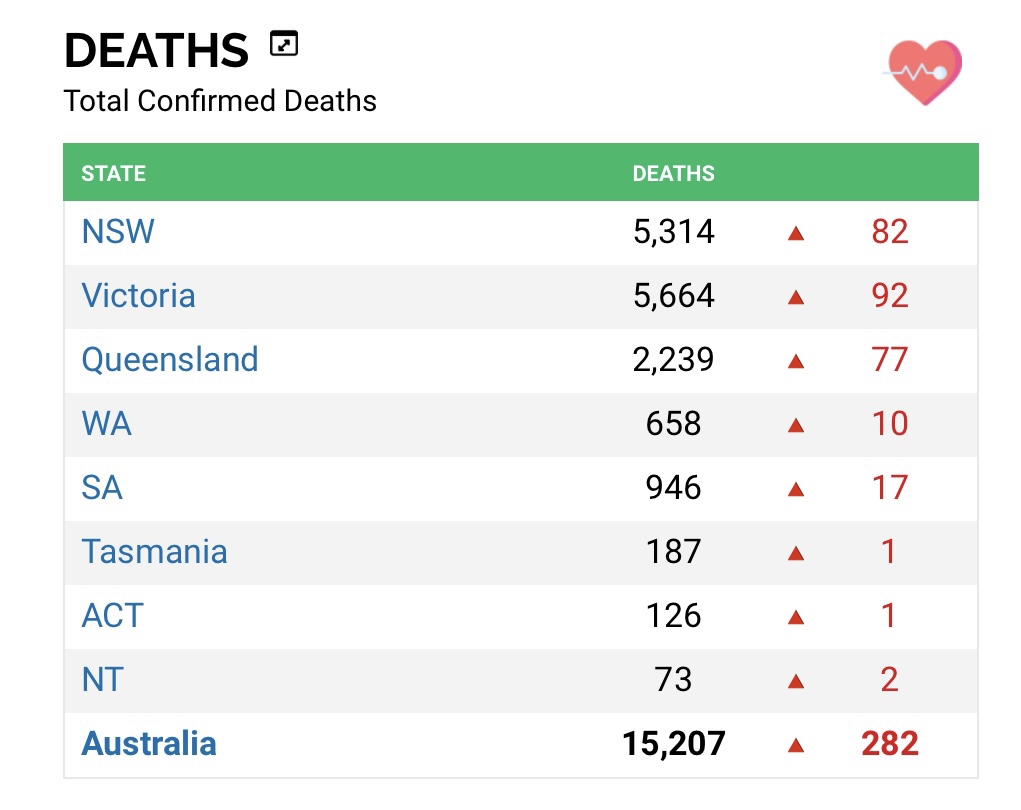
The plain truth is that it’s not over—and that it won’t be over for quite some time. And the costs of the continuing impact of the virus are many. First, we should not forget that deaths from COVID are continuing; they take place at an unacceptable rate; the latest figures show that 323 people across Australia died as a result of COVID in the week ended 21 September—that’s 46 each and every day. A week later, and the number of deaths was slightly lower, at 282, but still at a high level—that is still just over 40 people still dying each week; or 6 a day; or one every four hours.
Deaths in Australia due to COVID-19 Week ending 28 September 2022
One person dying every four hours. Think about that. All Ministers and lay people who conduct funerals and provide follow-up support to bereaved families know the deep and enduring emotional impacts that the death of one loved one can incur, spreading across the wider family, friends, and others connected with them through their life. That’s already a significant cost, both in terms of lives taken as well as in terms of ongoing emotional impacts, for one death. Imagine that recurring every four hours, constantly, without pause, day after day. That’s a huge cost in emotional, psychological, and thus medical ways. A huge cost for society.
Second, the consequences of Long COVID continue to be documented as medical studies take place; the Mayo Clinic notes that the long-term effects of “post-COVID 19 syndrome” include “fatigue, fever, respiratory symptoms, including difficulty breathing or shortness of breath and cough, neurological symptoms or mental health conditions, including difficulty thinking or concentrating, headache, sleep problems, dizziness when you stand, pins-and-needles feeling, loss of smell or taste, and depression or anxiety, joint or muscle pain, heart symptoms or conditions, including chest pain and fast or pounding heartbeat, digestive symptoms, including diarrhea and stomach pain! blood clots and blood vessel (vascular) issues, including a blood clot that travels to the lungs from deep veins in the legs and blocks blood flow to the lungs (pulmonary embolism), and other symptoms, such as a rash and changes in the menstrual cycle”.
That’s a wide range of issues which can each be very significant, causing longterm difficulties, and in some cases, contributing to an early death. That’s a second major cost.
Third, rates of absenteeism provide a striking indicator that the impacts of the pandemic are still with us. In February, the Australian Bureau of Statistics reported that “more than one in five (22 per cent) employing businesses had staff who were unavailable to work due to issues related to COVID-19”
In April, the Australian Financial Review reported that “absenteeism rates sitting 33 per cent higher than long-term averages, analysis of MYOB’s payroll data reveals”.
By July this year, this had grown to “absences already running at 50 per cent above average levels, as the highly contagious BA.4 and BA.5 variants drive a new wave of infections and hospitalisation”.
The media delighted in showing lengthy lines at airports because of staff shortages; perhaps many of us have experienced slow service at local cafes because of the same reason. The cost of extra sick leave payments is just one component of the cost in this regard. It is said that during pre-pandemic times, the “regular rates of absenteeism” cost Australian businesses around $32.5 billion a year. With increased rates of absenteeism, that cost has surely risen.
Of course, now that the requirement to isolate at home whenever a person is symptomatic has been removed, we will surely see further disruption to business enterprises—since people dependent on their wage will go to work when “just a little bit off”, and if infected with the virus, they may be infectious, and thus may well spread illness to their fellow workers—thus resulting in more people off, more time lost. I can see this. Why can’t our leaders see this?
All of which leads me to the conclusion that “it’s not over until it’s not over”—and clearly, “it’s not yet over”. We need to ensure ongoing protection from the virus in our day to day life. Of course, one hugely important way to provide strengthened protection against the COVID-19 virus is to be vaccinated— and to have each of the “booster doses” as they become available. It’s clear that widespread vaccination has contributed to a slowing of the spread of the virus.
Sadly, however, the rate of deaths due to COVID continues to be of concern. That’s simply because people who are more at risk of infection—the elderly, those with compromised immune systems, those with multiple medical conditions, and Aboriginal and Torres Strait Islanders—are thereby more likely to have a bad response to the virus, with more medical complications, and higher death rates.
I’ve found a recent study which sought to compare the efficacy of vaccination amongst healthy people with the efficacy amongst immunocompromised people. It measured the level of seroconversion, which is the capacity of the system to repel the virus. The study concluded that “the immune response to the influenza vaccine might not be as strong in immunocompromised patients, yet they appear to derive some benefit from vaccination. These findings reflect what is now being experienced with covid-19 and vaccination.”
All of which means that vaccination is a wise move, but it in no way guarantees that a person once vaccinated will definitely not suffer ill effects; and a person with medical vulnerabilities, such as having an immuno-compromised system, will still be vulnerable to illness, serious medical,complications, and death.
Which means that we need to continue all those precautions that we learnt in early 2020: wear a mask; practise good hygiene; wash your hands; sanitise with alcohol-based hand rubs; maintain social distancing; don’t touch your face; cover your mouth or nose with your arm, not your hand, when you cough or sneeze; stay t home when you are sick; close the toilet lid before flushing. All of these things, even though they are not “mandated”. All of these things, because it is just common sense to continue to take great care. Because it’s not over. Not by a long shot. There is no fat lady, not yet. It’s not over.
The lectionary reading for this Sunday contains selections from two acrostic poems in the book of Lamentations. The first reading is Lam 1:1–6, “how lonely sits the city that once was full of people”, a lament about the desecration of the city of Jerusalem by the Babylonian invaders. The psalm offered is Lam 3:19–26, probably because it contains a counterpoint to this lament in the famous words of hope, “the steadfast love of the Lord never ceases, his mercies never come to an end; they are new every morning; great is your faithfulness” (3:22–23).
An acrostic poem begins each line with each letter of the alphabet, in order, line after line. It is an aide-de-memoire for recalling the lines of the poem in order. Thus, in Hebrew, which has 22 letters in its alphabet, Lam 1 has 22 verses, each new verse beginning with the next letter of the Hebrew alphabet, in alphabetical order. There are 22 verses in chapters 1, 2, and 4 of Lamentations; chapter 3 has 66 verses, so each letter commences three verses before moving on to the next letter.
There are other acrostic poems in the Hebrew Scriptures, including Psalms 9 and 10 together, Psalms 25, 34, 37 (2 verses per letter), 111 (two letters per verse), 112 (also two letters per verse), 119 (which has 176 verses, meaning eight lines for each of the 22 letters!), and Psalm 145. There are also acrostic poems in praise of the eset chayil: “a woman of valour, who can find? she is far more precious than jewels” (Proverbs 31:10–31), and in the oracle of judgement at Nahum 1:1–9, “a jealous and avenging God is the Lord, the Lord is avenging and wrathful; the Lord takes vengeance on his adversaries and rages against his enemies”.
Psalm 34 in Hebrew, showing its acrostic structure
In recognition of the selections from acrostic poems that are provided by this Sunday’s lectionary, I have written my own attempt at an acrostic poem, including some of the key motifs that we encountered in the recent course on The Prophets.
This week, the lectionary takes us to the second letter addressed to Timothy (2 Timothy). This letter, one of three known collectively as the Pastoral Epistles, comes closest in form to the authentic letters of Paul amongst those three letters.
2 Timothy has an opening address (1:1–2) and thanksgiving (1:3–7) and closing greetings (4:19– 21) and benediction (4:22) which follow the pattern found in the letters that are widely accepted as authentic to the historical Paul. The body of the letter (1:8–4:18) contains exhortations to Timothy to follow the example of Paul (1:8–14; 3:10–4:5) and to carry out his role as a teacher (2:1–13), and warnings regarding false teachers (2:14–3:9).
There are personal notes from Paul (1:15–18; 3:10–11; 4:9–18), including a most notable mediation on his achievements and expression of hope regarding his future beyond death (4:6–8). These sections give the letter much more of an “authentic” feel than 1 Timothy and Titus, although there is debate about their origin and purpose.
Some scholars claim they were fragments of earlier authentic letters inserted into this framework late in the first century; others assert that they prove that Paul himself wrote this letter. See
Some features give the letter the quality of a “farewell testament”, in which the life and achievements of Paul are summarised for his followers. Compared with the other two “pastoral” letters, there are no instructions regarding church order, a greater frequency of personal comments, and a more personal tone throughout the letter.
The opening section of this letter, which forms the second reading in next Sunday’s lectionary offerings (1:1–14), exhorts Timothy to “hold to the standard of sound teaching that you have heard from me, in the faith and love that are in Christ Jesus” (1:13), and “guard the good treasure entrusted to you, with the help of the Holy Spirit living in us” (1:14). Sound teaching refers back to the reference in the earlier letter to Timothy, “the sound teaching that conforms to the glorious gospel of the blessed God” (1:Tim 1:10–11; also 4:6), as well as to “the word that is trustworthy in accordance with the teaching” that Titus is told will ensure “sound doctrine” (Tit 1:9).
Those other two letters advocate such “sound teaching” in polemical contexts. In 1 Timothy, it is to counter the influence of “the lawless and disobedient, the godless and sinful, the unholy and profane” (1 Tim 1:9); in Titus, it is to contradict “many rebellious people, idle talkers and deceivers, especially those of the circumcision” (Tit 1:9). In 2 Timothy, those being combatted by “sound teaching” are “those in Asia [who] have turned away from from me” (2 Tim 1:15), including two specifically named, Phygelus and Hermogenes; later in the letter, there is mention of “people of corrupt mind and counterfeit faith” who “oppose the truth” (3:8).
Each letter indicates that churches were involved in entrenched contested and argumentative situations; the need for “sound teaching” is clear in such situations. The articulation of formulaic statements, as well as the development of a more structured leadership, makes sense in these times.
It points to the way that the church will develop in the future, with more clearly defined leadership and authority structures, as well as clearly-articulated statements of doctrine which mark “what is right” and can then be used to exclude “those who are wrong”—what scholars have called the development of “ early Catholicism”.
So it is that the initial inclusive community ethos that Paul reflects (“all are one in Christ”) shifts to communities with increasingly demarcated boundaries. This is evidenced throughout 2 Timothy: “guard the good treasure” (1:14); “have nothing to do with stupid and senseless controversies” (2:23); beware of those who “can never arrive at a knowledge of the truth” and thus “oppose the truth” (3:7–8); shun those with “itching ears [who] will accumulate for themselves teachers to suit their own desires” (4:3).
So knowing who is inside, and thus who is outside, becomes increasingly important—in contrast to Paul’s own encouragement to his converts to engage with outsiders at every opportunity (1 Thess 4:9–12; 1 Cor 14:20–25; Col 4:5–6).
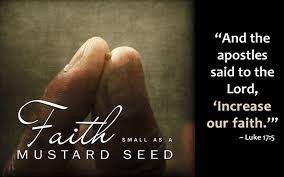
What is faith? The question is raised by the interaction between Jesus and the disciples, which comprises the short excerpt from Luke’s Gospel offered by the lectionary this coming Sunday (Luke 17:5–10). The disciples ask Jesus to increase their faith; Jesus, instead of responding with action, speaks back to them with a characteristic parabolic saying, about “faith the size of a mustard seed” (17:6).
The account that Luke provides is set during the long journey towards Jerusalem that Jesus began at 9:51, which continues until he enters the city riding on a colt (19:28–44). It introduces a series of incidents occurring in this last part of the journey in which faith is mentioned (17:5; 17:19; 18:8; 18:42). The sequence seems to come to a head when Jesus looks out over the city and weeps at their apparent lack of faith: “if you, even you, had only recognized on this day the things that make for peace! but now they are hidden from your eyes” (19:42).
This brief encounter, however, seems to be a Lukan redaction of an incident that Mark recounts after Jesus has entered the city (Mark 11:15), left the city (presumably for Bethany) for the evening (Mark 11:19), and then passed by a withered fig tree (Mark 11:20)—the same tree which Jesus had earlier cursed as the headed towards the city (Mark 11:12–14).
As Luke reworks the narrative he has inherited from Mark, he removes all reference to the fig tree and relocates the conversation to a place unknown, but certainly not within close distance of Jerusalem. The travelling group is still placed in “the region between Samaria and Galilee” at 17:11; some time later, they approach Jericho (18:35) and the tension mounts as they approach Jerusalem (19:11, 28) before finally arriving in the city (19:41, 45).
[Of course, if we were to try to harmonise Luke’s account with John’s Gospel, we would argue that Jesus and his companions had already visited Bethany—the meal in the house of Martha and Mary (Luke 10:38–42) would be at the same location where the brother of these sisters, Lazarus, died—in Bethany (John 11:1). Thus, he might well have already cursed the fig tree outside Bethany that is reported in a third Gospel (Mark 11:12–14). But we don’t engage in cross-Gospel harmonisation, forcing the evidence when it is lacking, do we? Just as well.]
So the Lukan redaction removes the fig tree, focusses the conversation on faith (Luke 17:5–6, a rewriting of Mark 11:22–23), and instead of the following instruction about prayer (“whatever you ask for in prayer, believe that you have received it, and it will be yours”, Mark 11:24) there is a parable about the role of a slave in a household (Luke 17:7–10).
In rewriting the saying of Jesus about faith, Luke deletes reference to the mountain (“if you say to this mountain, ‘Be taken up and thrown into the sea,’ and if you do not doubt in your heart, but believe that what you say will come to pass, it will be done for you”, Mark 11:23) with a saying in which a mustard seed is the key (“if you had faith the size of a mustard seed, you could say to this mulberry tree, ‘Be uprooted and planted in the sea,’ and it would obey you”, Luke 17:6).
Being thrown into the sea remains a constant; the strange injunction to be thrown into the sea is spoken to a mulberry tree rather than a mountain. The mustard seed, introduced in Luke’s rewriting of the saying, is allegedly (but not actually) “the smallest of all seeds” (as is claimed at Mark 4:31—although this description is omitted in Luke’s version of the parable, Luke 13:18–19). The point still remains the same: just a little faith has such power contained within it.
*****
Luke has inherited stories from Mark in which Jesus commends people for their faith. He notes the faith of the friends of a paralysed man who is lowered through the roof of the house where Jesus is, in the hope that he might heal the man; in both stories, Jesus pronounces forgiveness when he sees the faith of the men and the paralysed man is then able to walk (Mark 2:1–12; Luke 5:17–26). He tells of a Jewish woman who had been suffering from hemorrhages for twelve years, with faith enough to believe that just a touch of the cloak of Jesus would make her well (Mark 5:25–34; Luke 8:43–48). He also tells of a blind man outside of Jericho who has faith enough to believe that just a cry of petition to Jesus would make him well (Mark 10:46:52; Luke 18:35–43). Both persons are told by Jesus, “your faith has saved you”.
Luke may also have known the story that Mark reports, of the anointing of Jesus by a woman during a meal (Mark 14:3–9). If he did know this, he has significantly reworked it; it takes place much earlier in his narrative (Luke 7:36–50), somewhere in Galilee rather than in Bethany, in the house of a Pharisee rather than the house of a leper, and it is his feet which are anointed, rather than his head. Another significant change is that, instead of memorialising the woman (“what she has done will be told in remembrance of her”, Mark 14:9), the scene ends with an affirmation by Jesus, “your faith has saved you; go in peace” (Luke 7:50).
A little before this scene, in his narrative order, Luke has told of the encounter between Jesus and a distressed centurion—or, rather, with some Jewish elders sent to Jesus by the centurion, whose slave was at the point of death (Luke 7:1–10). It’s a story told also in Matthew’s book of origins, and thus was likely to have been part of the so-called “sayings material” (Q) found in both of these Gospels, but not in Mark’s narrative. The request from the centurion to Jesus demonstrates the strong faith that this Gentile official has in the Jewish preacher and miracle worker (Matt 8:13); in Luke’s version, Jesus commends the Gentile with strong words: “not even in Israel have I found such faith” (7:9).
A similar commendation of another figure outside of Israel is offered by Jesus to the Samaritan, one of ten lepers who were healed by Jesus; when this man alone returns to offer his gratitude, Jesus, noting his status as “this foreigner”, commends him for his faith: “go on your way; your faith has made you well” (17:11–19).
So it is that a group of Galileean men, two Galileean woman, a Roman centurion, a Samaritan leper, and a blind Judaean man, are each commended by Jesus for their faith.
*****
In stark contrast is the collective group of disciples of Jesus, four times reprimanded for their comparatively poor expression of faith. First, in a boat that is being tossed on the waves by a fierce windstorm, Jesus confronts his panicking disciples, saying to them, “where is your faith?” (8:22–25).
In a later teaching session with them, on the ways that the natural world reflects the providential care of God (12:22–31), he injects a note of caustic judgement of his disciples: “if God so clothes the grass of the field, which is alive today and tomorrow is thrown into the oven, how much more will he clothe you—you of little faith!” (12:28).
Then, in a further extended teaching session with his disciples (17:20–18:34), as he offers a parable about a judge and a widow (18:1–8), he somewhat pessimistically concludes, “and yet, when the Son of Man comes, will he find faith on earth?” (18:8).
Finally, whilst gathered at table for what would turn out to be the final time before his arrest and trials (22:14–38), not so many words after he has commended the disciples for being “those who have stood by me in my trials” (22:28), Jesus upbraids Simon Peter for what he will do, not much later, around a fire in the courtyard of the high priest’s house (22:54–62). “Simon, Simon, listen!”, he pleads; “Satan has demanded to sift all of you like wheat, but I have prayed for you that your own faith may not fail; and you, when once you have turned back, strengthen your brothers” (22:42).
Faith appears to have been in short supply amongst the disciples, travelling with Jesus, listening regularly to his teachings, consistently observing his medical interventions—in contrast to those who encounter him but once, approaching with a trusting attitude, seeking his assistance; demonstrating faith.
It is no wonder that Jesus responds to the request of his disciples, “increase our faith!” with a somewhat barbed reply, “if you had faith the size of a mustard seed, you could say to this mulberry tree, ‘Be uprooted and planted in the sea,’ and it would obey you” (17:5–6). The short parable about a slave (17:7–10) that follows this saying of Jesus is telling; the inference is that the disciples, still, despite everything, do not have such faith.
Just as the slave is expected to labour all day in the field and then undertake the required tasks in the house at night, before he eats and drinks, so the disciples are called to follow, listen, and obey, in diligence and humility; this is the kind of faith that they are required to have.
But do they have such faith? The inference that the disciples are lacking in this kind of faith is confirmed by the later declaration,matter still further teachings by Jesus, that “they understood nothing about all these things; in fact, what he said was hidden from them, and they did not grasp what was said” (18:34). The paradox that Luke sees running throughout the story of Jesus continues.


















 An Informed Faith