Apologetics and apologising: two ways of being church

Over the last few weeks I have been watching yet another church engage in the painful and difficult process of disagreeing publically about matters that are held strongly by the various proponents involved, with the inevitable trajectory of increasing rancour and ultimate schism becoming clearer each day.

We have already seen the slow-burn amongst Methodists over recent years that has led to the formation of the so-called Global Methodist Church earlier this year. The GMC was launched as a sectarian schismatic movement, splitting from the United Methodist Church, on the basis of—you guessed it—sexuality.

See my earlier post on this:

I’ve already discussed the attempts over many years to do the same within the Uniting Church in Australia—from the early efforts of the Evangelical Members of the Uniting Church (EMU) through the Reforming Alliance (RA) and on into the self-styled Assembly of Confessing Churches (ACC). Each of these conservative splinter groups sought to enforce their narrow and retrograde understanding of matters pertaining sexuality on the whole UCA—with persistent, and increasing, failure.

My posts on these various groups are at

and

As I’ve explored these two church contexts, one in Australia and the other in the USA, I have noticed how the proponents of the conservative theological perspective buttress their claims with a particular way of reading scripture, and with a particular mode of theological argumentation that slots well into the field called Apologetics.

That’s the name given to a way of arguing that sets out a collection of beliefs that are held by a certain group and advocates that this cluster of beliefs represents right doctrine, the true faith, what Bible-believing Christians hold to, or some other catchphrase that revolves around being right—and others, holding different viewpoints, being wrong. It’s a style of speaking and writing that often, in these kinds of situations, takes on a hard edge—moving from assertions about beliefs, to a much more aggressive manner of apologetic argumentation.

(I should indicate that I have nothing against Apologetics; done well, it can be a helpful process, and indeed, being able to engage apologetically ought to be a basic skill for anyone undertaking a missional engagement with people in society. And I should confess that the research that I did, many years ago, for my PhD thesis, was focussed on a set of ancient documents that are often described as being apologetic—including the writings of Flavius Josephus, and the two books in the New Testament attributed to Luke, namely, the Gospel of Luke, and the Acts of the Apostles—two fundamental apologetic works in the Christian canon.)

In recent weeks, I’ve been an interested observer “from the sidelines”, watching an aggressively dogmatic style of apologetic argumentation that has been taking place within the Anglican Communion. The holding of the recent Lambeth Conference in the UK was the focus for the surfacing in the public arena of this aggressive argumentative apologetics (which we know was always active under the surface).

Episcopal leaders from Anglican churches around the globe gathered (or, at least, were expected to gather—not all of them came) in Lambeth, hosted by the Archbishop of Canterbury, to discuss designated matters and to issue “Calls” to the Anglican Church around the world, relating to these topics.

Sexuality, of course, was the most contentious area to be discussed; and so it transpired, with some bishops refusing to attend, some bishops decrying the stance of other bishops, and some bishops seeking to find a way forward that all could hold to. It was a fraught, and ultimately failed, enterprise. The battle-lines, drawn so strongly before Lambeth 2022, remained in place; so much so that, this week, the head of the breakaway schismatics in Australia, GAFCON Australia, has announced the formation of a new Diocese, “an Anglican home for those who feel they need to leave their current Dioceses”. Doctrinal Apologetics are, in my mind, clearly driving this development.

I’m not making further substantive comment on the trench-warfare of my brothers and sisters in the Anglican Communion—I am most grateful to friends and colleagues who have posted numerous articles, commentaries, statements, and analyses, of what has happened before, during, and now after the Lambeth Conference. Nothing, it seems, was clarified, other than perpetual disagreement will continue.

The best that those of us outside that denomination can do is to offer prayerful and personal support to those who continue to press for a compassionate and relevant approach to matters of gender and sexual identity.

It is worth noting that there has been a local manifestation of this issue within Australia—it has, of course, been “alive and well” for many years, and has recently come strongly to the surface in the wake of the recent General Synod of the Anglican Church in Australia (ACA), and the formation of the Southern Cross Diocese, an action that has created, de facto, a new denomination in Australia, outside the formal structures of the ACA.

However, as the Primate of the Anglican Church in Australia has said in his statement about this development, “in a tragically divided world God’s call and therefore the church’s role includes showing how to live together with difference. Not merely showing tolerance but receiving the other as a gift from God.” See https://adelaideguardian.com/2022/08/18/a-statement-on-the-launch-of-the-company-the-diocese-of-the-southern-cross/

*****

Alongside the experience of watching Anglicans agitate and argue about sexuality, I’m engaged in a parallel, but rather different, process, within my own denomination. It’s a process that also arises out of consideration of sexuality—well, both gender identity and sexual attraction and behaviour, to be perfectly clear. It is characterised, not by a process of apologetic argumentation, but rather by a process of listening, engaging in conversations, and developing resources that will be fit for a specific purpose.

I am referring to the fact that, within the Uniting Church, there is currently a Task Group which has been established by the Assembly Standing Committee, to prepare for the offering of an Apology to members of the LGBTIQA+ people in Australia.

A proposal to offer such an apology was presented to the National Assembly in 2018, as a result of which the Task Group was established, with a view to having a final report to give to the Assembly when it meets in 2024. (Yes, things move slowly in this church, as in other churches!) The Apology, it is envisaged, will apologise for the church’s role in the silence, rejection, discrimination and stereotyping of LGBTIQ people, couples and families.

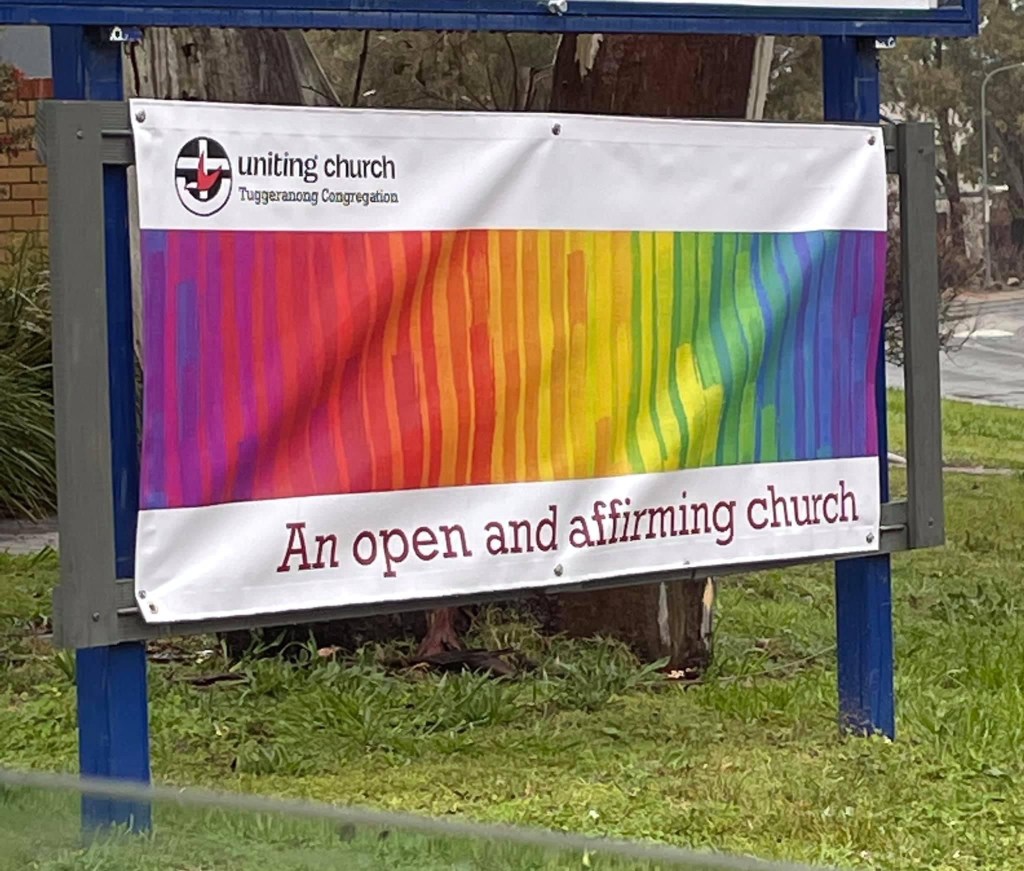
The Task Group is currently engaged in a series of listening encounters with members of the LGBTIQA+ community within the Uniting Church, to hear the views of such people about the proposed apology. I was present earlier this week as three members of the Task Group met with members of the Rainbow Christian Alliance, which meets monthly at Tuggeranong Uniting Church in Canberra, a congregation which is an open and affirming church.

The work of the Task Group was explained, and there was opportunity for LGBTIQA+ people who were present in person and online to make comments about their experiences in the church, and their hopes for the process of formulating and delivering the apology.

The conversation was respectful, caring, and person-centred. There was an indication that the Uniting Church had recognised how words and actions from many church people over many years have caused hurt, grief, and despair. There was a recognition that we need to demonstrate that we see, hear, acknowledge, value, and honour LGBTIQA+ people in their own right, as they are, without reservation, and certainly without in any way pressuring them to change.

It struck me during this time of conversation how different the two approaches are; those who take an aggressively apologetic stance towards people who hold a different point of view, and seek to prosecute their case through debate and argumentation, are presenting a very different model of church to that offered by the process of listening to LGBTIQA+ people in order to develop an apology to them.

(I’m not saying that we in the Uniting Church have got this right—not at all—just that we are aware of the need to take care in our stance, and to shape a careful and compassionate path; and that we are trying to do this with good intentions and in partnership with LGBTIQA+ people.)

Given all the negativity that currently exists in society in relation to “the church”, I think it is important that we carefully consider how we present ourselves to people in that wider society. A posture of compassionate listening and respectful conversation, and the offering of a deeply-felt apology, is surely what we need for our times.

*****

The ecumenical group Equal Voices has prepared an Apology for consideration by people of all denominations; see https://equalvoices.org.au/apologise/

Australian Catholics for Equality have prepared a liturgy for making an apology to LGBTIQ people, at https://australiancatholicsforequality.org/prayer-reflections/order-of-service-for-lament-and-apology-liturgy-to-lgbtiq/

On the 2016 comments of Pope Francis about the need to apologise “to gays and others who have been offended or exploited by the church”, see https://edition.cnn.com/2016/06/26/world/pope-apologize-gays/index.html

On the Apology that was subsequently offered by one Roman Catholic Church in Sydney, see https://www.starobserver.com.au/news/sydneys-catholics-apology-to-lgbti-people/151997

For the 2019 apology from the Adelaide Anglican Diocese, see https://adelaideanglicans.com/safe-ministry/apology-to-lgbtiq-communities/

For the 2017 apology from the Perth Anglican Diocese, see https://equal-eyes.org/database/2017/10/14/australia-perths-anglican-church-offers-heartfelt-apology-to-lgbt-community

On the symbolic action undertaken in 2014 to signal an apology by a local Anglican Church in Melbourne, see https://www.stmarksfitzroy.com/lgbti-community

Unless you are angry with us beyond measure (Lamentations)

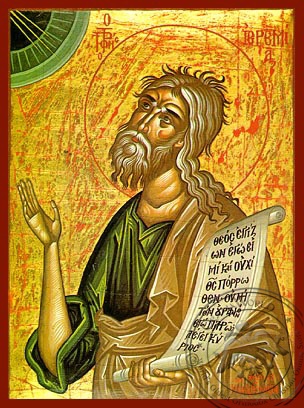
In one of his oracles, Jeremiah expresses the deep anguish of God for the people: “my joy is gone, grief is upon me, my heart is sick … for the hurt of my poor people I am hurt, I mourn, and dismay has taken hold of me” (8:18–22). The Lord echoes this attitude: “oh that my head were a spring of water, and my eyes a fountain of tears, so that I might weep day and night for the slain of my poor people” (9:1).

This weeping recurs in later chapters: in an oracle over Judah, “if you will not listen, my soul will weep in secret for your pride; my eyes will weep bitterly and run down with tears, because the Lord’s flock has been taken captive” (13:17); and in an oracle over Moab, “more than for Jazer I weep for you, O vine of Sibmah” (48:32).

This weeping is also expressed in the poems of lament found in the book of Lamentations; “for these things I weep; my eyes flow with tears”, the author mourns; “for a comforter is far from me, one to revive my courage; my children are desolate, for the enemy has prevailed” (Lam 1:16). Tradition presumes that the author, who is never identified, is the prophet Jeremiah; many scholars, however, believe that there were a number of authors whose work has been collected into this single short book.

The five chapters of Lamentations express a forlorn hope that the punishment being experienced might come to an end. However, that hope remains unfulfilled, from the opening lament, “how lonely sits the city that once was full of people! how like a widow she has become, she that was great among the nations!” (1:1); to the final disconsolate prayer, “restore us to yourself, O Lord, that we may be restored; renew our days as of old—unless you have utterly rejected us, and are angry with us beyond measure” (3:22).

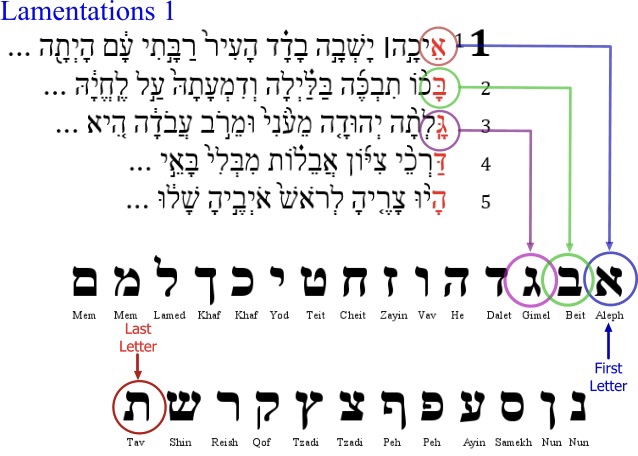
There is a tight numerical and alphabetical arrangement throughout this book. The first four chapters are acrostics—each new verse begins with a letter of the Hebrew alphabet, in alphabetical order. As there are 22 letters in the Hebrew alphabet, there are 22 verses in chapters 1, 2, and 4. Chapter 3 has 66 verses; each letter commences three verses before moving on to the next letter. The final chapter also has 22 verses, but they are not arranged in any alphabetical order.

The first four chapters employ a strict rhythmic pattern, known as a qinah rhythm: three stresses followed by two, which F.W. Dobbs-Allsopp describes as “the rhythmic dominance of unbalanced and enjambed lines” (Lamentations, Westminster John Knox, 2002). The pattern is suggestive of the broken, disjointed existence of the people.

In these five chapters, the author reveals much of how he, and the people, are lamenting their situation in the aftermath of the savage destruction of Jerusalem and its temple in 587/586 BCE. Chapter one paints a picture of the deserted, desolate city: “the roads to Zion mourn, for no one comes to the festivals; all her gates are desolate, her priests groan; her young girls grieve, and her lot is bitter” (1:4). Chapter four provides a detailed portrayal of the destruction of the temple: “how the gold has grown dim, how the pure gold is changed! the sacred stones lie scattered at the head of every street” (4:1).

The poems describe the traumatised state of the people in the immediate aftermath of this conquest. They suffer affliction (1:7, 9; 3:1, 19) and captivity (1:18), grief (3:32, 51) and suffering (1:3, 5, 18), hunger (2:19; 4:4, 9) and thirst (4:4). They express lamentation (2:5, 8) and mourning (1:4; 2:5; 5:15), with tears (1:2, 16; 2:18; 3:48), crying (2:12, 16, 18, 19; 3:8, 56), and weeping (1:2, 16; 2:11).

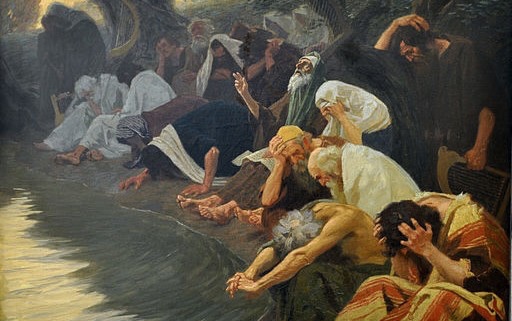
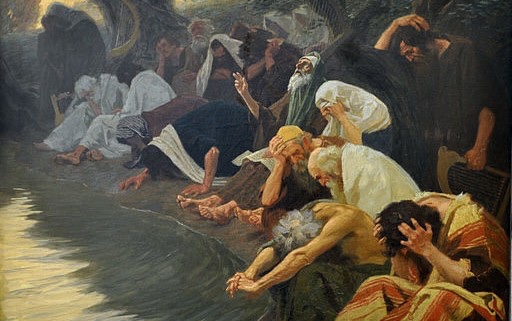
Since the city lies in ruins (2:5, 8), people put on sackcloth and throw dust on their heads (2:10); they hear songs of taunting (3:14, 61) and their enemies wag their heads and clap their hand at them, as they hiss and gnash their teeth (2:15–16). We might notice the allusion to this verse in the passion narrative (Mark 15:29–30; Matt 27:39–40) and the overtones of judgement in the gnashing of teeth in apocalyptic parables of Jesus (Matt 8:12; 13:42, 50; 22:13; 24:51; 25:30).

The people are rejected (1:15; 5:22) and filled with bitterness (3:5, 15) and wormwood (3:15, 19); their flesh and skin waste away (3:4). Permeating all is the anger of the Lord (2:3, 21, 22; 3:43, 66; 4:1); his wrath is intense (2:2; 3:1; 4:11) and he sends his fire to consume (1:13; 2:3, 4; 4:11). The fiery God of vengeance that we see in Jeremiah as well as in other prophets, is alive and well in the book of Lamentations.

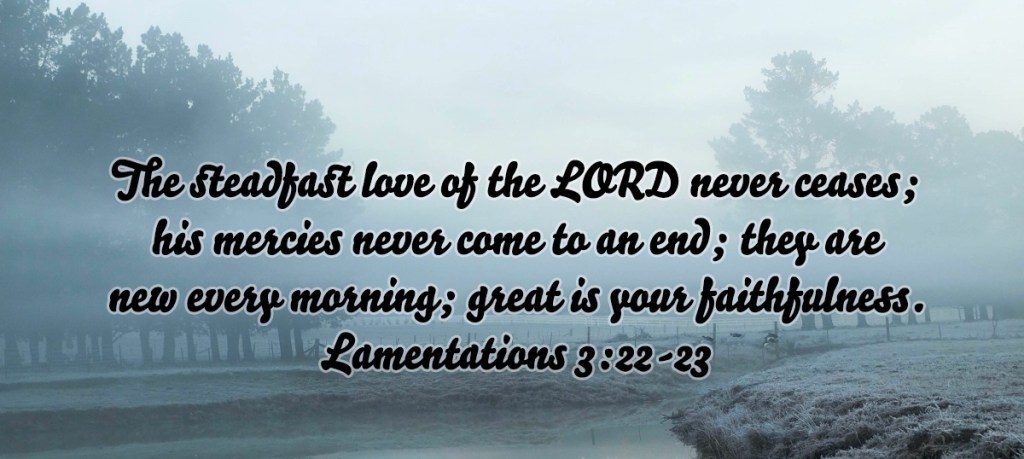
And yet, despite this dominance of divine wrath and fury, a beautiful fragment which praises God sits in the middle of the book: “the steadfast love of the Lord never ceases, his mercies never come to an end; they are new every morning; great is your faithfulness” (3:22). This poetic expression introduces a brief oasis of hope (3:22–33) in the midst of many lines of anguish, grief, and anger; God is praised for showing mercy, faithfulness, and compassion.

Sadly, this mood does not hold; the poems lapse back into questioning God and lamenting God’s inaction in the face of the people’s suffering. To be sure, God has been right to act in this way: “the Lord is in the right, for I have rebelled against his word” (1:18); “as he ordained long ago, he has demolished without pity” (2:17); what took place was “ for the sins of her prophets and the iniquities of her priests, who shed the blood of the righteous in the midst of her” (4:13).

In the middle poem, there is a call to repent: “let us test and examine our ways, and return to the Lord” (3:40); but then, a plea for God to intervene and change his mind: “you have taken up my cause, O Lord, you have redeemed my life; you have seen the wrong done to me, O Lord; judge my cause.” (3:58–59). However, this poem ends with a savage plea for God to deal with the Babylonian conquerors: “Pay them back for their deeds, O Lord, according to the work of their hands! Give them anguish of heart; your curse be on them! Pursue them in anger and destroy them from under the Lord’s heavens!” (3:64–66).

The final poem is an extended lament on the situation of Israel, framed with prayers of petition: “remember, O Lord, what has befallen us; look, and see our disgrace!” (5:1); “restore us to yourself, O Lord, that we may be restored” (5:21)—although the final pessimistic word laments, “unless you have utterly rejected us, and are angry with us beyond measure” (5:22). So the series of poems closes on this note of utter desolation.

These five poems bear many similarities, not only with the “confessions of Jeremiah”, but also with the “psalms of communal lament”, such as Pss 44, 60, 74, 79, 80, 85, 86, and 90, and the psalms of individual lament, such as Pss 3, 6, 13, 22, 25, 31, 71, 77, 86, and 142. In the face of God’s seeming inaction and unresponsiveness to pleading prayers, what is there to do, other than to lament?

The experience of the Shoah (Holocaust) in 1939–1945 has led many Jewish writers to reflect this attitude. It is not “giving up on God”, but resting in the pain and grief, venting about this to God, and hoping against hope that, in time, there may be a reversal of fortunes—a change of mind by God.

One writer notes that “Lament allows us to fully face and name our pain, and it creates space for future resolution and hope without glossing over our trauma. It gives us permission to protest life’s difficulties, to scream, cry, vent, plead, and complain in the presence of God and others. It lets us ask the hard questions without condemnation: Why did this have to happen? How could you allow it? Where are you in the midst of it? It allows weeping without explanation. It might be messy and uncomfortable, but it’s the first step towards healing.” (Whitney Willard, “Lamentatations: the volatile voice of grief”, https://bibleproject.com/blog/lamentations-voice-of-grief/)

These poetic expressions of lament (the psalms of laments, as well as the “confessions” of Jeremiah and Lamentations itself) also inform some elements of the way that the passion of Jesus is narrated in the canonical Gospels; although these accounts are told with a knowledge of the resurrection, there is grief, sadness, and despair at the fate of Jesus, with perhaps a note of patient lament at some moments in those narratives.

Lamentations is recited annually by Jews on the fast day of Tisha B’Av (the ninth day of the month of Av, usually in late July or early August), to mourn the destruction of both the First Temple (by the Babylonians in 586 BCE) and, on the same day (it is believed) the Second Temple (by the Romans in 70 CE). The book provides a fitting way to remember the two greatest moments of national grief and loss, many centuries later.

See also

A reticent prophet: called, equipped, and sustained (Jeremiah 1; Pentecost 11C)

This is a sermon that I wrote and presented for Project Reconnect for this coming Sunday, Pentecost 11. The video of the sermon is at https://projectreconnect.com.au/2022/07/21/21st-august-2022-pentecost-9-the-prophet-jeremiah

Project Reconnect is a worship resource that is published weekly to help congregations with their worship service. It includes a PDF information sheet with video messages, music resources and discussion starters. (The website notes, “downloads are free but we would appreciate your donations to help continue our work”; see https://projectreconnect.com.au)

*****

Prophets. Not profits as in financial gain, the difference between the amount earned and the amount spent in buying, operating, or producing something. But prophets, as in the chosen messengers of God, empowered by the Spirit, equipped to declare the word of the Lord to the people of God.

If your mind goes to prophets, perhaps you might think of Amos: “let justice roll down like waters, and righteousness like an ever-flowing stream”; or Micah: “what does the Lord require of you but to do justice, and to love kindness, and to walk humbly with your God?”. Perhaps you think of Elijah: “the Lord was not in the earthquake, nor in the fire; but in the sound of sheer silence.” Or is it Isaiah who comes to your recollection: “I heard the voice of the Lord saying, “Whom shall I send, and who will go for us?” And I said, “Here am I; send me!”

I’m not surprised if one of those famous prophets was the person you immediately thought of. We have heard from some of them in the Old Testament readings in previous weeks, so they may be fresh in your mind.

But in today’s reading, we hear about the call that God placed on another person, a somewhat reluctant prophet: Jeremiah.

Jeremiah was not itching to respond to God, when he received the call to become a prophet. He was not very old; some commentators consider him to be in his early 20s, others note that the distinctive Hebrew word used in this passage indicates he was in his teens. We might have sympathy for Jeremiah on this account; he was young, hardly at an age that we would recognise as qualified and equipped to be a public spokesperson for God!

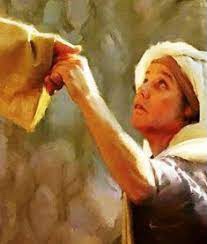
So when he heard God declare to him, “I appointed you a prophet to the nations”, the NRSV translation says that the young man replied, “Ah, Lord GOD! Truly I do not know how to speak, for I am only a boy.” Actually, when they say he replied, “Ah”, he was using a Hebrew word that actually means, “alas” or “woe is me”. Strong’s Concordance says this is “a primitive word expressing pain”—so, more like “ouch!!!” So perhaps it’s better to think of his response as more like “oh no, oh no, oh nooooo—I couldn’t possibly do that! no way at all!!”. Jeremiah just did not want this gig at all.

Maybe you might know how he feels: when we are asked to do something difficult, something demanding, something challenging, that is beyond what we feel that we are able to achieve. For you, that might be the challenge of running a marathon, or being invited to speak in public to a large crowd, or learning a new language. Big challenges, lots of hard work, too much to consider. For me, I can think of a few challenges that really freak me out: climbing the Sydney Harbour Bridge (I don’t handle heights very well at all), letting a snake coil around me (that’s a petrifying thought), touching a spider (we just aren’t going to go there in any way!)

Jeremiah was incredibly reticent; like Moses, he was not going to take up this invitation in any way. Moses declined the offer of becoming the spokesperson for God: “who am I, to go to Pharaoh? what could I say to him?” but God persisted, and Moses relented. Likewise, with Jeremiah; initially, he says, “I do not know how to speak, for I am only a boy”, but God persists: he will support the young man Jeremiah, just as he supported the young man Moses.

But I think that we have this story from the opening chapter of this book, in our reading today, not because it shows us that God will help us overcome our fears about challenges set before us. It think that it is not Jeremiah’s words that we are to focus on. It is, rather, the words that God speaks to Jeremiah which should ring in our ears.

It is the encouragement for the task that God promises—and later delivers—that must stand out for us. “Do not say, ‘I am only a boy’”, the voice declares; “for you shall go to all to whom I send you, and you shall speak whatever I command you.” God gives the right words for the appropriate time. That is remembered when Jesus later tells his disciples that the spirit would enable them to speak, even in the midst of difficulties (Luke 21:13–15).

And then, we hear the words: “Do not be afraid of them, for I am with you to deliver you, says the LORD.” In typical style, the first word of God to the human being chosen for a specific task is, “do not be afraid”. When God appears to human beings—in a vision, as an angel, in a voice from the heavens, in a response to prayer, as a niggling, unsettling feeling, in words of advice or guidance from a friend—however God might appear to us, it can be an experience that evokes fear, awe, anxiety. Who is this, speaking to me? How am I to respond?

“Do not be afraid”, said the Lord, to Abraham, in a vision (Gen 15). “Do not be afraid”, he said, to Isaac, at Beersheba (Gen 26). “Do not be afraid”, to Moses, in the wilderness (Num 21), to Joshua, facing the combined might of a great army (Josh 11), to Elijah, also facing a great army (2 Kings 1); “do not be afraid”, Isaiah says, on behalf of the Lord, to king Hezekiah (Isa 37); “do not be afraid”, the voice of God says to the prophet Ezekiel, when he was called to his role (Ezek 2), and to Zechariah (Zech 8). It is a common refrain throughout the stories of the people of Israel.

And we hear the same phrase repeated in New Testament stories, when God speaks to Zechariah, “do not be afraid” (Luke 1), to Mary, “do not be afraid” (Luke 1), to Joseph (Matt 1), to Simon Peter (Luke 5), to Paul, Silas, and Timothy, in Corinth (Acts 18), and to the ageing prophet John in exile on Patmos: “do not be afraid” (Rev 1). It is God’s consistent and encouraging word to those who encounter the intensity of divine presence, the enormity of divine challenge, the inescapable call to follow, to believe, to declare the word of the Lord: “do not be afraid”. It is God’s word to each of us.

So the word of God to Jeremiah is clear: “I appointed you a prophet to the nations.” And Jeremiah is willing to respond; to accept the challenge, to take up the call, to stretch himself and step into a new experience.

What Jeremiah would encounter in the decades that followed, was pretty heavy stuff. He didn’t know that at the time that he accepted the call to be God’s spokesperson. He persisted, held strong, remained faithful throughout all the difficulties that ensued for the people of Israel, as they were attacked, besieged, defeated, and then sent into exile, away from their homeland, off into a strange, foreign country. Jeremiah held fast; he remained faithful to the call that God had placed upon him through all of this.

And God held fast to him through all these tragic events. Jeremiah received the support, the guidance, and the encouragement from God through this all, as the people of God were taken from their beloved land, and sent far away into exile. God remained faithful.

So we give thanks to God, for God holds fast, God remains faithful, God does not let go, no matter what. That gracious, faithful commitment to us is the heart of the good news that we know, that we proclaim, that we live in our lives: the ever-faithful God who is with us, the ever-present God who is for us.

For this, we say: thanks be to God!

*****

1. What do you think about the idea that a teenager could be the chosen voice of God?

2. How do you deal with difficulties on your walk of faith? How do you listen for what God might be saying to you at such a time?

3. Think of a challenge that faces your congregation or faith community. How might you work together to discern what God is calling you to do?

4. Jeremiah was called to speak to all the people—the whole community—in the public arena. How do you make your voice heard in the public discussion of important issues today?

It may be that they will listen (Jeremiah 26–52)

Jeremiah lived at a turning point in the history of Israel. The northern kingdom had been conquered by the Assyrians in 721 BCE; the elite classes were taken into exile, the land was repopulated with people from other nations (2 Kings 17). The southern kingdom had been invaded by the Assyrians in 701 BCE, but they were repelled (2 Kings 18:13–19:37). King Hezekiah made a pact with the Babylonians, but the prophet Isaiah warned that the nation would eventually fall to the Babylonians (2 Kings 20:12–19). Babylon conquered Assyria in 607 BCE and pressed hard to the south; the southern kingdom fell in 587 BCE (2 Kings 24–25) and “Judah went into exile out of its land” (2 Ki 25:21).

Jeremiah lived in the latter years of the southern kingdom, through into the time of exile—although personally, he was sent into exile in Egypt, even though most of his fellow Judahites were taken to Babylon. The difficult experiences of Jeremiah as a prophet colour many of his pronouncements. As the book moves on from the poetic oracles of chapters 1–25, to a series of prose narratives in chapters 26–45, some key events in the life of Jeremiah are reported.

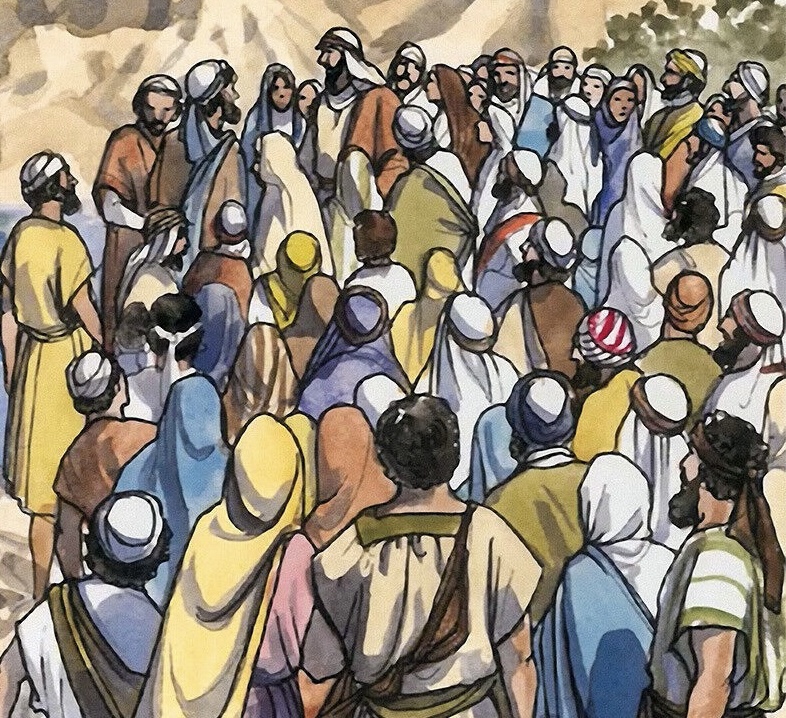
First, we learn that Jeremiah is called to “stand in the court of the Lord’s house and speak to all the cities of Judah that come to worship in the house of the Lord; speak to them all the words that I command you; do not hold back a word” (Jer 26:2). His message is about their failure to walk in the law that God had given them (remembering that the discovery of “the book of the law” and the subsequent reforms under Josiah had taken place just a couple of decades earlier. The response from the ruling class is not positive—in fact, Jeremiah is threatened with death (26:7–11). He argues his way out of this sentence (26:12–24), but the threat of death will return in a later chapter.

To dramatise the judgement placed on Israel, as well the surrounding nations of Edom, Moab, Ammon, Tyre, and Sidon, Jeremiah wears a yoke (27:1–22), telling the people of Judah to “bring your necks under the yoke of the king of Babylon, and serve him and his people, and live” (27:12). Rather than seeing the foreign power as an enemy, Jeremiah exhorts the people to submit them, in what will be a hard, but not permanent, arrangement. This marks a change in theology that we will see also in Deutero-Isaiah, where the foreign power is seen to be an agent of God.

Accordingly, he sends a letter from the Lord “from Jerusalem to the remaining elders among the exiles, and to the priests, the prophets, and all the people, whom Nebuchadnezzar had taken into exile from Jerusalem to Babylon” (29:1), instructing them to “build houses and live in them; plant gardens and eat what they produce; take wives and have sons and daughters; … multiply there, and do not decrease; seek the welfare of the city where I have sent you into exile, and pray to the Lord on its behalf, for in its welfare you will find your welfare” (29:5–7). Life goes on in exile; God has not abandoned the people.

*****

In the midst of his despair, Jeremiah sees hope: “the days are surely coming, says the Lord, when I will restore the fortunes of my people, Israel and Judah, says the Lord, and I will bring them back to the land that I gave to their ancestors and they shall take possession of it” (30:3). In this context, Jeremiah indicates that the Lord “will make a new covenant with the house of Israel and the house of Judah … I will put my law within them, and I will write it on their hearts; and I will be their God, and they shall be my people” (31:31–34).

The renewal of the covenant was not a new idea in the story of Israel. God had entered into covenants with Abraham, the father of the nation (Gen 15:1–21) and before that, in the story of Noah, with “you and your descendants after you, and with every living creature that is with you … that never again shall all flesh be cut off by the waters of the flood” (Gen 9:8–11). The covenant given to Moses on Mount Sinai (Exod 19:1–6), accompanied by the giving of the law (Exod 20:1–23:33), is sealed in a ceremony by “the blood of the covenant” (Exod 24:1–8).

The covenant with the people that Moses brokered is renewed after the infamous incident of the golden bull (Exod 34:10–28), then under Joshua at Gilgal, as the people enter the land of Canaan after their decades of wilderness wandering (Josh 4:1–24). It is renewed again in the time of King Josiah, after the discovery of “a book of the law” and his consultation with the prophet Huldah (2 Chron 34:29–33), and it will be renewed yet again after the exiled people of Judah return to the land under Nehemiah, when Ezra read from “the book of the law” for a full day (Neh 7:73b—8:12) amd the leaders of the people made “a firm commitment in writing … in a sealed document” which they signed (Neh 9:38–10:39).

However, the particular expression of renewal that Jeremiah articulates will prove to be critical for the way that later writers portray the covenant renewal undertaken by Jesus of Nazareth (1 Cor 11:25; Luke 22:20; 2 Cor 3:6–18; Heb 8:8–12). Especially significant is the claim that this renewed covenant “will not be like the covenant that I made with their ancestors when I took them by the hand to bring them out of the land of Egypt—a covenant that they broke” (Jer 31:32), for God “will put my law within them, and I will write it on their hearts; and I will be their God, and they shall be my people” (31:33). It is a covenant which has “the forgiveness of sins” at its heart (31:34)— precisely what is said of the “new covenant” effected by Jesus (Matt 26:28; and see Acts 5:31; 10:43; 13:38; 26:18).

To signal his confidence in this promised return, Jeremiah buys a field in his hometown of Anathoth from his cousin Hanamel (32:1–15). The narrator notes that “the army of the king of Babylon was besieging Jerusalem, and the prophet Jeremiah was confined in the court of the guard that was in the palace of the king of Judah, where King Zedekiah of Judah had confined him” (32:2–3). Nevertheless, the purchase serves to provide assurance that the exiled people will indeed return to the land of Israel; “houses and fields and vineyards shall again be bought in this land” (32:15).

Jeremiah exhorts the people to “give thanks to the Lord of hosts, for the Lord is good, for his steadfast love endures forever!” (33:11), because in the places laid waste by the Babylonians, “in all its towns there shall again be pasture for shepherds resting their flocks … flocks shall again pass under the hands of the one who counts them, says the Lord” (33:12–13). As the people return to the land, the Lord “will cause a righteous Branch to spring up for David; and he shall execute justice and righteousness in the land” (33:15). The title “Son of David” is later applied to Jesus in three Gospels (Mark 10:47–48; Matt 1:1; 12:23; 15:22; 21:9, 15; Luke 18:38–39).

*****

As Jeremiah was “prevented from entering the house of the Lord” (36:5), he dictated his prophecies to a scribe named Baruch (36:4) and instructed Baruch to “read the words of the Lord from the scroll that you have written at my dictation” (36:6). Baruch does so; in response, King Jehoiakim burns the scroll (36:20–26), so Jeremiah repeated the process with Baruch (36:32). Subsequently, the prophet was imprisoned in the court of the guard (37:11–21) and then in a cistern (38:1–6), before being rescued from the cistern, on the king’s orders, by Ebed-melech the Ethiopian (38:7–13).

Jeremiah informs King Zedekiah of the imminent capture of Jerusalem (38:14–28); this is duly narrated (39:1–10) and Jeremiah is set free by King Nebuchadrezzar of Babylon (39:11–18). After speaking further oracles, the prophet is sent into exile in Egypt (43:1–7), where he continues to berate the exiles for their idolatry. “I am going to watch over them for harm and not for good”, the Lord asserts; “all the people of Judah who are in the land of Egypt shall perish by the sword and by famine, until not one is left” (44:27).

The final chapter in this narrative sequence reports the anguish of the Lord: “Woe is me! The Lord has added sorrow to my pain; I am weary with my groaning, and I find no rest”; and then the judgement of the Lord: “I am going to break down what I have built, and pluck up what I have planted—that is, the whole land … I am going to bring disaster upon all flesh, says the Lord” (45:1–5).

The book concludes with a series of prophecies against foreign nations in chapters 46–51 (the Egyptians, Philistines, Moabites, Ammonites, and Edomites, then Damascus, Kedor, Hazor, Elam, and Babylon itself), before ending with an historical appendix telling of the capture of Jersualem (chapter 52), which is drawn largely from 2 Kings 24:18—25:30.

See also

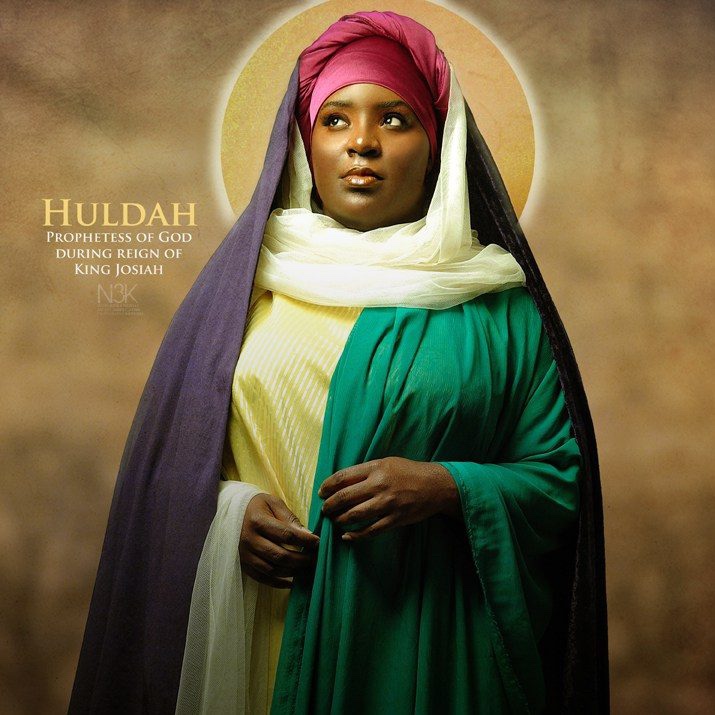
Huldah, a prophet, gifted by the spirit (2 Kings 22; 2 Chron 34)

In Jewish tradition, there are seven women identified as prophets (Sarah, Miriam, Deborah, Hannah, Abigail, Huldah, and Esther). Concerning Huldah, we know of only one of her prophetic acts, when she gave advice to King Josiah (2 Kings 22–23; see also 2 Chron 34).

However, this single piece of advice was extremely important; it guided Josiah to undertake the thoroughgoing reforms of religion in Judah that characterised his reign. “Josiah took away all the abominations from all the territory that belonged to the people of Israel, and made all who were in Israel worship the Lord their God. All his days they did not turn away from following the Lord the God of their ancestors” (2 Chron 24:33).

Huldah’s husband, Shallum, had a prominent position in the royal court. He was the keeper of the king’s wardrobe (Jer 34:5); he therefore had daily access to the king and was able to meet him in relative privacy. He was better placed than most to talk with the king and advise him. Huldah was therefore among the inner circle surrounding King Josiah.

According to rabbinic tradition, Huldah was a relative of Jeremiah (Megillah 14b). The last thing said in Hebrew scripture about Rahab and Joshua is that “Rahab the prostitute, with her family and all who belonged to her, Joshua spared; her family has lived in Israel ever since” (Josh 6:25). The rabbis, however, maintain that Joshua and Rahab married, and that their descendants included Hilkiah, Jeremiah, Huldah, Seraiah, Mahseiah, Baruch, and Ezekiel. That’s quite a family!

The significance of Huldah is that it was she, a woman, who was consulted by the king, and she, a female prophet, whose guidance led to a pivotal reform in Judah. Claude Mariottini writes that “Huldah’s oracle is significant because she is the only woman prophet who proclaimed a message about future events. She begins her speech, like the other male prophets, claiming that her words were the words of God: ‘Thus says the Lord, the God of Israel.’ This expression is the messenger formula that was used by the Old Testament prophets to introduce their oracles. As a prophet, Huldah saw herself as a messenger of God set apart to speak in God’s name.” (see https://claudemariottini.com/2013/09/17/huldahs-oracle/)

Josiah reigned from 640 to 609 BCE, with the reforms noted above taking place during the late 620’s. What drove the reforms was the discovery, in the midst of the restoration of the Temple, of an ancient book of the Law, at the bottom of a money chest that had recently been raided to pay for renovations to the Temple (2 Ki 22:8–10). The book set out the requirements of the Law; Josiah panics because he realises that the nation has not been faithful to the covenant, and that God will punish them.

Josiah repents in contrition, consults with Huldah, and then implements extensive reforms. Many scholars believe that the book referred to in 2 Kings 22 could well have been what we know as a Deuteronomy, which literally means “second law”. This book was supposed to have been lost during the wholesale destruction of anything to do with worship of the Lord God, from the previous two kings, who were hostile to worship of Yahweh during their reigns.

Did the fact that the consultation with Huldah is reported without any “excuses” or “explanation” mean that there were female prophets at the royal court, as a matter of regular practice? The group that came with Kimg Josiah included the priest Hilkiah, two men identified as “Shaphan the Secretary and the king’s servant Asaiah”, as well as the sons of Shaphan and Micaiah, obviously another court official. This was an impressive group of high-status people.

Later tradition claims that Huldah proclaimed her prophecies at a place in Jerusalem now called Huldah’s Gate. The main theme of the incident involving her could be seen to be, “listen for God’s voice, wherever it comes from”. You can read the rabbinic traditions about Huldah at https://jwa.org/encyclopedia/article/huldah-prophet-midrash-and-aggadah

*****

See also https://margmowczko.com/huldah-prophetess/

and

Jesus, justice, and joy (Hebrews 12; Pentecost 11C)

We have had two weeks where the lectionary has offered us selections from the long chapter where various figures from the history of Israel are cited as examples of faith (11:1–12:2). “By faith, Abel … … by faith, Enoch … … by faith, Noah … … by faith, Abraham … … by faith, Isaac … … by faith, Jacob … … by faith, Joseph … … by faith, Moses … … by faith, the people … … by faith, Rahab [at last, a woman!] … … and what more should I say? for time would fail me to tell … …” All by faith.

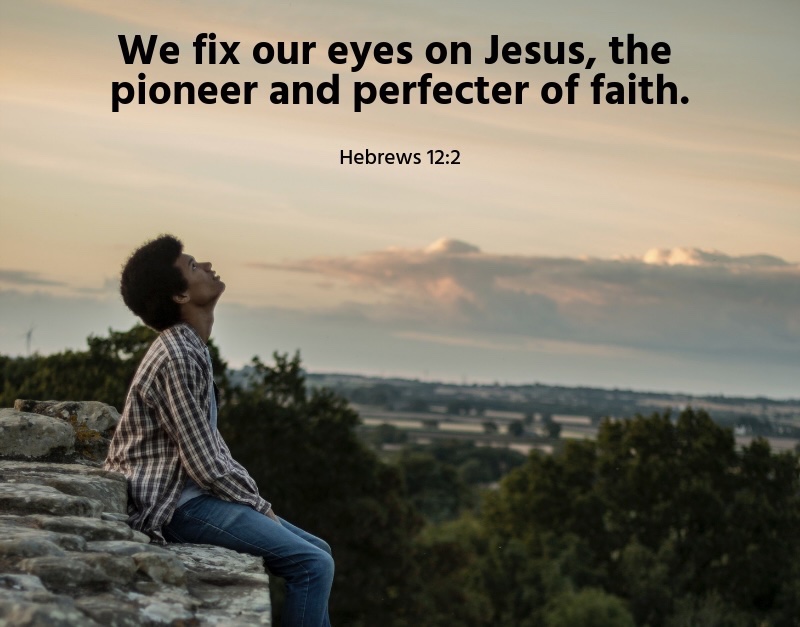
That sequence culminated in the affirmation that this long list of faithful people is brought to a head by the faith of Jesus, “the pioneer and perfecter of our faith, who for the sake of the joy that was set before him endured the cross, disregarding its shame, and has taken his seat at the right hand of the throne of God” (12:2). All the faithful testimonies of these predecessors are gathered up by Jesus and “perfected” in his role as the chosen high priest, offering himself as the ultimate sacrificial victim, to effect atonement for the sins of the people. (See the links at the end of this post for how this point of view of worked out through this book.)

The anonymous writer continues to expound on how he understands what Jesus has effected; through submission to the discipline of God (12:3–6), Jesus is able to make available “the peaceful fruit of righteousness” (12:11) for people,of faith to enjoy and appreciate. Such readers (or hearers) are encouraged to “lift your drooping hands and strengthen your weak knees, and make straight paths for your feet” (12:12–13), and to “pursue peace with everyone, and the holiness without which no one will see the Lord” (12:14).

The section of Hebrews now offered for this coming Sunday grapples further with how that holiness might be accessed and lived by people of faith in the time of the writer—and by extension, by us, in our time. In doing this, three key words are used: in coming to Jesus, they have come to a joyful gathering, and they have also come to the justice of God which is made manifest in that gathering (12:22–24).

Here’s a sermon that I have preached at a number of places over the years, when this passage appears in the lectionary. (Yes, I confess to being a sermon-recycler!)

*****

As the author addresses the implicit the question, “what have you come to?”, he declares, you have come to Mount Zion and to the city of the living God, the heavenly Jerusalem, and to innumerable angels in festal gathering (12:22). The implication is that by gathering to worship, believers come to a kind of Mount Zion, on the high place, at the high point of the week, when the saints of God, the angels in festive dress, gather together to celebrate and to encounter the living God.

This is the place where we come to renew our friendship with God; where we encounter the living God. The words which long ago were written to an unknown group of people, called simply the Hebrews, addressing them with exhortation, might well apply equally to us, as well. Come, and meet with God.

So what does that mean, in practice, for us?

*****

 
I

You have come to the joyful assembly of the firstborn who are enrolled in heaven. The first reason for joining in worship is to share with others in a celebration of JOY.

If you read this verse in the original Greek, you will find a word that is translated as assembly, or perhaps as gathering. The Greek word translated in this way is ekklesia – the word that is often translated as church, the Greek word from which get ecclesial, referring to churchly matters.

So, in the mind of the anonymous author of this word of exhortation to the Hebrews, there is a close link between coming to church, and entering into an experience of joy. That is because joy was a central element in the faith of Israel, and joy is a central aspect of the Christian faith.

The theme of joy is one that we regularly find in the Bible. Make a joyful noise to the Lord, is an exhortation that we find in a number of the Psalms. Restore unto me the joy of your salvation, is a line in another familiar psalm. The joy of the whole earth is Mount Zion, the ancient Jewish pilgrims would sing, according to another psalm.

Later in the Biblical story, when Jesus was born, we learn that an angel appeared to the shepherds, and said to them, I bring you good news of great joy. The birth of this child was seen as a joyful event – as is the birth of each and every child, surely. But the birth of this child was a particularly joyful event, because he would be regarded as the Saviour of the world.

Jesus, as an adult, told a story of the man who discovered a hidden treasure when he was digging in his field. The discovery of God’s kingdom is filled with just as much joy as there was in the heart of that man, when he found that treasure. Joy is a theme that runs right through the stories of the Bible.

But let’s backtrack to the words of the angel, when he spoke to the shepherds: don’t be afraid, for I have good news for you, which will bring great joy to the people. Sometimes the response to the Gospel can be one of fear. The shepherds were afraid of the angel, just as the people of Israel had been filled with fear when Moses had gone up to the top of Mount Zion, to speak with God. Fear runs throughout the story of the people of Israel, a constant companion alongside joy; fear of God, fear of God’s otherness, God’s strangeness, God’s holiness; fear of God’s might and power.

Now, fear is not necessarily a completely negative element; in fact, in the way that the Bible uses the term, fear can be a very positive quality.

Fear can mean a sense of awe; an attitude of reverence and adoration of the one who is greater than all of us. Yet fear, that positive acknowledgement of God, can turn sour; it can become plain, sheer unadulterated fright; it can mean being so petrified of the other person that you cannot utter a word.

The people of Israel had, at times, imagined God to be so remote that they were unable to speak to him, except through Moses, who had to make careful preparations and then climb all the way to the top of the mountain, to meet with God; or later, only through the High Priest, who had an appointment to meet with God just once each year, on the Day of Atonement, and even then, in private, right inside the Temple, in the Holy of Holies. It was, ultimately, a form of fear which drove this meticulous and careful system of engagement between God and the people of Israel.

It is in the book of Hebrews, that an alternate message to this is proclaimed; for in Hebrews, we are told, Jesus takes on the role of that High Priest, but he enables us to meet God face-to-face, to speak directly with God. Jesus is our priest and mediator, according to this long “word of exhortation” to the Hebrews. And so, the fear which turns to dread and fright, is replaced by a fear which produces adoration and awe; a fear which is transformed in to joy.

But where does this joy come from? Our passage offers us some clues.

Joy comes from the knowledge that we are God’s firstborn. The firstborn occupy a special place, for God; the firstborn are those chosen for salvation. This ranking of being first comes, not from the order of our physical birth, but from our birth into relationship with God. Once we enter into a fullness of relationship with God, we are all regarded as being firstborn daughters or sons.

And God has chosen to save the firstborn. The story is told about when the people of Israel were in captivity in Egypt, at a time when Pharaoh determined to kill all the newborn sons of the Hebrew people; but the story takes a twist, as all the firstborn sons of Egypt were then killed. The firstborn sons of the Hebrews had been saved; God had passed over the houses marked by blood, as they were Israelite houses. Moses, then, decreed that all the firstborn males were to be dedicated to God in a special way.

This story, the account of the first Passover, has become a pattern for how it is with God; as we signify our obedience to God, and place our trust in God, as we become one of those whom God has chosen and saved, so we are dedicated as firstborn; we become a living, walking, breathing sign of the goodness of God; we ourselves become occasion for joy!

And further, according to Hebrews 12, we are given joy from the knowledge that our names are written in heaven. That is another way of saying that God has acted for us; God has saved us and granted us a new quality of life. So, we have an assurance from this action undertaken by God; our names are written in heaven, and we are joyful.

*******


II

You have come … to God, who is judge of all human beings, and to the spirits of righteous people made perfect.  There is a second reason for coming to worship God.

The writer of our passage is no heavenly-eyed mystic who has lost touch with reality; he is no charismatic character who has been taken in the Spirit to the seventh heave; no, he is a realist, who understands that it is fine to preach joy and celebration, but not to the exclusion of other aspects of the faith.

We might well ask, how can we be so full of joy in a world in which so nay people know nothing of joy at all? What right do we have to be joyous, when people die tragically in unexpected accidents, when millions are starving for want of food, when thousands are tortured and oppressed unjustly, when stories of terror and uprisings and mistreatment appear daily on our news? Is the Christian faith out of touch with these dreadful realities of life in our times?

The answer from this passage of Hebrews is clear: no! The writer suggests that there is more involve in coming to church than just an expression of joy. We have come … to God, who is judge of all human beings; to God, the JUDGE, who raises before us a standard of justice and righteousness.

We have come to join in common cause with God who judges on the basis of loving and righteous standards. This is in line with what I read in the Basis of Union, which declares that we are followers of Jesus, and that in Jesus, God made a representative beginning of a new order of righteousness and love. It is righteousness and love which is at the heart of God, and it is righteousness and love which is at the centre of the work that Jesus undertakes.

By gathering in worship, we are saying yes to the God of justice, we are standing as a light in the darkness of the world. In worship, we consider and pray for the peoples of the world, praying for the Gospel to be made manifest in situations of injustice. In our prayers, we yearn to shine the light of righteousness and love on situations of oppression and inequity.

By coming to worship the God who is our judge, we are stating that we are committed to living, ourselves, in accordance with his standard of gracious righteousness, of loving justice. In our prayers, we reach out, far beyond our own immediate circle, to encompass those far from us who are in need of God’s justice in their situation today.

So, when we come to worship, we do not enter into this building in order to retreat from the world in which we live; we do not lay aside all the concerns and involvements of our own lives; but we enter into the presence of God, now fully alert to the needs of God’s people, now fully aware of the hurts of so many people, and trusting in our relationship with God, that it will encourage us and enable us to live in accordance with the justice of God.

God is a just judge, whose will is to ensure that the new order of righteousness and love is brought to fruition in our own lives, in our own situation, in our own times.

*****

III

And finally: you have come … to Jesus, the mediator of a new covenant, and to the sprinkled blood that speaks a better word than does the blood of Abel.

There is a third reason for coming to worship God; it is here that we meet Jesus face-to-face. Jesus is the one who offers a direct and immediate connection with God. Jesus. In the terms of the book of Hebrews, is both our priest and our mediator.

Jesus is the one who offers us JOY, bring us into relationship with God. Jesus is the one who reminds us, again and again, that when we come to God in joy, we are called into relationship with one who is JUST.  Through the life and death of Jesus, God grants us the gifts of joy and of justice. The author of this passage draws on a well-known pattern of actions to describe how this happens. In the world of the first century, for the Jewish people, the daily pattern of sacrifices taking place in the forecourt of the Temple in Jerusalem, reminded the people of the justice of God, and of the joy which God offers.

In Hebrews 12, we read that it is the sprinkled blood of Jesus which enables us to draw near to God. In the shedding of his blood, Jesus demonstrated that, in the purposes of God, death is not a futile thing. There is a reason and a purpose in our living; there is a firm hope for us, beyond the grave. On the cross, the blood of Jesus was shed for everyone; Jesus submitted to the powers of sin, he gave up the dominion over his life, he shed his blood and died. Yet the story goes on. The shed blood does not lie, impotent, on the ground. Just like the blood of Abel, there is power in the blood of Jesus. When Abel had been slain by Cain, his blood cried out of the injustice which had been committed.

When Jesus was slain by the Romans, there was injustice once again; his blood signified not only the offering of his life, given up in death, but also the possibilities that his sacrificed life offered to all who followed after him. The shed blood had within it the life power of Jesus; that is how the ancient Israelites understood the power of shed blood, for according to Leviticus 17, the life of the flesh is in the blood; and I have given it to you for making atonement for your lives on the altar; for, as life, it is the blood that makes atonement.

So all the language about the blood of Jesus in Hebrews, and in traditional theology, is founded on this understanding. The life power of Jesus was inherent in his blood; when that blood was shed in his death, his life power was released into the world in order to make atonement; and that life was made manifest in the resurrection which followed in three days.

So, we can see how the argument is developed in this book that the sprinkled blood of Jesus is the source of our joy, for it assures us that God is in charge, that there is hope beyond this life, that the obedience of sacrifice will be vindicated through the gift of new life. And the sprinkled blood of Jesus is the basis for our seeking after justice, for the resurrected Jesus was the firstfruits of the new creation, the representative beginning of a new order of righteousness and love. God acts to remove the destructive power of sin, and to establish a new, just, order in society.

And so, we come to worship today, seeking to celebrate in JOY, and to pray and work for JUSTICE, because these things have been sought for by JESUS himself. He calls us to join him in the new society of joy and justice; he bids us be with him on the mountain of God, where joy reigns supreme over fear; where justice is seen and enacted; where we can be with Jesus, our priest and mediator, the risen Lord, source of joy, the one who sits at the right hand of the Father to rule in justice.

*****

See also

Jesus, the pioneer and perfecter of faith (Hebrews 11–12; Pentecost 10C)

The excerpt from chapters 11 and 12 of the letter to the Hebrews, offered by the lectionary this coming Sunday, concludes a long chapter of forty verses, providing a long list of the many witnesses who have lived their lives by faith. There was is a reference to Abraham and Sarah in the section we heard last week, but there is also mention of Abel and Enoch, Isaac and Jacob, Moses, Joshua and Rahab, Gideon and Barak, Samson and Jephthah, David and Samuel and the prophets—people who lived through many adventures, women who were faithful throughout their lives, martyrs who met an early death and rulers who bore responsibility for leading a nation.

These people are all drawn from the pages of our shared scriptures, the “heroes of the faith” from the stories of the Hebrew people. The excerpt offered this coming Sunday by the lectionary (Heb 11:29–12:2) canvasses many examples of faith, culminating in the opening verses of chapter 12, where the final example of faith which we are offered is the most familiar figure: “Jesus, the pioneer and perfecter of our faith” (12:2).

Faith, it is stated, is about what we cannot see, and what is not immediately evident in tangible ways when we look around us. We cannot point to an object, and claim: “there it is”. We cannot hold up a particular item, and say: “look at it ..? do you see it?” Because faith, in the end, is about what we value inside ourselves; it is about the qualities we hold dear, the principles by which we live.

And yet, in the stories offered in this reading, we are invited to consider what the writer of the letter to the Hebrews described as something which is “hoped for, but not seen”. This is a real thing, there is no doubt about it; but it cannot be documented or measured in specific, physical, tangible ways. It points us to something different, something other, than the obvious reality in front of our eyes. Faith, in the understanding of the author of this letter, invites us to look at the world in a different way; to perceive reality in a new fashion; to consider the evidence from an unfamiliar angle.

And in the story of Jesus, that faith becomes tangible, visible, knowable—a story filled with many details, a multitude of scenes, encounters, teachings, travels—all providing material that enable us to perceive of Jesus as a real, tangible human being, a fine example of faith.

*****

Three images of Jesus dominate the extended sermon which we know as the epistle to the Hebrews: Jesus as the pioneer of salvation, the great high priest, and the perfecter of faith.

These images are combined at key points (2:8b–11a; 5:7–10; 12:1–2), as they are developed in an interconnected fashion throughout the book. Their common point is the author’s focus on the death of Jesus on the cross (2:9; 5:7–8; 12:2). It is this “suffering of death” which transforms Jesus from his state of being “lower than the angels” to being “crowned with glory and honour” (2:9).

In his death, Jesus is the “pioneer of salvation” (2:10) who “endured the cross, disregarding its shame” (12:2). Through his death, Jesus “brings many children to glory” and is made “perfect through sufferings” (2:10). This image recurs in the claim that Jesus was made perfect after “he learned obedience through what he suffered” (5:8–9; see also 7:28; 12:2). It is this claim which undergirds the call for believers to “go on toward perfection” (6:1; see also 10:14; 11:40; 12:23).

The image of Jesus as the perfecter of faith is also related to the third image, of Jesus as the great high priest (4:14; 7:11). This image is firmly grounded in his humanity. Jesus shares “flesh and blood” with God’s children (2:14) and became like these humans “in every respect” (2:17). He has been “tested as we are” (4:15) and is chosen to be priest from among mortals (5:1, 5).

Yet this image also allows a place for the transcendent nature of Jesus. When he is designated high priest according to “the order of Melchizedek” (5:10; 6:20), Jesus is understood to be the high priest who has “passed through the heavens” (4:14) and is “holy, blameless, undefiled, separated from sinners, and exalted above the heavens” (7:26).

As Jesus is seated at God’s right hand (8:1), he is able to enter into the holy place of “the greater and perfect tent” (9:11–12) to offer the sacrifice which “makes perfect those who approach” (10:1, 14). This sacrifice brings the process of sanctification to a head (13:12; see also 2:11; 9:13–14; 10:10, 14, 29) and enables believers to “approach with a true heart in full assurance of faith” (10:19–22).

Paradoxically, Jesus both stands in the place of the priest slaughtering the sacrificial beast (2:17; 3:1; 5:1–6; 6:20; 7:26–28; 8:3; 10:12) and simultaneously lies on the altar as the one whose blood is being shed (9:11–14; 9:26; 10:19; 12:24; 13:20). Although the details of the imagery are confused, there is a consistently firm assertion developed through this image: Jesus is the assurance of salvation (2:10; 5:9; 10:22).

A sense of hope thus permeates the sermon, with references to “the full assurance of hope” (6:11), the “sure and steadfast anchor of the soul, a hope that enters the inner shrine behind the curtain” (6:19), “the confession of our hope” (10:23) which is undergirded with the assurance that it is offered by God, for “he who has promised is faithful”. (See other references to hope at 3:6; 6:18; 11:1.) It is the work of the high priest which brings believers “a better hope” (7:19) and assures them of their salvation—“without the shedding of blood there is no forgiveness of sins” (9:22).

*****

Throughout the sermon, the author of Hebrews presses his audience to live a moral life in response to this message, beginning with an opening exhortation which warns of penalties if the message is not heeded (2:1– 4). This warning is intensified by references to God’s anger in response to “an evil, unbelieving heart” (3:7–12), leading to the directive to “exhort one another every day” (3:13). In his capacity as high priest, Jesus has “passed through the heavens”, resulting in a further encouragement, “let us approach the throne of grace with boldness” (4:14–16).

More practical guidance regarding the behaviour which is expected of believers is set out in succinct commands: “let us consider how to provoke one another to love and good deeds, not neglecting to meet together, as is the habit of some, but encouraging one another’ (10:24–25); “pursue peace with everyone…see to it…that no root of bitterness springs up and causes trouble” (12:14–17). A more extensive list of instructions appears in the final series of exhortations which close the sermon (13:1–19). These exhortations are delivered in a sharp, staccato style, one after the other, in short, sharp bursts.

By contrast, a distinctive and well-loved feature of Hebrews is the lengthy paean in praise of “so great a cloud of witnesses” (11:1–12:1), in which each attest to a vibrant faith in God. The poem, as we have noted, offers many examples of faith from amongst this cloud of witnesses, culminating in

Jesus, through whom “God provided something better” (11:40).

By his entrance into the heavenly realm, Jesus has been proven “the pioneer and perfecter of our faith” (12:2), an exalted status similar to earlier descriptions of him as “the apostle and high priest of our confession” (3:1), “a great high priest who has passed through the heavens” (4:14), “the mediator of a new covenant” which offers “the promised eternal inheritance” (9:15).

The hope of these witnesses points to the deeds of Jesus, which provide the motivation for the lyrical exhortation which draws this section to a close: “therefore lift your drooping hands and strengthen your weak knees, and make straight paths for your feet, so that what is lame may not be put out of joint, but rather be healed” (12:12–13).

As Sarah and Abraham travelled this journey, as pilgrim people; as Moses and the people escaped slavery and trod the long wilderness path to Canaan; as people conquered kingdoms, administered justice, obtained promises, quenched raging fire, endured so, so many battles; as people were tortured, suffered mocking and flogging, and even chains and imprisonment, were stoned to death and were killed by the sword; as others were persecuted and tormented; and as Jesus “endured the cross, disregarding its shame”, so we also are invited to travel in similar manner – on a journey into the future, a journey infused with hope, a journey grounded in faith, “the assurance of things hoped for, the conviction of things not seen”, which was their fundamental resource for life. And so may it be for us.

*****

See also

And

To pluck up and pull down, to destroy and to build (Jeremiah 1–25)

Continuing my series of blogs on the prophets: today, Jeremiah, who was called to be a prophet at an early age (Jer 1:4–10). Some commentators consider him to be in his early 20s, while others note that the distinctive Hebrew word used in this passage indicates he was in his teens. When he heard God declare to him, “I appointed you a prophet to the nations”, the NRSV translation says that the young man replied, “Ah, Lord God! Truly I do not know how to speak, for I am only a boy” (1:6).

Actually, when they say he replied, “Ah”, he was using a Hebrew word that actually means “alas” or “woe is me” (see also 4:10; 14:13: 32:17; and also Joel 1:15). Strong’s Concordance says this is “a primitive word expressing pain”—so, more like “ouch!!!” So perhaps it’s better to think of his response as more like “oh no, oh no, oh nooooo—I couldn’t possibly do that! no way at all!!”. Jeremiah just did not want this gig at all. See my sermon on this passage at

Yet Jeremiah faithfully carried out the task committed to him; it is thought that he was active from the mid-620s in Judah, through into the time of exile in Babylon, from 587 BCE onwards—that is, over four decades—although Jeremiah himself was exiled, not into Babylon, but into Egypt (Jer 43:1–7).

The task he was given when called to be a prophet was to declare the coming judgment of God on the people of Israel, for continuing to ignore their covenant commitments. The Lord tells him, “I will utter my judgments against them, for all their wickedness in forsaking me; they have made offerings to other gods, and worshiped the works of their own hands” (1:16). As encouragement, he urges the young man to “gird up your loins; stand up and tell them everything that I command you” (1:17).

Jeremiah proclaims both God’s judgement and God’s hope for repentance by the people. This dual focus appears in God’s instructions to Jeremiah “to pluck up and to pull down, to destroy and to overthrow” but also “to build and to plant” (1:10). In his later years, in solidarity with the people who have been “plucked up” into exile in Babylon, Jeremiah urges his people to make the best of their time in exile: “build houses and live in them; plant gardens and eat what they produce … seek the welfare of the city” (29:5, 7). Many centuries later, a clear allusion to that same oracle is made by Simeon as he meets the infant Jesus: “this child is destined for the falling and the rising of many in Israel” (Luke 2:34).

*****

The overall progression of the book is chronological, as it be­gins with the call of Jeremiah (ch.1) and ends with an account of the destruction of Jerusalem (ch.52). Nevertheless, the arrangement of the book is more topical overall, rather than chronological, since oracles on the same topic are grouped together even though they may have been delivered at different times. There are various theories as to how the book was put together; most scholars believe that someone after the lifetime of Jeremiah has brought together material from collections that were originally separate.

Indeed, A.R. Pete Diamond concludes that “like it or not, we have no direct access to the historical figure of Jeremiah or his cultural matrix”; we have “interpretative representations rather than raw cultural transcripts”, and thus he argues that the way we read this book should be informed by insights from contemporary literary theory, and especially by reading this book alongside the book of Deuteronomy, as it offers a counterpoint to the Deuteronomic view of “the myth of Israel and its patron deity, Yahweh” (Jeremiah, pp. 544–545 in the Eerdman’s Commentary on the Bible, 2003). Whereas Deuteronomy advocates a nationalistic God, Jeremiah conceives of an international involvement of Israel’s God.

The chronological disjunctures can be seen when we trace the references to various kings of Judah: in order, we have Josiah in 627 BCE (Jer 1:2), jumping later to Zedekiah in 587 BCE (21:1), then back earlier to Shallum (i.e. Jehoahaz) in 609 BCE (22:11), Jehoiakim from 609 to 598 BCE (22:18), and Jeconiah in 597 BCE (22:24), before returning to Zedekiah in 597 BCE (24:8) then back even earlier to Jehoiakim in April 604 BCE, “the first year of King Nebuchadrezzar of Babylon” (25:1)—and then further haphazard leaps between Zedekiah (chs. 27, 32-34, 37–38, and 51:59) and Jehoiakim (chs. 26, 35, 45) as well as the period in 587 after the fall of Jerusalem when Gedaliah was Governor (chs. 40–44). It is certainly an erratic trajectory if we plot the historical landmarks!

*****

The topical arrangement is easier to trace: 25 chapters of prophecies in poetic form about Israel, 20 chapters of narrative prose, and six chapters of prophecies against foreign nations. Early in the opening chapters, as Jeremiah prophesies against Israel, he reports that God muses, “you have played the whore with many lovers; and would you return to me?” (3:1). The idolatry and injustices practised by the people of Israel have caused God concern. Throughout the poetry of the prophetic oracles in chapters 1—25, God cajoles, encourages, warns, and threatens the people.

“I will not look on you in anger, for I am merciful” (3:13), the Lord says; then Jeremiah instructs the people, “put on sackcloth, lament and wail: ‘the fierce anger of the Lord has not turned away from us’” (4:8). Next, God says, “I am now making my words in your mouth a fire, and this people wood, and the fire shall devour them” (5:14), and then, “take warning, O Jerusalem, or I shall turn from you in disgust, and make you a desolation, an uninhabited land” (6:8), and so on, for 25 chapters.

Whilst God laments the “perpetual backsliding” of the people, who “have held fast to deceit, they have refused to return” (8:5), the prophet laments, “my joy is gone, grief is upon me, my heart is sick … is there no balm in Gilead? Is there no physician there? why then has the health of my poor people not been restored?” (8:18–22). As Jeremiah denounces their worship of idols (10:1–16) and breaches of the covenant (11:1–17), his life is placed in danger: “I was like a gentle lamb led to the slaughter, and I did not know it was against me that they devised schemes” (11:18–20).

Others prophesying are condemned by God; “they are prophesying lies in my name; I did not send them, nor did I command them or speak to them; they are prophesying to you a lying vision, worthless divination, and the deceit of their own minds” (14:13–18). The prophet dramatises his message of divine judgement on the people with reference to the familiar image of the potter, shaping and moulding the clay (18:1–11), a broken earthenware jug (19:1–15), two baskets of figs (one bunch good, the other inedible; 24:1–10), and “the cup of the wine of wrath” which, when “all the nations to whom I send you drink it, they shall drink and stagger and go out of their minds because of the sword that I am sending among them” (25:15–38).

*****

The punishment that is coming to Israel is a cause of great grief for Jeremiah, and so he is sometimes known as “the weeping prophet” (see 9:1; 13:17; 22:10). He doesn’t sit easy with the terrors associated with the execution of God’s justice in the nation—perhaps we can resonate with the angst of this ancient figure?

The most common criticism that I hear of Old Testament passages is about the terrible violence of the vengeful God—an element of Israelite religion that seems quite at odds with so much of modern sensibilities. Jeremiah gives a clear and potent expression to this image, when he has Jeremiah report that God says, “I myself will fight against you with outstretched hand and mighty arm, in anger, in fury, and in great wrath. And I will strike down the inhabitants of this city, both human beings and animals; they shall die of a great pestilence” (21:5–6).

A number of passages in the first main section of this book are seen to reflect this angst about a powerful, vengeful God—they are often called “Jeremiah’s confessions”, as he confesses his pain and grief to God, and prays for a release from his condition (see 11:18–23; 12:1–6; 15:10–14; 15:15–21; 17:14–18; 18:18–23; 20:7–12; 20:14–18). These “confessions” share stylistic and thematic similarities with the “psalms of lament”, such as Pss 44, 60, 74, 79, 80, 85, 86, and 90 (psalms of communal lament), and Pss 3, 6, 13, 22, 25, 31, 71, 77, 86, and 142 (psalms of individual lament).

“Woe is me”, or “woe to us”, is a common phrase in Jeremiah’s oracles (4:13; 4:31; 6:4; 10:19; 13:27; 15:10; 22:13; 23:1; 45:3; 48:46). It is the same term that we found in Isaiah’s call (Isa 6:5) and oracles (Isa 24:16), Hosea’s declarations (7:13; 9:12), Micah’s prophecies (Mic 7:1), and Ezekiel’s utterances (Ezek 13:18; 16:23; 24:6, 9). All lament the imposition of divine justice in ways that wreak havoc amongst the people.

*****

Jeremiah conveys the specific timetable of God’s judgement in explicit announcements: first, “the whole land shall become a ruin and a waste, and these nations shall serve the king of Babylon seventy years” (25:11); then, “after seventy years are completed, I will punish the king of Babylon and that nation, the land of the Chaldeans, for their iniquity, making the land an everlasting waste” (25:12).

The result of this is conveyed in another oracle, when God declares, “I myself will gather the remnant of my flock out of all the lands where I have driven them, and I will bring them back to their fold, and they shall be fruitful and multiply” (23:3). The end result, it seems, will be positive; but the process of journeying to that desired end will be difficult, to say the least.

The seventy years noted in these prophecies (25:11–12) has occasioned some debate amongst the scholars: was this a prediction of exact years, an approximation of the length of time of the exile, or a symbolic statement, typical of biblical numbers, which should not be taken literally? (such as, 40 years means “a long time”, 1,000 means “very many”, seven means “complete” or “fulfilled”, and so on).

Many conservative commentators (and especially Seven Day Adventists) who take biblical texts literally, spend much time and ink in wrestling with this issue! One such commentary or, for instance, notes that, if this is an exact period of 70 years, it could be: (a) from the initial attack of Nebuchadnezzar II of Babylon against Jerusalem in 605 BCE, to the return of the Jews under Cyrus of Persia in 536 BCE; or (b) from the destruction of Jerusalem in 586 BCE to the completion of the rebuilding of the temple in Jerusalem in 516 BCE.

He continues by noting that some scholars claim that “these years were in actuality shortened by God’s mercy, since when one works backwards from 539 B.C. (the occasion of the capture of Babylon), it is obvious that none of the traditional starting dates—605 B.C., 597 B.C., or 587/86 B.C.—provides a time period of exactly seventy years”. Some other suggestions include that “these years represent a lifetime, since Ps 90:10 presents seventy years as a normal human lifespan”, or that “the expression [is] simply a term that referred to the period of desolation for a nation”, as it is used in that way in an Esarhaddon inscription concerning Babylon. (Ross E. Winkle, in an article in Andrews University Seminary Studies, 1987, vol. 25 no. 2, pp. 201–202)

Jeremiah invites our consideration in a number of ways. He continues the prophetic tradition of speaking truth to power. He begins a development which sees the role of Israel’s God as stretching beyond the bounds of Israel. He expresses personal emotional angst with regard to the aggressive, power-based actions of God. And, as we shall see next week,

*****

See also

Strangers and foreigners on the earth (Hebrews 11; Pentecost 9C)

This week and next, the lectionary leads us into distinctive and well-loved feature of Hebrews: a lengthy paean in praise of “so great a cloud of witnesses” (11:1–12:1), in which each witness attests to a vibrant faith in God.

The author begins this paean (a song of praise) with a tightly-worded definition of faith, using complex technical terms which were used in philosophical discussions: “the assurance of things hoped for, the conviction of things not seen … what is seen was made from things that are not visible” (11:1–3); after the consideration of numerous instances of such faith, the section moves to a climactic vision of Jesus as “the pioneer and perfecter of our faith” (12:1–2).

The language of 11:1–3 is most unlike Paul’s usual terminology—one of the clear clues that undermine the claim that Paul wrote this letter. That claim, made by some patristic writers, debunked by others, cannot be substantiated. This is an anonymous work by an unknown writer. See

Whoever wrote this letter—described at the end as a word of exhortation (13:22)—accorded great value to scripture (the works that we have collected as the Old Testament in our Bibles). In arguing the case for Jesus to be seen “as much superior to the angels as the name he inherited is more excellent than theirs [the prophets]” (1:3), the author initially draws from a number of psalms to make the point (1:5–13).

In subsequent sections, we find that the author discusses Ps 8 (Heb 2:5–18); compares Jesus with Moses using Num 12 and Ps 95 (Heb 3:1–19); combines two psalms (Ps 2:7 and 110:4) to identify Jesus as “high priest according to the order of Melchizedek” (Heb 4:14–5:10); and then returns to the story of Melchizedek from Gen 14, linked with Ps 110 (Heb 6:13–7:28).

In a lengthy discussion of the priestly role of Jesus (Heb 8:1–9:28), Lev 26 and Jer 31 are considered; in a further discussion (Heb 10:1–39), Ps 40 is canvassed, along with Jer 31 once again, and the famous prophetic assertion, “my righteous one will live by faith” (Hab 2:3–4, cited at Heb 10:37–38; we find it also at Rom 1:17 and Gal 3:11). See emails at

Such faith is expounded with a series of lyrical descriptions of the faith of numerous scriptural figures—Abel, Enoch and Noah (11:4–7), Abraham, Isaac and Jacob (11:8–12, 17–21), Moses, the people at the Red Sea, and Rahab (11:22–31), judges, prophets and kings (11:32–34), and many others (11:35–38). Each of these figures shared the same fate: “they were strangers and foreigners on the earth” who “desired a better country, that is, a heavenly one”, and yet they each “died in faith without having received the promises” (11:13–16; see also 11:39).

Two pages from Papyrus 13 (dated 225–250 CE),
containing Hebrew 2:14–5:5; 10:8–22; 10:29–11:13; 11:28–12:17

Faith is described as something which is “hoped for, but not seen” (11:1). Such faith is a real thing, there is no doubt about it; but it cannot be documented or measured in specific, physical, tangible ways. It points us to something different, something other, than the obvious reality in front of our eyes. Faith, in the understanding of the author of this letter, invites us to look at the world in a different way; to perceive reality in a new fashion; to consider the evidence from an unfamiliar angle.

The portrayal of the figures of Abraham and Sarah, Isaac and Jacob in this reading is striking: “they confessed that they were strangers and foreigners on the earth … they made it clear that they were seeking a homeland” (11:13–14).

In other words, as they looked at the people and the places where they were living, these ancient people of faith held out a firm hope for the ultimate goal that lay beyond where they found themselves at that time. In the end, they were not going to be bound by the restraints and demands of the immediate, observable present. They had a faith which swept beyond the immediate; for their faith was in the promise that God had extended to them.

Sarah, Jacob, Isaac, Abraham: each could look at their neighbours, and see the dislocation, hurts, and needs of their society. But as they looked at their neighbours, they were able to grasp the ways in which they might change those situations; they sensed the ways in which they might offer compassionate hope, and begin to transform their companions.

In other words, they looked with the eyes of faith; what they saw was far more than the flesh and bones, the tents and animals, in front of their eyes. They were able to see what might be; they were able to live in faith because of their belief in what was to be. They held fast to the belief that there was “a heavenly country”, and that God had “prepared a city for them” (11:16). It was this faith, in what God was calling them to do, and to be, which motivated and sustained them in their journeys through life. They were future-oriented people, partifipating in a pilgrimage towards a future goal.

Indeed, this view of things has been at the heart of the identity of the Uniting Church, over the four decades since it was formed. In the Basis of Union, the Uniting Church is described as “a pilgrim people, always on the way towards a promised goal; here the Church does not have a continuing city but seeks one to come.” This attitude of openness and expectation towards the future is one that runs throughout many of the paragraphs of the Basis of Union. It is at the heart of who were are as a church; it is the essence of our DNA as a community of faith.

The same attitude of openness towards the future is also articulated at the very end of the Basis of Union, in the final paragraph: “The Uniting Church affirms that it belongs to the people of God on the way to the promised end. The Uniting Church prays that, through the gift of the Spirit, God will constantly correct that which is erroneous in its life, will bring it into deeper unity with other Churches, and will use its worship, witness and service to God’s eternal glory through Jesus Christ the Lord. Amen.”

This positive and hopeful orientation towards the future resonates with what we read in the word of exhortation of Hebrews, concerning the people of faith from past eras. To return to Sarah and Abraham: “If they had been thinking of the land that they had left behind, they would have had opportunity to return” (11:15), the writer warns. But they were not fixated onto the past; rather, they were oriented towards the future. It was not the land they had left, which motivated them; it was the promise of what was to come, that guided them. That was the essence of their faith.

As Sarah and Abraham travelled this journey, as pilgrim people, so we also are invited to travel in similar manner – on a journey into the future, a journey infused with hope, a journey grounded in faith, “the assurance of things hoped for, the conviction of things not seen”, which was their fundamental resource for life. And so may it be for us.

*****

See also

‘Here I am; send me’: the prophet Isaiah (Pentecost 9C, 10C)

In the lectionary, the next two Sundays include passages from the prophet Isaiah—namely, the opening oracle (1:1, 10–20) this Sunday, and the story of the vineyard and its failure to produce good fruit (5:1–7). So, in the course on The Prophets that Elizabeth and I are teaching, we come to Isaiah.

We are considering the book of Isaiah in three parts, as most scholars believe that these three sections originate from three different periods during the history of Israel. The first section (chs. 1–39) is located in Judah in the eighth century BCE, as the final decades of the northern kingdom of Israel play out. Two decades after conquering the north, the Assyrians attempted to gain control of the southern kingdom, but that effort failed. These events provide the context for the activity of Isaiah and the oracles include in chapters 1–39.

The second section of Isaiah (chs. 40–55) dates from the time of exile for the southern kingdom, after the people of Judah had been conquered by the Babylonians in 587 BCE; it offers words of hope as the people look to a return to the land. Then, the third section (chs. 56–66) is dated to a time when the exiles had returned to Judah, sometime after 520 BCE. By convention, the three parts are known as Isaiah, Deutero-Isaiah, and Trito-Isaiah.

The opening verse of the book of Isaiah says that Isaiah son of Amoz saw a vision concerning Judah and Jerusalem “in the days of Uzziah, Jotham, Ahaz, and Hezekiah, kings of Judah” (Isa 1:1). That places his prophetic activity over a period of some decades in the latter part of the 8th century BCE. Amos and Hosea had been active a little before Isaiah, but in the northern kingdom. Isaiah was a contemporary of Micah in the southern kingdom; both prophets would have known about the attacks on towns in Judah by the Assyrian king Sennacherib in 701 (see 2 Kings 18–19; Micah 1:10–16; Isa 7:17; 8:1–4, 5–8).

*****

Isaiah was based in the southern kingdom, and the account of his call (6:1–13) takes place in the temple in Jerusalem, for Isaiah “saw the Lord sitting on a throne, high and lofty; and the hem of his robe filled the temple” (6:1). This location, as well as a number of subsequent passages, suggest that Isaiah served as a “court prophet” to various southern kings; we see Isaiah providing prophetic advice to Ahaz (7:1–17) and Hezekiah (37:1–38; 39:1–8; 39:3–8).

Isaiah, by Jean Louis Ernest Meissonier (1815–1891)

The call narrative is dated quite specifically (“in the year that King Uzziah died”, 6:1), suggesting that Isaiah began his activity right at the end of Uzziah’s reign, around 740 BCE. The prophet, initially reluctant (6:5), eventually accepts the call (“here I am; send me!”, 6:8), and hears the difficult charge given to him: “Go and say to this people: ‘Keep listening, but do not comprehend; keep looking, but do not understand.’ Make the mind of this people dull, and stop their ears, and shut their eyes, so that they may not look with their eyes, and listen with their ears, and comprehend with their minds, and turn and be healed” (6:9–10). It’s a charge that we hear at a number of places in the New Testament: beside the Sea of Galilee (Mark 4:10) and in a house in Rome (Acts 28:26–27).

*****

In the opening oracle (1:1–31), the prophet berates Judah as a “sinful nation, people laden with iniquity, offspring who do evil, children who deal corruptly, who have forsaken the Lord, who have despised the Holy One of Israel, who are utterly estranged!” (1:4). Justice and righteousness have disappeared (1:21–22); the rulers “do not defend the orphan, and the widow’s cause does not come before them” (1:23). The covenant with the Lord has been seriously damaged.

The main substance of this oracle involves a criticism of the worship practices in the Temple (“bringing offerings is futile; incense is an abomination to me; new moon and sabbath and calling of convocation—I cannot endure solemn assemblies with iniquity; your new moons and your appointed festivals my soul hates”, 1:10–15). Instead of these rituals, God demands that the people “wash yourselves; make yourselves clean; remove the evil of your doings from before my eyes; cease to do evil, learn to do good; seek justice, rescue the oppressed, defend the orphan, plead for the widow” (1:16–17).

The prophet indicates that God will countenance repentance and a return to the covenant: “Zion shall be redeemed by justice, and those in her who repent, by righteousness” (1:27); but if there is no repentance, the familiar prophetic indication of divine punishment is heard: “rebels and sinners shall be destroyed together, and those who forsake the Lord shall be consumed” (1:28). Thus, the dual themes of punishment and forgiveness are sounded early; they recur throughout the rest of this section of the book.

*****

There are many well-known oracles in the ensuing chapters. First comes the vision of when “nations shall beat their swords into plowshares, and their spears into pruning hooks; nation shall not lift up sword against nation, neither shall they learn war any more” (2:1–4; the same oracle appears in Micah 4:1–4). Next, the concept of the faithful remnant is introduced (4:2–6; see also 10:19–23; 11:10–11, 16; 28:5).

Isaiah tells the story of the nation in God’s “love-song concerning his vineyard” (5:1–7); after “my beloved” undertakes all the activity required to establish and nurture the vineyard, only wild grapes were produced; and so, “he expected justice (mishpat) but saw bloodshed (mispach); righteousness (tsedakah) but heard a cry (seakah)” (5:7). What follows is a searing denunciation of the ills of society: the excesses of a debaucherous elite, the oppressive state of the lowly (5:8–23). As a result, the Lord threatens invasion of the land (5:24–30); “he will raise a signal for a nation far away, and whistle for a people at the ends of the earth; here they come, swiftly, speedily!” (5:26). The threat from Assyria looms large in this oracle.

There is mention made of a group of disciples of the prophet (8:16–22), as well as the children of the prophet, who serve as “signs and portents in Israel from the Lord of hosts, who dwells on Mount Zion” (8:18). These children are named as Shear-jashub, meaning “a remnant shall return” (7:3), and Maher-shalal-hash-baz, meaning “the spoil speeds, the prey hastens” (8:3).

Both names provide testimony to the fate that lies in store for Judah: the planned attack by Assyria will fail (7:4–9), and “the wealth of Damascus and the spoil of Samaria will be carried away by the king of Assyria” (8:4). The mother of these two sons, unnamed, is simply “the prophetess”, who “conceived and bore a song for Isaiah (8:3)—although married to the prophet Isaiah, might she have been a prophet in her own right?

*****

Chapters 7–11 deal with the Assyrian threat; we know about the Assyrian interest in Israel and Judah from 2 Kings 15—20 and 2 Chronicles 28—33. These chapters of Isaiah include oracles that are well known in the church because of their Advent connection, when the lectionary offers them, inferring that they are “predictions of the coming Messiah”. Isaiah speaks of “the young woman [who] is with child and shall bear a son, and shall name him Immanuel” (7:14); in context, this is a promise to king Ahaz, that God will not desert him and his people, even as they experience “such days as have not come since the day that Ephraim departed from Judah—the king of Assyria” (7:17). What lies in store for Judah (7:18–25) will need this assurance to help them survive it.

Then comes reference to “the “child [who] has been born for us, a son given to us; authority rests upon his shoulders; and he is named Wonderful Counselor, Mighty God, Everlasting Father, Prince of Peace” (9:6), and the “shoot [which] shall come out from the stump of Jesse, and a branch shall grow out of his roots; the spirit of the Lord shall rest on him” (11:1–2). This will lead to the promised time when “the wolf shall live with the lamb, the leopard shall lie down with the kid, the calf and the lion and the fatling together, and a little child shall lead them” (11:6)—a wonderful Messianic prophecy.

However, in reading Isaiah, we need to banish thoughts of a Messiah to come centuries later; in each case, Isaiah was not foretelling a far-distant event, but forthtelling to the king and the people of his time. In the midst of injustice and aggression, the prophet assures Judah that, in their own time,j “the root of Jesse … will raise a signal for the nations, and will assemble the outcasts of Israel, and gather the dispersed of Judah from the four corners of the earth” (11:10–16).

*****

Chapters 14 to 21 contain a string of oracles against other nations (Babylon, Assyria, Philistia, Moab, Damascus, Ethiopia, and Egypt). The destruction of Jerusalem is foreseen (22:1–25) before resuming further oracles, against Tyre (ch.23) and against the whole earth (ch.24). God’s wrath is cosmic in scope: “on that day the Lord will punish the host of heaven in heaven, and on earth the kings of the earth” (24:21). Anticipatory celebrations are reported (chs.25 to 27) before further oracles of judgement erupt, against corrupt judges, priests, and prophets (28:1–29), who have entered into a “covenant with death … [an] agreement with Sheol” (28:18).

The siege of Jerusalem is graphically described by the prophet (29:1–24) and further oracles reinforce his message: both judgement, “they are a rebellious people, faithless children, children who will not hear the instruction of the Lord” (30:9); and compassionate mercy, “the Lord waits to be gracious to you; therefore he will rise up to show mercy to you; for the Lord is a God of justice; blessed are all those who wait for him” (30:18).

Foreign alliances are futile (chs. 30–31), for “a king will reign in righteousness, and princes will rule with justice” (32:1). Under this king, justice will prevail (chs. 33–34) and “the ransomed of the Lord shall return, and come to Zion with singing” (35:1–10).

In the wonderful vision of chapter 35, “the eyes of the blind shall be opened, and the ears of the deaf unstopped; then the lame shall leap like a deer, and the tongue of the speechless sing for joy. For waters shall break forth in the wilderness, and streams in the desert; the burning sand shall become a pool, and the thirsty ground springs of water” (35:5–7). One commentator calls this “a majestic poem on God’s final salvation of his people” which goes “beyond restoration to the land … it speaks of a restoration of all creation” (McConville, Exploring the Old Testament, vol. 4, The Prophets; SPCK, 2002, p.21).

*****

The final scenes of the first section of the book involve Isaiah and Hezekiah, who was king from 716 to 687 BCE. Whilst most of the book comprises oracles in poetic form, chapters 36–39 are prose narratives concerning the events of around 701 BCE, when the Assyrians pressed into Judah. Isaiah provides Hezekiah with a prediction of the failure of the Assyrian assault, saying that the Lord had told him, “I myself will put a spirit in him, so that he shall hear a rumor, and return to his own land; I will cause him to fall by the sword in his own land” (Isa 37:7). And so it comes to pass; Judah is saved, the future looks positive—for the moment.

*****

See