This week and next, the lectionary leads us into distinctive and well-loved feature of Hebrews: a lengthy paean in praise of “so great a cloud of witnesses” (11:1–12:1), in which each witness attests to a vibrant faith in God.
The author begins this paean (a song of praise) with a tightly-worded definition of faith, using complex technical terms which were used in philosophical discussions: “the assurance of things hoped for, the conviction of things not seen … what is seen was made from things that are not visible” (11:1–3); after the consideration of numerous instances of such faith, the section moves to a climactic vision of Jesus as “the pioneer and perfecter of our faith” (12:1–2).
The language of 11:1–3 is most unlike Paul’s usual terminology—one of the clear clues that undermine the claim that Paul wrote this letter. That claim, made by some patristic writers, debunked by others, cannot be substantiated. This is an anonymous work by an unknown writer. See
Whoever wrote this letter—described at the end as a word of exhortation (13:22)—accorded great value to scripture (the works that we have collected as the Old Testament in our Bibles). In arguing the case for Jesus to be seen “as much superior to the angels as the name he inherited is more excellent than theirs [the prophets]” (1:3), the author initially draws from a number of psalms to make the point (1:5–13).
In subsequent sections, we find that the author discusses Ps 8 (Heb 2:5–18); compares Jesus with Moses using Num 12 and Ps 95 (Heb 3:1–19); combines two psalms (Ps 2:7 and 110:4) to identify Jesus as “high priest according to the order of Melchizedek” (Heb 4:14–5:10); and then returns to the story of Melchizedek from Gen 14, linked with Ps 110 (Heb 6:13–7:28).
In a lengthy discussion of the priestly role of Jesus (Heb 8:1–9:28), Lev 26 and Jer 31 are considered; in a further discussion (Heb 10:1–39), Ps 40 is canvassed, along with Jer 31 once again, and the famous prophetic assertion, “my righteous one will live by faith” (Hab 2:3–4, cited at Heb 10:37–38; we find it also at Rom 1:17 and Gal 3:11). See emails at
Such faith is expounded with a series of lyrical descriptions of the faith of numerous scriptural figures—Abel, Enoch and Noah (11:4–7), Abraham, Isaac and Jacob (11:8–12, 17–21), Moses, the people at the Red Sea, and Rahab (11:22–31), judges, prophets and kings (11:32–34), and many others (11:35–38). Each of these figures shared the same fate: “they were strangers and foreigners on the earth” who “desired a better country, that is, a heavenly one”, and yet they each “died in faith without having received the promises” (11:13–16; see also 11:39).
Two pages from Papyrus 13 (dated 225–250 CE), containing Hebrew 2:14–5:5; 10:8–22; 10:29–11:13; 11:28–12:17
Faith is described as something which is “hoped for, but not seen” (11:1). Such faith is a real thing, there is no doubt about it; but it cannot be documented or measured in specific, physical, tangible ways. It points us to something different, something other, than the obvious reality in front of our eyes. Faith, in the understanding of the author of this letter, invites us to look at the world in a different way; to perceive reality in a new fashion; to consider the evidence from an unfamiliar angle.
The portrayal of the figures of Abraham and Sarah, Isaac and Jacob in this reading is striking: “they confessed that they were strangers and foreigners on the earth … they made it clear that they were seeking a homeland” (11:13–14).
In other words, as they looked at the people and the places where they were living, these ancient people of faith held out a firm hope for the ultimate goal that lay beyond where they found themselves at that time. In the end, they were not going to be bound by the restraints and demands of the immediate, observable present. They had a faith which swept beyond the immediate; for their faith was in the promise that God had extended to them.
Sarah, Jacob, Isaac, Abraham: each could look at their neighbours, and see the dislocation, hurts, and needs of their society. But as they looked at their neighbours, they were able to grasp the ways in which they might change those situations; they sensed the ways in which they might offer compassionate hope, and begin to transform their companions.
In other words, they looked with the eyes of faith; what they saw was far more than the flesh and bones, the tents and animals, in front of their eyes. They were able to see what might be; they were able to live in faith because of their belief in what was to be. They held fast to the belief that there was “a heavenly country”, and that God had “prepared a city for them” (11:16). It was this faith, in what God was calling them to do, and to be, which motivated and sustained them in their journeys through life. They were future-oriented people, partifipating in a pilgrimage towards a future goal.
Indeed, this view of things has been at the heart of the identity of the Uniting Church, over the four decades since it was formed. In the Basis of Union, the Uniting Church is described as “a pilgrim people, always on the way towards a promised goal; here the Church does not have a continuing city but seeks one to come.” This attitude of openness and expectation towards the future is one that runs throughout many of the paragraphs of the Basis of Union. It is at the heart of who were are as a church; it is the essence of our DNA as a community of faith.
The same attitude of openness towards the future is also articulated at the very end of the Basis of Union, in the final paragraph: “The Uniting Church affirms that it belongs to the people of God on the way to the promised end. The Uniting Church prays that, through the gift of the Spirit, God will constantly correct that which is erroneous in its life, will bring it into deeper unity with other Churches, and will use its worship, witness and service to God’s eternal glory through Jesus Christ the Lord. Amen.”
This positive and hopeful orientation towards the future resonates with what we read in the word of exhortation of Hebrews, concerning the people of faith from past eras. To return to Sarah and Abraham: “If they had been thinking of the land that they had left behind, they would have had opportunity to return” (11:15), the writer warns. But they were not fixated onto the past; rather, they were oriented towards the future. It was not the land they had left, which motivated them; it was the promise of what was to come, that guided them. That was the essence of their faith.
As Sarah and Abraham travelled this journey, as pilgrim people, so we also are invited to travel in similar manner – on a journey into the future, a journey infused with hope, a journey grounded in faith, “the assurance of things hoped for, the conviction of things not seen”, which was their fundamental resource for life. And so may it be for us.
In the lectionary, the next two Sundays include passages from the prophet Isaiah—namely, the opening oracle (1:1, 10–20) this Sunday, and the story of the vineyard and its failure to produce good fruit (5:1–7). So, in the course on The Prophets that Elizabeth and I are teaching, we come to Isaiah.
We are considering the book of Isaiah in three parts, as most scholars believe that these three sections originate from three different periods during the history of Israel. The first section (chs. 1–39) is located in Judah in the eighth century BCE, as the final decades of the northern kingdom of Israel play out. Two decades after conquering the north, the Assyrians attempted to gain control of the southern kingdom, but that effort failed. These events provide the context for the activity of Isaiah and the oracles include in chapters 1–39.
The second section of Isaiah (chs. 40–55) dates from the time of exile for the southern kingdom, after the people of Judah had been conquered by the Babylonians in 587 BCE; it offers words of hope as the people look to a return to the land. Then, the third section (chs. 56–66) is dated to a time when the exiles had returned to Judah, sometime after 520 BCE. By convention, the three parts are known as Isaiah, Deutero-Isaiah, and Trito-Isaiah.
The opening verse of the book of Isaiah says that Isaiah son of Amoz saw a vision concerning Judah and Jerusalem “in the days of Uzziah, Jotham, Ahaz, and Hezekiah, kings of Judah” (Isa 1:1). That places his prophetic activity over a period of some decades in the latter part of the 8th century BCE. Amos and Hosea had been active a little before Isaiah, but in the northern kingdom. Isaiah was a contemporary of Micah in the southern kingdom; both prophets would have known about the attacks on towns in Judah by the Assyrian king Sennacherib in 701 (see 2 Kings 18–19; Micah 1:10–16; Isa 7:17; 8:1–4, 5–8).
*****
Isaiah was based in the southern kingdom, and the account of his call (6:1–13) takes place in the temple in Jerusalem, for Isaiah “saw the Lord sitting on a throne, high and lofty; and the hem of his robe filled the temple” (6:1). This location, as well as a number of subsequent passages, suggest that Isaiah served as a “court prophet” to various southern kings; we see Isaiah providing prophetic advice to Ahaz (7:1–17) and Hezekiah (37:1–38; 39:1–8; 39:3–8).
Isaiah, by Jean Louis Ernest Meissonier (1815–1891)
The call narrative is dated quite specifically (“in the year that King Uzziah died”, 6:1), suggesting that Isaiah began his activity right at the end of Uzziah’s reign, around 740 BCE. The prophet, initially reluctant (6:5), eventually accepts the call (“here I am; send me!”, 6:8), and hears the difficult charge given to him: “Go and say to this people: ‘Keep listening, but do not comprehend; keep looking, but do not understand.’ Make the mind of this people dull, and stop their ears, and shut their eyes, so that they may not look with their eyes, and listen with their ears, and comprehend with their minds, and turn and be healed” (6:9–10). It’s a charge that we hear at a number of places in the New Testament: beside the Sea of Galilee (Mark 4:10) and in a house in Rome (Acts 28:26–27).
*****
In the opening oracle (1:1–31), the prophet berates Judah as a “sinful nation, people laden with iniquity, offspring who do evil, children who deal corruptly, who have forsaken the Lord, who have despised the Holy One of Israel, who are utterly estranged!” (1:4). Justice and righteousness have disappeared (1:21–22); the rulers “do not defend the orphan, and the widow’s cause does not come before them” (1:23). The covenant with the Lord has been seriously damaged.
The main substance of this oracle involves a criticism of the worship practices in the Temple (“bringing offerings is futile; incense is an abomination to me; new moon and sabbath and calling of convocation—I cannot endure solemn assemblies with iniquity; your new moons and your appointed festivals my soul hates”, 1:10–15). Instead of these rituals, God demands that the people “wash yourselves; make yourselves clean; remove the evil of your doings from before my eyes; cease to do evil, learn to do good; seek justice, rescue the oppressed, defend the orphan, plead for the widow” (1:16–17).
The prophet indicates that God will countenance repentance and a return to the covenant: “Zion shall be redeemed by justice, and those in her who repent, by righteousness” (1:27); but if there is no repentance, the familiar prophetic indication of divine punishment is heard: “rebels and sinners shall be destroyed together, and those who forsake the Lord shall be consumed” (1:28). Thus, the dual themes of punishment and forgiveness are sounded early; they recur throughout the rest of this section of the book.
*****
There are many well-known oracles in the ensuing chapters. First comes the vision of when “nations shall beat their swords into plowshares, and their spears into pruning hooks; nation shall not lift up sword against nation, neither shall they learn war any more” (2:1–4; the same oracle appears in Micah 4:1–4). Next, the concept of the faithful remnant is introduced (4:2–6; see also 10:19–23; 11:10–11, 16; 28:5).
Isaiah tells the story of the nation in God’s “love-song concerning his vineyard” (5:1–7); after “my beloved” undertakes all the activity required to establish and nurture the vineyard, only wild grapes were produced; and so, “he expected justice (mishpat) but saw bloodshed (mispach); righteousness (tsedakah) but heard a cry (seakah)” (5:7). What follows is a searing denunciation of the ills of society: the excesses of a debaucherous elite, the oppressive state of the lowly (5:8–23). As a result, the Lord threatens invasion of the land (5:24–30); “he will raise a signal for a nation far away, and whistle for a people at the ends of the earth; here they come, swiftly, speedily!” (5:26). The threat from Assyria looms large in this oracle.
There is mention made of a group of disciples of the prophet (8:16–22), as well as the children of the prophet, who serve as “signs and portents in Israel from the Lord of hosts, who dwells on Mount Zion” (8:18). These children are named as Shear-jashub, meaning “a remnant shall return” (7:3), and Maher-shalal-hash-baz, meaning “the spoil speeds, the prey hastens” (8:3).
Both names provide testimony to the fate that lies in store for Judah: the planned attack by Assyria will fail (7:4–9), and “the wealth of Damascus and the spoil of Samaria will be carried away by the king of Assyria” (8:4). The mother of these two sons, unnamed, is simply “the prophetess”, who “conceived and bore a song for Isaiah (8:3)—although married to the prophet Isaiah, might she have been a prophet in her own right?
*****
Chapters 7–11 deal with the Assyrian threat; we know about the Assyrian interest in Israel and Judah from 2 Kings 15—20 and 2 Chronicles 28—33. These chapters of Isaiah include oracles that are well known in the church because of their Advent connection, when the lectionary offers them, inferring that they are “predictions of the coming Messiah”. Isaiah speaks of “the young woman [who] is with child and shall bear a son, and shall name him Immanuel” (7:14); in context, this is a promise to king Ahaz, that God will not desert him and his people, even as they experience “such days as have not come since the day that Ephraim departed from Judah—the king of Assyria” (7:17). What lies in store for Judah (7:18–25) will need this assurance to help them survive it.
Then comes reference to “the “child [who] has been born for us, a son given to us; authority rests upon his shoulders; and he is named Wonderful Counselor, Mighty God, Everlasting Father, Prince of Peace” (9:6), and the “shoot [which] shall come out from the stump of Jesse, and a branch shall grow out of his roots; the spirit of the Lord shall rest on him” (11:1–2). This will lead to the promised time when “the wolf shall live with the lamb, the leopard shall lie down with the kid, the calf and the lion and the fatling together, and a little child shall lead them” (11:6)—a wonderful Messianic prophecy.
However, in reading Isaiah, we need to banish thoughts of a Messiah to come centuries later; in each case, Isaiah was not foretelling a far-distant event, but forthtelling to the king and the people of his time. In the midst of injustice and aggression, the prophet assures Judah that, in their own time,j “the root of Jesse … will raise a signal for the nations, and will assemble the outcasts of Israel, and gather the dispersed of Judah from the four corners of the earth” (11:10–16).
*****
Chapters 14 to 21 contain a string of oracles against other nations (Babylon, Assyria, Philistia, Moab, Damascus, Ethiopia, and Egypt). The destruction of Jerusalem is foreseen (22:1–25) before resuming further oracles, against Tyre (ch.23) and against the whole earth (ch.24). God’s wrath is cosmic in scope: “on that day the Lord will punish the host of heaven in heaven, and on earth the kings of the earth” (24:21). Anticipatory celebrations are reported (chs.25 to 27) before further oracles of judgement erupt, against corrupt judges, priests, and prophets (28:1–29), who have entered into a “covenant with death … [an] agreement with Sheol” (28:18).
The siege of Jerusalem is graphically described by the prophet (29:1–24) and further oracles reinforce his message: both judgement, “they are a rebellious people, faithless children, children who will not hear the instruction of the Lord” (30:9); and compassionate mercy, “the Lord waits to be gracious to you; therefore he will rise up to show mercy to you; for the Lord is a God of justice; blessed are all those who wait for him” (30:18).
Foreign alliances are futile (chs. 30–31), for “a king will reign in righteousness, and princes will rule with justice” (32:1). Under this king, justice will prevail (chs. 33–34) and “the ransomed of the Lord shall return, and come to Zion with singing” (35:1–10).
In the wonderful vision of chapter 35, “the eyes of the blind shall be opened, and the ears of the deaf unstopped; then the lame shall leap like a deer, and the tongue of the speechless sing for joy. For waters shall break forth in the wilderness, and streams in the desert; the burning sand shall become a pool, and the thirsty ground springs of water” (35:5–7). One commentator calls this “a majestic poem on God’s final salvation of his people” which goes “beyond restoration to the land … it speaks of a restoration of all creation” (McConville, Exploring the Old Testament, vol. 4, The Prophets; SPCK, 2002, p.21).
*****
The final scenes of the first section of the book involve Isaiah and Hezekiah, who was king from 716 to 687 BCE. Whilst most of the book comprises oracles in poetic form, chapters 36–39 are prose narratives concerning the events of around 701 BCE, when the Assyrians pressed into Judah. Isaiah provides Hezekiah with a prediction of the failure of the Assyrian assault, saying that the Lord had told him, “I myself will put a spirit in him, so that he shall hear a rumor, and return to his own land; I will cause him to fall by the sword in his own land” (Isa 37:7). And so it comes to pass; Judah is saved, the future looks positive—for the moment.
The lectionary is currently taking us on a journey through various prophets found in the Old Testament. It is currently offering passages from the prophet Hosea, for last Sunday, and next Sunday. Concurrent with this, Elizabeth and I are leading a series on The Prophets, in which we cover most of the prophetic books in the OT—at least, more than are covered in the lectionary sequence.
As I’ve posted already about Amos and Hosea, and also about Micah (see the links below), this blog relates to four “minor prophets” who, like Amos, Hosea, and Micah, are labelled as “pre-exilic prophets”.
That term indicates that these four prophets—Zephaniah, Nahum, Habakkuk, and Obadiah—were each active in the few decades leading up to the conquering of the southern kingdom by Babylon in 587 BCE, and the removal into exile of the people as a result of that event. Obadiah is most likely to have been active just after the exiles started to leave (verses 11–14 could well refer to the fate of Jerusalem).
Each book is short; the first three have three chapters each—63 verses in Zephaniah, 56 verses in Habakkuk, and 47 verses in Nahum—whilst Obadiah has only one chapter of 21 verses. Nahum, Habakkuk, and Zephaniah (in that order) are grouped together in the canon; Obadiah appears before them, coming after Amos and before Jonah and Micah. The arrangement of books amongst The Twelve (the minor prophets) is not by chronology, nor by theme; the precise reason has occasioned a still-unresolved scholarly debate.
Each book contains the prophetic rhetoric that we have met in the earlier northern kingdom prophets: calls for justice, criticism of oppressive actions, and threats of intense punishment from a wrathful God. Most of them also contain glimpses of hope.
*****
Habakkuk says “I will stand at my watch post, and station myself at the rampart” (Hab 2:1), from where he declaims the words of judgement given to him by God: the wealthy will be called to account by their creditors, violent terrors will arise, and “the cup in the Lord’s right hand will come around to you, and shame will come upon your glory” (Hab 2:15).
The Prophet Habakkuk, a detail of the Interior Mosaics in the St. Marks Basilica, Venice; 12th century
Amidst these thundering pronouncements, Habakkuk does offer hope, declaring that “the earth will be filled with the knowledge of the glory of the Lord, as the waters cover the sea” (2:14), and imploring the people, “the Lord is in his holy temple; let all the earth keep silence before him!” (2:20). He affirms that God’s “glory covered the heavens, and the earth was full of his praise” (3:3)—but that glory will swiftly lead to “the days of calamity” (3:16).
Habakkuk is best known for just one part of one verse, “the righteous live by their faith [or faithfulness]” (2:4b), for this verse stands as the text upon which Paul developed his important theological statement in Romans: “in it [the gospel] the righteousness of God is revealed through faith for faith; as it is written, ‘the one who is righteous will live by faith’” (Rom 1:17). As well, Paul quotes this verse in his letter to the Galatians (Gal 3:11) and the verse is cited in the “word of exhortation” sent to the Hebrews (Heb 10:38).
In the context of Habakkuk’s prophetic activity, this verse is the word that God gives to the prophet, responding to his complaints about what sufferings are taking place. God is “rousing the Chaldeans, that fierce and impetuous nation,who march through the breadth of the earth to seize dwellings not their own” (1:6), and through their dreadful and fearsome activities, God is “destroying nations without mercy” (1:17).
Habakkuk laments and complains; God instructs him to “look at the proud—their spirit is not right in them”, and to be assured that “the righteous live by their faith” (2:4). The theme of righteousness that is signalled here by the prophet is a central motif in Hebrew Scriptures. It appears in the ancestral stories concerning the key figures of Abraham (Gen 15:6), Saul (1 Sam 26:23), David (2 Sam 22:21–26; 1 Ki 3:6), and Solomon (1 Ki 10:9).
Further, Job exults in his righteousness (Job 27:6; 29:14) and the psalmists petition God on the basis of their righteousness (Ps 5:8; 7:8; 112:1–10). Righteousness is praised in assorted proverbs (Prov 1:3; 8:20; 11:4–6; 12:28; 15:9; 16:8; 21:3, 21) and figures in numerous prophetic oracles (Isa 1:22; 5:7; 28:17; 32:16–17; 54:14; Jer 22:3; Ezek 18:19–29; Dan 9:24; 12:3; Hos 10:12; Amos 5:24; Zeph 2:3; Mal 4:1–3). The message given to Habakkuk holds throughout Israelite history.
*****
Nahum starts with a clear declaration: “a jealous and avenging God is the Lord, the Lord is avenging and wrathful” (Nah 1:2). He expands on this with a series of images showing how God’s power is manifested in punishments (1:3–11). Idolatry, once again, lies at the root of the problem: “Your name shall be perpetuated no longer; from the house of your gods I will cut off the carved image and the cast image; I will make your grave, for you are worthless.” (1:14).
The Prophet Nahum, 18th century Russian Orthodox icon (Iconostasis of Transfiguration Church, Kizhi Monastery, Karelia, Russia)
His oracle contains a long and troubling list of “devastation, desolation, and destruction” (2:10) which is enunciated in dramatic imagery: chariots and horsemen charging, piles of dead bodies, and the debaucheries of a prostitute (3:1–4). Because of this, says God, “I will lift up your skirts over your face; and I will let nations look on your nakedness and kingdoms on your shame; I will throw filth at you and treat you with contempt, and make you a spectacle” (3:5–6).
The people who are the recipients of Nahum’s words are not from Judah, for he addresses the people of Nineveh (1:1), the capital of Assyria. Assyrians had invaded the northern kingdom of Israel in 721 BCE and conquered Thebes in 663 BCE (3:8–10); there, as in other places, they demonstrated a savage brutality. However, in 612 BCE the Assyrian dominance had given way to the new power, the Babylonians (this seems to be reflected in 3:7).
Nahum holds firm to the claim that that God will punish Nineveh: “the fire will devour you, the sword will cut you off, it will devour you like the locust” (3:15). The die is cast; “there is no assuaging your hurt, your wound is mortal” (3:19). His final words are scathing: “all who hear the news about you clap their hands over you; for who has ever escaped your endless cruelty?” (3:19).
*****
Zephaniah also does not mince words; his opening statement is “I will utterly sweep away everything from the face of the earth, says the Lord” (Zeph 1:2), cataloguing a complete cosmic catastrophe. “Be silent before the Lord God, for the day of the Lord is at hand”, he exhorts (1:7). Those who complacently assert, “the Lord will not do good, nor will he do harm” (1:12), will find that their trust in that mantra will be shattered, for “the great day of the Lord is near, near and hastening fast” (1:14).
The Prophet Zephaniah, from the Greek Orthodox Patriarchate of Antioch and All the East
The familiar declaration of the “day of wrath, a day of distress and anguish, a day of ruin and devastation, a day of darkness and gloom” (1:15) shapes the oracles that Zephaniah delivers; the prophet itemises the punishments on Israel’s enemies (2:1–15) and on Jerusalem herself (3:1–7). On “Canaan, land of the Philistines”, God declares, “I will destroy you until no inhabitant is left” (2:5). To the south-east, “Moab shall become like Sodom and the Ammonites like Gomorrah, a land possessed by nettles and salt pits, and a waste forever” (2:9).
Looking north to Assyria, Zephaniah hyperbolically claims, “what a desolation it has become, a lair for wild animals!” (2:15). In Jerusalem, corruption is rife: “the officials within it are roaring lions; its judges are evening wolves that leave nothing until the morning; it’s prophets are reckless, faithless persons; its priests have profaned what is sacred, they have done violence to the law” (3:3–4).
Yet he ends with a declaration of hope (3:8–13) and a psalm-like celebration of the ultimate restoration which God promises: “sing aloud, O daughter Zion; shout, O Israel! rejoice and exult with all your heart, O daughter Jerusalem!” (3:14), for this will be a time when “I will save the lame and gather the outcast, and I will change their shame into praise and renown in all the earth … when I restore your fortunes before your eyes” (2:19–20).
The prophecy echoes what Micah, a century before him, had seen: “I will assemble the lame and gather those who have been driven away, and those whom I have afflicted: the lame I will make the remnant, and those who were cast off, a strong nation” (Mic 4:6–7). It’s a wonderful vision!
It also resonates with Isaiah’s vision of when “the eyes of the blind shall be opened, and the ears of the deaf unstopped; then the lame shall leap like a deer, and the tongue of the speechless sing for joy” (Isa 35:5-6)—a passage which itself inspired the way that the ministry of Jesus could be reported: “the blind receive their sight, the lame walk, the lepers are cleansed, the deaf hear, the dead are raised, the poor have good news brought to them” (Luke 7:22).
*****
Finally, in the shortest book in the Hebrew Scriptures, Obadiah repeats the message of his contemporaries about the punishment of God; however, he has in view the people of Edom, to the south of Judah (1:1), whom God will make “least among the nations” (1:1–4). The oracle of judgement that Obadiah delivers is directed to the Edomites, who helped to capture Israelites who were fleeing when the might of the Babylonian army took control of their territory (2 Kings 24–25).
Because they share a common ancestry with Judah—the Edomites descend from Esau, the Judahites from Jacob (Gen 25:21–26, 30)—God is angered with them for not assisting the fleeing Judahites (see the repeated “you should not have …” in verses 12 to 14).
Obadiah describes the day when “strangers carried off his wealth, and foreigners entered his gates and cast lots for Jerusalem” (1:11), when the Edomites gloated over the misfortune of the Judahites, looted their cities, and “handed over his survivors on the day of distress” (1:12–14). For these people, too, there is “a day of the Lord” in which retribution will be enacted (1:15–16). Punishment is severe and complete: it shall be “as though they had never been” (1:16).
Yet, as with other prophetic voices, Obadiah too foresees that God will not abandon his holy people; the book ends with a short recitation of the geographical areas which are to be allotted to returning exiles, and “those who have been saved shall go up to Mount Zion to rule Mount Esau; and the kingdom shall be the Lord’s” (1:17–21). There is still hope.
*****
Footnote: Ten of the Minor Prophets, and all four Major Prophets, appear in the Revised Common Lectionary—some of them (like Isaiah and Jeremiah) appear many times. The two Minor Prophets who miss being in the lectionary are Nahum and Obadiah. 😢
Continuing my series on the prophets in ancient Israel … this blog relates to Micah. Although this prophet offers significant passages for reflection (as noted below), no excerpts from this book appear in the Year C sequence of Hebrew Bible readings on the Prophets. (There are three excerpts at other times in the lectionary, as noted below, but none of Micah appears in the current sequence of readings from the Prophets.)
The prophet Micah is introduced in the opening chapter of the book bearing his name, as “Micah of Moresheth in the days of Kings Jotham, Ahaz, and Hezekiah of Judah” (Mic 1:1). This places him in the second half of the 8th century BCE. As he was active in the southern kingdom, he does not directly experience the conquest and exile of people in the northern kingdom in 721 BCE, although he must have been aware of the disasters falling his countrymen to the north. His prophetic activity is thus a couple of decades after Amos and Hosea.
Indeed, the southern kingdom of Judah directly experienced a military attack from the Assyrian king Sennacherib in 701, attacking several towns in Judah (see 2 Kings 18–19; Micah 1:10–16) before retreating from Jerusalem. As Micah says, “the sins of the house of Israel” (1:5) have reached down and infected the house of Judah; “her wound is incurable; it has come to Judah; it has reached to the gate of my people, to Jerusalem” (1:9, 12).
Under Hezekiah, the economic patterns in Judah changed from a reliance on barter, to an international trading society. Literacy rates rose, and the size of Jerusalem grew to be a large city with a population of around 25,000—which is considered to be about five times larger than the population of Jerusalem under Solomon!
Associated with this growth was the development of corrupt practices and the rise of hypocrisy amongst the people. The rulers in Jerusalem “give judgment for a bribe, its priests teach for a price, its prophets give oracles for money; yet they lean upon the Lord and say, ‘Surely the Lord is with us! No harm shall come upon us’” (3:11).
Micah, like many other prophets, conveys God’s deep concern about the way that some in society were profiting unjustly from their mistreatment of the poor. He rails against those who “covet fields, and seize them; houses, and take them away; they oppress householder and house, people and their inheritance” (2:2). Their haughty demeanour will swiftly turn to lamenting, as they cry out “we are utterly ruined; the Lord alters the inheritance of my people; how he removes it from me!” (2:4).
In another oracle, he dramatises the state of the people, attacking the heads and rulers of the people as those “who tear the skin off my people, and the flesh off their bones; who eat the flesh of my people, flay their skin off them, break their bones in pieces, and chop them up like meat in a kettle, like flesh in a cauldron” (3:1–3).
Micah decries their selfish actions in very specific terms: “its rulers give judgment for a bribe, its priests teach for a price, its prophets give oracles for money” (3:11). (This particular condemnation of leaders in Judah appears in the lectionary towards the end of the Pentecost cycle in Year A, to accompany the strident words of condemnation of the leaders of his day, uttered by Jesus in Matt 23:1–12.)
Still later, Micah remonstrates with the people for “the treasures of wickedness in the house of the wicked, and the scant measure that is accursed” (6:10). He conveys God’s displeasure: “Can I tolerate wicked scales and a bag of dishonest weights? Your wealthy are full of violence; your inhabitants speak lies, with tongues of deceit in their mouths.” (6:11–12). He laments that “the faithful have disappeared from the land” (7:2); of those who are left, he says, “their hands are skilled to do evil; the official and the judge ask for a bribe, and the powerful dictate what they desire; thus they pervert justice” (7:3).
The people are accused of following “the statutes of Omri and all the works of the house of Ahab” (6:16)—two kings who are condemned for their idolatrous and evil ways (on Omri, see 1 Ki 16:25–26; on his son Ahab, see 1 Ki 16:30, 22:37–39).
Micah, like Amos before him, declares that punishment will come on the people in a time of deep darkness: “it shall be night to you, without vision, and darkness to you, without revelation; the sun shall go down upon the prophets, and the day shall be black over them” (2:6; cf. Amos 5:18–20). Because of the evil deeds of the heads and rulers, “Zion shall be plowed as a field; Jerusalem shall become a heap of ruins, and the mountain of the house a wooded height” (3:12).
In a future time of anger and wrath, says the prophet, God will wreak vengeance: “I will cut off your horses from among you and will destroy your chariots; and I will cut off the cities of your land and throw down all your strongholds; and I will cut off sorceries from your hand, and you shall have no more soothsayers; and I will cut off your images and your pillars from among you” (5:10–15). The disdain with which the people have treated their covenant with the Lord, described in some detail here by the prophet, will merit this savage punishment.
*****
Although this is a short book (with only seven chapters), Micah is best known for a number of his oracles; first, the vision of universal peace that he utters: “many nations shall come and say, come, let us go up to the mountain of the Lord … they shall beat their swords into plowshares, and their spears into pruning hooks” (4:1–4). This oracle is found also in Isa 2:2–4 (although because of the canonical order of books, the Isaiah oracle appears first in reading order). For an interesting discussion of “which came first, Isaiah 2 or Micah 4 ?”, see https://abramkj.com/2012/12/11/which-came-first-isaiah-or-micah-comparing-isaiah-22-4-with-micah-41-3/)
In Matthew’s Gospel, another oracle from Micah is cited: “you, O Bethlehem of Ephrathah, who are one of the little clans of Judah, from you shall come forth for me one who is to rule in Israel” (5:2–6; see Matt 2:6). This oracle is set in the lectionary for Advent 4 during Year C.
In the context in which Micah speaks these words, they refer to a coming ruler of Judah. In Matthew’s narrative, the prophetic word provides support for the notion that the Messiah was to be born in Bethlehem (Matt 2:3–5; also John 7:42), which then means that the story of the birth of Jesus needs to take place in Bethlehem. Two evangelists work hard to tell stories that, in different ways, adhere to this requirement (Matt 2:1; Luke 2:4).
The third oracle of Micah which is well known appears within an extended scene that reads like a lawsuit being prosecuted in court. It begins with the charge: “rise, plead your case before the mountains, and let the hills hear your voice … for the Lord has a controversy with his people, and he will contend with Israel” (6:1–2). Then it moves through some argumentation, before the famous rhetorical question is posed: “what does the Lord require of you, but to do justice, and to love kindness, and to walk humbly with your God?” (6:8). This oracle is offered by the lectionary at Epiphany 4 in Year A.
This verse has gained a life of its own; it is regularly quoted to support people of faith undertaking acts of social justice; and as you can see, it adorns a multitude of t-shirts as a succinct “quotable quote”.
It has also been the inspiration for many organisations bearing the prophet’s name—locally, there is Micah Australia (“empowering Australian Christians to advocate for global justice”; see https://www.micahaustralia.org), which is part of the Micah Challenge International (birthed by the World Evangelical Alliance and Micah Network; see https://lausanne.org/content/lga/2015-03/micah-challenge-international).
The closing verses of this short book reiterate the central nature of God, in the mind of this prophet, and indeed of many of the authors of the material in the Hebrew Scriptures: “who is a God like you, pardoning iniquity and passing over the transgression of the remnant of your possession? [God] does not retain his anger forever, because he delights in showing clemency” (7:18). This recalls the recurring scriptural refrain that God is “merciful and gracious, slow to anger, and abounding in steadfast love and faithfulness” (Exod 34:6; see also Num 14:18; Neh 9:17b; Ps 145:8–9; Joel 2:13; Jonah 4:2; as well as 2 Kings 13:23; 2 Chron 30:9).
Many scholars consider that this more hopeful ending (7:11–20), and indeed some other parts of the book, come from years well after the time of the prophet Micah (indeed, some date some oracles to a time when the exile was ending, in the 520s BCE). Yet the way the book is presented conveys the message that Micah does not give up; despite his fierce words of judgement, he inspires the people to hold on to hope.
As we follow the various readings from the Prophets during this season after Pentecost in Year C, we encounter a striking passage this coming Sunday. It contains an impassioned love poem, in the words of God, concerning the people of Israel (Hosea 11:1–11).
The poem depicts God as a human being, loving Israel as a child (11:1), calling to them (11:1–2), taking them up into God’s arms (11:3), kissing them and feeding them (11:4, showing warm and tender compassion (11:8), withholding anger (11:9), welcoming them back as they return from their wandering (11:11). God is the patient, loving, caring parent.
This is a striking passage. It confronts us in two ways: first, by depicting God in human form, and second, as it is a passage in the Old Testament which depicts God in a way that is quite different from many other passages that are often cited, where God’s anger with Israel bubbles over into aggressive punishment. I can’t count the number of times that I have heard this aspect of God used to characterise (or, indeed, caricature) the God of the Old Testament as violent and vengeful.
First, let’s consider the depiction of God in ways that indicate the deity is acting like a human being. Even thought there are clear injunctions against having any images (or idols) representing God (Exod 20:4, 23; Lev 19:4; 26:1; Num 33:50–52; Deut 5:8; 27:15; Isa 42:17), God is nevertheless portrayed in the scriptures as being human-like.
In Deuteronomy, Moses had reminded the the Israelites of what had taken place on Mount Horeb (Sinai of Exodus 19): “the Lord spoke to you out of the fire; you heard the sound of words but saw no form; there was only a voice” (Deut 4:12). He continued, “since you saw no form when the Lord spoke to you at Horeb out of the fire, take care and watch yourselves closely, so that you do not act corruptly by making an idol for yourselves, in the form of any figure—the likeness of male or female, the likeness of any animal that is on the earth, the likeness of any winged bird that flies in the air, the likeness of anything that creeps on the ground, the likeness of any fish that is in the water under the earth” (Deut 4:15–18). That’s a comprehensive list of what is prohibited!
Nevertheless, at many places in Hebrew Scripture, God has eyes and ears (2 Chron 6:40; 7:15; Ps 34:15; Dan 9:18), a mouth (Deut 8:3; 2 Chron 36:12; Isa 1:20; 34:16; 40:5; 58:14; 62:2; Jer 9:12; 23:16; Mic 4:4) and nostrils (Deut 15:8; 2 Sam 22:9, 16; Ps 18:8, 15; Isa 65:5), as well as hands (Exod 9:3; 16:3; Josh 4:24; Job 12:9; Ps 75:8; Isa 5:25; Ezek 3:22) and feet (Gen 3:8; Ps 2:11–12; 18:9; Isa 63:3; Ezek 43:7; Nah 1:3; Zech 14:3–4).
God speaks (Gen 1:3; Exod 33:11; Num 22:8; Ps 50:1; Ezek 10:5; Jer 10:1; listens (Exod 16:12; Ps 4:3; 34:17; 69:33; Prov 15:29), and smells the aroma of sacrifices as smoke rises to the heavens (Gen 8:21; Lev 1:13, 17; 2:2, 9; 3:5, 11, 16; 4:10, 31; 6:15; 8:21; 17:6; cf. Lev 26:31). God even whistles (Isa 7:18) and shaves (Isa 7:20)!
This depiction of God in human form is despite the polemic of Psalm 115, which derides idols as “the work of human hands. They have mouths, but do not speak; eyes, but do not see. They have ears, but do not hear; noses, but do not smell. They have hands, but do not feel; feet, but do not walk; they make no sound in their throats.” (Ps 115:4–7; see also Deut 4:28; Isa 44:18; Hab 2:18).
The God with eyes and ears, then, laughs (Ps 2:4), has regrets (Jer 42:10), feels grief (Ps 78:40) and joy (Isa 62:5; Jer 32:41; Zeph 3:17). God experiences jealousy (Exod 20:5; Deut 4:24; 5:9; 6:15; 32:19–21; Josh 24:19; Job 36:33)—jealousy so intense that his wrath “burns like fire” (Ps. 79:5). “Who can stand before his indignation? Who can endure the heat of his anger? His wrath is poured out like fire, and by him the rocks are broken in pieces”, says Nahum (Nah 1:2).
Which brings us to the stereotype I noted above: that the God of the Old Testament was always violent and vengeful. To be sure, we can see intense flashes of God’s anger in incidents told in the historical narratives (Num 25:1–9; Deut 28:15–68; 29:19–28; Judg 2:11-23; 2 Sam 6:1–11) and in the regular refrain, “the anger of the Lord was kindled against XX” (Exod 4:14; Num 11:33; 12:9; 32:13; Deut 6:15; 7:4; 11:17; 29:27; Josh 23:16; Judg 2:14, 20; 3:8; 10:7; 2 Sam 6:7; 24:1; 1 Ki 16:7, 13, 26, 33; 22:53; 2 Ki 13:3; 17:17; 21:6; 23:19, 26; 1 Chron 13:10; 2 Chron 21:16; 28:25; 33:6; Ps 106:40).
The prophets proclaim that judgement will fall with a vengeance on the people on the Day of the Lord (Isa 2:12–22, 13:6–16; Jer 46:10; Joel 2:1–11; Amos 5:18–24; Zeph 1:7–18; Mal 4:1–5) whilst the psalmists invoke the wrath of the Lord upon their enemies (Ps 2:5, 12; 21:9; 56:7; 59:13; 110:5–6), note that God’s wrath punishes Israel (Ps 78:49, 59, 62; 88:7, 16; 89:38; 90:7–11), and petition God to turn his wrath away from them (Ps 6:1; 38:1; 79:5; 89:46). Such punishment is the consequence of breaking the covenant (Lev 26:14–33; 2 Sam 7:14; Ps 89:31–32; Jer 5:7–9; Ezek 7:1–4).
******
However, this is not the sum total of God’s character in Hebrew Scriptures; there is much more to be said about God. The prophets, for instance, not only proclaim the coming “day of the Lord”, but also look with hope to a time when peace will reign and justice will be done (Isa 2:1–4, 5:1–7, 9:6–7, 28:16–17, 42:1–9, 52:9–10, 66:12; Ezek 34:25; Mic 4:1–7; Hag 2:9; Zech 8:12).
The psalmists praise God for the steadfast love (heșed) that he expresses to Israel (Ps 5:7; 6:4; 13:5; 17:7; 18:50; 21:7; 25:6–10; 26:3; 31:7, 16, 21; 33:5, 18, 22; 36:5–10; 40:11; 42:8; 44:26; 48:9; 51:1; 52:8; 57:3, 10; and so on) and prophets recognise this same quality in God (Isa 54:10; 55:3; 63:7; Jer 9:24; 16:5; 32:18; 33:11; Dan 9:4). As Jeremiah sings, “the steadfast love of the Lord never ceases, his mercies never come to an end; they are new every morning; great is your faithfulness” (Lam 3:22).
Micah asks, “who is a God like you, pardoning iniquity and passing over the transgression of the remnant of your possession?” (Mic 7:18). The answer to that question is sounded again and again in the refrain, “the Lord is a God merciful and gracious, slow to anger, and abounding in steadfast love and faithfulness, keeping steadfast love for the thousandth generation, forgiving iniquity and transgression and sin” (Exod 34:6; Num 14:18; Neh 9:17; Ps 86:5, 15; 103:8; 145:8; Joel 2:13; Jon 4:2).
This steadfast love (heșed)—also translated as loving kindness, or as covenant love—is a consistent characteristic of the God found in the pages of the Old Testament, along with the God who executes judgement and inflicts punishment. Like human beings, the God of Hebrew Scripture is complex, with multiple characteristics, exhibiting a wide range of behaviours.
Hosea 11 not the only passage where the deity is depicted as acting a human being. God is occasionally imaged as a woman, such as in the palmist’s comparison, “as the eyes of servants look to the hand of their master, as the eyes of a maid to the hand of her mistress, so our eyes look to the Lord our God, until [God] has mercy upon us” (Ps 132:2–3).
God is described as being “like a woman in labour; I will gasp and pant” (Isa 49:15); she gives birth (Deut 32:18) and comforts her child “as a mother comforts her child” (Isa 66:13). The psalmist compares themself to “a weaned child with its mother; my soul is like the weaned child that is with me” (Ps 131:2). Such female descriptors for God emerge in the New Testament as Jesus evokes the image of “a hen [who] gathers her brood under her wings” (Matt 23:37; Luke 13:34), as well as in the parable of the woman searching for her lost coin (Luke 15:8–10).
In the love song of Hosea 11, God exudes heșed, loving kindness, or covenant love. In return, God expects that Israel will demonstrate that same covenant love (Hos 4:1), for “I desire steadfast love and not sacrifice” (Hos 6:6). The prophet calls to the people, “return to your God, hold fast to covenant love (heșed) and justice (mishpat), and wait continually for your God” (Hos 12:6).
The chapter offers beautiful insights into how God deals with people; it stands in stark juxtaposition to the many passages that describe the anger of the deity. It reminds us that the mercy of God, expressed in deep covenant love, must always be held alongside the justice of God, expressed in angry punishments meted out when that covenant is broken. Indeed, Hosea describes the covenant relationship between Israel in this manner: “I will take you for my wife in righteousness and in justice, in steadfast love, and in mercy” (Hos 2:19).
Mercy and justice are two sides of same coin, two key aspects of the character of God. Accordingly, God requires of us both mercy and justice, as Jesus notes: “the weightier matters of the law: justice and mercy and faith” (Matt 23:23).
The section of the letter to the Colossians that appears in the lectionary for this coming Sunday (Col 2:6–15) contains some intriguing phrases. It offers a portrayal of Jesus that stretches beyond what we find in the earlier, authentic letters of Paul. There, Jesus is a Jewish man, chosen by God, designated as God’s Son, raised from the dead, and designated as Lord (see, for instance, Gal 4:4 and Rom 1:1–4).
In this letter, Jesus becomes the one “in whom the fullness of deity dwells” (2:9; also 1:19). There is no evident sense of the humanity of Jesus; he is swept up into the mystical-philosophical world of “elemental spirits” (2:8) and deals with the “rulers and authorities” of that dimension (2:15). Indeed, in the previous chapter, the writer of this letter (whom I don’t believe was Paul) praises Jesus in full blown terms: “he is the image of the invisible God, the firstborn of all creation; for in him all things in heaven and on earth were created, things visible and invisible, whether thrones or dominions or rulers or powers—all things have been created through him and for him” (1:15–16).
In contrast to the expressions that Paul provides about the community of believers being “the body of Christ” (1 Cor 12:12, 27), in this letter, the mystical speculation grows; “he himself is before all things, and in him all things hold together” (1:17); and indeed, rather than the whole body being Christ, here Christ is “the head of the body, the church; he is the beginning, the firstborn from the dead, so that he might come to have first place in everything (1:18).
So when we see the figure of Christ placed into this mystical-speculative-philosophical context, we know that we have moved quite a way from the thoughts about Jesus that the apostle Paul dictated in his letters; we have entered a world that scholars call proto-Gnosticism. Gnostics were those who—to put it very simply—believed that salvation came, not through faith, but by means of knowledge. The one who knows is the one who is saved.
Thus, in this letter written to “the saints and faithful ones in Colossae” (1:1), knowledge is emphasised (1:9–10; 2:2–3; 3:10). The author sends this letter to the Colossians to encourage and strengthen them in their knowledge. Paul, by contrast, commends those to whom he writes for their faith (Rom 1:5, 8; Phil 1:25; 1 Thess 1:2–3).
To be sure, the anonymous writer of this letter, drawing from Paul’s practices, does commend the Colossians for their faith (Col 1:4), but it is his prayer “that you may be filled with the knowledge of God’s will in all spiritual wisdom and understanding” (1:9), that they may “grow in the knowledge of God” (1:10), that they may “have all the riches of assured understanding and have the knowledge of God’s mystery, that is, Christ himself, in whom are hidden all the treasures of wisdom and knowledge” (2:2–3).
*****
So, this letter is somewhat different from the style and theology of the seven letters authentically written by Paul. Another way in which is is different from the thoughts set out in those letters, can be seen in verses 3–15 of chapter 2.
First, let’s note that the verses immediately before this do seem to correlate with Paul’s way of thinking. The notion of “spiritual circumcision” (2:11) bears similarities with the claim that “it is we who are the circumcision, who worship in the Spirit of God and boast in Christ Jesus and have no confidence in the flesh” (Phil 2:3), or “real circumcision is a matter of the heart—it is spiritual and not literal” (Rom 2:29). Although, Paul does also dismiss circumcision as being “nothing” (1 Cor 7:19), “for neither circumcision nor uncircumcision is anything” (Gal 6:15). Perhaps in those verses he is dismissing physical circumcision as it gets in the way of “spiritual circumcision” ?
And the description of being “buried with [Christ] in baptism” (Col 2:12) does seem similar to the statements that “all of us who have been baptized into Christ Jesus were baptized into his death … we have been buried with him by baptism into death … we have been united with him in a death like his” (Rom 6: 3–5).
Although, once again, it has to be noted that the sequence in Romans 6 looks to a future union with Christ in his resurrection, whereas in Colossians that union is now present, having been achieved by a (perhaps recent) past event: “when you were buried with him in baptism, you were also raised with him through faith in the power of God, who raised him from the dead” (Col 2:12). So there is a subtle difference; a development in thinking beyond that of the authentic Paul.
It is in what follows, however, that a striking difference emerges. In verses 13–15 the letter writer considers exactly what was achieved by Jesus when he was crucified. In Paul’s authentic letters, he draws on what many consider to be a very early, pre-existing formulation which seeks to convey just what Jesus did when he submitted to death on the cross, when he gave up his life.
In those letters, Paul notes that “Christ died for us”. That’s a short and simple way to describe the significance of the death of Jesus; we find it at Rom 5:6,8, 14:15; 1 Cor 8:11, 15:3; 2 Cor 5:14-15; Gal 2:21; and 1 Thess 5:10. That’s five of the seven authentic letters; the matter of the death of Jesus does not figure at all in what is being discussed in Philemon; and in Philippians, the death of Jesus serves to emphasise his humility and obedience (Phil 2:8), and Paul’s main interest is in his this death serves to effect a transformation in believers (Phil 3:21).
This affirmation, “Christ died for us”, forms the foundation for an intricate and complex system of sacrificial atonement theology which is developed beyond the time of the New Testament. These eight times when Paul says, “Christ died for us”, join with a number of other passing comments elsewhere in New Testament texts, to provide the basis for what would become, over time, a detailed understanding of the death of Jesus as a death made on behalf of, and in the place of, believers. An explanation is developed, drawing especially on the Jewish sacrificial system, in which the sacrifices of animals were understood to be the way by which the sins of people were forgiven.
But not in the letter to the Colossians. A different understanding of the significance of the death of Jesus is offered. A different way to explain how God forgives us our sins, how we have atonement made for our transgressions, how we are reconciled with God. The language used, and the concepts referenced, are quite different. And this opens the door to a different way of understanding and appreciating the death of Jesus.
*****
This area of Christian theology—how to understand the death of Jesus—is known as soteriology (relating to “how we are saved”), with a strong emphasis being placed on atonement (that is, what is the mechanism for bringing us back into reconciled relationship with God). The atonement has become a debated and disputed arena. How do we understand this today?
One concern that is often expressed concerns the way that a religious system has a focus on a violent action at the centre of its belief system. Can it be a good thing to celebrate the way that God causes, or at least approves of, the putting to death of Jesus? We have every right to ask critical and penetrating questions about this aspect of our faith.
Another element of the debate is the claim that can be paraphrased as “Jesus died in my place, he was sacrificed for my sins, to save me from hell”. This is the classic way that I hear this view expressed, and it is often described as the substitutionary atonement theory. It depends on, but moves well beyond, the understanding that was inherent in the Jewish sacrificial system.
Certainly, dealing with the sinful manifestations of human nature is at the heart of Christian doctrine, and theories of atonement regularly grapple with how this is effected. However, I can’t see that the New Testament, anywhere, sets forth such a fully-developed theory of atonement. In true systematic theology style, verses have been plucked from various places in the New Testament, and woven together, with little regard for their original context or intention, to form a developed theory that owes more to rationalist deductive argumentation, than it does to biblical texts.
*****
The explanation in Col 2:13–15 is quite different. Here, the author sees the scene of the crucifixion in his mind’s eye; but rather than relating what was happening there to the Jewish sacrificial system, the vision of the author draws on other imagery. The scene envisaged is much more like a triumphal procession, as seen in the Roman Empire, when captured slaves were paraded through the city streets as captives, and the people celebrated another great victory of the Empire.
The cross, the place where Jesus was nailed and hung until he died (most usually from suffocation), is not envisaged as similar to the place in the Temple where the sacrificial animals were burnt, or even where the blood of the slain animals was smeared (the language of Rom 3:25 draws on on this quite explicitly). It is seen as a public place where “legal demands” (dogmata, 2:14) are nailed for all to see; a public place where those “legal demands” are erased. The language here is about “stripping bare” so that the inequity of those demands is revealed for all to see.
As a result of this, what Jesus is doing on the cross is “disarm[ing] the rulers and authorities”, removing their power, rendering them ineffective (2:15). The Greek word translated as “make a public example of” in this verse, points to a scene of public shaming. The only other place it is used in the New Testament is Matt 1:19, where it refers to the “public disgrace” of Mary being revealed as pregnant without a husband. It would be a moment of intense shaming for her, such that “Joseph, being a righteous man and unwilling to expose her” in this way was planning to “dismiss her quietly”, in accordance with custom—until an angel of the Lord intervened!
So the “legal demands” have been “disarmed” or (in another possibility) “divested”, in a process of “making a public example”. As a consequence, what the author sees as Jesus hangs, naked, whipped, gasping for water, dying on the cross, is nothing other than a celebratory triumphal match (“he made a public example … triumphing over them” (2:15).
Who does Jesus triumph over? The “rulers and authorities”—most likely the same as the “thrones, dominions, rulers, powers” referred to earlier (1:16), or the “elemental spirits of the universe” (2:10). The crucifixion has been the location for God’s cosmic battle— remembering that Hod is the subject of the whole clause of 2:13–15.
These “rulers and authorities” are most likely the same entities referred to in Colossian’s companion letter, Ephesians; “all rule and authority and power and dominion” (Eph 1:21), “the rulers and authorities in the heavenly places” (Eph 3:10); “the rulers … the authorities … the cosmic powers of this present darkness … the spiritual forces of evil in the heavenly places” (Eph 6:12), that are best combatted by “tak[ing] up the whole armour of God” (Eph 6:13–17).
Almost a century ago, a theologian named Gustav Aulen wrote a hugely-influential book, Christos Victor, in which he put forward a theory of atonement quite different from the sacrificial-victim, ransom-theory, penal-substitutionary-atonement line of thought. This passage fuelled his argument. The crucifixion, Aulen proposed, declared the liberation of humanity from the bondage of sinfulness and death; it was the way that God declared victory over demonic forces.
Later, an American biblical scholar named Walter Wink took this theory, re-engaged with the relevant biblical texts, and proposed that the victory won by God was not simply over spiritual beings in a heavenly realm, but actually a gritty, this-earthly battle with the systems and forces within society that embedded sinfulness in our very way of living. Wink wrote an influential series, Naming the Powers (1984), Unmasking the Powers (1986), Engaging the Powers (1992), When the Powers Fall (1998), and The Powers that Be (1999), in which he wrote about the myth of “redemptive violence”.
So this short passage in Colossians is very important. It opens the door to a different way of thinking about the crucifixion. It invites us to take seriously our earthly context, and to consider how we are engaged, along with Jesus, in executing the work of God, to disarm the rulers and authorities, publically expose them, and triumph over their evil force.
*****
For more discussion of the atonement and the way that the New Testament writers understood this, see
Which version of the Lord’s Prayer do you pray? Do you petition God to forgive your sins? or your trespasses? Do you seek to be saved from the time of trial, or not to be led into temptation? Do you end with a doxology of praise, or simply conclude with “deliver us from evil”?
This coming Sunday, the lectionary offers us the shortest of the three versions of this prayer which were known in the early decades of the movement that Jesus founded (Luke 11:1–4). That’s right—from the very earliest stages, there were already three versions of this central, foundational prayer!
The version that we are offered for this coming Sunday, in Luke 11, is (as I have noted) the shortest of the three; it ends with “deliver us from evil”. The version in Matthew 6 is closer to the version that we pray today, with the familiar closing doxology (except that this is omitted from most of the earliest manuscripts). Then, there is the version in the Didache (a late first century work which is not part of the New Testament) which includes all the familiar phrases, and ends with a shorter doxology (“yours is the power and the glory forever”).
Luke’s version, as well as being the shortest, is located in the journey section of this Gospel, as Jesus makes his way towards Jerusalem. It comes after the story about the wounded traveller and the Good Samaritan (10:25–37) and the meal in the house of Mary and Martha (10:38–42), and before an encounter with a demon and a discussion about the conflict that Jesus was having with Beelzebul (11:14–26). In short, the context is of minimal importance.
Matthew, by contrast, places this prayer as the centrepiece in a block of teaching about dikaiosune (translated as “piety”, NRSV; “righteousness”, NIV; “religion”, CEB; Matt 6:1–18). Here, Jesus considers the three key markers of Jewish faith: almsgiving, prayer, and fasting. In each instance, Jesus contrasts the practice of “the hypocrites” (later identified as scribes and Pharisees; see Matt 23:13–36) with the instructions he provides )”do not [do that] … but rather, [do this]”). So the context indicates that this prayer sits at the heart of discipleship and faith, for those who follow Jesus.
The full text of the version in the Didache is: “You shall not pray like the hypocrites but like the Lord commanded in his gospel; in this manner you shall pray: Our Father, who is in heaven, your name shall be made holy, your kingdom shall come, your will shall come to be as in heaven and upon earth; you shall give to us our bread for our need today, and you shall forgive us our debt as also we are forgiving our debtors, and may you not bring us into a trial, but you shall rescue us from the wicked one, since it is your might and glory into the ages. You shall pray three times of the day in this manner.”
The context is one in which the worship life of the Christian community is in view; ch. 7 considers baptism, ch. 8. discusses fasting and prayer; chs. 9 and 10 concerns the Eucharist. The liturgical form of the prayer is important in this context—thus, the firm inclusion of an appropriate doxological benediction.
The significance of a number of the variations can be noted. As we do so, it is worth recalling that the synthesised, printed versions of our scripture are far from the experience of the followers of Jesus in the first few centuries. Oral traditions were the dominant way by which teachings were passed on; memorising and retelling stories, parables, ethical instructions, and prayers, was the modus operandi of everyone.
Furthermore, any tangible written resources were relatively rare; this was many centuries before the printing press and the mass distribution of standardised documents, and even a few centuries before the imperial weight of Constantine saw monks in many places copying manuscripts by hand. A scroll or codex would be valued as a rare and important document. The passing on of teachings—and, in this case, prayers—by word of mouth, was the dominant pathway for handing on the traditions. See https://www.pbs.org/wgbh/pages/frontline/shows/religion/story/oral.html
Thus, as we consider the variations of The Lord’s Prayer that these three ancient documents offer us, let’s remember that they existed in the midst of a swirl of varieties of the early Christian faith.
*****
Some variations, such as thine or yours, and sins or trespasses, are simply a function of our time. Language changes over time; the words preferred for particular items change, the customs prevalent at the time change. Thine was the common second-person singular possessive in the time of King James; yours is now the common term. You would only ever hear thine in a church sticking doggedly to the Authorised Version from the time of King James, these days.
But five variations in wording do contain significant theological differences.
1. Father, or Father in heaven, is the first significant variant encountered. Scholars typically argue that the shorter version is more likely to have been the original, so the phrase in heaven was added under the influence of other places where that phrase appears (Mark 11:25; Luke 10:21; the phrase is particular common in Matthew, see Matt 5:16, 45; 6:1; 7:11, 21; 10:32–33; 12:50; 16:17; 18:10, 14, 19). In other words, if we are looking for what could have been the original version, Jesus most likely simply said, “pray, ‘Father’”.
2. Next, your will be done, on earth as in heaven. This phrase appears after your kingdom come in both Matthew’s version, and in the Didache, but not in Luke’s shorter version. These two petitions clearly belong together; although, in a sense, I consider the second petition redundant. If God’s kingdom is to come, then God’s will shall surely be done! (The close connection of the two concepts can be seen in the parable of Matt 21:28–32 and the saying of Matt 21:43; and negatively, in Gal 5:16–21.)
Nevertheless, the longer version of Matthew and the Didache sees fit to duplicate the first request, for God’s kingdom to come, with a second petition, for God’s will to be done. The notion that what is done in heaven should also be done on earth can be found in sayings of Jesus at Matt 16:19; 18:18–19; and in the citation from Joel found at Acts 2:19.
3. Each day, or this day? The bread that is prayed for is described as “bread for today” (sēmeron) in Matthew and the Didache, but as “bread for the day” (to kath’ hēmeran) in Luke. What is signified by this subtle difference?
We should first note that this petition includes an unusual Greek word, epiousion, a word which Davies and Allison describe as “one of the great unsolved puzzles of NT lexicography” (Matthew, ICC vol. 1, 1988, p.607). It could refer to “what is needful for existence” (a generic sense ), or “for the current day” (an immediate sense), or even “for the coming (next) day” (a futurist sense). Davies and Allison opt for this latter sense, which means that the prayer is certainly for what lies immediately in front of the person praying, but also has an eschatological sense, referring to the messianic banquet in God’s kingdom on the day in the future, which is yet drawing near.
The difference between the two canonical versions, then, comes down to whether the emphasis is on the bread “for now, for today, for this very day” (Matthew) or the bread “for each and every day” (Luke). John Nolland (Luke, Word Commentary 35B, 1993) believes that Jesus would have been more likely to instruct the former—“a prayer for our mundane sustenance needs” as this would be “most at home in the Jewish context” (and he quotes Prov 30:8 in this regard).
4. Forgive us our sins (trespasses), or forgive us our debts? This difference is quite significant. The forgiveness of sins (in older language, trespasses) is a common theme in the Gospel narratives, and especially in Luke’s orderly account. When Jesus forgives the sin of the paralyzed man on a bed (5:17–20), he affirms that “the Son of Man has authority on earth to forgive sins” (5:24). Jesus discusses sin and forgiveness with Simon the Pharisee and the so-called sinful woman (7:36–50).
God’s gracious forgiveness is recounted in the three striking stories about the lost being found, the wayward being welcomed back home (Luke 15). Jesus instructs his followers to forgive the disciple who sins (17:1–3). Luke alone reports that Jesus, hanging on the cross, offers forgiveness to those crucifying him (23:24, although there are problematic textual variants about this verse); whilst alone in Luke’s account, once again, the risen Jesus gives as a parting word to his disciples: “repentance and forgiveness of sins is to be proclaimed in his name to all nations, beginning from Jerusalem” (24:47).
The Lukan version thus, understandably, has Jesus instruct us that we pray for forgiveness of sins, and offer forgiveness to others. This is a strong Lukan theme. Paradoxically, however, the version in Matthew uses a word whose fundamental sense is debt—as in something tangible owed, like money, or a return favour. The Didache, which seems to share a common version of the prayer with Matthew, also uses this word, opheilēmata.
If the reference is to a financial debt, then the strong reference in the version of Matthew and the Didache must surely be to the Jubilee year, during which debts are to be remitted (Lev 25:8–17; see esp. v.13). The irony is that Luke explicitly signals this theme in the opening speech of Jesus that he alone reports: “the Spirt of the Lord is upon me … to proclaim release to the captives and recovery of sight to the blind, to let the oppressed go free, to proclaim the year of the Lord’s favour” (4:18–19). The reference to “the year of the Lord’s favour” is commonly taken to be an indication of the Jubilee.
Yet the matter is complicated by the fact that in the phrase that follows forgive us our sins, the Lukan version uses the word for debts; so in this Gospel, the petition is actually forgive us our sins, as we ourselves let go of everything that is owed to us. That’s a mixed message!
Nevertheless, when we pray, let’s bear in mind: do we have in view our responsibility to forgive the sins of others, or to let go the debts that others owe to us? That is a question to galvanise our thoughts and challenge our actions!
5. Lead us not into temptation, or save us from the time of trial? This difference is quite important. The options reflect, not differences in the Greek text, but different choices made by translators. The Greek word (peirasmon) is the same in all three versions, but it is capable of different English translations. On the one hand, it can refer to discrete actions which tempt us to stray from the path of righteousness; thus, lead us not into temptation; that is, keep us faithful, righteous, diligent, obedient.
On the other hand, the same word, peirasmon, can have an apocalyptic sense, referring to the coming Day of the Lord, the time of birth pangs (Mark 13:8) and testing (Rev 3:10) which is envisaged, when God’s eschatological intervention confronts humanity with the extent of our sinfulness. The prayer is thus for God, not to let us experience that time of trial, but in fact to intervene, declare us righteous, and realise the promise of life eternal. (Yes, I realise that I am mashing together multiple scriptural verses—but that’s what happens when theological argumentation develops!) Nolland summarises thus: “the primary image her is one of standing up under pressure that threatens to overwhelm” (Luke, p.619).
The additional petition in Matthew and the Didache, rescue us from the evil one, intensifies this eschatological sense; the evil one is Satan, who will sift wheat from chaff (Luke 22:31), whilst God is the one who will step in and “rescue me from every evil attack and save me for his heavenly kingdom” (2 Tim 4:18). As the Didache’s expanded eucharistic prayer offers, “Remember, Lord, your church, to deliver it from all evil and to make it perfect in your love, and gather it from the four winds, sanctified for your kingdom which you have prepared for it” (Did 10:5).
*****
There are other variations found in the textual variants that occur in the mass of manuscripts from the earliest centuries. One fascinating variant in the Lukan text, for instance, occurs in the phrase your kingdom come; some manuscripts read, at this point, your Holy Spirit come upon us and cleanse us—reflecting the interest that Luke has in the activities of the Holy Spirit (1:15, 35, 41, 67, 80; 2:25–26; 3:16, 22; 4:1, 14, 18; etc).
Other manuscripts of Luke’s Gospel quite deliberately follow the phrase your kingdom come with the addition, as in heaven, so on earth. The influence of the dominant tradition of the prayer—reflected in both Matthew 6 and Didache 8—has led various scribes, copying Luke’s Gospel, to harmonise what they have before them with what they know from their daily prayers and from Matthew’s Gospel.
*****
After reporting the instruction of Jesus, to pray this way (11:2), Luke has Jesus continue with a short, somewhat comic, story of a friend, incessantly knocking on his friend’s door at midnight, asking for three loaves of bread—at once hilariously burlesque and exactingly precise. This leads to the instruction, “ask, and it will be given you; search, and you will find; knock, and the door will be opened for you” (11:9; this is found also at Matt 7:7), and the didactic conclusion, “how much more will the heavenly Father give the Holy Spirit to those who ask him!” (11:13; a variant form appears at Matt 7:11).
We might compare this with what happens in Matthew’s reporting of this prayer; he has Jesus continue with teaching relating to the forgiveness of sins (paraptōmata, Matt 6:14–15), which is curious, since the Matthean version of the prayer has a clause about forgiving debts (opheilēmata) rather than the sins (hamartias) in the Lukan account.
So, however you pray this prayer, do so remembering that the version you use is one of a range of options, chosen by translators, interpreters, and liturgical editors, which nevertheless provides a collection of clauses that focusses on the central teachings of Jesus and recalls us to the challenges of discipleship in the contemporary world.
Of course, all of this close scrutiny of the textual versions of the prayer in Greek (because that is the original language of the New Testament documents, and of the Didache) overlooks the simple historical fact that Jesus, as a first century Jew, would have been conversing with his followers (also first century Jews) in Aramaic, the ordinary language of Jews in Israel at that time.
So what did Jesus actually say? We need to translate back, from Greek, into Aramaic–and thus, already the interpreter’s bias and presupposition comes into play!! We won’t ever know the original version that Jesus taught; but we can still pray the prayer that he taught his disciples, with confidence, in faith.
As we continue to follow the prophets in the readings from Hebrew Scripture that the lectionary offers, we hear from Hosea this coming Sunday (Hos 1:2–10) and the following Sunday (Hos 11:1–11). The two passages offer quite a contrast.
In the first selection in the lectionary, the opening chapter of the book, we hear about the prophet’s own situation. Hosea receives direction from God as to how he is to behave. The actions he undertakes provide a series of signs to the people of Israel concerning their fate (1:2–10). The future looks grim. In the second section offered by the lectionary (11:1–11), the prophet speaks on behalf of God to the people, reminding them of God’s persistent love for them. There is hope for the future, he tells them.
Jeroboam II from Guillaume Rouillé’s Promptuarii Iconium Insigniorum (published 1553)
Hosea was active as a prophet in the northern kingdom in the 8th century BCE, over six decades, from the reign of Jeroboam II to the time of Hoshea. He seems to reflect an awareness of the war between Syria and Ephraim, a northern tribe (see 5:8–15), but his oracles do not indicate any knowledge of the defeat of the northerners by the Assyrians in 721 BCE, and their subsequent exile (2 Kings 17).
The name Hosea means “salvation”, and the oracles in this book provide occasional glimpses of that desired outcome (1:7; 2:24; 6:2–3; 10:12; 11:3–4, 8–9; 13:4–5) before the final oracle assures Israel, “I will heal their disloyalty; I will love them freely, for my anger has turned from them” (14:4–9). The love song of chapter 11 represents the height of this aspiration. However, the predominant tone of the book is a relentless condemnation of Israel for her sins. This fate is signalled in striking fashion in the opening chapter, through the names of Hosea’s children. They indicate exactly what fate is in store for the people.
*****
The opening chapter presents a challenge to orthodox views of morality and the nature of God. God commands Hosea to “take for yourself a wife of whoredom and have children of whoredom, for the land commits great whoredom by forsaking the Lord” (1:2). Let’s note that: God commands behaviour that is generally regarded as immorality!
Hosea’s wife is named as Gomer, from the verb gamar, which means “to complete or bring to an end”. Is she the one to bring to completion the salvation to which Hosea looks? The promiscuity of Gomer is noted at 3:1; Hosea wins her back with “fifteen shekels of silver and a homer of barley and a measure of wine” (3:2). Her behaviour seems to signal the infidelity and then return to God of the Israelites (3:3–5). Hosea regularly pleads with Israel to “return to the Lord” (2:7; 4:5; 6:1; 12:6; 14:1–2).
Not only does Gomer signify the behaviour of Israel; the names of her children are similarly significant. The first son, Jezreel (“God sows”) signals punishment (1:4). A daughter, Lo-ruhamah (“not pitied”) signals God’s continuing refusal to forgive Israel (1:6). A second son, Lo-ammi (“not my people”) seals their fate, it would seem: “you are not my people and I am not your [God]” (1:9). The names tell a story; a story that does not bode well for Israel.
Wrath infuses the whole book, from the opening series of names and in the indictment set out in legal form, “the Lord has an indictment against the inhabitants of the land” (4:1), with the threat from God that “I will punish them for their ways, and repay them for their deeds” (4:1–11). It is present as the prophet tells of the wrath poured out on Ephraim like drowning water (5:8–11) and in his words about God’s smouldering anger over idol worship (8:1–6). It climaxes in the threat of destruction and the removal of the king (13:9–11). Paradoxically, for a book bearing the name “salvation” (Hosea), the message is consistently about punishment for wrongdoing.
The metaphor of Gomer’s behaviour as a whore (1:2; 2:5; 3:1) permeates the book: the divine accusation is that Israel has “played the whore” (4:10–14; 5:3; 9:1), that “a spirit of whoredom has led them astray” (4:12; 5:5), that “they have forsaken the Lord to devote themselves to whoredom” (4:10–11), that because of this whoredom, the nation is defiled (6:10).
Yet in the opening chapter, Hosea strongly affirms that all is not lost; there is hope. “The number of the people of Israel shall be like the sand of the sea”, says Hosea, “which can be neither measured nor numbered” (1:10a)—and more than this, “in the place where it was said to them, ‘You are not my people,’ it shall be said to them, ‘Children of the living God’” (1:10b). The new name for the people signifies the promise that Israel will be saved; “I will now allure her, and bring her into the wilderness, and speak tenderly to her. From there I will give to her her vineyards, and make the Valley of Achor a door of hope” (3:14–15).
*****
This fluctuation between the threat of punishment hanging over Israel, and the alluring words of love that God speaks to her, takes us into a deeper level of concern, for this is precisely the kind of behaviour that is experienced by women caught in abusive relationships. Is the Lord nothing more than a manipulative, power-wielding tyrant of a husband, inflicting damage, driving his woman away in fear, then pleading for his woman to come back to him, offering all manner of blandishments and promises of transformation? “Come, let us return to the Lord, for it is he who has torn, and he will heal us; he has struck down, and he will bind us up” (6:1)
How we answer that question determines how we read the second passage offered by the lectionary (11:1–11). Is this a truly loving, gracious, ever-forgiving God? or a violent, devious, never-changing tyrant?
Certainly, the larger context of the prophetic literature and of the whole sweep of the story told in scripture encourages us to see God in a good light. This is surely the God who is “a God merciful and gracious, slow to anger, and abounding in steadfast love and faithfulness” (Exod 34:6, and a number of other places in Hebrew Scripture). Hosea plays out in one specific time what God and Israel enact time and time again, over the centuries.
Indeed, the words of promise (“after two days he will revive us; on the third day he will raise us up, that we may live before him”, 6:2) were even cited by church fathers and scholars as the place in Hebrew Scripture which provides a prediction of the gospel affirmation, “he was raised on the third day” (2 Cor 15:4; and see Acts 10:40; Luke 9:22; 18:33; 24:7, 21, 46).
These words were not, of course, intended to point forward in this way in the time of Hosea; they are poetically non-specific (“after two days… on the third day” is typical Hebraic parallelism with a linguistic variation), and are spoken by Hosea into the context of his own time, as an insight into the divine offer of hope that he senses, for the Lord “will come to us like the showers, like the spring rains that water the earth” (6:3). This is forthtelling, and not foretelling.
So the “cords of human kindness … bands of love” (11:4) depict God in an anthropomorphic manner, loving Israel as a child (11:1), calling to them (11:1–2), taking them up into God’s arms (11:3), kissing them and feeding them (11:4, showing warm and tender compassion (11:8), withholding anger (11:9), welcoming them back as they return from their wandering (11:11). God is the patient, loving, caring parent. The chapter offers beautiful insights into how God deals with people, to set alongside our concerns about the nature of God.
As we noted in considering the prophet Amos, the king of Assyria began to deport Israelites to Assyria (2 Kings 15:29; 1 Chron 5:26), perhaps in the 730s, while Hosea was still alive. Two decades later, after Hosea’s death, a new Assyrian king captured the northern capital, Samaria (2 Kings 17:3–6). The northern kingdom had come to an end; the people taken into exile would never return to their land. They became known as “the lost tribes of Israel” (see https://www.britannica.com/topic/Ten-Lost-Tribes-of-Israel).
This coming Sunday, we hear a story in which Jesus is in the home of two women: Mary and Martha (Luke 10:38–42). It’s a passage that is much beloved for the radical portrayal it offers: Jesus willing to teach a woman, Jesus willing to break the mould of traditional patriarchal expectations. This story gives is opportunity to consider the strong emphasis on women that is found in the story of Jesus told within the orderly account that we attribute to Luke.
Feminist scholars have noted the prominence accorded to women as followers of Jesus throughout this orderly account, and the particular emphasis on women that surfaces at specific moments in the narrative. The presence of women amongst the movement initiated by Jesus, and their taking on of leadership roles within that movement, is no surprise, given that it is only in the second of the two volumes attributed to Luke that we find such a clear declaration about this matter.
Every Pentecost, when we read and hear the story of that day, we are told that Peter, in beginning his speech, cites in detail a prophetic word uttered centuries earlier by Joel. Speaking in the name of God, the prophet declares, “God declares that I will pour out my Spirit upon all flesh, and your sons and your daughters shall prophesy … even upon my slaves, both men and women, in those days I will pour out my Spirit” (Acts 2:17–18).
This prophecy is significant, both in what follows in the events recounted in the Acts of the Apostles, but also in terms of the place that women occupy in the Gospel of Luke. Women have significant roles, both in the stories told in the ensuing chapters about the movement initiated by Jesus, and also in what has come before, the account of the words and activities of Jesus himself.
*****
In the Acts of the Apostles, this strand of female faithfulness continues, but appears to become somewhat diminished as the narrative continues. We need to keep asking, is what we find in this narrative (and what is missing) a result of the ordering of material undertaken by the author? If the specific mentions of women fade later in Acts, was this intentional or accidental?
Very early in Acts, the spirit is poured out upon males and females alike (Acts 2:17–18). This Pentecost scene in Jerusalem has a paradigmatic function for the narrative that follows (in the same way as the scene in the Nazareth synagogue functions in the Gospel). Many of the elements in the Lukan Pentecost story recur throughout the ensuing stories of the good news being proclaimed in Jerusalem, Judea, Samaria, Antioch, throughout Asia Minor and Macedonia, into Greece (Corinth and Athens) and ultimately to Rome.
Amongst the significant women who are presented as positive models of faithfulness, we find Tabitha in Joppa, a woman “full of good works, acts of charity” (9:36); Mary, in whose house the believers meet in Jerusalem (12:12); Lydia in Philippi, who likewise provides hospitality to Paul and his companions (16:15); Priscilla, who with her husband, Aquila, teaches Apollos in Ephesus (18:26); and the four female prophets in Caesarea (21:9). Each of these women, we must conclude, exercise a leadership role in the early church.
However, the frequency of explicit references to women in Acts lessens as the narrative continues. Whilst there are faithful women noted amongst the converts in some places, women fade from view and are almost entirely absent from the latter sections of Acts. Is this intentional on the part of the author?
There are women in the audiences to whom preaches in various towns and cities in his travels, often specifically identified as being women of higher social status. We might assume that this was par for the course in the towns and cities of the Hellenistic world; at least, in four locations, this is clearly the case, as those listening to Paul include “devout women of high standing” in Antioch (13:50), “not a few of the leading women” in Thessaloniki (17:4), “not a few Greek women and men of high standing” in Beroea (17:12), and “a woman named Damaris, and others with them” in Athens (17:34). Were there, likewise, women in other crowds which heard Paul?
In Corinth, Paul stays for some time with “a Jew named Aquila, a native of Pontus, who had recently come from Italy with his wife Priscilla” (18:1–4). We know about this couple from Paul’s own letters (Rom 16:3; 1 Cor 16:19; and see 2 Tim 4:19; in each case, the female is identified as Prisca). The gathering in the house of Aquila and Priscilla clearly included females, hearing the proclamation of the good news that Paul brought.
However, in the face of intense opposition, Paul, with Silas and Timothy, “left the synagogue and went to the house of a man named Titius Justus, a worshiper of God; his house was next door to the synagogue” (18:7). When we learn that “Crispus, the official of the synagogue, became a believer in the Lord, together with all his household” (18:8), we can reasonably assume that this household included women—a partner, some children, and certainly some female servants.
There are no women specifically mentioned when Paul falls into difficulties in the theatre, the public arena, in Ephesus (19:23–41), nor when farewelling the Ephesian elders in Miletus, presumably in a private meeting (20:17–38). Yet, could it have been possible that this latter group included women? Whilst it may seem unlikely to us, if we focus on the dominant patriarchal makeup of society at the time, Jesus had established a movement in which equality of males and females was clearly advocated.
As Marg Mowcko notes, “In Paul’s more general teaching on ministry and ministry gifts, including his teaching on leadership ministry gifts, the apostle gives no hint that some ministries are for men and some are for women”—so could this apply to the group with whom he met in Miletus. See https://margmowczko.com/pauls-qualifications-for-church-leaders/ ; whilst the quote is from footnote 13, the argument of the whole post keeps open this possibility. If it was a possibility, and if the author of Acts knew this, then his failure to mention this would be striking. But this is a rather hypothetical line of interpretation.
When Paul travels from Greece to Troas (20:1–6), only males are noted as his companions: “he was accompanied by Sopater son of Pyrrhus from Beroea, by Aristarchus and Secundus from Thessalonica, by Gaius from Derbe, and by Timothy, as well as by Tychicus and Trophimus from Asia” (20:4). There are no clear indications, either in Acts, or in Paul’s own letters, that women travelled with him on his journeys.
In Troas, when he meets to “break bread” (20:7), we can reasonably hypothesise that women were present along with men as “Paul was holding a discussion with them … [and] continued speaking until midnight” (20:7). Why might not the same apply to those travelling with Paul? Especially since this would have continued the model that was first provided by Jesus (Luke 8:1–3; 23:55).
When Paul arrives in Ptolemais, he greets “the believers” (21:7), presumably a mixed group of males and females. In the next city, Caesarea, Paul stays with Philip, the father of “four unmarried daughters who had the gift of prophecy” (21:9). They remain unnamed, and also apparently inactive in terms of their giftedness; it is Agabus, a male prophet visiting from Judea, who provides active prophetic words (21:10–11).
On the next leg, into the house of “Mnason of Cyprus, an early disciple”, Paul was accompanied by “some of the disciples from Caesarea” (21:16). Again, given the nature of the movement established by Jesus, the presence of women amongst those disciples can reasonably be assumed.
When he is arrested whilst undergoing a ritual in the Temple in Jerusalem (21:27–36), he is in the company of “four men who are under a vow” (21:23). It is considered that this was most likely to have been a Nazirite vow, akin to what he had previously undertaken in Cenchreae (18:18). Such a vow was originally open to men and to women (Num 6:1–4), but it is thought that it had become a specifically priestly vow by this time (see https://www.thetorah.com/article/can-a-husband-annul-his-wifes-nazirite-vow ) So no females are in the story of Acts 21, nor might we expect them to be.
After this arrest, when Paul is brought before a series of officials whilst under arrest (chs.22—26), before being taken as a prisoner to Rome (28:14–16), the protagonists in the story are all males. Only the consort of Felix, Drusilla, in Caesarea (24:10–21) and her sister Berenice, the consort of Agrippa, in later scenes in Caesarea (25:13, 23; 26:30), provide a female presence in this long section. Berenice engages in the discussion about Paul after his speech (26:30–31); the decision about Paul, however, is made by the two men, Festus and Agrippa (26:32).
Have the faithful female followers of Jesus and the spirit-inspired women of the Pentecost prophecy dwindled away to nothing as the movement spreads across the Hellenistic world?
From the first sermon of Jesus, set in Nazareth and presented as a key moment for Jesus, Luke has him explicitly draw attention to the faithfulness of a woman. The anonymous widow from Zarephath in Sidon (Luke 4:26), alongside the named male from Syria (4:27), formed prototypes of those who would become faithful followers of Jesus. Both males and females became disciples of Jesus, and later, members of the early church communities. Discipleship was seen to be inclusive in gender terms.
At an equally-significant moment, in the way that Luke orders events and tells his story, at the coming of the spirit during the festival of Pentecost, Luke has Peter refer to an older prophecy which now is coming to pass: “God declares, that I will pour out my Spirit upon all flesh, and your sons and your daughters shall prophesy … even upon my slaves, both men and women” (Acts 2:17–18). The equal role of women and men is clear and central.
The movement appears to have followed that vision, but the way that the Lukan narrative is developed sadly allows that vision to slip from view. Women, spirit-inspired and strategic in leadership within the movement, disappear from view, even though, as we have indicated above, it is quite plausible to argue for the presence of women, alongside men, at virtually every step of the way.
Later evidence for the developing Christian church attests to the ongoing activity of women in preaching, leading, caring, hosting, and even writing. That Luke had a particular reason to hide, or at least diminish, this fact, is a worrying conclusion to draw—but it seems to be the most logical deduction. What that reason is, however, is not at all clear to me. Had the author of this second volume succumbed to the dominant patriarchal culture of the time, and allowed women to fall from view in his narrative?
This coming Sunday, we hear a story in which Jesus is in the home of two women: Mary and Martha (Luke 10:38–42). It’s a passage that is much beloved for the radical portrayal it offers: Jesus willing to teach a woman, Jesus willing to break the mould of traditional patriarchal expectations. This story gives is opportunity to consider the strong emphasis on women that is found in the story of Jesus told within the orderly account that we attribute to Luke.
Feminist scholars have noted the prominence accorded to women as followers of Jesus throughout this orderly account, and the particular emphasis on women that surfaces at specific moments in the narrative. The presence of women amongst the movement initiated by Jesus, and their taking on of leadership roles within that movement, is no surprise, given that it is only in the second of the two volumes attributed to Luke that we find such a clear declaration about this matter.
Every Pentecost, when we read and hear the story of that day, we are told that Peter, in beginning his speech, cites in detail a prophetic word uttered centuries earlier by Joel. Speaking in the name of God, the prophet declares, “God declares that I will pour out my Spirit upon all flesh, and your sons and your daughters shall prophesy … even upon my slaves, both men and women, in those days I will pour out my Spirit” (Acts 2:17–18).
This prophecy is significant, both in what follows in the events recounted in the Acts of the Apostles, but also in terms of the place that women occupy in the Gospel of Luke. Women have significant roles, both in the stories told in the ensuing chapters about the movement initiated by Jesus, and also in what has come before, the account of the words and activities of Jesus himself.
First, it is often noted by interpreters that the author of the orderly account that we know as the Gospel according to Luke has a particular penchant to pair a female character with a male character at various moments in the story. It’s one way of “ordering” the material at the disposal of the author. A key instance of this is in the expanded Lukan version of the visit that Jesus makes to his hometown, and the address that he makes in the synagogue (Luke 4:16–30).
Jesus refers to two prophets in his sermon, Elijah and Elisha. Although both prophets are male, they are sent to individuals of different genders. Elijah is sent to a faithful woman, who perhaps typically remains unnamed; Elisha is sent to faithful man, identified as Naaman (4:25–27). Each of these figures receives the prophet and their message; Jesus does not elaborate on the point, but it must have been self-evident to his Jewish audience from their knowledge of the scriptural stories (1 Kings 17:8–24; 2 Kings 5:1–14). The male and the female who responded with faith and obedience signify the equal ability of both genders to respond in faith, and to follow Jesus.
Other dual-gender pairs can be seen in the account of Jesus healing the servant of a male centurion in Capernaum, followed by his raising the son of a widow in Nain (7:1–10, 11–17). Soon after these paired stories, there is one scene which juxtaposes the extravagant actions of a sinful woman with the more constrained hospitality of Simon, a Pharisee (7:36–50). Whilst the man is questioned about his lack of understanding (surprising, it would seem, for a man of learning), the woman is affirmed for her faith expressed in tangible actions.
Similar pairings appear in the parables of Jesus as Luke reports them. The parable of the mustard seed (presumably planted by a man in his field) is followed by the parable of the yeast (used by a woman in her household duties) (13:18–19, 20–21). The parable of the lost sheep, searched for by a male shepherd, is followed by the parable of the lost coin, searched for by a woman (15:3–7, 8–10).
This orderly account contains two strongly-apocalyptic discourses (17:20–37; 21:5–36). It’s another sign of how the author orders his materials, dividing the apocalyptic material available to him into two discrete speeches. In the first of these speeches, Jesus refers to two men on a couch and two women grinding at a mill to make a point about the judgement that is coming (17:34–35). And although they are not adjacent to one another, the parable of the persistent (male) friend (11:5–8) bears similarities to the parable of the persistent (female) widow (18:1–8); these stories resonate with one another so that the one informs the other.
Although this is not unique to Luke’s account, the Lukan Jesus also use pairs in his discourses, referring to “men and women” (12:45), as well as “father and mother, son and daughter” (12:53). Jesus also says, “If anyone comes to me and does not hate father and mother, wife and children, brothers and sisters—yes, even life itself—such a person cannot be my disciple” (14:26).
Ben Witherington suggests that such pairs demonstrates that men and women are “equal recipients of God’s grace and equal participants in the community of Jesus’ followers” (Women in the Ministry of Jesus: A Study of Jesus’ Attitudes to Women and their Roles as Reflected in His Earthly Life; Cambridge University Press, 1984, 52; quoted by Marg Mowczko in https://margmowczko.com/gendered-pairs-and-parallelism-in-lukes-gospel/)
Each evangelist tells of women, as well as men, who hear the message of Jesus and respond in obedience, with faith. In Luke’s Gospel, the motif of faithful men and faithful women is heightened. Luke’s distinctive beginning to the story of Jesus introduces us to two faithful pairs: Zechariah and Elizabeth (1:5–25, 57–80), and Simeon and Anna (2:25–38), as well as to Mary, “the servant of the Lord” (1:38).
The end of the Gospel has a similar tendency. The Markan portrayal of the last hours of Jesus is stark: the male disciples desert him (Mark 14:43–46, 50, 51–52) and Peter betrays him (Mark 14:66–72) whilst the women watch from afar (Mark 15:40–41). In Luke’s version, Peter’s betrayal of Jesus is interpreted as having been forced by Satan (Luke 22:31); the Markan comment that the men deserted him is omitted; and those who watched from afar include both genders: “all his acquaintances, including the women” (Luke 23:49). Luke does not indicate complete abandonment by the male followers of Jesus, but still maintains the priority of the female followers.
After this, Luke resumes the Markan account, in which the strategic role of the first witnesses to the empty tomb is delivered to women (Luke 23:55–56; 24:1, 10; compare Mark 15:47; 16:1).
In his account of Jesus’ preaching and teaching, Luke intensifies the theme of the faithfulness of women which was available to him in his sources. To the Markan account in which Jesus blesses an ill woman for her faith (Mark 5:34; Luke 8:48), Luke adds a similar commendation of another woman (7:50).
Only in Luke does Jesus receive a blessing from a woman in the crowd (11:27–28). Only in Luke do we learn of the woman who was healed by Jesus after suffering from “a spirit that had crippled her for eighteen years”, who was “bent over and was quite unable to stand up straight” (13:10–17).
Only Luke specifically notes that in the early period of Jesus’ public activity, women travelled around with the group of male disciples of Jesus (8:1–3). That might be assumed from the comment made, after the death of Jesus, at Mark 15:41, but Luke places this fact in the spotlight much earlier in his Gospel narrative.
And only Luke tells the story which we hear this coming Sunday; the story of Mary and Martha, sisters who gave Jesus hospitality, and of Jesus’ commendation of Mary for her desire to learn from Jesus (10:38–42). It is a striking account of an important claim: that women, equally with men, are able to sit at the feet of Jesus and learn from him.

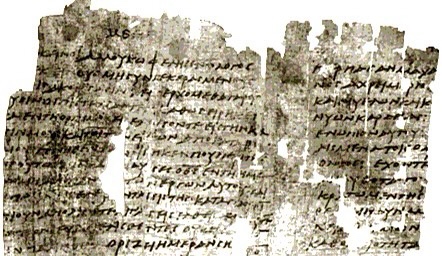

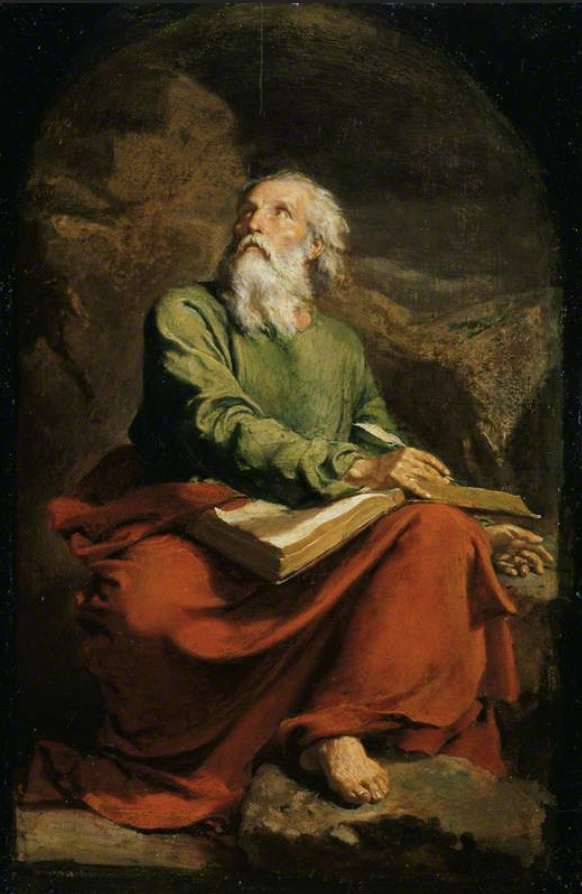
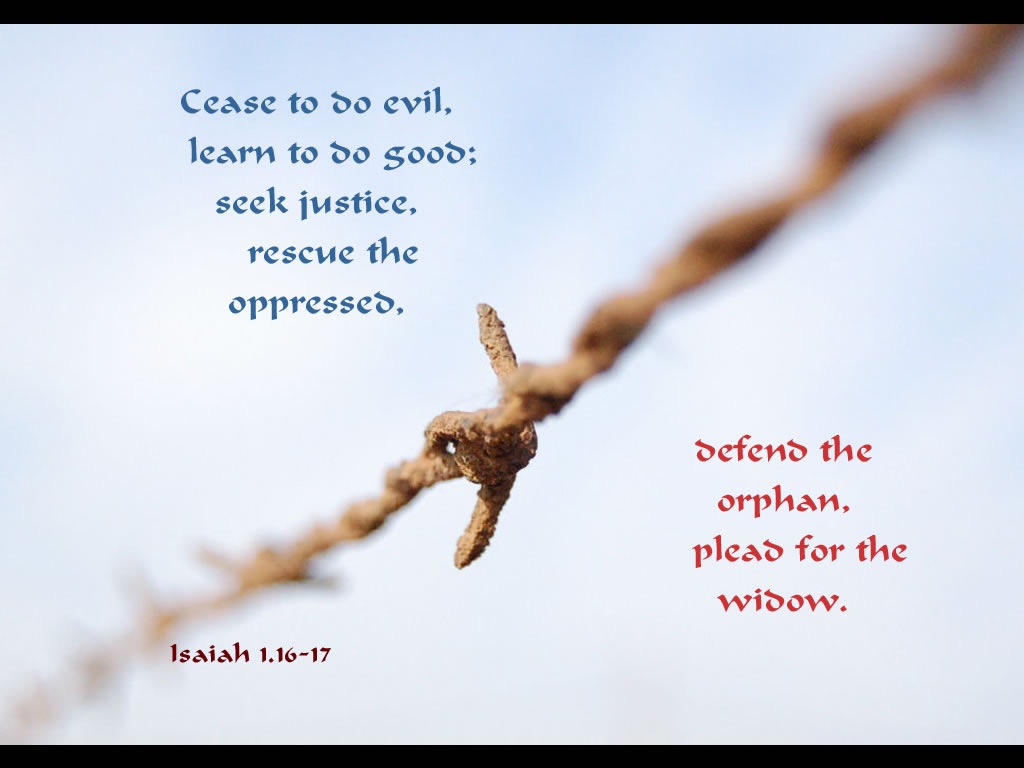

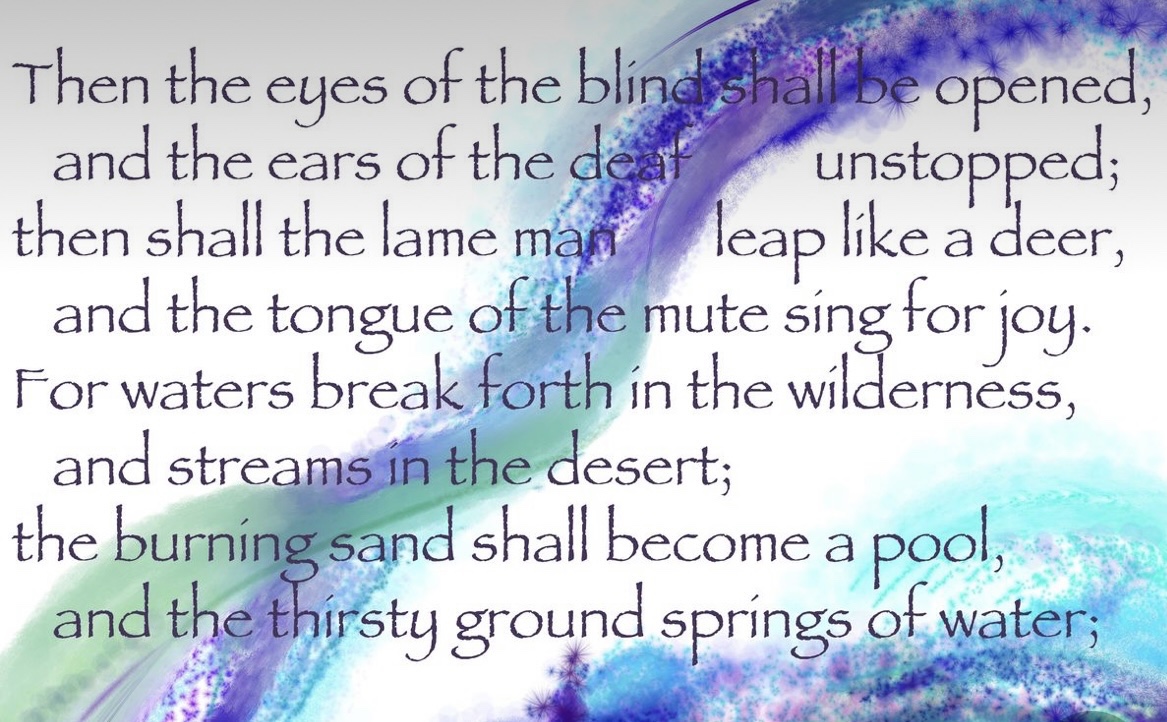

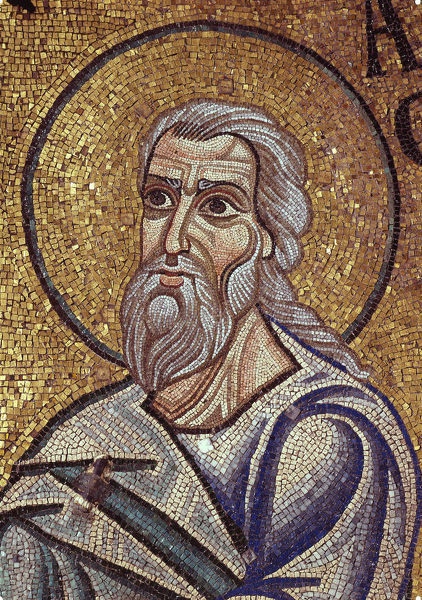
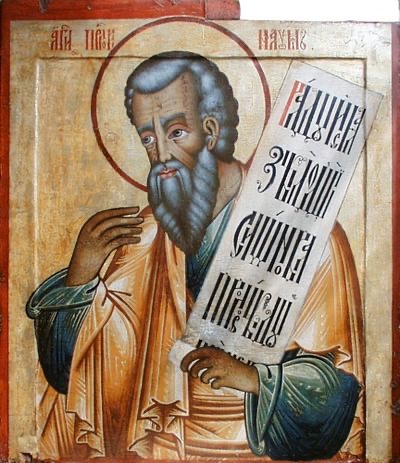
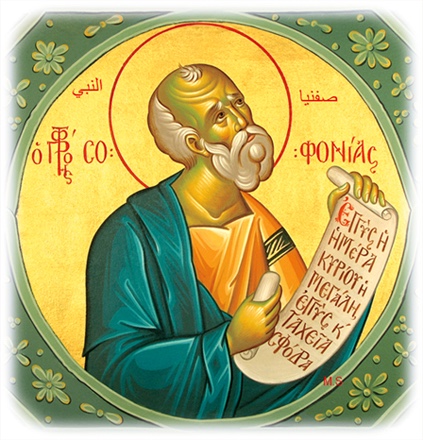
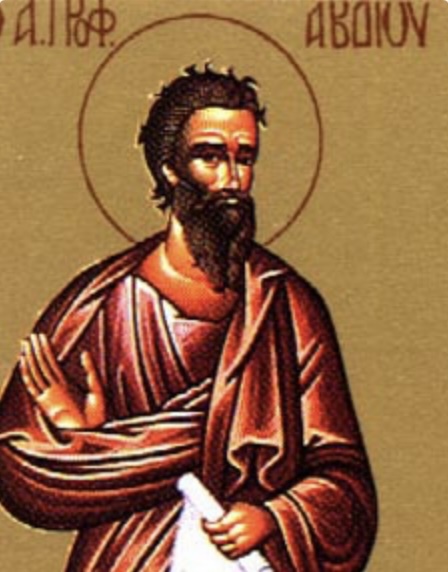

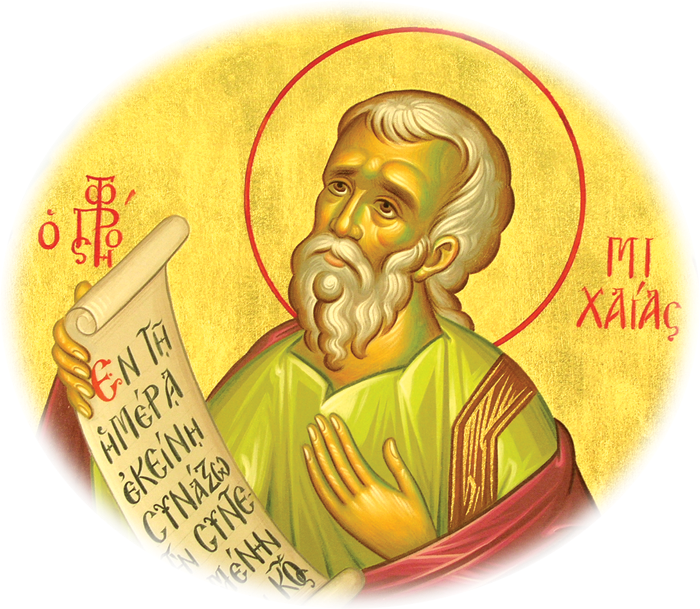

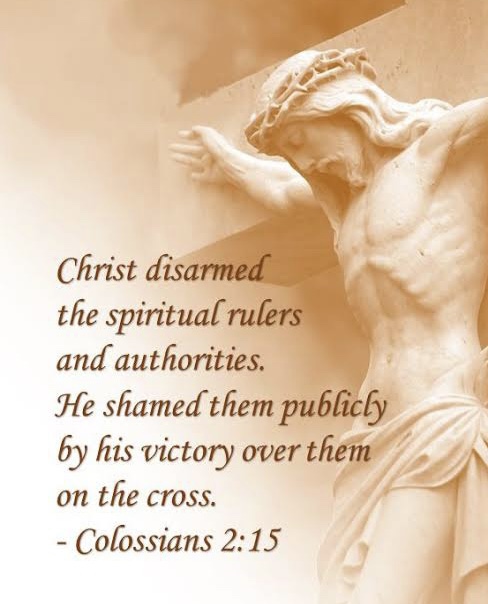

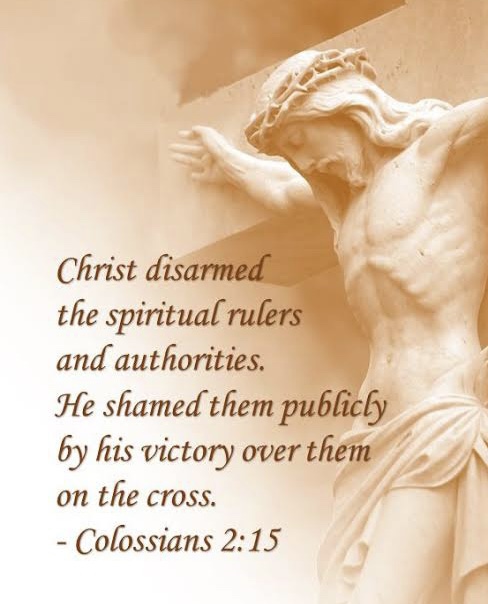
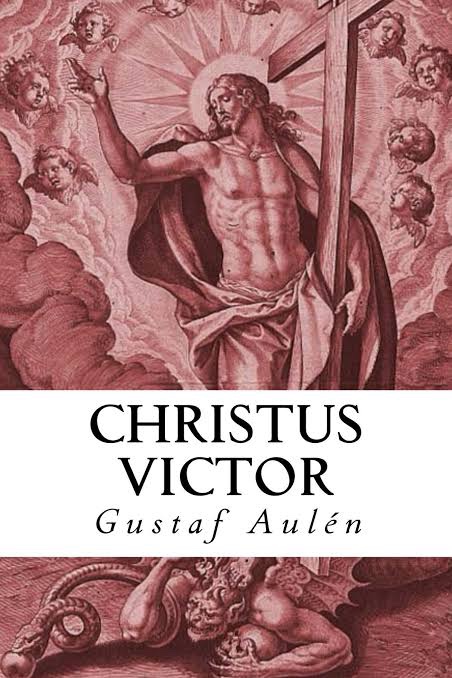
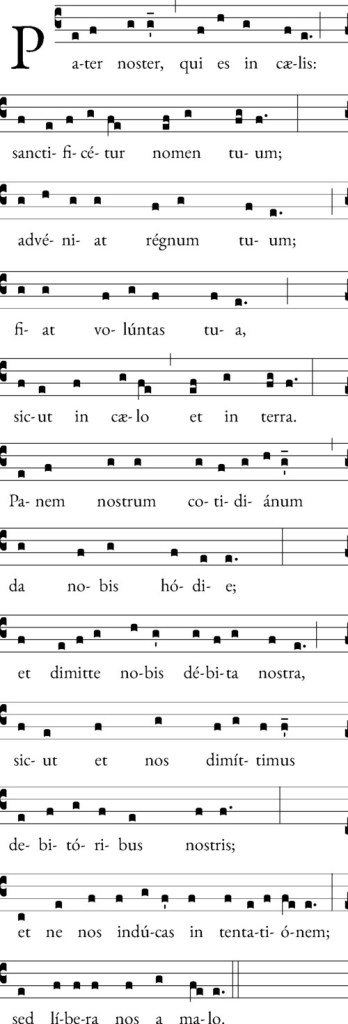
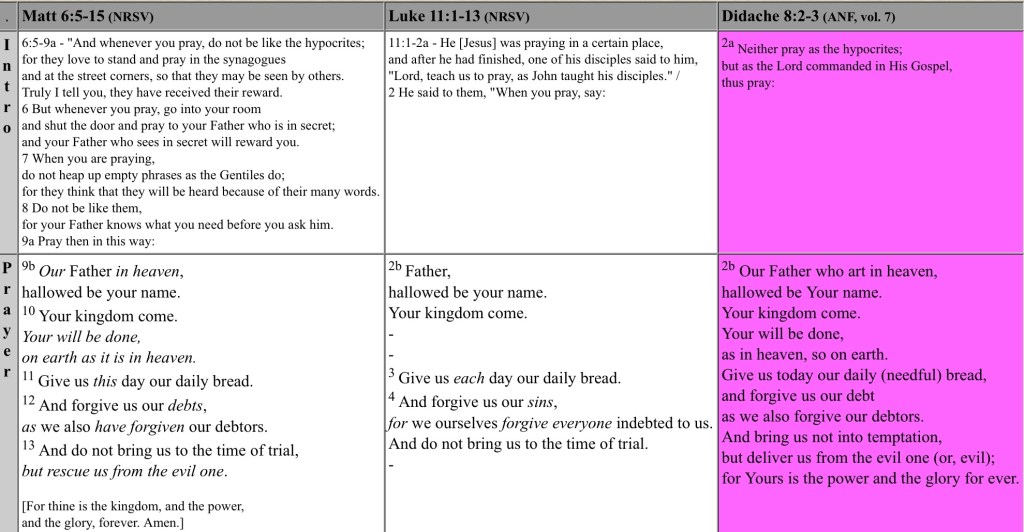

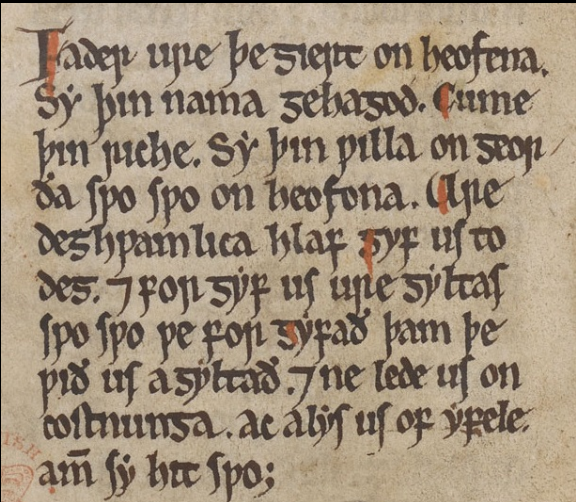

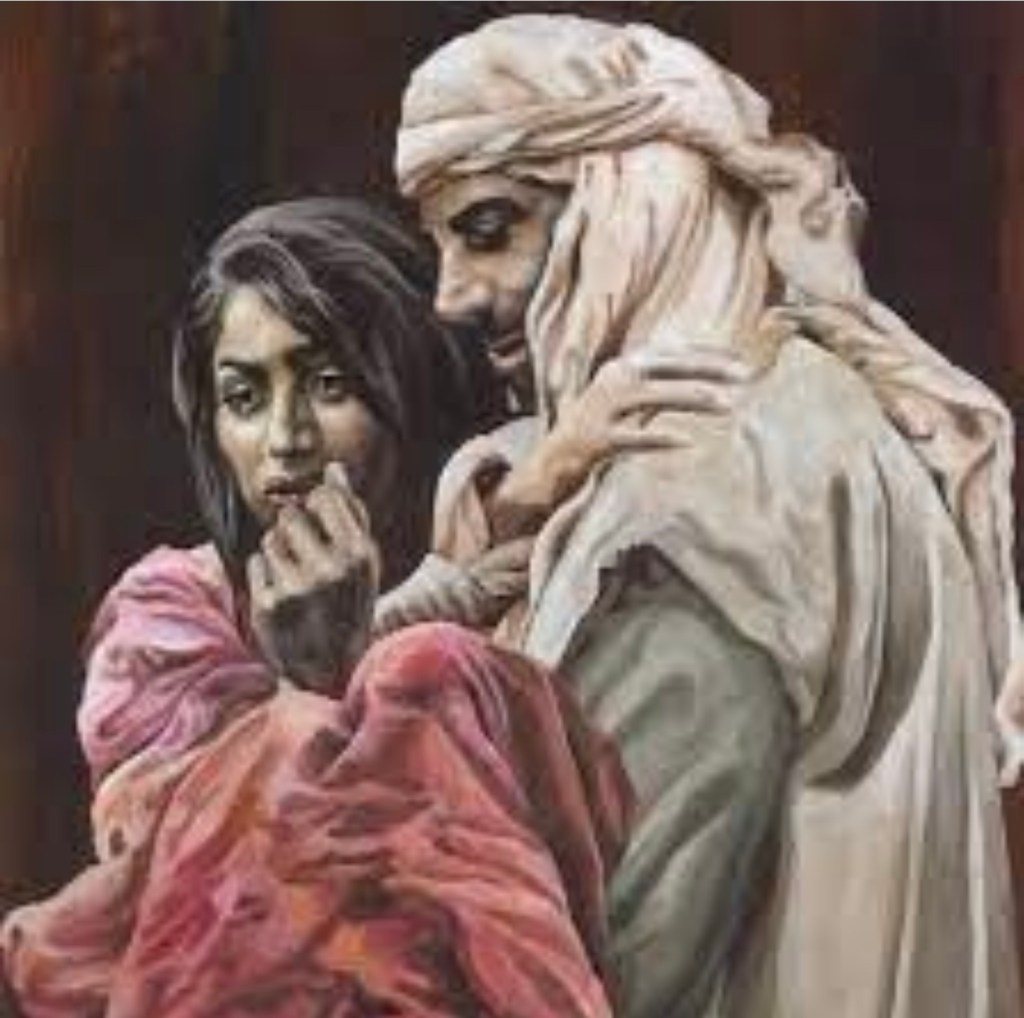
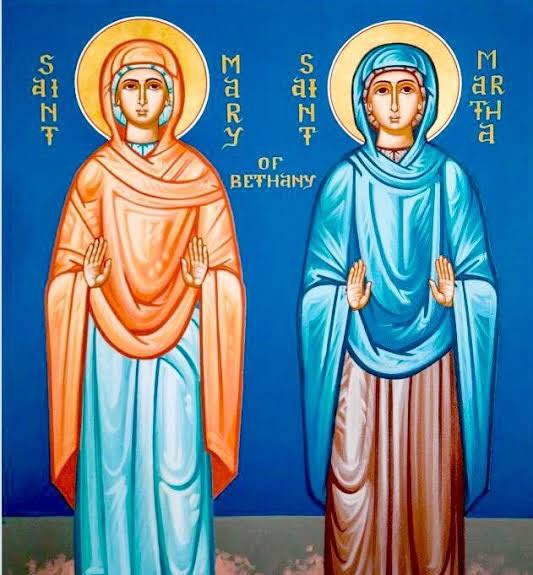

 An Informed Faith