50 years of NAIDOC WEEK 4 (1991–1997)

Today, 3 June, we remember the day in 1992 that the legal case brought by Eddie (Koiki) Mabo was decided by the Australian High Court. The court effectively recognised the existence of Native Title rights and rejected the concept of terra nullius, which claimed Australia was a land belonging to no-one prior to British occupation. The judgement opened the way for the passing of the Native Title Act in 1993.

See https://www.creativespirits.info/aboriginalculture/land/native-title

This decision of the High Court was one of the highlights in the area of indigenous affairs during the period that Paul Keating led the federal government. The Mabo case was decided just six months after Keating had become Prime Minister (in December 1991).

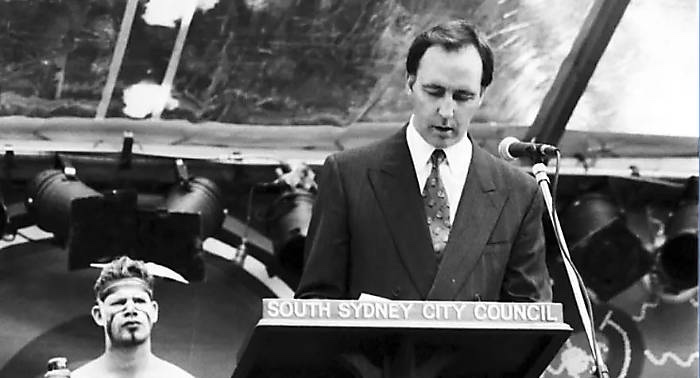
The other highlight was the powerful speech that Keating delivered a year later, in December 1992, which is known as the Redfern Speech. In this speech, Keating acknowledged the role played in destroying the culture of the First Peoples by those who invaded and colonised the continent in the early decades of British settlement.

Paul Keating delivers the Redfern Speech in December 1992

“The problem starts with us non-Aboriginal Australians”, he declared. “It was we who did the dispossessing. We took the traditional lands and smashed the traditional way of life. We brought the diseases. The alcohol. We committed the murders. We took the children from their mothers. We practised discrimination and exclusion. It was our ignorance and our prejudice.”

See https://www.creativespirits.info/aboriginalculture/politics/paul-keatings-redfern-speech

It was a searing recognition of the multitude of ways in which white Australian society had impacted the long-established cultures of the First Peoples; a recognition of the complicity of white Australia in the devastation of black Australians. It was a clear step beyond anything articulated in public in previous years.

In assessing the period when the Keating Government was in power, Dr John Gardiner-Garden began by referencing Keating’s Redfern speech of December 1992, as well as “his government’s decision to set up a national inquiry into the separation of Indigenous children”. Keating “sought to encourage recognition of past injustices. In his government’s native title and land fund legislation and proposed ‘Social Justice Package’ he sought to advance the process of making amends for the disregard of Indigenous common law rights which the 1992 Mabo judgement had found to have occurred.”

See https://www.aph.gov.au/about_parliament/parliamentary_departments/parliamentary_library/pubs/bn/1011/indigenousaffairs2#_Toc295218057

During the years that the Keating Government was in power, the following themes were chosen for each year of NAIDOC WEEK:

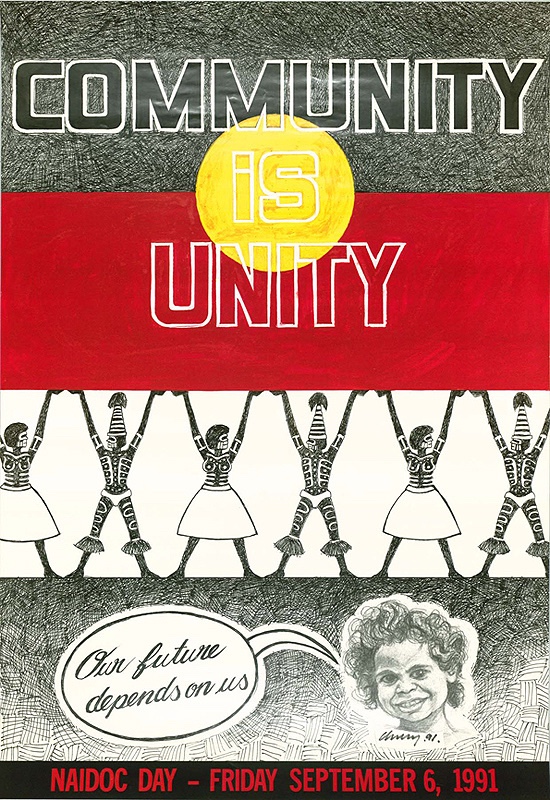
1991: Community is Unity—Our Future Depends On Us

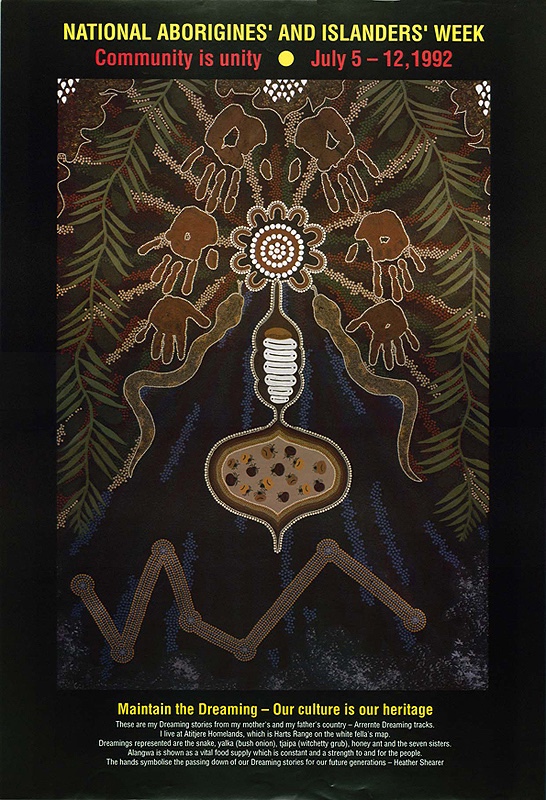
1992: Maintain the Dreaming—Our Culture is Our Heritage

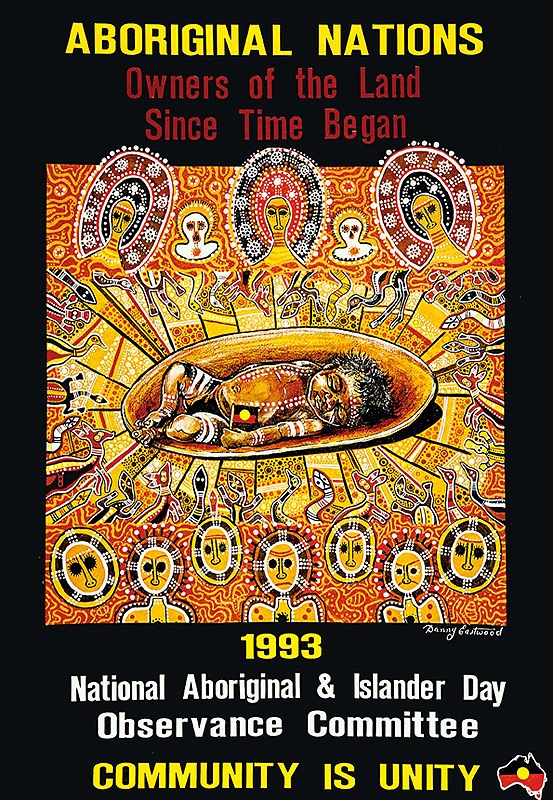
1993: Aboriginal Nations—Owners of the Land Since Time Began—Community is Unity

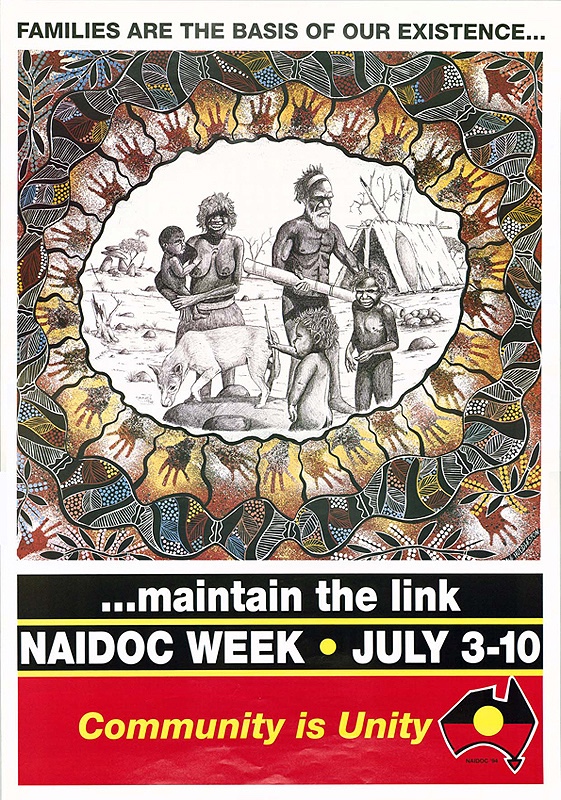
1994: Families Are the Basis of Our Existence—Maintain the Link

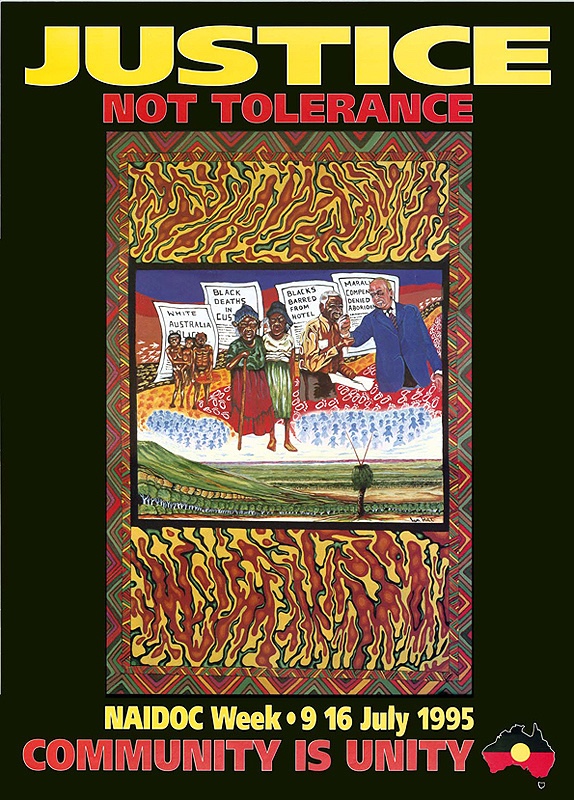
1995: Justice Not Tolerance

*****

In 1991, the focus on community in the theme, Community is Unity—Our Future Depends On Us, echoed the earlier themes that referred to community: talking together in the 1983 theme, Let’s talk—we have something to say; seeking understanding in the 1985 theme, Understanding: it takes the two of us; and working towards peace in the 1986 theme, Peace, not for you, not for me, but for all of us. The theme also had a future orientation, expressing hope for what might lie ahead for Aboriginal people: Our Future Depends On Us. That “us” clearly included white and black together, working in common in community.

The 1992 theme, Maintain the Dreaming—Our Culture is Our Heritage, looked back just a couple of years, to the 1990 theme, Don’t Destroy, Learn and Enjoy our Cultural Heritage, and to the 1988 theme, Recognise and Share the Survival of the Oldest Culture in the World. It also referenced the 1978 theme, Cultural Revival is Survival. All four years focussed attention on the long-exisiting culture that was maintained and passed on by indigenous peoples around the continent.

In addition, the 1992 theme included a reference to Dreaming; this is a term, somewhat contentious amongst First Nations people, which has nevertheless seen widespread acceptance and adoption in the wider Australian society. It is generally understood to be a way to refer to the collection of stories that form the foundational mythology of Aboriginal peoples.

Reconciliation Australia, on its website shareourpride.org.au, states that “it is impossible to find words that adequately capture this core element of who we are but it’s something you feel when you sit with us on our country and hear our stories with an open mind and heart.”

The website affirms that “Dreaming is more than a mythical past; it prescribes our connection as Aboriginal people with the spiritual essence of everything around us and beyond us. Dreaming stories are not in the past, they are outside of time – always present and giving meaning to all aspects of life.”

See https://www.shareourpride.org.au/sections/our-culture/index.html

*****

The 1993 theme, Aboriginal Nations—Owners of the Land Since Time Began—Community is Unity, incorporated three distinct phrases. The final phrase looked back by incorporating one phrase of the 1991 theme, Community is Unity. However, the full theme included a clear reference to the struggle that had culminated in the 1992 Mabo decision. It identified Aboriginal people as Owners of the Land Since Time Began. This was the principle underlying the High Court’s Mabo decision, and which then enabled the development of the Native Title Act of that year (1993).

Furthermore, the 1993 theme included a clear declaration that Aboriginal people had not simply been “one nation” before British invasion and settlement commenced in 1788; the reference to the plural, Aboriginal Nations, was highly strategic. It had been the custom in the 19th and 20th centuries for Aboriginal people to be described and treated as a single cultural and historical unit.

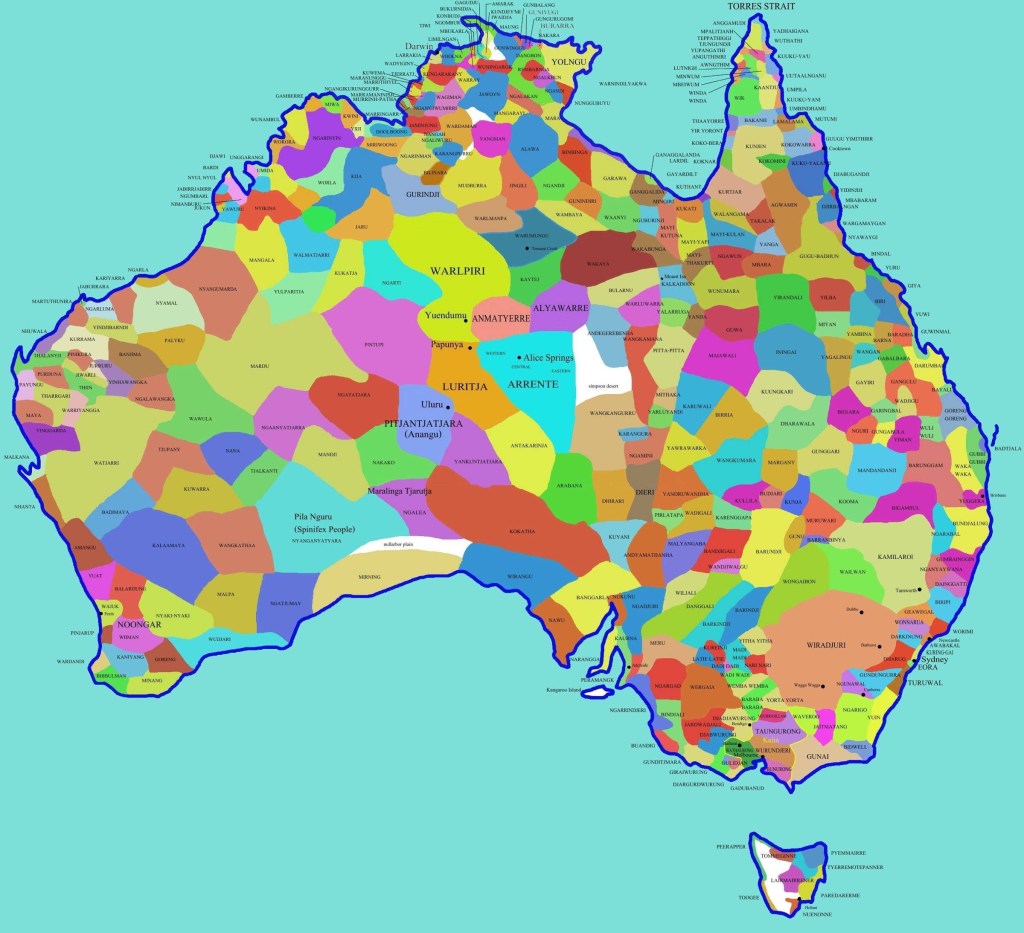
By contrast, today, two decades into the 21st century, the claim made by the 1993 theme is widely accepted and commonly spoken. British settlers have dispossessed people from well over 250 different nations right across the continent and its associated islands. The clearest example of this recognition is the map published by the government agency AIATSIS (the Australian Institute of Aboriginal and Torres Strait Islander Studies).

On a website explaining this map, AIATSIS explains that it “attempts to represent the language, social or nation groups of Aboriginal Australia. It shows only the general locations of larger groupings of people which may include clans, dialects or individual languages in a group.”

The map presents a clear lesson in a graphic manner: there were many, many nations across the continent prior to 1788.

See https://aiatsis.gov.au/explore/map-indigenous-australia

*****

The NAIDOC WEEK themes of the next two years continued to articulate core beliefs within Aboriginal culture. The 1994 theme, Families Are the Basis of Our Existence—Maintain the Link, alluded to the 1979 theme, What about our kids?, and would provide a prophetic looking-forward to the key findings of the Bringing Them Home report issued just a few years later, in 1997.

The 1995 theme, Justice Not Tolerance, was a plea to move beyond ideas of merely tolerating indigenous people, and adopt the principles of justice that would see them treated equitably, with wrongs righted and reparations made for past errors.

*****

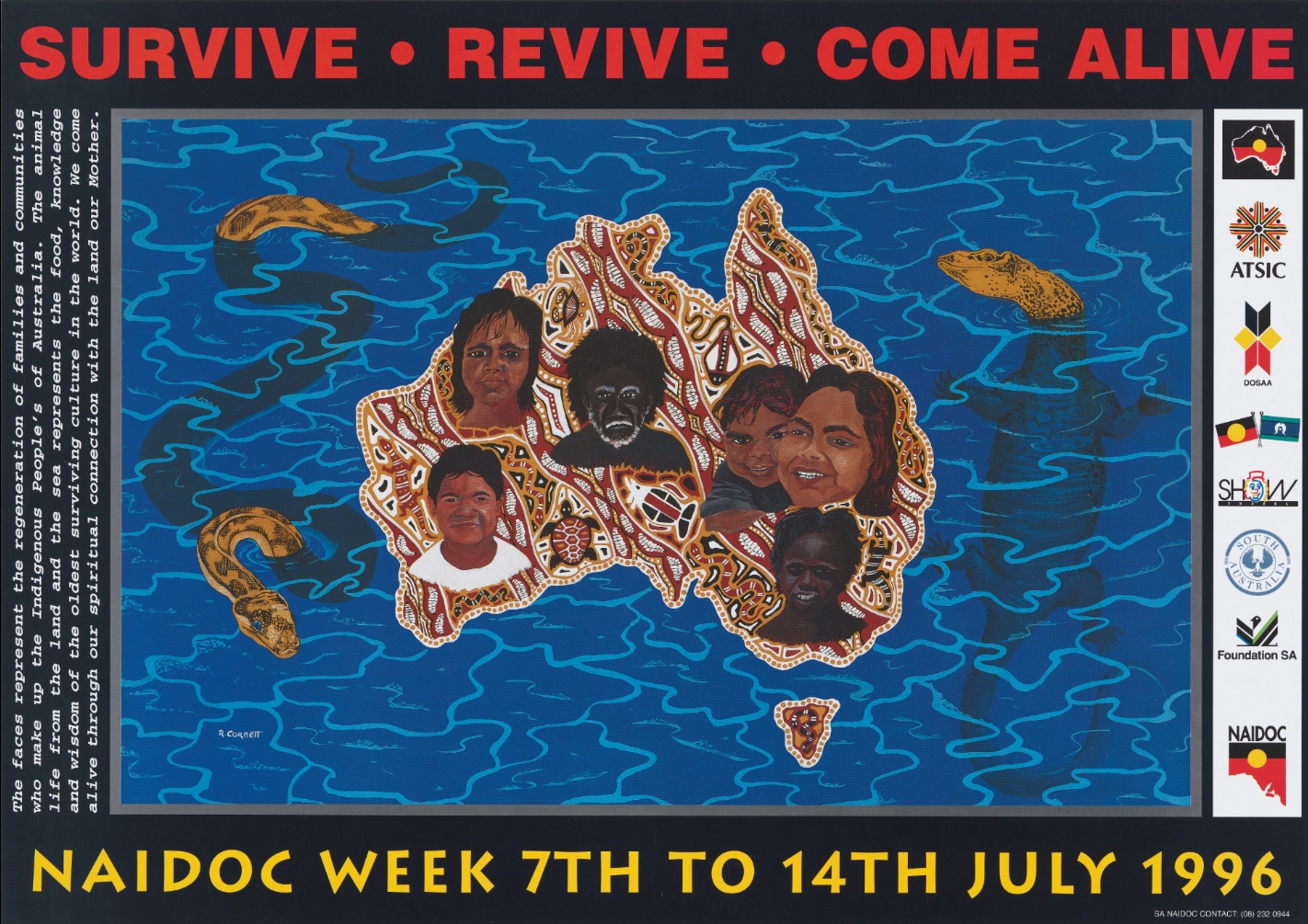
In March 1996, John Howard’s Liberal Party, in coalition with the National Party, was elected, and formed a government that lasted for the next 11 years. The 1996 and 1997 themes for NAIDOC WEEK continued to provide sharp insights into what was needed in Australian society, even with a more conservative government at the helm. In 1996, the theme was Survive—Revive—Come Alive.

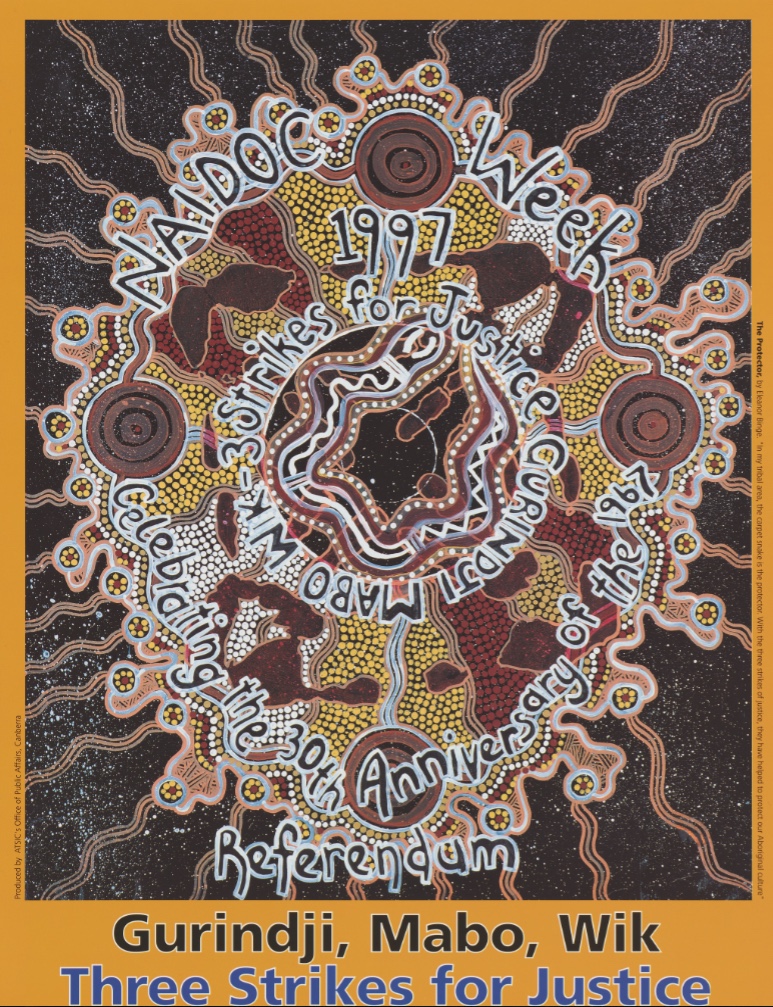
In 1997, the theme was equally pointed, as it,celebrated the 30th anniversary of the 1967 referendum,

Dr John Gardiner-Garden notes the many retrograde steps taken by the new Howard Government: they “dropped the terms ‘social justice’ and ‘self-determination’, withdrew support from many of the initiatives and institutions for which these terms were the raison-d’etre and declared its new priorities to be ‘accountability’, ‘improving outcomes in key areas’ and ‘promoting economic independence’.”

He furthered noted that “Government actions such as creating a Special Auditor, reducing Aboriginal and Torres Strait Islander Commission (ATSIC) funding, amending the Native Title Act and perceived inactions on reconciliation and in responding to the rhetoric of the new One Nation Party placed a strain on relations with the Indigenous community.”

See https://www.aph.gov.au/about_parliament/parliamentary_departments/parliamentary_library/pubs/bn/1011/indigenousaffairs2#_Toc295218057

The three events referenced in the 1997 theme, Gurindji, Mabo, and Wik, were pivotal moments in the advancement of Aboriginal claims in the 20th century.

The Gurindji Strike of 1966 was led by Vincent Lingiari. A protest against the Wave Hill station managers resulted in the return of some traditional lands to the Gurindji people under a lease arrangement in 1975, and later led to the granting of inalienable freehold title to this area in 1984.

In the Mabo decision of the High Court, handed down on 3 June 1992, the court recognised the land rights of the Meriam people. They were the traditional owners of some islands in the Torres Strait. Marked on the map as the Murray Islands, the Torres Strait Islanders called these islands Mer, Dauer and Waier). The case is significant because it rejected the view that at the time of colonisation, Australia was terra nullius, or land belonging to no one.

The case had initially been brought in 1982 by five indigenous people. Because Eddie Koiki Mabo was the first plaintiff in the case, it became known as the Mabo Case. In its judgement, the High Court acknowledged that “Indigenous peoples had lived in Australia for thousands of years and enjoyed rights to their land according to their own laws and customs.” See https://aiatsis.gov.au/explore/mabo-case

On Eddie Mabo, see https://aiatsis.gov.au/explore/eddie-koiki-mabo#toc-the-mabo-case

The Wik judgement of 1996 built on the basis of the Mabo decision. The case related to the right to hold native title in an area where there were pastoral,leases in place. By a majority of 4–3, the High Court agreed that the pastoral leases did not extinguish the native title of the Wik and Tahyorre people of Cape York.

Sadly, the remembering of these three key events during the early years of the retrogressive Howard government, strikes a note of pathos. These advances were not built on by the Howard government. In the ensuing decade, due to the intransigence of the government, things would actually go backwards.

*****

See also

50 years of NAIDOC WEEK 3 (1984–1990)

Today, 30 May, is Reconciliation Day in the Australian Capital Territory. It is a day to focus on the steps that have been taken—and the steps that still need to be taken—in the relationship between the First Peoples of the hundreds of nations which existed on the continent of Australia, and its associated islands, in the late 18th century, and those who have come to this island continent in the years since.

One way that the First Peoples have articulated how they see things, and what they would like to see happen in terms of such relationships, has been in the annual NAIDOC WEEK. Starting as a national day in 1972, since 1978 a whole week has been designated to remember and honour the First Peoples of Australia.

In continuing my series about NAIDOC WEEK, I turn to the years of the Hawke Government. Bob Hawke led the Labor Party to power in the federal election of March 1983. During the nine years that the Hawke Government was in power, the following themes were chosen for each year of NAIDOC WEEK:

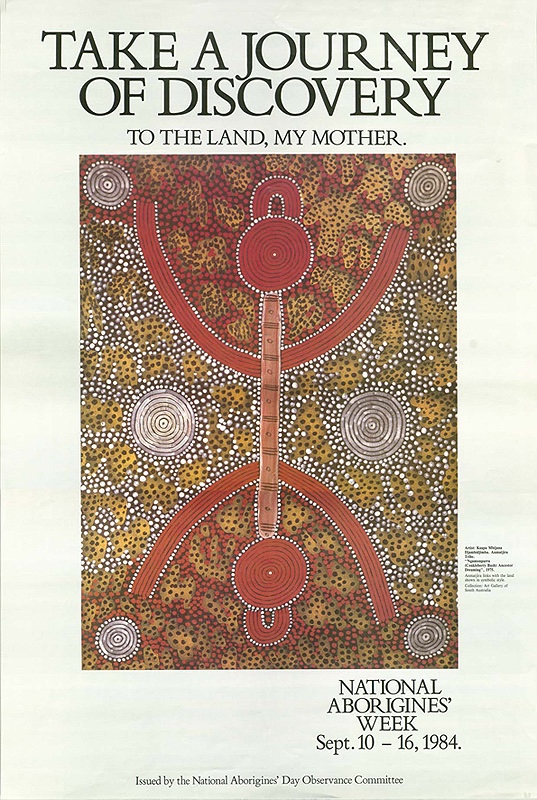
1984: Take a Journey of Discovery—To the Land My Mother

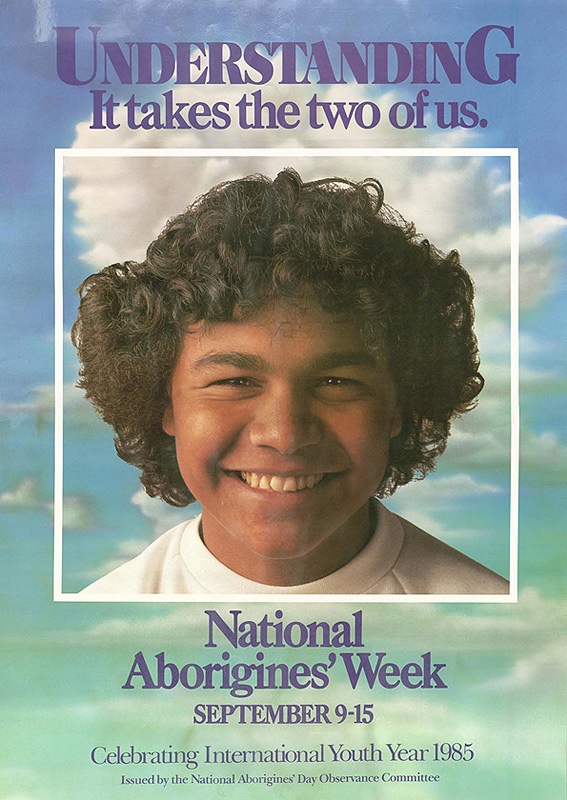
1985: Understanding: It Takes the Two of Us

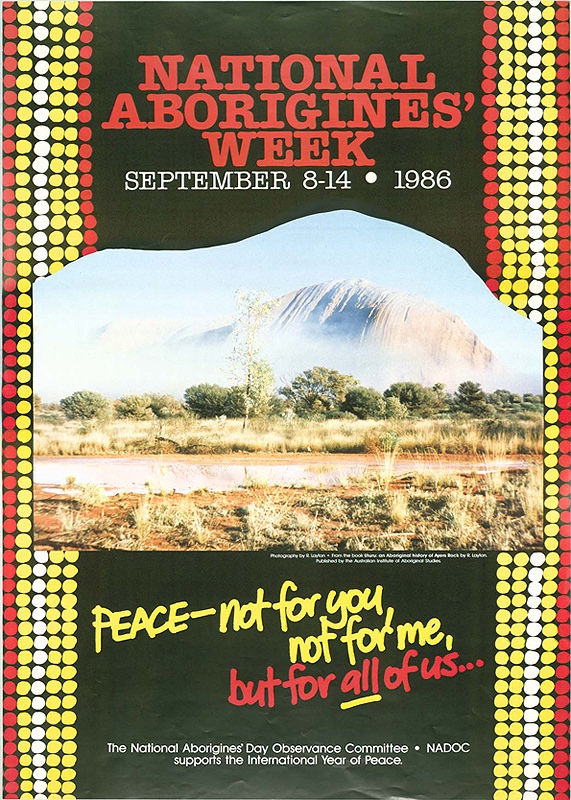
1986: Peace—not for you, not for me, but for all

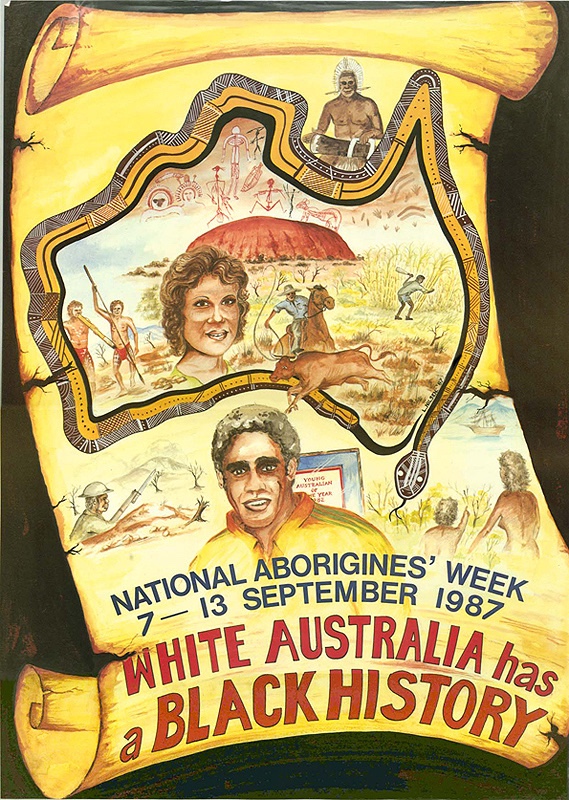
1987: White Australia has a Black History

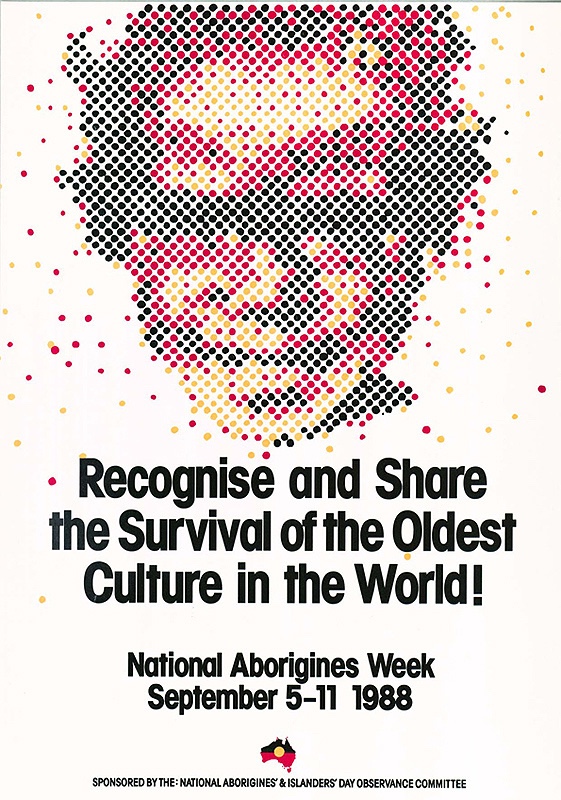
1988: Recognise and Share the Survival of the Oldest Culture in the World

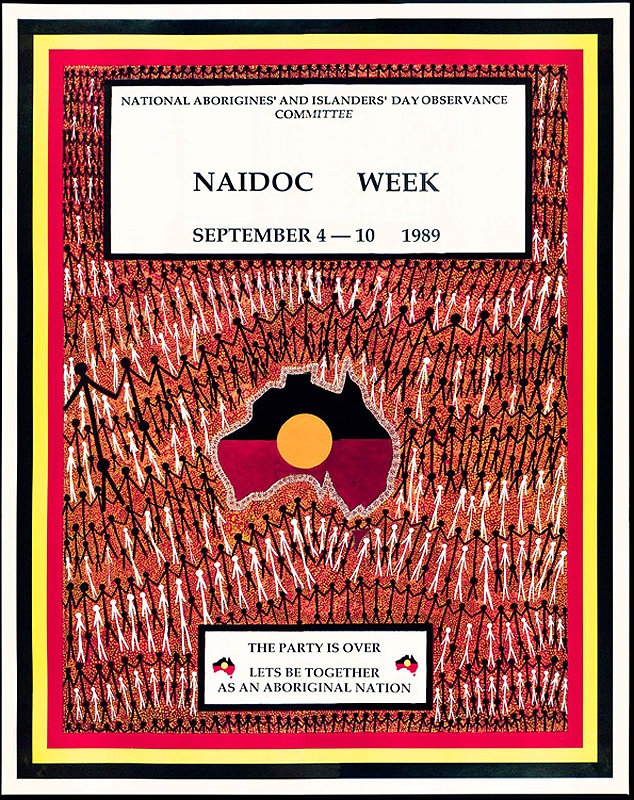
1989: The Party is Over—Let’s Be Together as a Aboriginal Nation

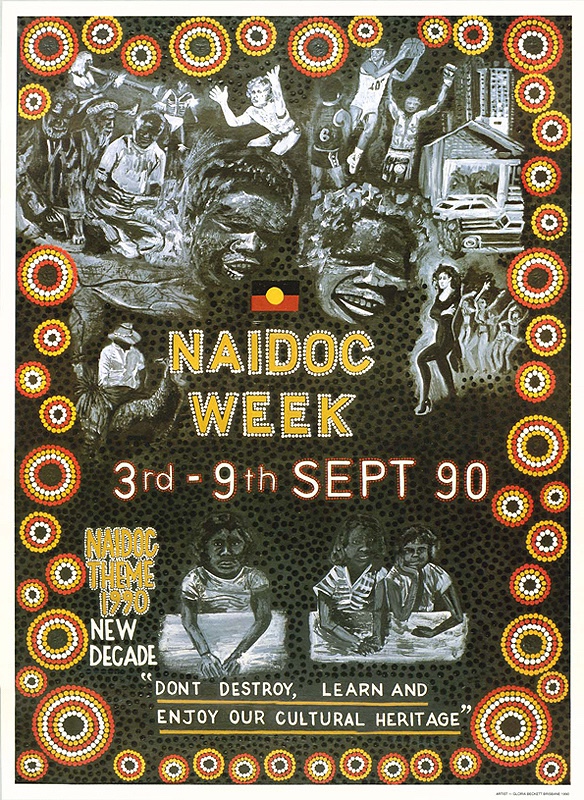
1990: New Decade—Don’t Destroy, Learn and Enjoy Our Cultural Heritage

The themes of the first few years during this period canvassed various motifs. The first in this sequence, in 1984 (Take a Journey of Discovery—To the Land My Mother) is striking in that it referred to the land as “Mother”. In considering the significance of land to indigenous people, the Aboriginal site, Creative Spirits, retells the story of “The Lost Girl”. Separated from her family, separated from the camp, the girl spent the night underneath an overhanging rock, before following a crow which took her back to her people.

“The people laughed and cried at once to see that the girl was safe. They growled at her for her foolishness, and cuddled her, and gave her a place by the fire. Her little brother asked her if she had been afraid; but the girl said – ‘How could I be frightened? I was with my Mother. When I was thirsty, she gave me water; when I was hungry, she fed me; when I was cold, she warmed me. And when I was lost, she showed me the way home.’”

See “Meaning of land to Aboriginal people—Creative Spirits”, retrieved from https://www.creativespirits.info/aboriginalculture/land/meaning-of-land-to-aboriginal-people

See https://www.creativespirits.info/aboriginalculture/land/meaning-of-land-to-aboriginal-people

*****

The next two years saw themes selected to indicate what work was needed, to ensure that black and white could do-exist together in modern Australia. In 1985, the theme was Understanding: It Takes the Two of Us. The poster also referenced the 1985 International Youth Year, with an image of a smiling younger indigenous person.

In 1986, moving beyond understanding, the theme referenced peace: Peace—not for you, not for me, but for all. The poster, highlighting the colours of red, yellow, and black, had an image of Uluṟu (then known as Ayer’s Rock) at its centre.

A key event during the Hawke period was the bicentenary of white settlement of Australia. Along with the public celebrations planned and held on Australia Day in January 1988, the opening of the new Parliament House took place in May 1988.

The location for Canberra was chosen after much debate in the early 20th century. The region is generally understood to have been a meeting place for different Aboriginal clans, suggesting that there was a reliable food and water supply. So placing the building where representatives from around the continent gathered, to debate and decide the laws of the country, sends a powerful symbol.

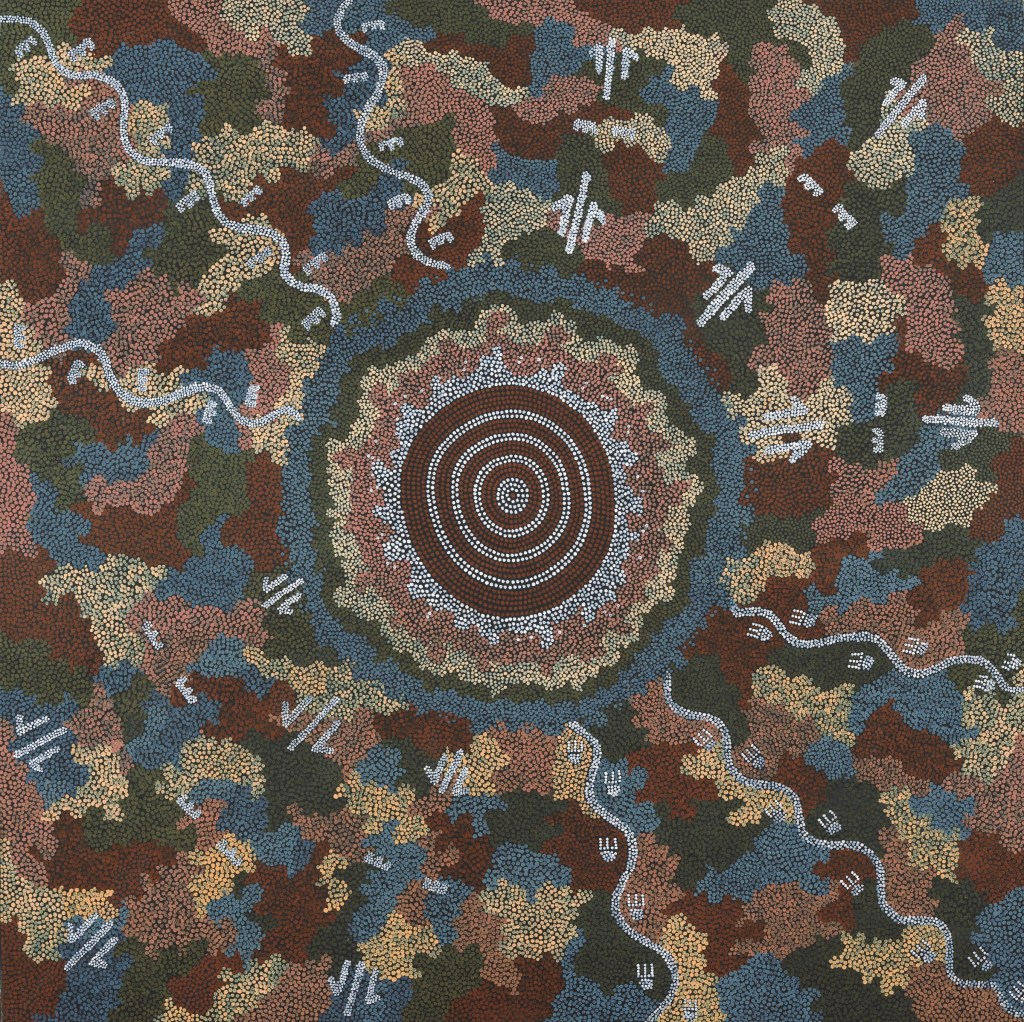
Michael Nelson Jagamara (born 1945) Luritja/Warlpiri peoples
Possum and Wallaby Dreaming 1985, synthetic polymer paint on canvas, Parliament House Art Collection, Canberra, ACT.
© The artist licensed by Aboriginal Artists’ Agency Ltd.

The name Canberra is believed to have been derived from a local Indigenous word Kamberri, which identifies the location as a meeting place of these many nations, for a gathering focussed around the bogong moth. See https://johntsquires.com/2019/01/30/learning-of-the-land-3-tuggeranong-queanbeyan-and-other-canberra-place-names/

Three NAIDOC WEEK themes reflect this watershed year. In the year before the bicentenary, 1987, there was a focus on black history, as a counterpoint to the intense focus that there was on the history of Australia since European colonisation from 1788 onwards. Mandandanji descendant and Queensland based multidisciplinary artist, Laurie Nilsen, designed the poster illustrating this theme.

The design features “a rolled paper scroll against a black background, with a large snake forming a silhouette of Australia and an assemblage of indigenous people and motifs spread throughout the composition, with red and blue printed text below”, according to a description on https://culturalcommons.edu.au/white-australia-has-a-black-history/

The site continues, “Nilsen has used a palette of warm and natural earthy tones of ochre, red and black to represent Indigenous figures and iconography including a stockman riding a horse in front of Uluru; a man wearing a dhari (traditional dancer’s headdress); rock paintings; a mother and son watching a tall ship; a soldier in a trench and a portrait of rugby player Mark Ella, recipient of Young Australian of the Year in 1982.”

The 1987 theme, White Australia has a Black History, can be understood to refer to the lack of meaningful acknowledgment, at that time, of past atrocities committed against First Nations people—an attitude which has been reversed in recent years, as it attested by the University of Newcastle’s project to map all massacre sites across the continent. See https://c21ch.newcastle.edu.au/colonialmassacres/map.php

*****

In 1988, the year of the bicentenary, the theme was clear and direct: Recognise and Share the Survival of the Oldest Culture in the World. The image of an Aboriginal face on the poster is made up of dots, coloured in the schema of the Aboriginal flag (red, yellow, black).

This theme provides a strong recognition of a fact that is now accepted without question; that the culture that is evident in traditional Aboriginal groups today has continued without interruption for millennia—at least 60,000 years, perhaps 75,000 years, maybe even longer.

Luke Pearson writes that “Aboriginal cultures are acknowledged as the first makers of bread, the first astronomers, have the earliest evidence of religious beliefs and practices, were the creators of the oldest still standing man-made structure (the Brewarrina fish traps), and more other firsts.”

Yet, he says, a focus on where a particular item was first developed is an inadequate way to assess a culture. He maintains that Aboriginal culture had long been living in accord with principles that “‘modern societies’ are only now fumbling around the edges of trying to understand and attain.”

He cites those principles as “Environmental sustainability; not being in a state of perpetual war; not needing to exploit others for resources and labour; equitable wealth and resource distribution”; but even then, he declares, “this is not the true lens through which other cultures should be viewed, because the true value of Aboriginal cultures is not simply how its practices and philosophies can assist others with the challenges they now face.”

See https://www.sbs.com.au/nitv/article/2016/12/21/what-continuous-culture-and-are-aboriginal-cultures-oldest

*****

In 1989, after the year of partying throughout the bicentenary, NAIDOC WEEK turned the focus back to a key claim of indigenous leadership: The Party is Over—Let’s Be Together as a Aboriginal Nation. The theme articulated a plea for a way to move forward as a united nation, with true recognition of the foundational and central place of Aboriginal people in the nation. It signalled that froth and bubble of the public celebrations of 1988 (in which many indigenous people felt unable to participate) needed now to be followed by some hard, sustained work, to develop a unified nation.

The poster showed white fellas and black fellas lined up together, symbolising that plea to work towards unity. It’s a plea that has fallen on deaf ears, sadly—and worse, and the following era under the Howard government saw the development of the “history wars”, a retrograde opposition to recognising black history, and a fanning of the flames of racists xenophobia, turned even into the First People of the continent and its islands.

The theme for 1990 recognised the start of the new decade, it the theme New Decade—Don’t Destroy, Learn and Enjoy Our Cultural Heritage. The theme refers back to the 1988 theme, giving it a forward-looking orientation.

Sadly, vested interests have continued to disregard this plea from First Peoples, as various sacred sites have been reclaimed, destroyed, and concreted over in the interests of “development”. The most tragic instance of this was in the disgusting blasting of the Juukan Gorges by Rio Tinto in 2020. This irresponsible act must surely be seen as a criminal act.

The shelters that were destroyed were the only inland site in Australia showing human occupation continuing through the last Ice Age. Their tragic destruction is a clear sign that we refuse to learn, that we continue to disrespect Aboriginal culture. See https://theconversation.com/rio-tinto-just-blasted-away-an-ancient-aboriginal-site-heres-why-that-was-allowed-139466

*****

See also

The Season of Creation in ‘With Love to the World’

For the past year, I have been editing a quarterly publication called With Love to the World. It provides short commentaries on the biblical passages offered in the Revised Common Lectionary, which is used by mainstream denominations of the Christian church around the world. There are four passages each week—one each from Hebrew Scriptures, a Psalm, an Epistle, and a Gospel.

Every year, during September, there is a focus in the church around the world on the theme of Creation. This year, I’ve expanded that to encompass the full 13 weeks of one issue of With Love to the World, which runs from Pentecost 11 (in mid August) through to Pentecost 23, just before the festival of the Reign of Christ brings the church year to an end in November.

To the four lectionary passages, I’ve added three passages from Hebrew Scripture which offer resources for considering our relationship with the creation, and how we might live responsibly within that creation. I’m really pleased with the quality of what I have received from the contributors for this issue.

If you are looking for a way to focus your thinking on how to live in harmony with the whole creation, and deepen your discipleship practices of sustainability and environmental responsibility, through a daily reflection on a scripture passage—then this issue of With Love to the World will provide that.

The passages relating specifically to creation begin in the first week, Pentecost 11, with the priestly account of creation, a wonderfully crafted narrative shaped during and after the Exile in Babylon. The latter part of this account tells of the creation of all living creatures, culminating in the creation of humanity. This passage (Genesis 1) describes each category of living creature as a nephesh, a concept that signals the inherent interconnectedness of all creation.

Although this is a later (post-exilic) narrative, it is given prime position in the Pentateuch because it so wonderfully articulates so much of the fundamental worldview of the Israelites—a worldview which we have inherited, and which we continue to value. The insight that we are all interrelated and interdependent is central to contemporary understanding of ecosystems on the micro level and the cosmic scope of galaxies and universes alike. It is here in the opening narrative of scripture.

The book of Job contains an important section which makes it clear that the whole of creation was designed to function as a cohesive unity. Human beings have no special and distinctive place in that creation: God cares for all parts of creation equally and uniformly. Accordingly, we have a responsibility neither to claim a special place at “the top of the pyramid” nor to act in disregard of the consequence of our actions on others (Job 38–39).

A part of a wonderful psalm which praises God as creator and provider, Psalm 104, offers a reiteration of the perspective of Genesis 1, that all creatures are nephesh and are created by the inbreathing of God’s spirit (Ps 104:24–30). The Psalm restates in poetic form what the creation narrative that opens the pages of scripture has affirmed about the interconnected nature of all of God’s creation.

The story of Noah concludes with the account of God making a covenant “with every living creature (nephesh)” (Genesis 9), again underling the importance of the interconnected and interrelated creation. That is affirmed also in the first half of Psalm 19, which declares that the creation tells of “the glory of God” and undergirds the covenant with Israel (verses 7 onwards). This covenant is the fundamental agreement that undergirds every moment in the relationship between Israel and the Lord God throughout the centuries.

Three excerpts from the prophet Isaiah extend this theme. Isaiah 11 is usually read as a messianic prophecy during Advent; reading it in this context, with a focus on environmental matters, we can appreciate it as a vision of a fully cooperative creation. This vision, it would seem, undergirds the promise of returning to Zion in a creation which sings in harmony (Isaiah 35 and 40). Crossing the dry desert is enlivened by a lush watery hopefulness.

Then follows a sequence of passages from the Pentateuch. First, some of the Leviticus laws are read: the Jubilee, an important (of perhaps idealised) practice which provides opportunity for the land to recreate (Leviticus 25). We read this alongside one of the closing psalms of praise, in which all creation praises God (Psalm 148)—surely a chapter that provided inspiration for the famous hymn attributed to St Francis.

Next, two passages from Numbers 35 are offered. Here, faithfulness to the covenant establishes the need to respect the creation. The Levitical cities of refuge (Num 35:9–15) indicate the significance of places of sanctuary (oases, perhaps?), places to rest in the presence of God. The chapter ends with clear directions about how to treat the land as a whole (Num 35:33–34), which resonate with what we have learnt from the spirituality of the First Peoples of Australia. Then, the cries of Lamentations 1 and 5 provide further warnings about the dangers of straying from the covenant.

Deuteronomy 19–20 includes a series of laws that also indicate how care and respect are to be shown, even in trying circumstances: through the provision of cities of refuge (only three in this version) and through respect for the land whilst waging war. Then Deuteronomy 22 collates a number of miscellaneous laws, some of which relate directly to care for the land and its creatures, all of which are informed by the priestly view that everything has its own right and correct place in the scheme of things.

In the book of the prophet Ezekiel, we find three complementary passages. Loving care for the people (portrayed as sheep) is undergirded by loving care for the land (Ezek 34). The valley of dry bones (Ezek 37) retells the creation story in a dramatic setting, as God breathes spirit into the people and places them “on [their] own soil”. Then, Ezekiel’s idiosyncratic vision of the restored temple emphasises the importance of its environmental context (Ezek 43)—a nice watery counterpoint to the arid dryness of the valley.

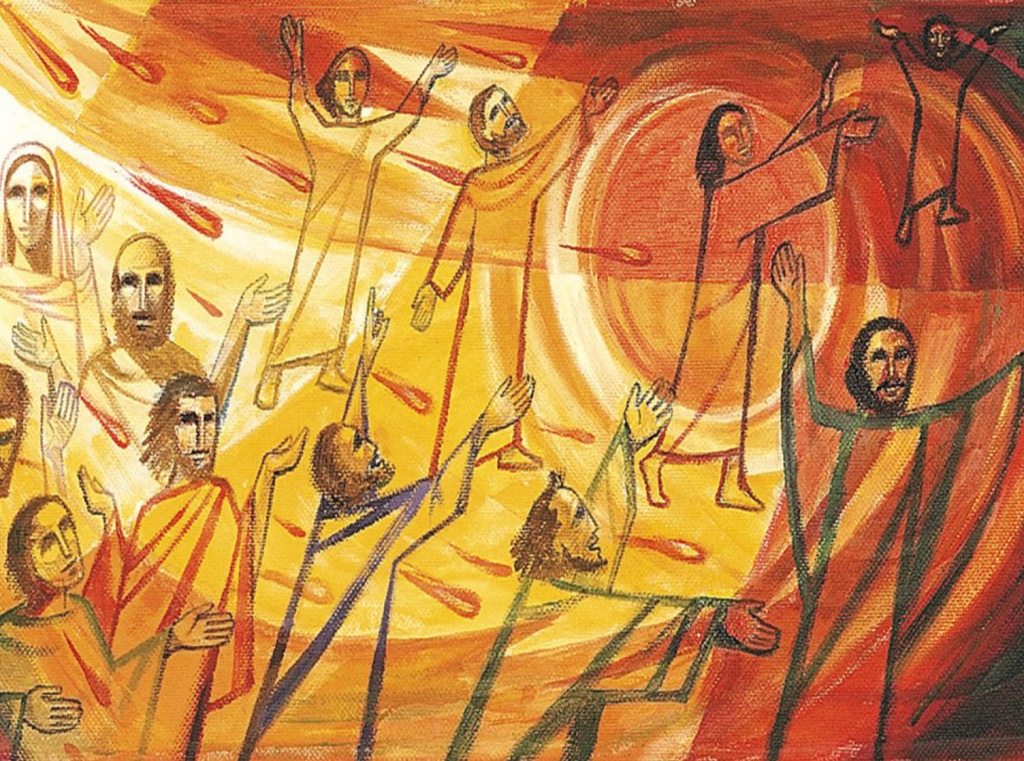
In a well-known section from the prophet Joel, God’s abundance grace is said to be evident in the fruitfulness of creation, culminating in a renewed gifting of spirit (Joel 2:23–32). I have expanded this passage by including the earlier account of the people returning to the Lord, keeping the covenant, offering the first fruits, and being blessed by God in an abundance of care of the land (Joel 2:12–22). As a dramatic counterpoint to this, the prophet Hosea reminds the people of their responsibilities to keep the covenant; when they show no faithfulness, “the land mourns” (Hosea 4:1–10). Hosea 4:3 alludes directly back to the covenant (Gen 9:9–10) and to the creation (Gen 1:20–27).

In Pentecost 21, the prophetic call for justice is emphasised in the lectionary readings provided. The lectionary reading highlights this call in Habakkuk’s call for justice (Hab 1:4) and righteousness (Hab 2:4). The same standard is found in the story of Zacchaeus (Luke 19) while the psalmist praises God for God’s righteous judgements (Ps 119:137–144). So I have added alongside that the call for justice in the parable of Isaiah 5 (an agricultural parable) and the warning about God’s righteous judgement when that call is ignored (Isaiah 24).

This portrayal of righteous judgement continues into the next week, with the dramatic pictures of Isaiah 24:12–20, warning about a global catastrophe when the environment is abused (Isa 24:13). This picture appears also in the lectionary offering, Haggai 1:15–2:9 (see 2:7). The importance of righteousness is evident also in 2 Thessalonians 2. This week also includes Reformation Day (Romans 4) and All Saints Day (Luke 6); the latter particularly offers opportunities for ecotheological reflection.

The issue comes to a close with Pentecost 23, with two sections from the Lukan account of Jesus’ apocalyptic discourse (Luke 21), provided from the lectionary. This discourse links with the claim made in 2 Thessalonians 3 about the faithfulness of God, which undergirds all that is projected and provides hope for the future.

This also resonates with the closing visions of Trito-Isaiah, looking to the new creation (Isa 65) and the promise of new life, a vision which ends with an image of comfort (Isa 66). So we close this long sequence of passages with Job 12, which affirms that when we look carefully at the creation, we will see that “the hand of the Lord has done this, in his hand is the life of every living thing (nephesh)”—taking us right back to the early affirmations about God’s covenant with every nephesh, and God’s intentional creation of every nephesh within the interconnected environment in which we all live.


With Love to the World can be ordered as a printed resource for just $24 for a year’s subscription (see http://www.withlovetotheworld.org.au/wp-content/uploads/2020/07/Ordering-and-paying-for-Website-7.vii_.2020.pdf) or it can be accessed on phones and iPads via an App, for a subscription of $24.49 per year (go to the App Store or Google Play).

Fifty Years of NAIDOC WEEK 2 (1976–1983)

Today, 27 May, is the anniversary of the day (in 1967) when the people of Australia voted in a referendum to change some clauses in the Constitution — to recognise indigenous people as citizens of the nation. The question put to the electorate was: Do you approve the proposed law for the alteration of the Constitution entitled ‘An Act to alter the Constitution so as to omit certain words relating to the people of the Aboriginal race in any state and so that Aboriginals are to be counted in reckoning the population’?

It was a referendum that actually received bipartisan support from the two major political parties, Labor and Liberal; after the referendum showed very strong popular support for this change, the Parliament unanimously agreed to the change to the Constitution.

Such bipartisan support is rare in Australian politics. It was evident in the approaches to what was called Indigenous Affairs in the wake of the change of government in 1972, with the election of the Whitlam Government, and the subsequent change of government in 1975, when the Fraser Government came to power.

During the years that the Fraser Government was in power, the following themes were chosen for each year of NAIDOC WEEK:

1976: Trucanini Last of her People Born 18?? Died 1876. Buried 1976. Received Her Land Rights at Last

1977: Chains or Change

1978: Cultural Revival is Survival

1979: International Year of the Child. What About Our Kids!

1980: Treat Us to a Treaty on Land Rights

1981: Sacred Sites Aboriginal Rights—Other Australians Have Their Rites

1982: Race for Life for a Race

1983: Let’s Talk—We Have Something to Say

On NAIDOC WEEK in the period of the Whitlam Government, see

In their “Overview of Indigenous Affairs: Part 1: 1901 to 1991”, Dr Coral Dow and Dr John Gardiner-Garden observe that “The Fraser Government followed up on the Whitlam Government’s initiatives and passed significant land rights legislation relevant to the Northern Territory but showed no sign of following up with support for a national system of land rights. The Government dropped ‘self-determination’ from Commonwealth rhetoric. A public campaign got under way for a more basic immutable recognition of Indigenous rights in the form of a treaty (‘makaratta’).”

See https://www.aph.gov.au/about_parliament/parliamentary_departments/parliamentary_library/pubs/bn/1011/indigenousaffairs1#_Toc293318916

One significant change early in the period of the Fraser Government was that the term ‘self-determination’ was dropped from the Government’s vocabulary and replaced by ‘self-management’ and ‘self-sufficiency’.

The themes adopted for National Aborigines Day, and then NAIDOC WEEK, continue the messaging that was sent from 1975 onwards. The themes both relate to events occurring in the wider society and continue to press claims upon the Australian populace. The centenary of the death of Trucanini in 1896, honoured in 1976, the recognition of the International Year of the Child (a United Nations decision) in 1979, and a theme that reflects the 1982 Commonwealth Games, each indicate the way that the themes chosen reflected current events.

*****

Trucanini was once remembered as “the last Tasmanian Aboriginal”—even though there are many people living today who claim descent from one of the nine Aboriginal nations that lived on country in Tasmania: Oyster Bay (Paredarerme), North East, North, Big River, North Midlands, Ben Lomond, North West, South West Coast, and South East. More than 23,000 Tasmanians claimed this descent in the 2016 Census. Estimates of the population at the time of the British Invasion and colonisation in 1803 vary from 3,000 to 10,000.

Trucanini was a member of the Nuenonne band of the South-East Nation of Tasmania; her homeland included the areas we know as Bruny Island and the D’Entrecasteaux Channel. After a life lived in various parts of Tasmania and Victoria, in 1847 Trucanini was part of a group of 47 Aborigines who were moved to an abandoned women’s prison at Oyster Cove. She died in Hobart, in 1876 aged 64. The 1976 theme and poster honour Trucanini.

The Tasmanian Museum and Art Gallery remembers her as “a vibrant knowledgeable young woman, whose life was one of tragedy and betrayal, as a result of the British Invasion … Before her death she pleaded for her body not to be desecrated. However white society committed the greatest betrayal to her, when two years later, the Royal Society of Tasmania had her body exhumed. From 1904-1947 her skeleton was placed on public display in the Tasmanian Museum. It was not until 1976, when her ashes were spread in the D’Entrecasteaux Channel, that her spirit was finally set free.” See http://static.tmag.tas.gov.au/tayenebe/makers/Trucanini/index.hamlets

The theme for the 1976 National Aborigines Day was Trucanini Last of her People Born 18?? Died 1876. Buried 1976. Received Her Land Rights at Last

*****

The United Nations Educational, Scientific and Cultural Organization (UNESCO) proclaimed 1979 as the International Year of the Child. As a follow-up to the 1959 Declaration of the Rights of the Child, the year was intended to draw attention to problems that affected children throughout the world, including malnutrition and lack of access to education—both of which were issues for Australian Aboriginal communities in the 1970s.

Internationally, this focus resulted in the Convention on the Rights of the Child being signed in 1989. Nationally, the situation of indigenous children remained perilous, with rates of malnutrition and educational achievement continuing to fall below the average for all Australians (and, sadly, they have continued at a far-too-low level over the ensuing decades).

The poster for the 1979 NAIDOC WEEK recalls the International Year of the Child and, with images of a number of Aboriginal children set within the outline of Australia, poses the question in terms of an accusatory exclamation: what about our kids!

*****

The 1982 poster was also topical. In the poster for this year, a black male athlete clad in the Aboriginal flag colours is set against the background of an unidentified Pintupi acrylic painting. The reference is to the Commonwealth Games held in Brisbane in 1982, when there were a large number of Aboriginal demonstrations. The double meaning in the theme of Race for Life for a Race reflects also the sense that Aborigines were racing against time to ensure their survival.

Other themes during this period press the claims of the First Peoples. We can hear the voices asking key questions in these themes. Will they be kept in chains, or will there be change that brings freedom? (1977)

Will there be encouragement to bring a revival of indigenous culture that will ensure their survival? (1978)

Will the nation of Australia enter into Treaty with the First Peoples, as has been done in many other nations where Europeans invaded and colonised indigenous peoples? (1980)

Will “white Australia” be willing to enter into a serious, sustained conversation with “black Australia” and really hear what the First Peoples have to say? (1983)

Tragically, these are questions that remain for us to address and explore, today.

*****

Perhaps the most potent theme in the Fraser years is that of 1981: Sacred Sites Aboriginal Rights—Other Australians Have Their Rites. The triple assonance of sites—rights—rites links three ideas which cover identity, spirituality, politics, and the Aboriginal notion of “country”. These matters, too, remain awaiting a substantial addressing by the Australian government and people.

Land rights were granted in the Northern Territory in 1976 nationally in the Native Title Act of 1983, after the High Court judgement in the Mabo case of 1982. However, the processes to be followed were complex, and in many places the granting of land rights to those claiming descent from the earlier inhabitants was doomed to failure, under the provisions of the law. The 1981 theme presses the case for the granting of land rights, with the clear inference that it is not so much a matter of (European-based) law that should be the determinant, but rather, of the spiritual significance of country to Indigenous peoples.

Perhaps the most well-known, and certainly the most iconic, country that has been returned to Aboriginal “ownership” under Australian law, is Uluṟu, the large sandstone formation at the heart of the continent (previously known as Ayer’s Rock). The title for Uluṟu was officially given back to the Aṉangu, the Pitjantjatjara people who were the traditional custodians and caretakers of the area, on 26 October 1985.

Claims for other land areas across Australia under the Native Title Act have been made and are continuing to this date. Redressing the wrongs of the past takes time.

*****

See also

Fifty years of NAIDOC WEEK 1 (1972–1975)

Today, 26 May, is Sorry Day in Australia. It is a day to remember the impact of past policies of forcible removal on the Stolen Generations, their families, and their communities.

The day is of particular significance to the Aboriginal and Torres Strait Islander communities in Australia, but it is also an opportunity for all Australians to remember past mistakes and build stronger bridges for a richer, stronger future together.

NAIDOC WEEK is usually held during the first week in July (Sunday to Sunday), ensuring that it incorporates the second Friday of the month.

Historically, it began life as National Aborigines Day, then it became known as The Day of Mourning, before it was taken on by the National Aboriginal Day Observance Committee (NADOC). The first Sunday in July was designated as a day of remembrance and celebration for Aboriginal people and heritage.

Some time later, the National Aborigines and Islanders Day Observance Committee (NAIDOC) was formed, and this provides the name to the week. The first National Aborigines’ Day occurred fifty years ago, in July 1972.

Each year, a different theme was chosen to highlight this day (and, later, when it became a week, the theme covered the whole week). The early themes are striking. They reveal a clear understanding, amongst Aboriginal leadership of the time, about the needs of their peoples, and the claims on national policy that thus should be made.

The theme for the 1972 National Aborigines’ Day (organised by NADOC) was Advance Australia Where? The theme played off a line in the refrain of a 19th century song, written by Scots-born Peter Dodds McCormick; the song later became the official national anthem of Australia, in 1974.

The song, Advance Australia Fair, appears to praise the “fairness” of the Australian nation—in its time, perhaps, a reflection of the ethos of the pioneer spirit, but in our time, a direct slap in the face to the First People of the nations that had existed on the continent and its surrounding islands, for millennia.

Advance Australia Where? riffs off the words of the song and poses an important question—one that we have sadly failed to answer with any satisfaction in the ensuing decades.

In thinking about that question from five decades ago, surely it is now time to pay attention to what indigenous leaders from around the country have asked for, in the Statement from the Heart that was issued in 2017 at Uluṟu:

We seek constitutional reforms to empower our people and take a rightful place in our own country. When we have power over our destiny our children will flourish. They will walk in two worlds and their culture will be a gift to their country. We call for the establishment of a First Nations Voice enshrined in the Constitution.

Makarrata is the culmination of our agenda: the coming together after a struggle. It captures our aspirations for a fair and truthful relationship with the people of Australia and a better future for our children based on justice and self-determination. We seek a Makarrata Commission to supervise a process of agreement-making between governments and First Nations and truth-telling about our history.

See https://ulurustatement.org/the-statement /

The theme for the 1973 National Aborigines’ Day was It’s Time for Mutual Understanding. In late 1972, the Whitlam Government came to power after 23 years of turgid conservative governments. The theme is that election was simply, It’s Time. The NAIDOC theme built on that call for change, focussing on the importance of Mutual Understanding between black and white in the country.

The Whitlam Government took this call seriously. The Whitlam Institute reports that “Whitlam’s 1972 election campaign speech was clear on the need to accord Aboriginal and Torres Strait Islander peoples the rights, justice and opportunities that had been denied to them for so long.”

See https://www.whitlam.org/whitlam-legacy-aboriginal-and-torres-strait-islander-peoples

Whitlam committed to “legislate to give aborigines land rights – not just because their case is beyond argument, but because all of us as Australians are diminished while the aborigines are denied their rightful place in this nation”. He said Australians “ought to be angry – with an unrelenting anger – that our aborigines have the world’s highest infant mortality rate.”

The Whitlam Government adopted a policy of ‘self determination’, relinquishing the paternalistic control that previous governments had exercised over the lives of Australia’s First Nations Peoples. In 1972 the Whitlam Government created the Department of Aboriginal Affairs. In 1973 they established a Commission into Aboriginal Land Rights. There was a significant increase in expenditure and programme planning in Indigenous Affairs during the years of 1972–75.

After the Whitlam Labor Government, the conservative Fraser Government continued many (but not all) of these reforms. Sadly, in the years since the 1970s, this momentum has stalled. It’s surely time, once more, to renew our mutual understanding and to commit to stronger actions to bring justice to our First Nations.

A ceremony to officially hand back traditional lands in the Northern Territory to the Gurindji people took place on August 16th, 1975 at Daguragu.
Prime Minister Whitlam made a short speech, took some sand, and poured it into the hands of Vincent Lingiari, the leader of the protest movement.

Whitlam’s gesture of pouring sand into Lingiari’s hands in 1975 was intended to symbolically reverse a similar act in 1834, when John Batman, the founder of Melbourne claimed land in that area from its indigenous people, and an Aboriginal elder had poured earth from his land into Batman’s hands. The image of this moment (above) remains as one of the key moments in 20th century Australian history.

The theme for the 1974 National Aborigines’ Day was Self Determination. This was a matter that was a lively concern at the time.

The Indigenous website, Creative Spirits, notes that “the first expression of Aboriginal self-determination is usually said to be in 1972 when the Whitlam government abolished the White Australia Policy and introduced a policy of self-determination.” This means that the 1974 theme was reflecting changes in government policy, as well as the hopes of the Aboriginal community.

Creative Spirits also notes that “50 years before [the Whitlam Government changes] Aboriginal activists already lobbied for self-determination when they formed the Australian Aboriginal Progressive Association (AAPA) in April 1925.” The AAPA had drawn inspiration from earlier activity by African Americans (what was then called the Universal Negro Improvement Association).

Self-determination reflects an intention for Aboriginal people to organise themselves and make their own decisions about their lives, in their own culturally-appropriate ways. See https://www.creativespirits.info/aboriginalculture/selfdetermination/what-is-self-determination

Article 19 of the United Nations Declaration on the Rights of Indigenous Peoples outlines three key elements that describe what Self-determination involves:

“States shall consult and cooperate in good faith with the indigenous peoples concerned through their own representative institutions in order to obtain their free, prior and informed consent before adopting and implementing legislative or administrative measures that may affect them.”

Creative Spirits observes that “Self-governance allows Aboriginal people to talk about their interests and goals, exercise their rights and responsibilities, and resolve their differences in a culturally appropriate way. It also means that Aboriginal people can do this free of discrimination from individuals, governments or external stakeholders.”

Back in 1925, the Australian Aboriginal Progressive Association had sought the following: 40 acres of land to be granted to each and every Aboriginal family in Australia; an end to the policy of child removal from their families by the Aboriginal Protection Board; replacing the Aboriginal Protection Board by an all-Aboriginal body to oversee Aboriginal affairs; citizenship for Aboriginal people within their own country; a Royal Commission into Aboriginal affairs; the federal government to take control of Aboriginal affairs; and the right to protect a strong Aboriginal cultural identity.

Some of those demands were subsequently granted—and later still withdrawn. Some remain as matters that still have a claim on our national life. How might we respond today?

In 1975, the day organised by NADOC became a whole week, organised by a committee that included Torres Strait Islanders alongside Aboriginal leaders (NAIDOC). The theme for the 1975 NADOC Week was Justice for Urban Aboriginal Children. The week was built around the first Sunday in July, which was maintained as a day of remembrance and celebration for Aboriginal people and heritage.

This theme clearly identified an issue that was a major concern within indigenous communities. The long history of removing Aboriginal children from their homes, families, and communities, was here identified in the public arena. It would become a strong focus in national public life with the establishment in August 1995 of an enquiry into this matter by the Human Rights and Equal Opportunity Commission.

The Commission delivered its report, Bringing Them Home, in 1997, and provided a detailed series of recommendations to address this terrible policy. The 1975 theme was thus (in one way) “ahead of its time”, foreshadowing a critical public discussion; although, in truth, the need for this theme and for such an enquiry would have been well known to indigenous communities decades earlier.

*****

See also