Patrick (and snakes) … and Gertrude (and cats) on 17 March

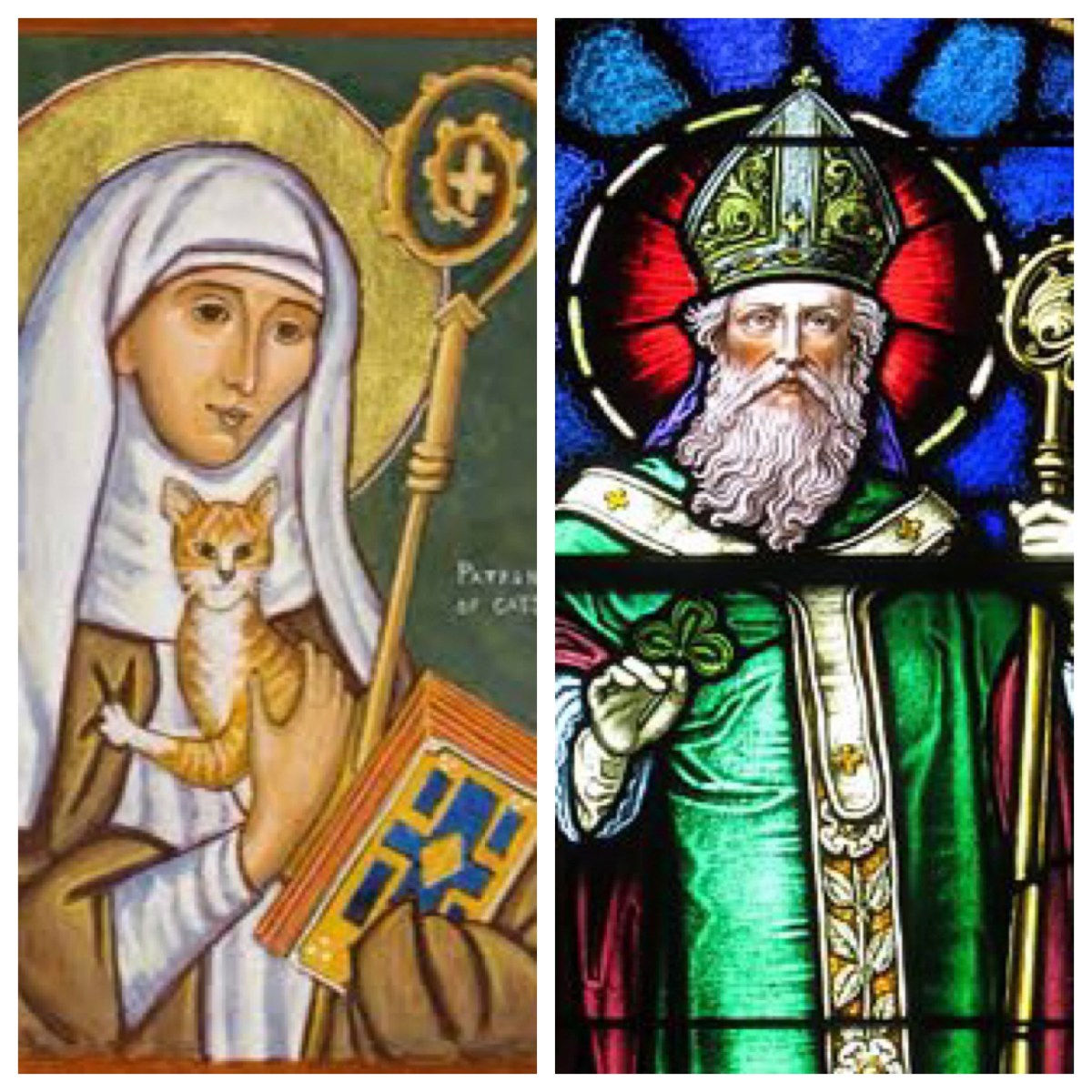
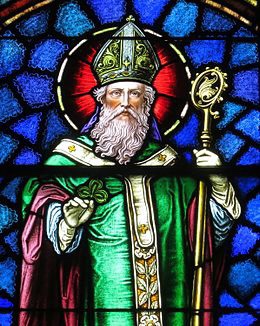
We have all heard of Patrick, a fifth century missionary and patron saint of Ireland, who is touted as being the cause for the lack of snakes on the island of Ireland. The legend is that the snakes that were on the island had all been banished by Patrick, chasing them into the sea after they attacked him during a 40-day fast he was undertaking on top of a hill. 😫 Shades of Jesus, the Gerasene demoniac, and the poor pigs, who took the legion of demons into the sea (Mark 5).

But what about Gertrude? She shares the same day—17 March—with Patrick; it is the feast day for both of them in the calendar of the Roman Catholic Church, for 17 March was the day that both Gertrude, as well as Patrick, was said to have died.

So, while all of Ireland and all of the Irish diaspora vigorously celebrates Patrick today (wearing green clothes, drinking lots of Guinness, with hair dyed green, walking in street parades and telling predictable jokes with incomprehensible accents), spare a thought for Gertrude of Nivelles, who shares her patronal festival with Patrick the Confessor.

Gertrude lived in the seventh century in the nation we now call Belgium. Her father was a powerful Frankish nobleman in the court of the king, Dagobert I. It is said that, at the age of ten, Gertrude refused a marriage proposal from the son of a duke, “saying that she would have neither him nor any earthly spouse but Christ the Lord.”

When her father died a few years later, her mother Itta shaved her head into a monkish tonsure to deter would-be suitors from marrying into her wealthy family by force. Itta and Gertrude established a monastery at Nivelles and retired to a religious life. So here’s the first reason to admire Gertrude (and her other Itta): a monastery for females was one of the few options for females in antiquity to preserve their intellectual, economic and sexual autonomy.

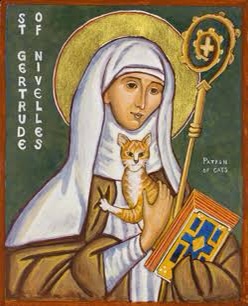
It is said that Gertrude kept cats in the monastery to keep rats and mice under control — a wise and sensible move, so a second reason to like Gertrude.

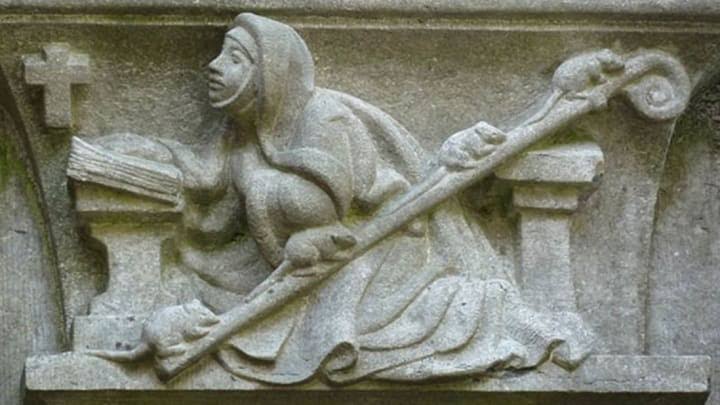
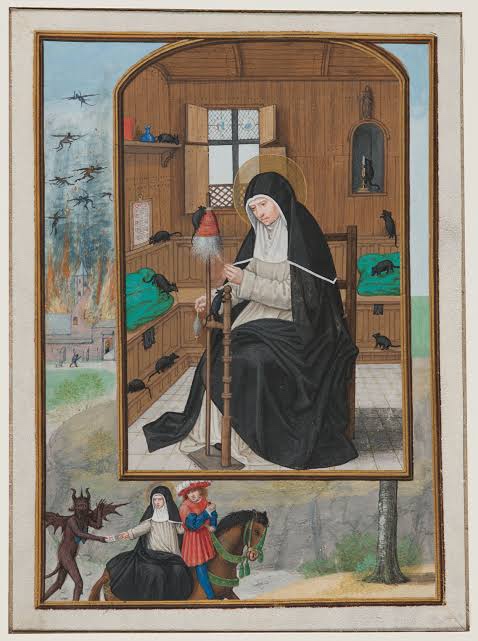
There are some illuminated manuscripts, church fresco paintings and stained glass windows which depict Gertrude in a garden setting, surrounded by cats, rats and mice (often with a mouse running up her staff). However, there is no ancient written claim that is explicit about Gertrude and cats; it seems that this connection is a late 20th century invention! Nevertheless, we can roll with the newish evolution of the tradition, and honour Gertrude for her care of cats, can’t we?

Gertrude, and her feline friends, are important in my household. We have three cats, all ragdolls, all quite handsome, aged 14, 11, and 8; they are all well-fed and cared for, able to roam into any room of the house (but not outdoors, unless in the special enclosure). They are living the good life every day with their two full-time live-in servants; and every so often, they go on vacation to Curtin Cat Care to be spoiled 😁.

Gertrude’s mother Itta died in 650, so the 24-year-old Gertrude took on sole governance of the monastery, and was known for her hospitality to pilgrims. She died in 659 – worn out in her early thirties, says the Cambridge Medieval History, “because of too much abstinence and keeping of vigils”.

Mel Campbell reports that the story is told, that a visiting Irish monk, whose brother Gertrude had sheltered, predicted she would die on St Patrick’s Day, and that “blessed Bishop Patrick with the chosen angels of God … are prepared to receive her”. Begorrah, it was so!

Mel Campbell also writes, “On a day that has become unfortunately associated with public displays of boorish masculinity, wouldn’t it be nice to honour a saint whose domains of patronage have traditionally been belittled as feminised and domestic? Gertrude was an independent woman who refused to be treated as a chattel.”

And THAT, above all else (even above our feline friends!) is cause for remembering and honouring Gertrude of Nivelles.

I have taken much of the information about Gertrude from https://junkee.com/today-is-also-st-gertrudes-day-celebrate-the-patron-saint-of-cats/53228

There’s a page honouring her as a saint at https://catholicsaints.info/butlers-lives-of-the-saints-saint-gertrude-virgin-and-abbess-of-nivelle/

Listen carefully to me, eat what is good (Isa 55; Lent 3C)

We talk about Lent as a season when we prepare for the annual Easter celebrations. During this time of preparation, we are encouraged to pay attention to what is important in our faith. Through this season, as we pray, read scripture, and share with one another, we are able to grow in our faith, deepen in our understanding, and strengthen our discipleship.

During this time, it could be possible that we grow in understanding of God. The Hebrew Scripture passage for this coming Sunday invites us to consider exactly that process of growth. Isaiah 55:1-13 offers insights into this process of development.

Early in the times of Israel, the relationship God was understood in very material, tangible ways. God brought the rain and the sunshine that enabled the crops to grow—a key focus for an agricultural people living off the land. Eliphaz, the friend of Job, advised him that God “gives rain on the earth and sends waters on the fields” (Job 5:10).

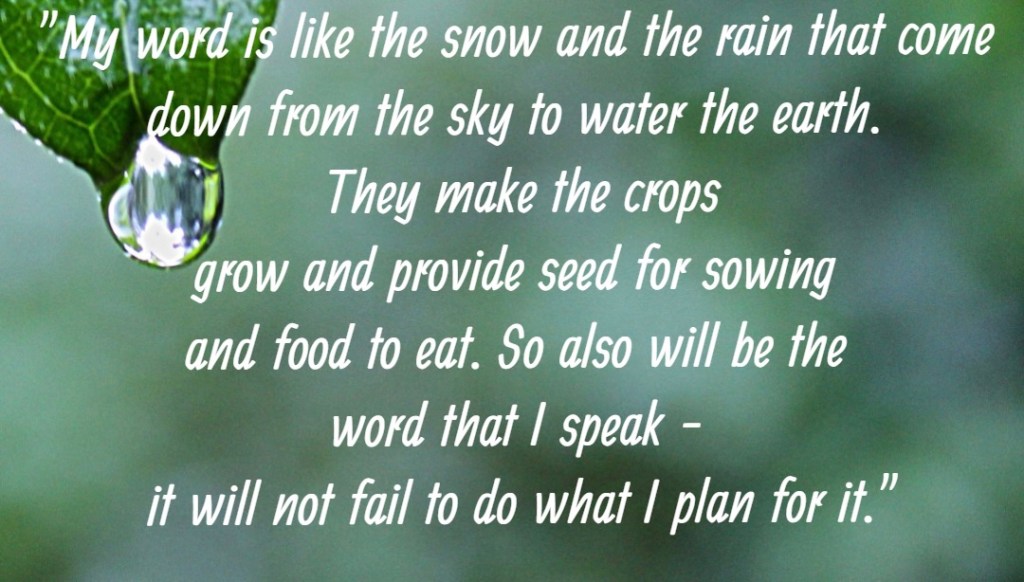
The psalmist affirms this traditional understanding, affirming that “rain in abundance, O God, you showered abroad” (Ps 68:9), and rejoicing, “sing to the Lord with thanksgiving … he covers the heavens with clouds, prepares rain for the earth, makes grass grow on the hills” (Ps 147:7–8). In like manner, this passage from Isaiah declares that, “as the rain and the snow come down from heaven, and do not return there until they have watered the earth” (Isa 55:10).

Jesus repeats this ancient agricultural belief about God: “he makes his sun rise on the evil and on the good, and sends rain on the righteous and on the unrighteous” (Matt 5:45). It still held good for the largely agricultural society of his day. At that time, as for centuries past, there had been a clear understanding that God was intimately related to the land of Israel.

“I am the Lord who brought you up from the land of Egypt, to be your God; you shall be holy, for I am holy”, God is reported as saying (Lev 11:45). The holy God chose a holy people, who are then led into a holy place, the land of Canaan. In a story told about “once when Joshua was by Jericho”, Joshua encountered “a man standing before him with a drawn sword in his hand” who reveals himself as “a commander of the army of the Lord” (Josh 5:13–15).

The story indicates that God said to Joshua, “Remove the sandals from your feet, for the place where you stand is holy” (Josh 5:13–15). From this story, this verse, Israel becomes known, even to today, as The Holy Land. Holy God, holy people, holy land, all intimately linked with one another.

And in that holy land, King Solomon built “the most holy place” (1 Kings 7:50), and “the priests brought the ark of the covenant of the LORD to its place, in the inner sanctuary of the house, in the most holy place, underneath the wings of the cherubim” (1 Kings 8:6). The holy land had the most holy place at its heart.

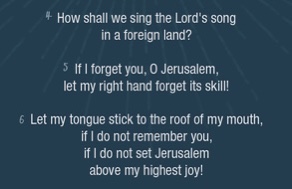
Being sent into exile in Babylon after this period of consolidation and growth in their “holy land” was a shock to the people. Life in exile was quite different from life in the land. “How could we sing the Lord’s song in a foreign land?”, the psalmist laments (Ps 137:4).

Life in Jerusalem was still what they yearned for, in exile (Ps 137:5–6); indeed, the intense anguish (and unhealthy hatred) expressed in the final verse of this psalm is striking: “happy shall they be who take your little ones and dash them against the rock!” (Ps 137:9). It was not a happy time, at least for some.

However, it is not surprising that, after a period in exile, ideas about God were changing. The Israelites in exile in Babylon had maintained faith in God, even though they were no longer living off the land where God had placed them. The Exile had severed their connection with the land, and thus a loss of connection with God was feared. Surely God would not abandon them?

Indeed, the people developed an understanding that God had not abandoned them as they left the holy land; God had, in fact, travelled with them into Exile, and back into the land on their return. The passage from Isaiah 55 demonstrates this. Although it is in a book under the name of an 8th century prophet, is in a later section of that book, most likely put together with the earlier sections some time after the return from Exile in the 6th century. It reflects the changes in circumstances and understandings of the people who lived through those challenging circumstances, over a number of decades in Exile, before they returned to the land.

The covenant which they had entered into long ago (see last week’s passage, Gen 15), was still in force and to be honoured: “listen, so that you may live. I will make with you an everlasting covenant, my steadfast, sure love for David” (Isa 55:3). Even in their exile, “the LORD your God, the Holy One of Israel, he has glorified you” (Isa 55:5).

As a result, how they understood God had changed. God was not tied to the land of Israel—and particularly, not to the Temple in Jerusalem. God had become “mobile” once again, just as he had been in the period of the wilderness wanderings, the Judges, and the early years of the monarchy, when the Ark was the place where God was to be found (and the Ark was, of course, quite logically travelling with the people during those decades).

Their belief developed to incorporate an understanding that God was not intimately bound to the land. People from Israel continued to live on in the lands of exile, even after they were able to return to their “holy land”. They had married, planted vineyards, established roots in those dispersed communities (Jer 29:4–7). God remained faithful to the covenant, but God’s ways were not the ways of tradition and convention. God was understood to be a dynamic entity, changing and developing as the situation required.

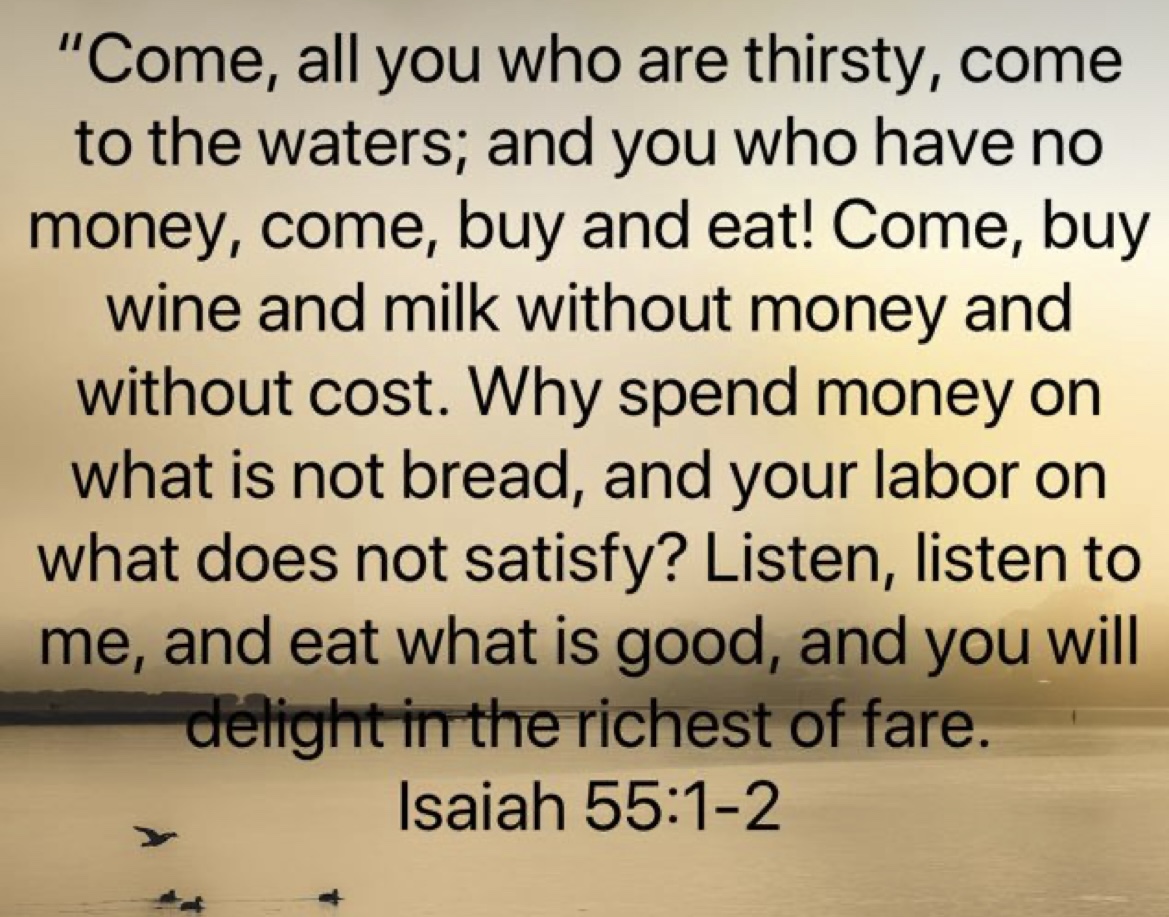
The people were invited into a different form of relationship with God, nourished by a different type of bread, which the post-exile prophet identifies in this oracle. From the Exile experience, it was the sense of God’s word that had become primary for the people: “listen carefully to me, and eat what is good, and delight yourselves in rich food” (55:2).

And in being nourished by this new form of food, God’s word, the people will discover new things about God: “my thoughts are not your thoughts, nor are your ways my ways, says the Lord; my ways are higher than your ways and my thoughts [are higher] than your thoughts” (55:8–9). A new way of understanding God, and God’s ways, was opening up before the people.

Understandings of God develop and change—as then, in post-exilic Israel, so too, now, in the post-modern contemporary world. May this be our experience, this Lent, as we dig deep into the resources of scripture and tradition in this special time.

See also

Challenged and transformed: with thanks for rainbow people, this Lent

The following reflection was written by John Squires and Elizabeth Raine, and shared with the Rainbow Christian Alliance at Tuggeranong Uniting Church on Sunday 13 March 2022.

In many churches, including the Uniting Church, today is called the Second Sunday in Lent. Our church follows the calendar of seasons that is held by many churches around the world; instead of spring, summer, autumn, winter, we have Advent, Christmas, Epiphany, Lent, Easter, and Pentecost.

The season of Lent lasts for just six weeks, and it leads into the three day celebration of Easter. It’s called Lent, incidentally, not because it is tilted or skew-whiff, but because in the northern hemisphere, where such seasons were first given their names, the days are starting to lengthen (the name was Lencten in Old English).

In the Roman Catholic and Orthodox churches, Lent is a period of fasting. The day before, Mardi Gras, which is French for Fat Tuesday, was a day to use up all the fatty goods in the kitchen — eggs, flour, milk — so they were out of the way for Lent. The day is also known as Pancake Tuesday. In South America, in countries where Roman Catholicism was the dominant religion, Mardi Gras became a public festival, a day not only to feast, but a day for street parades, for big banquets to celebrate, with colourful costumes and extravagant public exhibitions of joy.

And that has surely been the inspiration for the Sydney Gay and Lesbian Mardi Gras, both in recent years with colourful and extravagant floats, and in the decades before, with lots of rainbow groups marching, and even in the early days of protest and attempting to “claim the streets” and “go public” about gays and lesbians and more.

*****

Immediately after Mardi Gras, Fat Tuesday, comes Ash Wednesday — a solemn day of penitence; and the fasting continued right through Lent, until Easter Sunday. We don’t actually do full-on fasting in the Uniting Church, but in recent times it has become customary to decide to “give up something for Lent” — chocolate and alcohol being the most common, but also more significant things like not driving your car and catching public transport; or not eating meat. In this way, Lent becomes a time of challenge, as we try to remind ourselves each day of the importance of being faithful to God. We “give up” so that we can focus in more clearly on God, if you like.

So there is already a connection between the season of Lent and rainbow people; because Lent starts immediately after Mardi Gras. And the annual Sydney Gay and Lesbian Mardi Gras, now an institution in our annual public events; the extravagantly colourful celebrations of that event mark, if you like, the climax of joy as rainbow people celebrate that they are each made exactly as they are, and they can be happy about that.

We both enjoyed watching (on TV) the parade of organisations and people that were out and proud, out and loud, a week ago, walking unhindered around the SCG — a striking contrast to the first Mardi Gras, when police barricaded the road and people were arrested. It is truly wonderful to see that the rainbow colours can be flown in society, that people can acknowledge and declare who they are, and not be under threat of arrest.

*****

So in the cycle of seasons for Christians, after Mardi Gras comes Lent. And Lent is about giving up; or, at least, focussing intently on Jesus, the one in whom we see most clearly see God. How else might Lent relate to the experience of rainbow people?

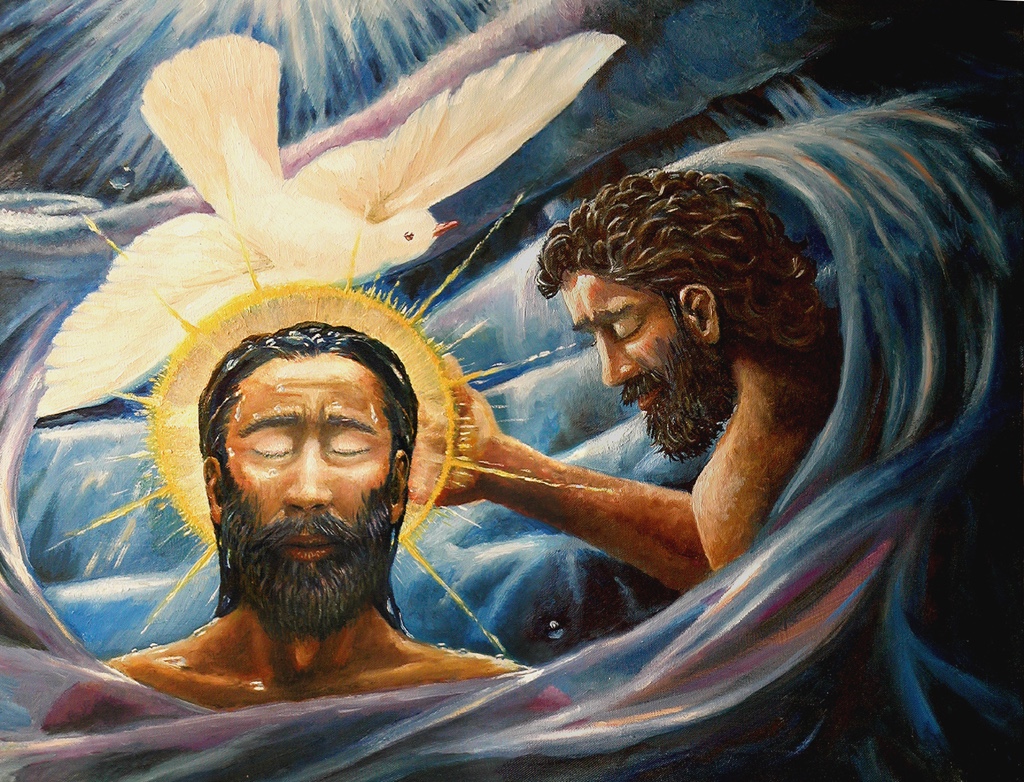
There are a collection of stories that the church retells each year, in association with Lent. In preparation for Lent, the story is told of the day that Jesus was baptised: in the river Jordan, to the east of Jerusalem, fully submerged into the water by his crazy cousin John, baptising people as they repented of their sins.

John was crying out to the people who came to him, to repent; to change their way of being and living; to be transformed, completely, by being baptised. That’s what is meant by the single Greek word that John used, calling people to metanoia—to a complete transformation of who they are and how they love. Jesus came to that moment, willing to submit to that call, willing to experience metanoia in his own life.

OLYMPUS DIGITAL CAMERA

And yet for Jesus, this baptism became more than just the moment of call, or the moment of change; it was the moment when God publicly acknowledged him, when God declared, “this is my son, my beloved child; listen to him”. In that voice, booming from the clouds, a central affirmation is made: look at him, this is who he is; can you see that this is really who he is? And from that moment, Jesus began his mission of challenging people and transforming society.

The story of the baptism of Jesus tells us that, when God looks at us, God sees us exactly as we are; and we may well also hear God saying to use, and to those around us, “this is my child, my beloved one; I can see exactly who they are, and I am well pleased that this is who they are”. God sees me, a straight white male, and is well pleased; God sees a lesbian woman, and is equally well pleased; a trans man, and God is pleased; an intersex person, and is well pleased; an enbie, a gay, a pan sexual—God is just well pleased with each of us, as we are, and declares us to be beloved. And that means that we can get on with the kind of life that we each want to live, and are called to live.

*****

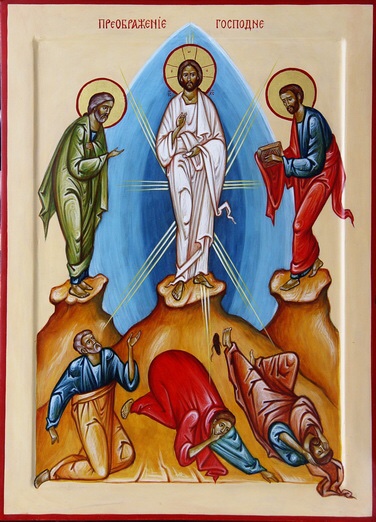
There’s another story about Jesus that is associated with Lent. It’s a story that, from our rather privileged, straight, perspective, sounds a great challenge to us. It’s a story about being changed; about being transformed. It’s a story that shows that being transformed means you are able to stand and challenge others to be transformed. It’s the story of when Jesus took his three closest friends to a mountain, and they had a shared experience of seeing Jesus standing between two of the greats of their people: Moses, to whom God had given the Law to govern the people of Israel, and Elijah, through whom God had established a long line of prophets in Israel.

The Gospel writers say that Jesus was transformed at that moment. But in this story, also, there is the indication that the friends of Jesus were transformed. That moment on the mountain was a challenge to each of them; the response that Peter wanted to make was seen to be inadequate. Jesus challenged him to respond differently. It was another moment when metanoia, complete transformation, took place. And these disciples did change; yes, it took some time, but these friends of Jesus ultimately became leaders amongst the followers of Jesus, and spearheaded the movement that became the church.

The change, the metanoia, that occurred within Peter, James, and John, spread widely. They faced the challenge head on, and responded with their own metanoia. That is mirrored, today, in changes that are taking place in society. As we watched the Mardi Gras last weekend, it soon became evident that this was no longer a side carnival, an event that was important to a minority group in society, and that’s all.

For the Mardi Gras—commercialised, mainstreamed, headlined and noticed—now reflects the way that society has been challenged—by you, by rainbow people—and how it has responded in metanoia, by being transformed. Banks, unions, police, sports teams, churches, golfing clubs, and more—all marched in the Mardi Gras, all affirming that there is a place in their ranks for rainbow people, no matter what letter an individual identifies with. And that reflects a very significant change in society, in which public acknowledgement and public discussion of gender and sexuality can take place.

Sure, there is still work to be done—much work to be done; many changes still to occur, deeper acceptance still to take place. But the changes are clear and evident; and it has been because those who themselves have been able to meet challenges by holding firm and calling for change, have then effected transformation, thoroughgoing change, in society. Rainbow people are changing our society. Last week’s Mardi Gras demonstrated that.

And for that, we are grateful, and say: thanks be to God.

Cutting the covenant (Gen 15; Lent 2C)

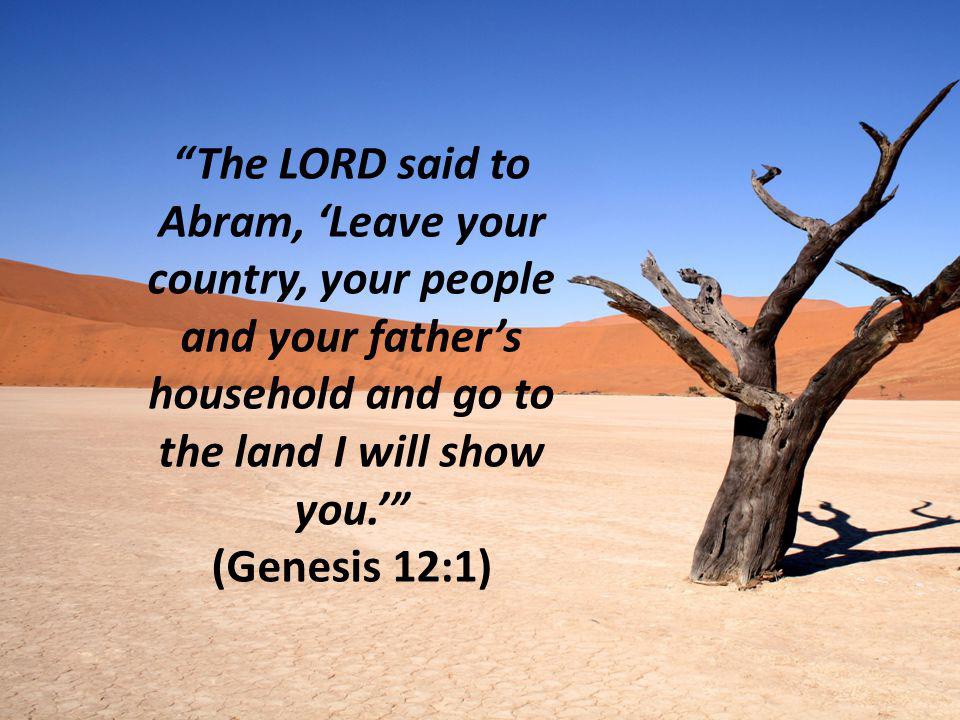
The saga of Israel begins with stories about the ancestors held in highest regard as the mother and father of the nation: Sarai and Abram. The command that they heard is set out at the beginning of their story: “Go from your country and your kindred and your father’s house to the land that I will show you” (Gen 12:1). The saga of this couple will reach fulfilment, many chapters and many centuries later, when their descendants enter the land and settle in Canaan (Joshua 1–6).

For the moment, Abram set off, with his extended family: “his wife Sarai and his brother’s son Lot, and all the possessions that they had gathered, and the persons whom they had acquired in Haran” (12:5). Haran was a strategic city in the upper reaches of the area we know as the Fertile Crescent, far from the land of Canaan (over 12,000km). The call was to travel that distance, to Canaan.

That call, to enter the journey and remain persistent along the way, is a call that we do well to recall each Lent, as we navigate the journey of this season, calling us towards the climactic story of the Christian faith, in the death and resurrection of Jesus.

For support and sustenance along the way, Abram and Sarai were called into covenant relationship with God. The formalising of the covenant is reported later in this chapter, at 15:18, with a promise that the descendants of Abram and Sarah will indeed have the land that is specified. That, I would argue, resonates also with the Lenten journey; these current weeks of preparation for Easter beckon us to re-commit to our covenant, the one that we ourselves have with God. So these later verses are included in our reading for this Sunday.

(The question about the people already living in the land—those specifically identified in 15:19–21, merits separate consideration. The invasion of Canaan and conquering of these people by the people of Israel raises difficult questions.)

Abram and Sarah had left their homeland with some assured promises from God; they would be parents of a great nation, blessed by God, remembered as having a great name, and that all the nations of the earth would be blessed through them (12:1–3). Those promises were intended to hold Sarai and Abram to the journey, despite all that they might encounter. The end result would make the travails along the way bearable.

However, Abram expresses some doubt that the promises made by God would come to pass (15:2-3). God’s response is to provide further reassurance; the multitude of stars in the sky is testimony to that (15:5). Abraham’s resulting affirmation of faith leads to the famous phrase, so central to Paul’s later argument about righteousness: “he believed the Lord; and the Lord reckoned it to him as righteousness” (15:6; see Rom 4:3, 9, 22). In a way, this story sets the foundations for later Christian faith, as we see the grace of God at work in relating to Abraham.

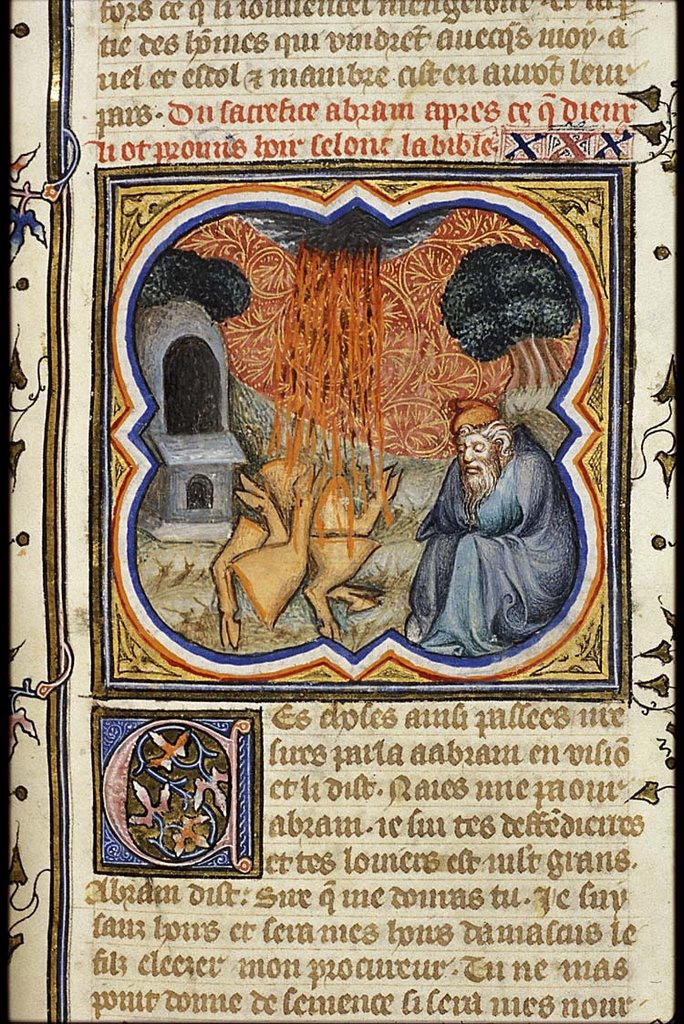
The ceremony that follows adheres to the traditional cultic practices of the time. A collection of sacrificial victims, two animals and two birds, are offered and slaughtered, and the animals are cut in two (15:9–11). (The phrase, “to make a covenant” in Hebrew, can literally be rendered as ”to cut a covenant”.) Such practices signal the seriousness of the moment and send the message that each party will keep their word on pain of death.

Indeed, the prophet Jeremiah later alludes to this specific provision, when he warns recalcitrant Israelites that “those who transgressed my covenant and did not keep the terms of the covenant that they made before me, I will make like the calf when they cut it in two and passed between its parts” (Jer 34:18, referring to Gen 15:10). The prophet continues, “their corpses shall become food for the birds of the air and the wild animals of the earth” (Jer 34:20, an allusion to Gen 15:11).

This ancient cultic sacrificial practice of cutting animals does not reflect modern practices and is, in fact, distasteful to contemporary sensitivities. That might prod current readers to dismiss this passage as archaic, irrelevant, obsolete. That would be a shame. It remains relevant to us in a striking way.

Abram and Sarai reveal both trust in the promises they have been given, but also articulate some uncertainty about whether God would continue to be faithful to those promises. How human this is! In this regard, they reflect the somewhat ambivalent way that each of us relate to the promises of God: living out our trust and hope in the midst of the challenges, changes, and obstacles along the way, yet still holding back, somewhat dubious, about the ultimate reality this all.

It’s a perfect vignette for Lent, for the period when we reconsider how God had been at work in our midst, when we reconsider our commitment to the covenant we have made with God, and how live out that covenant in the realities of discipleship. It reminds us of the call to full-blooded, whole-scale, all-of-life commitment to the covenant that we have with God through Jesus.

See also

Belonging, first and foremost: the message of “the alien” (Deut 26; Lent 1C)

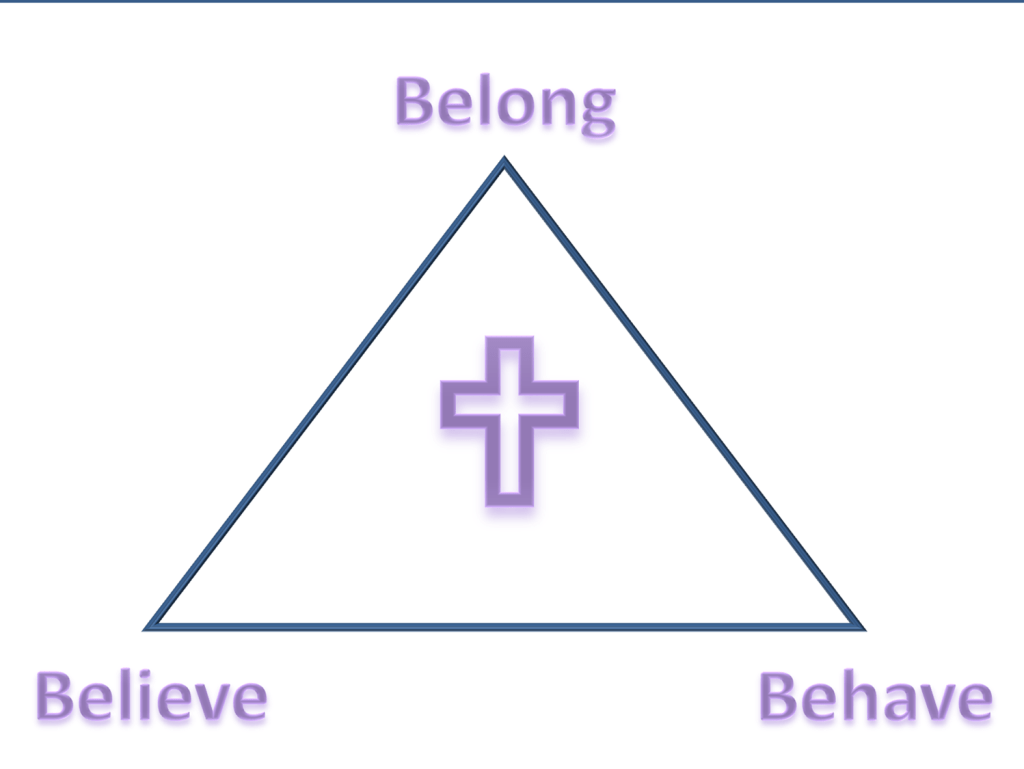
There is much debate amongst Christian thinkers, these days, about what comes first as we invite people to be a part of the church. Do we say, “this is what we believe, expressing our fundamental understanding of life; do you want to sign up to show you have the same beliefs?” Or do we say, “this is how we behave, guided by our fundamental ethical principles; would you like to act the same way and join us?” Or perhaps the invitation is simply, “come along, join in with us, see what we believe, what we are on about, and soon you’ll feel like you belong”?

Is it believe first? Or behave? Or simply, belong? The tendency to put a creed at the forefront of our invitations—to show that we are a people who believe, first and foremost—is widespread and deeply ingrained. Whether it be affirming The Apostles Creed in baptism, or saying The Believer’s Prayer at conversion, or working out a new Mission Statement for the Congregation, giving priority to belief is a very familiar pattern for us. We tend to think that, whatever formula we are repeating, that is exactly what declares and confirms our identity as people of faith.

So it’s no surprise that when we read Deuteronomy 26 (the Hebrew Scripture passage in next Sunday’s lectionary), we gravitate to the middle part of the passage, and lay claim to what looks to be an early affirmation of faith that sets out the identity of the people of Israel: “A wandering Aramean was my ancestor; he went down into Egypt and lived there as an alien, few in number, and there he became a great nation, mighty and populous” (Deut 26:5). This affirmation seems to go right back to the start, affirming what sets the people of Israel apart as a distinctive entity.

This way of reading this passage gained influence from the analysis of Gerhard von Rad, a German scholar of the 20th century. Von Rad claimed that the credal statement in verses 5 following was most likely a formula much older than the era when the book of Deuteronomy was written. And the origins of this creed, he claims, most likely lay in ancient cultic remembrances of the origins of the people. The wandering Aramean (Jacob, grandson of Abraham of Aramn) and the time in Egypt (leading up to Moses) reflect those times of origin.

*****

But the whole of this “creed” is not actually a “statement of faith”. It is more a narrative that tells a story. Such was the way of the ancient world; central beliefs were not articulated in crisp propositional statements (for this is the way of the post-Enlightenment western world); rather, a story was told, in the course of which key events pointed to central affirmations for the people. The ancients were story-tellers, more concerned to tell the story than state the faith. This is the story of the people; it is their saga.

God is important in the story that is told, nevertheless. God is the one who “heard our voice and saw our affliction, our toil, and our oppression … who brought us out of Egypt with a mighty hand and an outstretched arm, with a terrifying display of power, and with signs and wonders” (26:7–8). The rescue of the people by their powerful God is central to the story. This, of course, if the story of the Exodus, which stands at the heart of Israelite identity and later Jewish identity. It is the central story of the people of Israel.

More than this, God is the one who “brought us into this place and gave us this land, a land flowing with milk and honey” (26:9). The land of Israel is the second aspect of ancient Israelite life that is central and fundamental; and so it continues to be, in the 20th and 21st centuries, in which the land of Israel has been one of the most contested pieces of land in the world.

The story is told, however, for a purpose. Not just to remember—although remembering is important, for it recurs as a regular refrain in the book of Deuteronomy (7:18: 8:2, 18: 9:7, 27; 11:2; 15:15; 16:12; 24:9, 18, 22; 25:17; 32:7). The story is told, also, to inculcate the ethos, the values, the very identity of the people. And central to that ethos, taking prime place amongst the things that were seen to be important to affirm about who the people of Israel were, is this: giving back to God the first fruits produced by the land.

“So now I bring the first of the fruit of the ground that you, O LORD, have given me”, are the words that the people are to say, each time a harvest is produced. “You shall set it down before the LORD your God and bow down before the LORD your God”, the instruction declares (26:10). Gratitude is to the fore; gifting back the beginnings of “the fruit of the ground” to the God who gave the people the land to grow this fruit.

*****

Of course, there is a dark story submerged, for the most part, underneath that celebratory action. The land was “given” by God over the resistance of the people who were already IN the land, producing fruit, settled and content with their lot in life. The battles recounted in the book of Joshua—most likely not actual historical events, but reflecting a reality of submission to the Hebrews who took control of the land—reflect this dark story.

This dark story does not figure in the “received tradition” and “authorised affirmation” that we read in Deut 26. Nor do we find this in the affirmation of Deut 6:20–24, which begins “we were Pharaoh’s slaves in Egypt, but the Lord brought us out …”. Mention of the Exodus jumps straight across to life in the land—no mention of the conquest that (in other biblical texts) is reported in detail.

This conquest is part, by contrast, of the larger recitation of Josh 24:2–13, “I brought you out of Egypt … and I handed the Amorites over to you, and you took possession of their land, and I destroyed them before you … and also the Amorites, the Perizzites, the Canaanites, the Hittites, the Girgashites, the Hivites, and the Jebusites; and I handed them over to you … I gave you a land on which you had not labored, and towns that you had not built, and you live in them; you eat the fruit of vineyards and oliveyards that you did not plant.” At least this version of the affirmation is honest about the cost to the earlier inhabitants, and the benefits enjoyed with relative ease by the invading Hebrews.

*****

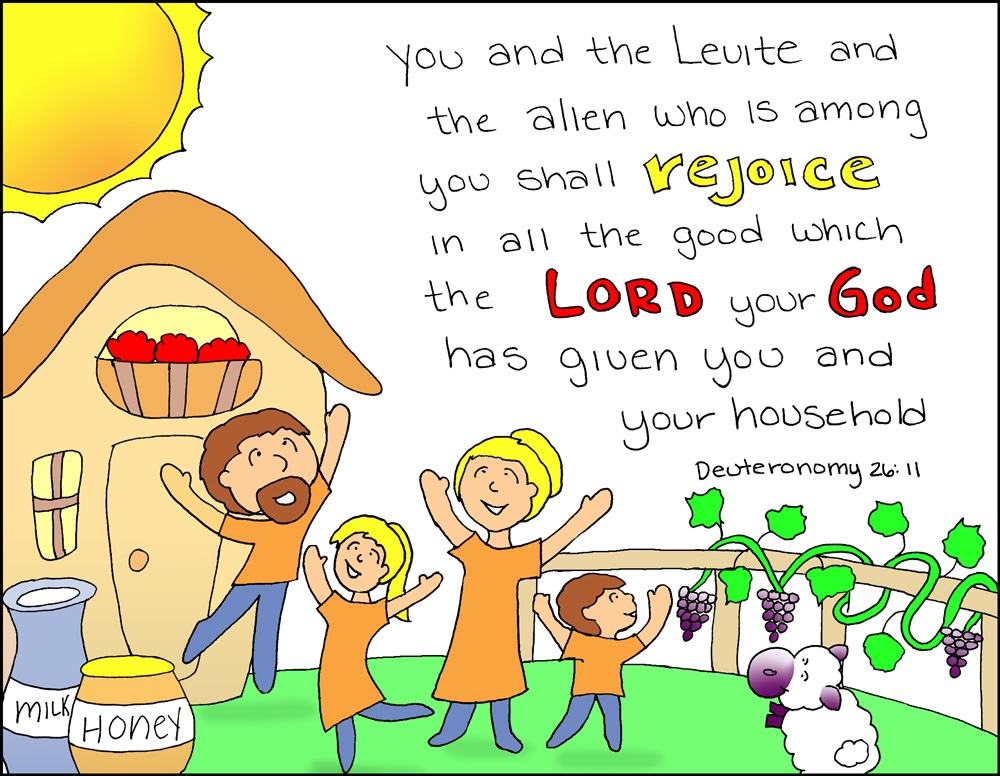
Yet the affirmation of Deut 26 highlights the central importance of gratitude for the gift of the land; and not only that, for it especially indicates the importance of making this celebration inclusive: “you, together with the Levites and the aliens [or, sojourners] who reside among you, shall celebrate with all the bounty that the LORD your God has given to you and to your house” (26:11). So the instructions for the annual festival of the first fruits provide.

The inclusion of the aliens in this annual festival reflected a gracious openness to others in the developing people of Israel. These texts differ from the xenophobic antagonism of earlier texts, recounting the conquest of Israel. They reflect a later understanding of the identity of the people, as they were collated during and after the Exile, centuries after the formation of Israel. People designated as aliens (non-Israelites), sojourners in the land, were welcome to bring offerings to the Lord (Lev 22:18), to adhere to Israelite food prescriptions (Lev 17:12), to keep the Sabbath (Exod 20:8–11; 23:12), to have gleaning rights (Lev 23:22), and to join in the annual process of atonement (Lev 16:29–31; Num 15:29).

The foundational Passover narrative indicates that aliens, or sojourners, were able to join (under certain conditions) in the Passover celebrations (Exod 12:47–49); a second narrative (Num 9:14) is much less restrictive. Aliens were to be subject to the same laws regarding murder (Lev 24:17–22), able to have right of access to cities of refuge (Num 35:13–15), and indeed to enter into the covenant at the annual covenant renewal ceremony (Deut 29:10–13; see also 31:10–13). The voice of the alien even sounds appreciation for the Law: “I live as an alien in the land; do not hide your commandments from me” (Ps 119:19).

Because Israelites were once “an alien residing in the land” of Egypt, the people were instructed, “you shall not abhor any of the Edomites, for they are your kin; you shall not abhor any of the Egyptians” (Deut 23:7); by the third generation, the children of aliens “may be admitted to the assembly of the Lord” (Deut 23:8).

This meant that “the alien who resides with you shall be to you as the citizen among you; you shall love the alien as yourself, for you were aliens in the land of Egypt: I am the LORD your God” (Lev 19:34; a similar affirmation is made at Num 15:14–16).

The principle of equality is clear: “you shall not deprive a resident alien or an orphan of justice; you shall not take a widow’s garment in pledge” (Deut 24:17; see also Jer 7:5–7; 23:5–7; Zech 7:9–10; Mal 3:5). The alien, or sojourner, deserves the same measure of justice as all residents of Israel.

Accordingly, amongst the curses at the end of Deuteronomy, we read, “cursed be anyone who deprives the alien, the orphan, and the widow of justice. All the people shall say, ‘Amen!'” (Deut 27:19). The curse outlines the negative consequences from not adhering to the positive principle of welcoming and including those sojourning for a time innIsrael, the “alien”. That is integral to the celebrations each year, when the harvest produces its fruit from the land.

Gratitude. Belonging. Celebration. Inclusion. All of this is embedded in the story; and all of this comes before believing, repeating doctrinal claims, affirming credal statements. We are a people of welcome, including, belonging. This much is embedded in the ancient Hebrew tradition. This much should be living, still, in Christianity today.
See also