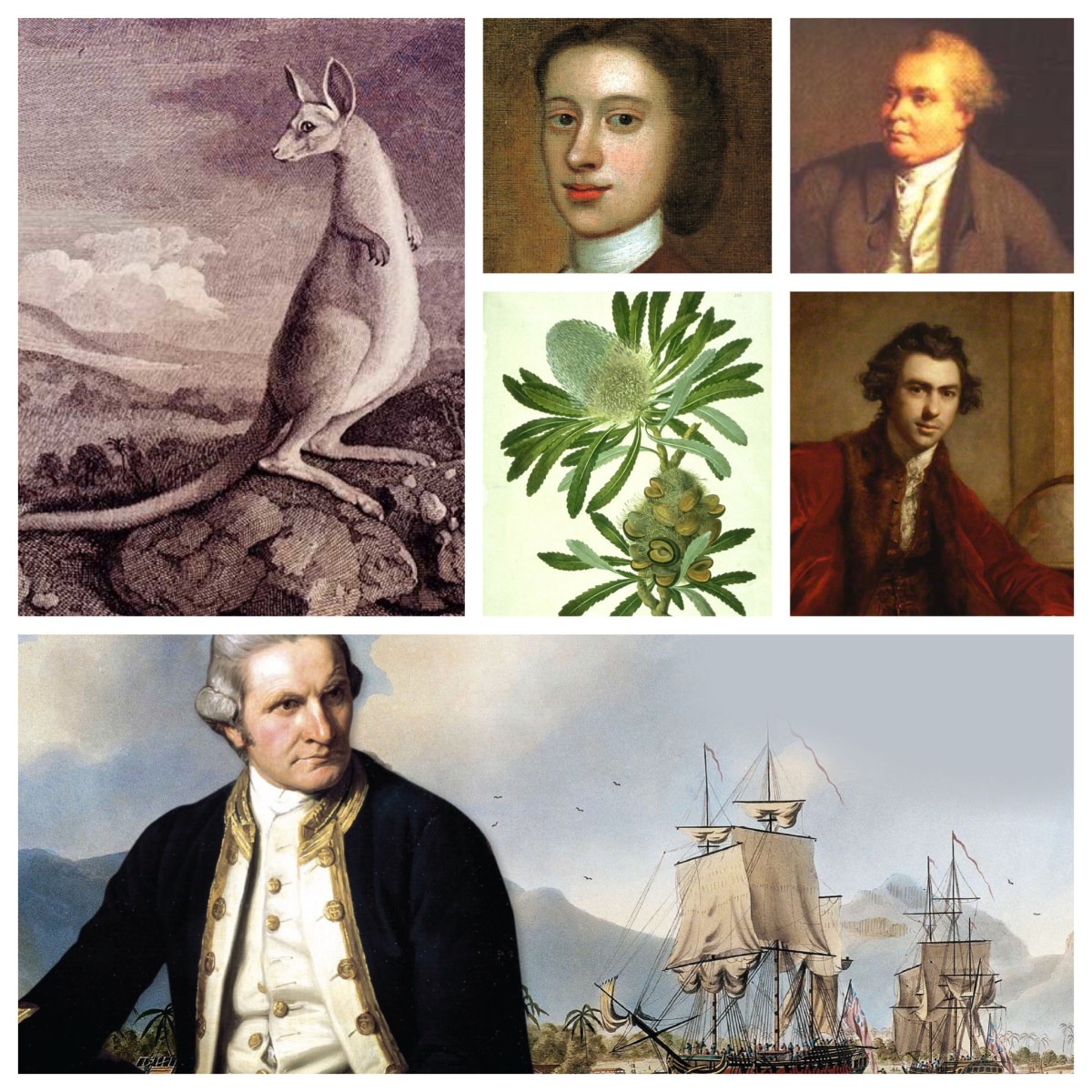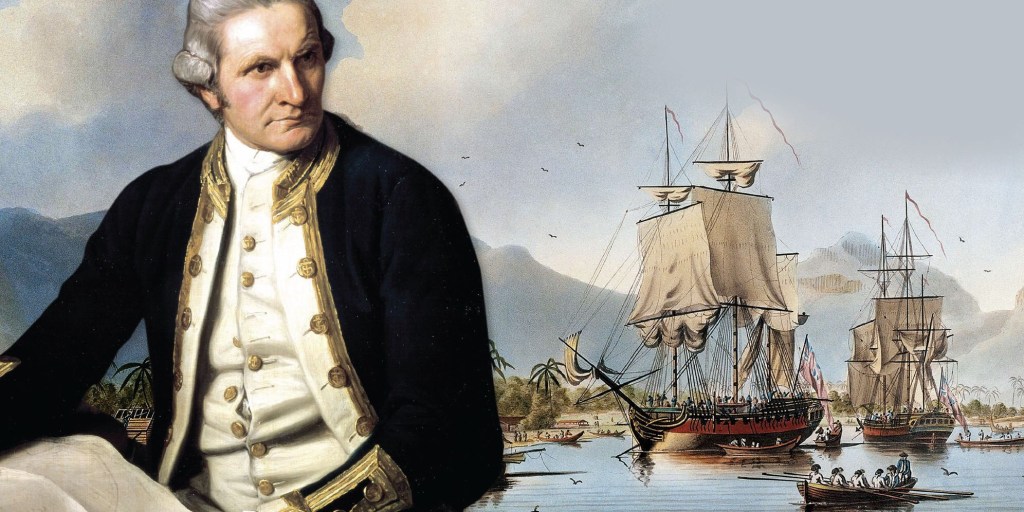
“We weigh’d and run into the Harbour”. Cook, the Endeavour, and the Guugu Yimithirr

On 11 June 1770, Lt James Cook and his ship, HMS Endeavour, ran afoul of the Great Barrier Reef and seriously damage was done to the ship’s hull. To avoid sinking, all the crew and stores had to be offloaded in order to free the Endeavour from the reef.

42 year old Cook held the rank of Lieutenant at the time; he was to be promoted to Commander on his return to England in 1771, and then promoted to Post-Captain in 1775. (See https://www.captaincooksociety.com/home/captain-cook-society/faq)

Cook provides a dramatic account in his journal for that day, writing “Upon my sounding the 2nd time round the Ship I found the most water a Stern, and therefore had this Anchor carried out upon the Starboard Quarter, and hove upon it a very great Strain; which was to no purpose, the Ship being quite fast, upon which we went to work to lighten her as fast as possible, which seem’d to be the only means we had left to get her off.

“As we went ashore about the Top of High Water we not only started water, but threw overboard our Guns, Iron and Stone Ballast, Casks, Hoop Staves, Oil Jarrs, decay’d Stores, etc.; many of these last Articles lay in the way at coming at Heavier. All this time the Ship made little or no Water.

“At 11 a.m., being high Water as we thought, we try’d to heave her off without Success, she not being afloat by a foot or more, notwithstanding by this time we had thrown overboard 40 or 50 Tuns weight. As this was not found sufficient we continued to Lighten her by every method we could think off; as the Tide fell the ship began to make Water as much as two pumps could free: at Noon she lay with 3 or 4 Streakes heel to Starboard.”

Cook needed to find safe waters for his ship, so he sailed his damaged 368 ton vessel towards the closest river he could find. After trying for some days, he was eventually able to bring the ship into safety.

He wrote in his journal, on 17 June 1770: “Most part strong Gales at South-East, with some heavy showers of rain in the P.M. At 6 a.m., being pretty moderate, we weigh’d and run into the Harbour, in doing of which we run the Ship ashore Twice.

“The first time she went off without much Trouble, but the Second time she Stuck fast; but this was of no consequence any farther than giving us a little trouble, and was no more than what I expected as we had the wind. While the Ship lay fast we got down the Foreyard, Foretopmast, booms, etc., overboard, and made a raft of them alongside.”

The crew set camp and prepared to repair the hull of the ship. Cook’s stay in that harbour was to be his longest onshore stay for his entire voyage. It would not be until early August that he was able to put out to sea once more.

He later named the river “Endeavour” after his ship. It was the only river in Australia that he would name (he named bays, harbours, headlands, mountains—but only one river!). The town which was later established near this site is named Cooktown, in honour of Cook. The mountain that rises behind the river, would become Mount Cook, and the mountain next to it, Mount Saunders. The visit of Cook and his ship would be impressed into white understandings of history. It stands as a seminal moment in white Australian consciousness.

However, the place already had a name, known and used by the Guugu Yimithirr people, who had lived there for millennia: it was Gangaar. The river was Waalumbaal Birri, the mountain was Gaya, the nearby mountain was known as Milngaar. These were the names given and used by the Guugu Yimithirr.

And they called Cook and his men the Wangaar: ancestors who had returned to their descendants, ghostly white as they came from another realm. They perceived their arrival as some form of spiritual encounter. They were, initially, reverent, apprehensive, and deferential. These weeks would be remembered within their stories, passed down over the generations, as well.

(Here I am drawing from the fascinating account of the encounter at Gangaar constructed by historian Mark McKenna, in his book, From the Edge: Australia’s Lost Histories. See https://www.mup.com.au/books/from-the-edge-paperback-softback and a brief review at https://www.thesaturdaypaper.com.au/2016/10/31/the-edge/14764500003843)

This was the sixth place where members of the Endeavour’s crew had set foot on the land of Australia: first at Botany Bay on 29 April, and then at locations which Cook named in his journal: Bustard Bay, Thirsty Sound, Cleveland Bay, and Cape Grafton. The names he gave are retained in contemporary Australian society. The names by which these places had been known throughout millennia of inhabitation by the indigenous peoples, are largely lost to our knowing today.

(On the impact of Cook’s names and the search to find the indigenous names of places further south on his journey, see my posts at https://johntsquires.com/2020/04/23/they-appeard-to-be-of-a-very-dark-or-black-colour-cook-hms-endeavour-and-the-yuin-people-and-country/ and https://johntsquires.com/2020/04/29/three-canoes-lay-upon-the-beach-the-worst-i-think-i-ever-saw-james-cook-at-botany-bay-29-april-1770/)

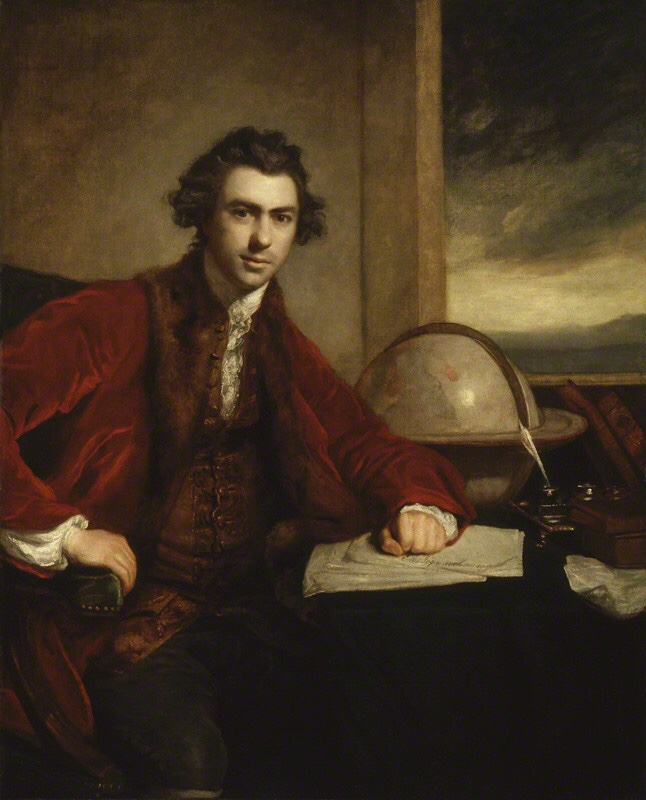
Today, 17 June, is when the Endeavour sailed into the safety of that river. It remained there for three weeks, as repairs were undertaken. During the time that the Endeavour was laid up, being repaired, Joseph Banks and others from the ship’s crew were diligently exploring the land, collecting botanical specimens. Banks recorded the sightings and the collections made in his journal.

Joseph Banks

A local tourist website portrays the significance of this time for tourists today, in this way:

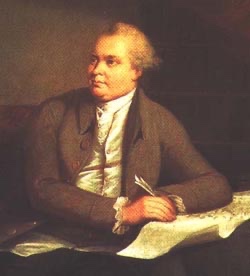
“Banks and his team of botanists spent their whole time exploring and discovering many botanical and natural history wonders which were totally new to science at the time. Banks and Solander found a large portion of Endeavour’s East Coast botanical collection while here. They discovered many new species of insects, fish, bugs and butterflies.

Daniel Solander

“They saw, for the first time in this country, a crocodile, dingo, flying fox, and many species of lizards, snakes, fish and insects. The crew fished and collected giant clams and turtle for food. They found green vegetables and yams to supplement their diet.”

(http://www.cooktownandcapeyork.com/do/history/cookslanding)

One of Sydney Parkinson’s botanical drawings

Indeed, this period of time has imprinted itself into the Australian consciousness in another way. It was here, at Gangaar, that white men first saw a kangaroo. The unusual animal was duly shot and killed by the British, who then cooked and ate it. Sydney Parkinson, an artist working with Banks and Solander, drew a sketch of the animal.

Sydney Parkinson’s sketch of a ganguuru

Later, when contact with the Guugu Yimithirr people had progressed to a reasonable level of communication, the name of the animal was understood to be ganguuru—which has lived on in the Australian language as kangaroo. This was one of 130 words recorded by Parkinson, whose diligence has provided a documented collection of the basics of this language.

These three weeks thus have significance for the development of botanical understanding in the late 18th century, and for a unique contribution to the Australian language (and psyche).

But there was something else of great significance that took place during that period of three weeks, as the men of the Endeavour engaged in ongoing encounters with the Guugu Yimithirr people of that area.

And that’s another story for a later day ….

*****

See also https://johntsquires.com/2019/01/25/on-remembering-cook-and-flinders-and-trim-bungaree-and-yemmerrawanne/

Going “back” to church—what will our future look like? (4)

We got an email from the church office last week. It said that “worship services are resuming” in our church building. There was much excitement! It has been so many months since we have been able to be in our lovely church building, with all our wonderful friends, for times of worship.

It would be great to see our friends again in person—and to share in the prayers and the singing when we all gather together—and to hear our minister in the flesh once again. It seems like it has been such a long time since we have been able to do this.

Don’t get me wrong, it has been great to hear her speak each week online; but there is nothing quite like being there, in person, with all the others in the building, to soak up the atmosphere. It’s like a weekly “hit” that keeps me going for the next week. It’s not the same, online. Not quite the same vibe, the same buzz. Ah well …

Anyway, after cheering was heard throughout the household about this great news, we read on through the rest of the email. “Back to normal”, we had thought. “Back to what we used to do.” Hmmm. Maybe—maybe not.

It seems that worship will not be quite like it used to be. No single service, for a start. There are going to be three services each Sunday morning, staggered by 45 minutes. So we need to book in advance for the one we want. 8:30 for the early birds. 9:15 for those who want the regular time slot. And 10:00am for those willing to have a slow start. OK, not a bad idea. But we won’t all be together. That’s a bit sad.

And each service will be just 30 minutes long. That feels like a rip-off. What, not a full hour? This will take some adjusting to get used to, I reckon. Anyway, we registered for the 9:15 slot. Trying to get back, as much as possible, to “normal”. It will be great to be there, back in church!

Except then another email came back, saying that the 9:15 service was already full. How could that be? Our church easily seats over 200 people (well, if you make sure you fill up each pew and set out some extra seats down the aisles.)

Seems that we can’t have more than 30 people in the building at any one time. There’s talk about 4 square metres and 1.5 metres apart and social distancing and so on. You know, the stuff that the PM and his chief honcho medical advisor guy have been talking about. In church. In our church. Who would have thought it?

So we are now going to the 8:30am service. Harumph. But better than waiting until 10am, I guess.

And the email also said, please arrive 10 minutes before the scheduled time, and queue outside the east door. What is that? I have been going to this church for years now, and have always used the south door, the one that opens right onto the street. Something about not confusing those arriving with those leaving, making them use separate doors. Oh well, if that’s what it takes ….

And, then, the email said, when you get the the east door, you will be allocated seat numbers, and you will need to go directly to those seats—do not stop to talk to anyone else, do not mill about in the foyer. And that we will find that the seats are arranged in a different way inside, so we will not be able to sit in our usual spot. Wow! Now that will be quite different! Sitting in a different place! That will be hard. And I can’t imagine church without all the catching up with people beforehand. That’s a bit of a downer, really.

And the email also said, “no singing”. Seriously: “no singing”! How will church be church, if we can’t all sing together? It is going to be one weird experience, I reckon, in that building, all sitting apart from one another, not singing—not even hugging our friends when we see them, no chance to say hello. It will be weird.

And then, the last straw: “when the service ends, please remain in your seats until you are asked to leave, then move straight to the south door to exit the building”. To keep people entering separate from people departing. How anti-social is that!

And there is more: “Please do not congregate on the footpath, or in the car park, after the worship service. Please leave the site as quickly as possible.” No morning cuppa. No chat with friends in our small group. No hanging around in the kitchen to scab extra goodies for the week. No socialising. None at all!

It won’t be church, will it? Not really church. I fear that we are in for a rather sterile experience. And we will have to use the hand sanitisers when we come in, and when we go out. Aargh! I hate the smell of that stuff! But no hand sanitising, no entry permitted, we are told. So there’s no question about it. That’s just the way of things everywhere, these days.

So, off we go. In to church. Then back out again. Will it be worth it? We’ll give it one go. And then, if it is not any good—back to looking at services online, I guess. Ah well. Such is life.

(… the views expressed in this piece come from a fictional character, solely the product of my imagination …)

See also

https://johntsquires.com/2020/06/03/greet-one-another-2-cor-13-but-no-holy-kissing-and-no-joyful-singing/

https://johntsquires.com/2020/05/29/worship-like-the-first-christians-what-will-our-future-look-like-3/

https://johntsquires.com/2020/05/24/its-been-two-months-under-restrictions-what-will-our-future-look-like-2/

https://johntsquires.com/2020/05/22/its-been-two-months-under-restrictions-what-will-our-future-look-like-1/

https://johntsquires.com/2020/04/22/its-been-just-over-a-month-but-there-have-been-lots-of-learnings/

https://johntsquires.com/2020/05/05/the-times-they-are-are-a-changin/

https://johntsquires.com/2020/05/04/not-this-year-so-what-about-next-year/

https://johntsquires.com/2020/05/11/when-we-come-together-2-values-and-principles-in-the-midst-of-a-pandemic/

https://johntsquires.com/2020/03/15/when-you-come-together-reflections-on-community-in-the-midst-of-a-pandemic/

“Even the hairs of your head are all counted.” (Matt 10:30; Pentecost 4A)

Who goes around counting the hairs on the heads of people? I don’t, that’s for sure! Although it would be a lot easier for anyone wanting to count my particular head of hair (or not), than for other people.

But God does, according to this week’s Gospel passage. God counts the hairs on our heads. Or so we are told. It’s part of a speech by Jesus when he assures his followers that their lives are of value (Matt 10:28-31).

Now, I think the idea of God taking time to count the number of hairs on the heads of every single person alive today beggars belief. Think about it: 7.8 billion people (that’s 7,800,000,000 people—quite a lot!), each with one head, with approximately 100,000 hairs on each of those head—that’s 7,800,000,000,000,000 hairs to count.

At one hair per second, that’s 248,015,873 years. (Thank goodness for Google!!) 248 million years! And that’s just for the current population. It doesn’t count those who have already lived. Or those who might be alive when those 248 million years of counting have been completed.

Of course, we could reduce the number by arguing that there are some (like me) with much less than 100,000 hairs on their head. But that group is still a small minority amongst the 7.8 billion alive today.

And we could reduce it further by arguing that this speech of Jesus was addressed to believers who were following him—at that time, and then on across the ensuing years up to our time. That reduces the number of hairs to be counted quite a lot. But that is a problematic principle for interpretation: it means we take everything as applicable only to those who were part of the first audience, and not to anyone else later on.

All of which goes to the point I want to make about the words of Jesus in this passage: Exaggeration! Exaggeration is a common rhetorical technique employed by Jesus. Jesus exaggerates on a number of occasions in his teachings. Think about it:

“If your right eye causes you to sin, tear it out and throw it away… and if your right hand causes you to sin, cut it off and throw it away; it is better for you to lose one of your members than for your whole body to go into hell”. (Matt 5:29) Who obeys that command?

Why do you look at the speck that is in your brother’s eye, but do not notice the log that is in your own eye? (Matt 7:3) Who has ever had a log of wood in their eye? A speck, yes; a splinter, maybe— but not a log.

Jesus condemned the Pharisees as “Blind guides, who strain out a gnat and swallow a camel!” (Matthew 23:24). Again: imagine swallowing a camel. Urgh.

For truly I say to you, if you have faith like a mustard seed, you will say to this mountain, ‘Move from here to there,’ and it will move, and nothing will be impossible for you.” (Matthew 17:20). Mountains moving? Perhaps possible in a massive seismic shift event, but not your normal run of the mill happening.

Or the Samaritan woman, who spoke of Jesus and said: “He told me all that I ever did” (John 4:39). Had Jesus really told that woman everything that she had ever done in her life? No, she was using hyperbole to make her point.

“John came baptizing in the wilderness and preaching a baptism of repentance for the remission of sins. Then all the land of Judea, and those from Jerusalem, went out to him and were all baptized by him in the Jordan River, confessing their sins” (Mark 1:4-5). What, every single person?? Again, exaggeration, overreach, hyperbole. Typical of Jesus—and typical of the Gospel writers.

We do this in our everyday speech: “He’s got tons of money.” (have you weighed it?) “He is older than the hills.” ( were talking geological eras, here) “I’m so hungry I can eat a horse.” (OK, lets not go there.) “His brain is the size of a pea.” (Or there.) “My feet are killing me.” (Says the person who is still alive.)

Get the point? Exaggeration, hyperbole, is a common rhetorical technique. We use it. We find it in scripture. It’s a reminder not to take everything spoken, or written, absolutely literally. That’s a really important principle for interpretation. For this passage—and for everyone time we turn to scripture.

Racism and Reconciliation

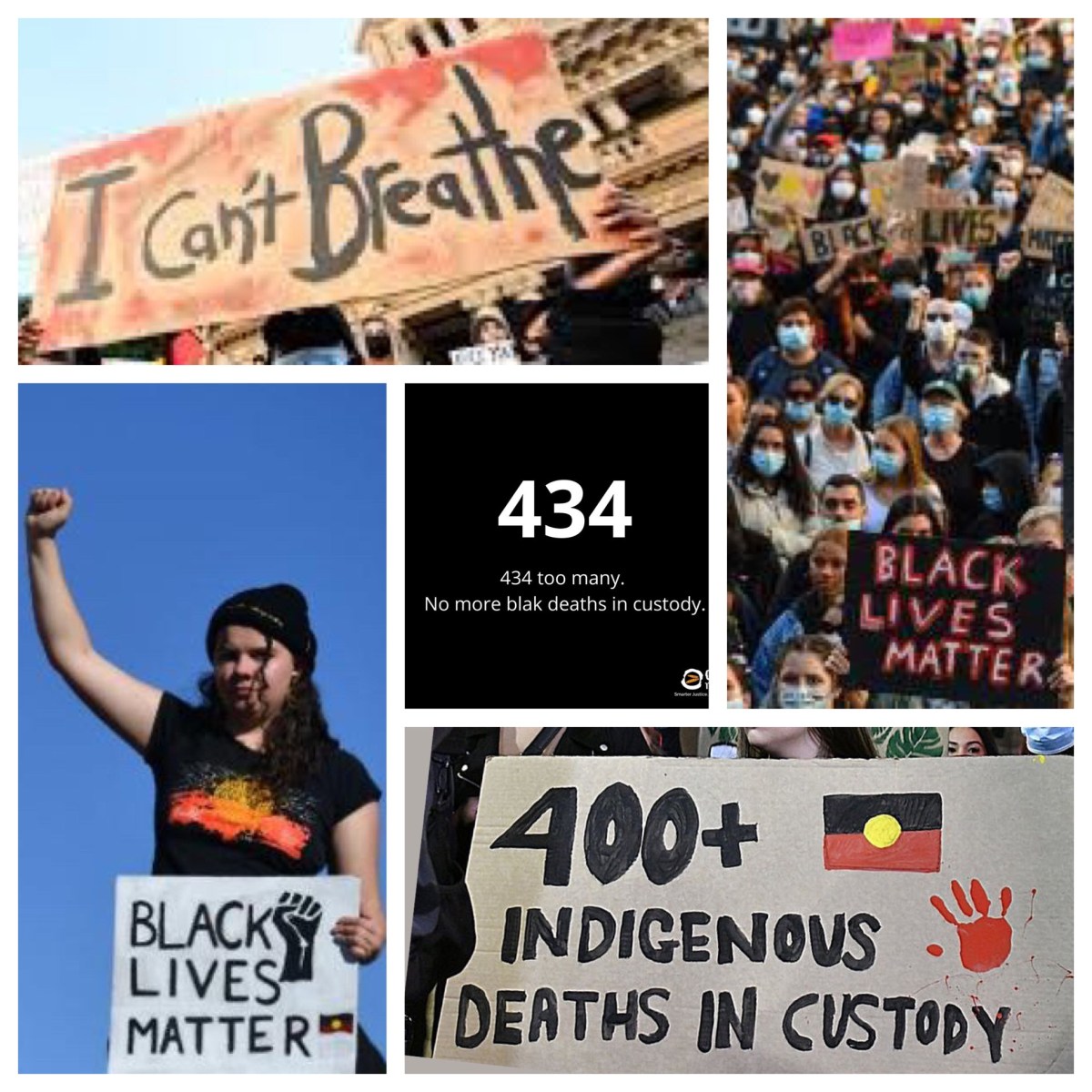
“I can’t breathe.” Three short words. Three words that shot around the world. “I can’t breathe.”

We all know who said that, and the circumstances that drew these words from his mouth. We all know that soon after he said this, George Floyd died. Another black man, dead, at the hands of a white police officer.

“Ah well, that was in America”, you might think. Yes, it was. And many other Afro-American people have died in similar circumstances, victims of what appears to be, quite simply racism. A shameful story. A shameful record. But in America. Not here. Not in Australia.

Except—not so fast! Because here, in Australia, we have recently been reminded, there are 434 people—black men and women, indigenous Australians—who have died whilst in police custody, since 1991. (That was the year when the Royal Commission into Aboriginal Deaths in Custody ended.)

And one of the more recent people to die in such circumstances in Australia also uttered those words: “I can’t breathe.” (David Dungay, in 2015. And he said this phrase twelve times, before he died.)

So we Australians are not exempt from the shame of this racist record. Our very own nation has not yet found a way to address the systemic bias, the systematic persecution, of indigenous Australians. They are only 3% of our population, but they are represented amongst the prison population in numbers out of proportion to their presence in society.

And from all of those 434 deaths, after multiple enquiries, there have been—how many convictions? The sum total remains at zero.

What does this have to do with our faith? How does this impact on us as we go about our lives as followers of Jesus?

Last week, Dr Deidre Palmer, the President of the National Assembly of the Uniting Church, wrote:

“In the Bible, our sacred text, we hear God’s cry for justice for those who are living in poverty, those who are oppressed by unjust systems, those who are excluded and discriminated against.”

She went on to say:

“The Jesus we know from the Gospel stories, calls leaders to use their power in service to others, to call forth in others compassion, justice and kindness, unity and community. These are the leaders, we are called to be and that we need in the world today.”

Pastor Mark Kickett, the Interim National Chairperson of the Uniting Aboriginal and Islander Christian Congress, joined his voice on this issue, saying:

“It boggles the mind as to how such inhumanity continues to exist in the modern world in which we live, yet it still does.” He quoted the Prophet Amos: “Amos speaks very clearly in relation to this matter where he says; ‘But let justice roll down like waters, and righteousness like an ever flowing stream’” (Amos 5:24).

Our faith includes a clear call, for us to work so that we avoid perpetuating such injustices in our society. Our President said, in her Pastoral Letter for National Reconciliation week:

“We need to strengthen our actions for justice, healing and reconciliation. This is not an abstract call – it is seen expressed daily in our relationships with one another in this country.

It is seen when we:

• call out racism;

• tell the truth about the history of colonisation, dispossession and the undermining of First People’s culture, language and spirituality;

• advocate for First People’s voice to be heard in determining their future;

• respect and appreciate the culture and stories of First Peoples, and work together to deepen our relationships based on reconciliation that arises from justice, and leads to healing; and.

• live in harmony with the sacred land that we share.”

That is the challenge that sounds forth from our church leaders. That is the challenge that sits at the heart of the Gospel. As we live our lives by faith, following the way of Jesus, might we know also the claim that these words have on us.

We are called to stand firm for justice, to stand firm against injustice. We have a charge to call out racism, to call for reconciliation.

If that means that no black person in custody will then have to utter those tragic words, “I can’t breathe”—it will be worth taking that stand, making that call.

https://www.abc.net.au/religion/how-should-christians-respond-to-black-lives-matter/11173976

https://www.eternitynews.com.au/opinion/black-lives-matter-a-message-from-chris-mcleod-national-aboriginal-bishop/

https://www.theguardian.com/australia-news/2020/jun/06/aboriginal-deaths-in-custody-434-have-died-since-1991-new-data-shows?CMP=Share_iOSApp_Other

See the links to the two pastoral letters from Uniting Church leaders at https://assembly.uca.org.au/news/item/3196-pastoral-statement-racism-and-police-brutality

“Greet one another” (2 Cor 13). But no holy kissing. And no joyful singing. (Trinity Sunday A)

“Finally, brothers and sisters, farewell. Put things in order, listen to my appeal, agree with one another, live in peace; and the God of love and peace will be with you. Greet one another with a holy kiss. All the saints greet you.” So the second (extant) letter to the Corinthians ends (2 Cor 13:11-12).

“Greet one another with a holy kiss” is also how Paul instructs the Corinthians in his first letter (1 Cor 6:20), as well as the Thessalonians (1 Thess 5:26) and the Romans (Rom 16:16). (The same instruction appears at 1 Peter 5:14). These five verses all indicate that first century worship was not just sitting formally and watching what went on at the front; it was interactive, engaging, personal.

What do we make of this instruction to kiss one another? Many people in churches that I know have interpreted “holy kiss” to mean “warm handshake”—so the “passing of the peace” has been shaking hands with as many people as possible in the Congregation. In some smaller gatherings, even, making sure that you shake hands with everybody present!

Well, not any longer. No more handshakes—not in church, not at the door after the service, not anywhere in society. COVID-19 has put paid to shaking hands for quite some time yet.

Other people have take a more literalist line of interpretation. A kiss means, well, a kiss! If not a lip-to-lip kiss, then, at least, a lip-to-cheek kiss. Yes, I have been in church gatherings where my hairy unshaven cheeks have been kissed. And even, when my hairy-encircled lips have planted a kiss on the cheek of another worshipper. I confess.

But not any longer. No more person-to-person contact; especially not any contact that involves the lips! COVID-19 has put paid to the socially-approved form of public kiss, for quite some time yet—if not forever.

One of my colleagues, Sarah Agnew, suggests that the best way to translate the reference to a “holy kiss” in these five verses, is by referring to a “holy embrace”. That understanding is premised on the fact that the Greek word which is translated as “greet” in these texts, contains elements of making personal contact which are both interpersonal (greetings) and also physical (the word can be used to signify hugging or embracing). See https://www.academia.edu/28243257/A_call_to_enact_relationships_of_mutual_embrace_Romans_16_in_performance

Given that, then, on each of the sixteen times that Paul instructs for greetings to be given to named individuals in Romans 16, he may well be saying something like, “give them a hug from me”. Such relationships were personal and intimate.

This rendering takes us to the heart of community—and to the centre of our practices during the current situation with COVID-19. The ancient practice clearly envisaged that physical contact was involved. The current situation proscribes any form of physical contact. It is just too risky.

Physical contact, in the intimacy of either a kiss (on the cheek) or an embrace (with the upper body), is now, we are told, not advisable, given the way that infectious diseases such as COVID-19 (or, indeed, the common cold—which is itself a form of a coronavirus) are spread.

How do we reconcile these current guidelines with the scriptural injunctions? Do we ignore current guidelines (and keep on meeting together) because “the Bible says…” ? Or, do we turn away from strict biblical teaching (and stop our gatherings), because of contemporary concerns about the pandemic?

Of course, we do not put our heads in the sand. We acknowledge the sense in the guidelines being proclaimed across society. We listen to those with expertise in infectious diseases and medicine. We refrain from physical contact. No kissing. No hugging. No handshakes. We look for alternatives to signify that we are greeting one another.

We aren’t yet meeting in person for worship. It will be some time before most Congregations are able to do this. But when we eventually do begin to worship in person, and it comes time to pass the peace, we might face the other person, place our right hand over our own heart, and say, “peace be with you”. That avoids direct physical contact, but incorporates a direct visual interaction.

Another option would be to clasp our hands together and place them in front of our chest, in the “praying position”, and then, as we face each other, bow in greeting.

A third option—one perhaps only utilised in a very distinctive liturgical setting—could be to “bump elbows”, using the recommended social alternative to “shaking hands”. But that option would need to be employed with care! And it may not be to everybody’s liking, to be sure.

Which brings me to singing. “Make a joyful noise to the Lord!”, the psalmist instructs us (Psalms 66:1, 95:1-2, 98:4, 6, 100:1). Sing “psalms and hymns and spiritual songs”, an early Christian writer exhorts (Col 3:16). “Be filled with the Spirit, as you sing psalms and hymns and spiritual songs among yourselves, singing and making melody to the Lord in your hearts, giving thanks to God the Father at all times and for everything in the name of our Lord Jesus Christ”, another letter writer directs (Eph 5:18-20).

So how do we interpret these passages? Do we adopt the same literalist approach—the Bible says we must worship, the Bible says we must song, so that’s what we must do! (Yes, I have heard this said, even in current times.) That is not really a satisfactory approach.

Of course, the same dilemma confronts us here. Just as direct physical contact is not advised in the current pandemic situation, so singing in a group of people is also deemed to be out of order, in the understanding of health professional and medical advisors.

Research clearly indicates that singing contributes to the spread of infectious diseases. Singing spreads droplets in aerosols which are expelled from a person’s mouth as they sing. They can carry the virus a significant distance and remain suspended in the air for some time after they have been expelled from a person’s mouth. A cloth mask is unlikely to be enough to provide protection as people sing together. This article canvasses the issues:

https://www.ctvnews.ca/health/coronavirus/does-singing-spread-coronavirus-choir-outbreaks-raise-concerns-1.4943265

So in the case of singing, as with physical touch, we need reinterpret our scripture in keeping with what we know about the spread of infectious diseases. We might have to be content with listening to a recording or watching a video of a favourite hymn or song being sung. One suggestion I have seen is to invite people to listen, then to share with a couple of other people what you have heard, what has connected with you, as you listen.

Another suggestion is to invite people to tap into their own wells of creativity, and after listening to the song, write or draw their own response. That could be in the form of a prayer, a modern psalm, an impressionistic artwork, a poem, a sketch drawing. The possibilities are endless.

Some other ideas are canvassed in this post:

https://godspacelight.com/2020/05/23/five-ways-to-worship-with-music-beyond-singing/?fbclid=IwAR07U327jYyIu8PKq3xmBnDSE3wDD56ySbiRlRxpT1Foc42o4ucgZOnHhJg

There’s another central aspect of worship that will need significant attention and careful consideration in the time ahead. Before we actually start meeting in person for worship, a decision will need to be made, in each local community of faith, with regard to holy communion.

We know that any action that involves direct physical contact is risky. We know that multiple touching of the same object is highly risky—it provides many more opportunities for a virus (any virus, not just COVID-19) to be passed from person to person. When we regather for worship, we will not be “passing the offering plate around”; it is too risky.

In the same way, we need to,consider carefully what we do when it comes to offering the bread, passing a plate of bread, drinking from the cup, or passing the small cups.

That’s a matter for future consideration. If anyone has any clear ideas or knows of useful guidelines in this regard, I would love to hear from you!

A prayer from Sarah Agnew https://praythestory.blogspot.com/

See also https://johntsquires.com/2020/05/29/worship-like-the-first-christians-what-will-our-future-look-like-3/

https://johntsquires.com/2020/05/24/its-been-two-months-under-restrictions-what-will-our-future-look-like-2/

https://johntsquires.com/2020/05/22/its-been-two-months-under-restrictions-what-will-our-future-look-like-1/

https://johntsquires.com/2020/04/22/its-been-just-over-a-month-but-there-have-been-lots-of-learnings/

https://johntsquires.com/2020/05/05/the-times-they-are-are-a-changin/

https://johntsquires.com/2020/05/04/not-this-year-so-what-about-next-year/

https://johntsquires.com/2020/05/11/when-we-come-together-2-values-and-principles-in-the-midst-of-a-pandemic/

https://johntsquires.com/2020/03/15/when-you-come-together-reflections-on-community-in-the-midst-of-a-pandemic/

Pastoral Letter to Canberra Region Presbytery: June 2020

3 June 2020

Dear friends across the Presbytery,

It has been many months since we have been able to “live as normal”. For some people, the extended period of drought was already providing challenging circumstances last year. Then, for many people, the bushfires came tearing into their lives six months ago. Their lives were turned upside down and that turmoil has continued. Life has not been the same since then.

We watched as the fires spread across many of the regions in our Presbytery, and even threatened the southern suburbs of Canberra. Many, many people have been impacted—in the lives lost, in the destruction of homes and properties, in the fears and anxieties that grew as the fires spread, in the disruptions to the lives and livelihoods of many communities, and as the memories of past experiences swam back into view.

Then we all experienced the horror of watching the early reports of people around the world who were suffering, and some dying, from a new, previously unknown virus. In swift succession, we saw the WHO declare a global pandemic, the death rates in a number of countries rise exponentially, the first cases of death from COVID-19 in our own country, and then our Government issuing orders restricting gatherings.

We have not been able to live “life as normal” during these months of restrictions on gathering. It has been a time of change, and challenge. Many people have learnt new skills, as we began to realise the possibilities that ZOOM, YouTube, Facebook, WhatsApp, and other online platforms can provide. Many congregations began gathering-apart through one of these means. At the same time, we have continued to worship and care for one another.

Many of us have lamented the loss of face-to-face meetings. We have not been able to have coffee and catch up with friends, or family. We have not been able to go to our favourite cafes, museums or picnic spots. We have not been able to visit those whose mobility restricts them to their homes or rooms and we have not been able to gather together on Sunday morning, to worship.

It is now clear that the early movement to impose restrictions right across society has helped Australia to have fewer deaths in the pandemic. We are certainly saddened by the deaths that have taken place, and aware of the spread of suffering that has been experienced by those who have had their health impacted significantly because of COVID-19. We are relieved that there has not been more deaths, that we did “flatten the curve”, and that we have “slowed the spread” of the virus.

It is also clear that the restrictions of past weeks have had a heavy economic impact—on individuals and small businesses which have lost their income, as well as on the overall economy of our country. It is clear that political leadership wishes to address this matter, and is doing so by easing restrictions, in a staged process. We need to be mindful of what is now permitted—and what still remains restricted.

It is also clear that this easing of restrictions has kindled flames of hope amongst many people—hope that life can “get back to normal”, hope that “life will be easier”, hope that we can “go back to church”. Every one of us shares those hopes, to a greater of lesser degree. And yet, we know, deep within our hearts, that life will not soon be “back to normal”. Things have changed, and that’s the way they will stay, for some length of time yet.

With regard to the last of these hopes—to “go back to church”—there are some important factors for us to consider. It is not just a matter of sending out the emails, ringing up the folks, opening up the doors, and welcoming people back into the church building. Before we can do that, there will be planning and preparation—and prayerful reflection—that needs to take place.

Leaders of our church, from across every Presbytery, and in the Synod, have been meeting each week for the past ten weeks. This week, the leadership group approved a set of resources which have been prepared to assist each Church Council, as they discuss, plan, and prepare to resume church activities on church property.

Those resources are detailed, comprehensive, and carefully conceived. They will help each of our Church Councils to develop a set of COVID Safety Plans, one for each activity taking place in our church. Together, these Safety Plans will provide us with a COVID Safe Roadmap to re-gathering.

There is a very helpful collection of FAQs at https://nswact.uca.org.au/covid19saferoadmap/faqs/

We encourage Church Councils to begin by reading through this webpage and discussing together the questions that are posed here. After this, Church Councils can then begin to develop specific COVID Safety Plans, one for each activity taking place in their church property.

You can find resources to assist in the preparation of these COVID Safety Plans at https://nswact.uca.org.au/COVID19SafeRoadmap

We encourage you to go to the website and read these resources. They are comprehensive, so this will take time. Church Councils will need to take that time to give careful consideration to the responsibilities that they have. We need to ensure that we do not rush back into holding activities in our church buildings, before we are certain that we have done all the planning that is required.

We also need to take care to ensure that in all our planning, we prioritise the needs of those who are vulnerable—Aboriginal and Torres Strait Islander peoples, those with chronic medical conditions, people with impaired immune systems, and people aged over 70. Their health and safety needs to be the first consideration in any decision to commence worship gatherings in person.

We cannot simply assume that it would be wise for all of these people (including our Ministers and Pastors) to “come to church” when we start holding worship in person once more. In fact, it most likely is wise that they do not join with those who will be gathering in the church building. We need to plan and prepare with this in mind.

As we move along the path of stages taking society forward, let us be patient and compassionate. We need to be compassionate to one another, ensuring that when we start to gather again in person, all precautions have been taken, and the risks have been minimised as much as we can.

We need, especially, to be compassionate towards those whose vulnerabilities mean that they remain at home, waiting still for that safe place for gathering in church to come. They will need our particular care and attention. This is a central calling for us, as a church, at this time. We need to attend, today and in the months to come, to the hard work that will be required, to ensure that all of our buildings and activities are safe, for everyone who attends.

Further still, we are to be mindful of those who may have begun to make connections with our Congregations through this time of meeting and worshipping differently online, or by other means. We want the arrangements to which we now move also to be inclusive of them and their needs.

And let us be patient with each other; may our frustrations fall away, our anxieties dissipate, as we wait, pray, and prepare. As Daniel Mossfield recently wrote to his Congregation:

“In a culture where people are forced to rush back to work, and potentially risk their lives due to economic hardship, we the church dare to claim there is a different way the world could be. We dare to believe that our society can and must look after all its members in the coming weeks and months, because we believe the value of each of us does not rest in how much we earn but in the fact that we are all children of God. We believe not gathering yet is the very call of God upon our lives: to witness to the patience of the Gospel.”

Please be assured of ongoing prayers from each of us, as we all work our way through the challenges and opportunities of this time, and as we pray and plan for the future that we hope for, as Congregations, as a Presbytery, and as part of the whole people of God.

Judy McKinlay, Presbytery Co-Chairperson

Jared Mitchell, Presbytery Deputy Chairperson

Andrew Smith, Presbytery Minister—Congregation Futures

John Squires, Presbytery Minister—Wellbeing

Worship like the first Christians. What will our future look like? (3)

I have been reflecting on the “where” of how we want to be, as the church, in post-COVID times, as well as the “when” of how we want to be. Do we want to be simply back in the church building on a Sunday morning? Do we want simply to be doing things in the old, familiar ways of past years?

You can read those posts at https://johntsquires.com/2020/05/24/its-been-two-months-under-restrictions-what-will-our-future-look-like-2/ and https://johntsquires.com/2020/05/22/its-been-two-months-under-restrictions-what-will-our-future-look-like-1/

In this post, I pick up the theme of “who” we are imagining ourselves to be in this future time. What might worship look like for us? Who do we reveal ourselves to be, when we gather for worship?

*****

If we want to rethink how we worship in the post-COVID era, and reimagine what we might do in a gathering of people as “church”, perhaps we could get some inspiration from what our scripture tells us about the early followers of Jesus? Could we being to rethink and reimagine so that church looked more like what these people did? After all, we have scriptures which we use as guidelines for various doctrinal and moral matters; why not also with worship?

The earliest followers of Jesus, we know, did not worship in English. They used their own languages—Aramaic, for Jewish People, and probably Greek, in many of the early Christian communities. And, no doubt, the native language of the particular region where new faith communities were established. Syriac. Coptic. Phrygian. Arabic. Latin. Each spoke to the other in their own language.

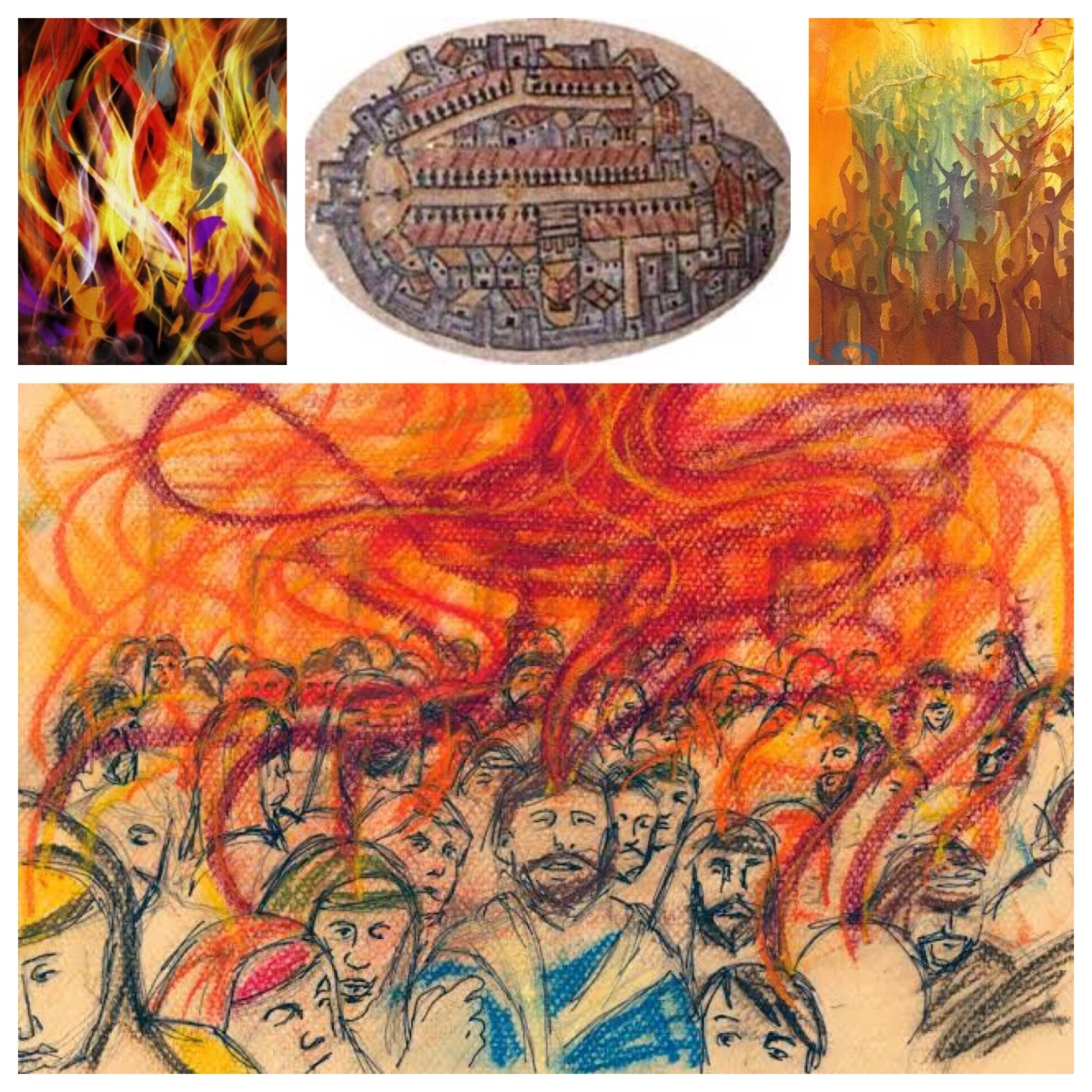
Unsurprisingly, that sounds just like Pentecost, the festival that we celebrate this coming Sunday, when those gathered in the Temple heard the early followers Jesus, and declared in amazement, “how is it that we hear, each of us, in our own native language?—in our own languages we hear them speaking about God’s deeds of power.” (Acts 2:8, 11).

Of course, I am not advocating that we take up speaking in Aramaic, or Koine Greek, or Syriac, or Phrygian, or Latin. In the Reformed churches, we have long adopted the custom of worshipping in our native language. But are there other practices from the early church that we could consider taking up? For instance, the early church did not have organs or pianos to accompany singing. Is that something that we could adopt? How many other places in society still have group singing accompanied by organ or piano?

*****

The earliest believers being Jewish, they most likely followed the pattern of worship that is attested in the Temple: “Praise the LORD! Praise God in his sanctuary; praise him in his mighty firmament! Praise him with trumpet sound … with lute and harp … with tambourine and dance … with strings and pipe … with clanging cymbals, with loud clashing cymbals!” (Psalm 150).

I know stories from Congregations where drum sets, complete with cymbals, were introduced into worship—leading to even louder noises, as church conflicts broke out! But such musical accompaniment is actually biblical. Can we head in that direction in our worship today?

We know also that those early believers sang “psalms and hymns and spiritual songs” (Col 3:16). That sounds familiar. Not too much different from today. Except: singing. All the evidence points to the fact that singing, indoors, in a group with other people, standing close to one another, is one of the most risky behaviours in this current time of the pandemic.

So, there is very little room to move: if and when we gather together in person to worship, we will not be singing. We will, necessarily, be quite different in our worship practices, from the early believers.

*****

The early followers of Jesus did not have paid ministers leading worship. This was the case from the very earliest days, and this practice lasted for a long time. (They did, however, have provisions to provide for their leaders—hospitality, places to stay, the provision of resources to enable their living—as Paul makes clear.)

Not having a Minister in placement is a reality for a growing number of our Uniting Church Congregations, now, as the decrease in numbers has brought with it a decline in offerings and therefore a reduced capacity to support a stipended minister.

Is this something that might be considered by more congregations, in an intentional way, into the future? Do we need to move away from dependence on “the paid person” as the local leader (and often, the person expected to “do all the ministry”), and strengthen the resilience of the whole people of God who make up the Congregation in each of these places? Could we reshape local ministry so that it equipped and resources the gifted people of God to lead worship and other church activities, rather than sitting back and being consumers of whatever the paid person delivers?

And perhaps alongside that: should we be encouraging our stipended ministers to focus elsewhere than on the Sunday worship? To be resourcing and equipping people for their own ministries, to be developing missional plans and fostering community engagement? To be enabling the whole people of God to be confident in sharing their faith, serving people in need, and living as active disciples in all of their life? This would be more in line with the way that leaders functioned in the early church.

That’s a challenge that is worth considering. After all, our Basis of Union (picking up on 1 Cor 12) actually affirms that “every member of the Church is engaged to confess the faith of Christ crucified and to be his faithful servant … the one Spirit has endowed the members of Christ’s Church with a diversity of gifts … all ministries have a part in the ministry of Christ.” (Basis of Union paragraph 12).

We are all ministers. We are all gifted by the Spirit. We are all equipped to serve. We are all part of the ministry of Christ—not just the paid person! How might that best translate into a reshaped form of worship?

*****

Another insight into the nature of worship in the early church communities is that it was spontaneous. That is very clearly the case in Corinth, a community that caused Paul quite some angst. Indeed, the critical issues he addresses in the later part of the letter (1 Cor 12–14) arise out of the highly spontaneous, seemingly chaotic situation that characterised worship in Corinth.

Such worship had more the nature of a dialogue between conversation partners, rather than a monologue delivered by one person to a group of silent listeners. We can see this in a simple way, with the references to “interpreters” in what Paul writes to the Corinthians. Whilst there are people who contribute words of prophecy, pray in tongues, or speak in tongues (1 Cor 14), in each case there is the need for someone to interpret these phenomena.

What would it take to move towards a style of worship that more closely reflected this central ethos of gathering? That’s a challenging way ahead for us to consider. Could our worship be different, in this regard? As we explore the different possibilities for worship, once we start to gather together again in person, we ought to be stimulated by this kind of exploration of different options, of fresh expressions, of evolving ideas.

*****

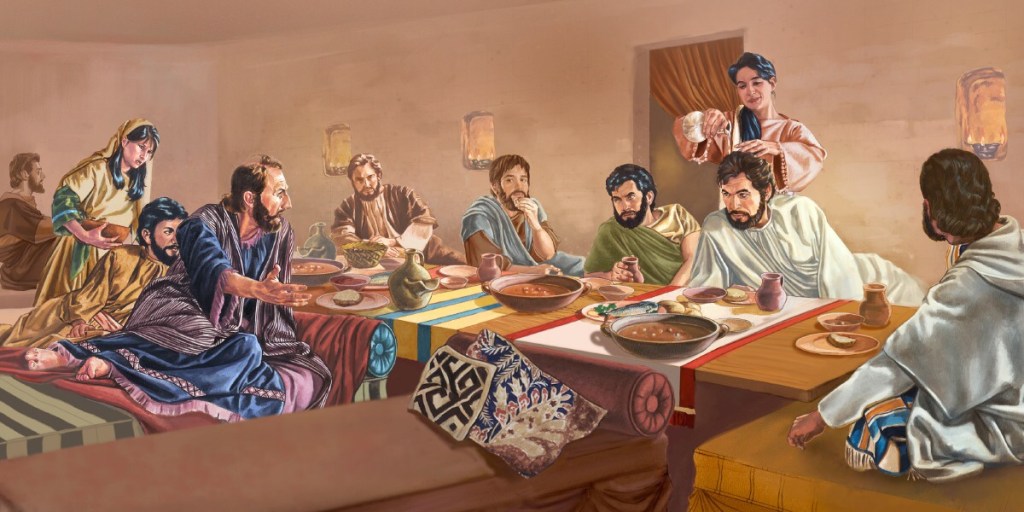
Another question: where did the early followers of Jesus gather? Luke’s account of the early church in Jerusalem indicates that they met in homes on a daily basis (Acts 2:46; 5:42). Commentators on the letters in the New Testament have made it clear that the earliest churches met in the homes of wealthy patrons—there are pointers towards this in letters to Corinth, to Rome, and in the letters of John. (See Rom 16:5; 1 Cor 16:19; Col 4:15; Philemon 2; 2 John 10, and perhaps also 2 John 1.)

When we start planning to regather as Congregations, how should we do this? Perhaps we should consider, not gathering en masse in a large building, but meeting others in smaller groups, in homes, sharing together on a regular basis (and not necessarily on a Sunday morning!)—with appropriate social distancing, of course. Let’s plan for some different ways of gathering, not all together in one large body, but in focused smaller groups.

*****

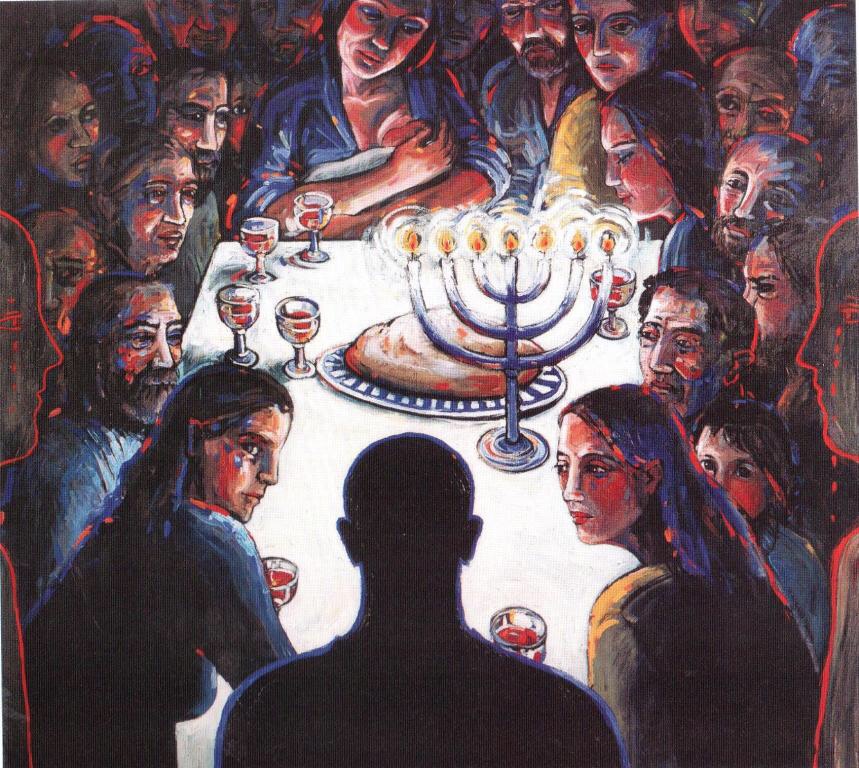
It is also worth pondering the fact that, for so many of the early followers of Jesus, coming together for worship was not the primary purpose for gathering. The indications from New Testament texts are that the earliest followers of Jesus came together to share in meals, to pray together, to share their lives with one another, to receive teaching on the life of faith, and to strengthen practices that are integral to discipleship.

Worship was part of that, but not ever the primary purpose (and certainly not the sole purpose) of gathering together. Worship was but one stream amongst a number of elements essential to these gatherings. What would it mean for us to work to this set of priorities into our planning for the future?

This central feature of the life of the early followers of Jesus is worth pondering and exploring: how might we follow this, and foster it, in our own times?

For Jews in the first century, the synagogue was more akin to a community centre, and much less like a sanctuary set aside for worship. Archaeology has shown that first-century synagogues did not have “Jewish” features; they were simply public buildings with benches lining the walls. The architecture of the buildings reflected the primary role of synagogues as Jewish community centres. People gathered for all manner of social and community activities. Worship was a secondary use of the space.

This carried over into the ways that early followers of Jesus lived out their faith in their daily lives. There was no separation between “church” and the rest of life. Faith was to be lived out in the actions and behaviours of life. Faith informed everything. Faith was a way of living, a way of doing, rather than a set of beliefs, a doctrinal creed. To be a follower of Jesus meant to be engaged with other people, assisting them, caring for them, serving them, attending to their needs.

Indeed, there is a strong view amongst scholars that the main reason for the growth of the church over the first two centuries was much less to do with doctrinal beliefs and verbal evangelism, much more to do with acts of charity, deeds of care and compassion towards others. Christians, simply, loved one another (just as Jesus commanded them to do!)

(See the work of Rodney Stark, summarised in https://thejesusquestion.org/2013/01/20/the-rise-of-christianity-by-rodney-stark/; for a discussion of the contemporary relevance of this view, see https://time.com/5824128/early-christian-caritas-coronavirus/ )

So, when Paul writes about “spiritual worship” (Rom 12:1), he makes it clear that this means living a life wholly committed to discipleship in every way—reaching out to others, serving people in need, giving up self-interest, and not totally focussed on the worship gathering alone. That is most surely a way of being that we could well emulate in our own lives, today.

So Paul encourages the Romans to “contribute to the needs of the saints; extend hospitality to strangers” (12:13) and reminds them that “each of us must please our neighbour for the good purpose of building up the neighbour” (15:2). He advises the Corinthians to maintain positive relationships with those who do not share faith in Jesus (1 Cor 10:27) and to follow the principle, “do not seek your own advantage, but that of the other” (1 Cor 10:24).

To the Philippians, he writes “let each of you look … to the interests of others” (Phil 2:4), and he urges the Thessalonians to “encourage the fainthearted, help the weak, be patient with all of them” (1 Thess 5:14). All of this is outward-oriented, community-focussed, and following the direction of the injunction to “love your neighbour” (Lev 19:18, quoted by Jesus at Mark 12:31).

And that, more than any particular style or form of worship, is what should best characterise the followers of Jesus today. Are we up for the challenge??

Saying sorry, seeking justice, walking together, working for reconciliation

Today is National Sorry Day. It stands at the head of National Reconciliation Week, which runs from 27 May to 3 June each year. This week was initiated in 1996 by Reconciliation Australia, to celebrate Indigenous history and culture in Australia and promote discussions and activities which would foster reconciliation.

The dates of National Reconciliation Week hold special historical significance. On 26 May 1997, the Bringing Them Home report was tabled in Federal Parliament. This report addressed them impacts of the fact that in the late 19th century and throughout the 20th century, Australian government policies resulted in many Stolen Generations, in which thousands of Indigenous children were separated, often forcibly, from their families, with the aim of removing them from their culture and turning them into “white Australians”.

Because of this, the date 26 May carries great significance for the Stolen Generations, as well as for Aboriginal and Torres Strait Islander communities, and its supporters among non-indigenous Australians. So Sorry Day is an annual event that has been held around the continent on 26 May since 1998, to remember and commemorate the mistreatment of the country’s Aboriginal and Torres Strait Islander People.

27 May marks the anniversary of the 1967 referendum in Australia, which gave the vote to Aboriginal and Torres Strait Islander people, while 3 June marks the anniversary of the 1992 judgement by the High Court on the Mabo v Queensland case.

Sorry Day (26 May) and the National Apology (made in Federal Parliament on 13 February 2008), the 1967 referendum, the 1992 Mabo decision, along with the Wik decision on native title (delivered by the High Court on 23 December 1996), are considered to be key events in addressing the historic mistreatment of indigenous Australians, and in taking steps towards reconciliation and restorative justice.

But these were only steps. The path still lies ahead. We need to take more steps, walking together, to foster deeper relationships, advocate for a more embedded restoration of justice, work for wider and more lasting reconciliation within our communities. We are in this together. May we tread that pathway with compassion and intent.

See https://www.reconciliation.org.au/national-reconciliation-week/

Click to access 150520-Sorry-Day.pdf

https://australianstogether.org.au/discover/australian-history/1967-referendum/

https://australianstogether.org.au/discover/australian-history/mabo-native-title/

The picture montage shows a Sorry Day poster, celebrations after the 1967 referendum, Eddie Mabo who brought the High Court case that was resolved in 1992, Gladys Tybingoompa dancing outside the high court in Canberra on 23 December 1996 following the Wik people’s native title win, and the front page of a national newspaper reporting the National Apology in 2008.