Wear It Purple Day at the Rainbow Christian Alliance

Today, 25 August, is Wear It Purple Day. This day was founded in 2010 in response to global stories of real teenagers, real heartache, and their very real responses. The day is specifically designed to foster supportive, safe, empowering and inclusive environments for rainbow young people around the world.

On the website for Wear It Purple Day, we are told more about the story of its origins:

“In 2010, several rainbow young people took their own lives following bullying and harassment resulting from the lack of acceptance of their sexuality or gender identity. One member of this group was 18 year old Tyler Clementi, who took his own life after being publicly ‘outed’ as gay by his roommate, prompting a frenzy as reports poured in of various young people sadly in the same situation.

“As the world saw the faces of precious young lives lost, some young people found a new sense of conviction and purpose to ensure that young people everywhere would know that there were people who did support and love them. Wear it Purple was established to show young people across the globe that there was hope, that there were people who did support and accept them, and that they have the right to be proud of who they are.”

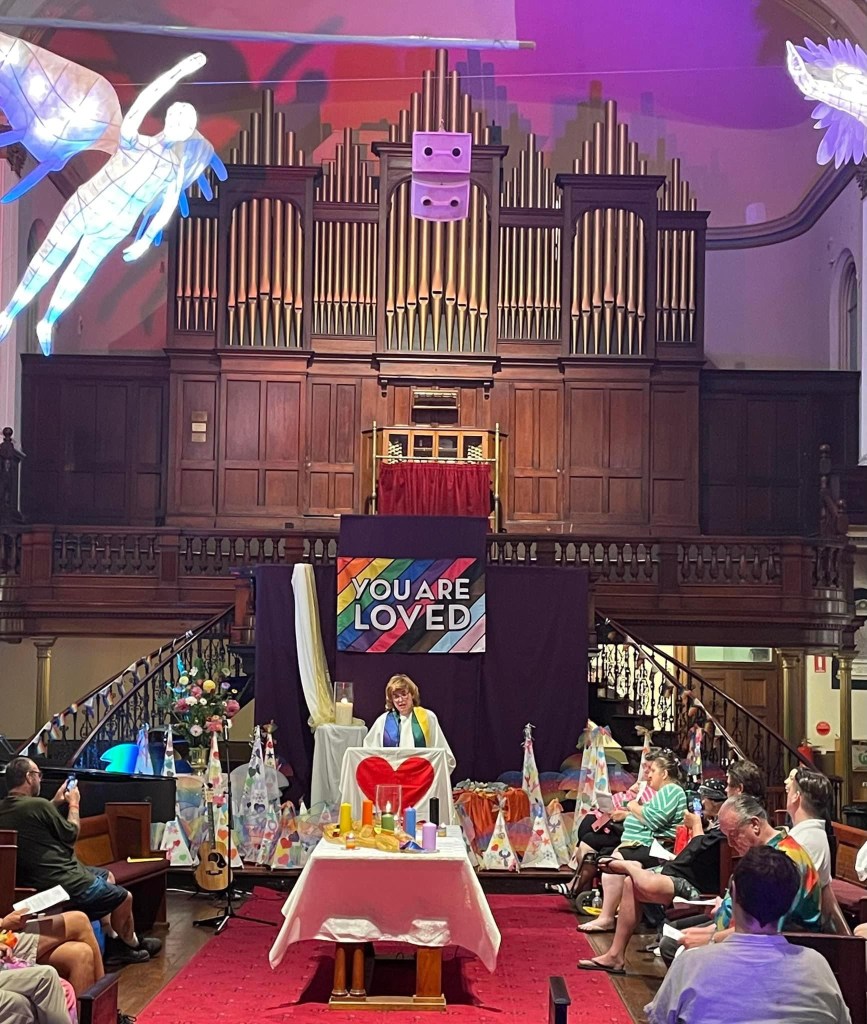
Locally, in the lead up to this day, the Rainbow Christian Alliance (RCA) that meets at Tuggeranong Uniting Church (TUC) once each month held an evening to give a local focus on Wear It Purple Day. So, on Sunday 13 August, RCA members and visitors came dressed in purple—it was a dazzling display!

Local Greens MLA, Johnathan Davis, was the guest for the evening. (Sadly, as Johnathan does not own any purple clothing, he didn’t come dressed in purple, as the phot above shows!). Johnno, as he likes to be called, describes himself as “a young shamelessly queer person in public life”. He was elected to the Legislative Assembly of the Australian Capital Territory in 2020, as one of a number of Green members of that Assembly.

In the ACT, the Greens and Labor have formed a coalition government for the past few years, working together to provide reasonable and intelligent government for the territory. Johnno is not the only gay member of the Legislative Assembly—in fact, the ACT Chief Minister is a gay man in a longterm relationship. And he pointed out that while the Deputy Leader of the Greens is a practising Muslim, this indicates the breadth of opinions amongst the local political parties in the ACT.

Johnathan spoke about how he was radicalised politically by his own public school experiences—including a time when the then government was proposing to close the high school that he was attending. Indignant at this move, Johnno mobilised the school community and was successful in stopping the closure of his school. His first successful political campaign!

Wear It Purple is a day that is important to celebrate, he said. Visibility is so important to young gay and lesbian people—and, also, to young intersex and transgender people, as well as asexual and bisexual young people. Visibility such as like Wear It Purple Day provides is personally empowering for such people and it works to ensure that young rainbow people are not isolated. The Day helps to provide a shared sense of identity amongst young rainbow people, giving them encouragement and support from others of same identity—and, indeed, from straighten allies in the wider community who support this Day.

Johnathan talked about some of the initiatives that the ACT Government has introduced to strengthen mental health support for young rainbow people. We know that rainbow people are more liable to have mental health crisis, to attempt suicide, and indeed to die from their own hands, than those in the straight community. This is exacerbated even more for younger members of the rainbow community.

Studies show that the situation is very serious for members of this community. For instance, I have found that LGBTIQ+ Health Australia has stated the following in its October 2021 report:

For more statistics, and the details of the studies relied on, see https://assets.nationbuilder.com/lgbtihealth/pages/549/attachments/original/1648014801/24.10.21_Snapshot_of_MHSP_Statistics_for_LGBTIQ__People_-_Revised.pdf?1648014801

The ACT Government has recently opened a “queer space cafe”, which is a safe haven space, in the northwest of Canberra. Already, after just a short period of time, the impact of this safe haven space has proved to be incredibly powerful. It is based on the observation that early intervention, when a person is facing a mental health crisis, is far more effective than waiting until the issues have magnified and become far more difficult to manage.

The cafe is staffed by people who transform a simple space to sip coffee and chat into a one-stop shop to refer people in need to whatever services might best be able to support their need. Johnathan says that this reflects the current approach of the ACT Minister for Mental Health, Emma Davidson, MLA, to divert mental health funding away from government-run services into supporting existing community services that are working well. (Emma Davidson is, like Johnathan Davis, a member of the Greens Party.)

Johnathan also spoke quite candidly about his own faith. He volunteered that “Faith has not been an issue for me for many years, but my recent connections with Tuggeranong Uniting Church has led me to re-evaluate my position and rethink faith questions”. He noted that his understanding of God and his experience of church did not correlate—a disjuncture that, sadly, is the case for many people in today’s society, especially when they experience a church that is dogmatic, and judgemental, and what they experience is condemnation and exclusion.

“When I came out”, Johnno said, “everyone who had a problem with my sexuality attributed that to their faith”. That is, they judged him on the basis of what they believed (and what they had been taught) was “right”, rather than encountering him as he was, and building relationships with him from that.

The approach at Tuggeranong Uniting is quite different from this; the community has worked hard to develop an inclusive and welcoming community where relationships are valued over judging, where being an inclusive space has a higher value than being a set-apart, “holy” community of faith. (There are quite a number of other Uniting Churches which are similar in this regard.)

So Johnno continued, saying that “I feel like I can reconsider my faith because of the contact I have had with Tuggeranong; this church is prodding me to re-evaluate my faith”. He had said the same when interviewed for the recent video, “Transforming Connections”, which was recently released. He finished with an indication that he would like to continue to develop his relationship with TUC in the future.

The website for Wear it Purple Day notes that the Day has developed into an international movement. “New generations of rainbow young people continue to be dedicated to promoting the annual expression of support and acceptance to rainbow young people. What started out small has now grown; however the message remains the same: Everybody has the right to be proud of who they are.”

On 25 August, why not celebrate Wear it Purple Day? Be part of a movement that has the potential to save thousands of lives. Be part of this change.

*****

On Wear It Purple Day, see

https://www.wearitpurple.org/our-story

On Rainbow Christian Alliance, see

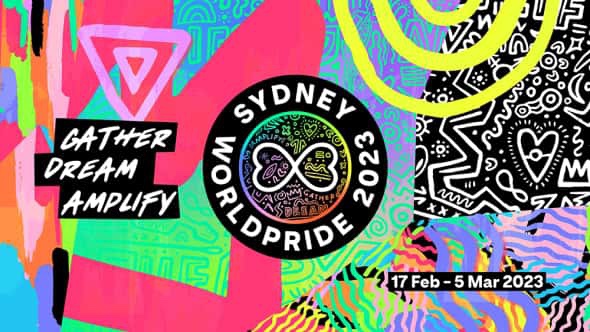
Gather—Dream—Amplify: World Pride 2023

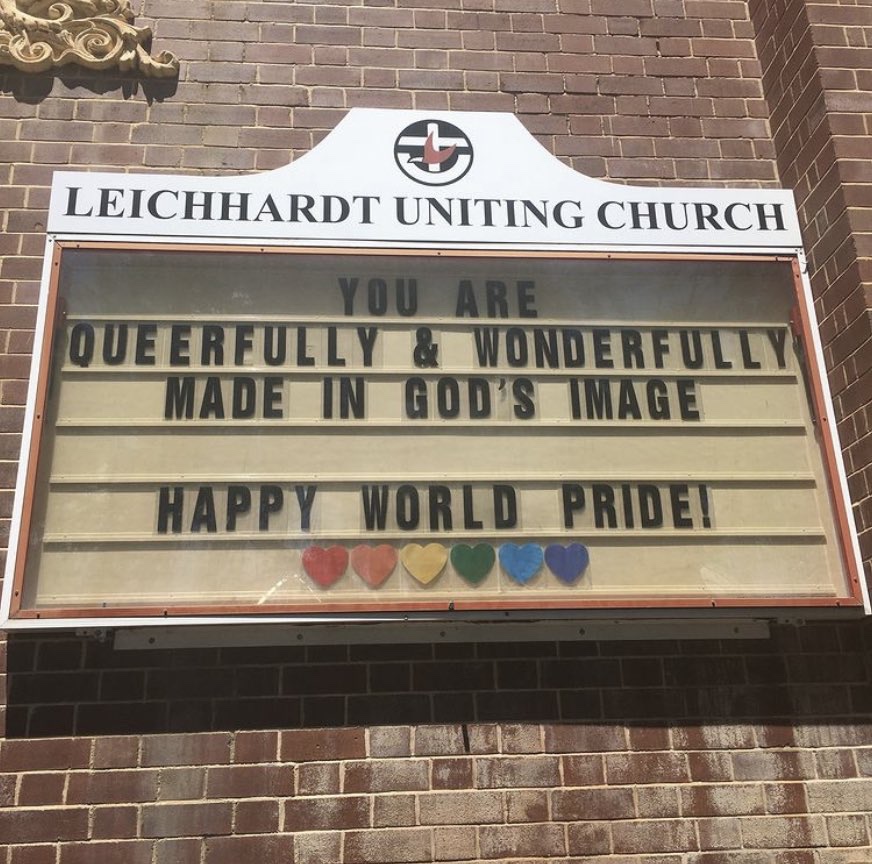
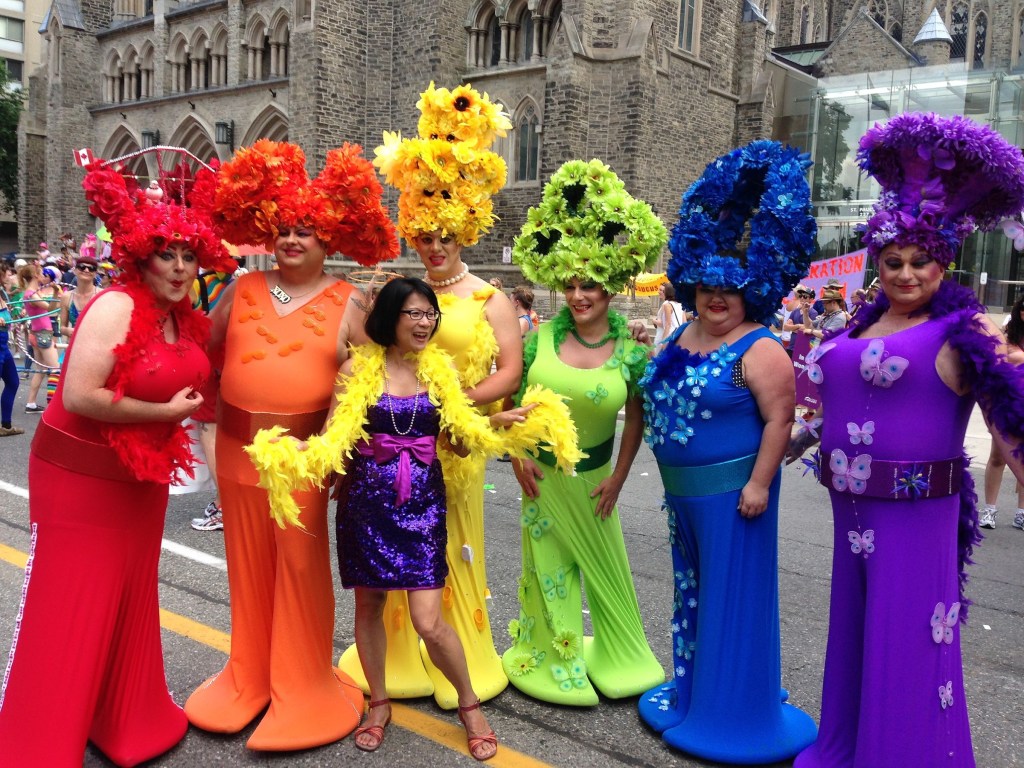
World Pride 2023 is taking place in Sydney at the moment. It started on 17 February and runs through to 5 March, with a concentration of Pride-related events in Sydney, including a fine Pride Concert last night and the annual Gay and Lesbian Mardi Gras Parade that is taking place later today, Saturday 25 February. This is the first time that World Pride has taken place in the southern hemisphere.

The theme for World Pride 2023 is Gather—Dream—Amplify. The website describes the event as “A time to listen deeply, learn, take action, protest and party … A time to dream. Imagine the future we want and demand it … A time to step aside, making sure there is an abundance of space for everyone. New voices. New dreams. A time for new perspectives and possibilities.” It is a positive, optimistic, affirmation.

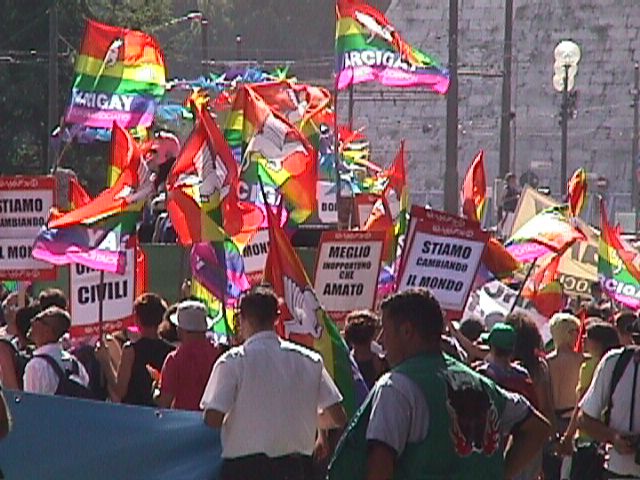
World Pride has been held since 2000, when it took place in Rome. It was next held six years later, in Jerusalem (2006), and then a further six years later, in London (2012). Momentum grew, as subsequent gatherings took place in Toronto (2014) and then Madrid (2017).

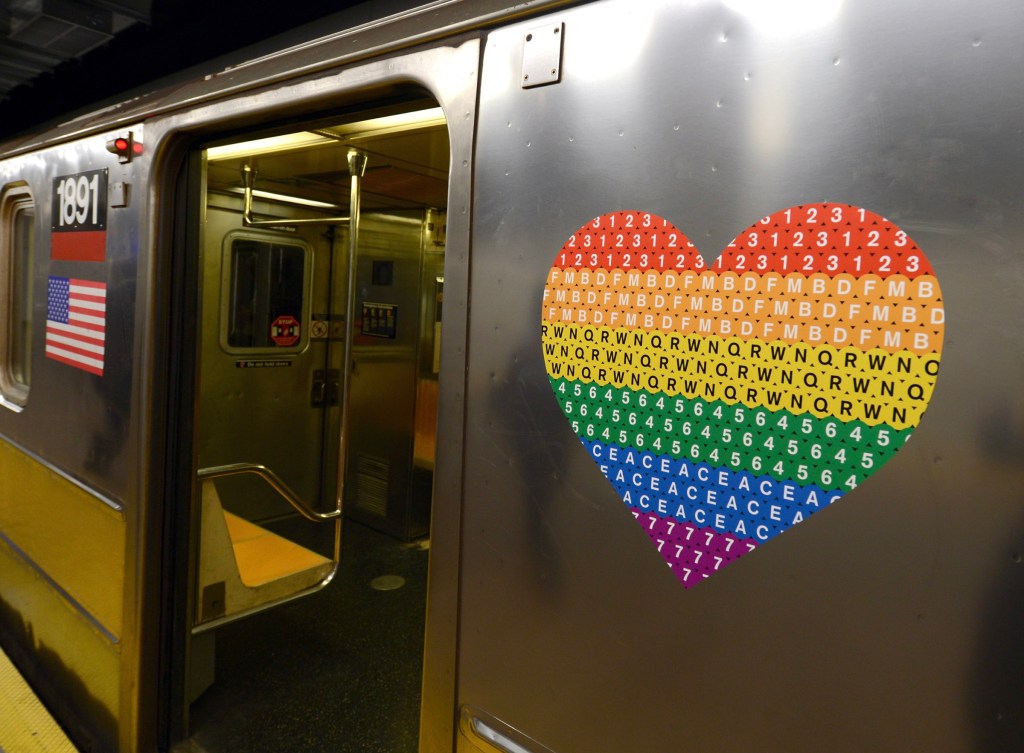
Two years later, in 2019, World Pride was held in New York City, commemorating the 50th anniversary of the Stonewall uprising, with five million spectators attending in Manhattan over the central Pride weekend. The Stonewall uprising is widely considered to mark the start of the modern Gay Rights Movement (now more commonly referred to as the fight for LGBTQIA+ rights).

In 2021, World Pride was shared between Copenhagen, Denmark, and Malmo, Sweden. The Crown Princess of Denmark was patron of the event, making her the first ever royal to serve as patron for a major LGBTQ event.

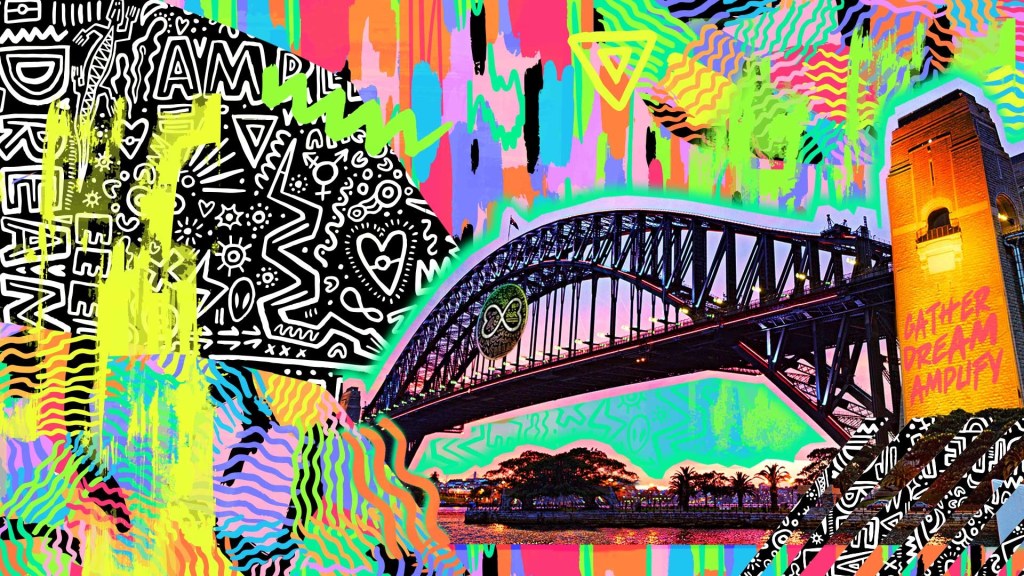
This year, in Sydney, the key events include a Fair Day on Sunday 19 Feb, the formal Opening Ceremony and Concert in the Sydney Domain on Friday 24 Feb, the annual Mardi Gras Parade and Party on Saturday 25 Feb; a Human Rights Conference from Wednesday 1 to Friday 3 March; a First Nations Gala Concert and a Mardi Gras International Arts Festival and Film Festival; and on the last day, Sunday 5 March, a Pride March over the Sydney Harbour Bridge and a grand Closing Ceremony.

Faith communities are actively involved in World Pride 2023, with a full listing of events at https://www.worldpridefaith.com.au/?mibextid=S66gvF&fbclid=IwAR15hAd9eTPZqO1QlU_o_XyEBD7n8-dtFSChxoMGLr3ILkEBgjHvG2kdar8

The Uniting Church is strongly supportive of the event, and a number of Sydney churches are involved. See https://uniting.church/uniting-churches-welcome-world-pride/

The Pitt St Uniting Church, located in the heart of Sydney, is actively involved in World Pride 2023, bringing a strong faith voice into the event. Pitt St is holding a photo exhibition, Queer Faces of Faith and providing a rehearsal space for the Out&Loud&Proud Choir rehearsals, as well as providing a safe and celebratory faith space and pastoral support to World Pride people in the heart of the CBD. A full program of prayer support for World Pride is operating as well. See https://pittstreetuniting.org.au/wp-content/uploads/2023/02/Diary-of-Praise-and-Prayer-for-World-Pride-2023.pdf

*****

Christians have had an unhappy relationship with LGBTIQA+ people. Sadly, far too many Christians hold a judgemental and discriminatory attitude towards people whom they regards as sinners, and many of these carry those negative attitudes through into discriminatory, oppressive, and damaging actions.

These negative attitudes were born long ago, in societies with different understandings of sexuality and gender. Many such societies of the past were centred around what they perceived as normality. “Normality” is what is most commonly found. “Normality” is also what is needed to ensure the ongoing survival of society. So regular reproduction of the species was essential in such societies, especially given the rate of deaths was much higher than in most modern societies.

The communities reflected in the Bible are no exceptions to this. Humanity is defined in Hebrew Scripture as needing to strive for perfection, so we see those who cannot see or hear, with missing limbs or those unable to speak, excluded from worship and community on the basis of how they differ from “perfection”. They are perceived as a threat to the good order and flourishing of society, because of their inherent “difference” from the norm. This is reflected in ancient Israelite law, and this continued on into in the understandings of the New Testament writers.

In modern times, our understanding of “normality” has broadened from such a binary understanding, to include now a spectrum of what is seen as “normal”. No longer do we exclude people on the basis that their physical appearance does not conform to the physical appearance of the majority of people, for instance. The understanding that the human brain operates on a spectrum has been well established, and we are now used to hearing regular references to the fact that neurodiversity in human beings has placed people at various points along a spectrum of neurological functioning.

The same applies to human sexuality. As further research is done, it has becoming increasingly clear that the way that people experience and express their sexuality, like the way that the brains of different people function differently, exists on a spectrum and is not confined to a binary state. Gender identity and sexual orientation both sit on such spectrums rather than existing in oppositional binary states.

Within such spectrums, there are “standard deviations” which we expect to find in any human population. This is a perfectly “normal” phenomenon. So, today we recognise that there is a range of gender identity along a spectrum of identities, and a range of sexual orientation along a range of sexual orientation.

Our Bible is an ancient document. It was written at a time when “normality” was seen as living within the divine favour and existing in a way that accords with the divine statutes. Those who failed to conform to the “normality” of those statues were seen as “abnormal”, incomplete and perhaps, at times, sinful. They occupied what we today call “the tails of the bell curve”. They were not seen as “normal”, since they were unable to promote the future of community.

In ancient times, sexual behaviour that fell into the expected variation of the tails of the bell curve was frequently perceived as “not normal” and threatening to the community, and an aberration that threatened the survival of the community. That is no longer the case for us, today.

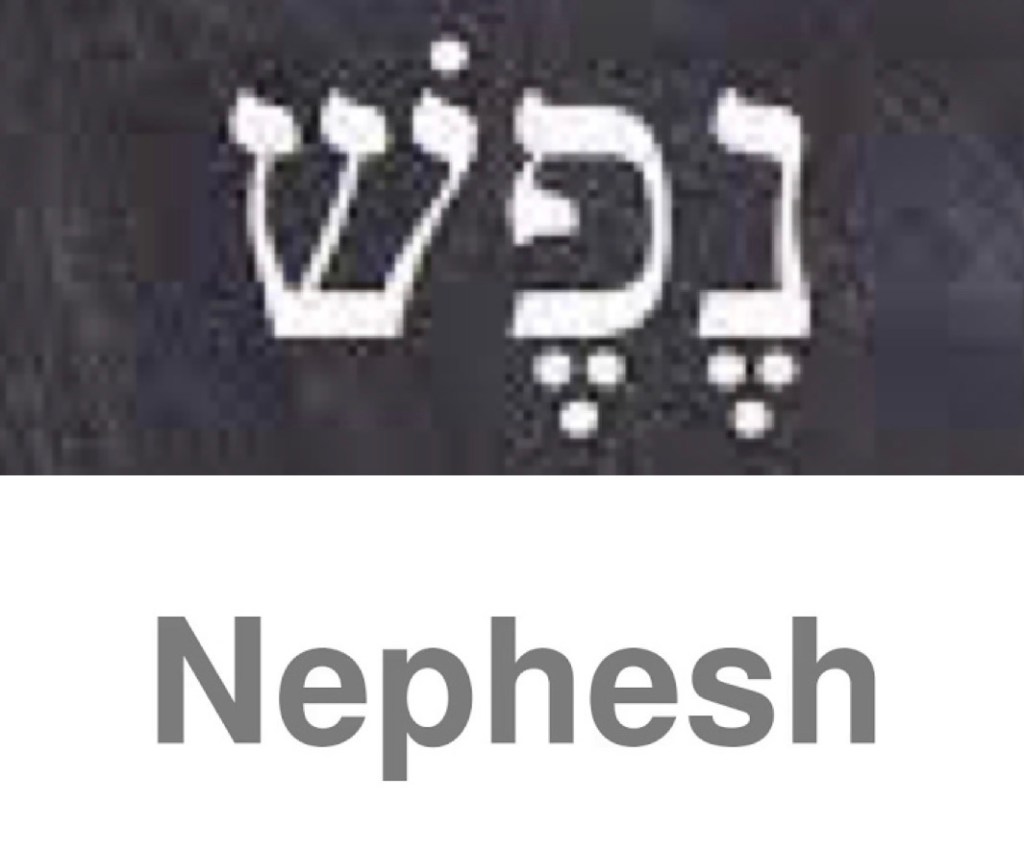
The Hebrew Scriptures use the word nephesh (נֶפֶש) to describe human beings (and, indeed, all other living creatures). It is a common Hebrew word, appearing 688 times in Hebrew Scripture. It is most commonly translated (238 times) as “soul”; the next most common translation is “life” (180 times). The word is a common descriptor for a human being, as a whole. (I have learnt much about nephesh in my discussions with my wife, the Rev. Elizabeth Raine.)

However, to use the English word “soul” to translate nephesh does it a disservice. We have become acclimatised to regarding the soul as but one part of the whole human being—that is the influence of dualistic Platonic thinking, where “body and soul” refer to the two complementary parts of a human being. In Hebrew, nephesh has a unified, whole-of-person reference, quite separate from the dualism that dominates a Greek way of thinking.

Nephesh appears a number of times in the first creation story in Hebrew scripture, where it refers to “living creatures” in the seas (Gen 1:20, 21), on the earth (Gen 1:24), and to “every beast of the earth, and to every bird of the air, and to everything that creeps on the earth, everything that has the breath of life (nephesh hayah)” (Gen 1:30).

It is found also in the second creation story, where it likewise describes how God formed a man from the dust of the earth and breathed the breath of life into him, and “the man became a living being (nephesh hayah)” (Gen 2:7). The claim that each living creature is a nephesh is reiterated in the priestly Holiness Code (Lev 11:10, 46; 17:11). So we human beings are part of a wide spectrum of creatures, all created by God, all seen to be “good”, a wonderful kaleidoscopic variety of beings.

Our theology of the human being needs to underline the claim that all people, no matter where they are located on the bell curve, are “nephesh” and are filled with the sprit of God. We are all part of the creation that, in Christian and Jewish mythological, God declared “very good” (Gen 1:31). We are, each and every one of us, “fearfully and wonderfully made”, as the psalmist sings (Ps 139:14a)—like the intricate, complex, and beautiful created world in which we live, each human being is, exactly as they are, one of the “wonderful works” of the Lord God (Ps 139:14b).

And that is exactly what World Pride 2023 is celebrating!

*****

See also

and for Canberra people, there is a safe space every Sunday morning at 9:30am and once a month on Sunday at 6:00pm (the 2nd Sunday of the month) at Tuggeranong Uniting Church, where Elizabeth Raine and Sharon Jacobs lead the ministry team. See

and for further biblical discussion, see