Antisemitism: yes, it’s about legislation—but more, it’s about our culture

It’s less than a week since the tragic mass shooting at Bondi Beach. In the days since then, we have seen very public displays of shock, grief, fear, anger, blame, rage, and other strong emotions. So many comments rip over into recrimination and dehumanisation. It’s been savage. Alongside all of this, there has also been a deep admiration for those who attempted to stop the shooting by intervening—at the cost of their lives, in one instance, and incurring significant wounds, in another case. 

There have been all manner of suggestions about what should be done to address the reasons for this happening—even as the relevant authorities undertake their careful, methodical work of investigating who, how, and why this came to pass. The Federal Government has already flagged changes to the gun laws in force around the country, and more recently has signalled that legislation will be introduced to tighten the application of “hate speech” laws. These responses are important, and good. We can only hope that the parliaments concerned—Federal and State—all work cohesively to adopt them expeditiously.

But I don’t believe that a legislative response—as important, and necessary, as that is—will address the root cause of the issue that everyone is regarding as the villain in the situation. It’s about more than what our laws say. Laws are important; they set the bounds beyond which words and actions are deemed to be unacceptable in our society. Laws, put into place by legislation which parliaments enact, provide the outer framework of society. Our laws signal who we are as a society: what we value, what we disdain, what we will not tolerate. (That’s why politicians are necessary; they staff the parliaments that do this essential work on our behalf.)

But there is more to be said. Addressing antisemitism is not just a matter of legislation, or politics. It is a matter of culture; the features of our common life which are deeply embedded in who we are, and which are expressed in our attitudes, our words, and our actions. It is our culture which needs addressing.

1

We have heard widespread public rhetoric about “antisemitism”. It has, indeed, been a growing refrain since the events of 7 October 2023 in Gaza and Israel, but has been almost at saturation point since the tragic event at Bondi Beach on 14 December 2025. It is quite clear that there has been a significant rise in the number of antisemitic events since October 2023, culminating in the death of 15 Jews and significant injuries to another 40 or so at Bondi. 

A lot of that rhetoric seems to assume that the upsurge of antisemitism over the past two years has caught us by surprise; it is a shock, a terrible result of protests about what has been happening in Gaza in recent times, an unprecedented feature of Australian society as the politics of far away have infiltrated and impacted our domestic scene. But that is not the case. Whilst the number of intensity of these antisemitic events has indeed risen in that time, this is not a new experience for Jewish people in Australia.

 Antisemitism has been present in Australian society for decades. For 12 years I was part of the Uniting Church National Dialogue with the Jewish Community (2000–2012). Elizabeth joined me as a member for the last six of those years. For some time, I was the UCA co-chair of the Dialogue. The Jewish co-chair was usually the late Jeremy Jones, a renowned advocate for Jews in Australia. See https://uniting.church/an-introduction-to-the-uca-jewish-dialogue/

Every six months when we met, Jeremy would report on the rates of antisemitic incidents. It was constant, distressing, and unacceptable. He had begun collating such incidents in 1989. In 2004, he published an article, entitled “Confronting Reality: Anti-Semitism in Australia Today”, in the Jewish Political Studies Review (vol.16 no.3/4, Fall 2004, pp.89–103). The thesis he developed was clear; despite the view that Australia has been “not only accepting but welcoming of Jews … In recent years, however, there has been a growing acknowledgment both of the presence of anti-Semitism in Australia, and that it is the responsibility of political and moral leadership to confront it.” See https://www.jstor.org/stable/25834606

A decade later, in a 2013 report on “Antisemitism in Australia” published by the Executive Council of Australian Jewry, he noted that “During the twelve months ending September 30, 2013, 657 reports were recorded of incidents defined by the Human Rights and Equal Opportunity Commission (now the Australian Human Rights Commission) as ‘racist violence’ against Jewish Australians.” The kinds of incidents that he tabulated “included physical assault, vandalism – including through arson attacks – threatening telephone calls, hate mail, graffiti, leaflets, posters and abusive and intimidatory electronic mail”. 

There can be no doubt that antisemitism was firmly ingrained in Australian society at that time. Indeed, as Jeremy Jones noted, the figures reflected “a twenty one per cent increase over the previous twelve month period, and sixty-nine percent above the average of the previous 23 years.” See https://www.ecaj.org.au/wordpress/wp-content/uploads/2019/03/2013-ECAJ-Antisemitism-Report.pdf

Indeed, I well recall what security measures were in place on those occasions when I visited a Jewish synagogue in the Eastern Suburbs of Sydney, starting almost 30 years ago. I was teaching a course entitled “The Partings of the Ways”, exploring how Christianity separated from Judaism. One element in the course was to attend Jewish worship, and meet with the rabbi for a question-and-answer session. Rabbi Jeffrey Kamins of Temple Emanuel was always very amenable to spending time with the class in this way. (He also came to North Parramatta to give a guest lecture in the class each year.)

Entry into the synagogue was through a security gate at the front, in the middle of a high, strong security fence that surrounded the building and grounds. A security guard checked each of us before permitting entry. Once inside, we received wonderfully warm hospitality; but the first impression was rather chilling. The reason for that, even back in the 1990s, was that Jewish synagogues recognised that they needed to implement these security measures to ensure the safety of worshippers. Antisemitic incidents—angry words, slogans painted on walls, and physical attacks—were being experienced by Jews on a regular basis. Antisemitism was, unfortunately, alive and well.

In fact, in 1997, the Uniting Church National Assembly had adopted a statement about our relationships with Jewish people, which explicitly included a rejection of antisemitism and encouraged church members to become informed about such matters.

In the course of preparing that statement, Elizabeth and I were charged with preparing a resource, which the Assembly published as a study with ten sessions, and which was disseminated across the church.
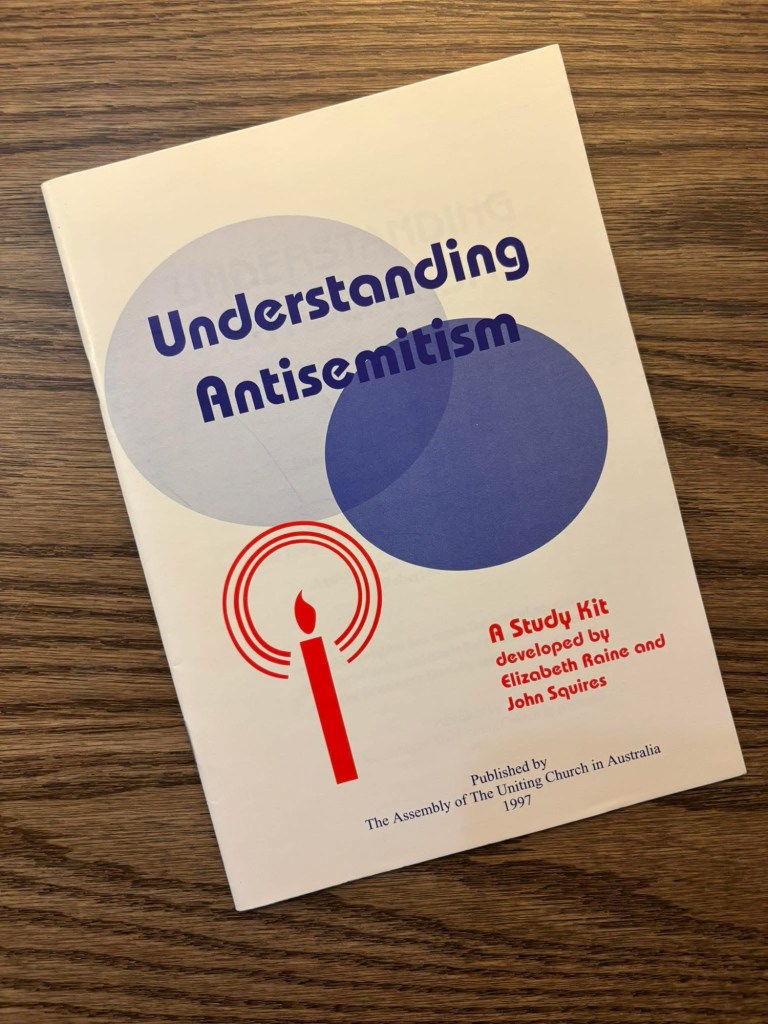
I wonder how many congregations made use of this resource? We certainly used many elements of it in our regular teaching over the years.

The resource is available online at https://illuminate.recollect.net.au/nodes/view/11763?

2

Some voices now, in 2025, are placing the responsibility for what happened at Bondi firmly on the shoulders of the Federal Government, arguing that they knew about the dangers of antisemitism but “did nothing”. Albanese should resign, they say. It was his fault that this tragedy happened. He has blood on his hands. It’s strong stuff.

I wonder. We have had many Prime Ministers over the past 25 years, since I first started hearing those regular reports about antisemitism from Jeremy Jones.  I wonder why other PMs have not been equally accused of inaction, like Albanese. What did John Howard do? Or Kevin Rudd? Or Julia Gillard? Or Tony Abbott? Or Malcolm Turnbull? Or Scott Morrison? 

All of these Prime Ministers did, in fact, the same as Albanese: recognising that antisemitism existed, they supported low level anti-racism programmes, and blithely went on with their political business of elections, budgets, legislation, and the argy-bargy of Question Time. Little has changed over all that time. Antisemitic incidents have continued to take place. And how many of the people now making loud noises about the Bondi Beach event had actually been agitating five, ten, or twenty years ago about antisemitism?

And it is not entirely clear that it was, in fact, antisemitism which fuelled the terrible events at Bondi Beach. Carrick Ryan, who spent years working as a Federal Agent from the NSW Joint Counter Terrorism Team, has written that he sees this as “an act of terrorism perpetrated by mad men possessed by a dangerous ideology”. 

His view is that “Jihadists do not have a political goal. They are inspired by a toxic interpretation of their faith that encourages them to die in an act of violence against any perceived enemy of their faith.” He argues that “it is simply absurd to suggest they have been influenced by pro-Palestinian university protesters, Greens politicians, or even ‘anti-Zionist’ conspiracy theorists.”

“The men who conducted these attacks”, he maintains, “would have despised those activists as much as anyone on the political right, and as I have tried to explain to many activists who have attempted to romanticise Hamas as heroic freedom fighters, the future they are aspiring to is very different.” It’s not about antisemitism, so much as it is it an expression of religious fanaticism.

See https://www.facebook.com/100045908673621/posts/pfbid0aiSGrfYkvvq9v9wznY71nwac3z3ep88T7XdVLvLfrTzVi7kRAvAEfWRqCkpfJ4fyl/

3

However, it is not only antisemitism which has been growing. Islamophobic incidents have increased consistently as the Muslim population of Australia has grown. Deakin and Monash Universities are collaborating to compile an annual Islamophobia Report, documenting such incidents since 2014. The latest report notes that the number of Islamophobic incidents has increased significantly since 7 October 2023. You can read the reports at https://islamophobia.com.au

There are numerous other incidents involving First Nations people, Afghanis, Asians, Sudanese, and all manner of diverse ethnic minorities which have all continued in the same period, spiking in numbers at particular times, with the same minimalist level of government response.  All Together Now is an independent not-for-profit organisation and registered charity, founded in 2010, that holds to a vision of a “racially equitable Australia”. They work towards this vision “by imagining and delivering innovative and evidence based projects that promote racial equity”. Their website declares “we are community driven, we utilise partnered approaches, and our work is intersectional”.

As All Together Now draws together a range of studies, it reports that “40% of children experience racism in schools … 43% of non-white Australian employees commonly experience racism at work …there is still a culture of systemic racism in Australian sports … studies have exposed systemic and structural forms of racism in policing, the justice system and child protection, leading to discrimination, violence and death of people of colour and First Nations People”. All the studies they cite are referenced and hyperlinked on their website at https://alltogethernow.org.au/racism/racism-in-australia/

Our society has fostered far too many intolerant, aggressively-hostile individuals who feel they have a right to speak and act in these ways.

4

The Bondi event and its repercussions are not simply a partisan political matter, as so many loud voices are currently proclaiming. It is a cultural phenomenon; the “right” to criticise, slander, marginalise, and attack Jews … and Muslims … and First Peoples … and other minorities … has been taken for granted by an increasing proportion of the population. They have, of course, been egged on by extremist politicians who seize every opportunity to foster racism.

Antisemitism, and Islamophobia, and all forms of racism, together form a deeply-embedded cultural phenomenon, for which we are all responsible. Politicians have a role to play (and wouldn’t it be good if a bipartisan approach could be consistently made) but all of us have things we can, and should, do, each and every day.

Calling out racist, islamophobic, or antisemitic language is one thing we could aim for. Intervening in low-level incidents is another, when it appears safe to do so. Supporting the education of children and young people with programmes which inculcate social responsibility, ethical behaviour, and respectful interactions with others is important. Joining groups which are advocating for justice for minority groups which are marginalised is something that people could do. Writing to state and federal members of parliament about issues of concern in these areas is also something that people could do. 

All Together Now has a helpful collection of “Practical Tips to Become Anti-Racist” as well as a useful guide with links to further resources. We would all do well to read, ponder, and implement the kinds of things that they advocate.

https://alltogethernow.org.au/wp-content/uploads/2023/09/Free-Resource-How-to-become-an-anti-racist.pdf

*****

For my earlier reflections on this tragic event, “They are part of the whole of us”, see
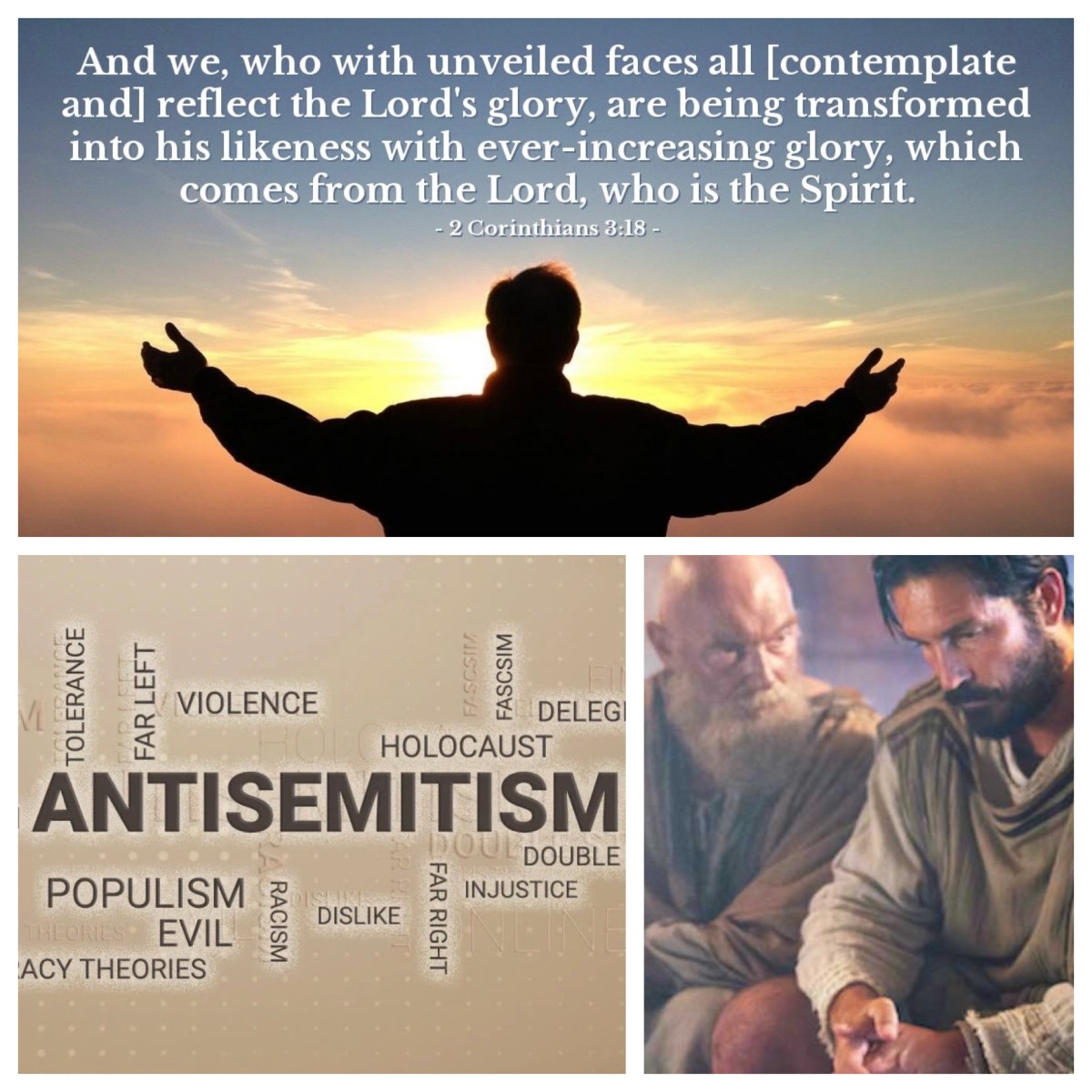
Transformed from death to life: Paul’s theology of glory (2 Cor 3–4; Transfiguration)

The letter which we call 2 Corinthians is comprised of three main sections, each of which has its own distinctive focus. In the first section of the letter (1:1–7:16), Paul and Timothy write to offer consolation and hope to the people who are part of the community of followers of Jesus  in Corinth. It is clear that members of the community have undergone some difficult times; Paul empathises with them, drawing on his own experiences, as a way of offering a message of hope to the believers in Corinth.

In a second main section (8:1–9:15), Paul addresses a very practical matter—the collection of money which he was making amongst the churches of Achaia and Macedonia, which he was planning to take to Jerusalem for the benefit of the believers there who had been experiencing difficulties. Then, in a third main section (10:1–13:13), Paul’s tone is markedly apologetic, as he writes in severe tones to defend himself in the face of criticisms which have been levelled against him in Corinth. 

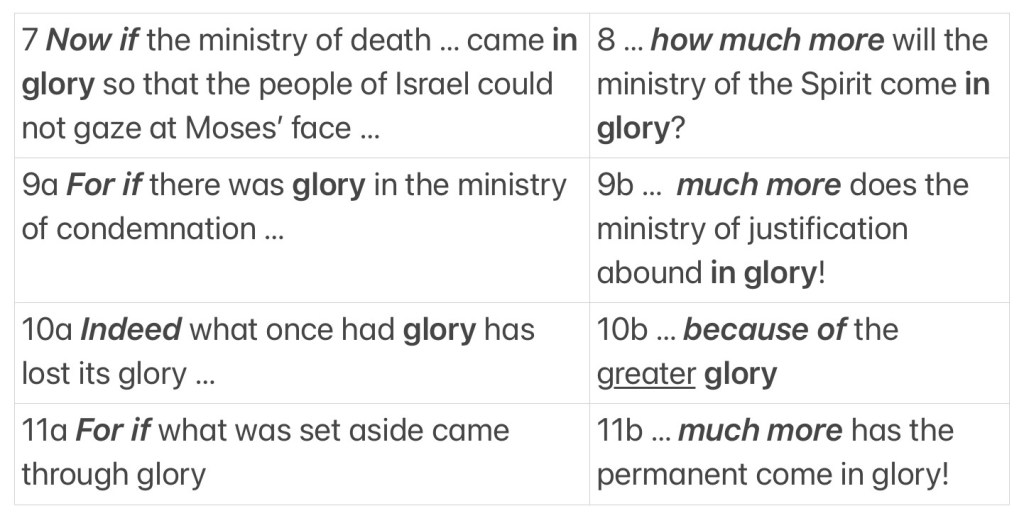
The lectionary offers us an excerpt from the first main section (3:12—4:2) for the Festival of the Transfiguration, this coming Sunday. It is obvious why this excerpt is suggested, since the argument includes a reference to the passage from Exodus which will also be read and reflected upon this Sunday. “The people of Israel could not gaze at Moses’ face”, Paul and Timothy note, “ because of the glory of his face” (3:7). 

They go on to contrast this with the consequences of that one scene in the life of Jesus that the Synoptic Gospel writers later tell in narrative detail, arguing that “all of us, with unveiled faces, seeing the glory of the Lord as though reflected in a mirror, are being transformed into the same image from one degree of glory to another” (3:18). That is, whilst the transformation of Moses was not able to be witnessed by the people of Israel, the transformation of Jesus is shared in abundance with the followers of Jesus. It’s a stark contrast.

The fundamental point in what Paul and Timothy argue here is thoroughly polemical. They press, again and again, on the difference between the Exodus scene and the scene that we know as the Transfiguration of Jesus. They use the typical juxtaposition of two opposites that characterized the rhetorical style of the diatribe (and which we find in a number of other letters of Paul).

The juxtapositions have begun in the preceding verses. In full polemical flight, Paul presents himself and Timothy as a “ministers of a new covenant”, which defines as “not of letter but of spirit”, continuing with the explanation “the letter kills, but the Spirit gives life” (3:6). He then contrasts “the ministry of death” with “the ministry of the Spirit” (3:7–8). The former is “chiseled in letters on stone tablets”, whilst the latter brings “glory”. It is clear where Paul’s preference lies.

This leads to two new, snappy slogans: “the ministry of condemnation” and “the ministry of justification”, which are then contrasted (3:9–11). The former did have its element of glory—the face of Moses shone with God’s glory—but “what once had glory has lost its glory”. Paul and Timothy advance the argument through a series of direct contrasts.

How this “loss of glory” occurred, it seems, was “because of the greater glory; for if what was set aside came through glory, much more has the permanent come in glory!”. The argument, somewhat convoluted, seems to be that the former, seemingly inadequate, glory is completely overshadowed by the later, far more powerful glory.

Paul launches then into an attack on that former ministry which becomes quite vindictive. Moses is criticized for covering his face so that the people of Israel could not “gaze at the glory” that he was concealing (v.13). The minds of the people thus were “hardened”; indeed, even “to this very day”, he says, that hardening of heart remains when they hear “the reading of the old covenant” (3:14). In contrast to this deadly scenario, “in Christ” that veil is lifted, that hardening of heart is softened “when one turns to the Lord” (3:16). The exultant conclusion is that “all of us, with unveiled faces, seeing the glory of the Lord as though reflected in a mirror, are being transformed into the same image from one degree of glory to another” (3:18).

There is great danger in these words. The danger is that we absolutise them as validating any criticism, all criticism, of Judaism as a religion; that we value Christianity by demeaning and dismissing Judaism. To do this would mean that we would ignore the reality that these words were written in a context quite different from our own, addressing a situation which may (or may not) have had little do with our own situation. That wider context and that specific situation are very important as we interpret this passage (and, indeed, any passage in the Bible).

We are witnessing today, both in Australia and in many places around the world, a rise in antisemitic words and actions. To be sure, the violent and illegal actions ordered by the current Israeli government against the residents of Gaza (the most recent in a long and tragic sequence of similarly illegal and aggressive actions over decades) has probably inflamed such antisemitism. 

But criticism of the policies of one nation state should not be used to foment hatred against a whole people, whether they live in that nation or in other places around the world. Yet antisemitism is growing. (So, too, is Islamophobia—for other reasons, relating both to the Middle East and to other factors. It is equally unacceptable.)

So to the specific context of the passage from 2 Cor. Paul, of course, was a Jew; he writes that he was “circumcised on the eighth day, a member of the people of Israel, of the tribe of Benjamin, a Hebrew born of Hebrews” (Phil 3:5) and boast that “I advanced in Judaism beyond many among my people of the same age, for I was far more zealous for the traditions of my ancestors” (Gal 1:14). Luke reports him as telling Jews in Jerusalem that “I am a Jew, born in Tarsus in Cilicia, but brought up in this city at the feet of Gamaliel, educated strictly according to our ancestral law, being zealous for God, just as all of you are today” (Acts 22:3). 

Paul’s writings and his faith are permeated with his Jewish heritage; in almost every letter he quotes Hebrew Scripture and the argument in his most significant letter, to the Romans, is grounded in a prophetic verse  from scripture (Hab 2:4a, cited at Rom 1:17b). He is able to declare that “the law [Torah] is holy, and the commandment is holy and just and good” (Rom 7:12) and in great anguish he writes, “my heart’s desire and prayer to God for them [i.e. Israel] is that they may be saved”, noting that “they have a zeal for God” (Rom 10:1–2).

Yet each time he affirms his Jewish heritage and the faith of his fellow Jews, he places a critical comment against this affirmation. Of his own heritage and upbringing, “I regard everything as loss … I regard them as rubbish” (Phil 3:8; the translation of the last word is a very polite rendering of a crass swear word). Of the law, he says “I was once alive apart from the law, but when the commandment came, sin revived and I died, and the very commandment that promised life proved to be death to me” (Rom 7:9). 

Of the fate of Israel, a “disobedient and contrary people” (Rom 10:21, citing Isa 65:2), he declares, “Israel failed to obtain what it was seeking; the elect obtained it, but the rest were hardened” (Rom11:7)—and yet, “they have now been disobedient in order that, by the mercy shown to you, they too may now receive mercy” (Rom 11:31). There is a glimmer of hope. 

Yet still his rhetoric can be violently abusive: “beware of the dogs, beware of the evil workers, beware of those who mutilate the flesh!” (Phnil 3:2, referring to circumcision); and “anyone proclaims to you a gospel contrary to what you received, let that one be accursed!” (Gal 1:9); and even, “the Jews, who killed both the Lord Jesus and the prophets, and drove us out; they displease God and oppose everyone … they have constantly been filling up the measure of their sins; but God’s wrath has overtaken them at last” (1 Thess 2:14–16).

Paul is nothing if not polemical in his letters. And as a Jew, when he writes such criticisms of other Jews, we cannot describe him as being antisemitic; rather, he is being critical of those who hold to Jewish traditions and resist adapting to the changes and modifications that the good news brings. We have seen Paul use this kind of polemical argumentation in other letters, when he uses stridently aggressive statements to articulate his opposition to a view. (Look at Gal 3:1–14, or parts of 2 Cor 10–13, or Rom 5:12—6:23.)

Such polemic was used in ancient rhetoric to refine and develop an understanding of a matter; the back-and-forth of the argument serves to sift and sort ideas, so that the kernel that remains at the end can be rigorously held. Paul knew this style of argument, and used it to good effect in his letters.

So when he writes disparagingly about Moses to the Corinthians, he is not being antisemitic, and we have no justification for using these words to criticize and attack Jewish ideas, or even Jewish people. Paul is using the techniques of his day to argue a point. We should not extract his words from their context and use them to validate criticisms of “all Jews” or of Judaism per se. What he says should be used with care and respect. 

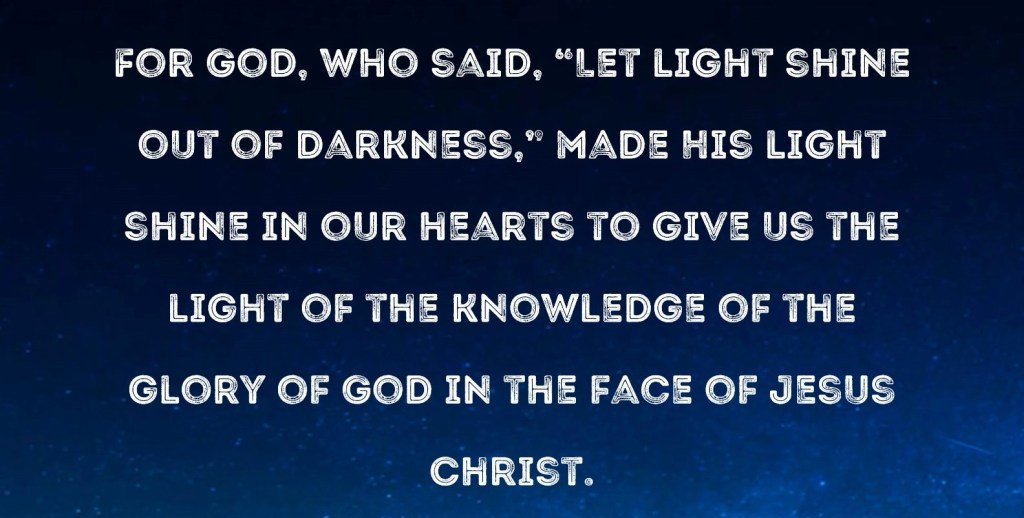
As we read on beyond  2 Cor 3:12–4:2, we find Paul writing about the transformation that takes place  “from one degree of glory to another” (3:18), explaining that “this extraordinary power belongs to God and does not come from us” (4:7). It results in “an eternal weight of glory beyond all measure” (4:17), such that “we regard no one from a human point of view” (5:16). It is, in the end, “the God who said, ‘Let light shine out of darkness,’ who has shone in our hearts to give the light of the knowledge of the glory of God in the face of Jesus Christ” (4:6).

So Paul concludes this extended message of hope about this promised glory with a reminder that God has “reconciled us to himself through Christ”, and accordingly God “has given us the ministry of reconciliation” (2 Cor 5:18). It is in this spirit that we should reflect on the passage proposed by the lectionary for this Transfiguration Sunday.

For more on glory in Paul and elsewhere in scripture, see 

“All of them condemned him as deserving death.” Interrogating the unlikely narrative of the Council (Mark 14; for Holy Week)

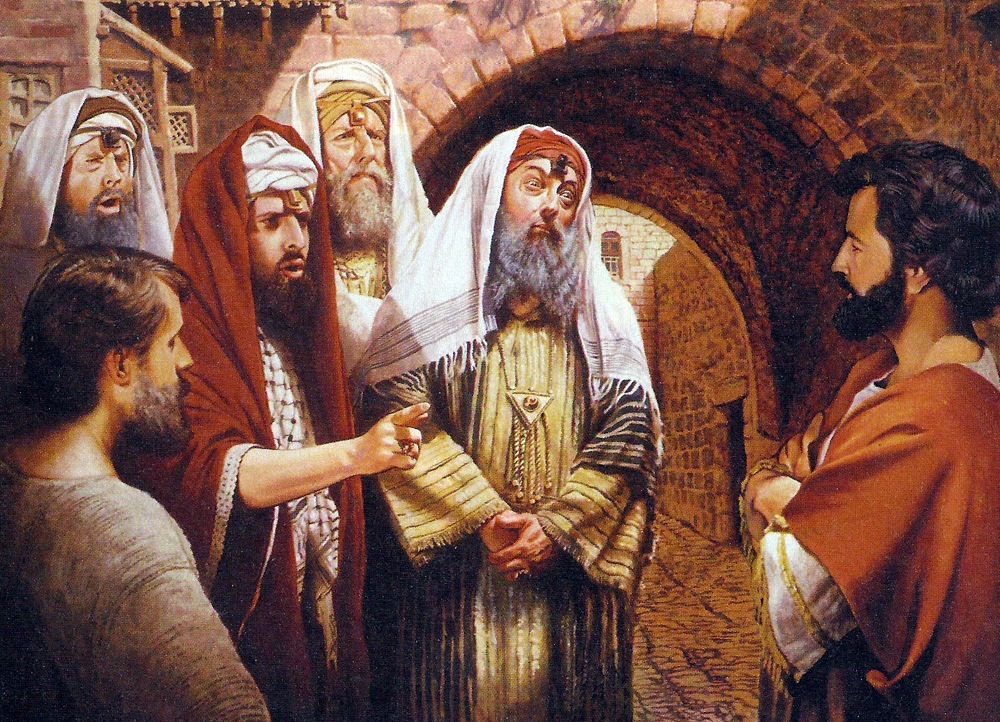
“They took Jesus to the high priest; and all the chief priests, the elders, and the scribes were assembled” (Mark 14:53). That’s how the author of the good news of Jesus the chosen one reports the scene when the fate of Jesus is sealed (Mark 14:53–65). Accused of predicting that the Temple would be destroyed (14:58), Jesus is interrogated by the high priest (14:60–63) before the declaration is made: “you have heard his blasphemy!” (14:64).

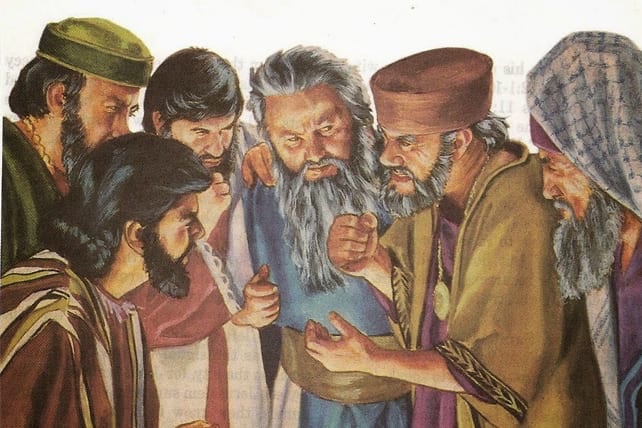
After further consultation by the chief priests “with the elders and scribes and the whole council”, Jesus is led away to Pilate, the Roman Governor (15:1). And so the fateful course of events is set in motion—questioned by Pilate, sentenced to be crucified, nailed to a cross where he dies, and the the lifeless body of Jesus is handed over to some of his followers (15:2–47).

The other evangelists follow suit. One notes that “the assembly of the elders of the people, both chief priests and scribes, gathered together, and they brought him to their council” (Luke 22:66), another specifies that “they took him to Caiaphas the high priest, in whose house the scribes and the elders had gathered” (Matt 26:57). The fourth gospel reports that “first they took him to Annas, who was the father-in-law of Caiaphas, the high priest that year” (John 18:13), and subsequently “Annas sent him bound to Caiaphas the high priest” (John 18:28).

The account of the time that Jesus spent being interrogated by them Jewish leadership appears, on the surface, to be an objective account of what transpired in that meeting. The council was the Great Sanhedrin, the supreme religious body in Israel during the Second Temple period—from the time when the exiles returned to the land under Nehemiah, until the destruction of the Temple in the year 70 CE. See more at https://www.jewishvirtuallibrary.org/the-sanhedrin

The source of the narrative in Mark 14 is unclear; indeed, the narrator has emphasised just before reporting on this meeting that when Jesus was seized in the garden by “a crowd with swords and clubs [who had come] from the chief priests, the scribes, and the elders” (14:43), after a token display of resistance (14:47), “all [of his followers] deserted him and fled” (14:50).

The narrator underscores this with a tantalising glimpse of the figure whom I (anachronistically) call “the first Christian streaker”— “a certain young man [who] was following him” who escaped the grasp of those in the crowd, shedding his linen cloth, “and “ran off naked” (14:51–52). And Peter, most pointedly, was outside the chamber, warming himself by the fire (14:54), and denying that he even knew Jesus—not once, but three times (14:68,70,71). There was nobody—absolutely nobody—from amongst the followers of Jesus who was present to witness what transpired as Jesus was brought before “the chief priests and the whole council” (14:55).

So how do we know what happened in that council meeting?

Further exploration of the scene is warranted. Such further examination might well consider some key factors. When did the council meet? Where did they meet? How did they conduct their business? And how did they come to a decision about Jesus?

To guide any exploration of these matters, scholars have turned—with due caution—to a Jewish text which sets out the designated procedures for a meeting of the Jewish council at which serious matters such as blasphemy were considered. The due caution is warranted, because the text is found in the Mishnah, a document written early in the third century CE—thus, almost 200 years after the time when Jesus was said to have been brought before the council. Did the provisions of this 3rd century text apply in the 1st century?

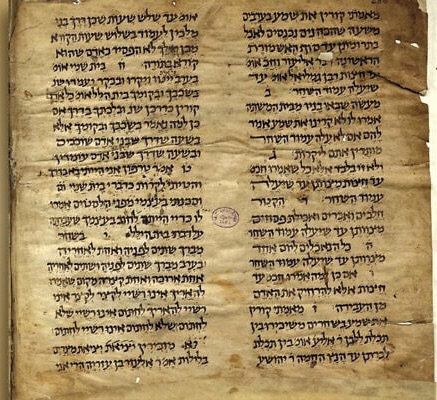
The opening page of the Kaufmann manuscript of the Mishnah, the most complete early manuscript of the Mishnah,
dated to the 10th or 11th centuries CE.

And such caution is intensified by the fact that the Mishnah is written at a time long after most Jews had been expelled from Jerusalem. This expulsion was finalised during the abortive uprising by Bar Kochba in 132–135 CE. Indeed, the book was written well after the time when the Sanhedrin had ceased to function as the peak legislative and judicial body in Jerusalem. After the failed war against the Romans of 66—74 CE, there was no longer any such body operating in Jerusalem. Yet 150 years later, a text was written that set out specific details of how the council was to function.

So some interpreters claim that this account is simply to be seen as an idealistic, romanticised recreation of “how things used to be”, expressed in such a way that is oblivious to the reality of the time—that there was no longer a functioning Sanhedrin in Jerusalem.

Alongside these notes of caution, we must hear also the claim that is made, not just about this text, but about many texts within the body of rabbinic literature that survives, from first through to sixth centuries. That claim is that, in an oral culture such as Second Temple Judaism and Rabbinic Judaism, where stories and laws and prescriptions and debates were passed on by word of mouth, from teacher to student, from that student to their student, and so on—the reliability and historical validity of what is written can be assessed positively.

For a more detailed discussion of the oral Torah, see https://www.jewishvirtuallibrary.org/the-oral-law-talmud-and-mishna

For myself, given what I have learnt in recent years about the importance and validity of stories and laws passed on over time in the oral cultures of First Nations peoples in Australia, I am inclined to accept this positive assessment of the ancient Jewish oral traditions in general, although specific texts are always open to informed critical exploration of their details.

I’m aware also, from discussions that have happened in the Uniting Church Dialogue with Jewish People that Elizabeth and I were members of for some years, that many rabbis today, who know their sacred texts well, consider that the Gospel narratives about this scene cannot be historical—for reasons that will be explored in what follows.

So, what does this text from the Mishnah say about a council meeting called to interrogate a possible criminal, such as we find in the Gospel narratives about Jesus? The relevant passages are in chapters 4 and 5 of tractate Sanhedrin, a part of the fourth order, Nezikin, which deals with Jewish criminal and civil law and the Jewish court system. And a comparison between the Gospel narratives and the Mishnah provisions raises a number of problems.

At night

The first matter is that the meeting with Jesus took place at night. Earlier, the narrator of Mark’s account has reported that the disciples “prepared the Passover meal; when it was evening, he came with the twelve” (14:16–17). Some hours later, after Jesus is apprehended in the Garden, he is taken to “the high priest … the chief priests, the elders, and the scribes” (Mark 14:53). It is still night when that meeting takes place. After coming to their decision that Jesus was “deserving death”, (14:64), the narrator notes that “as soon as it was morning, the chief priests held a consultation with the elders and scribes and the whole council” (15:1a).

So this meeting took place at night. But Mishnah Sanhedrin 4:1 states, “in cases of capital law, the court judges during the daytime, and concludes the deliberations and issues the ruling only in the daytime.” A court meeting at night, to determine a matter in which a person is determined to be “ deserving death”, is contrary to this provision.

The same section of the Mishnah also states that “in cases of capital law, the court may conclude the deliberations and issue the ruling even on that same day to acquit the accused, but must wait until the following day to find him liable” (Sanhedrin 4:1). Coming to a decision of guilty in the same session as the evidence is heard, without an overnight pause for the members of the council to consider, was also contrary to what was required. In the case of Jesus, this provision has been breached.

On a feast day

A second matter is that the meeting with Jesus took place during a festival. The whole sequence of events begins “on the first day of Unleavened Bread, when the Passover lamb is sacrificed” (14:12). At the end of their interrogation of Jesus, the narrator notes that “they bound Jesus, led him away, and handed him over to Pilate” (15:1b), and then observes that “at the festival he used to release a prisoner for them, anyone for whom they asked” (15:6).

Again, the provisions in Sanhedrin 4:1 state that “since capital cases might continue for two days, the court does not judge cases of capital law on certain days, neither on the eve of Shabbat [Sabbath] nor the eve of a Festival.” So the Markan narrative is in breach of this provision as well, by reporting that this meeting took place during Passover.

In the lack of evidence for this custom of releasing a prisoner at Passover, see more at

In the house of Caiaphas

Where exactly did this interrogation of Jesus take place? The implication in Mark is that the council was meeting in the house of Caiaphas. “Peter had followed him at a distance, right into the courtyard of the high priest; and he was sitting with the guards, warming himself at the fire” (14:54). This implication is made explicit at Matt 26:57 (“they took him to Caiaphas the high priest, in whose house the scribes and the elders had gathered”) and Luke 22:54 (“bringing him into the high priest’s house”).

Once more, this flies in the face of the prescriptions of tractate. Later in the tractate Sanhedrin, there is a reference to “the Sanhedrin of seventy-one judges that is in the Chamber of Hewn Stone” (Sanhedrin 11:2). This means the meeting should have taken place in this part of the Temple; in the Babylonian Talmud, it is stated to have been in the north wall (b.Yoma 25a). The Gospel narratives locate the meeting with Jesus in the house of the high priest; this is a third breach of the Mishnaic provisions.

The witnesses did not agree

A fourth issue is the observation that Mark makes and then repeats, that “many gave false testimony against him, and their testimony did not agree. Some stood up and gave false testimony against him … even on this point their testimony did not agree” (14:56–59).

Tractate Sanhedrin requires a verdict to be made only if the witnesses are in agreement, declaring, “At a time when the witnesses contradict one another, their testimony is void” (Sanhedrin 5:2). In a later rabbinic text, the Talmud, this requirement is expanded: “afterward they bring in the second witness and examine him in the same manner. If their statements are found to be congruent the judges then discuss the matter” (b.Sanhedrin 29a). This clearly did not occur in the case of Jesus.

A page of the Babylonian Talmud, showing how
the central text of Mishnah (in large print)
is then commented upon in Gemara (in medium print)
and later medieval notes (in small print)
surround these in the margins.

These various matters would seem, on the surface, to indicate that the members of the council were so panicked by Jesus that they acted to condemn him with flagrant disregard for their own provisions—assuming that the later text of the Mishnah does, in fact, describe the requirements in place in the first century.

An alternative explanation is that the narrative was compiled by someone who was ignorant of these provisions, and they simply “made up” a narrative which demonstrated the desperation of the Jewish authorities to deal with Jesus and have him out of the way.

We should place this view alongside the observation that the narratives in the Gospels take a number of steps to minimise the blame that Pilate must bear for sentencing Jesus to he crucified.

On the flawed picture of Pilate in the Gospels and the implausibility of the role assigned to him in these accounts, see

Minimising the culpability of the governor of the imperial power in these events, and strengthening the role of the Jewish authorities, go hand-in-hand. A clear apologetic purpose is at work in this narrative. It made sense for the narrator to avoid further condemnation by Rome, which held continuing power during the time he was writing, and to magnify the blame of the Jewish authorities, with whom the fledgling movement of followers of Jesus had been in increasing tension and conflict.

In other words, the narrative of this trial before the Sanhedrin is both historically implausible, and apologetically purposeful, as it shifts the blame for sentencing Jesus more onto the Jewish authorities than on Pilate. And in a later scene, it is the Jewish crowd which calls for Pilate to hand down the sentence of death (“crucify him! crucify him!”, 15:13–14). That is a most unlikely occurrence, indeed.

And so another element grew in the developing Christian ideology which placed the blame for the death of Jesus on the Jewish authorities (and sadly, in later centuries, on “the Jews” themselves). It is a view that we would do well to reject.

See also

The stone that the builders rejected (Mark 12; Narrative Lectionary for Lent 3)

The parable of Jesus which is set in this Sunday’s lectionary appears to offer an invitation to adopt a negative approach towards Jews and Judaism. The author of “the good news of Jesus, chosen one” (by tradition, the evangelist Mark) interpreted this story as a polemic against the Jewish authorities who had gathered to hear Jesus teach (Mark 11:27).

As Jesus concludes his parable with a typical rabbinic scripture citation, designed to drive the point home with deep authority (Mark 12:10–11, citing Ps 118:22–23), the narrator comments, “when they realized that he had told this parable against them, they wanted to arrest him, but they feared the crowd; so they left him and went away” (Mark 12:12).

Often in Christian history, that negative portrayal of the Jewish authorities of the first century has been used as the basis for a direct attack on Jews of later times. That’s a very poor line of interpretation that we should ensure we do not follow.

The parable that Jesus tells is set in a vineyard. That’s an age-old symbol for the people of Israel. We can see this most clearly in passages of Hebrew Scripture such as Isaiah 5:1–7 and Psalm 80:7–15; they show how old and enduring this imagery was.

The parable that Jesus tells recounts the hard-hearted way in which the tenants in the vineyard (a traditional symbol for the people of Israel) reject the messengers sent to them by the landowner (seen as a symbol for God), culminating in the atrocious treatment meted out to the landowner’s son (whom we are meant to identify as Jesus, son of God).

The son is put to death. The punchline that Jesus crafts for this parable is potent: the owner of the vineyard “will come and destroy the tenants and give the vineyard to others” (vv.8–9). In Matthew’s parallel version of this parable, Jesus extends this ending to include the clear statement that “those who do not produce the fruits of the kingdom will not inherit the kingdom” (Matt 21:43).

The parable of the vineyard is one of the passages that has been difficult for us to understand accurately. When taken at a literal level, it has led to modern interpretations that are as damaging as they are unfair. The assumption is that the Pharisees and scribes are the ‘bad guys’, and this has led to the belief that Pharisee equals hypocrite. It is disturbing that such a stereotype has found its way into the language of our modern church.

The context of the parable suggests that although its message was aimed at the chief priests and the Pharisees, it does not exclude other Jewish people. The parable is told in one of a number of encounters between Jesus and Jewish leaders (11:27—12:44). Was this a consistent attitude of Jesus?

Equally disturbing is the notion that Jesus here seems to contradict his own teaching about loving one’s enemy and turning the other cheek. He depicts God as the avenging Lord. So what is really happening here?

I don’t think the parable of Jesus is intended to be simply an anti-Jewish polemic, an invitation to deride or dismiss Judaism and Jews.

It is true that, in the Gospel of Matthew, we find Jesus making some strident accusations and engaging in some vigorous debate with the Jewish authorities. But does he really believe that no faithful Jew will ever again enter the kingdom of heaven?

Judaism was in a state of flux as people lived under the continuing oppression of Roman rule. The destruction of the Temple in 70 CE was a pivotal moment. Evidence indicates that, during this time, there were various sectarian groups within Judaism who were contesting with each other for recognition and influence. Instead of making common cause against Rome, they continued to fight each other. Vigorous polemic and robust debate amongst Jews were not uncommon. See

During this period, the Pharisees were becoming increasingly important as an alternative to the Temple cult, and emerging as the dominant Jewish religious movement. Their power base was moved from Jerusalem and spread throughout the area. When the Temple was destroyed, they moved into the vacuum that was created, and became even more dominant.

(From this time on, Pharisees evolved into the “Rabbis”, and they developed the kind of Judaism that became dominant through to the present time. We need to be sensitized to the fact that, for many modern Jews, when we make damning criticisms of the Pharisees, they hear that as a criticism of their Rabbis, and, by extension, of the faith that they practise today.)

The kind of debates that we see in the Gospels—debates where Jesus goes head-on with the Pharisees—need to be understood in this context. Jesus was not “cutting the cord” of his connection with Judaism. He was not rejecting his faith as irrelevant or obsolete.

He was advocating, vigorously and persistently, for the kind of faith that he firmly believed in—and criticisng the Pharisees for their failure, in his eyes, to adhere to all that they taught. He wanted to renew Israel, to refresh the covenant, as the prophets before him had done.

And let’s remember that the accounts that we have of these debates come from years later than when they actually occurred; years that had been strongly shaped by the polemic and antagonism of the intervening decades.

Older academic Christian scholarship and popular evangelical Christian tradition perpetuate the stereotype that the Judaism of the time of Jesus was a harsh, legalistic, rigid religion—a stereotype heightened by an unquestioning acceptance of the New Testament caricature of the Pharisees as hypocritical legalists who made heavy demands but had no soul commitment to their faith. It was claimed that they were the leaders of a static, dying religion.

This stereotype has been completely demolished in recent decades—both through the growing interaction between Christian and Jewish scholarship, and also through a more critical reading of the relevant primary texts. I am very pleased that the church to which I belong, the Uniting Church in Australia, has made it very clear that we do not adhere to these inaccurate and hurtful stereotypes.

In 2009, the UCA national Assembly adopted a Statement which says, amongst other things:

The Uniting Church does not accept Christian teaching that is derogatory towards Jews and Judaism; a belief that God has abolished the covenant with the Jewish people;  supersessionism, the belief that Christians have replaced Jews in the love and purpose of God; and forms of relationships with Jews that require them to become Christian, including coercion and manipulation, that violate their humanity, dignity and freedom.

We do not accept these things.

See https://www.jcrelations.net/article/jews-and-judaism.pdf

Indeed, when we look to Matthew’s Gospel, Jesus does nothing to overturn the Law or to encourage his followers to disregard the Law; he is portrayed as a Jew who keeps Torah to the full. “I have come, not to destroy, but to fulfil the Law”, he says (5:17). See

And in that same section of the Gospel, Jesus is quoted as advocating for a better righteous-justice; a righteous-justice that “exceeds that of the scribes and Pharisees” (5:20). See

Virtually all of his criticisms of the Pharisees in the Synoptic Gospels can be understood within the framework of first century debates over the meaning and application of Law. The memory of Jesus is as a Torah-abiding Jew, who nevertheless stakes out a distinctive position within the context of those contemporary debates.

We should not interpret the parable of Jesus in Mark 12 as an outright condemnation of Judaism as a whole. As he debates the Jewish leadership of his day, he makes strong statements. But let’s not claim that Jesus validates any sense of anti-Jewish or antisemitic attitude.

Unfortunately, these words of Jesus and other parts of the New Testament story have been used throughout the centuries to validate anti-Jewish attitudes, to foster antisemitic hatred of the Jews. It is important for us to remember the real sense of the words of Jesus, and not follow the pathway to bigotry, hatred, persecution, and tragic attempts to annihilate the Jews.

Reading scripture with attention to its context (John 11, Year A)

The lectionary has offered us a series of readings during Lent which show Jesus encountering and conversing with others (John 3, 4, 9, and 11). The anonymous author of the Gospel of John had high-level literary and dramatic skills. The lectionary has very clearly demonstrated this in the series of readings offered in weeks 2–5 of Lent.

The Pharisee in Jerusalem (Ch.3) is really a foil who asks leading questions which offer Jesus the opportunity to speak forth at some length for the first time in the Gospel (3:11–21). The woman in Samaria is a genuine dialogue partner for Jesus who learns through the back-and-forth of their conversation about a number of matters (4:7–26). The story of the man born blind (9:1–41) is presented as a seven-part comedic drama, illustrating the “light of the world” claim of Jesus (8:12; 9:5) and showing how people respond in varied ways to that.

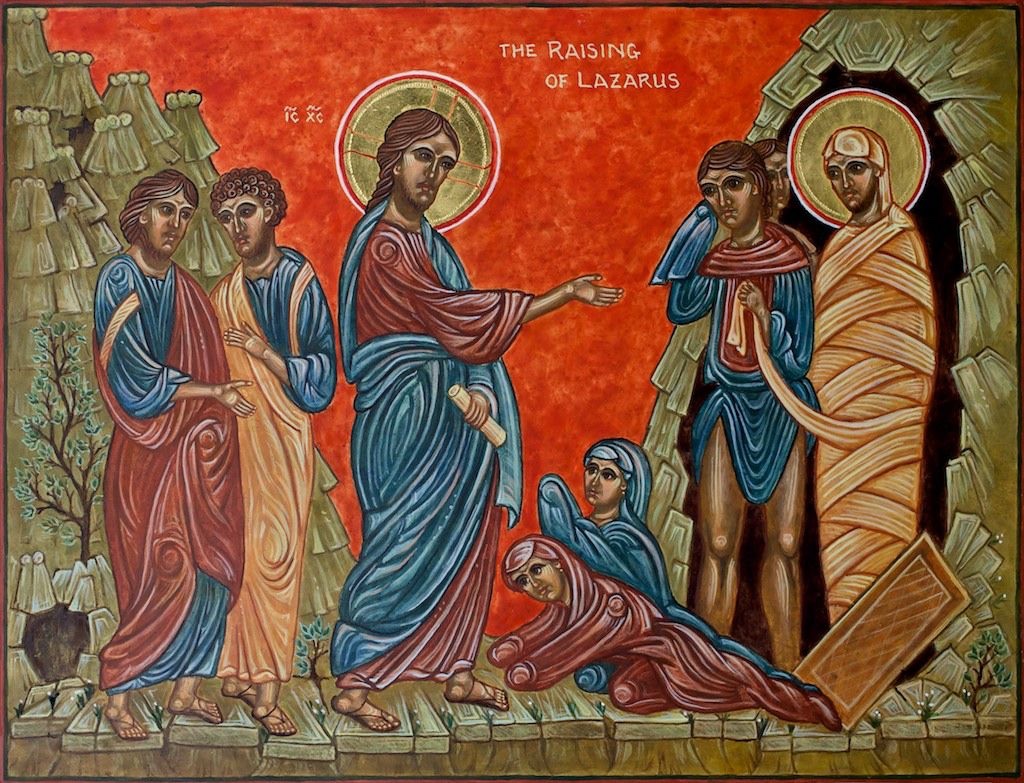
Then, the story of Lazarus (11:1–45) is a complex dramatic moment, a story with its own integrity and form, with a range of characters and varied dramatic moments. This story also serves as the seventh and final sign in the Gospel; these signs commenced at 2:1–11 and are interspersed throughout the ensuing narrative (4:46–54; 5:1–9; 6:1–15; 6:16–21; 9:1–7; and 11:38–44). This sign, like others before, has lead many to believe (11:45), but it serves also to confirm the plot of the Sanhedrin leaders to arrest and kill Jesus: the reason for the crucifixion, in this author’s eyes (11:46–53; 11:57; 18:1–12).

All of this is a masterly dramatic development through the first half of this “book of signs”. These stories are certainly worth hearing in full every three years!

These encounters, however, are told in the context of an emerging story which places Jesus into a position of antagonist, arguing and dissenting, disputing and disagreeing, with some regularity. This thread comes to a head in the story of Martha and Mary, their recently-deceased brother Lazarus, and Jesus (John 11:1–45).

The emergence of Lazarus from the tomb marks a climactic moment, for the family in Bethany and many of their neighbours (11:44–45), but also for the chief priests and Pharisees, who together determine to put Jesus to death (11:53). The seventh sign recounted in this Gospel is the most significant miracle of Jesus, but also the deed that determines the fate of Jesus, for it leads immediately to the plot to arrest Jesus (11:53) and then inevitably to his death at the hands of the Romans (19:30).

Soon after he has raised Lazarus back to life in Bethany, Jesus says, “I have come to this hour” (12:27), the hour when “I am lifted up from the earth, [when I] will draw all people to myself” (12:32), the hour when the Father will “glorify your Son so that the Son may glorify you” (17:1). The death of Jesus is to be, paradoxically, the complete fulfilment of his mission (19:30). Its inevitability has been flagged since early in the Gospel narrative.

Antagonism begins early in that narrative. It is initially signalled by “the incident in the Temple” (John 2:13–22). In his conversation with Nicodemus, Jesus tells the Pharisee, “we speak of what we know and testify to what we have seen; yet you do not receive our testimony. If I have told you about earthly things and you do not believe, how can you believe if I tell you about heavenly things?” (3:11–12). The plural form of the Greek word translated “you” makes it clear that the “you” being addressed is at least the collective Sanhedrin Council, if not the whole population of Judea. It is an oppositional, confrontational encounter at this point.

In talking with the Samaritan woman, Jesus reflects the historical antagonism between the Judeans of the south and those of the north. “Our ancestors worshiped on this mountain, but you say that the place where people must worship is in Jerusalem”, the woman says to Jesus (4:20). Jesus replies, pugnacious oh, “you worship what you do not know; we worship what we know, for salvation is from the Jews” (4:22). The use of the plural “you” once again in these verses makes clear the antagonism between the peoples, especially if we translate that final phrase, “salvation is from the Judeans”.

When Jesus heals a man born blind, the Jewish authorities function as the chorus reflecting on, and reacting to, the events taking place in Jerusalem. First, some Pharisees declare, “This man is not from God, for he does not observe the sabbath” (9:16). Then, they declare to the healed man, “we know that God has spoken to Moses, but as for this man, we do not know where he comes from” (9:29).

Their view of Jesus is quite negative— in an earlier debate with him, they had called him “a Samaritan and have a demon” (8:48), and that encounter ends, “they picked up stones to throw at him” (8:59). Mind you, Jesus had said to them, “you are from your father the devil, and you choose to do your father’s desires” (8:44), so it was a vigorous two-way argument!

So Jesus responds to the negativity of the Jewish authorities who questioned his credentials after learning of the healing of the man born blind, with a statement, “I came into this world for judgment so that those who do not see may see, and those who do see may become blind” (9:39), followed by, “if you were blind, you would not have sin; but now that you say, ‘We see,’ your sin remains” (9:41). This encounter ends, yet again, on a negative note.

Then, after Jesus has raised Lazarus back to life, the Jewish authorities decide to make their move. Worried that, “if we let him go on like this, everyone will believe in him, and the Romans will come and destroy both our holy place and our nation” (11:48), Caiaphas leads with these prophetic words: “it is better for you to have one man die for the people than to have the whole nation destroyed” (11:50). And so, “from that day on they planned to put him to death” (11:53).

Jesus is clearly aware of this antagonism; he later warns his disciples, “the world hates you” (15:19), and then, “they will put you out of the synagogues; indeed, an hour is coming when those who kill you will think that by doing so they are offering worship to God” (16:2). And of course, the narrative of the Gospel ends with Jesus handed over to die by crucifixion (18:28). We need to think carefully about how we interpret this antagonism.

*****

Was the world an evil place, in the sway of the devil, which would inevitably turn against Jesus? But what, then, of the claim that God sent Jesus because he “so loved the world” (3:16)? How are we to see the relationship between Jesus and “the world”?

Of course, it needs to be said that none of these scenes offered by the lectionary—nor any of the intervening scenes in this Gospel—come as eyewitness (or rather, earwitness) accounts of what actually happened in a real, historical encounter. Of none of the scenes can we say with certainty that they actually occurred, let alone that the dialogue recorded by the author of the book of signs was what was actually said. These scenes are all literary creations, perhaps based on a report of an encounter that took place, but most certainly elaborated and developed over a period of time, worked into a narrative that catches attention, invites reflection, and has a life all of its own.

“John” wrote his book of signs some 50 to 80 years after the lifetime of Jesus. The account of each of these conversations—at night with Nicodemus, at noon with the woman, in Jerusalem with the authorities, and then the encounter in Bethany and the council meeting in Jerusalem—are thus far removed from each of these events. (How could we possibly claim to know verbatim what was said in a Sanhedrin meeting in the early 30s CE? — especially since the High Priest articulates a central tenet of later Christian doctrine!).

I recently read a comment that said, “The television show MASH was set during the Korean War but was about the Vietnan War. While the framework was faithful to the earlier conflict with regard to combatants, equipment, etc., the issues selected reflected Vietnam: distrust of authority, questioning blind patriotism, the need to get around the rules, the effort to ‘get out of this place’, the cynicism-based humor.”

Similarly, John tells a story set in the the time of Jesus; but this period is seen through the lens of the division of Christians and Jews that has eventuated and the heartache that comes when there’s a separation. I think that’s a helpful analogy. The later situation, when the work is created, is reflected in so many ways, even though the story is set decades earlier. As with MASH, so with John’s Gospel.

The depictions of these encounter scenes in the first half of John’s Gospel are shaped by the events that have taken place over those intervening decades—particularly, the rising antagonism between “messianic Jews” following Jesus, and “rabbinic Jews” adhering to the teachings of their teachers. The antagonism reflects the situation.

John’s Gospel indicates, three times, that followers of Jesus were expelled from the synagogue (9:22; 12:42; 16:1–2). That’s quite a schism! So any negative comments or portrayals of people from years back may well have as much to do with what has transpired in those intervening years, as with the actual event—probably, I think, much more to do with those intervening years than with the conversations and encounters as reported in the book of signs. All of this is basic Gospel interpretation.

The church to which I belong, the Uniting Church in Australia, adopted a Statement on Jews and Judaism in 2009 (I was on the working group that developed initial material for this) which offered guidance about our theology, exegesis, and preaching. It is in the same vein as many other statements issued by various enlightened denominations around the world, ever since the lead was taken by the Roman Catholic Church in promulgating Nostra Aetate in 1965.

(I published an analysis of these statements as “Christians relating to Jews: key issues in public statements”, Journal of Ecumenical Studies 44/2, 2009, 180–202.)

Nostra Aetate covered important new ground: it repudiated the centuries-old “deicide” charge against all Jews, stressed the religious bond shared by Jews and Catholics, reaffirmed the eternal covenant between God and the People of Israel, and dismissed church interest in trying to baptize Jews. It called for Catholics and Jews to engage in friendly dialogue and biblical and theological discussions to better understand each other’s faith. Many other Christian denominations have followed suit in the decades since.

The 2009 Uniting Church Statement declares that “The Uniting Church acknowledges with repentance a history of interpretation of New Testament texts which has often failed to appreciate the context from which these texts emerged, viz. the growing separation of Christianity and Judaism with attendant bitterness and antagonism, resulting in deeply rooted anti-Jewish misunderstandings” (para. 9).

See https://assembly.uca.org.au/resources/key-papers-reports/item/1704-jews-and-judaism

That’s a key guiding principle for me, as I read and interpret the Gospels—particularly those attributed to John and Matthew, for these books contain texts which have been grossly and inventively distorted and misused by the Church over many centuries, to fuel the false doctrine of supersessionism and thus the hatred of antisemitism. They do provide evidence for the growing separation between Judaism and Christianity, but they should not be used in a supersessionist way or to fuel antisemitism.

The Uniting Church Statement offers concise definitions of supersessionism (“the belief that Christians have replaced Jews in the love and purpose of God”) and antisemitism (“a term coined in imperial Germany during the 1870s by propagandists who did not wish Jews to enjoy equal rights with Christians. Its true political meaning is ‘I am against the Jews’.”). We should take care not to reflect either of these in our interpretation of scripture. Passages from John’s Gospel, especially, present us with the temptation to be negative about “the Jews”. We need to resist these temptations with all our heart!

*****

See also