The end of the ages; the beginnings of the birth pangs (Mark 13; Narrative Lectionary for Lent 5)

The Gospel reading which the Narrative Lectionary proposes for this coming Sunday (Mark 13:1–8, 24–37) is an excerpt from a longer speech, a block of teaching which Jesus delivered to his disciples (13:3–37) some time after they had arrived in the city of Jerusalem (11:1–11). It’s a striking speech, with vivid language and dramatic imagery. As Jesus’ last long speech in this Gospel, it certainly makes a mark!

The speech is delivered beside the towering Temple, built under Solomon, rebuilt under Nehemiah (13:1, 3). That temple was a striking symbol for the people of Israel—it represented their heritage, their traditions, their culture. The Temple was the place where the Lord God dwelt, in the Holy of Holies; where priests received sacrifices, designed to enable God to atone for sins, and offerings, intended to express the people’s gratitude to God; where musicians led the people in singing of psalms and songs that exulted God, that petitioned God for help, that sought divine benevolence for the faithful covenant people.

Or so the story goes; so the scriptures said; so the priests proclaimed. The holiest place in the land that was holy, set apart and dedicated to God. Yet what does Jesus say about this magnificent construction? “Not one stone will be left here upon another; all will be thrown down” (13:2). Jesus envisages the destruction of the Temple. Not only this; he locates that destruction within the context of widespread turmoil and disruption: “nation will rise against nation, and kingdom against kingdom; there will be earthquakes in various places; there will be famines” (13:8). And then, to seal this all, Jesus refers directly to the fact that “the end is still to come” (13:7).

The End. Eight centuries before Jesus, the prophet Amos had declared, “the LORD said to me, ‘the end has come upon my people Israel; I will never again pass them by’” (Amos 8:2). Amos continues, declaring that God has decreed that “on that day … I will make the sun go down at noon, and darken the earth in broad daylight. I will turn your feasts into mourning, and all your songs into lamentation; I will bring sackcloth on all loins, and baldness on every head; I will make it like the mourning for an only son, and the end of it like a bitter day” (Amos 8:9–10).

That image of The Day when the Lord enacts justice and brings punishment upon the earth, because of the evil being committed by people on the earth, enters into the vocabulary of prophet after prophet. Amos himself declares that it is “darkness, not light; as if someone fled from a lion, and was met by a bear; or went into the house and rested a hand against the wall, and was bitten by a snake. Is not the day of the LORD darkness, not light, and gloom with no brightness in it?” (Amos 5:18–20).

Isaiah, just a few decades after Amos, joined his voice: “the Lord of hosts has a day against all that is proud and lofty, against all that is lifted up and high … the haughtiness of people shall be humbled, and the pride of everyone shall be brought low; and the Lord alone will be exalted on that day” (Isa 2:12, 17). He warns the people, “Wail, for the day of the Lord is near; it will come like destruction from the Almighty!” (Isa 13:6).

Isaiah uses a potent image to describe this day: “pangs and agony will seize them; they will be in anguish like a woman in labour” (Isa 13:7). He continues, “the day of the Lord comes, cruel, with wrath and fierce anger, to make the earth a desolation, and to destroy its sinners from it” (Isa 13:8), and later he portrays that day as “a day of vengeance” (Isa 34:8).

Zephaniah, who was active at the time when Josiah was king (640–609 BCE) declares that “the day of the Lord is at hand; the Lord has prepared a sacrifice, he has consecrated his guests” (Zeph 1:7); “the great day of the Lord is near, near and hastening fast; the sound of the day of the Lord is bitter, the warrior cries aloud there; that day will be a day of wrath, a day of distress and anguish, a day of ruin and devastation, a day of darkness and gloom, a day of clouds and thick darkness ” (Zeph 1:14–15).

Habakkuk, active in the years just before the Babylonian invasion of 587 BCE, declares that “there is still a vision for the appointed time; it speaks of the end, and does not lie” (Hab 2:3); it is a vision of “human bloodshed and violence to the earth, to cities and all who live in them” (Hab 2:17).

Later, during the Exile, Jeremiah foresees that “disaster is spreading from nation to nation, and a great tempest is stirring from the farthest parts of the earth!” (Jer 35:32); he can see only that “those slain by the Lord on that day shall extend from one end of the earth to the other. They shall not be lamented, or gathered, or buried; they shall become dung on the surface of the ground” (Jer 35:33). He also depicts this day as “the day of the Lord God of hosts, a day of retribution, to gain vindication from his foes” (Jer 46:10).

And still later (most likely after the Exile), the prophet Joel paints a grisly picture of that day: “the day of the Lord is coming, it is near—a day of darkness and gloom, a day of clouds and thick darkness! Like blackness spread upon the mountains, a great and powerful army comes; their like has never been from of old, nor will be again after them in ages to come. Fire devours in front of them, and behind them a flame burns. Before them the land is like the garden of Eden, but after them a desolate wilderness, and nothing escapes them.” (Joel 2:1-3).

Later in the same oracle, he describes the time when the Lord will “show portents in the heavens and on the earth, blood and fire and columns of smoke; the sun shall be turned to darkness, and the moon to blood, before the great and terrible day of the Lord comes” (Joel 2:30–31). Joel also asserts that “the day of the Lord is near in the valley of decision; the sun and the moon are darkened, and the stars withdraw their shining” (Joel 3:14–15).

*****

The language of The Day is translated, however, into references to The End, in some later prophetic works. In the sixth century BCE, the priest-prophet Ezekiel, writing in exile in Babylon, spoke about the end that was coming: “An end! The end has come upon the four corners of the land. Now the end is upon you, I will let loose my anger upon you; I will judge you according to your ways, I will punish you for all your abominations.” (Ezek 7:2–3).

And again, Ezekiel declares, “Disaster after disaster! See, it comes. An end has come, the end has come. It has awakened against you; see, it comes! Your doom has come to you, O inhabitant of the land. The time has come, the day is near—of tumult, not of reveling on the mountains. Soon now I will pour out my wrath upon you; I will spend my anger against you. I will judge you according to your ways, and punish you for all your abominations.” (Ezek 7:5–8). This day, he insists, will be “a day of clouds, a time of doom for the nations” (Ezek 30:3; the damage to be done to Egypt is described many details that follow in the remainder of this chapter).

Obadiah refers to “the day of the Lord” (Ob 1:15), while Malachi asserts that “the day is coming, burning like an oven, when all the arrogant and all evildoers will be stubble; the day that comes shall burn them up, says the Lord of hosts, so that it will leave them neither root nor branch” (Mal 4:1).

Malachi ends his prophecy with God’s promise that “I will send you the prophet Elijah before the great and terrible day of the Lord comes; he will turn the hearts of parents to their children and the hearts of children to their parents, so that I will not come and strike the land with a curse” (Mal 4:5–6). This particular word is the final verse in the Old Testament as it appears in the order of books in the Christian scriptures; it provides a natural hinge for turning, then, to the story of John the baptiser, reminiscent of Elijah, who prepares the way for the coming of Jesus, evocative of Moses.

Another prophet, Daniel, declares that “there is a God in heaven who reveals mysteries, and he has disclosed to King Nebuchadnezzar what will happen at the end of days” (Dan 2:28), namely, that “the God of heaven will set up a kingdom that shall never be destroyed, nor shall this kingdom be left to another people. It shall crush all these kingdoms and bring them to an end, and it shall stand forever” (Dan 2:44).

Whilst the story of Daniel is set in the time of exile in Babylon—the same time as when Ezekiel was active—there is clear evidence that the story as we have it was shaped and written at a much later period, in the 2nd century BCE; the rhetoric of revenge is directed squarely at the actions of Antiochus IV Epiphanes, who had invaded and taken control of Israel and begun to persecute the Jews from the year 175BCE onwards.

The angel Gabriel subsequently interprets another vision to Daniel, “what will take place later in the period of wrath; for it refers to the appointed time of the end” (Dan 8:19), when “at the end of their rule, when the transgressions have reached their full measure, a king of bold countenance shall arise, skilled in intrigue. He shall grow strong in power, shall cause fearful destruction, and shall succeed in what he does. He shall destroy the powerful and the people of the holy ones.” (Dan 8:23–24). This seems to be a clear reference to Antiochus IV.

Still later in his book, Daniel sees a further vision, of seventy weeks (9:20–27), culminating in the time of “the end” (9:26). In turn, this vision is itself spelled out in great detail in yet another vision (11:1–39), with particular regard given to the catastrophes taking place at “the time of the end” (11:1–12:13; see especially 11:25, 40; 12:4, 6, 9, 13).

This final vision makes it clear that there will be “a time of anguish, such as has never occurred since nations first came into existence” (12:1), when “evil shall increase” (12:3) and “the wicked shall continue to act wickedly” (12:10). The visions appear to lift beyond the immediate context of the Seleucid oppression, and paint a picture of an “end of times” still to come, after yet worse tribulations have occurred.

***

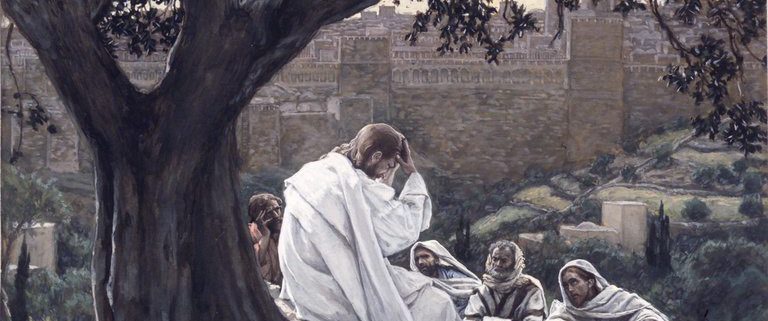
Could these visions of “the end” be what Jesus was referring to, as he sat with his followers on the Mount of Olives, opposite the towering Temple? Later in the same discussion with his disciples, he indicates that “in those days, after that suffering, the sun will be darkened, and the moon will not give its light, and the stars will be falling from heaven, and the powers in the heavens will be shaken” (Mark 13:24). This picks up the language we have noted consistently throughout the prophetic declarations, in Amos, Joel, Isaiah, Habakkuk, Zephaniah, Ezekiel, and Daniel.

The judgement of God, says Jesus, with the “gathering up the elect from the four words, from the ends of the earth to the ends of heaven” (13:27), will be executed by “the Son of Man coming in clouds with great power and glory” (13:25)—language which draws directly from the vision of Daniel concerning “one like the Son of Man, coming with the clouds of heaven” (Dan 7:13).

So the resonances are strong, the allusions are clear. Jesus is invoking the prophetic visions of The Day, The End; the judgement of God, falling upon the wicked of the earth. And he deliberately applies these vivid and fearsome prophetic and apocalyptic traditions to what he says about the Temple.

By linking his teaching directly to the question of four of his disciples, Peter, James, John, and Andrew (Mark 13:3), enquiring about the Temple, Jesus appears to be locating the end of the Temple—its sacrifices and offerings, its psalms and rituals, its wealth and glory … and perhaps also its priestly class—in the midst of the terrible, violent retributive judgements of the Lord God during the days of the end.

The language also resonates with the end section of 2 Esdras, in which God informs “my elect ones” that “the days of tribulation are at hand, but I will deliver you from them”. Those who fear God will prevail, whilst “those who are choked by their sins and overwhelmed by their iniquities” are compared with “a field choked with underbrush and its path overwhelmed with thorns” and condemned “to be consumed by fire” (2 Esdras 16:74–78). (This book claims to be words of Ezra, the scribe and priest who was prominent in the return to Jerusalem in the 5th century BCE, but scholarly opinion is that it was written after the Gospels, perhaps well into the 2nd century CE.)

All of the happenings that are described by Jesus in his teachings whilst seated with his followers outside the Temple (Mark 13:3) can be encapsulated in this potent image: “this is but the beginning of the birth pangs” (13:8). This is imagery which reaches right back to the foundational mythology of Israel, which tells of the pains of childbirth (Gen 3:16). It is language used by prophets (Jer 4:3; 22:23; 49:2; 49:24; Hos 13:13; Isa 21:3; 66:7–8; Micah 4:9; 5:3).

This chapter in Mark’s Gospel, along with the parallel accounts in Luke (chapter 21) and Matthew (chapter 24), are regarded as instances of apocalyptic material. The meaning of apocalyptic is straightforward: it refers to the “unveiling” or “revealing” of information about the end time, the heavenly realm, the actions of God.

Such a focus does not come as a surprise to the careful reader, or hearer, of this Gospel. This style of teaching is consistent with, and explanatory of, the message which the Gospels identify as being the centre of the message proclaimed by Jesus: “The time is fulfilled, and the kingdom of God has come near; repent, and believe in the good news” (Mark 1:14); “repent, for the kingdom of heaven has come near” (Matt 4:17); “I must proclaim the good news of the kingdom of God to the other cities also; for I was sent for this purpose” (Luke 4:43). Each of these distillations of the message is apocalyptic—revealing the workings of God as the way is prepared for the coming of the sovereign rule of God.

Apocalyptic is the essential nature of Jesus’ teachings about “the kingdom of God”. This final speech confirms the thoroughly apocalyptic character of Jesus’ teaching. The parables he tells about that kingdom are apocalyptic, presenting a vision of the promised future that is in view. The call to repent is apocalyptic, in the tradition of the prophets. The demand to live in a way that exemplifies righteous-justice stands firmly in the line of the prophetic call. Such repentance and righteous-just living is as demanding and difficult as giving birth can be.

Mark’s Gospel has drawn to a climax with the same focussed attention to the vision of God’s kingdom, as was expressed at the start. The beginnings of the birth pangs are pointers to the kingdom that Jesus has always had in view. Jesus was, indeed, a prophet of apocalyptic intensity.

*****

I have written another blog that sets this apocalyptic teaching of Jesus into its literary and historical contexts, at

Oil and light, and being prepared (Matt 25; Pentecost 24A)

“When the foolish took their lamps, they took no oil with them; but the wise took flasks of oil with their lamps. As the bridegroom was delayed, all of them became drowsy and slept.” (Matt 25:3–4) These words come from the parable of Jesus which is offered by the lectionary for this coming Sunday (Matt 25:1–13). The parable serves as a warning to be ready for the arrival of the bridegroom. “Keep awake therefore, for you know neither the day nor the hour”, Jesus ends this parable (25:13).

It seems that many people in the earliest church communities expected the parousia to occur and Jesus to return from heaven into their midst at any day. Paul had indicated this some decades before this Gospel was written, telling the Corinthians that “the appointed time has grown short” (1 Cor 7:29) and “the present form of this world is passing away” (1 Cor 7:31), and warning the Thessalonians that “the day of the Lord will come like a thief in the night” (1 Thess 5:2).

Paul also describes to the Thessalonians the scene in which “the Lord himself, with a cry of command, with the archangel’s call and with the sound of God’s trumpet, will descend from heaven, and the dead in Christ will rise first; then we who are alive, who are left, will be caught up in the clouds together with them to meet the Lord in the air; and so we will be with the Lord forever”(1 Thess 4:16–17).

When writing to the Romans, Paul says that “the creation waits with eager longing for the revealing of the children of God” ahead of “the glory about to be revealed to us” (Rom 8:18–19), which again suggests an imminent occurrence; whilst the first letter attributed to Peter simply declares that “the end of all things is near” (1 Pet 4:7).

However, this much-anticipated return of Jesus to earth did not take place in the lifetime of that first generation of believers. Matthew’s Gospel, written at least four decades after the lifetime of Jesus, contains indications of how this delay impacted on people. The fact that Jesus was delayed in his appearance to his followers may have affected the faith of members of the community, or influenced others to leave the community for which Matthew was writing.

Matthew’s Jesus has in mind the coming eschatological deliverance, a deliverance which is expected imminently and that will vindicate the community as faithful and righteous to the will of God. So he tells his followers that “you will not have gone through all the towns of Israel before the Son of Man comes” (10:23). The mission that his followers undertake amongst Jews only is urgent; the end of time is coming soon, and they will not have shared “the good news [that] the kingdom of heaven has come near” (10:7) before “the Son of Man appears in heaven, and then all the tribes of the earth will mourn, and they will see ‘the Son of Man coming on the clouds of heaven’ with power and great glory” (24:30).

In this way, Matthew is typical of one type of Judaism after the destruction of the Second Temple; that of apocalyptic hope. Most of the post-70 sectarian groups express hope that God will remember his covenant with them, the faithful few of Israel, and save them; for example, 2 Baruch and 4 Ezra write that God will provide consolation for their suffering and vindicate them, whilst also punishing their enemies on the Day of Judgement (2 Baruch 6:21; 82:1–2; 4 Ezra 8:51–59; 12:34).

In these sectarian documents, the kingdom of God is eschatological is nature; it has not yet arrived on earth, though signs telling of its coming can be detected. These communities also agree that much of Israel no longer truly follows the Law of God, and that the dominant Jewish leadership is unfaithful and wicked, and that they are the ones alone representing the true Israel. Therefore, entry to the kingdom is dependent upon faithfulness to the Law as interpreted by the community.

Matthew reflects this in his reporting of words of Jesus found only in this Gospel: “do not think that I have come to abolish the law or the prophets; I have come not to abolish but to fulfill .. until heaven and earth pass away, not one letter, not one stroke of a letter, will pass from the law until all is accomplished … unless your righteousness exceeds that of the scribes and Pharisees, you will never enter the kingdom of heaven” (Matt 5:17–20). There is a fierce apocalyptic intensity behind the interpretation of Torah which the Matthean Jesus provides.

It is, however, the delay of the return of Jesus, rather than the detailed development of scenarios relating to that predicted coming, which is the issue undergirding the chapter of the Gospel that appears in our lectionary this Sunday, as well as the two following Sundays. Although the lengthy apocalyptic discourse of chapter 24 shows that Jesus appears to “buy in” to the speculative apocalyptic hypothesising of contemporary Jews, Matthew reorients this traditional material to focus on one key issue.

All three Synoptic Gospels have brought the apocalyptic discourse of Jesus to a climax with the vision, taken from Daniel 7, of “the Son of Man coming in a cloud with power and great glory” (Mark 13:26; Matt 24:30; Luke 21:27), followed soon after by the saying, “this generation will not pass away until all these things have taken place” (Mark 13:30; Matt 24:34; Luke 21:32). They each report this, surely, because Jesus believed he would be returning in glory soon after his death. Jesus was firmly grounded in the apocalyptic worldview and saw himself as the crucial prophet figure in the fulfilment of that coming end.

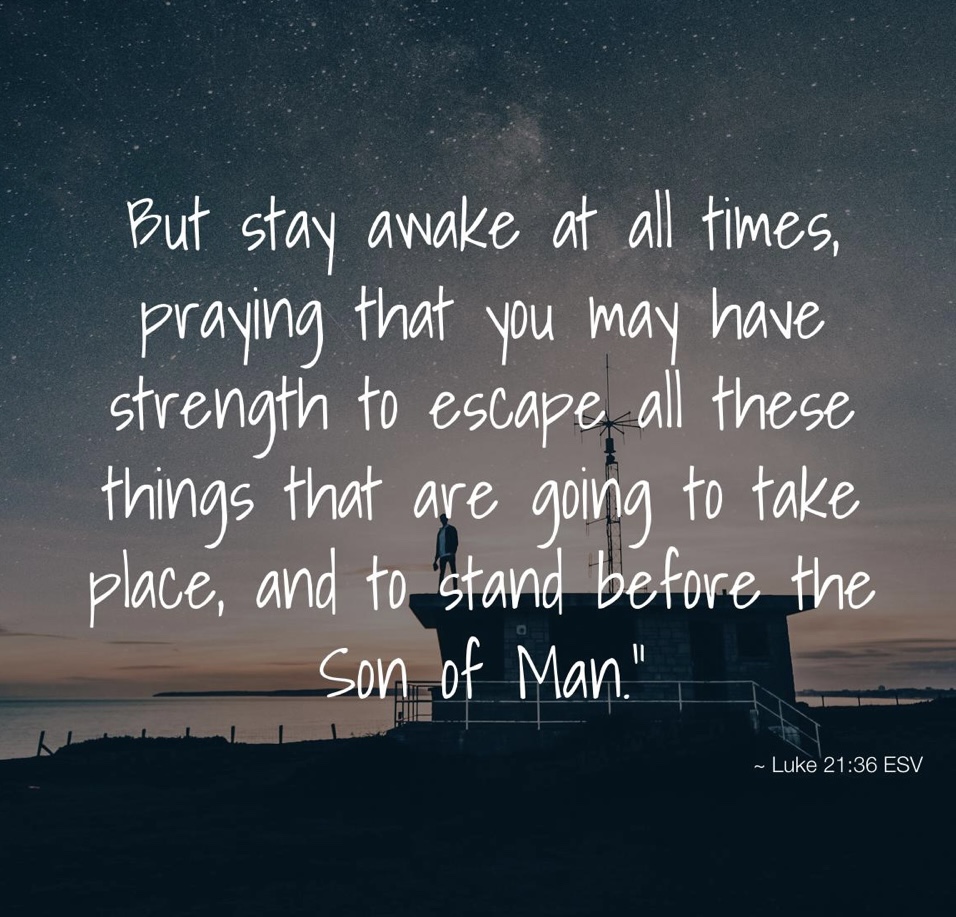
Mark emphasises the point with the thrice-repeated warning: “beware, keep alert, for you do not know when the time will come … keep awake … keep awake” (Mark 13:34, 35, 37). Luke likewise reports Jesus as saying “be on guard … be alert” (Luke 21:34, 36). The implication is that the return will be soon (although Luke has undertaken various editorial alterations to his sources to indicate this has not been the case).

Matthew ends the apocalyptic discourse of Jesus with a similar warning: “you also must be ready, for the Son of Man is coming at an unexpected hour” (Matt 24:44). However, he then moves immediately to report four parables, told by Jesus to remind people that they need to hold fast to their faith, be ready for whenever “the master returns”, “the bridegroom comes”, “the Son of Man comes [and] sits on his throne in glory”. In these parables, he emphasises the need to practise a sense of active waiting (24:45–25:46).

Two parables contain specific warnings about the behaviour that is expected during this period of waiting (24:45–51; 25:1–13); the second of these, which we encounter it in the lectionary this coming Sunday, is unique to Matthew. The story told in this parable indicates that active waiting involves making wise decisions, persisting tenaciously in hope for what lies in the future. The wise virgins are commended: “those who were ready went with him [the bridegroom] into the wedding banquet” (25:10). The foolish are rejected by Jesus: “truly I tell you, I do not know you” (25:12).

Similar warnings occur in other parables drawn from the Q tradition: the parable of the banquet (22:1–14), which we have read some weeks back; and the well-known parable of the talents (25:14–30), which appears next Sunday, in which the master commends his two “good and trustworthy slaves” with the words, “you have been trustworthy in a few things, I will put you in charge of many things; enter into the joy of your master” (25:21,23). By contrast, the third slave is condemned as worthless: “throw him into the outer darkness, where there will be weeping and gnashing of teeth” (25:30).

These parables all advocate active waiting as the desired form of discipleship. Being faithful to the way of Jesus means being ready for his coming, prepared for the kingdom. The message is driven home by the contrasting pairs: in this parable, wise virgins and foolish virgins; in subsequent parables, two trustworthy slaves and a worthless slave (25:14–30), and then the righteous and those who do evil (25:31–46).

The contrast between those who are wise and those who are foolish is a trope in the Wisdom literature from which Jesus is drawing in this parable. Amongst the collected proverbs attributed to Solomon we read these aphorisms: “A wise child makes a glad father, but a foolish child is a mother’s grief” (Prov 10:1), slightly varied in “A wise child makes a glad father, but the foolish despise their mothers” (Prov 15:20), and “The wise woman builds her house, but the foolish tears it down with her own hands” (Prov 14:1).

In Ecclesiastes, the Preacher observes, “Better is a poor but wise youth than an old but foolish king, who will no longer take advice” (Eccl 4:13) and muses, “and who knows whether they will be wise or foolish?” (Eccl 2:19). The parable told by Jesus makes clear how to distinguish between the wise and the foolish: the wise are prepared, their lamps are filled with oil; the foolish had no oil.

The lack of preparedness of the five foolish bridesmaids is telling. Oil, of course, is needed to keep the lamp burning, and thus to shine light in the darkness. This basic fact lies underneath the exhortation of Jesus to his followers: “let your light shine before others, so that they may see your good works and give glory to your Father in heaven” (Matt 5:16). Well might we think that the five bridesmaids who took no oil with them were foolish! (25:1–3).

Ready access to oil in the land of Israel was secured by the blessing of God, reported in Deuteronomy: “The Lord your God will maintain the covenant loyalty that he swore to your ancestors; he will love you, bless you, and multiply you; he will bless the fruit of your womb and the fruit of your ground, your grain and your wine and your oil, the increase of your cattle and the issue of your flock, in the land that he swore to your ancestors to give you.” (Deut 7:12–13). Of course, olive trees are well suited to the Mediterranean climate, and so would have grown prolifically, ensuring a steady supply of olives for making oil, regardless of God’s covenant loyalty!

Ben Sirach affirms that “the basic necessities of human life are water and fire and iron and salt and wheat flour and milk and honey, the blood of the grape and oil and clothing” (Sir 39:26); so oil ought to have been at hand for the five foolish bridesmaids to secure.

Oil plays a key role in the religion of the Israelites. In the instructions relating to the tabernacle, Moses was instructed to “command the people of Israel to bring you pure oil of beaten olives for the lamp, that a light may be kept burning regularly” (Lev 24:1), and Aaron and his sons are delegated to ensure that it keeps burning each night as “a perpetual ordinance to be observed throughout their generations by the Israelites” (Exod 27:20–21). Oil was added to many sacrifices and offerings that were brought to the temple, as almost all of the 88 appearances of the word in Exodus, Numbers, and Leviticus attest.

Oil was also central in the ceremonies of anointing new kings—Saul (1 Sam 10:1), David (1 Sam 16;13; Ps 89:20), Solomon (1 Ki 1:39), Jehu (2 Ki 9:6), and presumably all other kings of Israel and Judah. Oil anoints the heads of faithful believers (Ps 23:5; 45:7) and “makes the face to shine” as one of the gifts provided by God to all humanity (Ps 104:15). The followers of Jesus anointed with oil those who were sick (Mark 6:13), accompanied with prayer (James 5:14); even the Good Samaritan “went to [the injured man] and bandaged his wounds, having poured oil and wine on them” (Luke 10:34).

Given its importance in Israelite culture and religion, as well as in daily life, one would have thought that the five bridesmaids would have been well prepared to meet the bridegroom, ensure their lamps were filled with oil!

Perhaps when he told this parable, Jesus also had in mind the following story involving the prophet Elisha? In this story, the wise use of oil reflects the faithfulness of a widow and her trust in the word of the prophet, which brings her an assured future. She was wise.

Now the wife of a member of the company of prophets cried to Elisha, “Your servant my husband is dead; and you know that your servant feared the LORD, but a creditor has come to take my two children as slaves.” Elisha said to her, “What shall I do for you? Tell me, what do you have in the house?” She answered, “Your servant has nothing in the house, except a jar of oil.” He said, “Go outside, borrow vessels from all your neighbors, empty vessels and not just a few. Then go in, and shut the door behind you and your children, and start pouring into all these vessels; when each is full, set it aside.” So she left him and shut the door behind her and her children; they kept bringing vessels to her, and she kept pouring. When the vessels were full, she said to her son, “Bring me another vessel.” But he said to her, “There are no more.” Then the oil stopped flowing. She came and told the man of God, and he said, “Go sell the oil and pay your debts, and you and your children can live on the rest.” (2 Ki 4:1–7)

*****

For more on apocalyptic in Israelite tradition, see

and in this section of Matthew’s book of origins, see

On reading scripture during Advent: starting with the end (Matt 24; Advent 1A)

Last Sunday, we drew to a close the series of readings that we have been following from “the orderly account of the events that have been fulfilled among us”, for our weekly Gospel passages. This orderly account, offered to a person named “lover of God” (in Greek, Theophilus), we are told, was written so that this Theophilus might “know the certainty concerning the things about which you have been instructed” (Luke 1:1–4).

In this narrative, Jesus has been positioned as “a light for revelation to the Gentiles and for glory to [the] people Israel” (2:32), through whom “all flesh shall see the salvation of God” (3:6). His final words to his followers charge them with proclaiming “repentance and forgiveness of sins … to all nations” (24:47)—indeed, “to the ends of the earth” (Acts 1:8). It’s the strongest biblical expression of the universal, scope of the Gospel.

Now we turn to the narrative entitled the origins of Jesus, chosen one, the son of David, the son of Abraham. This Gospel, by contrast, focuses intently on the Jewish origins of the Gospel. The opening chapters signal the Jewishness of Jesus (Matt 1:1), presents his Jewish genealogy (1:2–18), and locates him as the chosen ruler “who is to shepherd [God’s] people Israel” (2:6) and fulfil Isaiah’s words for “the people who sat in darkness have seen a great light” (4:16).

In this Gospel, Jesus affirms that he did not come “to abolish the law and the prophets”, but rather to fulfil them (5:17); he instructs his followers to “strive first for the kingdom of God and God’s righteousness” (6:33), is portrayed as one proclaiming justice (12:18–21), advocating what is central to the life of Israel—God’s justice and righteousness (Amos 5:24; Ps 33:4; 72:1–2; Prov 21:3; Isa 1:21; 5:7; 28:17; 32:16; Jer 22:3; 33:15).

In the Matthean narrative, Jesus becomes the teacher supreme, the sole instructor, of the people (23:8, 10); his final instructions to his followers are that they are to “teach all nations … to obey everything that I have commanded you” (28:20). So this Gospel invites us (indeed, it leads us) into the heart of Jewish faith, for it is there that Jesus takes his stand, calling for repentance, the enacting of righteous-justice, through a deeper, more radical commitment to the covenant that Israel has with the Lord God. See

All of that lies ahead of us in the coming twelve months. Yet this Sunday, the first Sunday in Advent, we start with a confronting word from the latter part of the story: “two will be in the field; one will be taken and one will be left; two women will be grinding meal together; one will be taken and one will be left” (Matt 24:40–41). This striking declaration sits alongside exhortations to “keep awake, for you do not know on what day your Lord is coming” (24:42) and “you also must be ready, for the Son of Man is coming at an unexpected hour” (24:44).

These exhortations are characteristic elements in apocalyptic literature of the time; and they crystallise the sense of an imminent catastrophic event which is set out in a longer speech which is vivid and explicit in its dramatic apocalyptic imagery (24:3–44). Immediately after these exhortations, Jesus tells a series of four parables (24:45–25:46) which further dramatise the message that “the end is near”, “you do not know when”, “make yourself ready”, “be prepared”.

The section offered by the lectionary for the first Sunday in Advent (24:36–44) seems a strange place to start a year of Matthean stories about Jesus. Why begin Advent with an apocalyptic passage? And yet, the injunctions of this passage seem to sit neatly with the opening words of Jesus in this Gospel: “repent, for the kingdom of heaven has come near” (4:17). See

These words echo exactly the message of John the baptiser (3:2) and point forward also to the demands that Jesus makes throughout his public ministry, culminating in the calls to “keep awake” and “be ready”, because “you do not know on what day your Lord is coming”. The opening message of Jesus is clearly echoed in this later apocalyptic speech.

David Cassian Cole is the founder and executive director of Waymark Ministries CIC. He is known as Brother Cassian. He writes about a custom in the early centuries of the Celtic church, for Advent to stretch for 40 days (mirroring Lent, the 40 days of preparation prior to Easter).

Cole writes, “It is believed that the 40 days of Advent were split into three sections, colloquially termed the three comings of Christ. The first is the incarnation, what we all focus upon at this time of year; the second is Christ coming into our lives; the third is the coming of Christ at the end of all things, as depicted in the book of Revelation. The third coming of Christ is that which comes at the end of all things, and through this period the Celtic Christians examine their own lives, not in a self-judgmental way, but in a positive self-reflection to see whether they are ready and prepared, in the way they are living, for Christ to return at any moment.” See more at

So we are offered these words from the final long sermon of Jesus as the introduction to the year of Matthew: a reminder of the claim that God holds authority of the creation as the one who will determine “the time”, and that “about that day and hour no one knows, neither the angels of heaven, nor the Son, but only the Father” (24:36), a call to “keep awake, for you do not know on what day your Lord is coming” (24:42), an exhortation to “be ready, for the Son of Man is coming at an unexpected hour” (24:44).

Those phrases set forth the attitude that is required, in being open to the coming of Jesus—an attitude that is quite appropriate for Advent, that is essential for personal faith in Jesus, and that is fitting for the whole year of reading and pondering stories about Jesus, in this “book of origins”.

Brothers and sisters, do not be weary in doing what is right (2 Thess 2 and 3; Pentecost 22C and 23C)

The closing words in the passage from 2 Thessalonians that appear in this Sunday’s lectionary offerings (2 Thess 3:6–13) exhort the believers in Thessaloniki to “do what is right”. It concludes a section telling them not to be idle, but to “do their work quietly and to earn their own living” (3:12), which itself has picked up the direction given in the earlier letter to Thessaloniki, “to aspire to live quietly, to mind your own affairs, and to work with your hands, as we directed you, so that you may behave properly toward outsiders and be dependent on no one” (1 Thess 4:11–12).

This could well be another instance in 2 Thess where a later writer, a follower of Paul, has mined the earlier letter of 1 Thess, authentic to Paul, to shape a letter drawing on the apostle’s authority to reinforce teachings for his own time. A clear way in which the letter deviates from Paul’s authentic thought is its apocalyptic content.

Paul himself (like Jesus) did have an apocalyptic view of the world. He affirms that “the appointed time has grown short” (1 Cor 7:29), “the night is far gone, the day is near” (Rom 13:12), and looks to the coming “day of the Lord” (1 Cor 1:8; Phil 1:10; 1 Thess 5:2), the “the day of wrath, when God’s righteous judgment will be revealed” (Rom 2:6; 1 Cor 3:13).

He foresees that “the trumpet will sound, and the dead will be raised imperishable, and we will be changed” (1 Cor 15:52) and asserts that “the Lord himself, with a cry of command, with the archangel’s call and with the sound of God’s trumpet, will descend from heaven, and the dead in Christ will rise first; then we who are alive, who are left, will be caught up in the clouds together with them to meet the Lord in the air; and so we will be with the Lord forever” (1 Thess 4:16–17).

However, this letter develops from those views in ways most uncharacteristic of Paul—more like the kind of hardline developments that we find in Jewish apocalypses of the general time. The “righteous judgment of God” (2 Thess 1:5) will be “when the Lord Jesus is revealed from heaven with his mighty angels in flaming fire, inflicting vengeance on those who do not know God and on those who do not obey the gospel of our Lord Jesus” (1:7–8), bringing “the punishment of eternal destruction” (1:9). This is an extreme position, beyond the hope for a return of Jesus to reconcile believers with God; this presses the notion of divine judgement into callous retribution.

Further consideration of that day of judgement is given in chapter 2; we had excerpts from this chapter in last week’s lectionary—but the critical verses, 2:6–12, were omitted in that offering! There, we read that this day “will not come unless the rebellion comes first and the lawless one is revealed, the one destined for destruction” (2:3). The Greek word translated as “rebellion” is apostasies, from which we get apostasy. It was used to describe those who wandered from the keeping of the Torah (1 Mac 2:15).

The writer continues, declaring that “the lawless one” (2:8) who brings “a powerful delusion” (2:11) will result in “all who have not believed the truth but took pleasure in unrighteousness will be condemned” (2:12). This portrayal resonates strongly with scenes in Jewish apocalyptic literature of the late Second Temple period, or soon thereafter, attributed to (but not actually written by) great luminaries in the history of Israel; see 4 Ezra 4:27–5:13; 2 Baruch 27; 1 Enoch 91; and also, in the Dea Sea Scrolls, 1QpHab 2:1–10.

On other ways that the letter indicates a later, non-Pauline authorship which goes well beyond Paul’s thinking—see

*****

To return to chapter 3; here we find a set of instructions, buttressed by Paul’s authority, in which the Thessalonians are encouraged to maintain “the tradition” they received from Paul (3:6), the “command” which he had given them (3:10), and are admonished to “have nothing to do with … those who do not obey what we say in this letter” (3:14).

A key verse in this section (3:13) draws strongly on a theme running through Hebrew Scripture, to “not be weary in doing what is right”. The Psalmist, for instance, sings that those who may abide on God’s holy hill are “those who walk blamelessly, and do what is right, and speak the truth from their heart” (Ps 15:2), and in a later psalm, sings that “I have done what is just and right; do not leave me to my oppressors” (Ps 119:131). Yet another psalm questions the gods: “do you indeed decree what is right, you gods? do you judge people fairly?” and immediately provides the answer, “no, in your hearts you devise wrongs; your hands deal out violence on earth” (Ps 58:1–2). The alignment of doing what is right with the Lord God of Israel is clear.

Accordingly, that deity is depicted in some of the foundational stories of Israel as requiring people to do what is right. At Marah in the wilderness, the Lord God tells the people, “if you will listen carefully to the voice of the Lord your God, and do what is right in his sight, and give heed to his commandments and keep all his statutes, I will not bring upon you any of the diseases that I brought upon the Egyptians; for I am the Lord who heals you” (Exod 15:26).

Likewise, when reminding the people “not to put the Lord your God to the test, as you tested him at Massah” (referring to Exod 17:1–7), Moses instructs them to “do what is right and good in the sight of the LORD, so that it may go well with you, and so that you may go in and occupy the good land that the LORD swore to your ancestors to give you” (Deut 6:18). That message is reinforced later in the long speech of Moses, when he gives instructions relating to the discovery of a murder whose perpetrator is unknown, concluding that “you shall purge the guilt of innocent blood from your midst, because you must do what is right in the sight of the Lord” (Deut 21:9).

The same instruction that is attributed to Moses is given by the prophet Ahijah the Shilonite, when Jeroboam led a rebellion against King Solomon: “if you will listen to all that I command you, walk in my ways, and do what is right in my sight by keeping my statutes and my commandments, as David my servant did, I will be with you, and will build you an enduring house, as I built for David, and I will give Israel to you” (1 Kings 11:38). The equation of “doing what is right “ with “keeping [God’s] statutes and commandments” in this passage, as also in the account of the incident at Marah (Exod 15:26), indicates the centrality of this command within the life of Israel.

Two prophets reinforce the importance of this command. Ezekiel declares that, “if the wicked turn away from all their sins that they have committed and keep all my statutes and do what is lawful and right, they shall surely live; they shall not die” (Ezek 18:21; see also 18:27; 33:14, 19; 45:9). Likewise, the opening oracle of the unnamed post-exiled prophet whose words are collected at the end of the scroll of Isaiah begins with the declaration, “maintain justice, and do what is right, for soon my salvation will come, and my deliverance be revealed” (Isa 56:1). This important text equates “do what is right” with divine justice; the two prophetic texts indicate that “doing what is right” is the prerequisite for life (Ezekiel) and salvation (Trito-Isaiah).

Finally, we note that the story of Tobit ends with his prayer of blessing to God (Tob 13:1–17), including the admonition, “turn back, you sinners, and do what is right before him; perhaps he may look with favor upon you and show you mercy” (Tob 13:6); followed by his farewell words to his son, Tobias, and the seven sons of Tobias, in which he declares, “so now, my children, I command you, serve God faithfully and do what is pleasing in his sight; your children are also to be commanded to do what is right and to give alms, and to be mindful of God and to bless his name at all times with sincerity and with all their strengths (Tob 14:9). This final passage explains that “doing what is right” includes both central religious activities (bless God) and helpful social activities (give alms).

To Jewish listeners, the simple instruction, “do not be weary in doing what is right” (2 Thess 3:13) evokes central aspects of faith: obedience, following God’s way, keeping the commandments, speaking the right words, enacting the required behaviours, receiving the gift of life, being assured of salvation, and doing justice. Beyond the authority of Paul, reinforced a number of times in this chapter, the resonances of Hebrew Scripture voices sound loudly.

The sincerest form of flattery? Or a later, imperfect imitation? (2 Thessalonians; Pentecost 21C to 23C)

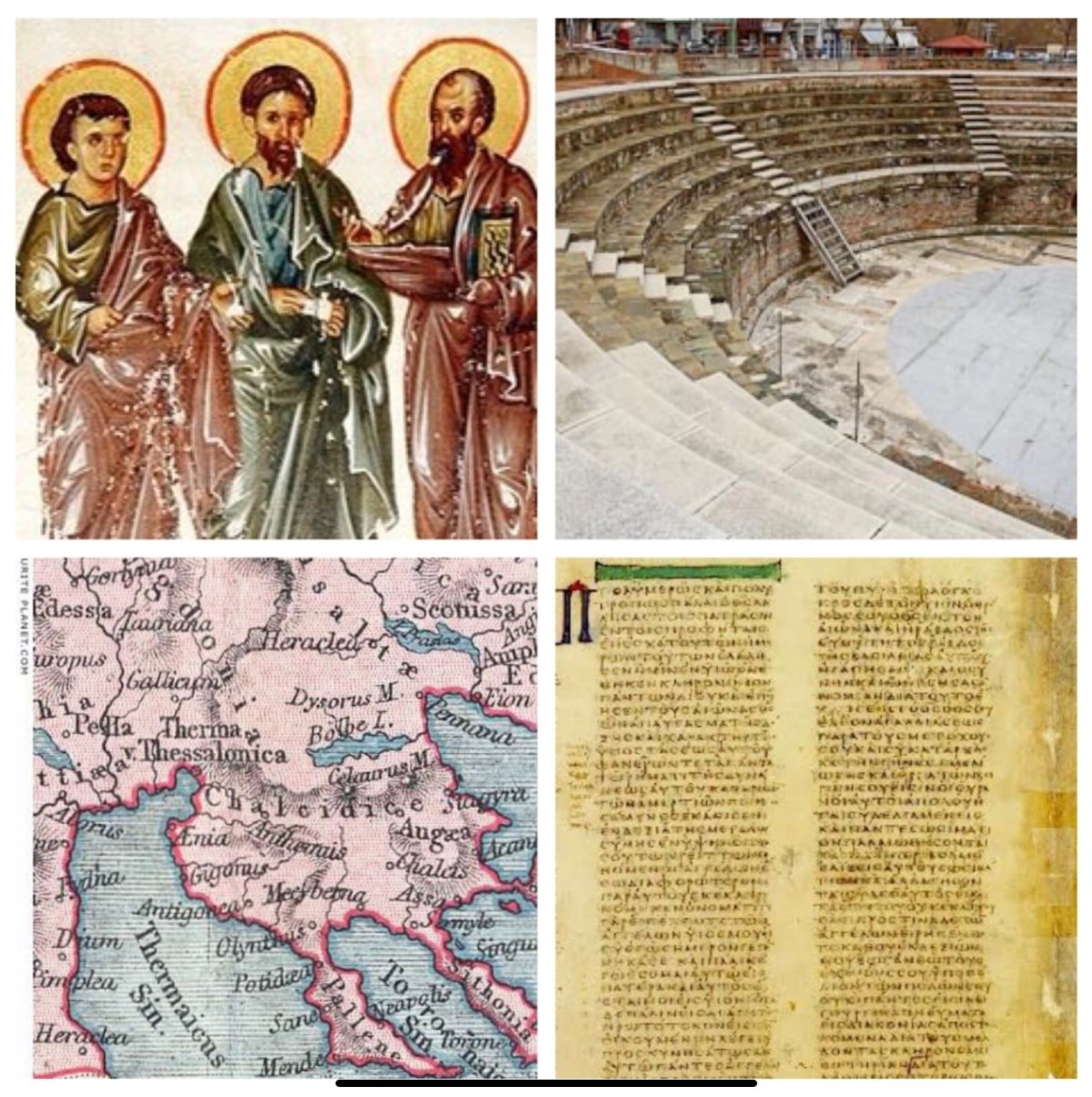
Paul, Silas and Timothy arrived in Thessalonika in the year 50 CE. Acts indicates that they went to the synagogue, where Paul declared that the Jewish scriptures pointed to Jesus as Messiah (Acts 17:2–3). This stirred up antagonism amongst the Jews of the city (Acts 17:5).

Those who accepted Paul’s message, realising that he was just recovering from the experience of prison in Philippi (Acts 16:19–24), sent him and Silas on to their next stop in Beroea after only three weeks in Thessalonica (Acts 17:2). Paul then travelled to Athens (Acts 17:15) and Corinth (Acts 18:1).

Little of this is reflected in Paul’s letters to the Thessalonians, apart from a direct comment about his difficulties in Philippi (1 Thess 2:2) and some generalised references to the persecution he was suffering (1 Thess 3:4, 7). Although it is likely that Paul wrote letters before he had visited Thessalonica, none of them are known to us.

1 Thessalonians, dating from the same year (50 CE) as his visit to Thessalonica, is the earliest example of Paul’s letter writing that we have. The letter itself contains no explicit indication of the time or place of its writing; tradition has it that Paul wrote from Athens, although it is more likely that he penned it in Corinth just months after his departure from Thessalonica. His visit was still fresh in Paul’s mind, and he writes with love and concern for the community of believers that he left behind in Thessalonica.

It is obvious that Paul had developed a strong bond with this community, and he is anxious to keep in touch with them (3:5). The letter was in reply to what he had learned from Timothy about their recent progress (3:6).

The letter known as 2 Thessalonians appears in the lectionary this Sunday and in the two following weeks. It seems to run in parallel to 1 Thessalonians in a number of ways. Some of the themes from the first letter are replicated, and varied, in the second letter to the Thessalonians. Both letters present Paul as a role model (1 Thess 1:6; 2 Thess 3:7); both criticise the Thessalonians for the idleness evident in their community (1 Thess 5:14; 2 Thess 3:6–12); and both letters contain reminders about Paul’s teachings (1 Thess 2:5–7, 12; 4:1–2; 5:1–2; 2 Thess 2:15). The general eschatological orientation is present in both letters (1 Thess 4:13–5:11; 2 Thess 1:5–2:16), but there are significant developments–a hardening of the apocalyptic mindset–in 2 Thessalonians.

The commonality of both general themes and specific words and phrases leads to a question about the relationship between these two letters: is this stylistic variation on common themes written by the same author, or a deliberate attempt to copy the first letter by another scribe at a later date?

Scholars answer the question differently; there are different views on the authorship of 2 Thessalonians. The opening and closing sections of 2 Thessalonians are revealing.

The letter concludes with an insistence that it was written by Paul: “I, Paul, write this greeting with my own hand” (3:17). At first glance, this looks similar to the reference to Paul’s “large letters” in his “own hand” at Gal 6:11; but this is a brief passing comment, whereas the claim is laboured in 2 Thessalonians by the addition of extra phrases, so that we start to have a sense of “methinks he doth protest too much”.

The first twenty words of the opening address of 1 Thess 1:1 are repeated exactly in 2 Thess 1:1–2a; this is unusual amongst the seven authentic letters of Paul, for in every other case there are variations of both minor and major significance in this opening section. (See Rom 1:2–6; 1 Cor 1:2b; 2 Cor 1:b; Gal 1:1 and 1:4; Phil 1:1b; Phlmn 2.)

In the thanksgiving (2 Thess 1:3–4), a string of key words evokes themes from 1 Thessalonians. There is virtually nothing in the thanksgiving of 2 Thessalonians which is not present, in some way, in 1 Thessalonians. This is unparalleled amongst the authentic letters of Paul; his usual practice was to contextualise this section of the letter by indicating key issues which will be dealt with in the body of the letter.

There are differences in content in the bodies of the two letters. The friendly relationship evident throughout the first letter differs from the highly critical attitude towards the community in 2 Thessalonians. The eschatological orientation of 1 Thessalonians is present in general terms in 2 Thessalonians, but the difference is that the second letter is marked by a much stronger apocalyptic character. And twice in 2 Thessalonians (2:15 and 3:6), claims are made that Paul taught the Thessalonians material which is not found in 1 Thessalonians.

In my assessment, then, these differences mark 2 Thessalonians as coming from a different hand, in a situation where different issues were at stake. It appears to be a later imitation of 1 Thessalonians. We still read it in the cycle of readings provided by the Revised Common Lectionary–it is still an integral part of Christian scripture–but we read it with a critical lens, aware of the way that this particular writer is developing the earlier thought of Paul.

See also https://johntsquires.com/2019/06/17/harness-the-passion-but-restrain-the-rhetoric-musing-on-the-role-model-which-paul-offers-in-galatians/

https://johntsquires.com/2018/11/17/let-your-gentleness-be-known-to-everyone/

https://johntsquires.com/2019/10/01/in-the-name-of-the-apostle/

Images drawn from the past, looking to the future, as a message for the present (Revelation; Easter, Year C)

During the season of Easter this year, we are following a short sequence of readings from the book of Revelation. The first such reading (Rev 1:4–8) was last Sunday, setting out the writer and the audience, as well as the key focus of the book: “Jesus Christ, the faithful witness, the firstborn of the dead, and the ruler of the kings of the earth” (1:5).

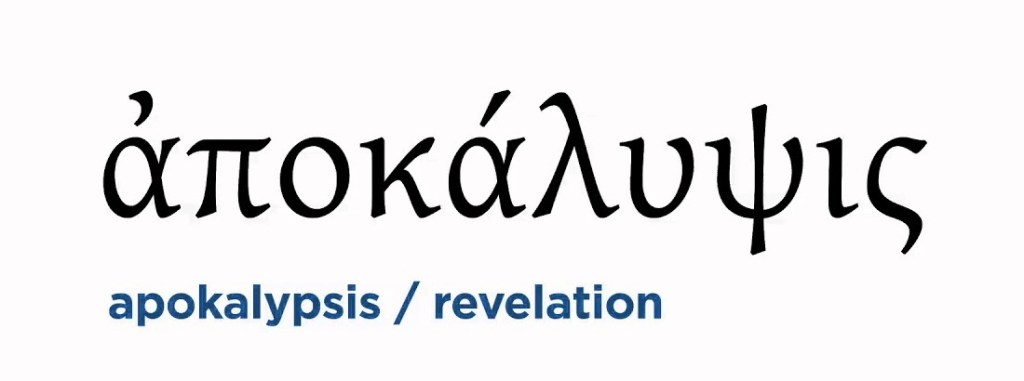
The book begins with a striking opening phrase—in Greek, it reads apokalypsis Iesou Christou (1:1). The first word in this phrase can be translated in two ways, resulting in the two most common titles for the book—“Revelation” or “Apocalypse”.

The word revelation is related to a Latin word which means to disclose or make known; the word apocalypse is the Greek term which means to uncover or expose. This word sums up the distinctive nature of the book right at the start—this is an exposé of the highest degree!

The content of this exposé is declared to be “the word of God and the testimony of Jesus Christ” (1:2, 9). The book ends with a reminder that Jesus sent his angel to John with “this testimony for the churches” (22:16). All of this is being done in a context of some urgency: “the time is near” (1:3), for Jesus is coming soon (1:7; 22:7, 12, 20; see also 2:16; 3:11; 22:6).

The book was written to be read aloud (1:3; 22:18); it seems to invite the people listening to the story to envisage what is being described by using their own imaginations. This is already evident in the way that the dramatic tone builds in the opening sections of the work. First, in the section of the book set for last Sunday, there is a hymn in praise of Jesus, reminiscent of poetic sections in other New Testament books as well as in Hebrew Scripture (1:5–8).

Next comes a description of the author and the process of creating the book (1:9–11). This was apparently initiated by “a loud voice like a trumpet” (1:10) —a voice which belonged to a distinguished figure with an ominous presence (1:12–16), whose appearance caused the writer to “fall at his feet as though dead” (1:17). The scene is thoroughly biblical, in keeping with the pattern of portentous announcements in Hebrew Scripture as well as in the early chapters of some Gospels. This will be the first of a number of visions, in which startling creatures declare unnerving messages in vividly dramatic ways.

The Revelation of John was not the first book of this kind ever written; in fact, Jewish writers had been producing literature like this for some centuries, recounting visions of the heavenly realm and reporting teachings which have been passed on by ancient figures from the heavens. In the Hebrew Scriptures, there are sections of the prophetic works which have the same kind of tone, as prophets report the visions they have seen and the oracles they have heard from the Lord.

Indeed, within other parts of the New Testament, there are indications of similar interests and ways of viewing the world—a view that is often characterized as “apocalyptic”. The figure of John the Baptist can best be appreciated as an apocalyptic figure, declaring that the Messiah has come and the kingdom is at hand (Mark 1:7–8; Matt 3:2).

Jesus continued the apocalyptic message of John by announcing that the kingdom of God was near (Mark 1:15; Matt 4:17) or, indeed, present (Luke 17:20). Many of the parables of Jesus and not a few of his teachings reflect an apocalyptic view of reality (for instance, Mark 13:14–37; Matt 24:45–25:46, Luke 17:20–37).

The letters of Paul contain clear pointers to the way that Paul viewed the world through an apocalyptic lens, in which the return of Jesus would take place soon and the kingdom of God would be ushered in (1 Thess 4:13–5:11; 1 Cor 7:29– 31, 15:20–28; Rom 8:18–25). The view that “the last days” were to come was also held by other writers (Heb 1:2; James 5:3; 2 Tim 2 Pet 3:1–5; Jude 17–19).

The apocalyptic worldview had been developing in Israel for some centuries. From their origins, prophets had delivered oracles in the name of the Lord; over time, they also began to incorporate accounts of visions in their messages (Isa 6; Jer 24; Ezek 1, 2–3, 8–11, 37, 40–44; Dan 2:19; Joel 2:28–32; Amos 7–9; Obad 1; Hab 2; Zech 1–8).

In the later stages of the prophetic movement in Israel, this form of communication becomes dominant. The last half of two prophetic books (Daniel 7–12; Zech 9–14) contain interrelated sequences of visions in which contemporary events, and perhaps also future events, appear to be depicted in symbolic form.

This trend continues on in a number of books written through the second and first centuries BCE, many of which still survive today. In this period we find various works which use heavenly messengers to reveal insights about mysteries and provide predictions about the future.

Most widely-known are 1 Enoch, 4 Ezra, and 2 Baruch; in addition, a number of works in the Dead Sea Scrolls are apocalyptic in nature. All these works contain literary features typical of apocalyptic works, as well as certain theological elements relating to the end of the ages.

As we read the book of Revelation, we can identify certain literary features which are quite characteristic of apocalyptic literature. The authority of the author is a key concern (1:9–10; 22:8–9) and the declaration is made that what is now being revealed is a mysterious secret (1:20; 10:7; 17:5, 7). This revelation comes direct from God through his authorized messenger (1:1–2, 11– 20; 22:8–10).

The warning not to change the text (22:18–19) is characteristic of apocalyptic, as is the regular reminder of the author’s expectation that the present era is coming to an end (2:26; 21:1, 4) and his description of a vision of the beginning of a new era (1:1; 7:9–17; 11:19; 21:1–22:7; 22:12, 20). The role of angels and visions reflects typical apocalyptic features.

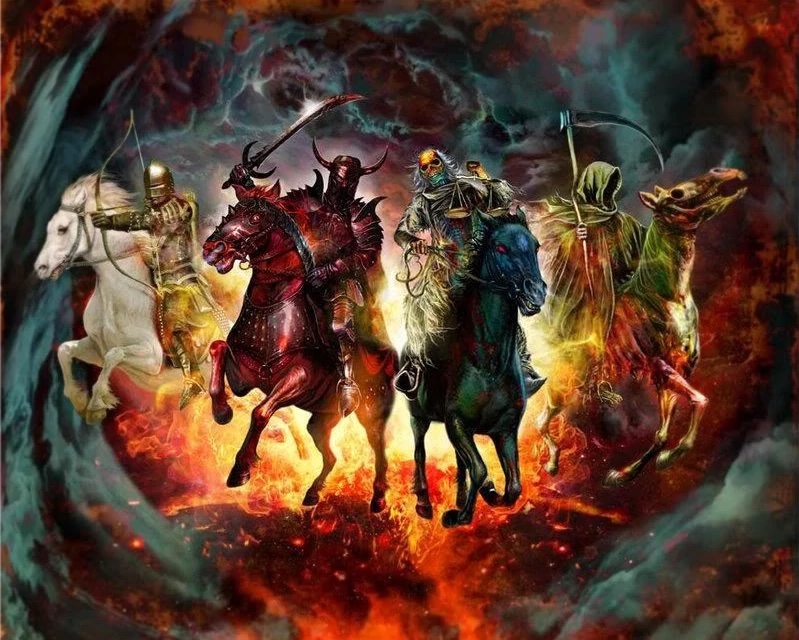
Also typical of apocalyptic are the many coded depictions which are conveyed in numbers: four (4:6–8; 5:6, 14; 6:1–8; 7:1–3, 11; 9:14; 14:3; 15:7; 19:4; 21:16); ten (2:10; 12:3, 18; 17:3, 12–16); twelve (12:1; 21:12–14, 21; 22:2); twenty-four (4:4, 10; 11:16; 19:4); 144,000 (7:4–8; 14:1–4); and the intriguing 666 (13:18).

Of course, the number seven, which recurs in numerous places throughout the book, is very significant: there are seven letters, 1:11; seven golden lampstands, 1:12, 20; seven stars, 1:16, 20; 2:1; seven angels, 1:20; 3:1; 15:7; seven spirits, 1:4; 3:1; seven seals, 5:1; seven horns and eyes, 5:6; seven trumpets, 8:2; seven thunders, 10:3–4; seven diadems, 12:3; seven plagues, 15:1, 6; seven golden bowls, 15:7; 16:1; and seven heads, 17:3, 9–10.

Finally, there is the crucial appearance of Babylon as a coded symbol of Rome (17:5, 18). This is a code used also in Jewish apocalyptic works.

The reader (or listener) of this work is invited into a world of unfettered imagination, with evocative imagery, enticing language, and disturbing rhetoric. The book appears to be describing the events that will take place in the immediate future; these chapters set the scene set for what will later be revealed as a colossal, cosmic battle between good and evil.

However, the style of the work is never straightforward and the message is never declared in direct propositional form. Many of the scenes contain words, images, and ideas which are already familiar from the Hebrew Scriptures— although they appear to be arranged in inventive new ways. Making sense of this book requires an act of creative imagination alongside a process of careful exploration, investigation, and interpretation.

The visions that are included in this spectacularly dramatic book evoke biblical language and imagery in various ways, as the author envisages the future by drawing from the scriptures of the past and reworking the images and ideas found within them as a message for the present.

“Worthy is the lamb that was slaughtered”: a paradoxical vision (Rev 5; Easter 3C)

Faithfulness in the turmoil of the time: the historical context of Mark 13 (Pentecost 25B)

The Gospel reading for this coming Sunday (Mark 13:1–8) comprises the beginning of longer speech, a block of teaching which Jesus delivered to his disciples (13:3–37), some time after they had arrived in the city of Jerusalem (11:1–11). It’s a striking speech, with vivid language and dramatic imagery, drawn from the increasingly apocalyptic fervour of prophetic oracles delivered through the history of Israel. The apocalyptic character of the speech means that it certainly makes a mark!

This final speech of Jesus confirms the thoroughly apocalyptic character of his teaching. The parables he tells about that kingdom are apocalyptic, presenting a vision of the promised future that is in view. The call to repent is apocalyptic, in the tradition of the prophets. The demand to live in a way that exemplifies righteous-justice stands firmly in the line of the prophetic call. Such repentance and righteous-just living is as demanding and difficult as giving birth can be.

For the way that this language developed over centuries in ancient Israel, and became a mainstay of prophetic language, see https://johntsquires.com/2021/11/09/the-beginnings-of-the-birth-pangs-mark-13-pentecost-25b/

Mark’s Gospel has drawn to a climax with the same focussed attention to the vision of God’s kingdom, as was expressed at the start. The beginnings of the birth pangs are pointers to the kingdom that Jesus has always had in view. Jesus was, indeed, a prophet of apocalyptic intensity. But how do we make sense of this dramatic language in the context of the post-Enlightenment scientifically-aware world of the 21st century? How do visions of turmoil and warfare, oracles about fiery destruction and fierce retribution, relate to our contemporary world?

One way of understanding this kind of language and these kinds of speeches, whether by Jesus or any number of the prophets, is to claim that these words were spirit-inspired predictions, from long ago, of the turmoil and conflict that was to take place in the future. Sometimes this is seen to relate to the times immediately in the future of the writer, in the late 1st century in the case of this Gospel passage. Other interpreters claim that such speeches are pointing forward in time, to events that will take place well beyond the time of the reader, even into our own times (that is, the 21st century).

Like the final book in the New Testament, Revelation, this speech of Jesus in Mark 13 has been interpreted of fervent believers throughout the centuries as evidence that the end of the world was at hand. Repentance, now, is the bottom line; repentance, before the end comes, and it is too late.

Another line of interpretation holds that this kind of language needs to be understood as inspired scripture, which provides us with clear doctrinal statements about what is called eschatology (the study of the end times, the last days). In which case, this book could be mined as a source for teachings about “the last days”, instructing us so that we are aware and informed, and thus able to undertake interpretation of events that are currently taking place.

It may not be that we are right in the midst of those “last days”, but we are equipped with the capacity to interpret and understand what is happening—to know exactly where we are, now, in the alleged timetable of events leading up to “the last days”.

However, there are difficulties with both lines of interpretation. Neither understanding actually reflects the nature of the literature, the purpose for which each of the apocalyptic oracles and speeches were given in their own time. It is important to understand the literary nature of apocalyptic writings, as well as the social-historical context in which such works came into being. The same applies for Mark 13.

(For some further consideration of ways of interpreting apocalyptic literature, in relation specifically to the book of Revelation, see https://johntsquires.com/2020/12/04/revelation-a-complex-and-intricate-world-of-heavenly-beings-and-exotic-creatures/)

But first, we need to be clear about the Historical Context within high this Gospel was written.

Jewish people of the first century lived in one of two ways. Some were members of the nation of Israel which was occupied by a foreign military force, the Romans. (The Romans called this region Palestine). Others were members of a minority group of Jews who were permitted to exist in another nation. (These are known as Jews of the Dispersion). Life in such situations demanded compromise.

For Jews living in the Dispersion, the degree of compromise might vary—but compromise was inevitable. For those living within Israel, the need for compromise was a constant irritant. Some groups, like the Sadducees and the priests, accepted the compromises and did well out of them. Many common folk simply made the best of the situation. Others resented what was imposed on them. They looked back to an earlier time in the history of Israel, when the troops of another foreign force, the Seleucids, held power in Israel. An honoured group of Jews, the Maccabees, had led an armed insurgency which brought victory over the Seleucids in the years 167 to 164 BCE. For a time, Jews had ruled Israel once again.

From the time that Roman troops had occupied Palestine, in 63 BCE, there was tension. It would wax and wane according to the attitudes of the Jewish leaders and the political imperatives at work through the Roman governors. In the year 66, the governor, Florus, demanded money from the Temple treasury in Jerusalem. This was too much for some Jews; hostilities broke out in various places across Palestine. The war which resulted lasted eight years; in 70 CE, the Temple in Jerusalem would be burnt to the ground, and by 74 CE, all active Jewish resistance to the Romans would be quashed.
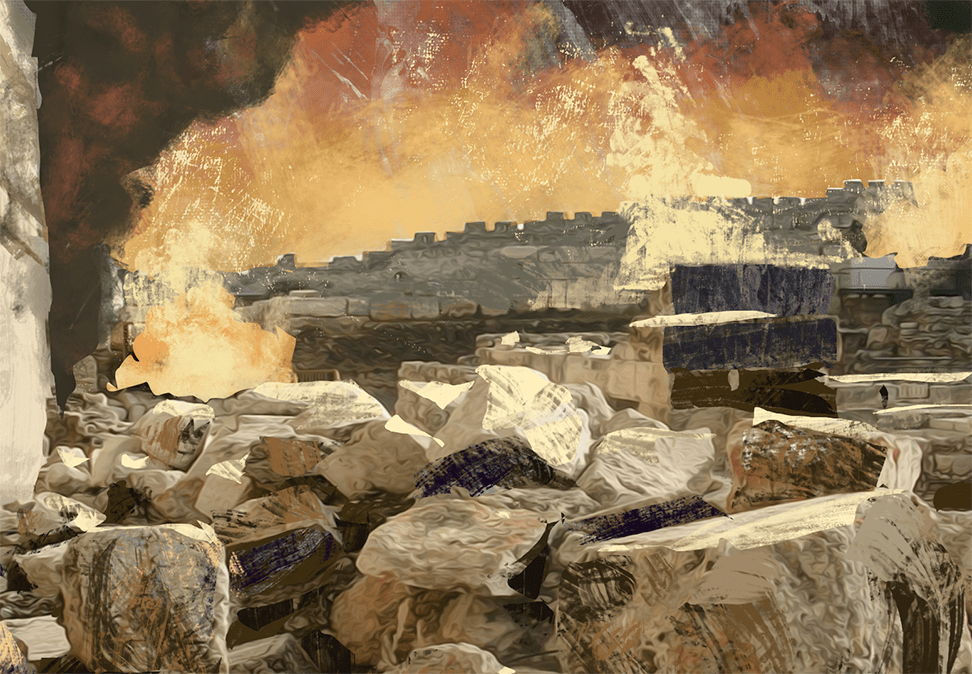
In this setting, amidst the battles fought in Galilee, Samaria and Judaea, apocalyptic hopes were inflamed. Many of the Jews actively fighting the Romans believed that their actions would help to usher in the long-promised kingdom, in which God would reign over Israel and foreign troops would be banished. Perhaps a significant number of the followers of Jesus also believed that the kingdom of God was drawing near, as Jesus had proclaimed some decades earlier, in the events of their own day.

Should the followers of Jesus, then, join with the rebel groups in rising up against Rome? Was the way to the kingdom to be won through conflict, martyrdom, and military victory? Or was there another way? Remarkably, one writer chose to answer these questions by writing about the way which would have been chosen by Jesus.

The earliest written account that we have for the life of Jesus—the beginning of the good news of Jesus, the chosen one (which we know as the Gospel according to Mark)—appears to deal with precisely these issues as it assembles and reshapes many of the stories told about Jesus. It is strongly marked by apocalyptic overtones, from the urgent message which Jesus utters (1:14–15) to his parting description of apocalyptic terrors (13:3–37).

This work does not provide a clear declaration against military involvement; but this implication can be drawn from its pages. This Gospel was written for first century Jews who were who were caught up in a fervent hope that the kingdom of God was soon to be ushered in, but who were also struggling with what it meant to follow the way of Jesus.

Mark tells the story of Jesus—a person who submitted to his death, at the hands of the Romans, without raising any weapons in defence. The way of Jesus, according to Mark, was the way of suffering obedience and faithful discipleship. The answer to the questions posed lay in following the way of Jesus. That is the focus of the story that he tells—what does it mean for us to follow Jesus in our own context? The work does not set out to answer the question, “is the end at hand?”, and not even to set out a timetable of events leading to that end. It simply asks, how best do I follow Jesus?

The last set of instructions which Jesus leaves for his disciples, delivered as he sits opposite the magnificent Jerusalem Temple (13:1), sets out the task which lies ahead for the disciples. During this apocalyptic discourse, Jesus speaks explicitly about their future commission (13:9–13). The situation will be one of persecution: “you will be beaten” (13:9), and “they [will] bring you to trial” (13:11); there will be betrayal and death (13:12), and “you will be hated by all” (13:13). False preachers will arise (13:5–6) and fraudulent claims will be made (13:21– 22).

In this context, the fundamental act of discipleship will be to bear witness to the way of Jesus: “you will stand … as a testimony” (13:9), “the good news must first be proclaimed” (13:10), what you are to say will be given by the Holy Spirit (13:11). The role of the disciple will be to remain faithful throughout these trials: “the one who endures to the end will be saved” (13:13). The need for such faithfulness is underscored by the closing words of Jesus’ teachings: “beware, keep alert … keep awake … keep awake” (13:33, 35, 37).