
The second prophet whose words are included in the Narrative Lectionary for this year is Isaiah. (Last week we heard the story of Jonah.) Isaiah is foundational both for the developing Israelite identity, in the dying years of the northern kingdom, and also for the later formation of Christian identity, in the early decades of the movement that Jesus initiated.
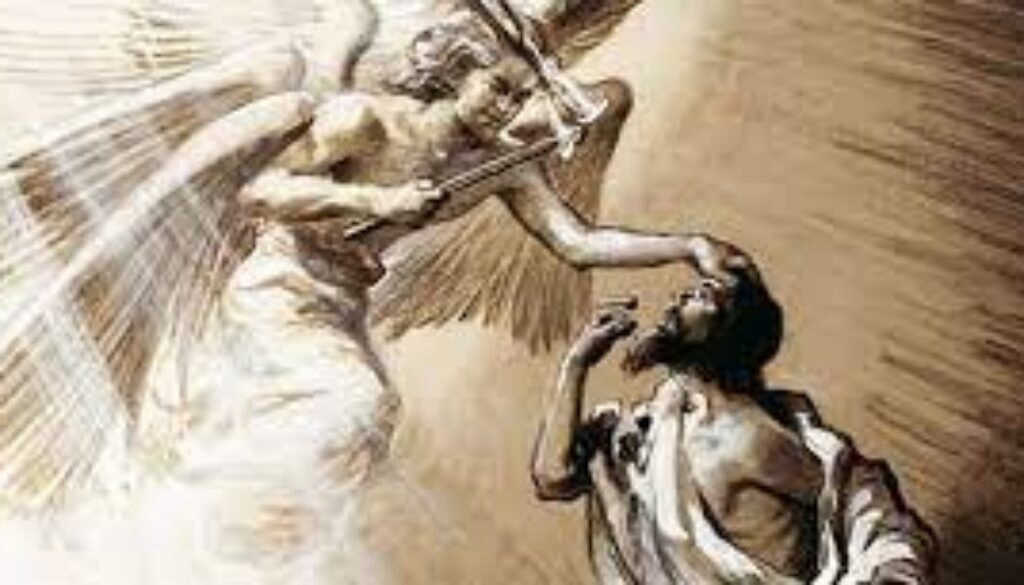
The Narrative Lectionary proposes that this Sunday we read the story of Isaiah’s call whilst he was in the temple (Isa 6:1–8), and it pairs that story with the call of Simon Peter beside the Sea of Galilee, as Luke reports it (Luke 5:8–10). I think this pairing is made because when Isaiah heard the seraphim singing in the temple, he cried out “woe is me! I am lost, for I am a man of unclean lips”, and when Simon Peter was struck by the power of Jesus by then Sea of Galilee, saying “get away from me, Lord, for I am a sinful man!”. Both men responded in fear.
The book of Isaiah is generally considered to have three main parts; most scholars believe that these three sections originate from three different periods during the history of Israel. The first section (chs. 1–39) is located in Judah in the eighth century BCE, as the final decades of the northern kingdom of Israel play out. Two decades after conquering the north, the Assyrians attempted to gain control of the southern kingdom, but that effort failed. These events provide the context for the activity of Isaiah and the oracles include in chapters 1–39.
The second section of Isaiah (chs. 40–55) dates from the time of exile for the southern kingdom, after the people of Judah had been conquered by the Babylonians in 587 BCE; it offers words of hope as the people look to a return to the land. Then, the third section (chs. 56–66) is dated to a time when the exiles had returned to Judah, sometime after 520 BCE. By convention, the three parts are known as First Isaiah, Second Isaiah, and Third Isaiah.
The opening verse of the book of Isaiah says that Isaiah son of Amoz saw a vision concerning Judah and Jerusalem “in the days of Uzziah, Jotham, Ahaz, and Hezekiah, kings of Judah” (Isa 1:1). That places his prophetic activity over a period of some decades in the latter part of the 8th century BCE. Amos and Hosea had been active a little before Isaiah, but they were in the northern kingdom. Isaiah was a contemporary of Micah in the southern kingdom; both prophets would have known about the attacks on towns in Judah by the Assyrian king Sennacherib in 701 (see 2 Kings 18–19; Micah 1:10–16; Isa 7:17; 8:1–4, 5–8).
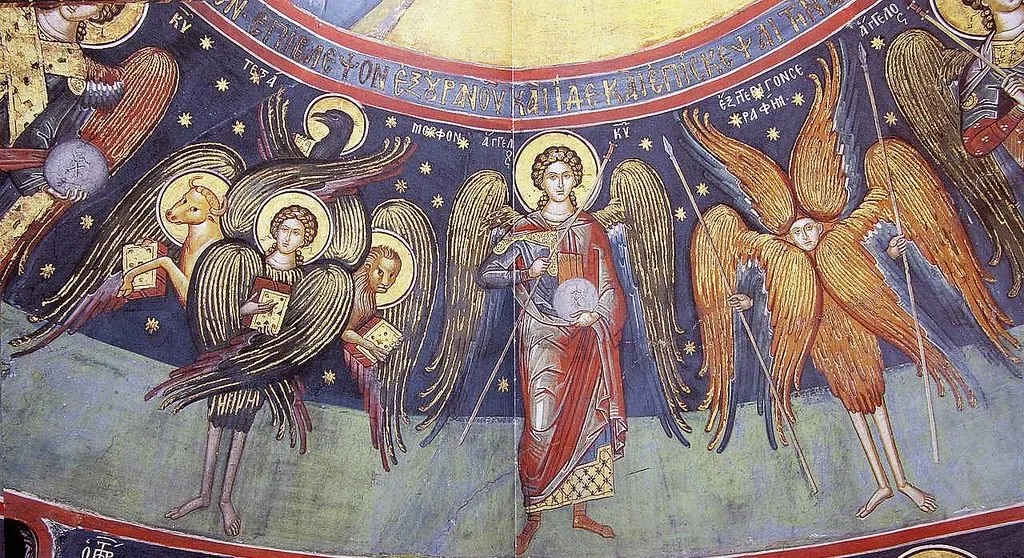
including the six-winged seraphim
As Isaiah was based in the southern kingdom, the account of his call (6:1–13) takes place in the temple in Jerusalem, where Isaiah “saw the Lord sitting on a throne, high and lofty; and the hem of his robe filled the temple” (6:1). This location, as well as a number of subsequent passages, suggest that Isaiah served as a “court prophet” to various southern kings; in particular, we see Isaiah providing prophetic advice to Ahaz (7:1–17) and Hezekiah (37:1–38; 39:1–8; 39:3–8).
The call narrative is dated quite specifically (“in the year that King Uzziah died”, 6:1), suggesting that Isaiah began his activity right at the end of Uzziah’s reign, around 740 BCE in our modern dating. The prophet, initially reluctant (6:5), eventually accepts the call (“here I am; send me!”, 6:8). This is where the Narrative Lectionary portion ends; but that is a cruel cut, because it actually removes from the worship selection the actual content of that call. It is as if the lectionary wants us to focus on the fact of a call, and not worry about the content of that call. In my mind, that’s not a helpful interpretive strategy.
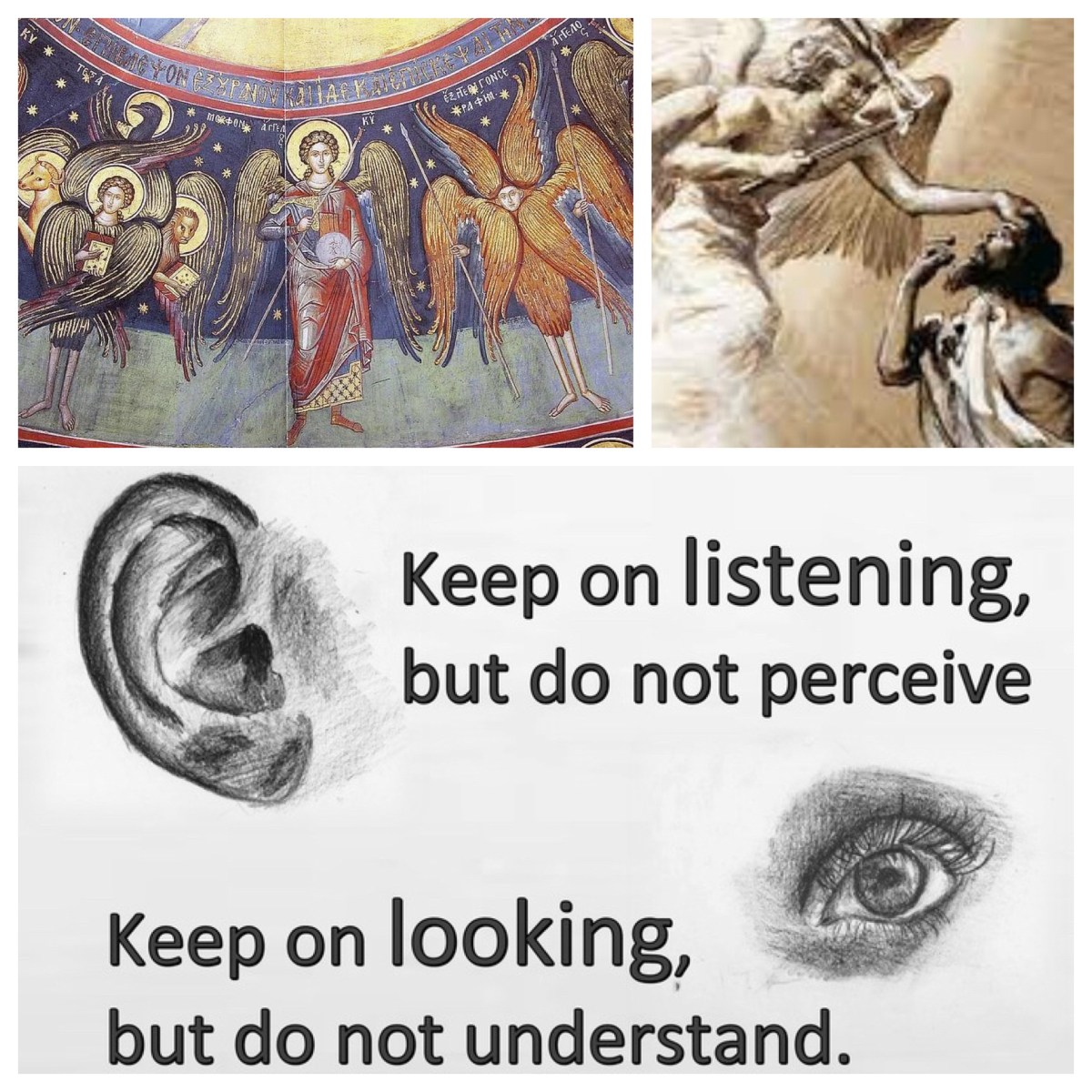
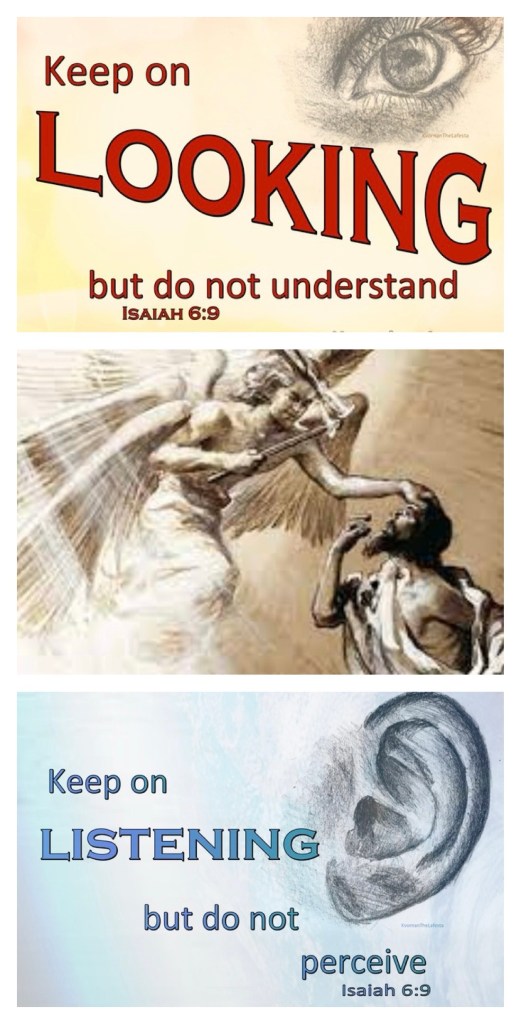
The narrative of Isaiah tells us that the soon-to-be prophet hears a most difficult charge given to him: “Go and say to this people: ‘Keep listening, but do not comprehend; keep looking, but do not understand.’ Make the mind of this people dull, and stop their ears, and shut their eyes, so that they may not look with their eyes, and listen with their ears, and comprehend with their minds, and turn and be healed” (6:9–10). It’s a charge that we hear at a couple of key places in the New Testament: when Jesus is teaching beside the Sea of Galilee at the start of his public activity (Mark 4:10 and parallels) and in a quotation by Paul during a debate while he was in a house in Rome at the end of his public activity (Acts 28:26–27).
The call of Isaiah is not the first thing we learn about this prophet in the book which bears his name. In the opening oracle (1:1–31), we meet a prophet who fearlessly berates Judah as a “sinful nation, people laden with iniquity, offspring who do evil, children who deal corruptly, who have forsaken the Lord, who have despised the Holy One of Israel, who are utterly estranged!” (1:4). Justice and righteousness have disappeared (1:21–22); the rulers “do not defend the orphan, and the widow’s cause does not come before them” (1:23). The covenant with the Lord has been seriously damaged. The prophet speaks clearly to issue a challenge to his contemporaries: God is displeased with them! No wonder his call stated quite clearly that people would not listen and not understand. He was required to speak hard words.
The main substance of this oracle involves a criticism of the worship practices in the Temple (“bringing offerings is futile; incense is an abomination to me; new moon and sabbath and calling of convocation—I cannot endure solemn assemblies with iniquity; your new moons and your appointed festivals my soul hates”, 1:10–15). You can imagine how the priests in the temple would have felt about this message! They would have been among those unable to hear, or see, or perceive what Isaiah was declaring to be “the word of the Lord”.
Instead of these rituals, Isaiah states that God demands that the people “wash yourselves; make yourselves clean; remove the evil of your doings from before my eyes; cease to do evil, learn to do good; seek justice, rescue the oppressed, defend the orphan, plead for the widow” (1:15–16). They need not only to hear and understand; they need to act. This is how repentance works, in transforming lives, in completely changing patterns of behaviour.
The prophet foreshadows, then, some good news: God will countenance repentance and a return to the covenant: “Zion shall be redeemed by justice, and those in her who repent, by righteousness” (1:27). However, he remains firm that if there is no repentance, the familiar prophetic indication of divine punishment will result: “rebels and sinners shall be destroyed together, and those who forsake the Lord shall be consumed” (1:28). Thus, the dual themes of punishment and forgiveness are sounded early; they recur throughout the rest of this section of the book. It was, undoubtedly, a hard message to hear and come to grips with, for the comfortable and privileged in Israelite society.
There are many well-known oracles in the ensuing chapters of First Isaiah. There is a striking vision of when “nations shall beat their swords into plowshares, and their spears into pruning hooks; nation shall not lift up sword against nation, neither shall they learn war any more” (2:1–4; the same oracle appears in Micah 4:1–4). Would that the leaders of the nation had heard and understood this message!
Next, the concept of the faithful remnant is introduced (4:2–6; see also 10:19–23; 11:10–11, 16; 28:5). This is followed by the story of the nation in God’s “love-song concerning his vineyard” (5:1–7). A love-song, we might think, would be good listening, an enjoyable tale. Sure enough, in the song, “my beloved” undertakes all the activity required to establish and nurture the vineyard. All bodes well.
Suddenly, however, the song takes a turn; only wild grapes were produced—and so, with typical Hebraic wordplays, the song turns to judgement: “he expected justice (mishpat) but saw bloodshed (mispach); righteousness (tsedakah) but heard a cry (seakah)” (5:7). Then follows a searing denunciation of the ills of society: the excesses of a debaucherous elite, contributing to the oppressive state of the lowly (5:8–23). As a result, the Lord threatens invasion of the land (5:24–30); “he will raise a signal for a nation far away, and whistle for a people at the ends of the earth; here they come, swiftly, speedily!” (5:26). The threat from Assyria looms large in this oracle. Again, the prophet speaks hard words to a people seemingly unable to comprehend what he says.
In this section of Isaiah there is mention made of a group of disciples of the prophet (8:16–22), as well as the children of the prophet, who serve as “signs and portents in Israel from the Lord of hosts, who dwells on Mount Zion” (8:18). These children are named as Shear-jashub, meaning “a remnant shall return” (7:3), and Maher-shalal-hash-baz, meaning “the spoil speeds, the prey hastens” (8:3). Names, as is often the case within Hebrew Scripture, are potent symbols, describing the reality of the times.
Both names provide testimony to the fate that lies in store for Judah: the planned attack by Assyria will fail (7:4–9), and “the wealth of Damascus and the spoil of Samaria will be carried away by the king of Assyria” (8:4). The mother of these two sons, unnamed, is simply “the prophetess”, who “conceived and bore a son” for Isaiah (8:3)—although married to the prophet Isaiah, might she have been a prophet in her own right?
That’s how she is understood in some later traditions; for instance, there is an assumption that she was involved with her husband in naming their children—with names that reflect prophetic insight. Added to this is the fact that Isaiah refers, not simply to his “wife”, but to “the prophetess”, suggesting that she stands alongside her husband in declaring “the word of the Lord” to a recalcitrant people.
So when we hear the shortened version of the call of this prophet, and ponder, perhaps, our own call, let us also recall the difficult message he was given to proclaim to the people (along with his wife), and the integrity and commitment he showed in delivering it.
 An Informed Faith