
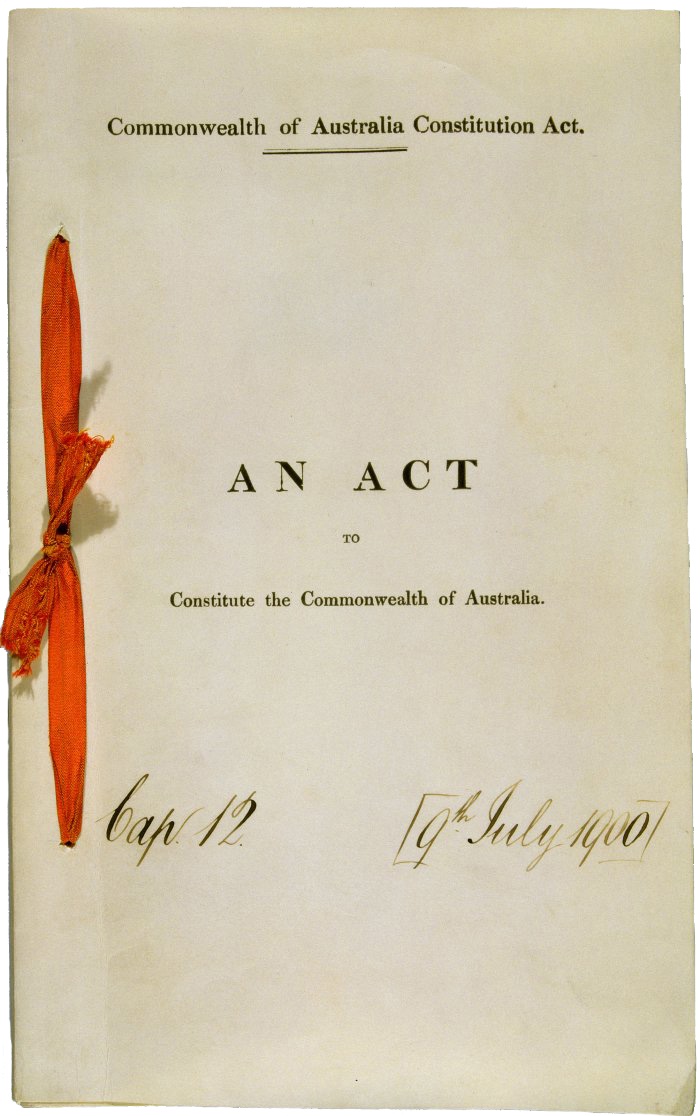
Thanks to my colleague, the Rev. Dr Avril Hannah—Jones, and as Australians look ahead to voting in a referendum to make a change to our national constitution, here are some constitutional trivia questions—the answers are well worth considering!
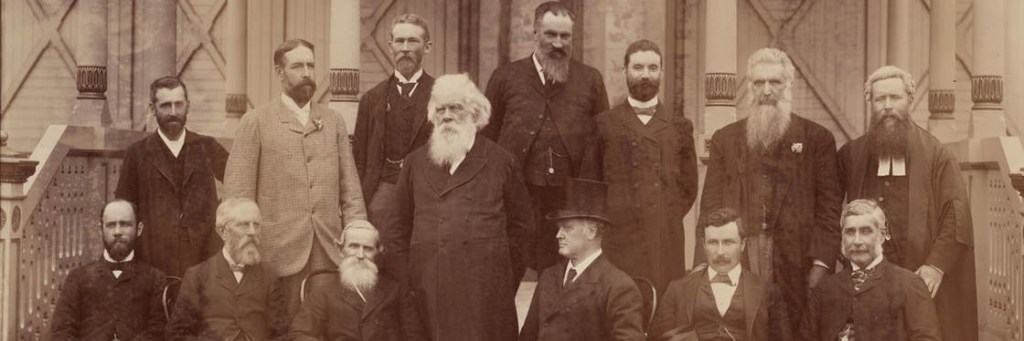
Source: National Library of Australia
Constitution Trivia 1: Did you know that neither the Prime Minister nor Cabinet is mentioned in the Constitution?
Constitution Trivia 2: Did you know that the Australian Constitution is an Act of the British Parliament?
In 1986 two simultaneous Acts were passed to formally sever all legal ties between Australia and the UK apart from the monarchy: the Australia Act 1986 (Cth) and the Australia Act 1986 (UK). These Acts had to be passed by both the Parliament of Australia and the Parliament of the UK because lawyers were unsure whether Australia alone had the authority to enact the legislation. The two Acts came into effect simultaneously, on 3 March 1986. Until 1986, the Privy Council was Australia’s highest court of appeal, and the UK Parliament could still have made laws for Australian states.
Constitution Trivia 3: Did you know Australians only have five constitutional rights?
These are the right to vote (s. 41); the right to receive ‘just terms’ if our property is acquired (s. 51 [xxxi]); trial by jury for offences against Commonwealth law (s. 80); freedom from the imposition of any religion (s. 116); and freedom from discrimination on the basis of residence in any state, so that a Western Australian cannot be discriminated against for not being a Tasmanian, for example (s. 117).
Constitution Trivia 4: Did you know New Zealand was almost part of the Commonwealth?
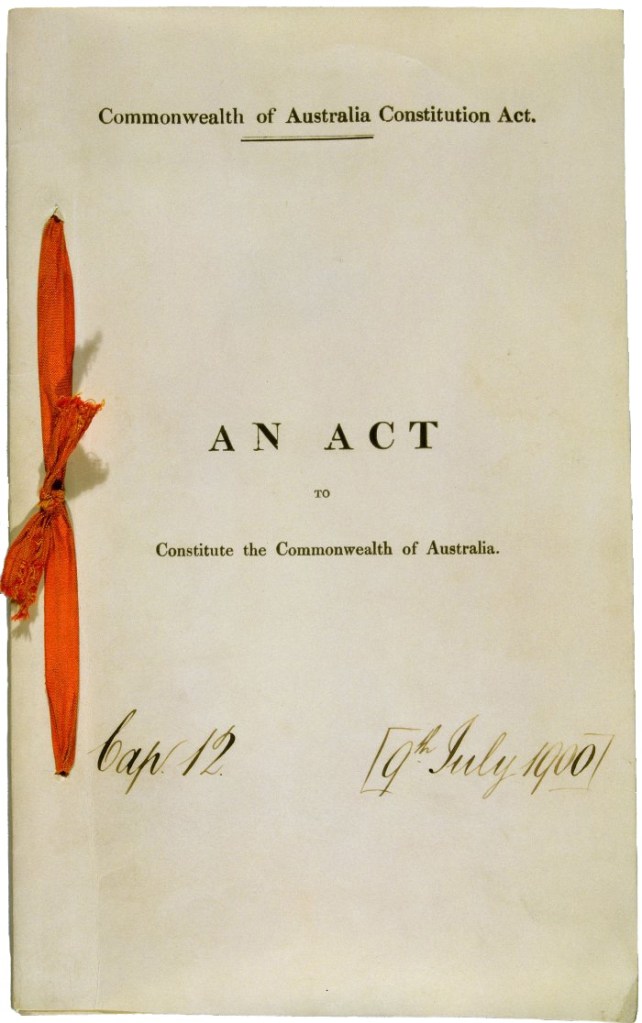
Covering Clause 6 of the Commonwealth of Australia Constitution Act, ‘Definitions,’ says that ‘the States’ in the Constitution means “such of the colonies of New South Wales, New Zealand, Queensland, Tasmania, Victoria, Western Australia, and South Australia, including the northern territory of South Australia, as for the time being are parts of the Commonwealth, and such colonies or territories as may be admitted into or established by the Commonwealth as States; and each of such parts of the Commonwealth shall be called a State”. If New Zealand does ever want to join us it can under s. 121 ‘New States may be admitted or established’.
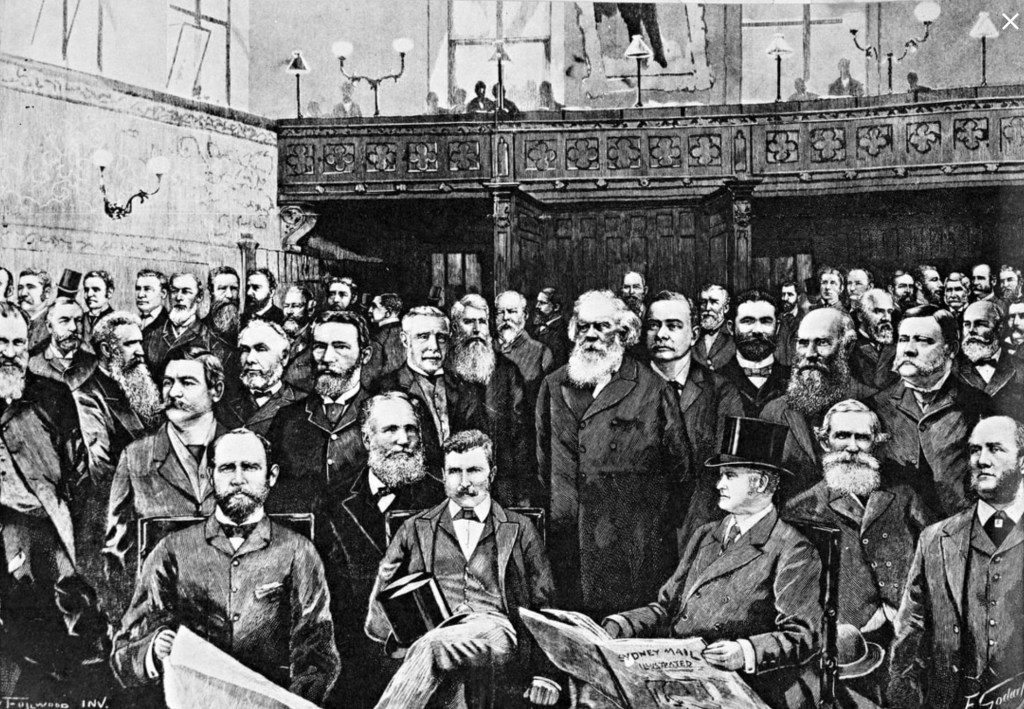
Source: National Archives of Australia
Constitution Trivia 5: Did you know ‘race’ is mentioned twice in the Constitution?
Section 25 says that for the purposes of determining the population of a State, in order to determine how many House of Representative seats it may have: “if by the law of any State all persons of any race are disqualified from voting at elections for the more numerous House of the Parliament of the State, then, in reckoning the number of the people of the State or of the Commonwealth, persons of that race resident in that State shall not be counted”.
Under section 51 (xxvi) the Commonwealth has the right to make laws with respect to “the people of any race for whom it is deemed necessary to make special laws”. This section was amended by the Constitution Alteration (Aboriginals) 1967, and previously read “(xxvi) the people of any race, other than the aboriginal race in any State, for whom it is deemed necessary to make special laws.” The Constitution Alteration (Aboriginals) 1967 also repealed section 127 which had said: “In reckoning the numbers of the people of the Commonwealth, or of a State or other part of the Commonwealth, aboriginal natives shall not be counted.”
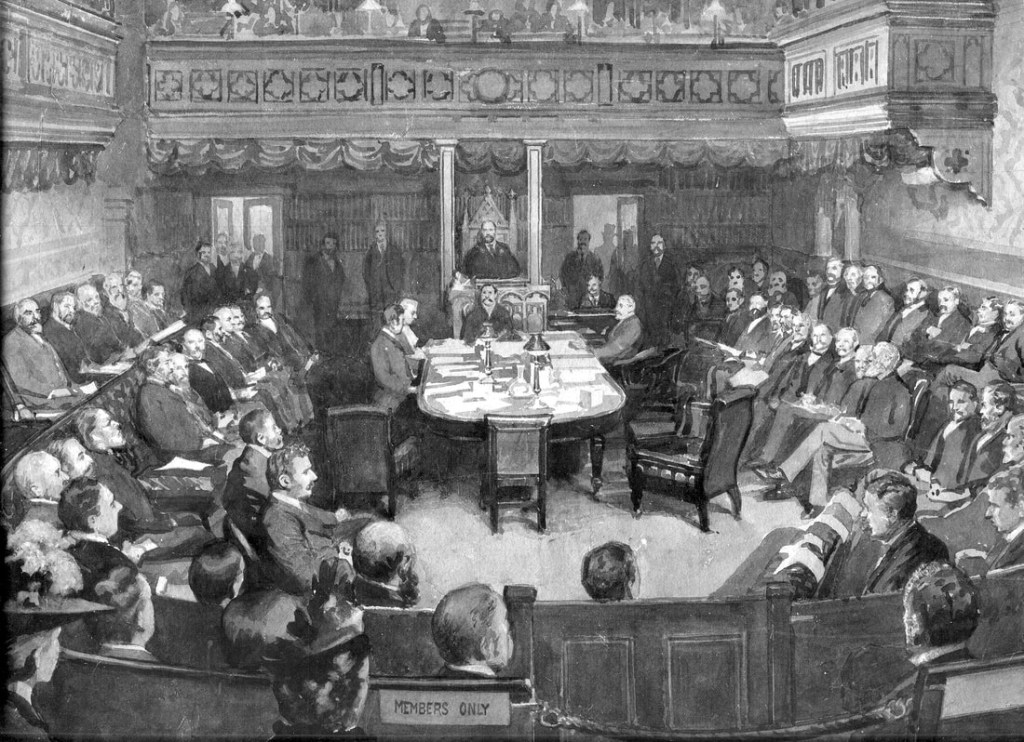
Source: NSW Parliamentary Archive
Constitution Trivia 6: Did you know political parties are only mentioned in section 15 of the Constitution, and have only been there since 1977?
Section 15 covers casual vacancies in the Senate and now says that if the place of a Senator becomes vacant (for instance through resignation or death) they must be replaced by someone of the same political party. This clause was introduced after New South Wales Liberal Party Premier, Tom Lewis, appointed independent Cleaver Bunton to fill the vacancy left after ALP Senator Lionel Murphy became a High Court judge, and Queensland Country Party Premier John Bjelke-Petersen appointed independent Albert Field to fill the vacancy left after ALP Senator Bertie Milliner suddenly died, both in 1975. To prevent this from happening again section 15 was amended by Constitution Alteration (Senate Casual Vacancies) 1977.
Constitution Trivia 7: Did you know section 25. ‘Provisions as to races disqualified from voting’ is an anti-racist clause?
Andrew Inglis Clark introduced it to penalise any State that enacted racially discriminatory voting laws. If a State was to disqualify the people of any race from voting in State elections, then those people would not be counted to work out how many seats each State got in the House of Representatives, and so that State would have fewer seats than States without racially discriminatory voting laws. Sadly, there was no attempt made to penalise States that denied women the vote, and when the Constitution was being drafted some of them did!
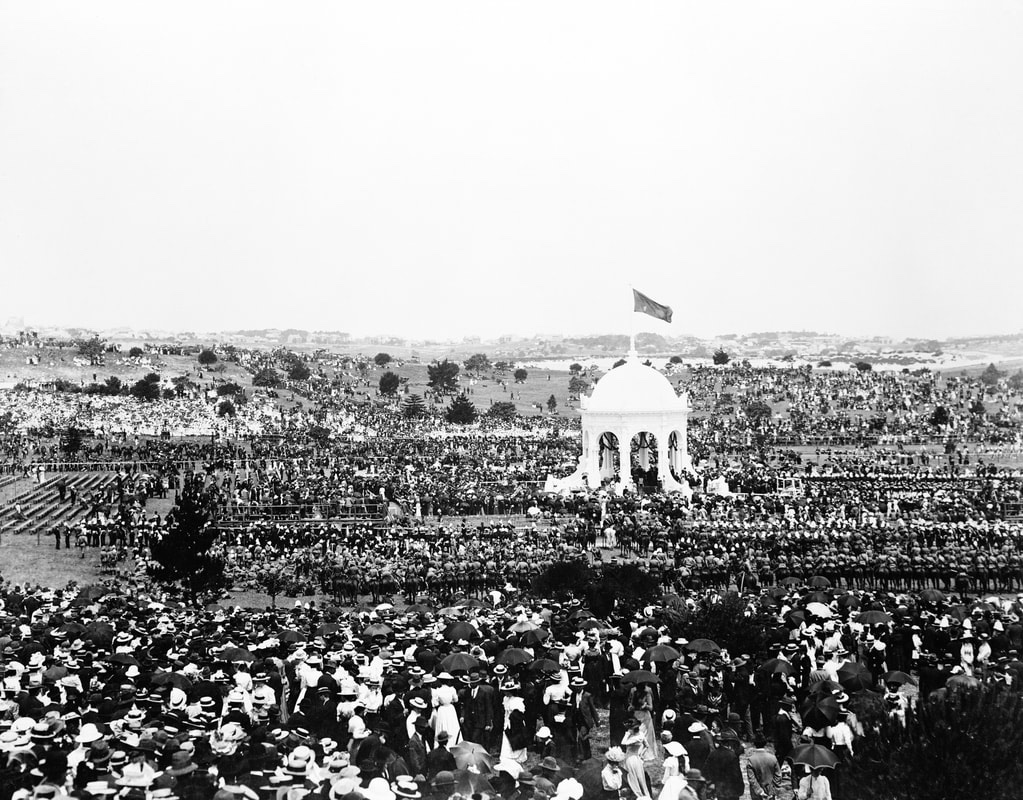
A five mile parade was held to commemorate Federation, which included horse-drawn floats and specially constructed Federation Arches that the procession passed through. 500,000 people lined the route from the Domain to Centennial Park. More than 60,000 people poured into Centennial Park, including 7,000 dignitaries and guests and 300 members of the press, all watching as the first Federal Government was formed (pictured above).
Three choirs sang for the occasion, including a choir of 10,000 school children, a church choir of 400 people and another choir of a thousand.
Source: The Parliamentary Education Office, Canberra
Avril has promised that there are more trivia questions to come … so stay tuned!!
 An Informed Faith