The paradox of discipleship (Matt 16; Pentecost 14A)

The section of the Gospel that is offered in the lectionary this coming Sunday (Mark 16:21–28) contains a striking paradox. As the author of this passage portrays Jesus, looking forward to the public shaming that he will experience on the cross, he places on his lips a call to his followers, to take up the cross themselves. The cross is at the centre of the story that the evangelists tell—and at the heart of Christian faith. And yet that cross subjects Jesus to the shame of being subjected to this degrading punishment.

The cross is introduced by Jesus himself, when he teaches his followers “that he must go to Jerusalem and undergo great suffering at the hands of the elders and chief priests and scribes, and be killed, and on the third day be raised” (16:21). So important is this teaching, that Jesus repeats it twice more, following the threefold appearance of this prediction in one of Matthew’s key sources, “the beginning of the good news of Jesus, Messiah”, which we know as Mark’s Gospel (Mark 9:31; 10:33–34).

So Jesus restates this briefly: “the Son of Man is going to be betrayed into human hands, and they will kill him, and on the third day he will be raised” (Matt 17:23); and then, with more details: “the Son of Man will be handed over to the chief priests and scribes, and they will condemn him to death; then they will hand him over to the Gentiles to be mocked and flogged and crucified; and on the third day he will be raised” (Matt 20:18–19).

I don’t think that these three predictions were spoken, historically, by Jesus, as he made his way towards Jerusalem. Rather, the author of a placed them in this strategic place in the centre of his narrative (Mark 8:27–38). The author of “the book of origins of Jesus, Messiah”, which we know as Matthew’s Gospel, sees the value of this repetition, and follows his source.

These statements mark the turn in the story from Galilee, where the earlier activity of Jesus took place (Matt 4:12—18:35), towards Jerusalem, where the final days of Jesus will play out (19:1—28:15). The dynamic of the narrative indicates that, as Jesus leaves behind the days of preaching and teaching, healing and casting out demons, his focus turns to the confrontation that he knows lies in store for him.

The public nature of crucifixion was humiliating and shaming. The typical process of crucifixion involved moment after moment of humiliation, undermining any sense of honour that the victim had, increasing the sense of public shame that they were experiencing.

In the Roman world, crucifixion was variously identified as a punishment for slaves (Cicero, In Verrem 2.5.168), bandits (Josephus, War 5.449-451), prisoners of war (Josephus, War 5.451), and political rebels (Josephus, Ant. 17.295). These were people whose situations or actions had generated shame.

In the case of Jesus, he is accused of treason through the inference that he is King of the Jews—a claim that was anathema to the Romans (John 19:12)—and he is crucified in the company of political rebels (Mark 15:27; Matt 27:38; the term used, lēstēs, is the one most often found in the writings of Josephus to denote a political rebel).

A public trial, followed by a public execution on the cross, was a ritual in which the accused person was shamed, through a public ritual of status degradation. Cicero, in speaking as the counsel of Rabinio, a man accused of treason, asserted that “the ignominy of a public trial is a miserable thing” and described a public execution as “the assembly being polluted by the contagion of an executioner … [exhibiting] traces of nefarious wickedness” (Pro Rabinio 11, 16).

I have explored the humiliation and shaming inherent in the act of crucifixion in more detail in a blog at

And yet, immediately after he spoke this prophetic word, Jesus issued his disciples with a call to take up their crosses themselves: “if any want to become my followers, let them deny themselves and take up their cross and follow me” (Matt 16:24). He invites them—indeed, he commands them—to enter into the public shame that he will experience in his own crucifixion.

In the narratives that recount the crucifixion of Jesus, it is not so much the physical torment of Jesus which is highlighted (although, admittedly, a slow death by suffocation whilst hanging on a cross for hours, even days, was a terrible fate). Rather, it is the various ways in which Jesus was shamed: he was spat upon, physically struck on the face and the head, verbally ridiculed and insulted, and treated contemptuously.

This is the way of Jesus; and the way of his followers. Instead of saving their life, the followers of Jesus are instructed to lose their life (16:25). Instead of aiming to “gain the whole world”, and thereby “forfeit their life”, a follower is, by implication, to let go of all hopes of “gaining the world” (16:25–26). To gain the world was presumably referring to occupying a position of power, prestige, and popularity—precisely the kind of issues that later writers, Matthew and Luke, reflected in their more detailed accounts of the testing of Jesus in the wilderness. (See https://www.google.com.au/amp/s/johntsquires.com/2019/03/05/a-testing-time-forty-days-in-the-wilderness-1/)

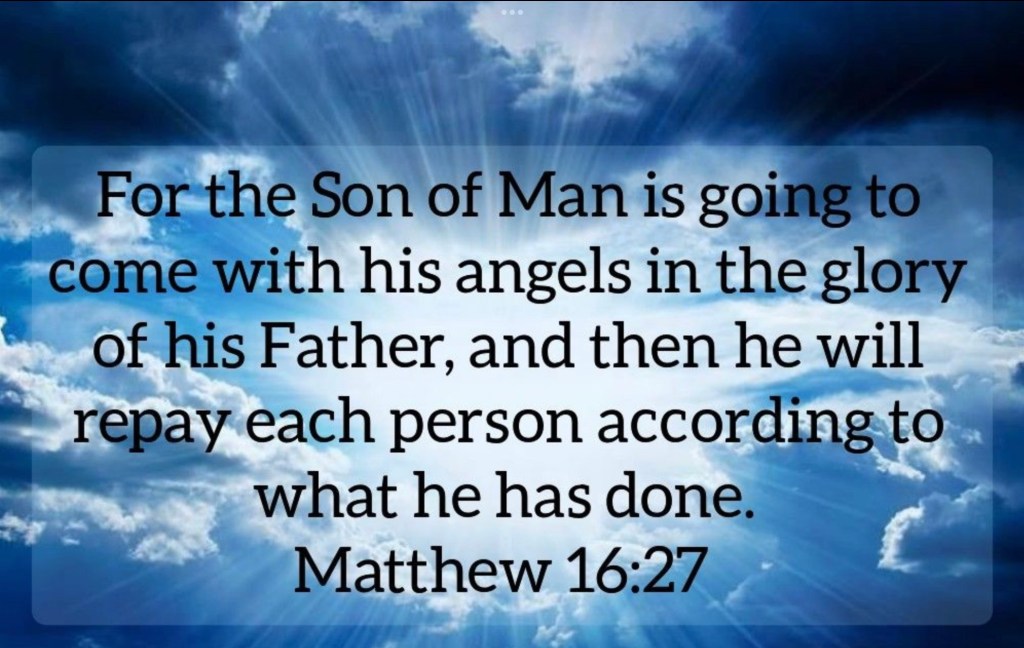
Then, Jesus specifies the sense of shame that is involved in “taking up your cross” and “losing your life”, but he turns the tables as he declares that “the Son of Man is to come with his angels in the glory of his Father, and then he will repay everyone for what has been done” (16:27).

This reversal of fortune, repaying everyone for their deeds, reflects the shame, in God’s eyes, of rejecting Jesus. (The way this saying is expressed in Mark’s earlier version is clearer in this regard; see Mark 8:38.) Here is the paradox: to gain honour, Jesus had to be subjected to the shame of the cross.

Likewise, to gain honour as a disciple following Jesus, a person must take up the shameful instrument of punishment (the cross), lay aside all desire to gain prestigious and powerful positions of honour, give up any claim on life itself, and (as Jesus later asserts), live as a servant, being willing to be dishonoured for the sake of the shame of the Gospel.

And that’s the paradox of discipleship that this passage illuminates.

Plants and buildings, folly and wisdom (1 Cor 3; Epiphany 6A)

In recent weeks, we have traced the argument in the opening chapters of what we know as Paul’s first letter to the Corinthians. The letter itself is positioned as a joint enterprise, written by Sosthenes, one of the leaders of the synagogue in Corinth (Acts 18:17), and Paul, a Pharisee who was well-trained in understanding Torah (Phil 3:5) and was known for being “advanced in Judaism” and “zealous for the traditions of my ancestors” (Gal 1:14).

So it should be no surprise that in this letter, they make regular use of scriptures drawn from their Jewish traditions and terms already familiar from their occurrence in the Hebrew Scriptures (at least, in the Greek translations that were available, such as the Septuagint). In fact, each section of the opening argument is shaped around Hebrew Scripture texts, as we have seen.

The opening message about “the word of the cross” (1 Cor 1:18–31) begins with scripture (1:19, citing Isa 29:14) and ends with scripture (1:31, quoting Jer 9:22–23). The second section with the declaration about “know nothing but Jesus Christ and him crucified” (2:1–16) cites Isa 64:4 (at 2:9) and later concludes with a quotation from Isa 40:13 (at 2:16). In both instances, the concluding quotation is the lynchpin for the argument—delayed, in typical rabbinic style, to provide the “proof text” that draws the whole rhetorical sequence to a head.

A similar kind of structure appears in chapter 3 of the letter, although sadly the lectionary has severed the start from the end. This coming Sunday, Epiphany 6, we are offered 1 Cor 3:1–9, a discussion about the leaders of the groups that had developed within the community, fracturing the unity that was desired (see 1 Cor 1:10–17). In that early section, Paul had identified Cephas, Apollos, himself, and indeed Christ, as the leaders of four different factions. He returns to two of those names, Apollos and his own, in this section of the letter (see 3:4–6, 22).

In addressing that sorry situation at the start of the letter, Paul and Sosthenes affirm that their mission was “to proclaim the gospel, and not with eloquent wisdom, so that the cross of Christ might not be emptied of its power” (1:17). The irony, of course, is that the letter uses precisely the finely-honed tools of rhetoric to convey that gospel truth; see my analysis at

and

Sadly, the second part of the argument in chapter 3, where the writers build on what has been stated in the earlier part, is allocated by the lectionary to Epiphany 7 (1 Cor 3:10–23); but in the current year, when Easter falls relatively early, there is no Epiphany 7. So a strict following of the lectionary means that we miss the concluding section, and the punchline, of this third extended argument.

The argument of this third chapter comes to a head with the quotation of two scripture texts: Job 5:12 (at 3:19) and then Psalm 94:11 (at 3:20). Both texts puncture any claim to importance or priority amongst “the wise”—the heart of the argument that has been advanced since the initial scripture quotation, of Isa 29:14, at 1 Cor 1:19. So the conclusion.

Whilst the beginning of the argument in chapter 3 has no explicit scripture quotation, nor even any defined allusion, to scriptural texts, there are elements that bear on Hebrew Scripture. The imagery of planting and watering, and fruit growing (3:6) would surely have been evocative to those familiar with the agricultural history of Israel. A common symbol for the people, the nation, was the vineyard (Exod 15:17; Psalm 80:8–15; Isa 5:1–7; 60:21; Jer 2:21; Ezek 17:5–10; 19:10; Amos 9:15). As was reiterated in these scriptural passages, God planted the nation, and God gave growth to the people as “the vine”—an affirmation that the letter to the Corinthians firmly maintains: “God gave the growth” (3:7).

The imagery of building (3:9–15) also has scriptural resonances. Hebrew Scripture contains a long history-like multi-book saga of Israel that the Deuteronomist constructed, drawing on various sources, to narrate the story of the creation and flourishing of the kingdom of Israel (including both Israel and Judah). There can be no doubt that a high point in this saga was reached with the construction of “a building” on Mount Zion. The house of the Lord was the pinnacle of the nation which had been promised (in Genesis), created (in the other books of Torah, and then in Joshua and Judges), and established (in the narratives of Samuel and Kings).

This building was the work of perhaps the greatest of all Kings of Israel, Solomon (see 1 Kings 3—8). It was the fulfilment of a promise made to David (2 Sam 7, especially verse 13). The house built was to the the Temple, where the Lord God dwelt in the Holy of Holies (Exod 24—27). The centrality of the Temple, the house of God, in the religious, political, and social life of the people of Israel was clear.

Paul and Sosthenes use these scriptural references to good effect in addressing the difficulties of the situation in Corinth. They affirm that they, together with others active in planting and nurturing communities of faith, as well as the people in Corinth who participate in such communities, are indeed “God’s field, God’s building” (3:9).

The imagery of plants in the field, watered and nurtured, growing together (3:6–8) both draws on the Israelite language of Israel as the vineyard, but also counters the situation of division and discord in Corinth. Rather than claiming “I belong to XX”, as was noted previously (1:12) and is repeated here (3:4), the Corinthians are challenged to look for a “common purpose” (3:8) and to be “God’s servants, working together” (3:9).

The language of a building (3:10–11) points to the central building structure in the kingdom of Israel, the Temple, and reminds the Corinthians that they have been carefully and deliberately placed on a form foundation, and “that foundation is Jesus Christ” (3:11). The language here recalls the central focus articulated earlier in the letter: “the message about the cross” (1:18), the singular focus on “Jesus Christ and him crucified” (2:2). The wisdom that God offers through this follow of crucifixion is what will build up the community (3:12–13).

So the conclusion is drawn with a typical rhetorical question: “do you not know that you are God’s temple?” (3:16), followed by a strengthening affirmation, “God’s temple is holy, and you are that temple” (3:17). The introduction of the age-old Israelite notion of holiness here thus sets up the argument for what follows in subsequent chapters, as instances of unholy behaviour are addressed.

The argument of this chapter draws to a familiar close, with two scripture citations that underline the power of divine weakness (if that is what the crucifixion of Jesus might have shown), the folly of divine wisdom (again made evident through the cross). The advice is clear: “if you think you are wise … you should become fools” (3:18); and then, “let no one boast about human leaders” (3:21).

To substantiate this, the word of Job is first cited (Job 3:15 at 1 Cor 3:19)—God “catches the wise in their craftiness”—followed by the words of the psalmist, “the Lord knows the thoughts of the wise, that they are futile” (Ps 94:11 at 1 Cor 3:20). The argument proposed in principle at 1:18–25 comes to its culmination here through its application to the Corinthians. Wisdom is folly, power is weakness; yet in God’s weakness, power is manifested, and in God’s foolishness, wisdom is declared.

Who has known the mind of the Lord? (1 Cor 2; Epiphany 5A)

The cross is the benchmark for understanding how believers are to behave, how they are to relate to one another, and how the community that they form is to be described. This is the thesis that Paul and Sosthenes propose near the start of their lengthy letter to “the church of God that is in Corinth, to those who are sanctified in Christ Jesus, called to be saints” (1 Cor 1:1–2), and also to “all those who in every place call on the name of our Lord Jesus Christ” (1:2).

As we have already noted, “the word of the cross” features prominently in the authentic letters of Paul. See

It also shapes the way that Sosthenes and Paul begin to work their way through the many issues that have been festering within the community in Corinth—issues which apparently have been brought to their attention by “Chloe’s people” (1:11) and which may well have been further developed in discussions in person with Stephanas, Fortunatus, and Achaicus, when they came to Ephesus (16:17). We have explored this initial argument (in 1:18–31) at

The thesis concerning “the word of the cross” continues to be advanced in the following section of the letter (2:1–16), which is offered by the lectionary as the Epistle for this coming Sunday. It is worth reading right through to the end of the chapter in v.16, rather than stopping at v.13, as the lectionary suggests, since (in my view) v.16 provides the capstone of the argument of the whole two chapters, with its citation of yet another scriptural text, from the prophet Isaiah (1 Cor 2:16, citing Isa 40:13).

It is, after all, only “Jesus Christ, and him crucified” (2:2), which is at the heart of the preaching undertaken by Paul, who “did not come proclaiming the mystery of God to you in lofty words or wisdom” (2:1), who preached not trusting in his own strength, but “with a demonstration of the Spirit and of power” (2:4). Paul is concerned to ensure that the faith of the Corinthians “might rest not on human wisdom but on the power of God” (2:5).

It is “Jesus Christ, and him crucified” who provides the foundation, also, for the letter which Paul writes in association with Sosthenes, in which they set out “the message of the cross” (1:18). The two authors expound this central message through a sequence of clearly-shaped sections (1:18–31; 2:1–12; 3:1–20). The part of the argument as presented by Sosthenes and Paul in this chapter (2:1–12) both continues in the rhetorically-shaped form that we have seen in 1:18–31, and follows the rabbinic pattern of drawing from scripture in the argument (2:9, citing Isa 64:4), finishing with a climactic quotation that “proves” the point (Isa 40:13 at 2:16).

The rhetorical shaping is evident particularly in the oppositions that are proposed in the letter in a sequence of antithetical parallelisms. First, the Corinthians hear the declaration, “I did not come to you … in lofty words or wisdom … [rather] I came to you in weakness and in fear and in much trembling” (2:1, 3). Then follows, “my speech and my proclamation were not with plausible words of wisdom, but with a demonstration of the Spirit and of power” (2:4).

The writers declare that they speak wisdom, “not a wisdom of this age or of the rulers of this age … [but rather] God’s wisdom, secret and hidden, which God decreed before the ages for our glory” (2:6–7). They continue, “we have received not the spirit of the world, but the Spirit that is from God” (2:12), and then, “we speak of these things in words not taught by human wisdom but taught by the Spirit” (2:13).

Finally, the argument draws towards its conclusion with this striking application to the Corinthian situation: “those who are unspiritual do not receive the gifts of God’s Spirit … [rather] those who are spiritual discern all things” (2:14–15). The antithetical parallelisms (not … but …, regularly repeated) have functioned throughout to throw the emphasis always on the second half of the pairing, for that is the point of each statement.

So the first half of each anthesis sets up the expectation with an offering that is negated, before the second half affirms what is actually being proposed by the letter-writers: they bring a demonstration of the Spirit, God’s wisdom, being taught by the Spirit, the Spirit from God, and able to discern all things through the Spirit. That’s really the short-hand summary of what the argument is, stripped of its rhetorical finesse.

*****

Sosthenes, we presume, was one of the leaders of the synagogue in Corinth (Acts 18:17). Paul had been well-trained in understanding Torah (Phil 3:5) and was known for being “advanced in Judaism” and “zealous for the traditions of my ancestors” (Gal 1:14). So it should be no surprise that in this letter, they make regular use of scriptures drawn from their Jewish traditions—and follow traditional rabbinic patterns in the way they use these passages.

The two prophetic citations they make in this chapter were spoken by prophets whose names we do not know. Their oracles were included in the scroll that bears the name of the eighth century BCE prophet, Isaiah, who provided advice to kings in Judah in the decades prior to the people being taken into exile in Babylon. These later oracles may well have been shaped by prophets who traced their allegiance to Isaiah, who may well have been trained within an ongoing “school of Isaiah”. Such a school is hypothesised on the basis of Isaiah’s instructions to “bind up the testimony, seal the teaching among my disciples” (Isa 8:4).

The first oracle cited in 1 Corinthians 2 comes from the time when Israel had been in exile in Babylon for some time, and was looking with hope to the promised return to the land (Isaiah 40–55). The second oracle cited was from an earlier time, when Israel was seeking to re-establish itself as a functioning nation in a land and city that had been devastated by the destruction of invasion some decades earlier (Isaiah 55–66).

The first text, cited earlier in the argument as the subsidiary passage, is “what no eye has seen, nor ear heard, nor the human heart conceived, what God has prepared for those who love him” (Isa 64:4). These words were spoken during a prayer of petition in which the unknown prophet at the time of restoration urges God to act: “O that you would tear open the heavens and come down … to make your name known to your adversaries, so that the nations might tremble at your presence!” (Isa 64:1–2).

This prophet confesses that “we are the clay, and you are our potter; we are all the work of your hand” and pleads, “do not be exceedingly angry, O Lord, and do not remember iniquity forever” (Isa 64:8–9), observing that “your holy cities have become a wilderness, Zion has become a wilderness, Jerusalem a desolation” (Isa 64:10). The prophet’s faith is expressed in the final phrase of the cited text, in that the Lord “works for those who wait for him” (Isa 64:4). It is this faith which is referenced during the argument of 1 Corinthians 2.

The second text, which provides the climax to the argument to the Corinthians, comes from the other unknown prophet, still in exile, who offers his people words of comfort, asking God to “speak tenderly to Jerusalem, and cry to her that she has served her term, that her penalty is paid, that she has received from the Lord’s hand double for all her sins” (Isa 40:2).

As the voice cries out in the wilderness to “prepare the way of the Lord, make straight a highway” 40:3) and to “lift up your voice with strength, O Jerusalem, herald of good tidings, lift it up, do not fear” (40:9), he prepares his people to receive the restorative presence of God, who “gives power to the faint, and strengthens the powerless” (40:29).

The oracle identifies the mystery of the way that the Lord works, pondering: “Who has directed the spirit of the Lord, or as his counselor has instructed him? Whom did he consult for his enlightenment, and who taught him the path of justice? Who taught him knowledge, and showed him the way of understanding?” (40:13–14).

This is the part of the text that Sosthenes and Paul deploy as their concluding “proof text”, as they remind the Corinthians that any claim to have access to “the depths of God” (1 Cor 2:10), to comprehend “what is truly God’s” (2:11), needs to be measured by “the gifts bestowed on us by God” (2:12), the “things God has revealed to us through the Spirit” (2:10), which is what is communicated through “the message about the cross” (1:18), the proclamation of “Christ crucified” (1:23; 2:2).

So the argument in this section strengthens the polemic that was already present in the critique of “the world” in 1:18-31. In that section, the criticism was levelled against “the wisdom of the world” (1:20-21, 25, 27) and also against worldly power (1:24-25). In this section, the positive contribution of the Spirit to God’s wisdom is set forth; and the way that the Spirit operates is through the foolishness of the cross, which is indeed a clear insight into “the mind of the Lord”.

In this way, the letter writers articulate “the message of the cross”, consistent with Paul’s decision to “know nothing among you except Jesus Christ, and him crucified”.

The rhetoric of the cross (1 Cor 1; Epiphany 3A)

This coming Sunday, the third Sunday in Epiphany, the lectionary offers focus on the themes of illumination and revelation which are to the fore during this season. The Psalmist writes of his seeking the face of the Lord; “your face, Lord, do I seek; do not hide your face from me” (Ps 27:8–9). It is a prayer that may well serve as the theme prayer for the season of Epiphany.

The prophet Isaiah speaks of the Lord “making glorious” the land of Israel, for “the people who walked in darkness have seen a great light; those who lived in a land of deep darkness on them light has shined” (Isa 9:2). That same prophetic oracle is then quoted in the excerpt from the Gospel of Matthew (Matt 4:15–16), as the commencement of the ministry of Jesus is seen to be “what had been spoken through the prophet Isaiah might be fulfilled” (Matt 4:14). The light shining in the darkness is indeed the Epiphany motif.

In the Epistle that is being read during these weeks in Epiphany, 1 Corinthians, there is no specific reference to illumination or revelation, as per the theme of the season. Sosthenes has joined with Paul to write quite specifically to “the church of God that is in Corinth, to those who are sanctified in Christ Jesus, called to be saints” (1 Cor 1:1–2); the letter certainly indicates a good awareness of the situation in Corinth.

However, Sosthenes and Paul then add to that specific address, indicating that they write also to “all those who in every place call on the name of our Lord Jesus Christ” (1:2), wishing them grace and peace (1:3). It is a letter sent with all good intentions to encourage and support the believers in Corinth; but the addition of this wider scope of believers “in every place” broadens the intended audience. We are explicitly invited into that wider audience through this additional phrase.

The apostle Paul is known as a letter writer; there are 13 letters attributed to him in the New Testament—although it is likely that almost half of them were written by students of Paul after his lifetime, drawing on his authority to give force to what they write. See https://johntsquires.com/2020/11/18/what-do-we-know-about-who-wrote-the-letters-attributed-to-paul-3/

Paul collaborated in the writing of many of his letters—of the seven agreed authentic letters, only two are written by Paul alone. The others are written in association with Timothy (2 Cor, Phil, 1 Thess and Phlm), Silvanus (1 Thess), and Sosthenes (1 Cor). It is this latter letter that the creators of the lectionary, in their wisdom, have offered us during the season of Epiphany. We read the opening chapters in sequence through these weeks.

Sosthenes and Paul tell the Corinthians that they write to “give thanks” (1:4) and also to “appeal to you” (1:10); and later, to “admonish you as my beloved children” (4:14). The constructive approach that they bring is made clear in the opening prayer of thanksgiving (1:4–9).

*****

In the passage we hear this Sunday (1 Cor 1:10–18), there is an unequivocal statement about what undergirds the constructive intention that Sosthenes and Paul bring as they write. It is “the cross of Christ” (1:18) that shapes the discussion and directions that Paul will present to the believers in Corinth in the ensuing 16 chapters. (This letter is longer than all other Pauline letters, except for Romans—also 16 chapters in length.)

Given the reference to an earlier letter to the Corinthians (1 Cor 5:9), there may already have been discussion of the cross of Christ—either in that letter, or in a presumed response from the Corinthians, or in personal discussions and sermons during the period that Paul and others were in Corinth. Acts 18 indicates that Paul was there for 18 months, along with Aquila and Priscilla, Silas and Timothy, as well Titus Justus, a godfearer and Crispus, the leader of the synagogue (archisynagogos), and also Sosthenes, also identified as a leader of the synagogue (archisynagogos) who was seized and beaten in the presence of Gallio, the proconsul (Acts 18:17).

Acts reports that Paul left Corinth in company with Priscilla and Aquila (Acts 18:18), moving to Ephesus, in which city the letter to Corinth was written (1 Cor 16:8). There is no further mention of Sosthenes, although the co-authorship of 1 Corinthians might suggest that Sosthenes also left his home town of Corinth—at least for a time, to escape the persecution he had experienced there.

Sosthenes, like Crispus, would have been high-status in the Jewish community in Corinth. Sosthenes and Paul indicate that they have received other high-status visitors from Corinth, travelling to Ephesus: Stephanas, Fortunatus, and Achaicus (16:17), as well as “the people from Chloe” (1:11)—were they, perhaps, slaves from the household in which Chloe was patron? Female patrons, of course, were known at the time—witness Phoebe (Rom 16:1–2), and see the excellent overview of Marg Mowczko at https://margmowczko.com/new-testament-women-church-leaders/

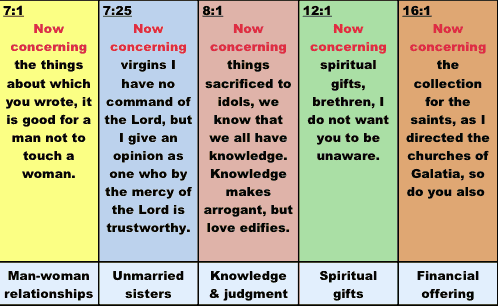
So Paul and Sosthenes were well-informed as they write this letter to the Corinthians. There are problems aplenty in Corinth. In the few verses set for this coming Sunday, they write about division and the quarrels that have resulted. They plead for agreement and unity. They remind the Corinthians about baptism. In subsequent chapters, they will range over a long list of matters, often introducing them with the formulaic “now concerning …” (7:1, 25; 8:1; 12:1; 16:1, 12). That formula may suggest they are responding to specific information brought by their visitors.

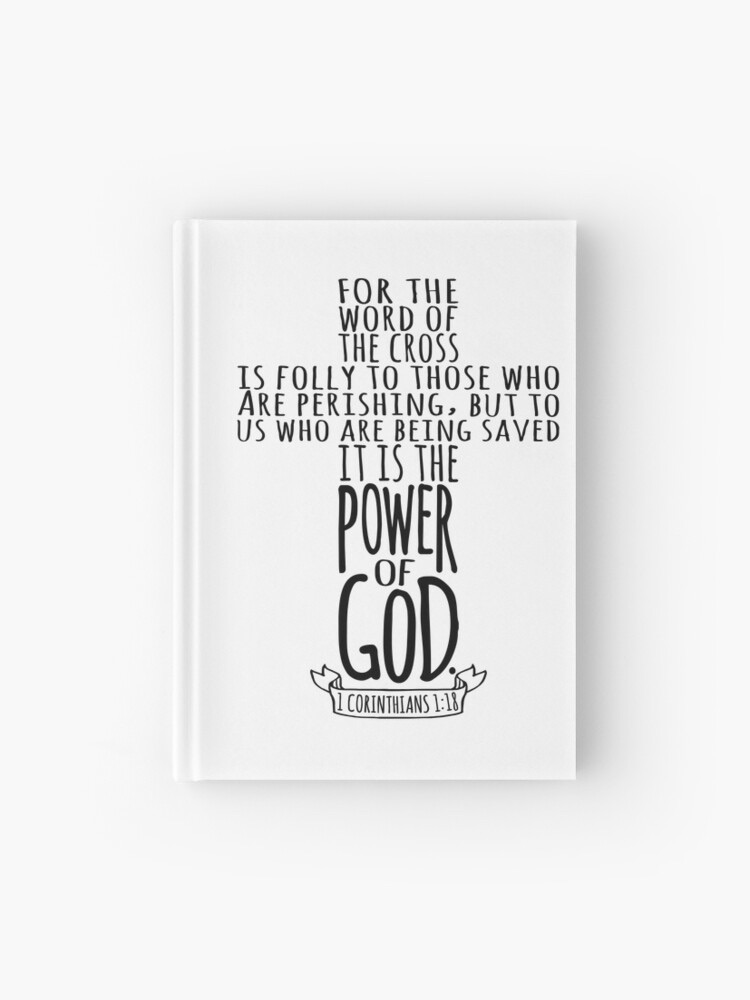
So, in verse 18, the last verse of the selection offered for this Sunday, Sosthenes and Paul sound out the key theme of this letter, which is about the cross of Christ: “foolishness to those who are perishing, but to us who are being saved it is the power of God” (1 Cor 1:18). The verses immediately following develop this motif of the paradox inherent in the cross with rhetorical finesse. (See next week’s blog.)

*****

“The cross” is a theme that was sounded by Paul in his preaching and his writing. He had written to the Galatians, “may I never boast of anything except the cross of our Lord Jesus Christ, by which the world has been crucified to me, and I to the world” (Gal 6:14). He had written to the Philippians, urging them to “have the same mind” as Christ Jesus, who “humbled himself and became obedient to the point of death—even death on a cross” (Phil 2:8), and warning them that those who opposed Paul’s preaching were “enemies of the cross” (Phil 3:18).
He would later inform the Corinthians that he models his own ministry on that of Christ; “he was crucified in weakness, but lives by the power of God; for we are weak in him, but in dealing with you we will live with him by the power of God” (2 Cor 13:4)—just as he had told the Galatians that “I have been crucified with Christ; and it is no longer I who live, but it is Christ who lives in me” (Gal 2:19–20).

He would also later exhort the believers in Rome to see their baptism as the means by which they were linked with Jesus in his death and resurrection, instructing them that “our old self was crucified with him so that the body of sin might be destroyed, and we might no longer be enslaved to sin” (Rom 6:3–6). In the central theological argumentation of this important letter, Paul places the cross as the means by which the good news is known: “God proves his love for us in that while we still were sinners Christ died for us” (Rom 5:8).
He would remind them that “Christ died and lived again, so that he might be Lord of both the dead and the living” (Rom 14:9), and he deals with the conflict in Rome between weak and strong by proposing that the quarrelling parties follow the pattern established by Christ, who “did not please himself; but, as it is written, ‘The insults of those who insult you have fallen on me’” (Rom 15:3). The cross informed his instructions to the Romans for their daily living.

The same process is employed in the earlier letter to the Corinthians. The cross is the benchmark for understanding how believers are to behave, how they are to relate to one another, and how the community that they form is to be described. All of this is worked out in the first two chapters of the letter, in passages that we will hear in the coming two weeks (1 Cor 1:18–31; 2:1–12).

There, Paul will remind the Corinthians that “we proclaim Christ crucified, a stumbling block to Jews and foolishness to Gentiles” (1:23), that “I decided to know nothing among you except Jesus Christ, and him crucified” (2:2), and that the paradoxical wisdom that is at the heart of the story of Jesus, “none of the rulers of this age understood this; for if they had, they would not have crucified the Lord of glory” (2:8).

Perhaps the cross is the way par excellence for the Lord God to communicate, illuminate, reveal? Perhaps Epiphany revelation is strongest through this crucifixion?

Stay tuned for further discussion in coming weeks … … …