The section of the Gospel that is offered in the lectionary this coming Sunday (Mark 16:21–28) contains a striking paradox. As the author of this passage portrays Jesus, looking forward to the public shaming that he will experience on the cross, he places on his lips a call to his followers, to take up the cross themselves. The cross is at the centre of the story that the evangelists tell—and at the heart of Christian faith. And yet that cross subjects Jesus to the shame of being subjected to this degrading punishment.
The cross is introduced by Jesus himself, when he teaches his followers “that he must go to Jerusalem and undergo great suffering at the hands of the elders and chief priests and scribes, and be killed, and on the third day be raised” (16:21). So important is this teaching, that Jesus repeats it twice more, following the threefold appearance of this prediction in one of Matthew’s key sources, “the beginning of the good news of Jesus, Messiah”, which we know as Mark’s Gospel (Mark 9:31; 10:33–34).
So Jesus restates this briefly: “the Son of Man is going to be betrayed into human hands, and they will kill him, and on the third day he will be raised” (Matt 17:23); and then, with more details: “the Son of Man will be handed over to the chief priests and scribes, and they will condemn him to death; then they will hand him over to the Gentiles to be mocked and flogged and crucified; and on the third day he will be raised” (Matt 20:18–19).
I don’t think that these three predictions were spoken, historically, by Jesus, as he made his way towards Jerusalem. Rather, the author of a placed them in this strategic place in the centre of his narrative (Mark 8:27–38). The author of “the book of origins of Jesus, Messiah”, which we know as Matthew’s Gospel, sees the value of this repetition, and follows his source.
These statements mark the turn in the story from Galilee, where the earlier activity of Jesus took place (Matt 4:12—18:35), towards Jerusalem, where the final days of Jesus will play out (19:1—28:15). The dynamic of the narrative indicates that, as Jesus leaves behind the days of preaching and teaching, healing and casting out demons, his focus turns to the confrontation that he knows lies in store for him.
The public nature of crucifixion was humiliating and shaming. The typical process of crucifixion involved moment after moment of humiliation, undermining any sense of honour that the victim had, increasing the sense of public shame that they were experiencing.
In the Roman world, crucifixion was variously identified as a punishment for slaves (Cicero, In Verrem 2.5.168), bandits (Josephus, War 5.449-451), prisoners of war (Josephus, War 5.451), and political rebels (Josephus, Ant. 17.295). These were people whose situations or actions had generated shame.
In the case of Jesus, he is accused of treason through the inference that he is King of the Jews—a claim that was anathema to the Romans (John 19:12)—and he is crucified in the company of political rebels (Mark 15:27; Matt 27:38; the term used, lēstēs, is the one most often found in the writings of Josephus to denote a political rebel).
A public trial, followed by a public execution on the cross, was a ritual in which the accused person was shamed, through a public ritual of status degradation. Cicero, in speaking as the counsel of Rabinio, a man accused of treason, asserted that “the ignominy of a public trial is a miserable thing” and described a public execution as “the assembly being polluted by the contagion of an executioner … [exhibiting] traces of nefarious wickedness” (Pro Rabinio 11, 16).
I have explored the humiliation and shaming inherent in the act of crucifixion in more detail in a blog at
And yet, immediately after he spoke this prophetic word, Jesus issued his disciples with a call to take up their crosses themselves: “if any want to become my followers, let them deny themselves and take up their cross and follow me” (Matt 16:24). He invites them—indeed, he commands them—to enter into the public shame that he will experience in his own crucifixion.
In the narratives that recount the crucifixion of Jesus, it is not so much the physical torment of Jesus which is highlighted (although, admittedly, a slow death by suffocation whilst hanging on a cross for hours, even days, was a terrible fate). Rather, it is the various ways in which Jesus was shamed: he was spat upon, physically struck on the face and the head, verbally ridiculed and insulted, and treated contemptuously.
This is the way of Jesus; and the way of his followers. Instead of saving their life, the followers of Jesus are instructed to lose their life (16:25). Instead of aiming to “gain the whole world”, and thereby “forfeit their life”, a follower is, by implication, to let go of all hopes of “gaining the world” (16:25–26). To gain the world was presumably referring to occupying a position of power, prestige, and popularity—precisely the kind of issues that later writers, Matthew and Luke, reflected in their more detailed accounts of the testing of Jesus in the wilderness. (See https://www.google.com.au/amp/s/johntsquires.com/2019/03/05/a-testing-time-forty-days-in-the-wilderness-1/)
Then, Jesus specifies the sense of shame that is involved in “taking up your cross” and “losing your life”, but he turns the tables as he declares that “the Son of Man is to come with his angels in the glory of his Father, and then he will repay everyone for what has been done” (16:27).
This reversal of fortune, repaying everyone for their deeds, reflects the shame, in God’s eyes, of rejecting Jesus. (The way this saying is expressed in Mark’s earlier version is clearer in this regard; see Mark 8:38.) Here is the paradox: to gain honour, Jesus had to be subjected to the shame of the cross.
Likewise, to gain honour as a disciple following Jesus, a person must take up the shameful instrument of punishment (the cross), lay aside all desire to gain prestigious and powerful positions of honour, give up any claim on life itself, and (as Jesus later asserts), live as a servant, being willing to be dishonoured for the sake of the shame of the Gospel.
And that’s the paradox of discipleship that this passage illuminates.
“Immediately he made the disciples get into the boat and go on ahead to the other side, while he dismissed the crowds” (Matt 14:22). And then, “early in the morning he came walking toward them on the sea; but when the disciples saw him walking on the sea, they were terrified, saying, ‘It is a ghost!’, and they cried out in fear” (Matt 14:25–26).
Both incidents come from the Gospel passage which is offered in the schedule of lectionary readings for this coming Sunday (Matt 14:22–33). The first excerpt, telling of a crossing of the Sea of Galilee by boat, reports a liminal experience, as the disciples cross over from one side of the lake to the other side. The second excerpt tells of a thin place moment, when the eyes of the disciples are opened up to see Jesus in a new way. Both liminal experiences and thin place moments are important in the Christian life. And often they are interconnected and occur almost simultaneously, as in this story.
Liminal experiences occur at times of transition, when we move from one place to another. The word liminal comes from the Latin word līmen, which means “a threshold”. Technically, that is the place that marks off one space from another. Its origin was the strip of wood or stone at the bottom of a doorway, which was crossed in entering a house or room.
The thresh is the place where one treads as one enters a room. So the threshold is where you take hold of the thresh, where you put your foot as you walk into a new room or new place. Anthropologists define liminality as “the quality of ambiguity or disorientation that occurs in the middle stage of a ritual”. It is the moment when participants no longer hold their preritual status but have not yet begun the transition to the status they will hold when the rite is complete.
Sociologists say that in the liminal stage of a rite, participants “stand at the threshold” between their previous way of structuring their identity, time, or community, and a new way, which completing the rite establishes. I wonder how that might apply the story of Jesus sending his disciples away, across the lake, while he went “up a mountain” to pray. Why has he sent them on ahead of him? What kind of experience was he anticipating that they might have, without him?
The concept of liminality was developed in the early twentieth century sociologists. It was applied particularly to religious rituals marking the movement of a person from one stage to another. More recently, usage of the term has broadened to the political and cultural arena, alongside the religious or faith area.
During liminal periods of all kinds, the experts tell us, “social hierarchies may be reversed or temporarily dissolved, continuity of tradition may become uncertain, and future outcomes once taken for granted may be thrown into doubt. The dissolution of order during liminality creates a fluid, malleable situation that enables new institutions and customs to become established.”
[I found this on Wikipedia, which references the source as Agnes Horvath, Bjørn Thomassen, and Harald Wydra, Introduction: Liminality and Cultures of Change (International Political Anthropology 2009). Accessed 18 March 2019.]
That’s where the disciples found themselves, as they sailed across the lake, pushing from land on one side of the lake, heading towards the land they could see on the other side, but on the water, in the midst of the lake: in a liminal moment.
And the liminal moment is precisely where change takes place, where a new reality can be experienced. In liminal moments, a thin place might be experienced. Is that what happened to the disciples on the lake, as they saw a figure walking towards them? A figure that they recognised as Jesus—for when “the disciples saw him walking on the sea, they were terrified, saying, ‘It is a ghost!’ And they cried out in fear” (14:26).
In the Celtic world, thin places are those places where the veil between this world and the otherworld is porous. They are places where human beings on the earth sense that they are standing in a place where the sky opens up, as it were, and they are drawn into a strong connection with the world beyond—with the spiritual realm, with the place where the deity is, with heaven, if you like.
The thin place is the place where the thick, dividing barrier between “heaven” and “earth” is lessened, where it becomes thin—a place where a person feels that they could reach out and “touch God”.
Thin places are often experienced where there is a sense of mystery in the landscape, or where there is a deep sense of belonging to the land as a sacred place, a sense of being so deeply earthed, yet at a place, paradoxically, which opens up to reveal something of a transcending reality, enabling contact beyond the immediate time and place. This is particularly the case among peoples whose connection to place has remained unbroken through the ages—indigenous people in Australia, in the United States and Canada, and Celtic people in Ireland and Scotland.
For the disciples, the Sea of Galilee was familiar territory. Indeed, four of them had made their living by fishing in that sea before they encountered Jesus and responded to his call to “follow me” (4:18-22). Would they have regarded that sea as a thin place where they could encounter God? Perhaps it had become a holy place for them, as they carried out their daily tasks, and felt that the difference between themselves and the sea was falling away?
Earlier in Matthew’s narrative, the disciples had been in a boat with Jesus on the sea (8:23), when a dramatic experience took place. Crossing the sea, a huge storm whips up the water. Mark’s earlier account had described this as a lailaps, a ferocious wind (Mark 4:37); Matthew modifies his version, such that the disturbance of the water was explained as being due to a seismos, an earthquake (Matt 8:24).
In both versions, the sleeping Jesus is woken, and he stills the storm (Mark 4:39; Matt 8:26). Seeing this, the disciples have an epiphany; the moment has opened up a new insight into Jesus for his disciples, as they utter the words, “What sort of man is this, that even the winds and the sea obey him?” (Matt 8:27). In asking this question, the disciples are alluding to Psalm 107, which affirms of God, “he made the storm be still, and the waves of the sea were hushed” (Ps 107:29–30). In like manner, another psalm praises God that “you rule the raging of the sea; when its waves rise, you still them” (Ps 89:9).
The question of the disciples is rhetorical; it is clear that when Jesus stills the storm, he is manifesting divine powers. Indeed, Matthew’s reworking of the story to introduce the earthquake links this “thin place” experience with other moments in the story of Jesus when the divine interposes into human life—as Jesus dies on the cross (27:51, 54), as soldiers keep watch at the tomb (28:2), and at the predicted “beginning of the birth pangs” at the coming “end of the age” (24:7–8).
That moment on the sea, in the midst of the earthquake-indicted storm, is a liminal experience that functions like a thin place for the disciples; the reality of God’s presence is glimpsed by the disciples. So it seems that on the second journey across the lake to “the other side” (8:18; 14:22), another thin place experience takes place for them. The ferocious wind and the battering of the waves places them, once again, in a precarious situation. Did they have in mind the earlier experience,when Jesus stilled the storm? The terra that leads them to exclaim” it is a ghost” (14:26) suggests that they were quite discombobulated.
Jesus had sent the disciples on across the lake ahead of himself, while he took time to go “up the mountain by himself to pray” (14:23). Jesus, of course, is often up a mountain in Matthew’s Gospel: early on, when he is tested by the devil (4:8); then as he teaches his disciples (5:1–8:1), after he had cured many people beside the Sea of Galilee (15:29), and when he is transfigured (17:1–9); and in the very final scene of the Gospel, after his resurrection (28:16–20).
The mountain, in earlier stories, had been the place where Moses engaged with God (Exod 19:3–25), where Joshua is appointed to succeed Moses (Num 27:12–23), where Solomon builds the Temple (1 Ki 5:5; 6:1–38), where Elijah experiences “the sound of sheer silence” (1 Ki 19:11–18), and where generations of faithful Israelites worshipped the Lord God (Ps 99:9). In Matthew’s narrative, Jesus is on the mountain to draw near to his Father—to find his own thin place, as it were.
So this narrative has elements that invite us to consider our own faith journey; to reflect on the liminal moments in that journey, when we have moved from one place, through a transition, into another; and to ponder when it was that we felt closest to God, to the extent that we were at a thin place, where we could reach out and touch God. The story we hear this coming Sunday, a story about Jesus and his disciples, invites us yet again to ponder our own story.
The next issue of With Love to the World is currently being distributed. The issue covers the second half of the season of Pentecost, from mid-August through until mid-November. There are commentaries on biblical passages for each day (with the four “lectionary passages” included), along with a prayer, a song, a psalm, and a discussion question for each passage. During September and October, to help focus on the Season of Creation, a creation psalm begins the readings each week.
The resource is published by the Uniting Church in Australia, but is used by people of many denominations in a number of countries. As always, the resource exhibits a core commitment of the Uniting Church: to present “an informed faith”.
This commitment was articulated in the Basis of Union for the UCA. Each contributor offers a reflection on the daily passage which is informed by their theological training as well as their engagement in pastoral ministry. The resource seeks to assist worshippers to come to Sunday worship with an awareness of the Bible passages they will hear read and proclaimed.
With Love to the World also seeks to be faithful to the UCA commitment to shape “a destiny together” with the First Nations Peoples of Australia. The period covered in this issue includes a week of commentaries by Nathan Tyson, an Aboriginal man of Anaiwon/Gomeroi descent, who has lived most of his life in Sydney. Nathan currently serves as First Nations Strategy and Engagement Manager for the NSW.ACT Synod of the Uniting Church in Australia.
The other commentaries in this issue of the resource are provided largely by Australian Uniting Church people with Pasifika heritage, who know at first hand the complexities of living as a Christian in Australia with awareness of their own heritage. There are Tongan, Fijian, Samoan, Rotuman, and Niuean voices which can be heard and considered in this issue. This reflects the commitment made by the Uniting Church in 1985, to be “a multicultural church”.
The striking cover of the issue on the front of this post) is a painting by Malia Patricia Akanisi Vaurasi, from the island of Rotuma, near Fiji. This painting, Hands of Resistance, was created as a way to portray the vast ocean of struggles that Pacific people bravely navigate.
Malia explains, “those struggles relate to our nuclear legacies, the climate crisis and growing food insecurity, the continuous struggle for self-determination by our brothers and sisters in West Papua, Maohi Nui, and Kanaky, the neo-colonialist hands of greed and exploitation that reach out to pillage the abundance of our lands and oceans to enrich their empires—and in this process our people are displaced and our natural environment is destroyed.” It is a brilliantly colourful depiction of the life of Pasifika peoples.
You will be sure to find commentaries that probe the depths of the biblical passages, questions that challenge your own discipleship, and,prayers that nurture your spirit, as you read through this daily resource.
With Love to the World can be ordered as a printed resource for just $28 for a year’s subscription (email Trevor at wlwuca@bigpond.com or phone +61 (2) 9747-1369). It can also be accessed on phones and iPads via an App, for a subscription of $24.49 per year (go to the App Store or Google Play).
“Do not think that I have come to bring peace to the earth; I have not come to bring peace, but a sword. For I have come to set a man against his father, and a daughter against her mother, and a daughter-in-law against her mother-in-law; and one’s foes will be members of one’s own household.” (Matt 10:34–36).
Gentle Jesus, meek and mild, lover of all, and patron of the close-knit nuclear family … where are you? The words of Jesus we are given by the lectionary for this coming Sunday (Matt 10:24–39) seem to come from a very different person from the stereotypical “Jesus loves the little children, all the children of the world”. Who exactl y is this Jesus?
“Go nowhere among the Gentiles” (10:5), he has told his disciples, establishing what appears to be a very exclusivist, racially-driven undertaking. “Take no gold, or silver, or copper in your belts, no bag for your journey, or two tunics, or sandals, or a staff” (10:9–10), on what will undoubtedly be an incredibly ascetic experience for the disciples. “If anyone will not welcome you or listen to your words, shake off the dust from your feet as you leave that house or town” (10:14), says Jesus, anticipating a divisive and difficult time for his followers.
And then, “I am sending you out like sheep into the midst of wolves” (10:16), for “they will hand you over to councils and flog you in their synagogues” (10:17). Yes, this sure to be an experience that the disciples will not forget—for all the wrong reasons! “You will be hated by all because of my name” (10:22) is hardly an enticing invitation to take part in this mission; indeed, the advice, “do not fear those who kill the body but cannot kill the soul” (10:28) bodes no good; are there not only persecutions, but also deaths, on the horizon?
What is going on? How did Jesus manage to entice a group of men and women to take part in this enterprise? And why was he so clear and direct about all the dangers that lay ahead of them?
***
As I noted in last week’s blog on Matthew 10, we know that Judaism was in a state of flux after the destruction of the Temple in 70 CE. Evidence indicates that there were a number of sectarian groups contesting with each other for recognition and influence. During this period, the Pharisees were becoming increasingly important as an alternative to the Temple cult, and emerging as the dominant Jewish religious movement. Their power base was moved from Jerusalem and spread throughout the area.
It has been claimed that a Jewish Council was formed in Jamnia, a city on the coast of Judea. This is taken to demonstrate that the Pharisees had laid claim to be the dominant group amongst the Jews; it might also indicate that it was possible to legislate for the formal separation of some communities (such as the Matthean one).
Note: this story is now regarded as more likely that this story of Jamnia was a ‘foundation myth’, developed in later years, with the aim of showing that there was unity in formative Judaism from the earliest times.
The area of Galilee is extremely important in Matthew’s Gospel (2:22; 3:13; 4:12–25; 17:22; 19:1; 21:11; 26:32; 28:7). As the Galilean Pharisees figure prominently in the narrative of Matthew’s Gospel, it seems reasonable to suppose there was a strong Pharisaic presence in Galilee, and that this group provided the main opponents for the community of Matthew.
The power of the Pharisees was rising, and with the destruction of the Temple, it was common to find new ways of interpreting how Judaism should exist. From this time on, Pharisees evolved into the “Rabbis”, and they developed the kind of Judaism that became dominant through to the present time.
Nevertheless, many Jews, particularly in the Diaspora, were not yet “Pharisaic”—they did not see their faith in the same way as the Pharisees. There were many disputes amongst Jewish communities as to the correct way of seeing things, and some of these disputes were quite bitter. Many groups claimed to be the ‘true Israel’ as distinct from other groups, who were false leaders and teachers, and who failed to follow the Law correctly.
The Law became the most accessible means of revealing God’s will for Israel after the destruction of the Temple, and most of these groups focused on what they believed to be the true interpretation and application of it.
Matthew’s Gospel reflects one such debate; scholars suggest that it should be read alongside of other literature from after the time of the destruction of the Temple—books such as 2 Baruch, 4 Ezra, and the Psalms of Solomon. This literature is trying to envisage what Judaism should be like in the aftermath of the destruction of the Temple.
Thus, although Matthew’s Gospel has been seen to have played an important role in the formation of early Christian theology, a more natural interpretation is to locate this Gospel within the post-70 Jewish debates about the survival of Judaism without the Temple. The polemic in Jesus’ debates with the Pharisees, and the warnings that are uttered to Israel, show that Matthew still had hope that his ideas would become normative for all Jewish people.
I think it likely that Matthew’s Gospel was created to insist on the centrality and priority of the teachings of Jesus, the Torah-observant Jew, whom God had chosen as the anointed one; it was his teaching, not that of the local synagogue leaders, which was to be given priority.
*****
In such a context, the opposition envisaged by Jesus and the warnings that he gives in this polemical speech to his earliest followers, starts to make sense. Matthew sets out the teachings of Jesus concerning discipleship within the context of an apocalyptic view of reality. This view looks at the present time in relation to the ultimate end of time, and calls for a way of living that will ultimately show responsibility for decisions made.
What ultimate end does Matthew have in view? Each Gospel writer tends to emphasis something slightly different. In Mark, the focus is on the resurrection of Jesus (Mark 14:28; 16:7). In Luke-Acts, carrying the good news throughout the Roman Empire fulfils the story (Luke 24:47–48; Acts 1:8). In John, it is eternal life which is emphasised (John 20:31).
Matthew’s Jesus has in mind the coming eschatological deliverance, a deliverance which is expected imminently and that will vindicate the community as faithful and righteous to the will of God. So he tells his followers that “you will not have gone through all the towns of Israel before the Son of Man comes” (10:23). The mission that his followers undertake amongst Jews only is urgent; the end of time is coming soon, and they will not have shared “the good news [that] the kingdom of heaven has come near” (10:7) before “the Son of Man appears in heaven, and then all the tribes of the earth will mourn, and they will see ‘the Son of Man coming on the clouds of heaven’ with power and great glory” (24:30).
In this way, Matthew is typical of one type of Judaism after the destruction of the Second Temple; that of apocalyptic hope. Most of the post-70 sectarian groups express hope that God will remember his covenant with them, the faithful few of Israel, and save them; for example, 2 Baruch and 4 Ezra write that God will provide consolation for their suffering and vindicate them, whilst also punishing their enemies on the Day of Judgement (2 Baruch 6:21; 82:1–2; 4 Ezra 8:51–59; 12:34).
In these sectarian documents, the kingdom of God is eschatological is nature; it has not yet arrived on earth, though signs telling of its coming can be detected. These communities also agree that much of Israel no longer truly follows the Law of God, and that the dominant Jewish leadership is unfaithful and wicked, and that they are the ones alone representing the true Israel. Therefore, entry to the kingdom is dependent upon faithfulness to the Law as interpreted by the community.
*****
Much of this sectarian understanding can also be found in Matthew’s Gospel. Matthew redacts his sources and shapes his material so that this eschatological end is prominent—even in the mission discourse. The words of Jesus about persecutions (10:17–20) are very similar to words in the closing apocalyptic of Jesus (24:9); his words about divisions and hatred within the family (10:21–22 and 10:34-37) mirror the later declaration of betrayal and hatred (24:10).
The “false messiahs and false prophets” that are foreseen (10:24) evoke the false message of “those who will lead you astray” (24:4–5) whilst the words that the Spirit will speak through the disciples (10:19–20) provide the substance for the future “testimony to all the nations” concerning “the good news of the kingdom” (24:14). The instruction to flee in the face of persecution (10:23) foreshadows the apocalyptic command that “those in Judea must flee to the mountains” (24:16–18).
The urgency of the mission (9:37–38; 10:11–14) is because “you will not have gone through all the towns of Israel before the Son of Man comes” (10:23). And the note that the Son of Man is expected to come soon (10:23) presages the cataclysmic scene described in the closing speech of Jesus (24:29–31)—for “this generation will not pass away until all these things have taken place” (24:34). This later causes Jesus such frustration, when he berates his disciples, those of “little faith”, “you faithless and perverse generation, how much longer must I be with you? how much longer must I put up with you?” (17:17).
The mission discourse (10:5–42) thus contains many of the key elements of the apocalyptic discourse (24:3–44): opposition, persecution, division, fear, assurance, and urgency. Jesus, in this Gospel, is particularly clear that there are two ages: the first is the current time for the evangelist, and the second is the age to come (Matt 12:32, from Mark 3:29). In this Gospel, the first indication that we have of the nearness of the second age is the announcement of John the Baptist, “Repent, for the kingdom of heaven has come near” (3:2).
This succinct message has set the tone for the rest of the Gospel. Jesus repeats, word-for-word, John’s call for people to repent (4:17). He intensifies the need for faithful people to be obedient to God’s law (5:17–20) and demonstrate an intensified righteous-justice (5:21–48), as the end-time of God’s judgement is fast approaching. This is the centrepiece of the message that the disciples are to proclaim, when sent out on mission: “as you go, proclaim the good news, ‘The kingdom of heaven has come near.’ Cure the sick, raise the dead, cleanse the lepers, cast out demons” (10:7–8).
In Matthew’s understanding, the kingdom is imminent, but not yet arrived; however, signs of its imminence break in to the present times to demonstrate its nearness. The ministry of Jesus is set at the end of the first age; the second age will commence very shortly with the triumphant return of Jesus after his death, within the lifetime of his disciples (10:23; 16:28; 24:34).
Matthew does not reflect the notion that the kingdom has already arrived on earth, even though it can be seen in Jesus (12:28), and in the continuation of his ministry by his followers after his death. Jesus and the disciples both preach that the kingdom of heaven is near, or at hand (4:17; 7:21–22; 9:35; 10:7), but it has not yet established itself on earth.
A number of the parables of Jesus address the nature of this kingdom. The kingdom of heaven will be established “at the end of the age”, when the final judgement of righteous and unrighteous will take place (13:39–40, 49; 24:3). Before the coming of the Son of Man, it remains hidden and mysterious (13:31–33, 44–45), too small to be observed, but the day is coming when it will grow and become the “greatest of all things”, and the righteousness of God will triumph.
And entry into this kingdom—or not—will be determined by a person’s readiness (24:45–51; 25:1–11) and by an assessment of the way they lived their life (25:31–46). So Jesus gives his followers this assurance: “whoever welcomes a prophet … and whoever welcomes a righteous person … and whoever gives even a cup of cold water to one of these little ones in the name of a disciple—truly I tell you, none of these will lose their reward” (10:41–42).
He also issues this severe warning: “whoever loves father or mother more than me is not worthy of me; and whoever loves son or daughter more than me is not worthy of me; and whoever does not take up the cross and follow me is not worthy of me. Those who find their life will lose it, and those who lose their life for my sake will find it.” (10:37–39).
*****
Matthew takes source material about the mission of the disciples (Mark 6:7–13), modifies, intensifies, expands, and reshapes it, in the light of the context in which he is writing the Gospel. The events of the 50s and 60s, the onset of the war with the Romans in 66, and perhaps even the destruction of the Temple in 70CE, have all guided the way that the author of Matthew’s Gospel retells the instructions that Jesus gave to his first disciples, decades earlier.
Just as he and his community are experiencing intense difficulties and confronting entrenched conflict, so the Jesus of earlier times had foreseen such a situation, and had sent his followers out forewarned, and thus forearmed. What was taking place in the early 70s (or perhaps even in the late 60s) amongst a group of Torah-abiding, Messiah-following Jews, was an outworking of what Jesus is presented as speaking to his disciples.
In other words, the mission discourse of Matt 10:1–11:1 reveals much about the strife and contention amongst Jews in the local area where Matthew’s community was located, and the intensified expectation that the end was coming soon, that they felt. It was a word for his time; placed on the lips of Jesus, but speaking with clarity and insight into the lived experience of the people of Matthew’s community. For them, this was what obedience to the Gospel and following the way of Messiah Jesus, their Rabbi, entailed.
This blog draws on material in MESSIAH, MOUNTAINS, AND MISSION: an exploration of the Gospel for Year A, by Elizabeth Raine and John Squires (self-published 2012)
At last! This coming Sunday, we return to Gospel passages in sequence, drawn from the book of origins—the Gospel attributed by tradition to Matthew. None of the four Gospels in the New Testament originally gave any indication as to who wrote those works; it was up to the evolving tradition within the early church to infer, claim, deduce, and assign specific authorship—either to apostles (Matthew and John) or to close followers of apostles (Mark, following Peter, and Luke, following Paul).
This year—Year A—we began with the early chapters of the Gospel according to Matthew (from 2:1 through to 5:37); but when the season of Lent began, the Gospel readings were taken largely from John, with John and Luke featuring during the Sundays after Easter. Only now, after Trinity Sunday, does the sequential pattern resume.
This coming Sunday, we will hear the story of the call of Matthew the tax collector (Matt 9:9–13) as well as the interlinked account of the healing of a haemorrhaging woman along with the raising of a young girl from death (9:18–26). The story of the call of Matthew is told with a somewhat astringent sparseness. “He said to him, ‘Follow me.’ And he got up and followed him.” (9:9). That’s it. No fuss, no fanfare. Just plain and simple, straight to the point: follow me—and he followed him.
This first Gospel, in the order that the four Gospels appear in the New Testament, bears the name of Matthew. It wasn’t the first written Gospel—that was Mark’s, which clearly was a source used by the author of Matthew’s Gospel. By tradition, the attributed author of this Gospel, Matthew, was a tax collector whom Jesus called to follow him. (Why a tax collector who followed Jesus would take the work of a junior and erratic follower as the basis for his work, remains unexplained.)
At any rate: after this tax collector became a disciple of Jesus, he was appointed as an apostle, and later he allegedly wrote an eye-witness account of the time he spent with Jesus. That account runs up until the crucifixion and burial of Jesus, and is wrapped around with some opening chapters about the beginnings of the life of Jesus, and a closing chapter relating to the body of Jesus, his resurrection and departure from his followers.
The tradition that this first Gospel was an eye-witness account by one of the twelve apostles has come under careful scrutiny from biblical scholars, exploring the language, structure, imagery, and ideas found in that narrative.
The consensus from this scholarly work is that the first Gospel in the New Testament was not an eye-witness account, but a carefully crafted account of Jesus, originating in a community of people who had maintained their Jewish culture and practices whilst affirming that Jesus of Nazareth was the long-awaited Messiah—a community that was, therefore, in conflict with the views and teachings of the synagogue leaders in their town, who did not see Jesus in that way.
Within ecclesial tradition, the picture of Matthew, tax collector—disciple—apostle, who subsequently wrote an eye-witness account of the time he spent with Jesus, holds sway. Within biblical scholarship, Matthew is simply a character who appears briefly in the story told by the first Gospel in the New Testament.
Matthew is identified in one short verse narrating his call by Jesus (Matt 9:9). He is also included in the list of twelve who were called to be apostles, with the added descriptor, “the tax collector” (Matt 10:3). He is also named in three other books, with nothing further said about him (Mark 3:18; Luke 6:15; and Acts 1:13). But little else about him is conveyed in the four books that name him. See
Those five fleeting references are the only times we see directly this person in the biblical narratives. He is surely there in other scenes, but he simply blends into the collection of “the disciples” (Mark 2:23; 3:7; 5:31: 6:1, 35, 41, 45; 7:17; 8:1–10, 14, 27, 34: 9:14, 28, 31; 10:10, 13, 23–24; 11:19; 12:43; 13:1; 14:12–16; and Synoptic parallels), “the twelve” (Mark 4:10; 6:7; 9:35; 14:20; and Synoptic parallels; and John 6:66–71; 20:24), or, even more anonymously, into “the crowd” (Mark 2:4, 13; 4:1; Matt 7:28; 13:2; Luke 5:1; 6:17; 7:11–12; 8:4; John 6:2; 12:9, 12; Acts 1:15; 2:6; etc.).
And yet, in the evolving church traditions, Matthew emerges from the shadows to take centre stage as disciple, apostle, saint, and author of the Gospel which is placed first in the New Testament. Some churches even maintain the patristic claim that Matthew wrote in Aramaic, and was later translated into the Greek version that forms the basis of the New Testament text.
The claim about Aramaic comes from a fourth century report by Eusebius of Caesarea that a second century bishop, Papias of Heirapolis, claimed that Matthew “put the logia in an ordered arrangement in the Hebrew language (Ἑβραΐδι διαλέκτῳ), but each person interpreted them as best he could” (Eusebius, Ecclesiastical History 3.39.16). We should note that this is a somewhat indirect witness at quite some remove, and also that the Greek word Ἑβραΐδι can be translated either as Hebrew or as Aramaic.
But this claim falls down from the clear evidence of the Greek text of Matthew’s Gospel, which mirrors very closely both the Gospel of Mark, at many points, and the Gospel of Luke, at other points, in passages found only in Matthew and Luke.
The two key conclusions drawn by many scholars are twofold: first, that Matthew (like Luke) used the Gospel of Mark as a basis for writing a narrative about Jesus—but modified and adapted both the order and wording of passages; and second, that Luke and Matthew had access to another source (whether oral or written) for many of the sayings of Jesus (the source is known as Q). This makes it completely unlikely that Matthew wrote, in Aramaic, or in Hebrew, the earliest account of Jesus.
And ascribing the authorship of this Gospel to the tax collector identified at Matt 9:9 is also a patristic move. The title of this (and the other) Gospels, identifying the alleged author, is found only in later manuscripts and patristic writings; the narrative itself fails to identify anyone as the author, let alone the tax collector named Matthew. This claim is a later apologetic move, most likely made to provide an “apostolic authorisation” to the Gospel.
So what do we say, then, of “Matthew”, the purported author of this Gospel, a work which the author declares at the start to be “the book of origins of Jesus, Messiah” (Matt 1:1)? For me, a key to the way that the author of this “book of origins” operated is provided at Matt 13:52, where Jesus concludes a sequence of parables with the statement that “every scribe who has been trained for the kingdom of heaven is like the master of a household who brings out of his treasure what is new and what is old”.
That description encapsulates very clearly, for me, who the author of this Gospel was—a scribe, “trained for the kingdom”, drawing on old resources, but reshaping them so that they are seen to be new. We can see this in many ways in the narrative that he constructs. We can especially see this in the way he presents Jesus as an authoritative teacher of Torah—the one whose words are to be heard, remembered, studied, and passed on. Thus, the reason for his writing of this Gospel.
In this Gospel, we are offered a distinctive, at times unique, portrayal of Jesus. Only in this Gospel does Jesus affirm that all of “the law and the prophets” stand, are not to be annulled, and indeed have been “fulfilled”, or given new life and meaning, by what Jesus teaches (Matt 5:17–20).
So the encounters between Jesus and his disciples, and the scribes and Pharisees, at various moments in the narrative (9:2–8, 10–13; 12:38–42; 15:1–20; 16:1–4; 19:3–9; 21:15–16; 22:34–46) inevitably revolve around differing interpretations of Torah prescriptions and include regular references to (Hebrew) scriptural passages.
Jesus debates the way that the scribes and Pharisees interpret Torah; he meets them on their terms, and engages in these debates in accordance with “the rules” of scripture interpretation. Far from abandoning the Torah, he rather keeps the commandments, valued as “what is old”, and provides distinctive insights and understandings, “what is new”, as he intensifies and radicalises them. (“You have heard it said …”, hard enough; “but I say to you …”, an impossible counsel of perfection?)
In this Gospel alone, Jesus affirms “the scribes and the Pharisees” as those who “sit on Moses’ seat” and teach well—but fail to live by that teaching in their lives (23:1–3). Accordingly, Jesus not only teaches how to live by the law, with a ferocious intensity (5:21–48; 23:13–36), but he puts his teachings into practice; he maintains the old but fills it with new meaning. All of this lies ahead in the passages that will be proposed by the lectionary over the coming months.
In the Uniting Church’s resource provided for worship leaders, Uniting in Worship, there is a Calendar of Commemorations, based on the cycle of annual feast days for saints in the Anglican, Catholic, and Orthodox churches—but broadened out to be much wider than this. Many days of the year are designated to remember specific people. Today (20 March) is the day to remember three Celtic pioneers, Cuthbert, Aidan, and Bede. Cuthbert of Lindisfarne is remembered as monk, prior, bishop, hermit, and miracle-worker—and, eventually, as saint.
Born in Northumbria into a noble family in the mid-630s, Cuthbert was raised in a Christian society, as King Edwin of Northumbria had recently converted to Christianity and (as was the way) brought that faith across the society. Accounts of the life of Cuthbert, written in the later medieval period, claim that there were miracles taking place even in his childhood. The historicity of these claims is highly dubious.
We do know that Cuthbert had quite a career: he was, in turn, monk, prior, bishop, and hermit, before his death. Matching the miracles claimed during his childhood and into his adult life, there are many claims of multiple miracles which allegedly took place after the death of Cuthbert on 20 March 687.
We can’t, of course, substantiate those miracles—the most striking of which relates to Alfred the Great, King of Wessex, further to the south (Wessex was the southernmost part of the Anglo-Saxon Kingdom). Alfred was apparently inspired by a vision of Cuthbert, encouraging in his struggles against the invading Danes. (A saint supporting military action … hmmmm.) He won, of course! The fact that a southern king admired a northern cleric meant that Cuthbert came to be regarded as a focus of reconciliation across the kingdom.
We do know that the body of Cuthbert, originally buried at Lindisfarne on the day that died, was removed and placed into a decorated oak coffin, and reburied in 698. The eleven-year-old corpse was, it was claimed, completely preserved-the first of the post-mortem miracles associated with Cuthbert. We know this from the 8th century account of Cuthbert written by the Venerable Bede, a scholar-monk at Jarrow, who wrote extensively covering science, history, biography, scriptural commentaries, and theology. (Bede is also remembered today in the UCA Calendar of Commemorations.)
Three centuries after his reburial at Lindisfarne, the body of Cuthbert was taken by wagon to Durham, where it was buried again. However, before that, it had been exhumed when Danes overtook the monastery at Lindisfarne in 875, and taken by the monks with them as they wandered the northern countryside. It is now located in Durham Cathedral, where it is said that it is buried (bizzarely) with the head of Oswald, King of Northumbria, who died some decades before Cuthbert’s life.
The life of Cuthbert included various phases. Although raised in a noble household, Cuthbert was attracted to the ascetic life. He had a period of military life, but then in 651 he joined the monastery at Melrose Abbey, an offshoot of Lindisfarne Priory, where Boisil was Prior. Lindisfarne had been founded in 634 by Aidan (who is also remembered today in the UCA Calendar of Commemorations). When Boisil died in 661, Cuthbert was appointed as Prior. He was subsequently invited to become guest master at a new monastery at Ripon, but soon he returned to Melrose as a monk. He became Prior once again in 664.
Cuthbert participated in the Synod of Whitby in that year; this was the Synod that decided to leave behind the Celtic form of Christianity that had been prevalent in much of Northumbria, led from the Abbey at Iona. The specific issue was the way that the date of Easter was calculated. The Synod adopted the Roman custom of dating, and looked to Rome, rather than Iona, for leadership. Cuthbert adhered to this decision and introduced Roman practices at Lindisfarne, where he became Prior in 665, the year after the Synod of Whitby.
Cuthbert continued his ascetic lifestyle as Prior through the ensuing decades, preaching as he travelled through towns and villages; it is said that he preached also to nobles and to royalty, and also that he performed various miracles during this period, as a result of which he later became known as “the wonder worker of Britain”. He maintained his simple lifestyle, with few material needs, as he travelled, and on into the next phases of his life.
Cuthbert moved to what today is called St Cuthbert’s Island, near Lindisfarne, and then soon after to Inner Farne Island, further south, wher he established his abode in a cell in a cave. Elizabeth and I have visited the Farne Islands, as well as Lindisfarne. The northeast coast of Britain is exposed to strong, icy winds blowing across from the Arctic; “living rough”, as we might describe the conditions of Cuthbert’s life, required a strong constitution and a determined mindset. Cuthbert obviously had this.
On this island, Cuthbert befriended the eider ducks and instituted laws to protect the ducks and other seabirds that made their nests on the Farne Islands. As well as his strong environmental credentials, for which we give thanks, Cuthbert is also remembered for his strong misogynistic attitude, for which we lament.
At the west end of Durham Cathedral, a thick black line, made of marble, has been inserted into the flooring. The line (still visible when we were there in 1997) marked the furthest into the Cathedral that women were permitted to step. The reason for this was the belief that Cuthbert would be offended if women came too close to him. This was deduced on the basis of the rules that he introduced in the monastery at Coldingham, where the “improper familiarity” of monks and nuns led to the monastery being consumed by fire—a result interpreted as an act of God!
When Bishop, Cuthbert ensured that there was rigorous separation of the genders in all places where monks and nuns lived throughout the diocese. This meant that women (nuns) were unable to visit the holy sites at Lindisfarne, Inner Farne, and Durham Cathedral. Subsequent to his earthly life, Cuthbert was believed to have acted to punish females who transgressed relevant boundaries—some struck dead, one other driven to dementia and killing herself. And that is the basis for the story (fact? or fiction?) about the line in the floor at Durham Cathedral.
Cuthbert was elected as Bishop of Hexham in 684, but was reluctant to leave his hermit’s cave; he was persuaded to take up the appointment as Bishop of Lindisfarne instead. He was consecrated in March 685 but late the next year, he resigned from his episcopal office and returned to his hermitage. This short tenure as Bishop of Lindisfarne explains why he is remembered as “Cuthbert of Lindisfarne”. He died two decades later, in March 687, aged in his mid 50s.
As already noted, numerous miracles after the death of Cuthbert are attributed to his intercessory powers; accordingly, he is honoured as a Saint. He became closely associated with the powerful Bishop of Durham from the 11th century onwards; the people of the region were known as “the people of the saint” (that is, Cuthbert). In the Battle of Neville’s Cross (just up the hill from where we lived in Durham in 1997), a vision of the saint inspired the Prior of Durham Abbey to raise the banner of Cuthbert, thereby ensuring their protection and victory in that battle.
That same banner was carried by Northumbrians in their battles against the Scots, and the shrine of Cuthbert behind the altar in Durham Cathedral (where the body was interred in 1104) was a pilgrimage site through the medieval period (for males—but not, as explained, for females).
So, to the above list—Cuthbert of Lindisfarne, monk, prior, bishop, hermit, miracle-worker, and saint—we add environmentalist, and misogynist. And we remember him, today.
We continue exploring the readings from Acts that are offered by the lectionary in the session of Easter. The second main section of the second volume of Luke’s orderly account (8:1–12:25) outlines the steps taken by members of the Jerusalem community as they continue to fulfil the prophecy of Jesus (1:8), bearing witness to the good news as they move out from Jerusalem and Judaea to Samaria and beyond.
There are four main steps taken in this second section, recounting how selected community members begin to “turn to the Gentiles”, as Paul later describes it (13:46). These steps together form a pivotal moment in the narrative; they provide initial validation for the establishment of communities which are inclusive of both Jewish and gentile members. The readings for this Sunday include the narrative of one of these steps—the call and commissioning of Saul (Acts 9:1–6).
1 Turning to the Gentiles: four steps
The geography of this section (8:1–12:25) is structured in a spiral-like fashion, moving away from Jerusalem only to return to it before the next outwards movement occurs. In the first step (8:4–40), Philip enters the city of Samaria (8:5) but ends by returning to Caesarea (8:40). His actions in Samaria receive validation through a visit from the apostles in Jerusalem (8:14). The second step, concerning Saul (9:1–31), begins in Damascus (9:2) but returns to Jerusalem (9:26) before Saul leaves for Tarsus (9:30). This is the step that is in view in this Sunday’s lectionary offering.
The third step, focussed on Peter (9:32–11:18), begins in Judaea at Lydda (9:32) before moving through Joppa (9:36) to Caesarea (10:1). The action moves between Joppa and Caesarea before Peter returns to Jerusalem (11:2) and recounts what has taken place in Joppa and Caesarea to the Jerusalem community.
The final step (11:19–12:25) begins in Antioch (11:20), where the community receives envoys: Barnabas from Jerusalem (11:22) and Saul from Tarsus (11:25), followed by prophets from Jerusalem (11:27). The narrative then returns to Judaea (11:29–30) for the delivery of the “collection” and for an account of further events in Jerusalem. A brief visit to Tyre and Sidon (12:20) precedes the return of Barnabas and Saul to Jerusalem (12:25).
2 A pivotal figure: Saul of Tarsus
The second step in this section (9:1–31) recounts a key miracle: the complete turnaround of a persecutor, including his blinding and then restoration to sight, prior to his engagement in preaching activity amongst the messianic believers. The man who experienced this miracle has been introduced in passing at the point of Stephen’s death (7:58; 8:1a); the inference of this brevity may be that he was a character already well known to Luke’s audience.
At 9:1, the narrative returns to this individual, Saul. He will become the pre-eminent human character in the later narrative of Acts; for Luke, he will become the model par excellence of faithfulness in the face of opposition and persecution. So this is an account, not only of a conversion, but more than that (and most importantly, for a Luke), it is an account of the commissioning of this central figure, Saul.
But at this moment in Luke’s orderly account, Saul is simply a vigorous persecutor of “the disciples of the Lord” (9:1). The account of his conversion and commissioning (9:1–19a) begins on the road to Damascus, a predominantly Jewish town in the Roman province of Syria. This location foreshadows the ultimate move into the Gentile world. Luke appears to assume knowledge that Damascus contains “disciples of the Lord” (9:1). How they got there is not narrated, nor whether they were Jewish or gentile disciples.
By using the term “the Way” for the first time in his account of the conversion and call of Saul, Luke emphasises the Jewish characterisation of those communities which declare Jesus to be Messiah, even if they are in gentile areas.
3 The conversion of Saul
When Luke introduces Saul, he is described as a fearsome opponent of “the Way” (9:1). The Greek of this verse reads literally, “he breathes a murderous threat” (9:1; NRSV, “breathing threats and murder”), precisely the antagonistic threatening attitude about which the Jerusalem community has already prayed (4:29). Saul has gained his authority from the high priest (9:1), already identified as standing in opposition to God’s agents, Peter and John (4:6; 5:21,24) and Stephen (7:1).
Saul was previously described as being “in agreement with their plan” (8:1a). The scene is thus set for a continuation of the conflict narrated in Jerusalem; Luke’s description of Saul’s activities (9:2) imports this conflict to Damascus in tangible ways.
In letters written later by Saul (under the name of Paul), he refers to this period of his life as “violently persecuting” the believers (Gal 1:13; Phil 3:6). His own references to his change of heart, to become a member of the messianic assemblies, are brief and lack any of the narrative colour and detail that Luke’s accounts provide (Gal 1:15–16; Phil 3:7–11; 2 Cor 4:4–6; and possibly 1 Cor 9:1).
The crucial event which takes place as Saul draws near to Damascus is initiated by an epiphany: an overpowering light shines and a voice speaks to Saul (9:3–6). The epiphanies which have already taken place in Acts (1:10–11; 5:19; 8:26) are described in a rather bare fashion. By contrast, this particular epiphany is recounted in detail (as is the later epiphany to Peter, 10:10-16). The divine origin of the epiphany is promptly identified: the light was from heaven (9:3). The voice which addresses Saul is that of Jesus, whom Saul (as did Stephen before him, 7:59–60) addresses as “Lord” (9:4–5).
4 The Lord: an ambiguous term
At this point in the narrative, the ambiguity of the term “Lord” is heightened. Until now, the vast majority of occurrences of “Lord” have referred to God. From this point on, the term can be used to refer to Jesus (20 times, of which 4 repeat the incident from ch.9), although more often it still refers to God (36 times).
When Luke reports that people “turned to the Lord” (9:35; 11:21) or “believed in the Lord” (9:42; 11:17; 14:23; 16:15,31; 18:8; 20:21), the phrase appears somewhat ambiguous as to its precise referrent. However, in each case the context indicates that “the Lord” is now referring to Jesus.
The later categories of christological thought (after Nicaea) introduce categories not relevant for the time when Luke’s text was being written. The most that can be said is that Luke never envisages any ontological unity of Jesus and God, but on some occasions (and certainly not always) there is an overlap of function—Jesus now functions as God has functioned in the past.
For the most part, Luke presents Jesus as an agent of God’s sovereignty, as one member amongst many (Peter, Philip, Stephen, Saul, Barnabas, and so on), who have functioned as agents of God’s sovereignty. Occasionally, Jesus is distinguished from these figures, such as when he appears as a divine messenger to Saul (9:5, paralleled at 26:15, and expanded at 22:8–10; also 9:10–17, 27).
5 The command to Saul: necessity is placed on him
The vision and command to Saul (9:3–6) find a parallel in the subsequent vision and command of the Lord to Ananias, instructing him to meet with Saul (9:10–16). God is at work in these events; Luke reports that it is the divine voice (speaking through Jesus) which addresses both Saul (9:4–6) and Ananias, when he speaks of Saul (9:15–16).
The theme of divine necessity has already been present in the Jerusalem narrative, both with reference to events narrated (1:22; 3:21; 4:12;19–20 5:29) and with reference to the death of Jesus (2:23; 4:28). This theme is stated in both divine speeches: to Saul, who is given a general charge: “it will be told to you what you must do” (9:6); and to Ananias, who is instructed to tell Saul “I will show him what he must suffer” (9:16), because “he is a chosen vessel for me” (9:15). Both statements establish that Saul must do what is prescribed, as a part of “the plan of God”.
6 The significance of Saul (Paul) in Luke’s story
Indeed, Saul is a critical agent in the execution of the necessary plan which God has for the believing communities in Jerusalem, Damascus, and beyond. Acts 13–28 is not solely about what was done by Paul (as he is then known); it is unambiguously about “what the Lord did through the activity of Paul” (14:27; 15:4,12; 21:19).
The other dimension of Saul’s role will become evident by implication throughout the latter half of Acts; that is, he stands as a model for what faithful proclamation and faithful discipleship entails. All that Paul does and says, and how he deals with what he encounters, functions as a role model for the readers of Luke’s narrative. Luke has Paul claim this explicitly in his final speech to the elders of Ephesus (20:35), soon before his arrest in Jerusalem. This is underscored by Paul’s two repetitions of the story of his conversion and call, with alterations and elaborations, in the final section of Acts.
7 Saul and Ananias
After being blinded, Saul is brought back to wholeness by Ananias, who acts in ways consistent with membership of “the Way”. Ananias lays his hands on Saul to heal him (9:17), a divinely-endowed ability (4:28) exercised by the apostles in Jerusalem (5:12) and Samaria (8:17). He tells him that “the Lord sent me” (9:17), a phrase which evokes the divine commissioning of Moses (7:34; cf. Exod 3:9-15, 4:13, 5:22–23), the sending of the angel Gabriel (Luke 1:19,26) and the task of Jesus (Luke 4:43; cf. 4:18).
Ananias then commands Saul to be “filled with the holy spirit” (9:17), repeating the divine action already evident in Jerusalem (2:4,38, 4:31) and Samaria (8:15–17). Like Peter (4:8) and Stephen (7:55), Saul is now filled with the spirit. Philip, too, is guided by the spirit (8:29,39), although the precise terminology of “being filled” is not applied to him.
The association of laying-on of hands with this spirit-filling is reminiscent of the account of how Joshua, “a man in whom is the spirit”, was commissioned as YHWH directed through Moses by the laying-on of hands (Num 27:18–23, esp. v.23). Like Joshua, Saul has been given authority over God’s people (Num 27:20) as “a chosen vessel” who will bear God’s name (9:15). Paul is then baptised (9:18), following the pattern set for new believers by Peter (2:38) and Philip (8:16). A new chapter in the story is unfolding.
This blog is based on a section of my commentary on Acts in the Eerdmans Commentary on the Bible, ed. Dunn and Rogerson (Eerdmans, 2003). I have also explored the theme of the plan of God at greater depth in my doctoral research, which was published in 1993 by Cambridge University Press as The plan of God in Luke-Acts (SNTSM 76).
When he recounts a key incident in the second volume of his orderly account—namely, the conversion and call of Saul—Luke describes the followers of Jesus, for the first time, as being of “The Way” (9:2). This is a term which he likes; it recurs in four subsequent chapters of Luke’s narrative (18:25; 19:9,23; 22:4; 24:14,22).
Why was this term used to describe the followers of Jesus? Adopting “The Way” as the name of the movement may owe its origins to scriptural usage in association with God’s activity. “Lead me, O Lord, in your righteousness because of my enemies”, the psalmist prays; “make your way straight before me” (Ps 5:8). In a song praising God for delivering victory to the King, we read, “This God—his way is perfect; the promise of the Lord proves true; he is a shield for all who take refuge in him” (Ps 18:30).
The Way figures in quite a number of psalms. “Good and upright is the Lord; therefore he instructs sinners in the way”, says one psalm. “He leads the humble in what is right, and teaches the humble his way. All the paths of the Lord are steadfast love and faithfulness, for those who keep his covenant and his decrees” (Ps 25:8–10). So the psalmist prays, “Teach me your way, O Lord, and lead me on a level path because of my enemies” (Ps 27:11), and sings, “Wait for the Lord, and keep to his way, and he will exalt you to inherit the land; you will look on the destruction of the wicked” (Ps 37:34). And so many other psalms invoke the image of the way of the Lord.
The term is also appropriated in the Dead Sea Scrolls as a means of defining the Qumran community (1QS 9.17-18,21; 10:21; CD 1:13; 2:6); this may reflect competing claims for being the authentic keepers of Torah amongst Jewish sects in the latter period of Second Temple Judaism. Members of the community who followed the instruction of The Teacher of Righteous believed that they were keeping faithfully to The Way of the Lord.
A particularly important passage to note is the declaration that opens the second main section of the book of Isaiah—the section which scholars call Deutero-Isaiah. In the opening verses of chapter 40, the prophet addresses the Israelites, in exile in Babylon. Life in the exile was not a happy time for many of the people of Israel. (Psalm 137 is the classic expression of this; note especially the anger expressed in verses 8–9.) The prophet offers them words of comfort and hope.
The people of Israel yearned to return home (Jer 29:10–14; 30:1–31:26). They looked back on the past with longing eyes. They remembered their years in the land which God had given to them. Now, they were living among Babylonians—foreigners, conquerors. Soon, the prophet declares, they would leave behind these memories, and grasp hold of the future that God has for them. In a later statement, he declares that God would “send to Babylon and break down all the bars” (43:14). God, the prophet declares, is doing a new thing! (43:19).
So in the opening chapter of this section of the book, the return from exile to the land of Israel is announced with a declaration of comfort. “Comfort, O comfort my people, says your God. Speak tenderly to Jerusalem, and cry to her that she has served her term, that her penalty is paid, that she has received from the Lord’s hand double for all her sins” (Isa 40:1–2).
Immediately after this, the prophet declares, “A voice cries out: ‘In the wilderness prepare the way of the Lord, make straight in the desert a highway for our God.’” (Isa 40:3).
The way of the Lord, granted to the people who have been faithful throughout the decades in exile, is that they will return to their homeland. The Lord makes “a way in the wilderness” (43:19), just as in the past God had “dried up the sea, the waters of the great deep; who made the depths of the sea a way for the redeemed to cross over” (51:10)— and so, “the ransomed of the LORD shall return, and come to Zion with singing; everlasting joy shall be upon their heads; they shall obtain joy and gladness, and sorrow and sighing shall flee away” (51:11).
This is, indeed, a powerful promise declared by the prophet. The pathway of justice, the way of understanding (40:14) is not hidden (40:27); indeed, the one chosen to be the servant of the Lord will make known this way, by declaring justice, by persisting with his mission to declare this way, “until he has established justice in the earth” (42:1–4).
It is by speaking through this servant (48:15) that the Lord “teaches you for your own good … leads you in the way you should go” (48:17). The servant’s mission is “to raise up the tribes of Jacob and to restore the survivors of Israel”; as a result, God declares, “I will give you as a light to the nations, that my salvation may reach to the end of the earth” (49:6). Indeed, through the person of the servant, all those who have “turned to [their] own way” will know that “the LORD has laid on him the iniquity of us all” (53:6); “the righteous one, my servant, shall make many righteous, and he shall bear their iniquities” (53:11).
This Way of the Lord, first declared in the late sixth century, is later proclaimed, in that same desert, by the wild desert prophet, John, as he announces the imminent coming of the one chosen by God, Jesus of Nazareth (Mark 1:1–3; Matt 3:1–3; Luke 3:1–6).
In similar fashion, the songs of the prophet in which the servant speaks (Isa 42, 49, 40, 52–53) are seen to provide prophetic insights into the person of, and the work undertaken by, Jesus. Phillip explains this to the Ethiopian court official as he reads a section from the fourth song. When asked, “about whom, may I ask you, does the prophet say this, about himself or about someone else?”, Philip’s reply is, “starting with this scripture, he proclaimed to him the good news about Jesus” (Acts 8:32–35).
In subsequent usage (beyond the first century) the phrase The Way has come to be completely overshadowed by a term used less often by Luke, that of “Christian” or “messianist” (11:26; 26:28). This is how the followers of Jesus are known, today, right around the world. But this was not the earliest term used to describe such people.
By using the term “the Way” for the first time in his account of the conversion and call of Saul, Luke emphasises the Jewish characterisation of those communities which declare Jesus to be Messiah, even if they are in gentile areas. It is a Jewish term, originating in Jewish circles, applied to Jewish followers of Jesus.
It is significant that this first use of the term comes at the point in the narrative when Luke introduces Saul, the person who (in his eyes) is the greatest proponent of the ‘turn to the Gentiles’. Although the movement would fan out across the Roman Empire, and eventually across the globe, its origins lie in a small group of faithful folk within Second Temple Judaism: the companions of Jesus who were following The Way.
Reflecting on this term, The Way, leads me to think about how the followers of Jesus have made the move, over time, from a movement of disciples faithfully followingthe way of Jesus, to become an institution of members belonging to “the church”. The shifts from movement to institution, from being people of The Way to being Christians in The Church, has had a profound impact on who we are, what we do, how we function.
It’s my hope that recapturing the essence of being the People of The Way might kindle a renewed commitment, a deeper discipleship, a more intentional form of community and social engagement, and a livelier life of faith, that perhaps has been the case in the church over many centuries.
*****
This blog is based on a section of my commentary on Acts in the Eerdmans Commentary on the Bible, ed. Dunn and Rogerson (Eerdmans, 2003). I have also explored the theme of the plan of God at greater depth in my doctoral research, which was published in 1993 by Cambridge University Press as The plan of God in Luke-Acts (SNTSM 76).
“Oh, no—not another ZOOM meeting!” How often have you heard this lament? I confess, it has been uttered with some frequency in my household, over the last two years—with increasing frequency in the past 6–8 months!
Committee meetings. Worship services. Catch-ups over coffee. Bible study groups. Seminars. Why, even full conferences have been held online, by means of ZOOM. ZOOM meetings of Presbytery. ZOOM meetings of Church Council. Even the state-wide 2021 Synod was held online (although on a different platform from ZOOM).
Early on in the pandemic, the Synod organised for all Congregations to have a ZOOM account at a reduced rate, especially for church organisations. It meant that we were able to maintain connections with friends, family, people in our Congregation, people across the Presbytery, despite all the restrictions and lockdowns. There have been lots of online gatherings. People have been grateful for the continuation of connection that online gatherings have provided. And yet, people are getting weary of it. “Not another ZOOM meeting!”
However, there has been one opportunity for meeting online that has a different feel about it. It has only recently started. It has just begun to gain momentum in the past few weeks. At the beginning of Lent, opportunity was provided for people to gather, briefly, online, at the start of each day, and towards the end of the afternoon, for Daily Prayers. The offer was for something that lasted 8–10 minutes, a regular pattern of prayer, each weekday. It was an initiative of Elizabeth Raine, minister of the Tuggeranong Congregation, and was advertised across the Presbytery as well as on the TUC Facebook page.
Over five weeks, now, the online community has been meeting. There are about 20 people who participate—although, in true church style, “you never see them all together at the one time”, just like most Sunday morning worshipping communities! Over the weeks, the community of prayer has formed; the pattern and routine are becoming familiar. Each time, there are 8, 10, sometimes 12 or 13 people online. It changes each time.
The centering of heart and spirit for the day is now an expected part of each weekday morning. The slowing and gathering together at the end of the day is also a regular routine. And the invitation to reflect back on the past seven days, on Friday at 6pm, brings a sense of completion to the week. Each day the resources of the Northumbria Community (a dispersed monastic community) are used, providing reflective prayers, short scripture passages, and an opportunity to reflect in silence and then with gentle music.
But more than this has been taking place. The community of prayer has become a community of care. Some folks log in a few minutes early, chat with each other, share their news, and exchange plans for the day. More recently, one person reported that their partner was moving into palliative care. Those present, hearing this news, have ensured that this person and their partner are remembered in prayer; one participant has ensured that practical help and support is provided. Those gathering make gentle enquiries before prayers begin. The community of prayer has become a community of care.
And even more: the community of prayer, now a community of care, has become a community to share with still more people. Those participating are largely members of the Tuggeranong Congregation. A few people from elsewhere participate in the weekly online Bible Study of the Tuggeranong Congregation; some folks from elsewhere in Canberra, someone 300kms north, another person 250kms west, are joining in regularly for prayer.
Facebook advertising has drawn the group to the attention of a person in a large rural town; they are now “part of the group”, participating regularly. A welcome voice, an assurance of gratitude that they have joined, a clear expression that “we are glad you are here; you belong!” is all that it takes. The community is there, to share with others.
This is how the Church is meant to function! An open community, focussed around our spiritual needs; an invitational community, welcoming people in and actively ensuring that they are made to feel comfortable, valued, a part of the group. And offering food for the soul, a prayer gathering, can be a doorway into community as much as offering food for the body, a soup kitchen, or food for the mind, a Bible study group, or food for our relationships, a community worship service. For this Lenten experience, I am most grateful.
To join the Daily Prayer, go to the TUC website ( https://tuc.org.au ) and click on the Church Services icon.
At time around, as we move into the first week of the church’s year, we move from The Year of Mark into The Year of Luke, we read Luke 21:25–36, the final apocalyptic speech of Jesus, which climaxes with the striking claim, “when these things begin to take place … your redemption is drawing near”.
This long speech that Jesus gives (reported with slightly different variations in Mark 13, Matt 24, and Luke 21) is a striking speech, with vivid language and dramatic imagery, drawn from the traditions and patterns that are found in the increasingly apocalyptic fervour of prophetic oracles delivered through the history of Israel. The apocalyptic character of the speech means that it certainly makes a mark!
So, as Jesus is in the forecourt of the magnificent Jerusalem Temple (Luke 21:1, 5), he sets out the way that his disciples should respond. During this apocalyptic discourse, Jesus has indicated that the situation still to come will be one of persecution: “they will arrest you and persecute you” (21:12), there will be betrayal and death (21:16), “you will be hated by all” (21:17), and false preachers will arise (21:8).
In this context, the fundamental act of discipleship will be to bear witness to the way of Jesus: “this will give you an opportunity to testify” (21:13) and “the words and wisdom” for this testimony will be given by Jesus himself (21:15). The role of the disciple will be to remain faithful throughout these trials: “by your endurance you will gain your souls” (21:19).
The need for such faithfulness is underscored by the closing words of Jesus’ teachings: “be on guard … be alert” (21:34, 36). Jesus had not advocated joining in the armed uprising; he counselled faithful following of his way of service. Mark’s report affirmed this; Luke’s account underlines and emphasises the importance of this response. “Be alert at all times, praying that you may have the strength to escape all these things that will take place, and to stand before the Son of Man” (21:36).
In reading apocalyptic material (such as Mark 13 and Luke 21), we also need to consider their typical literary characteristics. There are a number of common features in apocalyptic texts, which are striking in their impact and powerful in their capacity to invite attention. What is central to all apocalyptic writings is a clear portrayal of a stark conflict between good and evil, which often comes to a head in a grand cosmic battle. To put it in populist terms, apocalyptic texts “spin a good yarn”. They use the techniques of dramatic storytelling, or of good action films. They are vivid and compelling accounts.
Jesus is, by and large, adhering to the conventions of the genre, as he presents his graphic portrayal of what lies on store for his followers in this speech, which Mark says was delivered on the Mount of Olives, opposite the Temple (Mark 13:3)—although in Luke’s account, he is still within the Temple itself (Luke 21:1, 4; see also 21:37–38). In making use of this genre, Jesus demonstrates that speaking in apocalyptic terms is actually doing political theology within a specific socio-historical context. This is the third key element in seeking to understand apocalyptic.
Apocalyptic is “political theology” because it explores faith in the context of the realities of life in the polis, the city. It often provides a counter-narrative to the dominant story of the rulers and those in power, exposing the evil of their ways and proposing an alternative world in which righteous-justice will reign supreme.
The people of Israel, even from the time before they were taken into exile, had lived under the shadow of the dominant world power of the time—the Assyrians, who conquered the northern kingdom; then the Babylonians, who took the southern kingdom into exile; then, after a return under the Persians, an apparently more benign power, there came the crushing power of the Macedonian empire as Alexander the Great and his troops swept into the Jewish homeland.
Tellers of apocalyptic tales invited their listeners, living in times of crisis, to suspend disbelief, watch the vision unfolding, hear the angelic interpretation, even undertake the heavenly journey that the author retells; and to do this with expectation and hope.
Apocalyptic is always written in the midst of despair; despair fuelled by foreign invasion, murder and rape during the pillaging of that invasion, enforced slavery, religious repression, cultural imperialism, and societal oppression, with the loss of much-loved traditional practices and customs, disconnection from the homeland (the place where God resided), and a continuing sense of having been abandoned by God.
In the midst of all of this, apocalyptic texts invite their readers or listeners to have hope: hope that God would act; hope that despair would be dispelled and life would flourish once now; hope that the familiarity of traditions would be reinstated; hope that the evils perpetrated by the invading oppressors would be rectified by acts of divine revenge; hope that life, even in their own time, would be transformed into a realm where righteous-justice was in force, where the evils of lawlessness were dispelled.
There are clear, sharp pointers to the political situation of the time in which many works of apocalyptic are written—from the time of the Seleucid rulers (from the 180s BCE) through to the Roman conquest of Judaea (63 BCE) and on into the period we call the first century CE, when Jesus lived and then the Gospels were written. These works are political.
All of this, this, it should now be clear, is what Jesus was looking to in his parables of the kingdom, in his teachings about living with fidelity to the covenant with God, in his invitations to his followers to walk the way he walks, leading to the realm of God’s kingdom. His visions of cataclysmic times, in the apocalyptic speech of Luke 21, provide a hope-filled declaration that, despite the turmoil of the times, God is indeed acting to intervene in events, overturn evil, and institute the righteous-justice of God.
And all of this is intensely contextual, thoroughly political, firmly directed towards the injustices perpetrated under the religious and economic system of the Temple and the cultural and religious oppression of the Roman colonisers. In Mark’s account, Jesus refers to the “birth pangs” that are just beginning (13:8). They herald the coming good times when “the great power and glory” of the Lord is evident (Mark 13:26; Luke 21:26). In Luke’s version, this is the time when “summer is near” (21:30). That is the kingdom of God, in which much fruit is borne (Luke 8:15), much growth occurs (13:19), new life will emerge (9:22; 9:44; 18:33; 20:38); righteous-justice is enacted by God (20:15–17); and love of God and neighbour is practised by those in that kingdom (10:26).
Out of the darkness and despair, the agony of the birthpangs point to the hope of abundance that has been persistently proclaimed by Jesus. And so, we might pray: may that time come, may that kingdom be a reality, even in our time, even in our place; or, as Jesus taught us to pray, in thoroughly apocalyptic terms: “your kingdom come, your will be done, on earth, as in heaven”.

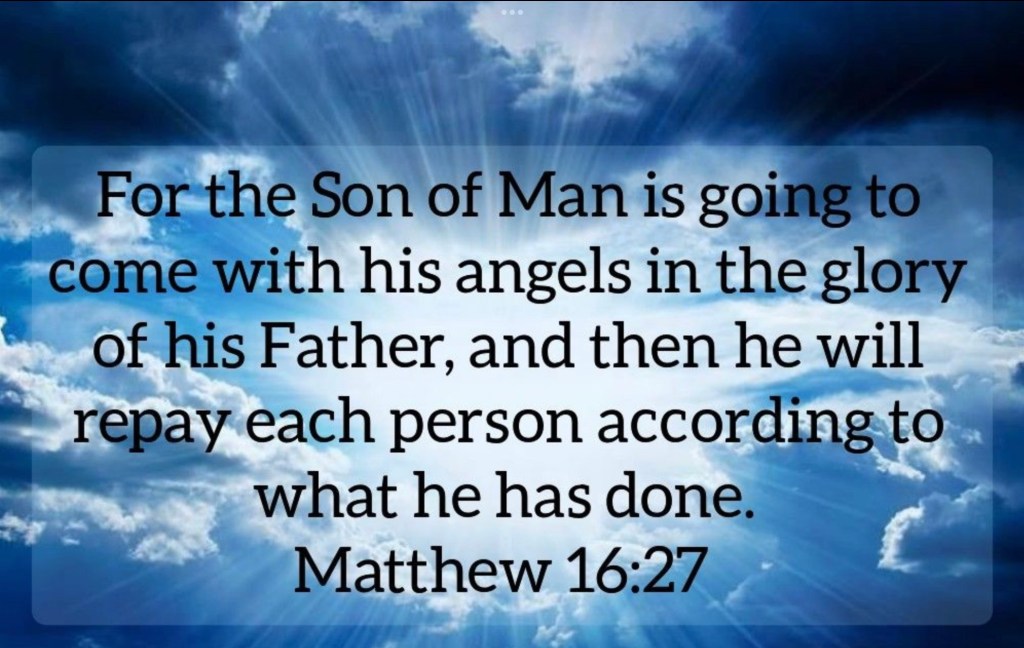

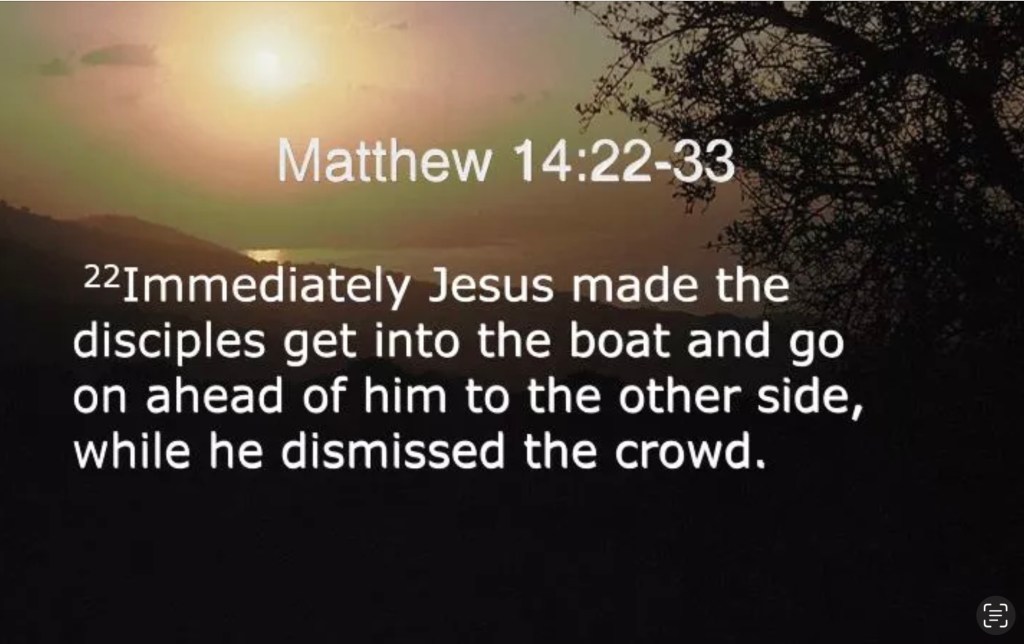






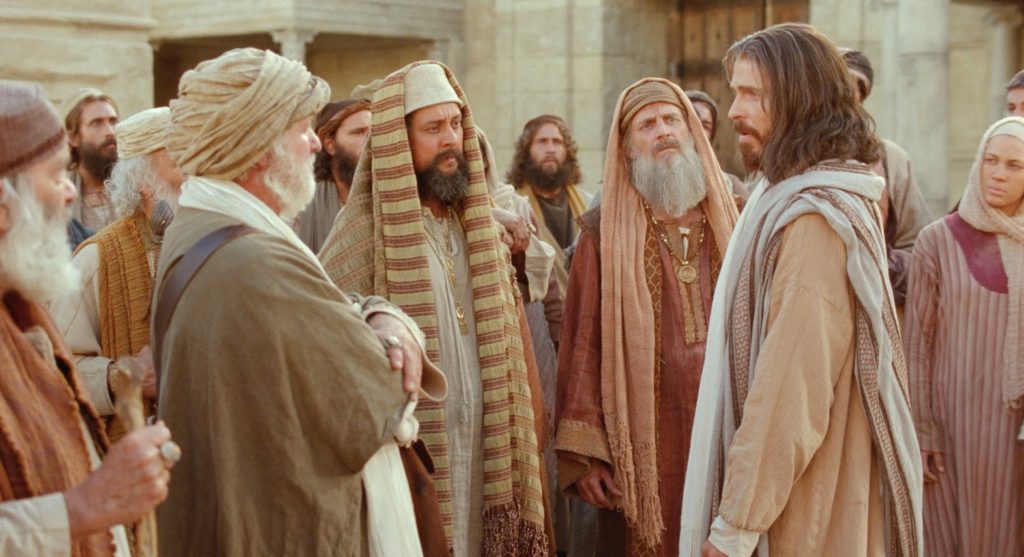




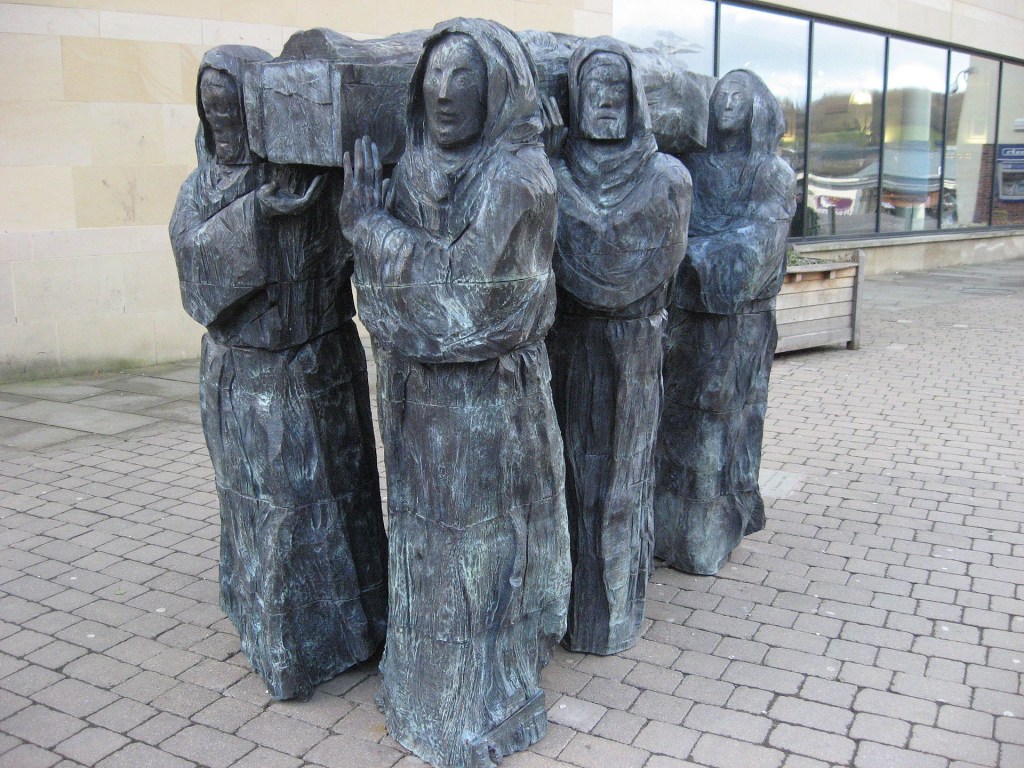
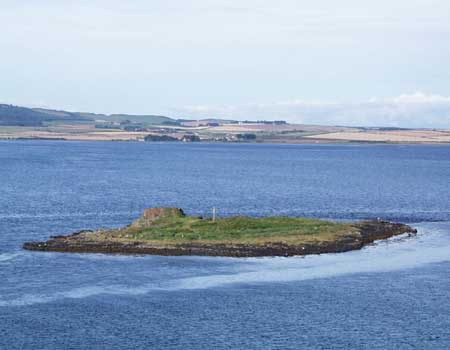
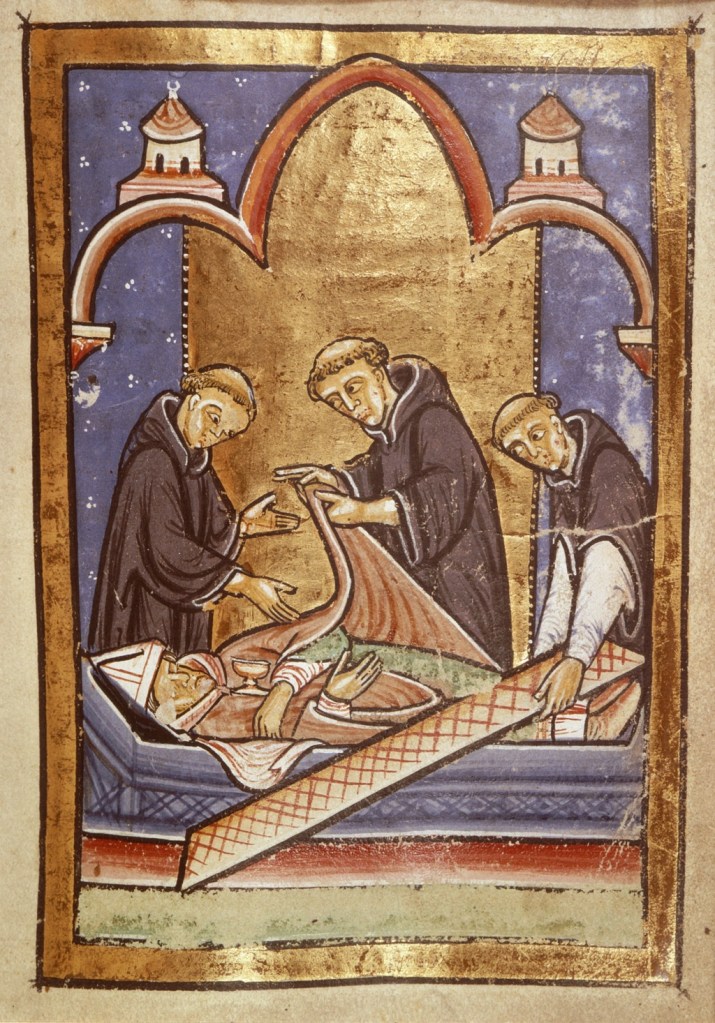
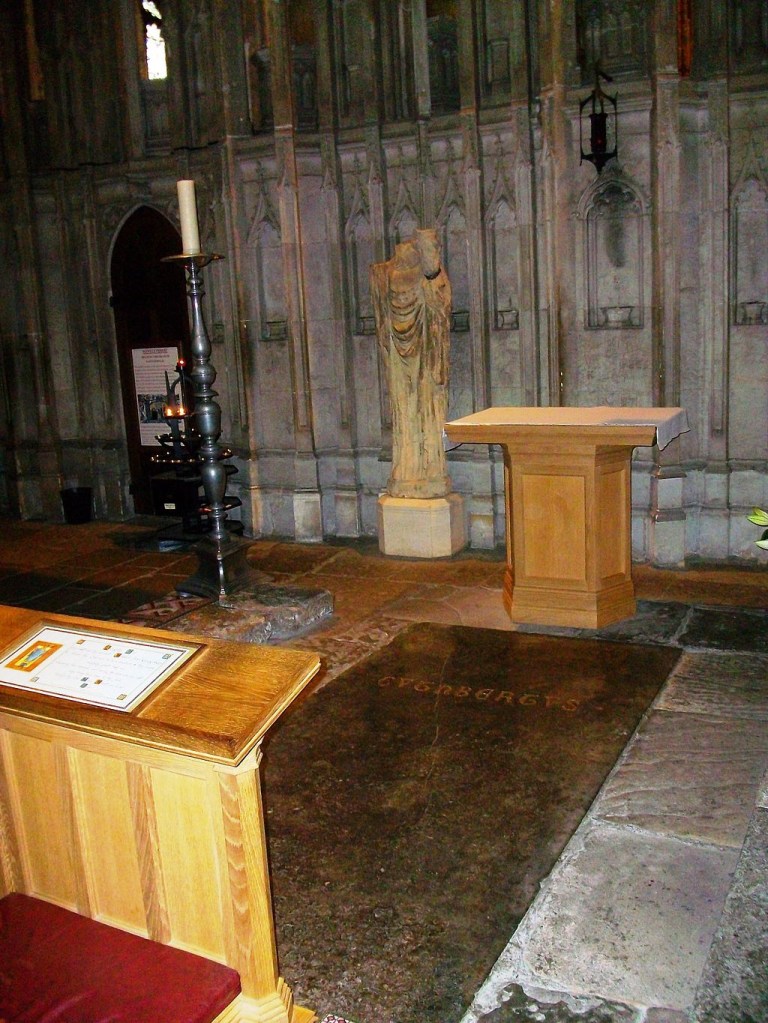
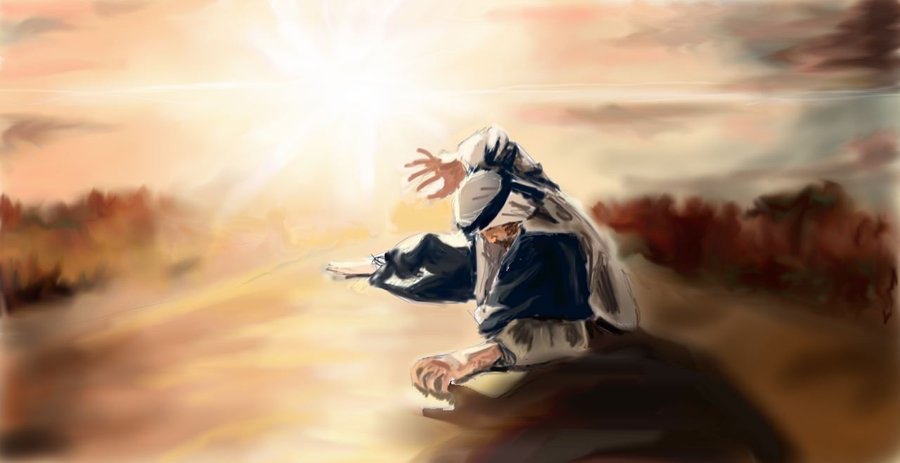
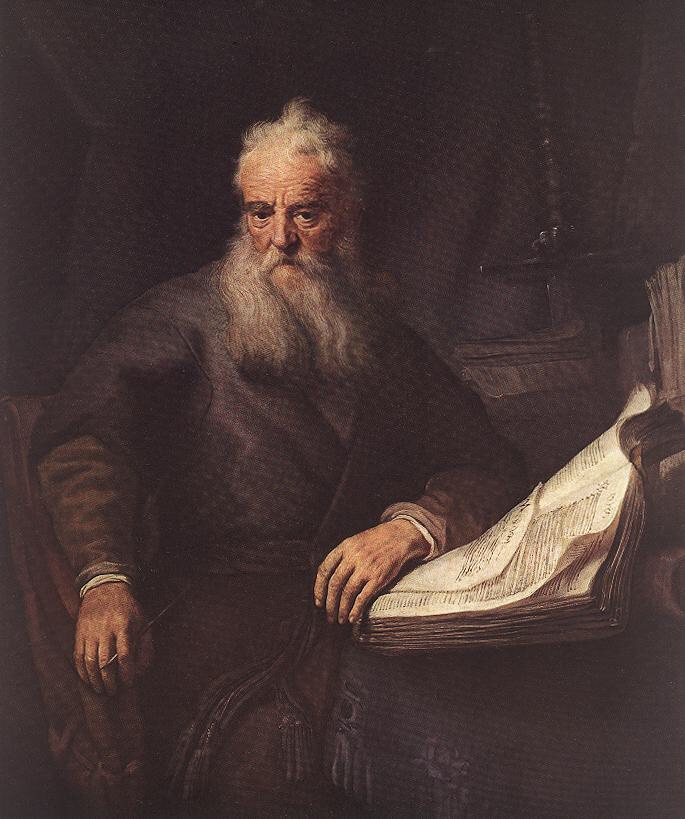

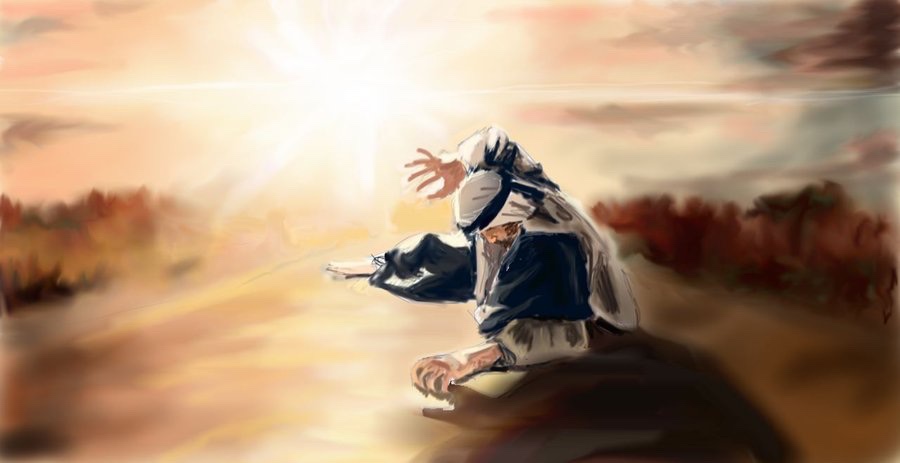
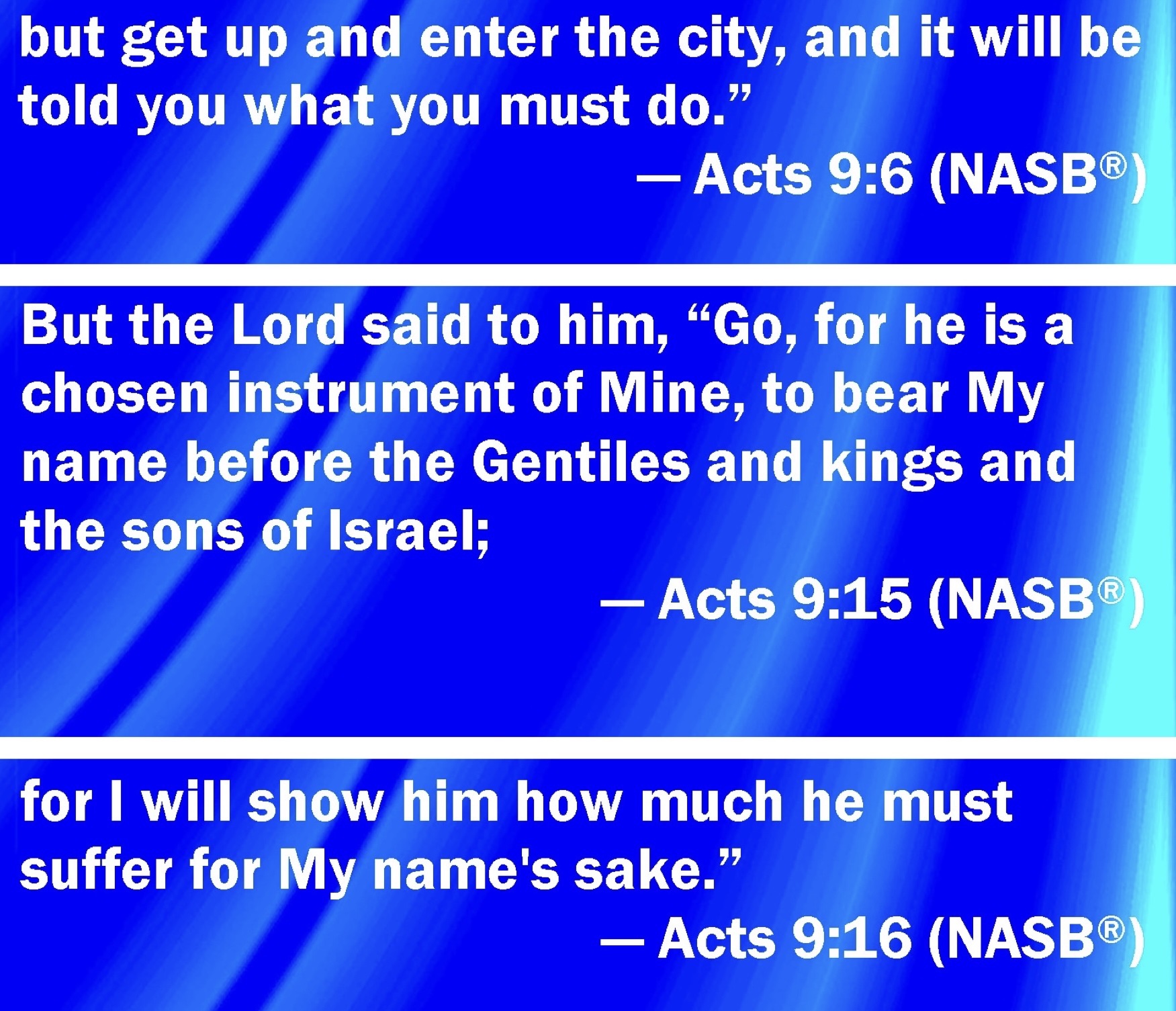


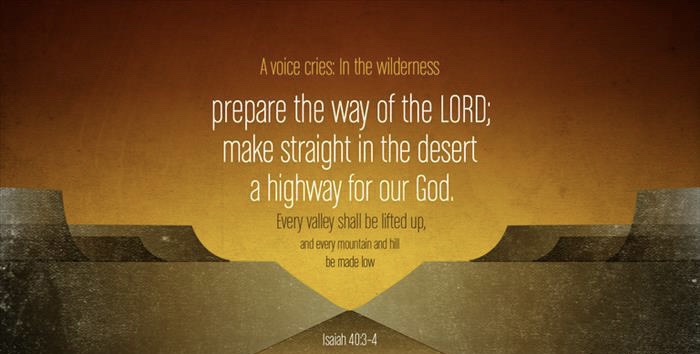

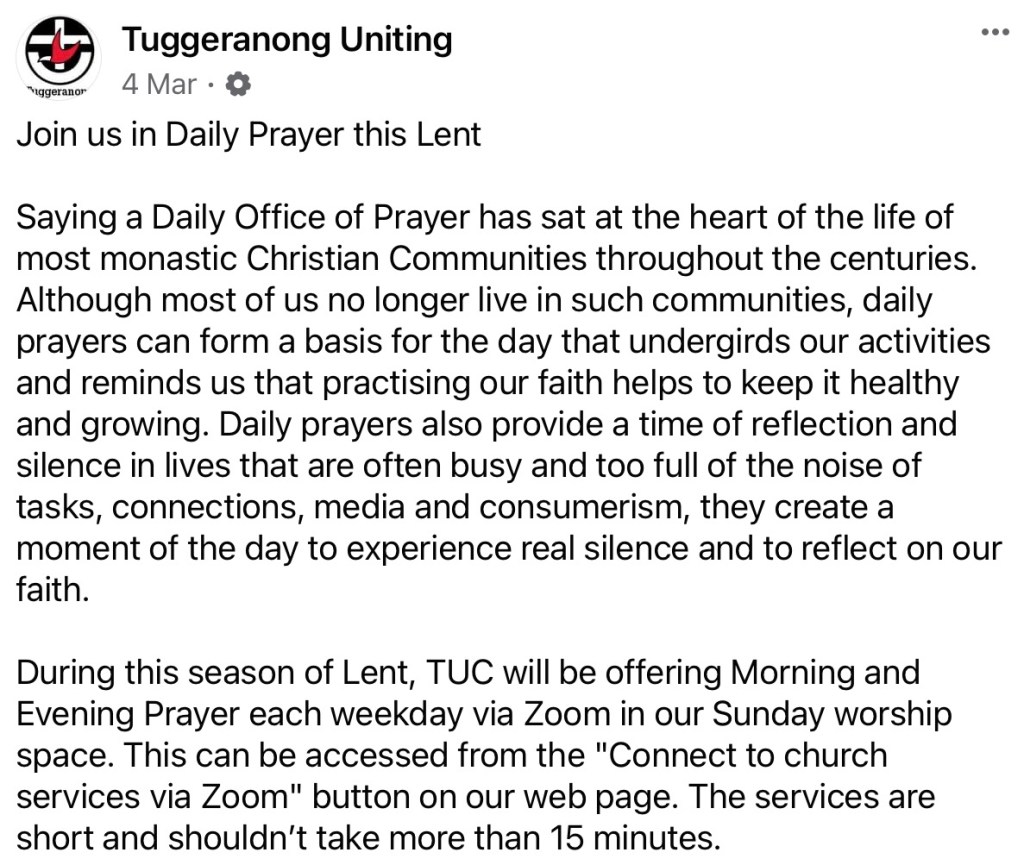
 An Informed Faith