So how did your bloke go?

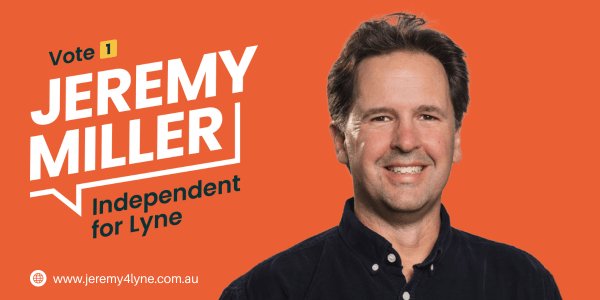
“So how did your bloke go?” Have you been asked this question in the weeks since the election? Recently a group of local leaders and volunteers in the Jeremy Miller for Lyne campaign met with members of the central campaign team to look at the future for an Independent candidate in Lyne. As part of that exploration, we heard an overview of what the polling in the booths reveal about how “our bloke” Jeremy actually went in the 2025 election.
1 The overall result

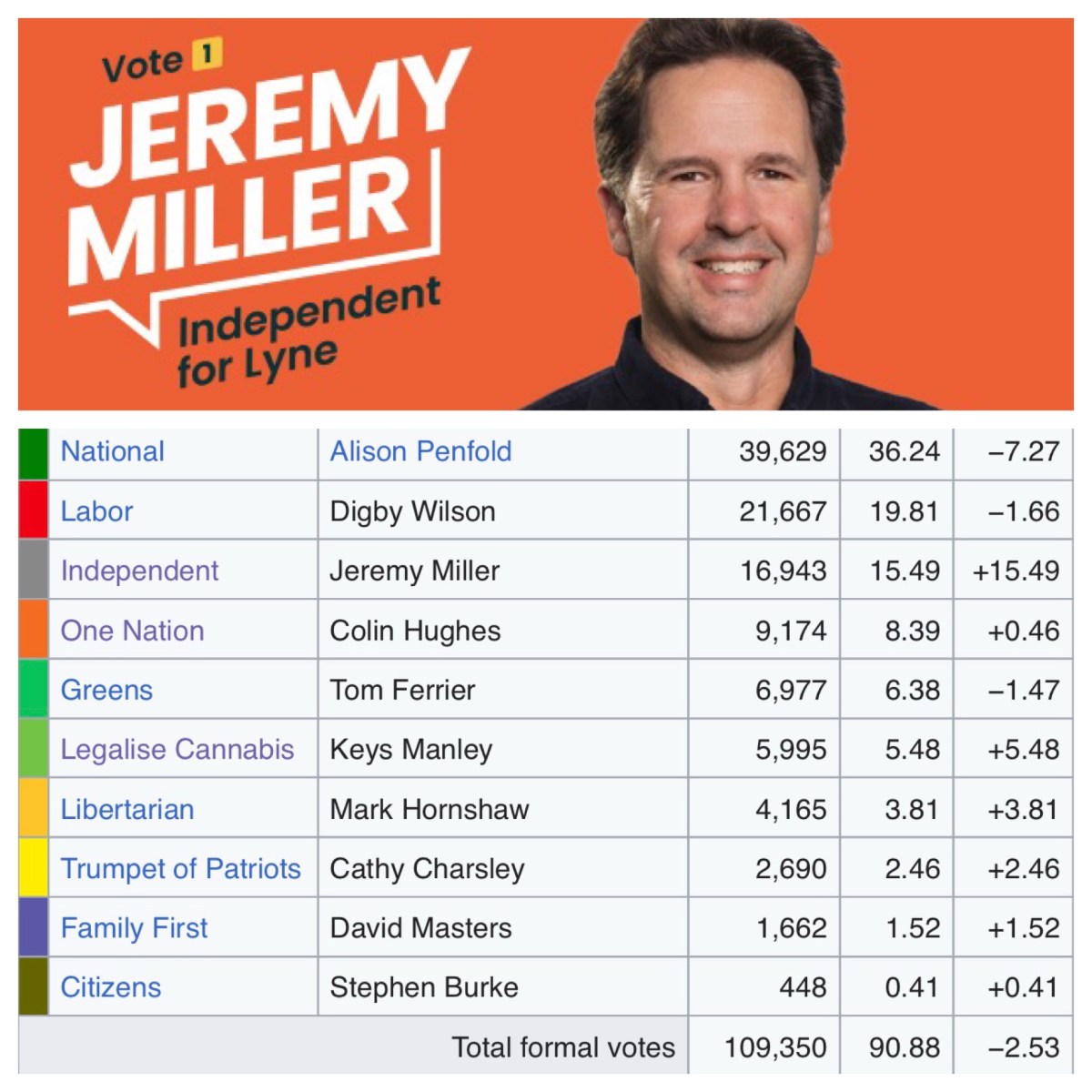
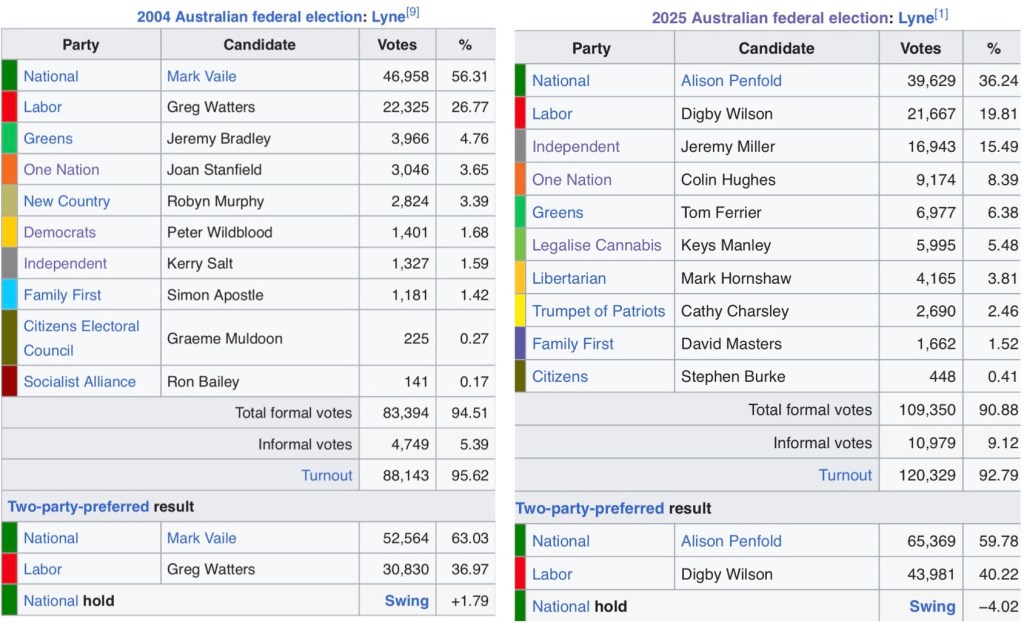
Now that the poll has been declared, we know the big picture: he didn’t win the seat—but, realistically, that would have been a huge achievement, which was somewhat unexpected. Yet, he did do remarkably well for a first-time community-supported candidate. Jeremy gained just under 16% of first preferences across the whole electorate, which was about 8% more than the votes that independent candidates gained in the 2022 election. 

And by the way: that 8% came from an 8% swing away from the Nationals candidate, for the 36.24% of first preference votes for the Nationals candidate was a healthy 7.27% less than the first preference votes for the Nationals in the 2022 election— and a massive 20% less than the 56.31% of first preferences that voters gave to the National Party way back in the 2004 federal election. That’s been a significant drop in the Nationals votes over the past two decades. Do they really think they are serving the electorate well, if one in five voters has stopped supporting them?
Looking at the longer-term trends, like this, as well as the detailed votes from booths across the electorate (discussed below) certainly indicates where our attention needs to be focussed in the next election in 2028: on “soft” Nationals voters who are open to being persuaded to change the way they vote. Are they happy with how the electorate is being represented in Canberra? Or are they discontent with the way the Lyne electorate is being treated? Might they be open to a different way of seeing things? After all, “if you want things to change, you need to change the way you vote”.

2 Where Jeremy polled best of all

If we look at the first preference votes cast booth-by-booth, we can see that in a good dozen or so booths, Jeremy’s vote was over 20%. He did best at Tinonee, with a wonderful 28.82% of first preference votes (more than the Labor vote and just under the Nationals votes) and at Old Bar, with 27.6% of first preferences there (ahead of both Labor and Nationals). At Taree West, where he attracted 26.2% of first preferences, he received the same number of votes as the Nationals and almost double the votes for Labor. 

A more detailed breakdown of statistics indicates that Jeremy did indeed gain votes “where it matters”—in the larger population areas of Greater Taree and Forster—Tuncurry, where 40% of the voters live.

That detailed breakdown (which you can skip if figures befuddle you) is: in the Taree area, where Jeremy’s recognition is high, he attracted over 20% of the vote at Tinonee (28.82), Old Bar (27.6), Taree West (26.28), Cundletown (25.31), Purfleet (24.00), Chatham (22.08), and Taree (21.85). The exception in this area was the lower vote of 18.5% at Taree North. Nevertheless, all of these booths are significantly higher than the 15.8% primary vote across the electorate.

Further south, in Forster—Tuncurry, the best results were achieved at Pacific Palms (24.17, higher than each of Labor and the Nationals), Coomba Park (21.67), Forster East (21.67), Forster (21.50), Bungwahl (20.55), and Tuncurry (17.09). Other good results in this part of the electorate were at Hallidays Point (23.11) and Diamond Beach (24.78). At Lansdowne, Jeremy received 19.69, and at Coopernook 16.81, whilst at the two booths in Wingham, Jeremy secured 16.84 and 14.20. Again, these booth results are higher than the average.

So this is further cause for reflection: what was it in these particular areas that helped Jeremy to push his vote up, higher than the 15.8% average for the whole electorate? Clearly, the fact that he lives in the area and that he is a very active Councillor on the MidCoast Council must both have helped in securing that higher vote. Being “known” in these areas was a strong positive for Jeremy. These results again point to an area where our energy might best be focussed in the time leading up to the next election (presumably in 2028). 

The largest blocks of voters live in the two main urban areas—Greater Taree (including Wingham, Old Bar, and surrounds) and Forster—Tuncurry. This is where the influence of the National Party is less, by comparison, than it is in the inland rural areas. And these are amongst the areas in the electorate where we might expect population growth in future years. How do we plan and implement effective campaigning in these areas in the next few years?
3 In other places across the electorate of Lyne

In the north of the electorate, at Barrington, Jeremy secured 20.99, and in Gloucester itself 16.38. In Wauchope, he obtained fewer votes: 11.28 at Wauchope and 10.53 at Wauchope South. Nearby in Beechwood, the vote was 13.26, and in King Creek 15.27. These are promising results, offering a good base for future campaigning.

In the Dungog Shire, there was a good result at Paterson (16.46), and less at Seaham (12.59), Dungog (12.57), and Clarence Town (11.92). Closer to the coast, Jeremy’s share of the votes ranged from Krambach (17.00) to Bulahdelah (11.01) and Karuah (10.19). In polling places in the Port Stephens Council, votes ranged from Hawks Nest (16.74) to North Arm (14.13) and Tea Gardens (12.60).

4 Votes for Jeremy and votes for Labor

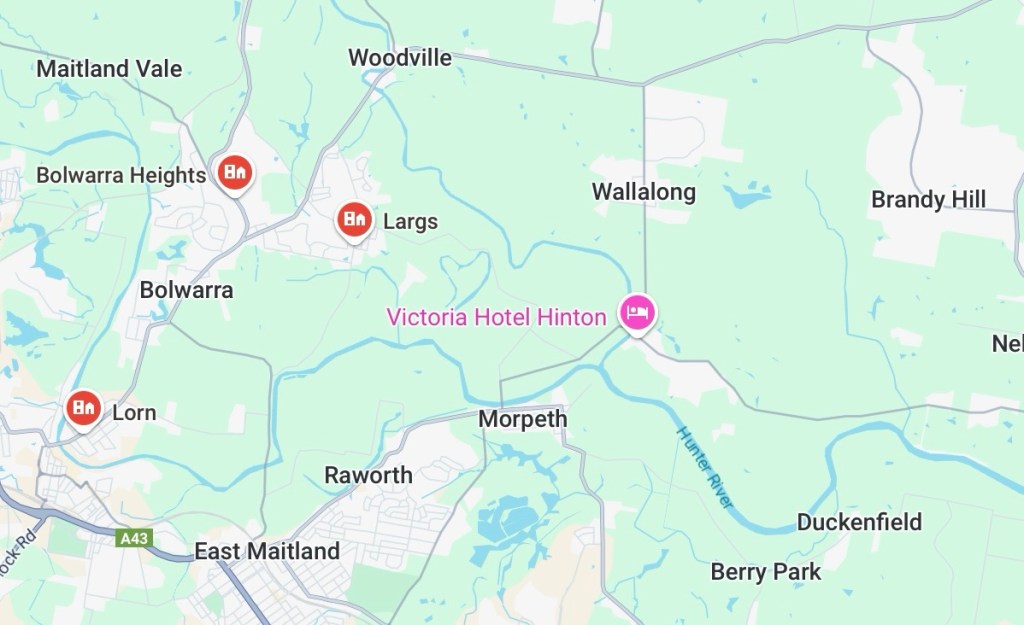
Another area of particular interest is in the area immediately to the north of Maitland which are currently included in the very southern end of the electorate. Whilst some votes for Jeremy were under 10% (in the more rural locations), better results were gained at Largs (10.81%), Lorn (11.67%), and Bolwarra (11.86%). These percentages are still below the average vote across the whole electorate. But a significant factor in this area is the support for Labor.

At these three polling booths, Labor’s share was consistently over 27%, although in Lorn it was 40.14%, the highest of all the booths in Lyne. This reflects the strong Labor base in Maitland itself (where the seat of Paterson saw a swing of 4.2% to Labor, despite the massive resources allocated to this seat by the Liberal Party). Making any headway in this area by attracting hesitant Labor voters would need a sustained campaign leading into the 2028 election.
And finally, if we look to places where Jeremy polled better than Labor, we can see some striking margins. At Old Bar, the 27.66 primary vote for Jeremy was greater than Labor’s 18.59. There were good margins also at other eight booths in this region: Taree pre-polling (21.93 to 16.47), Taree (21.85 to 14.94), Taree West (26.28 to 14.46), Cundletown (25.31 to 10.05), Chatham (22.08 to 15.35), Tinonee (25.82 to 13.64), Taree North (18.50 to 17.22), and Wingham West (16.84 to 13.46).

Jeremy also secured more votes than Labor at another seven polling booths: Hallidays Point (23.11 to 16.49), Diamond Beach (24.78 to 16.34), Pacific Palms (24.17 to 21.87), Krambach (17.00 to 14.41), Beechwood (13.26 to 12.80), King Creek (15.27 to 14.34), and Barrington (20.99 to 14.36). In all cases except for Old Bar and Pacific Palms, however, the Nationals still out-polled both Jeremy and Labor at these booths.

5 The future

So we can see from this just how well “our bloke” Jeremy did, and also just what work lies ahead for an even more successful campaign in 2028. I hope that lots will stay on board and even more sign up for that ride!

***** ***** *****

Written by John Squires, Member of the Central Campaign Team for Jeremy4Lyne, drawing on data prepared by James Foster, Polling Coordinator, Central Campaign Team, and data on the website of the Australian Electoral Commission.

See also
A tale of the times (in the aftermath of the federal election)

For a good month, the adults were out and about across the country. “Tell me what you need”, many of them said—and stopped to listen. “This is what I think we can do”, others said— and gave indications of what they could offer to people who were listening. Why,some of them even said how much it would cost to do what they were offering, and where the money would come from to pay for that.

And then the people came, and considered, and voted, and told the adults what they wanted. And the adults all nodded, and said, “yes, indeed,the people have spoken: we respect that, and we will do what we said”.

Then the adults caught planes and drove cars and gathered in their sandpits in the special place that had been made for them to come together and play. Some of the adults said they needed a bigger sandpit, because there were more of them. Other adults said they didn’t want little Eddie and Mackie to play with them any more in their “special” sandpit. Amd other adults started a very public squabble about who would have the best toys and the most play space in their sandpits. Why, one of them even decided she didn’t like the sandpit where she said she would play; so she decided to join the adults in another sandpit, just across the way.

But by then, it was apparent to all the people who had listened, and talked, and voted, that the adults had become children, once again. Which was, after all, what they had been before they had spent that month as adults, amongst the people.

*****

Or, in plain language:

MPs are elected to represent the people of their electorate, first and foremost. National policy needs to be formulated with due awareness of the impact across the board: each MP ought to be advocating for the needs and concerns that they are hearing from their electors.

Instead, party members focus on climbing the factional ladder (in both “majors”) and gaining the prestige, power, and salary of the next few rungs “up”. Leadership competitions and factional deals reveal that once they return to Canberra, they have a completely skewed and unpredictable upside-down set of priorities.

To me, that is more reason next time around NOT to vote for “the major parties”—especially since they are funded by gambling companies, fossil-fuel industry, multi- million dollar magnates, and, in the case of the National Party, the tobacco industry.

*****

For my posts on the election from my perspective in Lyne:

https://johntsquires.com/2025/03/13/our-meet-the-candidate-event-jeremy-miller-comes-to-dungog/

https://johntsquires.com/2025/03/27/donations-as-a-means-of-political-support-and-political-influence/

https://johntsquires.com/2025/04/02/if-you-want-things-to-change-you-need-to-change-the-way-you-vote/

https://johntsquires.com/2025/04/04/why-vote-for-an-independent/

https://johntsquires.com/2025/04/10/but-where-does-your-funding-come-from-political-candidates-and-their-donors/

https://johntsquires.com/2025/04/13/politics-in-the-pub-with-jeremy-miller-at-stroud/

https://johntsquires.com/2025/04/15/seven-reasons-not-to-embrace-nuclear-power-as-the-basis-for-electricity-generation/

https://johntsquires.com/2025/04/19/woke-and-teal/

https://johntsquires.com/2025/04/21/which-candidates-in-lyne-are-committed-to-reconciliation/

https://johntsquires.com/2025/04/29/meet-the-candidates-for-lyne-at-dungog-28-april-2025/

https://johntsquires.com/2025/05/08/a-growing-presence-of-independent-candidates-and-members-of-parliament/

Woke and Teal

The term “Woke” was first used in a positive manner by Afro-Americans. It can be traced back to an 1891 book by Joel Chandler Harris (best known for his “Uncle Remus” stories). In the 1930s, it was used by Blacks quite often to describe being aware of racial prejudice and discrimination, often in the phrase “stay woke”. That usage continued through the decades and was picked up by the Black Power movement in the 1970s, and then increased in usage in the Black Lives Matter push of the 2010s.

See more at https://www.independent.co.uk/news/uk/home-news/woke-meaning-word-history-b1790787.html

In 2017, the Oxford English Dictionary added “woke” to its official lexicon, noting that it was most often used “in a derogatory sense”. This reflects the reality that the term had been picked up and hijacked by people of more conservative political and social perspectives (predominantly white people), and employed as a way of denigrating people with a social conscience committed to social justice. It’s a strange recent twist to what had been a proud Black statement.

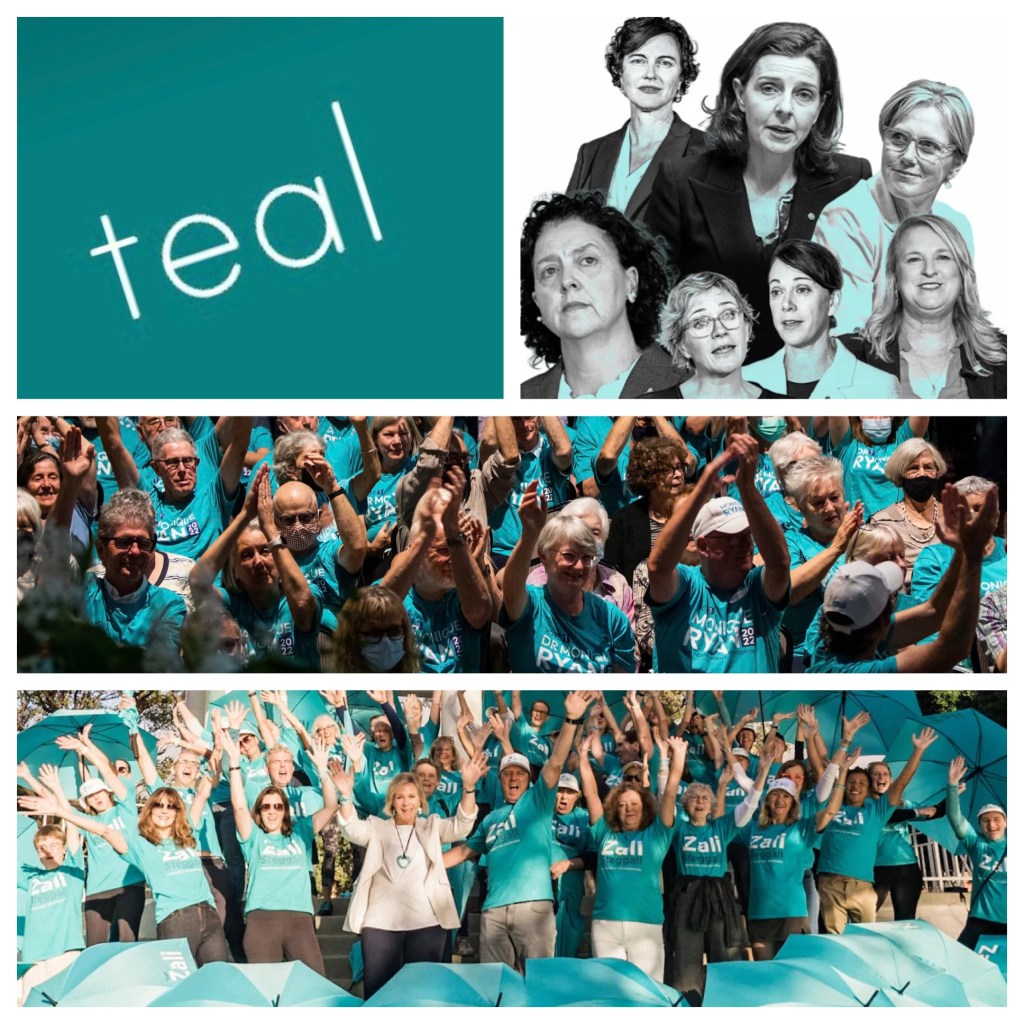
The same development in meaning can be seen with the word “Teal”, with a much more recent origin and a highly-compressed trajectory in turning from a positive to a negative meaning. It was first used as a political label in the 2019 federal election campaign of Zali Steggall, when she defeated Tony Abbott in the seat of Warringah (NSW). 

The term (and the campaign colour) was then picked up and used in a constructive sense by some (but not all) community-supported independents in the 2022 election: Dr Monique Ryan in Koorong (Vic), Allegra Spender in Wentworth (NSW), Dr Sophie Scamps in Mackellar (NSW), Zoe Daniel in Goldstein (Vic), Kate Chaney in Curtin (WA), and Zali Steggall in her successful re-election campaign in Warringah.

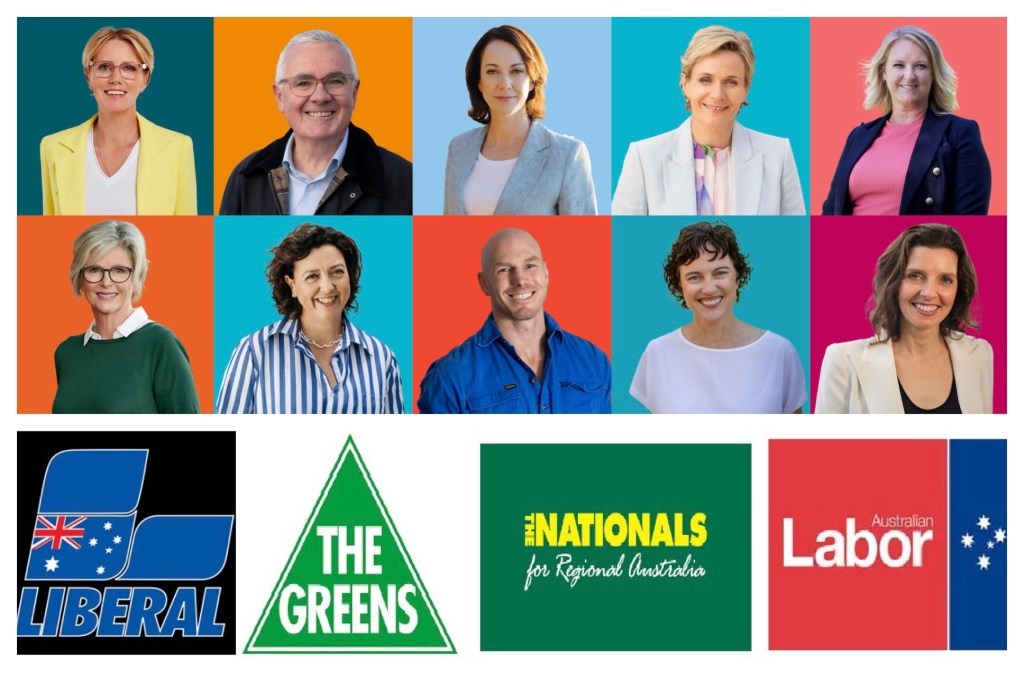
The colour has successfully differentiated community-supported Independents from the “old parties” of Labor (bright red), Nationals (deep green), and Liberal (royal blue), as well as the Greens (light green).

However, the word “teal” has been adopted by uncritical conservative people as used as a way to lump together a widely-disparate group of independents and frame them all as “Labor lite” or “pale Green”. It has become a derogatory term for such people, as they look for an easy (and lazy) way to caricature those standing as Independents, dismissing them all as “leftwing woke ideology” (three slurs in one phrase!).

Too often there is a conflation of “Teal” and “Climate 200”, with the implication being that all candidates supported by C200 are Teals who are climate change warriors—“leftwards”, as some derogatorily call them. However, the C200 website clearly shows that the independents they are supporting are using a range of colours. 

Quite a number of the Independent candidates that the Community independents Project is supporting are using teal, but others are using orange, and a few are using yellow. Standing against Peter Dutton in Dickson (Qld), Ellie Smith is using magenta. Overall, the choice of colour for Independents it is made on an individual basis. That’s far from the monolithic imposition by the parties of the red of Labor or blue for the Liberals, the lighter green for Greens and the deeper green for the Nationals. These are required of all of their candidates around the country. Community-supported Independents each choose their colour and their marketing strategy.

For myself, I am wearing orange and supporting Jeremy Miller as the Community Independent for Lyne. Jeremy has been chosen by community members across the Lyne electorate in response to a twelve month listening campaign aimed at prioritising the local needs of the Lyne electorate. His fundamental commitment is to listen to the people of the electorate and advocate strongly for the needs of people in Lyne.

See more at https://www.jeremy4lyne.com.au/what_i_stand_for

Politics in the Pub with Jeremy Miller at Stroud

Jeremy Miller has been out and about around the electorate this past weekend, with appearances at “Politics in the Pub” at Stroud on Friday, “Meet and Greet” at North Haven on Saturday, and Gloucester Markets on Sunday. He was also on ABC Mid North Coast radio early this morning, in a debate with the National Candidate. He is getting around!

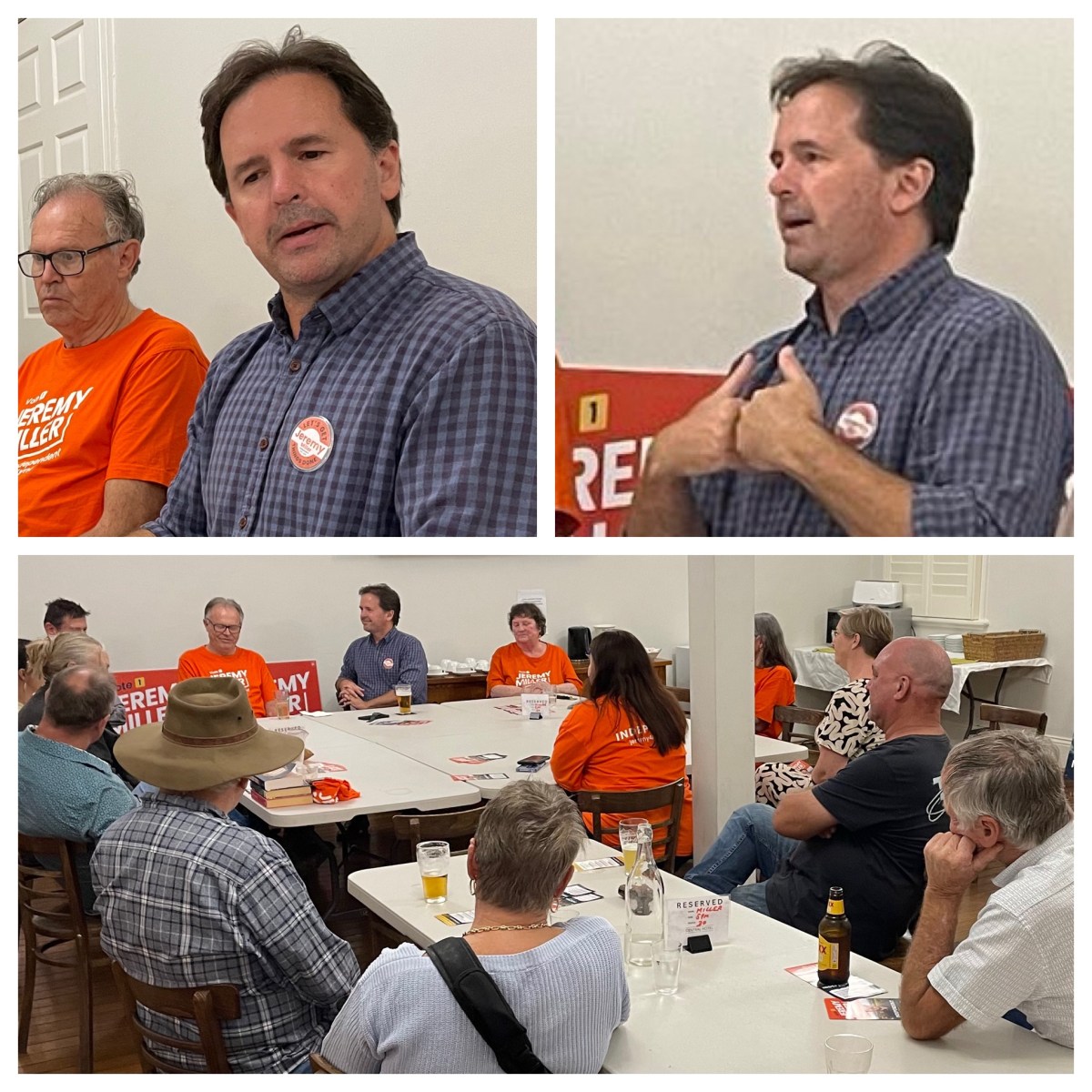
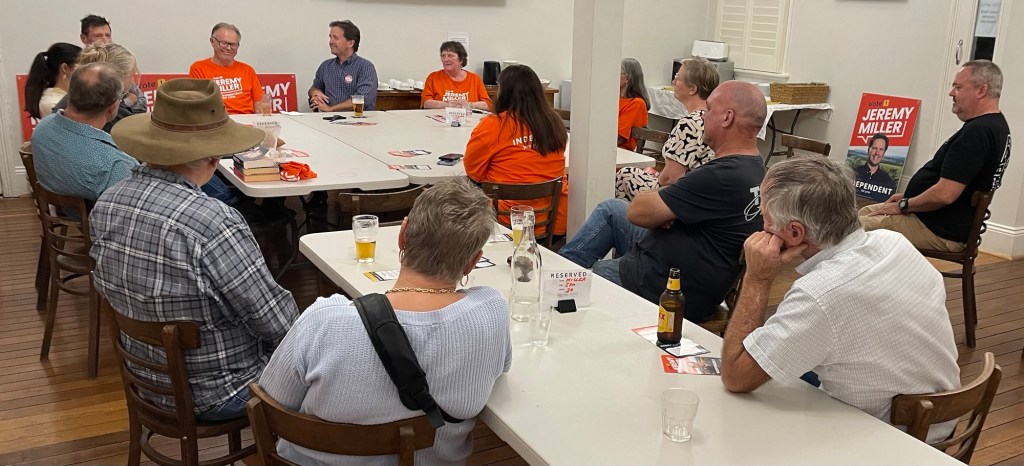
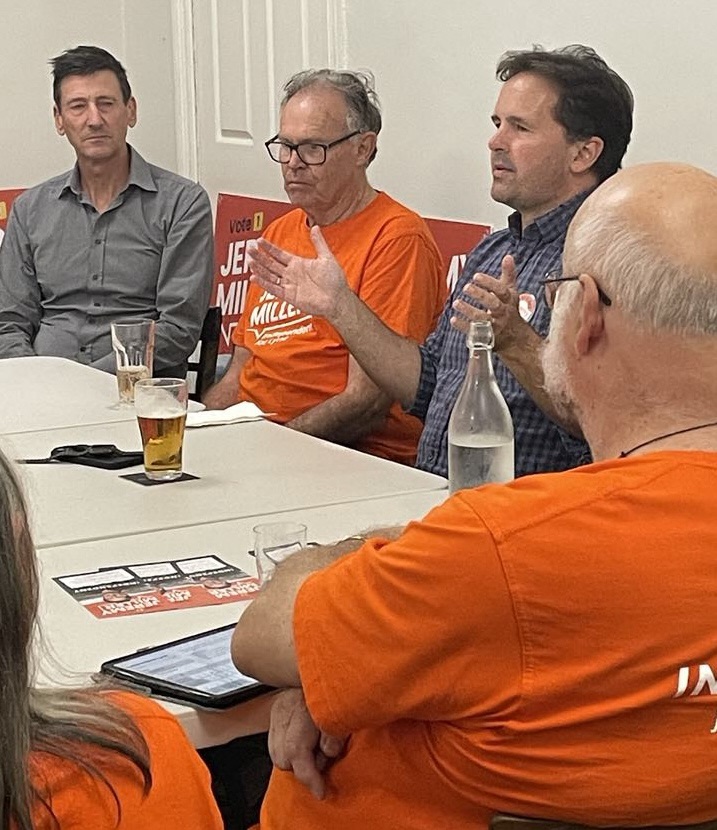
On Friday night, a crowd of interested folks gathered in the Central Hotel at Stroud to hear Jeremy speak about his life, his commitment to the community-supported model that Independents are following around the country, and his views on a range of issues.

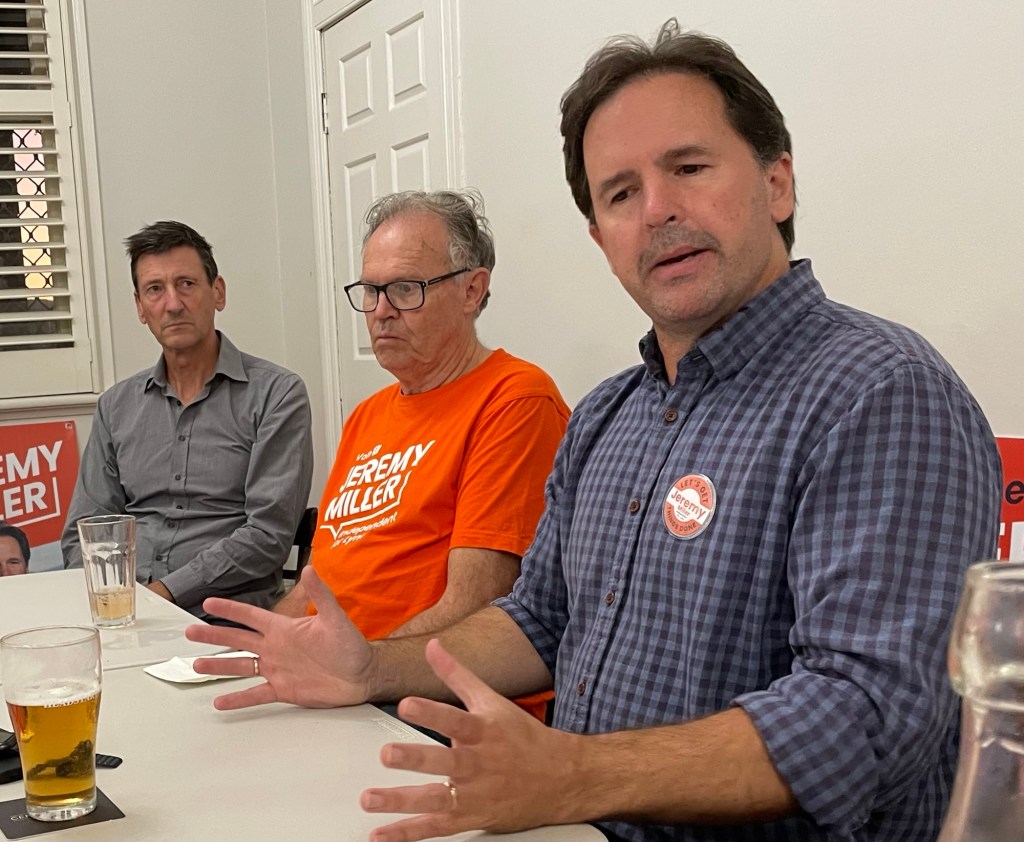
The style wasn’t a typical “town hall meeting” where the candidate stands and speaks for a time before taking questions. Rather, it was more of a “kitchen table conversation”, with people sitting around the tables in the pub’s dining room and Jeremy fielding questions as they were raised. The back-and-forth meant that people could sense the integrity, knowledge, and commitment that Jeremy brings to his candidature.

No question was out of order for Jeremy. “What will you do to help address the changing climate?” He affirmed that the evidence of science should always be the guide to what we do. “How will you help motorists who are frustrated with the long wait time to get onto the highway, with flyovers not likely for at least 15 years?” Jeremy indicated he will take this on notice and investigate this once elected; “it’s a complex matter”. “How can we improve the roads in the electorate?” Jeremy noted that funding for roads in this electorate has declined $18mill in real terms over recent years; a restoration of the 1% of tax paid to councils for roads would be good!

“What do you think about nuclear power?” He responded that he is not convinced this is either environmentally or economically sensible, and does not see that government should run such a business. “What do you think about windfarms?” He noted that he is supportive, in principle, of renewable energy, but can see some unresolved issues with the specific proposal off Port Stephens). And “what are your views on immigration?” Jeremy’s answer began by affirming that Australia has been built on immigration; “we need a balanced intake but there are international agreements that we need to keep”, he noted.

A particularly important question put to him was “what would you do if you heard a clear view in the electorate that they want something that conflicts with your personal values?” Jeremy spoke about needing to hear the message clearly, but also about the role that a parliamentarian has in educating the electorate about complex issues. He cited the model of Participatory Democracy used by the Independent Member for North Sydney, Kylea Tink, who regularly gathers a “representative jury” from across the electorate to speaks a day considering expert views. At the end, the matter is presented to a Citizens Assembly for wider discussion. Jeremy plans to implement this if he is elected.

Finally, in response to the question, “why are you doing this?”, he cited his approach during the two decades that he worked as a DJ on local radio in Taree. “If I have the attention of people, I need to do something with it”, he said. “I didn’t want to squander the influence that this job gave me on silly and irrelevant things.” He cited the fact that, over the years, he has been active in his local P&C and in community action groups seeking to improve things in the community. He brings this same commitment to his role as a federal MP, representing the people of the electorate.

Jeremy Miller is the Community Independent for Lyne, chosen by community members across the Lyne electorate in response to a twelve month listening campaign aimed at prioritising the local needs of the Lyne electorate.

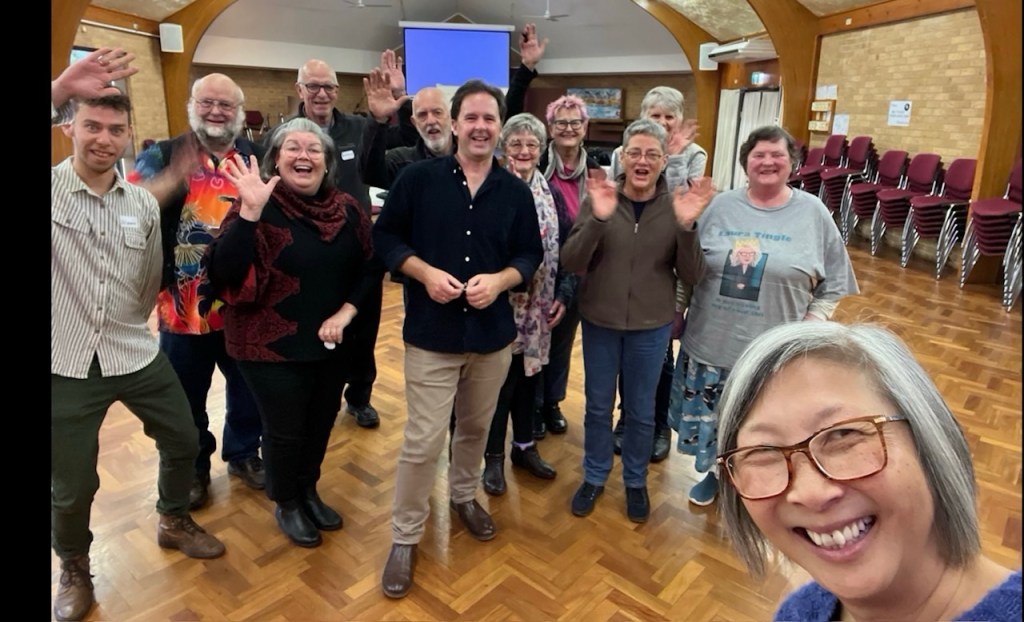
(Yes, that’s the left-rear perspective on yours truly
in the front of this photo!)

Standing4Lyne in 2025

Elizabeth and I have had an interesting sequence of experiences over the past six months. It all began some months after we had moved to Dungog, late last year, and settled in to the community here. In about May we were invited to attend a gathering of people who had interest in exploring what it might look like to start a “Voices for Lyne” group locally. This would be a group of people from the community in and around Dungog who would be happy to support an Independent candidate in the upcoming federal election.

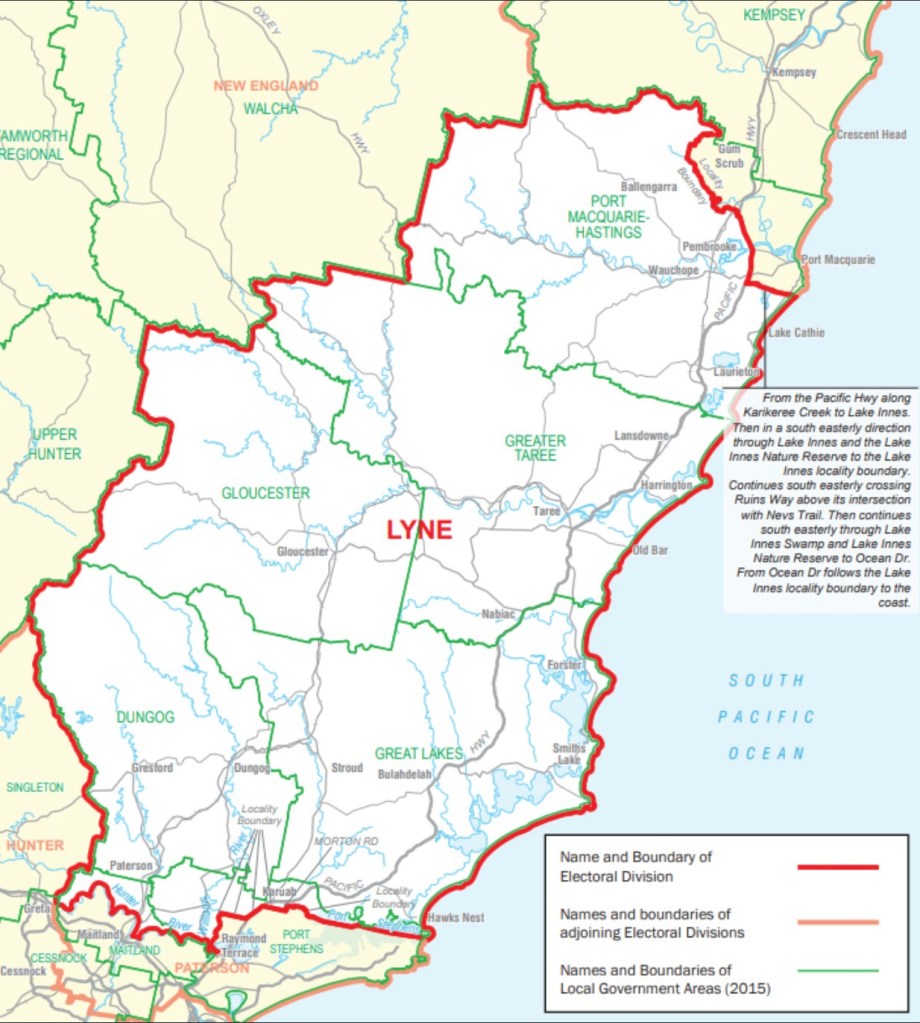
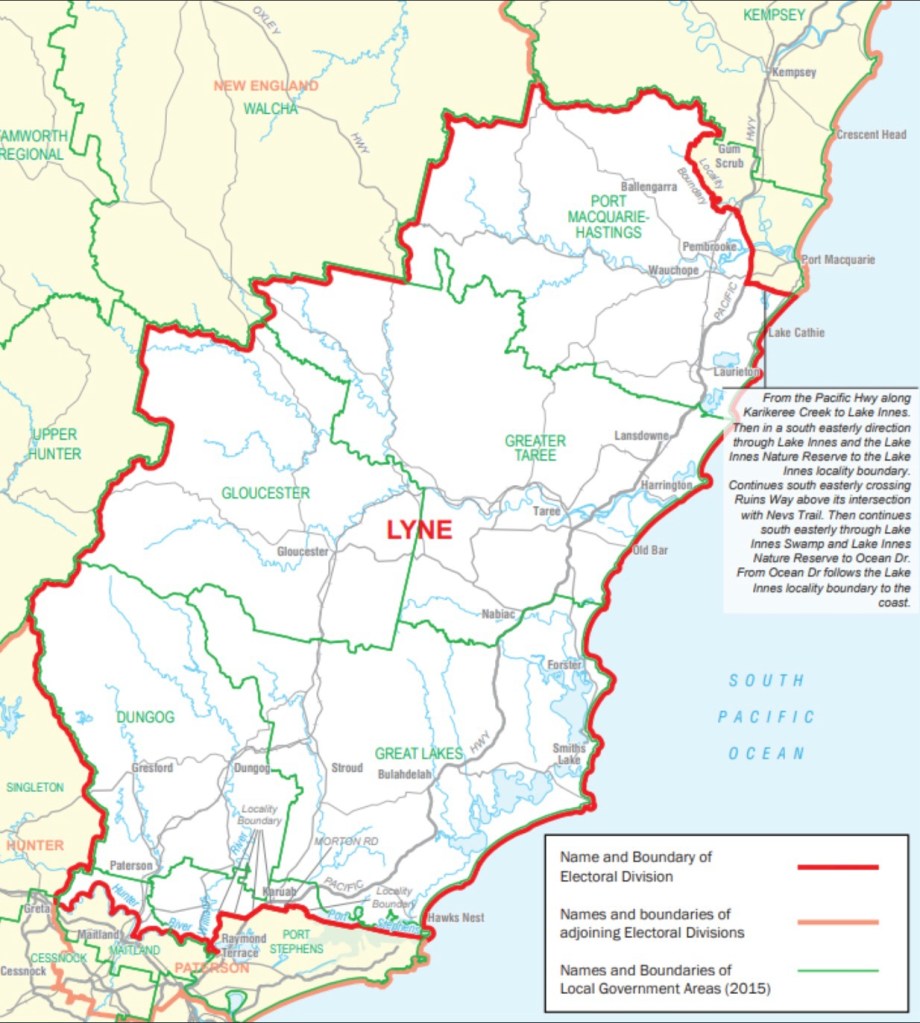
Lyne is the federal electorate that we live in. It stretches from the northern suburbs of Maitland on the banks of the Hunter River, to the southern suburbs of Port Macquarie near the Hastings River. It includes significant urban areas on the coast—Taree, Forster, and Tuncurry—as well as a string of smaller coastal towns and villages. There are also some key rural hubs inland—Wauchope, Gloucester, and Dungog—as well many other smaller towns and villages in the hinterlands, and widely dispersed farmland areas through many river valleys. It is a diverse region with wonderful scenery along the coastline as well in the mountain areas inland. It has many natural features that attract visitors throughout the year.

Since it was established in 1949, the seat of Lyne has had only six members: five Nationals and one Independent. It was long regarded as a National Party stronghold. The one Independent member was Rob Oakeshott, whom we got to know and respect while we lived in Wauchope from 2011 onwards. Rob was an excellent local member, highly attuned to representing the needs and concerns of his electorate, and right over a wide range of policy areas. By contrast, the various National Party members elected by Lyne over the decades have—quite predictably—been more concerned to vote according to the party line, and so the electorate has suffered a degree of neglect as they have each prosecuted the ideological wars of the Coalition.

We were two of a dozen people at that meeting in May, to talk about forming a “Voices for Lyne”. A month after that, an organisation called Independent Lyne was formed, and Elizabeth and I both committed to working with other folks on an organising committee. The committee has met every two or three weeks since early June. (Guess who is the secretary, diligently taking minutes of each of those meetings …)

We have established a website, invited people to complete an online survey about their hopes and needs, appointed a number of Local Leaders (Elizabeth took on that role for Dungog), held kitchen table conversations, had stalls at local markets, and generally “talked up” the benefits of having a federal representative who is Independent and not bound to party policy—someone willing to consider each issue on its merits, consult with the people whom they represent, and commit to integrity and transparency in their decision-making.

See https://www.independentlyne.org

We called for expressions of interest from local people; a small committee did the hard work of sifting and sorting those applications, then the Organising Committee was expanded with other interested community members to form a Community Panel to listen to those shortlisted. Emerging from this, we identified the best person to be our candidate, to stand as a community-backed Independent in the seat of Lyne at the 2025 federal election. And so Independent Lyne has given birth to Standing4Lyne.

At the same time, the incumbent local member announced his retirement, after 11 predictable years in the position, and the National Party announced their new candidate. It was no surprise that the new candidate was his chief policy advisor—a clear case of keeping the party machine hegemony rolling over. Just a week after this announcement, Independent Lyne announced support for our community-backed Independent candidate.

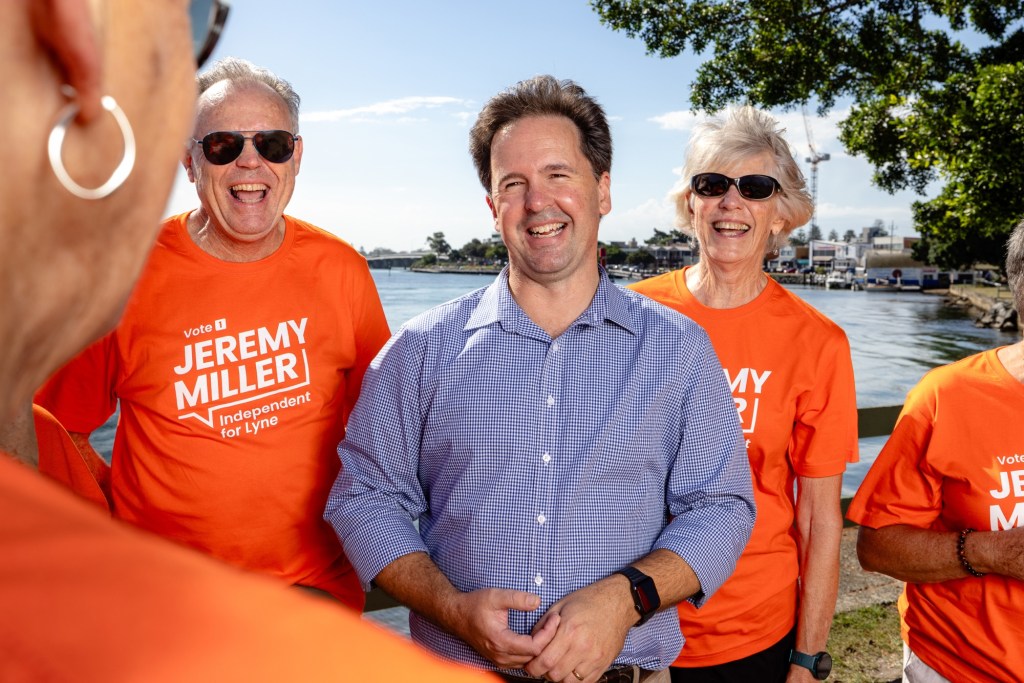
Our candidate who is Standing4Lyne is Jeremy Miller, who is well-known in the Greater Taree area as an energetic small business owner, and throughout the Mid Coast Council area as the Deputy Mayor of Council. “I’ve always looked for practical ways to make things better—whether that’s running local events, managing the Manning Entertainment Centre, or serving on Council”, Jeremy said. “I’m married to a local teacher, we’ve raised three kids here, and there’s nowhere else we’d rather be”.

You can read more at https://www.jeremy4lyne.com.au

Standing4Lyne is part of the Community Independents Project (CIP) that has grown exponentially across the country in the last few years. This project supports groups like Standing4Lyne that are putting forward community-backed Independents as candidates in the next election. Standing4Lyne people have participated in the training and resourcing that CIP provides. It has given us a base for working towards the election.

The Community Independent candidates that are emerging are committed to genuinely representing their community, reflecting the values and views of their electorates. They each have developed a ‘compact’ with their community that guides their actions and they seek to empower their communities through collaborating and partnering with them. This movement is at the vanguard of real political change in Australia. See more at https://www.communityindependentsproject.org

I can affirm from my personal knowledge of Jeremy that he is personable, intelligent, enthusiastic, and committed. He has travelled to many places across the electorate in recent years, met with many people, and listened to their concerns. In my experience he is always respectful in his interactions with others. He would bring the same freshness to politics that we have seen in a number of the Independents now in the Federal Parliament.

Jeremy stresses he’s not “joining the Teals” if he’s elected. He is and will remain a genuine community-backed Independent, taking the issues that most concern Lyne voters, guided by their suggestions, ensuring that he is always transparent to voters in his thinking and how he plans to implement them. He plans to work as a truly Independent regional member like Helen Haines in Indi. 

Jeremy knows that for a truly Independent member of Parliament, “every vote is a conscience vote, so I will consult with community about issues before the parliament and be accountable to the electorate for my decisions”.

“My record will be transparent to everyone”, he assures; “I will be visible across the communities of Lyne throughout the three years, I will always be open to chatting with people and listening carefully, and I hope to be a strong and positive ambassador for Lyne”.

He maintains that he will “work constructively with whoever’s in government to get things done for our region, while maintaining my independence to fight for our community’s interests. After 30 years of bringing people together locally to get results, that’s exactly what I’ll do in Canberra.”

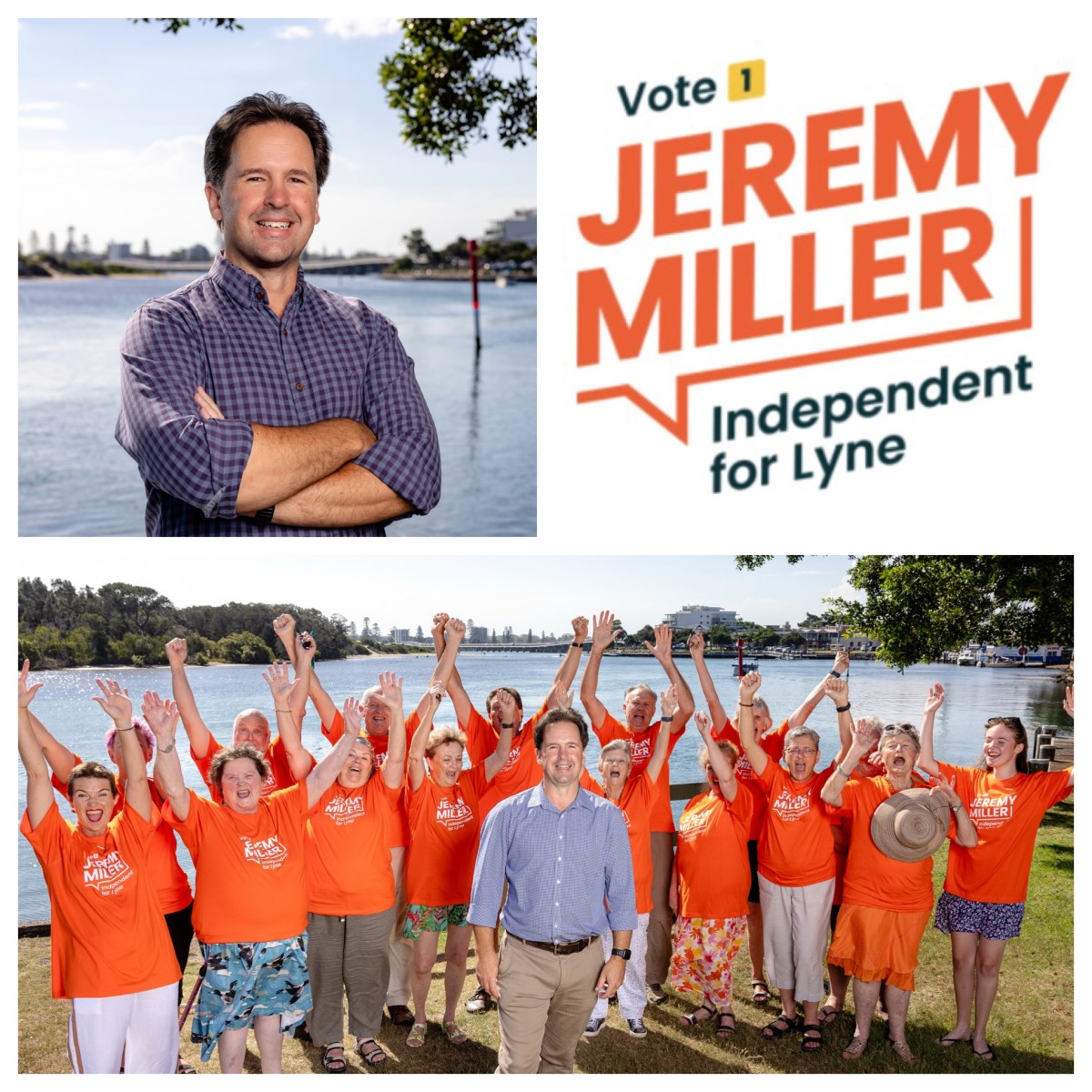
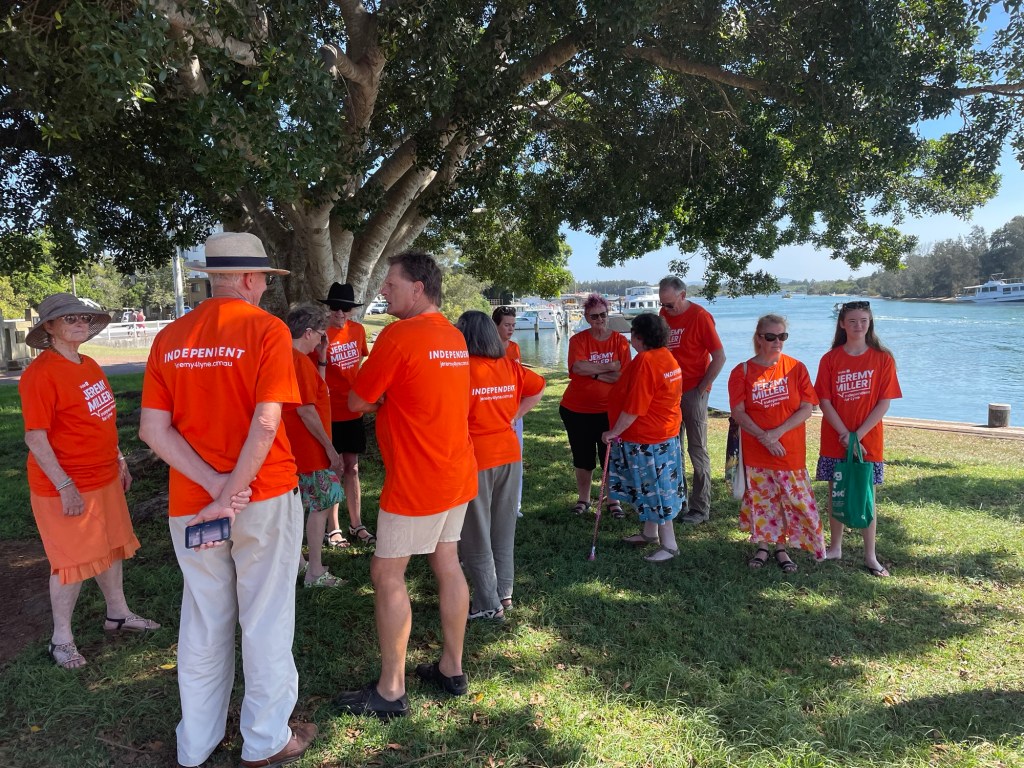
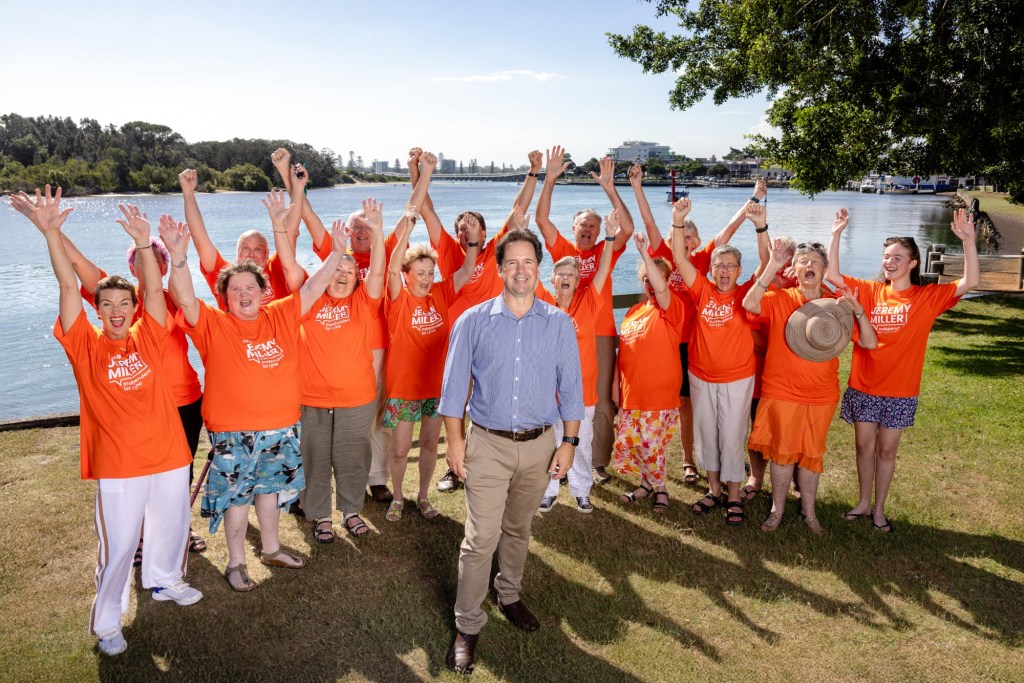
So this past weekend we gathered in Forster with a group of a dozen people from across the electorate to focus on what we need to do to plan the campaign. It was an energising and inspiring day—although to be honest, what lies ahead looks utterly daunting! The day finished with photos by the river, as we showed our enthusiastic support for Jeremy. In January, we begin the campaign proper. It looks like it will be a fascinating experience! 


Voting on 21 May (7): Contributing to a Just and Peaceful World

Australian citizens go to the polls to elect a federal government on 21 May. The 17 million people eligible to vote will be electing both a local member to sit in the House of Representatives for the next three years; and a number of senators, to sit in the Senate for the next six years.

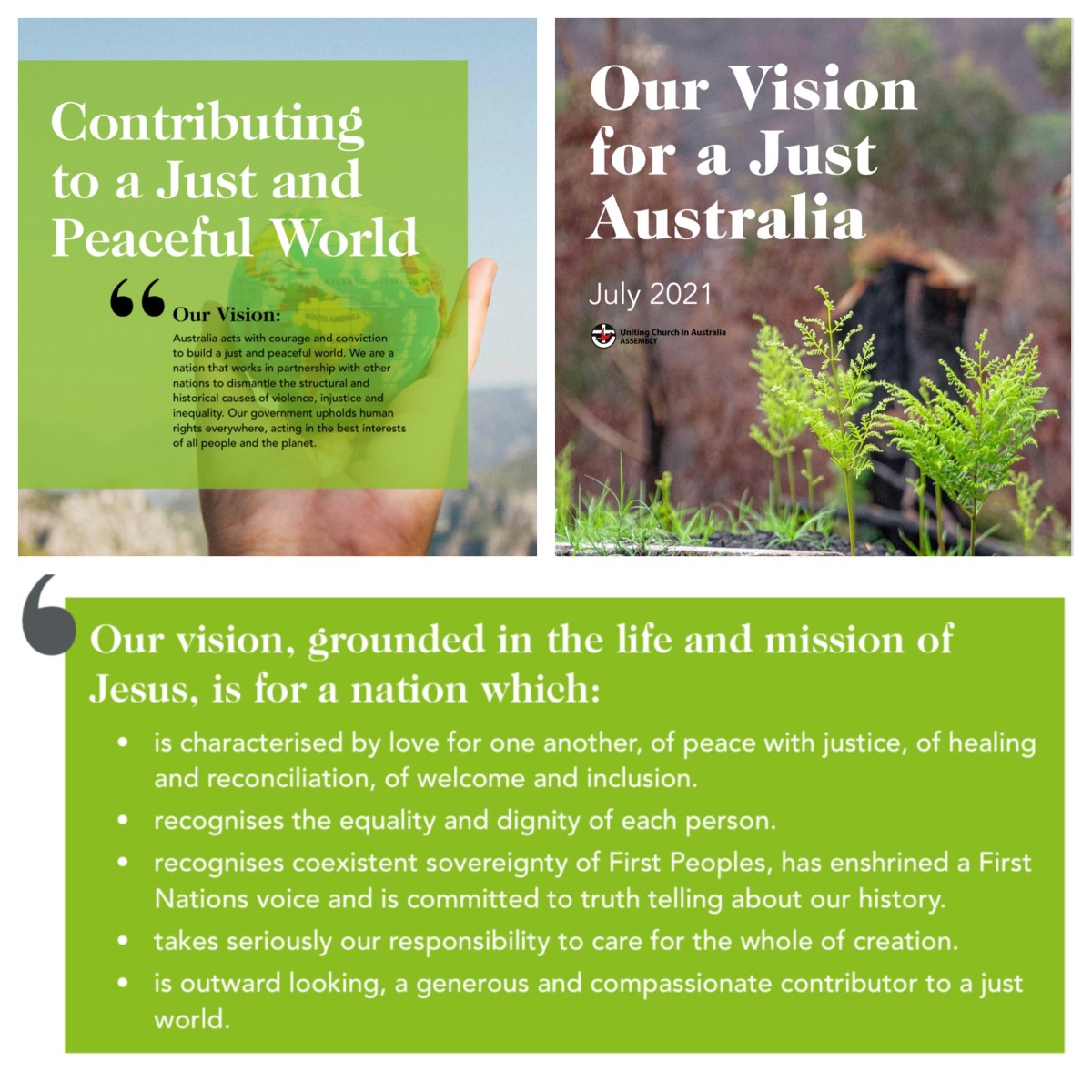
To assist voters in considering how they might vote, the Uniting Church has prepared a resource that identifies a number of issues, in seven key areas, that should inform the way that we vote, if we take seriously how the Gospel. calls us to live.

The seven areas are drawn from Our Vision for a Just Australia, a 40-page document expressing the Uniting Church vision for a just Australia and why our Christian faith calls us to work towards its fulfilment. It can be read in full at https://uniting.church/wp-content/uploads/2021/07/Our-Vision-For-a-Just-Australia_July2021.pdf

The Assembly has prepared a shorter 8-page document as a Federal Election Resource, in which key matters in each of the seven areas are identified. That document is found at https://uniting.church/wp-content/uploads/2022/04/Federal-Election-Resources-2022_11-April.pdf

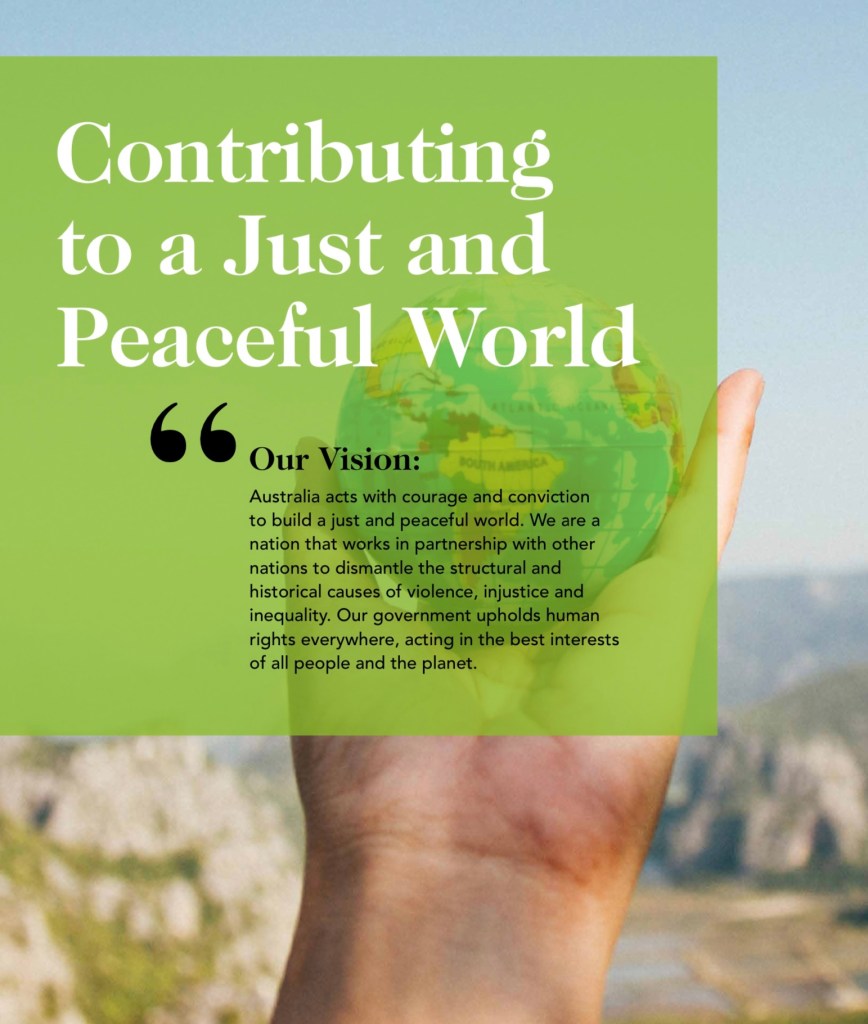
The final area reflects the vision of the Uniting Church for Contributing to a Just and Peaceful World.

The UCA resource notes that “we are a nation that works in partnership with other nations to dismantle the structural and historical causes of violence, injustice and inequality. Our government upholds human rights everywhere, acting in the best interests of all people and the planet.”

It further notes that we remain one of the wealthiest countries in the world, with the highest median wealth per adult, and fourth highest average wealth per adult. “Historically, we played a significant part in reducing world poverty and making significant gains in human flourishing. COVID-19 has made the world poorer, less equal and less secure.”

“Climate change and increased geopolitical competition is destabilising democracies and increasing the number of refugees in the world. In 2020, Australia boosted aid to our local region to support pandemic response, however, the current government has capped ongoing aid to pre-COVID levels, the lowest since 1961.”

“Despite our relative wealth, we are ranked an ungenerous 21st on the global list of overseas development aid as a percentage of gross national income. The recent and ongoing conflict in Ukraine reminds us again of the urgent need to rid the world of weapons capable of catastrophic, widespread destruction.”

The key issues to inform our voting in this regard are what each candidate or their party says about:

• Centering Australia’s foreign policy on a commitment to justice and peace; collaborating internationally to deliver community development and human rights.

• Legislate Australian Aid to reach 0.5% GNI by 2026 and 0.7% GNI by 2030.

• Increase support to fight COVID globally.

• Sign on to the global treaty banning nuclear weapons.

• Increase support to vulnerable nations to help address the impact of climate change.

For the full series of seven posts, see: