

What follows is a piece that I wrote a few weeks back for Ruminations, the quarterly journal of Saltbush, which is a ministry that resources rural and regional Uniting Churches in the Synod of NSW and the ACT. I wrote it just at the time when “expectations” were swirling around the church; I’m publishing it now as the theme of Expectations seems to be most appropriate for the season of Advent.

*****
The Synod of NSW.ACT has recently met, and given consideration to “The Presbytery Project”, which has the subtitle “Future Directions for the People of God on the Way”. The expectations surrounding the move to the Three Presbyteries Model are no doubt clear: sharing of resources, mobilising of personnel, collaboration of teams, hope for the future.
Just after that meeting, the Synod of Victoria and Tasmania met and adopted their vision for the future, entitled the “Faithful Futures Project”. It is setting expectations in that Synod; it aims “to prepare the Uniting Church in Victoria and Tasmania for the next 10 to 15 years”. And, of course, right across Australia, the church has been pondering the outcomes of the 2024 Assembly, when the Act2 Project was received and its proposals adopted. Already newly-constituted Commissions are meeting, planning the steps ahead in their respective areas. No doubt they have expectations about what they will achieve.
Indeed, even in my small rural church, we have had a recent process in which people have shared “what I hope for this church”, learning about better ways to be welcoming, and setting out steps for mission in the local community. And the Presbytery in which I live has a neat slogan on its website, declaring that it seeks to “Live by Faith, be Known by Love, and be a Voice of Hope”.
Expectations abound at every level!
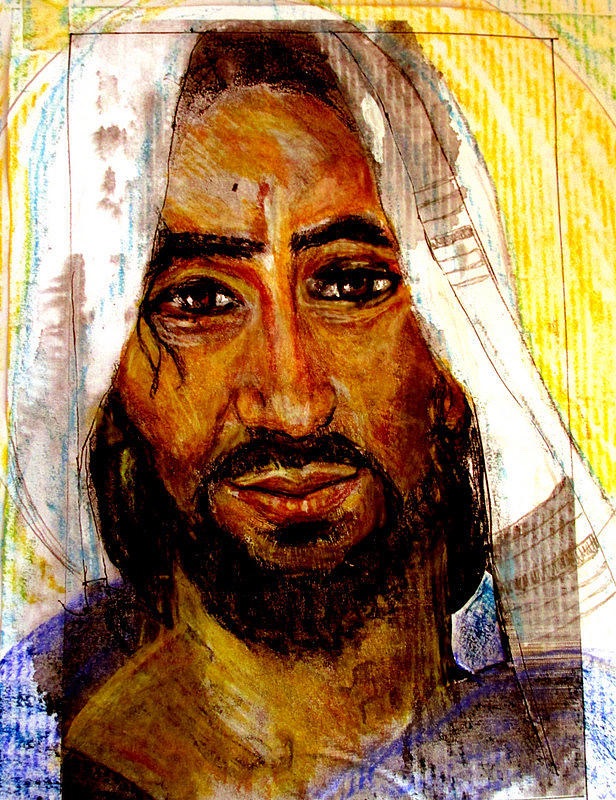
Jesus was no stranger to the basic human element of “expectations”. He didn’t know about the anticipatory joy of an expectant parent, looking to the birth of their child. He presumably was a stranger to the bubbling internal expectations that mount when you have just two months before you start that “dream job” that you have just been offered. And I am not sure that he ever took part in a day-long, facilitated workshop of setting forth the “purpose, mission, and values” of a faith community!
But Jesus knew about expectations. The earliest account of his adult life tells us that his first words in public were words of expectation: “the time is fulfilled, and the kingdom of God has come near” (Mark 1:15). In another account of his life, he is reported as saying “the kingdom of God is not coming with things that can be observed; … in fact, the kingdom of God is among you” ( Luke 17:20-21). That surely must have set his followers agog as they scurried to determine just how this expectation of the coming kingdom was, in fact, now present among them.
Indeed, Jesus lived at a time when expectations were running high amongst his people. This was not a new thing. In the foundational story of the Exodus from Egypt, it is said that Moses offered words of expectation to the people: “Do not be afraid, stand firm, and see the deliverance that the Lord will accomplish for you today; for the Egyptians whom you see today you shall never see again” (Exod 14:13).
The scrolls containing the words of the prophets, which faithful Jews would have known quite well, were full of words of expectation: “the days are coming when all that is in your house will be carried off to Babylon”, announced Isaiah (Isa 39:16); “the days are surely coming, says the Lord, when I will make a new covenant with the house of Israel and the house of Judah”, said Jeremiah, during that exile (Jer 31:31); “I am coming to gather all nations and tongues”, declared an anonymous prophet after the people had returned from Babylon (Isa 66:18). Each important step in the story of Israel had been prophetically signalled by a word of expectation.
And by the time of Jesus, after centuries of continuing foreign rule, and after a series of uprisings, defeats, compromises, and plots to regain control, expectations continued to run amok amongst the Jewish population. For some, the expectation was that they would someday regain political control of their land (the zealots and political revolutionaries of the day). For others, the expectation took shape in a vision of “the sons of light” waging a final cataclysmic battle against “the sons of darkness” (as in one of the Dead Sea Scrolls). Still others held to the word of the Lord, “I am sending my messenger to prepare the way before me, and the Lord whom you seek will suddenly come to his temple” (Mal 3:1).
It was this latter expectation that had gripped John, as he carried out his programme of calling people to repentance and baptising them in the river. And as he did so, the man from Nazareth came and submitted himself for baptism. “Behold the Lamb of God, who takes away the sin of the world!” one later writer claimed that he said (John 1:20). His expectations had come to pass in ways that perhaps even he had not thought possible.
The followers of Jesus certainly had expectations about him. “Are you the one who is to come?”—the question that John had sent his followers to ask of Jesus (Matt 11:3; Luke 7:19)—soon became their question. Expectations about what Jesus would achieve abounded. “We had hoped that he was the one to redeem Israel”, two of his followers mused, soon after he had been put to death (Luke 24:21). That was some expectation, to be sure!
Some of those not as enchanted by the way of Jesus also had expectations about him. “How long will you keep us in suspense? If you are the Messiah, tell us plainly”, they taunted him (John 10:24). Hovering somewhere around Jesus was the expectation that he might in fact be the figure long hoped-for, come to redeem Israel. And even as he hung in the cross, he was again mocked and taunted: “He saved others; he cannot save himself. Let the Messiah, the King of Israel, come down from the cross now, so that we may see and believe” (Mark 15:31–32). Again, that expectation that he was someone significant—or that he thought he was someone significant—is in play. Just what might we expect from this Galilean stirrer?
The path that Jesus trod both met expectations, but also failed to meet expectations. He did achieve something significant; but he did not do so in the way that was most surely expected. He would redeem Israel; but only by giving his life. He would be shown to be Messiah; but not on the clouds of glory—rather, on a rough wooden cross. “Truly this man was God’s Son!”, the Roman soldier is claimed to have said as he witnessed this cruel death (Mark 15:39).
Perhaps Judas had unreasonably high expectations about Jesus; he was one of the inner group that travelled with him, ate with him, learnt from him, and began to carry out the mission that Jesus had given them (Luke 9:1–6). And yet his expectations took a sharp turn; we don’t know what drove him to betray Jesus with a kiss, nor do we know what expectations he had about what would eventuate from that. His sad end (Matt 27:3–6; compare Acts 1:18–19) perhaps reflects his recognition—tragically, too late—that his expectations regarding Jesus were doomed to fail.
And let’s not get too caught up in the complexities of the apocalyptic expectations that swirled around at the time—expectations that Jesus addressed, and redefined, in one of his longer teaching sessions (Mark 13:5–37). On the one hand, he is clear that something unexpected and yet long yearned-for will indeed take place (“they will see ‘the Son of Man coming in clouds’ with great power”, Mark 13:26). The expectations people held in relation to him were justified, it would seem.
And yet, he warns his followers to “beware that no one leads you astray” with specific timetables (13:5), advising them that chaotic times of cosmic upheaval are nothing “but the beginning of the birth pangs” (13:8), there will be suffering that will need to be faced and endured (13:19), and insisting that “about that day or hour no one knows” (13:32), that “you do not know when the time will come” (13:33, 35). Expectations may be raised, hopes may be high; but resolution is not easily attained.

So how do we deal with expectations? “Managing expectations” has entered the language both of business practice and of personal psychology. We need to be wary of setting expectations too high. Thinking about how all nations will flock to Jerusalem is setting expectations too high. They didn’t, and they won’t (especially today, in the fiery political landscape of Israel and Palestine). So too is expecting that everyone will see clearly that Jesus, the Messiah, is the Son of God who is the one to perform miracles at will and the one to redeem all of Israel and all of the nations—that, too, is unrealistic. We haven’t seen this, and he hasn’t redeemed everyone at all. Life continues on despite the failure to meet such high expectations.
And in similar fashion, setting expectations too low is something we should avoid. The young adult comes home from their first attempt at sitting for a drivers license, and proudly announces “I got it!” Dad looks up, amazed, and responds, “Wow! I really didn’t think you’d get it this time”. The expectation was set low, the triumph evaporates all-so-quickly. We need to manage our expectations: not too high, not too low.
And what of expectations we might have for our church community? Have you talked together in your congregation or faith community about what you hope for? what you would love to see happen? what you could work together to try to achieve? what you can pray for, bringing reason and knowledge into your words of hope and expectation to God?
We should have expectations; we should talk about our expectations; and most importantly, we should be working together to see how we might achieve those expectations, and make them become a reality. Sometimes that can be a hard thing to do. Nevertheless, it is central to our life together.
As for expectations in our own personal spiritual life: that’s another area to consider carefully. We all have our familiar daily or weekly practices. They may be shaped by years of loving care and devoted repetition; we may be growing into a particular spiritual practice as we return to it consistently over time; or we may be now just “trying something new” in our spiritual life. Whatever the case may be, we have expectations about what that spiritual practice will do for us, and how it will help nurture our life of discipleship. We should identify our personal expectations and see how we are moving towards achieving them.
At the end of three of the Gospels, there are words that Jesus is reported as saying as he appeared, after his resurrection, to his followers. These words set the expectations for his followers. Matthew reports his words, “make disciples of all nations, baptizing them in the name of the Father and of the Son and of the Holy Spirit, and teaching them to obey everything that I have commanded you” (Matt 28:19–20). In these words, Jesus offers a clear set of expectations.
Luke reports that he said “you are witnesses of these things”, of all that he has told them, so he offers them a command which contains an expectation: “stay here in the city until you have been clothed with power from on high” (Luke 24:48–49). In the subsequent volume written by Luke, the expectation and the charge is clear: “you will receive power when the Holy Spirit has come upon you; and you will be my witnesses in Jerusalem, in all Judea and Samaria, and to the ends of the earth” (Acts 1:8).
Most simply of all, John has Jesus say to the disciples, “peace be with you … as the Father has sent me, so I send you … receive the Holy Spirit” (John 20:21–22). Whichever Gospel account we prioritise for ourselves, the charge is clear—and the sense of expectation is strong. And so may it be for us, day after day, as we walk the way of Jesus, full of expectation!

 An Informed Faith