Oil and light, and being prepared (Matt 25; Pentecost 24A)

“When the foolish took their lamps, they took no oil with them; but the wise took flasks of oil with their lamps. As the bridegroom was delayed, all of them became drowsy and slept.” (Matt 25:3–4) These words come from the parable of Jesus which is offered by the lectionary for this coming Sunday (Matt 25:1–13). The parable serves as a warning to be ready for the arrival of the bridegroom. “Keep awake therefore, for you know neither the day nor the hour”, Jesus ends this parable (25:13).

It seems that many people in the earliest church communities expected the parousia to occur and Jesus to return from heaven into their midst at any day. Paul had indicated this some decades before this Gospel was written, telling the Corinthians that “the appointed time has grown short” (1 Cor 7:29) and “the present form of this world is passing away” (1 Cor 7:31), and warning the Thessalonians that “the day of the Lord will come like a thief in the night” (1 Thess 5:2).

Paul also describes to the Thessalonians the scene in which “the Lord himself, with a cry of command, with the archangel’s call and with the sound of God’s trumpet, will descend from heaven, and the dead in Christ will rise first; then we who are alive, who are left, will be caught up in the clouds together with them to meet the Lord in the air; and so we will be with the Lord forever”(1 Thess 4:16–17).

When writing to the Romans, Paul says that “the creation waits with eager longing for the revealing of the children of God” ahead of “the glory about to be revealed to us” (Rom 8:18–19), which again suggests an imminent occurrence; whilst the first letter attributed to Peter simply declares that “the end of all things is near” (1 Pet 4:7).

However, this much-anticipated return of Jesus to earth did not take place in the lifetime of that first generation of believers. Matthew’s Gospel, written at least four decades after the lifetime of Jesus, contains indications of how this delay impacted on people. The fact that Jesus was delayed in his appearance to his followers may have affected the faith of members of the community, or influenced others to leave the community for which Matthew was writing.

Matthew’s Jesus has in mind the coming eschatological deliverance, a deliverance which is expected imminently and that will vindicate the community as faithful and righteous to the will of God. So he tells his followers that “you will not have gone through all the towns of Israel before the Son of Man comes” (10:23). The mission that his followers undertake amongst Jews only is urgent; the end of time is coming soon, and they will not have shared “the good news [that] the kingdom of heaven has come near” (10:7) before “the Son of Man appears in heaven, and then all the tribes of the earth will mourn, and they will see ‘the Son of Man coming on the clouds of heaven’ with power and great glory” (24:30).

In this way, Matthew is typical of one type of Judaism after the destruction of the Second Temple; that of apocalyptic hope. Most of the post-70 sectarian groups express hope that God will remember his covenant with them, the faithful few of Israel, and save them; for example, 2 Baruch and 4 Ezra write that God will provide consolation for their suffering and vindicate them, whilst also punishing their enemies on the Day of Judgement (2 Baruch 6:21; 82:1–2; 4 Ezra 8:51–59; 12:34).

In these sectarian documents, the kingdom of God is eschatological is nature; it has not yet arrived on earth, though signs telling of its coming can be detected. These communities also agree that much of Israel no longer truly follows the Law of God, and that the dominant Jewish leadership is unfaithful and wicked, and that they are the ones alone representing the true Israel. Therefore, entry to the kingdom is dependent upon faithfulness to the Law as interpreted by the community.

Matthew reflects this in his reporting of words of Jesus found only in this Gospel: “do not think that I have come to abolish the law or the prophets; I have come not to abolish but to fulfill .. until heaven and earth pass away, not one letter, not one stroke of a letter, will pass from the law until all is accomplished … unless your righteousness exceeds that of the scribes and Pharisees, you will never enter the kingdom of heaven” (Matt 5:17–20). There is a fierce apocalyptic intensity behind the interpretation of Torah which the Matthean Jesus provides.

It is, however, the delay of the return of Jesus, rather than the detailed development of scenarios relating to that predicted coming, which is the issue undergirding the chapter of the Gospel that appears in our lectionary this Sunday, as well as the two following Sundays. Although the lengthy apocalyptic discourse of chapter 24 shows that Jesus appears to “buy in” to the speculative apocalyptic hypothesising of contemporary Jews, Matthew reorients this traditional material to focus on one key issue.

All three Synoptic Gospels have brought the apocalyptic discourse of Jesus to a climax with the vision, taken from Daniel 7, of “the Son of Man coming in a cloud with power and great glory” (Mark 13:26; Matt 24:30; Luke 21:27), followed soon after by the saying, “this generation will not pass away until all these things have taken place” (Mark 13:30; Matt 24:34; Luke 21:32). They each report this, surely, because Jesus believed he would be returning in glory soon after his death. Jesus was firmly grounded in the apocalyptic worldview and saw himself as the crucial prophet figure in the fulfilment of that coming end.

Mark emphasises the point with the thrice-repeated warning: “beware, keep alert, for you do not know when the time will come … keep awake … keep awake” (Mark 13:34, 35, 37). Luke likewise reports Jesus as saying “be on guard … be alert” (Luke 21:34, 36). The implication is that the return will be soon (although Luke has undertaken various editorial alterations to his sources to indicate this has not been the case).

Matthew ends the apocalyptic discourse of Jesus with a similar warning: “you also must be ready, for the Son of Man is coming at an unexpected hour” (Matt 24:44). However, he then moves immediately to report four parables, told by Jesus to remind people that they need to hold fast to their faith, be ready for whenever “the master returns”, “the bridegroom comes”, “the Son of Man comes [and] sits on his throne in glory”. In these parables, he emphasises the need to practise a sense of active waiting (24:45–25:46).

Two parables contain specific warnings about the behaviour that is expected during this period of waiting (24:45–51; 25:1–13); the second of these, which we encounter it in the lectionary this coming Sunday, is unique to Matthew. The story told in this parable indicates that active waiting involves making wise decisions, persisting tenaciously in hope for what lies in the future. The wise virgins are commended: “those who were ready went with him [the bridegroom] into the wedding banquet” (25:10). The foolish are rejected by Jesus: “truly I tell you, I do not know you” (25:12).

Similar warnings occur in other parables drawn from the Q tradition: the parable of the banquet (22:1–14), which we have read some weeks back; and the well-known parable of the talents (25:14–30), which appears next Sunday, in which the master commends his two “good and trustworthy slaves” with the words, “you have been trustworthy in a few things, I will put you in charge of many things; enter into the joy of your master” (25:21,23). By contrast, the third slave is condemned as worthless: “throw him into the outer darkness, where there will be weeping and gnashing of teeth” (25:30).

These parables all advocate active waiting as the desired form of discipleship. Being faithful to the way of Jesus means being ready for his coming, prepared for the kingdom. The message is driven home by the contrasting pairs: in this parable, wise virgins and foolish virgins; in subsequent parables, two trustworthy slaves and a worthless slave (25:14–30), and then the righteous and those who do evil (25:31–46).

The contrast between those who are wise and those who are foolish is a trope in the Wisdom literature from which Jesus is drawing in this parable. Amongst the collected proverbs attributed to Solomon we read these aphorisms: “A wise child makes a glad father, but a foolish child is a mother’s grief” (Prov 10:1), slightly varied in “A wise child makes a glad father, but the foolish despise their mothers” (Prov 15:20), and “The wise woman builds her house, but the foolish tears it down with her own hands” (Prov 14:1).

In Ecclesiastes, the Preacher observes, “Better is a poor but wise youth than an old but foolish king, who will no longer take advice” (Eccl 4:13) and muses, “and who knows whether they will be wise or foolish?” (Eccl 2:19). The parable told by Jesus makes clear how to distinguish between the wise and the foolish: the wise are prepared, their lamps are filled with oil; the foolish had no oil.

The lack of preparedness of the five foolish bridesmaids is telling. Oil, of course, is needed to keep the lamp burning, and thus to shine light in the darkness. This basic fact lies underneath the exhortation of Jesus to his followers: “let your light shine before others, so that they may see your good works and give glory to your Father in heaven” (Matt 5:16). Well might we think that the five bridesmaids who took no oil with them were foolish! (25:1–3).

Ready access to oil in the land of Israel was secured by the blessing of God, reported in Deuteronomy: “The Lord your God will maintain the covenant loyalty that he swore to your ancestors; he will love you, bless you, and multiply you; he will bless the fruit of your womb and the fruit of your ground, your grain and your wine and your oil, the increase of your cattle and the issue of your flock, in the land that he swore to your ancestors to give you.” (Deut 7:12–13). Of course, olive trees are well suited to the Mediterranean climate, and so would have grown prolifically, ensuring a steady supply of olives for making oil, regardless of God’s covenant loyalty!

Ben Sirach affirms that “the basic necessities of human life are water and fire and iron and salt and wheat flour and milk and honey, the blood of the grape and oil and clothing” (Sir 39:26); so oil ought to have been at hand for the five foolish bridesmaids to secure.

Oil plays a key role in the religion of the Israelites. In the instructions relating to the tabernacle, Moses was instructed to “command the people of Israel to bring you pure oil of beaten olives for the lamp, that a light may be kept burning regularly” (Lev 24:1), and Aaron and his sons are delegated to ensure that it keeps burning each night as “a perpetual ordinance to be observed throughout their generations by the Israelites” (Exod 27:20–21). Oil was added to many sacrifices and offerings that were brought to the temple, as almost all of the 88 appearances of the word in Exodus, Numbers, and Leviticus attest.

Oil was also central in the ceremonies of anointing new kings—Saul (1 Sam 10:1), David (1 Sam 16;13; Ps 89:20), Solomon (1 Ki 1:39), Jehu (2 Ki 9:6), and presumably all other kings of Israel and Judah. Oil anoints the heads of faithful believers (Ps 23:5; 45:7) and “makes the face to shine” as one of the gifts provided by God to all humanity (Ps 104:15). The followers of Jesus anointed with oil those who were sick (Mark 6:13), accompanied with prayer (James 5:14); even the Good Samaritan “went to [the injured man] and bandaged his wounds, having poured oil and wine on them” (Luke 10:34).

Given its importance in Israelite culture and religion, as well as in daily life, one would have thought that the five bridesmaids would have been well prepared to meet the bridegroom, ensure their lamps were filled with oil!

Perhaps when he told this parable, Jesus also had in mind the following story involving the prophet Elisha? In this story, the wise use of oil reflects the faithfulness of a widow and her trust in the word of the prophet, which brings her an assured future. She was wise.

Now the wife of a member of the company of prophets cried to Elisha, “Your servant my husband is dead; and you know that your servant feared the LORD, but a creditor has come to take my two children as slaves.” Elisha said to her, “What shall I do for you? Tell me, what do you have in the house?” She answered, “Your servant has nothing in the house, except a jar of oil.” He said, “Go outside, borrow vessels from all your neighbors, empty vessels and not just a few. Then go in, and shut the door behind you and your children, and start pouring into all these vessels; when each is full, set it aside.” So she left him and shut the door behind her and her children; they kept bringing vessels to her, and she kept pouring. When the vessels were full, she said to her son, “Bring me another vessel.” But he said to her, “There are no more.” Then the oil stopped flowing. She came and told the man of God, and he said, “Go sell the oil and pay your debts, and you and your children can live on the rest.” (2 Ki 4:1–7)

*****

For more on apocalyptic in Israelite tradition, see

and in this section of Matthew’s book of origins, see

Seeing God face to face (Exod 33; Pentecost 21A)

“Show me your glory, I pray”, Moses prays. It is a bold request. It is one to which God responds—although not in exactly the way that Moses hopes for. We hear the account of this request, and of God’s response, in the final passage (Exod 33:12–23) in the sequence of passages from Exodus that the lectionary has been offering during this series of Sundays after Pentecost.

After the incident we heard last Sunday—that involving the idolatry of the golden bull (Exod 32:1–35)—Moses now yearns to know that he has found favour with God: “if I have found favour in your sight”, he prays, “show me your ways, so that I may know you and find favour in your sight” (33:13).

In response, God promises that “my presence will go with you, and I will give you rest” (33:14), but Moses presses his case: “show me your glory, I pray” (33:18). Not just the divine presence, but the glory of God is what Moses seeks.

God does not respond exactly as Moses hoped for, saying that “I will make all my goodness pass before you, and will proclaim before you the name, ‘The Lord’; and I will be gracious to whom I will be gracious, and will show mercy on whom I will show mercy” (33:19).

What the Lord affirms to Moses is subsequently echoed in the prayer that Moses offers Aaron and his sons: “the Lord bless you and keep you … and be gracious to you” (Num 6:22–27)—a ancient prayer which lives on in Christian spirituality and liturgy!

However, the Lord God stops short of full self-revelation, declaring, “you cannot see my face; for no one shall see me and live” (Exod 33:20). Moses is granted a view of God’s “back”, but is not able to see the face of God (33:23). Now, the Hebrew word here translated as “back” refers to the “hindquarters”—a polite way of saying that Moses saw only God’s exposed buttocks, rather than his smiling face. Almost every translation chooses the polite wording, “my back”. The King James Version comes closest to an honest translation with “my back parts”. We might best translate this verse as “you will see my backside, but not my face”.

Yet the request for God’s face to shine upon people is pressed in a number of psalms. “There are many”, says the psalmist, “who say, ‘O that we might see some good! Let the light of your face shine on us, O Lord!’” (Ps 4:6). In Psalm 31, the psalmist sings, “Let your face shine upon your servant; save me in your steadfast love” (Ps 31:16). Again in Psalm 67, the psalmist echoes more explicitly the Aaronic Blessing, praying, “May God be gracious to us and bless us and make his face to shine upon us—Selah—that your way may be known upon earth, your saving power among all nations” (Ps 67:1–3).

The psalmist prays for God’s favour to be shown to the faithful people of Israel (Ps 90:17; 106:4; 119:58) and the ancestral sagas record that God showed favour to Noah (Gen 6:8), Joseph (Gen 39:4), Moses (Exod 33:12-17), the people in the wilderness (Lev 26:9), Samuel (1 Sam 2:26), Manasseh (2 Chron 33:12-13), and the remnant who returned to the land (Ezra 9:8). God’s gracious favour endures through the generations.

The favour of the Lord is manifested most often in “the glory of the Lord” which shines over Israel. Moses experiences this on the top of Mount Sinai, when “the appearance of the glory of the Lord was like a devouring fire on the top of the mountain in the sight of the people of Israel” (Exod 24:16–18). That glory had already been seen by the Israelites in the wilderness of Sin (Exod 16:10), and that glory filled the tabernacle when the people had finished constructing it (Exod 40:34–35).

The closing verse of the book of Exodus notes that “the cloud of the Lord was on the tabernacle by day, and fire was in the cloud by night, before the eyes of all the house of Israel at each stage of their journey” (Exod 40:38). A number of other references to this are made throughout the books of the Torah (Lev 9:6, 23; Num 14:10; 16:19, 42; 20:6; Deut 5:24). This appears to have continued on until the ark of God was captured by the Philistines, for at that moment “the glory has departed from Israel” (1 Sam 4:21–22).

Centuries later, at the time that Solomon prayed his lengthy prayer of dedication of the newly-built Temple in Jerusalem, “when the priests came out of the holy place, a cloud filled the house of the Lord, so that the priests could not stand to minister because of the cloud; for the glory of the Lord filled the house of the Lord” (1 Kings 8:10–11; 2 Chron 7:1–3).

The glory of the Lord was then closely associated with the Temple in ensuing centuries, as various psalms attest (Ps 24:3–10; 96:7–8). “O Lord, I love the house in which you dwell, and the place where your glory abides”, one psalmist sings (Ps 26:8); yet other psalms extend the location of God’s glory, exulting that it extends “over all the earth” (Ps 57:5, 11; 72:19; 102:15; 108:5) and even “above the heavens” (Ps 8:1; 19:1; 57:5, 11; 97:6; 108:5; 113:4; 148:13).

By the time of the prophet Isaiah, this wider scope of the glory of the Lord was sung by the seraphim in their song, “Holy, holy, holy is the Lord of hosts; the whole earth is full of his glory” (Isa 6:3), whilst a little later another voice sang that “the earth will be filled with the knowledge of the glory of the Lord, as the waters cover the sea” (Hab 2:14). During the Exile, another prophet, looking to the return of the people to the land of Israel, declared that “the glory of the Lord shall be revealed, and all people shall see it together” (Isa 40:5).

Another exilic prophet had a series of visions in which “the glory of the Lord” was seen (Ezek 1—39), culminating in a declaration by God that “I will display my glory among the nations; and all the nations shall see my judgment that I have executed, and my hand that I have laid on them” (Ezek 39:21), followed by a vision in which “the Lord entered the temple by the gate facing east”, and at that time “the spirit lifted me up, and brought me into the inner court; and the glory of the Lord filled the temple” (Ezek 44:4–5).

Later still, a prophetic voice during the time of return to the land declared to the people that “the Lord will arise upon you, and his glory will appear over you; nations shall come to your light, and kings to the brightness of your dawn” (Isa 60:2–3). And well after that, another prophet attributes to “one like a human being, coming with the clouds of heaven”, the gift of “dominion and glory and kingship, that all peoples, nations, and languages should serve him” (Dan 9:13–14).

Another way that this vision of God was sought was through yearning for the ability to “see God face to face”. That’s what Moses experienced at Sinai (Deut 5:1–4), and what he experienced when he went out of the camp, to where the tent was pitched, for “ whenever Moses entered the tent, the pillar of cloud would descend and stand at the entrance of the tent, and the Lord would speak with Moses … thus the Lord used to speak to Moses face to face, as one speaks to a friend” (Exod 33:7–11).

That’s what Jacob had experienced at the ford of the Jabbok (Gen 32:30). That’s what Moses continued to experience through the wilderness years (Num 12:7–8), as Moses reports: “you, O Lord, are seen face to face, your cloud stands over them and you go in front of them, in a pillar of cloud by day and in a pillar of fire by night” (Num 14:14). Moses is remembered as unique amongst the prophets because he was one “whom the Lord knew face to face” (Deut 34:10; see also,Sir 44:5).

Gideon was also privileged to see the angel of the Lord face to face (Judg 6:22), while Ezekiel tells Israel that God declares to them, “I will bring you out from the peoples … and I will bring you into the wilderness of the peoples, and there I will enter into judgment with you face to face” (Ezek 20:34–35).

And most strikingly and strategically of all, it was on the top of Mount Sinai that Moses had the most direct encounter with God of any in the ancestral sagas: “Moses came down from Mount Sinai; as he came down from the mountain with the two tablets of the covenant in his hand, Moses did not know that the skin of his face shone because he had been talking with God” (Exod 34:29). It was said that “the Lord used to speak to Moses face to face, as one speaks to a friend” (Exod 33:11).

Paul draws on the scriptural idea of the divine glory when he writes to the Romans that “we boast in our hope of sharing the glory of God” (Rom 5:2), and that it is through the work of the Spirit which gives hope to the whole creation that it will “obtain the freedom of the glory of the children of God” (Rom 8:21). He tells the Thessalonians that “God … calls you into his own kingdom and glory” (1 Thess 2:12) and speaks of the life of believers as being “sown in dishonour … raised in glory” (1 Cor 15:43).

So Paul advises the Corinthians, “whether you eat or drink, or whatever you do, do everything for the glory of God” (1 Cor 10:31), and later on tells them that “all of us, with unveiled faces, seeing the glory of the Lord as though reflected in a mirror, are being transformed into the same image from one degree of glory to another; for this comes from the Lord, the Spirit” (2 Cor 3:18).

And Paul celebrates that God “has shone in our hearts to give the light of the knowledge of the glory of God in the face of Jesus Christ” (2 Cor 4:6), rejoicing that Jesus “will transform the body of our humiliation that it may be conformed to the body of his glory, by the power that also enables him to make all things subject to himself” (Phil 3:21).

Later writers pick up on this motif of believers sharing in the glory of God. Writing in the name of Paul, one affirms that “God chose to make known how great among the Gentiles are the riches of the glory of this mystery, which is Christ in you, the hope of glory” (Col 1:27), while another declares that that God “called you through our proclamation of the good news, so that you may obtain the glory of our Lord Jesus Christ” (2 Thess 2:14). Another writer speaks of God “bringing many children to glory” through Jesus (Heb 2:10), yet another celebrates that God will “make you stand without blemish in the presence of his glory with rejoicing” (Jude 24).

This, of course, leads into the notion in later Christian theology that heaven can be described as the place of glory—the place where James and John wish to be seated alongside Jesus (Mark 10:37), the place where believers are raised (1 Cor 15:43), the place where faithful elders will “win the crown of glory that never fades away” (1 Pet 5:4), the place where the place where Jesus himself is ultimately “taken up in glory” (1 Tim 3:16).

And that glory was most clearly seen, one writer maintains, in Jesus, when “the Word became flesh and lived among us, and we have seen his glory” (John 1:14). For the author of John’s Gospel, the full manifestation of heaven (glory) was made on earth, in Jesus, who was God’s only son, “who is close to the Father’s heart, who has made him known” (John 1:18).

For my earlier Exodus posts, see

Executing justice and righteousness (Ps 99; Pentecost 21A)

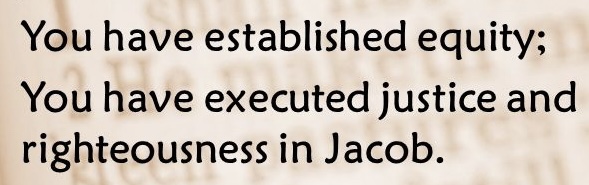
“You have established equity; you have executed justice and righteousness in Jacob” (Ps 99:4). So the psalmist sings, in the psalm offered by the lectionary for this coming Sunday. Noting that leaders of the past have called out to God and been answered—Moses, Aaron, and Samuel (99:6)—the psalmist praises God, “you answered them; you were a forgiving God to them, but an avenger of their wrongdoings” (99:8).

In this psalm it is the king, the “Mighty King, lover of justice [who has] established equity” (99:4), whose “royal scepter is a scepter of equity” (Ps 45:6), modelled on the Lord God himself, who “judges the world with righteousness [and] judges the peoples with equity” (Ps 9:8; see also 67:4; 75:2; 96:10; 98:9). Accordingly, King David is remembered as the one who “administered justice and equity to all his people” (2 Sam 8:15; 1 Chron 18:14), and the opening words of the book of wisdom attributed to King Solomon are “love righteousness, you rulers of the earth, think of the Lord in goodness and seek him with sincerity of heart” (Wisd Sol 1:1).

Divine justice is regularly noted in tandem with God’s mercy forgiveness. “Great is your mercy, O Lord; give me life according to your justice” (Ps 119:156); and “in your steadfast love hear my voice; O Lord, in your justice preserve my life” (Ps 119:149). The prophet Isaiah tells the rebellious people of his day, “the Lord waits to be gracious to you; therefore he will rise up to show mercy to you—for the Lord is a God of justice; blessed are all those who wait for him” (Isa 30:18).

Likewise, through the prophet Hosea, the Lord God promises to Israel, “I will take you for my wife in righteousness and in justice, in steadfast love, and in mercy” (Hos 2:19), whilst centuries later, Ezekiel reminds the exiles of God’s pledge: “I say to the righteous that they shall surely live, yet if they trust in their righteousness and commit iniquity, none of their righteous deeds shall be remembered; but in the iniquity that they have committed they shall die” (Ezek 33:13). Justice and mercy belong hand-in-hand, as yet another prophetic voice declares as the exiles are returning to the land: “in my wrath I struck you down, but in my favour I have had mercy on you” (Isa 60:10).

God’s mercy sat at the heart of the covenant made with Israel; the Lord affirms to Moses, “I will be gracious to whom I will be gracious, and will show mercy on whom I will show mercy” (Exod 33:19). So in the longest psalm, declaring persistent praise of the Law, the psalmist offers the petition, “let your mercy come to me, that I may live, for your law is my delight” (Ps 119:77). A number of other psalms likewise contain petitions God to show mercy (Ps 25:6; 40:11; 51:1; 69:16; 123:3).

Jesus, centuries later, brings together mercy and justice when he accuses the scribes and the Pharisees of hypocrisy, as they “neglect the weightier matters of the law: justice and mercy and faith” (Matt 23:23).

Justice, of course, is at the heart of the covenant that God made with Israel. Moses is said to have instructed, “justice, and only justice, you shall pursue” (Deut 16:20), the king is charged with exhibiting justice (Ps 72:1–2; Isa 32:1), whilst many prophets advocate for justice (Isa 1:17; 5:7; 30:18; 42:1–4; 51:4; 56:1; Jer 9:24; 22:3; 23:5; 33:15; Ezek 18:5–9; 34:16; Dan 4:37; Hos 12:6; Amos 5:15, 24; Mic 3:1–8; 6:8).

That God is righteous is likewise declared in scripture (Deut 32:4; Ps 145:7; Job 34:17). The psalmists regularly thank God for God’s righteousness (Ps 5:8; 7:17; 9:8; 33:5; 35:24, 28; 36:6; 50:6; etc) and note the importance of humans living in that same way of righteousness (Ps 18:20, 24; 85:10–13; 106:3, 31; 112:1–3, 9).

The book of Proverbs advises that the wisdom it offers is “for gaining instruction in wise dealing, righteousness, justice, and equity” (Prov 1:3) and the prophets consistently advocated for Israel to live in accordance with righteousness (Hos 10:12; Amos 5:24; Isa 1:22; 5:7; 28:17; 32:16–17; 54:14; Jer 22:3; Ezek 18:19–29; Dan 9:24; 12:3; Zeph 2:3; Mal 4:1–3; Hab 2:1–4).

This psalm thus focusses some important elements in the Israelite understanding of God, summarising notes from many places elsewhere in Hebrew Scriptures. These recurring notes of the nature of God then form the basis for a Christian understanding of Jesus, who affirms mercy (Matt 23:23), teaches righteousness (Matt 5:6, 10, 20; 6:33), offers forgiveness (Mark 2:10; Luke 23:34; 1 John 1:9), and exudes grace (John 1:14–18). The affirmation made in this ancient Jewish psalm is one that we Christians can joyfully sing and affirm!

*****

Since I wrote this blog post, the situation in the Middle East has erupted once again. My reflections in the early stages of the present inflammation of that conflict is at

The Golden Bull (Exod 32 and Psalm 106; Pentecost 20A)

The psalm which is offered for this coming Sunday (an excerpt from Psalm 106) was surely chosen to complement the reading from Exodus offered by the lectionary. The first cluster of verses from this psalm (Ps 106:1–6) invite us to praise the Lord, for God’s “steadfast love endures forever” (v.1). The Lord is one who is able to show favour to people, to deliver them, and to grant prosperity to “his chosen ones” (vv.4–5).

The final verse of this selection offers a contrast, noting that “both we and our ancestors have sinned; we have committed iniquity, have done wickedly” (v.6), before the second selection of verses (vv.19–23) recounts the famous episode of sinful behaviour by Israel, known popularly as “the Golden Calf episode”—which is what is told in the narrative of Exodus 32, the Hebrew Scripture reading for this coming Sunday (Exod 32:1–14).

This story most likely relates to the god who was regarded as the head of the gods amongst the Canaanites—El, who was often depicted as a bull. The bull was the strongest animal in the ancient farmyard, and thus a fitting symbol for a powerful god. The Israelites chose to imitate that god through their golden construction. The story told in Exodus 32 and summarised in Ps 106:19–23 mocks the Canaanite god, depicting him as more like a calf.

By adopting a Canaanite symbol, the Israelites had turned from God (v.21). It seems they would deserve their fate—although Moses interceded and saved them from divine wrath (v.23). Moses is the hero who stands in the breach, to convince God to change God’s mind. This is a difficult statement, worth pondering further. What sort of god wishes to wreak savage wrath on people? And also, what kind of god is one who changes their mind in response to human petition? Both aspects challenge elements of classic theological understandings of God.

The language of the wrath of God “burning hot” (vv.10, 11, 22) resonates with the constant prophetic warning that God will use fire to destroy people and places because of their sinfulness (Isa 1:7; 5:24; 30:27–28, 30, 33 18–19; Jer 4:4; 6:27–30; 20:47–48; Hos 8:14; Joel 2:1–3; Amos 1:4—2:5; Nah 1:15). Zephaniah portrays utter devastation through divine judgement: “neither their silver nor their gold will be able to save them on the day of the Lord’s wrath; in the fire of his passion the whole earth shall be consumed” (Zeph 1:18). That is an intense fire indeed!

However, the final prophet in the Christian Old Testament, Malachi, reworks this imagery, offering some hope; God’s messenger on The Day of the Lord “is like a refiner’s fire and like fullers’ soap; he will sit as a refiner and purifier of silver, and he will purify the descendants of Levi and refine them like gold and silver, until they present offerings to the Lord in righteousness” (Mal 3:1–4).

The references to good and silver in these prophetic oracles sits interestingly in juxtaposition to the Exodus story, in which Aaron “took the gold [from the ears of the people], formed it in a mold, and cast an image of a calf” (Exod 32:4), before he “built an altar before it” and proclaimed, “Tomorrow shall be a festival to the Lord” (v.5).

So the people gladly “offered burnt offerings and brought sacrifices of well-being” on that altar. The burnt offerings mimick the daily burnt offerings (Exod 29:42), where the Lord God promises “I will meet with you, to speak to you there; I will meet with the Israelites there, and it shall be sanctified by my glory” (Exod 29:42–43). The sacrifices of well-being recall “the burnt offerings and sacrificed oxen as offerings of well-being to the Lord” made during the ceremony to ratify the covenant (Exod 24:5).

The people, under the leadership of Aaron, are deliberately imitating key components of the worship of the Lord God, but in this instance, they are worshipping an idol made with their own hands—in direct disobedience to the commandment “not [to] make for yourself an idol, whether in the form of anything that is in heaven above, or that is on the earth beneath, or that is in the water under the earth” (Exod 20:4).

And so, having offered their sacrifices, “the people sat down to eat and drink, and rose up to revel” (v.6). But not so God, for as he had warned the people, “I the Lord your God am a jealous God, punishing children for the iniquity of parents, to the third and the fourth generation of those who reject me” (Exod 20:5). God will not let this transgression pass; as he says to Moses, “I have seen this people, how stiff-necked they are; now let me alone, so that my wrath may burn hot against them and I may consume them” (Exod 32:10).

A number of psalms reflect the desire for God to punish evildoers severely; “pour out your indignation upon them, and let your burning anger overtake them” is the cry of one psalm (Ps 69:24). Another psalm notes the vengeance of God—“in your hearts you devise wrongs; your hands deal out violence on earth” (Ps 58:2)—and suggests that “the righteous will rejoice when they see vengeance done; they will bathe their feet in the blood of the wicked” (Ps 58:10). The graphic picture of a furious God intent on wreaking damage raises difficult theological questions for us as we read such passages.

The image of fiery punishment comes from the story of Daniel (Dan 3:1–30) and appears again in the last book of the New Testament, where the prophet describes his visions of “the lake of fire that burns with sulfur” (Rev 19:20; 20:10, 14–15), also described as “the second death” (Rev 20:14; 21:8). It is there that the devil, the beast, and the false prophet “will be tormented day and night forever and ever” (Rev 20:10).

In the Gospel of Matthew, in particular, eternal punishment in a fiery furnace features also in the words of Jesus, as he threatens sinners with “the furnace of fire” (Matt 13:43, 50; 25:41), a place of “eternal fire” (Matt 18:8; 25:41), “the hell of fire” (Matt 5:22; 18:9). This builds on the warnings found in Mark’s Gospel about the punishment in store for those who put stumbling blocks in the way of “these little ones”—they will be condemned to “the unquenchable fire” (Mark 9:42–48). These warnings are repeated by Jesus in Matt 18:6–9.

So Jesus follows the prophetic and narrative insistence, in Hebrew Scripture, on the judgement of God being rightly expressed when sinfulness abounds. And the story of Aaron and the golden calf is a clear demonstration of God’s intent to exact punishment.

*****

But the story takes a turn, when Moses mounts a passionate plea to God, asking for the divine fury to be turned away from the sinful people. Invoking the covenant made with Abraham, Isaac, and Jacob, Moses implores, “turn from your fierce wrath; change your mind and do not bring disaster on your people” (Exod 32:12–13).

In this week’s commentaries in With Love to the World, my friend Jione Havea has offered an incisive insight into this story as recounted in Exodus 32. He writes as follows:

The plot is straightforward: Israel complained to Aaron that Moses has disappeared for too long, Aaron organized a golden calf as their God, the Lord became angry and decided to wipe Israel off, Moses appealed for Israel’s sake, and “the Lord changed his mind about the disaster that he planned to bring on his people” (32:14). The Lord reconsidered, and changed their mind.

Previously, in Exodus 2:23–25, God had changed their mind and re-membered the covenant with Abraham, Isaac, and Jacob. In that instance, God responded to the groans and cries of the people. There is a comparable event in Nineveh: “When God saw what they did, how they turned from their evil ways, God changed his mind about the calamity that he had said he would bring upon them” (Jonah 3:10).

In the case of Nineveh, the people changed God’s mind on the basis of their own actions (Jonah 3:5) and agenda (Jonah 3:9); in the golden calf episode, Moses interceded on behalf of Israel. The story line is the same: God changed their mind. Change of mind (read: repentance) is not evidence of weakness in the character of God. Rather, it is evidence of being present, and of honouring the Tongan quality of va (relationship) over against immutable doctrines. We are called to do likewise.

And so, in the story, as he saw the golden calf at base camp, Moses burned in anger—because of the people, and because his own brother Aaron played a key role in their going astray. He was so angry that he broke the tablets of the covenant that the Lord godself wrote. The Lord repented (v.14) but Moses revenged (vv.19–20). He burned and grounded the golden calf into water, and made the people drink it. And he ordered the sons of Levi to kill people—whether “your brother, your friend, and[or] your neighbour”—who were NOT on the Lord’s side (v.27).

The Lord changed their mind—but to the opposite effect. This time, the Lord decided to blot out the people who sinned against the Lord (v.33). Because of the golden calf sinners, the Lord sent a plague (v.35). This time, divine repentance led to destruction—echoing the divine repentance that led to the flood (see Gen 6:5–7).

These stories show that the Lord’s book may have been written (cf. Exod 32:33), but it has not been closed. The Lord may still change their mind, and there is no guarantee that it will be for the reparation of covenant or for the destruction of people. Caveat emptor.

The law of the Lord is perfect (Psalm 19; Pentecost 19A)

The psalm that is offered by the lectionary for this coming Sunday (Psalm 19) contains some very well-known phrases. It deals with the way that we know God, and know about God—through creation, and through scripture. Those two “ways of knowing” form the basis for the later theological development of the notions of “natural revelation” (that we can know about God by observing the world around us) and “scriptural revelation” (that we can know about God by reading and studying the scriptures).

However, in this psalm, although there are two clearly delineated sections (verses 1–6 and 7–13) with a concluding verse 14, there are overlaps and connections between those two sections. Howard Wallace notes that “there are certain connections between the [two] parts of the psalm: word connections (e.g. ‘hid’ and ‘hide’ in vv. 6 and 12; ‘heart’ in vv. 8 and 14) … also the theme of ‘speech’ ties the psalm together (e.g. in vv. 1, 2, and 14, and presumed in the words ‘precepts’ and ‘commandments’)”. He concludes that “these connections invite us to consider the psalm as a unity with the meaning of the whole greater than the sum of the parts.”

See https://hwallace.unitingchurch.org.au/WebOTcomments/LentB/Lent3BExod20Ps19.html

Creation is the focus in the first six verses. The psalmist’s view is fixed on “the heavens”, which are “telling the glory of God” (v.1). In those heavens the Lord “has set a tent for the sun, which comes out like a bridegroom from his wedding canopy, and like a strong man runs its course with joy” (v.4–5)—clearly a description of the daily movement of the sun across the sky (from our perspective), from east to west, as verse 6 then elucidates.

In other psalms, the psalmist praises God for the heavens as the place where “you have set your glory above the heavens” (Ps 8:1); as a consequence, “the Lord has established his throne in the heavens” (Ps 103:19). By contrast with earthly idols—deaf, dumb, blind, immobile, mute—“God is in the heavens” (Ps 115:3–7; 123:1), from where he blesses the house of Israel (Ps 115:12–13).

So a recurrent refrain is, “your steadfast love is higher than the heavens, and your faithfulness reaches to the clouds” (Ps 36:5; 57:10; 108:4). “Be exalted, O God, above the heavens; let your glory be over all the earth” is another repeated prayer (Ps 57:5, 11; 108:5). In the same mode, another psalm rejoices that “your power and your righteousness, O God, reach the high heavens” (Ps 71:19).

However, another psalm declares that God “thundered in the heavens, and the Most High uttered his voice; and he sent out his arrows, and scattered them; he flashed forth lightnings, and routed them” (Ps 18:13–14). These natural elements, in the view of this psalmist, reflect the righteous judgement of the Lord—a view that we would distance ourselves from, today. (See also Ps 50:4–6; 76:7–9.)

By contrast, the rain that poured forth from the heavens when the people of Israel were in the wilderness “restored your heritage when it languished … in your goodness, O God, you provided for the needy” (Ps 68:7–10). So the heavens can be the source of nourishment and refreshment, as another psalm affirms: “he commanded the skies above, and opened the doors of heaven; he rained down on them manna to eat, and gave them the grain of heaven” (Ps 78:23–29).

Along with “the moon and the stars that you have established”, the heavens are seen to be “the work of your fingers” (Ps 8:3). “The Lord made the heavens” (Ps 96:5), “the heavens are yours, the earth also is yours”, other psalms offer, declaring that “the world and all that is in it—you have founded them” (Ps 89:11). It is “by the word of the Lord the heavens were made”, the psalmists sing (Ps 33:6; 102:25; 136:5), providing a bridge which connects both the heavens and the Law of the Lord, as in Psalm 19. Both the creation and the scriptures are the Lord God speaking to humanity.

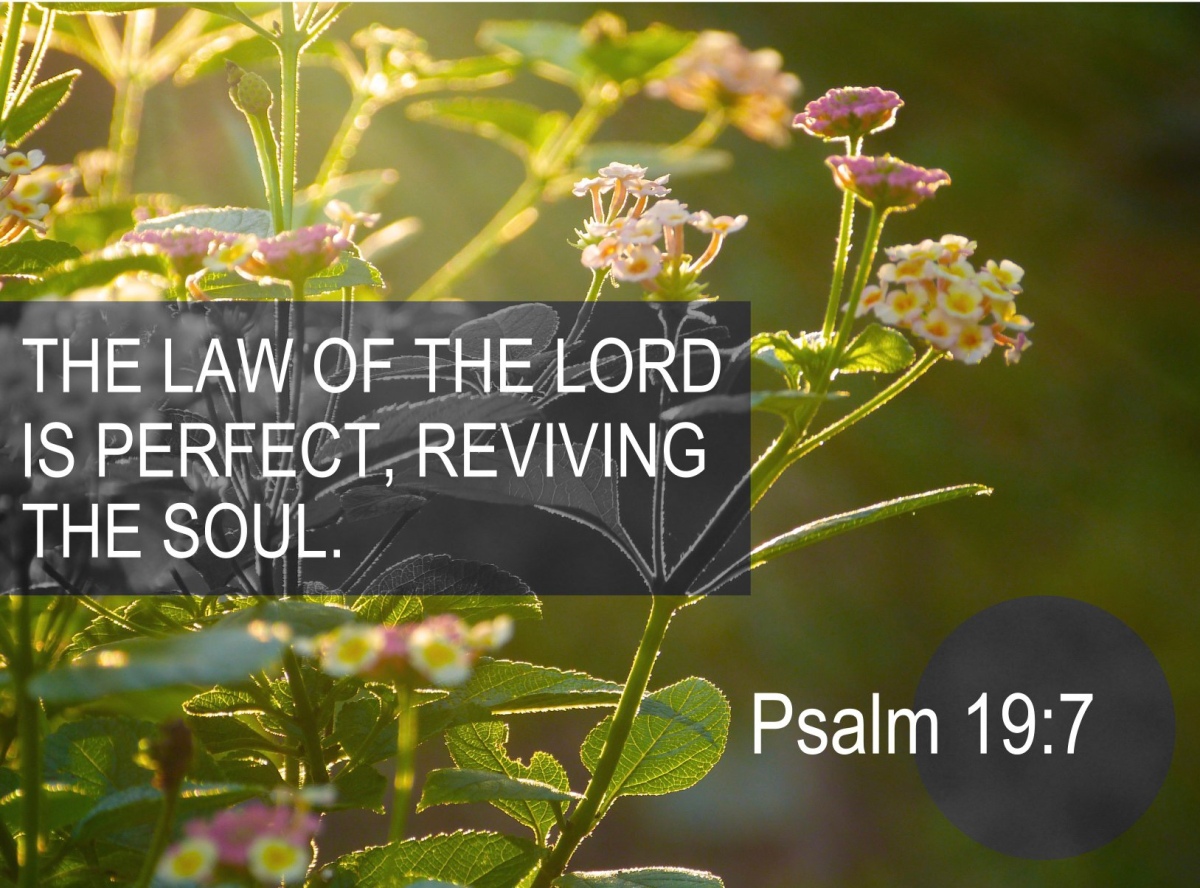
The Law of the Lord is what shapes the second part of the psalm (verses 7–14). Those verses contain a ringing affirmation of the Torah as “perfect, reviving the soul … sure, making wise the simple … right, rejoicing the heart … clear enlightening the eyes … pure, enduring forever … true and righteous altogether … more to be desired than gold … sweeter also than honey” (Ps 19:7–14).

The terms used here in parallel to describe Torah (law, decrees, precepts, commandment, fear, ordinances) are found regularly in the narrative books to describe the collection of laws (Deut 8:11; 11:1; 1 Ki 2:3; 6:12; 8:58; 2 Ki 17:34–37; 1 Chron 22:13; 28:17; Neh 9:13; 10:29) as well as right throughout Psalm 119. See

https://johntsquires.com/2023/07/13/a-fully-developed-theology-from-just-one-psalm-psalm-119-pentecost-7a-§§4-5/

Such affirmations of Torah sound out insistently throughout the majestically grand doublets of the 176 verses which are artistically-arranged into acrostic stanzas of Psalm 119 (“happy are those … who walk in the way of the Lord … I long for your salvation, O Lord, and your law is my delight”, vv.1, 174). This psalm indicates that the Law shapes the way that the covenant is kept; and the covenant gives expression to the steadfast love and grace of God.

So much is Torah valued, that it apparently offers perfection: “the law of the Lord is perfect” (Ps 19:7), which we might compare with “I have seen a limit to all perfection, but your commandment is exceedingly broad” (Ps 119:96). In this regard, the psalmist’s appreciation for Torah as perfection seems to reflect the priestly desire for people to offer perfect sacrifices, without blemish (Lev 22:21), and Solomon’s desire to build the Temple as a perfect house for God (1 Ki 6:22).

Indeed, such a conception of perfect Torah also resembles the sage’s musings regarding Wisdom: “to fix one’s thought on her is perfect understanding” (Wisdom 6:15), and thoughts found in a prayer attributed to Solomon: “even one who is perfect among human beings will be regarded as nothing without the wisdom that comes from you” (Wisdom 9:6).

Much value is accorded to these words of Torah. As well as calling the law “perfect”, we hear that “the decrees of the Lord are sure” (Ps 19:7), a claim echoed in another psalm (Ps 93:5). The precepts of the Lord that are right (Ps 19:8; see also 119:75, 137, 172) means that one who is faithful and obedient will be led “in right paths” (Ps 23:3) as they pray “put a new and right spirit within me” (Ps 51:10). “The commandment of the Lord is clear” (Ps 19:8) is a claim that informs the later portrayal of those who trace the course of Wisdom “from the beginning of creation … [who] make knowledge of her clear” (Wisd Sol 6:22).

The psalmist extends the adoration of the Law, declaring that “the fear of the Lord is pure” (Ps 19:9), a claim extended in another statement found in wisdom texts, “the fear of the Lord is the beginning of wisdom” (Ps 111:10; Prov 1:7; 9:10; 15:33; Sir 1:18, 27; 19:20). A further elaboration, “the ordinances of the Lord are true and righteous altogether” (Ps 19:9), is the way that Ezra describes the laws given to Moses on Mount Sinai (Neh 9:13). They are righteous (Ps 119:7, 62, 106, 160, 164), good (119:39), the basis of hope (119:43) and comfort (119:52).

The closing affirmation, “more to be desired are they than gold,

even much fine gold; sweeter also than honey, and drippings of the honeycomb” (Ps 19:10), is echoed in “how sweet are your words to my taste, sweeter than honey to my mouth!” (Ps 119:103). By contrast, when Job asks, “where shall wisdom be found? and where is the place of understanding?”, he proposes that “gold and glass cannot equal it, nor can it be exchanged for jewels of fine gold” (Job 28:12–19), and concludes, “the fear of the Lord, that is wisdom; and to depart from evil is understanding” (Job 28:28).

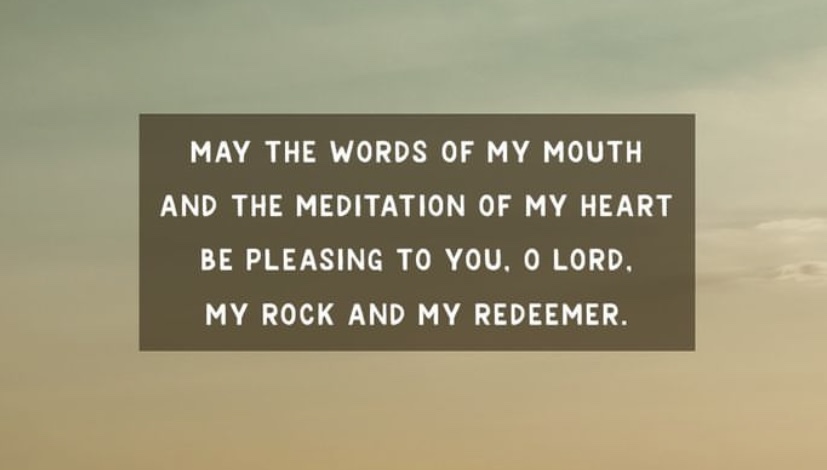
Meditation and prayer is then affirmed in the final verse which brings the psalm to a close: “let the words of my mouth and the meditation of my heart be acceptable to you, O Lord, my rock and my redeemer” (v.14). They echo the plea of another psalm, “hear my prayer, O God; give ear to the words of my mouth” (Ps 54:2).

Yet another psalm affirms that “all the kings of the earth shall praise you, O Lord, for they have heard the words of your mouth” (Ps 138:4), while in another psalm the prayer is, “may my meditation be pleasing to him, for I rejoice in the Lord” (Ps 104:34). Finally, the closing verse of Psalm 19 resonates with a similar affirmation in Psalm 49, “my mouth shall speak wisdom; the meditation of my heart shall be understanding” (Ps 49:3).

Is the Lord among us, or not? (Exodus 17; Pentecost 18A)

It’s a good question: “is the Lord among us, or not?” It’s a question posed by the Israelites in the story that the lectionary presents for our consideration this coming Sunday (Exod 17:1–7). It’s a question that people of faith have asked, time and time again, throughout history. It’s a question that is still asked, in our own time, by people experiencing difficulties in their lives.

The people of Israel have been travelling in the wilderness. They entered the wilderness of Shur after crossing the Red Sea (15:22), and continued on into the wilderness of Sin (16:1). We are not told how long they had been in this desert wandering, when they arrived at Rephidim; the whole “wilderness wandering” saga of the Israelites is quite blurred, not only in terms of time, but also in terms of places. It is, after all, a story—not a history, as I have noted in previous blogs. So the teller of this story deems these details unimportant. What is important, by contrast, is what the storyteller chooses to highlight: complaints, leadership, and provision.

The people had already raised a complaint against Moses and Aaron when they had no food to eat (Exod 16:2–3). God had responded by providing food—quails and manna (16:13–14). That precedent, surely, must have meant that, when confronted with another lack—this time, of water—they might immediately have turned to God in prayer, requesting that God supply water. We might have thought this. But no—once again, they turned on their leaders: “the people quarreled with Moses, and said, ‘Give us water to drink’” (17:2A). “Is the Lord among us, or not?”, they wonder.

Moses, understandably, pushes back, saying, “why do you quarrel with me? why do you test the Lord?” (17:2b). Perhaps another line of response—following on from the observations I made in my post last week about the incident in the wilderness of Sin (ch.16)—might have been to show some understanding that the people had been through a series of traumatic events—oppressive slavery, a number of plagues, a hurried escape from Egypt, and then witnessing the mass drowning of the Egyptian army.

The cumulative experience of these traumas could well explain the attitude of the Israelites; suffering piled upon suffering, distress multiplying distress, and an acting-out of bad behaviour, as the text indicates. (Bearing in mind that this is a story, not an actual historical event, so it portrays characters as created by the narrator, and is not reporting on real historical people; and noting also that contemporary psychological insights should be applied with great caution—if at all—to stories from antiquity!)

But the story indicates that the people did not cave under the pressure from Moses. In response to his accusatory questions—“why? why?”—we are told, “the people thirsted there for water; and the people complained against Moses and said, ‘Why did you bring us out of Egypt, to kill us and our children and livestock with thirst?’” (17:3). It’s an unreasonable accusation. Moses most certainly was not leading them out of their state of slavery to kill them—he was seeking to save them, to rescue them and bring them into a new state of refuge and safety.

However, their state has led them to make unreasonable accusations. So Moses then intercedes with God: “what shall I do with this people?”, noting that “they are almost ready to stone me” (17:4). The crisis has not been averted! “Is the Lord among us, or not?” remains a key question.

*****

The response of God is not to equip Moses with words to speak to the Israelites (which is what he did when calling Moses, initially, in Exod 3:15–22), but to encourage Moses to act in a way that will persuade the Israelites (as he did when Moses pushed the point, earlier on, in Exod 4:1–9). “Is the Lord among us, or not?” Moses is going to ensure that they sense that he is, indeed, present.

The prophet, in ancient Israel, was called and commissioned to speak words to the people—to be the mouthpiece of the Lord God—and also to enact the justice and mercy that God shows towards the people, in deeds. That dual role is integral to the calling of Moses (Exod 3:1—4:17), who serves as the role model supreme for prophets in Israel (Deut 18:15; 34:10) and serves also as the template for Jesus, as Peter declares (Acts 3:20–26).

So Moses leads the people by acting in a way that directly meets the ends of the people. “Give us water”, they cry; so Moses struck the rock, confident that “water will come out of it, so that the people may drink” (Exod 17:6)—and indeed, the water did flow, and the people did drink. “Is the Lord among us, or not?” Moses is hoping to demonstrate that this is a question that invites—indeed, requires—the answer, Yes!

That place, like many other places in the narratives of Genesis and Exodus, is named for what takes place there. However, the place is not named in a way that highlights “the people drank”. Rather, it is named Massah and Meribah, “because the Israelites quarreled and tested the Lord, saying, “Is the Lord among us or not?” (17:7). Massah means “testing” and Meribah means “quarrelling”. That’s quite a name for this place to be known by!

The place is to be remembered for the difficulties that took place there—not for the miracle of providing water at that place. The larger narrative of the dramatic Exodus from Egypt and the lengthy wilderness wanderings does not shy away from the difficulties and conflicts of that part of the story. Those tensions and conflicts need to be told, and remembered. The wilderness was not an easy place to be. “Forty years” in the wilderness (that is, a heals-long time, indeed) was not an enjoyable experience to have.

Elsewhere in Hebrew Scripture, the forty years in the wilderness are remembered and described in ways that overlook or remove any reference to those difficulties and conflicts. Jeremiah, at his calling, is charged to declare the word of the Lord: “I remember the devotion of your youth, your love as a bride, how you followed me in the wilderness, in a land not sown” (Jer 2:2). One psalm retells the saga of the Exodus from Egypt and the time in the wilderness (Ps 136:10–16) and inserts a repeating refrain of gratitude to God after each statement, “his steadfast love endures forever”. This psalm makes it seem like it was a wonderful experience to have had!

Similarly, Hosea remembers fondly how the Lord God loved Israel and “led them with cords of human kindness, with bands of love; I was to them like those who lift infants to their cheeks; I bent down to them and fed them” (Hos 11:1,4)—although he does note that, sadly, “the more I called them, the more they went from me; they kept sacrificing to the Baals, and offering incense to idols—yet it was I who taught Ephraim to walk, I took them up in my arms; but they did not know that I healed them” (Hos 11:2–3). That’s a realistic recollection of the time.

So various psalms, likewise, remember this time as a difficult period of time. One psalmist recalls this very incident as a time “when your ancestors tested me, and put me to the proof, thought they had seen my work; forty years I loathed that generation and said, ‘They are a people whose hearts go astray, and they do not regard my ways’” (Ps 95:10).

Another psalm remembers the strong faith evident through the Exodus, but goes on to lament that “they believed his words; they sang his praise; but they soon forgot his works; they did not wait for his counsel … they had a wanton craving in the wilderness, and put God to the test in the desert … they were jealous of Moses in the camp, and of Aaron, the holy one of the Lord” (Ps 106:12–16). In Deuteronomy, this time is remembered as “the great and terrible wilderness, an arid wasteland with poisonous snakes and scorpions” (Deut 8:15).

Two ways of remembering those years: a time of great blessing from God; a time of great testing for Israel. “Is the Lord among us, or not?” is a key question—one worth remembering and pondering in any time of difficulty or challenge. We might well ask ourselves, then: how do these two very strong memories—these two vivid expressions of the drama of Israel—relate to one another, inform one another, enrich one another?

See also

Put Pokies in their place!

Along with around 20 people from the Canberra Region Presbytery, I attended the recent meeting of the Uniting Church Synod of New South Wales and the Australian Capital Territory, held in Katoomba from 15 to 17 September. During that meeting, an important proposal was adopted, relating to the campaign to support urgent reform of the poker machine industry in NSW and the ACT.

In the rationale for the proposal, members of Synod were told that Australians lose more than $12 billion to poker machines every year. This is approximately half of the total amount lost through gambling—a disturbing $24 billion dollars each year! Through 2022 an astonishing $8.1 billion was lost in NSW alone, which equates to around $1000 per person in the state—the highest rate of per capita losses anywhere in the world.

Research shows that the direct and indirect harm caused by the poker machines is devastating and far reaching. Gambling on poker machines has an impact on between 900 thousand and 1.7 million people across NSW. Gambling harm caused by poker machines directly correlates with increased rates of suicidality, domestic and family violence, financial stress,,as well as other profoundly negative social outcomes.

Wesley Mission Sydney provides gambling and financial counsellors, as well as other frontline staff; these people hear heartbreaking stories every day of lives traumatised by addiction wrought by poker machines.

Last October Wesley Mission launched the Put Pokies in Their Place coalition to work in relation to the NSW Government. The coalition now includes a growing number of faith and community groups, including the NSW.ACT Synod, NSW Council of Social Service (NCOSS), National Council of Women NSW, NSW Council of Churches, Ethnic Communities Council NSW, Wayside Chapel, The Salvation Army and many others.

This campaign is focussed on the pursuit of five key reform measures:

• Implementation of universal cashless gambling with harm reduction measures built in

• Power down poker machines between Midnight and 10am

• Fund an independent State-wide self-exclusion register

• Let communities have a say about poker machines licences through their Local Councils

• Greater transparency around poker machine venue data

The presenters of this proposal, the Revs Stu Cameron and Rick Dacey, from Wesley Mission Sydney, noted that “the campaign gained significant traction and momentum leading into the March [NSW] state election … [and] the community appetite for real reform is palpable and continues post-election, confirmed by community research that Wesley Mission commissioned.”

The proposal was adopted by consensus. One way we can join this campaign is for each congregation to make contact with their local NSW state or ACT territory member of parliament, and encourage them to agree to the five key reforms being promoted by this campaign. So it is now over to us all!

There is more information about this campaign at https://www.wesleymission.org.au/get-involved/advocacy/gambling-reform/put-pokies-in-their-place/

A parable of grace—and a story of grace (Matt 20 and Matt 27; Pentecost 17A)

A sermon on Matthew 20:1–16, written and preached by the Rev. Elizabeth Raine

The Gospel of Matthew was the subject of my PhD research, and I so enjoy teaching that Gospel to groups of people, especially when it comes around in the lectionary (as it has this year). And this might well lead you to think that I look forward to being able to share something of my interest in that gospel in weekly sermons.

However, I have found that as much as I like teaching Matthew, I actually don’t like preaching Matthew—at least not the passages that have fallen to my lot in recent months. You may have noticed that in most of the gospel readings we have heard over the few months, there is almost always a line or two about judgment, eternal punishment, and wailing and gnashing of teeth. Last week’s reading was no exception, with the unforgiving slave finding himself not only unforgiven, but also condemned to be tortured.

Matthew is very fond of predicting a harsh judgment and eternal punishment for his enemies. His gospel contains more references to hell and eternal punishment that most of the New Testament put together, with the possible exception of the book of Revelation. He sneaks these references into his material wherever possible, changing his Markan source to reflect his own interests in God’s wrath.

Now while this is interesting to teach, it is not very helpful when trying to construct a sermon that is meant to give food for thought and help folk reflect on their faith. Not all of us want our enemies to be gnashing teeth and wailing in hell. When I teach and research Matthew, I find myself often asking this question of Matthew’s gospel: what are its redeeming features as far as nurturing faith goes?

This is actually tricky to answer. Even last week’s teaching on forgiveness was undermined by the harsh punishment of the slave. And Matthew is actually a grace-free gospel, in that the Greek word for grace, charis, is never used by the author. Many of the stories in Matthew have a pronounced down side. Matthew often includes things such as alienation from family, name-calling, murder, impossible ethical demands and eternal damnation in his gospel.

However, Matthew does have one unique and I think, extraordinary act of redemption in his gospel, apart from Jesus’ death.

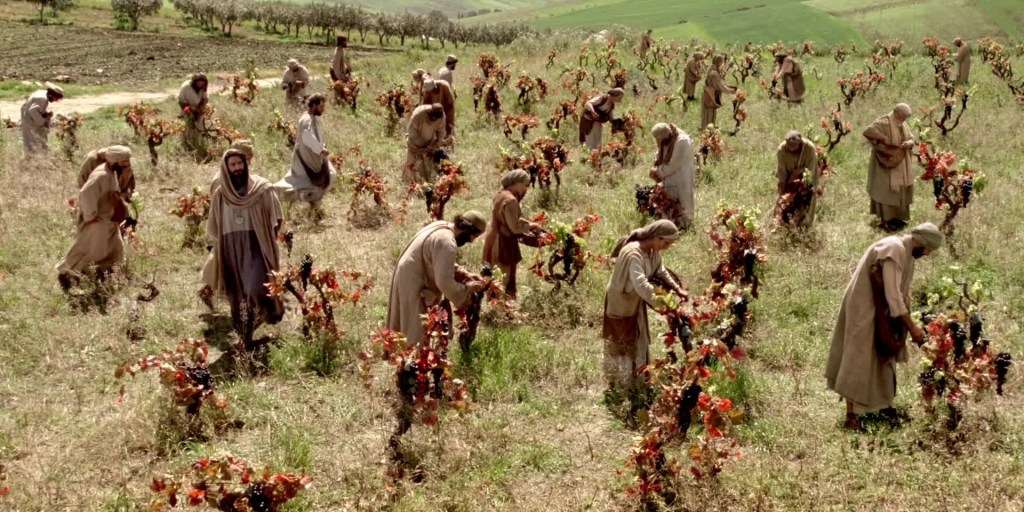
I will start with explaining what this is by using this week’s reading. The parable we encounter in this passage (Matt 20:1–16) is unique to Matthew’s Gospel. As such, it may be considered an insight into the special focus of the Gospel, and reflect something of the writer’s understanding of life around him in first century Palestine.

This story of the vineyard workers may well be taken straight from agricultural life in a Palestinian village. Like many of Jesus’ parables, it draws on images and practices familiar to the lifestyle of the crowds who gathered around Jesus to listen to him. Such familiarity would have caught the crowd’s attention and helped them understand the religious teaching that Jesus wanted to convey.

Like many of Jesus’ parables, though, the story has an unexpected twist. Even in first century Palestine, the concept of equal work for equal pay was an established principle. But here we find the vineyard owner paying the same wage to the labourers, regardless of how much or how little time they worked during the day. Such an uneconomical practice must have taken the crowd by surprise. What lord or owner would make such a foolishly generous offer?

The clue is in the last verse of the story, in a saying that Jesus has used a number of times, and one that was no doubt familiar to his disciples and regular followers: “the last shall be first and the first shall be last”.

With this phrase, the vineyard is revealed as the kingdom of heaven, and the owner is, of course, God – the God who is as generous to those who seek his kingdom at the last minute as he is to those who found it much earlier.

The verses which follow after this parable show that it must have been difficult for the disciples to hear, especially James and John! The request of the mother of James and John made it clear that they and the other disciples had given up everything they had to follow Jesus, with the expectation of heavenly reward. Now those who would join the movement later, who have not given up so much or suffered as long, would be greeted by God as equals.

Most scholars think that Matthew may have included this story to defend Jesus’ inclusion of sinners in the kingdom as well as the righteous, though this doesn’t explain why the emphasis is on those who come to the kingdom later. Maybe Jesus meant the story to be understood symbolically, with the ‘last’ being the same as the ‘least’, and thus servanthood and humbleness are being emphasised.

I have another take on this. In a swift segue, I am now jumping into another story in Matthew that does not make it into the lectionary. And that is the story of Judas.

What do we remember Judas for? What is his story? Does anyone remember how Judas died?

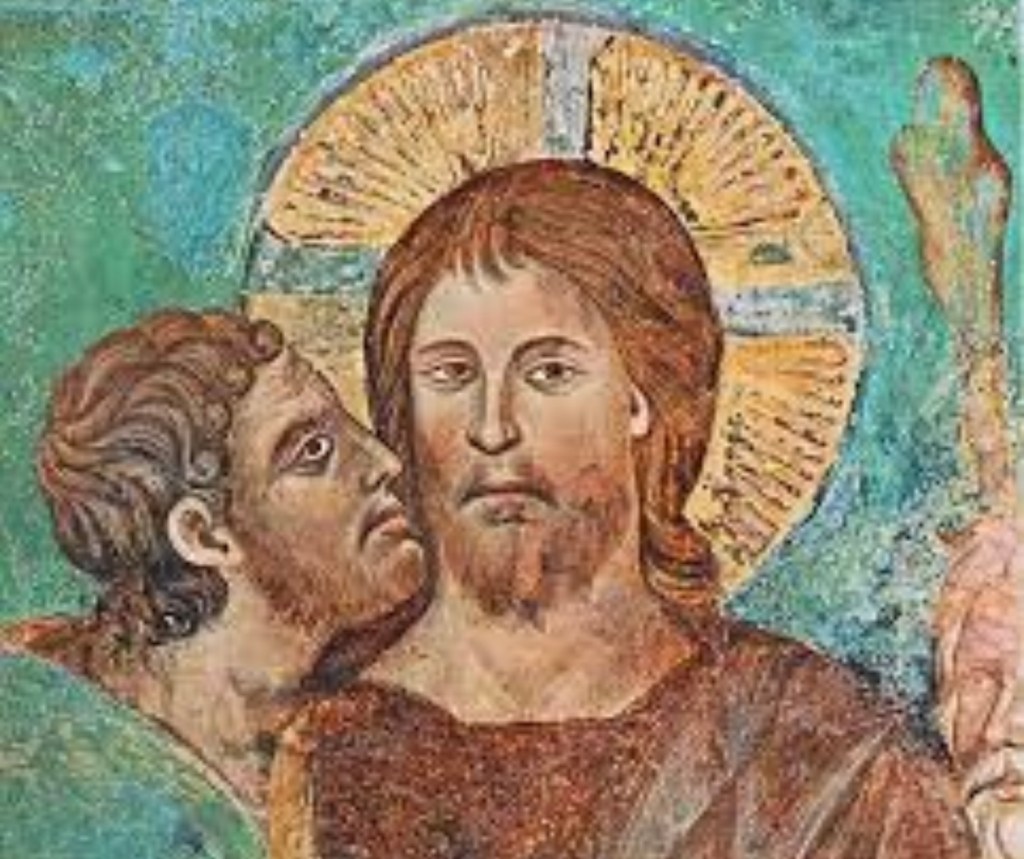
All the gospels state that Judas goes to the chief priests and asks for money to betray Jesus. Luke and John both state that Satan entered into Judas. John also calls him a devil and a thief. All the gospels have Judas arrive in the Garden of Gethsemane to betray Jesus with a kiss. It is what happens after this that is unique to Matthew.

Judas, as befitting his actions, meets with an untimely end. There is one version of Judas’ death in Acts: this man acquired a field with the reward of his wickedness; and falling headlong, he burst open in the middle and all his bowels gushed out. This became known to all the residents of Jerusalem, so that the field was called in their language Hakeldama, that is, Field of Blood. (Acts 1:18).

Another less familiar version of Judas’ death is found in the second century church father Papias. Papias obviously had a colourful imagination. A fourth century bishop named Apollonius cites what a second century bishop named Papias apparently claimed about Judas: Judas did not die by hanging, but lived on, having been cut down before choking. And this the Acts of the Apostles makes clear, that falling headlong his middle burst and his bowels poured forth.

Apollonius goes on to say that Papias the disciple of John records this most clearly, saying thus in the fourth of the Exegeses of the Words of the Lord: Judas walked about as an example of godlessness in this world, having been bloated so much in the flesh that he could not go through where a chariot goes easily, indeed not even his swollen head by itself. For the lids of his eyes, they say, were so puffed up that he could not see the light, and his own eyes could not be seen, not even by a physician with optics, such depth had they from the outer apparent surface. And his genitalia appeared more disgusting and greater than all formlessness, and he bore through them from his whole body flowing pus and worms, and to his shame these things alone were forced [out]. And after many tortures and torments, they say, when he had come to his end in his own place, from the place became deserted and uninhabited until now from the stench, but not even to this day can anyone go by that place unless they pinch their nostrils with their hands, so great did the outflow from his body spread out upon the earth.

One of the exercises we do in introduction to New Testament Studies is to examine which, or indeed, any account of the death of Judas could be historical. Most of the students find these two versions to be fiction. But we do have another account in the gospel of Matthew.

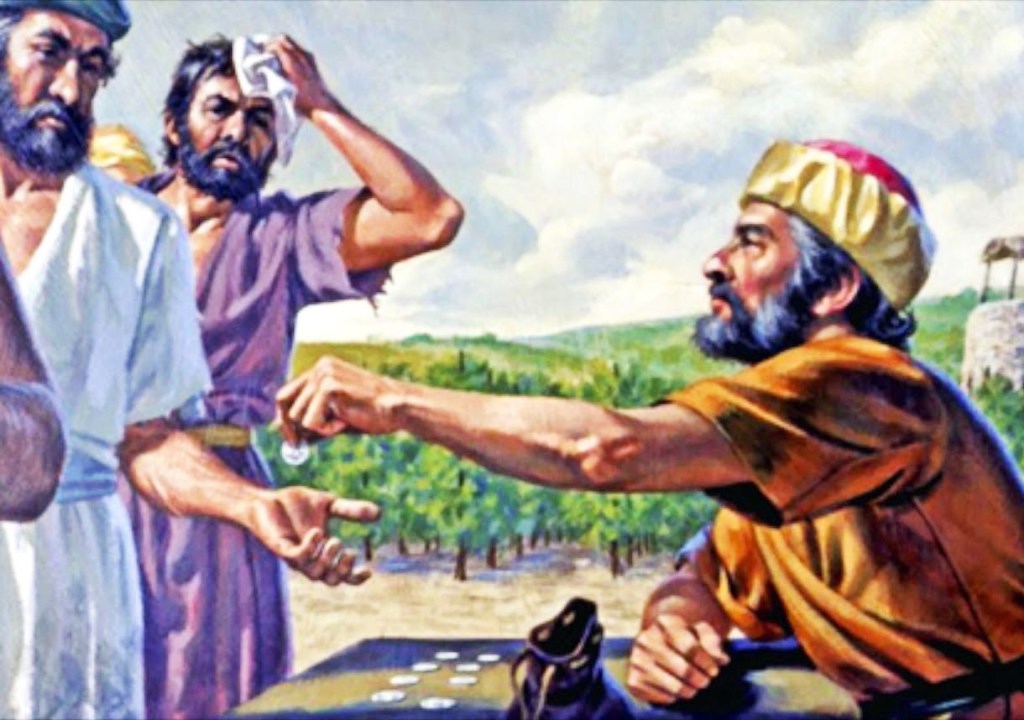
Matthew treats Judas differently from the beginning. For a start, only Matthew mentions the sum of 30 pieces of silver being Judas’ fee for the betrayal. The sum of 30 shekels of silver was the value put on the Lord by the corrupt leaders of Israel in the book of Zechariah.

Only in Matthew does Judas ask the question “Is it I, Rabbi?” when Jesus states that one of them will betray him. Just as an aside here, in Matthew’s gospel, Jesus is only called rabbi twice, and both times it is by Judas.

At the moment of the betrayal, only in Matthew does Jesus refer to Judas as ‘friend’, and he also tells him “may that for which you are here be done”. This is rather different to the question of Luke’s Jesus: “Judas, do you betray me with a kiss?” The Jesus of Mark and John says nothing to Judas at this point.

Whilst the account found in Luke—Acts indicates that Judas goes off to enjoy his ill-gotten gains, and is only cut short in this aim by some judicious punishment on God’s part, the story is very different in Matthew.

In a passage unique to this gospel, the Judas of Matthew is overcome with remorse when he sees Jesus is condemned. He repents, returns the thirty pieces of silver to the chief priests and elders, and states that he has “sinned by betraying innocent blood”. Met with disinterest and no compassion by the priests, Judas throws the money down in the temple, then leaves, to hang himself. The Greek in Matthew leaves us in no doubt as to Judas’ self-inflicted fate, despite Papias’ attempts to resurrect him so he can then unrepent, and go off and buy his field as per the account in Acts.

Judas, through Christian history, has been demonized for his actions. One can see this beginning in the later gospels of Luke and John, who insist that Judas was a sinner possessed by the devil or Satan, and of course in the later Papias, whose Judas is a very caricature of evil. Matthew does not join in this demonisation of Judas. Not only that though, Matthew goes even further, in that Matthew offers to Judas one of the greatest acts of salvation in our New Testament – he actually redeems Judas.

How can you be sure of that?, I hear you cry. Firstly, note that Judas repents. Repent is a word used sparingly in this gospel. It first appears with John the Baptist, he cries to people to ‘repent for the kingdom of heaven draws near”. John also tells them to ‘bear fruit worthy of repentance’. Jesus echoes the cry of ‘Repent, for the kingdom has drawn near’ in the next chapter.

In chapter 11, Jesus upbraids the cities of Chorazin and Bethsaida for not repenting, despite having many miracles carried out in them. In chapter 12, he reminds the unrepentant that the city of Ninevah repented when hearing Jonah’s proclamation about God. Where does Judas’ repentance fit with this?

The depiction of Judas throughout Christian history as infamy embodied has led most exegetes to the conclusion that this repentance in Matthew is merely regret, and not genuine repentance.

I have two things to say to this view. Firstly, it would seem that suicide is a rather drastic reaction to mere regret. Suicide speaks of deep remorse and repentance to me. Secondly, Matthew does not use ‘repent’ unless he means it. In fact, in the parable that follows this one in chapter 22, Matthew uses this very word to describe the actions of the son that initially refused to work in the vineyard, then changed his mind (or repented) and went. Jesus makes the point it is this son who did the will of the father.

So we should assume that Judas’ repentance is genuine. This is underscored by Judas not keeping the money but returning it.

Last of all, we need to consider Judas’ motivation in his act of betrayal. In looking at this, we should note firstly that Jesus goes to his death obedient to the will of God. Judas, therefore, becomes part of enacting the will of God. So the question is raised, “Does Judas have a choice”? I am sure that Matthew doesn’t think so, despite Jesus saying earlier ‘woe to the one who betrays the son of man’. The eventual fate of Judas bears out Jesus words, but does not damn him eternally.

The next surprise is that Jesus calls Judas ‘friend’ at the moment of betrayal, and makes the thoughtful statement “may that for which you are here be done” to Judas, implying some sort of foreordained action. 

The knock down argument is the scriptural fulfillment that follows hard on the telling of Judas’ demise, when the priests decide to purchase a field with the money:

Then was fulfilled what had been spoken through the prophet Jeremiah, “And they took the thirty pieces of silver, the price of the one on whom a price had been set, on whom some of the people of Israel had set a price, and they gave them for the potter’s field, as the Lord commanded me.” (Matt 27:9–10)

And Judas’ actions in betraying Jesus for 30 pieces of silver, is from the prophet Zechariah, another scriptural fulfillment allusion to the betrayal and sale of the Lord.

Now Matthew’s God is somewhat wrathful in his judgments, but is always just. If Judas had no choice, how can he then be condemned?

Judas’ suicide resembles that of Ahithophel, the man who had assisted Absalom in his rebellion against King David, and was thus the betrayer of David. Like Judas, Ahithophel hangs himself, yet is still described by many of the rabbis as having entered the world to come, or heaven as this world was known.

Judas not only shows regret and remorse, he repents, and in doing so, makes a confession to the priests of his guilt. He returns his ill-gotten gains. When the priests refuse to take the money, Judas throws it into the temple. When they do not reconsider his crime for the shedding of innocent blood, Judas enacts the appropriate punishment on himself. He seeks to make atonement through his own death.

Christians have always given lip service to the notion that even in the last days of life, true repentance is possible. However, the tradition in regard to Judas has consistently and systematically denied him this.

Not so Matthew. His parable of the workers in the vineyard insists that all who come to the right understanding of Jesus and God, even if it be very late in the day, will be welcome in the kingdom. Surely, in accord with the story he tells, this must include Judas.

Matthew, this grace-free, most judgmental of gospels, is also the gospel that extends the most mercy to one of Christianity’s most hated characters. Whatever Matthew’s exact reasons for his version of events, the parable – and its corollary in the story of Judas – surely must remind us of God’s overwhelming grace, a grace that is inclusive of all who would seek God.

Turning to Philippians (Pentecost 17A)

At the completion of the long sequence of Epistle texts that the lectionary has offered from Romans 4–14 (Pentecost 2A to 16A), we now turn our attention to a letter that had been written to “all the saints in Christ Jesus who are in Philippi, with the bishops and deacons” (Phil 1:1). The section that is offered for this coming Sunday (Pentecost 17A) is Phil 1:21–30, which begins with the assertion, “for me, living is Christ and dying is gain” (1:21), and then goes on to offer a sympathetic identification with the Philippians in their struggles—“since you are having the same struggle that you saw I had and now hear that I still have” (1:30).

This means that we miss the opening section of this letter, where some important foundational factors are set forth. The opening verse indicates that the authors are “Paul and Timothy, servants of Christ Jesus”, which means that this letter, like three other authentic letters of Paul (2 Corinthians, 1 Thessalonians, and Philemon), has input from Timothy, whom Paul describes as “my beloved and faithful child in the Lord” (1 Cor 4:17), “our brother and co-worker for God in proclaiming the gospel of Christ” (1 Thess 3:2).

Timothy is claimed as co-author in two further letters written after the lifetime of Paul (Colossians and 2 Thessalonians), whilst another two letter, most likely from an even later time, towards the end of the first century, are written to Timothy, to encourage Timothy in his later role as “a good servant of Christ Jesus, nourished on the words of faith and of the sound teaching that you have followed” (1 Tim 4:6), and to “guard what has been entrusted to you” (1 Tim 6:20; 2 Tim 1:14).

In this letter, however, Timothy has matured from the young apprentice who has accompanied Paul in his activities in Philippi, Thessalonica, Beroea (Acts 16:1—17:14), and then in Corinth, Ephesus, Macedonia, and Troas (Acts 18:5—20:6). He has experienced much as he travels with Paul during this critical period. His faith, like Paul’s, had been tested, and strengthened by these experiences.

And perhaps Timothy continued with Paul, and others, in the journey beyond Troas. Was Timothy part of the “we” who are said to have made the journey from Troas to Miletus, then Cyprus, Ptolemais, Caesarea, and into Jerusalem (Acts 20:7—21:26)? If so, he was witness to many significant events in the latter part of the public activities of Paul, right up to the time of his arrest (Acts 21:27–36) and his very public defence in Jerusalem (Acts 21:37—22:21). Assuming, of course, that the account in Acts has a level of historical plausibility and accuracy (an assumption that needs to be tested at each stage along the way.)

The recipients of this letter are “all the saints in Christ Jesus who are in Philippi, with the bishops and deacons” (1:1). Philippi, like Thessalonica, was also located on the major transport link of the Egnatian Way. The site had first been colonized in the fourth century BCE, probably because of its abundant water supplies and fertile land. The discovery of gold nearby led Philip, the father of Alexander the Great, to establish a Macedonian garrison there in 356 BCE and fortify the city.

This Macedonian colony grew in size over time and became a Roman colony after the Battle of Philippi in 42 BCE, when Mark Antony and Octavius defeated Brutus and Cassius, the assassins of Julius Caesar.

A community of believers was established in the city during Paul’s visit, as reported in Acts 16:11–40; Paul himself refers briefly to this visit (1 Thess 2:2) and a subsequent visit to the city is mentioned in Acts 20:5. Later evidence for an ongoing Christian presence comes from a letter of Polycarp to the church in Philippi (about 160 CE).

This letter to the Philippians follows the typical letter structure in general terms only. There is a long main section (1:12–4:7, the body of the letter), introduced by a standard address and thanksgiving (1:1–11) and concluded by exhortations and greetings (4:8–23). The body of the letter is an extended encouragement to unity, initially signalled in the key term koinonia (“sharing”, or “fellowship”) which appears twice in the opening thanksgiving (1:5, 7).

We might well assume that the personal,references in this letter relate directly to Paul—certainly, that is the assumption of most interpreters. So it is Paul who states that he is writing this letter during one of his numerous periods of imprisonment. He refers directly to his imprisonment (1:7, 12–14, 17) and links that with his experience of suffering (1:17, 29–30). Later in the letter he develops a theological understanding of his situation by linking his suffering to that experienced by Jesus in his crucifixion, as a precursor to his resurrection (3:7–11).

However, attempts to specify his precise historical situation cause puzzlement. References to “the whole imperial guard” (1:13)—using the Latin term praetorium—and to “the emperor’s household” (4:22) might suggest that Paul and Timothy were writing to the Philippians when Paul was under imperial arrest in Rome, in the early 60s (as reported in Acts 28), but these terms were also used to describe the Roman military presence and civil serviced in provincial centres away from Rome. So the letter could have originated in any Roman-controlled city.

Other suggestions are that the letter was written when Paul was under arrest either in Caesarea (Acts 24–26), or in Ephesus (on the basis that 2 Cor 1:8–9 refers to a time in prison in that city). The latter claim is made because Caesarea and Rome are further away from Philippi, whereas there seems to have been a relatively short distance between Paul and the Philippians, enabling visitors to move back and forth in prompt fashion (2:19–30; 4:10–18). Ephesus would fit better because it was closer to Philippi. This places the letter near the end of the time that Paul was active in his evangelising mission.

The instruction that sits within the passage we hear this coming Sunday, “live your life in a manner worthy of the gospel of Christ” (1:27), is an instruction that signals a key concern in this letter. Indeed, in the following chapter, Paul and Timothy intensify this with an encouragement to “let the same mind be in you that was in Christ Jesus” (2:5), before citing an early Christian hymn (2:6–11), that we will read on the following Sunday.

Later in the letter, the Philippians are urged to “rejoice in the Lord” (3:1), to “stand firm in the Lord” (4:1), and to “keep on doing the things that you have learned and received and heard and seen in me, and the God of peace will be with you’ll (4:9). The tone of sensitive encouragement to follow the example offered by Jesus runs throughout the letter, which has a markedly friendly tone in most sections of the letter.

In later weeks, the lectionary omits the one section of the letter, 3:2–4, which is the clear exception to this! Perhaps the antagonism to which this short section points (in the reference to “dogs” and “evil workers”) underlies the brief comment in the section that we read this Sunday, when Paul and Timothy indicate that they wish to know “that you are standing firm in one spirit, striving side by side with one mind for the faith of the gospel, and are in no way intimidated by your opponents” (1:27–28). Apart from these fleeting notes, the tone of this letter is positive, encouraging, and affirming.

Ruminating on Romans

Now that we have finished the sequence of passages from Romans, as the Epistle reading offered each week by the lectionary, I thought it might be helpful to post this collection of posts about this letter.

The righteous-justice of God, a gift to all humanity (Romans; Year A)

The best theology is contextual: learning from Paul’s letter to the Romans (Year A)

Descended from David according to the flesh (Rom 1; Advent 4A)

Reckoning what is right (Romans 4; Lent 2A) part one

Reckoning what is right (Romans 4; Lent 2A) part two

https://johntsquires.com/2023/06/14/we-have-obtained-access-to-this-grace-romans-5-pentecost-3a/

https://johntsquires.com/2023/03/09/righteous-by-faith-and-at-peace-with-god-rom-5-lent-3a/

https://johntsquires.com/2023/04/26/christ-died-for-us-reflections-on-sacrifice-and-atonement/

https://johntsquires.com/2023/06/21/dead-to-sin-and-alive-to-god-romans-6-pentecost-4a/

https://johntsquires.com/2023/07/06/paul-and-the-law-sin-and-the-self-rom-7-pentecost-6a/

https://johntsquires.com/2023/07/11/paul-the-law-of-the-spirit-and-life-in-the-spirit-rom-8-pentecost-7a/

https://johntsquires.com/2023/07/18/paul-the-spirit-of-adoption-and-the-abba-father-prayer-rom-8-pentecost-8a/

Sighs too deep for words: Spirit and Scripture in Romans (Rom 8; Pentecost 9A)

Praying to be cursed: Paul, the passionate partisan for the cause (Rom 9:3; Pentecost 10A)

A deeper understanding of God, through dialogue with “the other” (Romans 10; Pentecost 11A)

God has not rejected his people. All Israel will be saved. (Rom 11; Pentecost 12A)

https://johntsquires.com/2023/08/22/present-your-bodies-as-a-living-sacrifice-romans-12-pentecost-13a/

https://johntsquires.com/2023/08/30/love-and-hope-hospitality-and-harmony-overcoming-evil-with-good-romans-12-pentecost-14a/

https://johntsquires.com/2023/09/04/love-is-the-fulfilling-of-the-law-romans-13-pentecost-15a/

https://johntsquires.com/2023/09/12/each-of-us-will-be-accountable-to-god-romans-14-pentecost-16a/

For our instruction … that we might have hope (Rom 15, Isa 11, Matt 3; Advent 2A)