Will “the peace” hold in Gaza?

There is intense emotion in Israel and in Gaza. Hundreds of Israeli families are mourning the deaths of the 1200 people killed on 7 October 2024, the deaths of scores (perhaps even hundreds) of the 251 hostages taken on that day, the 468 Israeli soldiers who have died since that day.

At the same time, the families and friends of the nearly 68,000 Palestinians killed in Gaza over the same timeframe, and especially the 20,179 of them who were children, are experiencing a similarly intense sense of grief.

It’s a region bubbling with all that unrequited grief brings: sorrow, despair, anger, a festering hatred, a resolve to “never forget”. It’s hardly a fertile ground for peace to flourish. Will the “peace agreement” hold? Will the “peace plan” prove to be effective?
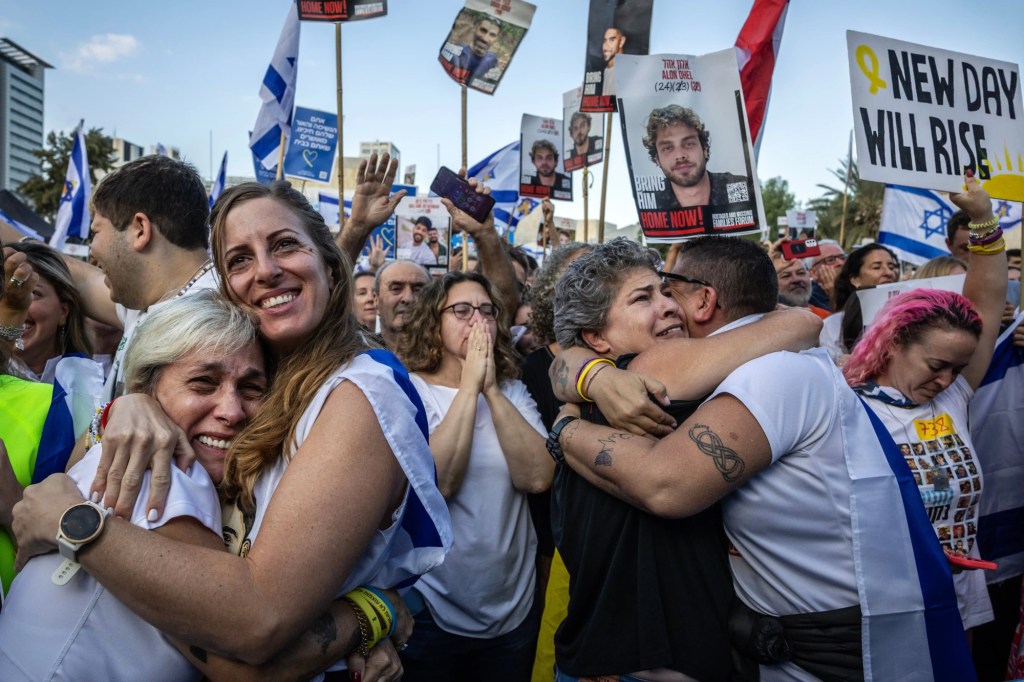
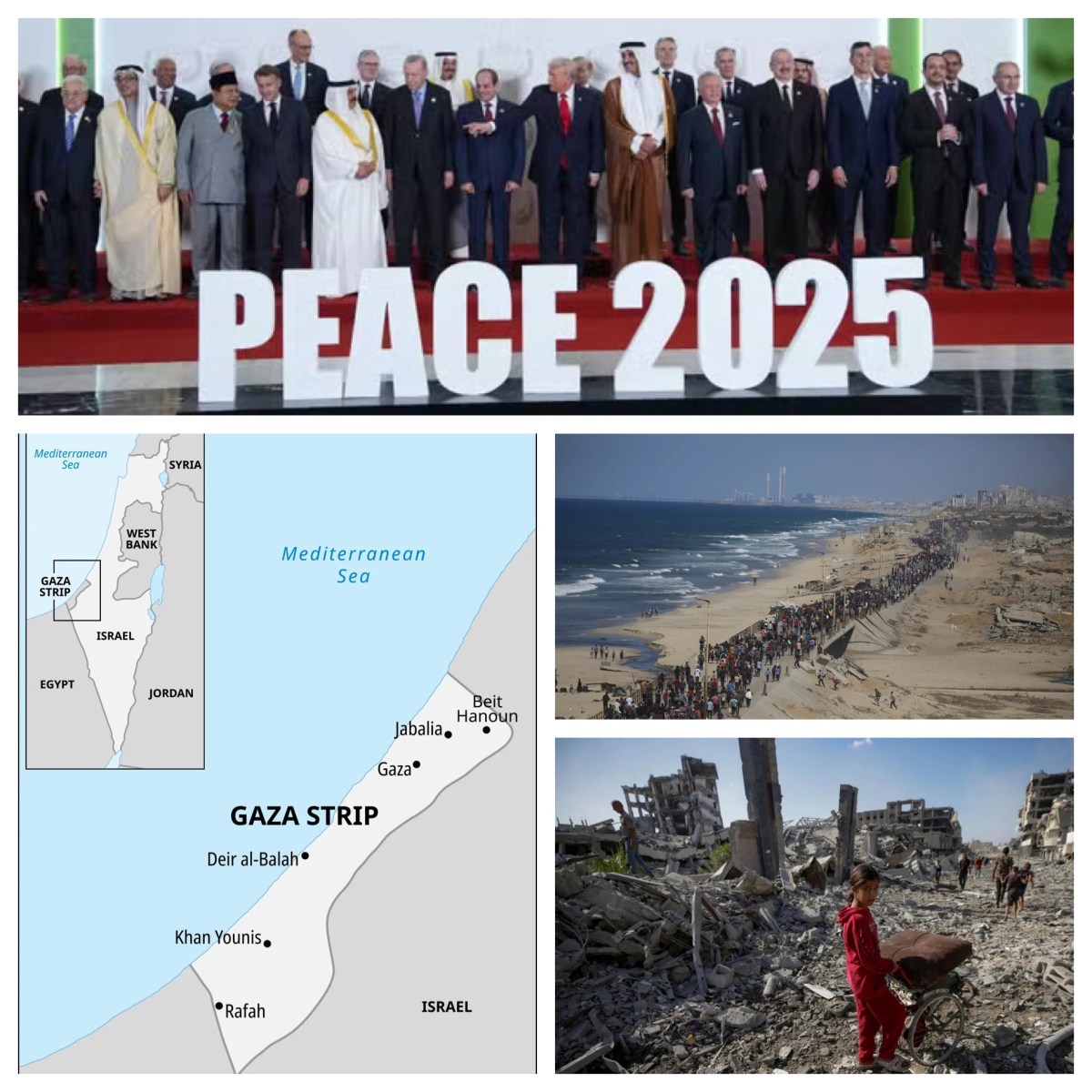
As the latest group of hostages return to Israel, giving understandable joy to their families and friends, and hope for an enduring peace in the region, let us not forget that the displaced Gazans returning to the homes will find 78% of the structures in Gaza are damaged or destroyed; 22 of the 36 hospitals in Gaza have been destroyed, and some of the remaining 14 hospitals are only partially functional; and 1.5% of the viable cropland in Gaza is able now to be used for cultivation. They are not simply “coming back home”; they are returning to scenes of devastation and destruction that will surely intensify their despair.
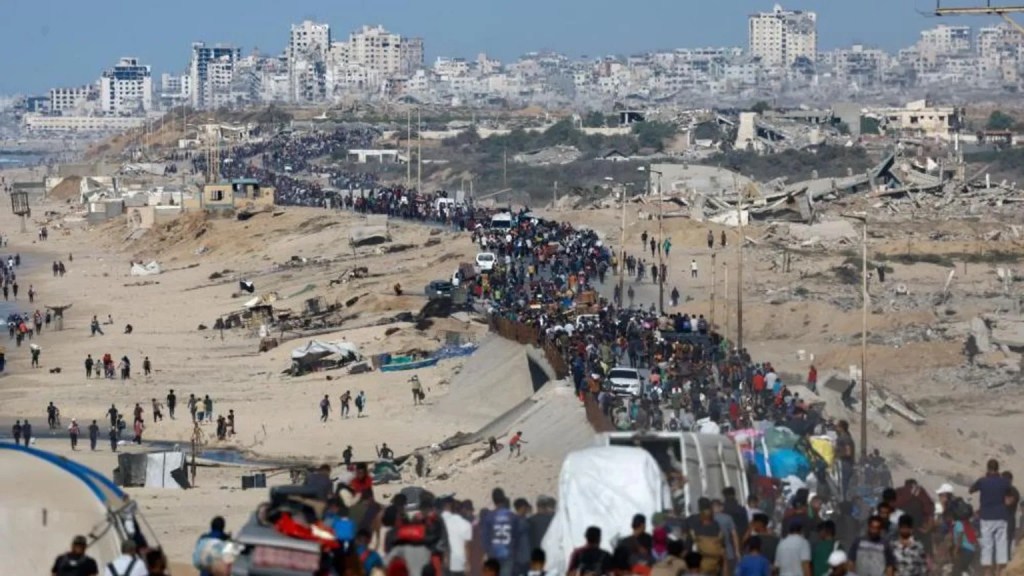
This is the third ceasefire since the events of 7 October 2023. Will it last? Relations between many (not all) Israelis and Palestinians are incredibly complex, and an enduring peace amidst the aggressive antagonism and intensifying hatred that has marked recent years (indeed, decades) does not give me confidence. 

The US has provided $21.7 billion of military aid to Israel since 7 Oct 2023. If Trump really wants peace, he could cease all future military aid and divert funds to the needs in aid supplies, health, and restoration of infrastructure in Gaza.

I’ve taken these figures from an article by NPR, a media organisation in the USA that is “an independent, nonprofit media organization … founded on a mission to create a more informed public”. (Thanks to Megan Powell du Toit for the link.)

https://www.npr.org/2025/10/13/g-s1-92205/ceasefire-gaza-war-key-figures?

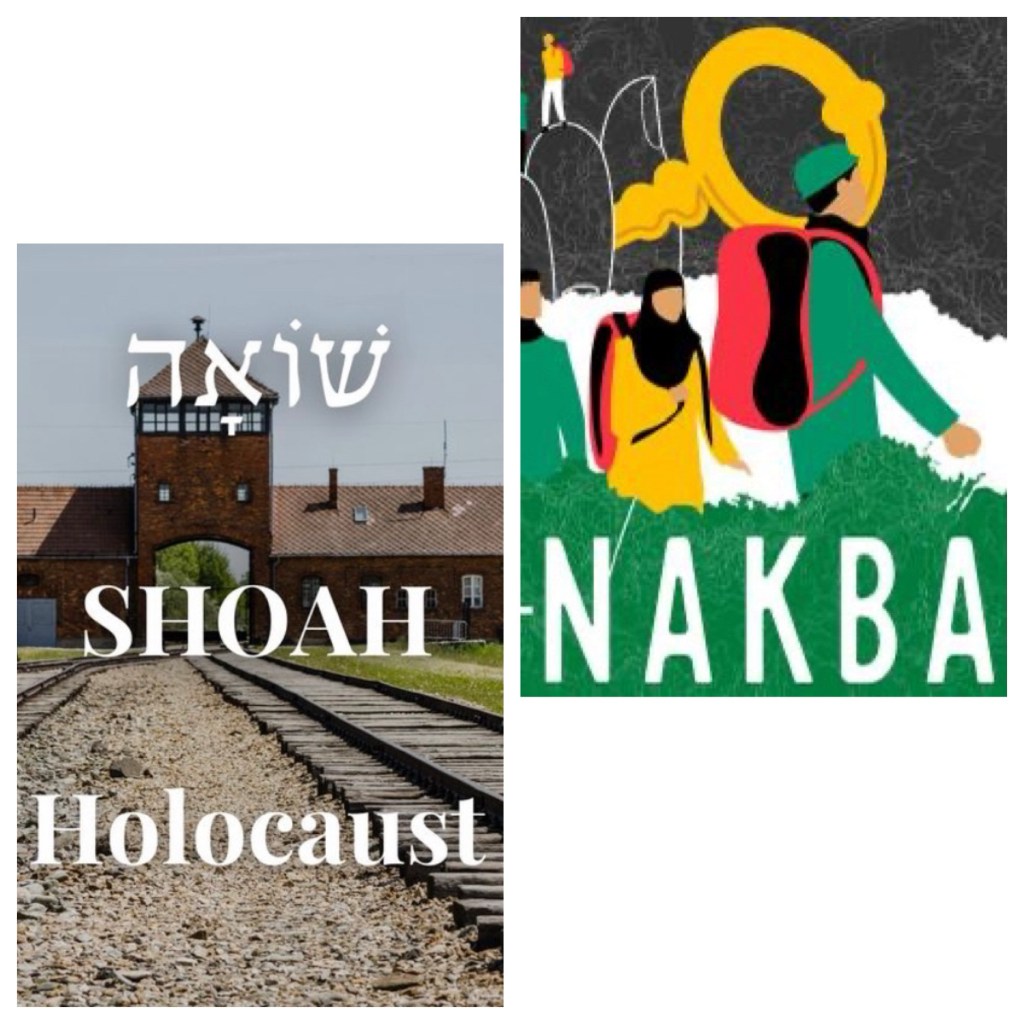
The history of “the peace” in this region over the past 50 years does not give grounds for hope. The establishment of Israel in 1948, as important and necessary as that was after the horrors of the Shoah (a Hebrew word meaning “desolation, sudden destruction, catastrophe”), caused the expulsion of hundreds of thousands of inhabitants of that area, in a catastrophe called by Palestinians the Nakbah (an Arabic word which also means “catastrophe”). 
The Camp David Accords (1978) ultimately led to an agreement in which Israel agreed to “resolve the Palestinian question” and permit Palestinian self-governance in the West Bank and Gaza within five years. It never happened. 

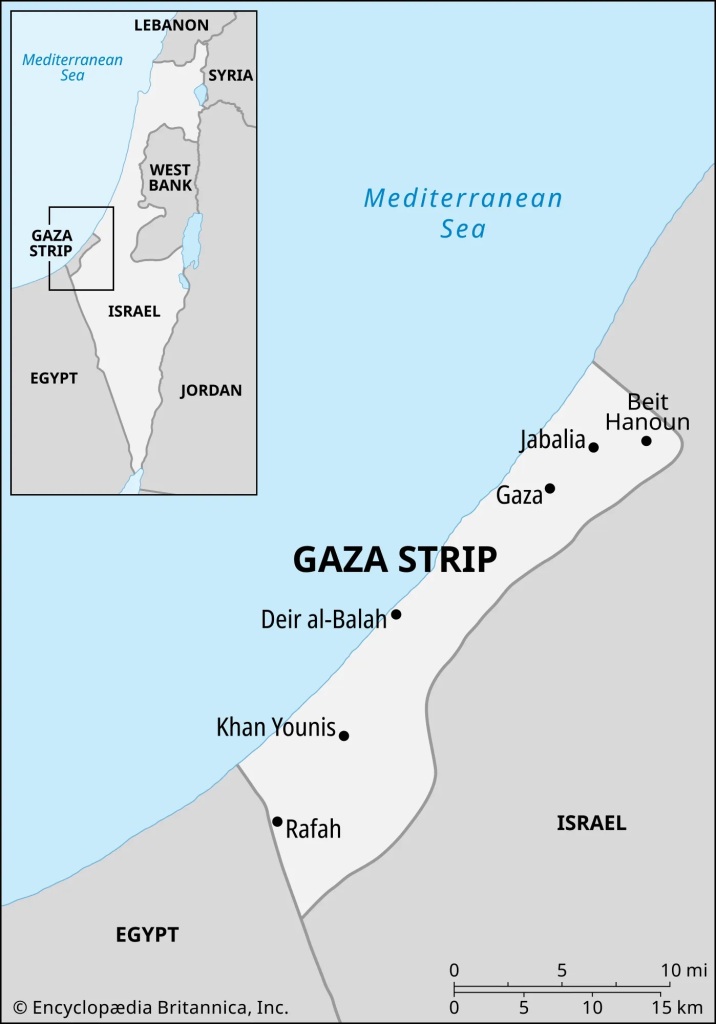
The Oslo Accords (1993) included a pledge to end hostilities, and the second Accords (1995) provided that Israel would accept Palestinian claims to national sovereignty. As an interim measure, a Palestinian Authority was established, to govern designated areas (see the map) in a phased process leading towards Palestinian self-determination. The Palestine Authority still exists today, and the goal of the Accords has never been reached.

See https://www.aljazeera.com/news/2023/9/13/what-were-oslo-accords-israel-palestinians

Indeed, from 1993 onwards, Israel increased its building of settlements in the West Bank, leaving that area utterly fragmented between Israeli and Palestinian areas—a process deemed illegal under international law. Families who had lived on their historic lands were expelled so that new Israeli settlements could be built. It’s been an utterly unjust process.

When PLO leader Yasser Arafat gave up the right for Palestinian refugees to return to their historic lands which Jewish settlers had seized from them in 1948 when Israel was created, many Palestinians became disenchanted with him. The ground was fertile for dissent and revolt; Hamas emerged out of this situation as the leading organisation advocating for—and acting to gain—a Palestinian right to return. Peace was never possible while such an ideology was the key driving force.

Chris Hedges, an American journalist, author, and commentator (and also an ordained Presbyterian minister, as of 2014) writes that the current “peace” is simply “a commercial break … a moment when the condemned man is allowed to smoke a cigarette before being gunned down in a fusillade of bullets”. He foresees the crumbling of the current ceasefire, on the basis of the history of these recent decades.

“Once Israeli hostages are released, the genocide will continue”, he writes. “A pause in the genocide is the best we can anticipate. Israel is on the cusp of emptying Gaza, which has been all but obliterated under two years of relentless bombing. It is not about to be stopped. This is the culmination of the Zionist dream.”

He notes the staggeringly obscene amount of military aid that the USA has given Israel, and observes that the US “will not shut down its pipeline, the only tool that might halt the genocide”. He then goes on to argue that “of the myriads of peace plans over the decades, the current one is the least serious”. He details all the flaws and inadequacies in the much-trumpeted 20-point “peace plan” that has been advocated recently and claims that “there will be no peace in Gaza; only the temporary absence of war”.

Hedges notes that this “peace plan” fails to mention Palestinians’ right to self-determination; it ignores the advice of the International Court of Justice that Israeli settlements are illegal; it places no brakes on Israel’s continuing military power; it does not provide for Israel to provide anything in the way of reparations for Gaza, the area which it has mercilessly bombed; and many provisions are vague to the point of being unenforceable. You can read his scathing analysis at https://chrishedges.substack.com/p/trumps-sham-peace-plan?

Eric Tlozek, the ABC’s Middle East correspondent, observes that “Israel gets to keep troops in Gaza instead of having to withdraw, but that only signifies that the key issues in this conflict — disarmament, security, governance — are far from being resolved”. What will change once the thousands of displaced Gazans return?
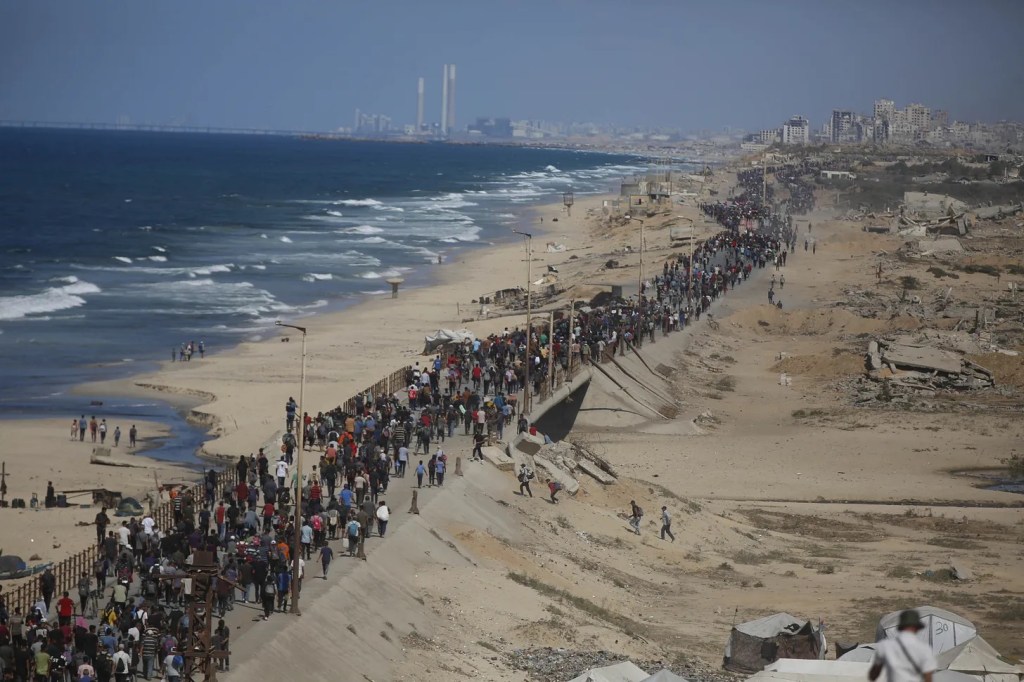
He continues, “Hamas still refuses to disarm and remains in control of large parts of the [Gaza] strip. The US may claim the war is over, but Israel’s defence minister has already flagged plans to attack Hamas, and Israeli fire and air strikes continue in Gaza. The violence has not ended, it has only decreased in intensity.”  Tlozek’s pessimism is, nevertheless grounded in reality.

See https://www.abc.net.au/news/2025-10-15/donald-trump-should-not-be-thanked-for-the-gaza-ceasefire/

Will the current “peace” last? How long will it last? How long before the genocide of Palestinians resumes and continues to its inexorable end? As a person of faith, I can join with people of faith around the globe, to pray and to hope. As a citizen of the world in 2025, however, I think that, sadly, we must temper this with realism about the situation and the prospects of an enduring peace. 

*****

See my other, earlier, ruminations at
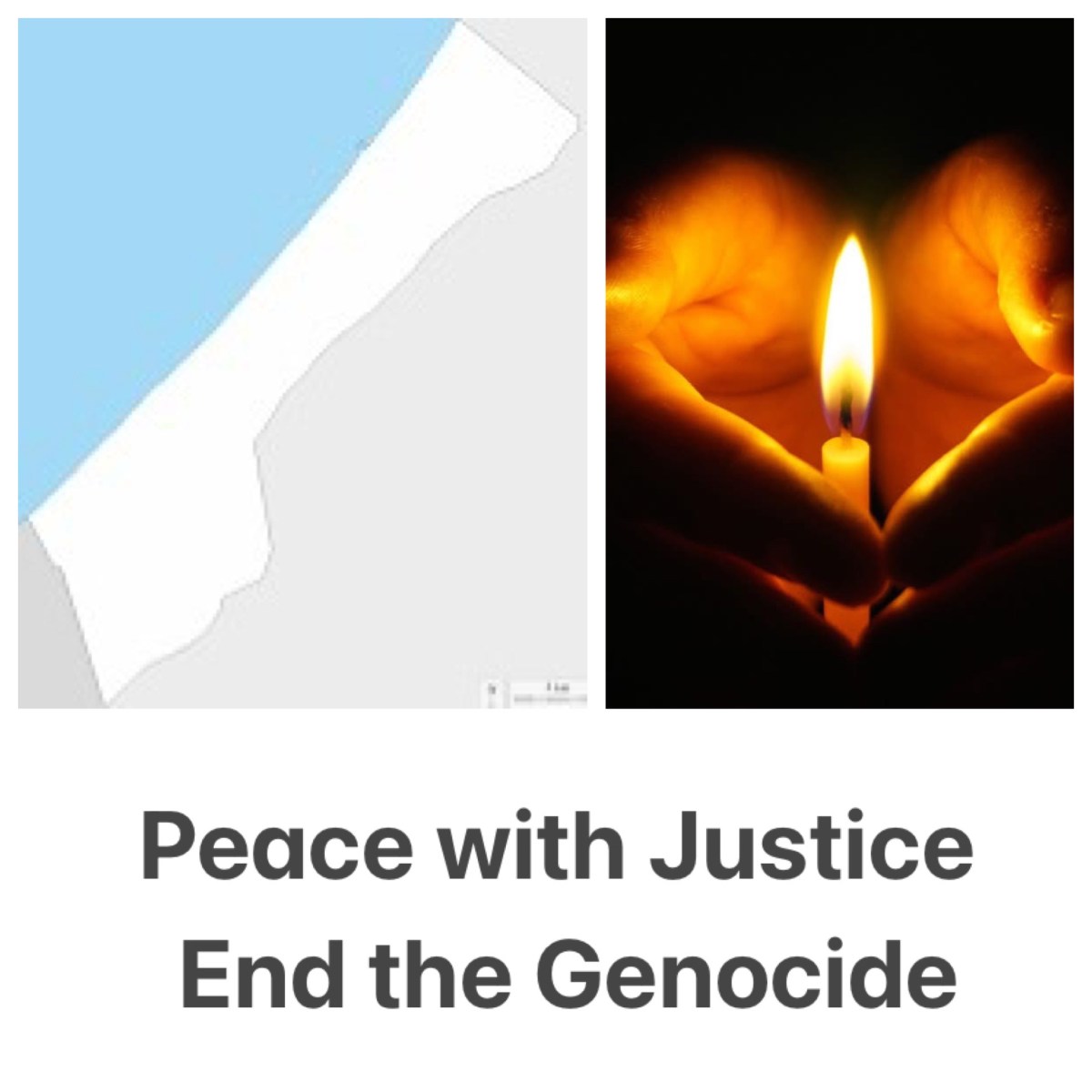
Peace with Justice: end the genocide in Gaza

It’s hard not to look at what has been happening in the Middle East—and particularly in Gaza—over recent years, and make some very harsh decisions from afar. For a start, after the series of attacks that Hamas and some other Palestinian groups made two years ago yesterday, on 7 October 2023, it seems easy to condemn the violence of terrorists fighting for Palestinian rights. The firing of 4,300 rockets, the slaughter of 1,195 Israelis, mostly civilians, and the taking of around 250 hostages, some still held today, all deserve to be condemned.

The Gaza Strip and the national state of Israel,
from a map in the Encyclopedia Britannica

But it is also hard not to decide that all Israelis should be condemned for the aggressive militaristic actions taken in response to the 7 Oct attacks. On 8 Oct, the Israeli government declared that the nation was “in a state of war”. That “war” has continued each day since then, with consistent attacks across Gaza. 

Current estimates by the Hamas-run Gaza Ministry of Health are that around 67,000 residents in Gaza have been killed, including 18,000 children; 170,000 people have been injured, and 1.9 million people displaced. Amongst the deaths, Al-Jazeera estimates that around 300 journalists and media workers have been killed. They say that across Gaza, the destruction includes 92% of all residential buildings, 88% of all commercial facilities, and more than 2,300 educational buildings have been destroyed.

The clearest accusation that has been made for some time now is that Israel is committing genocide. The World Council of Churches asserts that “the Government of Israel’s military campaign in Gaza has entailed grave breaches of the Fourth Geneva Convention which may constitute genocide and/or other crimes under the Rome Statute of the International Criminal Court (ICC)”. This council has denounced “the system of apartheid imposed by Israel on the Palestinian people, in violation of international law and moral conscience”. It’s clear that Israel,is acting outside the agreed international laws and customs. Yet the USA and other countries continue to provide Israel with all manner of materials and products to sustain their genocidal aggression.

However, it’s important not to not tag all Israelis with the one brush. The Israeli Defence Forces are carrying out the policies implemented by the right wing Prime Minister and his far right fundamentalist coalition of parties. They are committed to the Zionist ideal of ensuring the security of Israel, and of removing all opposition to this nation within the region. They are prosecuting this with vigorous zeal. The bombs and buckets continue each day. But as they oversee this policy, we should remember that they are not representative of everyone in Israel.

Elizabeth and I have a friend in Israel who is faithful and deeply committed to justice; they have been working with others for peace in their country for decades, and they are currently most distressed by their government’s callous fundamentalist actions. And we have a friend in Australia who served in the IDF who is now campaigning vigorously to stop the genocide, lobbying our government to push this message internationally. 

They are not all “the same”—what the army is implementing is a government policy that is incredibly divisive within Israel. Not all Israelis support what has been happening; many disagree with the genocide happening in Gaza. Jeremy Bowen, of the BBC, reports that “Israelis are war-weary and polls show that a majority want a deal that returns the hostages and ends the war. Hundreds of thousands of reservists in the armed forces, the IDF, want to get back to their lives after many months in uniform on active service.”

In like fashion, it’s not fair to label all Palestinians as terrorists. Some are, but many are not. Good Palestinians of integrity do not support the actions of organisations like Hamas.

It’s a complex situation which is not helped when people adopt the simplistic media language that paints all XXs as evil people or all YYs as good people. Indeed, the actions of warfare, terrorism, and genocide that we see playing out each day are held in disdain by millions of people in the region. Like them, we should hope for, yearn for, and pray for peace.

I wrote this blog on what happened two years ago today:

In today’s blog, I have drawn on the following sources:

https://abcnews.go.com/International/israel-hamas-wars-devastating-human-toll-after-2/story?id=126252242

https://www.aljazeera.com/news/liveblog/2025/10/7/live-israels-genocide-continues-across-gaza-two-years-since-start-of-war

https://www.bbc.com/news/articles/cvgqyj268ljo

https://www.oikoumene.org/resources/documents/statement-on-palestine-and-israel-a-call-to-end-apartheid-occupation-and-impunity-in-palestine-and-israel

For other related blogs, see

The problem of Canaan: conquering, colonising, massacring (Deut 34; Pentecost 22A)

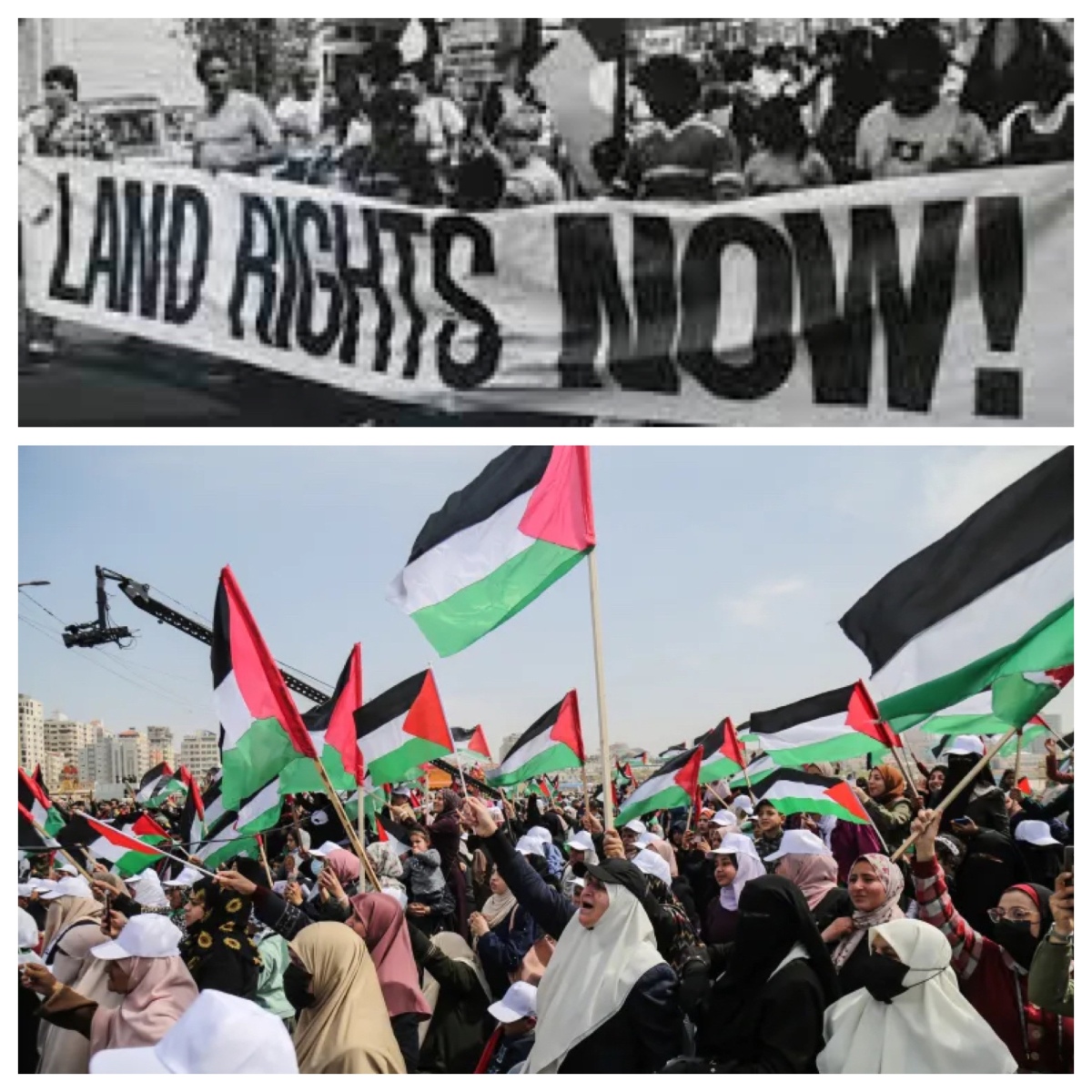
Land rights. Land claims. Land has always been a bone of contention-in the past, as in the present. This week, the lectionary invites us to consider land. The Hebrew Scripture passage contains an important statement about land a land claim, as it were.

“This is the land of which I swore to Abraham, to Isaac, and to Jacob”, God declares to Moses in the last moments of his life (Deut 34:4), as he stands on Mount Nebo, surveying “the whole land: Gilead as far as Dan, all Naphtali, the land of Ephraim and Manasseh, all the land of Judah as far as the Western Sea, the Negeb, and the Plain- that is, the valley of Jericho, the city of palm trees as far as Zohar” (Deut 34:1–3).

That land encompassed all the land of Canaan, which later becomes the land of Israel. It is the land which was in contention between different peoples long before the story of Moses was written on the scroll that became part of Torah.

That was most likely sometime before or during the period that Josiah ruled as king of Judah, when he commanded the high priest Hilkiah to undertake an audit of funds in the temple. We are told that, in the course of this audit, Hilkiah said to Shaphan his secretary, “I have found the book of the law in the house of the Lord” (2 Ki 22:8). That’s presumed to be the first version of what we know as Deuteronomy, which later found its place as the fifth of “the five Books of Moses”.

That same land, promised to Abraham, claimed by Moses, is in contention today. It has had a chequered history. The ancient land of Canaan eventually became the land of Israel, then (along with Judaea) part of the Roman province of Syria Palaestina (132–390), and then of the Diocese of the East in the Roman Empire (to 536). What followed the fall of the Roman Empire was a millennium and a half of Muslim rule of this land, first as a part of Bilad al-Sham, the Greater Syria region, under various Caliphates.

The region continued to be part of various organisational configurations under successive Muslim rule, on into the Ottoman Caliphate (from 1517) and then into the modern era. (I am not an expert, by any means, of this ancient and medieval history; for this summary, I am dependent on what I read in what I consider to be reputable sources.)

In the early 20th century, the place where Arabs identifying as Palestinians lived was decreed to be the British Mandate of Palestine (1920–1948). The ancient conflicts, it was hoped, would be well in the past. A place for Palestinians in the modern world was, it was thought, now settled.

But this was not to be, as we well know today.

In part in response to the horrors of the Shoah, exposed by the ending of World War Two, the modern state of Israel was created in 1948. The new nation took 78% of the area which had been provided for Palestinians in the British Mandate. That this was now Jewish territory was a blessing for Jews, but it was a huge irritant to Palestinian sensibilities, which has referred to the period from 1948 onwards as the Nakba, the Palestinian Catastrophe. In the early years of the Nakba, significant number of Palestinians fled the area declared as Israel, as (in one estimate) over 500 Palestinian villages were repopulated by Jews, becoming refugees with no national identity.

The contested regions of the Gaza Strip (along the east coastline of the Mediterranean Sea) and the West Bank (land immediately to the west of the River Iordan) became known as “the Palestinian Territories”.

Another irritant has been the fact that they have been occupied by Israel since the Six-Day War of 1967, and subsequent expansion of Israeli settlements into areas where Palestinians live has exacerbated the situation. And so those who were dispossessed become the dispossessors of others, and the cycle continues.

So when we hear, this coming Sunday, “This is the land of which I swore to Abraham, to Isaac, and to Jacob”, we can be sure that we know these territories; we know the conflicted situation in the modern era; and we know how the ancient texts describe and lay claim to Israelite “ownership” of the land.

When Abraham left his homeland to settle in Canaan (Gen 13:12) and when the Lord God later formalised a covenant with Abraham (then aged 99 years, we are told), the promise was made by God that “I will give to you, and to your offspring after you, the land where you are now an alien, all the land of Canaan, for a perpetual holding” (Gen 17:8).

That same phrase, “a perpetual holding”, is subsequently spoken by Jacob, as he tells Joseph, Manasseh and Ephraim of God’s words, “I am going to make you fruitful and increase your numbers; I will make of you a company of peoples, and will give this land to your offspring after you for a perpetual holding” (Gen 48:4).

That land, Canaan, is a problem that sits at the heart of the story that the Bible recounts in its early narrative books. It becomes a problem at the heart of life for the millions living in that region today, as I have outlined above. The biblical narrative tells of numerous battles leading to the defeat of many tribes: the Moabites (Judg 3:26–30) and the Ammonites to the east Judg 10:6–11:33), as well as “the Hittites, the Girgashites, the Amorites, the Canaanites, the Perizzites, the Hivites, and the Jebusites, seven nations mightier and more numerous than you” in the land (Deut 7:1; see also Josh 3:10; 12:8; 24:11), and also the Anakim (Josh 11:21–23).

Further, as recent events in Australia have powerfully reminded us, there is a problem right at the heart of the narrative that has been constructed about modern Australia. Our most recent failure even to accept a modest proposal to recognise the existence of First Peoples on the continent prior to 1788, is testimony to that problem. Although the First People of Australia were not completely destroyed and eliminated, they continue to be discriminated against in a multitude of ways.

Both the ancient Israelite narrative and the contemporar Australian narrative tell a story of a group of people who invade, conquer, massacre, colonise, settle, marginalise, and then claim as their own what had previously belonged to others who had long been there before them.

It’s a story, in both instances, that we need to hear, understand, and appreciate. We need to develop awareness of just how easily we adopt the victor’s point of view, and uncritically retell it, without thinking any more about the pain, hurt, anguish, and generations-long damage that was done, in each case.

That is hard to do. I am a white Australian, raised on the myths of the great Australian character, taught from my schooldays onwards about the glories of the British Empire and the values of western society. Understanding the situation of First Peoples in Australia takes time, focus, empathy, energy, and persistence.

And I am a Christian, raised on the stories of the Bible, taught from Sunday School onwards about the promises God made to the chosen people about the holy land that had been selected for them. Getting into the mindset of a people from so long ago, who have almost (but not quite) been written out of the story, is hard to do.

The story of the Hebrews entering the land of Canaan, battling the inhabitants and colonising the territory, lies underneath the whole story of Exodus, wilderness, and conquest, which is at the heart of the biblical narrative that accounts for the origins of Israel as a nation.

A specific set of stories which tell of that invasion and conquest is found in all its bloody detail in the book of Joshua. That book tells, in a highly stylised way, of the entry of the people of God into the promised land. It is a key incident in the extended narrative history that stretches from Genesis to 1 Kings, from slavery in Egypt, through the long haul of wilderness wanderings, to the establishment of the kingdom of Israel under King David.

That story has multiple historical problems, and needs to be understood as a mythological saga telling of the nature and identity of the people, rather than an accurate historical account of “what actually took place”. See

Invasion and colonisation, Joshua 3 and contemporary Australia (Pentecost 23A)

This ancient story of invasion, conquering, massacre, colonisation, settlement, marginalisation, and then the claiming as their own what had previously belonged to others, resonates strongly with the experience of indigenous peoples in so many places in the modern era of history-including, and especially, in Australia.

Time and time again, from late medieval times onwards, “explorers” set out from Western powers, “discovered” new lands, followed by “settlers” who came and established “civilisation”, most often by means of “subduing” the indigenous peoples, making them subservient to the “new order” and even, in many instances, punishing those who resisted their new ways, utilising various means of killing the indigenous peoples.

This is the dynamic at the heart of the story of “Israel entering the promised land” which is told in Ioshua. It is also at the heart of the story of “establishing British civilisation in the land of Australia” which is the story of the continent on which I live the land now called Australia. The imposition of a new way of living by a more powerful force, the subjugation of those who already were living in the land, and the use of violence and murder to ensure that the new order was maintained and could flourish all of this is in the history of Australia since 1788.

The story of invasion and settlement of Canaan, the defeat and decline of the various indigenous peoples of that land, resonates with the contemporary Australian experience of the indigenous peoples of the continent and its islands. Which gives us pause for thought: how, then, do we hear and understand that story recounted in Joshua, which is prefigured in this final chapter of Deuteronomy? What land claims do we accept from this ancient text? And how does that guide us, today, as we consider the land claims that are being made?

See also my discussion of the wav that biblical literalism has fed into the modern conflict over this land at