Transformed from death to life: Paul’s theology of glory (2 Cor 3–4; Transfiguration)

The letter which we call 2 Corinthians is comprised of three main sections, each of which has its own distinctive focus. In the first section of the letter (1:1–7:16), Paul and Timothy write to offer consolation and hope to the people who are part of the community of followers of Jesus  in Corinth. It is clear that members of the community have undergone some difficult times; Paul empathises with them, drawing on his own experiences, as a way of offering a message of hope to the believers in Corinth.
In a second main section (8:1–9:15), Paul addresses a very practical matter—the collection of money which he was making amongst the churches of Achaia and Macedonia, which he was planning to take to Jerusalem for the benefit of the believers there who had been experiencing difficulties. Then, in a third main section (10:1–13:13), Paul’s tone is markedly apologetic, as he writes in severe tones to defend himself in the face of criticisms which have been levelled against him in Corinth. 

The lectionary offers us an excerpt from the first main section (3:12—4:2) for the Festival of the Transfiguration, this coming Sunday. It is obvious why this excerpt is suggested, since the argument includes a reference to the passage from Exodus which will also be read and reflected upon this Sunday. “The people of Israel could not gaze at Moses’ face”, Paul and Timothy note, “ because of the glory of his face” (3:7). 

They go on to contrast this with the consequences of that one scene in the life of Jesus that the Synoptic Gospel writers later tell in narrative detail, arguing that “all of us, with unveiled faces, seeing the glory of the Lord as though reflected in a mirror, are being transformed into the same image from one degree of glory to another” (3:18). That is, whilst the transformation of Moses was not able to be witnessed by the people of Israel, the transformation of Jesus is shared in abundance with the followers of Jesus. It’s a stark contrast.
The fundamental point in what Paul and Timothy argue here is thoroughly polemical. They press, again and again, on the difference between the Exodus scene and the scene that we know as the Transfiguration of Jesus. They use the typical juxtaposition of two opposites that characterized the rhetorical style of the diatribe (and which we find in a number of other letters of Paul).

The juxtapositions have begun in the preceding verses. In full polemical flight, Paul presents himself and Timothy as a “ministers of a new covenant”, which defines as “not of letter but of spirit”, continuing with the explanation “the letter kills, but the Spirit gives life” (3:6). He then contrasts “the ministry of death” with “the ministry of the Spirit” (3:7–8). The former is “chiseled in letters on stone tablets”, whilst the latter brings “glory”. It is clear where Paul’s preference lies.

This leads to two new, snappy slogans: “the ministry of condemnation” and “the ministry of justification”, which are then contrasted (3:9–11). The former did have its element of glory—the face of Moses shone with God’s glory—but “what once had glory has lost its glory”. Paul and Timothy advance the argument through a series of direct contrasts.
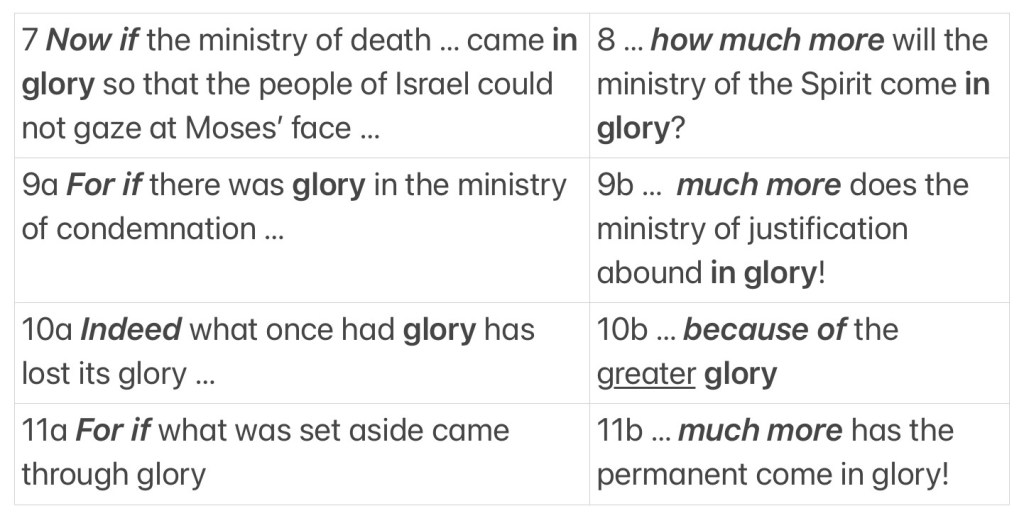
How this “loss of glory” occurred, it seems, was “because of the greater glory; for if what was set aside came through glory, much more has the permanent come in glory!”. The argument, somewhat convoluted, seems to be that the former, seemingly inadequate, glory is completely overshadowed by the later, far more powerful glory.

Paul launches then into an attack on that former ministry which becomes quite vindictive. Moses is criticized for covering his face so that the people of Israel could not “gaze at the glory” that he was concealing (v.13). The minds of the people thus were “hardened”; indeed, even “to this very day”, he says, that hardening of heart remains when they hear “the reading of the old covenant” (3:14). In contrast to this deadly scenario, “in Christ” that veil is lifted, that hardening of heart is softened “when one turns to the Lord” (3:16). The exultant conclusion is that “all of us, with unveiled faces, seeing the glory of the Lord as though reflected in a mirror, are being transformed into the same image from one degree of glory to another” (3:18).

There is great danger in these words. The danger is that we absolutise them as validating any criticism, all criticism, of Judaism as a religion; that we value Christianity by demeaning and dismissing Judaism. To do this would mean that we would ignore the reality that these words were written in a context quite different from our own, addressing a situation which may (or may not) have had little do with our own situation. That wider context and that specific situation are very important as we interpret this passage (and, indeed, any passage in the Bible).

We are witnessing today, both in Australia and in many places around the world, a rise in antisemitic words and actions. To be sure, the violent and illegal actions ordered by the current Israeli government against the residents of Gaza (the most recent in a long and tragic sequence of similarly illegal and aggressive actions over decades) has probably inflamed such antisemitism. 

But criticism of the policies of one nation state should not be used to foment hatred against a whole people, whether they live in that nation or in other places around the world. Yet antisemitism is growing. (So, too, is Islamophobia—for other reasons, relating both to the Middle East and to other factors. It is equally unacceptable.)

So to the specific context of the passage from 2 Cor. Paul, of course, was a Jew; he writes that he was “circumcised on the eighth day, a member of the people of Israel, of the tribe of Benjamin, a Hebrew born of Hebrews” (Phil 3:5) and boast that “I advanced in Judaism beyond many among my people of the same age, for I was far more zealous for the traditions of my ancestors” (Gal 1:14). Luke reports him as telling Jews in Jerusalem that “I am a Jew, born in Tarsus in Cilicia, but brought up in this city at the feet of Gamaliel, educated strictly according to our ancestral law, being zealous for God, just as all of you are today” (Acts 22:3). 
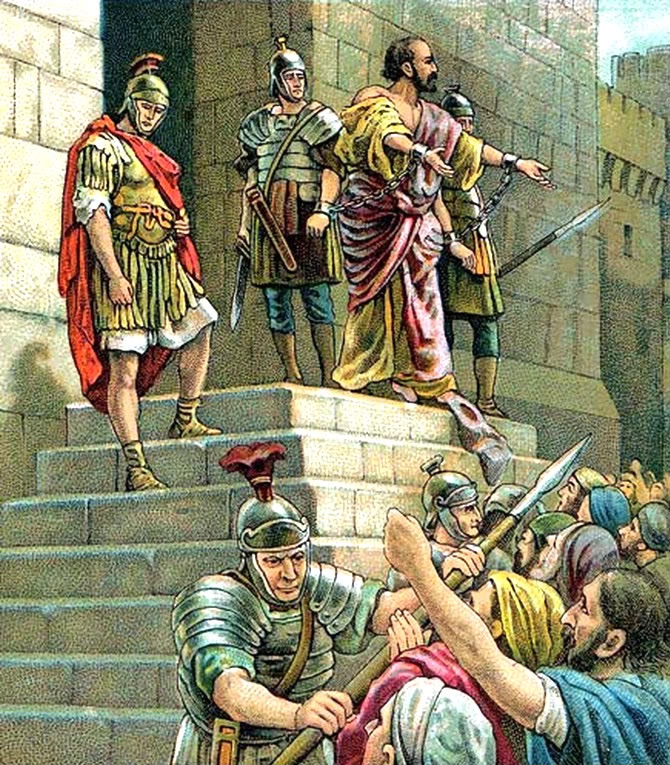
Paul’s writings and his faith are permeated with his Jewish heritage; in almost every letter he quotes Hebrew Scripture and the argument in his most significant letter, to the Romans, is grounded in a prophetic verse  from scripture (Hab 2:4a, cited at Rom 1:17b). He is able to declare that “the law [Torah] is holy, and the commandment is holy and just and good” (Rom 7:12) and in great anguish he writes, “my heart’s desire and prayer to God for them [i.e. Israel] is that they may be saved”, noting that “they have a zeal for God” (Rom 10:1–2).

Yet each time he affirms his Jewish heritage and the faith of his fellow Jews, he places a critical comment against this affirmation. Of his own heritage and upbringing, “I regard everything as loss … I regard them as rubbish” (Phil 3:8; the translation of the last word is a very polite rendering of a crass swear word). Of the law, he says “I was once alive apart from the law, but when the commandment came, sin revived and I died, and the very commandment that promised life proved to be death to me” (Rom 7:9). 

Of the fate of Israel, a “disobedient and contrary people” (Rom 10:21, citing Isa 65:2), he declares, “Israel failed to obtain what it was seeking; the elect obtained it, but the rest were hardened” (Rom11:7)—and yet, “they have now been disobedient in order that, by the mercy shown to you, they too may now receive mercy” (Rom 11:31). There is a glimmer of hope. 

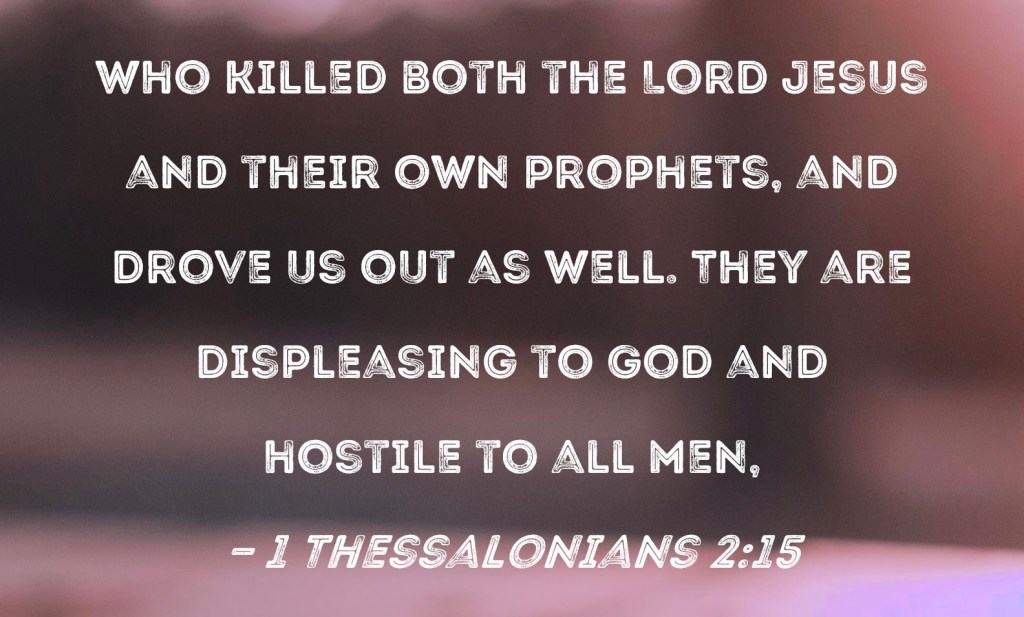
Yet still his rhetoric can be violently abusive: “beware of the dogs, beware of the evil workers, beware of those who mutilate the flesh!” (Phnil 3:2, referring to circumcision); and “anyone proclaims to you a gospel contrary to what you received, let that one be accursed!” (Gal 1:9); and even, “the Jews, who killed both the Lord Jesus and the prophets, and drove us out; they displease God and oppose everyone … they have constantly been filling up the measure of their sins; but God’s wrath has overtaken them at last” (1 Thess 2:14–16).
Paul is nothing if not polemical in his letters. And as a Jew, when he writes such criticisms of other Jews, we cannot describe him as being antisemitic; rather, he is being critical of those who hold to Jewish traditions and resist adapting to the changes and modifications that the good news brings. We have seen Paul use this kind of polemical argumentation in other letters, when he uses stridently aggressive statements to articulate his opposition to a view. (Look at Gal 3:1–14, or parts of 2 Cor 10–13, or Rom 5:12—6:23.)

Such polemic was used in ancient rhetoric to refine and develop an understanding of a matter; the back-and-forth of the argument serves to sift and sort ideas, so that the kernel that remains at the end can be rigorously held. Paul knew this style of argument, and used it to good effect in his letters.

So when he writes disparagingly about Moses to the Corinthians, he is not being antisemitic, and we have no justification for using these words to criticize and attack Jewish ideas, or even Jewish people. Paul is using the techniques of his day to argue a point. We should not extract his words from their context and use them to validate criticisms of “all Jews” or of Judaism per se. What he says should be used with care and respect. 

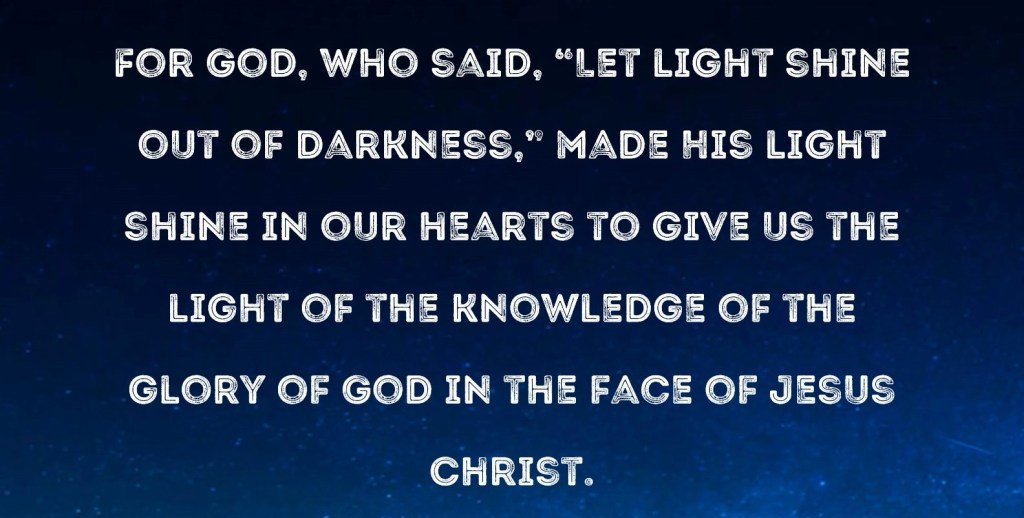
As we read on beyond  2 Cor 3:12–4:2, we find Paul writing about the transformation that takes place  “from one degree of glory to another” (3:18), explaining that “this extraordinary power belongs to God and does not come from us” (4:7). It results in “an eternal weight of glory beyond all measure” (4:17), such that “we regard no one from a human point of view” (5:16). It is, in the end, “the God who said, ‘Let light shine out of darkness,’ who has shone in our hearts to give the light of the knowledge of the glory of God in the face of Jesus Christ” (4:6).
So Paul concludes this extended message of hope about this promised glory with a reminder that God has “reconciled us to himself through Christ”, and accordingly God “has given us the ministry of reconciliation” (2 Cor 5:18). It is in this spirit that we should reflect on the passage proposed by the lectionary for this Transfiguration Sunday.

For more on glory in Paul and elsewhere in scripture, see 

The skin of his face was shining (Exod 34; Transfiguration)

As the coming Sunday is the Festival of the Transfiguration, the passages offered by the lectionary cluster around the theme of the revelation of God’s glory. That is what happened for the three disciples on the mountain, when Jesus was transfigured (Luke 9:28–36). That was also the experience for Israel, in a story that is much older. When Moses came down from the mountain, Aaron and all the Israelites saw that “the skin of his face shone because he had been talking with God” (Exod 34:29–35). 

I’ve reflected on the Gospel in another blog. To better understand the significance of this statement in Exodus, we need to see this Hebrew Scripture passage in its larger narrative context. See

This incident comes after a very significant moment in the story of Israel, when the people had sinned by making a golden calf to worship (32:1–6). This story most likely relates to the god who was regarded as the head of the gods amongst the Canaanites—El, who was often depicted as a bull. The bull was the strongest animal in the ancient farmyard, and thus a fitting symbol for a powerful god. The Israelites chose to imitate that god through their golden construction. The story told in Exodus 32 mocks the Canaanite god, depicting him as more like a calf. 

By adopting a Canaanite symbol, the Israelites had turned from God (32:21). It seems they would deserve their fate—although Moses interceded and saved them from divine wrath (32:23). Moses is the hero who stands in the breach, to convince God to change God’s mind. He had negotiated with God for forgiveness (32:11–14, 30–34), and had also sought clarification from God as to what “God’s ways” entailed (33:16–17). 

In response, God promises that “my presence will go with you, and I will give you rest” (33:14), but Moses presses his case: “show me your glory, I pray” (33:18). Not just the divine presence, but the glory of God is what Moses seeks. God does not respond exactly as Moses hoped for, saying that “I will make all my goodness pass before you, and will proclaim before you the name, ‘The Lord’; and I will be gracious to whom I will be gracious, and will show mercy on whom I will show mercy” (33:19).

These words that the Lord offers to Moses are subsequently echoed in the prayer that Moses offers Aaron and his sons: “the Lord bless you and keep you … and be gracious to you” (Num 6:22–27)—a ancient prayer which lives on in Christian spirituality and liturgy! 

However, the Lord God stops short of full self-revelation, declaring, “you cannot see my face; for no one shall see me and live” (Exod 33:20). Moses is granted a view of God’s “back”, but is not able to see the face of God (33:23). Now, the Hebrew word here translated as “back” refers to the “hindquarters”—a polite way of saying that Moses saw only God’s exposed buttocks, rather than his smiling face. Almost every translation chooses the polite wording, “my back”. The King James Version comes closest to an honest translation with “my back parts”. We might best translate this verse as “you will see my backside, but not my face”.

Yet the request for God’s face to shine upon people is made in a number of psalms. “There are many”, says the psalmist, “who say, ‘O that we might see some good! Let the light of your face shine on us, O Lord!’” (Ps 4:6). In Psalm 31, the psalmist sings, “Let your face shine upon your servant; save me in your steadfast love” (Ps 31:16). Again in Psalm 67, the psalmist echoes more explicitly the Aaronic Blessing, praying, “May God be gracious to us and bless us and make his face to shine upon us—Selah—that your way may be known upon earth, your saving power among all nations” (Ps 67:1–3).

So although Moses asks God to “show me your glory” (33:18), he is permitted to see back(side) of God, but not the full glory of God (33:21–23). This encounter is enough to make “the skin of [Moses’s] face shine because he had been talking with God” (34:30, 35). Of course, this story, located within the mythic sagas of ancient Israel, is not presented as an historical account. Rather, as myth (a story with a deep meaning) it is rich with symbolism—encountering the divine is a deeply transformative experience. 

The Lord God had assured Moses that “you have found favour in my sight, and I know you by name” (33:17). And so, after the breach of the covenant that took place in the creation of the idolatrous image of the Canaanite Bull, Moses and the Lord God renew the covenant with Israel (34:1–28). This reinforces that God’s favour remains with the nation. As the people remain faithful to the various requirements that are stipulated (34:11–26), including pilgrimage by all adult males three times a year to the temple (34:23), so the Lord God promises “I will cast out nations before you, and enlarge your borders; no one shall covet your land when you go up to appear before the Lord your God three times in the year” (34:24). That is how God’s favour is shown.

Throughout the worship of the Lord God in the temple, psalmists have prayed for God’s favour to be shown to the faithful people of Israel (Ps 90:17; 106:4; 119:58). As well as in this covenant renewal ceremony (Exod 34:9), the ancestral sagas of Israel record that God showed favour to Noah (Gen 6:8), Joseph (Gen 39:4), Moses (Exod 33:12–17), the people in the wilderness (Lev 26:9), Samuel (1 Sam 2:26), Manasseh (2 Chron 33:12–13), and the remnant who returned to the land (Ezra 9:8). God’s gracious favour endures through the generations.

The favour of the Lord is manifested most often in “the glory of the Lord” which shines over Israel. Moses had experienced this on the top of Mount Sinai, when “the appearance of the glory of the Lord was like a devouring fire on the top of the mountain in the sight of the people of Israel” (Exod 24:16–18). That glory had already been seen by the Israelites in the wilderness of Sin (Exod 16:10), and that glory filled the tabernacle when the people had finished constructing it (Exod 40:34–35). 

The closing verse of the book of Exodus notes that “the cloud of the Lord was on the tabernacle by day, and fire was in the cloud by night, before the eyes of all the house of Israel at each stage of their journey” (Exod 40:38). A number of other references to this are made throughout the books of the Torah (Lev 9:6, 23; Num 14:10; 16:19, 42; 20:6; Deut 5:24). This appears to have continued on until the ark of God was captured by the Philistines, for at that moment “the glory has departed from Israel” (1 Sam 4:21–22). 

Centuries later, at the time that Solomon prayed his lengthy prayer of dedication of the newly-built Temple in Jerusalem, “when the priests came out of the holy place, a cloud filled the house of the Lord, so that the priests could not stand to minister because of the cloud; for the glory of the Lord filled the house of the Lord” (1 Kings 8:10–11; 2 Chron 7:1–3). 

The glory of the Lord was then closely associated with the Temple in ensuing centuries, as various psalms attest (Ps 24:3–10; 96:7–8). “O Lord, I love the house in which you dwell, and the place where your glory abides”, one psalmist sings (Ps 26:8); yet other psalms extend the location of God’s glory, exulting that it extends “over all the earth” (Ps 57:5, 11; 72:19; 102:15; 108:5) and even “above the heavens” (Ps 8:1; 19:1; 57:5, 11; 97:6; 108:5; 113:4; 148:13).

By the time of the prophet Isaiah, this wider scope of the glory of the Lord was sung by the seraphim in their song, “Holy, holy, holy is the Lord of hosts; the whole earth is full of his glory” (Isa 6:3), whilst a little later another voice sang that “the earth will be filled with the knowledge of the glory of the Lord, as the waters cover the sea” (Hab 2:14). During the Exile, another prophet, looking to the return of the people to the land of Israel, declared that “the glory of the Lord shall be revealed, and all people shall see it together” (Isa 40:5).

Another exilic prophet had a series of visions in which “the glory of the Lord” was seen (Ezek 1—39), culminating in a declaration by God that “I will display my glory among the nations; and all the nations shall see my judgment that I have executed, and my hand that I have laid on them” (Ezek 39:21), followed by a vision in which “the Lord entered the temple by the gate facing east”, and at that time “the spirit lifted me up, and brought me into the inner court; and the glory of the Lord filled the temple” (Ezek 44:4–5). 

Later still, a prophetic voice during the time of return to the land declared to the people that “the Lord will arise upon you, and his glory will appear over you; nations shall come to your light, and kings to the brightness of your dawn” (Isa 60:2–3). And well after that, another prophet attributes to “one like a human being, coming with the clouds of heaven”, the gift of “dominion and glory and kingship, that all peoples, nations, and languages should serve him” (Dan 9:13–14). So God’s presence had continued with the people through his glory over the years, and it was still expected to be seen in their hoped-for future.

Another way that this vision of God’s presence was sought was through yearning for the ability to “see God face to face”. That’s what Moses experienced at Sinai (Deut 5:1–4), and what he experienced when he went out of the camp, to where the tent was pitched, for “whenever Moses entered the tent, the pillar of cloud would descend and stand at the entrance of the tent, and the Lord would speak with Moses … thus the Lord used to speak to Moses face to face, as one speaks to a friend” (Exod 33:7–11).

That’s what Jacob had experienced at the ford of the Jabbok (Gen 32:30). That’s what Moses continued to experience through the wilderness years (Num 12:7–8), as Moses reports: “you, O Lord, are seen face to face, your cloud stands over them and you go in front of them, in a pillar of cloud by day and in a pillar of fire by night” (Num 14:14). Moses is remembered as unique amongst the prophets because he was one “whom the Lord knew face to face” (Deut 34:10; see also Sir 44:5).

Gideon was also privileged to see the angel of the Lord face to face (Judg 6:22), while Ezekiel tells Israel that God declares to them, “I will bring you out from the peoples … and I will bring you into the wilderness of the peoples, and there I will enter into judgment with you face to face” (Ezek 20:34–35).

And most strikingly and strategically of all, it was on the top of Mount Sinai that Moses had the most direct encounter with God of any in the ancestral sagas: “Moses came down from Mount Sinai; as he came down from the mountain with the two tablets of the covenant in his hand, Moses did not know that the skin of his face shone because he had been talking with God” (Exod 34:29). It was said that “the Lord used to speak to Moses face to face, as one speaks to a friend” (Exod 33:11).

Paul draws on the scriptural idea of the divine glory when he writes to the Romans that “we boast in our hope of sharing the glory of God” (Rom 5:2), and that it is through the work of the Spirit which gives hope to the whole creation that it will “obtain the freedom of the glory of the children of God” (Rom 8:21). He tells the Thessalonians that “God … calls you into his own kingdom and glory” (1 Thess 2:12) and speaks of the life of believers as being “sown in dishonour … raised in glory” (1 Cor 15:43).

So Paul advises the Corinthians, “whether you eat or drink, or whatever you do, do everything for the glory of God” (1 Cor 10:31), and later on—in the passage that forms the Epistle reading this Sunday—he tells them that “all of us, with unveiled faces, seeing the glory of the Lord as though reflected in a mirror, are being transformed into the same image from one degree of glory to another; for this comes from the Lord, the Spirit” (2 Cor 3:18). So this glory is a means of transformation for believers.

So Paul celebrates that God “has shone in our hearts to give the light of the knowledge of the glory of God in the face of Jesus Christ” (2 Cor 4:6), rejoicing that Jesus “will transform the body of our humiliation that it may be conformed to the body of his glory, by the power that also enables him to make all things subject to himself” (Phil 3:21).

Later writers pick up on this motif of believers sharing in the glory of God. Writing in the name of Paul, one affirms that “God chose to make known how great among the Gentiles are the riches of the glory of this mystery, which is Christ in you, the hope of glory” (Col 1:27), while another declares that that God “called you through our proclamation of the good news, so that you may obtain the glory of our Lord Jesus Christ” (2 Thess 2:14). Another writer speaks of God “bringing many children to glory” through Jesus (Heb 2:10), yet another celebrates that God will “make you stand without blemish in the presence of his glory with rejoicing” (Jude 24).

This, of course, leads into the notion in later Christian theology that heaven can be described as the place of glory—the place where James and John wish to be seated alongside Jesus (Mark 10:37), the place where believers are raised (1 Cor 15:43), the place where faithful elders will “win the crown of glory that never fades away” (1 Pet 5:4), the place where the place where Jesus himself is ultimately “taken up in glory” (1 Tim 3:16). 

And that glory was most clearly seen, one writer maintains, in Jesus, when “the Word became flesh and lived among us, and we have seen his glory” (John 1:14). For the author of John’s Gospel, the full manifestation of heaven (glory) was made on earth, in Jesus, who was God’s only son, “who is close to the Father’s heart, who has made him known” (John 1:18). 

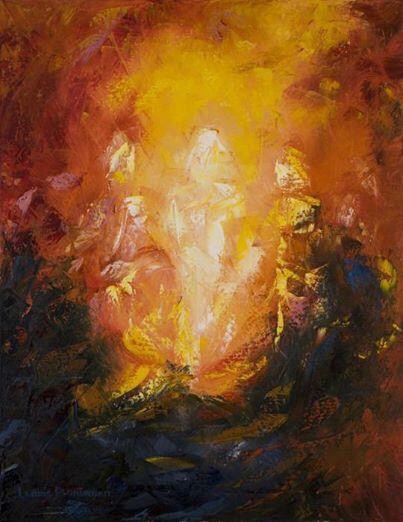
So it is that this Sunday, we celebrate the festival in which that glory is most clearly seen in Jesus. Luke reports that “while he was praying, the appearance of his face changed, and his clothes became dazzling white” (Luke 9:29). As Moses and Elijah appeared, talking to him, Luke continues that “they appeared in glory and were speaking of his departure, which he was about to accomplish at Jerusalem” (9:31), and then that Peter and those with him “saw his glory and the two men who stood with him” (9:32). In Jesus, the offering of divine favour and the manifestation of divine glory, seen already many times in the long story of Israel, is now brought to a higher level of more satisfying fulfilment. And so, we celebrate.

The hour has come (John 12; Lent 5B)

“The hour has come for the Son of Man to be glorified” (John 12:23). So Jesus says to Andrew and Philip, who come with a request from “some Greeks” who were in Jerusalem for the festival of Passover (12:20; see 12:1). Two terms in this declaration by Jesus require exploration; two terms which are key ideas in this Gospel, the book of signs.

The story which John’s Gospel reports contains a contrast between the largely public activities of Jesus, and a secret element, described as the hour, which does not come until the climax of the story is reached. There are pointers to this contrast from the very first sign, at a wedding in Cana, when Jesus declares, “my hour has not yet come” (2:4).

What is this hour? The first part of the Gospel leaves it as a mystery, for the time being (see 7:30 and 8:20). Then, after the seventh sign, events in Jerusalem show that the hour has come (12:23, 27); the narrator explains that “Jesus knew that his hour had come to depart from the world” (13:1).

Thus, at the beginning and at the end of the public activities of Jesus in this Gospel narrative, the focus is firmly on “the hour”.

Then, some time later on, at the end of his last meal with his followers, Jesus finally prays: “Father, the hour has come: glorify your Son” (17:1). In what will take place after this prayer—the arrest, trial, crucifixion, burial, and resurrection of Jesus (John 18–21)—this “hour” is realised.

The Johannine Jesus describes these events, the fulfilment of “the hour”, as the means by which God is glorified (11:16, 23–33; 13:31–32; 17:4).

The word glory, in Hebrew Scriptures, signals the divine presence (Exod 16:1–12; 24:15–18; 40:34–39; Lev 9:22–24; Num 14:10–12; 16:19; Deut 5:22–27; 1 Sam 4:19–22). In the book of signs, it is God’s glory which is now made manifest in Jesus (John 1:14; 2:11; 12:27–28; 17:5).

The language of “hour” and “glory” thus provides a framework for interpreting the events in chapters 2–12 as steps on the way towards a full understanding of Jesus, and the events of chapters 13–21 as the realisation of God’s presence in the world in all its fullness. This is the heart of the incarnational theology that is advocated by the writer of this Gospel.

The story of the Gospel fills out the details as to how it is that “the Word became flesh and lived among us”, which means that for human beings, “we have seen his glory, the glory as of a father’s only son, full of grace and truth” (John 1:14).

The passage offered in this Sunday’s lectionary readings provide part of the Johannine account of the final public moments of Jesus before his arrest (12:20–50). Here, Jesus speaks of this imminent glory (12:20–26), an angel testifies to God’s glory in the death of Jesus (12:27–33), Jesus explains that he comes as light into the world (12:34–36), the scriptures join as witnesses (12:37–43) and Jesus asserts that he speaks God’s commandment of eternal life (12:44–50).

This scene sums up what has come before and opens the door to the events which follow, culminating in the cry of the crucified Jesus, “it is fulfilled” (19:30; the NRSV translation, “it is finished”, downplays the sense of fulfilment in the verb used, teleō). The author of this Gospel thereby indicates that the deepest fulfilment of the hour of Jesus comes on the cross, as the glory of God is revealed in its entirety.

That his glory may dwell in our land (Psalm 85; Advent 2B)

As we move on in the very new year in the church’s calendar, this coming Sunday we celebrate the second Sunday in the season of Advent, and continue our preparations for Christmas—the coming of Jesus, Saviour, chosen one, and Lord (Luke 2:11). During Advent, the lectionary offers a selection of biblical passages designed to help us in our preparations, building to the climactic moment of Christmas Day, when we remember that “the Word became flesh and lived among us, and we have seen his glory, the glory as of a father’s only son, full of grace and truth” (John 1:14).

These scripture passages include a sequence of psalms which orient us to the saving work of God, experienced by faithful people in Israel through the ages. In the psalms, faithful people over the ages have sung of their trust in God and their joy at what God has been doing. These psalms thus bring us to the point of anticipation that we can sense God’s work in the story of Jesus.

Last Sunday, Advent 1, we heard the psalmist’s prayer, “restore us, O God; let your face shine, that we may be saved” (Ps 80:3, 7, 19). In my blog on this passage last week, I reflected on the terms restore, shine, and save. This coming Sunday, Advent 2, we will hear the psalmist sing that “steadfast love and faithfulness will meet; righteousness and peace will kiss each other; faithfulness will spring up from the ground, and righteousness will look down from the sky” (Ps 85:10–11).

“Surely his salvation is at hand for those who fear him, that his glory may dwell in our land” (Ps 85:9) is the key affirmation for this coming Sunday, Advent 2. As we have pondered the theme of salvation so recently, in this blog I turn my thoughts to the theme of glory.

In a story found in the narrative section of the final chapters of Exodus, Moses yearns to know that he has found favour with God: “if I have found favour in your sight”, he prays, “show me your ways, so that I may know you and find favour in your sight” (Exod 33:13). In response, God promises that “my presence will go with you, and I will give you rest” (33:14), but Moses presses his case: “show me your glory, I pray” (33:18). Not just the divine presence, but the glory of God is what Moses seeks.

Moses had experienced “the glory of the Lord” on the top of Mount Sinai, when “the appearance of the glory of the Lord was like a devouring fire on the top of the mountain in the sight of the people of Israel” (Exod 24:16–18). That glory had already been seen by the Israelites in the wilderness of Sin (Exod 16:10), and that glory subsequently filled the tabernacle when the people had finished constructing it (Exod 40:34–35).

The closing verse of the book of Exodus notes that “the cloud of the Lord was on the tabernacle by day, and fire was in the cloud by night, before the eyes of all the house of Israel at each stage of their journey” (Exod 40:38). A number of other references to this are made throughout the books of the Torah (Lev 9:6, 23; Num 14:10; 16:19, 42; 20:6; Deut 5:24). This appears to have continued on until the ark of God was captured by the Philistines, for at that moment “the glory has departed from Israel” (1 Sam 4:21–22).

Centuries later, at the time that Solomon prayed his lengthy prayer of dedication of the newly-built Temple in Jerusalem, “when the priests came out of the holy place, a cloud filled the house of the Lord, so that the priests could not stand to minister because of the cloud; for the glory of the Lord filled the house of the Lord” (1 Kings 8:10–11; 2 Chron 7:1–3).

The glory of the Lord was then closely associated with the Temple in ensuing centuries, as various psalms attest (Ps 24:3–10; 96:7–8). “O Lord, I love the house in which you dwell, and the place where your glory abides”, one psalmist sings (Ps 26:8); yet other psalms extend the location of God’s glory, exulting that it extends “over all the earth” (Ps 57:5, 11; 72:19; 102:15; 108:5) and even “above the heavens” (Ps 8:1; 19:1; 57:5, 11; 97:6; 108:5; 113:4; 148:13).

By the time of the prophet Isaiah, this wider scope of the glory of the Lord was sung by the seraphim in their song, “Holy, holy, holy is the Lord of hosts; the whole earth is full of his glory” (Isa 6:3), whilst a little later another voice sang that “the earth will be filled with the knowledge of the glory of the Lord, as the waters cover the sea” (Hab 2:14). During the Exile, another prophet, looking to the return of the people to the land of Israel, declared that “the glory of the Lord shall be revealed, and all people shall see it together” (Isa 40:5).

Another exilic prophet had a series of visions in which “the glory of the Lord” was seen (Ezek 1—39), culminating in a declaration by God that “I will display my glory among the nations; and all the nations shall see my judgment that I have executed, and my hand that I have laid on them” (Ezek 39:21), followed by a vision in which “the Lord entered the temple by the gate facing east”, and at that time “the spirit lifted me up, and brought me into the inner court; and the glory of the Lord filled the temple” (Ezek 44:4–5).

Later still, a prophetic voice during the time of return to the land declared to the people that “the Lord will arise upon you, and his glory will appear over you; nations shall come to your light, and kings to the brightness of your dawn” (Isa 60:2–3). And well after that, another prophet attributes to “one like a human being, coming with the clouds of heaven”, the gift of “dominion and glory and kingship, that all peoples, nations, and languages should serve him” (Dan 9:13–14).

Paul draws on the scriptural idea of the divine glory when he writes to the Romans that “we boast in our hope of sharing the glory of God” (Rom 5:2), and that it is through the work of the Spirit which gives hope to the whole creation that it will “obtain the freedom of the glory of the children of God” (Rom 8:21). He tells the Thessalonians that “God … calls you into his own kingdom and glory” (1 Thess 2:12) and speaks of the life of believers as being “sown in dishonour … raised in glory” (1 Cor 15:43).

So Paul advises the Corinthians, “whether you eat or drink, or whatever you do, do everything for the glory of God” (1 Cor 10:31), and later on tells them that “all of us, with unveiled faces, seeing the glory of the Lord as though reflected in a mirror, are being transformed into the same image from one degree of glory to another; for this comes from the Lord, the Spirit” (2 Cor 3:18).

And Paul celebrates that God “has shone in our hearts to give the light of the knowledge of the glory of God in the face of Jesus Christ” (2 Cor 4:6), rejoicing that Jesus “will transform the body of our humiliation that it may be conformed to the body of his glory, by the power that also enables him to make all things subject to himself” (Phil 3:21).

Later writers pick up on this motif of believers sharing in the glory of God. Writing in the name of Paul, one affirms that “God chose to make known how great among the Gentiles are the riches of the glory of this mystery, which is Christ in you, the hope of glory” (Col 1:27), while another declares that that God “called you through our proclamation of the good news, so that you may obtain the glory of our Lord Jesus Christ” (2 Thess 2:14). Another writer speaks of God “bringing many children to glory” through Jesus (Heb 2:10), yet another celebrates that God will “make you stand without blemish in the presence of his glory with rejoicing” (Jude 24).

This, of course, leads into the notion in later Christian theology that heaven can be described as the place of glory—the place where James and John wish to be seated alongside Jesus (Mark 10:37), the place where believers are raised (1 Cor 15:43), the place where faithful elders will “win the crown of glory that never fades away” (1 Pet 5:4), the place where the place where Jesus himself is ultimately “taken up in glory” (1 Tim 3:16).

And that glory was most clearly seen, one writer maintains, in Jesus, when “the Word became flesh and lived among us, and we have seen his glory” (John 1:14). For the author of John’s Gospel, the full manifestation of heaven (glory) was made on earth, in Jesus, who was God’s only son, “who is close to the Father’s heart, who has made him known” (John 1:18).

So the expectation of the psalmist, that the glory of the Lord will dwell in their land, is offered at this Advent time, as we Christians anticipate that God’s glory will again be shown to us in Jesus. It’s a motif that runs through scripture from Moses onwards and is shown forth in striking fashion in the life of Jesus.