A ring on her nose, and bracelets on her arms (Gen 24; Pentecost 6A)

For this coming Sunday, the lectionary provides us with part of a larger story from the section of Genesis dealing with Abraham (Gen 24:34–38, 42–49, 58–67). As Abraham’s son Isaac comes to age, Abraham knows that there is a need to find him a wife.

Abraham now appears not to be living with his wife, Sarah—he is in Beersheba, with his servants (22:19) whilst Sarah remains at Hebron, where she dies (23:1–2). Was this because of the tension that grew between the patriarch and the matriarch after he had almost sacrificed his son? This is the story we read last week; see

Tensions were already evident earlier in the story, when Sarah had banished Hagar and Ishmael into the wilderness of Beersheba (21:10–14). To send them on their way, Abraham made sure that they had bread and water to sustain them in the wilderness (21:14). We do not see Abraham and Sarah together again in the story. In discussing this with my wife, Elizabeth Raine, last week, she proposed that Sarah was so upset with Abraham’s actions on Mount Mariah, threatening the life of their son Isaac (Gen 22:1–14), that she left him behind at Beersheba and moved to Hebron, some 42km to the north.

It is only on her death that Abraham travels to where Sarah had been living, in Hebron. Abraham sought to purchase a field there to serve as the burial place for Sarah. Ephron the Hittite, moved with compassion, wanted to gift him a field with a cave where Sarah’s body could be laid (23:7–12), but Abraham insisted and paid Ephron the value of the field, 400 shekels of silver (23:12–16). So he was doing the honourable thing for his wife after her death, even though there seems to have been a relationship breakdown prior to this.

Despite the fact that he willingly enters into these dealings with the Hittites in Beersheba, and the fact that he had earlier entered into a covenant with Abimelech, King of Gerar, a Philistine (21:22–34), Abraham is now concerned that Isaac not marry locally, to a Canaanite, but that a wife be found for him in “my country” and amongst “my people”, as he instructs his servant (24:4–5).

We may perhaps know of people who share that desire that their children not marry “foreigners”, but find a partner from amongst their own. So it is an ancient story with very modern resonances. Marlene Andrews, Church leader at Ngukurr, shares her perspective on this passage in the current issue of With Love to the World, a daily Bible study resource.

(Ngukurr is a town of about 1,000 people, located about 330 kilometres south-east of Katherine on the Roper Highway. Ngukurr is one of the largest Aboriginal communities in the Roper Gulf region.)

She says: “This story is about Abraham, his son. Abraham wanted the best for his son in marriage. Abraham knew that God was with him at the time of his decision-making. Abraham was faithful to God’s calling. Abraham knew how to go about finding a good wife for his son, Isaac. It was important that his son’s wife came from Abraham’s country. That is where Abraham came from, and where he wanted his son to connect to. Abraham knew the culture and the background of his people. Abraham knew in finding a wife for his son, she had to come from his homeland.”
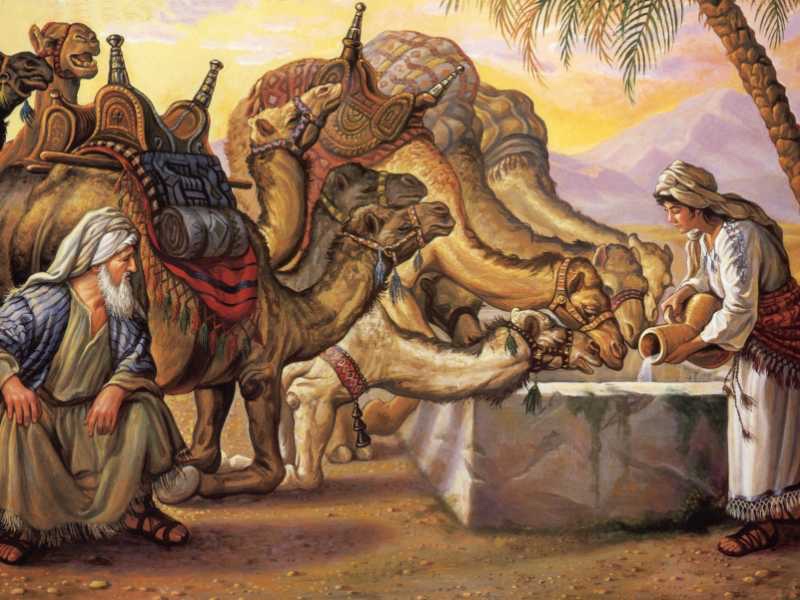
The marriage is arranged, at a distance, by Abraham. Isaac plays no part in the whole saga that is recounted in detail in Genesis 24. Abraham sends his servant all the way north to a well near the city of Nahor, which was back in Aramea, the homeland of Abraham. This was in the area we know as the Fertile Crescent, in between the two rivers of the Tigris and the Euphrates (24:10). The well near Nahor becomes the location for the match-making that Abraham undertakes, through the servant whom he sent there (24:10–14).

Isaac will, much later in time, notice Rebekah, the daughter of Bethuel, “son of Milcah, the wife of Nahor, Abraham’s brother” (24:15), but this is not until the story has almost come to its close (24:62–67). It is understandable that Isaac was agreeable to the arrangement that his father had made, for “the girl was very fair to look upon, a virgin, whom no man had known” (24:16).

This last comment is important, in the light of the drastic provision in the Torah that, if evidence of the young woman’s virginity is lacking, “they shall bring the young woman out to the entrance of her father’s house and the men of her town shall stone her to death, because she committed a disgraceful act in Israel by prostituting herself in her father’s house” (Deut 22:21).

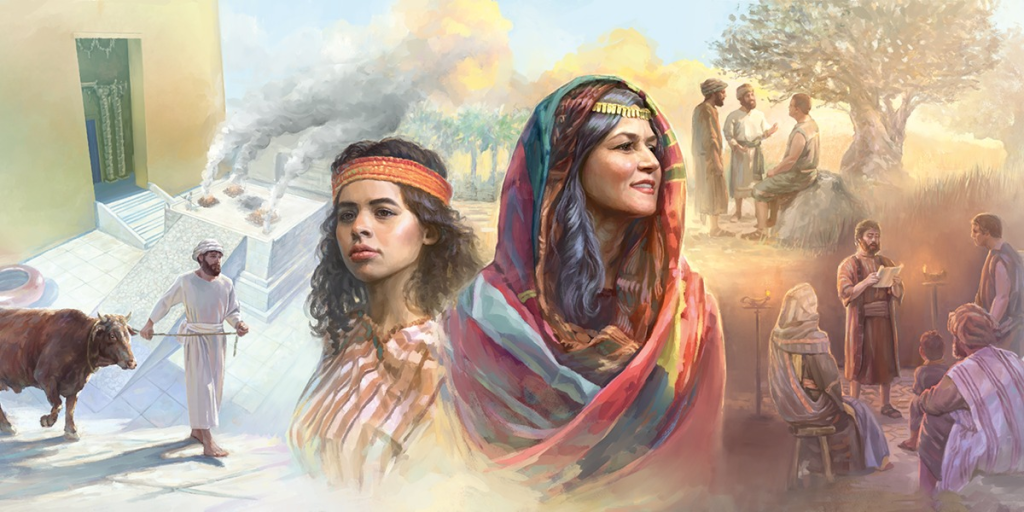
Reckoning that the woman was able to be considered for marriage (we have to trust the insight of the narrator at this point), the servant was prepared for what he hoped would transpire; he had with him “a gold nose-ring weighing a half shekel, and two bracelets for her arms weighing ten gold shekels” (24:22).

After Rebekah has brought her brother Laban into the story (24:28–29), and he noticed the nose-ring and bracelets (24:30), he offered hospitality to the servant, which was duly accepted (24:31–33). The purpose of the nose-ring and bracelets is then revealed—although surely those who heard this story in antiquity would be well aware of their significance. Brokering a marriage is the clear intention (24:34–41).
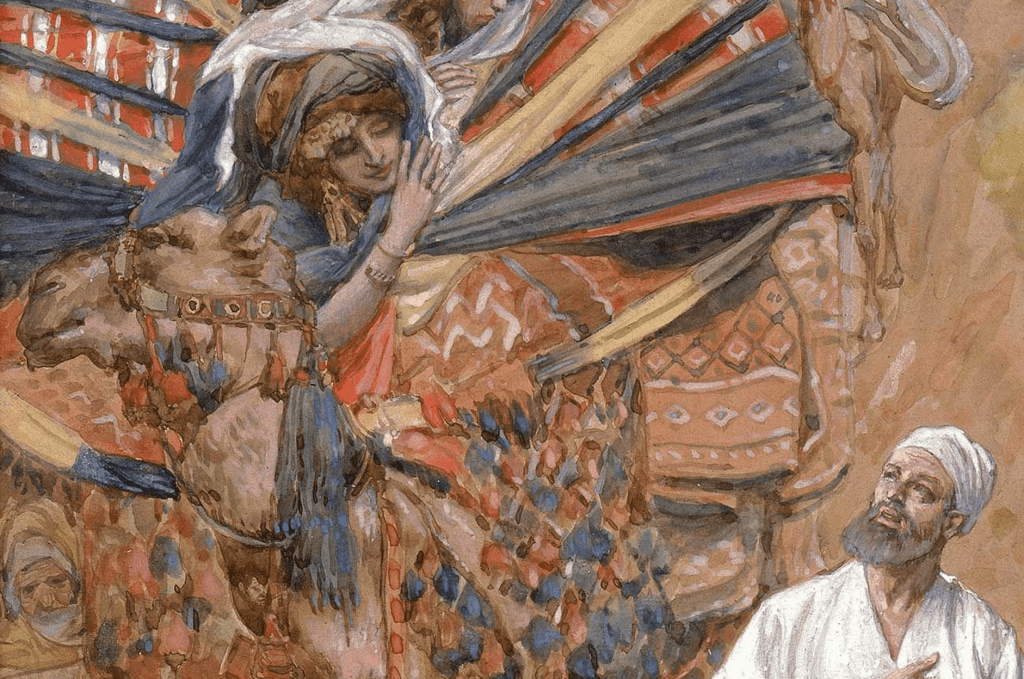
The woman had had a ring placed in her nose, and bracelets put around her arms (24:47); the action presumably took place at 24:22–27, although it was not explicitly narrated there. The ring and bracelets were obviously the custom for women in the time when the story was initially told, and they held their place within the story as it was passed down from generation to generation, even if customs may have changed.

Marriage customs do vary across time and place, from one culture to another. What held in the days of the patriarchs (or, at least, in the days in ancient Israel when people told stories about how they imagined things were in the “olden days” of the patriarchs) does not necessarily hold good for our time, today. A story of a man who married a woman so that, after a prescribed period of time (seven years!) he could marry her sister, as was the case with Jacob, Rachel, and Leah (Gen 29–30), for instance, would not hold today! And whilst rings remain the most common sign of a marriage, they are placed around fingers, and not into noses, in most modern cultures!

So Isaac, eventually, enters the story (some 47 verses after Rebekah was first introduced!). He notices, first, the camels which had come all the way from Nahor to the Negeb (24:62–63); and then, “Isaac brought her into his mother Sarah’s tent; he took Rebekah, and she became his wife; and he loved her” (24:67). All is well, that ends well—thanks to the well!
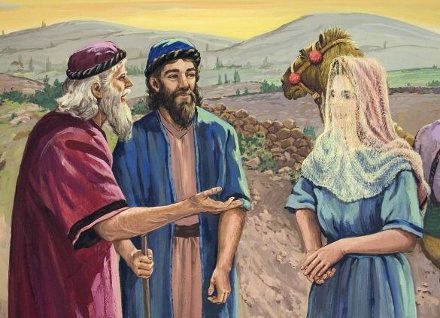
However, even though Isaac had never been to the well at Nahor where the marriage agreement was made, this well was the first of a number of wells where marriages were negotiated and confirmed within the sagas of ancient Israel. Jacob met his wife-to-be, Rachel, beside a well in Canaan, later Samaria (Gen 29:1–3). Moses, when travelling in Midian, “sat down by a well”, where, in due time, the local priest Jethro gave one of his daughters, Zipporah, to Moses in marriage (Exod 2:15–21).

The well in Canaan, known as Jacob’s well, is much later on the location for another famous encounter, between Jesus of Nazareth and an unnamed woman of Samaria (John 4:4–30)—although no marriage resulted from this encounter!

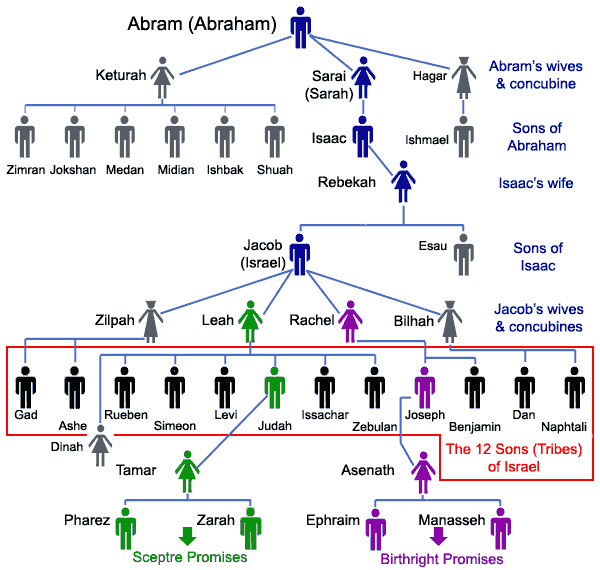
The two marriages, of the son and grandson of Abraham, which resulted from encounters beside the two wells, are important, for they demonstrate that the promise made to Abraham, of many descendants who will be blessed by God (Gen 12:2–3), will be guaranteed. Sure enough, Isaac and Rebekah produce twin boys, Esau and Jacob; and Jacob, in turn, is the father of twelve sons, whose names provide the identification of the twelve tribes of Israel. So these wells are integral to the divine promise!

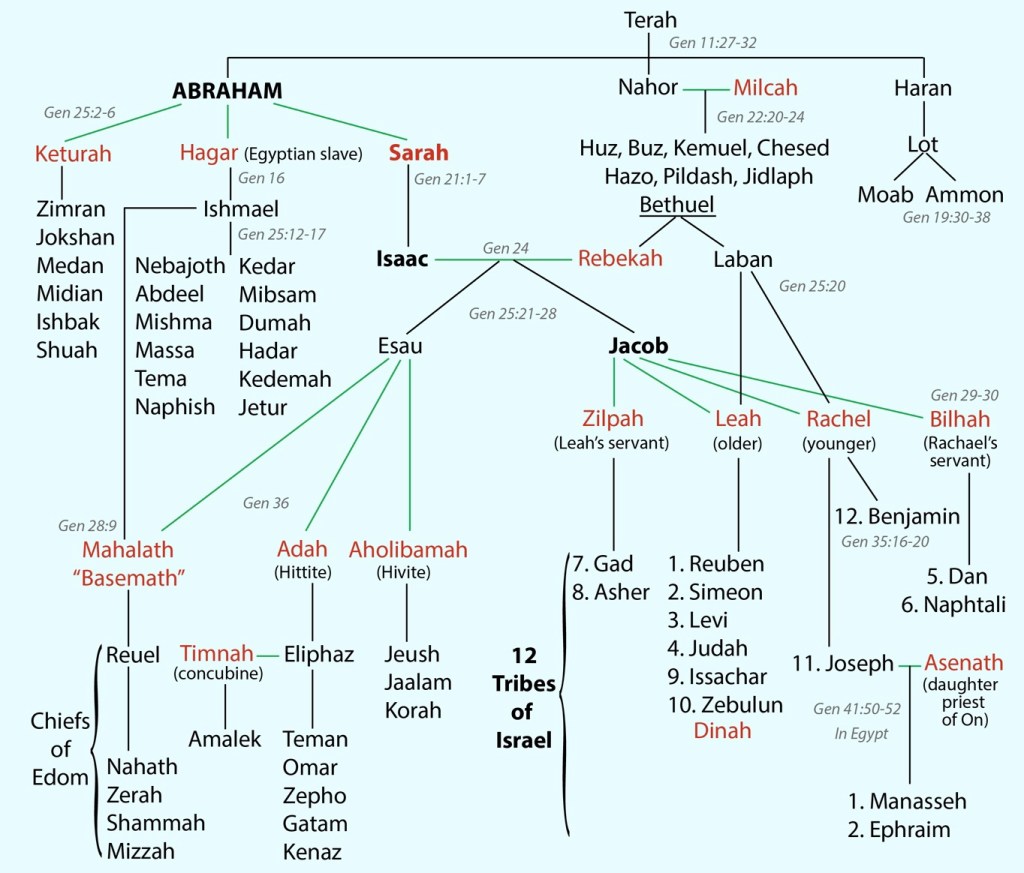
Isaac was the son of Abraham; Rebekah was the granddaughter of Nahor, the brother of Abraham; so they were cousins. Tracy M. Lemos, Associate Professor of Hebrew Bible and ancient Near Eastern language and literature in the Faculty of Theology of Huron University College at Western University in London, Ontario, writes in Bible Odyssey that “Biblical texts make clear that marriages between cousins were strongly preferred”. She continues, “different Israelite communities and authors had diverse viewpoints on marriage and that Israelite viewpoints evolved over time”. See

https://www.bibleodyssey.org/passages/related-articles/weddings-and-marriage-traditions-in-ancient-israel/

The conclusion of Prof. Lemos, that “many biblical customs would be unfamiliar or even objectionable to many people living in western societies today”, certainly stands with regard to the passage we are offered for this coming Sunday. The detailed story that is told in Gen 24 is a fascinating insight into another world, another time, another culture. Yet it is part of our shared heritage, as Jews and Christians, in the modern era. It is good to hear the story, once again, as the lectionary offers it to us this Sunday.

She laughed. But what else do we know about Sarah? (Gen 11–23, for Pentecost 6A)

We know that “she laughed”. And that she produced a miracle baby at the ripe old age of 90 (or so it is said). But what else do we know about Sarah? Before she disappears from view in the Hebrew Scripture passages that the lectionary is offering us, let’s spend some time thinking about Sarah.

During this season after Pentecost, the lectionary has been offering us stories selected from the ancestral sagas of Israel, tracing the way that the promise to Abraham—“I will make of you a great nation” (Gen 12:1), “look toward heaven and count the stars … so shall your descendants be” (Gen 15:5)—was able to come to fruition.

Over successive Sundays, we have read of the call to Abram (ch.12), the promise of a child to Sarah (ch.18), the banishment of Abraham’s son through his slave girl Hagar (ch.21), the near-sacrifice of the preferred son, Isaac (ch.22), and the manoeuvring by Abraham to ensure a wife for Isaac who is of “my country and my kindred” (ch.24).

In future Sundays, we move on to stories about the twin boys born to Isaac and his wife Rebekah (ch.25), Jacob’s dream at the Jabbok (ch.28), Jacob and his marriages to, first Leah, and then Rachel (ch.29), and then the story of Jacob at Penuel, which explains how he had his name changed to Israel (ch.32). The story then focusses on one of Jacob’s twelve sons, Joseph, who is taken to Egypt (ch.37) and later saves his brothers during a famine (ch.45).

These stories—have you noticed?—follow the male line of descent, and place the male at the centre of the story. It is Abram’s call, Abraham’s near-sacrifice of Isaac, Isaac who needs a wife, Jacob who has a dream, Jacob who obtains two wives, Jacob who wrestled with God, and Joseph who becomes the saviour of his brothers.

What role is played by the women in the story? We do know the names of the matriarchs—Sarah, Rebekah, Leah and Rachel—and they do figure in the stories; but the focus is quite patriarchal, as would befit the nature of ancient society.

Sarah, whom we meet initially as Sarai (11:29), is essential to the storyline at various points; and she has come to be venerated alongside Abraham in later traditions. Paul refers to her as the means by which God’s promise is fulfilled (Rom 9:9) and he even offers her and Hagar together as providing an allegory for “the present Jerusalem, in slavery … and the Jerusalem above [who is] free, our mother” (Gal 4:21–26).

In the letter to the Hebrews, Sarah is named (in contrast to many other women) and takes her place alongside Abraham as part of “so great a cloud of witnesses” (Heb 12:1)—although all that is said of her is the stark declaration, “Sarah herself was barren” (Heb 11:11). The miracle, it would seem, was that “from one person, and this one as good as dead, descendants were born” (Heb 11:12)—that is to say, it was the transformation of the “as good as dead Abraham” that is being celebrated here.

In 1 Peter, Sarah is put forward as one of the “holy women who hoped in God”—although, in this instance, what is said of her again mirrors the patriarchal dominance of society; “Sarah obeyed Abraham and called him lord. You have become her daughters as long as you do what is good and never let fears alarm you” (1 Pet 3:5–6).

It takes an exilic prophet, whose words were appended to the earlier scroll of Isaiah, to give Sarah (almost) equal billing with Abraham: “Listen to me, you that pursue righteousness, you that seek the Lord. Look to the rock from which you were hewn, and to the quarry from which you were dug. Look to Abraham your father and to Sarah who bore you; for he was but one when I called him, but I blessed him and made him many.” (Isa 51:1–2).

So, what do we know of Sarah from those ancestral narratives which were told by word of mouth, handed down the generations, and ultimately (sometime in the Exile in Babylon) written down in the form we now have them, in the scroll entitled Bereshit, which we know as the book of Genesis?

We meet Sarai (meaning “my princess”) in the list of descendants of Terah, the father of Abraham (Gen 11:29), although (as in the Hebrews reference) it is simply noted that “Sarai was barren; she had no child” (11:30). That’s a serious roadblock in a passage that is listing descendant upon descendant!

In that same passage, we are told that Sarai, daughter-in-law of Terra, accompanied the family when they journeyed from Ur of the Chaldeans to Haran, where they settled (11:31). The journey had been intended to go as far as Canaan; that would not take place until the Lord called Abram to “go from your country and your kindred and your father’s house to the land that I will show you” (12:1). Sarai is there, as well as Lot and his perpetually-unnamed wife, “and all the possessions that they had gathered, and the persons whom they had acquired in Haran” (12:5).

The next story involving Sarai is perplexing and disturbing. Because of a famine, Abram “went down to Egypt to reside there as an alien” (12:10). We know that Sarai accompanies him, because he forewarns her, “I know well that you are a woman beautiful in appearance; and when the Egyptians see you, they will say, ‘This is his wife’; then they will kill me, but they will let you live. Say you are my sister, so that it may go well with me because of you, and that my life may be spared on your account.” (12:11–13).

The story is repeated twice more in Genesis; once when Abraham repeats this ruse in Gerar, before King Abimelech (20:1–7), and again when Isaac tells the same Abimelech that Rebekah is his sister (26:6–11)! It seems that the fruit does not fall far from the tree; Isaac exactly replicates his father’s devious strategy.

In between those two instances of spousal deception in Gen 12 and Gen 20, Sarai has been the cause of plagues falling onto Pharaoh and his house (12:17), settled with her husband “by the oaks of Mamre, which are at Hebron” (13:1, 18), and presumably learnt from Abram about the covenant which the Lord made with him (15:1–21)—although the text is silent about where Sarai was as this revelation came to Abram.

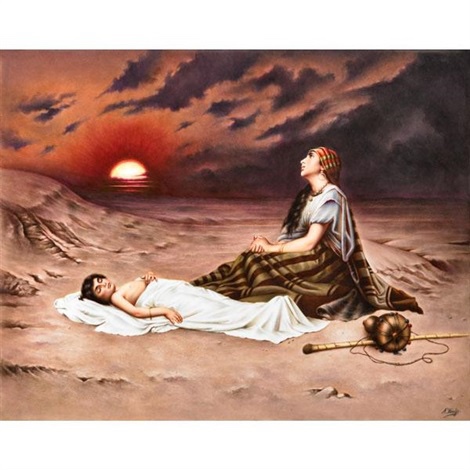
Sarai is front and centre, however, in the next story told, as she offers her Egyptian slave-girl, Hagar, to Abram so that he might reproduce, and fulfil the divine promise (16:1–3). Tension between the servant girl and her mistress resulted, so “Sarai dealt harshly with her, and she [Hagar] ran away from her [Sarai]” (16:6). Eventually, an angel instructed Hagar to “return to your mistress, and submit to her” (16:9), so she did, and in time bore a child to Abram.

In the next story, the circumcision of Abram and “every male among you” (17:1–27), we might wonder what role was played by Sarai. Did she witness the ceremony? Did she and her women assist those who were subjected to this procedure? Certainly, in the midst of the conversation that Abram has with God at this time, both he and his wife are given new names: “no longer shall your name be Abram, but your name shall be Abraham” (17:5), and “as for Sarai your wife, you shall not call her Sarai, but Sarah shall be her name” (17:15).

Abram, whose name describes his status in the story as “exalted ancestor”, will henceforth be known as Abraham, “ancestor of a multitude”, in keeping with the promise of God that “you shall be the ancestor of a multitude of nations” (17:4), while Sarai, “my princess”, will henceforth be known simply as “princess”, without any inflection indicating that she is “owned” by anyone.

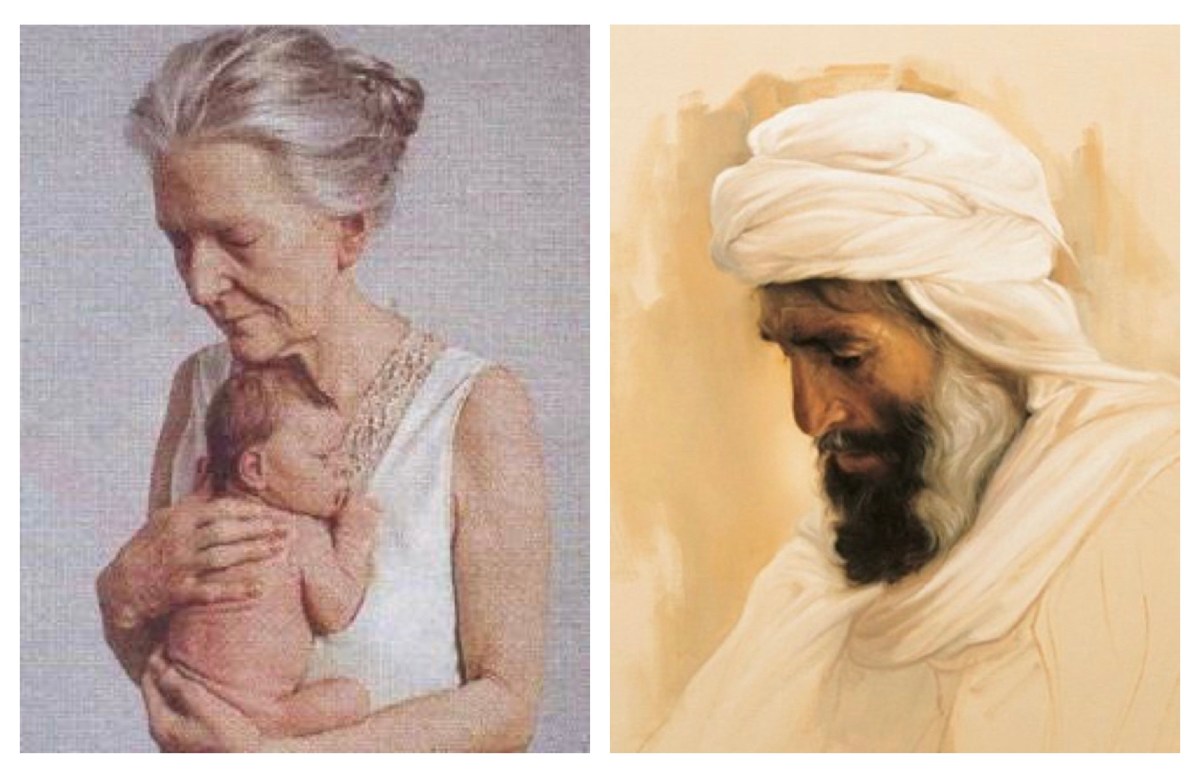
So Sarah takes her place at the centre of the story at this point. Her status as princess means that “she shall give rise to nations; kings of peoples shall come from her” (17:16), and the birth of a son, Isaac, is predicted (17:19) and his role in continuing the lineage is confirmed (17:20). That birth is again foreshadowed when three visitors stay with Abraham and Sarah at Mamre (18:10). Sarah’s sceptical laughter (18:12) was already prefigured in the name allocated to her son, Isaac—meaning “he laughs” (17:19).

Before Isaac is born, however, the terrible story of inhospitality and divine vengeance on Sodom and Gomorrah is told in some detail (18:16–19:29), and the origins of the southern neighbours of Israel, the Moabites and Ammonites, is told (19:30–38), as well as the deception of Abraham in Gerar, when he passes the pregnant Sarah off as his sister (20:1–7).

Then comes the birth of Isaac (21:2–3), after which she rejoices, “God has brought laughter for me; everyone who hears will laugh with me” (21:6)—after which Sarah again orders Hagar, and also Ishmael, to depart into the wilderness. Sarah instructs Abraham to “cast out this slave woman with her son” (21:10); “the matter was very distressing to Abraham on account of his son” (21:11).

And so the schism between Abraham and Sarah is opened up; the events of the next incident, when Abraham takes Isaac to a mountain in Mariah, to sacrifice him (22:1–3), appear to seal the split. As I was talking with my wife, Elizabeth Raine, about this difficult story last week, she pointed out to me that we do not see Abraham and Sarah together in the same place after this.

Abraham now appears not to be living with his wife, Sarah—he is in Beersheba, with his servants (22:19) whilst Sarah remains at Hebron, where she dies (23:1–2). Was this because of the tension that grew between the patriarch and the matriarch after he had almost sacrificed his son? This is the story we read last week; see

Tensions were already evident earlier in the story, when Sarah had banished Hagar and Ishmael into the wilderness of Beersheba (21:10–14). To send them on their way, Abraham made sure that they had bread and water to sustain them in the wilderness (21:14). As Elizabeth noted, we do not see Abraham and Sarah together again in the story.

It is only on her death that Abraham travels to where Sarah had been living, in Hebron, some 42km further north. Abraham sought to purchase a field there to serve as the burial place for Sarah. Ephron the Hittite, moved with compassion, wanted to gift him a field with a cave where Sarah’s body could be laid (23:7–12), but Abraham insisted and paid Ephron the value of the field, 400 shekels of silver (23:12–16). He dies at least honour her appropriately at the point of her death.

*****

Writing in My Jewish Learning, Jewish educator Rachael Gelfman Schultz notes that “Genesis contains the greatest concentration of female figures in the Bible (32 named and 46 unnamed women). The fact that Genesis consists of a series of family stories (including several genealogies) accounts for the remarkable concentration of female figures.” Sarah is an important figure in that list of women. Rabbinic tradition lists her among the seven women prophets, the others being Miriam, Deborah, Hannah, Abigail, Huldah, and Esther.

See https://www.myjewishlearning.com/article/sarah-in-the-bible/

Nissan Mindel, writing in Chabad.org, observes that “Sarah was just as great as Abraham. She had all the great qualities that Abraham had. She was wise and kind, and a prophetess. And G‑d told Abraham to do as she says.”

He describes the home that they made in Beersheba, noting that whilst Abraham received visitors, offered them hospitality, and conversed with them (following the pattern shown in Gen 18), “Sarai was busy with the women folk, and long after all visitors were gone, or had retired to sleep, Sarai would sit up in her tent, making dresses and things for the poor and needy.

“When everybody was fast asleep, there was still a candle burning in Sarai’s tent, where she was sitting doing some hand-work, or preparing food for the next day. So G‑d sent a special Cloud of Light to surround her tent. For miles and miles around, the Cloud of Glory could be seen hovering over Sarai’s tent, and everybody said, “’There dwells a woman of worth.’”

See https://www.chabad.org/library/article_cdo/aid/112057/jewish/Abraham-And-Sarah.htm

So there is much to value, and honour, about Sarah, princess, prophet, and matriarch supreme. We would do well not to overlook her, the matriarch of matriarchs, amidst the stories of the patriarchs.

Among egalitarian religious congregations of Jews throughout the world, the most popular addition to the traditional liturgy is the mention of the Matriarchs in birkat avot (the blessing of the ancestors), the opening blessing of the Amidah:

Praised are You, Adonai our God and God of our ancestors, God of Abraham, Isaac, and Jacob, God of Sarah, Rebekah, Rachel, and Leah, great, mighty, awesome, exalted God who bestows lovingkindness, Creator of all. You remember the pious deeds of our ancestors and will send a redeemer to their children’s children because of Your loving nature.

https://jwa.org/encyclopedia/article/matriarchs-liturgical-and-theological-category

On the mount of the Lord it shall be provided (Gen 22; Pentecost 5A)

“Abraham reached out his hand and took the knife to kill his son” (Gen 22:10). We read these chilling words in the passage that the lectionary offers for our reflection and consideration this coming Sunday (Gen 22:1–14). It’s hardly edifying reading material for worship, is it?

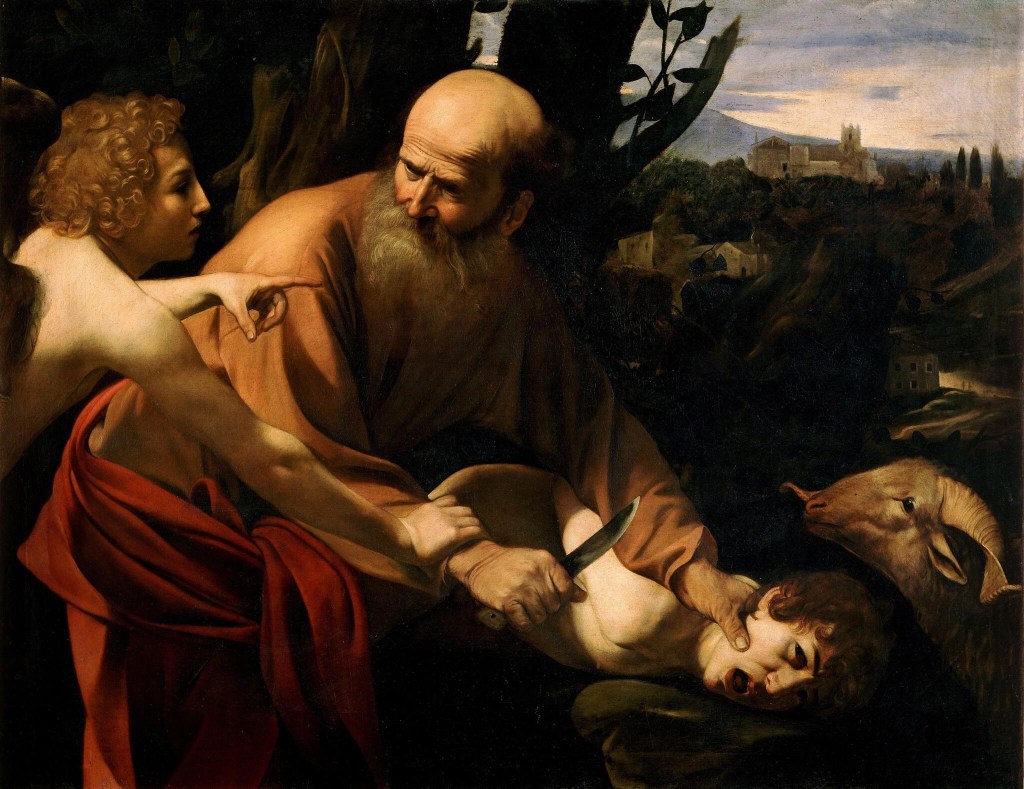
The Sacrifice of Isaac, by Caravaggio, c. 1603

It’s a horrifying story. Who is this God who calls Abraham to take his “only son” up the mountain and “offer him there as a burnt offering” (22:2)? How does this God relate to the God who, it is said, has shows “steadfast love” to the people of Israel (Exod 15:13), and before that to Joseph (Gen 39:21), to Jacob (Gen 32:9–19), and indeed to Abraham himself (Gen 24:27)? Why has God acted in a way that Is seemingly so out of character in this incident in Gen 22? Or is this the real nature of God, and later displays of “steadfast love” are simply for show?

Writing in With Love to the World, the Revd Sophia Lizares, a Uniting Church Minister originally from the Philippines, now serving in Perth, WA, says that this story is “an improbable and troubling reading: a God who demands a father to kill his beloved son, a father who questions not.” It is not just the knife in Abraham’s hand which is raised (22:10)—there are many such questions raised by these seemingly callous story.

My wife, Elizabeth Raine, has a cracker of a sermon in which she compares this story with the account of Jephthah and his daughter (Judg 11:29–40). Whilst the Lord commands Abraham to kill his son as a burnt offering, it is the vow made by Jephthah to sacrifice “whoever comes out of the doors of my house to meet me, when I return victorious from the Ammonites” as a burnt offering (Judg 11:30).

And whilst the Lord intervenes in what Abraham is planning to do at the very last moment, sending an angel to command him, “do not lay your hand on the boy or do anything to him” (Gen 22:11–12), Jephthah is held to the vow he has made—by his very own daughter, who knows that she will be the victim of this vow (Judg 11:39). There is no divine intervention in this story.

And worse, whilst Abraham had carefully prepared for the sacrifice, taking his donkey, two servants, and the wood for the fire up the mountain with him (Gen 22:3–6), Jephthah’s vow was made on the spur of the moment (Judg 11:30–31), and when his daughter insisted that he must carry through with this vow, he gives her, as requested, two full months for her to spend with her companions before he sacrificed her (Judg 11:37–39). Surely he might have had time in those two months to reconsider his vow and turn away from sacrificing his daughter?

It would seem, then, that the daughter was dispensable; the son, the much loved only son of Sarah and Abraham, was clearly indispensable. That would clearly reflect the values of the patriarchal society of the day, in which “sons are indeed a heritage from the Lord, the fruit of the womb a reward” (Ps 127:3).

And Abraham would have followed the same pathway, sacrificing his only son, had not the Lord intervened. Neither father is looking very appealing in these two stories! Which makes it hard to see how the story of the sacrifice told in Judg 11, and the story of the almost-sacrifice told in Gen 22, can be “the word of the Lord” for us, today, in the 21st century. Indeed, the story of Abraham and Isaac comes perilously close to being a story of child abuser—if not physical abuse, by the end of the story, at least emotional and spiritual abuse.

Situations of abuse destroy trust. After such an experience, how could Isaac ever trust his father again? And as we hear the story, how can we trust God? How could we ever believe that his commands to us are what we should follow?—if he follows the pattern of this story, and changes his mind at the last minute, after pushing us to the very brink of existence? How could we trust a God like this?

Or, if the story involving poor Isaac is really about God providing, as Abraham intimates early on (22:8), and then concludes at the end (22:14), then it is a rather malicious way for God to go about showing how he is able to “provide”. Provision, and providence, should be something positive—not perilous and threatening, as in this story.

Or yet again, if the story is about testing Abraham’s faith, as many interpreters conclude, then it is a particularly nasty and confronting way for God to do this—and that points to a nasty streak in the character of God. Is this really what we want to sit with? Was there not some other way for God to push Abraham to test his faith?

What do we do with such a story within our shared sacred scriptures?

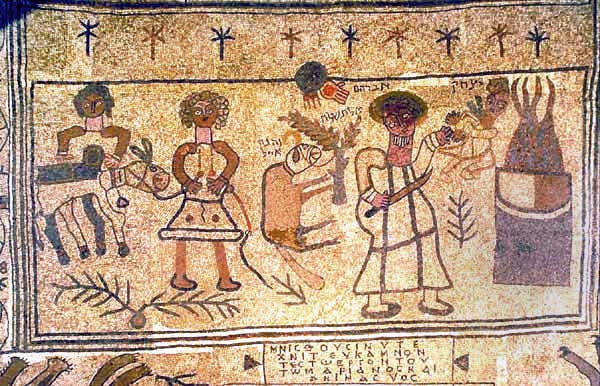
A sixth-century CE floor mosaic from the Beth Alpha synagogue, in Israel’s Jezreel Valley. The mosaic lay near the door, so that anyone who entered was confronted by the scene. In this mosaic, Abraham and Isaac are identified in Hebrew. The hand of God extends from heaven to prevent Abraham from proceeding. Below the hand are the Hebrew words, “Lay not [your hand].” Next to the ram are the words, “Behold a ram.”

*****

The Jewish site, My Jewish Learning, states that “although the story itself is quite troubling, it does contain a message of hope for Rosh Hashanah. In the liturgy we ask God to “remember us for life.” The binding of Isaac concludes with his life being spared, and he too is “remembered for life.” Abraham’s devotion results in hope for life.”

How does the message of hope for life emerge from this story? Clearly, the life of Isaac is spared; but this is a terrible way to teach that message!

James Goodman, writing in My Jewish Learning, explains how he was taught to understand this story. “I learned that the story was God’s way of proclaiming his opposition to human sacrifice”, Goodman writes.

He refers to the way his Hebrew-school teacher explained this story: “God had brought Abraham to a new land. A good and fertile land, where it was common for pagan tribes, hoping to keep the crops and flocks coming, to sacrifice first-born sons to God. Then one day, God commanded Abraham to sacrifice Isaac, the beloved son of his old age.

“Abraham set out to do it, and was about to, when God stopped him. He sacrificed a ram instead. In the end, Abraham had ‘demonstrated his—and the Jews’—heroic willingness to accept God and His law,’ and God had ‘proclaimed’ that ‘He could not accept human blood, that He rejected all human sacrifices’.”

See https://www.myjewishlearning.com/2013/09/11/understanding-genesis-22-god-and-child-sacrifice/

Setting the story in the broader context of the practice of child sacrifice is a way of accepting that this terrible story might indeed have some value. Seeing the story is a dramatised version of God’s command not to sacrifice children can be a way to deal with it. “Do not lay your hand on the boy or do anything to him”, the angel says; so Abraham obeys, finds a ram, offers the ram as a burnt offering (22:12–13). And so, the name of the place is given: “the Lord will provide” (22:14).

Three kings of Israel, at different times in the history of Israel, are said to have practised child sacrifice, as they turned to practices found in nations other than Israel. Solomon in his old age is said to have turned to the worship of Molech (1 Ki 11:7); this practice was subsequently adopted by Ahaz, who “made offerings in the valley of the son of Hinnom, and made his sons pass through fire, according to the abominable practices of the nations whom the Lord drove out before the people of Israel” (2 Chron 28:3). Likewise, Manasseh “made his son pass through fire; he practiced soothsaying and augury, and dealt with mediums and with wizards” (2 Ki 21:6).

Direct commands not to sacrifice children are found in two books of Torah in the scriptural texts. Most direct is “you shall not give any of your offspring to sacrifice them to Molech, and so profane the name of your God: I am the Lord” (Lev 20:18). In Deuteronomy, other nations are condemned as they “burn their sons and their daughters in the fire to their gods” (Deut 12:31), so the command is “no one shall be found among you who makes a son or daughter pass through fire” (Deut 18:10). The prophet Jeremiah also asserts that this practice is not something that the Lord God had thought of (Jer 7:31).

So the passage we have in the lectionary responds to this practice by telling a tale which has, as its punchline, the command “do not lay your hand on the boy or do anything to him” (22:12). Might this be the one redeeming feature of this passage?

But if that is the case, the story belongs back in the days when child sacrifice was, apparently, widely practised. What, then, does it say to us today???

See also

Come, lift up the boy and hold him fast: “the other son”, Ishmael (Gen 21; Pentecost 4A)

As we continue through the season After Pentecost, the lectionary offers stories of some quite extraordinary people, drawn from the sagas that tell of the key moments in the story of Israel. The sagas we will hear are found in the narrative books, Genesis, Exodus, Deuteronomy, Joshua, and Judges.

This coming Sunday, we hear another story relating to the patriarch of Israel, Abraham, his Egyptian slave Hagar, and the child that is born to them, Ishmael (21:8–21). This is the first child of Abraham; he and Sarah had not produced any children over many years. The fact that his mother is Abraham’s servant, Hagar, rather than his wife, Sarah, is not unusual. Later in the Genesis saga, Abraham’s grandson Jacob, already married to Leah and then to her sister Rachel, has children by Leah (29:32–35), as well as his servant Bilhah (30:1–7), and later by Leah’s servant Zilpah (30:9–11), before eventually Rachel gave him a son, Joseph (30:22–24) and later, Benjamin (35:16–21).

Earlier in Genesis, in a passage omitted by the lectionary, a report is provided of the circumstances leading to the birth of Ishmael (16:1–16). The naming of the child is announced by angelic visitation to Hagar (16:7–12), establishing a pattern which will later be used in recounting the naming of Samson (Judg 14:2–7), the child of a young woman in the time of Isaiah (Isa 7:13–16), and then of Jesus (Matt 1:20–21; Luke 1:31). It appears, at this earlier point, that it is Ishmael through whom the promise made to Abraham would be fulfilled: “I will make you exceedingly fruitful; and I will make nations of you, and kings shall come from you” (17:6).

In this week’s passage, however, the enmity that was evident once Sarah learnt that Hagar had conceived, comes to full fruition. Once the pregnant Hagar had this news confirmed, “she looked with contempt on her mistress” (16:4), and so “Sarah dealt harshly with her, and she [Hagar] ran away from her” (16:6). Hagar retreats to a spring in the wilderness (16:7), which is where the angel makes their announcement about the name and character of the child. Ishmael means “God has heard”, signalling that God was acting to fulfil the promise. But the life foreseen for Ishmael was one of conflict and opposition: “he shall live at odds with his kin” (16:12).

Hagar presumably returned to be with Abraham and Sarah; in due time, a son, Isaac, is born to Abraham and Sarah (21:1–7). At the start of this week’s passage (21:8–21), it appears that Ishmael is playing happily with his brother (21:8). Jewish interpreters note that the Hebrew word used, tsachaq, can be interpreted as “playing” or “laughing”—or with a more menacing overtone, perhaps hinting at Ishmael’s envy of his half-brother as the favoured one, at least in Sarah’s eyes.

(The LXX, in translating this word into Greek, takes the more benign option, adding the words “with his brother” to imply that this is just children playing games; and that is what Christian translators reflect in their translations.)

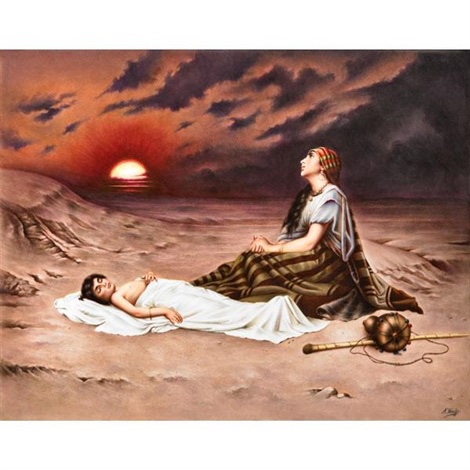
Sarah’s dissatisfaction with this moment of “play”—whether innocent or, perhaps more likely, with a threatening element—leads her to expel Hagar for another time, this time into the wilderness of Beersheba (21:9–14). Hagar’s distress is intense, such that she prepares for the death of the child Ishmael—only to be visited by another angelic intervention, inviting her to “lift up the boy and hold him fast with your hand”, assuring her that “I will make a great nation of him” (21:18).

Writing on the story in this week’s issue of With Love to the World, the Revd Sophia Lizares, a Uniting Church Minister originally from the Philippines, now serving in Perth, WA, says: “God is in the wilderness and hears even the least of the least. In times of trial, God opens our eyes to the goodness close at hand. Even those who have been banished, God accompanies into a unique and unexpected future. In God, the wilderness becomes a sanctuary where Hagar and Ishmael flourish.”

The story is told as an offering of hope—hope that what is yearned for will come to pass, even in the midst of distressingly difficult circumstances. The story has “a happy ending”, of sorts, for an angel intervenes (21:17)—does this perhaps indicate that Sarah was wrong to expel Hagar?

Guided by the angel, Hagar finds water (21:19) and the boy grows to become “an expert with the bow” (21:20). It is even said of him that “God was with the boy” (21:20), a presaging of what was later said of King Solomon (1 Chron 1:1), then later still of the infant Jesus, “the favour of God was upon him” (Luke 2:40), and of the whole life of Jesus, “God was with him” (Acts 10:38).

And the boy Ishmael does indeed become the father of “a great nation” (2:18)—through the 12 sons which he fathered! All’s well that ends well, it would seem.

*****

Yet the conflict that was to be visited upon Ishmael is an important element in this story which we must not pass by. “He shall be a wild ass of a man, with his hand against everyone, and everyone’s hand against him; and he shall live at odds with all his kin” (16:21) is a heavy burden to be laying on the child from the start of his life.

Although Ishmael was circumcised in accordance with the covenant that Abraham had entered into with the Lord God (17:23–27), and although he is indeed “blessed and made fruitful” (17:20) and does become the father of twelve sons (25:13–16) as well as a daughter (28:9), he still faced enmity. He bequeathed that conflicted state to his progeny. Indeed, the story of Ishmael functions (as do many of the stories in Genesis) as an aetiology.

An aetiology, as I have noted previously, tells of something that is said to have occurred long back in the past, but the focus is on present experiences and realities, for “such explanations elucidate something known in the contemporary world by reference to an event in the mythical past”.

See https://oxfordre.com/classics/display/10.1093/acrefore/9780199381135.001.0001/acrefore-9780199381135-e-7050;jsessionid=3DB38C42C54D01E1CBFA8682FB55DA4C

In the developing Jewish tradition, Ishmael attracts negative stories. It is said that he prayed to idols—some rabbis offer this as the explanation for Sarah expelling Ishmael and Hagar into the wilderness. Other rabbis claim that Hagar, an Egyptian woman (16:1) was not “a slave girl” but rather a daughter of Pharaoh.

Some interpreters, following the opening given by the ambiguity in the Masoretic (Hebrew) text, interpret the “playing with Isaac” (21:9) as an attempt to usurp the birthright of Isaac, the son of Abraham’s wife. Was Ishmael play-acting how he planned to dispose of his half-brother, and claim the heritage of his father Abraham?

By contrast, Ishmael is honoured in Islam as a prophet and as the patriarch of Muslims. Abraham—Ibrahim in Arabic—is acknowledged as a messenger of God and recognised as father of the nations, as scripture attests. The Kaaba in Mecca, the holy site to which Muslims make pilgrimage each year, is considered to have been built by Abraham and Ishmael, while the near-sacrifice of Isaac, told in Gen 22, is commemorated by Muslims on the holy day of ‘Eid al-Ada (“the Feast of Sacrifice”). In Muslim thinking, Abraham cleansed the world of idolatry.

In the Muslim holy text, the Quran, there are a number of mentions of Ishmael, who is described as “an Apostle, a Prophet” (19:54), as “truly good”, along with Elijah (38:48), and as inspired, along with “Abraham … and Isaac, and Jacob, and their descendants, including Jesus and Job, and Jonah, and Aaron, and Solomon … and David” (4:163). He occupies a key place in the stories of their past.

*****

The Quran is well-disposed towards Isaac, declaring, “we believe in God, and in that which has been bestowed upon Abraham and Ishmael and Isaac and Jacob and their descendants, and that which has been vouchsafed by their Sustainer unto Moses and Jesus and all the [other] prophets: we make no distinction between any of them; and unto him do we surrender ourselves” (3:84; the term Islam, of course, means “surrender” or “submission”).

Antagonism between Jews and Muslims has nevertheless been experienced throughout much of the time which followed the establishment of Islam as a faith with its own doctrines and practices during the seventh century. Early Muslim expansionary undertakings brought cultural, technological, and literary developments through Persia, Syria, Arabia, Palestine, Egypt, and North Africa. There was a “golden age” under this Islamic rule, during which Jews, Christians, and Muslims lived together in harmony—the so-called convivienca.

During the Middle Ages, the Crusades undertaken under the auspices of the Roman Church scarred relationships between Christianity and Islam—the storming of Jerusalem in 1099 saw masses of Muslims slaughtered. Jerusalem was recaptured by Saladin in 1187, but he ordered that Christians not be slaughtered; Muslims controlled the city but allowed Christian pilgrims access to holy sites.

The Fall of Constantinople, capital of the Byzantine Christian empire, in 1453 and the later expulsion of Muslims from Spain marked the end of congenial relationships. Later Christian missionary enterprises regarded Indigenous and Muslim peoples as primitive and uncivilised, and forced a Western way of life onto them, creating a heritage that still plays out across the world today.

*****

In like manner, Jews living in Muslim lands throughout the Middle Ages were permitted to practise their faith and culture for many centuries, although there are various instances of localised massacres and ghettoisation of Jews by Muslims. The height of tension between these two faiths has been in the modern era, relating to the creation of the State of Israel.

In the 19th century, Zionist Jews were calling for Jews to return to their ancestral homeland, which had been under Muslim control for centuries. The declaration of the State of Israel in 1958, so soon after the Shoah (“the Destruction”) that Jews had so recently experienced in Nazi Germany, meant that Palestinians experienced the Nakba (“the Catastrophe”) of becoming displaced from a land that had been their home for many centuries.

Tensions about the borders of Israel, the rights of Jewish settlers, the removal of Palestinian (Muslim) residents, the barricading of the West Bank and the Golan Heights, as well as the Temple Mount in the centre of Jerusalem, have been the focus of increasing and apparently unresolvable tensions for the past 75 years. The Temple Mount—the place from which Abraham ascended into heaven, in Muslim belief—is also,contentious. This is where the Muslim Dome of the Rock is built, on the foundations which centuries ago formed the base of the two Jewish Temples (one built by Solomon, and then the second built under Nehemiah and extended by Herod the Great).

So the Ishmael story has been a potent saga throughout history, and stands today as a powerful signal of the possibility of co-operative relationships, but the unfortunate reality is one of fractured and unhappy relationships which have spilled out into aggressive and destructive conflict.

Might it be that as we hear again this story of Ishmael, Hagar, and Sarah, we might recommit to being makers of peace, and work towards the goal of co-operative harmony, so that “the wilderness becomes a sanctuary where Hagar and Ishmael flourish”, where Jews and Muslims and Christians can find a common, irenic venture?

May it be so.

Visiting Abraham and Sarah by the oaks at Mamre (Gen 18; Pentecost 3A)

During the long season of “ordinary time” After Pentecost, the lectionary offers stories of some quite extraordinary people, drawn from the sagas that tell of the key moments in the story of Israel. These sagas are found in the narrative books, Genesis, Exodus, Deuteronomy, Joshua, and Judges. These stories run through until the Twenty-Fifth Sunday after Pentecost, in mid-November.

This coming Sunday, we hear a well-known story relating to the patriarch and matriarch whose adventures comprises significant part of Genesis (12:1—25:11). The story tells of how Abraham and Sarah undertook the long journey from Ur to Canaan (12:1–9), spent time in Egypt (12:10–20) and the Negeb (13:1–14:24), entered into covenant with God (15:1–21) and sealed this with a ceremony of circumcision (17:1–27).

Abraham himself has also fathered a child with his servant, Hagar (16:1–16); that dimension of the story appears important as it signals that there would be a descendant of Abraham, to fulfil the promise made earlier (12:2; 15:12–21). Yet the child who arrives is the son of Hagar, not Sarah. So the passage which is offered by the lectionary for this coming Sunday (Gen 18:1–15) addresses the infertility of Abraham and Sarah, by telling of how this couple learnt that they would, indeed, become parents together.

Abraham was allegedly aged 100 years, while Sarah was aged 90 years (see 17:17). It is no wonder that Sarah, when she learns of her forthcoming pregnancy, laughs (18:12)—although when confronted about this, she denies having laughed (18:15). Yet the name of the son to be born to Sarah, Isaac, means “the one who laughs”. So the joke is on her!

In the next two weeks, the lectionary will offer stories from subsequent chapters of Genesis, that focus on the two sons of Abraham: first, Ishmael, banished to the desert by his father, where he and his mother were vulnerable (21:8–21); and then Isaac, called to his own sacrifice under the hand of his own father (22:1–14). Certainly, Abraham does not come out of either of these stories looking very good!

The news about Isaac comes to Sarah and Abraham after a visit from three men, one of whom looks forward to the birth of a son to Sarah (18:10). Abraham had welcomed the visitors, as was the custom, saying “let a little water be brought, and wash your feet, and rest yourselves under the tree; let me bring a little bread, that you may refresh yourselves” (18:4–5).

Quite tellingly—given the strongly patriarchal nature of ancient society—we next learn that “Abraham hastened into the tent to Sarah, and said, ‘Make ready quickly three measures of choice flour, knead it, and make cakes’”. There we have it: the man decides, the woman implements. Has this changed in today’s society? A little? A lot? The jury is still out …

But more than this; “Abraham ran to the herd, and took a calf, tender and good, and gave it to the servant, who hastened to prepare it” (18:7). The master selects the animal; the servant prepares the meal. Again, all in accord with the customs of the time. But the next verse has always jarred with me: “Then he took curds and milk and the calf that he had prepared, and set it before them” (18:8). The food that he had prepared??? The food that he had ordered others to prepare, surely!

In his commentary on this passage in With Love to the World, the Revd Dr John Jegasothy, a retired Uniting Church Minister who came to Australia some decades ago, seeking asylum from civil war in Sri Lanka, observes that “strangers and aliens were considered as enemies in the ancient times. We, today, warn our children not to talk to strangers, because they could be predators”. He notes that, in the experience of his own family, “we have met many strangers in our lives, like new neighbours or new migrants in this multicultural country, who have become friends and channels of blessings to us. We too have become good neighbours and friends to them.”

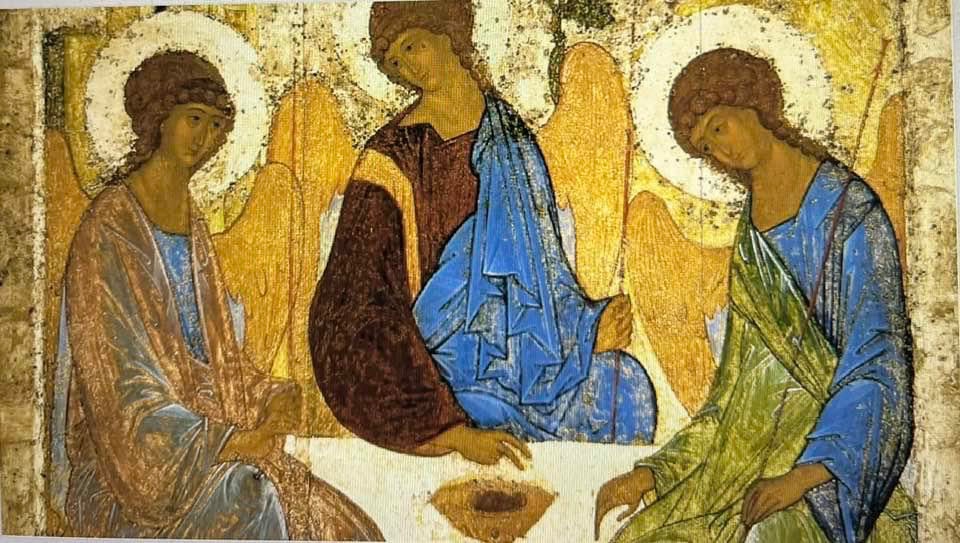
The visitors, offered hospitality by Sarah and Abraham, bring an important revelation to them. These three travellers are the means by which God speaks into the ongoing story. Later Christian interpreters have, unhelpfully and inaccurately, seen the “three men” as a visitation of the Triune God—an interpretation made famous through Andrew Rublev’s early 15th century icon (pictured).

The story, of course, is an ancient Jewish legend, which tells of hospitality and progeny; the Christian doctrine of the Trinity was shaped amidst the patriarchal polemics of the state-sponsored church of the later Roman Empire as church leaders argued about complex matters of speculative philosophical questions. (Was Jesus truly human? Was he truly divine? How are God and Jesus related? Do they share the same essence? Are they of like nature, or of exactly the same nature? and so on …)

The two are worlds apart. It’s another case where Christian interpreters, wanting to find “biblical proof” for that doctrine, have done great damage to a passage of Hebrew Scripture, forcing it to say something that clearly is not evident from a plain reading within the ancient Israelite context.

If we focus on the dynamic that is evident in the story, we see how it highlights the importance of hospitality. And that should encourage and inspire us, as we go about our daily lives, to offer that hospitality to others: to welcome the stranger, invite into our homes and our lives those in need of food, drink, and shelter; to reach out to those caught in the prisons of their minds, their poverty, their crimes, their inadequacies.

All of which sounds like sage words … now, where have we heard that before?

*****

See also

Forcing scripture to support doctrine: texts for Trinity Sunday (Gen 1, Psalm 8; Trinity A)

This coming Sunday is one of those extremely rare moments in the course of the church year. It’s a Sunday that raises some difficulties for me. First, it’s one of the very few times in the Christian calendar that a Sunday is named for a doctrine, rather than for a biblical story (Easter, Pentecost, Christmas, and the like). And second, it is unusual in that it presents problems for the shapers of the lectionary, since (in my view) the Doctrine of the Trinity is not actually proclaimed in the biblical texts.

Indeed, we might well argue that the texts which are selected for this coming Sunday (Genesis 1, Psalm 8, 2 Corinthians 13, and Matthew 28) are actually being asked to undertake work that they weren’t intended to do, and that they can’t actually do without significant violence being done to them. None of them were created with a view to being foundations for a doctrine that was developed some centuries later (in the case of the New Testament texts) or, indeed, a millennium or more later (in the case of the Hebrew Scripture passages).

And further, the two passages from Hebrew Scripture were actually written well before the time of Jesus, long before the Church came into being, centuries before Christian doctrine was developed in the height of the neo-Platonic speculative theology of the late Roman Empire. They were not shaped with such doctrinal expressions in mind; in fact, they were, and are, sacred texts in another religious expression, Judaism—which, although we Christians claim it as the context from which our faith evolved, nevertheless is a distinct and separate faith tradition.

Setting these two passages of scripture in the lectionary for a Sunday when the focus is on a Christian doctrine is anachronistic and invites us, unless we think carefully, to do violence to the text in our interpretation of them within that doctrinal context. In the normal,course of events, placing a narrative or piece of poetry from ancient Israelite religion alongside texts from the New Testament makes some sense, insofar as our understanding of such passages must always be informed by the heritage bequeathed by Hebrew Scripture texts. But setting such ancient texts as resources to interpret the fourth- and fifth-century doctrinal perspective is quite unhelpful.

Perhaps we should have readings from Origen, Athanasius, and Augustine, for Trinity Sunday? But the fact is, that we have texts from Genesis, the Psalms, Paul, and a Gospel, for this Sunday. What do we make of them?
Genesis 1, the story of the creation of the world, is most likely offered for Trinity Sunday in Year A because the opening verses refer, in turn, to God, a wind, or breath, from God sweeping over the waters, and the activity of God speaking in order to bring forth elements of that creation (Gen 1:1–3). It is not too difficult to read that with Christian spectacles on, and see the presence of God the Creator, the Word of God, and the wind, or breath, as God’s spirit. So numerous Christian interpreters have pressed upon their people, for centuries.

However, arguing that this provides the foundation for the full Christian doctrine of the Triune God does severe damage to the intentions of the passage, at least as we may understand them if we read the text carefully. There is no suggestion that these three elements are persons who are interrelated into one being. There is no indication that they are related, other than the fact that the breath and the speaking are activities of God. That is in no way unusual or extraordinary.

Indeed, if we think some more about the God who is described in these opening few verses, we would recognise that there are a number of other activities undertaken by God, or manifestations of God’s being, that are reported in the various scrolls of the Hebrew Scriptures. As well as the voice (speaking) and the wind (breathing), there are other aspects of the person of God which are said to be active: the mouth, the hands, the fingers of God. Such quasi-independent activity is not limited to two entities alone. The notion of a three-in-one person is nowhere to be found in these scripture passages.

So we need to read Genesis 1 in that much broader context. In addition, we need to be aware of the other “personifications” of the deity that appear in Hebrew Scripture. The ruach—the spirit of God—is, of course, active in calling prophets (1 Sam 10:6, 16; Isa 42:1; 61:1; Ezek 2:2; Dan 5:14; Joel 2:28–29; Mic 3:8; Zech 7:12).

Alongside the spirit, Wisdom, Hochmah, takes on her own persona and role in the wisdom literature; she is the “master worker” who works with God to create the universe (Prov 8:22–31), so that “The Lord by wisdom founded the earth; by understanding he established the heavens; by his knowledge the deeps broke open, and the clouds drop down the dew” (Prov 4:19). It is Wisdom who “cries out in the street; in the squares she raises her voice”, teaching God’s ways to the people (Prov 1:20–23; also 8:1–9). The psalmist affirms that “the fear of the Lord is the beginning of wisdom” (Ps 111:10). Wisdom is God at work in creating and in teaching.

In the narratives telling of the years wandering in the wilderness, the Glory of God, the kabod, appears regularly. When the people arrived at the edge of the wilderness, “the Lord went in front of them in a pillar of cloud by day, to lead them along the way, and in a pillar of fire by night, to give them light, so that they might travel by day and by night; neither the pillar of cloud by day nor the pillar of fire by night left its place in front of the people” (Exod 13:21–22). This manifestation is identified as “the glory of the Lord” (Exod 16:10).

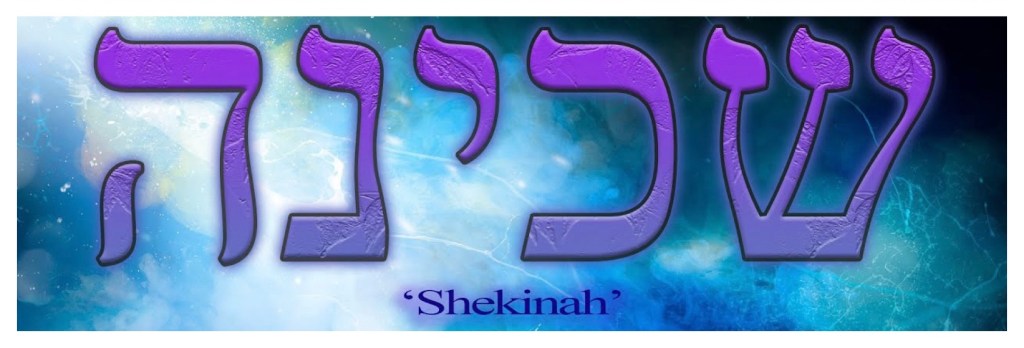
On arrival at Mount Sinai, “the glory of the Lord settled on Mount Sinai, and the cloud covered it for six days … the appearance of the glory of the Lord was like a devouring fire on the top of the mountain in the sight of the people of Israeli” (Exod 24:16–17). In rabbinic literature, this phenomenon is given the name shekinah—a further way of describing the manifestation of divine activity. The Shekinah is yet another manifestation of the divine which becomes personified over time in Jewish traditions; not a separate person, rather an expression of God’s being.

Yet another rabbinic term for divine manifestation is the Bat Qol, the voice of God. This takes the many statements in scripture about God speaking, and attributes quasi-personal firm to the voice of. God. The term Bat Qol literally means “the daughter of the voice”, as if simply by speaking, God generates a personality or a being from that process.

There is much discussion in rabbinic literature about the role and function of the Bat Qol. It was thought that the Bat Qol had been active in biblical times, even though there is no explicit statement of her activity in Hebrew Scripture. A common view in rabbinic literature is that the Bat Qol became the way that God communicated with humanity after the end of the prophetic era.

Also in later rabbinic discussions, even Torah itself—the teaching, or instruction, of God which was given in “the Law”—is personified and seen to be active in and of itself. So along with word and breath (or spirit), there is Wisdom (Hochmah), Glory (Shekinah), Bat Qol, and Torah, who are active expressions of God in the developing Jewish tradition.

Psalm 8 is also offered by the lectionary for Trinity Sunday in Year A; and it is also offered by the lectionary on this day in Year C, as well as for New Years Day in each of the three years. It is a logical companion piece with the Genesis story of creation, which is reflected in verses 1–2 and 7–9. In the middle of the psalm, the place of humanity is in focus; here the emphasis is on the relationship that humanity has with the deity (“a little lower than God, crowned with glory and honour”, v.5) and the responsibility of “dominion” that is given to humans over animals, birds, and fish (vv.7–8).

Perhaps the connection for this Sunday is with the element in the doctrine that lays claim to Jesus as not only human, but also divine; the connection point between the divine realm and the human world? But there is no specific pointer towards Jesus, naturally, in this psalm, and no indication that there was any need for any enhancement, so to speak, of the way that humans related to the divine, beyond that which is set out in this psalm. So it really doesn’t provide a biblical pointer towards understanding the doctrine of the Trinity.

*****

to be continued in a further post …

Save us, we beseech you: singing a Hallel psalm (Psalm 118; Lent 6A, Palm Sunday)

“Save us, we beseech you, O Lord!” This is the cry we hear in the psalm which is offered by the lectionary for this coming Sunday, Palm Sunday, the Sunday in Lent. Psalm 118 is one of the Hallel Psalms—six psalms (113 to 118) which are sung or recited on high festival days, such as Passover (Pesach), the Festival of Weeks (Shavuot), and the Festival of Booths (Sukkot), as well as Hanukkah and the beginning of each new month. This final Hallel Psalm, like the other five, is intended to be an uplifting, celebratory song, suitable for the congregation to hear and to sing as a way to inspire and rejoice.

See

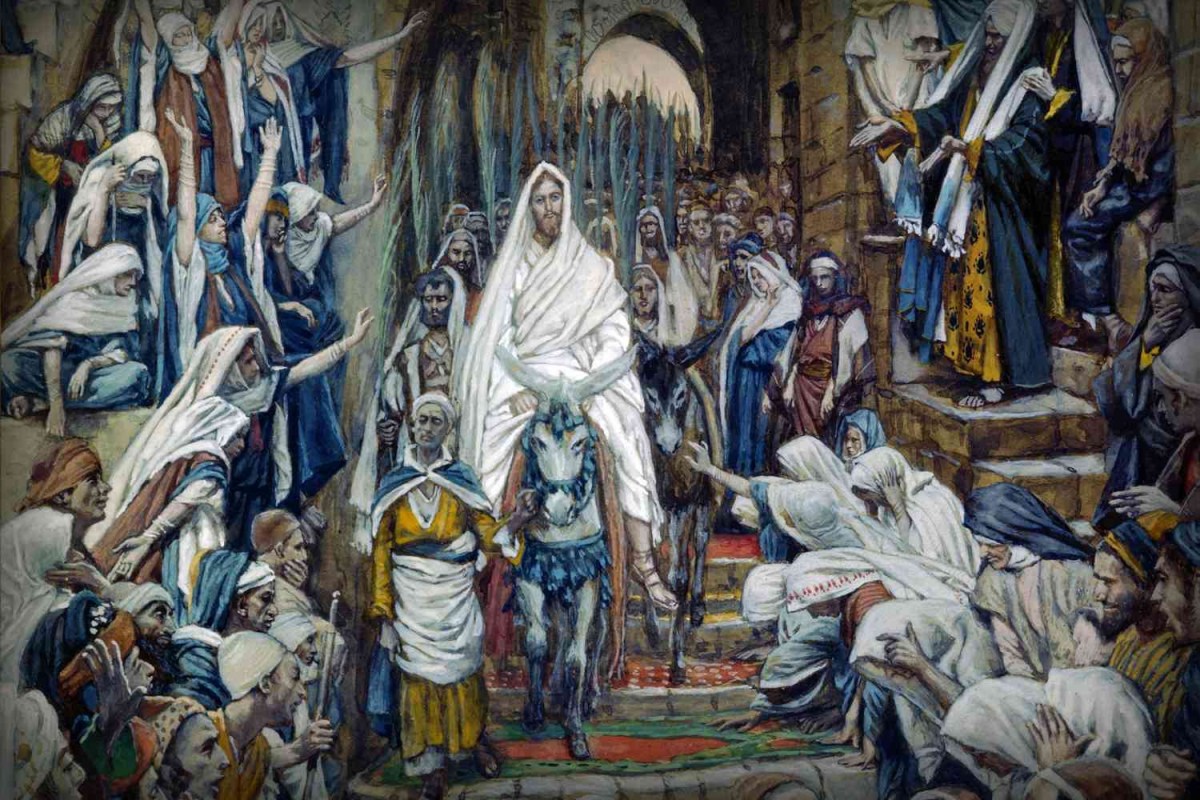
It is no surprise that this psalm is offered by the lectionary for this coming Sunday, Palm Sunday—because the Gospel story for this day, of Jesus entering the city of Jerusalem to the acclaim of the crowd (Matt 21:1–11), is certainly one of celebration and joy. It is also, equally unsurprisingly, offered as the psalm for a week later, on Easter Sunday, which celebrates something much greater and more enduring: the raising of Jesus from the dead (Matt 28:1–10).

But clearly the psalm has a good fit with the Palm Sunday story that we will hear on Sunday; indeed, the Gospel writers report that the crowd cheering Jesus was singing, “Blessed is the one who comes in the name of the Lord”—which is, of course, a verse from the final Hallel Psalm (Ps 118:26).

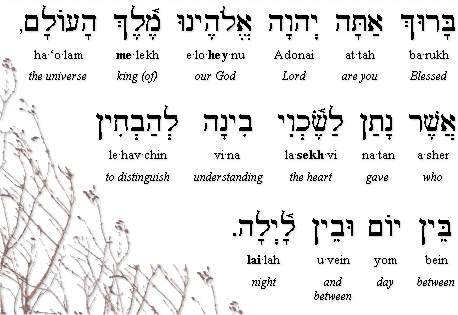
Blessing God is a favourite Jewish activity—indeed, so many prayers still used by Jews today begin with a phrase of blessing: “Blessed are you, O Lord our God …”. Blessed are You, O Lord our God, Ruler of the universe, Who brings forth bread from the earth is prayed before a meal. Blessed are You, O Lord our God, Ruler of the universe, who creates the fruit of the vine is prayed before drinking wine. And a favourite blessing which I learnt from Jews is Blessed are you, O Lord our God, Ruler of the Universe, who has kept us alive, sustained us, and brought us to this moment. It’s a prayer to mark momentous occasions in life.

All of these prayers of blessing begin with the Hebrew words, Baruch atah Adonai Elohenu melekh ha’olam, the same formula of approaching, acknowledging, and blessing God.

We can see that formula used in blessings spoken by David (1 Chron 29:19 and the psalmist (Ps 119:12), as well as in later Jewish texts such as Tobit 3:11; 8:5, 15–17; Judith 13:17; 14:7; the Prayer of Azariah (six times), and 1 Maccabees 4:20. It appears also in New Testament texts such as Luke 1:68; Rom 9:5; 2 Cor 1:3; Eph 1:3; and 1 Pet 1:3.

More familiar, perhaps, is when Jesus uses a prayer of blessing, but speaks it to human beings; “blessed are you, Simon son of Jonah” (Matt 16:17), or “blessed are the eyes that see what you see”, to his disciples (Luke 10:23), or “blessed are those who have not seen and yet have come to believe” (John 20:29), and most famously of all, in a set of blessings spoken to a crowd on a level place (Luke 6:20–22) or to his disciples on a mountain top (Matt 5:3–12).

So the cry of the crowd as Jesus enters Jerusalem, “Blessed is the one who comes in the name of the Lord” (Ps 118:26) is a typical Jewish exclamation at a moment of joyful celebration.

*****

A further reason for linking this psalm with the Gospel narrative might well be that the cry of the crowd, “Hosanna!” (Mark 11:9–10; Matt 21:9; John 12:13). The word transliterated as “Hosanna” might actually be better translated as “save us”—another quote from the previous verse in that same psalm (Ps 118:25). The Hebrew comprises two words: hosha, which is from the verb “to save”, and then the word na, meaning “us”. Hosanna is not, in the first instance, a cry of celebration; rather, it is a cry of help, reaching out to God, pleading for assistance—and yet with the underlying confidence that God will, indeed, save, for “his steadfast love endures forever” (vv.1, 29).

See

Whilst the psalm, overall, sounds thanks for a victory that has been achieved, the petition, “save us” (v. 25) lies behind the first substantial section of this psalm (vv.5–14), which is largely omitted by the lectionary offering for this coming Sunday (which is Ps 118:1–2, 14–24). That section begins “out of my distress I called on the Lord” (v.5), claims that “the Lord is on my side to help me” (v.7), and concludes with rejoicing, “I was pushed hard, so that I was falling, but the Lord helped me; the Lord is my strength and my might; he has become my salvation” (vv.13–14).

Save us” is a prayer offered in other psalms (Ps 54:1; 80:2; 106:47); the petition appears more often in the singular, “save me” (Ps 7:1; 22:21; 31:16; 54:1; 55:16; 59:2; 69:1; 71:2; 109:26; 119:94, 146; 142:6; 143:9). “Save us” when faced with danger is the prayer of the elders of Israel as they faced the Philistine army (1 Sam 4:3) and the all the people a little later (1 Sam 7:8), David when the ark was put in place in Jerusalem (1 Chron 16:35), Hezekiah when Judah was being threatened by the Assyrians (2 Ki 19:19), as well as the prophet Isaiah at the same time (Isa 25:9; 33:22; 37:20).

This prayer in the context of festive celebrations—the context for which Psalm 118 appears to have been written—expresses the firm confidence of the people, trusting in the power of their God. That viewpoint is perfectly applicable to the Palm Sunday story (and even more so to the Easter Sunday narrative!).

But this psalm is not only a prayer of celebration; it is also a strong statement about the resilience and trust of the people, expressing their belief that God will give them redemption, even in the face of their Roman overlords, who had held political and military power for many decades. If this is what the crowd intended with their cry as Jesus enters the city—and I have no reason to see otherwise—then this is a striking, courageous political cry embedded in the story! It is a cry that affirms that salvation is at hand.

*****

Salvation is what is in the mind of the people as they cry, “save us” (v.25) and the earlier affirmation, “I thank you that you have answered me and have become my salvation” (v.21). As we have noted, “save us” was a recurring cry amongst the Israelites. In the song sung after the Exodus, the people acclaim God, singing “the Lord is my strength and my might, and he has become my salvation” (Exod 15:2). In his song of thanksgiving after battles with the Philistines, David praises God as “my rock, my shield and the horn of my salvation” (2 Sam 22:3; also vv.36, 47, 51; and 1 Chron 16:23, 35).

The same language, of salvation, appears in the psalms (Ps 13:5; 18:2, 35, 46; 24:5; 25:5; and another 40 times) and the prophets (Isa 12:2–3; 25:9; 33:2, 6; 45:8, 17; 46:13; 51:5–6; 52:7, 10; 56:1; 59:11; 61:10; 62:11; Mer 3:23; Mic 7:7; Hab 3:18). From the psalms, we remember “the Lord is my light and my salvation” (Ps 27:1); from Isaiah, “I will give you as a light to the nations, that my salvation may reach to the end of the earth” (Is 49:6).

There are a dozen occasions in Hebrew Scripture when God is identified as Saviour (2 Sam 22:3; Ps 17:7; 106:21; Isa 43:3, 11; 45:15, 21; 49:26; 60:16; 63:8; Jer 14:8); as the Lord God declares through Hosea, “I have been the Lord your God ever since the land of Egypt; you know no God but me, and besides me there is no Saviour” (Hos 14:4).

Salvation is linked with righteousness; “the salvation of the righteous is from the Lord … he rescues them from the wicked and saves them” (Ps 37:39–40). Being righteous is a quality of the Lord God (Ps 11:7; 35:28; 50:6; 71:16; 85:10; 89:16; 97:2, 6; 103:17; 111:3; 116:5; 119:137, 152; 129:4; Isa 45:21; Jer 23:6; 33:16; Dan 9:16; Zeph 3:5) which is thus desired of those in covenant with God (Gen 18:19; 1 Sam 26:23; 2 Sam 22:21, 25; 1 Ki 10:9; 2 Chron 9:8; Job 29:14; Ps 5:8; 9:8; 11:7; 33:5; Prov 1:3; Isa 1:27; 5:7; 28:17; 42:6; 61:11; Jer 22:3; Ezek 18:5–9; Hos 10:12; Amos 5:24; Zeph 2:3; Mal 3:3).

It is no surprise, then, that this psalm celebrates that “[God] has become my salvation” (Ps 118:21) by holding a “festal procession with branches” (v.27), entering through “the gates of righteousness” (v.19) and proceeding all the way “up to the horns of the altar” (v.27), singing “save us, Lord” (v.25) and “blessed is the one who comes in the name of the Lord” (v.26). This is a high celebratory moment!

So the closing verses take us back to the opening refrain, “O give thanks to the Lord, for he is good, for his steadfast love endures forever” (v.29; see also vv.1–4). The celebration is lifted to the highest level, with praise and thanksgiving abounding. And that makes this a perfect psalm for Palm Sunday!

****(

On the indications of the political nature of the Palm Sunday scene, see

A well, two mountains, and five husbands (John 4; Lent 3A)

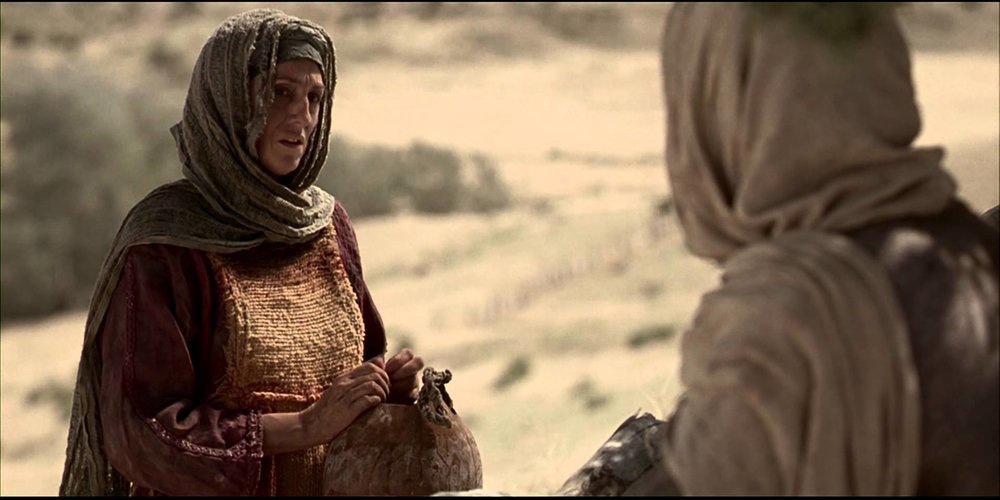
This is a post about a well, two mountains, and five husbands. We learn about each of these elements in a story told in the book of signs, which we know as the Gospel according to John. The story tells of an encounter between a teacher from Galilee and a woman from Samaria. That story is offered as the Gospel reading for this coming Sunday, the Third Sunday in Lent (John 4:5–42).

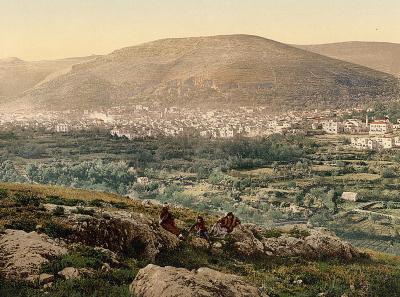
The well is Jacob’s well (John 4:6). It is the location for the meeting of the teacher and the woman. This site is not explicitly named in Hebrew Scriptures, but it is thought that the account of Jacob buying land in Shechem in Gen 33 records the site, which Jacob, it is said, calls El-Elohe-Israel (Gen 33:18–20). The name signifies “the God of Israel”, which is the name that Jacob had adopted just before this, after wrestling all night with a man at Peniel (Gen 32:22–32).

In fact the narrative has earlier given a long account of how Jacob married the two daughters of Laban—Leah and Rachel—after he had met the younger daughter, Rachel, at a well in the land of (Gen 29:1–35). Laban lived in Paddan-aram, a tableland area in northern Mesopotamia (28:5); the well in this region was where Jacob first sighted Rachel (29:4–12).

Wells, of course, were vital parts of the infrastructure of ancient societies—as indeed they continue to be so for many people today. As well as water for washing, drinking, and cooking, people needed wells to provide water for their animals. We are told that the oldest servant of Abraham, whilst journeying to Nahor, a city in Paddan-aram, “made the camels kneel down outside the city by the well of water; it was toward evening, the time when women go out to draw water” (24:11).

Not only was the well used to collect water for animals, however; it was a place where men could go to meet women—which is what the servant did, meeting Rebekah, Abraham’s niece by marriage (24:15–21), who would become the wife of Abraham’s son Isaac (24:67). So it was no surprise that Jesus would meet a woman beside the well identified as Jacob’s well.

What is a surprise is that he met her at noon (John 4:6). The clearest explanation for this is that it provides a striking juxtaposition to the story just told, of Nicodemus, who “came to Jesus by night” (3:2). It is one of the many literary devices so favoured by the author of the book of signs. We should not take this time reference as a direct historical fact in a story which the author of this Gospel has developed.

*****

The two mountains in this story (John 4:21) are Gerizim and Zion. We know about Mount Zion because the long historical narrative of Israel that exists in the Bible (from Deuteronomy through Joshua, Judges, 1–2 Samuel, 1-2 Kings, Ezra and Nehemiah) was compiled by southern kingdom writers, using sources from both the north and the south. Zion was captured from the Jebusites by David’s army (2 Sam 5:6–10) and was honoured as the location for the Temple built under Solomon (1 Ki 8:1–13).

It was on Zion that the Lord God dwelt (Ps 9:11)—at least for southerners—and Zion was praised as “beautiful in elevation, the joy of all the earth” (Ps 48:2). Jesus reflects the southern view of life when he asserts to the Samaritan woman that “salvation is from the Judeans” (John 4:22).

Centuries before, people in the northern kingdom had built a rival temple on Mount Gerizim, one of the ancient holy sites in the northern kingdom (Deut 27:12; Josh 8:33–34; Judg 9:7). That temple survived beyond the invasion and resettlement of the north, continuing on until it was destroyed in 107BCE, when John Hyrcanus razed the temple and the capital city of Samaria.

The city of Samaria gave its name to the whole region, and the people were known as Samaritans. Southerners looked down on them as being the descendants of the people who committed idolatry after the Assyrians had conquered the northern kingdom (2 Kings 17:5–6) and resettled the northern region with people from other locations in their empire (2 Kings 17:24), from “every nation [who] still made gods of its own and put them in the shrines of the high places that the people of Samaria had made, every nation in the cities in which they lived” (2 Kings 17:29).

Flavius Josephus, a late 1st century CE historian, retells the sequence of events we read in 2 Kings, indicating that the Samaritans descended from this hybrid, unfaithful group of people (Antiquities 11.297–347). He also recounts an incident which entrenched the antagonism of southern Judeans towards the northern Samaritans (Antiquities 11.297–347).

The Samaritans attempted to undermine the returning exiled Judeans with their Persian rulers and slowed the rebuilding of Jerusalem and its temple (Ezra 4:6–24). Josephus notes disagreement about which site should be the location for the temple (Josephus, Antiquities 12.9–10). This is the same issue that is reflected in words attributed to Jesus at John 4:20–22.

Josephus also recounts a later time when some Samaritans scattered bones of dead people in the in portico of the Jerusalem Temple, thus rendering it unclean (Antiquities 18.29–30), and he gives a graphic description of the time when Cumanus (governor of Judea 48–52 CE) was bribed by some Samaritans, leading some Judean brigands to mount an uprising. Cumanus ordered the Romans to join with the Samaritans in battling the Judeans; many were killed, many more taken captive (Antiquities 20.118–123).

References to the Samaritans in the 3rd century CE Mishnah may reflect views current at the time of Jesus: “Rabbi Eliezer used to say, ‘He that eats of the bread of Samaritans is as one who eats the flesh of swine’” (m. Seb. 8.10); “the daughters of Cutheans [Samaritans] are menstruants from their cradle” (m. Nid. 4.1). That undergirds the author’s comment in the Johannine narrative, that “Jews do not share things in common with Samaritans” John 4:9). Jesus was stepping across the prescribed boundaries by asking for a drink from the woman (John 4:7–9).

*****

The five husbands have occasioned much debate amongst interpreters. One entirely predictable and utterly incorrect interpretation is that the woman was an outcast amongst her people, because she had been married five times. Adultery and promiscuity are assumed by the—always male—interpreters.

This line of interpretation has no justification at all in the text. No reason is given for the five husbands—neither adultery nor promiscuity are mentioned in John’s narrative. Perhaps it could have been an application of the Levirate law of marriage to the brother of a deceased husband (see Deut 25:5–10; also Ruth 3:1–4:13; Mark 12:18–23)?

And if the woman had been such an outcast amongst the people of her own village, why would they have listened to what she had to say about Jesus (John 4:39)? Although Jesus comments that “the man you have now is not your husband” (4:18), this does not indicate sexual irregularity; this man could well have been the protector of the woman, the man who heads the household in which she has been given shelter.

Certainly, the main rationale for this particular interpretation can only be the patriarchal bias of the interpreters. The fact that it is so often cited does not lend weight to it; it simply reflects the ubiquity of sexist patriarchal interpreters!

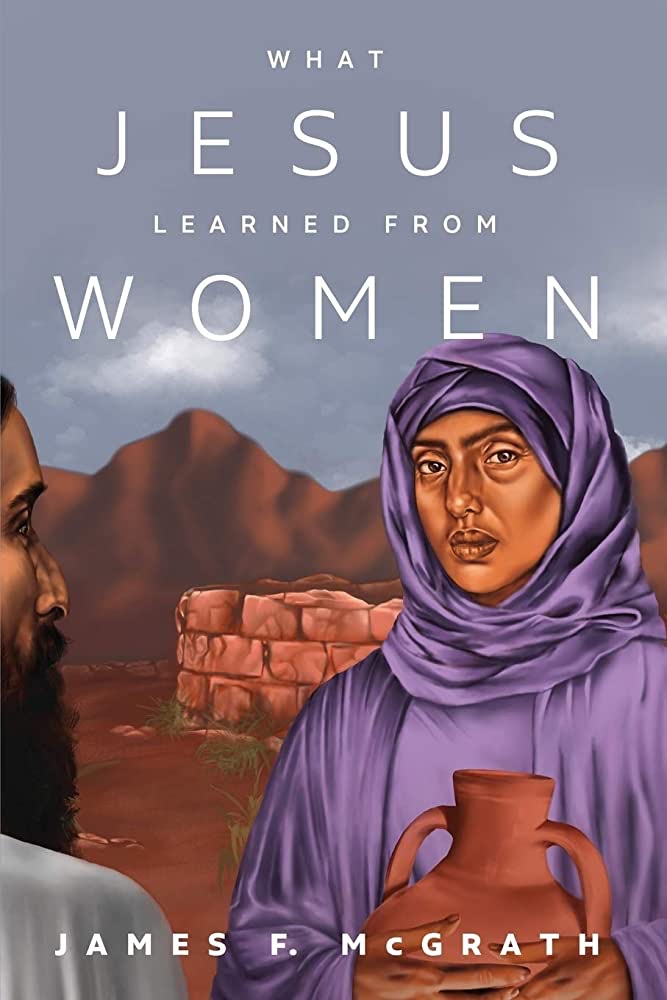
James McGrath has a chapter on what Jesus learnt from the woman of Samaria in his 2022 book, What Jesus Learned from Women (Cascade)

Other interpreters regard the “five husbands” as symbols for the five groups of people who were imported into the northern kingdom after it was conquered by the Assyrians. 2 Kings 17 does give an account of “the origins of the Samaritans”, in which it provides the claim that the Assyrians deported the Israelites living in the northern kingdom and imported people from five areas (people from Babylon, Cuthah, Avva, Hamath, and Sepharvaim; see 2 Ki 17:24) into the region.

This accurately reflects what we know of the practice of the Assyrians—deporting locals and importing vassals from other conquered territories from elsewhere in their kingdom. This was a clever power play; there was not much chance of local resistance, once the men were deported elsewhere, and a strong chance that those imported from elsewhere into the territory would maintain the status quo and ensure “peace” in the newly-conquered territory.

However, we need to bear in mind that 2 Kings and other historical narratives (1–2 Samuel, 1 Kings, Ezra—Nehemiah) are compiled and written by people in the southern kingdom, some time after the events reported—indeed, quite some time later, centuries later. The southern author(s) seem to have had a consistent programme to depict the northern kingdom as resolutely and persistently evil.

Just look at how so many of the northern kings are described in this formulaic manner: Jeroboam, son of Solomon, at 1 Ki 14:1–20 (and have a look at verse 11 for a gory fate!), the first king of the northern kingdom; and then Nadab at 1 Ki 15:25–26; Baasha at 1 Ki 15:33–34; Zimri at 1 Ki 16:15–20; Omri at 1 Ki 16:25–28; Ahab at 1 Ki 16:29–30, 22:37–40; Ahaz at 1 Ki 22:51–53; Jehoram at 2 Ki 3:1–2; Ahaziah at 2 Ki 8:26–27; Jehoash at 2 Ki 13:10–13; Jeroboam II at 2 Ki 14:23–29; Zechariah at 2 Ki 15:8–12; Menahem at 2 Ki 15:17–22; Pekahaiah at 2 Ki 15:23–26; Pekah at 2 Ki 15:27–31; and Hoshea at 2 Ki 17:1–4. In other words, almost all of the kings of Israel!!!

So what we have in 1–2 Kings is southern propaganda about those evil northerners, right from the time of Solomon’s death, on through the centuries, until the fall of the north under Assyria—who then imported pagan foreigners, had them “pretend” to follow the Lord God; but they brought their own various pagan religious practices, even whilst giving a show of worshipping the Lord God as the ancestral god of the land (2 Ki 17:7–18). So they defiled the land even further!!

We can see how the rhetoric in 2 Kings piles up against the northerners, courtesy of the southerners, writing at a time when great antagonism had built up about them. So I take the claim that this narrative was “history” with a big, big pile of salt.

And then we still have the question, how do we say that the text of John 4 is pointing to the story (the propaganda) told in 2 Kings 17? I can’t see anything in the John text that does so, other than the (typically southern) criticism of the northerners’ worship “on this mountain” (John 4:20–22) that is placed on the lips of Jesus—who, curiously, was a northerner from Galilee, not a southerner from Bethlehem. So the reference must maintain something of a mystery.

*****

The understanding of John 4 that I have outlined above has been developed through many fruitful conversations over the years with my wife, the Rev. Elizabeth Raine. My exploration of the “five husbands” has most recently been prompted by a question from Alison Campbell, a faithful reader of this blog.

Scripture debate and disputation in the wilderness (Matt 4; Lent 1A)

My earlier contention was that the story we are offered by the lectionary for this coming Sunday, the first Sunday in Lent (Matt 4:1–1), should be read as a story of testing, not tempting. See

***

Which leads to the question, what is it, that Jesus is being tested about? How does this story contribute to our understanding of what God was wanting, and planning, to do through the public activities of Jesus, in Galilee and then in Jerusalem?

The devil, as “the tester”, utilised scripture as the basis for the trial that Jesus is undertaking. And this, it must be said, is thoroughly predictable—given that we are dealing with a text from the first century of the common era, emerging out of the context of faithful Judaism, telling the story of a faithful Jewish man, Jesus, and his earliest circle of followers, all Jewish men and women. They all express the piety and faith of the Judaism of the time, for that was their religion and their culture.

Scripture sits at the heart of Jewish life and faith. Young Jewish boys, like Jesus, were taught to read the Hebrew text of scripture, and to memorise it. They were grounded in Torah, the books of the Law, which set out the way of life, the way of faithful living, that they were to follow. They needed to know this, to have it deep within their hearts. That would have been the upbringing experienced by Jesus.

As they grew older, these Jewish boys were taught the next stage, the midrashim, the teachings which provided explanation and application of the laws and stories embedded in Torah. There were two types of midrashim. The first was haggadah, which was telling stories; the Jewish teachers, the Pharisees, who became acknowledged over time as the rabbis, were excellent at telling stories, and Jesus learnt well from their examples.

The second was halakah, which was discussion and debate about how best to interpret and apply the laws found in Torah. It is this latter form of teaching that we encounter, in the story of the forty days in the wilderness. The back and forth between the person on trial—Jesus—and the person charged with testing and probing his case—the accuser—is couched entirely in terms of sacred scripture. Each time an accusation is put before Jesus, the accuser quotes a passage of scripture. And each time the person on trial—Jesus—responds, another text from sacred scripture is quoted.

Think about that for a minute: both the accuser and the accused are citing scripture, arguing on the basis of what is found in the tradition and heritage and sacred story of the people of Israel. They are both engaged in this task, to get to the heart of the matter; to penetrate to the essence of the issue, through exploration of scripture and its relevance to Jesus and his mission.

This is typical Jewish midrashic argumentation. This is the way that, throughout the centuries, Jews have sought to encounter the truths of scripture—through discussion and debate, by one person posing a proposition and then another person arguing back in counter-proposition, through the adding of additional scripture passages into the argument, in a process of refining, sharpening, and clarifying the intent of the initial scripture text.

This was par for the course for ancient Jews. This is still the way that faithful Jews engage with scripture. My years as a member of the Uniting Church Dialogue with the Jewish Community immersed me into precisely this culture on a regular basis. It was quite an experience! To us polite, constrained Westerners, it seems like an unruly mess. To Jews, schooled in this process since their early years, it is natural, and results in deep and profound understandings of scripture.

*****

The specific scripture texts that are cited in the course of this testing are significant. They are the same in each extended version that we have (Matt 4, and Luke 4), albeit cited in a different order. And each of the three testing moments, with the associated scripture texts that are cited, relate to key moments in the story of Israel in the wilderness during their forty years of wandering. (I am indebted to my wife, the Rev. Elizabeth Raine, for this insight.)

Understanding the significance of each testing comes when we look more closely at the passages to which Jesus refers, and explore the resonances and connections that those texts have with other biblical passages. Just as Israel (the child of God) is tested during their forty years in the wilderness, so Jesus (the son of God) revisits those testings in his forty days in the wilderness.

The first moment of testing relates to bread: “command these stones to become loaves of bread”. The story evoked is that concerning the gift of manna which was given to the people of Israel as they sojourned in the wilderness. It is told in Numbers and referred to quite directly in Deut 8:3, the verse which is part-quoted by Jesus in the testing narrative, people do not live by bread alone. Could the mission of Jesus be diverted into concerns about sustenance and immediate survival, rather than longer-term strategies?

The second moment of testing, on the top of a mountain, relates to worship, and the recognition of the special and supreme place of the Lord God. The offer, “all these [kingdoms] I will give you”, is met by another quotation, by Jesus, from the same book: it is the Lord your God you shall fear; him you shall serve (Deut 6:13).

The story of the Golden Calf, told in detail in Exodus 32, sits behind this particular test. It is alluded to, perhaps not quite so directly this time, in Deut 6:14-15, the verses which come immediately after the verse quoted by Jesus. The incident involving the Golden Calf was when Israel “went off the rails”, developing an idol for the focus of their worship, rather than being focussed on God alone. The testing faced by Jesus was for him to gain power and authority in his own right, at the expense of serving the greater call that God had placed on his life.

The words of the tester in this second testing evoke the belief that God is able to allocate power and authority. The words of the tester explicitly resound with the claim made twice about the supreme authority of the Lord God, as reported in Jeremiah: “It was I who made the earth, human being and beast on the face of the earth, by my great power, with my outstretched arm; and I can give them to whomever I think fit” (Jer 27:5); and “Ah, my Lord God! You made the heavens and the earth with your great power and your outstretched arm; nothing is too difficult for you” (Jer 32:17).

The tempter has taken on the persona of God in this test. Jesus forcefully denies this test: it is the Lord your God you shall fear; him you shall serve.

The third and final test, placed on the pinnacle of the Temple, pits the possibility of testing God against the alternative of trusting absolutely in God. The tester’s challenge to Jesus, to “throw yourself down”, and the implication that God would save him (quoting Psalm 91) evokes the response from Jesus, quoting Deut 6:16, you shall not put the Lord your God to the test.

Test God … or Trust God? That was the age-old dilemma for Israel, noted at a number of points in the wilderness stories (for instance, Exod 17:2; Deut 6:16; Ps 106:14). It is one that Jesus himself encounters as the climax, in the Lukan version, of his wilderness testing.

The third Deuteronomy passage cited by Jesus, you shall not put the Lord your God to the test (Deut 6:16), comes immediately after the recital of The Ten Words which were given to Israel, through Moses, on Mount Sinai (Deut 5:1–21). As the scripture reports, Moses instructed the people to trust God by living in accordance with these words, for this was the way to life for them (Deut 5:27, 32–33).

So, to assist them in this enterprise, The Ten Words are then boiled down to One Great Commandment, love the Lord your God (Deut 6:5). This was a commandment which Jesus himself quoted and highlighted in debates with Jewish teachers (Mark 12:28–30; Matt 22:34–37; Luke 10:27). Indeed, in Matthew’s version of such a debate, Jesus identified this Word as “the greatest and first commandment” (Matt 22:38) on which “all the law and the prophets hang” (Matt 22:40).

This prime commitment, to God first and foremost, is what is alluded to by the citation that Jesus makes in his third testing. It is a test to see if he will divert from this singular focus.

This story of testing in the wilderness presents a communal challenge, and requires a communal commitment. The personal identity of Jesus, in the mission to which he is called, is found in the context of the communal identity of the people of Israel, who faced precisely these tests—and failed, in the accounts we have in Hebrew Scripture. The testings of Jesus are a reworking of those ancient testings; he is faced with the same tests—and passes them, in the accounts we have in Christian scriptures. That is the model we are offered through this story.

Tracing the saga of faithful people during Lent (Year A)

This year during the season of Lent, the Gospel readings offer a series of narratives which describe encounters that Jesus had (largely from the Gospel according to John). We hear of Jesus in dialogue with the devil in the desert (Matt 4, Lent 1), a Pharisee in Jerusalem (John 3, Lent 2), and a woman by a well in Samaria (John 4, Lent 3).

We then learn of a blind man to whom Jesus brings the gift of sight (John 9, Lent 4) and a dead man whom Jesus brings back to life (John 11, Lent 5), before we come to the annual retelling of the familiar story of Jesus, riding a donkey, entering the city of Jerusalem, to the cheers of the crowd (Matt 21, Lent 6 or Palm Sunday).

These stories tell of people who mostly, as a result of their encounters with Jesus, have their faith in God strengthened—the Pharisee, Nicodemus, at John 7:50 and 19:39; the woman of Samaria at 4:29, 39; the healed blind man at 9:17, 33; Martha, the sister of Lazarus at 11:27, and presumably Lazarus, as 12:10–11 may indicate; and the joyful crowd, at Matt 21:9–11. I am posting blogs on each of these readings as they come, in sequence, throughout Lent.

Alongside these well-known readings from the New Testament, the lectionary offers another sequence of rich readings from Hebrew Scripture. Starting with the story of the first man and first woman (Gen 2-3, Lent 1), we read in turn of four key moments in the story of Israel. This sequence begins with God’s call to Abram (Gen 12, Lent 2), followed the gift of water given to the Israelites as Moses leads them in the wilderness (Exod 17, Lent 3), and the story of the anointing of David as king (1 Sam 16, Lent 4).

The next moment is set during the Exile in Babylon (Ezek 37, Lent 5), when Ezekiel speaks a prophecy which assures Israel of a hopeful future: “I will put my spirit within you … and I will place you on your own soil” (Ezek 37:14). This reading sits neatly with the account of the raising of Lazarus (John 11) which appears alongside it on Lent 5.

For the celebration of Palm Sunday on Lent 6, there is only one Hebrew Scripture reading—Psalm 118, the psalm which the crowd is singing as Jesus enters Jerusalem: “blessed is the one who comes in the name of the Lord” (Ps 118:26; Matt 21:9). If, on the other hand, the Liturgy of the Passion is the focus of that Sunday, then the Hebrew Scripture passage is Isaiah 50:4–9a, the third of four songs attributed to The Servant, who declares that “the Lord has given me the tongue of a teacher, that I may know how to sustain the weary with a word” (Isa 50:4).

The sequence of key moments in the story of Israel offers a series of vignettes of faithful people from the last—our ancestors in the faith who stand as role models to encourage us, centuries later, in our own journey of faith. They are figures which are worth holding up for our reflection and consideration. These stories each have the function of an aetiology—that is, a mythic story which is told to explain the origins of something that is important in the time of the storyteller.

The online Oxford Classical Dictionary defines the term as follows: “Aetiology in religion and mythology refers to an explanation, normally in narrative form (hence ‘aetiological myth’), of a practice, epithet, monument, or similar.” Whilst telling of something that is presented as happening long back in the past, the focus is on present experiences and realities, for “such explanations elucidate something known in the contemporary world by reference to an event in the mythical past”.

See https://oxfordre.com/classics/display/10.1093/acrefore/9780199381135.001.0001/acrefore-9780199381135-e-7050;jsessionid=3DB38C42C54D01E1CBFA8682FB55DA4C

The ancestral narratives of Israel (Gen 12–50), as well as the series of books known as “the historical narratives” (Exodus to 2 Kings, Ezra—Nehemiah) are all written at a time much later that the presumed events which they narrate. The final form of the books as we have them most likely date to the Exile or post-exilic times, although pre-existing sources would have been used for many of these stories. Those older stories are remembered, retold, and then written, because they speak into the present experiences of the writers.

[Evidence for this is found, for instances, in references throughout the two books of Kings to “the Books of the Chronicles of the Kings of Israel” (1 Kings 14:19; 15:31; 16:5, 14, 20, 27; 22:39; 2 Kings 1:18; 10:34; 13:8, 12; 14:15, 28; 15:11, 15, 21, 26, 31), “the Books of Chronicles of the Kings of Judah” (1 Kings 14:29; 15:7, 23; 22:45; 2 Kings 8:23; 12:19; 14:18; 15:6, 36; 16:19; 20:20; 21:17, 25; 23:28; 24:5), and “the Book of the Chronicles of Solomon” (1 Kings 11:41). Many stories in other books may well be derived from oral tellings in past times.]

*****

The sequence of Hebrew Scripture readings in Lent begins with an aetiology which attempts to explain the place of humanity within God’s good creation, as well as offering an explanation for the presence of evil in the world (Gen 2:15–17; 3:1–7, Lent 1A). We need to read such a narrative with critical care; it is not an historical narrative, but it is a myth in the best sense of that word, a story told with creativity to explain aspects of contemporary life (for the writer) which may well hold good for later generations—but which need to be read with awareness of emerging insights in human knowledge over time.

Second in this sequence is the account of the calling of Abram, who journeys into a new future (Gen 12:1–4a, Lent 2A). We need to read beyond the point where the lectionary ends this passage; that selection indicates that Abram took Lot with him, but the narrative actually continues, indicating that Abram travelled with his wife Sarai and his nephew Lot, “and all the possessions that they had gathered, and the persons whom they had acquired in Haran; and they set forth to go to the land of Canaan” (Gen 12:5).

The lectionary is, sadly, blatantly sexist at this point: it includes the names of the two leading males, but omits noting that they travelled with their spouses, and indeed the reference to the presence of many others with them in their journey. We need to read this ancient aetiology with a contemporary critical awareness. Certainly, the faith of Abram and Sarai and their extended family is a key message conveyed by this passage.

The story explains four important aspects of life and faith for the people of ancient Israel and on into contemporary Judaism: the land is given to this people, the people (of Israel) will become “a great nation”, the name (of Abram) will be blessed, and the descendants of Abram, “all the families of the earth”, will likewise be blessed. These four points—land, people, name, descendants—loom large throughout the history of Israel. Indeed, they maintain their potency into the present age—and need to be read and understood with political and cultural sensitivity today.

After Abram and Sarai comes Moses and the people he is leading in the wilderness (Exod 17, Lent 3A). The long saga of the Exodus, the wanderings in the wilderness, the giving of the Law, and the understandings of the details of that Law, receives attention throughout four of the five books of the Torah (Exodus to Deuteronomy).

This particular incident in that long saga focusses on the providential care that the Lord God gives to the people of Israel during those “forty years in the wilderness”. The giving of water in the wilderness at Massah and Meribah (Exod 17) sits alongside the giving of manna and quails in the wilderness of Sin (Exod 16; Num 11). The model to emulate here is the faithful Moses, holding fast to the promise given to him by the Lord God, in the face of the complaining of the people (Exod 16:3, 6–7; 17:2–3, 7; Num 11:1–6; 14:27).

Next in the sequence of faithful people is David, chosen and anointed as king (1 Sam 16, Lent 4A). The passage offered by the lectionary tells of how David, the youngest of Jesse’s eight sons, was chosen by the prophet Samuel for the role of King, even while Saul was occupying that position. David will feature as a key player in the stories about the ensuing years, as “the house of David” is established and Jerusalem is developed as his capital city; and of course his place as the nominal author of the book of Psalms also ensures his leading role on Jewish tradition.

Next in order is the best-known prophecy of Ezekiel, the priest called to be prophet (Ezek 1:3). Ezekiel had been exiled to Babylon during the siege of Jerusalem by King Nebuchadnezzar II of Babylon (599 BCE; see 2 Kings 24:10–17). His prophetic activity was thus undertaken entirely in exile. He addresses both those in exile with him in Babylon, and also those left behind in Judah. His prophecies continue through the period when the people in Judah were conquered and taken to join Ezekiel in exile (587 BCE; see 2 Ki 25:1–21), and then for some time after that.

Ezekiel had declared that “the spirit entered me” (3:24), a process which he promises will be experienced by Israel as a whole (36:26–28)—for the Lord says he will “pour out my spirit upon the house of Israel” (39:29). This emphasis on the renewing spirit of God is seen, most dramatically, by Ezekiel when he is taken by the spirit into “the middle of a valley … full of bones” (37:1) and sees a vision that he conveys in what must be his most famous oracle (Ezek 37:1–14, Lent 5A). What Ezekiel sees in this valley of dry bones is the work of God, as God puts sinews and flesh and skin on the bones, and breathes into the bodies so created, so that they live (37:5–6, 8, 10).

The vision indicates what God will do: “I will put my spirit within you, and you shall live, and I will place you on your own soil” (37:14). The end of the exile, it seems, is in sight. This passage is often interpreted in a Christian context as a pointer both to the resurrection of Jesus, and also to the general resurrection; for Ezekiel, however, it is not a far-into-the-future prediction (foretelling), but a word of hope to the people in their immediate situation (forthtelling).

The sequence ends, of course, with the example of Jesus, riding steadfastly towards the city of Jerusalem (Matt 21:1–11, Lent 6A). That is the city where Jesus knows, and has already revealed, the fate in store for him: “see, we are going up to Jerusalem, and the Son of Man will be handed over to the chief priests and scribes, and they will condemn him to death; then they will hand him over to the Gentiles to be mocked and flogged and crucified; and on the third day he will be raised” (Matt 20:18–19).

Why did Jesus continue into the city, knowing this in advance? That’s a fascinating question, worthy of later consideration. For the moment, in this series of passages, we simply note his determined faithfulness and commitment to the task to which he had been called. He is the final figure of faithful commitment in the series that the lectionary takes us through during the season of Lent.