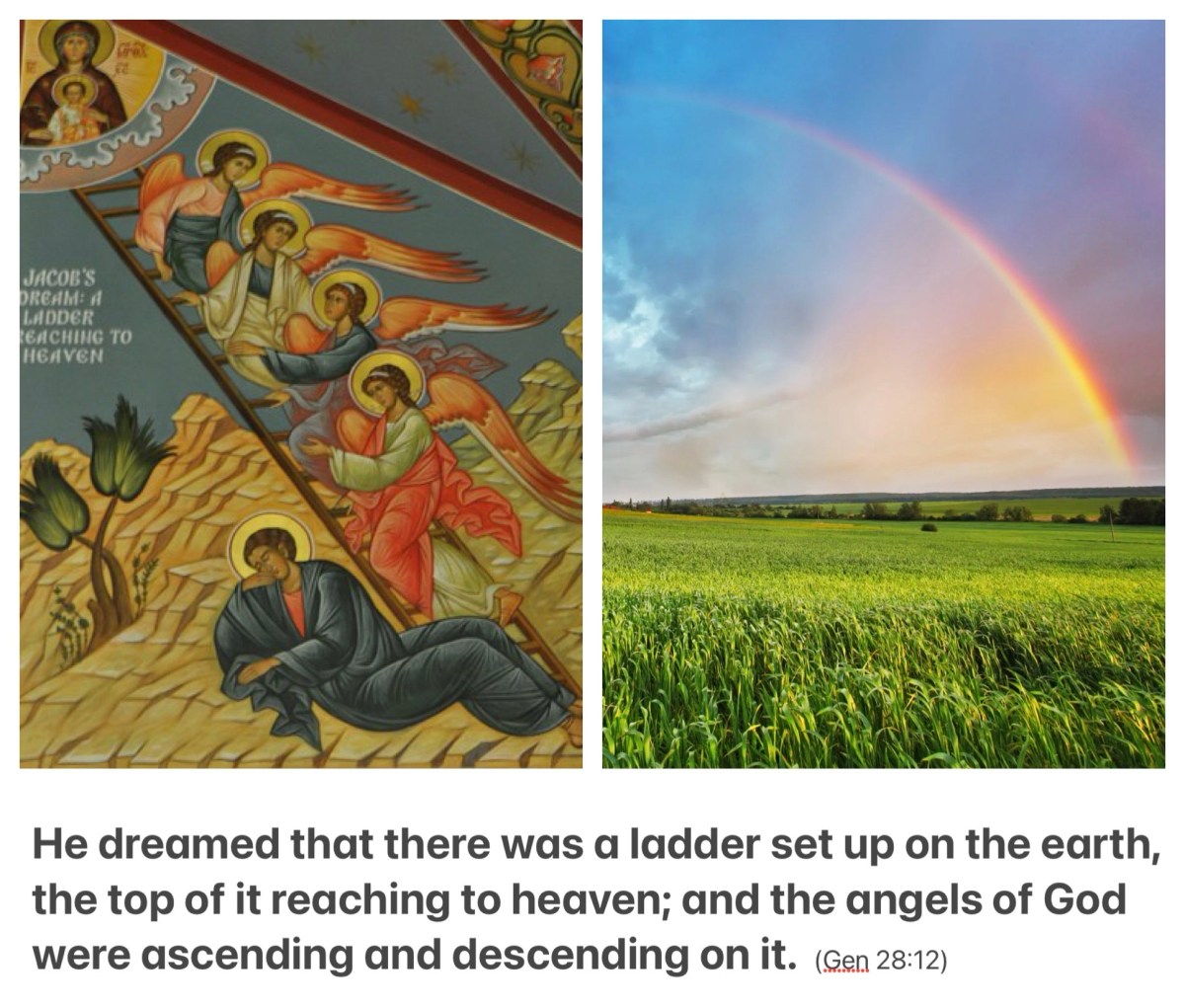
I had a dream (Genesis 27–28; Narrative Lectionary for Pentecost 15) 

A discussion of the passage in the Narrative Lectionary for Pentecost 15

There are some famous dreams throughout history. “I have a dream”, said the Rev. Martin Luther King Jr, speaking in Washington on 28 August 1963, “a dream that my four little children will one day live in a nation where they will not be judged by the color of their skin but by the content of their character. I have a dream today.” That may be the most famous dream in the 20th century.

There have been other significant dreams in modern times. Paul McCartney woke from a dream and wrote the whole score of “Yesterday”. Mary Shelley’s novel “Frankenstein” was inspired by a nightmare. Niels Bohr had a dream in which he saw “the nucleus of the atom, with electrons spinning around it, much as planets spin around their sun”; and thus he developed his theory of atomic structure—a theory later proven by experimental investigation.
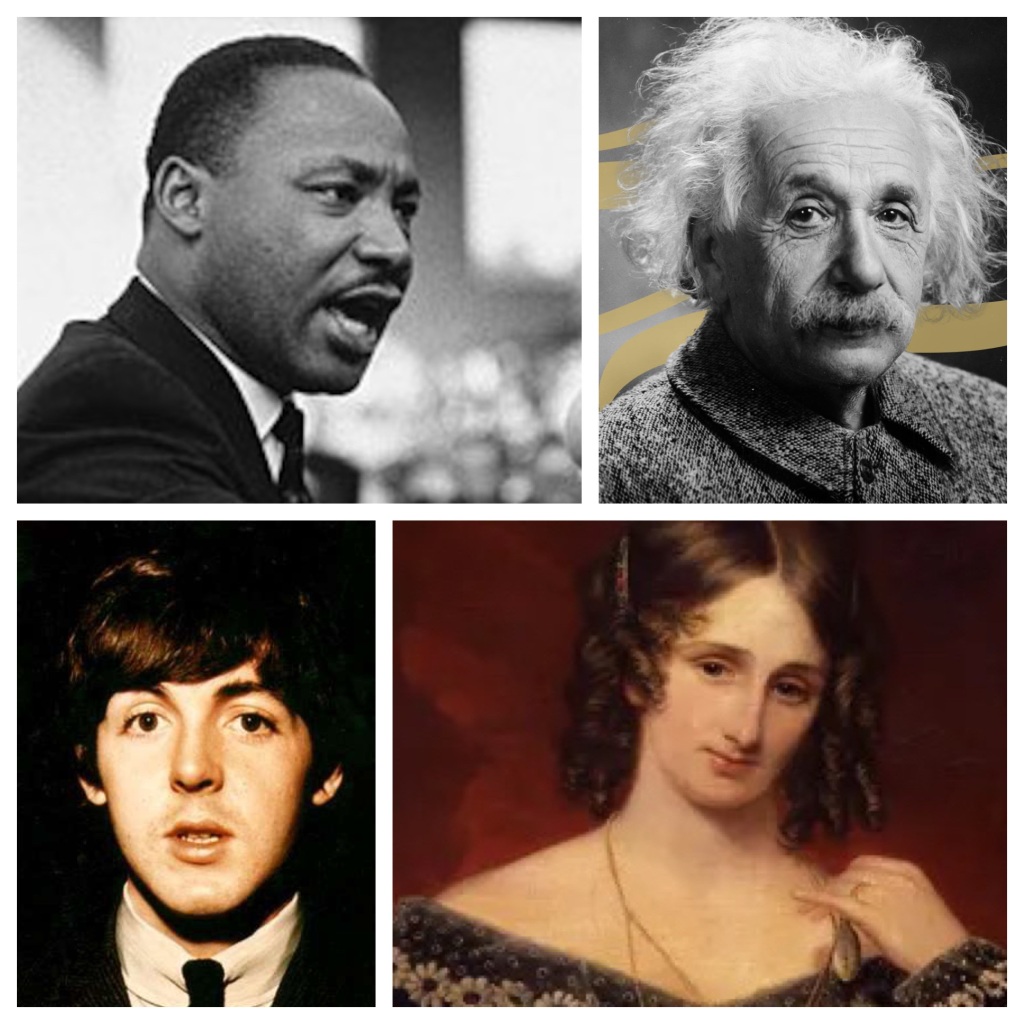
In like manner, Albert Einstein is said to have posed his theory of relativity in a dream in which “he was sledding down a steep mountainside, going so fast that eventually he approached the speed of light … at this moment, the stars in his dream changed their appearance in relation to him”; while it was a dream that led Frederick Banting to develop insulin as a drug to treat diabetes.

I found these and other significant modern dreams described at

https://www.world-of-lucid-dreaming.com/10-dreams-that-changed-the-course-of-human-history.html

*****

A part of the Hebrew Scripture readings that are offered by the Narrative Lectionary for this coming Sunday (Gen 28:10–17) includes a dream that Jacob had, as he slept one night. He was journeying from Beer-sheba, in the Negeb desert in the south of Israel, which is where he had received a blessing from his father, Isaac. This blessing, as we hear in the other section of scripture offered for this Sunday, was won by trickery,as he took the blessing that was intended for Esau  (Gen 27:1–4, 15–23). Which explains the name given to Jacob: he is “the one who supplants” (see Hos 12:3).

Isaac was travelling north towards Haran, the place from which Abram and Sarai had left on their journey towards the land of Canaan, the land which God had promised to him (12:1, 4–5). So the journey that Jacob is undertaking is a reversal, in direction and orientation, of the earlier journey that his grandfather had undertaken. 
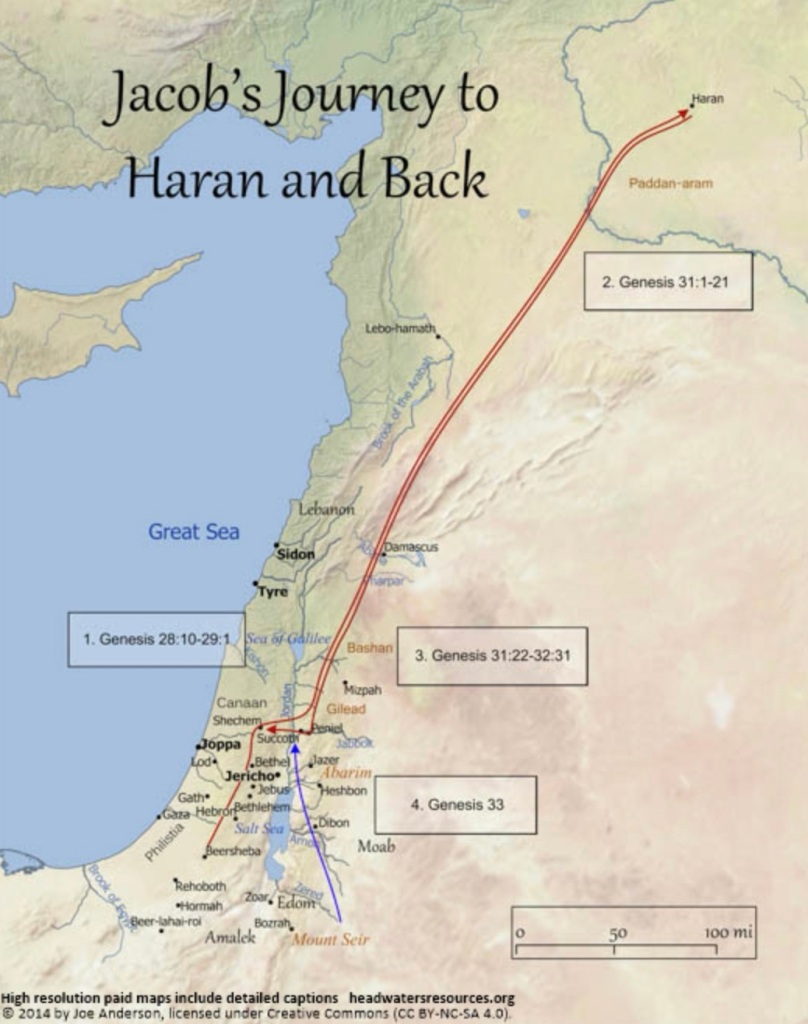
He was travelling to escape the anger of his brother Esau, after he had tricked their father Isaac into blessing him, Jacob, gifting him with the inheritance that was rightly owed to Esau (27:41). Abraham had travelled south in order to receive God’s blessing. Jacob travels in the other direction after having deceitfully gained his father’s blessing.

We are told that, understandably, “Esau hated Jacob because of the blessing with which his father had blessed him” (27:41), and that he threatens to murder his brother, once “the days of mourning for my father” are completed (27:42). Learning of this hatred, Rebekah advises her son, “flee at once to my brother Laban in Haran, and stay with him a while, until your brother’s fury turns away” (27:43–44).

Whether he had been tipped off about this by Rebekah, or not, Isaac commissions his son to journey back to the homeland—in another case of “don’t marry one of these folks, go back to our homeland and marry one of our own” (as we saw with Abraham and Isaac). Isaac says to Jacob, “you shall not marry one of the Canaanite women; go at once to Paddan-aram to the house of Bethuel, your mother’s father; and take as wife from there one of the daughters of Laban, your mother’s brother” (28:1–2). So Jacob obeys him. 

It is on this journey of escape that Jacob has his striking dream. Jacob is not the first to have encountered God in a dream, in these ancestral sagas. Abimelech of Gerar heard from God in a dream (20:3–7). After Jacob’s dream at Bethel (28:12–15), Jacob has a further dream regarding a flock of goats, relating to his inheritance, urging him to return to Isaac in the land of Canaan (31:10–16). At the same time, God appeared in a dream to Laban (31:24), conveying instructions which he disobeyed. 

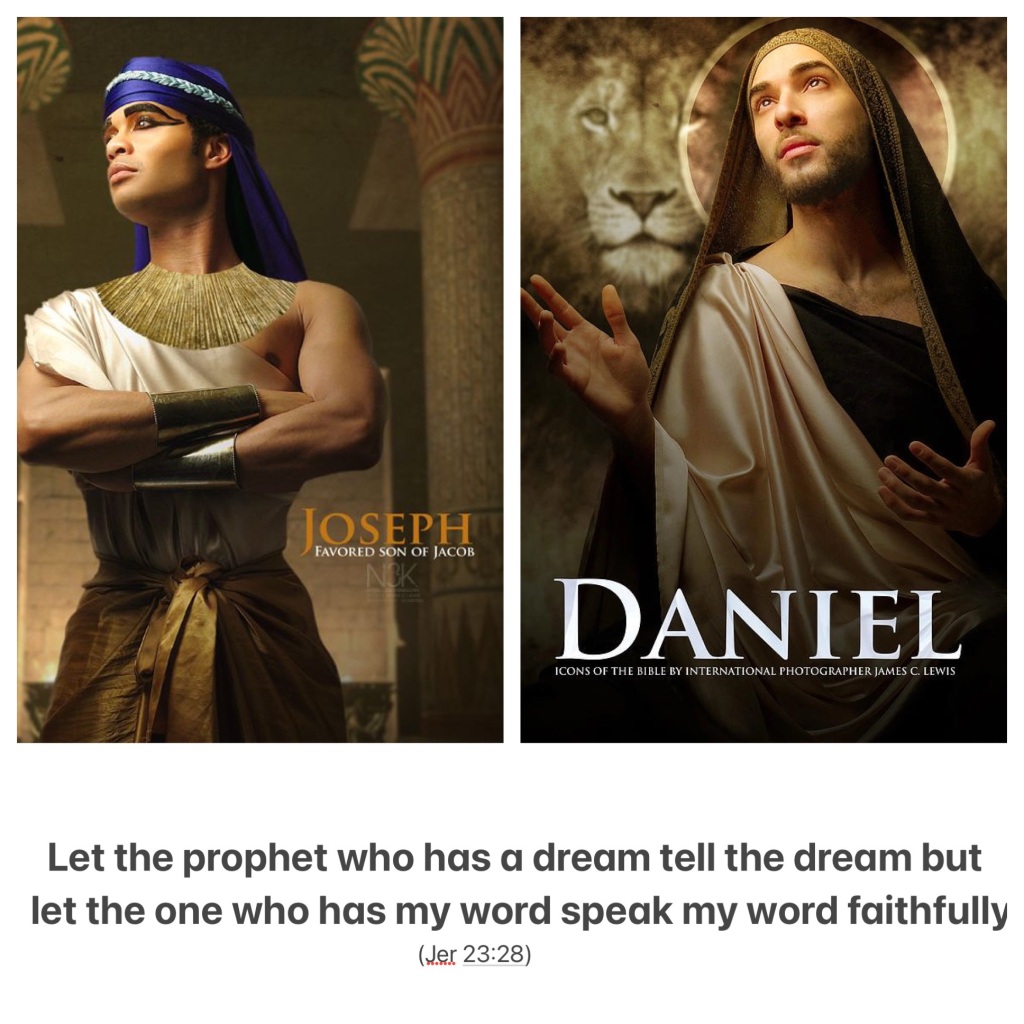
The two great “dreamers” in Hebrew Scripture are, of course, Joseph, one of the sons of Jacob, and Daniel, one of the courtiers of Nebuchadnezzar of Babylon, many centuries later. Both men not only dream dreams, but offer interpretations—and interpret dreams that have been dreamt by others. Jeremiah, too, knew of those who claimed that they encountered God in dreams, but warns that understanding those dreams correctly is important (Jer 23:28; 29:8–9). 
And dreams as the vehicle for divine communication is found in an important New Testament story, when Joseph learns of the pregnancy of Mary, in Matt 1–2. “Dreaming dreams” is actually an activity inspired by the Spirit, as Joel prophesied (Joel 2:28) and Peter reminds the crowd on the day of Pentecost (Acts 2:17).

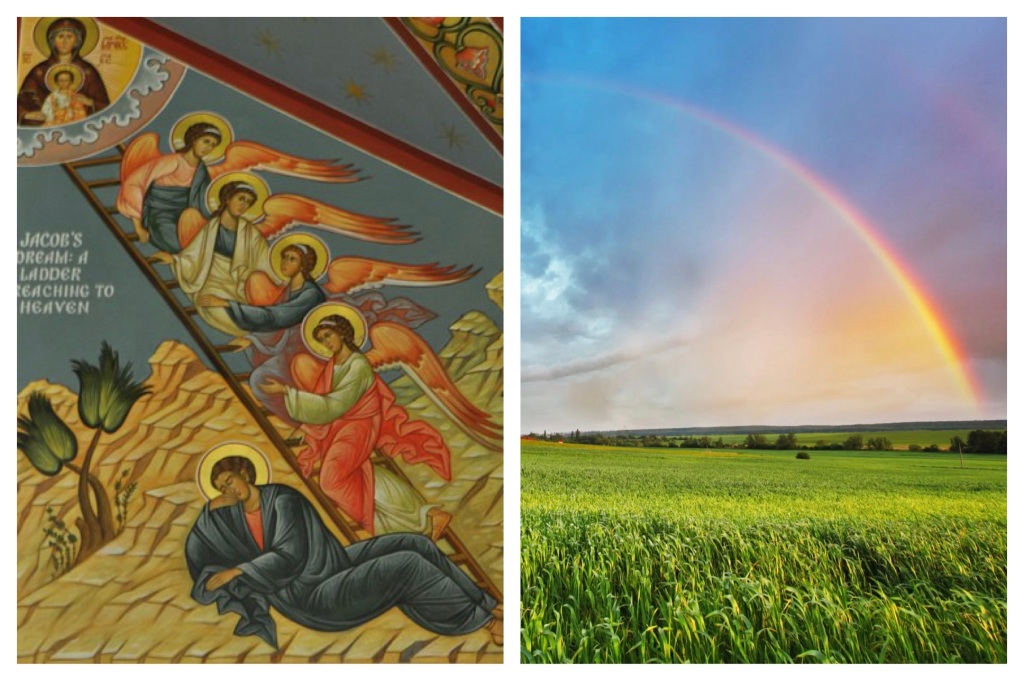
In the story we hear this coming Sunday, Jacob sleeps. As he does, he dreams that “there was a ladder set up on the earth, the top of it reaching to heaven; and the angels of God were ascending and descending on it” (28:12). What do we make of that dream?

In My Jewish Learning, Pinchas Leiser quotes from a book entitled Ruah Chaim (“the breath of life”), by Rabbi Haim of Volozhin. The Rabbi, who lived from 1749 to 1821, was a student of the Vilna Gaon (1695–1785), the pre-eminent sage of Lithuanian Jewry whose ideas were fundamental for the development of modern Jewry. Rabbi Haim writes:

“Our sages come to teach us that we ought not think that, because of our base material, we are truly despicable, like mere plaster on a wall. About this it says, a ladder stationed on the earth–that is Sinai; and its top reaches the heaven–which represents our soul’s life, which is in the highest sphere. There are even souls that see God, and they are the highest of the high, higher than ministering angels, and by this status can the soul cleave to Torah . A whole person is like a tree whose roots are above, and whose trunk extends downward, which is the body, and which is fastened to its supernal roots.”

Pinchas Leiser, a Jewish psychologist and educator, comments: “Thus, Rabbi Haim of Volozhin views Torah learning as a Sinaitic event, since Torah is what connects the heavens and the earth. With Torah, one can ascend and descend between the two spheres. The people who do so are angel-like.” 

This is a penetrating insight into the nature of human beings. We are not spiritual beings, trapped in the prison of the material world, as Plato imagined (and as many writers, including Paul, who were influenced by his philosophy, wrote). Rather, we are fully nephesh, creatures of God containing both material and spiritual characteristics. We belong both to earth and to heaven.

The ladder which Jacob saw reveals this true nature, and tells us that we can transport ourselves between the two places, if we would only open ourselves to the possibility. Jacob’s dream was archetypal—it illustrated exactly who we are and how we can live!

And for me, as a Christian reader, it is important to note that this story (and, indeed, many others in Hebrew Scripture) undermines the crass stereotyping of ancient Israelites—and modern Jews—as alienated from God, crushed under unbearable burdens, far from the grace of God. For this ancient story, told orally for many years before it was ever written down, portrays the possibility of a close and enduring relationship with God, accessible from the patriarch Jacob onwards.
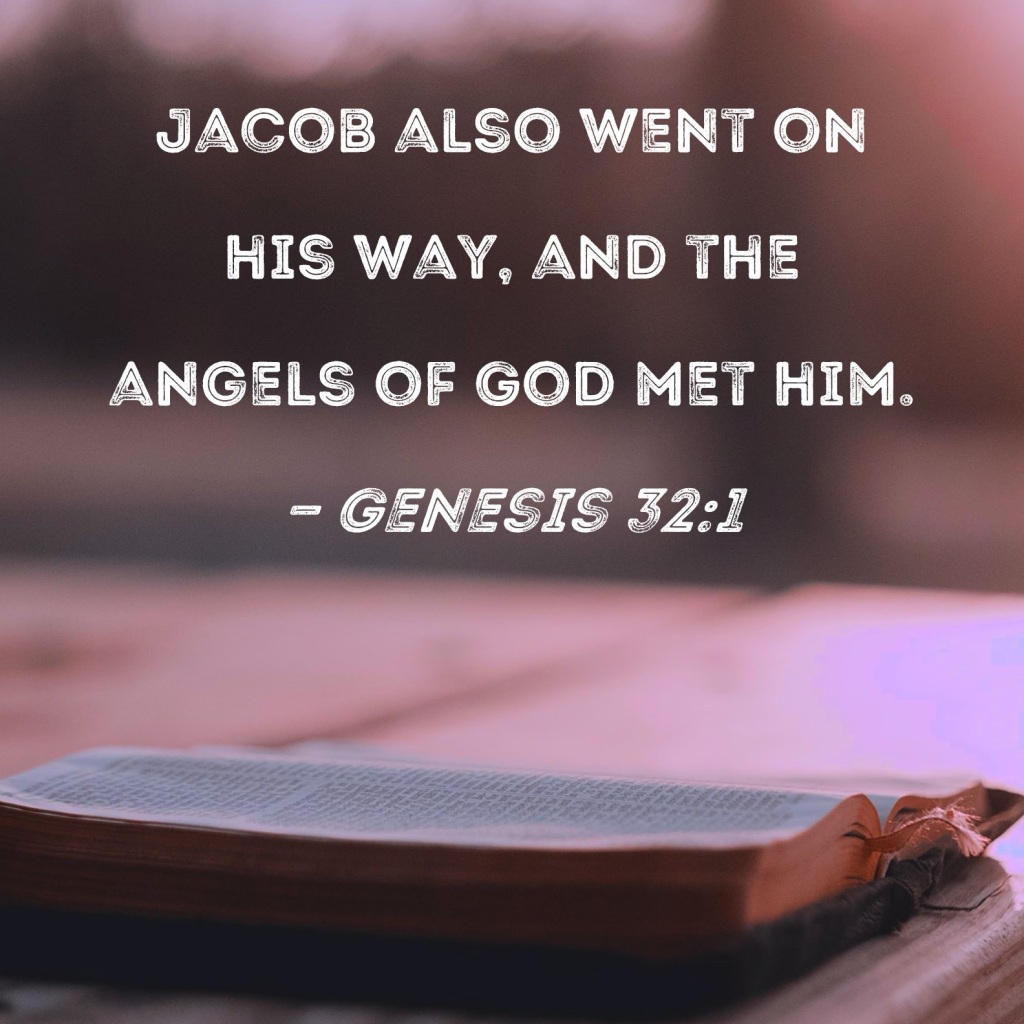
Accompanying the dream of Jacob is a sense of the presence of God; the divine speaks to Jacob, assuring him that God will never leave him. Jacob could never go beyond God’s keeping; angels accompany him on his onward journey to northern Mesopotamia, which was his destination (Gen 29:1). These angels keep going up and coming down on the ladder during this journey; more than this, they continue to accompany him for the twenty years he spends in Haran and then travel with him on his return to the land of Canaan (Gen 31:11; 32:1). The story has a strong sense of the enduring, faithful nature of God’s accompaniment of people of faith throughout their lives.

God’s grace is at work in this story. Jacob was an outcast who had deceived his father and lost friends. Seeking God was probably far from his mind; human company was probably what he yearned for. Nevertheless, he was guided by God at this point of need, offering him revealed care and an assurance for the future. Even though he was not expecting grace, grace was unleashed upon Jacob with no word of blame.

So there is a sign of God’s grace in this story—the ladder connecting heaven and earth, on which “angels” ascend and descend at will. God meets Jacob, even as he is running away from family, and perhaps also running away from God; God meets Jacob in a dream. Jacob was fleeing the consequences of his deception of his father. He wanted to be far away from Isaac, whom he deceived, and Esau, from whom he stole the birthright. And in the midst of that journey, God offers a sign of acceptance and grace in this dream.

Indeed, scripture had offered an earlier sign of God’s grace, in the story of Noah. This is a terrible story—God deliberately and intentionally destroys the world, and “starts all over again”. Only Noah and his family, and the animals on his ark, are saved. The rainbow in the sky is the sign of God’s grace for those who have survived, signalling that God will never again destroy the creation.

The ladder represents the commitment that God has, to an enduring connection with human beings, no matter what their situation. It is a sign of God’s grace—for which we can be thankful.
Judging Israel; undoing creation (Jer 4; Pentecost 14C)

“A hot wind comes from me out of the bare heights in the desert toward my poor people, not to winnow or cleanse— a wind too strong for that. Now it is I who speak in judgment against them.” (Jer 4:11–12)

We’ve been following the words of Jeremiah over the last three weeks. He has had some very stern messages to deliver. Perhaps this helps us to see the origins of the term “Jeremiad”. The Oxford Dictionary of Literary Terms defines it as “either a prolonged lamentation or a prophetic warning against the evil habits of a nation, foretelling disaster”. The second sense (a prophetic warning) comes directly from the way that the prophet Jeremiah spoke about, and to, the people of Israel in his time.

Jeremiah was, indeed, a voice of doom and gloom. At his calling, the Lord God informed him, “I will utter my judgments against them, for all their wickedness in forsaking me; they have made offerings to other gods, and worshiped the works of their own hands”. He then admonished the young Jeremiah, telling him to “gird up your loins; stand up and tell them everything that I command you”, before putting the very fear of God into him with the warning, “do not break down before them, or I will break you before them” (Jer 1:16–17). That’s stern stuff!

But is this going too far? I think today we would want to call to account the speaker of these words, to remind them not to abuse the power that they have in this relationship, and to be mindful of the vulnerability of the young person to whom they are speaking! (A friend who worked for the then Department of Community Services said years ago that Yahweh would these days be notified to the department if he spoke and acted in this way!)

So Jeremiah remains faithful to his call, through all the challenges and difficulties this brought him. For four decades he is relentless is calling the people of his day to account for their sins: “the house of Israel and the house of Judah have broken the covenant that I made with their ancestors” (11:10); “we have sinned against the Lord our God, we and our ancestors, from our youth even to this day; and we have not obeyed the voice of the Lord our God” (3:25). 

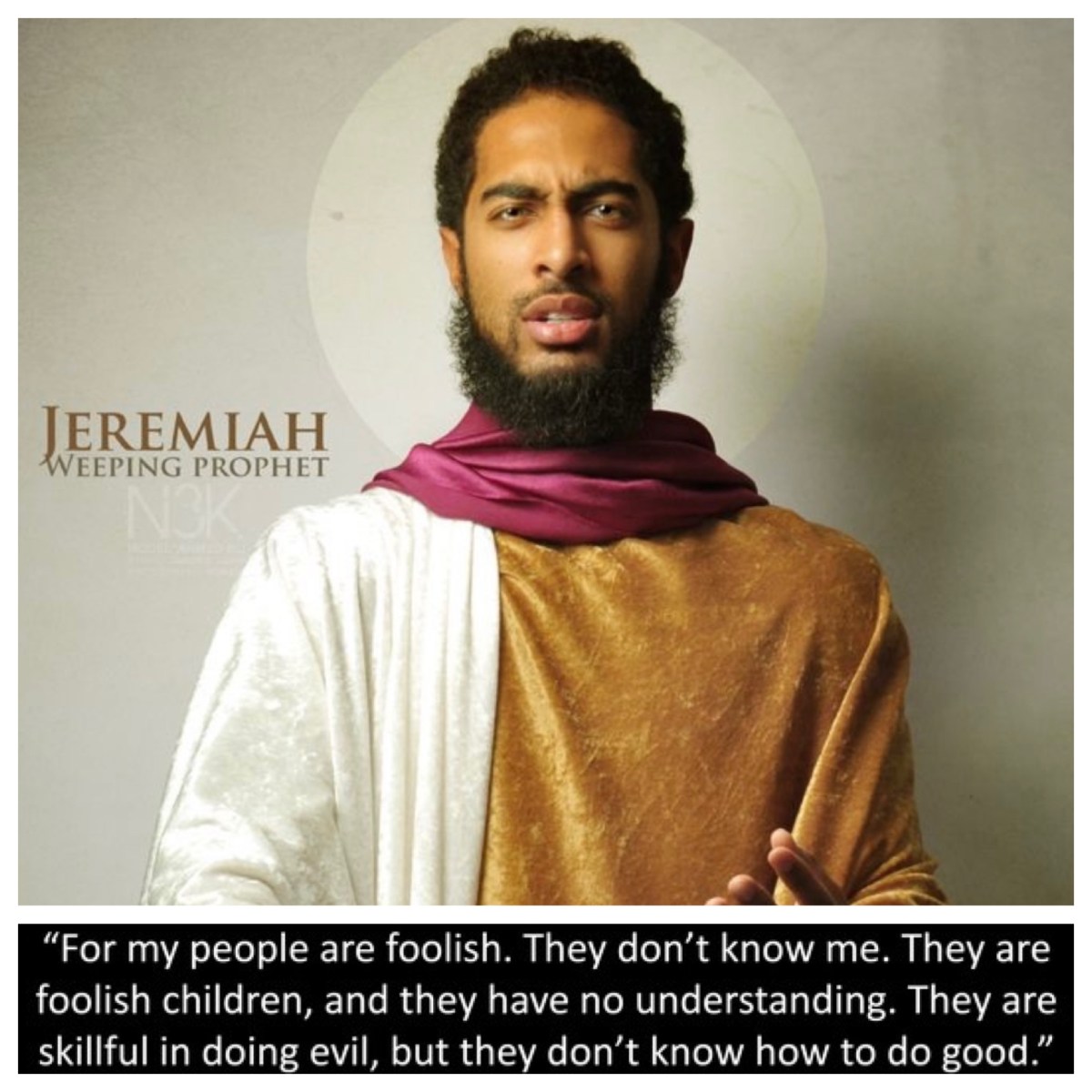
In the passage set before us by the lectionary for this coming Sunday, the prophet reports God’s anguish about Israel: “my people are foolish, they do not know me; they are stupid children, they have no understanding; they are skilled in doing evil, but do not know how to do good” (4:22). In despair, God decides to use a foreign power to bring Israel to their senses. He tells the prophet, “I am now making my words in your mouth a fire, and this people wood, and the fire shall devour them. I am going to bring upon you a nation from far away, O house of Israel, says the Lord” (5:14–15). Thus Jeremiah foretells the invasion of the Babylonians (see 2 Ki 25).

Jeremiah senses that God has fixed the course to be taken: “they have taught their tongues to speak lies; they commit iniquity and are too weary to repent. Oppression upon oppression, deceit upon deceit! They refuse to know me, says the Lord … Shall I not punish them for these things? says the Lord; and shall I not bring retribution on a nation such as this?” (9:5–6, 9). National disgrace awaits them, as they submit to a foreign power.

Eventually, from his exile in Egypt, and as others from his nation are taken north into exile by the invading Babylonians, Jeremiah tells the Israelites, “It is because you burned offerings, and because you sinned against the Lord and did not obey the voice of the Lord or walk in his law and in his statutes and in his decrees, that this disaster has befallen you, as is still evident today” (44:23). He has been resolute in his condemnation of the sinful people. He is now, sadly, vindicated. And so God decrees, “I am going to watch over them for harm and not for good; all the people of Judah who are in the land of Egypt shall perish by the sword and by famine, until not one is left” (44:27).

I must confess that it seems quite easy, at the moment, to slip into a simplistic interpretive pattern and apply these words—spoken long again against a sinful nation—to the very nation, today, who still bears the same name as those ancient people: Israel. The sins of the modern nation of Israel are manifold. Established as a refuge for a persecuted people, the nation has turned persecutor. Given land in recognition of the way they had been disposed and dispersed, the landholders sought more and more land, building settlements on Palestinian land, erecting a strong, impenetrable wall to keep “them” from “us”.
In a series of battles, they have waged war to ensure their safety and security. Besieged by leaders of organisations arrayed against them, they have continued to shoot, bomb, and destabilise such “terrorist” groups. Yet what is happening in Gaza today is no longer able to be distinguished from genocide—the very same genocidal actions that the Jewish people experienced almost a century ago. The sins of the nation appear (at least to me) to be clear, persistent, and utterly repugnant. Jeremiah’s words to ancient Israel—“I am determined to bring disaster on you, to bring all Judah to an end” (44:11) could well be the words of God to the modern nation of Israel.

Can we simply apply to condemnation of Jeremiah to modern Israel? It’s tempting; but it’s not responsible interpretation. And it leaves open the door to the accusation—repeated often, now—that this is antisemitic. I don’t believe it is antisemitic, because such criticisms are directed against the policies and practices of the modern nation-state of Israel, and what they result in, and not against all Jews everywhere, simply for being Jewish. So we need to steer clear of this kind of simplistic equation. The criticisms are political and pragmatic, not based on religion or ethnicity. 

For my analysis of the current situation involving Israel, Hamas, Gaza, and Palestine, see

and

All of this is in the book of Jeremiah: denunciation after denunciation of the people, warnings of divine punishment, and oracles portending imminent exile and absolute destruction. We can’t get away from that.

However: the passage that the lectionary offers for this coming Sunday raises the stakes even higher. In this passage (Jer 4:11–12, 22–28), the wrath of God is directed not just to Israel, but to all creation. The looming catastrophe is not just national; it is global, cosmic in its scope.

To be sure, the passage reports God’s anguish about Israel, as we have noted: “my people are foolish, they do not know me; they are stupid children, they have no understanding; they are skilled in doing evil, but do not know how to do good” (4:22).

But then comes a most remarkable sequence of sentences, in which the whole of creation seems to be in view. “I looked on the earth, and lo, it was waste and void; and to the heavens, and they had no light”, God is saying. “I looked on the mountains, and lo, they were quaking, and all the hills moved to and fro. I looked, and lo, there was no one at all, and all the birds of the air had fled. I looked, and lo, the fruitful land was a desert, and all its cities were laid in ruins before the Lord, before his fierce anger” (4:23–26).

Writing on this Jeremiah passage in With Love to the World, the Rev Dr Anthony Rees, Associate Professor of Old Testament in the School of Theology, Charles Sturt University, notes: “This is a remarkably evocative passage. It begins with a hot wind, a symbol of judgement (as in Jonah 4). It moves quickly to a promise of destruction from the North (Dan and Ephraim); it almost seems that God is cheering on those who would do Judah harm.”

But there is more than just evocative poetry here. It seems to me that the words of Jeremiah might be describing the end result of a process that is happening in our own time. Since the start of the Industrial Revolution, and continuing apace into the 21st century, the damage that human beings have been causing to the planet has been increasing with noticeable impacts seen in so many areas: global warming, more intense extreme weather events, more frequent extreme weather events,  the diminishing of the ice caps at the poles of the earth, the warming of the oceans’ temperature, rising sea levels impacting particularly islands in the Pacific, the bleaching of the Great Barrier Reef, and so many more things that can be attributed to human-generated climate change. 

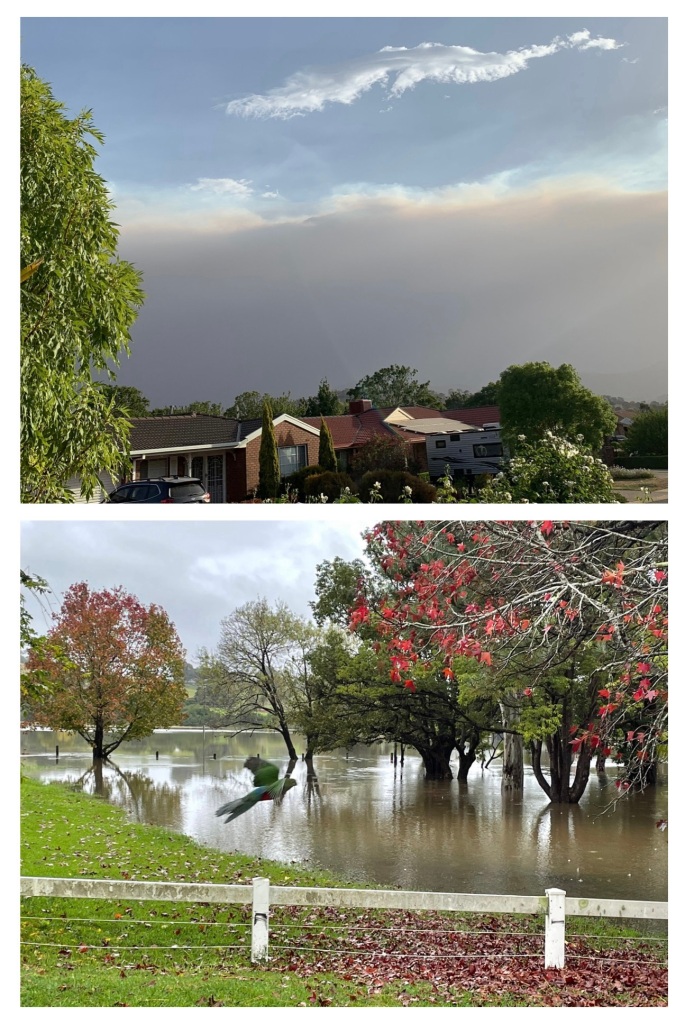
In our own household, in just the past five years, we have seen a searing bushfire come within a few kilometres of our suburb, and then a massive downpour lead to rising floodwaters that reached the other side of the road on which we live. Climate change is real, and close. We are well on track, as many scientists are saying, to see a planet with a radically altered ecosystem. 

The view from our front yard:
Gordon, ACT, January 2020 (top),
during the severe bushfire in the ACT;
Dungog, NSW, May 2025 (bottom),
during the east coast flooding

Anthony Rees continues his reflections on Jer 4: “Judah is destroyed, the people and land laid waste on account of childish stupidity and ignorance. A remarkable image is then seen: the earth is described as waste and void, the very same description given of the earth in Gen 1:2 before God’s creative activity begins.”

The passage in Jeremiah has God narrating his view of the systematic undoing of his work as the Creator, as that has been set out in the narratives of Gen 1 and Gen 2, and in the poetry of Psalms 8, 19, 65, 104, and 148. God sees that the earth was once again “waste and void” (Jer 4:23a), as it was in the beginning (Gen 1:2). All that the landscape showed was a ravaged wilderness, for no longer did the earth bring forth vegetation: “plants yielding seed of every kind, and trees of every kind bearing fruit with the seed in it” (Gen 1:12; 2:8–9; and see Ps 65:11–13; 104:14–15, 27 –28). Rather, what God sees is that “the fruitful land was a desert, and all its cities were laid in ruins” (Jer 4:26).

In the heavens there is no light (Jer 4:23b), thus undoing God’s early creative work (Gen 1:3, “let there be light”; and Ps 8:3; 19:4b—6; 148:3). Hills and mountains were shaking (Jer 4:24); the stability they provided, the unshakeable foundation of the earth, has been undone (Ps 65:6; 104:5, 8; 148:9). All the birds have fled (Jer 4:25), undoing the work of God reported at Gen 1:21–22 (and see Ps 8:8; 104:12; 148:10b).

Anthony Rees notes, “Jeremiah looks to the heavens and the light is gone. God’s creative work has been undone on account of human failure. And again, human failure has consequences that go beyond our species: mountains sway, birds flee, arable land is turned to desert. What good news is there to be found here? What image of hope?”

The relevance for today of Jeremiah’s poetic “vision” that undoes the vision of creation expressed long ago by priests and poets is striking. And his perception that it is human sinfulness that is at the root of this is noteable. We know what we need to do to slow the rate of change, so that the climate remains within an inhabitable range. We know what we need to do to stop pumping gases into the air that are changing the way the planet works. We know what changes we need to make to our way of living—a whole host of changes, large and small—but we lack the will to do so. Our national policies continue to favour the industries that contribute most to the degradation of our environment. Our daily practices show minimal change, if that, in so many households.

Anthony Rees concludes, “Perhaps we might best read this text as a warning, and commit ourselves to working in ways that maintain relationship with God, our neigbours, and the rest of the created order.” It is certainly a timely word, given our critical situation. How do you respond to Jeremiah’s mournful poetry? What changes can you make? What lobbying can you undertake? What advocacy can you commit to do? Are we always going to be condemned to be, like ancient Israel, those who “are skilled in doing evil, but do not know how to do good”?

https://www.withlovetotheworld.org.au

On the mount of the Lord it shall be provided (Genesis 21–22; Narrative Lectionary for Pentecost 14)

Discussion of the passages from Genesis 21–22 for the Narrative Lectionary.

The pair of passages from Genesis proposed by the Narrative Lectionary for this coming Sunday contain a paradox. On the one hand, after years of Abraham and Sarah yearning in vain for a son, “the Lord did for Sarah as he had promised; Sarah conceived and bore Abraham a son in his old age” (Gen 21:1–2). The son was named Isaac, meaning laughter; as Sarah, aged 100, declares, “God has brought laughter for me; everyone who hears will laugh with me” (21:6).

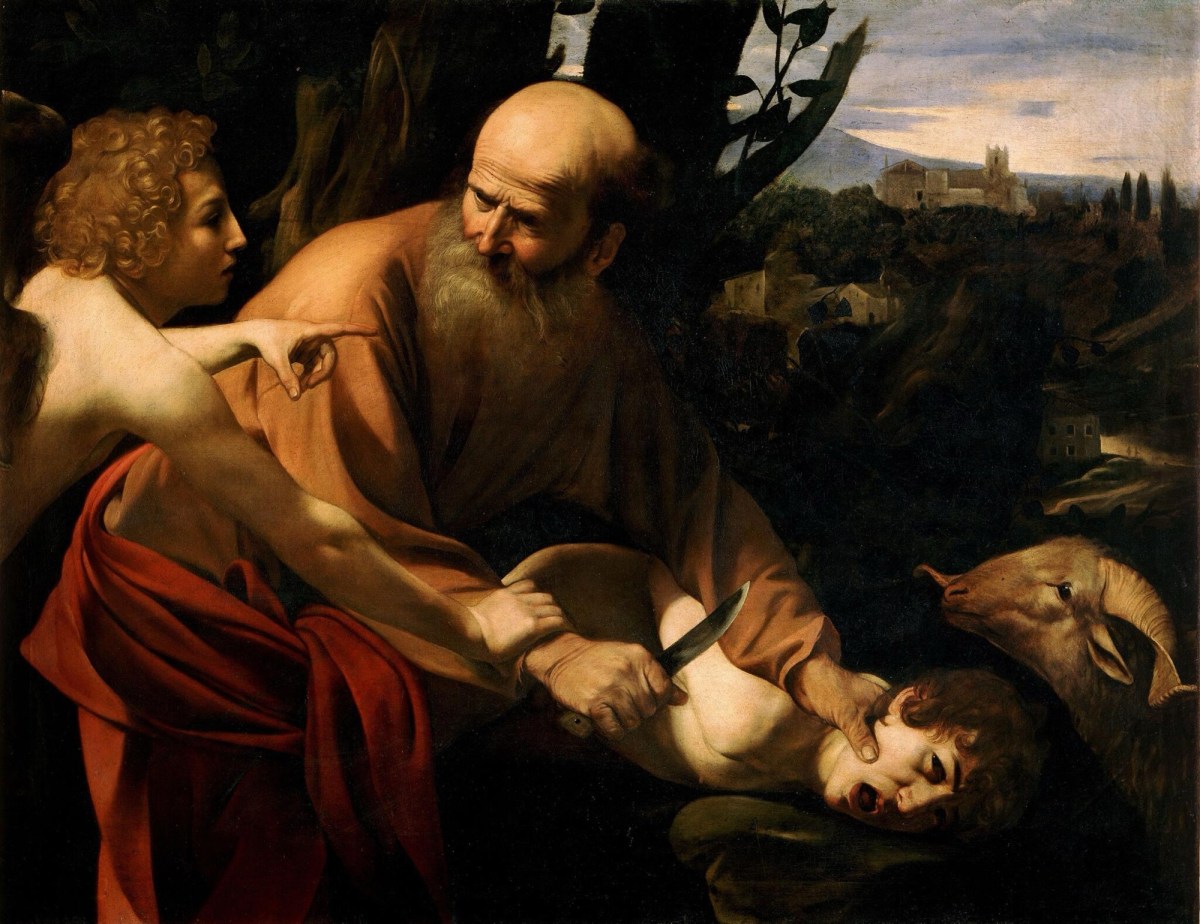
Yet in the second passage offered by the lectionary, we read some chilling words: “Abraham reached out his hand and took the knife to kill his son” (Gen 22:10). How does this relate to the joy seen at the birth of Isaac? There is no laughter in this story. It’s a horrifying story. How is this edifying material for hearing in worship?

Questions abound. Who is this God who calls Abraham to take his “only son” up the mountain and “offer him there as a burnt offering” (22:2)? Where is the God who, it is said, has shown “steadfast love” to the people of Israel (Exod 15:13), and before that to Joseph (Gen 39:21), to Jacob (Gen 32:9–19), and indeed to Abraham himself (Gen 24:27)? Why has God acted in a way that Is seemingly so out of character in this incident in Gen 22? Or is this the real nature of God, and these later displays of “steadfast love” are simply for show?

This story is indeed troubling: it presents a God who demands a father to kill his beloved son, with no questions asked. It is not just the knife in Abraham’s hand which is raised (22:10)—there are many questions raised by this seemingly callous story. 

My wife, Elizabeth Raine, has a cracker of a sermon in which she compares this story with the account of Jephthah and his daughter (Judg 11:29–40). Whilst the Lord commands Abraham to kill his son as a burnt offering, it is the vow made by Jephthah to sacrifice “whoever comes out of the doors of my house to meet me, when I return victorious from the Ammonites” as a burnt offering (Judg 11:30).

And whilst the Lord intervenes in what Abraham is planning to do at the very last moment, sending an angel to command him, “do not lay your hand on the boy or do anything to him” (Gen 22:11–12), Jephthah is held to the vow he has made—by his very own daughter, who knows that she will be the victim of this vow (Judg 11:39). There is no divine intervention in this story. 

And worse, whilst Abraham had carefully prepared for the sacrifice, taking his donkey, two servants, and the wood for the fire up the mountain with him (Gen 22:3–6), Jephthah’s vow was made on the spur of the moment (Judg 11:30–31), and when his daughter insisted that he must carry through with this vow, he gives her, as requested, two full months for her to spend with her companions before he sacrificed her (Judg 11:37–39). Surely he might have had time in those two months to reconsider his vow and turn away from sacrificing his daughter?

It would seem, then, that the daughter was dispensable; the son, the much loved only son of Sarah and Abraham, was clearly indispensable. That would clearly reflect the values of the patriarchal society of the day, in which “sons are indeed a heritage from the Lord, the fruit of the womb a reward” (Ps 127:3). 

And Abraham would have followed the same pathway, sacrificing his only son, had not the Lord intervened. Neither father is looking very appealing in these two stories! Which makes it hard to see how the story of the sacrifice told in Judg 11, and the story of the almost-sacrifice told in Gen 22, can be “the word of the Lord” for us, today, in the 21st century. Indeed, the story of Abraham and Isaac comes perilously close to being a story of child abuser—if not physical abuse, by the end of the story, at least emotional and spiritual abuse.

Situations of abuse destroy trust. After such an experience, how could Isaac ever trust his father again? And as we hear the story, how can we trust God? How could we ever believe that his commands to us are what we should follow?—if he follows the pattern of this story, and changes his mind at the last minute, after pushing us to the very brink of existence? How could we trust a God like this?

Or, if the story involving poor Isaac is really about God providing, as Abraham intimates early on (22:8), and then concludes at the end (22:14), then it is a rather malicious way for God to go about showing how he is able to “provide”. Provision, and providence, should be something positive—not perilous and threatening, as in this story.

Or yet again, if the story is about testing Abraham’s faith, as many interpreters conclude, then it is a particularly nasty and confronting way for God to do this—and that points to a nasty streak in the character of God. Is this really what we want to sit with? Was there not some other way for God to push Abraham to test his faith? 

What do we do with such a story within our shared sacred scriptures?

The Jewish site, My Jewish Learning, states that “although the story itself is quite troubling, it does contain a message of hope for Rosh Hashanah. In the liturgy we ask God to “remember us for life.”  The binding of Isaac concludes with his life being spared, and he too is “remembered for life.”  Abraham’s devotion results in hope for life.”

How does the message of hope for life emerge from this story? Clearly, the life of Isaac is spared; but this is a terrible way to teach that message!

James Goodman, writing in My Jewish Learning, explains how he was taught to understand this story. “I learned that the story was God’s way of proclaiming his opposition to human sacrifice”, Goodman writes. 

He refers to the way his Hebrew-school teacher explained this story: “God had brought Abraham to a new land. A good and fertile land, where it was common for pagan tribes, hoping to keep the crops and flocks coming, to sacrifice first-born sons to God. Then one day, God commanded Abraham to sacrifice Isaac, the beloved son of his old age. 

“Abraham set out to do it, and was about to, when God stopped him. He sacrificed a ram instead. In the end, Abraham had ‘demonstrated his—and the Jews’—heroic willingness to accept God and His law,’ and God had ‘proclaimed’ that ‘He could not accept human blood, that He rejected all human sacrifices’.”

See https://www.myjewishlearning.com/2013/09/11/understanding-genesis-22-god-and-child-sacrifice/

Setting the story in the broader context of the practice of child sacrifice is a way of accepting that this terrible story might indeed have some value. Seeing the story is a dramatised version of God’s command not to sacrifice children can be a way to deal with it. “Do not lay your hand on the boy or do anything to him”, the angel says; so Abraham obeys, finds a ram, offers the ram as a burnt offering (22:12–13). And so, the name of the place is given: “the Lord will provide”(22:14).

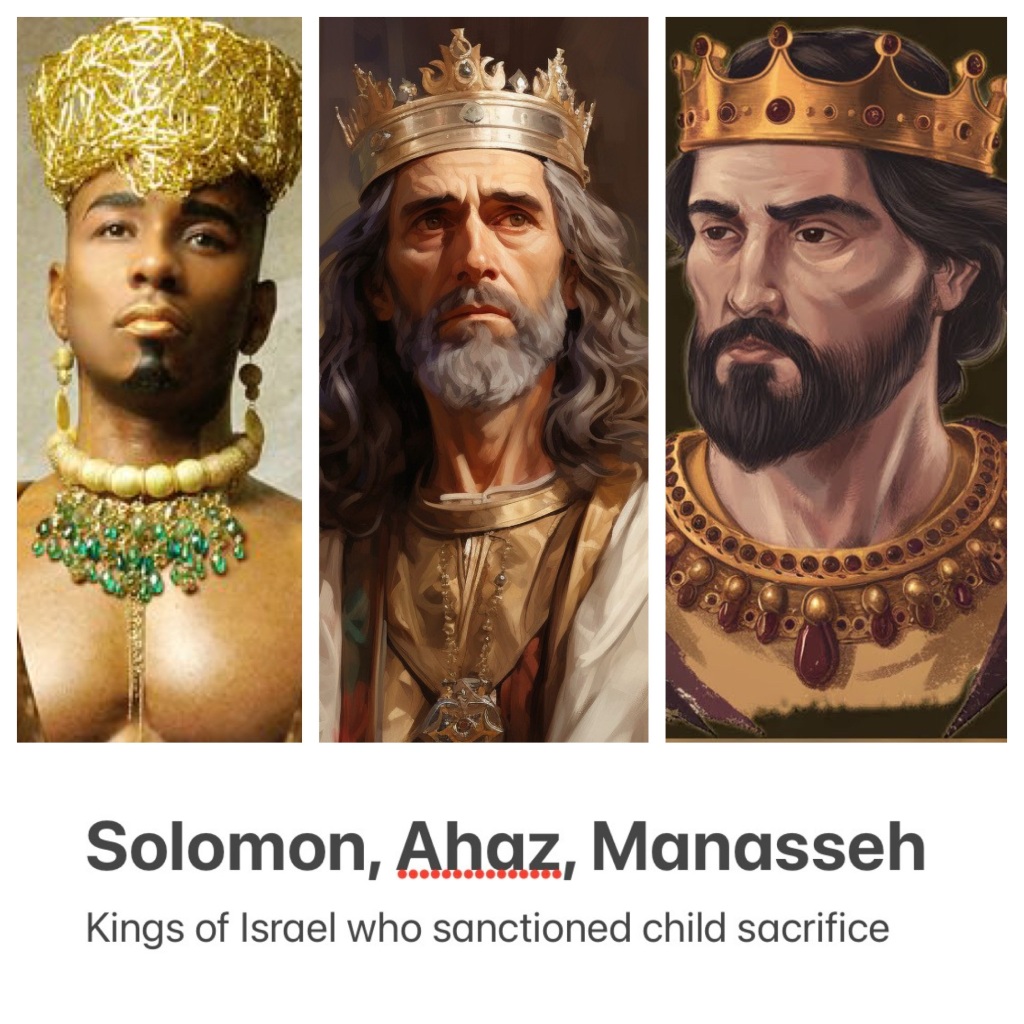
Three kings of Israel, at different times in the history of Israel, are said to have practised child sacrifice, as they turned to practices found in nations other than Israel. Solomon in his old age is said to have turned to the worship of Molech (1 Ki 11:7); this practice was subsequently adopted by Ahaz, who “made offerings in the valley of the son of Hinnom, and made his sons pass through fire, according to the abominable practices of the nations whom the Lord drove out before the people of Israel” (2 Chron 28:3). Likewise, Manasseh “made his son pass through fire; he practiced soothsaying and augury, and dealt with mediums and with wizards” (2 Ki 21:6). 

Direct commands not to sacrifice children are found in two books of Torah in the scriptural texts. Most direct is “you shall not give any of your offspring to sacrifice them to Molech, and so profane the name of your God: I am the Lord” (Lev 20:18). In Deuteronomy, other nations are condemned as they “burn their sons and their daughters in the fire to their gods” (Deut 12:31), so the command is “no one shall be found among you who makes a son or daughter pass through fire” (Deut 18:10). The prophet Jeremiah also asserts that this practice is not something that the Lord God had thought of (Jer 7:31). 

So the passage we have in the lectionary responds to this practice by telling a tale which has, as its punchline, the command “do not lay your hand on the boy or do anything to him” (22:12). Might this be the one redeeming feature of this passage? 

But if that is the case, the story belongs back in the days when child sacrifice was, apparently, widely practised. What, then, does it say to us today??

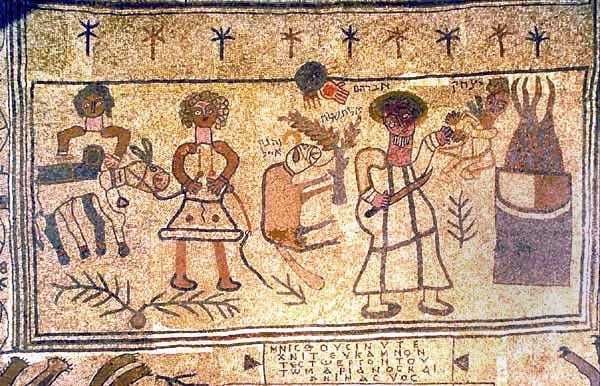
A sixth-century CE floor mosaic from the Beth Alpha synagogue, in Israel’s Jezreel Valley. The mosaic lay near the door, so that anyone who entered was confronted by the scene. In this mosaic, Abraham and Isaac are identified in Hebrew. The hand of God extends from heaven to prevent Abraham from proceeding. Below the hand are the Hebrew words, “Lay not [your hand].” Next to the ram are the words, “Behold a ram.”

I am a potter shaping evil against you (Jer 18; Pentecost 13C) 

The passage from Jeremiah proposed by the lectionary for this coming Sunday (Jer 18:1–11) is the third in a series of eight passages, taken from various sections of the work, that we read and hear during this long season “after Pentecost”. It’s a well-known passage because of the way it uses the common figure of a potter working his clay to form a vessel for domestic use. The potter spoils his work, so he starts again and works another vessel (vv.1–4). 

The image of a potter is used elsewhere in Hebrew Scripture. It appears in an oracle by the prophet Isaiah (Isa 29:13–16). He poses a question to God: “You turn things upside down! Shall the potter be regarded as the clay?” (29:16). This is the very oracle whose words are used by Paul in his words to the Corinthians: “the wisdom of their wise shall perish, and the discernment of the discerning shall be hidden” (Isa 29:13; 1 Cor 1:18–19).

Paul also uses the clay element of the imagery when he later tells the Corinthians that “we have this treasure in clay jars, so that it may be made clear that this extraordinary power belongs to God and does not come from us” (2 Cor 4:7). Paul is referring to his preaching of the message about Jesus, who gives “the light of the knowledge of the glory of God” in his face (2 Cor 4:6).

We also find the potter—clay imagery used by the later unnamed prophet whose words are included in the second section of the book of Isaiah. He speaks of “the one coming from the north” who “shall trample on rulers as on mortar, as the potter treads clay” (Isa 41:21–29, see v.25). He later instructs the people not to question the intentions of God. Those who do so should remember they are “earthen vessels with the potter”; he warns them, “does the clay say to the one who fashions it, ‘What are you making’? or ‘your work has no handles’?” (45:9–13, see v.9). The image of the potter represents the sovereign power of God to act as God wishes and intends. That’s how Paul also understands it in 1 Cor 1.

In the passage offered to us for this coming Sunday, the prophet Jeremiah uses this image specifically to warn Israel that, since the people have become, in effect, “spoiled goods” because of their entrenched idolatry (Jer 18:8), the Lord God can be of a mind to discard them as unwanted. As the potter, God has unfettered freedom to mould and shape the clay exactly how he wills.

Mixing metaphors, Jeremiah then turns to the horticultural imagery employed in the opening scene of the book (“I appoint you over nations and over kingdoms, to pluck up and to pull down, to destroy and to overthrow, to build and to plant”, 1:10). So, he declares, God can decide to “pluck up and break down and destroy” the sinful nation (18:7), just as God may decide on another occasion to “build and plant” a nation (18:9).

In both instances, however, the Lord God retains the sovereign right to exercise a change of mind. If an evil nation repents, “I will change my mind about the disaster that I intended to bring on it” (18:8). Conversely, if a faithful nation, planted by God, turns to evil, “I will change my mind about the good that I had intended to do to it” (18:10). Although Christians have been taught to think of God as unchangeable, eternally the same—under the influence of the stark declaration of Heb 13:8—the testimony of Hebrew Scripture is actually that God can, and did, and will, change God’s mind.

See 

So the message for Israel is clear: “I am a potter shaping evil against you and devising a plan against you”, says God; and so the plea to the people is “turn now, all of you from your evil way, and amend your ways and your doings” (18:11). The notion that God can act with evil intent is perhaps a claim that later Christian theology reacts against; after all, don’t we have the devil, Satan himself, to be responsible for all that is evil intent the world? 

Yet in the world of ancient Israel, a near-contemporary of Jeremiah articulates the twofold nature of God’s sovereign actions. It comes with the territory of claiming that the Lord God is the only God—the beginnings of monotheism. “I am the Lord, and there is no other; besides me there is no god”, says the unnamed prophet of Second Isaiah. As a consequence, he reports the claim of God: “I form light and create darkness, I make weal and create woe; I the Lord do all these things” (Isa 45:5–7). There is no hiding behind Satan as the instigator of evil; for this prophet, as for Jeremiah, the Lord himself is able to act with evil intent. 

Yet God does call for Israel to repent (Jer 18:11). However, their stubborn refusal to repent (18:12) leads to more recriminations from God (18:13–17), and their plotting against the prophet (18:18) leads him to plead with God (18:19–23), culminating in his strident words, “Do not forgive their iniquity, do not blot out their sin from your sight; let them be tripped up before you; deal with them while you are angry” (18:23). 

The prophet’s anger matches—and perhaps even inflames—the divine wrath. So God commands the prophet to “buy a potter’s earthenware jug …. go out to the valley of the son of Hinnom at the entry of the Potsherd Gate … break the jug in the sight of those who go with you … [and declare] so will I break this people and this city, as one breaks a potter’s vessel, so that it can never be mended” (19:1–13). In this way the Lord God stands resolute against the sinful nation, who have “stiffened their necks, refusing to hear my words” (19:15). And so the scene that has begun with a command to go to the potter’s house ends with a smashed pot and wrathful words of vengeance.

On the thread of divine wrath running through scripture, see

and

A good question to ponder, though, is this: God calls Israel to repent. They need to remain faithful to the covenant. Yet Israel refuses to repent. They depart from their covenant commitment. So God acts as God has promised, to bring punishment upon them. Is this acting in an “evil” way? Or is God simply being good to God’s word?

Writing about this passage and others offered on other days this week in the daily Bible study guide, With Love to the World, the Rev. Dr Anthony Rees, Associate Professor of Old Testament in the School of Theology, Charles Sturt University, comments that “the readings this week demonstrate something of the complexity inherent in reading Jeremiah. Emerging from a chaotic, traumatic world, the texts shows the wounds of that experience, so that hope and hopelessness exist side by side. Chronology breaks down, suggestive of the challenge presented by the trauma of being unable to ‘think straight’”.

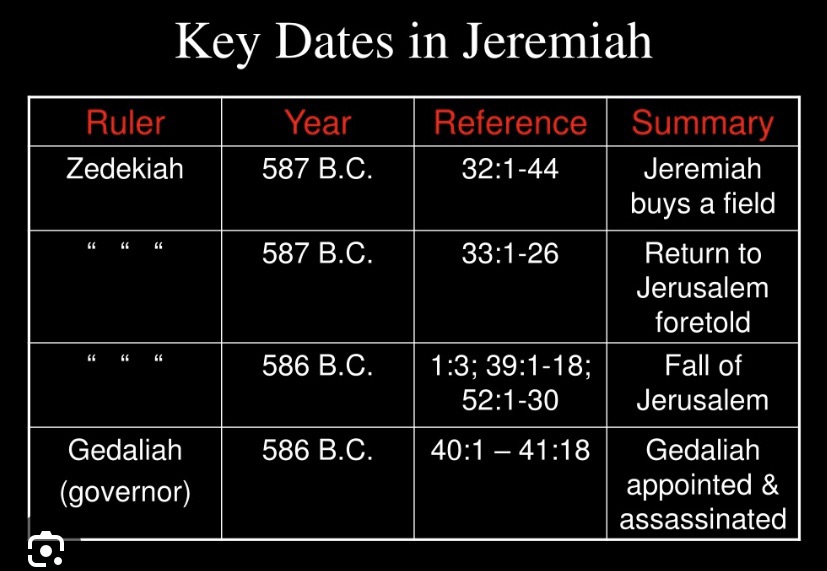
The disrupted nature of this book as a whole is well-documented. The chronological disjunctures throughout the 52 chapters can be seen when we trace the references to various kings of Judah: in order, we have Josiah in 627 BCE (Jer 1:2), jumping later to Zedekiah in 587 BCE (21:1), then back earlier to Shallum (i.e. Jehoahaz) in 609 BCE (22:11), Jehoiakim from 609 to 598 BCE (22:18), and Jeconiah in 597 BCE (22:24).

The book then returns to Zedekiah in 597 BCE (24:8), then back even earlier to Jehoiakim in April 604 BCE, “the first year of King Nebuchadrezzar of Babylon” (25:1)—and then further haphazard leaps between Zedekiah (chs. 27, 32-34, 37–38, and 51:59) and Jehoiakim (chs. 26, 35, 45) as well as the period in 587 after the fall of Jerusalem when Gedaliah was Governor (chs. 40–44). It is certainly an erratic trajectory if we plot the historical landmarks!

Rather than a straightforward chronological progression, the arrangement of the book is more topical, since oracles on the same topic are grouped together even though they may have been delivered at different times. This topical arrangement is easy to trace: 25 chapters of prophecies in poetic form about Israel, 20 chapters of narrative prose, and six chapters of prophecies against foreign nations. 

Early in the opening chapters, as Jeremiah prophesies against Israel, he reports that God muses, “you have played the whore with many lovers; and would you return to me?” (3:1). The idolatry and injustices practised by the people of Israel have caused God concern. Throughout the poetry of the prophetic oracles in chapters 1—25, God cajoles, encourages, warns, and threatens the people. The passage proposed for this Sunday sits within this opening section of oracles.

There are various theories as to how the book was put together; most scholars believe that someone after the lifetime of Jeremiah has brought together material from collections that were originally separate.

Indeed, A.R. Pete Diamond concludes that “like it or not, we have no direct access to the historical figure of Jeremiah or his cultural matrix”; we have “interpretative representations rather than raw cultural transcripts”, and thus he argues that the way we read this book should be informed by insights from contemporary literary theory, and especially by reading this book alongside the book of Deuteronomy, as it offers a counterpoint to the Deuteronomic view of “the myth of Israel and its patron deity, Yahweh” (Jeremiah, pp. 544–545 in the Eerdman’s Commentary on the Bible, 2003). 

So whereas Deuteronomy advocates a nationalistic God, Jeremiah conceives of an international involvement of Israel’s God. Commenting on this, Anthony Rees observes: “In this famous passage the covenant obligations which govern Judah’s relationship with God are given a broader understanding. Any nation can avoid divine punishment by turning from evil. Likewise, a nation that turns to evil stands condemned by God.”

Prof. Rees then draws an interesting conclusion. “Perhaps this relativizes Judah’s relationship with their God”, he proposes. “However, they maintain something the other nations lack: knowledge. Repeatedly God affirms that they are the only people amongst the nations who have been known by God and know God.”

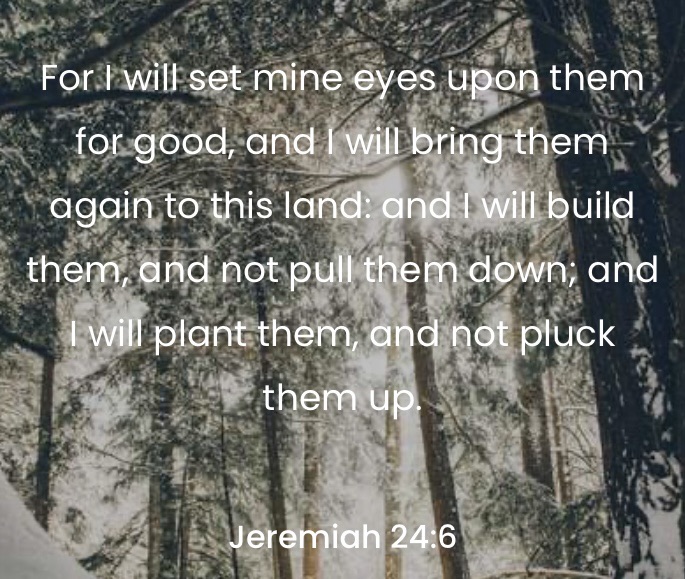
In a later oracle, when God is considering to bring Israel back out of exile, into their land, he says, using familiar imagery, “I will build them up, and not tear them down; I will plant them, and not pluck them up” (Jer 24:6).

He continues, “I will give them a heart to know that I am the Lord; and they shall be my people and I will be their God, for they shall return to me with their whole heart” (24:7). This is the fruit of knowledge: to be completely faithful to the Lord God.

And then, in yet another oracle—and this one so well-known because of how it is used in the New Testament—the prophet reports God’s intention to make “a new covenant” and to “put my law within them and … write it on their heart”. In this situation, “no longer shall they teach one another, or say to each other, ‘Know the Lord’, for they shall all know me, from the least of them to the greatest” (Jer 31:31–34). This knowledge is at the heart of the covenant. As the psalmist sings, “this I know, that God is for me” (Ps 56:9b). Or, as the Sunday school song goes, “Jesus loves me, this I know”.

So Prof. Rees concludes: “This is the great tragedy of [Israel’s] failure, and our own, that we know, and yet still follow our own plans that run contrary to the desires of God. Still, here we have the prophetic call to turn, to amend our ways and to live into that which, and whom, we know.” It is a call that stands, still, in our own time. How do we respond?

Screenshot

Seven days and one pair: and God saw that it was good (Genesis 1; Narrative Lectionary for Pentecost 13)

Discussion of Gen 1:1–2:4a for the Narrative Lectionary

The lectionary Gospel reading for the first Sunday in this fourth year of the Narrative Lectionary cycle takes us back to the very beginning of the Bible, to the poetic priestly account of the creation of the world (Gen 1:1—2:4a). There is so much to say about this foundational text; I will be selective!

The story serves as an origin story—for ancient Israel, for the canon of scripture, for Christian thinkers. Words used in origin stories like this have a particular power—and origin stories are always created with care and deliberation, and passed on with love as explaining the essence of being. Each element reflects something of significance in the experience of ancient Israel, and indeed of contemporary humanity.

The first two verses introduce the key characters: God, first described as the one who creates; a formless void, which is how the earth is first described; darkness, an entity in and of itself (not defined in any further way); and the breath of God, sweeping over the waters of the void. 

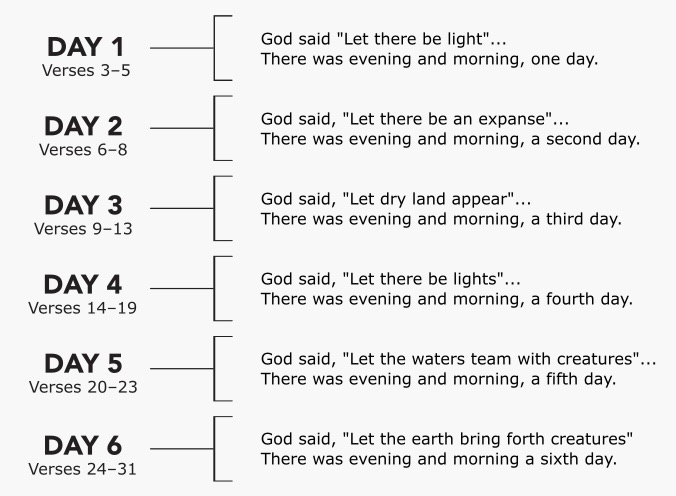
The story that follows in Gen 1 places the creation of light, the first act of creation, at the head of the story. All that happens after that is bathed in the light of God’s creation. Telling of the creation of light (1:3–5) establishes a pattern which is then repeated, five more times, for each of the various elements whose creation is noted in this narrative: the dome, or firmament, separating the waters (1:6–8); waters and dry land, with vegetation (1:9–13); lights in the sky and seasons (1:14–19); swarms of living creatures in sea and sky (1:20–23); living creatures on the earth (1:24–25); and humankind, male and female, in the image of God (1:26–31).

The third verse introduces light, which comes into existence through a single word of command. Then God said, “Let there be light”; and there was light (1:3). Light is the key entity in the creation story, signalling the creative process which then ensues. Each subsequent creative action results from something that God said (verses 6, 9, 11, 14, 20, 24, 26). And each creation is affirmed with the phrase, and it was so (verses 7, 9, 11, 15, 24, and then verse 30).

The fourth verse tells of God’s approval of what had been created: And God saw that the light was good (1:4). Likewise, God then affirms as good the creation of earth and seas (1:10), vegetation (1:12), the sun for the day and the moon for the night (1:18), all living creatures in the seas and in the sky (1:21), then the living creatures on the earth (1:25). Finally, after the creation of humanity in the image of God, there comes the climactic approval: God saw everything that he had made, and indeed, it was very good (1:31).

In a number of the six main sections of the narrative, God explicitly names what has been created: he called the light Day, and the darkness he called Night (1:5), then God called the dome Sky (1:8), God called the dry land Earth, and the waters that were gathered together he called Seas (1:10), followed by plants yielding seed of every kind, and trees of every kind bearing fruit with the seed in it (1:12), and the greater light to rule the day and the lesser light to rule the night—and the stars (1:16). 

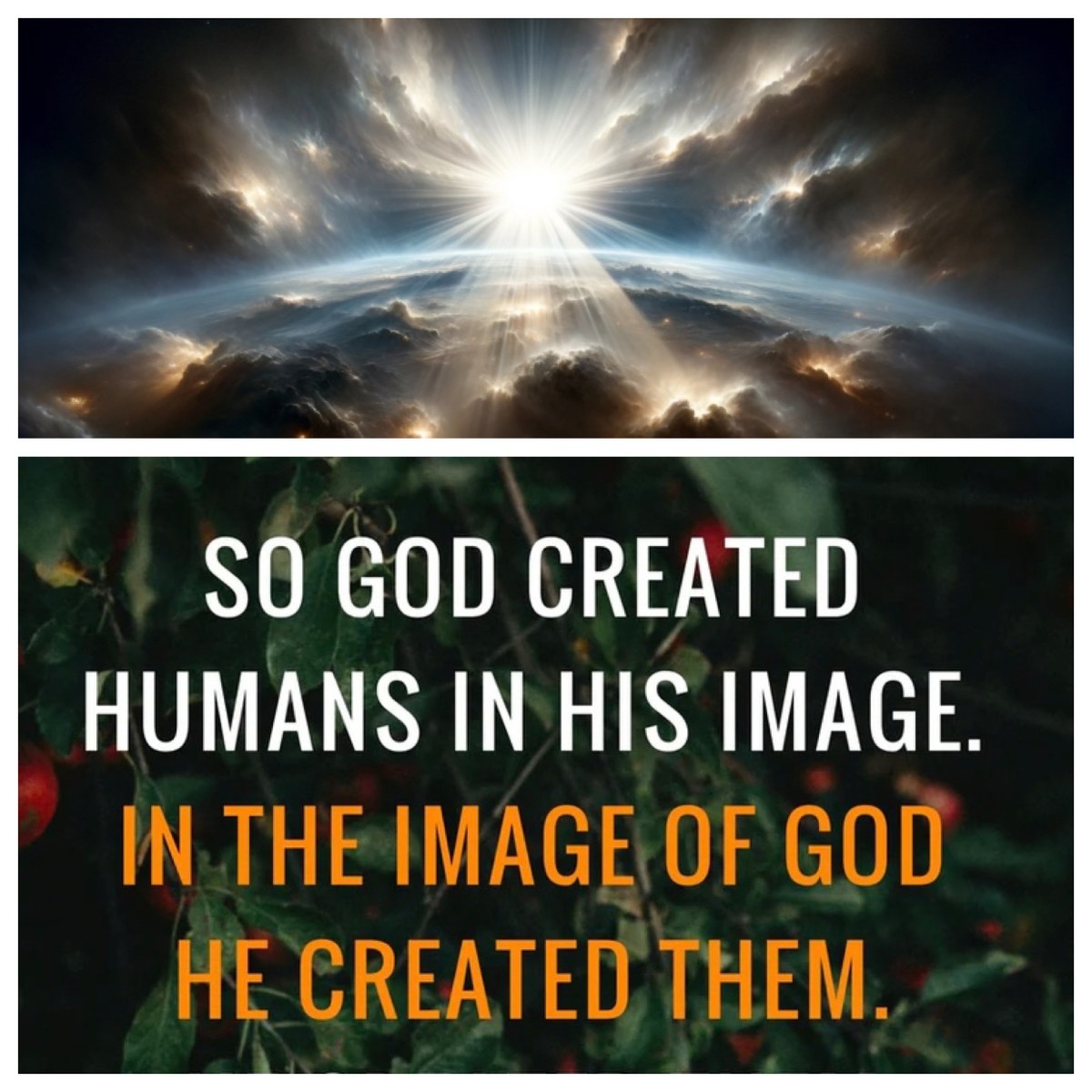
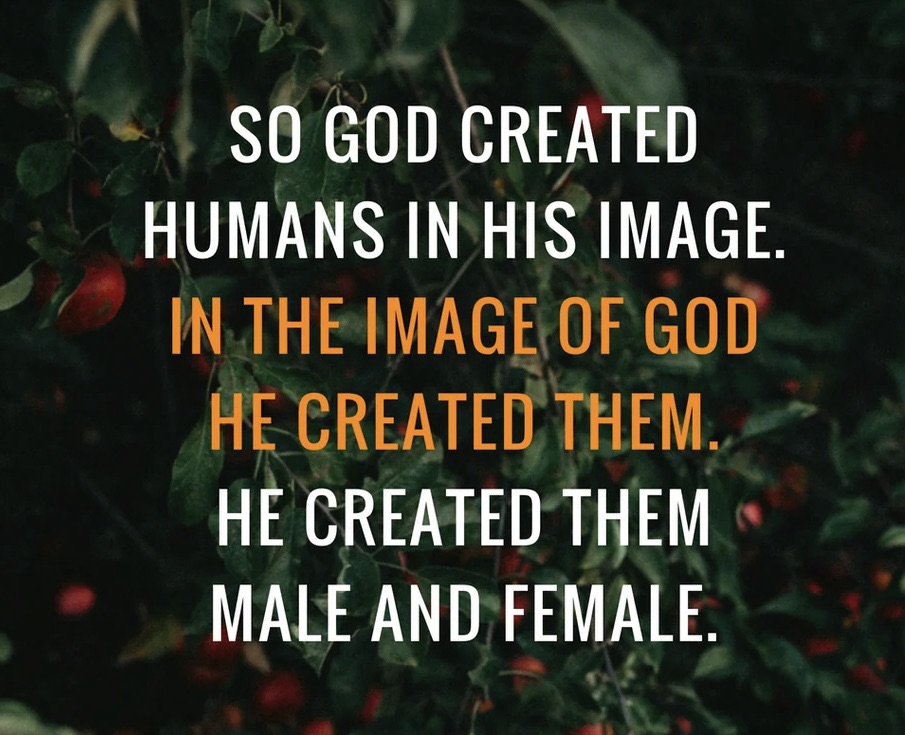
After this, the categories of living creatures are identified (1:21, 25), before the climax of creation is identified: “So God created humankind in his image, in the image of God he created them; male and female he created them” (1:27), and then God’s blessing is narrated (1:28).

Finally, each section concludes with another formulaic note: and there was evening and there was morning, the first day (1:5; likewise, at verses 8, 13, 19, 23, 31), before the whole narrative draws to a close with the note that on the seventh day God finished the work that he had done, and he rested on the seventh day from all the work that he had done (2:2). Of course, it is from this demarcation of the sections of the creative process as “days” that there came the traditional notion that “creation took place over seven days”. 

The notation of “days”, however, is simply to give the story a shape that we can appreciate—they are not literal 24-hour periods, but a literary technique for the story, much like we find that some jokes, some children’s songs, and some fairy stories are constructed around threes (“three men went into a pub …”, or “three blind mice”, or “Goldilocks and the three bears”, etc).

The story is thus told with a set of simple, repetitive phrases, but arranged with sufficient variation to give aesthetic pleasure, and with a growing sense of building towards a climax, to shape the narrative arc towards the culmination of creation (humanity, 1:26) and the completion of the creative task (sabbath rest, 2:2–3).

*****

One verse in this stylised poetic account of creation has attracted much attention over the decades. It is a verse that is most famously quoted by Jesus in an encounter he has with some Pharisees—and so it forms a foundational idea for Christians, as well as Jews. And it is a verse that has particular relevance and importance in the immediate contemporary context, when matters of gender identity and sexuality are regularly in the public discourse.

The story told in Mark 10:2–16 reports this encounter; as they debate the matter of divorce, Jesus offers the Pharisees a quote from a key verse in Genesis, “from the beginning of creation, ‘God made them male and female’” (Gen 1:27).

This verse needs attention; here I want to notes the rabbinic exploration of this text and associated matters. A warning in advance: this will lead to the conclusion that the strict binary understanding of human gender is inadequate. The rabbis clearly understood that not everyone fits these categories. That has important implications for our current understandings of human sexuality and gender.

The quotation from Genesis made by Jesus, that God made human beings as male and female, sounds like a definitive declaration: this is the reality, this is who we are, there is nothing more to debate! Certainly, that’s the way this verse has been used in the “gender wars” that have swirled through western societies in recent times. “God made male and female” became “God made Adam and Eve, not Adam and Steve”, in an early salvo against the emerging number of people who were “outing” themselves as same-gender attracted. “Not so” was the sloganeers’ reply; two genders, each attracted to the opposite, is who we are. Definitively. Resolutely. Absolutely.

It’s worth noting some aspects of this statement in its original context in Genesis. What the priestly authors of the creation story wrote was “God created humankind in his image, in the image of God he created them; male and female he created them” (Gen 1:27). The emphasis is not so much on defining who we are are gendered people—but rather, the verse is reflecting on the amazing feature that, within humanity, signs of divinity are reflected. And in association with that, the statement indicates that the two genders familiar from humanity are somehow reflected in the very nature of God. 

As God’s creatures, we are images of that creating being. The Hebrew word used, tselem (image), indicates a striking, detailed correlation between the human and the deity. This was the insight brought by the authors of this passage, perhaps shaped and honed over generations of telling and retelling the story, passing on through the oral tradition the insights of older generations.

My sense is that these ancients were not so much making a definite declaration about the nature of humanity—an early dogmatic assertion, if you like—as they were actually reflecting on their experience. They sensed that there was something within humanity that reaches out, beyond the material, into the unknown, beyond the tangible, into “the spiritual”. They surely knew the kind of experience that Celtic mystics have known, of coming to a place where “heaven meets earth”—what they call “a thin place”, where God can be sensed in the ordinariness of life. Indeed, such a “thin place” might well be being described in Gen 28:10–22, where Jacob comes to the realisation that “surely, the Lord is in this place” (Gen 28:16).

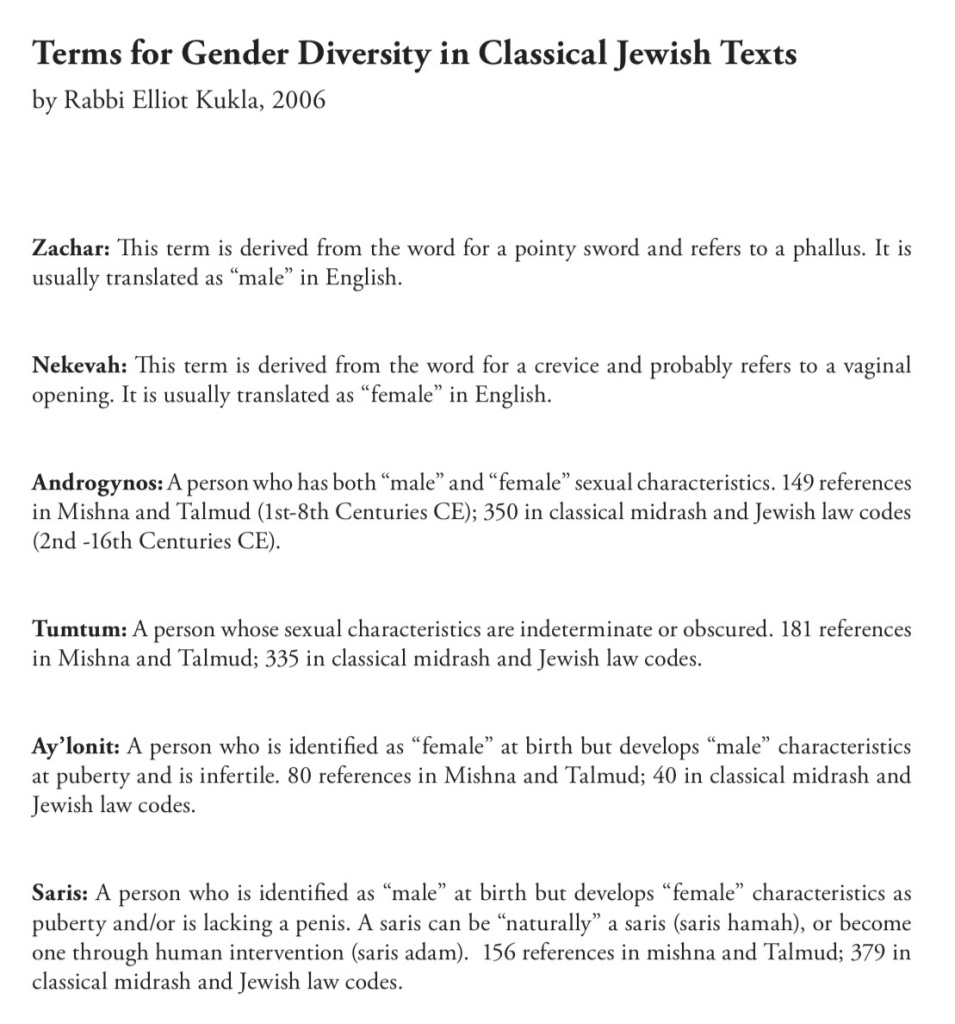
Indeed, as Jewish tradition developed over time, this fundamental duality of human gender—male and female—was questioned, probed, explored, and developed. Rabbis of late antiquity and the early medieval period (using the standard Western terminology) actually identified six genders.

The first move takes place in the Mishnah (early 3rd century). Tractate Bikkurim 4.1 contains the assertion, “an Androginus (a hermaphrodite, who has both male and female reproductive organs) is similar to men in some ways and to women in other ways, in some ways to both and in some ways to neither”.

It is interesting that the term androginus, a Greek term, is simply transliterated in this Aramaic work, as אדדוגינוס. That’s a sign that the consideration of this issue encompassed more than just rabbinic scholars, as they were drawing on insights and the term androginus from the hellenised world.

The text of Bikkurim goes on to offer indications of the ways that an androginus person is similar to, and dissimilar to, each gender (4.2–3). Another passage in the Mishnah identifies people known as a saris, סריס (Yevamot 8.4). These are people we identify as eunuchs; whether these are “eunuchs who have been so from birth … eunuchs who have been made eunuchs by others … [or] eunuchs who have made themselves eunuchs” (as Matthew reports Jesus saying, Matt 19:12) is not relevant in this context.

Presumably, the rabbis refer to males with arrested sexual development who are unable to procreate.  The female term for such people is given as aiylonit, אילונית. The discussion that follows makes it clear that these people are women with arrested sexual development who cannot bear children.

So this means that rabbis recognised four genders: male, female, androgyne, and eunuch (saris). In the Babylonian Talmud (sixth century CE), Rabbi Ammi is quoted as stating that “Abraham and Sarah were originally tumtumim” (טומטמין). Here we find another gender identity term; this time, describing people a person whose sex was unknown because their genitalia were hidden, undeveloped, or difficult to determine. (Tumtum means “hidden”.)

Thus, Abraham and Sarah lived most of their life as infertile, as their sex was not clear; and then, in Rabbi Ammi’s explanation, miraculously turned into a fertile husband and wife in their old age. The Rabbi points to Isa 51:1–2, saying that the instruction to “look to the rock from where you were hewn, and to the hole of the pit from where you were dug […] look to Abraham your father and to Sarah who bore you” explains their genitals being uncovered and miraculously remade.

(Explaining one scripture passage by drawing on another passage, however distantly related—often through their sharing a common word or phrase—was a common rabbinic mode of scripture interpretation.)

Today, we would explain the phenomenon of a tumtum as being an intersex person, born with both male and female characteristics, including genitalia—although modern science would not go so far as to accept a miraculous reversal of the condition, as Rabbi Ammi proposed. 

There’s a quite accessible discussion of these issues in an article by Dr Rachel Scheinerman, entitled “The Eight Genders in the Talmud”, in the My Jewish Learning online resource.

The title reflects the fact that Dr Scheinerman divides both aylonit and saris into two, on the basis of birth identification. So she lists: (1) zachar, male; (2) nekevah, female; (3) androgynos, having both male and female characteristics; (4) tumtum, lacking sexual characteristics; (5) aylonit hamah, identified female at birth but later naturally developing male characteristics; (6) aylonit adam, identified female at birth but later developing male characteristics through human intervention; (7) saris hamah, identified male at birth but later naturally developing female characteristics; and (8) saris adam, identified male at birth and later developing female characteristics through human intervention.

Dr Scheinerman concludes, “In recent decades, queer Jews and allies have sought to reinterpret these eight genders of the Talmud as a way of reclaiming a positive space for nonbinary Jews in the tradition. The starting point is that while it is true that the Talmud understands gender to largely operate on a binary axis, the rabbis clearly understood that not everyone fits these categories.”

https://www.myjewishlearning.com/article/the-eight-genders-in-the-talmud/

Dr. Charlotte Elisheva Fonrobert, a Talmudic scholar in the Department of Religious Studies at Stanford University, California, has provided a much more detailed and technical discussion of the matter of gender identity, in the online resource the Jewish Women’s Archive. See 

https://jwa.org/encyclopedia/article/gender-identity-in-halakhic-discourse

The abstract of this article reads, “Jewish law is based on an assumption of gender duality, and fundamental mishnaic texts indicate that this halakhic duality is not conceived symmetrically (as seen through the gendered exemptions of some commandments). Rabbinic halakhic discourse institutes a functional gender duality, anchored in the need of reproduction of the Jewish collective body. As such, it aims to enforce and normalize a congruence between sexed bodies and gendered identities. Furthermore, the semiotics of body surfaces produces other different and seemingly more ambiguous gender possibilities, and rabbinic discourse has widely discussed the halakhic implications of these ambiguities.”

What that means, I think, is that whilst Torah prescriptions are based on a definite duality of gender (you are either male or female), later rabbinic discussions entertained the possibility of a range of gender identifications. In this regard, the rabbinic discussions prefigured the move in contemporary society to recognise the full spectrum of diversity amongst human beings: some men are gay, some women are lesbian; some people are bisexual, attracted to both genders, while others are asexual, having no sexual-attraction feelings at all. 

Biologically, we know that some are born intersex, with both male and female physical characteristics; whilst psychologically, some people are born into a body that is clearly one gender have an internal energy that leads them to identify with the opposite gender, and so they undergo a medical transition to that gender, and we identify them as transgender people. And so we have the now-widespread “alphabet soup” of LGBTIQA+ (where the plus sign indicates there may well be other permutations within this widely diverse spectrum).

So we would do well not to remain in a static state of assertion that the Genesis text is a prescription for how human beings should be identified (and a definition for marriage). I think it is preferable to add into the discussion both the rabbinic understandings,  contemporary medical understandings, and psychological insights that reveal a wide spectrum of gender identities; a dazzling kaleidoscope of “letters”, as it were. For this is how we human beings are made, in an image that reflects the diversity and all-encompassing nature of God. 

I believe it is important that, rather than misusing the Genesis/Mark text as a club to batter people into submission, we ought to rejoice in the diversity we see amongst humanity, and affirm that, no matter whether L or G, whether B or A, whether T or I, all people who are Q, and all who are straight, are “fearfully and wonderfully made” (Ps 139:14).

There is a helpful collection of the Jewish texts relating to this matter in the online resource, Sefaria, entitled “More Than Just Male and Female: The Six Genders in Ancient Jewish Thought”, collated by Rabbi Sarah Freidson of Temple Beth Shalom in Mahopac, NY, USA. See

https://www.sefaria.org/sheets/37225?lang=bi

And so, in the end, given the rabbinic midrashic exploration and exposition of this crucial text, I hope we can come to the same conclusion as the ancient priestly writers: “God saw everything that he had made [including the diversity of gender expressions within humanity], and indeed, it was very good”.


In the sound of sheer silence (1 Kings 19; Pentecost 2C)

In the passage which the lectionary places before us this coming Sunday (from 1 Kings 19), we meet the first of a number of prophetic figures whose deeds are recounted in the books of the Kings or whose words are collected within the Hebrew Scriptures under the catch-all second section of Nevi’im (Prophets).

The first of these prophetic figures is the Elijah the Tishbite, who was introduced as coming from Tishbe in Gilead (1 Ki 17:1), a place whose precise location has occasioned some debate.  See https://www.biblegateway.com/resources/encyclopedia-of-the-bible/Tishbite

Elijah is later described as “a hairy man, with a leather belt around his waist” (2 Ki 1:8). This initial portrayal of Elijah is nested within the accounts of that long period of time when Israel was ruled by kings, when prophets functioned as the conscience of the king and the voice of integrity within society. The distinctive dress of Elijah perhaps sets him apart from the court of the kings, where a more “civilized” dress code was presumably operative. Nevertheless, Elijah does have some engagement with the kings who ruled at the time he was active: Ahab, and then Ahaziah. Indeed, his distinctive dress points to his emboldened attitude towards those kings.

Elijah operated during the period when Ahab ruled Israel; he figures in various incidents throughout the remainder of 1 Kings—most famously, in the conflict with the prophets of Baal which came to a showdown on Mount Carmel (1 Ki 18), and then later in his confrontation with Ahab and his wife Jezebel, over the matter of Naboth’s vineyard (1 Ki 21). Like Jesus, Elijah was no shrinking violet!

Elijah first appears in the narrative of the various kings, seemingly out of nowhere, just after King Ahab had taken as his wife Jezebel, daughter of King Ethbaal of the Sidonians, who presumably influenced him to begin his worship of Baal (1 Ki 17:31–33). In the same way, at the end of his time of prophetic activity, Elijah simply disappears from sight soon after Kong Ahaziah died. Elijah hands over his role to his successor, Elisha, and as “a chariot of fire and horses of fire separated the two of them”, Elijah ascends in a whirlwind into heaven (2 Ki 2:1–15).

In the book we know as 1 Kings, the compiler of the Deuteronomic History reports many incidents which attest to the courage and power of Elijah. The boldness of Elijah is evident in the confrontations that he has with made clear, centuries later, to the followers of Jesus, in the earliest account of his life, when John the baptiser is depicted as a fiery desert preacher, calling for repentance, just as Elijah had called the kings to account (Mark 1:1–8). In a later account of Jesus, there is a clear inference connecting John with Elijah when Jesus notes, “Elijah is indeed coming and will restore all things; but I tell you that Elijah has already come, and they did not recognize him, but they did to him whatever they pleased” (Matt 17:11–12).

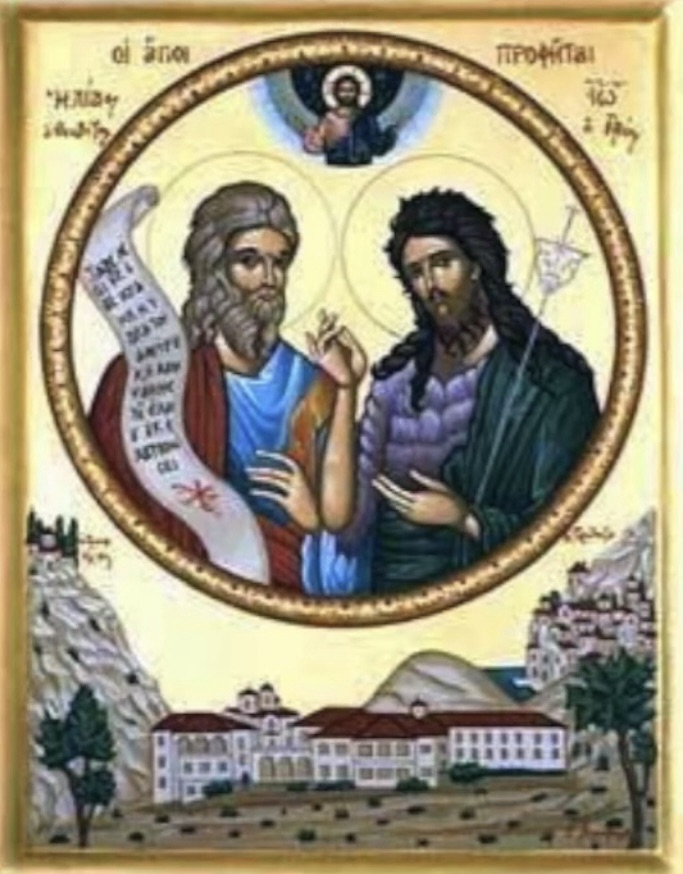
An icon of the Prophet Elijah and Saint John the Baptist from the Monastery of the Prophet Elias (Elijah) in Preveza, Greece

Then, in his sermon in Nazareth (Luke 4:16–30), Jesus refers to the first reported miracle of Elijah, when he provided a widow in Zarephath with food and oil that “did not fail”, even though the land was in drought (1 Ki 17:1–16). In subsequent incidents in 1 Kings, Elijah raises a dead son (17:17–24), directly confronts King Ahab with his sins (18:1–18), and famously stares down the prophets of Baal in a mountaintop showdown (18:19–40), leading to the breaking of the drought (18:41–46).

Elijah later condemns Ahab over his unjust seizure of the vineyard of Naboth (21:17–29) and then stands before Ahab’s son, King Ahaziah, to condemn him to death (2 Ki 1:2–16); a death “according to the words of of the Lord that Elijah had spoken” which is promptly reported (2 Ki 1:17). 

During the rule of Ahab, Elijah had also most famously heard the Lord God “not in the wind … not in the earthquake … not in the fire”—but rather in something else, which the NRSV renders as “the sound of sheer silence” (1 Ki 19:11–12). This incident is, as noted, the story set before us by the lectionary this coming Sunday. We need to ponder what is being conveyed through the symbols employed in this story. 

The three means by which God is said not to have appeared to Elijah reflect the very same means through which Moses, and the people of Israel, did experience the manifestation of the Lord God in their midst. When the escaping Israelites arrived at the Sea of Reeds, according to one version of this archetypal story, “the Lord God drove the sea back by a strong east wind all night, and turned the sea into dry land; and the waters were divided” (Exod 14:21). 

The people later celebrated the defeat of the Egyptians who were pursuing them: “you blew with your wind, the sea covered them; they sank like lead in the mighty waters” (Exod 15:10). The wind was a sign of God’s presence, and an agent of divine protection—indeed, it was the very same “wind from God” which “swept over the face of the waters” at the beginning of creation (Gen 1:2). But for Elijah, the Lord God was “not in the wind”.

Then, as they had travelled through the wilderness, the people were accompanied by a blazing fire, another sign of divine presence: “the Lord God went in front of them in a pillar of cloud by day, to lead them along the way, and in a pillar of fire by night, to give them light, so that they might travel by day and by night” (Exod 13:21). The fire signalled the divine presence.

Indeed, the very same flaming fire had been manifested to Moses when he was but a mere shepherd in Midian; “the angel of the Lord appeared to him in a flame of fire out of a bush; he looked, and the bush was blazing, yet it was not consumed” (Exod 3:2). What follows is the account of the call of Moses; God tells him “I will send you to Pharaoh to bring my people, the Israelites, out of Egypt” (Exod 3:10). The fire had been the assurance to Moses that it was the Lord God who was present.  But for Elijah, the Lord God was “not in the fire”.

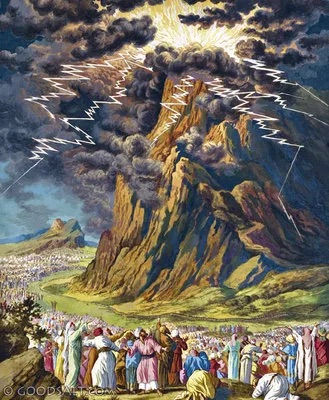
The same element of fire was present when Moses and the people ultimately arrived at Mount Sinai in the wilderness of Sinai (Exod 19:1–2). “Mount Sinai”, so the account goes, “was wrapped in smoke, because the Lord had descended upon it in fire; the smoke went up like the smoke of a kiln, while the whole mountain shook violently” (Exod 19:18). Associated with this there was “thunder and lightning, as well as a thick cloud on the mountain, and a blast of a trumpet so loud that all the people who were in the camp trembled” (Exod 19:16). 

The scene at Sinai surely reflects the experience of an earthquake; the same phenomenon that prophets would later interpret as a sign of divine presence—indeed, divine judgement. “You will be visited by the Lord of hosts”, Isaiah subsequently tells the people of his time, “with thunder and earthquake and great noise, with whirlwind and tempest, and the flame of a devouring fire” (Isa 29:6). 

Still later, Zechariah describes how “the Mount of Olives shall be split in two from east to west by a very wide valley”, and instructs the people, “you shall flee as you fled from the earthquake in the days of King Uzziah of Judah; then the Lord my God will come, and all the holy ones with him” (Zech 14:4–5).

Nahum reflects on the jealous and avenging nature of God, declaring that “his way is in whirlwind and storm, and the clouds are the dust of his feet; he rebukes the sea and makes it dry, and he dries up all the rivers; the mountains quake before him, and the hills melt; the earth heaves before him, the world and all who live in it” (Nah 1:2–5). 

This dramatic motif continues on into later apocalyptic writings (Isa 64:1; 1 Esdras   4:36; 2 Esdras 16:12). The prophets and their apocalyptic heirs  knew clearly that this whole dramatic constellation of events revolving around an earthquake was a sign of divine presence.  But for Elijah, the Lord God was “not in the earthquake”. He was heard in something quite different.

What did Elijah hear? The Hebrew phrase found in verse 12 is qol d’mamah daqqah.

The King James Version translated this as “still small voice”.  More recent translations have provided variants on how these words might be translated. Alternatives that are found include “the sound of a low whisper” (ESV), “a gentle whisper” (NIV, NLT), “a soft whisper” (CSB), or “the sound of a gentle blowing” (NASB). These reflect variations on the kind of nuance that the KJV was offering. 

However, the NRSV option of translating this phrase as “the sound of sheer silence” is more confronting: the presence of God is sensed in the absence of sound; any communication from the deity comes, not in audible sounds, but in the utter absence of any sound. It is a striking paradox!

And in the context of the developing story of 1 Kings, the paradox is strong. Earlier, the prophet had stood firm against the might of Baal, the foreign god whom Ahab and Jezebel had prioritized in the life of Israel (1 Ki 18:17–40). When “the four hundred and fifty prophets of Baal and the four hundred prophets of Asherah who eat at Jezebel’s table” gathered on Mount Carmel, they failed to obtain any response from their god, the god of storms. No matter how intensely they raised their frenzied pleas, all they heard was “no voice, no answer, no response” (18:29).

Elijah, by contrast, prays to the Lord God and the fire of his god fell on the sacrificial altar; it consumed “the burnt offering, the wood, the stones, and the dust, and even licked up the water that was in the trench” (18:38). The victory was absolute and complete; the storm god had been defeated. And yet, the deity who accomplished this would communicate most personally and intimately with his chosen prophet, “not in the wind … not in the earthquake … not in the fire”, but rather in “a sound of sheer silence” (19:11–12). What a deliciously powerful irony!

Elijah was his own, distinctive man, with his own, distinctive encounter with God. He experienced God in a way quite different from what was experienced by Moses and the people of Israel. He experienced God in a way that stood apart from his contemporaries who were priests and prophets of Baal. For that reason, whilst the Lord God of Elijah stands over and against the Baal of Ahab and Jezebel, so too Elijah stands alongside and apart from Moses as a different, but equally great, leader of the people.

At the crossroads, beside the gates: Wisdom in the public places (Sunday after Pentecost; Proverbs 8)

“On the heights, beside the way, at the crossroads … beside the gates”. So Wisdom is located, in these opening verses of the section of Proverbs which the lectionary offers us for this Sunday, the first Sunday after the festival of Pentecost (Prov 8:1–4). Of course, this day is identified in the liturgical calendar as Trinity Sunday, and this passage from Proverbs is one of a number of Scripture passages which, over three years, are proposed for this particular Sunday. 

The others are Genesis 1, where God, God’s word, and God’s spirit are to be found, and Isaiah 6, which includes the tripartite song “holy, holy, holy”; and Psalms 8, a song in praise of creation, and 29, singing of “the voice of the Lord”. None of them, of course, make any specific claim that can be seen to be articulating a “doctrine of the Trinity”. It is up to later Christian interpreters to “read back” into the passage any inferences regarding a triune God.

In this post I am not going to attempt any exegetical gymnastics, to find aspects of the threefold nature of God in what is said about Wisdom. Rather, I want to highlight the importance of what is said about where Wisdom exercises her ministry (in this post) and the significance of the role that Wisdom plays in the creation of the world (in the following post). These are themes that are inherent in the passage itself; as we attend to these matters, we don’t need to squeeze, distort, or manipulate the text to make it conform with a much later dogmatic theory. 

Wisdom is positioned in the public places of her society—places where, normally, males would be found, transacting their business, arguing their views, maintaining the honour of their public status. Instead, in this poem, as also in the opening poem about Wisdom at 1:20–33, the female figure is placed firmly within those traditionally-male places. In the earlier poem, she was said to be crying out “in the street” (1:20), raising her voice “in the squares”, speaking forth “at the busiest corner” (1:20–21). 

The street is where the prophet Jeremiah is commissioned to proclaim his message in the pubic place of the streets (Jer 11:6); the squares are where this same prophet is to search, to see “if you can find one person who acts justly and seeks truth” (Jer 5:1). So here in Proverbs, Wisdom  is functioning in a very public place.

This claim is intensified with the further declaration that Wisdom takes her stand “at the crossroads” (8:2). This is reminiscent of the earlier assertion about Wisdom: “at the busiest corner she cries out; at the entrance of the city gates she speaks” (Prov 1:21). The street corner may well have been the location for public prayer by some, if the words of Jesus reflect the common practice of “the hypocrites [who] love to stand and pray in the synagogues and at the street corners, so that they may be seen by others” (Matt 6:5).

However, it is the mention of “the gates in front of the town” (8:3) that is most significant. The same claim, placing Wisdom “at the entrance of the city gates”, is made in the earlier poem (1:21). The gates were important parts of the protective structure surrounding towns and cities; built into the walls at strategic locations, they could be opened to allow for the coming and going of traders and visitors, or they could be closed to keep out enemies and invaders. “Fortress towns” are described in Deut 3:5 as having “high walls, double gates, and bars”. King Asa decreed “let us build these cities, and surround them with walls and towers, gates and bars” (2 Chron 14:7). 

In Jerusalem, the Chronicler claimed that it was the Levites who had responsibility for the gates, as Solomon appointed “gatekeepers in their divisions for the several gates” (2  Chron 8:14). When Judith calls out to be let into the city, the elders of the town “opened the gate and welcomed them, then they lit a fire to give light, and gathered around them” (Jud 13:12–13). Opening the gates is a clear sign of welcome to those acceptable to enter. 

Accordingly, the gates of the city became the place where various matters associated with the life of the city took place. When God’s angels arrived in Sodom, Lot was “sitting in the gateway,” apparently serving as a judge (Gen 19:1, 9). In association with the rape committed on Dinah, “Hamor and his son Shechem came to the gate of their city and spoke to the men of their city” (Gen 34:20). The “men of the city” are apparently often to be found in this location.

When David gathered his troops to fight against the uprising led by Absalom, “the king stood at the side of the gate, while all the army marched out by hundreds and by thousands” (2 Sam 18:4). After Absalom was killed, “the king got up and took his seat in the gate; the troops were all told, “See, the king is sitting in the gate”; and all the troops came before the king” (2 Sam 19:8). In a story from much later, Mordecai learned of plans to assassinate the king while “sitting at the king’s gate” (Esther 2:19).

Earlier in the narrative saga of Israel, when a soldier arrived at Shiloh and reported that Philistines had captured the ark of the covenant, Eli was sitting in the gate where “he had judged Israel forty years” (1 Sam 4:10–18). It was already known as a place for the judging of cases by the elders. That this took place at the city gates is clear from the story of Ruth, for Boaz went to the town gate to settle legal matters regarding his marriage to Ruth (Ruth 4:1–11). 

Moses instructs Israel to “appoint judges and officials throughout your tribes, in all your gates that the Lord your God is giving you, and they shall render just decisions for the people” (Deut 16:18). One of the laws decrees that parents of a rebellious son who would not submit to their discipline were to “take hold of him and bring him out to the elders of his town at the gate of that place” and there “all the men of the town shall stone him to death; so you shall purge the evil from your midst” (Deut 21:18–21). Such was the nature of justice rendered “ at the gates”.


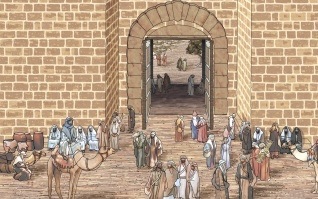
What the city gates may have looked like:
a place of entry, a meeting place

So finding Wisdom “beside the gates in front of the town, at the entrance of the portals” (Prov 8:3) is striking. This is the place where the men of the city would gather, debate, and render justice. In the normal course of events, women would not be found at the gates; their domain was inside the houses with their families. The acrostic poem at the end of the book of Proverbs clearly locates the “woman of valour” in the house, from daybreak, when “she rises while it is still night and provides food for her household and tasks for her servant-girls” (Prov 31:15), through the day as “she girds herself with strength, and makes her arms strong” (31:17) to complete the many tasks listed in this poem, right until the darkness comes, when “her lamp does not go out at night” (31:18b). See

See also

Executing justice and righteousness: the glory of the holy God (Ps 99; Transfiguration)

“You have established equity; you have executed justice and righteousness in Jacob” (Ps 99:4). So the psalmist sings, in the psalm offered by the lectionary for this coming Sunday, The Feast of the Transfiguration. Perhaps it has been selected for this festival because it depicts the Lord sitting “enthroned upon the cherubim” as the earth quakes (v.1), that he spoke to Israel “in the pillar of cloud” (v.7)—images that resonate with the stories of Moses and Jesusnthatnwe have heard this week.

Noting that leaders of the past have called out to God and been answered—Moses, Aaron, and Samuel (99:6)—the psalmist praises God, “you answered them; you were a forgiving God to them, but an avenger of their wrongdoings” (99:8).

In this psalm it is the king, the “Mighty King, lover of justice [who has] established equity” (99:4), whose “royal scepter is a scepter of equity” (Ps 45:6), modelled on the Lord God himself, who “judges the world with righteousness [and] judges the peoples with equity” (Ps 9:8; see also 67:4; 75:2; 96:10; 98:9). Accordingly, King David is remembered as the one who “administered justice and equity to all his people” (2 Sam 8:15; 1 Chron 18:14), and the opening words of the book of wisdom attributed to King Solomon are “love righteousness, you rulers of the earth, think of the Lord in goodness and seek him with sincerity of heart” (Wisd Sol 1:1).

Divine justice is regularly noted in tandem with God’s mercy forgiveness. “Great is your mercy, O Lord; give me life according to your justice” (Ps 119:156); and “in your steadfast love hear my voice; O Lord, in your justice preserve my life” (Ps 119:149). The prophet Isaiah tells the rebellious people of his day, “the Lord waits to be gracious to you; therefore he will rise up to show mercy to you—for the Lord is a God of justice; blessed are all those who wait for him” (Isa 30:18).

Likewise, through the prophet Hosea, the Lord God promises to Israel, “I will take you for my wife in righteousness and in justice, in steadfast love, and in mercy” (Hos 2:19), whilst centuries later, Ezekiel reminds the exiles of God’s pledge: “I say to the righteous that they shall surely live, yet if they trust in their righteousness and commit iniquity, none of their righteous deeds shall be remembered; but in the iniquity that they have committed they shall die” (Ezek 33:13). Justice and mercy belong hand-in-hand, as yet another prophetic voice declares as the exiles are returning to the land: “in my wrath I struck you down, but in my favour I have had mercy on you” (Isa 60:10).

God’s mercy sat at the heart of the covenant made with Israel; the Lord affirms to Moses, “I will be gracious to whom I will be gracious, and will show mercy on whom I will show mercy” (Exod 33:19). So in the longest psalm, declaring persistent praise of the Law, the psalmist offers the petition, “let your mercy come to me, that I may live, for your law is my delight” (Ps 119:77). A number of other psalms likewise contain petitions God to show mercy (Ps 25:6; 40:11; 51:1; 69:16; 123:3).

Jesus, centuries later, brings together mercy and justice when he accuses the scribes and the Pharisees of hypocrisy, as they “neglect the weightier matters of the law: justice and mercy and faith” (Matt 23:23).

Justice, of course, is at the heart of the covenant that God made with Israel. Moses is said to have instructed, “justice, and only justice, you shall pursue” (Deut 16:20), the king is charged with exhibiting justice (Ps 72:1–2; Isa 32:1), whilst many prophets advocate for justice (Isa 1:17; 5:7; 30:18; 42:1–4; 51:4; 56:1; Jer 9:24; 22:3; 23:5; 33:15; Ezek 18:5–9; 34:16; Dan 4:37; Hos 12:6; Amos 5:15, 24; Mic 3:1–8; 6:8).

That God is righteous is likewise declared in scripture (Deut 32:4; Ps 145:7; Job 34:17). The psalmists regularly thank God for God’s righteousness (Ps 5:8; 7:17; 9:8; 33:5; 35:24, 28; 36:6; 50:6; etc) and note the importance of humans living in that same way of righteousness (Ps 18:20, 24; 85:10–13; 106:3, 31; 112:1–3, 9).

The book of Proverbs advises that the wisdom it offers is “for gaining instruction in wise dealing, righteousness, justice, and equity” (Prov 1:3) and the prophets consistently advocated for Israel to live in accordance with righteousness (Hos 10:12; Amos 5:24; Isa 1:22; 5:7; 28:17; 32:16–17; 54:14; Jer 22:3; Ezek 18:19–29; Dan 9:24; 12:3; Zeph 2:3; Mal 4:1–3; Hab 2:1–4).

This psalm thus focusses some important elements in the Israelite understanding of God, summarising notes from many places elsewhere in Hebrew Scriptures. These recurring notes of the nature of God then form the basis for a Christian understanding of Jesus, who affirms mercy (Matt 23:23), teaches righteousness (Matt 5:6, 10, 20; 6:33), offers forgiveness (Mark 2:10; Luke 23:34; 1 John 1:9), and exudes grace (John 1:14–18). The affirmation made in this ancient Jewish psalm is one that we Christians can joyfully sing and affirm this Transfiguration!

*****

The situation in the Middle East continues to be volatile. My reflections in the early stages of the present inflammation of that conflict is at

The skin of his face was shining (Exod 34; Transfiguration)

As the coming Sunday is the Festival of the Transfiguration, the passages offered by the lectionary cluster around the theme of the revelation of God’s glory. That is what happened for the three disciples on the mountain, when Jesus was transfigured (Luke 9:28–36). That was also the experience for Israel, in a story that is much older. When Moses came down from the mountain, Aaron and all the Israelites saw that “the skin of his face shone because he had been talking with God” (Exod 34:29–35). 

I’ve reflected on the Gospel in another blog. To better understand the significance of this statement in Exodus, we need to see this Hebrew Scripture passage in its larger narrative context. See

This incident comes after a very significant moment in the story of Israel, when the people had sinned by making a golden calf to worship (32:1–6). This story most likely relates to the god who was regarded as the head of the gods amongst the Canaanites—El, who was often depicted as a bull. The bull was the strongest animal in the ancient farmyard, and thus a fitting symbol for a powerful god. The Israelites chose to imitate that god through their golden construction. The story told in Exodus 32 mocks the Canaanite god, depicting him as more like a calf. 

By adopting a Canaanite symbol, the Israelites had turned from God (32:21). It seems they would deserve their fate—although Moses interceded and saved them from divine wrath (32:23). Moses is the hero who stands in the breach, to convince God to change God’s mind. He had negotiated with God for forgiveness (32:11–14, 30–34), and had also sought clarification from God as to what “God’s ways” entailed (33:16–17). 

In response, God promises that “my presence will go with you, and I will give you rest” (33:14), but Moses presses his case: “show me your glory, I pray” (33:18). Not just the divine presence, but the glory of God is what Moses seeks. God does not respond exactly as Moses hoped for, saying that “I will make all my goodness pass before you, and will proclaim before you the name, ‘The Lord’; and I will be gracious to whom I will be gracious, and will show mercy on whom I will show mercy” (33:19).

These words that the Lord offers to Moses are subsequently echoed in the prayer that Moses offers Aaron and his sons: “the Lord bless you and keep you … and be gracious to you” (Num 6:22–27)—a ancient prayer which lives on in Christian spirituality and liturgy! 

However, the Lord God stops short of full self-revelation, declaring, “you cannot see my face; for no one shall see me and live” (Exod 33:20). Moses is granted a view of God’s “back”, but is not able to see the face of God (33:23). Now, the Hebrew word here translated as “back” refers to the “hindquarters”—a polite way of saying that Moses saw only God’s exposed buttocks, rather than his smiling face. Almost every translation chooses the polite wording, “my back”. The King James Version comes closest to an honest translation with “my back parts”. We might best translate this verse as “you will see my backside, but not my face”.

Yet the request for God’s face to shine upon people is made in a number of psalms. “There are many”, says the psalmist, “who say, ‘O that we might see some good! Let the light of your face shine on us, O Lord!’” (Ps 4:6). In Psalm 31, the psalmist sings, “Let your face shine upon your servant; save me in your steadfast love” (Ps 31:16). Again in Psalm 67, the psalmist echoes more explicitly the Aaronic Blessing, praying, “May God be gracious to us and bless us and make his face to shine upon us—Selah—that your way may be known upon earth, your saving power among all nations” (Ps 67:1–3).

So although Moses asks God to “show me your glory” (33:18), he is permitted to see back(side) of God, but not the full glory of God (33:21–23). This encounter is enough to make “the skin of [Moses’s] face shine because he had been talking with God” (34:30, 35). Of course, this story, located within the mythic sagas of ancient Israel, is not presented as an historical account. Rather, as myth (a story with a deep meaning) it is rich with symbolism—encountering the divine is a deeply transformative experience. 

The Lord God had assured Moses that “you have found favour in my sight, and I know you by name” (33:17). And so, after the breach of the covenant that took place in the creation of the idolatrous image of the Canaanite Bull, Moses and the Lord God renew the covenant with Israel (34:1–28). This reinforces that God’s favour remains with the nation. As the people remain faithful to the various requirements that are stipulated (34:11–26), including pilgrimage by all adult males three times a year to the temple (34:23), so the Lord God promises “I will cast out nations before you, and enlarge your borders; no one shall covet your land when you go up to appear before the Lord your God three times in the year” (34:24). That is how God’s favour is shown.

Throughout the worship of the Lord God in the temple, psalmists have prayed for God’s favour to be shown to the faithful people of Israel (Ps 90:17; 106:4; 119:58). As well as in this covenant renewal ceremony (Exod 34:9), the ancestral sagas of Israel record that God showed favour to Noah (Gen 6:8), Joseph (Gen 39:4), Moses (Exod 33:12–17), the people in the wilderness (Lev 26:9), Samuel (1 Sam 2:26), Manasseh (2 Chron 33:12–13), and the remnant who returned to the land (Ezra 9:8). God’s gracious favour endures through the generations.

The favour of the Lord is manifested most often in “the glory of the Lord” which shines over Israel. Moses had experienced this on the top of Mount Sinai, when “the appearance of the glory of the Lord was like a devouring fire on the top of the mountain in the sight of the people of Israel” (Exod 24:16–18). That glory had already been seen by the Israelites in the wilderness of Sin (Exod 16:10), and that glory filled the tabernacle when the people had finished constructing it (Exod 40:34–35). 

The closing verse of the book of Exodus notes that “the cloud of the Lord was on the tabernacle by day, and fire was in the cloud by night, before the eyes of all the house of Israel at each stage of their journey” (Exod 40:38). A number of other references to this are made throughout the books of the Torah (Lev 9:6, 23; Num 14:10; 16:19, 42; 20:6; Deut 5:24). This appears to have continued on until the ark of God was captured by the Philistines, for at that moment “the glory has departed from Israel” (1 Sam 4:21–22). 

Centuries later, at the time that Solomon prayed his lengthy prayer of dedication of the newly-built Temple in Jerusalem, “when the priests came out of the holy place, a cloud filled the house of the Lord, so that the priests could not stand to minister because of the cloud; for the glory of the Lord filled the house of the Lord” (1 Kings 8:10–11; 2 Chron 7:1–3). 

The glory of the Lord was then closely associated with the Temple in ensuing centuries, as various psalms attest (Ps 24:3–10; 96:7–8). “O Lord, I love the house in which you dwell, and the place where your glory abides”, one psalmist sings (Ps 26:8); yet other psalms extend the location of God’s glory, exulting that it extends “over all the earth” (Ps 57:5, 11; 72:19; 102:15; 108:5) and even “above the heavens” (Ps 8:1; 19:1; 57:5, 11; 97:6; 108:5; 113:4; 148:13).

By the time of the prophet Isaiah, this wider scope of the glory of the Lord was sung by the seraphim in their song, “Holy, holy, holy is the Lord of hosts; the whole earth is full of his glory” (Isa 6:3), whilst a little later another voice sang that “the earth will be filled with the knowledge of the glory of the Lord, as the waters cover the sea” (Hab 2:14). During the Exile, another prophet, looking to the return of the people to the land of Israel, declared that “the glory of the Lord shall be revealed, and all people shall see it together” (Isa 40:5).

Another exilic prophet had a series of visions in which “the glory of the Lord” was seen (Ezek 1—39), culminating in a declaration by God that “I will display my glory among the nations; and all the nations shall see my judgment that I have executed, and my hand that I have laid on them” (Ezek 39:21), followed by a vision in which “the Lord entered the temple by the gate facing east”, and at that time “the spirit lifted me up, and brought me into the inner court; and the glory of the Lord filled the temple” (Ezek 44:4–5). 

Later still, a prophetic voice during the time of return to the land declared to the people that “the Lord will arise upon you, and his glory will appear over you; nations shall come to your light, and kings to the brightness of your dawn” (Isa 60:2–3). And well after that, another prophet attributes to “one like a human being, coming with the clouds of heaven”, the gift of “dominion and glory and kingship, that all peoples, nations, and languages should serve him” (Dan 9:13–14). So God’s presence had continued with the people through his glory over the years, and it was still expected to be seen in their hoped-for future.

Another way that this vision of God’s presence was sought was through yearning for the ability to “see God face to face”. That’s what Moses experienced at Sinai (Deut 5:1–4), and what he experienced when he went out of the camp, to where the tent was pitched, for “whenever Moses entered the tent, the pillar of cloud would descend and stand at the entrance of the tent, and the Lord would speak with Moses … thus the Lord used to speak to Moses face to face, as one speaks to a friend” (Exod 33:7–11).

That’s what Jacob had experienced at the ford of the Jabbok (Gen 32:30). That’s what Moses continued to experience through the wilderness years (Num 12:7–8), as Moses reports: “you, O Lord, are seen face to face, your cloud stands over them and you go in front of them, in a pillar of cloud by day and in a pillar of fire by night” (Num 14:14). Moses is remembered as unique amongst the prophets because he was one “whom the Lord knew face to face” (Deut 34:10; see also Sir 44:5).

Gideon was also privileged to see the angel of the Lord face to face (Judg 6:22), while Ezekiel tells Israel that God declares to them, “I will bring you out from the peoples … and I will bring you into the wilderness of the peoples, and there I will enter into judgment with you face to face” (Ezek 20:34–35).

And most strikingly and strategically of all, it was on the top of Mount Sinai that Moses had the most direct encounter with God of any in the ancestral sagas: “Moses came down from Mount Sinai; as he came down from the mountain with the two tablets of the covenant in his hand, Moses did not know that the skin of his face shone because he had been talking with God” (Exod 34:29). It was said that “the Lord used to speak to Moses face to face, as one speaks to a friend” (Exod 33:11).

Paul draws on the scriptural idea of the divine glory when he writes to the Romans that “we boast in our hope of sharing the glory of God” (Rom 5:2), and that it is through the work of the Spirit which gives hope to the whole creation that it will “obtain the freedom of the glory of the children of God” (Rom 8:21). He tells the Thessalonians that “God … calls you into his own kingdom and glory” (1 Thess 2:12) and speaks of the life of believers as being “sown in dishonour … raised in glory” (1 Cor 15:43).

So Paul advises the Corinthians, “whether you eat or drink, or whatever you do, do everything for the glory of God” (1 Cor 10:31), and later on—in the passage that forms the Epistle reading this Sunday—he tells them that “all of us, with unveiled faces, seeing the glory of the Lord as though reflected in a mirror, are being transformed into the same image from one degree of glory to another; for this comes from the Lord, the Spirit” (2 Cor 3:18). So this glory is a means of transformation for believers.

So Paul celebrates that God “has shone in our hearts to give the light of the knowledge of the glory of God in the face of Jesus Christ” (2 Cor 4:6), rejoicing that Jesus “will transform the body of our humiliation that it may be conformed to the body of his glory, by the power that also enables him to make all things subject to himself” (Phil 3:21).

Later writers pick up on this motif of believers sharing in the glory of God. Writing in the name of Paul, one affirms that “God chose to make known how great among the Gentiles are the riches of the glory of this mystery, which is Christ in you, the hope of glory” (Col 1:27), while another declares that that God “called you through our proclamation of the good news, so that you may obtain the glory of our Lord Jesus Christ” (2 Thess 2:14). Another writer speaks of God “bringing many children to glory” through Jesus (Heb 2:10), yet another celebrates that God will “make you stand without blemish in the presence of his glory with rejoicing” (Jude 24).

This, of course, leads into the notion in later Christian theology that heaven can be described as the place of glory—the place where James and John wish to be seated alongside Jesus (Mark 10:37), the place where believers are raised (1 Cor 15:43), the place where faithful elders will “win the crown of glory that never fades away” (1 Pet 5:4), the place where the place where Jesus himself is ultimately “taken up in glory” (1 Tim 3:16). 

And that glory was most clearly seen, one writer maintains, in Jesus, when “the Word became flesh and lived among us, and we have seen his glory” (John 1:14). For the author of John’s Gospel, the full manifestation of heaven (glory) was made on earth, in Jesus, who was God’s only son, “who is close to the Father’s heart, who has made him known” (John 1:18). 

So it is that this Sunday, we celebrate the festival in which that glory is most clearly seen in Jesus. Luke reports that “while he was praying, the appearance of his face changed, and his clothes became dazzling white” (Luke 9:29). As Moses and Elijah appeared, talking to him, Luke continues that “they appeared in glory and were speaking of his departure, which he was about to accomplish at Jerusalem” (9:31), and then that Peter and those with him “saw his glory and the two men who stood with him” (9:32). In Jesus, the offering of divine favour and the manifestation of divine glory, seen already many times in the long story of Israel, is now brought to a higher level of more satisfying fulfilment. And so, we celebrate.

Appropriating prophetic passages in the season of Epiphany (Epiphany 4C to 7C)

Every Sunday throughout the Christian year (save for the six Sundays in the season of Easter), the Revised Common Lectionary provides a passage from Hebrew Scripture as the First Reading in the set of four readings for that Sunday. (During Easter, a passage from Acts stands as the First Reading, providing stories from the early years of the movement which Jesus founded.)

Each year, during the season of Epiphany, the First Readings relate to the prophetic figures of ancient Israel. In Year C (this year), they are drawn from the books of Isaiah and Jeremiah. I think we need to be wary how we hear and interpret these prophetic passages. There is often a temptation to hearvthesemoldermreadings and argue that, because of what the Gospel passage says, they have now been “ fulfilled” in Jesus. 

That’s a danger that we should work carefully to avoid—for if we simply take Hebrew Scriptures as providing the “set up” which is being “fulfilled” in Jesus, we are running the risk of an inappropriate appropriation of the older texts. It’s a path that can lead us to a supercessionist attitude towards Hebrew Scriptures and, by extension, to Judaism. (By supercessionism I mean “the belief that Christians have replaced Jews in the love and purpose of God”.) This post is designed to steer us in a different direction.

Each year, the Feast of Epiphany includes Isaiah 60:1–6 as the First Reading. In this passage, the prophet foresees that “nations shall come to your light, and kings to the brightness of your dawn” (Isa 60:3); he specifies that when they come to the light of the Lord, “they shall bring gold and frankincense, and shall proclaim the praise of the Lord” (Isa 60:6). The reason for reading this on Epiphany is obvious—it correlates well with the story in Matthew of when the magi came to visit Jesus, and “they offered him gifts of gold, frankincense, and myrrh” (Matt 2:11).

The first Sunday after the Feast of Epiphany is always the day on which the Baptism of Jesus is recalled. One year (Year B) places the beginnings of the priestly creation account (Gen 1:1–5) alongside this Gospel story. In the other two years, passages from Second Isaiah are offered; for this year, Year C, this is Isaiah 43:1–7, which includes the affirmation, “do not fear, for I have redeemed you; I have called you by name, you are mine; when you pass through the waters, I will be with you” (Isa 43:1b—2). The presence of water in both of these passages seems to be the reason for their linking with the baptism of Jesus.

The sequence of passages will continue with selections from Third Isaiah (Isa 62:1–5, Epiphany 2C), First Isaiah (Isa 6:1–13, Epiphany 5C), and two excerpts from Jeremiah (Jer 1:4–10, Epiphany 4C, and Jer 17:5–10, Epiphany 6C). A section of Nehemiah 8 is offered on Epiphany 3C, while the sequence concludes with a story recounting the moment when Joseph revealed himself to his brothers when they had come to Egypt (in Gen 45) on Epiphany 7C.

I think it is noteworthy that two of these passages relate specifically to “call”. For Epiphany 4C, the call of the young prophet Jeremiah is placed alongside the Lukan account of the reception accorded to the young(ish) Jesus when he spoke at the synagogue in his home town.  Jeremiah is told by the Lord that the message he will speak to his people will be about “to pluck up and to pull down, to destroy and to overthrow, to build and to plant” (Jer 1:10). It won’t be a straightforward task for Jeremiah—as the rest of the book reporting his oracles confirms.

In like manner, Jesus is initially met with amazement “at the gracious words that came from his mouth” (Luke 4:22). However, after he recounts older stories in which he commends the faith of outsiders (a widow of Zarephath, a leper of Syria), the people turn on him, “drove him out of the town, and led him to the brow of the hill on which their town was built, so that they might hurl him off the cliff” (Luke 4:29). The duality of positive and negative responses, evident throughout the ministry of Jesus, is signalled in this early, programmatic incident.

For Epiphany 5C, when the Gospel moves on the recount the call of Simon Peter and those who were fishing with him (Luke 5:1–11), the Hebrew Scripture passage placed alongside this is the narrative of the call of Isaiah (Isa 6:1–13). Simon and his fellow fishermen were beside the lake of Genessaret, while Isaiah was in the Temple in Jerusalem.  Both men, however, recognize that they are in the presence of an awesome power. Isaiah cries out, “Woe is me! I am lost, for I am a man of unclean lips, and I live among a people of unclean lips; yet my eyes have seen the King, the Lord of hosts!” (Isa 6:5). Simon Peter “fell down at Jesus’ knees, saying, ‘Go away from me, Lord, for I am a sinful man!’” (Luke 5:8). 

Isaiah’s commissioning alerts him to the reality that those to whom he speaks will be struck with incomprehension; they will “not look with their eyes, and listen with their ears, and comprehend with their minds, and turn and be healed” (Isa 6:10). His role will be to call for repentance from a sinful people. Simon Peter is given the charge, “from now on you will be catching people” (Luke 5:10).  That imagery also refers to the reality that in the prophetic rhetoric of years past, the metaphor of fishing for a human being has indicated the means of carrying out the judgement of God (Jer 16:16–18; Hab 1:14–17; Ezek 29:4–5). See 

The two Hebrew Scripture call narratives thus inform and enrich the Gospel passages that are heard alongside them on those days. A similar dynamic is at work on Epiphany 6C, when the Gospel offers a set of blessings and curses spoken by Jesus (Luke 6:20–26). Alongside this is a pair of sayings, a curse and a blessing, that Jeremiah spoke  to Israel: “cursed are those who trust in mere mortals … blessed are those who trust in the Lord” (Jer 17:5–8). Both Jeremiah and Jesus address their contemporaries with a challenge through their words. The challenge is to meet the testing of the Lord (Jer 17:10) and to receive the “great reward” awaiting in heaven (Luke 6:23).

And perhaps the tale of reconciliation told in Genesis 45 dramatically illustrates the central theme of the words of Jesus which are offered on Epiphany 7C: “love your enemies, do good, and lend, expecting nothing in return … be merciful, just as your Father is merciful” (Luke 6:35–36). Joseph exemplifies what Jesus teaches.

As I noted above,  I think there is always a temptation to hear a passage from the older scriptures, inherited from the ancient stories of Israel, as being “fulfilled” in a story told in the later scriptures, formed by the early Church. This pattern draws on a flat reading of the statement by Jesus that “everything written about me in the law of Moses, the prophets, and the psalms must be fulfilled” (Luke 24:44). It fosters a perspective that sees everything in Hebrew Scriptures as material that Jesus “brought to fulfilment”. It contains an implicit ideology that anything that took place in Judaism was “incomplete” and “in need of fulfilment”. The pathway into supercessionism is clear. For further discussion of supercessionism, see https://johntsquires.com/tag/supercessionism/

By contrast, I think that each of these paired passages can be read in a way that accords greater value to the Hebrew Scripture texts. I am reminded of what Richard B. Hays has written about in his book Echoes of Scripture in the Gospels (Baylor, 2017). Hays describes what he labels as figural reading, which is to read back from the Gospel into the older texts and see patterns and figures at work that may not have been evident at the time they were created.

The later texts in the New Testament can throw light on the passages in Hebrew Scripture, without insisting that hey “predict Jesus” and are “fulfilled” in Jesus. We can notice, not only how the NT writers shaped their words in ways that drew from Hebrew Scripture passages, but also how the internal dynamics in the later texts both utilise and illuminate those earlier passages, drawing forth from them new levels of meaning.

As the blurb for this book states, “He shows how each Gospel artfully uses scriptural echoes to re-narrate Israel’s story [and] to assert that Jesus is the embodiment of Israel’s God.” I think that is a really helpful way to think about how the paired passages work together, informing and enlightening each other. And that’s an appropriate thing to be looking for in those season of Epiphany—mutual understanding and enlightenment!