I have built you an exalted house, a place for you to dwell in forever (1 Kings 5, 8; Narrative Lectionary for Pentecost 20)

Discussion of the passages from 1 Kings 5, 8 offered by the Narrative Lectionary

Some weeks ago, the Narrative Lectionary offered the story of God calling Moses to lead his people out of slavery, into freedom (Exod 3–4), followed by another story about the way that Moses exercised this leadership during a testing time (Exod 16). Two weeks ago, we heard the story of God calling Samuel to be prophet (1 Sam 3)—the first of many who would be called to that role. Then last week, we moved on to hear the story of God calling David to be king. So we have had stories about a range of leaders in ancient Israel: the Liberator, the first Prophet, and the most beloved King. 

This coming Sunday we jump to another element that is foundational in the religion of ancient Israelite society. For many years—ever since the “wandering in the wilderness”—the people had a focal point for worshipping their God. The Tabernacle, created during the “wilderness story”, was a mobile sanctuary, travelling with the people (Exod 25:1–9). This sanctuary was faithfully served by the Levites, a group set apart for this priestly role (Num 1:48–54).

However, the central figure in this coming Sunday’s story is not a Priest, but rather a King—Solomon, one of the many offspring of David, and the one who, by all manner of machinations, succeeded his father on the throne. The lectionary deftly steps over all those stories, told with gruesome detail in the early chapters of 1 Kings.
Solomon was not first in line to ascend the throne; that would lie with the eldest of his brothers still living, Adonijah. Adonijah knows this; the first book of Kings opens with the revelation that, since “David was old and advanced in years … Adonijah son of Haggith exalted himself, saying, ‘I will be king’; he prepared for himself chariots and horsemen, and fifty men to run before him” (1 Ki 1:1,5).

However, Solomon plots with his mother Bathsheba and the palace prophet Nathan to arrange for the assassination of his older brother. In addition, a number of other people also had to be eliminated to establish Solomon’s firm grip on the monarchy, and to ensure there were no other possible legitimate claimants to the throne remaining. Such was the raw and vicious nature of “life at the top” those days. (Has anything much changed?)

In fairly quick succession, after Solomon had arranged for the death of his eldest brother Adonijah (2:13–25), he banished the high priest Abiathar who had supported Adonijah (2:26–27) and replaced him with another priest loyal to himself. Next he removed Joab, a cousin who was the commander in the former king’s army (2:28–34). He achieved this via a hit man, Benaniah, who became the general of his army (2:35). 

Then, Solomon had Shimei, who was a relative of Saul, the king before David, killed (2:36–46). In this way all potential contenders for the throne and their powerful supporters were removed, mostly by violent means. As the narrator curtly comments, “so the kingdom was established in the hand of Solomon” (2:46b).
Fortunately for preachers following this lectionary, there is no expectation that there will be any need to read, reflect on, and speak about these chapters during worship. They certainly reveal the depths of degraded humanity! Rather, in the manner that characterises the Narrative Lectionary, we move from high point to high point—and so, this coming Sunday (in 1 Ki 5:1–5), we hear about the beginning steps taken by Solomon in the preparations for erecting the building which would not only sit on the highest point in Jerusalem, but would stand as a symbolic representation of the highest elements—what was best, most valued, most important—in ancient Israelite society.

Solomon, King of Israel, consults with Hiram, King of Tyre (who has a large navy and workforce) regarding the materials and labour needed to undertake this major building project (1 Sam 5); as the narrator indicates, “Solomon’s builders and Hiram’s builders and the Gebalites did the stonecutting and prepared the timber and the stone to build the house” (1 Ki 5:18). And then, after seven years of intense work, the temple is complete (7:1). Here, the lectionary (wisely) skips over the tedious detail of the items made by the artisans and craftsmen of Solomon (6:1–38).

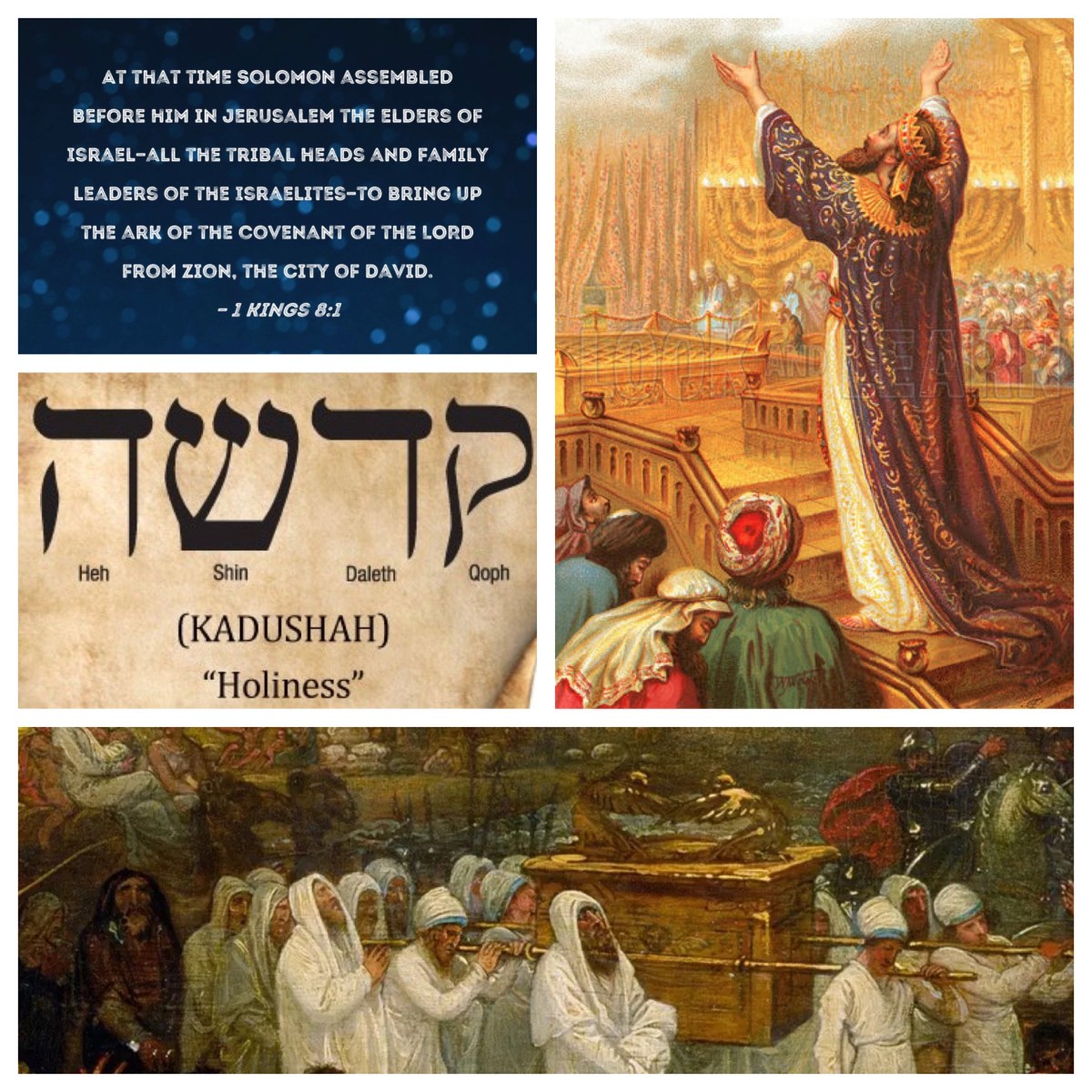
The second part of the reading offered by the lectionary for this coming Sunday tells of how, after thirteen years, King Solomon assembled “the elders of Israel and all the heads of the tribes, the leaders of the ancestral houses of the Israelites” (8:1). Again, the lectionary skips over the detailed account of the work of Solomon’s men in building his own house: the House of the Forest of Lebanon, the Hall of Pillars, the Hall of the Throne, and the house where he would live (7:1–12).

In like manner, the lectionary jumps over the detailed account of the work of Hiram the bronze worker: pillars, stands, basins, pots, and a whole host of items to be used in the sanctuary (7:13–50). Thank goodness the lectionary compilers jumped over all of those verses!
At any rate, when Solomon assembles the leaders of the nation, in the presence of “all the people of Israel” who had assembled, the priests and Levites bring forward the Ark of the Covenant, the Tent of Meeting which had housed the Ark for decades, and “all the holy vessels that were in the tent (8:1–4). It was surely an impressive majestic procession, followed by a scene of overflowing abundance, as the priests received and sacrificed “so many sheep and oxen that they could not be counted or numbered” (8:5). 

There’s no mention of the rivers of blood that must surely have flowed as these sacrifices took place. It may seem like a most unpleasant and unedifying scene to modern eyes and ears; however, the sacrificing of blood was an expression of the central Israelite belief that “the life of the flesh is in the blood … as life, it is the blood that makes atonement” (Lev 17:11). Each sacrifice of a chosen animal was a sacred offering of life that symbolised the obedience and dedication of the person, or people, who had brought the animal to be sacrificed. They were dedicating their whole life to the Lord God through this action, and in return, they were receiving atonement (the forgiveness of their sins) for all the misdeeds they had performed.
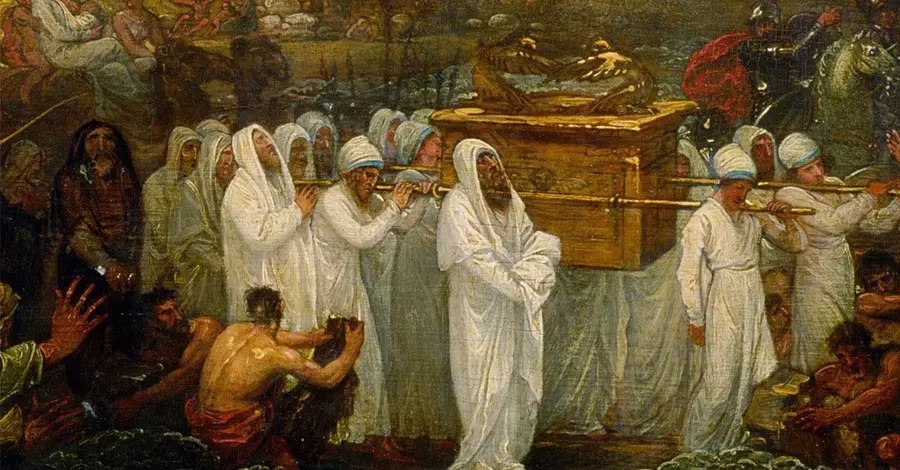
Finally, after the procession and sacrifices, the Ark was brought to “the most holy place” (8:6). The presence of the Ark evoked Solomon’s father, David, and his taking of the city from the Jebusites. Solomon was making clear that he was seen to be standing in that fine tradition.

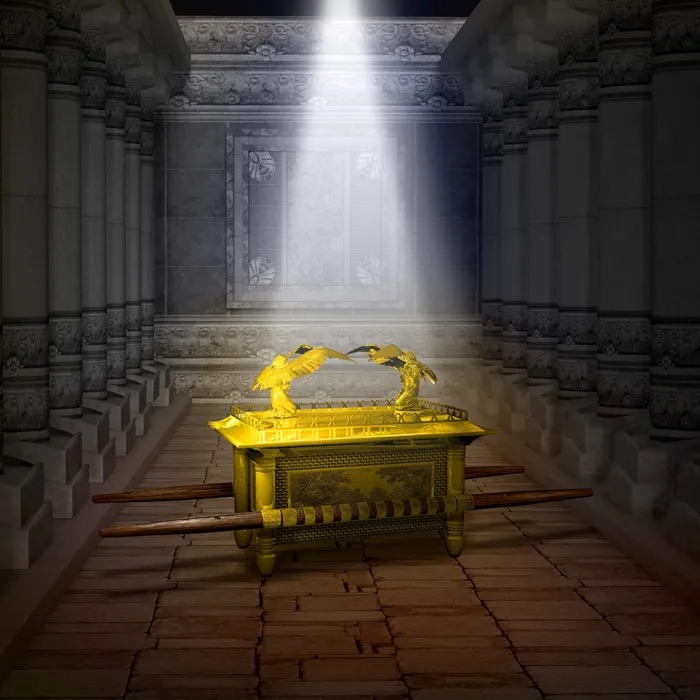
The Ark was placed in the space known as “the Holy of Holies”, as a much later Jewish-Christian writer describes it (Heb 9:3). It was from that time to be set apart as holy for only the High Priest to enter, and at that but once a year (Heb 9:7).

The scene is presented as one of profound religious significance, for “when the priests came out of the holy place, a cloud filled the house of the Lord, so that the priests could not stand to minister because of the cloud; for the glory of the Lord filled the house of the Lord” (1 Ki 8:10–11). The Temple from that time became the fixed dwelling place of God; “O Lord, I love the house in which you dwell, and the place where your glory abides”, one psalmist sings (Ps 26:8); another sings, “bring an offering, and come into his courts; worship the Lord in holy splendour; tremble before him, all the earth” (Ps 96:8b-9). Other psalmists likewise assert the holiness of God in his temple (Ps 11:4; 24:3–4; 48:1; 99:1–5,9). 
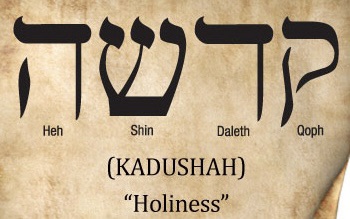
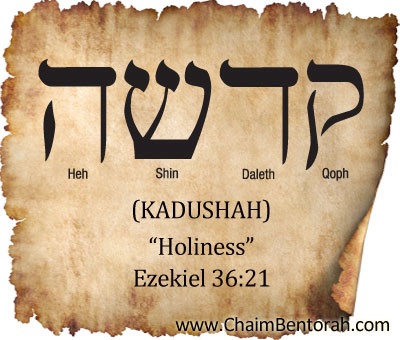
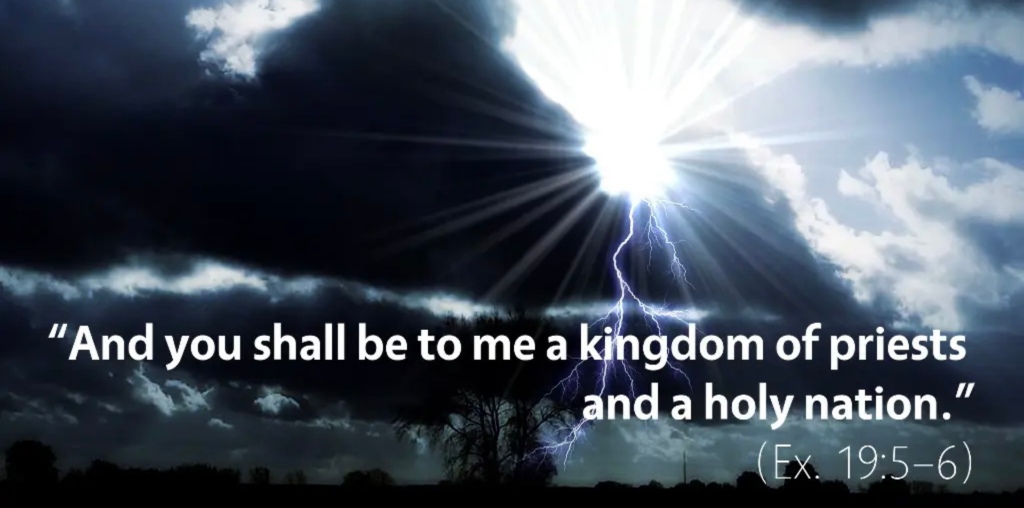
Holiness (kadushah) was central to the people of Israel. Those who ministered to God within the Temple, as priests, were to be especially concerned about holiness in their daily life and their regular activities  in the Temple (Exod 28–29; Lev 8–9). The priests oversaw the implementation of the Holiness Code, a large section of Leviticus (chapters 17–26), which explained the various applications of the word to Israel, that “you shall be holy, for I the Lord your God am holy” (Lev 19:2; also 20:7,26). The people were expected to be a holy people, dedicated to God, serving obediently by adhering to all the laws and commandments that Moses had received from the Lord God at Sinai (Exod 19:5–6).

As the glory of the Lord fills the Temple, Solomon makes the solemn declaration to his God that “I have built you an exalted house, a place for you to dwell in forever” (1 Ki 8:13). He then offers an extended prayer which stretches over the next 38 verses—another element of the whole story that the Narrative Lectionary, mercifully, does not prescribe for reading in worship!
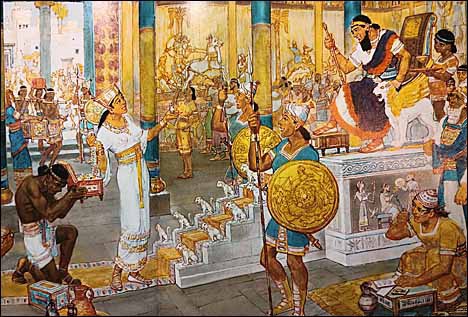

Henry J. Soulen, ‘Queen of Sheba Visits Solomon’ (1967), illustration in Everyday Life in Bible Times
(National Geographic Society, 1967), pp. 230-231

Solomon, I am sure you are thinking, is remembered as The Wise King. As the lectionary has offered this passage for this Sunday, it is worth our thinking further about Solomon. Next week we will jump forward a century or so, to the prophet Elijah. So we might, today, reflect on  the quality of Solomon he is best known for: his wisdom. In 2 Chronicles 1, God says to Solomon, “because you have asked for wisdom and knowledge for yourself … wisdom and knowledge are granted to you” (2 Chr 1:11). 

And later, King Solomon is said to have “excelled all the kings of the earth in riches and in wisdom. And all the kings of the earth sought the presence of Solomon to hear his wisdom, which God had put into his mind. Every one of [those kings] brought silver and gold, so much, year by year” (2 Chron 9:22–24). And so, Jesus relates how “the Queen of the south [the Queen of Sheba] came from the ends of the earth to hear the wisdom of Solomon” (Matt 12:42). 

This wonderfully wise, insightful, discerning man, Solomon—bearing a name derived from the Hebrew for peace, “shalom”—became a powerhouse in the ancient world. But he did not always live as a man of peace, as we have seen in tracing his rise to the throne. Indeed, as ruler he used his 4,000 horses and chariots and 12,000 horsemen to good effect; we read that “he ruled over all the kings from the Euphrates to the land of the Philistines and to the border of Egypt” (2 Chron 9:26). 

Solomon was remembered as king over the greatest expanse of land claimed by Israel in all of history. This large scope of territory noted in scripture forms the basis for the claims of zealous fundamentalist Zionists, in the 21st century, that Israel should run “from the river to the sea”. It’s a claim that has fuelled the building of illegal Jewish settlements on the West Bank and the erection by the modern state of Israel of The Wall which divides Israel from Palestinian Territories—but which divides families and friends as it seeks to separate Israelis from Palestinians.

Solomon, there can be no doubt, was a warrior. And warrior-kings were powerful, tyrannical in their exercise of power, ruthless in the way that they disposed of rivals for the throne and enemies on the battlefield alike. Think Alexander the Great. Think Charlemagne. Think Genghis Khan. Think William the Conqueror. Solomon reigned for 40 years—a long, wealthy, successful time. (Although 40 years, in Israelite time, is basically a way of saying “a heaps long time”.)

Yet in the passage we hear this Sunday Solomon appears not as a powerful king. Rather, he is a humble person of faith. He stands before all the people, raises his arms, and prays to the God who is to be worshipped in the Temple that he had erected. He is a person of faith, in the presence of his God, expressing his faith, exuding his piety.
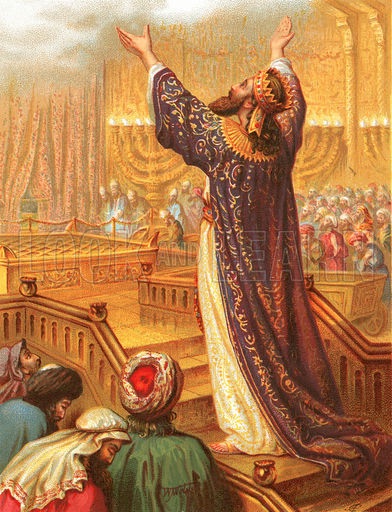
The prayer of Solomon goes for thirty-eight solid verses; there are eight different sections in this prayer. In the first two sections of this prayer, Solomon identifies two important features of the newly-erected Temple.  The first is that the fundamental reason for erecting this building is to provide a focal point, where people of faith can gather to pray to God (2 Ki 8:23–30). The second key element of Solomon’s prayer is that the Temple reaches beyond the people of Israel, covenant partners with the Lord God. He recognises that the Temple is also the place for the prayer of “a foreigner, who is not of your people Israel, [who] comes from a distant land because of your name” (2 Ki 8:41–43). 

This is a striking and dramatic element to include in this dedication prayer before all the people of Israel! Perhaps that is the best way we can remember Solomon: a man of his time, committed to his people, but open to receiving the gifts and the prayers of people from afar. Would that, in our present world of nationalistic fervour, militaristic aggression, and parochial bigotry, there were more rulers like that!

For more on the prayer of Solomon in 1 Kings 8, see
Standing on holy ground (Exodus 2–4; Narrative Lectionary for Pentecost 16)

Discussion of the Narrative Lectionary passage from Exodus 2–4

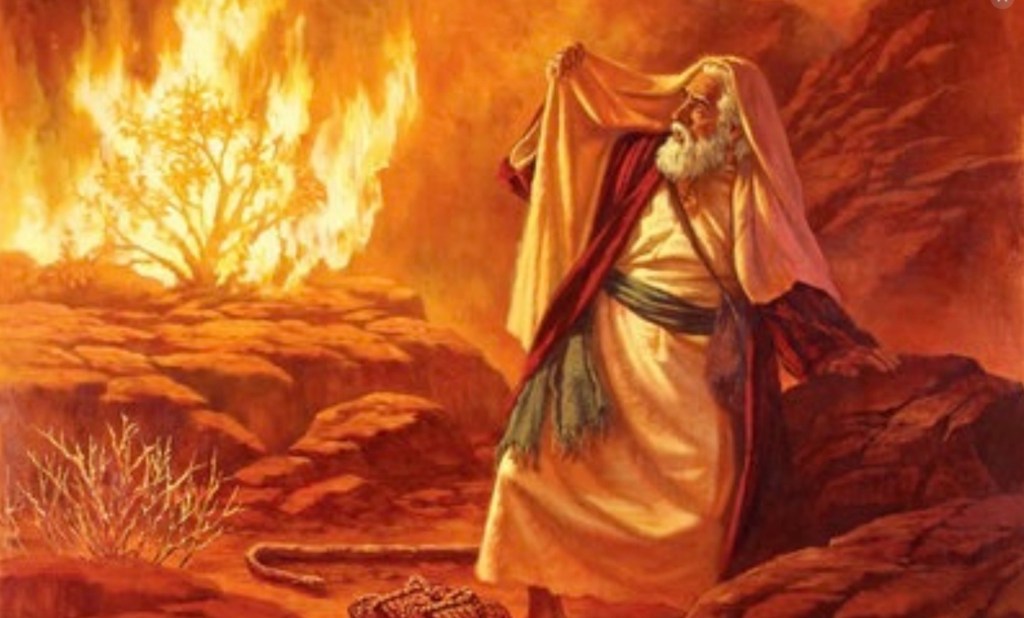
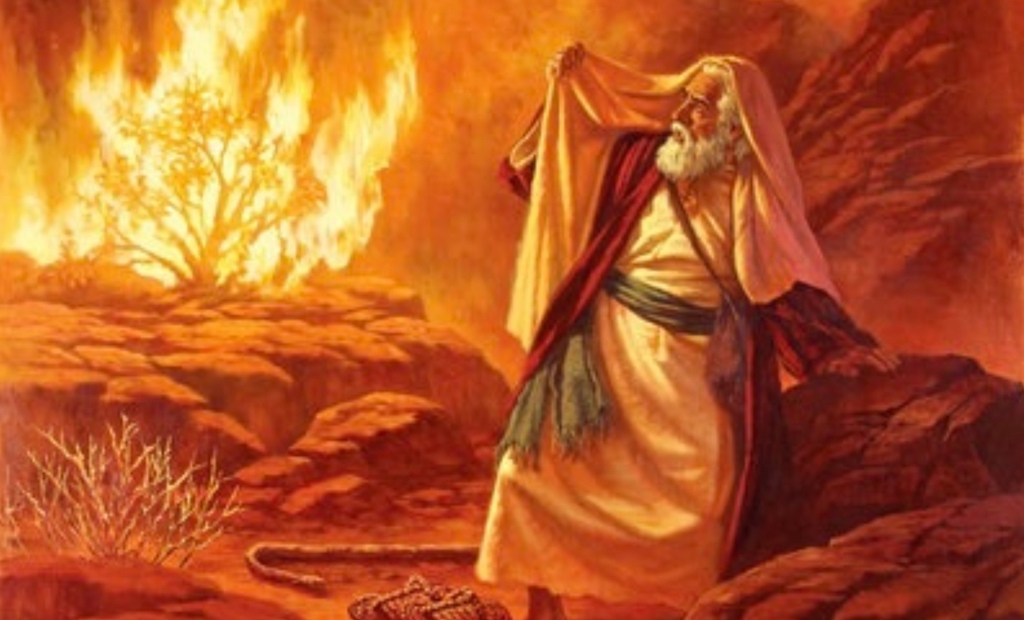
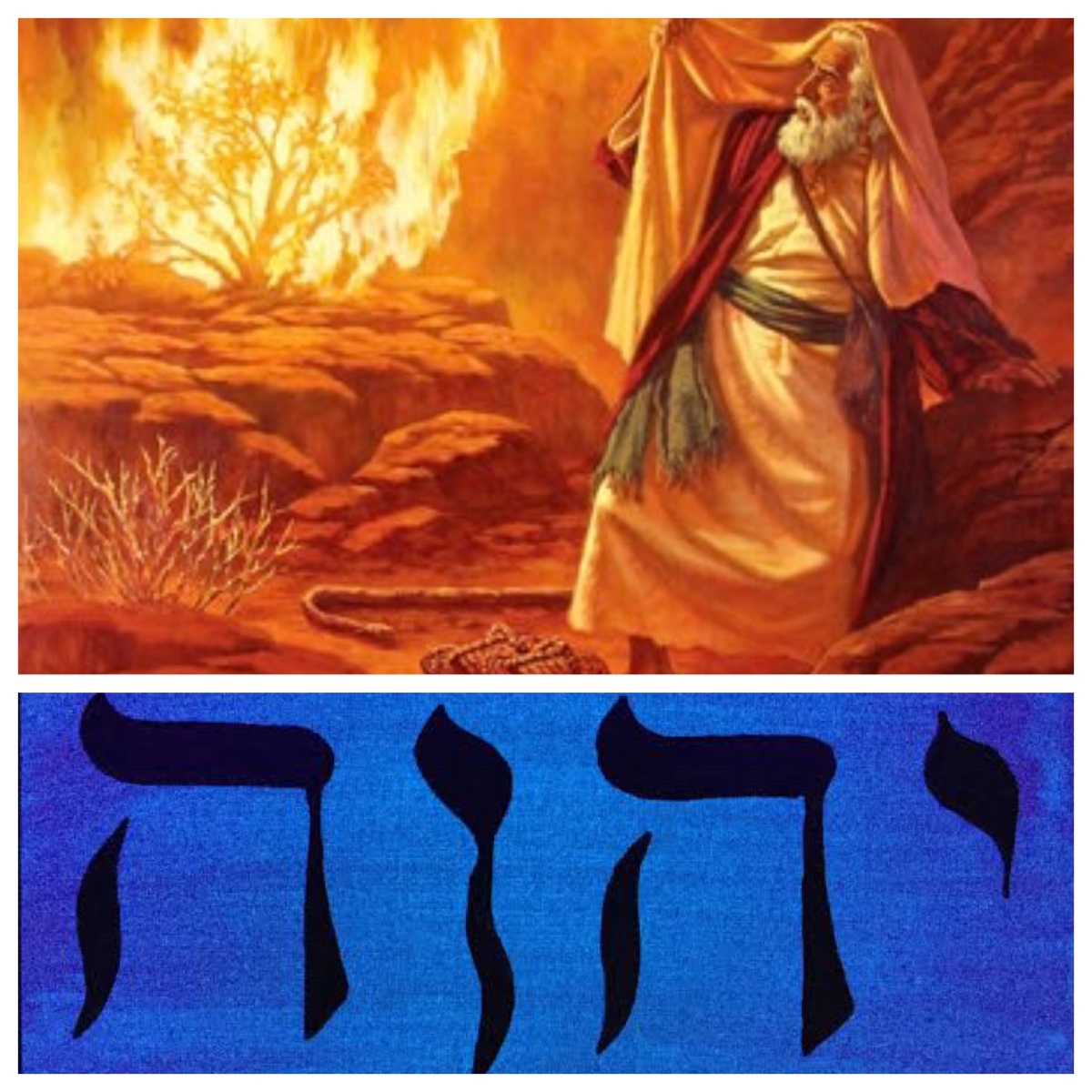
“The angel of the Lord appeared to [Moses] in a flame of fire out of a bush; he looked, and the bush was blazing, yet it was not consumed. Then Moses said, ‘I must turn aside and look at this great sight’ … and  [when] the Lord saw that he had turned aside to see, God called to him out of the bush, ‘Moses, Moses!’ And he said, ‘Here I am.’ Then he said, ‘Come no closer! Remove the sandals from your feet, for the place on which you are standing is holy ground.’” (Exod 3:2–5)

The story of the burning bush is well-known; it is the moment when Moses, the murderer who has fled from Egypt (2:11–15), is galvanised by a striking event to become Moses the liberator, the one who will “go [back] to Pharaoh to bring my people, the Israelites, out of Egypt” (3:10). The transformation is striking—although perhaps the transformation is not quite as dramatic as many envisage.

It may well be the case for Moses that a strong sense of justice undergirds both his act of killing the Egyptian who was beating a Hebrew (2:11), and his commitment to deliver the Israelites from “the misery of Egypt” (3:17). Moses was passionate about the need for justice in society. Paradoxically, this passion led him to say NO to a man he witnessed committing a crime, and YES to a body of people who were suffering oppression in a foreign land. 

Of course, common sense says that Moses should not have taken things into his own hands when he saw that Egyptian man beating one of his fellow-Israelites. But the passion within him—passion for fairness and justice—boiled up inside him and overflowed into unjust actions. This was in keeping with the charge given to the father of his people, when God mused about Abraham, “I have chosen him, that he may charge his children and his household after him to keep the way of the Lord by doing righteousness and justice” (Gen 18:19).

No wonder Moses fled, escaping the wrath of Pharaoh, travelling east across the desert areas of the Sinai Peninsula, all the way to Midian! (Exod 2:15). His action, out of proportion with the crime he saw being committed, was unjust. It is not a very propitious start for Moses, the man who towers over the story of the people,of Israel—ironically, best remembered as Moses the lawgiver!

Mind you, throughout Genesis, we have been regaled by tales of men behaving badly—Abraham lying about his wife Sarah as his sister (Gen 12 and again in Gen 20) and threatening to sacrifice his own son (Gen 22); Isaac, who also lied that his wife Rebekah was his sister (Gen 26); and Jacob, the deceiver, who stole his birthright from his twin brother Esau (Gen 27) and then deceived his father-in-law Laban and profited from his flock (Gen 30–31). And let’s not go into the treatment of Joseph by his brothers, throwing him into a pit in the desert, and then selling him off to some passing Midianite traders (Gen 37). And there are more; they are not exactly wonderful role models!

Yet the story about Moses that we are offered by the Narrative Lectionary this week presents Moses in a much more positive light, and it contains two fundamental elements in the story of Israel: the declaration that Moses stands on holy ground, and the revelation of the name of God. 

Holy ground

God’s word to Moses, after calling for his attention, is to declare that “the place on which you are standing is holy ground” (Exod 3:5). This is the first occurrence of the concept of holiness in the Torah—the word is absent from all of the narratives in Genesis. And it is fascinating that this “holy ground” is in Midian, both far away from Egypt and far away from Canaan, the land that would subsequently be decreed as holy (Exod 15:13; Jer 21:23; Zech 2:12). This God is now able to appear in places far away from Canaan, and declare them holy.

A central motif in Hebrew Scripture is that holiness was a defining character of the people of Israel. A section of Leviticus (chapters 17—26) is known as “The Holiness Code”; its main purpose was to set out laws to mark Israel as different from the surrounding cultures. “You shall not do as they do in the land of Egypt, where you lived”, God told Moses, “and you shall not do as they do in the land of Canaan, to which I am bringing you” (Lev 18:2). 

The rules of Leviticus were meant to set the Israelites apart from the Canaanites and Egyptians, who at that time had customs and rituals that were not to be adopted by the Israelites. Moses is instructed to relay to the people, “you shall be holy, for I the Lord your God am holy” (Lev 19:2), and to remind them to “consecrate yourselves therefore, and be holy; for I am the Lord your God. Keep my statutes, and observe them; I am the Lord; I sanctify you” (Lev 20:7). The whole book details those many statutes and commandments, all designed to keep the practices of the Israelites “holy to the Lord” (Lev 19:8; 23:20; 27:14–24).

Once the Temple was constructed, as a holy place within that holy land, those who ministered to God within the Temple, as priests, were to be especially concerned about holiness, both in their daily life and in their regular activities in the Temple (Exod 28–29; Lev 8–9). The priests oversaw the implementation of the Holiness Code, explaining the various applications of the word to Israel, that “you shall be holy, for I the Lord your God am holy” (Lev 19:2; also 20:7, 26). 

In the years before and during the exile, a number of prophets took to addressing the Lord God as “the Holy One of Israel” (Hos 11:9, 12; Isa 1:4; 5:9, 24; 10:20; 12:6; 17:7; 29:19; 30:11–15; 31:1; 37:23; 41:14–20; 43:3, 14; 45:11; 47:4; 48:17; 49:7; 54:5–6; 60:9, 14; Jer 50:29; 51:5; Ezek 39:7; Hab 1:12; 3:3). The psalmists also pick up this phrase (Ps 71:22; 78:41; 89:18), reflecting the affirmation made by Hannah, “there is no Holy One like the Lord, no one besides you; there is no Rock like our God” (1 Sam 2:2).

As a consequence, Israel is regularly assured that the whole nation is a “chosen people” (Deut 7:6–8, 14:2; Ps 33:12; Isa 41:8–10, 65:9), set apart as “a kingdom of priests, a holy nation” (Exod 19:4–6), called to be “a light to the nations” (Isa 42:6, 49:6). So in the towns and villages of Israel, by contrast to the centralised priests, the scribes and Pharisees provided guidance in the interpretation of Torah and in the application of Torah to ensure that holiness was observed in daily living of all people in Israel.

These dispersed teachers undertook the highly significant task of showing how the Torah was relevant to the daily life of Jewish people. It was possible, they argued, to live as God’s holy people at every point of one’s life, quite apart from any pilgrimages made to the Temple in Jerusalem. These figures, scribes and Pharisees, are evident in a number of interactions with Jesus that are reported in the Gospels—interactions focussed on interpreting the Torah (Mark 7:1–23 and Matt 15:1–20 exemplify such encounters).

Perhaps the origins of this localised interpretive role are told in the post-Exilic narrative of Nehemiah, when “the priest Ezra brought the law before the assembly, both men and women and all who could hear with understanding”, ably assisted by men who “helped the people to understand the law, while the people remained in their places”, explaining the significance of “this holy day” and other matters (Neh 7:73b—8:12). The story explains the modus operandi of these teachers.

Certainly, the culture and religion of the Israelites was to be marked by a concern for holiness. This is read back into the foundational narrative of the call given to Moses, “to bring my people, the Israelites, out of Egypt” (Exod 3:10, 17). When he hears this call in Midian, Moses is standing on holy ground (3:1-12).

Name of God

Although he is in Midian, far away from Canaan (later to become Israel), Moses encounters the God who is most firmly identified with that land. It is “the Lord, the God of your ancestors, the God of Abraham, of Isaac, and of Jacob” who appeared to Moses (Exod 3:6, 16). This is the first occurrence of this characteristic linkage of the Lord God with the three patriarchs (see also Exod 3:15–16; 4:5; 6:3, 8; 33:1; Lev 26:42; Num 32:11; Deut 1:8; 6:10; 9:5, 27; 29:13; 30:20; 34:4; 2 Ki 13:23; Jer 33:26).

Identified, therefore, as “the God of your ancestors” (in Hebrew, elohe abotekem) (3:15, 16; 4:5), a distinctive term is added into the mix, and highlighted by God as “my name forever … my title for all generations” (3:15). The term is regularly translated as Lord, and is often capitalised to indicate its distinctive nature. In fact, the name comprises just four consonants (transliterated as yhvh or yhwh). 

Despite its apparent simplicity, the meaning of the word has occasioned intense discussion amongst interpreters over the centuries. First, we should note that many Jews today adhere to the age-old prohibition and do not speak the name of God. This is based on the third of the Ten Commandments, “You shall not take his name in vain” (Exod 20:7; Deut 5:11).

Rabbi Baruch Davidson, writing on the website chabad.org, explains: “Although this verse is classically interpreted as referring to a senseless oath using G‑d’s name, the avoidance of saying G‑d’s name extends to all expressions, except prayer and Torah study. In the words of Maimonides, the great Jewish codifier: ‘It is not only a false oath that is forbidden. Instead, it is forbidden to mention even one of the names designated for G‑d in vain, although one does not take an oath. For the verse commands us, saying: “To fear the glorious and awesome name. Included in fearing it is not to mention it in vain.’” See

https://www.chabad.org/library/article_cdo/aid/1443443/jewish/Why-Dont-Jews-Say-Gds-Name.htm#footnote2a1443443

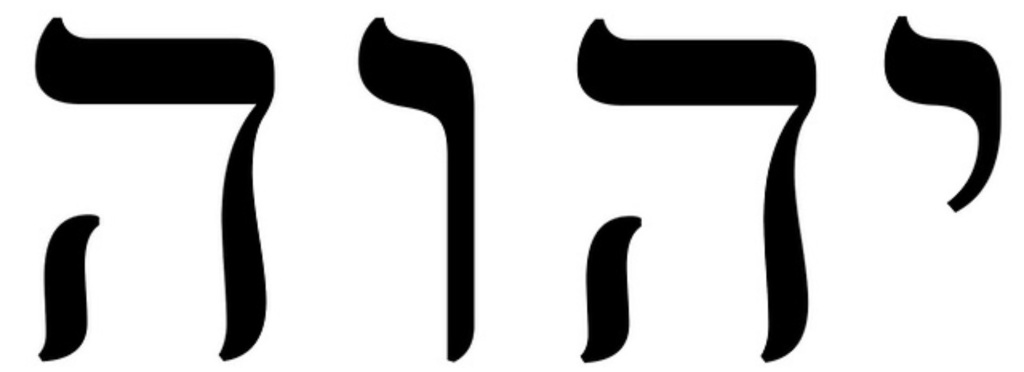
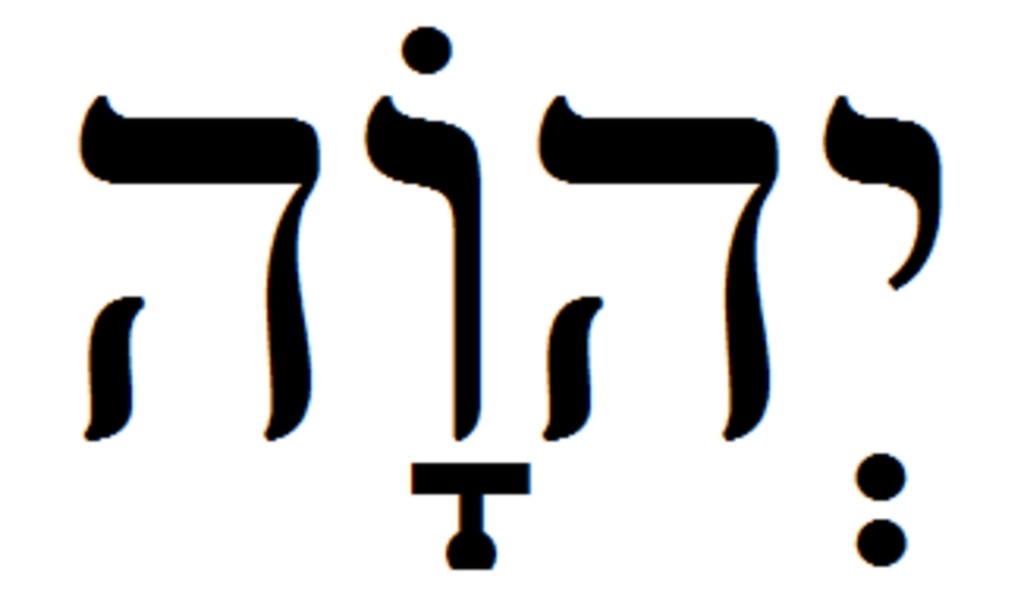
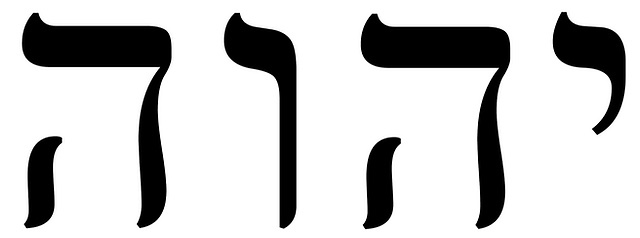
The name of God that is given to Moses in this story is often referred to as the Tetragrammaton (meaning “four letters”), because it is a four-letter word, yud-hey-vav-hey (יהוה). This name is derived from the verb “to be”, which has led to speculation that it could be translated as “I am who I am” or “I will be whom I will be”—revealing nothing, really, about the nature of this divine being, other than the existence of God. It is a curious “revelation”. What has Moses actually learnt about God in this encounter??

Since Hebrew words are constructed with a set of consonants as the base, to which a variety of vowels can be added, this short word is often expanded to either Jehovah or Yahweh. The former places the vowels of the word Adonai (meaning “lord”) to form the artificial term Jehovah, a title that has been popularised by the Jehovah Witnesses. The latter is a more accurate rendition of the blending of these consonants with the vowels of the verb to be, hayah, forming Yahweh.

This name is certainly mysterious. What does it mean to say, “I am who I am”? or “I will be who I will be”? The mystery of each phrase invites the listener or reader to pause, ponder, and consider what is being conveyed. This is not a direct propositional statement, declaring a closed statement along the lines of, “God is love”, or “God is all-knowing”, or “God desires justice”, or other such statements. It is, rather, mystical, evocative, inviting, something that is invitational and encouraging exploration. Perhaps that, in itself, is enough of a basis for our considering as to who God is and what God desires?

Jewish mystical literature actually teaches that there are seventy names for God; and if you explore the biblical texts (the Torah), the developing rabbinic literature (Mishnah, Talmud, and Midrash) and then the proliferation of Jewish mystical terms, God is referred to by almost more names than can be counted. 

Rabbi Stephen Carr Reuben asks “Why so many names, and why does God tell Moses that the name he knows God by is different from that of Abraham, Isaac, and Jacob?” As he explores this question, he notes that “Every name reflects a quality in relation to human beings that each of us can choose to emulate in our own lives. Thus in Jewish mysticism, the ideal state is to be in harmony with the Divine by emulating the attributes reflected in the great diversity of divine names.”

The rabbi offers some examples: “As God is called, ‘The Compassionate One’ (HARAKHAMAN in Hebrew), so each of us can strive to be compassionate in our behavior toward others. As God is called EL SHADDAI (The Nurturer), so we can be nurturing of the dreams and longings of others. As God is called The Righteous Judge (DAYAN EMET), so we can express righteousness and stand up for justice in our lives.”

What, then, of the revelation to Moses? Rabbi Carr Reuben suggests that “when God tells Moses that he was known by a different name to the patriarchs, it is because every moment in history, and every challenge we face personally demands that we draw upon a different quality of holiness to emulate in our lives. We must choose the name of God that captures the essence of the attributes of Godliness that is appropriate to the moment, and up to the challenge of the day.” See 

and also https://www.myjewishlearning.com/article/the-tetragrammaton/

Holy, blameless, undefiled …  exalted and made perfect forever (Heb 7; Pentecost 23B)

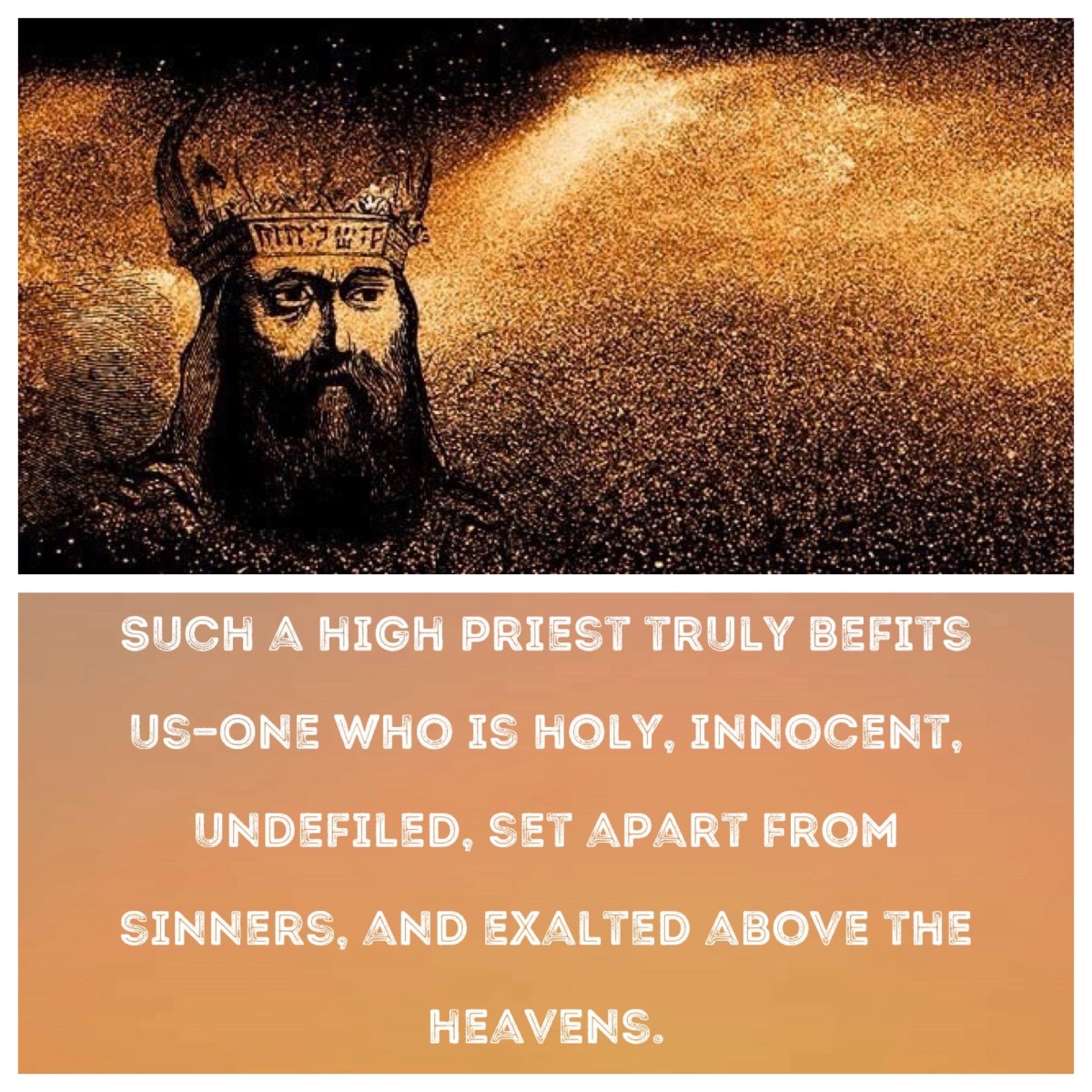
“Holy, blameless, undefiled, separated from sinners, and exalted above the heavens … [one] who has been made perfect forever.” That’s how the unknown author of the book of Hebrews describes Jesus (Heb 7:26, 28). That’s an incredibly high state of being that is described—an almost unattainable perfection of life. How, then, might we relate to such a person?

To understand why Jesus is described as holy and made perfect, we first turn to the heritage of the author of this “letter to the Hebrews”. In Israelite religion, the idea of being perfect was integral to the appreciation of God. We find this expressed at various places in Hebrew Scripture. “This God—his way is perfect”, the psalmist sings (Ps 18:30; echoed also at Deut 32:4; 2 Sam 22:31; Job 37:16), and in another psalm, “the law of the Lord is perfect, reviving the soul” (Ps 19:7). It is later echoed by Paul, who claims that “the will of God” is “good and acceptable and perfect” (Rom 12:2).  

So, too, is the state of being holy a central element of God’s being; “Holy One” is one of the ways that God is addressed God in the Writings (Ps 71:22; 78:41; 89:18; Prov 9:10; Job 6:10; Sir 4:14; 23:9; 53:10; 47:8; 48:20) and by the Prophets (Jer 50:29; Ezek 8:13; Hos 11:9, 12; Hab 1:12; 3:3). This is especially the case in Isaiah, where “the Holy One of Israel” is addressed 29 times, by First Isaiah (Isa 1:4 to 37:23), Second Isaiah (Isa 40:25 to 55:5), and Third Isaiah (Isa 60:9, 14).

This, also, is echoed in  New Testament texts. The mighty saviour, promised to Israel, would come to lead the people to serve God “in holiness and righteousness before him all our days” (Luke 1:69, 75). Jesus is addressed by demons as “the Holy One of God” (Mark 1:45; Luke 4:34) and by Simon Peter (John 6:69). The followers of Jesus are then instructed to live as God’s holy people (1 Cor 3:17; 6:19; Eph 5:25–27; Col 1:22; 3:12; Heb 3:1; 1 Pet 1:13–16; 2:5, 9); Paul prays for the Thessalonians, that God may “strengthen your hearts in holiness that you may be blameless before our God and Father” (1 Thess 3:13).

Of course, holiness (qodesh) was a central element of piety in ancient Israel, exemplified by the Holiness Code of Leviticus (Lev 11:44–45; 19:2; 20:7–8). The code was to be overseen by the priests, who were to “make a distinction between the unclean and the clean” (Lev 11:47; 20:25; cf. Ezek 22:26; 44:23). Accordingly, they were consecrated, set apart as holy (Exod 40:13; Lev 16:32; 21:10), so that the people as a whole might be deemed to be “holy people” (Deut 7:6; 14:2, 21; 28:9). Holiness was a fundamental requirement of the priests.

Accordingly, every priest needed to be “perfect” (tamim), with no sign of blemish—“not one who is blind or lame, or one who has a mutilated face or a limb too long, or one who has a broken foot or a broken hand, or a hunchback, or a dwarf, or a man with a blemish in his eyes or an itching disease or scabs or crushed testicles”, according to Lev 21:16–24. These perfect priests were charged with offering to God the tamid, the daily sacrifice, of “two male lambs a year old without blemish, daily, as a regular offering”, each and every day (Num 28:3).

The temple itself that Solomon built was required to be perfect (1 Ki 6:22), and for the sacrifice of wellbeing to be offered there “to be acceptable it must be perfect, there shall be no blemish in it” (Lev 22:21). The prescriptions of Leviticus maintain the need for all faithful people to bring an offering or sacrifice that is “acceptable” (Lev 1:4; 7:18; 19:5–8; 22:17–21, 26–30); for a sacrifice of wellbeing “to be acceptable it must be perfect; there shall be no blemish in it” (Lev 22:21). That was the role of the priests: to examine carefully the animals being brought for sacrifice, to ensure that they were “perfect” (tamim). So a state of perfection was required of both priests and their victims. 

Of course, the author of Hebrews sets the perfection of Jesus into a distinctive framework, for he asserts early in this book that God, in “bringing many children to glory”, has made Jesus, “the pioneer of their salvation, perfect through sufferings” (Heb 2:10). It is through “the sprinkled blood” of Jesus, “the mediator of a new covenant”, that “the spirits of the righteous [are] made perfect” (Heb 12:23–24). 

The perfect nature of Jesus comes through his submission and obedience, evidenced in the “prayers and supplications, with loud cries and tears”, which he offered “to the one who was able to save him from death” (Heb 5:7–8). The end result is that he was “made perfect [and] became the source of eternal salvation for all who obey him, having been designated by God a high priest according to the order of Melchizedek” (Heb 5:9–10).

On the priesthood of Mechizedek and that of Jesus, see 

In applying these two terms, holy and perfect, to Jesus, the author of Hebrews is locating him within the ambit of the priests. The addition of two further terms, blameless and undefiled, intensifies this sense, but relates to another aspect of the comparison. The command not to defile oneself occurs at two key places in the levitical prescriptions. It stands at the conclusion of the long list of animals, birds, and fish which are categorised as either unclean or clean, as “the living creature that may be eaten and the living creature that may not be eaten” (Lev 11:43–44). It is also a repeated injunction in the section concerning sexual relations (Lev 18:20–30).

The same command appears in the instruction, “you shall not defile the land in which you live, in which I also dwell” (Num 35:34; reiterated at Deut 21:23). The prophet Ezekiel understands that the person “who is righteous and does what is lawful and right” is the one who “does not defile his neighbour’s wife” (Ezek 18:5–6, 14–15) and that the people of Israel are to “not defile yourselves with the idols of Egypt” (Ezek 20:7, 18,   31). 

The Hebrew term tamim, which is often translated as perfect, but also as blameless, is related to the word used for the daily sacrifice, tamid. It contains a strong sense of being whole, perfect, undefiled, without defect or blemish. It is applied numerous times throughout Leviticus to the various animals which are to be offered in sacrifice to God; they are all to be “without blemish” (Lev 1:3, 10; 3:1, 6, 9; 4:3, 23, 28, 32; and many more times). So in Hebrews, the application to Jesus of the words blameless and undefiled relates him most specifically to the sacrificial victims rather than to the priests.

We see this most intensely in the apologetic argumentation of Hebrews 9—10, where the death of Jesus is portrayed as “the sacrifice of himself” (9:26), “a single sacrifice for sins” (10:16) in “the offering of [his] body” (10:10), “a single offering [by which] he has perfected for all time those who are sanctified” (10:14), which “he offered once to bear the sins of many” (10:28). These statements all relate Jesus to the “perfect offering” of his life, “the power of an indestructible life” (7:16). 

For this reason—that he is the perfect sacrifice—he is understood to have been the final definitive offering; “he has appeared once for all at the end of the age to remove sin by the sacrifice of himself” (Heb 9:27). The author of Hebrews particularly emphasises this “once for all” element; “this he did once for all when he offered himself” (7:27); “he entered once for all into the Holy Place, not with the blood of goats and calves, but with his own blood, thus obtaining eternal redemption” (9:12). 

As a result, the author claims, “we have been sanctified through the offering of the body of Jesus Christ once for all” (10:10). This then undergirds the author’s criticism of the repeated sacrifices offered under “the law”, which “can never … make perfect those who approach” (10:1–4). This leads, then, to a supercessionist view of Judaism—a route that I refuse to take.

I offer more consideration of the supercessionism which results from this line of argument in posts on the Hebrews readings in the lectionary in coming weeks.

Two other phrases that are applied to Jesus by the author of Hebrews are striking. As well as being holy and perfect, blameless and undefiled, Jesus is portrayed as being “separated from sinners” and “exalted above the heavens” (Heb 7:26). Both these phrases contribute to a high view of Jesus. We can understand something of their significance by delving, once again, into Hebrew Scripture.

It is a refrain of many of the more conservative theological preachers that people are separated from God by their sin. God does not wish for us to sin, and stands look from us when we do sin, so the argument goes. It is the very nature of God to be “separated from sinners”. This understanding is indeed reflected in the past by the way that the ancient Israelite cult was set up. 

The tabernacle, as the place where God resided, was to be kept as a sacred, holy, set-apart place, which the priests were to oversee. Leviticus includes the clear instruction, “you shall keep the people of Israel separate from their uncleanness, so that they do not die in their uncleanness by defiling my tabernacle that is in their midst” (Lev 15:11). The “uncleanness” of the people—their sinfulness because of the ways they disobeyed the Torah—was to be dealt with through the system of sacrifices and offerings made to the Lord God, to deal with their sin.

The clear affirmation of the post-exilic prophet whose words are collected in the third section of Isaiah is that “your iniquities have been barriers between you and your God, and your sins have hidden his face from you so that he does not hear” (Isa 59:2). The way forward is to seek a path of reconciliation and forgiveness with God, to overcome these barriers. 

Presenting Jesus as “separated from sinners” places him in the position of God; this equates him with the holy God, the blameless one, pure and undefiled, who stands apart from sinners even whilst offering a way for those sinners to seek forgiveness of sin and reconciliation with God.

This high view is intensified in the further description of Jesus as “exalted above the heavens” (Heb 7:26). Long before Jesus, David had prayed to God, rejoicing in “the greatness, the power, the glory, the victory, and the majesty” that belong to God (1 Chron 29:11). This prayer continues, “for all that is in the heavens and on the earth is yours; yours is the kingdom, O Lord, and you are exalted as head above all”. The psalmists reflect this conception of God as “exalted above the heavens” (Ps 57:5, 11; 108:5). This is reflected directly in Heb 7:26.

So Jesus stands with God, in the holy place, exalted in the heavens, separated from sinners; and yet, as priest, he oversees the process that brings sinful people back into relationship with God; and as the sacrificial offering itself, he sheds his blood in order to enable this forgiveness and reconciliation to take place. The imagery is rich and complex, even if the logic of Jesus as God, priest, and victim all-in-one, is somewhat hard to grasp.

David and Michal, Uzzah and the Ark (2 Sam 6; Pentecost 8B)

For the passage from Hebrew Scripture this coming Sunday, the lectionary offers us selected verses from 2 Sam 6:1–19. Last week, we heard the brief account of how David, the king of Judah, took the city of Jerusalem from its inhabitants, the Jebusites, and was anointed as king of “all Israel” (5:1–10). Next week, we will hear of the promise that God makes to David, that “I will make for you a great name … your throne shall be established forever” (7:1–14).

In between these two pivotal events, establishing beyond doubt that David was both the conqueror supreme of the earlier inhabitants and the progenitor of a dynasty—“the house of David”—that would hold power for centuries to come, we have a curious, yet significant, account relating to The Ark of the Covenant (6:1–19). See

David uses the Ark to reinforce and undergird his authority; his intention in bringing into the city, Jerusalem, was to confirm absolutely that he was God’s anointed, in Jerusalem, ruling over all Israel.

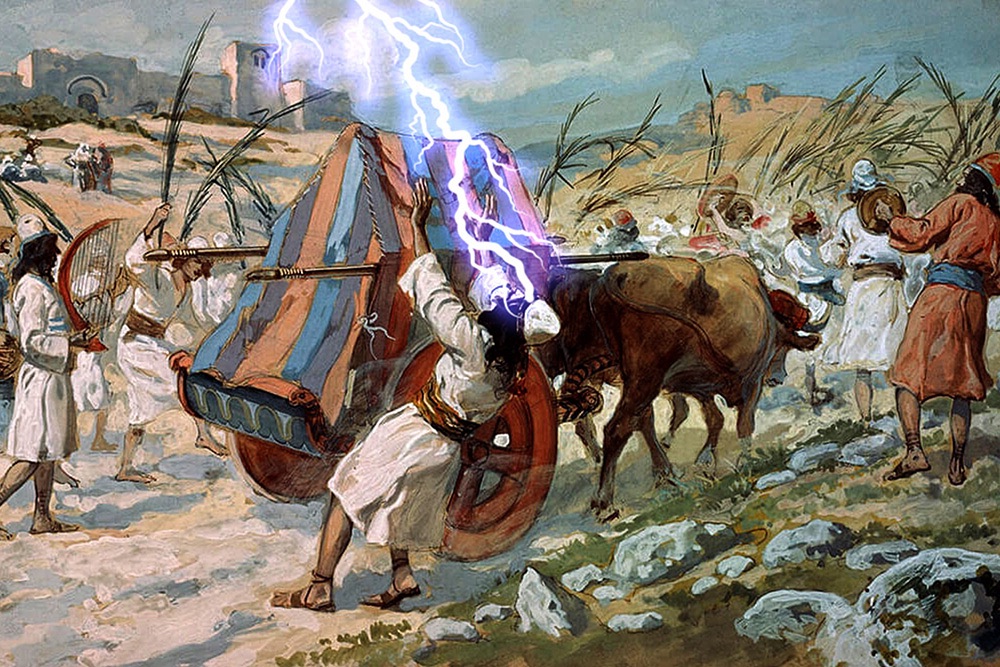
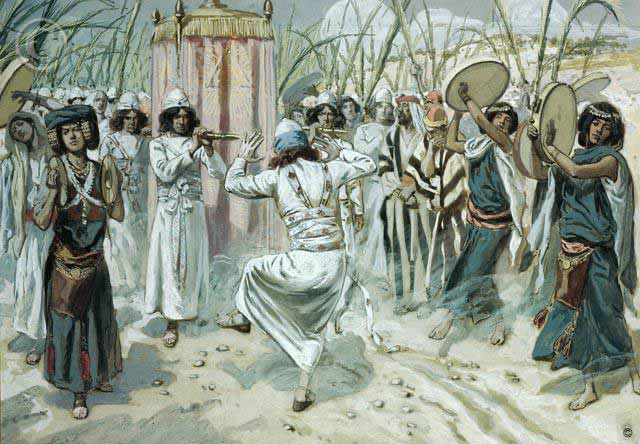
However, the lectionary (as it is wont to do) omits some verses from the middle of this narrative (6:6–11), as well as the closing section of the chapter (6:20–26). The middle section (6:6–11) reports the death of Uzzah, one of the sons of Abinadab, because he touched the holy ark with his hand. Before this omitted account is the report of David, with “all the house of Israel”, vigorously dancing “with all their might” as he led the Ark into the city (6:1–5), “with songs and lyres and harps and tambourines and castanets and cymbals” (6:5b). After the omitted verses we find David, continuing to dance “with all his might”, offering sacrifices to the Lord God and distributing food to the people in celebration (6:12–19).

Michael Brown, writing in With Love to the World, continues his reflections on this story: “The celebrations ended abruptly. This story of Uzzah’s death by touching the ark—with the best of intentions to steady it as the oxen stumbled—may be strange to us. Yet it is told as a reminder that it is not within anyone’s power to control, guide or steady the divinity to whom the sacred symbols point. Rather, it is we who are guided, steadied or even shaken by the sacred. David, shaken to the core, angry and afraid, stopped the procession in its tracks and left the ark at a nearby house for three months. An awe-filled experience of the sacred may be a chance to pause and recalibrate.”

Uzzah touches the Ark directly

The death of Uzzah occurs because of the holiness of the ark, as the dwelling place of God. Touching it directly—breaching the boundary between the holy and the everyday—would be enough to incur death. “God struck him there because he reached out his hand to the ark”, the text advises (2 Sam 6:7); this contravenes the earlier instruction of the Lord to Moses, “you shall put the poles into the rings on the sides of the ark, by which to carry the ark; the poles shall remain in the rings of the ark; they shall not be taken from it” (Exod 25:14–15).

The holiness of the Ark is evident in the set of directions regarding the Tabernacle (from Exod 25 onwards), when Moses had been instructed, “you shall put the mercy seat on the ark of the covenant in the most holy place” (Exod 26:34). Likewise, decades after David, as Solomon dedicates the Temple, “the priests brought the ark of the covenant of the Lord to its place, in the inner sanctuary of the house, in the most holy place, underneath the wings of the cherubim” (1 Ki 8:6; also 2 Chron 5:5–7; and see Heb 9:1–5).

The way that David welcomed the ark into the city underlines the reverence and awe that was due towards God. A wonderful festival is held. From that time onwards, the ark remains in Zion, where the Temple is the focus of piety. Another transition has taken place, from a holy artefact that was mobile, to a fixed, permanent house for God. Now “the most holy place” of the mobile Tabernacle (Exod 26:33–34; 1 Chron 6:49) would be come “the most holy place” of the temple (1 Ki 6:16; 7:50; 8:6; 2 Chron 3:8–10), or “the Holy of Holies” (as it is labelled in Heb 9:3).

Holiness was certainly central to the religious and social life of ancient Israel. Those who ministered to God within the Temple, as priests, were to be especially concerned about holiness in their daily life and their regular activities in the Temple (Exod 28—29; Lev 8–9). The priests oversaw the implementation of the Holiness Code, a large section of Leviticus (chapters 17—26), which explained the various applications of the word to Israel, that “you shall be holy, for I the Lord your God am holy” (Lev 19:2; also 20:7,26).

As well as overseeing the various offerings and sacrifices that were to be brought to the Temple, the priests provided guidance and interpretation in many matters of daily life, including sexual relationships and bodily illnesses, as well as the annual festivals and other ritual practices.

In the towns and villages of Israel, by contrast, the scribes and Pharisees provided guidance in the interpretation of Torah and in the application of Torah to ensure that holiness was observed in daily living. They undertook the highly significant task of showing how the Torah was relevant to the daily life of Jewish people. It was possible, they argued, to live as God’s holy people at every point of one’s life, quite apart from any pilgrimages made to the Temple in Jerusalem.

Flowing on into the time of Jesus, we see that the followers of Jesus are instructed to consider themselves as God’s holy people (1 Cor 3:17; 6:19; Eph 5:25–27; Col 1:22; 3:12; Heb 3:1; 1 Pet 1:13–16; 2:5, 9) and to live accordingly. Holiness continues to be central in the Jesus movement—albeit, in the manner in which it has been redefined by Jesus (Mark 7:18–23; Matt 15:17–20).


James J. Tissot, David Dances before the Ark (1896–1902),
gouache on board, The Jewish Museum, New York

The lectionary also omits the report of what Michal, the wife of David, said and did as she witnessed this spectacle (6:20–23). It includes the observation that, as Michal look at what David was doing, “she despised him in her heart” (6:16). This is a striking contrast to the earlier affirmation that “Michal loved David” (1 Sam 18:20, 28) and to the care that Michal took to save David from her father, Saul (1 Sam 19:8–17).

Michal is clearly offended that David was “uncovering himself today before the eyes of his servants’ maids, as any vulgar fellow might shamelessly uncover himself” (2 Sam 6:20), even though the earlier report had simply noted that “David was girded with a linen ephod” (6:14). We also don’t read the sad note that concludes this chapter, that “Michal the daughter of Saul had no child to the day of her death” (2 Sam 6:23). The alienation between the two seems complete; we hear nothing more of Michal in the later chapters of 2 Samuel, nor in the book of Chronicles.

Writing in the Encyclopedia of Jewish Women, Dr. Tamar Kadari notes that later Rabbis proposed that “she had no children until her dying day, but on her dying day she bore a son. The midrash speaks of three women who had difficult deliveries and died in childbirth: Rachel, the wife of Phinehas, and Michal daughter of Saul. Michal bleated like a sheep when giving birth and died, and therefore she was called “Eglah” (Gen. Rabbah 82:7).” (The Hebrew word eglah means “heifer”.) This midrash links Michal with “the wife of David” mentioned at 2 Sam 3:5 and 1 Chron 3:3, who was the mother of Ithraem.

Kadari also notes that Rabbis in a later time—when the Talmud was finalised in the fifth or sixth century CE—elevated Michal in status, noting that they comment that “this righteous woman that Michal would put on tefillinn every day, and the sages of the time did not protest, even though there is no halakhah requirement for a woman to do so (JT Eruvin 10:1, 26a).”

Michal

In an article in the online Biblical Theology Bulletin: Journal of Bible and Culture (vol.51 no.1, 2021), David. J. Zucker explores “Four Women in Samuel Confront Power”. He alert us to the stories of four occasions in the books of 1–2 Samuel when “women put their lives at risk as they dare to confront power … Abigail of Maon to rebellious David; the Medium of Endor to King Saul; the Wise Woman of Tekoa to King David; and the Wise Woman of Abel to Joab, King David’s general.”

Sadly, none of the stories relating to these women are included in the passages suggested by the Revised Common Lectionary. As is often the case, the focus is on the men in the narratives proposed.

Zucker notes that “The details surrounding their specific situations differ considerably from case to case. Likewise, from what little the Bible tells about their backgrounds, it is likely that they all came from different social classes. Nonetheless, each example fits within a broad definition of speaking truth to power.”

See https://journals.sagepub.com/doi/10.1177/0146107920980931?

The four women dealt with by Zucker are Abigail of Maon, the wife of Nabal (1 Samuel 25); the Medium of Endor (1 Samuel 28); the Wise Woman of Tekoa (2 Samuel 14); and the Wise Woman of Abel (2 Samuel 20). None of these chapters are included in the sequence of lectionary offerings. Zucker explains how these women speak truth to power.

“Abigail of Maon interacts with pre-monarchic David, then a rebel on the run since he is distanced from King Saul. The Medium of Endor is visited by King Saul, who is seeking Divine counsel via the recently deceased prophet Samuel. The Tekoite has come to King David ostensibly to seek resolution to her family’s blood vengeance problem. The Abelite representing her community which is threatened with immediate destruction is in dialogue with Joab, King David’s foremost general.”

He notes that “these stories vividly capture some of the very different ways in which women in the [Hebrew Bible] are resisting the violence of war that has the potential to utterly destroy their families and the communities in which they live.” What a pity we are not offered the opportunity to consider them in what we read in public worship.

*****

With Love to the World is a daily Bible reading resource, written and produced within the Uniting Church in Australia, following the Revised Common Lectionary. It offers Sunday worshippers the opportunity to prepare for hearing passages of scripture in the week leading to that day of worship. It seeks to foster “an informed faith” amongst the people of God.

You can subscribe on your phone or iPad via an App, for a subscription of $28 per year. Search for With Love to the World on the App Store, or UCA—With Love to the World on Google Play. For the hard copy resource, for just $28 for a year’s subscription, email Trevor at wlwuca@bigpond.com or phone +61 (2) 9747-1369.

Standing on holy ground (Exodus 3; Pentecost 14A)

“The angel of the Lord appeared to [Moses] in a flame of fire out of a bush; he looked, and the bush was blazing, yet it was not consumed. Then Moses said, ‘I must turn aside and look at this great sight’ … and [when] the Lord saw that he had turned aside to see, God called to him out of the bush, ‘Moses, Moses!’ And he said, ‘Here I am.’ Then he said, ‘Come no closer! Remove the sandals from your feet, for the place on which you are standing is holy ground.’” (Exod 3:2–5)

The story of the burning bush is well-known; it is the moment when Moses, the murderer who has fled from Egypt (2:11–15), is galvanised by a striking event to become the one who will “go [back] to Pharaoh to bring my people, the Israelites, out of Egypt” (3:10), to become Moses the liberator. The transformation is striking—although perhaps the transformation is not quite as dramatic as many envisage.

It may well be the case for Moses that a strong sense of justice undergirds both his act of killing the Egyptian who was beating a Hebrew (2:11), and his commitment to deliver the Israelites from “the misery of Egypt” (3:17). Moses was passionate about the need for justice in society. Paradoxically, this passion led him to say NO to a man he witnessed committing a crime, and YES to a body of people who were suffering oppression in a foreign land.

Of course, common sense says that Moses should not have taken things into his own hands when he saw that Egyptian man beating one of his fellow-Israelites. But the passion within him—passion for fairness and justice—boiled up inside him and overflowed into unjust actions. This was in keeping with the charge given to the father of his people, when God mused about Abraham, “I have chosen him, that he may charge his children and his household after him to keep the way of the Lord by doing righteousness and justice” (Gen 18:19).

No wonder Moses fled, escaping the wrath of Pharaoh, travelling east across the desert areas of the Sinai Peninsula, all the way to Midian! (Exod 2:15). His action, out of proportion with the crime he saw being committed, was unjust. It is not a very propitious start for Moses, the man who towers over the story of the people,of Israel—ironically, best remembered as Moses the lawgiver!

Mind you, throughout Genesis, we have been regaled by tales of men behaving badly—Abraham lying about his wife Sarah as his sister (Gen 12 and again in Gen 20) and threatening to sacrifice his own son (Gen 22); Isaac, who also lied that his wife Rebekah was his sister (Gen 26); and Jacob, the deceiver, who stole his birthright from his twin brother Esau (Gen 27) and then deceived his father-in-law Laban and profited from his flock (Gen 30–31). They are not exactly wonderful role models!

Yet the story about Moses that we are offered in the lectionary this week presents Moses in a much more positive light, and it contains two fundamental elements in the story of Israel: the declaration that Moses stands on holy ground, and the revelation of the name of God.

Holy ground

God’s word to Moses, after calling for his attention, is to declare that “the place on which you are standing is holy ground” (Exod 3:5). This is the first occurrence of the concept of holiness in the Torah—the word is absent from all of the narratives in Genesis. And it is fascinating that this “holy ground” is in Midian, both far away from Egypt and far away from Canaan, the land that would subsequently be decreed as holy (Exod 15:13; Jer 21:23; Zech 2:12). This God is now able to appear in places far away from Canaan., and declare them holy.

A central motif in Hebrew Scripture is that holiness was a defining character of the people of Israel. A section of Leviticus (chapters 17—26) is known as “The Holiness Code”; its main purpose was to set out laws to mark Israel as different from the surrounding cultures. “You shall not do as they do in the land of Egypt, where you lived”, God told Moses, “and you shall not do as they do in the land of Canaan, to which I am bringing you” (Lev 18:2).

The rules of Leviticus were meant to set the Israelites apart from the Canaanites and Egyptians, who at that time had customs and rituals that were not to be adopted by the Israelites. Moses is instructed to relay to the people, “you shall be holy, for I the Lord your God am holy” (Lev 19:2), and to remind them to “consecrate yourselves therefore, and be holy; for I am the Lord your God. Keep my statutes, and observe them; I am the Lord; I sanctify you” (Lev 20:7). The whole book details those many statutes and commandments, all designed to keep the practices of the Israelites “holy to the Lord” (Lev 19:8; 23:20; 27:14–24).

Once the Temple was constructed, as a holy place within that holy land, those who ministered to God within the Temple, as priests, were to be especially concerned about holiness, both in their daily life and in their regular activities in the Temple (Exod 28–29; Lev 8–9). The priests oversaw the implementation of the Holiness Code, explaining the various applications of the word to Israel, that “you shall be holy, for I the Lord your God am holy” (Lev 19:2; also 20:7, 26).

In the years before and during the exile, a number of prophets took to addressing the Lord God as “the Holy One of Israel” (Hos 11:9, 12; Isa 1:4; 5:9, 24; 10:20; 12:6; 17:7; 29:19; 30:11–15; 31:1; 37:23; 41:14–20; 43:3, 14; 45:11; 47:4; 48:17; 49:7; 54:5–6; 60:9, 14; Jer 50:29; 51:5; Ezek 39:7; Hab 1:12; 3:3). The psalmists also pick up this phrase (Ps 71:22; 78:41; 89:18), reflecting the affirmation made by Hannah, “there is no Holy One like the Lord, no one besides you; there is no Rock like our God” (1 Sam 2:2).

As a consequence, Israel is regularly assured that the whole nation is a “chosen people” (Deut 7:6–8, 14:2; Ps 33:12; Isa 41:8–10, 65:9), set apart as “a kingdom of priests, a holy nation” (Exod 19:4–6), called to be “a light to the nations” (Isa 42:6, 49:6). So in the towns and villages of Israel, by contrast to the centralised priests, the scribes and Pharisees provided guidance in the interpretation of Torah and in the application of Torah to ensure that holiness was observed in daily living of all people in Israel.

These dispersed teachers undertook the highly significant task of showing how the Torah was relevant to the daily life of Jewish people. It was possible, they argued, to live as God’s holy people at every point of one’s life, quite apart from any pilgrimages made to the Temple in Jerusalem. These figures, scribes and Pharisees, are evident in a number of interactions with Jesus that are reported in the Gospels—interactions focussed on interpreting the Torah (Mark 7:1–23 and Matt 15:1–20 exemplify such encounters).

Perhaps the origins of this localised interpretive role are told in the post-Exilic narrative of Nehemiah, when “the priest Ezra brought the law before the assembly, both men and women and all who could hear with understanding”, ably assisted by men who “helped the people to understand the law, while the people remained in their places”, explaining the significance of “this holy day” and other matters (Neh 7:73b—8:12). The story explains the modus operandi of these teachers.

Certainly, the culture and religion of the Israelites was to be marked by a concern for holiness. This is read back into the foundational narrative of the call given to Moses, “to bring my people, the Israelites, out of Egypt” (Exod 3:10, 17). When he hears this call in Midian, Moses is standing on holy ground (3:1-12).

The Name of God

Although he is in Midian, far away from Canaan (later to become Israel), Moses encounters the God who is most firmly identified with that land. It is “the Lord, the God of your ancestors, the God of Abraham, of Isaac, and of Jacob” who appeared to Moses (Exod 3:6, 16). This is the first occurrence of this characteristic linkage of the Lord God with the three patriarchs (see also Exod 3:15–16; 4:5; 6:3, 8; 33:1; Lev 26:42; Num 32:11; Deut 1:8; 6:10; 9:5, 27; 29:13; 30:20; 34:4; 2 Ki 13:23; Jer 33:26).

Identified, therefore, as “the God of your ancestors” (in Hebrew, elohe abotekem) (3:15, 16; 4:5), a distinctive term is added into the mix, and highlighted by God as “my name forever … my title for all generations” (3:15). The term is regularly translated as Lord, and is often capitalised to indicate its distinctive nature. In fact, the name comprises just four consonants (transliterated as yhvh or yhwh).

Despite its apparent simplicity, the meaning of the word has occasioned intense discussion amongst interpreters over the centuries. First, we should note that many Jews today adhere to the age-old prohibition and do not speak the name of God. This is based on the third of the Ten Commandments, “You shall not take his name in vain” (Exod 20:7; Deut 5:11).

Rabbi Baruch Davidson, writing on the website chabad.org, explains: “Although this verse is classically interpreted as referring to a senseless oath using G‑d’s name, the avoidance of saying G‑d’s name extends to all expressions, except prayer and Torah study. In the words of Maimonides, the great Jewish codifier: ‘It is not only a false oath that is forbidden. Instead, it is forbidden to mention even one of the names designated for G‑d in vain, although one does not take an oath. For the verse commands us, saying: “To fear the glorious and awesome name. Included in fearing it is not to mention it in vain.’” See

https://www.chabad.org/library/article_cdo/aid/1443443/jewish/Why-Dont-Jews-Say-Gds-Name.htm#footnote2a1443443

Since Hebrew words are constructed with a set of consonants as the base, to which a variety of vowels can be added, this short word is often expanded to either Jehovah or Yahweh. The former places the vowels of the word Adonai (meaning “lord”) to form the artificial term Jehovah, a title that has been popularised by the Jehovah Witnesses. The latter is a more accurate rendition of the blending of these consonants with the vowels of the verb to be, hayah, forming Yahweh.

The name of God that is given to Moses in this story is often referred to as the Tetragrammaton (meaning “four letters”), because it is a four-letter word, yud-hey-vav-hey (יהוה). This name is derived from the verb “to be”, which has led to speculation that it could be translated as “I am who I am” or “I will be whom I will be”—revealing nothing, really, about the nature of this divine being, other than the existence of God. It is a curious “revelation”. What has Moses actually learnt about God in this encounter??

This name is certainly mysterious. What does it mean to say, “I am who I am”? or “I will be who I will be”? The mystery of each phrase invites the listener or reader to pause, ponder, and consider what is being conveyed. This is not a direct propositional statement, declaring a closed statement along the lines of, “God is love”, or “God is all-knowing”, or “God desires justice”, or other such statements. It is, rather, mystical, evocative, inviting, something that is invitational and encouraging exploration. Perhaps that, in itself, is enough of a basis for our considering as to who God is and what God desires?

Jewish mystical literature actually teaches that there are seventy names for God; and if you explore the biblical texts (the Torah), the developing rabbinic literature (Mishnah, Talmud, and Midrash) and then the proliferation of Jewish mystical terms, God is referred to by almost more names than can be counted.

Rabbi Stephen Carr Reuben asks “Why so many names, and why does God tell Moses that the name he knows God by is different from that of Abraham, Isaac, and Jacob?” As he explores this question, he notes that “Every name reflects a quality in relation to human beings that each of us can choose to emulate in our own lives. Thus in Jewish mysticism, the ideal state is to be in harmony with the Divine by emulating the attributes reflected in the great diversity of divine names.”

The rabbi offers some examples: “As God is called, ‘The Compassionate One’ (HARAKHAMAN in Hebrew), so each of us can strive to be compassionate in our behavior toward others. As God is called EL SHADDAI (The Nurturer), so we can be nurturing of the dreams and longings of others. As God is called The Righteous Judge (DAYAN EMET), so we can express righteousness and stand up for justice in our lives.”

What, then, of the revelation to Moses? Rabbi Carr Reuben suggests that “when God tells Moses that he was known by a different name to the patriarchs, it is because every moment in history, and every challenge we face personally demands that we draw upon a different quality of holiness to emulate in our lives. We must choose the name of God that captures the essence of the attributes of Godliness that is appropriate to the moment, and up to the challenge of the day.” See

and also

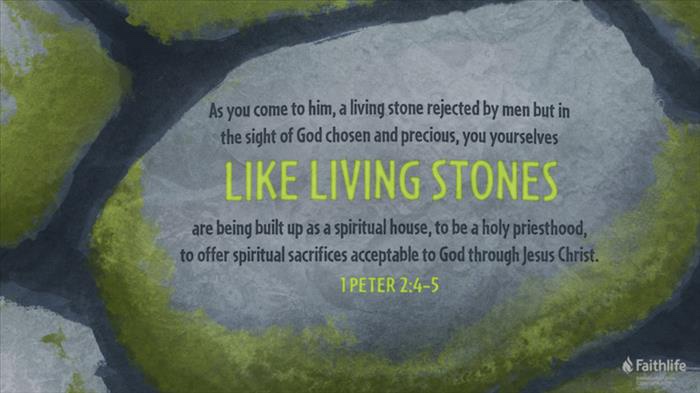
A living stone, for a spiritual house (1 Peter 2; Easter 5A)

For the last few weeks, we have been reading through the letter known as 1 Peter during the Easter season. We have read parts of chapters 1 and 2 so far. This Sunday, however, the lectionary does something strange: it takes us back before the passage we heard last week, to a section of chapter 2 that focusses on the way that holiness is to be understood.

The theme of holiness has already been sounded earlier in the letter. The people who are receiving this letter are “the exiles of the Dispersion” (v.1), people of Israel living in other nations. For such people, holiness was an important idea. The fundamental charge of this letter was sounded earlier: “as he who called you is holy, be holy yourselves in all your conduct” (v.15). This is supported by a quotation from scripture (Lev 11:44), which was a foundational text for the people of Israel.

Holiness characterized Israel; those who ministered to God within the Temple, as priests, were to be especially concerned about holiness in their daily life and their regular activities in the Temple (Exod 28-29; Lev 8-9). The priests oversaw the implementation of the Holiness Code, a large section of Leviticus (chapters 17–26), which explained the various applications of the word to Israel, that “you shall be holy, for I the Lord your God am holy” (Lev 19:2; also 20:7,26).

Holiness was also a concern of the Pharisees. The scribes and the Pharisees devoted their lives to teaching and explaining each of the 613 commandments and ordinances that were included within the books of Torah (the books of the Law—the first five books of Hebrew Scriptures), and showing the common people how they could live in holiness, as they followed each of those commandments. Holiness was at the heart of the Law, so adhering to each commandment ensured holiness.

And holiness characterised the followers of Jesus, for he was leader of a holiness movement in a holiness society. Jesus debated often with the scribes and Pharisees. He seems to share much in common with them. They were all committed to living in accordance with the commandments of Torah, although they had differing interpretations of how to do this. Jesus advocated for the living out of holiness in daily life, as did the scribes and Pharisees. His teachings also focussed on adhering to God’s will, maintaining the justice-righteousness that God required, in all of life. He teaches his followers to adhere to that way in order the take part in the kingdom that God has planned for all.

Holiness, to all of these groups, meant being consecrated, dedicated, set apart for a designated purpose. It is often (mis)understood as signalling a superior status, an exalted place—”up there” above the unholy ones, just as God is “up there” above the earth. Of course, that old worldview is now obsolete. And the sense of elitism in “holiness” is also obsolete.

Further, whilst a holy person is to be an ethical person, overtones of morality are not the first and last aspect of holiness. To be holy is to be dedicated to the task, following Jesus with the whole of our lives, sensing the eternal in the moments of the present, experiencing the divine in the midst of human life. Excitedly, joyously (v.6), all this is to be shared with others who have not yet “caught the vision”.

There are many references to, and quotations from, the scriptures of the Hebrew people in chapter 2 of this letter. That makes sense, for—as we have seen—it was sent to “the exiles of the Dispersion” (1:1). These were their familiar scriptures. To live according to holiness (Lev 11:44) is the key principle (1 Pet 1:15).

In 2:4–10, part of the lectionary passage for this Sunday, we learn what that means, as the writer plays with a series of texts from the psalms and Isaiah. Each text contains a reference to “stone”, and relates an understanding of holiness to those hearing the letter.

The first reference point for “stone” is to Jesus, the “living stone” who is the cornerstone of the whole building. That slips quickly into applying “stones” to the people of faith who are hearing this letter: as “living stones” they are to be built into the structure as integral parts of the whole. Then, to reinforce that affirmation, a verse from Hosea 2 is quoted to emphasize how intimately and enduringly the people are connected with God.

Echoing still more scriptural terms, they are described as “chosen” (Deut 7:6), “a royal priesthood” (Exod 19:6), “holy” (Lev 20:7), and God’s own people (Hos 2:23) who are “a light to the nations” (Isa 42:6). Many passages are rolled into one sentence!

Later sections of the letter provide specific guidance as to how we are to live in that condition of holiness; what behaviours and actions are appropriate for being “living stones” in a “spiritual house”. The challenge for us, this week, as we hear and preach on this particular passage, is to help people to grasp the relevance of these important theological terms for ourselves today.

*****

See also

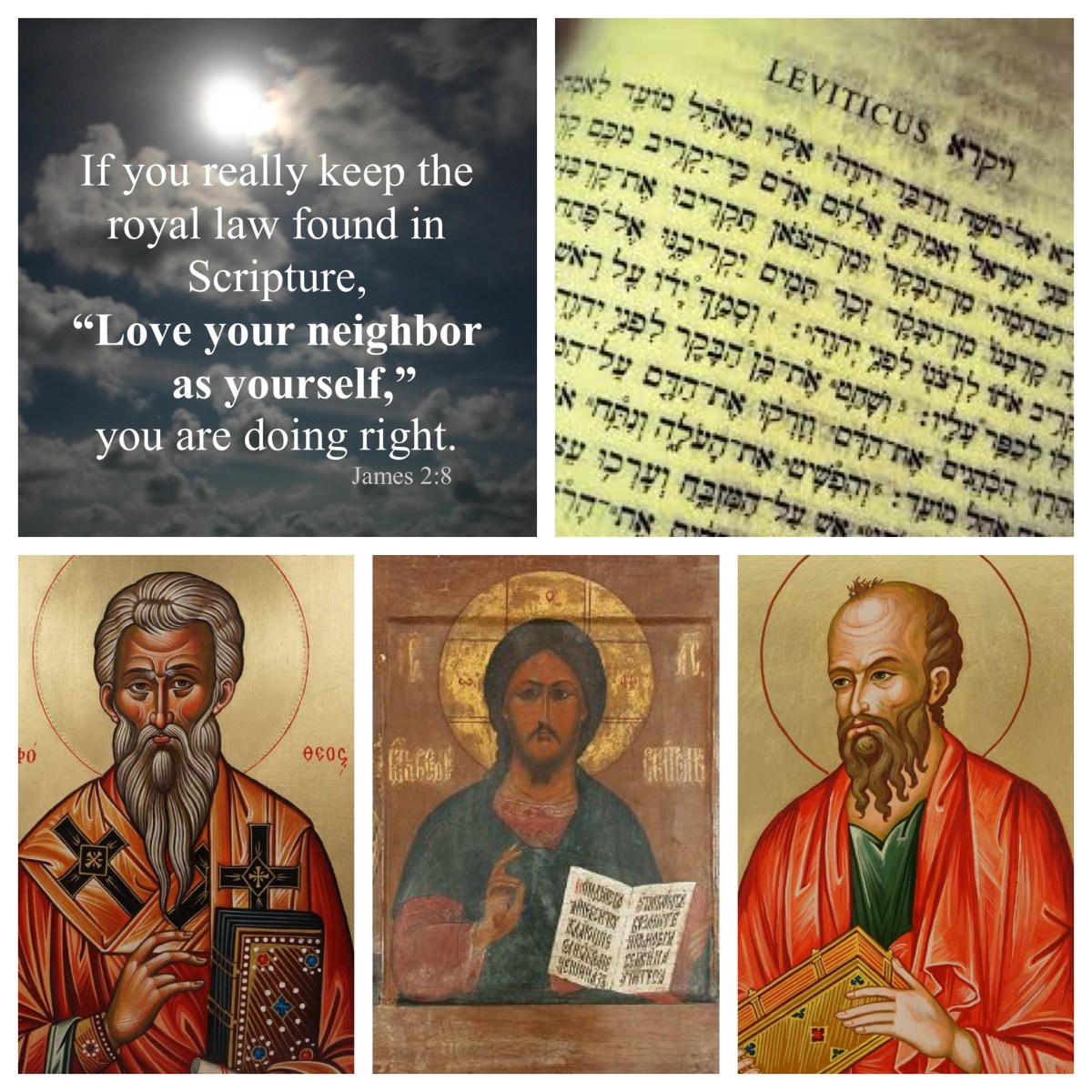
Wisdom from ages past for the present times (Leviticus, Jesus, James, and Paul) (Pentecost 15B, 23B)

There’s a book in the Bible that gets really bad press. It is is cited as being irrelevant to modern life, because it talks about “in the camp” and “outside the camp”. It seems to contain pages and pages of laws about sacrifices and offerings and festivals and the Temple, none of which seem relevant to Christian faith. It has chapters devoted to what you can eat, and what you can’t eat. It talks about how to deal with skin diseases and sexual misbehaviour.

And we know that a couple of verses in this book have, most unhelpfully, been quite abused by some people in some churches, being misused to berate, judge, and condemn some people in society—in ways that are quite out of keeping with the original intentions and application of these verses.

Have you guessed which book? If you thought, “ Leviticus”, you are right.

Leviticus—the book of the Levites, the group within ancient Israel that were responsible for all that took place in the Temple—contains all of these things. And those passages that gave directions about worship, sacrifices, offerings, ordination, priestly activity, dietary matters, relationships, illnesses, and more, were important for the people of Israel in centuries past.

But in the present—how relevant are these things? That’s a fair question (but it requires an explanation much longer than can be given in this short article).

There is one thing in Leviticus, however, that is important. Very important. So important that it has been quoted at many times in subsequent generations. So important that it shapes faith and discipleship for us even today. So important that is provides the guiding principle for life in a global pandemic.

There is a story when Jesus engages in conversation with a teacher of the Torah (the law), recounted in Mark 12:28–34 and parallel passages. To the question, “which commandment in the law is the greatest?”, Jesus responds by citing two commandments, each drawn from Hebrew Scripture.

The first commandment, “love God”, comes from Deuteronomy (Deut 6:5; 10:12). Deuteronomy literally means “second law”; it is believed to be the book discovered in the Temple under King Josiah (2 Kings 22:8–11; 2 Chron 34:14–16) which was the catalyst and guide for the widespread reforms that Josiah undertook. Deuteronomy contains the Ten Commandments (Deut 5:1–21), as well as the Shema, which became the daily prayer of the Jews (Deut 6:4–9), and a series of blessings (28:1–6) and curses (28:15–19) which formed the basis for the beatitudes spoken by Jesus on the mountain (Matt 5:3–12) and the parallel set of blessings and woes on the plain (Luke 6:20–26).

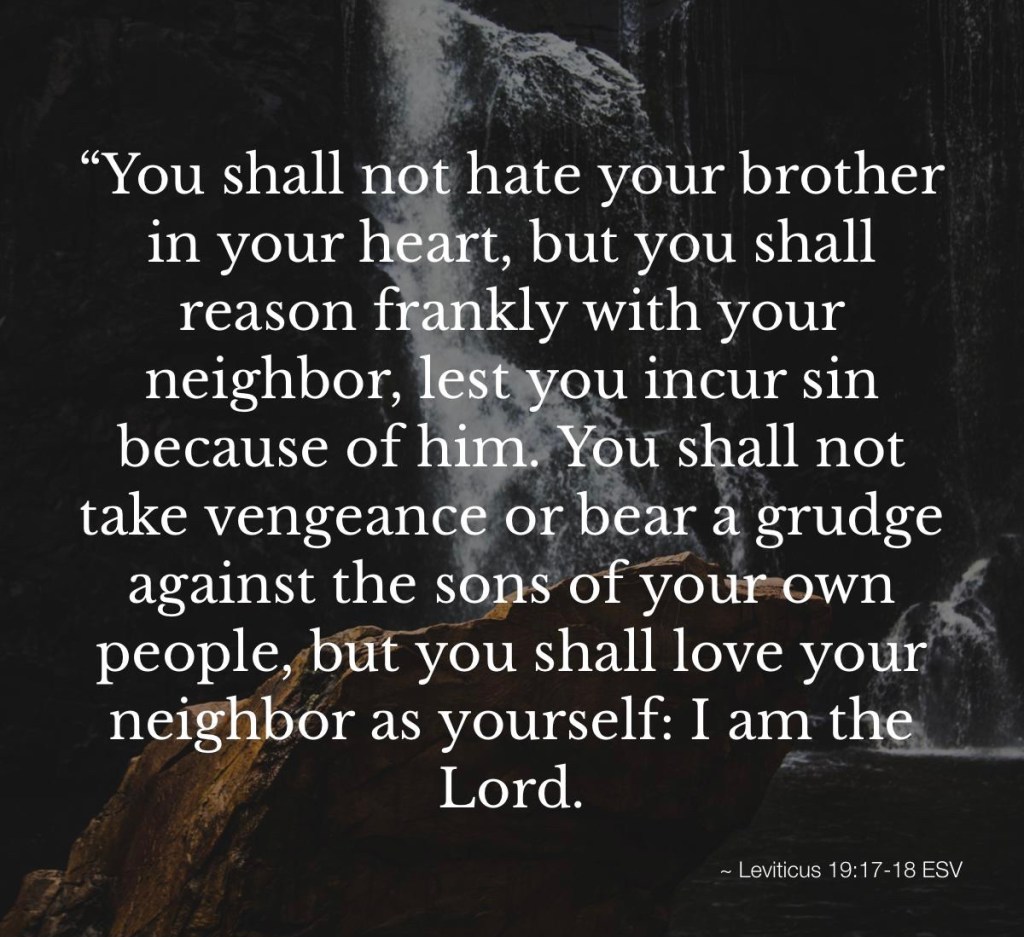
The second commandment, “love your neighbour”, actually comes from Leviticus (19:18), a book which, as we have noted, contains a comprehensive set of laws which cover a wide range of issues and situations.

The command to “love your neighbour” culminates a series of instructions regarding the way a person is to relate to their neighbours: “you shall not defraud your neighbour .. with justice you shall judge your neighbour … you shall not profit by the blood of your neighbour … you shall not reprove your neighbour” (19:13–18). It sits within the section of the book which is often called The Holiness Code (Lev 17–26), a section which emphasises the word to Israel, that “you shall be holy, for I the Lord your God am holy” (Lev 19:2; also 20:7, 26). Being holy means treating others with respect.

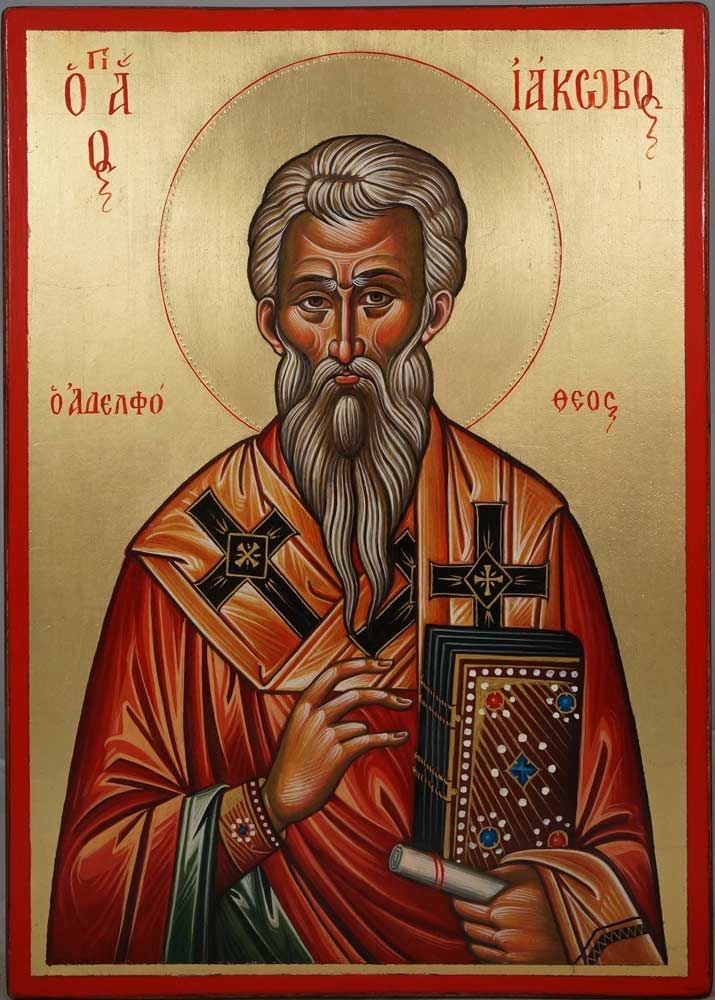
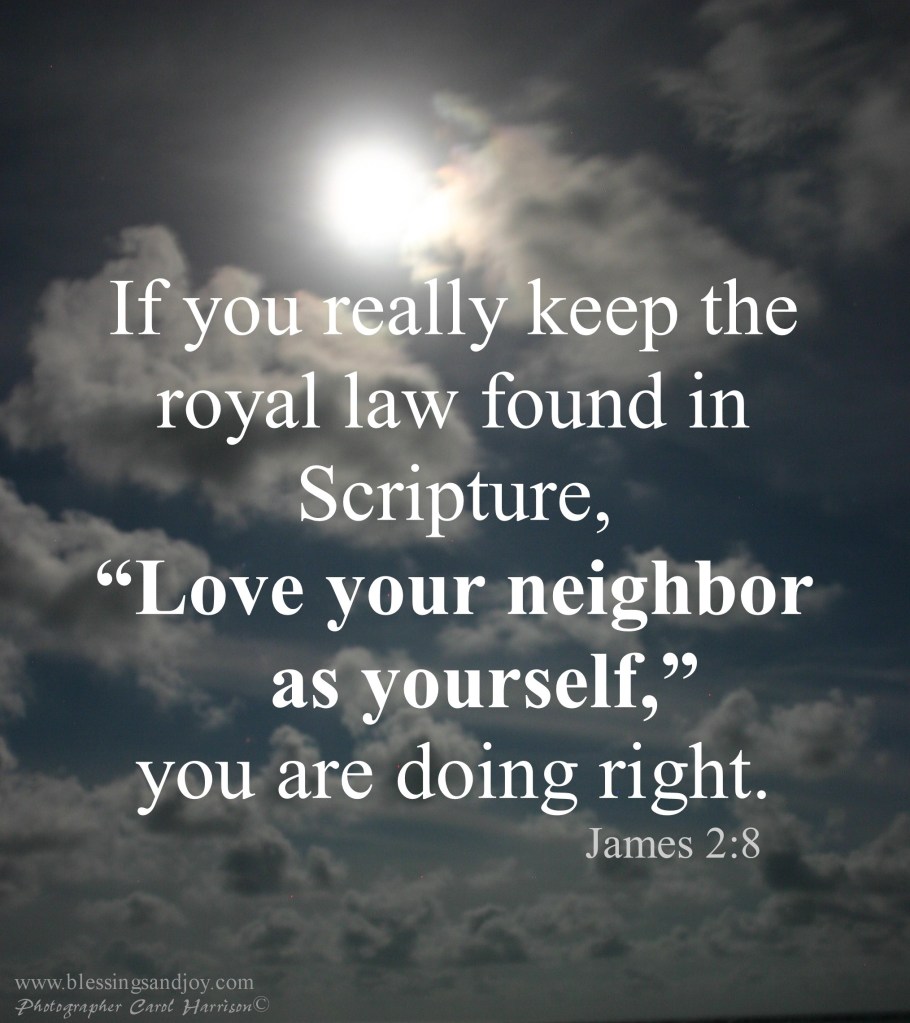
It is not only Jesus who quotes these words from Leviticus. In the treatise of James, the brother of Jesus, the command to love your neighbour (Lev 19:18) is quoted. It leads into a discussion of the need to fulfil the Law as a whole (2:8). James makes reference to two of the Ten Commandments (2:11), before drawing a succinct moral conclusion: “so speak and act as those who are to be judged by the law of liberty” (2:12). These verses appear in this Sunday’s epistle reading.

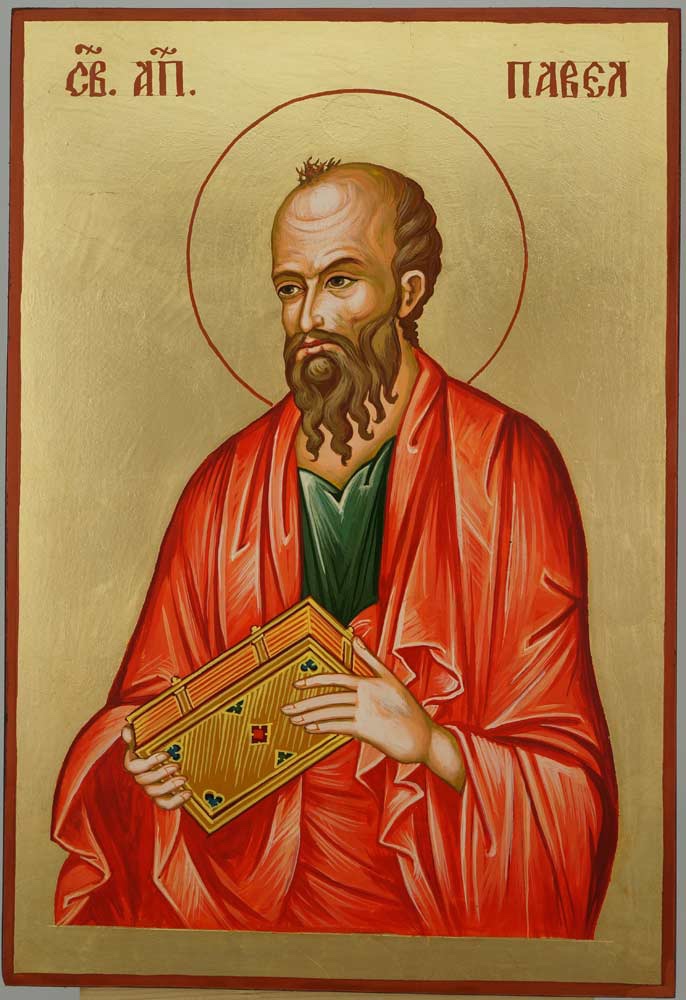
The command to love your neighbour is also quoted by Paul, not once, but twice. The first time is in Rom 13:8–10, in a section of that letter where Paul claims that “love is the fulfilment of the law”. The second is in Galatians, where Paul reminds his audience of a key theme of that letter, that “you were called to freedom”, before asserting that “the whole law is fulfilled in one word: ‘you shall love your neighbour as yourself’” (Gal 5:13–14).

It is worth noting that both James and Paul link this central command to the issue of liberty—James 2:12, Gal 5:13–14. Keeping the law is not a matter of bondage and oppressive restrictions; rather, loving your neighbour is an expression of freedom, for as we orient ourself to the other person, we release our own person from what might hold and constrain us.

So the big three of first century Christianity—Jesus, his brother James, leader of the church in Jerusalem, and the apostle to the Gentiles, Paul—each refer to this one commandment from Leviticus, and give it prominence amongst all the other commandments. It is one of the two “greatest commandments” (Mark 12:31), it is “the royal law” (James 2:8), it is the one word that sums up all the other commandments (Rom 13:9) and fulfils the whole law (Gal 5:14).

And for us, today, in the world of the COVID-19 pandemic and the Delta strain, these ancient words of wisdom hold good as the guiding principle for all that we do. We love our neighbour by taking all the precautions necessary: careful hand washing and sanitising, wearing a mask when in public, getting vaccinated, social distancing when we are permitted to interact in person, staying at home when we are required. As we reduce the risk of transmitting infections by these means, we show that we truly love our neighbours.

See also https://johntsquires.com/2021/08/30/fulfilling-the-law-james-2-pentecost-15b/