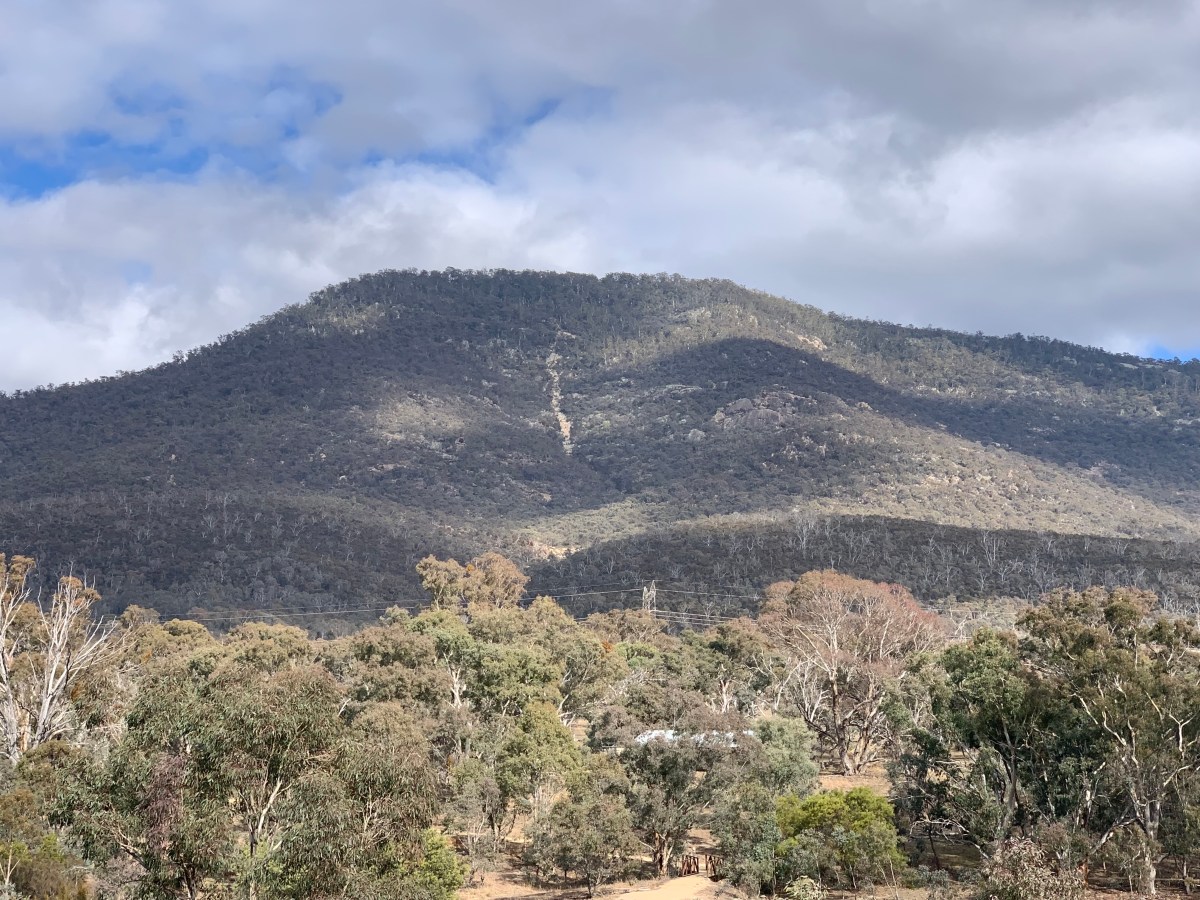
Learning of the land (5): Namadgi, Tharwa, and Tidbinbilla

Not far from where we live, to the southwest in what is known as the Brindabella Ranges, there is a large swathe of national park. The Namadgi National Park actually stretches for almost 100 kilometres and it covers just over 100,000 hectares. It is a beautiful “natural” landscape with just a few roads running through it, quite a number of walking trails, and many features of significance.
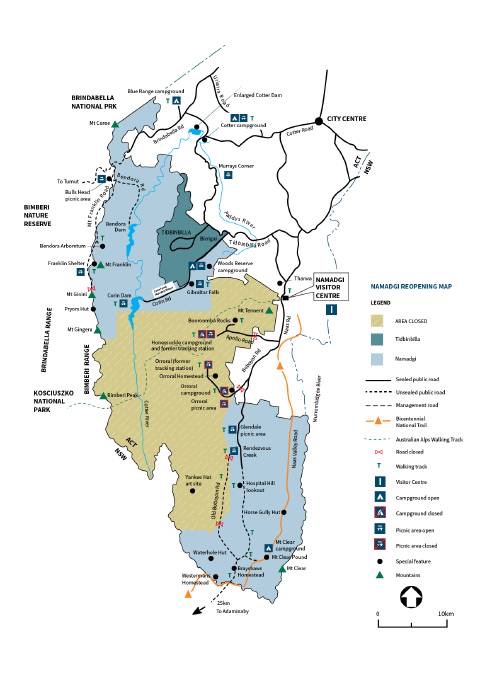
Because it is so close (the entry point is just a 10km drive from where Elizabeth and I live), we have often ventured into the park for a Sunday afternoon drive; or, as was the case during the pandemic lockdown, for a once-a-week escape from the confines of home and the demands of the ZOOM screen!

In early 2020, the Orroral Valley bushfire burnt over 80% of Namadgi National Park, or about 86,562 hectares. The fire came perilously close to the urban area where we love, at the southern edge of Canberra. Maps were published showing the danger of embers falling on the suburbs of Gordon and Banks. Plans to evacuate were publicised. We had packed our essentials into a couple of boxes, ready to whisk them away at an early opportunity.
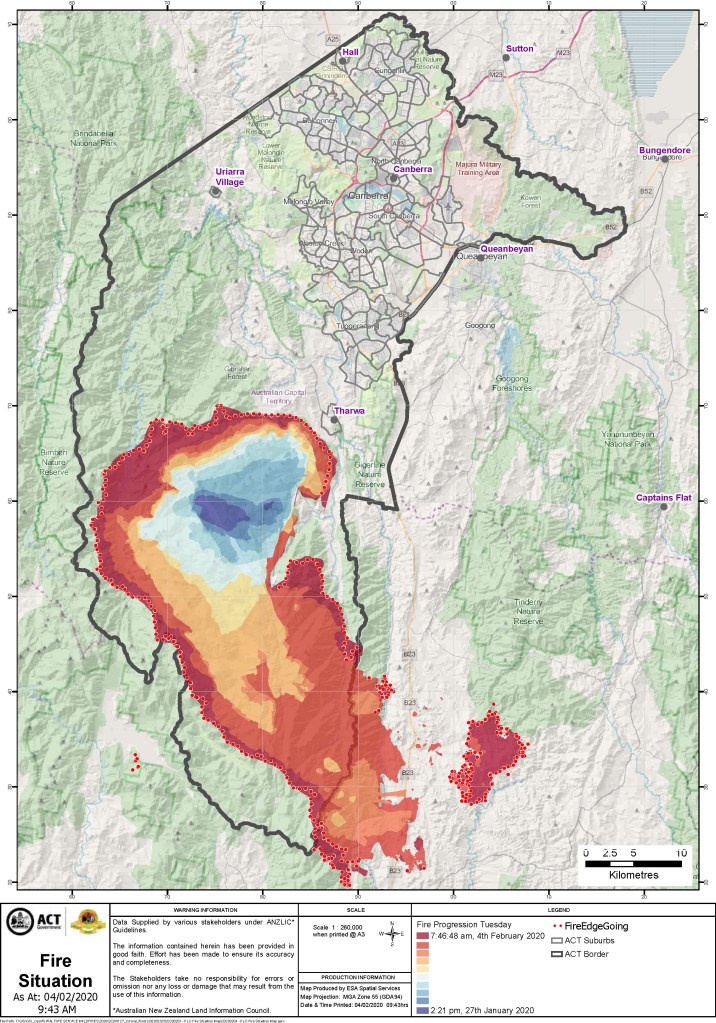
One night, we stood with half of the residents of our street, watching the tops of the Brindabella range mountains that could be seen from our street. There were a number of fires, burning bright in the night. The darkness meant there was no real perspective; the flames, actually 5–6km away, looked like they were just across in the next street. The overhead buzz of planes and copters indicated that the Emergency Services were doing their very best to stop the spread of the fire—as they had been doing for weeks prior to this night.

The fire did not run down the mountain, into the urban area, as it had done in 2003, when a number of suburbs in the south-western area of Canberra were devastated. The memories of that event, scarred deep into the memories of people who had lived in the city longer than we had, were brought back to life in striking and vivid ways, for many we knew.

Just past the entry to the national park, the mountain of Tharwa stands high. It was given the name of Mount Tennent early in the colonial period, when British colonisation began. It was named after John Tennant, a bush ranger who lived in a hideout on the mountain behind Tharwa.
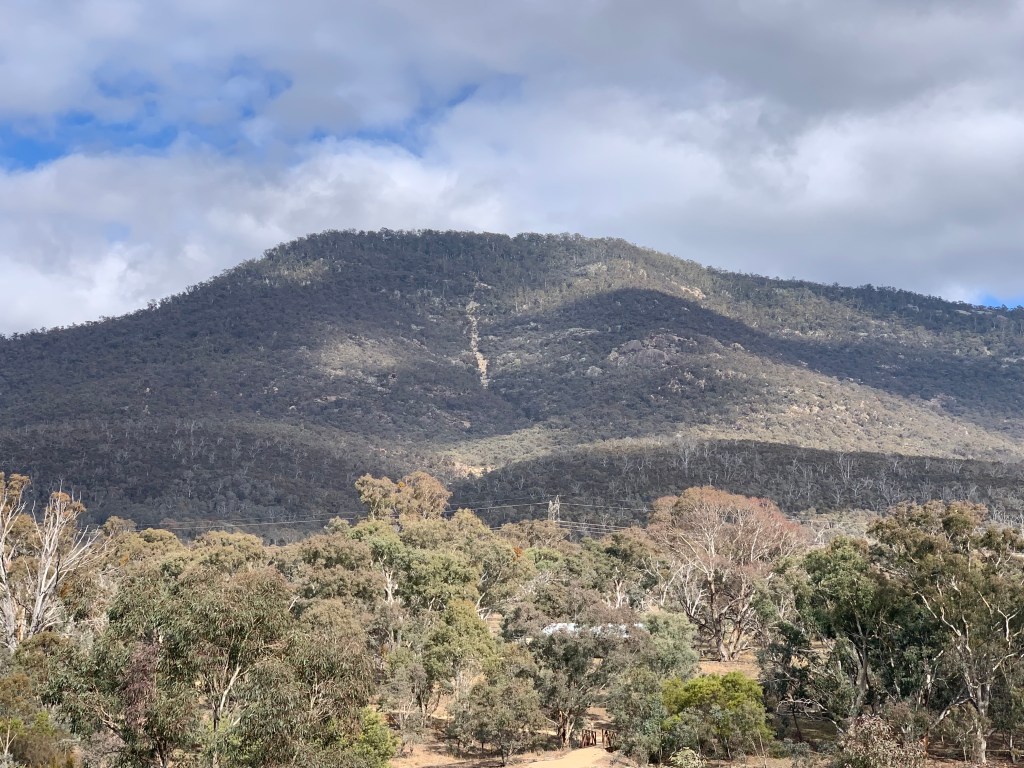
Tharwa (Mount Tennant) some months after the 2020 fires

Tennant absconded from his assigned landholder in 1826 and with some others formed a gang which raided local homesteads in the years 1827 and 1828. Eventually he was arrested and transported to Norfolk Island. Tennant was 29 years old when he had been sentenced to transportation to Australia for life in 1823. He arrived in Sydney on 12 July 1824 on the ‘Prince Regent’. Old habits died hard, it would seem. He died in 1837, a year after coming back to Sydney.

Soon after the 2020 bushfire, flooding to the fireground caused significant and widespread damage. The road that ran deep into the national park was closed. Added to the risk of burnt trees falling was the damage done to roads and infrastructure in the floods that occurred some months after the fires. Eventually, the road into the park was opened. We were able to venture back into the bush—to see at close quarters the scarred landscape, the swathes of burnt trees, and the bursts of vibrant green leaves now decorating those burnt trunks.

The savage brutality of what had taken place was evident, from a distance, to those of us who paid attention. Now, at close range, we were able to see just how severe the damage was, as well as how resilient the Australian bush is. New life is bursting forth in so many ways—sadly, not everywhere, as some areas will take much longer to recover—but overall, a picture of verdant health is evident.

******
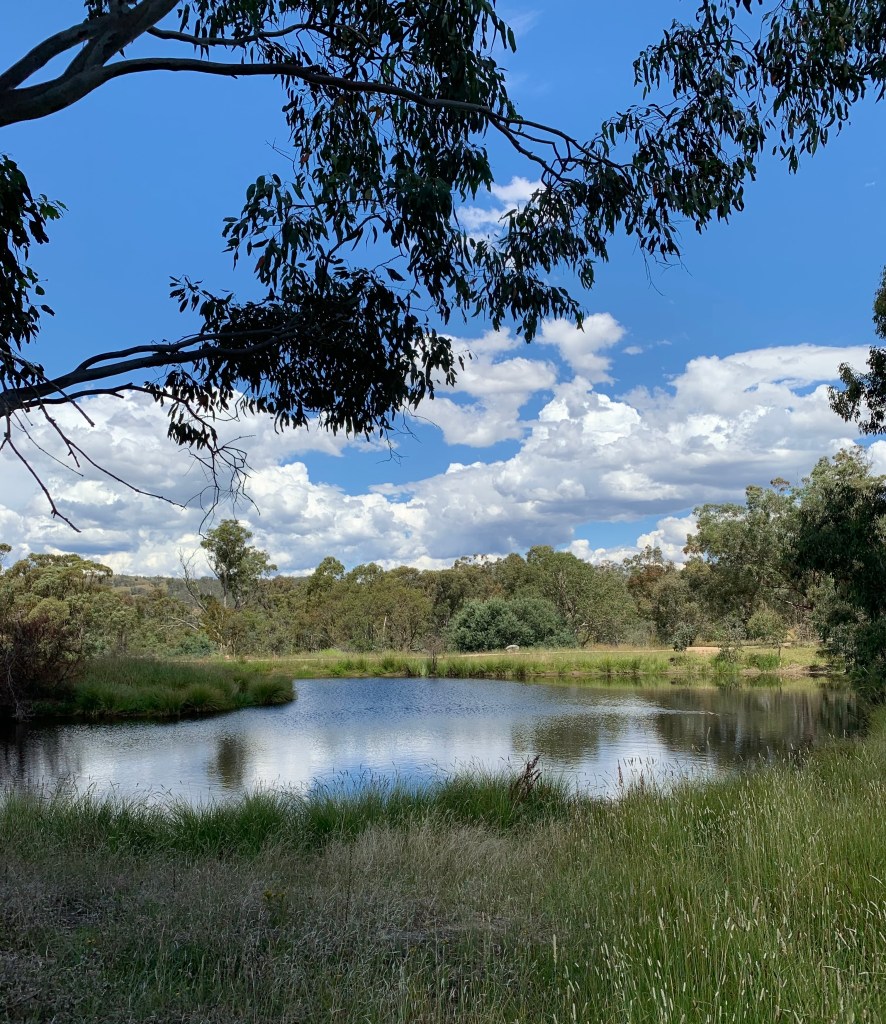
Archaeological excavation and carbon dating of sites in Tidbinbilla Nature Reserve and Namadgi National Park has confirmed an Aboriginal presence in the ACT region 25,000 years ago. Temperatures in the region would have been several degrees lower 25,000 years ago—similar to the conditions on the summit of Mount Kosciuszko today. In other words, seriously cold!!

Bogong Moths would pass through the area in October on their way from breeding grounds on the plains, up to the mountains to hibernate for the summer. The moths are highly nutritious, easy to collect and were in sufficient numbers to warrant large gatherings. Many Aboriginal people from different clan groups and neighbouring nations gathered here for initiation ceremonies, marriage, corroborees and trade.

In fact Jedbinbilla, which means ‘a place where boys become men’ in Ngunnawal language, is situated adjacent to Tidbinbilla and we are told that it was an important place for young boys to learn the first of three stages of man-hood (gatherer, hunter, warrior).

Archaeological surveys of two of the main access routes to the valley area, the Fishing Gap Trail and the path over Devil’s Gap, have found clear evidence of frequent Aboriginal passage. Gibraltar Rocks is a highly significant spiritual site and a corroboree site has been found near the headwaters of Sheedy’s Creek.

Researchers believe the Tidbinbilla valley floor was the focus of a territorial group that survived on the plentiful supply of possum, ducks, wild turkeys, emus, platypus, kangaroo, fish, yabbies and a range of plants, tubers, seeds and fruit.
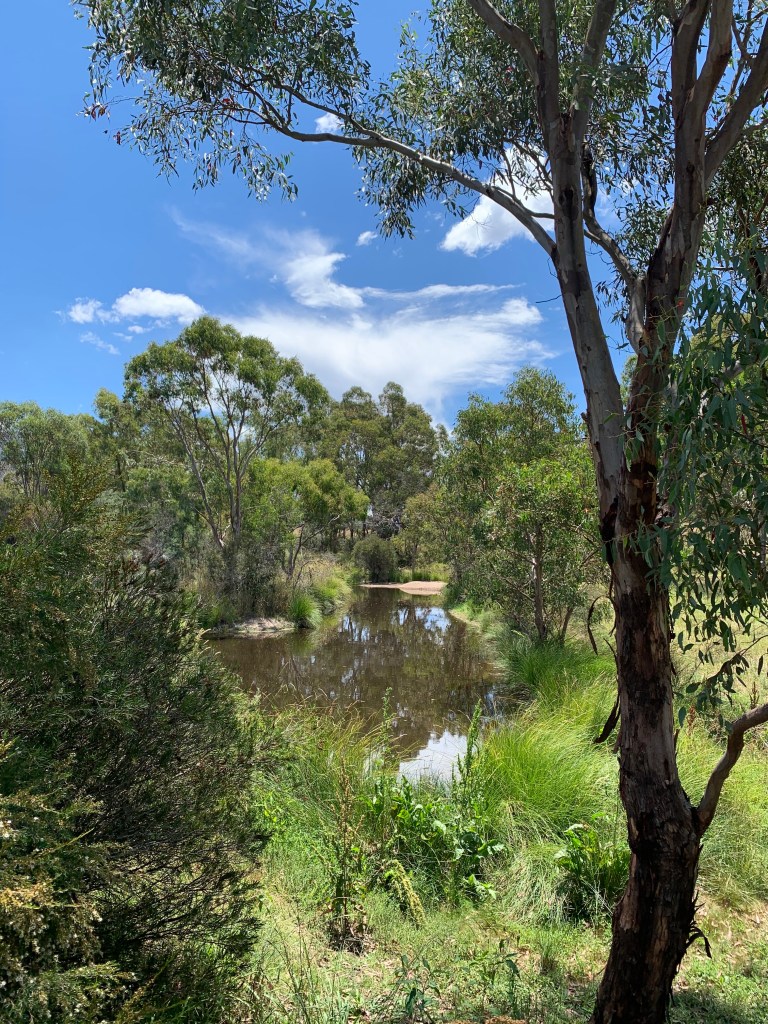
When Europeans first arrived in the area in the early 1820s hundreds of Aboriginal people lived here. The population of Aboriginal people increased at various times during the year when people travelled to the region for social gatherings, ceremonies and seasonal food collecting. European settlement had the same impact on Aboriginal communities in the ACT as it did in other parts of Australia. It brought displacement from the land and exposed people to new diseases such as influenza, smallpox and tuberculosis, from which many died. That, to our shame, is an enduring legacy that we forced into the First Peoples.

Aboriginal heritage sites found in this region include burial places, campsites, rock shelters (with or without ochre paintings), stone arrangements, scarred trees, ceremonial grounds, grinding grooves, quarries and sacred places. At times, Aboriginal occupation is also evident at early European sites such as historic homesteads, cemeteries, reserves and old bridle tracks and coach roads. There is lots of information at https://www.tidbinbilla.act.gov.au/learn/tidbinbilla?a=396477

*****

Men’s sites were often found in the higher peaks of the valley. One of the rock shelters is home to ancient rock art found along a pathway to the Gibraltar rock peak, which is a men’s site. While the mountains in Tidbinbilla are also important to Ngunnawal women, women’s sites were found closer to the river system that twisted through the valley. In some women’s places grinding grooves can still be found on the river’s edge.

Often grand geological formations would be significant to the story of place. Many formations can still be seen today which visually reflect the dreaming story of the valley and its important relationship to the people that have survived and thrived within it for thousands of years. An example of this is the shape of a pregnant woman seen through the contours in the western slopes of the valley and found in the centre of the Tidbinbilla valley is a rock that looks like a perched eagle (Maliyan) the creator spirit of the Tidbinbilla dreaming story.

Tidbinbilla was a key place for Ngunnawal ceremonies, with groups from surrounding areas entering through key points such as Gibraltar Peak, where an elder would light a fire to guide people into the valley. Neighbouring language groups travelled to Ngunnawal Country for the purpose of ceremony, lore, marriage arrangements, trade, sharing of seasonal foods and cultural knowledge.

Tidbinbilla was also a place where young men learnt traditional lore/law, and where they were taken into the mountains as they learnt to become men in the traditional way. Similarly, Ngunnawal women carried out their customary ceremonies in the lower areas of the landscape preparing young girls for womanhood. And as we have noted, the mountains surrounding the valley were home in spring to the migrating bogong moths, which were gathered by Ngunnawal people as a source of food. See

https://www.tidbinbilla.act.gov.au/learn/ngunnawal-culture-and-heritage

and

https://www.canberratracks.act.gov.au/heritage-trails/track-1-ngunnawal-country/namadgi-visitor-centre

*****

For earlier posts on learning of country, see
Swearing allegiance or reaffirming reality? (2)

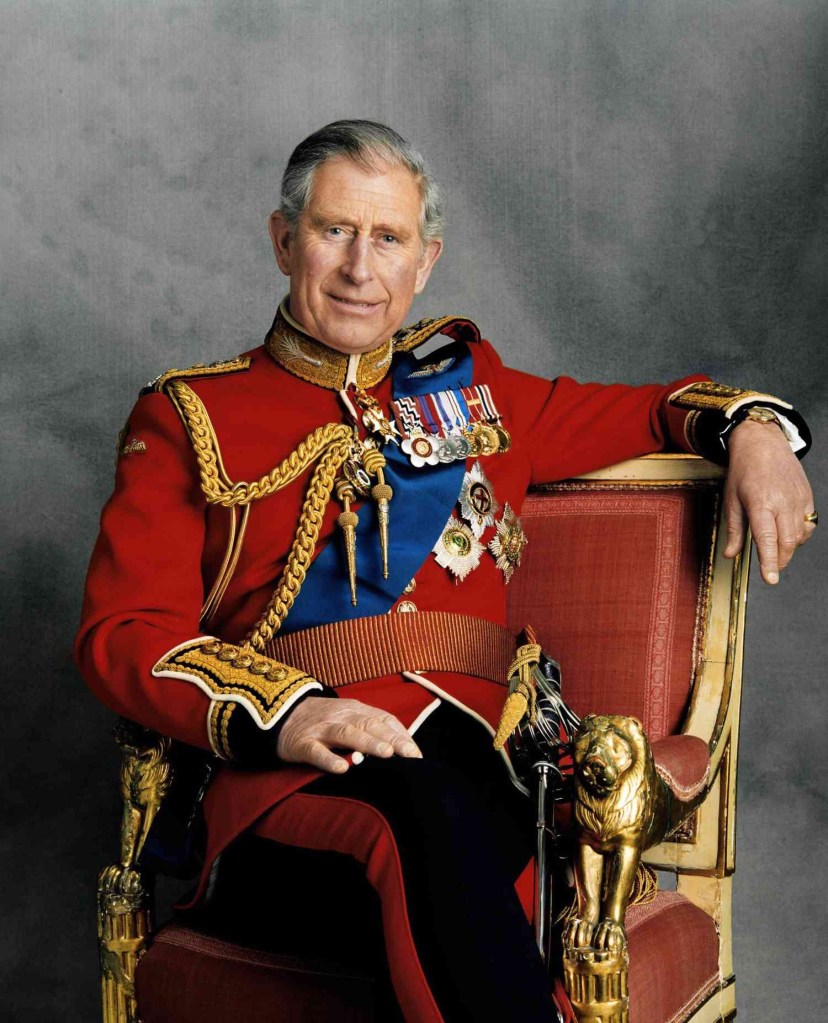
When Charles III is crowned as King Charles III, people across the United Kingdom and in Commonwealth countries across the world will be invited to cry out and swear their allegiance to the new King.

I won’t be doing that. There are two key reasons for this. The first relates to the relationship between Australia and the UK. I wrote about that in my previous blog. The second arises from my understanding of Christian faith and theology, which I will address in this blog.

This area of concern that informs my decision emerges from my own faith, and my understanding of “kingship” in the heritage and traditions of that faith. In Hebrew Scripture, the king of Israel was expected to “trust in the Lord” (Ps 21:7), “rejoice in God” (Ps 63:11), and “judge [the] people with righteousness, and [the] poor with justice” which have been granted by God (Ps 72:1–2). That was the ideal. The reality was different.

We know, of course, from the narratives that tell the story of Israel over many generations (1–2 Samuel, 1–2 Kings, 1–2 Chronicles), that many kings failed in this requirement, and “did evil in the sight of the Lord”, fulfilling the predictive prophecy of the prophet Samuel (1 Sam 8:10–18). Nevertheless, the idealised view of kingship, which Samuel dutifully set out in writing for the people (1 Sam 10:26), held sway through the ensuing centuries.

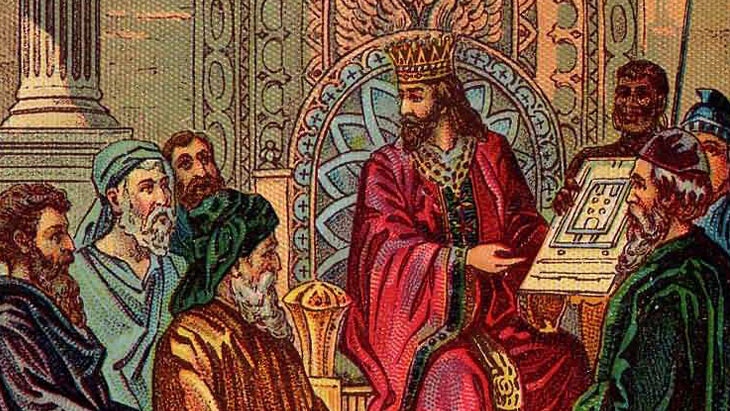
This idealised view was particularly developed in the portrayal of Solomon, who was seen to be filled with “wisdom and knowledge”, and granted “riches, possessions, and honour, such as none of the kings had who were before you, and none after you shall have the like” (2 Chron 1:7–12, especially verses 10 and 12).

Indeed, King Solomon is said to have “excelled all the kings of the earth in riches and in wisdom. And all the kings of the earth sought the presence of Solomon to hear his wisdom, which God had put into his mind. Every one of [those kings] brought silver and gold, so much, year by year.” (2 Chron 9:22–24).

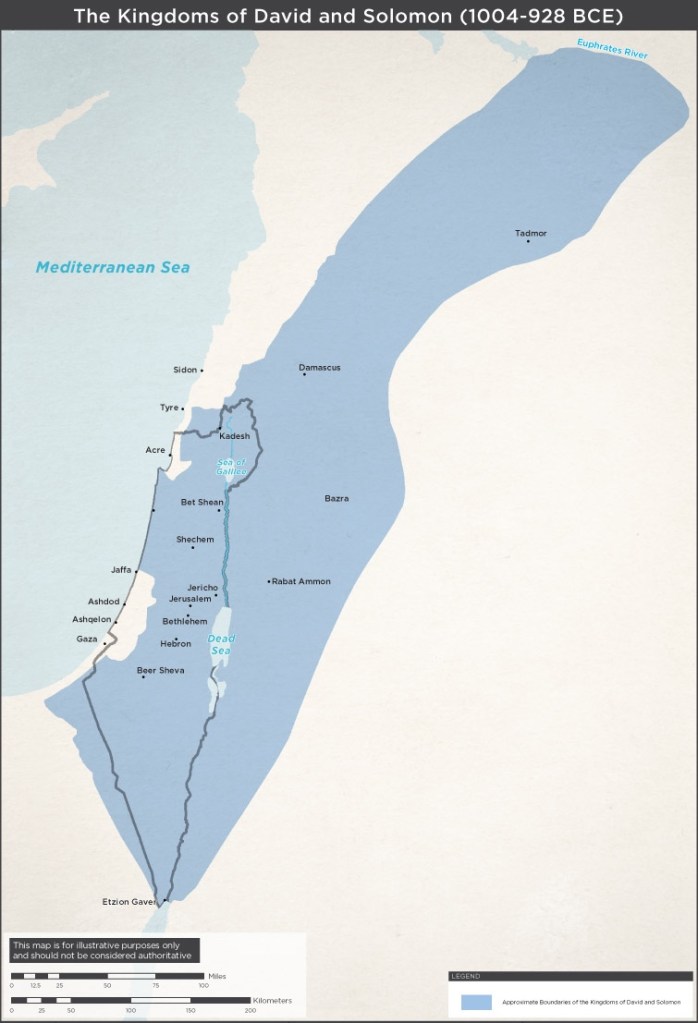
This wonderfully wise, insightful, discerning man, Solomon—bearing a name derived from the Hebrew for peace, “shalom”—became a powerhouse in the ancient world. But he did not always live as a man of peace. Indeed, he used his 4,000 horses and chariots and 12,000 horsemen to good effect; we read that “he ruled over all the kings from the Euphrates to the land of the Philistines and to the border of Egypt.” (2 Chron 9:26).

Solomon was remembered as king over the greatest expanse of land claimed by Israel in all of history. Solomon was a warrior. And warrior-kings were powerful, tyrannical in their exercise of power, ruthless in the way that they disposed of rivals for the throne and enemies on the battlefield alike. Think Alexander the Great. Think Charlemagne. Think Genghis Khan. Think William the Conqueror.

Solomon reigned for 40 years—a long, wealthy, successful time. That is the model of kingship which survives through into the modern era. We expect kings to rule. We expect them to invade and enforce and dominate, for that is the heritage passed on. (And I won’t comment on Solomon’s marital relationships; I will leave 1 Kings 11:3 to,speak for itself!)

In a fascinating article about the coronation, British biblical scholar Margaret Barker notes that the story of Solomon, anointed by the priest Zadok and the prophet Samuel (1 Kings 1:34, 39), is central to the symbolism and mythology that informs the service of the coronation. She explains how a number of the symbols in Westminster Cathedral, the setting for this ceremony, hearken back to the glories of Solomon. The coronation taking place this week references and relies upon the story of Solomon. See https://www.churchtimes.co.uk/articles/2023/28-april/features/features/zadok-and-melchizedek-and-their-place-in-coronation

Indeed, at the moment of anointing of the King, a prayer is to be offered that draws this direct connection: “thy prophets of old anointed kings and priests to serve in thy name”, and as the anointing is carried out (in private, behind a screen, the anthem by Handel is sung, “ZADOK the Priest”, while the Archbishop declares, “as Solomon was anointed king by Zadok the priest and Nathan the prophet, so may you be anointed, blessed, and consecrated King over the peoples”. The connection is crystal clear.

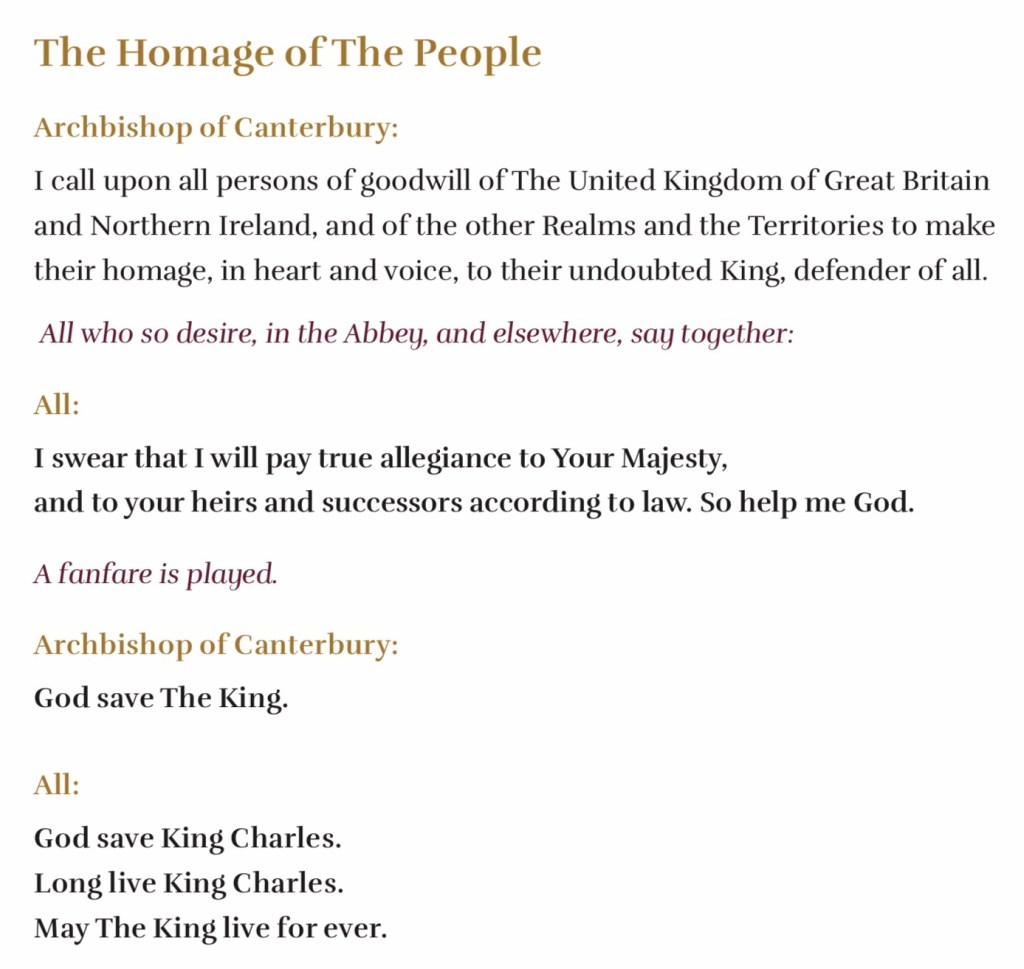
And even the weird line that the people are invited to say, “May the King live forever”—not just “Long live King Charles”, but the impossible “May the King live forever”—is because of the story of Solomon, mediated through Handel, as my colleague Avril Hannah-Jones notes; see https://revdocgeek.com/2023/05/05/zadok-the-priest/#more-4465

*****

Beyond the symbolism, however, the reality of the British monarchy emulates the way that Solomon exercised his rule, as a fierce expansionary leader. The promise to Abraham, that he would be given land by God (Gen 12:1), was set out in full detail in words given to Moses (as it was thought), where God promises the people that “I will set your borders from the Red Sea to the sea of the Philistines, and from the wilderness to the Euphrates” (Exod 23:31).

That great extent of territory was nowhere near what Joshua or the Judges, or David or Saul ruled over; but by the time of Solomon, it is said that “Solomon was sovereign over all the kingdoms from the Euphrates to the land of the Philistines, even to the border of Egypt” (1 Ki 4:21). He had expanded his empire to the fullest extent. And the land was captured by force—pure, simple, aggressive military conquest.

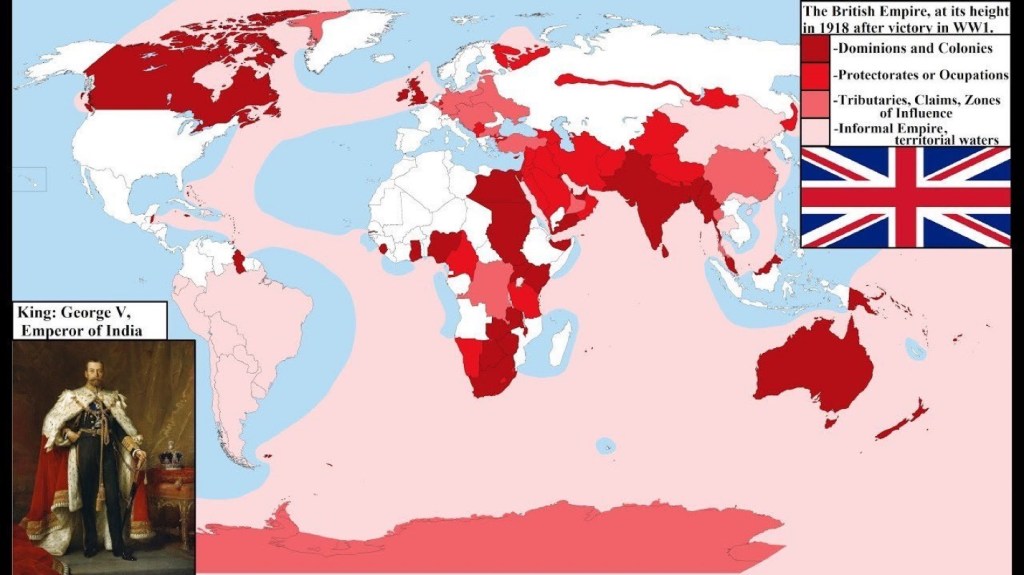
The story of the British Empire is one of relentless expansion, built on the back of trading, invasion, colonisation, slavery, and systematic oppression. The British Empire stretched right around the globe; that gave rise to the saying, “the sun never sets on the British Empire”.

So the power of the King (or Queen) was felt in multitudes of countries, where local wealth was plundered and alien systems of government were imposed: India, Kenya, Rhodesia, Nyasaland, Malaya, Aden, Ireland, Palestine, South Africa—and Australia, as I canvassed in my previous blog.

On the cruelties and injustices perpetrated by the British, see https://www.abc.net.au/news/2022-09-18/queen-elizabeth-ii-empire-colonialism-history/101430296 and https://www.newyorker.com/magazine/2022/04/04/the-british-empire-was-much-worse-than-you-realize-caroline-elkinss-legacy-of-violence

On “stuff the British stole”—artefacts that were taken from the colonies to be displayed in the homes and museums of the Mother Country, see https://www.theguardian.com/tv-and-radio/2022/nov/01/stuff-the-british-stole-australia-abc-tv-series-marc-fennell-colonial-history
It is only in recent years that some statements of regret and apologies have been issued by the Queen, or other key members of the royal family, relating to specific colonial situations; and that some artefacts have been returned to their countries of origin after spending decades in UK museums. That is a start towards backing away from past injustices—but much more can, and should, be done.

*****

More than this: “Solomon sat on the throne of the Lord, succeeding his father David as king; he prospered, and all Israel obeyed him” (1 Chron 29:23). He was considered to be the specific personal representation of the divine in Israelite society. That is directly mirrored in the way that King Charles III will be declared to be “Defender of the Faith” and also in the fact that he has the role of Head of the Church of England.

“Defender of the Faith” was conferred on Henry VIII by Pope Leo X in 1521, and every monarch since then has carried this title. The title of Head of the Church of England was adopted by Henry VIII in 1536, when he seized assets of the Catholic Church in England and Wales and declared the Church of England to be the established church.

The intertwining and enmeshing of state and religion is clear in these two titles—again, directly echoing the situation with Solomon and Israel. Although there is a stream within ancient Israelite religion which yearns and prays for the king to demonstrate the justice and righteousness that God desired for the nation. “By justice a king gives stability to the land”, says the sage, “but one who makes heavy exactions ruins it” (Prov 29:4).

Before being overrun by the Babylonians, one prophet in Israel declared that “the king will reign in righteousness, and princes will rule with justice” (Isa 32:1); another prophet, years later during the Exile, declared that “the days are surely coming, says the Lord, when I will raise up for David a righteous Branch, and he shall reign as king and deal wisely, and shall execute justice and righteousness in the land” (Jer 23:5).

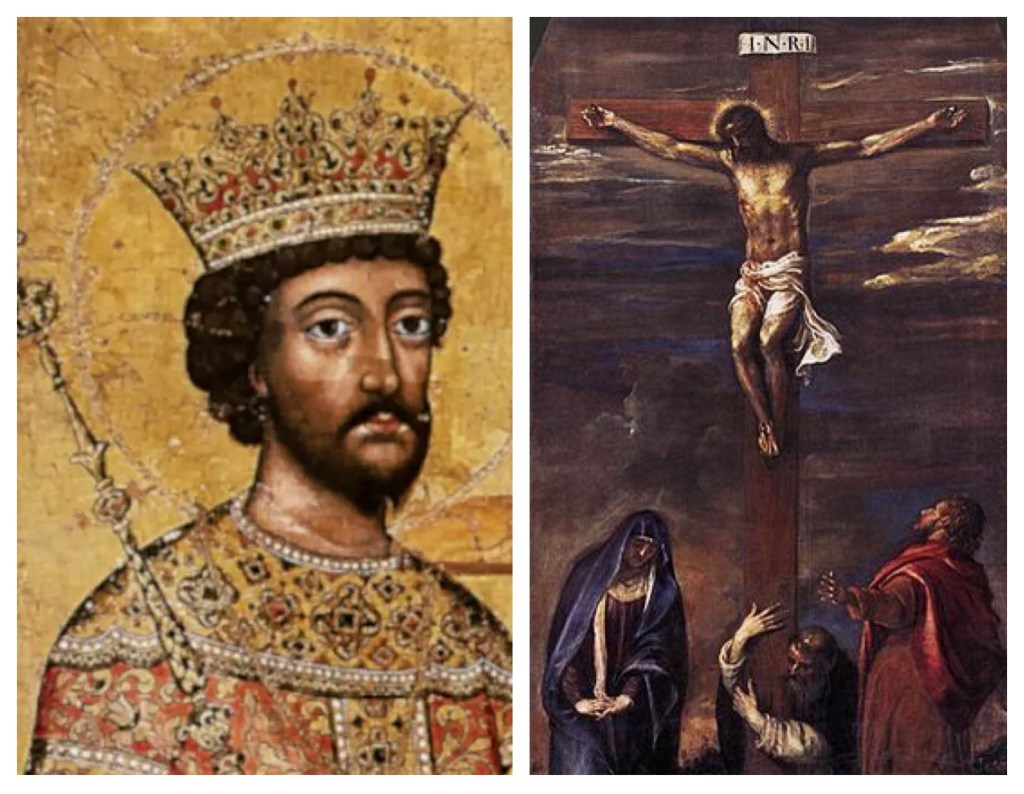
That hope, in Christian theology, was taken up in Jesus, who was claimed to be the righteous branch, the one ruling with justice (Matt 12:15–21). Jesus spoke clearly about the need for justice in our lives (Matt 23:23; Luke 7:29). He provided a clear countercultural vision for his followers, and called them into a radically different way of living. Yet the church went a different pathway, thanks to the influence of Constantine and then the theologians and popes that followed after him.

And in recent centuries, the church in the UK has gleefully merged this fervent prophetic hope with the dominance of the monarchy, and blunted any of the sharpness of the message of Jesus. They have continued to support a system in which the British monarch is regarded as their spiritual leader and yet injustice continues to be perpetrated in their society, and in their Empire and then Commonwealth.

Canon Glenn Loughrey has recently reflected on this situation, writing that “the participation of church UK in the blessing of the continuation of the system which decimated Aboriginal and Torres Strait Islanders and others across the globe is both a denial of and a continuation of the church in all its forms in colonial genocide”. To continue to support the system which caused such damage is unjust and unethical.

Now, it is true that the King will be greeted on arrival at the Abbey by a young Chapel Royal Chorister, “in the name of the King of Kings”, to which the King responds, “in his name, and after his example, I come not to be served, but to serve”. And, indeed, when the Archbishop of Canterbury asks King Charles III, “will you to your power cause Law and Justice, in Mercy, to be executed in all your judgements?”, he will reply, “I will”; and later, he will pray, “God of compassion and mercy, whose Son was sent not to be served but to serve, give grace that I may find in thy service perfect freedom, and in that freedom knowledge of thy truth”.

See https://www.churchofengland.org/sites/default/files/2023-04/23-24132%20Coronation%20Liturgy.pdf

Well, we shall see. Will the time under this monarch simply continue the imperial power that was exercised by his predecessors? It is hard to see any different happening. The system will continue, relentless and pervasive, continuing the privileges and power established in medieval times, regardless of the personal views of the incumbent monarch. And whilst it is true that the system has adapted and changed in minor ways into the present age, the crushing authority of the system, developed by monarchs in the past, is still perpetuated by governments in the present. There have been no apologies, no reparations, no acknowledgement of past failures.

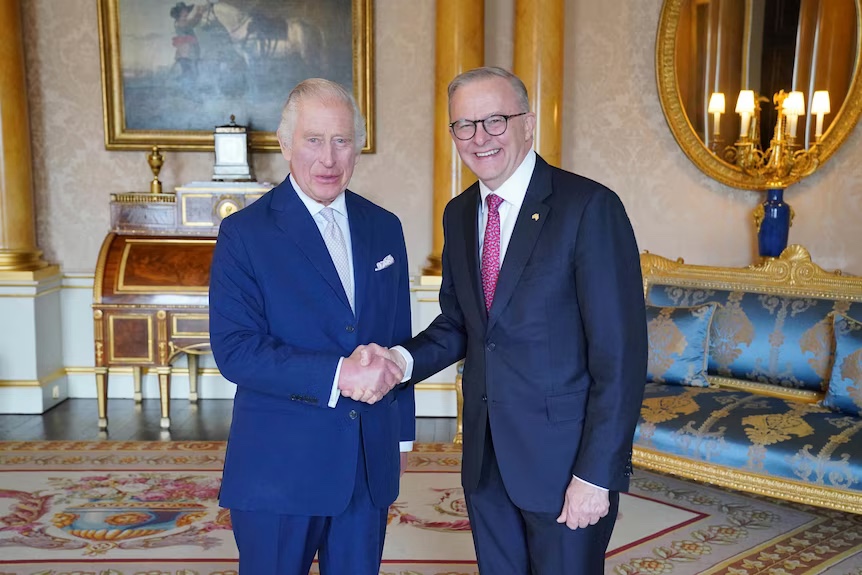
Our Prime Minister has met with the new King ahead of the coronation. “He has a long record of interest in issues such as climate change, on issues relating to Australia’s Indigenous people, on issues across the full range, particularly of the environment, and that remains the case, ” Mr Albanese said after that meeting. It would be really good to see King Charles III express regret at the actions of the invading British colonies of 1788 onwards, clearly state an apology to the First Peoples of Australia for what their ancestors experienced, and urge the Federal Government to move towards The Republic of Australia, with an Indigenous President, as soon as possible. This is what leaders of various Commonwealth countries have called for. See https://www.theguardian.com/uk-news/2023/may/04/commonwealth-indigenous-leaders-demand-apology-from-the-king-for-effects-of-colonisation

But I very much doubt that this will happen.

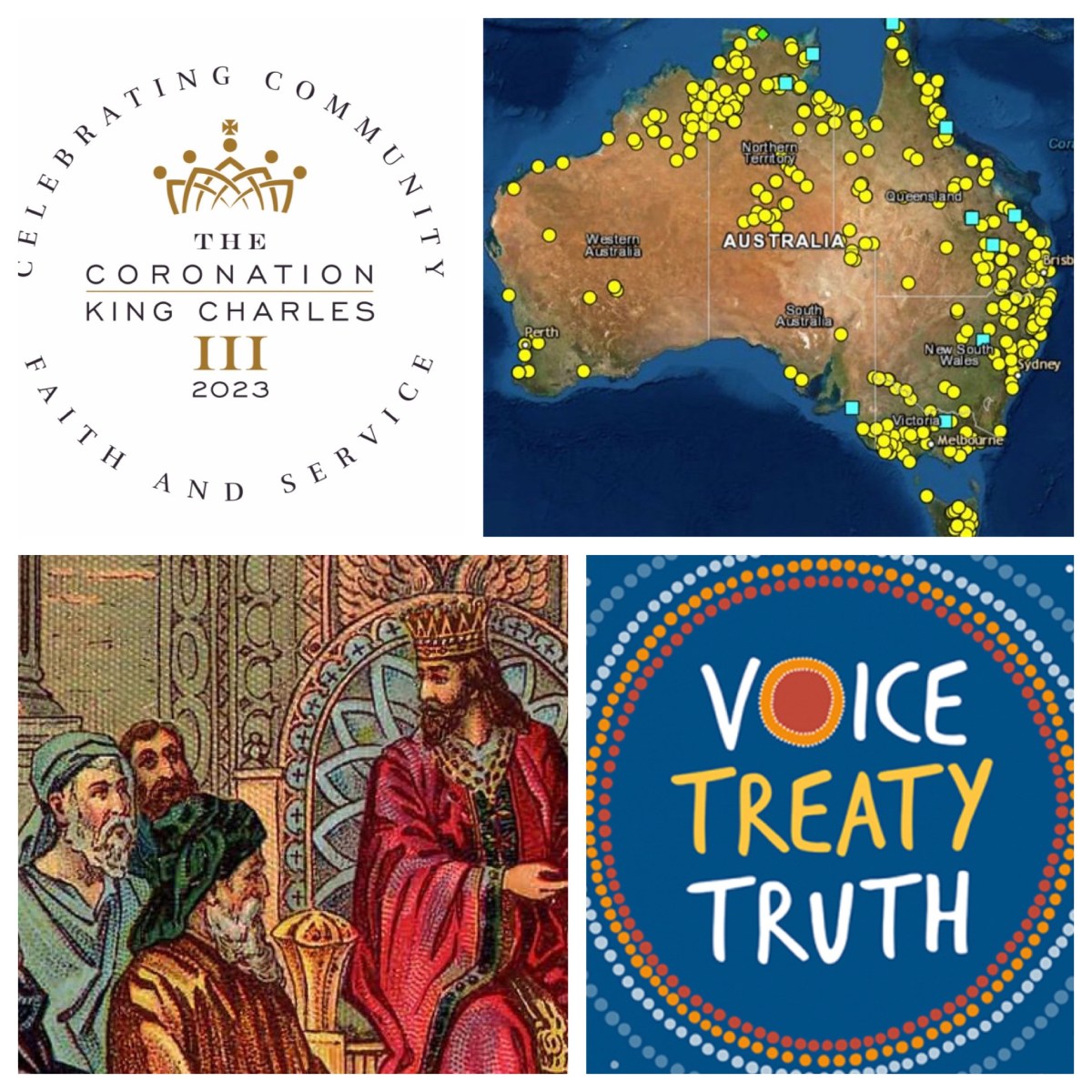
And so, I won’t be crying out my allegiance to the newly-crowned King when invited to do so during his coronation; rather, I will be quietly reaffirming the reality of Australia at this point in time. That reality, as I have stated, is well-encapsulated by the three words, Voice—Treaty—Truth. That commitment is what we need for the present times—not allegiance to an inherited powerful foreign ruler.

*****

See also

Swearing allegiance or reaffirming reality? (1)

When Charles III is crowned as King Charles III, people across the United Kingdom and in Commonwealth countries across the world will be invited to cry out and swear their allegiance to the new King.

I won’t be doing that. There are two key reasons for this. The first relates to the relationship between Australia and the UK. The second arises from my own faith commitments. In this blog, I will address the first issue.

In the funeral of Elizabeth II last year, prayers were offered for the new King, with the person who holds the office of Garter Principal King of Arms praying to God, “we humbly beseech Almighty God to bless with long life, health and honour, and all worldly happiness the Most High, Most Mighty and Most Excellent Monarch, our Sovereign Lord, Charles III, now, by the Grace of God, of the United Kingdom of Great Britain and Northern Ireland and of His other Realms and Territories King, Head of the Commonwealth, Defender of the Faith, and Sovereign of the Most Noble Order of the Garter”.

Charles has many other titles, as well as that of King. In Scotland, Charles continues to be known also as “His Royal Highness The Duke of Rothesay”. In England, he likewise continues as “His Royal Highness The Duke of Cornwall”. The hegemony of the royals must continue to be buttressed by the arcane titles, it seems. In Wales, whilst he used to be “His Royal Highness The Prince of Wales”, as the heir apparent to the throne, that title moved from him on the death of his mother, to rest on his eldest son, William Prince of Wales. All of this titular profligacy relates to the history of the peoples of the UK over the past millennia. That’s their business, and they need to deal with all of that.

In Australia, on the death of his mother, the former Prince of Wales became “His Majesty Charles the Third, by the Grace of God, King of Australia and His other Realms and Territories, Head of the Commonwealth”. That claim, King of Australia, is based on the claims for the land made long before in the “secret instructions” given to James Cook in 1768, before he set off for his trip to the south that included a time of sailing along the eastern coastline of the continent we now call Australia.

*****

Those instructions specified that Lieutenant Cook, in the event that he found the Continent, should chart its coasts, obtain information about its people, cultivate their friendship and alliance, and annex any convenient trading posts in the King’s name. Cook went one step further: on behalf of the King (an ancestor of Charles III), he laid claim to the lands he had sighted as a British possession.

Cook had navigated along the coast of New Zealand, before he turned west, reaching the southern coast of New South Wales on 20 April 1770.—the day that now is remembered each year as “when Captain Cook discovered Australia”—a statement that contains two central historical inaccuracies! Cook was then only a Lieutenant; he was promoted to Captain at a later date.

See https://www.smh.com.au/national/we-are-all-at-sea-describing-captain-cook-with-a-rank-he-never-had-20180920-p5053j.html#

Further, James Cook did not “discover” the land—other European sailors had charted the western coast in years before, and the continent itself had been home to Indigenous peoples for millennia before then.

Lieutenant Cook sailed north, landing at Botany Bay one week later, before continuing to chart the Australian coast all the way north to the tip of Queensland. There, on Possession Island, just before sunset on Wednesday 22 August 1770, he declared the land to be a British possession:

“Notwithstand[ing] I had in the Name of His Majesty taken possession of several places upon this coast, I now once more hoisted English Coulers and in the Name of His Majesty King George the Third took possession of the whole Eastern Coast . . . by the name New South Wales, together with all the Bays, Harbours Rivers and Islands situate upon the said coast, after which we fired three Volleys of small Arms which were Answerd by the like number from the Ship.”

Cook had recorded signs that the coast was inhabited during the voyage north, had met a number of the Aboriginal inhabitants, and here he noted as he returned to the ship the great number of fires on all the land and islands about them, “a certain sign they are Inhabited”. But he still pressed ahead with his report that he had claimed all the lands for the British Crown. This was done, despite the fact that he knew there were inhabitants in the land.

Cook planted the British flag on the continent of Australia. He demonstrated how the imperial colonising power operated: the land, and the people, were to be subsumed under imperial rule, simply because the imperial power wished that to be so. The people already living in those places were simply to bend in obedience to this greater power. And, as we know, if they resisted, they would be met with force, violence, and murder.

See more at

*****

All of this was enforcing the pattern that had been proposed centuries earlier by a papal decree that established the Doctrine of Discovery—something that all the Christian nations in Europe had willingly followed. There was a long-standing understanding amongst these European trading powers, that they had every right—indeed, a divine right—to explore, invade, colonise, and convert the “natives” of distant lands.

On the Doctrine of Discovery, see https://www.creativespirits.info/aboriginalculture/land/how-was-aboriginal-land-ownership-lost-to-invaders and my reflections at
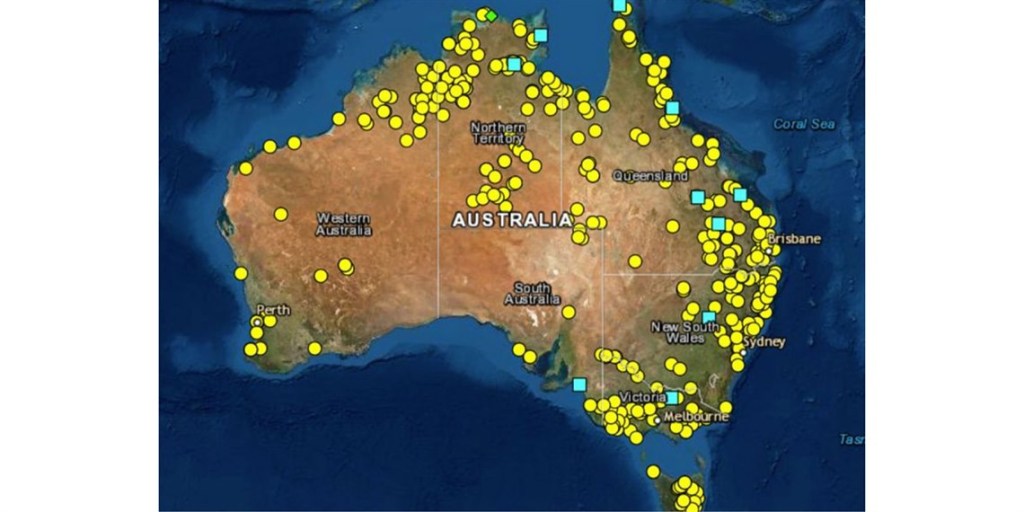
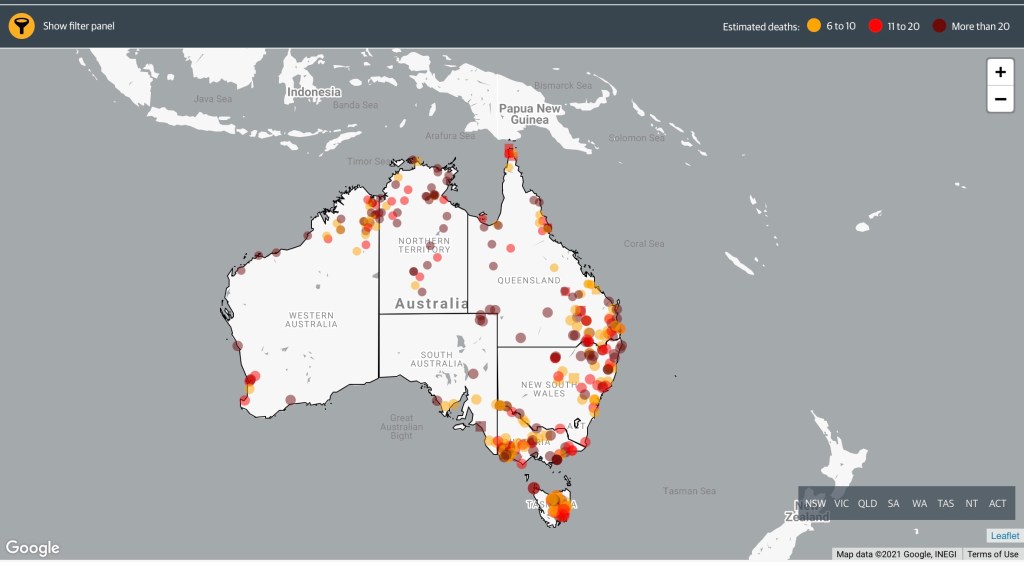
The imposition of British rule was not without cost for the people who were already inhabiting the land when the colonisers arrived in 1788. A recent venture based in the University of Newcastle has been charting the many massacres that took place across the continent, from the early years of the British Invasion, through into the early 20th century.

University of Newcastle map of sites where massacres
of Indigenous Peoples took place since 1788

We perpetuate the hurt by continuing with 26 January as our “national day”, as well as by continuing with a system of constitutional government that places the UK monarch at the top of the hierarchy, as the Head of State of Australia. A foreign hereditary ruler as the Head of State in Australia? That is an absurd arrangement for our times.

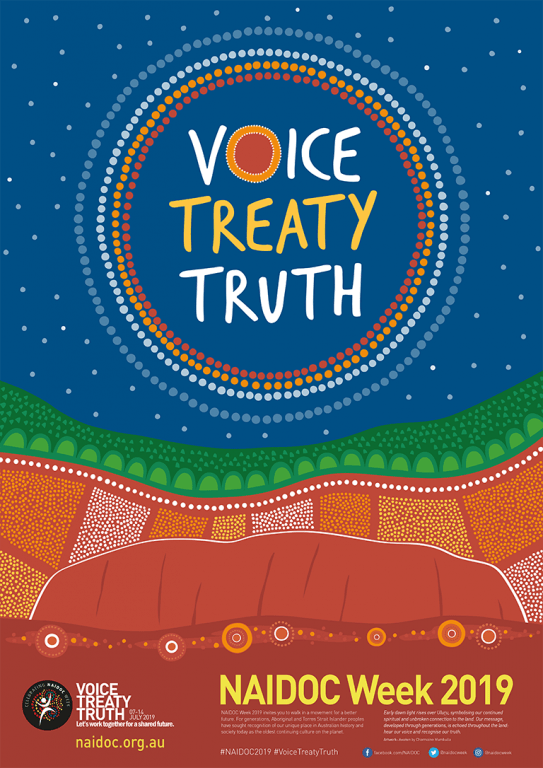
So I won’t be crying out my allegiance to the newly-crowned King; rather, I will be quietly reaffirming the reality of Australia at this point in time. That reality is well-encapsulated by the three words, Voice—Treaty—Truth.

Drawing on the experience of First Peoples, we need to tell the Truth and name the settlement of this continent as a colonising movement, generated by foreign imperialism, manifesting in violent invasion and genocidal massacres, spread from north to south, from east to west, of this continent. We must continue to prioritise this commitment to tell the truth. This truth is that the 18th century British crown oversaw and approved of that terrible genocidal colonising invasion. See

Alongside that, I think we need to repudiate the Doctrine of Discovery, that medieval theological foundation upon which the worldwide invasion and colonisation of lands was based—including the invasion and colonisation of Terra Australis. King George III, who was the monarch of the day, was following the Doctrine of Discovery by sending Cook to the southern seas. Repudiating this doctrine is part of our commitment to tell the truth. My own church, the Uniting Church in Australia, agreed to repudiate that doctrine in 2015. See

Furthermore, we need to be committed to talking Treaty. We need to see the formalisation of treaties with the various nations of Peoples who have inhabited, nurtured and cared for this land since time immemorial. This commitment is based on a recognition of the Sovereignty of each of those nations, sovereignty over the land that the people have inhabited, nurtured, and cared for over those many millennia.

See https://www.insights.uca.org.au/hear-the-statement-from-the-heart/

Sovereignty, as articulated in the Statement from the Heart of 2017, is understood by the First Peoples as a spiritual notion, reflecting the ancestral tie between the land and the First Peoples. See

Finally—and most topical of all—we need to support the Voice that will be the subject of a referendum later this year. The Voice to Parliament will ensure that the needs and concerns of First Peoples are always given due consideration in the policy-making processes of our federal government. See

Voice, Treaty, Truth—that’s the threefold commitment that I consider to be important on this coronation weekend. Not swearing allegiance to a highly-privileged hereditary foreigner, but reaffirming the reality of what we need to do to honour the First People of this land.

*****

See also

A Day of Mourning, ahead of Invasion Day (26 January)

Since 2019 the Uniting Church has marked a Day of Mourning to reflect on the dispossession of Australia’s First Peoples and the ongoing injustices faced by First Nations people in this land. For those of us who are Second Peoples from many lands, we lament that we were and remain complicit.

The observance of a Day of Mourning on the Sunday before 26 January arises from a request from the Uniting Aboriginal and Islander Christian Congress (UAICC) which was endorsed by the 15th Assembly in 2018. Since then, many Congregations have held worship services that reflect on the effects of invasion, colonisation and racism on First Peoples. This year, that will take place on 22 January.

The Uniting Church acknowledges that our predecessors in the denominations which joined in 1977 to form the Uniting Church have been “complicit in the injustice that resulted in many of the First Peoples being dispossessed from their land, their language, their culture and spirituality, becoming strangers in their own land”. That itself is a cause for lament and mourning.

The Uniting Church also recognises that people in these churches “were largely silent as the dominant culture of Australia constructed and propagated a distorted version of history that denied this land was occupied, utilised, cultivated and harvested by these First Peoples who also had complex systems of trade and inter-relationships”.

The quotations above come from the Revised Preamble to the Constitution of the Uniting Church in Australia, adopted in 2009, which can be read in full at https://resources.uca.org.au/images/stories/Regulations/2018/2018_Constitution__Regulations.pdf

Resources prepared for worship on 22 January 2023 include a statement by the Rev. Sharon Hollis, President of the UCA, and the Rev. Mark Kickett, the Interim National Chair Uniting Aboriginal and Islander Christian Congress. In this statement, they observe that “The Day of Mourning invites us to listen to the truth of the effects of colonisation and racism on First Peoples and to hope that in confronting this truth we will discover ways to create communities of justice and healing.”

They continue, “In marking the Day of Mourning, we live into our covenant relationship to stand together with, and listen to, the wisdom of First Nations people in their struggle for justice. We affirm the sovereignty of First Peoples and honour their culture and their connection to country.”

This quotation, and others following, come from https://uniting.church/wp-content/uploads/2022/12/Day-of-Mourning-2023_finalmin.pdf

The covenant referred to by the President and the Interim Congress Chair was made by the National Assembly in 1994. It signals the Uniting Church’s commitment to stand with our First Nations brothers and sisters in Christ in their struggle for justice. The story of entering into this relationship with First Peoples and ongoing developments that have occurred since 1994 is told at https://uniting.church/covenanting/

The Uniting Church is firmly committed to Giving Voice, Telling Truth, Talking Treaty, which was the theme of the 2019 NAIDOC WEEK, picking up from the 2017 Statement from the Heart. This theme was the focus of a consensus decision of the 2019 meeting of the Synod of NSW and the ACT, to enact a series of proposals to give support to the theme of Giving Voice, Telling Truth, Talking Treaty; see

The Synod now has a comprehensive Reconciliation Action Plan and a webpage with links to many resources to support this commitment; see https://nswact.uca.org.au/first-nations-resources

The 2023 worship resources invite worshippers to begin with an Acknowledgement of First Peoples which draws from the Revised Preamble, affirming that “God nurtured and sustained the First Peoples of this country, the Aboriginal and Islander peoples” and that “the Spirit was already in the land, revealing God to the people through law, custom and ceremony”. The Acknowledgement invites worshippers to respond by affirming that they “honour [First Peoples] for their custodianship of the land on which we gather today” and that they “rejoice the reconciling purposes of God found in the good news about Jesus Christ”.

These are fundamental theological affirmations which undergird both our present respect for First Peoples, and our understanding that a relationship with and an understanding of God are not limited to western Christian perceptions of the divine. Indeed, as we have accepted within Christianity that the God we know in Jesus was active in relationship with human beings for many centuries before the time of Jesus—through the covenant with the people of Israel—so we can agree that God was in relationship with the peoples of the continent we call Australia and the islands which surround it.

The worship resources include an Invitation to Truth-Telling—something that is now recognised as integral to the process of reconciliation that is essential within Australian society. In words written by Alison Overeem, Manager of Leprena—UAICC in Tasmania: “We are called to justice in the mourning, not just for today but all that weeps from today. All that sits in the layers of mourning, embedded in the trail of injustice … of removal … of dispossession … of stolen land … of stolen children … of stolen identity”. The Invitation continues by encouraging us, “in the mourning, let us look to the love that calls us to seek out and speak out against injustice”.

That truth-telling was at the heart of decisions at the 2015 Assembly, to repudiate the Doctrine of Discovery, and at the 2018 Assembly, to recognise the sovereignty of the First Peoples. See

A Prayer of Lament in the worship resources recognises “the way in which their land was taken from them and their language, culture, law and spirituality despised and suppressed”, and laments “the way in which the Christian church was so often not only complicit in this process but actively involved in it”.

The Prayers of the People begins with the petition, “give us the courage to accept the realities of our history so that we may build a better future for our nation”—for that is the purpose of the Day of Mourning, of the annual Reconciliation Week, and of the ongoing commitment of the Uniting Church to “live out the covenant into which we, the First and Second Peoples of this land, have entered with one another.”

The closing Word of Mission in the 2023 worship resources continues: “Confront and challenge injustice wherever you see it. Act justly yourselves and insist that others do the same. Rejoice in the richness of our diverse cultures and learn from them. Celebrate and demonstrate the unity we share in Jesus our Lord. Commit to worship, witness and serve as one people under God, Until God’s promised reconciliation of all creation is complete.”

The resource ends with links to appropriate contemporary songs and children’s stories, and suggestions for craft activities within worship on 22 January.

See also

50 years of NAIDOC WEEK 6 (2007–2013)

The Coming of the Light is celebrated annually by Torres Strait Islander peoples on 1 July. It marks the adoption of Christianity through island communities during the late nineteenth century. The Reverend Samuel MacFarlane, of the London Missionary Society, arrived at Erub Island in the Torres Strait on 1 July 1871, introducing Christianity to the region. Since then, Torres Strait Islanders, whether living in the islands or on the mainland, celebrate this anniversary.

See https://www.creativespirits.info/aboriginalculture/people/torres-strait-islander-culture

It might have symbolic resonance, then, that today, 1 July, in my series about the themes of NAIDOC WEEK, we turn to the next series of themes that are from the period of the Labor Government (2007–2013). It was after eleven years of regressive conservative government at the federal level that Kevin Rudd led the Labor Party back into government in December 2007. Although Rudd was a control freak who ultimately undid his own position of leadership, that of Julia Gillard, and then his own government, his time in leadership did shine some important lights onto Australia society.

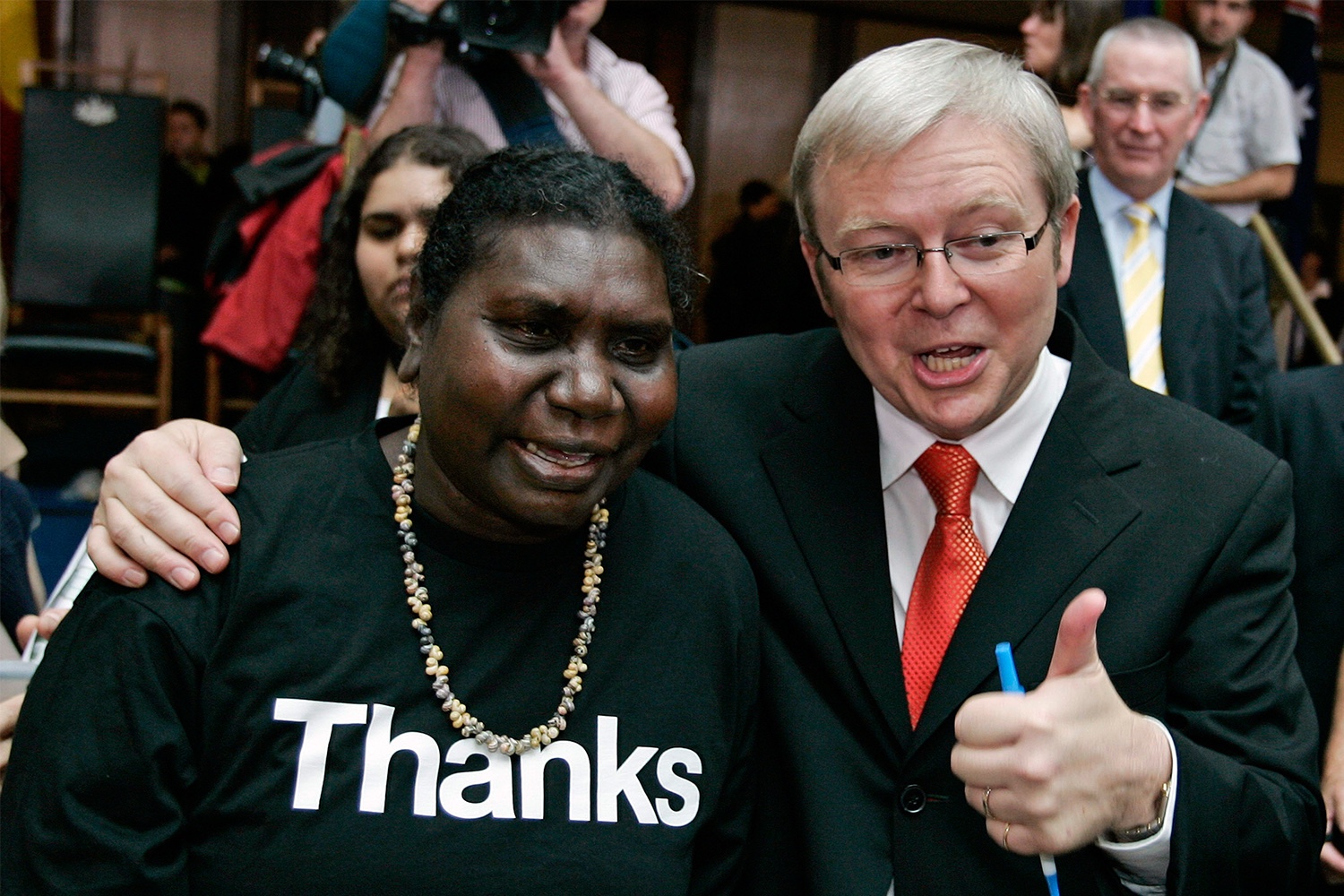
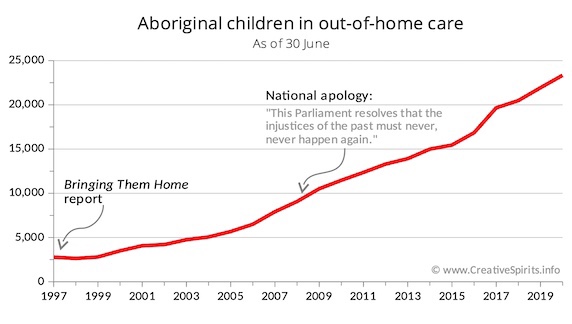
During the the almost six years of the Labor Government, led by Rudd, then Julia Gillard, then Rudd once again, the National Apology to the Stolen Generation was made. On 13 February 2008, Prime Minister Kevin Rudd stood in Parliament to deliver the National Apology to Australia’s Aboriginal peoples and Torres Strait Islander peoples. The Apology recognised the injustices of past government policies, particularly as they related to the Stolen Generations.

For more than a decade, the Howard government had resisted making any apology. The stance that Howard took when he opened the 1997 Australian Reconciliation Convention, which we noted in the previous post, remained his opinion in the ensuing years. Still today, 25 years after that speech, Howard remains unmoved; he has called the apology that Rudd gave “meaningless” and “an empty gesture”.

See https://www.sbs.com.au/news/article/john-howard-has-criticised-kevin-rudds-2008-apology-to-the-stolen-generations/47t04w7ca

But on 13 February 2008, newly elected Prime Minister Kevin Rudd spoke the federal government’s formal apology to Indigenous Australians. Rudd apologised on behalf of Parliament ‘for indignity and degradation’, declaring it was time to start ‘righting the wrongs of the past’. As he recognised the Stolen Generations, he affirmed that the policy of removing Aboriginal children from their families ‘inflicted profound grief, suffering and loss on these our fellow Australians’.

The key words of apology are worth remembering again:

For the pain, suffering and hurt of these Stolen Generations,

their descendants and for their families left behind, we say sorry.
To the mothers and the fathers, the brothers and the sisters,

for the breaking up of families and communities, we say sorry.
And for the indignity and degradation thus inflicted

on a proud people and a proud culture, we say sorry.

See https://www.aph.gov.au/Visit_Parliament/Art/Exhibitions/Custom_Media/Apology_to_Australias_Indigenous_Peoples

The themes of NAIDOC WEEK in those six years were:

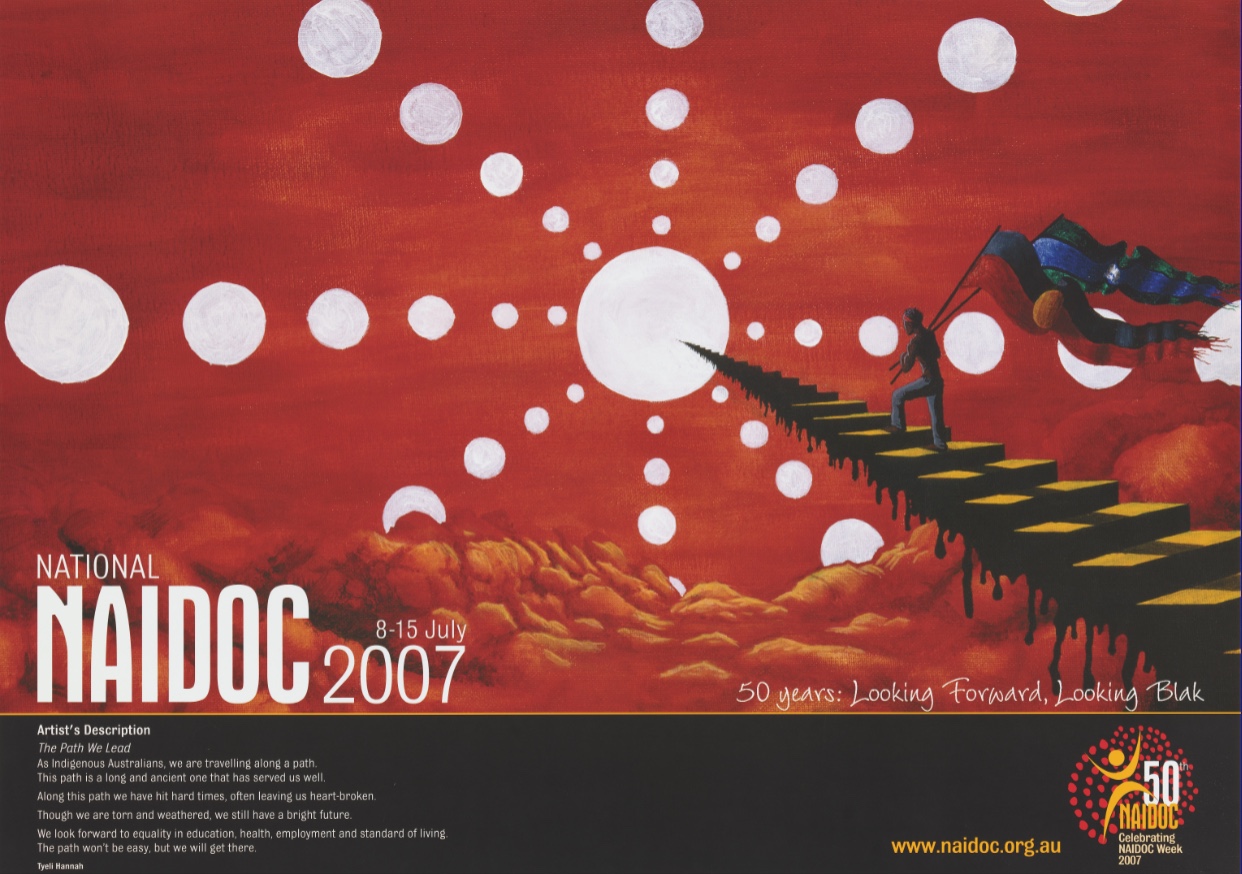
2007: 50 Years: Looking Forward, Looking Blak

This theme looks back to 1957, when the National Aborigines Day Observance Committee (NADOC) was formed. It had support and co-operation from Federal and State Governments, the churches, and major Indigenous organisations. Its aim was to promote Aboriginal Sunday as a day to focus community attention on the nation’s Aboriginal people.

In 1940, the National Missionary Council of Australia (NMCA) had given its support to a permanent annual Aborigines Day. The NMCA encouraged churches to observe the Sunday before the Australia Day weekend as “Aboriginal Sunday’. In 1955, the NMCA changed the date to the first Sunday in July.

In 1985, NADOC agreed to change the dates of the week from July to September, and in 1988, the committee’s name was changed to NAIDOC – National Aborigines and Islanders Day Observance Committee – to acknowledge Torres Strait Islander people. In 1991, the committee decided to shift the celebrations back to the first week in July (Sunday to Sunday) starting from 1992.

The committee was wound up in the mid-1990s when the Aboriginal and Torres Strait Islander Commission (ATSIC) assumed control of NAIDOC Week, making decisions on the theme, venue and poster.

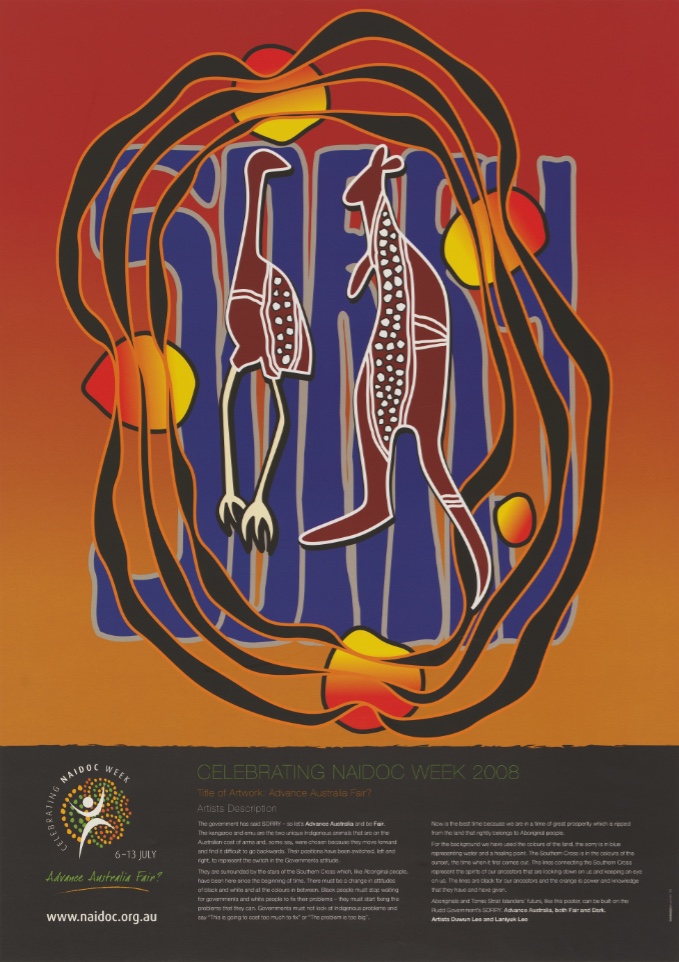
2008: Advance Australia Fair?

This theme recalls both the 1972 theme, Advance Australia Where?, and, of course, the title of the song that became Australia’s national anthem, Advance Australia Fair. The question mark in both themes is very significant—the themes are asking questions about the direction of Australia as a country (in 1972) and drawing attention to the continuing injustices experienced by Indigenous peoples (in 2008). The questions still stand today.

The artwork used was striking: a large blue SORRY overlaid with a version of the national coat of arms, gesturing the kangaroo and emu, and the five stars of the Southern Cross.

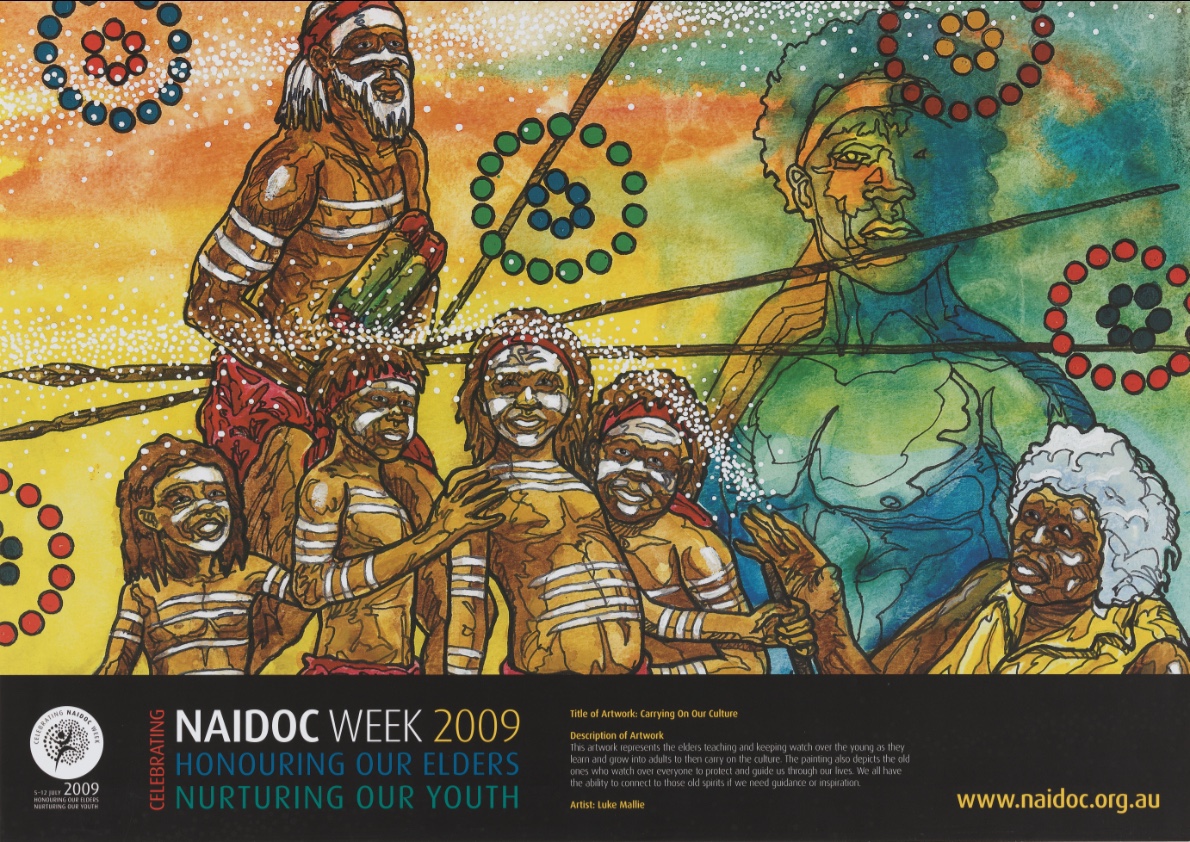
2009: Honouring Our Elders, Nurturing Our Youth

This theme is evocative of the 1976 theme, when Trucanini was remembered and honoured. It sits along with earlier themes that gave recognition, both to the culture of Indigenous peoples: 1978, Cultural Revival is Survival; Take a Journey of Discovery, 1984; Recognise and Share the Survival of the Oldest Culture in the World; 1990, Don’t Destroy, Learn and Enjoy our Cultural Heritage; as well as the importance of young people: 1979, What About Our Kids?; and 1994, Families are the basis of our existence: Maintain the Link.

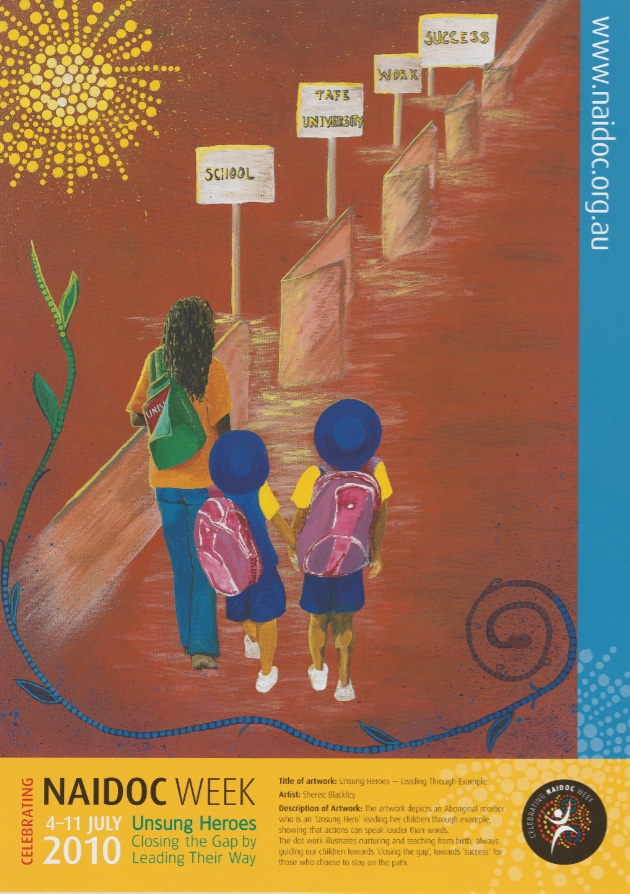
2010: Unsung Heroes: Closing the Gap by Leading the Way

For the last fifteen years, we have had a national policy known as Closing the Gap. The gap refers to the the inequalities in health and life-expectation that exist between Indigenous and non-Indigenous Australians. This inequality includes: shorter life expectancy, higher rates of infant mortality, poorer health, and lower levels of education and employment.

Indigenous Australians have a lower life expectancy than non-Indigenous Australians. Non-Indigenous girls born in 2010-2012 in Australia can expect to live a decade longer than Indigenous girls born the same year (84.3 years and 73.7 years respectively). The gap for men is even larger, with a 69.1 year life expectancy for Indigenous men and 79.9 years for non-Indigenous men

Indigenous women also experience approximately double the level of maternal mortality in 2016. In 2016, Indigenous children experienced 1.7 times higher levels of malnutrition than non-Indigenous children. In 2015, the Indigenous suicide rate was double that of the general population; Indigenous suicide increased from 5% of total Australian suicide in 1991, to 50% in 2010, despite Indigenous people making up only 3% of the total Australian population. The most drastic increase occurred among young people 10-24 years old, where Indigenous youth suicide rose from 10% in 1991 to 80% in 2010.

The employment to population rate for Indigenous 15–64 year olds was around 48% in 2014-15, compared to 75% for non-Indigenous Australians. Median weekly income for Indigenous Australians was $542 in 2014-15 compared with $852 for non-Indigenous Australians.

The Gap (or actually, the many gaps) still exist; despite an annual report on how the federal government is attempting to Close the Gap, there is still much ground to be covered.

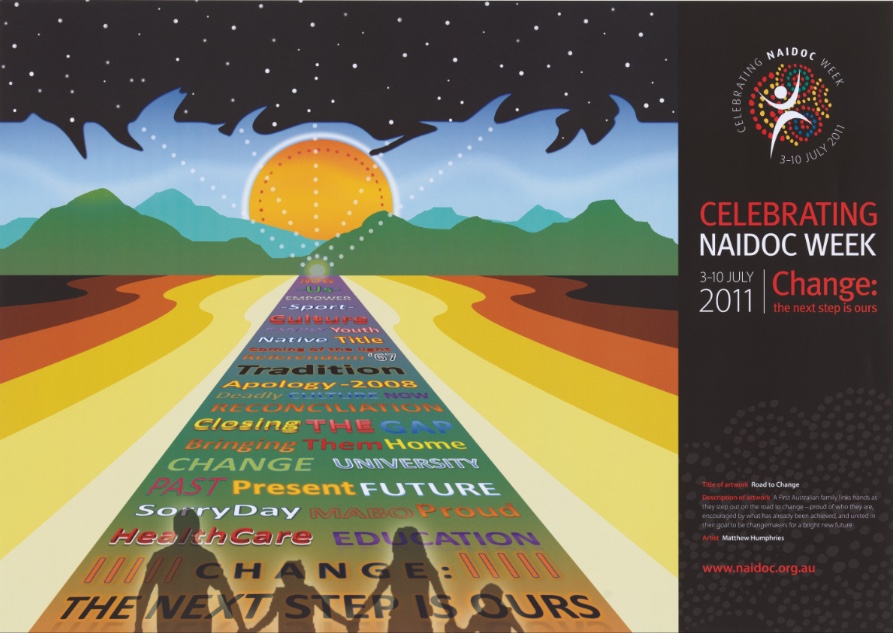
2011: Change: the next step is ours

This was an invitation to the whole population of Australia to join and work for change for the better for First Peoples.

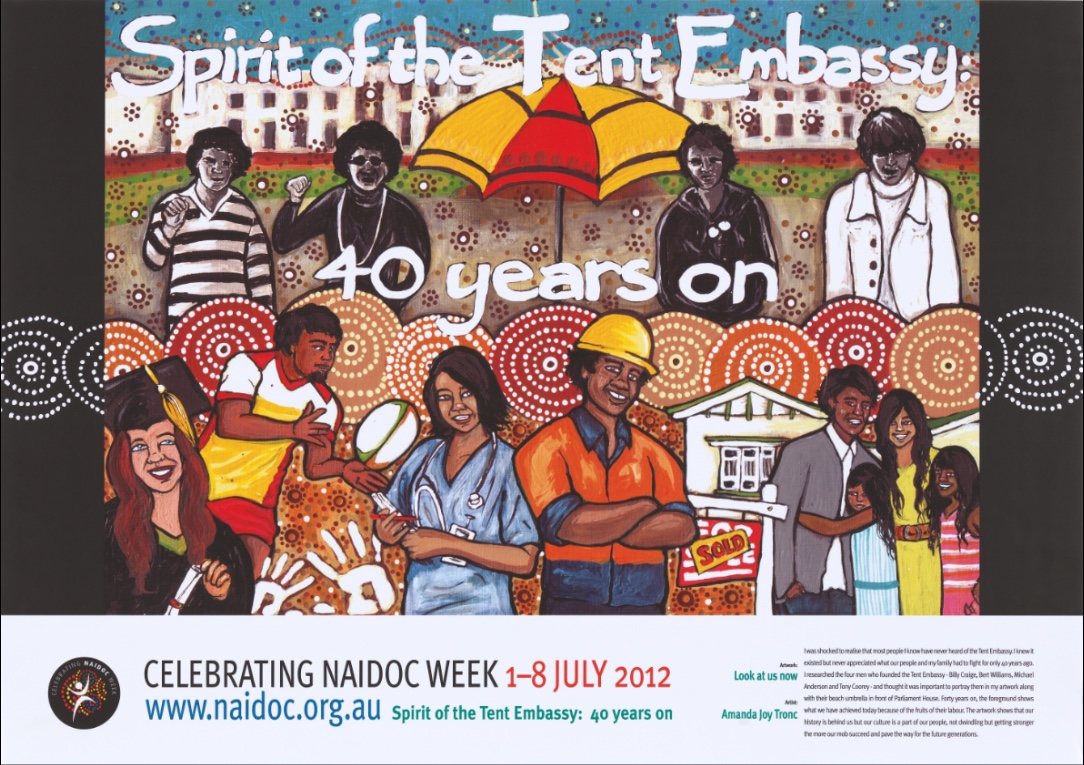
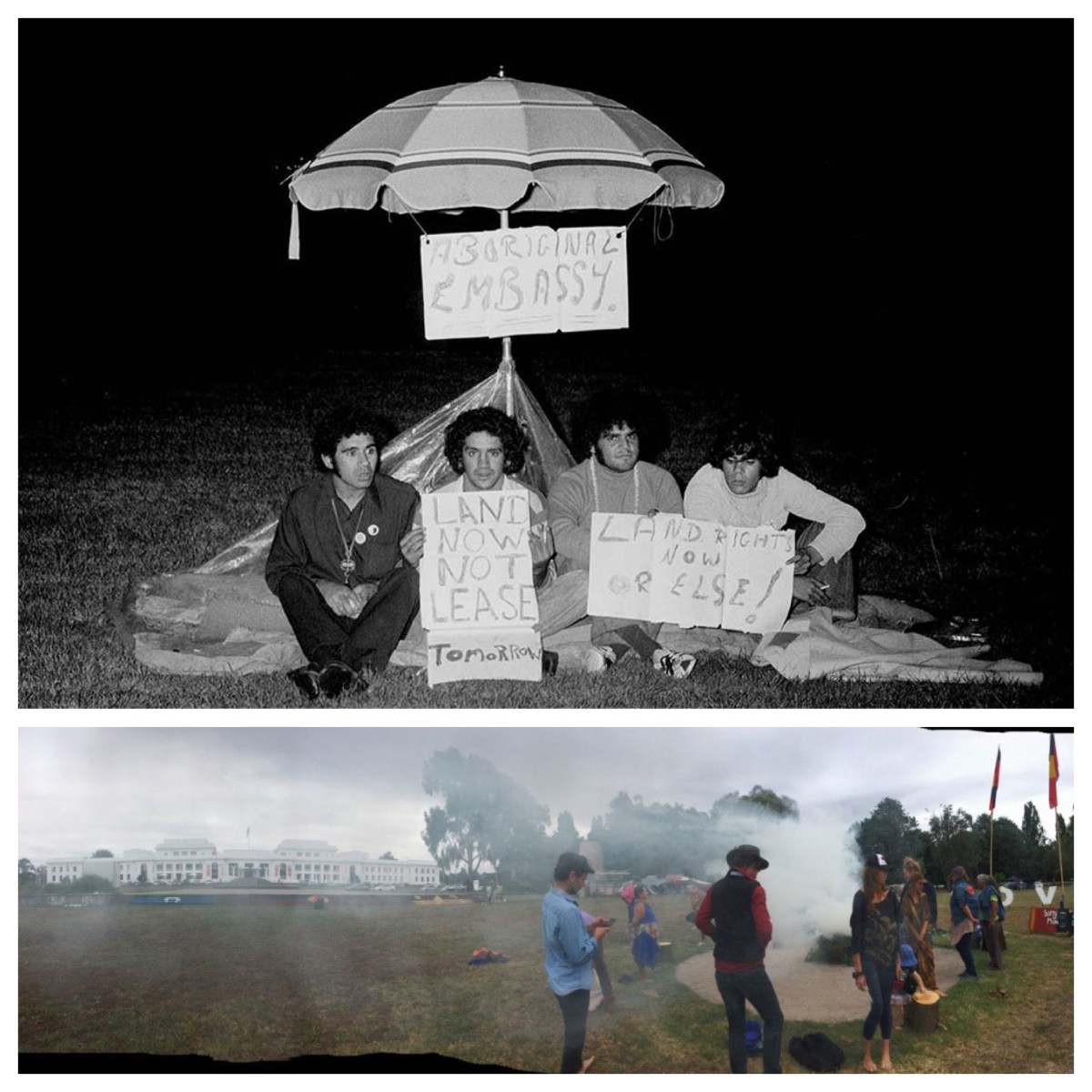
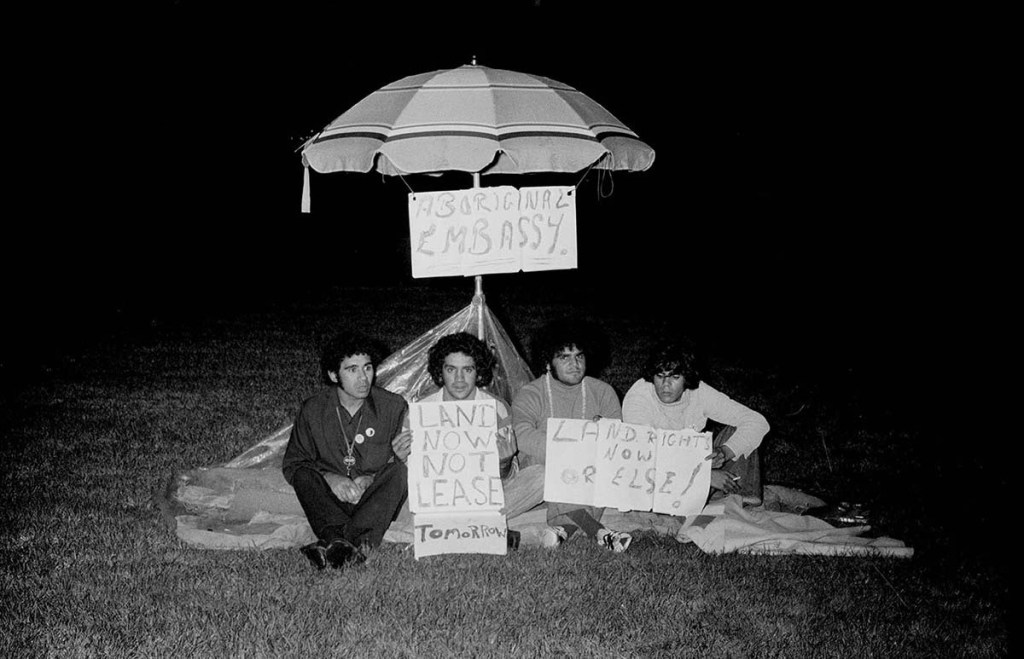
2012: Spirit of the Tent Embassy: 40 years on

The Tent Embassy had been established in 1972. See the blog I wrote earlier in the year for the 50th anniversary, in 2022, of the Tent Embassy.

See https://johntsquires.com/2022/01/26/the-aboriginal-tent-embassy-50-years/

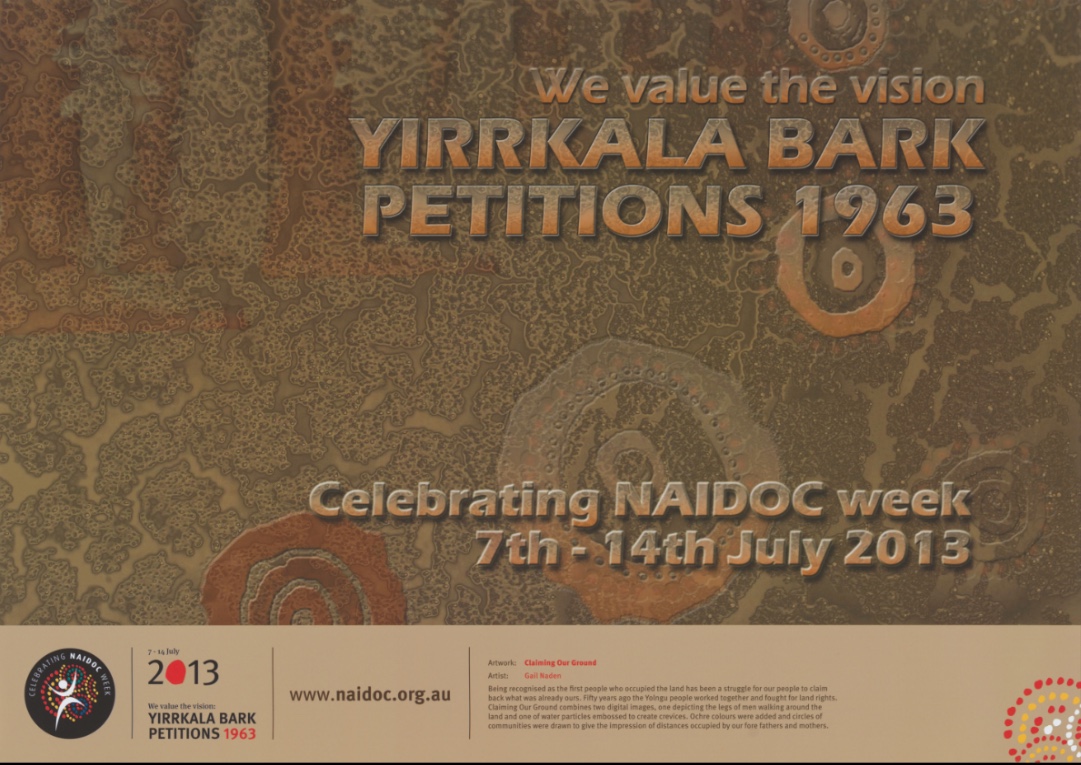
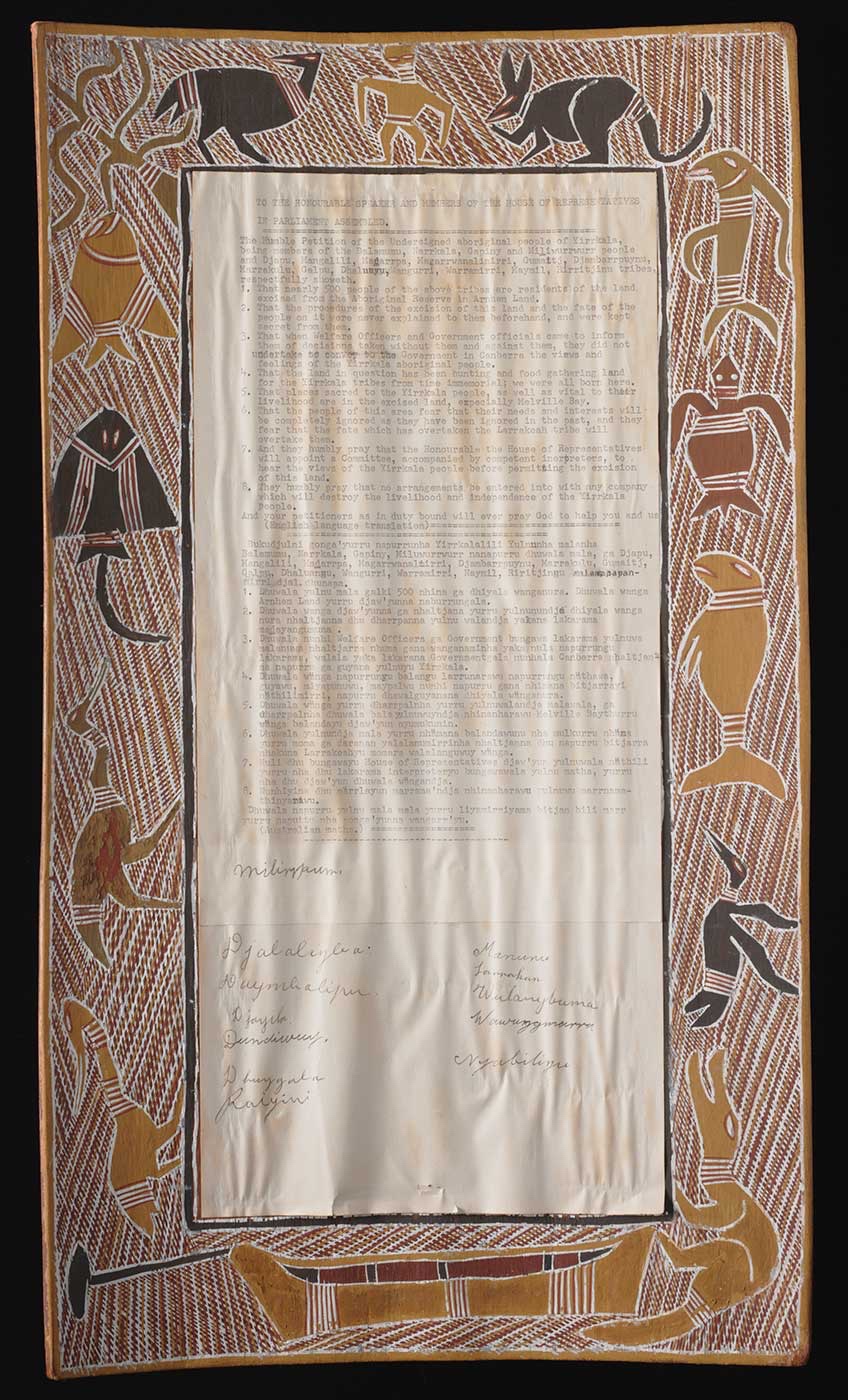
2013: We value the vision: Yirrkala Bark Petitions

This theme commemorates events of 50 years earlier. Yolngu people from Yirrkala in eastern Arnhem Land in the Northern Territory sent petitions to the Commonwealth Parliament in August 1963. On 13 March that year the Government had removed more than 300 square kilometres of land from the Arnhem Land reserve, with the purpose of being able to mine the bauxite which had been found there. Work started without talking to the people about their land.

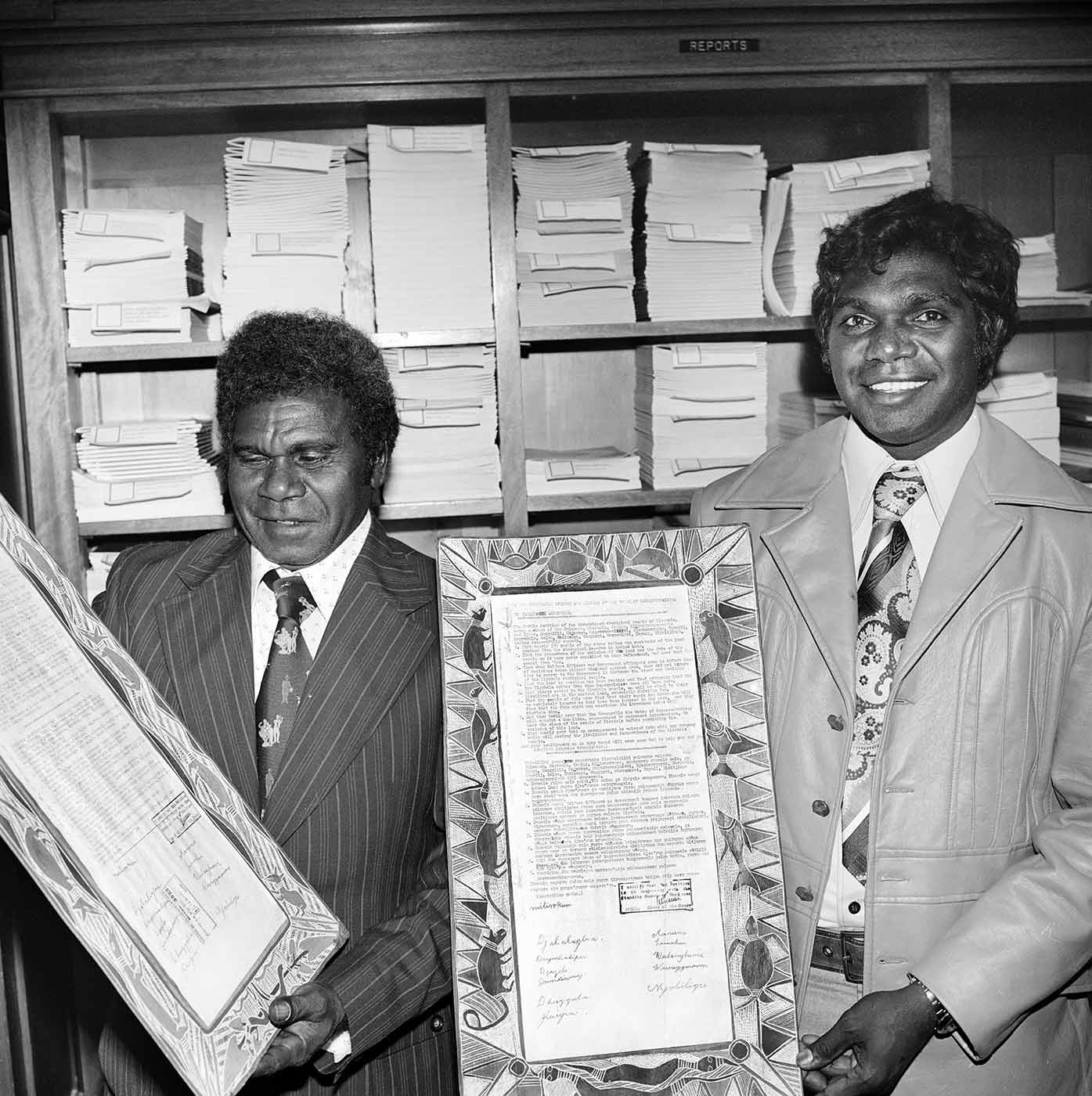
The text of the petition was in two languages, English and Gupapuyngu. It was printed on paper then glued to a piece of bark that had been painted traditionally. The petition, signed by nine men and three women, stated that 500 people were residents of the land that was being removed, and that the whole deal had been kept secret from them.

It also declared that sacred sites in the area, such as Melville Bay, were vital to their livelihoods, and that the area had been used for hunting and food-gathering since time immemorial. The petition asked parliament to appoint a committee to hear the views of the Yolngu. They also asked that no arrangements be entered into with any company which would destroy their livelihoods and independence.

Silas Roberts, Northern Lands Council (NLC) Chairman (left),
and Galarrwuy Yunupingu, NLC Manager (right),
with the Yirrkala bark petition

Two Labor parliamentarians, Kim Beazley (senior) and Gordon Bryant visited Reverend Edgar Wells, Superintendent of the Yirrkala Methodist church mission, in July 1963. Yolngu leaders made plain their objection to the lack of consultation and secrecy of the Government’s agreement with Nabalco, and their concern about the impact of mining on the land unless their voices were heard.

The petitions were not successful; mining commenced in 1968. The Yolngu people began a court case, in which Justice Richard Blackburn ruled against the Yolngu claimants in 1971. He recognised that they had been living on the land for thousands of years, but found that any rights they had before colonisation had been invalidated by the Crown. The Australian legal system had been built around the concept of terra nullius, meaning ‘land belonging to no one’.

The Yolngu eventually received native title to their land in 1978, under the Aboriginal Land Rights (Northern Territory) Act 1976, which established a procedure for transferring 50 per cent of land in the Territory to Aboriginal ownership. The mining leases, which they had objected to since 1963, were excluded from the provisions of the Act, and also from the Yolngu native title claim.

The Yirrkala bark petitions were the first example of a native title litigation in Australia. They paved the way for the Aboriginal Land Rights Commission and the Aboriginal Land Rights (Northern Territory) Act 1976. In 1992 the concept of terra nullius, which had been used in the Milirrpum v Nabalco Pty Ltd judgement, was challenged by the High Court of Australia. Mabo v Queensland recognised the people of Murray Island as native titleholders to their land.

Information on the Yirrkala Petitions is taken from https://www.nma.gov.au/defining-moments/resources/yirrkala-bark-petitions

See also

50 Years of NAIDOC WEEK 5 (1998–2006)

John Howard came to power in 1996, after 13 years of Labor dominance under Hawke and Keating. We have already noted that the themes chosen for NAIDOC WEEK in the early Howard years, 1996 and 1997, were both incisive comments about our public life.

See https://johntsquires.com/2022/06/03/50-years-of-naidoc-week-4-1991-1997/

The themes that followed in the Howard years continued this stance of naming key issues from an indigenous perspective.

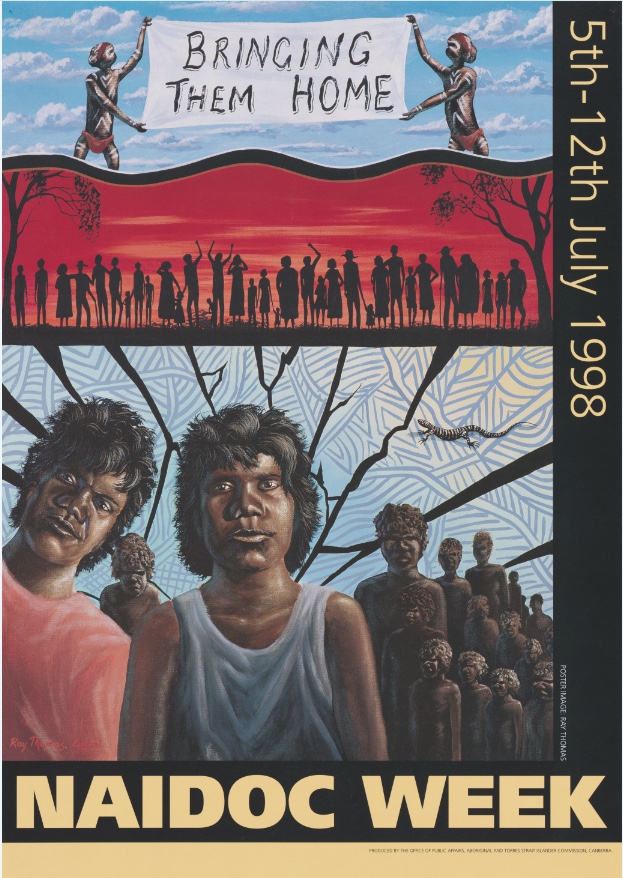
1998: Bringing Them Home

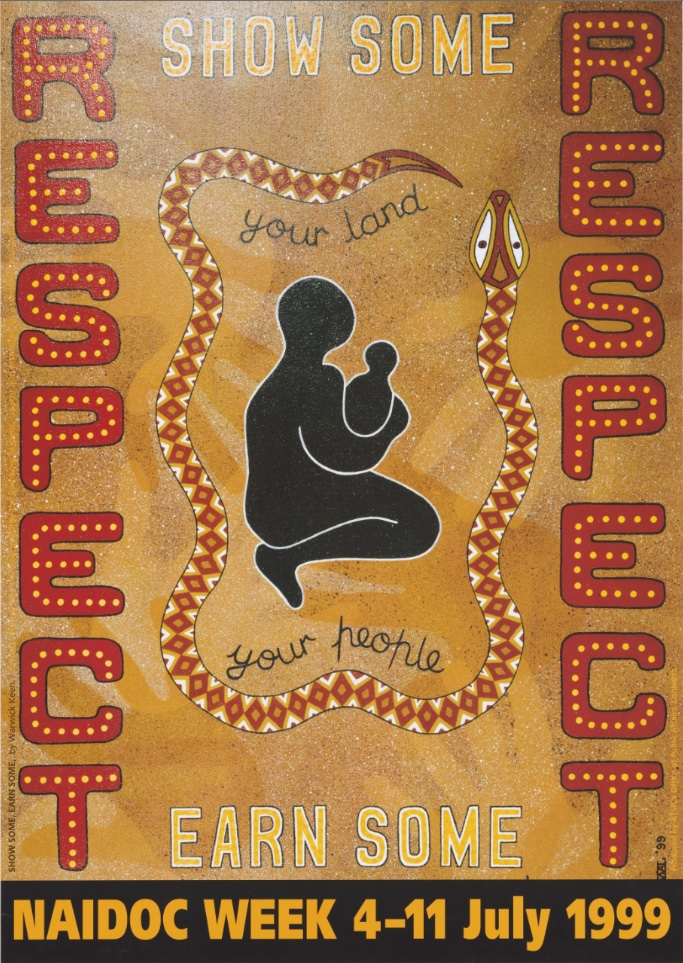
1999: Respect

2000: Building Pride in Our Communities

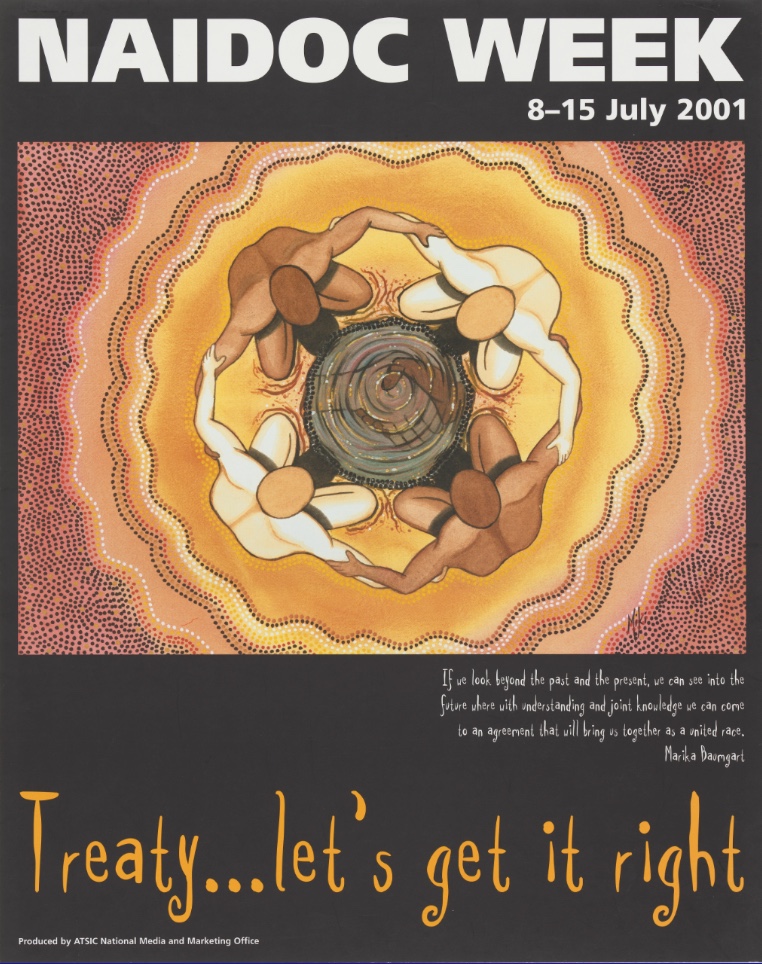
2001: Treaty—Let’s Get It Right

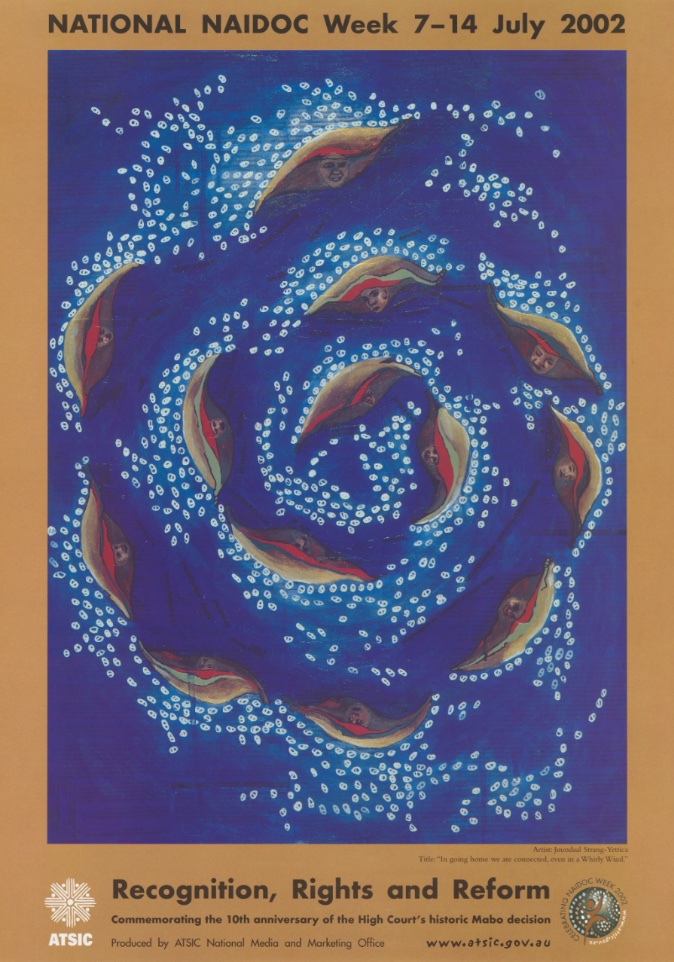
2002: Recognition, Rights and Reform

2003: Our Children Our Future

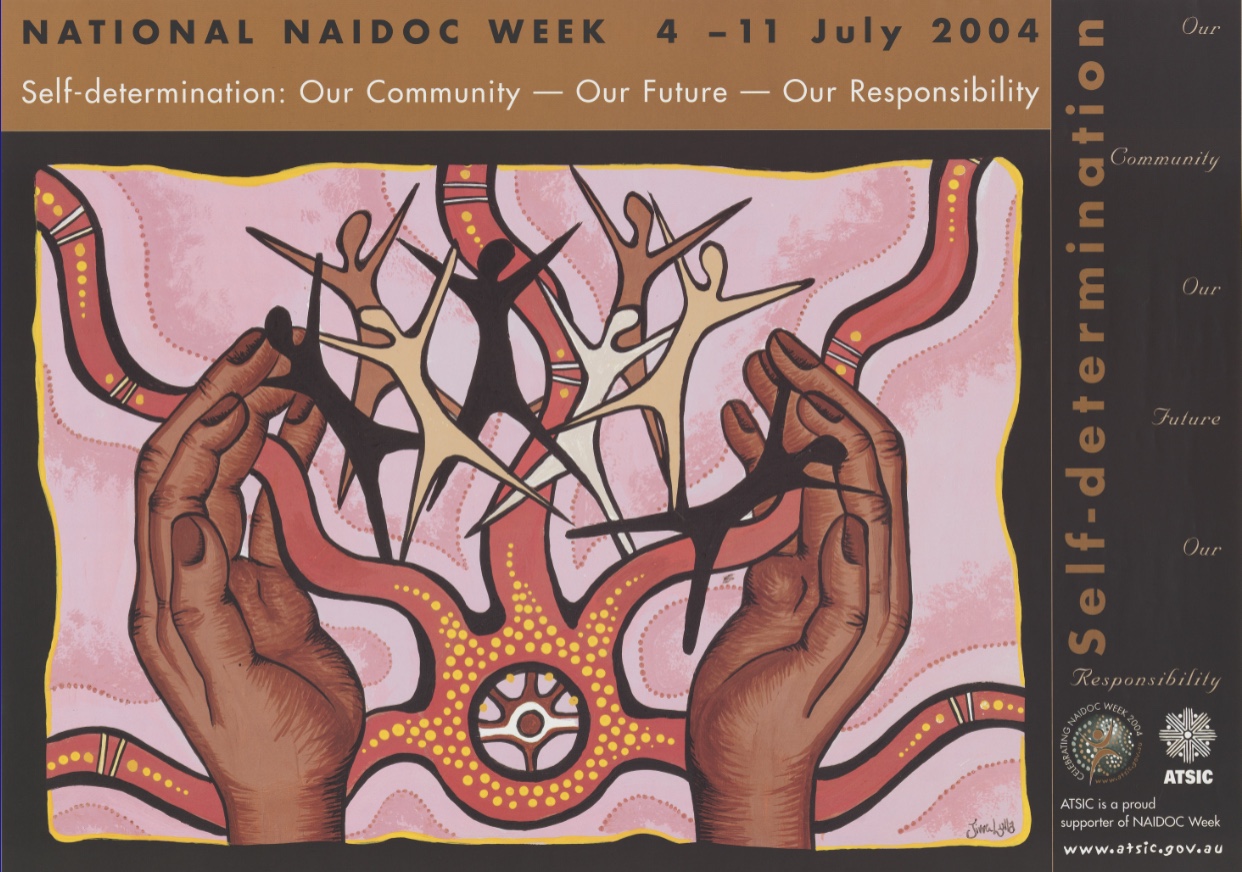
2004: Self-determination—Our Community—Our Future—Our Responsibility

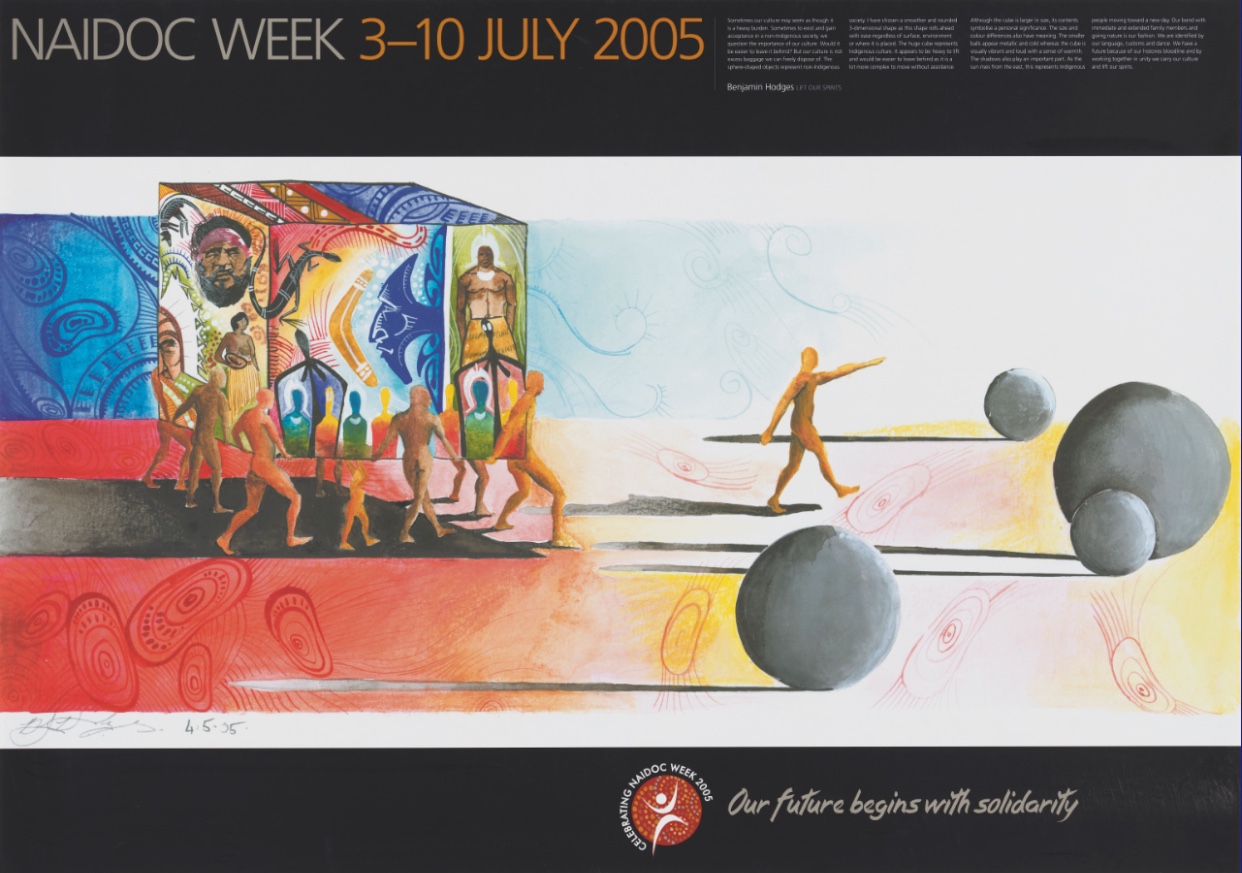
2005: Our Future Begins with Solidarity

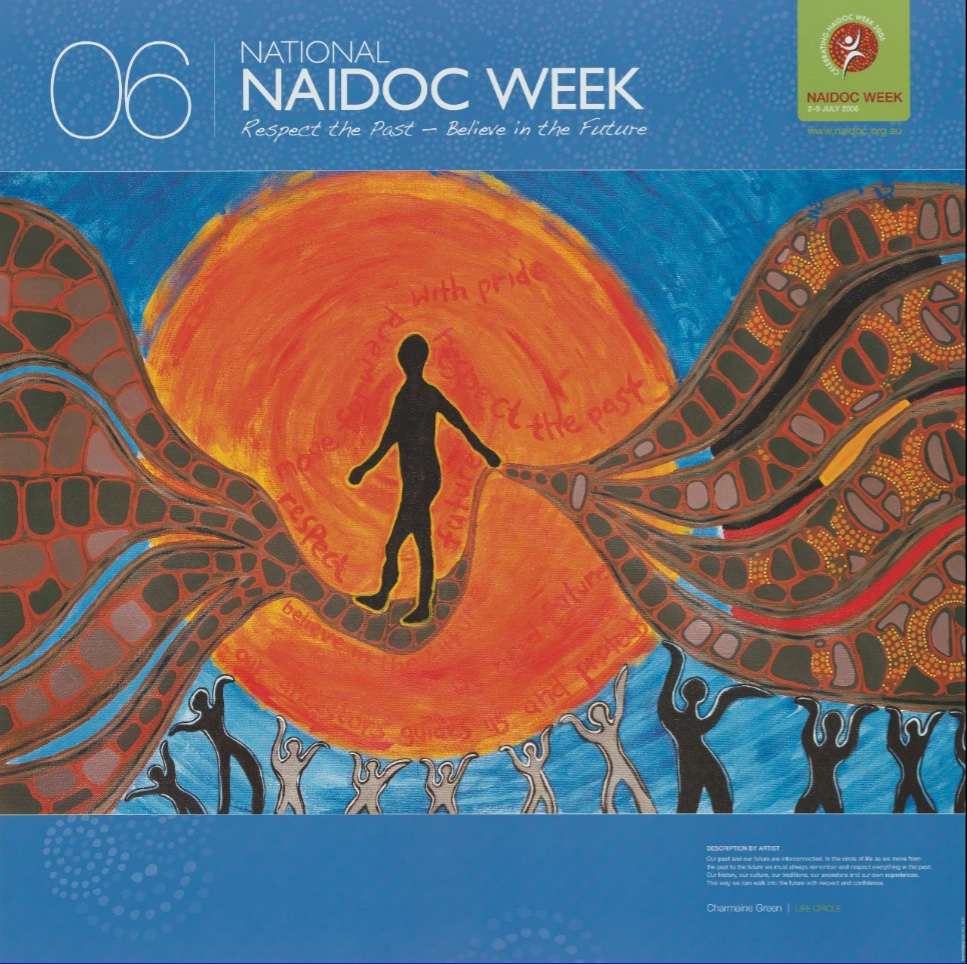
2006: Respect the Past—Believe in the Future

In his overview of indigenous affairs during the period of the Howard Government, Dr John Gardiner-Garden notes a cluster of immediate changes made by the incoming Howard government—changing terminology, withdrawing support from established initiatives, applying economic markers to the outcomes desired, amending the Native Title Act, and reducing funding to ATSIC (the Aboriginal and Torres Strait Islander Commission). See https://www.aph.gov.au/about_parliament/parliamentary_departments/parliamentary_library/pubs/bn/1011/indigenousaffairs2#_Toc295218057

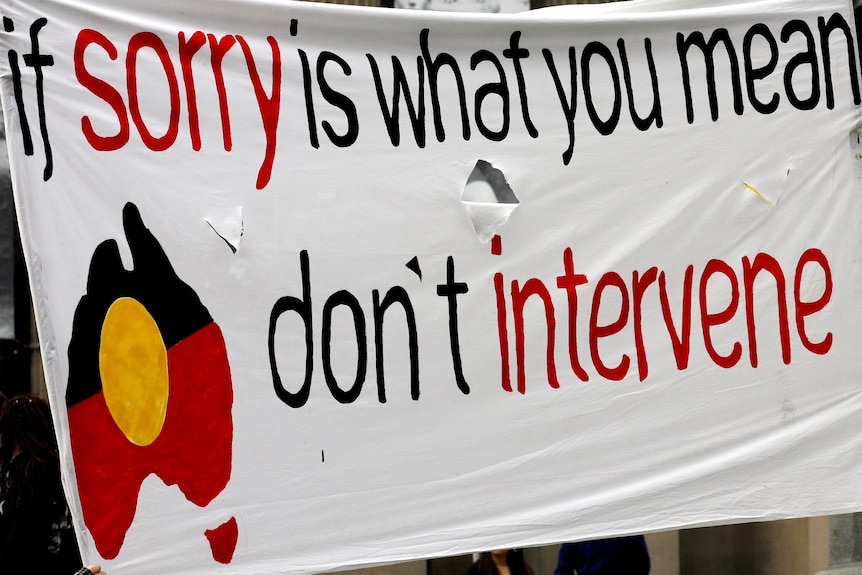
Over the ensuing decade, Gardiner-Garden notes that “perceived inactions on reconciliation and in responding to the rhetoric of the new One Nation Party placed a strain on relations with the Indigenous community”, and records a series of decisions and actions which provided ongoing concern within Aboriginal communities: the ultimate demise of ATSIC, the attempt to establish a Special Auditor “to make a determination on whether a prospective grantee was ‘not fit and proper’ to receive public money”, a contentious Ten Point Plan to deal with the Wik decision, alterations to the Native Title Act which were seen as racially discriminatory, a Racial Hatred Act (1996) which fell short of many provisions that had been requested, and finally the Northern Territory Emergency Response, more widely known as The Intervention.

This latter event was applied to 73 Indigenous communities across the Northern Territory, and involved withholding 50% of welfare payments from Indigenous welfare recipients—-bans on alcohol and pornography—-increased police presence in Aboriginal communities—-compulsory health checks for all Aboriginal children—-and the power for government to take possession of Aboriginal land and property.

The Intervention was a highly controversial policy, with many Aboriginal leaders speaking out against it.

There was some support within the Australian Indigenous community as well as beyond it. Australians Together report that “two of Australia’s most influential Indigenous academics and leaders, Noel Pearson and Marcia Langton, supported several of the more controversial aspects of the Intervention.”

See https://australianstogether.org.au/discover/the-wound/the-intervention/#Interventionreference1a

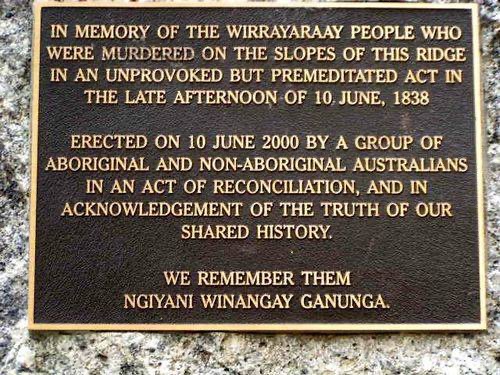
The Intervention, however, is viewed by most Aboriginal people as yet another instance of white colonial supremacy over blacks. It is perhaps appropriate, then, for this blog to go live on 10 June, which was the day that the infamous Myall Creek Massacre took place, in 1838. This event has come to be a symbol of all that has been wrong about the way that the invading British colonisers treated the indigenous peoples who had been the continuous inhabitants of the land “since time immemorial”.

Creative Spirits describes the 1838 event as follows: “12 heavily armed colonists rounded up and brutally kill 28 Aboriginal people from a group of 40 or 50 people gathered at Henry Dangar’s Station, at Myall Creek near Inverell (NSW). The massacre was believed to be a payback for the killing of several hut keepers and two shepherds. But most of those killed were women and children and good relations existed between the Aboriginal people and European occupants of the station. Seven stockmen are eventually hanged for murder. This outrages the colonial press and parts of the public who cannot understand why anyone should hang for murdering Aboriginal people.”

See https://www.creativespirits.info/aboriginalculture/history/australian-aboriginal-history-timeline/massacres

The Myall Creek Massacre Memorial

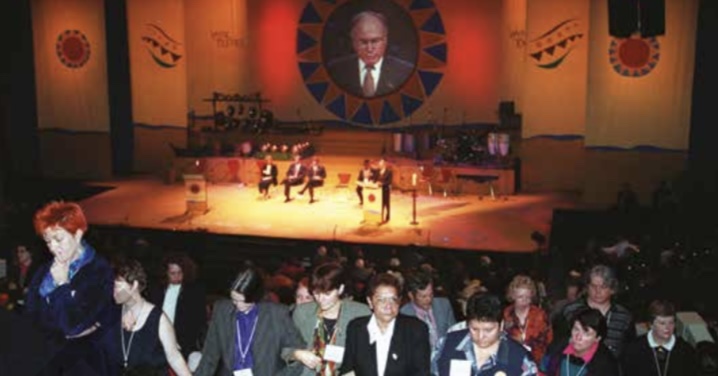
A pivotal event took place in 1997, when Prime Minister Howard addressed the Australian Reconciliation Convention, a forum for Australians to discuss Indigenous issues. The conference drew widespread participation, but was overshadowed by the controversy that Howard generated in his opening address on 27 May 1997.

Howard said: In facing the realities of the past, […] we must not join those who would portray Australia’s history since 1788 as little more than a disgraceful record of imperialism […] such an approach will be repudiated by the overwhelming majority of Australians who are proud of what this country has achieved although inevitably acknowledging the blemishes in its past history.

The reference to “blemishes” in Australia history was an incendiary remark. Indigenous delegates who were listening to the lecture stood up and turned their backs on the Prime Minister.

Delegates at the 1997 Reconciliation Convention,
upset by the speech of Prime Minister John Howard,
stand and turn their backs to him

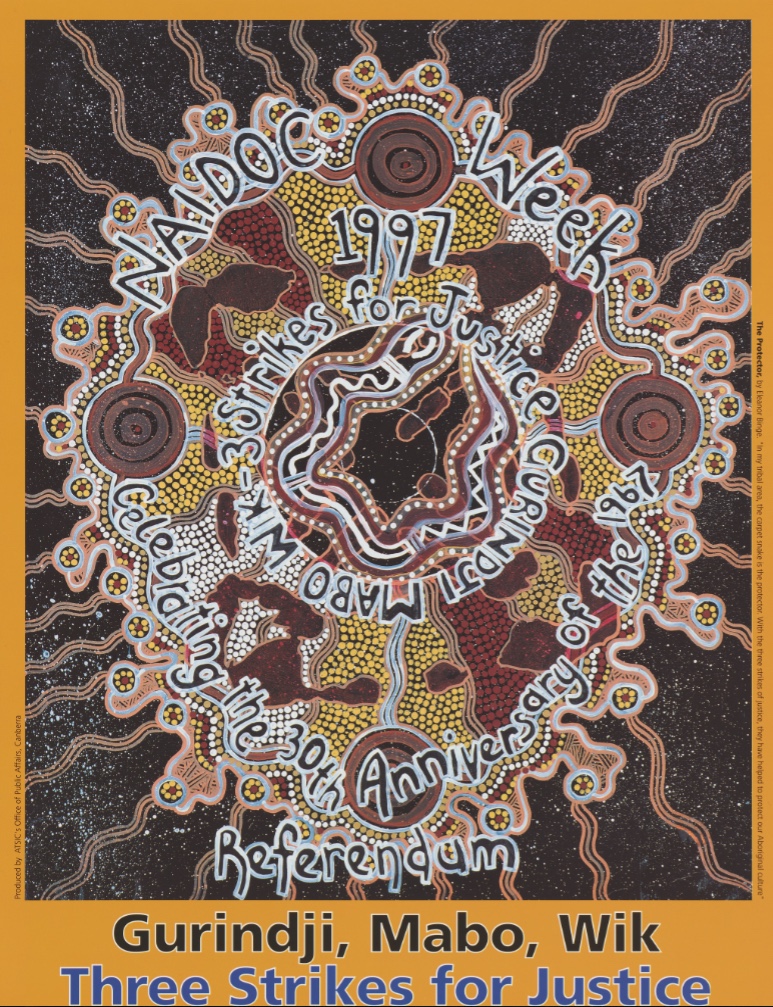
It was a shameful moment, a deliberate aggravation by the elected leader of the First Peoples present. The 1997 theme, Gurindji, Mabo, Wik—Three Strikes for Justice—Celebrating the 30th Anniversary of the 1967 Referendum, offered a striking rejoinder to the mean-spirited assessment of the Prime Minister (see previous post).

*****

In 1998, the theme for NAIDOC WEEK was equally striking. It was a direct reference to the landmark report on the stolen generations which had been issued in April 1997 by the Australian Human Rights Commission. The report was entitled Bringing Them Home, and that exact phrase was used for the NAIDOC WEEK theme in 1998: Bringing Them Home.

Sir Ronald Wilson, former High Court justice and the President of the Human Rights and Equal Opportunity Commission at that time, had led the National Inquiry along with Mick Dodson, the Aboriginal Social Justice Commissioner. They heard testimony directly from 535 people and read a further 600 submissions that had been made. Wilson stated that they encountered “hundreds of stories of personal devastation, pain and loss. It was a life-changing experience.”

The report, entitled Bringing Them Home: Report of the National Inquiry into the Separation of Aboriginal and Torres Strait Islander Children from their Families, estimated that “between 1910 and 1970, up to 100,000 Aboriginal children were taken from their parents and put in white foster homes”. The commissioners found that this was in breach of international law, and called for a national compensation fund to be established. They also recommended a national “sorry day”; the first one was held in 1998 and this has remained an annual fixture of growing significance to Aboriginal Australians.

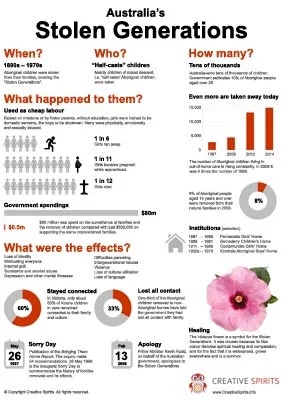
Creative Spirits offers an excellent overview of the issues associated with the Aboriginal people who had formed what became known as “the stolen generations”; see https://www.creativespirits.info/aboriginalculture/politics/stolen-generations/a-guide-to-australias-stolen-generations

They also have a comprehensive cataloguing of the impacts that being removed from your family home as a child can have on such children, running throughout their lives and on into subsequent generations; see https://www.creativespirits.info/aboriginalculture/politics/stolen-generations/stolen-generations-effects-and-consequences

The response of the Howard Government to this report was jarring: Howard refused to make a public apology to “the stolen generations”. Apologies were made by the governments of South Australia (May 1997), Western Australia (May 1997), the Australian Capital Territory (June 1997), New South Wales (June 1997), Tasmania (August 1997), Victoria (September 1997), Queensland (May 1999), and the Northern Territory (October 2001), as well as a number of local governments and churches across the country.

The texts of the above apologies can be found at https://humanrights.gov.au/our-work/bringing-them-home-apologies-state-and-territory-parliaments-2008

The Howard Government did not offer a formal apology; instead, they brought a motion to the Parliament in 1999 which expressed “deep and sincere regret that indigenous Australians suffered injustices under the practices of past generations”, noting “the hurt and trauma that many indigenous people continue to feel as a consequence of those practices”.

The government described this intentional, systemic, multi-generational mistreatment of Indigenous Australians as the “

“most blemished chapter” in Australian history. The understatement of this language (“regret” rather than “sorry” or “apology”; “blemish” rather than “systemic injustice”, for instance) reflected the conservative white preference for minimising—or perhaps removing from sight—the story of Aboriginal people in recent centuries.

Subsequent NAIDOC WEEK themes would speak back to this inadequate and insulting governmental response.

*****

In 1999, the theme was Respect: Show Some, Earn Some. This was a plea to provide what many Aboriginal people had felt had been missing over the decades: respect.

In 2000, the theme was Building Pride in Our Communities. This connected back with earlier themes in which community had been a motif. It also offered an encouragement to Aboriginal people, to be proud of who they are and what they have to offer.

2000 was the year when hundreds of thousands of people “walked for reconciliation”, a strong statement of the popular support that existed for clear action in the way that Aboriginal and Islander people are treated. The most memorable walk was across the Sydney Harbour Bridge on 28 May 2000, when a quarter of a million people (250,000 people) walked across the bridge.

See https://www.nma.gov.au/defining-moments/resources/walk-for-reconciliation

*****

For the centenary of Australia as a nation, the theme for 2001 was Treaty—Let’s Get It Right. This was another strong statement to government and public intransigence in the face of a growing recognition that the situation of Indigenous peoples was damaged by injustice upon injustice.

The history of seeking a treaty reveals stalled attempts, negative responses, and inaction by various governments. In 1979, the former Governor of the Reserve Bank, ‘Nugget’ Coombs, had convened a number of prominent non-Aboriginal Australians, working towards the implementation of a Treaty with Aboriginal peoples.

In 1981, the Fraser Government responded by rejecting the notion that a Treaty was needed. Treaties, it was said, are concluded between separate sovereign nations; the Aboriginal people were not a nation with which a treaty could be concluded.

In 1983, the National Aboriginal Conference proposed that, rather than a single national treaty, each individual Aboriginal nation might negotiate its own treaty or agreement. By 1987, the Prime Minister, Bob Hawke, had signalled a willingness to produce some form of agreement for the Bicentenary of 1988. The Barunga Statement was presented to him in June 1988, but no action ensued.

By 1991, a Council for Aboriginal Reconciliation had been formed. In 1996, iconic rock band Yothu Yindi released their single, Treaty, which peaked at number 11 on the Australian charts and number 6 internationally. But no action followed. By the end of the decade, Prime Minister Howard had definitively rejected any notion of a treaty, because “it implies that we are two nations; and we are not, we are one nation”. Thus, the 2001 theme of Treaty—Let’s Get It Right was a clear political statement.

For the history of discussions and proposals relating to a treaty, see https://www.creativespirits.info/aboriginalculture/selfdetermination/treaty-timeline-events-from-1835-to-today?page=2

On what is involved in such a treaty, see https://www.creativespirits.info/aboriginalculture/selfdetermination/what-is-a-treaty

*****

In the following years, the NAIDOC WEEK themes referenced familiar motifs.

For 2002, the theme continued the explicit political plea of 2001, with the triple alliteration of Recognition, Rights and Reform. In 2003, the theme of Our Children Our Future looked back to earlier themes.

In 2004, the theme had four parts: Self-determination—Our Community—Our Future—Our Responsibility. The poster had a striking indigenous image set within a pair of cupped brown hands.

The 2005 theme, Our Future Begins with Solidarity, reinforced once more the importance of working together, both within the Aboriginal community as a whole, and also with white allies in the wider Australian society.

*****

Perhaps the theme for 2006, Respect the Past—Believe in the Future, was chosen with an eye to the prevailing “black armband” view of history that had been actively prosecuted in the so-called “history wars” during the Howard years.

The “black armband view of history” had been first suggested by historian Geoffrey Blainey in a public lecture he gave in 1993. A series of polemic interactions from historians and commentators ensued over the next decade, fuelled by comments made by John Howard in a 1996 lecture, soon after he had been elected Prime Minister.

Mr Howard asserted that “the ‘black armband’ view of our history reflects a belief that most Australian history since 1788 has been little more than a disgraceful story of imperialism, exploitation, racism, sexism and other forms of discrimination.”

Howard continued, “I believe that the balance sheet of our history is one of heroic achievement and that we have achieved much more as a nation of which we can be proud than of which we should be ashamed. In saying that I do not exclude or ignore specific aspects of our past where we are rightly held to account. Injustices were done in Australia and no-one should obscure or minimise them. … But … our priority should … [be] to commit to a practical program of action that will remove the enduring legacies of disadvantage.”

The transcript of the lecture is at https://web.archive.org/web/20110727080235/http://www.menzieslecture.org/1996.html

This Prime-Ministerial advocacy added fuel to the fire raging in the debate. It was countered by the patient work of Henry Reynolds in advocating honesty in the public discourse about “The Frontier Wars”, a term which has come into popular usage to describe the series of aggressive engagements and terrible massacres that took place from early in the years of British colonisation, through into the 20th century.

Respect the Past—Believe in the Future was a fine and suitable theme to highlight in 2006. The theme for the following year built on this with its reference to Looking Forward, Looking Blak.

*****

See also

50 years of NAIDOC WEEK 4 (1991–1997)

Today, 3 June, we remember the day in 1992 that the legal case brought by Eddie (Koiki) Mabo was decided by the Australian High Court. The court effectively recognised the existence of Native Title rights and rejected the concept of terra nullius, which claimed Australia was a land belonging to no-one prior to British occupation. The judgement opened the way for the passing of the Native Title Act in 1993.

See https://www.creativespirits.info/aboriginalculture/land/native-title

This decision of the High Court was one of the highlights in the area of indigenous affairs during the period that Paul Keating led the federal government. The Mabo case was decided just six months after Keating had become Prime Minister (in December 1991).

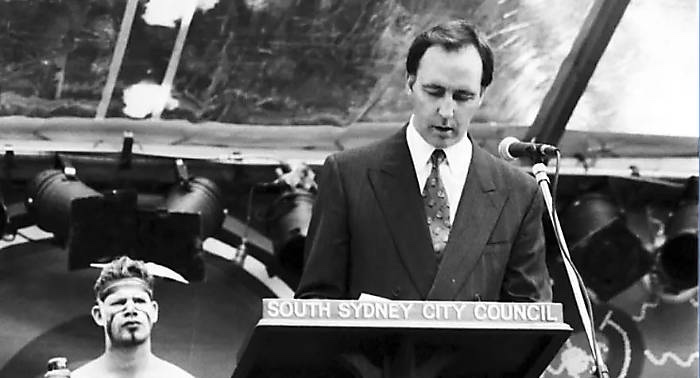
The other highlight was the powerful speech that Keating delivered a year later, in December 1992, which is known as the Redfern Speech. In this speech, Keating acknowledged the role played in destroying the culture of the First Peoples by those who invaded and colonised the continent in the early decades of British settlement.

Paul Keating delivers the Redfern Speech in December 1992

“The problem starts with us non-Aboriginal Australians”, he declared. “It was we who did the dispossessing. We took the traditional lands and smashed the traditional way of life. We brought the diseases. The alcohol. We committed the murders. We took the children from their mothers. We practised discrimination and exclusion. It was our ignorance and our prejudice.”

See https://www.creativespirits.info/aboriginalculture/politics/paul-keatings-redfern-speech

It was a searing recognition of the multitude of ways in which white Australian society had impacted the long-established cultures of the First Peoples; a recognition of the complicity of white Australia in the devastation of black Australians. It was a clear step beyond anything articulated in public in previous years.

In assessing the period when the Keating Government was in power, Dr John Gardiner-Garden began by referencing Keating’s Redfern speech of December 1992, as well as “his government’s decision to set up a national inquiry into the separation of Indigenous children”. Keating “sought to encourage recognition of past injustices. In his government’s native title and land fund legislation and proposed ‘Social Justice Package’ he sought to advance the process of making amends for the disregard of Indigenous common law rights which the 1992 Mabo judgement had found to have occurred.”

See https://www.aph.gov.au/about_parliament/parliamentary_departments/parliamentary_library/pubs/bn/1011/indigenousaffairs2#_Toc295218057

During the years that the Keating Government was in power, the following themes were chosen for each year of NAIDOC WEEK:

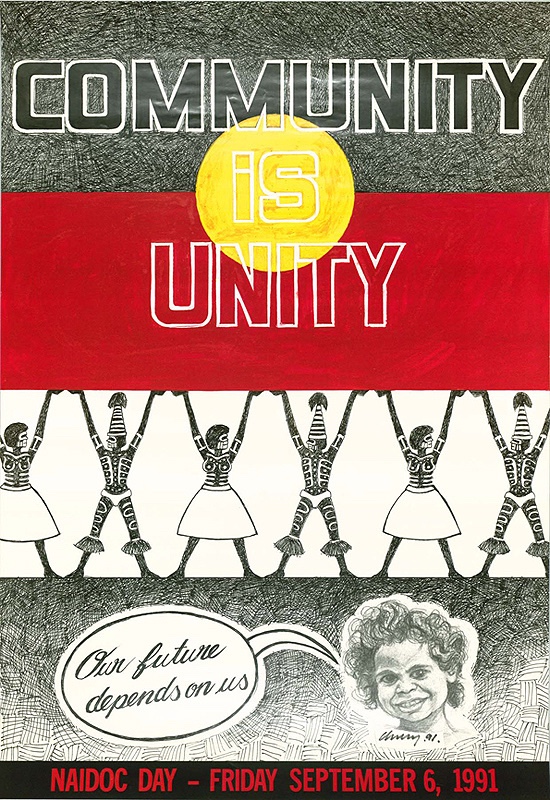
1991: Community is Unity—Our Future Depends On Us

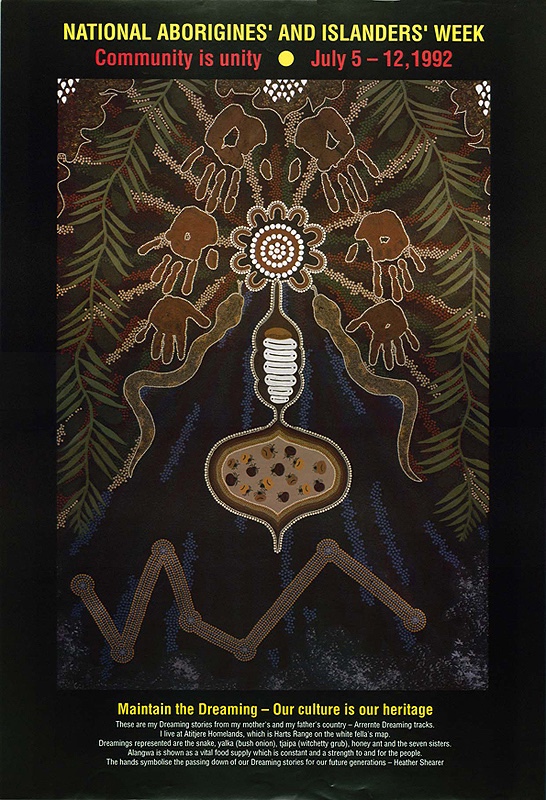
1992: Maintain the Dreaming—Our Culture is Our Heritage

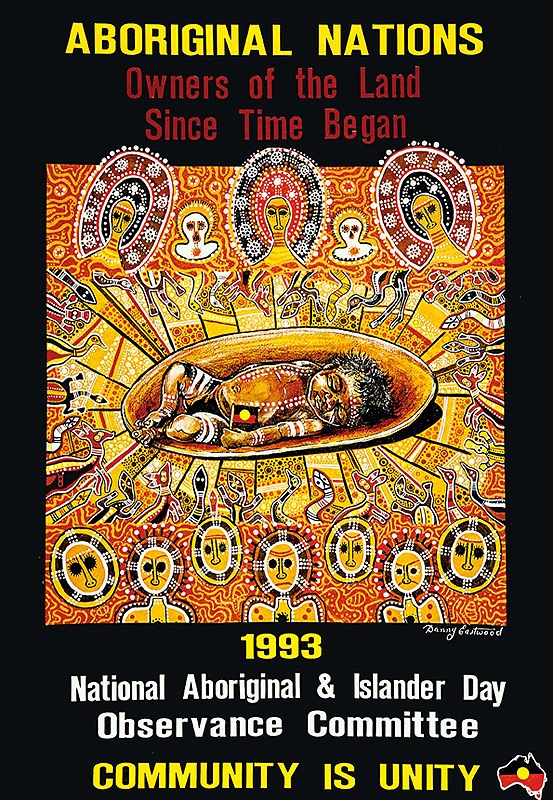
1993: Aboriginal Nations—Owners of the Land Since Time Began—Community is Unity

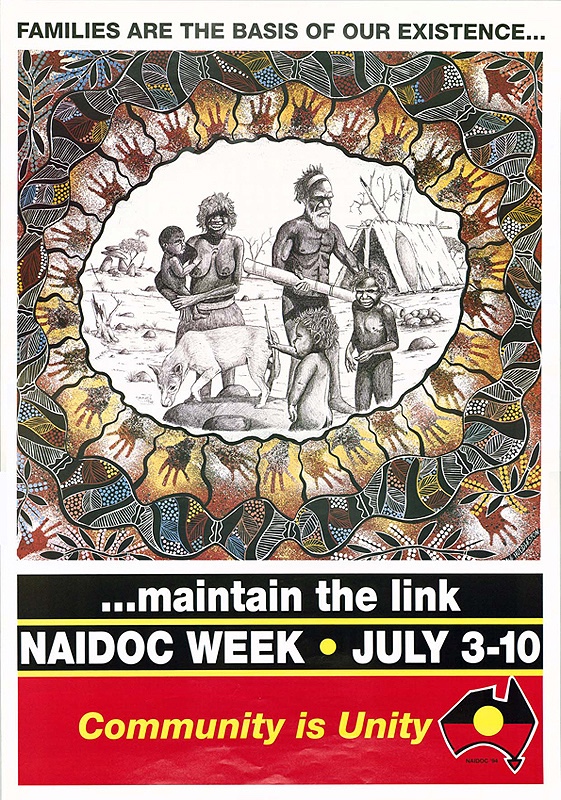
1994: Families Are the Basis of Our Existence—Maintain the Link

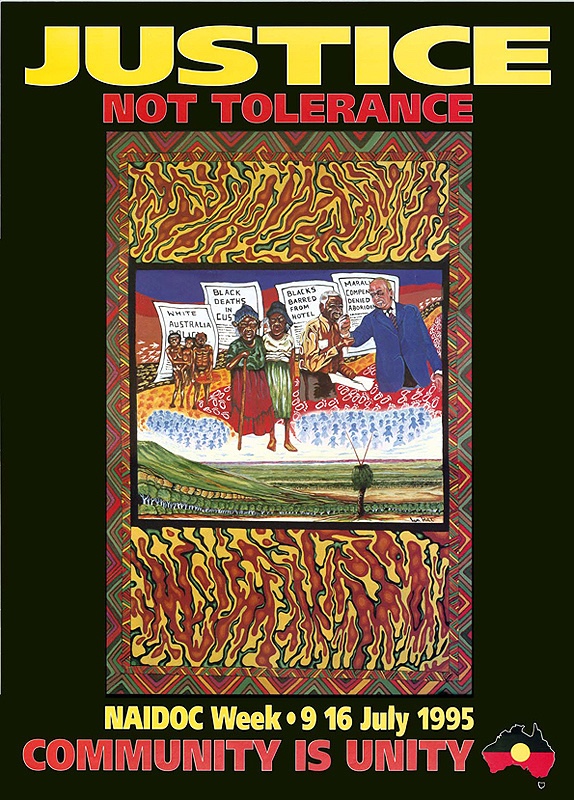
1995: Justice Not Tolerance

*****

In 1991, the focus on community in the theme, Community is Unity—Our Future Depends On Us, echoed the earlier themes that referred to community: talking together in the 1983 theme, Let’s talk—we have something to say; seeking understanding in the 1985 theme, Understanding: it takes the two of us; and working towards peace in the 1986 theme, Peace, not for you, not for me, but for all of us. The theme also had a future orientation, expressing hope for what might lie ahead for Aboriginal people: Our Future Depends On Us. That “us” clearly included white and black together, working in common in community.

The 1992 theme, Maintain the Dreaming—Our Culture is Our Heritage, looked back just a couple of years, to the 1990 theme, Don’t Destroy, Learn and Enjoy our Cultural Heritage, and to the 1988 theme, Recognise and Share the Survival of the Oldest Culture in the World. It also referenced the 1978 theme, Cultural Revival is Survival. All four years focussed attention on the long-exisiting culture that was maintained and passed on by indigenous peoples around the continent.

In addition, the 1992 theme included a reference to Dreaming; this is a term, somewhat contentious amongst First Nations people, which has nevertheless seen widespread acceptance and adoption in the wider Australian society. It is generally understood to be a way to refer to the collection of stories that form the foundational mythology of Aboriginal peoples.

Reconciliation Australia, on its website shareourpride.org.au, states that “it is impossible to find words that adequately capture this core element of who we are but it’s something you feel when you sit with us on our country and hear our stories with an open mind and heart.”

The website affirms that “Dreaming is more than a mythical past; it prescribes our connection as Aboriginal people with the spiritual essence of everything around us and beyond us. Dreaming stories are not in the past, they are outside of time – always present and giving meaning to all aspects of life.”

See https://www.shareourpride.org.au/sections/our-culture/index.html

*****

The 1993 theme, Aboriginal Nations—Owners of the Land Since Time Began—Community is Unity, incorporated three distinct phrases. The final phrase looked back by incorporating one phrase of the 1991 theme, Community is Unity. However, the full theme included a clear reference to the struggle that had culminated in the 1992 Mabo decision. It identified Aboriginal people as Owners of the Land Since Time Began. This was the principle underlying the High Court’s Mabo decision, and which then enabled the development of the Native Title Act of that year (1993).

Furthermore, the 1993 theme included a clear declaration that Aboriginal people had not simply been “one nation” before British invasion and settlement commenced in 1788; the reference to the plural, Aboriginal Nations, was highly strategic. It had been the custom in the 19th and 20th centuries for Aboriginal people to be described and treated as a single cultural and historical unit.

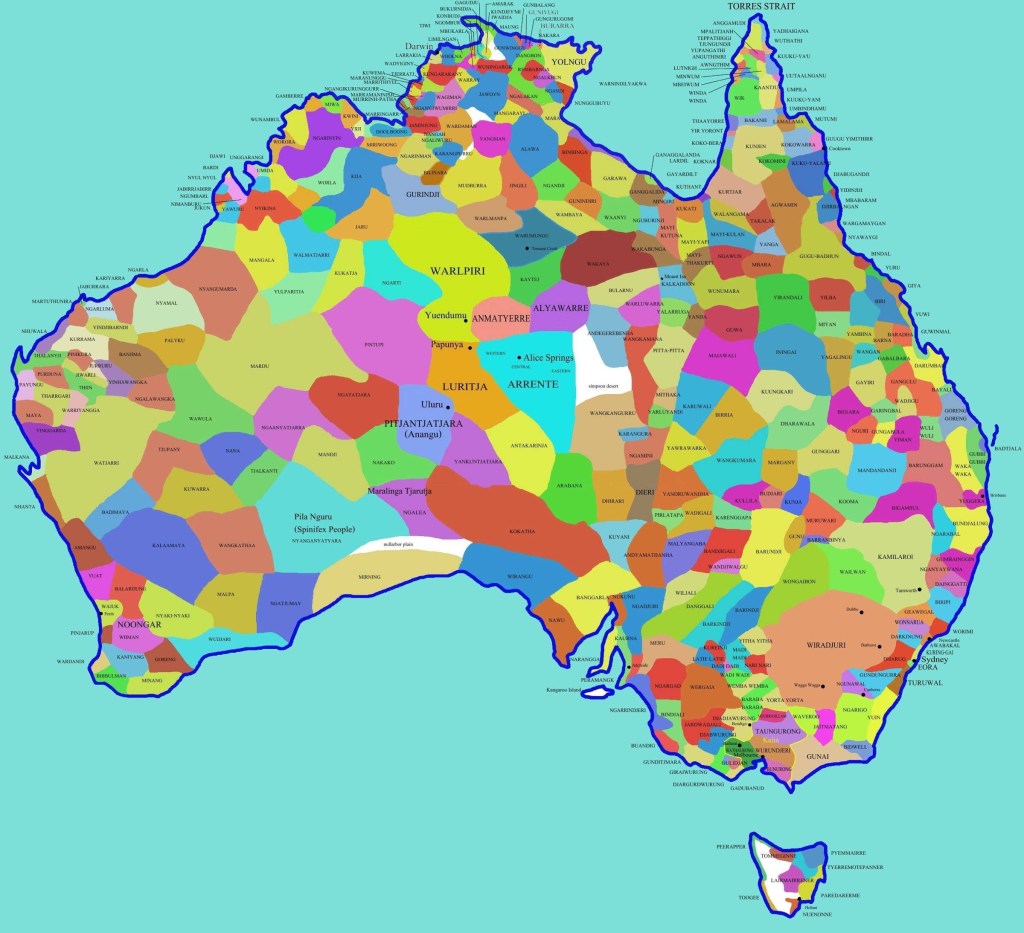
By contrast, today, two decades into the 21st century, the claim made by the 1993 theme is widely accepted and commonly spoken. British settlers have dispossessed people from well over 250 different nations right across the continent and its associated islands. The clearest example of this recognition is the map published by the government agency AIATSIS (the Australian Institute of Aboriginal and Torres Strait Islander Studies).

On a website explaining this map, AIATSIS explains that it “attempts to represent the language, social or nation groups of Aboriginal Australia. It shows only the general locations of larger groupings of people which may include clans, dialects or individual languages in a group.”

The map presents a clear lesson in a graphic manner: there were many, many nations across the continent prior to 1788.

See https://aiatsis.gov.au/explore/map-indigenous-australia

*****

The NAIDOC WEEK themes of the next two years continued to articulate core beliefs within Aboriginal culture. The 1994 theme, Families Are the Basis of Our Existence—Maintain the Link, alluded to the 1979 theme, What about our kids?, and would provide a prophetic looking-forward to the key findings of the Bringing Them Home report issued just a few years later, in 1997.

The 1995 theme, Justice Not Tolerance, was a plea to move beyond ideas of merely tolerating indigenous people, and adopt the principles of justice that would see them treated equitably, with wrongs righted and reparations made for past errors.
*****

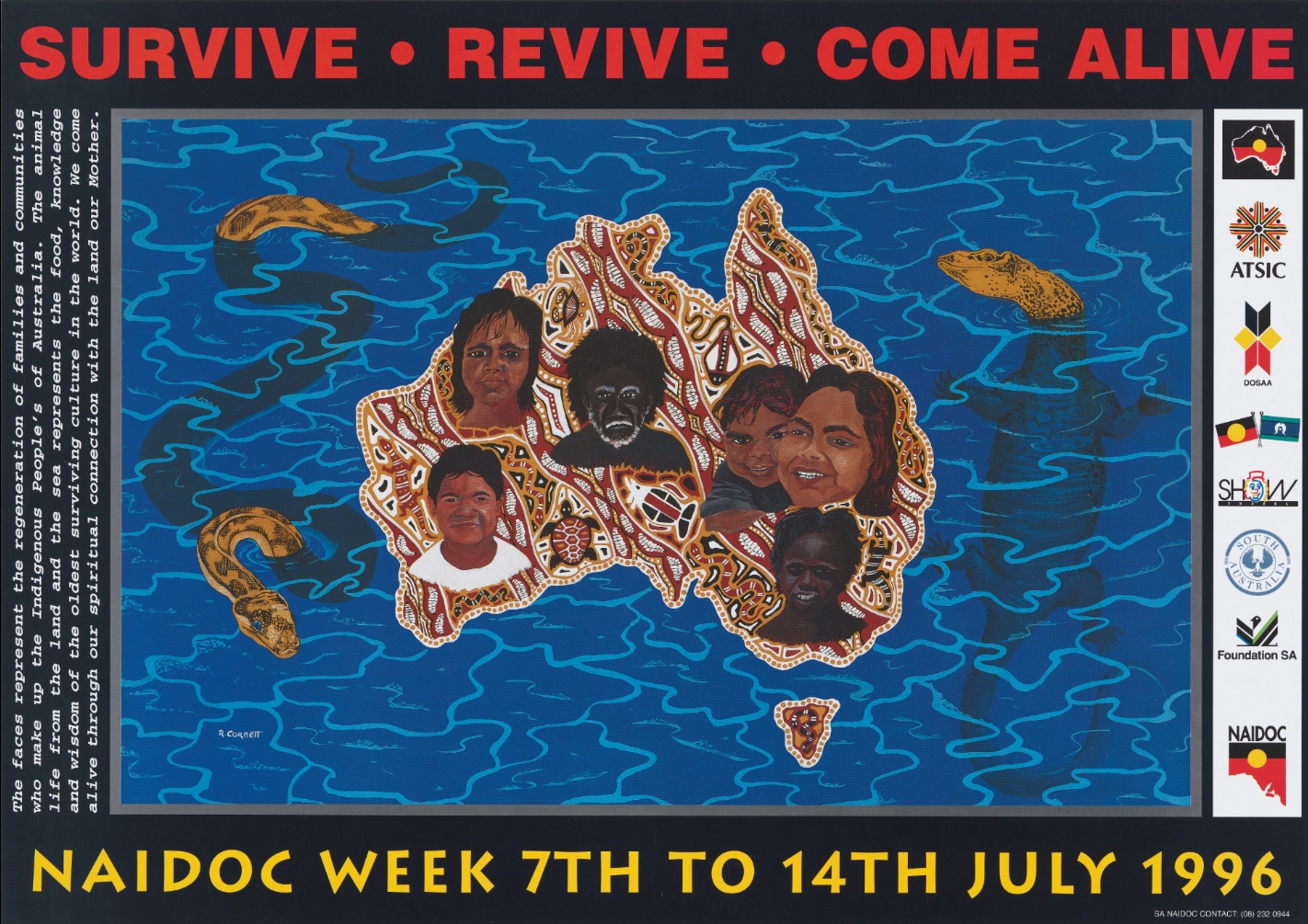
In March 1996, John Howard’s Liberal Party, in coalition with the National Party, was elected, and formed a government that lasted for the next 11 years. The 1996 and 1997 themes for NAIDOC WEEK continued to provide sharp insights into what was needed in Australian society, even with a more conservative government at the helm. In 1996, the theme was Survive—Revive—Come Alive.

In 1997, the theme was equally pointed, as it,celebrated the 30th anniversary of the 1967 referendum,

Dr John Gardiner-Garden notes the many retrograde steps taken by the new Howard Government: they “dropped the terms ‘social justice’ and ‘self-determination’, withdrew support from many of the initiatives and institutions for which these terms were the raison-d’etre and declared its new priorities to be ‘accountability’, ‘improving outcomes in key areas’ and ‘promoting economic independence’.”

He furthered noted that “Government actions such as creating a Special Auditor, reducing Aboriginal and Torres Strait Islander Commission (ATSIC) funding, amending the Native Title Act and perceived inactions on reconciliation and in responding to the rhetoric of the new One Nation Party placed a strain on relations with the Indigenous community.”

See https://www.aph.gov.au/about_parliament/parliamentary_departments/parliamentary_library/pubs/bn/1011/indigenousaffairs2#_Toc295218057

The three events referenced in the 1997 theme, Gurindji, Mabo, and Wik, were pivotal moments in the advancement of Aboriginal claims in the 20th century.

The Gurindji Strike of 1966 was led by Vincent Lingiari. A protest against the Wave Hill station managers resulted in the return of some traditional lands to the Gurindji people under a lease arrangement in 1975, and later led to the granting of inalienable freehold title to this area in 1984.

In the Mabo decision of the High Court, handed down on 3 June 1992, the court recognised the land rights of the Meriam people. They were the traditional owners of some islands in the Torres Strait. Marked on the map as the Murray Islands, the Torres Strait Islanders called these islands Mer, Dauer and Waier). The case is significant because it rejected the view that at the time of colonisation, Australia was terra nullius, or land belonging to no one.

The case had initially been brought in 1982 by five indigenous people. Because Eddie Koiki Mabo was the first plaintiff in the case, it became known as the Mabo Case. In its judgement, the High Court acknowledged that “Indigenous peoples had lived in Australia for thousands of years and enjoyed rights to their land according to their own laws and customs.” See https://aiatsis.gov.au/explore/mabo-case

On Eddie Mabo, see https://aiatsis.gov.au/explore/eddie-koiki-mabo#toc-the-mabo-case
The Wik judgement of 1996 built on the basis of the Mabo decision. The case related to the right to hold native title in an area where there were pastoral,leases in place. By a majority of 4–3, the High Court agreed that the pastoral leases did not extinguish the native title of the Wik and Tahyorre people of Cape York.

Sadly, the remembering of these three key events during the early years of the retrogressive Howard government, strikes a note of pathos. These advances were not built on by the Howard government. In the ensuing decade, due to the intransigence of the government, things would actually go backwards.
*****

See also

Fifty years of NAIDOC WEEK 1 (1972–1975)

Today, 26 May, is Sorry Day in Australia. It is a day to remember the impact of past policies of forcible removal on the Stolen Generations, their families, and their communities.

The day is of particular significance to the Aboriginal and Torres Strait Islander communities in Australia, but it is also an opportunity for all Australians to remember past mistakes and build stronger bridges for a richer, stronger future together.

NAIDOC WEEK is usually held during the first week in July (Sunday to Sunday), ensuring that it incorporates the second Friday of the month.

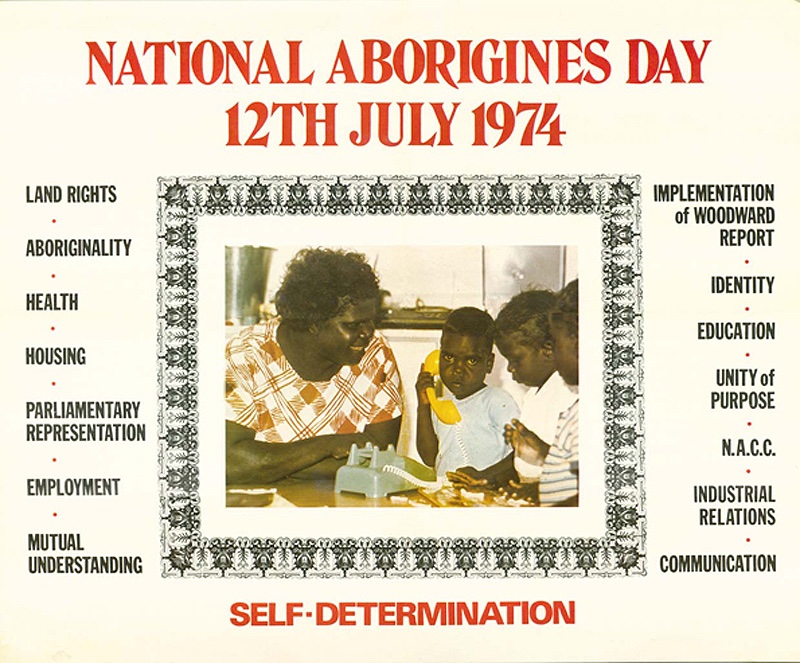
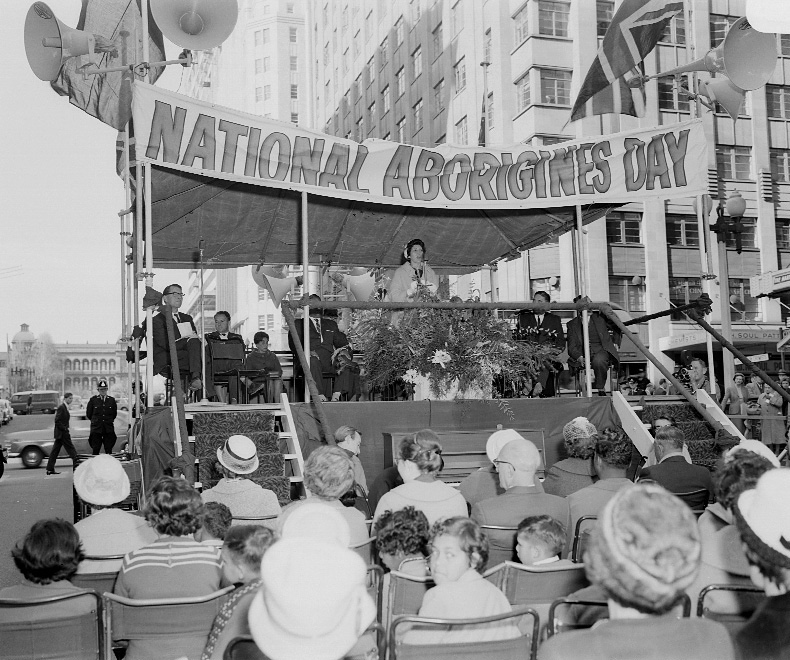
Historically, it began life as National Aborigines Day, then it became known as The Day of Mourning, before it was taken on by the National Aboriginal Day Observance Committee (NADOC). The first Sunday in July was designated as a day of remembrance and celebration for Aboriginal people and heritage.

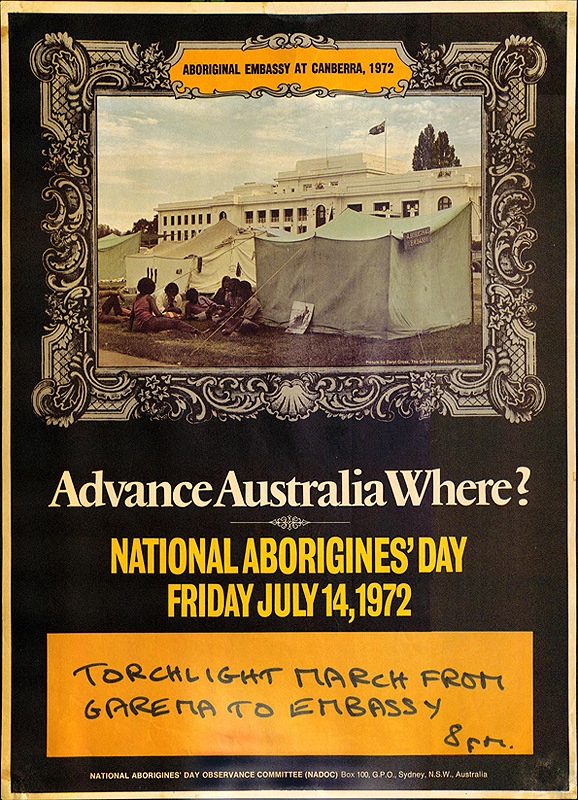
Some time later, the National Aborigines and Islanders Day Observance Committee (NAIDOC) was formed, and this provides the name to the week. The first National Aborigines’ Day occurred fifty years ago, in July 1972.

Each year, a different theme was chosen to highlight this day (and, later, when it became a week, the theme covered the whole week). The early themes are striking. They reveal a clear understanding, amongst Aboriginal leadership of the time, about the needs of their peoples, and the claims on national policy that thus should be made.

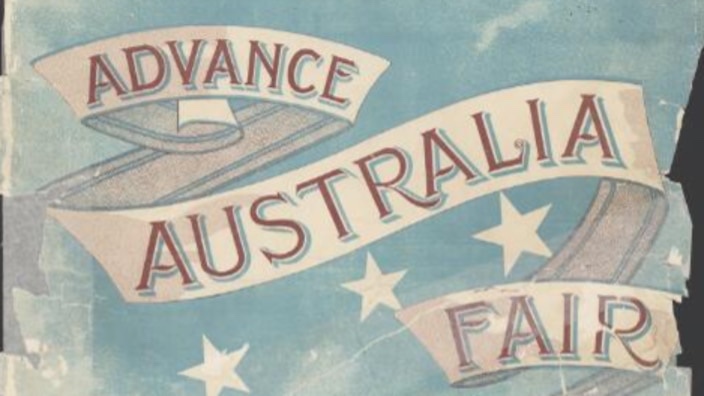
The theme for the 1972 National Aborigines’ Day (organised by NADOC) was Advance Australia Where? The theme played off a line in the refrain of a 19th century song, written by Scots-born Peter Dodds McCormick; the song later became the official national anthem of Australia, in 1974.

The song, Advance Australia Fair, appears to praise the “fairness” of the Australian nation—in its time, perhaps, a reflection of the ethos of the pioneer spirit, but in our time, a direct slap in the face to the First People of the nations that had existed on the continent and its surrounding islands, for millennia.

Advance Australia Where? riffs off the words of the song and poses an important question—one that we have sadly failed to answer with any satisfaction in the ensuing decades.

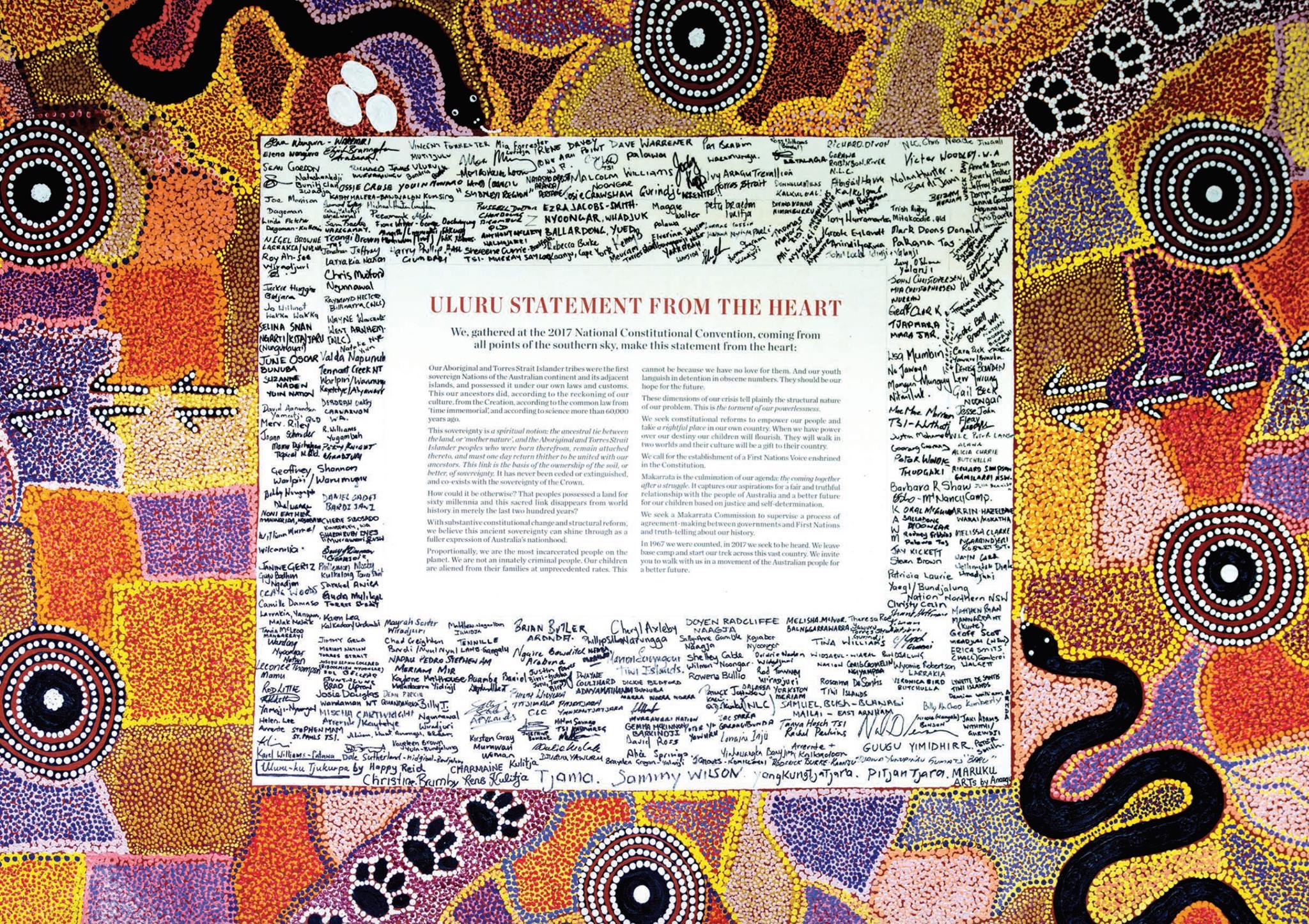
In thinking about that question from five decades ago, surely it is now time to pay attention to what indigenous leaders from around the country have asked for, in the Statement from the Heart that was issued in 2017 at Uluṟu:

We seek constitutional reforms to empower our people and take a rightful place in our own country. When we have power over our destiny our children will flourish. They will walk in two worlds and their culture will be a gift to their country. We call for the establishment of a First Nations Voice enshrined in the Constitution.

Makarrata is the culmination of our agenda: the coming together after a struggle. It captures our aspirations for a fair and truthful relationship with the people of Australia and a better future for our children based on justice and self-determination. We seek a Makarrata Commission to supervise a process of agreement-making between governments and First Nations and truth-telling about our history.

See https://ulurustatement.org/the-statement /

The theme for the 1973 National Aborigines’ Day was It’s Time for Mutual Understanding. In late 1972, the Whitlam Government came to power after 23 years of turgid conservative governments. The theme is that election was simply, It’s Time. The NAIDOC theme built on that call for change, focussing on the importance of Mutual Understanding between black and white in the country.

The Whitlam Government took this call seriously. The Whitlam Institute reports that “Whitlam’s 1972 election campaign speech was clear on the need to accord Aboriginal and Torres Strait Islander peoples the rights, justice and opportunities that had been denied to them for so long.”

See https://www.whitlam.org/whitlam-legacy-aboriginal-and-torres-strait-islander-peoples

Whitlam committed to “legislate to give aborigines land rights – not just because their case is beyond argument, but because all of us as Australians are diminished while the aborigines are denied their rightful place in this nation”. He said Australians “ought to be angry – with an unrelenting anger – that our aborigines have the world’s highest infant mortality rate.”

The Whitlam Government adopted a policy of ‘self determination’, relinquishing the paternalistic control that previous governments had exercised over the lives of Australia’s First Nations Peoples. In 1972 the Whitlam Government created the Department of Aboriginal Affairs. In 1973 they established a Commission into Aboriginal Land Rights. There was a significant increase in expenditure and programme planning in Indigenous Affairs during the years of 1972–75.

After the Whitlam Labor Government, the conservative Fraser Government continued many (but not all) of these reforms. Sadly, in the years since the 1970s, this momentum has stalled. It’s surely time, once more, to renew our mutual understanding and to commit to stronger actions to bring justice to our First Nations.

A ceremony to officially hand back traditional lands in the Northern Territory to the Gurindji people took place on August 16th, 1975 at Daguragu.
Prime Minister Whitlam made a short speech, took some sand, and poured it into the hands of Vincent Lingiari, the leader of the protest movement.

Whitlam’s gesture of pouring sand into Lingiari’s hands in 1975 was intended to symbolically reverse a similar act in 1834, when John Batman, the founder of Melbourne claimed land in that area from its indigenous people, and an Aboriginal elder had poured earth from his land into Batman’s hands. The image of this moment (above) remains as one of the key moments in 20th century Australian history.

The theme for the 1974 National Aborigines’ Day was Self Determination. This was a matter that was a lively concern at the time.

The Indigenous website, Creative Spirits, notes that “the first expression of Aboriginal self-determination is usually said to be in 1972 when the Whitlam government abolished the White Australia Policy and introduced a policy of self-determination.” This means that the 1974 theme was reflecting changes in government policy, as well as the hopes of the Aboriginal community.

Creative Spirits also notes that “50 years before [the Whitlam Government changes] Aboriginal activists already lobbied for self-determination when they formed the Australian Aboriginal Progressive Association (AAPA) in April 1925.” The AAPA had drawn inspiration from earlier activity by African Americans (what was then called the Universal Negro Improvement Association).

Self-determination reflects an intention for Aboriginal people to organise themselves and make their own decisions about their lives, in their own culturally-appropriate ways. See https://www.creativespirits.info/aboriginalculture/selfdetermination/what-is-self-determination

Article 19 of the United Nations Declaration on the Rights of Indigenous Peoples outlines three key elements that describe what Self-determination involves:

“States shall consult and cooperate in good faith with the indigenous peoples concerned through their own representative institutions in order to obtain their free, prior and informed consent before adopting and implementing legislative or administrative measures that may affect them.”

Creative Spirits observes that “Self-governance allows Aboriginal people to talk about their interests and goals, exercise their rights and responsibilities, and resolve their differences in a culturally appropriate way. It also means that Aboriginal people can do this free of discrimination from individuals, governments or external stakeholders.”

Back in 1925, the Australian Aboriginal Progressive Association had sought the following: 40 acres of land to be granted to each and every Aboriginal family in Australia; an end to the policy of child removal from their families by the Aboriginal Protection Board; replacing the Aboriginal Protection Board by an all-Aboriginal body to oversee Aboriginal affairs; citizenship for Aboriginal people within their own country; a Royal Commission into Aboriginal affairs; the federal government to take control of Aboriginal affairs; and the right to protect a strong Aboriginal cultural identity.

Some of those demands were subsequently granted—and later still withdrawn. Some remain as matters that still have a claim on our national life. How might we respond today?

In 1975, the day organised by NADOC became a whole week, organised by a committee that included Torres Strait Islanders alongside Aboriginal leaders (NAIDOC). The theme for the 1975 NADOC Week was Justice for Urban Aboriginal Children. The week was built around the first Sunday in July, which was maintained as a day of remembrance and celebration for Aboriginal people and heritage.

This theme clearly identified an issue that was a major concern within indigenous communities. The long history of removing Aboriginal children from their homes, families, and communities, was here identified in the public arena. It would become a strong focus in national public life with the establishment in August 1995 of an enquiry into this matter by the Human Rights and Equal Opportunity Commission.

The Commission delivered its report, Bringing Them Home, in 1997, and provided a detailed series of recommendations to address this terrible policy. The 1975 theme was thus (in one way) “ahead of its time”, foreshadowing a critical public discussion; although, in truth, the need for this theme and for such an enquiry would have been well known to indigenous communities decades earlier.

*****

See also

The Aboriginal Tent Embassy: 50 years

On 26 January 1972, four Aboriginal men—Billie Craigie, Michael Anderson, Bertie Williams, and Tony Coorey—set up a beach umbrella on the lawns opposite the Parliament House in Canberra. The men were protesting the resistance that the conservative Liberal-Country Party federal government were exhibiting towards granting land rights to Aboriginal people.

Even though Aboriginal people had lived on the land of the continent of Australia for millennia, they had no rights to land in most places across the continent. The British Invasion of Port Jackson in 1788, some years after Lt James Cook had imperiously claimed the land of New Holland for the British Crown in 1770, led to expanding colonisation of the land over the ensuing decades. Each new colonial settlement was associated with battles between the local indigenous people and the invading British. Massacres resulted in almost every location.

The men sitting under the umbrella in Canberra in 1972 described it as the Aboriginal Embassy, alluding to the fact that the city of Canberra was home to scores of embassies from the governments of overseas nations. Indeed, the city had been established early in the 20th century with the guarantee that those nations could have a piece of territory in the new capital city where their diplomatic staff could live and work.

By the late 1970s, seventy nations had embassies in Canberra (see https://openresearch-repository.anu.edu.au/bitstream/1885/115002/2/b11766608.pdf), but there was no formal channel for relationships with the First Peoples of Australia. Somewhere around 400 groupings of Aboriginal people were believed to have lived across the continent and on the surrounding islands, including the Torres Strait Islands, with at least 250 languages being spoken.

But decades of British colonisation had seen the indigenous people marginalised from “mainstream” white Australian society. Numbers declined, living conditions deteriorated, especially in towns and cities, and racist attitudes towards “the blacks” predominated. Of those 250 languages, less than a half had continued into the 20th century, and many of those continuing languages were in peril of dying out completely.

Aboriginal leadership had been agitating for their people for some time. The YES vote at the 1967 referendum augured well, it seemed. Yet the Prime Minister of the day (and arguably one of Australia’s worst leaders), William McMahon, and his conservative government colleagues exemplified the cultural arrogance and racism that held sway across the nation at that time.

The National Museum of Australia reports that “On the eve of Australia Day 1972, the McMahon government announced the implementation of a new system that rejected granting independent ownership of traditional land to Indigenous people in favour of 50-year general purpose leases for Indigenous communities, provided they could demonstrate a social and economic use for the land and excluding any mineral and forest rights.

“After the ongoing disappointments of the land rights struggle, this announcement sparked action among many Indigenous groups and directly contributed to the founding of the Tent Embassy.” (see https://www.nma.gov.au/defining-moments/resources/aboriginal-tent-embassy) The time was ripe for Aboriginal leaders to step up and speak out on behalf of their peoples.

The initial demands of the group which established the Tent Embassy read today as a sensible set of actions which, although achieved in part, are sadly yet to be completely fulfilled. Those demands included:

• Complete rights to the Northern Territory as a state within Australia and the installation of a primarily Aboriginal State Parliament. These rights would include all mining rights to the land

• Ownership and mining rights of all other Aboriginal reserve lands in Australia

• The preservation of all sacred sites in Australia

• Ownership of areas in major cities, including the mining rights

• Compensation for lands that were not able to be returned starting with $6 billion and including a percentage of the gross national income every year.

See https://www.creativespirits.info/aboriginalculture/history/aboriginal-tent-embassy-canberra

In the ensuing years, there have been legal challenges, removal of the embassy, reinstitution of the embassy, arson attacks, moves to other sites in Canberra, and eventually, the registration of the embassy site with the Australian Heritage Commission as a part of the National Estate.

The Embassy has been maintained continuously since 1972 by First People leaders, and this month the 50th anniversary is being celebrated. (The recent incident at the front of Old Parliament House was not associated in any way with the Tent Embassy, nor with any responsible Aboriginal leadership.)

Professor Bronwyn Carlson, Director of The Centre for Global Indigenous Futures, Macquarie University, writes that “Nowhere else in the world have we seen such longevity around a site of protest. The Aboriginal Tent Embassy is an impressive achievement that demonstrates the tenacity of Aboriginal and Torres Strait Islander people and our continued fight for the reclamation of our lands and sovereign rights as First Nations peoples.” (see https://theconversation.com/a-short-history-of-the-aboriginal-tent-embassy-an-indelible-reminder-of-unceded-sovereignty-174693)

See also https://johntsquires.com/2018/08/10/the-sovereignty-of-the-first-peoples-of-australia/

*****

Working with First Peoples and advocating for them

I recently participated in a workshop on Advocating for First Peoples, led by Nathan Tyson, an Aboriginal man, of Anaiwon and Gomeroi heritage in North Western NSW. (This was part of the excellent Out Of The Box mission conference held in July.) Nathan is currently working as Manager, First Peoples Strategy and Engagement, in the Synod of NSW and the ACT of the Uniting Church.

The workshop had two parts. In the first part, we explored what we know about the history and current situation of First Peoples. In the second part, we considered what actions we might take to work with and advocate for First Peoples.

What do we know?

In the first part, Nathan offered us a series of insights into the experience of the First Peoples of Australia, drawing on what we know about the history, customs, and current situation of Aboriginals and Torres Strait Islanders across the continent, and in the associated islands linked to this continent.

The five areas were: the impact of invasion and colonisation — the many massacres that occurred, and the almost complete absence of calling British settlers to account for these massacres — the Doctrine of Discovery and the resulting claim of terra nullius about Australia — the Stolen Generations — and the current push to tell the Truth, listen to the Voice of First Peoples, and establish Treaties with the various nations of the First Peoples.

First, there is the story—now becoming well-known and widespread— of the impact on First Peoples from the invasion and colonization that took place from 1788 onwards. (I use these terms deliberately; describing the British colony as a settlement is far too benign; it ignores much of the harsh reality of what took place.)

The period of invasion and colonisation saw innumerable massacres take place. As well as the thousands of Aboriginal deaths that occurred through these massacres, British invasion also led to the deliberate marginalising of people in many of the Aboriginal nations that existed at that time.

There is a powerful visual symbol of these massacres at The killing times: a massacre map of Australia’s frontier wars | Australia news | The Guardian

The map is interactive. The number of massacres that were perpetrated by ordinary people—not soldiers, not government officials—is truly horrifying.

Associated with this is an observation that provides a second area worthy of note. It is the case that virtually no white persons were charged for the acts of violence and murder that they perpetrated. (The Myall Creek Massacre provides one of the rare exceptions to this claim. See https://www.creativespirits.info/aboriginalculture/history/myall-creek-massacre-1838)

Third, Nathan referred to the rationale that was driving both the colonisation of the continent and the massacre of First Peoples—the Doctrine of Discovery, promulgated in medieval times and driving the expansionary colonisation policies of many European nations, including Britain. It was this Doctrine which formed the foundation of the claim of terra nullius—the notion that the there were no people in the land who were settled in the land.

The Uniting Church in Australia has joined with other churches around the world in repudiating the Doctrine of Discovery. See https://johntsquires.com/2018/08/13/affirming-the-sovereignty-of-first-peoples-undoing-the-doctrine-of-discovery/

Fourth, Nathan noted the issue of the Stole Generations, a blight on the history of Australia since the nineteenth century. This matter was addressed in Bringing Them Home, a highly important report issued in 1997. The commission that produced this report was led by Sir Ron Wilson, a High Court judge who had served as UCA Moderator in Western Australia and then as the fifth national President (1988–1991).

See https://humanrights.gov.au/our-work/aboriginal-and-torres-strait-islander-social-justice/publications/bringing-them-home

The continuing saga of Aboriginal children being taken from their homes remains with us today, to our national shame. Even in the 21st century, indigenous children continue to be taken from their families. In fact, there are far more Aboriginal children in out-or-home care now, than there were in 1997 when the Bringing Them Home report exposed countless stories of terror and tragedy amongst the Stolen Generations.

The final area canvassed in the first part of the workshop focussed on the theme of Voice. Treaty. Truth. This was the theme for NAIDOC Week 2019. It consists of a call to give Voice to the First Peoples of Australia by establishing a representative body to advise federal law makers; to establish a Treaty with each of the nations that were in the land before the British sent their invading colonisers; and to tell Truth about the history and the present situation of Aboriginal and Torres Strait Islander peoples.

See https://johntsquires.com/2019/07/07/giving-voice-telling-truth-talking-treaty-naidoc-2019/

Nathan encouraged all of the workshop participants to learn about First Peoples, their history, their realities, and their aspirations, and to approach First Peoples with an open mind and with a compassionate heart.

What can be done?

In the second part, Nathan then provided a comprehensive set of practical pointers for us to consider. Given what we know about the situation and perspective of our First Peoples, what can we do to support, collaborate with, and advocate for these peoples? Here are the practical steps that Nathan provided for us to consider and adopt:

Put yourself in the shoes of First Peoples and try to walk the journey with them as they experience it

Talk with family and friends about the issues that you hear about, encourage truth telling, stand up against racism

Develop relationships, listen deeply to the needs and aspirations of First Peoples

Respect the right of self-determination of Aboriginal Peoples

Undertake simple advocacy activities to support the needs and aspirations of First People’s (synod, assembly, Common Grace, ANTAR, Amnesty)

Join rallies and marches to show solidarity with First Peoples, eg those advertised by FISTT (Fighting In Solidarity Towards Treaties, a Facebook group)

Pay to undertake a Walking on Country experience with a local organisation

Employ First Peoples in your business, purchase goods from Aboriginal businesses, collaborate in social enterprises and community initiatives

Make your church space available for use by Aboriginal Community, for elders, community, social gatherings

Help with fundraising to support Aboriginal community initiatives

Use the system: help a person to lodge a complaint with agencies such as NSW Ombudsman’s Office, Anti-Discrimination NSW, NSW Office of Fair Trading, Ombudsman for Telecommunication Industry, Energy Industry, Community Legal Services (for civil matters)

There are plenty of practical suggestions in this list. It is worth the effort to start implementing some of them!