Will “the peace” hold in Gaza?

There is intense emotion in Israel and in Gaza. Hundreds of Israeli families are mourning the deaths of the 1200 people killed on 7 October 2024, the deaths of scores (perhaps even hundreds) of the 251 hostages taken on that day, the 468 Israeli soldiers who have died since that day.

At the same time, the families and friends of the nearly 68,000 Palestinians killed in Gaza over the same timeframe, and especially the 20,179 of them who were children, are experiencing a similarly intense sense of grief.

It’s a region bubbling with all that unrequited grief brings: sorrow, despair, anger, a festering hatred, a resolve to “never forget”. It’s hardly a fertile ground for peace to flourish. Will the “peace agreement” hold? Will the “peace plan” prove to be effective?

As the latest group of hostages return to Israel, giving understandable joy to their families and friends, and hope for an enduring peace in the region, let us not forget that the displaced Gazans returning to the homes will find 78% of the structures in Gaza are damaged or destroyed; 22 of the 36 hospitals in Gaza have been destroyed, and some of the remaining 14 hospitals are only partially functional; and 1.5% of the viable cropland in Gaza is able now to be used for cultivation. They are not simply “coming back home”; they are returning to scenes of devastation and destruction that will surely intensify their despair.
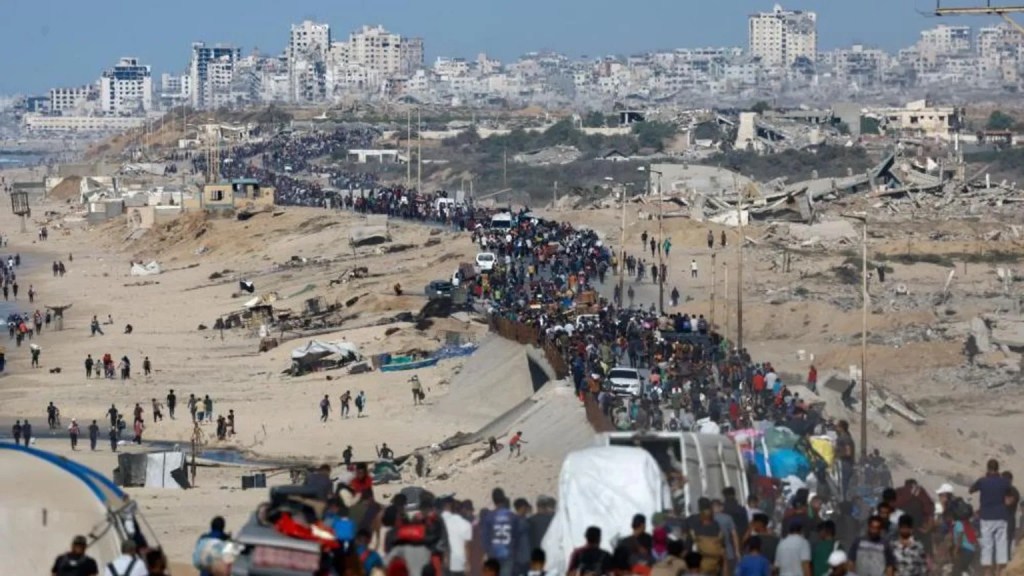
This is the third ceasefire since the events of 7 October 2023. Will it last? Relations between many (not all) Israelis and Palestinians are incredibly complex, and an enduring peace amidst the aggressive antagonism and intensifying hatred that has marked recent years (indeed, decades) does not give me confidence. 

The US has provided $21.7 billion of military aid to Israel since 7 Oct 2023. If Trump really wants peace, he could cease all future military aid and divert funds to the needs in aid supplies, health, and restoration of infrastructure in Gaza.

I’ve taken these figures from an article by NPR, a media organisation in the USA that is “an independent, nonprofit media organization … founded on a mission to create a more informed public”. (Thanks to Megan Powell du Toit for the link.)

https://www.npr.org/2025/10/13/g-s1-92205/ceasefire-gaza-war-key-figures?

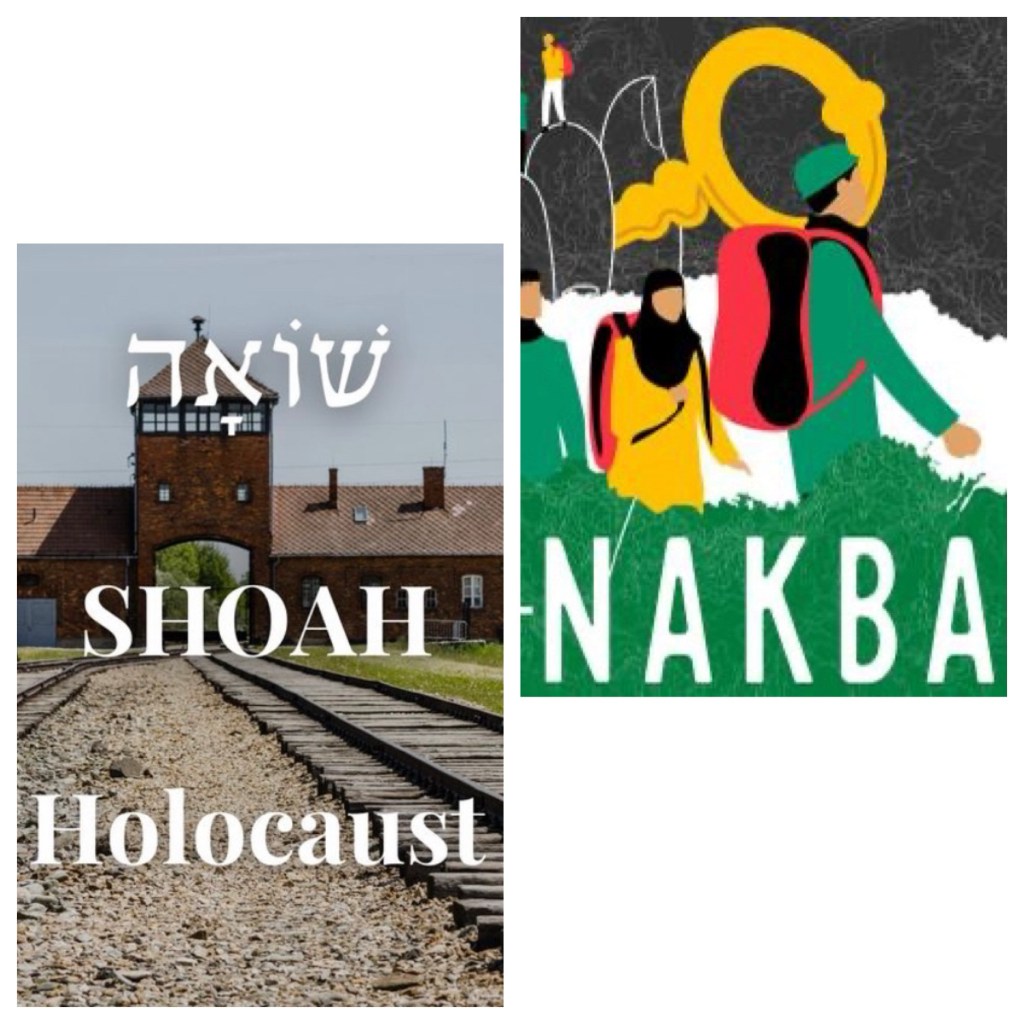
The history of “the peace” in this region over the past 50 years does not give grounds for hope. The establishment of Israel in 1948, as important and necessary as that was after the horrors of the Shoah (a Hebrew word meaning “desolation, sudden destruction, catastrophe”), caused the expulsion of hundreds of thousands of inhabitants of that area, in a catastrophe called by Palestinians the Nakbah (an Arabic word which also means “catastrophe”). 
The Camp David Accords (1978) ultimately led to an agreement in which Israel agreed to “resolve the Palestinian question” and permit Palestinian self-governance in the West Bank and Gaza within five years. It never happened. 

The Oslo Accords (1993) included a pledge to end hostilities, and the second Accords (1995) provided that Israel would accept Palestinian claims to national sovereignty. As an interim measure, a Palestinian Authority was established, to govern designated areas (see the map) in a phased process leading towards Palestinian self-determination. The Palestine Authority still exists today, and the goal of the Accords has never been reached.

See https://www.aljazeera.com/news/2023/9/13/what-were-oslo-accords-israel-palestinians

Indeed, from 1993 onwards, Israel increased its building of settlements in the West Bank, leaving that area utterly fragmented between Israeli and Palestinian areas—a process deemed illegal under international law. Families who had lived on their historic lands were expelled so that new Israeli settlements could be built. It’s been an utterly unjust process.

When PLO leader Yasser Arafat gave up the right for Palestinian refugees to return to their historic lands which Jewish settlers had seized from them in 1948 when Israel was created, many Palestinians became disenchanted with him. The ground was fertile for dissent and revolt; Hamas emerged out of this situation as the leading organisation advocating for—and acting to gain—a Palestinian right to return. Peace was never possible while such an ideology was the key driving force.

Chris Hedges, an American journalist, author, and commentator (and also an ordained Presbyterian minister, as of 2014) writes that the current “peace” is simply “a commercial break … a moment when the condemned man is allowed to smoke a cigarette before being gunned down in a fusillade of bullets”. He foresees the crumbling of the current ceasefire, on the basis of the history of these recent decades.

“Once Israeli hostages are released, the genocide will continue”, he writes. “A pause in the genocide is the best we can anticipate. Israel is on the cusp of emptying Gaza, which has been all but obliterated under two years of relentless bombing. It is not about to be stopped. This is the culmination of the Zionist dream.”

He notes the staggeringly obscene amount of military aid that the USA has given Israel, and observes that the US “will not shut down its pipeline, the only tool that might halt the genocide”. He then goes on to argue that “of the myriads of peace plans over the decades, the current one is the least serious”. He details all the flaws and inadequacies in the much-trumpeted 20-point “peace plan” that has been advocated recently and claims that “there will be no peace in Gaza; only the temporary absence of war”.

Hedges notes that this “peace plan” fails to mention Palestinians’ right to self-determination; it ignores the advice of the International Court of Justice that Israeli settlements are illegal; it places no brakes on Israel’s continuing military power; it does not provide for Israel to provide anything in the way of reparations for Gaza, the area which it has mercilessly bombed; and many provisions are vague to the point of being unenforceable. You can read his scathing analysis at https://chrishedges.substack.com/p/trumps-sham-peace-plan?

Eric Tlozek, the ABC’s Middle East correspondent, observes that “Israel gets to keep troops in Gaza instead of having to withdraw, but that only signifies that the key issues in this conflict — disarmament, security, governance — are far from being resolved”. What will change once the thousands of displaced Gazans return?
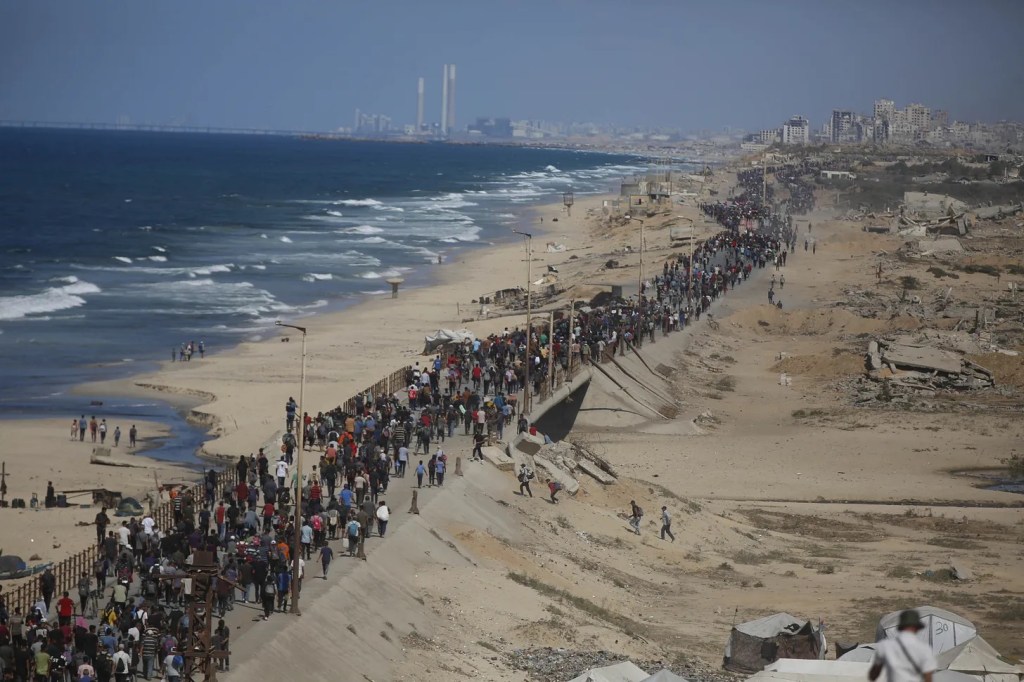
He continues, “Hamas still refuses to disarm and remains in control of large parts of the [Gaza] strip. The US may claim the war is over, but Israel’s defence minister has already flagged plans to attack Hamas, and Israeli fire and air strikes continue in Gaza. The violence has not ended, it has only decreased in intensity.”  Tlozek’s pessimism is, nevertheless grounded in reality.

See https://www.abc.net.au/news/2025-10-15/donald-trump-should-not-be-thanked-for-the-gaza-ceasefire/

Will the current “peace” last? How long will it last? How long before the genocide of Palestinians resumes and continues to its inexorable end? As a person of faith, I can join with people of faith around the globe, to pray and to hope. As a citizen of the world in 2025, however, I think that, sadly, we must temper this with realism about the situation and the prospects of an enduring peace. 

*****

See my other, earlier, ruminations at
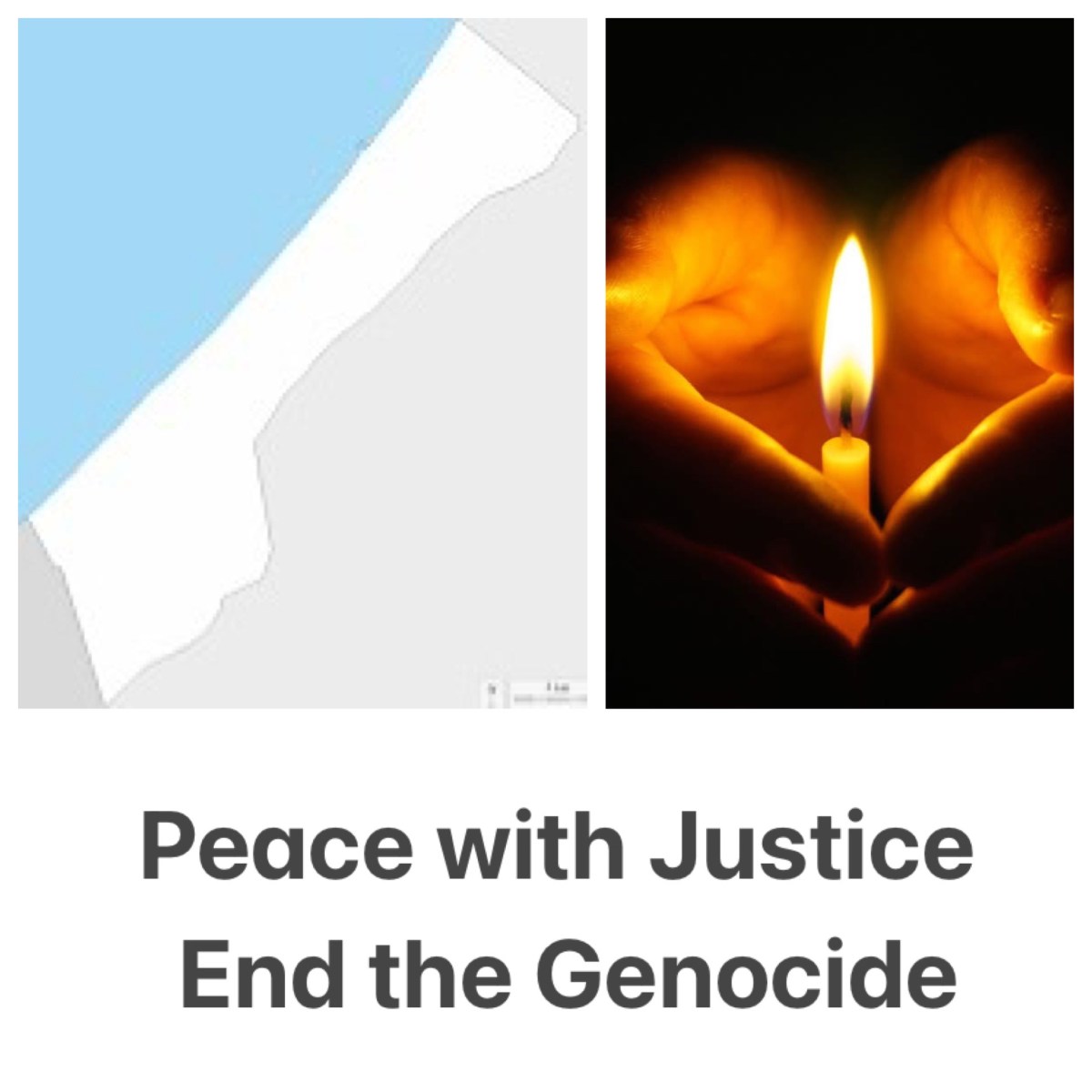
Peace with Justice: end the genocide in Gaza

It’s hard not to look at what has been happening in the Middle East—and particularly in Gaza—over recent years, and make some very harsh decisions from afar. For a start, after the series of attacks that Hamas and some other Palestinian groups made two years ago yesterday, on 7 October 2023, it seems easy to condemn the violence of terrorists fighting for Palestinian rights. The firing of 4,300 rockets, the slaughter of 1,195 Israelis, mostly civilians, and the taking of around 250 hostages, some still held today, all deserve to be condemned.

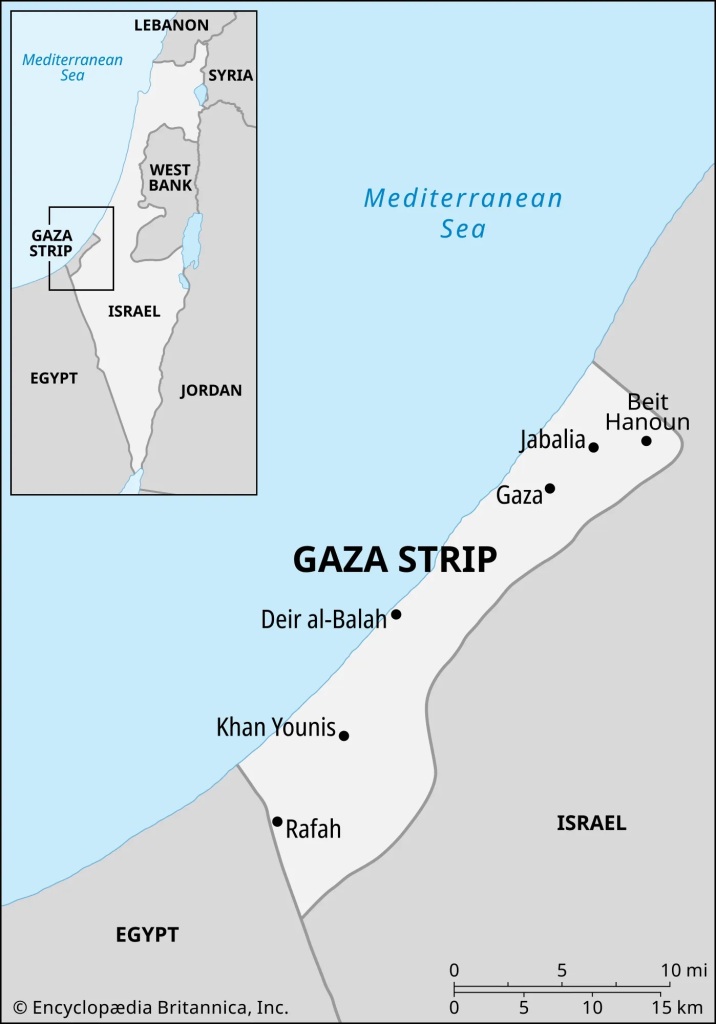
The Gaza Strip and the national state of Israel,
from a map in the Encyclopedia Britannica

But it is also hard not to decide that all Israelis should be condemned for the aggressive militaristic actions taken in response to the 7 Oct attacks. On 8 Oct, the Israeli government declared that the nation was “in a state of war”. That “war” has continued each day since then, with consistent attacks across Gaza. 

Current estimates by the Hamas-run Gaza Ministry of Health are that around 67,000 residents in Gaza have been killed, including 18,000 children; 170,000 people have been injured, and 1.9 million people displaced. Amongst the deaths, Al-Jazeera estimates that around 300 journalists and media workers have been killed. They say that across Gaza, the destruction includes 92% of all residential buildings, 88% of all commercial facilities, and more than 2,300 educational buildings have been destroyed.

The clearest accusation that has been made for some time now is that Israel is committing genocide. The World Council of Churches asserts that “the Government of Israel’s military campaign in Gaza has entailed grave breaches of the Fourth Geneva Convention which may constitute genocide and/or other crimes under the Rome Statute of the International Criminal Court (ICC)”. This council has denounced “the system of apartheid imposed by Israel on the Palestinian people, in violation of international law and moral conscience”. It’s clear that Israel,is acting outside the agreed international laws and customs. Yet the USA and other countries continue to provide Israel with all manner of materials and products to sustain their genocidal aggression.

However, it’s important not to not tag all Israelis with the one brush. The Israeli Defence Forces are carrying out the policies implemented by the right wing Prime Minister and his far right fundamentalist coalition of parties. They are committed to the Zionist ideal of ensuring the security of Israel, and of removing all opposition to this nation within the region. They are prosecuting this with vigorous zeal. The bombs and buckets continue each day. But as they oversee this policy, we should remember that they are not representative of everyone in Israel.

Elizabeth and I have a friend in Israel who is faithful and deeply committed to justice; they have been working with others for peace in their country for decades, and they are currently most distressed by their government’s callous fundamentalist actions. And we have a friend in Australia who served in the IDF who is now campaigning vigorously to stop the genocide, lobbying our government to push this message internationally. 

They are not all “the same”—what the army is implementing is a government policy that is incredibly divisive within Israel. Not all Israelis support what has been happening; many disagree with the genocide happening in Gaza. Jeremy Bowen, of the BBC, reports that “Israelis are war-weary and polls show that a majority want a deal that returns the hostages and ends the war. Hundreds of thousands of reservists in the armed forces, the IDF, want to get back to their lives after many months in uniform on active service.”

In like fashion, it’s not fair to label all Palestinians as terrorists. Some are, but many are not. Good Palestinians of integrity do not support the actions of organisations like Hamas.

It’s a complex situation which is not helped when people adopt the simplistic media language that paints all XXs as evil people or all YYs as good people. Indeed, the actions of warfare, terrorism, and genocide that we see playing out each day are held in disdain by millions of people in the region. Like them, we should hope for, yearn for, and pray for peace.

I wrote this blog on what happened two years ago today:

In today’s blog, I have drawn on the following sources:

https://abcnews.go.com/International/israel-hamas-wars-devastating-human-toll-after-2/story?id=126252242

https://www.aljazeera.com/news/liveblog/2025/10/7/live-israels-genocide-continues-across-gaza-two-years-since-start-of-war

https://www.bbc.com/news/articles/cvgqyj268ljo

https://www.oikoumene.org/resources/documents/statement-on-palestine-and-israel-a-call-to-end-apartheid-occupation-and-impunity-in-palestine-and-israel

For other related blogs, see

Beginning Lent with a message of belonging: shaping the identity of a people of faith (Deut 26; Lent 1C)

During Lent, the lectionary sets before us a string of passages that canvass key theological elements in the story of Israel. These stories, of course, also resonate also with the story of Jesus and his followers (and that is largely why they have been selected, I assume). We begin this coming Sunday with the promise of the land (Deut 26), and then follows passages focussed on the covenant with Israel (Gen 15), the provisions of God for the people (Isa 55), the renewing moment at Gilgal (Josh 5), the promise of “a new thing” (Isa 43), and the gift of The Servant (Isa 50). It is a stirring and inspiring sequence!

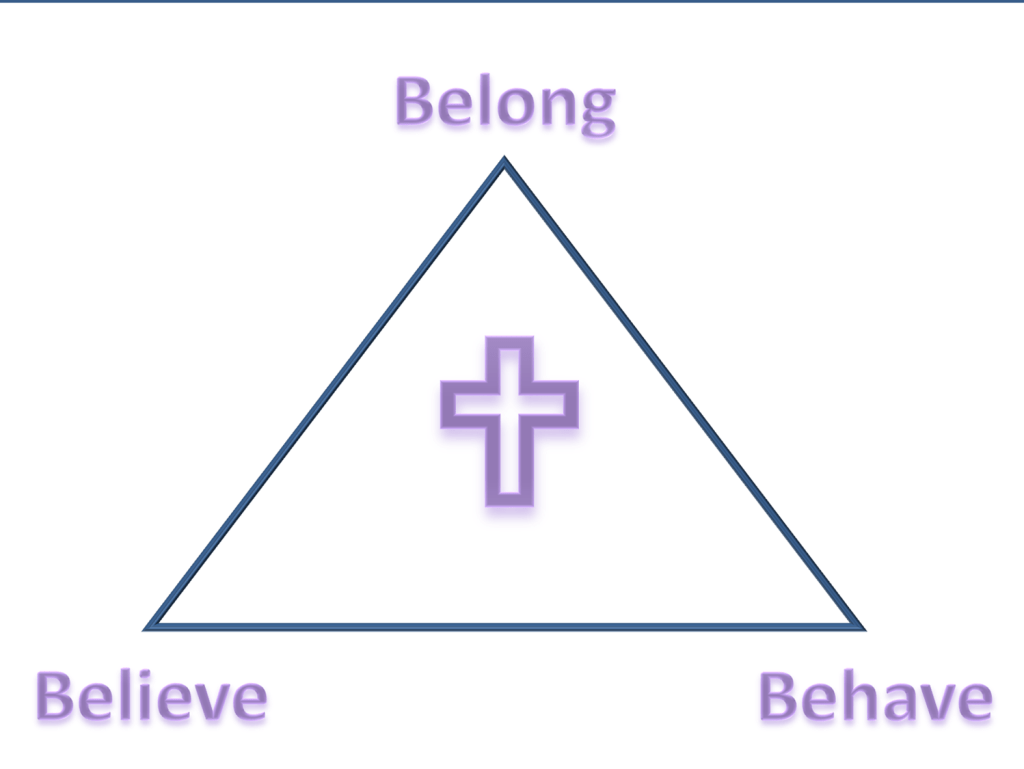
There is much debate amongst Christian thinkers, these days, about what comes first as we invite people to be a part of the church. Do we say, “this is what we believe, expressing our fundamental understanding of life; do you want to sign up to show you have the same beliefs?” Or do we say, “this is how we behave, guided by our fundamental ethical principles; would you like to act the same way and join us?” Or perhaps the invitation is simply, “come along, join in with us, see what we believe, what we are on about, and soon you’ll feel like you belong”?

Is it believe first? Or behave? Or simply, belong? The tendency to put a creed at the forefront of our invitations—to show that we are a people who believe, first and foremost—is widespread and deeply ingrained. Whether it be affirming The Apostles Creed in baptism, or saying The Believer’s Prayer at conversion, or working out a new Mission Statement for the Congregation, giving priority to belief is a very familiar pattern for us. We tend to think that, whatever formula we are repeating, that is exactly what declares and confirms our identity as people of faith.

So it’s no surprise that when we read Deuteronomy 26 (the Hebrew Scripture passage in next Sunday’s lectionary), we gravitate to the middle part of the passage, and lay claim to what looks to be an early affirmation of faith that sets out the identity of the people of Israel: “A wandering Aramean was my ancestor; he went down into Egypt and lived there as an alien, few in number, and there he became a great nation, mighty and populous” (Deut 26:5). This affirmation seems to go right back to the start, affirming what sets the people of Israel apart as a distinctive entity.

This way of reading this passage gained influence from the analysis of Gerhard von Rad, a German scholar of the 20th century. Von Rad claimed that the credal statement in verses 5 following was most likely a formula much older than the era when the book of Deuteronomy was written. And the origins of this creed, he claims, most likely lay in ancient cultic remembrances of the origins of the people. The wandering Aramean (Jacob, grandson of Abraham of Aramn) and the time in Egypt (leading up to Moses) reflect those times of origin.

*****

But the whole of this “creed” is not actually a “statement of faith”. It is more a narrative that tells a story. Such was the way of the ancient world; central beliefs were not articulated in crisp propositional statements (for this is the way of the post-Enlightenment western world); rather, a story was told, in the course of which key events pointed to central affirmations for the people. The ancients were story-tellers, more concerned to tell the story than state the faith. This is the story of the people; it is their saga.

God is important in the story that is told, nevertheless. God is the one who “heard our voice and saw our affliction, our toil, and our oppression … who brought us out of Egypt with a mighty hand and an outstretched arm, with a terrifying display of power, and with signs and wonders” (26:7–8). The rescue of the people by their powerful God is central to the story. This, of course, if the story of the Exodus, which stands at the heart of Israelite identity and later Jewish identity. It is the central story of the people of Israel.
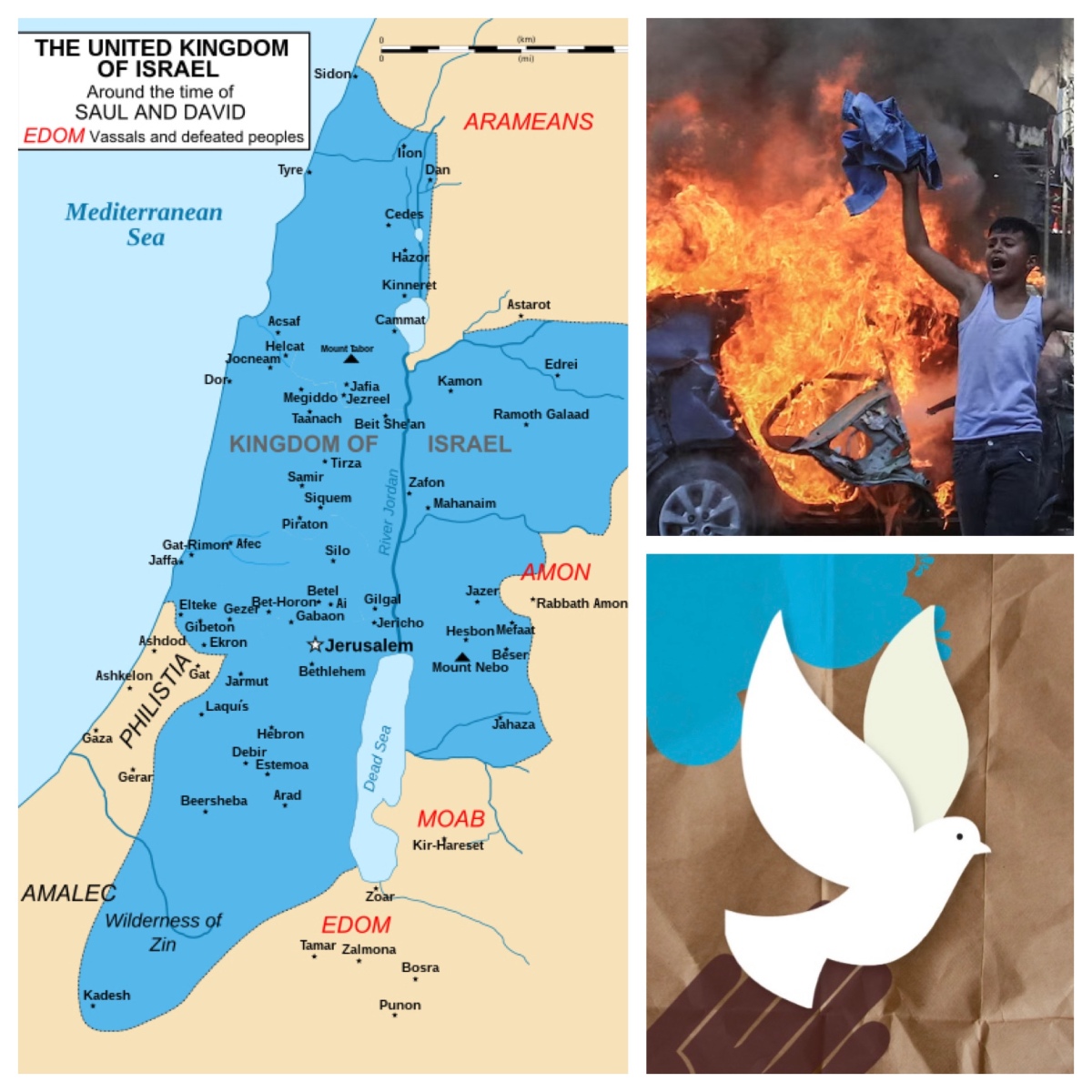
More than this, God is the one who “brought us into this place and gave us this land, a land flowing with milk and honey” (26:9). The land of Israel is the second aspect of ancient Israelite life that is central and fundamental; and so it continues to be, in the 20th and 21st centuries, in which the land of Israel has been one of the most contested pieces of land in the world.

The story is told, however, for a purpose. Not just to remember—although remembering is important, for it recurs as a regular refrain in the book of Deuteronomy (7:18: 8:2, 18: 9:7, 27; 11:2; 15:15; 16:12; 24:9, 18, 22; 25:17; 32:7). The story is told, also, to inculcate the ethos, the values, the very identity of the people. And central to that ethos, taking prime place amongst the things that were seen to be important to affirm about who the people of Israel were, is this: giving back to God the first fruits produced by the land.

“So now I bring the first of the fruit of the ground that you, O LORD, have given me”, are the words that the people are to say, each time a harvest is produced. “You shall set it down before the LORD your God and bow down before the LORD your God”, the instruction declares (26:10). Gratitude is to the fore; gifting back the beginnings of “the fruit of the ground” to the God who gave the people the land to grow this fruit.

*****

Of course, there is a dark story submerged, for the most part, underneath that celebratory action. The land was “given” by God over the resistance of the people who were already IN the land, producing fruit, settled and content with their lot in life. The battles recounted in the book of Joshua—most likely not actual historical events, but reflecting a reality of submission to the Hebrews who took control of the land—reflect this dark story.

This dark story does not figure in the “received tradition” and “authorised affirmation” that we read in Deut 26. Nor do we find this in the affirmation of Deut 6:20–24, which begins “we were Pharaoh’s slaves in Egypt, but the Lord brought us out …”. Mention of the Exodus jumps straight across to life in the land—no mention of the conquest that (in other biblical texts) is reported in detail.

This conquest is part, by contrast, of the larger recitation of Josh 24:2–13, “I brought you out of Egypt … and I handed the Amorites over to you, and you took possession of their land, and I destroyed them before you … and also the Amorites, the Perizzites, the Canaanites, the Hittites, the Girgashites, the Hivites, and the Jebusites; and I handed them over to you … I gave you a land on which you had not labored, and towns that you had not built, and you live in them; you eat the fruit of vineyards and oliveyards that you did not plant.” At least this version of the affirmation is honest about the cost to the earlier inhabitants, and the benefits enjoyed with relative ease by the invading Hebrews.

*****

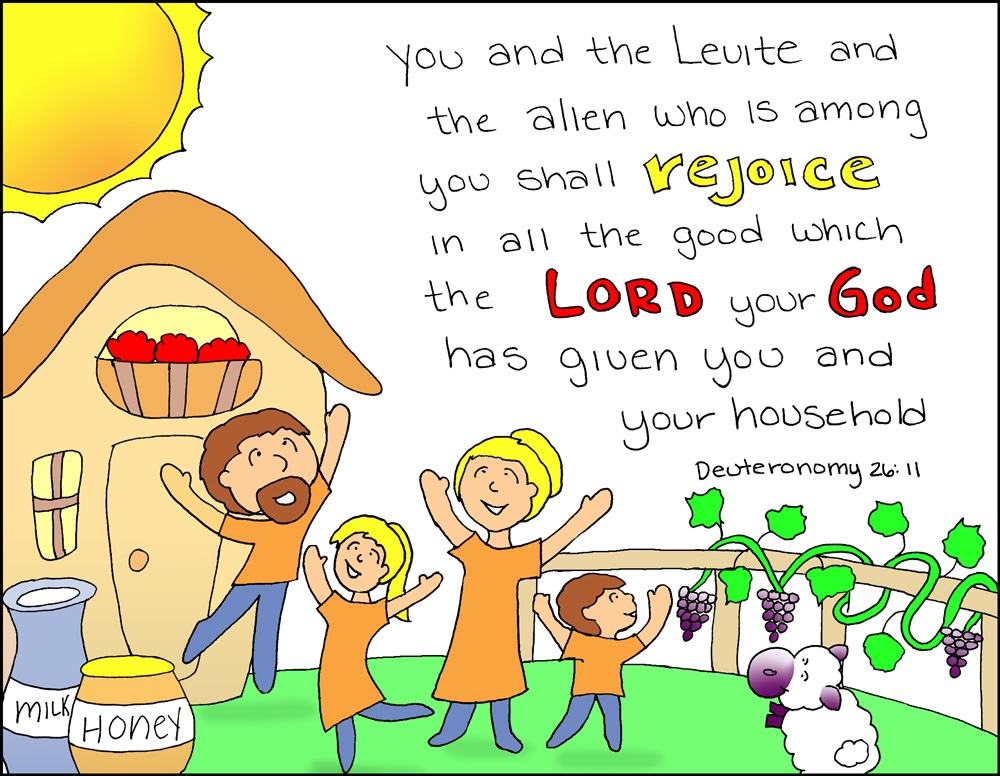
Yet the affirmation of Deut 26 highlights the central importance of gratitude for the gift of the land; and not only that, for it especially indicates the importance of making this celebration inclusive: “you, together with the Levites and the aliens [or, sojourners] who reside among you, shall celebrate with all the bounty that the LORD your God has given to you and to your house” (26:11). So the instructions for the annual festival of the first fruits provide.

The inclusion of the aliens in this annual festival reflected a gracious openness to others in the developing people of Israel. These texts differ from the xenophobic antagonism of earlier texts, recounting the conquest of Israel. They reflect a later understanding of the identity of the people, as they were collated during and after the Exile, centuries after the formation of Israel. People designated as aliens (non-Israelites), sojourners in the land, were welcome to bring offerings to the Lord (Lev 22:18), to adhere to Israelite food prescriptions (Lev 17:12), to keep the Sabbath (Exod 20:8–11; 23:12), to have gleaning rights (Lev 23:22), and to join in the annual process of atonement (Lev 16:29–31; Num 15:29).

The foundational Passover narrative indicates that aliens, or sojourners, were able to join (under certain conditions) in the Passover celebrations (Exod 12:47–49); a second narrative (Num 9:14) is much less restrictive. Aliens were to be subject to the same laws regarding murder (Lev 24:17–22), able to have right of access to cities of refuge (Num 35:13–15), and indeed to enter into the covenant at the annual covenant renewal ceremony (Deut 29:10–13; see also 31:10–13). The voice of the alien even sounds appreciation for the Law: “I live as an alien in the land; do not hide your commandments from me” (Ps 119:19).

Because Israelites were once “an alien residing in the land” of Egypt, the people were instructed, “you shall not abhor any of the Edomites, for they are your kin; you shall not abhor any of the Egyptians” (Deut 23:7); by the third generation, the children of aliens “may be admitted to the assembly of the Lord” (Deut 23:8).

This meant that “the alien who resides with you shall be to you as the citizen among you; you shall love the alien as yourself, for you were aliens in the land of Egypt: I am the LORD your God” (Lev 19:34; a similar affirmation is made at Num 15:14–16).

The principle of equality is clear: “you shall not deprive a resident alien or an orphan of justice; you shall not take a widow’s garment in pledge” (Deut 24:17; see also Jer 7:5–7; 23:5–7; Zech 7:9–10; Mal 3:5). The alien, or sojourner, deserves the same measure of justice as all residents of Israel.

Accordingly, amongst the curses at the end of Deuteronomy, we read, “cursed be anyone who deprives the alien, the orphan, and the widow of justice. All the people shall say, ‘Amen!'” (Deut 27:19). The curse outlines the negative consequences from not adhering to the positive principle of welcoming and including those sojourning for a time innIsrael, the “alien”. That is integral to the celebrations each year, when the harvest produces its fruit from the land.

Gratitude. Belonging. Celebration. Inclusion. All of this is embedded in the story; and all of this comes before believing, repeating doctrinal claims, affirming credal statements. We are a people of welcome, including, belonging. This much is embedded in the ancient Hebrew tradition. This much should be living, still, in Christianity today.

See also

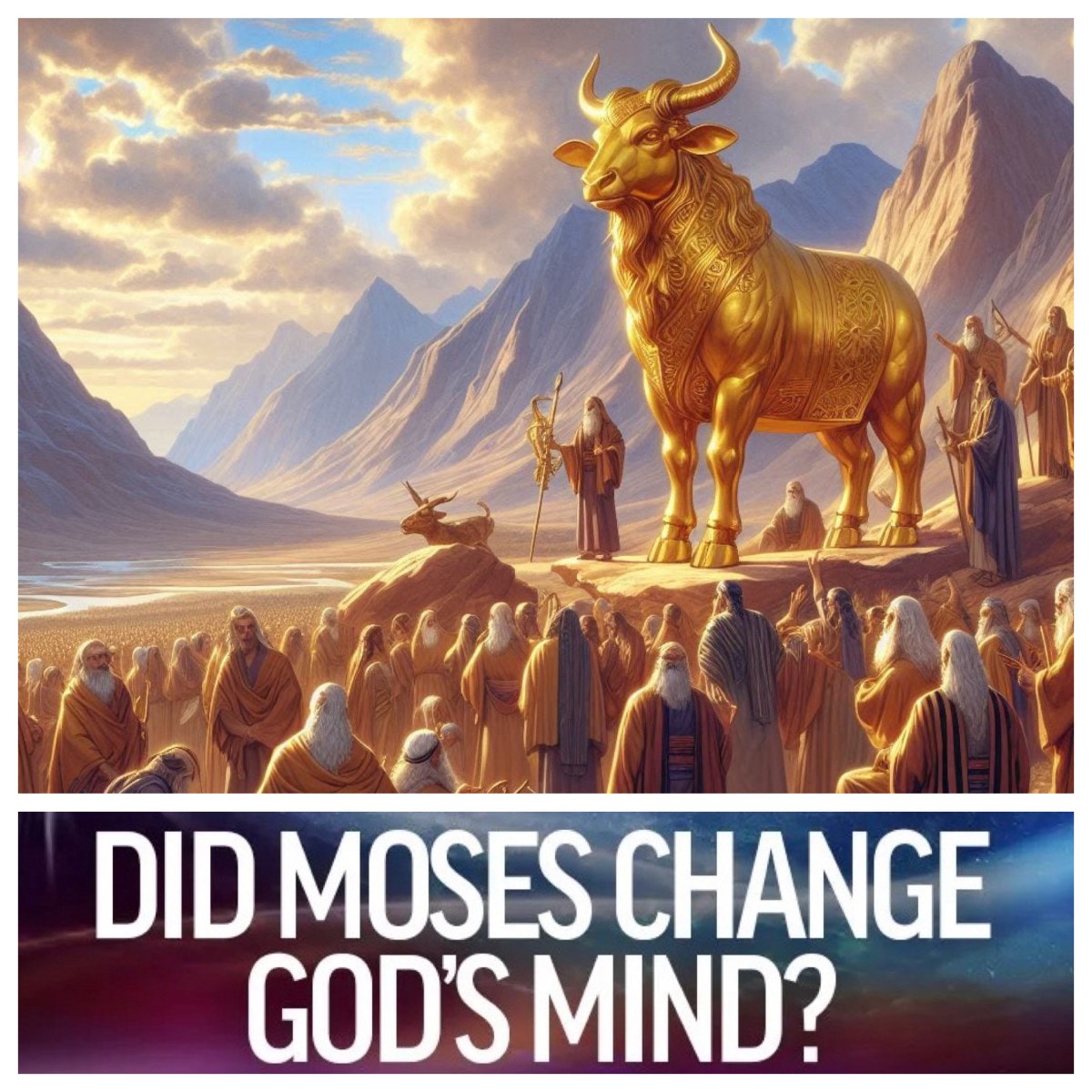
The Golden Calf and the repentance of God (Exodus 32; Narrative Lectionary for Pentecost 20C)

The passage which is offered by the Narrative Lectionary for this coming Sunday (Exod 32:1–14) recounts the famous episode of sinful behaviour by Israel, known popularly as “the Golden Calf episode”. 

This story most likely relates to the god who was regarded as the head of the gods amongst the Canaanites—El, who was often depicted as a bull. The bull was the strongest animal in the ancient farmyard, and thus a fitting symbol for a powerful god. The Israelites chose to imitate that god through their golden construction. 

The story told in Exodus 32 (and also summarised in Ps 106:19–23) mocks the Canaanite god, depicting him as more like a calf. By adopting a Canaanite symbol, the Israelites had turned from God (v.21). It seems they would deserve their fate—although Moses interceded and saved them from divine wrath (v.23). 

Moses is the hero who stands in the breach, to convince God to change God’s mind. This is a difficult statement, worth pondering further. What sort of god wishes to wreak savage wrath on people? And also, what kind of god is one who changes their mind in response to human petition? Both aspects challenge elements of classic theological understandings of God.

The language of the wrath of God “burning hot” (vv.10, 11, 22) resonates with the constant prophetic warning that God will use fire to destroy people and places because of their sinfulness (Isa 1:7; 5:24; 30:27–28, 30, 33 18–19; Jer 4:4; 6:27–30; 20:47–48; Hos 8:14; Joel 2:1–3; Amos 1:4—2:5; Nah 1:15). Zephaniah portrays utter devastation through divine judgement: “neither their silver nor their gold will be able to save them on the day of the Lord’s wrath; in the fire of his passion the whole earth shall be consumed” (Zeph 1:18). That is an intense fire indeed!

However, the final prophet in the Christian Old Testament, Malachi, reworks this imagery, offering some hope; God’s messenger on The Day of the Lord “is like a refiner’s fire and like fullers’ soap; he will sit as a refiner and purifier of silver, and he will purify the descendants of Levi and refine them like gold and silver, until they present offerings to the Lord in righteousness” (Mal 3:1–4). 

The references to good and silver in these prophetic oracles sits interestingly in juxtaposition to the Exodus story, in which Aaron “took the gold [from the ears of the people], formed it in a mold, and cast an image of a calf” (Exod 32:4), before he “built an altar before it” and proclaimed, “Tomorrow shall be a festival to the Lord” (v.5). 

So the people gladly “offered burnt offerings and brought sacrifices of well-being” on that altar. The burnt offerings mimick the daily burnt offerings (Exod 29:42), where the Lord God promises “I will meet with you, to speak to you there; I will meet with the Israelites there, and it shall be sanctified by my glory” (Exod 29:42–43). The sacrifices of well-being recall “the burnt offerings and sacrificed oxen as offerings of well-being to the Lord” made during the ceremony to ratify the covenant (Exod 24:5).

The people, under the leadership of Aaron, are deliberately imitating key components of the worship of the Lord God, but in this instance, they are worshipping an idol made with their own hands—in direct disobedience to the commandment “not [to] make for yourself an idol, whether in the form of anything that is in heaven above, or that is on the earth beneath, or that is in the water under the earth” (Exod 20:4).

And so, having offered their sacrifices, “the people sat down to eat and drink, and rose up to revel” (v.6). But not so God, for as he had warned the people, “I the Lord your God am a jealous God, punishing children for the iniquity of parents, to the third and the fourth generation of those who reject me” (Exod 20:5). God will not let this transgression pass; as he says to Moses, “I have seen this people, how stiff-necked they are; now let me alone, so that my wrath may burn hot against them and I may consume them” (Exod 32:10).

A number of psalms reflect the desire for God to punish evildoers severely; “pour out your indignation upon them, and let your burning anger overtake them” is the cry of one psalm (Ps 69:24). Another psalm notes the vengeance of God—“in your hearts you devise wrongs; your hands deal out violence on earth” (Ps 58:2)—and suggests that “the righteous will rejoice when they see vengeance done; they will bathe their feet in the blood of the wicked” (Ps 58:10). The graphic picture of a furious God intent on wreaking damage raises difficult theological questions for us as we read such passages.

The image of fiery punishment comes from the story of Daniel (Dan 3:1–30) and appears again in the last book of the New Testament, where the prophet describes his visions of “the lake of fire that burns with sulfur” (Rev 19:20; 20:10, 14–15), also described as “the second death” (Rev 20:14; 21:8). It is there that the devil, the beast, and the false prophet “will be tormented day and night forever and ever” (Rev 20:10). 

In the Gospel of Matthew, in particular, eternal punishment in a fiery furnace features also in the words of Jesus, as he threatens sinners with “the furnace of fire” (Matt 13:43, 50; 25:41), a place of “eternal fire” (Matt 18:8; 25:41), “the hell of fire” (Matt 5:22; 18:9). This builds on the warnings found in Mark’s Gospel about the punishment in store for those who put stumbling blocks in the way of “these little ones”—they will be condemned to “the unquenchable fire” (Mark 9:42–48). These warnings are repeated by Jesus in Matt 18:6–9. 

So Jesus follows the prophetic and narrative insistence, in Hebrew Scripture, on the judgement of God being rightly expressed when sinfulness abounds. And the story of Aaron and the golden calf is a clear demonstration of God’s intent to exact punishment.

But the story takes a turn, when Moses mounts a passionate plea to God, asking for the divine fury to be turned away from the sinful people. Invoking the covenant made with Abraham, Isaac, and Jacob, Moses implores, “turn from your fierce wrath; change your mind and do not bring disaster on your people” (Exod 32:12–13).

Last year, writing a commentary on this passage in With Love to the World, my friend Jione Havea offered an incisive insight into this story as recounted in Exodus 32. He writes as follows:

The plot is straightforward: Israel complained to Aaron that Moses has disappeared for too long, Aaron organized a golden calf as their God, the Lord became angry and decided to wipe Israel off, Moses appealed for Israel’s sake, and “the Lord changed his mind about the disaster that he planned to bring on his people” (32:14). The Lord reconsidered, and changed their mind. 

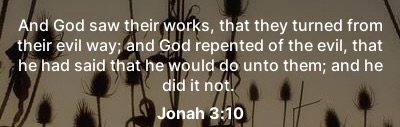
Previously, in Exodus 2:23–25, God had changed their mind and re-membered the covenant with Abraham, Isaac, and Jacob. In that instance, God responded to the groans and cries of the people. There is a comparable event in Nineveh: “When God saw what they did, how they turned from their evil ways, God changed his mind about the calamity that he had said he would bring upon them” (Jonah 3:10). 

In the case of Nineveh, the people changed God’s mind on the basis of their own actions (Jonah 3:5) and agenda (Jonah 3:9); in the golden calf episode, Moses interceded on behalf of Israel. The story line is the same: God changed their mind. Change of mind (read: repentance) is not evidence of weakness in the character of God. Rather, it is evidence of being present, and of honouring the Tongan quality of va (relationship) over against immutable doctrines. We are called to do likewise.

And so, in the story, as he saw the golden calf at base camp, Moses burned in anger—because of the people, and because his own brother Aaron played a key role in their going astray. He was so angry that he broke the tablets of the covenant that the Lord godself wrote. The Lord repented (v.14) but Moses revenged (vv.19–20). He burned and grounded the golden calf into water, and made the people drink it. And he ordered the sons of Levi to kill people—whether “your brother, your friend, and[or] your neighbour”—who were NOT on the Lord’s side (v.27). 

The Lord changed their mind—but to the opposite effect. This time, the Lord decided to blot out the people who sinned against the Lord (v.33). Because of the golden calf sinners, the Lord sent a plague (v.35). This time, divine repentance led to destruction—echoing the divine repentance that led to the flood (see Gen 6:5–7). 

These stories show that the Lord’s book may have been written (cf. Exod 32:33), but it has not been closed. The Lord may still change their mind, and there is no guarantee that it will be for the reparation of covenant or for the destruction of people. Caveat emptor.

With Love to the World is a daily Bible reading resource, written and produced within the Uniting Church in Australia, following the Revised Common Lectionary. It offers Sunday worshippers the opportunity to prepare for hearing passages of scripture in the week leading to that day of worship. It seeks to foster “an informed faith” amongst the people of God.

You can subscribe on your phone or iPad via an App, for a subscription of $28 per year. Search for With Love to the World on the App Store, or UCA—With Love to the World on Google Play. For the hard copy resource, for just $28 for a year’s subscription, email Trevor at wlwuca@bigpond.com or phone +61 (2) 9747-1369.

O hear in heaven, your dwelling place (1 Kings 8; Pentecost 14B)

This blog draws heavily from a sermon that I preached at St Ninians Uniting Church in Canberra, ACT, on 22 August 2021.

The narrative sequence of stories from the sagas of ancient Israel which we have been hearing week by week as we follow the lectionary comes to a head with a prayer of dedication as the Temple is completed. The passage proposed by the lectionary is 1 Kings 8:(1,6,10–11), 22–30, 41–43. 

If you have time (just a few extra minutes) it is worth reading the whole 61 verses of this chapter, which includes all of Solomon’s prayer. As you do, you might note the repeated address of Solomon to God, “O hear in heaven your dwelling place” (verses 30, 32, 36, 39, 43, 45, 49), his regular invoking of “your name” (verses 33, 35, 41–44, 48), and his petition to “forgive the sin of your people Israel” (verses 30, 34, 36, 39, 50). 

We began reading in 1 Samuel back in May with Samuel; we end this Sunday with Solomon in 1 Kings. In the course of these weeks, we have heard about Saul and David, the first two Kings of Israel; the prophets Samuel and Nathan; David’s battles with the Philistines, including the enemy giant Goliath, and his beloved companion Jonathan; the unfortunate Absalom, one of David’s sons, as well as his wives Michal and Bathsheba; and, this coming Sunday, King Solomon, the third king of Israel.

We have seen the character of the leaders in Israel. These stories reveal that these leaders were human; they acted in ways that were devious, unscrupulous, scheming, manipulative, emotional, hard-headed, self-serving, and deeply flawed. All of this, from these ancient texts—as if we didn’t already know this from our own observations of leaders in our own situation! 

In last Sunday’s passage, Solomon, son of David, was installed as king of Israel after the death of his father (1 Kings 2). God made a promise to Solomon: “I give you a wise and discerning mind; no one like you has been before you and no one like you shall arise after you” (1 Ki 3:12). And in the passage proposed for this coming Sunday, we see this wisdom displayed, as Solomon gathers people for the opening of the Temple (1 Ki 8).

Under Solomon, Israel was said to stretch from the Euphrates to Egypt (1 Ki 4:21), the largest amount of land of all kings (and the extent that is, controversially, claimed by extremist Zionists today). The lengthy prayer that Solomon prays is equally grand; he recalls the many acts of God and the response of God’s people, and repeatedly presses God to “hear in heaven” and forgive, judge, act, and maintain their cause. 

So this is a high, holy moment: the greatest king of Israel, Solomon, prays to dedicate the grand religious building, the Temple, on the top of the highest hill in Jerusalem, the capital city of the kingdom at the point of its greatest influence and power. (The readings in following weeks will move into the literature attributed to and inspired by Solomon, the wisdom literature.)

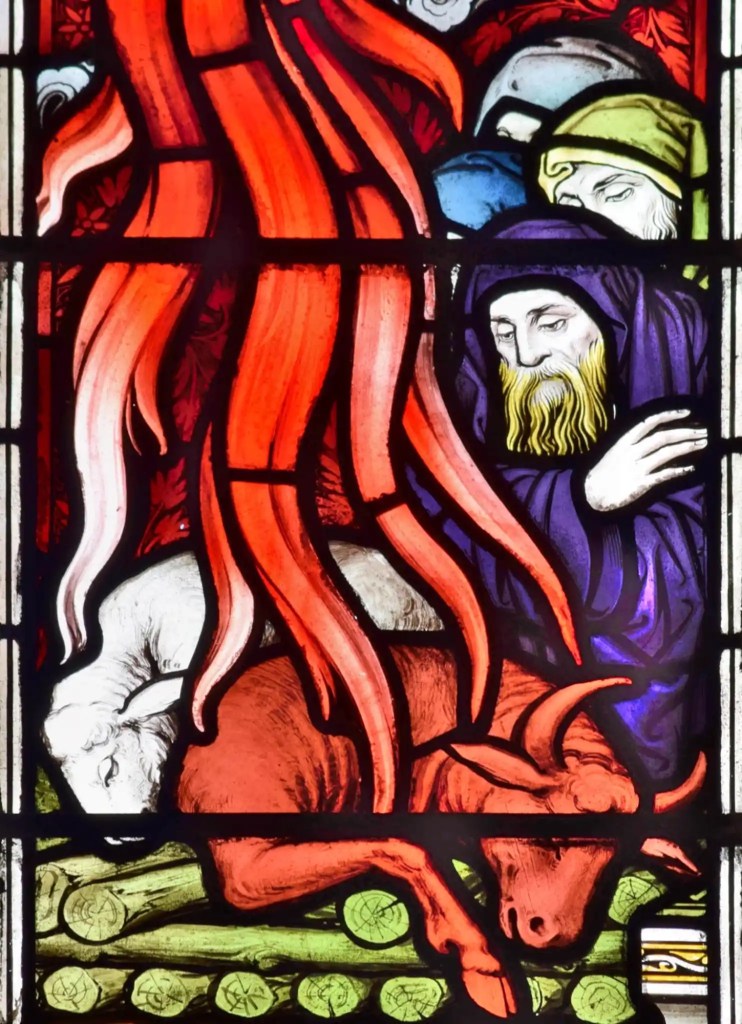
Detail from stained glass window,
King Solomon dedicates the Temple, Hardman &Co., 1897;
located in the Roman Catholic Church of English Martyrs
at Streatham, UK

At this moment of dedication “Solomon assembled the elders of Israel and all the heads of the tribes, the leaders of the ancestral houses of the Israelites, before King Solomon in Jerusalem, to bring up the ark of the covenant of the Lord out of the city of David, which is Zion” (1 Ki 8:1). The presence of then Ark evoked his father, David, and his taking of the city from the Jebusites. Solomon was making clear that he was seen to be standing in that fine tradition.

So “the priests brought the ark of the covenant of the Lord to its place, in the inner sanctuary of the house, in the most holy place, underneath the wings of the cherub. And when the priests came out of the holy place, a cloud filled the house of the Lord” (1 Ki 8:1–10).

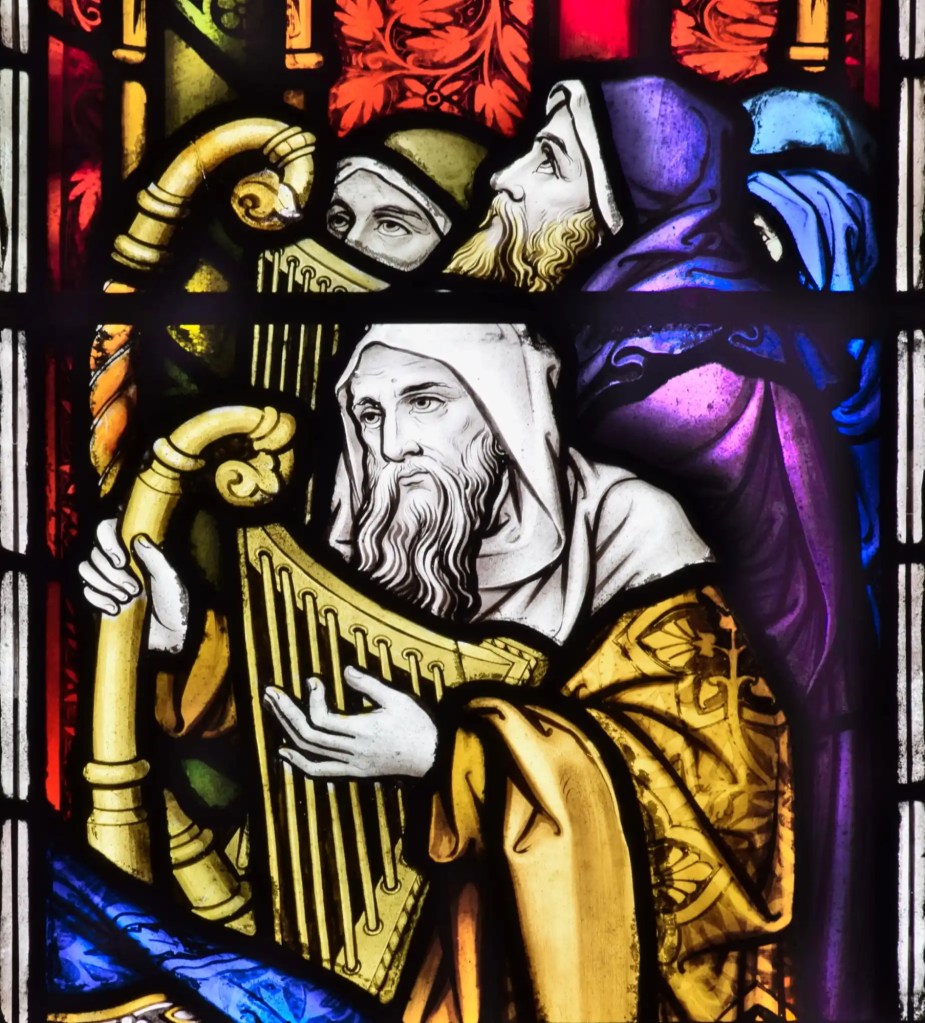
Detail from stained glass window,
King Solomon dedicates the Temple, Hardman &Co., 1897;
located in the Roman Catholic Church of English Martyrs
at Streatham, UK

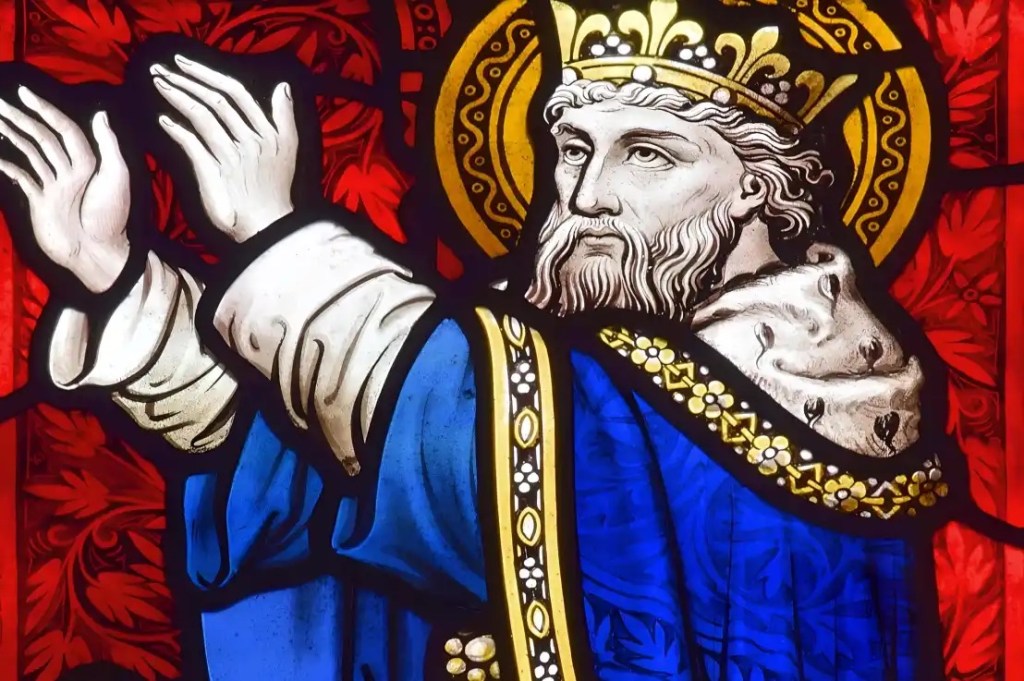
Man, this is serious stuff: heavy, important, serious. The king. With all of his court. With all the elders, and the heads of each of the 12 tribes. And the priests, with the ark of the covenant. All assembled at the place where Solomon, king in all his majesty and power, had arranged for a temple to be built. “Then Solomon stood before the altar of the Lord in the presence of all the assembly of Israel, and spread out his hands to heaven” (1 Ki 8:22), and prays a long prayer of blessing for the new edifice.

Detail from stained glass window,
King Solomon dedicates the Temple, Hardman &Co., 1897;
located in the Roman Catholic Church of English Martyrs
at Streatham, UK

Now, Solomon, I am sure you are thinking, is remembered as the wise one. “The wisdom of Solomon”, we say. Jesus relates how “the Queen of the south [the Queen of Sheba] came from the ends of the earth to hear the wisdom of Solomon” (Matt 12:42). In 2 Chronicles 1, God says to Solomon, “because you have asked for wisdom and knowledge for yourself … wisdom and knowledge are granted to you” (2 Chr 1:11). 

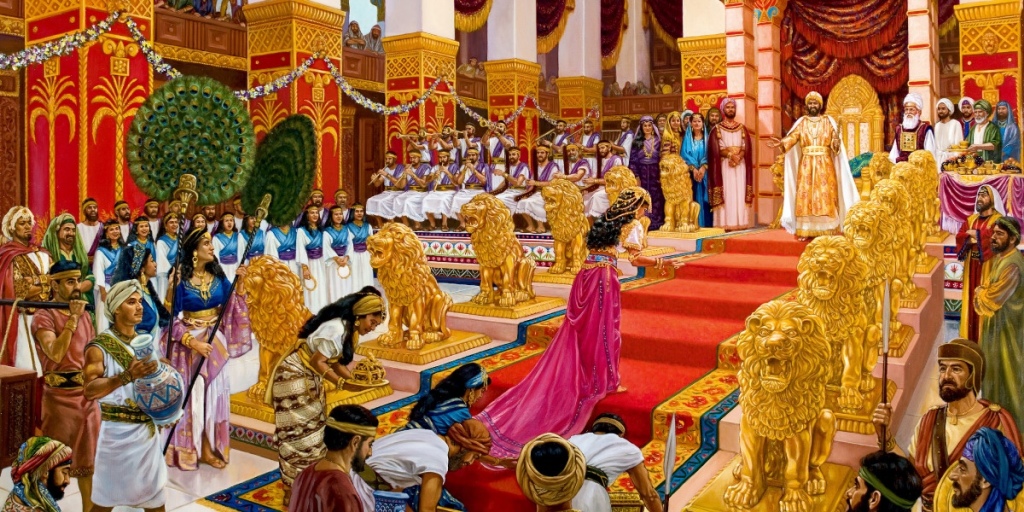
And later, King Solomon is said to have “excelled all the kings of the earth in riches and in wisdom. And all the kings of the earth sought the presence of Solomon to hear his wisdom, which God had put into his mind. Every one of [those kings] brought silver and gold, so much, year by year” (2 Chron 9:22–24).

This wonderfully wise, insightful, discerning man, Solomon—bearing a name derived from the Hebrew for peace, “shalom”—became a powerhouse in the ancient world. But he did not always live as a man of peace. indeed, he used his 4,000 horses and chariots and 12,000 horsemen to good effect; we read that “he ruled over all the kings from the Euphrates to the land of the Philistines and to the border of Egypt” (2 Chron 9:26). 

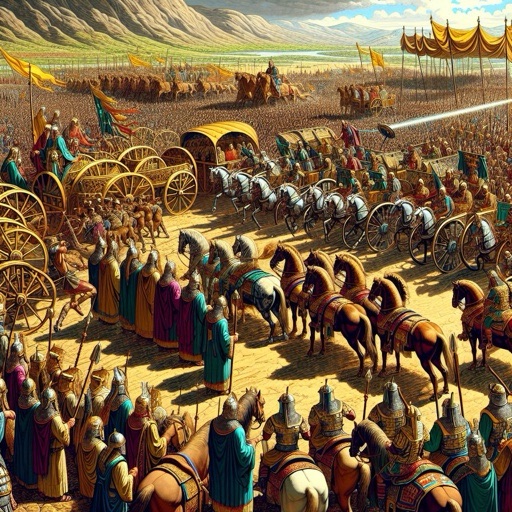
An envisaging of part of Solomon’s army

Solomon was remembered as king over the greatest expanse of land claimed by Israel in all of history. Solomon was a warrior. And warrior-kings were powerful, tyrannical in their exercise of power, ruthless in the way that they disposed of rivals for the throne and enemies on the battlefield alike. Think Alexander the Great. Think Charlemagne. Think Genghis Khan. Think William the Conqueror. Solomon reigned for 40 years—a long, wealthy, successful time. 

Yet in the passage we hear this Sunday Solomon appears not as a powerful king. Rather, he is a humble person of faith. He stands before all the people, raises his arms, and prays to the God who is to be worshipped in the Temple that he had erected. He is a person of faith, in the presence of his God, expressing his faith, exuding his piety.

Now, the prayer of Solomon goes for thirty solid verses; there are eight different sections in this prayer. The lectionary has mercy on us this Sunday; we are offered just two of those sections, eleven of the thirty verses. We have heard the shortened version! In these two sections of this prayer, Solomon identifies two important features of the newly-erected Temple.  The first is that the fundamental reason for erecting this building is to provide a focal point, where people of faith can gather to pray to God (2 Ki 8:23–30).

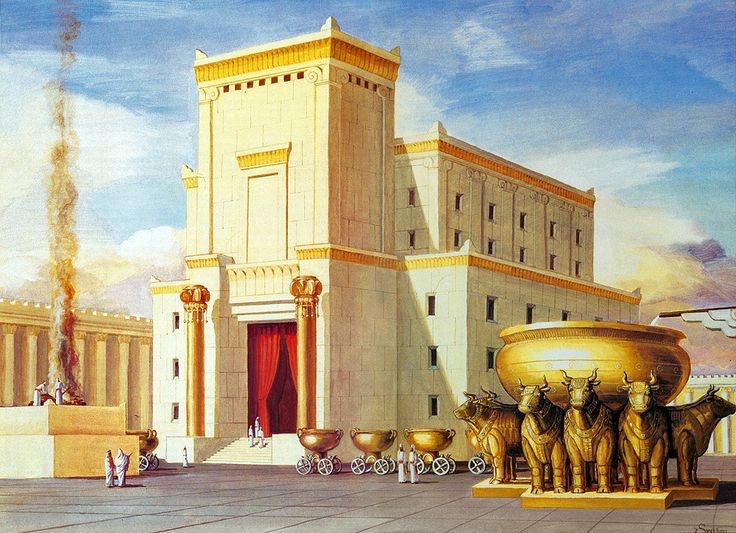
An imagining of Solomon’s Temple

Perhaps we may be used to hearing about the Temple in Jerusalem in fairly negative terms. Jesus cleared the Temple of the money changers and dove sellers who were exploring the people. He predicted the destruction of the Temple during the cataclysmic last days. For centuries, people from all over Israel were required to bring their sacrifices to the priests in the Temple, to offer up the firstborn of their animals and the firstfruits of their harvest. The Temple cult was seen as a harsh, primitive religious duty, imposing hardships on the people. The priests, the elites who ran the Temple, lived well off the benefits of all of these offerings. 

I could offer you a counter argument to each of these criticisms; but today I simply want to note that Solomon, in his prayer of dedication, makes it clear that the fundamental purpose of the Temple was to provide a house of prayer, a place where the people of God could gather, knowing that they were in the presence of God, knowing that the prayers that they offer would be heard by God and would lead to God’s offering of grace, forgiving them for their inadequacies and failures.

The Temple was to be a place of piety for the people. It was to foster the sense of connection with God. It was to deepen the life of faith of the people. It was to strengthen their covenant relationship with the Lord God.

All of which can be said for us, in our own times, about the building that we each come to each Sunday, to worship. The church is a place of piety and devotion for us, the people of God. It helps us to foster the sense of connection with God. It helps us to deepen our lives of faith. It encourages us to strengthen our covenant relationship with the Lord God through the new covenant offered in grace by Jesus. Ideally, that’s what the church is to be.

Churches in rural areas across Australia

So we read in the first part of Solomon’s Temple prayer. For the people of ancient Israel, standing in the shadow of this wonderful new building, the prayer might encourage a strong sense of self identity, blessed to be part of the people of God. Of course, it could also develop narrow nationalism, a jingoistic praising of the greatness of Israel, extolling their identity as the chosen nation, the holy people, the elect of God. 

The Temple invited the people of God to meet the God of the people, to pray, to sing, to offer signs of gratitude and bring pleas and petitions—in short, to keep the covenant, to show that they are keeping the covenant, to be satisfied that they are keeping the covenant, as they worship. It had a strong, positive purpose for the people.

But that is not where the prayer ends. The second key element of Solomon’s prayer that the lectionary offers us today (2 Ki 8:41–43) is striking. It also relates to prayer. But it is not the prayer of the people of God, covenant partners with the Lord God. It is about the prayer of “a foreigner, who is not of your people Israel, [who] comes from a distant land because of your name”. This is a striking and dramatic element to include in this dedication prayer before all the people. 

Solomon prays to God, imploring God to “hear in heaven your dwelling place and do according to all for which the foreigner calls to you, in order that all the peoples of the earth may know your name and fear you, as do your people Israel, and that they may know that this house that I have built is called by your name.” 

Now that is an incredible prayer for the King of Israel to pray! It reflects an openness to the world beyond the nation, an engagement with the wider geopolitical and social relatives of the world at that time. Solomon was not an isolationist. He was not inwardly focussed on his nation. He had an outwards orientation. He did not want the Temple simply to foster a holy huddle, shut off from the world. He had other intentions. He wanted the Temple to be a holy place, a place of welcome and invitation, open to people from across the region, from far beyond the territory of Israel—a gathering place for all the peoples.

That was the vision that Solomon set forth for his people. That was not always the way that the Temple actually did function, we know. But that was the foundational vision—articulated by Solomon, remembered by the scribes, included in the narrative account of the kings, placed in a strategic position at the opening and dedication of the Temple. It is a vision which speaks, both to the people of Israel, but also to people of faith today, in the 21st century world.

So I have a whole cluster of questions in my mind, as a result of pondering this aspect of the prayer of Solomon. What happens in our temples? in our churches? How do we foster relationship with God in our prayers in this place? Who do we expect to find in our temples, our places of worship? Who would be most surprising to find in our places of worship?

What prayers might come from those we least expect to come into our places of worship, when they do join with us in worship, to pray? How might we position ourselves, so that “foreigners”, people most unexpected to us, can feel welcomed to come into our church, be at home in our midst, make a connection with God? What do we need to do differently? What do we need to stop doing? What do we need to start doing?

We need to take seriously the claim that when we hear scripture read and expounded, we encounter God speaking to us. “The Word of God on whom salvation depends is to be heard and known from Scripture appropriated in the worshipping and witnessing life of the Church”, the Uniting Church Basis of Union affirms (para 5). That applies not only to Gospels and letters in the book of the new covenant, the New Testament, but also to narratives and psalms and prophetic works in Hebrew Scriptures, attesting to the earlier covenant. God speaks to us, as we hear and appropriate this scripture.

Our best response to this prayer of this discerning man of wisdom, warrior-king Solomon, offered as the Temple is dedicated, could well be for us to live our lives in response to that vision of what a place of worship and a community of worship might be—and shape a place open to all, a people welcoming of all who wish to come and make connection with God.

See also

A smooth transition? or a sequence of cruel calculations? (1 Kings 1–3; Pentecost 13B)

David had many sons—there are 19 who are named in the Bible, and two others unnamed. There are consolidated lists at 2 Sam 3:2–5 (those born at Hebron) and 2 Sam 5:13–15 (those born in Jerusalem). In following the story of 2 Samuel, we have already met Solomon, Absalom, and Amnon. We do not know how many daughters David had, except for Tamar (2 Sam 13:1). After travelling through the various incidents involving David that the lectionary has offered, today we come to the last days of the life of this famous king.

The passage offered by the lectionary this week (1 Ki 2:10–12, 3:3–14) portrays a smooth transition from David to his chosen son, Solomon. The narrator simply reports, “when David’s time to die drew near, he charged his son Solomon”, reporting the words he spoke to him; and then “David slept with his ancestors, and was buried in the city of David” (1 Ki 2:1, 10). 

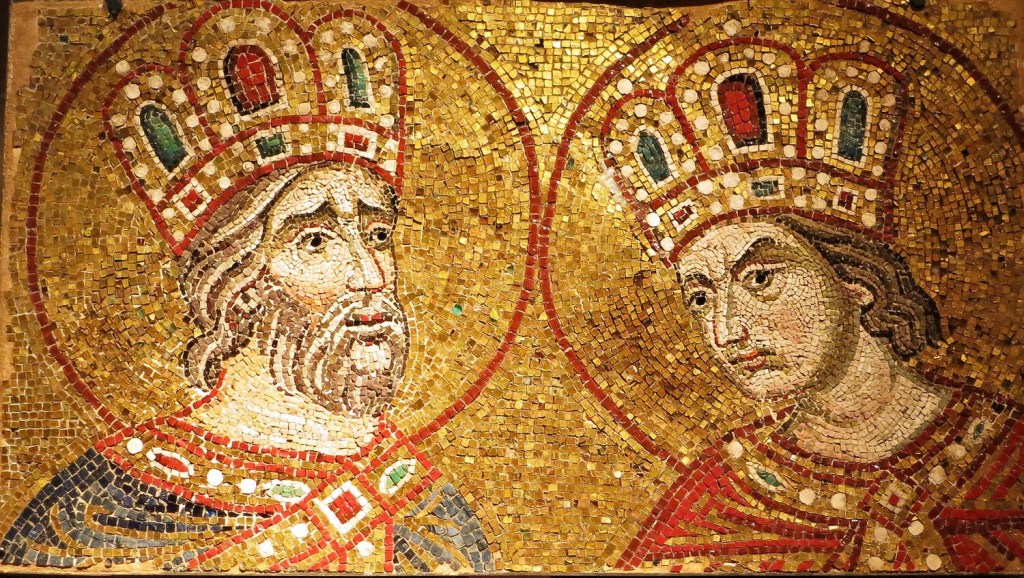
David and Solomon as depicted in a 14th century mosaic in the museum on the second floor of the Basilica di San Marco, Venice

However, the previous chapter tells of the plotting by Adonijah, and the next part of the story reports that David authorised the murders of his son Adonijah, his nephew Joab, and Shimei, a relative of Saul, to ensure that Solomon could reign! It’s a nasty story. (In what follows, I am drawing in part from a sermon preached by my wife, Elizabeth Raine.)

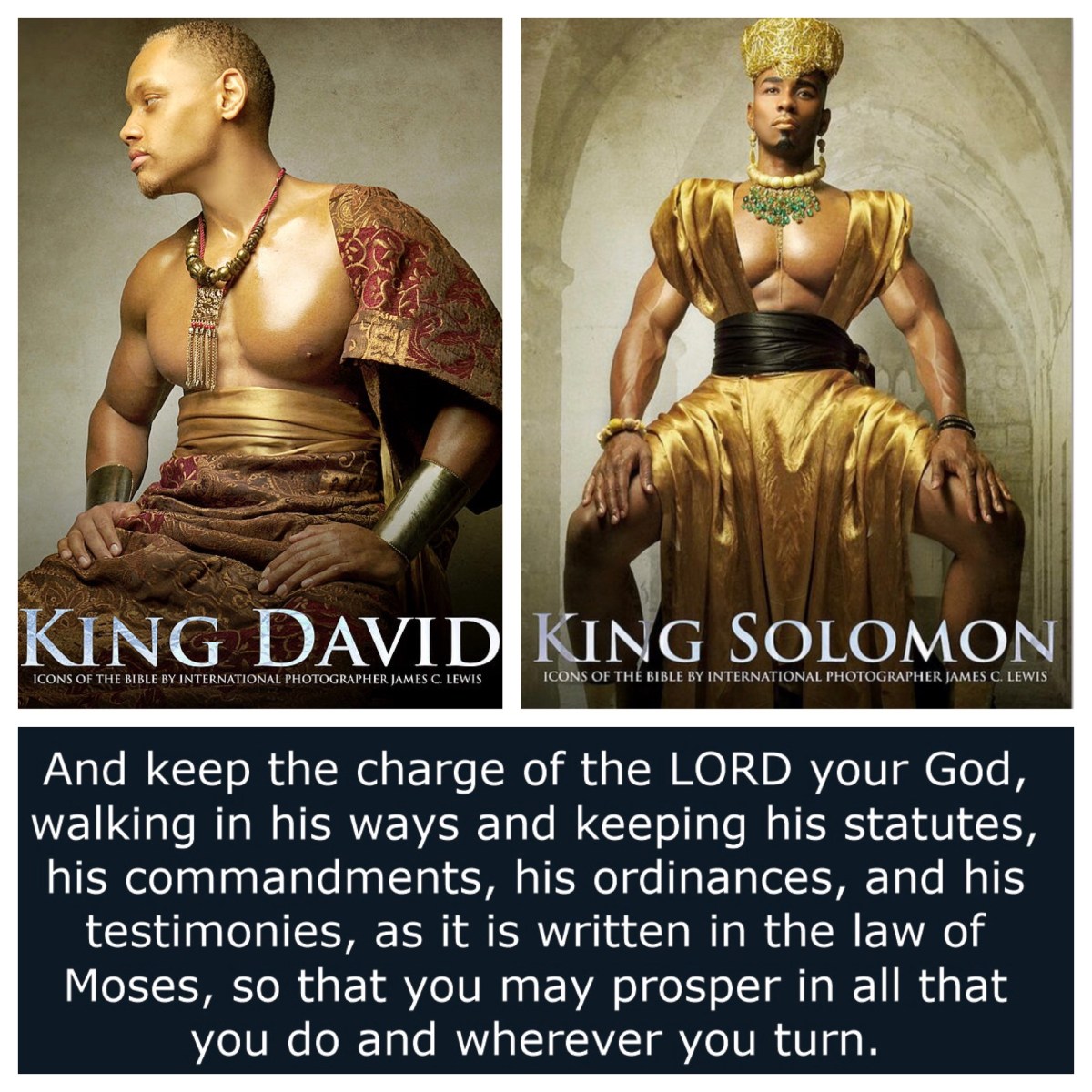
Living in a democracy where leadership is determined by popular vote, this narrative feels particularly unpleasant and unjust to us. Paradoxically, David charges Solomon to adhere to “the statutes, commandments, ordinances, and testimonies” that God has decreed (2:3). Subsequently, Solomon sensibly prays for “an understanding mind to govern your people” (3:9).

In the later rewriting of this long narrative saga, the Chronicler has David instruct his chosen successor, his son, Solomon, “set your mind and heart to seek the Lord your God” (1 Chron 22:19). He reinforces that in a later address, telling Solomon to “know God and serve [the Lord] with single mind and willing heart” (1 Chron 28:9).

The book of Proverbs (attributed by tradition to Solomon) then advocates both attending to the mind (Prov 22:17; 23:12, 19) and “inclining your heart” towards God (Prov 2:2; 3:1–6; 4:4, 20–23; 6:21; 7:3) as integral parts of the life of faith. And of course, much later, Jesus picks this up when he extends the traditional commandment to “love the Lord your God with all your heart, and with all your soul, and with all your might” (Deut 6:5), adding “and with all your mind” (Mark 12:30). 

A fully devoted heart (meaning, an all-of-person commitment) as well as an understanding mind (committed to critical reasoning about faith) is the essence of good leadership. It is a typical Hebraic parallelism that emphasises the importance of a whole-of-life commitment. See more on these terms at

However, it turns out that this is not really how Solomon lived in his life. His rule was littered with events that cast down on his great wisdom, and whether he did actually love God with all of his being.

Solomon was not first in line to ascend the throne; that would lie with the eldest of his brothers still living, Adonijah. Adonijah knows this; the first book of Kings opens with the revelation that, since “David was old and advanced in years … Adonijah son of Haggith exalted himself, saying, ‘I will be king’; he prepared for himself chariots and horsemen, and fifty men to run before him” (1 Ki 1:1,5).

However, Solomon plots with his mother Bathsheba and the palace prophet Nathan to arrange for the assassination of his older brother. In addition, a number of other people also had to be eliminated to establish Solomon’s firm grip on the monarchy, and to ensure there were no other possible legitimate claimants to the throne remaining. Such was the raw and vicious nature of “life at the top” those days. (Hastings anything much changed?)

In fairly quick succession, after Solomon had arranged for the death of his eldest brother Adonijah (2:13–25), he banished the high priest Abiathar who had supported Adonijah (2:26–27) and replaced him with another priest loyal to himself. Next he removed Joab, a cousin who was the commander in the former king’s army (2:28–34). He achieved this via a hit man, Benaniah, who became the general of his army (2:35). 

Then, Solomon had Shimei, who was a relative of Saul, the king before David, killed (2:36–46). In this way all potential contenders for the throne and their powerful supporters were removed, mostly by violent means. As the narrator curtly comments, “so the kingdom was established in the hand of Solomon” (2:46b).

In fact, Solomon meets all the criteria of the sort of king who was described by the prophet Samuel as one who would oppress Israel. Years before, Samuel had warned the people, “This is what the king who will reign over you will claim as his rights: He will take your sons and make them serve with his chariots and horses, and they will run in front of his chariots. Some he will assign to be commanders of thousands and commanders of fifties, and others to plow his ground and reap his harvest, and still others to make weapons of war and equipment for his chariots.” (1 Sam 8:11–12).

More than this, Samuel advised, “He will take your daughters to be perfumers and cooks and bakers. He will take the best of your fields and vineyards and olive groves and give them to his attendants. He will take a tenth of your grain and of your vintage and give it to his officials and attendants. Your male and female servants and the best of your cattle and donkeys he will take for his own use. He will take a tenth of your flocks, and you yourselves will become his slaves.” (1 Sam 8:13–17). 

So Samuel tells the people who were asking for a king, “when that day comes, you will cry out for relief from the king you have chosen, but the Lord will not answer you in that day” (1 Sam 8:18).

In addition to meeting these criteria, Solomon’s weakness for foreign women would lead him to abandon the God of Israel for other foreign gods. “Solomon loved many foreign women along with the daughter of Pharaoh: Moabite, Ammonite, Edomite, Sidonian, and Hittite women, from the nations concerning which the Lord had said to the Israelites, ‘You shall not enter into marriage with them, neither shall they with you; for they will surely incline your heart to follow their gods’; Solomon clung to these in love” (1 Ki 11:1–2). 

Solomon ignored this command and “clung to these in love; among his wives were seven hundred princesses and three hundred concubines; and his wives turned away his heart—for when Solomon was old, his wives turned away his heart after other gods; and his heart was not true to the Lord his God, as was the heart of his father David” (1 Ki 11:2b-4).

A stylized representation of Solomon and his “seven hundred princesses and three hundred concubines” whom he took to be his wives, who “turned away his heart” (1 Ki 11:3).

Eventually, in the view of the narrator of this long saga, this engagement with foreigners and their religious customs would lead to the breakdown of kingdom and would end in Israel being conquered by Assyria (2 Ki 17:5–12, 20) and then Judah being defeated by Babylon (2 Ki 17:19; 24:18–20). Their exile was precisely because, as the Lord tells Ezekiel, “you are living in the midst of a rebellious house, who have eyes to see but do not see, who have ears to they are a rebellious house; therefore, mortal, prepare for yourself an exile’s baggage, and go into exile by day in their sight; you shall go like an exile from your place to another place in their sight—perhaps they will understand, though they are a rebellious house” (Ezek 12:1–3).

Diana Edelman notes in the Jewish Women’s Archive that “Foreign women were considered a potential source of trouble because they might not always adopt the culture and values of their husbands and their new place of residence. If they chose to continue to practice their native customs and cults, they would pass these on to their children and might also influence their husbands to adopt some non-Israelite practices as well. Loyalty to and identity with Israelite tradition would be threatened.” See https://jwa.org/encyclopedia/article/women-of-solomon-bible

The story of Solomon is actually a bloody and violent narrative of infidelity, oppression, and sin. The path to the throne was a bloody and ruthless one for Solomon. But most often, people remember a heavily sanitised version of Solomon, one of Israel’s most famous kings.

******

How could this great king who had spoken with God go on to worship false gods? How could someone credited with so much wisdom ignore the basic laws of justice that his God required of him? Perhaps we might consider this long history, not so much a glorious account of the people flourishing under wise and good leadership, but rather a tragic story of oppressive leadership, split kingdoms, rivalry, and war, leading to the civil war that swirled around the last days of Solomon and the consequent division of the kingdom, with Israel being ruled by Jeroboam while Rehoboam ruled Judah.

So in considering how Solomon lived, we find a king who ruthlessly removed rivals, taxed his people heavily, and thought nothing of removing thousands of men to be his soldiers and his labourers. He thought nothing of loving many women who brought their foreign customs into the heart of Israel. He thought nothing of using the children of Israel as miners to procure the precious metals to make his gold cups. He thought nothing of taking food off the tables of his people. 

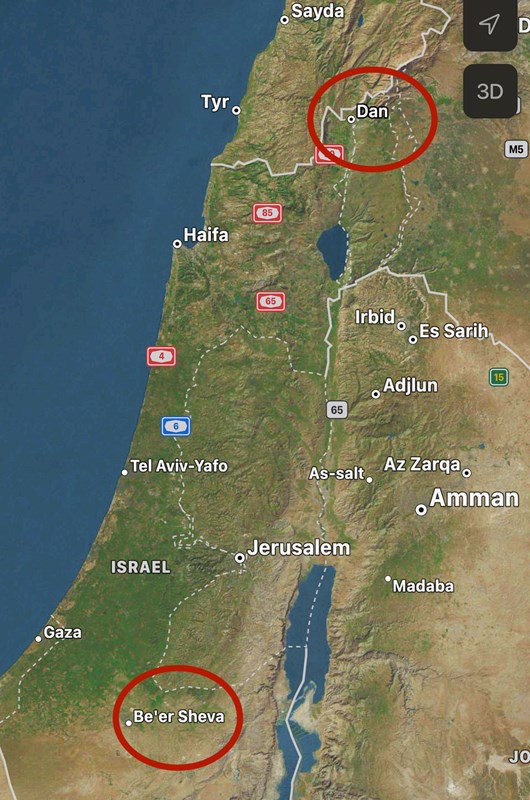
The narrator describes the daily provisions of Solomon in some detail: “thirty cors of the finest flour and sixty cors of meal, ten head of stall-fed cattle, twenty of pasture-fed cattle and a hundred sheep and goats, as well as deer, gazelles, roebucks and choice fowl” (1 Ki 4:23–24) and then claims that “during Solomon’s lifetime Judah and Israel, from Dan to Beersheba, lived in safety, everyone under their own vine and under their own fig tree” (4:25).

However, we know from Samuel’s earlier predictions that this is ‘spin’. How could such immense provisions and vast wealth be found in the ancient near east unless it was taken from the people? How would the families of those men who were taken for Solomon’s service fare, left to struggle on small land holdings without men to work the land?

While we might remember the wisdom and splendour of King Solomon’s rule to this day and admire it, we need to remember that there is another side to this story, that isn’t just or pretty or admirable. Solomon’s wisdom and rule was the wisdom and rule of the world. Solomon used his influence and power to acquire personal wealth and prestige. He thought nothing of splitting families, leaving women and children to struggle, and taking precious food resources for his own use. The mineral wealth of the land remained firmly under his control and he used it to decorate his vast palace – built at no expense by Hebrew men conscripted into what was essentially slavery. His immense army ensured he remained in power.

Who does this put you in mind of today? The Conversation has a page entitled “Articles on Dictatorship” which contains 81 articles—on Bangladesh, Venezuela, North Korea, Russia, Brazil, Argentina, Cambodia, Belarus, Saudi Arabia, China, Rwanda, Nicaragua, the Philippines, and more. Surely this is not the model of leadership that God desires? See https://theconversation.com/au/topics/dictatorship-1918

Writing in With Love to the World, Matthew Wilson reflects on this story. “Often our sense of justice is based more on retribution than on reconciliation. Mandatory sentencing, drug posession laws, racial profiling, and continuing failures in domestic violence and other abuse cases leave us wondering where justice really lies.” 

He notes an anecdote of his father, “He who has the deepest pockets wins”, and comments that, whilst God has a quite different sense of justice, sadly, “the God who forgives, who shows grace and mercy is, nevertheless, rather absent in today’s reading. Solomon will go on to be gifted with, and praised for, his wisdom. Here, political wisdom and the grace of a forgiving God seem a long way apart. In the love of Christ and the power of the Spirit, have we the strength to be different, to be Christ-like?”

*****

Some material in this blog was included in THE WAY OF WISDOM by Elizabeth Raine and John Squires (self-published 2012)

With Love to the World is a daily Bible reading resource, written and produced within the Uniting Church in Australia, following the Revised Common Lectionary. It offers Sunday worshippers the opportunity to prepare for hearing passages of scripture in the week leading to that day of worship. It seeks to foster “an informed faith” amongst the people of God.

You can subscribe on your phone or iPad via an App, for a subscription of $28 per year. Search for With Love to the World on the App Store, or UCA—With Love to the World on Google Play. For the hard copy resource, for just $28 for a year’s subscription, email Trevor at wlwuca@bigpond.com or phone +61 (2) 9747-1369.

Re-reading the story of Palestine and Israel

This blog comes from a guest blogger, the Rev. Dr Chris Budden. It relates to the current explosion of the conflict in Gaza and Israel. Chris is a retired Uniting Church Minister who is actively engaged with First Peoples; amongst other things, he teaches a course on reconciliation at United Theological College in Sydney, Australia. He has a long interest in ways to find peace in Palestine-Israel. His present research interest is the Preamble to the Constitutional of the Uniting Church in Australia.

There are, in my opinion, three contributing factors to both poor analysis and inadequate responses to the conflict between Palestine and Israel, and the particular role of Hamas.

Let me be very clear from the beginning. Hamas’ actions in Israel were wrong, profoundly and horribly wrong.

First, however, the response and analysis has sought to ignore history. There is a pretence that Hamas simply attacked Israel out of the blue in an act of irrationality. They are mad people who must be eliminated, regardless of the cost to the civilian population. Consider the reality:

  • In 1917 the British Government issued the Balfour Declaration supporting the establishment in Palestine of a home for Jewish people. The aim was not to protect Jewish people, but to get rid of them out of Britain.
  • Prior to World War 2, there were relatively small numbers of Jewish people in Palestine, which was controlled as a British Protectorate.
  • At the end of the war, and with the guilt of the near annihilation of the Jewish people in Germany, support was given to finally enact the Balfour Declaration. People entered Palestine, often illegally, and began to push Palestinians off their land.
  • By 1948 there was significant occupation. The UN declared that the land should be partitioned, and two states established. Israel was established, but a Palestinian state has never gained proper support. Israel is opposed to such a state, believing it would threaten their security.
  • The State of Israel is a settler-colonial state, and has done exactly what such states have done in Australia, New Zealand, USA and Canada. That is, they have stolen land, and justified that theft with the claim that the place was largely unoccupied. Where it was, the people did not use the land properly. People can be dispossessed because they are lesser people – it is a racist narrative, that has been imbedded in apartheid.
  • Palestinians have been pushed into smaller and smaller enclaves, reducing any chance of a proper state. They have had walls built around them, their movements are controlled. Witnesses say that they live in a virtual prison.
  • In the last 10 years, 3500 Palestinians have been killed by the IDF, including large numbers of children.

One of the things we learned from the struggle against apartheid in South Africa was that we should asked those who are oppressed to tell the story of their oppression, and not to ask the oppressors. People should tell their own story, and not have it told by those who continue to harm them.

Second, the clear narrative across the world is that some people are of more value than others. The latest deaths in Israel quite rightly bring forth international condemnation. But the deaths of Palestinians rarely cause a protest. And because people are not seen as equal, then it is okay to seek revenge that is completely disproportionate. Many more Palestinians must die to make up for the death of citizens of Israel.

Third, the US and its allies like Australia must take some blame for what is happening because we have failed to uphold international law; we have failed to insist that the law applies to Israel. The settlements on Palestinian land are illegal, yet they keep expanding. The state of Palestine has been declared by the UN, but no-one does anything to make it happen. It is illegal to attack civilians, but civilians in Palestine are attacked and killed all the time, and no-one is held accountable. It is illegal to punish civilians for what their military do, which is exactly what Israel is doing, but the US and its allies will not tell them to stop.

Let me say it again, this is not a defence of Hamas. Which, by the way, was supported by Israel for years as a way of dividing the Palestinian opposition.

This is a claim that we will not have peace in the area until people are treated as of equal value, until international law is respected, and until people stop stealing land. The alternative is a never-ending spiral of violence.

The response to this argument is often to label it and me as antisemitic. This is about the actions of the State of Israel. To name the ways a state breaks international laws, and oppresses other people is not antisemitic or aimed at Jewish people at all. I hope opponents will not throw labels that obscure the debate but will actually respond to the arguments I have made.

Chris Budden, 31 October 2023

*****

This piece was first posted on UC Forum at https://ucforum.unitingchurch.org.au/?p=5286

For my own earlier reflections on this situation, see

and for a comprehensive overview of the history of this region over the last 100 years, from Al-Jazeera, see

https://www.aljazeera.com/news/2023/10/9/whats-the-israel-palestine-conflict-about-a-simple-guide

The problem of Canaan: conquering, colonising, massacring (Deut 34; Pentecost 22A)

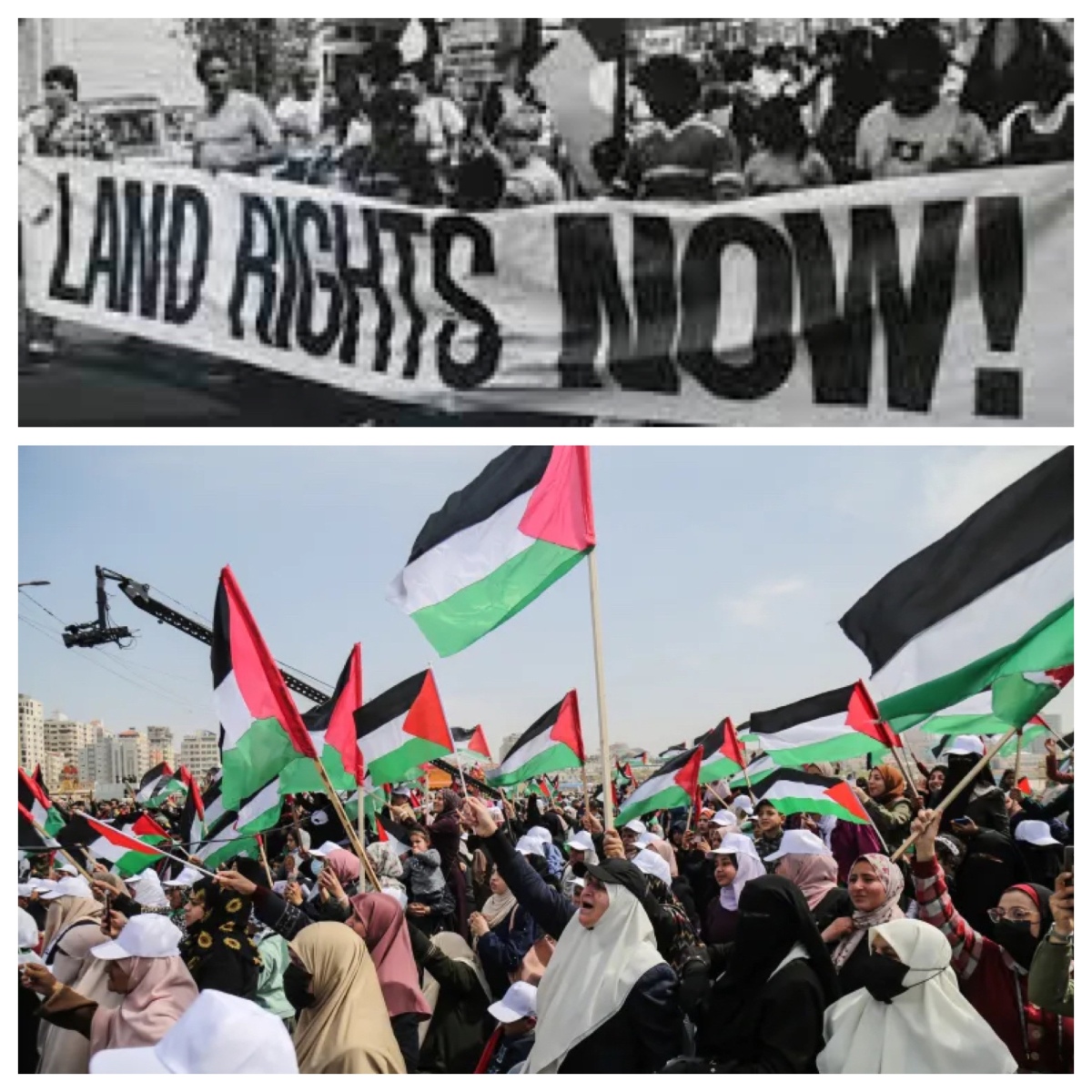
Land rights. Land claims. Land has always been a bone of contention-in the past, as in the present. This week, the lectionary invites us to consider land. The Hebrew Scripture passage contains an important statement about land a land claim, as it were.

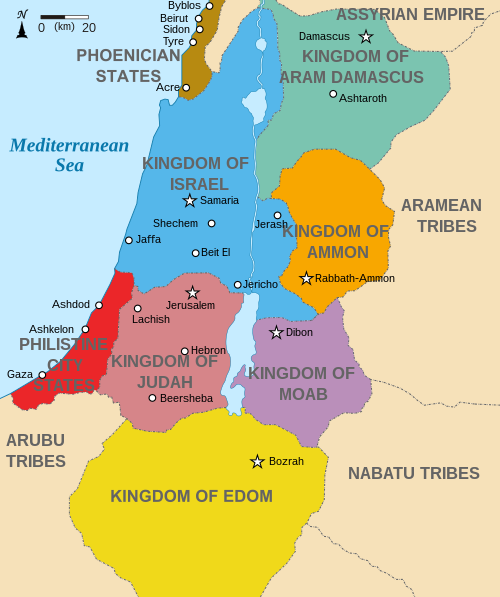
“This is the land of which I swore to Abraham, to Isaac, and to Jacob”, God declares to Moses in the last moments of his life (Deut 34:4), as he stands on Mount Nebo, surveying “the whole land: Gilead as far as Dan, all Naphtali, the land of Ephraim and Manasseh, all the land of Judah as far as the Western Sea, the Negeb, and the Plain- that is, the valley of Jericho, the city of palm trees as far as Zohar” (Deut 34:1–3).

That land encompassed all the land of Canaan, which later becomes the land of Israel. It is the land which was in contention between different peoples long before the story of Moses was written on the scroll that became part of Torah.

That was most likely sometime before or during the period that Josiah ruled as king of Judah, when he commanded the high priest Hilkiah to undertake an audit of funds in the temple. We are told that, in the course of this audit, Hilkiah said to Shaphan his secretary, “I have found the book of the law in the house of the Lord” (2 Ki 22:8). That’s presumed to be the first version of what we know as Deuteronomy, which later found its place as the fifth of “the five Books of Moses”.

That same land, promised to Abraham, claimed by Moses, is in contention today. It has had a chequered history. The ancient land of Canaan eventually became the land of Israel, then (along with Judaea) part of the Roman province of Syria Palaestina (132–390), and then of the Diocese of the East in the Roman Empire (to 536). What followed the fall of the Roman Empire was a millennium and a half of Muslim rule of this land, first as a part of Bilad al-Sham, the Greater Syria region, under various Caliphates.

The region continued to be part of various organisational configurations under successive Muslim rule, on into the Ottoman Caliphate (from 1517) and then into the modern era. (I am not an expert, by any means, of this ancient and medieval history; for this summary, I am dependent on what I read in what I consider to be reputable sources.)

In the early 20th century, the place where Arabs identifying as Palestinians lived was decreed to be the British Mandate of Palestine (1920–1948). The ancient conflicts, it was hoped, would be well in the past. A place for Palestinians in the modern world was, it was thought, now settled.

But this was not to be, as we well know today.

In part in response to the horrors of the Shoah, exposed by the ending of World War Two, the modern state of Israel was created in 1948. The new nation took 78% of the area which had been provided for Palestinians in the British Mandate. That this was now Jewish territory was a blessing for Jews, but it was a huge irritant to Palestinian sensibilities, which has referred to the period from 1948 onwards as the Nakba, the Palestinian Catastrophe. In the early years of the Nakba, significant number of Palestinians fled the area declared as Israel, as (in one estimate) over 500 Palestinian villages were repopulated by Jews, becoming refugees with no national identity.

The contested regions of the Gaza Strip (along the east coastline of the Mediterranean Sea) and the West Bank (land immediately to the west of the River Iordan) became known as “the Palestinian Territories”.

Another irritant has been the fact that they have been occupied by Israel since the Six-Day War of 1967, and subsequent expansion of Israeli settlements into areas where Palestinians live has exacerbated the situation. And so those who were dispossessed become the dispossessors of others, and the cycle continues.

So when we hear, this coming Sunday, “This is the land of which I swore to Abraham, to Isaac, and to Jacob”, we can be sure that we know these territories; we know the conflicted situation in the modern era; and we know how the ancient texts describe and lay claim to Israelite “ownership” of the land.

When Abraham left his homeland to settle in Canaan (Gen 13:12) and when the Lord God later formalised a covenant with Abraham (then aged 99 years, we are told), the promise was made by God that “I will give to you, and to your offspring after you, the land where you are now an alien, all the land of Canaan, for a perpetual holding” (Gen 17:8).

That same phrase, “a perpetual holding”, is subsequently spoken by Jacob, as he tells Joseph, Manasseh and Ephraim of God’s words, “I am going to make you fruitful and increase your numbers; I will make of you a company of peoples, and will give this land to your offspring after you for a perpetual holding” (Gen 48:4).

That land, Canaan, is a problem that sits at the heart of the story that the Bible recounts in its early narrative books. It becomes a problem at the heart of life for the millions living in that region today, as I have outlined above. The biblical narrative tells of numerous battles leading to the defeat of many tribes: the Moabites (Judg 3:26–30) and the Ammonites to the east Judg 10:6–11:33), as well as “the Hittites, the Girgashites, the Amorites, the Canaanites, the Perizzites, the Hivites, and the Jebusites, seven nations mightier and more numerous than you” in the land (Deut 7:1; see also Josh 3:10; 12:8; 24:11), and also the Anakim (Josh 11:21–23).

Further, as recent events in Australia have powerfully reminded us, there is a problem right at the heart of the narrative that has been constructed about modern Australia. Our most recent failure even to accept a modest proposal to recognise the existence of First Peoples on the continent prior to 1788, is testimony to that problem. Although the First People of Australia were not completely destroyed and eliminated, they continue to be discriminated against in a multitude of ways.

Both the ancient Israelite narrative and the contemporar Australian narrative tell a story of a group of people who invade, conquer, massacre, colonise, settle, marginalise, and then claim as their own what had previously belonged to others who had long been there before them.

It’s a story, in both instances, that we need to hear, understand, and appreciate. We need to develop awareness of just how easily we adopt the victor’s point of view, and uncritically retell it, without thinking any more about the pain, hurt, anguish, and generations-long damage that was done, in each case.

That is hard to do. I am a white Australian, raised on the myths of the great Australian character, taught from my schooldays onwards about the glories of the British Empire and the values of western society. Understanding the situation of First Peoples in Australia takes time, focus, empathy, energy, and persistence.

And I am a Christian, raised on the stories of the Bible, taught from Sunday School onwards about the promises God made to the chosen people about the holy land that had been selected for them. Getting into the mindset of a people from so long ago, who have almost (but not quite) been written out of the story, is hard to do.

The story of the Hebrews entering the land of Canaan, battling the inhabitants and colonising the territory, lies underneath the whole story of Exodus, wilderness, and conquest, which is at the heart of the biblical narrative that accounts for the origins of Israel as a nation.

A specific set of stories which tell of that invasion and conquest is found in all its bloody detail in the book of Joshua. That book tells, in a highly stylised way, of the entry of the people of God into the promised land. It is a key incident in the extended narrative history that stretches from Genesis to 1 Kings, from slavery in Egypt, through the long haul of wilderness wanderings, to the establishment of the kingdom of Israel under King David.

That story has multiple historical problems, and needs to be understood as a mythological saga telling of the nature and identity of the people, rather than an accurate historical account of “what actually took place”. See

Invasion and colonisation, Joshua 3 and contemporary Australia (Pentecost 23A)

This ancient story of invasion, conquering, massacre, colonisation, settlement, marginalisation, and then the claiming as their own what had previously belonged to others, resonates strongly with the experience of indigenous peoples in so many places in the modern era of history-including, and especially, in Australia.

Time and time again, from late medieval times onwards, “explorers” set out from Western powers, “discovered” new lands, followed by “settlers” who came and established “civilisation”, most often by means of “subduing” the indigenous peoples, making them subservient to the “new order” and even, in many instances, punishing those who resisted their new ways, utilising various means of killing the indigenous peoples.

This is the dynamic at the heart of the story of “Israel entering the promised land” which is told in Ioshua. It is also at the heart of the story of “establishing British civilisation in the land of Australia” which is the story of the continent on which I live the land now called Australia. The imposition of a new way of living by a more powerful force, the subjugation of those who already were living in the land, and the use of violence and murder to ensure that the new order was maintained and could flourish all of this is in the history of Australia since 1788.

The story of invasion and settlement of Canaan, the defeat and decline of the various indigenous peoples of that land, resonates with the contemporary Australian experience of the indigenous peoples of the continent and its islands. Which gives us pause for thought: how, then, do we hear and understand that story recounted in Joshua, which is prefigured in this final chapter of Deuteronomy? What land claims do we accept from this ancient text? And how does that guide us, today, as we consider the land claims that are being made?

See also my discussion of the wav that biblical literalism has fed into the modern conflict over this land at

Israel, the West Bank, and Hamas: a prayer for peace, and a yearning for justice

I am watching the events in Israel with deep sadness and high apprehension. The simmering hotspot of the Middle East has erupted, yet again, in a vicious and worrying way.

I am not a political expert, although I have watched the sequence of events in that region for decades, reading a lot at different times about what has been going on. I don’t really have any connection with Palestinians, but have had quite a lot to do with Jews in Australia over the decades of my ministry, from local contacts with rabbis in neighbouring synagogues through to membership of my church’s national dialogue group with the Jewish People.

I have also been a member of working groups that prepared resources for the national Assembly to consider as they reflected on the relationship that the Uniting Church has with Jewish people, including a paper presented to the 1997 Assembly and then further work which resulted in the Statement on Jews and Judaism which the 2009 Assembly adopted.

That 2009 Statement included an affirmation “that the State of Israel and a Palestinian State each have the right to live side by side in peace and security” (#15), and an encouragement to the members and councils of the UC “to pray and work for a just and lasting peace for both Israelis and Palestinians” (#24). Both of these clauses hold good in the current situation.

See https://ucaassembly.recollect.net.au/nodes/view/374?keywords=Jews%20judaism&highlights=eyIwIjoiamV3cyIsIjEiOiJqdWRhaXNtOiIsIjMiOiJqdWRhaXNtOyIsIjUiOiJqdWRhaXNtLCIsIjciOiJqdWRpYWlzbSIsIjkiOiJqdWRhaXNtIiwiMTIiOiJqZXdzLiIsIjEzIjoiamV3LCIsIjE5IjoiKGp1ZGFpc20ifQ==&lsk=ff2123f0fd56a80e39107599b0b2fbb7

Just over a decade ago, the then Assembly President, the Rev. Alistair Macrae, launched a set of resources, Prayer for Peace, which provided practical and prayerful ways of working for peace in the Middel East. He said, “The pursuit of peace is at the core of what it means to be a disciple of Jesus Christ. We echo his words when we share the greeting ‘peace be with you’ with members of our worshipping congregations each week. Jesus expresses the centrality of peacemaking in the Beatitudes; he preaches that peacemakers will be the children of God (Matt 5:9).”

The President continued, “Our commitment to being peacemakers takes us down many paths to peace. It’s our responsibility and imperative to explore all options that could bring about peace in our hearts, our homes, our communities and in our world.”

See https://ucaassembly.recollect.net.au/nodes/view/216?keywords=Prayer%20for%20peace&type=all&highlights=eyIwIjoicGVhY2UuIiwiMSI6InByYXllci4iLCIyIjoicHJheWVyIiwiMyI6InBlYWNlIiwiNCI6InByYXllcnMiLCIxMyI6InBlYWNlLCIsIjE3IjoicHJheSJ9&lsk=afa2a1ce65cd901b7aa99df5ad6a35ec

I think that many of the suggestions in this resource also hold good today, including the Prayer For Peace In Palestine which was provided by a National Working Group set up at that time:

“God of peace, we pray for peace in Palestine, the land where the Prince of Peace walked long ago; Let there be an end to the cycle of violence and vengeance that has prevailed there for so long; Let there be an end to the frequent killing and maiming of people, victims of hate and prejudice; Let there be an end to all political agendas that justify and prolong the conflict. God of peace, hear our prayer.

“Bring justice for all the people of Palestine regardless of race, culture or religion; Sustain the courage and determination of all those who work for peace and keep them strong in the face of threats and persecution; Establish such mutual respect and harmony between Christians and Muslims that they will live and work together for the sake of all. God of peace, hear our prayer.

“Keep our own hearts and minds free from fear and prejudice; Help us to be instruments of your peace where we are. God of peace, hear our prayer.

That is one thing that we can do, at this time: pray for peace.

There’s another dimension to the current situation that I think bears some consideration. That is the reality of the current political situation, that the lands in the region currently claimed as the modern state of Israel are contested lands, with both Palestinians and Jews laying claim to that area as their ancient ancestral lands.

Whilst there is contention about these claims, there is one matter that I believe merits thoughtful consideration. The claim made by the hard-line right in Israel—reflected in the boundaries of the current state of Israel, including the occupied territories of the West Bank, Gaza, and the Golan Heights—rests on certain biblical texts which, with an ideologically-based orientation, indicate that “God gave this land to the people of Israel”.

In particular, the large extent of land in view under this claim rests on the biblical description of the territory ruled under Solomon, the much-venerated and highly-valorised king of the United Kingdom of Israel around three millennia ago, in a number of texts in the so-called historical narratives of Hebrew Scripture. Whilst those books might look in many ways like historical narratives, we should take care not to assume that contemporary understandings of history can be easily applied to those passages from antiquity.

The land that the biblical texts claim was ruled by King Solomon,
from Egypt to the Euphrates

In considering these texts, we should begin by noting that the way that Solomon is presented in the Hebrew Scriptures can only be characterised by the term “hyperbolic exaggeration”. It is not an authentic historical depiction of the man; it is a hagiography. Indeed, the actual existence of Solomon in historical reality (in contrast to being a literary character in the Bible) is highly questionable. Israel Finkelstein and Neil Asher Silberman, writing in The Bible Unearthed: Archaeology’s New Vision of Ancient Israel and the Origin of Its Sacred Texts (Simon and Schuster, 2001), claim that “The glorious epic of the united monarchy was — like the stories of the patriarchs and the sagas of the Exodus and conquest — a brilliant composition that wove together ancient heroic tales and legends into a coherent and persuasive prophecy for the people of Israel in the seventh century BCE.” 

See https://www.thenotsoinnocentsabroad.com/blog/did-king-david-and-king-solomon-really-exist

In the story told in the biblical text, King Solomon was said to have “excelled all the kings of the earth in riches and in wisdom. And all the kings of the earth sought the presence of Solomon to hear his wisdom, which God had put into his mind. Every one of [those kings] brought silver and gold, so much, year by year.” (2 Chron 9:22–24). That’s quite a claim!

This wonderfully wise, insightful, discerning man, Solomon—bearing a name derived from the Hebrew for peace, “shalom”—became a powerhouse in the ancient world, we are told. But he did not always live as a “man of peace”. Indeed, the narrative indicates that he used his 4,000 horses and chariots and 12,000 horsemen to good effect; we read that “he ruled over all the kings from the Euphrates to the land of the Philistines and to the border of Egypt.” (2 Chron 9:26; also 1 Ki 4:21). This was the extent of land that had been promised to Abraham (Gen 15:18), and it was more than any other ruler of Israel, before or after him.

So Solomon was remembered as king over the greatest expanse of land claimed by Israel in all of history. Solomon was a warrior. And warrior-kings were powerful, tyrannical in their exercise of power, ruthless in the way that they disposed of rivals for the throne and enemies on the battlefield alike. Think Alexander the Great. Think Charlemagne. Think Genghis Khan. Think William the Conqueror. This is an integral part of the heritage that the story of Solomon bequeathed to Israel: the memory of an aggressive, dominating ruler, lording it over the region. Even though the modern state of Israel doesn’t have a king, this is an image that is being acted out today, in the politics of the region.

Solomon reigned for 40 years—a long, wealthy, successful time—although “forty years” in the biblical narrative should not be understood to be a precise time, but more a statement that this was “a long, extended time”. Solomon exemplifies the model of kingship which survives through into the modern era. We expect kings to rule. We expect them to invade and enforce and dominate, for that is the heritage passed on. (And I won’t comment on Solomon’s marital relationships; I will leave 1 Kings 11:3 to speak for itself!)

This exaggerated, idealised view of things is evident in so many ways in the portrayal of Solomon, who was seen to be filled with “wisdom and knowledge”, and granted “riches, possessions, and honour, such as none of the kings had who were before you, and none after you shall have the like” (2 Chron 1:7–12, especially verses 10 and 12).

It is also worth noting that the large reach of land that Solomon ruled over, even more extensive than the oft-cited phrase “from Dan to Beersheba” (Judg 20:1; 1 Sam 3:20; 2 Sam 3:10; 17:11; 24:2, 15; 1 Ki 4:25; 1 Chron 21:2; 2 Chron 30:5), did not continue past his death. The hagiographical exaggeration of territory under Solomon is not noted in the period after his death. The narrative books that recount the stories of the kingdoms of Israel, in the north, and Judah, in the south, in the centuries after Solomon, indicate that the scope of those kingdoms was more constrained.

In the light of this, I don’t think it is responsible to lay claim to the whole, extended territory of the land, from the biblical passages noted, as the scope for the modern state of Israel which was created in 1948. I therefore have sympathy for Palestinians who have lived on the land for thousands of years prior to 1948, as they understand this to be their ancestral land.

I also have sympathy for Jews, both those living in the land of Israel today, as well as those living in diaspora, for whom the land of Israel has a powerful symbolic significance—especially since the Shoah of 1933—1945 and the terrible genocide perpetrated by the Nazis against Jews in so many countries during that period. Granting them land in the area where their ancestors long ago had lived, a homeland that gives them security in the modern world, is important and necessary.

That said, I don’t agree that Palestinians should take matters into their own hands to seek vengeance against people in Israel in the way that they have done, once again, in recent days. In the same manner, nor do I think that the Israeli forces should respond in the aggressive and violent manner that they have done, once again, in recent days. Too many people are dying and being injured, making any possible progress towards peace with justice even more difficult each day.

We need to seek once more the peace of these peoples. And we need to find that peace on the basis of justice. Neither terrorist attacks nor military crackdowns will achieve this. They will simply exacerbate a dangerous situation.

“Depart from evil, and do good; seek peace, and pursue it.” (Psalm 34:14). “Blessed are the peacemakers, for they will be called children of God.” (Matt 5:9). “Justice, and only justice, you shall pursue, so that you may live and occupy the land that the Lord your God is giving you.” (Deut 16:20). “… the weightier matters of the law: justice and mercy and faith. It is these you ought to have practiced …” (Mat 23:23).

Producing the fruits of the kingdom (Matt 21; Pentecost 19A)

The parable of Jesus which is set in this Sunday’s lectionary appears to offer an invitation to adopt a negative approach towards Jews and Judaism. The author of the book of origins (by tradition, the evangelist Matthew) interpreted this story as a polemic against the Jewish authorities (Matt 21:33-46).

The parable is set in a vineyard. That’s an age-old symbol for the people of Israel—indeed, this week the lectionary offers us two supplementary passages from Hebrew Scripture (Isaiah 5:1-7 and Psalm 80:7-15) which show how old and enduring this imagery was.

The parable that Jesus tells recounts the hard-hearted way in which the tenants in the vineyard (a traditional symbol for the people of Israel) reject the messengers sent to them by the landowner (seen as a symbol for God), culminating in the atrocious treatment meted out to the landowner’s son (whom we are meant to identify as Jesus, son of God).

The son is put to death. The punchline that Jesus crafts for this parable is potent: those who do not produce the fruits of the kingdom will not inherit the kingdom (21:43). That’s a consistent motif in the teaching of Jesus in this Gospel. But the author of the Gospel reshapes the conclusion so that it seems to apply solely to “the chief priests and the Pharisees” (21:45).

The parable of the vineyard is one of the passages that has been difficult for us to understand accurately. When taken at a literal level, it has led to modern interpretations that are as damaging as they are unfair.

The assumption is that the Pharisees and scribes are the ‘bad guys’, and this has led to the belief that Pharisee equals hypocrite. It is disturbing that such a stereotype has found its way into the language of our modern church.

The context of the parable suggests that although its message was aimed at the chief priests and the Pharisees, it does not exclude other Jewish people. The parable immediately before it refers to the importance of doing the will of God (21:28-31), and concludes that “tax-collectors and prostitutes going into the kingdom of God ahead of you [i.e. the Pharisees and chief priests]” (21:31). The kingdom will certainly provide an interesting gathering of all manner of people! So the parable is a warning about obedience, not a denunciation of the leaders.

Equally disturbing is the notion that Jesus here seems to contradict his own teaching about loving one’s enemy and turning the other cheek. He depicts God as the avenging Lord. So what is really happening here?

I don’t think the parable of Jesus is intended to be simply an anti-Jewish polemic, an invitation to deride or dismiss Judaism and Jews.

It is true that, in the Gospel of Matthew, we find Jesus making some strident accusations and engaging in some vigorous debate with the Jewish authorities. But does he really believe that no faithful Jew will ever again enter the kingdom of heaven?

We need to read in context the rhetoric that Matthew places on the lips of Jesus in this Gospel. Judaism was in a state of flux as people lived under the continuing oppression of Roman rule. The destruction of the Temple in 70 CE was a pivotal moment. Evidence indicates that, during this time, there were various sectarian groups within Judaism who were contesting with each other for recognition and influence. Instead of making common cause against Rome, they continued to fight each other. Vigorous polemic and robust debate amongst Jews were not uncommon.

See https://johntsquires.com/2020/06/11/go-nowhere-among-the-gentiles-matt-105-the-mission-of-jesus-in-the-book-of-origins/

During this period, the Pharisees were becoming increasingly important as an alternative to the Temple cult, and emerging as the dominant Jewish religious movement. Their power base was moved from Jerusalem and spread throughout the area. When the Temple was destroyed, they moved into the vacuum that was created, and became even more dominant.

(From this time on, Pharisees evolved into the “Rabbis”, and they developed the kind of Judaism that became dominant through to the present time. We need to be sensitized to the fact that, for many modern Jews, when we make damning criticisms of the Pharisees, they hear that as a criticism of their Rabbis, and, by extension, of the faith that they practise today.)

The kind of debates that we see in the Gospels—debates where Jesus goes head-on with the Pharisees—need to be understood in this context. Jesus was not “cutting the cord” of his connection with Judaism. He was not rejecting his faith as irrelevant or obsolete.

He was advocating, vigorously and persistently, for the kind of faith that he firmly believed in—and criticisng the Pharisees for their failure, in his eyes, to adhere to all that they taught. He wanted to renew Israel, to refresh the covenant, as the prophets before him had done.

And let’s remember that the accounts that we have of these debates come from years later than when they actually occurred; years that had been strongly shaped by the polemic and antagonism of the intervening decades.

Older academic Christian scholarship and popular evangelical Christian tradition perpetuate the stereotype that the Judaism of the time of Jesus was a harsh, legalistic, rigid religion—a stereotype heightened by an unquestioning acceptance of the New Testament caricature of the Pharisees as hypocritical legalists who made heavy demands but had no soul commitment to their faith. It was claimed that they were the leaders of a static, dying religion.

This stereotype has been completely demolished in recent decades—both through the growing interaction between Christian and Jewish scholarship, and also through a more critical reading of the relevant primary texts. I am very pleased that the church to which I belong, the Uniting Church in Australia, has made it very clear that we do not adhere to these inaccurate and hurtful stereotypes.

In 2009, the UCA national Assembly adopted a Statement which says, amongst other things:

The Uniting Church does not accept Christian teaching that is derogatory towards Jews and Judaism; a belief that God has abolished the covenant with the Jewish people;  supersessionism, the belief that Christians have replaced Jews in the love and purpose of God; and forms of relationships with Jews that require them to become Christian, including coercion and manipulation, that violate their humanity, dignity and freedom.

We do not accept these things.

See https://assembly.uca.org.au/resources/key-papers-reports/item/1704-jews-and-judaism

Indeed, when we look at the whole of Matthew’s Gospel, Jesus does nothing to overturn the Law or to encourage his followers to disregard the Law; he is portrayed as a Jew who keeps Torah to the full. “I have come, not to destroy, but to fulfil the Law”, he says (5:17).

See https://johntsquires.com/2020/02/13/you-have-heard-it-said-but-i-say-to-you-matt-5/

And in that same section of the Gospel, Jesus is quoted as advocating for a better righteous-justice; a righteous-justice that “exceeds that of the scribes and Pharisees” (5:20).

See https://johntsquires.com/2020/02/06/an-excess-of-righteous-justice-matt-5/

Virtually all of his criticisms of the Pharisees can be understood within the framework of first century debates over the meaning and application of Law. The memory of Jesus in this Gospel is as a Torah-abiding Jew, who nevertheless stakes out a distinctive position within the context of those contemporary debates.

We should not interpret the parable of Jesus in Matt 21 as an outright condemnation of Judaism as a whole. As he debates the Jewish leadership of his day, he makes strong statements. But let’s not claim that Jesus validates any sense of anti-Jewish or antisemitic attitude.

Unfortunately, these words of Jesus and other parts of the New Testament story have been used throughout the centuries to validate anti-Jewish attitudes, to foster antisemitic hatred of the Jews. It is important for us to remember the real sense of the words of Jesus, and not follow the pathway to bigotry, hatred, persecution, and tragic attempts to annihilate the Jews.

See also https://johntsquires.com/2020/09/29/an-invitation-that-you-just-cannot-accept/