Judging Israel; undoing creation (Jer 4; Pentecost 14C)

“A hot wind comes from me out of the bare heights in the desert toward my poor people, not to winnow or cleanse— a wind too strong for that. Now it is I who speak in judgment against them.” (Jer 4:11–12)

We’ve been following the words of Jeremiah over the last three weeks. He has had some very stern messages to deliver. Perhaps this helps us to see the origins of the term “Jeremiad”. The Oxford Dictionary of Literary Terms defines it as “either a prolonged lamentation or a prophetic warning against the evil habits of a nation, foretelling disaster”. The second sense (a prophetic warning) comes directly from the way that the prophet Jeremiah spoke about, and to, the people of Israel in his time.
Jeremiah was, indeed, a voice of doom and gloom. At his calling, the Lord God informed him, “I will utter my judgments against them, for all their wickedness in forsaking me; they have made offerings to other gods, and worshiped the works of their own hands”. He then admonished the young Jeremiah, telling him to “gird up your loins; stand up and tell them everything that I command you”, before putting the very fear of God into him with the warning, “do not break down before them, or I will break you before them” (Jer 1:16–17). That’s stern stuff!

But is this going too far? I think today we would want to call to account the speaker of these words, to remind them not to abuse the power that they have in this relationship, and to be mindful of the vulnerability of the young person to whom they are speaking! (A friend who worked for the then Department of Community Services said years ago that Yahweh would these days be notified to the department if he spoke and acted in this way!)

So Jeremiah remains faithful to his call, through all the challenges and difficulties this brought him. For four decades he is relentless is calling the people of his day to account for their sins: “the house of Israel and the house of Judah have broken the covenant that I made with their ancestors” (11:10); “we have sinned against the Lord our God, we and our ancestors, from our youth even to this day; and we have not obeyed the voice of the Lord our God” (3:25). 

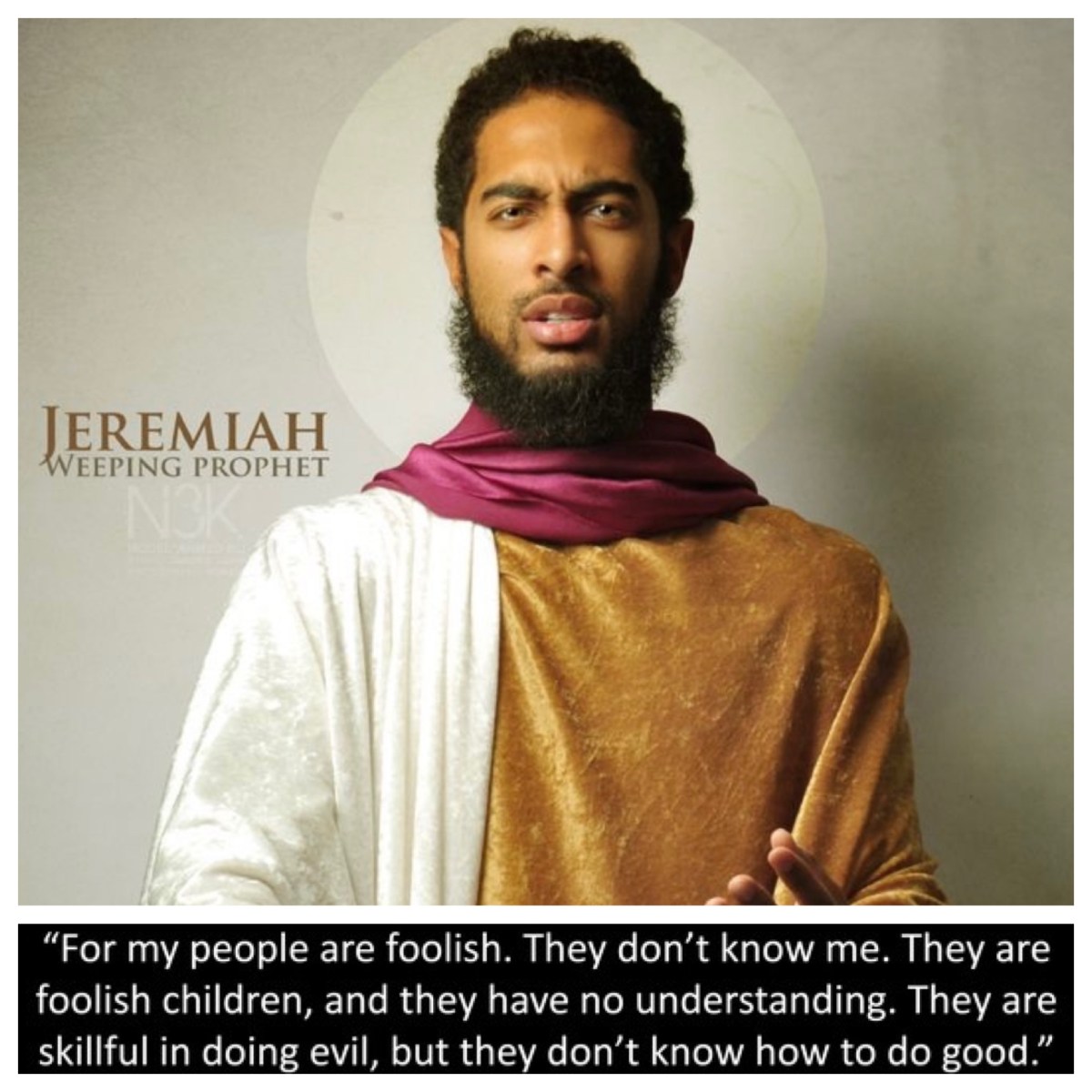
In the passage set before us by the lectionary for this coming Sunday, the prophet reports God’s anguish about Israel: “my people are foolish, they do not know me; they are stupid children, they have no understanding; they are skilled in doing evil, but do not know how to do good” (4:22). In despair, God decides to use a foreign power to bring Israel to their senses. He tells the prophet, “I am now making my words in your mouth a fire, and this people wood, and the fire shall devour them. I am going to bring upon you a nation from far away, O house of Israel, says the Lord” (5:14–15). Thus Jeremiah foretells the invasion of the Babylonians (see 2 Ki 25).

Jeremiah senses that God has fixed the course to be taken: “they have taught their tongues to speak lies; they commit iniquity and are too weary to repent. Oppression upon oppression, deceit upon deceit! They refuse to know me, says the Lord … Shall I not punish them for these things? says the Lord; and shall I not bring retribution on a nation such as this?” (9:5–6, 9). National disgrace awaits them, as they submit to a foreign power.

Eventually, from his exile in Egypt, and as others from his nation are taken north into exile by the invading Babylonians, Jeremiah tells the Israelites, “It is because you burned offerings, and because you sinned against the Lord and did not obey the voice of the Lord or walk in his law and in his statutes and in his decrees, that this disaster has befallen you, as is still evident today” (44:23). He has been resolute in his condemnation of the sinful people. He is now, sadly, vindicated. And so God decrees, “I am going to watch over them for harm and not for good; all the people of Judah who are in the land of Egypt shall perish by the sword and by famine, until not one is left” (44:27).

I must confess that it seems quite easy, at the moment, to slip into a simplistic interpretive pattern and apply these words—spoken long again against a sinful nation—to the very nation, today, who still bears the same name as those ancient people: Israel. The sins of the modern nation of Israel are manifold. Established as a refuge for a persecuted people, the nation has turned persecutor. Given land in recognition of the way they had been disposed and dispersed, the landholders sought more and more land, building settlements on Palestinian land, erecting a strong, impenetrable wall to keep “them” from “us”.

In a series of battles, they have waged war to ensure their safety and security. Besieged by leaders of organisations arrayed against them, they have continued to shoot, bomb, and destabilise such “terrorist” groups. Yet what is happening in Gaza today is no longer able to be distinguished from genocide—the very same genocidal actions that the Jewish people experienced almost a century ago. The sins of the nation appear (at least to me) to be clear, persistent, and utterly repugnant. Jeremiah’s words to ancient Israel—“I am determined to bring disaster on you, to bring all Judah to an end” (44:11) could well be the words of God to the modern nation of Israel.

Can we simply apply to condemnation of Jeremiah to modern Israel? It’s tempting; but it’s not responsible interpretation. And it leaves open the door to the accusation—repeated often, now—that this is antisemitic. I don’t believe it is antisemitic, because such criticisms are directed against the policies and practices of the modern nation-state of Israel, and what they result in, and not against all Jews everywhere, simply for being Jewish. So we need to steer clear of this kind of simplistic equation. The criticisms are political and pragmatic, not based on religion or ethnicity. 

For my analysis of the current situation involving Israel, Hamas, Gaza, and Palestine, see

and

All of this is in the book of Jeremiah: denunciation after denunciation of the people, warnings of divine punishment, and oracles portending imminent exile and absolute destruction. We can’t get away from that.

However: the passage that the lectionary offers for this coming Sunday raises the stakes even higher. In this passage (Jer 4:11–12, 22–28), the wrath of God is directed not just to Israel, but to all creation. The looming catastrophe is not just national; it is global, cosmic in its scope.

To be sure, the passage reports God’s anguish about Israel, as we have noted: “my people are foolish, they do not know me; they are stupid children, they have no understanding; they are skilled in doing evil, but do not know how to do good” (4:22).

But then comes a most remarkable sequence of sentences, in which the whole of creation seems to be in view. “I looked on the earth, and lo, it was waste and void; and to the heavens, and they had no light”, God is saying. “I looked on the mountains, and lo, they were quaking, and all the hills moved to and fro. I looked, and lo, there was no one at all, and all the birds of the air had fled. I looked, and lo, the fruitful land was a desert, and all its cities were laid in ruins before the Lord, before his fierce anger” (4:23–26).

Writing on this Jeremiah passage in With Love to the World, the Rev Dr Anthony Rees, Associate Professor of Old Testament in the School of Theology, Charles Sturt University, notes: “This is a remarkably evocative passage. It begins with a hot wind, a symbol of judgement (as in Jonah 4). It moves quickly to a promise of destruction from the North (Dan and Ephraim); it almost seems that God is cheering on those who would do Judah harm.”

But there is more than just evocative poetry here. It seems to me that the words of Jeremiah might be describing the end result of a process that is happening in our own time. Since the start of the Industrial Revolution, and continuing apace into the 21st century, the damage that human beings have been causing to the planet has been increasing with noticeable impacts seen in so many areas: global warming, more intense extreme weather events, more frequent extreme weather events,  the diminishing of the ice caps at the poles of the earth, the warming of the oceans’ temperature, rising sea levels impacting particularly islands in the Pacific, the bleaching of the Great Barrier Reef, and so many more things that can be attributed to human-generated climate change. 

In our own household, in just the past five years, we have seen a searing bushfire come within a few kilometres of our suburb, and then a massive downpour lead to rising floodwaters that reached the other side of the road on which we live. Climate change is real, and close. We are well on track, as many scientists are saying, to see a planet with a radically altered ecosystem. 
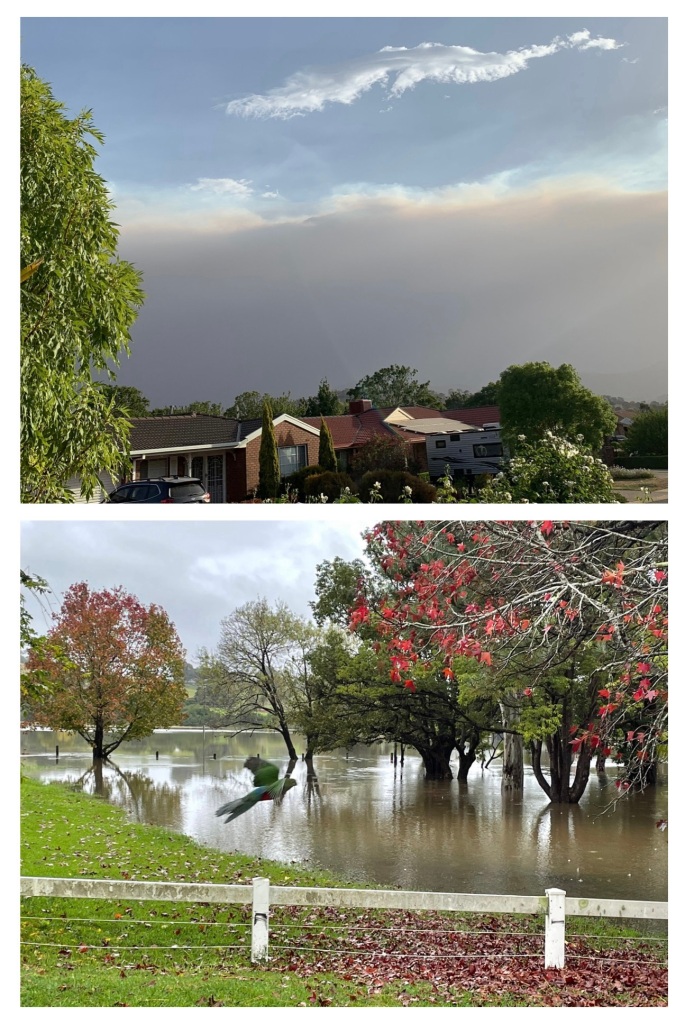
The view from our front yard:
Gordon, ACT, January 2020 (top),
during the severe bushfire in the ACT;
Dungog, NSW, May 2025 (bottom),
during the east coast flooding

Anthony Rees continues his reflections on Jer 4: “Judah is destroyed, the people and land laid waste on account of childish stupidity and ignorance. A remarkable image is then seen: the earth is described as waste and void, the very same description given of the earth in Gen 1:2 before God’s creative activity begins.”

The passage in Jeremiah has God narrating his view of the systematic undoing of his work as the Creator, as that has been set out in the narratives of Gen 1 and Gen 2, and in the poetry of Psalms 8, 19, 65, 104, and 148. God sees that the earth was once again “waste and void” (Jer 4:23a), as it was in the beginning (Gen 1:2). All that the landscape showed was a ravaged wilderness, for no longer did the earth bring forth vegetation: “plants yielding seed of every kind, and trees of every kind bearing fruit with the seed in it” (Gen 1:12; 2:8–9; and see Ps 65:11–13; 104:14–15, 27 –28). Rather, what God sees is that “the fruitful land was a desert, and all its cities were laid in ruins” (Jer 4:26).

In the heavens there is no light (Jer 4:23b), thus undoing God’s early creative work (Gen 1:3, “let there be light”; and Ps 8:3; 19:4b—6; 148:3). Hills and mountains were shaking (Jer 4:24); the stability they provided, the unshakeable foundation of the earth, has been undone (Ps 65:6; 104:5, 8; 148:9). All the birds have fled (Jer 4:25), undoing the work of God reported at Gen 1:21–22 (and see Ps 8:8; 104:12; 148:10b).

Anthony Rees notes, “Jeremiah looks to the heavens and the light is gone. God’s creative work has been undone on account of human failure. And again, human failure has consequences that go beyond our species: mountains sway, birds flee, arable land is turned to desert. What good news is there to be found here? What image of hope?”

The relevance for today of Jeremiah’s poetic “vision” that undoes the vision of creation expressed long ago by priests and poets is striking. And his perception that it is human sinfulness that is at the root of this is noteable. We know what we need to do to slow the rate of change, so that the climate remains within an inhabitable range. We know what we need to do to stop pumping gases into the air that are changing the way the planet works. We know what changes we need to make to our way of living—a whole host of changes, large and small—but we lack the will to do so. Our national policies continue to favour the industries that contribute most to the degradation of our environment. Our daily practices show minimal change, if that, in so many households.

Anthony Rees concludes, “Perhaps we might best read this text as a warning, and commit ourselves to working in ways that maintain relationship with God, our neigbours, and the rest of the created order.” It is certainly a timely word, given our critical situation. How do you respond to Jeremiah’s mournful poetry? What changes can you make? What lobbying can you undertake? What advocacy can you commit to do? Are we always going to be condemned to be, like ancient Israel, those who “are skilled in doing evil, but do not know how to do good”?


https://www.withlovetotheworld.org.au

I am a potter shaping evil against you (Jer 18; Pentecost 13C) 

The passage from Jeremiah proposed by the lectionary for this coming Sunday (Jer 18:1–11) is the third in a series of eight passages, taken from various sections of the work, that we read and hear during this long season “after Pentecost”. It’s a well-known passage because of the way it uses the common figure of a potter working his clay to form a vessel for domestic use. The potter spoils his work, so he starts again and works another vessel (vv.1–4). 

The image of a potter is used elsewhere in Hebrew Scripture. It appears in an oracle by the prophet Isaiah (Isa 29:13–16). He poses a question to God: “You turn things upside down! Shall the potter be regarded as the clay?” (29:16). This is the very oracle whose words are used by Paul in his words to the Corinthians: “the wisdom of their wise shall perish, and the discernment of the discerning shall be hidden” (Isa 29:13; 1 Cor 1:18–19).

Paul also uses the clay element of the imagery when he later tells the Corinthians that “we have this treasure in clay jars, so that it may be made clear that this extraordinary power belongs to God and does not come from us” (2 Cor 4:7). Paul is referring to his preaching of the message about Jesus, who gives “the light of the knowledge of the glory of God” in his face (2 Cor 4:6).

We also find the potter—clay imagery used by the later unnamed prophet whose words are included in the second section of the book of Isaiah. He speaks of “the one coming from the north” who “shall trample on rulers as on mortar, as the potter treads clay” (Isa 41:21–29, see v.25). He later instructs the people not to question the intentions of God. Those who do so should remember they are “earthen vessels with the potter”; he warns them, “does the clay say to the one who fashions it, ‘What are you making’? or ‘your work has no handles’?” (45:9–13, see v.9). The image of the potter represents the sovereign power of God to act as God wishes and intends. That’s how Paul also understands it in 1 Cor 1.

In the passage offered to us for this coming Sunday, the prophet Jeremiah uses this image specifically to warn Israel that, since the people have become, in effect, “spoiled goods” because of their entrenched idolatry (Jer 18:8), the Lord God can be of a mind to discard them as unwanted. As the potter, God has unfettered freedom to mould and shape the clay exactly how he wills.

Mixing metaphors, Jeremiah then turns to the horticultural imagery employed in the opening scene of the book (“I appoint you over nations and over kingdoms, to pluck up and to pull down, to destroy and to overthrow, to build and to plant”, 1:10). So, he declares, God can decide to “pluck up and break down and destroy” the sinful nation (18:7), just as God may decide on another occasion to “build and plant” a nation (18:9).

In both instances, however, the Lord God retains the sovereign right to exercise a change of mind. If an evil nation repents, “I will change my mind about the disaster that I intended to bring on it” (18:8). Conversely, if a faithful nation, planted by God, turns to evil, “I will change my mind about the good that I had intended to do to it” (18:10). Although Christians have been taught to think of God as unchangeable, eternally the same—under the influence of the stark declaration of Heb 13:8—the testimony of Hebrew Scripture is actually that God can, and did, and will, change God’s mind.

See 

So the message for Israel is clear: “I am a potter shaping evil against you and devising a plan against you”, says God; and so the plea to the people is “turn now, all of you from your evil way, and amend your ways and your doings” (18:11). The notion that God can act with evil intent is perhaps a claim that later Christian theology reacts against; after all, don’t we have the devil, Satan himself, to be responsible for all that is evil intent the world? 

Yet in the world of ancient Israel, a near-contemporary of Jeremiah articulates the twofold nature of God’s sovereign actions. It comes with the territory of claiming that the Lord God is the only God—the beginnings of monotheism. “I am the Lord, and there is no other; besides me there is no god”, says the unnamed prophet of Second Isaiah. As a consequence, he reports the claim of God: “I form light and create darkness, I make weal and create woe; I the Lord do all these things” (Isa 45:5–7). There is no hiding behind Satan as the instigator of evil; for this prophet, as for Jeremiah, the Lord himself is able to act with evil intent. 

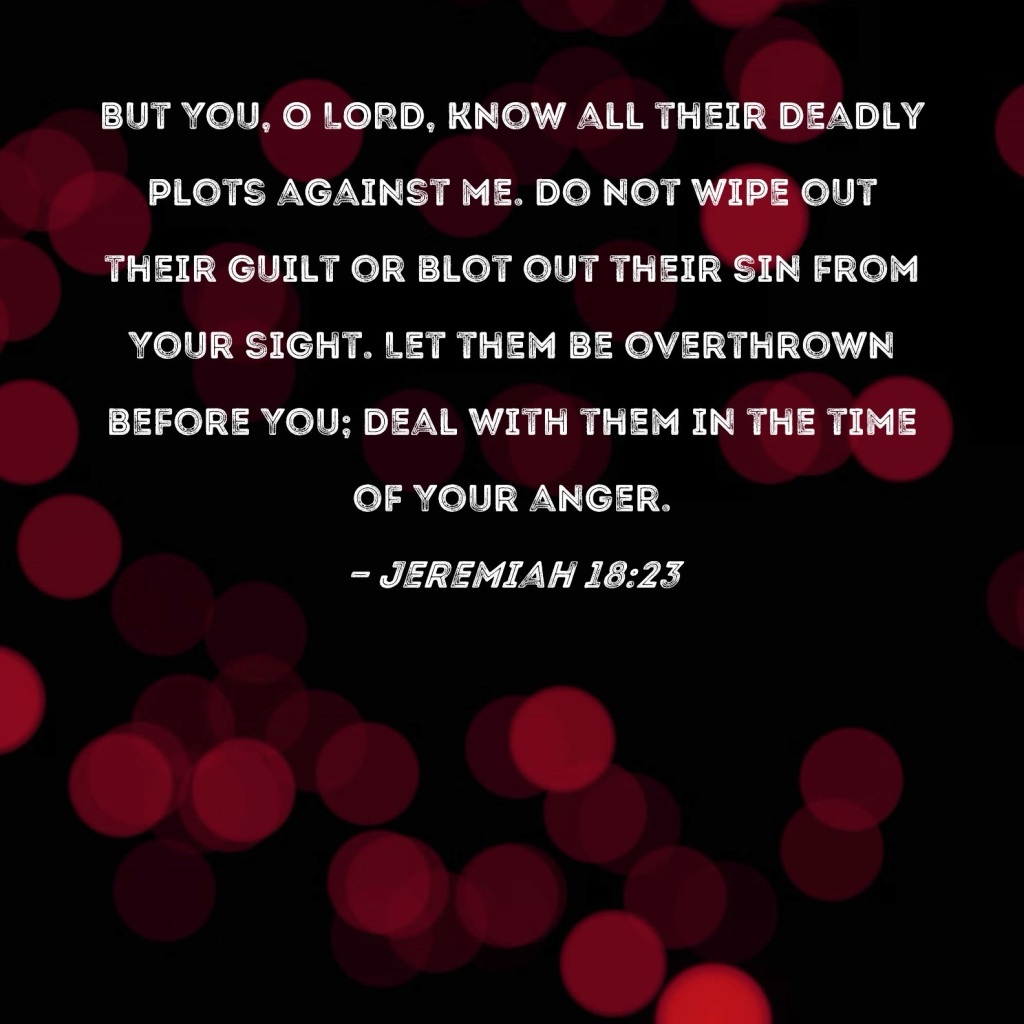
Yet God does call for Israel to repent (Jer 18:11). However, their stubborn refusal to repent (18:12) leads to more recriminations from God (18:13–17), and their plotting against the prophet (18:18) leads him to plead with God (18:19–23), culminating in his strident words, “Do not forgive their iniquity, do not blot out their sin from your sight; let them be tripped up before you; deal with them while you are angry” (18:23). 

The prophet’s anger matches—and perhaps even inflames—the divine wrath. So God commands the prophet to “buy a potter’s earthenware jug …. go out to the valley of the son of Hinnom at the entry of the Potsherd Gate … break the jug in the sight of those who go with you … [and declare] so will I break this people and this city, as one breaks a potter’s vessel, so that it can never be mended” (19:1–13). In this way the Lord God stands resolute against the sinful nation, who have “stiffened their necks, refusing to hear my words” (19:15). And so the scene that has begun with a command to go to the potter’s house ends with a smashed pot and wrathful words of vengeance.

On the thread of divine wrath running through scripture, see

and

A good question to ponder, though, is this: God calls Israel to repent. They need to remain faithful to the covenant. Yet Israel refuses to repent. They depart from their covenant commitment. So God acts as God has promised, to bring punishment upon them. Is this acting in an “evil” way? Or is God simply being good to God’s word?

Writing about this passage and others offered on other days this week in the daily Bible study guide, With Love to the World, the Rev. Dr Anthony Rees, Associate Professor of Old Testament in the School of Theology, Charles Sturt University, comments that “the readings this week demonstrate something of the complexity inherent in reading Jeremiah. Emerging from a chaotic, traumatic world, the texts shows the wounds of that experience, so that hope and hopelessness exist side by side. Chronology breaks down, suggestive of the challenge presented by the trauma of being unable to ‘think straight’”.

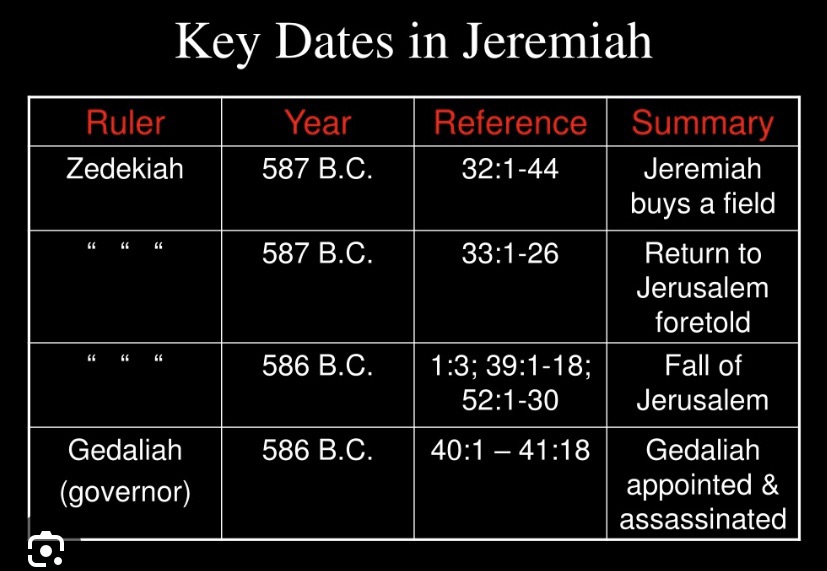
The disrupted nature of this book as a whole is well-documented. The chronological disjunctures throughout the 52 chapters can be seen when we trace the references to various kings of Judah: in order, we have Josiah in 627 BCE (Jer 1:2), jumping later to Zedekiah in 587 BCE (21:1), then back earlier to Shallum (i.e. Jehoahaz) in 609 BCE (22:11), Jehoiakim from 609 to 598 BCE (22:18), and Jeconiah in 597 BCE (22:24).

The book then returns to Zedekiah in 597 BCE (24:8), then back even earlier to Jehoiakim in April 604 BCE, “the first year of King Nebuchadrezzar of Babylon” (25:1)—and then further haphazard leaps between Zedekiah (chs. 27, 32-34, 37–38, and 51:59) and Jehoiakim (chs. 26, 35, 45) as well as the period in 587 after the fall of Jerusalem when Gedaliah was Governor (chs. 40–44). It is certainly an erratic trajectory if we plot the historical landmarks!

Rather than a straightforward chronological progression, the arrangement of the book is more topical, since oracles on the same topic are grouped together even though they may have been delivered at different times. This topical arrangement is easy to trace: 25 chapters of prophecies in poetic form about Israel, 20 chapters of narrative prose, and six chapters of prophecies against foreign nations. 

Early in the opening chapters, as Jeremiah prophesies against Israel, he reports that God muses, “you have played the whore with many lovers; and would you return to me?” (3:1). The idolatry and injustices practised by the people of Israel have caused God concern. Throughout the poetry of the prophetic oracles in chapters 1—25, God cajoles, encourages, warns, and threatens the people. The passage proposed for this Sunday sits within this opening section of oracles.

There are various theories as to how the book was put together; most scholars believe that someone after the lifetime of Jeremiah has brought together material from collections that were originally separate.

Indeed, A.R. Pete Diamond concludes that “like it or not, we have no direct access to the historical figure of Jeremiah or his cultural matrix”; we have “interpretative representations rather than raw cultural transcripts”, and thus he argues that the way we read this book should be informed by insights from contemporary literary theory, and especially by reading this book alongside the book of Deuteronomy, as it offers a counterpoint to the Deuteronomic view of “the myth of Israel and its patron deity, Yahweh” (Jeremiah, pp. 544–545 in the Eerdman’s Commentary on the Bible, 2003). 

So whereas Deuteronomy advocates a nationalistic God, Jeremiah conceives of an international involvement of Israel’s God. Commenting on this, Anthony Rees observes: “In this famous passage the covenant obligations which govern Judah’s relationship with God are given a broader understanding. Any nation can avoid divine punishment by turning from evil. Likewise, a nation that turns to evil stands condemned by God.”

Prof. Rees then draws an interesting conclusion. “Perhaps this relativizes Judah’s relationship with their God”, he proposes. “However, they maintain something the other nations lack: knowledge. Repeatedly God affirms that they are the only people amongst the nations who have been known by God and know God.”

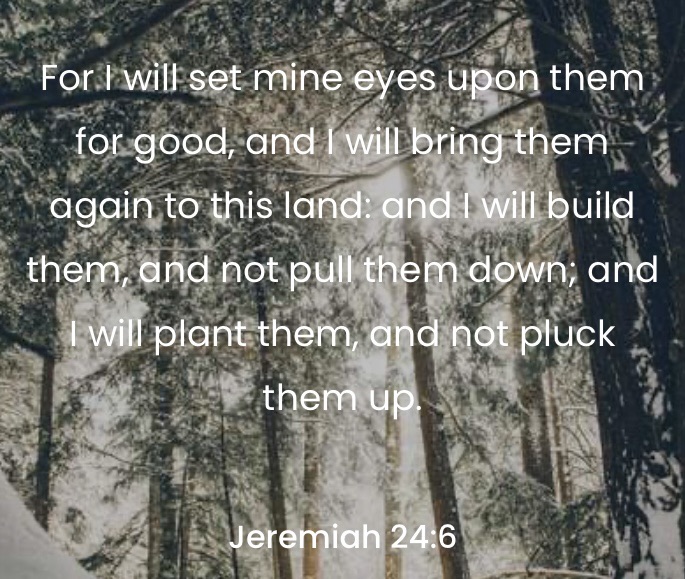
In a later oracle, when God is considering to bring Israel back out of exile, into their land, he says, using familiar imagery, “I will build them up, and not tear them down; I will plant them, and not pluck them up” (Jer 24:6).

He continues, “I will give them a heart to know that I am the Lord; and they shall be my people and I will be their God, for they shall return to me with their whole heart” (24:7). This is the fruit of knowledge: to be completely faithful to the Lord God.

And then, in yet another oracle—and this one so well-known because of how it is used in the New Testament—the prophet reports God’s intention to make “a new covenant” and to “put my law within them and … write it on their heart”. In this situation, “no longer shall they teach one another, or say to each other, ‘Know the Lord’, for they shall all know me, from the least of them to the greatest” (Jer 31:31–34). This knowledge is at the heart of the covenant. As the psalmist sings, “this I know, that God is for me” (Ps 56:9b). Or, as the Sunday school song goes, “Jesus loves me, this I know”.

So Prof. Rees concludes: “This is the great tragedy of [Israel’s] failure, and our own, that we know, and yet still follow our own plans that run contrary to the desires of God. Still, here we have the prophetic call to turn, to amend our ways and to live into that which, and whom, we know.” It is a call that stands, still, in our own time. How do we respond?

Screenshot

I will cause a righteous branch to spring up for David (Jer 33; Advent 1C)

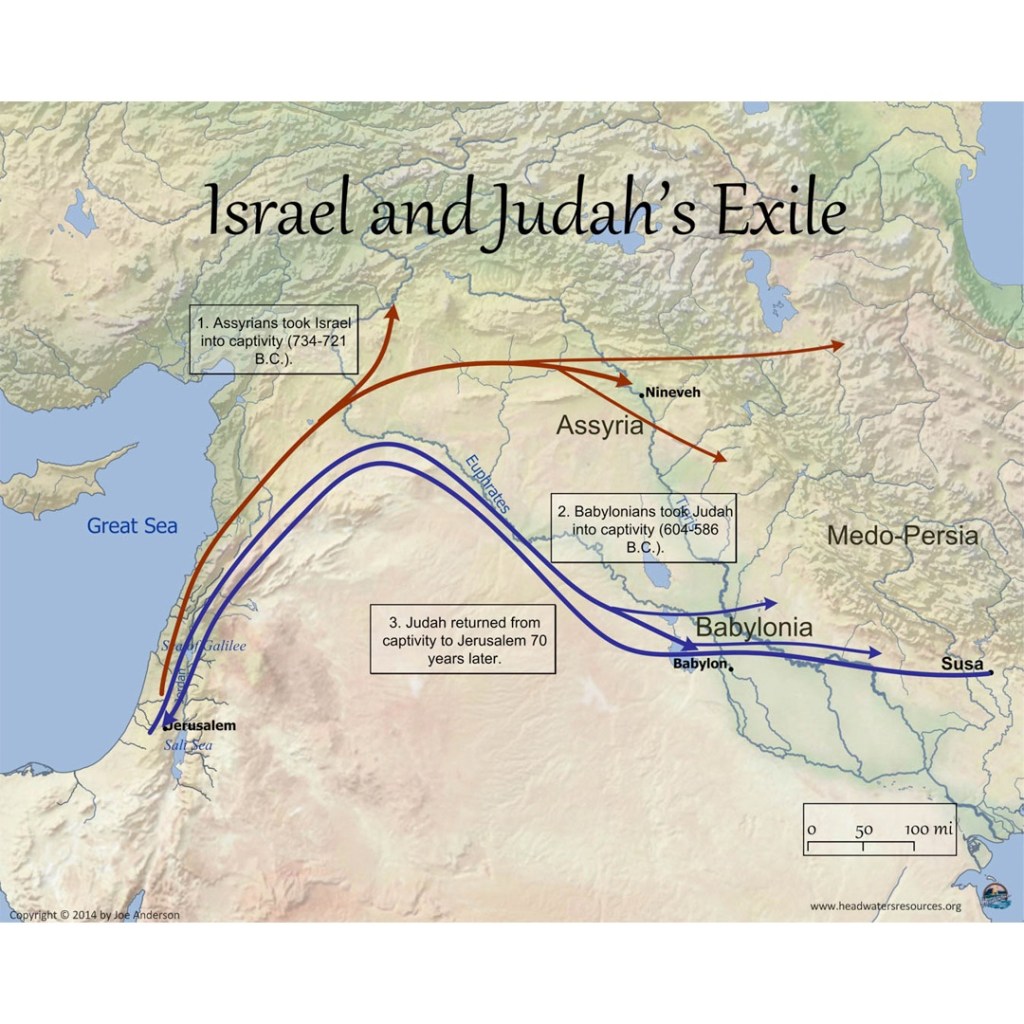
The prophet Jeremiah lived at a turning point in the history of Israel. The northern kingdom had been conquered by the Assyrians in 721 BCE; the elite classes were taken into exile, the land was repopulated with people from other nations (2 Kings 17). The southern kingdom had been invaded by the Assyrians in 701 BCE, but they were repelled (2 Kings 18:13–19:37). King Hezekiah made a pact with the Babylonians, but the prophet Isaiah warned that the nation would eventually fall to the Babylonians (2 Kings 20:12–19). Babylon conquered Assyria in 607 BCE and pressed hard to the south; the southern kingdom fell in 587 BCE (2 Kings 24–25) and “Judah went into exile out of its land” (2 Ki 25:21).

Jeremiah lived in the latter years of the southern kingdom, through into the time of exile—although personally, he was sent into exile in Egypt, even though most of his fellow Judahites were taken to Babylon. The difficult experiences of Jeremiah as a prophet colour many of his pronouncements. As the book moves on from the poetic oracles of chapters 1–25, to a series of prose narratives in chapters 26–45, some key events in the life of Jeremiah are reported. 

The passage from Jeremiah proposed for this coming Sunday, the first Sunday in Advent (Jer 33:14–16), contains a specific prophecy which appears fitting for this season, as we anticipate the celebration of the birth of Jesus. It takes on a deeper meaning if we understand where it fits within the original historical context of the time when Jeremiah was speaking.

Jeremiah had been called as a youth to declare the message of the Lord to the people of Israel, that God was planning “to pluck up and to pull down, to destroy and to overthrow, to build and to plant” (Jer 1:10). Years later, the adult prophet Jeremiah was called to “stand in the court of the Lord’s house and speak to all the cities of Judah that come to worship in the house of the Lord; speak to them all the words that I command you; do not hold back a word” (Jer 26:2). His message was about their failure to walk in the law that God had given them. The response from the ruling class is not positive—in fact, Jeremiah is threatened with death (26:7–11). 

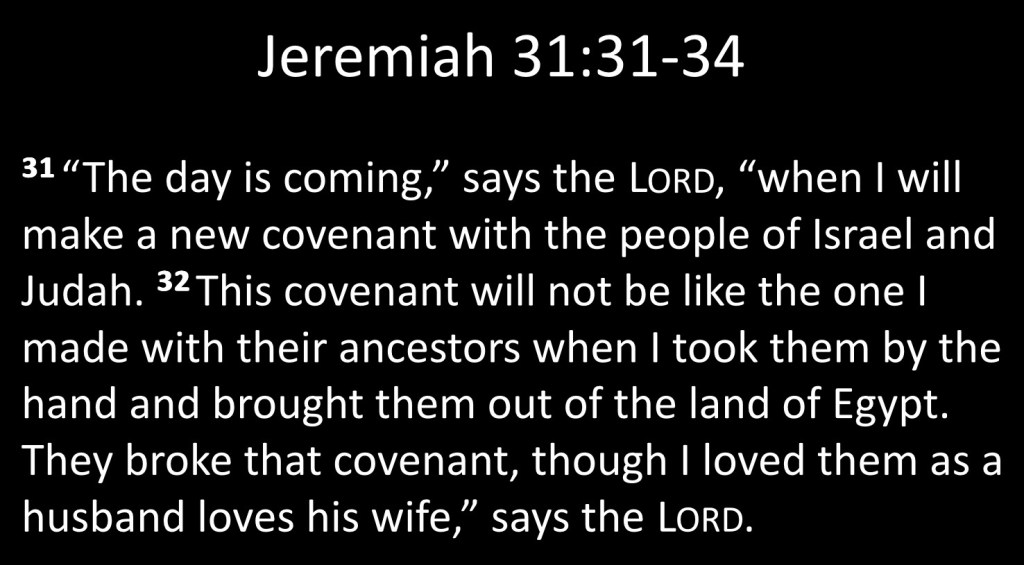
However, the midst of his despair, Jeremiah sees hope: “the days are surely coming, says the Lord, when I will restore the fortunes of my people, Israel and Judah, says the Lord, and I will bring them back to the land that I gave to their ancestors and they shall take possession of it” (30:3). In this context, Jeremiah indicates that the Lord “will make a new covenant with the house of Israel and the house of Judah … I will put my law within them, and I will write it on their hearts; and I will be their God, and they shall be my people” (31:31–34). 

To signal his confidence in this promised return, Jeremiah buys a field in his hometown of Anathoth from his cousin Hanamel (32:1–15). The narrator notes that “the army of the king of Babylon was besieging Jerusalem, and the prophet Jeremiah was confined in the court of the guard that was in the palace of the king of Judah, where King Zedekiah of Judah had confined him” (32:2–3). Nevertheless, the purchase serves to provide assurance that the exiled people will indeed return to the land of Israel; “houses and fields and vineyards shall again be bought in this land” (32:15). 

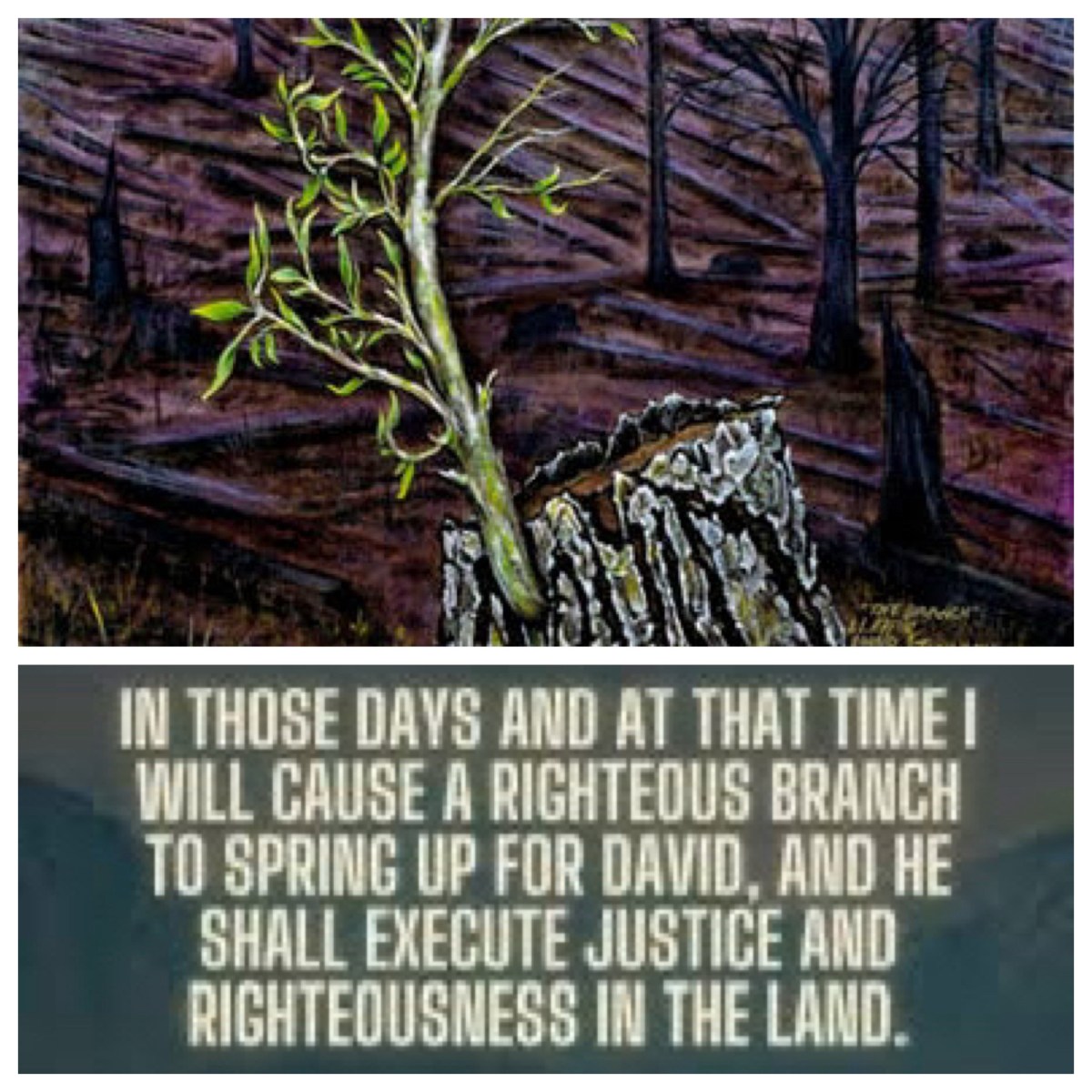
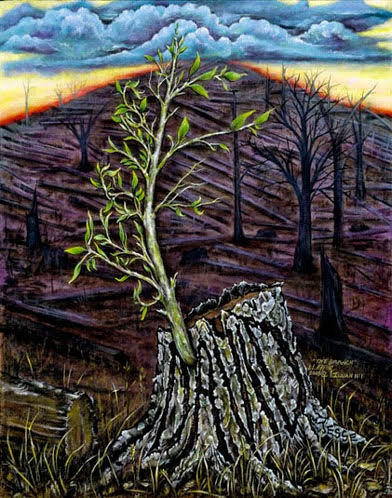
Jeremiah exhorts the people to “give thanks to the Lord of hosts, for the Lord is good, for his steadfast love endures forever!” (33:11), because in the places laid waste by the Babylonians, “in all its towns there shall again be pasture for shepherds resting their flocks … flocks shall again pass under the hands of the one who counts them, says the Lord” (33:12–13). As the people return to the land, the Lord “will cause a righteous Branch to spring up for David; and he shall execute justice and righteousness in the land” (33:15). The title “Son of David” is later applied to Jesus in three Gospels (Mark 10:47–48; Matt 1:1; 12:23; 15:22; 21:9, 15; Luke 18:38–39).

The prophet Isaiah also refers to the “shoot [which] shall come out from the stump of Jesse, and a branch shall grow out of his roots; the spirit of the Lord shall rest on him” (11:1–2). The appearance of this “shoot” will lead to the promised time when “the wolf shall live with the lamb, the leopard shall lie down with the kid, the calf and the lion and the fatling together, and a little child shall lead them” (11:6)—a wonderful Messianic prophecy.

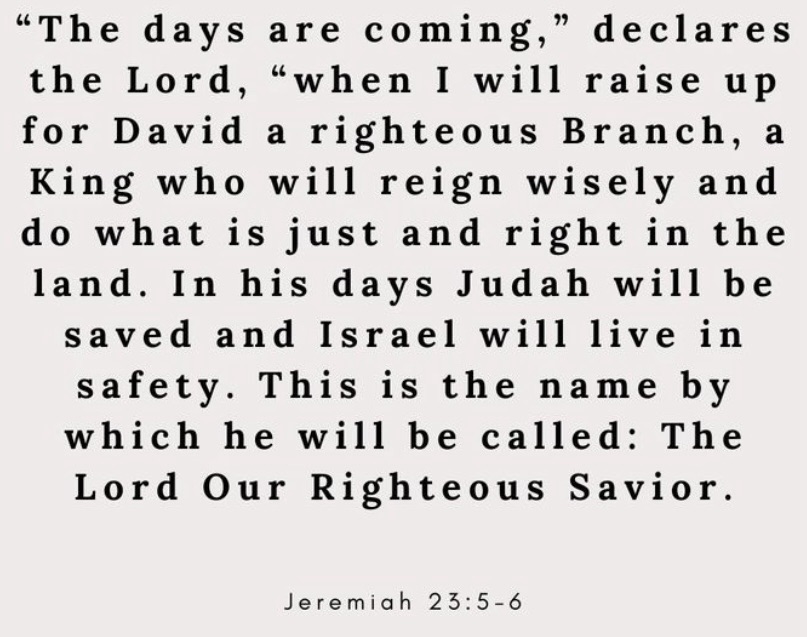
Jeremiah, in an earlier oracle, had declared that “the days are surely coming, says the Lord, when I will raise up for David a righteous Branch, and he shall reign as king and deal wisely, and shall execute justice and righteousness in the land” (Jer 23:5). His words at Jer 33:14–16 repeat this message of hope. That hope, in Christian theology, was taken up in Jesus, who was claimed to be the righteous branch, the one ruling with justice (Matt 12:15–21). Jesus spoke clearly about the need for justice in our lives (Matt 23:23; Luke 7:29). He spoke in the tradition of the prophets, including Jeremiah, who had regularly reminded the people,of Israel of the centrality of doing justice for those who were obedient to the covenant with the Lord God.

In speaking out for justice, Jesus provided a clear countercultural vision for his followers, and called them into a radically different way of living. It is that Jesus whom we celebrate at Christmas, and that countercultural vision that is at the heart of the Advent season.

God offers a new covenant (Narrative Lectionary for the Reign of Christ, Pentecost 27C; Jer 36, 31)

The covenant is a key theme of the Hebrew Scriptures. God’s commitment to covenant takes us deep into the abiding relationship between God and God’s people. That covenant had been offered initially to Noah, and to all living creatures (Gen 9), before it was subsequently renewed (and reshaped) by being offered to Abraham (Gen 15, 17), as mentioned here (Ps 105:9). That same covenant is renewed with Isaac (Gen 17) and then with Jacob (Israel) (Gen 35), and later is extended to Moses and the whole people (Exod 19), and later still to the people again through Jeremiah (Jer 31). It is this last reference to the covenant which forms the basis for the Narrative Lectionary passages for this coming Sunday.

Jeremiah was called to be a prophet at an early age (Jer 1:4–10); some commentators consider him to be in his early 20s, while others note that the distinctive Hebrew word used in this passage indicates he was in his teens. When he heard God declare to him, “I appointed you a prophet to the nations”, the NRSV translation says that the young man replied, “Ah, Lord God! Truly I do not know how to speak, for I am only a boy” (1:6). 

Actually, when they say he replied, “Ah”, he was using a Hebrew word that actually means “alas” or “woe is me” (see also 4:10; 14:13: 32:17; and also Joel 1:15). Strong’s Concordance says this is “a primitive word expressing pain”—so, more like “ouch!!!” So perhaps it’s better to think of his response as more like “oh no, oh no, oh nooooo—I couldn’t possibly do that! no way at all!!”. Jeremiah just did not want this gig at all. See my sermon on this passage at

Yet Jeremiah faithfully carried out the task committed to him; it is thought that he was active from the mid-620s in Judah, through into the time of exile in Babylon, from 587 BCE onwards—that is, over four decades—although Jeremiah himself was exiled, not into Babylon, but into Egypt (Jer 43:1–7).

The task he was given when called to be a prophet was to declare the coming judgment of God on the people of Israel, for continuing to ignore their covenant commitments. The Lord tells him, “I will utter my judgments against them, for all their wickedness in forsaking me; they have made offerings to other gods, and worshiped the works of their own hands” (1:16). As encouragement, he urges the young man to “gird up your loins; stand up and tell them everything that I command you” (1:17).

So Jeremiah is given a daunting task. “Woe is me”, he declares (4:13)—or sometimes, “woe to us”—which become common phrases in Jeremiah’s oracles (4:31; 6:4; 10:19; 13:27; 15:10; 22:13; 23:1; 45:3; 48:46). It is the same term that we find in Isaiah’s call (Isa 6:5) and oracles (Isa 24:16), Hosea’s declarations (7:13; 9:12), Micah’s prophecies (Mic 7:1), and Ezekiel’s utterances (Ezek 13:18; 16:23; 24:6, 9). All lament the imposition of divine justice in ways that wreak havoc amongst the people. 

Yet in the midst of his despair, Jeremiah sees hope: “the days are surely coming, says the Lord, when I will restore the fortunes of my people, Israel and Judah, says the Lord, and I will bring them back to the land that I gave to their ancestors and they shall take possession of it” (30:3). In this context, Jeremiah indicates that the Lord “will make a new covenant with the house of Israel and the house of Judah … I will put my law within them, and I will write it on their hearts; and I will be their God, and they shall be my people” (31:31–34). 

The renewal of the covenant was not a new idea in the story of Israel. God had entered into covenants with Abraham, the father of the nation (Gen 15:1–21) and before that, in the story of Noah, with “you and your descendants after you, and with every living creature that is with you … that never again shall all flesh be cut off by the waters of the flood” (Gen 9:8–11). The covenant given to Moses on Mount Sinai (Exod 19:1–6), accompanied by the giving of the law (Exod 20:1–23:33), is sealed in a ceremony by “the blood of the covenant” (Exod 24:1–8).

The covenant with the people that Moses brokered is renewed after the infamous incident of the golden bull (Exod 34:10–28), then under Joshua at Gilgal, as the people enter the land of Canaan after their decades of wilderness wandering (Josh 4:1–24). It is renewed again in the time of King Josiah, after the discovery of “a book of the law” and his consultation with the prophet Huldah (2 Chron 34:29–33), and it will be renewed yet again after the exiled people of Judah return to the land under Nehemiah, when Ezra read from “the book of the law” for a full day (Neh 7:73b—8:12) amd the leaders of the people made “a firm commitment in writing … in a sealed document” which they signed (Neh 9:38–10:39).

However, the particular expression of renewal that Jeremiah articulates will prove to be critical for the way that later writers portray the covenant renewal undertaken by Jesus of Nazareth (1 Cor 11:25; Luke 22:20; 2 Cor 3:6–18; Heb 8:8–12). Especially significant is the claim that this renewed covenant “will not be like the covenant that I made with their ancestors when I took them by the hand to bring them out of the land of Egypt—a covenant that they broke” (Jer 31:32), for God “will put my law within them, and I will write it on their hearts; and I will be their God, and they shall be my people” (31:33). It is a covenant which has “the forgiveness of sins” at its heart (31:34)— precisely what is said of the “new covenant” effected by Jesus (Matt 26:28; and see Acts 5:31; 10:43; 13:38; 26:18).

To signal his confidence in this promised return, Jeremiah buys a field in his hometown of Anathoth from his cousin Hanamel (32:1–15). The narrator notes that “the army of the king of Babylon was besieging Jerusalem, and the prophet Jeremiah was confined in the court of the guard that was in the palace of the king of Judah, where King Zedekiah of Judah had confined him” (32:2–3). Nevertheless, the purchase serves to provide assurance that the exiled people will indeed return to the land of Israel; “houses and fields and vineyards shall again be bought in this land” (32:15). 

Jeremiah exhorts the people to “give thanks to the Lord of hosts, for the Lord is good, for his steadfast love endures forever!” (33:11), because in the places laid waste by the Babylonians, “in all its towns there shall again be pasture for shepherds resting their flocks … flocks shall again pass under the hands of the one who counts them, says the Lord” (33:12–13). As the people return to the land, the Lord “will cause a righteous Branch to spring up for David; and he shall execute justice and righteousness in the land” (33:15). The title “Son of David” is later applied to Jesus in three Gospels (Mark 10:47–48; Matt 1:1; 12:23; 15:22; 21:9, 15; Luke 18:38–39).

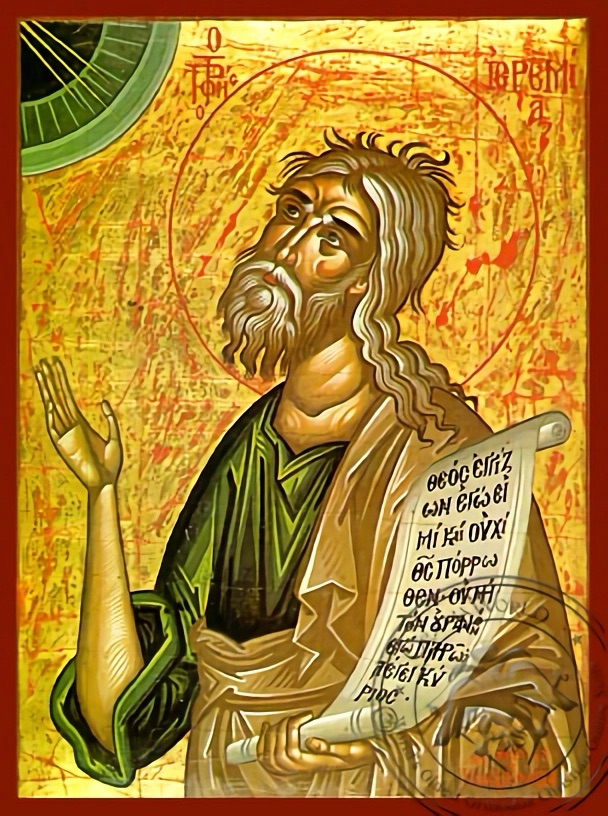
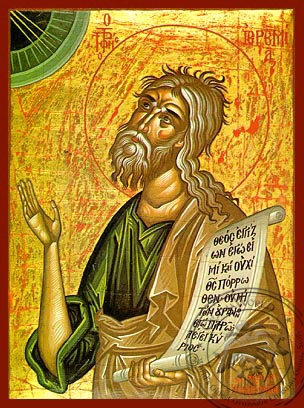
A Byzantine icon of Jeremiah the prophet

As Jeremiah was “prevented from entering the house of the Lord” (36:5), he dictated his prophecies to a scribe named Baruch (36:4) and instructed Baruch to “read the words of the Lord from the scroll that you have written at my dictation” (36:6). The scroll is important, for it conveys a message that “great is the anger and wrath that the Lord has pronounced against this people” (36:7).

Baruch does read from the scroll to “all the people in Jerusalem and all the people who came from the towns of Judah to Jerusalem” (36:9–10);  eventually, the scroll makes its way into the inner court, where it is read to the king (36:20–21). In response, piece by piece, King Jehoiakim methodically burns the scroll (36:23–26), so Jeremiah repeated the process with Baruch (36:32). This sequence of events is included in the selection of verses proposed by the Narrative Lectionary, presumably to give the specific narrative context for the oracle about “the new covenant” which is the primary theological focus for this coming Sunday.  

Subsequently, the prophet was imprisoned in the court of the guard  (37:11–21) and then in a cistern (38:1–6), before being rescued from the cistern, on the king’s orders, by Ebed-melech the Ethiopian (38:7–13). Life was certainly not easy for Jeremiah the prophet! Eventually, the city of Jerusalem is taken captive by the Babylonians (39:1–3), members of the royal family are slaughtered (39:6), the king is blinded and taken into exile (39:7), the city is plundered and destroyed (39:8), and “the rest of the people who were left in the city” were taken in the deportation to Babylon, with the exception of just “some of the poor people who owned nothing” (39:9–10). The misery of Jeremiah is shared right across the population.

In one final twist, the Narrative Lectionary suggests reading the verses from ch.36—the capture of the city and the exile to Babylon—before ch.31—the promise of a new covenant. This reversal of order is an interpretive ploy to infer that, despite the misery and trials of Jeremiah, his message offered hope to his people. It’s a hope that would not be made manifest for the exiles for five decades. In a Christian context, as we have seen, it’s a hope that is seen to be fulfilled in Jesus. And perhaps the context of this coming Sunday being the Festival of the Reign of Christ, it’s an orientation that points to the enduring reign of Christ, in contrast to the limited rule of Zedekiah of Judah, and indeed of Nebuchadrezzar of Babylon.

A new covenant with the people (Jeremiah 31; Pentecost 19C)

Jeremiah lived at a turning point in the history of Israel. The northern kingdom had been conquered by the Assyrians in 721 BCE; the elite classes were taken into exile, the land was repopulated with people from other nations (2 Kings 17). The southern kingdom had been invaded by the Assyrians in 701 BCE, but they were repelled (2 Kings 18:13–19:37). King Hezekiah made a pact with the Babylonians, but the prophet Isaiah warned that the nation would eventually fall to the Babylonians (2 Kings 20:12–19). Babylon conquered Assyria in 607 BCE and pressed hard to the south; the southern kingdom fell in 587 BCE (2 Kings 24–25) and “Judah went into exile out of its land” (2 Ki 25:21).

Jeremiah lived in the latter years of the southern kingdom, through into the time of exile—although personally, he was sent into exile in Egypt, even though most of his fellow Judahites were taken to Babylon. The difficult experiences of Jeremiah as a prophet colour many of his pronouncements. He is rightly known as a prophet of doom and gloom.

And yet, in the midst of his despair, Jeremiah sees hope: “the days are surely coming, says the Lord, when I will restore the fortunes of my people, Israel and Judah, says the Lord, and I will bring them back to the land that I gave to their ancestors and they shall take possession of it” (30:3).

He goes on to report that the Lord says to the people, “I will be the God of all the families of Israel, and they shall be my people”, for “the people who survived the sword found grace in the wilderness; when Israel sought for rest, the Lord appeared to him from far away” (31:1–2).

This grace was made known to the people in the affirmation that God makes, “I have loved you with an everlasting love; therefore I have continued my faithfulness to you” (31:3).

In this context, Jeremiah indicates that the Lord “will make a new covenant with the house of Israel and the house of Judah … I will put my law within them, and I will write it on their hearts; and I will be their God, and they shall be my people” (31:31–34). This covenant will give expression to the love and faithfulness of the Lord, which is how God’s grace is to be known by the people. This renewal of covenant is offered in grace; the requirements of the covenant make clear and tangible the grace-filled relationship that the people have with their God.

Clear appreciation for the grace that is offered to the people by the laws which guide the people to keep the covenant can be seen in the affirmation of the Torah as “perfect, reviving the soul … sure, making wise the simple … right, rejoicing the heart … clear enlightening the eyes … pure, enduring forever … true and righteous altogether … more to be desired than gold … sweeter also than honey” (Ps 19:7–14), and then by the majestically grand affirmations of Torah in the 176 verses which are artistically-arranged into acrostic stanzas of Psalm 119 (“happy are those … who walk in the way of the Lord … I long for your salvation, O Lord, and your law is my delight”, vv.1, 174). The laws shape the way that the covenant is kept; the covenant gives expression to the steadfast love and grace of God.

*****

The renewal of the covenant was not a new idea in the story of Israel. God had entered into covenants with Abraham, the father of the nation (Gen 15:1–21) and before that, in the story of Noah, with “you and your descendants after you, and with every living creature that is with you … that never again shall all flesh be cut off by the waters of the flood” (Gen 9:8–11). The covenant given to Moses on Mount Sinai (Exod 19:1–6), accompanied by the giving of the law (Exod 20:1–23:33), is sealed in a ceremony by “the blood of the covenant” (Exod 24:1–8).

The covenant with the people that Moses brokered is renewed after the infamous incident of the golden bull (Exod 34:10–28), then it is renewed again under Joshua at Gilgal, as the people enter the land of Canaan after their decades of wilderness wandering (Josh 4:1–24). It is renewed yet again in the time of King Josiah, after the discovery of “a book of the law” and his consultation with the prophet Huldah (2 Chron 34:29–33).

The covenant will be renewed yet another time, after the lifetime of Jeremiah, when the exiled people of Judah return to the land under Nehemiah, when Ezra read from “the book of the law” for a full day (Neh 7:73b—8:12) and the leaders of the people made “a firm commitment in writing … in a sealed document” which they signed (Neh 9:38–10:39). So renewing the covenant, recalling the people to their fundamental commitments made in relationship with God, is not an unknown process in the story of ancient Israel.

However, the particular expression of renewal that Jeremiah articulates is significance, not only for the exiled Israelites, but also centuries later, for the followers of the man from Nazareth who came to be recognised as God’s Messiah. Jeremiah’s articulation of the promise of a “new covenant” will prove to be critical for the way that later writers portray the covenant renewal undertaken by Jesus of Nazareth (1 Cor 11:25; Luke 22:20; 2 Cor 3:6–18; Heb 8:8–12).

Especially significant is the claim that this renewed covenant “will not be like the covenant that I made with their ancestors when I took them by the hand to bring them out of the land of Egypt—a covenant that they broke” (Jer 31:32), for God “will put my law within them, and I will write it on their hearts; and I will be their God, and they shall be my people” (31:33). It is a covenant which has “the forgiveness of sins” at its heart (31:34)— precisely what is said of the “new covenant” effected by Jesus (Matt 26:28; and see Acts 5:31; 10:43; 13:38; 26:18).

*****

To signal his confidence in this promised return, Jeremiah buys a field in his hometown of Anathoth from his cousin Hanamel (32:1–15). the purchase serves to provide assurance that the exiled people will indeed return to the land of Israel; “houses and fields and vineyards shall again be bought in this land” (32:15).

Jeremiah exhorts the people to “give thanks to the Lord of hosts, for the Lord is good, for his steadfast love endures forever!” (33:11). Here, Jeremiah makes use of a phrase that recurs in key places throughout Hebrew Scripture, where it crystallises what the Israelites appreciated about the nature of God. The Lord is said, a number of times, to be “gracious and merciful, slow to anger and abounding in steadfast love” (Exod 34:6; 2 Chron 30:8–9; Neh 9:17, 32; Jonah 4:2; Joel 2:13; Ps 86:15; 103:8, 11; 111:4; 145:8–9). This is the Lord God who enters into covenant, time and time and again, with the people.

There is a strong sequence of affirming, hopeful oracles which characterise this section of Jeremiah, from “the days are surely coming … when I will restore the fortunes of my people, Israel and Judah, and I will bring them back to the land that I gave to their ancestors” (30:3) to “I will restore their fortunes, and will have mercy on them” (33:26). All of this is done because, as the Lord declares, “only if I had not established my covenant with day and night and the ordinances of heaven and earth, would I reject the offspring of Jacob and of my servant David” (33:25–26). It is the covenant which holds the Lord and the people together.

So Jeremiah offers a clear sign of hope for the future; in the places laid waste by the Babylonians, “in all its towns there shall again be pasture for shepherds resting their flocks … flocks shall again pass under the hands of the one who counts them, says the Lord” (33:12–13). As the people return to the land, the Lord “will cause a righteous Branch to spring up for David; and he shall execute justice and righteousness in the land” (33:15).

This oracle, also, is significant for the later community that developed from the followers of the man from Nazareth; the promise of a “righteous branch for David” becomes the title “Son of David”, which is then applied to Jesus in all three Synoptic Gospels (Mark 10:47–48; 12:35; Matt 1:1, 20; 9:27; 12:23; 15:22; 20:30, 31; 21:9, 15; 22:42; Luke 18:38–39). The whole sequence of oracles in this section of Jeremiah is of key significance for followers of Jesus in later ages.

Seek the welfare of the city (Jeremiah 29; Pentecost 18C)

The Hebrew Scripture reading which the lectionary offers this coming Sunday is largely a letter—from Jeremiah, to some fellow-Jews, but written in the name of Jeremiah’s God. It is this letter which invites us to consider some important aspects of how we live our faith.

Jeremiah wrote this letter twenty-five centuries ago, a long, long time ago. Does this letter still hold relevance to us, today? Jeremiah wrote in the ancient Hebrew language, running from right to left across the page. It is most likely that the letter was written on a scrap cut from a roll of papyrus, or possibly leather; but there was no neat sheet of paper with carefully-inscribed words, or neatly-typed paragraphs, carefully folded into an envelope, such as we would expect of a letter today.

And not only does it look different, this letter was written to a very specific group of people, who were quite different from us. It was addressed to people in a very different situation from most of us; a group of people who had grown up in Israel, but were now refugees, sent into exile, forcibly removed from their homeland, mourning all that they had lost, and now trying to come to grip with their new life in the faraway land of Babylon.

Do you remember Psalm 137? By the waters of Babylon, we sat down and wept? This would have been the way that many of these people responded when they arrived in Babylon. And the fact that this Psalm is still in our Bible tells us that the people sang this song, for a long time; it was not just a top-40 wonder for a few weeks or months, but it was sung over and over, and became one of the sacred songs of the people for generations—through into our own time, in fact!

So this letter seems a somewhat unusual choice for the focus of our attention today, as the way in which the word of the Lord might possibly address us, in our settled, comfortable lives. What could it possibly have to offer us, as we reflect on our faith in the world of the 21st century?

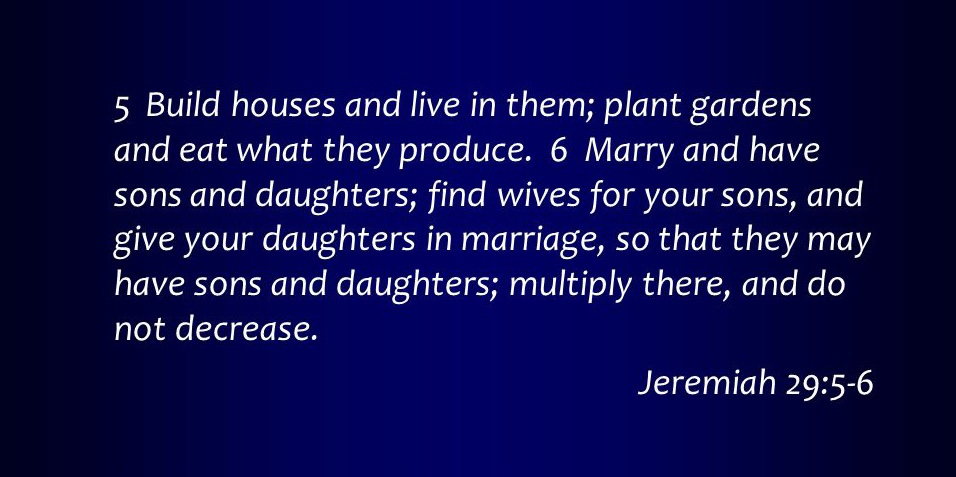
And yet, the words have a distinctively contemporary, relevant feel about them. They speak of ordinary life, of family and home, of a life which is comfortable, settled, and peaceable. They speak of building relationships, undertaking good, honest work, and living with responsibility for those under our care. Hear again the heart of the letter: Build houses and live in them; plant gardens and eat what they produce. Take wives and have sons and daughters; take wives for your sons, and give your daughters in marriage, that they may bear sons and daughters; multiply there, and do not decrease. But seek the welfare of the city where I have sent you into exile, and pray to the Lord on its behalf, for in its welfare you will find your welfare.

Perhaps the heart of Jeremiah’s letter is in this simple phrase: seek the welfare of the city. This was the word of the Lord which addressed the disturbed and dispossessed Israelites who had tearfully followed their deposed Israelite King Jeconiah and his court into exile under the Babylonian King Nebuchadnezzar, wondering what awaited them there in this strange land. Could it be that this is also the word of the Lord which addresses comfortable, settled Australians, enjoying the fruits of hard work over many years, living in a time of ongoing material prosperity?

Some knowledge of the original language of the letter might be relevant as we ponder this matter. In the last verse of the letter, Jeremiah three times uses the one Hebrew word that probably most of us have heard and would recognize: the word shalom. Each time the NRSV translates this word in this letter, it uses the English term welfare. We know this word, perhaps more familiarly, through the slightly different translation, peace.

And perhaps we are also aware that the ancient sense of shalom encompasses not just peace (the absence of conflict), but also wholeness, fulfillment, security, satisfaction, a co-operative spirit, a sense that all is well with the world. This is what the fearful exiles were being encouraged to work towards.

What would it have meant for those homesick Israelites, long ago, to have been prepared to seek the welfare [the shalom—the peace—the wholeness] of the city?

I think that it might have meant things like this: Get ready for a long period of time away from “home”; there will be no quick fixes, no easy answers, no instant gratification. You are here, in this strange land, for the long haul. Settle down, make your peace with the locals. Be prepared to make this the new “home” for yourselves and your descendants.

I wonder how would we feel if that were the situation we were facing? It could mean: Be prepared to work co-operatively and constructively with the very people who have inflicted pain and suffering on you and your people. They dragged you away from home and set you to work in this strange place. They are the ones who forced you into this bad situation. They are “the enemy”. But God is telling you to work with them. To co-operate with your enemies. To love your enemies, perhaps? To co-operate with those who hold different points of view from yourself—in precisely the way that various groups in our society are learning that they must do.

The word of the Lord presents a serious challenge, then, to the exiles in Babylon.

Even more than this; Jeremiah delivers God’s message to the people in very specific ways: Be prepared to marry and raise families with people from outside of your group … be prepared to marry these strange, alien, unfamiliar people. You won’t be able to keep on marrying your own people, those who have come with you from Israel; the gene pool is too small for that to work for too long. So get yourselves ready, to marry a foreigner. You are the ones who are going to create a multi-ethnic community, a multi-cultural society.

And perhaps, then, the challenge to the people of Israel, in exile, was for them to lift their eyes above their immediate grief and pain, and do what was good, what made for peace, for the whole city. Through Jeremiah, God was telling them: Set your goals, not on the basis of what is good for me as an individual, but rather on what is best for the whole community. Seek the shalom of the city; the whole collection of human beings who are gathered in this one sprawling metropolis.

What was this city, in which they found themselves? It has been estimated that Babylon was the largest city in the world in the 17th century BCE, and again between 612 and 320 BCE— and of course it is during this latter period that Jeremiah was writing.  Babylon was probably the first city to reach a population above 200,000—a figure which seems relatively small to us when we think about cities, but which would have required complex administration and organization to ensure that, just as a start, all 200,000 inhabitants were fed each day. So seek the shalom of the city means that the Israelites were being challenged to immerse themselves in the largest population, the most vibrant and diverse community of people, at that time, in the ancient Near East.

And this is the point at which I believe this ancient Hebrew letter comes alive and speaks to us with a message of relevance for our own times and our own place. Seek the shalom of the city in which you live, work, relax, shop, and worship. How might we seek the welfare of our own cities?

City life, today, is marked by its diversity, its complexity, its ambiguities and uncertainties. This is particularly so as the nature of particular suburbs and areas change over time. Once quiet dormitory suburbs for people working in the city, in nearby business centres, can change, as different groups of people move in. As times change, the old certainties of suburban life no longer hold; the predictable patterns of comfortable middle-class lifestyle are challenged. We cannot ignore these changes; we cannot hide our faith from engagement in what is taking place around us.

Perhaps a different ethos emerges in the quiet dormitory suburb, as the area transforms into a regional transport hub, is filled with medium-density housing, caters to a greater concentration of students and aged people. All of these features can be gleaned from census material; all of these factors, and more, need to be part of the deliberations for a local Congregation as they consider those vital questions: who are we? what is our ministry? what might our ministry be? what sort of leadership is required for us to develop accordingly? These are questions that all Congregations should ask on a regular basis.

In the city, says Jeremiah, the people of God are to seek the welfare, the wholeness, the shalom, of the whole population. It is a charge that we ought to hear as a clear and direct word to each of us, and to the Congregation where we are active, as we seek to contribute to the welfare of the city. What do we have to offer, as the people of God in this time, in this place?

The Uniting Church is committed to being a church that takes seriously the context in which we are located. Our Basis of Union set out to ensure that we were formed as a church that was relevant to our Australian location—not simply a colonial copy of an English or Scottish church, but an authentically Australian church. I was privileged to be trained in theology in the early years of this church, when living out our faith in the Australian context was of paramount importance.

In past years, I have been part of Congregations that have sought to engage in active ways with people in their local communities: through a weekly School for Seniors programme; by offering a weekly meal at no cost to people in the local community who are poor, or lonely; by volunteering with the telephone ministry Lifeline; by engaging with local artists in a programme called Arts in Action; by fostering constructive relationships with Indigenous students and their families; by supporting partnerships with people in the third world and developing robust micro-businesses; by undertaking training in the Sydney Alliance and engaging with local community groups on specific, focussed projects; by being active in a local environmental advocacy group, Climate Change Australia. These are but some examples of the many ways that our church has long been committed to seeking the welfare of the city.

So we, today, face the challenge of responding to the changing circumstances of our time, when fewer people claim an active belief and participation rates in church activities are much less than in the “glory days” of decades past. We might well be seeking to create new ways of being communities of faith; looking for new opportunities to make connections with people in our immediate locality; exploring the means for ensuring that our city is one which is marked by fairness and justice; and shaping a church which is committed to finding new and creative ways of expressing our faith in our own locality.

The Uniting Church is a participatory church. At every level, there are opportunities for people to play all sorts of roles, in contributing to the work of the church. We are not dominated by one group, a clergy-led church, or a male-led church, as some other denominations might appear to be. We affirm the equal role of people, regardless of their gender—males and females can exercise leadership and offer ministry; regardless of their race; regardless of their age. We believe that the Spirit is at work amongst people who are striving for justice, seeking fairness, working to create equity in the lives of other people.

As a Uniting Church, we are an inclusive church that values the contribution that each and every individual can make. We are also a church that values the commitment of groups of people—that is why we meet together, act together, and share with other groups who also act together, in organisations such as Sydney Alliance or Climate Change Australia or other local enterprises. As we work alongside others, we offer a way of understanding life which is guided by moral principles, shaped by ethical commitments, and always informed by standards based on our faith commitment. That is something of a distinctive quality which we bring.

Whilst our faith does not solve every problem or resolve every dilemma, it does equip us to think carefully and to act with integrity as we engage with others. In these ways, we can surely attend to the challenge that Jeremiah provides, and seek the welfare of the city (or town, or village) where we are.

*****

See also

*****

The Sydney Alliance is an organization which has been created in recent years, as one attempt to seek the welfare of the city of Sydney, to strive to make this city a better place to live for those who have lived here a long time, and for those who are recent arrivals to the city. It has a commitment to seek justice and fairness across the city. The Uniting Church is one of the foundation members of the Sydney Alliance, along with a number of community groups, trade unions, and other religious groups drawn from the Christian, Jewish, Muslim, Buddhist and Hindu faiths.

The website of this organization describes it in this way:

“The Sydney Alliance is a citizens’ coalition whose vision is to provide our community with a voice to express common values and aspirations for a fair and just Sydney.  The Alliance is broadly based across religious organisations, community organisations and unions establishing relationships that respect diversity, while building a cohesive society.  The Alliance is a non-party political organisation. Its primary purpose is the ability to act for the common good to achieve social change in our communities.”  

The way that the Sydney Alliance operates is through building bridges, engaging in dialogue between organisations, and seeking to find opportunities for its members to participate in reshaping the society of which we are a part. Why should the Uniting Church join itself with other organisations in our society in this way? Why should we commit time and energy to involvement in this kind of coalition, with a wide range of people who live alongside us in the city? Some of these are people who seem familiar to us—Catholics, nurses, teachers, members of the Cancer Council, bus drivers, public servants.

Some are people of nodding familiarity, perhaps, although we don’t know many of them very well—Jews, Asian women, hotel employees, members of the climate action network. Some are perhaps strongly alien to our regular lives—people from the Indian community organization Bharatiya Vidya Bhavan Australia, from the United Muslim Womens Association (complete with traditional Islamic female attire), from the Federation of African Communities Council. These are the people with whom our church is joining in this new, emerging Alliance.

Houses and fields and vineyards again (Jeremiah 32; Pentecost 16C)

Jeremiah is usually associated with doom and gloom, as we saw in last week’s lectionary offering: “my joy is gone, grief is upon me, my heart is sick … is there no balm in Gilead?” (Jer 8:18, 22). In the reading for this week, however, offered by the lectionary (Jer 32:1–3a, 6–15), Jeremiah is optimistic. Even though he is being held under arrest in the royal court (Jer 32:1–3), he is planning for a future—a personal future, as well as a future for the besieged nation.

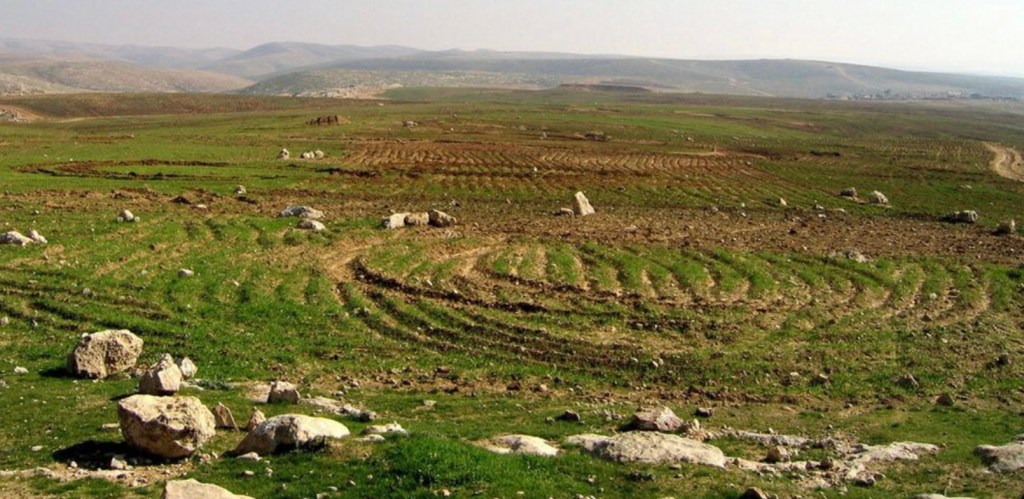
Jeremiah arranges, through Baruch, to purchase a field from his cousin Hamael, the son of his uncle, Shallum (32:7, 16). He is a child of Judah, and here is sending down his roots even deeper into the land that God had given his ancestors. He believes that, even though the Babylonian army was encircling Judah and he was unable to move about freely, nevertheless the time would come when God would ensure that ‘houses and fields and vineyards shall again be bought in this land’ (v.15). This attitude is thoroughly grounded in trust in God.

Jeremiah “serves as an examplar for exiles by acting with obedient hopefulness in the face of invasion and captivity”. The land purchase “begins the fulfilment of the visions of 30:1–31:40.” It is located at “the nadir of Judah’s story, during the bleakness of invasion” (587 to 586 BCE by our reckoning). (Quotations from Kathleen O’Connor, Oxford Bible Commentary, 515)

On the surface, the purchase appears futile, as Jeremiah foresees the dominance of the Babylonians, under Nebuchadnezzar, their king; this dominance shall remain, it seems, for some time, “until I attend to him, as the Lord declares” (32:5). So the prophet insists that the transaction take place, as a sign of hope in the future amidst the despair and devastation of his present.

This is what scholars call a “prophetic sign-act”, one of a number that Jeremiah enacts: wearing a linen loincloth, then hiding it, recovering it, and finding it “ruined, good for nothing” (13:1–7), a sign of the punishment to come on Judah (13:8–11); living as a celibate (16:1–2) as a sign of the exile to come (16:3–9); and pointing to the work of the potter, shaping a vessel, spoiling the vessel, and remaking it (18:1–4) as a sign of the way the Lord will treat Israel (18:5–11). Indeed, the last word of Jeremiah is to have his words written on a scroll which is thrown into the Euphrates River (51:59–63), to indicate that “Babylon shall sink, to rise no more”. (51:64).

The redemption of this parcel of land is a “prophetic sign-act” offering hope. It is reminder of the commands about the land found in Leviticus 25, where the Lord is said to have declared that “the land shall not be sold in perpetuity, for the land is mine; with me, you are but aliens and tenants” (Lev 25:23). The last concept is picked up in New Testament texts describing the people as aliens (1 Pet) and looking to the promise of a heavenly city (Heb 11).

The Levitical decree sits in the chapter concerning the Sabbatical Year (Lev 25:1–7) and the Year of Jublilee (Lev 25:8–55), a time of cancellation of debts and restitution of the land, a liberating sign of the liberating God who is to be worshipped; “the people of Israel are my servants whom I brought out from the land of Egypt; I am the Lord your God” (Lev 25:55). The redemption of the land by Jeremiah, acting through Baruch, signals an ongoing commitment to the covenant which the people had with the Lord God.

The purchase of land demonstrates a trust in the promise spoken in the preceding chapter. Jeremiah famously speaks about the new covenant; his words, however, are often spiritualised—the law is not written on stones, but written in the hearts of the people (Jer 31:31–33), the knowledge of God is not to be taught, but will be innate—“they shall all know me” (Jer 25:34).

By contrast to this common spiritualised interpretation, Jeremiah intends that this new covenant is to be lived in all of life; it is not simply a promise for an ethereal future, but it is to be a tangible reality in the immediacy of life in the present. So Jeremiah enfleshes the promise through the purchase of land. It is an incarnation of action some centuries before Jesus!

Interestingly, although the lectionary shifts the order of these passages, the purchase of land in Jer 32, signalling the promises made in the oracles of Jer 30–31, is placed immediately after the letter that Jeremiah wrote to the exiles in Babylon, urging them to come to terms with their situation in exile: “build houses and live in them, plant gardens and eat what they produce, take wives and have sons and daughters … multiply there [in Babylon] and do not decrease” (Jer 29:1–9). They, too, are to express their covenant faith in the realities of everyday life, even if they are in exile in a foreign land.

The details of this commercial transaction, involving money, property, and a deed of purchase (vv.9–12), are important; they indicate that how we treat our possessions, the land on which we live, the land which we own, reflects our faith. Jeremiah knows the trust of Lev 25:24; the land is of God—in this case, it has been given over to the family of Jeremiah as a trust, for them to care for. That trust is to “last for a long time” (v.14).

So the story invites us to consider how we exercise our responsibilities in property matters, how we live on the land, how we show that we believe that the land is of God. (It sits well alongside the Gospel passage offered in the lectionary, from Luke 16, which also emphasises the importance of responsible dealing with property and material things, in the life of faith.)

Our attitude to the land is actually a live current issue in Australia, as we mark the turning of an era (as the Queen dies, so the King reigns). Signs and symbols of British imperialism in this Great Southern Land remind us that, although the land was, and is, and will remain, central to the lives of the First Peoples of this continent, British colonisers have invaded, settled, massacred, and imposed a foreign way of life on those First Peoples. For them, being on country is being in spirit—connected with the spirit of the ancestors, living in harmony with the spirit of the creator God. There are resonances, surely, with the close connection to the land that Jeremiah here exhibits.

So in our context, the fact that Jeremiah buys the land is a challenge to our expectations that we can simply assume and take control of these lands. The fact that Jeremiah exchanges a contract for the land reinforces the importance of our dealings with real estate, property, finances, and people. His property transaction attests to the promise of the Lord to a besieged and soon-to-be exiled people, “ houses and fields and vineyards shall again be bought in this land” (32:15). The sign, to us, is clear: what we do with our material, physical lives ought to reflect the spiritual hopes and commitments that we have as people of faith.

*****

See also

Is there no balm in Gilead? (Jeremiah 8; Pentecost 15C)

The prophet Jeremiah lived at a turning point in the history of Israel. The northern kingdom had been conquered by the Assyrians in 721 BCE; the elite classes were taken into exile, the land was repopulated with people from other nations (2 Kings 17). The southern kingdom had been invaded by the Assyrians in 701 BCE, but they were repelled (2 Kings 18:13–19:37).

King Hezekiah made a pact with the Babylonians, but the prophet Isaiah warned that the nation would eventually fall to the Babylonians (2 Kings 20:12–19). Sure enough, after Babylon conquered Assyria in 607 BCE, they pressed hard to the south; the southern kingdom fell of Judah in 587 BCE (2 Kings 24–25) and “Judah went into exile out of its land” (2 Ki 25:21).

Jeremiah lived in the latter years of the southern kingdom, through into the time of exile—although personally, he was sent into exile in Egypt, even though most of his fellow Judahites were taken to Babylon. The difficult experiences of Jeremiah as a prophet colour many of his pronouncements.

Early in the opening chapters, as Jeremiah prophesies against Israel, he reports that God muses, “you have played the whore with many lovers; and would you return to me?” (3:1). The idolatry and injustices practised by the people of Israel have caused God concern. Throughout the poetry of the prophetic oracles in chapters 1—25, God cajoles, encourages, warns, and threatens the people.

“I will not look on you in anger, for I am merciful” (3:13), the Lord says; then Jeremiah instructs the people, “put on sackcloth, lament and wail: ‘the fierce anger of the Lord has not turned away from us’” (4:8). Next, God says, “I am now making my words in your mouth a fire, and this people wood, and the fire shall devour them” (5:14), and then, “take warning, O Jerusalem, or I shall turn from you in disgust, and make you a desolation, an uninhabited land” (6:8), and so on, for 25 chapters.

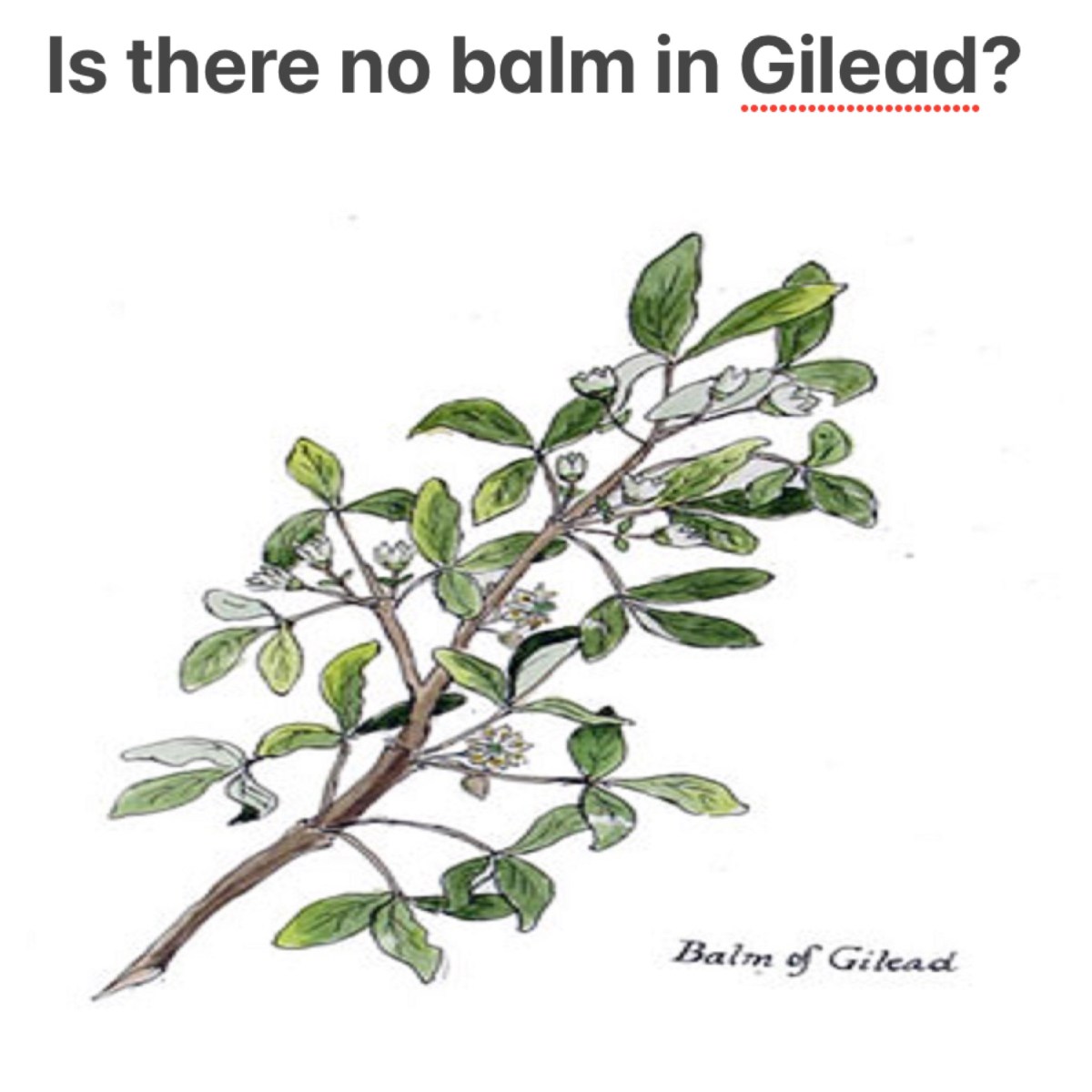
Whilst God laments the “perpetual backsliding” of the people, who “have held fast to deceit, they have refused to return” (8:5), the prophet laments, “my joy is gone, grief is upon me, my heart is sick … is there no balm in Gilead? Is there no physician there? why then has the health of my poor people not been restored?” (8:18–22). That is the passage that is offered by the lectionary this coming Sunday. The grief of the times led Jeremiah to an expression of utter despair: “is there no balm in Gilead?” (8:22).

The region of Gilead was the mountainous northern region of Transjordan, the land to the east of the Jordan River—an area which now is in the nation of Jordan. Whilst it was not part of the land of Canaan, it was promised to “half the time of Manasseh” (Deut 3:13; also Num 32:40). A medicinal perfume was made from a balsam shrub that grew in the area; it is noted in the Joseph story as being carried by a company of Ishmaelites who “came from Gilead with their camels bearing spicery and balm and myrrh, going to carry it down to Egypt” (Gen 37:25).

This balm is also included in the present which Jacob later sent to the ruler of Egypt: “a little balm, and a little honey, spices, and myrrh, nuts, and almonds” (Gen 43:11). According to Josephus, the Queen of Sheba brought “the root of the balsam” as a present to King Solomon (1 Ki 10:10; Antiquities of the Jews 8.6); the balm was later noted, admiringly, by a string of writers (Pliny, Tacitus, Florus, and Diodorus Siculus). It forms a saying in contemporary life, referring to a certain cure,

Jeremiah continues after this oracle of woe to denounce the worship of idols that the people perpetuate (10:1–16) and their breaches of the covenant (11:1–17). As a result, his life is placed in danger: “I was like a gentle lamb led to the slaughter, and I did not know it was against me that they devised schemes” (11:18–20). He declares that God condemns others who are prophesying; “they are prophesying lies in my name; I did not send them, nor did I command them or speak to them; they are prophesying to you a lying vision, worthless divination, and the deceit of their own minds” (14:13–18).

The prophet then dramatises his message of divine judgement on the people with reference to the familiar image of the potter, shaping and moulding the clay (18:1–11), a broken earthenware jug (19:1–15), two baskets of figs (one bunch good, the other inedible; 24:1–10), and “the cup of the wine of wrath” which, when “all the nations to whom I send you drink it, they shall drink and stagger and go out of their minds because of the sword that I am sending among them” (25:15–38).

The message of Jeremiah up to this point is stark, confronting, demanding: turn around, reshape your life, repent—or suffer the consequences. It’s no wonder that he felt aggrieved and despairing; who would respond? It’s a message that remains confronting and demanding for us, today. How do we respond?

A reticent prophet: called, equipped, and sustained (Jeremiah 1; Pentecost 11C)

This is a sermon that I wrote and presented for Project Reconnect for this coming Sunday, Pentecost 11. The video of the sermon is at https://projectreconnect.com.au/2022/07/21/21st-august-2022-pentecost-9-the-prophet-jeremiah

Project Reconnect is a worship resource that is published weekly to help congregations with their worship service. It includes a PDF information sheet with video messages, music resources and discussion starters. (The website notes, “downloads are free but we would appreciate your donations to help continue our work”; see https://projectreconnect.com.au)

*****

Prophets. Not profits as in financial gain, the difference between the amount earned and the amount spent in buying, operating, or producing something. But prophets, as in the chosen messengers of God, empowered by the Spirit, equipped to declare the word of the Lord to the people of God.

If your mind goes to prophets, perhaps you might think of Amos: “let justice roll down like waters, and righteousness like an ever-flowing stream”; or Micah: “what does the Lord require of you but to do justice, and to love kindness, and to walk humbly with your God?”. Perhaps you think of Elijah: “the Lord was not in the earthquake, nor in the fire; but in the sound of sheer silence.” Or is it Isaiah who comes to your recollection: “I heard the voice of the Lord saying, “Whom shall I send, and who will go for us?” And I said, “Here am I; send me!”

I’m not surprised if one of those famous prophets was the person you immediately thought of. We have heard from some of them in the Old Testament readings in previous weeks, so they may be fresh in your mind.

But in today’s reading, we hear about the call that God placed on another person, a somewhat reluctant prophet: Jeremiah.

Jeremiah was not itching to respond to God, when he received the call to become a prophet. He was not very old; some commentators consider him to be in his early 20s, others note that the distinctive Hebrew word used in this passage indicates he was in his teens. We might have sympathy for Jeremiah on this account; he was young, hardly at an age that we would recognise as qualified and equipped to be a public spokesperson for God!

So when he heard God declare to him, “I appointed you a prophet to the nations”, the NRSV translation says that the young man replied, “Ah, Lord GOD! Truly I do not know how to speak, for I am only a boy.” Actually, when they say he replied, “Ah”, he was using a Hebrew word that actually means, “alas” or “woe is me”. Strong’s Concordance says this is “a primitive word expressing pain”—so, more like “ouch!!!” So perhaps it’s better to think of his response as more like “oh no, oh no, oh nooooo—I couldn’t possibly do that! no way at all!!”. Jeremiah just did not want this gig at all.

Maybe you might know how he feels: when we are asked to do something difficult, something demanding, something challenging, that is beyond what we feel that we are able to achieve. For you, that might be the challenge of running a marathon, or being invited to speak in public to a large crowd, or learning a new language. Big challenges, lots of hard work, too much to consider. For me, I can think of a few challenges that really freak me out: climbing the Sydney Harbour Bridge (I don’t handle heights very well at all), letting a snake coil around me (that’s a petrifying thought), touching a spider (we just aren’t going to go there in any way!)

Jeremiah was incredibly reticent; like Moses, he was not going to take up this invitation in any way. Moses declined the offer of becoming the spokesperson for God: “who am I, to go to Pharaoh? what could I say to him?” but God persisted, and Moses relented. Likewise, with Jeremiah; initially, he says, “I do not know how to speak, for I am only a boy”, but God persists: he will support the young man Jeremiah, just as he supported the young man Moses.

But I think that we have this story from the opening chapter of this book, in our reading today, not because it shows us that God will help us overcome our fears about challenges set before us. It think that it is not Jeremiah’s words that we are to focus on. It is, rather, the words that God speaks to Jeremiah which should ring in our ears.

It is the encouragement for the task that God promises—and later delivers—that must stand out for us. “Do not say, ‘I am only a boy’”, the voice declares; “for you shall go to all to whom I send you, and you shall speak whatever I command you.” God gives the right words for the appropriate time. That is remembered when Jesus later tells his disciples that the spirit would enable them to speak, even in the midst of difficulties (Luke 21:13–15).

And then, we hear the words: “Do not be afraid of them, for I am with you to deliver you, says the LORD.” In typical style, the first word of God to the human being chosen for a specific task is, “do not be afraid”. When God appears to human beings—in a vision, as an angel, in a voice from the heavens, in a response to prayer, as a niggling, unsettling feeling, in words of advice or guidance from a friend—however God might appear to us, it can be an experience that evokes fear, awe, anxiety. Who is this, speaking to me? How am I to respond?

“Do not be afraid”, said the Lord, to Abraham, in a vision (Gen 15). “Do not be afraid”, he said, to Isaac, at Beersheba (Gen 26). “Do not be afraid”, to Moses, in the wilderness (Num 21), to Joshua, facing the combined might of a great army (Josh 11), to Elijah, also facing a great army (2 Kings 1); “do not be afraid”, Isaiah says, on behalf of the Lord, to king Hezekiah (Isa 37); “do not be afraid”, the voice of God says to the prophet Ezekiel, when he was called to his role (Ezek 2), and to Zechariah (Zech 8). It is a common refrain throughout the stories of the people of Israel.

And we hear the same phrase repeated in New Testament stories, when God speaks to Zechariah, “do not be afraid” (Luke 1), to Mary, “do not be afraid” (Luke 1), to Joseph (Matt 1), to Simon Peter (Luke 5), to Paul, Silas, and Timothy, in Corinth (Acts 18), and to the ageing prophet John in exile on Patmos: “do not be afraid” (Rev 1). It is God’s consistent and encouraging word to those who encounter the intensity of divine presence, the enormity of divine challenge, the inescapable call to follow, to believe, to declare the word of the Lord: “do not be afraid”. It is God’s word to each of us.

So the word of God to Jeremiah is clear: “I appointed you a prophet to the nations.” And Jeremiah is willing to respond; to accept the challenge, to take up the call, to stretch himself and step into a new experience.

What Jeremiah would encounter in the decades that followed, was pretty heavy stuff. He didn’t know that at the time that he accepted the call to be God’s spokesperson. He persisted, held strong, remained faithful throughout all the difficulties that ensued for the people of Israel, as they were attacked, besieged, defeated, and then sent into exile, away from their homeland, off into a strange, foreign country. Jeremiah held fast; he remained faithful to the call that God had placed upon him through all of this.

And God held fast to him through all these tragic events. Jeremiah received the support, the guidance, and the encouragement from God through this all, as the people of God were taken from their beloved land, and sent far away into exile. God remained faithful.

So we give thanks to God, for God holds fast, God remains faithful, God does not let go, no matter what. That gracious, faithful commitment to us is the heart of the good news that we know, that we proclaim, that we live in our lives: the ever-faithful God who is with us, the ever-present God who is for us.

For this, we say: thanks be to God!

*****

1. What do you think about the idea that a teenager could be the chosen voice of God?

2. How do you deal with difficulties on your walk of faith? How do you listen for what God might be saying to you at such a time?

3. Think of a challenge that faces your congregation or faith community. How might you work together to discern what God is calling you to do?

4. Jeremiah was called to speak to all the people—the whole community—in the public arena. How do you make your voice heard in the public discussion of important issues today?