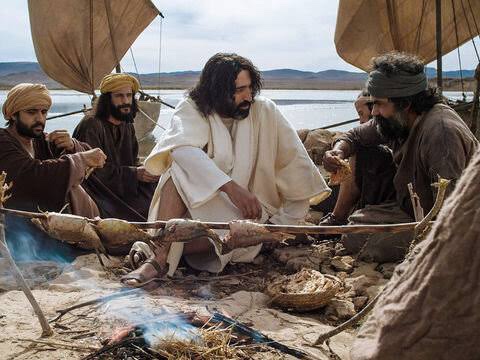
Back to the lake, back to fishing: a late resurrection story (John 21; Easter 3C)

The Gospel of John seems to come to a clear cut end with a summary and conclusion at the end of chapter 20: “Now Jesus did many other signs in the presence of his disciples, which are not written in this book; but these are written so that you may come to believe that Jesus is the Messiah, the Son of God, and that through believing you may have life in his name” (John 20:30–31).

The addition of another chapter, featuring the scene beside the Sea of Tiberias in which Simon Peter figures prominently (21:7, 11), and the subsequent focus on Peter as Jesus affirms and commissions him (21:15-17), are curious. My view is that, together, they provide a later “corrective” to the Johannine focus on the Beloved Disciple, over and above Simon Peter. We have already noted this as being a distinctive perspective within this Gospel. See https://johntsquires.com/2022/04/28/the-third-time-that-jesus-appeared-to-the-disciples-john-21-easter-3c/

That is one reason for viewing this scene as a later addition to the Gospel, which has already come to a clear and definitive conclusion (20:30-31). Why was this chapter added?

In Mark’s earliest narrative, Peter is one of four disciples called at the start of Jesus’ activities in Galilee (Mark 1:16-20). Luke transforms this call narrative so that it both focusses almost exclusively on Peter, and also highlights his calling to a special vocation (Luke 5:1-11). This account briefly notes the presence of two other disciples (“James and John, sons of Zebedee, who were partners with Simon”, 5:10), and omits any mention of Peter’s brother Andrew, in maintaining a clear focus on Peter as the counterfoil to Jesus in what takes place.

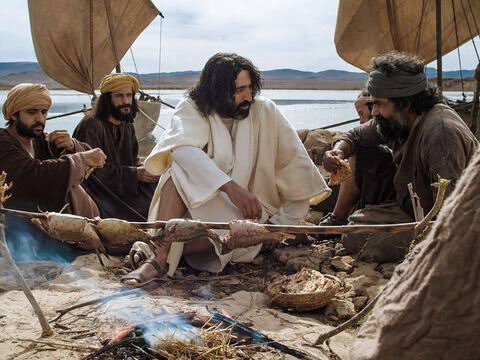
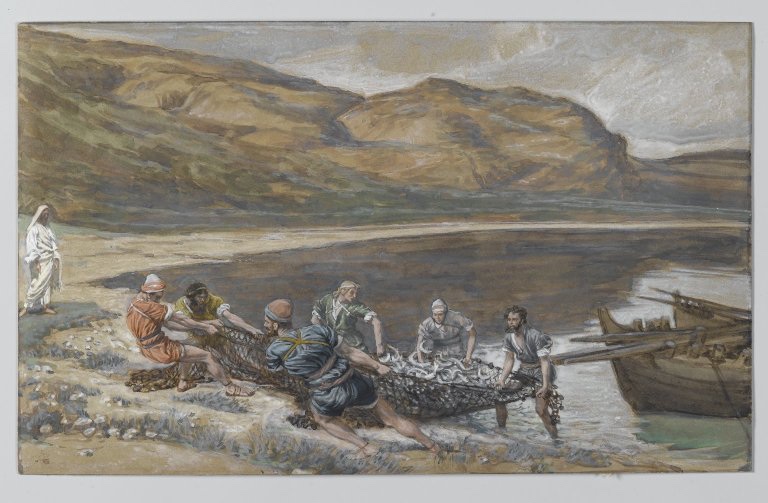
John’s Gospel includes a story that is remarkably similar to this Lukan call narrative, but locates it at the very end of the narrative, rather than in the earlier stages of the story. The many similarities within the story include: the location, by the Sea of Tiberias (John 21:1) or beside the lake of Gennesaret (Luke 5:1); Simon Peter as a key character (John 21:3, 7, 11, 15–17; Luke 5:3–8, 10); a lack of fish after a night of fishing (John 21:3; Luke 5:5); an appearance of Jesus (John 21:4; Luke 5:3); a command to try again to catch fish, to cast the net to the other side (John 21:6) or to “put out into the deep water and let down your nets for a catch” (Luke 5:4); a miraculous catch of many fish (John 21:6–8; Luke 5:6); and a confession of faith in Jesus as “the Lord” (John 21:7, 12; Luke 5:8).

Whereas for Luke, it is Peter who makes the confession of faith in Jesus (Luke 5:8), in John’s narrative it is “the disciple whom Jesus loved said to Peter, ‘It is the Lord!’” (John 21:7). This is reminiscent of the way that John reshapes the high christological confession of Peter, “you are the Messiah” (Mark 8:30), so that this high claim is spoken by Martha, sister of Lazarus: “yes, Lord, I believe that you are the Messiah, the Son of God, the one coming into the world” (John 11:27). If the author of the book of signs knew the Synoptic traditions, he has apparently intentionally removed these confessional statements from Peter’s mouth.

The scene on the sea in Luke ends with the command, “from now on you will be catching people” (5:10), maintaining the earlier Markan report of the words of Jesus, “follow me and I will make you fish for people” (Mark 1:17). By contrast, the Johannine scene is extended with a potent vignette; the invitation to follow is delayed until the end of this extended scene (John 21:19).

In the extended vignette in John’s version, a threefold “rehabilitation” of Peter takes place (John 21:15–17). Three times, Jesus asks a question of Peter, to which he responds in the affirmative; each time, Jesus issues a command to Peter: “feed my lambs … tend my sheep … feed my sheep”.

This triple sequence of question—affirmation—command is often linked to the threefold denial of Jesus by Peter found in all three Synoptics (Mark 14:68, 70, 71; Matt 26:70, 72, 74; Luke 22:57, 58, 60) and also John (18:15, 25, 27). Indeed, the Synoptic accounts explicitly note that Jesus says to Peter, “you will deny me three times” (Mark 14:72; Matt 26:75; Luke 22:61), and each narrative indicates that this has fulfilled a prediction made by Jesus (Mark 14:30; Matt 26:34; Luke 22:34).

This precise prediction is missing from the Johannine narrative; nor does this version make anything of there being three denials. This account simply ends, “again Peter denied it, and at that moment the cock crowed” (John 18:27). There is nothing explicit in the account of John 21:15–17 to suggest that it is explicitly looking back to “three denials” by Peter and seeking to redeem him with the threefold question—response—command of the Johannine account.

If the source of chapter 21 of John’s Gospel is other than the context in which the body of the Gospel (chapters 1–20) was formed, then it could well be that the insertion of this short scene does intend to refer back, not to the way that the book of signs portrays the denial of Jesus by Peter, but to the Synoptic account with its explicit noting of the “three times”. The “primacy of Peter” is laid over the narrative which has accorded that place to the Beloved Disciple.

Nevertheless, it is striking, I think, that after this interaction between Peter and Jesus, we are offered commentary on the way in which Peter would die (21:18) and a final invitation, “follow me” (21:19). “Follow me” is what Jesus says to various people during his active public ministry: Peter and Andrew (Mark 1:17), Levi the tax collector (Mark 2:14), an unnamed rich man (Mark 10:21), an unnamed traveller on the road (Luke 9:59), and, in the initial scenes in John’s book of signs, to Philip (John 1:43). Indeed, in John’s account, Jesus explicitly tells Peter, “Where I am going, you cannot follow me now; but you will follow afterward” (13:36–37).

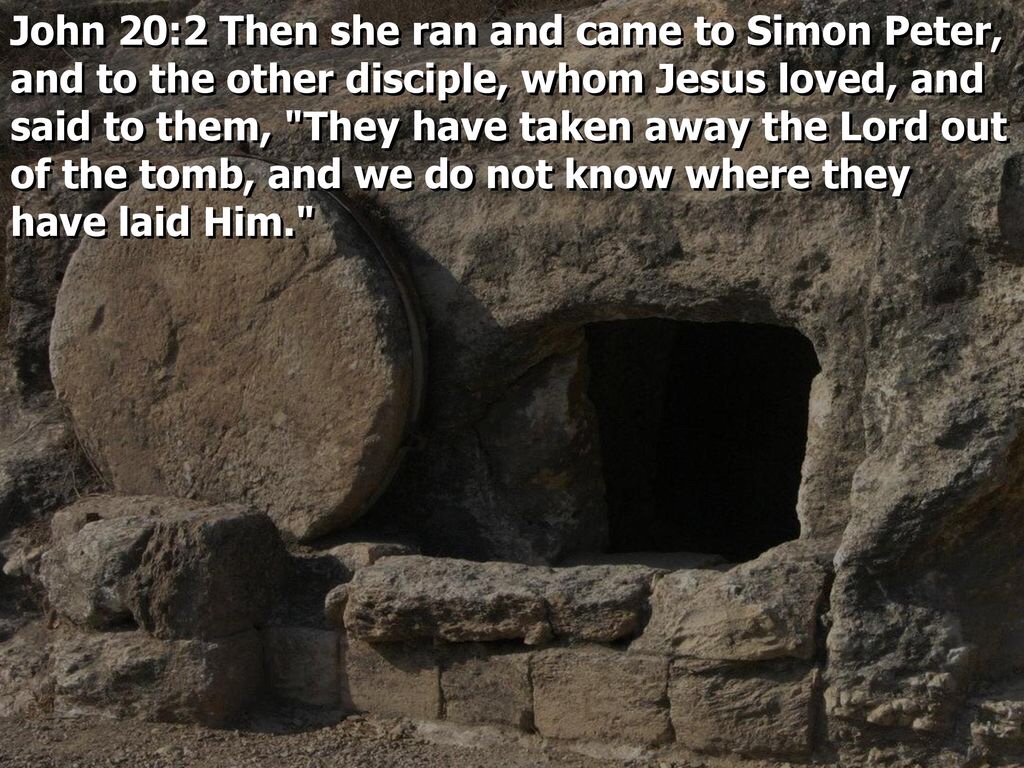
Immediately after this comes the prediction of his betrayal by Peter (13:38). Peter is unable to follow Jesus at any point in the story that follows—he denies him (18:15–18, 25–27) and then disappears from the story until he is drawn back into the narrative by Mary (20:2). His “redemption” is not complete until the explicit invitation from Jesus, “follow me”, beside the Sea of Tiberias (21:19). John has reworked and reshaped traditions that we can see in one form in the Synoptic tradition; his reshaping serves his own agenda in terms of the leadership of the Beloved Disciple.

It is that disciple who has the last word in this Gospel, with the curious interaction about his own death (21:20–23) and then the ultimate concluding claim by the author: “this is the disciple who is testifying to these things and has written them, and we know that his testimony is true” (21:24). The claim provides a neat segue into the claims made by the author of the letter we know as 1 John: “we declare to you what was from the beginning, what we have heard, what we have seen with our eyes, what we have looked at and touched with our hands, concerning the word of life” (1 John 1:1).

And the final, final word (John 21:25) hearkens back to the initial claims about God acting in and through Jesus as Word (1:1); concerning the full extent of what God does in and through Jesus, “the world itself could not contain the books that would be written” (21:25). The all-knowing author has knowledge beyond even what the present Gospel conveys.

The third time that Jesus appeared to the disciples (John 21; Easter 3C)

The Gospel passage which the lectionary offers for this coming Sunday (John 21:1–19) includes some distinctive features worthy of comment. The scene, like many of the scenes of the resurrection of Jesus, is found in this one place only. This contrasts with the empty tomb account, which is found in all four Gospels (Mark 16:1–8; Matt 28:1–10; Luke 24:1–12; John 20:1–18), albeit with variations and differences in each version.

Other resurrection accounts are one-off reports: to the eleven disciples in Galilee (Matt 28:16–20); to two disciples on the road to Emmaus (Luke 24:13–32); to “the eleven and their companions in Jerusalem” (Luke 24:33–49); to a group (unnamed) of disciples meeting behind locked doors, presumably in Jerusalem (John 20:19–23); and to the disciples, including Thomas, a week later, behind closed doors (John 20:26–29). (This collection of appearances is bundled up into the Longer Ending which was added to Mark’s Gospel in a later century, as Mark 16:9–20.)

There are also claims, made by Paul, about appearances of the risen Jesus, “to Cephas, then to the twelve … then to more than five hundred brothers and sisters at one time … then to James, then to all the apostles; last of all, as to one untimely born, he appeared also to me” (1 Cor 15:5-8). None of these correlate precisely with the appearances noted in the Gospels.

The location for this particular appearance of Jesus is “by the Sea of Tiberias” (John 21:1). It is only the book of signs that identifies Tiberias as a region which Jesus visits, and then only once, when he feeds to 5,000 (6:1–14, 23). In introducing that story, the author explicitly equates the Sea of Galilee with the Sea of Tiberias (6:1). This sea appears often as the location for stories in the Synoptic Gospels (Mark 1:16; 7:31, both paralleled in Matt 4:18; 15:29; see also Luke 5:1, where it is called the “Lake of Gennesaret”). The story told in Luke 5 is important, as we shall explore below, in considering the John 21 narrative.

La seconde pêche miraculeuse
by James Tissot (1836–1902)

Seven Disciples by the Lake

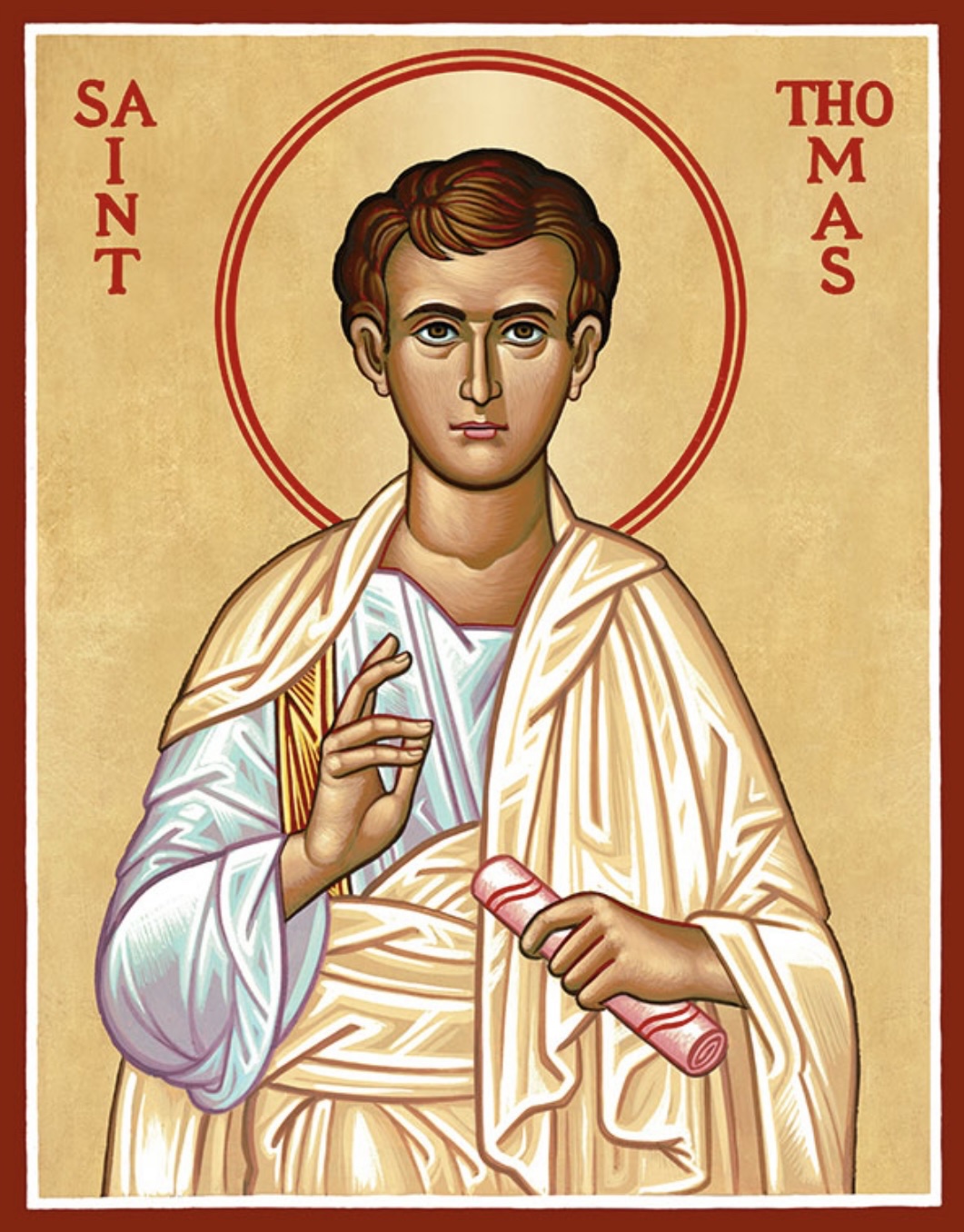
The group of seven disciples present when Jesus makes his appearance are identified as “Simon Peter, Thomas called the Twin, Nathanael of Cana in Galilee, the sons of Zebedee, and two others of his disciples” (21:2). This list of those gathered beside the sea is interesting for who is present, and who is missing.

The author of the book of origins has begun his account with an idiosyncratic list of the earliest followers of Jesus. The first named is Andrew, brother of Simon Peter, who is introduced as one of two disciples of John the baptiser (John 1:35–40). The other one with Andrew is unnamed. Andrew draws his brother, Simon, into the story (1:40–41), providing the first confession of Jesus as Messiah (1:41); although it is Andrew who makes this confession, Jesus bestows a new name upon Simon—to be known henceforth as Cephas, that is, Peter, the “rocky one” (1:42).

Peter figures in many stories in the Synoptic Gospels; Andrew, less often. By Paul’s own admission, “James and Cephas and John” were the “acknowledged pillars” of the Church in Jerusalem (Gal 2:9); James and Peter were key voices amongst “the apostles and the elders” in the gathering often known as the Jerusalem Council (Acts 15:13–19).

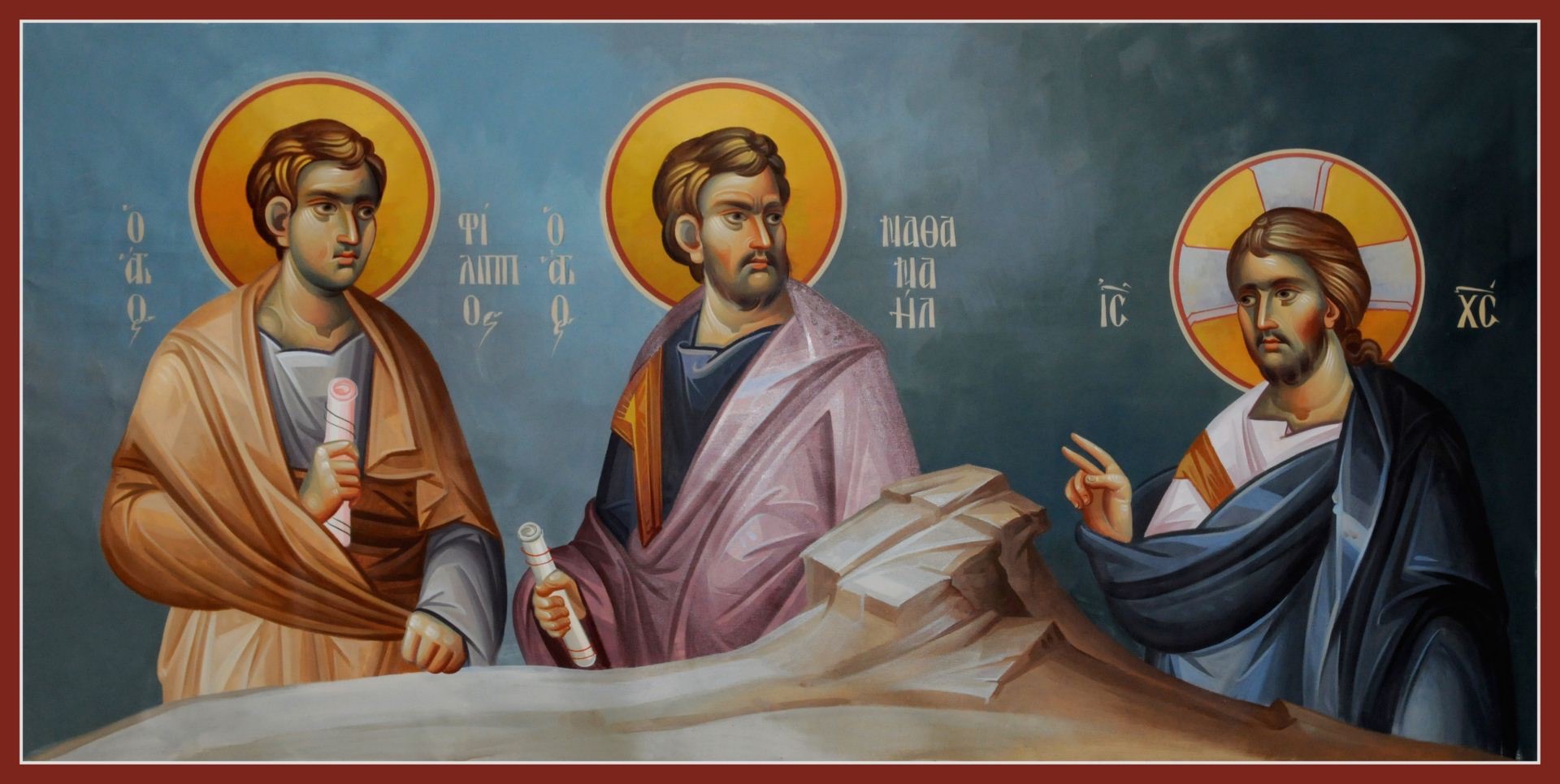
Also amongst the earliest followers of Jesus in the book of origins are Philip, “from Bethsaida, the city of Andrew and Peter” (1:43–44) and Nathanael, whom Jesus declares to be “truly an Israelite in whom there is no deceit!” (1:45–47). Nathanael provides a triple declaration that Jesus is “Rabbi … the Son of God … the King of Israel” (1:49). Curiously, these earliest followers of Jesus have already made the key confessional affirmations about Jesus in their initial encounters with him—more a literary device than an historically-plausible event.

Icon of Philip and Nathanael with Jesus

Peter, of course, figures in the Johannine version of the story about Jesus—only once in the earlier narrative section (John 6:68) but a number of times in the final sections of the story (13:1–11, 21–30, 36–38; 18:10–11, 15–18, 25–27; 20:1–8). The lesser role of Peter, and the way he is contrasted a,onside “the disciple whom Jesus loved”, will be further explored below.

Philip and Andrew are noted as being present both in the story of the feeding of the 5,000 (6:8–14) and when “some Greeks” worshipping in Jerusalem ask Philip, “Sir, we wish to see Jesus” (12: 20–22). This request evokes a significant response from Jesus, speaking about “my hour”, the seed falling into the ground, and the familiar teaching, “whoever serves me must follow me” (12:23–26). Philip also poses one of the requests put to Jesus during his “farewell discourse”, “Lord, show us the Father, and we will be satisfied” (14:8–14). Nathanael, by contrast, is absent from the story until this final post-crucifixion narrative (21:1–3).

So five of the seven who gather by the sea in this post-crucifixion time are clearly identical with individuals named in the Synoptic Gospels. Simon Peter was the earliest disciple called, along with his brother, Andrew (Mark 1:16–18; Matt 4:18–20) and always heads up the list of The Twelve whom Jesus “appointed as apostles” (Mark 3:14; see the list at Mark 3:18 and parallels, and Acts 1:13).

In Synoptic tradition, the sons of Zebedee were the next two disciples called by Jesus (Mark 1:19–20; Matt 4:21–22), where they are named as James and John; they also figure in the list of The Twelve (Mark 3:18 and parallels; Acts 1:13). These two sons are never named in John’s book of signs; nor do they appear anywhere else in the earlier stories of Jesus.

Thomas is named amongst The Twelve in Synoptic traditions (Mark 3:18 and parallels; Acts 1:13). He is noted on three occasions in the book of signs (John 11:16; 14:5; 20:24–29); see https://johntsquires.com/2019/04/23/in-defence-of-thomas-a-doubting-sceptic-or-a-passionate-firebrand/

Philip, introduced by John in company with Nathanael (1:43–51) is linked with Bartholomew in Synoptic traditions (Mark 3:18 and parallels; Acts 1:13). Bartholomew is not mentioned at all in the book of signs; could the Synoptic Bartholomew be the same as the Johannine Nathanael? The identification is often made by interpreters.

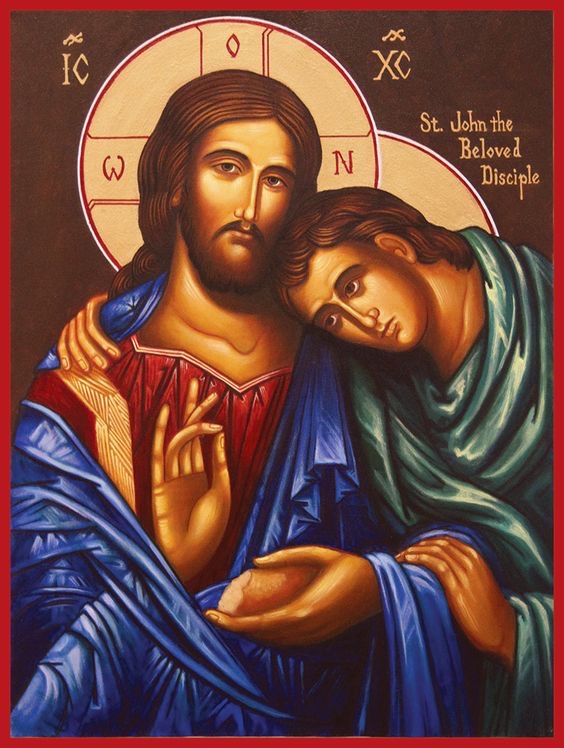
The Beloved Disciple and Simon Peter

Who were the other two, unnamed, disciples in that group of seven beside the Sea of Tiberias that early morning? The verses immediately after the section offered by the lectionary provide a clue. The narrative continues, “Peter turned and saw the disciple whom Jesus loved following them; he was the one who had reclined next to Jesus at the supper and had said, ‘Lord, who is it that is going to betray you?'” (21:20).

The disciple whom Jesus loved has appeared earlier in the book of signs at two key moments: at the meal with the disciples that included the footwashing (13:23), and beside the cross (19:25–27). There is some question, also, that he may have been “the other disciple” with Simon Peter in the courtyard of the high priest (18:15–16; “the other disciple” is identified as “the one whom Jesus loved” at 20:2).

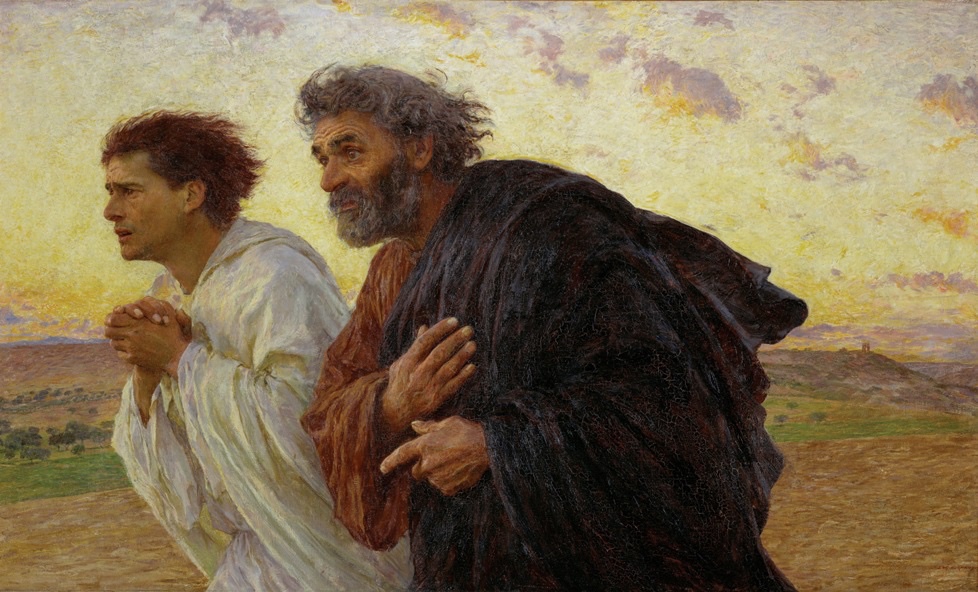
This disciple actually occupies a more prominent place in the book of signs than Simon Peter, who predominates in the Synoptic accounts. The Johannine narrative of the empty tomb places Simon Peter and the Beloved Disciple at the tomb (20:1–10). Whilst the two disciples run to the tomb, the Beloved Disciple arrives first, ahead of Peter, and makes the first confession of faith (20:3–8).

The disciples Peter and John running to the tomb
on the morning of the resurrection
Painting by Eugène Burnand (1898)

There is a similar dynamic at work in the Johannine account of the final supper, as the Beloved Disciple reclines next to Jesus; at the request of Simon Peter, he asks Jesus about his prediction of betrayal (13:21–25). In both scenes, Peter appears to be in a subservient position to the Beloved Disciple: arriving second at the tomb, asking the Beloved Disciple to ask a question of Jesus.

This contrast is heightened in the Passion Narrative, as the Synoptic accounts of the threefold denial of Jesus by Peter (Mark 14:66–72 and parallels) are replicated in John’s book of signs (John 18:15–18, 15–17), whilst the Beloved Disciple stays close by Jesus, standing at the foot of the cross with his mother, in John’s narrative (19:15–17).

The “competition” between these two early disciples is one clue as to the origins of John’s book of signs. Raymond Brown has developed a complex hypothesis about multiple stages of development of this Gospel, with the figure of the Beloved Disciple providing a focal point of leadership and identity (and perhaps also serving as the earliest source for the distinctive Johannine traditions?). This is a counterpoint to the leadership accorded to Peter in Mark’s account (Mark 1:16-18; 8:29; 10:28; 14:29; 16:7) and the subsequent strengthening of his leadership role by Matthew (Matt 16:13-20).

I still find Brown’s proposal to be quite persuasive. There is a detailed summary and valuable critical analysis of Brown’s hypothesis by L. Jared Garcia at https://leejaredgarcia.com/2020/10/29/the-community-of-the-beloved-disciple-by-raymond-brown-a-book-review/

*****

See also https://johntsquires.com/2022/04/29/back-to-the-lake-back-to-fishing-a-late-resurrection-story-john-21-easter-3c/

Boaz and Phoebe, on Mary and Jesus (John 12; Lent 5C)

A dialogue between two slaves at the house of Lazarus, Martha and Mary, written by Elizabeth Raine, presented at Tuggeranong Uniting Church on Sunday 3 April.

Boaz is a strict Jew and has a firm idea of custom and law. Phoebe is of Jewish Hellenistic origin, more liberal in her views and very interested in the message of Jesus. They have been serving dinner to the guests, including Jesus, after Lazarus’ was mysteriously raised from the dead.

*****

Boaz: It still find it creepy, I confess, being at the home of a dead man who somehow isn’t dead any more. Oh, I can understand the gratitude that Martha and Mary must have felt, and why they wanted to thank Jesus for restoring their brother to them. But you have to admit, the whole thing was strange. And that Jesus fellow, he is rather strange as well, don’t you think?

Phoebe: I thought it very kind of Martha and Mary to honour Jesus. I don’t find it strange at all. Everyone knows he is a holy man withwonderful powers from God. Lazarus’ raising was a miracle, a blessing from God. How can you think holiness in someone is a problem?

Lots of reasons. Holy men have a habit of coming to sticky ends. And I thought Mary’s gratitude was a little excessive. Fancy wasting all that expensive perfume. Where did she get the money from?

Well, I thought Mary’s anointing Jesus with that perfume was a beautiful demonstration of gratitude, and devotion. And surely you are not suggesting that she came by the perfume dishonestly.

No, of course not. But with a household to run, it seems an unnecessary expense to incur. And you must have heard the argument between Jesus and one of his disciples about it. You know, the one who keeps their accounts. Judas, I believe his name is. Judas wasn’t impressed by Mary’s action.

Well, I don’t think it is any business of Judas, or ours, or anyone else’s if Mary wished to thank Jesus in this way. How she spends her money is surely her concern and her business only.

I suppose so. But Judas had a good point. A whole jar of that perfume would be worth a year’s wages. Imagine how much good all that money could do for the poor. After all, we were commanded as Jews to give relief to the poor. Deuteronomy specifically states that we should ‘Open your hand to the poor and needy neighbour in your land’”. And look at the teachings of Jesus himself. He is always on about helping the poor. I heard he even advised one wealthy young man to sell everything he had and give it to the poor. Yet here he is accepting perfume worth a king’s ransom be wasted on his feet!

I can see what you are saying. But Jesus and the disciples have given lots of money to the poor over the last few years. You know they have. And inspired others to do the same. And Mary has a right to spend her money as she wishes. She clearly offered this gift out of her gratitude and great love for Jesus. After all, what price her brother’s life?

Well, I am not sure Jesus should have allowed a whole year’s wages to simply evaporate into thin air. Yes, it was a nice gesture and it did make the house very fragrant and pleasant. But what business has Jesus got to ask other people to be giving away or selling their things in aid of the poor when he allows such waste on himself? I still think Judas had a good point. All those denarii could feed a lot of hungry people. How can you be sure that Mary was doing the right thing? 

I say if you are going to be generous, then do it properly. And this is also an important part of all our traditions, to be generous in hospitality to our guests and to take care to show our appreciation for the favours of others. After all, the proverb says, “Some give freely, yet grow all the richer; others withhold what is due, and only suffer want.” Mary has given freely and didn’t withhold the appropriate thanks due to Jesus.

You sound just like that Rabbi Hillel with your liberal notions. I am sure this was not the intent of that proverb. But it wasn’t just the expense. It was what Jesus said in response to Judas, you know, about the poor always being around. You must admit that it was a very odd response for someone who says they are all for the poor and alleviating their suffering. He said that the poor would always be with us, but that he would not. This is not the attitude of a holy man. A holy man would think first of the poor.

I just told you that no one can accuse Jesus of ignoring the poor. Look at his recent actions. Apparently he managed to feed a whole crowd recently with only five loaves and two fish. In addition, I have heard some of the other followers of Jesus speak poorly of Judas. They say that Judas was not really concerned about the poor at all but was a thief who used to steal money from their common purse. Surely we cannot take his remarks seriously. Mary was motivated by love and gratitude,and Judas by selfishly wanting the money for himself. Mary, however, has surely given away a most precious possession with total selflessness.

Oh, you make it all sound very noble indeed. But just think about the way she went about it. Anointing his feet instead of his head. This isn’t customary. And letting her hair down in public like that, just like she was a prostitute. Whatpossessed her to do such a thing? She acted like she was repenting of something, not thanking the saviour of her brother. Or worse, making an offer of herself.

Oh, surely not. But I agree, it wasn’t the best image she presented of herself. I was a little shocked myself to see her kneeling at the feet of a man who wasn’t related to her, hair all over the place, wiping herself on his feet. I know they are good friends and all, but still – yes, there certainly was a breach of proprietary there. I just assumed she had forgotten herself in her great outburst of gratitude.

Well, though there is some truth in what you say, I wouldn’t want to make such an exhibition of myself. Wouldn’t a simple and heartfelt thank you in addition to the dinner be enough?

But you are forgetting just how great a miracle had been performed here – no wonder she knelt in worship at his feet. Jesus speaks about being humble and serving others. I am sure he wouldn’t be above anointing or washing feet himself. And only prophets anoint the heads of the great.

Hang on a minute. You are making it sound like Mary was recognising Jesus as the Messiah! Surely you are not suggesting this. Such ideas could be seen as blasphemous in certain circles. There have been whispers about this very thing.

Yes, I have heard the rumours as well. Apparently the chief priests are not happy at all with all the attention that Jesus has drawn to himselfsince the raising of Lazarus from the dead. I heard that they were trying to say that Lazarus wasn’t really dead; it was a stunt to suggest to the common folk that Jesus was the Messiah. You know, to drum up support from the peasants and get a movement going.

Yes, after Lazarus came alive, I did hear that the chief priests had called an emergency meeting of the Sanhedrin. They wanted to discuss what had happened, I suppose. After all, everyone is talking about the many signs that Jesus has performed. I guess they would be thinking that if they let him keep going on like this, that soon everyone will be believing he is the promised kingand messiah. And any mention of ‘king’ and the Romans would be sure tocome and destroy both the temple and us. 

I did hear that Caiaphas, the high priest, had made some sort of plan. Someone did whisper to me that he got fed up with all the debate, and told the Sanhedrin they were all fools. I heard that they decided it was better to sacrifice Jesus. You know, better to just have one man killed to appease the Romans rather than the whole nation be destroyed.

Hmmmmm, do you think Jesus has heard about this? Might explain the very strange remark he made at the time Mary was wiping his feet. He said to Judas that the perfume was for his burial. I thought to myself at the time, ‘Who is he to be planning such an expensive burial ritual? And he is only young. Why would Mary be getting ready for his burial now?’ But if he had heard the rumours too, then that remark suddenly makes sense.

Do you really think that the priests have made up their mind to actually have Jesus put to death?

I think it possible, and what’s more, I heard that they had let it slip that anyone who might know where Jesus was should let them know, so that they could arrest him. Even heard there was a reward. If you are right about Judas being a money grubbing thief, then maybe he will try and claim it.

Oh, surely not. He and Jesus are so close. Don’t even think that. But Jesus needs to be careful. I thought I heard him say at the dinner that he was going to Jerusalem soon, and Jerusalem is a hotbed of unrest with Passover coming up. There was also some talk that the priests were planning to kill Lazarus as well, because everyone keeps coming to have a look at him. It isn’t every day that you can look at someone who has come back from the dead.


Well, Jesus wants to hope that the priests don’t hear of this latest extravagance and interpret Mary’s gesture and Jesus’ acceptance of it as some sort of symbolic anointing of Jesus as a royal Messiah. Otherwise he will be looking for a tomb, not a throne.

*****

See also https://johntsquires.com/2022/04/01/jesus-anointed-as-a-sign-of-his-fate-john-12-lent-5c/

If the kingdom of God is ever going to happen on earth … (John 18; Christ the King Year B)

A dialogue sermon written by Elizabeth Raine and delivered online by Elizabeth Raine and John Squires at Tuggeranong Uniting Church and at Canberra Aboriginal Church on Sunday 21 November, the Festival of Christ the King.

*****

Today is known in the lectionary as Christ the King or Reign of Christ Sunday. It is a relative newcomer to the liturgical calendar, arriving only in the early twentieth century. Apparently this was because at that time, many Christians in Mexico were suffering religious persecution from their anti-religious government, and secularism was rapidly gaining the upper hand both there and in Europe.

In 1925, to counteract this, the Roman Catholic Church declared this day as a worldwide celebration of the kingship of Christ over every earthly power. Its timing at the conclusion of the Season after Pentecost was fixed both by Vatican II and the subsequent Protestant developments of the lectionary, including our own UC in Uniting in Worship.

With the rise of secular atheism, people are more likely nowadays to pledge allegiance to political and consumerist organisations than they do to kings or the politics of God as revealed in Scripture. These Scriptures make clear, as does the ministry of Jesus, that God’s politics are not identifiable with those of democracies or typical kings.

In this scene from John, we hear Pilate asking Jesus the question “So you are a king?” I wonder: what does this mean about Jesus? What sort of a king could he be?

A: I know what sort of king he is! Remember when we were children, we imagined whatkings would look like, from all the stories we heard as children. A king or queen sits on a throne, has very fine robes and a crown made of gold and precious jewels. People bow down before the feet of the king in these stories. And look at how people act around the Queen! In her presence, they bow and curtsey.

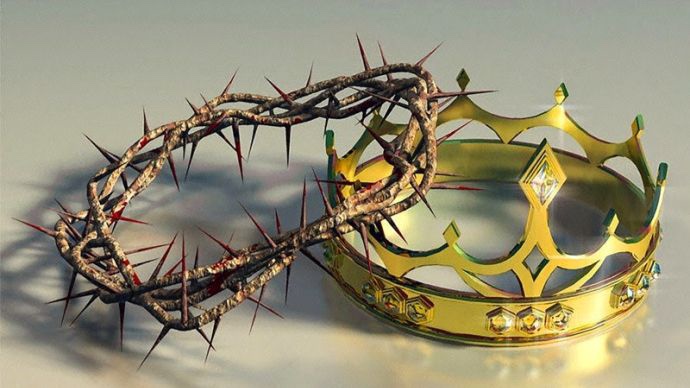
B: Well, I don’t think Jesus is that sort of king at all. Where in the bible does it talk about Jesus having a throne, or jewels, or fine robes, or a golden crown? Falling at the feet of Jesus is a very different encounter. His feet are dirty and bloody, his body broken and beaten, his head bowed beneath the a crown of thorns. Jesus was executed by crucifixion, which was saved for the worst criminals and political rebels. Jesus at the end looked broken and defeated, and is definitely not what we might imagine as a king.

I think this scene is deeper than that. Pilate wants to know if Jesus sees himself as king of the Jews. PiIate might be thinking of thrones and crowns, but Jesus isn’t. He is thinking of something quite different, I am sure. I can see it now: Pilate, the messenger of the earthly kingdom of Rome facing off with Jesus, the messenger of God’s unearthly kingdom.

A: I hear what you are saying, but are you sure about the unearthly bit? After all, Jesus was pretty intentional about challenging the earthly empire and the corruption in authority. Look at him when the widow gave everything, he was exposing systems that were oppressive; and what about when he turned over the tables at the temple? That would have infuriated the temple priests, men who were in the pay of, and appointed by Rome itself, at the time.

B: He did say his kingdom wasn’t an earthly one.

A: On thinking about it, maybe being king of an unearthly kingdom means you act differently when you ARE on earth. Look at Jesus when he entered Jerusalem riding on a donkey, allowing the crowd to shout out Hosanna (which means save us), and acclaim him as a king. His allowing the crowd to shout seditious things at him, would have made him a target not only of the temple priests, but of their Roman masters. Jesus must have known such actions would lead to him being arrested.

B: Hmmm, I see what you are saying. That is a very interesting idea. It is unfortunate that over the centuries, the subversive message of this unlikely king has been somewhat lost. So on the one hand, we have Jesus, the king who: * refused to allow fighting * would not grant prime posts to cronies * would not live in a fine house * refused to hate enemies or plot their downfall * mixed with the common crowds without any sense of royal dignity * refused to play political games to increase his power * did not dress in fine robes, or wear a jewelled crown.

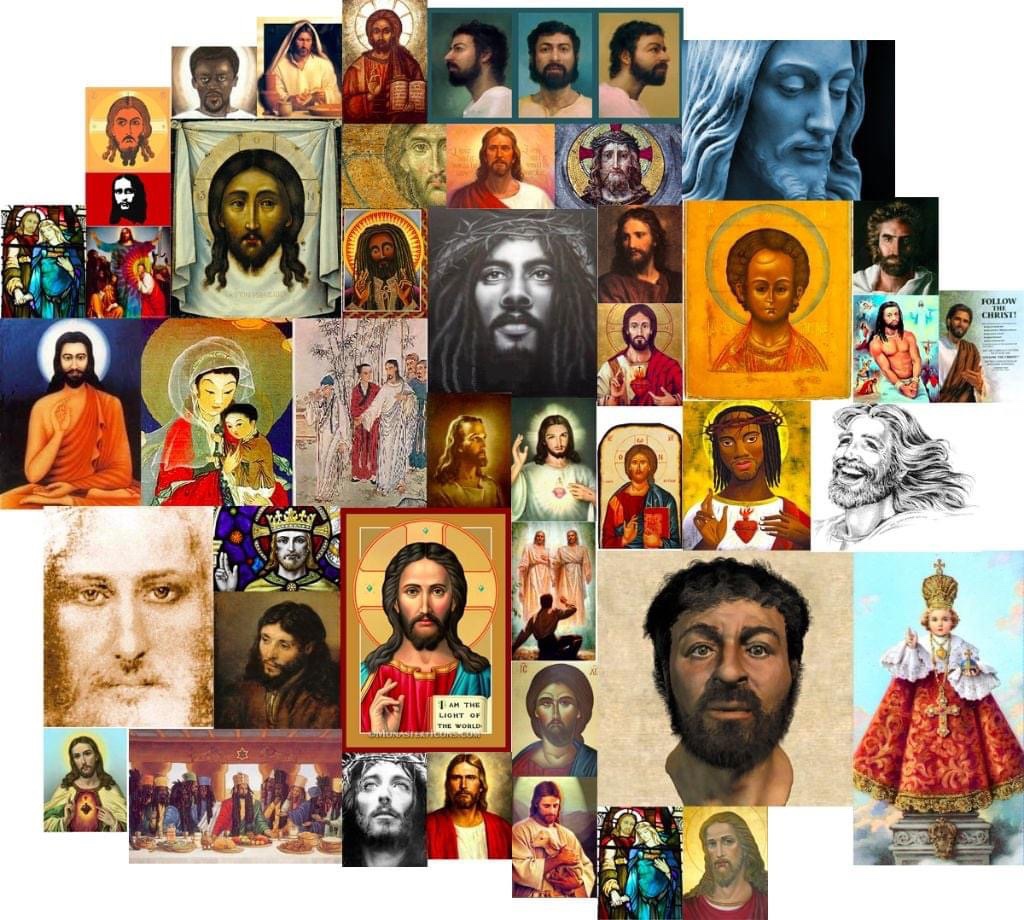
A: But in reality, one the other hand, Jesus is pictured as a heavenly King with a worldly majesty: * who was painted in crowns and fine robes * who was given features similar to earthly monarchs * in whose church was created courtiers and princely representatives * in whose name people blessed their armies as they attacked the cities of their enemies * and of whom the church taught that the next time he came things would be very different as he would subdue the earth and put all opposition under his boot.

B: Well, that does raise some tricky issues. Today on the festival of Christ the King, I think it is important that we think about this. Which kind of King do we want to be worshipping? Will the real Jesus please stand up?

 A: I have been reading about this actually.

B: You? Reading?

A: Yes, me. Now stop with the smart answers. I have been reading Bruce Prewer, who suggests that we grow like the thing we worship. So who do we want to resemble? The king of power, commanding armies, destroying enemies, with fine robes as depicted by artists at the church’s instigation throughout the centuries? Or the king who mixes with common folk, who says put away your sword, who works to free the oppressed, who welcomes the stranger, who eats with sinners, who overturns the tables of the money changers, and who forgives the people responsible for his death?

B: Wow, that is a great way of looking at it. Do we want to be at the edge of our communities our in the middle of power? We don’t know what the future of our world will look like, but surely the kingdom of God shouldn’t have fear or hate or oppression in it.

A: That’s right. If the kingdom of God as Jesus saw it is ever going to happen on earth, then every interaction, every decision, every moment and every place we find ourselves in must be seen as an opportunity to experience God’s reign in our lives, and to share the blessing of God’s reign with others. We need to turn our faith into a life-transforming practice, rather than just an intellectual assent to some ideas about God.

B: For Christ to truly be King in our world, Christ must be King in every individual lives in such a way that God’s peace and justice, God’s love and grace, will constantly flow through us, God’s people, into the world – one moment, one interaction and one transformative step at a time.

A: Surely Christ is the King who turns all of our human notions and illusions of power squarely on their heads. What the world defines as weakness and failure, Jesus shows is the real power rooted in love, bathed in grace, and covered with mercy. He is the one who redeems that which seems unredeemable and the one who loves those who appear unlovable.

By his death, we are offered a way to wholeness and the kingdom of God, a kingdom where love is so powerful that forgiveness is offered to all; where the hungry are fed, the naked are clothed, and the poor and the sick are cared for. In standing with this kingly Jesus today, we can fight racism, classism, homophobia, poverty, discrimination, and homelessness.

B: Yes! We can start to work to make the systems of injustice just, and work to overturn the powers of corruption and darkness. We don’t know what the future of our world will look like, but the kingdom of God doesn’t include fear, hate, or shutting down.

We must answer the call of Jesus which hasn’t changed in 2000 years—“Follow me to a kingdom where domination and oppression have been overcome, where the basic human needs are met, where all dwell in harmony with God and each other.”

A: Now that sounds like a king and a kingdom worth working for.

B: Pilate asked him, “So you are a king?”

A: Jesus answered, “You say that I am a king. For this I was born, and for this I came into the world, to testify to the truth. Everyone who belongs to the truth listens to my voice.” (John 18:37)

*****

B: Loving God of power and justice and peace, in our broken world we seek a new order where there is courage to speak truth to power;

A: we seek a new order where there is mutual support in church and community;

B: we seek a new order where there is abundant time for healing;

A: we seek a new order where there is peace and freedom for all. Amen.

Misunderstanding Jesus: “they came to make him a king” (John 6; Pentecost 9B)

At this time of the year, every Year B, the lectionary offers us five weeks of readings from John 6, revolving around the motif of Jesus as “the living bread which came down from heaven”. The story of the feeding of the crowd of “men … about 5,000 in all” (John 6:1–14) replicates the story omitted from the last week by the lectionary, where the crowd also comprises “5,000 men” (Mark 6:44).

The Gospel offering provided by the lectionary last week omitted the feeding narrative (Mark 6:35–44) and provided only the surrounding sections (Mark 6:30–34, 53–56). It also omitted the account of Jesus walking on the water (Mark 6:45–52)—a story paralleled in Matt 14:22-33 as well as John 6:16–21.

In doing this, the lectionary had excised the important reference to Jesus crossing over “to the other side”, from the Decapolis across to Bethsaida (Mark 6:45). In this Gospel, Jesus had left Jewish territory earlier, when he crossed “to the other side of the sea, to the country of the Gerasenes” (5:1), then returned “to the other side” (5:21), where he visited “his own country” (6:1) before venturing again across “to the other side” (6:45–52). See https://johntsquires.com/2021/07/14/whats-in-and-whats-out-mark-6-pentecost-8b/

In the book of signs, the Gospel of John, Jesus moves freely between Galilee and Judea, a number of times; but there is no indication that he visited Gentile territory, despite the question of people in Jerusalem, “does he intend to go to the Dispersion among the Greeks and teach the Greeks?” (John 7:35).

The story of feeding the crowd is also retold by the other two evangelists. In the book of origins (Matt 14:15–21), the crowd comprises “about five thousand men, besides women and children (Matt 14:21). In the orderly account of things fulfilled (Luke 9:12–17), the crowd is recorded, as in the Markan source, as being “about 5,000 men” (Luke 9:14). The Johannine version, as we have seen, also estimates the total number of men present as being “about 5,000” (John 6:11).

So the early sections of John chapter 6 tell of incidents that are told also by the authors of the Synoptic Gospels: feeding a crowd (6:1–14) and walking on the water (6:16–21).

Woven through this long chapter, however, are a series of encounters that Jesus had with people around him—the crowds in Galilee (6:2, 22), his own disciples (6:3, 16, 60, 66-67), and a group of leaders who had come north from Judea into Galilee, to hear and see him (6:41, 52).

Note: Most translations describe this latter group simply as “the Jews”. The Greek word used, however, can equally be translated as “the Judeans”. There is a good case that has been mounted that the way the word is used in the fourth Gospel means that it should be translated as “a group of Jewish leaders who exercise great authority among their compatriots and are especially hostile to Jesus and his disciples … it refers to certain authorities rather than to the people as a whole.” See D. Moody Smith, “Judaism and the Gospel of John”, accessible at https://www.bc.edu/content/dam/files/research_sites/cjl/sites/partners/cbaa_seminar/Smith.htm

The sixth chapter of John’s Gospel thus offers a series of encounters that reveal misunderstanding, antagonism, and conflict in the ways that people relate to Jesus, even whilst he sets forth this significant teaching that he is “the bread of life” (6:35, 48).

*****

The first of these encounters takes place in the opening scene of this chapter, near to Passover, when Jesus and his disciples are gathered with “a large crowd” beside the Sea of Galilee (6:1-15). The issue, of course, is how to feed the large crowd; the scene thus provides the pressing situation which enables Jesus to speak, at length, about the gift of living bread that he offers.

The scene, as we have noted, is reminiscent of the Synoptic scene of feeding recounted at Mark 6:32-44, Matt 14:13-21, and Luke 9:10-17; and also the parallel scene of feeding “4,000 men” recounted at Mark 8:1-10 and also at Matt 15:32-39; although Matthew indicates that there were “4,000 men, besides women and children”.

In each of those cases, the accounts provide the opportunity for Jesus to model the traditional pattern of a Jewish meal, as he “looked up to heaven, and blessed, and broke the loaves, and gave them to the disciples to set before the people” (Mark 6:41; Matt 14:19; Luke 9:16; and again at Mark 8:6 and Matt 15:36), prefiguring the familiar pattern from the last supper (Mark 14:22; Matt 26:26; Luke 22:19; 1 Cor 11:24; and see also Acts 20:7, 27:35).

In John’s Gospel, the last supper (13:1 onwards) does not contain any such remembrance of bread (and wine); whatever Eucharistic overtones are contained in the book of signs appear later in chapter 6, with references to “feeding on my flesh and drinking my blood” (6:63-58).

In the opening scene, nevertheless, there is an allusion to this pattern in the description of Jesus as he “took the loaves, and when he had given thanks, he distributed them to those who were seated” (6:11)—although this is immediately followed, not by drinking wine, but by distributing fish (6:11b).

The miracle that is experienced by “the large crowd”—five barley loaves and two fish (6:9), which not only feeds the crowd (6:12) but also provides twelve baskets of left-overs (6:13)—is, understandably, interpreted by the people as a prophetic sign (6:14).

Jesus is this described as “the Prophet who is to come into the world”, alluding to the eschatological expectation of “the prophet to come” (Deut 18:15–18; Mal 4:4–6). Prophets were know to be capable of performing signs, following the model set by Moses (Acts 7:36; Exodus 4:1–17; Deut 34:10–12).

*****

The insight that Jesus was a prophet has already been expressed by the woman of Samaria, beside the well (John 4:19). In that encounter, the woman moves from a recognition of Jesus as prophet, to an awareness that he is Messiah (4:25-26, 29), and then to her testimony that he was the saviour of the world (4:39-42). So the initial response of the crowd is positive, affirming Jesus as “the Prophet who is to come into the world!” (6:14)

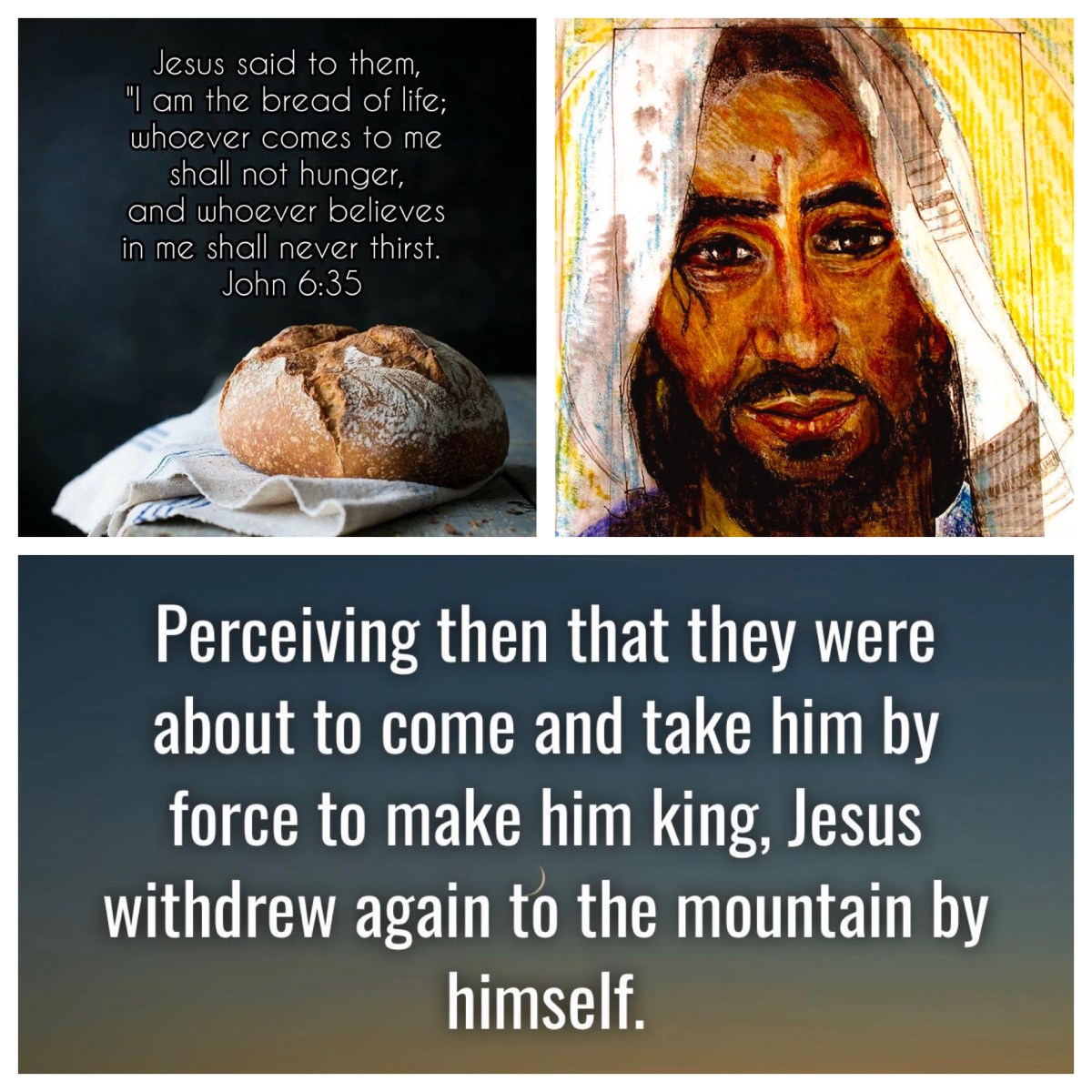
Immediately, however, it turns sour: “when Jesus realized that they were about to come and take him by force to make him king, he withdrew again to the mountain by himself” (6:15).

To make him king: this is the first misunderstanding of Jesus that can be identified in this chapter. (There are a number of other misunderstandings that can be noted in the remainder of this chapter.)

The appointment of a king in Israel was contested, according to the narratives included in 1 Samuel. The prophet Samuel did not wish to anoint a king (1 Sam 8:6) and argued against this before the people (1 Sam 8:10–18). But the voice of the people (1 Sam 8:5, 19–20) prevailed; Samuel duly anointed the first king, Saul (1 Sam 10:1) and begrudgingly declared him to be king (1 Sam 10:17–24). So Israel had kings, and they ruled for some centuries.

Of course, by the time of Jesus, the institution of the monarchy had been well established, and had flourished under David and Solomon, Omri and Josiah. Then the monarchy had been dismantled through the violence of foreign invasion and the upheaval of large scale movements into exile, from 721 BCE in the northern kingdom, then from 587 BCE in the southern kingdom.

The accounts that we have of the role of kings in Israel (in 1–2 Kings, and 1–2 Chronicles) comes from later, after the return from exile on the 6th century BCE. The vision of the king in these documents was highly romanticised; the tradition about David and Solomon in particular had minimised their numerous faults and strongly valorised their virtues (1 Chr 18:14; 2 Chr 9:13–28).

In Christian tradition, this trajectory continues. Jesus is acknowledged as King of the Jews (Mark 15:2 and parallels) and even has a feast day in the liturgical cycle named after this: Christ the King. The author of the book of signs knows the irony of the fact that this is where Jesus will come undone: from the moment when Pilate put to Jesus the notion that he might be “the King of the Jews” (18:33). The very claim was enough to ensure that he would be scorned and ultimately crucified (19:3, 19-21).

To the Romans, a king was not a position to be valued. The terrible experience they had with Julius Caesar, the one-man ruler called rex, was enough to turn them away from having a king for centuries. There was a political naïveté in the Jewish crowd’s actions in acclaiming Jesus as king, at least in terms of how the Romans would have viewed him.

And to a pious Jew like Jesus, it was clear beyond doubt that only God was king over Israel (Ps 72)—indeed, over the whole earth (Ps 47). Jesus definitely wants to avoid such an acclamation about him at this point. The crowd are misunderstanding him. So he withdraws.

The author includes this clear indication, dripping (as is typical in this Gospel) with irony. The one whom the crowds excitedly wanted to crown as king, will be savagely put to death by the Romans as “King of the Jews”, pretender and aggravant.

“In this is love: that God sent his son” (1 John 4; Easter 5B)

The book we know as 1 John is unlikely, as we have seen, to have been a letter. It is more likely that it came into being as a sermon, which was later collected alongside some other works attributed to John, which were actual letters (2 John and 3 John), themselves placed alongside letters by other leaders (Peter, James, Jude—and, of course, Paul).

This sermon-letter is intended to encourage believers, who are to live in light, not in darkness, to love, and not to hate (1:5–10; 2:9–11; 3:11–15; 4:20–21), and to strive to ensure that their love reaches “perfection” (2:5; 4:12, 17–18) in their lives.

Set in stark contrast to these believers is “the world”, which is full of desire (2:16); those in “the world” do not help a person who is in need (3:17); they hate believers (3:13) and do not know God (3:1; 4:3–6).

The concluding words of the book, asserting that “the whole world lies under the power of the evil one” (5:20), suggest high tension, even outright conflict, between the people addressed in this letter, and some indeterminate “opponents”.

The work is attributed to the apostle John, and that invites comparisons with the Gospel which also, by tradition, carries the name of John as its author. The sectarian tendencies, already seen in John’s Gospel, appear to have intensified in the situation addressed in this letter. Yet, in the end, “the world” is only temporary (2:17); victory over the world is assured, for it has already come (4:4; 5:3–5). Indeed, God’s intention is to save the whole world (2:1–2; 4:9, 14).

Who are the opponents? A dispute regarding the nature of Jesus is hinted at; this may point towards a doctrinal basis for the conflict. A central assertion, for the author of this sermon-letter, is that “Jesus Christ has come in the flesh” (4:2).

This claim appears to have been made in opposition to another view (that Jesus only appeared to be “in the flesh”, it is often assumed). Likewise, it is twice asserted that Jesus is “the atoning sacrifice for our sins” (2:2; 4:10; this is the NRSV translation of the complex Greek word used, hilasmos). We encounter this technical word in the affirmation of 4:10, in the Epistle passage offered by the lectionary this coming Sunday.

These credal claims have led some interpreters to claim that the “opponents” reflected in this sermon-letter were Docetists, who claimed that Jesus only appeared to be of human flesh. (The term “Docetist” comes from the Greek word dokeo, meaning to appear or to seem.)

Various claims made concerning Jesus reflect the developing Christology that we can see in other New Testament documents: Jesus is “Son of God” (4:15; 5:5, 10), “Messiah” (2:22; 3:23; 5:1), the one who is “righteous” (2:2, 29). The author of this sermon-letter thus takes his place alongside other “apostolic” authors who together will provide the data for the developing “apostolic faith” of the second century onwards.

There is a particular emphasis in this sermon-letter on the claim that Jesus “came by water and blood” (5:6). This appears to argue against a view that Jesus came “by water” only—that is to say, a view that minimises or rejects the saving significance of the death of Jesus. For the author, a central assertion is that “the blood of Jesus [God’s] Son cleanses us from all sin” (1:7).

The conflict between the author and his opponents had become tense and even malicious, as we might deduce from the references to “deceivers” (2:26; 5:7), “false prophets” (4:1), “liars” and their “lies” (2:4, 22, 27; 4:20; 5:10), and the “spirit of error” (4:6). These condemnatory terms climax in the reference to, not one, but many “antichrists” (2:18–25; 4:2– 6).

The connection of such derogatory labels with the credal assertions of the author (especially at 2:22 and 5:10) suggests that sectarianism has fuelled this conflict. A further piece of evidence in support of this is the use of the term “anointing” (2:20, 27) to describe the status of the recipients. This word, in Greek, is related to “Christ”, the title reserved for Jesus. Those anointed by God claim a special status as Christ’s people—a claim that fits well within the polemical context of increasing sectarianism.

*****

A striking feature of the letter occurs towards its end, in a compact sentence (5:13) which contains both a description of the recipients (“you who believe in the name of the Son of God”) and a declaration of the purpose of the letter (“so that you may know that you have eternal life”). The key terms in this sentence are immediately reminiscent of a similar declaration of purpose towards the end of John’s Gospel (John 20:31).

Table A: Purpose Statements in John and 1 John
John 20:31
But these are written so that you may believe that Jesus is the Messiah, the Son of God, and that through believing you may have life in his name.
1 John 5:13
I write these things to you who believe in the name of the Son of God, so that you may know that you have eternal life.

Each work is “written” concerning “eternal life”, granted to people who “believe” in Jesus as “the Son of God”. The similarities suggest either common authorship, or an intentional allusion to the Gospel by the author of the letter. The differences in style and theology between the two works are subtle, but they do reinforce the latter option as preferable.

One clear difference to be noted is that, whilst the Gospel makes frequent references to Hebrew Scripture (both in quotations and by allusion), the letter betrays little awareness of these scriptures, other than what had already been mediated through the Gospel. The strong Jewish context of the Gospel is not evident in this letter. Other points of differentiation are noted below.

There are many signs of the common theological standpoint shared by letter and Gospel. The opening of the letter is reminiscent of the grand poem which begins John’s Gospel, and three important themes of this Gospel are flagged in both prologues. Central to each is the revelation of God (1 Jn 1:2; John 1:14, 18) which occurs through speaking (1 Jn 1:1, 3; compare “the Word” of John 1:1, 14) and conveys the message of eternal life (1 Jn 1:2; John 1:4).

Another important motif in the prologue to the letter is the believer’s fellowship with God and Jesus (1 Jn 1:3), which may be compared with the Gospel terminology of “abiding in” (John 14:17; 15:1–11). The sense lof testimony which permeates 1 Jn 1:1–4 resonates with the frequent emphasis on testimony, or witness, in the Gospel (John 1:6–8, 15, 19, 32– 34; 3:31–34; 5:31–32, 36–39; 8:17–19; 10:25–27; 19:35). The note of joy which ends the prologue (1 Jn 1:4) reflects similar expressions in the Gospel (John 15:11; 16:20–24; 17:13).

Beyond the letter’s prologue, other themes also point towards the Gospel of John, with some observable differences. The language of light and darkness (1 John 1:5–7; 2:8–10) is a reminder of the Gospel’s use of similar imagery (John 1:4–9; 3:19–21; 12:46), although there is a change in attribution, from Jesus as “the light of the world” (John 8:12; 9:5), to the affirmation that “God is light” (1 Jn 1:5).

The letter writer asserts that “we are from the truth” (3:19) and “we know the spirit of truth” (4:6); this is reminiscent of the claim of the Johannine Jesus that “I am the truth” (John 14:6) and his promise that “if you continue in my word…you will know the truth” (John 8:32).

Indeed, a consistent emphasis on adherence to the truth runs through the letter (1 John 1:6, 8; 2:4, 8, 21, 27; 3:18–19; 4:6; 5:6, 20) as through the Gospel (John 1:9, 14, 16; 3:21; 4:23–24; 6:55; 7:18; 8:32; 14:6, 17; 16:13; 17:17–19; 19:37–38).

We have already noted the occurrence of the phrase eternal life in the letter’s prologue (1 Jn 1:2); it occurs elsewhere in the letter (2:25; 3:15; 5:11, 13, 20). This is a recurrent theme in the Gospel, for it characterises the offer which Jesus makes to his followers (John 3:15–16, 36; 4:14; 5:24; 6:27, 40, 47, 54, 68; 12:25, 50; 17:1–3).

Again, as we have seen, the attribute of love is highly prized by the letter writer; the command to love, which issues from God (1 John 2:7–8; 3:23– 24; 4:21; 5:1–5), looks back to the Johannine Jesus, who is twice reported as delivering this commandment (John 13:34–35; 15:12–17) and whose death exemplifies such love (John 15:13; see also 10:11–18; 12:23–26). However, the notion that love can be perfectly expressed (1 Jn 4:17) and the opposition between love and fear (1 Jn 4:18) go beyond the Gospel’s exposition of love, as does the claim that “God is love” (1 Jn 4:8).

Knowledge is a key concern of this letter (1 John 2:4, 13–14, 21; 3:1, 19; 4:2, 6–8, 16; 5:13); likewise, in the Johannine account of the life of Jesus, knowing Jesus is crucial (John 10:4–5, 14–15, 27; 14:1–7; 16:29–30; 17:3, 7, 25–26). The assertion to the letter’s recipients that “all of you have knowledge” (1 John 2:20) reflects the Gospel’s concern for people to know Jesus; this is especially important in the early chapters (John 1:10, 18, 26, 31, 33, 48; 3:2, 11; 4:22, 25, 42).

The emphasis on knowledge in this letter has led interpreters to the view that the writer is combating a Gnostic development in the Jesus movement, which places great weight on knowing in contrast to believing. (The Greek word for knowledge is gnosis.) We have seen a similar debate in 1 Corinthians 2:6–3:4. The letter-writer assures the recipients that the anointing they have received provides them with knowledge about all things (1 Jn 2:20, 27).

The substance of this knowledge, in the Gospel, is that Father and Son are one (John 10:30; related expressions are found at 14:7 and 16:32); a similar discussion in the letter treats Father and Son as a unity (1 Jn 2:22– 24). The characteristic Johannine language of Father and Son, in intimate and reciprocal relationship with one another (given fullest expression in John 17), also runs throughout this letter (1 Jn 1:3, 7; 2:22–24; 3:8, 23; 4:9–10, 14–15; 5:9–12, 13, 20).

The Spirit is given by the Father (1 Jn 3:24; 4:13) and is described as “the spirit of truth” (1 Jn 4:6), reflecting the most frequent Gospel portrayal of the Spirit (John 14:17; 15:26; 16:13). The Spirit is not yet a personal entity, as envisaged in the doctrine of the Trinity, but plays a role as a witness (1 Jn 5:6–9), as is noted of the Spirit in the Gospel (John 15:26; 16:13).

The negative attitude towards the world in this letter is consistent with the polemics of the Gospel (John 1:10; 7:7; 8:23; 15:18–19; 17:14–19). Jesus has distinguished himself as being “from above…not of this world” (John 18:23) and stated that his kingdom “is not of this world” (John 18:36); as a result, he observes, the world hates him and his followers (John 15:18– 19).

The same antagonism is clearly evident, as we have noted, in the letter; the world hates believers (1 Jn 3:13) and is “under the power of the evil one” (1 Jn 5:20). The role of “the devil” in this struggle is clear, both in the letter (1 Jn 3:8–10) and in the Gospel (John 6:70; 8:44; 13:2).

The letter articulates an apocalyptic view that “it is the last hour” (1 Jn 2:18), but anticipates a moment of full revelation in the future (1 Jn 2:28– 3:3). Presumably this is equivalent to “the last day” which is anticipated at points in the Gospel (John 6:39–40, 44, 54; 11:24; 12:47–49), although much of the Gospel does convey the sense that this day has already arrived.

Jesus asserts, “now is the judgment of this world; now the ruler of this world will be driven out” (John 12:31); “from now on, you know him [the Father] and have seen him” (John 14:7). This perspective is often labelled “realised eschatology”; it is a clear point of difference between letter and Gospel.

However, the connections between letter and Gospel are more complex than can be indicated simply by a comparison of the occurrence of key words.

There is a high degree of what is now called intertextuality exhibited by these two books. This term refers to the level of cross- referencing which can be seen when the two books are read together; such cross-referencing may be intentional, by means of direct word-for- word citation and clear allusions to dominant ideas or motifs, or it may take place through more tangential and suggestive means. There is a synergy which arises when the interaction of the two books is allowed to “speak”, as it were, in its own right.

Many parts of 1 John contain words or ideas which sound very much like the Gospel, but which have their own enhancement or development, so that there is both similarity and difference. (The same kind of relationship, incidentally, can be seen when other New Testament books are read with a view to their relationship with passages from Hebrew Scripture. There is both direct citation and specific allusion, as well as more general intimations of scriptural thinking.)

Some parts of the Gospel have been the focus of such creative rewriting by the author of 1 John; the prologue (John 1:1–18) and the final chapter (John 20:1–31) are two clear examples.

This letter, then, reflects the ongoing development of thinking within the Jesus movement. Stories of Jesus and reflections on his significance give rise, over time, to creative and insightful reworkings of these stories, applied to new situations, resulting in an expanding discernment about the importance of Jesus and of following his way. In this respect, the first letter of John provides a model for thoughtful, faithful discipleship along the way of Jesus.

This blog is based on draws on material in IN THE NAME OF: an exploration of writings attributed to the apostles by Elizabeth Raine and John Squires (self-published 2014).

“See what love the Father has given us”: the nature of 1 John (1 John 3; Easter 3B)

The lectionary is currently offering a series of passages from the book we know as 1 John. They run from Easter 2 (last week) to Easter 7 (in mid May).

1 John is a book that’s about love: “I am writing you no new commandment, but an old commandment that you have had from the beginning … we know that we have passed from death to life because we love one another … let us love, not in word or speech, but in truth and action … this is his commandment, that we should love one another, just as he has commanded us … let us love one another, because love is from God; everyone who loves is born of God and knows God … God is love, and those who abide in love abide in God, and God abides in them.”

Although, it’s about more than love, too—as we shall see.

Although it is usually described as a letter, the work is actually more in the form of a sermon. It does not begin with the kind of opening address expected in a letter, nor is there any form of expected epistolary conclusion at its end.

The opening verses of this sermon-letter, instead of providing information about the context in which the document came into being, launch straight into an urgent rhetorical statement (1:1–4) about the important generic message which will follow. “This is the message we have heard from him and proclaim to you, that God is light and in him there is no darkness at all” (1:5). It is an unusual way to begin a “letter”.

The sermon-letter ends quite abruptly, with a stark admonition: “Little children, keep yourselves from idols” (5:21). There is no context given for this instruction; and no discussion of travel plans or the sending of an emissary, no greetings, no final blessing. It is a strange way to end a “letter”.

Is it a letter, a book, a sermon–or what?

The book clearly has the ethos of a letter, as found in the first person plural of the opening verses (“we declare…we declare…we are writing…”, 1:1–4), the direct address to “little children” (2:1; 3:18; 5:21) and “beloved” (2:7; 4:1, 7), and the repeated assertion that “I write these things” (2:1, 7, 12–14, 26; 5:13).

Moral exhortation and doctrinal teaching, elements regarded as being classic component parts of early Christian letters, are interwoven throughout the book without clear distinction.

Yet there appears to be no marshalling of a case and no logical development of thought, such as is found in the carefully-shaped rhetoric of the letters of Paul. At first reading, the letter’s structure is somewhat circular and repetitive, more an extended meditation on “love” (the term appears around fifty times) than a tightly-argued instruction. The tone is often reflective—although there are moments of contention and dispute. More like a sermon, perhaps?

The author of the sermon-letter is never named, but the opening verse (that we heard in the lectionary reading last week) makes the claim that the letter comes from one who has “heard…seen…looked at and touched” for himself, the very “word of life” (1:1).

The inference is that the author has had personal contact with Jesus himself; in the third century, Irenaeus made the definitive claim that the letter was written by “John, the disciple of the Lord” (Against Heresies 3.16.5). And that tradition has stuck ever since.

This claim goes beyond any direct assertion within the sermon-letter itself; although such a claim might be reinforced by the author’s reiteration of his privileged status as eyewitness (and earwitness): “we have seen it” (1:2), “what we have seen and heard” (1:3), “the message we have heard from him” (1:5), as well as a later reminder: “just as he has commanded us” (3:23).

The frequent use of “from the beginning” (1:1; 2:7, 13, 14, 24; 3:11) might also be taken as a reference back to the teachings of Jesus, mediated through the writing of this author.

Likewise, from the text of this sermon-letter itself, its recipients cannot be specifically identified in any meaningful way. There are references to “little children … fathers … young people” (2:12–14) which are formulaic and generalised. They already know the message about Jesus, for they “know him who is from the beginning” (2:13, 14) and have already heard his commandment to “love one another” (2:7; 3:11).

Their situation involves a controversy about how to live in obedience to Jesus; the contrast between darkness and light, love and hate is marked throughout the work (1:5–10; 2:9–11; 3:11–15; 4:20–21). A key idea in this regard is the way that love reaches “perfection” (2:5; 4:12, 17–18) in the lives of believers. This is what the recipients of the letter are to set as their aim.

Set in stark contrast to the believers is “the world”, which is both personified and portrayed as a negative character. The world is full of desire (2:16); those in it do not help a person who is in need (3:17); they hate believers (3:13) and do not know God (3:1; 4:3–6).

The sermon-letter ends with the strong assertion that “the whole world lies under the power of the evil one” (5:20). This suggests high tension, even outright conflict, between the people addressed in this document, and some indeterminate “opponents”.

What can we know about this opposition that is reflected in this sermon-letter? And what kind of theology emerges from this conflict? That’s the focus of my next blog on 1 John.

This blog draws on material in IN THE NAME OF … an exploration of writings attributed to the apostles, by Elizabeth Raine and John Squires (self-published 2014)

The hour has come: glorify your Son (John 12; Lent 5B)

“The hour has come for the Son of Man to be glorified” (John 12:23). So Jesus says to Andrew and Philip, who come with a request from “some Greeks” who were in Jerusalem for the festival of Passover (12:20; see 12:1). See https://johntsquires.com/2021/03/15/we-wish-to-see-jesus-john-12-lent-5/

Two terms in this declaration by Jesus require exploration; two terms which are key ideas in this Gospel, the book of signs.

The story which John’s Gospel reports contains a contrast between the largely public activities of Jesus, and a secret element, described as “the hour”, which does not come until the climax of the story is reached. There are pointers to this contrast from the very first sign, at a wedding in Cana, when Jesus declares, “my hour has not yet come” (2:4).

What is this hour? The first part of the Gospel leaves it as a mystery, for the time being (see 7:30 and 8:20). Then, after the seventh sign, events in Jerusalem show that the hour has come (12:23, 27); the narrator explains that “Jesus knew that his hour had come to depart from the world” (13:1).

Thus, at the beginning and at the end of the public activities of Jesus in this Gospel narrative, the focus is firmly on “the hour”.

Then, some time later on, at the end of his last meal with his followers, Jesus finally prays: “Father, the hour has come: glorify your Son” (17:1). In what will take place after this prayer—the arrest, trial, crucifixion, burial, and resurrection of Jesus (John 18–21)—this “hour” is realised.

The Johannine Jesus describes these events, the fulfilment of “the hour”, as the means by which God is glorified (11:16, 23–33; 13:31–32; 17:4).

The word “glory”, in Hebrew Scriptures, signals the divine presence (Exod 16:1–12; 24:15–18; 40:34–39; Lev 9:22–24; Num 14:10–12; 16:19; Deut 5:22–27; 1 Sam 4:19–22). In the book of signs, it is God’s glory which is now made manifest in Jesus (John 1:14; 2:11; 12:27–28; 17:5).

The language of “hour” and “glory” thus provides a framework for interpreting the events in chapters 2–12 as steps on the way towards a full understanding of Jesus, and the events of chapters 13–21 as the realisation of God’s presence in the world in all its fullness. This is the heart of the incarnational theology that is advocated by the writer of this Gospel.

The story of the Gospel fills out the details as to how it is that “the Word became flesh and lived among us”, which means that for human beings, “we have seen his glory, the glory as of a father’s only son, full of grace and truth” (John 1:14).

The passage offered in this Sunday’s lectionary readings provide part of the Johannine account of the final public moments of Jesus before his arrest (12:20–50). Here, Jesus speaks of this imminent glory (12:20–26), an angel testifies to God’s glory in the death of Jesus (12:27–33), Jesus explains that he comes as light into the world (12:34–36), the scriptures join as witnesses (12:37–43) and Jesus asserts that he speaks God’s commandment of eternal life (12:44–50).

This scene sums up what has come before and opens the door to the events which follow, culminating in the cry of the crucified Jesus, “it is fulfilled” (19:30; the NRSV translation, “it is finished”, downplays the sense of fulfilment in the verb used, teleō). The author of this Gospel thereby indicates that the deepest fulfilment of the hour of Jesus comes on the cross, as the glory of God is revealed in its entirety.