“Here comes this dreamer” (Gen 37, 50; Narrative Lectionary for Pentecost 18C)

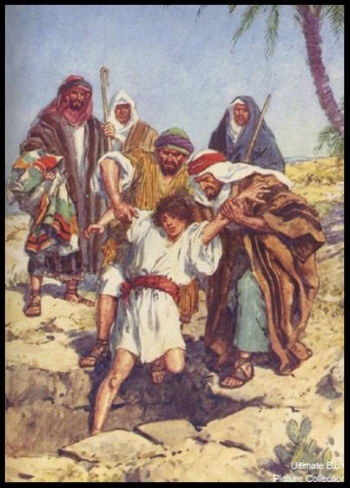
“Here comes this dreamer. Come now, let us kill him and throw him into one of the pits; then we shall say that a wild animal has devoured him, and we shall see what will become of his dreams” (Gen 37:19–20). There it is: “brotherly love” on display, for everyone to see! 

The sons of Jacob, who became the sons of Israel, and then gave their names to “the twelve tribes of Israel”, as we saw in an earlier blog, are terrible role models. They show us fraternal jealousy and hatred at its worst. The first part of the story offered by the lectionary for this coming Sunday pulls no punches (Gen 37:3–8, 17b—22). These sons could be mean!

The chapters before this have told the stories of the three patriarchs of Israel, Abraham, Isaac, and Jacob, and their wives, the four matriarchs Sarah, Rebekah, Leah, and Rachel—although Jacob is still alive, and he will figure in some of the final scenes of Genesis in chapters 46 and 48—50. We turn our attention to Joseph, who had been born to Jacob’s wife Rachel, after years of waiting. 

Only after his first wife Leah had given birth to six sons and a daughter, did Rachel give birth, as God “heeded Rachel and opened her womb” (Gen 30:22). As a sign of the passing of her barren state, Rachel declared, ‘God has taken away my reproach’; and we read that “she named him Joseph, saying, ‘May the Lord add to me another son!’ (Gen 30:23). That son, Benjamin, came years later, although Rachel tragically died giving birth (Gen 35:16–20).

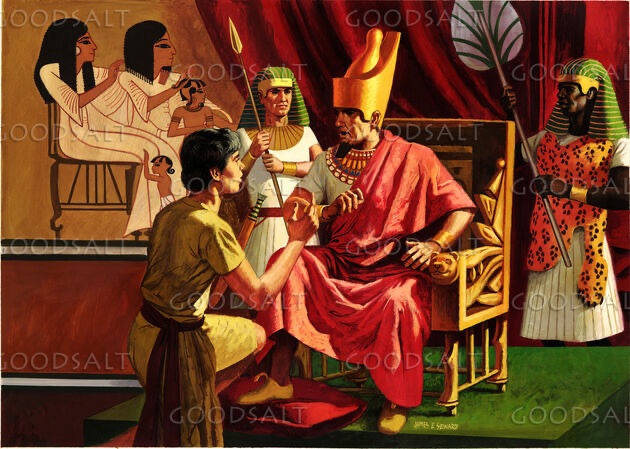
We meet Joseph in the passage offered by the lectionary, which notes that, as he grew, Joseph was the favoured son (Gen 37:3). Of course, this fostered the jealousy of his brothers, who “hated him, and could not speak peaceably to him” (Gen 37:4). And so the scene is set for the problematic sequence of events that ensues, as his brothers initially plot to kill him (Gen 37:19–20), before Reuben intervenes (Gen 37:21–23).

We should note that the ethical standards of the people in these ancestral stories leaves something to be desired for us,with our modern sense of ethical standards.  Cheating, stealing, rape, incest, murder, and double dealing appear to be par for the course. Yet these brothers who plot to kill Joseph are the men who give their names to the tribes of Israel—names that are given pride of place in the priestly garments (Exod 1:1–4; 28:9–12, 21, 29; 39:6–7, 14) and in the later history of the people (1 Chron 2:1–2). 

That these stories of their murky ways of operating have been preserved, passed on, and preached on with regularity, is quite remarkable! Perhaps we should reflect that human beings have always been flawed? Or that we should well expect that the ethical standards and cultural practices of our time are different from what held sway in past eras?

And perhaps we need also to note—and take caution from the observation—that this particular incident, selling Joseph for twenty pieces of silver, has fed into the unhelpful stereotype of the Jews who are always and in every way concerned about money. It’s a stereotype that has fed the burgeoning antisemitic attitude and actions of people throughout the Middle Ages, past the Enlightenment on into the modern age—culminating, of course, in the horrors of the Shoah (Holocaust) in Nazi Germany. See

https://antisemitism.adl.org/greed/

Back to the story of Genesis 37. That the brothers plot to kill Joseph, and are only dissuaded by the intervention of Reuben (Gen 37:21–23), is clearly a mark against them. That Judah then suggests that they sell him to a passing caravan of Ishmaelites (Gen 37:25–28), whilst it saves the life of Joseph, is yet another mark against the brothers.

Christian readers will perhaps compare the “twenty pieces of silver” that was paid for Joseph (Gen 37:28) with the thirty pieces of silver paid to Judas for handing Jesus over to the authorities (Matt 26:15). However, a number of passages in Hebrew Scriptures provide a more fitting contrast to the price paid for Joseph. 

Abimelech, in his unsuccessful attempt to install himself as king in Israel, took “seventy pieces of silver out of the temple of Baal-berith with which [he] hired worthless and reckless fellows, who followed him” (Judg 9:4). So twenty pieces are significantly less. 

And the story is told in Judges about when the lords of the Philistines bribed Delilah with eleven hundred pieces of silver to hand over Samson to them (Judg 16:5; 17:1–5), and in the Song of Songs the (poetically-exaggerated) claim is made that Solomon expected a thousand pieces of silver from each of the keepers of his vineyard (Song 8:11). So twenty pieces pales into utter significance, by comparison. Was Joseph worth so little.

The irony is that Israel as a whole is identified with reference to Joseph at a number of places in the Hebrew Scriptures. Both narrative texts and prophets refer to the whole nation as “the house of Joseph” (Josh 17:17; 18:5; Judg 1:22–23, 35; 2 Sam 19:20; 1 Ki 11:28; Amos 5:6; Obad 1:18; Zech 10:6). 

The psalms sing of “the descendants of Jacob and Joseph” (Ps 77:15) and bring petitions to God, “Shepherd of Israel, you who lead Joseph like a flock” (Ps 80:1). Psalm 81 places Joseph alongside Jacob and Israel: “it is a statute for Israel, an ordinance of the God of Jacob, he made it a decree in Joseph, when he went out over the land of Egypt” (Ps 81:4–5). The name of Joseph was revered in the ongoing traditions of Israel.

So let us treasure and reflect on this story, in which Joseph is sold off to foreign travellers. His life had been saved from the plotting of his brothers by a compassionate intervention by one of their number; but he is taken off into Egypt—for what fate? 

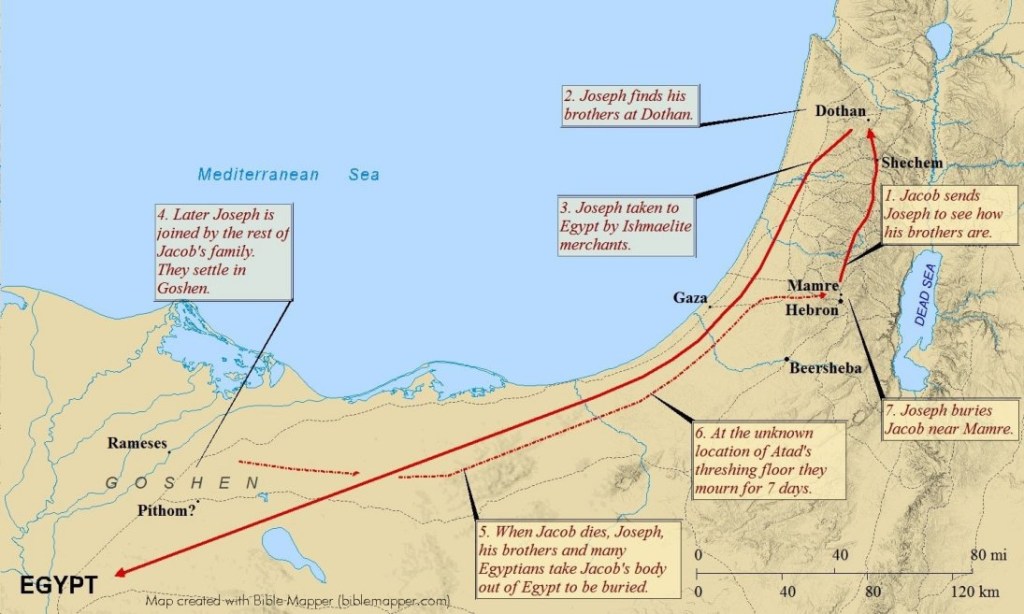
Reading the story chapter-by-chapter, as it appears in Genesis, we don’t yet know the significance of Egypt (other than the account of the time that Abram and Sarai spent in Egypt in Gen 12:10—13:12). But people hearing the story when it was written into the scrolls, after the return from Exile, would know of the time of slavery spent by their ancestors in Egypt, when “the Egyptians became ruthless in imposing tasks on the Israelites, and made their lives bitter with hard service” (Exod 1:13–14). They know the ominous threat that lies over Joseph at the end of this week’s story: “they took Joseph to Egypt” (Gen 37:28).

That fate is symbolised by the note in the immediately following verses, that the brothers of Joseph dipped his coat into the blood of a slaughtered goat and brought it back to Jacob. When Jacob recognized the coat, he concluded that “a wild animal has devoured him; Joseph is without doubt torn to pieces” (Gen 37:33). Jacob mourned for many days; despite the best efforts of his family, “he refused to be comforted, and said, ‘I shall go down to Sheol to my son, mourning” (Gen 37:35).

The narrative leaves Joseph with the tantalising comment that he was sold by the Midianites to Potiphar, one of Pharaoh’s officials (Gen 37:36), before veering off to tell a long story about Judah and Tamar (Gen 38). The question remains: what fate awaits Joseph?

After Joseph is sold off to the Egyptians (Gen 37), much happens that the lectionary skips over. Potiphar makes Joseph his personal attendant; he was in charge of the entire household. There is a subplot concerning Potiphar’s wife and Joseph, resulting in Joseph being imprisoned (Gen 39). However, the chief gaoler liked Joseph and put him in charge of all the other prisoners, including Pharaoh’s butler and baker. One night both the butler and the baker had strange dreams, which Joseph interpreted in ways that soon came true. Joseph gained a reputation as a dream interpreter (Gen 40).

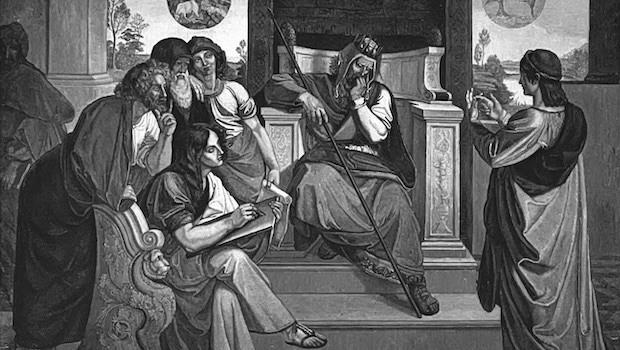
Two years later, Pharaoh had two dreams that his magicians could not interpret. Joseph was summoned and told Pharaoh that the dreams forecasted seven years of plentiful crops followed by seven years of famine. Following Joseph’s advice, Pharaoh made Joseph his second-in-command. He gave Joseph his ring and dressed him in robes of linen with a gold chain around his neck. Pharaoh gave him the Egyptian name Zaphenath-paneah and found him a wife named Asenath, daughter of Poti-phera the priest of On (Gen 41).

Joseph traveled throughout Egypt, gathering and storing enormous amounts of grain from each city. During these years, Asenath and Joseph had two sons: Manasseh, meaning, “God has made me forget (nashani) completely my hardship and my parental home, and Ephraim, meaning, “God has made me fertile (hiprani) in the land of my affliction”. These sons, grandsons to Jacob, would later have a key role (but the lectionary doesn’t include this part of the story).

After seven years, a famine spread throughout the world, and Egypt was the only country that had food. Joseph was in charge of rationing grain to the Egyptians and to all who came to Egypt. The famine affected Canaan, so Jacob sent ten of his sons to Egypt. He kept back Benjamin, Rachel’s second son and Jacob’s youngest child, the son who had intervened to save Joseph years earlier (Gen 42). 

The story assumes a rollicking-good-yarn feeling, as Joseph recognises the brothers but does not let on, and sends them back to Canaan. He kept Simeon in jail pending their return with Benjamin, as instructed, despite Jacob’s misgivings (Gen 43).

The brothers return to Egypt with Benjamin, along with a gift for Joseph as well as double the necessary money to repay the money that was returned to them. Again, there is a comedy-of-errors feel, as Joseph acts is if he does not know the brothers when they actually do; in the end he instructed his servant to fill the brothers’ bags with food, return each one’s money a second time, and put his own silver goblet in Benjamin’s bag. Then he sends his servant after them, to accuse them of theft. Benjamin is detained; Judah pleads with Joseph to release him (Gen 44). Will he do so?

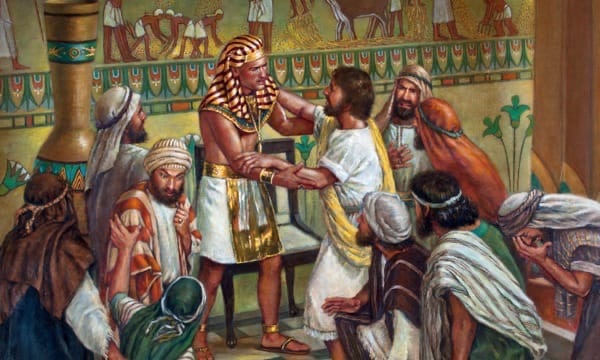
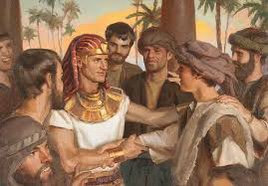
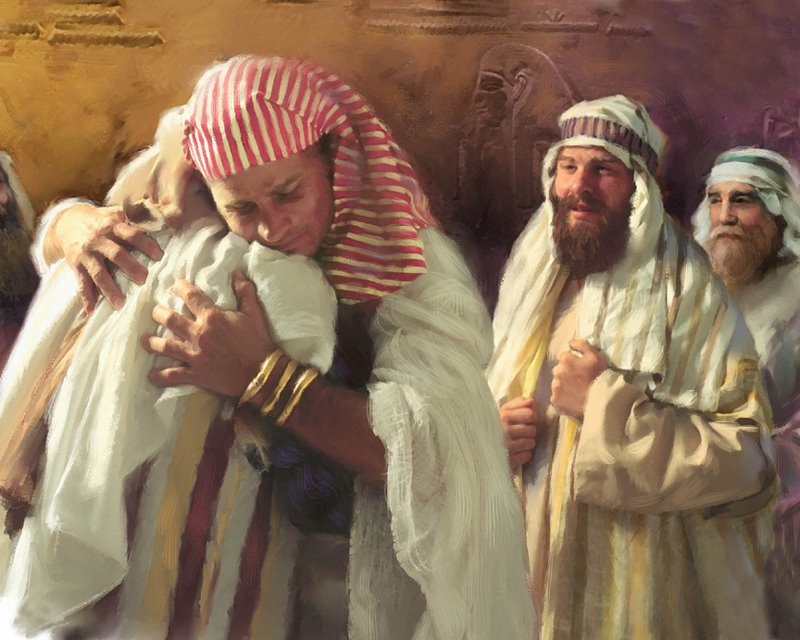
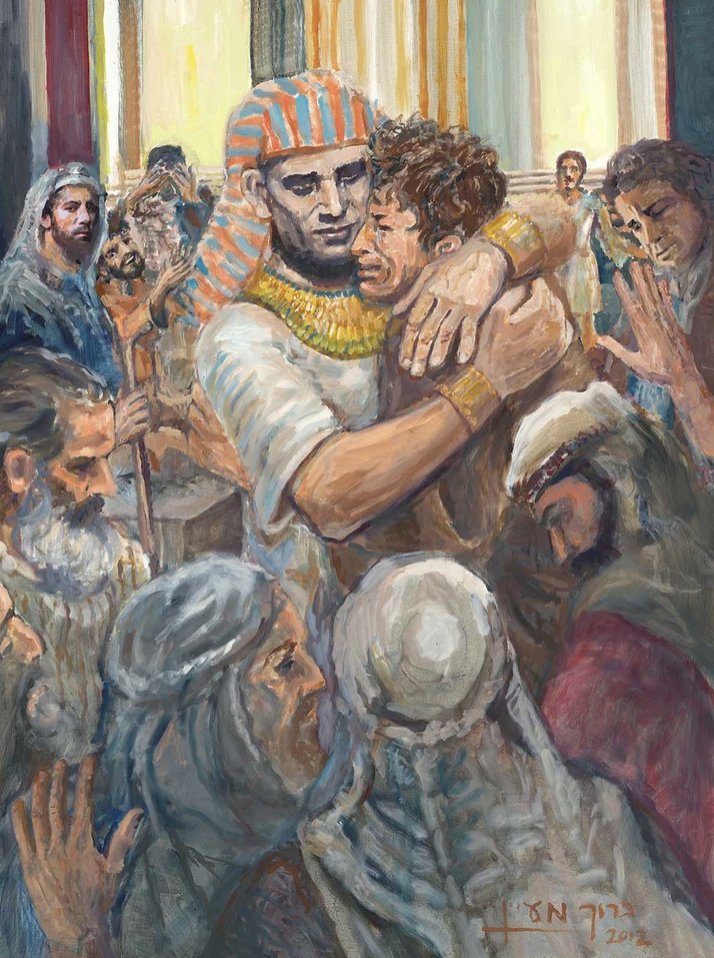
At this point in the story, Joseph reveals his true identity to his brothers (Gen 45:3). The narrative is fraught with emotion: Joseph could no longer control himself (v.1), he wept loudly (v.2), his brothers are dumbstruck and dismayed (v.3). After a lengthy speech of explanation (vv.4–13), Joseph bursts into tears, as does Benjamin (v.14), and then Joseph “kissed all his brothers and wept upon them” (v.15). The emotions are deep-seated and visceral; the physical actions described signal the profound effect that the experiences have had on Joseph and his brothers.

The narrative of this meeting ends in a very prosaic manner: “and after that his brothers talked with him” (Gen 45:15). The fractured relationships amongst the twelve has been repaired; the lines of communication between estranged individuals have been restored. It just remains for this to be communicated to Jacob—which is done in the rest of chapter 45. Jacob and his whole family, sixty-six persons in all, relocate to Egypt (Gen 46), but famine eventually strikes even Egypt (Gen 47).

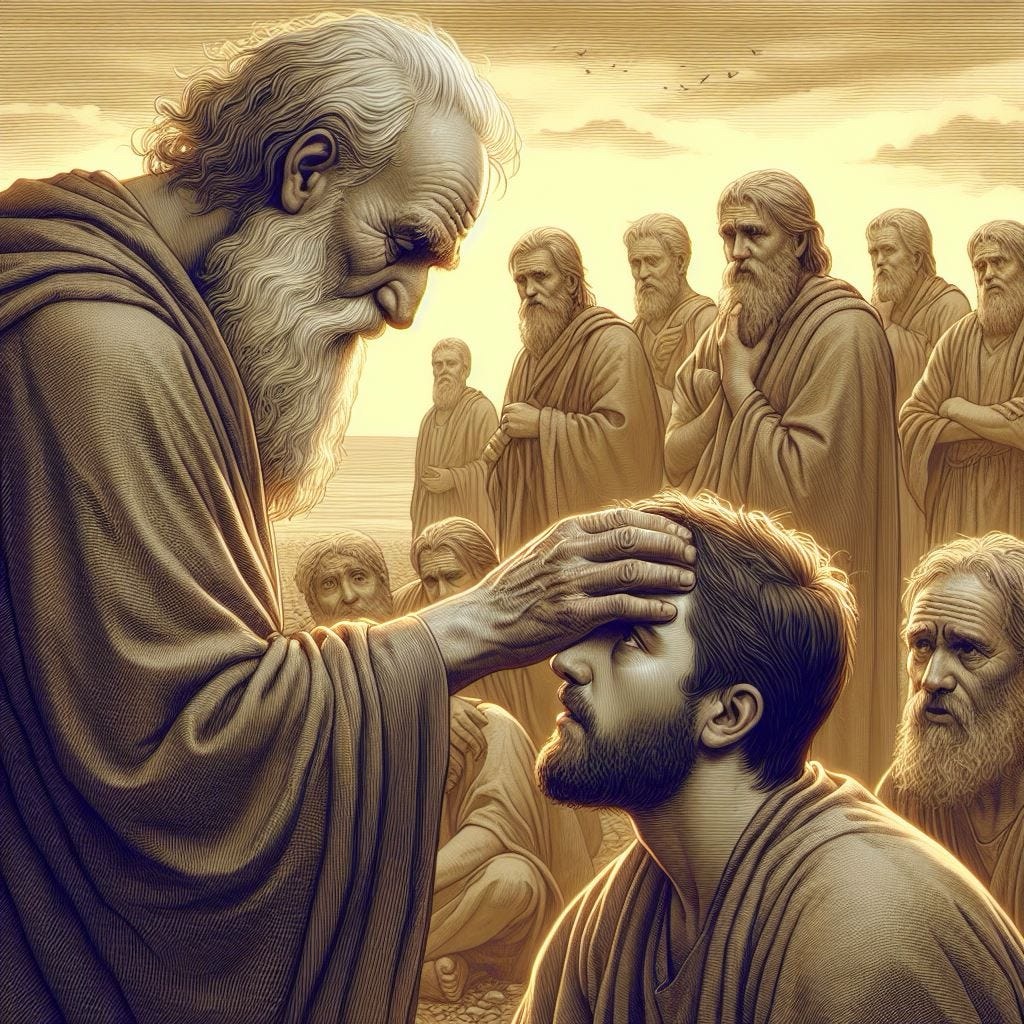
The book concludes with grand scenes of blessing and farewell. Jacob blesses Joseph (Gen 48:15–16), Joseph’s sons Ephraim and Manasseh (Gen 48:17–22), and then the full  complement of his twelve sons (Gen 49:1–28), before Jacob dies and is buried (Gen 49:29—50:14). 

The closing scenes are touching; Joseph’s brothers fear that he may still bear a grudge against them (50:15), but Joseph, highly emotional once again (50:17), reassures his equally emotional brothers, “have no fear; I myself will provide for you and your little ones”; final attitude towards his brothers is one of kindness (50:21). And so, in due time, Joseph himself comes to the end of his earthly life; aged 110, he was “embalmed and placed in a coffin in Egypt” (Gen 50:26).

There is a longer summary of the full saga that is told in the Joseph section of Genesis (chapters 37–40) in the Jewish Virtual Library at https://www.jewishvirtuallibrary.org/joseph-jewish-virtual-library

Dealing craftily with others (Psalm 105; Pentecost 14A)

“The Lord made his people very fruitful, and made them stronger than their foes, whose hearts he then turned to hate his people, to deal craftily with his servants” (Ps 105:24–25). These words appear in the psalm that is offered by the Revised Common Lectionary this coming Sunday (Ps 105:1–6, 23–26, 46b).

“Dealing craftily” is presented as something quite negative; a characteristic of the way that the “foes” of Israel deal with the “servants” of the Lord. The reference is made in the course of providing a summation of one part of the Joseph episode within the overall story of Israel that is told by this psalm.

In the course of the 45 verses of this psalm, there are summaries of key episodes in this story, from the ancestral covenant with Abraham, Isaac, and Jacob (vv.7–11), through the times involving the elderly Jacob, his sons, the famine in Canaan, and the rescue provided by Joseph in Egypt (vv.12–25), on to the period of Moses and Aaron (vv.26–36), the Exodus from Egypt and wilderness wandering (vv.37–42) and then the entry into the land of Canaan (vv.43–45).

This lyrical retelling of the story of Israel fits it well for singing on the first day of Passover, remembering the escape from slavery in Egypt. However, the portion offered by the lectionary this Sunday tells of a time prior to that, when “Israel came to Egypt; Jacob lived as an alien in the land of Ham” (v.23). Of that period, the psalmist sings that “the Lord made his people very fruitful” (v.24).

This presumably reflects the time after the severe famine in Canaan (Gen 43:1), when, after various machinations, Jacob and his family relocate to Egypt, and Joseph, having revealed his true identity to his family (Gen 45:1–5), “settled his father and his brothers, and granted them a holding in the land of Egypt, in the best part of the land, in the land of Rameses, as Pharaoh had instructed; and Joseph provided his father, his brothers, and all his father’s household with food, according to the number of their dependents” (Gen 47:11–12).

Of course, soon after this, famine hit Egypt as well (Gen 47:13). Joseph’s scheme for surviving the famine works (Gen 47:14–26), the country survives, and “Israel settled in the land of Egypt, in the region of Goshen; and they gained possessions in it, and were fruitful and multiplied exceedingly” (Gen 47:27). This bounty is reiterated in the opening chapter of Exodus, which declares that “the Israelites were fruitful and prolific; they multiplied and grew exceedingly strong, so that the land was filled with them” (Exod 1:7).

All of this is conveyed in the highly compressed summation of the psalm, “the Lord made his people very fruitful” (Ps 105:24). But then, according to the psalmist, the Lord turned the hearts of the Egyptians “to hate his people, to deal craftily with his servants” (Ps 105:25). This marries with the way that the narrative continues in Exodus, which notes that “a new king arose over Egypt, who did not know Joseph”, and so “they set taskmasters over them to oppress them with forced labour” (Exod 1:11).

The Egyptians are described as acting “shrewdly” (Exod 1:10). Is this the same as the psalmist’s note that the foes of Israel “dealt craftily” with them (Ps 105:25)? The Hebrew word used in the quasi-historical narrative of Exodus is chakam, which is most often translated as “act wisely”. Thus it is applied to Solomon (1 Ki 4:31), the simple who are made wise through “the decrees of the Lord” (Ps 19:7; so also 119:97–100), the instruction of Wisdom herself (Prov 8:33), and the activity (as whispily vain as it is) of the Preacher, Qohelet (Eccles 2:15, 19). The way the Egyptian treated the Israelites had a certain cunning involved—they acted with a canny, shrewd wisdom.

The Hebrew word chosen in the poetry of the psalmist’s song is nakal, “to be crafty, deceitful, or knavish”, according to Brown, Driver, and Briggs. This word is also employed in the Genesis narrative, when the brothers of Joseph plot to kill him. “Here comes this dreamer; come now, let us kill him and throw him into one of the pits”, they say (Gen 37:19–20), as he approaches them in his “long robe with sleeves” (Gen 37:3). Such behaviour is described in various translations as being a conspiracy or a plot—the translation offered here for nakal.

Attributing this mode of behaviour to the sons of Jacob should not surprise us—after all, they have inherited the DNA which has previously led their ancestors to lie, deceive, and even threaten to murder their own child! Remember: Abraham lying about his wife Sarah as his sister (Gen 12 and again in Gen 20) and threatening to sacrifice his own son (Gen 22); Isaac, who also lied that his wife Rebekah was his sister (Gen 26); and Jacob, the deceiver, who stole his birthright from his twin brother Esau (Gen 27) and then deceived his father-in-law Laban and profited from his flock (Gen 30–31). They are not exactly wonderful role models!

But the Exodus narrative attributes such “shrewdness” to the Egyptians, as the foes of Israel (Exod 1:10); a shrewdness that overlaps, as we have seen, with divinely-granted wisdom. The Egyptians were being wise in pressing the foreigners in their midst to work for them in their building projects. And no, they were not being used as slave labour to build the great pyramids of Egypt. Those structures are dated to “the Old Kingdom”, from 2686 until about 2160 BCE—well, well before any possible dating of the Israelites were in Egypt.

It’s interesting that the psalmist called out the Egyptians for what they saw them to be—shrewd, conniving, deceitful—whereas the Exodus story leaves open a sliver of possibility they the Egyptians were being shrewd and wise in the way they use (and, it would seem, greatly abused) the Israelites living in their land. Interesting.

Benjamin wept upon Joseph’s neck (Gen 45; Pentecost 12A)

The lectionary, in characteristic style, picks and chooses select passages that it offers, week by week, as we move through the ancestral narratives that have been collected and consolidated in Genesis. As we have noted before, these stories have been told and retold, collected and written down, because they have shaped the self-understanding and identity of the ancient nation of Israel.

Written in the form that we now have them by the priests who had held the stories of Israel through the decades of Exile, these stories comprise oral tales, told and retold over centuries before that Exile, remembered and passed on because they offered insights into who the people of Israel had become—committed, resilient, crafty, and faithful. They have the nature of aetiology, explaining character through narrative, and they function as myths, or stories told in an entertaining style that are designed to convey important information .

So this week we jump from last Sunday’s tale of Joseph, sold off to the Egyptians (Gen 37), to this coming Sunday’s fraternal encounter. We now find Joseph as an important official in the court of Egypt, confronted by his starving brothers, who are begging for help from the grain-rich Egyptians (Gen 43–45). What has happened in between these two stories?

First, Potiphar made Joseph his personal attendant; he was in charge of the entire household. There is a subplot concerning Potiphar’s wife and Joseph, resulting in Joseph being imprisoned (Gen 39; but the lectionary skips over this). However, the chief gaoler liked Joseph and put him in charge of all the other prisoners, including Pharaoh’s butler and baker. One night both the butler and the baker had strange dreams, which Joseph interpreted in ways that soon came true. Joseph gained a reputation as a dream interpreter (Gen 40; again, we jump over this).

Two years later, Pharaoh had two dreams that his magicians could not interpret. Joseph was summoned and told Pharaoh that the dreams forecasted seven years of plentiful crops followed by seven years of famine. Following Joseph’s advice, Pharaoh made Joseph his second-in-command. He gave Joseph his ring and dressed him in robes of linen with a gold chain around his neck. Pharaoh gave him the Egyptian name Zaphenath-paneah and found him a wife named Asenath, daughter of Poti-phera the priest of On (Gen 41, not included in the lectionary).

Joseph traveled throughout Egypt, gathering and storing enormous amounts of grain from each city. During these years, Asenath and Joseph had two sons: Manasseh, meaning, “God has made me forget (nashani) completely my hardship and my parental home, and Ephraim, meaning, “God has made me fertile (hiprani) in the land of my affliction”. These sons, grandsons to Jacob, would later have a key role (but the lectionary doesn’t include this part of the story).

After seven years, a famine spread throughout the world, and Egypt was the only country that had food. Joseph was in charge of rationing grain to the Egyptians and to all who came to Egypt. The famine affected Canaan, so Jacob sent ten of his sons to Egypt. He kept back Benjamin, Rachel’s second son and Jacob’s youngest child, the son who had intervened to save Joseph years earlier (Gen 42).

The story assumes a rollicking-good-yarn feeling, as Joseph recognises the brothers but does not let on, and sends them back to Canaan. He kept Simeon in jail pending their return with Benjamin, as instructed, despite Jacob’s misgivings (Gen 43).

The brothers return to Egypt with Benjamin, along with a gift for Joseph as well as double the necessary money to repay the money that was returned to them. Again, there is a comedy-of-errors feel, as Joseph acts is if he does not know the brothers when they actually do; in the end he instructed his servant to fill the brothers’ bags with food, return each one’s money a second time, and put his own silver goblet in Benjamin’s bag. Then he sends his servant after them, to accuse them of theft. Benjamin is detained; Judah pleads with Joseph to release him (Gen 44). Will he do so?

This is the point at which the lectionary takes up the story (Gen 45:1), as Joseph reveals his true identity to his brothers. It is a narrative that is fraught with emotion: Joseph could no longer control himself (v.1), he wept loudly (v.2), his brothers are dumbstruck and dismayed (v.3). After a lengthy speech of explanation (vv.4–13), Joseph bursts into tears, as does Benjamin (v.14), and then Joseph “kissed all his brothers and wept upon them” (v.15). The emotions are deep-seated and visceral; the physical actions described signal the profound effect that the experiences have had on Joseph and his brothers.

What does this note mean, that Joseph “fell upon his brother Benjamin’s neck” (v.14)? A discussion of this story on the Jewish website chabad.org notes that these chapters of Genesis tell “no mere family drama. The twelve sons of Jacob are the founders of the twelve tribes of Israel, and their deeds and experiences, their conflicts and reconciliations, their separations and reunions, sketch many a defining line in the blueprint of Jewish history.”

In particular, the website (based on the teachings of the Lubavitcher Rebbe, the leader of the ultra-conservative Chanda-Lubavitcher movement, adapted by Yanki Tauber) comments that “The Talmud (Megillah 16b) interprets their weeping on each other’s necks as expressions of pain and sorrow over future tragedies in their respective histories”.

The website offers the Talmudic explanation: “[Joseph] wept over the two Sanctuaries that were to stand in the territory of Benjamin and were destined to be destroyed … and Benjamin wept over the Shiloh Sanctuary that was to stand in the territory of Joseph and was destined to be destroyed.”

Through a series of rabbinic treatments of biblical texts concerning “the neck” and “the Temple”, the conclusion is drawn: “The Sanctuary is the “neck” of the world, the juncture that connects its body to its head. A person’s head contains his highest and most vital faculties — the mind and the sensing organs, as well as the inlets for food, water and oxygen — but it is the neck that joins the head to the body and channels the flow of consciousness and vitality from the one to the other: the head heads the body via the neck. By the same token, the Holy Temple is what connects the world to its supernal Vitalizer and source. It is the channel through which G‑d relates to His creation and imbues it with spiritual perception and material sustenance.”

So rabbinic midrashic interpretation sees deep significance in the comments about Joseph and Benjamin each “falling on the neck” (Gen 45:14). See

https://www.chabad.org/parshah/article_cdo/aid/3222/jewish/The-Neck.htm

The scene is also marked by tears. When “he fell upon his brother Benjamin’s neck”, Joseph wept (Gen 45:14). There have been tears before in the stories told in Genesis. When he first meets his cousin, “Jacob kissed Rachel, and broke into tears” (Gen 29:11). Reunited with Jacob, “Esau embraced him and, falling on his neck, he kissed him; and they wept” (Gen 33:4).

There are more tears after this particular story concerning Joseph, too. Reunited with his father, Jacob, Joseph embraces “him around the neck [and] wept on his neck a good while” (Gen 46:29). When Jacob dies, “Joseph flung himself upon his father’s face and wept over him and kissed him” (Gen 50:1). After his father’s death, when his brothers tell him that Jacob had commanded Joseph not to seek revenge, “Joseph was in tears as they spoke to him” (Gen 50:17).

Writing on this story on the Haaretz website, Dr Ariel Seri-Levi, of the Ben Gurion University of the Negev, notes that there were three reasons for weeping in Hebrew Bible stories: mourning for a dead person (Abraham for Sarah, at Gen 23:2; the prophet for Jerusalem at Lam 1:16; Joseph as Jacob dies, at Gen 50:1); distress directed toward a leader, either divine or human (the Israelites in the wilderness, Num 11:4, or the residents of Jabesh Gilead, 1 Sam 11:4–5); and weeping on “an encounter or reunion between relatives or close friends”. The weeping of Joseph, and Benjamin, in this scene, is of this nature.

Dr Seri-Levi writes that such “weeping confirms and expresses their bond. Thus, weeping does not necessarily express an emotional collapse or inner turmoil; conversely, a person’s avoidance of weeping does not necessarily reflect indifference.” He relates this to the need that Joseph had, initially, to conceal his identity, and then, at the release when he felt able to reveal his identity. It is a part of the craft of the storyteller, deployed to intensify emotion in the listener, or reader. It is a way to ensure we find ourselves “in the story”, right in the midst of all that is taking place.

*****

The section offered by the lectionary ends, then, in a very prosaic manner: “and after that his brothers talked with him” (Gen 45:15). The fractured relationships amongst the twelve has been repaired; the lines of communication between estranged individuals have been restored. It just remains for this to be communicated to Jacob—which is done in the rest of chapter 45. Jacob and his whole family, sixty-six persons in all, relocate to Egypt (Gen 46), but famine eventually strikes even Egypt (Gen 47).

Beyond the lectionary offerings from Genesis (since we jump, on the following Sunday, to Exodus 1), the book concludes with grand scenes of blessing and farewell. Jacob blesses Joseph (Gen 48:15–16), Joseph’s sons Ephraim and Manasseh (Gen 48:17–22), and then the full complement of his twelve sons (Gen 49:1–28), before Jacob dies amd is buried (Gen 49:29—50:14). In due time, Joseph himself comes to the end of his earthly life; aged 110, he was “embalmed and placed in a coffin in Egypt” (Gen 50:26).

There is a longer summary of the full saga that is told in the Joseph section of Genesis (chapters 37–40) in the Jewish Virtual Library at https://www.jewishvirtuallibrary.org/joseph-jewish-virtual-library

Here comes this dreamer—let us kill him (Gen 37; Pentecost 11A)

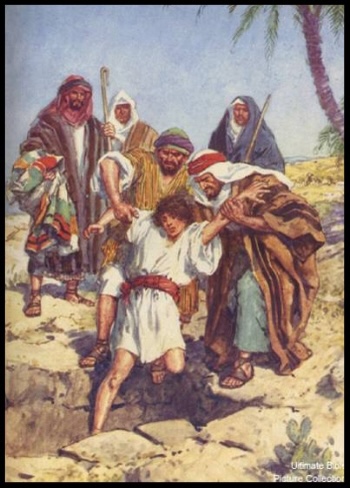
“Here comes this dreamer. Come now, let us kill him and throw him into one of the pits; then we shall say that a wild animal has devoured him, and we shall see what will become of his dreams” (Gen 37:19–20). There it is: “brotherly love” on display, for everyone to see!
The sons of Jacob, who became the sons of Israel, and then gave their names to “the twelve tribes of Israel”, as we saw in an earlier blog, are terrible role models. They show us fraternal jealousy and hatred at its worst. The story offered by the lectionary for this coming Sunday, Pentecost 11A, pulls no punches (37:1–4, 12–28). These sons could be mean!

We have left behind the stories of the three patriarchs of Israel, Abraham, Isaac, and Jacob, and their wives, the four matriarchs Sarah, Rebekah, Leah, and Rachel—although Jacob is still alive, and he will figure in some of the final scenes of Genesis in chapters 46 and 48—50. We turn our attention to Joseph, who had been born to Jacob’s wife Rachel, after years of waiting.

Only after his first wife Leah had given birth to six sons and a daughter, did Rachel give birth, as God “heeded Rachel and opened her womb” (Gen 30:22). As a sign of the passing of her barren state, Rachel declared, ‘God has taken away my reproach’; and we read that “she named him Joseph, saying, ‘May the LORD add to me another son!’ (Gen 30:23). That son, Benjamin, came years later, although Rachel tragically died giving birth (Gen 35:16–20).

We meet Joseph in the passage offered by the lectionary, which notes that, as he grew, Joseph was the favoured son (Gen 37:3). Of course, this fostered the jealousy of his brothers, who “hated him, and could not speak peaceably to him” (Gen 37:4). And so the scene is set for the problematic sequence of events that ensues, as his brothers initially plot to kill him (Gen 37:19–20), before Reuben intervenes (Gen 37:21–23).

We have already seen that the ethical standards of the people in these ancestral stories leaves something to be desired. Cheating, stealing, rape, incest, murder, and double dealing appear to be par for the course. Yet these brothers who plot to kill Joseph are the men who give their names to the tribes of Israel—names that are given pride of place in the priestly garments (Exod 1:1–4; 28:9–12, 21, 29; 39:6–7, 14) and in the later history of the people (1 Chron 2:1–2).

That these stories of their murky ways of operating have been preserved, passed on, and preached on with regularity, is quite remarkable! Perhaps we should reflect that human beings have always been flawed? Or that we should well expect that the ethical standards and cultural practices of our time are different from what held sway in past eras?

And perhaps we need also to note—and take caution from the observation—that this particular incident, selling Joseph for twenty pieces of silver, has fed into the unhelpful stereotype of the Jews who are always and in every way concerned about money. It’s a stereotype that has fed the burgeoning antisemitic attitude and actions of people throughout the Middle Ages, past the Enlightenment on into the modern age—culminating, of course, in the horrors of the Shoah (Holocaust) in Nazi Germany.

See

https://antisemitism.adl.org/greed/
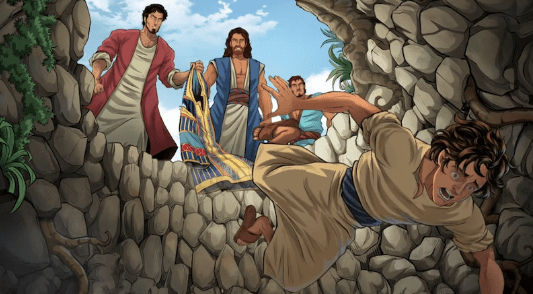
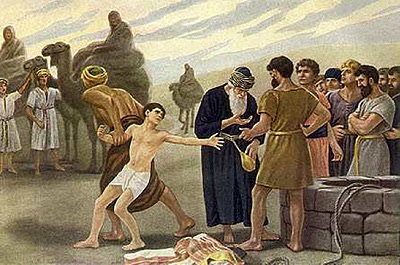
Back to the story of Genesis 37. That the brothers plot to kill Joseph, and are only dissuaded by the intervention of Reuben (Gen 37:21–23), is clearly a mark against them. That Judah then suggests that they sell him to a passing caravan of Ishmaelites (Gen 37:25–28), whilst it saves the life of Joseph, is yet another mark against the brothers.

Christian readers will perhaps compare the “twenty pieces of silver” that was paid for Joseph (Gen 37:28) with the thirty pieces of silver paid to Judas for handing Jesus over to the authorities (Matt 26:15). However, a number of passages in Hebrew Scriptures provide a more fitting contrast to the price paid for Joseph.

Abimelech, in his unsuccessful attempt to install himself as king in Israel, took “seventy pieces of silver out of the temple of Baal-berith with which [he] hired worthless and reckless fellows, who followed him” (Judg 9:4). So twenty pieces are significantly less.

And the story is told in Judges about when the lords of the Philistines bribed Delilah with eleven hundred pieces of silver to hand over Samson to them (Judg 16:5; 17:1–5), and in the Song of Songs the (poetically-exaggerated) claim is made that Solomon expected a thousand pieces of silver from each of the keepers of his vineyard (Song 8:11). So twenty pieces pales into utter significance, by comparison. Was Joseph worth so little.

The irony is that Israel as a whole is identified with reference to Joseph at a number of places in the Hebrew Scriptures. Both narrative texts and prophets refer to the whole nation as “the house of Joseph” (Josh 17:17; 18:5; Judg 1:22–23, 35; 2 Sam 19:20; 1 Ki 11:28; Amos 5:6; Obad 1:18; Zech 10:6).

The psalms sing of “the descendants of Jacob and Joseph” (Ps 77:15) and bring petitions to God, “Shepherd of Israel, you who lead Joseph like a flock” (Ps 80:1). Psalm 81 places Joseph alongside Jacob and Israel: “it is a statute for Israel, an ordinance of the God of Jacob, he made it a decree in Joseph, when he went out over the land of Egypt” (Ps 81:4–5). The name of Joseph was revered in the ongoing traditions of Israel.

So let us treasure and reflect on this story, in which Joseph is sold off to foreign travellers. His life had been saved from the plotting of his brothers by a compassionate intervention by one of their number; but he is taken off into Egypt—for what fate?
*****

Reading the story chapter-by-chapter, as it appears in Genesis, we don’t yet know the significance of Egypt (other than the account of the time that Abram and Sarai spent in Egypt in Gen 12:10–13:12). But people hearing the story when it was written into the scrolls, after the return from Exile, would know of the time of slavery spent by their ancestors in Egypt, when “the Egyptians became ruthless in imposing tasks on the Israelites, and made their lives bitter with hard service” (Exod 1:13–14). They know the ominous threat that lies over Joseph at the end of this week’s story: “they took Joseph to Egypt” (Gen 37:28).

That fate is symbolised by the note in the immediately following verses, that the brothers of Joseph dipped his coat into the blood of a slaughtered goat and brought it back to Jacob. When Jacob recognized the coat, he concluded that “a wild animal has devoured him; Joseph is without doubt torn to pieces” (Gen 37:33). Jacob mourned for many days; despite the best efforts of his family, “he refused to be comforted, and said, ‘I shall go down to Sheol to my son, mourning” (Gen 37:35).

The narrative leaves Joseph with the tantalising comment that he was sold by the Midianites to Potiphar, one of Pharaoh’s officials (Gen 37:36), before veering off to tell a long story about Judah and Tamar (Gen 38). The question remains: what fate awaits Joseph?

In the loving example of Joseph (Matt 1; Advent 4A)

A Sermon –preached by James Ellis for Advent 4A – Sunday 18 December 2022 – at Tuggeranong Uniting Church, on the occasion of his commissioning into the specified ministry of Lay Preacher within the Uniting Church in Australia

Readings: Matthew 1: 18-25 (with reference to Isaiah 7: 10-16).

Christmas is coming – or so we have been saying over the past four Sundays! Our lighting of the fourth candle on our advent wreath this morning – the candle of ‘love’ – marks the final days of advent. Christmas is ever closer, but it is not quite here yet.

Some liturgical fusspots can get in a flap about crossing the Christmas threshold “too early” – that is before Christmas Eve, and I admit – not to great surprise I am sure – that I am usually one of these fusspots – especially when it comes to Lent and Advent. 

Well, it seems that the lectionary is not so fussy and frequently prepares us for what lies ahead with a spoiler. That is the case today where our Gospel reading: Matthew’s account of the birth of Jesus. This account, a week before Christmas for us this year, invites us to start pondering the great marvel that is Jesus coming among us in anticipation of Christmas. 

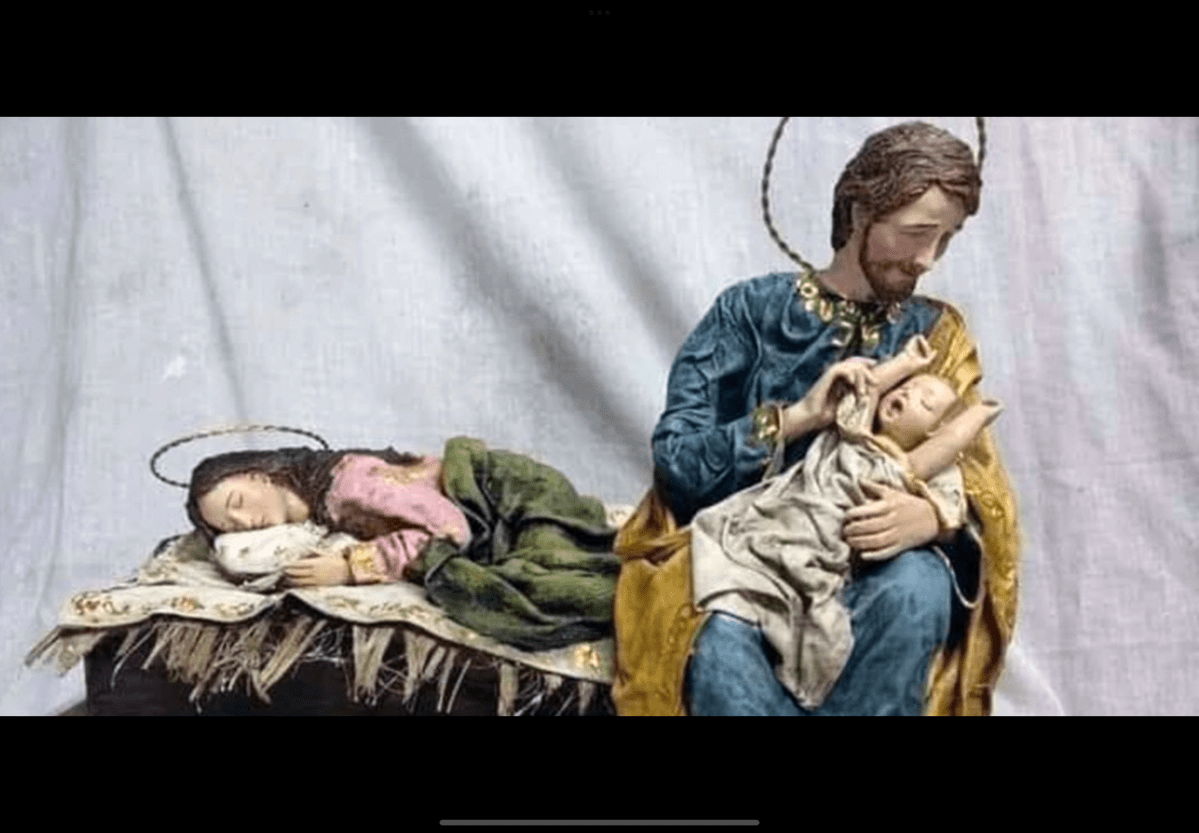
Matthew’s story of Jesus’ birth is very much from the point of view of Joseph. This is quite unique. We usually focus on Mary – and rightly so! We don’t know much about Joseph. We can guess, make assumptions, follow the ‘tradition’ attributed to him – but we simply don’t know. He seems to disappear from the story following the birth. Even when later in Matthew’s Gospel, when Jesus is lost in Jerusalem as a boy, it is his mother Mary who finds (and scolds) him, not Joseph. At the Cross, Mary is there, but Joseph is not. Perhaps, as tradition assumes, Mary is a widow and Joseph has died. 

So, where Luke is very much focussed on Mary’s story and journey, Matthew gives us some insight into Joseph and the situation he found himself in. In this we see the human side of this story…

Joseph is betrothed (NRSV – engaged) to Mary. At the time, this was not like how we view engagement today where it can be called off rather informally. But contracted to marry and considered bound by the laws of marriage, just not living together yet. Scholar Brendan Byrne makes this point in his commentary on this passage when he details the practice of the time to be betrothed young and not live together until much later. The “before they lived together” in verse 18 is to emphasise they had not had any kind of relations together.

It is during this waiting that Joseph becomes aware that Mary is pregnant. We can imagine the dilemma Joseph found himself in – the ambiguity; the lack of certainty; the confusion. He needs reassurance, but also society requires from him a posture of honour and respect. The initial assumption here – for Joseph and anyone who knew – is that Mary has committed adultery. An act which could get her stoned to death under the Deuteronomic laws.

Joseph, as the man ‘wronged’, would be expected at a minimum to divorce (dismiss) her in public and have her attract the shame and humiliation of many other women who have been in a similar situation. We read however that Joseph was a righteous man – and unwilling to expose Mary to such public disgrace (v19). So, he plans to dismiss her ‘quietly’. Still somewhat harsh in our context, but compassionate in his. This reveals to us something of Joseph’s character that he doesn’t want to bring Mary public shame but instead wants to protect her. He cares about her. He loves her.

This is attitude and plan before the truth is revealed to him in a dream – where an angel tells him that Mary is in fact pregnant by the Holy Spirit and not because she has been up to no good. Compared to other Angel appearances, Joseph listens and acts. He doesn’t argue or dismiss or come up with excuses. It is almost as though this was what he wanted to hear or needed to hear. 

While we could argue around the who, where, how of a virgin birth, that isn’t the point here today. The Focus here is instead to consider the mysterious and the miraculous as the way that God deals with humanity. Whether it is Abraham and Sarah, Moses (particularly his survival as an infant), Samson, Samuel, Elizabeth and Zechariah … this is the way God deals with the humanly impossible and brings in the new – with impossible births. This is powerful, very powerful, and is the story that speaks through this story. 

Matthew understands this of this story also and we see this by the way he links this event with those contained in Isaiah, also read this morning. “Look, the virgin shall conceive and bear a son, and they shall name him Emmanuel”, which means God with us (v23). Isaiah 7 speaks of the birth of a child, who will be named “Emmanuel”. His birth is a “sign” of God’s promise to deliver and bless King Ahaz and the Judean people with abundance, but also of devastating judgment if the sign is refused. When the son born of the “virgin,” or young woman, is rejected, he becomes a sign of judgment rather than deliverance. Matthew uses the citation of Isaiah 7:14 to indicate that Jesus’ person and mission compel people to make choices, resulting in both redemption and judgment.

The use of “God with us” in Matthew 1:23 and 28:20 thus frames the whole Gospel, which serves as a comprehensive narrative that defines what it means for Jesus to be God with us. The culmination of Jesus’ mission in his death and resurrection means that God’s work of redemption has reached its climactic moment, when Israel is gathered and restored, the mission to the nations has begun, and the whole creation—heaven and earth—will be restored and renewed as God’s dwelling place. 

What role might disciples—all of us—play in the continuing realization of this story?

How is this story still our story in a world ever more filled with greed, exploitation, violence, and death?

The birth narrative ends with an act of love and commitment from Joseph – where it is he that names Jesus. They become a family, a family of choice. Because of this choice of Joseph’s, Jesus becomes part of the line of David. This family is far from the typical family at the time, but perhaps speaks well into our context.

Rev Dr Jo Inkpin, in her lectionary reflections for the latest issue of Insights, says this about the example of Joseph and the Holy family: “It is an extraordinary family, and as such should give courage to all other families that do not fit neatly into what society says they should. For those who do live within typical expectations this family may also give strength to acknowledge hidden differences and to support those who face other hurts and condemnations. Without the courage of both Joseph and Mary in choosing to step outside conventional boundaries, exercising compassion and common sense, the Christian story could not have begun”.  

I have often heard it said: you don’t know true love until you become a parent. And while the love I experienced when my daughter was born truly made me experience love I never had before – to say I didn’t really know love until then feels … shallow? diminutive?

It seems to me, then, that there are all kinds of love we don’t know until we know it. The love of true, deep friendship. The love of finding a vocation that fills you with purpose. The love of a place that becomes home, perhaps unexpectedly. The love of children birthed or adopted, fostered or through partnership. The love of a community that is a family – like here at Tuggeranong. 

Advent is a journey of God’s unfolding love for us, with us, and before us; it is a time of living in the “here” of a world where Christ came as an infant 2,000 years ago and a time of “not yet” as we live in the midst of sin and sorrow and despair. Advent challenges us to live in this paradox without resolving it. 

And Advent is a time where we are pushed to trust that the love God has for us is going to carry us through – perhaps through unknown paths, or along a winding highway, and almost definitely not where we thought we would go. But the love of God will never, never fade or tire. For God’s love for us is greater than the love parents have for their children, and greater than the love friends have for each other, and greater than the love Joseph showed to Mary and Jesus. 

May we journey together in love this last week of Advent.

The Lord be with you.

*****

Source material: By the Well podcast and Working Preacher podcast, Brendan Byrne, Lifting the Burden: Reading Matthew’s Gospel in the Church Today (Liturgical Press, 2004)

Joseph of Arimathea: rich and righteous, devout and a disciple of Jesus.

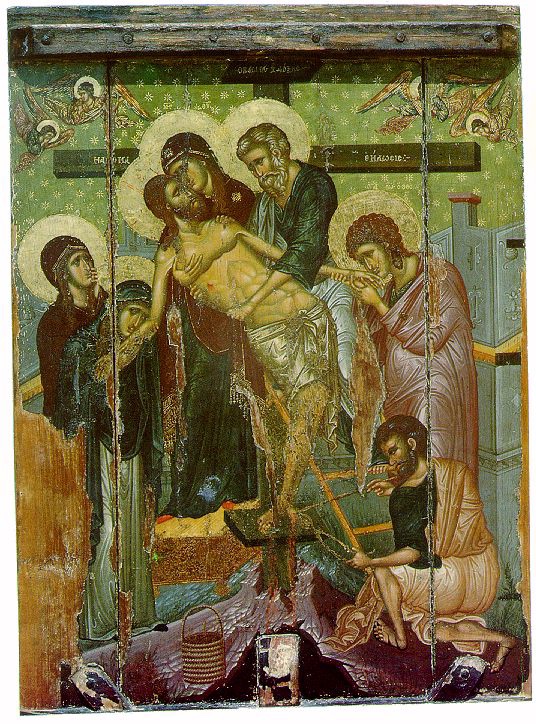
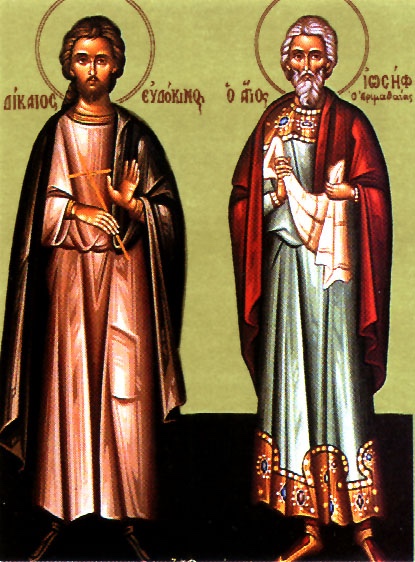
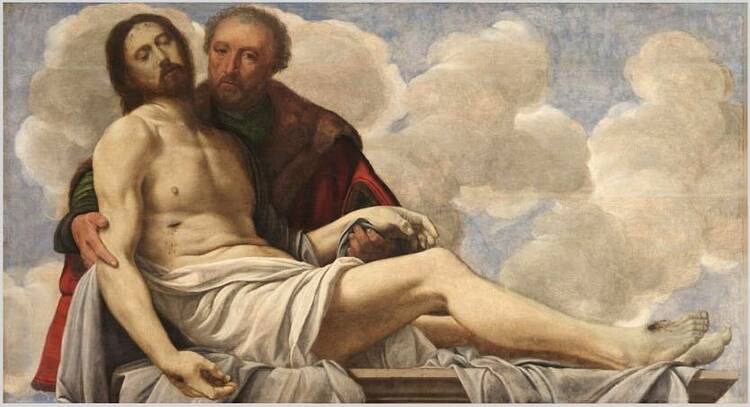
In the Uniting Church’s resource provided for worship leaders, Uniting in Worship, there is a Calendar of Commemorations, based on the cycle of annual feast days for saints in the Anglican, Catholic, and Orthodox churches—but broadened out to be much wider than this. Many days of the year are designated to remember specific people. Today (19 March) is the day to remember Joseph of Arimathea—a figure best known for the scene, reported by all four Gospels, when he takes the body of Jesus from the cross and places it in a tomb.

Joseph was a common biblical name—son of Isaac, father of Jesus, amongst others. This Joseph is distinguished by his home town, Arimathea. All we know is that it was a town in Judea (Luke 23:51). It is thought it may be Ramathaim Sophim, the birthplace of Samuel (1 Sam 1:1, 19), which appears in the LXX as Greek Armathaim Sipha.

In the earliest Gospel, this Joseph is described as being both “a respected member of the council” and as one who was “waiting expectantly for the kingdom of God” (Mark 15:43). The kingdom of God is what Jesus was preaching, according to Mark (1:15; 4:11) and that is what the crowd lining the streets into Jerusalem understood him to be bringing (11:10). Mark’s report indicates that Joseph, who shares this expectation with Jesus, “bought a linen cloth, and taking down the body, wrapped it in the linen cloth, and laid it in a tomb that had been hewn out of the rock; he then rolled a stone against the door of the tomb” (Mark 15:46).

Matthew reworks this description; he is “a rich man” (rather than a member of the council) who was “a disciple of Jesus” (Matt 27:57). By contrast, Luke introduces Joseph as “a good and righteous man” (Luke 23:50), echoing the much earlier descriptions of Elizabeth and Zechariah (1:6) and Simeon (2:25).

Luke explains that Joseph, “though a member of the council, had not agreed to their plan and action” (Luke 23:50–51). Differentiating Joseph from the others in the council seems important for Luke; after all, in Luke’s account, the council had brought Jesus to Pilate, saying that “we found this man perverting our nation, forbidding us to pay taxes to the emperor, and saying that he himself is the Messiah, a king” (23:2).

When Pilate demurs, council members press the point: “he stirs up the people by teaching throughout all Judea, from Galilee where he began even to this place” (23:5). After sending Jesus to Herod (a curiously unhistorical action, given the actual governance arrangements at the time), Pilate states his belief, for a second time, that Jesus is innocent (23:4, 14), before the “the chief priests, the leaders, and the people” together agitate for the release of Barabbas (23:13, 18). Luke’s more detailed description of Joseph places him at odds with this whole sequence of events; “though a member of the council, had not agreed to their plan and action” (23:50–51).

Luke further indicates that Joseph “was waiting expectantly for the kingdom of God” (23:51), picking up on Mark’s description. In the context of Luke’s two volumes, however, this description aligns Joseph very closely with the enterprise that Jesus was engaged in; “I must proclaim the good news of the kingdom of God to the other cities also; for I was sent for this purpose”, Jesus declares (4:43); “he went on through cities and villages, proclaiming and bringing the good news of the kingdom of God” (8:1).

Jesus sends out both the twelve, and then the seventy, to proclaim the kingdom of God (9:1–2; 10:1, 9–11); he instructs his followers to pray, “your kingdom come” (11:2) and to “strive for [God’s] kingdom” (12:31); he tells. parables of the kingdom (8:10; 13:18, 20); and teaches that “the kingdom of God is among you” (17:20–21).

As Jesus draws near to Jerusalem, those travelling with him “supposed that the kingdom of God was to appear immediately” (19:11); indeed, as he enters the city, people acclaim him as “the king who comes in the name of the Lord” (19:38). At the last meal he shares with his disciples, Jesus looks to the fulfilment of the kingdom (22:14–18, 28–30), and one crucified alongside Jesus shares this hope, saying to him, “Jesus, remember me when you come into your kingdom” (23:42).

Jesus continues this after his death and resurrection, “appearing to them during forty days and speaking about the kingdom of God” (Acts 1:3); subsequently, key followers of Jesus proclaim the kingdom in key locations— Phillip in Samaria (8:12), Paul and Barnabas in Antioch (14:22), and Paul in Ephesus, (19:8). This was Paul’s common activity everywhere (20:25); the final picture of Paul is that he lived under house arrest in a Rome, “proclaiming the kingdom of God and teaching about the Lord Jesus Christ with all boldness and without hindrance” (28:31).

So Joseph, “waiting expectantly for the kingdom of God” (Luke 23:51), is firmly aligned with Jesus and with his followers in Luke’s Gospel. He is clearly, as Matthew reports, “a disciple of Jesus” (Matt 27:57).

In the fourth Gospel, Joseph performs the same task, requesting the body of Jesus from Pilate, and securing a safe place as the resting place for the body. He does this in conjunction with Nicodemus, “who had at first come to Jesus by night” (John 19:39). We first meet Nicodemus earlier in John’s narrative (3:1–21); at this time, he engages in what might be characterised as an appreciative enquiry with Jesus, under the cover of night (3:2), presumably so that he didn’t “out” his interest in what Jesus was teaching. It’s perhaps worth noting that Jesus spoke about “the kingdom of God” in his conversation with Nicodemus (3:3, 5)—the very same phrase that is key to the preaching of Jesus in Mark and Luke.

Some chapters later in John’s narrative, as Jesus experiences intensified opposition whilst in Jerusalem for the Festival of Booths (7:1–13), and the Pharisees and temple authorities join forces to send the temple police to arrest him (7:32), Nicodemus appears once more. The temple police return the temple, saying that they will not arrest him (7:45–46).

Nicodemus steps in; he is introduced as the one who “had gone to Jesus before, and who was one of them”—that is to say, one of the disciples (7:50). He speaks boldly: “our law does not judge people without first giving them a hearing to find out what they are doing, does it?” (7:51). The dismissive reply of the Pharisees further aligns him with Jesus; “surely you are not also from Galilee, are you?” is their rejoinder (7:52). His allegiance is clear, at least in the minds of the Pharisees, if not also the narrator of the Gospel.

Nicodemus returns a third time, after the death of Jesus, when the body of Jesus is requested by Joseph of Arimathaea, who is here,clearly identified as being “a disciple of Jesus, but secretly, for fear of the Jews” (19:38).

Joseph of Arimathea is here described as being “a disciple of Jesus, but secretly, for fear of the Judean authorities” (19:38). The fear of the Judean authorities has been a recurrent motif in John’s narrative (5:1; 7:13; 9:22; here, and 20:19). (The term I translate as “Judean authorities” is most commonly rendered as “Jews”, but this translation is too wide and does not accurately reflect the way the term is used in John’s Gospel.)

Once again, Joseph is identified as a disciple of Jesus (John 19:38; so also Matt 27:57, and, as we have argued above, that is the implication in both Mark 15 and Luke 23). Both Joseph and Nicodemus, we might presume, were numbered among the “many, even of the authorities, [who] believed in him”, but who, “because of the Pharisees, did not confess it, for fear that they would be put out of the synagogue” (12:42).

The manner in which the body of Jesus is removed from the cross into the grave, anointed with an extravagantly large amount of spices, myrrh and aloes and wrapped in linen cloths “according to the burial custom of the Jews”, and placed in a previously unused tomb (19:38–40), reflects the tender, respectful approach of these two of Jesus’s disciples.

The body of a crucified person would normally be thrown into a communal grave outside the city; all four Gospels take pains to report that this as not the fate of Jesus. The historicity of this claim must surely, however, be significantly doubted. The point of the narrative is not historical verification. The intention is to continue to attest to the significance of Jesus, acknowledged as king, given exactly the kind of extravagant funerary rites that were befitting for a king.

And that is the gift that Joseph of Arimathea offers to followers of a Jesus, even to this day: a compassionate, respectful treatment of the body of Jesus. It’s good to remember him for this, today.