Joshua made a covenant with the people that day (Josh 24; Pentecost 24A)

“Then Joshua gathered all the tribes of Israel to Shechem, and summoned the elders, the heads, the judges, and the officers of Israel; and they presented themselves before God … so Joshua made a covenant with the people that day, and made statutes and ordinances for them at Shechem” (Josh 24:1, 25).

For the last two weeks, we have been considering the matter of the land promised to Israel and claimed by them under Joshua, as we heard first Deut 34 and then Josh 3. This week, as the lectionary presents us with a second passage from the book of Joshua (Josh 24:1–3a,14–25), our attention is turned to the covenant, the formalising of the relationship between the Lord God and the people of Israel.

The covenant that was formally ratified on that day had already been made with the people. During their wanderings in the wilderness, Moses “went up to God” on Mount Sinai, where the covenant was offered to Moses by God, and the people accepted the offer (Exod 19:1–8). The covenant was sealed in a formal ceremony in which “the blood of the covenant” was splashed on the altar and the people (Exod 24:1–8).

That covenant stood on the foundation of a series of covenants that had already been offered to people—initially to Noah, and to all living creatures (Gen 9), before it was subsequently renewed (and reshaped) by being offered to Abraham (Gen 15, 17). That same covenant was then renewed with Isaac (Gen 17) and then with Jacob (Israel) (Gen 35), before being extended to Moses and the whole people (Exod 19).

It is this sequence which is celebrated by the psalmist: “The Lord our God … is mindful of his covenant forever, of the word that he commanded, for a thousand generations, the covenant that he made with Abraham, his sworn promise to Isaac, which he confirmed to Jacob as a statute, to Israel as an everlasting covenant” (Ps 105:7–10).

And it is this sequence of events which is remembered in the narrative of Joshua 24. It begins by recalling when “your ancestors—Terah and his sons Abraham and Nahor—lived beyond the Euphrates and served other gods” (Josh 24:2), a time reported in Gen 11:26–32. Then follows the gifting of land and descendants to Abraham (Josh 24:3), recalling the promise of Gen 12:1–3 and the story told in Gen 12 onwards, including the making of a covenant (Gen 15:17–21), the sealing of that covenant by circumcision (Gen 17:1–27), the promise of a son to Abraham (Gen 18:1–15) and the arrival of that son, Isaac (Gen 21:1–7).

The ceremony at Shechem, as recounted in Joshua 24, continues with a brief mention of Isaac, Jacob and Esau (24:3–4) before noting that “Jacob and his children went down to Egypt” (24:4). This is the story that is recounted in Genesis 21 through to 50, which ends with a reminder that “God will surely come to you, and bring you up out of this land to the land that he swore to Abraham, to Isaac, and to Jacob” (Gen 50:24).

The story of the people of Israel leaving Egypt and wandering in the wilderness is recalled in Josh 24:5–7, summarising the lengthy narrative of Exodus 3—17, before remembering the early forays into the land promised, the land of Canaan (Josh 24:8–12). This culminates in the words, “I gave you a land on which you had not labored, and towns that you had not built, and you live in them; you eat the fruit of vineyards and oliveyards that you did not plant” (24:13). That is the point in the narrative at which the story of Joshua stands—whilst some of the land has been occupied, the people are still to mount the campaigns that will see them claim the whole of that land.

What follows is a pledge of loyalty made by the people, in response to the urging of Joshua to “revere the Lord, and serve him in sincerity and in faithfulness” (24:14). The people recall all that God had done for them: he “brought us and our ancestors up from the land of Egypt … did those great signs in our sight … protected us along all the way that we went … and drove out before us all the peoples who lived in the land” (24:17–18). Their declaration is, “we also will serve the Lord, for he is our God” (24:18).

The ceremony that follows under Joshua (Josh 24:24–28) contains five components, each one of which has resonances with the covenant made with Israel in the time of Moses (Exod 19 and 24). This narrative is brought to consistency wi the earlier account in Exodus through the work of the priestly redactors at work in the Exile, as they collated, wrote down, and shaped a narrative of the saga of Israel’s origins.

First, when the people repeat their vow, “The Lord our God we will serve, and him we will obey” (Josh 24:24, repeating v.18), they are echoing the earlier occasion when Moses “summoned the elders of the people, and set before them all these words that the Lord had commanded him” (Exod 19:7). At that moment, we are told that “the people all answered as one: ‘Everything that the Lord has spoken we will do’” (Exod 19:8).

Second, the text declares that “Joshua made a covenant with the people that day, and made statutes and ordinances for them at Shechem” (Josh 24:25). This evokes the earlier covenantal offer by God at Sinai, “if you obey my voice and keep my covenant, you shall be my treasured possession out of all the peoples” (Exod 19:5), as well as the subsequent actions of Moses which signalled acceptance of that covenant (Exod 24:6–8).

The Exodus narrative (itself shaped by the later priestly redactional undertaking) reports that Moses dashed half of the blood against the altar (24:6), read from the book of the covenant—to which the people once again affirmed, “All that the Lord has spoken we will do, and we will be obedient” (24:7), and then dashed the other half of the blood on the people, and said, “See the blood of the covenant that the LORD has made with you in accordance with all these words” (24:8).

Third, we learn that “Joshua wrote these words in the book of the law of God; and he took a large stone, and set it up there under the oak in the sanctuary of the Lord” (Josh 24:26). This is a clear reflection of the action of Moses at Sinai, when “he built an altar at the foot of the mountain, and set up twelve pillars, corresponding to the twelve tribes of Israel” (Exod 24:4). Of course, the stone is also present in the tablets of stone which God gave to Moses (24:12), “written with the finger of God” (Exod 31:18).

The stone set up at Shechem might well also connect with the twelve stones that Joshua had taken from the River Jordan when the people had crossed over into the land of Canaan, to be “laid down in the place where you camp tonight” (Josh 4:1–9). Those twelve stones, one for each tribe, were to be “a memorial forever” to the Israelites (4:7), and were placed at Gilgal, the place of transition into the land. Gilgal was the place where all the male Israelites were circumcised (5:1–9), the Passover was celebrated (5:10–11), and the daily gift of manna, provided throughout the wilderness years, ceased (5:12). See

Fourth, Joshua tells the people, “See, this stone shall be a witness against us; for it has heard all the words of the Lord that he spoke to us; therefore it shall be a witness against you, if you deal falsely with your God” (Josh 24:27). The large stone at the holy site of Shechem reflects the altar of stone at Sinai which Moses was commanded to build: “do not build it of hewn stones; for if you use a chisel upon it you profane it” (Exod 20:25). The stone bears witness to the people at Shechem, just as the stone altar and tablets bore witness at Sinai.

Finally, the narrator indicates that “Joshua sent the people away to their inheritances” (Josh 24:28)—namely, into those parts of the land which had been allocated to them in the earlier chapters of this book. This provides a fulfilment of the journey that the people had been undertaking, ever since Moses had sealed the covenant with the Lord at Sinai. From that time, “the cloud of the Lord was on the tabernacle by day, and fire was in the cloud by night, before the eyes of all the house of Israel at each stage of their journey” (Exod 40:38).

So the ceremony recorded in Joshua 24 is a renewal of the covenant made with Moses. This covenant would be renewed yet again in the time of King Josiah, after the discovery of “a book of the law” and his consultation with the prophet Huldah (2 Chron 34:29–33).

It was renewed yet again after the exiled people of Judah returned to the land under Nehemiah, when Ezra read from “the book of the law” for a full day (Neh 7:73b—8:12) and the leaders of the people made “a firm commitment in writing … in a sealed document” which they signed (Neh 9:38–10:39). This is the renewal of the covenant with the people which is signalled in the words of the prophet Jeremiah (Jer 31:31–34).

The particular expression of renewal that Jeremiah articulates proved to be critical for the way that later writers portray the covenant renewal undertaken by Jesus of Nazareth (1 Cor 11:25; Luke 22:20; 2 Cor 3:6–18; Heb 8:8–12). Especially significant is the claim that this renewed covenant “will not be like the covenant that I made with their ancestors when I took them by the hand to bring them out of the land of Egypt—a covenant that they broke” (Jer 31:32).

Jeremiah indicates that God “will put my law within them, and I will write it on their hearts; and I will be their God, and they shall be my people” (31:33). This is a covenant which has “the forgiveness of sins” at its heart (31:34)— precisely what is said of the “new covenant” effected by Jesus (Matt 26:28; and see Acts 5:31; 10:43; 13:38; 26:18).

The story in Joshua 24 that we hear this coming Sunday thus stands firmly in the stream of significant biblical passages which tell of the covenant between the Lord God and the people of God, offered and received and renewed a number of times throughout the long story of the people of Israel, from ancestral times through to the time of Jesus.
The land, the people, the invaders, the tragedy (Josh 3; Pentecost 23A)

Last week, as the lectionary invited us to hear the closing section of Deuteronomy, we turned our attention to the land that was promised to Moses and the people of Israel. Land, as we know, can be contentious. Land claims often ferment into conflict. Acceptance—or rejection—of First Peoples’ Connection to Country in Australia underlies the current political situation downunder. And contested claims to land in the Middle East, from millennia ago, undergird the current disastrous situation that is unfolding there.

The Hebrew Scripture passage for this coming Sunday, from Joshua 3, continues the focus on land. It tells a part of the larger story of the Conquest of Canaan; the taking of the land by force. This story of the Hebrews entering the land of Canaan, battling the inhabitants and colonising the territory, lies underneath the whole story of Exodus, wilderness, and conquest, which is at the heart of the biblical narrative that accounts for the origins of Israel as a nation.

The story of invasion and conquest is told in all its bloody detail in the book of Joshua. Perhaps because of this, the lectionary offers us very few passages from this book in the three years of the lectionary—and one such occasion occurs this coming Sunday (Pentecost 23A), when we are invited to hear Joshua 3:7–17. There are a number of factors to consider when reading or hearing this passage, or any passage in the book of Joshua, and indeed any section of this long, extended saga of the origins of Israel.

Joshua as history?

The story from Joshua tells, in a highly stylised way, of the entry of the people of God into the promised land. This is a key moment in the extended narrative that stretches from Genesis to 1 Kings, recounting stories of the ancestors, a time of slavery in Egypt, the redemptive moment of Exodus, the giving of the Law, the long haul of wilderness wanderings, the battles waged to capture the land under the Judges, and the ultimate vindication of the establishment of the kingdom of Israel under King David.

Of course, it didn’t actually happen like this. For one thing, the book of Joshua is almost universally considered to be a wonderfully embellished and highly stylised narrative constructed by the priests in the sixth century BCE, as they prepared to lead the exiled people of Israel in their return to the land from which they had been removed. So it is an account from many centuries after the events that it purportedly recounts.

The book as a whole is marked by the schematic structuring that was so characteristic of priestly narratives. Structure and order was central to the priestly mindset and is evident in their literary style. We might note how Gen 1:1—2:3 is carefully structured, and observe the structure of the whole book of Numbers, as well as the whole book of Joshua; and we can also note the repeated formulaic assessment of various kings in 1 Ki 11:6, 11:19, 14:22, 15:5, 15:11, 15:26, 15:34, 16:7, etc.

For another thing, we know that the division of Israel into the twelve tribes (3:12), so important in the story that the priests of Israel tell about the nation, was a later ideological construction of the priestly story-tellers. As far as we know, there were no neatly schematised tribes at the time of this incident.

And, of course, the whole story of Exodus, liberation, wilderness and conquest, is beset by multiple historical problems. There is no evidence in the records of the Egyptians about the escape of a large crowd of slaves, not any record of the destruction of the Egyptian Army in the Red Sea. There are no remains in the wilderness between Egypt and Israel that suggest that such a large crowd was travelling, for many years, through the desert—no remains of campsites, no graves of deceased people have ever been found. And there is no archaeological evidence that correlates with the biblical record of the capture of Jericho and other cities in the land. All we have is the story told in the Bible.

The form of the story we have was written down quite some centuries from when the event is alleged to have taken place. It serves an ideological purpose, as the exiled people prepare to return to the land. As the 5th century exiles enter the land, the story of the wandering tribes entering the land from centuries before provides encouragement and inspiration.

So it is not the historical reliability of this incident itself that is to the fore as the story is told. What we, in the post-Enlightenment era, understand to be “history”, is very different from the way that “history” was understood in the time when the story was written.

Joshua as saga

Rather than history, the narrative offers us a saga that invites us into a creative, thoughtful pondering of the story. It offers the people of Israel, exiles returning from Babylon, hope and assurance for their future. The best question we can ask of this story, is not, “did this actually happen?”, but rather, “what does this story offer to us, today?”

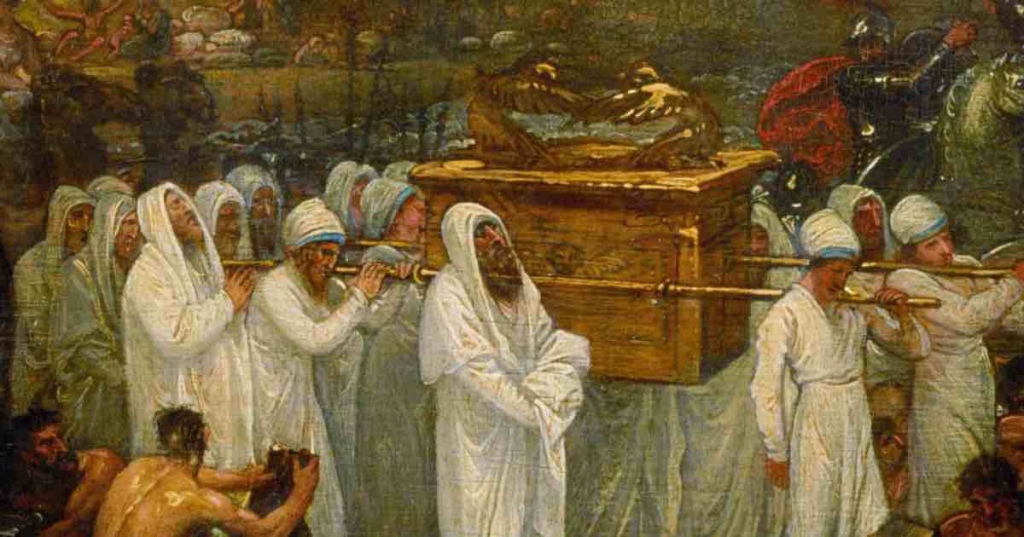
Central in the story is the ark of the covenant. The story tells of the time at Mount Sinai when God established a covenant with Moses and Israel, and the giving of the Law within that covenant relationship. The ark is a sign of the presence of God, continuing on with the people of Israel beyond Mount Sinai (Exod 25:10–22). God is not an absentee God, but very present amongst the people. The ark symbolises and reinforces that message.

Levites carrying the ark of the covenant

The priests serve to mediate the presence of God. They carry the ark of the covenant, maintaining it, ensuring that it remains safe (Deut 10:8; 31:9, 25–26; Josh 3:3, 6, 8, 13). The story offers an indication that holy people are necessities in life; their mediation of the divine in the midst of the mundane is important. (As an ordained person, I confess that I have a vested interest in this claim!) As the priests shape the story, they make sure that priests play a central role in what is narrated.

Joshua as testimony to faith

The story contains a memorable description of God as “the living God” (3:10). The phrase appears elsewhere in a Hebrew Scriptures (Deut 5:26, 1 Sam 17:26, 36, 2 Kings 19:4, 16, Ps 42:2, 84:2, Isa 37:4,17, Jer 10:10, 23:36, Dan 6:20, 26, Hos 1:10) and also in the New Testament (Matt 16:16, 26:63, Acts 14:15, Rom 9:26, 2 Cor 3:3, 6:16, 1 Thess 1:9, 1 Tim 3:15, 4:10, Heb 3:13, 4:12, 9:14, 10:31, 12:22, Rev 7:2). The ark is a sign that this living God is present, active and engaged in the lives of the people.

A striking event demonstrates this: as the priests stand in the river, the waters stand still (3:16), and so the people are able to cross the river and enter the land. Of course, later on in Joshua, another miraculous event takes place, as the sun stands still (10:13). These were not actual events, but symbolic of divine intervention. The waters standing still evokes the moment in the Exodus story when the waters of the Sea of Reeds parted to allow the Israelites to pass through (Exod 14:21–22, 29).

We might well compare the New Testament story of the earthquake and resurrection of the saints (found only in Matt 27) after the resurrection of Jesus. This, too, was not an historical event; it was a dramatic tale told to underline that God was active in the story.

The key aspect of the story of the escape from Egypt, as the story is found in Exodus 14—15, is the connection with the Feast of the Passover. The story that is attached to the Exodus actually serves a liturgical purpose; the priests have developed the story to reinforce and highlight the way that God was able to redeem the people—as in the story, so in the experience of the returning exiles.

Likewise, the key aspect of this story of the entry into the land, in Joshua 3, is not the actual physical wading across the river, but the assurance of faith that comes from the telling of the story of entering the land. God is not only the redeemer, who delivers the people into freedom, but the one who delivers the land to the people. The promise of the gift of land, first made to Abraham (Gen 12:1, 15:7, 17:8), then reiterated to Jacob (Gen 28:4,13, 35:12) and again to Moses (Exod 3:8,17, 6:4,8, 12:25, 13:5,11), is now coming to fulfilment.

Joshua as military victory

Indeed, the crossing of the river itself points to the symbolism that this story contributes to the overarching narrative. Leaving Egypt, the Lord God parts the waters, the people pass through, the army is bogged and drowned, and their escape from Egypt is secure. Entering Canaan, the Lord God once again stops the flow of the waters, the priests who carried the ark of the covenant enable the people to cross the river and enter the land, and their hold on the land is made secure. Josh 4:19–24 draws this comparison quite explicitly.

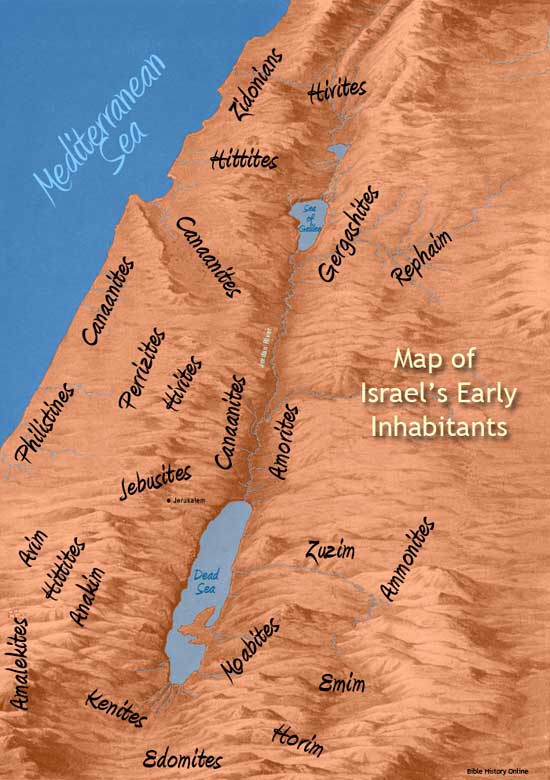
The parallel continues in the strong militaristic element, found in the list of the peoples whom “the living God who without fail will drive out from before you”. The text specifies “the Canaanites, Hittites, Hivites, Perizzites, Girgashites, Amorites, and Jebusites” (3:10). Even before the battles are waged, the victories have been declared. This also provides a neat bookend: the army of Egypt is crushed in Exodus 15, the inhabitants of the land are subdued and defeated in Joshua 3.

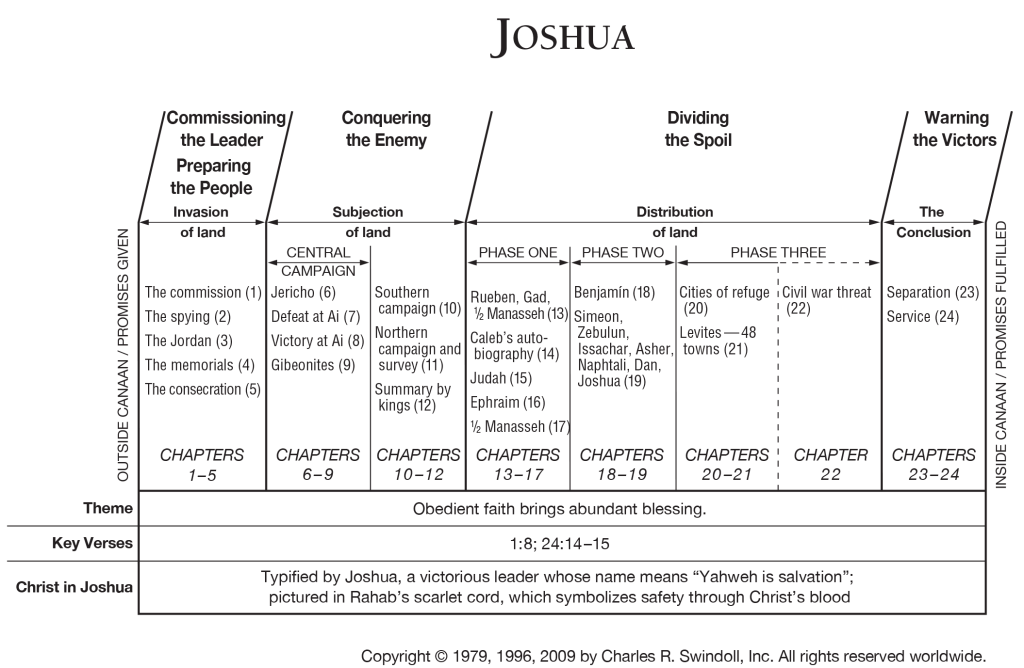
What follows on from this story of entering the land is a highly schematic presentation of the military conquest of the land, in the rest of the book of Joshua. The invaders take the key areas in turn: first the Central area (chs. 6—8), then the Southern regions (chs. 9—10) followed by the Northern areas (ch 11). Chapter 12 then provides a summary of the conquest, listing “the kings of the lands whom the Israelites defeated”—a kind of victor’s gloating, “thirty-one kings in all” (Josh 3:24).

The story of taking control of the land is then followed by a parallel schematic account of the allotment of the land to each of the tribes. The Transjordan (the land to the east of the Jordan River) is allotted in ch. 13; the Central regions in chs. 14—17; and then the peripheral regions to the north and south in chs. 18—19. Chapter 20 details the allocation of the five “cities of refuge”, whilst chapter 21 identifies the forty-eight towns which were allotted to the tribe of Levi, from which the priests came.

None of these are historical accounts. The schematic ordering carries symbolic weight, rather than being an historical account. Indeed, the twelve tribes of Israel were a later construction by the compiler of the narrative, rather than being an actual organisational principle at the time of any such conquest.

And even as the list of conquered peoples are identified, the savagery of this glorious moment is revealed. The memorial stones provide a reminder of the event (Josh 4:1–10), a reminder of the power of the invading force as they colonise the settled inhabitants of the land. We hear the story from the perspective of the victorious invaders—the people of Israel. The dispossession and death of so many Canaanites is simply “collateral damage” in this process.

Joshua and Israel, Britain and Australia, and the Indigenous perspective

This is a story of land, invasion, massacre, colonisation, and victory. It is an ancient story which resonates strongly with the experience of Indigenous peoples in the modern era of history. Time and time again, from late medieval times onwards, “explorers” set out from Western powers, “discovered” new lands, followed by “settlers” who came and established “civilisation”, most often by means of “subduing” the indigenous peoples, making them subservient to the “new order”—and even, in many instances, punishing those who resisted their new ways, even utilising means of killing the Indigenous peoples.

This is the dynamic of the story of “Israel entering the promised land” which is told in Joshua, as well as the story of “establishing British civilisation in the land of Australia” which is the story of the continent on which I live. It is a story of many other places, also, around t,he world today. The imposition of a new way of living by a more powerful force, the subjugation of those who already were living in the land, and the use of violence and murder to ensure that the new order was maintained and could flourish—all of this is in the history of Australia since 1788.

The story of invasion and settlement, defeat and decline, resonates with the contemporary Australian experience of the indigenous peoples of the continent and its islands. Which gives us pause for thought: how, then, do we hear and understand that story recounted in Joshua?

See also

and for my perspective on the way that biblical literalism has fed into the modern conflict over the land of Israel/Palestine, see

The problem of Canaan: conquering, colonising, massacring (Deut 34; Pentecost 22A)

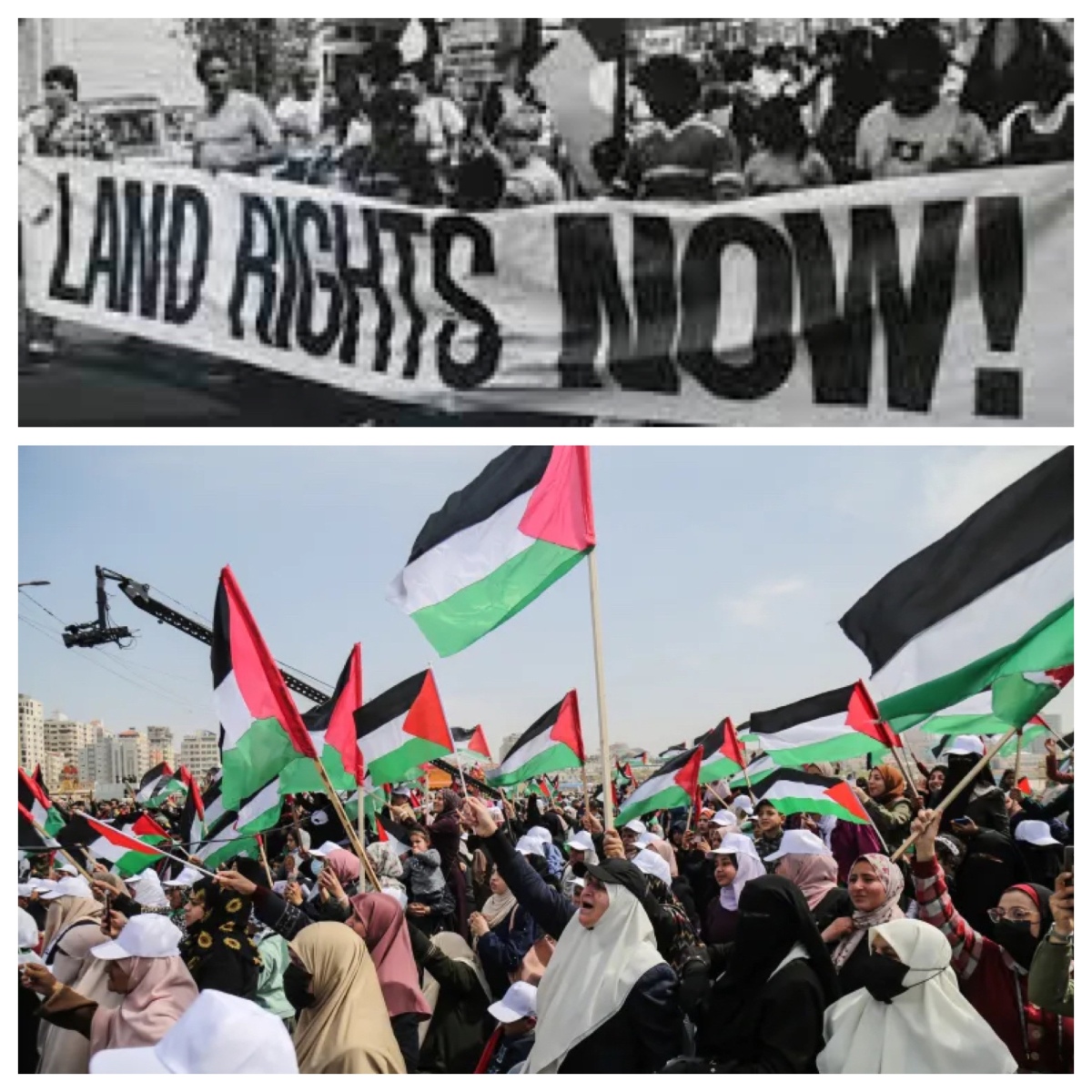
Land rights. Land claims. Land has always been a bone of contention-in the past, as in the present. This week, the lectionary invites us to consider land. The Hebrew Scripture passage contains an important statement about land a land claim, as it were.

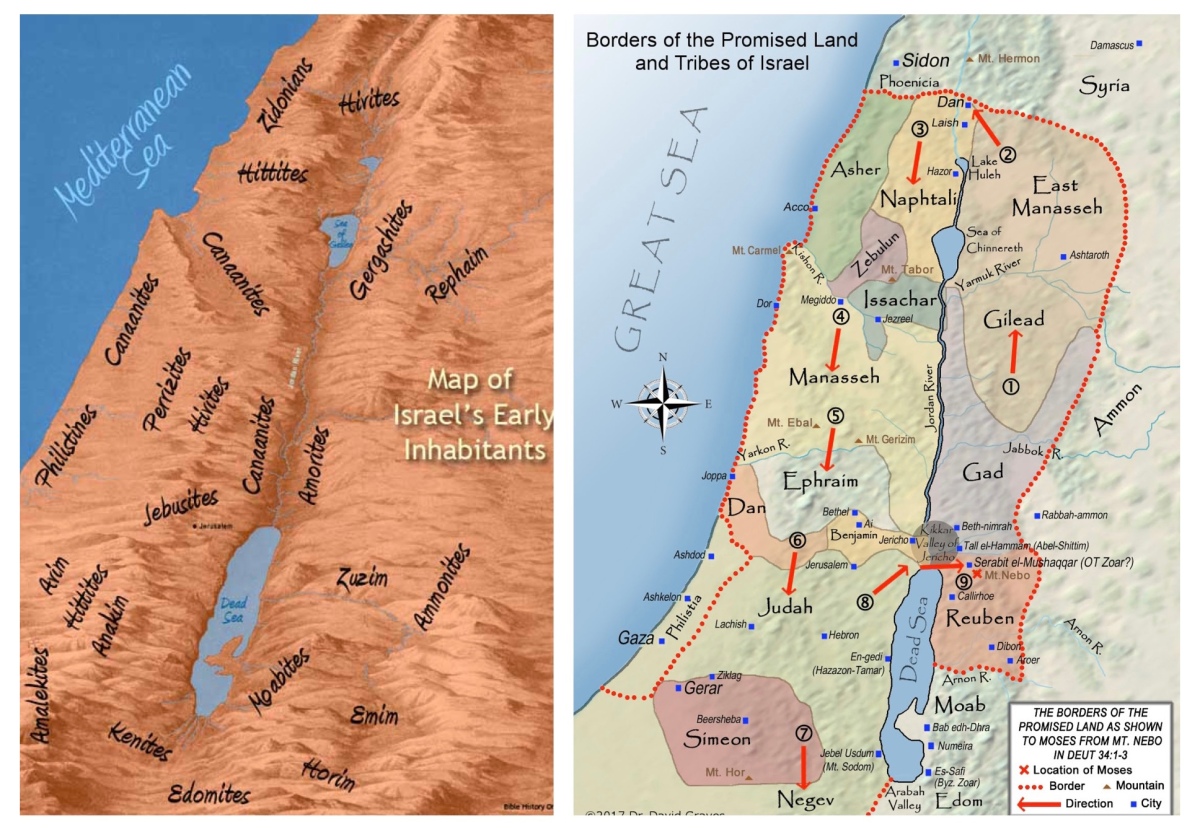
“This is the land of which I swore to Abraham, to Isaac, and to Jacob”, God declares to Moses in the last moments of his life (Deut 34:4), as he stands on Mount Nebo, surveying “the whole land: Gilead as far as Dan, all Naphtali, the land of Ephraim and Manasseh, all the land of Judah as far as the Western Sea, the Negeb, and the Plain- that is, the valley of Jericho, the city of palm trees as far as Zohar” (Deut 34:1–3).

That land encompassed all the land of Canaan, which later becomes the land of Israel. It is the land which was in contention between different peoples long before the story of Moses was written on the scroll that became part of Torah.

That was most likely sometime before or during the period that Josiah ruled as king of Judah, when he commanded the high priest Hilkiah to undertake an audit of funds in the temple. We are told that, in the course of this audit, Hilkiah said to Shaphan his secretary, “I have found the book of the law in the house of the Lord” (2 Ki 22:8). That’s presumed to be the first version of what we know as Deuteronomy, which later found its place as the fifth of “the five Books of Moses”.

That same land, promised to Abraham, claimed by Moses, is in contention today. It has had a chequered history. The ancient land of Canaan eventually became the land of Israel, then (along with Judaea) part of the Roman province of Syria Palaestina (132–390), and then of the Diocese of the East in the Roman Empire (to 536). What followed the fall of the Roman Empire was a millennium and a half of Muslim rule of this land, first as a part of Bilad al-Sham, the Greater Syria region, under various Caliphates.

The region continued to be part of various organisational configurations under successive Muslim rule, on into the Ottoman Caliphate (from 1517) and then into the modern era. (I am not an expert, by any means, of this ancient and medieval history; for this summary, I am dependent on what I read in what I consider to be reputable sources.)

In the early 20th century, the place where Arabs identifying as Palestinians lived was decreed to be the British Mandate of Palestine (1920–1948). The ancient conflicts, it was hoped, would be well in the past. A place for Palestinians in the modern world was, it was thought, now settled.

But this was not to be, as we well know today.

In part in response to the horrors of the Shoah, exposed by the ending of World War Two, the modern state of Israel was created in 1948. The new nation took 78% of the area which had been provided for Palestinians in the British Mandate. That this was now Jewish territory was a blessing for Jews, but it was a huge irritant to Palestinian sensibilities, which has referred to the period from 1948 onwards as the Nakba, the Palestinian Catastrophe. In the early years of the Nakba, significant number of Palestinians fled the area declared as Israel, as (in one estimate) over 500 Palestinian villages were repopulated by Jews, becoming refugees with no national identity.

The contested regions of the Gaza Strip (along the east coastline of the Mediterranean Sea) and the West Bank (land immediately to the west of the River Iordan) became known as “the Palestinian Territories”.

Another irritant has been the fact that they have been occupied by Israel since the Six-Day War of 1967, and subsequent expansion of Israeli settlements into areas where Palestinians live has exacerbated the situation. And so those who were dispossessed become the dispossessors of others, and the cycle continues.

So when we hear, this coming Sunday, “This is the land of which I swore to Abraham, to Isaac, and to Jacob”, we can be sure that we know these territories; we know the conflicted situation in the modern era; and we know how the ancient texts describe and lay claim to Israelite “ownership” of the land.

When Abraham left his homeland to settle in Canaan (Gen 13:12) and when the Lord God later formalised a covenant with Abraham (then aged 99 years, we are told), the promise was made by God that “I will give to you, and to your offspring after you, the land where you are now an alien, all the land of Canaan, for a perpetual holding” (Gen 17:8).

That same phrase, “a perpetual holding”, is subsequently spoken by Jacob, as he tells Joseph, Manasseh and Ephraim of God’s words, “I am going to make you fruitful and increase your numbers; I will make of you a company of peoples, and will give this land to your offspring after you for a perpetual holding” (Gen 48:4).

That land, Canaan, is a problem that sits at the heart of the story that the Bible recounts in its early narrative books. It becomes a problem at the heart of life for the millions living in that region today, as I have outlined above. The biblical narrative tells of numerous battles leading to the defeat of many tribes: the Moabites (Judg 3:26–30) and the Ammonites to the east Judg 10:6–11:33), as well as “the Hittites, the Girgashites, the Amorites, the Canaanites, the Perizzites, the Hivites, and the Jebusites, seven nations mightier and more numerous than you” in the land (Deut 7:1; see also Josh 3:10; 12:8; 24:11), and also the Anakim (Josh 11:21–23).

Further, as recent events in Australia have powerfully reminded us, there is a problem right at the heart of the narrative that has been constructed about modern Australia. Our most recent failure even to accept a modest proposal to recognise the existence of First Peoples on the continent prior to 1788, is testimony to that problem. Although the First People of Australia were not completely destroyed and eliminated, they continue to be discriminated against in a multitude of ways.

Both the ancient Israelite narrative and the contemporar Australian narrative tell a story of a group of people who invade, conquer, massacre, colonise, settle, marginalise, and then claim as their own what had previously belonged to others who had long been there before them.

It’s a story, in both instances, that we need to hear, understand, and appreciate. We need to develop awareness of just how easily we adopt the victor’s point of view, and uncritically retell it, without thinking any more about the pain, hurt, anguish, and generations-long damage that was done, in each case.

That is hard to do. I am a white Australian, raised on the myths of the great Australian character, taught from my schooldays onwards about the glories of the British Empire and the values of western society. Understanding the situation of First Peoples in Australia takes time, focus, empathy, energy, and persistence.

And I am a Christian, raised on the stories of the Bible, taught from Sunday School onwards about the promises God made to the chosen people about the holy land that had been selected for them. Getting into the mindset of a people from so long ago, who have almost (but not quite) been written out of the story, is hard to do.

The story of the Hebrews entering the land of Canaan, battling the inhabitants and colonising the territory, lies underneath the whole story of Exodus, wilderness, and conquest, which is at the heart of the biblical narrative that accounts for the origins of Israel as a nation.

A specific set of stories which tell of that invasion and conquest is found in all its bloody detail in the book of Joshua. That book tells, in a highly stylised way, of the entry of the people of God into the promised land. It is a key incident in the extended narrative history that stretches from Genesis to 1 Kings, from slavery in Egypt, through the long haul of wilderness wanderings, to the establishment of the kingdom of Israel under King David.

That story has multiple historical problems, and needs to be understood as a mythological saga telling of the nature and identity of the people, rather than an accurate historical account of “what actually took place”. See

Invasion and colonisation, Joshua 3 and contemporary Australia (Pentecost 23A)

This ancient story of invasion, conquering, massacre, colonisation, settlement, marginalisation, and then the claiming as their own what had previously belonged to others, resonates strongly with the experience of indigenous peoples in so many places in the modern era of history-including, and especially, in Australia.

Time and time again, from late medieval times onwards, “explorers” set out from Western powers, “discovered” new lands, followed by “settlers” who came and established “civilisation”, most often by means of “subduing” the indigenous peoples, making them subservient to the “new order” and even, in many instances, punishing those who resisted their new ways, utilising various means of killing the indigenous peoples.

This is the dynamic at the heart of the story of “Israel entering the promised land” which is told in Ioshua. It is also at the heart of the story of “establishing British civilisation in the land of Australia” which is the story of the continent on which I live the land now called Australia. The imposition of a new way of living by a more powerful force, the subjugation of those who already were living in the land, and the use of violence and murder to ensure that the new order was maintained and could flourish all of this is in the history of Australia since 1788.

The story of invasion and settlement of Canaan, the defeat and decline of the various indigenous peoples of that land, resonates with the contemporary Australian experience of the indigenous peoples of the continent and its islands. Which gives us pause for thought: how, then, do we hear and understand that story recounted in Joshua, which is prefigured in this final chapter of Deuteronomy? What land claims do we accept from this ancient text? And how does that guide us, today, as we consider the land claims that are being made?

See also my discussion of the wav that biblical literalism has fed into the modern conflict over this land at