Antisemitism: yes, it’s about legislation—but more, it’s about our culture

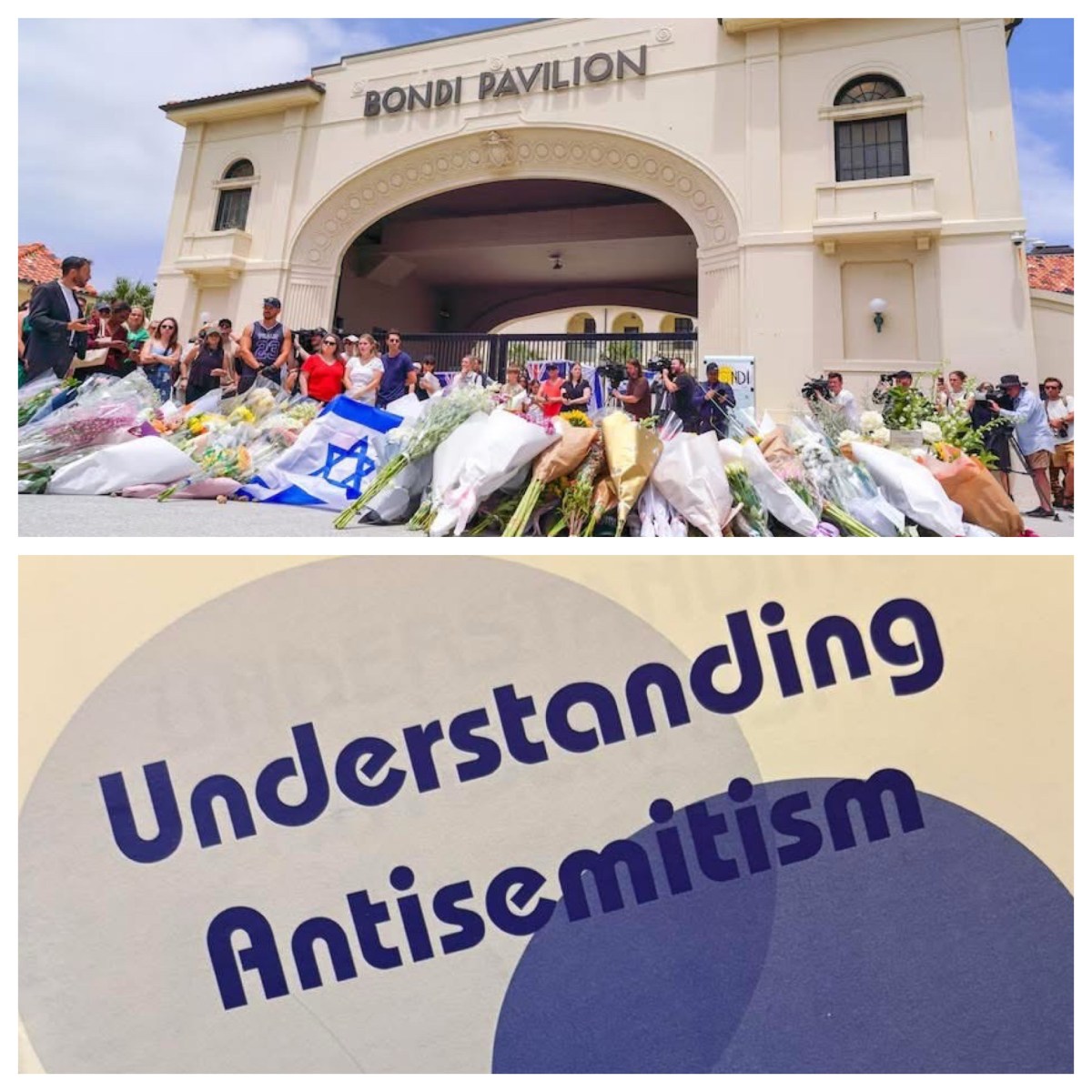
It’s less than a week since the tragic mass shooting at Bondi Beach. In the days since then, we have seen very public displays of shock, grief, fear, anger, blame, rage, and other strong emotions. So many comments rip over into recrimination and dehumanisation. It’s been savage. Alongside all of this, there has also been a deep admiration for those who attempted to stop the shooting by intervening—at the cost of their lives, in one instance, and incurring significant wounds, in another case. 

There have been all manner of suggestions about what should be done to address the reasons for this happening—even as the relevant authorities undertake their careful, methodical work of investigating who, how, and why this came to pass. The Federal Government has already flagged changes to the gun laws in force around the country, and more recently has signalled that legislation will be introduced to tighten the application of “hate speech” laws. These responses are important, and good. We can only hope that the parliaments concerned—Federal and State—all work cohesively to adopt them expeditiously.

But I don’t believe that a legislative response—as important, and necessary, as that is—will address the root cause of the issue that everyone is regarding as the villain in the situation. It’s about more than what our laws say. Laws are important; they set the bounds beyond which words and actions are deemed to be unacceptable in our society. Laws, put into place by legislation which parliaments enact, provide the outer framework of society. Our laws signal who we are as a society: what we value, what we disdain, what we will not tolerate. (That’s why politicians are necessary; they staff the parliaments that do this essential work on our behalf.)

But there is more to be said. Addressing antisemitism is not just a matter of legislation, or politics. It is a matter of culture; the features of our common life which are deeply embedded in who we are, and which are expressed in our attitudes, our words, and our actions. It is our culture which needs addressing.

1

We have heard widespread public rhetoric about “antisemitism”. It has, indeed, been a growing refrain since the events of 7 October 2023 in Gaza and Israel, but has been almost at saturation point since the tragic event at Bondi Beach on 14 December 2025. It is quite clear that there has been a significant rise in the number of antisemitic events since October 2023, culminating in the death of 15 Jews and significant injuries to another 40 or so at Bondi. 

A lot of that rhetoric seems to assume that the upsurge of antisemitism over the past two years has caught us by surprise; it is a shock, a terrible result of protests about what has been happening in Gaza in recent times, an unprecedented feature of Australian society as the politics of far away have infiltrated and impacted our domestic scene. But that is not the case. Whilst the number of intensity of these antisemitic events has indeed risen in that time, this is not a new experience for Jewish people in Australia.

 Antisemitism has been present in Australian society for decades. For 12 years I was part of the Uniting Church National Dialogue with the Jewish Community (2000–2012). Elizabeth joined me as a member for the last six of those years. For some time, I was the UCA co-chair of the Dialogue. The Jewish co-chair was usually the late Jeremy Jones, a renowned advocate for Jews in Australia. See https://uniting.church/an-introduction-to-the-uca-jewish-dialogue/

Every six months when we met, Jeremy would report on the rates of antisemitic incidents. It was constant, distressing, and unacceptable. He had begun collating such incidents in 1989. In 2004, he published an article, entitled “Confronting Reality: Anti-Semitism in Australia Today”, in the Jewish Political Studies Review (vol.16 no.3/4, Fall 2004, pp.89–103). The thesis he developed was clear; despite the view that Australia has been “not only accepting but welcoming of Jews … In recent years, however, there has been a growing acknowledgment both of the presence of anti-Semitism in Australia, and that it is the responsibility of political and moral leadership to confront it.” See https://www.jstor.org/stable/25834606

A decade later, in a 2013 report on “Antisemitism in Australia” published by the Executive Council of Australian Jewry, he noted that “During the twelve months ending September 30, 2013, 657 reports were recorded of incidents defined by the Human Rights and Equal Opportunity Commission (now the Australian Human Rights Commission) as ‘racist violence’ against Jewish Australians.” The kinds of incidents that he tabulated “included physical assault, vandalism – including through arson attacks – threatening telephone calls, hate mail, graffiti, leaflets, posters and abusive and intimidatory electronic mail”. 

There can be no doubt that antisemitism was firmly ingrained in Australian society at that time. Indeed, as Jeremy Jones noted, the figures reflected “a twenty one per cent increase over the previous twelve month period, and sixty-nine percent above the average of the previous 23 years.” See https://www.ecaj.org.au/wordpress/wp-content/uploads/2019/03/2013-ECAJ-Antisemitism-Report.pdf

Indeed, I well recall what security measures were in place on those occasions when I visited a Jewish synagogue in the Eastern Suburbs of Sydney, starting almost 30 years ago. I was teaching a course entitled “The Partings of the Ways”, exploring how Christianity separated from Judaism. One element in the course was to attend Jewish worship, and meet with the rabbi for a question-and-answer session. Rabbi Jeffrey Kamins of Temple Emanuel was always very amenable to spending time with the class in this way. (He also came to North Parramatta to give a guest lecture in the class each year.)

Entry into the synagogue was through a security gate at the front, in the middle of a high, strong security fence that surrounded the building and grounds. A security guard checked each of us before permitting entry. Once inside, we received wonderfully warm hospitality; but the first impression was rather chilling. The reason for that, even back in the 1990s, was that Jewish synagogues recognised that they needed to implement these security measures to ensure the safety of worshippers. Antisemitic incidents—angry words, slogans painted on walls, and physical attacks—were being experienced by Jews on a regular basis. Antisemitism was, unfortunately, alive and well.

In fact, in 1997, the Uniting Church National Assembly had adopted a statement about our relationships with Jewish people, which explicitly included a rejection of antisemitism and encouraged church members to become informed about such matters.

In the course of preparing that statement, Elizabeth and I were charged with preparing a resource, which the Assembly published as a study with ten sessions, and which was disseminated across the church.
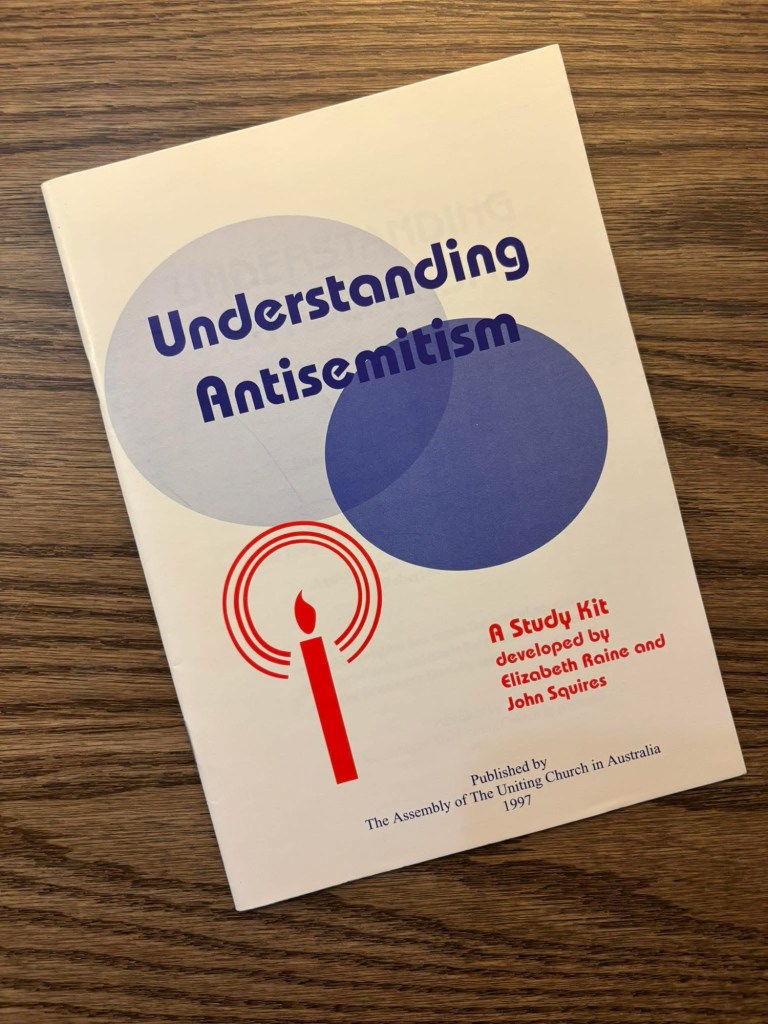
I wonder how many congregations made use of this resource? We certainly used many elements of it in our regular teaching over the years.

The resource is available online at https://illuminate.recollect.net.au/nodes/view/11763?

2

Some voices now, in 2025, are placing the responsibility for what happened at Bondi firmly on the shoulders of the Federal Government, arguing that they knew about the dangers of antisemitism but “did nothing”. Albanese should resign, they say. It was his fault that this tragedy happened. He has blood on his hands. It’s strong stuff.

I wonder. We have had many Prime Ministers over the past 25 years, since I first started hearing those regular reports about antisemitism from Jeremy Jones.  I wonder why other PMs have not been equally accused of inaction, like Albanese. What did John Howard do? Or Kevin Rudd? Or Julia Gillard? Or Tony Abbott? Or Malcolm Turnbull? Or Scott Morrison? 

All of these Prime Ministers did, in fact, the same as Albanese: recognising that antisemitism existed, they supported low level anti-racism programmes, and blithely went on with their political business of elections, budgets, legislation, and the argy-bargy of Question Time. Little has changed over all that time. Antisemitic incidents have continued to take place. And how many of the people now making loud noises about the Bondi Beach event had actually been agitating five, ten, or twenty years ago about antisemitism?

And it is not entirely clear that it was, in fact, antisemitism which fuelled the terrible events at Bondi Beach. Carrick Ryan, who spent years working as a Federal Agent from the NSW Joint Counter Terrorism Team, has written that he sees this as “an act of terrorism perpetrated by mad men possessed by a dangerous ideology”. 

His view is that “Jihadists do not have a political goal. They are inspired by a toxic interpretation of their faith that encourages them to die in an act of violence against any perceived enemy of their faith.” He argues that “it is simply absurd to suggest they have been influenced by pro-Palestinian university protesters, Greens politicians, or even ‘anti-Zionist’ conspiracy theorists.”

“The men who conducted these attacks”, he maintains, “would have despised those activists as much as anyone on the political right, and as I have tried to explain to many activists who have attempted to romanticise Hamas as heroic freedom fighters, the future they are aspiring to is very different.” It’s not about antisemitism, so much as it is it an expression of religious fanaticism.

See https://www.facebook.com/100045908673621/posts/pfbid0aiSGrfYkvvq9v9wznY71nwac3z3ep88T7XdVLvLfrTzVi7kRAvAEfWRqCkpfJ4fyl/

3

However, it is not only antisemitism which has been growing. Islamophobic incidents have increased consistently as the Muslim population of Australia has grown. Deakin and Monash Universities are collaborating to compile an annual Islamophobia Report, documenting such incidents since 2014. The latest report notes that the number of Islamophobic incidents has increased significantly since 7 October 2023. You can read the reports at https://islamophobia.com.au

There are numerous other incidents involving First Nations people, Afghanis, Asians, Sudanese, and all manner of diverse ethnic minorities which have all continued in the same period, spiking in numbers at particular times, with the same minimalist level of government response.  All Together Now is an independent not-for-profit organisation and registered charity, founded in 2010, that holds to a vision of a “racially equitable Australia”. They work towards this vision “by imagining and delivering innovative and evidence based projects that promote racial equity”. Their website declares “we are community driven, we utilise partnered approaches, and our work is intersectional”.

As All Together Now draws together a range of studies, it reports that “40% of children experience racism in schools … 43% of non-white Australian employees commonly experience racism at work …there is still a culture of systemic racism in Australian sports … studies have exposed systemic and structural forms of racism in policing, the justice system and child protection, leading to discrimination, violence and death of people of colour and First Nations People”. All the studies they cite are referenced and hyperlinked on their website at https://alltogethernow.org.au/racism/racism-in-australia/

Our society has fostered far too many intolerant, aggressively-hostile individuals who feel they have a right to speak and act in these ways.

4

The Bondi event and its repercussions are not simply a partisan political matter, as so many loud voices are currently proclaiming. It is a cultural phenomenon; the “right” to criticise, slander, marginalise, and attack Jews … and Muslims … and First Peoples … and other minorities … has been taken for granted by an increasing proportion of the population. They have, of course, been egged on by extremist politicians who seize every opportunity to foster racism.

Antisemitism, and Islamophobia, and all forms of racism, together form a deeply-embedded cultural phenomenon, for which we are all responsible. Politicians have a role to play (and wouldn’t it be good if a bipartisan approach could be consistently made) but all of us have things we can, and should, do, each and every day.

Calling out racist, islamophobic, or antisemitic language is one thing we could aim for. Intervening in low-level incidents is another, when it appears safe to do so. Supporting the education of children and young people with programmes which inculcate social responsibility, ethical behaviour, and respectful interactions with others is important. Joining groups which are advocating for justice for minority groups which are marginalised is something that people could do. Writing to state and federal members of parliament about issues of concern in these areas is also something that people could do. 
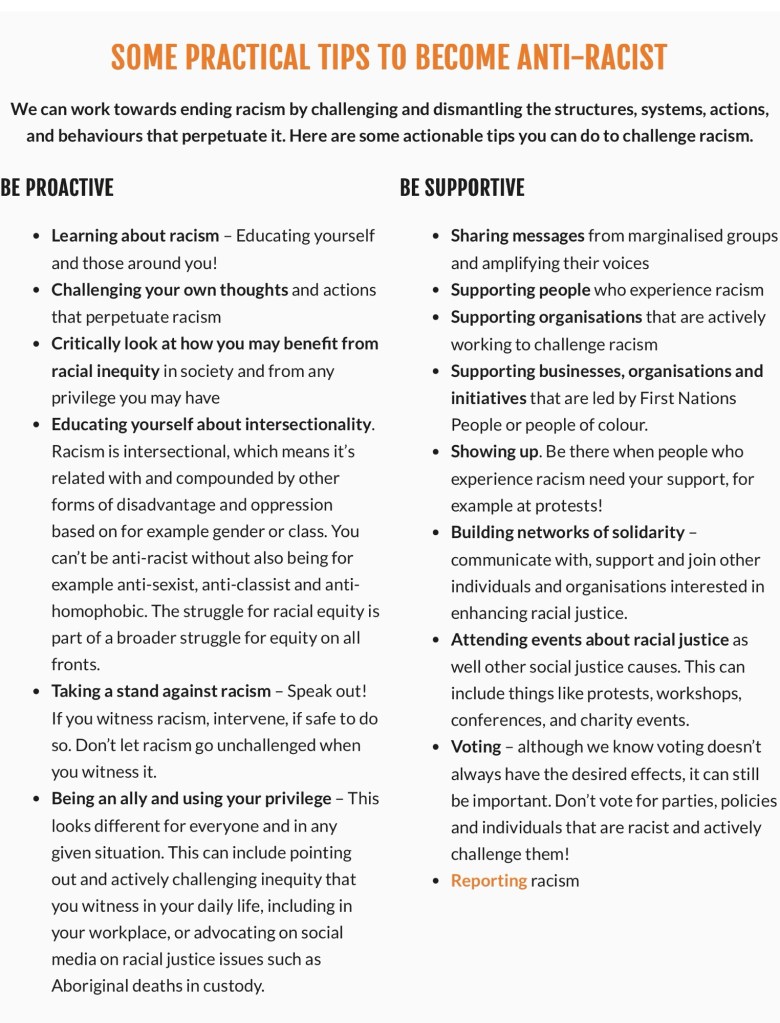
All Together Now has a helpful collection of “Practical Tips to Become Anti-Racist” as well as a useful guide with links to further resources. We would all do well to read, ponder, and implement the kinds of things that they advocate.

https://alltogethernow.org.au/wp-content/uploads/2023/09/Free-Resource-How-to-become-an-anti-racist.pdf

*****

For my earlier reflections on this tragic event, “They are part of the whole of us”, see
They are part of the whole of us

What has happened at Bondi Beach is a tragedy. Many are grieving, many are injured; many will be traumatised, many will be more anxious and more afraid of life in Australian society. Amongst other things, it might give us pause to consider who we are, together, as a society.

The black-clad figure on the bridge at Bondi Beach
in Sydney, Australia, shooting into Archer Park,
where a Hanukkah celebration was taking place

Jewish people are an integral part of contemporary Australian society. There was a handful of Jews on the ships of the First Fleet (estimates range from eight to sixteen people), arriving here in 1788. A Jewish burial society (Chevra Kadisha) was established in 1817. The first Jewish marriage took place in 1832. Jews have served as members of parliament, as justices in various courts, as Governor-Generals, as military officers, as surgeons and nurses and police officers, as actors and artists and journalists and business people, indeed in all areas of society. They have contributed in so many ways to making our society what it is today: diverse, welcoming, hardworking, tolerant. 

Muslims people are an integral part of contemporary Australian society. Muslims from Makassar (Sulawesi, Indonesia) had traded with the First Peoples of the northern part of the Australian continent for centuries before 1788. Some married First peoples and over time the Macassars contributed to the developing culture of the First Peoples. Muslims sailors and convicts came on ships in the early decades of British colonisation onwards. Muslims later came from India and Pakistan to provide transport, labour, and support in the building of essential infrastructure in the vast inland desert area of the continent like the Overland Telegraph Line and the Ghan Railway. Later Muslim migration occurred especially from Albania, Bosnia, Lebanon, Afghanistan, Iraq, Sudan, and Somalia. They have all brought their vibrant cultures with them and become an important part of contemporary Australian society.

I have known many Jews through my ministry in the eastern suburbs of Sydney and participation in the Uniting Church’s dialogue with the Jewish community. I have also known some Muslims through the relationships built between United Theological College and ISRA, the Islamic Studies organisation that, like UTC, is now an integrated part of Charles Sturt University. All of these Muslim people and these Jewish people are honest, ethical, law-abiding, dedicated, creative, intelligent, compassionate people. They would each be horrified at what has taken place at Bondi Beach yesterday. 

I know a number of Jewish people who are horrified at the policies of the current Israeli government, and who are working in various ways to find peace with justice in the fraught environment of Gaza, the West Bank, and the illegal settlements. What is happening in the Middle East is the result of distorted extremist fundamentalist views that are not held by the vast majority of Jews living in Israel, or Jews living in Diaspora around the world. Israeli government actions do not represent general Jewish viewpoints.

The best of who we are today as a society is because, in part, of the persistent, faithful, dedicated contribution of both Jews and Muslims over the centuries. They are part of the whole of us, and we are all interrelated to and interdependent on Jews and Muslims in so many positive ways. We should not let the scare tactics and dog whistling of marginal voices in our society blight our minds and lead us to snap judgements about “all Muslims” or “all Jews”. We would do best to stand with those who grieve and commit to working to ensure peace, safety, and respect in Australian society.


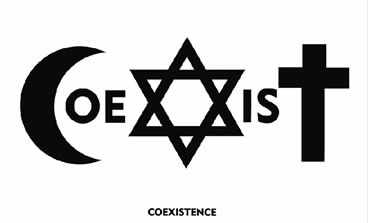
The Coexist image was created
by Polish graphic designer
Piotr Młodożeniec in 2000

The stone that the builders rejected (Mark 12; Narrative Lectionary for Lent 3)

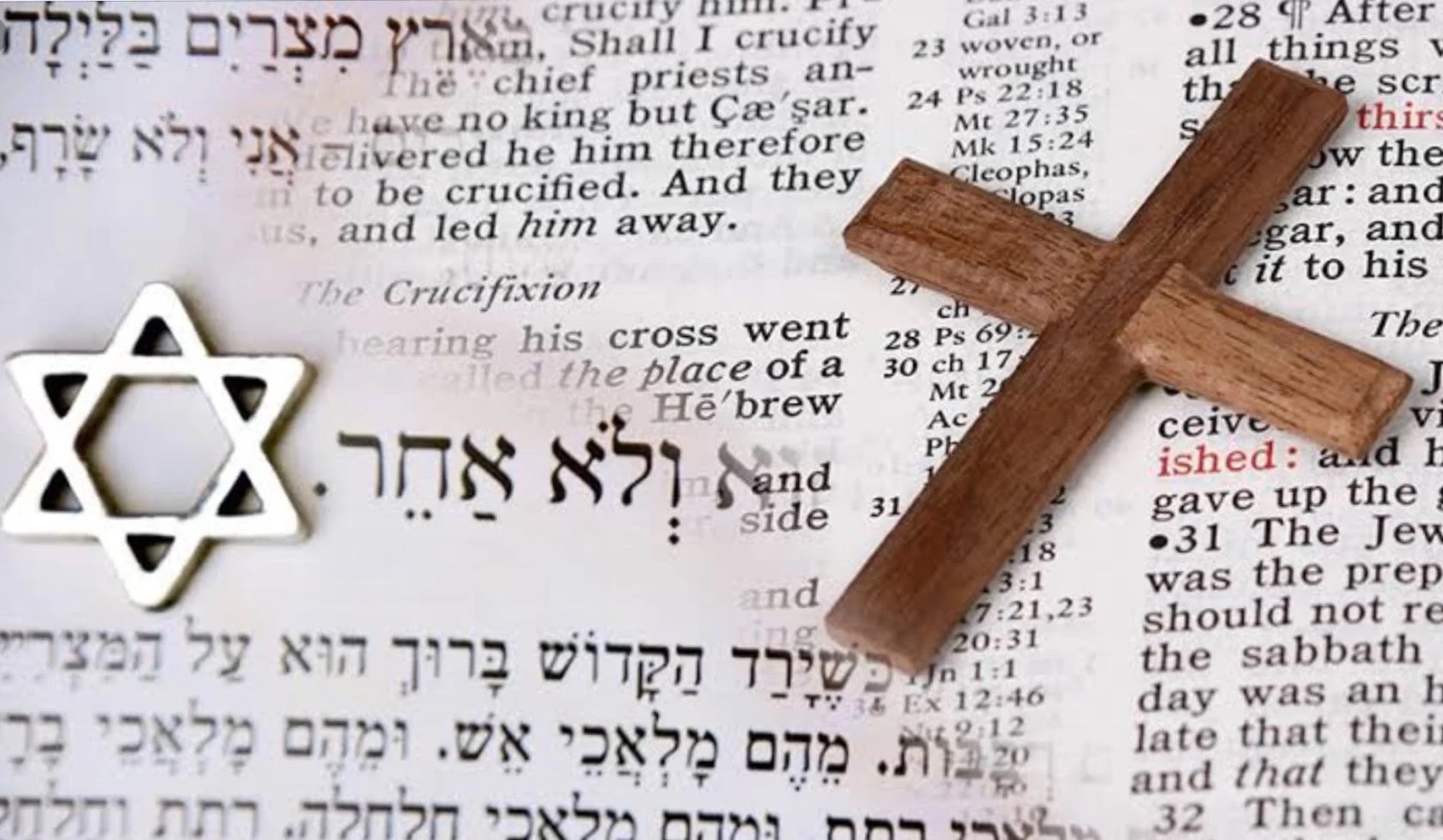
The parable of Jesus which is set in this Sunday’s lectionary appears to offer an invitation to adopt a negative approach towards Jews and Judaism. The author of “the good news of Jesus, chosen one” (by tradition, the evangelist Mark) interpreted this story as a polemic against the Jewish authorities who had gathered to hear Jesus teach (Mark 11:27).

As Jesus concludes his parable with a typical rabbinic scripture citation, designed to drive the point home with deep authority (Mark 12:10–11, citing Ps 118:22–23), the narrator comments, “when they realized that he had told this parable against them, they wanted to arrest him, but they feared the crowd; so they left him and went away” (Mark 12:12).

Often in Christian history, that negative portrayal of the Jewish authorities of the first century has been used as the basis for a direct attack on Jews of later times. That’s a very poor line of interpretation that we should ensure we do not follow.

The parable that Jesus tells is set in a vineyard. That’s an age-old symbol for the people of Israel. We can see this most clearly in passages of Hebrew Scripture such as Isaiah 5:1–7 and Psalm 80:7–15; they show how old and enduring this imagery was.

The parable that Jesus tells recounts the hard-hearted way in which the tenants in the vineyard (a traditional symbol for the people of Israel) reject the messengers sent to them by the landowner (seen as a symbol for God), culminating in the atrocious treatment meted out to the landowner’s son (whom we are meant to identify as Jesus, son of God).

The son is put to death. The punchline that Jesus crafts for this parable is potent: the owner of the vineyard “will come and destroy the tenants and give the vineyard to others” (vv.8–9). In Matthew’s parallel version of this parable, Jesus extends this ending to include the clear statement that “those who do not produce the fruits of the kingdom will not inherit the kingdom” (Matt 21:43).

The parable of the vineyard is one of the passages that has been difficult for us to understand accurately. When taken at a literal level, it has led to modern interpretations that are as damaging as they are unfair. The assumption is that the Pharisees and scribes are the ‘bad guys’, and this has led to the belief that Pharisee equals hypocrite. It is disturbing that such a stereotype has found its way into the language of our modern church.

The context of the parable suggests that although its message was aimed at the chief priests and the Pharisees, it does not exclude other Jewish people. The parable is told in one of a number of encounters between Jesus and Jewish leaders (11:27—12:44). Was this a consistent attitude of Jesus?

Equally disturbing is the notion that Jesus here seems to contradict his own teaching about loving one’s enemy and turning the other cheek. He depicts God as the avenging Lord. So what is really happening here?

I don’t think the parable of Jesus is intended to be simply an anti-Jewish polemic, an invitation to deride or dismiss Judaism and Jews.

It is true that, in the Gospel of Matthew, we find Jesus making some strident accusations and engaging in some vigorous debate with the Jewish authorities. But does he really believe that no faithful Jew will ever again enter the kingdom of heaven?

Judaism was in a state of flux as people lived under the continuing oppression of Roman rule. The destruction of the Temple in 70 CE was a pivotal moment. Evidence indicates that, during this time, there were various sectarian groups within Judaism who were contesting with each other for recognition and influence. Instead of making common cause against Rome, they continued to fight each other. Vigorous polemic and robust debate amongst Jews were not uncommon. See

During this period, the Pharisees were becoming increasingly important as an alternative to the Temple cult, and emerging as the dominant Jewish religious movement. Their power base was moved from Jerusalem and spread throughout the area. When the Temple was destroyed, they moved into the vacuum that was created, and became even more dominant.

(From this time on, Pharisees evolved into the “Rabbis”, and they developed the kind of Judaism that became dominant through to the present time. We need to be sensitized to the fact that, for many modern Jews, when we make damning criticisms of the Pharisees, they hear that as a criticism of their Rabbis, and, by extension, of the faith that they practise today.)

The kind of debates that we see in the Gospels—debates where Jesus goes head-on with the Pharisees—need to be understood in this context. Jesus was not “cutting the cord” of his connection with Judaism. He was not rejecting his faith as irrelevant or obsolete.

He was advocating, vigorously and persistently, for the kind of faith that he firmly believed in—and criticisng the Pharisees for their failure, in his eyes, to adhere to all that they taught. He wanted to renew Israel, to refresh the covenant, as the prophets before him had done.

And let’s remember that the accounts that we have of these debates come from years later than when they actually occurred; years that had been strongly shaped by the polemic and antagonism of the intervening decades.

Older academic Christian scholarship and popular evangelical Christian tradition perpetuate the stereotype that the Judaism of the time of Jesus was a harsh, legalistic, rigid religion—a stereotype heightened by an unquestioning acceptance of the New Testament caricature of the Pharisees as hypocritical legalists who made heavy demands but had no soul commitment to their faith. It was claimed that they were the leaders of a static, dying religion.

This stereotype has been completely demolished in recent decades—both through the growing interaction between Christian and Jewish scholarship, and also through a more critical reading of the relevant primary texts. I am very pleased that the church to which I belong, the Uniting Church in Australia, has made it very clear that we do not adhere to these inaccurate and hurtful stereotypes.

In 2009, the UCA national Assembly adopted a Statement which says, amongst other things:

The Uniting Church does not accept Christian teaching that is derogatory towards Jews and Judaism; a belief that God has abolished the covenant with the Jewish people;  supersessionism, the belief that Christians have replaced Jews in the love and purpose of God; and forms of relationships with Jews that require them to become Christian, including coercion and manipulation, that violate their humanity, dignity and freedom.

We do not accept these things.

See https://www.jcrelations.net/article/jews-and-judaism.pdf

Indeed, when we look to Matthew’s Gospel, Jesus does nothing to overturn the Law or to encourage his followers to disregard the Law; he is portrayed as a Jew who keeps Torah to the full. “I have come, not to destroy, but to fulfil the Law”, he says (5:17). See

And in that same section of the Gospel, Jesus is quoted as advocating for a better righteous-justice; a righteous-justice that “exceeds that of the scribes and Pharisees” (5:20). See

Virtually all of his criticisms of the Pharisees in the Synoptic Gospels can be understood within the framework of first century debates over the meaning and application of Law. The memory of Jesus is as a Torah-abiding Jew, who nevertheless stakes out a distinctive position within the context of those contemporary debates.

We should not interpret the parable of Jesus in Mark 12 as an outright condemnation of Judaism as a whole. As he debates the Jewish leadership of his day, he makes strong statements. But let’s not claim that Jesus validates any sense of anti-Jewish or antisemitic attitude.

Unfortunately, these words of Jesus and other parts of the New Testament story have been used throughout the centuries to validate anti-Jewish attitudes, to foster antisemitic hatred of the Jews. It is important for us to remember the real sense of the words of Jesus, and not follow the pathway to bigotry, hatred, persecution, and tragic attempts to annihilate the Jews.

Come, lift up the boy and hold him fast: “the other son”, Ishmael (Gen 21; Pentecost 4A)

As we continue through the season After Pentecost, the lectionary offers stories of some quite extraordinary people, drawn from the sagas that tell of the key moments in the story of Israel. The sagas we will hear are found in the narrative books, Genesis, Exodus, Deuteronomy, Joshua, and Judges.

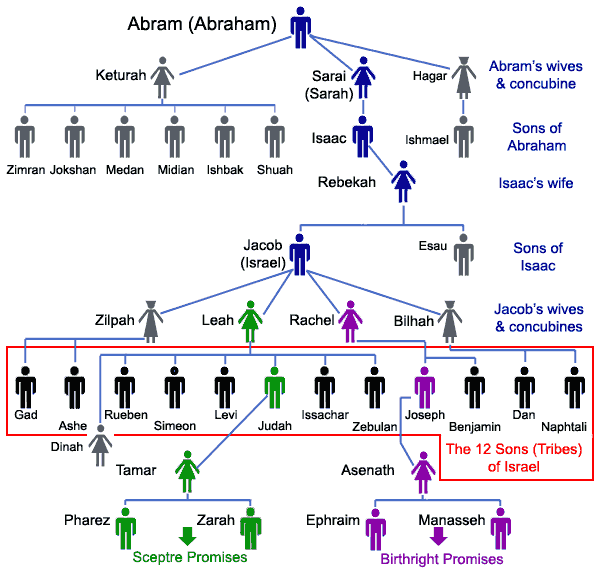
This coming Sunday, we hear another story relating to the patriarch of Israel, Abraham, his Egyptian slave Hagar, and the child that is born to them, Ishmael (21:8–21). This is the first child of Abraham; he and Sarah had not produced any children over many years. The fact that his mother is Abraham’s servant, Hagar, rather than his wife, Sarah, is not unusual. Later in the Genesis saga, Abraham’s grandson Jacob, already married to Leah and then to her sister Rachel, has children by Leah (29:32–35), as well as his servant Bilhah (30:1–7), and later by Leah’s servant Zilpah (30:9–11), before eventually Rachel gave him a son, Joseph (30:22–24) and later, Benjamin (35:16–21).

Earlier in Genesis, in a passage omitted by the lectionary, a report is provided of the circumstances leading to the birth of Ishmael (16:1–16). The naming of the child is announced by angelic visitation to Hagar (16:7–12), establishing a pattern which will later be used in recounting the naming of Samson (Judg 14:2–7), the child of a young woman in the time of Isaiah (Isa 7:13–16), and then of Jesus (Matt 1:20–21; Luke 1:31). It appears, at this earlier point, that it is Ishmael through whom the promise made to Abraham would be fulfilled: “I will make you exceedingly fruitful; and I will make nations of you, and kings shall come from you” (17:6).

In this week’s passage, however, the enmity that was evident once Sarah learnt that Hagar had conceived, comes to full fruition. Once the pregnant Hagar had this news confirmed, “she looked with contempt on her mistress” (16:4), and so “Sarah dealt harshly with her, and she [Hagar] ran away from her” (16:6). Hagar retreats to a spring in the wilderness (16:7), which is where the angel makes their announcement about the name and character of the child. Ishmael means “God has heard”, signalling that God was acting to fulfil the promise. But the life foreseen for Ishmael was one of conflict and opposition: “he shall live at odds with his kin” (16:12).

Hagar presumably returned to be with Abraham and Sarah; in due time, a son, Isaac, is born to Abraham and Sarah (21:1–7). At the start of this week’s passage (21:8–21), it appears that Ishmael is playing happily with his brother (21:8). Jewish interpreters note that the Hebrew word used, tsachaq, can be interpreted as “playing” or “laughing”—or with a more menacing overtone, perhaps hinting at Ishmael’s envy of his half-brother as the favoured one, at least in Sarah’s eyes.

(The LXX, in translating this word into Greek, takes the more benign option, adding the words “with his brother” to imply that this is just children playing games; and that is what Christian translators reflect in their translations.)

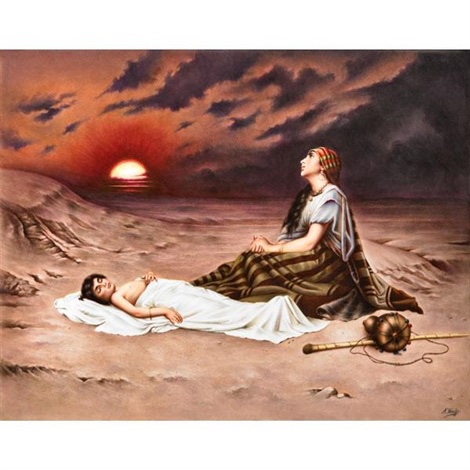
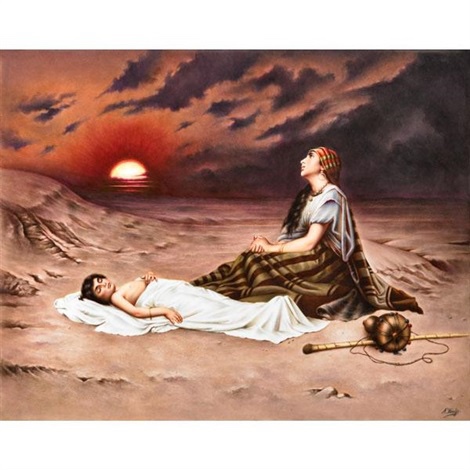
Sarah’s dissatisfaction with this moment of “play”—whether innocent or, perhaps more likely, with a threatening element—leads her to expel Hagar for another time, this time into the wilderness of Beersheba (21:9–14). Hagar’s distress is intense, such that she prepares for the death of the child Ishmael—only to be visited by another angelic intervention, inviting her to “lift up the boy and hold him fast with your hand”, assuring her that “I will make a great nation of him” (21:18).

Writing on the story in this week’s issue of With Love to the World, the Revd Sophia Lizares, a Uniting Church Minister originally from the Philippines, now serving in Perth, WA, says: “God is in the wilderness and hears even the least of the least. In times of trial, God opens our eyes to the goodness close at hand. Even those who have been banished, God accompanies into a unique and unexpected future. In God, the wilderness becomes a sanctuary where Hagar and Ishmael flourish.”

The story is told as an offering of hope—hope that what is yearned for will come to pass, even in the midst of distressingly difficult circumstances. The story has “a happy ending”, of sorts, for an angel intervenes (21:17)—does this perhaps indicate that Sarah was wrong to expel Hagar?

Guided by the angel, Hagar finds water (21:19) and the boy grows to become “an expert with the bow” (21:20). It is even said of him that “God was with the boy” (21:20), a presaging of what was later said of King Solomon (1 Chron 1:1), then later still of the infant Jesus, “the favour of God was upon him” (Luke 2:40), and of the whole life of Jesus, “God was with him” (Acts 10:38).

And the boy Ishmael does indeed become the father of “a great nation” (2:18)—through the 12 sons which he fathered! All’s well that ends well, it would seem.

*****

Yet the conflict that was to be visited upon Ishmael is an important element in this story which we must not pass by. “He shall be a wild ass of a man, with his hand against everyone, and everyone’s hand against him; and he shall live at odds with all his kin” (16:21) is a heavy burden to be laying on the child from the start of his life.

Although Ishmael was circumcised in accordance with the covenant that Abraham had entered into with the Lord God (17:23–27), and although he is indeed “blessed and made fruitful” (17:20) and does become the father of twelve sons (25:13–16) as well as a daughter (28:9), he still faced enmity. He bequeathed that conflicted state to his progeny. Indeed, the story of Ishmael functions (as do many of the stories in Genesis) as an aetiology.

An aetiology, as I have noted previously, tells of something that is said to have occurred long back in the past, but the focus is on present experiences and realities, for “such explanations elucidate something known in the contemporary world by reference to an event in the mythical past”.

See https://oxfordre.com/classics/display/10.1093/acrefore/9780199381135.001.0001/acrefore-9780199381135-e-7050;jsessionid=3DB38C42C54D01E1CBFA8682FB55DA4C

In the developing Jewish tradition, Ishmael attracts negative stories. It is said that he prayed to idols—some rabbis offer this as the explanation for Sarah expelling Ishmael and Hagar into the wilderness. Other rabbis claim that Hagar, an Egyptian woman (16:1) was not “a slave girl” but rather a daughter of Pharaoh.

Some interpreters, following the opening given by the ambiguity in the Masoretic (Hebrew) text, interpret the “playing with Isaac” (21:9) as an attempt to usurp the birthright of Isaac, the son of Abraham’s wife. Was Ishmael play-acting how he planned to dispose of his half-brother, and claim the heritage of his father Abraham?

By contrast, Ishmael is honoured in Islam as a prophet and as the patriarch of Muslims. Abraham—Ibrahim in Arabic—is acknowledged as a messenger of God and recognised as father of the nations, as scripture attests. The Kaaba in Mecca, the holy site to which Muslims make pilgrimage each year, is considered to have been built by Abraham and Ishmael, while the near-sacrifice of Isaac, told in Gen 22, is commemorated by Muslims on the holy day of ‘Eid al-Ada (“the Feast of Sacrifice”). In Muslim thinking, Abraham cleansed the world of idolatry.

In the Muslim holy text, the Quran, there are a number of mentions of Ishmael, who is described as “an Apostle, a Prophet” (19:54), as “truly good”, along with Elijah (38:48), and as inspired, along with “Abraham … and Isaac, and Jacob, and their descendants, including Jesus and Job, and Jonah, and Aaron, and Solomon … and David” (4:163). He occupies a key place in the stories of their past.

*****

The Quran is well-disposed towards Isaac, declaring, “we believe in God, and in that which has been bestowed upon Abraham and Ishmael and Isaac and Jacob and their descendants, and that which has been vouchsafed by their Sustainer unto Moses and Jesus and all the [other] prophets: we make no distinction between any of them; and unto him do we surrender ourselves” (3:84; the term Islam, of course, means “surrender” or “submission”).

Antagonism between Jews and Muslims has nevertheless been experienced throughout much of the time which followed the establishment of Islam as a faith with its own doctrines and practices during the seventh century. Early Muslim expansionary undertakings brought cultural, technological, and literary developments through Persia, Syria, Arabia, Palestine, Egypt, and North Africa. There was a “golden age” under this Islamic rule, during which Jews, Christians, and Muslims lived together in harmony—the so-called convivienca.

During the Middle Ages, the Crusades undertaken under the auspices of the Roman Church scarred relationships between Christianity and Islam—the storming of Jerusalem in 1099 saw masses of Muslims slaughtered. Jerusalem was recaptured by Saladin in 1187, but he ordered that Christians not be slaughtered; Muslims controlled the city but allowed Christian pilgrims access to holy sites.

The Fall of Constantinople, capital of the Byzantine Christian empire, in 1453 and the later expulsion of Muslims from Spain marked the end of congenial relationships. Later Christian missionary enterprises regarded Indigenous and Muslim peoples as primitive and uncivilised, and forced a Western way of life onto them, creating a heritage that still plays out across the world today.

*****

In like manner, Jews living in Muslim lands throughout the Middle Ages were permitted to practise their faith and culture for many centuries, although there are various instances of localised massacres and ghettoisation of Jews by Muslims. The height of tension between these two faiths has been in the modern era, relating to the creation of the State of Israel.

In the 19th century, Zionist Jews were calling for Jews to return to their ancestral homeland, which had been under Muslim control for centuries. The declaration of the State of Israel in 1958, so soon after the Shoah (“the Destruction”) that Jews had so recently experienced in Nazi Germany, meant that Palestinians experienced the Nakba (“the Catastrophe”) of becoming displaced from a land that had been their home for many centuries.

Tensions about the borders of Israel, the rights of Jewish settlers, the removal of Palestinian (Muslim) residents, the barricading of the West Bank and the Golan Heights, as well as the Temple Mount in the centre of Jerusalem, have been the focus of increasing and apparently unresolvable tensions for the past 75 years. The Temple Mount—the place from which Abraham ascended into heaven, in Muslim belief—is also,contentious. This is where the Muslim Dome of the Rock is built, on the foundations which centuries ago formed the base of the two Jewish Temples (one built by Solomon, and then the second built under Nehemiah and extended by Herod the Great).

So the Ishmael story has been a potent saga throughout history, and stands today as a powerful signal of the possibility of co-operative relationships, but the unfortunate reality is one of fractured and unhappy relationships which have spilled out into aggressive and destructive conflict.

Might it be that as we hear again this story of Ishmael, Hagar, and Sarah, we might recommit to being makers of peace, and work towards the goal of co-operative harmony, so that “the wilderness becomes a sanctuary where Hagar and Ishmael flourish”, where Jews and Muslims and Christians can find a common, irenic venture?

May it be so.

Christians relating to Jews

I recently taught a session in a course on Judaism and Early Christianity in which I talked about developments over the past 75 years in the ways that Christians have related to Jews. I went back to some material that I had developed when teaching fulltime, and amongst that, I found the following reflection. I wrote this in 2012, at a time when I was concluding 12 years as a member (and six years as co-convenor) of the Uniting Church’s National Dialogue with the Jewish People. I think it still holds good.

“Love your neighbour…”, Jesus instructs us—drawing on his own personal non-Christian tradition (Judaism, and the Hebrew Scriptures which stand at the heart of this faith). “Who is our neighbour?”, we may well ask. Jews, Muslims, Buddhists, Hindus, Sikhs, and others, are near to us. They are our near neighbours. We have a commission to relate to them in love.

To take just one example from this list of other faiths: in Australia, we have had Jews beside us and in our midst since the First Fleet itself! Jewish individuals have made significant contributions to Australian society in many spheres. In recent decades, the relationship between Christians and Jews has been nurtured and has developed in positive and constructive ways. It is time for us to ask, what “fresh expression” of our faith might we make, arising out of our relationship with Jewish people?

For almost two decades, the Uniting Church has engaged in a formal Dialogue with representatives of the Jewish Community in Australia. With my wife, Rev. Elizabeth Raine, I have participated in this national Dialogue group. We meet twice each calendar year, to share concerns, discuss issues, read scripture together, and canvass ways in which we might work together for a better society. This group is one of many hundreds of such groups around the world, seeking mutual understanding and common action for justice.

The international movement of Jewish-Christian dialogue has been growing since the late 1940s. Out of that movement, has come an understanding that Christians need to create a renewed understanding of who we are, and what we believe. No longer is it possible to dismiss Jews as people enslaved to a legalistic religion. No longer is it possible to declare that Christ has rendered obsolete the “old covenant” and put in its place a spiritually vigorous “new covenant”.

Instead, we are reminded of the ancient claims of Paul. For one, he wrote, “Has God rejected his people? By no means!” (Rom 11:1)—that is, the covenant made with Israel needs to be considered as ongoing, valid, continuing, into our own time. For another, Paul declared, “It is not as though the word of God had failed” (Rom 9:6)—that is, God’s promises to Israel stand fast in their own right, and will be fulfilled in their own right, not through any adaptation or mediation as imposed by another religious group. And then, there is Paul’s climactic cry: “And so all Israel will be saved” (Rom 11:26)—that is, Jews have access in their own right, through their own faith, to the God of Abraham, alongside the access that is granted through Jesus.

If we take seriously the rediscovery of these affirmations, we will seek to make a “fresh expression” of the Gospel which acknowledges these claims. There is important theological work to be undertaken to enable us to declare afresh the Gospel in our immediate context of a multicultural, multi-faith society!

If we are prepared to stand alongside Jews, as fellow children of God with equal insight into God’s ways, then we will start to create a “fresh expression” of what it means to be people of faith within our contemporary Australian society. There are important steps to be taken in shaping communities of faith for our time!

And if we recognise that Jews and Christians each orient our belief towards the same God, the God of Abraham and Sarah, of Isaac and Rebekah, the God of Mary and Jesus, of Peter and Paul, of Priscilla and Phoebe—then we will seek to implement actions based on that faith, in new and fresh ways within our society.  This is the challenge that I see, most immediately, from my involvement in one growing area of the church’s life.  

*****

Some of my blogs from the last few years that touch on some of these matters include:

Amy Jill Levine has produced a helpful guide to the ways we might deal with these texts, noting what is helpful and what is not helpful in the various approaches; see https://www.abc.net.au/religion/holy-week-and-the-hatred-of-the-jews/

Rosh Hashanah: Jewish New Year

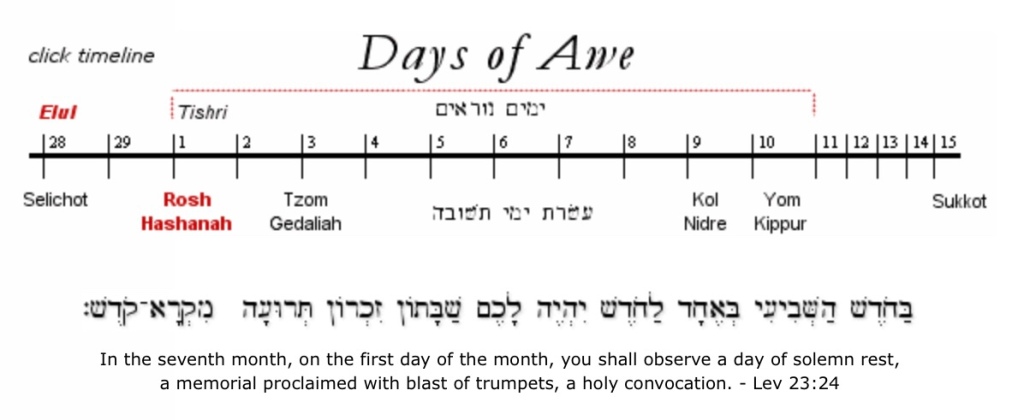
For Jews, last night, today, tonight and tomorrow during daylight hours forms Rosh Hashanah (Hebrew: ראש השנה). It begins at sundown on Monday 6 September and ends at sundown on Wednesday 8 September. The best translation of Rosh Hashanah is “head of the year”, meaning that this is the Jewish New Year. It begins Hebrew Year 5782.

Rosh Hashanah is the first of the High Holidays, a series of ten “Days of Awe”. These ten days provide a period when observant Jews devote themselves to prayer, good deeds, reflection on the mistakes of the past year, and making amends with those whom they have hurt. It culminates with Yom Kippur, the “Day of Atonement”, which this year will fall on Thursday 16 September.

In Jewish tradition, so I understand, there is a belief that God spends these ten days determining whether to give life or death to all creatures during the coming year. Jewish law teaches that God inscribes the names of the righteous in the “book of life” and condemns the wicked to death on Rosh Hashanah; people who fall between the two categories have until Yom Kippur to perform teshuvah, or repentance.

This concept is clearly reflected in the scriptures of Christianity. At the final judgment in Revelation 20:15, we read that “anyone whose name was not found recorded in the Book of Life was thrown into the lake of fire.” That “Book of Life” reflects Jewish tradition, as the place where God records the names of those people adjudged as worthy of life in the coming year. In Revelation, the book is “the Lamb’s book of life” (Rev 21:27). Paul exhorts his “loyal companion” to help Euodia and Syntyche, noting that “they have struggled beside me in the work of the gospel, together with Clement and the rest of my co-workers, whose names are in the book of life” (Phil 4: 2–3).

Is this what Jesus is alluding to when he tells the 70 disciples to rejoice because “your names are written in heaven” (Luke 10:20)? For the person writing “to Timothy” in the name of Paul towards the end of the first century, it is in fact Jesus himself who will carry out the judgement about this matter (2 Tim 4:1, “Christ Jesus, who is to judge the living and the dead”).

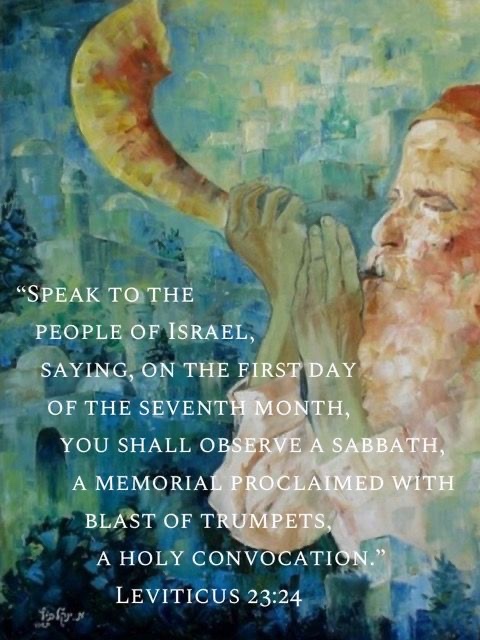
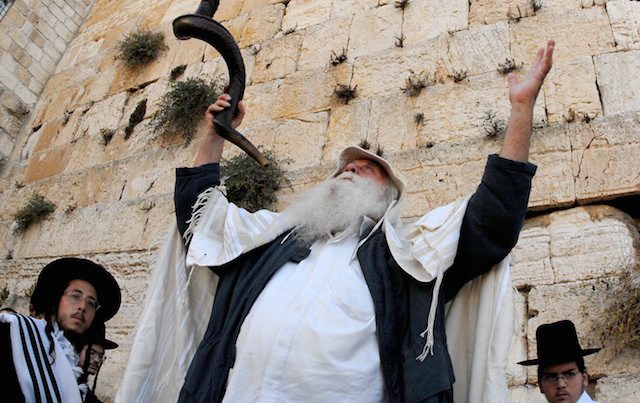
Rosh Hashanah is observed on the first two days of Tishrei, the seventh month of the Hebrew calendar. It is described in the Torah as יום תרועה (Yom Teru’ah, a day of sounding [the shofar]). The day begins with the sounding of the shofar, a ram’s horn, and then during the service a trumpet is blown 100 times. The festival, not surprisingly, is called The Feast of Trumpets.

That festival is described in Leviticus 23:24–25: “In the seventh month, on the first day of the month, you shall observe a day of complete rest, a holy convocation commemorated with trumpet blasts. You shall not work at your occupations; and you shall present the LORD’s offering by fire.”

There is a similar description in Numbers 29:1, although that passage then continues with detailed descriptions of the burnt offering (involving nine animals) and grain offerings associated with each burnt offering, which provide “a pleasing odour to the Lord”, offered “to make atonement for you” (Num 29:2–5).

These texts are priestly prescriptions, contained in books written after the return from exile in Babylon from the 520s BCE onwards, presenting as requirements for the people of Israel centuries before, when the Temple built in Jerusalem under Solomon was the focus of religious life.

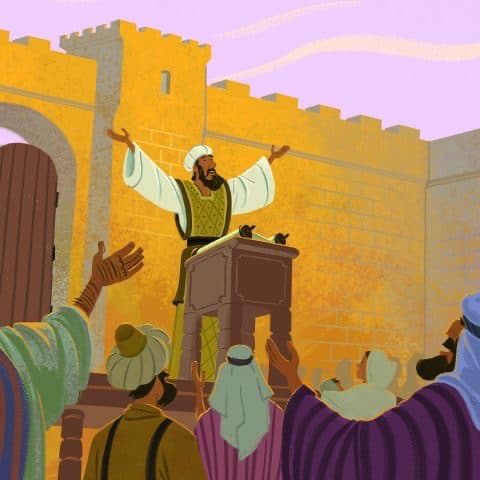
After five decades of living in a foreign land, the priests are reinforcing these sets of laws for use in the rededicated Temple in the rebuilt Jerusalem in the time of Ezra, as the governor of the city, Nehemiah, reports (Neh 7:73–8:3). This is clear from the way the date is specified (“when the seventh month came—the people of Israel being settled in their towns—all the people gathered together into the square before the Water Gate”, 7:73–8:1). What follows is an account of a covenant renewal ceremony, as the Law is read, and explained, to all the people (Neh 8:1–12).

In this way, the traditions of centuries past are revitalised for a new situation. Jewish traditions relating to the Festival of Trumpets continue to be revitalised in subsequent centuries. Philo of Alexandria, the first‑century BCE Jewish philosopher, describes the first day of the seventh month as the great “Trumpet Feast”. He connects it with the sounding of the horn at Mount Sinai when revelation took place (Exod 19:13–16).

Philo interprets the trumpet as an instrument and symbol of war, and reinterprets the festival as relating to peace and abundance: “Therefore the law instituted this feast figured by that instrument of war the trumpet, which gives it its name, to be as a thank offering to God the peace‑maker and peace‑keeper, who destroys faction both in cities and in the various parts of the universe and creates plenty and fertility and abundance of other good things” (Philo, Special Laws, 2:188-192).

The significance of the festival is being reinterpreted and re-applied in the city of Alexandria in the decades prior to the time of Jesus. There is no reference to the festival signifying the new year. Had this dimension of the festival been dropped, at least in Alexandria, five centuries after Nehemiah? Or was it simply assumed, and not mentioned because it was common knowledge at the time?

Two centuries later, well after the Second Temple built under Nehemiah had been destroyed, Rabbi Judah ha-Nazi drew together the many oral traditions about the Law in a document we know as the Mishnah. The title is a Hebrew word which comes from a root word meaning “repetition”. The Mishnah contains the teachings of rabbis from centuries past, which were learnt by male Jewish students by study and repetition.

In the Mishnah, the eighth tractate (Rosh Hashanah) in the second order (Moed, meaning Festivals) deals with this festival. It provides the description, “On Rosh Hashanah all human beings pass before [the Lord] as troops, as it is said, ‘the Lord looks down from heaven, He sees all mankind. From His dwelling place He gazes on all the inhabitants of the earth, He who fashions the hearts of them all, who discerns all their doings’ (quoting Ps 33:13–15)” (Mishnah, Rosh Hashanah 1.2).

Other sections deal with the various stages of the festival, and provide a set of laws relating to the shofar, the trumpet sounded to give the festival its name.

In the Talmud, a later expansion of the discussions found in the Mishnah, further expositions are provided, including a detailed set of provisions relating to the shofar, which is to be blown on two occasions on Rosh Hashana: once while “sitting” (before the Mussaf, the additional prayer to be said on a festival day), and once while “standing” (during the Mussaf prayer). This increased the number of blasts from the basic requirement of 30, to 60.

An even later rabbi, Nathan ben Jehiel of Rome (1035–1106), provided for 100 blasts: 30 before Mussaf, 30 during the Mussaf silent prayer, 30 during the cantor’s loud repetition of Mussaf, and 10 more after Mussaf. And so the development and re-interpretation of the festival continued.

I found a good page on the history.com website that explains a number of the customs currently associated with Rosh Hashanah.

Apples and honey: One of the most popular Rosh Hashanah customs involves eating apple slices dipped in honey, sometimes after saying a special prayer. Ancient Jews believed apples had healing properties, and the honey signifies the hope that the new year will be sweet. Rosh Hashanah meals usually include an assortment of sweet treats for the same reason.

Round challah: On Shabbat (the Jewish Sabbath) and other holidays, Jews eat loaves of the traditional braided bread known as challah. On Rosh Hashanah, the challah is often baked in a round shape to symbolize either the cyclical nature of life or the crown of God. Raisins are sometimes added to the dough for a sweet new year.

Tashlich: On Rosh Hashanah, some Jews practice a custom known as tashlich (“casting off”), in which they throw pieces of bread into a flowing body of water while reciting prayers. As the bread, which symbolize the sins of the past year, is swept away, those who embrace this tradition are spiritually cleansed and renewed.

“L’shana tovah”: Jews greet each other on Rosh Hashanah with the Hebrew phrase “L’shana tovah,” which translates to “for a good year.” This is a shortened version of the Rosh Hashanah salutation “L’shanah tovah tikatev v’taihatem” (“May you be inscribed and sealed for a good year”).

See https://www.history.com/topics/holidays/rosh-hashanah-history and https://www.myjewishlearning.com/article/rosh-hashanah-customs/

My friend Peta Jones Pellach has written a lovely blog for Rosh Hashanah at https://blogs.timesofisrael.com/storytelling-for-the-new-year/