Judging Israel; undoing creation (Jer 4; Pentecost 14C)

“A hot wind comes from me out of the bare heights in the desert toward my poor people, not to winnow or cleanse— a wind too strong for that. Now it is I who speak in judgment against them.” (Jer 4:11–12)

We’ve been following the words of Jeremiah over the last three weeks. He has had some very stern messages to deliver. Perhaps this helps us to see the origins of the term “Jeremiad”. The Oxford Dictionary of Literary Terms defines it as “either a prolonged lamentation or a prophetic warning against the evil habits of a nation, foretelling disaster”. The second sense (a prophetic warning) comes directly from the way that the prophet Jeremiah spoke about, and to, the people of Israel in his time.
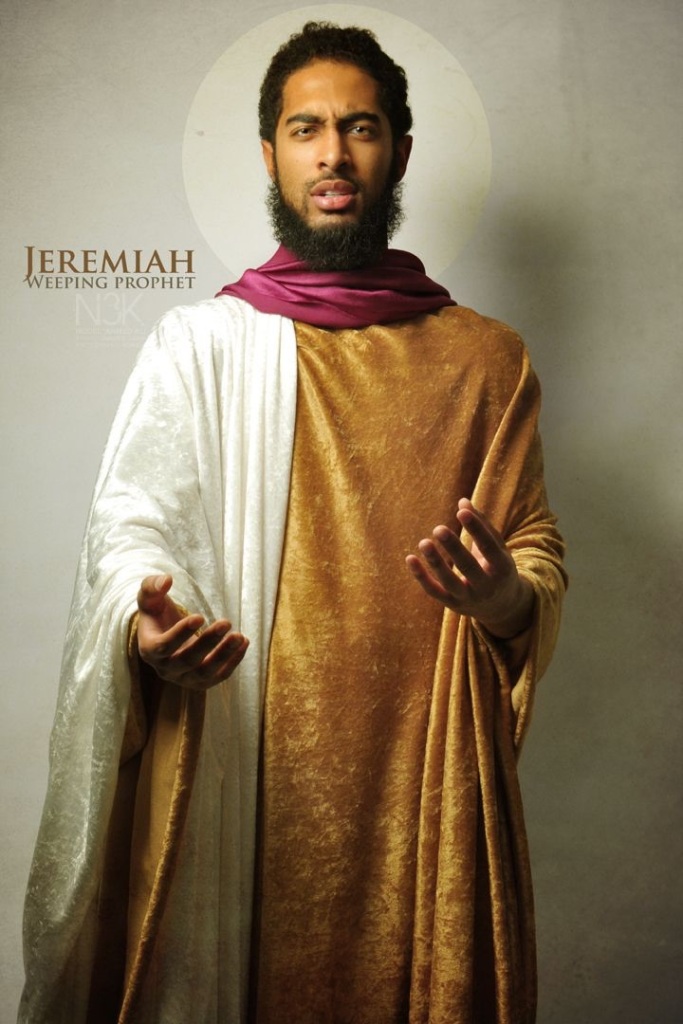
Jeremiah was, indeed, a voice of doom and gloom. At his calling, the Lord God informed him, “I will utter my judgments against them, for all their wickedness in forsaking me; they have made offerings to other gods, and worshiped the works of their own hands”. He then admonished the young Jeremiah, telling him to “gird up your loins; stand up and tell them everything that I command you”, before putting the very fear of God into him with the warning, “do not break down before them, or I will break you before them” (Jer 1:16–17). That’s stern stuff!

But is this going too far? I think today we would want to call to account the speaker of these words, to remind them not to abuse the power that they have in this relationship, and to be mindful of the vulnerability of the young person to whom they are speaking! (A friend who worked for the then Department of Community Services said years ago that Yahweh would these days be notified to the department if he spoke and acted in this way!)

So Jeremiah remains faithful to his call, through all the challenges and difficulties this brought him. For four decades he is relentless is calling the people of his day to account for their sins: “the house of Israel and the house of Judah have broken the covenant that I made with their ancestors” (11:10); “we have sinned against the Lord our God, we and our ancestors, from our youth even to this day; and we have not obeyed the voice of the Lord our God” (3:25). 

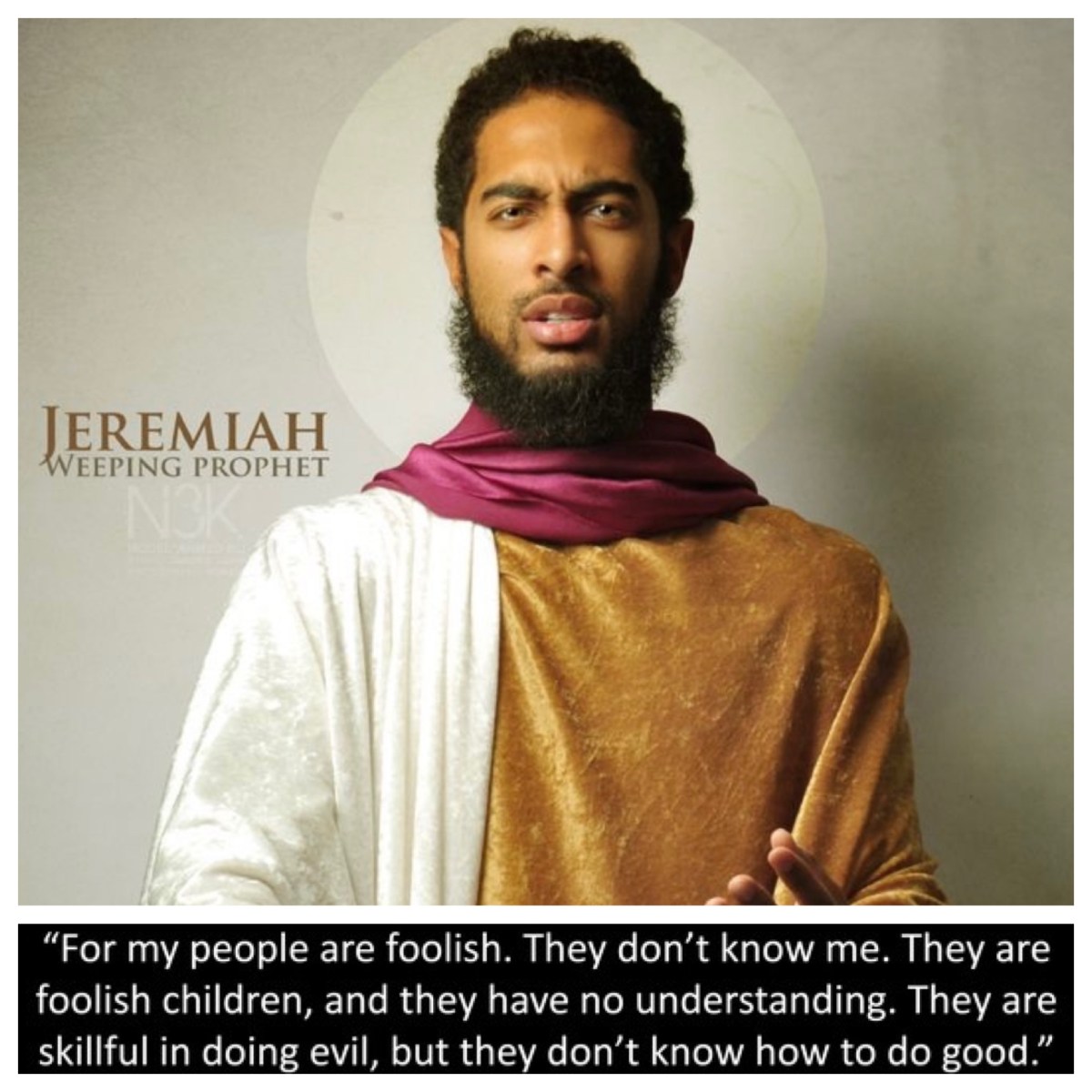
In the passage set before us by the lectionary for this coming Sunday, the prophet reports God’s anguish about Israel: “my people are foolish, they do not know me; they are stupid children, they have no understanding; they are skilled in doing evil, but do not know how to do good” (4:22). In despair, God decides to use a foreign power to bring Israel to their senses. He tells the prophet, “I am now making my words in your mouth a fire, and this people wood, and the fire shall devour them. I am going to bring upon you a nation from far away, O house of Israel, says the Lord” (5:14–15). Thus Jeremiah foretells the invasion of the Babylonians (see 2 Ki 25).

Jeremiah senses that God has fixed the course to be taken: “they have taught their tongues to speak lies; they commit iniquity and are too weary to repent. Oppression upon oppression, deceit upon deceit! They refuse to know me, says the Lord … Shall I not punish them for these things? says the Lord; and shall I not bring retribution on a nation such as this?” (9:5–6, 9). National disgrace awaits them, as they submit to a foreign power.

Eventually, from his exile in Egypt, and as others from his nation are taken north into exile by the invading Babylonians, Jeremiah tells the Israelites, “It is because you burned offerings, and because you sinned against the Lord and did not obey the voice of the Lord or walk in his law and in his statutes and in his decrees, that this disaster has befallen you, as is still evident today” (44:23). He has been resolute in his condemnation of the sinful people. He is now, sadly, vindicated. And so God decrees, “I am going to watch over them for harm and not for good; all the people of Judah who are in the land of Egypt shall perish by the sword and by famine, until not one is left” (44:27).

I must confess that it seems quite easy, at the moment, to slip into a simplistic interpretive pattern and apply these words—spoken long again against a sinful nation—to the very nation, today, who still bears the same name as those ancient people: Israel. The sins of the modern nation of Israel are manifold. Established as a refuge for a persecuted people, the nation has turned persecutor. Given land in recognition of the way they had been disposed and dispersed, the landholders sought more and more land, building settlements on Palestinian land, erecting a strong, impenetrable wall to keep “them” from “us”.

In a series of battles, they have waged war to ensure their safety and security. Besieged by leaders of organisations arrayed against them, they have continued to shoot, bomb, and destabilise such “terrorist” groups. Yet what is happening in Gaza today is no longer able to be distinguished from genocide—the very same genocidal actions that the Jewish people experienced almost a century ago. The sins of the nation appear (at least to me) to be clear, persistent, and utterly repugnant. Jeremiah’s words to ancient Israel—“I am determined to bring disaster on you, to bring all Judah to an end” (44:11) could well be the words of God to the modern nation of Israel.

Can we simply apply to condemnation of Jeremiah to modern Israel? It’s tempting; but it’s not responsible interpretation. And it leaves open the door to the accusation—repeated often, now—that this is antisemitic. I don’t believe it is antisemitic, because such criticisms are directed against the policies and practices of the modern nation-state of Israel, and what they result in, and not against all Jews everywhere, simply for being Jewish. So we need to steer clear of this kind of simplistic equation. The criticisms are political and pragmatic, not based on religion or ethnicity. 

For my analysis of the current situation involving Israel, Hamas, Gaza, and Palestine, see

and

All of this is in the book of Jeremiah: denunciation after denunciation of the people, warnings of divine punishment, and oracles portending imminent exile and absolute destruction. We can’t get away from that.

However: the passage that the lectionary offers for this coming Sunday raises the stakes even higher. In this passage (Jer 4:11–12, 22–28), the wrath of God is directed not just to Israel, but to all creation. The looming catastrophe is not just national; it is global, cosmic in its scope.

To be sure, the passage reports God’s anguish about Israel, as we have noted: “my people are foolish, they do not know me; they are stupid children, they have no understanding; they are skilled in doing evil, but do not know how to do good” (4:22).

But then comes a most remarkable sequence of sentences, in which the whole of creation seems to be in view. “I looked on the earth, and lo, it was waste and void; and to the heavens, and they had no light”, God is saying. “I looked on the mountains, and lo, they were quaking, and all the hills moved to and fro. I looked, and lo, there was no one at all, and all the birds of the air had fled. I looked, and lo, the fruitful land was a desert, and all its cities were laid in ruins before the Lord, before his fierce anger” (4:23–26).

Writing on this Jeremiah passage in With Love to the World, the Rev Dr Anthony Rees, Associate Professor of Old Testament in the School of Theology, Charles Sturt University, notes: “This is a remarkably evocative passage. It begins with a hot wind, a symbol of judgement (as in Jonah 4). It moves quickly to a promise of destruction from the North (Dan and Ephraim); it almost seems that God is cheering on those who would do Judah harm.”

But there is more than just evocative poetry here. It seems to me that the words of Jeremiah might be describing the end result of a process that is happening in our own time. Since the start of the Industrial Revolution, and continuing apace into the 21st century, the damage that human beings have been causing to the planet has been increasing with noticeable impacts seen in so many areas: global warming, more intense extreme weather events, more frequent extreme weather events,  the diminishing of the ice caps at the poles of the earth, the warming of the oceans’ temperature, rising sea levels impacting particularly islands in the Pacific, the bleaching of the Great Barrier Reef, and so many more things that can be attributed to human-generated climate change. 

In our own household, in just the past five years, we have seen a searing bushfire come within a few kilometres of our suburb, and then a massive downpour lead to rising floodwaters that reached the other side of the road on which we live. Climate change is real, and close. We are well on track, as many scientists are saying, to see a planet with a radically altered ecosystem. 
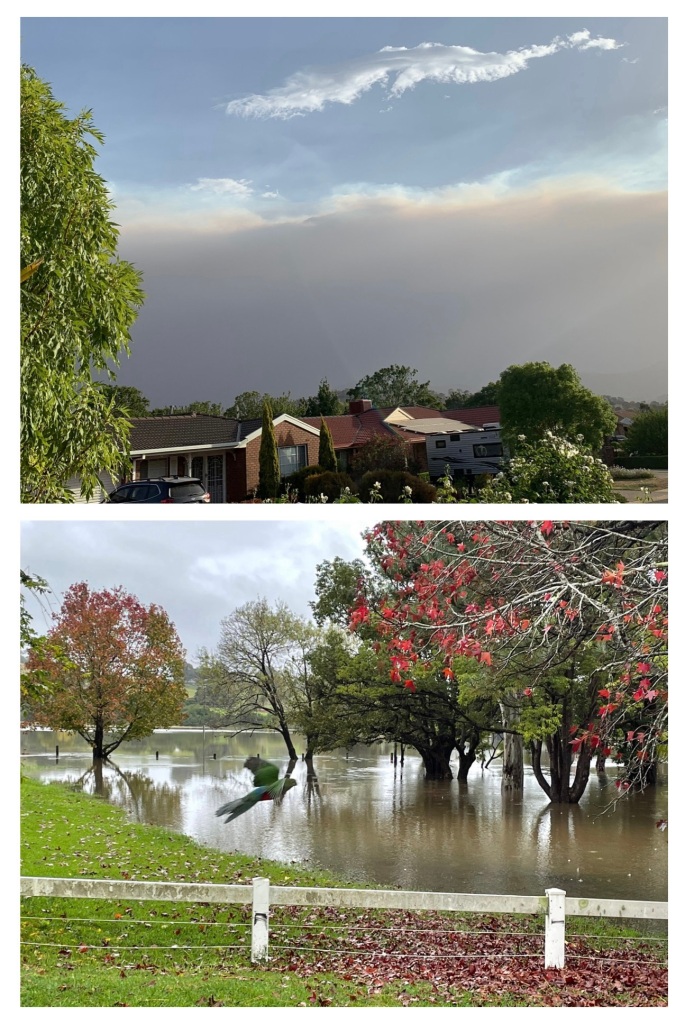
The view from our front yard:
Gordon, ACT, January 2020 (top),
during the severe bushfire in the ACT;
Dungog, NSW, May 2025 (bottom),
during the east coast flooding

Anthony Rees continues his reflections on Jer 4: “Judah is destroyed, the people and land laid waste on account of childish stupidity and ignorance. A remarkable image is then seen: the earth is described as waste and void, the very same description given of the earth in Gen 1:2 before God’s creative activity begins.”

The passage in Jeremiah has God narrating his view of the systematic undoing of his work as the Creator, as that has been set out in the narratives of Gen 1 and Gen 2, and in the poetry of Psalms 8, 19, 65, 104, and 148. God sees that the earth was once again “waste and void” (Jer 4:23a), as it was in the beginning (Gen 1:2). All that the landscape showed was a ravaged wilderness, for no longer did the earth bring forth vegetation: “plants yielding seed of every kind, and trees of every kind bearing fruit with the seed in it” (Gen 1:12; 2:8–9; and see Ps 65:11–13; 104:14–15, 27 –28). Rather, what God sees is that “the fruitful land was a desert, and all its cities were laid in ruins” (Jer 4:26).

In the heavens there is no light (Jer 4:23b), thus undoing God’s early creative work (Gen 1:3, “let there be light”; and Ps 8:3; 19:4b—6; 148:3). Hills and mountains were shaking (Jer 4:24); the stability they provided, the unshakeable foundation of the earth, has been undone (Ps 65:6; 104:5, 8; 148:9). All the birds have fled (Jer 4:25), undoing the work of God reported at Gen 1:21–22 (and see Ps 8:8; 104:12; 148:10b).

Anthony Rees notes, “Jeremiah looks to the heavens and the light is gone. God’s creative work has been undone on account of human failure. And again, human failure has consequences that go beyond our species: mountains sway, birds flee, arable land is turned to desert. What good news is there to be found here? What image of hope?”

The relevance for today of Jeremiah’s poetic “vision” that undoes the vision of creation expressed long ago by priests and poets is striking. And his perception that it is human sinfulness that is at the root of this is noteable. We know what we need to do to slow the rate of change, so that the climate remains within an inhabitable range. We know what we need to do to stop pumping gases into the air that are changing the way the planet works. We know what changes we need to make to our way of living—a whole host of changes, large and small—but we lack the will to do so. Our national policies continue to favour the industries that contribute most to the degradation of our environment. Our daily practices show minimal change, if that, in so many households.

Anthony Rees concludes, “Perhaps we might best read this text as a warning, and commit ourselves to working in ways that maintain relationship with God, our neigbours, and the rest of the created order.” It is certainly a timely word, given our critical situation. How do you respond to Jeremiah’s mournful poetry? What changes can you make? What lobbying can you undertake? What advocacy can you commit to do? Are we always going to be condemned to be, like ancient Israel, those who “are skilled in doing evil, but do not know how to do good”?

https://www.withlovetotheworld.org.au

The end of the ages; the beginnings of the birth pangs (Mark 13; Narrative Lectionary for Lent 5)

The Gospel reading which the Narrative Lectionary proposes for this coming Sunday (Mark 13:1–8, 24–37) is an excerpt from a longer speech, a block of teaching which Jesus delivered to his disciples (13:3–37) some time after they had arrived in the city of Jerusalem (11:1–11). It’s a striking speech, with vivid language and dramatic imagery. As Jesus’ last long speech in this Gospel, it certainly makes a mark!

The speech is delivered beside the towering Temple, built under Solomon, rebuilt under Nehemiah (13:1, 3). That temple was a striking symbol for the people of Israel—it represented their heritage, their traditions, their culture. The Temple was the place where the Lord God dwelt, in the Holy of Holies; where priests received sacrifices, designed to enable God to atone for sins, and offerings, intended to express the people’s gratitude to God; where musicians led the people in singing of psalms and songs that exulted God, that petitioned God for help, that sought divine benevolence for the faithful covenant people.

Or so the story goes; so the scriptures said; so the priests proclaimed. The holiest place in the land that was holy, set apart and dedicated to God. Yet what does Jesus say about this magnificent construction? “Not one stone will be left here upon another; all will be thrown down” (13:2). Jesus envisages the destruction of the Temple. Not only this; he locates that destruction within the context of widespread turmoil and disruption: “nation will rise against nation, and kingdom against kingdom; there will be earthquakes in various places; there will be famines” (13:8). And then, to seal this all, Jesus refers directly to the fact that “the end is still to come” (13:7).

The End. Eight centuries before Jesus, the prophet Amos had declared, “the LORD said to me, ‘the end has come upon my people Israel; I will never again pass them by’” (Amos 8:2). Amos continues, declaring that God has decreed that “on that day … I will make the sun go down at noon, and darken the earth in broad daylight. I will turn your feasts into mourning, and all your songs into lamentation; I will bring sackcloth on all loins, and baldness on every head; I will make it like the mourning for an only son, and the end of it like a bitter day” (Amos 8:9–10).

That image of The Day when the Lord enacts justice and brings punishment upon the earth, because of the evil being committed by people on the earth, enters into the vocabulary of prophet after prophet. Amos himself declares that it is “darkness, not light; as if someone fled from a lion, and was met by a bear; or went into the house and rested a hand against the wall, and was bitten by a snake. Is not the day of the LORD darkness, not light, and gloom with no brightness in it?” (Amos 5:18–20).

Isaiah, just a few decades after Amos, joined his voice: “the Lord of hosts has a day against all that is proud and lofty, against all that is lifted up and high … the haughtiness of people shall be humbled, and the pride of everyone shall be brought low; and the Lord alone will be exalted on that day” (Isa 2:12, 17). He warns the people, “Wail, for the day of the Lord is near; it will come like destruction from the Almighty!” (Isa 13:6).

Isaiah uses a potent image to describe this day: “pangs and agony will seize them; they will be in anguish like a woman in labour” (Isa 13:7). He continues, “the day of the Lord comes, cruel, with wrath and fierce anger, to make the earth a desolation, and to destroy its sinners from it” (Isa 13:8), and later he portrays that day as “a day of vengeance” (Isa 34:8).

Zephaniah, who was active at the time when Josiah was king (640–609 BCE) declares that “the day of the Lord is at hand; the Lord has prepared a sacrifice, he has consecrated his guests” (Zeph 1:7); “the great day of the Lord is near, near and hastening fast; the sound of the day of the Lord is bitter, the warrior cries aloud there; that day will be a day of wrath, a day of distress and anguish, a day of ruin and devastation, a day of darkness and gloom, a day of clouds and thick darkness ” (Zeph 1:14–15).

Habakkuk, active in the years just before the Babylonian invasion of 587 BCE, declares that “there is still a vision for the appointed time; it speaks of the end, and does not lie” (Hab 2:3); it is a vision of “human bloodshed and violence to the earth, to cities and all who live in them” (Hab 2:17).

Later, during the Exile, Jeremiah foresees that “disaster is spreading from nation to nation, and a great tempest is stirring from the farthest parts of the earth!” (Jer 35:32); he can see only that “those slain by the Lord on that day shall extend from one end of the earth to the other. They shall not be lamented, or gathered, or buried; they shall become dung on the surface of the ground” (Jer 35:33). He also depicts this day as “the day of the Lord God of hosts, a day of retribution, to gain vindication from his foes” (Jer 46:10).

And still later (most likely after the Exile), the prophet Joel paints a grisly picture of that day: “the day of the Lord is coming, it is near—a day of darkness and gloom, a day of clouds and thick darkness! Like blackness spread upon the mountains, a great and powerful army comes; their like has never been from of old, nor will be again after them in ages to come. Fire devours in front of them, and behind them a flame burns. Before them the land is like the garden of Eden, but after them a desolate wilderness, and nothing escapes them.” (Joel 2:1-3).

Later in the same oracle, he describes the time when the Lord will “show portents in the heavens and on the earth, blood and fire and columns of smoke; the sun shall be turned to darkness, and the moon to blood, before the great and terrible day of the Lord comes” (Joel 2:30–31). Joel also asserts that “the day of the Lord is near in the valley of decision; the sun and the moon are darkened, and the stars withdraw their shining” (Joel 3:14–15).

*****

The language of The Day is translated, however, into references to The End, in some later prophetic works. In the sixth century BCE, the priest-prophet Ezekiel, writing in exile in Babylon, spoke about the end that was coming: “An end! The end has come upon the four corners of the land. Now the end is upon you, I will let loose my anger upon you; I will judge you according to your ways, I will punish you for all your abominations.” (Ezek 7:2–3).

And again, Ezekiel declares, “Disaster after disaster! See, it comes. An end has come, the end has come. It has awakened against you; see, it comes! Your doom has come to you, O inhabitant of the land. The time has come, the day is near—of tumult, not of reveling on the mountains. Soon now I will pour out my wrath upon you; I will spend my anger against you. I will judge you according to your ways, and punish you for all your abominations.” (Ezek 7:5–8). This day, he insists, will be “a day of clouds, a time of doom for the nations” (Ezek 30:3; the damage to be done to Egypt is described many details that follow in the remainder of this chapter).

Obadiah refers to “the day of the Lord” (Ob 1:15), while Malachi asserts that “the day is coming, burning like an oven, when all the arrogant and all evildoers will be stubble; the day that comes shall burn them up, says the Lord of hosts, so that it will leave them neither root nor branch” (Mal 4:1).

Malachi ends his prophecy with God’s promise that “I will send you the prophet Elijah before the great and terrible day of the Lord comes; he will turn the hearts of parents to their children and the hearts of children to their parents, so that I will not come and strike the land with a curse” (Mal 4:5–6). This particular word is the final verse in the Old Testament as it appears in the order of books in the Christian scriptures; it provides a natural hinge for turning, then, to the story of John the baptiser, reminiscent of Elijah, who prepares the way for the coming of Jesus, evocative of Moses.

Another prophet, Daniel, declares that “there is a God in heaven who reveals mysteries, and he has disclosed to King Nebuchadnezzar what will happen at the end of days” (Dan 2:28), namely, that “the God of heaven will set up a kingdom that shall never be destroyed, nor shall this kingdom be left to another people. It shall crush all these kingdoms and bring them to an end, and it shall stand forever” (Dan 2:44).

Whilst the story of Daniel is set in the time of exile in Babylon—the same time as when Ezekiel was active—there is clear evidence that the story as we have it was shaped and written at a much later period, in the 2nd century BCE; the rhetoric of revenge is directed squarely at the actions of Antiochus IV Epiphanes, who had invaded and taken control of Israel and begun to persecute the Jews from the year 175BCE onwards.

The angel Gabriel subsequently interprets another vision to Daniel, “what will take place later in the period of wrath; for it refers to the appointed time of the end” (Dan 8:19), when “at the end of their rule, when the transgressions have reached their full measure, a king of bold countenance shall arise, skilled in intrigue. He shall grow strong in power, shall cause fearful destruction, and shall succeed in what he does. He shall destroy the powerful and the people of the holy ones.” (Dan 8:23–24). This seems to be a clear reference to Antiochus IV.

Still later in his book, Daniel sees a further vision, of seventy weeks (9:20–27), culminating in the time of “the end” (9:26). In turn, this vision is itself spelled out in great detail in yet another vision (11:1–39), with particular regard given to the catastrophes taking place at “the time of the end” (11:1–12:13; see especially 11:25, 40; 12:4, 6, 9, 13).

This final vision makes it clear that there will be “a time of anguish, such as has never occurred since nations first came into existence” (12:1), when “evil shall increase” (12:3) and “the wicked shall continue to act wickedly” (12:10). The visions appear to lift beyond the immediate context of the Seleucid oppression, and paint a picture of an “end of times” still to come, after yet worse tribulations have occurred.

***

Could these visions of “the end” be what Jesus was referring to, as he sat with his followers on the Mount of Olives, opposite the towering Temple? Later in the same discussion with his disciples, he indicates that “in those days, after that suffering, the sun will be darkened, and the moon will not give its light, and the stars will be falling from heaven, and the powers in the heavens will be shaken” (Mark 13:24). This picks up the language we have noted consistently throughout the prophetic declarations, in Amos, Joel, Isaiah, Habakkuk, Zephaniah, Ezekiel, and Daniel.

The judgement of God, says Jesus, with the “gathering up the elect from the four words, from the ends of the earth to the ends of heaven” (13:27), will be executed by “the Son of Man coming in clouds with great power and glory” (13:25)—language which draws directly from the vision of Daniel concerning “one like the Son of Man, coming with the clouds of heaven” (Dan 7:13).

So the resonances are strong, the allusions are clear. Jesus is invoking the prophetic visions of The Day, The End; the judgement of God, falling upon the wicked of the earth. And he deliberately applies these vivid and fearsome prophetic and apocalyptic traditions to what he says about the Temple.

By linking his teaching directly to the question of four of his disciples, Peter, James, John, and Andrew (Mark 13:3), enquiring about the Temple, Jesus appears to be locating the end of the Temple—its sacrifices and offerings, its psalms and rituals, its wealth and glory … and perhaps also its priestly class—in the midst of the terrible, violent retributive judgements of the Lord God during the days of the end.

The language also resonates with the end section of 2 Esdras, in which God informs “my elect ones” that “the days of tribulation are at hand, but I will deliver you from them”. Those who fear God will prevail, whilst “those who are choked by their sins and overwhelmed by their iniquities” are compared with “a field choked with underbrush and its path overwhelmed with thorns” and condemned “to be consumed by fire” (2 Esdras 16:74–78). (This book claims to be words of Ezra, the scribe and priest who was prominent in the return to Jerusalem in the 5th century BCE, but scholarly opinion is that it was written after the Gospels, perhaps well into the 2nd century CE.)

All of the happenings that are described by Jesus in his teachings whilst seated with his followers outside the Temple (Mark 13:3) can be encapsulated in this potent image: “this is but the beginning of the birth pangs” (13:8). This is imagery which reaches right back to the foundational mythology of Israel, which tells of the pains of childbirth (Gen 3:16). It is language used by prophets (Jer 4:3; 22:23; 49:2; 49:24; Hos 13:13; Isa 21:3; 66:7–8; Micah 4:9; 5:3).

This chapter in Mark’s Gospel, along with the parallel accounts in Luke (chapter 21) and Matthew (chapter 24), are regarded as instances of apocalyptic material. The meaning of apocalyptic is straightforward: it refers to the “unveiling” or “revealing” of information about the end time, the heavenly realm, the actions of God.

Such a focus does not come as a surprise to the careful reader, or hearer, of this Gospel. This style of teaching is consistent with, and explanatory of, the message which the Gospels identify as being the centre of the message proclaimed by Jesus: “The time is fulfilled, and the kingdom of God has come near; repent, and believe in the good news” (Mark 1:14); “repent, for the kingdom of heaven has come near” (Matt 4:17); “I must proclaim the good news of the kingdom of God to the other cities also; for I was sent for this purpose” (Luke 4:43). Each of these distillations of the message is apocalyptic—revealing the workings of God as the way is prepared for the coming of the sovereign rule of God.

Apocalyptic is the essential nature of Jesus’ teachings about “the kingdom of God”. This final speech confirms the thoroughly apocalyptic character of Jesus’ teaching. The parables he tells about that kingdom are apocalyptic, presenting a vision of the promised future that is in view. The call to repent is apocalyptic, in the tradition of the prophets. The demand to live in a way that exemplifies righteous-justice stands firmly in the line of the prophetic call. Such repentance and righteous-just living is as demanding and difficult as giving birth can be.

Mark’s Gospel has drawn to a climax with the same focussed attention to the vision of God’s kingdom, as was expressed at the start. The beginnings of the birth pangs are pointers to the kingdom that Jesus has always had in view. Jesus was, indeed, a prophet of apocalyptic intensity.

*****

I have written another blog that sets this apocalyptic teaching of Jesus into its literary and historical contexts, at

Fishing for people: not quite what you think! (Mark 1; Epiphany 3B)

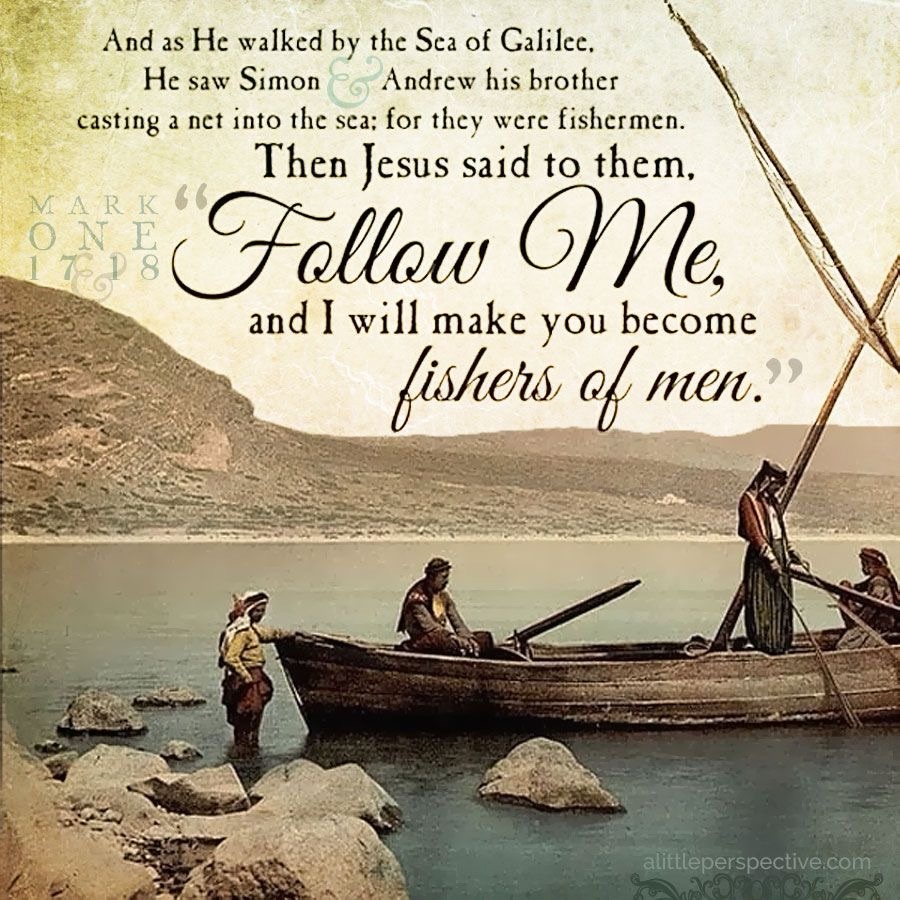
Jesus said to them, “Follow me and I will make you fish for people” (Mark 1:17). That’s the famous verse in the Gospel reading that is suggested for this coming Sunday, the third Sunday in the season of Epiphany. They are striking words, coming at the very start of the public activity that Jesus undertook in the region of Galilee (see Mark 1:28, 39; 6:6b, 56; 9:30).

What do you think of when you hear these words? Perhaps you are guided by many sermons you have heard and devotional material you have read, and so you imagine that Jesus is calling his earliest followers to participate in the mission that he has in view for his life and for those who follow him? After all, at a crucial point in his ministry, he sent his earliest followers through the villages of Galilee with a message of proclamation (6:12).

Inspired by this instruction, and despairing at the lack of a satisfactory conclusion to this shortest of Gospels, one scribe later added a “longer ending” that concludes by re-affirming this missionary orientation: “they went out and proclaimed the good news everywhere, while the Lord worked with them and confirmed the message by the signs that accompanied it.” (This appears as Mark 16:20 in many Bibles today.)

In like manner, another scribe provided a much more succinct “shorter ending”, declaring that “Jesus himself sent out through them, from east to west, the sacred and imperishable proclamation of eternal salvation.” (The language is most un-Markan—just one of the clues that this ending was a later addition to the Gospel.)

This line of interpretation is fostered, no doubt, by the fact that other Gospels frame their accounts of the life of Jesus with statements about his missional directives. “As you go, make disciples of all nations, baptizing them … and teaching them …” is how Matthew ends his Gospel (Matt 28:19)—leading multiple interpreters to regard the visit of the Magi from the east (Matt 2:1–12) as a prefiguring of this mission. (I have a different take on the role played by the Magi.)

Luke is more forthright from the start of his “orderly account”. Inspired by the Spirit as he lays eyes on the infant Jesus, the aged Simeon tells his parents, “my eyes have seen your salvation, which you have prepared in the presence of all peoples, a light for revelation to the Gentiles and for glory to your people Israel” (Luke 2:30–32). Decades later, as he reports the activity of John the baptiser, the author includes the affirmation that “all flesh shall see the salvation of God” (Luke 3:6, quoting Isa 40:5).

Luke ends his account with Jesus telling his followers that “repentance and forgiveness of sins is to be proclaimed in his name to all nations, beginning from Jerusalem” (Luke 24:47). He then begins the second volume of his account with Jesus commissioning these followers, “you will be my witnesses in Jerusalem, in all Judea and Samaria, and to the ends of the earth” (Acts 1:8). The missionary impulse is clear.

These passages play a large role in shaping our understanding of the words and activities of Jesus as being oriented strongly towards mission. Certainly, that was a key impulse as the followers of Jesus grew and the faith gatherings that were established made inroads into their local communities with the message of the good news. But is that what is going on in the excerpt from Mark (1:14–20) that we will hear this Sunday? Let me offer some different thoughts.

(The direction that I have taken in the comments below has been inspired by a short commentary by Chad Bird, in his daily devotional book, Unveiling Mercy, pub. 2020.)

Was Jesus focussed on a world-wide mission from the very start? I want to propose that Mark’s account—the earliest “story of Jesus” that we have—does not suggest this. Not only is there no “mission commission” at the end of his Gospel, if we accept the earliest manuscripts do not include this; there is no call to mission anywhere in his narrative.

It is true that in chapter 6, Mark notes that the disciples are sent out to proclaim repentance; but this does not build through the following chapters into a persistent and expanding mission. In fact, in Mark’s narrative, rather than being empowered for mission, the disciples remain ignorant and unknowing.

“Do you not understand this parable?”, Jesus has asked them as he was teaching, continuing, “Then how will you understand all the parables?” (4:13). A little later, Mark notes that “they did not understand about the loaves, but their hearts were hardened” (6:52). Mark reinforces this view of the disciples as he reports Jesus asking them, “do you also fail to understand?” (7:17), then “do you still not perceive or understand?” (8:17) and “do you not yet understand?” (8:21), before concluding “they did not understand what he was saying and were afraid to ask him” (9:32). The disciples, in Mark’s narrative, remain unrelentingly obdurate. So much for the idea of energetic, enthusiastic missionaries!!

Jesus, according to Mark, is not intent on developing a crack mission team. Rather, he is focussed on calling people to metanoia—to a full, deep, all-pervading change of being that reorients their lives and resets their priorities. The first word of Jesus in Mark’s early account is clear: “the time is fulfilled, and the kingdom of God has come near; repent (metanoeite) and believe (pisteuete) in the good news” (1:15).

In this programmatic Markan announcement, the two statements (in the indicative mood) about “the time” and “the kingdom” are followed by two commands (in the imperative mood) to “repent” and “believe”. The imminence of the kingdom is the motivation for the call to repent and believe.

This fourfold declaration sits immediately before the story of the call of the fishermen, who are called to follow and told, “I will make you fish for people” (1:17). It is the imperative of metanoia and pistis that is at the heart of the enterprise that Jesus is engaged in. It is this dual imperative that should most strongly inform the way that we hear and understand the call to “fish for people”.

Fish are referenced in Hebrew Scripture texts on a number of occasions. Along with “every animal of the earth, and every bird of the air, and everything that creeps on the ground”, all the fish of the sea are integral to God’s created world (Gen 1:26, 28; 9:2; Deut 4:17–18; 1 Ki 4:33; Job 12:7–8; Ps 8:7–8; Ezek 38:20; Hos 4:3). But the Markan text is not quite about the fish of the sea; rather, the language of fishing is used as a metaphor for what Jesus is calling his disciples to undertake.

The prophet Jeremiah displays this kind of use of language, with metaphorical references to describe a known process. After he has warned Israel that the Lord God is “weary of relenting” and is now determined to bring punishment on a sinful people (Jer 15:2–9), he envisages that there will come a time when he “will bring them back to their own land that [he] gave to their ancestors” (Jer 16:15).

However, before this occurs, God makes this threatening promise: “I am now sending for many fishermen, says the Lord, and they shall catch them; and afterward I will send for many hunters, and they shall hunt them from every mountain and every hill, and out of the clefts of the rocks … I will doubly repay their iniquity and their sin, because they have polluted my land with the carcasses of their detestable idols, and have filled my inheritance with their abominations” (Jer 16:16–18). The men looking to catch fish, and the hunters looking to catch miscreants, are carrying out the work of the Lord God, bringing judgement on the people.

Is this the task that Jesus is calling his followers to undertake, when he says, “I will make you fish for people”? Centuries earlier than Jeremiah, Amos had warned the “cows of Bashan who are on Mount Samaria” of the punishment in store for them: “the time is surely coming upon you, when they shall take you away with hooks, even the last of you with fishhooks” (Amos 4:1–2).

A little later, Habakkuk uses similar imagery as he complains to God, “you have made people like the fish of the sea, like crawling things that have no ruler; the enemy brings all of them up with a hook; he drags them out with his net, he gathers them in his seine; so he rejoices and exults” (Hab 1:14–15). This is the way that God undertakes his task of “destroying nations without mercy” (Hab 1:17). To fish for people is to execute God’s righteous judgement.

Consistent with this understanding, the prophet-in-exile, Ezekiel, is charged with proclaiming this oracle of judgment against the Pharaoh of Egypt: “I will put hooks in your jaws, and make the fish of your channels stick to your scales. I will draw you up from your channels, with all the fish of your channels sticking to your scales. I will fling you into the wilderness, you and all the fish of your channels; you shall fall in the open field, and not be gathered and buried.” (Ezek 29:4–5). Once again, in the prophetic rhetoric, the metaphor of fishing for a human being indicates the means of carrying out the judgement of God.

Is Jesus, in Mark’s Gospel, engaged in a mission to declare divine judgement and warn of the wrath to come? Most certainly he is! Indeed, the instruction that he gives his disciples as he sends them out on mission (Mark 6:7–11) appears to be that they are to preach judgement; Mark comments that “they went out and proclaimed that all should repent” (6:12). Such repentance is the foundation of the message of Jesus (1:15; cf. 4:12).

Repentance, metanoia, entails a complete and thoroughgoing transformation of the individual, in light of the imminent appearance of God’s realm (1:14; 9:1; 14:25). This apocalyptic orientation (“the kingdom is coming, and coming soon”) governs the distinctive flavour of the preaching of Jesus, which is apocalyptic in that it is oriented towards the message of divine judgement. The coming kingdom of God, and the present need for metanoia, together show this clear orientation.

That Jesus expected God to act, to intervene in history, to redeem the faithful, is evident in his teaching: people will see “‘the Son of Man coming in clouds’ with great power and glory” (Mark 13:26, quoting Dan 7:13). Indeed, the expectation is that this will be very soon: “there are some standing here who will not taste death until they see that the kingdom of God has come with power” (Mark 9:1) and “this generation will not pass away until all these things have taken place” (13:30). So he warns his followers to “beware … keep alert … keep awake” (13:33, 35, 37).

There is no doubt that the Jesus portrayed in each of the Synoptic Gospels was an apocalyptic preacher with a fervent presentation of an intense message. It required a whole-hearted and equally intense response. “Follow me” is his clarion call (1:17; 2:14). Such following means that they must “deny themselves and take up their cross” (8:34); it is akin to losing their own lives (8:35–37).

No wonder when Jesus called one man in Judea to “sell what you own, and give the money to the poor … then come, follow me”, we are told that “he was shocked and went away grieving” (10:21–22). It is equally unsurprising that people in Galilee were saying of him, “he has gone out of his mind” and “he has an unclean spirit” (3:21, 30). Following Jesus was not for the faint hearted! Mark makes this clear; Matthew and Luke each intensify this in their portrayals of Jesus.

On the apocalyptic preaching of Jesus in Mark, see

and

So the call to “follow me” and the indication that “I will make you fish for people” (Mark 1:17) is intense. Fishing for people, if we understand it in the light of the Hebrew scriptural usage of this idea, is an apocalyptic enterprise, which means undertaking the daunting task of announcing the imminent judgement of God, calling those who listen to a complete life-transforming metanoia, and letting them know that “life as you once knew it is over”, as Chad Bird says (Unveiling Mercy, 11 Nov).

Not peace, but a sword (Matt 10; Pentecost 4A)

“Do not think that I have come to bring peace to the earth; I have not come to bring peace, but a sword. For I have come to set a man against his father, and a daughter against her mother, and a daughter-in-law against her mother-in-law; and one’s foes will be members of one’s own household.” (Matt 10:34–36).

Gentle Jesus, meek and mild, lover of all, and patron of the close-knit nuclear family … where are you? The words of Jesus we are given by the lectionary for this coming Sunday (Matt 10:24–39) seem to come from a very different person from the stereotypical “Jesus loves the little children, all the children of the world”. Who exactl y is this Jesus?

“Go nowhere among the Gentiles” (10:5), he has told his disciples, establishing what appears to be a very exclusivist, racially-driven undertaking. “Take no gold, or silver, or copper in your belts, no bag for your journey, or two tunics, or sandals, or a staff” (10:9–10), on what will undoubtedly be an incredibly ascetic experience for the disciples. “If anyone will not welcome you or listen to your words, shake off the dust from your feet as you leave that house or town” (10:14), says Jesus, anticipating a divisive and difficult time for his followers.

And then, “I am sending you out like sheep into the midst of wolves” (10:16), for “they will hand you over to councils and flog you in their synagogues” (10:17). Yes, this sure to be an experience that the disciples will not forget—for all the wrong reasons! “You will be hated by all because of my name” (10:22) is hardly an enticing invitation to take part in this mission; indeed, the advice, “do not fear those who kill the body but cannot kill the soul” (10:28) bodes no good; are there not only persecutions, but also deaths, on the horizon?

What is going on? How did Jesus manage to entice a group of men and women to take part in this enterprise? And why was he so clear and direct about all the dangers that lay ahead of them?

***

As I noted in last week’s blog on Matthew 10, we know that Judaism was in a state of flux after the destruction of the Temple in 70 CE. Evidence indicates that there were a number of sectarian groups contesting with each other for recognition and influence. During this period, the Pharisees were becoming increasingly important as an alternative to the Temple cult, and emerging as the dominant Jewish religious movement. Their power base was moved from Jerusalem and spread throughout the area.

It has been claimed that a Jewish Council was formed in Jamnia, a city on the coast of Judea. This is taken to demonstrate that the Pharisees had laid claim to be the dominant group amongst the Jews; it might also indicate that it was possible to legislate for the formal separation of some communities (such as the Matthean one).

Note: this story is now regarded as more likely that this story of Jamnia was a ‘foundation myth’, developed in later years, with the aim of showing that there was unity in formative Judaism from the earliest times.

The area of Galilee is extremely important in Matthew’s Gospel (2:22; 3:13; 4:12–25; 17:22; 19:1; 21:11; 26:32; 28:7). As the Galilean Pharisees figure prominently in the narrative of Matthew’s Gospel, it seems reasonable to suppose there was a strong Pharisaic presence in Galilee, and that this group provided the main opponents for the community of Matthew.

The power of the Pharisees was rising, and with the destruction of the Temple, it was common to find new ways of interpreting how Judaism should exist. From this time on, Pharisees evolved into the “Rabbis”, and they developed the kind of Judaism that became dominant through to the present time.

Nevertheless, many Jews, particularly in the Diaspora, were not yet “Pharisaic”—they did not see their faith in the same way as the Pharisees. There were many disputes amongst Jewish communities as to the correct way of seeing things, and some of these disputes were quite bitter. Many groups claimed to be the ‘true Israel’ as distinct from other groups, who were false leaders and teachers, and who failed to follow the Law correctly.

The Law became the most accessible means of revealing God’s will for Israel after the destruction of the Temple, and most of these groups focused on what they believed to be the true interpretation and application of it.

Matthew’s Gospel reflects one such debate; scholars suggest that it should be read alongside of other literature from after the time of the destruction of the Temple—books such as 2 Baruch, 4 Ezra, and the Psalms of Solomon. This literature is trying to envisage what Judaism should be like in the aftermath of the destruction of the Temple.

Thus, although Matthew’s Gospel has been seen to have played an important role in the formation of early Christian theology, a more natural interpretation is to locate this Gospel within the post-70 Jewish debates about the survival of Judaism without the Temple. The polemic in Jesus’ debates with the Pharisees, and the warnings that are uttered to Israel, show that Matthew still had hope that his ideas would become normative for all Jewish people.

I think it likely that Matthew’s Gospel was created to insist on the centrality and priority of the teachings of Jesus, the Torah-observant Jew, whom God had chosen as the anointed one; it was his teaching, not that of the local synagogue leaders, which was to be given priority.

*****

In such a context, the opposition envisaged by Jesus and the warnings that he gives in this polemical speech to his earliest followers, starts to make sense. Matthew sets out the teachings of Jesus concerning discipleship within the context of an apocalyptic view of reality. This view looks at the present time in relation to the ultimate end of time, and calls for a way of living that will ultimately show responsibility for decisions made.

What ultimate end does Matthew have in view? Each Gospel writer tends to emphasis something slightly different. In Mark, the focus is on the resurrection of Jesus (Mark 14:28; 16:7). In Luke-Acts, carrying the good news throughout the Roman Empire fulfils the story (Luke 24:47–48; Acts 1:8). In John, it is eternal life which is emphasised (John 20:31).

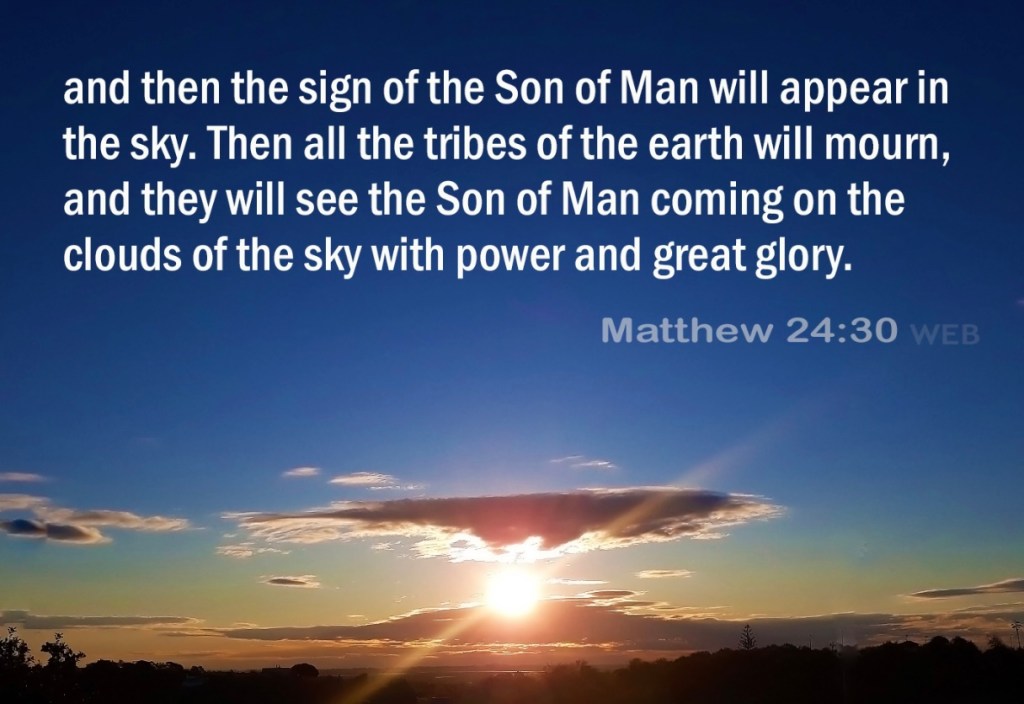
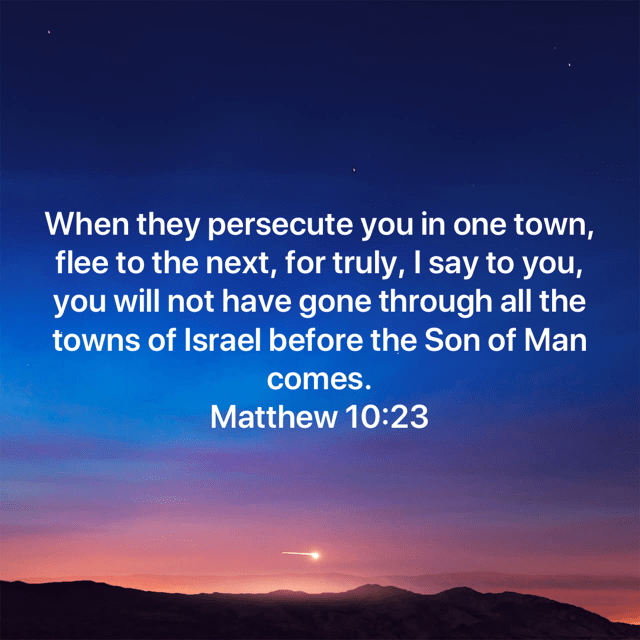
Matthew’s Jesus has in mind the coming eschatological deliverance, a deliverance which is expected imminently and that will vindicate the community as faithful and righteous to the will of God. So he tells his followers that “you will not have gone through all the towns of Israel before the Son of Man comes” (10:23). The mission that his followers undertake amongst Jews only is urgent; the end of time is coming soon, and they will not have shared “the good news [that] the kingdom of heaven has come near” (10:7) before “the Son of Man appears in heaven, and then all the tribes of the earth will mourn, and they will see ‘the Son of Man coming on the clouds of heaven’ with power and great glory” (24:30).

In this way, Matthew is typical of one type of Judaism after the destruction of the Second Temple; that of apocalyptic hope. Most of the post-70 sectarian groups express hope that God will remember his covenant with them, the faithful few of Israel, and save them; for example, 2 Baruch and 4 Ezra write that God will provide consolation for their suffering and vindicate them, whilst also punishing their enemies on the Day of Judgement (2 Baruch 6:21; 82:1–2; 4 Ezra 8:51–59; 12:34).

In these sectarian documents, the kingdom of God is eschatological is nature; it has not yet arrived on earth, though signs telling of its coming can be detected. These communities also agree that much of Israel no longer truly follows the Law of God, and that the dominant Jewish leadership is unfaithful and wicked, and that they are the ones alone representing the true Israel. Therefore, entry to the kingdom is dependent upon faithfulness to the Law as interpreted by the community.

*****

Much of this sectarian understanding can also be found in Matthew’s Gospel. Matthew redacts his sources and shapes his material so that this eschatological end is prominent—even in the mission discourse. The words of Jesus about persecutions (10:17–20) are very similar to words in the closing apocalyptic of Jesus (24:9); his words about divisions and hatred within the family (10:21–22 and 10:34-37) mirror the later declaration of betrayal and hatred (24:10).

The “false messiahs and false prophets” that are foreseen (10:24) evoke the false message of “those who will lead you astray” (24:4–5) whilst the words that the Spirit will speak through the disciples (10:19–20) provide the substance for the future “testimony to all the nations” concerning “the good news of the kingdom” (24:14). The instruction to flee in the face of persecution (10:23) foreshadows the apocalyptic command that “those in Judea must flee to the mountains” (24:16–18).

The urgency of the mission (9:37–38; 10:11–14) is because “you will not have gone through all the towns of Israel before the Son of Man comes” (10:23). And the note that the Son of Man is expected to come soon (10:23) presages the cataclysmic scene described in the closing speech of Jesus (24:29–31)—for “this generation will not pass away until all these things have taken place” (24:34). This later causes Jesus such frustration, when he berates his disciples, those of “little faith”, “you faithless and perverse generation, how much longer must I be with you? how much longer must I put up with you?” (17:17).

The mission discourse (10:5–42) thus contains many of the key elements of the apocalyptic discourse (24:3–44): opposition, persecution, division, fear, assurance, and urgency. Jesus, in this Gospel, is particularly clear that there are two ages: the first is the current time for the evangelist, and the second is the age to come (Matt 12:32, from Mark 3:29). In this Gospel, the first indication that we have of the nearness of the second age is the announcement of John the Baptist, “Repent, for the kingdom of heaven has come near” (3:2).

This succinct message has set the tone for the rest of the Gospel. Jesus repeats, word-for-word, John’s call for people to repent (4:17). He intensifies the need for faithful people to be obedient to God’s law (5:17–20) and demonstrate an intensified righteous-justice (5:21–48), as the end-time of God’s judgement is fast approaching. This is the centrepiece of the message that the disciples are to proclaim, when sent out on mission: “as you go, proclaim the good news, ‘The kingdom of heaven has come near.’ Cure the sick, raise the dead, cleanse the lepers, cast out demons” (10:7–8).

In Matthew’s understanding, the kingdom is imminent, but not yet arrived; however, signs of its imminence break in to the present times to demonstrate its nearness. The ministry of Jesus is set at the end of the first age; the second age will commence very shortly with the triumphant return of Jesus after his death, within the lifetime of his disciples (10:23; 16:28; 24:34).

Matthew does not reflect the notion that the kingdom has already arrived on earth, even though it can be seen in Jesus (12:28), and in the continuation of his ministry by his followers after his death. Jesus and the disciples both preach that the kingdom of heaven is near, or at hand (4:17; 7:21–22; 9:35; 10:7), but it has not yet established itself on earth.

A number of the parables of Jesus address the nature of this kingdom. The kingdom of heaven will be established “at the end of the age”, when the final judgement of righteous and unrighteous will take place (13:39–40, 49; 24:3). Before the coming of the Son of Man, it remains hidden and mysterious (13:31–33, 44–45), too small to be observed, but the day is coming when it will grow and become the “greatest of all things”, and the righteousness of God will triumph.

And entry into this kingdom—or not—will be determined by a person’s readiness (24:45–51; 25:1–11) and by an assessment of the way they lived their life (25:31–46). So Jesus gives his followers this assurance: “whoever welcomes a prophet … and whoever welcomes a righteous person … and whoever gives even a cup of cold water to one of these little ones in the name of a disciple—truly I tell you, none of these will lose their reward” (10:41–42).

He also issues this severe warning: “whoever loves father or mother more than me is not worthy of me; and whoever loves son or daughter more than me is not worthy of me; and whoever does not take up the cross and follow me is not worthy of me. Those who find their life will lose it, and those who lose their life for my sake will find it.” (10:37–39).

*****

Matthew takes source material about the mission of the disciples (Mark 6:7–13), modifies, intensifies, expands, and reshapes it, in the light of the context in which he is writing the Gospel. The events of the 50s and 60s, the onset of the war with the Romans in 66, and perhaps even the destruction of the Temple in 70CE, have all guided the way that the author of Matthew’s Gospel retells the instructions that Jesus gave to his first disciples, decades earlier.

Just as he and his community are experiencing intense difficulties and confronting entrenched conflict, so the Jesus of earlier times had foreseen such a situation, and had sent his followers out forewarned, and thus forearmed. What was taking place in the early 70s (or perhaps even in the late 60s) amongst a group of Torah-abiding, Messiah-following Jews, was an outworking of what Jesus is presented as speaking to his disciples.

In other words, the mission discourse of Matt 10:1–11:1 reveals much about the strife and contention amongst Jews in the local area where Matthew’s community was located, and the intensified expectation that the end was coming soon, that they felt. It was a word for his time; placed on the lips of Jesus, but speaking with clarity and insight into the lived experience of the people of Matthew’s community. For them, this was what obedience to the Gospel and following the way of Messiah Jesus, their Rabbi, entailed.

This blog draws on material in MESSIAH, MOUNTAINS, AND MISSION: an exploration of the Gospel for Year A, by Elizabeth Raine and John Squires (self-published 2012)

See also

The sincerest form of flattery? Or a later, imperfect imitation? (2 Thessalonians; Pentecost 21C to 23C)

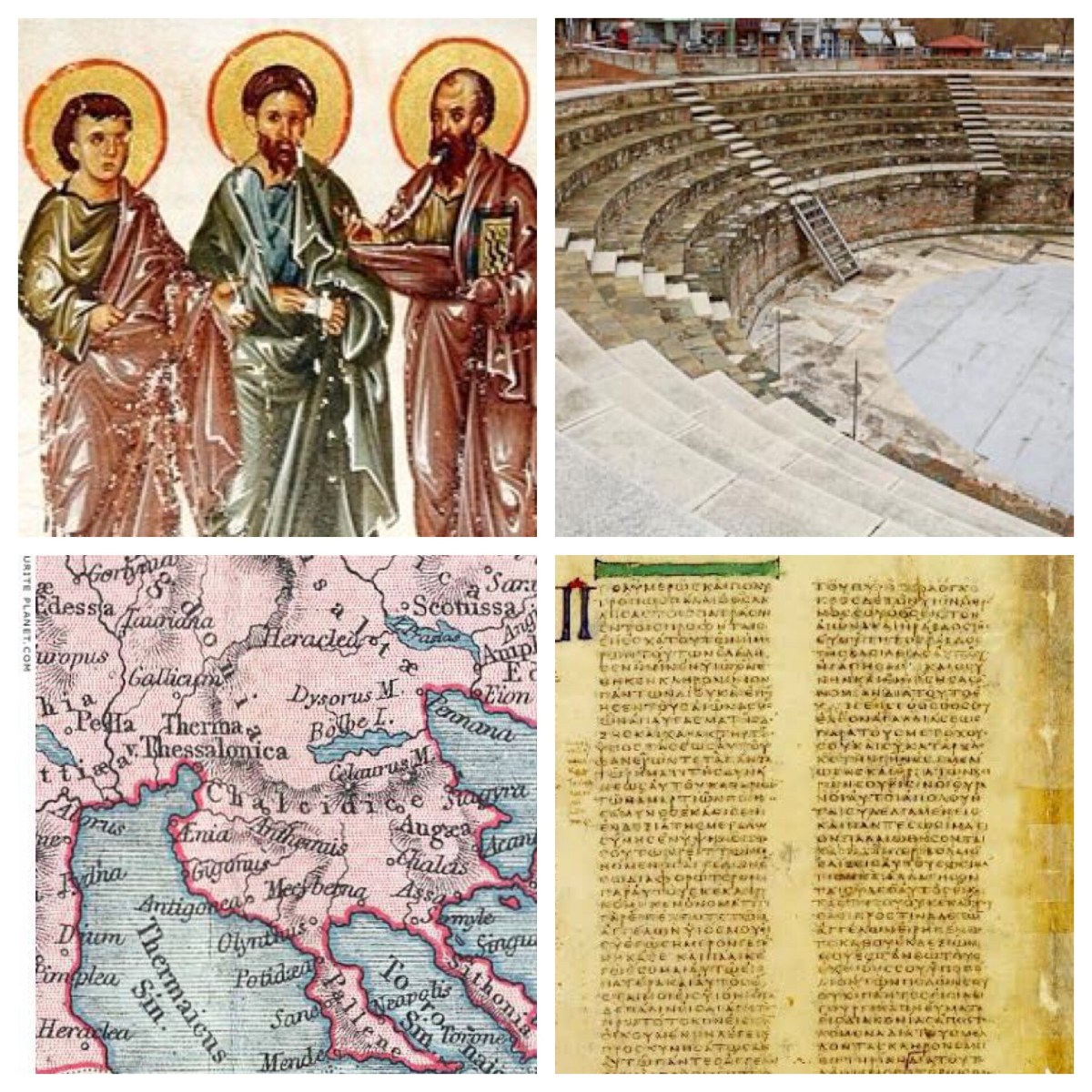
Paul, Silas and Timothy arrived in Thessalonika in the year 50 CE. Acts indicates that they went to the synagogue, where Paul declared that the Jewish scriptures pointed to Jesus as Messiah (Acts 17:2–3). This stirred up antagonism amongst the Jews of the city (Acts 17:5).

Those who accepted Paul’s message, realising that he was just recovering from the experience of prison in Philippi (Acts 16:19–24), sent him and Silas on to their next stop in Beroea after only three weeks in Thessalonica (Acts 17:2). Paul then travelled to Athens (Acts 17:15) and Corinth (Acts 18:1).

Little of this is reflected in Paul’s letters to the Thessalonians, apart from a direct comment about his difficulties in Philippi (1 Thess 2:2) and some generalised references to the persecution he was suffering (1 Thess 3:4, 7). Although it is likely that Paul wrote letters before he had visited Thessalonica, none of them are known to us.

1 Thessalonians, dating from the same year (50 CE) as his visit to Thessalonica, is the earliest example of Paul’s letter writing that we have. The letter itself contains no explicit indication of the time or place of its writing; tradition has it that Paul wrote from Athens, although it is more likely that he penned it in Corinth just months after his departure from Thessalonica. His visit was still fresh in Paul’s mind, and he writes with love and concern for the community of believers that he left behind in Thessalonica.

It is obvious that Paul had developed a strong bond with this community, and he is anxious to keep in touch with them (3:5). The letter was in reply to what he had learned from Timothy about their recent progress (3:6).

The letter known as 2 Thessalonians appears in the lectionary this Sunday and in the two following weeks. It seems to run in parallel to 1 Thessalonians in a number of ways. Some of the themes from the first letter are replicated, and varied, in the second letter to the Thessalonians. Both letters present Paul as a role model (1 Thess 1:6; 2 Thess 3:7); both criticise the Thessalonians for the idleness evident in their community (1 Thess 5:14; 2 Thess 3:6–12); and both letters contain reminders about Paul’s teachings (1 Thess 2:5–7, 12; 4:1–2; 5:1–2; 2 Thess 2:15). The general eschatological orientation is present in both letters (1 Thess 4:13–5:11; 2 Thess 1:5–2:16), but there are significant developments–a hardening of the apocalyptic mindset–in 2 Thessalonians.

The commonality of both general themes and specific words and phrases leads to a question about the relationship between these two letters: is this stylistic variation on common themes written by the same author, or a deliberate attempt to copy the first letter by another scribe at a later date?

Scholars answer the question differently; there are different views on the authorship of 2 Thessalonians. The opening and closing sections of 2 Thessalonians are revealing.

The letter concludes with an insistence that it was written by Paul: “I, Paul, write this greeting with my own hand” (3:17). At first glance, this looks similar to the reference to Paul’s “large letters” in his “own hand” at Gal 6:11; but this is a brief passing comment, whereas the claim is laboured in 2 Thessalonians by the addition of extra phrases, so that we start to have a sense of “methinks he doth protest too much”.

The first twenty words of the opening address of 1 Thess 1:1 are repeated exactly in 2 Thess 1:1–2a; this is unusual amongst the seven authentic letters of Paul, for in every other case there are variations of both minor and major significance in this opening section. (See Rom 1:2–6; 1 Cor 1:2b; 2 Cor 1:b; Gal 1:1 and 1:4; Phil 1:1b; Phlmn 2.)

In the thanksgiving (2 Thess 1:3–4), a string of key words evokes themes from 1 Thessalonians. There is virtually nothing in the thanksgiving of 2 Thessalonians which is not present, in some way, in 1 Thessalonians. This is unparalleled amongst the authentic letters of Paul; his usual practice was to contextualise this section of the letter by indicating key issues which will be dealt with in the body of the letter.

There are differences in content in the bodies of the two letters. The friendly relationship evident throughout the first letter differs from the highly critical attitude towards the community in 2 Thessalonians. The eschatological orientation of 1 Thessalonians is present in general terms in 2 Thessalonians, but the difference is that the second letter is marked by a much stronger apocalyptic character. And twice in 2 Thessalonians (2:15 and 3:6), claims are made that Paul taught the Thessalonians material which is not found in 1 Thessalonians.

In my assessment, then, these differences mark 2 Thessalonians as coming from a different hand, in a situation where different issues were at stake. It appears to be a later imitation of 1 Thessalonians. We still read it in the cycle of readings provided by the Revised Common Lectionary–it is still an integral part of Christian scripture–but we read it with a critical lens, aware of the way that this particular writer is developing the earlier thought of Paul.

See also https://johntsquires.com/2019/06/17/harness-the-passion-but-restrain-the-rhetoric-musing-on-the-role-model-which-paul-offers-in-galatians/

https://johntsquires.com/2018/11/17/let-your-gentleness-be-known-to-everyone/

https://johntsquires.com/2019/10/01/in-the-name-of-the-apostle/