Standing on holy ground (Exodus 2–4; Narrative Lectionary for Pentecost 16)

Discussion of the Narrative Lectionary passage from Exodus 2–4

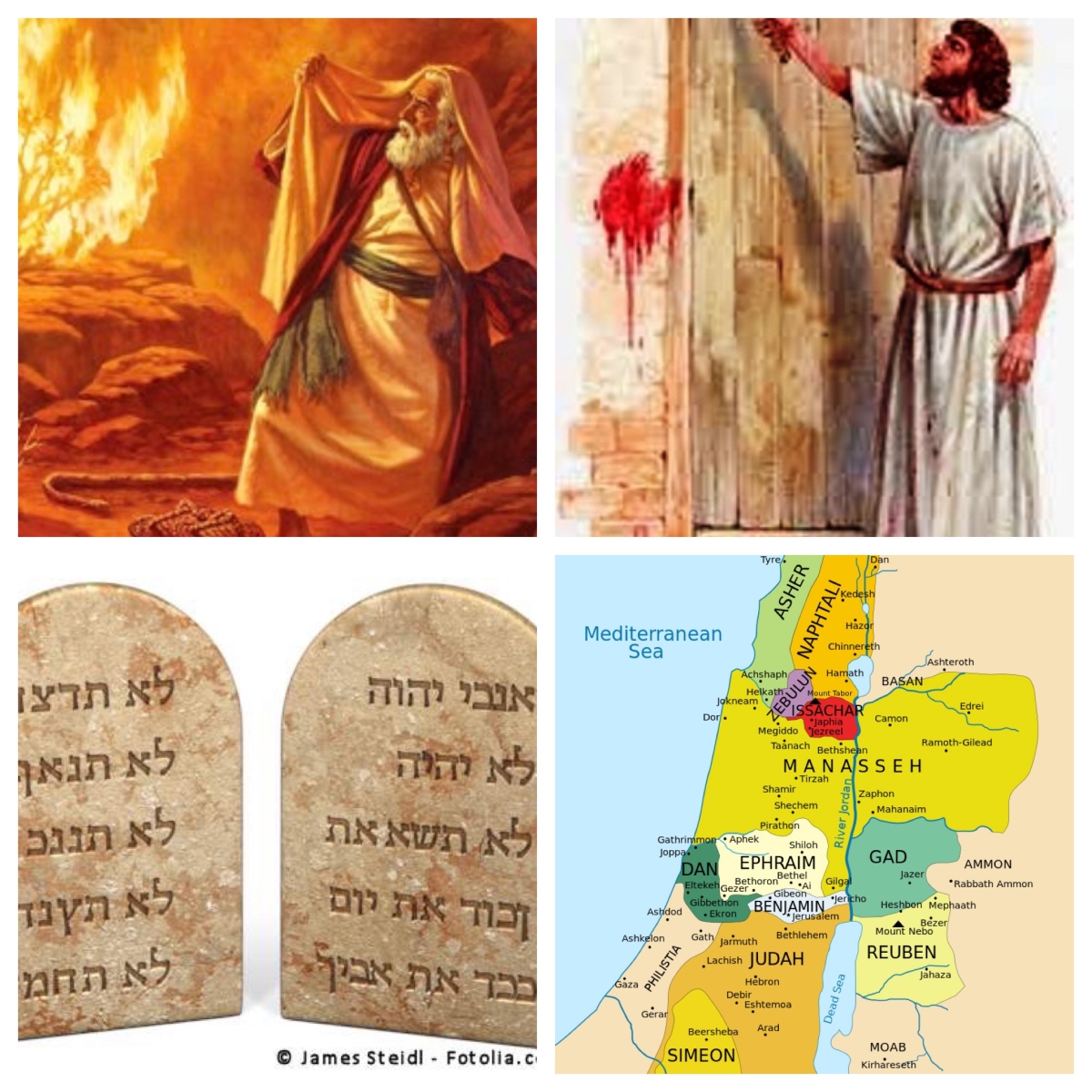
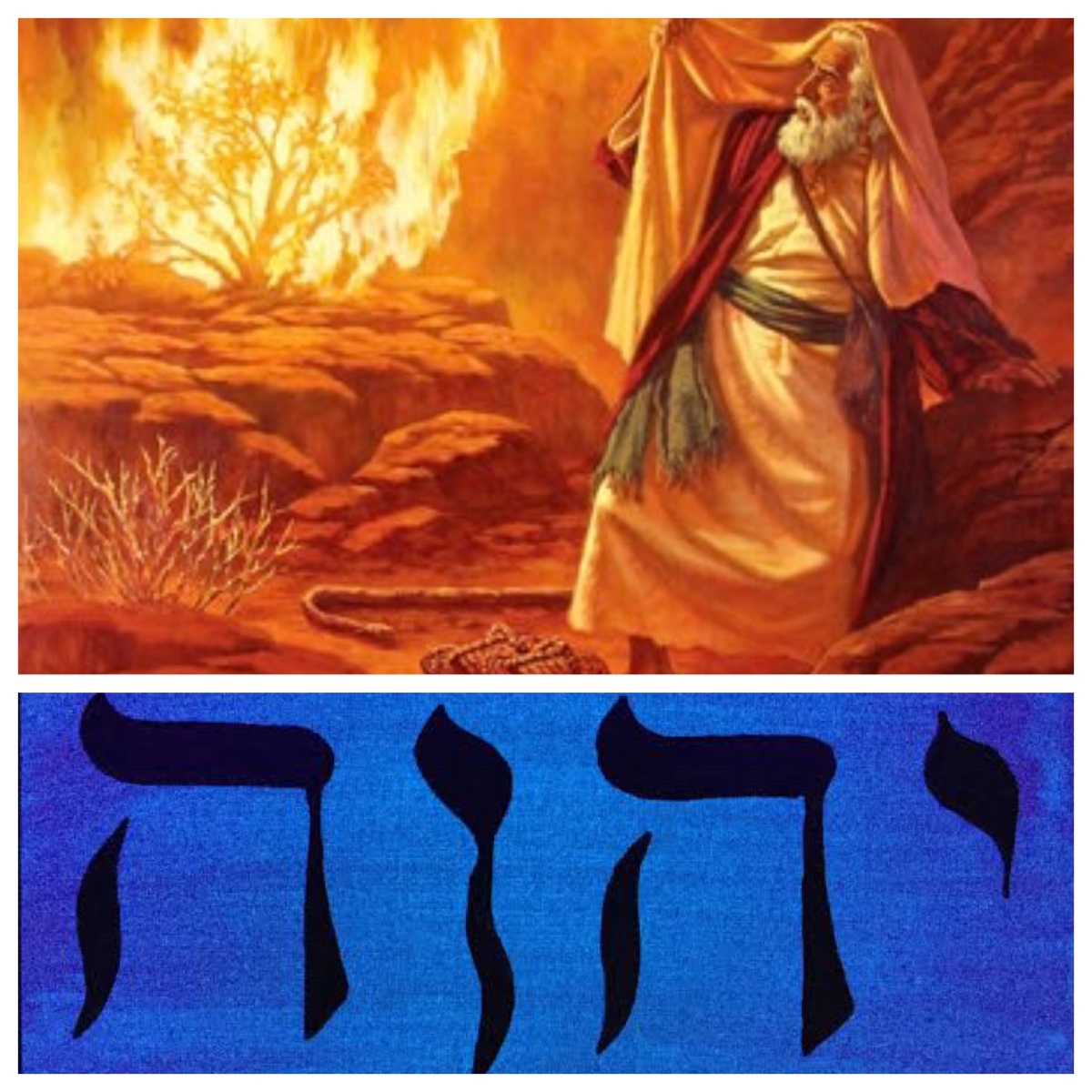
“The angel of the Lord appeared to [Moses] in a flame of fire out of a bush; he looked, and the bush was blazing, yet it was not consumed. Then Moses said, ‘I must turn aside and look at this great sight’ … and  [when] the Lord saw that he had turned aside to see, God called to him out of the bush, ‘Moses, Moses!’ And he said, ‘Here I am.’ Then he said, ‘Come no closer! Remove the sandals from your feet, for the place on which you are standing is holy ground.’” (Exod 3:2–5)
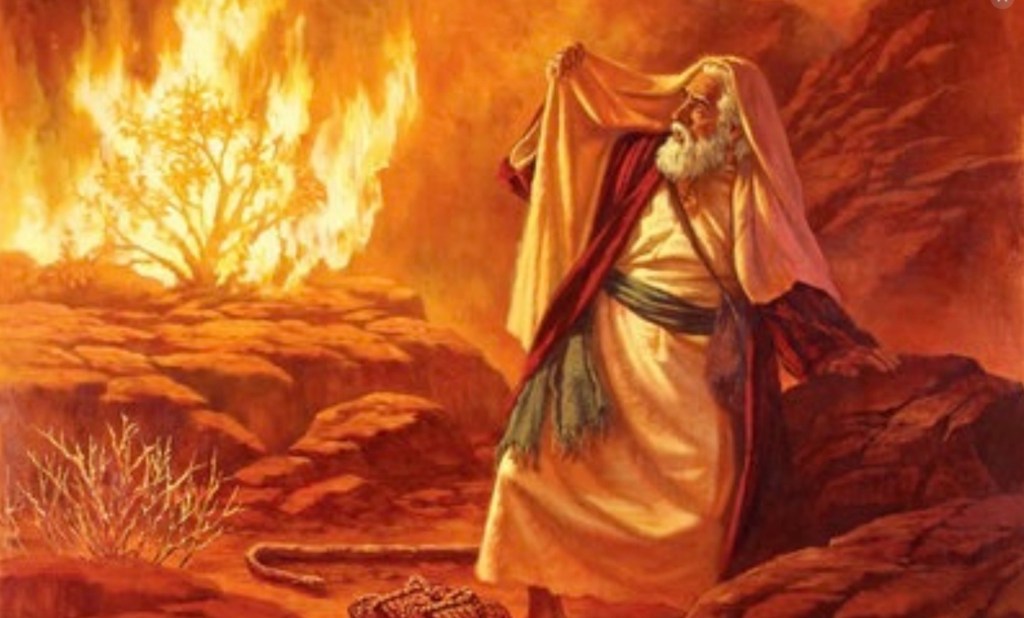
The story of the burning bush is well-known; it is the moment when Moses, the murderer who has fled from Egypt (2:11–15), is galvanised by a striking event to become Moses the liberator, the one who will “go [back] to Pharaoh to bring my people, the Israelites, out of Egypt” (3:10). The transformation is striking—although perhaps the transformation is not quite as dramatic as many envisage.

It may well be the case for Moses that a strong sense of justice undergirds both his act of killing the Egyptian who was beating a Hebrew (2:11), and his commitment to deliver the Israelites from “the misery of Egypt” (3:17). Moses was passionate about the need for justice in society. Paradoxically, this passion led him to say NO to a man he witnessed committing a crime, and YES to a body of people who were suffering oppression in a foreign land. 

Of course, common sense says that Moses should not have taken things into his own hands when he saw that Egyptian man beating one of his fellow-Israelites. But the passion within him—passion for fairness and justice—boiled up inside him and overflowed into unjust actions. This was in keeping with the charge given to the father of his people, when God mused about Abraham, “I have chosen him, that he may charge his children and his household after him to keep the way of the Lord by doing righteousness and justice” (Gen 18:19).

No wonder Moses fled, escaping the wrath of Pharaoh, travelling east across the desert areas of the Sinai Peninsula, all the way to Midian! (Exod 2:15). His action, out of proportion with the crime he saw being committed, was unjust. It is not a very propitious start for Moses, the man who towers over the story of the people,of Israel—ironically, best remembered as Moses the lawgiver!

Mind you, throughout Genesis, we have been regaled by tales of men behaving badly—Abraham lying about his wife Sarah as his sister (Gen 12 and again in Gen 20) and threatening to sacrifice his own son (Gen 22); Isaac, who also lied that his wife Rebekah was his sister (Gen 26); and Jacob, the deceiver, who stole his birthright from his twin brother Esau (Gen 27) and then deceived his father-in-law Laban and profited from his flock (Gen 30–31). And let’s not go into the treatment of Joseph by his brothers, throwing him into a pit in the desert, and then selling him off to some passing Midianite traders (Gen 37). And there are more; they are not exactly wonderful role models!

Yet the story about Moses that we are offered by the Narrative Lectionary this week presents Moses in a much more positive light, and it contains two fundamental elements in the story of Israel: the declaration that Moses stands on holy ground, and the revelation of the name of God. 

Holy ground

God’s word to Moses, after calling for his attention, is to declare that “the place on which you are standing is holy ground” (Exod 3:5). This is the first occurrence of the concept of holiness in the Torah—the word is absent from all of the narratives in Genesis. And it is fascinating that this “holy ground” is in Midian, both far away from Egypt and far away from Canaan, the land that would subsequently be decreed as holy (Exod 15:13; Jer 21:23; Zech 2:12). This God is now able to appear in places far away from Canaan, and declare them holy.
A central motif in Hebrew Scripture is that holiness was a defining character of the people of Israel. A section of Leviticus (chapters 17—26) is known as “The Holiness Code”; its main purpose was to set out laws to mark Israel as different from the surrounding cultures. “You shall not do as they do in the land of Egypt, where you lived”, God told Moses, “and you shall not do as they do in the land of Canaan, to which I am bringing you” (Lev 18:2). 

The rules of Leviticus were meant to set the Israelites apart from the Canaanites and Egyptians, who at that time had customs and rituals that were not to be adopted by the Israelites. Moses is instructed to relay to the people, “you shall be holy, for I the Lord your God am holy” (Lev 19:2), and to remind them to “consecrate yourselves therefore, and be holy; for I am the Lord your God. Keep my statutes, and observe them; I am the Lord; I sanctify you” (Lev 20:7). The whole book details those many statutes and commandments, all designed to keep the practices of the Israelites “holy to the Lord” (Lev 19:8; 23:20; 27:14–24).

Once the Temple was constructed, as a holy place within that holy land, those who ministered to God within the Temple, as priests, were to be especially concerned about holiness, both in their daily life and in their regular activities in the Temple (Exod 28–29; Lev 8–9). The priests oversaw the implementation of the Holiness Code, explaining the various applications of the word to Israel, that “you shall be holy, for I the Lord your God am holy” (Lev 19:2; also 20:7, 26). 

In the years before and during the exile, a number of prophets took to addressing the Lord God as “the Holy One of Israel” (Hos 11:9, 12; Isa 1:4; 5:9, 24; 10:20; 12:6; 17:7; 29:19; 30:11–15; 31:1; 37:23; 41:14–20; 43:3, 14; 45:11; 47:4; 48:17; 49:7; 54:5–6; 60:9, 14; Jer 50:29; 51:5; Ezek 39:7; Hab 1:12; 3:3). The psalmists also pick up this phrase (Ps 71:22; 78:41; 89:18), reflecting the affirmation made by Hannah, “there is no Holy One like the Lord, no one besides you; there is no Rock like our God” (1 Sam 2:2).
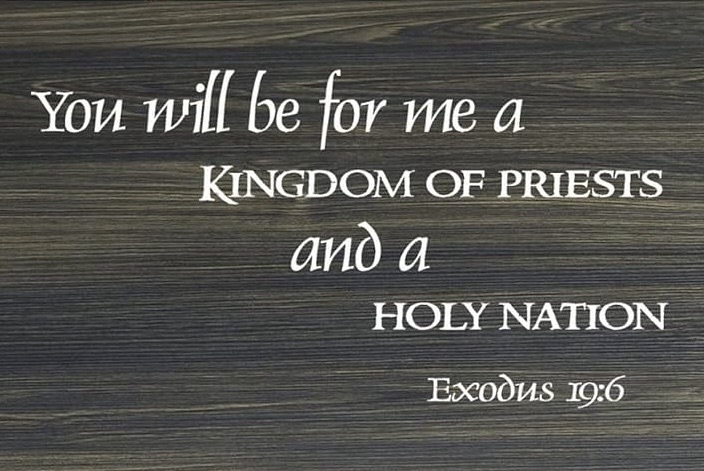
As a consequence, Israel is regularly assured that the whole nation is a “chosen people” (Deut 7:6–8, 14:2; Ps 33:12; Isa 41:8–10, 65:9), set apart as “a kingdom of priests, a holy nation” (Exod 19:4–6), called to be “a light to the nations” (Isa 42:6, 49:6). So in the towns and villages of Israel, by contrast to the centralised priests, the scribes and Pharisees provided guidance in the interpretation of Torah and in the application of Torah to ensure that holiness was observed in daily living of all people in Israel.

These dispersed teachers undertook the highly significant task of showing how the Torah was relevant to the daily life of Jewish people. It was possible, they argued, to live as God’s holy people at every point of one’s life, quite apart from any pilgrimages made to the Temple in Jerusalem. These figures, scribes and Pharisees, are evident in a number of interactions with Jesus that are reported in the Gospels—interactions focussed on interpreting the Torah (Mark 7:1–23 and Matt 15:1–20 exemplify such encounters).

Perhaps the origins of this localised interpretive role are told in the post-Exilic narrative of Nehemiah, when “the priest Ezra brought the law before the assembly, both men and women and all who could hear with understanding”, ably assisted by men who “helped the people to understand the law, while the people remained in their places”, explaining the significance of “this holy day” and other matters (Neh 7:73b—8:12). The story explains the modus operandi of these teachers.

Certainly, the culture and religion of the Israelites was to be marked by a concern for holiness. This is read back into the foundational narrative of the call given to Moses, “to bring my people, the Israelites, out of Egypt” (Exod 3:10, 17). When he hears this call in Midian, Moses is standing on holy ground (3:1-12).

Name of God

Although he is in Midian, far away from Canaan (later to become Israel), Moses encounters the God who is most firmly identified with that land. It is “the Lord, the God of your ancestors, the God of Abraham, of Isaac, and of Jacob” who appeared to Moses (Exod 3:6, 16). This is the first occurrence of this characteristic linkage of the Lord God with the three patriarchs (see also Exod 3:15–16; 4:5; 6:3, 8; 33:1; Lev 26:42; Num 32:11; Deut 1:8; 6:10; 9:5, 27; 29:13; 30:20; 34:4; 2 Ki 13:23; Jer 33:26).

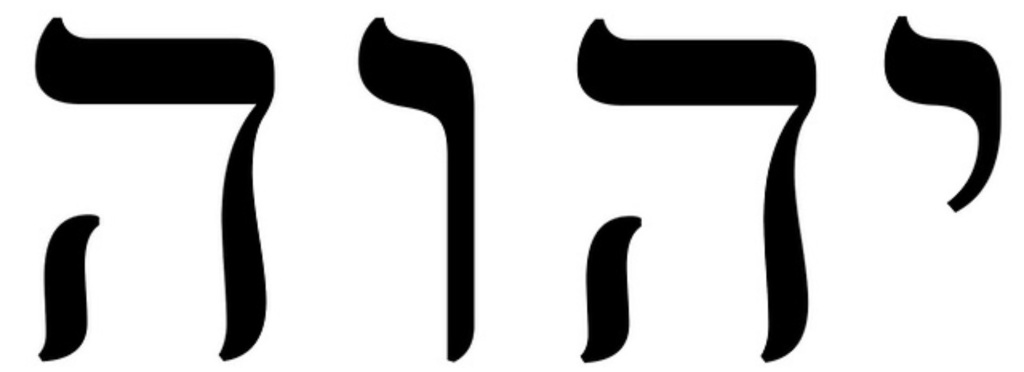
Identified, therefore, as “the God of your ancestors” (in Hebrew, elohe abotekem) (3:15, 16; 4:5), a distinctive term is added into the mix, and highlighted by God as “my name forever … my title for all generations” (3:15). The term is regularly translated as Lord, and is often capitalised to indicate its distinctive nature. In fact, the name comprises just four consonants (transliterated as yhvh or yhwh). 
Despite its apparent simplicity, the meaning of the word has occasioned intense discussion amongst interpreters over the centuries. First, we should note that many Jews today adhere to the age-old prohibition and do not speak the name of God. This is based on the third of the Ten Commandments, “You shall not take his name in vain” (Exod 20:7; Deut 5:11).

Rabbi Baruch Davidson, writing on the website chabad.org, explains: “Although this verse is classically interpreted as referring to a senseless oath using G‑d’s name, the avoidance of saying G‑d’s name extends to all expressions, except prayer and Torah study. In the words of Maimonides, the great Jewish codifier: ‘It is not only a false oath that is forbidden. Instead, it is forbidden to mention even one of the names designated for G‑d in vain, although one does not take an oath. For the verse commands us, saying: “To fear the glorious and awesome name. Included in fearing it is not to mention it in vain.’” See

https://www.chabad.org/library/article_cdo/aid/1443443/jewish/Why-Dont-Jews-Say-Gds-Name.htm#footnote2a1443443

The name of God that is given to Moses in this story is often referred to as the Tetragrammaton (meaning “four letters”), because it is a four-letter word, yud-hey-vav-hey (יהוה). This name is derived from the verb “to be”, which has led to speculation that it could be translated as “I am who I am” or “I will be whom I will be”—revealing nothing, really, about the nature of this divine being, other than the existence of God. It is a curious “revelation”. What has Moses actually learnt about God in this encounter??

Since Hebrew words are constructed with a set of consonants as the base, to which a variety of vowels can be added, this short word is often expanded to either Jehovah or Yahweh. The former places the vowels of the word Adonai (meaning “lord”) to form the artificial term Jehovah, a title that has been popularised by the Jehovah Witnesses. The latter is a more accurate rendition of the blending of these consonants with the vowels of the verb to be, hayah, forming Yahweh.

This name is certainly mysterious. What does it mean to say, “I am who I am”? or “I will be who I will be”? The mystery of each phrase invites the listener or reader to pause, ponder, and consider what is being conveyed. This is not a direct propositional statement, declaring a closed statement along the lines of, “God is love”, or “God is all-knowing”, or “God desires justice”, or other such statements. It is, rather, mystical, evocative, inviting, something that is invitational and encouraging exploration. Perhaps that, in itself, is enough of a basis for our considering as to who God is and what God desires?

Jewish mystical literature actually teaches that there are seventy names for God; and if you explore the biblical texts (the Torah), the developing rabbinic literature (Mishnah, Talmud, and Midrash) and then the proliferation of Jewish mystical terms, God is referred to by almost more names than can be counted. 

Rabbi Stephen Carr Reuben asks “Why so many names, and why does God tell Moses that the name he knows God by is different from that of Abraham, Isaac, and Jacob?” As he explores this question, he notes that “Every name reflects a quality in relation to human beings that each of us can choose to emulate in our own lives. Thus in Jewish mysticism, the ideal state is to be in harmony with the Divine by emulating the attributes reflected in the great diversity of divine names.”

The rabbi offers some examples: “As God is called, ‘The Compassionate One’ (HARAKHAMAN in Hebrew), so each of us can strive to be compassionate in our behavior toward others. As God is called EL SHADDAI (The Nurturer), so we can be nurturing of the dreams and longings of others. As God is called The Righteous Judge (DAYAN EMET), so we can express righteousness and stand up for justice in our lives.”

What, then, of the revelation to Moses? Rabbi Carr Reuben suggests that “when God tells Moses that he was known by a different name to the patriarchs, it is because every moment in history, and every challenge we face personally demands that we draw upon a different quality of holiness to emulate in our lives. We must choose the name of God that captures the essence of the attributes of Godliness that is appropriate to the moment, and up to the challenge of the day.” See 

and also https://www.myjewishlearning.com/article/the-tetragrammaton/

The skin of his face was shining (Exod 34; Transfiguration)

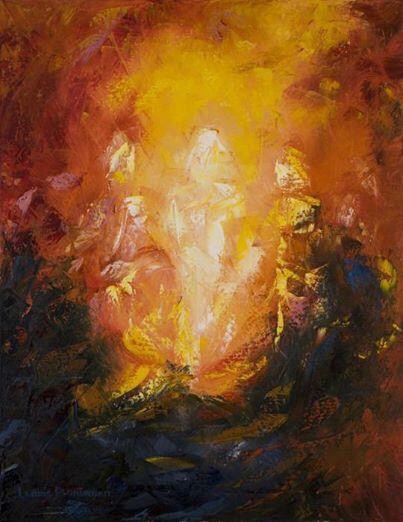
As the coming Sunday is the Festival of the Transfiguration, the passages offered by the lectionary cluster around the theme of the revelation of God’s glory. That is what happened for the three disciples on the mountain, when Jesus was transfigured (Luke 9:28–36). That was also the experience for Israel, in a story that is much older. When Moses came down from the mountain, Aaron and all the Israelites saw that “the skin of his face shone because he had been talking with God” (Exod 34:29–35). 

I’ve reflected on the Gospel in another blog. To better understand the significance of this statement in Exodus, we need to see this Hebrew Scripture passage in its larger narrative context. See

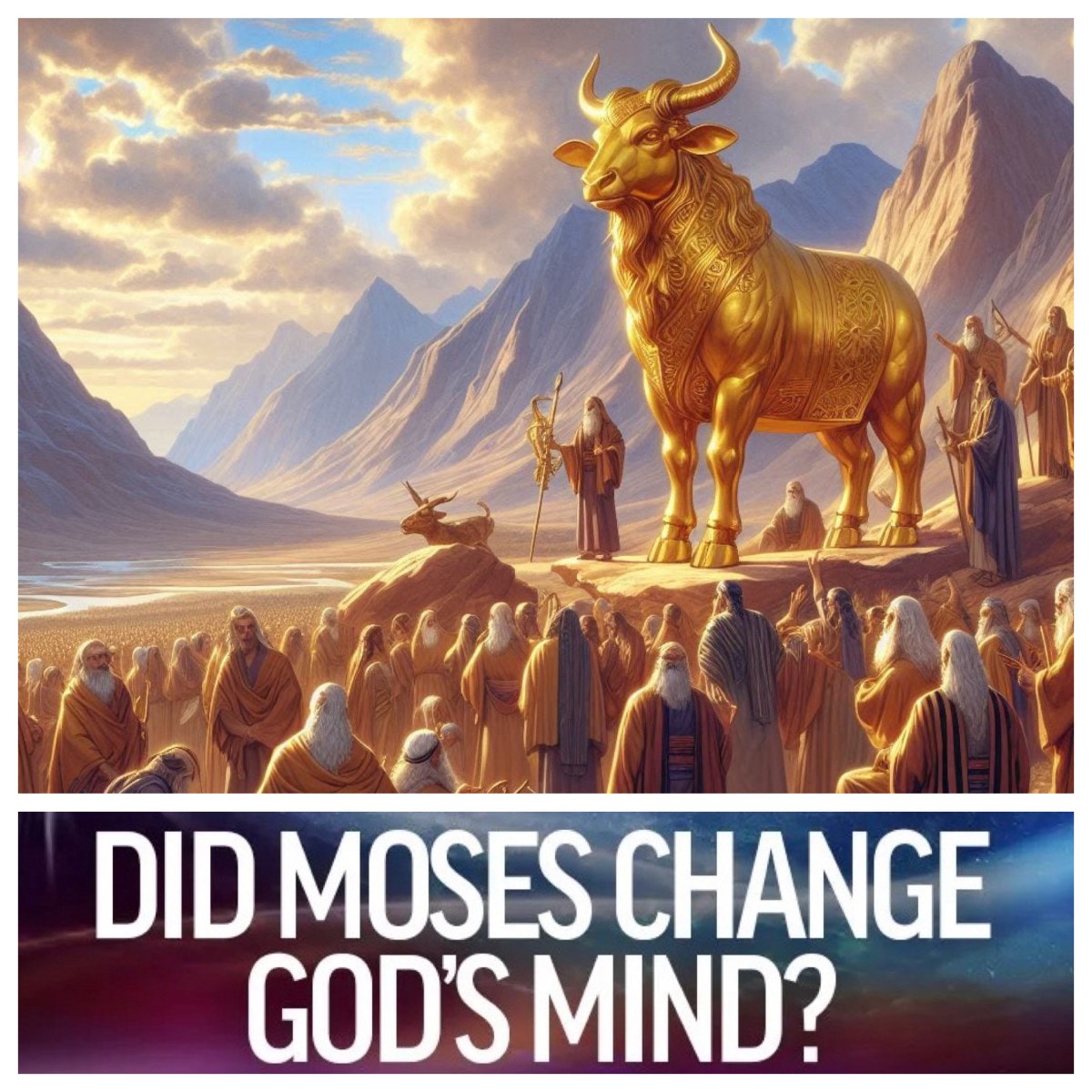
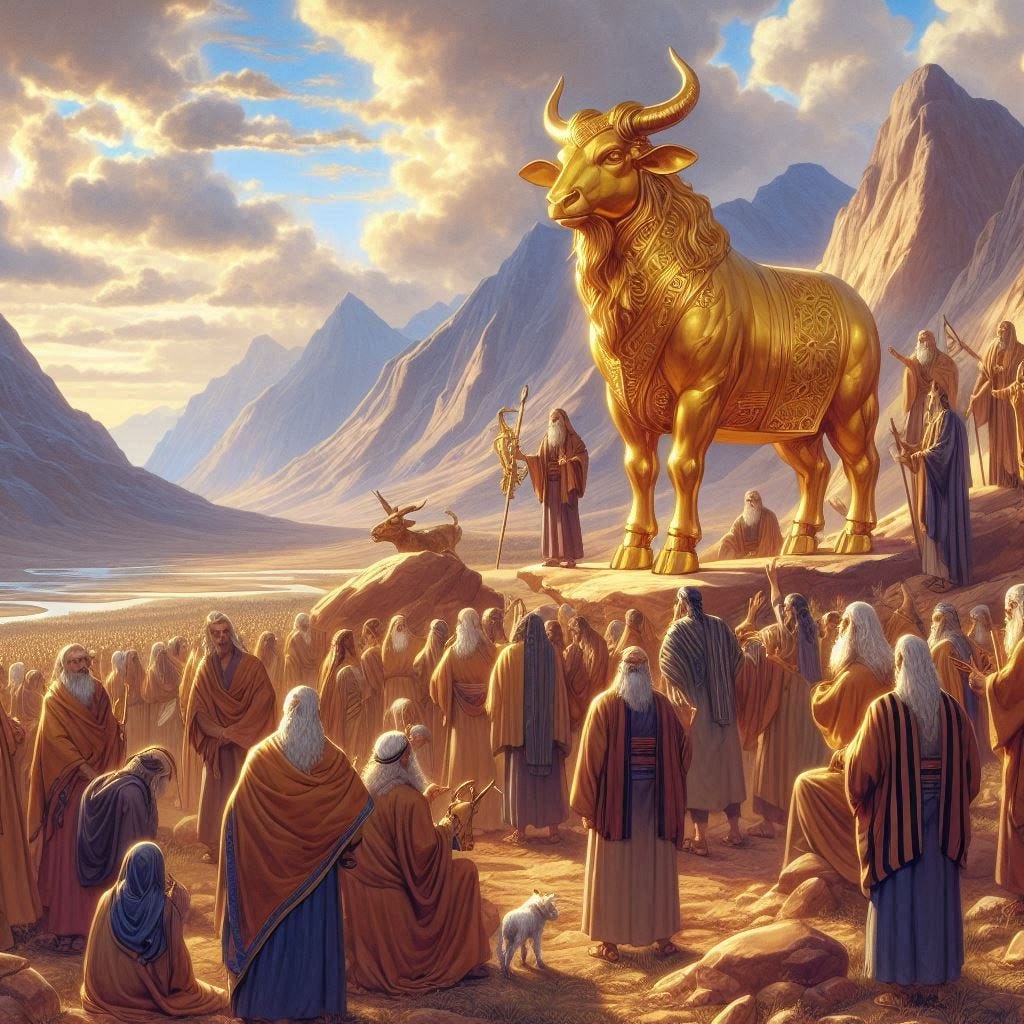
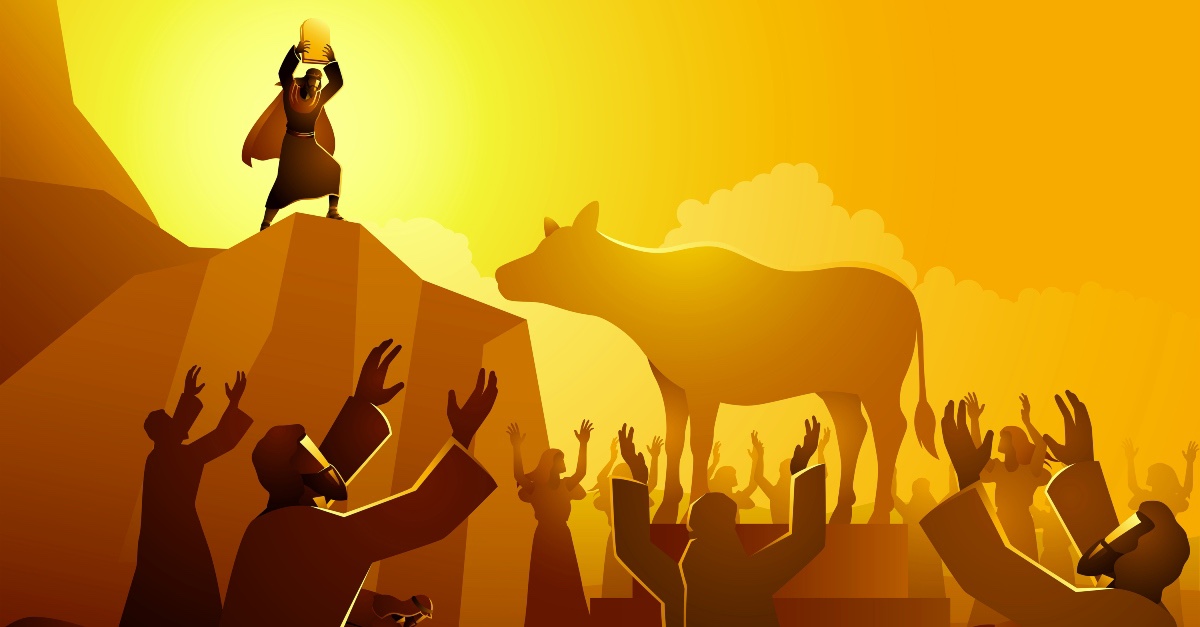
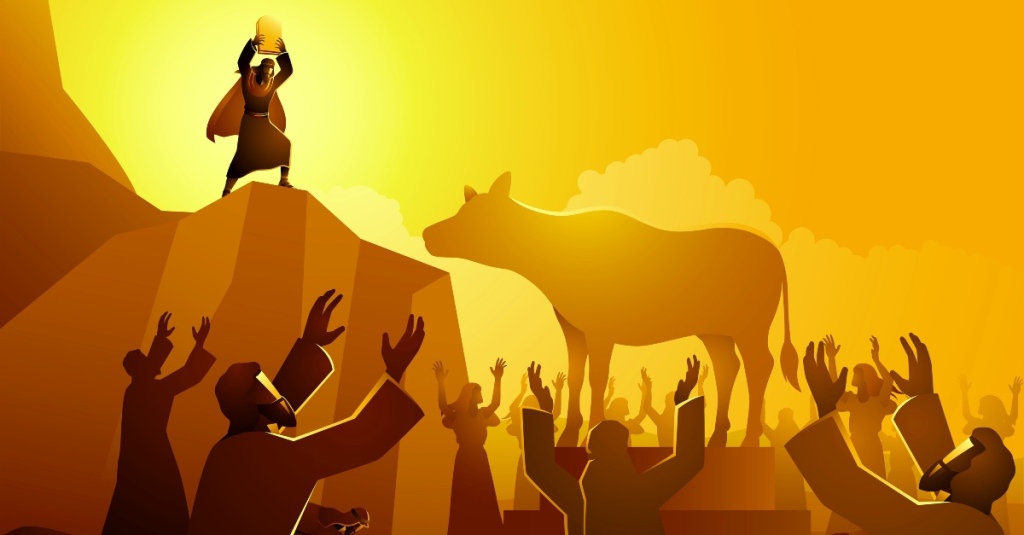
This incident comes after a very significant moment in the story of Israel, when the people had sinned by making a golden calf to worship (32:1–6). This story most likely relates to the god who was regarded as the head of the gods amongst the Canaanites—El, who was often depicted as a bull. The bull was the strongest animal in the ancient farmyard, and thus a fitting symbol for a powerful god. The Israelites chose to imitate that god through their golden construction. The story told in Exodus 32 mocks the Canaanite god, depicting him as more like a calf. 

By adopting a Canaanite symbol, the Israelites had turned from God (32:21). It seems they would deserve their fate—although Moses interceded and saved them from divine wrath (32:23). Moses is the hero who stands in the breach, to convince God to change God’s mind. He had negotiated with God for forgiveness (32:11–14, 30–34), and had also sought clarification from God as to what “God’s ways” entailed (33:16–17). 

In response, God promises that “my presence will go with you, and I will give you rest” (33:14), but Moses presses his case: “show me your glory, I pray” (33:18). Not just the divine presence, but the glory of God is what Moses seeks. God does not respond exactly as Moses hoped for, saying that “I will make all my goodness pass before you, and will proclaim before you the name, ‘The Lord’; and I will be gracious to whom I will be gracious, and will show mercy on whom I will show mercy” (33:19).

These words that the Lord offers to Moses are subsequently echoed in the prayer that Moses offers Aaron and his sons: “the Lord bless you and keep you … and be gracious to you” (Num 6:22–27)—a ancient prayer which lives on in Christian spirituality and liturgy! 

However, the Lord God stops short of full self-revelation, declaring, “you cannot see my face; for no one shall see me and live” (Exod 33:20). Moses is granted a view of God’s “back”, but is not able to see the face of God (33:23). Now, the Hebrew word here translated as “back” refers to the “hindquarters”—a polite way of saying that Moses saw only God’s exposed buttocks, rather than his smiling face. Almost every translation chooses the polite wording, “my back”. The King James Version comes closest to an honest translation with “my back parts”. We might best translate this verse as “you will see my backside, but not my face”.

Yet the request for God’s face to shine upon people is made in a number of psalms. “There are many”, says the psalmist, “who say, ‘O that we might see some good! Let the light of your face shine on us, O Lord!’” (Ps 4:6). In Psalm 31, the psalmist sings, “Let your face shine upon your servant; save me in your steadfast love” (Ps 31:16). Again in Psalm 67, the psalmist echoes more explicitly the Aaronic Blessing, praying, “May God be gracious to us and bless us and make his face to shine upon us—Selah—that your way may be known upon earth, your saving power among all nations” (Ps 67:1–3).

So although Moses asks God to “show me your glory” (33:18), he is permitted to see back(side) of God, but not the full glory of God (33:21–23). This encounter is enough to make “the skin of [Moses’s] face shine because he had been talking with God” (34:30, 35). Of course, this story, located within the mythic sagas of ancient Israel, is not presented as an historical account. Rather, as myth (a story with a deep meaning) it is rich with symbolism—encountering the divine is a deeply transformative experience. 

The Lord God had assured Moses that “you have found favour in my sight, and I know you by name” (33:17). And so, after the breach of the covenant that took place in the creation of the idolatrous image of the Canaanite Bull, Moses and the Lord God renew the covenant with Israel (34:1–28). This reinforces that God’s favour remains with the nation. As the people remain faithful to the various requirements that are stipulated (34:11–26), including pilgrimage by all adult males three times a year to the temple (34:23), so the Lord God promises “I will cast out nations before you, and enlarge your borders; no one shall covet your land when you go up to appear before the Lord your God three times in the year” (34:24). That is how God’s favour is shown.

Throughout the worship of the Lord God in the temple, psalmists have prayed for God’s favour to be shown to the faithful people of Israel (Ps 90:17; 106:4; 119:58). As well as in this covenant renewal ceremony (Exod 34:9), the ancestral sagas of Israel record that God showed favour to Noah (Gen 6:8), Joseph (Gen 39:4), Moses (Exod 33:12–17), the people in the wilderness (Lev 26:9), Samuel (1 Sam 2:26), Manasseh (2 Chron 33:12–13), and the remnant who returned to the land (Ezra 9:8). God’s gracious favour endures through the generations.

The favour of the Lord is manifested most often in “the glory of the Lord” which shines over Israel. Moses had experienced this on the top of Mount Sinai, when “the appearance of the glory of the Lord was like a devouring fire on the top of the mountain in the sight of the people of Israel” (Exod 24:16–18). That glory had already been seen by the Israelites in the wilderness of Sin (Exod 16:10), and that glory filled the tabernacle when the people had finished constructing it (Exod 40:34–35). 

The closing verse of the book of Exodus notes that “the cloud of the Lord was on the tabernacle by day, and fire was in the cloud by night, before the eyes of all the house of Israel at each stage of their journey” (Exod 40:38). A number of other references to this are made throughout the books of the Torah (Lev 9:6, 23; Num 14:10; 16:19, 42; 20:6; Deut 5:24). This appears to have continued on until the ark of God was captured by the Philistines, for at that moment “the glory has departed from Israel” (1 Sam 4:21–22). 

Centuries later, at the time that Solomon prayed his lengthy prayer of dedication of the newly-built Temple in Jerusalem, “when the priests came out of the holy place, a cloud filled the house of the Lord, so that the priests could not stand to minister because of the cloud; for the glory of the Lord filled the house of the Lord” (1 Kings 8:10–11; 2 Chron 7:1–3). 

The glory of the Lord was then closely associated with the Temple in ensuing centuries, as various psalms attest (Ps 24:3–10; 96:7–8). “O Lord, I love the house in which you dwell, and the place where your glory abides”, one psalmist sings (Ps 26:8); yet other psalms extend the location of God’s glory, exulting that it extends “over all the earth” (Ps 57:5, 11; 72:19; 102:15; 108:5) and even “above the heavens” (Ps 8:1; 19:1; 57:5, 11; 97:6; 108:5; 113:4; 148:13).

By the time of the prophet Isaiah, this wider scope of the glory of the Lord was sung by the seraphim in their song, “Holy, holy, holy is the Lord of hosts; the whole earth is full of his glory” (Isa 6:3), whilst a little later another voice sang that “the earth will be filled with the knowledge of the glory of the Lord, as the waters cover the sea” (Hab 2:14). During the Exile, another prophet, looking to the return of the people to the land of Israel, declared that “the glory of the Lord shall be revealed, and all people shall see it together” (Isa 40:5).

Another exilic prophet had a series of visions in which “the glory of the Lord” was seen (Ezek 1—39), culminating in a declaration by God that “I will display my glory among the nations; and all the nations shall see my judgment that I have executed, and my hand that I have laid on them” (Ezek 39:21), followed by a vision in which “the Lord entered the temple by the gate facing east”, and at that time “the spirit lifted me up, and brought me into the inner court; and the glory of the Lord filled the temple” (Ezek 44:4–5). 

Later still, a prophetic voice during the time of return to the land declared to the people that “the Lord will arise upon you, and his glory will appear over you; nations shall come to your light, and kings to the brightness of your dawn” (Isa 60:2–3). And well after that, another prophet attributes to “one like a human being, coming with the clouds of heaven”, the gift of “dominion and glory and kingship, that all peoples, nations, and languages should serve him” (Dan 9:13–14). So God’s presence had continued with the people through his glory over the years, and it was still expected to be seen in their hoped-for future.

Another way that this vision of God’s presence was sought was through yearning for the ability to “see God face to face”. That’s what Moses experienced at Sinai (Deut 5:1–4), and what he experienced when he went out of the camp, to where the tent was pitched, for “whenever Moses entered the tent, the pillar of cloud would descend and stand at the entrance of the tent, and the Lord would speak with Moses … thus the Lord used to speak to Moses face to face, as one speaks to a friend” (Exod 33:7–11).

That’s what Jacob had experienced at the ford of the Jabbok (Gen 32:30). That’s what Moses continued to experience through the wilderness years (Num 12:7–8), as Moses reports: “you, O Lord, are seen face to face, your cloud stands over them and you go in front of them, in a pillar of cloud by day and in a pillar of fire by night” (Num 14:14). Moses is remembered as unique amongst the prophets because he was one “whom the Lord knew face to face” (Deut 34:10; see also Sir 44:5).

Gideon was also privileged to see the angel of the Lord face to face (Judg 6:22), while Ezekiel tells Israel that God declares to them, “I will bring you out from the peoples … and I will bring you into the wilderness of the peoples, and there I will enter into judgment with you face to face” (Ezek 20:34–35).

And most strikingly and strategically of all, it was on the top of Mount Sinai that Moses had the most direct encounter with God of any in the ancestral sagas: “Moses came down from Mount Sinai; as he came down from the mountain with the two tablets of the covenant in his hand, Moses did not know that the skin of his face shone because he had been talking with God” (Exod 34:29). It was said that “the Lord used to speak to Moses face to face, as one speaks to a friend” (Exod 33:11).

Paul draws on the scriptural idea of the divine glory when he writes to the Romans that “we boast in our hope of sharing the glory of God” (Rom 5:2), and that it is through the work of the Spirit which gives hope to the whole creation that it will “obtain the freedom of the glory of the children of God” (Rom 8:21). He tells the Thessalonians that “God … calls you into his own kingdom and glory” (1 Thess 2:12) and speaks of the life of believers as being “sown in dishonour … raised in glory” (1 Cor 15:43).

So Paul advises the Corinthians, “whether you eat or drink, or whatever you do, do everything for the glory of God” (1 Cor 10:31), and later on—in the passage that forms the Epistle reading this Sunday—he tells them that “all of us, with unveiled faces, seeing the glory of the Lord as though reflected in a mirror, are being transformed into the same image from one degree of glory to another; for this comes from the Lord, the Spirit” (2 Cor 3:18). So this glory is a means of transformation for believers.

So Paul celebrates that God “has shone in our hearts to give the light of the knowledge of the glory of God in the face of Jesus Christ” (2 Cor 4:6), rejoicing that Jesus “will transform the body of our humiliation that it may be conformed to the body of his glory, by the power that also enables him to make all things subject to himself” (Phil 3:21).

Later writers pick up on this motif of believers sharing in the glory of God. Writing in the name of Paul, one affirms that “God chose to make known how great among the Gentiles are the riches of the glory of this mystery, which is Christ in you, the hope of glory” (Col 1:27), while another declares that that God “called you through our proclamation of the good news, so that you may obtain the glory of our Lord Jesus Christ” (2 Thess 2:14). Another writer speaks of God “bringing many children to glory” through Jesus (Heb 2:10), yet another celebrates that God will “make you stand without blemish in the presence of his glory with rejoicing” (Jude 24).

This, of course, leads into the notion in later Christian theology that heaven can be described as the place of glory—the place where James and John wish to be seated alongside Jesus (Mark 10:37), the place where believers are raised (1 Cor 15:43), the place where faithful elders will “win the crown of glory that never fades away” (1 Pet 5:4), the place where the place where Jesus himself is ultimately “taken up in glory” (1 Tim 3:16). 

And that glory was most clearly seen, one writer maintains, in Jesus, when “the Word became flesh and lived among us, and we have seen his glory” (John 1:14). For the author of John’s Gospel, the full manifestation of heaven (glory) was made on earth, in Jesus, who was God’s only son, “who is close to the Father’s heart, who has made him known” (John 1:18). 

So it is that this Sunday, we celebrate the festival in which that glory is most clearly seen in Jesus. Luke reports that “while he was praying, the appearance of his face changed, and his clothes became dazzling white” (Luke 9:29). As Moses and Elijah appeared, talking to him, Luke continues that “they appeared in glory and were speaking of his departure, which he was about to accomplish at Jerusalem” (9:31), and then that Peter and those with him “saw his glory and the two men who stood with him” (9:32). In Jesus, the offering of divine favour and the manifestation of divine glory, seen already many times in the long story of Israel, is now brought to a higher level of more satisfying fulfilment. And so, we celebrate.

The Golden Calf and the repentance of God (Exodus 32; Narrative Lectionary for Pentecost 20C)

The passage which is offered by the Narrative Lectionary for this coming Sunday (Exod 32:1–14) recounts the famous episode of sinful behaviour by Israel, known popularly as “the Golden Calf episode”. 

This story most likely relates to the god who was regarded as the head of the gods amongst the Canaanites—El, who was often depicted as a bull. The bull was the strongest animal in the ancient farmyard, and thus a fitting symbol for a powerful god. The Israelites chose to imitate that god through their golden construction. 

The story told in Exodus 32 (and also summarised in Ps 106:19–23) mocks the Canaanite god, depicting him as more like a calf. By adopting a Canaanite symbol, the Israelites had turned from God (v.21). It seems they would deserve their fate—although Moses interceded and saved them from divine wrath (v.23). 

Moses is the hero who stands in the breach, to convince God to change God’s mind. This is a difficult statement, worth pondering further. What sort of god wishes to wreak savage wrath on people? And also, what kind of god is one who changes their mind in response to human petition? Both aspects challenge elements of classic theological understandings of God.

The language of the wrath of God “burning hot” (vv.10, 11, 22) resonates with the constant prophetic warning that God will use fire to destroy people and places because of their sinfulness (Isa 1:7; 5:24; 30:27–28, 30, 33 18–19; Jer 4:4; 6:27–30; 20:47–48; Hos 8:14; Joel 2:1–3; Amos 1:4—2:5; Nah 1:15). Zephaniah portrays utter devastation through divine judgement: “neither their silver nor their gold will be able to save them on the day of the Lord’s wrath; in the fire of his passion the whole earth shall be consumed” (Zeph 1:18). That is an intense fire indeed!

However, the final prophet in the Christian Old Testament, Malachi, reworks this imagery, offering some hope; God’s messenger on The Day of the Lord “is like a refiner’s fire and like fullers’ soap; he will sit as a refiner and purifier of silver, and he will purify the descendants of Levi and refine them like gold and silver, until they present offerings to the Lord in righteousness” (Mal 3:1–4). 

The references to good and silver in these prophetic oracles sits interestingly in juxtaposition to the Exodus story, in which Aaron “took the gold [from the ears of the people], formed it in a mold, and cast an image of a calf” (Exod 32:4), before he “built an altar before it” and proclaimed, “Tomorrow shall be a festival to the Lord” (v.5). 

So the people gladly “offered burnt offerings and brought sacrifices of well-being” on that altar. The burnt offerings mimick the daily burnt offerings (Exod 29:42), where the Lord God promises “I will meet with you, to speak to you there; I will meet with the Israelites there, and it shall be sanctified by my glory” (Exod 29:42–43). The sacrifices of well-being recall “the burnt offerings and sacrificed oxen as offerings of well-being to the Lord” made during the ceremony to ratify the covenant (Exod 24:5).

The people, under the leadership of Aaron, are deliberately imitating key components of the worship of the Lord God, but in this instance, they are worshipping an idol made with their own hands—in direct disobedience to the commandment “not [to] make for yourself an idol, whether in the form of anything that is in heaven above, or that is on the earth beneath, or that is in the water under the earth” (Exod 20:4).

And so, having offered their sacrifices, “the people sat down to eat and drink, and rose up to revel” (v.6). But not so God, for as he had warned the people, “I the Lord your God am a jealous God, punishing children for the iniquity of parents, to the third and the fourth generation of those who reject me” (Exod 20:5). God will not let this transgression pass; as he says to Moses, “I have seen this people, how stiff-necked they are; now let me alone, so that my wrath may burn hot against them and I may consume them” (Exod 32:10).

A number of psalms reflect the desire for God to punish evildoers severely; “pour out your indignation upon them, and let your burning anger overtake them” is the cry of one psalm (Ps 69:24). Another psalm notes the vengeance of God—“in your hearts you devise wrongs; your hands deal out violence on earth” (Ps 58:2)—and suggests that “the righteous will rejoice when they see vengeance done; they will bathe their feet in the blood of the wicked” (Ps 58:10). The graphic picture of a furious God intent on wreaking damage raises difficult theological questions for us as we read such passages.

The image of fiery punishment comes from the story of Daniel (Dan 3:1–30) and appears again in the last book of the New Testament, where the prophet describes his visions of “the lake of fire that burns with sulfur” (Rev 19:20; 20:10, 14–15), also described as “the second death” (Rev 20:14; 21:8). It is there that the devil, the beast, and the false prophet “will be tormented day and night forever and ever” (Rev 20:10). 

In the Gospel of Matthew, in particular, eternal punishment in a fiery furnace features also in the words of Jesus, as he threatens sinners with “the furnace of fire” (Matt 13:43, 50; 25:41), a place of “eternal fire” (Matt 18:8; 25:41), “the hell of fire” (Matt 5:22; 18:9). This builds on the warnings found in Mark’s Gospel about the punishment in store for those who put stumbling blocks in the way of “these little ones”—they will be condemned to “the unquenchable fire” (Mark 9:42–48). These warnings are repeated by Jesus in Matt 18:6–9. 

So Jesus follows the prophetic and narrative insistence, in Hebrew Scripture, on the judgement of God being rightly expressed when sinfulness abounds. And the story of Aaron and the golden calf is a clear demonstration of God’s intent to exact punishment.

But the story takes a turn, when Moses mounts a passionate plea to God, asking for the divine fury to be turned away from the sinful people. Invoking the covenant made with Abraham, Isaac, and Jacob, Moses implores, “turn from your fierce wrath; change your mind and do not bring disaster on your people” (Exod 32:12–13).

Last year, writing a commentary on this passage in With Love to the World, my friend Jione Havea offered an incisive insight into this story as recounted in Exodus 32. He writes as follows:

The plot is straightforward: Israel complained to Aaron that Moses has disappeared for too long, Aaron organized a golden calf as their God, the Lord became angry and decided to wipe Israel off, Moses appealed for Israel’s sake, and “the Lord changed his mind about the disaster that he planned to bring on his people” (32:14). The Lord reconsidered, and changed their mind. 

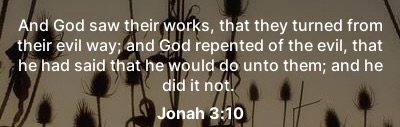
Previously, in Exodus 2:23–25, God had changed their mind and re-membered the covenant with Abraham, Isaac, and Jacob. In that instance, God responded to the groans and cries of the people. There is a comparable event in Nineveh: “When God saw what they did, how they turned from their evil ways, God changed his mind about the calamity that he had said he would bring upon them” (Jonah 3:10). 

In the case of Nineveh, the people changed God’s mind on the basis of their own actions (Jonah 3:5) and agenda (Jonah 3:9); in the golden calf episode, Moses interceded on behalf of Israel. The story line is the same: God changed their mind. Change of mind (read: repentance) is not evidence of weakness in the character of God. Rather, it is evidence of being present, and of honouring the Tongan quality of va (relationship) over against immutable doctrines. We are called to do likewise.

And so, in the story, as he saw the golden calf at base camp, Moses burned in anger—because of the people, and because his own brother Aaron played a key role in their going astray. He was so angry that he broke the tablets of the covenant that the Lord godself wrote. The Lord repented (v.14) but Moses revenged (vv.19–20). He burned and grounded the golden calf into water, and made the people drink it. And he ordered the sons of Levi to kill people—whether “your brother, your friend, and[or] your neighbour”—who were NOT on the Lord’s side (v.27). 

The Lord changed their mind—but to the opposite effect. This time, the Lord decided to blot out the people who sinned against the Lord (v.33). Because of the golden calf sinners, the Lord sent a plague (v.35). This time, divine repentance led to destruction—echoing the divine repentance that led to the flood (see Gen 6:5–7). 

These stories show that the Lord’s book may have been written (cf. Exod 32:33), but it has not been closed. The Lord may still change their mind, and there is no guarantee that it will be for the reparation of covenant or for the destruction of people. Caveat emptor.

With Love to the World is a daily Bible reading resource, written and produced within the Uniting Church in Australia, following the Revised Common Lectionary. It offers Sunday worshippers the opportunity to prepare for hearing passages of scripture in the week leading to that day of worship. It seeks to foster “an informed faith” amongst the people of God.

You can subscribe on your phone or iPad via an App, for a subscription of $28 per year. Search for With Love to the World on the App Store, or UCA—With Love to the World on Google Play. For the hard copy resource, for just $28 for a year’s subscription, email Trevor at wlwuca@bigpond.com or phone +61 (2) 9747-1369.

I will pass through the land (Exod 12, 13; Narrative Lectionary for Pentecost 19C)

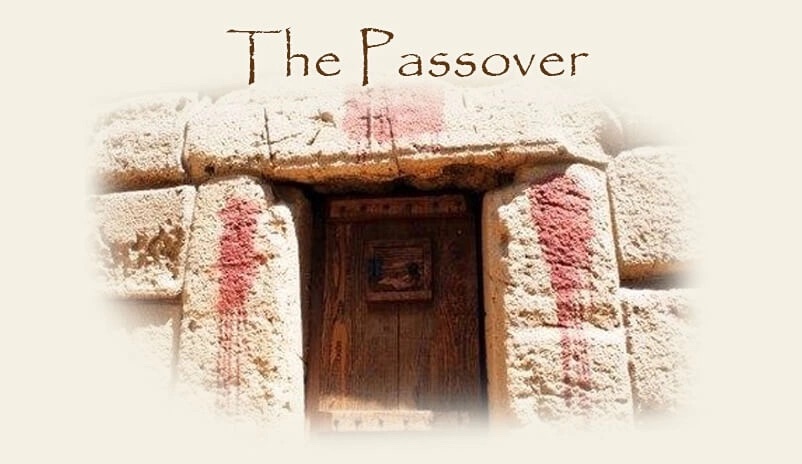
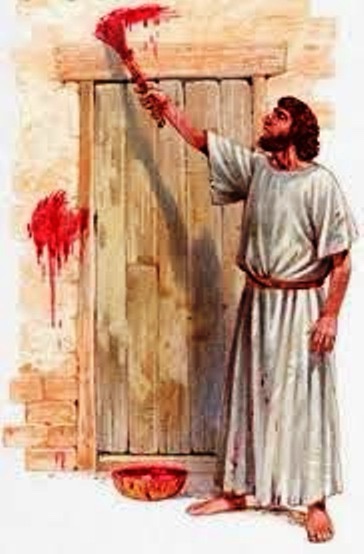
The instructions are clear: “take some of the blood and put it on the two doorposts and the lintel of the houses in which they eat it” (Exod 12:7). The explanation is also clear: “I will pass through the land of Egypt that night, and I will strike down every firstborn in the land of Egypt, both human beings and animals … the blood shall be a sign for you on the houses where you live: when I see the blood, I will pass over you, and no plague shall destroy you when I strike the land of Egypt” (Exod 12:12–13).

It’s a story of hope, expressed in joy; and it’s a story about death, filled with despair. We will hear it this Sunday, as it is offered as the Narrative Lectionary reading for Pentecost 19 (Exodus 12:1–13; 13:1–8). It all depends on where you stand as you hear the story. Are you in the shoes of the escaping Hebrews? Or in the shoes of the Egyptians who saw their beloved children slaughtered?

The story that is told about the Exodus in the Hebrew Scriptures is a story filled with hope. It tells of the liberation of an oppressed people, suffering under the burdens of forced labour; it recounts the sequence of events that led to the miraculous escape from slavery, crossing through the Sea of Reeds, travelling unhindered through the wilderness, into a land which the story claims was promised by God—a promised land, gifted to a chosen people by a holy God.

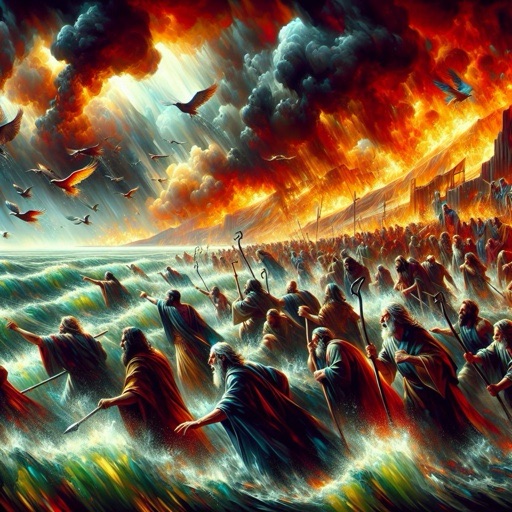
The story that is told in the Hebrew Bible about the Exodus is also a story filled with violence. There is the violence executed in Pharaoh’s actions in having the young boys murdered. There is the violence that is threatened by the Egyptian army as their chariots and horses thunder in hot pursuit of the escaping Israelites. 

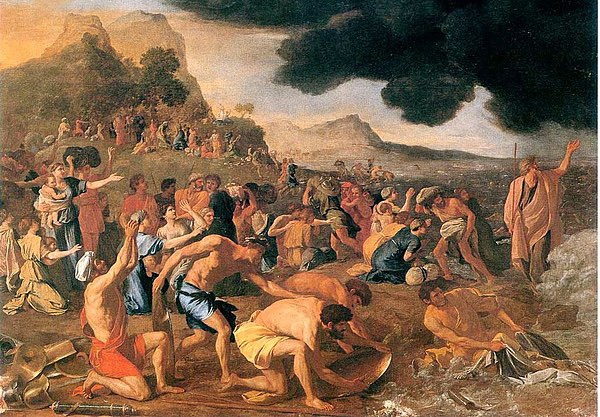
Worse, there is the insistent violence in the series of increasingly damaging plagues which God is said to have sent against the Egyptians. And finally, there is the climactic and catastrophic violence of the surging of waters over the army and their horses, as they as swamped and drowned in the middle of the Sea of Reeds.

It is a difficult story to take at face value; what sort of people remember such a tale of incessant violence? and what sort of a God takes sides with one group of people and acts in such a vicious way against their opponents? Furthermore, how can we accept this story as part of our canon of scripture, when it is so filled with violent act after violent act?

This is not the only place that we encounter violence in the Hebrew Scriptures; as the story goes on, it proves to be one of invasion, massacre, colonisation, and dispossession of people in the land of Canaan; and then, a string of battles take place in various locations, as the invading Israelites gradually exert their dominance over the indigenous people of the land. 

All of this violence is indeed of deep concern, and it can be seen to place the whole of those scriptures under a cloud. However, I don’t want to fall into the supercessionist trap, the approach taken in the second century by Marcion of Sinope, who discarded the whole of the Old Testament—and, indeed, a significant part of the New Testament! We have these stories as part of our scriptures, and we need to hear them, ponder them, and engage critically with them.

Nor do I want to gloss over the fact that acts of violence, both those committed by human beings, and those attributed to the Lord God, can be found in many parts of the New Testament. It is a ubiquitous problem. Violence is expressed in many texts in scripture—both Jewish and Christian—and, indeed, is found in the texts of many other religious traditions. Human beings live, and die, by violence. We can never escape it, it seems.

If we take these texts as a literal account of historical events, we have significant theological issues to address. And there are a number of difficult historical questions that must be addressed, if we want to hold to the claim that Exodus is reporting an historical “as it really happened”. Where is the evidence for the escape of a huge number of people at that time? (There is none.) Who was the Pharaoh of the time? (There are two very different suggestions about this.) 

What about the evidence for the huge crowd that spent 40 years in the desert? Where are the bones of the dead, the remains of campsites, from that crowd, if that is accepted to be the massive crowd 600,000 males (plus their women and children) that would set forth into the wilderness (see Exod 12:37) and then their descendants? There is absolutely no evidence for these archaeological remains, at all.

But such a forensic historical interrogation is not my approach to the story of the Exodus, nor to other parts of Hebrew Scripture, nor, indeed, to the narratives found in the New Testament.

So my approach to these texts has been to undertake an appreciative enquiry approach: what is this text saying? what drives the energy of the writer? what issues of concern do I read and hear—explicitly in the words used, and implicitly, in between and under what is said? what elements can I affirm, as contributing constructively to the Hebrew Scriptures’ understandings of God? and, as a consequence of that, to the New Testament’s understandings of God?

To begin, we need to recognise that the Exodus was seen as the paradigm for liberation—political, cultural, social, religious—which has shaped Jewish life for millennia. It is no wonder that it was picked up as a key motif for early followers of Jesus, to describe his significance: preaching the kingdom of God, the righteous-justice of a compassionate God, a challenge to the collective political, social, and religious status quo, and a liberating way of being for those following him.

A group of priests in the exile in Babylon collected and collated materials from earlier traditions, and developed a series of stories that conveyed in saga form the key elements of their national story. Symbolism and poetry were the paramount features of these stories, originally oral, later written on scrolls.

In the latter stages of the Exile or perhaps in the early stages of return to the land and rebuilding society, the stories and sagas were drawn into the set of scrolls we know as the Torah, the first part of the TaNaK. Symbolism featured prominently in these poetic stories and narrative rehearsals of the past.

The Passover occupies a central place in the long, sweeping narrative that is told in Hebrew Scripture. As well as the story of the Passover which led to the exodus from Egypt (Exod 12–15) and the thrice-documented priestly regulations governing the annual celebration (Lev 23:4–8; Num 28:16–25; Deut 16:1–8), the story is told of celebrating Passover at key moments in that ongoing narrative: at the foot of Mount Sinai (Num 9:1–14), at Gilgal when about to enter the land of Canaan  (Josh 5:10–12), when the Temple worship was restored under Hezekiah (2 Chron 30:1–27), and during the great reformation that took place under Josiah (2 Ki 23:21–23).

The priest-prophet Ezekiel, in his vision of the restored land and new Temple, seen during the Exile, insists that the Passover be celebrated on a recurring annual basis (Ezek 45:21–25). Even though the Temple that was eventually rebuilt was of a different size and shape, when the Exiles returned under Darius, the Passover was celebrated at the dedication of the rebuilt Temple (Ezra 6:19–22).

Over time, interpreters under influence from later developments in thinking began to “reify” and “historicise” these symbolic sagas and develop the idea that they reported “events that actually happened”. They didn’t—as we have noted, there is no evidence outside the Bible for the sequence of events found in the Exodus saga. But the story had a potency for these priestly writers as the land was restored, the Temple rebuilt, society reconstructed.

The Passover story, leading up to the escape of the Exodus, that Jews recall and relive each year and which Christians remember on a regular basis in the eucharistic celebration, tells the age-old scapegoat dynamic in a dramatic story filled with symbolism. It too was not an historical event, but a story developed to explain the special significance of the people of Israel and their faith in a god who took extraordinary steps to secure their freedom.

Of course, within the emerging Jewish movement that had a focus on Jesus as an authoritative teacher of the Torah, a key way of grappling with the fact that Jesus was put to death as a criminal, hung on a cross under the orders of the Roman Governor, was to draw on this story of blood shed, lambs sacrificed, and salvation gained.

The timing of the death of Jesus is placed within the Passover festival by all four canonical Gospels. That is the festival that remembers the story of what happened to Israel, long ago—and that passes on the story that this happens year-in, year-out, as the faithful people of Israel remember and relive their national salvation.

One Gospel even locates the actual hour when Jesus dies on the cross as being “on the day of preparation for the Passover” (John 19:14, 31). Jesus, already identified in this Gospel as “the lamb of God who takes away the sins of the world” (John 1:29, 36), dies when the Passover lambs are being slaughtered in preparation for the Passover meal that evening. (The other three Gospels, of course, place the last meal of Jesus with his disciples at the Passover meal—Mark 14:12–25 and parallels—and thus, in their chronology, he dies on the day after Passover.)

Jesus is remembered as the “paschal lamb … who has been sacrificed” (1 Cor 5:7); it is by the shedding of his blood that atonement with God takes place (Rom 3:25), that faithful people are justified (Rom 5:9), that peace is achieved (Col 1:20), that redemption occurs (Eph 1:7). One writer makes much of this, emphasising that this redemption is eternal (Heb 9:12; 13:20), opening up “a new and living way” (Heb 10:19–20). It is his shed (sprinkled) blood makes Jesus “the mediator of a new covenant” (Heb 12:24) and that his faithful people are sanctified (Heb 13:12).

So this ancient story, passed down by word of mouth and then written in scrolls that themselves were passed down for reading and understanding, sits deeply within the self-understanding of both Jewish and Christian people. It is a story we cannot avoid.

Changed. Transformed. Transfigured. (Mark 9; Narrative Lectionary for Transfiguration, Epiphany 6)

The story that is told in the Gospel for this coming Sunday (included in the longer reading of Mark 8:27—9:8) is a story about being changed; about being transformed. It’s a story that shows that being transformed means you are able to stand and challenge others to be transformed.

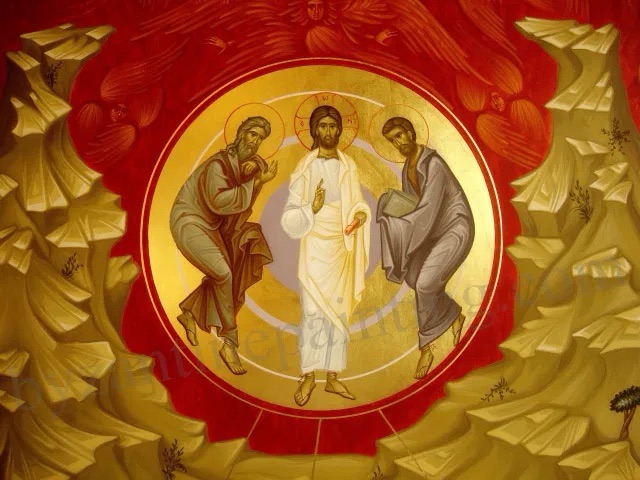
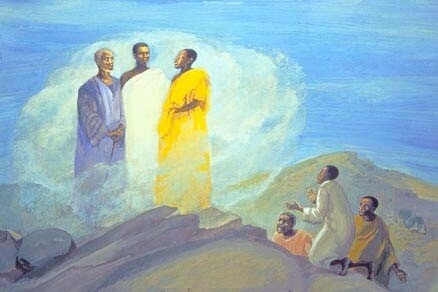
It’s the story of when Jesus took his three closest friends to a mountain, and they had a shared experience of seeing Jesus standing between two of the greats of their people: Moses, to whom God had given the Law to govern the people of Israel, and Elijah, through whom God had established a long line of prophets in Israel (Mark 9:2–8). It’s a story that in Christian tradition is called The Transfiguration.

The word Transfiguration is a strange word. It is not often found in common English usage. It’s one of those peculiar church words, that seems to be used only in church circles. Like thee and thy, holy and righteous, sanctification and atonement … and trinity. These words don’t usually pop up in regular usage!

I looked for some helpful synonyms for the word transfiguration, and found these: change, alter, modify, vary, redo, reshape, remodel, transform, convert, renew … and transmogrify. I am not sure whether that last one gets us anywhere nearer to a better understanding, but some of the others are helpful. Transfiguration is about change, adaptation, and taking on a new shape or size or appearance.

One of the other words offered as a synonym was metamorphose; and that caught my eye, because that word comes directly from the Greek word, metamorphidzo, which is used by Mark in his Gospel, when he tells his account of this incident. “After six days, Jesus took Peter, James and John with him and led them up a high mountain, where they were all alone; and he was metamorphosed before them” (Mark 9:2). Mark then explains that this metamorphosis was evident in that “his clothes became dazzling white”.

The story of the Transfiguration tells of the moment that Peter, James, and John perceived Jesus in a new way. No longer did they see him as the man from Nazareth. In this moment, they see him as filled to overflowing with divine glory. He was not simply the son of Joseph; he was now the divinely-chosen, God-anointed, Beloved Son (9:7).

Jesus brings the heavenly realm right to the earthly disciples. It is what is known, in Celtic Christianity, as a “thin place”: the place where heaven breaks into earthly life.

The disciples had the possibility, in a moment of time, to feel intensely close to the heavenly realm, to stand in the presence of God. They symbolise the desire of human beings, to reach out into the beyond, to grasp hold of what is transcendent—to get to heaven, as that is where God is (see Gen 28:10-12 and Deut 30:12; Pss 11:4, 14:2, 33:13, 53:2, 80:14, 102:19; although compare the sense of God being everywhere in Ps 139:8-12).

This key mountaintop moment contains the words from the heavens about Jesus, “This is my Son, the Beloved; listen to him!” (9:7). These words link back to the initial baptism of Jesus, when the same words were heard (1:11) and forward to the final scene of crucifixion, when a centurion and those with him at the foot of the cross witnesses Jesus’ death, and declares, “Truly this man was God’s Son!” (15:39).

All three scenes contain the foundational statement, recognising Jesus as Son of God, reiterating the words of the unclean spirits in Galilee (3:11) and the man possessed by demons in the country of the Gerasenes (5:7). For, as Simon Peter declares in the pivotal scene at Caesarea Philippi that is also included in this Sunday’s reading, Jesus is “the Messiah” (8:29).

The voice, booming forth from the clouds, “This is my Son, the Beloved; with him I am well pleased; listen to him!” (9:7) seems, at first hearing, to be quoting Hebrew scripture: perhaps the second Psalm, which praises the King of ancient Israel as the one whom God has begotten; or perhaps the song in Isaiah 42, which extols the servant as the one whom God has chosen, or anointed; or perhaps even the oracle in Deuteronomy 18, which instructs the people to listen carefully to the words of the prophet.

Whatever scripture, or scriptures, are here spoken by the divine voice, making this bold declaration from the cloud, it is clear that God has a special task, a special role, and a special place for Jesus. The words of this heavenly voice link this story back to the opening scenes of the story of the adult period in the life of Jesus, and also to a moment towards the end of that adult life.

As this voice is heard, Jesus is on a mountain, with three of his closest followers—and also with two key figures from the past of Israel: Moses, who led the people out of slavery, who then was the instrument for delivering the Torah to Israel; and Elijah, who stood firm in the face of great opposition, whose deep faith bequeathed him the mantle of prophet, as he ascended into heaven.

Mark says that “there appeared to them Elijah with Moses, who were talking with Jesus” (9:4). Matthew reverses the order, placing Moses before Elijah: “suddenly there appeared to them Moses and Elijah, talking with him” (Matt 17:3). Priority, in Matthew’s narrative, goes to Moses. Indeed, Matthew’s concern has been to make as many parallels as possible between the story of Jesus and the story of Moses. The regular reminder that “this took place to fulfil what the Lord has said through the prophets” (Matt 1:22; 2:4, 15, 17, 23) underlines this Mosaic typology.

The covenant given to Moses on Mount Sinai (Exod 19:1–6) is accompanied by the giving of the law (Exod 20:1–23:33), and is later sealed in a ceremony by “the blood of the covenant” (Exod 24:1–8). The scene on the mountaintop, with Jesus and his three disciples, evokes the mystery of the mountaintop scene in Exodus. This story is but one part of the story of Jesus which draws connections with the story of Moses.

*****

The Gospel writers say that Jesus was transformed at that moment. But in this story, also, there is the indication that the friends of Jesus were transformed. That moment on the mountain was a challenge to each of them; the response that Peter wanted to make was seen to be inadequate. Jesus challenged him to respond differently. It was another moment when metanoia, complete transformation, took place. And these disciples did change; yes, it took some time, but these friends of Jesus ultimately became leaders amongst the followers of Jesus, and spearheaded the movement that became the church.

The change, the metanoia, that occurred within Peter, James, and John, spread widely. They faced the challenge head on, and responses, in metanoia. That is mirrored, today, in changes that are taking place in society. Especially, that has been the experience of people over the last few years. We have met the challenge of a global viral pandemic; patterns of behaviour have been modified, as we prioritise safety and care for the vulnerable, and wear masks, sanitise, and socially distance. We have changed as a society.

In the church generally, through the pandemic that hit with such force in 2020, we have changed how we gather, how we worship, how we meet for Bible studies and fellowship groups, how we meet as councils and committees, how we attract people to our gatherings. Transformation has been widespread.

In my own church of these past few years, we worked hard to meet the challenge of reworking our understanding of mission; for across the church, we now see the importance of people from each Congregation engaging with the mission of God in their community as the priority in the life of the church. See

So in each place where people gather as church, there is a pressing need to consider how we might grow fresh expressions of faith, nurture new communities of interest, foster faith amongst people “outside of the building” and outside the inner circle of committed people. It is an ongoing process.

Change is taking place. Change is all around us. Change is the one thing that is constant about life: we are always changing. Sometimes we think that the church doesn’t change, isn’t changing, even resists changing. But that is not the case. Our church is changing. Our society is changing. And the story of the Transfiguration of Jesus encourages us throughout this change.

A prophet like Moses (Deut 18; Epiphany 4B)

“I will raise up for them a prophet like you from among their own people; I will put my words in the mouth of the prophet, who shall speak to them everything that I command” (Deut 18:18). These words are the heart of the Hebrew Scripture passage which the Revised Common Lectionary proposes for this coming Sunday, the Fourth Sunday after Epiphany.

Here, Moses informs the people that, just as he spoke words placed into his mouth by God, so there will be later individuals who also will speak words given to them by God. And so, Israel is assured of the presence of a prophet in their midst throughout the centuries.

Indeed, a number of the prophets of Israel remind us that they speak forth “the voice of the Lord” (Isa 66:6; Jer 42:5–6; Dan 9:9–10; Mic 6:9; Hag 1:12; Zech 6:15). Jesus stands in this tradition, offering words of guidance, challenge, and judgement. In traditional Christian understanding, he is the way by which, “in these last days, God … has spoken to us” (Heb 1:1–2).

What will the prophet speak? In so many reports of prophetic activity, it is justice which is the heart of their message—God’s justice; the justice which God desires for the people of God; the justice which God speaks through the voice of the prophets; the justice that God calls for in Israel; the justice that provides the measure against which Israel will be judged, and saved, or condemned.

Moses himself was charged with ensuring that justice was in place in Israelite society. One story told of the time after the Israelites had escaped from Egypt places Moses as a judge. Whilst in the wilderness of Sin, being visited by his father-in-law Jethro, we learn that “Moses sat as judge for the people, while the people stood around him from morning until evening” (Exod 18:13).

Noticing that Moses was overwhelmed by the volume of matters requiring adjudgment, Jethro suggested—and Moses adopted—a system whereby appointed men who “judged the people at all times; hard cases they brought to Moses, but any minor case they decided themselves” (Exod 18:14–16). The charge given to these men is clear: they are to give a fair hearing to every member of the community, and they “must not be partial in judging: hear out the small and the great alike; [do] not be intimidated by anyone, for the judgment is God’s” (Deut 1:16–17).

Prophets coming after Moses thus inherited this responsibility to ensure that justice was upheld within society. Amos calls for “justice and righteousness” (Amos 5:22). Micah asks the question, “what does the Lord require of you but to do justice?” (Mic 6:8), while through the prophet Hosea, the Lord God promises to Israel, “I will take you for my wife in righteousness and in justice, in steadfast love, and in mercy” (Hos 2:19).

Isaiah ends his famous love-song of of the vineyard by declaring that God “expected justice” (Isa 5:7); Jeremiah notes the need to “not oppress the sojourner, the fatherless, or the widow” (Jer 7:5–7). Second Isaiah foresees that the coming Servant “will bring forth justice to the nations” (Isa 42:1) while Third Isaiah begins his words with a direct declaration, “maintain justice, and do what is right” (Isa 56:1), for “I the Lord love justice” (Isa 62:8).

This commitment resonates with the psalmist, who praises “the God of Jacob … who executes justice for the oppressed; who gives food to the hungry … [who] sets the prisoners free, [who] opens the eyes of the blind, [who] lifts up those who are bowed down [and] loves the righteous, [who] watches over the strangers [and] upholds the orphan and the widow” (Ps 146:5, 7–9). See

It may be significant that, in this year when Mark’s Gospel is featured in the lectionary, the Hebrew Scripture passages offered during the short season of Epiphany are drawn from the books of the prophets: 1 Samuel, Jonah, this passage from Deuteronomy, Isaiah, and then the story of Elijah and Elisha in 2 Kings. These passages help us to see in clear focus the way that Jesus operates like a prophet in Mark’s narrative. See

So the offering of the Deuteronomy passage this week particularly pushes us to consider how Jesus might be seen as a prophet, one whom God raised up to be like Moses (Deut 18:15-18). There are three key features of Mark’s portrayal of Jesus which depict him in a prophetic vein: words and deeds, a kingdom focus, and the importance of repentance.

I Words and deeds

Words, of course, are important, both for the prophets, and for Jesus. “Thus says the Lord”, a commonplace of prophetic rhetoric, is reflected in the comments of the Markan narrator that Jesus “went about all the villages teaching” (Mark 6:6), proclaiming his message (1:14–15, 38) and speaking of the kingdom of God in parables (4:11, 26–32; 12:1–12), in sayings (9:1, 47; 10:14–15, 23–25; 12:34), and in an extended apocalyptic discourse (13:3-37). Words were central to his public and private activity.

Jesus is remembered, however, as “a prophet mighty in deed and word” (Luke 24:19), so the deeds he performed are equally as important as the words he spoke. Indeed, this was always the case for prophets; God gave Moses words to speak and signs to perform (Exod 4:28–30), and the prophets that followed him accompany their message with acts that manifest the truth of what is proclaimed: Ahijah tearing his garment into twelve pieces (1 Ki 11), Isaiah walking naked for three years (Isa 20), Jeremiah buying and then breaking an earthenware jug (Jer 19), Ezekiel eating a scroll (Ezek 3), Ezekiel shaving his head and slashing the hair with a sword (Ezek 5), and many more.

In like manner, Jesus sent out his followers to proclaim his message, but also to “cast out many demons and anoint with oil many who were sick and cure them” (Mark 6:12–13). Word and deed belong together. So Mark reports, alongside the parables and sayings of Jesus, numerous instances when Jesus healed people (2:1–12; 3:1–6; 3:22; 5:21–43; 6:5, 53–56; 7:31–37: 8:22–26; 10:46–52), cast out demons and unclean spirits (1:21–28, 32–34, 39; 3:11; 5:1–20; 7:24–30; 9:14–29), as well as miraculously fed multitudes (6:30–44; 8:1–10), cleansed a leper (1:40–45), stilled a storm (4:35–41), and walked on water (6:45–52).

II The coming kingdom

Another way in which Jesus reflects his prophetic calling was through the kingdom focus in his teaching. That the imminence of the kingdom is a key note for Jesus is reflected both in his opening words in Mark (“the time is fulfilled, and the kingdom of God has come near”, 1:15a) and in some of his final words to his closest followers (“I will never again drink of the fruit of the vine until that day when I drink it new in the kingdom of God”, 14:25).

Jesus has so shaped the expectations of his followers that they anticipate this coming with intensity. “There are some standing here who will not taste death until they see that the kingdom of God has come with power”, he told them (9:1); to one enquirer, he affirmed, “you are not far from the kingdom of God” (12:34), and after his death, another follower who was “waiting expectantly for the kingdom of God ensured that the body of Jesus was cared for (15:43).

When some of his disciples hindered children wanting to come to him, Jesus chided them, saying, “whoever does not receive the kingdom of God as a little child will never enter it” (10:15); a little later, to his disciples, he warned, “how hard it will be for those who have wealth to enter the kingdom of God!” (10:23).

The final extended discourse of Jesus that Mark reports (13:4–37) provides reassurance of the sovereignty of God in the midst of crises and calamities. These events are but “the beginning of the birth pangs” (13:8). Jesus affirms that those enduring will be saved by divine action (13:13, 20), culminating in the appearance of “‘the Son of Man coming in clouds’ with great power and glory” (13:26) and the gathering of the elect by the angels of God (13:27).

The kingdom is the realm in which God will act decisively. In the words of the prophets, the kingdom of David and his successors was the realm in which God was seen to be active; after that kingdom was conquered and its people taken captive, the prophetic voices of Israel began to develop a notion that, at some time in the future, there would indeed be a kingdom which would be the realm in which God would be active. The prophetic hope in The Day when God would act came to full, dramatic expression in the apocalyptic portrayals of The End that was anticipated.

See

III Metanoia: a complete transformation

Proclaiming that repentance, metanoia, is the essential prerequisite for entry into that kingdom in order to fulfil God’s justice is a third feature of Mark’s portrayal of Jesus in the manner of a prophet. The first word of Jesus in Mark’s early account is clear: “the time is fulfilled, and the kingdom of God has come near; repent (metanoeite) and believe (pisteuete) in the good news” (1:15).

In this programmatic Markan announcement, the two statements (in the indicative mood) about “the time” and “the kingdom” are followed by two commands (in the imperative mood) to “repent” and “believe”. The imminence of the kingdom is the motivation for the call to repent and believe.

This call to repent is evident in the activity of the followers of Jesus who are sent out in pairs with “authority over the unclean spirits”; as they cast out demons and cured the sick, so they also “they proclaimed that all should repent” (6:7–13). Beyond that, the explicit call to repent is not repeated by Jesus, but its presence is evident throughout the narrative.

Jesus calls people to follow him; fishermen Peter and Andrew “left their nets and followed him” (1:18), fishermen James and John “left their father Zebedee in the boat with the hired men, and followed him” (1:20), and tax collector Levi son of Alphaeus, “got up and followed him” (2:14). Leaving behind signals the complete transformation undertaken by following Jesus.

Following Jesus is akin to taking up the cross, a sign of social rejection and alienation as well as personal denial (8:34). Jesus delivers a sequence of three sayings that reflect the complete turnaround that is required to effect metanoia. First, “those who want to save their life will lose it, and those who lose their life for my sake, and for the sake of the gospel, will save it” (8:35). Next, “whoever wants to be first must be last of all and servant of all” (9:35).

And then, “whoever wishes to become great among you must be your servant, and whoever wishes to be first among you must be slave of all” (10:43–44). Jesus himself provides the foundational model for this way of living; as the Son of Man, he came “to give his life a ransom for many” (10:45).

This persistent demand for complete life transformation—metanoia—resonates with Isaiah’s signal declaration that “Zion shall be redeemed by justice, and those in her who repent, by righteousness” (Isa 1:27), and regular prophetic calls to “return to me, says the Lord of hosts … return from your evil ways and from your evil deeds” (Zech 1:3–4); “repent and turn away from your idols; and turn away your faces from all your abominations” (Ezek 14:6; also 18:30), “return to me … remove your abominations from my presence and do not waver” (Jer 4:1); “return to me with all your heart, with fasting, with weeping, and with mourning” (Joel 2:12).

The recurring refrain of Amos, lamenting, “yet you did not return to me, says the Lord” (Amos 4:6,8,9,10,11), leads the prophet to assure Israel that “I will do this to you; prepare to meet your God, O Israel!” (Amos 4:12)—words akin to what the psalmist says, “if one does not repent, God will whet his sword; he has bent and strung his bow; he has prepared his deadly weapons, making his arrows fiery shafts” (Ps 7:12–13).

“I will raise up for them a prophet like you from among their own people; I will put my words in the mouth of the prophet, who shall speak to them everything that I command” (Deut 18:18). In the way that Mark presents Jesus in his narrative, we can see how Jesus speaks and acts in the manner of a prophet like Moses, the archetype of prophetic leadership.

*****

Please Note: in the above comments, I am not seeking to “ prove” that Jesus “fulfils prophecy”. Rather, I am interested to explore the ways that an understanding of Hebrew Scripture can inform the way we read and understand the Gospel narratives about Jesus. For further thoughts on how we read prophetic texts in a Christian context, see

and

Never since has there arisen a prophet like Moses (Pentecost 13A to 22A)

Over the past ten weeks, we have heard and thought about various moments in the story of Moses, the reluctant prophet who came to stand tall in the stories told about the origins of Israel—Moses, the infant who was rescued by Egyptian women; Moses, who was called by God to lead his people to freedom; Moses, who received the Torah from God; Moses, who led the people through the wilderness for forty years;

Moses, who saw the promised land but died before he was able to enter that land. As the writer of Deuteronomy states, “never since has there arisen a prophet in Israel like Moses, whom the Lord knew face to face” (Deut 34:10). Here are the blog posts I have made about this extended story of Moses and the Israelites.

The problem of Canaan: conquering, colonising, massacring (Deut 34; Pentecost 22A)

Land rights. Land claims. Land has always been a bone of contention-in the past, as in the present. This week, the lectionary invites us to consider land. The Hebrew Scripture passage contains an important statement about land a land claim, as it were.

“This is the land of which I swore to Abraham, to Isaac, and to Jacob”, God declares to Moses in the last moments of his life (Deut 34:4), as he stands on Mount Nebo, surveying “the whole land: Gilead as far as Dan, all Naphtali, the land of Ephraim and Manasseh, all the land of Judah as far as the Western Sea, the Negeb, and the Plain- that is, the valley of Jericho, the city of palm trees as far as Zohar” (Deut 34:1–3).

That land encompassed all the land of Canaan, which later becomes the land of Israel. It is the land which was in contention between different peoples long before the story of Moses was written on the scroll that became part of Torah.

That was most likely sometime before or during the period that Josiah ruled as king of Judah, when he commanded the high priest Hilkiah to undertake an audit of funds in the temple. We are told that, in the course of this audit, Hilkiah said to Shaphan his secretary, “I have found the book of the law in the house of the Lord” (2 Ki 22:8). That’s presumed to be the first version of what we know as Deuteronomy, which later found its place as the fifth of “the five Books of Moses”.

That same land, promised to Abraham, claimed by Moses, is in contention today. It has had a chequered history. The ancient land of Canaan eventually became the land of Israel, then (along with Judaea) part of the Roman province of Syria Palaestina (132–390), and then of the Diocese of the East in the Roman Empire (to 536). What followed the fall of the Roman Empire was a millennium and a half of Muslim rule of this land, first as a part of Bilad al-Sham, the Greater Syria region, under various Caliphates.

The region continued to be part of various organisational configurations under successive Muslim rule, on into the Ottoman Caliphate (from 1517) and then into the modern era. (I am not an expert, by any means, of this ancient and medieval history; for this summary, I am dependent on what I read in what I consider to be reputable sources.)

In the early 20th century, the place where Arabs identifying as Palestinians lived was decreed to be the British Mandate of Palestine (1920–1948). The ancient conflicts, it was hoped, would be well in the past. A place for Palestinians in the modern world was, it was thought, now settled.

But this was not to be, as we well know today.

In part in response to the horrors of the Shoah, exposed by the ending of World War Two, the modern state of Israel was created in 1948. The new nation took 78% of the area which had been provided for Palestinians in the British Mandate. That this was now Jewish territory was a blessing for Jews, but it was a huge irritant to Palestinian sensibilities, which has referred to the period from 1948 onwards as the Nakba, the Palestinian Catastrophe. In the early years of the Nakba, significant number of Palestinians fled the area declared as Israel, as (in one estimate) over 500 Palestinian villages were repopulated by Jews, becoming refugees with no national identity.

The contested regions of the Gaza Strip (along the east coastline of the Mediterranean Sea) and the West Bank (land immediately to the west of the River Iordan) became known as “the Palestinian Territories”.

Another irritant has been the fact that they have been occupied by Israel since the Six-Day War of 1967, and subsequent expansion of Israeli settlements into areas where Palestinians live has exacerbated the situation. And so those who were dispossessed become the dispossessors of others, and the cycle continues.

So when we hear, this coming Sunday, “This is the land of which I swore to Abraham, to Isaac, and to Jacob”, we can be sure that we know these territories; we know the conflicted situation in the modern era; and we know how the ancient texts describe and lay claim to Israelite “ownership” of the land.

When Abraham left his homeland to settle in Canaan (Gen 13:12) and when the Lord God later formalised a covenant with Abraham (then aged 99 years, we are told), the promise was made by God that “I will give to you, and to your offspring after you, the land where you are now an alien, all the land of Canaan, for a perpetual holding” (Gen 17:8).

That same phrase, “a perpetual holding”, is subsequently spoken by Jacob, as he tells Joseph, Manasseh and Ephraim of God’s words, “I am going to make you fruitful and increase your numbers; I will make of you a company of peoples, and will give this land to your offspring after you for a perpetual holding” (Gen 48:4).

That land, Canaan, is a problem that sits at the heart of the story that the Bible recounts in its early narrative books. It becomes a problem at the heart of life for the millions living in that region today, as I have outlined above. The biblical narrative tells of numerous battles leading to the defeat of many tribes: the Moabites (Judg 3:26–30) and the Ammonites to the east Judg 10:6–11:33), as well as “the Hittites, the Girgashites, the Amorites, the Canaanites, the Perizzites, the Hivites, and the Jebusites, seven nations mightier and more numerous than you” in the land (Deut 7:1; see also Josh 3:10; 12:8; 24:11), and also the Anakim (Josh 11:21–23).

Further, as recent events in Australia have powerfully reminded us, there is a problem right at the heart of the narrative that has been constructed about modern Australia. Our most recent failure even to accept a modest proposal to recognise the existence of First Peoples on the continent prior to 1788, is testimony to that problem. Although the First People of Australia were not completely destroyed and eliminated, they continue to be discriminated against in a multitude of ways.

Both the ancient Israelite narrative and the contemporar Australian narrative tell a story of a group of people who invade, conquer, massacre, colonise, settle, marginalise, and then claim as their own what had previously belonged to others who had long been there before them.

It’s a story, in both instances, that we need to hear, understand, and appreciate. We need to develop awareness of just how easily we adopt the victor’s point of view, and uncritically retell it, without thinking any more about the pain, hurt, anguish, and generations-long damage that was done, in each case.

That is hard to do. I am a white Australian, raised on the myths of the great Australian character, taught from my schooldays onwards about the glories of the British Empire and the values of western society. Understanding the situation of First Peoples in Australia takes time, focus, empathy, energy, and persistence.

And I am a Christian, raised on the stories of the Bible, taught from Sunday School onwards about the promises God made to the chosen people about the holy land that had been selected for them. Getting into the mindset of a people from so long ago, who have almost (but not quite) been written out of the story, is hard to do.

The story of the Hebrews entering the land of Canaan, battling the inhabitants and colonising the territory, lies underneath the whole story of Exodus, wilderness, and conquest, which is at the heart of the biblical narrative that accounts for the origins of Israel as a nation.

A specific set of stories which tell of that invasion and conquest is found in all its bloody detail in the book of Joshua. That book tells, in a highly stylised way, of the entry of the people of God into the promised land. It is a key incident in the extended narrative history that stretches from Genesis to 1 Kings, from slavery in Egypt, through the long haul of wilderness wanderings, to the establishment of the kingdom of Israel under King David.

That story has multiple historical problems, and needs to be understood as a mythological saga telling of the nature and identity of the people, rather than an accurate historical account of “what actually took place”. See

Invasion and colonisation, Joshua 3 and contemporary Australia (Pentecost 23A)

This ancient story of invasion, conquering, massacre, colonisation, settlement, marginalisation, and then the claiming as their own what had previously belonged to others, resonates strongly with the experience of indigenous peoples in so many places in the modern era of history-including, and especially, in Australia.

Time and time again, from late medieval times onwards, “explorers” set out from Western powers, “discovered” new lands, followed by “settlers” who came and established “civilisation”, most often by means of “subduing” the indigenous peoples, making them subservient to the “new order” and even, in many instances, punishing those who resisted their new ways, utilising various means of killing the indigenous peoples.

This is the dynamic at the heart of the story of “Israel entering the promised land” which is told in Ioshua. It is also at the heart of the story of “establishing British civilisation in the land of Australia” which is the story of the continent on which I live the land now called Australia. The imposition of a new way of living by a more powerful force, the subjugation of those who already were living in the land, and the use of violence and murder to ensure that the new order was maintained and could flourish all of this is in the history of Australia since 1788.

The story of invasion and settlement of Canaan, the defeat and decline of the various indigenous peoples of that land, resonates with the contemporary Australian experience of the indigenous peoples of the continent and its islands. Which gives us pause for thought: how, then, do we hear and understand that story recounted in Joshua, which is prefigured in this final chapter of Deuteronomy? What land claims do we accept from this ancient text? And how does that guide us, today, as we consider the land claims that are being made?

See also my discussion of the wav that biblical literalism has fed into the modern conflict over this land at

The Golden Bull (Exod 32 and Psalm 106; Pentecost 20A)

The psalm which is offered for this coming Sunday (an excerpt from Psalm 106) was surely chosen to complement the reading from Exodus offered by the lectionary. The first cluster of verses from this psalm (Ps 106:1–6) invite us to praise the Lord, for God’s “steadfast love endures forever” (v.1). The Lord is one who is able to show favour to people, to deliver them, and to grant prosperity to “his chosen ones” (vv.4–5).

The final verse of this selection offers a contrast, noting that “both we and our ancestors have sinned; we have committed iniquity, have done wickedly” (v.6), before the second selection of verses (vv.19–23) recounts the famous episode of sinful behaviour by Israel, known popularly as “the Golden Calf episode”—which is what is told in the narrative of Exodus 32, the Hebrew Scripture reading for this coming Sunday (Exod 32:1–14).

This story most likely relates to the god who was regarded as the head of the gods amongst the Canaanites—El, who was often depicted as a bull. The bull was the strongest animal in the ancient farmyard, and thus a fitting symbol for a powerful god. The Israelites chose to imitate that god through their golden construction. The story told in Exodus 32 and summarised in Ps 106:19–23 mocks the Canaanite god, depicting him as more like a calf.

By adopting a Canaanite symbol, the Israelites had turned from God (v.21). It seems they would deserve their fate—although Moses interceded and saved them from divine wrath (v.23). Moses is the hero who stands in the breach, to convince God to change God’s mind. This is a difficult statement, worth pondering further. What sort of god wishes to wreak savage wrath on people? And also, what kind of god is one who changes their mind in response to human petition? Both aspects challenge elements of classic theological understandings of God.

The language of the wrath of God “burning hot” (vv.10, 11, 22) resonates with the constant prophetic warning that God will use fire to destroy people and places because of their sinfulness (Isa 1:7; 5:24; 30:27–28, 30, 33 18–19; Jer 4:4; 6:27–30; 20:47–48; Hos 8:14; Joel 2:1–3; Amos 1:4—2:5; Nah 1:15). Zephaniah portrays utter devastation through divine judgement: “neither their silver nor their gold will be able to save them on the day of the Lord’s wrath; in the fire of his passion the whole earth shall be consumed” (Zeph 1:18). That is an intense fire indeed!

However, the final prophet in the Christian Old Testament, Malachi, reworks this imagery, offering some hope; God’s messenger on The Day of the Lord “is like a refiner’s fire and like fullers’ soap; he will sit as a refiner and purifier of silver, and he will purify the descendants of Levi and refine them like gold and silver, until they present offerings to the Lord in righteousness” (Mal 3:1–4).

The references to good and silver in these prophetic oracles sits interestingly in juxtaposition to the Exodus story, in which Aaron “took the gold [from the ears of the people], formed it in a mold, and cast an image of a calf” (Exod 32:4), before he “built an altar before it” and proclaimed, “Tomorrow shall be a festival to the Lord” (v.5).

So the people gladly “offered burnt offerings and brought sacrifices of well-being” on that altar. The burnt offerings mimick the daily burnt offerings (Exod 29:42), where the Lord God promises “I will meet with you, to speak to you there; I will meet with the Israelites there, and it shall be sanctified by my glory” (Exod 29:42–43). The sacrifices of well-being recall “the burnt offerings and sacrificed oxen as offerings of well-being to the Lord” made during the ceremony to ratify the covenant (Exod 24:5).

The people, under the leadership of Aaron, are deliberately imitating key components of the worship of the Lord God, but in this instance, they are worshipping an idol made with their own hands—in direct disobedience to the commandment “not [to] make for yourself an idol, whether in the form of anything that is in heaven above, or that is on the earth beneath, or that is in the water under the earth” (Exod 20:4).

And so, having offered their sacrifices, “the people sat down to eat and drink, and rose up to revel” (v.6). But not so God, for as he had warned the people, “I the Lord your God am a jealous God, punishing children for the iniquity of parents, to the third and the fourth generation of those who reject me” (Exod 20:5). God will not let this transgression pass; as he says to Moses, “I have seen this people, how stiff-necked they are; now let me alone, so that my wrath may burn hot against them and I may consume them” (Exod 32:10).

A number of psalms reflect the desire for God to punish evildoers severely; “pour out your indignation upon them, and let your burning anger overtake them” is the cry of one psalm (Ps 69:24). Another psalm notes the vengeance of God—“in your hearts you devise wrongs; your hands deal out violence on earth” (Ps 58:2)—and suggests that “the righteous will rejoice when they see vengeance done; they will bathe their feet in the blood of the wicked” (Ps 58:10). The graphic picture of a furious God intent on wreaking damage raises difficult theological questions for us as we read such passages.

The image of fiery punishment comes from the story of Daniel (Dan 3:1–30) and appears again in the last book of the New Testament, where the prophet describes his visions of “the lake of fire that burns with sulfur” (Rev 19:20; 20:10, 14–15), also described as “the second death” (Rev 20:14; 21:8). It is there that the devil, the beast, and the false prophet “will be tormented day and night forever and ever” (Rev 20:10).

In the Gospel of Matthew, in particular, eternal punishment in a fiery furnace features also in the words of Jesus, as he threatens sinners with “the furnace of fire” (Matt 13:43, 50; 25:41), a place of “eternal fire” (Matt 18:8; 25:41), “the hell of fire” (Matt 5:22; 18:9). This builds on the warnings found in Mark’s Gospel about the punishment in store for those who put stumbling blocks in the way of “these little ones”—they will be condemned to “the unquenchable fire” (Mark 9:42–48). These warnings are repeated by Jesus in Matt 18:6–9.

So Jesus follows the prophetic and narrative insistence, in Hebrew Scripture, on the judgement of God being rightly expressed when sinfulness abounds. And the story of Aaron and the golden calf is a clear demonstration of God’s intent to exact punishment.

*****

But the story takes a turn, when Moses mounts a passionate plea to God, asking for the divine fury to be turned away from the sinful people. Invoking the covenant made with Abraham, Isaac, and Jacob, Moses implores, “turn from your fierce wrath; change your mind and do not bring disaster on your people” (Exod 32:12–13).

In this week’s commentaries in With Love to the World, my friend Jione Havea has offered an incisive insight into this story as recounted in Exodus 32. He writes as follows:

The plot is straightforward: Israel complained to Aaron that Moses has disappeared for too long, Aaron organized a golden calf as their God, the Lord became angry and decided to wipe Israel off, Moses appealed for Israel’s sake, and “the Lord changed his mind about the disaster that he planned to bring on his people” (32:14). The Lord reconsidered, and changed their mind.

Previously, in Exodus 2:23–25, God had changed their mind and re-membered the covenant with Abraham, Isaac, and Jacob. In that instance, God responded to the groans and cries of the people. There is a comparable event in Nineveh: “When God saw what they did, how they turned from their evil ways, God changed his mind about the calamity that he had said he would bring upon them” (Jonah 3:10).

In the case of Nineveh, the people changed God’s mind on the basis of their own actions (Jonah 3:5) and agenda (Jonah 3:9); in the golden calf episode, Moses interceded on behalf of Israel. The story line is the same: God changed their mind. Change of mind (read: repentance) is not evidence of weakness in the character of God. Rather, it is evidence of being present, and of honouring the Tongan quality of va (relationship) over against immutable doctrines. We are called to do likewise.

And so, in the story, as he saw the golden calf at base camp, Moses burned in anger—because of the people, and because his own brother Aaron played a key role in their going astray. He was so angry that he broke the tablets of the covenant that the Lord godself wrote. The Lord repented (v.14) but Moses revenged (vv.19–20). He burned and grounded the golden calf into water, and made the people drink it. And he ordered the sons of Levi to kill people—whether “your brother, your friend, and[or] your neighbour”—who were NOT on the Lord’s side (v.27).

The Lord changed their mind—but to the opposite effect. This time, the Lord decided to blot out the people who sinned against the Lord (v.33). Because of the golden calf sinners, the Lord sent a plague (v.35). This time, divine repentance led to destruction—echoing the divine repentance that led to the flood (see Gen 6:5–7).

These stories show that the Lord’s book may have been written (cf. Exod 32:33), but it has not been closed. The Lord may still change their mind, and there is no guarantee that it will be for the reparation of covenant or for the destruction of people. Caveat emptor.

Is the Lord among us, or not? (Exodus 17; Pentecost 18A)

It’s a good question: “is the Lord among us, or not?” It’s a question posed by the Israelites in the story that the lectionary presents for our consideration this coming Sunday (Exod 17:1–7). It’s a question that people of faith have asked, time and time again, throughout history. It’s a question that is still asked, in our own time, by people experiencing difficulties in their lives.

The people of Israel have been travelling in the wilderness. They entered the wilderness of Shur after crossing the Red Sea (15:22), and continued on into the wilderness of Sin (16:1). We are not told how long they had been in this desert wandering, when they arrived at Rephidim; the whole “wilderness wandering” saga of the Israelites is quite blurred, not only in terms of time, but also in terms of places. It is, after all, a story—not a history, as I have noted in previous blogs. So the teller of this story deems these details unimportant. What is important, by contrast, is what the storyteller chooses to highlight: complaints, leadership, and provision.

The people had already raised a complaint against Moses and Aaron when they had no food to eat (Exod 16:2–3). God had responded by providing food—quails and manna (16:13–14). That precedent, surely, must have meant that, when confronted with another lack—this time, of water—they might immediately have turned to God in prayer, requesting that God supply water. We might have thought this. But no—once again, they turned on their leaders: “the people quarreled with Moses, and said, ‘Give us water to drink’” (17:2A). “Is the Lord among us, or not?”, they wonder.

Moses, understandably, pushes back, saying, “why do you quarrel with me? why do you test the Lord?” (17:2b). Perhaps another line of response—following on from the observations I made in my post last week about the incident in the wilderness of Sin (ch.16)—might have been to show some understanding that the people had been through a series of traumatic events—oppressive slavery, a number of plagues, a hurried escape from Egypt, and then witnessing the mass drowning of the Egyptian army.

The cumulative experience of these traumas could well explain the attitude of the Israelites; suffering piled upon suffering, distress multiplying distress, and an acting-out of bad behaviour, as the text indicates. (Bearing in mind that this is a story, not an actual historical event, so it portrays characters as created by the narrator, and is not reporting on real historical people; and noting also that contemporary psychological insights should be applied with great caution—if at all—to stories from antiquity!)

But the story indicates that the people did not cave under the pressure from Moses. In response to his accusatory questions—“why? why?”—we are told, “the people thirsted there for water; and the people complained against Moses and said, ‘Why did you bring us out of Egypt, to kill us and our children and livestock with thirst?’” (17:3). It’s an unreasonable accusation. Moses most certainly was not leading them out of their state of slavery to kill them—he was seeking to save them, to rescue them and bring them into a new state of refuge and safety.

However, their state has led them to make unreasonable accusations. So Moses then intercedes with God: “what shall I do with this people?”, noting that “they are almost ready to stone me” (17:4). The crisis has not been averted! “Is the Lord among us, or not?” remains a key question.

*****

The response of God is not to equip Moses with words to speak to the Israelites (which is what he did when calling Moses, initially, in Exod 3:15–22), but to encourage Moses to act in a way that will persuade the Israelites (as he did when Moses pushed the point, earlier on, in Exod 4:1–9). “Is the Lord among us, or not?” Moses is going to ensure that they sense that he is, indeed, present.

The prophet, in ancient Israel, was called and commissioned to speak words to the people—to be the mouthpiece of the Lord God—and also to enact the justice and mercy that God shows towards the people, in deeds. That dual role is integral to the calling of Moses (Exod 3:1—4:17), who serves as the role model supreme for prophets in Israel (Deut 18:15; 34:10) and serves also as the template for Jesus, as Peter declares (Acts 3:20–26).

So Moses leads the people by acting in a way that directly meets the ends of the people. “Give us water”, they cry; so Moses struck the rock, confident that “water will come out of it, so that the people may drink” (Exod 17:6)—and indeed, the water did flow, and the people did drink. “Is the Lord among us, or not?” Moses is hoping to demonstrate that this is a question that invites—indeed, requires—the answer, Yes!

That place, like many other places in the narratives of Genesis and Exodus, is named for what takes place there. However, the place is not named in a way that highlights “the people drank”. Rather, it is named Massah and Meribah, “because the Israelites quarreled and tested the Lord, saying, “Is the Lord among us or not?” (17:7). Massah means “testing” and Meribah means “quarrelling”. That’s quite a name for this place to be known by!

The place is to be remembered for the difficulties that took place there—not for the miracle of providing water at that place. The larger narrative of the dramatic Exodus from Egypt and the lengthy wilderness wanderings does not shy away from the difficulties and conflicts of that part of the story. Those tensions and conflicts need to be told, and remembered. The wilderness was not an easy place to be. “Forty years” in the wilderness (that is, a heals-long time, indeed) was not an enjoyable experience to have.

Elsewhere in Hebrew Scripture, the forty years in the wilderness are remembered and described in ways that overlook or remove any reference to those difficulties and conflicts. Jeremiah, at his calling, is charged to declare the word of the Lord: “I remember the devotion of your youth, your love as a bride, how you followed me in the wilderness, in a land not sown” (Jer 2:2). One psalm retells the saga of the Exodus from Egypt and the time in the wilderness (Ps 136:10–16) and inserts a repeating refrain of gratitude to God after each statement, “his steadfast love endures forever”. This psalm makes it seem like it was a wonderful experience to have had!

Similarly, Hosea remembers fondly how the Lord God loved Israel and “led them with cords of human kindness, with bands of love; I was to them like those who lift infants to their cheeks; I bent down to them and fed them” (Hos 11:1,4)—although he does note that, sadly, “the more I called them, the more they went from me; they kept sacrificing to the Baals, and offering incense to idols—yet it was I who taught Ephraim to walk, I took them up in my arms; but they did not know that I healed them” (Hos 11:2–3). That’s a realistic recollection of the time.

So various psalms, likewise, remember this time as a difficult period of time. One psalmist recalls this very incident as a time “when your ancestors tested me, and put me to the proof, thought they had seen my work; forty years I loathed that generation and said, ‘They are a people whose hearts go astray, and they do not regard my ways’” (Ps 95:10).

Another psalm remembers the strong faith evident through the Exodus, but goes on to lament that “they believed his words; they sang his praise; but they soon forgot his works; they did not wait for his counsel … they had a wanton craving in the wilderness, and put God to the test in the desert … they were jealous of Moses in the camp, and of Aaron, the holy one of the Lord” (Ps 106:12–16). In Deuteronomy, this time is remembered as “the great and terrible wilderness, an arid wasteland with poisonous snakes and scorpions” (Deut 8:15).

Two ways of remembering those years: a time of great blessing from God; a time of great testing for Israel. “Is the Lord among us, or not?” is a key question—one worth remembering and pondering in any time of difficulty or challenge. We might well ask ourselves, then: how do these two very strong memories—these two vivid expressions of the drama of Israel—relate to one another, inform one another, enrich one another?

See also