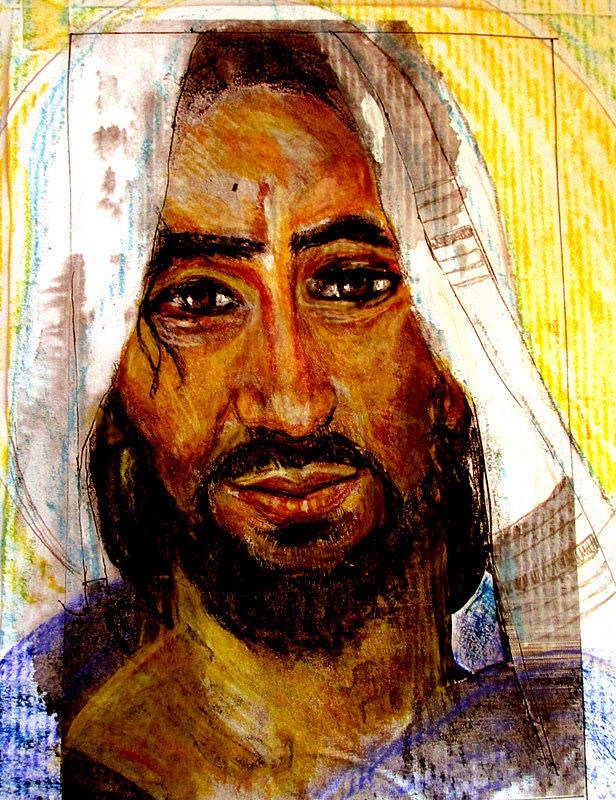
I had a dream (Genesis 27–28; Narrative Lectionary for Pentecost 15) 

A discussion of the passage in the Narrative Lectionary for Pentecost 15

There are some famous dreams throughout history. “I have a dream”, said the Rev. Martin Luther King Jr, speaking in Washington on 28 August 1963, “a dream that my four little children will one day live in a nation where they will not be judged by the color of their skin but by the content of their character. I have a dream today.” That may be the most famous dream in the 20th century.

There have been other significant dreams in modern times. Paul McCartney woke from a dream and wrote the whole score of “Yesterday”. Mary Shelley’s novel “Frankenstein” was inspired by a nightmare. Niels Bohr had a dream in which he saw “the nucleus of the atom, with electrons spinning around it, much as planets spin around their sun”; and thus he developed his theory of atomic structure—a theory later proven by experimental investigation.
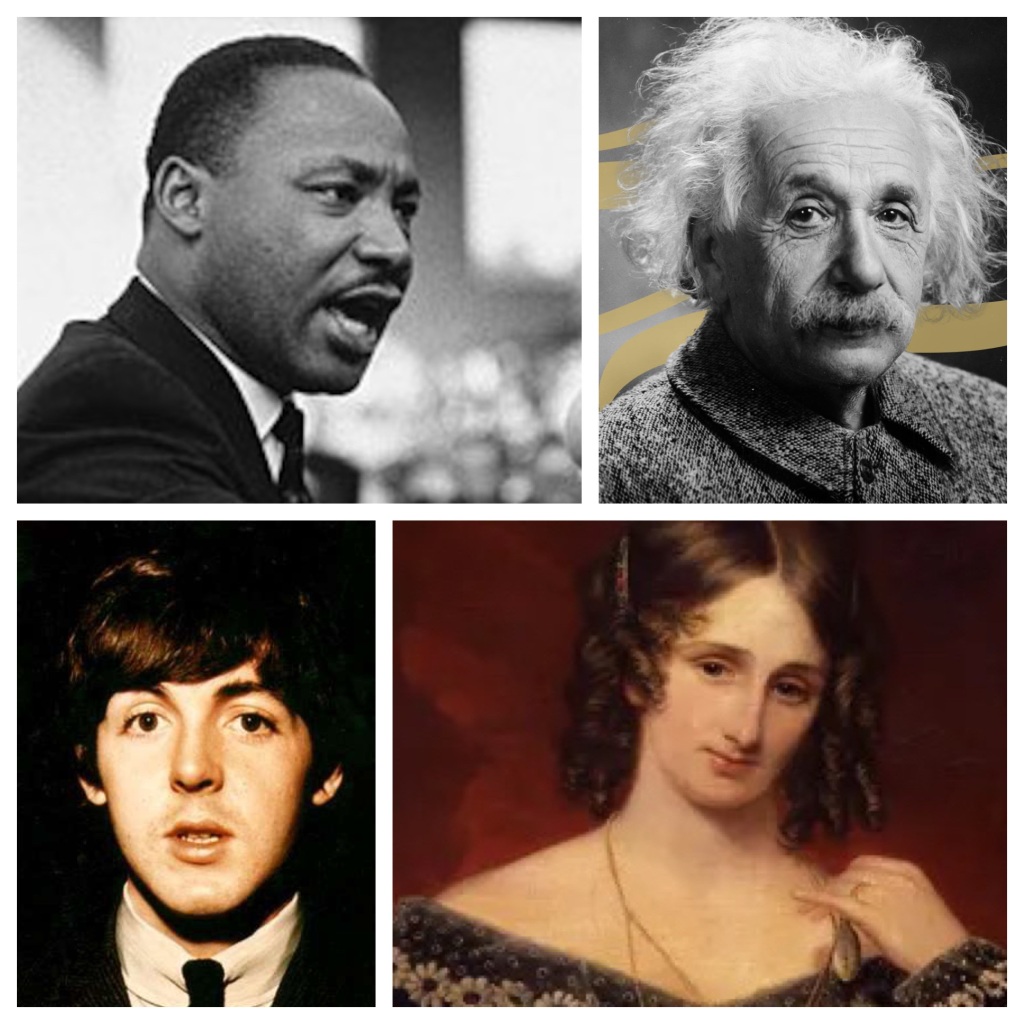
In like manner, Albert Einstein is said to have posed his theory of relativity in a dream in which “he was sledding down a steep mountainside, going so fast that eventually he approached the speed of light … at this moment, the stars in his dream changed their appearance in relation to him”; while it was a dream that led Frederick Banting to develop insulin as a drug to treat diabetes.

I found these and other significant modern dreams described at

https://www.world-of-lucid-dreaming.com/10-dreams-that-changed-the-course-of-human-history.html

*****

A part of the Hebrew Scripture readings that are offered by the Narrative Lectionary for this coming Sunday (Gen 28:10–17) includes a dream that Jacob had, as he slept one night. He was journeying from Beer-sheba, in the Negeb desert in the south of Israel, which is where he had received a blessing from his father, Isaac. This blessing, as we hear in the other section of scripture offered for this Sunday, was won by trickery,as he took the blessing that was intended for Esau  (Gen 27:1–4, 15–23). Which explains the name given to Jacob: he is “the one who supplants” (see Hos 12:3).

Isaac was travelling north towards Haran, the place from which Abram and Sarai had left on their journey towards the land of Canaan, the land which God had promised to him (12:1, 4–5). So the journey that Jacob is undertaking is a reversal, in direction and orientation, of the earlier journey that his grandfather had undertaken. 
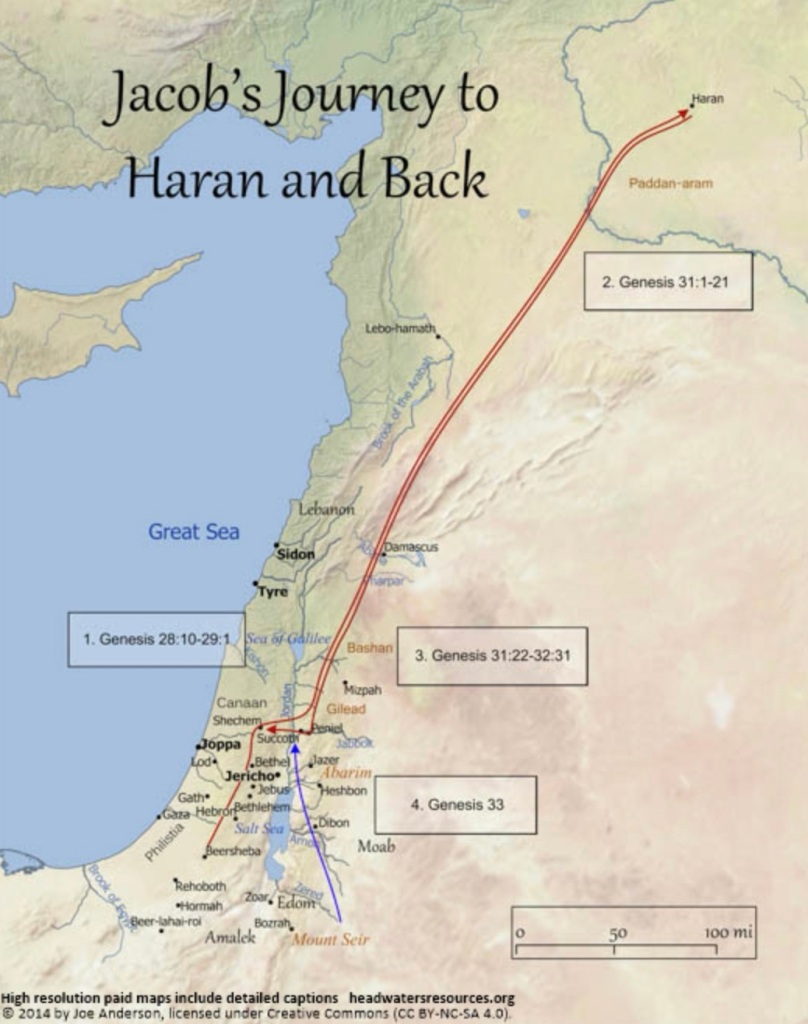
He was travelling to escape the anger of his brother Esau, after he had tricked their father Isaac into blessing him, Jacob, gifting him with the inheritance that was rightly owed to Esau (27:41). Abraham had travelled south in order to receive God’s blessing. Jacob travels in the other direction after having deceitfully gained his father’s blessing.

We are told that, understandably, “Esau hated Jacob because of the blessing with which his father had blessed him” (27:41), and that he threatens to murder his brother, once “the days of mourning for my father” are completed (27:42). Learning of this hatred, Rebekah advises her son, “flee at once to my brother Laban in Haran, and stay with him a while, until your brother’s fury turns away” (27:43–44).

Whether he had been tipped off about this by Rebekah, or not, Isaac commissions his son to journey back to the homeland—in another case of “don’t marry one of these folks, go back to our homeland and marry one of our own” (as we saw with Abraham and Isaac). Isaac says to Jacob, “you shall not marry one of the Canaanite women; go at once to Paddan-aram to the house of Bethuel, your mother’s father; and take as wife from there one of the daughters of Laban, your mother’s brother” (28:1–2). So Jacob obeys him. 

It is on this journey of escape that Jacob has his striking dream. Jacob is not the first to have encountered God in a dream, in these ancestral sagas. Abimelech of Gerar heard from God in a dream (20:3–7). After Jacob’s dream at Bethel (28:12–15), Jacob has a further dream regarding a flock of goats, relating to his inheritance, urging him to return to Isaac in the land of Canaan (31:10–16). At the same time, God appeared in a dream to Laban (31:24), conveying instructions which he disobeyed. 

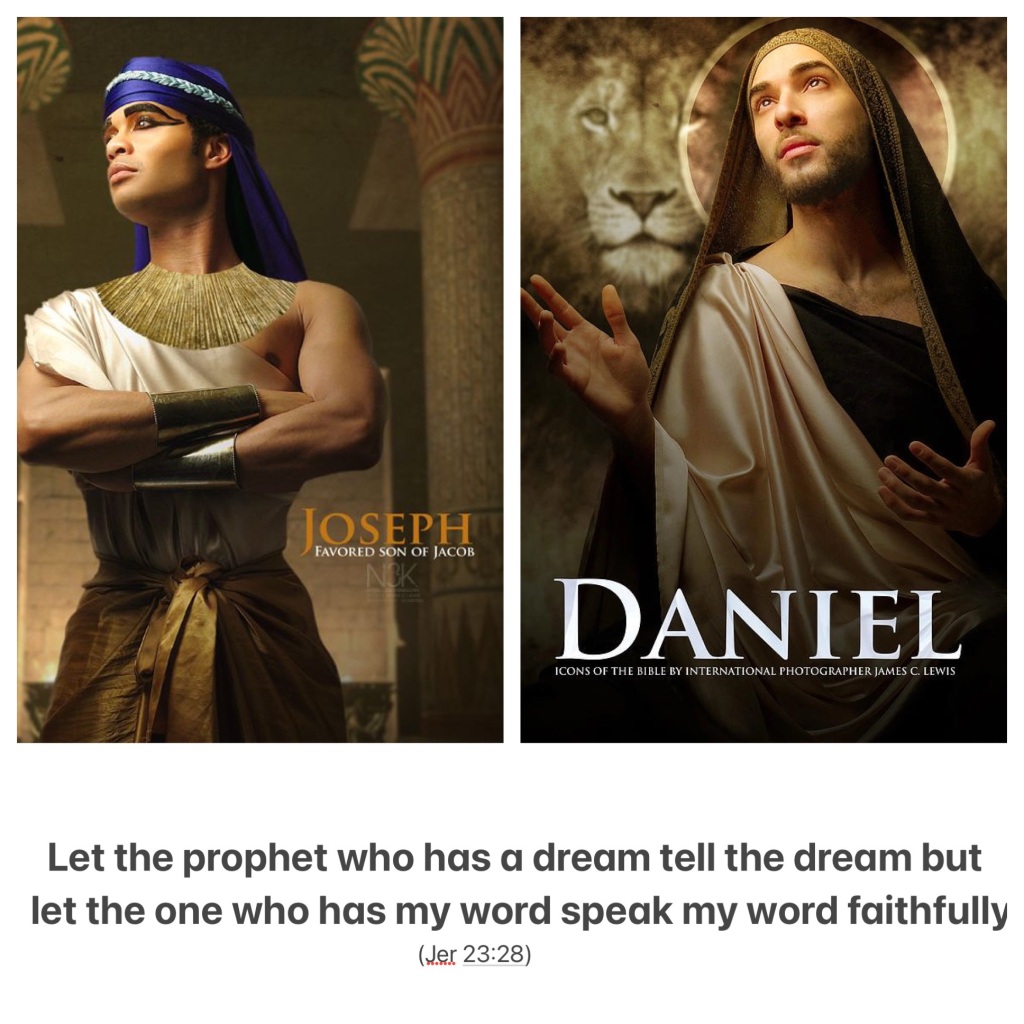
The two great “dreamers” in Hebrew Scripture are, of course, Joseph, one of the sons of Jacob, and Daniel, one of the courtiers of Nebuchadnezzar of Babylon, many centuries later. Both men not only dream dreams, but offer interpretations—and interpret dreams that have been dreamt by others. Jeremiah, too, knew of those who claimed that they encountered God in dreams, but warns that understanding those dreams correctly is important (Jer 23:28; 29:8–9). 
And dreams as the vehicle for divine communication is found in an important New Testament story, when Joseph learns of the pregnancy of Mary, in Matt 1–2. “Dreaming dreams” is actually an activity inspired by the Spirit, as Joel prophesied (Joel 2:28) and Peter reminds the crowd on the day of Pentecost (Acts 2:17).

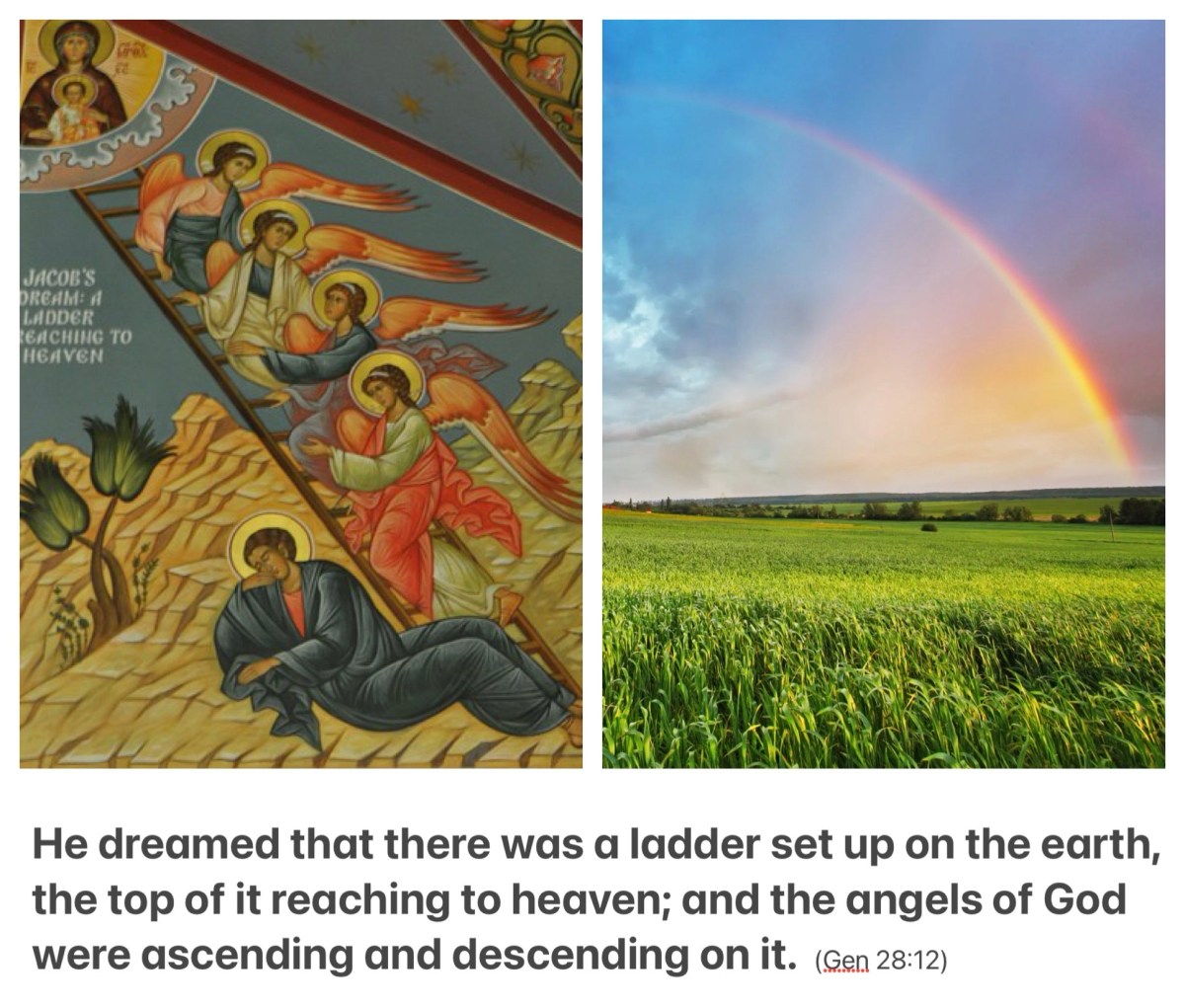
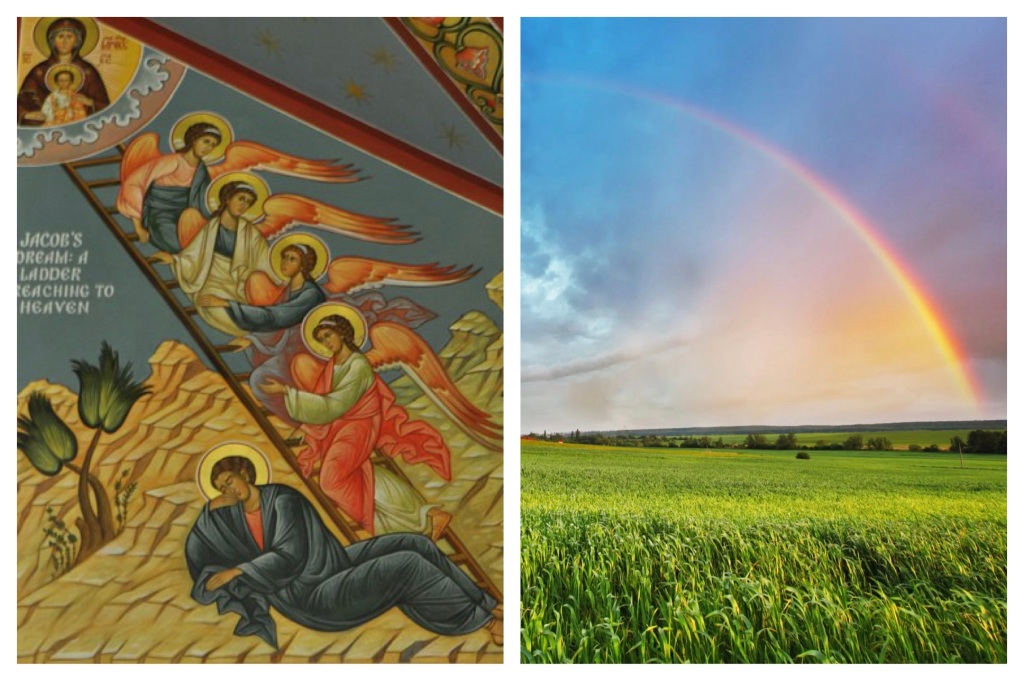
In the story we hear this coming Sunday, Jacob sleeps. As he does, he dreams that “there was a ladder set up on the earth, the top of it reaching to heaven; and the angels of God were ascending and descending on it” (28:12). What do we make of that dream?

In My Jewish Learning, Pinchas Leiser quotes from a book entitled Ruah Chaim (“the breath of life”), by Rabbi Haim of Volozhin. The Rabbi, who lived from 1749 to 1821, was a student of the Vilna Gaon (1695–1785), the pre-eminent sage of Lithuanian Jewry whose ideas were fundamental for the development of modern Jewry. Rabbi Haim writes:

“Our sages come to teach us that we ought not think that, because of our base material, we are truly despicable, like mere plaster on a wall. About this it says, a ladder stationed on the earth–that is Sinai; and its top reaches the heaven–which represents our soul’s life, which is in the highest sphere. There are even souls that see God, and they are the highest of the high, higher than ministering angels, and by this status can the soul cleave to Torah . A whole person is like a tree whose roots are above, and whose trunk extends downward, which is the body, and which is fastened to its supernal roots.”

Pinchas Leiser, a Jewish psychologist and educator, comments: “Thus, Rabbi Haim of Volozhin views Torah learning as a Sinaitic event, since Torah is what connects the heavens and the earth. With Torah, one can ascend and descend between the two spheres. The people who do so are angel-like.” 

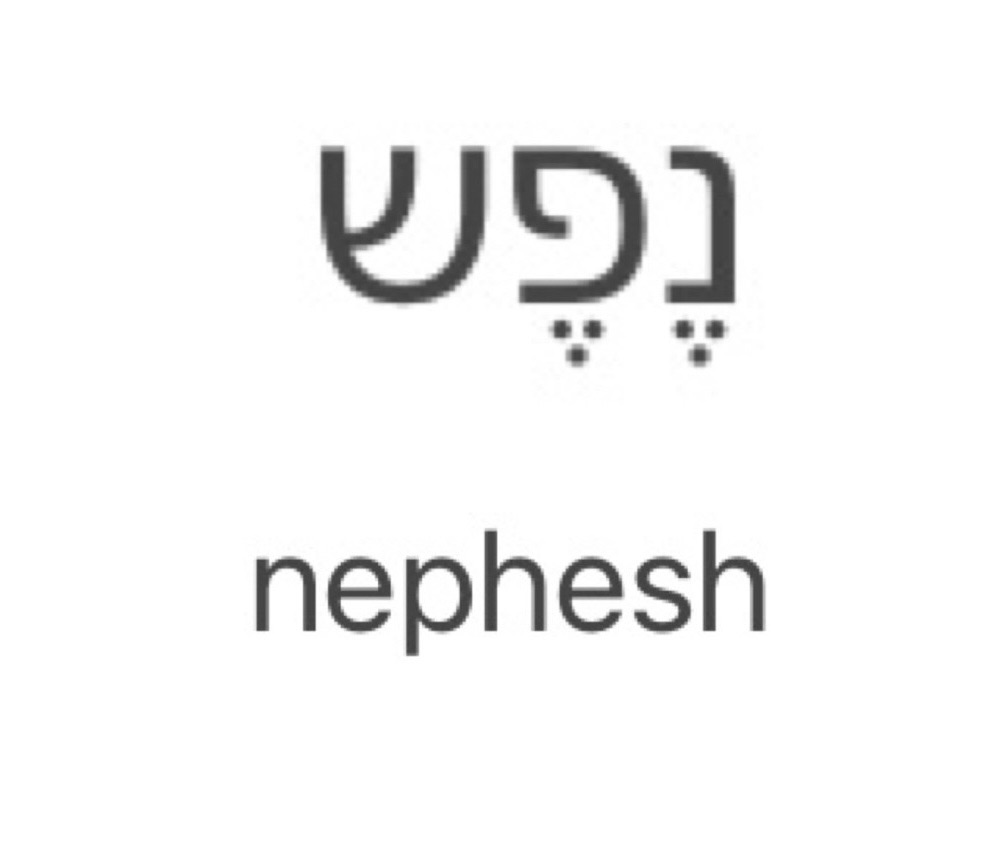
This is a penetrating insight into the nature of human beings. We are not spiritual beings, trapped in the prison of the material world, as Plato imagined (and as many writers, including Paul, who were influenced by his philosophy, wrote). Rather, we are fully nephesh, creatures of God containing both material and spiritual characteristics. We belong both to earth and to heaven.

The ladder which Jacob saw reveals this true nature, and tells us that we can transport ourselves between the two places, if we would only open ourselves to the possibility. Jacob’s dream was archetypal—it illustrated exactly who we are and how we can live!

And for me, as a Christian reader, it is important to note that this story (and, indeed, many others in Hebrew Scripture) undermines the crass stereotyping of ancient Israelites—and modern Jews—as alienated from God, crushed under unbearable burdens, far from the grace of God. For this ancient story, told orally for many years before it was ever written down, portrays the possibility of a close and enduring relationship with God, accessible from the patriarch Jacob onwards.
Accompanying the dream of Jacob is a sense of the presence of God; the divine speaks to Jacob, assuring him that God will never leave him. Jacob could never go beyond God’s keeping; angels accompany him on his onward journey to northern Mesopotamia, which was his destination (Gen 29:1). These angels keep going up and coming down on the ladder during this journey; more than this, they continue to accompany him for the twenty years he spends in Haran and then travel with him on his return to the land of Canaan (Gen 31:11; 32:1). The story has a strong sense of the enduring, faithful nature of God’s accompaniment of people of faith throughout their lives.

God’s grace is at work in this story. Jacob was an outcast who had deceived his father and lost friends. Seeking God was probably far from his mind; human company was probably what he yearned for. Nevertheless, he was guided by God at this point of need, offering him revealed care and an assurance for the future. Even though he was not expecting grace, grace was unleashed upon Jacob with no word of blame.

So there is a sign of God’s grace in this story—the ladder connecting heaven and earth, on which “angels” ascend and descend at will. God meets Jacob, even as he is running away from family, and perhaps also running away from God; God meets Jacob in a dream. Jacob was fleeing the consequences of his deception of his father. He wanted to be far away from Isaac, whom he deceived, and Esau, from whom he stole the birthright. And in the midst of that journey, God offers a sign of acceptance and grace in this dream.

Indeed, scripture had offered an earlier sign of God’s grace, in the story of Noah. This is a terrible story—God deliberately and intentionally destroys the world, and “starts all over again”. Only Noah and his family, and the animals on his ark, are saved. The rainbow in the sky is the sign of God’s grace for those who have survived, signalling that God will never again destroy the creation.

The ladder represents the commitment that God has, to an enduring connection with human beings, no matter what their situation. It is a sign of God’s grace—for which we can be thankful.
On the mount of the Lord it shall be provided (Genesis 21–22; Narrative Lectionary for Pentecost 14)

Discussion of the passages from Genesis 21–22 for the Narrative Lectionary.

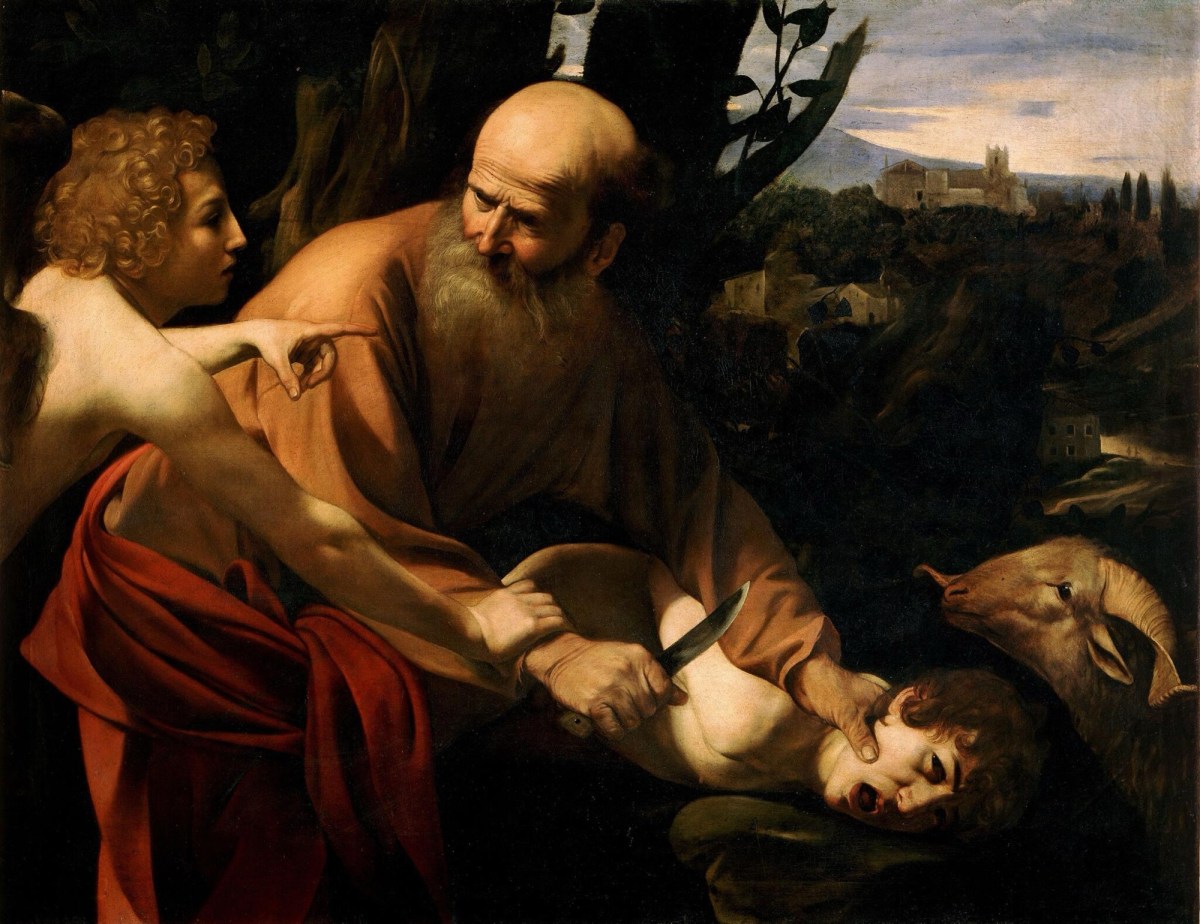
The pair of passages from Genesis proposed by the Narrative Lectionary for this coming Sunday contain a paradox. On the one hand, after years of Abraham and Sarah yearning in vain for a son, “the Lord did for Sarah as he had promised; Sarah conceived and bore Abraham a son in his old age” (Gen 21:1–2). The son was named Isaac, meaning laughter; as Sarah, aged 100, declares, “God has brought laughter for me; everyone who hears will laugh with me” (21:6).

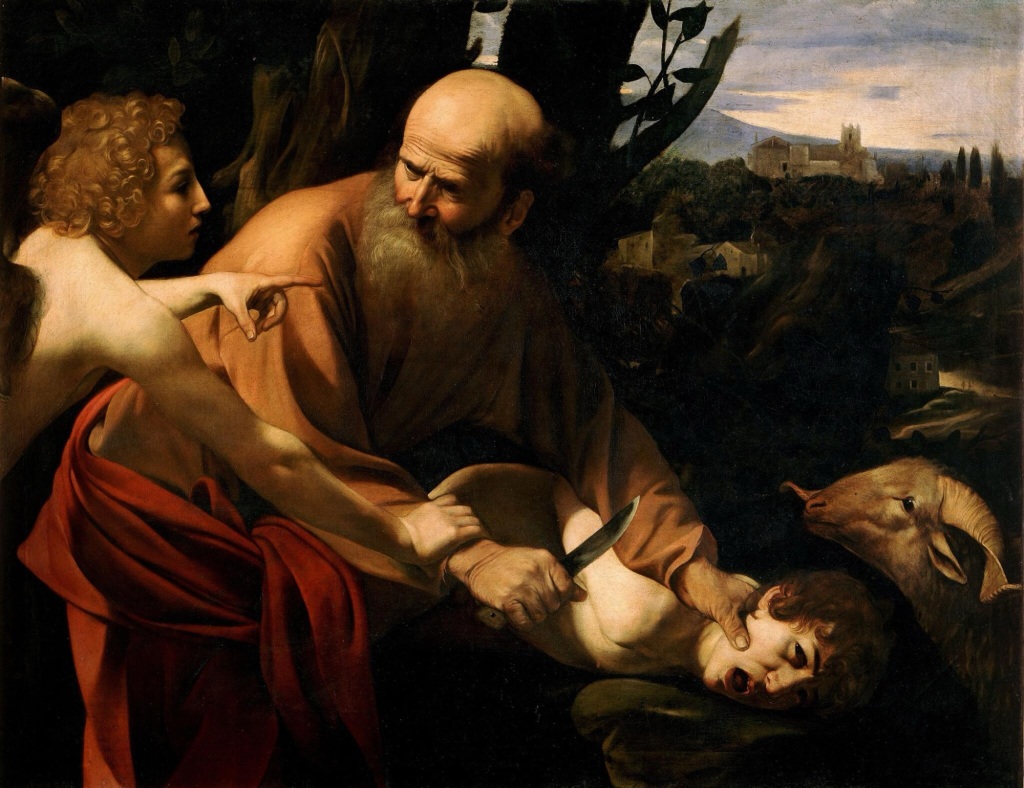
Yet in the second passage offered by the lectionary, we read some chilling words: “Abraham reached out his hand and took the knife to kill his son” (Gen 22:10). How does this relate to the joy seen at the birth of Isaac? There is no laughter in this story. It’s a horrifying story. How is this edifying material for hearing in worship?

Questions abound. Who is this God who calls Abraham to take his “only son” up the mountain and “offer him there as a burnt offering” (22:2)? Where is the God who, it is said, has shown “steadfast love” to the people of Israel (Exod 15:13), and before that to Joseph (Gen 39:21), to Jacob (Gen 32:9–19), and indeed to Abraham himself (Gen 24:27)? Why has God acted in a way that Is seemingly so out of character in this incident in Gen 22? Or is this the real nature of God, and these later displays of “steadfast love” are simply for show?

This story is indeed troubling: it presents a God who demands a father to kill his beloved son, with no questions asked. It is not just the knife in Abraham’s hand which is raised (22:10)—there are many questions raised by this seemingly callous story. 

My wife, Elizabeth Raine, has a cracker of a sermon in which she compares this story with the account of Jephthah and his daughter (Judg 11:29–40). Whilst the Lord commands Abraham to kill his son as a burnt offering, it is the vow made by Jephthah to sacrifice “whoever comes out of the doors of my house to meet me, when I return victorious from the Ammonites” as a burnt offering (Judg 11:30).

And whilst the Lord intervenes in what Abraham is planning to do at the very last moment, sending an angel to command him, “do not lay your hand on the boy or do anything to him” (Gen 22:11–12), Jephthah is held to the vow he has made—by his very own daughter, who knows that she will be the victim of this vow (Judg 11:39). There is no divine intervention in this story. 

And worse, whilst Abraham had carefully prepared for the sacrifice, taking his donkey, two servants, and the wood for the fire up the mountain with him (Gen 22:3–6), Jephthah’s vow was made on the spur of the moment (Judg 11:30–31), and when his daughter insisted that he must carry through with this vow, he gives her, as requested, two full months for her to spend with her companions before he sacrificed her (Judg 11:37–39). Surely he might have had time in those two months to reconsider his vow and turn away from sacrificing his daughter?

It would seem, then, that the daughter was dispensable; the son, the much loved only son of Sarah and Abraham, was clearly indispensable. That would clearly reflect the values of the patriarchal society of the day, in which “sons are indeed a heritage from the Lord, the fruit of the womb a reward” (Ps 127:3). 

And Abraham would have followed the same pathway, sacrificing his only son, had not the Lord intervened. Neither father is looking very appealing in these two stories! Which makes it hard to see how the story of the sacrifice told in Judg 11, and the story of the almost-sacrifice told in Gen 22, can be “the word of the Lord” for us, today, in the 21st century. Indeed, the story of Abraham and Isaac comes perilously close to being a story of child abuser—if not physical abuse, by the end of the story, at least emotional and spiritual abuse.

Situations of abuse destroy trust. After such an experience, how could Isaac ever trust his father again? And as we hear the story, how can we trust God? How could we ever believe that his commands to us are what we should follow?—if he follows the pattern of this story, and changes his mind at the last minute, after pushing us to the very brink of existence? How could we trust a God like this?

Or, if the story involving poor Isaac is really about God providing, as Abraham intimates early on (22:8), and then concludes at the end (22:14), then it is a rather malicious way for God to go about showing how he is able to “provide”. Provision, and providence, should be something positive—not perilous and threatening, as in this story.

Or yet again, if the story is about testing Abraham’s faith, as many interpreters conclude, then it is a particularly nasty and confronting way for God to do this—and that points to a nasty streak in the character of God. Is this really what we want to sit with? Was there not some other way for God to push Abraham to test his faith? 

What do we do with such a story within our shared sacred scriptures?

The Jewish site, My Jewish Learning, states that “although the story itself is quite troubling, it does contain a message of hope for Rosh Hashanah. In the liturgy we ask God to “remember us for life.”  The binding of Isaac concludes with his life being spared, and he too is “remembered for life.”  Abraham’s devotion results in hope for life.”

How does the message of hope for life emerge from this story? Clearly, the life of Isaac is spared; but this is a terrible way to teach that message!

James Goodman, writing in My Jewish Learning, explains how he was taught to understand this story. “I learned that the story was God’s way of proclaiming his opposition to human sacrifice”, Goodman writes. 

He refers to the way his Hebrew-school teacher explained this story: “God had brought Abraham to a new land. A good and fertile land, where it was common for pagan tribes, hoping to keep the crops and flocks coming, to sacrifice first-born sons to God. Then one day, God commanded Abraham to sacrifice Isaac, the beloved son of his old age. 

“Abraham set out to do it, and was about to, when God stopped him. He sacrificed a ram instead. In the end, Abraham had ‘demonstrated his—and the Jews’—heroic willingness to accept God and His law,’ and God had ‘proclaimed’ that ‘He could not accept human blood, that He rejected all human sacrifices’.”

See https://www.myjewishlearning.com/2013/09/11/understanding-genesis-22-god-and-child-sacrifice/

Setting the story in the broader context of the practice of child sacrifice is a way of accepting that this terrible story might indeed have some value. Seeing the story is a dramatised version of God’s command not to sacrifice children can be a way to deal with it. “Do not lay your hand on the boy or do anything to him”, the angel says; so Abraham obeys, finds a ram, offers the ram as a burnt offering (22:12–13). And so, the name of the place is given: “the Lord will provide”(22:14).

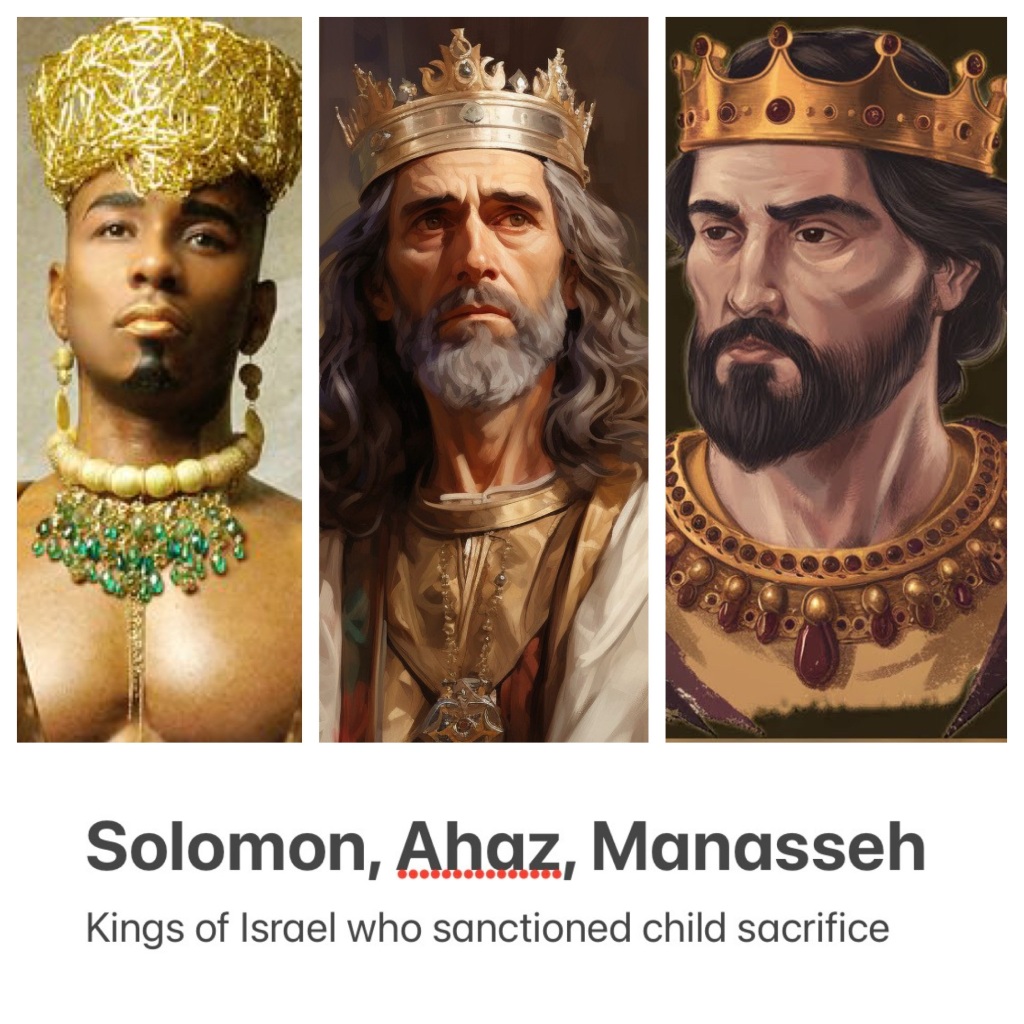
Three kings of Israel, at different times in the history of Israel, are said to have practised child sacrifice, as they turned to practices found in nations other than Israel. Solomon in his old age is said to have turned to the worship of Molech (1 Ki 11:7); this practice was subsequently adopted by Ahaz, who “made offerings in the valley of the son of Hinnom, and made his sons pass through fire, according to the abominable practices of the nations whom the Lord drove out before the people of Israel” (2 Chron 28:3). Likewise, Manasseh “made his son pass through fire; he practiced soothsaying and augury, and dealt with mediums and with wizards” (2 Ki 21:6). 

Direct commands not to sacrifice children are found in two books of Torah in the scriptural texts. Most direct is “you shall not give any of your offspring to sacrifice them to Molech, and so profane the name of your God: I am the Lord” (Lev 20:18). In Deuteronomy, other nations are condemned as they “burn their sons and their daughters in the fire to their gods” (Deut 12:31), so the command is “no one shall be found among you who makes a son or daughter pass through fire” (Deut 18:10). The prophet Jeremiah also asserts that this practice is not something that the Lord God had thought of (Jer 7:31). 

So the passage we have in the lectionary responds to this practice by telling a tale which has, as its punchline, the command “do not lay your hand on the boy or do anything to him” (22:12). Might this be the one redeeming feature of this passage? 

But if that is the case, the story belongs back in the days when child sacrifice was, apparently, widely practised. What, then, does it say to us today??

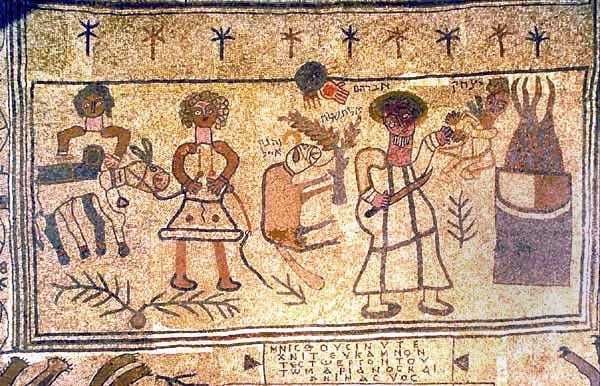
A sixth-century CE floor mosaic from the Beth Alpha synagogue, in Israel’s Jezreel Valley. The mosaic lay near the door, so that anyone who entered was confronted by the scene. In this mosaic, Abraham and Isaac are identified in Hebrew. The hand of God extends from heaven to prevent Abraham from proceeding. Below the hand are the Hebrew words, “Lay not [your hand].” Next to the ram are the words, “Behold a ram.”

Seven days and one pair: and God saw that it was good (Genesis 1; Narrative Lectionary for Pentecost 13)

Discussion of Gen 1:1–2:4a for the Narrative Lectionary

The lectionary Gospel reading for the first Sunday in this fourth year of the Narrative Lectionary cycle takes us back to the very beginning of the Bible, to the poetic priestly account of the creation of the world (Gen 1:1—2:4a). There is so much to say about this foundational text; I will be selective!

The story serves as an origin story—for ancient Israel, for the canon of scripture, for Christian thinkers. Words used in origin stories like this have a particular power—and origin stories are always created with care and deliberation, and passed on with love as explaining the essence of being. Each element reflects something of significance in the experience of ancient Israel, and indeed of contemporary humanity.

The first two verses introduce the key characters: God, first described as the one who creates; a formless void, which is how the earth is first described; darkness, an entity in and of itself (not defined in any further way); and the breath of God, sweeping over the waters of the void. 

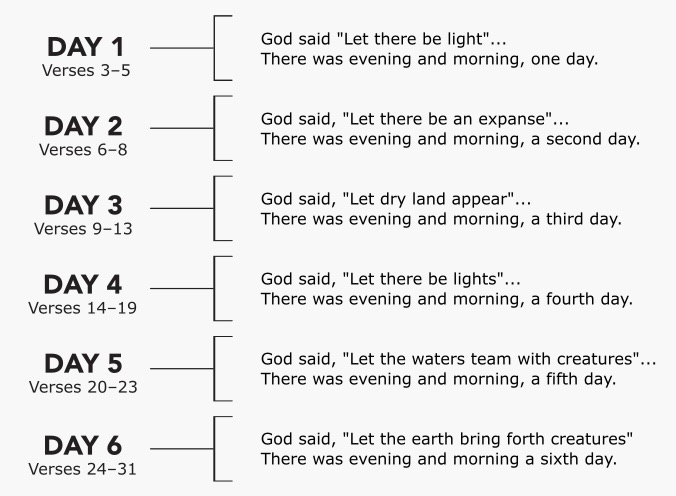
The story that follows in Gen 1 places the creation of light, the first act of creation, at the head of the story. All that happens after that is bathed in the light of God’s creation. Telling of the creation of light (1:3–5) establishes a pattern which is then repeated, five more times, for each of the various elements whose creation is noted in this narrative: the dome, or firmament, separating the waters (1:6–8); waters and dry land, with vegetation (1:9–13); lights in the sky and seasons (1:14–19); swarms of living creatures in sea and sky (1:20–23); living creatures on the earth (1:24–25); and humankind, male and female, in the image of God (1:26–31).

The third verse introduces light, which comes into existence through a single word of command. Then God said, “Let there be light”; and there was light (1:3). Light is the key entity in the creation story, signalling the creative process which then ensues. Each subsequent creative action results from something that God said (verses 6, 9, 11, 14, 20, 24, 26). And each creation is affirmed with the phrase, and it was so (verses 7, 9, 11, 15, 24, and then verse 30).

The fourth verse tells of God’s approval of what had been created: And God saw that the light was good (1:4). Likewise, God then affirms as good the creation of earth and seas (1:10), vegetation (1:12), the sun for the day and the moon for the night (1:18), all living creatures in the seas and in the sky (1:21), then the living creatures on the earth (1:25). Finally, after the creation of humanity in the image of God, there comes the climactic approval: God saw everything that he had made, and indeed, it was very good (1:31).

In a number of the six main sections of the narrative, God explicitly names what has been created: he called the light Day, and the darkness he called Night (1:5), then God called the dome Sky (1:8), God called the dry land Earth, and the waters that were gathered together he called Seas (1:10), followed by plants yielding seed of every kind, and trees of every kind bearing fruit with the seed in it (1:12), and the greater light to rule the day and the lesser light to rule the night—and the stars (1:16). 

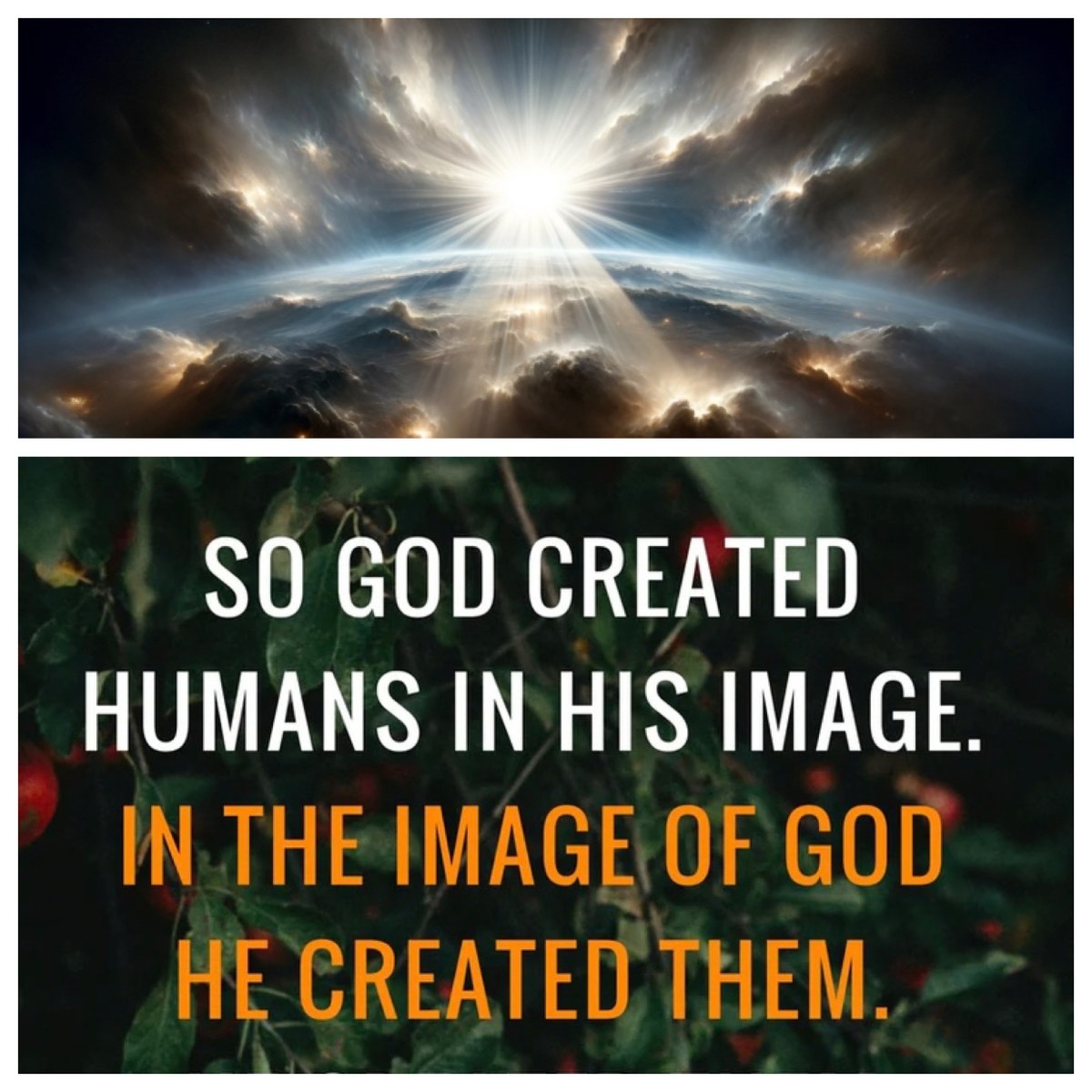
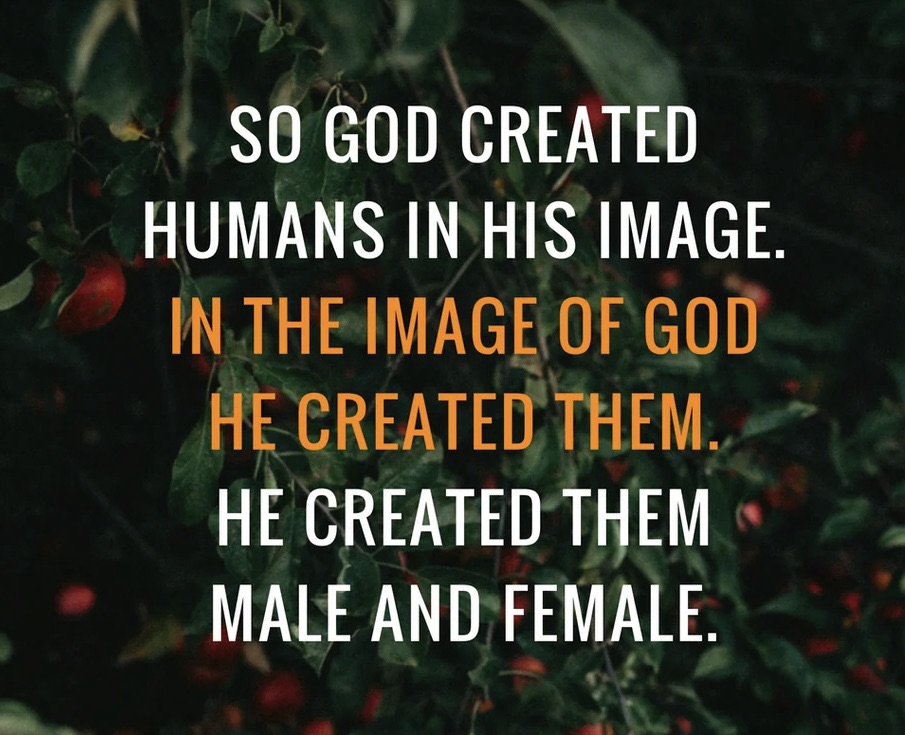
After this, the categories of living creatures are identified (1:21, 25), before the climax of creation is identified: “So God created humankind in his image, in the image of God he created them; male and female he created them” (1:27), and then God’s blessing is narrated (1:28).

Finally, each section concludes with another formulaic note: and there was evening and there was morning, the first day (1:5; likewise, at verses 8, 13, 19, 23, 31), before the whole narrative draws to a close with the note that on the seventh day God finished the work that he had done, and he rested on the seventh day from all the work that he had done (2:2). Of course, it is from this demarcation of the sections of the creative process as “days” that there came the traditional notion that “creation took place over seven days”. 

The notation of “days”, however, is simply to give the story a shape that we can appreciate—they are not literal 24-hour periods, but a literary technique for the story, much like we find that some jokes, some children’s songs, and some fairy stories are constructed around threes (“three men went into a pub …”, or “three blind mice”, or “Goldilocks and the three bears”, etc).

The story is thus told with a set of simple, repetitive phrases, but arranged with sufficient variation to give aesthetic pleasure, and with a growing sense of building towards a climax, to shape the narrative arc towards the culmination of creation (humanity, 1:26) and the completion of the creative task (sabbath rest, 2:2–3).

*****

One verse in this stylised poetic account of creation has attracted much attention over the decades. It is a verse that is most famously quoted by Jesus in an encounter he has with some Pharisees—and so it forms a foundational idea for Christians, as well as Jews. And it is a verse that has particular relevance and importance in the immediate contemporary context, when matters of gender identity and sexuality are regularly in the public discourse.

The story told in Mark 10:2–16 reports this encounter; as they debate the matter of divorce, Jesus offers the Pharisees a quote from a key verse in Genesis, “from the beginning of creation, ‘God made them male and female’” (Gen 1:27).

This verse needs attention; here I want to notes the rabbinic exploration of this text and associated matters. A warning in advance: this will lead to the conclusion that the strict binary understanding of human gender is inadequate. The rabbis clearly understood that not everyone fits these categories. That has important implications for our current understandings of human sexuality and gender.

The quotation from Genesis made by Jesus, that God made human beings as male and female, sounds like a definitive declaration: this is the reality, this is who we are, there is nothing more to debate! Certainly, that’s the way this verse has been used in the “gender wars” that have swirled through western societies in recent times. “God made male and female” became “God made Adam and Eve, not Adam and Steve”, in an early salvo against the emerging number of people who were “outing” themselves as same-gender attracted. “Not so” was the sloganeers’ reply; two genders, each attracted to the opposite, is who we are. Definitively. Resolutely. Absolutely.

It’s worth noting some aspects of this statement in its original context in Genesis. What the priestly authors of the creation story wrote was “God created humankind in his image, in the image of God he created them; male and female he created them” (Gen 1:27). The emphasis is not so much on defining who we are are gendered people—but rather, the verse is reflecting on the amazing feature that, within humanity, signs of divinity are reflected. And in association with that, the statement indicates that the two genders familiar from humanity are somehow reflected in the very nature of God. 

As God’s creatures, we are images of that creating being. The Hebrew word used, tselem (image), indicates a striking, detailed correlation between the human and the deity. This was the insight brought by the authors of this passage, perhaps shaped and honed over generations of telling and retelling the story, passing on through the oral tradition the insights of older generations.

My sense is that these ancients were not so much making a definite declaration about the nature of humanity—an early dogmatic assertion, if you like—as they were actually reflecting on their experience. They sensed that there was something within humanity that reaches out, beyond the material, into the unknown, beyond the tangible, into “the spiritual”. They surely knew the kind of experience that Celtic mystics have known, of coming to a place where “heaven meets earth”—what they call “a thin place”, where God can be sensed in the ordinariness of life. Indeed, such a “thin place” might well be being described in Gen 28:10–22, where Jacob comes to the realisation that “surely, the Lord is in this place” (Gen 28:16).

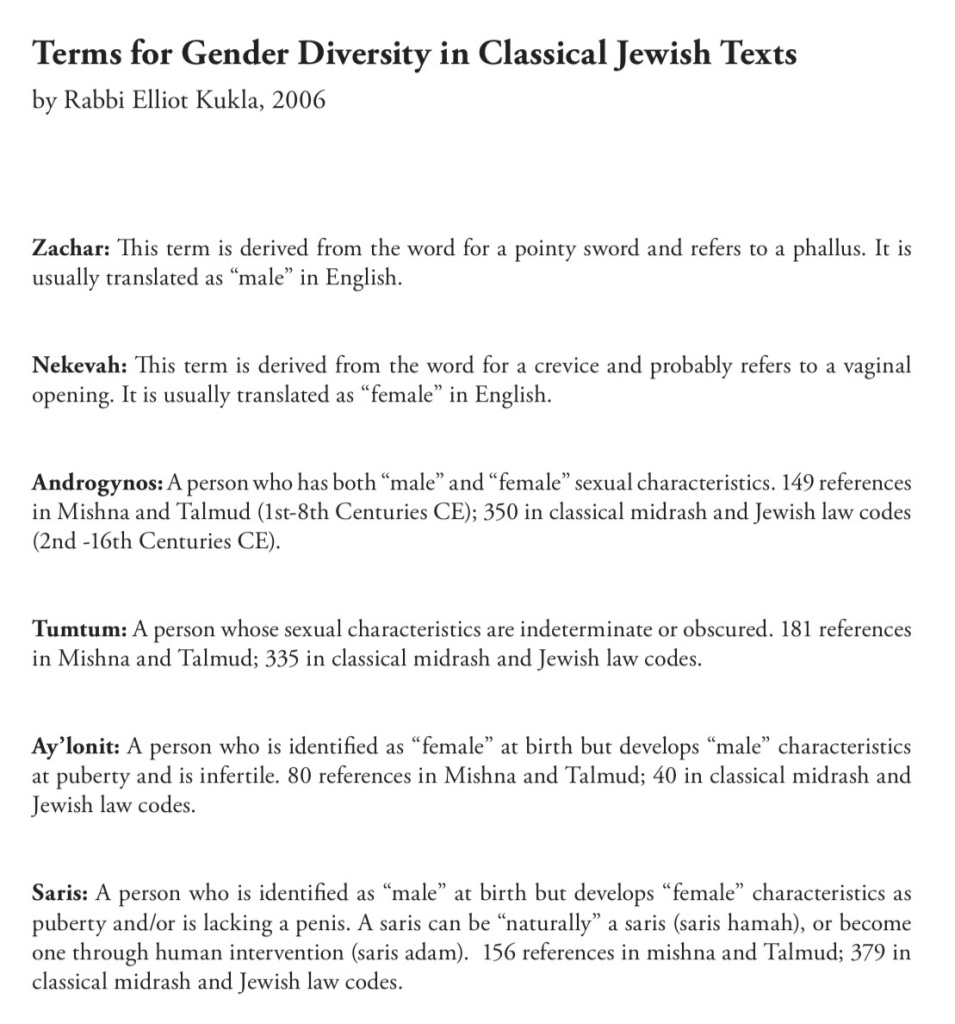
Indeed, as Jewish tradition developed over time, this fundamental duality of human gender—male and female—was questioned, probed, explored, and developed. Rabbis of late antiquity and the early medieval period (using the standard Western terminology) actually identified six genders.

The first move takes place in the Mishnah (early 3rd century). Tractate Bikkurim 4.1 contains the assertion, “an Androginus (a hermaphrodite, who has both male and female reproductive organs) is similar to men in some ways and to women in other ways, in some ways to both and in some ways to neither”.

It is interesting that the term androginus, a Greek term, is simply transliterated in this Aramaic work, as אדדוגינוס. That’s a sign that the consideration of this issue encompassed more than just rabbinic scholars, as they were drawing on insights and the term androginus from the hellenised world.

The text of Bikkurim goes on to offer indications of the ways that an androginus person is similar to, and dissimilar to, each gender (4.2–3). Another passage in the Mishnah identifies people known as a saris, סריס (Yevamot 8.4). These are people we identify as eunuchs; whether these are “eunuchs who have been so from birth … eunuchs who have been made eunuchs by others … [or] eunuchs who have made themselves eunuchs” (as Matthew reports Jesus saying, Matt 19:12) is not relevant in this context.

Presumably, the rabbis refer to males with arrested sexual development who are unable to procreate.  The female term for such people is given as aiylonit, אילונית. The discussion that follows makes it clear that these people are women with arrested sexual development who cannot bear children.

So this means that rabbis recognised four genders: male, female, androgyne, and eunuch (saris). In the Babylonian Talmud (sixth century CE), Rabbi Ammi is quoted as stating that “Abraham and Sarah were originally tumtumim” (טומטמין). Here we find another gender identity term; this time, describing people a person whose sex was unknown because their genitalia were hidden, undeveloped, or difficult to determine. (Tumtum means “hidden”.)

Thus, Abraham and Sarah lived most of their life as infertile, as their sex was not clear; and then, in Rabbi Ammi’s explanation, miraculously turned into a fertile husband and wife in their old age. The Rabbi points to Isa 51:1–2, saying that the instruction to “look to the rock from where you were hewn, and to the hole of the pit from where you were dug […] look to Abraham your father and to Sarah who bore you” explains their genitals being uncovered and miraculously remade.

(Explaining one scripture passage by drawing on another passage, however distantly related—often through their sharing a common word or phrase—was a common rabbinic mode of scripture interpretation.)

Today, we would explain the phenomenon of a tumtum as being an intersex person, born with both male and female characteristics, including genitalia—although modern science would not go so far as to accept a miraculous reversal of the condition, as Rabbi Ammi proposed. 

There’s a quite accessible discussion of these issues in an article by Dr Rachel Scheinerman, entitled “The Eight Genders in the Talmud”, in the My Jewish Learning online resource.

The title reflects the fact that Dr Scheinerman divides both aylonit and saris into two, on the basis of birth identification. So she lists: (1) zachar, male; (2) nekevah, female; (3) androgynos, having both male and female characteristics; (4) tumtum, lacking sexual characteristics; (5) aylonit hamah, identified female at birth but later naturally developing male characteristics; (6) aylonit adam, identified female at birth but later developing male characteristics through human intervention; (7) saris hamah, identified male at birth but later naturally developing female characteristics; and (8) saris adam, identified male at birth and later developing female characteristics through human intervention.

Dr Scheinerman concludes, “In recent decades, queer Jews and allies have sought to reinterpret these eight genders of the Talmud as a way of reclaiming a positive space for nonbinary Jews in the tradition. The starting point is that while it is true that the Talmud understands gender to largely operate on a binary axis, the rabbis clearly understood that not everyone fits these categories.”

https://www.myjewishlearning.com/article/the-eight-genders-in-the-talmud/

Dr. Charlotte Elisheva Fonrobert, a Talmudic scholar in the Department of Religious Studies at Stanford University, California, has provided a much more detailed and technical discussion of the matter of gender identity, in the online resource the Jewish Women’s Archive. See 

https://jwa.org/encyclopedia/article/gender-identity-in-halakhic-discourse

The abstract of this article reads, “Jewish law is based on an assumption of gender duality, and fundamental mishnaic texts indicate that this halakhic duality is not conceived symmetrically (as seen through the gendered exemptions of some commandments). Rabbinic halakhic discourse institutes a functional gender duality, anchored in the need of reproduction of the Jewish collective body. As such, it aims to enforce and normalize a congruence between sexed bodies and gendered identities. Furthermore, the semiotics of body surfaces produces other different and seemingly more ambiguous gender possibilities, and rabbinic discourse has widely discussed the halakhic implications of these ambiguities.”

What that means, I think, is that whilst Torah prescriptions are based on a definite duality of gender (you are either male or female), later rabbinic discussions entertained the possibility of a range of gender identifications. In this regard, the rabbinic discussions prefigured the move in contemporary society to recognise the full spectrum of diversity amongst human beings: some men are gay, some women are lesbian; some people are bisexual, attracted to both genders, while others are asexual, having no sexual-attraction feelings at all. 

Biologically, we know that some are born intersex, with both male and female physical characteristics; whilst psychologically, some people are born into a body that is clearly one gender have an internal energy that leads them to identify with the opposite gender, and so they undergo a medical transition to that gender, and we identify them as transgender people. And so we have the now-widespread “alphabet soup” of LGBTIQA+ (where the plus sign indicates there may well be other permutations within this widely diverse spectrum).

So we would do well not to remain in a static state of assertion that the Genesis text is a prescription for how human beings should be identified (and a definition for marriage). I think it is preferable to add into the discussion both the rabbinic understandings,  contemporary medical understandings, and psychological insights that reveal a wide spectrum of gender identities; a dazzling kaleidoscope of “letters”, as it were. For this is how we human beings are made, in an image that reflects the diversity and all-encompassing nature of God. 

I believe it is important that, rather than misusing the Genesis/Mark text as a club to batter people into submission, we ought to rejoice in the diversity we see amongst humanity, and affirm that, no matter whether L or G, whether B or A, whether T or I, all people who are Q, and all who are straight, are “fearfully and wonderfully made” (Ps 139:14).

There is a helpful collection of the Jewish texts relating to this matter in the online resource, Sefaria, entitled “More Than Just Male and Female: The Six Genders in Ancient Jewish Thought”, collated by Rabbi Sarah Freidson of Temple Beth Shalom in Mahopac, NY, USA. See

https://www.sefaria.org/sheets/37225?lang=bi

And so, in the end, given the rabbinic midrashic exploration and exposition of this crucial text, I hope we can come to the same conclusion as the ancient priestly writers: “God saw everything that he had made [including the diversity of gender expressions within humanity], and indeed, it was very good”.


She took of its fruit and ate; and gave some to her husband … and he ate (Gen 2–3; Narrative Lectionary for Pentecost 16C)

The Narrative Lectionary begins this year’s cycle of readings with some verses from early in the first book of the Bible, Genesis. The lectionary has picked out what it considers to be key verses (2:4–7, 15–17; 3:1–8) from the extended narrative that begins with the second account of creation (2:4–25) and continues with the story of The Garden of Eden (3:1–24).  

The first section (2:4–7) tells of the creation of human beings. Unlike the first version of the creation (1:1—2:4a), in which human beings, “male and female”, are created “in the image of God” on the sixth “day” (1:27), this version moves immediately to declare that “the Lord God formed man from the dust of the ground, and breathed into his nostrils the breath of life” (2:7). 

Both of these creation stories, and the long, extended narrative that follows, are to be regarded as “myths”; they are traditions about  the time of origins, with paradigmatic or fundamental significance for ancient Israelite society, expressing the reality of life and the place of humanity in that reality, through story. See 

The breathing of life into the human being in the second creation story signals that “the man became a living being (nephesh hayah)” (Gen 2:7). The phrase nephesh hayah appears also a number of times in the first creation story in Hebrew scripture, where it refers to “living creatures” in the seas (Gen 1:20, 21), on the earth (Gen 1:24), and to “every beast of the earth, and to every bird of the air, and to everything that creeps on the earth, everything that has the breath of life (nephesh hayah)” (Gen 1:30). 

The word nephesh (נֶפֶש) is a common Hebrew word, appearing 688 times in Hebrew Scripture. It is most commonly translated (238 times) as “soul”; the next most common translation is “life” (180 times). The word is a common descriptor for a human being, as a whole; it is better translated in a way that indicates it refers to “the essence of a creature”, “the whole being”.

The claim that each living creature is a nephesh is reiterated in the Holiness Code (Lev 11:10, 46; 17:11). It is also stated in the account of the covenant that God made with all creation; “all living creatures” (nephesh) are explicitly noted in this narrative (9:10, 12, 15, 16). This signals the inherent interconnectedness of all creation; the covenant forged in Gen 9 is one that has a cosmic scope. Other passages in the Hebrew Scriptures affirm that human beings—indeed, all living creatures—are given life by God’s spirit and share the essence of a nephesh (Ps 104:24–30; Job 12:7–10). This is an important affirmation from this opening section of the Genesis 2—3 reading for this Sunday.

Myths concerning “the fruit” and “the serpent”

It is widely known (I hope) that what is popularly seen as “an apple”, which the serpent suggested to the woman that she might eat, was in fact not (necessarily) an apple; the Hebrew word used to identify “the fruit of the tree that is in the middle of the garden” which was prohibited to eat (3:3) is פְרִי (peri), which simply means “fruit”or “produce” in general. In no way does it specify “apple”. This popular identification of the fruit as an apple is a myth, in the popular sense that it is “not true”. It is also curious; the apple was a fruit with far eastern origins and appears to have been unknown in the Middle East in biblical times. 

The reason for this misidentification comes, not from the Hebrew, nor from the Greek of the LXX translation, but from a later Latin translation. There is a wordplay in the Latin translation of Genesis 3, involving the Latin words mālum (an apple) and mălum (an evil), each of which is normally written simply malum, without differentiating the long ā from the short ă. So “the fruit of the tree that is in the middle of the garden” (3:3) was conflated with the “evil” that will become known to the human beings “when you eat of it your eyes will be opened, and you will be like God, knowing good and evil” (3:5).

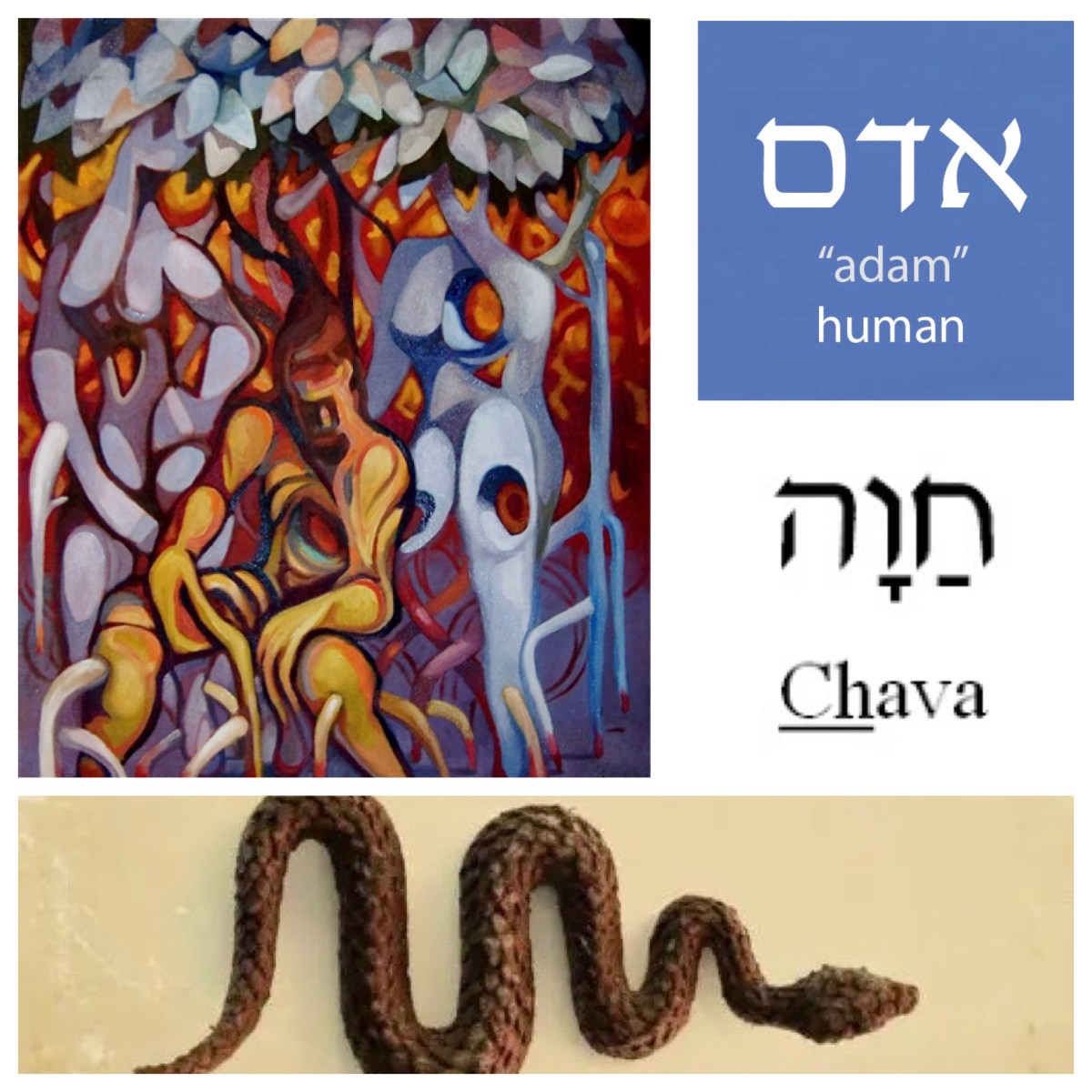
Adam, Eve, and the serpent , oil,on canvas, by Pedro Brull
https://www.mutualart.com/Artwork/ Adam–Eve-and-the-serpent/

Likewise, the traditional interpretation—strongly influenced by millennia of patriarchal bias—is that the serpent tempted the woman, Eve, and she succumbed to temptation. But we need to read these verses (3:1–6) carefully and thoughtfully. It is true that the first step is that the serpent encouraged the woman to eat the fruit, and she duly ate; but then “she also gave some to her husband, who was with her” (3:6b). He had agency at this point, as she had when she was encouraged to eat by the serpent. But “she took of its fruit and ate”, and then, when she offered it to him, “he ate”. He is as guilty as she is of succumbing to what the serpent proposed.

With regard to the serpent: whilst the phrase “the evil one” is absent from Hebrew Scripture, the notion of evil is present throughout—from the garden of Eden, where Adam and Eve flaunt the ban on their eating fruit from “the tree of the knowledge of good and evil” (Gen 2:15–17; 3:1–7), to the condition of humanity in the time of Noah, when “the wickedness of humankind was great in the earth, and that every inclination of the thoughts of their hearts was only evil continually” (Gen 6:5), through the forty years when Israel was condemned to “wander in the wilderness for forty years, until all the generation that had done evil in the sight of the Lord had disappeared” (Num 32:13), and on into the generations under the Judges when “the Israelites did what was evil in the sight of the Lord” (Judg 2:11; 3:7, 12; 4:1; 6:1; 9:23; 10:6; 13:1).

The introduction of evil into the story is generally laid at the feet (or, rather, the belly) of “the serpent” who slithers through the narrative, from the first verse of ch.3 (“the serpent was more crafty than any other wild animal that the Lord God had made”, v.1) to the punishment inflicted on him because of his deeds (“upon your belly you shall go, and dust you shall eat all the days of your life”, v.14).

The serpent is the first character in the Bible who was called shrewd. Alongside him, perhaps the most famous “shrewd” character was the manager in the parable told by Jesus in Luke 16:1–9. Actually, in that parable, whilst the manager is described as being “shrewd” (16:8), it does not convey a negative meaning, I believe. The Greek word used, phronimos (φρόνιμος), translated as shrewd, comes from the verb phroneō (φρονέω), which simply means to think, to use one’s brain. There is no malice involved in this; the manager is simply being intelligent. 

Back in Genesis, the serpent is called “more shrewd than all other beasts”. Shrewd, of course, is an ambiguous term. On the one hand, it is a virtue the wise should cultivate. The word used at Gen 3:3 appears in proverbs where it is translated as “prudent”. Thus, “fools show their anger at once, but the prudent ignore an insult” (Prov 12:16), and “a fool despises a parent’s instruction, but the one who heeds admonition is prudent” (Prov 15:5). However, when this capacity is misused, it become wiliness and guile; the same Hebrew word is used to refer to those who are “crafty” (Job 5:12; 15:5), who “act with cunning” (Josh 9:4), or who practise “treachery” (Exod 21:14).

In the Genesis account, it is the craftiness or cunning of the serpent that is emphasised; this limbless reptile was “more crafty (עָר֔וּם, arum) than any other wild animal” (3:1). The Hebrew, however, has a wordplay here; in the previous verse (2:25), Adam and Eve were “naked” (עֲרוּמִּ֔ים, arummim); then (3:1) the serpent is described as “more crafty” (עָרוֹם, arum) than all others. It is a compliment! 

Later, Paul will take a much more negative line, claiming that “as the serpent deceived Eve by his craftiness, so your minds may be corrupted from the simplicity that is in Christ” (2 Cor 11:3). It is this castigation of the serpent which has predominated throughout Christian history. So, although Impersonally have a great dislike for getting near to, or handling, snakes, I do want to stand up for the reputation of this creature!

The myth of Original Sin

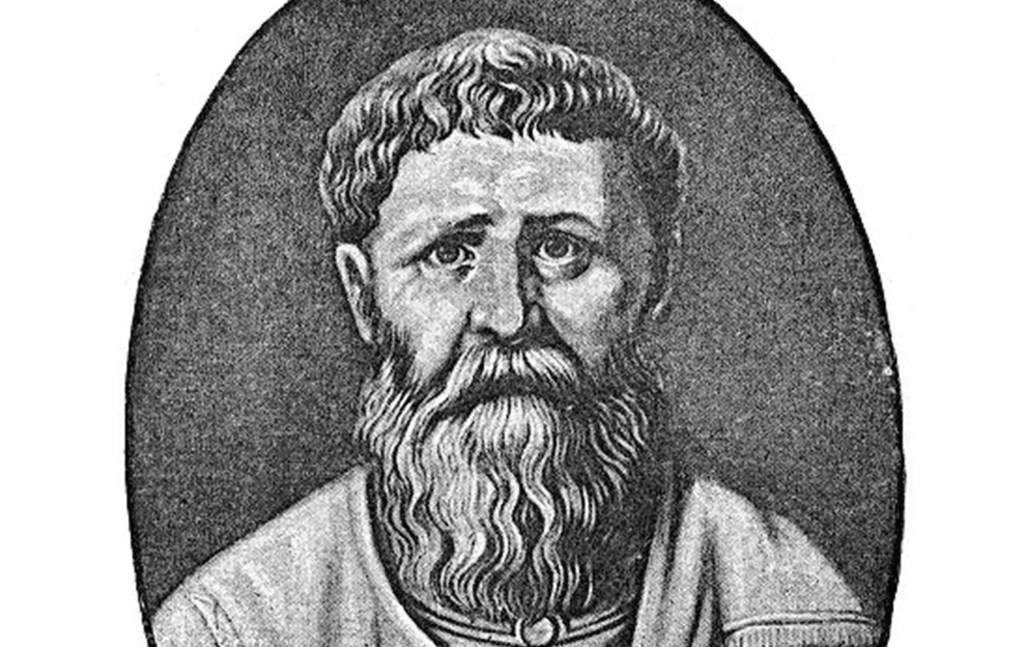
A hugely important deduction that has been made from this story is “the  doctrine of original sin”, which can be traced back to Aigustine of Hippo. Augustine bases his claim about original sin on his reading of the story of Genesis 2–3, which depicts the fall of Adam, from which all humans inherited innate sinfulness (original sin). But I think this is another error in relation to the interpretation of this passage. 

Augustine of Hippo (354–430 CE)

The problem is that the Genesis 1 account of creation which precedes this story (which is read in another year in the Narrative Lectionary) makes it quite clear that the original state of humanity was that human beings, like all that God created, “was good”—indeed, that as the final act of that sequence of creation, humanity was “very good” (Gen 1:31). So much for original sin; humanity, according to this narrative, was part of a “very good” creation. 

Indeed, Augustine was reading the sequence of early chapters in Genesis as historical narrative, and his understanding was that the consequences of “the fall” in Gen 3 was that every person born after Adam inherited that fallen state from the first human being. However, we know from a careful application of literary criticism, that the Adam story is myth which has an aetiological purpose, and that it is not an historical account. 

That is, it does not give a realistic account of “things as they happened”, but rather, it is an imaginative story which tells of the reasons for the origin of things. It doesn’t answer the question, “what happened?”; rather, it responds to the question, “why are things like this?” So the Genesis story as a whole explains the good original state of humanity, before any decline or corruption took place. It is descriptive of how we find things, not prescriptive for how things should be.

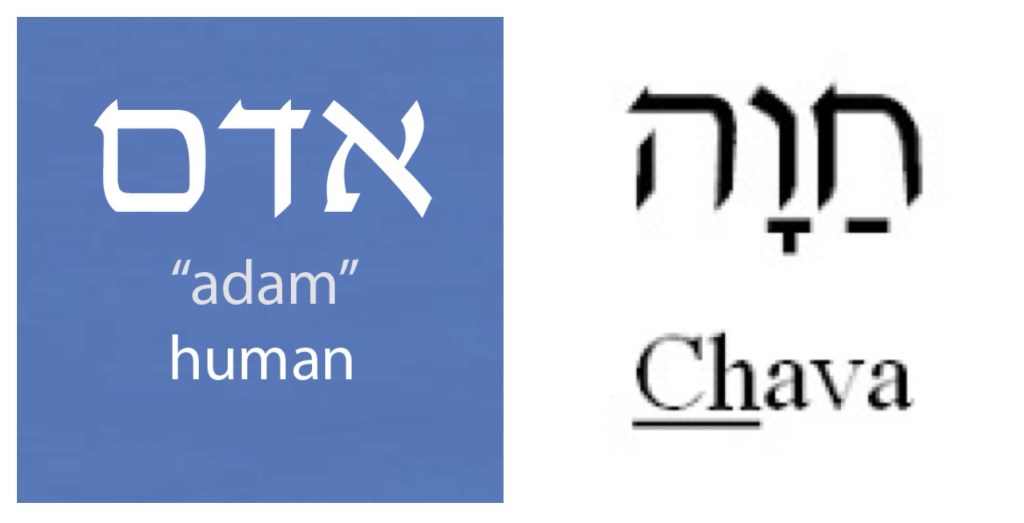
In fact, we can see this nature of the story in the names given to these mythical first two human beings: the man, Adam (adam) was created “from the dust of the earth” (ha-adaman), and so his name signifies “the earth person” (Gen 2:7), whilst the woman, Eve (chavah) was to be “the mother (chay) of all living creatures”, and thus her name signifies “the giver of life” (Gen 3:20).

It’s not the case that what “occurs” with Adam and Eve has been passed on through human beings ever since; but, rather, it is the case that how we experience humanity has led to the creation of a story about Adam (the earth person) and Eve (the giver of life) as an explanation for the way that we experience ourselves, and other people on this earth.

Augustine’s distinctive interpretation was his own initiative; most patristic writers prior to him who addressed this topic (Barnabas, Hermas, Justin Martyr, Origen of Alexandria, Clement of Rome, Ignatius of Antioch, Cyril of Jerusalem) offered explicitly different interpretations of the human state. By contrast, Clement of Alexandria accepted that sin was inherited from Adam, and Cyprian of Carthage argued for the necessity of infant baptism on the basis of a belief that humans were born sinful. 

Augustine had developed his views in opposition to the view of his contemporary, Pelagius; the debates continued on into the medieval period, with significant contributions being made by the great theologians Anselm of Canterbury and Thomas Aquinas, as well as Franciscans such as Duns Scotus and William of Ockham. The Reformers, Martin Luther and Jean Calvin, adopted and developed the Augustinian view, which has held sway in the Western Church over subsequent centuries. Eastern Orthodoxy, by contrast, attributes the origin of sin to the Devil; what we humans have inherited from Adam is our mortality, but not any innate sinfulness.

This is all a long way, then, from prophetic fulminations against foolish, stupid, evil Israelites, caught in the error of their sinful ways, or the grace-filled encounters that Jesus had with sinners as he called “not the righteous but sinners”, or the formulaic affirmation of the first letter to Timothy, that “Christ Jesus came into the world to save sinners”, which has become the bedrock of certain contemporary theologies.

Whilst a recognition of sin is inherent in each of those texts, there is no indication in any way that such sinfulness is innate, inherited from birth, of the very essence of our human nature. The doctrine of original sin is not a biblical idea; it’s not something that we should be maintaining in our theological discourse and spiritual understanding.

Made from the dust 

Dust is central to who we are as human beings. The story of the creation of human beings indicates that the man was “formed from dust (עָפָר, aphar) of the ground” before God breathed the breathe of life into him (Gen 2:7). But in the foundational myth that is told in the earliest chapters of scripture, dust is at the centre, also, of the punishments that are handed out after the sin committed by Adam and Eve. 

The serpent, as a result of its role in tempting them, is told, “because you have done this, cursed are you above all livestock and above all beasts of the field; on your belly you shall go, and dust you shall eat all the days of your life” (Gen 3:14; Isa 65:25). The man is told, “by the sweat of your face you shall eat bread, till you return to the ground, for out of it you were taken; for you are dust, and to dust you shall return” (Gen 3:19).

However, in association with the tearing of clothes, the placing of dust on your head is also a symbol of repentance. Joshua repents of the sin of Achan by tearing his clothes and placing dust on his head (Joshua 7:6). Ezekiel speaks of the people of Tyre, lamenting, as “they cast dust on their heads and wallow in ashes” (Ezek 27:30).  Jeremiah reports that “ the elders of the daughter of Zion sit on the ground in silence; they have thrown dust on their heads and put on sackcloth; the young women of Jerusalem have bowed their heads to the ground” (Lam 2:10; see also Isa 25:12; 29:1–4). 

The three friends of Job see him coming, and they “raised their voices and wept, and they tore their robes and sprinkled dust on their heads toward heaven”, before they then sat, grieving with him, “on the ground seven days and seven nights” (Job 2:12–13). Dust means mourning and repenting.

Job himself uses dust and sackcloth to signify that “my face is red with weeping, and on my eyelids is deep darkness” (Job 16:15–16). As a result, he laments, “ God has cast me into the mire, and I have become like dust and ashes” (Job 30:19). Returning to dust is the final state for those punished by God (Job 34:5; see also 10:9; 17:6; 20:11; 21:26; Ps 7:5; 22:15; 90:3; 104:29; Isa 26:5; Lam 2:21)—or, indeed, for all human beings (Eccles 3:20; 12:7). 

In the end, though, Job “repents of dust and ashes” (42:6). He has had enough of being repentant. The book ends with a return of the defiant Job. He will have no more use for the dust and ashes of repentance.

In a number of scriptural incidents, dust is used in curses signalling divine punishment. Shimei, for instance, casts dust into the air to curse David (2 Sam 16:13). When Deutero-Isaiah speaks of the coming salvation that God will bring, to remove the punishment of exile, he exhorts Jerusalem to “shake yourself from the dust and arise” (Isa 52:2). 

Dust had been a sign of the place of mourning, the place of despair, the place which signifies worthlessness and emptiness. Dust had been  where the poor sat (1 Sam 2:8; Amos 2:7); it was where the enemies of Israel were pressed down and beaten into fine particles by the Lord (2 Sam 22:4 3; 2 Ki  13:7; Job 40:13; Ps 18:42; 44:24–25; 72:9; 83:13; Isa 41:2; Micah 7:17). Now, the people were called to leave that dust behind and move on in hope.

Could the action of shaking off the dust have the function of warning recalcitrants—along the lines of, God will turn you to ashes? As the disciples move on to the next town, they were leaving behind a warning with an implicit demand for their repentance. Or could it signal that there would be hope, in the future, from the message of good news that the disciples proclaimed? 

Ransom and Atonement

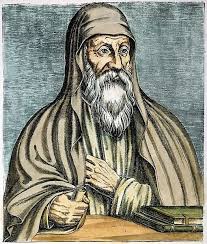
In the third century scholar, Origen of Alexandria developed an idiosyncratic theory of the atonement (the way that Jesus enables God to deal with human sinfulness).

Origen of Alexandria (185–253 CE)

Origen’s ransom theory of atonement reads Genesis 3 as an account of Adam and Eve being taken captive by Satan; this state was then inherited by all human beings. The death of Jesus is what enables all humans to be saved; the means for this was that the blood shed by Jesus was the price paid to Satan to ransom humanity (or, in a variant form, a ransom paid by Jesus to God to secure our release).

However, none of these texts—and particularly not Mark 10:45—require this overarching theological superstructure to make sense of what they say. Origen’s ransom theory held sway for some centuries, but was definitively rejected by the medieval scholar Anselm of Canterbury. It is not a favoured theory of atonement in much of the contemporary church (though it is still advocated in various fundamentalist backwaters). Certainly, none of this should be attributed to the saying of Jesus in Mark 10:45. It is far more likely that he is drawing on the Jewish tradition of the righteous sufferer in his words. And the fundamental narrative of Gen 3 does not in any way support the theory of ransom by atonement.

Stereotyping Jesus: coming home in Mark 6 (Narrative Lectionary for Epiphany 5)

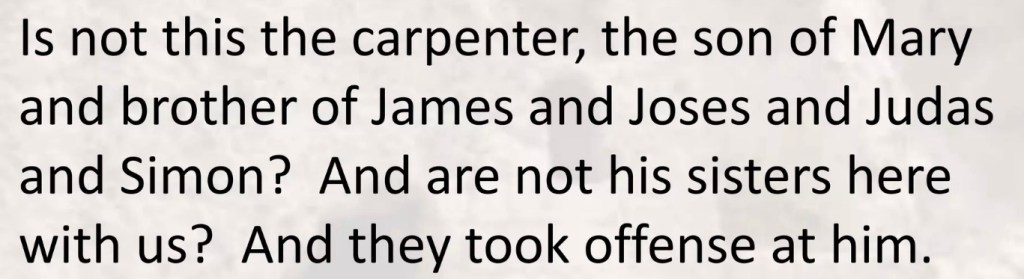
The offering from the narrative lectionary this coming Sunday (Mark 6:1–29) begins with the scene where Jesus goes to the synagogue in his hometown, Nazareth (6:1–6) and is rejected by those who “took offence at him” (6:3). Although he spoke with wisdom and performed acts of power (6:2), he is scorned as merely “the carpenter, the son of Mary and brother of James and Joses and Judas and Simon … and his sisters, here with us” (6:3).

You can imagine the murmurs amongst the people of the town. “He was not the eloquent preacher. Not the erudite teacher. Not the compassionate healer. Not the dazzling miracle-worker. Just plain old Jesus, the carpenter, from a local family. Nothing to look at here. Nothing of importance. A nobody, really. But he has pretensions. And we can’t stand for that, can we?”

Perhaps I’m being a little harsh on the townsfolk? Perhaps there is more to Jesus than they recognised, and perhaps Mark’s narrative might indicate that it is not wise to stereotype Jesus, as they were doing?

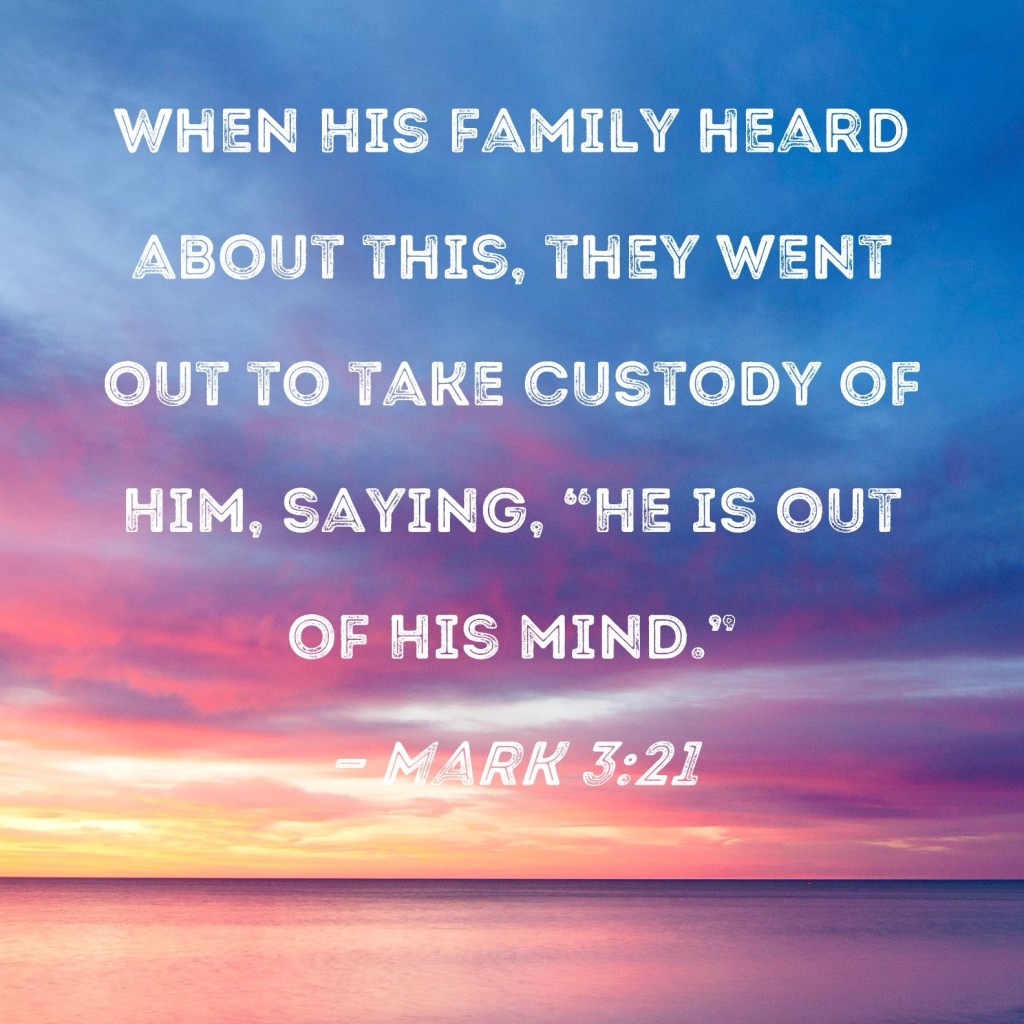
Earlier in his narrative, Mark has told of an encounter that Jesus had with his family when he came out of a house in Capernaum (3:20). Some onlookers in Capernaum describe him as being “out of his mind” (ἐξέστη, 3:21). This is a term that literally means that he was “standing outside of himself”, as if in a kind of dissociative state. It may be that this was the reason that Jesus was returning to his family?

The encounter doesn’t go well, however. Scribes have come from Jerusalem. They have already been antagonistic towards Jesus, questioning whether Jesus was blaspheming (2:6–7), and casting doubts on his choice of dinner guests (“why does he eat with tax collectors and sinners.”, 2:16). There will be further disputation with scribes (7:1–5; 9:14; 12:28, 38–41) and they will be implicated in the plot to arrest Jesus (11:18, 27; 14:1, 43, 53; 15:1) and in his death (8:31; 10:33).

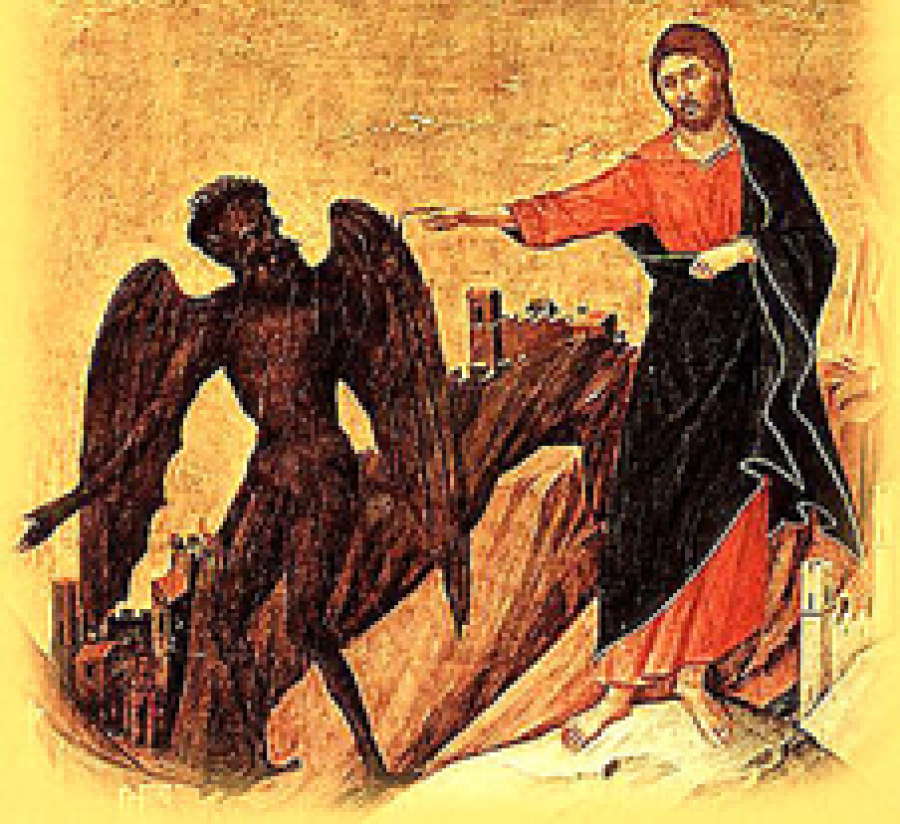
These scribes—hardly friends—articulate what others present may well have been thinking: “he has Beelzebul” (3:22). The charge of demon possession correlates with the accusation levelled at John 10:20. It appears to have been one way that Jesus was stereotyped by others.

Beelzebul (Βεελζεβοὺλ), “the ruler of the demons”, is known from earlier scriptural references to Baal-zebub in 1 Kings 1:2–6, 16, where he is described as “the god of Ekron”, a Philistine deity. There is scholarly speculation that Beelzebul may have meant “lord of the temple” or “lord of the dwelling”, from the Hebrew term for dwelling or temple (as found at Isa 63.15 and 1 Kings 8.13); or perhaps it was connected with the Ugaritic word zbl, meaning prince, ruler.

Jesus refutes the charge in typical form, by telling a parable (3:23–27) that ends with the punchline about “binding the strong man” (τὸν ἰσχυρὸν δήσῃ). This potent phrase encapsulates something that sits right at the heart of the activities of Jesus in Galilee—when he encounters people who are possessed by demons, and when he casts out those demons, he is, in effect “binding the strong man”.

The notion that a demon would bind the person that they inhabited is found at Luke 13:16, and in the book of Jubilees (5:6; 10:7-11). The book of the same title by Ched Myers provides a fine guide to reading the whole of Mark’s Gospel through this lens (see https://chedmyers.org/2013/12/05/blog-2013-12-05-binding-strong-man-25-years-old-month/)

The accusation that refers to “blasphemy against the Holy Spirit” (3:29) may well reflect the stereotype that Jesus was demon-possessed (3:30). That stereotyped view of Jesus cannot be allowed to stand, for it cannot be justified in any way—at least, in Mark’s view.

So we see that there was dispute about Jesus, even beyond his hometown of Nazareth. There were those who sought to stereotype him in a negative way.

So Jesus goes to his hometown, with his disciples, and participates in the local synagogue on the sabbath. What do we know of his status in his hometown?

“In those days Jesus came from Nazareth of Galilee and was baptized by John in the Jordan” (Mark 1:9) is how Jesus is introduced in this Gospel. Mark takes us straight to the adult Jesus, bypassing the newborn infant who appears in other narratives. There is no explanation of his background; no stories from his childhood, to show the nature,of his character (such as were common in biographies written by educated folks in the Hellenistic world).
There is certainly no mention of Bethlehem, nor the rampage of Herod; nor any reference to magi travelling from the east, bearing gifts; nor to a census ordered under Quirinius, necessitating short-term accommodation. There is no story of the infant Jesus at all—and most strikingly, no mention of Mary and Joseph as the parents of Jesus in the opening scenes of this earliest Gospel.

Rather, in Mark’s narrative reporting the beginning of the good news about Jesus, the chosen one, Jesus explicitly distances himself from his family. “Who are my mother and my brothers?”, he asks, when confronted by scribes from Jerusalem and labelled as “out of his mind” by his own family (Mark 3:21, 33).

In this week’s passage, the people of his hometown (Nazareth) do not identify as “son of Joseph”—only in John’s book of signs do his fellow-Jews identify him as “son of Joseph” (John 6:42). So it is up to Luke and Matthew, each in their own way, to link Jesus, as a newborn, to these parents.

In Mark’s account of the scene when the adult Jesus returns to his hometown, he is “the carpenter, the son of Mary” (6:3). This is the only time that the name of his mother appears in this earliest account of Jesus; and there is simply no mention, by name, or by relationship, of his putative father. (Some scribes later modified this verse (Mark 6:3) to refer to him as “son of the carpenter and of Mary”, to align Mark’s account with how Matthew later reports it at Matt 13:55.)

Other than this one reference, Mark makes no reference to Jesus’s parents. He is simply, and consistently identified as “the son of God” (Mark 1:1; 3:11; 5:7; 9:7; 15:39). On one occasion, he is addressed as “son of David” (10:47–48; although this description is the subject of debate at 12:35–37).

More often, in this earliest of Gospels, using a term taken from Hebrew Scripture, Jesus refers to himself, or others refer to him, as “the son of humanity” (more traditionally translated as “the son of man”) (2:10, 28; 8:31, 38; 9:9, 12, 31; 10:33, 45; 13:26; 14:21, 41, 62; see Ezek 2:1, 8; 3:1, 4, 16; etc; and Dan 7:13). The origins and identity of Jesus, in Mark’s eyes, relate more to the larger picture—of his Jewish heritage, in his relationship to the divine, and with his role for all humanity—than to the immediacy of parental identification.

Mark ensures that we grasp this larger picture of Jesus in the way he presents Jesus. He also indicates that it is not proper to stereotype Jesus, describing him in demeaning terms, objectifying him as problematic or as “other”. It is a practice that we would do well to emulate in our relationships with others. And in considering Jesus, we should push beyond the stereotypes to discover the person who Jesus really is.

A bleeding woman, a dying child in Mark 5 (Narrative Lectionary for Epiphany 4)

This coming Sunday, the section of Mark’s Gospel that the narrative lectionary proposes contains a pair of interlinked stories: one about the dying girl who had lived for 12 years (Mark 5:25–34) and one about the woman who has bled for 12 years (Mark 5:21–24, 35–43). These are stories with a Jewish focus. They each contain the number 12, a very important number in Judaism. I have reflected on the significance of this number in these stories in this blog:

These two stories each tell of a way that Jesus offered hope to the woman and the girl. And they each deal with matters of protocol and behaviour within the Jewish holiness system.

Holiness was central to the people of Israel. Those who ministered to God within the Temple, as priests, were to be especially concerned about holiness in their daily life and their regular activities in the Temple (Exod 28-29; Lev 8-9). The priests oversaw the implementation of the Holiness Code, a large section of Leviticus (chapters 17–26), which explained the various applications of the word to Israel, that “you shall be holy, for I the Lord your God am holy” (Lev 19:2; also 20:7,26).

As well as overseeing the various offerings and sacrifices that were to be brought to the Temple, the priests provided guidance and interpretation in many matters of daily life, including sexual relationships and bodily illnesses, as well as the annual festivals and other ritual practices.

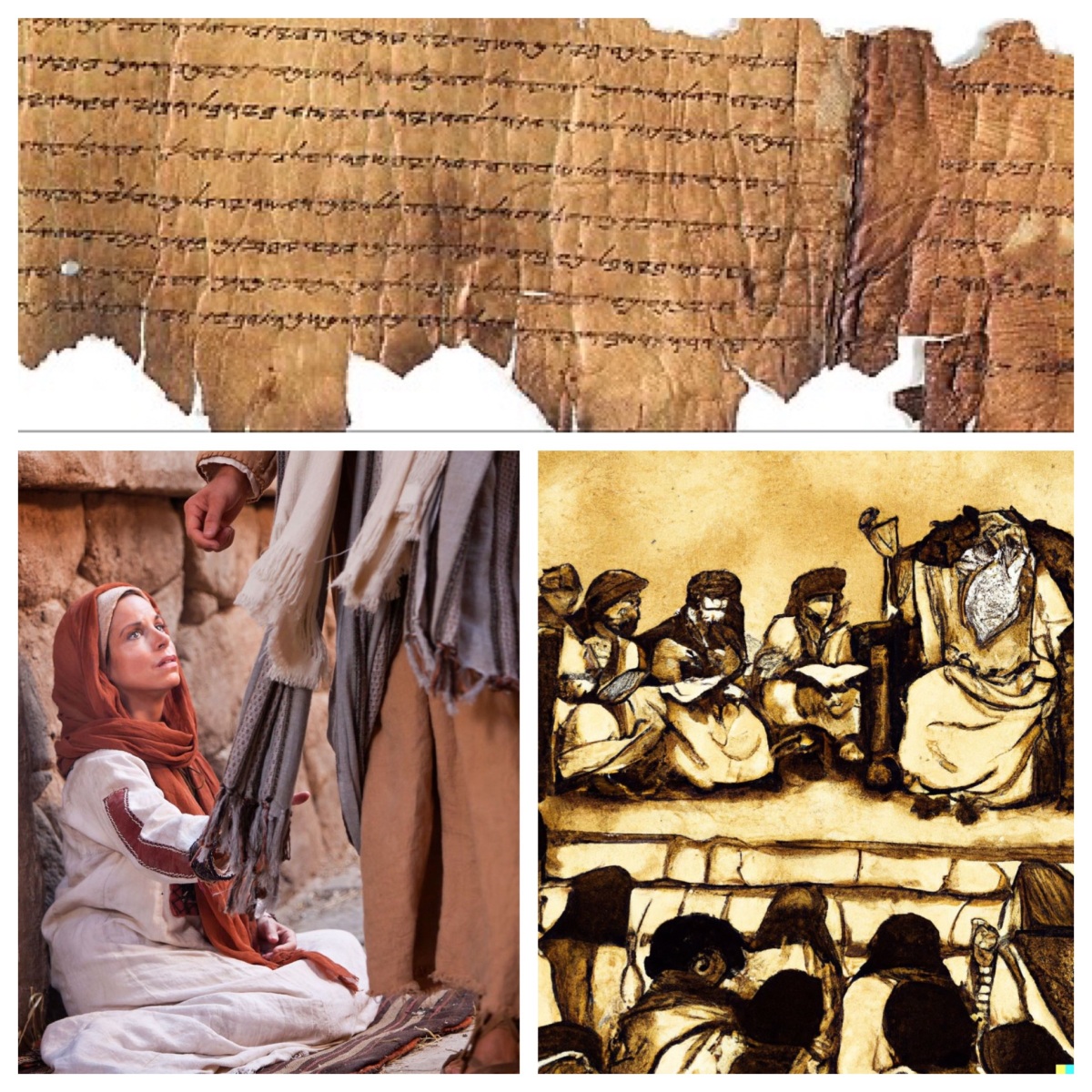
Part of the Paleo-Hebrew Leviticus scroll (discovered 1956; dated C2–C1 BCE)
which contains the oldest known copy of the Holiness Code.

In the towns and villages of Israel, by contrast, the scribes and Pharisees provided guidance in the interpretation of Torah and in the application of Torah to ensure that holiness was observed in daily living. They undertook the highly significant task of showing how the Torah was relevant to the daily life of Jewish people. It was possible, they argued, to live as God’s holy people at every point of one’s life, quite apart from any pilgrimages made to the Temple in Jerusalem.

So the encounter of the bleeding woman with Jesus had implications in terms of how he interacted with someone suffering from a physical illness. This was a matter regulated by various laws, including, most prominently, a comprehensive catalogue of laws relating to skin diseases, or leprosy (Lev 13–14) and, more relevant to this story, bodily discharges (Lev 15).

These laws specify that, if blood was being discharged from the woman as menstrual blood (“her regular discharge from her body”) that required specific actions to deal with the uncleanness that this produced (Lev 15:19-24).

An image generated by AI,
illustrating an ancient synagogue gathering
where the Law is read

If it was for other reasons (“a discharge of blood … not at the time of her impurity”) another set of laws applies (Lev 15:25-30). The woman herself is not seen as unclean; but anything she touches, anything she sits or lies on, is regarded as unclean. The processes for maintaining a clean status in her household, avoiding these items of furniture, or even direct contact with the woman, would have been onerous.

Furthermore, the request of the synagogue leader to Jesus could possibly bring him into contact with a dead body—a matter that was regulated by laws (Lev 22:4; Num 5:1-2, 9:6-12, 19:11-13). Jairus says that the girl is “at the point of death” (5:23). The cries of the crowd (“your daughter is dead”, 5:35) and the weeping and wailing of the people outside the house (5:38) suggest that the rituals of mourning for a deceased person had already begun. Nevertheless, Jesus assures Jairus that the girl is not dead, but sleeping (5:35).

Another strongly Jewish element in the story of the bleeding woman in her belief that, if she touched the clothing of Jesus (most likely the fringes or tassels), she would be cured. Whilst the laws relating to bleeding indicate that the “direction” of things is that an unclean state touching a clean state renders the clean state unclean, the direction is reversed in this story. The power that resides in Jesus is able to overcome the uncleanness associated with the woman (5:29).

The way that Christians have often read the Levitical prescriptions has been to dismiss the so-called “cultic laws” and maintain adherence only to the moral imperatives embedded within the pages of details about ritual and worship. From this perspective, the stories included in the section of Mark’s Gospel that we are focussing on, it is said, reveal that Jesus ignored or dismissed the prescriptions of the Law. Jesus is seen to validate the attitude that the laws in the Old Testament are no longer valid.

But neither of these Gospel stories give any warrant for such a negative approach to the Holiness Code. In neither case does Jesus actually breach the provisions of the Law. Indeed, the way that the Law functions is misunderstood in so many Christian readings of this story, as well as other parts of the Gospels.

Rather than operating as a constraining imposition, the Law actually deals with real life situations and provides ways that these situations are to be dealt with or managed. The woman with a discharge “beyond the time of her impurity”, for instance, could remove her uncleanness by offering two turtle doves or two pigeons (Lev 15:29–30).

The Pharisees, it is often said, imposed numerous demands on the people. They “made a fence around the law”—a phrase derived from the opening words of Pirke Aboth (The Sayings of the Fathers), a tractate in the Mishnah. The tractate begins: “Moses received the Torah at Sinai and transmitted it to Joshua, Joshua to the elders, and the elders to the prophets, and the prophets to the Men of the Great Assembly. They said three things: Be patient in [the administration of] justice, raise many disciples and make a fence round the Torah.”

Making a fence around the Law is apparently derived from Deut 22:8, which in one translation instructs that when you are building a house, you must build a fence around the roof in order to avoid guilt should someone fall off the roof.

The Pharisees were operating as ancient fence-makers (or gatekeepers, if you will), ensuring that people operated within the bounds of what was required by the Law. Of course, each time a particular law is invoked in a specific situation, it needs to be applied to that situation, interpreted as to how it might apply. That goes for laws in society today, as much as it does for laws in the ancient Jewish society. See

The criticisms that Jesus makes of those who follow the Law and teach the Law need to be seen as debates taking place within Judaism, not as criticisms made from outside Judaism. Jesus was a Jew, living in Jewish lands, trained in understanding the Torah, engaged in applying it to situations in life. His words reflect his interpretation of the Law, not a rejection per se of the Law, as he participates in the culture, practices, and customs of his people.

Christians and Jews have had difficult relationships over the years. The difficulties have been based on misunderstandings, accusations, and the damaging intensification that comes through polemical debate, where careful listening and understanding have been absent. That has been the case, sadly, when matters associated with the application of the Law is concerned.

The Gospel passage for this Sunday reminds us of this lack of appreciation, and invites us to commit to a positive appreciation of Jewish traditions and practices, recognising that Judaism continues as a living faith today, and acknowledging that Jesus was engaged in interpretation, not rejection, of the Law. And in the midst of this, he offers hope to a woman who had suffered for 12 years, and a girl of 12 who was on the point of death.

Jesus and the Demoniac in Mark 5 (Narrative Lectionary for Epiphany 3)

The story provided by the narrative lectionary this coming Sunday (Mark 5:1–20) contains a potent question. The story concerns an encounter that Jesus has with a man who is introduced in graphic terms: he lived among tombs and was “restrained with shackles and chains”—but he broke open the chains, “and no one had the strength to subdue him” (5:3–4). More than that, “he was always howling and bruising himself with stones” (5:5). This description bodes no good for Jesus. How would he deal with this troubled and threatening, figure?

Gerasene demon by toonfed (Federico Blee)
https://www.deviantart.com/toonfed/art/Gerasene-demon-102415150

When the man saw Jesus from a distance, the narrative says that he ran and bowed down before him; and he shouted at the top of his voice, “What have you to do with me, Jesus, Son of the Most High God?” (5:7).

It’s a good question. It’s a question that, in a sense, jumps out from the story and confronts us directly. What does Jesus, Son of the Most High God, have to do with us? with me?

It is this question that is in focus, for me, as I consider this passage—and indeed, this whole Gospel. Indeed, many interpreters argue that Mark’s Gospel can best be characterised by the central question of Jesus: “who do you say that I am?” (8:29). The identity of Jesus is, indeed, central to this Gospel (as it is, also, in the other canonical Gospels).

A passage earlier in the Gospel, Mark 1:21–28, contains another confronting question, which a demon-possessed man asked of Jesus in the early stages of his public ministry: “what have you to do with us, Jesus of Nazareth?” (1:24). Now this is a question worth pondering.

In Mark’s Gospel as a whole, there are (according to the NRSV) no less than 118 questions. Since there are 668 verses in total in Mark’s Gospel, this means that the reader (or hearer) of this Gospel is confronted with a question, on average, every 5.66 verses! (Why not try reading a couple of chapters through, looking out especially for the questions?)

Some of these questions are simple conversational enquiries—the kind of questions that we ask one another every day. “should we go there? should I do this? do you have any? can I get you something?” and so on.

Some questions are genuine requests for information, and reflect people who really want to learn from Jesus—“what must I do to inherit eternal life?” (10:17), or “which commandment is the first of all?” (12:28), or “what will be the sign that all these things are about to be accomplished?” (13:4). Jesus, good teacher that he is, responds with information and insight; he takes the opportunity to convert the question into a step forward in the life of discipleship.

Indeed, Jesus himself follows the rabbinic practice of teaching by questioning—he often poses a question which leads the disciples, or the crowd, into further discussion and debate (see, for instance, 3:33; 4:30; 10:3; 10:51). It is interesting to note that this is often how Jesus uses scripture; he does not simply quote it, but he says, “have you not read that…?” or, “do you not known the scripture which says…?”. (Look at 11:17; 12:10; and 12:26.)

This style invites conversation and leads to deepened understanding. Scripture is not being used to squash debate, but to open up insights about God. Now that is an insight worth recalling and preserving in our current context!

As Mark tells his story, some people pose questions to Jesus which are quite sharp—and may be designed to create controversy or to challenge the authority of Jesus. For instance: “why does this fellow speak in this way? it is blasphemy! who can forgive sins but God alone?” (2:7); “why does he eat with tax collectors and sinners?” (2:16); “why do your disciples do not fast?” (2:18); “by what authority are you doing these things?” (11:28); “is it lawful to pay taxes to the emperor, or not?” (12:14). Jesus did not shy away from the challenge to his honour and authority that such questions posed. According to Mark, he was a public debater of the first order.

Throughout this Gospel, Jesus poses pointed questions of his own for his disciples and the crowds who follow him. Think about the provocations and challenges in these phrases of Jesus: “why are you afraid? have you still no faith?” (4:40); “do you also fail to understand?” (7:18); “do you still not perceive or understand? are your hearts hardened? do you have eyes, and fail to see? do you have ears, and fail to hear?” (8:17–18); “you faithless generation, how much longer must I be among you? how much longer must I put up with you?” (9:19). There is certainly no “gentle Jesus, meek and mild” in this Gospel!!

The teachings of Jesus are demanding: to his disciples, he asks, “for what will it profit a person to gain the whole world and forfeit their life?” (9:36); or, with eyes fixed towards the cross, he prods them further: “are you able to drink the cup that I drink, or be baptized with the baptism that I am baptized with?” (10:38). For their part, the disciples are not afraid to confront their leader when required, as we have seen: “Teacher, do you not care that we are perishing?” (4:38). Discipleship means entering into the rough-and-tumble of these difficult questions.

Theologically, perhaps the most challenging question in the Gospel is when Jesus quotes the Psalmist: “my God, my God, why have you forsaken me?” (15:34). Is this an expression of the deepest despair of a human being who feels alienated, abandoned, utterly alone? Mark gives a great gift to followers of Jesus in all generations, when he takes us to the heart of the struggle which Jesus faced on the cross. This question shows us the human dimension of Jesus, as he was confronted by the starkness of life and death.

Of course, the identity of Jesus remains the central motif of this Gospel. It is the focus of the very first verse (“Jesus, Messiah, Son of God”, 1:1) and is reiterated in a variety of ways in statements made at crucial moments in the story (see 1:11; 8:29; 9:7; 10:45; 14:62; 15:39). But it also forms a recurring question, asked by many characters throughout the story.

We can’t read Mark’s Gospel without being confronted, again and again, by this question, in whatever guise it comes:  “what have you to do with us, Jesus of Nazareth?” (1:24, from a possessed man); “who then is this, that even the wind and the sea obey him?” (4:41, from the disciples); “what have you to do with me, Jesus, Son of the Most High God?” (5:6, from the Gadarene demoniac); “where did this man get all this? what is this wisdom that has been given to him?” (6:2, from his extended family in Nazareth).

Once he is in Jerusalem, Jesus encounters the same question from the High Priest: “are you the Messiah, the Son of the Blessed One?” (14:61); and from the Roman governor: “are you the King of the Jews?” (15:2). So, the key question remains for us: “who do people say that I am?” (8:27, asked by Jesus)—a question which he immediately sharpens into “who do you say that I am?” (8:29).

For this coming Sunday, let’s invite people to take some time to consider this particular question, amongst the many questions that we will encounter in reading Mark’s Gospel. What does Jesus have to do with us??

And in the coming weeks, as we meditate on Mark’s Gospel in our personal devotions, as we hear it read in worship, as we prepare sermons to preach from it, or however it is that we encounter it—may the questions it poses strengthen our discipleship, expand our understanding and deepen our faith.

Parables of Jesus in Mark 4 (Narrative Lectionary)

Jesus used parables as the chief means of his story-telling. A parable is a story told in a specific way, often to make a single clear point. Parables are conundrums. They contain unresolved tensions. They invite multiple understandings. They press for exploration and investigation. We have a few parables in the Gospel reading for this coming Sunday!

The accounts of Jesus that we have in scripture—Mark’s “beginning of the good news of Jesus”, Matthew’s “book of origins of Jesus, Chosen One”, and Luke’s “orderly account of the things fulfilled”—each contain a number of parables. Even in John’s “book of signs”, there are some parable-like sections, buried in the midst of the long discourses that this book contains.

In the section of Mark’s “beginning of the good news of Jesus” that the narrative lectionary offers for this week (Mark 4:1–34), we begin with a parable (4:1–9), followed immediately by an “interpretation” of the parable (4:1–20). For years, I followed the line (and taught my students) that this later allegorising understanding of the parable has been placed on the lips of Jesus, in this Gospel account. In this understanding, the interpretation really treats the parable as an allegory, rather than as a simple parable.

In an allegory, each and every character and event in the story is regarded as being a symbol for something else beyond the story. Allegory literally means, “to say something other”; it comes from two Greek words, the verb agoreuo (to speak in the assembly), and the prefix allos (other). Allegories are found in ancient literature; in Greek, from the earliest literature, that of Homer, through to Plato, and on into the writings of people centuries after the time of Jesus. They were commonplace across Greek and Latin literature.

However, in more recent times, I have come to see parables differently—especially in light of how they were seen and used in Judaism. The idea that the allegorising interpretation was a later addition, beyond the time of Jesus, has held sway for a number of decades in critical biblical scholarship. Christian scholars are dubious about whether Jesus would have utilise this somewhat hellenised approach to stories. (We know that allegories were in evidence centuries before Jesus in Greek literature. Whether Jesus knew this long tradition is debated.)

This critical Christian perspective on parables overlooks the claim that Judaism, and the long stream of Jewish tellers of parables, have on such stories. Parables are found, in Jewish literature, in various forms. With that information, we might well come to the text of Mark 4 with a different set of questions. How do we hear these parables of Jesus? In what sense do they reveal “the secret of the kingdom of God”? (Mark 4:11). Do they remain to us words which we may well “listen, but not understand”? (4:12, quoting Isa 6:10).

How do we undertake the task that Jesus instructs of his disciples at the start (“listen!”, 4:3) and at the end of this section (“let anyone with ears to hear listen!” (4:21), which he then undergirds with a final saying, “pay attention to what you hear” (4:22). Will we be able to respond to the question of Jesus, “do you not understand this parable?” (4:13) with a resounding “of course we do!”? Or will we remain, as the disciples did, hard of hearing and lacking in understanding (see 6:52; 7:14, 18; 8:17, 21; 9:32). The task of interpretation in this passage is daunting indeed!

*****

Parables are found in various places in Hebrew Scripture. There is, for a start, a brief introductory announcement (“listen!”) and a single image which is used to describe a characteristic of the kingdom (a sower sowing seeds). The first part of this week’s parable (4:3) has this form. It is short and direct.

The parable then tells of the sowing of seeds onto a variety of surfaces, which gives the story plot development of a kind. In this regard, this is like other parables of Jesus, which are a little more developed; they still make a single point, but it is developed or explained a little more. What do these ground surfaces represent? What do we make of the actions of the sower?—they seem somewhat profligate, sowing on hard ground! So the questions are raised … and the listeners ponder, and consider their responses …

The development that occurs in the plot of this parable, and the subsequent allegorical interpretation, might well relate to the fact that the Hebrew Scriptures also contain parables with developed plots and allegorical elements. In an allegory, particular individual features can play an independently figurative role, so that the story told becomes a kind of riddle which invites a response from the listener. “What do you think?” becomes the implied way that the allegory-riddle ends. Listening to the story is not enough—the listener needs to engage, enter the conundrum, make up their mind!

What do you think, then, about the sower who sowed seed on four different types of ground. A symbol of the lavish generosity of God? A farmer who wasn’t really thinking sensibly? A pointer to the need to receive the seed, ground it deep, and nurture it, so that it will flourish? A warning about “the wiles of the devil” who waits to choke the growing plant? The possibilities are endless … … …

In like fashion, what do we make of the short,sharp parables in the latter part of this passage? The seed growing secretly seems to be a set-up,for some of the typical eschatological teaching that Jesus gave (“when the grain is ripe, at once he goes in with his sickle, because the harvest has come”, 4:29).

And what do we make of the even shorter parable about the mustard seed? This tiny seed grows into a large shrub with large branches, such that “the birds of the air can make nests in its shade” (4:32). Is this, as is often suggested, a subtle indication of the worldwide spread of the good news of the kingdom? (The prophetic parable of the lofty cedar is often cited in this regard; see Ezek 31:2–9, esp. v.6 regarding the birds).

A classic short, simple riddle in Hebrew scripture is that spoken by Samson, “out of the eater came something to eat; out of the strong came something sweet” (Judg 14:14). The narrative comment that follows is delightful: “for three days they could not explain the riddle”! Another example is the proverb quoted by two prophets, about the impact of the Exile: “the parents have eaten sour grapes, and the children’s teeth are set on edge” (Jer 31:29; Ezek 18:2). The point of this saying is clear, and telling.

In Hebrew Scripture, the allegory of the Eagles and the Vine (Ezek 17:3–10) is described as both ḥidah (“riddle”) and mashal. The parable first describes “a great eagle, with great wings and long pinions”, who carried seed far away where it took root and became a vine (a classic symbol of Israel). It then offers a further description of “another great eagle, with great wings and much plumage”, which the teller of the parable fears may seek to uproot the vine. “When it is transplanted, will it thrive”, the parable ends (v.10)—will Israel, transplanted into exile, manage to survive that experience?

Further parable-riddles occur in subsequent chapters in Ezekiel. There is the Lamenting of the Lioness (Ezek 19:2–9) and the Transplanted Vine (Ezek 19:10–14), and the stories of the Harlot Sisters (ibid. 23:2–21). There is also one of my favourites, the very vivid—and gruesome—parable of the Cooking-Pot (Ezek 24:3b—5).

In this parable, the prophet warns the people of judgement: “set on the pot … pour in water … put in the pieces, the thigh and the shoulder … fill it with choice bones” (that is, the meat and bones of the Israelites being punished). The prophet concludes with a booming denunciation: “woe to the bloody city … the blood is shed inside it … to rouse my wrath, I have placed the blood she shed on on a bare rock” (Ezek 24:6–8, and then the metaphor extended still further in 24:9–14).

Each of these parables are clearly allegorical, in that the overall point is clear, and yet also the details in the story invite connection with specific people or events. Ezekiel is a powerful speaker, who utilises this dramatic story-form with great flair, and effect.

A third type of mashal is the fable, where animals or inanimate objects are made to speak and act like men. The article on “Parables” in the Jewish Virtual Library notes two good examples: Judg 9:8–15, where the trees confer as to who will become king, and 2 Ki 14:9–10, where a thornbush sends a message to a cedar, but a wild animal tramples down the thornbush. These fables can be seen to relate directly to the political situation of Israel at different times in their history.

The article on “Parable” in the Jewish Virtual Library also notes: “Mashal and ḥidah are used almost synonymously in Ezekiel 17:2; Habakkuk 2:6; Psalms 49:5 and 78:2; and Proverbs 1:6. Certain proverbs are in effect parable-riddles, e.g., Proverbs 30:15a, 15b–16, 18–19, and 21–31.

“Other biblical forms related to the parable type of mashal are: prophetic oracles where a metaphor is extended into a lively description, e.g., Isaiah 1:5–6; Hosea 2:2–15; 7:8–9, 11–12; Joel 4:13; and Jeremiah 25:15–29; prophetic oracles proclaimed through symbolic actions, e.g., I Kings 11:29; II Kings 13:15–19, and Isaiah 20:2–6; extended personifications as of Wisdom and Folly in Proverbs 1:20–33; 8:1–36; 9:1–6, 13–18; and revelatory dreams and visions having symbolism which the sequel interprets as allegorical, e.g., Genesis 37:6–11; 40:9–13, 16–19; Zechariah 1:8–11; 2:1–4; and Daniel 2:31–45.

Beyond these many examples, there are the multitudes of parables in rabbinic literature (about which, see the further resources listed at the end of this blog).

All of which leaves us with the question: what do we make of these parables of Jesus? Have we gained insight into “the secret of the kingdom of God”? Or will we remain with the outsiders, deaf of hearing and unable to grasp the good news of what God is about to do? These questions confront us as we hear this passage, this coming Sunday.

*****

The Jewish Virtual Library article on “Parable” can be found at https://www.jewishvirtuallibrary.org/parable

For further reading on parables in the rabbinic tradition, see

Click to access rabinnic-parables.pdf

https://www.jewishencyclopedia.com/articles/11898-parable

https://www.jerusalemperspective.com/2721/