The lectionary continues to offer us passages from epistles attributed to Paul. After working our way through Galatians—which Paul, I believe, most definitely did write—this coming Sunday we continue the sequence of passages from Colossians, which I am not convinced was written by Paul, even though the letter claims that it was written by Paul (Col 1:1).
The passage for this coming Sunday (1:15–28) is one of the places in this letter where there are significant theological developments beyond the theology found in the seven “authentic” letters of Paul: Romans, 1 & 2 Corinthians, Galatians, Philippians, 1 Thessalonians, and Philemon (this order, by the way, moves from the longest to the shortest of these letters).
The letter has begun with the expected words of greeting (1:1–2) and prayer of thanksgiving (1:3–8). The prayer morphs into a prayer of intercession for the Colossians (1:9–12), cycling back into an expression of thanks to “the Father” (1:12) for what he has done through “his beloved Son” (1:13–14). All of this adheres to the pattern that is found in most of Paul’s letters (although Galatians has omitted any thanksgiving from the beginning of the letter—Paul is too angry with them!).
This thanksgiving for the Son then morphs seamlessly (in the original Greek, there is no sentence break) into an extended affirmation about Jesus, “the image of the invisible God, the firstborn of all creation … the head of the body, the church … the beginning, the firstborn from the dead …[in whom] all the fullness of God was pleased to dwell” (1:15–20).
This is quite an extension to the expression of thanks; the sentence in Greek actually begins in v.9 and continues through multiple subordinate clauses to v.20! It has a lovely structure beauty, which is clearly evident in the Greek text; not so much, unfortunately, in most English translations. (Indeed, it is nigh-impossible to convey the structure in a poetic manner in a language other than the original.) The best structure exposition I have found of it looks like this:
The structure of Col 1:15–20, as outlined by Andrew Fountain in “The song hidden in Colossians”, Newlife Church Toronto; see https://nlife.ca/audio/colossians-pt4
This poetic passage also stands as significant theological affirmation. It offers a relatively early consideration of “the person and work of Jesus Christ”, a crucial theme which later systematic theology writers would explore and develop, using this and other passages of scripture as foundations for a complex and intricate affirmation of this key element of Christian faith.
The main thrust of this passage can best be understood by giving consideration to the way this it draws on Jewish elements—specifically, the Wisdom material found in parts of Hebrew Scripture. Jesus is portrayed very much in the manner of Lady Wisdom, as we encounter her in scripture in Proverbs 8, and then in the deuterocanonical works of Ben Sirach (Ecclesiaticus) and the Wisdom of Solomon. In Colossians, of course, the attributes of the female Wisdom are applied directly to the male Jesus.
Jesus is here described as the agent of God’s creative powers: “in him all things in heaven and on earth were created … all things have been created through him and for him” (Col 1:16). In the same way, in Proverbs Wisdom herself is said to have declared that “ages ago I was set up, at the first, before the beginning of the earth … when [the Lord] established the heavens, I was there … when he marked out the foundations of the earth, then I was beside him, like a master worker” (Prov 8:22–31).
The creative power of Wisdom
In the Wisdom of Solomon, Wisdom is described as “the fashioner of all things” (Wisd Sol 7:22), “a breath of the power of God” who “pervades and penetrates all things”(7:24–25), who was “present when you [God] made the world” (9:9), whose “immortal spirit is in all things” (12:1).
Jesus, son of Sirach, declares that “Wisdom was created before all other things” (Sir 1:4), that at the very first she “came forth from the mouth of the Most High, and covered the earth like a mist” (Sir 24:3), and “compassed the vault of heaven and traversed the depths of the abyss” (24:5) as she undertook her creative works, distinguishing one day from another and appointing “the different seasons and festivals” (33:7–8).
Jesus Christ, as the one who is “before all things” (Col 1:17), reiterates what Wisdom declared, that “before the mountains had been shaped, before the hills, I was brought forth—when [the Lord] had not yet made earth and fields, or the world’s first bits of soil” (Prov 8:25–26).
So Jesus is the one who has “first place in everything” (Col 1:18), just as the works of Wisdom can be traced “from the beginning of creation” (Wisdom Sol 6:22). The importance of these Wisdom writings for what is stated in Col 1 is clear. (The same writings underpin the theological affirmations made about Jesus in Heb 1:1–4 and John 1:1–18.)
The passage in Colossians also indicates that believers are “transferred … into the kingdom of [God’s] beloved son” (Col 1:13); they are rescued (1:13) and redeemed (1:14) by the work of Jesus. In similar fashion, the Wisdom of Solomon contains a long section praising Wisdom who was actively involved in human affairs from when “she delivered him [Adam] from his transgression” (Wisd Sol 10:1), saved the people at the Exodus, and guided the Conquest and settlement in the land. It was Wisdom who punished the Canaanites (12:3–11), sinful Israelites (12:19–22), and the Egyptians (12:23–27), as well as all idolators (13:1—14:31). A similarly lengthy poem praising the works of Wisdom occurs in chapters 44 to 50 of Sirach, extending all to the way to Simon, son of Onias (high priest in the early C3rd BCE).
So Jesus brings to a high point much of what had been hoped for, and spoken about, in the figure of Wisdom. All of this is now seen to reside in him, “the image of the invisible God, the firstborn of all creation … the head of the body, the church … the beginning, the firstborn from the dead …[in whom] all the fullness of God was pleased to dwell” (1:15–20). It’s a remarkable testimony.
Wisdom, by Sara Beth Baca
This year we are to celebrate 1700 years since the Nicene Creed was created. The development in theological understanding of Jesus that is found in these verses in Colossians, drawing from Hebrew scriptures of past centuries, continues apace in the ensuing centuries, as Christian writers draw more and more from neo-platonic philosophy to develop what eventually becomes a full suite of Christian doctrines—including a series of affirmations about Jesus.
It is worth noting that, just as the creative work of Jesus is noted in the Nicene Creed (“through him all things were made”), so his salvific work is also briefly described (“for us [all] and for our salvation he came down from heaven“). These fleeting references draw on the way in which scripture has used the Wisdom literature— although, of course, all four Gospels and many Epistles note the forgiving, saving, delivering work of Jesus. Colossians plays its part in attesting to this. It is, in fact, part of the bedrock of the developing patristic theology which emerged over the centuries between the New Testament and the early Ecumenical Councils.
I’m planning to write some more blogs about credal affirmations found within scripture, and how they inform (or not) the Nicene Creed, in the context of this global celebration of 1700 years since Nicaea. Stay tuned!
Two weeks ago we heard Luke’s account of the speech that Peter gave to the church, gathered in Jerusalem, about the moment when the Spirit fell upon the Gentile household of Cornelius and the conclusion that he drew, that “God has given even to the Gentiles the repentance that leads to life” (Acts 11:1–18).
Then, last Sunday, we heard a portion of Luke’s narrative from later in the book, which takes place soon after Paul and Barnabas had travelled to Jerusalem to report to a later gathering about their activity about “all the signs and wonders that God had done through them among the Gentiles” (Acts 15:1–21).
This Sunday’s passage (16:9–15) begins in Troas. Paul, Silas, and Timothy had travelled through Asia Minor (16:1–5), bringing to the assemblies they visit the decree of the Jerusalem council (16:4). As they went through the region of Phrygia and Galatia, they hear an instruction not to speak in the southern region of Asia from the holy spirit (16:6). Then they are forbidden by “the spirit of Jesus” to head north and enter Bithynia (16:7), so they go to Troas, where a vision is seen in the night with a petition to “come across into Macedonia” (16:9).
Luke is keen for those who read his work and hear it read to understand that Paul, Silas, and Timothy are guided by the spirit, seeing visions sent by God. These are common occurrences in Acts. The move into Macedonia is supported with the succinct statement that “God has called us to preach the good news to them” (16:10). It is completely consistent with “the plan and purpose of God” that the apostles have consistently been declaring (see 2:23; 4:28; 5:29, 38–39; 10:42). See
This statement (16:10) begins the first of the so-called ‘we-sections’ of Acts, which are narrated in the first person plural. Three of these are but brief notes concerning journeys (from Troas to Philippi, 16:10–17; from Troas to Miletus, 20:5–15; from Miletus to Jerusalem, 21:1–18). Each of these passages contain lists of the places visited and the means of travel (16:11–12; 20:5–6,13–15; 21:1–3,7–8,15) and small vignettes concerning one incident that took place on the journey (16:13–15; 20:7-12; 21:4–6, 10– 14).
The fourth ‘we-section’ encompasses the extensive series of journeys by which Paul travels from Caesarea to Rome (27:1-28:16). It includes mention of places and means of travel, as well as a number of particular incidents.
Scholarly opinion over the historical value of the ‘we sections’ is divided. Some have argued that there is evidence for an ancient literary convention, by which an author can alternate third person (“he”, “they”) and first person (“I”, “we”) narratives. In this view, Luke makes use of the first person narrative to strengthen the sense of unity felt between author and audience, and the characters in the events narrated.
However, others have criticised this claim and argued that the use of “we” indicates that these passages, at least, must go back to an eyewitness. The likelihood of ever being able to prove that the author of Acts was himself present with Paul in these journeys is low; at best, we might conclude that Luke had available to him a very brief source which may possibly have had its origins amongst Paul’s fellow travellers. (See also 20:5).
As the group crosses over into Macedonia, an ancient province of Greece which had been the dominant political power four centuries earlier, they arrive in Philippi (16:11–40), a city founded by Philip of Macedonia in 356 BCE, taken under Roman rule in 167 BCE, and declared a Roman colony (as Luke accurately notes, 16:12) in 31 BCE.
The group proceeds, in typical fashion, to find a place of worship on the sabbath (16:13)—not, as expected, a synagogue (see 13:5), but “a place of prayer” (16:13) for some women. (That the place of prayer was, in fact, a synagogue, is argued by a number of scholars. One scholar, Matson, describes the house church in Philippi as “a subversive contrast society”.)
One of this number, Lydia, is singled out for attention. Lydia is a godfearer (16:14), as was Cornelius (10:2) and probably the Ethiopian (8:27); what will occur here will place Lydia in a paradigmatic position akin to that occupied by Cornelius. Lydia is the first individual convert identified once Paul, Silas and Timothy, under divine guidance, have crossed over into Macedonia (16:6–10).
So Lydia presents a paradigm for the process of conversion and leadership; as the first convert in Europe, she models a faithful response to the message of Paul. Indeed, what takes place in this scene is directly interpreted as an act of God, for “the Lord opened her heart” (16:14) to listen eagerly to Paul’s words. The “opening of her heart” (16:14) echoes the discoveries made by the archetypal disciples on the walk to Emmaus (Luke 24:31,32) and by the larger group of followers gathered in Jerusalem later that day (24:45). Her “eager listening” (16:14) repeats the response evoked by Philip in Samaria (8:6).
Lydia is judged as being “faithful to the Lord” and, with her household, is baptised (16:15), in accord with the programmatic declaration of Peter’s Pentecost exhortation (2:38–39). The baptism of her household follows the pattern already seen in Caesarea (10:24–48; 11:13–16) and foreshadows a pattern which will be repeated soon in Philippi (16:31-33), and subsequently in Corinth (18:8).
Her belief leads to the offer of hospitality (16:15), as was also the case with the Gentiles in Caesarea (10:48); this same pattern follows in the story of the conversion of the Philippian gaoler and his household (16:34). Belief, baptism and table fellowship have also been linked in the accounts of the conversion of Saul (9:18-19), Cornelius and his household (10:24-48) and the events on Pentecost in Jerusalem (2:41-47). Lydia’s role as a patroness echoes that of Mary, the mother of John Mark, in Jerusalem (12:12) and prefigures that of Priscilla (with Aquila, 18:13). She is a striking figure in the overall narrative of Acts.
*****
Some of this material is from my commentary on “The Acts of the Apostles” in the Eerdmans Commentary on the Bible (ed. J.D.G. Dunn and John Rogerson; Eerdmans, 2003). I have also explored the theme of the plan of God at greater depth in my doctoral research, which was published in 1993 by Cambridge University Press as The plan of God in Luke-Acts (SNTSM 76).
This coming Sunday, the Narrative Lectionary presents us with another passage from Acts as the primary reading: the count of the council in Jerusalem (Acts 15:1–18). There had already been a significant meeting held earlier in Jerusalem, which is reported in Acts 11; on that occasion, Peter convinces “the apostles and the believers who were in Judea” about what had occurred when “the Gentiles had accepted the word of God” (11:1).
Although the meeting had begun with a difference of opinion, by the end those gathered were praising God, saying that “God has given even to the Gentiles the repentance that leads to life” (11:18).
On a later occasion in Jerusalem, the presenting issue as Luke reports it is the requirement that converts had to be “circumcised according to the custom of Moses” in order to be saved (15:1). In one of his early letters, Paul offers a report of this meeting (Gal 2:1–10) which differs significantly from Luke’s account in overall tenor and in specific details. Whilst Paul presents himself as exhibiting great persuasive power in what he portrays as a strongly polemical debate, Luke emphasises the irenic nature of the meeting and focuses more on the contributions made by the Jerusalem leaders, Peter and James.
Raising the issue of circumcision leads to “not a little dispute and discussion” between Barnabas and Paul, in company with others of their group, and some Judean believers (15:2). In their opening report to the meeting, Paul and Barnabas summarise their activities as being “what God did with them” (15:4; cf. 14:27). This reflects the Lukan understanding of how the divine will guides the events reported in Acts; see
Some Pharisaic believers present at the council provide a different perspective on the divine will. The sympathetic attitude of Pharisees towards the messianists is critical on two occasions in forensic settings (5:34-39; 23:9), so Luke sees no conflict in the idea that some Pharisees had joined the messianic community in Jerusalem.
Since the assertion of the Pharisaic believers, that “it is necessary to circumcise them” (15:5), is grounded in scripture (Gen 17:1–14,21–27), it appears plausible that this necessity is the divine will. However, Luke’s report of the debate in this council shows that this is not the case. Three speeches are reported, each of which draws on earlier events to rebut the claim advanced by these Pharisaic members.
Peter’s speech (15:7–11) interprets what Paul and Barnabas have done in the light of Peter’s experience in Caesarea. He uses the established Lukan pattern of interpreting what has occurred by reference to God’s actions, when he explains that “God chose through my mouth for the Gentiles to hear the word of the good news and to believe” (15:7). Peter offers a summary of the events already reported in detail at 10:1–48. In this context, such language about God serves to reinforce the validity of the activities of Paul and Barnabas, and to rebut the claims advanced by the Pharisaic members.
This sense is strengthened by the repetition of familiar language about God in the remainder of the speech: “God who knows all hearts” (15:8, cf. 1:24) “gave the holy spirit” (15:8, cf. 10:44-46; 11:17) in a way which exactly parallels “them” with “us” (15:8, cf. 10:47; 11:15,17) and thus “did not distinguish between us and them” (15:9, cf. 11:12). To question this understanding of events would be to tempt God (15:10) and thus to encounter the fate imposed on Ananias and Sapphira (5:9).
Peter concludes by urging acceptance of what Paul and Barnabas have done, since those Jews who believe have received salvation “in the same way as them” (Gentile believers)—that is, “through the grace of the Lord Jesus” (15:11).
In this way, he argues that the “God who is not partial” (10:34–35) has clearly been at work both in events in Caesarea, which Peter experienced, and in the activity of Paul and Barnabas throughout Asia Minor. The assemblies they established are inclusive; Gentiles belong in them just as much as Jews.
The second speech is reported only as a condensed summary of what Barnabas and Paul reply (15:12). This restates their earlier report of “what God did with them” (15:4) and applies that understanding to the signs and wonders which were performed through them among the Gentiles throughout Asia Minor (15:12). Their speech strengthens the argument for inclusive assemblies, for just as God enabled signs amongst Jews (5:12), so too are signs given amongst Gentiles (15:12).
James’ speech (15:13–21) comes next, and proves to be decisive. This demonstrates the prominence of James, the brother of Jesus, in the Jewish community of believers in Jerusalem. He begins by supporting Peter’s explanation through the use, yet again, of language about God.
For a start, the claim of James that “God visited” (15:14; NRSV “God looked favourably”) evokes the blessing of Zecharaiah (“blessed be the Lord God of Israel, for he has looked favorably on his people and redeemed them”; Luke 1:68).
James makes the suggestion that by incorporating “a people (laos) from the Gentiles” (15:14), God has brought about “redemption for his people” (Luke 1:68). Careful readers of Luke’s work would know that, in scripture, the term laos has often referred to Israel (Exod 6:7; Deut 4:20,34; 14:2; 26:18–19; 32:9), but the incorporation of the Gentiles into this people now reflects the promise of Zech 2:14–15: “Many nations shall join themselves to the Lord on that day, and shall be my people”.
James then provides further scriptural validation of the inclusion of Gentiles within the messianist assemblies (15:15–18). He cites the agreement of a compilation of scriptural texts (Jer 12:15; Amos 9:11–12; Isa 45:21) which depicts the way that “all the nations … will seek out the Lord”. He affirms that this process is one which “the Lord … has been making known from long ago” (15:18, cf. 15:8). Like the prophetic quotation by Peter at 2:16–21, this prophetic citation is strategically placed to interpret the ensuing narrative about the mission that Paul and others are undertaking.
The selection proposed by the Narrative Lectionary concludes with the speech of James (15:13–18), but Luke’s account continues with some important elements. First, James indicates, “I have reached the decision” that will be crucial in bringing the council to agreement (15:19). He argues that “those among the Gentiles who turn to God” (15:19; cf. 14:15) should not be troubled, and he proposes a compromise position (15:20) with a limited number of prescriptions, each of which has a clear scriptural basis. That was acceptable to the Jews for whom scripture was important; that ought also to have been acceptable to Gentiles who recognised the high moral standards of the new movement.
The prescriptions include: No idol food: Exod 34:11–17; Lev 17:8–9. No sexual immorality: Lev 18:6–29. No strangled animals: Exod 22:31; Lev 17:10–16, equating “what is torn”, 17:15, with “something strangled”. No blood: Gen 9:4; Deut 12:15–16,23–25; cf. Lev 17:11,15.
Luke’s portrayal of James indicates his prominent role amongst the leaders of the assembly, since what James decides (15:19–20) is adopted unchanged by the council (15:28–29). This Lukan view of the authority of James is reinforced later in his account; when Paul returns to Jerusalem, he will report directly to James (21:17–19). Indeed, the Jerusalem community accepts the four requirements without dissent (21:25).
Thus, Luke’s report of these council debates reaffirms the understanding already developed in the narrative of 13:4-14:27, namely, that Paul and Barnabas engage in activities amongst the Gentiles in accord with the divine will. The logical consequence of this perspective is thus worked out in the council’s letter to the assemblies (15:22-29), which is to be distributed amongst the “believers who are from the Gentiles” in assemblies in Antioch and Syria and Cilicia by four chosen delegates: Judas, Silas, Paul and Barnabas (15:22–23).
The letter asserts that it has been worked out by the council and the holy spirit (15:28), thus placing this decision within the stream of events which have been guided and shaped by God. The inclusion of Gentiles within the Jewish messianic assemblies is validated directly by God. The letter is well received in Antioch, where the assembly rejoices (15:31; see 13:48) and receives it as an exhortation (15:31; see 13:15). Paul and Barnabas continue on their way, “teaching and proclaiming the good news” (15:35). All is well that ends well (at least, to this point).
Some of this material is from my commentary on “The Acts of the Apostles” in the Eerdmans Commentary on the Bible (ed. J.D.G. Dunn and John Rogerson; Eerdmans, 2003)
The letter which we call 2 Corinthians is comprised of three main sections, each of which has its own distinctive focus. In the first section of the letter (1:1–7:16), Paul and Timothy write to offer consolation and hope to the people who are part of the community of followers of Jesus in Corinth. It is clear that members of the community have undergone some difficult times; Paul empathises with them, drawing on his own experiences, as a way of offering a message of hope to the believers in Corinth.
In a second main section (8:1–9:15), Paul addresses a very practical matter—the collection of money which he was making amongst the churches of Achaia and Macedonia, which he was planning to take to Jerusalem for the benefit of the believers there who had been experiencing difficulties. Then, in a third main section (10:1–13:13), Paul’s tone is markedly apologetic, as he writes in severe tones to defend himself in the face of criticisms which have been levelled against him in Corinth.
The lectionary offers us an excerpt from the first main section (3:12—4:2) for the Festival of the Transfiguration, this coming Sunday. It is obvious why this excerpt is suggested, since the argument includes a reference to the passage from Exodus which will also be read and reflected upon this Sunday. “The people of Israel could not gaze at Moses’ face”, Paul and Timothy note, “ because of the glory of his face” (3:7).
They go on to contrast this with the consequences of that one scene in the life of Jesus that the Synoptic Gospel writers later tell in narrative detail, arguing that “all of us, with unveiled faces, seeing the glory of the Lord as though reflected in a mirror, are being transformed into the same image from one degree of glory to another” (3:18). That is, whilst the transformation of Moses was not able to be witnessed by the people of Israel, the transformation of Jesus is shared in abundance with the followers of Jesus. It’s a stark contrast.
The fundamental point in what Paul and Timothy argue here is thoroughly polemical. They press, again and again, on the difference between the Exodus scene and the scene that we know as the Transfiguration of Jesus. They use the typical juxtaposition of two opposites that characterized the rhetorical style of the diatribe (and which we find in a number of other letters of Paul).
The juxtapositions have begun in the preceding verses. In full polemical flight, Paul presents himself and Timothy as a “ministers of a new covenant”, which defines as “not of letter but of spirit”, continuing with the explanation “the letter kills, but the Spirit gives life” (3:6). He then contrasts “the ministry of death” with “the ministry of the Spirit” (3:7–8). The former is “chiseled in letters on stone tablets”, whilst the latter brings “glory”. It is clear where Paul’s preference lies.
This leads to two new, snappy slogans: “the ministry of condemnation” and “the ministry of justification”, which are then contrasted (3:9–11). The former did have its element of glory—the face of Moses shone with God’s glory—but “what once had glory has lost its glory”. Paul and Timothy advance the argument through a series of direct contrasts.
How this “loss of glory” occurred, it seems, was “because of the greater glory; for if what was set aside came through glory, much more has the permanent come in glory!”. The argument, somewhat convoluted, seems to be that the former, seemingly inadequate, glory is completely overshadowed by the later, far more powerful glory.
Paul launches then into an attack on that former ministry which becomes quite vindictive. Moses is criticized for covering his face so that the people of Israel could not “gaze at the glory” that he was concealing (v.13). The minds of the people thus were “hardened”; indeed, even “to this very day”, he says, that hardening of heart remains when they hear “the reading of the old covenant” (3:14). In contrast to this deadly scenario, “in Christ” that veil is lifted, that hardening of heart is softened “when one turns to the Lord” (3:16). The exultant conclusion is that “all of us, with unveiled faces, seeing the glory of the Lord as though reflected in a mirror, are being transformed into the same image from one degree of glory to another” (3:18).
There is great danger in these words. The danger is that we absolutise them as validating any criticism, all criticism, of Judaism as a religion; that we value Christianity by demeaning and dismissing Judaism. To do this would mean that we would ignore the reality that these words were written in a context quite different from our own, addressing a situation which may (or may not) have had little do with our own situation. That wider context and that specific situation are very important as we interpret this passage (and, indeed, any passage in the Bible).
We are witnessing today, both in Australia and in many places around the world, a rise in antisemitic words and actions. To be sure, the violent and illegal actions ordered by the current Israeli government against the residents of Gaza (the most recent in a long and tragic sequence of similarly illegal and aggressive actions over decades) has probably inflamed such antisemitism.
But criticism of the policies of one nation state should not be used to foment hatred against a whole people, whether they live in that nation or in other places around the world. Yet antisemitism is growing. (So, too, is Islamophobia—for other reasons, relating both to the Middle East and to other factors. It is equally unacceptable.)
So to the specific context of the passage from 2 Cor. Paul, of course, was a Jew; he writes that he was “circumcised on the eighth day, a member of the people of Israel, of the tribe of Benjamin, a Hebrew born of Hebrews” (Phil 3:5) and boast that “I advanced in Judaism beyond many among my people of the same age, for I was far more zealous for the traditions of my ancestors” (Gal 1:14). Luke reports him as telling Jews in Jerusalem that “I am a Jew, born in Tarsus in Cilicia, but brought up in this city at the feet of Gamaliel, educated strictly according to our ancestral law, being zealous for God, just as all of you are today” (Acts 22:3).
Paul’s writings and his faith are permeated with his Jewish heritage; in almost every letter he quotes Hebrew Scripture and the argument in his most significant letter, to the Romans, is grounded in a prophetic verse from scripture (Hab 2:4a, cited at Rom 1:17b). He is able to declare that “the law [Torah] is holy, and the commandment is holy and just and good” (Rom 7:12) and in great anguish he writes, “my heart’s desire and prayer to God for them [i.e. Israel] is that they may be saved”, noting that “they have a zeal for God” (Rom 10:1–2).
Yet each time he affirms his Jewish heritage and the faith of his fellow Jews, he places a critical comment against this affirmation. Of his own heritage and upbringing, “I regard everything as loss … I regard them as rubbish” (Phil 3:8; the translation of the last word is a very polite rendering of a crass swear word). Of the law, he says “I was once alive apart from the law, but when the commandment came, sin revived and I died, and the very commandment that promised life proved to be death to me” (Rom 7:9).
Of the fate of Israel, a “disobedient and contrary people” (Rom 10:21, citing Isa 65:2), he declares, “Israel failed to obtain what it was seeking; the elect obtained it, but the rest were hardened” (Rom11:7)—and yet, “they have now been disobedient in order that, by the mercy shown to you, they too may now receive mercy” (Rom 11:31). There is a glimmer of hope.
Yet still his rhetoric can be violently abusive: “beware of the dogs, beware of the evil workers, beware of those who mutilate the flesh!” (Phnil 3:2, referring to circumcision); and “anyone proclaims to you a gospel contrary to what you received, let that one be accursed!” (Gal 1:9); and even, “the Jews, who killed both the Lord Jesus and the prophets, and drove us out; they displease God and oppose everyone … they have constantly been filling up the measure of their sins; but God’s wrath has overtaken them at last” (1 Thess 2:14–16).
Paul is nothing if not polemical in his letters. And as a Jew, when he writes such criticisms of other Jews, we cannot describe him as being antisemitic; rather, he is being critical of those who hold to Jewish traditions and resist adapting to the changes and modifications that the good news brings. We have seen Paul use this kind of polemical argumentation in other letters, when he uses stridently aggressive statements to articulate his opposition to a view. (Look at Gal 3:1–14, or parts of 2 Cor 10–13, or Rom 5:12—6:23.)
Such polemic was used in ancient rhetoric to refine and develop an understanding of a matter; the back-and-forth of the argument serves to sift and sort ideas, so that the kernel that remains at the end can be rigorously held. Paul knew this style of argument, and used it to good effect in his letters.
So when he writes disparagingly about Moses to the Corinthians, he is not being antisemitic, and we have no justification for using these words to criticize and attack Jewish ideas, or even Jewish people. Paul is using the techniques of his day to argue a point. We should not extract his words from their context and use them to validate criticisms of “all Jews” or of Judaism per se. What he says should be used with care and respect.
As we read on beyond 2 Cor 3:12–4:2, we find Paul writing about the transformation that takes place “from one degree of glory to another” (3:18), explaining that “this extraordinary power belongs to God and does not come from us” (4:7). It results in “an eternal weight of glory beyond all measure” (4:17), such that “we regard no one from a human point of view” (5:16). It is, in the end, “the God who said, ‘Let light shine out of darkness,’ who has shone in our hearts to give the light of the knowledge of the glory of God in the face of Jesus Christ” (4:6).
So Paul concludes this extended message of hope about this promised glory with a reminder that God has “reconciled us to himself through Christ”, and accordingly God “has given us the ministry of reconciliation” (2 Cor 5:18). It is in this spirit that we should reflect on the passage proposed by the lectionary for this Transfiguration Sunday.
For more on glory in Paul and elsewhere in scripture, see
The lectionary invites us this week to hear the final section of 1 Cor 15, which has offered a lengthy consideration of the “resurrection of the dead ones” (a raising of many believers) and the “resurrection of Jesus”. Resurrection was a Jewish belief that had developed in preceding centuries; not all Jews accepted it (see Acts 23:6–8) and amongst some Gentiles there was scepticism about the idea (see Acts 17:32).
There was also dispute about this matter in Corinth, resulting in a number of debates about particular aspects of this belief. In the verses of 1 Cor 15 dealt with in recent weeks, a number of matters have been explored, debated in fine rhetorical style, and dispatched. To conclude their reflections on this matter (15:50–58), Paul and Sosthenes offer a final glimpse into the eschatological drama that awaits at “the end of time”. “What [we] are saying”, they declare, “is this: we will all be changed, in a moment, in the twinkling of an eye, at the last trumpet” (15:51–52).
The argument now is no longer logic-based, as they move through a sequence of vividly-imagined images in a dramatic rhetorical style. The whole long discussion of this matter ends with a simple, concise ethical exhortation: “be steadfast, immovable” (15:58). The eschatological language used in getting to this point, in these last few verses, is poetic, not realistic; it is evocatively-inspiring, not argumentatively-logical. The argument is brought to a conclusion with a sequence of images, not with any list of legal definitions.
What do we make of the concept of resurrection? Earlier in this chapter, the letter writers have asserted quite forcefully that “if Christ has not been raised, your faith is futile and you are still in your sin” (15:17). Are we therefore not at liberty to interrogate this concept, of the resurrection of Jesus and thus the resurrection of the dead, beyond affirming that it is essential to the faith? My mind recoils at such a stricture! I am committed, as this blog’s name indicates, to “an informed faith”, a faith in which the exercise of “all your mind” is integral to its full understanding and full expression.
So what, then, do we make of resurrection? Contemporary debate has canvassed a number of options as to the nature of the resurrection: Must it be in a bodily form? Was Jesus raised “in the memory of his followers”, but not as a physical body? Is resurrection a pointer to a transcendent spiritual dimension? What was meant by the reference to an “immortal state” in 1 Cor 15:53-54?
Some believers aggressively promote the claim that we must believe in the boldly resurrection of Jesus, that we must adhere to a literal understanding of what the biblical texts report. I prefer to advocate for ways of responding to the story which are creative, imaginative, expanding our understandings and drawing us away from age-old doctrinal assertions which are grounded in obsolete worldviews, on into new explorations of how this metaphor can make sense for us in our lives in the 21st century.
My basic position (as I hinted at towards the end of my previous blog on 1 Cor 15) is that resurrection is a claim that does not direct us away from this world, into a heavenly or spiritual realm. The resurrection offers us both an invitation to affirm our bodily existence in this world, and to explore fresh ways of renewal and recreation in our lives, in our society. It is about liberating life for renewal in our own time and place, here in this world.
It is the apostle Paul who, most of all in the New Testament, provides evidence for the way that early believers began to think about the central aspects of the Easter story—death on the cross, newness in the risen life (Rom 6:3-4:23, 8:6,13; 1 Cor 15:21-23; 2 Cor 4:8-12; Phil 2:5-11, 3:10-11). Paul probably did not begin such ideas; indeed, in both arenas, there are clear Jewish precedents. These were ideas that were live at the time.
However, the application of these ideas to Jesus—and their insertion into the story of his life—has moved them into a different dimension. They seem, to some, to be “historical events”. I think this pushes things too far. Certainly, Jesus died; but the evaluation of his death as a sacrifice is an interpretive move. In same fashion, the story of Jesus being raised from death was an interpretive move made within a context where “resurrection” was a live idea. In our context, it is a contested idea which sits uneasily within our scientific understandings.
I maintain that other writers in the New Testament provide important keys for understanding the function that “resurrection” plays in our faith. In Luke’s Gospel, the notion that Jesus may be appearing to the disciples as “a ghost” (the Greek is pneuma, usually translated as “spirit”) is dismissed when Jesus instructs the disciples to “look at my hands and my feet; see that it is I myself; touch me and see; for a ghost (pneuma) does not have flesh and bones as you see that I have” (Luke 24:38–39). Here, the emphasis is on the fact that the risen Jesus bears the marks of the crucified Jesus; in his resurrected form, the scars and burdens of his human life continue to be manifest.
In like fashion, when John recounts what may well be his version of the same scene, he puts to the fore the claim by the initially-absent Thomas that Jesus will only be identifiable by “the mark of the nails in his hands” and the wound on his side (John 20:25). So, a week later, when Jesus appears again, he instructs Thomas to “put your finger here and see my hands; reach out your hand and put it in my side” (John 20:27). It is on this basis—the tangible evidence of the crucifixion markings on the body of the resurrected Jesus—that Thomas can move from doubt to belief.
So, in these stories, the primary function of the appearance of the risen Jesus is not to point away from life on earth to some imagined heavenly realm—rather, it is to point back immediately to the scars of the cross, carried for eternity in the resurrected body of Jesus. It is an evocative, poetic presentation.
I return to 1 Cor 15, and the claim that the language used here is also poetic, proceeding in a series of images. Paul and Sosthenes do not conclude their rhetorical dissertation on resurrection with logic-based argumentation, but with a poetic doxology. What concludes the detailed argument of this long chapter is a simple outburst of thanksgiving: “thanks be to God, who gives us the victory through our Lord Jesus Christ” (15:57).
Indeed, such doxologies characterise a number of the letters of Paul. In Romans, they punctuate the complex theological argumentation of this longest letter at key moments. “Thanks be to God”, he rejoices at the end of the tortured discussion of Law, sin, and death (Rom 7:25a). “I am convinced that … nothing in all creation will be able to separate us from the love of God in Jesus Christ our Lord”, a chapter later (8:38–39). Then, after three complex midrashic chapters about Israel, the exultant “O the depths of the riches and wisdom and knowledge of God … to him be the glory forever; Amen” (11:33–36).
Finally, in drawing to a close, Paul offers the Romans a prayer of hope (15:13), a brief blessing (15:33), and a reiteration of the offering of grace (16:20b). In a final redaction of the letter, a later scribe then added a most flowery doxology as the conclusion to the whole letter (16:25–27).
The phrase used at 1 Cor 15:57, “thanks be to God”, appears also in Romans (6:17; 7:25) and 2 Corinthians (2:14; 8:16; 9:15); and see also 1 Thess 1:2; 2:13. Paul peppers his letters with notes of praise and adoration addressed towards God. This is poetry that evokes emotions—not words that wrangle doctrines. Such is the nature of his final word on resurrection at 1 Cor 15:57.
The brief word that follows this doxology is a word of hope-filled assurance to the Corinthians, whom he has criticised so mercilessly at many places throughout the letter: “you know that in the Lord your labour is not in vain” (15:58). The letter writers have earlier reminded the saints in Corinth what they know in a string of affirmations, most introduced with the rhetorical “do you not know?”. These affirmations include “you are God’s temple and God’s Spirit dwells in you” (3:16; similarly, 6:19), “a little yeast leavens the whole batch of dough” (5:6), “the saints will judge the world” (6:2), “wrongdoers will not inherit the kingdom of God” (6:9), “your bodies are members of Christ” (6:15), and “‘no idol in the world really exists’ and “there is no God but one” (8:4).
In the discussion of the rights of an apostle, they are reminded that “those who are employed in the temple service get their food from the temple, and those who serve at the altar share in what is sacrificed on the altar” (9:13) and “in a race the runners all compete, but only one receives the prize” (9:24). In the introduction to the discussion of “the body”, they are reminded that “when you were pagans, you were enticed and led astray to idols that could not speak” (12:2), and I the extended discussion of the use of gifts in worship, there are regular reminders about their knowledge (14:7, 9, 11, 16; and most controversially, v.35).
Here the reminder of what the saints “know” is the encouraging word, “in the Lord your labour is not in vain” (15:58). It is a typical teaching technique, drawn directly from the heart of the traditions of paraenesis (exhortation, or encouragement) which characterizes all of the letters of Paul. So the chapter ends both with praise directed to God and (despite their conflicts and scepticism) encouragement offered to the Corinthians. It is an uplifting conclusion.
The “resurrection of the dead ones” (the Greek word translated as “the dead” is plural, reflecting a raising of many believers) was a Jewish belief that had developed in preceding centuries; not all Jews accepted it (see Acts 23:6–8) and amongst some Gentiles there was scepticism about the idea (see Acts 17:32). There was also dispute about this matter in Corinth, resulting in a number of debates about particular aspects of this belief. In the section of 1 Cor 15 dealt with last week, two such matters have been explored, debated, and dispatched.
Thus week the lectionary picks up at v.35, where a third pastoral situation might possibly be indicated. The form employed (a rhetorical question attributed to an indefinite person) was commonly used by a skilled rhetorician to raise an objection which he knew could be raised, allowing it to be dealt with in advance (the same technique is found in Rom 2–6 and 9–11). The question provides an opportunity for further eschatological teachings about the nature of the resurrection body (15:35–50) and a further display of Paul’s rhetorical prowess.
The issue at stake here is the nature of the resurrection body, identified in an opening pair of questions: “how are the dead raised? with what kind of body do they come?” (15:35). These are not mere rhetorical questions; Paul and Sosthenes fully intend to address such enquiries with a detailed exposition. The weight of the argument, in my mind, lies in a set of contrasts by juxtaposition, advanced in a sequence of logical steps in vv.42–49:
What is sown is perishable / what is raised is imperishable.
It is sown in dishonour / it is raised in glory.
It is sown in weakness / it is raised in power.
It is sown a physical body/ it is raised a spiritual body.
If there is a physical body / there is also a spiritual body.
Thus it is written, “The first man, Adam, became a living being”/
the last Adam became a life-giving spirit.
But it is not the spiritual that is first /
but the physical, and then the spiritual.
The first man was from the earth, a man of dust; /
the second man is from heaven.
As was the man of dust, so are those who are of the dust; /
and as is the man of heaven, so are those who are of heaven.
Just as we have borne the image of the man of dust, /
we will also bear the image of the man of heaven.
The symmetry is certainly poetically and rhetorically satisfying. The argument is a straightforward typology, in which one thing is seen to correspond to another thing on a different plane, or in a different dimension—but also to differ from them: the first man correlates with the second man, but while the first is “the man of dust”, the second is “the man of heaven; and while “the living being” shares the same living existence with “the life-giving spirit”, this being also differs from that spirit.
The language found here draws on terms used by the authors of the letter in earlier chapters. A contrast between “perishable” and “imperishable” has already been made in the discussion of the race in which “all runners compete” in the statement that “athletes exercise self-control in all things; they do it to receive a perishable wreath, but we an imperishable one” (9:25). The perishable reward is the winner’s wreath (9:25), while the imperishable reward is clearly the salvation referred to in an earlier verse (9:22). This language will return in the concluding couplet at the end of the discussion of this particular issue (v.50).
The clear contrast of the saying about the wreath carries over into the discussion in ch.15 where “the perishable” is contrasted with “the imperishable”, and “what is sown” is juxtaposed alongside “what is raised”. This contrast would seem to draw strongly on the Platonic distinction between spirit and flesh, in which the spirit is the realm of ultimate reality, but the flesh represents the prison in which human beings are trapped during this life.
The letter proposes that the former is sown “in dishonour, in weakness”—features characterising sinful humanity—while the latter is raised “in glory, in power”—attributes of the divine. These are the characteristics of “the man of dust”, Adam, who encompasses those who are set to experience death (15:21–22). It is through “the life-giving spirit”, the “last Adam”, that resurrection life is granted (15:45). We might thus consider that the argument here is thoroughly dualistic; the Platonic influence is undoubted.
So a similar contrast is drawn between “spiritual” and “physical”; this has been an important factor in the argument of the early chapters of this letter. In their opening thanksgiving, Sosthenes and Paul noted that the saints in Corinth “are not lacking in any spiritual gift” (1:7). However, a little later they lament that they could not address them as “spiritual people”, for they still need milk, not solid food, as befits “infants in Christ” (3:1–2). And the exercise of “spiritual gifts” in Corinth, canvassed in quite some detail in ch.12—14, reveals a chaotic exuberance in which the “building up of the assembly” is almost entirely lacking. Perhaps the note in the opening thanksgiving was ironic, then?
Indeed, in one section of the letter (in ch.2), the spiritual / physical contrast is very strong; the contrast is set in stark fashion. First, the human heart is unable to conceive “what God has prepared for those who love him” (2:9, introduced as scripture, most likely paraphrasing Isa 52:15 or Isa 64:4). Accordingly, God’s wisdom is “secret and hidden”, for “no one comprehends what is truly God’s except the Spirit of God” (2:7, 11).
Thus, there is a clear distinction between “those who are unspiritual”, who “do not receive the gifts of God’s Spirit … and are unable to understand them”, and “those who are spiritual [who] discern all things” (2:14–15). It is the believers in this latter group who have been granted “the Spirit that is from God, so that we may understand the gifts bestowed on us by God” (2:12). The closing word in this section is, “we have the mind of Christ” (2:16, riffing off the affirmation of Isa 40:13).
This spiritual / physical contrast is bound up with the contrasts between wisdom / folly (1:18–25) and weakness / power (1:26–31) that formed the basis for the clarion declaration, “when I came to you, brothers and sisters, I did not come proclaiming the mystery of God to you in lofty words or wisdom; for I decided to know nothing among you except Jesus Christ, and him crucified” (2:1–2). That is the foundation for the message articulated throughout this letter.
Although Paul maintains that “my speech and my proclamation were not with plausible words of wisdom” (2:4), the message that he brought the Corinthians was indeed imbued with wisdom—although he maintains that “it is not a wisdom of this age or of the rulers of this age, who are doomed to perish”; rather it is “God’s wisdom, secret and hidden, which God decreed before the ages for our glory” (2:6–7). In like fashion, whilst Paul declares that he came to the Corinthians “in weakness and in fear and in much trembling” (2:3), there was nevertheless “a demonstration of the Spirit and of power” when he was with them (2:4).
So there is a deep paradox in this language, for in any one word there can be two related, but quite distinct, meanings. Wisdom is both human and divine; power is both absent and yet present. It is perhaps this paradox, in which qualities overlap and inter-relate, rather than a simplistic dualism of spheres, keeping the two entities far apart, that we might best see in these words of chapter 15.
Although the language appears sharp and polemical, the contrast is rhetorical rather than existential: wisdom is made foolish in order to convey wisdom, power is rendered weak in order to express power, and spiritual matters are gifted to those whom we might regard as thoroughly physical, fleshly, material, in order that the Spirit might be at work in and through human beings. It’s a paradox.
So here is the paradox at play: it is the expression of spiritual things—the gifts of wisdom, knowledge, faith, healing, miracles, prophecy, discernment, tongues, and interpretation (12:8–10), or the gifts granted to “apostles … prophets … teachers”, as well as “deeds of power, gifts of healing, forms of assistance, forms of leadership, various kinds of tongues, [and] interpret[ation]” (12:28–30)—which are manifested amongst the human beings in the community of faith in Corinth, and indeed in other such communities in other places and other times. There is no fundamental dualism; rather, the spiritual infuses and works in and through the physical. That is the key to the paradox.
So the “man of dust” is but a type for the “man of heaven”; and those who believe, who are “called to be saints” (1:2; see also 6:1–2) share in both images. The “man of dust”, of course, evokes the second version of the creation story, in which “the Lord God formed humankind (ha-adam) from the dust (aphar) of the ground” (Gen 2:7a). And in that verse lies also the seed of the idea that the “man of heaven” would be “a living being” (1 Cor 15:45), for the creation narrative continues, “and [God] breathed into his nostrils the breath of life (nishmat hay-yim); and the man became a living being (nephesh hay-yah)” (Gen 2:7b). The wordplay in Hebrew is delicious!
So the argument presented in 1 Cor 15:42–49 is in fact, in its form, a midrashic exposition of scripture. Its foundation is this twofold portrayal of the “man of dust” and the “living being” (Gen 2:7). Its climax draws from another scripture—this time, from the first creation narrative, which itself reaches its narrative climax in the poetic affirmation that “God created humankind (ha-adam) in his image, in the image of God (betselem elohim) he created them; male and female he created them” (Gen 1:27).
One final note is that it is Paul’s use of the reference to “the last Adam” (that is, Jesus) as “a life-giving spirit” (1 Cor 15:45) that ties the whole argument into this discussion of resurrection. Spirit and resurrection are closely linked. The same connection is stated quite explicitly by Paul in the letter that he, alone, wrote to the Romans. When he is discussing “those who live according to the Spirit” (Rom 8:5), he declares “the Spirit of him who raised Jesus from the dead dwells in you, he who raised Christ from the dead will give life to your mortal bodies also through his Spirit that dwells in you” (Rom 8:11). The indwelling of the Spirit in the lives of believers is equivalent to the act of “giv[ing] life to your mortal bodies”.
Then, however, the authors conclude their discussion of the resurrection body with a pair of contrasts that make it perfectly clear that resurrection life exists in an altogether different plane from this earthly life: “flesh and blood cannot inherit the kingdom of God, nor does the perishable inherit the imperishable” (1 Cor 15:50). We will think more on this in next week’s blog.
Suffice to say that, in my mid, this conclusion has lapsed back into the Platonic dualism inherent in the language; but as I have noted, I don’t think this was entirely what Paul (and Sosthenes) actually meant to do. Theologically, in my mind, the kingdom of God is precisely evident in the flesh and blood that characterises ice as we currently know it. Is this not what Jesus meant in his most provocative sayings about the kingdom?
The lectionary is currently offering sections from the latter chapters of the letter written by Paul and Sosthenes to “those who are sanctified in Christ Jesus, called to be saints” (1 Cor 1:2). In the earlier chapters of the letter, the authors have canvassed a wide range of matters. First, they spend time addressing the serious divisions emerging within the Corinthian community. The letter notes that this matter “has been reported to me by Chloe’s people” (1:11); the singular suggests that Paul has already taken the primary role in writing this letter. It is thought that this must have been a verbal report passed on to Paul and Sosthenes when they met with a group from Corinth, perhaps slaves, sent by Chloe (about whom nothing else is revealed).
A second matter is introduced by a similar phrase, “it is actually reported…” (5:1), although the informant is not named. Some scholars think that the similarity of wording suggests that this news may also have been conveyed by “Chloe’s people”. A little later on, another matter is introduced with the phrase, “now concerning the matters about which you wrote” (7:1). Clearly, there had been written correspondence with Paul, at least, as well as the verbal report already indicated.
Towards the end of the letter, the authors refer to “the coming of Stephanas and Fortunatus and Achaichus” (16:17). This might suggest that they visited Paul and anyone else with him; a few verses later, there is the note that “Aquila and Prisca, together with the church in their house, greet you warmly in the Lord”, as well as “all the brothers and sisters” who send greetings (16:19–20).
Perhaps these three emissaries bore a letter from the community (or a section of it), asking for Paul’s opinions about these matters? The fact that their names are Roman names reflecting an educated status, would lend support to this hypothesis. Alongside this, we can also note that Paul personally concludes the letter by writing “I, Paul, write this greeting with my own hand” (16:21). This suggests that a scribe—perhaps Sosthenes?—had actually been writing the letter to this point, most likely using pen and ink to commit the words dictated to them by Paul onto the papyrus. How much (or how little) the scribe would have had input into the letter is not clear.
Regardless of who actually brought this news, Paul and Sosthenes are willing to deal with the matters raised, introducing them in turn by the shorthand formula, “now concerning”. Such matters include “food sacrificed to idols” (8:1), “spiritual matters” (12:1), “the collection for the saints” (16:1), and “our brother Apollos” (16:12).
The final theological issue which they address in this first (extant) letter to the Corinthians, at quite some length, concerns the resurrection of believers. A rather strong formula is used to introduce a major theological issue at 15:1: “now I would remind you, brothers and sisters, of the good news that I proclaimed to you…”.
The letter considers this matter at length; many scholars regard it as the fundamental problem in the Corinthian community of faith, underlying other issues already explored. From comments later in this chapter (15:12, 15:29, and possibly 15:35), it is clear that divergent views about resurrection were held within the community of faith in Corinth. The response found in this chapter deals with each of them in a theological and rhetorical fashion.
Paul begins dealing with the issue with a series of affirmations concerning the crucifixion and resurrection of Jesus. There is an apologetic tone at the start, as Paul insistently underlines the validity and authority of what he says (15:1–3a). The “good news” which “I proclaimed” is described in technical terms indicating the passing-on of pre-existing tradition: “I received”, “I handed on”, “you received”. It is a matter of “first importance”.
Associated with this is an insistence that the Corinthians “stand” in this news, and must “hold firmly” to it, as the basis for “being saved”. The foundational tradition which is then reported (15:3b–7) is based on an early four-part affirmation of faith: “Christ died … he was buried … he was raised … he appeared …”.
The first and third elements are elaborated with the formulaic “in accordance with the scriptures”. The fourth element, the appearances of the risen Jesus, is extended beyond the list received by Paul (to Cephas, the twelve, more than 500, James, all the apostles; 15:5–7) to include Paul himself (“as to one untimely born”, 15:8), leading on to an assertion of Paul’s apostolic credentials and divinely-assisted activities (15:9–11).
All of this forms a solid foundation for the extended theological discussion that develops in the remainder of this chapter, as Paul explores various aspects of “the resurrection of the dead”. His personal experience of the risen Jesus presumably qualifies him, in his eyes, to develop the argument that unfolds.
This foundation reaches back to the “theology of the cross” at the start of the letter, where references to the crucifixion and death of Jesus provided a basis for the opening theological discussion of his letter (1:17–18, 22–25; 2:1–2, 7–10). However, Paul does not develop this connection beyond the opening 11 verses of chapter 15. Instead, he moves straight to a consideration of various pastoral situations in Corinth that have arisen regarding the resurrection (15:12–58).
The “resurrection of the dead” (the Greek word is plural, reflecting a raising of many believers) was a Jewish belief that had developed in preceding centuries; not all Jews accepted it (see Acts 23:6–8) and amongst some Gentiles there was scepticism about the idea (see Acts 17:32).
The community in Corinth contained sceptics (15:12); as a counter-argument to their scepticism the argument which is advanced in this chapter attempts to refute their opinion by setting out a series of logic-based steps. It begins by noting that people question the reality of the resurrection of the one person, Jesus (15:13–16). This leads to the accusation that “your faith is futile” (15:17). Paul and Sosthenes cannot countenance this, so they launch into an exposition of what they see as eschatological realities (15:20–28), explaining the places allocated, at the end, to humans, Jesus, and God.
Unfortunately, the lectionary omits these verses and jumps next week to v.35, where Paul raises questions which, he says, “someone will ask”, namely: “How are the dead raised? With what kind of body do they come?” In preparing to deal with these questions, Paul employs a rhetorical structure in the first part of this argument (15:21–22) which returns to the pattern of juxtaposing two different entities, which has already appeared in earlier sections of the letter.
We can see this pattern as follows:
for since death came through a human being / the resurrection of the dead has also come through a human being;
for as all die in Adam / so all will be made alive in Christ.
An expanded version of this argument takes place in Rom 5:12–21.
The argument countering Corinthian scepticism continues with an explanation that Christ is “the first fruits”, who has “all things put in subjection under his feet” (15:23–27). But Christ himself is subjected to God; finally, God is “all in all” (15:28). Paul has not proven the resurrection as such, but has explained how it fits into his view of the end days.
This deals with one factor in the Corinthian situation. There follows consideration of a second pastoral situation, raised through the question, “what will those people do who receive baptism on behalf of the dead?” (15:29). Paul abruptly dismisses this with two counter-punching rhetorical questions. First, “if the dead are not raised at all, why are people baptized on their behalf?” (v.29), inferring that such baptism could be completely ineffective. Second, “why are we putting ourselves in danger every hour?” (v.30), diverting attention to the claim that “I die every day!” (v.31). The clear inference is that there is no validity at all in the viewpoint held by those who practice “baptism on behalf of the dead”.
Then follows a poetic reflection (15:30–34) which includes sayings found in both Jewish and pagan sources, deployed to denounce those who “have no knowledge of God” (15:34). First, there is a reference to Hebrew scripture where the words “let us eat and drink, for tomorrow we die” are found (Isa 22:13). In the context of the prophet, this saying refers to the sinners among “my beloved people” who are doomed for destruction (Isa 22:4) in the “day of tumult and trampling and confusion in the valley of vision” (Isa 22:5). Their fate is sealed; they can be only fatalistic.
The way it is used in 1 Cor 15, however, is that it conveys the nihilistic attitude of those who believe that “the dead are not raised”. They, too, exude a fatalistic attitude to life—perhaps echoing the fatalism of the Preacher, who reiterates the declaration that “there is nothing better for mortals than to eat and drink” (Eccles 2:24; 3: 3; 5:18; 8:15; 9:7), as befits his overarching view, “vanity of vanities … all is vanity” (Eccles 1:2; 12:8). This existential nihilism is where Paul places those in Corinth who refuse to accept the notion of resurrection.
Then, in 1 Cor 15:33, a saying is found in Greek poetry is quoted. The King James Version rendered this saying “evil communications corrupt good manners”, inclining us to understand that those who received these words from Paul were being warned to be careful with their words, for the constant repetition of an immoral saying might well,condemn a person to an immoral life.
However, the NRSV more accurately renders this saying as “bad company ruins good morals” (1 Cor 15:33); the Greek word here translated as “company” is homilia, which can simply mean communicating with someone, being associated with someone such as a close companion; or a more complex sense of exchanging intimate ideas, thoughts, and feelings through communion with another.
The words quoted are taken from the works of Menander, in a play called Thais which exists today in only a few small fragments. Thais was the companion of Ptolemy and held a powerful position in his court; in delivering a powerful speech to Alexander the Great during a drunken banquet, she convinced him to burn down the palace of Persepholis. (The story is told by Plutarch in his Life of Alexander book 38, and by Diodorus Siculus in his Universal History 17.72.)
Perhaps by quoting just a line from the play, Paul and Sosthenes were intending to evoke the scene of the drunken banquet at which Thais spoke. The affirmation that good morals are ruined by associating with bad company sits well with the licentious ethos conveyed by the saying “eat and drink, for tomorrow we die”. This is precisely the trap that some in Corinth have fallen into. So this section ends with the exhortation, “come to a sober and right mind, and sin no more” (15:34), and with the clear inference that, to their shame, there are some within the community who “have no knowledge of God”. Paul and Sosthenes are not willing to back down on their criticism of the Corinthians!
In the verses proposed by the lectionary for this coming Sunday, we come to a central claim of Christian faith. As the fourth century Apostles Creed puts it: we believe in Jesus Christ … who suffered under Pontius Pilate, was crucified, died, and buried, descended into hell, rose again on the third day, ascended into heaven, and is seated at the right hand of God. Four of those claims (crucified, died, buried, rose again) are articulated in the passage from this first letter to the Corinthians that we will hear on Sunday (1 Cor 15:1–11).
What is the nature of the confessional affirmation that Paul and Sosthenes offer in this passage? The previous chapters of 1 Corinthians have alerted us to the disorganised ethos of the community in the cosmopolitan port city of Corinth. Those earlier chapters have indicated a number of problems that existed within the community of followers of Jesus. There was factionalism (chs.1–4), immorality (ch.5), resorting to civil lawsuits (ch.6), and dissension regarding marriage, celibacy, and sexuality (ch.7). There were differing attitudes towards consuming meat bought in the marketplace after it had been offered to idols (chs.8–10), and multiple issues that manifested in their gatherings for worship (chs.11–14).
The letter proceeds by addressing each of these matters in turn, all undertaken with the same intention, to bring about order in the midst of the chaos that existed in Corinth. His words in the midst of the lengthy discussion about marriage, celibacy, and sexuality state his purpose with clarity: “I say this for your own benefit, not to put any restraint upon you, but to promote good order and unhindered devotion to the Lord” (7:35).
The disorder and chaos evident in worship, in particular, led Paul and Sosthenes, in the chapter immediately preceding this passage, to advise the Corinthians to seek to speak to others in worship “for their upbuilding and encouragement and consolation” (14:3). The letter writers advise them to exercise their spiritual gifts appropriately; to “strive to excel in them for building up the church” (14:12), to “not be children in your thinking … but in thinking be adults” (14:20). Their advice is, “let all things be done for building up” (14:26), noting that “all things should be done decently and in order” (14:40), for “God is a God not of disorder but of peace” (14:33).
People speaking over the top of each other in worship, not attending to important words of prophecy and tongues, reflected the disordered chaos of the apparently quite libertine community. The infamous words ordering women to “keep silent” (14:33b—36), along with the adjacent commands to “keep silent” while one interprets tongues that are spoken (14:27–28) and “keep silent” to those seeking to offer a word of prophecy while others are still prophesying (14:29–31), are included in this letter precisely to address this chaotic disorder. And not for the first time in this letter, Paul invokes his higher authority to support his directions: “[you] must acknowledge that what I am writing to you is a command of the Lord” (14:37; see also 5:3–4; 7:40; 10:20–22; 11:27–28; 16:10; and cf. 7:25).
Immediately after this extensive discussion about worship, Paul and Sosthenes turn to the foundational message about Jesus, in a four-part statement: Christ died—was buried—was raised—and then appeared to various people (15:3–5). He uses terms that denote the passing on of traditions: “I received … I handed on … which you received … in which you stand” (15:1); and he insists on the importance of what he passes on: “you are being saved, if you hold firmly to the message that I proclaimed to you” (15:2). These two verses provide a strong, insistent introduction to what follows in the ensuing verses.
We see this dynamic also in an earlier chapter, in the familiar words associated with the Last Supper: “I received from the Lord what I also handed on to you” (1 Cor 11:23), as well as in the commendation of the Corinthians as they “maintain the traditions just as I handed them on to you” (11:2).
The core tradition that Paul and Sosthenes cite is the fourfold declaration that Jesus died, was buried, was raised, and appeared (vv.3–5). It may have already have been an existing formula; we know that Paul, in this letter that he wrote with Sosthenes, as well as in other letters, was willing to make use of very short credal-like statements that it is likely had already been developed by others, some of which he cites in order to refute, such as: “is well for a man not to touch a woman” (7:1), “all of us possess knowledge” (8:1), “all things are lawful” (10:23), and “how can some of you say there is no resurrection of the dead?” (15:12).
There are other succinct sayings which appear as the basis for further developments in the argument being made, such as “I decided to know nothing among you except Jesus Christ, and him crucified” (2:2), “knowledge puffs up, but love builds up” (8:1), “there is no God but one” (8:4), and “all things are lawful, but not all things build up” (10:24). The discussion of factions in chs.1–4 is built off “I belong to Paul … I belong to Apollos … [but] what then is Apollos? what is Paul?” (3:4–5), while Paul’s lengthy discussion of spiritual gifts (12:4—14:40) jumps off from the unspiritual “Jesus be cursed!” and the spirit-inspired response, “Jesus is Lord” (12:3).
Furthermore, Paul writes a number of longer credal-like statements, some of which seem shaped for liturgical usage: the words which became the “words of institution” in the church’s eucharistic practice (1 Cor 11:23–26), and others such as Rom 8:28; 2 Cor 4:14; Gal 1:3–5; Phil 2:6–11. The writers in the school of Paul who later wrote letters claiming to have his authority ( the “pastoral epistles”) followed this practice (see 1 Tim 2:5–6; 3:16; 2 Tim 2:11–13; Titus 2:11–14).
Two clauses in this tradition-based affirmation of 1 Cor 15:3–5 are buttressed by reference to scripture, another voice of authority alongside “the tradition”. What the specific scripture passages are, Paul and Sosthenes do not state; this has left open the door for speculation by later interpreters.
Supporting arguments by reference to scripture is not unknown in Paul’s writings; as a Pharisee, he had attained a good awareness of Torah and its application to life (see Gal 1:14; Phil 3:5–6). He bases his magnum opus, Romans, on a scripture citation (Rom 1:17, citing Hab 2:4) and there is barely a chapter of this letter that does not contain scripture quotations and allusions in abundance.
Key moments in 1 Corinthians are likewise supported by verses from Hebrew Scripture (1 Cor 1:19, 31; 2:9, 16; 3:19–20; 14:21; 15:54–55), and the well-known “words of institution” themselves (11:23–26) reference the tradition which emerges in later decades in the Synoptic Gospels, recording the words of Jesus himself at the last supper (Mark 14:22–25; Matt 26:26–29; Luke 22:14–20).
By using the terminology of traditions being received and handed on, Paul and Sosthenes are reining in the wayward Corinthians, recalling them to the fundamentals of their faith. So he sets out the dynamic of died—buried—raised—appeared (15:3–5) as the foundation for then discussing, in the remainder of the chapter, issues associated with the resurrection of Jesus (15:6–58).
Who saw the risen Jesus? First, Paul and Sosthenes tell of an appearance to the early leaders, Cephas (Peter) (v.5) and James (v.7)—although none of these appearances are reported in any Gospel.
Then, they indicate that Jesus appeared to “the twelve” (v.5) and “all the apostles” (v.8)—apparently alluding to narratives found in the later texts of three Gospels Matt 28:16–20, Luke 24:33–48; John 20:19–23, 24–29; 21:1–14. (The appearances narrated in the shorter and longer endings of Mark, added after 16:8, are not relevant; these are later patristic additions based on the other three Gospels, designed to harmonise the ending of Mark with these others.) Acts 1:6–11 might also be relevant here.
An interesting question is, how did he distinguish between these two groups—“the twelve” on the one hand, and “all the apostles” on the other. Indeed, these terms appear to be inherited by the letter writers from earlier traditions. This is the only place in all Pauline letters which refer to “the twelve”; and besides, the Gospel narratives noted above do not have Jesus appearing to “the twelve”, as Judas was absent from all of them, and so was Thomas in John 20:19–23.
As far as the word “apostle” is concerned, in 16 of the 18 occurrences in the Pauline corpus (including those not authentic to Paul) Paul explicitly apply the term to himself. Paul acknowledges others as apostles: James (Gal 1:19), Peter (Gal 2:8), perhaps Barnabas (1 Cor 9:1, 5–6), an unspecified number of believers who were given gifts to be apostles (1 Cor 12:28–29; see also Eph 4:11), and most strikingly, Andronicus, a male, with Junia, a female (Rom 16:7). Are these the people that Paul has in mind at 1 Cor 15:8? Or is this simply a phrase inherited from the tradition, which Paul has repeated?
Next, Paul and Sosthenes identify an appearance to “more than five hundred brothers and sisters at one time” (v.6), which again has no place in any Gospel account. Last, Jesus appears to Paul himself (v.8), which he briefly reports at 1 Cor 9:1 and Gal 1:1. Strikingly absent from his list is the empty tomb and the appearances to Mary in the garden (John 20:14), to the women as they left the tomb (Matt 28:9–10), to the two travellers to Emmaus (Luke 24:15), or to the seven fishing by the Sea of Tiberias (John 21:1–4). What a perplexing inconsistency between the various testimonies to these appearances!!
This is an early collection of “witnesses to the resurrection”; Paul and Sosthenes wrote to the Corinthians in the mid 50s. But there is no mention of what was important to all four evangelists, writing in later decades: the women at the empty tomb and the role that women played in bearing testimony to the risen one. Is this accidental? or deliberate? Given what we have noted about 1 Corinthians as a whole—and especially what ch.14 reveals about the disorderly behaviour of Corinthian women—we might well wonder, are Paul and Sosthenes shaping the received tradition to “fit the context” already at this early stage? It is a tantalising suggestion.
There is a wonderful quote that is pertinent to this issue, which is attributed to Gustav Mahler, the late 19th century Austro—Bohemian composer: “Tradition is not the worship of ashes, but the preservation of fire.” These words indicate that if tradition stands still, it will run out of momentum and fizzle out of energy. Tradition always needs to be reinvigorated and renewed, in the way that fire sizzles and snaps as it continually changes its shape and form.
And that’s a fine thought for us to have as we consider the resurrection of Jesus. As the Apostles Creed affirms, echoing 1 Cor 15:3–5, we believe in Jesus Christ … who was crucified, died, and was buried … who rose again from the dead on the third day. We need to renew and rekindle that tradition, to find fresh ways to understand and proclaim that mysterious happening, which sits at the heart of classic Christian confessions.
I’ve offered my own initial reflections on precisely that task in this blog:
For the passage to be read and heard this coming Sunday, the Lectionary has proposed what is perhaps the most well-known part of the first letter to the Corinthians that Paul wrote together with Sosthenes: the chapter on love (1 Cor 13:1–13). Paul and Sosthenes wax lyrical about love, telling the Corinthians that love “bears all things, believes all things, hopes all things, endures all things; love never ends” (13:7–8), and builds to a wonderful rhetorical climax in which he affirms that “faith, hope, and love abide, these three; and the greatest of these is love” (13:13).
As well as being a rhetorical tour de force, and the most beloved part of this letter of Paul, this chapter is also, in my view, the most misunderstood and misused chapter of this letter—as I will attempt to explain below.
It is clear from the description that is offered by Sosthenes and Paul that, when the community in Corinth gathered for worship, there was a high degree of disorder manifested. They devote four chapters of their letter to this issue (11:1—14:40). Throughout this section of the letter, Paul and Sosthenes write with a single focus in mind; they write to bring order and decency to this situation (14:40).
The two letter writers begin their consideration of the disorder evident in the community by asserting the importance of maintaining “the traditions just as I handed them on to you” (11:2), reminding them of words that “I received from the Lord” and duly “handed on to you” (11:23). They instruct the Corinthians to seek to speak to others in worship “for their upbuilding and encouragement and consolation” (14:3).
They advise them to exercise their spiritual gifts appropriately; to “strive to excel in them for building up the church” (14:12), to “not be children in your thinking … but in thinking be adults” (14:20). They continue, “let all things be done for building up” (14:26), noting that “all things should be done decently and in order” (14:40), for “God is a God not of disorder but of peace” (14:33).
The hymn in chapter 13 is an integral part of that overarching purpose. As well as his reminder of “the traditions just as I handed them on to you” (11:1), Sosthenes and Paul assert that they must acknowledge that “what I am writing to you is a command of the Lord” (14:37). Drawing from various authorities, they allude to scriptural ideas (11:3, 7–9, 10; 14:4), directly cite Hebrew scripture (14:21, 25), refer to the words of Jesus (11:24–25), claim the precedent of nature (11:14) and church custom (11:16), and in a controversial passage, they refer to what takes place “in all the churches of the saints” (14:33b–34).
Chapter 12 contains an adaptation of an image which was extensively used in political discussions about the city state (“the body is one and has many members”, 12:12) as well as what may be a reference to a developing baptismal liturgy within the early church (“we were all baptised into one body”, 12:13) and a very early creedal statement (“Jesus is Lord”, 12:3).
Throughout these chapters, those who are inclined to diverge from the commands given by Sosthenes and Paul are portrayed in negative terms: they are “contentious” (11:16), showing “contempt” (11:22), acting “in an unworthy manner” (11:27) and with “dissension” (12:25); their behaviour conveys dishonour (12:22–26) and shame (14:35).
The selfish behaviour of some at the common meal warrants their condemnation (11:32) and justifies the illness and death that has occurred within the community (11:30). The individualistic participation of others in communal worship builds up themselves, but not others (14:4, 17); they are not intelligible in speech (14:9), but are unproductive in their minds (14:14) and childish in their thinking (14:20), leaving themselves open to the risk, “will they not say that you are out of your mind? (14:23).
In the centre of this section stands the famous “hymn to love” (12:31–13:13), now often treated in isolation and over-romanticised. In context, the passage provides a sharp, pointed polemic against the Corinthian community. The qualities they possess are consistently inadequate when measured against love.
The speech of the Corinthians is like “a noisy gong or a clanging cymbal” (13:1), an allusion to the mayhem brought about by speaking in tongues in worship (1:5; 12:10, 28–30; 14:6–8). Whilst they readily express their “prophetic powers” in worship (11:4–5; 12:10, 28–30; 14:1, 4–5, 23–24, 29–32, 37, 39), for Paul and Sosthenes, these abilities are nothing without love (13:2).
Likewise, they claim that they are able to understand mysteries (2:7; 4:1; 14:2, 23) and have knowledge (1:5; 8:1–3, 7, 10, 11; 12:8; 14:6) as well as faith (2:5; 12:9; 15:14, 17; 16:13); but Paul and Sosthenes insist that all of these are nothing in isolation from love (13:2).
Elsewhere in this letter there are direct accusations to the Corinthians that they are precisely what love is not. Love does not boast (13:4), but the Corinthians are regarded as being boastful (1:29; 3:21; 4:7; 5:6). Love is not arrogant (13:4), but in the eyes of Sosthenes and Paul the Corinthians are arrogant or “puffed up” (translating the same Greek word in 4:6, 18–19; 5:2; 8:1).
Love does not rejoice in wrongdoing (13:6), but Paul and Sosthenes berate the Corinthians for taking fellow-believers to court to seek redress for wrongs; indeed, “you yourselves wrong and defraud—and believers at that” (6:7–8). Love means that people do not insist on their own way (13:5), but they consider that the way that some behave in relation to meat offered to idols in the marketplace advantage; “do not seek your own advantage”, they advise them, “but that of the other” (10:24).
In like manner, when they gather to celebrate the supper of the Lord, “when the time comes to eat, each of you goes ahead with your own supper, and one goes hungry and another becomes drunk” (11:21). Selfishness and acting without regard for the other characterises their common life.
Love “hopes all things” (13:7), but some in the community at Corinth are accused of failing to share in the hope of the resurrection (15:12–19). The assertion that “we know only in part” (13:9–10) is directed squarely against the Corinthian claim to have full knowledge (8:1, 10–12) whilst the image of the child, not yet adult (13:11), reflects criticism levelled by Sosthenes and Paul against the Corinthians, whom they see as infants, not yet ready for solid food (3:1–2; 14:20).
So the hymn alleged to be in praise of love is, more accurately, a polemical censure of the Corinthians’ shortcomings, in which every word used and every phrase shaped by Paul and his co-writer Sosthenes cuts to the heart of the inadequacies of the Corinthian community. Try preaching that at a wedding!!
The following “transcript” reports an imagined interview that I conducted with “Luke”, the person claimed to be the author of the third Gospel and its sequel, Acts. (Of course, what the “Luke” of this “interview” articulates is what I have come to think about him and how he saw things.) Wouldn’t it be great if we did have the transcript of an actual interview with the author of this Gospel? Well, for the moment, we will just have to settle for this. Enjoy ………
What motivated you to write about Jesus?
I thought I had something to offer, in short. Lots of stories about Jesus have been passed on by word of mouth for some years now; there have been collections made of his best sayings and parables, as well as sets of well-known miracles. There is also an account of how he met his death (some call it “the passion of Jesus”) which has obviously been put together by someone who knew the psalms, especially the psalms of the righteous sufferer.
But beyond hearing these oral accounts, I have become aware more recently that some others have written about Jesus. I wanted to provide an extended version of the story of Jesus that highlighted both his connection to his Jewish heritage, and also how what he said and did provided the foundation for the development of the church. To achieve this I actually had to write a second volume, which some have called “the acts of the apostles”. But because I am convinced that the whole life of Jesus was guided by the Spirit, and that has continued on into the church, I prefer to think of it as “the acts of the holy spirit”.
At any rate, I wanted to provide my personal understanding of this important figure and the movement that he instigated. For everything that took place, I believe, is on accord with the predetermined plan of God. This plan involves both the very good things that took place, as Jesus drew people to him and as the movement spread across the world, as well as things that seemed to be quite a setback, such as the crucifixion of Jesus, the stoning of Stephen, and the trials of Paul. They are all part of this overall plan. We know that God confirmed all of this by raising Jesus from the dead—and by blessing the spread of the movement as the number of disciples grew—why, even some priests became followers!
So I think that my account, which is orderly and accurate, will stand well alongside these other works that I know of. Indeed, it is presented as a consistent work with an overarching theme of divine providence, which has been a favoured theme of numerous historians in the past, and much considered by philosophers in every age. So I am quite sure that the corrections and expansions that I offer in my work, as well as the deepened theological understandings that it contains, are all important to put on the public record.
Finally, I must express again my thanks to my patron Theophilus, whom I have acknowledged in the prefaces to each volume of my work. I am indebted to him for his provision of lodging, access to his wonderful library, and material support during the months when I was researching and writing my two volumes. I am most grateful to him for all of this. He has served me well as a fine patron.
Where did you get your information from? How well did you know Paul, for instance?
Well, I stated right at the start of my work that I was drawing from people who were actually with Jesus and were eyewitnesses of what took place, right from the very first. These people subsequently made sure that the words of Jesus and stories about him were remembered and passed on by word of mouth. The remembrances that they provided were very helpful, because I didn’t actually see anything in person of what I wrote about.
As well as stories from these eyewitnesses, I also drew from the recollections and writings of those who were part of the growing movement that developed in the years after the time of Jesus, as word spread around the various provinces of the Roman world—and beyond, down to Ethiopia, even. It has been important for me to receive and assess a whole host of stories from these “servants of the word”, as I call them. Even if some of them were, well, a little rough and unformed. So, I have worked diligently to put them in an order that conveys the truths that Jesus and the apostles each in turn spoke. All inspired by the Holy Spirit, of course.
Paul? Well, I’ve heard of him, of course; who hasn’t? Quite a character he was, it seems. Rather divisive, it is said; people either loved him or hated him. But I have never met him. Never travelled with him. Never heard him speak. Just heard about him, where he went, what he did, who he travelled with, what he said; and what eventually happened to him when the might of the Roman Empire caught up with him, despite his best efforts to defend himself. So I have tried to capture this in my second volume.
I have heard that Paul was quite a letter writer—although for myself, I haven’t seen many of his letters. What I have read seems to have been quite sharp and polemical. Perhaps that reflects his rabbinic upbringing at the feet of Gamaliel; he learnt how to argue hard! But I am not sure how helpful his polemical stance has been for the development of the movement.
I know that Paul was a faithful follower of Jesus in the years after his conversion, so I have given him the benefit of the doubt, making sure that any of his words that I included were consistent with what the apostles in Jerusalem had preached in earlier years. Harmony and consistency across the movement is important, I believe, despite the conflicts we have experienced over the years. That’s why I provided a careful account of the council held in Jerusalem in my second volume, when a major tension within the movement was resolved by the leaders coming together—and the spirit, of course.
It is said that you are a doctor. Where did you learn your medical skills?
Ah, yes, this old chestnut. So let’s be clear: I have no medical qualifications. I have never provided trained medical assistance to anyone. I do, however, know about medical things—like anyone who takes the time to read and think about these things does. I know technical medical terms. I know how healers operate. Indeed, I had to learn about this in order to give an accurate portrayal of Jesus as he went about healing people.
However, the medical insights you can see in my work don’t come from my own particular training or experience. No, it’s because I have read widely in literature that includes technical discussions of ailments and illnesses and healings, that I know about these things. As would any well-read person, I assume.
But this whole matter has not been helped, no doubt, by the fact that there are references to a person with the same name as me in letters associated with Paul. Although I haven’t seen these letters, I am told that in one letter written while he was imprisoned in Rome, Paul sends greetings from “Luke the beloved physician” to Nympha and Archippus, and those in their household gatherings.
That’s all well and good, but I can assure you that this particular person is not me. It’s simply a case of sharing the same name—a common-enough occurrence. I mean, how many people do you know named Paul? Or John? Or Mary? As I said before: I have never travelled anywhere with Paul. So I am not a physician, as this particular companion was. Although I am quite happy to be known as “beloved”. Someone amongst the followers of Jesus surely deserves this appellation!
Your story about Jesus is often called “the Gospel for the Gentiles”. What do you think about this description?
It’s true that I really wanted to offer an explanation to the wider world in which we live—beyond the Judaism of the land of Israel itself—about the relevance and the importance of the movement that Jesus initiated for everyone in that wider world. He fulfils the prophetic word that “all flesh” shall see the salvation that God is bringing through Jesus.
So I am undertaking the process that some call “apologetics”; writing a work that “speaks out” the meaning of the faith (that’s what “apologetics” means), reaching across the divisions of language and culture to explain a message from one context in a way that makes sense in another context. Like others who have done this before. I try to anticipate the difficulties and objections that might be raised, and try to provide ways that people of the Way can respond to these objections.
Yes, it is true that Jesus was a Jewish man, from Galilee, who taught in parables and debated Torah interpretation with the scribes, and went on pilgrimage to the Temple in Jerusalem—presumably to offer sacrifices to the Lord God. There’s no doubting his Jewishness. Nevertheless, I am certain that his teachings about the reign of God are applicable to people who do not know the God of Israel. So my two volumes show how the words of this Galilean prophet offer hope and salvation to Gentiles across the world.
And, you know, for a long time now, Jews have lived in many places beyond Jerusalem. There are many Jews that live in diaspora (in the Dispersion), and they have done so ever since the time of the Exile, when the people of Judea were taken away into captivity by the Babylonians. Many of them stayed where they were taken, married locals, learnt the language, planted vineyards, and established family businesses. And they emigrated elsewhere around the Mediterranean Sea—not just back to Israel, but to Egypt and to many other provinces which are under Roman rule.
So those of us who follow the Torah while we live in Diaspora have a particular interest in the teachings and the vision of this Galilean prophet.
Wait a minute: you said “those of us who follow the Torah while we live in Diaspora”, did you? But I thought you were a Gentile!
Yes, that’s a common misunderstanding. Just because I speak and write Greek, live outside Israel, in a strongly hellenised city amongst people who continue to worship many gods, and participate in public ceremonies along with other well-to-do citizens, does not mean that I am not one who keeps Torah. I believe in the one God, I follow the high ethical standards set out in Torah, and I take part in gatherings in the synagogue as often as I can, given my other civic duties.
Some people say that I am a “godfearer”, thinking that I am a Gentile who is attracted to the synagogue because of its high ethical standards. And that makes for a fairly easy transition to follow the way of Jesus, I must admit. I actually included a number of such characters in my second volume, you know: Cornelius, Lydia, some men attached to the synagogue in Antioch, Titius Justus and Crispus in Corinth, some leading women in Thessaloniki, and a group of some significant women and men in Beroea, for instance.
However, I was born, in diaspora, into a Jewish household. I was taught Torah as well as reading the literature of Greece and Rome. I have read from the scroll in the synagogue, just as I report Jesus doing—although I have never said “today this scripture has been fulfilled”, as he did! And yes, since you undoubtedly want to know, I am circumcised. I can read Hebrew, obviously, and can also speak our local language of Aramaic, just as Jesus did. And I am so pleased that I could report how Jesus, speaking in the synagogue after he read from the scroll, affirmed that God wants “release to the captives, recovery of sight to the blind, [and] to let the oppressed go free”, just as the prophet declared.
But all of this has not stood in the way of my reading and learning from Greek philosophers and historians, enjoying plays and poems by Greeks and Romans, as well as studying Torah and the teachings offered in the synagogue. I am a Jew, but I suppose you would say a very hellenised Jew. In fact, if there’s anyone in the work that I have written that I admire, and who I identify with—apart from Jesus himself—is Apollos of Alexandria. He’s quite cosmopolitan, well educated, and has a way with words. He was raised a Jew but has known about the Way of Jesus since the early days of John. I’d like to think I am rather like him.
If you had your time over again, what would you do differently with the story that you wrote?
There’s a couple of minor glitches that eagle-eyed readers of my work have drawn to my attention. The reference made by the Pharisee, Gamaliel, to the revolutionary Theudas was a slip of the pen: Gamaliel was speaking in the early 30s, but Theudas was active in the 40s. His uprising, which did not last long, was some years after the speech that I placed on the lips of Gamaliel! And I would remove the reference to the census that took place in Syria under Quirinius, as this confuses the matter. Some of my critics have said, wasn’t Jesus born when Herod was still alive? So I regret that error.
I think I should also clarify that the description of the Temple being surrounded and destroyed by the Roman army that I placed on the lips of Jesus was actually informed by my own knowledge of those events, as I have learnt about it from others closer to that event itself. I shouldn’t have had Jesus speak in such detail. I know that he was a prophet, and that he saw the ways that our people had become disobedient, but I don’t think his prophetic insight stretched quite as far as the specific details I provided.
And in contrast to those who say that I have confused the order of things in the account of the last supper that Jesus had with his disciples, I maintain that I got it right. A blessing over a cup of wine comes before a blessing over the bread—and then other blessings follow, including another blessing over another cup. At least, that’s the practice that I am used to.
In the same vein, to those who have criticised me for retaining the saying by Jesus about how “this generation will not pass away until all things have taken place”: I simply note that he said it! I think I have made it clear in other speeches of Jesus just how this expectation has already been modified and altered within the movement. Such reinterpretation is going on all the time!
Any final comments?
Thanks for giving me the chance to talk about my work, to explain some key things, and to set a few things right. I appreciate that. I hope everyone who reads it enjoys it and learns from it.
*****
What did “Theophilus” think about the work that “Luke” wrote? I have also written a series of Letters to Luke in which I imagine how his writings might have been received. You can find the links to these six letters at

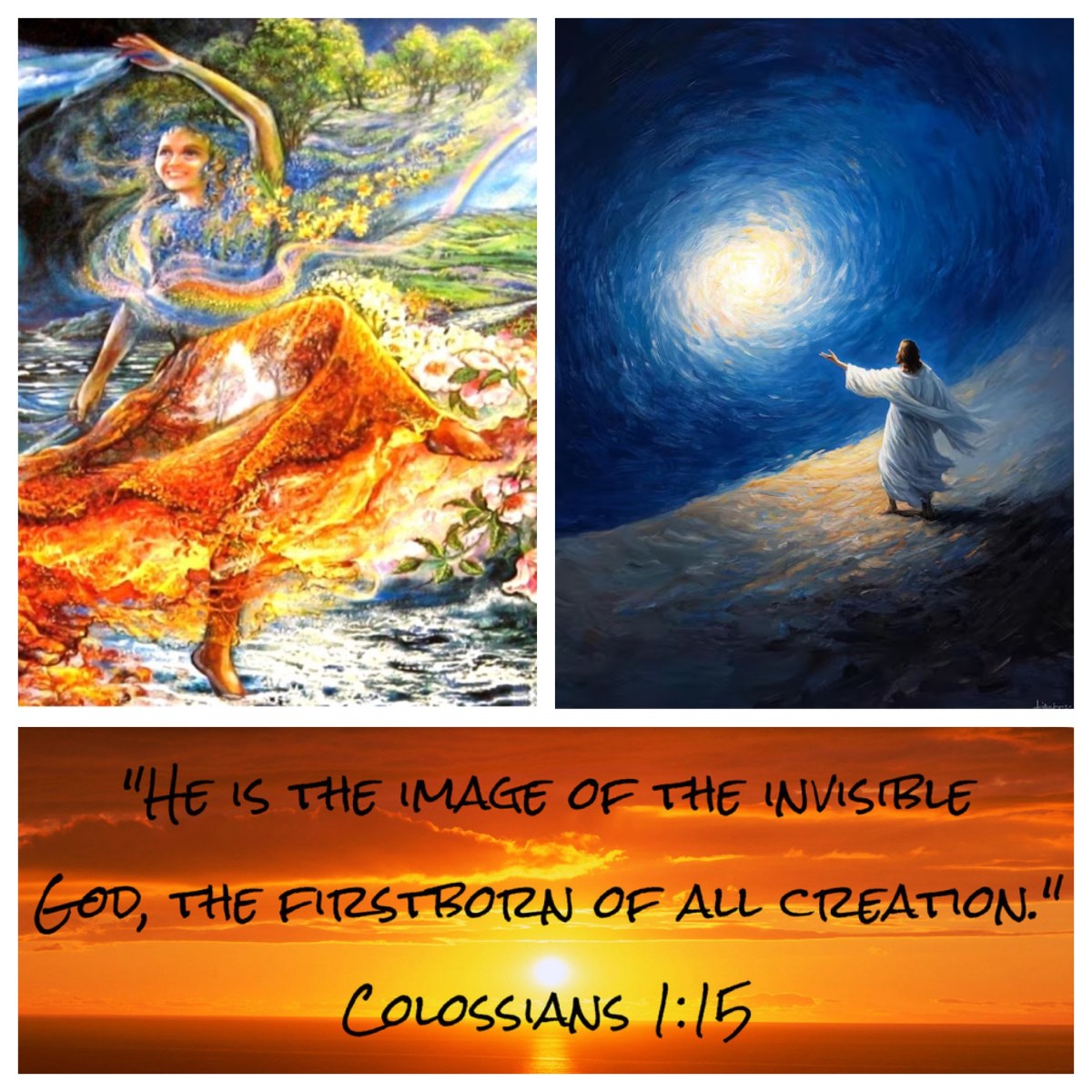
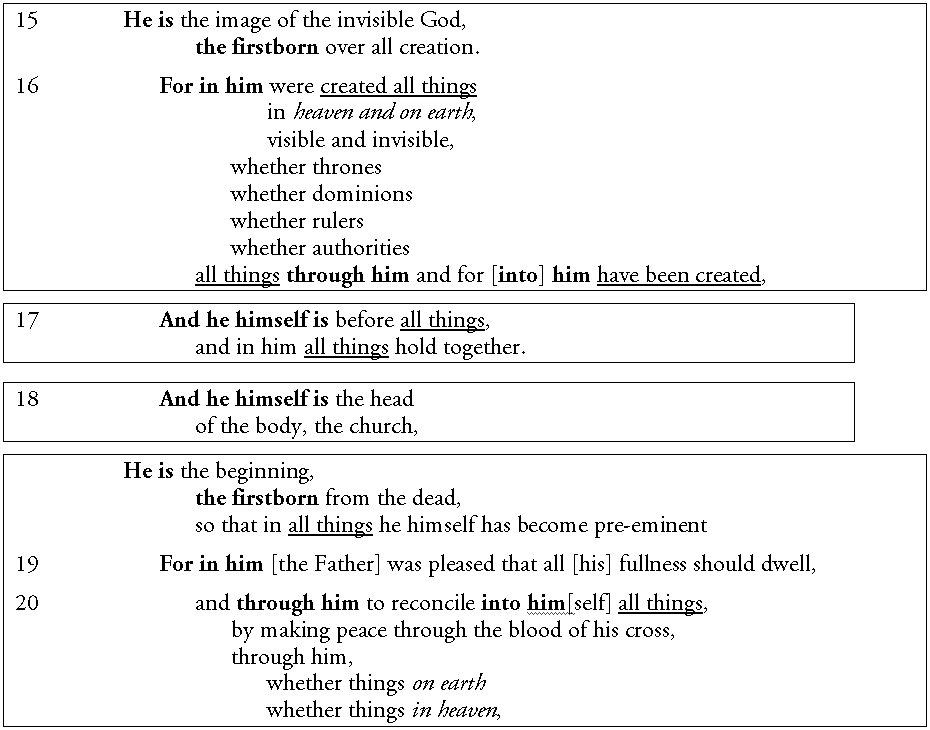


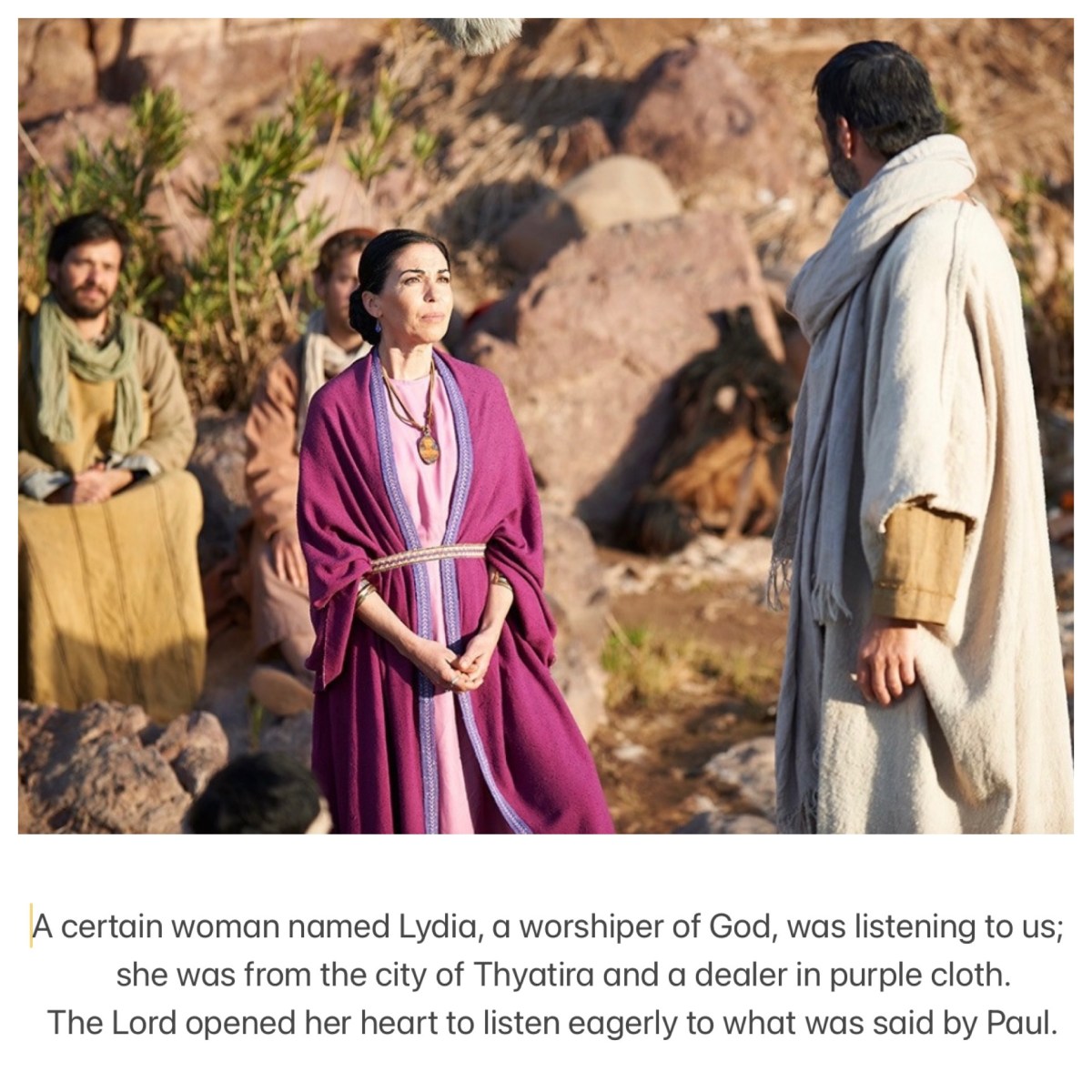
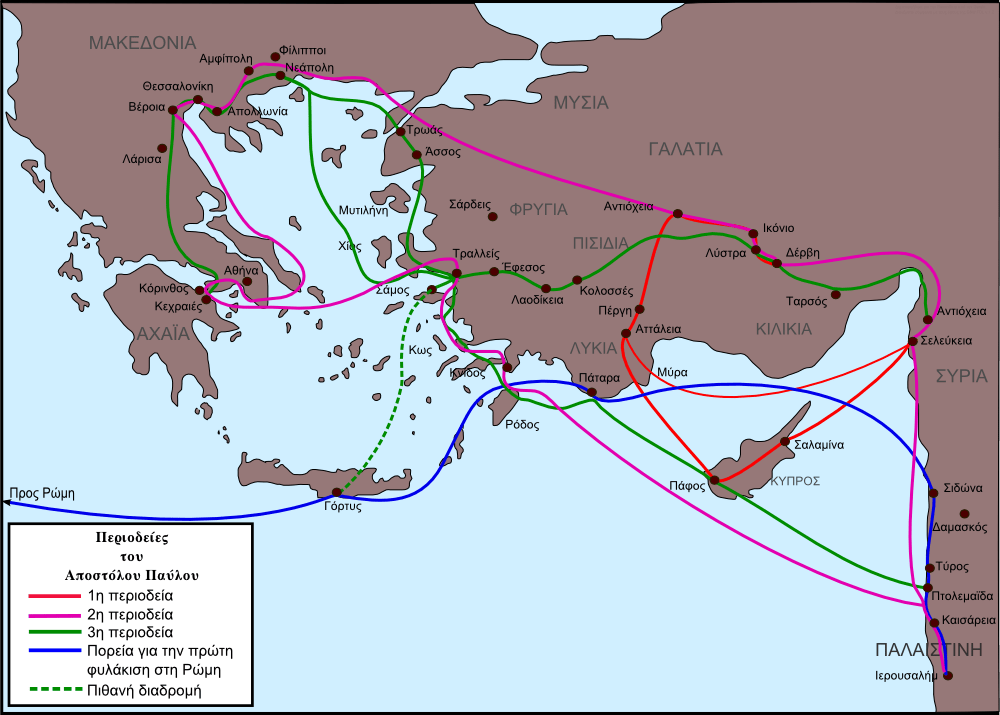
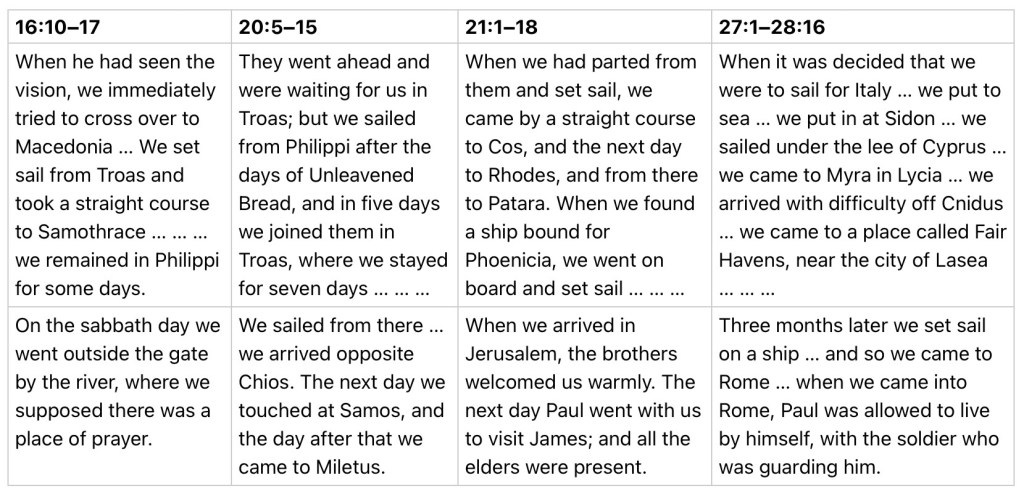
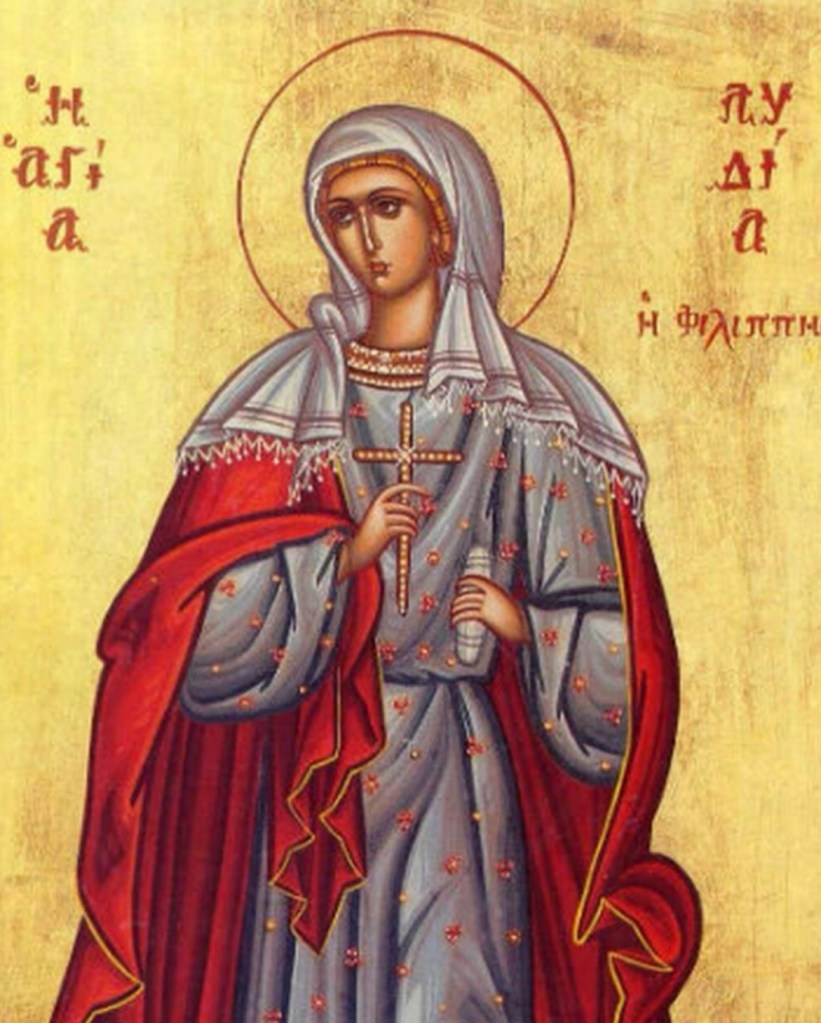
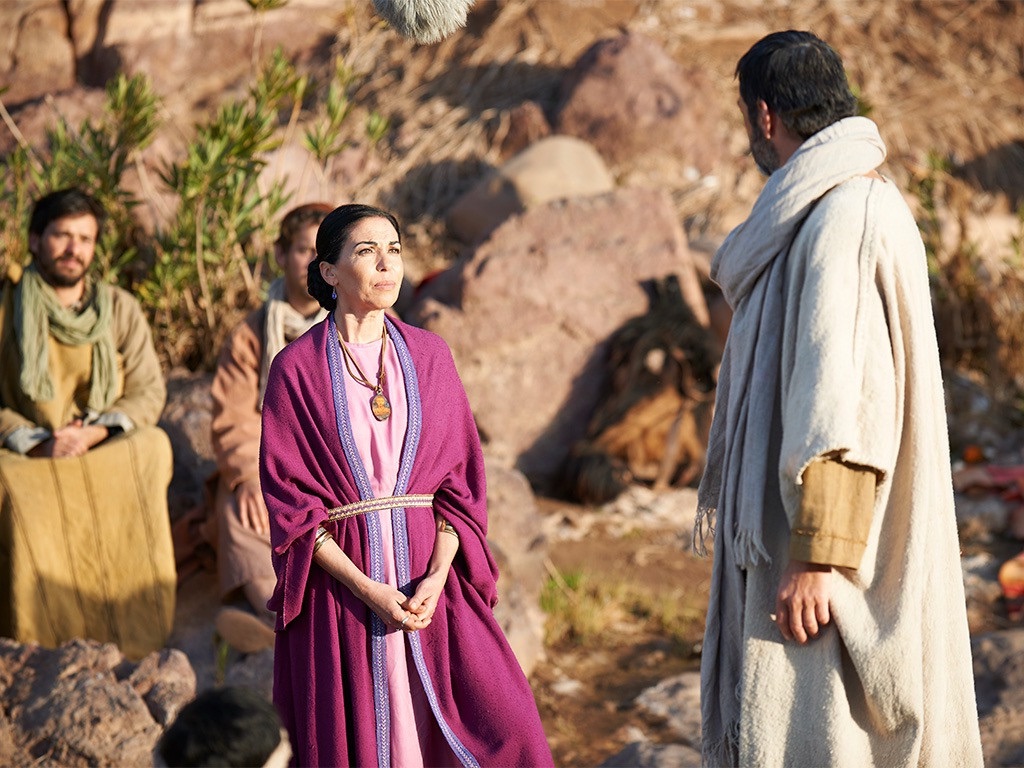
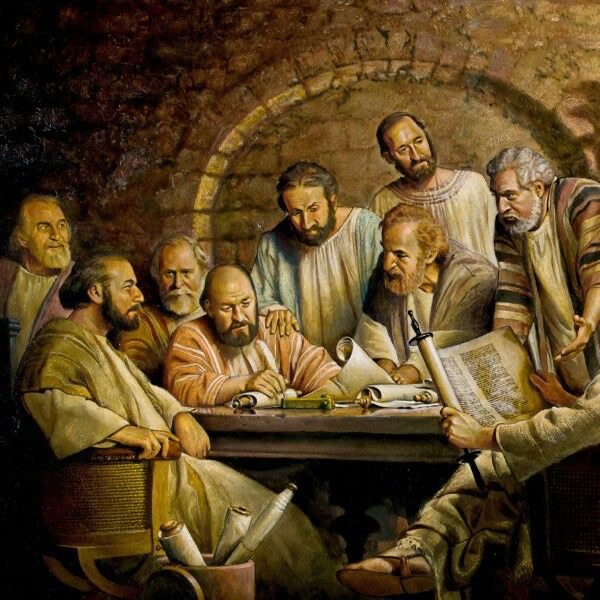

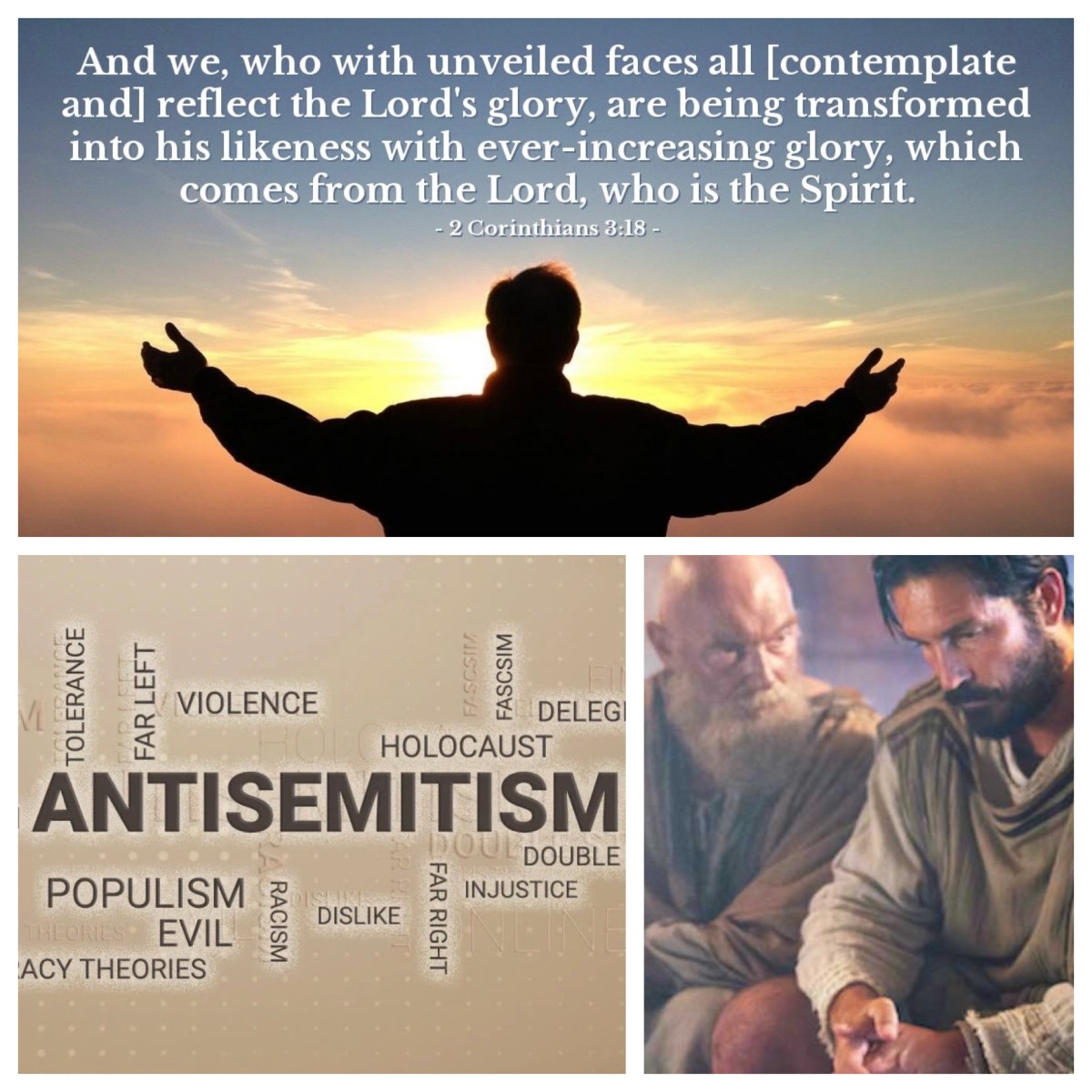

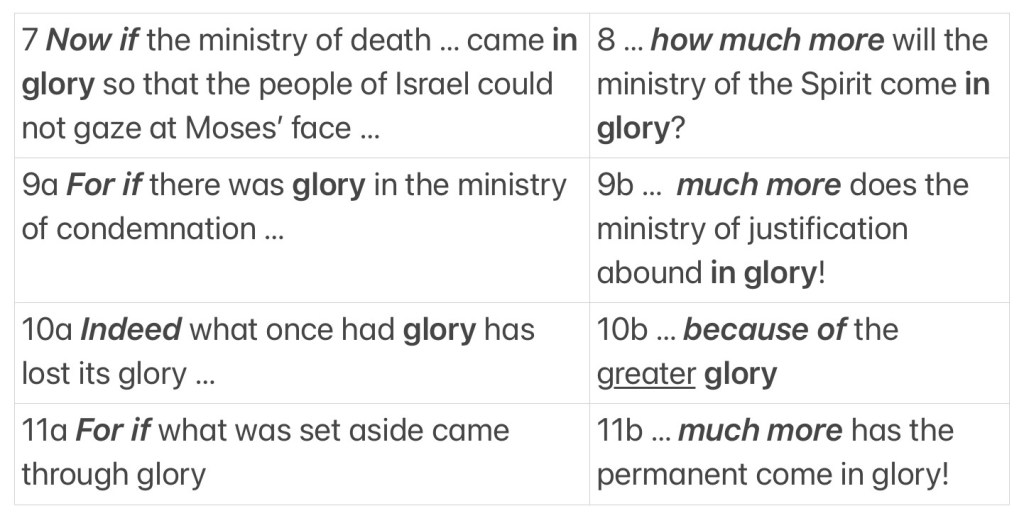

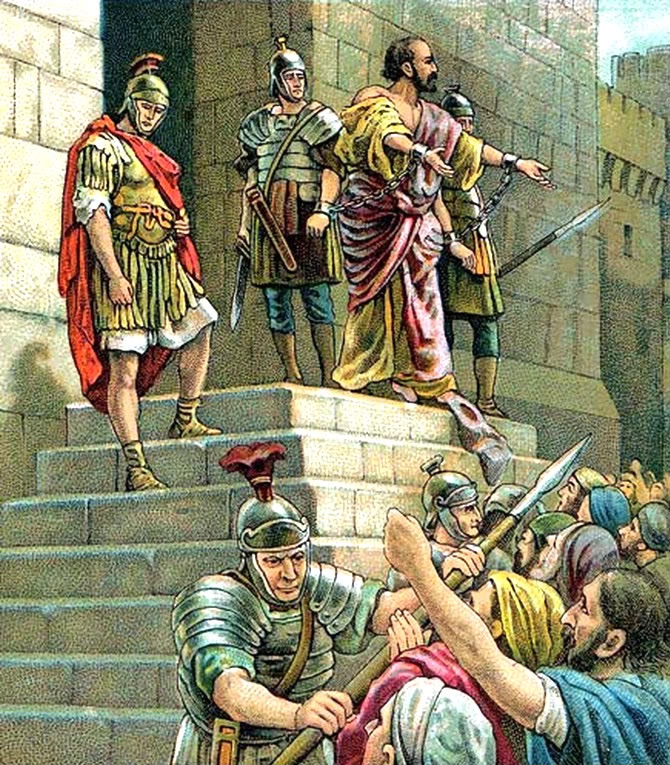
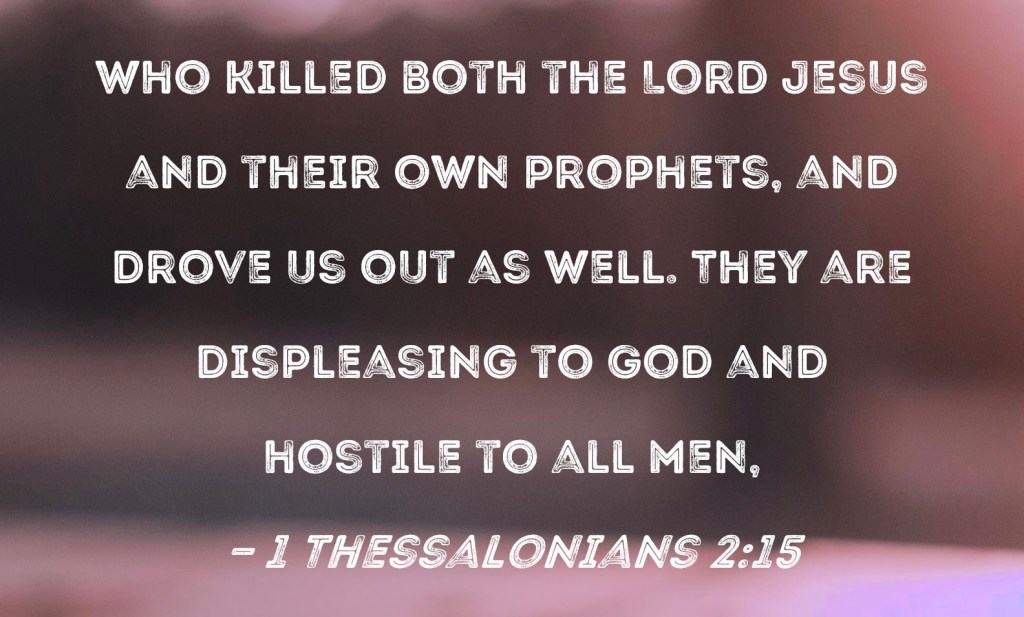
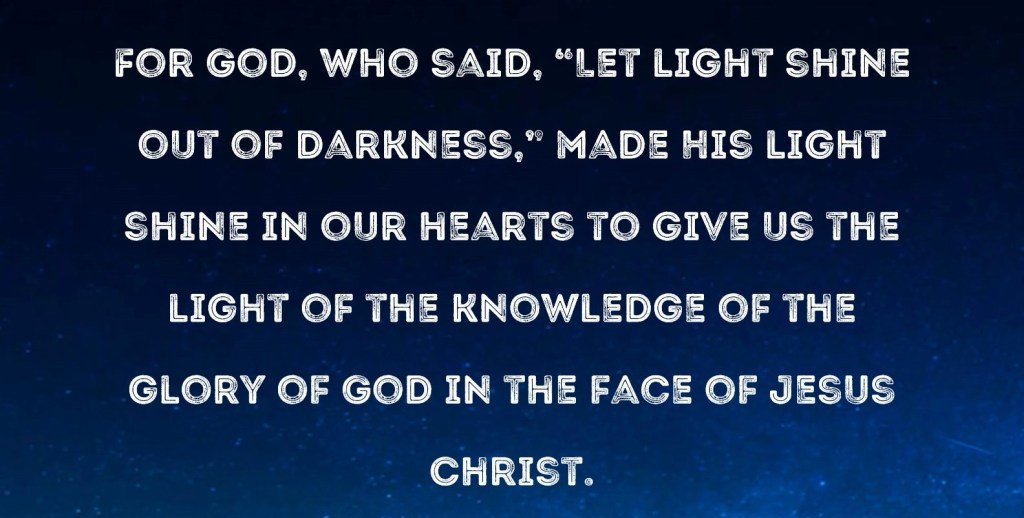

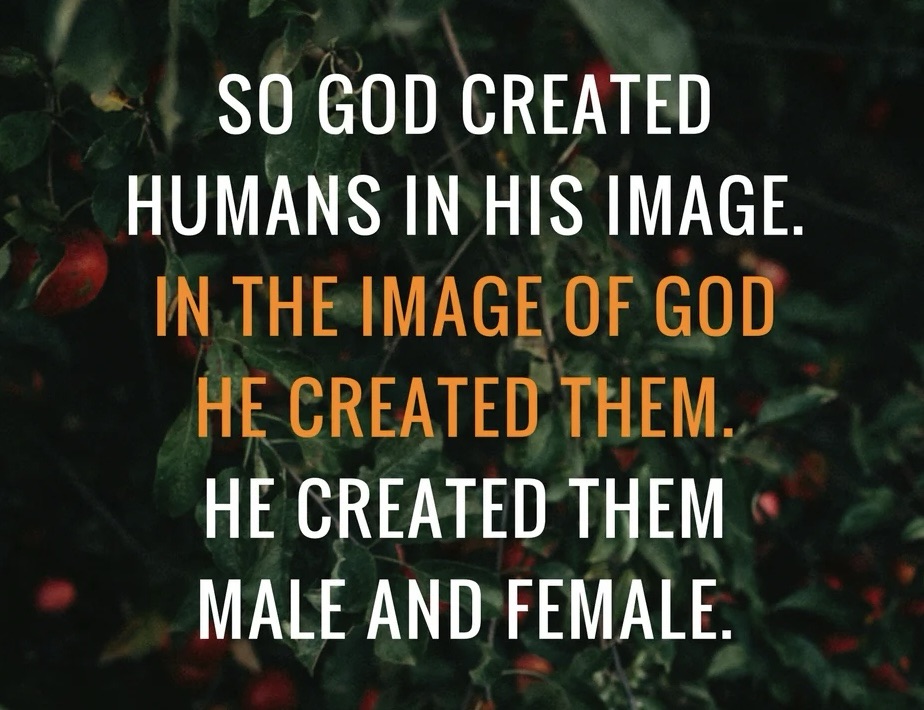
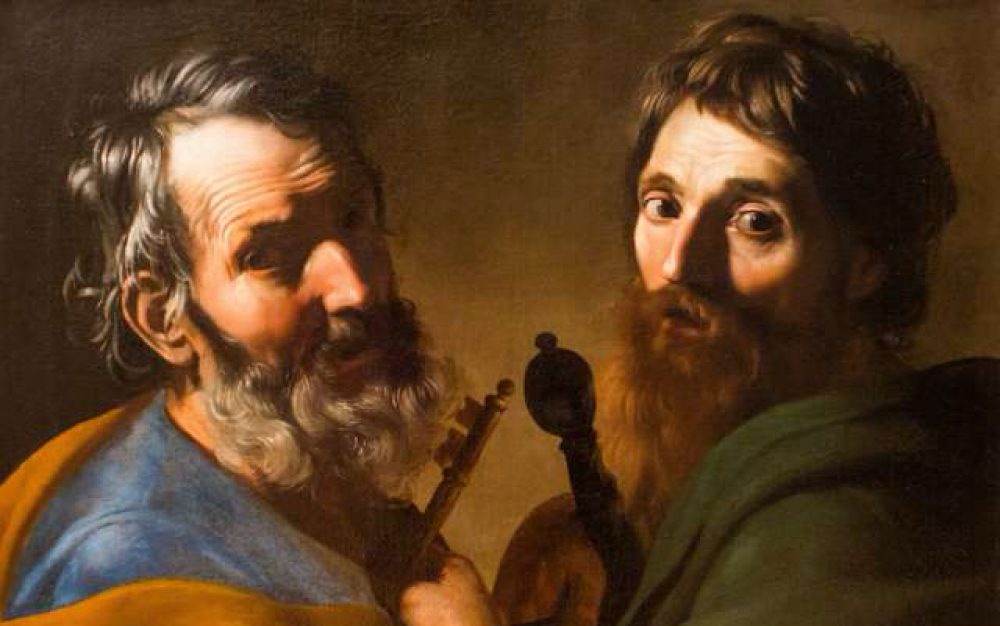
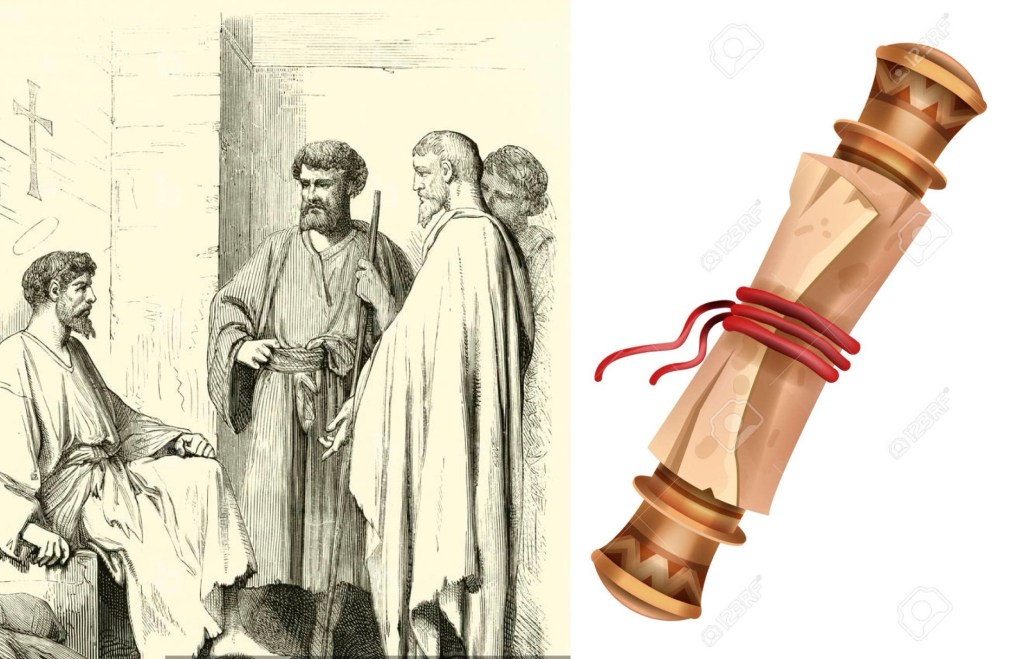

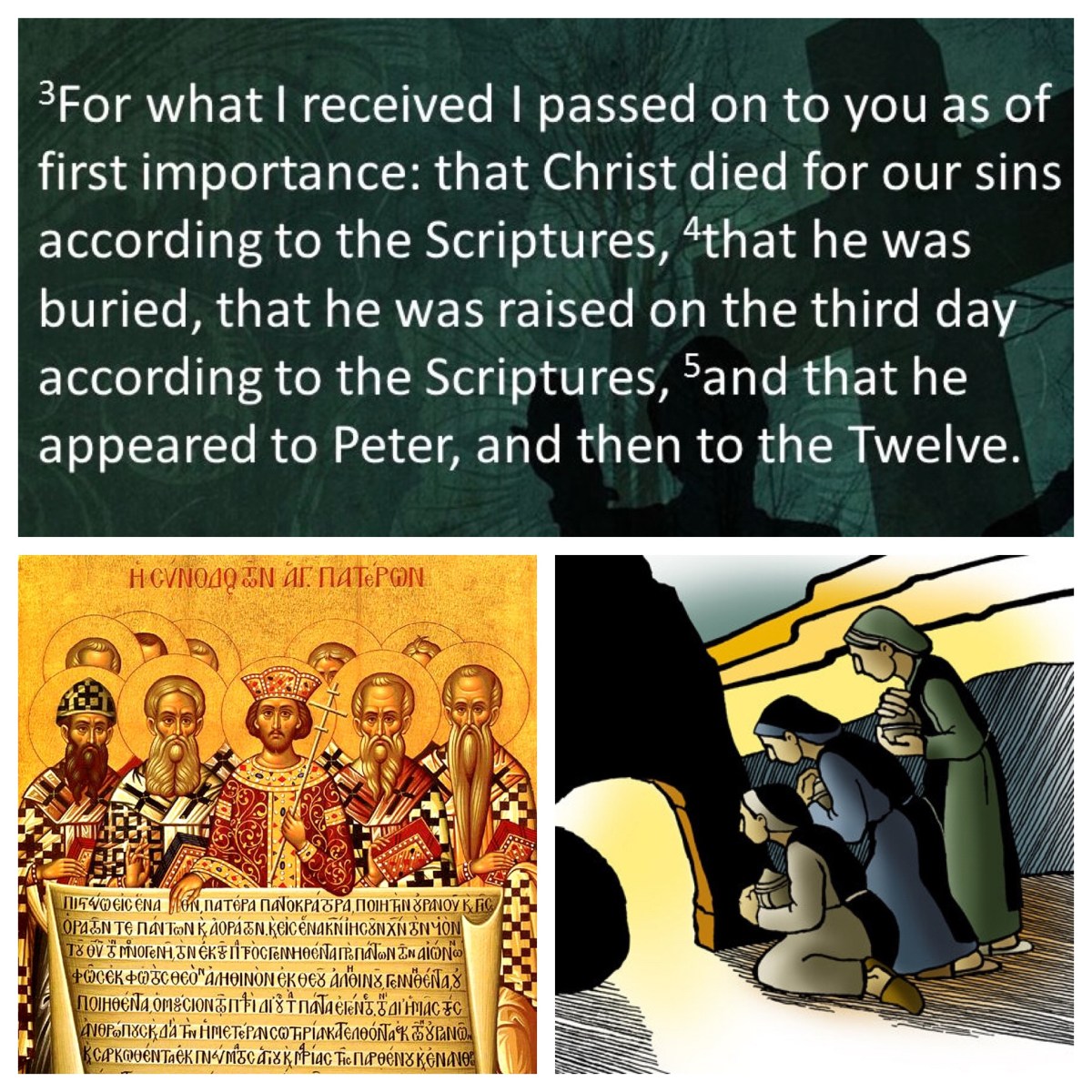
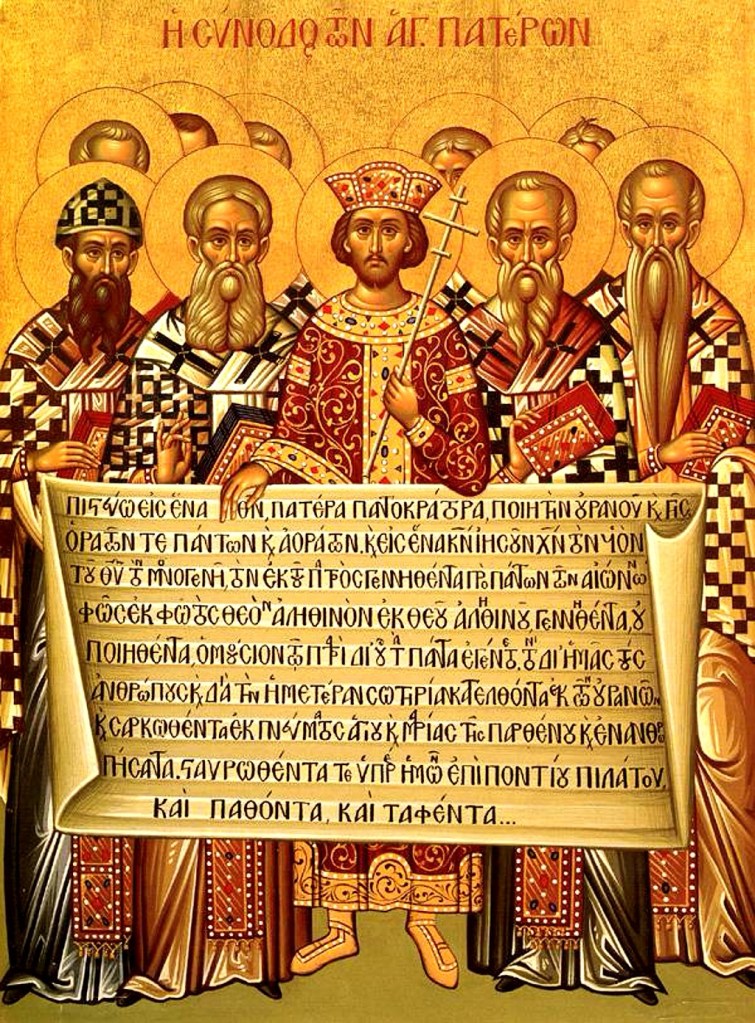
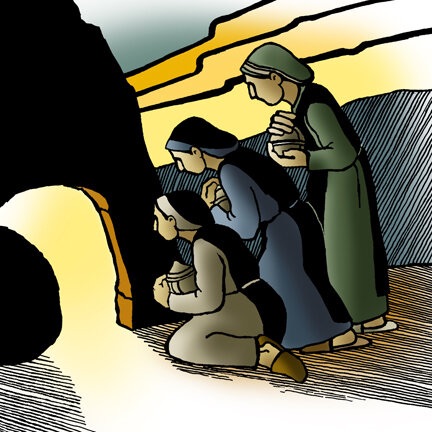



 An Informed Faith