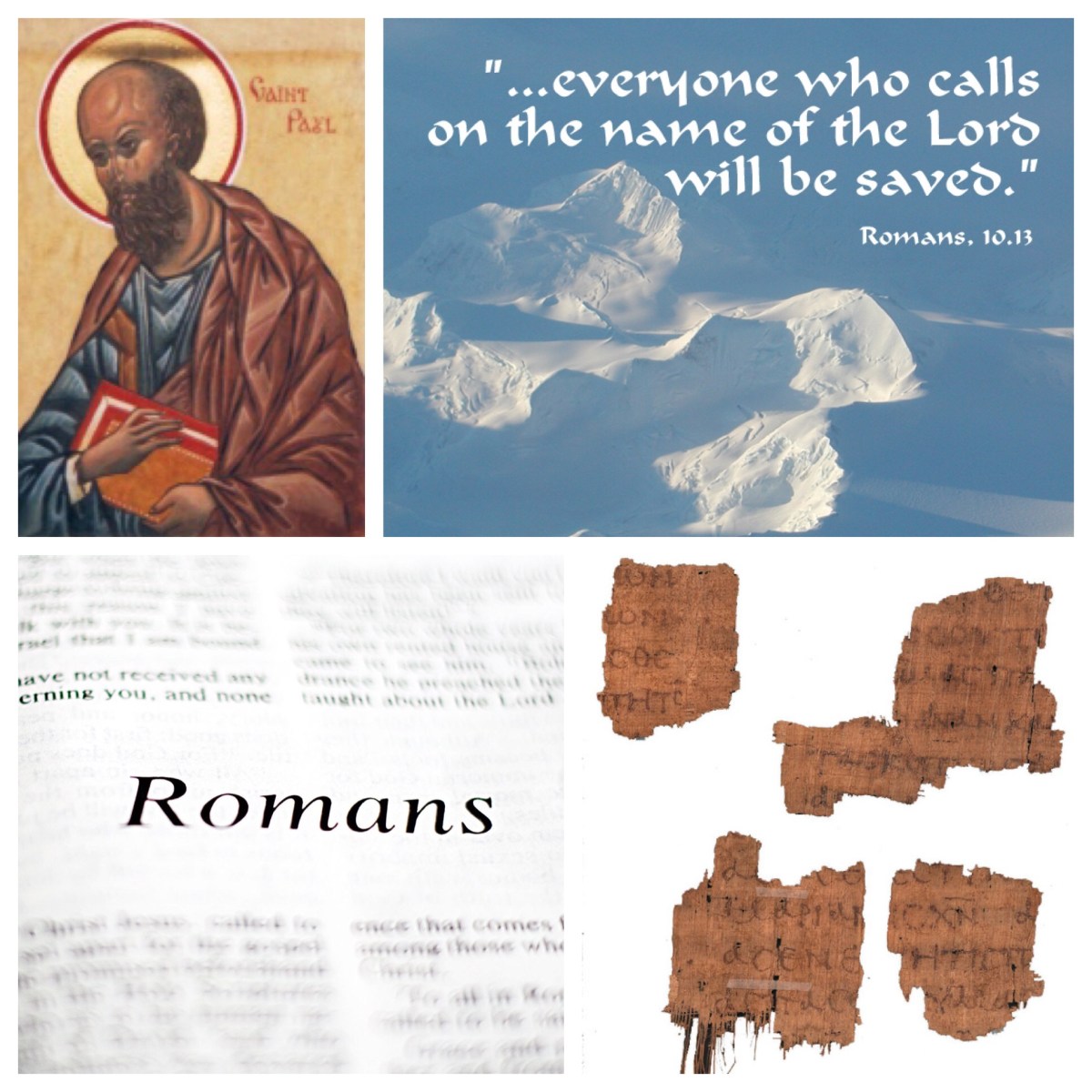
A deeper understanding of God, through dialogue with “the other” (Romans 10; Pentecost 11A)

For there is no distinction between Jew and Greek; the same Lord is Lord of all and is generous to all who call on him. (Romans 10:12)

These words are found in the passage from Paul’s letter to the Romans that is offered by the Revised Common Lectionary, for reading in worship this coming Sunday. They were written long ago, in a different language, to people of a different culture, in a location quite different from where you and I are currently located. How do they speak to us today?

Readers and listeners in the contemporary world have often assumed that in writing chapters 9-11 of Romans, Paul is addressing the issue of Israel and the Church. Jews and Christians. Those of the circumcision, raised on the Law;  and those of the uncircumcision, unaware of the Law.

We assume that this dynamic, familiar to us from the times in which we live, was precisely the dynamic that motivated Paul as he wrote to the Romans, as he instructed them in his beliefs, as he interpreted to them the scriptural proofs, and as he exhorted them in the way to live in response to these beliefs.

But was it? Paul writes in the early days of the church; when charisma, not institution, predominates. He writes when tensions and struggles within the early missionary movement still mitigate against a commonly-held, universally-accepted, consensus of opinion.

Paul writes as the matter of what to do about Gentile believers is still largely unresolved. Some said accept them; others wanted to circumcise them, to judaise them. He writes this letter into that unresolved debate. He writes when some—his opponents, we call them—became vigorous—perhaps violent?—in asserting their viewpoint.

Paul writes well before Gentiles have outnumbered Jews within the growing movement of Jesus’ followers; before the Temple is destroyed; before the city of Jerusalem is declared a Gentile preserve only; before John Chrysostom explodes with vituperative venom against Christians in synagogues; before the Emperor Constantine endorses a thoroughly hellenised, philosophically mature version of faith in God through Jesus Christ. So many changes; so many new layers of meaning from church developments, laid over the earlier texted Paul.

Is this text, then, beyond our reach? Is it impossible to grasp it, to seize it as our own? Is it too alien, too far removed from us? Can it ever be for us the word of God to guide and instruct us? Or despite these difficulties, can we not enter into the dynamic, attempt to reconstruct the reality, and thus appreciate the dynamic of Paul’s ancient words, as they speak to us today?

*******

The issue, I believe, which vexed Paul in these chapters, was that different people made claim that they could access God in strikingly different ways. The Jews had Torah; the commandments of the Law, handed down by Yahweh to Moses on Sinai. The Gentiles had the natural world; the revelation of the deity in creation. The followers of Jesus had a new model of faith; the faithfulness of the Messiah, no less, as the crucial instance of how all human beings might relate to God.

Paul agonises with what this might mean for his understanding of faith. He grew up on the Jewish understanding that access to God was through adherence to Torah, the living of a life in complete harmony with requirements of God’s Law.

Then came a dramatic, unexpected experience. He entered into a new way of relating to God. His “Damascus road experience”, as Luke vividly portrays it, opened up this new vista. To tradition, is added experience. The experience helps Paul to reinterpret his tradition; to shape a new understanding of faith.

But then, a third factor intrudes; Paul is called, and sent, to Gentiles. He preaches the Gospel, and people respond. He establishes new communities of faith—some, provocatively, right next door to synagogues; others, comprising Gentiles who meet in homes. These people, he nurtures. They have access to God; the same God Paul has known as faithful Jew, and as convinced Christian convert. The Gentiles can come to God, without the Law, in a different way from Jews.

Does this mean that the old way is now obsolete? Paul cannot stomach the thought. Indeed, he knows, from the events of his own life, that personal experience can reshape, reconfigure the traditional, “old” way, so that it is not rendered irrelevant, but is infused with new vigour and vitality.

That’s how I understand the controversial statement that Paul makes, in the verse just before our lectionary passage—when he declares to the Romans that Christ is “the end of the Law” (Rom 10:4). The word he chose, translated as “end”, has the sense of “end” as completion, perfection, bringing to fruition, reaching to maturity, arriving at the point of complete fulfilment. That, in Paul’s understanding, is how Christ stands in relation to the Law—not in opposition, but as the pinnacle of fulfilment.

So he cannot give up on the challenge that his success amongst the Gentiles has laid before him: God is working in this way!! But nor does he want to give up on the Jews; for they are chosen of God, and God does not abandon his promise, nor does God jettison his beloved people. So, Paul concludes, both “old” and “new” must cohere together. They each have a part in the overall scheme.

*******

The issue that Paul grapples with, is so very close to the issue that confronts us in our place and time. Australia of the 21st century is a multicutural country. In the last 75 years, 10 million people have migrated to Australia from over 150 different countries. Almost half of the Australian population has at least one parent who was born overseas, and almost one quarter of Australian residents were themselves born overseas.

We are undoubtedly multi-cultural, even if we do not yet realise the full implications of this new reality. As well as this, however, we are also multi-faith. Each country and culture represented in Australia now brings with it its own distinctive expression of its faith. So many people, making so many claims about how they know God, how contact God, how they commune with God.

How do we deal with this new reality? When “the heathens” lived in far distant countries, across deep, raging seas, then the way of stereotype and caricature went unchallenged. But now that they are here, the others in our midst, we cannot dismiss them so easily.

Other people have other ideas about God, other connections with the divine, other ways of relating to the deity. Do we dismiss them all, in a blanket fashion, as ignorant, wrongheaded, blighted by evil? Do we attempt to convince them that what they know is but a shadow of what we know? Do we shrug our shoulders, and say “whatever will be, that’s cool”?

My preferred option is one which I find emerging from texts such as Romans 9-11. Instead of staking out the ground to be defended, another option is to acknowledge that there is a greater reality, beyond our present knowing, transcending human capacity to articulate and systematise. Paul grapples with the issue, and concludes that the answer is, simply, “There is no distinction between Jew and Greek; the same Lord is Lord of all and is generous to all who call on him.”

The unifying factor of God extends beyond the precise doctrines and dogmas of each partisan point of view; the greater reality of God holds in creative tension each of the variant ways of seeking God’s presence. Jew and Greek are united, not by common beliefs, but by the God who shows mercy to each of them alike.

*******

Paul has argued this theme from early in Romans: “all have sinned, yet all are justified by God’s grace as a gift” (3:23-24), “is not God the God of Jews, and the God of Gentiles also?” (3:29), the promise is “not only to the aherents of the law, but also to those who share the faith of Abraham” (4:16), “God has called us, not only from the Jews, but also from the Gentiles” (9:24).

He will go on to push the point in subsequent chapters: “salvation has come to the Gentiles, to make Israel jealous” (11:11), and so, “all Israel will be saved” (11:26); “just as you [Gentiles] have received mercy, so they [the Jews] might receive mercy” (11:30-31); “God has mercy on all” (11:32). Paul’s “God-talk” sounds this consistent theme throughout Romans: God is for all, God has mercy on all, both Jew and Gentile may participate in the full knowledge of God.

Out of the struggle about the particularities of different ways of relating to God, comes the unequivocal assertion that all might be intimately bound with God. The preferred option which Paul adopts is not the rigorous exclusivism of a sectarian antagonist, not the woolly-headed universalism of an unreconstructed liberal, but the engaged and intense dialogue of one who believes both that his won way is right, but that it does not exclude other ways.

Paul offers the pattern of faith in which tradition, experience, and an openness to the insights of the other might come together and shape a new, vibrant understanding of God’s availability to all, of God’s open-armed yearning for each and everyone, of God’s willingness to encompass people of different upbringings, experiences, and creeds, into the one warm embrace.

The Uniting Church has issued a clear statement about relating across religious faiths, under the title of friendship in the presence of difference. See https://assembly.uca.org.au/rof/about/theology and https://assembly.uca.org.au/fipd

*******

To conclude, I offer a reflective meditation. You may wish to use this meditation as a prayer; to join your spirit with the words of the prayer, and lift them to God. Or you may wish to use the meditation as a point of reflection, for yourself, so that you might ponder, without affirming or denying, the sentiments it contains. I invite you, then, you join in meditation; perhaps, in prayer, or perhaps, in reflection.

A Reflection

God has created us all,

and called us together from all the nations of the world,

to be one people—the people of God’s earth.

As Christian people, we regularly offer our prayers

            for one another, as we seek to serve God

            in obedience to the Gospel of Jesus Christ.

In this time of reflection, we remember now

            people who call on God

            in ways which are different from the ways we know:

those who call on God through self-enlightenment;

those who seek to be raised to a higher plane of consciousness;

those who study the Torah or adhere to the Koran;

those who seek to walk a way revealed to them

by teachers and leaders of faiths other than Christianity.

What would it mean for us

            to cultivate tolerance and acceptance of such people?

If we were to gain a deeper understanding

            of the ways they call on God,

might it not enrich our own way of relating to God?

What would it mean for us

            to enter into dialogue with people of other faiths?

We could not relate to them as proponents of a narrow doctrine;

            we would need to meet as servants of one another,

            together seeking the truth of deep faith.

As we speak with one another, and work side by side,

            may it not be in arrogance or pride,

but in such a way

            that God might break through to us in new ways,

so that we may better know

the greater reality of God in our lives.

See also

https://johntsquires.com/2020/07/27/praying-to-be-cursed-paul-the-passionate-partisan-for-the-cause-rom-93/

https://johntsquires.com/2020/07/11/the-best-theology-is-contextual-learning-from-pauls-letter-to-the-romans/

https://johntsquires.com/2020/07/11/the-righteous-justice-of-god-a-gift-to-all-humanity-romans/

https://johntsquires.com/2019/12/19/descended-from-david-according-to-the-flesh-rom-1/
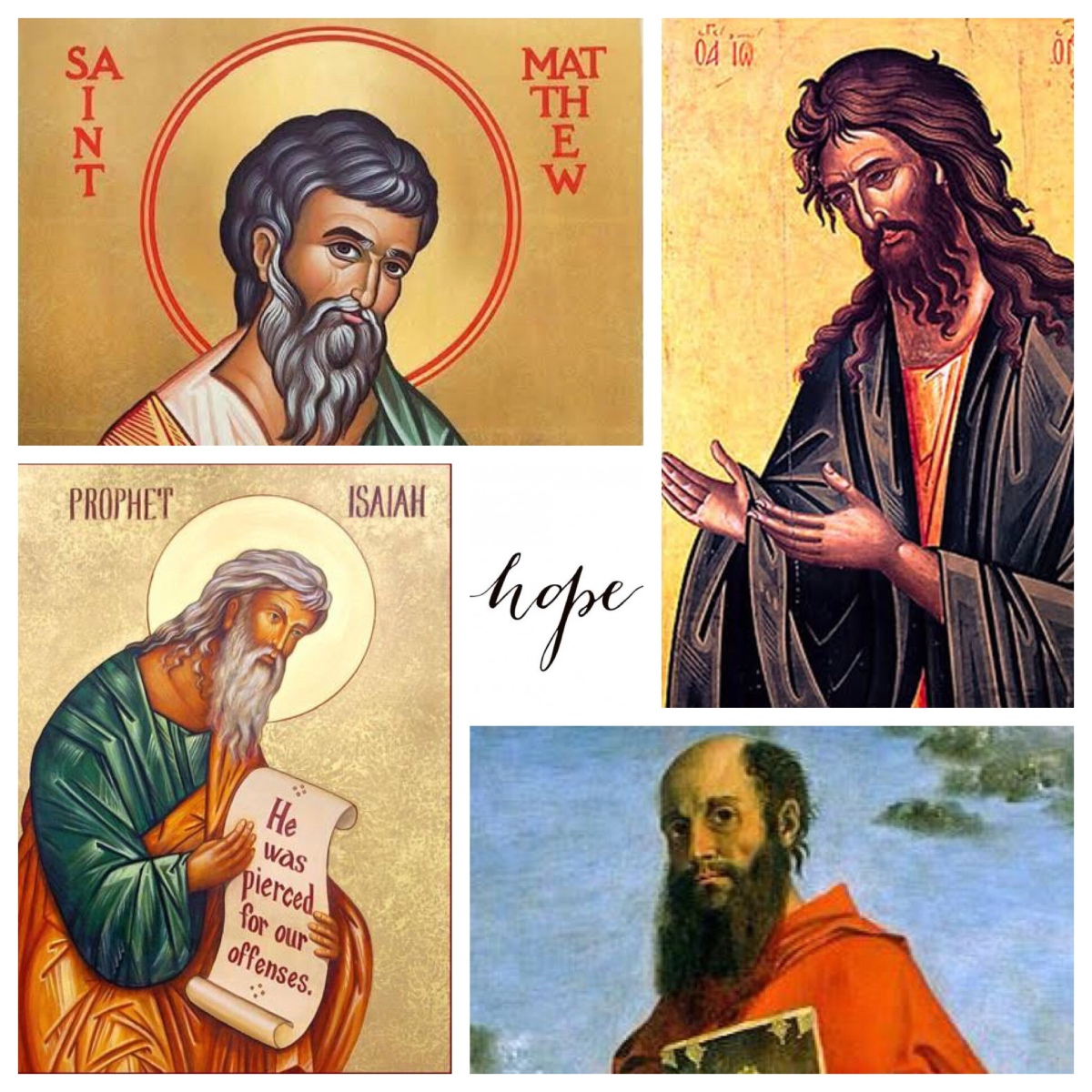
https://johntsquires.com/2019/12/04/for-our-instruction-that-we-might-have-hope-rom-15-isa-11-matt-3/

Praying to be cursed: Paul, the passionate partisan for the cause (Rom 9:3; Pentecost 10A)

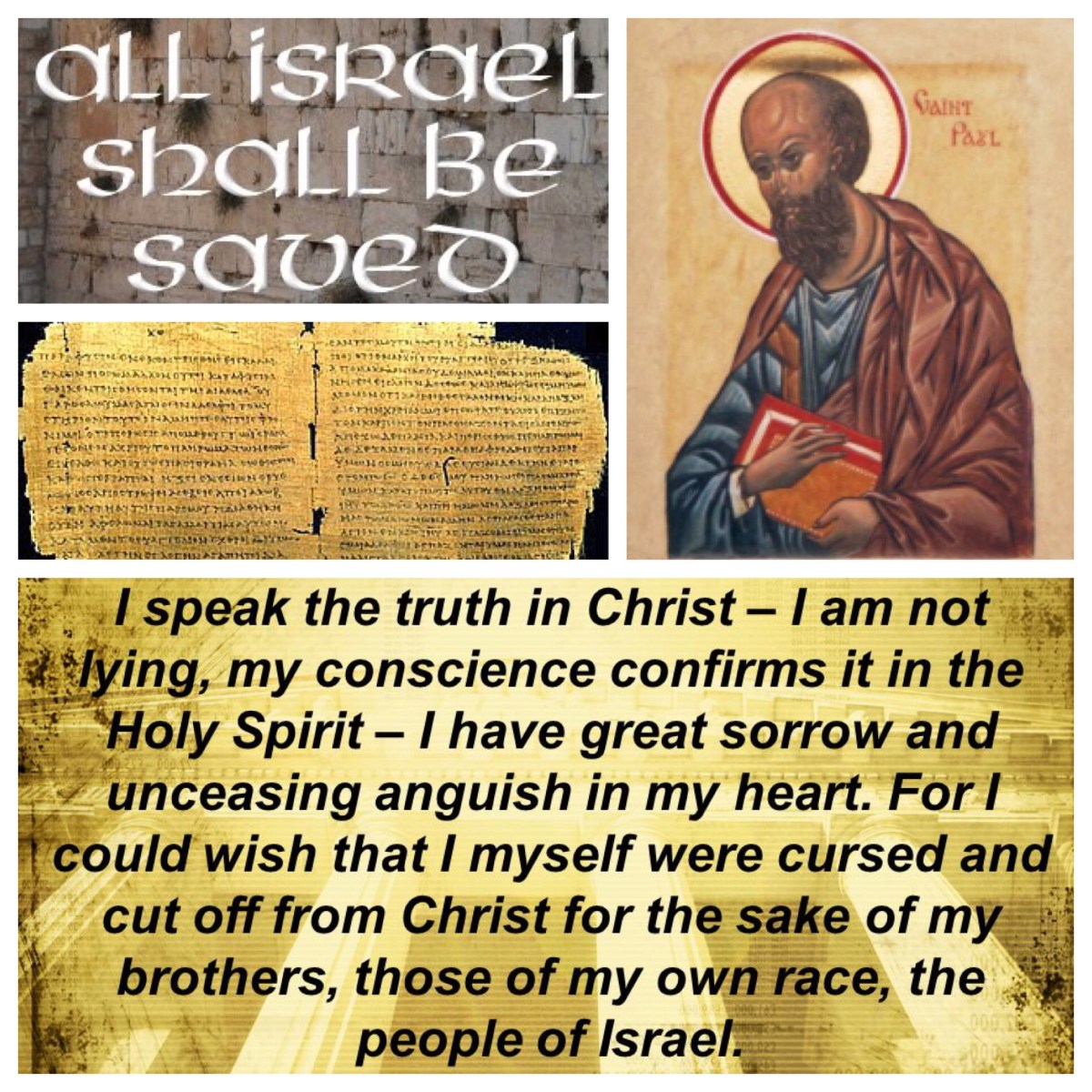
For I could wish that I myself were accursed and cut off from Christ for the sake of my own people, my kindred according to the flesh. (Rom 9:3, NRSV translation)

In his longest letter, written to “all God’s beloved in Rome, who are called to be saints”, Paul mounts a long and detailed case about God’s righteous-justice, made available to those who believe through the faithfulness of Jesus (see Rom 1:16-17, 3:21-26, 4:22-5:2, 5:18-21, 6:17-18, 8:10, 38-39).

The argument is developed, step by step, through the first eight chapters. This argument of the letter comes to a climax in chapters 9-11, from which excerpts are heard in worship this coming week and the two following weeks. In these chapters, Paul develops a tightly–packed argument concerning the place of Israel, and the Gentiles, within the people of God.

Paul placed a focus on the priestly role, that of intercessor, which he was undertaking, when he declared, concerning Israel, that “my heart’s desire and prayer for them is that they may be saved” (10:1). This prayer summed up the central thrust of his extended, and at times convoluted, argument, throughout these three chapters.

What Paul dictates to Tertius (the scribe who writes down what Paul says—Rom 16:22) in these three chapters comes straight from the heart—a heart that yearns to see the full scope of God’s gracious inclusion of people of faith into the kingdom.

Paul is clear about what this means. He believes that “the word of God has not failed” (9:6) and “the gifts and the calling of God are irrevocable” (11:29), so he prays for God to realise the promise that “all Israel will be saved” (11:26, citing psalms and prophetic oracles in support). That’s the universal scope for which he yearns: “all Israel”!

Paul grapples further with this question. Can it be that “God has rejected his people”? (11:1). Paul’s answer is definitive and unequivocal: “By no means!” (11:1).

Is it possible that “they have stumbled so as to fall”? (11:11). Once again, Paul cries out, “By no means!” (11:11), looking to the time of the “full inclusion” of Israel in the eschatological vision (11:12).

Since Israel, the “natural branches” of the olive tree, have been cut off because of their “unbelief” (11:20), their “disobedient and contrary” nature (10:21), are they doomed to remain “cut off” forever? “God has the power to graft them in(these natural branches will be grafted back into their own olive tree” (11:23-24).

And so, the “mystery” which was known to Paul is declared publicly at the climax of his three-chapter argument: “all Israel will be saved” (11:26), “they too may now receive [God’s] mercy” (11:31).

*******

This whole section of Romans is introduced with an astonishingly impassioned petition, I was praying for me, myself, to be separated from the chosen one by means of a curse, for the sake of my own people (9:3). This is my own translation, which differs from the familiar modern English translations at three points.

*** Warning: technical discussion of Greek syntax and translation options ahead ***

First, the phrase “accursed and cut off from Christ” (NRSV, NIV) states more than the Greek text includes; there is no verb “cut off” in the sentence. The NEB offers the concise translation, “outcast from Christ”, which provides three English words for the three corresponding Greek words. However, this ignores the curious order of words in the Greek sentence, which separates anathema, “outcast”, or “accursed”, from the phrase “from Christ”, and places the emphasis squarely on the intervening words, “me, myself, to be”.

Furthermore, the simple preposition apo (from) in the phrase “from Christ” has a force all of its own in this phrase [BAGD 86, meaning I.5, calls this a “pregnant construction”, presumably because there is no verb and the preposition seems to function as both verb and preposition simultaneously, as “separated from”]. Thus, I translate (rather inelegantly) for me, myself, to be separated from Christ by means of a curse.

Second, some modern English translations obscure the reference to prayer in this verse, preferring to use the secondary meaning of the verb euchomai, namely, “wish” (NRSV, NIV, NAB, GNB).

However, the basic sense of the verb is “pray”, and this translation is found in NEB, REB, NJB (cf. JB, “I would willingly be condemned”). This gives the sentence a much more straightforward, direct feel—this is my “prayer”—than the alternative, this is my “wish”—which implies some degree of conditional or hypothetical quality about the content of what is “wished”.

Here, I would argue, Paul was not being tentative, for the context was one of great fervour and passion (“I have great sorrow and unceasing anguish in my heart”, 9:2). He spoke with a high degree of commitment and directness (“I am speaking the truth in Christ, I am not lying, my conscience confirms it by the Holy Spirit”, 9:1). Paul here expresses, not a hesitant, possible wish, but a clear, unequivocal prayer to God. Paul was clearly praying for God to cast him aside, if his desire for his people to be saved is to be achieved.

Third, the imperfect indicative form of the verb euchomai confirms that this was not a hypothetical statement, but a clear expression of a recurrent activity undertaken by Paul in the past. The verb is not in the subjunctive; there is nothing hypothetical here; this is a clear, direct statement. This is what Paul prays for. Repeatedly. Consistently.

Thus, the plain sense of the verse is that, on many occasions prior to writing this letter, Paul had offered a prayer that he might be “anathema from Christ”, that is, regarded as separated from Christ by means of the cursed placed on him, for the sake of securing the salvation of his own people, Israel.

This is a strikingly partisan act, pleading for a desired result and volunteering his own life as a means to that end. It is a description of Paul that figures rarely, if ever, in scholarly analyses of his missionary work; and yet, like the prophetic and priestly functions which we have seen Paul performing, this partisan dimension is an equally valid element to factor into any consideration of Paul’s role, at least as he might have perceived that role.

That he is prepared to be, not with Christ, but to be cursed by Christ, for the sake of his people, Israel, shows a remarkable commitment to, and alignment with, his fellow Jews. He yearns for them to be saved, to be welcomed in the kingdom. He prays to God for this outcome. Paul writes passionately, as a partisan for the cause.

*****

See also https://johntsquires.com/2020/07/20/spirit-and-scripture-in-romans-rom-8/

https://johntsquires.com/2020/07/11/the-best-theology-is-contextual-learning-from-pauls-letter-to-the-romans/

https://johntsquires.com/2020/07/11/the-righteous-justice-of-god-a-gift-to-all-humanity-romans/

https://johntsquires.com/2019/12/19/descended-from-david-according-to-the-flesh-rom-1/
https://johntsquires.com/2019/12/04/for-our-instruction-that-we-might-have-hope-rom-15-isa-11-matt-3/

Sighs too deep for words: Spirit and Scripture in Romans (Rom 8; Pentecost 9A)

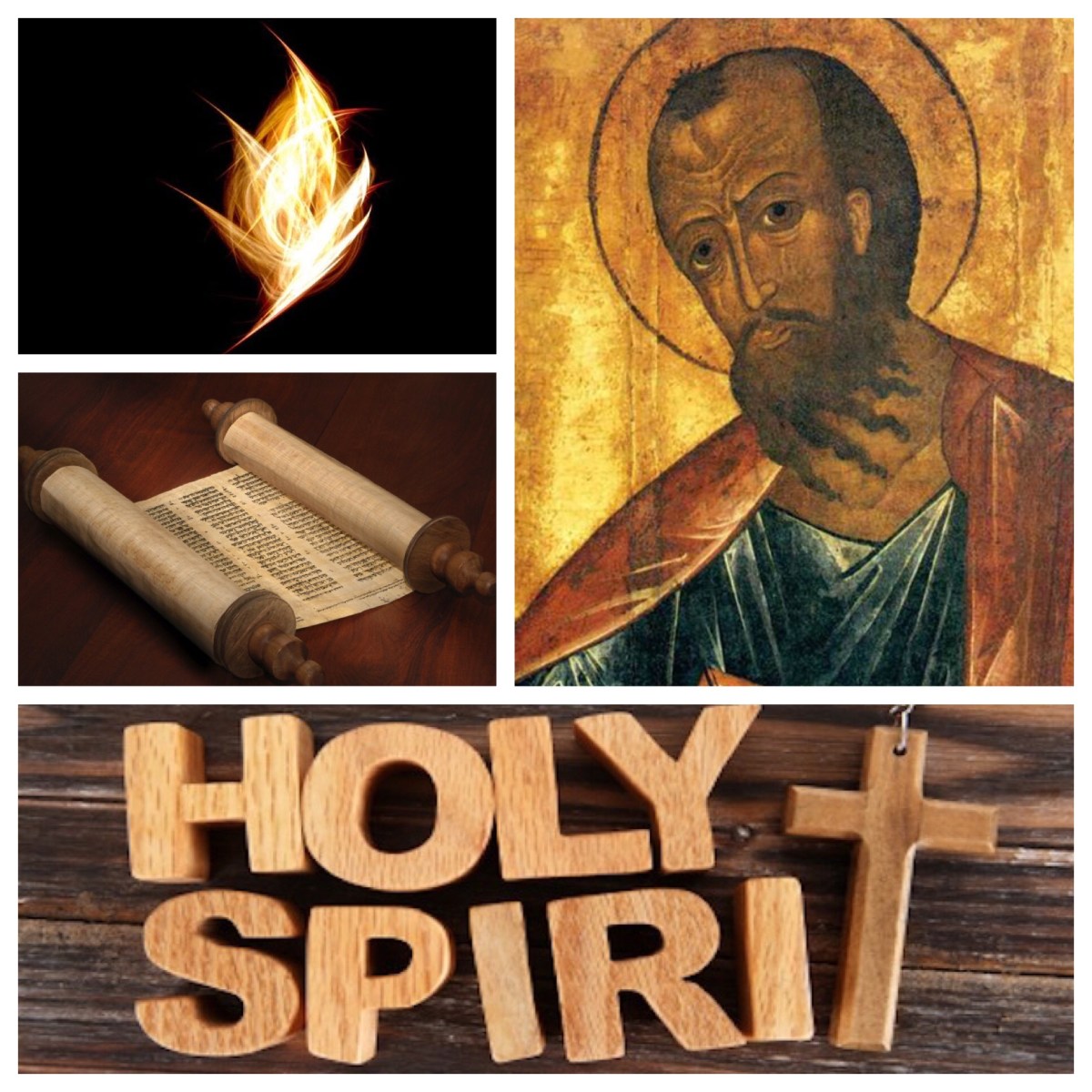
The Spirit helps us in our weakness; for we do not know how to pray as we ought, but that very Spirit intercedes with sighs too deep for words. And God, who searches the heart, knows what is the mind of the Spirit, because the Spirit intercedes for the saints according to the will of God. (Romans 8:26-27)

In his longest letter, written to “all God’s beloved in Rome, who are called to be saints”, Paul places importance in the role played by the Spirit of God. The word spirit appears 32 times in this letter; many of these refer to the Holy Spirit. Some of those instances appear in the epistle section that is set in the lectionary for this coming Sunday, Romans 8:26-39.

This section also contains a quotation from scripture (Psalm 44:22, quoted at Rom 8:36). The whole letter is replete with such scripture quotations—it starts with a programmatic citation about the righteous and faith, from Habakkuk 2:4 (at Rom 1:17), and moves through discussions of the power of sin (3:10-18), the relevance of Abraham (4:7-8), a reflection on the story of Adam (5:12-21), and a consideration of some of the Ten Commandments (7:7).

There is a long and complex discussion of the place of the people of Israel alongside the Gentiles within the plan of God (9:1-11:36, where many scripture quotations are included), further discussion on the place of the Gentiles (15:9-12) and a declaration of the importance of proclaiming the good news (15:20-21). Scripture undergirds the whole of Paul’s argument in Romans.

Paul retains from his Jewish upbringing a sense of the Spirit as a manifestation of divine energy; the Spirit is God’s gift to believers (5:5) and thus the source of life and peace (7:6; 8:2, 5–6). The Spirit, in Hebrew Scripture, breathes over the waters of chaos as God’s primary agent in creation (Gen 1:1-5), gifts the elders appointed by Moses (Num 11:16-25), anoints the prophets (Deut 34:9, Judges 13:24-25, 2 Sam 23:2) and inspires their pointed words of warning (Isa 61:1, Ezekiel 2:2, 3:12, Joel 2:28-29, Micah 3:8, Zechariah 4:6).

The same Sprit plays an important role in the story of Jesus, especially as Luke tells it, from the conception and birth of Jesus (Luke 1:35), through his commission at his baptism (3:22) and temptation (4:1), his public ministry (Luke 4:14, 18; Acts 10:38), through to his death (Luke 23:46).

The Spirit continues to be creatively active in the subsequent outpouring of gifts at Pentecost (Acts 2:2-4, 17-18, 33) and on through the story of the early followers of Jesus: Peter and John (Acts 4:8, 31), Stephen and others (6:3, 5, 10, 7:55), Phillip (8:17-18, 29, 39), Saul (9:17), Peter (10:19, 44-45, 11:15, 24, 28), Paul and Barnabas (13:2, 4, 9, 52), the council in Jerusalem (15:8, 28), and then in Paul’s continuing travels (16:6-7, 19:6, 21, 20:22-23, 28, 21:4, 11, 28:25).

The Spirit is an essential element in the story that Luke tells. Where does the Spirit fit in Paul’s view of things?

Paul imbues the Spirit with an eschatological role—first, the Spirit acts by raising Jesus from the dead (1:4; 8:11) and then by adopting believers as “children of God” (8:14–17, 23). The Spirit is a marker of life in the kingdom of God (14:17). The kingdom, for Paul, remains a future promise, to become a reality within the eschatological timetable (1 Cor 15:23-26).

Paul speaks with passion about how the creation groans in the present time of distress (8:18–23), as believers hold fast to their hope in the renewal of creation (8:17, 21, 24–25; see also 1 Cor 7:28–31). The groaning of creation is an image that connects clearly and directly with the current times.

The impact of COVID19 evokes groaning as we are surrounded by illness, anxiety, loneliness, and death. But this groaning comes also from the earth herself, groaning under the weight of the damaging misuse and destruction wrought by human beings, erupting out now in the rapid and threatening spread of a tiny, potent killer.

The role of the Spirit in this period is to strengthen believers by interceding for them (8:26–27). The Spirit is not to take us away from the realities of the life we live; rather, the Spirit engages us wholeheartedly and fully in the life of discipleship. Paul’s explanation is that the Spirit facilitates the way that we reach out to God, seeking help, for others and for our world. The Spirit intercedes with “sighs too deep for words”. An empathic companionships in the midst of the groanings.

Paul reminds the Romans that they are “in the Spirit” (8:9); this is reminiscent of his guidance to the Galatians to live “by the Spirit” (Gal 5:16, 22–25) and his exposition to the Corinthians of the gifts which are given “through the Spirit” (1 Cor 12:1, 4–11). The understanding of the gifting of believers by the Spirit, articulated in the first letter to the Corinthians, has played a significant role throughout the history of the church over the centuries. The sighs of the Spirit are manifested in the gifts of discipleship.

The life of faith, lived “in the Spirit”, is therefore to be characterised by “spiritual worship” (Rom 12:1). Paul immediately explains that this requires believers to be “transformed by the renewing of your minds” (Rom 12:2). After making this bold programmatic statement, Paul devotes significant time (in chapters 12–15) to spelling out some of the ways in which this transformation might take place.

So, for Paul, the Spirit effects transformation, which then governs the behaviour as well as the words of believers. The Spirit is not simply an internal, mystical, or ecstatic experience; the Spirit is manifest in practical ways in the lives of disciples. The “sighs too deep for words” are wrapped around the focussed attention that scripture requires from believers. And scripture provides resources for grappling with the very issues about which the Spirit groans and sighs.

(We will look further into the function of scripture in this letter in a later blog.)

*****

See also https://johntsquires.com/2020/07/11/the-righteous-justice-of-god-a-gift-to-all-humanity-romans/

https://johntsquires.com/2019/12/19/descended-from-david-according-to-the-flesh-rom-1/
https://johntsquires.com/2019/12/04/for-our-instruction-that-we-might-have-hope-rom-15-isa-11-matt-3/

The righteous-justice of God, a gift to all humanity (Romans; Year A)

Paul’s letter to the Romans is his longest letter, and is widely regarded as the pinnacle of his theological expression. It is closely related to the letter to the Galatians in its central theological concern for righteous-justice, law and faith. We have been hearing excerpts from this letter in worship in recent weeks, and that will continue for some weeks into the future.

The overall structure of this letter is very clear: after the usual introductory formulae (1:1–7) and thanksgiving (1:8–15), Paul declares his theme by means of a scripture citation (1:16–17) which he then expounds in a series of inter–related sections (1:18–3:20; 3:21–4:25; 5:1–7:25; 8:1–39), climaxing in his extended discussion of Israel and the Gentiles (9:1–11:36). Paul then conveys various ethical exhortations (12:1–13:14; 14:1–15:13) before drawing to a close with personal news and a direct appeal to the Romans (15:14–33), an exchange of greetings (16:1–23[24]) and a final doxology (16:25–27).

The opening verses (1:1–7) identify the author and the audience as well as offering a typically Pauline blessing of grace and peace (1:7b). This piece of writing is a contextual enterprise. It is not an abstract or theoretical undertaking. Paul offers words shaped for the situation he is addressing. (See my comments on this at https://johntsquires.com/2020/07/11/the-best-theology-is-contextual-learning-from-pauls-letter-to-the-romans/)

This opening is followed by a thanksgiving for the Roman saints (1:8–15), in another typically Pauline pattern. As Paul reports that he gives thanks for their faith and prays that he may be enabled to visit them, he introduces key elements of the argument. His prayer is oriented firmly towards what he knows of the believers in Rome.

In the body of the letter, Paul expounds a theology of universal righteous-justice, focussing particularly on its implications for Israel and the Gentiles (1:18– 11:32). The relation of Jews and Gentiles was a critical factor in the situation in Rome, as Paul is well aware.

First, he explores the nature of the human condition (1:18–3:20). This is based on keen observation and reinforced by a string of scripture citations (3:10–18).

Next, he considers the roles played by Jesus and the Spirit in making the righteous-justice of God available (3:21–8:30). The argument builds and develops, demonstrating how God has chosen to make righteous-justice available to all human beings, through Abraham as through Jesus, by means of the indwelling Spirit.

This was a critical issue for the diverse communities of believers in Ancient Rome—a city with inhabitants from all points of the Empire which had been conquered by the powerful Roman army, and which lived under the imposition of Roman governance. Many traders, artisans, merchants, and slaves in the city had come, willingly or by force, to this city. The gatherings of believers in the city reflected this diversity. The claim that the righteous-justice of God was available to all these people was an important aspect of the early Christian gatherings.

So, to conclude this section, in the midst of a string of climactic rhetorical questions, Paul erupts into a poetic acclamation of “the love of God in Christ Jesus our Lord” (8:31–39). That was indeed good news for all those in Rome who heard this message.

Immediately, Paul plunges into a complex reading of scriptural texts in order to sanction the claim that God’s sovereign mercy offers a universal righteous-justice, both to Jews and to Gentiles alike (9:1–11:32). This section, again, is contextually relevant, as the names of believers of Rome to whom Paul sends greetings, in chapter 16, reflect both Jewish and Gentile people.

This critical section comes to another fulsome doxological climax in the joyously prayerful affirmations concerning God’s “riches and wisdom and knowledge”, leading to the attribution of glory to God forever (11:33–36). This is the ultimate response to the singular grace of God’s gift of righteous-justice to all human beings. All those I; the house churches of Rome who heard this section of the letter would surely have rejoiced in the extravagant abundance of God’s grace towards them!

The subsequent consideration of ethical matters (12:1–15:33) covers a range of issues, introduced with a general statement about the need to live in accord with the will of God (12:1–2). Much of the first part of this section (12:1–13:14) contains traditional ethical teaching: a string of pithy proverbs (12:9–21) and short reflections on loving one another (13:8–10) and living honourably (13:11– 14); a truncated reflection on the image of the community of faith as a body (12:3–8); and discussion of responsibilities towards the governing authorities (13:1–7). This last section seems particularly pertinent for the city which was the administrative centre of the dominant empire of the time, at least in the Mediterranean region.

This ethical section continues (14:1–15:13) with an extended reflection on the ethical dilemmas posed by differing views in the community about what foods should be eaten. Once again, this section of the letter is strongly contextual: it reflects the situation in the city, and for the people of the various groups of house churches, for whom this was a live issue. There were different points of view; the believers needed to show respect to one another in the midst of these different views.

This section climaxes with a clear call to inclusiveness (15:2, 5–6, 7) supported by a string of scripture citations (15:9–12). Paul concludes this section of his letter with a reminder of his planned visit to Rome (15:14–29) and one last exhortation (15:30–32), before offering a brief blessing of peace (15:33). Once again, the contextual nature of the letter is clear.

The letter ends with an exchange of greetings, in the course of which Paul identifies quite a number of the believers in the various house churches that existed in a Rome, before he reiterates some last–minute instructions (16:1–23).

Then Paul offers a further blessing (16:20a; and some ancient versions added another blessing as verse 24). The letter concludes in high liturgical style with an exalted doxological formula (16:25–27), an ending most likely added by a later editor of the letter, in which some, at least, of the central motifs of the letter are reiterated.

From this survey of the contents and the form of the letter, we can see how focussed the argument is on the righteous-justice of God, a central element in how Paul understands the Gospel, and how relevant that message was for the diverse groupings of people who had come to recognise Jesus as Lord and who were committed to following him as faithful,disciples in their daily lives.

As God’s gift to humanity, this righteous-justice invites and enables all people to enter into covenant relationship with God, and thus to shape relationships with each other that are accepting and hopeful. That message was powerful in the ancient Roman context. It retains that potency in the contemporary world, where diversity can fuel tension and conflict. In this context, the good news offers hope and invites reconciliation, in celebration of God’s wide expanse of gracious inclusion.

See also https://johntsquires.com/2018/12/07/to-articulate-faith-contextually/

Paul’s vision of “One in Christ Jesus” (Gal 3:28) and the Uniting Church

A sermon on the anniversary of the Uniting Church (for the Project Reconnect resource)

Galatians 3:23–27

On 22 June every year, across this continent, people gather to celebrate the formation of the Uniting Church in Australia. Today, rather than address the passages set in the lectionary, I want to turn to a section of one of Paul’s letters, from our New Testament. It’s from the latter part of chapter 3 of his letter to the church in Galatia.

It is good to have this passage as our focus. It speaks to who we want to be, together, as the church. It is a word for our times. In fact, I think that this passage could well express the fundamental calling of the Uniting Church.

Paul’s letter to the Galatians was written in the midst of an intense and ferocious debate within the early movement that had been started by Jesus. It was a time of great transition. Things were changing. Old practices were being challenged. New practices were being proposed.

In Galatians, those who advocated Circumcision came under criticism. In that place, as in many other places where the good news of the Jesus movement had been proclaimed, baptism was being proposed as a new ritual, to mark the new faith of the growing numbers of the followers of Jesus.

The argument about circumcision has behind it the issue as to how much, or how little, of the Jewish Law should apply to believers within that movement – those whom we now call the early Christians. This was an incredibly contentious issue at the time, which caused much dispute. Galatians is a letter that was created in the heat of this intense debate; so, at many points, it bears more evidence of rash fury than it does of considered reflection.

Paul’s language in Galatians is ferocious. He accuses the Galatian believers of being fools who have been bewitched by deceivers; he accuses them of biting and devouring one another; he criticises them for urging Gentile converts to be circumcised and to adopt full adherence to the Torah. This is no gentle, reflective spiritual meditation; this is full-on partisan polemics!

And yet, right within the midst of this turbulent flow of argument and disputation, we come across comments that provide cause for reflection; ideas that do invite deeper consideration; insights that do offer the opportunity for spiritual growth to those who would read, ponder, and reflect.

One of these passages is just two well-known verses from the third chapter of this letter: “As many of you as were baptized into Christ have clothed yourselves with Christ. There is no longer Jew or Greek, there is no longer slave or free, there is no longer male and female; for all of you are one in Christ Jesus” (Gal 3:27–28).

Here, Paul sets out a vision for people of faith; a vision for believers within community; we would say, a vision for the church. It could well be our central mission statement, as the Uniting Church in Australia, for we so much value grace-filled inclusiveness, we so strongly reject divisive and judgemental stances, we so yearn to live in accord with this grand vision, where all belong to a welcoming and loving community.

The vision of the church for Paul is one of harmony, concord, unity. Paul envisages great changes within the community of faith, because of Jesus. If the reality failed to achieve this change, nevertheless the vision stood firm; Paul envisaged a community that would bring together strikingly disparate opposites.

In this community, the religious differences of Jew and Gentile would matter no more; the different levels of social status, of people living in freedom and those serving as slaves, would become irrelevant; and the societal roles and expectations associated with the gender of a person —  male or female – would no longer function as dominant. These three conditions of difference would melt away, within the community of faith, into a cohesive unity of co-operation and interconnection. This was a huge change to took place all those centuries ago.

Indeed, as we ponder these three key instances of the way in which difference would disappear, we might even push it further: is this vision not simply one for the church, but even one for society as a whole? Might it be that the vision, the hope, which Paul set out in his letter to the Galatians, could be brought about within the patterns of living and relating right across his society? Was Paul passionate, not only about partisan points of religious practice, but also – and more significantly – about visionary ideals for human society as a whole?

“There is no longer Jew or Greek, there is no longer slave or free, there is no longer male and female; for all of you are one in Christ Jesus” – this unity within the church might well become a model for harmony within society. Certainly, that is the way that the church has interpreted this statement in the centuries since Paul wrote it.

The church of the late first century continued the battle begun in the time of Paul; over time, Jews and gentiles were equally welcomed within most of the faith communities of the ancient world.

The church of the Enlightenment was at the forefront of the movement to end the slave trade, to enable black Africans to live unhindered by white masters seeking to profit from selling them as slaves.

And the western church from the later part of the 20th century has been active alongside many other community organisations to ensure that the opportunities available to women were not less than those available to men.

In each of these battles, the church at large has understood Paul’s words to the Galatians to be words for both the church, and for the society as a whole. It is a grand vision. May it be a reality for you, in your community of faith, and amongst the people of the place where you live, sleep, eat, work, and rest.

“There is no longer Jew or Greek, there is no longer slave or free, there is no longer male and female; for all of you are one in Christ Jesus” (Gal 3:27–28).

+++++++

Some questions to consider:

What did you find to be the most significant idea in this message?

Can you describe a time when you experienced the “unity in Christ” that Paul wrote about?

In what way does your congregation today model the vision of inclusive acceptance for all that Paul wrote about?

In what way might you be able to show that vision to the people where you live, sleep, eat, work, and rest?

To read more on the distinctive contributions of the Uniting Church to Australian society, you may wish to read my blogs at https://johntsquires.com/2019/06/18/the-dna-of-the-uca-part-i/ and https://johntsquires.com/2019/06/18/the-dna-of-the-uca-part-ii/

See also https://johntsquires.com/2018/08/15/what-i-really-like-about-the-basis-of-union/ and https://johntsquires.com/2018/08/20/alongside-the-basis-of-union-there-was-the-statement-to-the-nation/

“Greet one another” (2 Cor 13). But no holy kissing. And no joyful singing. (Trinity Sunday A)

“Finally, brothers and sisters, farewell. Put things in order, listen to my appeal, agree with one another, live in peace; and the God of love and peace will be with you. Greet one another with a holy kiss. All the saints greet you.” So the second (extant) letter to the Corinthians ends (2 Cor 13:11-12).

“Greet one another with a holy kiss” is also how Paul instructs the Corinthians in his first letter (1 Cor 6:20), as well as the Thessalonians (1 Thess 5:26) and the Romans (Rom 16:16). (The same instruction appears at 1 Peter 5:14). These five verses all indicate that first century worship was not just sitting formally and watching what went on at the front; it was interactive, engaging, personal.

What do we make of this instruction to kiss one another? Many people in churches that I know have interpreted “holy kiss” to mean “warm handshake”—so the “passing of the peace” has been shaking hands with as many people as possible in the Congregation. In some smaller gatherings, even, making sure that you shake hands with everybody present!

Well, not any longer. No more handshakes—not in church, not at the door after the service, not anywhere in society. COVID-19 has put paid to shaking hands for quite some time yet.

Other people have take a more literalist line of interpretation. A kiss means, well, a kiss! If not a lip-to-lip kiss, then, at least, a lip-to-cheek kiss. Yes, I have been in church gatherings where my hairy unshaven cheeks have been kissed. And even, when my hairy-encircled lips have planted a kiss on the cheek of another worshipper. I confess.

But not any longer. No more person-to-person contact; especially not any contact that involves the lips! COVID-19 has put paid to the socially-approved form of public kiss, for quite some time yet—if not forever.

One of my colleagues, Sarah Agnew, suggests that the best way to translate the reference to a “holy kiss” in these five verses, is by referring to a “holy embrace”. That understanding is premised on the fact that the Greek word which is translated as “greet” in these texts, contains elements of making personal contact which are both interpersonal (greetings) and also physical (the word can be used to signify hugging or embracing). See https://www.academia.edu/28243257/A_call_to_enact_relationships_of_mutual_embrace_Romans_16_in_performance

Given that, then, on each of the sixteen times that Paul instructs for greetings to be given to named individuals in Romans 16, he may well be saying something like, “give them a hug from me”. Such relationships were personal and intimate.

This rendering takes us to the heart of community—and to the centre of our practices during the current situation with COVID-19. The ancient practice clearly envisaged that physical contact was involved. The current situation proscribes any form of physical contact. It is just too risky.

Physical contact, in the intimacy of either a kiss (on the cheek) or an embrace (with the upper body), is now, we are told, not advisable, given the way that infectious diseases such as COVID-19 (or, indeed, the common cold—which is itself a form of a coronavirus) are spread.

How do we reconcile these current guidelines with the scriptural injunctions? Do we ignore current guidelines (and keep on meeting together) because “the Bible says…” ? Or, do we turn away from strict biblical teaching (and stop our gatherings), because of contemporary concerns about the pandemic?

Of course, we do not put our heads in the sand. We acknowledge the sense in the guidelines being proclaimed across society. We listen to those with expertise in infectious diseases and medicine. We refrain from physical contact. No kissing. No hugging. No handshakes. We look for alternatives to signify that we are greeting one another.

We aren’t yet meeting in person for worship. It will be some time before most Congregations are able to do this. But when we eventually do begin to worship in person, and it comes time to pass the peace, we might face the other person, place our right hand over our own heart, and say, “peace be with you”. That avoids direct physical contact, but incorporates a direct visual interaction.

Another option would be to clasp our hands together and place them in front of our chest, in the “praying position”, and then, as we face each other, bow in greeting.

A third option—one perhaps only utilised in a very distinctive liturgical setting—could be to “bump elbows”, using the recommended social alternative to “shaking hands”. But that option would need to be employed with care! And it may not be to everybody’s liking, to be sure.

Which brings me to singing. “Make a joyful noise to the Lord!”, the psalmist instructs us (Psalms 66:1, 95:1-2, 98:4, 6, 100:1). Sing “psalms and hymns and spiritual songs”, an early Christian writer exhorts (Col 3:16). “Be filled with the Spirit, as you sing psalms and hymns and spiritual songs among yourselves, singing and making melody to the Lord in your hearts, giving thanks to God the Father at all times and for everything in the name of our Lord Jesus Christ”, another letter writer directs (Eph 5:18-20).

So how do we interpret these passages? Do we adopt the same literalist approach—the Bible says we must worship, the Bible says we must song, so that’s what we must do! (Yes, I have heard this said, even in current times.) That is not really a satisfactory approach.

Of course, the same dilemma confronts us here. Just as direct physical contact is not advised in the current pandemic situation, so singing in a group of people is also deemed to be out of order, in the understanding of health professional and medical advisors.

Research clearly indicates that singing contributes to the spread of infectious diseases. Singing spreads droplets in aerosols which are expelled from a person’s mouth as they sing. They can carry the virus a significant distance and remain suspended in the air for some time after they have been expelled from a person’s mouth. A cloth mask is unlikely to be enough to provide protection as people sing together. This article canvasses the issues:

https://www.ctvnews.ca/health/coronavirus/does-singing-spread-coronavirus-choir-outbreaks-raise-concerns-1.4943265

So in the case of singing, as with physical touch, we need reinterpret our scripture in keeping with what we know about the spread of infectious diseases. We might have to be content with listening to a recording or watching a video of a favourite hymn or song being sung. One suggestion I have seen is to invite people to listen, then to share with a couple of other people what you have heard, what has connected with you, as you listen.

Another suggestion is to invite people to tap into their own wells of creativity, and after listening to the song, write or draw their own response. That could be in the form of a prayer, a modern psalm, an impressionistic artwork, a poem, a sketch drawing. The possibilities are endless.

Some other ideas are canvassed in this post:

https://godspacelight.com/2020/05/23/five-ways-to-worship-with-music-beyond-singing/?fbclid=IwAR07U327jYyIu8PKq3xmBnDSE3wDD56ySbiRlRxpT1Foc42o4ucgZOnHhJg

There’s another central aspect of worship that will need significant attention and careful consideration in the time ahead. Before we actually start meeting in person for worship, a decision will need to be made, in each local community of faith, with regard to holy communion.

We know that any action that involves direct physical contact is risky. We know that multiple touching of the same object is highly risky—it provides many more opportunities for a virus (any virus, not just COVID-19) to be passed from person to person. When we regather for worship, we will not be “passing the offering plate around”; it is too risky.

In the same way, we need to,consider carefully what we do when it comes to offering the bread, passing a plate of bread, drinking from the cup, or passing the small cups.

That’s a matter for future consideration. If anyone has any clear ideas or knows of useful guidelines in this regard, I would love to hear from you!

A prayer from Sarah Agnew https://praythestory.blogspot.com/

See also https://johntsquires.com/2020/05/29/worship-like-the-first-christians-what-will-our-future-look-like-3/

https://johntsquires.com/2020/05/24/its-been-two-months-under-restrictions-what-will-our-future-look-like-2/

https://johntsquires.com/2020/05/22/its-been-two-months-under-restrictions-what-will-our-future-look-like-1/

https://johntsquires.com/2020/04/22/its-been-just-over-a-month-but-there-have-been-lots-of-learnings/

https://johntsquires.com/2020/05/05/the-times-they-are-are-a-changin/

https://johntsquires.com/2020/05/04/not-this-year-so-what-about-next-year/

https://johntsquires.com/2020/05/11/when-we-come-together-2-values-and-principles-in-the-midst-of-a-pandemic/

https://johntsquires.com/2020/03/15/when-you-come-together-reflections-on-community-in-the-midst-of-a-pandemic/

For our instruction … that we might have hope (Rom 15, Isa 11, Matt 3; Advent 2A)

As Paul comes to the end of his letter to the Romans—a letter in which he quotes, time and time again, from the scriptures of his people, the Hebrew people, the books we know as the Old Testament—he makes a passing comment which, in my mind, is a penetrating insight into how he operates.

Whatever was written in former days was written for our instruction,

so that by steadfastness and by the encouragement of the scriptures

we might have hope, he writes (Rom 15:4).

We have that section of the letter included in our readings this coming Sunday, the second Sunday in Advent. I suspect that the reason that this section is included is because Paul here goes on to quote from a collection of scriptures, each of which, in his mind, justifies what he is doing as he writes to the Romans.

My understanding of this letter is that Paul writes to persuade the Jewish Christians that they are to be welcoming, hospitable, and inclusive of the Gentile Christians who are part of the various house churches in Rome; as he says,

by grace, through faith, all are saved; there is no distinction, since all have sinned and fall short of the glory of God; they are now justified by his grace as a gift, through the redemption that is in Christ Jesus, whom God put forward as a sacrifice of atonement by his blood, effective through faith. (Rom 3)

And so, the letter moves towards its close with this quotation:

I tell you that Christ has become a servant of the circumcised on behalf of the truth of God in order that he might confirm the promises given to the patriarchs, and in order that the Gentiles might glorify God for his mercy.

As it is written, “Therefore I will confess you among the Gentiles, and sing praises to your name”;

and again he says, “Rejoice, O Gentiles, with his people”;

and again, “Praise the Lord, all you Gentiles, and let all the peoples praise him”;

and again Isaiah says, “The root of Jesse shall come, the one who rises to rule the Gentiles; in him the Gentiles shall hope.” (Rom 15)

This passage grounds the reality of the church in the gathering of disparates, Jews and Gentiles; it also grounds our faith in the advent of Jesus, the one who draws Jews and Gentiles together; and it provides us with this seasonal word, during the season of Advent, as it points us to hope.

In the prophetic oracle set in the lectionary alongside the apostolic letter, Isaiah offers a wonderful vision of cosmic peace and universal co-operation:

The wolf shall live with the lamb,

the leopard shall lie down with the kid,

the calf and the lion and the fatling together,

and a little child shall lead them.

The cow and the bear shall graze,

their young shall lie down together;

and the lion shall eat straw like the ox.

The nursing child shall play over the hole of the asp,

and the weaned child shall put its hand on the adder’s den.

They will not hurt or destroy on all my holy mountain;

for the earth will be full of the knowledge of the LORD

as the waters cover the sea. (Isaiah 11)

However, this vision of peace appears in our lectionary alongside some harsh striking words, about the judgement that is associated with this vision. As the evangelist writes about the coming of the promised one—the one who will,presumably bring about this era of peace—he reports words spoken by John the Baptiser, which offer this sense of judgement:

His winnowing fork is in his hand, and he will clear his threshing floor and will gather his wheat into the granary; but the chaff he will burn with unquenchable fire. (Matt 3)

And again, in the Gospel for today, this message of judgement and punishment is vividly conveyed:

Even now the ax is lying at the root of the trees; every tree therefore that does not bear good fruit is cut down and thrown into the fire. (Matt 3)

This is a stern word. It seems strange for us, during Advent, as we prepare for Christmas, to be hearing such clanging, jarring sounds. Although, as one of my colleagues said to me earlier this week, as we talked about the offerings on hand in the lectionary during this season:

The soundtrack of Advent is not jingle bells;

It is the sound of a hammer on an anvil.

For the incessant message of the prophets is one which calls us to account. The hammer strikes the anvil, once, twice, repeatedly, marking the surface, forging the shape, creating the essence of the person. And the message of the prophets places before us an insistence that we need to act ethically, live responsibly, with justice and equity, as we wait with hope for the coming of the one who will bring in the promised time of peace.

Indeed the prophet, as he envisages the presence of this one, so long hoped for, as he considers how “a shoot shall come out from the stump of Jesse, and a branch shall grow out of his roots”, describes him in this way:

Righteousness shall be the belt around his waist,

and faithfulness the belt around his loins. (Isaiah 11)

The one to come will exemplify righteousness, and will assess the fruit produced by those he encounters. He will execute judgement by swinging the axe, cutting down the tree, and burning the branches in the fire; and, as the prophet declares,

He shall strike the earth with the rod of his mouth,

and with the breath of his lips he shall kill the wicked.

The soundtrack of Advent is not jingle bells;

It is the sound of a hammer on an anvil.

As we reflect on these words during this season, we do so with prayerful anticipation, with resolute hopefulness, with persistence and openness to God’s way in our midst, for we yearn to encounter afresh this chosen one:

The spirit of the LORD shall rest on him,

the spirit of wisdom and understanding,

the spirit of counsel and might,

the spirit of knowledge and the fear of the LORD.

His delight shall be in the fear of the LORD.

He shall not judge by what his eyes see,

or decide by what his ears hear;

but with righteousness he shall judge the poor,

and decide with equity for the meek of the earth;

he shall strike the earth with the rod of his mouth,

and with the breath of his lips he shall kill the wicked.

Righteousness shall be the belt around his waist,

and faithfulness the belt around his loins.

What does it mean to say that the Bible is inspired? (2 Tim 3:16; Pentecost 19C)

How many times have you heard it said, “the Bible is the inspired Word of God” ? Have you ever thought about what this phrase actually means ? Paul Achtemeier, in his book The Inspiration of Scripture, has indicated the problems that are inherent in using the terminology of “inspiration” loosely.  He points to issues related to the use (or abuse) of this term.  The matter is not quite as simple as it first appears.

 The traditional answer to the question of what this statement means, is to assert (quite correctly) that the Bible uses this concept of inspiration to define itself.  However, we need to be careful in simply lifting out one word (this is all it is, even in Greek!) and making it the lynchpin of a massive argument.  The claim that “God said it; I believe it; that settles it” is ultimately an inadequate answer if we are truly seeking understanding of our faith.

 What, then, is the biblical evidence for the claim of inspiration? 2 Timothy 3:16 is generally regarded as the “proof text” for this topic, with the claim being made that all scripture is inspired. This verse appears in the passage set for reading in churches this coming Sunday, as the epistle reading in the Revised Common Lectionary.

However, even this verse must be viewed in context.  It cannot readily be extracted from its context and pressed into service as an abstract definition; we cannot assume that it is the fundamental principle held by all biblical writers, as no other writers of other biblical books give any indication that it was adhered to in this way.  We should note a number of aspects of this verse which caution us against making it a fundamental universal principle which applies equally in every case.

Is this the last word on the matter? Some interpreters have argued that the whole of 2 Timothy should be seen as a last testament of Paul — an attempt to set out his final thoughts in a clear, systematic, programmatic manner, as his last will and testament for his followers. However, caution is again required at this point. 

The authenticity of 2 Timothy is debated. Some scholars claim that it was not written by Paul, others say that he dictated it to a secretary, while yet others argue that it does contain fragments of material written by Paul, which are placed within a larger framework of a whole letter by another writer.  (See https://johntsquires.com/2019/10/01/in-the-name-of-the-apostle/)

Whatever the origin of the letter, it is clear that it was written in a specific context; it is by no means an attempt to set out basic principles, but rather applies such principles to a given situation.

 Inspired. First, the Greek word translated “inspired” is theopneustos, which literally means, “breathed by God”.  This was not a common term in the first century CE; many other similar terms were available prior to the New Testament to describe the activity of inspiration.  So the use of this term is not in itself a clear-cut way of proposing a “doctrine of inspiration” in first century terms.

 Useful. Further, we should note that in 2 Timothy 3:16 the definition which is given is functional, not ontological that is to say, it identifies the effect scripture has, and does not define the essence of scripture in and of itself.  The emphasis is placed on the fact that scripture is “useful” or “profitable”.  Inspiration, so it seems, does not reside in the writings themselves, nor in the writer, but results from the process of using (or applying) scripture.

 Scripture. A further issue concerns the word graphe, usually translated as “scripture”.  This word literally means “writing”, and normally it applies to Old Testament books.  At the time of writing 2 Timothy, it could not yet apply to the New Testament in a direct manner, since the complete New Testament was not yet formed. 

In his authentic writings Paul himself shows little awareness of the Gospels or of Gospel traditions; and there is no evidence for the collection of Paul’s letters until early in the second century CE.  By contrast, Paul regularly cites scriptures from his own tradition, the Hebrew scriptures, and it is clear that he considers these works to be important guides for living by faith. Romans, Galatians, and both letters to the Corinthians contain numerous such instances.

(There are explicit citations of Hebrew scriptures at two places in the Pastoral Epistles: 1 Tim 5:17-20, quoting Deut 25:4 and alluding to Deut 19:5, and 2 Tim 2:19, citing Num 16:5 and Isa 26:13.)

Thus, this statement was originally NOT about the whole of the Bible; it is only by inference that we can refer it to the whole of the Bible.

 Useful for … Finally, let us note the diversity of functions here attributed to inspired writings: they can be used for teaching, reproof, correction, and training in righteousness.  Thus, a richness of meaning is perceived within scripture, indicating the diversity of ways of applying scripture.  There is no single function which is foundational; nor does this verse set out all the functions of scripture (the Psalms, for example, function in a number of different ways — for praise, lament, celebration, petition, confession, remembrance, and so on).

 Thus, 2 Timothy 3:16 itself does not offer a full and satisfactory answer to the question, what does it mean to say that the Bible is inspired?  It offers one insight, but it needs to be balanced against others.  It is not the last word on the matter.

Certainly, it is clear that this passage can refer only to the Hebrew scriptures, for the New Testament as we know it was not yet formed, even in the early decades of the second century. And it points towards a functional understanding of scripture, providing no basis for any claims about the divinely-inspired and absolutely authoritative nature of the books of the Bible.

See also https://johntsquires.com/2019/10/01/in-the-name-of-the-apostle/

https://johntsquires.com/2019/10/07/rightly-explaining-the-word-of-truth-2-tim-215/

https://johntsquires.com/2019/06/17/harness-the-passion-but-restrain-the-rhetoric-musing-on-the-role-model-which-paul-offers-in-galatians/

https://johntsquires.com/2018/11/17/let-your-gentleness-be-known-to-everyone/

Rightly explaining the word of truth (2 Tim 2:15; Pentecost 18C)

Do your best to present yourself to God as one approved by him, a worker who has no need to be ashamed, rightly explaining the word of truth. So writes Paul to his “beloved child”, Timothy, in the second letter that we have addressed to this co-worker.

(On the reasons why this letter may well not have been written by the apostle Paul himself, but by one of his followers after Paul’s lifetime, see https://johntsquires.com/2019/10/01/in-the-name-of-the-apostle/)

The letter presents a scenario that sees Paul in prison (1:8; 2:9), in contact with a group otherwise unknown from his letters—Eubulus, Pudens, Linus and Claudia (4:21). As Paul was previously in Corinth and Miletus (4:20) and is in Rome as he writes (1:17), the letter itself suggests a time near the end of his life. He writes, we are led to believe, as a mature believer, imparting wisdom to a younger co-worker.

This assumption is supported by some of the imagery used, with Paul describing his life as “poured out as a libation” (4:6) and stating that he has “fought the good fight” (4:7). We know virtually nothing of this period from Acts; the last description of Paul that we have in Acts (28:30–31) is generalized and non-specific, so we can’t cross-check with anything there.

This letter, like 1 Timothy and Titus, gives indication of disagreement and conflict within the early Christian communities, with varied understandings of faith being present in the place where the recipient of the letter is based.

 The opponents envisaged in this letter are described largely with reference to their verbal activity: they utter “profane chatter” (2:16), their “talk spreads like gangrene” (2:17), they engage in “wrangling over words” (2:14) and “stupid and senseless controversies” (2:23); they “captivate silly women” (3:6) and their “myths” are listened to by people with “itching ears” (4:3–4). The author certainly possesses a vivid vocabulary!

The author contends that these opponents are “people of corrupt mind and counterfeit faith” who oppose the truth (3:8), “wicked people and imposters” who deceive others (3:13); they have been “ensnared by the devil” (2:26). The long list of vices (3:2–5) might also be inferred as applying to these people. The rhetoric is aggressively antagonistic.

 The one specific identifying mark of these people who have “swerved from the truth” is their assertion that “the resurrection has already taken place” (2:18). Against this, the author refers to the future appearance of Jesus (4:1, using the Greek word epiphaneia, most unusually for Paul). There is also a quotation of scripture to refute the heresy (2:19, citing Num 16:5 and Isa 26:13).

Paul offers clear guidance to Timothy as to how he is to deal with such opponents. He provides Timothy with short, concise summaries of the faith that they share (2:11-13; see also 1 Tim 2:5-6 and 3:16) and advises, Remind them of this, and warn them before God that they are to avoid wrangling over words, which does no good but only ruins those who are listening. So Paul instructs Timothy, whom he charges to be an apologist (one who contends verbally, and vigorously, for the faith).

The apologetic that Timothy is to exhibit is succinctly expressed in the excerpt from the letter set in the lectionary as this Sunday’s epistle reading; Timothy is to rightly explain the word of truth (2:15).

This letter shares an apologetic quality with the first letter to Timothy, in its concern for “godliness” (2 Tim 3:5), “the truth” (2 Tim 2:18, 25; 3:7, 8; 4:4) and “the faith” (2 Tim 1:13; 2:18; 4:7). It provides various indications of the content of this faith: an epitome in three short clauses (2:8), a more discursive exposition of “the gospel” in poetic form (1:8–10) and a five-line hymn (2:11–13), introduced as yet another “sure saying” (2:11).

Paul, the nominal author of this letter, is set forth as a model for Timothy; he is described as having been “appointed a herald and an apostle and a teacher” (1:11) who provides “the standard of sound teaching” (1:13).

This “sound teaching” is entrusted to Timothy (1:12), who is exhorted to “guard the good treasure entrusted to you” (1:14). That’s the “word of truth”, direct from Paul. This word, in turn, is to be entrusted to “faithful people” (2:2) who in turn become teachers. So the letter clearly explains the way in which “the faith” is to be passed on from teacher to associate to local leaders. Paul’s authentic letters do not emphasise this line of authority in the same fashion.

 In his calling as a teacher, Paul has encountered suffering (1:12; 3:11), but he has placed his trust in Christ (1:12) and Christ has strengthened him (4:17). According to this pattern, Timothy ought then expect to suffer (2:3; 3:12) and should stand “strong in the grace that is in Christ Jesus” (2:1).

The imagery used to explain the leadership role entrusted to him refers to the soldier (2:3–4), the athlete (2:5) and the farmer (2:6); these images are consistent with the rhetoric of self-defence which Paul employs (1 Cor 3:8–9; 9:7, 10, 24–25). By contrast, the reference to household utensils (2:20–21) runs counter to the way Paul used similar imagery (“we have this treasure in clay jars”, 2 Cor 4:7).

 The author of this letter expresses a firm confidence that he has gained “the crown of righteousness” (4:8) in his eternal destiny. For Paul to write this would be unusual, as he elsewhere uses this imagery to describe other people (not his own destiny) as his crown (the Philippians, Phil 4:1; the Thessalonians, 1 Thess 2:19–20).

As the letter draws to a close, the author asserts that “the Lord will rescue me…and save me” (4:18). This heavenly rescue, assured for Paul, is promised also to those who faithfully exercise their ministry; Timothy, and other leaders, will find themselves in the company of Paul, in the heavenly kingdom (4:8). It is noteworthy that Paul regularly expresses hope in his future fate, without claiming clear certainty about it (Rom 5:1–2; 8:24–25; 1 Cor 9:10; 2 Cor 1:9–10; Gal 5:5).

It is doubtful, to me, that this element of the letter reflects Paul’s regular way of thinking. My reading of Paul’s letters is that he has much more of a concern for the present realities of life, and how the Gospel is at work in the present, than with the promise of a future off in the distance. He does not dismiss the future; but his energy and passion is oriented towards living by faith in the present.

The letter provokes us to ponder what it is that we regard as essential to the word of truth, how we go about rightly explaining that word of truth, so that others will be grasped by the good news and feel welcomed and affirmed within the community of faith.


See also https://johntsquires.com/2019/10/01/in-the-name-of-the-apostle/

https://johntsquires.com/2019/06/17/harness-the-passion-but-restrain-the-rhetoric-musing-on-the-role-model-which-paul-offers-in-galatians/

https://johntsquires.com/2018/11/17/let-your-gentleness-be-known-to-everyone/