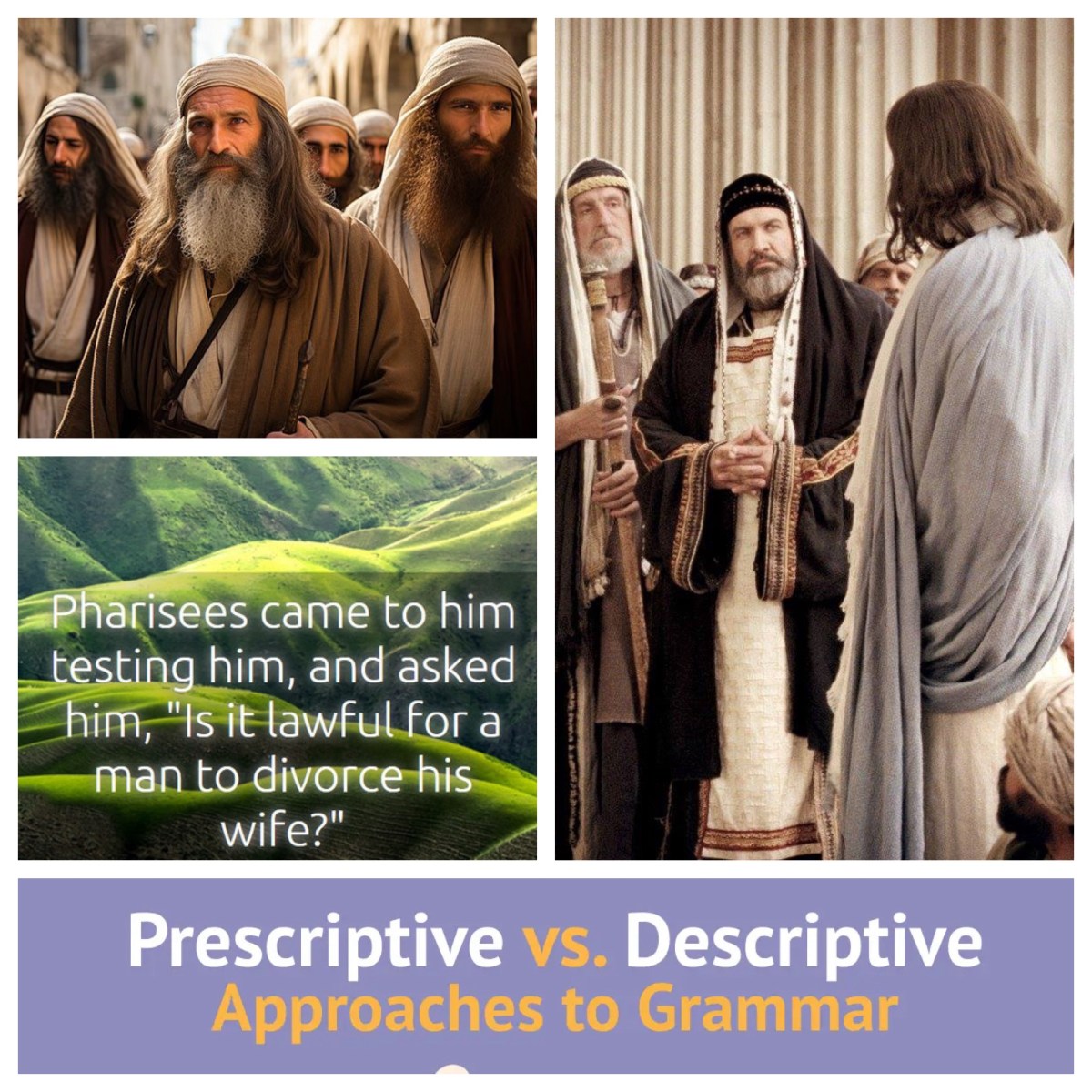
Male and female he made them (Mark 10; Pentecost 20B)

The passage that is set forth by the lectionary for this Sunday (Mark 10:2–16) comes at a pivotal moment in the narrative that Mark narrates. For almost all of the nine chapters that have come before, Jesus has been in Galilee (see 1:14, 16–20, 28, 39; 3:7; 7:31; 9:30), including time in Capernaum (1:21; 2:1; 9:33) and Nazareth (6:1–6; Jesus was known as “Jesus of Nazareth”, see 1:9, 24; 10:47; 14:67; 16:6). Now he makes a decision to turn south and head to Jerusalem, the southern capital. 

Mark makes a very bare geographical report: “he left that place and went to the region of Judea and beyond the Jordan” (Mark 10:1). Luke, at the equivalent place in his narrative, declares “when the days drew near for him to be taken up, he set his face to go to Jerusalem” (Luke 9:51). For Luke, this is a momentous turning point; he uses  some weighty theological terms to mark the moment. When Jesus “set his face” to go to Jerusalem, he echoes the prophetic decision to pronounce judgement on Jerusalem (Isa 50:7; Jer 21:10; Ezek 4:3, 7; 6:2; 13:17; 14:8; 15:7; 20:46; 21:2; 25:2; 28:21; 29:2; 35:2; 38:2).

By noting that “the days drew near”, Luke uses a verb (symplērousthai) found also at Acts 2:1, to announce the coming of the Spirit at Pentecost. And the days that were drawing near were when he was “to be taken up”, looking ahead to the ascension (analēmpsin) which concludes Luke’s first volume (Luke 25:50–53)  and opens his second volume (Acts 1:6–11).

All of that is missing from the simple geographical comment of Mark 10:1. In this Gospel, the significant theological weighting that is inherent in the turn to Jerusalem that Jesus undertakes is invested in the scene where he has his followers find a donkey, and he rides into the city to the acclaim of the crowd: “Hosanna! Blessed is the one who comes in the name of the Lord! Blessed is the coming kingdom of our ancestor David! Hosanna in the highest heaven!” (Mark 11:9–10).

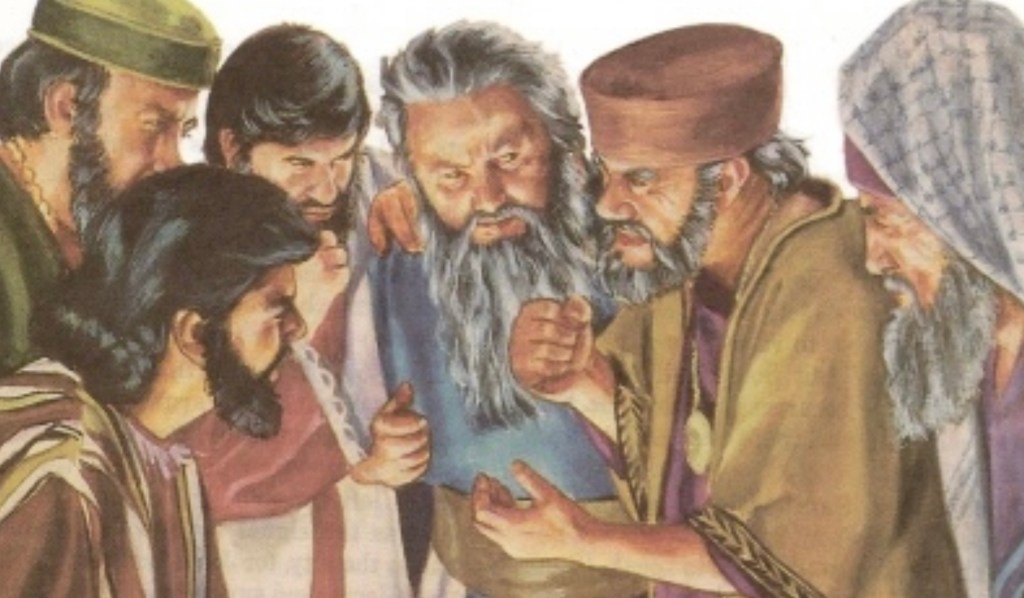
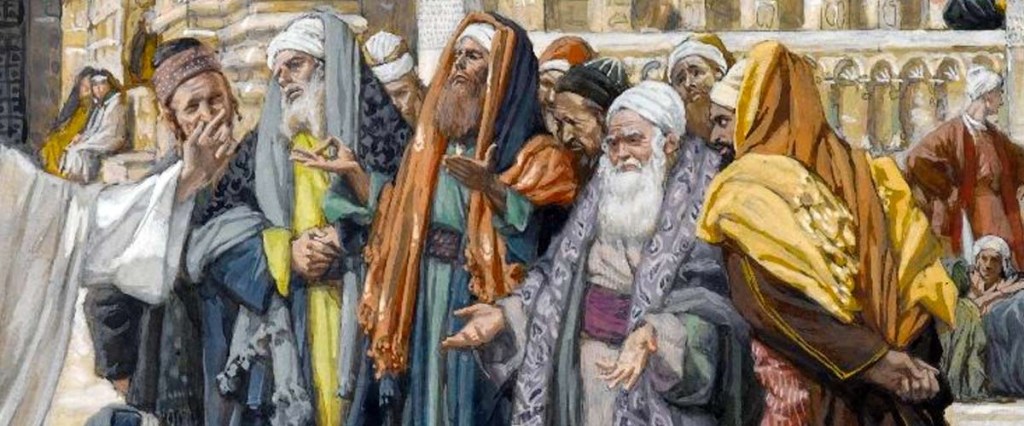
Before that, however, Jesus has to deal, yet again, with some Pharisees (10:2). He had previously had debates with northern Pharisees in Galilee a number of times (2:15–17, 18–22, 23–28; 3:1–6; 7:1–13; 8:11–12). This time, amidst the crowds gathered to hear Jesus in “the region of Judea and beyond the Jordan”, some southern Pharisees now come “to test him” (10:2), as their brothers had done earlier (8:11)—the same dynamic that Mark had reported at the very start of the public activity of Jesus, when the Spirit cast him out into the wilderness “being tested by Satan” (1:12–13).
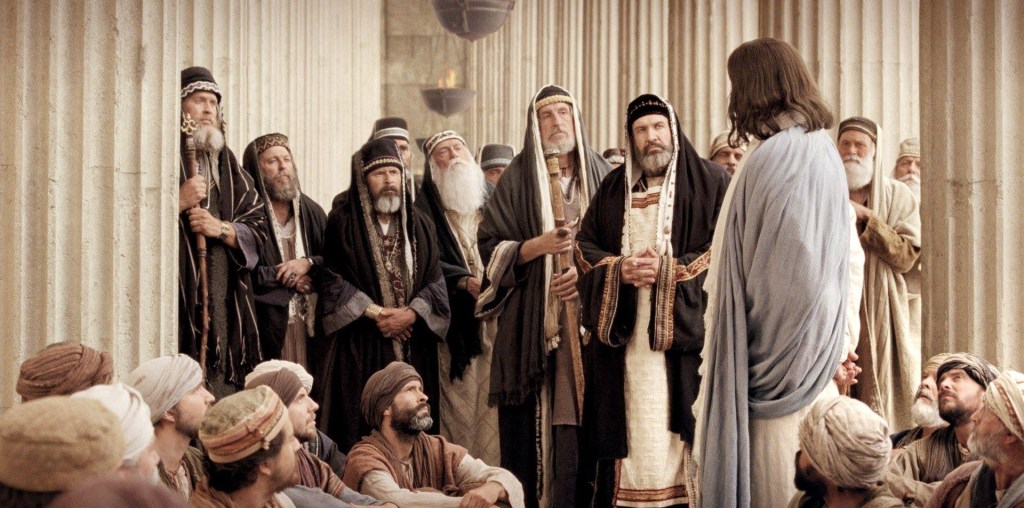
The test set by the Pharisees relates to the matter of divorce. They had a clear cut point of view about this, although in typical Pharisaic—rabbinic style they begin by posing a question. We have seen this technique before. “Why do John’s disciples and the disciples of the Pharisees fast, but your disciples do not fast?” they ask in Galilee (2:18); and then, “Look, why are they doing what is not lawful on the sabbath?” in a grain field (2:24). 

After Jesus had returned from a trip across the Sea of Galilee to “the other side”, a group of Pharisees ask him, “Why do your disciples not live according to the tradition of the elders, but eat with defiled hands?” (7:5 ). In Dalmanutha, some Pharisees approached Jesus “and began to argue with him, asking him for a sign from heaven, to test him” (8:11). And then, in the passage before us this week, once Jesus is in Judea some Pharisees come “to test him” by asking this question, “Is it lawful for a man to divorce his wife?” (10:2).

Jesus, of course—being well-schooled in the business of public disputation on matters of Torah—responds to their question with his own question: “What did Moses command you?” (10:3). This, of course, steers the discussion into the heart of the matter: the specific text from Torah which provided guidance on this matter. From here, the debate continues along a familiar pathway, with the Pharisees offering a scripture passage (10:4, referring to Deut 24:1), Jesus responding with an interpretation (10:5) followed by his proposing one scripture passage of relevance (10:6, quoting Gen 1:27) followed immediately by another passage (10:7–9, quoting Gen 2:24). The to-and-fro of scripture citation, interpretation, counter-proposal, and argumentation, is familiar ground for Jesus.
On the matter of divorce, there were different schools of thought amongst Jewish teachers. In biblical law, a husband has the right to divorce his wife, but a wife cannot initiate a divorce (Deut 24:1). A husband could initiate a divorce if he believes there is some uncleanness in his wife. Understandings as to what such uncleanness might varied. At one extreme was the narrow interpretation that divorce was possible only because of adultery. According to the Mishnah (Gittin 9.10), this view was articulated by Beit Shammai, those following the interpretation set forth by rabbi Shammai.

A much broader understanding was adopted within Beit Hillel, that almost any dissatisfaction with his wife’s behaviour could validate a man’s application for a divorce. The Mishnah tractate reports “he may divorce her … because she burned or over-salted his dish … even if he found another woman who is better looking than her and wishes to marry her” (Mishnah, Gittin 9.10).

The line that Jesus takes is to reject the wider understanding; he tells the Pharisees this was decreed by Moses “because of your hardness of heart” (Mark 10:5). That seems to indicate something contingent about the nature of this particular commandment. So Jesus here is practising the kind of evaluation of texts that we know various Torah interpreters practised. He does not simply quote the text and then say “that’s it, case closed”; he undertakes an evaluative interpretation of those older words.

This is a very rabbinic way to operate. A later rabbinic text, Makkot 23b—24a in the Babylonian Talmud (probably compiled in the 6th century CE) reports a debate between rabbis as to how many commandments were included in the Torah. Rebbi Simlai ventured a count of 613 (“two hundred and sixty five prohibtions in accordance with the days of the sun; and two hundred and forty eight positive commandments in accordance with the limbs of a person”). Rav Hamnunya then suggested that David had identified eleven commandments (citing Psalm 15), then Isaiah narrowed this to six (Isa 33:15), then Micah spoke the three key commandments (“do justly, and love mercy, and walk discreetly with your God”, Mic 6:8).

Next, Isaiah is cited once more, from the beginning of what we identify as Third Isaiah (“guard justice and do righteousness”, Isa 56:1). Finally, Amos is cited, with the singular command, “seek me and live” (Amos 5:4). To which Rav Nachman bar Yitzchak responded, saying “maybe it means to seek out the entire Torah?”—although he then proceeds to cite Hab 2:4, “the righteous shall live by his faith”, as the foundational commandment. (We know this obscure prophetic text because it forms the basis for Paul’s declaration of the Gospel to the saints in Rome at Rom 1:16–17). 

You can read the whole debate (in Aramaic, with English translation) on the website Sefaria:

https://www.sefaria.org/Makkot.24a.27?ven=Sefaria_Community_Translation&lang=bi
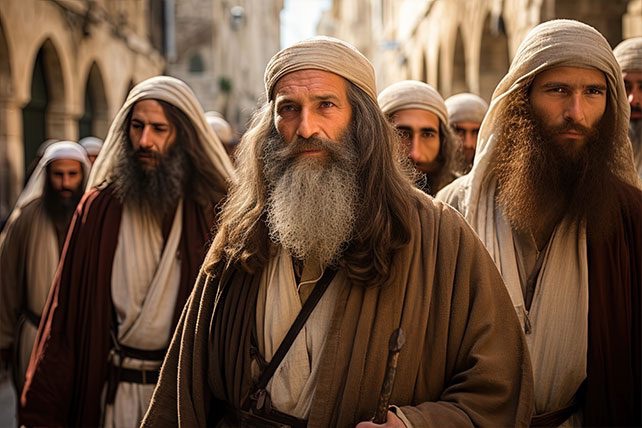
All of which is to say that, as we read and hear the passage from Mark 10 that is offered by the lectionary, we need to understand the context and apply our learnings from that to the text. The words of Jesus should not be plucked out of context, made to stand in bare isolation, and treated as an eternal, unchanging word of the Lord. That is to misunderstand what is going on in this passage.

Jesus and the Pharisees are setting forth their different understandings. Through this process of debate and discussion, deeper understanding emerges. Rabbis even to this day value vigorous debate and robust questioning, for this is the way that God’s truth emerges. I learnt this with a vengeance some decades ago, when ministering in a congregation set in the Eastern Suburbs of Sydney, where there was a high concentration of Jewish residents. 

Many of the Jewish residents came to the weekly School for Seniors that we ran in the church building, and quite a few Jews joined with Christians in the weekly Jewish—Christian Dialogue group that I ran. We had many Fridays of vigorous disputation and robust argumentation—all in a good cause, all as friends together. And the same congenial experience was repeated many times during my years on the National Uniting Church Dialogue with the Jewish Community!

So let us not read the declaration of Jesus about divorce as a set-in-stone decree, valid for all times. As a divorced and remarried person, I know all too well the dangers that are inherent in such a reading. For a time, some decades after my divorce, I was pursued online by a rabid fundamentalist who condemned me as “doomed to hell”, told me that I was an “apostate” who “has been deceived”, that I am “hell bound without repentance”, and offering the graphic description of my fate, that I was condemned to the eternal lake of burning sulphur (Rev 20:7–10 and 21:8). All because I was divorced and remarried!!!

Society changes, situations develop, understandings deepen and are reshaped by our contexts. We rightly, today, accept that divorce may be the best way ahead for some people, on pastoral and personal grounds. Our laws accept that, and my denomination, the Uniting Church in Australia, accepts that. We bring more factors into the discussion that were not being considered in the brief interaction that Mark reports in ch.10.

In like fashion, countless people have been hurt—many of them deeply hurt—by the fundamentalist insistence that, when he debated the Pharisees in this encounter, Jesus was setting forth “a biblical definition of marriage” that is immutable, when he said, “from the beginning of creation, ‘God made them male and female.’ ‘For this reason a man shall leave his father and mother and be joined to his wife, and the two shall become one flesh.’” (Mark 10:6–7).

Such people place the words of Jesus over and against those people who identify as “queer”—gay, lesbian, bisexual, and also now transgender—and whose love, deep and abiding, for a person of the same gender as they are. Forbidden by law to marry until recent years (2017 in Australia), these people are told “marriage is between a man and a woman”, citing the words of Jesus from this week’s Gospel passage. Again, the argument is simplistic: “Jesus said this, this is what it means, end of discussion, case closed”. It’s a hurtful and uninformed way to operate, in my opinion.

What would Jesus have done if confronted with scenarios of increased domestic violence and toxic masculinity feeding unhealthy and damaging relationships? Would he have replied as a fundamentalist: “that’s what Moses said, that’s it”? Or would he have offered a rabbinic explanation, offering different factors and exploring new pathways of understanding? I suspect the latter.

So let’s not use this passage as a word that is prescriptive—that says something like “this is what the text says, and it expresses exactly how God defines marriage and forbids divorce, and that stands for all times and all places”. The text, in my opinion, gives no indication that a general principle, prescribing human behaviour, is being set forth. Indeed, the Genesis passage about marriage that is cited by Jesus is not from a book that sets out Torah commandments; rather, it is from a narrative work. 

Rather, I see it as descriptive—that offers a description of how human beings behave and what should guide us as we navigate our way through life, based on our experiences and reflection on how things have been for us. Indeed, whilst the quote from Moses (in Deut 24) does have a legal tone to it, it needs to be understood within the back-and-forth that characterised rabbinic interpretation of Torah (an ethos shared by Jesus); and the Genesis quote, it should be noted, comes from a book that contains aetiological narratives (which I have explained in my earlier blogs on the Genesis narratives), describing the world and the place of humans in that world on the basis of observation and experience.

So let’s offer Jesus—and the Pharisees—the respect that they deserve as they discuss and debate, and not try to press their words in a direction that they never intended.

For more on this passage, see

For more on the matter of same-gender marriage, which has been permissible within my church since 2018, see

Plotting Pharisees: a public confrontation in the honour-shame culture (Matt 22; Pentecost 21A)

The dynamic at work in the Gospel passage which is offered by the lectionary this coming Sunday (Matt 22:15–22) is compelling. Some people might worry about the way that the Pharisees—strong advocates for the importance of Torah in everyday life—are collaborating with the Herodians—presumed to be more hellenised Jews sympathetic to (or even employed in the court of) Herod and his successors.

It’s a strange alliance, to be sure, but Matthew has inherited this story from Mark, who placed the two groups side-by-side (Mark 12:13–17), and he chooses not to alter that.

Others might be excited by the coin presented to Jesus for his adjucation—said to be a δηνάριον (a denarius), the standard Roman coin in use at the time, and reputed to be “the usual daily wage” for a labourer (so the NRSV translates the word at Matt 20:2, 9, 10, 13). The fact that staunch Jews were carrying such a coin has engaged some interpreters—although I reckon that they simply needed to, in order to survive in daily life in Roman-occupied Palestine.

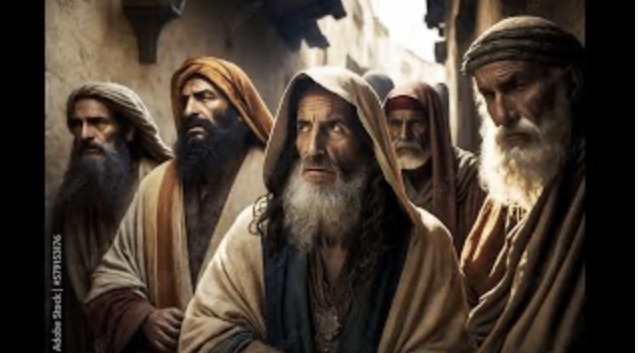
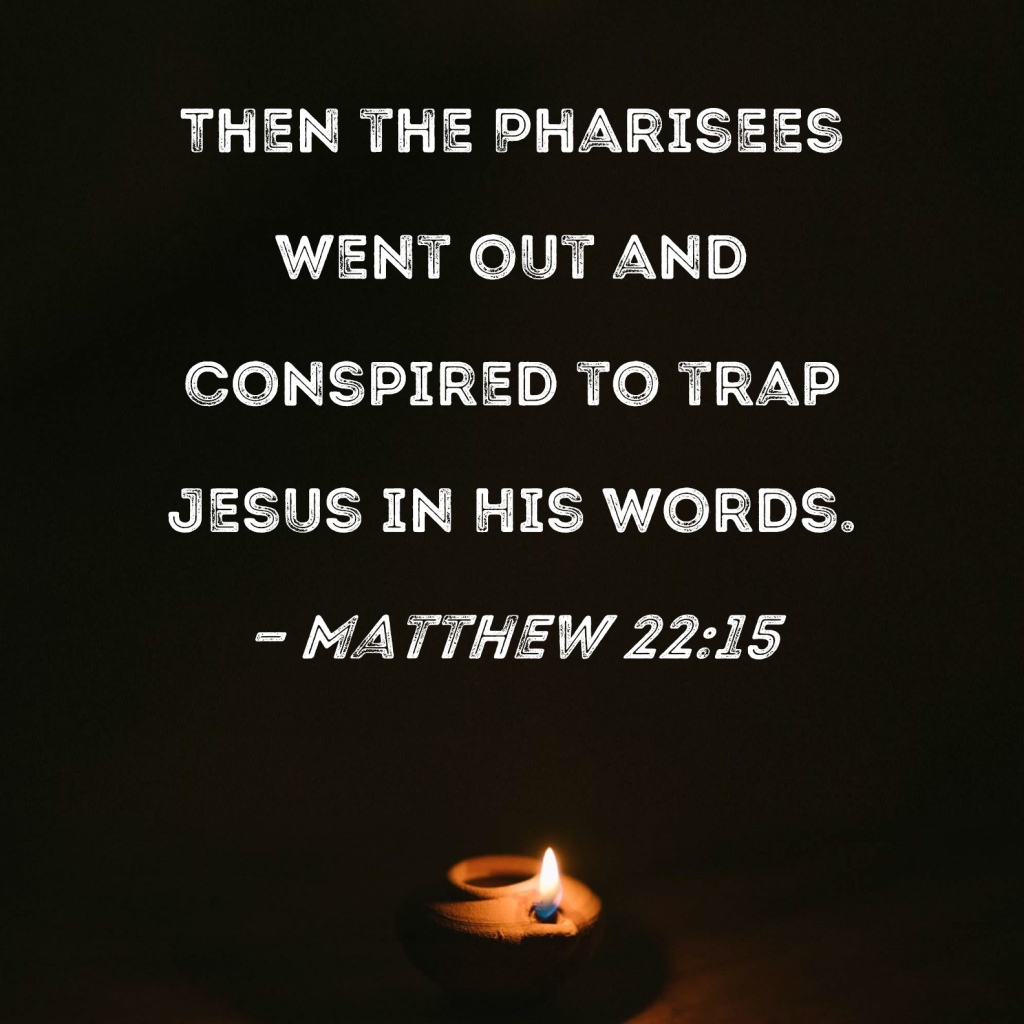
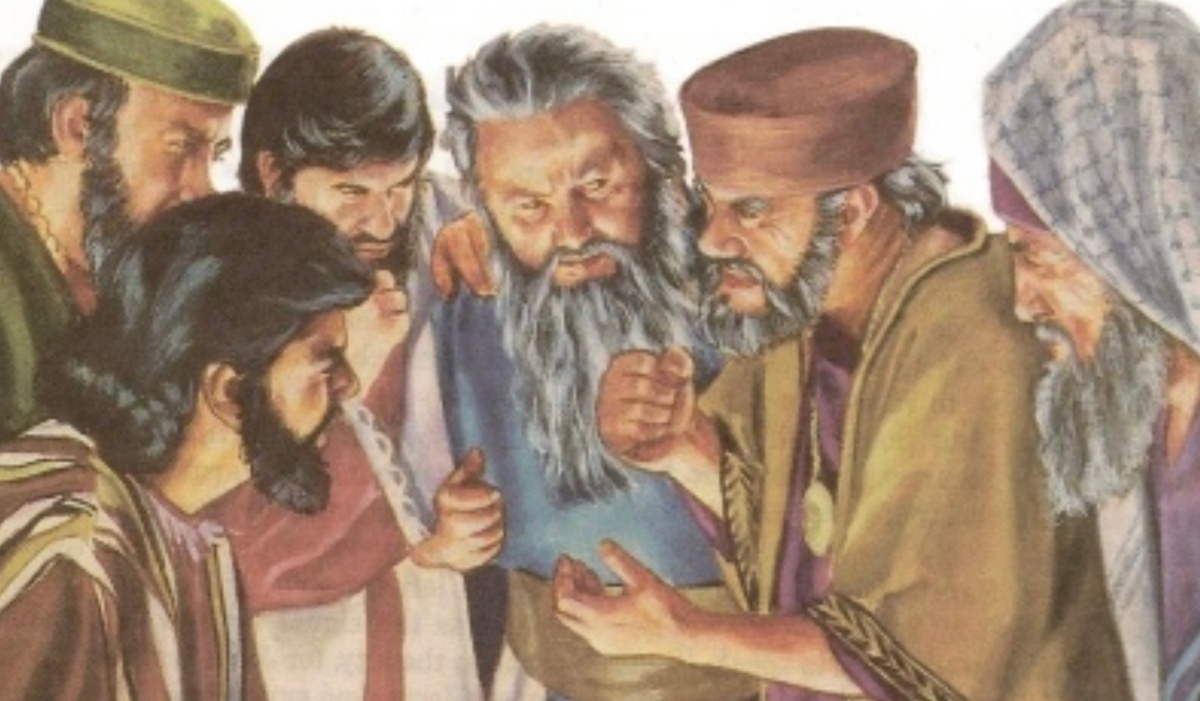
What interests me more in this story is the dynamic at work in the interaction between Jesus and the people of these two Jewish groups. The passage begins, “the Pharisees went and plotted to entrap him in what he said” (v.15). In league with the Herodians, they approach Jesus with flattery (v.16) before posing a simple question: “is it lawful to pay taxes to the emperor, or not?” (v.17). So the story is set up as a trap: a public confrontation designed to bring Jesus down.

The narrator notes that Jesus is “aware of their malice”, responding to their question with one of his own: “why are you putting me to the test, you hypocrites?” (v.18). There is then an interaction relating to a coin which is produced at the request of Jesus (vv.19–20), before Jesus makes a concluding statement (v.21), which leads to the narrator’s summation of the scene: “when they heard this, they were amazed; and they left him and went away” (v.22).

The dynamic in this back-and-forth can best be understood by reference to the honour-shame culture which was the foundational culture of ancient Mediterranean societies. Malina and Rohrbaugh describe the process of challenge and riposte, in which “a challenge … that seeks to undermine the honour of another person” must be met with “a response that answers in equal measure or ups the ante and thereby challenges in return … to avoid a serious loss of face” (Social Scientific Commentary, p.307).

Such challenge-riposte encounters typically involved the challenger setting forth a claim, through either words or actions; a response to the challenge by the persons who was challenged; then, after further back-and-forth amongst the participants, once the challenge and riposte has run its course, the verdict is declared by the public who was watching the encounter. (See a clear description of this process, as it applies in Mark 11:27–12:34, using the analysis of Jerome Neyrey and Bruce Malina, at https://www.etsjets.org/files/JETS-PDFs/43/43-2/43-2-pp213-228_JETS.pdf)

The challenge that the Pharisees and Herodians raise to Jesus in this passage is one in which he bests the authorities with his responses; he maintains his place of honour within society. Had that not been the case, he would have been publically shamed. And a public shaming for a male in that society was a very demeaning experience.

The incident narrated in this passage (Matt 22:15–22) is one of a series of public confrontations that Jesus had whilst he was teaching in the temple (21:23 through to 22:46). Prior to this debate about the coin that was used to pay tax to the Emperor, Jesus had defended his authority to teach (21:23–27), before telling three parables which provoked his listeners to think out of the box about how God was at work (21:28–32; 21:33–44; 22:1–14).

Jesus, of course, was a Jew, instructed in the way of Torah. He knew his scriptures—he argued intensely with the teachers of the Law over a number of different issues. He frequented the synagogue, read from the scroll, prayed to God, told parables, and went on pilgrimage to Jerusalem and into the Temple—all typically Jewish activities.

Immediately prior to this encounter with Herodians and Pharisees, Jesus had offered a scathing critique of the practices that were taking place in the courtyard of the Temple (21:12–17). It was the response of the children to his actions, echoing the earlier son of the crowd by singing out “Hosanna to the Son of David” (21:9) had angered the chief priests and the scribes (21:15). The way that he resolved this situation (at least temporarily) was to quote scripture (21:16, citing Psalm 8:2)—a very Pharisaic-rabbinic way of operating!

Earlier in his narrative, Matthew has reported a number of tense encounters between Jesus and his disciples on the one hand, and the scribes and Pharisees on the other (9:2–8, 10–13; 12:38–42; 15:1–20; 16:1–4; 19:3–9; 21:15–16). Those encounters inevitably revolved around differing interpretations of Torah prescriptions and included regular references to (Hebrew) scriptural passages.

Whilst teaching in the Temple, Jesus engaged in debate and disputation with various Jewish authorities: chief priests and elders (21:23), Pharisees and Herodians (22:15–16), Sadducees (22:23), and then Pharisees once more (22:34, 41). Each of those groups came to Jesus with a trick question, which they expected would trap Jesus (22:15). Jesus inevitably bests them with his responses (21:27; 22:22, 33, 46).

Each of the parables that Jesus told ends with a twist that snares the opponents of Jesus more intensely. The short parables of the two sons (21:28–32) ends with a barb: “John came to you in the way of righteousness and you did not believe him, but the tax collectors and the prostitutes believed him; and even after you saw it, you did not change your minds and believe him” (21:32).

The third parable, of the wedding banquet (22:1–14) ends with words that are surely intended to put the Pharisees well and truly in their place: “many are called, but few are chosen” (22:14). Are they the ones who will be “[bound] hand and foot, and [thrown] into the outer darkness, where there will be weeping and gnashing of teeth” (22:13)?

In the middle parable (21:33–44), the conclusion is equally damning: “the kingdom of God will be taken away from you and given to a people that produces the fruits of the kingdom” (21:43). Recognising that they were the targets of this teaching, the chief priests and Pharisees “realized that he was speaking about them; they wanted to arrest him, but they feared the crowds, because they regarded him as a prophet” (21:46).

Indeed, this whole sequence of conflicted encounters—public disputations, challenge-riposte displays—ends with a recognition of the fact that Jesus has retained (and perhaps even increased) his share of honour: “no one was able to give him an answer, nor from that day did anyone dare to ask him any more questions” (22:46).

As Matthew had noted earlier, in the passage for this Sunday, the Pharisees and Herodians “were amazed; and they left him and went away” (22:22); and then, after dialogue with the Sadducees, “when the crowd heard it, they were astounded at his teaching” (22:33). To the crowd, it is clear: Jesus is the man of honour, who has publically shamed Pharisees, Sadducees, priests, and Herodians.

Pharisees plotting with malice; that is a sharply negative portrayal of these characters in this encounter. Elsewhere in Matthew’s Gospel, the Pharisees are the subject of similar invective, placed on the lips of Matthew. Although Jesus affirms “the scribes and the Pharisees” as those who “sit on Moses’ seat” and teach well, he criticises them as failing to live by that teaching in their lives (23:1–3).

What follows this affirmation is an incessant string of criticisms, each introduced with the uncompromising invective, “woe to you, scribes and Pharisees, hypocrites!” Jesus accuses them of “lock[ing] people out of the kingdom of heaven” (23:13), “tith[ing] mint, dill, and cummin, and neglect[ing] the weightier matters of the law: justice and mercy and faith” (23:23), and acting in ways that are “full of greed and self-indulgence” (23:25).

He accuses them directly, noting that they are “child[ren] of hell” (23:15), that “inside you are full of hypocrisy and lawlessness” (23:28), and that they are “descendants of those who murdered the prophets” (23:31). The punishment due to them is the fate in store for all who are lawless—to depart from Jesus, who never knew them (7:23), to be “throw[n] into the furnace of fire, where there will be weeping and gnashing of teeth” (13:42), to be “sentenced to hell” (23:33) as they “fill up the measure of your ancestors” (23:32).

And so, in the face of the abandonment of the Law by the very teachers of the Law, Jesus teaches how to live by the Law, with a ferocious intensity that exceeds anything that the Pharisees and scribes might offer (5:21–48), for “unless your righteousness exceeds that of the scribes and Pharisees, you will never enter the kingdom of heaven” (5:20). He is positioned in a way that places him as the supreme teacher of Torah, over and above the Pharisees.

Judaism was in a state of flux after the destruction of the Temple in 70 CE. Evidence indicates that there were a number of sectarian groups contesting with each other for recognition and influence. During this period, the Pharisees became increasingly important as an alternative to the Temple cult, and in time they emerged as the dominant Jewish religious movement. Their power base was moved from Jerusalem and spread throughout the area.

Josephus comments that the Pharisees lived in the towns and villages with and alongside the people. He wrote that “they live meanly, and despise delicacies in diet; and they follow the contract of reasons” (Antiquities of the Jews, 18.3), so presumably they lived without the ostentation and wealth that Josephus ascribes to the Sadducees.

Josephus also comments that the Pharisees were usually held in high regard by the ordinary people of the day. Since nine out of every ten persons could not read, the importance of scribes—literate, educated, and sympathetic—could not be underestimated. Whilst the Pharisees clustered around towns in Judea, the scribes were to be found in the synagogues of villages throughout greater Israel, and indeed in any place where Jews were settled. Their task was to educate the people as to the ways of holiness that were commanded in the Torah. It was possible, they argued, to live as God’s holy people at every point of one’s life, quite apart from any pilgrimages made to the Temple in Jerusalem.

The way that Jesus is portrayed in the Gospels–especially the three Synoptic Gospels–places him in opposition to the Pharisees, as the authoritative teacher of Torah. In Matthew’s Gospel, as we have noted, this opposition is further intensified, for Jesus is seen as the only one able to interpret and apply the laws for them in their lives.

So there is a clear reason for the negative language used in the incident about the coin: “the Pharisees went and plotted to entrap him” (22:15), and Jesus was “aware of their malice” (22:18). In the context of the latter part of the first century, in which Matthew’s Gospel was written, this antagonism can be understood. The intensity of conflict heightened the sharpness of antagonism that the author of this Gospel has drawn.

****(

For those of us reading, hearing, and preaching on this passage in the 21st century, we need to be very careful not to use negative, derogatory, or judgemental language about the Pharisees of the first century, or about Jewish people in our own times. Judaism is a living faith with its own integrity, and Jews today should be recognised and valued as people of faith and not valued in terms of conflicts from centuries ago.

In 2009, my own church, the Uniting Church, adopted a Statement on Jews and Judaism in which we resolved to:

acknowledge that many of the early Christian writings collected in the New Testament were written in a context of controversy and polemic between the Church and Synagogue;

not accept Christian teaching that is derogatory towards Jews and Judaism;

and encourage its members and councils to be vigilant in resisting antisemitism and anti-Judaism in church and society.

The full statement can be read at https://assembly.uca.org.au/resources/key-papers-reports/item/download/1022_7d707d6a8cd8a2fe2188af65d6f04548

You can read about how the Uniting Church has sought to engage the Jewish Community in constructive dialogue for many years, now, at https://uniting.church/an-introduction-to-the-uca-jewish-dialogue/

and learn about an excellent resource it has produced entitled Light Eternal at https://assembly.uca.org.au/rof/rof-news/item/1986-light-eternal

On the UCA commitment to interfaith relations, see https://johntsquires.com/2019/05/04/friendship-in-the-presence-of-difference-a-gospel-call-in-a-world-of-intolerance-and-hatred/

“How can anyone be born after having grown old?” The questions of Nicodemus (John 3; Lent 2A)

The Gospel reading for this coming Sunday (John 3:1–17) is set in a house in the dark at night, as a prominent named male member of the Jerusalem Sanhedrin engages in conversation with a teacher from Nazareth, discussing faith and life. As Jesus engages with him, the conversation moves through a series of phases, going deeper into the issues raised. It’s a carefully-crafted literary piece—as, indeed, are all the encounters that Jesus has in the first half of John’s book of signs.

The conversation proceeds by means of a standard narrative technique: a question is posed, an answer is offered, leading to a further question, another response, and still further question-answer interchanges. This is an age-old technique used in teaching and in story-telling. It was also a standard aspect of the way that teachers of the Law operated in ancient Israel.

So the Pharisee of Jerusalem poses the question to the teacher from Nazareth: “How can anyone be born after having grown old?” and follows this immediately with a second question, “Can one enter a second time into the mother’s womb and be born?” (3:4). The reason for such a misunderstanding is that the Greek word used, anōthen, can be understood as “again” or “anew”, but can also be understood as “above”. In fact, “above” is by far the more common sense in which it was used. But the author has the teacher of Nazareth use this word, opening up a deliberate misunderstanding.

This misunderstanding, in turn, lead on to a response from the teacher (3:5) which digs deeper into the issues. Being born “from above” is akin to being born “of water and spirit”—or, it is possible to translate this, “of water and breath”. The Greek word placed on the lips of the teacher, pneuma, can refer to wind or breath—or spirit. Once again, a misunderstanding arises, giving opportunity for further exploration and instruction (3:5–8).

After the response from the teacher, the Pharisee asks a further question, “How can these things be?” (3:9)—to which the teacher from Nazareth responds, in the time honoured fashion (answer a question with another question), “Are you a teacher of Israel, and yet you do not understand these things?” (3:9-10). Touché!!

After this, the teacher from Nazareth launches into a longer explanation in response to the questions posed by the Pharisee of Jerusalem—an explanation which continues on for some time (3:11–21), leaving many commentators to wonder, just where does the conversation with the Pharisee from Jerusalem end, and where does the interpretive narrative of the evangelist take over? The Pharisee of Jerusalem has managed to draw from the man from Nazareth a teaching of some substance and significance.

This extended final section of the scene (3:11–21) contains clear evidence of the literary craft of the person who is telling the story. There are typical dualisms included in what the teacher says; he contrasts “earthly things” with “heavenly things”, “ascending into heaven” with “descending from heaven”, “perish” with “eternal life”, “condemn” with “save”—and, once again, “light” and “darkness”, a duality first expressed in the opening verses of the Gospel (1:4–9).

It also sets these dualisms into a pattern of parallel clauses, some of which provide a synonymous parallelism—two similar ideas placed in parallel (3:14; 3:19–20), some of which have antithetical parallelism—two contrasting ideas placed in parallel (3:12; 3:16–17; 3:18; and 3:20–21). Notice that this means that the final three verse of this section have an interweaving of both synonymous and antithetical parallelism, bringing the whole speech to a tight conclusion. “Coming to the light” is what Jesus desires, rather than “loving darkness”.

This is in fact the trajectory that Nicodemus has begun in this passage—the trajectory will continue on beyond into later sections of the Gospel. He has moved from an initial enquiry, through to a deeper pondering about what Jesus is saying. So this conversation has demonstrated a movement from the starting point, through a process that will ultimately lead to a clear expression of faith in in Jesus. We are left wondering, here in chapter 3: has the Pharisee become a disciple of the teacher from Nazareth?

The Pharisee of Jerusalem, we are told later in this Gospel, followed through after his initial conversation with the teacher (John 3)—in fact, he supported him in a debate in the Jerusalem council (John 7), and after the teacher had died, he publicly joined in the task of anointing his body and laying it to rest (John 19). His belief in what this teacher had taught, was now clear for all to see.

The Pharisee of Jerusalem had taken risks, explored his faith, and made significant changes in his life. He is a named high-status follower of Jesus, at least according to this particular Gospel, and his name is remembered throughout Christian history, by believers across the world: Nicodemus.

*****

In the Synoptic Gospels, it is Joseph of Arimathea who requests the body of Jesus from Pilate, and secures a safe place as the resting place for the body. In John’s Gospel, he does this in company with Nicodemus (John 19:39).

Joseph was “waiting expectantly for the kingdom of God” (Luke 23:51)—a phrase that recalls the discussion reported in John 3 (see verses 3 and 5). This “kingdom of God” was the very same phrase that is key to the preaching of Jesus in Mark and Luke. So Joseph was firmly aligned with Jesus and with his followers in Luke’s Gospel, whilst Matthew directly reports that he was “a disciple of Jesus” (Matt 27:57).

When Nicodemus first encounters Jesus, he had engaged in what might be characterised as an appreciative enquiry with Jesus, under the cover of night (3:2), presumably so that he didn’t “out” his interest in what Jesus was teaching. Some chapters later in John’s narrative, as Jesus experiences intensified opposition whilst in Jerusalem for the Festival of Booths (7:1–13), and the Pharisees and temple authorities join forces to send the temple police to arrest him (7:32), Nicodemus appears once more. The temple police return the temple, saying that they will not arrest him (7:45–46).

Nicodemus steps in; he is introduced as the one who “had gone to Jesus before, and who was one of them”—that is to say, one of the disciples (7:50). He speaks boldly: “our law does not judge people without first giving them a hearing to find out what they are doing, does it?” (7:51). The dismissive reply of the Pharisees further aligns him with Jesus; “surely you are not also from Galilee, are you?” is their rejoinder (7:52). His allegiance is clear, at least in the minds of the Pharisees, if not also the narrator of the Gospel.

Nicodemus returns a third time, after the death of Jesus, when the body of Jesus is requested by Joseph of Arimathaea, who is here clearly identified as being “a disciple of Jesus, but secretly, for fear of the Jews” (19:38). The fear of the Judean authorities has been a recurrent motif in John’s narrative (5:1; 7:13; 9:22; here, and 20:19). (The term I translate as “Judean authorities” is most commonly rendered as “Jews”, but this translation is too wide and does not accurately reflect the way the term is used in John’s Gospel.)

See further on “the Jews” at

Once again, Joseph is identified as a disciple of Jesus (John 19:38; so also Matt 27:57, and, as we have argued above, that is the implication in both Mark 15 and Luke 23). Both Joseph and Nicodemus, we might presume, were numbered among the “many, even of the authorities, [who] believed in him”, but who, “because of the Pharisees, did not confess it, for fear that they would be put out of the synagogue” (12:42).

The manner in which the body of Jesus is removed from the cross into the grave, anointed with an extravagantly large amount of spices, myrrh and aloes and wrapped in linen cloths “according to the burial custom of the Jews”, and placed in a previously unused tomb (19:38–40), reflects the tender, respectful approach of these two of Jesus’s disciples.

See more on Joseph at

So the Pharisee of Jerusalem is a character of some significance in John’s book of signs; he traces a pathway which the author hopes that those who hear his story or read his book will also follow, for “these are written so that you may come to believe that Jesus is the Messiah, the Son of God, and that through believing you may have life in his name” (20:31). It’s a most appropriate story, and relevant invitation, for the season of Lent.

*****

On what we know historically about the Pharisees, see