
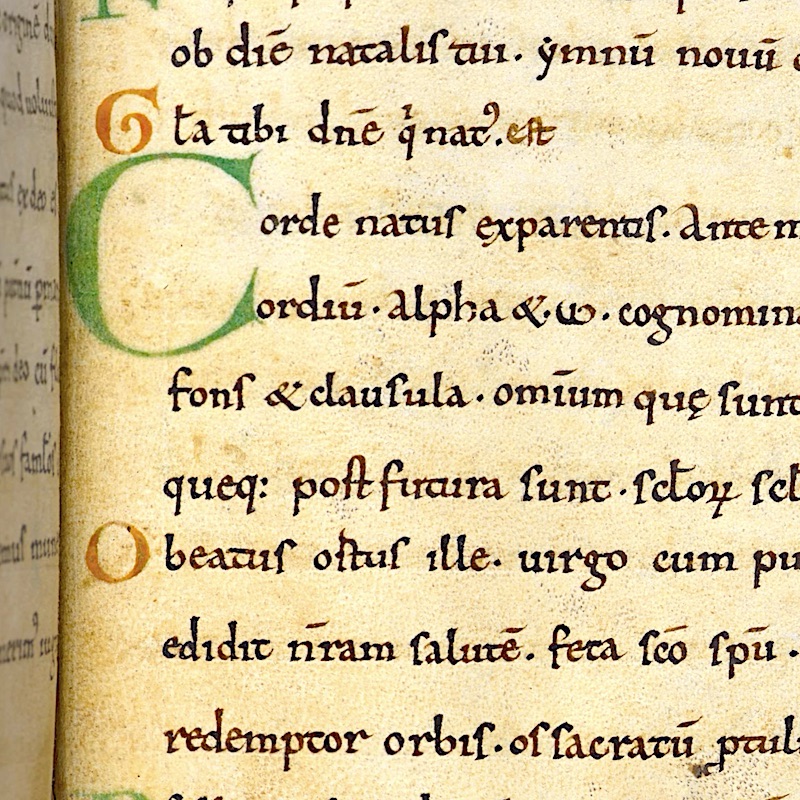
For today, the Third Day of Christmas, following the church calendar, I offer a Christmas carol which originates in the 4th century. It was written by the Roman poet, Aurelius Prudentius Clemens. Prudentius was a Spanish layman, a lawyer who twice served as a provincial governor. He was also a government official in the court of the Roman Empire, and is remembered as one of the greatest Latin Christian poets.
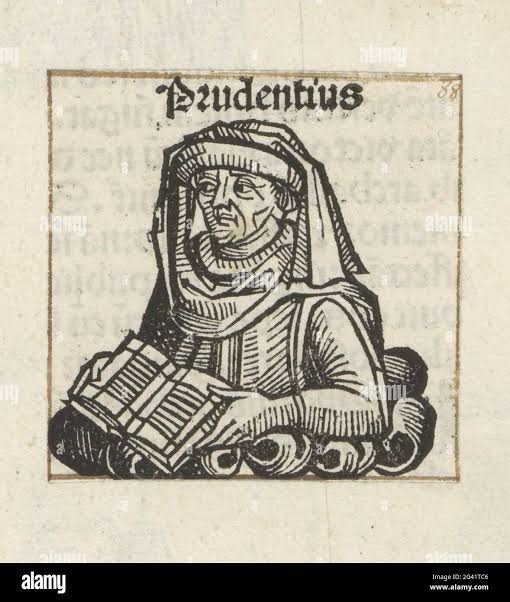
For the last period of his life (at least a decade, perhaps closer to two), Prudentius lived as an ascetic, fasting during daylight hours and eating only vegetarian meals. It was apparently during this period that he wrote many books and poems. Among these works was the Psychomachia, an allegorical treatment of “the conflict of the soul” (as illustrated).
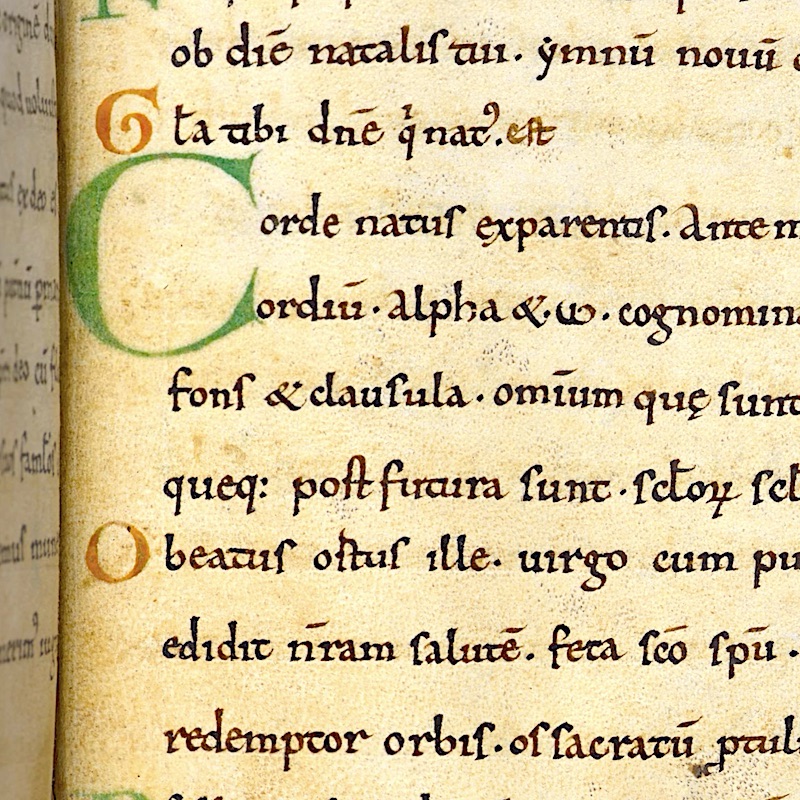
Prudentius composed Corde natus ex Parentis, which was subsequently translated into English as “Of the Father’s love begotten”. The translator was John Mason Neale, whom we met yesterday. This hymn stands at the head of the section in Together in Song where we find the Christmas carols/hymns, so it is recognised as an ancient Christmas carol.
Prudentius, situated strongly within the developing patristic theology, gives expression to the “highest” view of Jesus, as Alpha and fons (source, or origin) and Omega and clausula (ending, or culmination) of the whole creation, existing “evermore and evermore”.
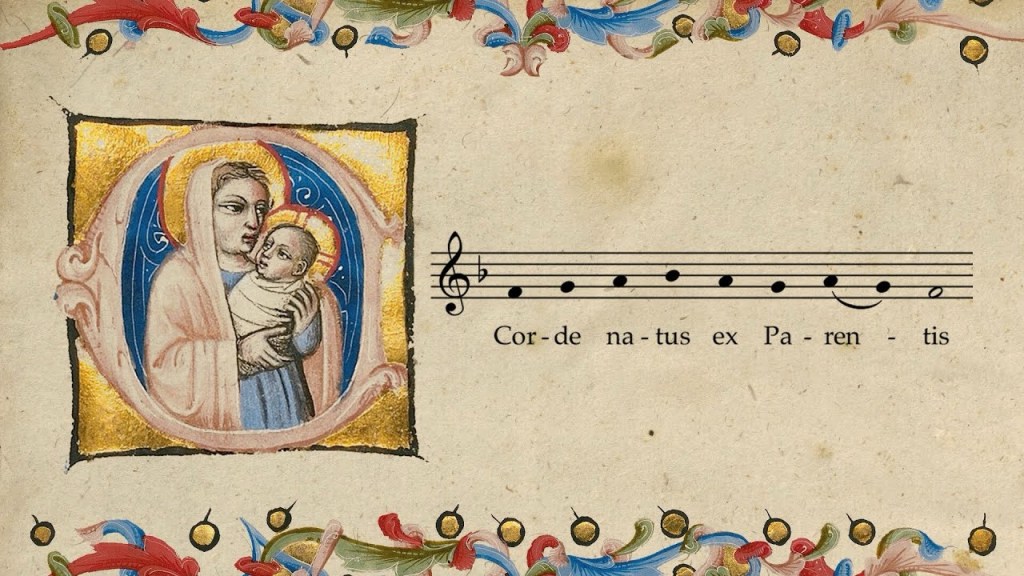
So the hymn resonates well with the developing credal tradition of the Nicea—Chalcedon-Constantinople stream. And so begins the long trek towards the transcendental, romantically-unrealistic, Christ of Christmas.
- Corde natus ex parentis ante mundi exordium
A et O cognominatus, ipse fons et clausula
Omnium quae sunt, fuerunt, quaeque post futura sunt.
2. Ipse iussit et creata, dixit ipse et facta sunt,
Terra, caelum, fossa ponti, trina rerum machina,
Quaeque in his vigent sub alto solis et lunae globo.
3. Corporis formam caduci, membra morti obnoxia
Induit, ne gens periret primoplasti ex germine,
Merserat quem lex profundo noxialis tartaro.
4. O beatus ortus ille, virgo cum puerpera
Edidit nostram salutem, feta Sancto Spiritu,
Et puer redemptor orbis os sacratum protulit.
5. Psallat altitudo caeli, psallite omnes angeli,
Quidquid est virtutis usquam psallat in laudem Dei,
Nulla linguarum silescat, vox et omnis consonet.
6. Ecce, quem vates vetustis concinebant saeculis,
Quem prophetarum fideles paginae spoponderant,
Emicat promissus olim; cuncta conlaudent eum.
7. Macte iudex mortuorum, macte rex viventium,
Dexter in Parentis arce qui cluis virtutibus,
Omnium venturus inde iustus ultor criminum.
8. Te senes et te iuventus, parvulorum te chorus,
Turba matrum, virginumque, simplices puellulae,
Voce concordes pudicis perstrepant concentibus.
9. Tibi, Christe, sit cum Patre hagioque Pneumate
Hymnus, decus, laus perennis, gratiarum actio,
Honor, virtus, victoria, regnum aeternaliter.
The English translation:
(1) Of the Father’s love begotten
Ere the worlds began to be,
He is Alpha and Omega,
He the Source, the Ending He,
Of the things that are, that have been,
And that future years shall see
Evermore and evermore.
(2) Oh, that birth forever blessed
When the Virgin, full of grace,
By the Holy Ghost conceiving,
Bare the Savior of our race,
And the Babe, the world’s Redeemer,
First revealed His sacred face
Evermore and evermore.
(3) O ye heights of heaven, adore Him;
Angel hosts, His praises sing;
Powers, dominions, bow before Him
And extol our God and King.
Let no tongue on earth be silent,
Every voice in concert ring
Evermore and evermore.
(4) This is He whom Heaven-taught singers
Sang of old with one accord;
Whom the Scriptures of the prophets
Promised in their faithful word.
Now He shines, the Long-expected;
Let creation praise its Lord
Evermore and evermore.
(5) Christ, to Thee, with God the Father,
And, O Holy Ghost, to Thee
Hymn and chant and high thanksgiving
And unending praises be,
Honor, glory, and dominion,
And eternal victory
Evermore and evermore.
http://etymologyofhymns.blogspot.com.au/2012/12/of-fathers-love-begotten.html
 An Informed Faith