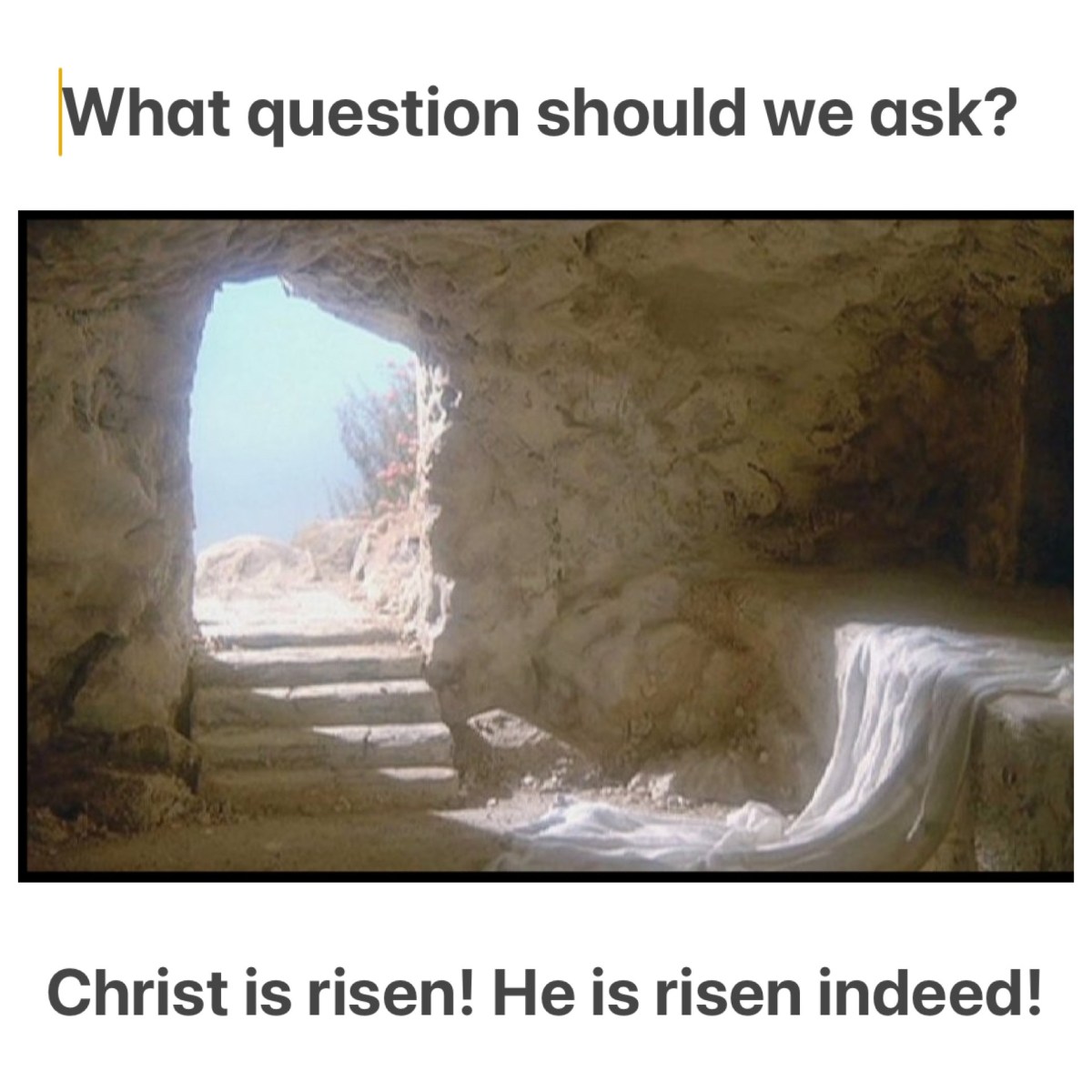
What question should we ask? (for Easter Sunday)

A sermon preached at Dungog Uniting Church on Easter Sunday 2025.

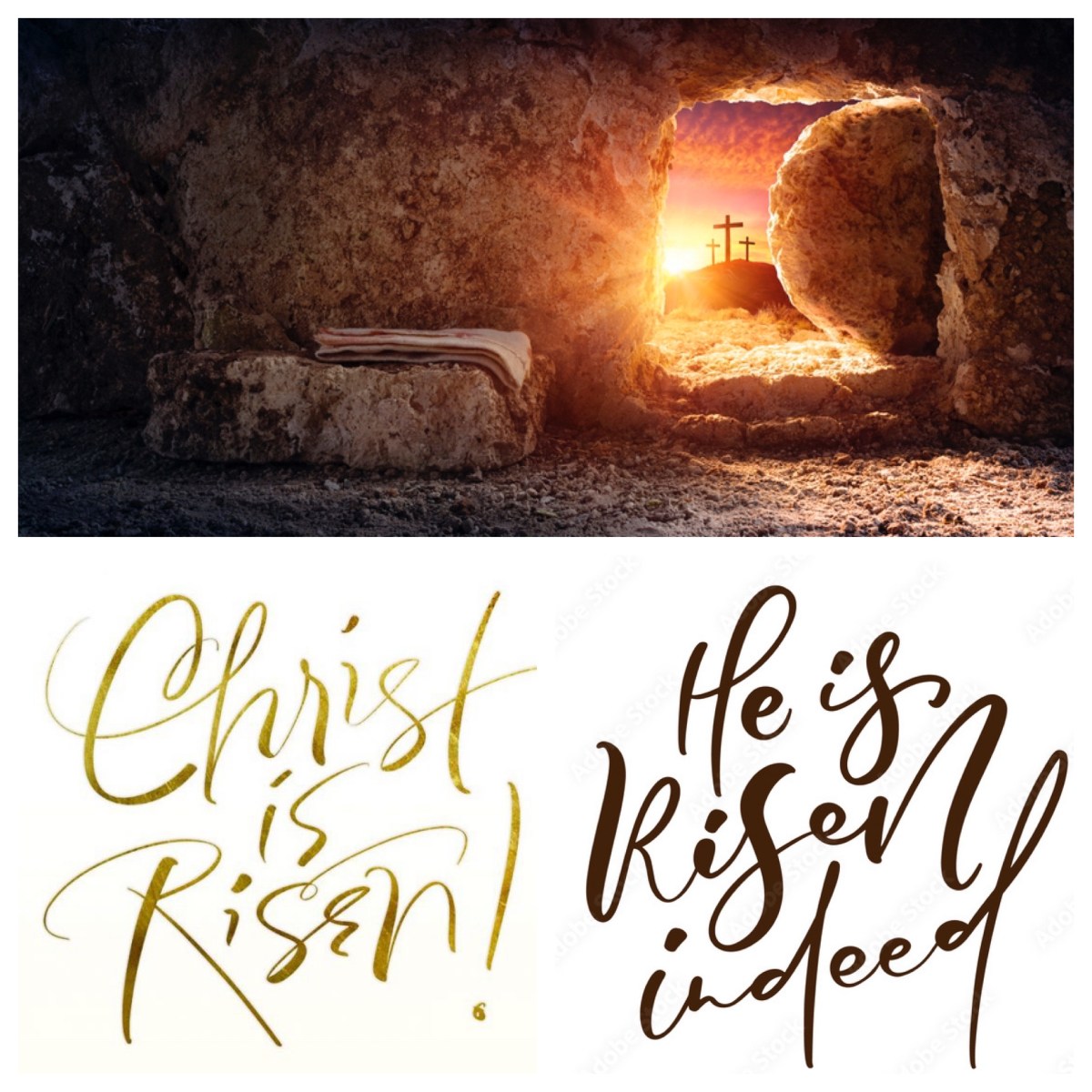
Today is a day of celebration. We gather, we sing, we exclaim “Christ is risen!” Joy fills the air; expectation and hope are abundant. It’s a fine way to emerge from the sombre mood of Friday, when we last gathered, on day of mourning, to remember the sombre reality, “Christ has died”. 

On that day, we remembered again the story of the last days of Jesus: a story of betrayal and denial, of physical abuse and verbal mocking, of abandonment and death, of grief and despair. 

And yet, today, we have moved from that deep despair, into abundant joy. 

Today is a day of celebration.

Today is also a day of mystery. It is a day that we cannot fully explain with simple phrases and formulaic responses. It is a day that invites us to pause, reflect, and ponder. 

Last week, Lurline quoted what she called “the most electric sentence of the Bible”: “he is not here; he has risen!” 

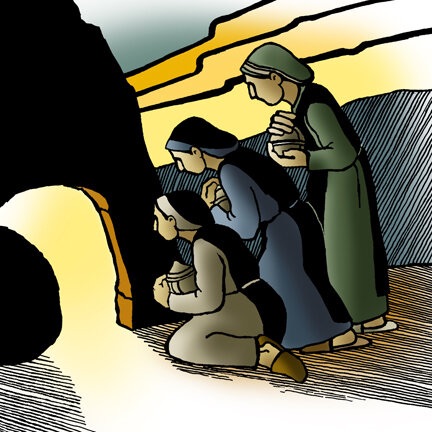
We have heard that electric expression of joy in the reading from Luke’s Gospel. “Why do you look for the living among the dead? He is not here, but has risen.” (Luke 16:5)

And so we greet one another on this day: Christ is risen! Christ is risen indeed!!

That electric sentence provokes many questions. 

What is it that actually happened? 

How was the stone moved? 

Where is the body of Jesus? 

How exactly was Jesus raised from the dead? 

What is the form that Jesus now takes? 

What does it mean for us to hold the hope that we, too, will be raised from our death? 
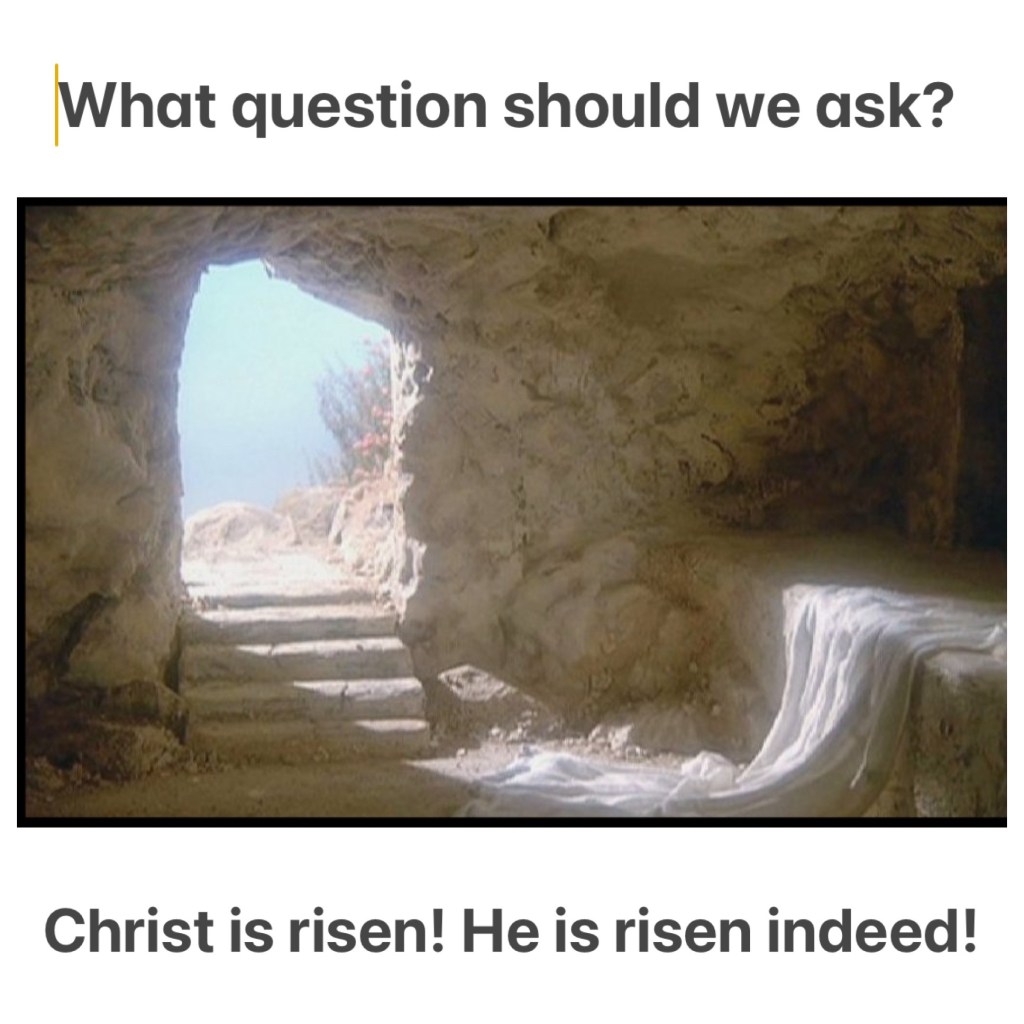
This day of mystery confronts us with a host of questions. Preachers and priests, scholars and writers, over decades and centuries, have asked these questions, have explored them in their words, have sought to provide explanations, all the while intending to buttress and strengthen our faith on this day of mystery.

Did the resurrection really happen? is one of the questions that is often asked on or around this day. What was the historical reality of the day? I have to say, that is a very modern question. It may surprise you, but for centuries, this was not a question that troubled the minds of believers. It is really only something that has concerned us in the last few centuries—from the time of The Enlightenment, when the focus shifted from lives lived by faith to lives exploring scientific and historical realities. 

The question about “what really happened?” is a classic post-Enlightenment question. It’s not something that occurred to those of ancient times. So the biblical texts of antiquity don’t provide any explanation that satisfies us modern listeners and readers. 

Indeed, this is a question that cannot be answered by a simple historical “proof”. The resurrection is, by its nature, something that transcends the material, earthly focus of our modern era. It resists clearcut scientific or historical questions. It remains, in the end, a mystery.

What actually happened to the body of Jesus? is another question that is often asked about today—which also reflects the time in which we live, when “what happened?” is often an important question. And the answer offered by numerous writers has varied, ranging from “the body was stolen” through to “a miracle happened”. Again, a satisfactory explanation is beyond us. It is a mystery.

How was the stone removed from the doorway to the tomb? is another question that is asked. Mark’s Gospel says that when the women came to the tomb to anoint Jesus, “they saw that the stone, which was very large, had already been rolled back” (Mark 16:4). So, too, does Luke (Luke 16:2); neither evangelist was interested in providing any explanation about this curious feature.

The account in Matthew’s gospel, however, does venture an answer: when the women arrive at the, “suddenly there was a great earthquake; for an angel of the Lord, descending from heaven, came and rolled back the stone and sat on it” (Matt 28:2). That’s the explanation, it seems. This evangelist then continues, “his appearance was like lightning, and his clothing white as snow; for fear of him the guards shook and became like dead men” (Matt 28:3–4). Understandably! 

However, we need to note that Matthew’s account had also reported an earthquake at the very moment that Jesus had died on the cross: “Jesus cried again with a loud voice and breathed his last. At that moment the curtain of the temple was torn in two, from top to bottom. The earth shook, and the rocks were split. The tombs also were opened, and many bodies of the saints who had fallen asleep were raised. After his resurrection they came out of the tombs and entered the holy city and appeared to many.” (Matt 27:50–53).

That’s quite a story! and even more striking, perhaps, is the fact that none of the other evangelists report this incredible series of events: an earthquake and the raising of dead people at the moment Jesus died. It’s not in Mark’s earliest version; and it’s not in Luke’s later account, that we heard this morning. We can see, I hope, that this is part of the particular way that Matthew—a faithful Jew who held to the hope that God would act to come to earth to bring in the kingdom of God—tells the story of Jesus. 

The earthquake that happens as Jesus dies and the second earthquake that comes just as the women discover the empty tomb both draw on apocalyptic imagery that the later prophets used and developed in their prophetic oracles. It’s not an actual historical account. It’s a vivid, dramatic telling of the story, designed to highlight this one central fact: God acted, God came to us, God raised Jesus from the dead, the kingdom of God is now present!

So today is a day of celebration; we celebrate that God has determined to be amongst us in a new, startling, and dramatic way. That is what motivated the women, when the discovered the tomb to be empty, made haste to return to the other disciples, to tell them “he is not here; he has risen” (Luke 24:8).

This is also a day of mystery, for the way that God came to us, raising Jesus from the dead, poses a range of questions, as I have considered. There is much to celebrate, and yet so many questions to consider. And that is probably why the apostles—Peter and Andrew, James and John, Matthew and Bartholomew and Thaddeus and Thomas—all men, it must be noted, heard what the women told them, and as Luke crisply reports: “it seemed to them an idle tale, and they did not believe them” (Luke 24:11). Ah, the patriarchy!

It was, they presumed, a strange story, told by hysterical women, completely unbelievable—even though the men in the tomb had explicitly reminded the women of what Jesus had said “while he was still in Galilee, that the Son of Man must be handed over to sinners, and be crucified, and on the third day rise again” (Luke 24:7). 

It’s a day of celebration; a day of mystery; and perhaps, in the end, today is a day that calls for faith. At the heart of the story of Jesus, as we have heard over the last few days, is a story of betrayal and denial, of physical abuse and verbal mocking, of abandonment and death, of grief and despair. It could very well lead us to a pessimistic view of the world, and to dampen our hopes.

Yet today is a day that calls us to have faith. To have faith that death is not the end of life. To have faith that there is more to our existence than our physical bodies. To have faith that God’s desire and intention is to work through even the despair of the lowest moments and to offer us the hope of what we can but glimpse today. 

For that is what the resurrection of Jesus stands for. We may not be able to answer the many questions that it poses. But we can affirm, with the faithful people of ages past, and across the world M.today, and those still to come in the future beyond us, that “Christ has died. Christ is risen“ … “Christ is risen indeed! Alleluia!” For God is with us.
What I am saying, is this: we will all be changed (1 Cor 15; Epiphany 8C)

The lectionary invites us this week to hear the final section of 1 Cor 15, which has offered a lengthy consideration of the “resurrection of the dead ones” (a raising of many believers) and the “resurrection of Jesus”. Resurrection was a Jewish belief that had developed in preceding centuries; not all Jews accepted it (see Acts 23:6–8) and amongst some Gentiles there was scepticism about the idea (see Acts 17:32). 

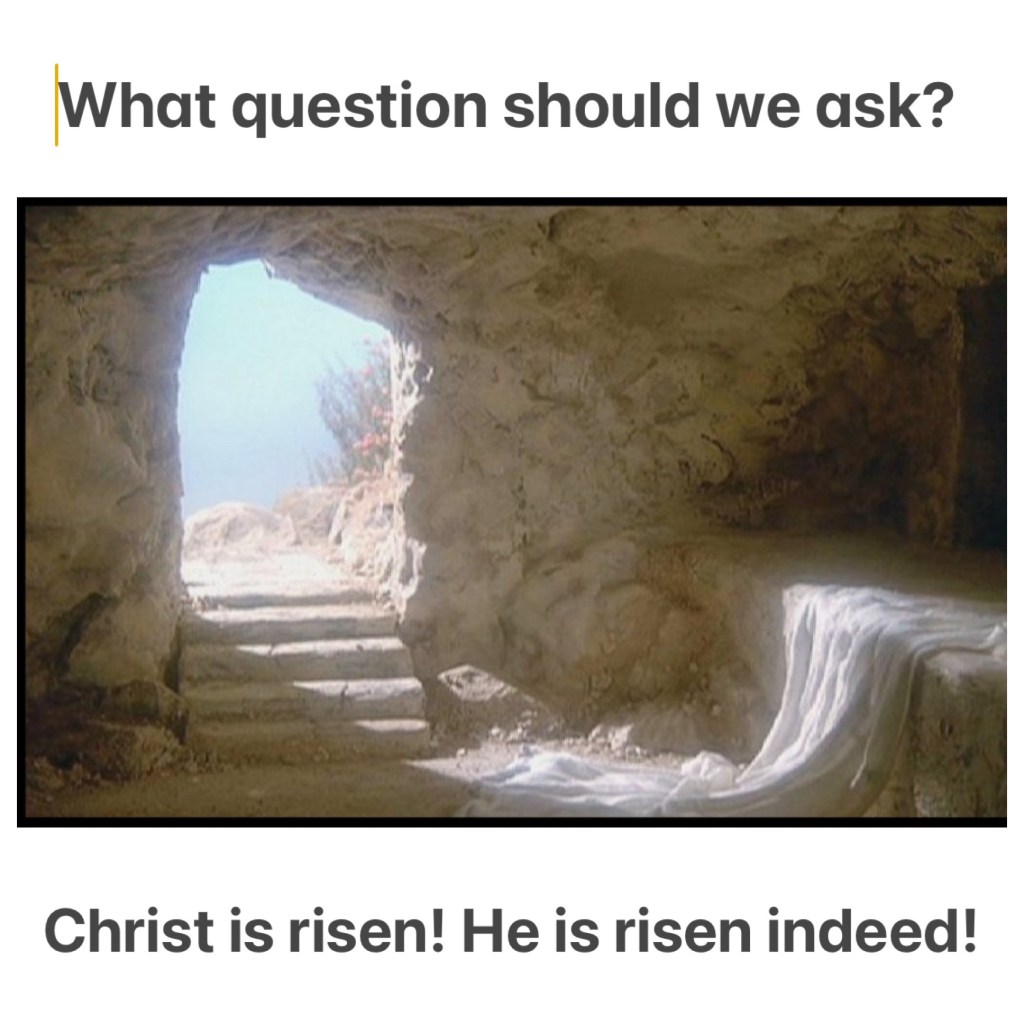
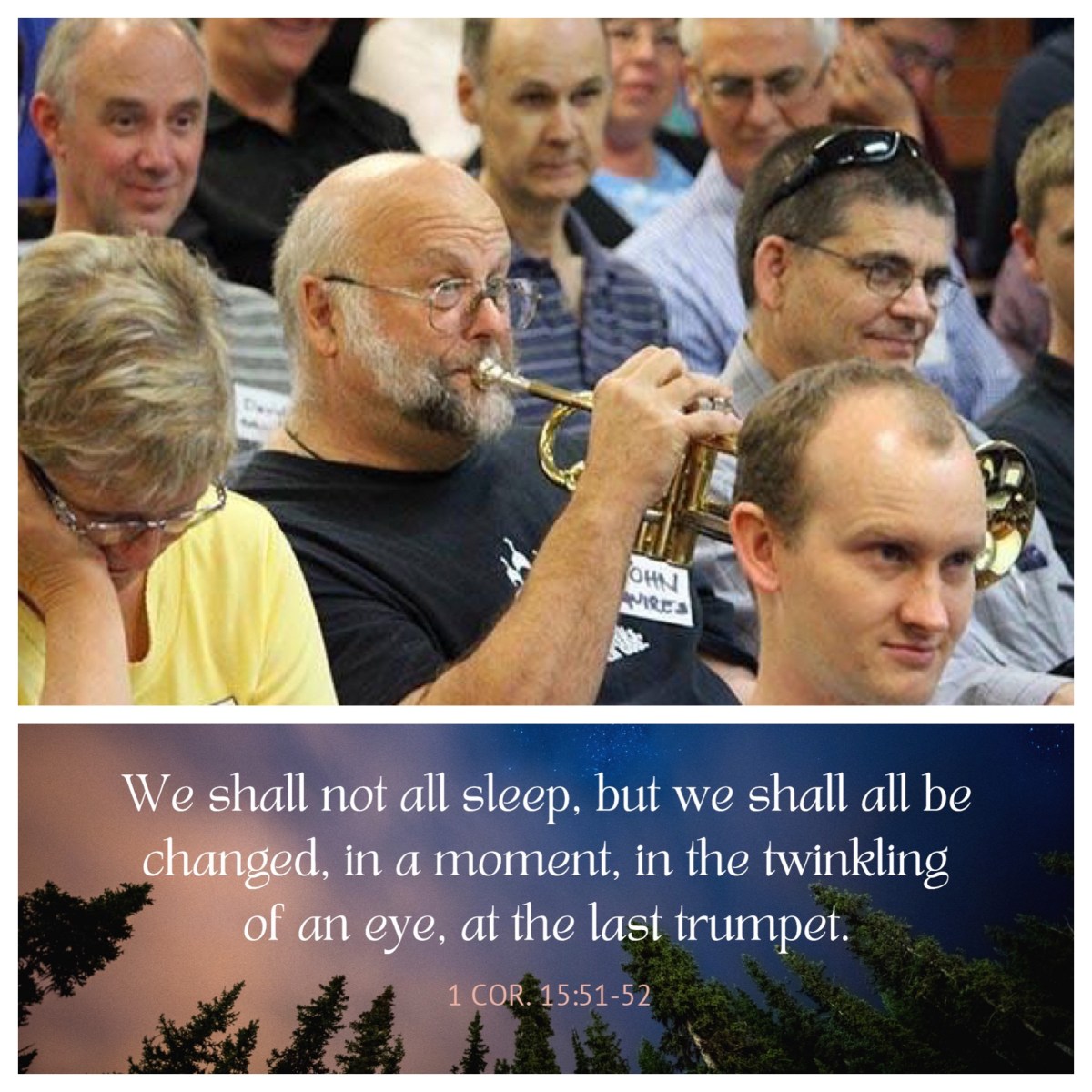
There was also dispute about this matter in Corinth, resulting in a number of debates about particular aspects of this belief. In the verses of 1 Cor 15 dealt with in recent weeks, a number of matters have been explored, debated in fine rhetorical style, and dispatched. To conclude their reflections on this matter (15:50–58), Paul and Sosthenes offer a final glimpse into the eschatological drama that awaits at “the end of time”. “What [we] are saying”, they declare, “is this: we will all be changed, in a moment, in the twinkling of an eye, at the last trumpet” (15:51–52).

The argument now is no longer logic-based, as they move through a sequence of vividly-imagined images in a dramatic rhetorical style. The whole long discussion of this matter ends with a simple, concise ethical exhortation: “be steadfast, immovable” (15:58). The eschatological language used in getting to this point, in these last few verses, is poetic, not realistic; it is evocatively-inspiring, not argumentatively-logical. The argument is brought to a conclusion with a sequence of images, not with any list of legal definitions.

What do we make of the concept of resurrection? Earlier in this chapter, the letter writers have asserted quite forcefully that “if Christ has not been raised, your faith is futile and you are still in your sin” (15:17). Are we therefore not at liberty to interrogate this concept, of the resurrection of Jesus and thus the resurrection of the dead, beyond affirming that it is essential to the faith? My mind recoils at such a stricture! I am committed, as this blog’s name indicates, to “an informed faith”, a faith in which the exercise of “all your mind” is integral to its full understanding and full expression.

So what, then, do we make of resurrection? Contemporary debate has canvassed a number of options as to the nature of the resurrection: Must it be in a bodily form? Was Jesus raised “in the memory of his followers”, but not as a physical body? Is resurrection a pointer to a transcendent spiritual dimension? What was meant by the reference to an “immortal state” in 1 Cor 15:53-54?

Some believers aggressively promote the claim that we must believe in the boldly resurrection of Jesus, that we must adhere to a literal understanding of what the biblical texts report. I prefer to advocate for ways of responding to the story which are creative, imaginative, expanding our understandings and drawing us away from age-old doctrinal assertions which are grounded in obsolete worldviews, on into new explorations of how this metaphor can make sense for us in our lives in the 21st century.

My basic position (as I hinted at towards the end of my previous blog on 1 Cor 15) is that resurrection is a claim that does not direct us away from this world, into a heavenly or spiritual realm. The resurrection offers us both an invitation to affirm our bodily existence in this world, and to explore fresh ways of renewal and recreation in our lives, in our society. It is about liberating life for renewal in our own time and place, here in this world.

It is the apostle Paul who, most of all in the New Testament, provides evidence for the way that early believers began to think about the central aspects of the Easter story—death on the cross, newness in the risen life (Rom 6:3-4:23, 8:6,13; 1 Cor 15:21-23; 2 Cor 4:8-12; Phil 2:5-11, 3:10-11). Paul probably did not begin such ideas; indeed, in both arenas, there are clear Jewish precedents. These were ideas that were live at the time. 

However, the application of these ideas to Jesus—and their insertion into the story of his life—has moved them into a different dimension. They seem, to some, to be “historical events”. I think this pushes things too far. Certainly, Jesus died; but the evaluation of his death as a sacrifice is an interpretive move. In same fashion, the story of Jesus being raised from death was an interpretive move made within a context where “resurrection” was a live idea. In our context, it is a contested idea which sits uneasily within our scientific understandings.

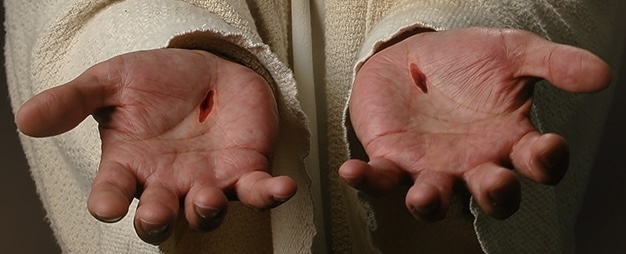
I maintain that other writers in the New Testament provide important keys for understanding the function that “resurrection” plays in our faith. In Luke’s Gospel, the notion that Jesus may be appearing to the disciples as “a ghost” (the Greek is pneuma, usually translated as “spirit”) is dismissed when Jesus instructs the disciples to “look at my hands and my feet; see that it is I myself; touch me and see; for a ghost (pneuma) does not have flesh and bones as you see that I have” (Luke 24:38–39). Here, the emphasis is on the fact that the risen Jesus bears the marks of the crucified Jesus; in his resurrected form, the scars and burdens of his human life continue to be manifest.

In like fashion, when John recounts what may well be his version of the same scene, he puts to the fore the claim by the initially-absent Thomas that Jesus will only be identifiable by “the mark of the nails in his hands” and the wound on his side (John 20:25). So, a week later, when Jesus appears again, he instructs Thomas to “put your finger here and see my hands; reach out your hand and put it in my side” (John 20:27). It is on this basis—the tangible evidence of the crucifixion markings on the body of the resurrected Jesus—that Thomas can move from doubt to belief.

So, in these stories, the primary function of the appearance of the risen Jesus is not to point away from life on earth to some imagined heavenly realm—rather, it is to point back immediately to the scars of the cross, carried for eternity in the resurrected body of Jesus. It is an evocative, poetic presentation.

I return to 1 Cor 15, and the claim that the language used here is also poetic, proceeding in a series of images. Paul and Sosthenes do not conclude their rhetorical dissertation on resurrection with logic-based argumentation, but with a poetic doxology. What concludes the detailed argument of this long chapter is a simple outburst of thanksgiving: “thanks be to God, who gives us the victory through our Lord Jesus Christ” (15:57).

Indeed, such doxologies characterise a number of the letters of Paul. In Romans, they punctuate the complex theological argumentation of this longest letter at key moments. “Thanks be to God”, he rejoices at the end of the tortured discussion of Law, sin, and death (Rom 7:25a). “I am convinced that … nothing in all creation will be able to separate us from the love of God in Jesus Christ our Lord”, a chapter later (8:38–39). Then, after three complex midrashic chapters about Israel, the exultant “O the depths of the riches and wisdom and knowledge of God  … to him be the glory forever; Amen” (11:33–36). 

Finally, in drawing to a close, Paul offers the Romans a prayer of hope (15:13), a brief blessing (15:33), and a reiteration of the offering of grace (16:20b). In a final redaction of the letter, a later scribe then added a most flowery doxology as the conclusion to the whole letter (16:25–27).

The phrase used at 1 Cor 15:57, “thanks be to God”, appears also in Romans (6:17; 7:25) and 2 Corinthians (2:14; 8:16; 9:15); and see also 1 Thess 1:2; 2:13. Paul peppers his letters with notes of praise and adoration addressed towards God. This is poetry that evokes emotions—not words that wrangle doctrines. Such is the nature of his final word on resurrection at 1 Cor 15:57.

The brief word that follows this doxology is a word of hope-filled assurance to the Corinthians, whom he has criticised so mercilessly at many places throughout the letter: “you know that in the Lord your labour is not in vain” (15:58). The letter writers have earlier reminded the  saints in Corinth what they know in a string of affirmations, most introduced with the rhetorical “do you not know?”. These affirmations include “you are God’s temple and God’s Spirit dwells in you” (3:16; similarly, 6:19), “a little yeast leavens the whole batch of dough” (5:6), “the saints will judge the world” (6:2), “wrongdoers will not inherit the kingdom of God” (6:9), “your bodies are members of Christ” (6:15), and “‘no idol in the world really exists’ and “there is no God but one” (8:4).

In the discussion of the rights of an apostle, they are reminded that “those who are employed in the temple service get their food from the temple, and those who serve at the altar share in what is sacrificed on the altar” (9:13) and “in a race the runners all compete, but only one receives the prize” (9:24). In the introduction to the discussion of “the body”, they are reminded that “when you were pagans, you were enticed and led astray to idols that could not speak” (12:2), and I the extended discussion of the use of gifts in worship, there are regular reminders about their knowledge (14:7, 9, 11, 16; and most controversially, v.35). 

Here the reminder of what the saints “know” is the encouraging word, “in the Lord your labour is not in vain” (15:58). It is a typical teaching technique, drawn directly from the heart of the traditions of paraenesis (exhortation, or encouragement) which characterizes all of the letters of Paul. So the chapter ends both with praise directed to God and (despite their conflicts and scepticism) encouragement offered to the Corinthians. It is an uplifting conclusion.

See also 

Perishable and imperishable, physical and spiritual, of the dust and of heaven (1 Cor 15; Epiphany 7C)

The “resurrection of the dead ones” (the Greek word translated as “the dead” is plural, reflecting a raising of many believers) was a Jewish belief that had developed in preceding centuries; not all Jews accepted it (see Acts 23:6–8) and amongst some Gentiles there was scepticism about the idea (see Acts 17:32). There was also dispute about this matter in Corinth, resulting in a number of debates about particular aspects of this belief. In the section of 1 Cor 15 dealt with last week, two such matters have been explored, debated, and dispatched.

Thus week the lectionary picks up at v.35, where a third pastoral situation might possibly be indicated. The form employed (a rhetorical question attributed to an indefinite person) was commonly used by a skilled rhetorician to raise an objection which he knew could be raised, allowing it to be dealt with in advance (the same technique is found in Rom 2–6 and 9–11). The question provides an opportunity for further eschatological teachings about the nature of the resurrection body (15:35–50) and a further display of Paul’s rhetorical prowess. 

The issue at stake here is the nature of the resurrection body, identified in an opening pair of questions: “how are the dead raised? with what kind of body do they come?” (15:35). These are not mere rhetorical questions; Paul and Sosthenes fully intend to address such enquiries with a detailed exposition. The weight of the argument, in my mind, lies in a set of contrasts by juxtaposition, advanced in a sequence of logical steps in vv.42–49:

What is sown is perishable / what is raised is imperishable. 

It is sown in dishonour / it is raised in glory. 

It is sown in weakness / it is raised in power. 

It is sown a physical body/ it is raised a spiritual body. 

If there is a physical body / there is also a spiritual body. 

Thus it is written, “The first man, Adam, became a living being”/

the last Adam became a life-giving spirit. 

But it is not the spiritual that is first /

but the physical, and then the spiritual. 

The first man was from the earth, a man of dust; /

the second man is from heaven. 

As was the man of dust, so are those who are of the dust; /

and as is the man of heaven, so are those who are of heaven. 

Just as we have borne the image of the man of dust, /

we will also bear the image of the man of heaven.

The symmetry is certainly poetically and rhetorically satisfying. The argument is a straightforward typology, in which one thing is seen to correspond to another thing on a different plane, or in a different dimension—but also to differ from them: the first man correlates with the second man, but while the first is “the man of dust”, the second is “the man of heaven; and while “the living being” shares the same living existence with “the life-giving spirit”, this being also differs from that spirit.

The language found here draws on terms used by the authors of the letter in earlier chapters. A contrast between “perishable” and “imperishable” has already been made in the discussion of the race in which “all runners compete” in the statement that “athletes exercise self-control in all things; they do it to receive a perishable wreath, but we an imperishable one” (9:25). The perishable reward is the winner’s wreath (9:25), while the imperishable reward is clearly the salvation referred to in an earlier verse (9:22). This language will return in the concluding couplet at the end of the discussion of this particular issue (v.50).

The clear contrast of the saying about the wreath carries over into the discussion in ch.15 where “the perishable” is contrasted with “the imperishable”, and “what is sown” is juxtaposed alongside “what is raised”. This contrast would seem to draw strongly on the Platonic distinction between spirit and flesh, in which the spirit is the realm of ultimate reality, but the flesh represents the prison in which human beings are trapped during this life.

The letter proposes that the former is sown “in dishonour, in weakness”—features characterising sinful humanity—while the latter is raised “in glory, in power”—attributes of the divine. These are the characteristics of “the man of dust”, Adam, who encompasses those who are set to experience death (15:21–22). It is through “the life-giving spirit”, the “last Adam”, that resurrection life is granted (15:45). We might thus consider that the argument here is thoroughly dualistic; the Platonic influence is undoubted. 

So a similar contrast is drawn between “spiritual” and “physical”; this has been an important factor in the argument of the early chapters of this letter. In their opening thanksgiving, Sosthenes and Paul noted that the saints in Corinth “are not lacking in any spiritual gift” (1:7). However, a little later they lament that they could not address them as “spiritual people”, for they still need milk, not solid food, as befits “infants in Christ” (3:1–2). And the exercise of “spiritual gifts” in Corinth, canvassed in quite some detail in ch.12—14, reveals a chaotic exuberance in which the “building up of the assembly” is almost entirely lacking. Perhaps the note in the opening thanksgiving was ironic, then?

Indeed, in one section of the letter (in ch.2), the spiritual / physical contrast is very strong; the contrast is set in stark fashion. First, the human heart is unable to conceive “what God has prepared for those who love him” (2:9, introduced as scripture, most likely paraphrasing Isa 52:15 or Isa 64:4). Accordingly, God’s wisdom is “secret and hidden”, for “no one comprehends what is truly God’s except the Spirit of God” (2:7, 11). 

Thus, there is a clear distinction between “those who are unspiritual”, who “do not receive the gifts of God’s Spirit … and are unable to understand them”, and “those who are spiritual [who] discern all things” (2:14–15). It is the believers in this latter group who have been granted “the Spirit that is from God, so that we may understand the gifts bestowed on us by God” (2:12). The closing word in this section is, “we have the mind of Christ” (2:16, riffing off the affirmation of Isa 40:13).

This spiritual / physical contrast is bound up with the contrasts between wisdom / folly (1:18–25) and weakness / power (1:26–31) that formed the basis for the clarion declaration, “when I came to you, brothers and sisters, I did not come proclaiming the mystery of God to you in lofty words or wisdom; for I decided to know nothing among you except Jesus Christ, and him crucified” (2:1–2). That is the foundation for the message articulated throughout this letter.

Although Paul maintains that “my speech and my proclamation were not with plausible words of wisdom” (2:4), the message that he brought the Corinthians was indeed imbued with wisdom—although he maintains that “it is not a wisdom of this age or of the rulers of this age, who are doomed to perish”; rather it is “God’s wisdom, secret and hidden, which God decreed before the ages for our glory” (2:6–7). In like fashion, whilst Paul declares that he came to the Corinthians “in weakness and in fear and in much trembling” (2:3), there was nevertheless “a demonstration of the Spirit and of power” when he was with them (2:4). 

So there is a deep paradox in this language, for in any one word there can be two related, but quite distinct, meanings. Wisdom is both human and divine; power is both absent and yet present. It is perhaps this paradox, in which qualities overlap and inter-relate, rather than a simplistic dualism of spheres, keeping the two entities far apart, that we might best see in these words of chapter 15. 

Although the language appears sharp and polemical, the contrast is rhetorical rather than existential: wisdom is made foolish in order to convey wisdom, power is rendered weak in order to express power, and spiritual matters are gifted to those whom we might regard as thoroughly physical, fleshly, material, in order that the Spirit might be at work in and through human beings. It’s a paradox.

So here is the paradox at play: it is the expression of spiritual things—the gifts of wisdom, knowledge, faith, healing, miracles, prophecy, discernment, tongues, and interpretation (12:8–10), or the gifts granted to “apostles … prophets … teachers”, as well as “deeds of power, gifts of healing, forms of assistance, forms of leadership, various kinds of tongues, [and] interpret[ation]” (12:28–30)—which are manifested amongst the human beings in the community of faith in Corinth, and indeed in other such communities in other places and other times. There is no fundamental dualism; rather, the spiritual infuses and works in and through the physical. That is the key to the paradox.

So the “man of dust” is but a type for the “man of heaven”; and those who believe, who are “called to be saints” (1:2; see also 6:1–2) share in both images. The “man of dust”, of course, evokes the second version of the creation story, in which “the Lord God formed humankind (ha-adam) from the dust (aphar) of the ground” (Gen 2:7a). And in that verse lies also the seed of the idea that the “man of heaven” would be “a living being” (1 Cor 15:45), for the creation narrative continues, “and [God] breathed into his nostrils the breath of life (nishmat hay-yim); and the man became a living being (nephesh hay-yah)” (Gen 2:7b). The wordplay in Hebrew is delicious!

So the argument presented in 1 Cor 15:42–49 is in fact, in its form, a midrashic exposition of scripture. Its foundation is this twofold portrayal of the “man of dust” and the “living being” (Gen 2:7). Its climax draws from another scripture—this time, from the first creation narrative, which itself reaches its narrative climax in the poetic affirmation that “God created humankind (ha-adam) in his image, in the image of God (betselem elohim) he created them; male and female he created them” (Gen 1:27). 

One final note is that it is Paul’s use of the reference to “the last Adam” (that is, Jesus) as “a life-giving spirit” (1 Cor 15:45) that ties the whole argument into this discussion of resurrection. Spirit and resurrection are closely linked. The same connection is stated quite explicitly by Paul in the letter that he, alone, wrote to the Romans. When he is discussing “those who live according to the Spirit” (Rom 8:5), he declares “the Spirit of him who raised Jesus from the dead dwells in you, he who raised Christ from the dead will give life to your mortal bodies also through his Spirit that dwells in you” (Rom 8:11). The indwelling of the Spirit in the lives of believers is equivalent to the act of “giv[ing] life to your mortal bodies”.

Then, however, the authors conclude their discussion of the resurrection body with a pair of contrasts that make it perfectly clear that resurrection life exists in an altogether different plane from this earthly life: “flesh and blood cannot inherit the kingdom of God, nor does the perishable inherit the imperishable” (1 Cor 15:50). We will think more on this in next week’s blog. 

Suffice to say that, in my mid, this conclusion has lapsed back into the Platonic dualism inherent in the language; but as I have noted, I don’t think this was entirely what Paul (and Sosthenes) actually meant to do. Theologically, in my mind, the kingdom of God is precisely evident in the flesh and blood that characterises ice as we currently know it. Is this not what Jesus meant in his most provocative sayings about the kingdom? 

See also 

The last enemy to be destroyed is death (1 Cor 15; Epiphany 6C)

The lectionary is currently offering sections from the latter chapters of the letter written by Paul and Sosthenes to “those who are sanctified in Christ Jesus, called to be saints” (1 Cor 1:2). In the earlier chapters of the letter, the authors have canvassed a wide range of matters. First, they spend time addressing the serious divisions emerging within the Corinthian community. The letter notes that this matter “has been reported to me by Chloe’s people” (1:11); the singular suggests that Paul has already taken the primary role in writing this letter. It is thought that this must have been a verbal report passed on to Paul and Sosthenes when they met with a group from Corinth, perhaps slaves, sent by Chloe (about whom nothing else is revealed).

A second matter is introduced by a similar phrase, “it is actually reported…” (5:1), although the informant is not named. Some scholars think that the similarity of wording suggests that this news may also have been conveyed by “Chloe’s people”. A little later on, another matter is introduced with the phrase, “now concerning the matters about which you wrote” (7:1). Clearly, there had been written correspondence with Paul, at least, as well as the verbal report already indicated. 

Towards the end of the letter, the authors refer to “the coming of Stephanas and Fortunatus and Achaichus” (16:17). This might suggest that they visited Paul and anyone else with him; a few verses later, there is the note that “Aquila and Prisca, together with the church in their house, greet you warmly in the Lord”, as well as “all the brothers and sisters” who send greetings (16:19–20). 

Perhaps these three emissaries bore a letter from the community (or a section of it), asking for Paul’s opinions about these matters? The fact that their names are Roman names reflecting an educated status, would lend support to this hypothesis. Alongside this, we can also note that Paul personally concludes the letter by writing “I, Paul, write this greeting with my own hand” (16:21). This suggests that a scribe—perhaps Sosthenes?—had actually been writing the letter to this point, most likely using pen and ink to commit the words dictated to them by Paul onto the papyrus. How much (or how little) the scribe would have had input into the letter is not clear.

Regardless of who actually brought this news, Paul and Sosthenes are willing to deal with the matters raised, introducing them in turn by the shorthand formula, “now concerning”. Such matters include “food sacrificed to idols” (8:1), “spiritual matters” (12:1), “the collection for the saints” (16:1), and “our brother Apollos” (16:12). 

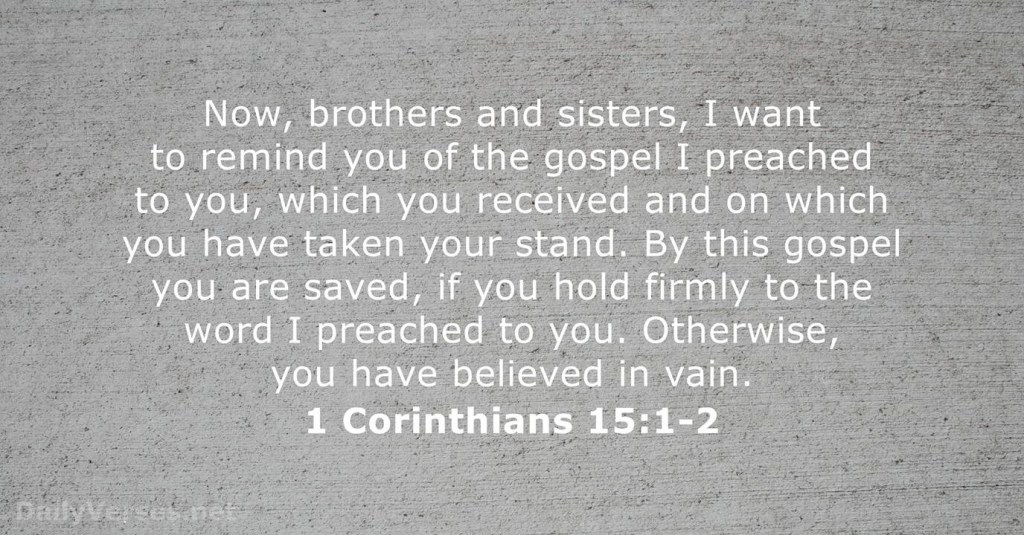
The final theological issue which they address in this first (extant) letter to the Corinthians, at quite some length, concerns the resurrection of believers. A rather strong formula is used to introduce a major theological issue at 15:1: “now I would remind you, brothers and sisters, of the good news that I proclaimed to you…”.

The letter considers this matter at length; many scholars regard it as the fundamental problem in the Corinthian community of faith, underlying other issues already explored. From comments later in this chapter (15:12, 15:29, and possibly 15:35), it is clear that divergent views about resurrection were held within the community of faith in Corinth. The response found in this chapter deals with each of them in a theological and rhetorical fashion.

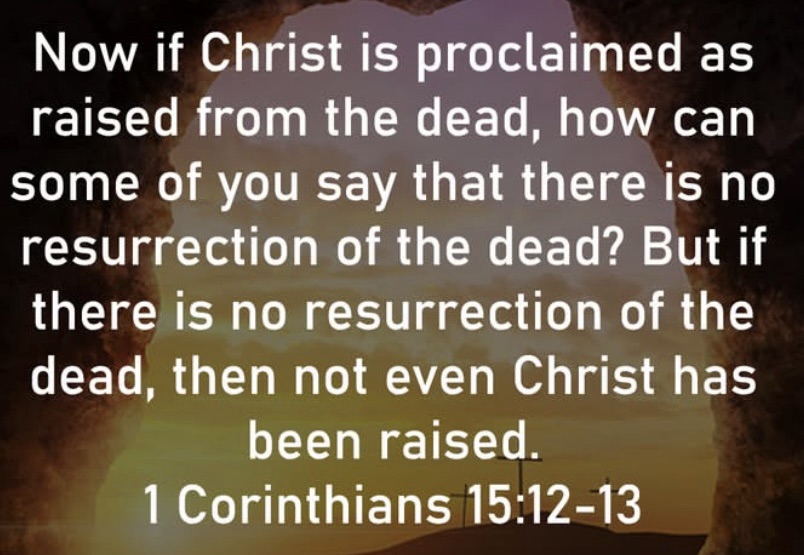
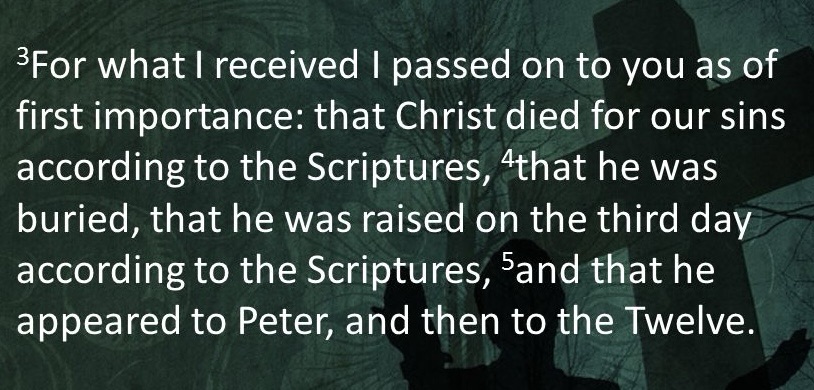
Paul begins dealing with the issue with a series of affirmations concerning the crucifixion and resurrection of Jesus. There is an apologetic tone at the start, as Paul insistently underlines the validity and authority of what he says (15:1–3a). The “good news” which “I proclaimed” is described in technical terms indicating the passing-on of pre-existing tradition: “I received”, “I handed on”, “you received”. It is a matter of “first importance”.

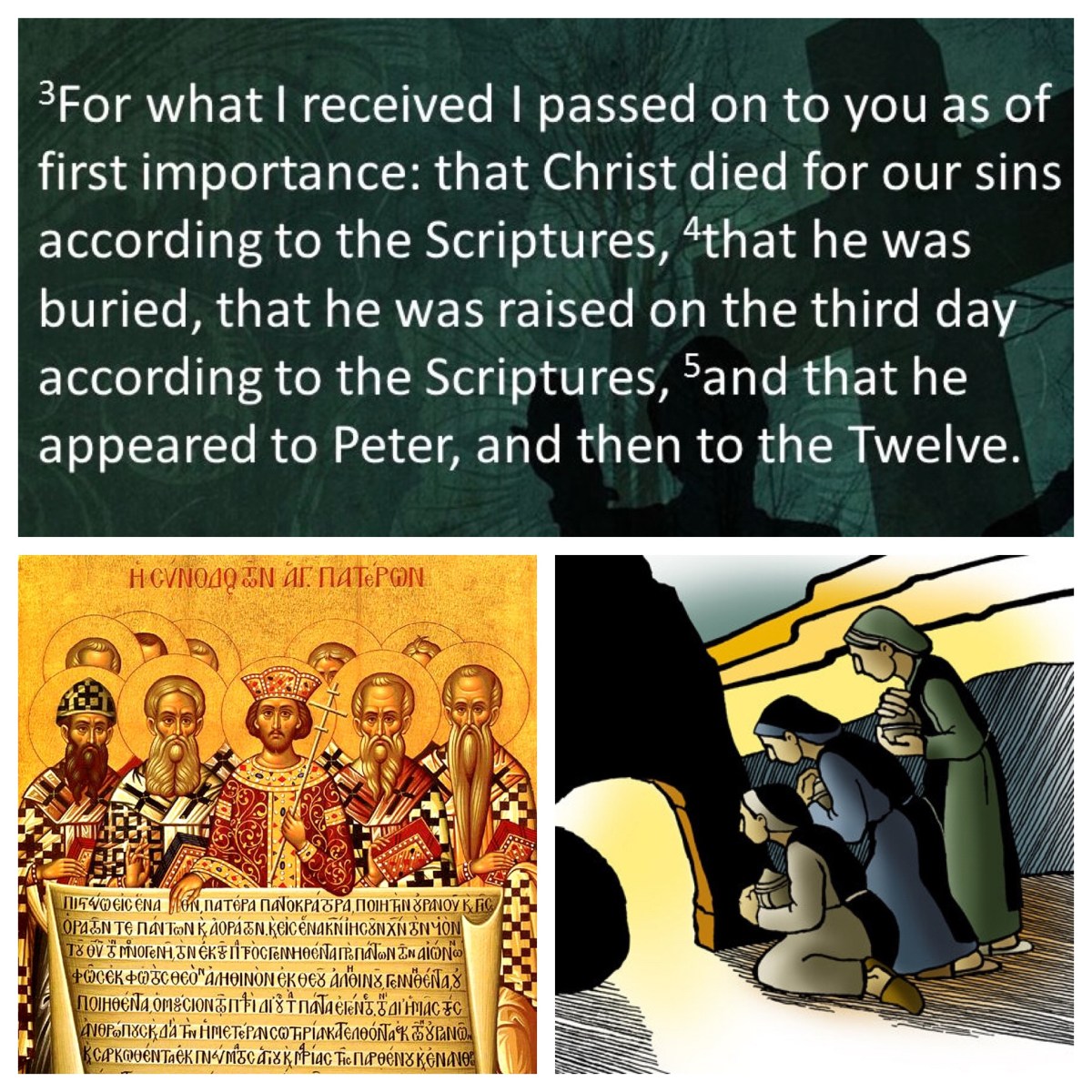
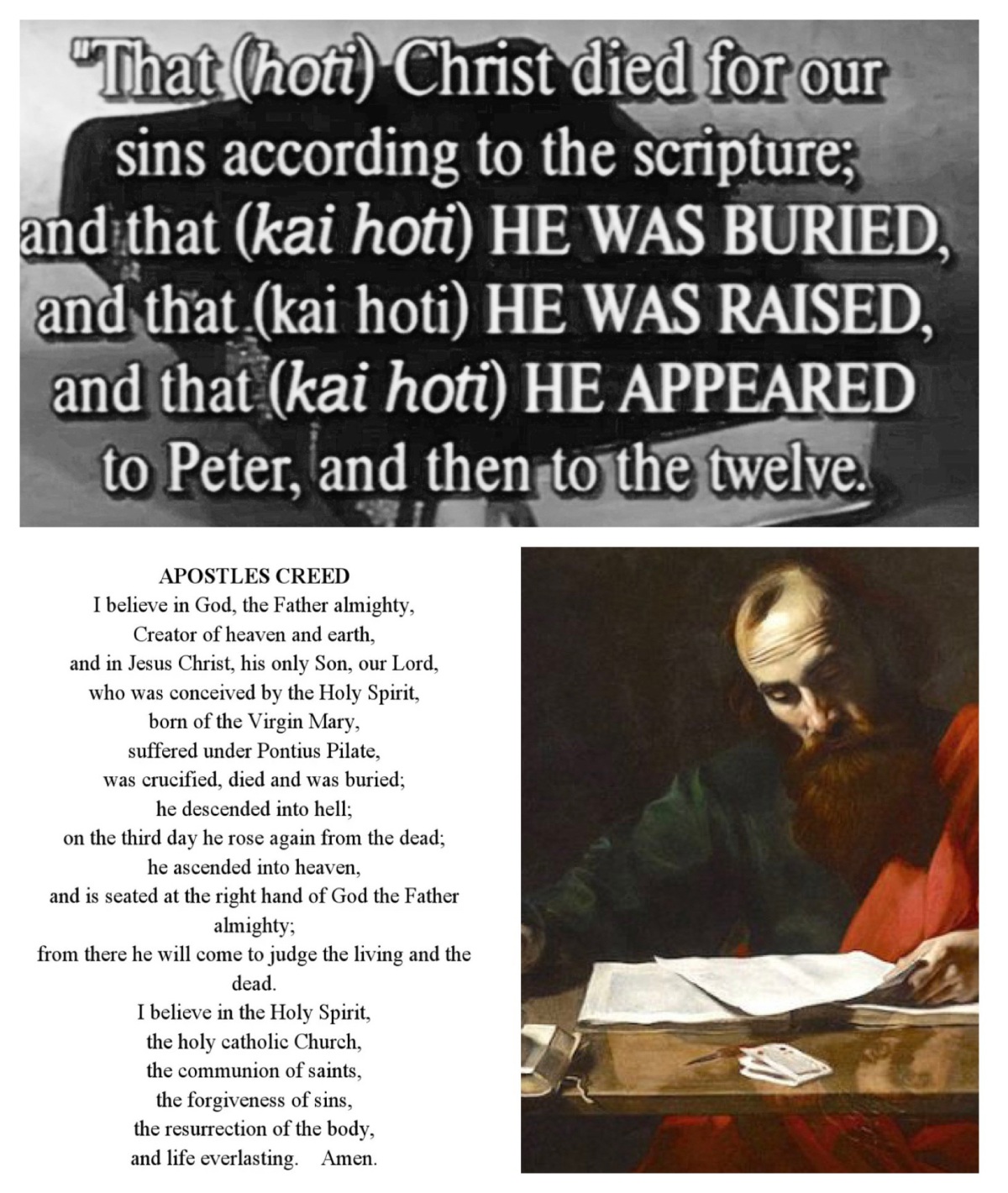
Associated with this is an insistence that the Corinthians “stand” in this news, and must “hold firmly” to it, as the basis for “being saved”. The foundational tradition which is then reported (15:3b–7) is based on an early four-part affirmation of faith: “Christ died … he was buried … he was raised … he appeared …”.

The first and third elements are elaborated with the formulaic “in accordance with the scriptures”. The fourth element, the appearances of the risen Jesus, is extended beyond the list received by Paul (to Cephas, the twelve, more than 500, James, all the apostles; 15:5–7) to include Paul himself (“as to one untimely born”, 15:8), leading on to an assertion of Paul’s apostolic credentials and divinely-assisted activities (15:9–11).

All of this forms a solid foundation for the extended theological discussion that develops in the remainder of this chapter, as Paul explores various aspects of “the resurrection of the dead”. His personal experience of the risen Jesus presumably qualifies him, in his eyes, to develop the argument that unfolds. 

This foundation reaches back to the “theology of the cross” at the start of the letter, where references to the crucifixion and death of Jesus provided a basis for the opening theological discussion of his letter (1:17–18, 22–25; 2:1–2, 7–10). However, Paul does not develop this connection beyond the opening 11 verses of chapter 15. Instead, he moves straight to a consideration of various pastoral situations in Corinth that have arisen regarding the resurrection (15:12–58).

The “resurrection of the dead” (the Greek word is plural, reflecting a raising of many believers) was a Jewish belief that had developed in preceding centuries; not all Jews accepted it (see Acts 23:6–8) and amongst some Gentiles there was scepticism about the idea (see Acts 17:32). 

The community in Corinth contained sceptics (15:12); as a counter-argument to their scepticism the argument which is advanced in this chapter attempts to refute their opinion by setting out a series of logic-based steps. It begins by noting that people question the reality of the resurrection of the one person, Jesus (15:13–16). This leads to the accusation that “your faith is futile” (15:17). Paul and Sosthenes cannot countenance this, so they launch into an exposition of what they see as eschatological realities (15:20–28), explaining the places allocated, at the end, to humans, Jesus, and God. 

Unfortunately, the lectionary omits these verses and jumps next week to v.35, where Paul raises questions which, he says, “someone will ask”, namely: “How are the dead raised? With what kind of body do they come?” In preparing to deal with these questions, Paul employs a rhetorical structure in the first part of this argument (15:21–22) which returns to the pattern of juxtaposing two different entities, which has already appeared in earlier sections of the letter. 

We can see this pattern as follows:

for since death came through a human being / the resurrection of the dead has also come through a human being;

for as all die in Adam  / so all will be made alive in Christ.

An expanded version of this argument takes place in Rom 5:12–21. 

The argument countering Corinthian scepticism continues with an explanation that Christ is “the first fruits”, who has “all things put in subjection under his feet” (15:23–27). But Christ himself is subjected to God; finally, God is “all in all” (15:28). Paul has not proven the resurrection as such, but has explained how it fits into his view of the end days.

This deals with one factor in the Corinthian situation. There follows consideration of a second pastoral situation, raised through the question, “what will those people do who receive baptism on behalf of the dead?” (15:29). Paul abruptly dismisses this with two counter-punching rhetorical questions. First, “if the dead are not raised at all, why are people baptized on their behalf?” (v.29), inferring that such baptism could be completely ineffective. Second, “why are we putting ourselves in danger every hour?” (v.30), diverting attention to the claim that “I die every day!” (v.31). The clear inference is that there is no validity at all in the viewpoint held by those who practice “baptism on behalf of the dead”. 

Then follows a poetic reflection (15:30–34) which includes sayings found in both Jewish and pagan sources, deployed to denounce those who “have no knowledge of God” (15:34). First, there is a reference to Hebrew scripture where the words “let us eat and drink, for tomorrow we die” are found (Isa 22:13). In the context of the prophet, this saying refers to the sinners among “my beloved people” who are doomed for destruction (Isa 22:4) in the “day of tumult and trampling and confusion in the valley of vision” (Isa 22:5). Their fate is sealed; they can be only fatalistic. 

The way it is used in 1 Cor 15, however, is that it conveys the nihilistic attitude of those who believe that “the dead are not raised”. They, too, exude a fatalistic attitude to life—perhaps echoing the fatalism of the Preacher, who reiterates the declaration that “there is nothing better for mortals than to eat and drink” (Eccles 2:24; 3: 3; 5:18; 8:15; 9:7), as befits his overarching view, “vanity of vanities … all is vanity” (Eccles 1:2;  12:8). This existential nihilism is where Paul places those in Corinth who refuse to accept the notion of resurrection.

Then, in 1 Cor 15:33, a saying is found in Greek poetry is quoted. The King James Version rendered this saying “evil communications corrupt good manners”, inclining us to understand that those who received these words from Paul were being warned to be careful with their words, for the constant repetition of an immoral saying might well,condemn a person to an immoral life.

However, the NRSV more accurately renders this saying as “bad company ruins good morals” (1 Cor 15:33); the Greek word here translated as “company” is homilia, which can simply mean communicating with someone, being associated with someone such as a close companion; or a more complex sense of exchanging intimate ideas, thoughts, and feelings through communion with another. 

The words quoted are taken from the works of Menander, in a play called Thais which exists today in only a few small fragments. Thais was the companion of Ptolemy and held a powerful position in his court; in delivering a powerful speech to Alexander the Great during a drunken banquet, she convinced him to burn down the palace of Persepholis. (The story is told by Plutarch in his Life of Alexander book 38, and by  Diodorus Siculus in his Universal History 17.72.) 

Perhaps by quoting just a line from the play, Paul and Sosthenes were intending to evoke the scene of the drunken banquet at which Thais spoke. The affirmation that good morals are ruined by associating with bad company sits well with the licentious ethos conveyed by the saying  “eat and drink, for tomorrow we die”. This is precisely the trap that some in Corinth have fallen into. So this section ends with the exhortation, “come to a sober and right mind, and sin no more” (15:34), and with the clear inference that, to their shame, there are some within the community who “have no knowledge of God”. Paul and Sosthenes are not willing to back down on their criticism of the Corinthians!

See also

Receiving and passing on a living tradition (1 Cor 15; Epiphany 5C)

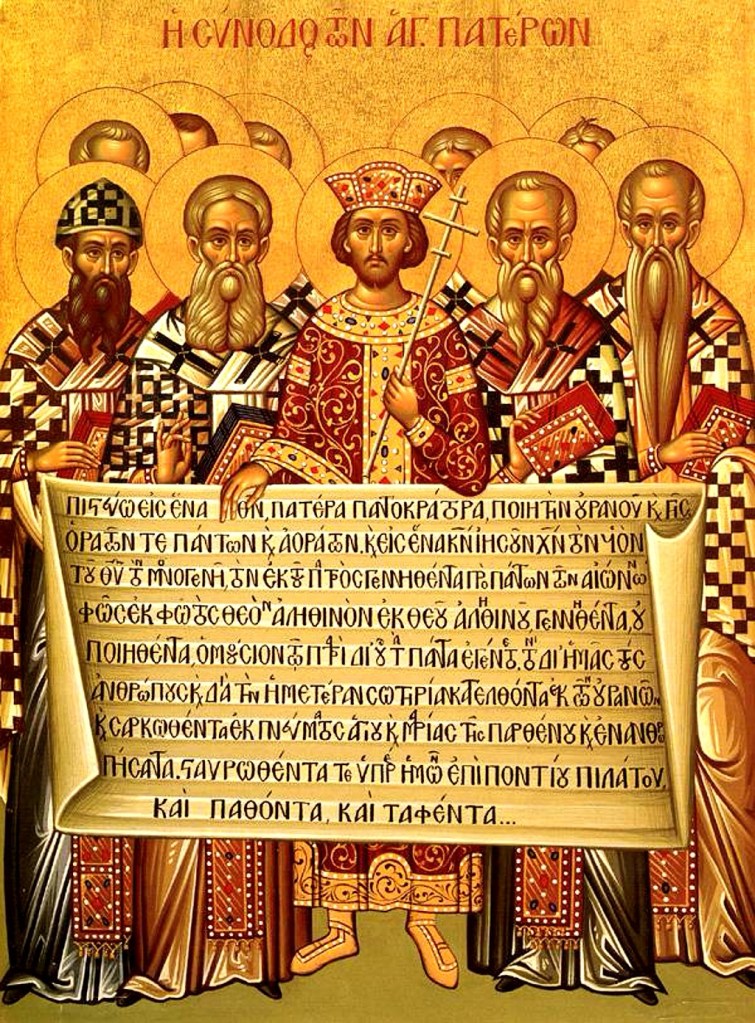
In the verses proposed by the lectionary for this coming Sunday, we come to a central claim of Christian faith. As the fourth century Apostles Creed puts it: we believe in Jesus Christ … who suffered under Pontius Pilate, was crucified, died, and buried, descended into hell, rose again on the third day, ascended into heaven, and is seated at the right hand of God. Four of those claims (crucified, died, buried, rose again) are articulated in the passage from this first letter to the Corinthians that we will hear on Sunday (1 Cor 15:1–11).

What is the nature of the confessional affirmation that Paul and Sosthenes offer in this passage? The previous chapters of 1 Corinthians have alerted us to the disorganised ethos of the community in the cosmopolitan port city of Corinth. Those earlier chapters have indicated a number of problems that existed within the community of followers of Jesus. There was factionalism (chs.1–4), immorality (ch.5), resorting to civil lawsuits (ch.6), and dissension regarding marriage, celibacy, and sexuality (ch.7). There were differing attitudes towards consuming meat bought in the marketplace after it had been offered to idols (chs.8–10), and multiple issues that manifested in their gatherings for worship (chs.11–14). 

The letter proceeds by addressing each of these matters in turn, all undertaken with the same intention, to bring about order in the midst of the chaos that existed in Corinth. His words in the midst of the lengthy discussion about marriage, celibacy, and sexuality state his purpose with clarity: “I say this for your own benefit, not to put any restraint upon you, but to promote good order and unhindered devotion to the Lord” (7:35).

The disorder and chaos evident in worship, in particular, led Paul and Sosthenes, in the chapter immediately preceding this passage, to advise the Corinthians to seek to speak to others in worship “for their upbuilding and encouragement and consolation” (14:3). The letter writers advise them to exercise their spiritual gifts appropriately; to “strive to excel in them for building up the church” (14:12), to “not be children in your thinking … but in thinking be adults” (14:20). Their advice is, “let all things be done for building up” (14:26), noting that “all things should be done decently and in order” (14:40), for “God is a God not of disorder but of peace” (14:33). 

People speaking over the top of each other in worship, not attending to important words of prophecy and tongues, reflected the disordered chaos of the apparently quite libertine community. The infamous words ordering women to “keep silent” (14:33b—36), along with the adjacent commands to “keep silent” while one interprets tongues that are spoken (14:27–28) and “keep silent” to those seeking to offer a word of prophecy while others are still prophesying (14:29–31), are included in this letter precisely to address this chaotic disorder. And not for the first time in this letter, Paul invokes his higher authority to support his directions: “[you] must acknowledge that what I am writing to you is a command of the Lord” (14:37; see also 5:3–4; 7:40; 10:20–22; 11:27–28; 16:10; and cf. 7:25).

Immediately after this extensive discussion about worship, Paul and Sosthenes turn to the foundational message about Jesus, in a four-part statement: Christ died—was buried—was raised—and then appeared to various people (15:3–5). He uses terms that denote the passing on of traditions: “I received … I handed on … which you received … in which you stand” (15:1); and he insists on the importance of what he passes on: “you are being saved, if you hold firmly to the message that I proclaimed to you” (15:2). These two verses provide a strong, insistent introduction to what follows in the ensuing verses.

We see this dynamic also in an earlier chapter, in the familiar words associated with the Last Supper: “I received from the Lord what I also handed on to you” (1 Cor 11:23), as well as in the commendation of the Corinthians as they “maintain the traditions just as I handed them on to you” (11:2).

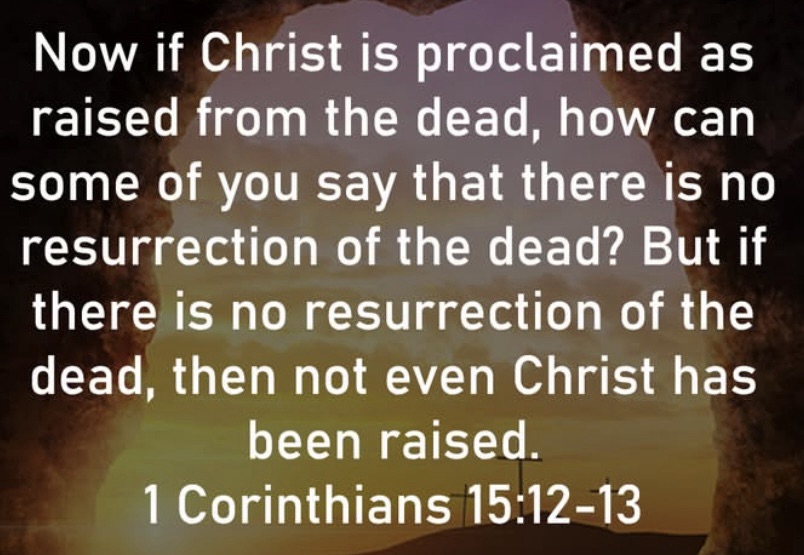
The core tradition that Paul and Sosthenes cite is the fourfold declaration that Jesus died, was buried, was raised, and appeared (vv.3–5). It may have already have been an existing formula; we know that Paul, in this letter that he wrote with Sosthenes, as well as in other letters, was willing to make use of very short credal-like statements that it is likely had already been developed by others, some of which he cites in order to refute, such as: “is well for a man not to touch a woman” (7:1), “all of us possess knowledge” (8:1), “all things are lawful” (10:23), and “how can some of you say there is no resurrection of the dead?” (15:12).

There are other succinct sayings which appear as the basis for further developments in the argument being made, such as “I decided to know nothing among you except Jesus Christ, and him crucified” (2:2), “knowledge puffs up, but love builds up” (8:1), “there is no God but one” (8:4), and “all things are lawful, but not all things build up” (10:24). The discussion of factions in chs.1–4 is built off “I belong to Paul … I belong to Apollos … [but] what then is Apollos? what is Paul?” (3:4–5), while Paul’s lengthy discussion of spiritual gifts (12:4—14:40) jumps off from the unspiritual “Jesus be cursed!” and the spirit-inspired response, “Jesus is Lord” (12:3).

Furthermore, Paul writes a number of longer credal-like statements, some of which seem shaped for liturgical usage: the words which became the “words of institution” in the church’s eucharistic practice (1 Cor 11:23–26), and others such as Rom 8:28; 2 Cor 4:14; Gal 1:3–5; Phil 2:6–11. The writers in the school of Paul who later wrote letters claiming to have his authority ( the “pastoral epistles”) followed this practice (see 1 Tim 2:5–6; 3:16; 2 Tim 2:11–13; Titus 2:11–14).

Two clauses in this tradition-based affirmation of 1 Cor 15:3–5 are buttressed by reference to scripture, another voice of authority alongside “the tradition”. What the specific scripture passages are, Paul and Sosthenes do not state; this has left open the door for speculation by later interpreters. 

Supporting arguments by reference to scripture is not unknown in Paul’s writings; as a Pharisee, he had attained a good awareness of Torah and its application to life (see Gal 1:14; Phil 3:5–6). He bases his magnum opus, Romans, on a scripture citation (Rom 1:17, citing Hab 2:4) and there is barely a chapter of this letter that does not contain scripture quotations and allusions in abundance. 

Key moments in 1 Corinthians are likewise supported by verses from Hebrew Scripture (1 Cor 1:19, 31; 2:9, 16; 3:19–20; 14:21; 15:54–55), and the well-known “words of institution” themselves (11:23–26) reference the tradition which emerges in later decades in the Synoptic Gospels, recording the words of Jesus himself at the last supper (Mark 14:22–25; Matt 26:26–29; Luke 22:14–20).

By using the terminology of traditions being received and handed on, Paul and Sosthenes are reining in the wayward Corinthians, recalling them to the fundamentals of their faith. So he sets out the dynamic of died—buried—raised—appeared (15:3–5) as the foundation for then discussing, in the remainder of the chapter, issues associated with the resurrection of Jesus (15:6–58).

Who saw the risen Jesus? First, Paul and Sosthenes tell of an appearance to the early leaders, Cephas (Peter) (v.5) and James (v.7)—although none of these appearances are reported in any Gospel.

Then, they indicate that Jesus appeared to “the twelve” (v.5) and “all the apostles” (v.8)—apparently alluding to narratives found in the later texts of three Gospels Matt 28:16–20, Luke 24:33–48; John 20:19–23, 24–29; 21:1–14. (The appearances narrated in the shorter and longer endings of Mark, added after 16:8, are not relevant; these are later patristic additions based on the other three Gospels, designed to harmonise the ending of Mark with these others.) Acts 1:6–11 might also be relevant here.

An interesting question is, how did he distinguish between these two groups—“the twelve” on the one hand, and “all the apostles” on the other. Indeed, these terms appear to be inherited by the letter writers from earlier traditions. This is the only place in all Pauline letters which refer to “the twelve”; and besides, the Gospel narratives noted above do not have Jesus appearing to “the twelve”, as Judas was absent from all of them, and so was Thomas in John 20:19–23. 

As far as the word “apostle” is concerned, in 16 of the 18 occurrences in the Pauline corpus (including those not authentic to Paul) Paul explicitly apply the term to himself. Paul acknowledges others as apostles: James (Gal 1:19), Peter (Gal 2:8), perhaps Barnabas (1 Cor 9:1, 5–6), an unspecified number of believers who were given gifts to be apostles (1 Cor 12:28–29; see also Eph 4:11), and most strikingly, Andronicus, a male, with Junia, a female (Rom 16:7). Are these the people that Paul has in mind at 1 Cor 15:8? Or is this simply a phrase inherited from the tradition, which Paul has repeated?

Next, Paul and Sosthenes identify an appearance to “more than five hundred brothers and sisters at one time” (v.6), which again has no place in any Gospel account. Last, Jesus appears to Paul himself (v.8), which he briefly reports at 1 Cor 9:1 and Gal 1:1. Strikingly absent from his list is the empty tomb and the appearances to Mary in the garden (John 20:14), to the women as they left the tomb (Matt 28:9–10), to the two travellers to Emmaus (Luke 24:15), or to the seven fishing by the Sea of Tiberias (John 21:1–4). What a perplexing inconsistency between the various testimonies to these appearances!!

This is an early collection of “witnesses to the resurrection”; Paul and Sosthenes wrote to the Corinthians in the mid 50s. But there is no mention of what was important to all four evangelists, writing in later decades: the women at the empty tomb and the role that women played in bearing testimony to the risen one. Is this accidental? or deliberate? Given what we have noted about 1 Corinthians as a whole—and especially what ch.14 reveals about the disorderly behaviour of Corinthian women—we might well wonder, are Paul and Sosthenes shaping the received tradition to “fit the context” already at this early stage? It is a tantalising suggestion.

There is a wonderful quote that is pertinent to this issue, which is attributed to Gustav Mahler, the late 19th century Austro—Bohemian composer: “Tradition is not the worship of ashes, but the preservation of fire.” These words indicate that if tradition stands still, it will run out of momentum and fizzle out of energy. Tradition always needs to be reinvigorated and renewed, in the way that fire sizzles and snaps as it continually changes its shape and form. 

And that’s a fine thought for us to have as we consider the resurrection of Jesus. As the Apostles Creed affirms, echoing 1 Cor 15:3–5, we believe in Jesus Christ … who was crucified, died, and was buried … who rose again from the dead on the third day. We need to renew and rekindle that tradition, to find fresh ways to understand and proclaim that mysterious happening, which sits at the heart of classic Christian confessions.

I’ve offered my own initial reflections on precisely that task in this blog:

See also


The last enemy to be destroyed is death (1 Cor 15; Narrative Lectionary for Easter 7)

Paul’s letter to the Corinthians canvasses a wide range of matters. First, he spends time addressing the serious divisions emerging within the Corinthian community. Paul declares that this matter “has been reported to me by Chloe’s people” (1:11); it is thought that this must have been a verbal report passed on to Paul when he met with a group from Corinth, perhaps slaves, sent by Chloe (about whom nothing else is revealed).

A second matter is introduced by a similar phrase, “it is actually reported…” (5:1), although the informant is not named. Some scholars think that the similarity of wording suggests that this news may also have been conveyed by “Chloe’s people”. A little later on, another matter is introduced by Paul with the phrase, “now concerning the matters about which you wrote” (7:1). Clearly, there had been written correspondence with Paul as well as the verbal report already indicated.

Towards the end of the letter, Paul refers to “the coming of Stephanas and Fortunatus and Achaichus” (16:17). This might suggest that they visited Paul; perhaps they bore a letter from the community (or a section of it), asking for Paul’s opinions about these matters? The fact that their names are Roman names reflecting an educated status, would lend support to this hypothesis.

Regardless of who actually brought this news, Paul is willing to deal with the matters raised, introducing them in turn by the shorthand formula, “now concerning”. Such matters include “food sacrificed to idols” (8:1), “spiritual matters” (12:1), “the collection for the saints” (16:1), and “our brother Apollos” (16:12).

The final theological issue which Paul addresses in his first letter to the Corinthians concerns the resurrection of believers. A rather stronger formula is used to introduce a major theological issue at 15:1: “now I would remind you, brothers and sisters, of the good news that I proclaimed to you…”.

Paul writes at length about this matter, which many scholars regard as the fundamental problem in the Corinthian community of faith, underlying other issues already explored. From comments later in this chapter (15:12, 15:29, and possibly 15:35), it is clear that divergent views about resurrection were held within the community of faith in Corinth. Paul’s response deals with each of them in a theological and rhetorical fashion.

Paul begins dealing with the issue with a series of affirmations concerning the crucifixion and resurrection of Jesus. There is an apologetic tone at the start, as Paul insistently underlines the validity and authority of what he says (15:1–3a). The “good news” which “I proclaimed” is described in technical terms indicating the passing-on of pre-existing tradition: “I received”, “I handed on”, “you received”.

Associated with this is an insistence that the Corinthians “stand” in this news, and must “hold firmly” to it, as the basis for “being saved”.

The foundational tradition which he then reports (15:3b–7) is based on an early four-part affirmation of faith: “Christ died…he was buried…he was raised…he appeared”.

The first and third elements are elaborated with the formulaic “in accordance with the scriptures”. The fourth element, the appearances of the risen Jesus, is extended beyond the list received by Paul (to Cephas, the twelve, more than 500, James, all the apostles; 15:5–7) to include Paul himself (“as to one untimely born”, 15:8), leading on to an assertion of Paul’s apostolic credentials and divinely-assisted activities (15:9–11).

The beginning of this lengthy discussion of resurrection reaches back to the “theology of the cross” at the start of the letter by references to the crucifixion and death of Jesus; but Paul does not develop this connection. Instead, he moves straight to the first pastoral situation in Corinth regarding the resurrection (15:12–19).

The “resurrection of the dead” (the Greek word is plural, reflecting a raising of many believers) was a Jewish belief that had developed in preceding centuries; not all Jews accepted it (see Acts 23:6–8) and amongst some Gentiles there was scepticism about the idea (see Acts 17:32).

The community in Corinth contained sceptics (15:12); Paul’s counter-argument attempts to refute their opinion in a series of logic-based steps, beginning with a questioning of the reality of the resurrection of the one person, Jesus (15:13–16) and leading to the conclusion that “your faith is futile” (15:17). He cannot countenance this, so launches into an exposition of what he sees as eschatological realities (15:20–28), explaining the places allocated, at the end, to humans, Jesus, and God.

The rhetorical structure of the first part of this argument (15:21–22) returns to the pattern of juxtaposing two different entities, which Paul has used in earlier sections of the letter. We can see this pattern as follows: for since death came through a human being / the resurrection of the dead has also come through a human being; for as all die in Adam / so all will be made alive in Christ. An expanded version of this argument takes place in Rom 5:12–21.

Paul then continues by explaining that Christ is “the first fruits”, who has “all things put in subjection under his feet” (15:23–27). But Christ himself is subjected to God; finally, God is “all in all” (15:28). Paul has not proven the resurrection as such, but has explained how it fits into his view of the end days.

A second pastoral situation is noted (15:29) but abruptly dismissed with two rhetorical questions; the clear inference is that there is no validity at all in the viewpoint held by those who practice “baptism on behalf of the dead”. Then follows a poetic reflection (15:30–34) in which Paul draws on Hebrew scripture (Isaiah 22:13) and Greek poetry (Menander, Thais) to denounce those who “have no knowledge of God” (15:34).

A third pastoral situation might possibly be indicated at 15:35, although the form employed (a rhetorical question attributed to an indefinite person) was commonly used by a skilled rhetorician to raise an objection which he knew could be raised, allowing it to be dealt with in advance (the same technique is found in Rom 2–6 and 9–11).

The question provides an opportunity for further eschatological teachings about the nature of the resurrection body (15:35–49) and a further display of Paul’s rhetorical prowess.

Once again, the rhetorical structure of the argument provides contrast by juxtaposition, advanced in a sequence of logical steps:

What is sown is perishable / what is raised is imperishable.

It is sown in dishonour / it is raised in glory.

It is sown in weakness / it is raised in power.

It is sown a physical body/ it is raised a spiritual body.

If there is a physical body / there is also a spiritual body.

Thus it is written, “The first man, Adam, became a living being”/ the last Adam became a life-giving spirit.

But it is not the spiritual that is first / but the physical, and then the spiritual.

The first man was from the earth, a man of dust; / the second man is from heaven.

As was the man of dust, so are those who are of the dust; / and as is the man of heaven, so are those who are of heaven.

Just as we have borne the image of the man of dust, / we will also bear the image of the man of heaven.

The symmetry is certainly poetically and rhetorically satisfying.

Some concluding reflections (15:50–58) allow for a final glimpse into the eschatological drama that awaits. The argument now is no longer logic-based, as Paul moves through a sequence of vividly-imagined images in a dramatic rhetorical style. The whole long discussion of this matter ends with the concise ethical exhortation, “be steadfast, immovable” (15:58).

The last word after this word of encouragement is a word of hope-filled assurance to the Corinthians, whom he has criticised so mercilessly at many places throughout the letter: “you know that in the Lord your labor is not in vain” (15:58).

Receiving and passing on a living tradition: died and buried, raised and appeared (1 Cor 15; Easter Sunday)

On Easter Sunday, we say: “Christ is risen! He is risen indeed!”, to celebrate that “God raised Jesus from the dead” (Gal 1:1; Rom 4:24; 10:9; Acts 2:32). Paul affirms this good news in this extract from his first letter to the saints in Corinth, which is the Epistle reading that the lectionary offers for Easter Sunday (1 Cor 15:1–11). Some verses in this passage have played a key role in the development of Christian tradition, which affirms in creeds and confessions a belief in “Jesus Christ … who was crucified, died, and was buried … who rose again from the dead on the third day”.

What is the nature of the confessional affirmation that Paul offers in this passage? The previous chapters of 1 Corinthians have alerted us to the disorganised ethos of the community in the cosmopolitan port city of Corinth. Those earlier chapters have indicated a number of problems that existed within the community of followers of Jesus. There was factionalism (chs.1–4), immorality (ch.5), resorting to civil lawsuits (ch.6), and dissension regarding marriage, celibacy, and sexuality (ch.7). There were differing attitudes towards consuming meat bought in the marketplace after it had been offered to idols (chs.8–10), and multiple issues that manifested in their gatherings for worship (chs.11–14).

Paul addresses each of these matters with the same intention, to bring about order in the midst of the chaos that he has been told about. His words in the midst of the lengthy discussion about marriage, celibacy, and sexuality state his purpose with clarity: “I say this for your own benefit, not to put any restraint upon you, but to promote good order and unhindered devotion to the Lord” (7:35).

The disorder and chaos evident in worship, in particular, led Paul, in the chapter immediately preceding this passage, to advise the Corinthians to seek to speak to others in worship “for their upbuilding and encouragement and consolation” (14:3). He advises them to exercise their spiritual gifts appropriately; to “strive to excel in them for building up the church” (14:12), to “not be children in your thinking … but in thinking be adults” (14:20). He advises them, “let all things be done for building up” (14:26), noting that “all things should be done decently and in order” (14:40), for “God is a God not of disorder but of peace” (14:33).

People speaking over the top of each other in worship, not attending to important words of prophecy and tongues, reflected the disordered chaos of the apparently quite libertine community. The infamous words ordering women to “keep silent” (14:33b—36), along with the adjacent commands to “keep silent” while one interprets tongues that are spoken (14:27–28) and “keep silent” to those seeking to offer a word of prophecy while others are still prophesying (14:29–31), are included in this letter precisely to address this chaotic disorder. And not for the first time in this letter, Paul invokes his higher authority to support his directions: “[you] must acknowledge that what I am writing to you is a command of the Lord” (14:37; see also 5:3–4; 7:40; 10:20–22; 11:27–28; 16:10; and cf. 7:25).

Immediately after this extensive discussion about worship, Paul turns to his foundational message about Jesus, in a four-part statement: Christ died—was buried—was raised—and then appeared to various people (15:3–5). He uses terms that denote the passing on of traditions: “I received … I handed on … which you received … in which you stand” (15:1); and he insists on the importance of what he passes on: “you are being saved, if you hold firmly to the message that I proclaimed to you” (15:2). These two verses provide a strong, insistent introduction to what follows in the ensuing verses.

We see this dynamic also in an earlier chapter, in the familiar words associated with the Last Supper: “I received from the Lord what I also handed on to you” (1 Cor 11:23), as well as in the commendation of the Corinthians as they “maintain the traditions just as I handed them on to you” (11:2).

The core tradition that Paul cites is the fourfold declaration that Jesus died, was buried, was raised, and appeared (vv.3–5). It may have already have been an existing formula; we know that Paul, in this letter and elsewhere, makes use of very short credal-like statements that it is likely had already been developed by others, some of which he cites in order to refute, such as: “is well for a man not to touch a woman” (7:1), “all of us possess knowledge” (8:1), “all things are lawful” (10:23), and “how can some of you say there is no resurrection of the dead?” (15:12).

There are other succinct sayings which Paul uses as the basis for further developments in his argument, such as “I decided to know nothing among you except Jesus Christ, and him crucified” (2:2), “knowledge puffs up, but love builds up” (8:1), “there is no God but one” (8:4), and “all things are lawful, but not all things build up” (10:24). The discussion of factions in chs.1–4 is built off “I belong to Paul … I belong to Apollos … [but] what then is Apollos? what is Paul?” (3:4–5), while Paul’s lengthy discussion of spiritual gifts (12:4—14:40) jumps off from the unspiritual “Jesus be cursed!” and the spirit-inspired response, “Jesus is Lord” (12:3).

Furthermore, Paul writes a number of longer credal-like statements, some of which seem shaped for liturgical usage: the words which became the “words of institution” in the church’s eucharistic practice (1 Cor 11:23–26), and others such as Rom 8:28; 2 Cor 4:14; Gal 1:3–5; Phil 2:6–11. The writers in the school of Paul who later wrote letters claiming to have his authority ( the “pastoral epistles”) followed this practice (see 1 Tim 2:5–6; 3:16; 2 Tim 2:11–13; Titus 2:11–14).

Two clauses in Paul’s tradition-based affirmation of 1 Cor 15:3–5 are buttressed by reference to scripture, another voice of authority alongside “the tradition”. What the specific scripture passages are, Paul does not state; this has left open the door for speculation by later interpreters.

Supporting arguments by reference to scripture is not unknown in Paul’s writings; as a Pharisee, he had attained a good awareness of Torah and its application to life (see Gal 1:14; Phil 3:5–6). He bases his magnum opus, Romans, on a scripture citation (Rom 1:17, citing Hab 2:4) and there is barely a chapter of this letter that does not contain scripture quotations and allusions in abundance.

Key moments in 1 Corinthians are likewise supported by verses from Hebrew Scripture (1 Cor 1:19, 31; 2:9, 16; 3:19–20; 14:21; 15:54–55), and the well-known “words of institution” themselves (11:23–26) reference the tradition which emerges in later decades in the Synoptic Gospels, recording the words of Jesus himself at the last supper (Mark 14:22–25; Matt 26:26–29; Luke 22:14–20).

By using the terminology of traditions being received and handed on, Paul is reining in the wayward Corinthians, recalling them to the fundamentals of their faith. So he sets out the dynamic of died—buried—raised—appeared (15:3–5) as the foundation for then discussing, in the remainder of the chapter, issues associated with the resurrection of Jesus (15:6–58).

Who saw the risen Jesus? First, Paul tells of an appearance to the early leaders, Cephas (Peter) (v.5) and James (v.7)—of which, neither appearance is reported in any Gospel. Then, Paul indicates that Jesus appeared to “the twelve” (v.5) and “all the apostles” (v.8)—apparently alluding to narratives found in the later texts of three Gospels Matt 28:16–20, Luke 24:33–48; John 20:19–23, 24–29; 21:1–14. (The appearances narrated in the shorter and longer endings of Mark, added after 16:8, are not relevant; these are later patristic additions based on the other three Gospels, designed to harmonise the ending of Mark with these others.) Acts 1:6–11 might also be relevant here.

An interesting question is, how did he distinguish between these two groups—“the twelve” on the one hand, and “all the apostles” on the other. Indeed, these terms appear to be inherited by Paul from earlier traditions. This is the only place in all Pauline letters which refer to “the twelve”; and besides, the Gospel narratives noted above do not have Jesus appearing to “the twelve”, as Judas was absent from all of them, and so was Thomas in John 20:19–23.

As far as the word “apostle” is concerned, in 16 of the 18 occurrences in the Pauline corpus (including those not authentic to Paul) Paul explicitly apply the term to himself. Paul acknowledges others as apostles: James (Gal 1:19), Peter (Gal 2:8), perhaps Barnabas (1 Cor 9:1, 5–6), an unspecified number of believers who were given gifts to be apostles (1 Cor 12:28–29; see also Eph 4:11), and most strikingly, Andronicus, a male, with Junia, a female (Rom 16:7). Are these the people that Paul has in mind at 1 Cor 15:8? Or is this simply a phrase inherited from the tradition, which Paul has repeated?

Next, Paul identifies an appearance to “more than five hundred brothers and sisters at one time” (v.6), which again has no place in any Gospel account. Last, Jesus appears to Paul himself (v.8), which he briefly reports at 1 Cor 9:1 and Gal 1:1. Strikingly absent from his list is the empty tomb and the appearances to Mary in the garden (John 20:14), to the women as they left the tomb (Matt 28:9–10), to the two travellers to Emmaus (Luke 24:15), or to the seven fishing by the Sea of Tiberias (John 21:1–4). What a perplexing inconsistency between the various testimonies to these appearances!!

This is an early collection of “witnesses to the resurrection”; Paul wrote to the Corinthians in the mid 50s. But there is no mention of what was important to all four evangelists, writing in later decades: the women at the empty tomb and the role that women played in bearing testimony to the risen one. Is this accidental? or deliberate? Given what we have noted about 1 Corinthians as a whole—and especially what ch.14 reveals about the disorderly behaviour of Corinthian women—we might well wonder, is Paul shaping the received tradition to “fit the context” already at this early stage? It is a tantalising suggestion.

There is a wonderful quote that is pertinent to this issue, which is attributed to Gustav Mahler, the late 19th century Austro—Bohemian composer: “Tradition is not the worship of ashes, but the preservation of fire.” These words indicate that if tradition stands still, it will run out of momentum and fizzle out of energy. Tradition always needs to be reinvigorated and renewed, in the way that fire sizzles and snaps as it continually changes its shape and form.

And that’s a fine thought for us to have as we consider the resurrection of Jesus. As the Apostles Creed affirms, echoing 1 Cor 15:3–5, “we believe in Jesus Christ … who was crucified, died, and was buried … who rose again from the dead on the third day”. We need to renew and rekindle that tradition, to find fresh ways to understand and proclaim that mysterious happening, which sits at the heart of classic Christian confessions.

I’ve offered my own initial reflections on precisely that task in this blog:

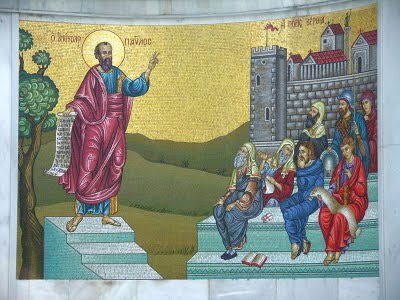
Paul, Demetrius and Damaris: an encounter in Athens (Acts 17:16-17,22–34)

The following dialogue was written by Elizabeth Raine and John Squires,and delivers as the sermon for the Tuggeranong Uniting Church on Sunday 14 May 2023.

*****

While Paul was waiting in Athens for Silas and Timothy, he was greatly upset when he noticed how full of idols the city was. So he argued in the synagogue with the Jews and the gentiles who worshipped God, and in the public square every day with the people who happened to come by.

Then Paul was brought before the city council, which met at the Areopagus in Athens. Today, as we listen to what Paul said to the council, we are also going to listen in to what might have been going through the minds of two people in his audience: a learned Greek man called Demetrius, and a woman of deep faith, known as Damaris.

Paul stood up in front of the meeting of the Areopagus and said, “People of Athens, I see that in every way you are very religious.”

Demetrius: Yes, this is correct. We are very proud of our religions here in Athens. As religious people, we worship lots of gods. Just look around you, and you will see altars and temples of every size, shape, and description. Over there, is the fine temple to Zeus. And beside it, the shrine to Apollo; it, too, is a remarkable holy building. It is not for nothing that we in Athens have the reputation of great piety.

And, of course, when you turn your eyes to the top of the hill, you will see the pride and joy of our city: the magnificent temple of Artemis, where our ancestors have long worshipped the greatest of all goddesses. This temple is world famous. It is respected — even envied, dare I say — by peoples of all other nations.

And Athens has also been blessed by many famous teachers of philosophy. Plato and Socrates, Aristotle and Pythagoras, Epicurus and many more. Why, even today, I believe that you could find no better array of teachers in any other city!

Yes, all of this shows you just how religious we are. This Paul is so right when he describes us in such generous terms.

Damaris: Indeed, it is true that we do have a lot of temples in our city. And we certainly have many fine teachers, as you say. Lots of people say that we are the most religious city in the world.

But something is missing, I think. There is so much ritual and pomp and ceremony that goes on; sometimes, I think that this can get in the way of worshipping the gods, rather than helping us to worship them.

And there are so many teachers who speak truths that are complex;  sometimes it hurts my head just to listen to them all! And all those poor animals that are sacrificed to all of these gods and goddesses. I wonder whether this really is such a good idea.

I have heard it said that Paul believes in a god that cannot be depicted on stone. It’s a curious idea to us Athenians; but some of my friends have told me about the group that believes this idea. A god that exists, but that we can’t see, or know much about at all is an odd idea.

23Paul continued, “For as I walked through your city and looked at the places where you worship, I found also an altar on which is written, ‘To an Unknown God.’ That which you worship, then, even though you do not know it, is what I now proclaim to you. God, who made the world and everything in it, is Lord of heaven and earth, and does not live in temples made by humans. Nor does God need anything that people can supply by working for him, since it is God himself who gives life and breath and everything else to all people. From the one person God created all human beings, and he made them live over the whole earth. God himself fixed beforehand the exact times and the limits of the places where they would live.”

Demetrius: Mmm, yes. Good point. I agree. Paul has said some important things about this God. When you boil it all down, there is a force in human history that looks over all things. Providence, or Fate, we call it.

And despite all of these shrines and images of the gods, there is a quality about the divine that is rather unknown to us. In the end, we would have to say that the gods are beyond our understanding. This is what our revered teacher, Plato, said about them. The gods transcend this earthly life and really have no need of our human worship.

Many of the priests in our city would be horrified by this, as they insist that we get access to the gods by offering sacrifices. But this kind of other-worldly god is very attractive. I like what Paul has to say.

Damaris: Yes, I too find Paul’s words attractive, Demetrius. And it is reassuring to know that all the things that happen in life are ultimately under the control of Divine Providence. But I am a little bit worried about what Paul seems to be saying. The god he is talking about seems to be rather removed from us all. I wonder how Paul thinks this god of his could be accessible to us? How could we relate to this god, if we can’t see his image?

Paul went on to say, “God did this so that they would look for him, and perhaps find him as they felt around for him. Yet God is actually not far from any one of us; as someone has said, ‘In him we live and move and exist.’ It is as some of your poets have said, ‘We too are his children.’”

Demetrius: Well, this is a surprising turn. From a god who is so far away from us, to a god who is near to us. Come to think of it, Paul is on to something here. In fact, he is quoting from our own Greek traditions here. I recognise those words he said — Aratus, I think it was, the poet, who said of god “in him we live and move and exist”. And “we are god’s children” — I know that, too. Well, that is very good, a Jew like Paul, showing that he knows our poetry and philosophical writings.

Damaris: I quite like the idea of a god who is with me all the time. All of these holy places and holy rituals can get too much, and tend to place too many things in between the gods and ourselves. Sometimes I’d just like to be able to relate to a god in an intimate, and personal way. So a god who is with me all the time — not just when I visit his shrine or place a sacrifice on his altar — is an appealing concept. “We are God’s children” — God as the one who gives birth to us, who nurtures us, who disciplines us, and who loves us. This sounds really good.

Demetrius: Yes, this is great. A god who is always with us. Why don’t we build an altar to him! I’ll get in touch with my friend Stephanas, he has a very good stone mason as one of his slaves, and we’ll see what we can come up with. I can just see it now; “To the god in whom we live and move and exist: this statue was erected by Demetrius and Stephanas” — no, “this statue was erected by Demetrius, with help from Stephanas”. Oh, why not just, “erected by Demetrius, a leading citizen of the city”. In large letters. Yes, that will look fine. And we’ll use the best stone; and have it trimmed in gold, with bright colours, so that it stands out, and….
“No!”, said Paul. “Since we are God’s children, we should not suppose that his nature is anything like an image of gold or silver or stone, shaped by the art and skill of a human being.”

Demetrius: No?

Damaris: I think I see the point. If this god is always near to us, then it would be silly to build an altar or erect a temple for him. After all, the temple is where the god or goddess lives, so that we know where to go to visit them. But if the god is always with us, then we don’t need to build him or her a home. So, if we aren’t going to build an altar or put up a statue, how are we going to worship this god?

Then Paul explained, “God has overlooked the times when people did not know, but now he commands all people everywhere to turn away from their evil ways. For God has fixed a day in which he will judge the whole world with justice, by means of a man he has chosen. He has given proof of this to everyone by raising that man from death!”

Demetrius: Oh, now he has spoilt it. What! How can a person be raised from the dead? Everyone knows that once we die, we go down into the underworld and live as shadows. Once you cross the river Styx, your previous life is left far behind. Who would want to go back into the earthly body once again?

No, this claim by Paul raises too many questions that are just not able to be answered satisfactorily. Any talk about raising the dead and bringing back their bodies is stupid.

Damaris: Well, to tell you the truth, I’ve always been worried by this idea. The thought of being a shadow after I die doesn’t really hold any attraction for me. I am much more interested in the story of a god who is able to transform death. What a powerful and caring god this must be! After all, death is what we all must face, and what we all fear so much.

And further, I am starting to see something quite special in what Paul is talking about. He has mentioned a special man, a chosen human being, who will be the one to carry out God’s justice in all the world. This idea is what really grabs me. To think that a god can not only be with us, but that this god can be a human being, just one of us, is really very special.

Now that I think about, this message reminds me of a letter that I received from my sister in Corinth just recently. As I recall now, she spoke about this man named Paul, who had visited the city, and had preached about a man from Nazareth, in the province of Galilee. Paul said that this man, Jesus, was not only a great prophet, but that he had been raised from the dead, and that he is the one who will bring God’s justice into the world. Perhaps this Paul that we are listening to today is the same person that she was talking about?

As Paul puts it, this God has a presence and a power that touches human life in profound and moving ways. This kind of power is lacking in the stone images that I see around me. Paul is leading me right into the heart of this God. So I think I will take his advice, and turn away from the gods I used to worship, and wait for the coming of divine justice through this man who is raised from the dead.

When the people heard Paul speak about a raising from death, some of them made fun of him, but others said, “We want to hear you speak about this again.”

Demetrius: Well, I have to say that this Paul is a bit of a surprise. I admit that he has said one or two foolish things — but not quite as many as I thought he would when he started. But this business of being raised from death is just not on. Yet some of the things that he has said are worth pondering. He is quite a philosopher, isn’t he? I can’t make up my mind about him, and about the god that he has proclaimed to us, and the religion that he has told us about. I’ll need some time to reflect on what he has said.

Perhaps he will be back in the public square tomorrow; I hope so. Maybe I will go there with my kitchen slaves in the morning, when they go to buy our household food for the midday dinner.

Then Paul left their meeting. Some men joined him and believed; among them was Dionysius, a member of the Areopagus, a woman named Damaris, and some others.

*****

As we return to the 21st century, it is worthwhile pondering Paul’s words and actions, and the response that both Damaris and Demetrius had to these words.

The words of Luke suggests that perhaps Paul was “off duty”, as his prime reason for being in Athens was to wait for Silas and Timothy to rejoin him there. Unable to do nothing or ignore the temples of idols around him, Paul’s idea of “off duty” appears to be to argue with everyone he meets in the town square. However this may have been perceived, Paul’s message of “the God you are looking for, the God you don’t even have a name for, the God who is in danger of getting lost in the plethora of all the other idols you are worshipping – let me tell you about that God…” is the God that we surely could take with us into our own town squares – maybe represented today by our cathedrals of consumerism in the large shopping malls, clubs and coffee shops we frequent today.

Paul presents his “new teaching” and “strange ideas” by meeting the Athenians on their own ground, by quoting two of the Greek poets: the Cretan Epimenides (600 BCE), that “in him we live and move and have our being,” and then the opening lines of the Phaenomena by Aratus (315-240 BCE), a Greek poet and Stoic of Cilicia, that “we are his children.”

It is also worth noting that Paul does not condemn them as unredeemed pagans on a one-way trip to hell, he tells them that both he and they worship the same God. Paul plainly saw God at work in the world through all people, and we would do well to remember this as well. Paul viewed the venerable Areopagus as just another place where the Lord of all creation had gone before him and was already present; indeed, as Paul said to the Athenians, “He is not far from each one of us.”

We Christians need to be aware of isolating and insulating ourselves from our culture’s mainstream. We must avoid being inward-looking, self-absorbed, and judgmental, instead of engaging people in our contemporary Areopagus. Instead, we need to follow Paul’s example of living, learning and sharing the gospel in the marketplace of ideas, engaging real people where they live, work, and think, in order to gain a hearing for our “strange ideas” about God, grace, and the resurrection.

*****

See also

The resurrection calls us to pay attention to this life (Easter Sunday)

On Easter Sunday, all attention is rightly on Jesus, risen from the dead. “Christ is risen”, we greet each other, with the expected reply, “he is risen indeed”. Risen, to new life; risen, as a sign of the future life we are promised; risen, soon to ascend, to be “seated at the right hand of the Father” in heaven. Alleluias are rightly sung on this Easter day, and in this Easter season!

So our attention is, in effect, directed away from here, on earth, towards the heavenly realm. Indeed, the Gospel for Easter Sunday this year appears to point us in that direction, as Jesus speaks to Mary Magdalene in the garden: “Do not hold on to me, because I have not yet ascended to the Father; but go to my brothers and say to them, ‘I am ascending to my Father and your Father, to my God and your God’”(John 20:17).

The same orientation is found in the story of the walk to Emmaus, where Jesus says to those walking on the road with him, “was it not necessary that the Messiah should suffer these things and then enter into his glory?” (Luke 24:26). “Going to glory”, of course, is a popular euphemism for dying—going to heaven; even in biblical usage, entering into glory is to be in the direct presence of God (Exod 40:35; 2 Chron 7:2; Isa 2:10, 19–21; 1 Cor 15:42–43; 2 Cor 3:7–18). And that is where Jesus goes.
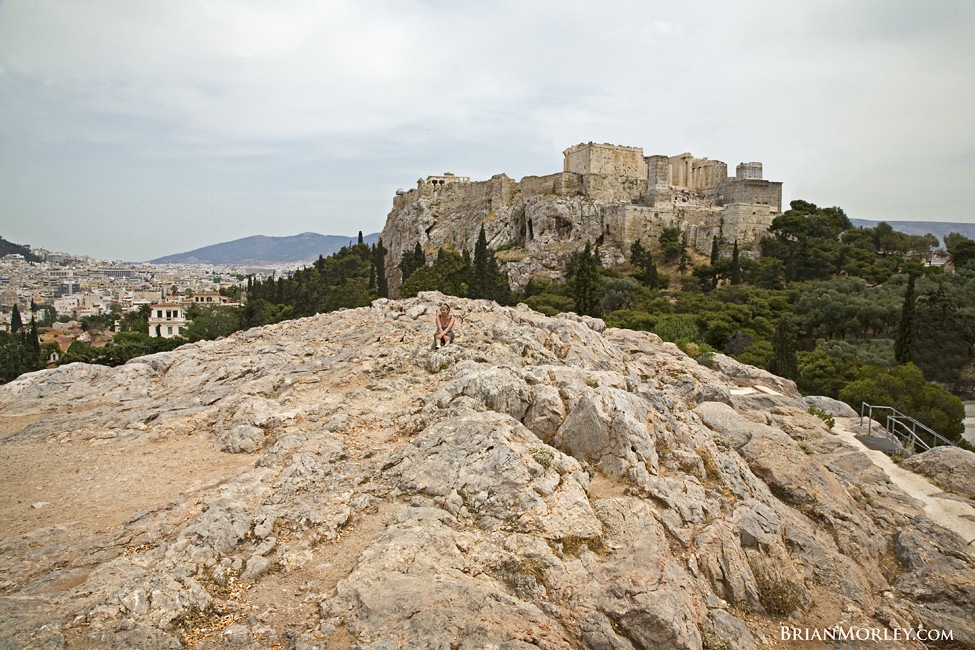
A popular (mis)understanding of Christianity is that it is about using this life as preparation for the life to come in the future. Faith, in this view, is about repentance now and obedience in all we do on this earth, so that when we die, our souls will rise to heaven, we will be commended as a “good and faithful servant”, and invited to “enter the kingdom of God”—or, in the common popular perception, step through the pearly gates into a heaven filled with angels, playing their harps and singing their songs of eternal praise and adoration.
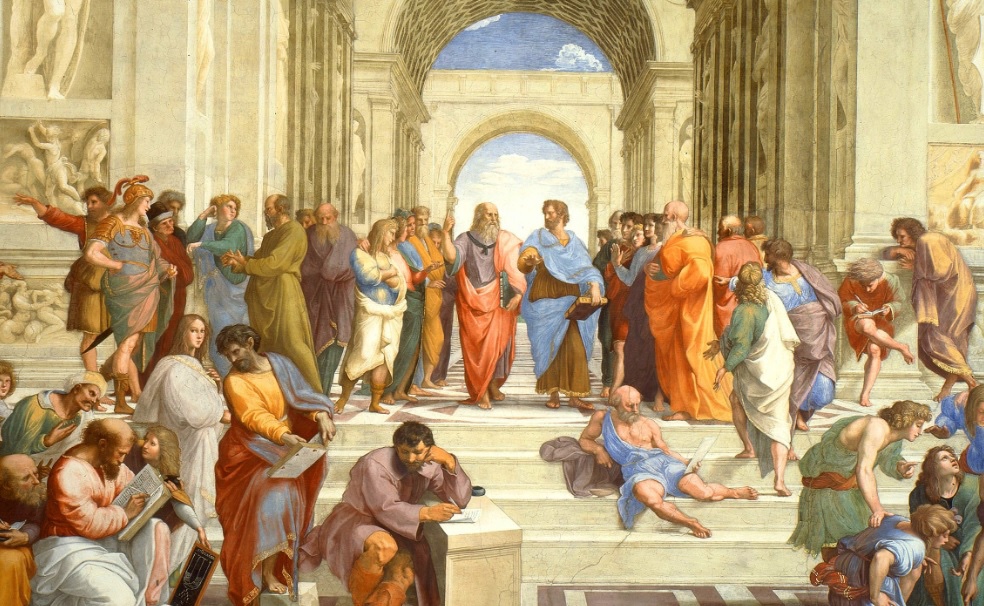
That’s the popular view; and some small part of this rests on some verses found in scripture. But most of it is romanticised populist thinking, far away from Christian doctrine. Sure, there are the apocalyptic sections in the Bible that look to the coming of a new creation—but if you understand them in the way that I believe they were intended, they are actually providing encouragement to believers about the present, rather than predicting what the future will be. And they are not about the new heavens and new earth of the future, up in the sky somewhere, but rather about “the new Jerusalem, coming down out of heaven from God”, onto earth (see Rev 21:2).

See my discussion of the function of biblical apocalyptic passages at

So the question stands, during this Easter moment—and throughout the Easter season that stretches ahead of us: where do we focus our attention? Three Gospels provide a very clear answer as they recount the appearances of the risen Jesus. In Luke’s story about the appearance of the risen Jesus to his followers in Jerusalem, he says to them, “look at my hands and my feet; see that it is I myself; touch me and see; for a ghost does not have flesh and bones as you see that I have” (Luke 24:39). The physicality of Jesus is to the fore.

In John’s account of that scene, there is also a physicality in the encounter—with an emphasis on the fact that Jesus shows them “the mark of the nails in his hands and … the mark of the nails … in his side” (John 20:25). Not only the physicality, but the carrying of the wounds of the cross into the next phase of life, is to the fore for John.

And then, when Matthew recounts the first appearance of Jesus, to the women fleeing the tomb in the early morning (and this encounter is told only in Matthew’s Gospel), he makes a point of noting that the (presumably prostrate) women “took hold of his feet and worshipped him” (Matt 28:9). All three Gospels focus on the material present rather than an imagined heavenly future.

Not only that, but each of the three Gospels that narrate appearances of the risen Jesus orient the stories to the future in the known realm of the earth, rather than the future in some heavenly realm. In John’s Gospel, Jesus commissions the disciples, gathered in the room behind locked doors, for the task of bearing witness to him: “as the Father has sent me, so I send you” (John 20:2). This is language that is used often in this Gospel for the mission that Jesus is undertaking: he is sent by the Father, God is “the one who sent me” (4:34; 5:24, 30, 37; 6:38–39, 44; 7:33; 8:16–18, 26, 29; 9:4; 12:44–45, 49; 13:20; 14:24; 15:21; 16:5); and so he now sends his followers in similar fashion. This is language that is very focussed on this earth, this life.

That task of witnessing is also articulated in the clear declaration placed on the lips of the risen Jesus in Luke’s Gospel: “you are witnesses of these things” (Luke 24:48). This turns into a fully-fledged evangelistic manifesto when the scene is recounted again in Acts: “you will be my witnesses in Jerusalem, in all Judea and Samaria, and to the ends of the earth” (Acts 1:8).

Both Luke and John connect this charge to the disciples with the giving of the Spirit: “you will receive power when the Holy Spirit has come upon you” (Acts 1:8); “receive the Holy Spirit” (John 20:22). There is no mention of Spirit in the final scene reported in Matthew’s Gospel (Matt 28:16–20); however, there is a clear commission in this narrative—the famous “Great Commission”. The emphasis here, as in the other two Gospels, is on the work to be done by the followers of Jesus in the period after he has left them. It is a this-worldly emphasis in these narratives.

The words used in the Great Commission in Matthew’s Gospel (28:19–20) need to be read carefully. There are four key verbs (doing words) in these two verses: go, teach, baptise, teach. In strict syntactical analysis, the main verb is the one in the imperative (expressing a command): “make disciples”. Subsidiary to that are the other three verbs, each of which is in a participial form (indicating an action that is related to, or consequent from, that main verb). So making disciples is the key factor in this commission.

Matt 28:19–20a
(my translation and formatting)

The act of making disciples is directed towards “the nations”—that is, to anyone with whom the followers of Jesus come into contact. It is to be expressed through two activities: baptising, and teaching. The act of making disciples is also to take place “as you are going”, that is, as followers of Jesus are making their way through the world in the days ahead.

Teaching orients the focus of the disciples back to the time that they spent with Jesus; they are to teach the people of the nations “to obey everything that I have commanded you”. As Matthew has taken great care to compile and collate the teachings of Jesus into five clear sections of his Gospel (chs. 5–7, 10, 13, 18, 23–25), the guidelines provided by Jesus are evident. What he has taught in his time with the disciples is to be passed on (in good rabbinic style) to those whom they then instruct. Teaching is an activity for life in this world, very clearly.

Baptising orients the focus of the disciples to the life of the church in the future. Belonging to Jesus involves submitting to the ritual of immersion into water, signalling the new life that is taken on through faith. The formula used in Matt 28:19 is, in fact, something that emerges only later in the life of the church (probably not until the time of Constantine, as far as we can tell from other Christian literature). Once again, life in community on this earth is the focus. There is no sense of being baptised (“christened” in the old language) in order to “get into heaven”.

So the accounts of Jesus departing from his disciples offer no sense of, “I am going away, you will join me soon, we shall see each other in heaven”. Rather, the focus is on what the disciples need to do in the earthly life that stretches ahead of them: bear witness, make disciples, teach and baptise, continue out amongst “the nations” the mission that Jesus has been undertaking amongst “the lost sheep of the house of Israel”.

(The resurrection appearances at the end of Mark’s Gospel are in endings that were added centuries after the original was written, to bring it into consistency with the others, so they don’t figure in my discussion at this point.)

Two other factors point in the same direction, oriented to life on this earth, and not to a heavenly realm beyond. First, the Revised Common Lectionary (admittedly a creation from many centuries after Jesus!) offers stories from the life of those early followers—the church in Jerusalem and beyond—in passages from Acts during the season of Easter. That is to say, the structure of the lectionary reminds us that, after the resurrection of Jesus, the life of faithful followers is lived and worked out in amongst the other people of this earth. It is a grounded discipleship that is to the fore.

Finally, going right back to the lips of Jesus himself in the first century, in the words of the Lord’s Prayer, we are instructed to pray “your kingdom come, your will be done on earth as in heaven” (Matt 6:10). That final phrase is central to all that Jesus proclaimed in his teachings and parables: what God is willing “in heaven” is to be made manifest here in our midst, “on earth”.

See

That is the immanent, present, realised, immediate vision that Jesus has for his followers; and that is what the resurrection narratives point us to, time and again. The resurrection calls us to pay attention to this life.