Beginning Lent with a message of belonging: shaping the identity of a people of faith (Deut 26; Lent 1C)

During Lent, the lectionary sets before us a string of passages that canvass key theological elements in the story of Israel. These stories, of course, also resonate also with the story of Jesus and his followers (and that is largely why they have been selected, I assume). We begin this coming Sunday with the promise of the land (Deut 26), and then follows passages focussed on the covenant with Israel (Gen 15), the provisions of God for the people (Isa 55), the renewing moment at Gilgal (Josh 5), the promise of “a new thing” (Isa 43), and the gift of The Servant (Isa 50). It is a stirring and inspiring sequence!

There is much debate amongst Christian thinkers, these days, about what comes first as we invite people to be a part of the church. Do we say, “this is what we believe, expressing our fundamental understanding of life; do you want to sign up to show you have the same beliefs?” Or do we say, “this is how we behave, guided by our fundamental ethical principles; would you like to act the same way and join us?” Or perhaps the invitation is simply, “come along, join in with us, see what we believe, what we are on about, and soon you’ll feel like you belong”?
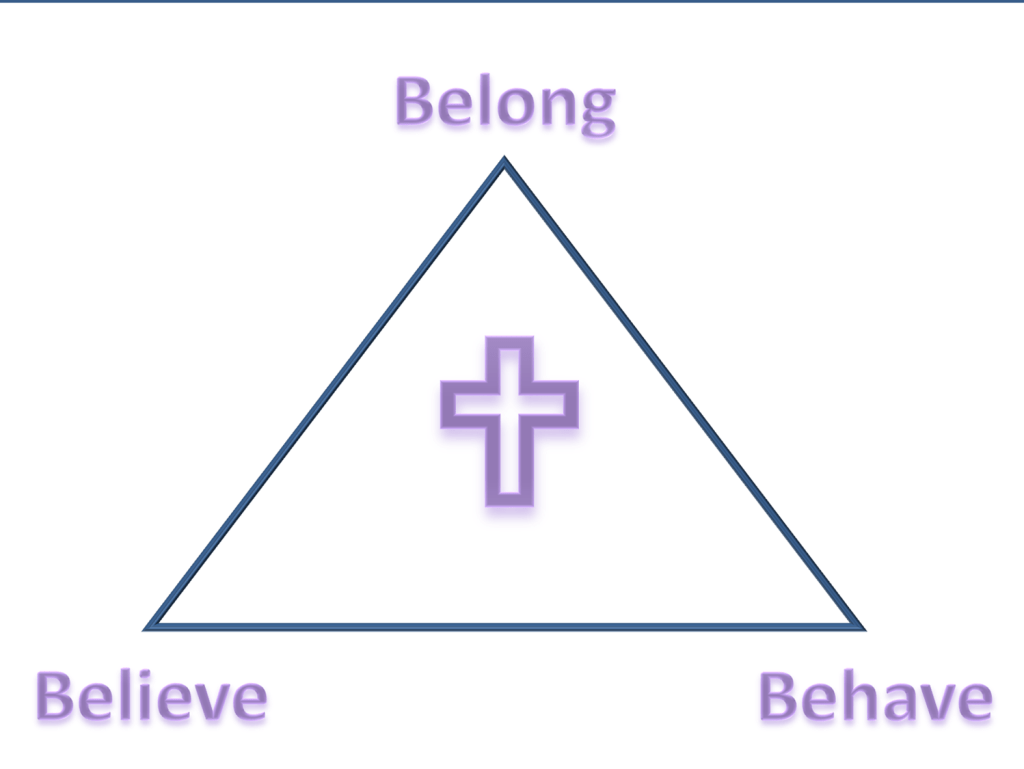
Is it believe first? Or behave? Or simply, belong? The tendency to put a creed at the forefront of our invitations—to show that we are a people who believe, first and foremost—is widespread and deeply ingrained. Whether it be affirming The Apostles Creed in baptism, or saying The Believer’s Prayer at conversion, or working out a new Mission Statement for the Congregation, giving priority to belief is a very familiar pattern for us. We tend to think that, whatever formula we are repeating, that is exactly what declares and confirms our identity as people of faith.

So it’s no surprise that when we read Deuteronomy 26 (the Hebrew Scripture passage in next Sunday’s lectionary), we gravitate to the middle part of the passage, and lay claim to what looks to be an early affirmation of faith that sets out the identity of the people of Israel: “A wandering Aramean was my ancestor; he went down into Egypt and lived there as an alien, few in number, and there he became a great nation, mighty and populous” (Deut 26:5). This affirmation seems to go right back to the start, affirming what sets the people of Israel apart as a distinctive entity.
This way of reading this passage gained influence from the analysis of Gerhard von Rad, a German scholar of the 20th century. Von Rad claimed that the credal statement in verses 5 following was most likely a formula much older than the era when the book of Deuteronomy was written. And the origins of this creed, he claims, most likely lay in ancient cultic remembrances of the origins of the people. The wandering Aramean (Jacob, grandson of Abraham of Aramn) and the time in Egypt (leading up to Moses) reflect those times of origin.

*****

But the whole of this “creed” is not actually a “statement of faith”. It is more a narrative that tells a story. Such was the way of the ancient world; central beliefs were not articulated in crisp propositional statements (for this is the way of the post-Enlightenment western world); rather, a story was told, in the course of which key events pointed to central affirmations for the people. The ancients were story-tellers, more concerned to tell the story than state the faith. This is the story of the people; it is their saga.

God is important in the story that is told, nevertheless. God is the one who “heard our voice and saw our affliction, our toil, and our oppression … who brought us out of Egypt with a mighty hand and an outstretched arm, with a terrifying display of power, and with signs and wonders” (26:7–8). The rescue of the people by their powerful God is central to the story. This, of course, if the story of the Exodus, which stands at the heart of Israelite identity and later Jewish identity. It is the central story of the people of Israel.

More than this, God is the one who “brought us into this place and gave us this land, a land flowing with milk and honey” (26:9). The land of Israel is the second aspect of ancient Israelite life that is central and fundamental; and so it continues to be, in the 20th and 21st centuries, in which the land of Israel has been one of the most contested pieces of land in the world.

The story is told, however, for a purpose. Not just to remember—although remembering is important, for it recurs as a regular refrain in the book of Deuteronomy (7:18: 8:2, 18: 9:7, 27; 11:2; 15:15; 16:12; 24:9, 18, 22; 25:17; 32:7). The story is told, also, to inculcate the ethos, the values, the very identity of the people. And central to that ethos, taking prime place amongst the things that were seen to be important to affirm about who the people of Israel were, is this: giving back to God the first fruits produced by the land.

“So now I bring the first of the fruit of the ground that you, O LORD, have given me”, are the words that the people are to say, each time a harvest is produced. “You shall set it down before the LORD your God and bow down before the LORD your God”, the instruction declares (26:10). Gratitude is to the fore; gifting back the beginnings of “the fruit of the ground” to the God who gave the people the land to grow this fruit.

*****

Of course, there is a dark story submerged, for the most part, underneath that celebratory action. The land was “given” by God over the resistance of the people who were already IN the land, producing fruit, settled and content with their lot in life. The battles recounted in the book of Joshua—most likely not actual historical events, but reflecting a reality of submission to the Hebrews who took control of the land—reflect this dark story.

This dark story does not figure in the “received tradition” and “authorised affirmation” that we read in Deut 26. Nor do we find this in the affirmation of Deut 6:20–24, which begins “we were Pharaoh’s slaves in Egypt, but the Lord brought us out …”. Mention of the Exodus jumps straight across to life in the land—no mention of the conquest that (in other biblical texts) is reported in detail.

This conquest is part, by contrast, of the larger recitation of Josh 24:2–13, “I brought you out of Egypt … and I handed the Amorites over to you, and you took possession of their land, and I destroyed them before you … and also the Amorites, the Perizzites, the Canaanites, the Hittites, the Girgashites, the Hivites, and the Jebusites; and I handed them over to you … I gave you a land on which you had not labored, and towns that you had not built, and you live in them; you eat the fruit of vineyards and oliveyards that you did not plant.” At least this version of the affirmation is honest about the cost to the earlier inhabitants, and the benefits enjoyed with relative ease by the invading Hebrews.

*****

Yet the affirmation of Deut 26 highlights the central importance of gratitude for the gift of the land; and not only that, for it especially indicates the importance of making this celebration inclusive: “you, together with the Levites and the aliens [or, sojourners] who reside among you, shall celebrate with all the bounty that the LORD your God has given to you and to your house” (26:11). So the instructions for the annual festival of the first fruits provide.
The inclusion of the aliens in this annual festival reflected a gracious openness to others in the developing people of Israel. These texts differ from the xenophobic antagonism of earlier texts, recounting the conquest of Israel. They reflect a later understanding of the identity of the people, as they were collated during and after the Exile, centuries after the formation of Israel. People designated as aliens (non-Israelites), sojourners in the land, were welcome to bring offerings to the Lord (Lev 22:18), to adhere to Israelite food prescriptions (Lev 17:12), to keep the Sabbath (Exod 20:8–11; 23:12), to have gleaning rights (Lev 23:22), and to join in the annual process of atonement (Lev 16:29–31; Num 15:29).

The foundational Passover narrative indicates that aliens, or sojourners, were able to join (under certain conditions) in the Passover celebrations (Exod 12:47–49); a second narrative (Num 9:14) is much less restrictive. Aliens were to be subject to the same laws regarding murder (Lev 24:17–22), able to have right of access to cities of refuge (Num 35:13–15), and indeed to enter into the covenant at the annual covenant renewal ceremony (Deut 29:10–13; see also 31:10–13). The voice of the alien even sounds appreciation for the Law: “I live as an alien in the land; do not hide your commandments from me” (Ps 119:19).

Because Israelites were once “an alien residing in the land” of Egypt, the people were instructed, “you shall not abhor any of the Edomites, for they are your kin; you shall not abhor any of the Egyptians” (Deut 23:7); by the third generation, the children of aliens “may be admitted to the assembly of the Lord” (Deut 23:8).

This meant that “the alien who resides with you shall be to you as the citizen among you; you shall love the alien as yourself, for you were aliens in the land of Egypt: I am the LORD your God” (Lev 19:34; a similar affirmation is made at Num 15:14–16).

The principle of equality is clear: “you shall not deprive a resident alien or an orphan of justice; you shall not take a widow’s garment in pledge” (Deut 24:17; see also Jer 7:5–7; 23:5–7; Zech 7:9–10; Mal 3:5). The alien, or sojourner, deserves the same measure of justice as all residents of Israel.

Accordingly, amongst the curses at the end of Deuteronomy, we read, “cursed be anyone who deprives the alien, the orphan, and the widow of justice. All the people shall say, ‘Amen!'” (Deut 27:19). The curse outlines the negative consequences from not adhering to the positive principle of welcoming and including those sojourning for a time innIsrael, the “alien”. That is integral to the celebrations each year, when the harvest produces its fruit from the land.

Gratitude. Belonging. Celebration. Inclusion. All of this is embedded in the story; and all of this comes before believing, repeating doctrinal claims, affirming credal statements. We are a people of welcome, including, belonging. This much is embedded in the ancient Hebrew tradition. This much should be living, still, in Christianity today.

See also

The last enemy to be destroyed is death (1 Cor 15; Epiphany 6C)

The lectionary is currently offering sections from the latter chapters of the letter written by Paul and Sosthenes to “those who are sanctified in Christ Jesus, called to be saints” (1 Cor 1:2). In the earlier chapters of the letter, the authors have canvassed a wide range of matters. First, they spend time addressing the serious divisions emerging within the Corinthian community. The letter notes that this matter “has been reported to me by Chloe’s people” (1:11); the singular suggests that Paul has already taken the primary role in writing this letter. It is thought that this must have been a verbal report passed on to Paul and Sosthenes when they met with a group from Corinth, perhaps slaves, sent by Chloe (about whom nothing else is revealed).

A second matter is introduced by a similar phrase, “it is actually reported…” (5:1), although the informant is not named. Some scholars think that the similarity of wording suggests that this news may also have been conveyed by “Chloe’s people”. A little later on, another matter is introduced with the phrase, “now concerning the matters about which you wrote” (7:1). Clearly, there had been written correspondence with Paul, at least, as well as the verbal report already indicated. 

Towards the end of the letter, the authors refer to “the coming of Stephanas and Fortunatus and Achaichus” (16:17). This might suggest that they visited Paul and anyone else with him; a few verses later, there is the note that “Aquila and Prisca, together with the church in their house, greet you warmly in the Lord”, as well as “all the brothers and sisters” who send greetings (16:19–20). 

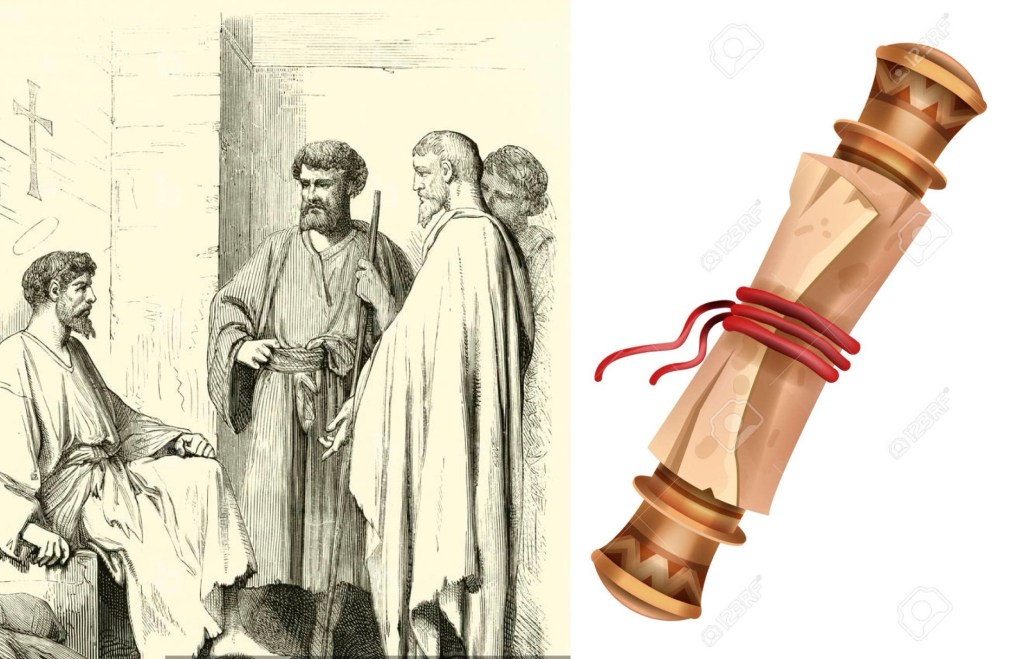
Perhaps these three emissaries bore a letter from the community (or a section of it), asking for Paul’s opinions about these matters? The fact that their names are Roman names reflecting an educated status, would lend support to this hypothesis. Alongside this, we can also note that Paul personally concludes the letter by writing “I, Paul, write this greeting with my own hand” (16:21). This suggests that a scribe—perhaps Sosthenes?—had actually been writing the letter to this point, most likely using pen and ink to commit the words dictated to them by Paul onto the papyrus. How much (or how little) the scribe would have had input into the letter is not clear.

Regardless of who actually brought this news, Paul and Sosthenes are willing to deal with the matters raised, introducing them in turn by the shorthand formula, “now concerning”. Such matters include “food sacrificed to idols” (8:1), “spiritual matters” (12:1), “the collection for the saints” (16:1), and “our brother Apollos” (16:12). 

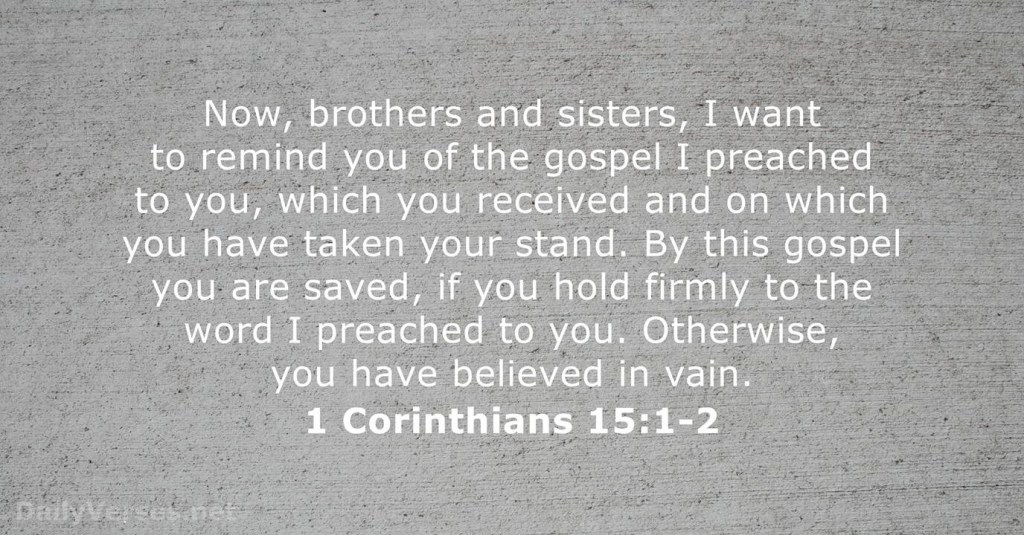
The final theological issue which they address in this first (extant) letter to the Corinthians, at quite some length, concerns the resurrection of believers. A rather strong formula is used to introduce a major theological issue at 15:1: “now I would remind you, brothers and sisters, of the good news that I proclaimed to you…”.

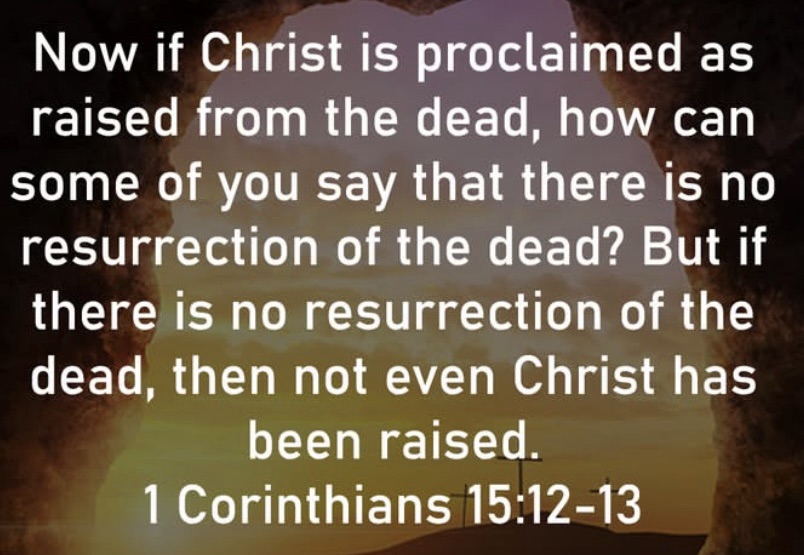
The letter considers this matter at length; many scholars regard it as the fundamental problem in the Corinthian community of faith, underlying other issues already explored. From comments later in this chapter (15:12, 15:29, and possibly 15:35), it is clear that divergent views about resurrection were held within the community of faith in Corinth. The response found in this chapter deals with each of them in a theological and rhetorical fashion.

Paul begins dealing with the issue with a series of affirmations concerning the crucifixion and resurrection of Jesus. There is an apologetic tone at the start, as Paul insistently underlines the validity and authority of what he says (15:1–3a). The “good news” which “I proclaimed” is described in technical terms indicating the passing-on of pre-existing tradition: “I received”, “I handed on”, “you received”. It is a matter of “first importance”.

Associated with this is an insistence that the Corinthians “stand” in this news, and must “hold firmly” to it, as the basis for “being saved”. The foundational tradition which is then reported (15:3b–7) is based on an early four-part affirmation of faith: “Christ died … he was buried … he was raised … he appeared …”.

The first and third elements are elaborated with the formulaic “in accordance with the scriptures”. The fourth element, the appearances of the risen Jesus, is extended beyond the list received by Paul (to Cephas, the twelve, more than 500, James, all the apostles; 15:5–7) to include Paul himself (“as to one untimely born”, 15:8), leading on to an assertion of Paul’s apostolic credentials and divinely-assisted activities (15:9–11).

All of this forms a solid foundation for the extended theological discussion that develops in the remainder of this chapter, as Paul explores various aspects of “the resurrection of the dead”. His personal experience of the risen Jesus presumably qualifies him, in his eyes, to develop the argument that unfolds. 

This foundation reaches back to the “theology of the cross” at the start of the letter, where references to the crucifixion and death of Jesus provided a basis for the opening theological discussion of his letter (1:17–18, 22–25; 2:1–2, 7–10). However, Paul does not develop this connection beyond the opening 11 verses of chapter 15. Instead, he moves straight to a consideration of various pastoral situations in Corinth that have arisen regarding the resurrection (15:12–58).

The “resurrection of the dead” (the Greek word is plural, reflecting a raising of many believers) was a Jewish belief that had developed in preceding centuries; not all Jews accepted it (see Acts 23:6–8) and amongst some Gentiles there was scepticism about the idea (see Acts 17:32). 

The community in Corinth contained sceptics (15:12); as a counter-argument to their scepticism the argument which is advanced in this chapter attempts to refute their opinion by setting out a series of logic-based steps. It begins by noting that people question the reality of the resurrection of the one person, Jesus (15:13–16). This leads to the accusation that “your faith is futile” (15:17). Paul and Sosthenes cannot countenance this, so they launch into an exposition of what they see as eschatological realities (15:20–28), explaining the places allocated, at the end, to humans, Jesus, and God. 

Unfortunately, the lectionary omits these verses and jumps next week to v.35, where Paul raises questions which, he says, “someone will ask”, namely: “How are the dead raised? With what kind of body do they come?” In preparing to deal with these questions, Paul employs a rhetorical structure in the first part of this argument (15:21–22) which returns to the pattern of juxtaposing two different entities, which has already appeared in earlier sections of the letter. 

We can see this pattern as follows:

for since death came through a human being / the resurrection of the dead has also come through a human being;

for as all die in Adam  / so all will be made alive in Christ.

An expanded version of this argument takes place in Rom 5:12–21. 

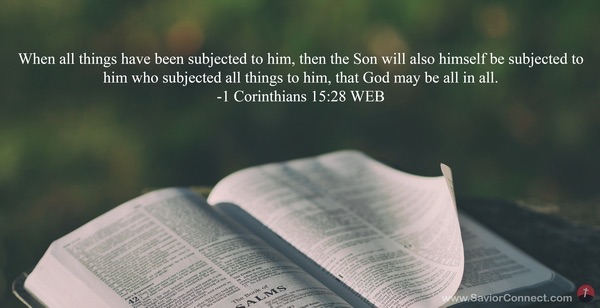
The argument countering Corinthian scepticism continues with an explanation that Christ is “the first fruits”, who has “all things put in subjection under his feet” (15:23–27). But Christ himself is subjected to God; finally, God is “all in all” (15:28). Paul has not proven the resurrection as such, but has explained how it fits into his view of the end days.

This deals with one factor in the Corinthian situation. There follows consideration of a second pastoral situation, raised through the question, “what will those people do who receive baptism on behalf of the dead?” (15:29). Paul abruptly dismisses this with two counter-punching rhetorical questions. First, “if the dead are not raised at all, why are people baptized on their behalf?” (v.29), inferring that such baptism could be completely ineffective. Second, “why are we putting ourselves in danger every hour?” (v.30), diverting attention to the claim that “I die every day!” (v.31). The clear inference is that there is no validity at all in the viewpoint held by those who practice “baptism on behalf of the dead”. 

Then follows a poetic reflection (15:30–34) which includes sayings found in both Jewish and pagan sources, deployed to denounce those who “have no knowledge of God” (15:34). First, there is a reference to Hebrew scripture where the words “let us eat and drink, for tomorrow we die” are found (Isa 22:13). In the context of the prophet, this saying refers to the sinners among “my beloved people” who are doomed for destruction (Isa 22:4) in the “day of tumult and trampling and confusion in the valley of vision” (Isa 22:5). Their fate is sealed; they can be only fatalistic. 

The way it is used in 1 Cor 15, however, is that it conveys the nihilistic attitude of those who believe that “the dead are not raised”. They, too, exude a fatalistic attitude to life—perhaps echoing the fatalism of the Preacher, who reiterates the declaration that “there is nothing better for mortals than to eat and drink” (Eccles 2:24; 3: 3; 5:18; 8:15; 9:7), as befits his overarching view, “vanity of vanities … all is vanity” (Eccles 1:2;  12:8). This existential nihilism is where Paul places those in Corinth who refuse to accept the notion of resurrection.

Then, in 1 Cor 15:33, a saying is found in Greek poetry is quoted. The King James Version rendered this saying “evil communications corrupt good manners”, inclining us to understand that those who received these words from Paul were being warned to be careful with their words, for the constant repetition of an immoral saying might well,condemn a person to an immoral life.

However, the NRSV more accurately renders this saying as “bad company ruins good morals” (1 Cor 15:33); the Greek word here translated as “company” is homilia, which can simply mean communicating with someone, being associated with someone such as a close companion; or a more complex sense of exchanging intimate ideas, thoughts, and feelings through communion with another. 

The words quoted are taken from the works of Menander, in a play called Thais which exists today in only a few small fragments. Thais was the companion of Ptolemy and held a powerful position in his court; in delivering a powerful speech to Alexander the Great during a drunken banquet, she convinced him to burn down the palace of Persepholis. (The story is told by Plutarch in his Life of Alexander book 38, and by  Diodorus Siculus in his Universal History 17.72.) 

Perhaps by quoting just a line from the play, Paul and Sosthenes were intending to evoke the scene of the drunken banquet at which Thais spoke. The affirmation that good morals are ruined by associating with bad company sits well with the licentious ethos conveyed by the saying  “eat and drink, for tomorrow we die”. This is precisely the trap that some in Corinth have fallen into. So this section ends with the exhortation, “come to a sober and right mind, and sin no more” (15:34), and with the clear inference that, to their shame, there are some within the community who “have no knowledge of God”. Paul and Sosthenes are not willing to back down on their criticism of the Corinthians!

See also
Receiving and passing on a living tradition (1 Cor 15; Epiphany 5C)

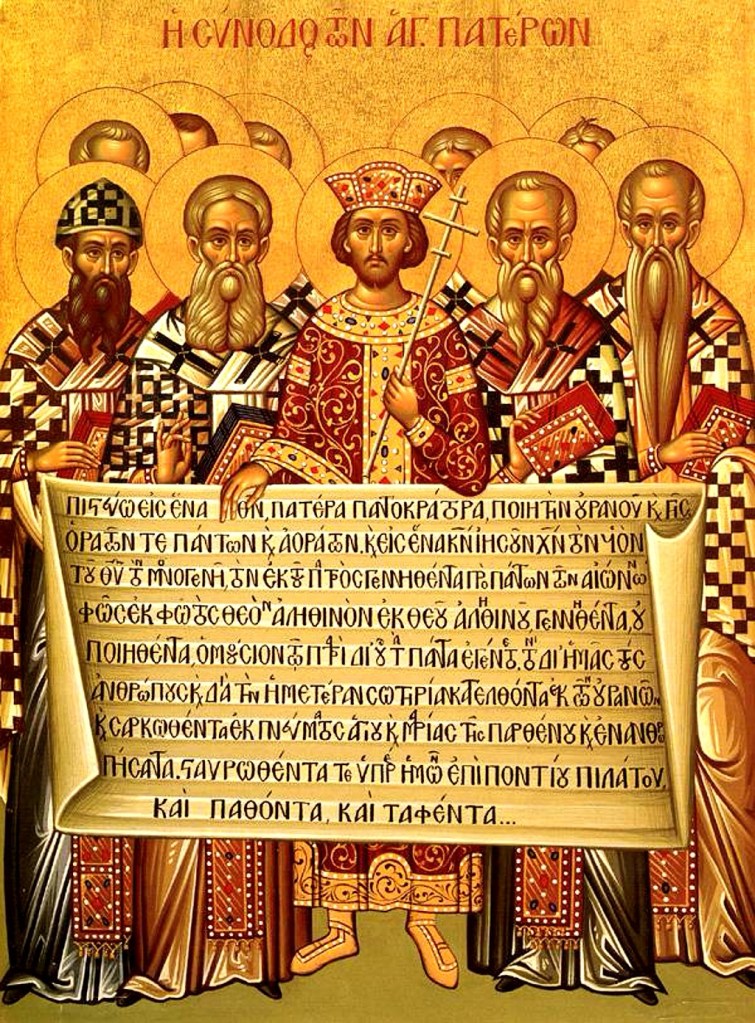
In the verses proposed by the lectionary for this coming Sunday, we come to a central claim of Christian faith. As the fourth century Apostles Creed puts it: we believe in Jesus Christ … who suffered under Pontius Pilate, was crucified, died, and buried, descended into hell, rose again on the third day, ascended into heaven, and is seated at the right hand of God. Four of those claims (crucified, died, buried, rose again) are articulated in the passage from this first letter to the Corinthians that we will hear on Sunday (1 Cor 15:1–11).

What is the nature of the confessional affirmation that Paul and Sosthenes offer in this passage? The previous chapters of 1 Corinthians have alerted us to the disorganised ethos of the community in the cosmopolitan port city of Corinth. Those earlier chapters have indicated a number of problems that existed within the community of followers of Jesus. There was factionalism (chs.1–4), immorality (ch.5), resorting to civil lawsuits (ch.6), and dissension regarding marriage, celibacy, and sexuality (ch.7). There were differing attitudes towards consuming meat bought in the marketplace after it had been offered to idols (chs.8–10), and multiple issues that manifested in their gatherings for worship (chs.11–14). 

The letter proceeds by addressing each of these matters in turn, all undertaken with the same intention, to bring about order in the midst of the chaos that existed in Corinth. His words in the midst of the lengthy discussion about marriage, celibacy, and sexuality state his purpose with clarity: “I say this for your own benefit, not to put any restraint upon you, but to promote good order and unhindered devotion to the Lord” (7:35).

The disorder and chaos evident in worship, in particular, led Paul and Sosthenes, in the chapter immediately preceding this passage, to advise the Corinthians to seek to speak to others in worship “for their upbuilding and encouragement and consolation” (14:3). The letter writers advise them to exercise their spiritual gifts appropriately; to “strive to excel in them for building up the church” (14:12), to “not be children in your thinking … but in thinking be adults” (14:20). Their advice is, “let all things be done for building up” (14:26), noting that “all things should be done decently and in order” (14:40), for “God is a God not of disorder but of peace” (14:33). 

People speaking over the top of each other in worship, not attending to important words of prophecy and tongues, reflected the disordered chaos of the apparently quite libertine community. The infamous words ordering women to “keep silent” (14:33b—36), along with the adjacent commands to “keep silent” while one interprets tongues that are spoken (14:27–28) and “keep silent” to those seeking to offer a word of prophecy while others are still prophesying (14:29–31), are included in this letter precisely to address this chaotic disorder. And not for the first time in this letter, Paul invokes his higher authority to support his directions: “[you] must acknowledge that what I am writing to you is a command of the Lord” (14:37; see also 5:3–4; 7:40; 10:20–22; 11:27–28; 16:10; and cf. 7:25).

Immediately after this extensive discussion about worship, Paul and Sosthenes turn to the foundational message about Jesus, in a four-part statement: Christ died—was buried—was raised—and then appeared to various people (15:3–5). He uses terms that denote the passing on of traditions: “I received … I handed on … which you received … in which you stand” (15:1); and he insists on the importance of what he passes on: “you are being saved, if you hold firmly to the message that I proclaimed to you” (15:2). These two verses provide a strong, insistent introduction to what follows in the ensuing verses.

We see this dynamic also in an earlier chapter, in the familiar words associated with the Last Supper: “I received from the Lord what I also handed on to you” (1 Cor 11:23), as well as in the commendation of the Corinthians as they “maintain the traditions just as I handed them on to you” (11:2).

The core tradition that Paul and Sosthenes cite is the fourfold declaration that Jesus died, was buried, was raised, and appeared (vv.3–5). It may have already have been an existing formula; we know that Paul, in this letter that he wrote with Sosthenes, as well as in other letters, was willing to make use of very short credal-like statements that it is likely had already been developed by others, some of which he cites in order to refute, such as: “is well for a man not to touch a woman” (7:1), “all of us possess knowledge” (8:1), “all things are lawful” (10:23), and “how can some of you say there is no resurrection of the dead?” (15:12).

There are other succinct sayings which appear as the basis for further developments in the argument being made, such as “I decided to know nothing among you except Jesus Christ, and him crucified” (2:2), “knowledge puffs up, but love builds up” (8:1), “there is no God but one” (8:4), and “all things are lawful, but not all things build up” (10:24). The discussion of factions in chs.1–4 is built off “I belong to Paul … I belong to Apollos … [but] what then is Apollos? what is Paul?” (3:4–5), while Paul’s lengthy discussion of spiritual gifts (12:4—14:40) jumps off from the unspiritual “Jesus be cursed!” and the spirit-inspired response, “Jesus is Lord” (12:3).

Furthermore, Paul writes a number of longer credal-like statements, some of which seem shaped for liturgical usage: the words which became the “words of institution” in the church’s eucharistic practice (1 Cor 11:23–26), and others such as Rom 8:28; 2 Cor 4:14; Gal 1:3–5; Phil 2:6–11. The writers in the school of Paul who later wrote letters claiming to have his authority ( the “pastoral epistles”) followed this practice (see 1 Tim 2:5–6; 3:16; 2 Tim 2:11–13; Titus 2:11–14).

Two clauses in this tradition-based affirmation of 1 Cor 15:3–5 are buttressed by reference to scripture, another voice of authority alongside “the tradition”. What the specific scripture passages are, Paul and Sosthenes do not state; this has left open the door for speculation by later interpreters. 

Supporting arguments by reference to scripture is not unknown in Paul’s writings; as a Pharisee, he had attained a good awareness of Torah and its application to life (see Gal 1:14; Phil 3:5–6). He bases his magnum opus, Romans, on a scripture citation (Rom 1:17, citing Hab 2:4) and there is barely a chapter of this letter that does not contain scripture quotations and allusions in abundance. 

Key moments in 1 Corinthians are likewise supported by verses from Hebrew Scripture (1 Cor 1:19, 31; 2:9, 16; 3:19–20; 14:21; 15:54–55), and the well-known “words of institution” themselves (11:23–26) reference the tradition which emerges in later decades in the Synoptic Gospels, recording the words of Jesus himself at the last supper (Mark 14:22–25; Matt 26:26–29; Luke 22:14–20).

By using the terminology of traditions being received and handed on, Paul and Sosthenes are reining in the wayward Corinthians, recalling them to the fundamentals of their faith. So he sets out the dynamic of died—buried—raised—appeared (15:3–5) as the foundation for then discussing, in the remainder of the chapter, issues associated with the resurrection of Jesus (15:6–58).

Who saw the risen Jesus? First, Paul and Sosthenes tell of an appearance to the early leaders, Cephas (Peter) (v.5) and James (v.7)—although none of these appearances are reported in any Gospel.

Then, they indicate that Jesus appeared to “the twelve” (v.5) and “all the apostles” (v.8)—apparently alluding to narratives found in the later texts of three Gospels Matt 28:16–20, Luke 24:33–48; John 20:19–23, 24–29; 21:1–14. (The appearances narrated in the shorter and longer endings of Mark, added after 16:8, are not relevant; these are later patristic additions based on the other three Gospels, designed to harmonise the ending of Mark with these others.) Acts 1:6–11 might also be relevant here.

An interesting question is, how did he distinguish between these two groups—“the twelve” on the one hand, and “all the apostles” on the other. Indeed, these terms appear to be inherited by the letter writers from earlier traditions. This is the only place in all Pauline letters which refer to “the twelve”; and besides, the Gospel narratives noted above do not have Jesus appearing to “the twelve”, as Judas was absent from all of them, and so was Thomas in John 20:19–23. 

As far as the word “apostle” is concerned, in 16 of the 18 occurrences in the Pauline corpus (including those not authentic to Paul) Paul explicitly apply the term to himself. Paul acknowledges others as apostles: James (Gal 1:19), Peter (Gal 2:8), perhaps Barnabas (1 Cor 9:1, 5–6), an unspecified number of believers who were given gifts to be apostles (1 Cor 12:28–29; see also Eph 4:11), and most strikingly, Andronicus, a male, with Junia, a female (Rom 16:7). Are these the people that Paul has in mind at 1 Cor 15:8? Or is this simply a phrase inherited from the tradition, which Paul has repeated?

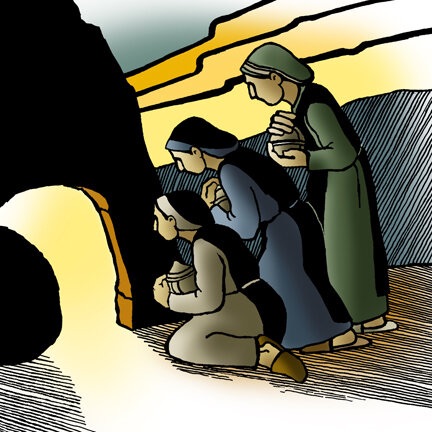
Next, Paul and Sosthenes identify an appearance to “more than five hundred brothers and sisters at one time” (v.6), which again has no place in any Gospel account. Last, Jesus appears to Paul himself (v.8), which he briefly reports at 1 Cor 9:1 and Gal 1:1. Strikingly absent from his list is the empty tomb and the appearances to Mary in the garden (John 20:14), to the women as they left the tomb (Matt 28:9–10), to the two travellers to Emmaus (Luke 24:15), or to the seven fishing by the Sea of Tiberias (John 21:1–4). What a perplexing inconsistency between the various testimonies to these appearances!!

This is an early collection of “witnesses to the resurrection”; Paul and Sosthenes wrote to the Corinthians in the mid 50s. But there is no mention of what was important to all four evangelists, writing in later decades: the women at the empty tomb and the role that women played in bearing testimony to the risen one. Is this accidental? or deliberate? Given what we have noted about 1 Corinthians as a whole—and especially what ch.14 reveals about the disorderly behaviour of Corinthian women—we might well wonder, are Paul and Sosthenes shaping the received tradition to “fit the context” already at this early stage? It is a tantalising suggestion.

There is a wonderful quote that is pertinent to this issue, which is attributed to Gustav Mahler, the late 19th century Austro—Bohemian composer: “Tradition is not the worship of ashes, but the preservation of fire.” These words indicate that if tradition stands still, it will run out of momentum and fizzle out of energy. Tradition always needs to be reinvigorated and renewed, in the way that fire sizzles and snaps as it continually changes its shape and form. 

And that’s a fine thought for us to have as we consider the resurrection of Jesus. As the Apostles Creed affirms, echoing 1 Cor 15:3–5, we believe in Jesus Christ … who was crucified, died, and was buried … who rose again from the dead on the third day. We need to renew and rekindle that tradition, to find fresh ways to understand and proclaim that mysterious happening, which sits at the heart of classic Christian confessions.

I’ve offered my own initial reflections on precisely that task in this blog:

See also

 

Carols for the Season of Christmas (3) The Third Day of Christmas, 27 December

For today, the Third Day of Christmas, following the church calendar, I offer a Christmas carol which originates in the 4th century. It was written by the Roman poet, Aurelius Prudentius Clemens. Prudentius was a Spanish layman, a lawyer who twice served as a provincial governor. He was also a government official in the court of the Roman Empire, and is remembered as one of the greatest Latin Christian poets. 

For the last period of his life (at least a decade, perhaps closer to two), Prudentius lived as an ascetic, fasting during daylight hours and eating only vegetarian meals. It was apparently during this period that he wrote many books and poems. Among these works was the Psychomachia, an allegorical treatment of “the conflict of the soul” (as illustrated).

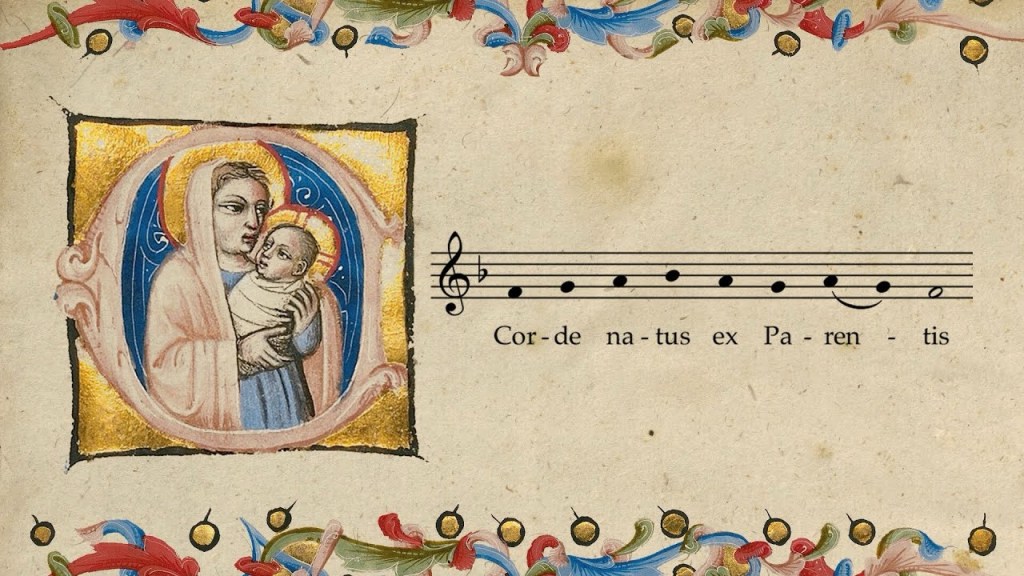
Prudentius composed Corde natus ex Parentis, which was subsequently translated into English as “Of the Father’s love begotten”. The translator was John Mason Neale, whom we met yesterday. This hymn stands at the head of the section in Together in Song where we find the Christmas carols/hymns, so it is recognised as an ancient Christmas carol. 

Prudentius, situated strongly within the developing patristic theology, gives expression to the “highest” view of Jesus, as Alpha and fons (source, or origin) and Omega and clausula (ending, or culmination) of the whole creation, existing “evermore and evermore”. 

So the hymn resonates well with the developing credal tradition of the Nicea—Chalcedon-Constantinople stream. And so begins the long trek towards the transcendental, romantically-unrealistic, Christ of Christmas.

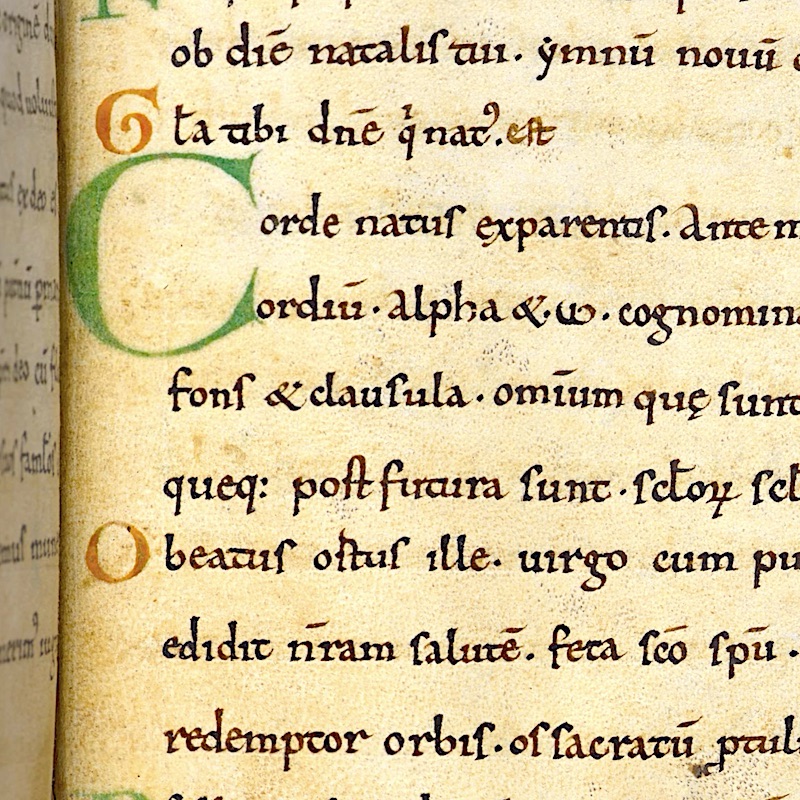
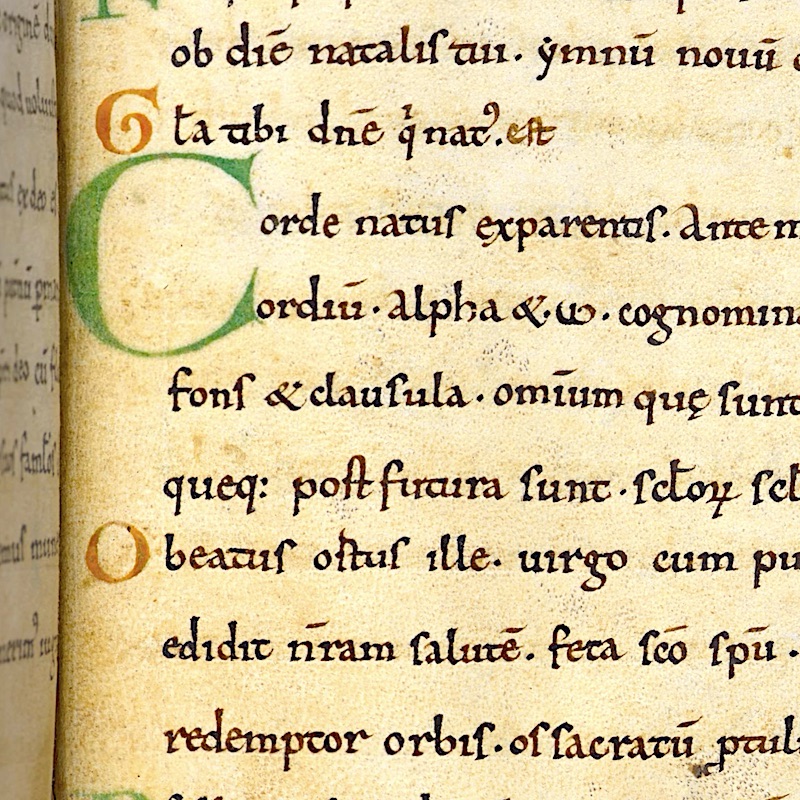
  1. Corde natus ex parentis ante mundi exordium

A et O cognominatus, ipse fons et clausula

Omnium quae sunt, fuerunt, quaeque post futura sunt.

2. Ipse iussit et creata, dixit ipse et facta sunt,

Terra, caelum, fossa ponti, trina rerum machina,

Quaeque in his vigent sub alto solis et lunae globo.

3. Corporis formam caduci, membra morti obnoxia

Induit, ne gens periret primoplasti ex germine,

Merserat quem lex profundo noxialis tartaro.

4. O beatus ortus ille, virgo cum puerpera

Edidit nostram salutem, feta Sancto Spiritu,

Et puer redemptor orbis os sacratum protulit.

5. Psallat altitudo caeli, psallite omnes angeli,

Quidquid est virtutis usquam psallat in laudem Dei,

Nulla linguarum silescat, vox et omnis consonet.

6. Ecce, quem vates vetustis concinebant saeculis,

Quem prophetarum fideles paginae spoponderant,

Emicat promissus olim; cuncta conlaudent eum.

7. Macte iudex mortuorum, macte rex viventium,

Dexter in Parentis arce qui cluis virtutibus,

Omnium venturus inde iustus ultor criminum.

8. Te senes et te iuventus, parvulorum te chorus,

Turba matrum, virginumque, simplices puellulae,

Voce concordes pudicis perstrepant concentibus.

9. Tibi, Christe, sit cum Patre hagioque Pneumate

Hymnus, decus, laus perennis, gratiarum actio,

Honor, virtus, victoria, regnum aeternaliter.

The English translation:

(1) Of the Father’s love begotten

Ere the worlds began to be,

He is Alpha and Omega,

He the Source, the Ending He,

Of the things that are, that have been,

And that future years shall see

Evermore and evermore.

(2) Oh, that birth forever blessed

When the Virgin, full of grace,

By the Holy Ghost conceiving,

Bare the Savior of our race,

And the Babe, the world’s Redeemer,

First revealed His sacred face

Evermore and evermore.

(3) O ye heights of heaven, adore Him;

Angel hosts, His praises sing;

Powers, dominions, bow before Him

And extol our God and King.

Let no tongue on earth be silent,

Every voice in concert ring

Evermore and evermore.

(4) This is He whom Heaven-taught singers

Sang of old with one accord;

Whom the Scriptures of the prophets

Promised in their faithful word.

Now He shines, the Long-expected;

Let creation praise its Lord

Evermore and evermore.

(5) Christ, to Thee, with God the Father,

And, O Holy Ghost, to Thee

Hymn and chant and high thanksgiving

And unending praises be,

Honor, glory, and dominion,

And eternal victory

Evermore and evermore.

http://etymologyofhymns.blogspot.com.au/2012/12/of-fathers-love-begotten.html

She took of its fruit and ate; and gave some to her husband … and he ate (Gen 2–3; Narrative Lectionary for Pentecost 16C)

The Narrative Lectionary begins this year’s cycle of readings with some verses from early in the first book of the Bible, Genesis. The lectionary has picked out what it considers to be key verses (2:4–7, 15–17; 3:1–8) from the extended narrative that begins with the second account of creation (2:4–25) and continues with the story of The Garden of Eden (3:1–24).  

The first section (2:4–7) tells of the creation of human beings. Unlike the first version of the creation (1:1—2:4a), in which human beings, “male and female”, are created “in the image of God” on the sixth “day” (1:27), this version moves immediately to declare that “the Lord God formed man from the dust of the ground, and breathed into his nostrils the breath of life” (2:7). 

Both of these creation stories, and the long, extended narrative that follows, are to be regarded as “myths”; they are traditions about  the time of origins, with paradigmatic or fundamental significance for ancient Israelite society, expressing the reality of life and the place of humanity in that reality, through story. See 

The breathing of life into the human being in the second creation story signals that “the man became a living being (nephesh hayah)” (Gen 2:7). The phrase nephesh hayah appears also a number of times in the first creation story in Hebrew scripture, where it refers to “living creatures” in the seas (Gen 1:20, 21), on the earth (Gen 1:24), and to “every beast of the earth, and to every bird of the air, and to everything that creeps on the earth, everything that has the breath of life (nephesh hayah)” (Gen 1:30). 

The word nephesh (נֶפֶש) is a common Hebrew word, appearing 688 times in Hebrew Scripture. It is most commonly translated (238 times) as “soul”; the next most common translation is “life” (180 times). The word is a common descriptor for a human being, as a whole; it is better translated in a way that indicates it refers to “the essence of a creature”, “the whole being”.

The claim that each living creature is a nephesh is reiterated in the Holiness Code (Lev 11:10, 46; 17:11). It is also stated in the account of the covenant that God made with all creation; “all living creatures” (nephesh) are explicitly noted in this narrative (9:10, 12, 15, 16). This signals the inherent interconnectedness of all creation; the covenant forged in Gen 9 is one that has a cosmic scope. Other passages in the Hebrew Scriptures affirm that human beings—indeed, all living creatures—are given life by God’s spirit and share the essence of a nephesh (Ps 104:24–30; Job 12:7–10). This is an important affirmation from this opening section of the Genesis 2—3 reading for this Sunday.

Myths concerning “the fruit” and “the serpent”

It is widely known (I hope) that what is popularly seen as “an apple”, which the serpent suggested to the woman that she might eat, was in fact not (necessarily) an apple; the Hebrew word used to identify “the fruit of the tree that is in the middle of the garden” which was prohibited to eat (3:3) is פְרִי (peri), which simply means “fruit”or “produce” in general. In no way does it specify “apple”. This popular identification of the fruit as an apple is a myth, in the popular sense that it is “not true”. It is also curious; the apple was a fruit with far eastern origins and appears to have been unknown in the Middle East in biblical times. 

The reason for this misidentification comes, not from the Hebrew, nor from the Greek of the LXX translation, but from a later Latin translation. There is a wordplay in the Latin translation of Genesis 3, involving the Latin words mālum (an apple) and mălum (an evil), each of which is normally written simply malum, without differentiating the long ā from the short ă. So “the fruit of the tree that is in the middle of the garden” (3:3) was conflated with the “evil” that will become known to the human beings “when you eat of it your eyes will be opened, and you will be like God, knowing good and evil” (3:5).

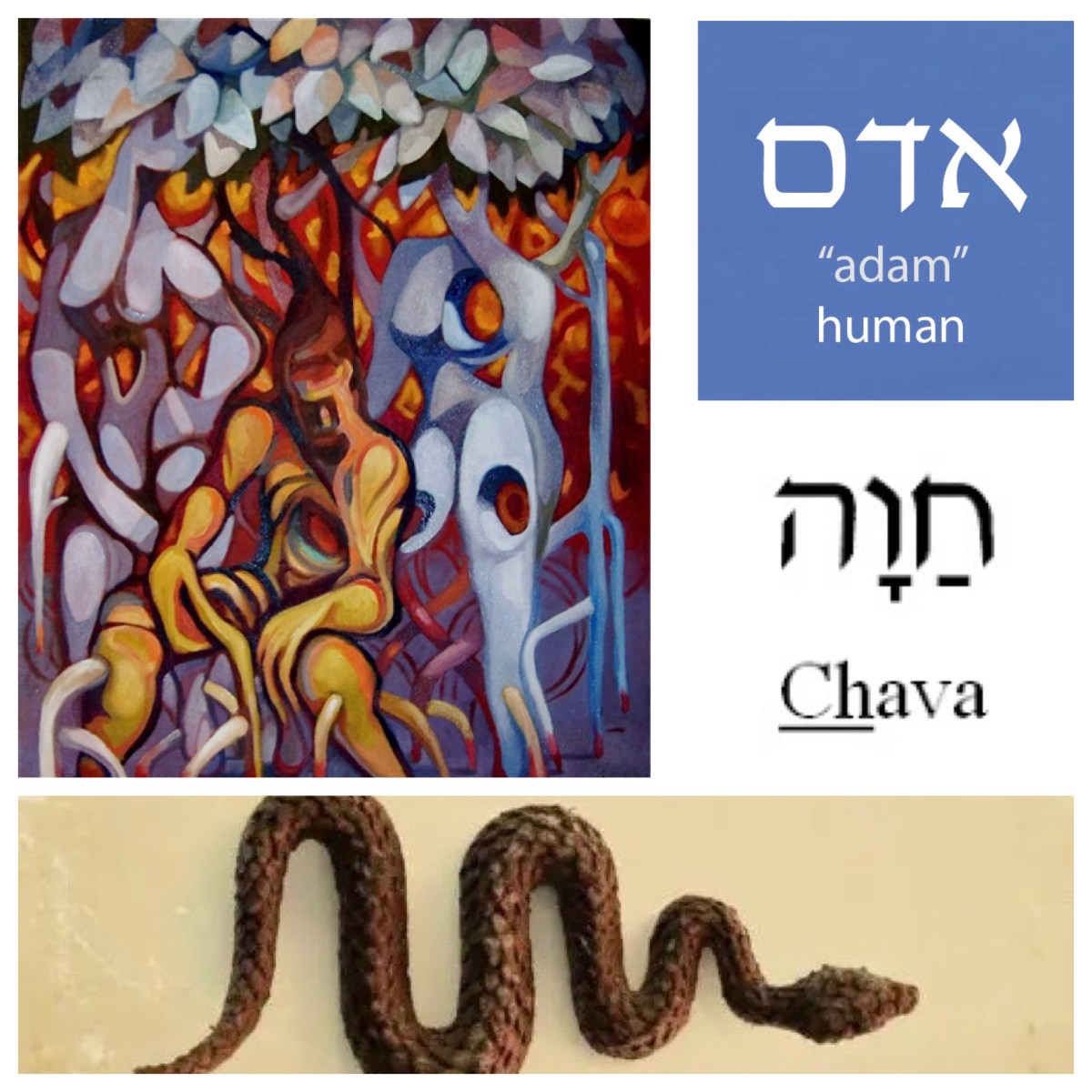
Adam, Eve, and the serpent , oil,on canvas, by Pedro Brull
https://www.mutualart.com/Artwork/ Adam–Eve-and-the-serpent/

Likewise, the traditional interpretation—strongly influenced by millennia of patriarchal bias—is that the serpent tempted the woman, Eve, and she succumbed to temptation. But we need to read these verses (3:1–6) carefully and thoughtfully. It is true that the first step is that the serpent encouraged the woman to eat the fruit, and she duly ate; but then “she also gave some to her husband, who was with her” (3:6b). He had agency at this point, as she had when she was encouraged to eat by the serpent. But “she took of its fruit and ate”, and then, when she offered it to him, “he ate”. He is as guilty as she is of succumbing to what the serpent proposed.

With regard to the serpent: whilst the phrase “the evil one” is absent from Hebrew Scripture, the notion of evil is present throughout—from the garden of Eden, where Adam and Eve flaunt the ban on their eating fruit from “the tree of the knowledge of good and evil” (Gen 2:15–17; 3:1–7), to the condition of humanity in the time of Noah, when “the wickedness of humankind was great in the earth, and that every inclination of the thoughts of their hearts was only evil continually” (Gen 6:5), through the forty years when Israel was condemned to “wander in the wilderness for forty years, until all the generation that had done evil in the sight of the Lord had disappeared” (Num 32:13), and on into the generations under the Judges when “the Israelites did what was evil in the sight of the Lord” (Judg 2:11; 3:7, 12; 4:1; 6:1; 9:23; 10:6; 13:1).

The introduction of evil into the story is generally laid at the feet (or, rather, the belly) of “the serpent” who slithers through the narrative, from the first verse of ch.3 (“the serpent was more crafty than any other wild animal that the Lord God had made”, v.1) to the punishment inflicted on him because of his deeds (“upon your belly you shall go, and dust you shall eat all the days of your life”, v.14).

The serpent is the first character in the Bible who was called shrewd. Alongside him, perhaps the most famous “shrewd” character was the manager in the parable told by Jesus in Luke 16:1–9. Actually, in that parable, whilst the manager is described as being “shrewd” (16:8), it does not convey a negative meaning, I believe. The Greek word used, phronimos (φρόνιμος), translated as shrewd, comes from the verb phroneō (φρονέω), which simply means to think, to use one’s brain. There is no malice involved in this; the manager is simply being intelligent. 

Back in Genesis, the serpent is called “more shrewd than all other beasts”. Shrewd, of course, is an ambiguous term. On the one hand, it is a virtue the wise should cultivate. The word used at Gen 3:3 appears in proverbs where it is translated as “prudent”. Thus, “fools show their anger at once, but the prudent ignore an insult” (Prov 12:16), and “a fool despises a parent’s instruction, but the one who heeds admonition is prudent” (Prov 15:5). However, when this capacity is misused, it become wiliness and guile; the same Hebrew word is used to refer to those who are “crafty” (Job 5:12; 15:5), who “act with cunning” (Josh 9:4), or who practise “treachery” (Exod 21:14).

In the Genesis account, it is the craftiness or cunning of the serpent that is emphasised; this limbless reptile was “more crafty (עָר֔וּם, arum) than any other wild animal” (3:1). The Hebrew, however, has a wordplay here; in the previous verse (2:25), Adam and Eve were “naked” (עֲרוּמִּ֔ים, arummim); then (3:1) the serpent is described as “more crafty” (עָרוֹם, arum) than all others. It is a compliment! 

Later, Paul will take a much more negative line, claiming that “as the serpent deceived Eve by his craftiness, so your minds may be corrupted from the simplicity that is in Christ” (2 Cor 11:3). It is this castigation of the serpent which has predominated throughout Christian history. So, although Impersonally have a great dislike for getting near to, or handling, snakes, I do want to stand up for the reputation of this creature!

The myth of Original Sin

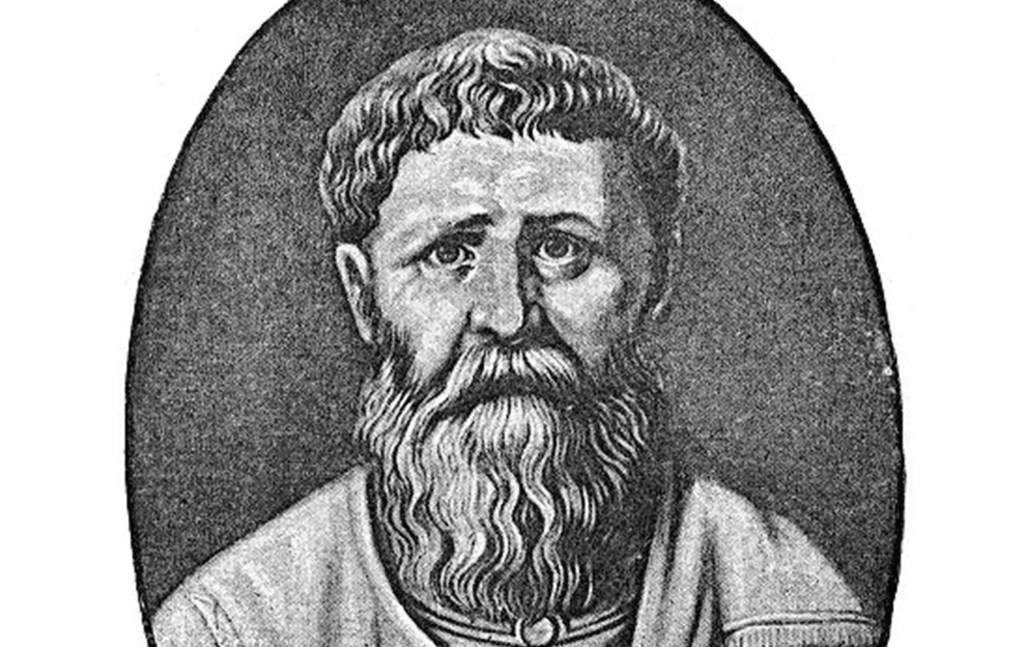
A hugely important deduction that has been made from this story is “the  doctrine of original sin”, which can be traced back to Aigustine of Hippo. Augustine bases his claim about original sin on his reading of the story of Genesis 2–3, which depicts the fall of Adam, from which all humans inherited innate sinfulness (original sin). But I think this is another error in relation to the interpretation of this passage. 

Augustine of Hippo (354–430 CE)

The problem is that the Genesis 1 account of creation which precedes this story (which is read in another year in the Narrative Lectionary) makes it quite clear that the original state of humanity was that human beings, like all that God created, “was good”—indeed, that as the final act of that sequence of creation, humanity was “very good” (Gen 1:31). So much for original sin; humanity, according to this narrative, was part of a “very good” creation. 

Indeed, Augustine was reading the sequence of early chapters in Genesis as historical narrative, and his understanding was that the consequences of “the fall” in Gen 3 was that every person born after Adam inherited that fallen state from the first human being. However, we know from a careful application of literary criticism, that the Adam story is myth which has an aetiological purpose, and that it is not an historical account. 

That is, it does not give a realistic account of “things as they happened”, but rather, it is an imaginative story which tells of the reasons for the origin of things. It doesn’t answer the question, “what happened?”; rather, it responds to the question, “why are things like this?” So the Genesis story as a whole explains the good original state of humanity, before any decline or corruption took place. It is descriptive of how we find things, not prescriptive for how things should be.

In fact, we can see this nature of the story in the names given to these mythical first two human beings: the man, Adam (adam) was created “from the dust of the earth” (ha-adaman), and so his name signifies “the earth person” (Gen 2:7), whilst the woman, Eve (chavah) was to be “the mother (chay) of all living creatures”, and thus her name signifies “the giver of life” (Gen 3:20).

It’s not the case that what “occurs” with Adam and Eve has been passed on through human beings ever since; but, rather, it is the case that how we experience humanity has led to the creation of a story about Adam (the earth person) and Eve (the giver of life) as an explanation for the way that we experience ourselves, and other people on this earth.

Augustine’s distinctive interpretation was his own initiative; most patristic writers prior to him who addressed this topic (Barnabas, Hermas, Justin Martyr, Origen of Alexandria, Clement of Rome, Ignatius of Antioch, Cyril of Jerusalem) offered explicitly different interpretations of the human state. By contrast, Clement of Alexandria accepted that sin was inherited from Adam, and Cyprian of Carthage argued for the necessity of infant baptism on the basis of a belief that humans were born sinful. 

Augustine had developed his views in opposition to the view of his contemporary, Pelagius; the debates continued on into the medieval period, with significant contributions being made by the great theologians Anselm of Canterbury and Thomas Aquinas, as well as Franciscans such as Duns Scotus and William of Ockham. The Reformers, Martin Luther and Jean Calvin, adopted and developed the Augustinian view, which has held sway in the Western Church over subsequent centuries. Eastern Orthodoxy, by contrast, attributes the origin of sin to the Devil; what we humans have inherited from Adam is our mortality, but not any innate sinfulness.

This is all a long way, then, from prophetic fulminations against foolish, stupid, evil Israelites, caught in the error of their sinful ways, or the grace-filled encounters that Jesus had with sinners as he called “not the righteous but sinners”, or the formulaic affirmation of the first letter to Timothy, that “Christ Jesus came into the world to save sinners”, which has become the bedrock of certain contemporary theologies.

Whilst a recognition of sin is inherent in each of those texts, there is no indication in any way that such sinfulness is innate, inherited from birth, of the very essence of our human nature. The doctrine of original sin is not a biblical idea; it’s not something that we should be maintaining in our theological discourse and spiritual understanding.

Made from the dust 

Dust is central to who we are as human beings. The story of the creation of human beings indicates that the man was “formed from dust (עָפָר, aphar) of the ground” before God breathed the breathe of life into him (Gen 2:7). But in the foundational myth that is told in the earliest chapters of scripture, dust is at the centre, also, of the punishments that are handed out after the sin committed by Adam and Eve. 

The serpent, as a result of its role in tempting them, is told, “because you have done this, cursed are you above all livestock and above all beasts of the field; on your belly you shall go, and dust you shall eat all the days of your life” (Gen 3:14; Isa 65:25). The man is told, “by the sweat of your face you shall eat bread, till you return to the ground, for out of it you were taken; for you are dust, and to dust you shall return” (Gen 3:19).

However, in association with the tearing of clothes, the placing of dust on your head is also a symbol of repentance. Joshua repents of the sin of Achan by tearing his clothes and placing dust on his head (Joshua 7:6). Ezekiel speaks of the people of Tyre, lamenting, as “they cast dust on their heads and wallow in ashes” (Ezek 27:30).  Jeremiah reports that “ the elders of the daughter of Zion sit on the ground in silence; they have thrown dust on their heads and put on sackcloth; the young women of Jerusalem have bowed their heads to the ground” (Lam 2:10; see also Isa 25:12; 29:1–4). 

The three friends of Job see him coming, and they “raised their voices and wept, and they tore their robes and sprinkled dust on their heads toward heaven”, before they then sat, grieving with him, “on the ground seven days and seven nights” (Job 2:12–13). Dust means mourning and repenting.

Job himself uses dust and sackcloth to signify that “my face is red with weeping, and on my eyelids is deep darkness” (Job 16:15–16). As a result, he laments, “ God has cast me into the mire, and I have become like dust and ashes” (Job 30:19). Returning to dust is the final state for those punished by God (Job 34:5; see also 10:9; 17:6; 20:11; 21:26; Ps 7:5; 22:15; 90:3; 104:29; Isa 26:5; Lam 2:21)—or, indeed, for all human beings (Eccles 3:20; 12:7). 

In the end, though, Job “repents of dust and ashes” (42:6). He has had enough of being repentant. The book ends with a return of the defiant Job. He will have no more use for the dust and ashes of repentance.

In a number of scriptural incidents, dust is used in curses signalling divine punishment. Shimei, for instance, casts dust into the air to curse David (2 Sam 16:13). When Deutero-Isaiah speaks of the coming salvation that God will bring, to remove the punishment of exile, he exhorts Jerusalem to “shake yourself from the dust and arise” (Isa 52:2). 

Dust had been a sign of the place of mourning, the place of despair, the place which signifies worthlessness and emptiness. Dust had been  where the poor sat (1 Sam 2:8; Amos 2:7); it was where the enemies of Israel were pressed down and beaten into fine particles by the Lord (2 Sam 22:4 3; 2 Ki  13:7; Job 40:13; Ps 18:42; 44:24–25; 72:9; 83:13; Isa 41:2; Micah 7:17). Now, the people were called to leave that dust behind and move on in hope.

Could the action of shaking off the dust have the function of warning recalcitrants—along the lines of, God will turn you to ashes? As the disciples move on to the next town, they were leaving behind a warning with an implicit demand for their repentance. Or could it signal that there would be hope, in the future, from the message of good news that the disciples proclaimed? 

Ransom and Atonement

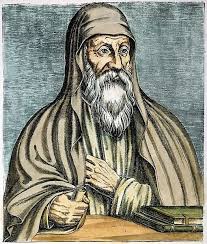
In the third century scholar, Origen of Alexandria developed an idiosyncratic theory of the atonement (the way that Jesus enables God to deal with human sinfulness).

Origen of Alexandria (185–253 CE)

Origen’s ransom theory of atonement reads Genesis 3 as an account of Adam and Eve being taken captive by Satan; this state was then inherited by all human beings. The death of Jesus is what enables all humans to be saved; the means for this was that the blood shed by Jesus was the price paid to Satan to ransom humanity (or, in a variant form, a ransom paid by Jesus to God to secure our release).

However, none of these texts—and particularly not Mark 10:45—require this overarching theological superstructure to make sense of what they say. Origen’s ransom theory held sway for some centuries, but was definitively rejected by the medieval scholar Anselm of Canterbury. It is not a favoured theory of atonement in much of the contemporary church (though it is still advocated in various fundamentalist backwaters). Certainly, none of this should be attributed to the saying of Jesus in Mark 10:45. It is far more likely that he is drawing on the Jewish tradition of the righteous sufferer in his words. And the fundamental narrative of Gen 3 does not in any way support the theory of ransom by atonement.

A smooth transition? or a sequence of cruel calculations? (1 Kings 1–3; Pentecost 13B)

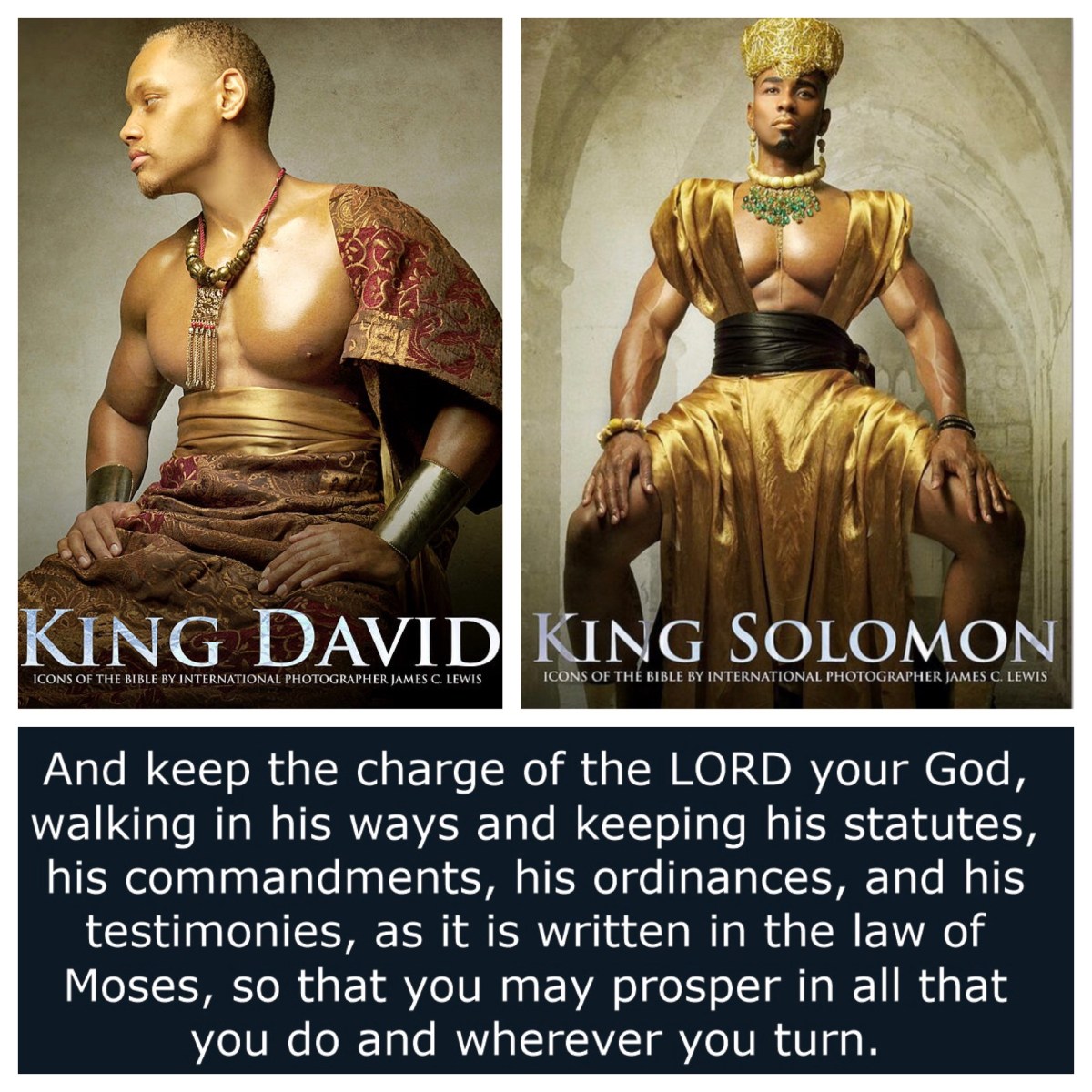
David had many sons—there are 19 who are named in the Bible, and two others unnamed. There are consolidated lists at 2 Sam 3:2–5 (those born at Hebron) and 2 Sam 5:13–15 (those born in Jerusalem). In following the story of 2 Samuel, we have already met Solomon, Absalom, and Amnon. We do not know how many daughters David had, except for Tamar (2 Sam 13:1). After travelling through the various incidents involving David that the lectionary has offered, today we come to the last days of the life of this famous king.

The passage offered by the lectionary this week (1 Ki 2:10–12, 3:3–14) portrays a smooth transition from David to his chosen son, Solomon. The narrator simply reports, “when David’s time to die drew near, he charged his son Solomon”, reporting the words he spoke to him; and then “David slept with his ancestors, and was buried in the city of David” (1 Ki 2:1, 10). 

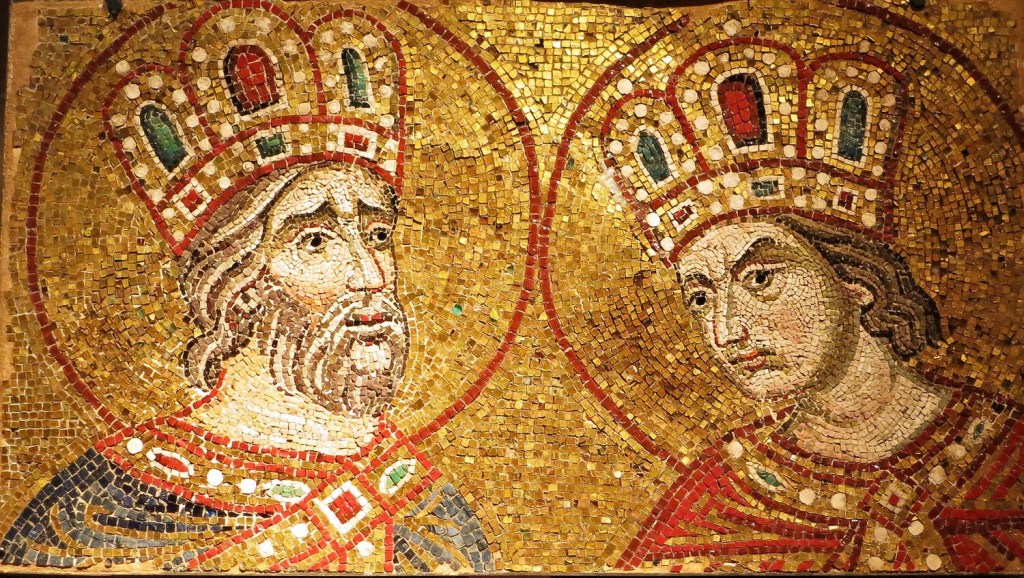
David and Solomon as depicted in a 14th century mosaic in the museum on the second floor of the Basilica di San Marco, Venice

However, the previous chapter tells of the plotting by Adonijah, and the next part of the story reports that David authorised the murders of his son Adonijah, his nephew Joab, and Shimei, a relative of Saul, to ensure that Solomon could reign! It’s a nasty story. (In what follows, I am drawing in part from a sermon preached by my wife, Elizabeth Raine.)

Living in a democracy where leadership is determined by popular vote, this narrative feels particularly unpleasant and unjust to us. Paradoxically, David charges Solomon to adhere to “the statutes, commandments, ordinances, and testimonies” that God has decreed (2:3). Subsequently, Solomon sensibly prays for “an understanding mind to govern your people” (3:9).

In the later rewriting of this long narrative saga, the Chronicler has David instruct his chosen successor, his son, Solomon, “set your mind and heart to seek the Lord your God” (1 Chron 22:19). He reinforces that in a later address, telling Solomon to “know God and serve [the Lord] with single mind and willing heart” (1 Chron 28:9).

The book of Proverbs (attributed by tradition to Solomon) then advocates both attending to the mind (Prov 22:17; 23:12, 19) and “inclining your heart” towards God (Prov 2:2; 3:1–6; 4:4, 20–23; 6:21; 7:3) as integral parts of the life of faith. And of course, much later, Jesus picks this up when he extends the traditional commandment to “love the Lord your God with all your heart, and with all your soul, and with all your might” (Deut 6:5), adding “and with all your mind” (Mark 12:30). 

A fully devoted heart (meaning, an all-of-person commitment) as well as an understanding mind (committed to critical reasoning about faith) is the essence of good leadership. It is a typical Hebraic parallelism that emphasises the importance of a whole-of-life commitment. See more on these terms at

However, it turns out that this is not really how Solomon lived in his life. His rule was littered with events that cast down on his great wisdom, and whether he did actually love God with all of his being.

Solomon was not first in line to ascend the throne; that would lie with the eldest of his brothers still living, Adonijah. Adonijah knows this; the first book of Kings opens with the revelation that, since “David was old and advanced in years … Adonijah son of Haggith exalted himself, saying, ‘I will be king’; he prepared for himself chariots and horsemen, and fifty men to run before him” (1 Ki 1:1,5).

However, Solomon plots with his mother Bathsheba and the palace prophet Nathan to arrange for the assassination of his older brother. In addition, a number of other people also had to be eliminated to establish Solomon’s firm grip on the monarchy, and to ensure there were no other possible legitimate claimants to the throne remaining. Such was the raw and vicious nature of “life at the top” those days. (Hastings anything much changed?)

In fairly quick succession, after Solomon had arranged for the death of his eldest brother Adonijah (2:13–25), he banished the high priest Abiathar who had supported Adonijah (2:26–27) and replaced him with another priest loyal to himself. Next he removed Joab, a cousin who was the commander in the former king’s army (2:28–34). He achieved this via a hit man, Benaniah, who became the general of his army (2:35). 

Then, Solomon had Shimei, who was a relative of Saul, the king before David, killed (2:36–46). In this way all potential contenders for the throne and their powerful supporters were removed, mostly by violent means. As the narrator curtly comments, “so the kingdom was established in the hand of Solomon” (2:46b).

In fact, Solomon meets all the criteria of the sort of king who was described by the prophet Samuel as one who would oppress Israel. Years before, Samuel had warned the people, “This is what the king who will reign over you will claim as his rights: He will take your sons and make them serve with his chariots and horses, and they will run in front of his chariots. Some he will assign to be commanders of thousands and commanders of fifties, and others to plow his ground and reap his harvest, and still others to make weapons of war and equipment for his chariots.” (1 Sam 8:11–12).

More than this, Samuel advised, “He will take your daughters to be perfumers and cooks and bakers. He will take the best of your fields and vineyards and olive groves and give them to his attendants. He will take a tenth of your grain and of your vintage and give it to his officials and attendants. Your male and female servants and the best of your cattle and donkeys he will take for his own use. He will take a tenth of your flocks, and you yourselves will become his slaves.” (1 Sam 8:13–17). 

So Samuel tells the people who were asking for a king, “when that day comes, you will cry out for relief from the king you have chosen, but the Lord will not answer you in that day” (1 Sam 8:18).

In addition to meeting these criteria, Solomon’s weakness for foreign women would lead him to abandon the God of Israel for other foreign gods. “Solomon loved many foreign women along with the daughter of Pharaoh: Moabite, Ammonite, Edomite, Sidonian, and Hittite women, from the nations concerning which the Lord had said to the Israelites, ‘You shall not enter into marriage with them, neither shall they with you; for they will surely incline your heart to follow their gods’; Solomon clung to these in love” (1 Ki 11:1–2). 

Solomon ignored this command and “clung to these in love; among his wives were seven hundred princesses and three hundred concubines; and his wives turned away his heart—for when Solomon was old, his wives turned away his heart after other gods; and his heart was not true to the Lord his God, as was the heart of his father David” (1 Ki 11:2b-4).

A stylized representation of Solomon and his “seven hundred princesses and three hundred concubines” whom he took to be his wives, who “turned away his heart” (1 Ki 11:3).

Eventually, in the view of the narrator of this long saga, this engagement with foreigners and their religious customs would lead to the breakdown of kingdom and would end in Israel being conquered by Assyria (2 Ki 17:5–12, 20) and then Judah being defeated by Babylon (2 Ki 17:19; 24:18–20). Their exile was precisely because, as the Lord tells Ezekiel, “you are living in the midst of a rebellious house, who have eyes to see but do not see, who have ears to they are a rebellious house; therefore, mortal, prepare for yourself an exile’s baggage, and go into exile by day in their sight; you shall go like an exile from your place to another place in their sight—perhaps they will understand, though they are a rebellious house” (Ezek 12:1–3).

Diana Edelman notes in the Jewish Women’s Archive that “Foreign women were considered a potential source of trouble because they might not always adopt the culture and values of their husbands and their new place of residence. If they chose to continue to practice their native customs and cults, they would pass these on to their children and might also influence their husbands to adopt some non-Israelite practices as well. Loyalty to and identity with Israelite tradition would be threatened.” See https://jwa.org/encyclopedia/article/women-of-solomon-bible

The story of Solomon is actually a bloody and violent narrative of infidelity, oppression, and sin. The path to the throne was a bloody and ruthless one for Solomon. But most often, people remember a heavily sanitised version of Solomon, one of Israel’s most famous kings.

******

How could this great king who had spoken with God go on to worship false gods? How could someone credited with so much wisdom ignore the basic laws of justice that his God required of him? Perhaps we might consider this long history, not so much a glorious account of the people flourishing under wise and good leadership, but rather a tragic story of oppressive leadership, split kingdoms, rivalry, and war, leading to the civil war that swirled around the last days of Solomon and the consequent division of the kingdom, with Israel being ruled by Jeroboam while Rehoboam ruled Judah.

So in considering how Solomon lived, we find a king who ruthlessly removed rivals, taxed his people heavily, and thought nothing of removing thousands of men to be his soldiers and his labourers. He thought nothing of loving many women who brought their foreign customs into the heart of Israel. He thought nothing of using the children of Israel as miners to procure the precious metals to make his gold cups. He thought nothing of taking food off the tables of his people. 

The narrator describes the daily provisions of Solomon in some detail: “thirty cors of the finest flour and sixty cors of meal, ten head of stall-fed cattle, twenty of pasture-fed cattle and a hundred sheep and goats, as well as deer, gazelles, roebucks and choice fowl” (1 Ki 4:23–24) and then claims that “during Solomon’s lifetime Judah and Israel, from Dan to Beersheba, lived in safety, everyone under their own vine and under their own fig tree” (4:25).

However, we know from Samuel’s earlier predictions that this is ‘spin’. How could such immense provisions and vast wealth be found in the ancient near east unless it was taken from the people? How would the families of those men who were taken for Solomon’s service fare, left to struggle on small land holdings without men to work the land?

While we might remember the wisdom and splendour of King Solomon’s rule to this day and admire it, we need to remember that there is another side to this story, that isn’t just or pretty or admirable. Solomon’s wisdom and rule was the wisdom and rule of the world. Solomon used his influence and power to acquire personal wealth and prestige. He thought nothing of splitting families, leaving women and children to struggle, and taking precious food resources for his own use. The mineral wealth of the land remained firmly under his control and he used it to decorate his vast palace – built at no expense by Hebrew men conscripted into what was essentially slavery. His immense army ensured he remained in power.

Who does this put you in mind of today? The Conversation has a page entitled “Articles on Dictatorship” which contains 81 articles—on Bangladesh, Venezuela, North Korea, Russia, Brazil, Argentina, Cambodia, Belarus, Saudi Arabia, China, Rwanda, Nicaragua, the Philippines, and more. Surely this is not the model of leadership that God desires? See https://theconversation.com/au/topics/dictatorship-1918

Writing in With Love to the World, Matthew Wilson reflects on this story. “Often our sense of justice is based more on retribution than on reconciliation. Mandatory sentencing, drug posession laws, racial profiling, and continuing failures in domestic violence and other abuse cases leave us wondering where justice really lies.” 

He notes an anecdote of his father, “He who has the deepest pockets wins”, and comments that, whilst God has a quite different sense of justice, sadly, “the God who forgives, who shows grace and mercy is, nevertheless, rather absent in today’s reading. Solomon will go on to be gifted with, and praised for, his wisdom. Here, political wisdom and the grace of a forgiving God seem a long way apart. In the love of Christ and the power of the Spirit, have we the strength to be different, to be Christ-like?”

*****

Some material in this blog was included in THE WAY OF WISDOM by Elizabeth Raine and John Squires (self-published 2012)

With Love to the World is a daily Bible reading resource, written and produced within the Uniting Church in Australia, following the Revised Common Lectionary. It offers Sunday worshippers the opportunity to prepare for hearing passages of scripture in the week leading to that day of worship. It seeks to foster “an informed faith” amongst the people of God.

You can subscribe on your phone or iPad via an App, for a subscription of $28 per year. Search for With Love to the World on the App Store, or UCA—With Love to the World on Google Play. For the hard copy resource, for just $28 for a year’s subscription, email Trevor at wlwuca@bigpond.com or phone +61 (2) 9747-1369.

God, merciful and gracious: themes in The Prophets

That God’s grace is central to who God is and how God relates to human beings, is a fundamental claim in the writings of Paul. This affirmation is key to the extended theological,discussion we find in Romans, Paul’s longest letter, where Paul affirms that those who believe “are now justified by his grace as a gift, through the redemption that is in Christ Jesus” (Rom 3:24).

After citing the example of Abraham, justified by “the righteousness of faith” (4:13), which means that the promise rests on grace (4:16), Paul explains that, “since we are justified by faith, we have peace with God through our Lord Jesus Christ, through whom we have obtained access to this grace in which we stand” (5:1–2).

So Paul rejoices that “the grace of God and the free gift in the grace of the one man, Jesus Christ, [has] abounded for the many” (5:15), and he tells the Romans that “sin will have no dominion over you, since you are not under law but under grace” (6:14). It is God’s grace which marks the life of those who believe in Jesus as Messiah—the Messiah who, in an act of supreme graciousness, “while we were still weak, at the right time [this Messiah] died for the ungodly” (5:6).

Even when considering his unbelieving brothers and sisters in Israel, Paul insists that “God has not rejected his people” (11:1), for “the gifts and the calling of God are irrevocable” (11:29); accordingly, “there is a remnant, chosen by grace” (11:5), demonstrating that God remains persistently faithful to God’s people, for “if it is by grace, it is no longer on the basis of works, otherwise grace would no longer be grace” (11:6). God’s grace is the key.

This key theological motif is signalled in the standard greeting that we find at the start of every one of Paul’s seven authentic letters—“Grace to you and peace”, or some minor variant (Rom 1:7; 1 Cor 1:3; 2 Cor 1:2; Gal 1:3; Phil 1:2; 1 Thess 1:1; and Phlm 3). The greeting appears as well in many of the other letters collected in the New Testament (Col 1:2; Eph 1:2; 2 Thess 1:2; 1 Tim Q:2; 2 Tim 1:2; Tit 1:4; 1 Pet 1:2; 2 Pet 1:2; 2 John 3; Rev 1:4).

A blessing of grace also closes each of Paul’s authentic letters (Rom 16:20; 1 Cor 16:23; 2 Cor 13:13; Gal 6:18; Phil 4:23; 1 Thess 5:28; Phlm 25) as well as a number of other letters (Col 4:18; Eph 6:24; 2 Thess 3:18; 1 Tim 6:21; 2 Tim 4:22; Tit 3:5; Heb 13:25; 2 Pet 3:18) as well as the very last book of the New Testament (Rev 22:21). Each time, it reminds us of this central theological claim about God: God is a god of grace.

In reporting on the activities of Paul, the writer of Acts notes that his preaching told of the grace of God (Acts 13:43; 14:3; 20:24, 32). Indeed, in a rare moment of theological concordance, Peter is said to have concluded his speech to the council in Jerusalem with a characteristically Pauline flourish, affirming that “we believe that we will be saved through the grace of the Lord Jesus, just as they [the Gentiles] will” (Acts 15:11).

So God’s grace is central to early Christian understandings of God—and the fourth evangelist places it front and centre in his portrayal of Jesus, “the Word [who] became flesh and lived among us”, known to us as being “full of grace and truth” (John 1:14). (None of the Synoptic Gospels employ the precise term; many commentators, however, influenced by the predominance of grace in Pauline theology, interpret the way that Jesus offers forgiveness of sins—Mark 2:10 and parallels; Luke 23:34; Acts 5:31; 10:43; 13:38—to be an expression of God’s grace.)

The letter to the Hebrews describes Jesus as being seated on “the throne of grace”, which we are to approach “with boldness, so that we may receive mercy and find grace to help in time of need” (Heb 4:16). The letter attributed to James affirms that God “gives all the more grace”, citing the text that “God opposes the proud, but gives grace to the humble” (Jas 4:6, quoting Ps 138:6), whilst 1 Peter closes with a claim that was is contained in that letter reveals something of “the true grace of God” (1 Pet 5:12). That God is gracious is a fundamental theological claim in the New Testament.

*****

This is not a new insight into the nature of God, however. Centuries before, faithful Israelite people had grasped the same insight and expressed it in clear and unambiguous ways. The prophet Joel attests that God is “gracious and merciful, slow to anger, and abounding in steadfast love, and relents from punishing” (Joel 2:13).

The same note is sounded by another prophet, Jonah; in his prayer to God, begging that God take his life, he affirms that “I knew that you are a gracious God and merciful, slow to anger, and abounding in steadfast love, and ready to relent from punishing” (Jonah 4:2).

It is the very same affirmation about God which an explicit priestly writer placed on the lips of Moses, after the account of the Golden Calf and the smashing of the first set of tablets containing The Ten Words. Here, Moses is instructed to cut two new tablets of stone, in preparation for renewing the covenant. The Lord then passed before him, declaring, “The Lord, the Lord, a God merciful and gracious, slow to anger, and abounding in steadfast love and faithfulness, keeping steadfast love for the thousandth generation, forgiving iniquity and transgression and sin” (Exod 34:6).

During the time of King Hezeziah (king of the southern kingdom from 715 to 686 BCE, after the reign of Ahaz), once the neglected Temple had been cleansed and sanctified, Hezekiah restored the worship of the Lord in the Temple, informing the people that “the Lord your God is gracious and merciful, and will not turn away his face from you, if you return to him” (2 Chron 30:8–9).

Still later, after the southern kingdom had been exiled to Babylon, the prophet Jeremiah affirmed that God pledges to the exiled people, “I will be the God of all the families of Israel, and they shall be my people”, and then affirms that “the people who survived the sword found grace in the wilderness”, and continues by restating that “I have loved you with an everlasting love; therefore I have continued my faithfulness to you” (Jer 31:1–3).

These are the opening words of the chapter that contains Jeremiah’s most famous oracle, in which God promises, “I will make a new covenant with the house of Israel and the house of Judah … I will put my law within them, and I will write it on their hearts; and I will be their God, and they shall be my people … I will forgive their iniquity, and remember their sin no more” (Jer 31:31–34). That is deep, deep covenant love, expressing God’s thoroughly grace-filled character.

Later still, as the people returned to the land and the city, after Ezra had reinstated the Law in Jerusalem and the people had celebrated the Festival of Booths, Ezra prayed at a ceremony to recommit to the covenant, praising God as “a God ready to forgive, gracious and merciful, slow to anger and abounding in steadfast love, and you did not forsake them.” (Neh 9:17). Again, we hear that central affirmation about God, who is also described as “the great and mighty and awesome God, keeping covenant and steadfast love” (Neh 9:32).

It’s a mantra that appears in a number of Psalms. In one, a cry for divine help, we hear, “you, O Lord, are a God merciful and gracious, slow to anger and abounding in steadfast love and faithfulness” (Ps 86:15). Here, the psalmist pleads, “turn to me and be gracious to me; give your strength to your servant; save the child of your serving girl; show me a sign of your favour, so that those who hate me may see it and be put to shame, because you, Lord, have helped me and comforted me” (Ps 86:16–17).

In another psalm, a thanksgiving in praise of God’s steadfast love, we hear the familiar refrain, that “the Lord is merciful and gracious, slow to anger and abounding in steadfast love” (Ps 103:8). This psalm continues, “He will not always accuse, nor will he keep his anger forever. He does not deal with us according to our sins, nor repay us according to our iniquities. For as the heavens are high above the earth, so great is his steadfast love toward those who fear him; as far as the east is from the west, so far he removes our transgressions from us. As a father has compassion for his children, so the Lord has compassion for those who fear him.” (Ps 103:9–13).

In another psalm of praise, the psalmist exults, “Great are the works of the Lord, studied by all who delight in them. Full of honour and majesty is his work, and his righteousness endures forever. He has gained renown by his wonderful deeds; the Lord is gracious and merciful. He provides food for those who fear him; he is ever mindful of his covenant.” (Ps 111:2–5).

And in yet another psalm of praise, the psalmist affirms, “the Lord is gracious and merciful, slow to anger and abounding in steadfast love; the Lord is good to all, and his compassion is over all that he has made.” (Ps 145:8–9). It is this God, gracious and merciful, abounding in steadfast love, to whom people of faith turn in regular prayers of supplication and petition.

So we need to let go of the archaic and inaccurate claim that “the God of the Old Testament is a god of wrath, the God of the New Testament is a god of love”. God, in both testaments, with equal intensity and equal integrity, is a God of love, abounding in steadfast love—a God of grace, indeed!

*****

Alongside this strong prophetic affirmation of the grace of God, there is a similarly-strong thread that insists that God will judge the people of God in accordance with their faithfulness, or infidelity, to the covenant that God has made with them. Thus, alongside the God of grace in texts of the Hebrew prophets, stand many texts about the wrath of God, to be delivered on The Day of the Lord. See https://johntsquires.com/2022/09/12/the-day-the-end-themes-in-the-prophets/

How are we to reconcile these two aspects of God? That is the task that our biblical witness invites us to undertake for ourselves!

See also https://johntsquires.com/2021/08/16/justice-and-only-justice-you-shall-follow/
On godliness, dignity, and purity: the life of faith in 1 Timothy (Epiphany 16C)

This Sunday we are offered an excerpt from the final chapter of the first letter to Timothy (1 Tim 6:6–19). The letter is attributed by tradition to Paul, but more likely, I believe, it was written by a student of Paul some decades after his life. The author draws on the authority of Paul to lend weight to the teachings that he provides in this letter.

We have seen that the central concern of this letter appears to be to ensure obedience and pass on the essential teachings of the faith in order to refute the false teachers. This ideal is very different from the one Paul reflected in 2 Cor 11: the dangers of life, the centrality of suffering. Paul lived in the tension between this world and the next, full of expectation that Jesus will return soon (1 Thess 1:9–10; 1 Cor 7:26–31; Rom 8:18–25).

Here, however, the belief in an imminent return of Jesus has passed (6:14–15); the demands for unqualified and unquestioning adherence to “the truth” are based in obedience to the resplendent figure of Jesus, in the heavenly realm, who “alone has immortality, and dwells in unapproachable light” (6:15–16).

Paul had enthusiastically testified to the post-resurrection appearances of Jesus; but this letter asserts, “no one has ever seen or can see” him (6:16).

This picture of Jesus offers a pointer to how the theology of the early church was developing. The groundwork for disputes over correct doctrine and heresy was here being laid for the debates of the early church councils in subsequent centuries.

Associated with this emphasis on right belief is an intensifying of ethical demands on the believers; what is important is to teach moderation, prudence and order. The instruction to Timothy to “keep yourself pure” (5:22; see also 1:5; 4:12) reflects Paul’s criticism of impurity (Rom 1:24; 6:19; 2 Cor 12:21; Gal 5:19; 1 Thess 4:7) and advocacy of purity (Phil 1:10; 4:8; 1 Thess 2:10). The offering of prayers “so that we might lead a quiet and peaceable life in all godliness and dignity” (2:2) also evokes Paul (compare 1 Thess 4:11).
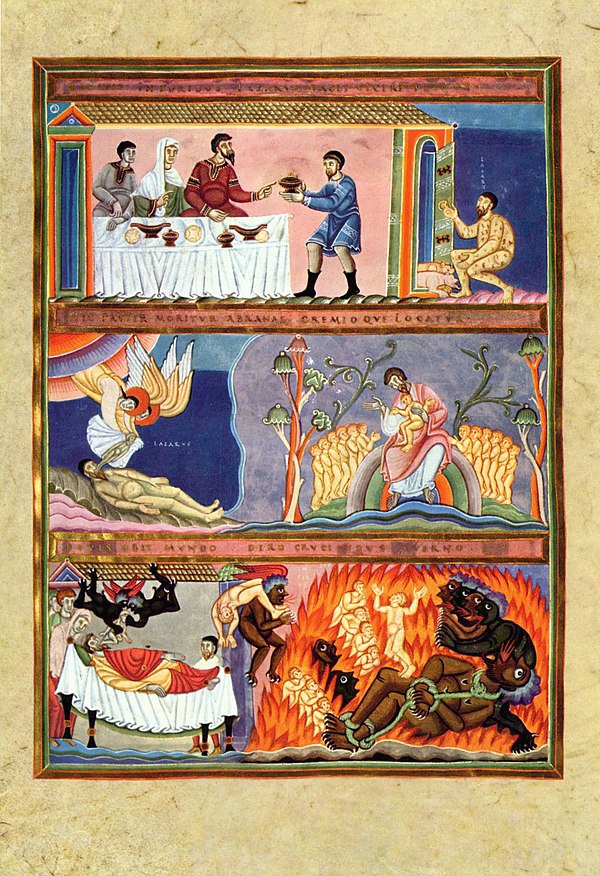
Yet a number of terms point to significant differences from Paul’s authentic letters: the use of the term “godliness”; the inclusion of numerous moral qualities required of leaders which are either unique to the Pastorals (temperate, sensible, serious, manage, double-tongued) or found only rarely in other Pauline letters (noble, hospitable, above reproach); the emphasis on financial responsibility; the way that “conscience” is used (1 Tim 3:9) and the striking phrase, “fight the good fight” (1:18; 6:12). The letter takes strides beyond the teachings set out in Paul’s authentic letters.

Most controversial of all is the section of this letter instructing women (2:8–15). Almost every element of the passage stands in contradiction to what Paul has stated. The “dress code” (2:9) is not something that would be written by Paul, as is the emphasis on “good works” (2:10). The demand for silence and submission (2:11) is reminiscent of 1 Cor 14:34 (which may well not have been written by Paul) but is counter to the guidelines for women when speaking in worship (1 Cor 11:2–16), as is the directive that women not teach (2:12).

The interpretation of the Genesis narrative (2:13–14) is strikingly different from the way that Paul treats it at 1 Cor 11:8–12 and Rom 5:12–21. The assertion that a woman “will be saved through childbirth” (2:15) is likewise contrary to Paul’s emphasis on faith and grace as the means by which salvation is granted. For more on the difficult passages in letters attributed to Paul where female subjugation appears to be in view, see https://johntsquires.com/2020/11/19/women-in-the-new-testament-2-six-problem-passages/

The passage in 1 Tim 2:8–15 appears to be attacking excesses within the community of faith, but it does so by insisting upon good order, obedience and submission—qualities which are held in high regard throughout this letter.

The author instructs Timothy to “pursue righteousness, godliness, faith, love, endurance, gentleness” (6:11). The list is slightly evocative of the list of “gifts of the Spirit” that Paul provides at Gal 5:22–23, “love, joy, peace, patience, kindness, generosity, faithfulness, gentleness, and self-control”, although the list in 1 Tim 6 is not linked in any way with the Spirit. That is typical of this and other letters which came from later in the first century, some decades after Paul himself was writing letters.

In Paul’s authentic letters, the Spirit is an important element. Paul retains from his Jewish upbringing a sense of the Spirit as a manifestation of divine energy; the Spirit is God’s gift to believers (Rom 5:5) and thus the source of life and peace (Rom 7:6; 8:2, 5–6). In Hebrew Scripture, the Spirit is seen to breathe over the waters of chaos as God’s primary agent in creation, to gift the elders appointed by Moses, to anoint the prophets and to inspire their pointed words of warning. In Paul’s understanding, the Spirit gifts believers with a multitude of gifts (1 Cor 12:4–11).

Paul also imbues the Spirit with an eschatological role—first, the Spirit acts by raising Jesus from the dead (Rom 1:4; 8:11) and then by adopting believers as “children of God” (Rom 8:14–23). The Spirit is a marker of life in the kingdom of God (Rom 14:17). The kingdom, for Paul, remains a future promise, to become a reality within the eschatological timetable (1 Cor 15:23-26).

Paul speaks with passion about how the creation groans in the present time of distress (Rom 8:18–23), as believers hold fast to their hope in the renewal of creation (Rom 8:17, 21, 24–25; see also 1 Cor 7:28–31). The role of the Spirit in this period is to strengthen believers by interceding for them (Rom 8:26–27).

Paul reminds the Romans that they are “in the Spirit” (Rom 8:9); this is reminiscent of his guidance to the Galatians to live “by the Spirit” (Gal 5:16, 22–25) and his exposition to the Corinthians of the gifts which are given “through the Spirit” (1 Cor 12:1, 4–11). The understanding of the gifting of believers by the Spirit, articulated in the first letter to the Corinthians, has played a significant role throughout the history of the church over the centuries.

The life of faith, lived “in the Spirit”, is therefore to be characterised by “spiritual worship” (Rom 12:1). Paul immediately explains that this requires believers to be “transformed by the renewing of your minds” (Rom 12:2). After making this bold programmatic statement, Paul devotes significant time (in Rom 12–15) to spelling out some of the ways in which this transformation might take place. The Spirit effects transformation, which then governs the behaviour as well as the words of believers. The dynamic, pervasive role,of the Spirit is evident at many places in Paul’s authentic letters.

In the first letter to Timothy, by contrast, the almost total absence of the Spirit is striking. Only two explicit references to the spirit occur. The first is completely formulaic; the claim that Jesus was “vindicated in spirit” sits second in a series of six clauses which set out some key aspects of “the truth” to which Timothy is to be bound: “the mystery of our religion is great: He was revealed in flesh, vindicated in spirit, seen by angels, proclaimed among Gentiles, believed in throughout the world, taken up in glory” (1 Tim 3:16). The Spirit is not an active, energising force in this formula; rather, the spirit is the static realm in which Jesus was “vindicated”.

This formula is followed immediately by the claim that “the Spirit expressly says that in later times some will renounce the faith” (4:1). Once again, the context and the terminology drives incessantly towards the affirmation of “the truth”; those revealed as renouncing the faith are condemned for “paying attention to deceitful spirits and teachings of demons, through the hypocrisy of liars whose consciences are seared with a hot iron” as well as their teachings that “forbid marriage and demand abstinence from foods, which God created to be received with thanksgiving by those who believe and know the truth” (4:1–3). The revelation by the Spirit points away from these doctrines and practices and orients decisively towards “the truth”.

For discussion: What do you make of the discussion above, setting out the differences between the authentic letters of Paul, and the first letter to Timothy? Do you think that there was a different author for this letter?

*****

See also
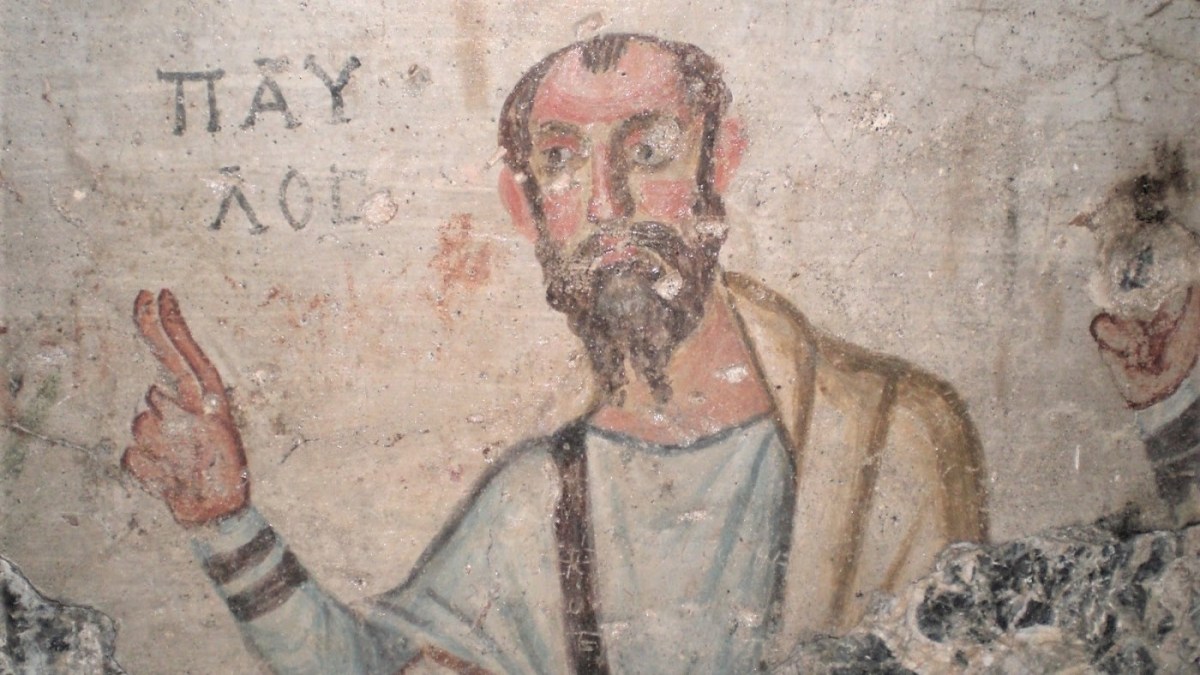
No longer as a slave: Paul, to Philemon, about Onesimus (Pentecost 13C)

There can be no doubt that Paul functioned in a leadership role within many of the early communities of faith. He presented himself—and was accepted and recognised by others—as a father-figure within that movement.

In his shortest letter, addressed to Philemon—which is offered by the lectionary this coming Sunday—he explicitly styles himself as “father” of the runaway slave, Onesimus (Phlm 10). This is obviously not a physical claim; rather, Paul is laying claim to the role that he played in converting Onesimus; and perhaps also to the role which he wishes to play, in guiding the community of faith which meets in the house of Philemon and Apphia.
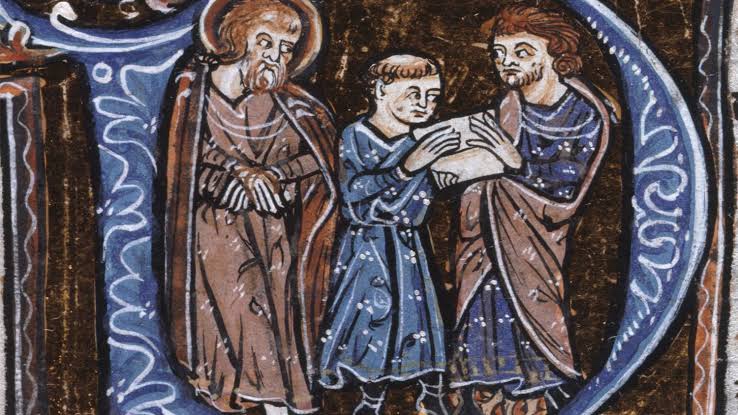
This letter reveals something of the cultural context in which Paul operates; and something of his own expectations regarding his role within the Jesus movement. It is Paul’s shortest letter; it largely follows the pattern of a first-century letter in most respects. There is an opening set of greetings, encompassing Philemon, Apphia, Archippus and the church gathered in their house (Phlm 1–3), followed by an expression of thanksgiving for the love and faith of this group of believers (4– 7).

The letter omits the traditional conveying of news in order to come straight to the point with Paul’s central petition: “for this reason…I appeal to you… welcome him” (8–22). Paul is sending the slave Onesimus with an expectation that he will be received by Philemon and company in the spirit of the gospel: “not as a slave, but as a beloved brother” (15–16).

The letter does not address the structural issues inherent in a society in which slavery is a reality. Paul simply accepts that Onesimus is, and will remain, a slave; but he exhorts Philemon to treat him with equity, as a brother. Modern sensibilities about the injustice of one human being “owning” another human being, as a piece of property, are far from the awareness of Paul, Philemon, and all slave-owning people in the society of that day.

The letter ends in typical style, with Paul’s farewell by the sending of greeting from others with him, and pronouncement of a blessing upon those who hear the letter read to them (23–25).

The situation of writing appears to overlap with Paul’s situation as portrayed in Col 4:7–18. Paul himself is a prisoner (Phlm 1, 9, 23; Col 4:18) in the company of Epaphras (Phlm 23; Col 4:12); the precise location of his imprisonment is not revealed. Close by are Mark and Aristarchus (Phlm 24; Col 4:10) as well as Demas and Luke (Phlm 24; Col 4:14). Onesimus and Tychicus are Paul’s emissaries to Colossae (Col 4:7–9); this appears to place Philemon and his fellow believers in or very near to that city, as Paul sends Onesimus to them (Phlm 12).

The letter functions as a personal commendation of Onesimus. Paul sends him to Philemon with his strong support; he is “my child” (10), “my own heart” (12), “a beloved brother” (16). When he arrives, Paul exhorts Philemon to “welcome him as you would welcome me” (17). Paul undergirds these words with the declaration that he will personally rectify any wrong caused or repay any debt owed to Philemon by Onesimus (18). The stance he takes is that of a benefactor, acting to ensure the best interests of Onesimus.

This is just a short letter, and it lends itself really well to an exercise in reading (that I used each time I taught Paul) that exposes the way that the presuppositions we bring to a text can really influence the way that we understand that text.

First, read the the letter as the character of Philemon. How do you receive the letter? What are the most important things that Paul says in this letter? What does it inspire you to want to do?

Now read the letter as the character of Onesimus. How do you receive the letter? What are the most important things that Paul says in this letter? If you were the runaway slave, what would you do?

Then, compare how you responded to the letter as each character. What, in the light of all of this, do you want to say back to Paul?