On reading scripture during Advent: drawing from the ancient prophecies (Isaiah 2; Advent 1A)

“Many peoples shall come and say, ‘Come, let us go up to the mountain of the Lord, to the house of the God of Jacob; that he may teach us his ways and that we may walk in his paths’” (Isa 2:3). These are words in the section from Hebrew Scripture that are offered by the lectionary for this coming Sunday, the first day of Advent (Isa 2:1–5). How do we deal with the words of a prophet, speaking eight centuries before Jesus, when they are set for the season in which we look forward, with expectation and hope, to the coming (again) of Jesus, at Christmas?

Perhaps these words sit here, at the start of Advent, because they express a vision of the universal relevance and impact of faith in God, grown amongst the people of Israel, and brought to a fuller expression in the person of Jesus? The claim that “many peoples” will come to Jesus points to his universal impact. The notion that these “many people” will seek to learn the ways of the Lord and walk in his paths is a comforting and inspiring statement by the prophet.

This passage, too, is well-known for the prophet’s vision that divine judgement will take place “between the nations … for many peoples” (2:4a); as a result, those people “shall beat their swords into ploughshares and their spears into pruning hooks” (2:4b). This oracle, shared with the contemporary prophet Micah (Mic 4:1–4), foresees that these nations “shall not learn war any more” (2:4c). It’s a wonderful vision—sadly, one that is still awaiting fulfilment, even 28 centuries later.
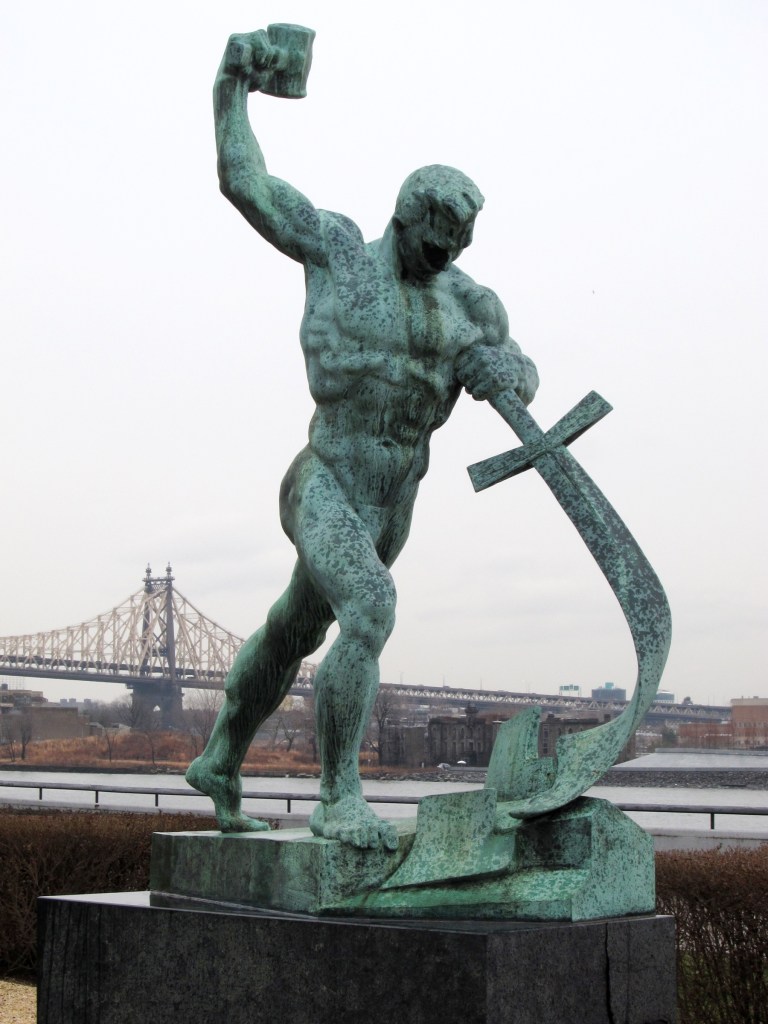
Let Us Beat Swords into Plowshares,
a sculpture by Evgeniy Vuchetich
in the United Nations Art Collection

*****

In the coming weeks, we will be hearing and considering other words from this prophet who lived eight hundred years before Jesus; words that the church has heard, and taken, and restated, and declared that they speak about Jesus—predictive prophecy, enabled by the Spirit, spoken well in advance of the time of their fulfilment. After the vision of universal peace this coming Sunday (Isa 2:1–5, Advent 1A), the following Sunday we will hear a similar oracle from Isaiah (Isa 11:1–10, Advent 2A), in which another vision of universal harmony is expressed.

The two passages sit curiously alongside the Gospel passages of the prediction of apocalyptic turmoil by Jesus (Matt 24:36–44, Advent 1A) and the fierce apocalyptic preaching of John (Matt 3:1–12, Advent 2A). Whilst the Gospel passages foresee disastrous events, the Hebrew Scripture passages look to universal peace.

The other two Sundays in Advent contain further oracles spoken eight centuries before Jesus by the prophet Isaiah. One comes from the later part of the long opening section of Isaiah (chapters 1–39), and once again offers a vision of restitution and harmony; a period of time with abundant blossoming (35:1–2), divine salvation (35:3–4), restoration of full health (35:5–6), an a highway, “the Holy Way”, where “no lion shall be there, nor shall any ravenous beast come upon it” (35:9). The whole vision is framed with joy and singing (35:2, 10; see Isa 35:1–10, Advent 3A).

This passage sits, more easily, alongside the Gospel reading for that Sunday, recounting an incident in which Jesus was asked about John the baptiser (Matt 11:2–11; Advent 3C), in which he talks about events taking place even in their midst: “the blind receive their sight, the lame walk, the lepers are cleansed, the deaf hear, the dead are raised, and the poor have good news brought to them” (11:5).

Finally, on the fourth Sunday of Advent, the lectionary takes us to the very familiar prophetic words, “the Lord himself will give you a sign; look, the young woman is with child and shall bear a son, and shall name him Immanuel” (Isa 7:14), a part of a longer prophecy that Isaiah speaks directly to King Ahaz (Isa 7:10–16), Advent 4A).

Alongside this, of course, is the Gospel passage where this famous prophetic utterance is cited (Matt 1:18–28, Advent 4A)—albeit, in a version that clearly mistranslates the Hebrew ‘almah (young woman) as the Greek parthenos (virgin)—a rendering that has become firmly fixed into the Christian traditions about the birth of Jesus.

*****

A brief footnote: two of these passages (Isa 7 and Isa 11) come from the famous three passages early in Isaiah that are regularly connected, in Christian tradition, with the birth of Jesus. The third passage (Isa 9) is designated by the lectionary as the first reading for “the Nativity of the Lord” on Christmas Eve or Christmas Day (Isa 9:2–7). Together, the “young woman shall conceive” (Isa 7), “a child has been born for us, a son is given” (Isa 9), and “a shoot shall come out from the stump of Jesse” (Isa 11) provide a natural collection of ancient words pointing to the good news of the Christmas story.

*****

That said: we need to be very careful in how we speak about these passages. Whilst they seem, to us Christians, to fit naturally within the context of our Advent expectation about the coming of Jesus, we need to remember that we are taking passages from scriptures that are sacred to people of another faith, which existed long before the Christian faith came into being as a system of belief; indeed, long before Jesus himself was born.

We know “in our heads” that Christianity emerged from the Jewish faith—but often we act as if this newly-formed religious system now stands in the place of Judaism, as the body of belief to which the Lord God, the ancient of days, now relates and responds; and that Judaism itself is now obsolete, no longer relevant, superseded. Presenting readings from Hebrew Scripture as if they speak directly and clearly about Jesus, continues such an attitude.

Judaism is not, of course obsolete; there are still millions of people holding the beliefs of Judaism and keeping the practices of Judaism around the world—in Israel, in the United States, in Australia, and in any other countries. The Jewish faith has not ended; Christian believers have not superceded Jews as God’s chosen people. God’s covenant with Jewish people continues; as Paul declared so clearly, “God has not rejected God’s people” (Rom 11:1), “the gifts and the calling of God [to Israel] are irrevocable” (Rom 11:29). “Salvation has come to the Gentiles” (Rom 11:11), but even so, “all Israel will be saved” (Rom 11:26), for “as regards election, they are beloved” (Rom 11:28).

See more at https://johntsquires.com/2020/08/10/god-has-not-rejected-his-people-all-israel-will-be-saved-rom-11/

Indeed, there is much in common amongst these two faith. Jews and Christians each orient our belief towards the same God, the God of Abraham and Sarah, of Isaac and Rebekah, the God of Moses, Aaron, and Miriam. Christians believe that this God is the same as the God of Mary and Jesus, of Peter and Paul, of Priscilla and Phoebe, and the God in whom we believe. We need to give due acknowledgement of that reality in our worship and preaching.

Supersessionism is a term used to describe the way that the Church, through the centuries, has simply taken over Jewish elements (such as scripture, the covenant, the Ten Commandments, Pentecost, the Passover Seder—and these “Advent texts” from Isaiah). We have “baptised” them so that believers have the view that these are Christian elements, without any sense of their Jewish origins—and their continuing place in contemporary Jewish life.

The Assembly of the Uniting Church issued a statement in 2009 regarding our relationship with Jews and Judaism. It affirmed the integrity of Judaism as a living faith, and made a commitment to engage in constructive relationships with Jews. It encouraged members of the Uniting Church to value Judaism as a living faith, and not to engage in acts or demonstrate actions that indicate a belief that Judaism has been superceded. See https://assembly.uca.org.au/rof/resources/learn-more/item/download/1109_09f709cccf49d83607c92e31d650d581

We should not therefore speak, sing, pray, or act in ways that are disrespectful to Jewish practice and beliefs, and in contravention of our strong commitment as a church to work constructively with our Jewish sisters and brothers. That should be an important guideline in the way we approach these “Advent texts”, even as we have our eyes firmly fixed on “the coming of Jesus”, which we celebrate at Christmas.

See also
On reading scripture during Advent: starting with the end (Matt 24; Advent 1A)

Last Sunday, we drew to a close the series of readings that we have been following from “the orderly account of the events that have been fulfilled among us”, for our weekly Gospel passages. This orderly account, offered to a person named “lover of God” (in Greek, Theophilus), we are told, was written so that this Theophilus might “know the certainty concerning the things about which you have been instructed” (Luke 1:1–4).

In this narrative, Jesus has been positioned as “a light for revelation to the Gentiles and for glory to [the] people Israel” (2:32), through whom “all flesh shall see the salvation of God” (3:6). His final words to his followers charge them with proclaiming “repentance and forgiveness of sins … to all nations” (24:47)—indeed, “to the ends of the earth” (Acts 1:8). It’s the strongest biblical expression of the universal, scope of the Gospel.

Now we turn to the narrative entitled the origins of Jesus, chosen one, the son of David, the son of Abraham. This Gospel, by contrast, focuses intently on the Jewish origins of the Gospel. The opening chapters signal the Jewishness of Jesus (Matt 1:1), presents his Jewish genealogy (1:2–18), and locates him as the chosen ruler “who is to shepherd [God’s] people Israel” (2:6) and fulfil Isaiah’s words for “the people who sat in darkness have seen a great light” (4:16).

In this Gospel, Jesus affirms that he did not come “to abolish the law and the prophets”, but rather to fulfil them (5:17); he instructs his followers to “strive first for the kingdom of God and God’s righteousness” (6:33), is portrayed as one proclaiming justice (12:18–21), advocating what is central to the life of Israel—God’s justice and righteousness (Amos 5:24; Ps 33:4; 72:1–2; Prov 21:3; Isa 1:21; 5:7; 28:17; 32:16; Jer 22:3; 33:15).

In the Matthean narrative, Jesus becomes the teacher supreme, the sole instructor, of the people (23:8, 10); his final instructions to his followers are that they are to “teach all nations … to obey everything that I have commanded you” (28:20). So this Gospel invites us (indeed, it leads us) into the heart of Jewish faith, for it is there that Jesus takes his stand, calling for repentance, the enacting of righteous-justice, through a deeper, more radical commitment to the covenant that Israel has with the Lord God. See

All of that lies ahead of us in the coming twelve months. Yet this Sunday, the first Sunday in Advent, we start with a confronting word from the latter part of the story: “two will be in the field; one will be taken and one will be left; two women will be grinding meal together; one will be taken and one will be left” (Matt 24:40–41). This striking declaration sits alongside exhortations to “keep awake, for you do not know on what day your Lord is coming” (24:42) and “you also must be ready, for the Son of Man is coming at an unexpected hour” (24:44).

These exhortations are characteristic elements in apocalyptic literature of the time; and they crystallise the sense of an imminent catastrophic event which is set out in a longer speech which is vivid and explicit in its dramatic apocalyptic imagery (24:3–44). Immediately after these exhortations, Jesus tells a series of four parables (24:45–25:46) which further dramatise the message that “the end is near”, “you do not know when”, “make yourself ready”, “be prepared”.

The section offered by the lectionary for the first Sunday in Advent (24:36–44) seems a strange place to start a year of Matthean stories about Jesus. Why begin Advent with an apocalyptic passage? And yet, the injunctions of this passage seem to sit neatly with the opening words of Jesus in this Gospel: “repent, for the kingdom of heaven has come near” (4:17). See

These words echo exactly the message of John the baptiser (3:2) and point forward also to the demands that Jesus makes throughout his public ministry, culminating in the calls to “keep awake” and “be ready”, because “you do not know on what day your Lord is coming”. The opening message of Jesus is clearly echoed in this later apocalyptic speech.

David Cassian Cole is the founder and executive director of Waymark Ministries CIC. He is known as Brother Cassian. He writes about a custom in the early centuries of the Celtic church, for Advent to stretch for 40 days (mirroring Lent, the 40 days of preparation prior to Easter).

Cole writes, “It is believed that the 40 days of Advent were split into three sections, colloquially termed the three comings of Christ. The first is the incarnation, what we all focus upon at this time of year; the second is Christ coming into our lives; the third is the coming of Christ at the end of all things, as depicted in the book of Revelation. The third coming of Christ is that which comes at the end of all things, and through this period the Celtic Christians examine their own lives, not in a self-judgmental way, but in a positive self-reflection to see whether they are ready and prepared, in the way they are living, for Christ to return at any moment.” See more at

So we are offered these words from the final long sermon of Jesus as the introduction to the year of Matthew: a reminder of the claim that God holds authority of the creation as the one who will determine “the time”, and that “about that day and hour no one knows, neither the angels of heaven, nor the Son, but only the Father” (24:36), a call to “keep awake, for you do not know on what day your Lord is coming” (24:42), an exhortation to “be ready, for the Son of Man is coming at an unexpected hour” (24:44).

Those phrases set forth the attitude that is required, in being open to the coming of Jesus—an attitude that is quite appropriate for Advent, that is essential for personal faith in Jesus, and that is fitting for the whole year of reading and pondering stories about Jesus, in this “book of origins”.

Brothers and sisters, do not be weary in doing what is right (2 Thess 2 and 3; Pentecost 22C and 23C)

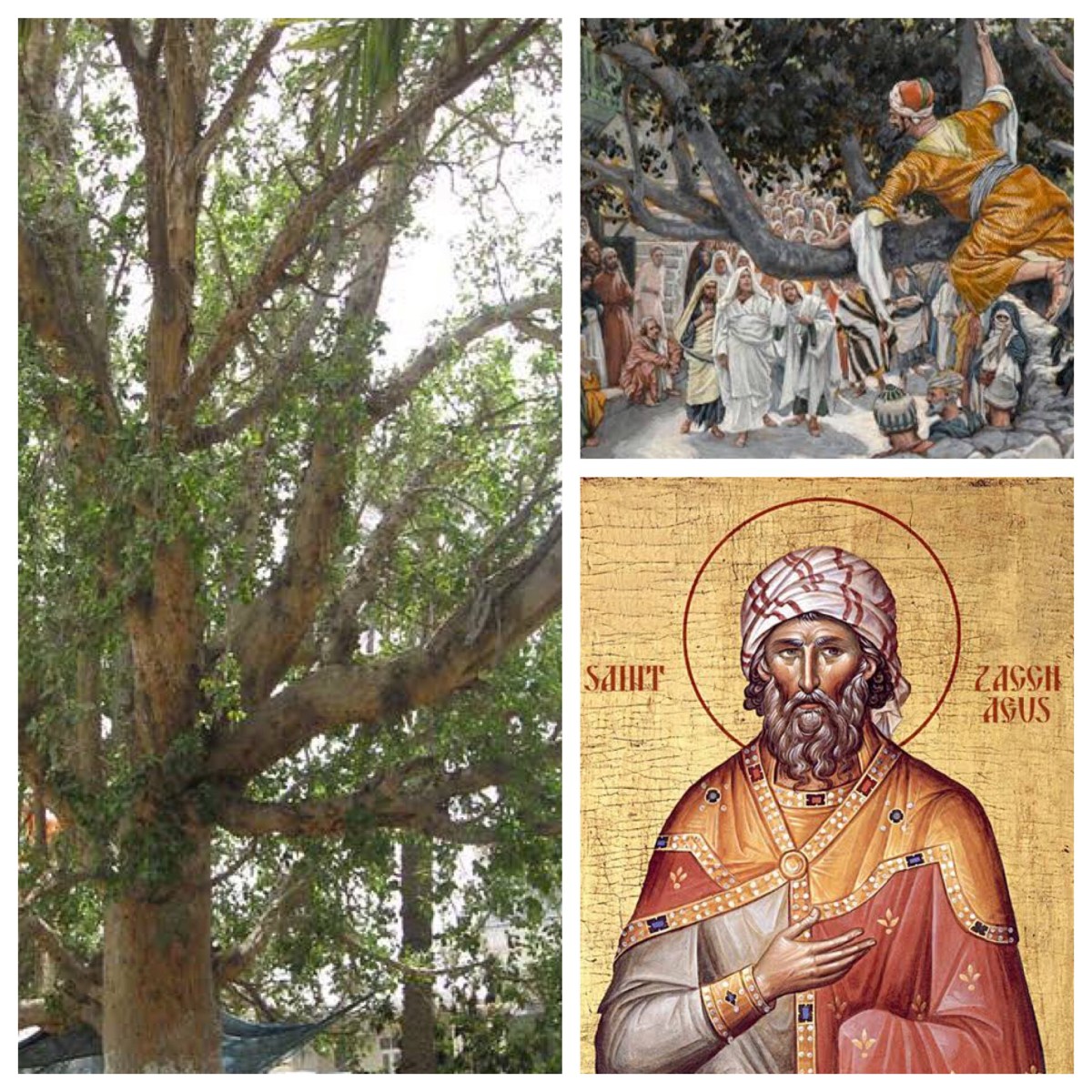
The closing words in the passage from 2 Thessalonians that appear in this Sunday’s lectionary offerings (2 Thess 3:6–13) exhort the believers in Thessaloniki to “do what is right”. It concludes a section telling them not to be idle, but to “do their work quietly and to earn their own living” (3:12), which itself has picked up the direction given in the earlier letter to Thessaloniki, “to aspire to live quietly, to mind your own affairs, and to work with your hands, as we directed you, so that you may behave properly toward outsiders and be dependent on no one” (1 Thess 4:11–12).

This could well be another instance in 2 Thess where a later writer, a follower of Paul, has mined the earlier letter of 1 Thess, authentic to Paul, to shape a letter drawing on the apostle’s authority to reinforce teachings for his own time. A clear way in which the letter deviates from Paul’s authentic thought is its apocalyptic content.

Paul himself (like Jesus) did have an apocalyptic view of the world. He affirms that “the appointed time has grown short” (1 Cor 7:29), “the night is far gone, the day is near” (Rom 13:12), and looks to the coming “day of the Lord” (1 Cor 1:8; Phil 1:10; 1 Thess 5:2), the “the day of wrath, when God’s righteous judgment will be revealed” (Rom 2:6; 1 Cor 3:13).

He foresees that “the trumpet will sound, and the dead will be raised imperishable, and we will be changed” (1 Cor 15:52) and asserts that “the Lord himself, with a cry of command, with the archangel’s call and with the sound of God’s trumpet, will descend from heaven, and the dead in Christ will rise first; then we who are alive, who are left, will be caught up in the clouds together with them to meet the Lord in the air; and so we will be with the Lord forever” (1 Thess 4:16–17).

However, this letter develops from those views in ways most uncharacteristic of Paul—more like the kind of hardline developments that we find in Jewish apocalypses of the general time. The “righteous judgment of God” (2 Thess 1:5) will be “when the Lord Jesus is revealed from heaven with his mighty angels in flaming fire, inflicting vengeance on those who do not know God and on those who do not obey the gospel of our Lord Jesus” (1:7–8), bringing “the punishment of eternal destruction” (1:9). This is an extreme position, beyond the hope for a return of Jesus to reconcile believers with God; this presses the notion of divine judgement into callous retribution.

Further consideration of that day of judgement is given in chapter 2; we had excerpts from this chapter in last week’s lectionary—but the critical verses, 2:6–12, were omitted in that offering! There, we read that this day “will not come unless the rebellion comes first and the lawless one is revealed, the one destined for destruction” (2:3). The Greek word translated as “rebellion” is apostasies, from which we get apostasy. It was used to describe those who wandered from the keeping of the Torah (1 Mac 2:15).

The writer continues, declaring that “the lawless one” (2:8) who brings “a powerful delusion” (2:11) will result in “all who have not believed the truth but took pleasure in unrighteousness will be condemned” (2:12). This portrayal resonates strongly with scenes in Jewish apocalyptic literature of the late Second Temple period, or soon thereafter, attributed to (but not actually written by) great luminaries in the history of Israel; see 4 Ezra 4:27–5:13; 2 Baruch 27; 1 Enoch 91; and also, in the Dea Sea Scrolls, 1QpHab 2:1–10.

On other ways that the letter indicates a later, non-Pauline authorship which goes well beyond Paul’s thinking—see

*****

To return to chapter 3; here we find a set of instructions, buttressed by Paul’s authority, in which the Thessalonians are encouraged to maintain “the tradition” they received from Paul (3:6), the “command” which he had given them (3:10), and are admonished to “have nothing to do with … those who do not obey what we say in this letter” (3:14).

A key verse in this section (3:13) draws strongly on a theme running through Hebrew Scripture, to “not be weary in doing what is right”. The Psalmist, for instance, sings that those who may abide on God’s holy hill are “those who walk blamelessly, and do what is right, and speak the truth from their heart” (Ps 15:2), and in a later psalm, sings that “I have done what is just and right; do not leave me to my oppressors” (Ps 119:131). Yet another psalm questions the gods: “do you indeed decree what is right, you gods? do you judge people fairly?” and immediately provides the answer, “no, in your hearts you devise wrongs; your hands deal out violence on earth” (Ps 58:1–2). The alignment of doing what is right with the Lord God of Israel is clear.

Accordingly, that deity is depicted in some of the foundational stories of Israel as requiring people to do what is right. At Marah in the wilderness, the Lord God tells the people, “if you will listen carefully to the voice of the Lord your God, and do what is right in his sight, and give heed to his commandments and keep all his statutes, I will not bring upon you any of the diseases that I brought upon the Egyptians; for I am the Lord who heals you” (Exod 15:26).

Likewise, when reminding the people “not to put the Lord your God to the test, as you tested him at Massah” (referring to Exod 17:1–7), Moses instructs them to “do what is right and good in the sight of the LORD, so that it may go well with you, and so that you may go in and occupy the good land that the LORD swore to your ancestors to give you” (Deut 6:18). That message is reinforced later in the long speech of Moses, when he gives instructions relating to the discovery of a murder whose perpetrator is unknown, concluding that “you shall purge the guilt of innocent blood from your midst, because you must do what is right in the sight of the Lord” (Deut 21:9).

The same instruction that is attributed to Moses is given by the prophet Ahijah the Shilonite, when Jeroboam led a rebellion against King Solomon: “if you will listen to all that I command you, walk in my ways, and do what is right in my sight by keeping my statutes and my commandments, as David my servant did, I will be with you, and will build you an enduring house, as I built for David, and I will give Israel to you” (1 Kings 11:38). The equation of “doing what is right “ with “keeping [God’s] statutes and commandments” in this passage, as also in the account of the incident at Marah (Exod 15:26), indicates the centrality of this command within the life of Israel.

Two prophets reinforce the importance of this command. Ezekiel declares that, “if the wicked turn away from all their sins that they have committed and keep all my statutes and do what is lawful and right, they shall surely live; they shall not die” (Ezek 18:21; see also 18:27; 33:14, 19; 45:9). Likewise, the opening oracle of the unnamed post-exiled prophet whose words are collected at the end of the scroll of Isaiah begins with the declaration, “maintain justice, and do what is right, for soon my salvation will come, and my deliverance be revealed” (Isa 56:1). This important text equates “do what is right” with divine justice; the two prophetic texts indicate that “doing what is right” is the prerequisite for life (Ezekiel) and salvation (Trito-Isaiah).

Finally, we note that the story of Tobit ends with his prayer of blessing to God (Tob 13:1–17), including the admonition, “turn back, you sinners, and do what is right before him; perhaps he may look with favor upon you and show you mercy” (Tob 13:6); followed by his farewell words to his son, Tobias, and the seven sons of Tobias, in which he declares, “so now, my children, I command you, serve God faithfully and do what is pleasing in his sight; your children are also to be commanded to do what is right and to give alms, and to be mindful of God and to bless his name at all times with sincerity and with all their strengths (Tob 14:9). This final passage explains that “doing what is right” includes both central religious activities (bless God) and helpful social activities (give alms).

To Jewish listeners, the simple instruction, “do not be weary in doing what is right” (2 Thess 3:13) evokes central aspects of faith: obedience, following God’s way, keeping the commandments, speaking the right words, enacting the required behaviours, receiving the gift of life, being assured of salvation, and doing justice. Beyond the authority of Paul, reinforced a number of times in this chapter, the resonances of Hebrew Scripture voices sound loudly.

New heavens and a new earth (Isaiah 65; Pentecost 23C)

The Hebrew Scripture passage offered by the lectionary this coming Sunday comes from the third main section of the book of Isaiah (chapters 56–66). This section of the book differs from the two main sections that precede it—the pre-exilic section (chapters 1–39) and the section as the exile itself is drawing to an end (chapters 40–55).

The prophet begins this third section with a familiar prophetic announcement which sets forth the classic prophetic programme, with the classic divine assurance: “maintain justice, and do what is right, for soon my salvation will come, and my deliverance be revealed” (Isa 56:1). The section offered by the lectionary (Isa 65:17–25) sets out how that justice will come to be, through the vision of “new heavens and a new earth”.

Written during the period when the people of Judah were returning to their land, to the city of Jerusalem (from the 520s BCE), this section of Isaiah sets out what this justice will look like through a series of powerful oracles. The prophet sounds a vivid counter-cultural note in the midst of the events of his time. He begins with the promise to foreigners and eunuchs that “I will give, in my house and within my walls, a monument and a name better than sons and daughters; I will give them an everlasting name that shall not be cut off” (Isa 56:5).

This is a striking contrast to the narrative provided in the books of Ezra and Nehemiah, which tell of the return to the city, the rebuilding of the walls, the renewal of the covenant and the public reading of the Law, the rededication of the Temple—and actions designed to remove foreigners (especially women) from within Israel (see Ezra 10; Neh 13).

Ezra and Nehemiah exhibited a zealous fervour to restore the Law to its central place in the life of Israel. Ezra, learning that “the holy seed has mixed itself with the peoples of the lands” (Ezra 9:2), worked with “the elders and judges of every town” to determine who had married foreign women; the men identified “pledged themselves to send away their wives, and their guilt offering was a ram of the flock for their guilt” (Ezra 10:19). (So much for the importance of families!)

Nehemiah considered that this project to “cleanse [the people] from everything foreign” (Neh 13:30) was in adherence to the command that “no Ammonite or Moabite should ever enter the assembly of God, because they did not meet the Israelites with bread and water, but hired Balaam against them to curse them” (Neh 13:1–2; see Num 22—24). The restoration of Israel as a holy nation meant that foreigners would be barred from the nation.

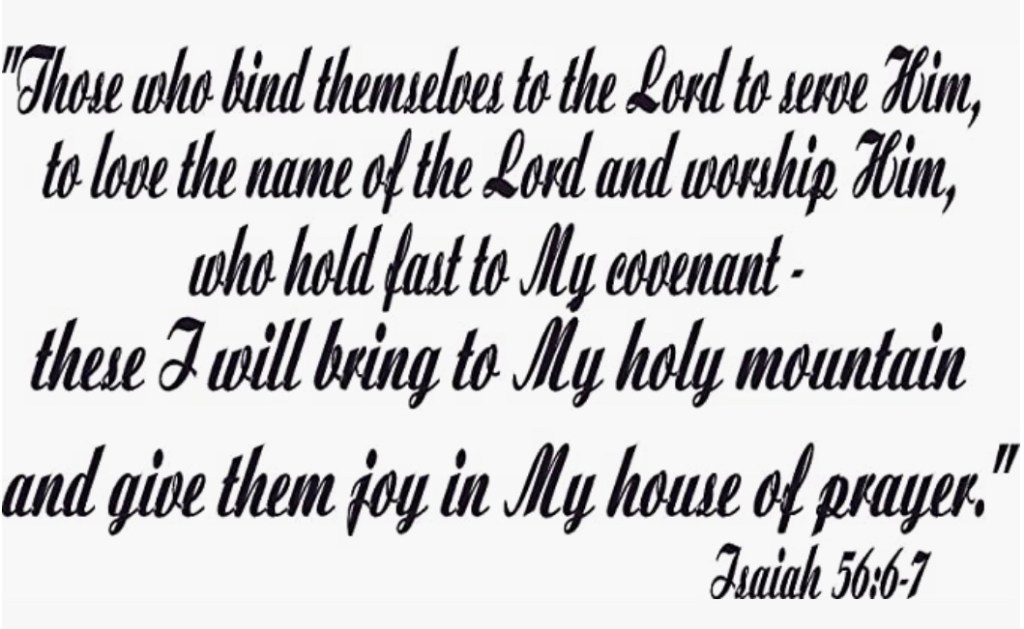
The oracle at the start of the third section of Isaiah stands in direct opposition to this point of view; “the foreigners who join themselves to the Lord … and hold fast my covenant—these I will bring to my holy mountain, and make them joyful in my house of prayer; their burnt offerings and their sacrifices will be accepted on my altar; for my house shall be called a house of prayer for all peoples” (Isa 56:6–7). This is what God’s justice looks like!

Jesus, of course, quoted this last phrase (“a house of prayer for all people”) in the action he undertook in the outer court of the Temple (Mark 11:17). Later, the welcome offered to the Ethiopian court official by Philip, who talked with him about scripture and baptised him, a eunuch (Acts 8:26–38), is consistent with the prophetic words, “to the eunuchs who keep my sabbaths, who choose the things that please me and hold fast my covenant, I will give them an everlasting name that shall not be cut off” (Isa 56:4–5).

From the earliest days, the church practised an inclusive welcoming of diversity that was consistent with this prophetic declaration. What went wrong, we may ponder, for the church to dig itself into the corner of exclusivism and judgementalism that unfortunately has characterised too many manifestation of church?

The particular passage that is provided for this coming Sunday is almost at the end of the book. It offers a wonderfully climactic vision to this section of the book—and indeed to the whole of Isaiah. The prophet has continued to explain what it means to adhere to the way of justice, practising the fast that the Lord desires.

The promise is that Israel will have a new name: “you shall no more be termed Forsaken, and your land shall no more be termed Desolate; but you shall be called My Delight Is in Her, and your land Married; for the Lord delights in you, and your land shall be married” (Isa 62:4). We can see the symbolic significance of names in considering the prophet Hosea and in Isaiah 8, for example.

By contrast, vengeance will be the experience of Edom; using the image of trampling down the grapes in the wine press, the prophet reports the intention of God: “I trampled down peoples in my anger, I crushed them in my wrath, and I poured out their lifeblood on the earth” (63:1–6). So vigorously does God undertake this task, that he is attired in “garments stained crimson” because “their juice spattered on my garments and stained all my robes” (63:1–3).

Once again, the prophet speaks in graphic terms. Edom is a symbolic portrayal of the Babylonian Empire, which had been dominant in the middle eastern world of the day for some time—yet it had recently been subsumed by the Persian Empire (under whom the people of Judah were able to return home). The punishment was on the horizon, either the horizon immediately in view, or the horizon that had just passed. Edom (Babylon) had been conquered—a happening interpreted by the anonymous prophet as divine retribution.

Confronted with this display of wrath and vengeance, the prophet adopts an attitude of penitence, yearning for God to “look down from heaven and see, from your holy and glorious habitation” (63:15). His plea for the Lord to “tear open the heavens and come down, so that the mountains would quake at your presence—to make your name known to your adversaries, so that the nations might tremble at your presence!” (64:1–2) must surely have been in the mind of the evangelists as the reported the baptism of Jesus, when he “saw the heavens torn apart and the Spirit descending like a dove on him” (Mark 1:10).

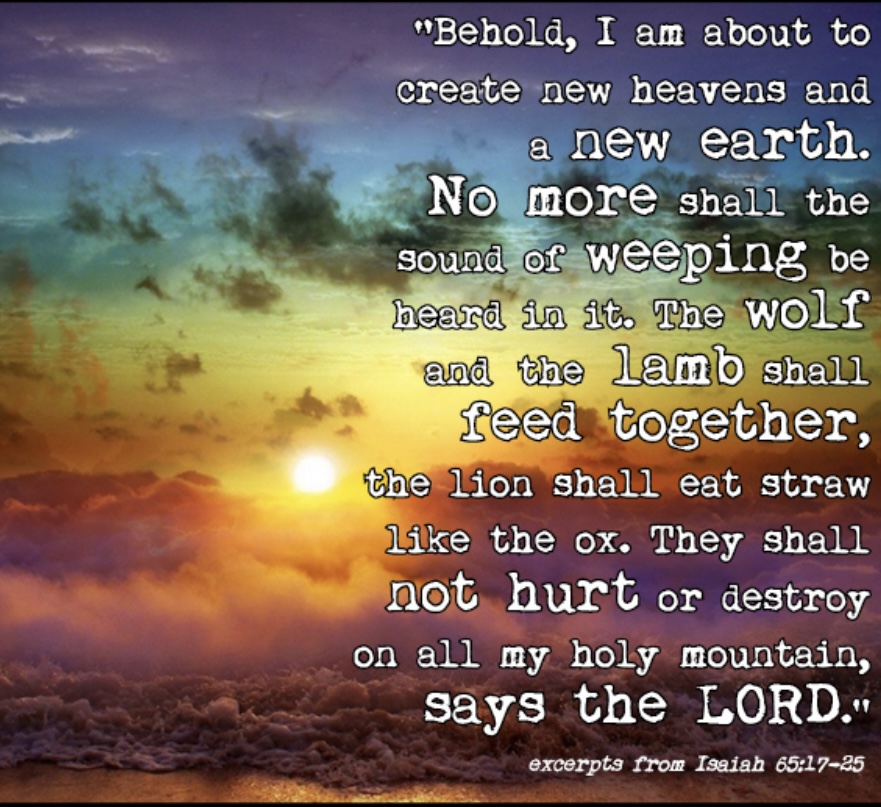
The book ends with a sequence in which the prophet reports the words of the Lord which indicate that Israel will be restored (65:1–16), followed by the statement that the Lord is “about to create new heavens and a new earth” (65:17–25; 66:22–23)—the passage provided by the lectionary this week. It is a wonderfully climactic, all-encompassing vision. Not only will Jerusalem enjoy prosperity, but “the wealth of the nations [shall be] like an overflowing stream” (66:12).

The vision of this penultimate chapter is global; it is for “all people” (picking up the hope of Isa 40:5), for “all the nations of the earth”, as both Jeremiah (Jer 33:9) and Haggai foresee (Hag 2:6–9), for “all flesh” as Joel predicts (Joel 2:28–29), for “every living creature”, as the final vision of Ezekiel portrays (Ezek 47:7–12). The “new heavens and new earth” (Isa 65:17) are for everyone of Israel (Isa 65:18–19), indeed, even for all creatures, “wolf and lamb, lion and ox” (Isa 65:25).

This vision is, of course, taken up and expanded in the closing chapters of the final book of the New Testament (Rev 21:1–22:7). That provides a globally wondrous vision to end the writings of the renewed covenant. The closing vision of Trito-Isaiah, the foundation for the vision of the seer at Patmos, has incorporated a number of references to earlier prophetic words: building houses and planting vineyards (65:21) recalls the words of Jeremiah (Jer 29:5–7); the image of wolves lying with lambs and lions “eating straw like the ox” recalls the vision of Isaiah (Isa 11:6–7).

The promise that “they shall not hurt or destroy all on my holy mountain” (65:25) recalls that same vision of Isaiah (Isa 11:9), whilst the next promise about not labouring in vain nor bearing children for calamity (65:23) reverses the curse of Gen 3:16–19. The story of creation from the beginning of Genesis is evoked when the Lord asserts that “heaven is my throne and the earth is my footstool … all these things my hand has made” (66:1–2); these are the words which Stephen will quote back to the council in Jerusalem (Acts 7:48–50) and will lead to his death at their hands. All the allusions together make this a fine conclusion to the visionary prophetic stream of the first covenant.

And yet, even to the very end of this book, the judgement of the Lord is evident; the prophet declares that “the Lord will come in fire, and his chariots like the whirlwind, to pay back his anger in fury, and his rebuke in flames of fire; for by fire will the Lord execute judgment, and by his sword, on all flesh; and those slain by the Lord shall be many” (66:15–16).

Nevertheless, the glory of the Lord shall be declared “among the nations” (66:19) and “they shall bring all your kindred from all the nations as an offering to the Lord” (66:20). The universalising inclusivism that was sounded in the oracle at the start of this prophet’s work (in chapter 56) is maintained through into this closing oracle. In “the new heavens and the new earth which I will make … all flesh shall come to worship before me, says the Lord” (66:22–23). The vision lives strong! It’s a good way to end the series of readings from the prophets we have followed during the past few months.

I am with you (Haggai 2; Pentecost 22C)

In recent months, the lectionary has been offering us passages from the prophets, the second main section of TaNaK, which is the Jewish name for the collection of scrolls, largely in Hebrew (with a tiny section in Aramaic in the prophet Daniel), which are known as the Old Testament by most Christians.

I prefer to call this collection of documents the Hebrew Scriptures—technically, not quite accurate, but a better option, I believe, than the title that labels these works as “old”, with the implications of out-of-date, no longer relevant, or (worst of all) superseded by something that is “new”. As it is quite unfair to label the scriptures of a living faith, Judaism, as “superseded”, I prefer to take the option of a descriptor which refers both to the language of the documents (well, most of them), and the cultural origins of the documents, as coming from the ancient Israelite culture of the Hebrews.

So, within the central section of these documents are the scrolls of the Prophets (nevi’im, in Hebrew). These books (using Christian terminology) date from a number of centuries, before, during, and after, the central historical era of the Exile (from 587 BCE until the various returns to the land of Judah in the 530s, 520s, and beyond). It is from this section of the scriptures that we have been offered a series of readings in recent months—starting with Amos and Hosea, touching on Isaiah, covering many key parts of Jeremiah, and then moving into a series of “minor prophets” (Joel, Habakkuk, and Haggai), before concluding with Isaiah 65.

See

There are four prophets whose activity can reasonably be dated to the specific time soon after the exiles had returned to Jerusalem. The books of Haggai and Zechariah each open with a specific date, both placing their activity in the time of Darius, King of Persia. The third section of Isaiah (chapters 56—66) are widely considered to have originated around this same period of time, as the exiles returned to the land and undertook the task of rebuilding its society and its buildings. The prophet Malachi is not dated, but is generally considered to have been written fairly soon after Haggai and Zechariah.

The people from Judah who had lived as exiles in Babylon for five decades were permitted to return to Judah late in the 6th century BCE, by decision of the Persian King, Cyrus (whom Deutero-Isaiah described as God’s “Messiah”, Isa 45:1). In his decree, Cyrus acknowledges “the Lord, the God of heaven” and states that “any of those among you who are of his people … are now permitted to go up to Jerusalem in Judah, and rebuild the house of the Lord, the God of Israel” (Ezra 1:2–4).

Under Nehemiah as Governor, worship is reinstituted in Jerusalem (Ezra 3:1–7), the walls around the city of Jerusalem are rebuilt (Neh 2—6, 12), and the Temple is rebuilt and rededicated (Ezra 5–6). After this, the Law is read in the city under the guidance of Ezra, a priest who is also described as a scribe (Neh 8) and the covenant with the Lord is renewed (Neh 9–10).

Initially, there was opposition to the rebuilding works from “the enemies of Judah and Benjamin” (Ezra 4:1–16), and with intervention from King Artaxerxes, work on the temple ceased (Ezra 4:17–24). The narrative in Ezra reports that “the prophets, Haggai and Zechariah son of Iddo, prophesied to the Jews who were in Judah and Jerusalem, in the name of the God of Israel who was over them” (Ezra 5:1), and work on restoring the temple recommenced (Ezra 5:2).

Further opposition emerged (Ezra 5:3–17), resulting in intervention from King Darius that decreed “let the house be rebuilt … let the Governor of the Jews and the elders of the Jews rebuild this house of God on its site … let it be done with all diligence” (Ezra 6:1–12).

The end result is that the prophets of the Lord and the rulers of the Persian Empire together ensure that the temple is restored: “So the elders of the Jews built and prospered, through the prophesying of the prophet Haggai and Zechariah son of Iddo. They finished their building by command of the God of Israel and by decree of Cyrus, Darius, and King Artaxerxes of Persia” (Ezra 6:14).

What is it, then, that Haggai says to the people? His prophetic words are nestled within a relatively brief narrative telling of this return to Jerusalem; they were delivered over a short period of time from “the second year of King Darius, in the sixth month, on the first day of the month” (Hag 1:1) until “the twenty-fourth day of the ninth month, in the second year of Darius” (Hag 2:10, 20).

In the course of those three months, Haggai condemns the people for failing to rebuild the ruined temple while people live in “paneled houses” (1:4) and encourages the people to “go up to the hills and bring wood and build the house” (1:8). In the oracle offered by the lectionary this coming Sunday (1:15b—2:9), Haggai declares that “the latter splendour of this house shall be greater than the former, says the Lord of hosts; and in this place I will give prosperity, says the Lord of hosts” (2:9).

“I am with you, says the Lord of hosts”, the prophet affirms, “according to the promise that I made you when you came out of Egypt; my spirit abides among you; do not fear” (Hag 2:4–5). The prophet offers a word of hope to a people who have suffered and who are anxious about what the future may hold for them.

Haggai then goes on to relay an ominous word of the Lord: “I am about to shake the heavens and the earth, and to overthrow the throne of kingdoms; I am about to destroy the strength of the kingdoms of the nations, and overthrow the chariots and their riders; and the horses and their riders shall fall, every one by the sword of a comrade” (2:21–22).

Yet this short book ends with a positive note for the future, promising to make Zerubbabel, who led the first wave of exiles to return to Judah, “like a signet ring, for I have chosen you” (2:23). It is undoubtedly with this motif of hope that the selected passage has been chosen for the lectionary, as we come to the final Sundays after Pentecost at the end of Year C in the cycle of seasons. It leads well into the vision of “new heavens and a new earth” that we will read the following Sunday (Isa 65:17).

The sincerest form of flattery? Or a later, imperfect imitation? (2 Thessalonians; Pentecost 21C to 23C)

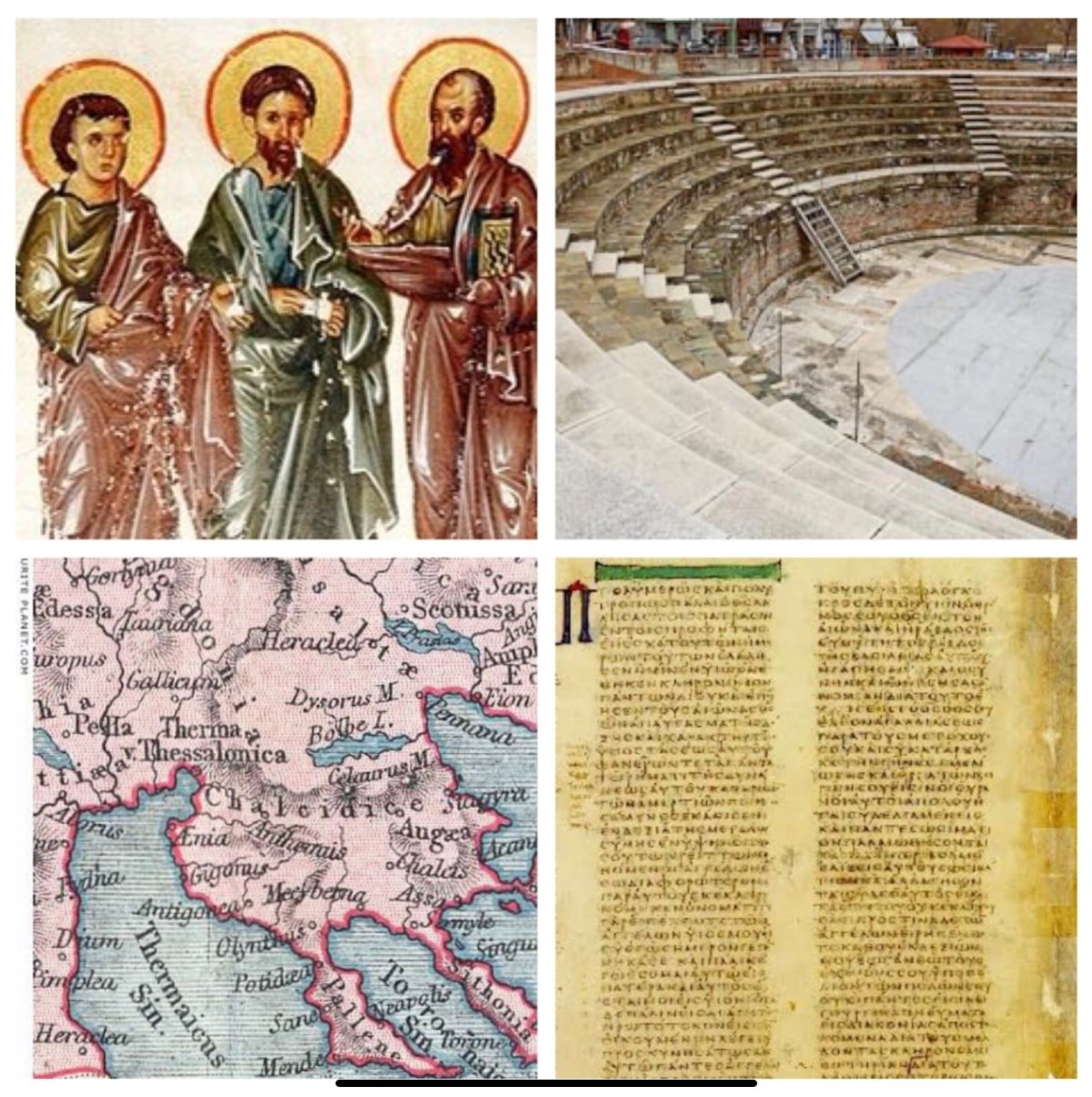
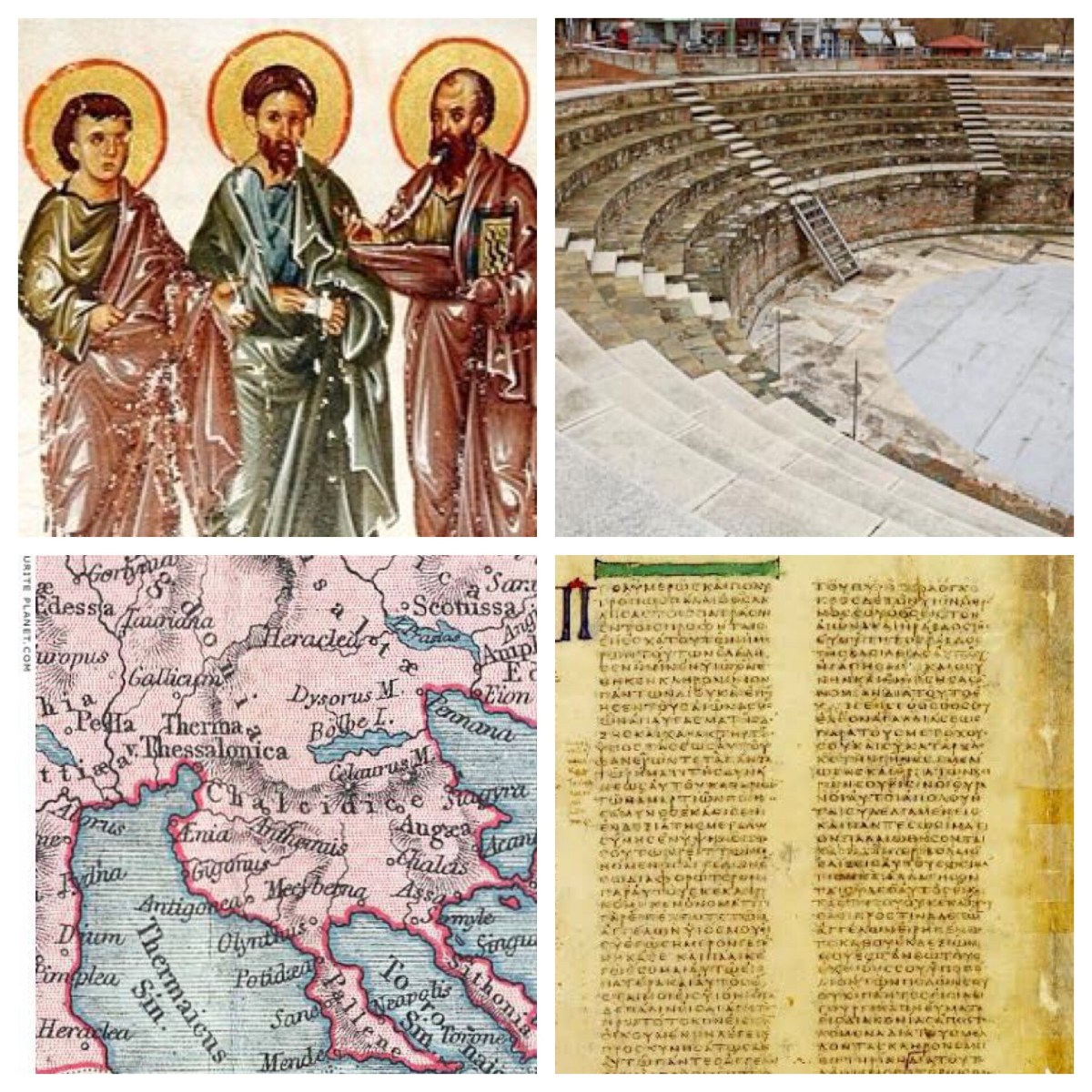
Paul, Silas and Timothy arrived in Thessalonika in the year 50 CE. Acts indicates that they went to the synagogue, where Paul declared that the Jewish scriptures pointed to Jesus as Messiah (Acts 17:2–3). This stirred up antagonism amongst the Jews of the city (Acts 17:5).

Those who accepted Paul’s message, realising that he was just recovering from the experience of prison in Philippi (Acts 16:19–24), sent him and Silas on to their next stop in Beroea after only three weeks in Thessalonica (Acts 17:2). Paul then travelled to Athens (Acts 17:15) and Corinth (Acts 18:1).

Little of this is reflected in Paul’s letters to the Thessalonians, apart from a direct comment about his difficulties in Philippi (1 Thess 2:2) and some generalised references to the persecution he was suffering (1 Thess 3:4, 7). Although it is likely that Paul wrote letters before he had visited Thessalonica, none of them are known to us.

1 Thessalonians, dating from the same year (50 CE) as his visit to Thessalonica, is the earliest example of Paul’s letter writing that we have. The letter itself contains no explicit indication of the time or place of its writing; tradition has it that Paul wrote from Athens, although it is more likely that he penned it in Corinth just months after his departure from Thessalonica. His visit was still fresh in Paul’s mind, and he writes with love and concern for the community of believers that he left behind in Thessalonica.

It is obvious that Paul had developed a strong bond with this community, and he is anxious to keep in touch with them (3:5). The letter was in reply to what he had learned from Timothy about their recent progress (3:6).

The letter known as 2 Thessalonians appears in the lectionary this Sunday and in the two following weeks. It seems to run in parallel to 1 Thessalonians in a number of ways. Some of the themes from the first letter are replicated, and varied, in the second letter to the Thessalonians. Both letters present Paul as a role model (1 Thess 1:6; 2 Thess 3:7); both criticise the Thessalonians for the idleness evident in their community (1 Thess 5:14; 2 Thess 3:6–12); and both letters contain reminders about Paul’s teachings (1 Thess 2:5–7, 12; 4:1–2; 5:1–2; 2 Thess 2:15). The general eschatological orientation is present in both letters (1 Thess 4:13–5:11; 2 Thess 1:5–2:16), but there are significant developments–a hardening of the apocalyptic mindset–in 2 Thessalonians.

The commonality of both general themes and specific words and phrases leads to a question about the relationship between these two letters: is this stylistic variation on common themes written by the same author, or a deliberate attempt to copy the first letter by another scribe at a later date?

Scholars answer the question differently; there are different views on the authorship of 2 Thessalonians. The opening and closing sections of 2 Thessalonians are revealing.

The letter concludes with an insistence that it was written by Paul: “I, Paul, write this greeting with my own hand” (3:17). At first glance, this looks similar to the reference to Paul’s “large letters” in his “own hand” at Gal 6:11; but this is a brief passing comment, whereas the claim is laboured in 2 Thessalonians by the addition of extra phrases, so that we start to have a sense of “methinks he doth protest too much”.

The first twenty words of the opening address of 1 Thess 1:1 are repeated exactly in 2 Thess 1:1–2a; this is unusual amongst the seven authentic letters of Paul, for in every other case there are variations of both minor and major significance in this opening section. (See Rom 1:2–6; 1 Cor 1:2b; 2 Cor 1:b; Gal 1:1 and 1:4; Phil 1:1b; Phlmn 2.)

In the thanksgiving (2 Thess 1:3–4), a string of key words evokes themes from 1 Thessalonians. There is virtually nothing in the thanksgiving of 2 Thessalonians which is not present, in some way, in 1 Thessalonians. This is unparalleled amongst the authentic letters of Paul; his usual practice was to contextualise this section of the letter by indicating key issues which will be dealt with in the body of the letter.

There are differences in content in the bodies of the two letters. The friendly relationship evident throughout the first letter differs from the highly critical attitude towards the community in 2 Thessalonians. The eschatological orientation of 1 Thessalonians is present in general terms in 2 Thessalonians, but the difference is that the second letter is marked by a much stronger apocalyptic character. And twice in 2 Thessalonians (2:15 and 3:6), claims are made that Paul taught the Thessalonians material which is not found in 1 Thessalonians.

In my assessment, then, these differences mark 2 Thessalonians as coming from a different hand, in a situation where different issues were at stake. It appears to be a later imitation of 1 Thessalonians. We still read it in the cycle of readings provided by the Revised Common Lectionary–it is still an integral part of Christian scripture–but we read it with a critical lens, aware of the way that this particular writer is developing the earlier thought of Paul.

See also https://johntsquires.com/2019/06/17/harness-the-passion-but-restrain-the-rhetoric-musing-on-the-role-model-which-paul-offers-in-galatians/

https://johntsquires.com/2018/11/17/let-your-gentleness-be-known-to-everyone/

https://johntsquires.com/2019/10/01/in-the-name-of-the-apostle/

The righteous live by their faith (Habakkuk 2; Pentecost 21C)

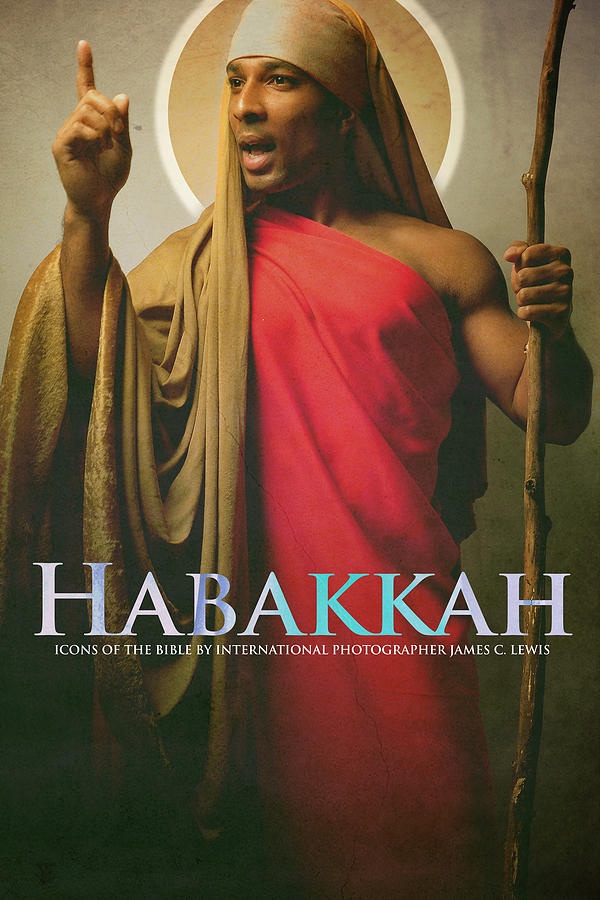
This Sunday, the lectionary invites us to hear two sections of the prophet Habakkuk (Hab 1:1–4, 2:1–4). Habakkuk is a shadowy figure, known, really, for only one statement—just half of one verse. That short statement, “the righteous live by their faith [or faithfulness]” (2:4b), stands as the text upon which Paul developed his important theological statement in Romans: “in it [the gospel] the righteousness of God is revealed through faith for faith; as it is written, ‘the one who is righteous will live by faith’” (Rom 1:17). As well, Paul quotes this verse in his letter to the Galatians (Gal 3:11) and the verse is cited in the “word of exhortation” sent to the Hebrews (Heb 10:38). So it appears in significant writings if the early Christian movement.

From an ancient Israelite figure about whom very little is known, this one short phrase has played such a foundational role in articulating a central tenet of Christian faith. It runs from Paul’s assertion that “the righteous live by their faith”, through Augustine’s affirmation that we are justified by grace through faith, to Luther’s central claim of “sola fide, sola scriptura, solus Christus, sola gratia”, into the contemporary evangelical doctrine of “justification by faith alone”.

Habakkuk was one of a number of Israelite prophets who were active in the few decades leading up to the conquering of the southern kingdom by Babylon in 587 BCE, and the removal into exile of the people as a result of that event. In this context, Habakkuk declares, “I will stand at my watch post, and station myself at the rampart” (Hab 2:1). From his watch post, he declaims the words of judgement given to him by God: the wealthy will be called to account by their creditors, violent terrors will arise, and “the cup in the Lord’s right hand will come around to you, and shame will come upon your glory” (Hab 2:15).

Amidst these thundering pronouncements, Habakkuk does offer hope, declaring that “the earth will be filled with the knowledge of the glory of the Lord, as the waters cover the sea” (2:14), and imploring the people, “the Lord is in his holy temple; let all the earth keep silence before him!” (2:20). He affirms that God’s “glory covered the heavens, and the earth was full of his praise” (3:3)—but that glory will swiftly lead to “the days of calamity” (3:16). The threat of Exile looms large for this prophet.

In the context of Habakkuk’s prophetic activity, the affirmation that “the righteous live by their faith [or faithfulness]” (2:4b) is the word that God gives to the prophet, responding to his complaints about what sufferings are taking place. God is “rousing the Chaldeans, that fierce and impetuous nation, who march through the breadth of the earth to seize dwellings not their own” (1:6), and through their dreadful and fearsome activities, God is “destroying nations without mercy” (1:17).

That God is using foreigners to deal with Israel is a striking theological development—one that is at odds with the traditions that emphasise Israel as a chosen nation, holy and set apart, dedicated to the Lord; the nation alone through whom the Lord God works. That this God will use foreigners is a theme found also in the later writings of Deutero-Isaiah (Isa 40–55), where Cyrus, the Persian ruler, is acclaimed as the one chosen by God, the Messiah, to allow the people of Judah to return to their land (Isa 44:24–45:13).

Habakkuk laments and complains; God instructs him to “look at the proud—their spirit is not right in them”, and to be assured that “the righteous live by their faith” (2:4). The theme of righteousness that is signalled here by the prophet is a central motif in Hebrew Scriptures. It appears in the ancestral stories concerning the key figures of Abraham (Gen 15:6), Saul (1 Sam 26:23), David (2 Sam 22:21–26; 1 Ki 3:6), and Solomon (1 Ki 10:9).

Further, Job exults in his righteousness (Job 27:6; 29:14) and the psalmists petition God on the basis of their righteousness (Ps 5:8; 7:8; 112:1–10). Righteousness is praised in assorted proverbs (Prov 1:3; 8:20; 11:4–6; 12:28; 15:9; 16:8; 21:3, 21) and figures in numerous prophetic oracles (Isa 1:22; 5:7; 28:17; 32:16–17; 54:14; Jer 22:3; Ezek 18:19–29; Dan 9:24; 12:3; Hos 10:12; Amos 5:24; Zeph 2:3; Mal 4:1–3). The message given to Habakkuk holds strong throughout Israelite history, and then continues to sound out, as we have seen, throughout the 20 centuries of Christian history.