Executing justice and righteousness: the glory of the holy God (Ps 99; Transfiguration)

“You have established equity; you have executed justice and righteousness in Jacob” (Ps 99:4). So the psalmist sings, in the psalm offered by the lectionary for this coming Sunday, The Feast of the Transfiguration. Perhaps it has been selected for this festival because it depicts the Lord sitting “enthroned upon the cherubim” as the earth quakes (v.1), that he spoke to Israel “in the pillar of cloud” (v.7)—images that resonate with the stories of Moses and Jesusnthatnwe have heard this week.

Noting that leaders of the past have called out to God and been answered—Moses, Aaron, and Samuel (99:6)—the psalmist praises God, “you answered them; you were a forgiving God to them, but an avenger of their wrongdoings” (99:8).

In this psalm it is the king, the “Mighty King, lover of justice [who has] established equity” (99:4), whose “royal scepter is a scepter of equity” (Ps 45:6), modelled on the Lord God himself, who “judges the world with righteousness [and] judges the peoples with equity” (Ps 9:8; see also 67:4; 75:2; 96:10; 98:9). Accordingly, King David is remembered as the one who “administered justice and equity to all his people” (2 Sam 8:15; 1 Chron 18:14), and the opening words of the book of wisdom attributed to King Solomon are “love righteousness, you rulers of the earth, think of the Lord in goodness and seek him with sincerity of heart” (Wisd Sol 1:1).

Divine justice is regularly noted in tandem with God’s mercy forgiveness. “Great is your mercy, O Lord; give me life according to your justice” (Ps 119:156); and “in your steadfast love hear my voice; O Lord, in your justice preserve my life” (Ps 119:149). The prophet Isaiah tells the rebellious people of his day, “the Lord waits to be gracious to you; therefore he will rise up to show mercy to you—for the Lord is a God of justice; blessed are all those who wait for him” (Isa 30:18).

Likewise, through the prophet Hosea, the Lord God promises to Israel, “I will take you for my wife in righteousness and in justice, in steadfast love, and in mercy” (Hos 2:19), whilst centuries later, Ezekiel reminds the exiles of God’s pledge: “I say to the righteous that they shall surely live, yet if they trust in their righteousness and commit iniquity, none of their righteous deeds shall be remembered; but in the iniquity that they have committed they shall die” (Ezek 33:13). Justice and mercy belong hand-in-hand, as yet another prophetic voice declares as the exiles are returning to the land: “in my wrath I struck you down, but in my favour I have had mercy on you” (Isa 60:10).

God’s mercy sat at the heart of the covenant made with Israel; the Lord affirms to Moses, “I will be gracious to whom I will be gracious, and will show mercy on whom I will show mercy” (Exod 33:19). So in the longest psalm, declaring persistent praise of the Law, the psalmist offers the petition, “let your mercy come to me, that I may live, for your law is my delight” (Ps 119:77). A number of other psalms likewise contain petitions God to show mercy (Ps 25:6; 40:11; 51:1; 69:16; 123:3).

Jesus, centuries later, brings together mercy and justice when he accuses the scribes and the Pharisees of hypocrisy, as they “neglect the weightier matters of the law: justice and mercy and faith” (Matt 23:23).

Justice, of course, is at the heart of the covenant that God made with Israel. Moses is said to have instructed, “justice, and only justice, you shall pursue” (Deut 16:20), the king is charged with exhibiting justice (Ps 72:1–2; Isa 32:1), whilst many prophets advocate for justice (Isa 1:17; 5:7; 30:18; 42:1–4; 51:4; 56:1; Jer 9:24; 22:3; 23:5; 33:15; Ezek 18:5–9; 34:16; Dan 4:37; Hos 12:6; Amos 5:15, 24; Mic 3:1–8; 6:8).

That God is righteous is likewise declared in scripture (Deut 32:4; Ps 145:7; Job 34:17). The psalmists regularly thank God for God’s righteousness (Ps 5:8; 7:17; 9:8; 33:5; 35:24, 28; 36:6; 50:6; etc) and note the importance of humans living in that same way of righteousness (Ps 18:20, 24; 85:10–13; 106:3, 31; 112:1–3, 9).

The book of Proverbs advises that the wisdom it offers is “for gaining instruction in wise dealing, righteousness, justice, and equity” (Prov 1:3) and the prophets consistently advocated for Israel to live in accordance with righteousness (Hos 10:12; Amos 5:24; Isa 1:22; 5:7; 28:17; 32:16–17; 54:14; Jer 22:3; Ezek 18:19–29; Dan 9:24; 12:3; Zeph 2:3; Mal 4:1–3; Hab 2:1–4).

This psalm thus focusses some important elements in the Israelite understanding of God, summarising notes from many places elsewhere in Hebrew Scriptures. These recurring notes of the nature of God then form the basis for a Christian understanding of Jesus, who affirms mercy (Matt 23:23), teaches righteousness (Matt 5:6, 10, 20; 6:33), offers forgiveness (Mark 2:10; Luke 23:34; 1 John 1:9), and exudes grace (John 1:14–18). The affirmation made in this ancient Jewish psalm is one that we Christians can joyfully sing and affirm this Transfiguration!

*****

The situation in the Middle East continues to be volatile. My reflections in the early stages of the present inflammation of that conflict is at

Transformed from death to life: Paul’s theology of glory (2 Cor 3–4; Transfiguration)

The letter which we call 2 Corinthians is comprised of three main sections, each of which has its own distinctive focus. In the first section of the letter (1:1–7:16), Paul and Timothy write to offer consolation and hope to the people who are part of the community of followers of Jesus  in Corinth. It is clear that members of the community have undergone some difficult times; Paul empathises with them, drawing on his own experiences, as a way of offering a message of hope to the believers in Corinth.

In a second main section (8:1–9:15), Paul addresses a very practical matter—the collection of money which he was making amongst the churches of Achaia and Macedonia, which he was planning to take to Jerusalem for the benefit of the believers there who had been experiencing difficulties. Then, in a third main section (10:1–13:13), Paul’s tone is markedly apologetic, as he writes in severe tones to defend himself in the face of criticisms which have been levelled against him in Corinth. 

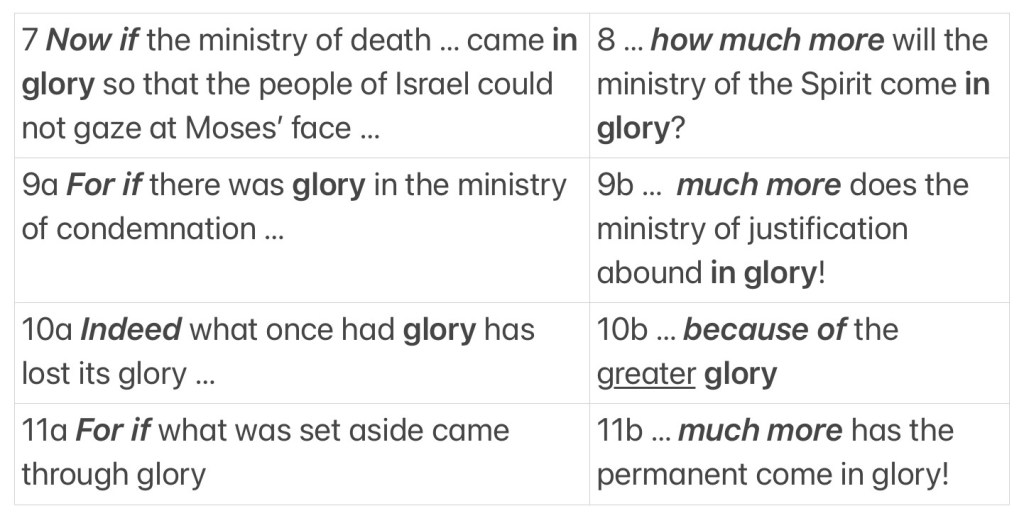
The lectionary offers us an excerpt from the first main section (3:12—4:2) for the Festival of the Transfiguration, this coming Sunday. It is obvious why this excerpt is suggested, since the argument includes a reference to the passage from Exodus which will also be read and reflected upon this Sunday. “The people of Israel could not gaze at Moses’ face”, Paul and Timothy note, “ because of the glory of his face” (3:7). 

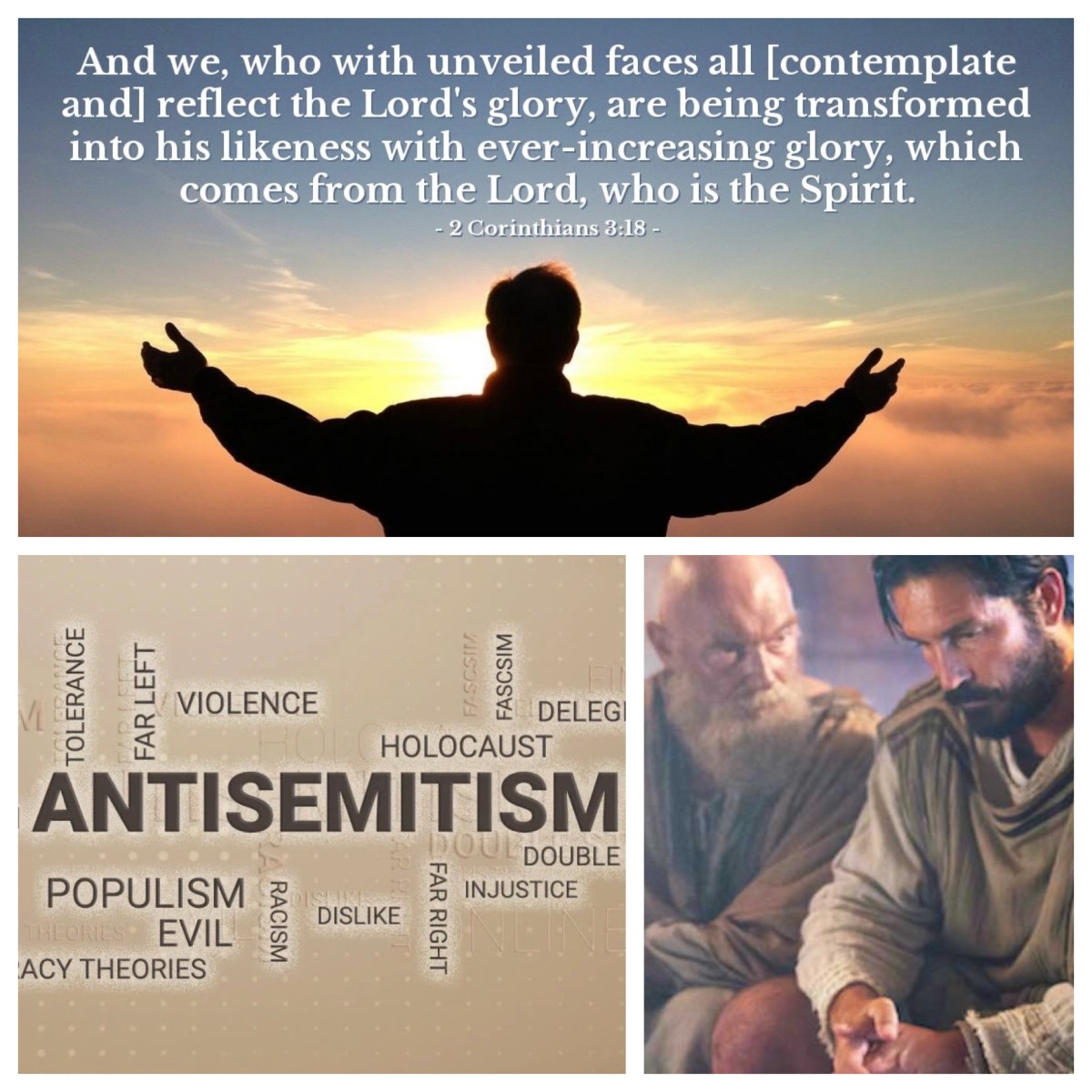
They go on to contrast this with the consequences of that one scene in the life of Jesus that the Synoptic Gospel writers later tell in narrative detail, arguing that “all of us, with unveiled faces, seeing the glory of the Lord as though reflected in a mirror, are being transformed into the same image from one degree of glory to another” (3:18). That is, whilst the transformation of Moses was not able to be witnessed by the people of Israel, the transformation of Jesus is shared in abundance with the followers of Jesus. It’s a stark contrast.

The fundamental point in what Paul and Timothy argue here is thoroughly polemical. They press, again and again, on the difference between the Exodus scene and the scene that we know as the Transfiguration of Jesus. They use the typical juxtaposition of two opposites that characterized the rhetorical style of the diatribe (and which we find in a number of other letters of Paul).

The juxtapositions have begun in the preceding verses. In full polemical flight, Paul presents himself and Timothy as a “ministers of a new covenant”, which defines as “not of letter but of spirit”, continuing with the explanation “the letter kills, but the Spirit gives life” (3:6). He then contrasts “the ministry of death” with “the ministry of the Spirit” (3:7–8). The former is “chiseled in letters on stone tablets”, whilst the latter brings “glory”. It is clear where Paul’s preference lies.

This leads to two new, snappy slogans: “the ministry of condemnation” and “the ministry of justification”, which are then contrasted (3:9–11). The former did have its element of glory—the face of Moses shone with God’s glory—but “what once had glory has lost its glory”. Paul and Timothy advance the argument through a series of direct contrasts.

How this “loss of glory” occurred, it seems, was “because of the greater glory; for if what was set aside came through glory, much more has the permanent come in glory!”. The argument, somewhat convoluted, seems to be that the former, seemingly inadequate, glory is completely overshadowed by the later, far more powerful glory.

Paul launches then into an attack on that former ministry which becomes quite vindictive. Moses is criticized for covering his face so that the people of Israel could not “gaze at the glory” that he was concealing (v.13). The minds of the people thus were “hardened”; indeed, even “to this very day”, he says, that hardening of heart remains when they hear “the reading of the old covenant” (3:14). In contrast to this deadly scenario, “in Christ” that veil is lifted, that hardening of heart is softened “when one turns to the Lord” (3:16). The exultant conclusion is that “all of us, with unveiled faces, seeing the glory of the Lord as though reflected in a mirror, are being transformed into the same image from one degree of glory to another” (3:18).

There is great danger in these words. The danger is that we absolutise them as validating any criticism, all criticism, of Judaism as a religion; that we value Christianity by demeaning and dismissing Judaism. To do this would mean that we would ignore the reality that these words were written in a context quite different from our own, addressing a situation which may (or may not) have had little do with our own situation. That wider context and that specific situation are very important as we interpret this passage (and, indeed, any passage in the Bible).

We are witnessing today, both in Australia and in many places around the world, a rise in antisemitic words and actions. To be sure, the violent and illegal actions ordered by the current Israeli government against the residents of Gaza (the most recent in a long and tragic sequence of similarly illegal and aggressive actions over decades) has probably inflamed such antisemitism. 

But criticism of the policies of one nation state should not be used to foment hatred against a whole people, whether they live in that nation or in other places around the world. Yet antisemitism is growing. (So, too, is Islamophobia—for other reasons, relating both to the Middle East and to other factors. It is equally unacceptable.)

So to the specific context of the passage from 2 Cor. Paul, of course, was a Jew; he writes that he was “circumcised on the eighth day, a member of the people of Israel, of the tribe of Benjamin, a Hebrew born of Hebrews” (Phil 3:5) and boast that “I advanced in Judaism beyond many among my people of the same age, for I was far more zealous for the traditions of my ancestors” (Gal 1:14). Luke reports him as telling Jews in Jerusalem that “I am a Jew, born in Tarsus in Cilicia, but brought up in this city at the feet of Gamaliel, educated strictly according to our ancestral law, being zealous for God, just as all of you are today” (Acts 22:3). 

Paul’s writings and his faith are permeated with his Jewish heritage; in almost every letter he quotes Hebrew Scripture and the argument in his most significant letter, to the Romans, is grounded in a prophetic verse  from scripture (Hab 2:4a, cited at Rom 1:17b). He is able to declare that “the law [Torah] is holy, and the commandment is holy and just and good” (Rom 7:12) and in great anguish he writes, “my heart’s desire and prayer to God for them [i.e. Israel] is that they may be saved”, noting that “they have a zeal for God” (Rom 10:1–2).

Yet each time he affirms his Jewish heritage and the faith of his fellow Jews, he places a critical comment against this affirmation. Of his own heritage and upbringing, “I regard everything as loss … I regard them as rubbish” (Phil 3:8; the translation of the last word is a very polite rendering of a crass swear word). Of the law, he says “I was once alive apart from the law, but when the commandment came, sin revived and I died, and the very commandment that promised life proved to be death to me” (Rom 7:9). 

Of the fate of Israel, a “disobedient and contrary people” (Rom 10:21, citing Isa 65:2), he declares, “Israel failed to obtain what it was seeking; the elect obtained it, but the rest were hardened” (Rom11:7)—and yet, “they have now been disobedient in order that, by the mercy shown to you, they too may now receive mercy” (Rom 11:31). There is a glimmer of hope. 

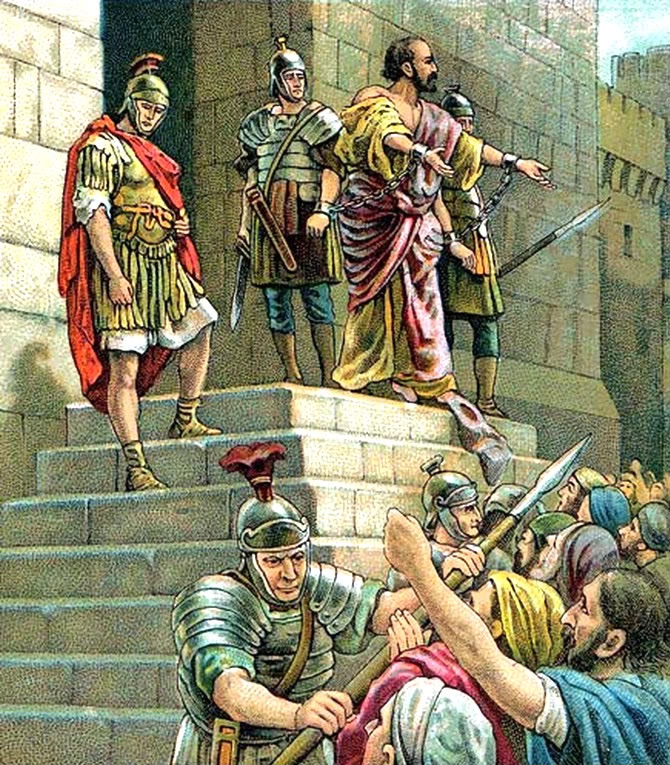
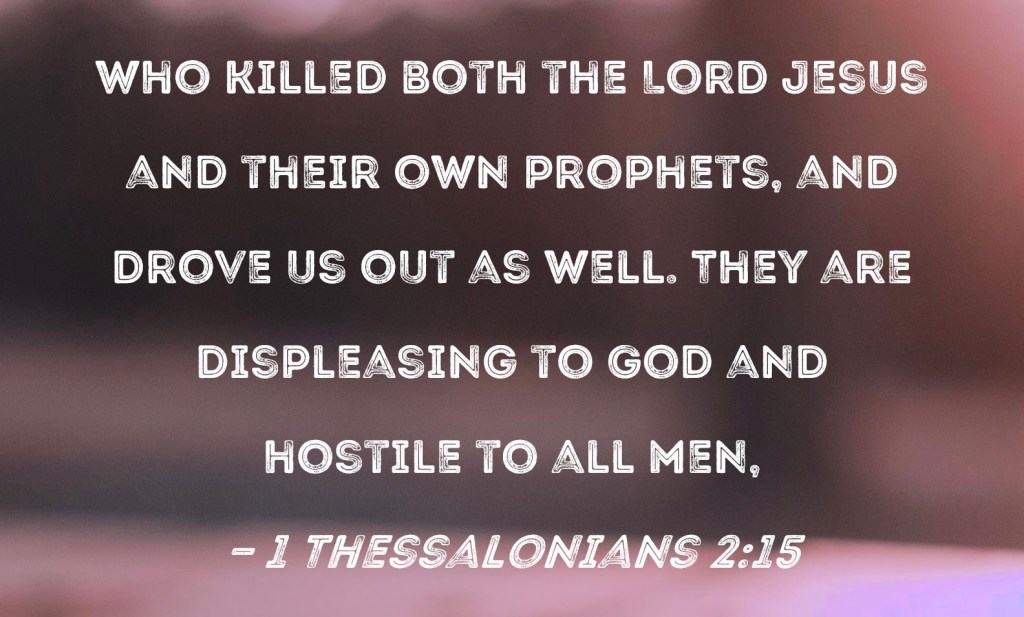
Yet still his rhetoric can be violently abusive: “beware of the dogs, beware of the evil workers, beware of those who mutilate the flesh!” (Phnil 3:2, referring to circumcision); and “anyone proclaims to you a gospel contrary to what you received, let that one be accursed!” (Gal 1:9); and even, “the Jews, who killed both the Lord Jesus and the prophets, and drove us out; they displease God and oppose everyone … they have constantly been filling up the measure of their sins; but God’s wrath has overtaken them at last” (1 Thess 2:14–16).

Paul is nothing if not polemical in his letters. And as a Jew, when he writes such criticisms of other Jews, we cannot describe him as being antisemitic; rather, he is being critical of those who hold to Jewish traditions and resist adapting to the changes and modifications that the good news brings. We have seen Paul use this kind of polemical argumentation in other letters, when he uses stridently aggressive statements to articulate his opposition to a view. (Look at Gal 3:1–14, or parts of 2 Cor 10–13, or Rom 5:12—6:23.)

Such polemic was used in ancient rhetoric to refine and develop an understanding of a matter; the back-and-forth of the argument serves to sift and sort ideas, so that the kernel that remains at the end can be rigorously held. Paul knew this style of argument, and used it to good effect in his letters.

So when he writes disparagingly about Moses to the Corinthians, he is not being antisemitic, and we have no justification for using these words to criticize and attack Jewish ideas, or even Jewish people. Paul is using the techniques of his day to argue a point. We should not extract his words from their context and use them to validate criticisms of “all Jews” or of Judaism per se. What he says should be used with care and respect. 

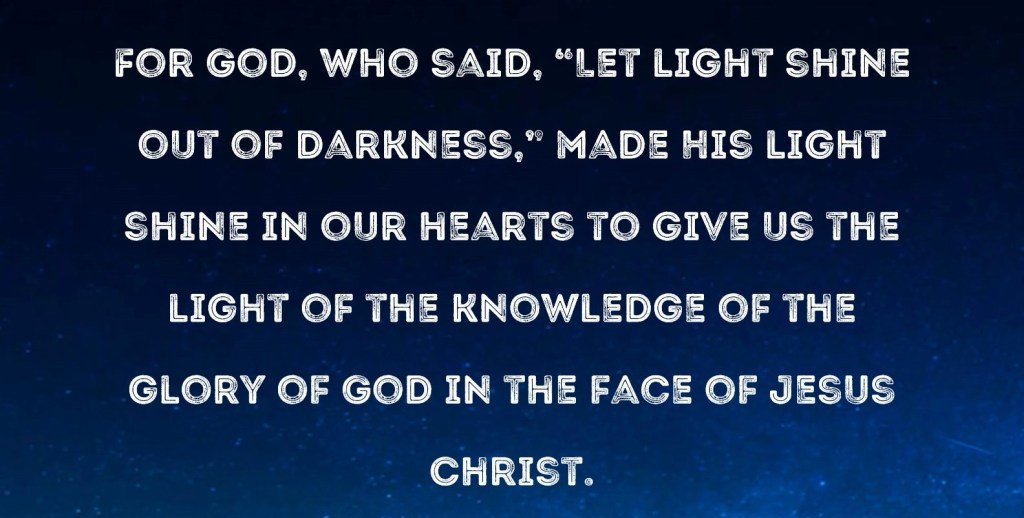
As we read on beyond  2 Cor 3:12–4:2, we find Paul writing about the transformation that takes place  “from one degree of glory to another” (3:18), explaining that “this extraordinary power belongs to God and does not come from us” (4:7). It results in “an eternal weight of glory beyond all measure” (4:17), such that “we regard no one from a human point of view” (5:16). It is, in the end, “the God who said, ‘Let light shine out of darkness,’ who has shone in our hearts to give the light of the knowledge of the glory of God in the face of Jesus Christ” (4:6).

So Paul concludes this extended message of hope about this promised glory with a reminder that God has “reconciled us to himself through Christ”, and accordingly God “has given us the ministry of reconciliation” (2 Cor 5:18). It is in this spirit that we should reflect on the passage proposed by the lectionary for this Transfiguration Sunday.

For more on glory in Paul and elsewhere in scripture, see 

The skin of his face was shining (Exod 34; Transfiguration)

As the coming Sunday is the Festival of the Transfiguration, the passages offered by the lectionary cluster around the theme of the revelation of God’s glory. That is what happened for the three disciples on the mountain, when Jesus was transfigured (Luke 9:28–36). That was also the experience for Israel, in a story that is much older. When Moses came down from the mountain, Aaron and all the Israelites saw that “the skin of his face shone because he had been talking with God” (Exod 34:29–35). 

I’ve reflected on the Gospel in another blog. To better understand the significance of this statement in Exodus, we need to see this Hebrew Scripture passage in its larger narrative context. See

This incident comes after a very significant moment in the story of Israel, when the people had sinned by making a golden calf to worship (32:1–6). This story most likely relates to the god who was regarded as the head of the gods amongst the Canaanites—El, who was often depicted as a bull. The bull was the strongest animal in the ancient farmyard, and thus a fitting symbol for a powerful god. The Israelites chose to imitate that god through their golden construction. The story told in Exodus 32 mocks the Canaanite god, depicting him as more like a calf. 

By adopting a Canaanite symbol, the Israelites had turned from God (32:21). It seems they would deserve their fate—although Moses interceded and saved them from divine wrath (32:23). Moses is the hero who stands in the breach, to convince God to change God’s mind. He had negotiated with God for forgiveness (32:11–14, 30–34), and had also sought clarification from God as to what “God’s ways” entailed (33:16–17). 

In response, God promises that “my presence will go with you, and I will give you rest” (33:14), but Moses presses his case: “show me your glory, I pray” (33:18). Not just the divine presence, but the glory of God is what Moses seeks. God does not respond exactly as Moses hoped for, saying that “I will make all my goodness pass before you, and will proclaim before you the name, ‘The Lord’; and I will be gracious to whom I will be gracious, and will show mercy on whom I will show mercy” (33:19).

These words that the Lord offers to Moses are subsequently echoed in the prayer that Moses offers Aaron and his sons: “the Lord bless you and keep you … and be gracious to you” (Num 6:22–27)—a ancient prayer which lives on in Christian spirituality and liturgy! 

However, the Lord God stops short of full self-revelation, declaring, “you cannot see my face; for no one shall see me and live” (Exod 33:20). Moses is granted a view of God’s “back”, but is not able to see the face of God (33:23). Now, the Hebrew word here translated as “back” refers to the “hindquarters”—a polite way of saying that Moses saw only God’s exposed buttocks, rather than his smiling face. Almost every translation chooses the polite wording, “my back”. The King James Version comes closest to an honest translation with “my back parts”. We might best translate this verse as “you will see my backside, but not my face”.

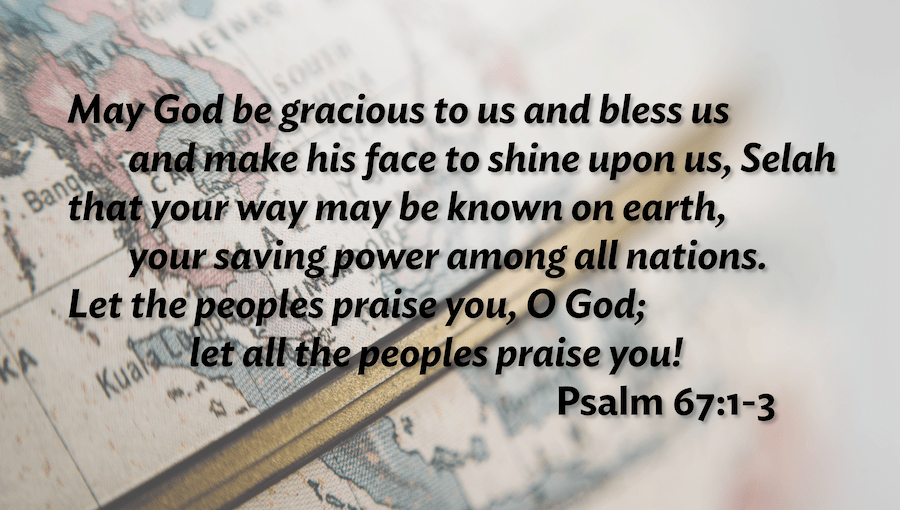
Yet the request for God’s face to shine upon people is made in a number of psalms. “There are many”, says the psalmist, “who say, ‘O that we might see some good! Let the light of your face shine on us, O Lord!’” (Ps 4:6). In Psalm 31, the psalmist sings, “Let your face shine upon your servant; save me in your steadfast love” (Ps 31:16). Again in Psalm 67, the psalmist echoes more explicitly the Aaronic Blessing, praying, “May God be gracious to us and bless us and make his face to shine upon us—Selah—that your way may be known upon earth, your saving power among all nations” (Ps 67:1–3).

So although Moses asks God to “show me your glory” (33:18), he is permitted to see back(side) of God, but not the full glory of God (33:21–23). This encounter is enough to make “the skin of [Moses’s] face shine because he had been talking with God” (34:30, 35). Of course, this story, located within the mythic sagas of ancient Israel, is not presented as an historical account. Rather, as myth (a story with a deep meaning) it is rich with symbolism—encountering the divine is a deeply transformative experience. 

The Lord God had assured Moses that “you have found favour in my sight, and I know you by name” (33:17). And so, after the breach of the covenant that took place in the creation of the idolatrous image of the Canaanite Bull, Moses and the Lord God renew the covenant with Israel (34:1–28). This reinforces that God’s favour remains with the nation. As the people remain faithful to the various requirements that are stipulated (34:11–26), including pilgrimage by all adult males three times a year to the temple (34:23), so the Lord God promises “I will cast out nations before you, and enlarge your borders; no one shall covet your land when you go up to appear before the Lord your God three times in the year” (34:24). That is how God’s favour is shown.

Throughout the worship of the Lord God in the temple, psalmists have prayed for God’s favour to be shown to the faithful people of Israel (Ps 90:17; 106:4; 119:58). As well as in this covenant renewal ceremony (Exod 34:9), the ancestral sagas of Israel record that God showed favour to Noah (Gen 6:8), Joseph (Gen 39:4), Moses (Exod 33:12–17), the people in the wilderness (Lev 26:9), Samuel (1 Sam 2:26), Manasseh (2 Chron 33:12–13), and the remnant who returned to the land (Ezra 9:8). God’s gracious favour endures through the generations.

The favour of the Lord is manifested most often in “the glory of the Lord” which shines over Israel. Moses had experienced this on the top of Mount Sinai, when “the appearance of the glory of the Lord was like a devouring fire on the top of the mountain in the sight of the people of Israel” (Exod 24:16–18). That glory had already been seen by the Israelites in the wilderness of Sin (Exod 16:10), and that glory filled the tabernacle when the people had finished constructing it (Exod 40:34–35). 

The closing verse of the book of Exodus notes that “the cloud of the Lord was on the tabernacle by day, and fire was in the cloud by night, before the eyes of all the house of Israel at each stage of their journey” (Exod 40:38). A number of other references to this are made throughout the books of the Torah (Lev 9:6, 23; Num 14:10; 16:19, 42; 20:6; Deut 5:24). This appears to have continued on until the ark of God was captured by the Philistines, for at that moment “the glory has departed from Israel” (1 Sam 4:21–22). 

Centuries later, at the time that Solomon prayed his lengthy prayer of dedication of the newly-built Temple in Jerusalem, “when the priests came out of the holy place, a cloud filled the house of the Lord, so that the priests could not stand to minister because of the cloud; for the glory of the Lord filled the house of the Lord” (1 Kings 8:10–11; 2 Chron 7:1–3). 

The glory of the Lord was then closely associated with the Temple in ensuing centuries, as various psalms attest (Ps 24:3–10; 96:7–8). “O Lord, I love the house in which you dwell, and the place where your glory abides”, one psalmist sings (Ps 26:8); yet other psalms extend the location of God’s glory, exulting that it extends “over all the earth” (Ps 57:5, 11; 72:19; 102:15; 108:5) and even “above the heavens” (Ps 8:1; 19:1; 57:5, 11; 97:6; 108:5; 113:4; 148:13).

By the time of the prophet Isaiah, this wider scope of the glory of the Lord was sung by the seraphim in their song, “Holy, holy, holy is the Lord of hosts; the whole earth is full of his glory” (Isa 6:3), whilst a little later another voice sang that “the earth will be filled with the knowledge of the glory of the Lord, as the waters cover the sea” (Hab 2:14). During the Exile, another prophet, looking to the return of the people to the land of Israel, declared that “the glory of the Lord shall be revealed, and all people shall see it together” (Isa 40:5).

Another exilic prophet had a series of visions in which “the glory of the Lord” was seen (Ezek 1—39), culminating in a declaration by God that “I will display my glory among the nations; and all the nations shall see my judgment that I have executed, and my hand that I have laid on them” (Ezek 39:21), followed by a vision in which “the Lord entered the temple by the gate facing east”, and at that time “the spirit lifted me up, and brought me into the inner court; and the glory of the Lord filled the temple” (Ezek 44:4–5). 

Later still, a prophetic voice during the time of return to the land declared to the people that “the Lord will arise upon you, and his glory will appear over you; nations shall come to your light, and kings to the brightness of your dawn” (Isa 60:2–3). And well after that, another prophet attributes to “one like a human being, coming with the clouds of heaven”, the gift of “dominion and glory and kingship, that all peoples, nations, and languages should serve him” (Dan 9:13–14). So God’s presence had continued with the people through his glory over the years, and it was still expected to be seen in their hoped-for future.

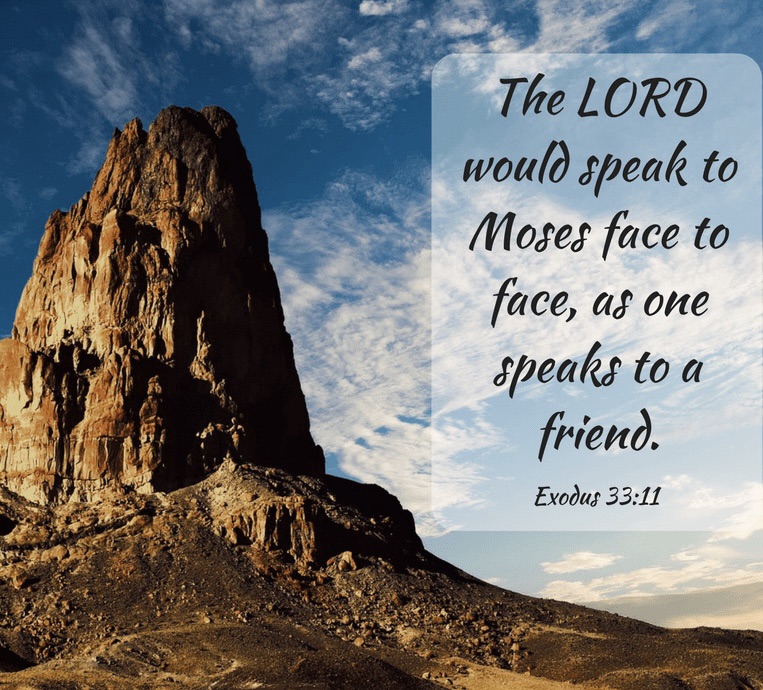
Another way that this vision of God’s presence was sought was through yearning for the ability to “see God face to face”. That’s what Moses experienced at Sinai (Deut 5:1–4), and what he experienced when he went out of the camp, to where the tent was pitched, for “whenever Moses entered the tent, the pillar of cloud would descend and stand at the entrance of the tent, and the Lord would speak with Moses … thus the Lord used to speak to Moses face to face, as one speaks to a friend” (Exod 33:7–11).

That’s what Jacob had experienced at the ford of the Jabbok (Gen 32:30). That’s what Moses continued to experience through the wilderness years (Num 12:7–8), as Moses reports: “you, O Lord, are seen face to face, your cloud stands over them and you go in front of them, in a pillar of cloud by day and in a pillar of fire by night” (Num 14:14). Moses is remembered as unique amongst the prophets because he was one “whom the Lord knew face to face” (Deut 34:10; see also Sir 44:5).

Gideon was also privileged to see the angel of the Lord face to face (Judg 6:22), while Ezekiel tells Israel that God declares to them, “I will bring you out from the peoples … and I will bring you into the wilderness of the peoples, and there I will enter into judgment with you face to face” (Ezek 20:34–35).

And most strikingly and strategically of all, it was on the top of Mount Sinai that Moses had the most direct encounter with God of any in the ancestral sagas: “Moses came down from Mount Sinai; as he came down from the mountain with the two tablets of the covenant in his hand, Moses did not know that the skin of his face shone because he had been talking with God” (Exod 34:29). It was said that “the Lord used to speak to Moses face to face, as one speaks to a friend” (Exod 33:11).

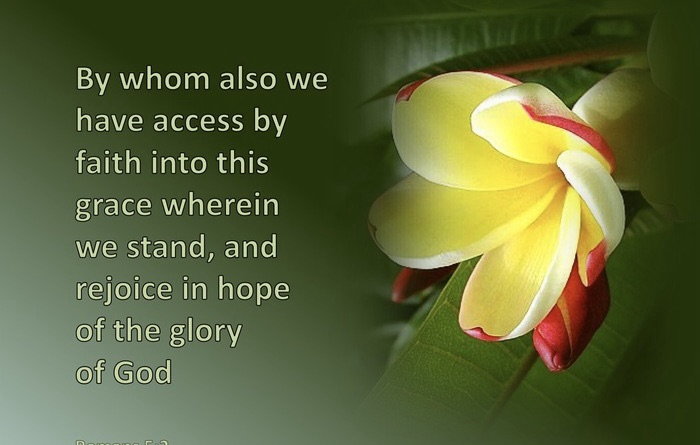
Paul draws on the scriptural idea of the divine glory when he writes to the Romans that “we boast in our hope of sharing the glory of God” (Rom 5:2), and that it is through the work of the Spirit which gives hope to the whole creation that it will “obtain the freedom of the glory of the children of God” (Rom 8:21). He tells the Thessalonians that “God … calls you into his own kingdom and glory” (1 Thess 2:12) and speaks of the life of believers as being “sown in dishonour … raised in glory” (1 Cor 15:43).

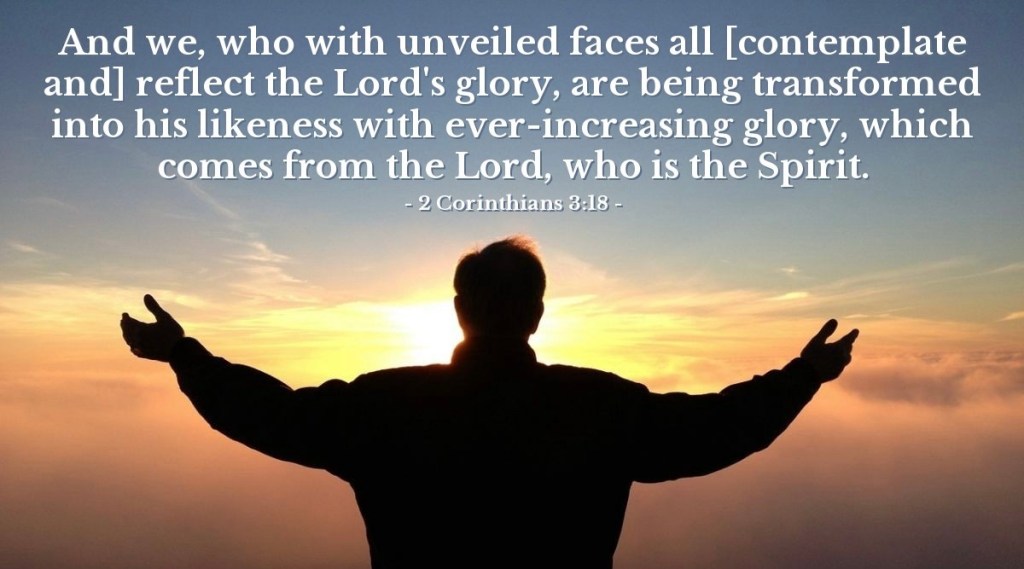
So Paul advises the Corinthians, “whether you eat or drink, or whatever you do, do everything for the glory of God” (1 Cor 10:31), and later on—in the passage that forms the Epistle reading this Sunday—he tells them that “all of us, with unveiled faces, seeing the glory of the Lord as though reflected in a mirror, are being transformed into the same image from one degree of glory to another; for this comes from the Lord, the Spirit” (2 Cor 3:18). So this glory is a means of transformation for believers.

So Paul celebrates that God “has shone in our hearts to give the light of the knowledge of the glory of God in the face of Jesus Christ” (2 Cor 4:6), rejoicing that Jesus “will transform the body of our humiliation that it may be conformed to the body of his glory, by the power that also enables him to make all things subject to himself” (Phil 3:21).

Later writers pick up on this motif of believers sharing in the glory of God. Writing in the name of Paul, one affirms that “God chose to make known how great among the Gentiles are the riches of the glory of this mystery, which is Christ in you, the hope of glory” (Col 1:27), while another declares that that God “called you through our proclamation of the good news, so that you may obtain the glory of our Lord Jesus Christ” (2 Thess 2:14). Another writer speaks of God “bringing many children to glory” through Jesus (Heb 2:10), yet another celebrates that God will “make you stand without blemish in the presence of his glory with rejoicing” (Jude 24).

This, of course, leads into the notion in later Christian theology that heaven can be described as the place of glory—the place where James and John wish to be seated alongside Jesus (Mark 10:37), the place where believers are raised (1 Cor 15:43), the place where faithful elders will “win the crown of glory that never fades away” (1 Pet 5:4), the place where the place where Jesus himself is ultimately “taken up in glory” (1 Tim 3:16). 

And that glory was most clearly seen, one writer maintains, in Jesus, when “the Word became flesh and lived among us, and we have seen his glory” (John 1:14). For the author of John’s Gospel, the full manifestation of heaven (glory) was made on earth, in Jesus, who was God’s only son, “who is close to the Father’s heart, who has made him known” (John 1:18). 

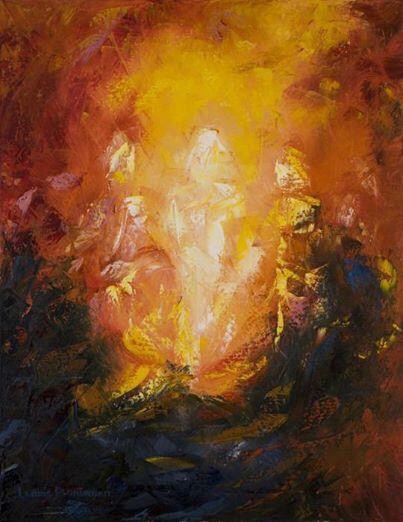
So it is that this Sunday, we celebrate the festival in which that glory is most clearly seen in Jesus. Luke reports that “while he was praying, the appearance of his face changed, and his clothes became dazzling white” (Luke 9:29). As Moses and Elijah appeared, talking to him, Luke continues that “they appeared in glory and were speaking of his departure, which he was about to accomplish at Jerusalem” (9:31), and then that Peter and those with him “saw his glory and the two men who stood with him” (9:32). In Jesus, the offering of divine favour and the manifestation of divine glory, seen already many times in the long story of Israel, is now brought to a higher level of more satisfying fulfilment. And so, we celebrate.
What I am saying, is this: we will all be changed (1 Cor 15; Epiphany 8C)

The lectionary invites us this week to hear the final section of 1 Cor 15, which has offered a lengthy consideration of the “resurrection of the dead ones” (a raising of many believers) and the “resurrection of Jesus”. Resurrection was a Jewish belief that had developed in preceding centuries; not all Jews accepted it (see Acts 23:6–8) and amongst some Gentiles there was scepticism about the idea (see Acts 17:32). 

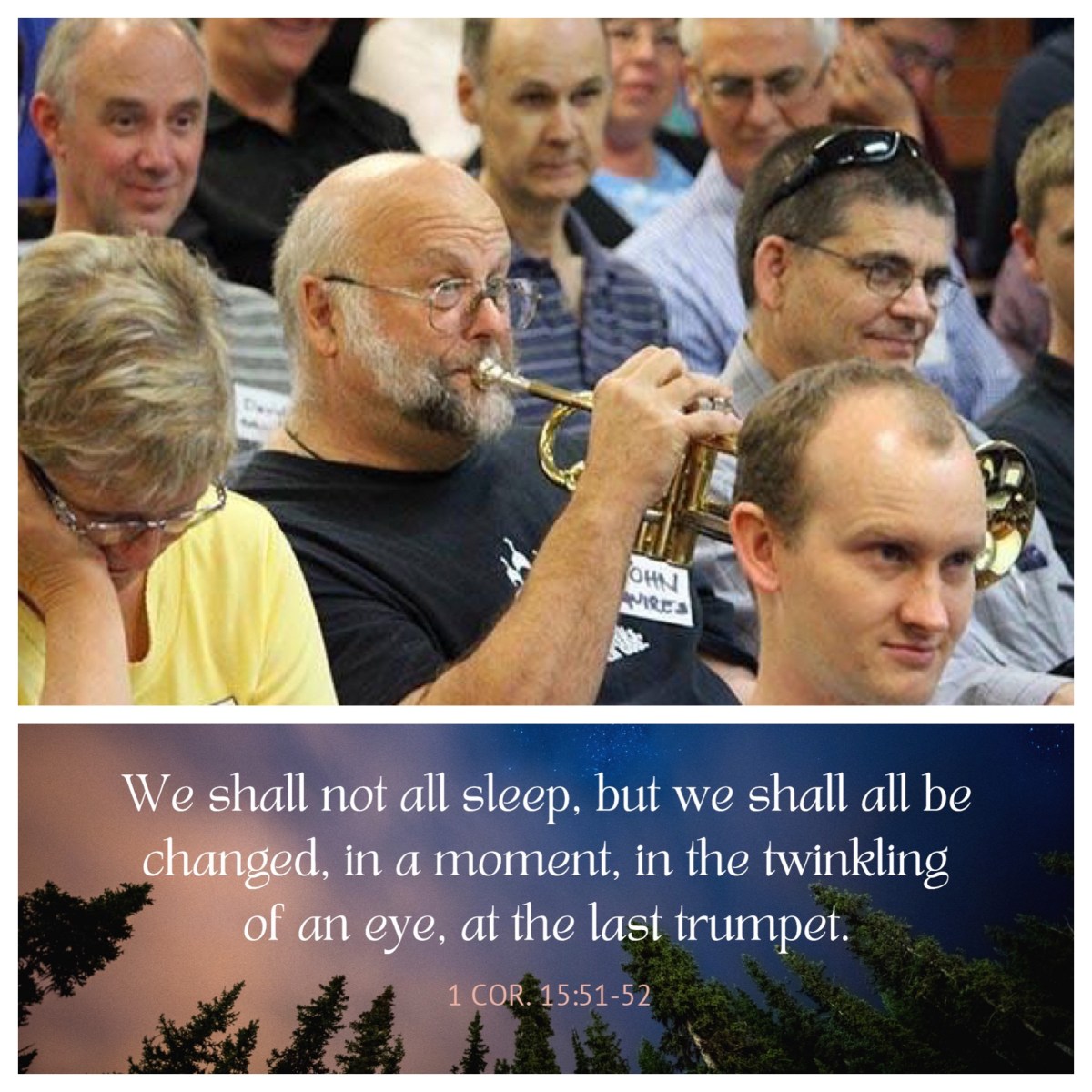
There was also dispute about this matter in Corinth, resulting in a number of debates about particular aspects of this belief. In the verses of 1 Cor 15 dealt with in recent weeks, a number of matters have been explored, debated in fine rhetorical style, and dispatched. To conclude their reflections on this matter (15:50–58), Paul and Sosthenes offer a final glimpse into the eschatological drama that awaits at “the end of time”. “What [we] are saying”, they declare, “is this: we will all be changed, in a moment, in the twinkling of an eye, at the last trumpet” (15:51–52).

The argument now is no longer logic-based, as they move through a sequence of vividly-imagined images in a dramatic rhetorical style. The whole long discussion of this matter ends with a simple, concise ethical exhortation: “be steadfast, immovable” (15:58). The eschatological language used in getting to this point, in these last few verses, is poetic, not realistic; it is evocatively-inspiring, not argumentatively-logical. The argument is brought to a conclusion with a sequence of images, not with any list of legal definitions.
What do we make of the concept of resurrection? Earlier in this chapter, the letter writers have asserted quite forcefully that “if Christ has not been raised, your faith is futile and you are still in your sin” (15:17). Are we therefore not at liberty to interrogate this concept, of the resurrection of Jesus and thus the resurrection of the dead, beyond affirming that it is essential to the faith? My mind recoils at such a stricture! I am committed, as this blog’s name indicates, to “an informed faith”, a faith in which the exercise of “all your mind” is integral to its full understanding and full expression.

So what, then, do we make of resurrection? Contemporary debate has canvassed a number of options as to the nature of the resurrection: Must it be in a bodily form? Was Jesus raised “in the memory of his followers”, but not as a physical body? Is resurrection a pointer to a transcendent spiritual dimension? What was meant by the reference to an “immortal state” in 1 Cor 15:53-54?

Some believers aggressively promote the claim that we must believe in the boldly resurrection of Jesus, that we must adhere to a literal understanding of what the biblical texts report. I prefer to advocate for ways of responding to the story which are creative, imaginative, expanding our understandings and drawing us away from age-old doctrinal assertions which are grounded in obsolete worldviews, on into new explorations of how this metaphor can make sense for us in our lives in the 21st century.

My basic position (as I hinted at towards the end of my previous blog on 1 Cor 15) is that resurrection is a claim that does not direct us away from this world, into a heavenly or spiritual realm. The resurrection offers us both an invitation to affirm our bodily existence in this world, and to explore fresh ways of renewal and recreation in our lives, in our society. It is about liberating life for renewal in our own time and place, here in this world.

It is the apostle Paul who, most of all in the New Testament, provides evidence for the way that early believers began to think about the central aspects of the Easter story—death on the cross, newness in the risen life (Rom 6:3-4:23, 8:6,13; 1 Cor 15:21-23; 2 Cor 4:8-12; Phil 2:5-11, 3:10-11). Paul probably did not begin such ideas; indeed, in both arenas, there are clear Jewish precedents. These were ideas that were live at the time. 

However, the application of these ideas to Jesus—and their insertion into the story of his life—has moved them into a different dimension. They seem, to some, to be “historical events”. I think this pushes things too far. Certainly, Jesus died; but the evaluation of his death as a sacrifice is an interpretive move. In same fashion, the story of Jesus being raised from death was an interpretive move made within a context where “resurrection” was a live idea. In our context, it is a contested idea which sits uneasily within our scientific understandings.

I maintain that other writers in the New Testament provide important keys for understanding the function that “resurrection” plays in our faith. In Luke’s Gospel, the notion that Jesus may be appearing to the disciples as “a ghost” (the Greek is pneuma, usually translated as “spirit”) is dismissed when Jesus instructs the disciples to “look at my hands and my feet; see that it is I myself; touch me and see; for a ghost (pneuma) does not have flesh and bones as you see that I have” (Luke 24:38–39). Here, the emphasis is on the fact that the risen Jesus bears the marks of the crucified Jesus; in his resurrected form, the scars and burdens of his human life continue to be manifest.

In like fashion, when John recounts what may well be his version of the same scene, he puts to the fore the claim by the initially-absent Thomas that Jesus will only be identifiable by “the mark of the nails in his hands” and the wound on his side (John 20:25). So, a week later, when Jesus appears again, he instructs Thomas to “put your finger here and see my hands; reach out your hand and put it in my side” (John 20:27). It is on this basis—the tangible evidence of the crucifixion markings on the body of the resurrected Jesus—that Thomas can move from doubt to belief.

So, in these stories, the primary function of the appearance of the risen Jesus is not to point away from life on earth to some imagined heavenly realm—rather, it is to point back immediately to the scars of the cross, carried for eternity in the resurrected body of Jesus. It is an evocative, poetic presentation.

I return to 1 Cor 15, and the claim that the language used here is also poetic, proceeding in a series of images. Paul and Sosthenes do not conclude their rhetorical dissertation on resurrection with logic-based argumentation, but with a poetic doxology. What concludes the detailed argument of this long chapter is a simple outburst of thanksgiving: “thanks be to God, who gives us the victory through our Lord Jesus Christ” (15:57).

Indeed, such doxologies characterise a number of the letters of Paul. In Romans, they punctuate the complex theological argumentation of this longest letter at key moments. “Thanks be to God”, he rejoices at the end of the tortured discussion of Law, sin, and death (Rom 7:25a). “I am convinced that … nothing in all creation will be able to separate us from the love of God in Jesus Christ our Lord”, a chapter later (8:38–39). Then, after three complex midrashic chapters about Israel, the exultant “O the depths of the riches and wisdom and knowledge of God  … to him be the glory forever; Amen” (11:33–36). 

Finally, in drawing to a close, Paul offers the Romans a prayer of hope (15:13), a brief blessing (15:33), and a reiteration of the offering of grace (16:20b). In a final redaction of the letter, a later scribe then added a most flowery doxology as the conclusion to the whole letter (16:25–27).

The phrase used at 1 Cor 15:57, “thanks be to God”, appears also in Romans (6:17; 7:25) and 2 Corinthians (2:14; 8:16; 9:15); and see also 1 Thess 1:2; 2:13. Paul peppers his letters with notes of praise and adoration addressed towards God. This is poetry that evokes emotions—not words that wrangle doctrines. Such is the nature of his final word on resurrection at 1 Cor 15:57.

The brief word that follows this doxology is a word of hope-filled assurance to the Corinthians, whom he has criticised so mercilessly at many places throughout the letter: “you know that in the Lord your labour is not in vain” (15:58). The letter writers have earlier reminded the  saints in Corinth what they know in a string of affirmations, most introduced with the rhetorical “do you not know?”. These affirmations include “you are God’s temple and God’s Spirit dwells in you” (3:16; similarly, 6:19), “a little yeast leavens the whole batch of dough” (5:6), “the saints will judge the world” (6:2), “wrongdoers will not inherit the kingdom of God” (6:9), “your bodies are members of Christ” (6:15), and “‘no idol in the world really exists’ and “there is no God but one” (8:4).

In the discussion of the rights of an apostle, they are reminded that “those who are employed in the temple service get their food from the temple, and those who serve at the altar share in what is sacrificed on the altar” (9:13) and “in a race the runners all compete, but only one receives the prize” (9:24). In the introduction to the discussion of “the body”, they are reminded that “when you were pagans, you were enticed and led astray to idols that could not speak” (12:2), and I the extended discussion of the use of gifts in worship, there are regular reminders about their knowledge (14:7, 9, 11, 16; and most controversially, v.35). 

Here the reminder of what the saints “know” is the encouraging word, “in the Lord your labour is not in vain” (15:58). It is a typical teaching technique, drawn directly from the heart of the traditions of paraenesis (exhortation, or encouragement) which characterizes all of the letters of Paul. So the chapter ends both with praise directed to God and (despite their conflicts and scepticism) encouragement offered to the Corinthians. It is an uplifting conclusion.

See also 

Perishable and imperishable, physical and spiritual, of the dust and of heaven (1 Cor 15; Epiphany 7C)

The “resurrection of the dead ones” (the Greek word translated as “the dead” is plural, reflecting a raising of many believers) was a Jewish belief that had developed in preceding centuries; not all Jews accepted it (see Acts 23:6–8) and amongst some Gentiles there was scepticism about the idea (see Acts 17:32). There was also dispute about this matter in Corinth, resulting in a number of debates about particular aspects of this belief. In the section of 1 Cor 15 dealt with last week, two such matters have been explored, debated, and dispatched.

Thus week the lectionary picks up at v.35, where a third pastoral situation might possibly be indicated. The form employed (a rhetorical question attributed to an indefinite person) was commonly used by a skilled rhetorician to raise an objection which he knew could be raised, allowing it to be dealt with in advance (the same technique is found in Rom 2–6 and 9–11). The question provides an opportunity for further eschatological teachings about the nature of the resurrection body (15:35–50) and a further display of Paul’s rhetorical prowess. 

The issue at stake here is the nature of the resurrection body, identified in an opening pair of questions: “how are the dead raised? with what kind of body do they come?” (15:35). These are not mere rhetorical questions; Paul and Sosthenes fully intend to address such enquiries with a detailed exposition. The weight of the argument, in my mind, lies in a set of contrasts by juxtaposition, advanced in a sequence of logical steps in vv.42–49:

What is sown is perishable / what is raised is imperishable. 

It is sown in dishonour / it is raised in glory. 

It is sown in weakness / it is raised in power. 

It is sown a physical body/ it is raised a spiritual body. 

If there is a physical body / there is also a spiritual body. 

Thus it is written, “The first man, Adam, became a living being”/

the last Adam became a life-giving spirit. 

But it is not the spiritual that is first /

but the physical, and then the spiritual. 

The first man was from the earth, a man of dust; /

the second man is from heaven. 

As was the man of dust, so are those who are of the dust; /

and as is the man of heaven, so are those who are of heaven. 

Just as we have borne the image of the man of dust, /

we will also bear the image of the man of heaven.

The symmetry is certainly poetically and rhetorically satisfying. The argument is a straightforward typology, in which one thing is seen to correspond to another thing on a different plane, or in a different dimension—but also to differ from them: the first man correlates with the second man, but while the first is “the man of dust”, the second is “the man of heaven; and while “the living being” shares the same living existence with “the life-giving spirit”, this being also differs from that spirit.

The language found here draws on terms used by the authors of the letter in earlier chapters. A contrast between “perishable” and “imperishable” has already been made in the discussion of the race in which “all runners compete” in the statement that “athletes exercise self-control in all things; they do it to receive a perishable wreath, but we an imperishable one” (9:25). The perishable reward is the winner’s wreath (9:25), while the imperishable reward is clearly the salvation referred to in an earlier verse (9:22). This language will return in the concluding couplet at the end of the discussion of this particular issue (v.50).

The clear contrast of the saying about the wreath carries over into the discussion in ch.15 where “the perishable” is contrasted with “the imperishable”, and “what is sown” is juxtaposed alongside “what is raised”. This contrast would seem to draw strongly on the Platonic distinction between spirit and flesh, in which the spirit is the realm of ultimate reality, but the flesh represents the prison in which human beings are trapped during this life.

The letter proposes that the former is sown “in dishonour, in weakness”—features characterising sinful humanity—while the latter is raised “in glory, in power”—attributes of the divine. These are the characteristics of “the man of dust”, Adam, who encompasses those who are set to experience death (15:21–22). It is through “the life-giving spirit”, the “last Adam”, that resurrection life is granted (15:45). We might thus consider that the argument here is thoroughly dualistic; the Platonic influence is undoubted. 

So a similar contrast is drawn between “spiritual” and “physical”; this has been an important factor in the argument of the early chapters of this letter. In their opening thanksgiving, Sosthenes and Paul noted that the saints in Corinth “are not lacking in any spiritual gift” (1:7). However, a little later they lament that they could not address them as “spiritual people”, for they still need milk, not solid food, as befits “infants in Christ” (3:1–2). And the exercise of “spiritual gifts” in Corinth, canvassed in quite some detail in ch.12—14, reveals a chaotic exuberance in which the “building up of the assembly” is almost entirely lacking. Perhaps the note in the opening thanksgiving was ironic, then?

Indeed, in one section of the letter (in ch.2), the spiritual / physical contrast is very strong; the contrast is set in stark fashion. First, the human heart is unable to conceive “what God has prepared for those who love him” (2:9, introduced as scripture, most likely paraphrasing Isa 52:15 or Isa 64:4). Accordingly, God’s wisdom is “secret and hidden”, for “no one comprehends what is truly God’s except the Spirit of God” (2:7, 11). 

Thus, there is a clear distinction between “those who are unspiritual”, who “do not receive the gifts of God’s Spirit … and are unable to understand them”, and “those who are spiritual [who] discern all things” (2:14–15). It is the believers in this latter group who have been granted “the Spirit that is from God, so that we may understand the gifts bestowed on us by God” (2:12). The closing word in this section is, “we have the mind of Christ” (2:16, riffing off the affirmation of Isa 40:13).

This spiritual / physical contrast is bound up with the contrasts between wisdom / folly (1:18–25) and weakness / power (1:26–31) that formed the basis for the clarion declaration, “when I came to you, brothers and sisters, I did not come proclaiming the mystery of God to you in lofty words or wisdom; for I decided to know nothing among you except Jesus Christ, and him crucified” (2:1–2). That is the foundation for the message articulated throughout this letter.

Although Paul maintains that “my speech and my proclamation were not with plausible words of wisdom” (2:4), the message that he brought the Corinthians was indeed imbued with wisdom—although he maintains that “it is not a wisdom of this age or of the rulers of this age, who are doomed to perish”; rather it is “God’s wisdom, secret and hidden, which God decreed before the ages for our glory” (2:6–7). In like fashion, whilst Paul declares that he came to the Corinthians “in weakness and in fear and in much trembling” (2:3), there was nevertheless “a demonstration of the Spirit and of power” when he was with them (2:4). 

So there is a deep paradox in this language, for in any one word there can be two related, but quite distinct, meanings. Wisdom is both human and divine; power is both absent and yet present. It is perhaps this paradox, in which qualities overlap and inter-relate, rather than a simplistic dualism of spheres, keeping the two entities far apart, that we might best see in these words of chapter 15. 

Although the language appears sharp and polemical, the contrast is rhetorical rather than existential: wisdom is made foolish in order to convey wisdom, power is rendered weak in order to express power, and spiritual matters are gifted to those whom we might regard as thoroughly physical, fleshly, material, in order that the Spirit might be at work in and through human beings. It’s a paradox.

So here is the paradox at play: it is the expression of spiritual things—the gifts of wisdom, knowledge, faith, healing, miracles, prophecy, discernment, tongues, and interpretation (12:8–10), or the gifts granted to “apostles … prophets … teachers”, as well as “deeds of power, gifts of healing, forms of assistance, forms of leadership, various kinds of tongues, [and] interpret[ation]” (12:28–30)—which are manifested amongst the human beings in the community of faith in Corinth, and indeed in other such communities in other places and other times. There is no fundamental dualism; rather, the spiritual infuses and works in and through the physical. That is the key to the paradox.

So the “man of dust” is but a type for the “man of heaven”; and those who believe, who are “called to be saints” (1:2; see also 6:1–2) share in both images. The “man of dust”, of course, evokes the second version of the creation story, in which “the Lord God formed humankind (ha-adam) from the dust (aphar) of the ground” (Gen 2:7a). And in that verse lies also the seed of the idea that the “man of heaven” would be “a living being” (1 Cor 15:45), for the creation narrative continues, “and [God] breathed into his nostrils the breath of life (nishmat hay-yim); and the man became a living being (nephesh hay-yah)” (Gen 2:7b). The wordplay in Hebrew is delicious!

So the argument presented in 1 Cor 15:42–49 is in fact, in its form, a midrashic exposition of scripture. Its foundation is this twofold portrayal of the “man of dust” and the “living being” (Gen 2:7). Its climax draws from another scripture—this time, from the first creation narrative, which itself reaches its narrative climax in the poetic affirmation that “God created humankind (ha-adam) in his image, in the image of God (betselem elohim) he created them; male and female he created them” (Gen 1:27). 

One final note is that it is Paul’s use of the reference to “the last Adam” (that is, Jesus) as “a life-giving spirit” (1 Cor 15:45) that ties the whole argument into this discussion of resurrection. Spirit and resurrection are closely linked. The same connection is stated quite explicitly by Paul in the letter that he, alone, wrote to the Romans. When he is discussing “those who live according to the Spirit” (Rom 8:5), he declares “the Spirit of him who raised Jesus from the dead dwells in you, he who raised Christ from the dead will give life to your mortal bodies also through his Spirit that dwells in you” (Rom 8:11). The indwelling of the Spirit in the lives of believers is equivalent to the act of “giv[ing] life to your mortal bodies”.

Then, however, the authors conclude their discussion of the resurrection body with a pair of contrasts that make it perfectly clear that resurrection life exists in an altogether different plane from this earthly life: “flesh and blood cannot inherit the kingdom of God, nor does the perishable inherit the imperishable” (1 Cor 15:50). We will think more on this in next week’s blog. 

Suffice to say that, in my mid, this conclusion has lapsed back into the Platonic dualism inherent in the language; but as I have noted, I don’t think this was entirely what Paul (and Sosthenes) actually meant to do. Theologically, in my mind, the kingdom of God is precisely evident in the flesh and blood that characterises ice as we currently know it. Is this not what Jesus meant in his most provocative sayings about the kingdom? 

See also