An island of peace and goodwill in the middle of a sea of wars, treachery, unfaithfulness and violence (Ruth 1–2; Pentecost 23B)

A sermon by the Rev. Elizabeth Raine, preached at Tuggeranong Uniting Church on Sunday 31 October 2021.

*****

The book of Ruth stands as an island of peace and goodwill in the middle of a sea of wars, treachery, unfaithfulness and violence, as characterised by the preceeding book of Judges, and the following books of Kings and Samuel which follow.

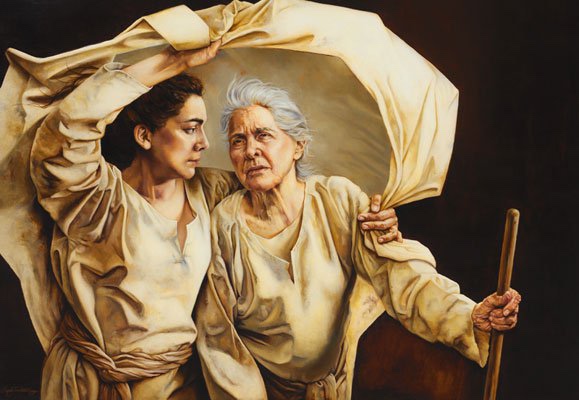
The central characters appear to care for each other, the community generally acts well towards each other, and God’s providence is made available to the most vulnerable in society. It tells the story of a remarkable woman, a foreigner who gave up everything to devote herself to her Israelite mother-in-law Naomi.

The author also has a good sense of humour. The names of Mahlon and Chilion, the two sons that die, which in the Hebrew mean “sickness” and “consumption” respectively. Naomi’s home city, Bethlehem, literally means “house of bread”. So we find at the start that Bethlehem, the “house of bread” was in the grip of a famine, and that Naomi’s husband has to go to Moab, a land where the people are specifically excluded from the congregation of Israel because they refused to give bread to the Israelites fleeing Egpyt.

So Bethlehem, the house of bread, is starving its people, and the land of Moab where food was withheld from the Israelites, now has plenty to share with them. This reversal of the expected puts the reader on notice that this is no ordinary book and no straightforward story.

Although the story is set “in the days when the judges ruled” (ca. 1200-1025 BCE), the date of Ruth’s composition is probably much later. The story’s frequent reminders that its heroine is not an Israelite provides the best clue, and the storyteller is suggesting that Boaz’s gracious treatment of a Moabite woman in this way is unusual. This insistence on an inclusive attitude toward foreigners suggests a composition date in the fifth century BCE, when the issue of intermarriage between the Israelites and non-Israelites had become extremely controversial.

This short story therefore is composed to remind a nationalistic and post-exilic people who are keen on eliminating “foreigners” and people of mixed heritage that their most fondly remembered king, David, was the great-grandson of a Moabite woman.

Ruth 1

In the first speech of the book, Naomi counts herself as among the dead – her husband and sons are dead and she may as well be dead herself. She now sees her worth measured solely by the ability to produce sons. With some irony on the part of the author, Naomi recommends that her 2 daughters in law find security in a husband’s house, apparently forgetting that the house of a husband to date has provided neither safety or security for any of them.

Ruth counters with a speech that is brief and to the point, and pledges a commitment and loyalty far beyond what is required. Few of us today can really appreciate how great this commitment really is. To abandon one’s ancestral homeland, family and gods in favour of those of a foreigner was an enormous risk, and acceptance by the new community was by no means assured. It meant learning new customs, preparing new foods, a new language and a new folklore. That Ruth is constantly referred to as a ‘Moabite’ suggests that she (and the narrator)  are aware that her ethnicity is an immense barrier to her full inclusion in the new community.

When we read this story, we forget that racism and nationalism were as rampant in ancient times as they are now. We may unconsciously view Judaism as the ‘right’ religion, and thus a natural and desirable course of action for Ruth. The truth is that inter-ethnic relationships were complex and often viewed very unfavourably by the ruling elite of Israel, as the books of Ezra and Nehemiah make very clear. For example, in chapter 9 of Ezra, the officials refer to the “abomination” of inter marriage with Moabites and other races, and state that this “pollutes” the holy seed of Israel. Integration was not easy; acceptance not guaranteed.

Naomi does not seem convinced by Ruth’s speech, but allows her to continue with her whilst the more obedient Orpah returns to her homeland. For Naomi to be burdened with even one Moabite woman in her homeland of Israel may have lowered her status as a poor widow further and stretched her already meagre means. In other words, where we are easily impressed with Ruth’s speech of devotion, it is questionable if Naomi was. The narrator merely states that seeing “how determined” Ruth was, Naomi “stopped speaking to her”. The rest of the journey is not mentioned, and no further conversation recorded.

Naomi’s final lament that she wants to be known as “Mara”, meaning bitterness, rather than Naomi, meaning sweetness, suggests that she is not yet grateful for Ruth’s exceptional gesture of solidarity and loyalty with her. She laments that she returns empty, her daughter in law’s devotion is ignored. 

It is also worthy of note that while Naomi is recognised by the women of Bethlehem, Ruth has been rendered invisible. Neither the townsfolk nor Naomi refer to her presence. The narrator alone makes reference to her, reminding us that not only is she Ruth the Moabite, but also Naomi’s daughter in law. 

Ruth 2

The first chapter of Ruth was intended to challenge the reader’s or hearer’s stereotypes about women, loyalties, and national origin by the use of humour and irony. The relationship of Naomi and Ruth is meant confront hearers about what they thought they knew and invites them to ask new questions that help them begin to rethink their view of “the world as it should be.” 

By this strategy and others that keep the hearer/reader guessing throughout the chapter, the book of Ruth has begun by turning expectations upside down and subverting the dominant world vision. 

Chapter 2 picks up the story of Ruth and Naomi as they settle into life at Bethlehem. Though the famine which drove Naomi and her family from Israel has ended, action is required so that food might be put on the table. Ruth therefore proposes that she go and glean in the fields. As a poor foreign widow, this is Ruth’s only means of survival, as gleaning was the main means of support for the poor in Israelite law. Up to this point, the story has been about two widowed women supporting each other.

Ruth’s industrious activities draw the attention of Boaz, the owner of the field in which she gleans. Despite being poor, female and a Moabite, Ruth finds favour in the eyes of Boaz, rich, male and Jewish. By strange coincidence, Boaz is the kinsman of Naomi. A good translation of his Hebrew name is ‘pillar of the community’.

On Boaz’ appearance, the Hebrew reader is likely to be asking some serious questions. Why isn’t he helping Naomi as Israelite familial duty would dictatehe should – especially seeing he is so upright in the community and so obviously rich? Why has she been left to fend for herself, facing deprivation and possible starvation? Why does Boaz only take an interest in Naomi’s fate after he sightedRuth?

The chapter has a lot of complex interplays going on, between foreigner and Israelite, male and female; old and young; rich and poor; powerful and powerless. The author subverts most of the prevailing stereotypes as the story progresses.
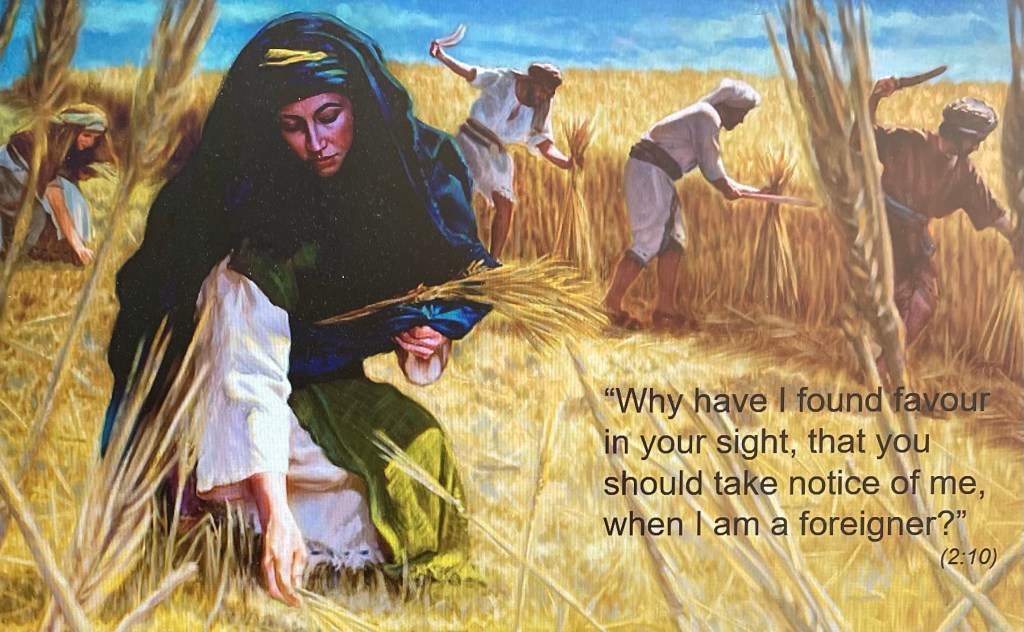
Ruth stated at the beginning of the chapter to Naomi that she hoped to ‘find favour’in someone’s eyes. “Finding favour” in the Hebrew Bible generally means that a woman is desirable in the eyes of men. Coupled with the pervasive Israelite belief that Moabite women were sexually immoral (Gen 19 and Numbers 25 allude to this), the author is stressing both Ruth’s vulnerability – and her desirability.

We turn now to Boaz. His first question is “To whom does this young woman belong?”, a most irrelevant question as far as his interests as a landowner are concerned. The author is communicating Boaz’s very keen interest in Ruth.

The foreman identifies Ruth as the young Moabite woman who returned with Naomi. There is a conversation between Ruth, and Boaz. She has fallen prostrate at his feet. Such deference is usually reserved for God. Ruth twice uses the phrase “found favour in your sight”, the phrase that indicates a love interest. Boaz evokes the name of the Lord. Apart from her speech in chapter one, Ruth shows no interest in the Lord, the God of Israel. Instead she makes it clear her fate is going to lie with Boaz, not the God of Israel.
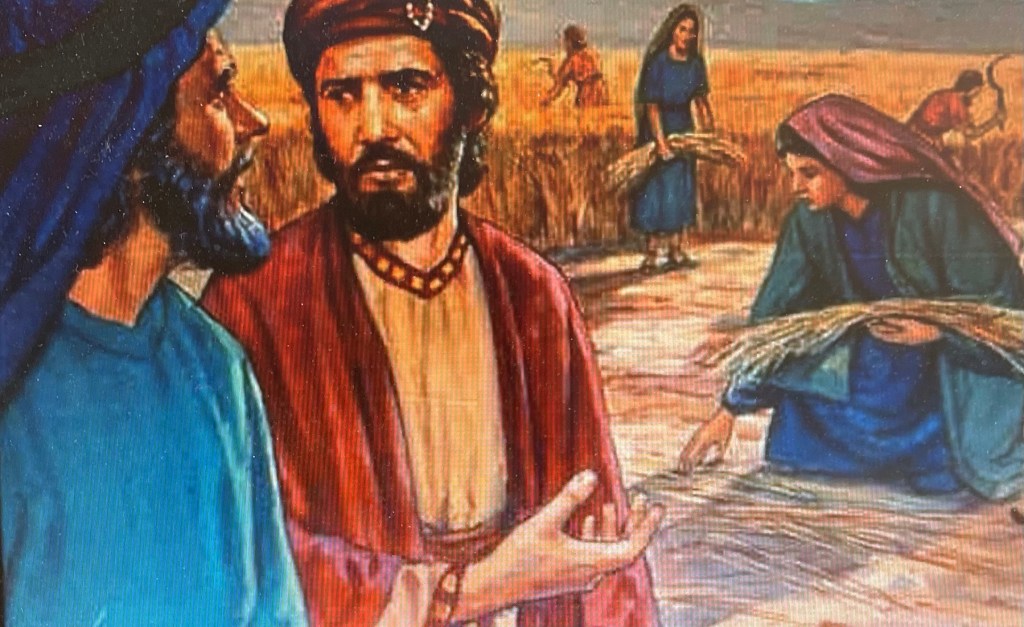
This is emphasised by her saying that Boaz has ‘spoken to her heart’ (mistranslated as ‘spoken kindly’ by the NRSV), another phrase frequently used in the Hebrew bible to indicate a love interest. Ruth is signalling her availability and interest in Boaz, but she has also shown she will not be bullied into an inequitable relationship.

Back at home, Naomi undergoes quite a transformation in relation to Ruth when she sees the amount of grain Ruth has gleaned. Naomi is no fool either, andknows by the cooked food Ruth has given her, and by the huge amount of barley, that something unusual is afoot and that there is a man involved. Hence her first questions “Where did you glean today?” Where did you work?” are quickly followed by “Blessed be the man who took notice of you”. One does not come across large portions of cooked food or ephahs of grain in the normal course of gleaning.

Naomi’s response is to initially call down a blessing on Boaz, in a reference to herself and her late husband. Again, the discerning Hebrew reader must be wondering here why Boaz has failed to act for Naomi before this time. For the first time Naomi reveals the familial connection to Boaz, and calls him goel, or redeemer. This term indicates a close family member with an assigned role in family legal matters, usually financial. To date Boaz has proved a rather unreliable goel, and Naomi is quick to capitalise on his apparent interest in Ruth by warning her against gleaning in another field “lest she be bothered”. 

Despite being poor, female and a Moabite, Ruth has reversed the normal social order to find favour in the eyes of Boaz, rich, male and Israelite. The harvest scenes evoke themes of life and fertility that point towards blessings to come. But for the moment, life is still difficult, and the women’s future needs to be secured.

Despite Ruth’s resourcefulness, she and Naomi are still in a category of people whose well-being depends on the actions of others. The shortcomings of Israelite society that the book highlights challenge us to look more closely at our own cultural context, and how the poor and the foreigner are welcomed and provided for in our community.

Even in a world where prosperity has become available for some on a ridiculous scale, many still die of starvation. Many flee countries where food supplies are insufficient, and where opression is rife. It is clear that true community in our world is broken. While gleaning may be unknown to us, it has been replaced by our welfare system, which is often inadequate to address the real issues facing the poor.

If nothing else, the story of Ruth here should challenge us to work for cultural change, to a society where all are equally valued.

The author of Ruth is a political commentator of the times. He or she disagrees with the extreme nationalistic sentiments of Ezra and Nehemiah, and wants to offer another point of view, a point of view where personal qualities of faith, love and loyalty are placed ahead of race and country of origin. So be with us next week, as we see how this unfolds in the remaining two chapters.

The perfect high priest who mediates “a better covenant” (Hebrews 9; Pentecost 23B)

We have seen in an earlier post that the letter to the Hebrews—the anonymous word of exhortation—has drawn on language and ideas that would have been very familiar to the Jewish people to whom the exhortation was addressed. See https://johntsquires.com/2021/09/29/the-word-of-exhortation-that-exults-jesus-as-superior-hebrews-1-pentecost-19b/

The notion of a high priest, offering sacrifices for the sake of the people, was central to the religious practices of the people of Israel for many centuries, as the collection of laws in much of the Torah (Exodus, Numbers, Leviticus and Deuteronomy) reflect.

This is clearly summarised in the section of the letter offered for consideration in worship this coming Sunday (Heb 9:11-14); Jesus “entered once for all into the Holy Place, not with the blood of goats and calves, but with his own blood, thus obtaining eternal redemption” (9:12). This is fully consistent with the ancient Israelite understanding that “the blood of goats and bulls, with the sprinkling of the ashes of a heifer, sanctifies those who have been defiled so that their flesh is purified” (9:13).

We have also noted that constructive purpose of this language is to demonstrate that Jesus brings the process of sanctification to a head (13:12; see also 2:11; 9:13–14; 10:10, 14, 29) and enables believers to “approach [God] with a true heart in full assurance of faith” (10:19–22). This is “the eternal redemption” (9:12) that is celebrated in the excerpt offered for this Sunday by the lectionary (9:11–14). See

Nevertheless, it is clear that the way this understanding is developed in this book is argumentative and tendentious. The analysis of Jewish concepts of sacrifice provided serves to render Judaism as a whole as obsolete. The earlier Jewish system of offering sacrifices is now exposed as flawed, insufficient, and rendered redundant, through the argument that is prosecuted relentlessly throughout this book. This is a disturbing rhetorical trajectory.

To discern what constructive relevance this may have for us today, we need to understand the standpoint of the author of this word of exhortation in his own context.

It is clear that this word of exhortation has an underlying polemic running throughout. This is signalled in the opening exhortation of the work, which urges the audience to “pay greater attention” to teachings already delivered (2:1); the closing section reminds them not to be carried away “by all kinds of strange teachings” (13:9). This is reinforced when the writer asserts that the audience still needs basic teaching: “you need milk, not solid food” (5:12). The polemic is clear.

The imagery associated with this saying links the audience with infants, in contrast to others who are “the mature” (5:13–14; the Greek is teleiōn). The most urgent task they face is to “go on towards perfection” (6:1; the Greek is teleiotēta) in advanced teachings. There is no need to replicate what has already been given in the “the basic teaching about Christ” (6:1), “the basic elements of the oracles of God” (5:12), which are summarised in three pairs: “repentance from dead works and faith toward God, instruction about baptisms and laying on of hands, resurrection of the dead and eternal judgment” (6:1–2). More is needed than this.

Underlying these teachings is a belief that God remains faithful to what has already been promised (10:23). The audience is reminded that these promises can be known from God’s “powerful word” (1:3), which is described as being “living and active, sharper than any two-edged sword” (4:12), a “word of righteousness” (5:13) which contains an inherent goodness (6:5) and which has already been spoken to them by their leaders (13:7). The interpretation of scripture is thus of fundamental significance in this sermon. It is a right understanding of scripture that clarifies matters for the readers.

The central element in the teaching provided in this sermon is the establishment of a “new covenant” (8:8–13, citing Jer 31:31–34). Jesus is the mediator of this “new covenant” (12:24) who opens a “new and living way … through the curtain” (10:20) and offers an “eternal inheritance” (9:15). There is much of positive value in this teaching, particularly in its Christological aspects.

(And it is a puzzle to me to note that the main substantive sections of this argument about the new covenant are omitted from the selection of passages included in the Revised Common Lectionary!)

However, there are also highly problematic elements in the line of argument advanced in Hebrews. The teaching is developed by means of a comparison between the first and second covenants which degrades the former at the expense of the latter. Particularly difficult is the direct assertion that Jesus “has made the first one obsolete; and what is obsolete and growing old will soon disappear” (8:13).

Also problematic is the assertion that, as the “Son who has been made perfect forever” (7:28), Jesus has “has now obtained a more excellent ministry, and to that degree he is the mediator of a better covenant, which has been enacted through better promises” (8:6).

This assertion appears to legitimise the view that Judaism has been superseded—a teaching which flourished in later Christian history and was used to validate numerous pogroms and persecutions against Jews. This must not, however, be taken as the definitive stance of all Christians towards Jewish believers. Whilst this is the view which is espoused in this particular New Testament book, for the people who first received it, it is not determinative for all time.

What do we make of the word of exhortation that we encounter in this sermon to the Hebrews? The book spends a lot of time on the process of sacrifice, presenting it as a transaction undertaken between God and humanity. We might ponder the relevance of the terminology of sacrifice in the contemporary world; is it still a valid way to conceive the way that humans can relate to God?

We might choose to think about the different elements of sacrifice seen in the ancient world, which we no longer practice today. We might also give some thought to the way we talk about deaths in war in the contemporary world, as sacrifices for the sake of the country. The imagery still has a potency.

The focus on death, the shedding of blood, and the sacrifice of a human life, also raises ethical questions. What is the value of focussing on the necessity of death as the centrepoint of the divine-human transaction? Is this a helpful thing to do? Does it place cold-blooded murder and innocent suffering at the heart of this important relationship? Is this how I want to portray my relationship with God?

It is clear that Hebrews has provided something of the basis for the development of the classical doctrine of atonement. The above concerns, however, raise questions as to its importance within the canon, and within Christian doctrine. Is it still a book to be valued as “scripture”?

See also https://johntsquires.com/2021/09/29/the-word-of-exhortation-that-exults-jesus-as-superior-hebrews-1-pentecost-19b/

A great high priest who “has passed through the heavens” (Hebrews 4; Pentecost 23B)

A priest forever, “after the order of Melchizedek” (Hebrews 5; Pentecost 21B)

The assurance of hope in “the word of exhortation” (Hebrews 10: Pentecost 25B)

Job: a tale for the pandemic, Part Two (Pentecost 20B to 23B)

The book of Job is a challenging and disturbing book. It takes us to a central dilemma that we all face in our lives. It provides us with a stimulus to undertake an exploration that is eminently suited to the time that we have been experiencing over the past few months in lockdown—indeed, since early in 2020. The book poses the question: why is this happening?

See https://johntsquires.com/2021/10/20/job-a-tale-for-the-pandemic-part-one-pentecost-19b-to-22b/

That’s a question many are asking about the pandemic. Why has it come upon us? Or, to be more theological about it: why are innocent people suffering? why are we caught in this current spiral? do those without a moral compass appear to prosper? why do those who seek to do good find themselves beset by problem after problem?

The question is acute for us each personally, during this time of restrictions because of a global pandemic. After all, we had nothing to do with the cause of the pandemic. Why should we suffer the frustrations of lockdowns, if we are innocent of causing the virus to spread? Why should we endure the hardships of reduced interpersonal interactions, if we have been behaving with due care? Why should we not be able to gather for worship, since we have not been in places where infections have been found?

The question is also pertinent and pressing in our current global context. For a start, the pandemic has inflicted suffering and death on millions of people around the world—suffering far more invasive than what we are experiencing in the current lockdown. How many millions of people have died? And how many millions of family members have suffered the grief and despair of not being able to say farewell to their loved ones as they die in hospital wards? And how many medical and nursing professionals have been stressed beyond limit by the incessant demands they have faced during the pandemic? And how fair is all of this?

The question also presses in terms of the climate. We have long known that the climate is changing, the high temperature averages are claiming, the arctic glaciers are melting, the sea levels are rising, the intensity and frequency of catastrophic weather events are climbing—and people around the globe are suffering. All of this presents a challenge to the way we live. We may even think that we are suffering unfairly in such a scenario.

It is clear that the science has come to a conclusive decision: we human beings have been contributing in a major way to the changes in the climate for over two centuries, now. We actually can’t lament that we are suffering unfairly, since our comfortable lifestyles in the well-to-do Western world undoubtedly mean that our carbon footprints are much larger than they should be. We are contributing to climate change, so can’t expect to be exempt from its ravages.

But what of those whose carbon footprint is minuscule, in comparison to our own? There are 16 African countries whose CO2 emissions per year are 0.15 tons per person or less. As you trace the names of countries as the figure rises, there are many more African and Asian countries, long before any European countries are noted.

By contrast, the figure is 17.10 tons per person for Australia, 15.52 for the USA, and 18.58 for Canada. That is a completely inequitable output. Should we not be suffering more deeply, in the western world, than people in Africa and Asia are? And yet the reality is that the comfortable, even extravagant, lifestyle of the western world is what is driving the incessant rate of increased CO2 in the atmosphere. And the whole world—humans, animals, fish and bird, and vegetation—suffers as a result. The questions raised by Job are acutely relevant to this issue.

(The figures come from https://www.worldometers.info/co2-emissions/co2-emissions-per-capita/)

And the question remains hanging as we reflect on levels of malnutrition and access to food in the current world. The World Food Programme of the United Nations estimates that one in three people around the world. Even before the current pandemic, each and every day of the year, 820 million people were seriously underfed and hungry.

Children bear the brunt of this inequity. 149 million children under 5 are estimated to be stunted (too short for age), 45 million are estimated to be wasted (too thin for height), and 38.9 million are overweight or obese. That is a situation that is utterly unjust. The questions press even harder on us.

(See https://www.who.int/news-room/fact-sheets/detail/malnutrition)

We have the means, we are told, to distribute food equitably around the world. And yet up to one third of food is dumped everyday in the USA—a shocking waste of resources and a completely inequitable state of affairs. So those who happen to have been born in certain areas of the world where circumstances beyond their control mean that they are suffering far more than is warranted. Injustice abounds. The questions from Job resonate—how is that fair?

And then, there are survivors of domestic violence, and—still—survivors of child sexual abuse, and those suddenly facing homelessness, and those in the long enduring grip of mental illness, and those fleeing violence and persecution in their home countries, seeking refuge and asylum in a welcoming place … and many other situations where the innocent are suffering unjustly. The list could be very long, indeed, if we give careful thought to it.

So, reflecting on these matters, in the light of the discussions that are recorded in the story of Job, we have much pause for thought. How do we reconcile our faith in God—God who is loving, God who is just, God who is overseeing all that takes place—given these terrible realities? Is the image of God that we have accurate? If God can act to change any of these terrible situations that we are facing, why does God not so act? Is God uncaring? Is God unable to act? Is God not concerned with justice?

These are the questions that Job explores. It is a book which provides us with deep resources for thinking about such matters. It is a tale that resonates with so much in the experience of contemporary people. It is a take for our times.
Job: a tale for the pandemic, Part One (Pentecost 20B to 23B)

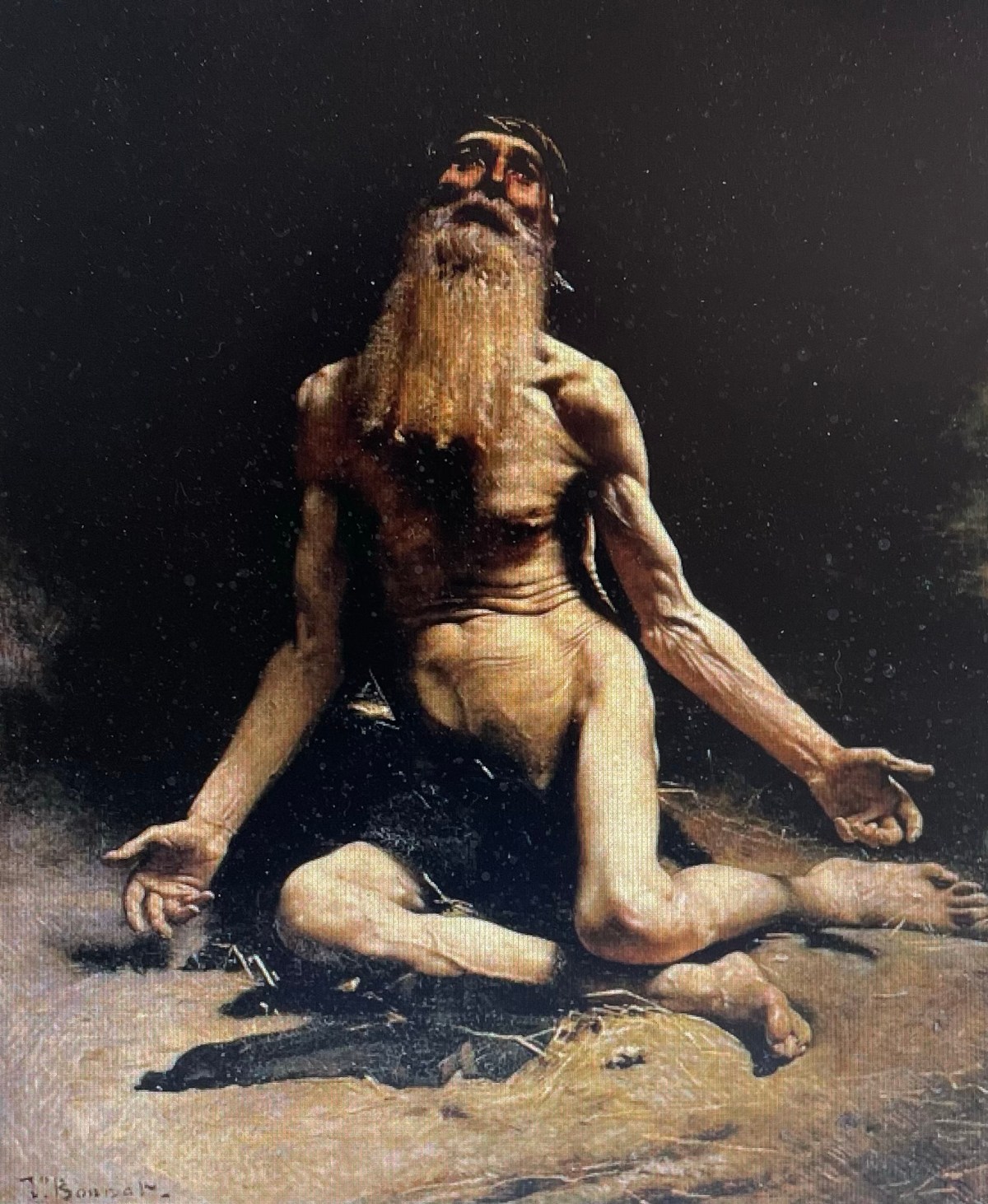
“Why is light given to one in misery, and life to the bitter in soul, who long for death, but it does not come, and dig for it more than for hidden treasures; who rejoice exceedingly, and are glad when they find the grave? Why is light given to one who cannot see the way, whom God has fenced in?” (Job 3:20–23). Why? is the question that Job asks incessantly, as he ruminates on what fate has befallen him.

Job, the righteous, upright person, struck with tragedy and blighted with grief, laments his situation. His story provides a good tale for us to consider during this time of global pandemic. It is a tale that explores the questions that we may be pondering.

As the story begins, we learn that Job had a good, prosperous life; but through no fault of his own, his life is turned upside down; he lost stock—500 oxen, 500 donkeys, 7,000 sheep, and 3,000 camels—and all of his children—seven sons and three daughters (1:13–19). His life, once blessed and enjoyable, was utterly destroyed.

Yet “in all this”, we are told, “Job did not sin or charge God with wrongdoing” (1:22). Indeed, after each round of festivities enjoyed by his children, his practice was to sanctify all his family. He would “rise early in the morning and offer burnt offerings according to the number of them all” (1:5). He was indeed “blameless and upright, one who feared God and turned away from evil” (1:1).

Job came under attack, he felt. Through no fault of his own, his life was turned upside down. He was deeply distressed. “Why did I not die at birth, come forth from the womb and expire?”, he cried (3:11). “Why were there knees to receive me, or breasts for me to suck?” (3:12). “Why was I not buried like a stillborn child, like an infant that never sees the light?” (3:16). The joy at the prosperity which he had enjoyed had crumbled, his very being was pierced with deep grief and despair.

He turns, in his anguish, to God, whom he accuses of having brought this suffering upon him. “Why have you made me your target? Why have I become a burden to you? Why do you not pardon my transgression and take away my iniquity?” (7:20–21) “Why did you bring me forth from the womb? Would that I had died before any eye had seen me, and were as though I had not been, carried from the womb to the grave”, he laments (10:17–18).

Job berates God, whom he sees as being negligent in not intervening to save him from his fate. “Why do you hide your face, and count me as your enemy?” (13:24), he asks. Then, some time later, he presses the point: “Why should I not be impatient? Look at me, and be appalled, and lay your hand upon your mouth. When I think of it I am dismayed, and shuddering seizes my flesh.” (21:4–6). He lays the blame at God’s feet: “Why are times not kept by the Almighty, and why do those who know him never see his days?” (24:1)

Why? Why?? Why??? is Job’s constant question.

Job reflects on the quest for Wisdom, which is what is advocated in Proverbs (Prov 1:2–7; 2:1–5; 3:13–18; 4:5–9; 9:10; 15:32–33; 16:16; 17:24; 19:20; etc) and sought by The Teacher (Eccles 1:13; 7:25). Yet the search for Wisdom, who is more precious than jewels (Prov 3:15; 8:10–11), is much more difficult than mining for those precious jewels (Job 28:1–11).

Where shall Wisdom be found? Job asks (28:12). “Where does Wisdom come form?” (28:20). The answer is, “it is hidden from the eyes of all and concealed from the birds of the air” (28:21). Job despairs of ever finding Wisdom. God knows the way to Wisdom (28:23–27), but direct access to Wisdom remains elusive. All that is offered is “the fear of the Lord” (28:28–a verse attributed to Job, but which many scholars consider to be an authorial gloss on the whole speech).

Elihu rebukes Job, turning his incessant questioning back on him: “God is greater than any mortal. Why do you contend against him, saying, ‘He will answer none of my words’? For God speaks in one way, and in two, though people do not perceive it.” (33:12–14). “Far be it from God that he should do wickedness, and from the Almighty that he should do wrong”, Elihu contends (34:10). “Surely God does not hear an empty cry, nor does the Almighty regard it”, he maintains (35:13).

The claim that God is not just is an outrage to Elihu. He turns to the inscrutable nature of God: “Surely God is great, and we do not know him; the number of his years is unsearchable” (36:26). “The Almighty—we cannot find him”, Elihu maintains; “he is great in power and justice, and abundant righteousness he will not violate” (37:23).

Yet Job will not budge. Finally, after a blistering speech from the Lord himself, out of the whirlwind (38:1–41:34), in which the deity makes it clear that Job cannot pretend to have any comprehension of the ways that God operates, Job backs down. He responds, sarcastically: “I know that you can do all things, and that no purpose of yours can be thwarted” (42:2), and then delivers his coup-de-grace: “therefore I despise myself, and repent of dust and ashes” (42:6).

It should be noted that the common rendering of these final words of Job in so many translations have inevitably mistranslated a crucial word. The Hebrew here clearly states, “I repent OF dust and ashes”. The twist to repenting IN dust and ashes, found in most translations, portrays Job as meekly withdrawing his complaint and submitting to the inscrutable mysteries of God.

But he does not. In fact, his final word is another sarcastic barb, aimed directly at God: “I will give up on playing the meek-and-humble supplicant”. He has not had his questions of Why? Why?? Why???answered in any satisfactory way. So he remains defiant. He repents of repenting. He will not be sorry.

It should also be noted that the “happy ever after” ending we have in 42:7–17, in which Job is vindicated and his fortunes are restored twofold, is widely recognised as a later ending which was not part of the original saga. In the original story, Job’s probing questions remain relentlessly unresolved.

The book of Job is a challenging and disturbing book. It takes us to a central dilemma that we all face in our lives. It provides us with a stimulus to undertake an exploration that is eminently suited to the time that we have been experiencing over the past few months in lockdown—indeed, since early in 2020. The book poses the question: Why is this happening? That’s a question many are asking about the pandemic. Why has it come upon us?

Or, to be more theological about it: Why are innocent people suffering? why are we caught in this current spiral? Do those without a moral compass appear to prosper? Why do those who seek to do good find themselves beset by problem after problem?

I’ll explore these questions further in part II of this reflection in the next blogpost.

******

See also this series of sermons on Job by Elizabeth:

https://johntsquires.com/2021/10/02/living-through-lifes-problems-job-1-pentecost-19b/

https://johntsquires.com/2021/10/10/hope-in-a-broken-world-job-23-pentecost-20b/

https://johntsquires.com/2021/10/17/celebrating-creation-job-38-and-psalm-104-pentecost-21b/

https://johntsquires.com/2021/10/24/coping-with-chaos-and-death-the-wisdom-of-job-pentecost-22b/

A priest forever, “after the order of Melchizedek” (Hebrews 5; Pentecost 21B)

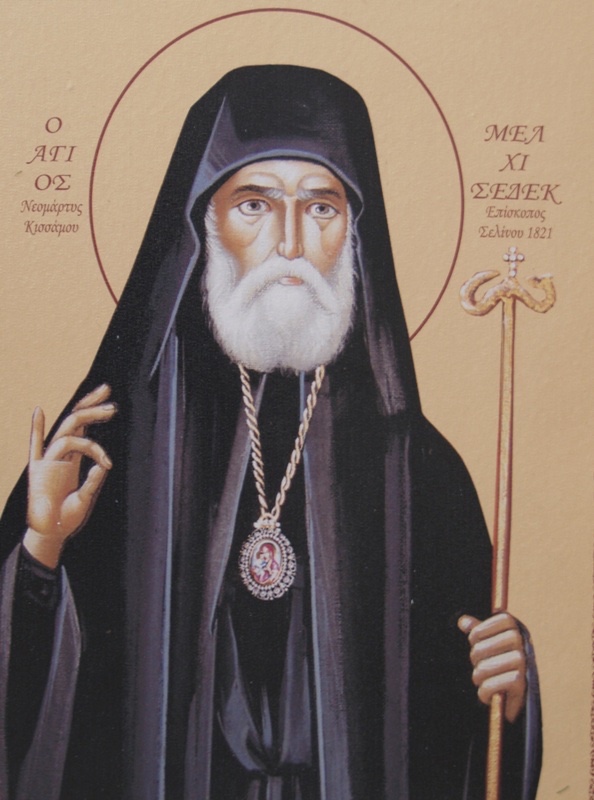
“You are a priest forever, according to the order of Melchizedek” (Heb 5:6 and 7:17, quoting Psalm 110:4). This is a distinctive teaching, found only here in the New Testament. What are we to make of it? Who is Melchizedek? How is he relevant to Jesus? Why is this relevant for us today?

The book we know as “the letter to the Hebrews” is a most distinctive work. It is regularly described as a letter, but it doesn’t follow many of the conventions of a Hellenistic letter. It claims to be a word of exhortation, but many long sections in the work are in fact didactic expositions, not pastoral encouragements.

Alone amongst the twenty one letters in the New Testament, this book makes no claim as to its author. It sits oddly amongst the thirteen letters of Paul, the three letters of John, the two letters of Peter, and the single letters of James and Jude. See https://johntsquires.com/2021/09/29/the-word-of-exhortation-that-exults-jesus-as-superior-hebrews-1-pentecost-19b/

Whilst Paul describes Jesus as a sacrifice, whose death offers us forgiveness of sins and reconciliation with God, only Hebrews portrays Jesus as the priest who makes the sacrifice, slaughtering the sacrificial beast (2:17; 3:1; 5:1–6; 6:20; 7:26–28; 8:3; 10:12) and simultaneously as the victim, lying on the altar as the one whose blood is being shed (9:11–14; 9:26; 10:19; 12:24; 13:20). And only Hebrews makes the declaration noted above, that the nature of the priesthood of Jesus is that he is priest “according to the order of Melchizedek”.

Melchizedek is a Semitic name which is comprised of two separate words: melek, meaning king, and zedek, from tsedeqa, the Hebrew word for righteousness. These terms bring together two key aspects of life and faith for the ancient Israelites. The king was the ruler and leader, through whom the people were in covenant with God (2 Sam 7). Righteousness was the central characteristic of God, which was to be the central commitment of the people of Israel (Gen 18:19). So the king was to rule by righteousness (Psalm 72:1-4).

We meet Melchizedek, the king of righteousness, early in Genesis, when Abram is making his way from Egypt, where he went during the famine (Gen 12:10), through the Negev (Gen 13:1). Abram meets Melchizedek in a place named as The King’s Valley (Gen 14:17). It occurs after God had called Abram and Sarai from their life in Ur of the Chaldees (Gen 11:31) and before God makes a covenant with Abram (Gen 15), which Abram (at the ripe old age of 99 years) seals through the rite of circumcision (Gen 17).

The encounter with Melchizedek is a short interlude in the saga, immediately after Abram has recused his son Lot from a coalition of kings in the Mesopotamian region (Gen 14). Salem, of which he is said to be king (Gen 13:18), is very probably Jerusalem—Psalm 76:2 places Salem in parallel with Zion, pointing to this identification. And Jerusalem was the seat for King David and his descendants, so it makes sense that The King’s Valley would be in this area.

Melchizedek offers Abram bread and wine, and prays over him, conferring a blessing on him (Gen 14:19–20). It is the blessing of “El ʿElyon,” which is a name of Canaanite origin, probably designating the high god of their pantheon. Abram responds by offering Melchizedek a tithe (Gen 14:21), and is insistent that Melchizedek accept all that is offered.

In Roman Catholic tradition, the offering of bread and wine by Melchizedek is regarded as a “pre-presentation of the Mass”—a prefiguring of the sacrifice of Jesus celebrated in their liturgy. He is mentioned in the First Eucharistic Prayer of the Mass, and is remembered as a martyr each year on 26 August. However, the offering of a meal to troops returning from battle was simply a common practice at the time; see, for instance, the lavish meal provided for the returning troops of David at 2 Sam 17:27–29.

The portrayal of Abram as the leader of an army (Gen 14:13–16) which was able to defeat the forces of a coalition of many kings (Gen 14:8–9) is recognised as an anomaly; elsewhere in the section of Genesis recounting the saga of Abraham (Gen 12–25), there is no indication at all that Abram had any any warmongering tendency or any capacity to fight battles.

Because of this, Old Testament scholar Joseph Blenkinsopp has suggested that the story of Melchizedek was inserted into the narrative about Abram to give validity to the priesthood and tithes connected with the Second Temple, after the Exile (which was the period when the book of Genesis was compiled). The links are made in that the King of Salem blesses and breaks bread with the ancestor of David, king in Jerusalem, and confers a priestly blessing from one of the gods of the land on the ancestor, Abram, from whom the Levites descended and amongst whom the sacrificial system and tithing requirements evolved.

The story has a clear validating purpose for the patterns that are being (re)established amongst the returned exiles in Jerusalem. It explains why David set up his headquarters in Jerusalem, and established a priesthood there which would receive offerings from all the people under his control. That validated the claims of the priests as the administered and oversaw the sacrificial system of the Temple cult, for they were seen to be adhering to the pattern established long ago under David—and, indeed, demonstrated long before that, by Abram.

There is nothing else known about Melchizedek, either in the Hebrew Bible, or in other ancient texts. We have no genealogy of Melchizedek; he simply appears, blesses Abram, and disappears from the story. He serves his single purpose, and then is heard of no more.

Certainly, the unique role and distinctive character of Melchizedek—and perhaps his mysterious origins—have made him a character of fascination. And that has been intensified within Christianity, because of the way that the book of Hebrews equates Jesus with Melchizedek and puts them into parallel with each other.

The word of exhortation encourages those who received this “letter” to “hold fast to [their] confession” that they have “a great high priest who has passed through the heavens” (Heb 4:14; see https://johntsquires.com/2021/10/05/a-great-high-priest-who-has-passed-through-the-heavens-hebrews-4-pentecost-20b/)

Thus, Jesus is decreed to be son of God (Psalm 2:7, cited at Heb 5:5) and then “a priest forever” (Psalm 110:4, cited at Heb 5:6). Both psalms which are cited are royal psalms, considered to provide messianic indicators, and thus are picked up within New Testament writings to claim the significance of Jesus, son of God, priest of the new covenant.

These psalms feed into the line of interpretation which sees Jesus in exalted terms—in this book, at least—as the great high priest, the superior high priest, the perfect high priest, the one who is pioneer and perfecter of our faith. And that line runs on beyond the New Testament, into other sects and cults that accord prominence to Melchizedek.

Viewed in this light, some interpreters press the point, making the analogy claim that, “just as Abraham, the ancestor of the Levites, paid a tithe to Melchizedek and was therefore his inferior, so the Melchizedek-like priesthood of Christ is superior to that of the Levites. Furthermore, just as the Old Testament assigns no birth or death date to Melchizedek, so is the priesthood of Christ eternal.” See https://www.britannica.com/biography/Melchizedek

But for myself, that is pressing the point too far, and wringing every tiny drop of significance out of something that I see more as an exotic reference to an ancient tale—a story that is not historical, but was crafted for its own apologetic purposes amongst the returned exiles in Jerusalem. It’s a little bit of New Testament exotica. Thanks, Hebrews!!

*****

See also ten facts about Melchizedek:

1. Only three books of the Bible mention Melchizedek

2. The New Testament says more about Melchizedek than the Old Testament

3. Melchizedek is a contemporary of Abraham’s

4. Melchizedek has no recorded family

5. Melchizedek was a priest of God Most High

6. Melchizedek gives blessings (or at least one)

7. Melchizedek is the king of Salem

8. Melchizedek’s name means “king of righteousness”

9. The order of Melchizedek is royal and everlasting

10. Melchizedek was greater than Abraham and Aaron

https://overviewbible.com/melchizedek-facts/

See

As an example, take the prophets (James 5; Pentecost 18B)

“Is anyone among you suffering? Let him pray.” So we read in this week’s selection from the treatise of James which is offered by the lectionary (James 5:13–20). As a further encouragement, a few verses earlier, we are enjoined, “as an example of suffering and patience, brothers, take the prophets who spoke in the name of the Lord” (5:10).

In this rhetorical question and proverbial statement, we find that the author of this treatise does something that we have seen to be quite familiar from other sections of the book; he makes reference to Hebrew scripture. In doing this, James, the author, was doing what his more famous brother—Jesus—so regularly did. Referencing scriptural traditions was a family trait; indeed, it was what any faithful Jewish man would do, and provide scriptural resonances in what he was saying.

A number of statements in the treatise of James resonate with the teachings of Jesus that we know so well in the Beatitudes (Matt 5:3–10). Most strikingly, the final beatitude spoken by Jesus, in which he exhorts joy in the face of persecution, in the manner of “the prophets who were before you”, is reflected in the opening exhortation of James, “whenever you face trials…consider it nothing but joy” (1:2), as well as the later reminder of James, “as an example of suffering and patience, take the prophets” (5:10). The two brothers are simply providing variations on a theme.

Other teachings in the book of James provide similarities to the teachings of Jesus spoken in the beatitudes, in the form found in Matt 5:3–12. The question posed by James, “has not God chosen the poor in the world…to be heirs of the kingdom?” (2:5) is similar to the first beatitude of Jesus, “blessed are the poor” (Matt 5:3).

The promise that James envisages, of “a harvest of righteousness…for those who sow peace” (3:18), is reminiscent of another beatitude of Jesus, “blessed are the peacemakers” (Matt 5:9). The instruction to “purify your hearts” (4:8) echoes “blessed are the pure in heart” (Matt 5:8).

Perhaps we should not be surprised about these resonances between the teachings of Jesus and the treatise of James; if this work was indeed written by James, the brother of Jesus, a leader of the church in Jerusalem (Gal 1:19), would we not expect him to know what Jesus was teaching? The two brothers are singing from the same songsheet.

These similarities between the teachings of Jesus and the writings of James are significant. The fact that they are preserved in different documents, shaped and then preserved by the followers of Jesus, is suggestive of an awareness of a common tradition of these ethical guidelines amongst Jewish members of the growing messianic movement.

James quotes Hebrew Scripture directly in verse 4:6, “God opposes the proud but gives grace to the humble” (Prov 3:34). This is the basis for his instruction, “humble yourselves before the Lord, and he will exalt you” (4:10).

The same scripture undergirds the words of Jesus which declare the same thing: “whoever exalts themselves will be humbled, and whoever humbles themselves will be exalted” (Matt 23:12; see also Luke 14:11, 18:14). It is also informs the prophetic words sung by his mother before his birth, “he has brought down the mighty from their thrones and exalted those of humble estate” (Luke 1:52). The two sons of Mary (Jesus and James) are singing from the same songsheet as their mother!

When James writes a warning about laying up treasure (5:3), we are reminded of Jesus’ parable about the same topic. (Luke 12:13-21). In these words, both Jesus and James are drawing from Hebrew scriptures. Speaking against the oppressive actions of the rich sounds very much like a number of oracles thundered by the ancient prophets (Amos 2, 4, Micah 6, Hosea 12, Ezekiel 7).

The details use snippets of pertinent prophetic denunciations. “The last days” evoke “the Day of the Lord” (Isa 34:7-8, Jer 25:33-34, Ezek 7:1-4, Joel 2:1-3, Amos 5:18-20). The withholding of the wages of the labourers (5:4) contradicts the Law (Lev 19:13, Deut 24:14-15) and echoes denunciations spoken by prophets (Jer 22:13, Mal 3:5).

The condemnation of “fattened hearts” (5:5) evokes Jer 5:27-28, Ezek 34:2-4. And murdering the righteous person reminds us, not only of the wrongheaded approach of wicked people (Wisdom 2:10-20) and the fate of the righteous servant (Isa 53:3-5, 7-9), but especially of the fate of Jesus, the Righteous One (John 15:20; Acts 3:14).

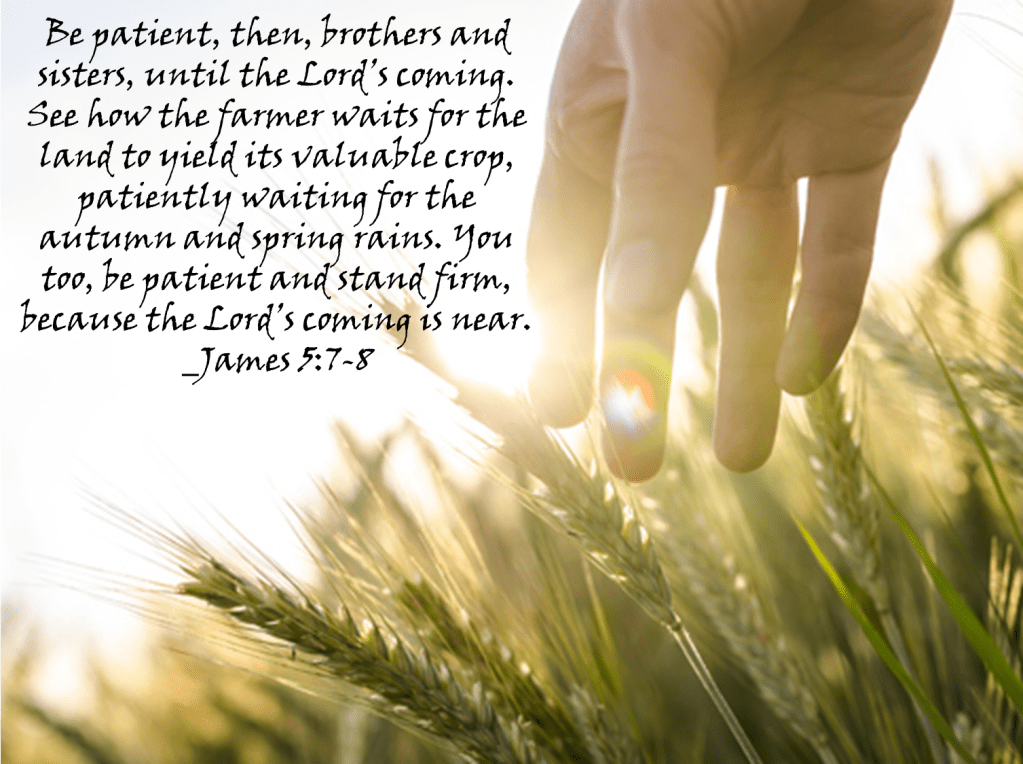
Then, the command of James, “be patient until the coming of the Lord” (5:7), sounds a note that we hear in the final teachings which Jesus gives to his disciples, not long before his arrest. The earlier version of these teachings infers that patience will be required as “the beginnings of the birth pains” are seen (Mark 13:5–8), before Jesus exhorts his disciples: “the one who endured to the end will be saved” (Mark 13:13).

Interestingly, “be patient” in the midst of these tumultuous happenings is a refrain found elsewhere in the New Testament. Paul advises, “let us keep awake and be sober” (1 Thess 5:6); John encourages, “little children, abide in him” (1 John 2:28); and Jesus himself is quoted as saying, “I am coming soon” (Rev 22:7).

It was a widespread belief amongst the followers of Jesus in the first century, that Jesus would soon return, and that God would establish the kingdom of heaven on earth. (That is the final, climactic vision, offered in Revelation 21:1-22:6). “The coming of the Lord is at hand” (5:8) is a recurring New Testament motif (Rom 13:12; Phil 4:5; 1 Pet 4:7).

Over twenty centuries later, we know that this did not eventuate in the timeframe that was imagined, and hoped for, in the first century. Does that invalidate all that those earliest believers thought, wrote, and prayed for? Or is there another way that we are to take their words for our times?

Certainly, the direct ethical instructions found in this passage of the treatise of James sound like they are timeless: cultivate patience (5:7-8), avoid complaining (5:9), remain steadfast (5:11), be as good as your word in all you do (5:12), prayer and sing praise (5:13), seek healing and forgiveness (5:14–15) after confessing your sins (5:16). This is what we are called to do as we await the coming of God.

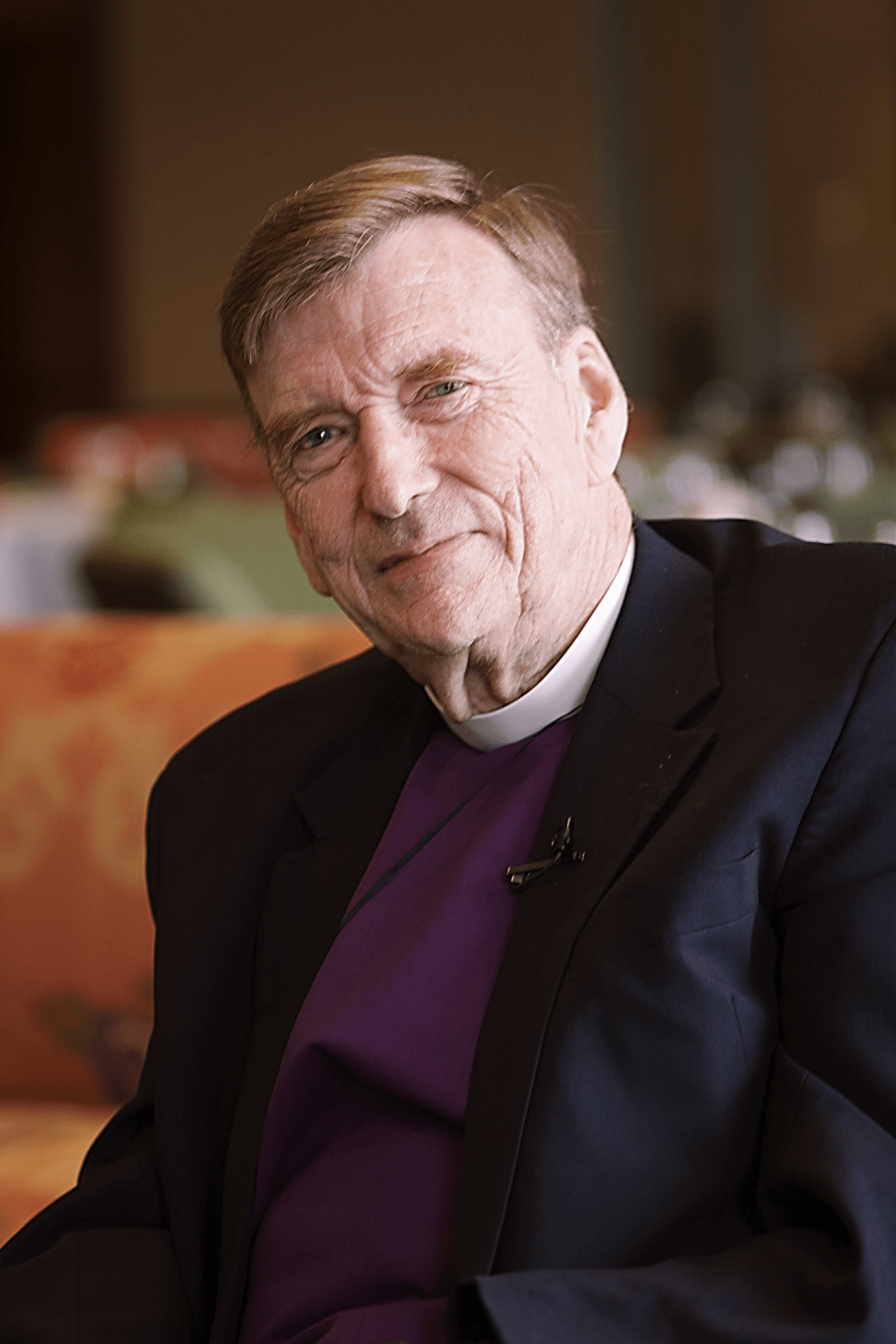
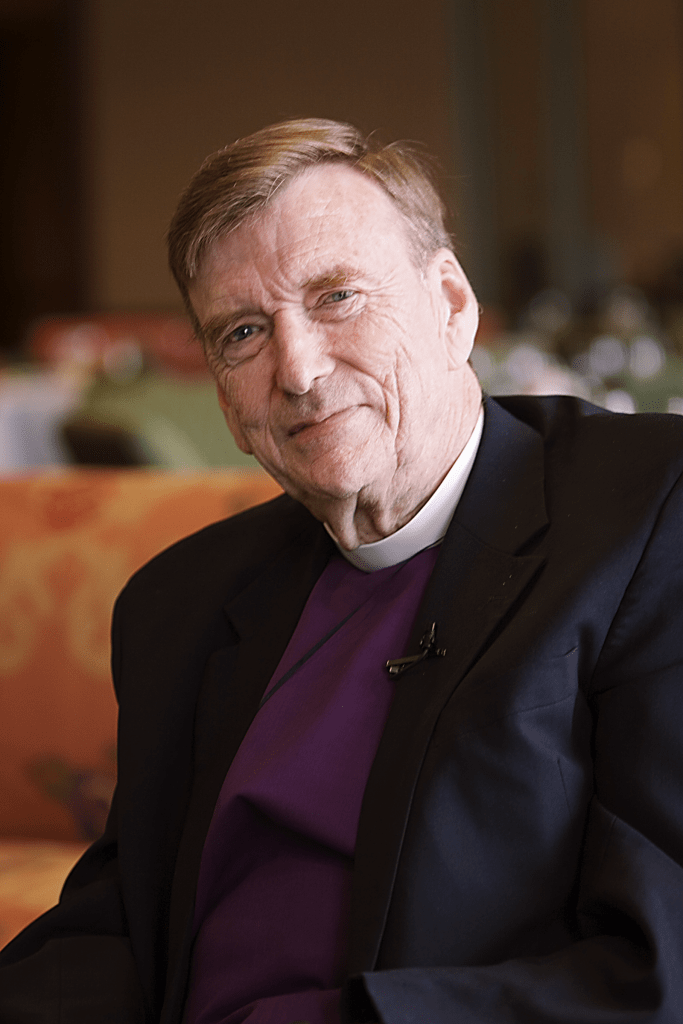
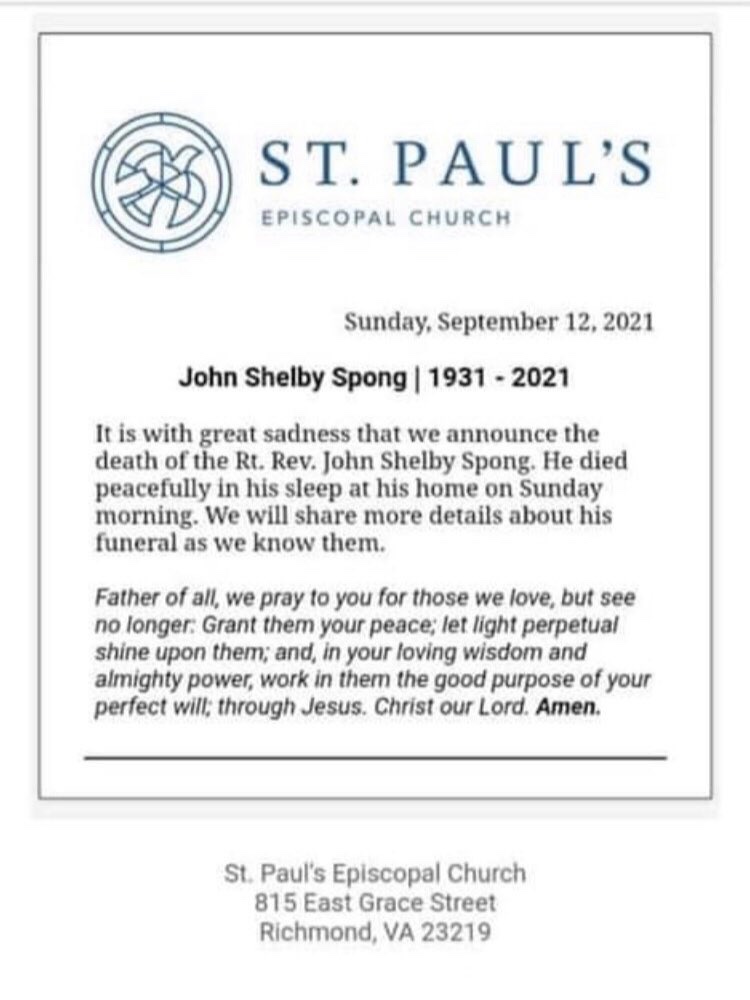
Remembering John Shelby Spong (1931–2021)

Bishop John Shelby Spong has died, at the end of his ninth decade of life. He has been an extraordinary figure in the life of the church in the 20th century. His legacy is large. Whilst a bishop in the Episcopalian Church in the USA, his influence has been across denominations and across continents, with countless thousands of thinking, exploring Christian believers, questioning received doctrines, exploring new ways of understanding what it means to be a person of faith, living out their discipleship in fresh and innovative ways.

Bishop Spong had his critics during his lifetime; every new book that he authored drew critical words from those who felt he had betrayed the Christian faith. He was regularly accused of hypocrisy, drawing a stipend from the Church yet speaking out against the beliefs of the Church. That kind of criticism is now being levelled once again against Bishop Spong, so soon after his death.

Critics of Spong should know that he advocated nothing that had not already been proposed and debated within biblical scholarship of the mid to later 20th century. Unlike many of the academics who in engaged in scholarly debate about details of exegesis and theology through articles and footnotes, Spong had the gift of speaking in ways that the headlines and opening paragraphs of newspaper articles could handle. He popularised a widespread and deeply debated series of discussions amongst academics.

Spong himself attributed great significance to the scholarly work of New Testament scholar Rudolph Bultmann and theologian Paul Tillich. We can’t avoid grappling with the important ideas that these scholars advocated and explained. Both demythologisation (Bultmann’s key idea) and existentialist theology (Tillich’s central contribution) need to be engaged with, explored, and critiqued—not just dismissively brushed aside with slogans and stereotypes.

Personally, I haven’t agreed with everything that Spong has published, either in written or spoken form. I have clearly benefitted from close reading and careful thinking about many of the issues that Spong himself has canvassed—both in terms of Spong’s publications and, more extensively, in the academic discussions about those issues in monographs and journal articles. His stimulus has been particularly important in the more popular arena.

Many people of faith who hold to what is called a “progressive theology” point to Spong as the person who first opened up their understanding about faith. He drew new visions, offered different understandings, provided viable options for people to hold to their faith in the increasingly complex and secularised world of the later 20th century. The miracles of Jesus, the resurrection of Jesus (and of believers), the Virgin Birth, the inerrancy of scripture—these, and more, he explained in his books in ways that “the ordinary believer” could understand.

Many then went on to discover, and rejoice in, the work of Dominic Crossan, Marcus Borg, the Jesus Seminar (to which both of these scholars belonged)—and locally, Australian voices such as Val Webb, Rex Hunt, and Greg Jenks. Many across the church have been enriched by the articulate, faithful writings and speaking of such people. Spong opened the door for them to experience a wider audience.

Bishop Spong visited Australia with his wife, Christine, in 2007. He spoke at the inaugural Common Dreams conference in Sydney and visited churches in a number of other cities whist downunder. His influence on the Progressive Christianity movement in Australia has been very significant. A number of my colleagues have testified that “Spong and his ideas helped my find my place (or recover my place) in the church”. We can be grateful for these testimonies.

Not only people with progressive viewpoints are in the debt of Spong. There are many evangelical scholars who have benefitted from the spadework done by more progressive scholars—adopting historical criticism, using it to illuminate the biblical text, and eventually enhancing understandings of scripture amongst evangelicals, even conservatives, and not just more progressive folks.

I think of the work of Don Carson, I. Howard Marshall, Ben Witherington, N.T. Wright, and many more—conservative biblical scholars who have faithfully grappled with the challenges posed by more progressive points of view, who have utilised the methods developed within so-called “liberal” circles of scholarship. Our academic understanding, and from this our practice of discipleship across the church, has been enhanced by this conversation, taking place in ways that reach across the stereotypes of separated schools of thought.

Spong played some part in that. Not a huge amount in the academic discussions, per se; but a very large role in the public discussions about faith. It is the faithfully determined work of people such as Spong that has shaped the articulation of academic discussions in ways that are understandable to the public, that communicate to ordinary people of faith.

At the end of his life, let’s acknowledge the fine work that John Shelby Spong did in popularising and making widely known an extensive set of insights about what it means to have an informed faith that “makes sense” in the contemporary world; and let’s give thanks for his ministry of deepening and broadening the whole Christian exploration of scripture, faith, and discipleship.

A Pastoral Letter for the people of the Canberra Region Presbytery

Colleagues in ministry leadership, and people of the Congregations of the Canberra Region Presbytery,

The news, late last week, of the return of lockdowns to all locations within our Presbytery did not come as a surprise. The Delta variant of the SARS-CoV-2 virus appears to be a potent variant, and the wisdom of locking down while it is spreading cannot be doubted.

We encourage you to think of the restrictions that we are currently experiencing as our contribution to the common good. We are avoiding social contact in order to lessen the risk of transmitting the virus. We are accepting deprivations for ourselves in order to lessen the number of people who might become ill, hospitalised, or die. As we act in this way to contribute to the common good, we are demonstrating the priority of loving our neighbours. This is how Jesus called us to live.

The impact on each and every one of us will be to the fore of our thinking in the coming days. No doubt each one of us has our own personal ways of dealing with the lockdown period. Special routines are helpful for the duration of lockdown. Special treats at designated times can assist to encourage us. We are experienced in caring for ourselves; we have done this before, we can do it again.

We can spend time praying for others who have needs greater and deeper than ourselves. The events in Afghanistan, the earthquake in Haiti, the floods in Japan and Turkey, the bushfires occurring in the northern hemisphere: these news items remind us that there are people in other places on the globe who are in terrible peril. We can pray for them. We should pray for them.

We can offer thankful gratitude for the blessings that we experience. We are able to connect with other people in so many ways other than in person—by phone, FaceTime, ZOOM, email, WhatsApp, Instagram, Facebook, Twitter … the list seems endless. We can gather-apart for worship using one of the platforms available (YouTube, Facebook, ZOOM) to reconnect as a community of faith.

We can give thanks for the doctors, nurses, cleaners, security guards, police officers, contact tracers, and others who ensure that hospitals, vaccination centres, walk-in clinics and COVID testing centres continue to operate well, despite the pressures they are experiencing.

We can know that “we are in this together” is not just a slogan—it can be the way that we gain strength from our encouragement of one another. We have friends to connect with at our point of need. We can give thanks for the existence of LifeLine, Beyond Blue, Headspace, YarnSafe, MindSpot, ACON, and many other agencies dedicated to ensuring that we have a safe, caring listening ear available to us when we need it.

And in our praying and reflecting, let us hold one another, the people whom we serve, and those for whom they care, in the bonds of compassion and care.

Ross Kingham and Judy McKinlay, Presbytery Co-Chairpersons
Jared Mitchell, Presbytery Deputy Chairperson
Robbie Tulip, Presbytery Secretary
Elizabeth Raine, Pastoral Relations Committee Chairperson
Andrew Smith and John Squires, Presbytery Ministers

*****

What if you thought of it
as the Jews consider the Sabbath—
the most sacred of times?
Cease from travel.
Cease from buying and selling.
Give up, just for now,
on trying to make the world
different than it is.
Sing. Pray. Touch only those
to whom you commit your life.
Center down.

And when your body has become still,
reach out with your heart.
Know that we are connected
in ways that are terrifying and beautiful.
(You could hardly deny it now.)
Know that our lives
are in one another’s hands.
(Surely, that has come clear.)
Do not reach out your hands.
Reach out your heart.
Reach out your words.
Reach out all the tendrils
of compassion that move, invisibly,
where we cannot touch.

Promise this world your love–
for better or for worse,
in sickness and in health,
so long as we all shall live.

Lynn Ungar, March 11, 2020

http://www.lynnungar.com/poems/

In order that all the peoples of earth may know your name (1 Kings 8; Pentecost 13B)

This week I am taking leave of my consideration of New Testament passages in the lectionary, to turn to the Hebrew Scripture passage offered by the Revised Common Lectionary: 1 Kings 8.

If you have been following the Old Testament readings offered by the lectionary since Pentecost, you will know we have encountered some fascinating characters. We started way back in May with Hannah, mother of Samuel, offering her prayer of thanks (1 Sam 2).
We saw the adult Samuel, arguing with the people of Israel about whether they should have a king (1 Sam 8). Not everyone was supportive of the idea.

The first king of Israel was Saul; the lectionary offered us the passage where David was chosen as the successor of Saul—the young shepherd who “was ruddy, and had beautiful eyes, and was handsome” (1 Sam 16). Then came the account of David’s encounter with the giant from Gath, the Philistine named Goliath (1 Sam 17), and the telling of David’s love for Jonathan (2 Sam 1). After the death of Saul, the tribes gathered at Hebron, to make a covenant together supporting David as the new king (2 Sam 5).

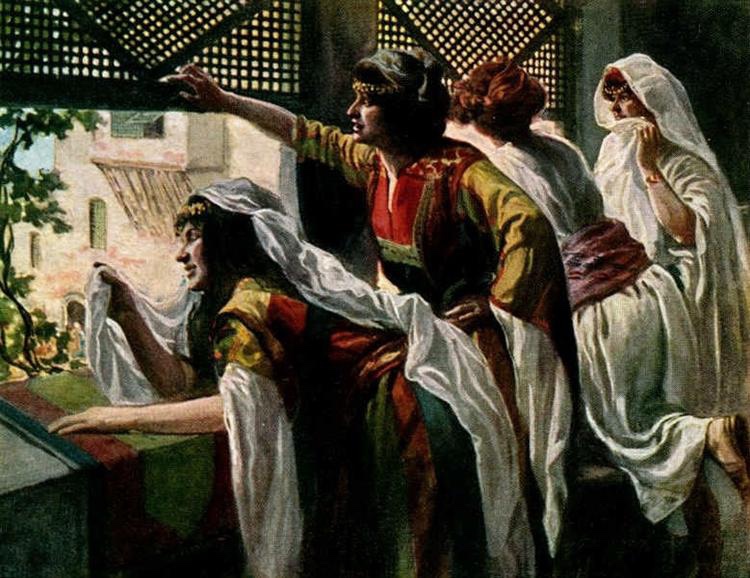
The following week we had the story of Michal, daughter of Saul, looking out of the window, watching King David leaping and dancing before the ark, dressed only, we are told, in a linen ephod (2 Sam 6).

The ephod is basically a very loose fitting outer garment; given that David was leaping and dancing, we can only surmise that it left little, if anything, to the imagination of onlookers, as it flapped and swirled.

And then, in a dramatic change of mood, we heard Nathan receiving the word of the Lord instructing David to build a house—a temple, no less (2 Sam 7).

The following Sunday provided another insight into the character of David—not only was he a scantily-clad dancer, but an adulterer and murderer as well, as we learn in the well-known story that involves Uriah, his wife Bathsheba, and the king’s officer Joab (2 Sam 11).

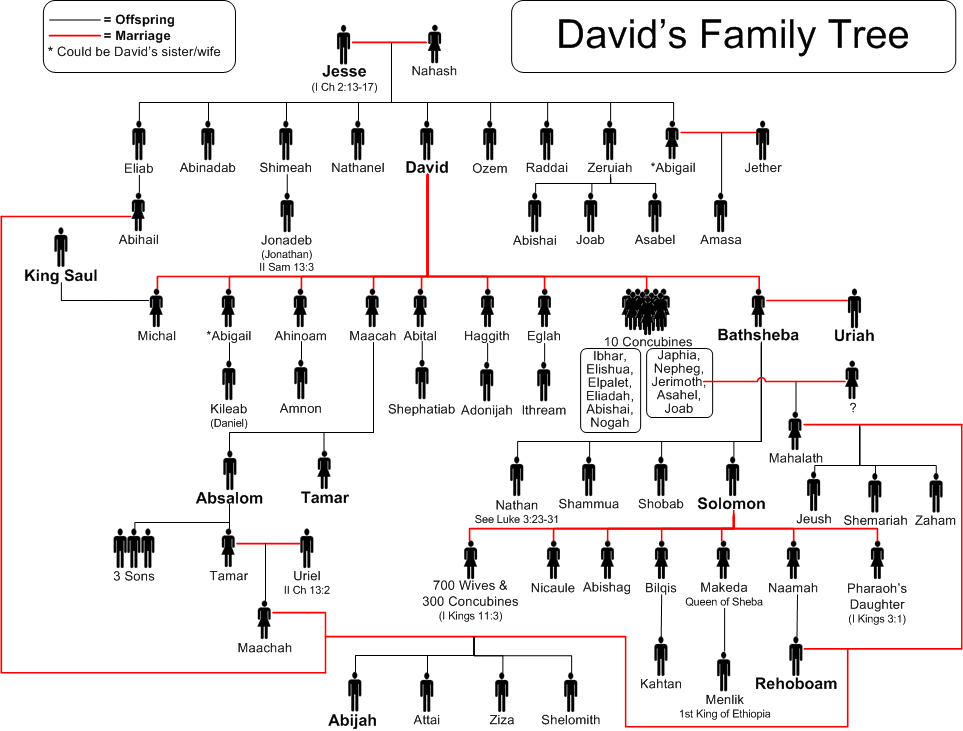
This was followed by the gory account of the death of Absalom, the third of David’s 21 children (yes, that’s correct: from his eight wives and ten concubines, David bore at least 21 children!)

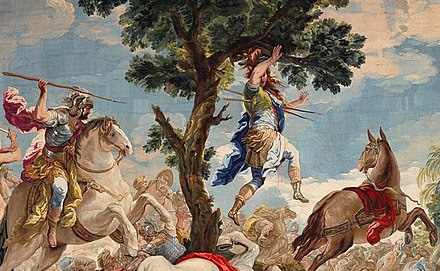
Poor long-haired Absalom was murdered after his hair got caught in the branches of an oak tree, and he was left swinging, until ten of the king’s soldiers butchered him. And all of this took place after a battle which was marked by the slaughter of 20,000 Israelites (2 Sam 18).

David, we are told, was grief-stricken. “O my son Absalom, my son, my son Absalom!”, we are told he lamented. “Would I had died instead of you, O Absalom, my son, my son!” That is a sardonic reflection, however, on the faux-love of David for his estranged son and his faux-grief on Absalom’s death.

All of these stories reveal to us the character of the leaders in Israel. All of these stories have featured in our lectionary over the last three months—have a look at what has been offered and read those stories, I encourage you. Leaders are human, after all, we find in these stories, and life in those days was tough, rugged, challenging.

The leaders whom we encounter in these stories are devious, unscrupulous, scheming, manipulative, emotional, hard-headed, self-serving, and deeply flawed. All of this. From these ancient texts—as if we didn’t already know this from our own observations of leaders in our own situation!

Which brings us, through these sagas of violence, conflict, betrayal, and drama, to Solomon, son of David, installed as king of Israel after the death of his father (1 Kings 2). God made a promise to Solomon: “I give you a wise and discerning mind; no one like you has been before you and no one like you shall arise after you” (1 Kings 3:12).

*****

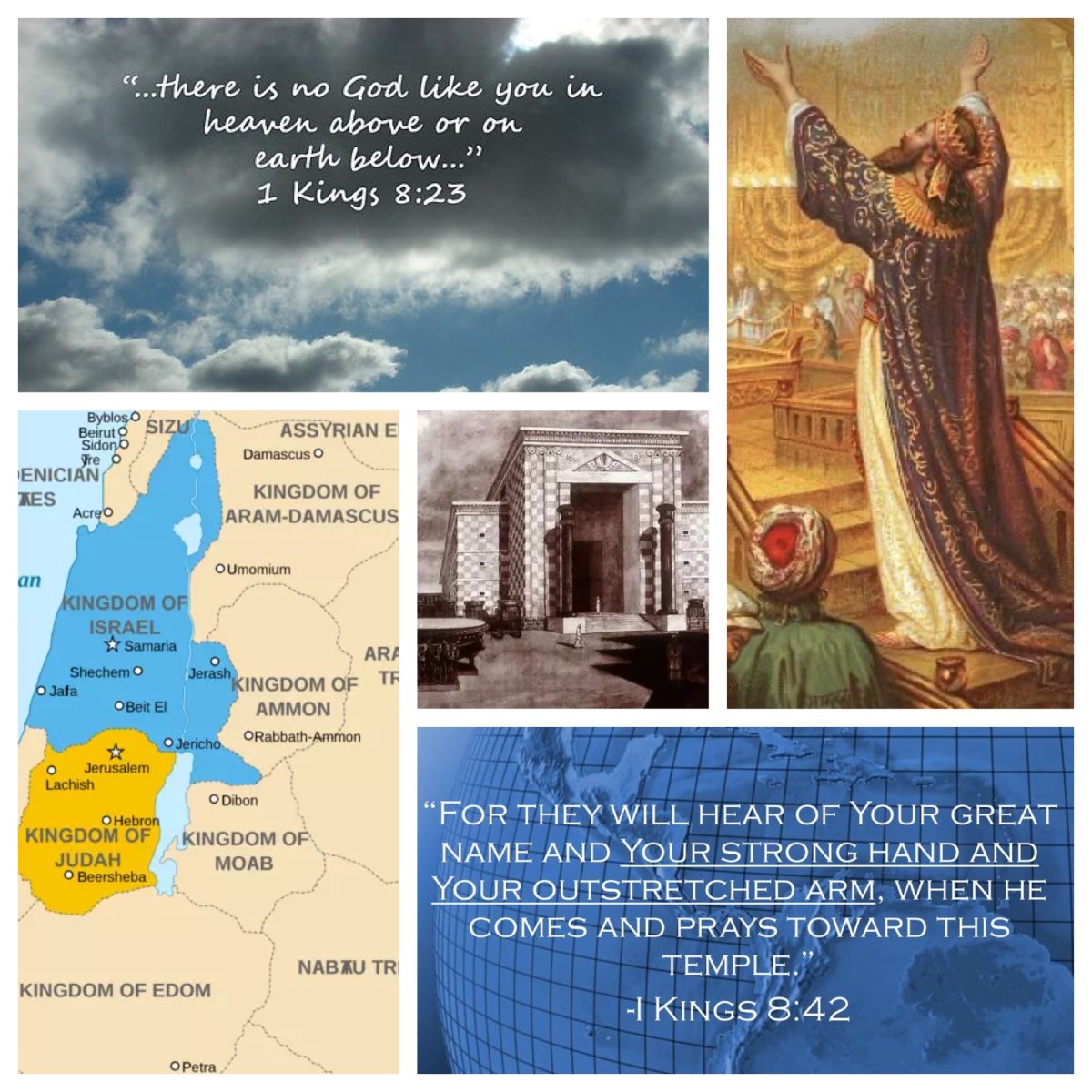
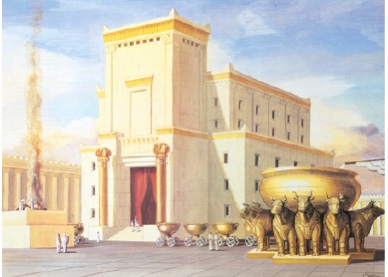
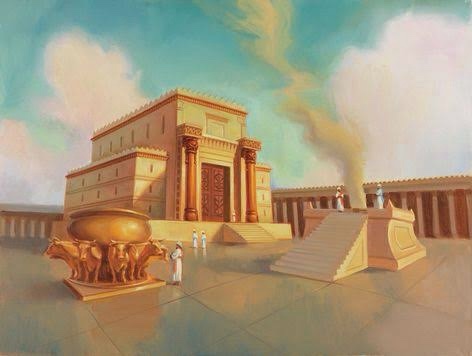
Then we come to the passage set for this coming Sunday, where all the stops are pulled out, as Solomon gathers people for the opening of the Temple (1 Kings 8).

This journey through the narratives of the Hebrew Scriptures reaches it climactic point in this passage, where the greatest king of Israel, Solomon, prays to dedicate the grand religious building, the Temple, on the top of the highest hill in Jerusalem, the capital city of the kingdom at the point of its greatest influence and power. (The readings in following weeks will move into the literature attributed to and inspired by Solomon, the wisdom literature.)

So, we hear the account of this moment of dedication: “Then Solomon assembled the elders of Israel and all the heads of the tribes, the leaders of the ancestral houses of the Israelites, before King Solomon in Jerusalem, to bring up the ark of the covenant of the LORD out of the city of David, which is Zion. Then the priests brought the ark of the covenant of the LORD to its place, in the inner sanctuary of the house, in the most holy place, underneath the wings of the cherub. And when the priests came out of the holy place, a cloud filled the house of the LORD.” (1 Kings 8:1–10).

Man, this is serious stuff: heavy, important, serious. The king. All the elders. The heads of each of the 12 tribes. And the priests, with the ark of the covenant. All assembled at the place where Solomon, king in all his majesty and power, had arranged for a temple to be built. “Then Solomon stood before the altar of the LORD in the presence of all the assembly of Israel, and spread out his hands to heaven” (1 Kings 8:22), and prays a long prayer of blessing for the new edifice.


Now, Solomon, I am sure you are thinking, is remembered as the wise one. “The wisdom of Solomon”, we say. Jesus relates how “the Queen of the south [the Queen of Sheba] came from the ends of the earth to hear the wisdom of Solomon” (Matt 12:42).

In 2 Chronicles 1, God says to Solomon, “because you have asked for wisdom and knowledge for yourself … wisdom and knowledge are granted to you. I will also give you riches, possessions, and honor, such as none of the kings had who were before you, and none after you shall have the like” (2 Chron 1:11–12).

And later, King Solomon is said to have “excelled all the kings of the earth in riches and in wisdom. And all the kings of the earth sought the presence of Solomon to hear his wisdom, which God had put into his mind. Every one of [those kings] brought his present, articles of silver and of gold, garments, myrrh, spices, horses, and mules, so much year by year.” (2 Chron 9:22–24).

This wonderfully wise, insightful, discerning man, Solomon—bearing a name derived from the Hebrew for peace, “shalom”—became a powerhouse in the ancient world. But he did not always live as a man of peace. “Solomon”, the text continues, “had 4,000 stalls for horses and chariots, and 12,000 horsemen, whom he stationed in the chariot cities and with the king in Jerusalem.” (2 Chron 9:25). Solomon had amassed a great army, exercising great power, imposing his rule across the region.

And Solomon, the tenth son of David, the second child of Bathsheba, came to the throne by devious means. It was Adonijah, son of David’s fifth wife Haggith, who sought to succeed his father on his death; Solomon, however, had Adonijah murdered, as well as dispatching the henchmen of Adonijah—Joab the general, who was executed, and Abiathar the priest, who was murdered. This paved the way for Solomon to succeed to the throne. He did not come with clean hands.

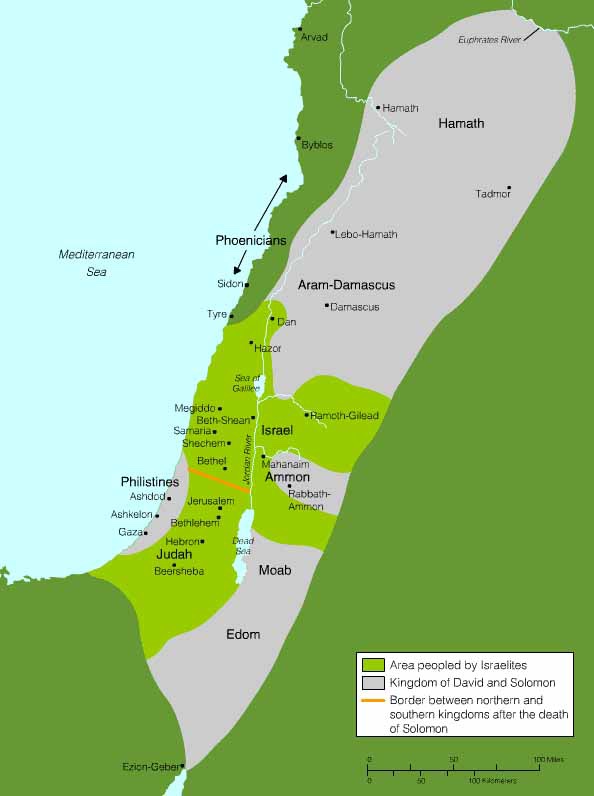
But he became a powerful ruler. More is said of Solomon: “he ruled over all the kings from the Euphrates to the land of the Philistines and to the border of Egypt.” (2 Chron 9:26). Solomon was remembered as king over the greatest expanse of land claimed by Israel in all of history. That’s a claim that is still held by the hardest of fundamentalist right-wing Israelis in the modern state of Israel today—claiming that God gave all this land to Israel under Solomon, and that is the extent of the land that should be under the control of the government of modern Israel. Which is not going to happen, given the realities of Middle Eastern politics on our times.

And we see the utilisation of this power by Solomon, the man of peace, in the Chronicler’s comment that “the king made silver as common in Jerusalem as stone, and he made cedar as plentiful as the sycamore of the Shephelah; and horses were imported for Solomon from Egypt and from all lands.” (2 Chron 9:27–28).

So Solomon was a warrior. And warrior-kings were powerful, tyrannical in their exercise of power, ruthless in the way that they disposed of rivals for the throne and enemies on the battlefield alike. Think Alexander the Great. Think Charlemagne. Think Genghis Khan. Think William the Conqueror. Solomon reigned for 40 years—a long, wealthy successful time.

*****

Yet in the passage set for this Sunday, Solomon appears not as a powerful king. Rather, he is a humble person of faith. He stands before all the people, raises his arms, and prays to the God who is to be worshipped in the Temple that he had erected. He is a person of faith, in the presence of his God, expressing his faith, exuding his piety.

Now, the prayer of Solomon goes for thirty solid verses; there are eight different sections in this prayer. The lectionary has mercy on us this Sunday; we are offered just two of those sections, eleven of the thirty verses. We have heard the shortened version! In these two sections of this prayer, Solomon identifies two important features of the newly-erected Temple. The first is that the fundamental reason for erecting this building is to provide a focal point, where people of faith can gather to pray to God (1 Ki 8:23–30).

Perhaps we may be used to hearing about the Temple in Jerusalem in fairly negative terms. Jesus cleared the Temple of the money changers and dove sellers who were exploring the people. He predicted the destruction of the Temple during the cataclysmic last days. For centuries, people from all over Israel were required to bring their sacrifices to the priests in the Temple, to offer up the firstborn of their animals and the firstfruits of their harvest. The Temple cult was a harsh, primitive religious duty, imposing hardships on the people. The priests, the elites who ran the Temple, lived well off the benefits of all of these offerings.

I could offer you a counter argument to each of these criticisms; but today I simply want to note that Solomon, in his prayer of dedication, makes it clear that the fundamental purpose of the Temple was to provide a house of prayer, a place where the people of God could gather, knowing that they were in the presence of God, knowing that the prayers that they offer would be heard by God and would lead to God’s offering of grace, forgiving them for their inadequacies and failures.

The Temple was to be a place of piety for the people. It was to foster the sense of connection with God. It was to deepen the life of faith of the people. It was to strengthen their covenant relationship with the Lord God.

All of which can be said for us, today, about the building that we come to each Sunday, to worship. The church—this church—is a place of piety for us, the people of God. It is to foster the sense of connection with God. It is to deepen the life of faith of each of us, the people of God. It is to strengthen our covenant relationship with the Lord God through the new covenant offered in grace by Jesus. That’s what the church—this church, your church—is to be.

So we read in the first part of Solomon’s Temple prayer. For the people of ancient Israel, standing in the shadow of this wonderful new building, the prayer might encourage a strong sense of self identity, blessed to be part of the people of God. Of course, it could also develop narrow nationalism, a jingoistic praising of the greatness of Israel, extolling their identity as the chosen nation, the holy people, the elect of God.

The Temple invited the people of God to meet the God of the people, to pray, to sing, to offer signs of gratitude and bring pleas and petitions—in short, to keep the covenant, to show that they are keeping the covenant, to be satisfied that they are keeping the covenant, as they worship. It had a strong, positive purpose for the people.

But that is not where the prayer ends. The second key element of Solomon’s prayer that the lectionary offers us today (1 Ki 8:41–43) is striking. It also relates to prayer. But it is not the prayer of the people of God, covenant partners with the Lord God. It is about the prayer of “a foreigner, who is not of your people Israel, [who] comes from a distant land because of your name”. This is a striking and dramatic element to include in this dedication prayer before all the people.

Solomon prays to God, imploring God to “hear in heaven your dwelling place and do according to all for which the foreigner calls to you, in order that all the peoples of the earth may know your name and fear you, as do your people Israel, and that they may know that this house that I have built is called by your name.”

Now that is an incredible prayer for the King of Israel to pray! It reflects an openness to the world beyond the nation, an engagement with the wider geopolitical and social relatives of the world at that time. Solomon was not an isolationist. He was not inward focussed on his nation. He had an outwards orientation. He did not want the Temple to foster a holy huddle, shut off from the world. He had other intentions. He wanted the Temple to be a holy place, open to people from across the region, from far beyond the territory of Israel—a gathering place for all the peoples.

That was the vision that Solomon set forth for his people. That was not always the way that the Temple actually did function, we know. But that was the foundational vision—articulated by Solomon, remembered by the scribes, included in the narrative account of the kings, placed in a strategic position at the opening and dedication of the Temple. It is a vision which speaks, both to the people of Israel, but also to people of faith today, in the 21st century world.

*****

On the temple of Solomon, see https://www.bibleodyssey.org/en/places/main-articles/first-temple

Justice, and only justice, you shall follow.

“Justice, and only justice, you shall follow, that you may live and inherit the land that the LORD your God is giving you.” So we read in scripture (Deut 16:20). And once they were in that land (even though they colonised it unjustly), the people of Israel were reminded of the centrality of justice. “What does the LORD require of you, but to do justice, and to love kindness, and to walk humbly with your God?”, one prophet asked (Micah 6:8). “Let justice roll down like waters, and righteousness like an ever-flowing stream”, another of the prophets declared (Amos 5:24).

Justice is an important and oft-recurring theme in scripture, in both Old and New Testaments. It is not an add-on, an optional extra. It sits at the centre of the scriptural witness

1 Jesus and Justice

When one of the evangelists told the story of Jesus, the person chosen by God for a special task, he related him to the words (from yet another prophet) in which God affirmed, “Behold, my servant whom I have chosen, my beloved with whom my soul is well pleased. I will put my Spirit upon him, and he will proclaim justice to the Gentiles … a smoldering wick he will not quench, until he brings justice to victory” (Matt 12:18–20, quoting Isaiah 42:1–4).

Jesus himself had made it clear that when his focus was on fulfilling all the Law (Matt 5:17–20), it was “the weightier matters of the law: justice and mercy and faithfulness” that ought to be given priority (Matt 23:23). So when Jesus instructs his followers to “seek first the kingdom of God and his righteousness” (Matt 6:33), he is pointing to the centrality of justice in the ways of God. And when he affirms that “those who hunger and thirst for righteousness” are blessed, “for they shall be satisfied” (Matt 5:6), he is placing justice at the centre of his message. (The Greek word translated here as “righteousness” can equally be translated as “justice”.)

2 The Justice [Righteousness] of God

The letters of Paul place this justice (“righteousness”) at the heart of the gospel which he proclaimed: “I am not ashamed of the gospel, for it is the power of God for salvation to everyone who believes, to the Jew first and also to the Greek. For in it the righteousness [justice] of God is revealed from faith for faith, as it is written, ‘The righteous [the just] shall live by faith.’” (Rom 1:16–17).

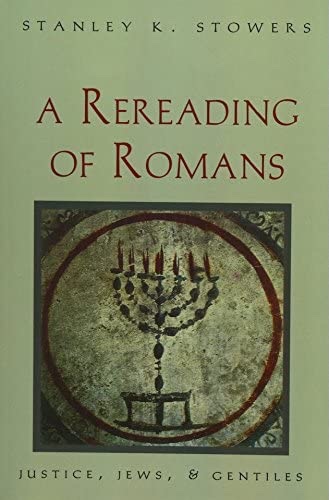
Indeed, in his excellent analysis of Paul’s letter to the Romans, identifies this clearly in the title of his book: A Rereading of Romans: Justice, Jews, and Gentiles (Yale University Press, 1997).

Justice [righteousness] is the very essence of God, given as an act of grace to all who put trust in God. It is through this “righteousness [justice] of God, through faith in Jesus Christ for all who believe”, that “all are justified by his grace as a gift, through the redemption that is in Christ Jesus” (Rom 3:21–26). Paul asserts that it is “one act of righteousness [justice] [which] leads to justification and life for all” so that “grace also might reign through righteousness [justice] leading to eternal life through Jesus Christ our Lord” (Rom 5:18–21). Justice is the very essence of God, given to all through Jesus.

3 Justice and Grace

One way of expressing this quality of justice, or righteousness, in the life of faith, is to show grace, or compassion, to those who are in need. Jesus recognised this when affirmed “whoever gives a cup of water to drink” (Mark 9:41), and in his parable about the Samaritan who went out of his way to assist and care for an injured traveller (Luke 10:25–37).

Both the manifesto for mission that Luke highlights at the start of the public activity of Jesus (Luke 4:18–21) and the climactic parable of the sheep and the goats that Matthew places at the end of the public teaching of Jesus (Matt 25:31–46). Jesus declares his intention to enact justice by setting free the captives, giving sight to the blind, and liberating the oppressed (Luke 4:18). He tells his followers that whenever they sheltered the homeless, fed the hungry, or gave a drink to the thirsty, “you did it to me” (Matt 25:35–40). James, his brother, likewise asserted that to practice true religion was “to visit orphans and widows in their affliction” (James 1:27).

So acts of kindness give expression to the very heart of who God is, by manifesting God’s justice, or righteousness. “Unless your righteousness [justice] exceeds that of the scribes and Pharisees, you will never enter the kingdom of heaven”, he declares (Matt 5:20), and so “blessed are those who are persecuted for the sake of righteousness [justice], for theirs is the kingdom of heaven” (Matt 5:10).

4 Advocating for Justice in Scripture

Taking care that justice is done also requires speaking out for those who are silenced, marginalised, oppressed, or persecuted. In Proverbs, the sage advises, “Open your mouth for the mute, for the rights of all who are destitute. Open your mouth, judge righteously, defend the rights of the poor and needy.” (Prov 31:8–9).

Likewise, the Psalmist affirms, “Blessed is the one who considers the poor! In the day of trouble the LORD delivers him” Psalm 41:1).

Advocating for justice is thus seen as integral to faith in God.

One of the prophets delivered the word of the Lord: “Render true judgments, show kindness and mercy to one another, do not oppress the widow, the fatherless, the sojourner, or the poor, and let none of you devise evil against another in your heart.” (Zech 7:9). Another prophet asserted, “Keep justice, and do righteousness, for soon my salvation will come, and my righteousness be revealed.” (Isa 56:1).

Jesus is remembered in the preaching of his followers as The Righteous One—we might also say, The Just One. This is what he is called by Peter (Acts 3:14), Stephen (Acts 7:52), and Paul (Acts 22:14). The title recalls the centrality of justice in the ministry of Jesus.

And Jesus maintains the importance of advocating for justice in his teachings. We have already noted his teachings in which he advocates that we care for the little ones and those in need (Matt 25) and instructs his followers to work for liberty for the oppressed (Luke 4). He teaches the central significance of love for neighbour (Mark 12:31), which surely entails advocating for justice.

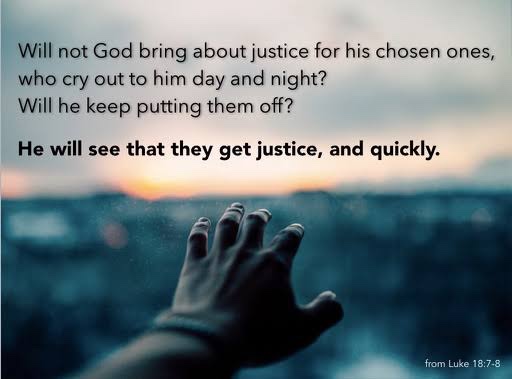
And he tells the parable of the widow calling persistently for justice (Luke 18:1-8), which concludes with the powerful rhetorical question, “will not God give justice to his elect, who cry to him day and night?” (Luke 18:7), followed I meant the striking affirmation, “tell you, he will give justice to them speedily” (Luke 18:8). A commitment to justice requires advocacy for justice.

5 Justice in the Basis of Union

The centrality of justice, so evident in the witness of scripture, is reiterated in the Basis of Union of the Uniting Church. If we are followers of Jesus, called to walk the way he sets out before us, then as faithful disciples, we are called to walk right into what the Basis of Union envisages as a “new order of righteousness and love” (para 3). The words in that phrase are drawn from the deep wells of tradition, especially in scripture, where both live and righteousness are frequently-occurring words. It is the kingdom of God which is the new order of righteousness (justice), manifested in love.

These words call us to care for one another but also to do what is right. They call us to live a live grounded in justice, in the same terms that Jesus and the prophets before him cried out, seeking justice for everyone—not just for ourselves or those close to us, but for the whole of society.

These words challenge us to live with the same self-giving, fully-emptying love, that we see in the cross at the centre of the story of Jesus. And they lead us to the conclusion that as we live in this way, we will advocate for justice.

6 Advocating for Justice in the Statement to the Nation

The Uniting Church inherited from its predecessor Churches this resolutely firm commitment to advocating for justice for all. Many Uniting Church congregations and members are actively committed to serving those people who find themselves on the margins of society. This commitment was clearly articulated in the 1977 Statement to the Nation, which declared, “We pledge ourselves to seek the correction of injustices wherever they occur.”

That Statement then identified specific forms of injustice: “poverty, racism and discrimination, acquisitiveness and greed, and the daily widening gap between the rich and poor”. It identified a number of rights to be supported: “equal educational opportunities, adequate health care, freedom of speech, employment or dignity in unemployment if work is not available”.

It also noted some just actions that were to be followed, including “the wise use of energy, the protection of the environment and the replenishment of the earth’s resources”, as well as a concern for the welfare of the whole human race.

The Statement spoke out publicly about these matters. It models for future Uniting Church people the importance of advocating for justice.

7 Advocating for Justice in Action

This commitment to advocating for justice has been evident in many actions undertaken by Uniting Church members over the decades. The Uniting Church has joined in common cause with other groups and organisations in society, in standing in covenant solidarity with First Peoples; in advocating for a welcoming attitude towards refugees; in lobbying for a fair and just system of caring for people who are experiencing poverty and homelessness; in seeking equity for workers in their workplace; and in many other issues. A regular stream of policy documents and public resolutions point to a clear and unbroken commitment to seeking justice for all.

“Justice, and only justice, you shall follow.” The words of the ancient prophet sound clear, still, today. “Do justice, love kindness, and walk humbly” has become a compelling guide for people of faith. And as we walk the way of The Just One, we do well to “seek first the kingdom of God and God’s justice”.

*****

On justice in scripture, see https://johntsquires.com/2021/05/26/reading-old-and-new-testaments-together-2-worship-and-justice/. For the Basis of Union, see https://assembly.uca.org.au/basis-of-union. For the Statement to the Nation, see https://assembly.uca.org.au/resources/introduction/item/134-statement-to-the-nation-inaugural-assembly-june-1977. For policy documents and Assembly resolutions on matters of justice, see the many resources collected at https://unitingjustice.org.au

There are further articles about justice and advocacy in the Spring 2021 issue of Viewpoint, the magazine of the Canberra Region Presbytery of the Uniting Church in Australia, at https://canberra.uca.org.au/media/10701/viewpoint-crp-advocacy-august-2021.pdf