The witness of John (John 1; Advent 3B)

Last week, the lectionary offered a Gospel passage from the beginning of the good news about Jesus, featuring the fiersome desert-dwelling prophet, John, known as the Baptiser (Mark 1:1-8). This week, we have a section from the book of signs in which the same person, John, figures. But he is quite a different person in this week’s text–and the way he is portrayed offers a glimpse into another world.

The book of signs introduces John as a much more domesticated figure, compared with the way that he appears at the start of the beginning of the good news of Jesus. In John’s account, he appears, all of a sudden, in the midst of the majestic poetic Prologue (1:1-18) which opens this Gospel. 

The Prologue is focussed on the eternal character of the Word of God (1:1-2), present at the moment of creation (1:3), shaping the world that we know and inhabit (1:14, 16-17). In the midst of this, the human figure of John appears—as somewhat of an anomaly in the midst of the ethereal poetic lines (1:6-8, 15).

The Prologue is followed by a more prosaic Prelude (1:19-51), which narrates a series of encounters involving John, Jesus, and their followers. These encounters establish the centrality of Jesus in the narrative, first through the testimony of John the baptiser (1:19-36), then by having various individuals “come and see” him (1:39, 46). 

Both John and these individual disciples confess the significance of Jesus through a variety of Christological titles. This Prelude ends with Jesus himself adopting a title to explain his significance (“Son of Man”, 1:51).

That John is a witness to Jesus is already indicated in the Prologue, through some prosaic narrative insertions into the grand poetic opening. The Lectionary this coming Sunday offers us both the initial prosaic comment (1:6-8), and the ensuing story relating what John said about Jesus (1:19-28).

But the John whom we meet in this gospel is a very different figure from the desert dwelling apocalyptic visionary whom we encountered in last week’s reading from Mark’s gospel. The Johannine John does not frequent the desert, as in Mark 1; rather, his activity is located in Bethany, near the Jordan (1:28). 

The Johannine John does not issue a clarion call for repentance, as in Mark 1; rather, he bears witness to Jesus, “the one coming after me” (1:27), as the one “who ranks ahead of me” (1:30). As John, in this gospel, bears witness to Jesus (1:6–8, 15; 1:29–36; 3:25–30; 10:41), he testifies that Jesus is the light (1:7), of greater rank than John himself (1:15, 30), the Lamb of God (1:29, 36), the Son of God (1:34), the bridegroom (3:29), and, by implication, the Messiah (1:203:28).

What is the reason for this different portrayal of John the Baptist in this Gospel?

The Gospel of John includes some pointers to the development of a faith community which looked beyond the parameters of Judaism as it was being shaped by the Pharisees, towards other forms of Jewish faith and life—and perhaps beyond. The Gospel is being painted on a wider canvas. It offers us glimpses 

The early prominence accorded to John the baptiser, and other content such as the fact that the first large–scale success enjoyed by Jesus was in Samaria, and the appearance of Greeks in Jerusalem, seeking Jesus, and even the way that the Logos (the Word) is portrayed in the Prologue, each point to this wider canvas. Sometimes this is defined as “heterodox Judaism”, in contrast to the dominant Pharisaic stream within formative Judaism.

John the baptiser is prominent at the start of each canonical gospel; scholars wonder if there was originally a link between the Jesus movement and the movement led by John the baptiser. Evidence for this link is also drawn from places such as Acts 19:1–7, and the Q passage in Luke 7 (par Matt 11). It is John’s Gospel which provides the clearest evidence, when it recounts that the earliest followers of Jesus were drawn from the followers of John (1:35–42).
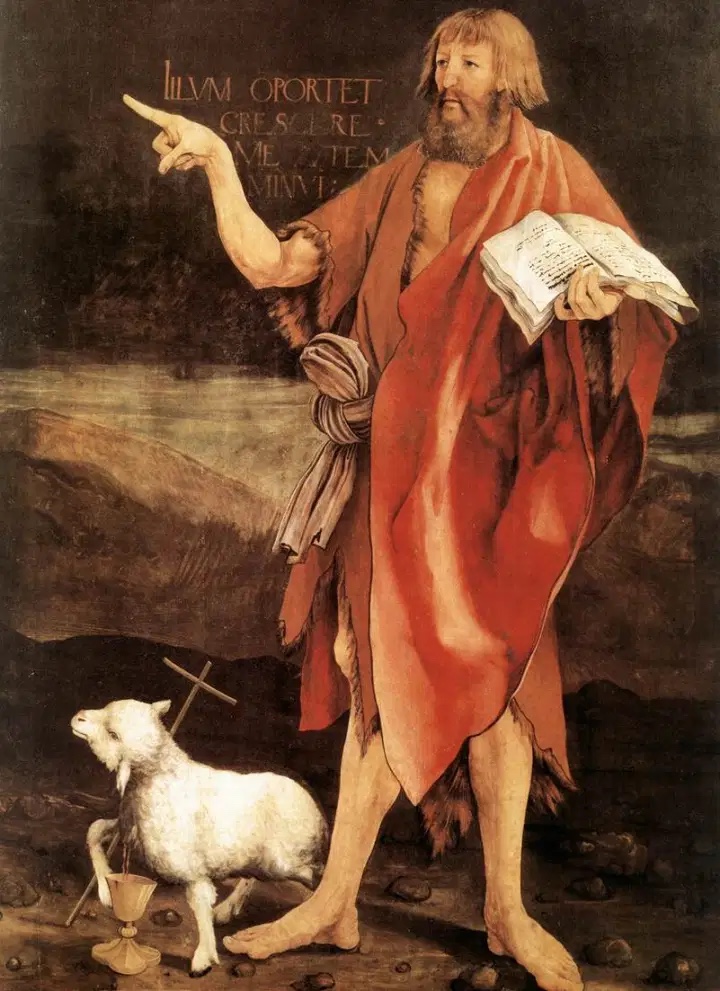
John the Baptist, pointing to Jesus.
A panel from the Isenheim altarpiece,
painted by Mattias Grünewald around 1515.

This emphatic depiction of John as deflecting attention from himself, to Jesus, indicates that there was, at an early stage, some competition between the two figures—or, at least, between their respective followers. This link is confirmed, for some scholars, by the nexus of ideas that flow from Johannine Christianity into the Mandaean literature of the third and fourth centuries CE—including, amongst other things, the prominence accorded to John the baptiser.

Thus, the reform movement within Second Temple Judaism headed by John is seen to have had some influence on the gospel, in its early stages, at least. John stands outside the Pharisaic–rabbinic stream of Judaism which would become dominant after 70 CE. This is the first indication of the influence of a different kind of Judaism on this Gospel, which led to the development of a different form of Christianity in the ensuing centuries.

Likewise, the prominence accorded to Samaria in John 4 can be seen as a significant indicator of an important influence shaping the gospel.  This scene (like all others in this gospel) is not a straightforward historical narrative, but rather a remembering of an important part of the beliefs of the community, conveyed through the narration of a “typical” incident. 

The encounter at the well (4:5–8) leads into a long scene where Jesus engages in deepening theological reflection with the Samaritan woman (4:9–28a), climaxing in the first successful missionary venture within the Jesus movement (4:28b–30, 39–42)—at least, as John recounts it. The first missionary is this anonymous Samaritan woman, and the first body of converts to Jesus are inhabitants of the Samaritan village. 

This story has a powerful function within this particular community’s traditions. Samaritans are depicted as sharing a common Jewish ancestry (“our father Jacob”, 4:12) and holding an eschatological hope in the Messiah (“I know that Messiah is coming”, 4:25). Yet embedded in the story are clear indications of the tensions between this northern form of Judaism and the dominant southern mode; ordinary dealings between Jew and Samaritan are unusual (4:9), and liturgical–theological differences mark them off from one another (4:20–21). The success of Jesus’ message in this context indicates its attraction to those outside the “mainstream”.

The words and ideas found in the Prologue to the gospel (1:1–18) have led to a further hypothesis that Hellenistic Judaism had been influential in the context in which the gospel was shaped.  The role of the Logos is akin to the role of Wisdom within Hellenistic Jewish literature —both as the agent by which God created the world, and as the means by which God reveals knowledge and truth to the world. 

That Judaism had long been engaged with the dominant hellenistic culture, has been well proven by contemporary scholarship. Influences from the Greek–speaking world, and its hellenised culture, are reflected in numerous Jewish writings. In this gospel, the account of the Greeks who wish to see Jesus (12:20–22) is a clear indication of the interaction between the community of the gospel, and the wider hellenised world. 

The issue is also raised by the question of the Pharisees at 7:35; “does he [Jesus] intend to go to the Dispersion among the Greeks and teach the Greeks?” Other signs, less immediately obvious, pointing to this influence, are claimed at various points throughout the gospel. Once again, we see that the kind of Judaism which has influenced the gospel is not of the dominant, Pharisaic–rabbinic kind. It has become open to the wider world; perhaps the community which first received this Gospel had already become somewhat diversified in its composition.

This link is confirmed, for some scholars, by the nexus of ideas that flow from Johannine Christianity into the Mandaean literature of the third and fourth centuries CE—including, amongst other things, the prominence accorded to John the baptiser.

Contemporary Mandaeans

So, the distinctive figure of John at the start of this distinctive Gospel, offers a keyhole through which we can gain a glimpse of a little-appreciated strand amongst the wide diversity of options in early Christianity.

See also John (the baptizer) and Jesus (the anointed) in the book of signs (the Gospel of John) – An Informed Faith (johntsquires.com)https://www.patheos.com/blogs/religionprof/2020/01/preview-the-mandaean-book-of-john.html
What the Mandaeans know about John the Baptist | Bible and Beyond (earlychristiantexts.com)
and https://www.patheos.com/blogs/religionprof/2019/11/the-symbolism-and-meaning-of-johns-baptism.html

https://johntsquires.com/2020/11/24/towards-the-coming-the-first-sunday-in-advent-mark-13/

https://johntsquires.com/2020/12/01/advent-two-the-more-powerful-one-who-is-coming-mark-1/
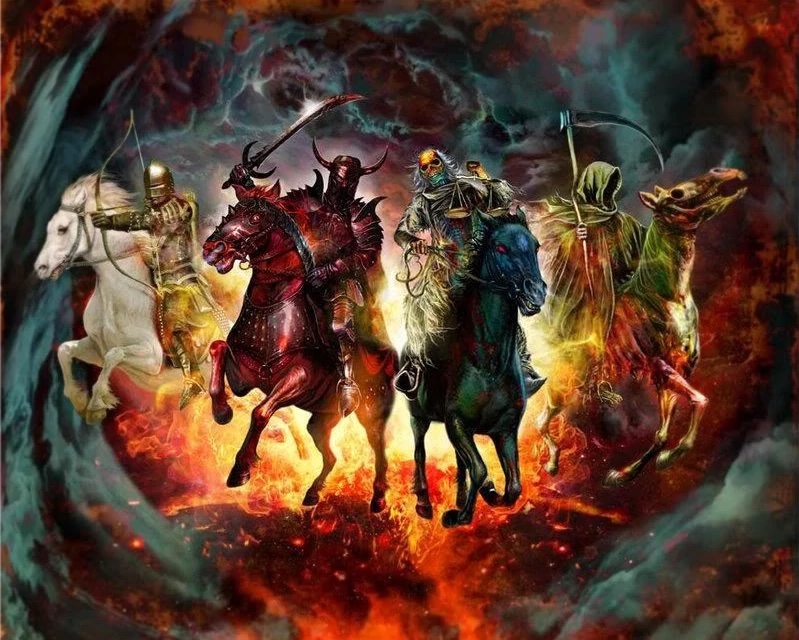
Revelation: a complex and intricate world of heavenly beings and exotic creatures

When we come to the end of the New Testament, we find that the final book bears the name of the apostle John. We know it as the book of the Revelation of John. This book, however, is dramatically different from the Gospel that also bears John’s name. It has its own utterly distinctive character and style.

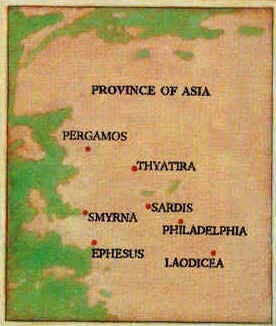
This book has some indications that it is to be understood as a letter. The opening section (1:1–20) includes an explicit identification of the author (1:4) and the location of his writing (1:9); a brief description of the situation of the recipients (1:9) along with a listing of the specific cities in which they lived (1:11); and a short blessing and doxology (1:4–5).

The book also contains the text of seven short letters, to the churches in these seven cities (2:1–3:22). The closing section (22:8–21) reiterates the role of the author (22:8) and concludes with a blessing formula (22:21). Each of these elements reflects traditional letter-writing style.

The author identifies himself as John (1:4, 9; 22:8) and notes that he was living on the island of Patmos (1:9); church tradition has equated him with John, the disciple of Jesus, as well as the author of the fourth Gospel and three letters. However, this book is strikingly different from the Gospel and the three letters.

Some have argued that the tone of the book might reflect the style of one of “the Sons of Thunder”, as the disciple John was labelled (Mark 3:17); but such a generalisation is not grounded in specific evidence.

Both the style of Greek employed and the way that biblical imagery is deployed sets this book apart from the Gospel which bears John’s name; whilst that book is steeped in biblical imagery and language, it is done in a more subtle and sophisticated manner.

The issues addressed in each of the letters which are attributed to John are internal church matters, quite different from the broader view of society which is in view in Revelation. These letters require separate consideration from the dramatic scenes which follow.

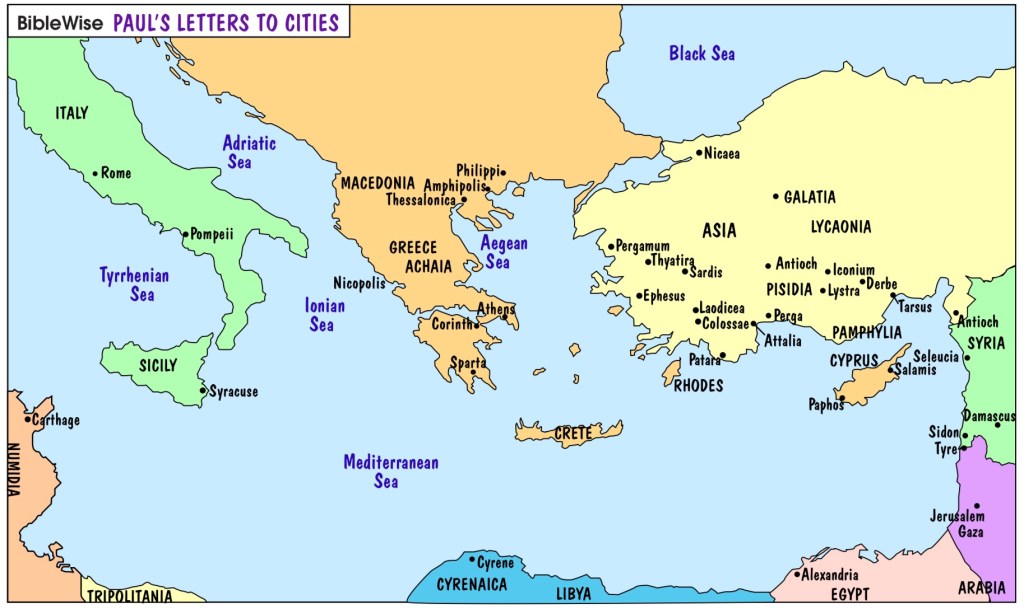
The recipients of the book, identified generically as “the seven churches that are in Asia” (1:4), are then named one by one, by city (1:11).  In the details of the seven letters which are addressed specifically to these seven churches (2:1–3:22), we might imagine that we will find insight into the specific situation in these churches, which is being addressed in this book.

Yet, a careful reading of these particular letters indicates that they are written and delivered in response to a dramatic vision of a distinguished figure with an ominous presence, who instructs the author to write the letters to the angels of the various churches (1:9–20).

Furthermore, the content of a number of these letters introduces additional elements which are striking and unusual—seven stars held in a man’s hand, seven spirits of God, seven golden lampstands, white robes and a white stone, immoral behaviours and strange teachings which exhibit Satanic influences.

As we read on, we discover that this turns out to be just a little “sampler” of the far more complex and intricate world of heavenly beings and exotic creatures, who populate a series of increasingly bizarre and disturbing visions throughout the rest of the book. The whole book is much more than a letter, or a series of letters.

The opening and closing chapters give a number of clues in this regard. The work is characterised as being words of prophecy (1:3; 22:10, 18–19). The prophecy which is presented in this book is summarised as what must soon take place (1:1; 22:6). Both at the beginning and at the end of the book, the author declares that he is looking forward in time, reporting events that will soon occur.

However, this is not simply John’s view of what is to happen; what he writes, he maintains, has first been made known to him by an angel (1:1; 22:6, 8). So, the visions reported in chapters 4–21 are encircled by strong assertions of their significance and import.

As the book ends (22:6–21), a series of statements and affirmations reinforce the importance of what has been revealed in these visions.

First, the author repeats the explicit claim that this was shown to him by an angel (22:8–9). The instruction he is given, to make this known (“do not seal up the words”, 22:10), ensures that the message will become public—the author must write letters and report visions to those who will listen.

Then the author intensifies the moment by reporting the direct words of Jesus: “It is I, Jesus, who sent my angel to you” (22:16); the message has a clear heavenly origin.

Next comes a dire warning not to tamper with the words as revealed by these means (22:18–19); the style is that of a solemn oath. The work closes with a prayer which looks to the way of Jesus in the future, “Come, Lord Jesus” (22:20), and a final formulaic benediction of grace (22:11, evoking the opening blessing of 1:4).

Ways of interpreting this book

The book of Revelation has probably become the most misunderstood book of the New Testament—because of the enigmatic nature, and the dramatic power, of these visionary sections. There are numerous theories seeking to ‘explain’ the meaning of the visions and to ‘prove’ the identity of the various figures who appear in these visions.

There are many approaches that have been taken to explain the vivid imagery which depicts the future judgement of humanity, which has led to this also being one of the most misused books of the New Testament. It has been interpreted by groups of fervent believers throughout the centuries as evidence that the end of the world was at hand.

How, then, do we seek to “understand” this book? When ever we turn to scripture, are we looking for clear doctrinal statements? In which case, this book could be mined as a source for teachings about “the last days”.

Or do we hope to encounter stories which help us to understand what has transpired in history? In which case, we will look for evidence that pins down the content of this book and grounds it in real-life events.

Both approaches require us to develop an extensive system of interpretation for reading this book. This is not a simple or straightforward task.

An alternative (and often employed) way of reading this book is to consider that it is prophecy which provides a set of predictions about the future. Sometimes this is seen to relate to the times immediately in the future of the writer, in the late 1st century. Other interpreters claim that the book is pointing forward in time, to events that will take place beyond the time of the reader, in our own times (that is, the 21st century). 

Some people will want to read the book simply as literature in its own right; as a work of art, it has the power to generate ideas and responses without necessarily tying these down to what is “true” or “accurate”. Ideological critics might wish to engage in dialogue with the book in relation to the violence which runs throughout the visions. 

Some readers have considered this book to be an expression of patriarchal power, caught up in the masculine enterprise of solving disputes through coercion and violence. Others have undertaken a search for an alternative vision of peacemaking in the midst of human warfare, as the lamb who was slaughtered is the one who ultimately triumphs.

How do you come to this book? What is the lens, the perspective, that you employ, to read this dramatic and different book?

Whatever the way is that we seek to approach our reading of this book, it will influence the kind of understanding that results. Because the work does not lay down one simple narrative line; because it is so rich and intricate in its symbolism; because it places layer upon layer, image upon image, it will produce multiple readings with multiple appreciations. Such is the complex nature of interpreting biblical texts.

The more powerful one who is coming (Mark 1; Advent 2B)

This coming Sunday, the Revised Common Lectionary takes us to the very start of the earliest written account telling the story of Jesus of Nazareth: to the beginning of the good news of Jesus, chosen one, Son of God (Mark 1:1).

But there’s much about Jesus that we “know” that isn’t evident from this earliest and shortest story. We can deduce that Jesus was born to a Jewish family in a small town in Galilee (northern Israel). The precise date of his birth is not known, although it is now thought to be somewhere around the year 4 BCE. The town was most likely Nazareth. Indeed, in this work (the Gospel according to Mark), he is clearly identified as Jesus of Nazareth (Mark 1:24, 10:47, 14:67, 16:6).

There is no story in this Gospel which places the birth of Jesus in Bethlehem, as we find in two later works (Matt 2:1-8; Luke 2:4,15; see also John 7:42). Elsewhere, he is known as “Jesus, the son of Joseph” (Luke 2:23; John 1:45, 6:42) and “the carpenter’s son” (Matt 13:55); but this particular Gospel contains no reference to the father of Jesus, only to his (unnamed) mother (Mark 3:31).

The region of Galilee was governed by Herod (Luke 1:5), and the whole of the land of Israel was part of the Roman Empire (Luke 3:1). Few people were extremely well off in the Roman Empire. A flourishing merchant class plied its trade on land and sea, but, like the vast majority of people in his country, Jesus did not enjoy a lavish lifestyle.

Jesus’ father, Joseph, worked in the building trade, probably as a carpenter. His mother (who was probably only 14 or 15 when he was born) had a number of other children after Jesus was born (see Mark 3:31-35). The family would have lived in a basic house made of mud or wood, and divided into two: one half for the family, the other half for their animals.

Jesus was raised as a good Jew. We can hypothesise much about his upbringing and faith. He knew the daily prayer of the Jews, the Shema (“Hear, O Israel, the Lord our God is One”). He also knew the major annual festivals of his people: Passover, Harvest (later called Pentecost) and Tabernacles.

Jesus attended the synagogue each Sabbath, where he watched the scrolls containing the Hebrew scriptures unrolled, before they were read (in Hebrew, the sacred language) and explained (in Aramaic, the language of the common Jewish folk). Jesus, like all his fellow–Jews, believed that his God, Yahweh, was the one true God. He followed the traditional practices of worship and studied the scriptures under the guidance of the scribes in his synagogue.

Since Israel had been occupied by foreign forces for many centuries before Jesus was born, first by Greeks, and then by Romans, he would have grown up in an environment where Greek (the common international language of the time) was spoken. Jesus would probably have understood Greek; but it would have been unlikely that he used Greek often; Aramaic was his native tongue.

Jesus would certainly have encountered the soldiers of the Roman Empire, and knew the kind of deference that they expected. Some of his contemporaries, in zealous obedience to the Torah, attempted to use force to overcome the Roman colonisers. Unlike them, Jesus did not take up arms in an attempt to rid the land of the Romans. He understood the constraints of living in an occupied land.

At a mature age (by tradition, in his early 30’s), Jesus made his way south towards Jerusalem, into the desert regions, along with other Jews of the day. Beside the Jordan River he listened to the preaching of a strange figure—a desert-dwelling apocalyptic prophet named John (Mark 1:4-8).

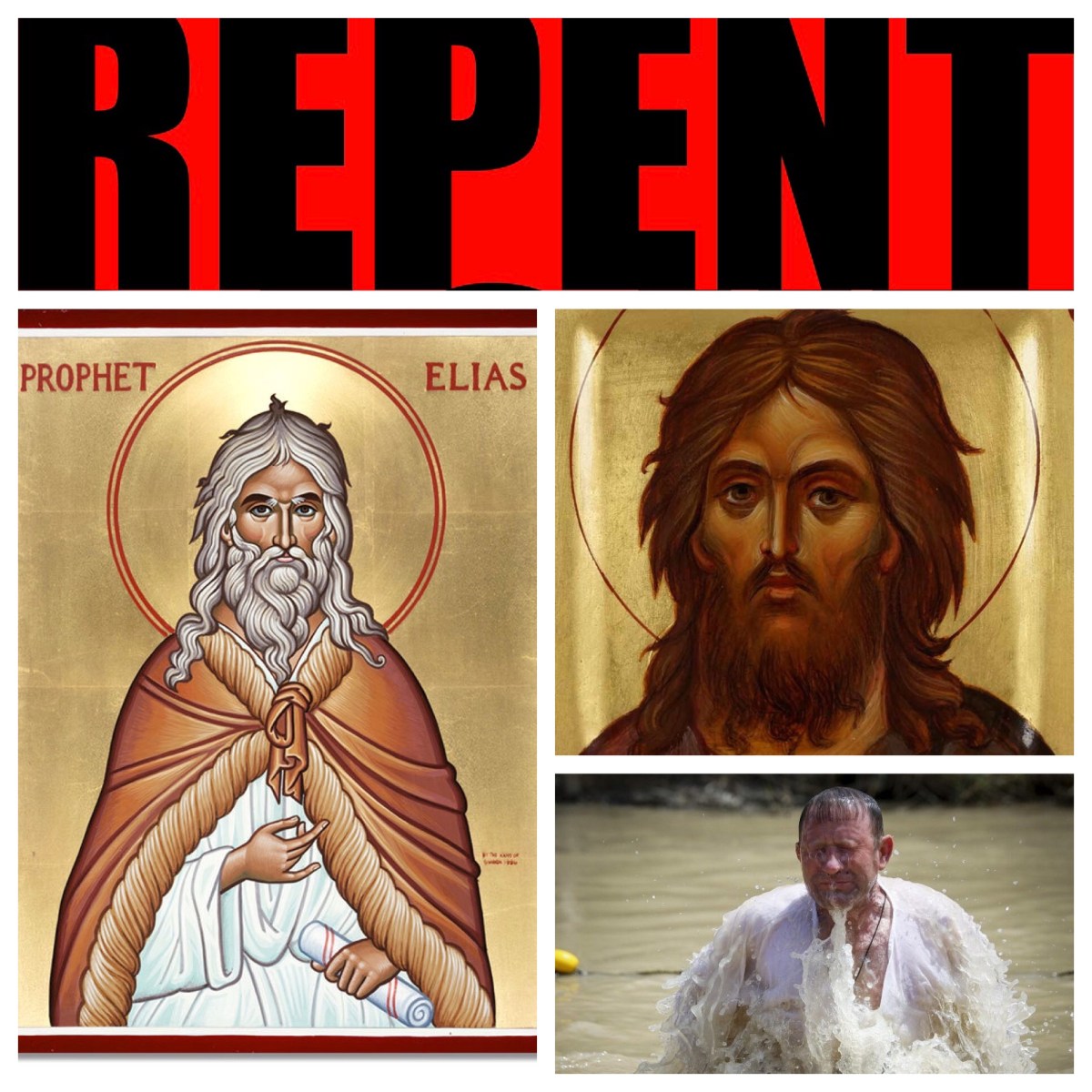
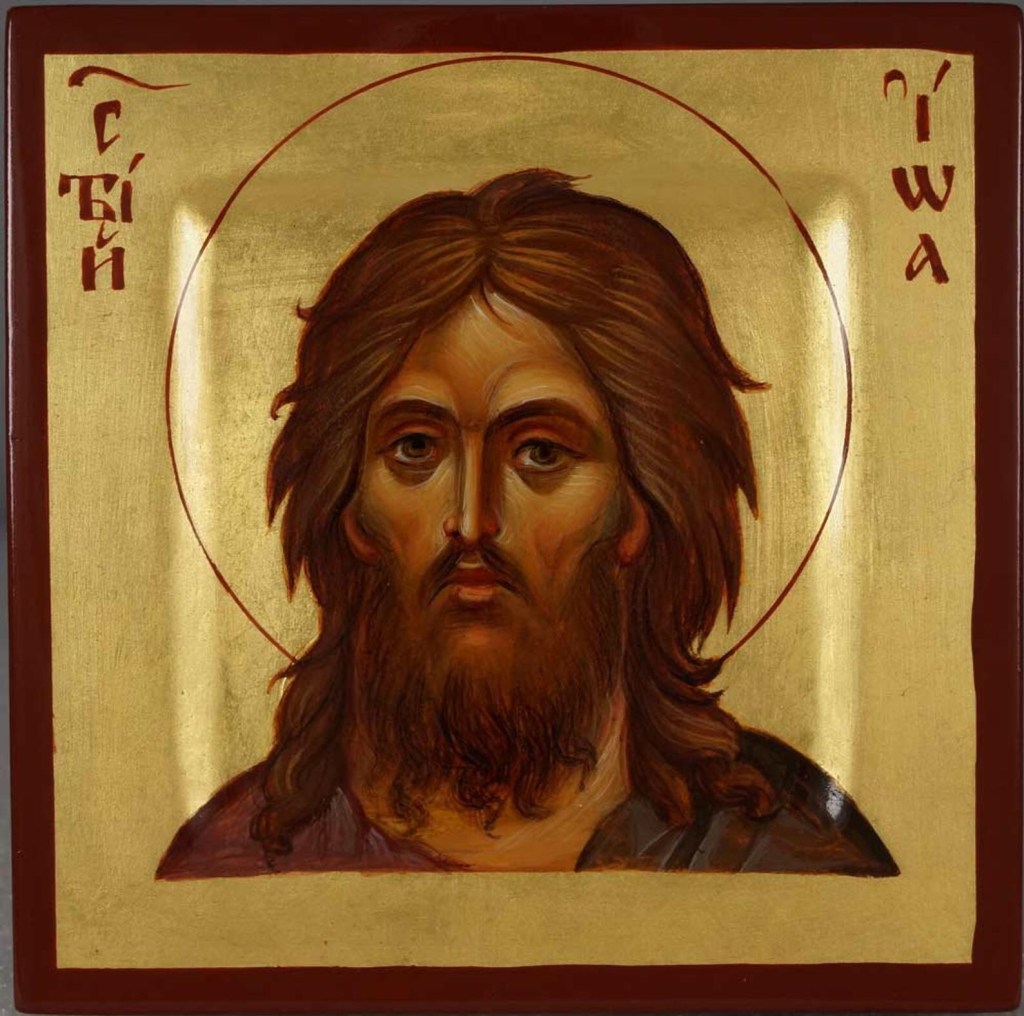
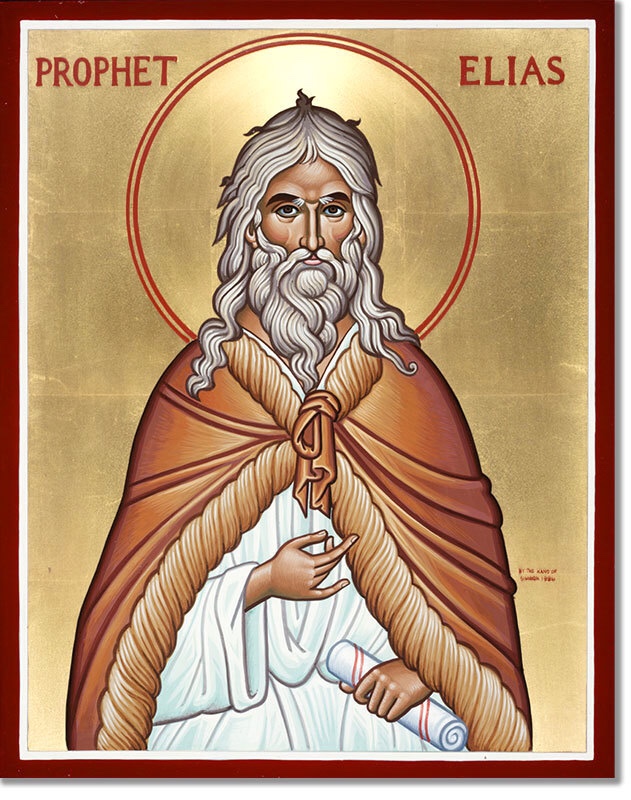
This man, named John, had a number of striking features (1:6). His dress, a tunic made of camel’s hair, with a leather belt, is reminiscent of Elijah the Tishbite, who dressed in a similar manner (2 Kings 1:8). His diet, comprising locusts and honey, evokes the ascetic life of a desert dweller ( …). The impression is clear: John intends to evoke the prophet Elijah.

Elijah exercised his role of prophet under the corrupt rule of Ahab and Jezebel. The most famous stories about Elijah take place in the desert, as the prophet speaks of a coming drought (1 Kings 17:1-7), and then challenges the dominant authorities, berating them for worshipping Baal rather than the Lord (1 Kings 18:20-29), and calling for their repentance (1 Kings 18:30-40). He is remembered as a fearsome figure with an apocalyptic message (Mal 4:4-6).

In Mark’s Gospel, the later desert-dwelling prophet, John, evokes the memory of the earlier desert-dwelling prophet, Elijah. He comes on the scene right at the start of the story, dressed in the manner of Elijah, and in a fulfilment of Isaiah’s prophecy (1:2-3), announces that he is preparing the way for the coming of a “more powerful one”, who will baptise God’s people with the Holy Spirit (1:7-8).

This is real “fire-and-brimstone” preaching! The fire in the message of “the more powerful one who is coming” is implicit in Mark’s story; it is made explicit in the accounts of Matthew and Luke, who each report John as saying, “he will baptise you with the Holy Spirit and fire” (Matt 3:11, Luke 3:16).

John’s message was the traditional prophetic call to repent (1:4). Prophets occasionally call directly for repentance (Isa 1:27; Jer 8:4-7, 9:4-5, 34:15; Ezek 14:6, 18:30; Zech 1:1-6), but so many of the oracles included in both major and minor prophets provide extended diatribes against the sinfulness of Israel and call for a return to the ways of righteousness that are set out in the convening with the Lord. When prophets called for repentance, they were seeking a striking and thoroughgoing change of mind, a reversal of thinking and acting, a 180 degree turnaround, amongst the people.

Accompanying this, however, was a very distinctive action that John the desert dweller performed, of immersing people into the river (Mark 1:5). Our Bibles translate this as “baptising”, but it was actually a wholesale dunking right down deep into the waters of the river.

Our refined ecclesial terminology of “baptism” is often associated, in the popular mind, with cute babies in beautiful christening gowns surrounded by adoring grandparents, aunties and uncles. This leads us far away from the stark realities of the act: being pushed down deep into the river, being completely surrounded by the waters, before emerging saturated and maybe gasping for air.

Such a dramatic dunking was designed to signify the cleansing of the repentant person. Repentance and baptism were necessary for the ushering in of the reign of God, according to John. Jesus appears to have accepted this point of view; it is most likely that his baptism was an intense religious experience for him. He underwent a whole scale change of mind, a reorientation towards the mission that was thrust upon him.

From the moment of this intense experience, Jesus was fervently committed to the renewal and restoration of Israel. His first words, as reported in this shortest and earliest account of his ministry, were clear and focussed (1:14-15). There are four key elements: fulfilment of the time, nearness of the kingdom, the need to repent, and belief in the good news. Repentance is pivotal in this succinct summary of his message. It was the heart of the message that Jesus instructed his followers to proclaim (6:12).

After this dramatic dunking by the desert dweller, Jesus left his family and began travelling around Galilee, announcing that the time was near for dramatic changes to take place. He gathered a group of men and women who accepted his teachings, journeying with him as he spread the news throughout Galilee. The intense religious experience of his dunking meant that the fierce apocalyptic message spoken by the desert dweller was lived out in a radical way in daily life by this group of deeply committed associates of Jesus. The intense religious experience associated with his dramatic dunking by the desert dweller had a deep and abiding impact.

Messengers like John have always been an important part of God’s “strategy” for working in human affairs. There are always those who are called to prepare others for God’s coming and to announce what God is doing.

The challenge for us in this Advent season, then, is to create an environment in which we can listen to the sharpness of the words spoken by God’s messengers, and recognise the ways that we ourselves are called to bring this challenging message to our world in our time. Aligning ourselves with the message of John is quite a challenge!

What do we know about who wrote the letters in the name of the apostles? (4)

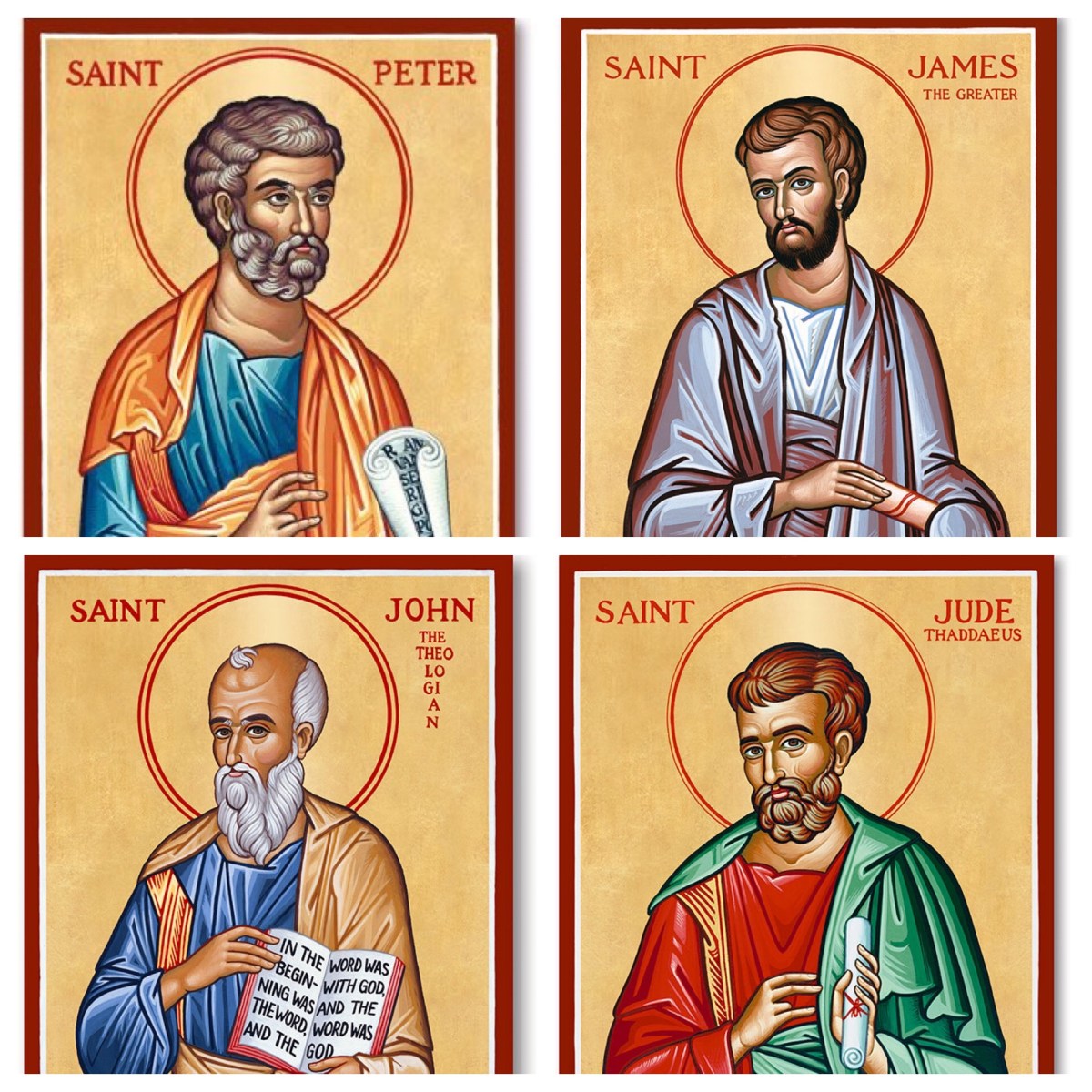
Alongside the thirteen letters attributed to Paul, there are another eight documents which are included in the New Testament which are, by tradition, identified as letters. Seven of them are attributed to other apostles: three to John, two to Peter, and one each to James and Jude. One further document is anonymous, in that it is identified by its recipients (to the Hebrews) rather than its purported author.

These eight documents are of varying lengths, addressed to a range of people in a variety of locations. They contain injunctions, exhortations, and commands about how to live in accordance with the way of Jesus.

They reflect the varying realities of some small, growing communities of followers of Jesus in the eastern Mediterranean region. These communities developed within the fertile fields of Second Temple Judaism. Their members were seeking to live out their faith under the realities of the Roman imperial power. Ultimately each of them contributed to the formation of what came to be known as the Christian Church.

In each case, the book is presented as a letter—although the character of some of these books suggests that they may not originally have been written as a letter.

These books provide us with insights into the variety of ways that the early church presented the good news and gave instructions about following the way of Jesus. Each in their own way points to the continuing presence of Jewish believers beyond the initial years of the Jesus movement.

Letters in the Name of John

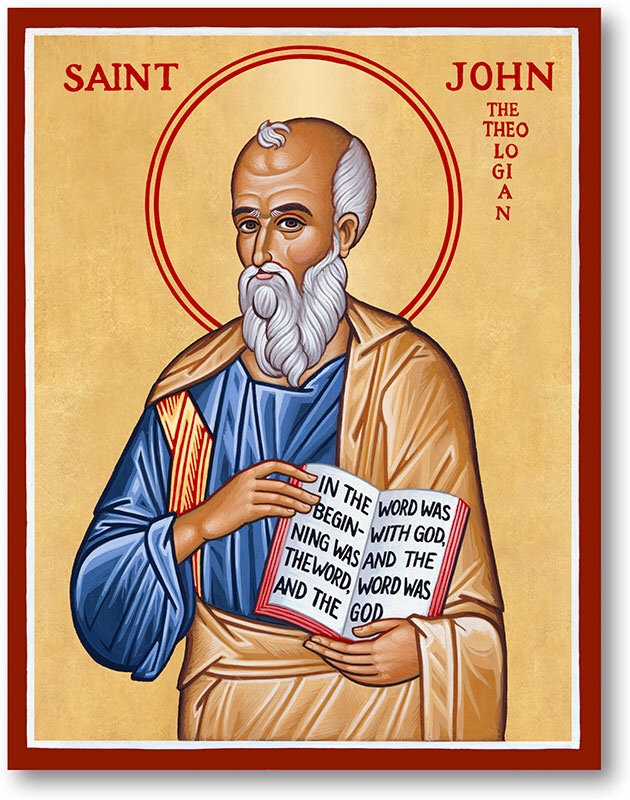
The author of 1 John is never named, but the opening verse makes the claim that the letter comes from one who has “heard…seen…looked at and touched” for himself, the very “word of life” (1:1). The inference is that the author has had personal contact with Jesus himself; in the third century, Irenaeus made the definitive claim that the letter was written by “John, the disciple of the Lord” (Against Heresies 3.16.5).

This claim goes beyond any direct assertion within the letter itself; although such a claim might be reinforced by the author’s reiteration of his privileged status as eyewitness (and earwitness): “we have seen it” (1:2), “what we have seen and heard” (1:3), “the message we have heard from him” (1:5), as well as a later reminder: “just as he has commanded us” (3:23).

Both 1 John and the Gospel of John state that they were “written … [concerning] “eternal life”, which was granted to people who “believe” in Jesus as “the Son of God”. The similarities suggest either common authorship, or an intentional allusion to the Gospel by the author of the letter. The differences in style and theology between the two works are subtle, but they do reinforce the latter option as preferable.

One clear difference to be noted is that, whilst the Gospel makes frequent references to Hebrew Scripture (both in quotations and by allusion), the letter betrays little awareness of these scriptures, other than what had already been mediated through the Gospel. The strong Jewish context of the Gospel is not evident in this letter.

The identity of the author of 2 John, and the recipients of this letter, has occasioned debate; in neither case is the letter unambiguous in what it says. The “elect lady and her children” (1) could be specific historical individuals, but are usually interpreted in a symbolic fashion, referring to a community of believers with their patroness. A later comment supports this interpretation, with a reference to “the house” (10) suggesting a community of believers meeting in a house. (Evidence for this practice is to be found in Acts and Paul’s letters.)

“The elder”, likewise, is anonymous; similarities in vocabulary and theology point to connections with the author of the first letter of John, and to the author of the Gospel (as noted below). A link with the apostle John depends on decisions made about the authorship of these documents.

A comment in the first church history, written in the early fourth century by Eusebius, provides a problem for this last claim. Eusebius refers to the second century leader, Papias, and notes that he apparently differentiates between John, one of “the disciples of the Lord”, and “the elder John” (Ecclesiastical History 3.39.3–4). Nothing in this letter itself supports a claim for apostolic authorship.

In 3 John, we might readily assume that “the elder” (1) is the same person as the author of 2 John; at a very basic level, there is strong similarity of terminology in phrases used, such as “whom I love in truth” (1), “I was overjoyed” (3), the reference to writing “with pen and ink” (13), and the final greeting (15a).

More significantly, key theological features of the Johannine Gospel and the other two letters of John are evident in this letter: a commitment to truth (1, 3, 4, 12) and a valuing of love (6). There is also a sense that the local community is part of a wider movement, in the exhortation to act “faithfully” towards fellow believers, even if they are not personally known by the recipients of this letter. (The Greek term of verse 5, adelphos, literally means “brother”; NRSV “friends” rightfully gives it an inclusive sense).

A Letter in the Name of James

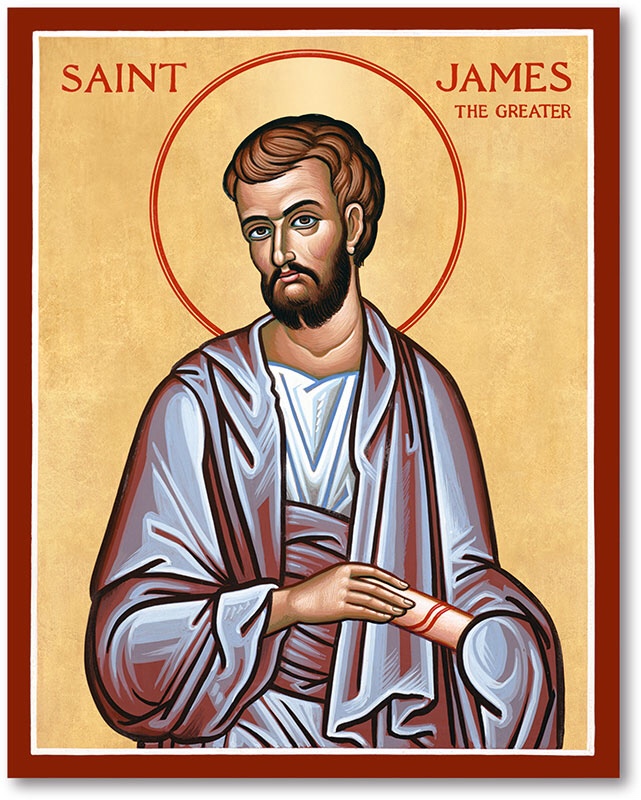
The description of the author of this treatise is short and to the point: “James, a servant of God and of the Lord Jesus Christ”(1:1). James was a well-known figure; he is named amongst the brothers of Jesus (Mark 6:3; Matt 13:55; Gal 1:19) and seems to have been the leader of the church in Jerusalem (Acts 12:17; 15:20; 21:20).

Was the treatise written before James was put to death in 62CE? (Josephus reports his death in book 20 of his Jewish Antiquities—not to be confused with James, the son of Zebedee, whose death in the year 44CE is noted at Acts 12:2.) The knowledge of Jewish scripture and traditions shown in this work, as well as its extensive set of allusions to the teachings of Jesus, support the possibility that James himself wrote it—or, more likely, preached it, with someone else writing it down. There are many features to support the view that it originated within the early Palestinian (even Jerusalem) part of the Jesus movement.

The refined style and extensive Greek vocabulary employed throughout suggest it may have been written by one schooled in Greek rhetoric and literature—and thus, unlikely to have been a Jewish peasant. So, the book might have been written in the form we have it after the death of James, perhaps as statement of his authority and teaching within the Jerusalem church, in order to encourage other congregations with Jewish members.

One verse describes these congregations as “your synagogues” (2:2). Some scholars have claimed that it must have been written much later, even in the second century, by a person writing in the name of James, as a way of claiming his authority for the teachings proposed in this letter. This view seems less persuasive these days.

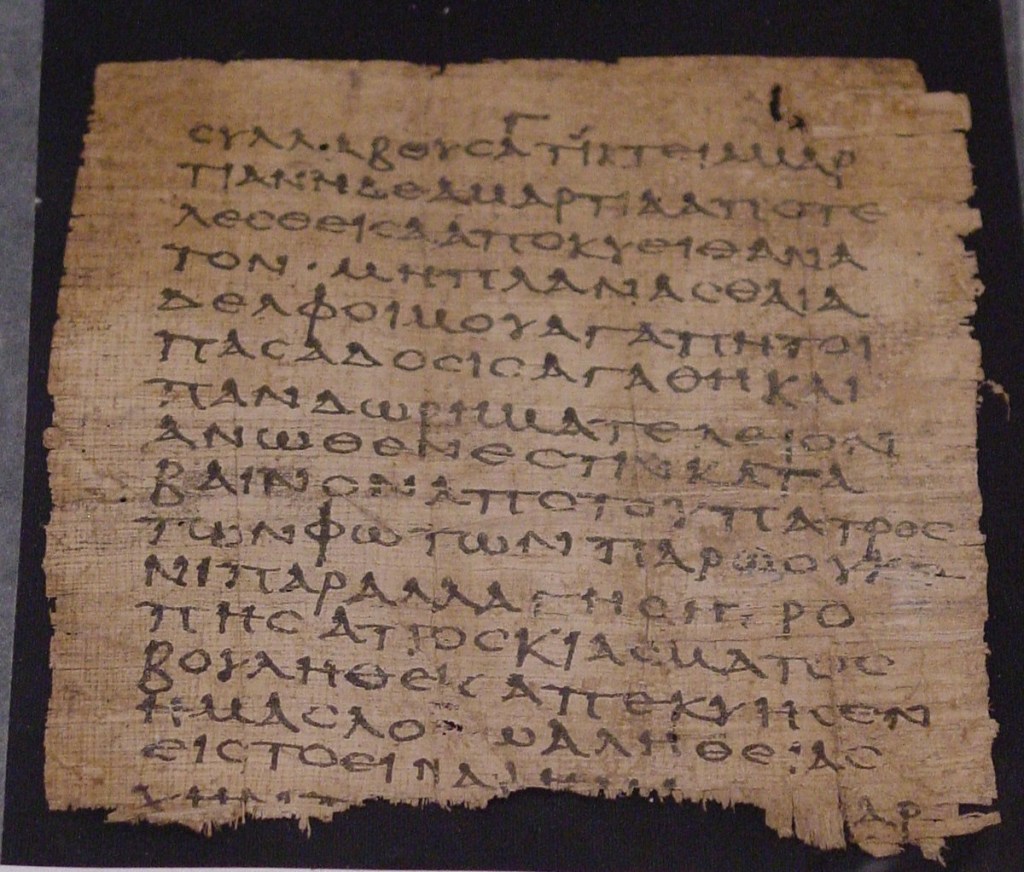
James 1:15-18 on papyrus 23, dated around 250 CE

Letters in the Name of Peter

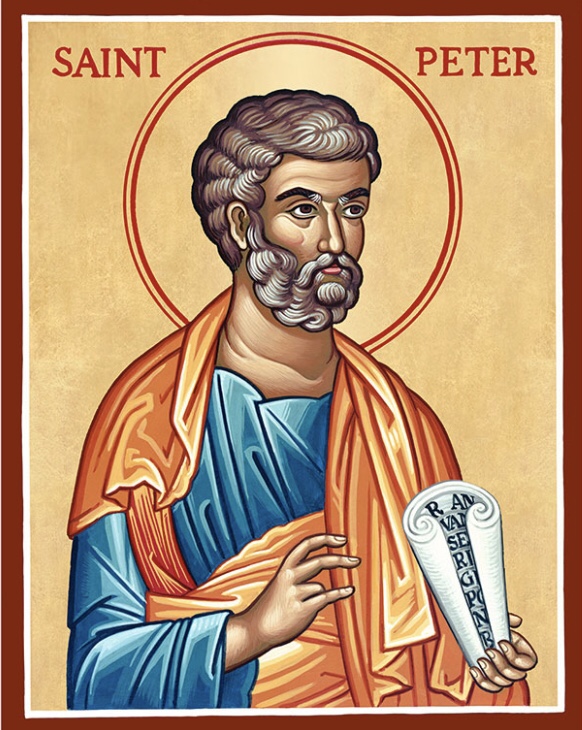
The author of 1 Peter is announced simply as “Peter, an apostle of Jesus Christ” (1:1). This would suggest a letter from a writer with close personal links with Jesus. The substance of the letter sits uneasily with this claim. The letter’s refined style of language, and especially the use of a number of classical Greek words, is rather unexpected for a Galilean fisherman.

There are a number of references to the suffering of Jesus (1:11; 2:4, 21, 24; 3:18; 4:1, 13; 5:1), but no other indication that the author knew anything of the earthly ministry of Jesus. Instead, the letter reflects the Christology of the developing movement, interpreting the death of Jesus in sacrificial terms (1:18–19; 2:24; 3:18) and attesting to him as the one who is risen (1:3; 3:21), a mediator with God (2:5), to be acknowledged as Lord (3:15), now dwelling with God in glory (3:22; 5:10), whose future return is awaited (1:7–8, 13; 4:13; 5:4).

The author claims to have been “a witness of the sufferings of Christ” (5:1)—a curious claim to be made by Peter, if the accounts of his denial and desertion of Jesus, found in the canonical gospels, are to be believed! He also describes himself as an “elder” (5:1), which we would not expect to be a term to be adopted by Peter. The word indicates the author’s leadership role within the developing community of faith.

The identification of this community as being “in Babylon” (5:13) is frequently interpreted as being code for Rome, drawing on the same tradition found in Revelation 17:1–18:24. The link with Mark (5:13) has been taken as a further indication of Roman origins, as Mark was alleged to have been in Rome with Peter. However, these connections are faint, revealing nothing of substance about the nature or purpose of the letter.

The close of the letter indicates that it has been written “through Silvanus” (5:12), leading some interpreters to suggest that Silvanus, as secretary, placed a more educated and polished mark on the letter as he transcribed the author’s thoughts. But an alternative translation of this verse is possible, by which Silvanus is designated as the one who delivers the letter, rather than being involved in its writing.

Thus, this Silvanus may well be a different person from the Silvanus who is known as a fellow-worker with Paul (2 Cor 1:19; Acts 15:40) and is called the co-author, with Paul, of both letters to Thessalonica. As he was a member of the Pauline group, we would expect more Pauline influence to be evident in 1 Peter if he was involved in its creation.

In fact, the letter shows more similarity to the “pastoral” letters attributed to Paul. Like them, it is more feasible that this letter was written after the death of the apostle, in his name, in order to encourage and guide believers in what appears to have been a time of increased suffering. Jesus is invoked as the guide and example for believers in this situation.

The first verses of 2 Peter follow the pattern of the opening address of a letter: “Simeon Peter…to those who have received faith…grace and peace” (1:1–2). However, nothing else reflects standard letter practice. There are no closing greetings, simply a reference (unique amongst New Testament books) to Paul and “all his letters” and a warning not to be swayed by erroneous interpretations of them (3:15b–17). The work ends abruptly with a truncated benediction (3:18b).

The work presents as a letter, but its true purpose is signalled by a series of revealing phrases in an opening statement. With his death in view, the author asserts, “I intend to keep on reminding you …to refresh your memory…so that you may be able to recall these things” (1:12–15). Rather than a letter, the work is more accurately characterised as a farewell testament, delivered by a teacher to his disciples with his imminent death in view, to ensure that his teaching is remembered after his death.

Farewell testaments can be found in Jewish literature (Gen 47–49; 2 Sam 23; 2 Esdras 14; 2 Baruch 57–86; Testament of Moses; Testament of the Twelve Patriarchs) as well as in the New Testament (John 14–16; Acts 20:17–38; and w there are elements in 2 Timothy).

The content of the teaching preserved in 2 Peter, however, is distant both from the teachings of Jesus (which the historical Peter would have heard) and from the first letter attributed to Peter. Rather than a letter penned by the disciple Peter, this book is a later work, written in the name of Peter in order to gain authority, to encourage believers at the end of the first century to hold fast to their faith.

A Letter in the Name of Jude

The name of the author of Jude, in Greek, is Ioudas. This is the same name as given to the infamous Judas, son of Simon Iscariot, whose crucial key role in the story of Jesus is featured in all four Gospels. English translations usually render this as Jude—probably to differentiate him from Judas Iscariot.

Four other men by this name also appear in the New Testament: a Galilean rebel (Acts 5:37), a disciple of Jesus (Luke 6:16; Acts 1:13; John 14:22), a resident of Damascus (Acts 9:11) and a co-worker of Paul (Acts 15:22, 27, 32).

The opening of the letter emphasises the authority of the writer as one who was close to Jesus: “Jude, a servant of Jesus Christ and brother of James”; he is noted amongst the brothers of Jesus at Mark 6:3 and Matt 13:55.

Could such a person as the brother of James and Jesus have written this work? It has a high quality of Greek syntax and vocabulary, which throws doubt on the claim; and the generalised formulaic and stereotypical language used has led many scholars to date it later in the first century, or even into the second century, by a believer employing the name of Jude to lend authoritative weight to his writing.

A reference to “the words which were previously spoken by the apostles” (17) probably indicates that the apostles were recognised as a distinct group by the time the document was created—suggesting a later rather than earlier date.

A Letter to the Hebrews

The author of Hebrews is most certainly not Paul, as some ancient church writers maintained. Despite claims that the work was written by various individuals mentioned in other New Testament books (Apollos, Priscilla, Silvanus), it is not possible to be absolutely certain about the identity of the author.

The single reference to a known individual, Timothy, in the closing greetings (13:23), does not guarantee that the work came from Paul, an associate of Paul, or even a Pauline circle. The use of a refined Greek style, the intense engagement with Hebrew scripture, and the use of typological interpretation (8:1–7, 13; 10:1, 11–13) together suggest an educated Hellenistic Jew who had come to faith in Jesus as Messiah and was a powerful preacher of the Gospel.

This writer notes that the message of salvation was “declared at first through the Lord, [then] attested by those who heard him” (2:3), thus acknowledging a chain of tradition lying behind the work and indicating that it was probably written towards the end of the first century.

Likewise, the precise identity of the recipients of this letter cannot be known, although some things can be said about them in rather general terms. The reference to “city” (13:14) might suggest an urban context, whilst notes of the good works carried out by the recipients (10:34; 13:16) and a warning to avoid “the love of money” (13:5) might point to a group with a degree of wealth.

The author describes the recipients of this work as being “dull in understanding” (5:11) and needing someone to teach them (5:12). This is the task that is undertaken in this “word of exhortation” (13:22). The document which we label as a letter is more accurately understood as an extended sermon, offering a “word of exhortation”.

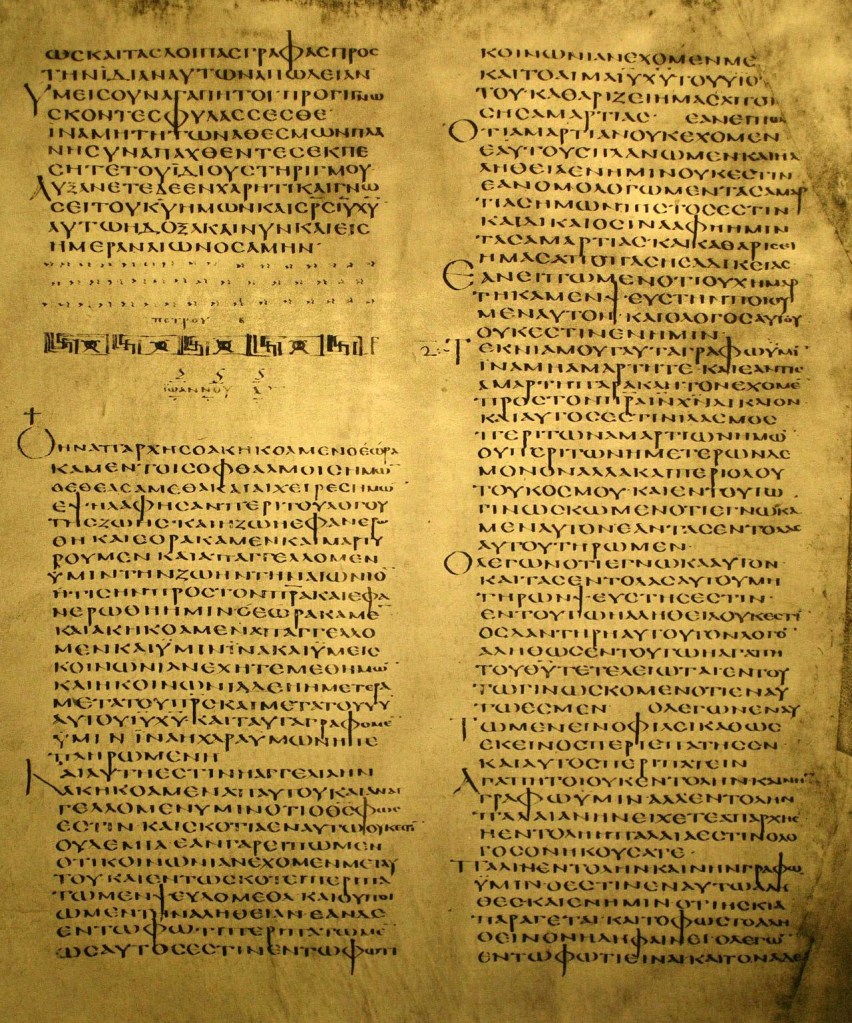
The ending of 2 Peter (3:16–18) and the beginning of 1 John (1:1-2:9)
on the same page of Codex Alexandrinus (dated around 400–440 CE)

For previous posts on the authorship of books in the New Testament, see https://johntsquires.com/2020/10/15/what-do-we-know-about-who-wrote-the-new-testament-gospels-1/ 

https://johntsquires.com/2020/10/15/what-do-we-know-about-who-wrote-the-new-testament-gospels-2/

https://johntsquires.com/2020/10/04/what-do-we-know-about-who-wrote-the-letters-attributed-to-paul-3/

Towards the Coming (Mark 13; Advent 1B)

Keep awake! These are the last two words of a dramatic passage towards the end of a work entitled the beginning of the good news of Jesus, chosen one. We know this by the name bequeathed by Christian tradition: “the Gospel according to Mark.”

I Keep awake!

Keep awake! are the last two recorded words spoken by Jesus in this long speech, given to his disciples outside the Temple in Jerusalem. This is the last long speech of Jesus recorded in this Gospel, uttered just hours before he is arrested and put on trial for blasphemy.

After his arrest, Jesus, the master story-teller, the wordsmith supreme, is uncharacteristically silent in this story (14:61, 15:5). He speaks only once at his trial before the Sanhedrin (14:62), and once again when brought before Pilate (15:2). So this speech to his disciples (13:5-37), and especially these last two words, keep awake!, are significant and important.

Keep awake: these two words set the theme for the four weeks of Advent, that start this,coming Sunday. Advent literally means towards the coming. It is what pregnant women do; they look towards the coming of the expected child. It is what young children do, as dinner time approaches; they look towards the coming of their working parents, returning home to share in the evening meal and associated rituals.

It is what we are called to do during these next four weeks; to look towards the coming of Jesus, the one whose birth we celebrate on Christmas Day.

And as we look towards the coming, we are instructed to keep awake (13:37, and see also 13:35), to keep alert (13:33), be alert (13:23), and beware (13:9 and 13:5).

II Prophetic oracles and apocalyptic writings

The context for these exhortations is instructive. These words are uttered to people who will find themselves in the midst of a series of challenging crises. There will be wars and rumours of wars (13:7), earthquakes and famines (13:8), persecution and trials (13:9-11), ruptures within families (13:12) and unwarranted hatred (13:13). Sacred places will be despoiled (13:14) and religious imposters will flourish (13:22), while sufferings will be widespread (13:19) and a global environmental disaster will ensue (13:24-25).

These events are all standard elements in apocalyptic works of the time—writings which were created in the midst of events perceived as tribulations and catastrophes, out of which a message of hope was born. Apocalyptic writings developed after the return from Exile of the people of Israel, from the uprising led by the Maccabees in the 2nd century BCE onwards, and were particularly common in Jewish literature through until the century after the time of Jesus.

Apocalyptic emerged out of the oracles delivered by the prophets in earlier centuries, when kings were in power in Israel. The prophets spoke out against the injustices seen in their society. Their oracles spoke of the punishment that they believe God was going to bring on the people. Over time, through the experience of exile, captivity, and then return to the land under foreign rule, the message of doom was strengthened.

The prophets, and then the apocalyptic works, include many references that resonate with what Jesus is saying in his speech in Mark 13. The threat of future wars is noted in Isaiah 19:2, Jeremiah 51:46, and Daniel 7:21. Graphic prophecies in Daniel 9:25-26 and 11:40-45 intensify this portrayal of the wars that are to come.

2 Baruch 70:7-8 ramps this up even more: “And they shall come and make war with the leaders that shall then be left. And it shall come to pass that whoever gets safe out of the war shall die in the earthquake, and whoever gets safe out of the earthquake shall be burned by the fire, and whoever gets safe out of the fire shall be destroyed by famine.”

Hatred and falling away from God is included in a number of apocalyptic writings: 1 Enoch 90:22-27, 91:7, 93:9, Jubilees 23:14-17, and in one of biblical commentaries found amongst the Dead Sea Scrolls, 1QpHab 2.1-10. That sacred places will be despoiled is described in the Testament of Levi 15:1 and the Apocalypse of Elijah 2:41 4:21.

Suffering and distress are signs of what is to come in many books within apocalyptic elements: in the prophetic oracles of Jeremiah 30:7 and Joel 2:2, in another scroll from the Dead Sea Scrolls, 1 QM 1.11-12; and in the Testament of Moses 8.1.

Cosmic signs are associated with the coming time of doom. The Lord will shake the earth, according to Isaiah 13:13, 24:19; Joel 3:16; Amos 9:1,9-10; Haggai 2:6,20-22; and 2 Baruch 70:8, cited above; and see also Job 9:6.

Flashes of lightning are noted at Psalm 97:4, in prophetic oracles at Isa 62:1, Zech 9:14, and the Epistle of Jeremiah 61, as well as in 2 Baruch 53:9. What looks quite like an eclipse is regularly noted in prophetic oracles: Isaiah 13:10, 24:23, 34:4; Jeremiah 4:23; Ezekiel 32:7-8; Joel 2:10, 30-31; Amos 5:20; and Zephaniah 1:15. It also features in apocalyptic writings such as 1 Enoch 80:4; 4 Ezra 5:4-5; and the Testament of Moses 10:5 (and see also Job 9:7).

The darkness that ensues takes us back to the chaotic origins recounted in Gen 1:2, evoked again in Jer 4:23. Darkness is understood to be a sign of judgement in the prophets: Exodus 10:21-29, Isaiah 13:9-16, Jer 13:16, and Amos 5:18,20.

“If this is what life is like now”, the argument of apocalyptic writings usually goes, “with all of these catastrophic events tumbling one upon another — then because of our faith, we have confidence that the future will be a time when God will intervene, dramatically and affirmatively, to ensure that justice is done.”

And so, hope is affirmed, even as these works provide extensive lists of the terrible hardships and dramatic crises being experienced. Indeed, hope itself features in prophetic oracles (Isa 29:17, 38:18, and 51:5), as well as apocalyptic works such as 4 Ezra 6:25, 7:27, and 9:7-8, and 2 Baruch 70:9.

III Hope in the midst of despair

The apocalyptic signs and portents noted in Mark 13, whilst resonating with ancient experiences and expectations, also seem to have some resonances with our current situation, and the year of serial challenges that we have all experienced.

What has 2020 been like for you? For myself, I have experienced suffocating smoke, followed by the threat of a spreading fire in a nearby national park, clearly visible from my front door, even if still a few kilometres distant.

I myself was not directly damaged by the fires, but I have seen numerous frightening images and videos of firefighters standing firm right in the midst of terrible firestorms, heart-wrenching images of animals who have been hurt or whose habitat was destroyed, and so many tragic scenes of people surveying the devastation wrought by the fires to their homes and possessions. That in itself felt cataclysmic enough to be “apocalyptic”.

However, the fires, there came a very sudden and severe hailstorm, and then the frightening irruption of a pandemic bearing a virus that spread rapidly across the globe. Smoke and fire, hail and plague: it has felt like a massive year!

Since the impact of COVID-19 became evident in March, we have all experienced restrictions on how we gather and how we live, the stresses that this placed on our regular ways of living, and in some cases the fracturing of relationships that ensued. Some people have experienced illness or loss of friends or loved ones because of the pandemic.

Community grief is deep in some regions. Recovery from the bushfires in the midst of a pandemic is a hard task. Envisaging life in the “new normal” presents multiple challenges to everyone.

And the environmental warnings from what we have experienced are clear and strong. Our climate is changing, and the way it is impacting our society is significant and enduring. No longer are we faced with the task of mitigation; we need to take seriously the process of adaptation, at a rate more rapid, more,extensive, and more insistent than we might previously have considered. The “new normal” must be very, very different, indeed.

The challenge offered to us by this passage, as we read it this year, in the context of all that has transpired, is to hold fast to the note of hope, that Jesus offered his first disciples, and which holds still for us today.

In the midst of all these trials, Jesus affirms that the one who endures to the end will be saved (13:13). He assures his followers that the Lord has cut short those days (13:20), and looks to the time when the [Lord] will send out the angels, and gather his elect from the four winds (13:27). Once again, the speech in Mark 13 draws from standard apocalyptic elements to provide assurance in the midst of despair.

How might these words of hope be the dominant notes for us at the end of 2020? Each one of us needs to work out how we respond, what we can do, who we can work with, how we can adapt. Reimagining the way we gather, worship, shop, visit, eat together, and travel, requires dedicated commitment over the coming months. It is a task for us all.

And if we continue to hold to that task, then perhaps this imaginative story might actually become the story of our future: The Great Realisation

See also The kingdom is at hand; so follow me. The Gospel according to Mark. – An Informed Faith (johntsquires.com)

https://johntsquires.com/2020/12/07/the-witness-of-john/

https://johntsquires.com/2020/12/01/advent-two-the-more-powerful-one-who-is-coming-mark-1/
The kingdom is at hand; so follow me. The Gospel according to Mark (Year B)

Jewish people of the first century lived in one of two ways. Some were members of the nation of Israel which was occupied by a foreign military force, the Romans. (The Romans called this region Palestine). Others were members of a minority group of Jews who were permitted to exist in another nation. (These are known as Jews of the Dispersion).

Life in such situations demanded compromise. For Jews living in the Dispersion (also called the Diaspora), the degree of compromise might vary—but compromise was inevitable. For those living within Israel, the need for compromise was a constant irritant. Some groups, like the Sadducees and the priests, accepted the compromises and did well out of them. Many common folk simply made the best of the situation.

Others resented what was imposed on them. They looked back to an earlier time in the history of Israel, when the troops of another foreign force, the Seleucids, held power in Israel. An honoured group of Jews, the Maccabees, had led an armed insurgency which brought victory over the Seleucids in the years 167 to 164 BCE. For a time, Jews had ruled Israel once again.

From the time that Roman troops had occupied Palestine, in 63 BCE, there was tension. It would wax and wane according to the attitudes of the Jewish leaders and the political imperatives at work through the Roman governors. In the year 66, the governor, Florus, demanded money from the Temple treasury in Jerusalem. This was too much for some Jews; hostilities broke out in various places across Palestine. The war which resulted lasted eight years; in 70CE, the Temple in Jerusalem would be burnt to the ground, and by 74CE, all active Jewish resistance to the Romans would be quashed.

In this setting, amidst the battles fought in Galilee, Samaria and Judaea, apocalyptic hopes were inflamed. Many of the Jews actively fighting the Romans believed that their actions would help to usher in the long-promised kingdom of God. This kingdom would represent a new era, in which God would reign over Israel and foreign troops would be banished.

The term apocalyptic describes this attitude. It comes from the Greek word apokalupsis, which mean ‘unveiling’ or ‘revealing’. It indicates a belief that God would act to unveil, or reveal, the new era.

Perhaps a significant number of the followers of Jesus also believed that the kingdom of God was drawing near, as Jesus had proclaimed some decades earlier, in the events of their own day. After all, Jesus spoke the language of apocalyptic and told stories about the kingdom that God had in store for his people.

Should the followers of Jesus, then, join with the rebel groups in rising up against Rome? Was the way to the kingdom to be won through conflict, martyrdom, and military victory? Or was there another way?

Remarkably, one writer chose to answer these questions by writing about the way which would have been chosen by Jesus. The earliest written account that we have for the life of Jesus, which opens with a declaration about the beginning of the good news of Jesus—which we know, by tradition, as “the Gospel according to Mark”—appears to deal with precisely these issues as it assembles and reshapes many of the stories told about Jesus.

It is strongly marked by apocalyptic overtones, from the urgent message which Jesus utters (the kingdom is at hand, 1:14–15) to his parting description of
apocalyptic terrors (there will be earthquakes and terrors … you will be hated by
all … there will be suffering, such as has not been from the beginning of the
creation … the powers in the heavens will be shaken … they will see ‘the Son of
Man coming in clouds’ with great power and glory
, 13:3–37).

This Gospel was written for first century Jews who were who were caught up in a fervent hope that the kingdom of God was soon to be ushered in, but who were also struggling with what it meant to follow the way of Jesus.

So Mark tells the story of Jesus, a person who submitted to his death, at the hands of the Romans, without raising any weapons in defence. The way of Jesus, according to Mark, was the way of suffering obedience and faithful discipleship. The answer to the questions posed lay in following the way of Jesus. And this Gospel particularly emphasises the necessity of faithful discipleship; follow me is an important refrain (1:17, 19; 2:14; 10:21).

The high cost of this following is also made clear in Jesus’ teachings. As the earliest readers of this Gospel struggled to live out their faith in a vibrant but challenging situation, they remembered and treasured stories about Jesus’ travels to Gentile lands (4:35–5:21; 6:45–8:13). During these travels, Jesus showed that the kingdom would include people who were regarded by many Jews as being unclean, dishonoured, and beyond salvation: disabled people, Gentiles, women, and mentally ill (i.e. demon-possessed) people.

So this account of Jesus is infused with drama and intensity as the story moves from one incident to the next. Yet, the whole Gospel is a carefully-crafted piece of literature. The structure of the work conveys the significance of Jesus and the necessity of faithful discipleship in the midst of suffering. (See my outline of this Gospel below.)

Mark writes to help believers understand what it means to follow Jesus and to take up our cross (8:34) in the time of expectant waiting as the kingdom is at hand (1:15). Just as Jesus crossed over the margins of society, so must we; as Jesus suffered, so may we; but as he lives, so may we know the presence of God’s chosen one with us. The Gospel story is an invitation to follow Jesus along this pathway.

This year we have the opportunity to listen to the story of Jesus as it is offered in this Gospel. Each Sunday, the lectionary offers a selection from the beginning of the good news of Jesus the chosen one. May we listen, hear, engage — and be transformed.

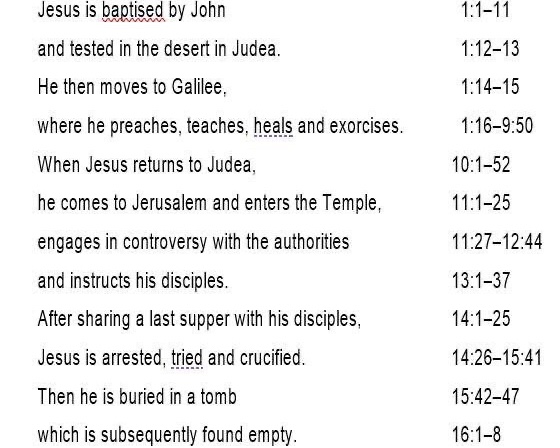
An outline of the story told in the beginnings of the good news about Jesus

This blog draws on material in MARKING THE GOSPEL: an exploration of the Gospel for Year B, by Elizabeth Raine and John Squires (self-published 2012).

Women in the New Testament (2): six problem passages


This post continues the discussion begun in https://johntsquires.com/2020/11/19/women-in-the-new-testament-1-the-positive-practices-of-jesus-and-the-early-church/

There are six passages in the New Testament which traditional (patriarchal) interpreters have considered to be warrant for the view that women hold an inferior, subordinate position in the church and in society.

In many cases, however, the constraints placed upon women in these passages might be said to be due to the particular circumstances in which the letter was written. They do not provide prescriptive commands that apply at all times and in all places to all women.

In what follows below, I offer some very general comments about each passage, and some links to more detailed discussion of the issues involved in interpreting these passages in the contemporary context (many are from the wonderful blog of Marg Mowczko).

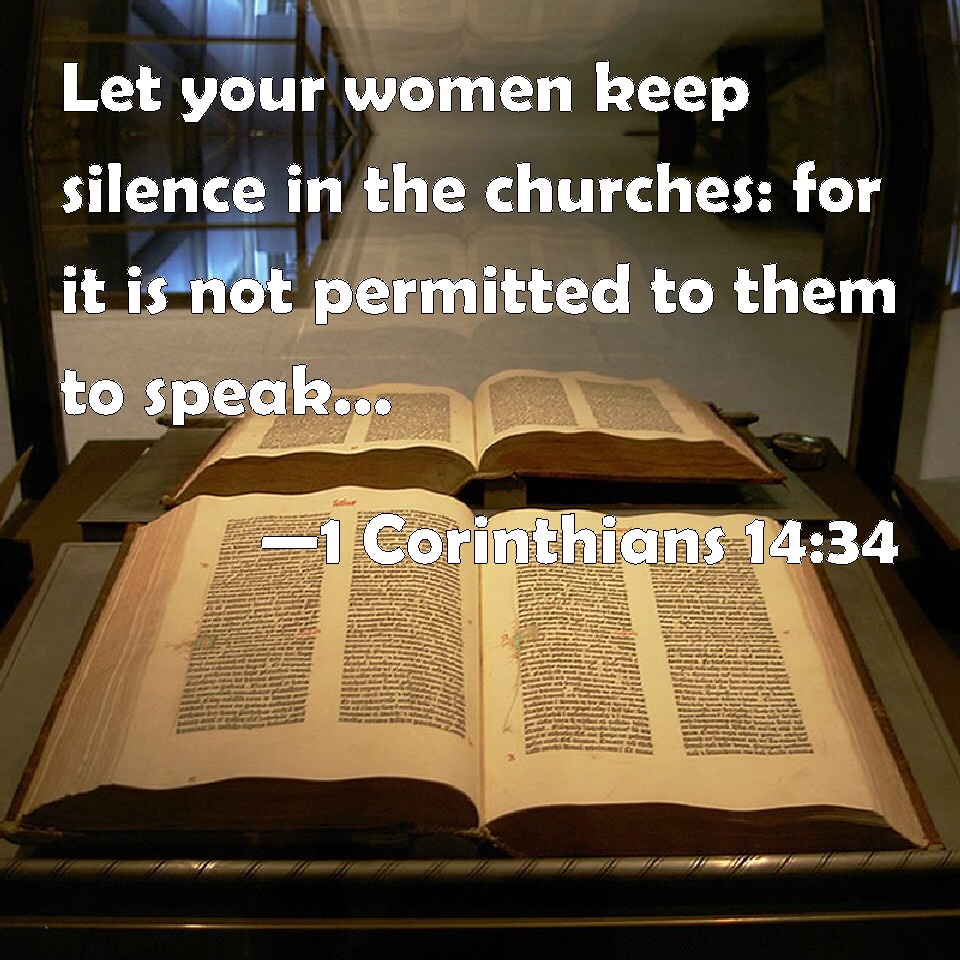
1 Corinthians 14:33b-35. The invocations to women to be silent in church most likely form part of an interpolation into the text by a later writer, and were not written by Paul. However, even if this is not the case, the specific context of the letter suggests that there was a need for Paul to reign in the excesses of at least some of the women believers in Corinth.

He exhorts them to keep silent, as he also instructs others – presumably males as well as females – to keep silent at the appropriate times, when they prophesy, or when they speak in tongues, so that worship may be seemly and orderly. The primary concern is not the role accorded by gender, but the proper conduct of worship.

There’s a more detailed discussion at https://margmowczko.com/interpretations-applications-1-cor-14_34-35/

1 Corinthians 11:2-16. Paul informs women that head coverings were compulsory when they gathered in worship. Again, this instruction may relate to the particular situation in Corinth, where certain pagan religions allowed women almost unbridled freedoms and brought them into contempt of “mainstream” Corinthian society.

Perhaps Paul wrote as he did because he did not want Christian women to be dismissed as extremists in this same manner. An interpretation of his words about “headship” which differs from the traditional view, hinges on a linguistic argument that the Greek word may also mean “source”, and the fact that some of the other statements in this passage seem to support the claim of mutuality and equality which Paul elsewhere upholds.

On head coverings in this passage, see https://margmowczko.com/head-coverings-1-corinthians-11/

On the image and glory of God, see https://margmowczko.com/man-woman-image-glory-god-1-corinthians-11-7/

On what “head” means, see https://margmowczko.com/head-kephale-does-not-mean-leader-1-corinthians-11_3/

And there are more links collected at https://margmowczko.com/category/equality-and-gender-issues/1-corinthians-11-2-16/

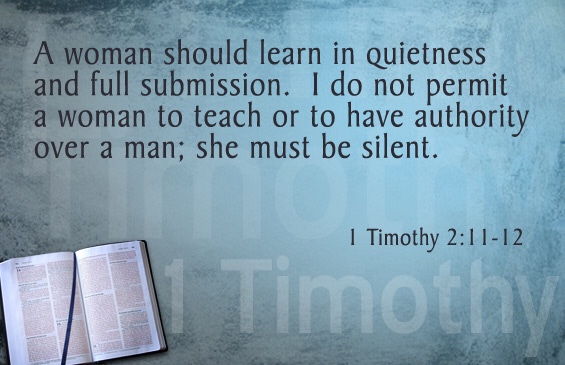
1 Timothy 2:8-12. This passage further commands to women to keep silent in church may also be interpreted in the light of the specific context which is addressed in the letter. It appears that those addressed in this letter were under threat from a rather disruptive group of “heretics”, including some prominent women.

Grammatical analysis may suggest that the command is not a universal injunction with universal applicability, but a specific command to a particular situation.

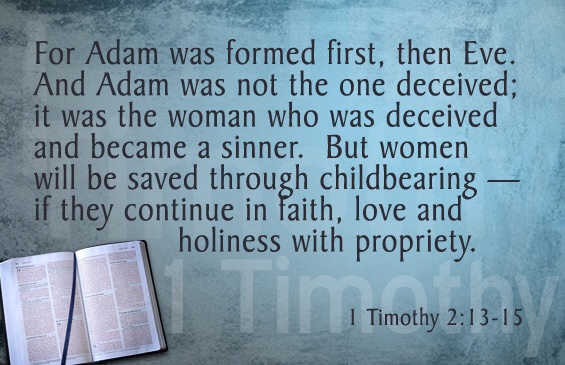
The traditional interpretation of the words in 1 Timothy 2:13-15, that salvation comes to women only by childbirth, may also be debated in the light of linguistic and grammatical argumentation. This is not the only way the phrase can be translated.

For detailed discussions, see https://earlychristiantexts.com/what-1-timothy-says-about-women/, https://margmowczko.com/1-timothy-212-in-a-nutshell/, and https://margmowczko.com/a-woman-not-all-women-1-timothy-212/

There are more articles collected at https://margmowczko.com/category/equality-and-gender-issues/1-timothy-212/

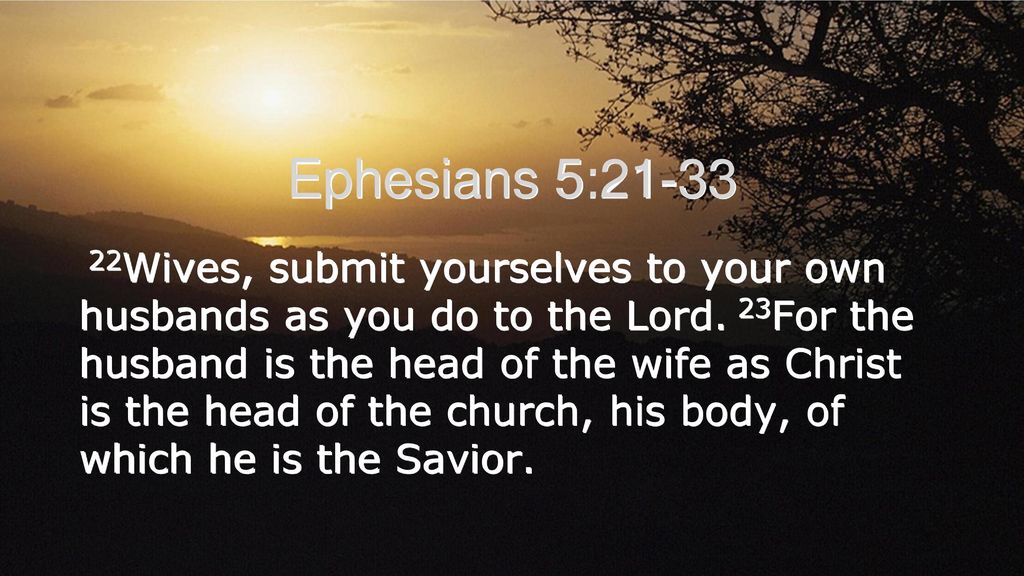
Ephesians 5:21-33. The exhortation to wives to submit to their husbands has traditionally been taken in isolation as a principle valid for all times and places. However, the precise form which is employed in this text (the “household table”) was widely known in the ancient world. It was a way of keeping social order by establishing the superior and the inferior in any relationship.

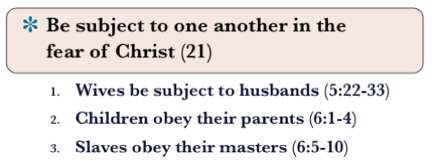
The three “tables” in the household table of 1 Peter:
husbands and wives, parents and children, masters and slaves

What is quite significant in Ephesians 5 is the way that such a traditional form is modified by the writer of this letter. Indeed, the key to interpreting the passage is sounded in 5:21, with the command to practice mutual submission in marriage (and in other relationships). The typical ancient pattern of inferior/superior is transformed by the Gospel, resulting in a radical equality and mutuality in relationship.

See also https://margmowczko.com/pauls-main-point-in-eph-5_22-33/ and https://www.patheos.com/blogs/allsetfree/2018/12/no-ephesians-5-doesnt-argue-in-favor-of-complementarianism/

Similar matters are to be brought to bear in an interpretation of 1 Peter 3:1-7, where the “household code” is used in a particular rhetorical manner (“apologetic”). The teaching of submission in marriage has a specific function related to the overall purpose of this letter, and need not be seen in isolation as a universalised teaching.

On “the weaker vessel”, see https://margmowczko.com/weaker-vessel-gender-justice-1-peter-3_7/

There are more articles on 1 Peter at https://margmowczko.com/category/equality-and-gender-issues/1-peter-31-7/

In these ways, then, long-standing interpretations of these passages can be challenged as patriarchal, and alternative feminist readings can be proposed from within a reform paradigm. The debate is not concluded, but has opened up important issues for further consideration. Responsible biblical interpretation can no longer avoid confronting the inherent biases and presuppositions of past generations of interpreters – and also of present interpreters.

What do we know about who wrote the letters attributed to Paul? (3)

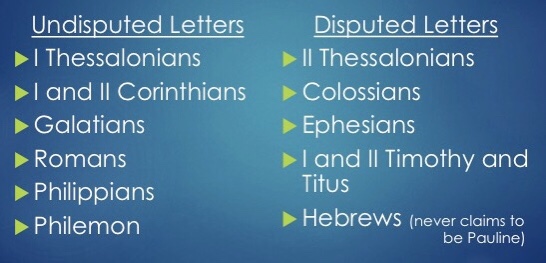
There are thirteen letters in the New Testament which begin by naming Paul as the person (or one of the people) responsible for writing the letter. A fourteenth letter, written “to the Hebrews”, was long considered to have been written by Paul, even though he was nowhere explicitly identified in this letter. The opinion of the overwhelming majority of scholars, for some time now, has been that Hebrews was not written by Paul. What about the other thirteen letters? Did all of those thirteen letters attributed to Paul actually originate with him?

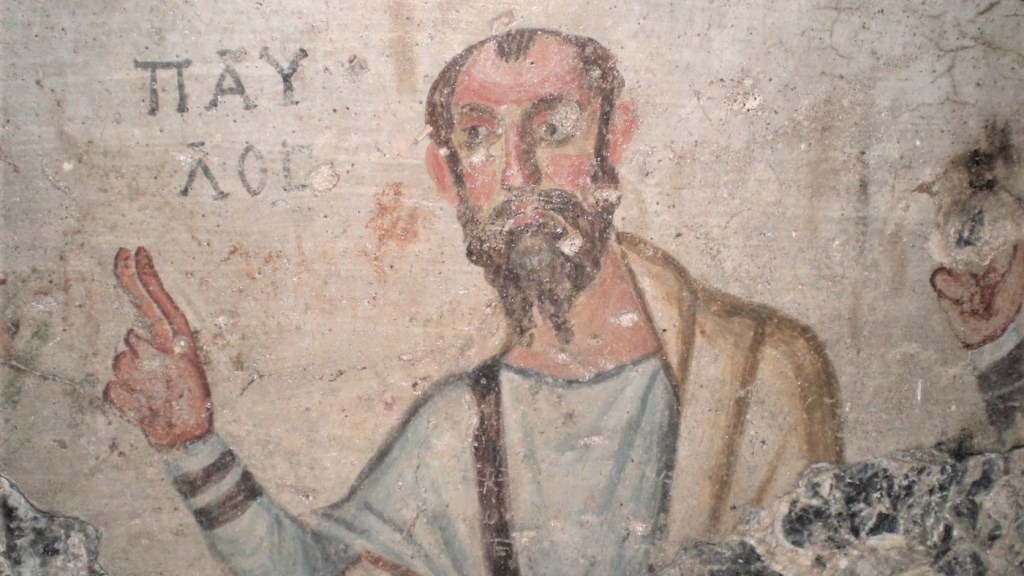
An ancient depiction of Paul.

Authentic Letters from Paul. There are seven letters which virtually all scholars say were written by Paul. But look carefully! The earliest letter, 1 Thessalonians, declares at the start that it was written by Paul, Silvanus, and Timothy (1 Thess 1:1). A latter letter to the Philippians, states that it was written by Paul and Timothy, servants of Christ Jesus (Phil 1:1), and so does the letter to Philemon (Paul, a prisoner of Christ Jesus, and Timothy our brother, Phlm 1:1).

Of the two letters to Corinth, 1 Corinthians is identified as coming from Paul … and our brother Sosthenes (1 Cor 1:1), whilst 2 Corinthians comes from Paul .. and Timothy our brother (2 Cor 1:1). So joint authorship of letters was a common practice.

Only Galatians and Romans actually claim to have been written solely by Paul (“Paul an apostle”, Gal 1:1; “Paul, a servant of Jesus Christ, called to be an apostle, set apart for the gospel of God …”, Rom 1:1). To underline that, the author of Galatians declares near the end, “see what large letters I make when I am writing with my own hand!” (Gal 6:11).

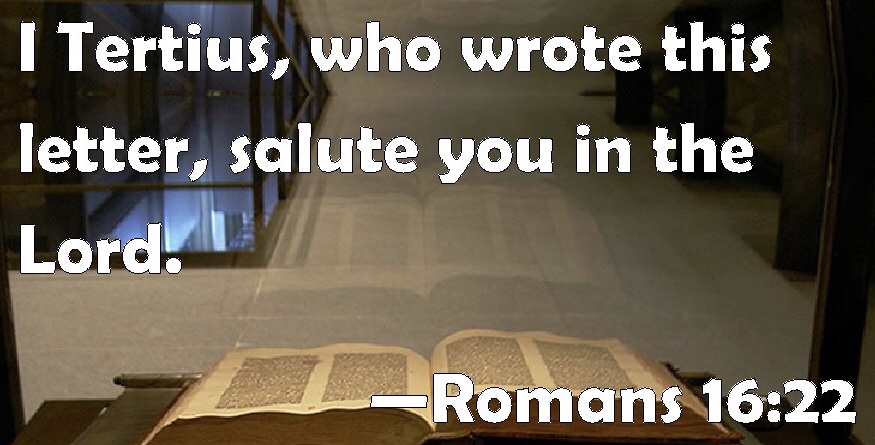
By contrast, in the last chapter of Romans, as Paul is sending his characteristic greetings (from Timothy, Lucius, Jason and Sosipater, Rom 16:21), his words are abruptly interrupted: “I, Tertius, the writer of this letter, greet you in the Lord” (Rom 16:22). Clearly, Paul was using a scribe to write down this lengthy letter, which he most likely was dictating (and, if the state of his Greek sentences are any indicator, at times he was speaking with great rapidity!).

Disputed Letters, written in the name of Paul. Many scholars have come to doubt that all of the thirteen letters were authentic letters of Paul. They have been able to come to this view because of what is known about the widespread practice, in the ancient world, of circulating letters and other documents in the name of an eminent person from an earlier age—a great scholar, or philosopher, or religious leader, or teacher. This was done by a writer who wished to “borrow” the authority of the older figure, believing that this would give greater weight to the views and teachings included in their work.

The suggestion is that members of the church in the later decades of the first century did this, using the name of Paul, because they regarded him as a teacher of note and an apostle of the church. There were already many works like this in Jewish circles, and a number amongst the gentiles also; so this was a well-known practice. And the ancient world did not have the strict laws of copyright and intellectual property which characterise the twenty-first century!

Colossians begins with a claim to be a letter from “Paul, an apostle of Christ Jesus by the will of God, and Timothy our brother, to the saints and faithful brothers and sisters in Christ in Colossae” (Col 1:1-2).

However, it was most likely written by a follower of Paul, writing in his teacher’s name in order to claim his authority as he addressed a situation different from, and some time after, Paul’s own time. Paul’s theological and ethical positions are known by the author. However, the problematic situation addressed, the theological ideas expressed, and the ethical instructions offered, each point to an origin after the lifetime of Paul.

The situation envisaged in Ephesians is quite different from that of Colossians; we know little, if anything, about it. The letter does begin in the expected manner, “Paul, an apostle of Christ Jesus by the will of God, to the saints who are in Ephesus and are faithful in Christ Jesus” (Eph 1:1). However, the phrase “who are in Ephesus” is missing from some significant manuscripts of this letter, raising the possibility that it was more of a general circular letter for early churches, than a letter to a specific community.

This is supported by various observations. The letter does not move immediately to a thanksgiving to identify the key characteristics of the community to which the letter is sent, as Paul’s letters inevitably do. Instead, there is a lengthy blessing in which a grand theological statement is developed (1:3–14), before a brief thanksgiving is offered for the faith and love of the (unspecified) recipients (1:15–16).

These are generic qualities, and the prayer veers off almost immediately into further theological exposition (1:17–23). The end of the letter simply replicates some of the greetings of Colossians in shortened form, suggesting a later writer imitating the style of an earlier letter. The body of the letter indicates only that Paul is a prisoner (3:1; 4:1) and that the recipients are Gentiles (2:11; 3:2), while the final prayer and grace (6:23–24) is likewise entirely generic.

For all these reasons, it is unlikely that Paul himself wrote this letter.

2 Thessalonians concludes with an insistence that it was written by Paul: “I, Paul, write this greeting with my own hand” (2 Thess 3:17). At first glance, this looks similar to the reference to Paul’s “large letters” in his “own hand” at Gal 6:11; but this is a brief passing comment, whereas the claim is laboured in 2 Thessalonians by the addition of extra phrases (“this is the mark in every letter of mine; it is the way I write”). So much so, that I start to have a sense of “methinks he doth protest too much”.

The first twenty words of the opening address of 1 Thess 1:1 are repeated exactly in 2 Thess 1:1–2a; this is unusual amongst the seven authentic letters of Paul, for in every other case there are variations of both minor and major significance in this opening section. (See Rom 1:2–6; 1 Cor 1:2b; 2 Cor 1:b; Gal 1:1 and 1:4; Phil 1:1b; Phlmn 2.) So 2 Thessalonians bears many marks of being a rather unsubtle “copy” of 1 Thessalonians.

Whilst Paul’s authentic letters reflect the dynamic nature of the community of faith, the three Pastoral Letters (1 Timothy, 2 Timothy and Titus) reflect a move towards a more developed organisational structure. They point towards the institutionalised church of the second century and beyond, in which the way of Jesus would become determined by the authority of the apostle and his local representative, the bishop.

Each of these letters follows the standard formula for a letter from Paul, and they each identify only Paul as the author (1 Tim 1:1; 2 Tim 1:1; Tit 1:1). And yet, the format of the letters and the distinctive vocabulary used throws doubt on the claim that Paul was the author. Whilst they each have a traditional framework for a letter, the body of the letters often read more like a sermon or a moral treatise. Over one third of the words found in these three letters are not found in the authentic letters of Paul. Many words found frequently in the authentic letters do not appear anywhere in these three letters.

In addition, the situations addressed, the theology of the letters and the ecclesial structures envisaged reflect many differences between each of these three letters and the seven authentic letters of Paul.

Together, all of these elements point to the conclusion that the author wrote these letters after the lifetime of Paul. He reaches back in time to the figure of Paul in order to validate the teachings given to the community of faith in his own time. The figures of Timothy and Titus represent the leaders in the communities of faith in this later period.

For posts on the authorship of the Gospels, see https://johntsquires.com/2020/10/15/what-do-we-know-about-who-wrote-the-new-testament-gospels-1/ and https://johntsquires.com/2020/10/15/what-do-we-know-about-who-wrote-the-new-testament-gospels-2/
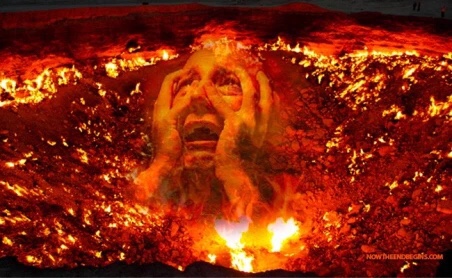

A final parable from the book of origins: on sheep and goats, on judgement and righteous-justice (Matt 25; Pentecost 26A)

This Sunday, we are approaching the end of Year A, the year when we have been tracing the story of Jesus was it is reported in the book of origins, the Gospel we attribute to Matthew.

During the month of November, we have heard a series of parables–stories which Jesus tells about the kingdom of heaven. Just in case the disciples didn’t actually get the message about what it will take to enter the kingdom of heaven, Jesus uses this string of parables to end this last section of his last long teaching block, as we have it reported in the book of origins.

After launching in to a dramatic depiction of the coming times—wars and famines, etc—Jesus tells four stories, one after another, each ending with an admonition to be alert, be prepared; each one ending with a dire warning about what will happen to those who are not adequately prepared. See https://johntsquires.com/2020/11/04/discipleship-in-an-apocalyptic-framework-matt-23-25/

A story about an unprepared slave (24:45-51) ends: “He will cut him in pieces and put him with the hypocrites, where there will be weeping and gnashing of teeth.” (24:51). To conclude the story of the ten virgins, some prepared, others unprepared (25:1-13), the final words of Jesus to those unprepared are, “Truly I tell you, I do not know you” (25:13).

At the end of the story of the talents given to various slaves (25:14-30), Jesus concludes, “From those who have nothing, even what they have will be taken away. As for this worthless slave, throw him into the outer darkness, where there will be weeping and gnashing of teeth.” (25:29-30).

And towards the end of the famous parable of the sheep and the goats (25:31-46), Jesus says, “Then he will say to those at his left hand, ‘You that are accursed, depart from me into the eternal fire prepared for the devil and his angels’ (25:41), and he concludes that “these will go away into eternal punishment” (25:46).

All of these dire warnings are consistent with the teachings of the Matthean Jesus, who warns about “weeping and gnashing of teeth” when he tells a story about weeds sown in a field amongst the wheat (13:42), another story about good bad fish caught in the same net (13:49), and a later story about a man who attended a wedding banquet with inappropriate dress (22:14). See https://johntsquires.com/2020/10/06/darkness-weeping-and-gnashing-of-teeth-the-scene-of-judgement-matt-22/

This is the same Matthean Jesus who also predicts that evildoers (a better translation would be, “those who do not live by the Law”) will be “thrown into outer darkness” (8:12), as will the poorly-dressed man at the wedding banquet (22:13) and also the slave who buried the talents that he was given (25:30).

It is the same Matthean Jesus, in the much-loved ‘Sermon on the Mount’, who tells those who talk the talk but do not walk the walk, “I never knew you; go away from me, you evildoers [lawless ones]” (7:23). See https://johntsquires.com/2020/02/17/the-missing-parts-of-the-sermon-on-the-mount-matt-6-and-7/

It is the same Jesus who pronounces a series of woes upon the scribes and Pharisees, accusing them of being “hypocrites” (multiple times), children of hell (23:15), blind (23:19), neglectful of the Law (23:23), self-indulgent (23:25), full of filth (23:27) and lawlessness (23:28). He ends this series of invective denunciations with the clear condemnation: “you snakes, you brood of vipers—how can you escape being sentenced to hell [Gehenna]?” (23:33). See https://johntsquires.com/2020/10/26/sitting-on-the-seat-of-moses-teaching-the-law-but-they-do-not-practice-what-they-teach-matt-23/

It’s a perspective that presents us with quite a challenge!

This particular Gospel highlights and intensifies the theme of judgement. Is this something that the author of the book of origins has created, as some interpreters might suggest? My sense, on the other hand, is that even though this message is very strong at so many places in this book, the author of the book of origins gets this from the historical Jesus.

In Luke 13:28, as Jesus speaks about the narrow way, he warns his followers, “I do not know where you come from; go away from me, all you evildoers! There will be weeping and gnashing of teeth when you see Abraham and Isaac and Jacob and all the prophets in the kingdom of God, and you yourselves thrown out.”

That saying is a doublet, found also (in a modified form) at Matt 8:11-12. It is thus part of what is known as the “Q material”—sayings of Jesus found only in Luke and Matthew, but not in Mark, and thus hypothesised to have come from an early oral collection of sayings of Jesus (called Q, after the German Quelle, meaning source).

This saying is not unique to Jesus, however. It draws on language from a number of Psalms. In Psalm 6:8, the writer cries out: depart from me, all you workers of evil, for the LORD has heard the sound of my weeping. Psalm 9:17 declares that the wicked shall depart to Sheol, and Psalm 139:19 offers the prayer, O that you would kill the wicked, O God, and the bloodthirsty would depart from me. The command to the wicked to depart has good biblical warrant.

Likewise, the image of the wicked gnashing their teeth is found in Hebrew Scripture. In Psalm 35:16, lamenting the activities of “malicious witnesses” who attacks the Psalmist, the writer accuses them: they impiously mocked more and more, gnashing at me with their teeth. The same phrase appears in Psalm 112:10, where the psalmist declares that, in the face of the grace and justice demonstrated by “the righteous”, the wicked see it and are angry; they gnash their teeth and melt away; the desire of the wicked comes to nothing. (There are similar descriptions of gnashing teeth at Lamentations 2:16 and Sirach 30:10.)

So Jesus stands in the tradition of the Psalms, affirming the righteous-justice exhibited by those who faithfully live by the Law, and imploring God to exercise divine justice in dealing with those who are wicked.

And alongside these Psalms, we can invoke many of the prophetic oracles, decrying the injustice and failure to live by the covenant, disregarding the commandments and statutes of the Law. Consistent with the prayers of the Psalms, the oracles of the prophets call on God to be good to God’s word and adhere to the punishments prescribed for the wicked.

Therefore, Matthew does the right and fair thing, by depicting Jesus as consistently and insistently holding the people of Israel in his time to account: live your lives in accord with righteous-justice, or be prepared to face the fate that is in store for you if you breach the covenant by ignoring the Law. See https://johntsquires.com/2020/02/06/an-excess-of-righteous-justice-matt-5/

Of course, this is destabilising and disturbing for us today. Did not Jesus establish a movement founded on love and grace? (Thank you, Paul.) Did he not carry out a ministry that was invitational and attractive, calling people to the excitement of discipleship discovery? (For some, that’s a way to read Mark.)

Surely he spent his years reaching out beyond traditional barriers, offering an inclusive vision of the kingdom, throwing open the doors of welcome to all comers? (Luke, take a bow.) And was he not the very image of God, enfleshed in our lives, speaking truth and love, offering abundant life? (That’s how John portrays him.)

Yet, for Matthew, Jesus speaks truth, calls out sin, adheres to standards, advocates for a deep righteous-justice. The perceived negativity of the attack mode, the damaging denunciation of those who fall short, is harnessed in the service of advocating the positive, affirming the heart of covenant relationship with God. It is not only the teeth-gnashing, wailing, cast-out wicked ones, that are in view for Jesus.

Rather, it is the blessing that he offers to “the slave whom his master will find at work when he arrives” (24:46). It is the affirmation of the wisely prepared virgins who were ready, who “went with him [the bridegroom] into the wedding banquet” (25:10). It is the slaves who made constructive use of the talents that they were given, who are commended with the words, “Well done, good and trustworthy slave; you have been trustworthy in a few things, I will put you in charge of many things; enter into the joy of your master” (25:21, 23).

And it is in the abundant welcome offered to “the sheep”, whose good deeds lead them to be invited, “Come, you that are blessed by my Father, inherit the kingdom prepared for you from the foundation of the world” (25:34), and who, as “the righteous”, will inevitably experience “eternal life” (25:46).

And how is it that these people “inherit the kingdom” and experience “ eternal life”? They feed the hungry, give drink to the thirsty, welcome strangers, clothe the naked, take care of the sick, and visit those in prison (25:35-36).

Each of these actions, of course, is carrying out a commandment of the Law. Ezekiel 18:5-9 includes amongst actions undertaken by a righteous person who “does what is lawful and right”, the fact that such a person gives his bread to the hungry and covers the naked with a garment (the same phrase is repeated in a subsequent list at Ezekiel 18:16). Similar actions are noted at Job 22:7, when Eliphaz the Temanite condemns Job from Uz with you have given no water to the weary to drink, and you have withheld bread from the hungry.

Care for those “in bonds” is noted at Psalm 70:33 and liberty for the captives is clearly part of the mission of the one anointed by the Spirit at Isaiah 61:1. Care for the stranger and their inclusion on the festivals of Israel is exhorted in the laws set forth in Deuteronomy 10:18-19, 16:11,14, and commended in Psalm 146:9. Visiting the sick is commanded in Sirach 7:35.

A larger list of such actions is canvassed at Isaiah 58:6-7, which poses the rhetorical question from God, “is not this the fast that I choose … to share your bread with the hungry, and bring the homeless poor into your house; when you see the naked, to cover them, and not to hide yourself from your own kin?”.

What “the sheep” have done, is demonstrate an unflinching commitment to the way of life enjoined by the Law. They live, breathe, and offer righteous-justice in what they do.

And the kicker in this story is that “the sheep”, those who carry out these good deeds in adherence to the Law, are not drawn entirely and exclusively from the people of Israel. They are drawn from “the nations”–a phrase that is usually translated as “the Gentiles” (τά ἔθνη is translated this way, in the NRSV, at Matt 4:15, 6:32, 10:5, 10:18, 12:18,21, 20:19,25, and most famously of all, 28:19).

In this parable, the usual biblical description of Israel as “sheep” (Psalms 78:52, 95:7, 100:3; Jer 23:1, 50:6,17; Ezek 34:1-31; Micah 2:12; Zech 10:2) is turned completely on its head. Amongst the people outside of Israel, there are many who are now “the sheep”, who follow the way of righteous-justice.

So the sheep are not just those who are righteous within Israel, who live by the Law, but the sheep also include many Gentiles, drawn from the regions surrounding Israel, whose lives exemplify the heart of the law, in the various actions set out in the parable (feed the hungry, visit those in prison, clothe the naked, house the homeless, etc). These actions are perhaps akin to what later became known as “the Noahide laws”—the prohibitions to avoid blasphemy, idolatry, adultery, bloodshed, theft, and eating the blood of a living animal, as well as to establish courts of justice to govern the behaviours of people in society. (They are set out in the 6th century document, the Babylonian Talmud, Sanhedrin 56ab.)

This means that, in their own way, those Gentiles who act righteously and live with justice to the fore join with Jews who live with righteous-justice, abiding by all 613 commandments of Torah, to provide encouragement, to stand as role models, living in the way that is required to “inherit the kingdom that is prepared … from the foundation of the world” (25:34).

These people, both Jews and Gentiles, exhibit righteous-justice, the heart of the covenant, in contrast to lives which are lived without reference to the Law. There is no justice with judgement. There is no justice without righteous deeds. And righteous deeds require fidelity to the Law. Not in Matthew’s account of Jesus, and not in Hebrew Scriptures. Righteous-justice and fiersome judgement are the two sides of the one coin. We can’t have one without the other.

Belief in Jesus, as Messiah, as the authoritative Teacher of the Law, thus requires faithfulness to the ethical demands and instructions taught by Jesus—which themselves are drawn entirely from Hebrew Scriptures. The way of Jesus, according to Matthew, is the way of righteous-justice, the way of faithfulness to Torah.

*****

This blog draws on material in MESSIAH, MOUNTAINS, AND MISSION: an exploration of the Gospel for Year A, by Elizabeth Raine and John Squires (self-published 2012). I am particularly grateful to Elizabeth for the ways in which her research and our conversations over the years have deepened my understanding of Matthew’s “parable of the sheep and the goats”.

The Lectionary: ordering the liberty of the preacher

I am a longterm lectionary devotee (as preacher, as teacher, as thesis supervisor, as blog writer). There is a richness in the lectionary that I appreciate. It has a clear structure, an observable order, a logic to its pattern, a rationale to the progress that it offers us, year by year, through the seasons of the (church) year.

There are also some frustrations with the lectionary: what stories are not included, what stories appear more than once (even if in different versions), where the passage starts (omitting verses that give “context”), where the passage ends (omitting significant follow-one verses), how the passage is edited (such as parts omitted), and so on.

But this is only to be expected: it is a human creation, subject to the idiosyncrasies and prejudices of its compilers, bound in many ways to the traditions of the church, limited by the number of Sunday’s that are to be found over three years. So I take it as it is, with its own biases as well as the benefits it offers.

Alongside this structure and order, the lectionary invites choice. It stimulates in me a consideration of the options available to me, and offers ways of using it that generates creativity in whatever I do as preacher, liturgies, or instructor. Every week, there are four readings listed in the lectionary. That itself suggests some choice (at least, in my denominational context).

However, the lectionary is far more than just four readings. It is a three-year creation, following a similar pattern in each of the three years, whilst still being designed to allow for a different focus each year.

*****

The lectionary is is based on a repeating year-long cycle, following a well-established tradition of tracing the Christian story through a familiar pattern. It starts by looking to the coming of Jesus (the four weeks of Advent), before celebrating the birth of Jesus (the twelve days of Christmas) and rejoicing in the revelation of God (a season of varying numbers of weeks during Epiphany–sometimes simply called Ordinary Time).

It continues by walking the pathway towards the cross (another six weeks, in Lent) and then remembering the pivotal events of the last meal of Jesus (Maundy Thursday), the death of Jesus (Good Friday), a time of waiting (Holy Saturday), and the empty tomb (Easter Sunday).

This is followed by a season celebrating the appearances of the risen one and the shaping of the early church (seven weeks in the season of Easter), reaching a climactic point of with the Day of Pentecost (the gift of the Spirit).

But this is only the halfway point. After these six months of richness, the ensuing six months (with the rather unfortunate name of Ordinary Time) allow time for tracing through in order the story told in one of the Gospels; or the narratives, prophetic works, and writings found in Hebrew Scriptures; or the string of Letters found in the New Testament.

So, whilst the first half of the year is based on key moments in the story of Jesus, the second half of the year is more devoted to follow through passages from a common source in their narrative order. It is sometimes referred to as a season of growth–growing in understanding of scripture, growing in discipleship and faith.

*****

The lectionary that we follow is the Revised Common Lectionary. You can access it at https://lectionary.library.vanderbilt.edu/ and read responses to a whole range of frequently asked questions at https://lectionary.library.vanderbilt.edu/faq2.php

This ecumenical lectionary is based on an earlier version, The Common Lectionary, which derives from the daily and weekly lectionaries used for centuries in the Roman Catholic tradition. And behind those lectionaries, there sits the Jewish custom of reading right through the Torah, the five Books of Moses, each year, with a particular selection of chapters set for each Sabbath day.

There are other options for lectionaries–the Narrative Lectionary, Uncommon Preaching, Beyond the Lectionary–but the Revised Common Lectionary is the most widespread, used across a good range of denominations, right round the world.

Christian lectionaries can be identified as far back as the fourth century. A lection is a passage to be read; a lectionary is thus an arrangement of passages to be read (and heard). Over time, in monasteries, lectionaries developed to provide sets of readings for the monks to hear and chant, as they gathered to worship at set hours throughout each day, and then further readings for worship each Sunday, right through the year.

The Jaharis Byzantine Lectionary,
held by the Metropolitan Museum of Art in New York, USA

Following a lectionary in our time is a good challenge to preachers—it invites them to step away from that clutch of familiar, beloved passages to which they would turn when considering “what shall I preach on?”, and challenges the preacher not simply to lapse back into familiar themes week after week.

It is also a fine resource for a community of faith. It clearly indicates “what is on next week”. It means that keen members can read the passages in advance of worship–perhaps even following a lectionary-based Bible reading guide like With Love to the World, for personal use or with a group. (See http://www.withlovetotheworld.org.au/).

It also means that visiting preachers can have an idea of what has just been preached on and what is coming after their visit, to avoid embarrassing “double-ups”.

It’s also fascinating to note just how often a passage that seems to be quite unrelated to the current context can “come alive” and offer striking or unforeseen insights into that situation. That’s a real gift that the lectionary offers!

*****

Sometimes, people talk about what is “set” in the lectionary. (I confess to have been guilty of this on occasions.) That seems to be the expectation, even the requirement, in some denominations with a highly structured (and some would say inflexible) approach to worship.

But my own denomination has roots traced to the “non-conformist” section of the church: protestants emerging from the Reformation, pietists flowing from the Wesleyan revival, a congregational emphasis growing from anti-establishment commitments of the past. Perhaps it is better for us to describe the passages available each week as being “offered” to us. They are offered; we need to consider how we accept them, how we use them, what they each offer to us.

In Year A, the focus is on the first Gospel, attributed to Matthew, alongside the ancestral narratives and account of the formation of Israel in the first five books of Hebrew Scripture. Following one or the other of these threads over a number of months can be an enriching experience for a community of faith.

In Year B, the focus is on the shortest Gospel, attributed to Mark, paralleled with passages drawn from the Writings of ancient Israel, whilst in Year C, the third Gospel, attributed to Luke, alongside a series of passages drawn from the prophetic tradition of Israel. These years each offer their own distinctives. There is enriching variety across the three years.

The fourth Gospel, attributed to John, is spread throughout these three years, at designated places throughout the year, whilst passages from the book of Acts are offered each year in the season of Easter (the weeks following after Easter Sunday). And passages from the various Letters found in the New Testament are spread across all three years.

In each of the three years, on every Sunday and special feast day, a selection from the Psalms is also offered. This ensures that over the course of three years, virtually all the Psalms are offered for Sunday worship.

The same can’t be said, unfortunately, for many other books of scripture. There are some striking omissions from the lectionary, when we look at the whole set of offerings. Many of the stories relating to women, for instance, do not appear. Some of the more difficult passages (the “texts of terror”, as they have been called) are missing. Some of the juicy parts of certain letters are missing.

Even with four readings each Sunday, 52 times each year, over three years, there still is not time for everything to be included. The only way to deal with “the whole Bible” is actually to undertake one of those “read the whole Bible in one year” programmes. That will mean reading quite a few chapters each and every day! (For instance, I found this website, that offers a range of possibilities: https://www.biblestudytools.com/bible-reading-plan/)

*****

How do we respond to the offering of four Bible passages each and every Sunday? There is nothing worse, in my opinion, than a sermon that stodgily treats the OT, then the Epistle, the Gospel (and sometimes even the Psalm), all with 20 minutes! This slavish, literalist use of the resources provided in the lectionary is inevitably (in the negative sense) utterly deadly. It deadens my mind and depresses my spirit.

Likewise, there is nothing inviting or encouraging in a preacher who starts, “this week the lectionary offers hopeless passages, but I have to follow it, so here goes nothing”. It offers a structure and an order, but it is not a demand and a non-negotiable requirement, surely.

There is actually an abundance of choices when I consider the lectionary: do follow the Gospel? or take a pathway though the OT readings and the enriching theological ideas they offer? Might I focus on the psalms for a season, or a month? Should I take a letter when it appears, and examine it with care over 4 or 6 or 8 weeks? Or is it best, in this age of small attention rates and high expectation of novelty, simply to change it up week by week?

Of course, there is also the option to follow the lectionary in the key seasons—Advent, Christmas, Epiphany, Lent, and Easter—then after the Pentecost celebration, in the long stretch of six months leading up to Advent, reshape worship with a local focus, or topical issues, or even a series on a theme or a book, and so on.

After 43 years I still find enrichment, challenge, and stimulation, and frustration, when I turn to the lectionary each week. And because the UCA is committed to “ordered liberty”, in worship, and in preaching, I am grateful for the order offered by the lectionary and the liberty possible in considering whether, why, and how the lectionary might shape what I end up doing.

*****

The Revised Common Lectionary can be accessed at https://lectionary.library.vanderbilt.edu/

See also https://uniting.church/2020-2021-lectionary-is-available-for-free-download/

There is a rich collection of resources to assist anyone using the Revised Common Lectionary, at The Text This Week, http://www.textweek.com/

A useful daily Bible reading guide, based on the RCL, is With Love to the World, at http://www.withlovetotheworld.org.au/