Darkness, weeping, and gnashing of teeth: the scene of judgement (Matt 22; Pentecost 20A)

Come to the banquet, there’s a place for you … sit you down, be fed and blessed … in your strength or in your weakness, you are welcome: come!

I always enjoyed singing that song, back in the days when we were able to sing when we gathered together for worship. It came to mind as I thought about the parable of the banquet that appears in the Lectionary, as the Gospel reading, this coming Sunday (Matt 22:1-14).

And the story that Jesus tells has wonderful moments of blessing–especially for those who didn’t receive an invitation to the banquet in the initial round of invitations. These people, “both good and bad”, invited in to the banquet hall direct from their business on the streets, were able to share in the largesse of the king (22:9-10). Is it a parable that points to the gracious welcome of God, as all manner of people come into the kingdom?

The very fact that there were, not one, not even two, but three rounds of invitations, underlines this point, surely? The king (presumably a symbol for God) really wants people to take part in this celebratory feast! And even the behaviour of those who decline the invitation might be explained in some reasonable way–the farm needs attending to, the business won’t look after itself (22:5), so their declining the invitation is understandable.

Although, it might be noted that declining the invitation was a breach of the honour-shame code which was dominant in the culture of the time. Reciprocity in relationships and dependence on a wealthy patron would surely have mandated accepting the invitation, one would have thought.

Indeed, the story that Jesus tells doesn’t necessarily lead to the result of blessing for all who come. Indeed, this parable is wracked by tragedy: as many in the first two rounds of people invited to the banquet decline the invitation, some of them mistreat and kill the messengers (22:6). This provokes a murderous retribution by the unhappy king, as he orders his troops to “destroy those murders and burn their city” (22:7). It sounds like yet another parable of judgement. (Matthew has quite a number of these parables–in case you hadn’t noticed!)

And, even when the guests are all present in the banquet hall, the king remains unhappy. Displeased at the lack of appropriate attire seen on one person, he gives the unfortunate guest a tongue lashing (22:12), and orders that a vicious punishment be enacted (22:13).

The parable and ancient customs

It had started off in the typical life-like setting of many of the parables: a scene known to the people to whom Jesus was speaking–or, at least, envisaged in realistic ways by them, even if they had not personally experienced such a scene. It sounded plausible, like it really could be happening.

There’s a wealthy king, a fine banquet, a hall filled with guests, tables laden with an abundance of food. A scene that the more wealthy would have experienced, and that the poorer would perhaps often have dreamed of. Jesus was a master at telling such tales; he knew how to draw people in and engage them fully in the scene.
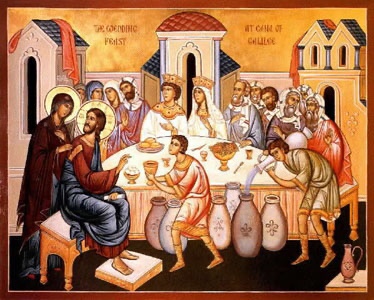
In many ways, this parables reflects the code of behaviour ingrained in the culture. Meals were locations of intricate and complex rituals which set the patterns of behaviour required. There were expectations of rituals to be followed at the door, as guests arrive and wash their feet (see Gen 18:4, 19:1-2, 24:32; Luke 7:38).

There were rituals in greeting one another, following the prescribed sequence of blessing appropriate for the occasion and for the status of the people involved (amongst numerous examples in Hebrew Scripture, see Gen 18:2, 29:13, 43:27; Ruth 2:4).

There were rituals relating to the seating arrangements, which followed very strictly the hierarchy of status amongst those present (as Gen 43:33 and Prov 25:6-7 each indicate). Once seated, there were rituals relating to the food that was to be served and the order by which it was served to people, once again following the status hierarchy.

And, it would seem, there were rituals relating to the desired form of dress when attending a celebratory wedding banquet (perhaps Eccles. 9:8 is relevant; and maybe Rev 3:5 offers a glimpse of this?). Such rituals were expected to be kept with scrupulous care.

But one guest has breached protocol (22:11). It is precisely when the king pronounces the sentence on the guest who had not donned the prescribed wedding robe (22:12-14), that the parable blurs. The very end of the parable snaps out of the “realistic imaginary scene” that had been painted up to this point. The guest is not wearing his white robe. The guest is not “clothed with righteousness”.

The parable and aspects of judgement

The carnage from the aggressive interaction between the king, his messengers, the reluctant people of the town, and the murderous troops sent by the king (22:3-7), is bad enough. That might well be connected with the behaviour of arrogant, powerful men, who then (as now) ruled the world through the power of their armies; who even ordered the destruction of cities in enemy territory. That still has a ring of realism about it.

However, right at the end of the parable, the words of judgement and punishment that come from the mouth of the king plunges the story right into the midst of the hell-fire and brimstone, judgement and punishment rhetoric, that characterises the distinctive figure of Jesus who is centre-stage in the book of origins, the account of Jesus that we attribute to Matthew.

We have stepped out of the “parable scene”, and into the world of “eternal judgement”. We are no longer listening to Jesus the teller of enticing tales, but Jesus the fiery preacher of apocalyptic doom.

The instruction to “throw him into the outer darkness, where there will be weeping and gnashing of teeth” (22:14), recalls earlier pronouncements by Jesus in this book of origins: in his words of judgement spoken in Capernaum, where he encounters a distressed centurion (8:12), in his explanation of the parable of the weeds and the wheat (13:42), in the parable of the good and bad fish (13:50).

It is found also in subsequent pronouncements: to his disciples during his final apocalyptic teachings (24:51), and in the climactic parable of the sheep and the goats (25:30). In each case, darkness, weeping, and gnashing of teeth are threatened.

The vision that is depicted in this parable of Jesus is hardly an irenic, thoroughly enjoyable scenario. This is the way that “the heavenly banquet” is often depicted in Hebrew Scriptures–see Isaiah 25:6-7, 55:1-5, 65:17-25; Psalm 36:7-9; Proverbs 9:1-6. Not so, however, in this parable.

Along with those entering the kingdom in joy, there are those debarred from the kingdom, excluded with wrath, destined to endure severe punishment. The king who reigns in this realm exercises definitive judgement and imposes a decisive punishment (Matt 22:13). This is fear-inducing stuff.

Signs of Matthew’s hand in the parable

There are clear signs that Matthew’s hand has been at work throughout this parable, reshaping the story which Jesus told. The phrases found in the ending are one clear sign. Another sign comes from the kind of comparative analysis that we can do, when we compare this version of the parable with two other versions, known to us in literature of the time.

The Gospel of Luke reports that Jesus told this parable (Luke 14:15-24); this version is located in quite a different context, where the focus is on “seeking the lost” (Luke 14:12-14 and 15:1-32). In Matthew, the context is one of judgement and punishment, as is clear in the way the preceding parable ends (Matt 21:42-46). And the Gospel of Thomas also has a version of this parable, one of the teachings of Jesus found in that work (Gos. Thomas 64). Of course, in the Gospel of Thomas, there is no narrative context; the work is comprised of a long string of independent sayings of Jesus.

The host of the banquet in both those alternative versions (Luke and Thomas) was simply “a man”, not a king. That man had “a servant”, not a whole collection of slaves. The invitation was simply to “a dinner” (Thomas) or “a great dinner” (Luke), rather than to “a wedding banquet for his son”. Matthew has really ramped up the setting, placing the story in a very regal setting.

Whilst those unable to attend sent explanations (they are the same in Luke and Thomas), in Matthew’s version “they made light of it”. And the murderous rampage by the king is not found in either alternate version (Luke or Thomas). The whole scene has been ramped up to the highest possible level in Matthew’s version. Everything hangs on what transpires in the story. While the parable in Luke ends with a scene of inclusive celebration, in Matthew the parable ends with savage judgement.

Back to the theme of judgement in Matthew’s Gospel

This outcome of judgement is a recurring theme in the Gospel of Matthew. And this is the challenge for us, today, as we reflect on the version of the parable found in this Gospel. What do we make of a story that points to the inevitable judgement that God will exercise?

It is clear that the function of judgement belongs to God (7:1-2; 10:15; 11:21-24; 12:36). Jesus sets this into the eschatological framework of “the end of time”, when the Son of Man will implement this judgement (13:41; 16:27-28; 19:28; 24:29-31; 25:31).

This judgement is described in graphic terms in the final parable of Jesus in this Gospel (25:31-46). The division of people, at this moment of judgement, into “good and bad”, “sheep and goats”, is made abundantly clear. Those failing to show compassion to “the least” are clearly differentiated from those who are called “the righteous”.

That division has run through the Gospel. We see people distinguished as “evil and good” (5:45; 12:35; 22:10), we see “good trees” and “bad trees” (7:15-19; 12:33), “good seed” and “weeds” (13:24-25, 37-38), “good fish” and “bad fish” (13:47-48).
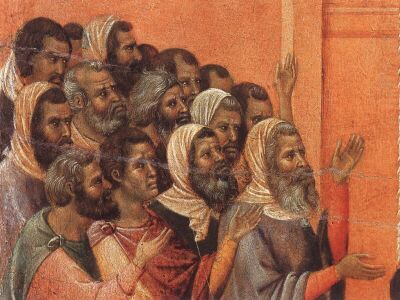
The Jesus who is presented in this Gospel is a fearful and demanding figure. In his capacity as God’s Messiah, he frequently promises (or threatens) judgement (5:21–26; 7:1–2; 10:15; 11:21–24; 12:36–37; 19:28–30; 21:33–44; 22:1–14; 24:29–31, 36-44, 45–51; 25:1–13, 14–30, 31–46; 26:64). Many of these declarations occur in eschatological contexts, where Jesus is warning about the punishment that is to come unless righteousness is followed in the present.

So the kingdom of heaven will be established “at the end of the age”, when the final judgement of righteous and unrighteous will take place (13:39–40, 49; 24:3). The key connection here must be with the demand for righteous-justice, which has been the central demand of the message preached by Jesus throughout this Gospel, from the early affirmations (3:15; 5:6, 10; 5:20; 6:33), through the parables in chapter 13 (see 13:17, 43, 49), through to the climactic final parable (25:37, 46). See https://johntsquires.com/2020/02/06/an-excess-of-righteous-justice-matt-5/

Judgement is linked to doing what makes for righteous-justice. Here is the key criteria for divine assessment. The man cast out of the wedding banquet was rejected because he was not “clothed in righteous-justice”.

Here is the central call for ethical living from the lips of Jesus, which strengthened and intensified throughout Matthew’s account. Here is the fundamental worldview of the fierce apocalyptic prophet, who comes from Nazareth onto the world stage, to effect judgement.

Now that is a challenge to preach today!!

Producing the fruits of the kingdom (Matt 21; Pentecost 19A)

The parable of Jesus which is set in this Sunday’s lectionary appears to offer an invitation to adopt a negative approach towards Jews and Judaism. The author of the book of origins (by tradition, the evangelist Matthew) interpreted this story as a polemic against the Jewish authorities (Matt 21:33-46).

The parable is set in a vineyard. That’s an age-old symbol for the people of Israel—indeed, this week the lectionary offers us two supplementary passages from Hebrew Scripture (Isaiah 5:1-7 and Psalm 80:7-15) which show how old and enduring this imagery was.

The parable that Jesus tells recounts the hard-hearted way in which the tenants in the vineyard (a traditional symbol for the people of Israel) reject the messengers sent to them by the landowner (seen as a symbol for God), culminating in the atrocious treatment meted out to the landowner’s son (whom we are meant to identify as Jesus, son of God).

The son is put to death. The punchline that Jesus crafts for this parable is potent: those who do not produce the fruits of the kingdom will not inherit the kingdom (21:43). That’s a consistent motif in the teaching of Jesus in this Gospel. But the author of the Gospel reshapes the conclusion so that it seems to apply solely to “the chief priests and the Pharisees” (21:45).

The parable of the vineyard is one of the passages that has been difficult for us to understand accurately. When taken at a literal level, it has led to modern interpretations that are as damaging as they are unfair.

The assumption is that the Pharisees and scribes are the ‘bad guys’, and this has led to the belief that Pharisee equals hypocrite. It is disturbing that such a stereotype has found its way into the language of our modern church.

The context of the parable suggests that although its message was aimed at the chief priests and the Pharisees, it does not exclude other Jewish people. The parable immediately before it refers to the importance of doing the will of God (21:28-31), and concludes that “tax-collectors and prostitutes going into the kingdom of God ahead of you [i.e. the Pharisees and chief priests]” (21:31). The kingdom will certainly provide an interesting gathering of all manner of people! So the parable is a warning about obedience, not a denunciation of the leaders.

Equally disturbing is the notion that Jesus here seems to contradict his own teaching about loving one’s enemy and turning the other cheek. He depicts God as the avenging Lord. So what is really happening here?

I don’t think the parable of Jesus is intended to be simply an anti-Jewish polemic, an invitation to deride or dismiss Judaism and Jews.

It is true that, in the Gospel of Matthew, we find Jesus making some strident accusations and engaging in some vigorous debate with the Jewish authorities. But does he really believe that no faithful Jew will ever again enter the kingdom of heaven?

We need to read in context the rhetoric that Matthew places on the lips of Jesus in this Gospel. Judaism was in a state of flux as people lived under the continuing oppression of Roman rule. The destruction of the Temple in 70 CE was a pivotal moment. Evidence indicates that, during this time, there were various sectarian groups within Judaism who were contesting with each other for recognition and influence. Instead of making common cause against Rome, they continued to fight each other. Vigorous polemic and robust debate amongst Jews were not uncommon.

See https://johntsquires.com/2020/06/11/go-nowhere-among-the-gentiles-matt-105-the-mission-of-jesus-in-the-book-of-origins/

During this period, the Pharisees were becoming increasingly important as an alternative to the Temple cult, and emerging as the dominant Jewish religious movement. Their power base was moved from Jerusalem and spread throughout the area. When the Temple was destroyed, they moved into the vacuum that was created, and became even more dominant.

(From this time on, Pharisees evolved into the “Rabbis”, and they developed the kind of Judaism that became dominant through to the present time. We need to be sensitized to the fact that, for many modern Jews, when we make damning criticisms of the Pharisees, they hear that as a criticism of their Rabbis, and, by extension, of the faith that they practise today.)

The kind of debates that we see in the Gospels—debates where Jesus goes head-on with the Pharisees—need to be understood in this context. Jesus was not “cutting the cord” of his connection with Judaism. He was not rejecting his faith as irrelevant or obsolete.

He was advocating, vigorously and persistently, for the kind of faith that he firmly believed in—and criticisng the Pharisees for their failure, in his eyes, to adhere to all that they taught. He wanted to renew Israel, to refresh the covenant, as the prophets before him had done.

And let’s remember that the accounts that we have of these debates come from years later than when they actually occurred; years that had been strongly shaped by the polemic and antagonism of the intervening decades.

Older academic Christian scholarship and popular evangelical Christian tradition perpetuate the stereotype that the Judaism of the time of Jesus was a harsh, legalistic, rigid religion—a stereotype heightened by an unquestioning acceptance of the New Testament caricature of the Pharisees as hypocritical legalists who made heavy demands but had no soul commitment to their faith. It was claimed that they were the leaders of a static, dying religion.

This stereotype has been completely demolished in recent decades—both through the growing interaction between Christian and Jewish scholarship, and also through a more critical reading of the relevant primary texts. I am very pleased that the church to which I belong, the Uniting Church in Australia, has made it very clear that we do not adhere to these inaccurate and hurtful stereotypes.

In 2009, the UCA national Assembly adopted a Statement which says, amongst other things:

The Uniting Church does not accept Christian teaching that is derogatory towards Jews and Judaism; a belief that God has abolished the covenant with the Jewish people;  supersessionism, the belief that Christians have replaced Jews in the love and purpose of God; and forms of relationships with Jews that require them to become Christian, including coercion and manipulation, that violate their humanity, dignity and freedom.

We do not accept these things.

See https://assembly.uca.org.au/resources/key-papers-reports/item/1704-jews-and-judaism

Indeed, when we look at the whole of Matthew’s Gospel, Jesus does nothing to overturn the Law or to encourage his followers to disregard the Law; he is portrayed as a Jew who keeps Torah to the full. “I have come, not to destroy, but to fulfil the Law”, he says (5:17).

See https://johntsquires.com/2020/02/13/you-have-heard-it-said-but-i-say-to-you-matt-5/

And in that same section of the Gospel, Jesus is quoted as advocating for a better righteous-justice; a righteous-justice that “exceeds that of the scribes and Pharisees” (5:20).

See https://johntsquires.com/2020/02/06/an-excess-of-righteous-justice-matt-5/

Virtually all of his criticisms of the Pharisees can be understood within the framework of first century debates over the meaning and application of Law. The memory of Jesus in this Gospel is as a Torah-abiding Jew, who nevertheless stakes out a distinctive position within the context of those contemporary debates.

We should not interpret the parable of Jesus in Matt 21 as an outright condemnation of Judaism as a whole. As he debates the Jewish leadership of his day, he makes strong statements. But let’s not claim that Jesus validates any sense of anti-Jewish or antisemitic attitude.

Unfortunately, these words of Jesus and other parts of the New Testament story have been used throughout the centuries to validate anti-Jewish attitudes, to foster antisemitic hatred of the Jews. It is important for us to remember the real sense of the words of Jesus, and not follow the pathway to bigotry, hatred, persecution, and tragic attempts to annihilate the Jews.

See also https://johntsquires.com/2020/09/29/an-invitation-that-you-just-cannot-accept/

An invitation that you just cannot … accept! (Pentecost 19A)

We are all used to receiving invitations. Sometimes, those invitations come as an invitation that you just cannot refuse—the special performance that is a must-see, the party that you don’t want to miss, the occasion with a special friend that wouldn’t be the same without you being there.

This week, the lectionary provides us with a series of invitations. Do you want to refuse them? Are you going to say, “this is an invitation that I just cannot refuse” ? I hope not. Because I want to convince you, that you do have to refuse those invitations. In fact, you need to be clear that you are not going to accept any of these invitations.

The invitations are shaped by the way that the Christian Church has approached and interpreted its scriptures. The invitations are subtle and pervasive; they simply invite us to read and understand the passages in this week’s lectionary in the way that so many interpreters, throughout the history of the church, have interpreted these passages. The invitations invite us to adopt an anti-Israel, anti-Jewish, antisemitic way of reading these texts.

My exhortation this week is: don’t accept those invitations. Don’t get drawn into traditional ways of interpreting scripture that lead down the pathway of negative stereotyping of Jews. Don’t get caught in the traditions of antisemitism that grew and flourished across the many centuries of the existence of the church. Don’t judge negatively, don’t demean or deride, don’t open the door for destructive depictions and careless caricatures of our Jewish sisters and brothers.

The first invitation comes in the reading from Hebrew Scripture that is set in the lectionary this week (Exodus 20:1-20). It is an invitation to reflect on the heavy burden of the Law, the weight of demands that were placed on the people of Israel through the giving of the Law. It is a recounting of the Ten Commandments, and the importance of following them to the letter—to have “the fear of God” instilled in us to obey them and not sin (Ex 20:20).

The second invitation comes in the section of the letter which Paul wrote to the Philippians (Phil 3:4-14). It is an invitation to cast the whole of Jewish scripture and tradition as being of no value whatsoever. In this part of his letter, Paul reflects on his upbringing, and has a very colourful description for what he learnt, as a member of Israel, a Pharisee devoted to living a blameless life under the Law. Of all that he learnt as he was raised in this way, Paul writes, “I regard them as rubbish”—the ultra-polite way that the NRSV translates what, in Greek, reads literally as “I consider them all to be bullshit!” (Phil 3:8).

And the third invitation comes in the parable of Jesus which is included in ‘the book of origins’, and which its author (by tradition, the evangelist Matthew) interpreted as a polemic against the Jewish authorities (Matt 21:33-46). The parable is set in a vineyard. That’s an age-old symbol for the people of Israel—indeed, the lectionary offers us two passages from Hebrew Scripture (Isaiah 5:1-7 and Psalm 80:7-15) which show how old and enduring this imagery was.

The parable that Jesus tells recounts the hard-hearted way in which the tenants in the vineyard (a traditional symbol for the people of Israel) reject the messengers sent to them by the landowner (seen as a symbol for God), culminating in the atrocious treatment meted out to the landowner’s son (whom we presumably are meant to identify as Jesus, son of God), who is put to death. The punchline that Jesus crafts for this parable is potent: “the kingdom will be taken away from you” (Matt 21:43), he tells “the chief priests and the Pharisees” (Matt 21:45).

Do not be taken in by these three invitations! Do not succumb to even the merest whisper of anti-Jewish sentiment as you reflect on these passages! Do not be shy to decline these “invitations you cannot refuse”!

Why?

First: because the Law was given, not to be a burden, a heavy weight, a set of endless demands; the Law was given as a gift. In the Law, Israel was given a way of strengthening the Covenant relationship with God, of providing practical means for remaining in covenant relationship with God. No Jew regards the Law as a burden; universally, the Law is celebrated as a gift, and valued as a way to ensure a healthy and vibrant relationship with God.

The Ten Commandments need to be read in the context of the story as it transpired over time. The giving of the Law (Exodus 20) sits in the midst of the stories about Moses ascending the mountain, encountering God, and formalising the covenant relationship with God (Ex 19:16-25; and Ex 24:1-18). Before the Law is given (Ex 20), the Covenant is formalised (Ex 19). The requirements of Law follow on from the gift of Covenant. In this way, the Law itself becomes a gift—a way to ensure the strength of the Covenant.

And these scenes of Moses making the covenant with God and then ratifying it with all the people, need to be seen in the context of the still larger scope of the storyline, which tells of a series of covenants: with Noah, with Abraham, with Isaac, with Jacob (and on into future centuries, with David, with Solomon, through Jeremiah).

It is the covenant which is the primary context: the means by which God chooses, nurtures, and remains in relationship with Israel. The Law comes as the consequence of the gift of the Covenant; the Law provides a clear set of guidelines for maintaining that covenant and continuing in relationship with God.

That Law is embraced, valued, and celebrated in Jewish tradition and scripture. Just look at how it is described in the Psalm offered in this week’s lectionary selection, where the commandments and precepts of the Law are praised as “perfect, reviving the soul … sure, making wise …right, rejoicing the heart … clear, enlightening the eyes … true and righteous altogether … more to be desired are they than gold .. sweeter also than honey” (Ps 19:7-10).

Second: because the Jewish upbringing and Pharisaic practices that Paul had, were never totally jettisoned, even though this one colourful comment seems to suggest this. Paul has many ways by which he demonstrates that his Jewish upbringing, his years of study as a Pharisee, his intense dedication to the Law, all still continue to shape his life, his words, his actions, his very being, right through the years that he was a faithful follower of Jesus.

Paul had an extensive knowledge of Hebrew scripture; we see this demonstrated at many place in his letters (Rom 1:16–17; 3:9–20; 4:1–25; 9:6–11:12; 11:25–27; 1 Cor 1:19–25; 2:6–16; 2 Cor 8:15, 9:9; Gal 4:21–31) as well as in the reports of his preaching in Acts (Acts 13:32–41; 17:2–3; 26:22–23; 28:25–28). The whole argument that is developed in his letter to the Romans is an exposition of a key affirmation, made at Rom 1:16-17, which itself quotes and draws from the words of Habakkuk, a late 7th century Israelite prophet (Hab 2:4). That argument engages consistently and in complex ways with the Hebraic traditions and understandings that were so central to Paul’s spiritual life. He uses pearl-stringing, argument by analogy, diatribal argumentation, midrashic storytelling, and other techniques which he undoubtedly learnt from his Pharisaic teachers.

(See also https://johntsquires.com/2020/07/20/spirit-and-scripture-in-romans-rom-8/)

In writing to the Galatians, Paul asserts that the Law serves as a paidagogos (3:21–24)—a position in Greek society in which a tutor both instructs and disciplines a young man until he reaches his maturity. So Paul does not portray the Law as obsolete and completely irrelevant and; rather, he insists that “the Law is not opposed to the promises of God” (3:21). In fact, he supports his position with an argument drawn from “the Law”, that is, Hebrew scripture—the accounts of the two children of Abraham (found in Gen 16 and 21) provides an allegory for the two covenants made by God (4:21–31). And in Romans he affirms that “the Law is holy, and the commandment is holy and just and good” (Rom 7:12).

There are many other examples of how Paul uses the debating techniques and reflects the theological insights that he learnt during his formative years, right through into his mature years, even when he was the most intense and most passionate follower of Jesus. So let’s not get caught into the trap of adopting an anti-Jewish attitude and claiming that we are simply following the lead of the Apostle Paul. His understanding was far deeper than that, and his engagement with the issue much more complex. (We might well say that his claim that his Jewish past was “bullshit” to him, is itself a claim that is, well, “bullshit”!)

Third: because the parable of Jesus is not intended to be simply an anti-Jewish polemic without any further refinement of understanding. It is true that, in the Gospel of Matthew, we find Jesus making some strident accusations and engaging in some vigorous debate with the Jewish authorities. But does he really believe that no faithful Jew will ever again enter the kingdom of heaven?

We need to read in context the rhetoric that Matthew places on the lips of Jesus in this Gospel. Judaism was in a state of flux as people lived under the continuing oppression of Roman rule. Guerilla groups initiated battles with the Romans on and off throughout the first century. These encounters intensified from 66 CE onwards. The destruction of the Temple in 70 CE was a pivotal moment. Evidence indicates that, during this time, there were various sectarian groups within Judaism who were contesting with each other for recognition and influence. Vigorous polemic and robust debate were not uncommon.

During this period, the Pharisees were becoming increasingly important as an alternative to the Temple cult, and emerging as the dominant Jewish religious movement. Their power base was moved from Jerusalem and spread throughout the area. When the Temple was destroyed, they moved the vacuum that was created, and became even more dominant. (From this time on, Pharisees evolved into the “Rabbis”, and they developed the kind of Judaism that became dominant through to the present time.)

The kind of debates that we see in the Gospels—debates where Jesus goes head-on with the Pharisees—need to be understood in this context. Jesus was not “cutting the cord” of his connection with Judaism. He was advocating, vigorously and persistently, for the kind of faith that he firmly believed in—and attacking the Pharisees for their failure, in his eyes, to adhere to all that they taught. And the accounts that we have of these debates come from years later than when they actually occurred; years that had been strongly shaped by the polemic and antagonism of the intervening decades.

Older academic Christian scholarship and popular Christian tradition both contain a preponderance of the stereotype that the Judaism of the time of Jesus was a harsh, legalistic, rigid religion—precisely because of the claimed “hardness of heart” of the Pharisees in their debates with Jesus. This stereotype was heightened by an unquestioning acceptance of the New Testament caricature of the Pharisees as hypocritical legalists who made heavy demands but had no soul commitment to their faith. It was claimed that they were the leaders of a static, dying religion.

This stereotype has been completely demolished in recent decades—both through the growing interaction between Christian and Jewish scholarship, and also through a more critical reading of the relevant primary texts. I am very pleased that my own church, the Uniting Church in Australia, has made it very clear that we do not adhere to these inaccurate and hurtful stereotypes.

(See https://assembly.uca.org.au/resources/key-papers-reports/item/1704-jews-and-judaism and the Statement linked at that page.)

Indeed, in Matthew’s Gospel, Jesus does nothing to overturn the Law or to encourage his followers to disregard the Law; he is portrayed as a Jew who keeps Torah to the full. Virtually all of his criticisms of the Pharisees can be understood within the framework of first century debates over the meaning and application of Law. The memory of Jesus in this Gospel is as a Torah-abiding Jew, who nevertheless stakes out a distinctive position within the context of those contemporary debates.

(See also https://johntsquires.com/2020/02/06/an-excess-of-righteous-justice-matt-5/)

Later written accounts of Jesus reflect the intensity of fervent debate as he encountered the scribes and Pharisees (see especially Luke 11:37-54; Matt 23:1-36). We should not interpret the parable of Jesus in Matt 21 as an outright condemnation of Judaism as a whole. As he debates the Jewish leadership of his day, he makes strong statements. But let’s not claim that Jesus validates any sense of anti-Jewish or antisemitic attitude.

(See https://johntsquires.com/2020/10/01/producing-the-fruits-of-the-kingdom-matt-21/)

(See also https://johntsquires.com/2019/04/18/easter-in-christian-tradition-and-its-relation-to-jewish-tradition/)

Banning “conversion therapy” and the essence of the Gospel

Last week the Legislative Assembly of the Australian Capital Territory debated, and passed, legislation which will ban the practice of “conversion therapy” within the territory. The legislation was introduced as the Sexuality and Gender Identity Conversion Practices Bill (2020). See https://www.legislation.act.gov.au/View/es/db_62959/20200813-74809/PDF/db_62959.PDF

The aim of the legislation was very simple: “to recognise and prevent the harm caused by sexuality and gender identity conversion practice.” The Bill was introduced on 13 August 2020, following two years of consultation with conversion practice survivors, schools, faith leaders and members of the community. Both before and after its introduction, the Government has engaged closely with these groups in order to clarify the Bill’s intent.

There can be no doubt that questioning one’s own gender identity is a very challenging matter; more so, in the case of younger people. Supportive counselling and the encouragement to explore with honesty in such a situation is imperative; pressure to change, to conform to an alleged “norm”, can be incredibly unhelpful and even damaging for people in such a situation.

The Bill was introduced by the Chief Minister, Andrew Barr, and supported by the leader of the Greens, Shane Rattenbury. The leader of the Liberals, Alistair Coe, spoke in support of the Bill in principle, but then raised questions about how “conversion therapy” was defined, citing in particular the possibility that a parent might be charged with a breach of the law simply by counselling their child about their sexual identity.

That the Bill did not imperil any parent undertaking such a counselling role in a supportive manner, was clearly explained in the FAQ material supplied by the ACT Government, to explain this law. See https://www.justice.act.gov.au/faq-recent-changes-make-act-more-inclusive-place-everyone

Prior to the debate in the Assembly, a group of 16 Uniting Church Ministers and Chaplains who are serving within the ACT decided that we would write to all 25 members of the Assembly, expressing our support for the Bill. I was pleased to be a part of this important action, bearing witness in a public way to an important element of our faith.

In supporting this legislation, we drew on our pastoral experiences of working with people who identify in ways other than “straight”, or opposite-sex attracted. Indeed, we wrote knowing that there are people within so many of our Congregations who identify with each of the letters in the LGBTIQ+ rainbow (lesbian, gay, bisexual, transgender, intersex, queer, and more).

You can read the full text of the letter at https://johntsquires.com/2020/08/24/sexuality-and-gender-identity-conversion-practices-bill-a-christian-perspective/

The primary intent of the letter was to underline the ongoing commitment of the Uniting Church, to accept, value, and honour people who identify as same-gender attracted. Supporting a Bill that would outlaw “conversion therapy” is one way of making clear this fundamental commitment.

On Church Councils, in Congregational study groups, in local outreach activities, and amongst our ordained ministers, there are such “rainbow people”—each of them faithful disciples, committed participants in the church, willing followers of Jesus in all of their lives.

Our letter to the ACT MLAs was an expression of the joy that we have, in serving together, alongside people of a wide diversity of gender identities, expressing a wide array of sexual attractions. There is absolutely no need to persuade (or worse, force) such people to change in their own identity, or in their sexual preferences.

In this letter, we drew on theological work that the Rev. Elizabeth Raine had written, as she had reflected on the wonderful diversity of human beings, which is evident in many ways, not least in expressions of sexuality and gender identity.

“All creatures are ‘nephesh’, or sentient beings”, Elizabeth wrote. “We have a soul, a state of being, a life that is fully formed and given by God. All human beings are created with the spirit of God within us (Gen 1:20, 21, 24, 30, 2:7; Job 12:7-10). There are no exceptions to this in biblical understanding. All human beings exist within this understanding. Our human identity is grounded in the creative work of God’s spirit. Who we are is how God has made us to be—each human being is made in God’s image (Gen 1:27; Sir 17:3).”

This has been an important stance for Uniting Church leaders to take during the past ten days, especially since some fundamentalist lobby-group agitators who (mis)use the term “Christian” have been arguing that this legislation was fundamentally flawed, that people of faith had a right to persuade (or force) people to change their sexual orientation, and that all of this was consistent with “biblical Christianity”.

For some decades now, in the Uniting Church, we have allowed the possibility that people who are attracted to people of the same gender are not only welcome and valued in our churches, but can exercise leadership in ministry, can be ordained, and most recently, can be married in accordance with the rites of the Uniting Church. See https://johntsquires.com/2018/10/20/seven-affirmations/ and https://johntsquires.com/2018/07/31/a-diversity-of-religious-beliefs-and-ethical-understandings/

I believe that we can be proud that we have had leadership over many years, which has advocated for, offered support to, and worked constructively with, LGBTIQ+ people. Opposite-gender attracted people like myself have, over the years, moved from understanding such people, to welcoming them, accepting them, and valuing them, within our communities of faith, and within the wider society.

With this latest matter we are showing a firm commitment to protecting the vulnerable, advocating for them and working proactively alongside them, and declaring our clear acceptance of the wonderful diversity of humanity. This is the very heart of Christian community. This is the essence of the Gospel.

A rock, some keys, and a binding: clues to the identity of Jesus (Matt 16; Pentecost 13A)

This year, the Revised Common Lectionary is offering us passages each Sunday from the book of origins, the Gospel that we attribute to Matthew. It is a Gospel with some distinctive and interesting elements.

It is only in this Gospel that Jesus commands Peter to offer forgiveness “seventy times seven” (18:22; the parallel version in Luke speaks only of seven times). The special name given to Jesus, “Emmanuel” (God with us), is reported only in Matt 1:23, while the assurance of Jesus’ abiding presence with believers (18:20) and his offer of “rest for your souls” (11:29) are sayings reported only in this Gospel. One of the most often-quoted verses in this Gospel comes right at the end of the gospel, in a text where the supreme missionary charter is set out: “go…and make disciples of all nations” (28:19).

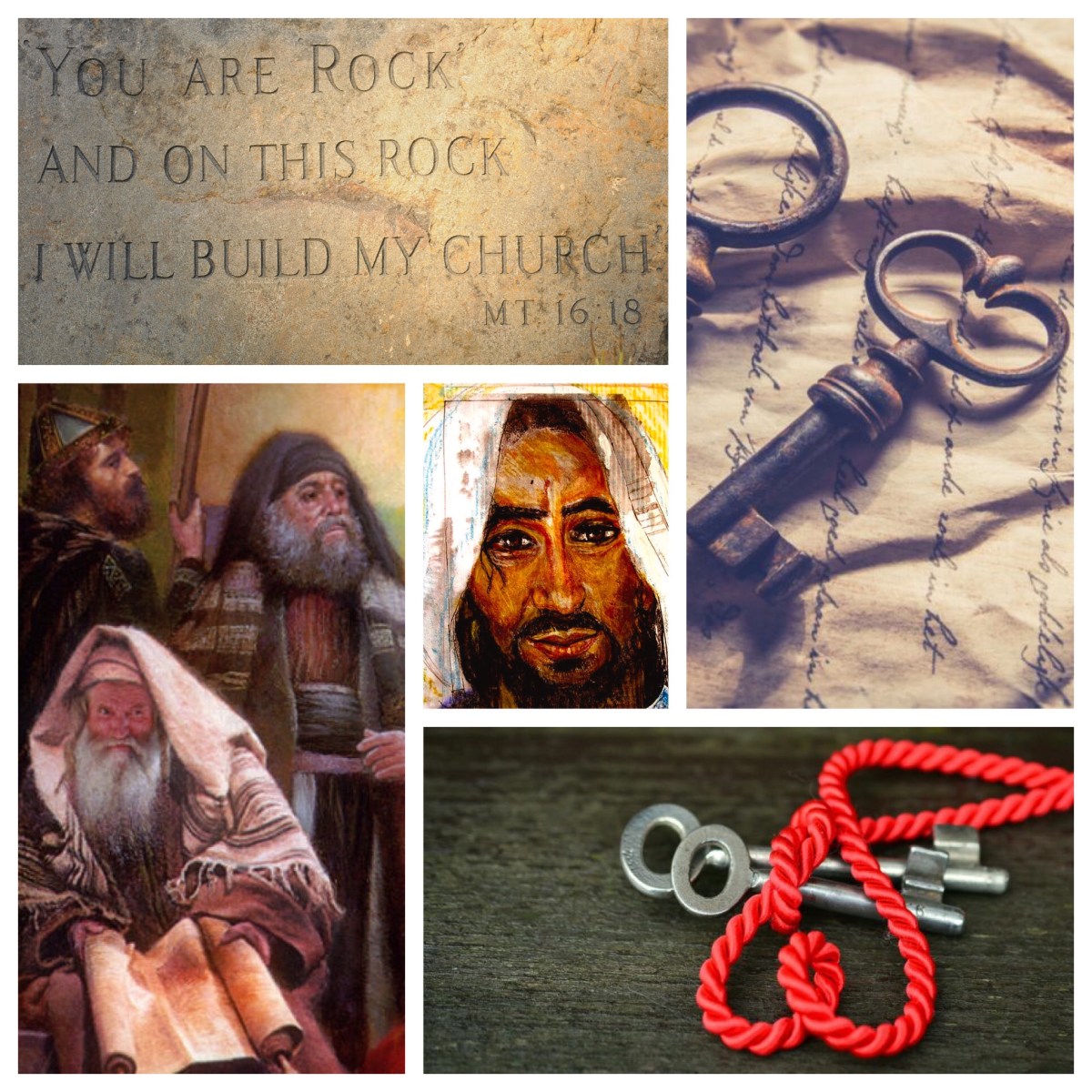
Another distinctive in this book is the text which we find in this coming Sunday’s passage, which has been used to validate the Roman episcopacy as first among equals: “you are Peter, and on this rock I will build my church” (16:18). How intriguing that the same Gospel has been used as the fundamental warrant for the way in which the Church has been structured by Roman Catholics and evangelical missionaries!

The book of origins is unique, amongst the canonical gospels, in indicating the authority which was to be given to Peter, the first leader of this community (16:17–19). Three of the terms used here come from the heritage of Hebrew Scripture. They also function within the contemporary context as sectarian markers, setting apart as distinctive the community in which they author is located—the community for whom the Gospel was written.

First, only in this gospel does Jesus declare to Peter, “on this rock I will build my church” (16:18). The phrase evokes the rock which provides the “sure foundation” (Isa 28:16-17). This language is used by the Dead Sea

sectarians to make similar claims about their fidelity to the Law. Peter (a name meaning ‘rock’) becomes the foundation of the church, put in place by Jesus, who has the authority to make this declaration.

Second, the imagery of the “keys” which Jesus gives to Peter (Matt 16:19) also makes claims about his authority. We find this image in Jewish texts which are dated after 70 CE (2 Baruch 10:18; 3 Baruch 11:1–2; 4 Baruch 4:4); here, the loss of the keys represent the failure of various Jewish priests to perform their duties correctly and faithfully, and thus protect the temple.

With the loss of the keys (which in the texts of 2 and 4 Baruch are thrown up towards heaven, to be taken back by God), comes the loss of authority as leaders of the people. Matthew claims the keys (and presumably the authority to interpret the will of God) for his own community (16:19). Jesus, holder of the keys, hands them over to Peter. The scriptural text which underlies this is Isaiah 22:20–22, which speaks of “the key to the house of David” being given to someone worthy of possessing authority over Jerusalem.

A third set of terms describes the authority that Jesus gives to Peter as an authority to “bind and loose” (16:19; it is subsequently granted to the whole community, 18:18). The Greek terms used by Matthew are equivalent to the terms used by Josephus to denote the authority granted the Pharisees under Salome Alexandra (Jewish War 1.110–111). Once again, Jesus holds this authority, and passes it on to Peter.

These terms are thus considered to be equivalent to the Hebrew terms for “forbid and permit” which are to be found in rabbinic writings, as a way for the rabbis to of claim their authority in leadership. The terms “binding and loosing” clearly referred to the political and legal powers of those in authority.

By reporting that Jesus gives these powers to Peter, and then to the whole community, Matthew emphasizes that Jesus is a rival to the authority of the Pharisees, and that the teachers in Matthew’s community possess the authority to challenge the teachings offered in the synagogues.

*****

The Matthean Jesus uses a number of symbols and terms that were used by the Pharisees and other Jewish groups. Matthew includes them to strengthen his claims about Jesus and to enhance the authority of his community. They are used to demonstrate the validity of the way that the people of this community, followers of The Way, disciples of the Messiah, Jesus, adherents to the details of the Law, over against the teaching about the Law provided by the Pharisees and other teachers of the time.

The Pharisees were scribes who specialised in the interpretation of Torah and in the application of Torah to ensure that holiness was observed in daily living. In contrast to the priestly Sadducees, the Pharisees were very popular amongst the ordinary Jewish folk. This may well have been because they undertook the highly significant task of showing how the Torah was relevant to the daily life of Jewish people.

The story of Ezra, told in Nehemiah 8, gives an example of this in practice, referring especially those who “helped the people to understand the law” (Neh 8:7). Whilst the priests upheld the Torah as the ultimate set of rules for operating the Temple, the Pharisees showed how the Torah could be applied to every aspect of daily life as a Jew.

Most Jews went to the Temple only rarely—and found it to be an expensive enterprise when they got there! But in seeking guidance for daily life, the people were greatly helped by those skilled interpreters of Torah, the scribes and the Pharisees. Josephus comments that the Pharisees were usually held in high regard by the ordinary people of the day.

Since nine out of every ten persons could not read, the importance of scribes —literate, educated, and sympathetic—could not be underestimated. Whilst the Pharisees clustered around towns in Judea, the scribes were to be found in the synagogues of villages throughout greater Israel, and indeed in any place where Jews were settled.

The task of the Pharisees was to educate the people as to the ways of holiness that were commanded in the Torah. It was possible, they argued, to live as God’s holy people at every point of one’s life, quite apart from any pilgrimages made to the Temple in Jerusalem.

The Pharisees thus held sway in the synagogues, in all the places where dispersed Jews were living. Their interpretations were highly regarded amongst the people. But they stand as the chief sparring partners for Jesus, reflecting the competing claims for authoritative teaching about the Law.

As Matthew writes his Gospel, he intensifies the way that Jesus stands in competition with the Pharisees, and draws on a range of scriptural terms and ideas to underscore the “richness” of the teachings of Jesus.

*****

This blog draws on material in MESSIAH, MOUNTAINS, AND MISSION: an exploration of the Gospel for Year A, by Elizabeth Raine and John Squires (self-published 2012)

See also

https://johntsquires.com/2020/07/14/let-anyone-with-ears-hear-matt-13/

https://johntsquires.com/2020/07/09/parables-the-craft-of-storytelling-in-the-book-of-origins-matt-13/

https://johntsquires.com/2020/07/03/come-to-me-take-my-yoke-i-will-give-you-rest-matt-11/

https://johntsquires.com/2020/06/11/go-nowhere-among-the-gentiles-matt-105-the-mission-of-jesus-in-the-book-of-origins/

https://johntsquires.com/2020/02/13/you-have-heard-it-said-but-i-say-to-you-matt-5/

https://johntsquires.com/2020/02/06/an-excess-of-righteous-justice-matt-5/

https://johntsquires.com/2020/01/30/blessed-are-you-the-beatitudes-of-matthew-5/

https://johntsquires.com/2020/01/23/repentance-for-the-kingdom-matt-4/

https://johntsquires.com/2019/12/27/reading-matthews-gospel-alongside-the-ahebrew-scriptures-exploring-matthew-2/

https://johntsquires.com/2019/12/19/descended-from-david-according-to-the-flesh-rom-1/

https://johntsquires.com/2019/12/04/for-our-instruction-that-we-might-have-hope-rom-15-isa-11-matt-3/

https://johntsquires.com/2019/11/28/leaving-luke-meeting-matthew/

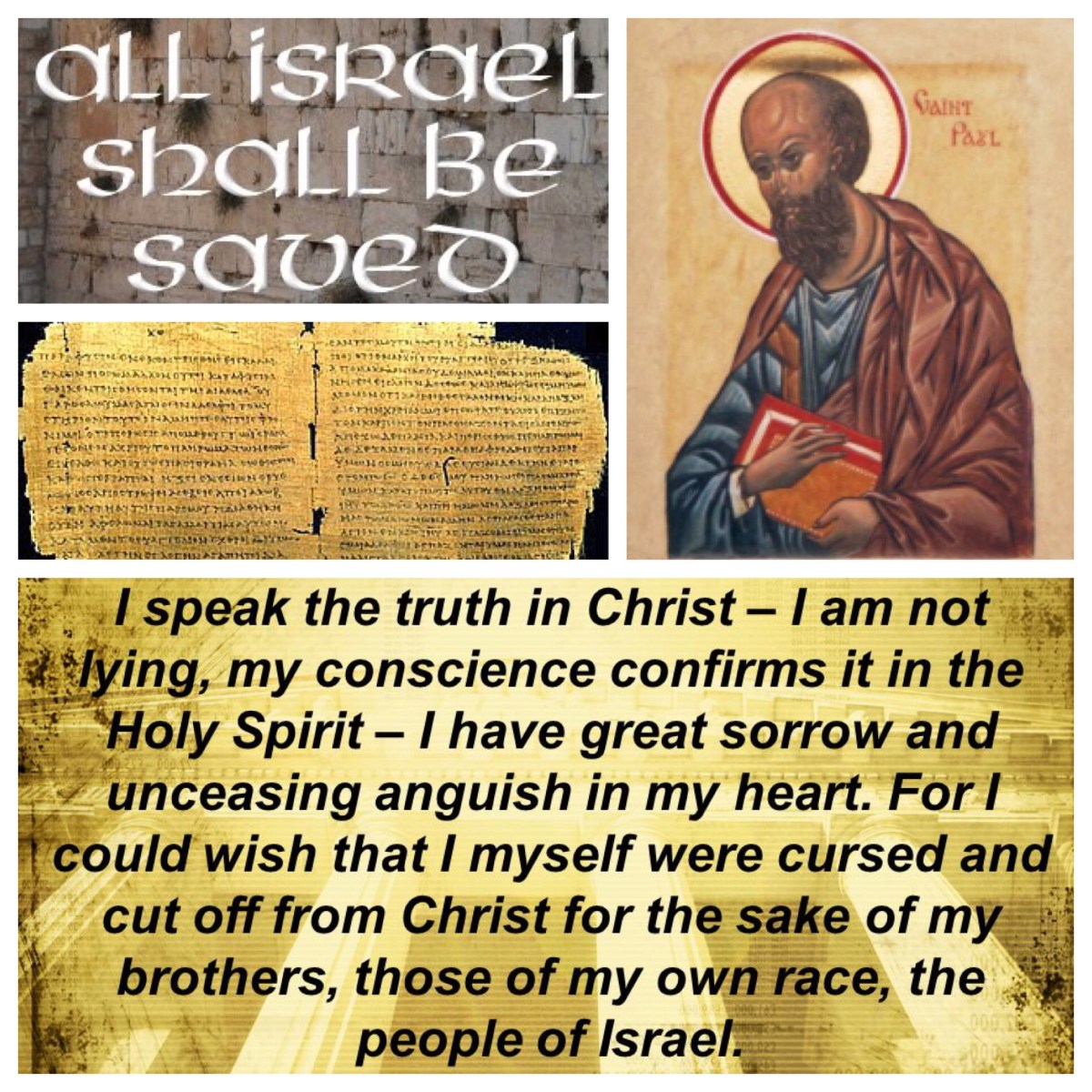
God has not rejected his people. All Israel will be saved. (Rom 11; Pentecost 12A)

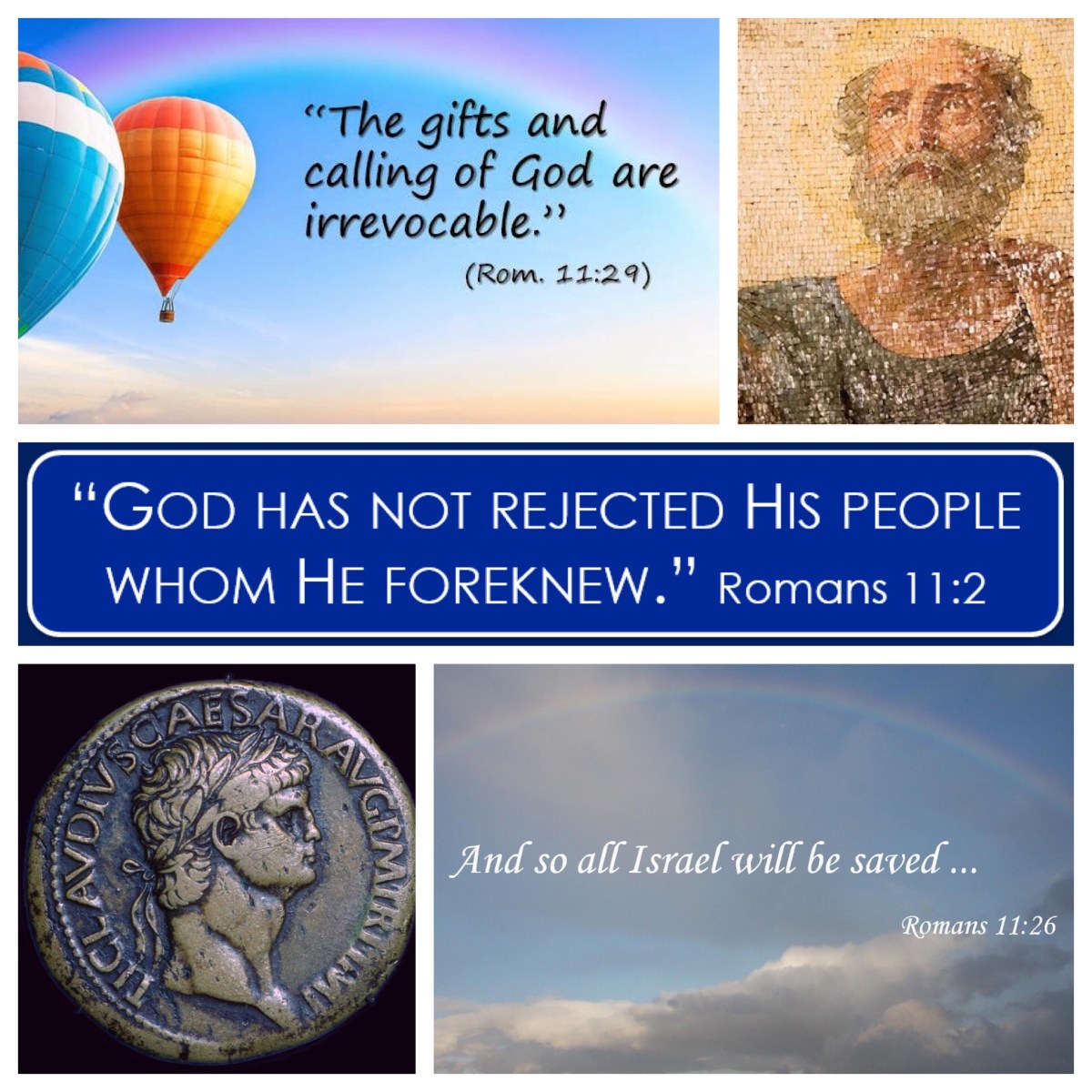
Has God rejected his people? By no means! I myself am an Israelite, a descendant of Abraham, a member of the tribe of Benjamin. God has not rejected his people whom he foreknew. For the gifts and the calling of God are irrevocable. (Rom 11:1-2a, 29)

This coming Sunday, we read two short sections of chapter 11, from Paul’s longest, and most influential letter: the letter he addressed to “all God’s beloved in Rome, who are called to be saints” (Rom 1:7). This section of the letter is hugely important.

It hasn’t always been seen in this light. An earlier line of interpretation highlighted Paul’s words about “the righteousness of God” in Rom 3:21-26, or other affirmations in later chapters, as the key to understanding the argument of the letter as a whole.

Such interpreters usually saw the wonderful doxological exclamation of Romans 8:31-39 as the climactic moment of the letter (“[nothing] will be able to separate us from the love of God in Christ Jesus our Lord”). And some interpreters explicitly asserted that what followed after chapter 8 was really in the manner of an appendix, and not part of the main argument.

Today, however, many interpreters would agree that it is this part of the letter, chapters 9–11, which really provide the grand climax to the argument that has been advanced and developed since the first quotation from scripture, at 1:17, where Paul cites the prophet Malachi in support of his argument concerning “the righteous-justice of God”.

In this view, the climax of Paul’s argument to the community of messianic believers in Rome, comes not in the assertion that, “since we are justified by faith, we have peace with God through our Lord Jesus Christ” (5:1); nor in the claim that “now you have been freed from sin and enslaved to God, the advantage you get is sanctification” (6:22).

The climax does not come in the exultation that “there is therefore no condemnation for those who are in Christ Jesus” (8:1); nor in the doxological outburst that “[nothing] will be able to separate us from the love of God in Christ Jesus our Lord” (8:39).

In fact, none of these—nor any of the many other theologically-rich, doctrinally-foundation phrases found in Romans 5-8, bring to a close the argument which Paul mounts from 1:16 onwards.

The true climax to the argument is in Romans 9-11, summarised in the following choice quotations, which have featured in the lectionary selections in recent weeks: “it is not as though the word of God has failed” (9:6) … “there is no distinction between Jew and Greek; the same Lord is Lord of all” (10:12) …“the gifts and the calling of God are irrevocable” (11:29).

The point of the letter is articulated in the sharp question that Paul poses: “has God rejected his people?” (11:1), which he immediately answers: “God has not rejected his people” (11:2). All of the argument in this section of the letter (chs. 9-11) and, indeed, of the whole letter to this point (from 1:17 onwards), can be summed up in one succinct phrase: “[and] so all Israel will be saved” (11:26).

*****

So that you may not claim to be wiser than you are, brothers and sisters, I want you to understand this mystery: a hardening has come upon part of Israel, until the full number of the Gentiles has come in. And so all Israel will be saved; as it is written, “Out of Zion will come the Deliverer; he will banish ungodliness from Jacob.” “And this is my covenant with them, when I take away their sins.” (Rom 11:25-27).

“All Israel will be saved” (Rom 11:26). Paul is insistent on this claim. The people of Israel, the Jews, have a valued place within the kingdom of God. They are vitally important in the scheme of things, to God. Faith in Jesus does not mean abandoning the sense that the people of Israel are loved, chosen, and saved, by God. “All Israel will be saved”

This claim plays an important role in how we approach and interpret the letter to the Romans. All the component parts needs to be seen in the light of this overarching framework. Paul was writing to a community where Gentiles had come to believe that Jesus was chosen of God. They had joined with Jews who had already come to the view that Jesus was, indeed, the very Messiah, anointed one, chosen by God from amongst their people, the people of Israel.

Jews and Gentiles coexisted alongside each other in the house churches that had been established in Rome. (All the early churches were house churches; there were no designated ecclesial buildings, so their gatherings took place in the homes of wealthy people, sympathetic to the ethos of the growing movement.) That, it seems, had been the case for some years before Paul dictates this letter to them.

However, a few years earlier, the Emperor Claudius had commanded the expulsion of Jews in the city of Rome—just one of the countless times throughout their history that the people of Israel were rendered homeless, stateless, sent into exile. It would seem that many Jews left Rome, in or around the year 49 by our reckoning. But five or six years later, as Paul dictated his letter, it would seem that Jews had returned to the city.

A coin from the time of
Tiberius Claudius Caesar Augustus Germanicus
(Emperor 41-54 CE)

And amongst those returning Jews, there were Jews who held firm to the conviction that Jesus was Messiah. These Jewish Messianists joined in the fellowship meals and social gatherings and worship experiences where Gentile believers were also to be found.

These gatherings of the followers of Jesus in Rome reflected the all-inclusive nature of the Gospel. God is God of both Jews and Gentiles, as Paul affirmed. Salvation is available to Jews as well as Gentiles, as he clearly states. Paul knows of this rich diversity; he addresses by name 29 people in Rome (in chapter 16 of his letter to the Romans), and there are both Jewish names and Gentile names included amongst those 29 names. (And a good number of women, alongside the men!)

The church in Rome (or, to be precise, the churches in Rome) exemplified the message that Paul consistently articulates throughout this letter: “all have sinned, yet all are justified by God’s grace as a gift” (3:23-24); “is not God the God of Jews, and the God of Gentiles also?” (3:29); the promise is “not only to the aherents of the law, but also to those who share the faith of Abraham” (4:16); God has called people, “not only from the Jews, but also from the Gentiles” (9:24); “there is no distinction between Jew and Greek; the same Lord is Lord of all and is generous to all who call on him” (10:12); “salvation has come to the Gentiles” (11:11); and so, “all Israel will be saved” (11:26), for “God has mercy on all” (11:32).

Paul sounds this consistent theme throughout Romans: God is for all, God has mercy on all, both Jew and Gentile may participate in the full knowledge of God. The church in Rome lives out that message in the daily life of its members. The church in the place where we each are engaged is called, today, to live out that message in the daily lives of all its members.

See also

https://johntsquires.com/2020/08/04/a-deeper-understanding-of-god-through-dialogue-with-the-other-romans-10/

https://johntsquires.com/2020/07/27/praying-to-be-cursed-paul-the-passionate-partisan-for-the-cause-rom-93/

https://johntsquires.com/2020/07/11/the-best-theology-is-contextual-learning-from-pauls-letter-to-the-romans/

https://johntsquires.com/2020/07/11/the-righteous-justice-of-god-a-gift-to-all-humanity-romans/

https://johntsquires.com/2019/12/19/descended-from-david-according-to-the-flesh-rom-1/

https://johntsquires.com/2019/12/04/for-our-instruction-that-we-might-have-hope-rom-15-isa-11-matt-3/

A deeper understanding of God, through dialogue with “the other” (Romans 10; Pentecost 11A)

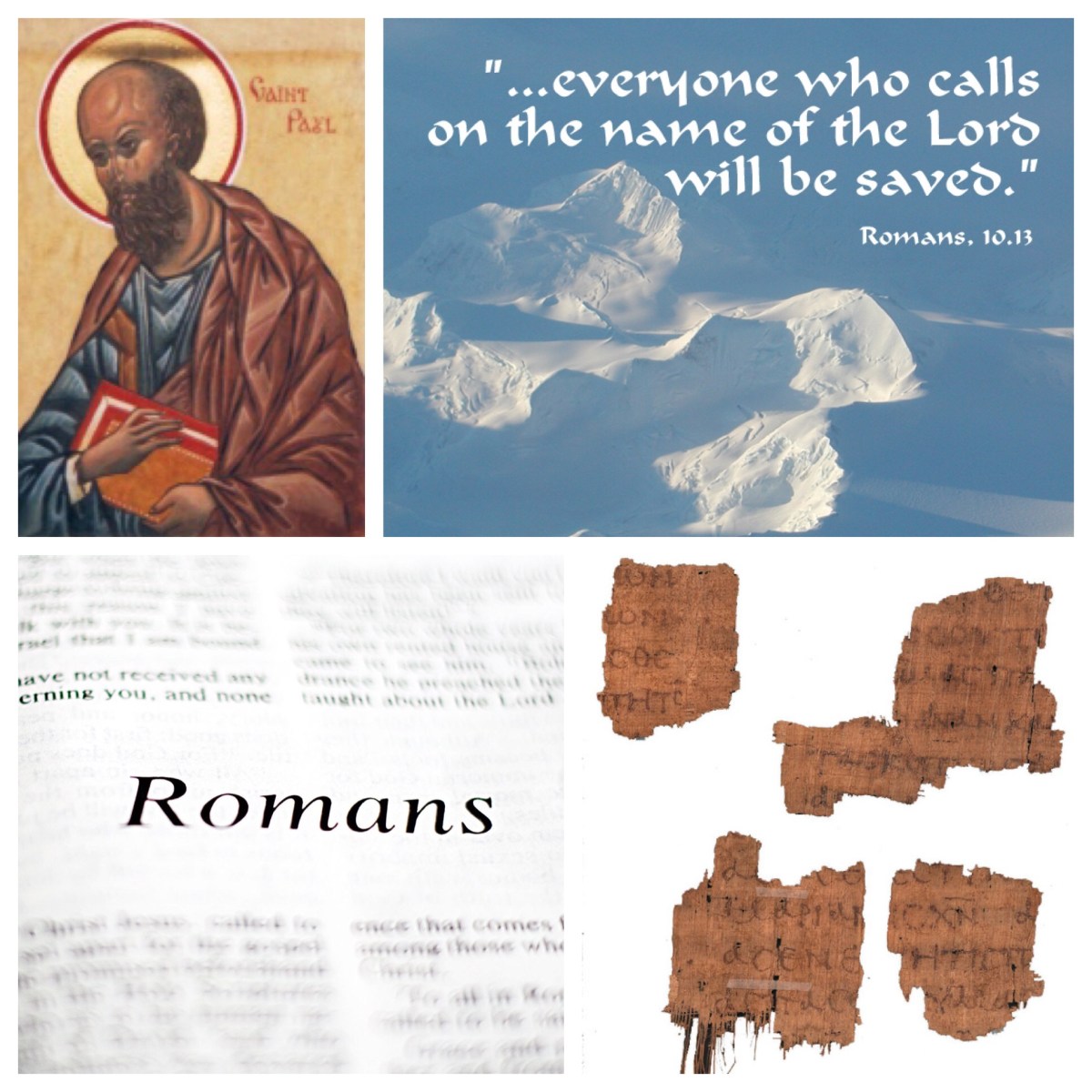
For there is no distinction between Jew and Greek; the same Lord is Lord of all and is generous to all who call on him. (Romans 10:12)

These words are found in the passage from Paul’s letter to the Romans that is offered by the Revised Common Lectionary, for reading in worship this coming Sunday. They were written long ago, in a different language, to people of a different culture, in a location quite different from where you and I are currently located. How do they speak to us today?

Readers and listeners in the contemporary world have often assumed that in writing chapters 9-11 of Romans, Paul is addressing the issue of Israel and the Church. Jews and Christians. Those of the circumcision, raised on the Law;  and those of the uncircumcision, unaware of the Law.

We assume that this dynamic, familiar to us from the times in which we live, was precisely the dynamic that motivated Paul as he wrote to the Romans, as he instructed them in his beliefs, as he interpreted to them the scriptural proofs, and as he exhorted them in the way to live in response to these beliefs.

But was it? Paul writes in the early days of the church; when charisma, not institution, predominates. He writes when tensions and struggles within the early missionary movement still mitigate against a commonly-held, universally-accepted, consensus of opinion.

Paul writes as the matter of what to do about Gentile believers is still largely unresolved. Some said accept them; others wanted to circumcise them, to judaise them. He writes this letter into that unresolved debate. He writes when some—his opponents, we call them—became vigorous—perhaps violent?—in asserting their viewpoint.

Paul writes well before Gentiles have outnumbered Jews within the growing movement of Jesus’ followers; before the Temple is destroyed; before the city of Jerusalem is declared a Gentile preserve only; before John Chrysostom explodes with vituperative venom against Christians in synagogues; before the Emperor Constantine endorses a thoroughly hellenised, philosophically mature version of faith in God through Jesus Christ. So many changes; so many new layers of meaning from church developments, laid over the earlier texted Paul.

Is this text, then, beyond our reach? Is it impossible to grasp it, to seize it as our own? Is it too alien, too far removed from us? Can it ever be for us the word of God to guide and instruct us? Or despite these difficulties, can we not enter into the dynamic, attempt to reconstruct the reality, and thus appreciate the dynamic of Paul’s ancient words, as they speak to us today?

*******

The issue, I believe, which vexed Paul in these chapters, was that different people made claim that they could access God in strikingly different ways. The Jews had Torah; the commandments of the Law, handed down by Yahweh to Moses on Sinai. The Gentiles had the natural world; the revelation of the deity in creation. The followers of Jesus had a new model of faith; the faithfulness of the Messiah, no less, as the crucial instance of how all human beings might relate to God.

Paul agonises with what this might mean for his understanding of faith. He grew up on the Jewish understanding that access to God was through adherence to Torah, the living of a life in complete harmony with requirements of God’s Law.

Then came a dramatic, unexpected experience. He entered into a new way of relating to God. His “Damascus road experience”, as Luke vividly portrays it, opened up this new vista. To tradition, is added experience. The experience helps Paul to reinterpret his tradition; to shape a new understanding of faith.

But then, a third factor intrudes; Paul is called, and sent, to Gentiles. He preaches the Gospel, and people respond. He establishes new communities of faith—some, provocatively, right next door to synagogues; others, comprising Gentiles who meet in homes. These people, he nurtures. They have access to God; the same God Paul has known as faithful Jew, and as convinced Christian convert. The Gentiles can come to God, without the Law, in a different way from Jews.

Does this mean that the old way is now obsolete? Paul cannot stomach the thought. Indeed, he knows, from the events of his own life, that personal experience can reshape, reconfigure the traditional, “old” way, so that it is not rendered irrelevant, but is infused with new vigour and vitality.

That’s how I understand the controversial statement that Paul makes, in the verse just before our lectionary passage—when he declares to the Romans that Christ is “the end of the Law” (Rom 10:4). The word he chose, translated as “end”, has the sense of “end” as completion, perfection, bringing to fruition, reaching to maturity, arriving at the point of complete fulfilment. That, in Paul’s understanding, is how Christ stands in relation to the Law—not in opposition, but as the pinnacle of fulfilment.

So he cannot give up on the challenge that his success amongst the Gentiles has laid before him: God is working in this way!! But nor does he want to give up on the Jews; for they are chosen of God, and God does not abandon his promise, nor does God jettison his beloved people. So, Paul concludes, both “old” and “new” must cohere together. They each have a part in the overall scheme.

*******

The issue that Paul grapples with, is so very close to the issue that confronts us in our place and time. Australia of the 21st century is a multicutural country. In the last 75 years, 10 million people have migrated to Australia from over 150 different countries. Almost half of the Australian population has at least one parent who was born overseas, and almost one quarter of Australian residents were themselves born overseas.

We are undoubtedly multi-cultural, even if we do not yet realise the full implications of this new reality. As well as this, however, we are also multi-faith. Each country and culture represented in Australia now brings with it its own distinctive expression of its faith. So many people, making so many claims about how they know God, how contact God, how they commune with God.

How do we deal with this new reality? When “the heathens” lived in far distant countries, across deep, raging seas, then the way of stereotype and caricature went unchallenged. But now that they are here, the others in our midst, we cannot dismiss them so easily.

Other people have other ideas about God, other connections with the divine, other ways of relating to the deity. Do we dismiss them all, in a blanket fashion, as ignorant, wrongheaded, blighted by evil? Do we attempt to convince them that what they know is but a shadow of what we know? Do we shrug our shoulders, and say “whatever will be, that’s cool”?

My preferred option is one which I find emerging from texts such as Romans 9-11. Instead of staking out the ground to be defended, another option is to acknowledge that there is a greater reality, beyond our present knowing, transcending human capacity to articulate and systematise. Paul grapples with the issue, and concludes that the answer is, simply, “There is no distinction between Jew and Greek; the same Lord is Lord of all and is generous to all who call on him.”

The unifying factor of God extends beyond the precise doctrines and dogmas of each partisan point of view; the greater reality of God holds in creative tension each of the variant ways of seeking God’s presence. Jew and Greek are united, not by common beliefs, but by the God who shows mercy to each of them alike.

*******

Paul has argued this theme from early in Romans: “all have sinned, yet all are justified by God’s grace as a gift” (3:23-24), “is not God the God of Jews, and the God of Gentiles also?” (3:29), the promise is “not only to the aherents of the law, but also to those who share the faith of Abraham” (4:16), “God has called us, not only from the Jews, but also from the Gentiles” (9:24).

He will go on to push the point in subsequent chapters: “salvation has come to the Gentiles, to make Israel jealous” (11:11), and so, “all Israel will be saved” (11:26); “just as you [Gentiles] have received mercy, so they [the Jews] might receive mercy” (11:30-31); “God has mercy on all” (11:32). Paul’s “God-talk” sounds this consistent theme throughout Romans: God is for all, God has mercy on all, both Jew and Gentile may participate in the full knowledge of God.

Out of the struggle about the particularities of different ways of relating to God, comes the unequivocal assertion that all might be intimately bound with God. The preferred option which Paul adopts is not the rigorous exclusivism of a sectarian antagonist, not the woolly-headed universalism of an unreconstructed liberal, but the engaged and intense dialogue of one who believes both that his won way is right, but that it does not exclude other ways.

Paul offers the pattern of faith in which tradition, experience, and an openness to the insights of the other might come together and shape a new, vibrant understanding of God’s availability to all, of God’s open-armed yearning for each and everyone, of God’s willingness to encompass people of different upbringings, experiences, and creeds, into the one warm embrace.

The Uniting Church has issued a clear statement about relating across religious faiths, under the title of friendship in the presence of difference. See https://assembly.uca.org.au/rof/about/theology and https://assembly.uca.org.au/fipd

*******

To conclude, I offer a reflective meditation. You may wish to use this meditation as a prayer; to join your spirit with the words of the prayer, and lift them to God. Or you may wish to use the meditation as a point of reflection, for yourself, so that you might ponder, without affirming or denying, the sentiments it contains. I invite you, then, you join in meditation; perhaps, in prayer, or perhaps, in reflection.

A Reflection

God has created us all,

and called us together from all the nations of the world,

to be one people—the people of God’s earth.

As Christian people, we regularly offer our prayers

            for one another, as we seek to serve God

            in obedience to the Gospel of Jesus Christ.

In this time of reflection, we remember now

            people who call on God

            in ways which are different from the ways we know:

those who call on God through self-enlightenment;

those who seek to be raised to a higher plane of consciousness;

those who study the Torah or adhere to the Koran;

those who seek to walk a way revealed to them

by teachers and leaders of faiths other than Christianity.

What would it mean for us

            to cultivate tolerance and acceptance of such people?

If we were to gain a deeper understanding

            of the ways they call on God,

might it not enrich our own way of relating to God?

What would it mean for us

            to enter into dialogue with people of other faiths?

We could not relate to them as proponents of a narrow doctrine;

            we would need to meet as servants of one another,

            together seeking the truth of deep faith.

As we speak with one another, and work side by side,

            may it not be in arrogance or pride,

but in such a way

            that God might break through to us in new ways,

so that we may better know

the greater reality of God in our lives.

See also

https://johntsquires.com/2020/07/27/praying-to-be-cursed-paul-the-passionate-partisan-for-the-cause-rom-93/

https://johntsquires.com/2020/07/11/the-best-theology-is-contextual-learning-from-pauls-letter-to-the-romans/

https://johntsquires.com/2020/07/11/the-righteous-justice-of-god-a-gift-to-all-humanity-romans/

https://johntsquires.com/2019/12/19/descended-from-david-according-to-the-flesh-rom-1/

https://johntsquires.com/2019/12/04/for-our-instruction-that-we-might-have-hope-rom-15-isa-11-matt-3/

Praying to be cursed: Paul, the passionate partisan for the cause (Rom 9:3; Pentecost 10A)

For I could wish that I myself were accursed and cut off from Christ for the sake of my own people, my kindred according to the flesh. (Rom 9:3, NRSV translation)

In his longest letter, written to “all God’s beloved in Rome, who are called to be saints”, Paul mounts a long and detailed case about God’s righteous-justice, made available to those who believe through the faithfulness of Jesus (see Rom 1:16-17, 3:21-26, 4:22-5:2, 5:18-21, 6:17-18, 8:10, 38-39).

The argument is developed, step by step, through the first eight chapters. This argument of the letter comes to a climax in chapters 9-11, from which excerpts are heard in worship this coming week and the two following weeks. In these chapters, Paul develops a tightly–packed argument concerning the place of Israel, and the Gentiles, within the people of God.

Paul placed a focus on the priestly role, that of intercessor, which he was undertaking, when he declared, concerning Israel, that “my heart’s desire and prayer for them is that they may be saved” (10:1). This prayer summed up the central thrust of his extended, and at times convoluted, argument, throughout these three chapters.

What Paul dictates to Tertius (the scribe who writes down what Paul says—Rom 16:22) in these three chapters comes straight from the heart—a heart that yearns to see the full scope of God’s gracious inclusion of people of faith into the kingdom.

Paul is clear about what this means. He believes that “the word of God has not failed” (9:6) and “the gifts and the calling of God are irrevocable” (11:29), so he prays for God to realise the promise that “all Israel will be saved” (11:26, citing psalms and prophetic oracles in support). That’s the universal scope for which he yearns: “all Israel”!

Paul grapples further with this question. Can it be that “God has rejected his people”? (11:1). Paul’s answer is definitive and unequivocal: “By no means!” (11:1).

Is it possible that “they have stumbled so as to fall”? (11:11). Once again, Paul cries out, “By no means!” (11:11), looking to the time of the “full inclusion” of Israel in the eschatological vision (11:12).

Since Israel, the “natural branches” of the olive tree, have been cut off because of their “unbelief” (11:20), their “disobedient and contrary” nature (10:21), are they doomed to remain “cut off” forever? “God has the power to graft them in(these natural branches will be grafted back into their own olive tree” (11:23-24).

And so, the “mystery” which was known to Paul is declared publicly at the climax of his three-chapter argument: “all Israel will be saved” (11:26), “they too may now receive [God’s] mercy” (11:31).

*******

This whole section of Romans is introduced with an astonishingly impassioned petition, I was praying for me, myself, to be separated from the chosen one by means of a curse, for the sake of my own people (9:3). This is my own translation, which differs from the familiar modern English translations at three points.

*** Warning: technical discussion of Greek syntax and translation options ahead ***

First, the phrase “accursed and cut off from Christ” (NRSV, NIV) states more than the Greek text includes; there is no verb “cut off” in the sentence. The NEB offers the concise translation, “outcast from Christ”, which provides three English words for the three corresponding Greek words. However, this ignores the curious order of words in the Greek sentence, which separates anathema, “outcast”, or “accursed”, from the phrase “from Christ”, and places the emphasis squarely on the intervening words, “me, myself, to be”.

Furthermore, the simple preposition apo (from) in the phrase “from Christ” has a force all of its own in this phrase [BAGD 86, meaning I.5, calls this a “pregnant construction”, presumably because there is no verb and the preposition seems to function as both verb and preposition simultaneously, as “separated from”]. Thus, I translate (rather inelegantly) for me, myself, to be separated from Christ by means of a curse.

Second, some modern English translations obscure the reference to prayer in this verse, preferring to use the secondary meaning of the verb euchomai, namely, “wish” (NRSV, NIV, NAB, GNB).

However, the basic sense of the verb is “pray”, and this translation is found in NEB, REB, NJB (cf. JB, “I would willingly be condemned”). This gives the sentence a much more straightforward, direct feel—this is my “prayer”—than the alternative, this is my “wish”—which implies some degree of conditional or hypothetical quality about the content of what is “wished”.

Here, I would argue, Paul was not being tentative, for the context was one of great fervour and passion (“I have great sorrow and unceasing anguish in my heart”, 9:2). He spoke with a high degree of commitment and directness (“I am speaking the truth in Christ, I am not lying, my conscience confirms it by the Holy Spirit”, 9:1). Paul here expresses, not a hesitant, possible wish, but a clear, unequivocal prayer to God. Paul was clearly praying for God to cast him aside, if his desire for his people to be saved is to be achieved.

Third, the imperfect indicative form of the verb euchomai confirms that this was not a hypothetical statement, but a clear expression of a recurrent activity undertaken by Paul in the past. The verb is not in the subjunctive; there is nothing hypothetical here; this is a clear, direct statement. This is what Paul prays for. Repeatedly. Consistently.

Thus, the plain sense of the verse is that, on many occasions prior to writing this letter, Paul had offered a prayer that he might be “anathema from Christ”, that is, regarded as separated from Christ by means of the cursed placed on him, for the sake of securing the salvation of his own people, Israel.

This is a strikingly partisan act, pleading for a desired result and volunteering his own life as a means to that end. It is a description of Paul that figures rarely, if ever, in scholarly analyses of his missionary work; and yet, like the prophetic and priestly functions which we have seen Paul performing, this partisan dimension is an equally valid element to factor into any consideration of Paul’s role, at least as he might have perceived that role.

That he is prepared to be, not with Christ, but to be cursed by Christ, for the sake of his people, Israel, shows a remarkable commitment to, and alignment with, his fellow Jews. He yearns for them to be saved, to be welcomed in the kingdom. He prays to God for this outcome. Paul writes passionately, as a partisan for the cause.

*****

See also https://johntsquires.com/2020/07/20/spirit-and-scripture-in-romans-rom-8/

https://johntsquires.com/2020/07/11/the-best-theology-is-contextual-learning-from-pauls-letter-to-the-romans/

https://johntsquires.com/2020/07/11/the-righteous-justice-of-god-a-gift-to-all-humanity-romans/

https://johntsquires.com/2019/12/19/descended-from-david-according-to-the-flesh-rom-1/

https://johntsquires.com/2019/12/04/for-our-instruction-that-we-might-have-hope-rom-15-isa-11-matt-3/

Sighs too deep for words: Spirit and Scripture in Romans (Rom 8; Pentecost 9A)

The Spirit helps us in our weakness; for we do not know how to pray as we ought, but that very Spirit intercedes with sighs too deep for words. And God, who searches the heart, knows what is the mind of the Spirit, because the Spirit intercedes for the saints according to the will of God. (Romans 8:26-27)

In his longest letter, written to “all God’s beloved in Rome, who are called to be saints”, Paul places importance in the role played by the Spirit of God. The word spirit appears 32 times in this letter; many of these refer to the Holy Spirit. Some of those instances appear in the epistle section that is set in the lectionary for this coming Sunday, Romans 8:26-39.

This section also contains a quotation from scripture (Psalm 44:22, quoted at Rom 8:36). The whole letter is replete with such scripture quotations—it starts with a programmatic citation about the righteous and faith, from Habakkuk 2:4 (at Rom 1:17), and moves through discussions of the power of sin (3:10-18), the relevance of Abraham (4:7-8), a reflection on the story of Adam (5:12-21), and a consideration of some of the Ten Commandments (7:7).

There is a long and complex discussion of the place of the people of Israel alongside the Gentiles within the plan of God (9:1-11:36, where many scripture quotations are included), further discussion on the place of the Gentiles (15:9-12) and a declaration of the importance of proclaiming the good news (15:20-21). Scripture undergirds the whole of Paul’s argument in Romans.

Paul retains from his Jewish upbringing a sense of the Spirit as a manifestation of divine energy; the Spirit is God’s gift to believers (5:5) and thus the source of life and peace (7:6; 8:2, 5–6). The Spirit, in Hebrew Scripture, breathes over the waters of chaos as God’s primary agent in creation (Gen 1:1-5), gifts the elders appointed by Moses (Num 11:16-25), anoints the prophets (Deut 34:9, Judges 13:24-25, 2 Sam 23:2) and inspires their pointed words of warning (Isa 61:1, Ezekiel 2:2, 3:12, Joel 2:28-29, Micah 3:8, Zechariah 4:6).

The same Sprit plays an important role in the story of Jesus, especially as Luke tells it, from the conception and birth of Jesus (Luke 1:35), through his commission at his baptism (3:22) and temptation (4:1), his public ministry (Luke 4:14, 18; Acts 10:38), through to his death (Luke 23:46).

The Spirit continues to be creatively active in the subsequent outpouring of gifts at Pentecost (Acts 2:2-4, 17-18, 33) and on through the story of the early followers of Jesus: Peter and John (Acts 4:8, 31), Stephen and others (6:3, 5, 10, 7:55), Phillip (8:17-18, 29, 39), Saul (9:17), Peter (10:19, 44-45, 11:15, 24, 28), Paul and Barnabas (13:2, 4, 9, 52), the council in Jerusalem (15:8, 28), and then in Paul’s continuing travels (16:6-7, 19:6, 21, 20:22-23, 28, 21:4, 11, 28:25).

The Spirit is an essential element in the story that Luke tells. Where does the Spirit fit in Paul’s view of things?

Paul imbues the Spirit with an eschatological role—first, the Spirit acts by raising Jesus from the dead (1:4; 8:11) and then by adopting believers as “children of God” (8:14–17, 23). The Spirit is a marker of life in the kingdom of God (14:17). The kingdom, for Paul, remains a future promise, to become a reality within the eschatological timetable (1 Cor 15:23-26).

Paul speaks with passion about how the creation groans in the present time of distress (8:18–23), as believers hold fast to their hope in the renewal of creation (8:17, 21, 24–25; see also 1 Cor 7:28–31). The groaning of creation is an image that connects clearly and directly with the current times.

The impact of COVID19 evokes groaning as we are surrounded by illness, anxiety, loneliness, and death. But this groaning comes also from the earth herself, groaning under the weight of the damaging misuse and destruction wrought by human beings, erupting out now in the rapid and threatening spread of a tiny, potent killer.

The role of the Spirit in this period is to strengthen believers by interceding for them (8:26–27). The Spirit is not to take us away from the realities of the life we live; rather, the Spirit engages us wholeheartedly and fully in the life of discipleship. Paul’s explanation is that the Spirit facilitates the way that we reach out to God, seeking help, for others and for our world. The Spirit intercedes with “sighs too deep for words”. An empathic companionships in the midst of the groanings.

Paul reminds the Romans that they are “in the Spirit” (8:9); this is reminiscent of his guidance to the Galatians to live “by the Spirit” (Gal 5:16, 22–25) and his exposition to the Corinthians of the gifts which are given “through the Spirit” (1 Cor 12:1, 4–11). The understanding of the gifting of believers by the Spirit, articulated in the first letter to the Corinthians, has played a significant role throughout the history of the church over the centuries. The sighs of the Spirit are manifested in the gifts of discipleship.

The life of faith, lived “in the Spirit”, is therefore to be characterised by “spiritual worship” (Rom 12:1). Paul immediately explains that this requires believers to be “transformed by the renewing of your minds” (Rom 12:2). After making this bold programmatic statement, Paul devotes significant time (in chapters 12–15) to spelling out some of the ways in which this transformation might take place.

So, for Paul, the Spirit effects transformation, which then governs the behaviour as well as the words of believers. The Spirit is not simply an internal, mystical, or ecstatic experience; the Spirit is manifest in practical ways in the lives of disciples. The “sighs too deep for words” are wrapped around the focussed attention that scripture requires from believers. And scripture provides resources for grappling with the very issues about which the Spirit groans and sighs.

(We will look further into the function of scripture in this letter in a later blog.)

*****

See also https://johntsquires.com/2020/07/11/the-righteous-justice-of-god-a-gift-to-all-humanity-romans/

https://johntsquires.com/2019/12/19/descended-from-david-according-to-the-flesh-rom-1/

https://johntsquires.com/2019/12/04/for-our-instruction-that-we-might-have-hope-rom-15-isa-11-matt-3/

Let anyone with ears, hear! (Matt 13; Pentecost 8A)

Jesus used parables as the chief means of his story-telling. A parable is a story told in a specific way to make a single clear point. Parables are conundrums. They contain unresolved tensions. They invite multiple understandings. They press for exploration and investigation. We have another parable in the Gospel reading for this coming Sunday!

The accounts of Jesus that we have in scripture—Mark’s beginning of the good news of Jesus, Matthew’s book of origins of Jesus, Chosen One, and Luke’s orderly account of the things fulfilled—each contain a number of parables. Even in John’s book of signs, there are some parable-like sections, buried in the midst of the long discourses that this book contains.

This week, the lectionary offers the second parable in Matt 13. Last week, we had the parable of the seeds and the sower (13:3-9) and its interpretation (13:18-23). This week, we will hear the weeds among the wheat (13:24-30) and its interpretation (13:36-43). Then in the following week, we will hear the other five parables in this chapter: the mustard seed (13:31-32), the yeast in the flour (13:33), hidden treasure (13:44), a pearl of great value (13:45-46), and the net that caught fish (13:47-48)—each one offered without interpretation.

As with last week, so also this week we are given a parable, followed immediately by an interpretation of the parable. I had a spout last week about the way that a later allegorising understanding of the parable has been placed on the lips of Jesus, in this Gospel account. You can read that at https://johntsquires.com/2020/07/09/parables-the-craft-of-storytelling-in-the-book-of-origins-matt-13/

I don’t believe that Jesus would have spoken the words in this interpretation (13:26-43). I think it is a later addition from a tradition that found it hard to leave the parable standing in its own right. Somebody, somewhere, wanted to offer a definitive reading. The same thing happened last week, as the parable of the seeds and the sower was interpreted in a certain way (13:18-23). It has happened again this week, in relation to the parable of the weeds and the wheat (13:24-30).

In the parable itself, there is a simple contrast drawn between the weeds and the wheat. That is typical of parables that Jesus told. A number of these parables were short and direct, making a single point and needing little explanation: see the parables of the treasure (13:44) and the pearl (13:45), for instance. This made the parable easy to remember and repeat orally.

These parables are little more than an introduction (“the kingdom of heaven is like…”) and a single image which is used to describe a characteristic of the kingdom (hidden treasure, or fine pearls). The first part of this week’s parable (13:24-26) has this form. It is short and direct.

It starts with the classic introduction, “the kingdom of heaven may be compared to …”. It goes on to tell of the good seeds, which grow into wheat, and the bad seeds, which grow into weeds. This part of the parable has a simple contrasting form, like the parable of the good fish and the bad fish caught in the net, as told in the last of the seven parables (13:47-48).

But the parable has a story attached to these weeds among the wheat (13:27-30). So Jesus continues with a little plot development, which brings in a reflection on the human characters who sowed the seeds. In this regard, this is like other parables of Jesus, which are a little more developed; they still make a single point, but it is developed or explained a little more.

The parable of the mustard seed (13:31–32) is a good example of this. This parable uses the same introductory phrase and conveys its main point in an image (mustard seed, 13:31) which is further developed to convey what happens to the mustard seed as it grows and forms “the greatest of shrubs” (13:32).

So the plot of the parable of the wheat and the weeds continues until the punchline is reached. It is not during the growing that any distinction is to be made; it is at the harvest that this distinction is enforced. Wheat that grew from good seeds is to be collected and stored; weeds that grew from bad seeds are to be bundled and burnt (13:28-30).

That much, as a parable, has a clear message: don’t intervene into the process of growing, don’t judge (recalling 7:1), but let the end result of the process of growing be the moment when the judgement occurs. And that taps into a strong interest, throughout the book of origins, for depicting Jesus as the preacher of judgement.

Consistently throughout the book of origins, Jesus is presented as a fearful and demanding figure. In his capacity as God’s Messiah, he frequently promises (or threatens) judgement (5:21–26; 7:1–2; 10:15; 11:21–24; 12:36–37; 19:28– 30; 21:33–44; 22:1–14; 24:29–31, 36-44, 45–51; 25:1–13, 14–30, 31–46; 26:64). Many of these declarations occur in eschatological contexts, where Jesus is warning about the punishment that is to come at “the end of time”, unless righteous-justice is followed in the present.

In the previous chapter, a quotation from the prophet Isaiah (Isa 42:1-4, at Matt 12:15–21) includes an extended quotation from Isaiah 42, where the servant of the Lord proclaims judgement to the Gentiles and they are said to have hope in his name (presumably because they repent and believe him). This is the function that Jesus, as God’s servant, the Chosen One, carries out. It’s not for us human beings to take on the role of judge. That belongs to God, carried out through his chosen agent, Jesus.

The parable of the wheat and the weeds has an intensity because of its focus and orientation towards this fearsome judgement, executed by Jesus in obedience to the desire of God. The interpretation of the parable defuses the intensity of the parable by fussing about what each element refers to: the Sower is the Son of Man, the good seeds are the children of the kingdom, the bad seeds are the children of the evil one, the enemy is the devil, and so on (13:39).

The interpretation ends with a repetition and expansion of the scene of judgement that ended the parable—but the good seed is not simply stored, it morphs into the righteous in the kingdom, and the bad seed is not burnt as seed, but it becomes the ones who disobeyed the law, burning in the furnace (13:41-43). And there will be “weeping and gnashing of teeth” (13:42; see also 13:50; 22:14; 25:30). So the same punchline holds in this section, as in the parable itself.

Interestingly, the interpretation ends with the same punchline that concluded the parable of the seeds and the sower: “let anyone with ears, listen!” (13:53, cf. 13:9). Jesus continues to press the point. Judgement is inevitable.

This blog draws on material in MESSIAH, MOUNTAINS, AND MISSION: an exploration of the Gospel for Year A, by Elizabeth Raine and John Squires (self-published 2012)