The righteous-justice of God, a gift to all humanity (Romans; Year A)

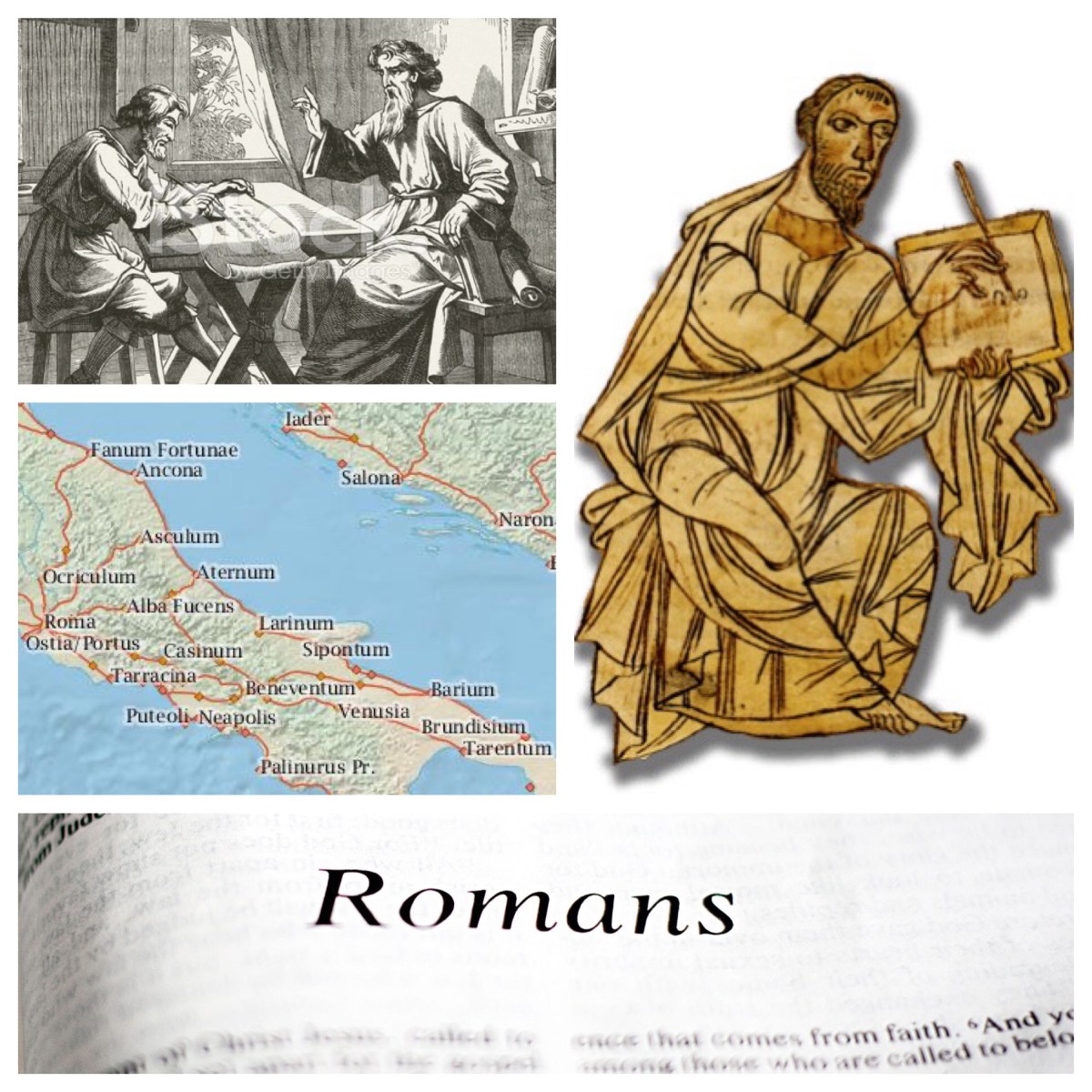
Paul’s letter to the Romans is his longest letter, and is widely regarded as the pinnacle of his theological expression. It is closely related to the letter to the Galatians in its central theological concern for righteous-justice, law and faith. We have been hearing excerpts from this letter in worship in recent weeks, and that will continue for some weeks into the future.

The overall structure of this letter is very clear: after the usual introductory formulae (1:1–7) and thanksgiving (1:8–15), Paul declares his theme by means of a scripture citation (1:16–17) which he then expounds in a series of inter–related sections (1:18–3:20; 3:21–4:25; 5:1–7:25; 8:1–39), climaxing in his extended discussion of Israel and the Gentiles (9:1–11:36). Paul then conveys various ethical exhortations (12:1–13:14; 14:1–15:13) before drawing to a close with personal news and a direct appeal to the Romans (15:14–33), an exchange of greetings (16:1–23[24]) and a final doxology (16:25–27).

The opening verses (1:1–7) identify the author and the audience as well as offering a typically Pauline blessing of grace and peace (1:7b). This piece of writing is a contextual enterprise. It is not an abstract or theoretical undertaking. Paul offers words shaped for the situation he is addressing. (See my comments on this at https://johntsquires.com/2020/07/11/the-best-theology-is-contextual-learning-from-pauls-letter-to-the-romans/)

This opening is followed by a thanksgiving for the Roman saints (1:8–15), in another typically Pauline pattern. As Paul reports that he gives thanks for their faith and prays that he may be enabled to visit them, he introduces key elements of the argument. His prayer is oriented firmly towards what he knows of the believers in Rome.

In the body of the letter, Paul expounds a theology of universal righteous-justice, focussing particularly on its implications for Israel and the Gentiles (1:18– 11:32). The relation of Jews and Gentiles was a critical factor in the situation in Rome, as Paul is well aware.

First, he explores the nature of the human condition (1:18–3:20). This is based on keen observation and reinforced by a string of scripture citations (3:10–18).

Next, he considers the roles played by Jesus and the Spirit in making the righteous-justice of God available (3:21–8:30). The argument builds and develops, demonstrating how God has chosen to make righteous-justice available to all human beings, through Abraham as through Jesus, by means of the indwelling Spirit.

This was a critical issue for the diverse communities of believers in Ancient Rome—a city with inhabitants from all points of the Empire which had been conquered by the powerful Roman army, and which lived under the imposition of Roman governance. Many traders, artisans, merchants, and slaves in the city had come, willingly or by force, to this city. The gatherings of believers in the city reflected this diversity. The claim that the righteous-justice of God was available to all these people was an important aspect of the early Christian gatherings.

So, to conclude this section, in the midst of a string of climactic rhetorical questions, Paul erupts into a poetic acclamation of “the love of God in Christ Jesus our Lord” (8:31–39). That was indeed good news for all those in Rome who heard this message.

Immediately, Paul plunges into a complex reading of scriptural texts in order to sanction the claim that God’s sovereign mercy offers a universal righteous-justice, both to Jews and to Gentiles alike (9:1–11:32). This section, again, is contextually relevant, as the names of believers of Rome to whom Paul sends greetings, in chapter 16, reflect both Jewish and Gentile people.

This critical section comes to another fulsome doxological climax in the joyously prayerful affirmations concerning God’s “riches and wisdom and knowledge”, leading to the attribution of glory to God forever (11:33–36). This is the ultimate response to the singular grace of God’s gift of righteous-justice to all human beings. All those I; the house churches of Rome who heard this section of the letter would surely have rejoiced in the extravagant abundance of God’s grace towards them!

The subsequent consideration of ethical matters (12:1–15:33) covers a range of issues, introduced with a general statement about the need to live in accord with the will of God (12:1–2). Much of the first part of this section (12:1–13:14) contains traditional ethical teaching: a string of pithy proverbs (12:9–21) and short reflections on loving one another (13:8–10) and living honourably (13:11– 14); a truncated reflection on the image of the community of faith as a body (12:3–8); and discussion of responsibilities towards the governing authorities (13:1–7). This last section seems particularly pertinent for the city which was the administrative centre of the dominant empire of the time, at least in the Mediterranean region.

This ethical section continues (14:1–15:13) with an extended reflection on the ethical dilemmas posed by differing views in the community about what foods should be eaten. Once again, this section of the letter is strongly contextual: it reflects the situation in the city, and for the people of the various groups of house churches, for whom this was a live issue. There were different points of view; the believers needed to show respect to one another in the midst of these different views.

This section climaxes with a clear call to inclusiveness (15:2, 5–6, 7) supported by a string of scripture citations (15:9–12). Paul concludes this section of his letter with a reminder of his planned visit to Rome (15:14–29) and one last exhortation (15:30–32), before offering a brief blessing of peace (15:33). Once again, the contextual nature of the letter is clear.

The letter ends with an exchange of greetings, in the course of which Paul identifies quite a number of the believers in the various house churches that existed in a Rome, before he reiterates some last–minute instructions (16:1–23).

Then Paul offers a further blessing (16:20a; and some ancient versions added another blessing as verse 24). The letter concludes in high liturgical style with an exalted doxological formula (16:25–27), an ending most likely added by a later editor of the letter, in which some, at least, of the central motifs of the letter are reiterated.

From this survey of the contents and the form of the letter, we can see how focussed the argument is on the righteous-justice of God, a central element in how Paul understands the Gospel, and how relevant that message was for the diverse groupings of people who had come to recognise Jesus as Lord and who were committed to following him as faithful,disciples in their daily lives.

As God’s gift to humanity, this righteous-justice invites and enables all people to enter into covenant relationship with God, and thus to shape relationships with each other that are accepting and hopeful. That message was powerful in the ancient Roman context. It retains that potency in the contemporary world, where diversity can fuel tension and conflict. In this context, the good news offers hope and invites reconciliation, in celebration of God’s wide expanse of gracious inclusion.

See also https://johntsquires.com/2018/12/07/to-articulate-faith-contextually/

Parables: the craft of storytelling in the book of origins (Matt 13; Pentecost 7A)

This week, the Gospel passage comes from the book of origins, whose account of Jesus we have been following for much of this current year. The chapter we are reading contains the first of seven parables that Jesus tells. The parable of the seeds and the sower is told in Matt 13:3-9 and an interpretation is then offered at 13:18-23. This interpretation shapes and orients our understanding of what “the seed” means; it directs us to interpret “the seed” as “the word of the kingdom” (13:19).

This is the first of seven parables in this chapter, and one of twenty-four parables in the book of origins. Many of those parables are explicitly identified as parables of the kingdom. After all, the kingdom was the focus of the preaching of Jesus, as is signalled in his opening public proclamation earlier in the book (4:17). (See https://johntsquires.com/2020/01/23/repentance-for-the-kingdom-matt-4/)

The kingdom features in the Beatitudes (5:3, 10), the Sermon on the Mount (5:19-20, 6:10, 33, 7:21), and then in many of the teachings of Jesus (such as 8:11-12, 18:3-4, 19:14, 23-24).

Preaching the kingdom was central to the activities of Jesus (9:35) and his followers (10:7) and will remain a key focus until the time when “the end will come” (24:14). And parables formed an important contribution to the ways that Jesus spoke about the kingdom in his teachings.

In this chapter, after the parable of the seeds and the sower, we find another six parables: the weeds among the wheat (13:24-30), the mustard seed (13:31-32), the yeast in the flour (13:33), hidden treasure (13:44), a pearl of great value (13:45-46), and the net that caught fish (13:47-48). Interestingly, every key item in these seven parables is a small, even seemingly insignificant, item: seeds, seeds, yeast, a pearl, and fish.

Later in the Gospel, there are further parables of the kingdom: the labourers in the vineyard (20:1-16), the two sons (21:28-32), the wicked tenants (21:33-44), and the wedding banquet (22:2-14). In the final section of Jesus’s teaching the disciples, he tells three further parables of the kingdom: the ten bridesmaids (25:1-13), the talents (25:14-30), and the sheep and the goats (25:31-46).

1 Understanding Parables

What are we to make of these many parables? Parables were quite widespread in the society of Jesus’ day. They were evocative and effective means for telling stories. The most common means of entertainment in the ancient world was telling stories. This was done by word of mouth, from one person to another, or in small groups gathered in market places, courtyards or houses. Education also relied on the voice.

Written materials were costly and only a small percentage of the population was literate. The natural tendency to tell stories was widely accepted, so that the most familiar pattern was that learning took place through the passing on of stories. So oral story telling was commonplace in the synagogues where Jews gathered for worship and instruction.

We can see the dominance of the oral medium most clearly in the literature which tells about the rabbis of Judaism. The story was the foundational building block for all the rabbis’ teaching activities. Beyond Judaism, we see it in the popularity of written biographies, romances, histories and adventure stories, throughout the ancient world. Indeed, a second century Christian (Papias, the Bishop of Hierapolis) is reported as having stated that stories spoken by teachers are to be preferred as more reliable than written works (such as the Gospels)—an attitude that sounds incredible to our modern ears!

A parable is an important type of story-telling. A parable is a story told in a specific way to make a single clear point. Parables are found in Jewish literature; the most famous examples in the Hebrew Bible are Samuel’s parable comparing David with a callous rich herdsman in 2 Samuel 12 and the prophet’s parable comparing Israel with an unfruitful vineyard in Isaiah 5.

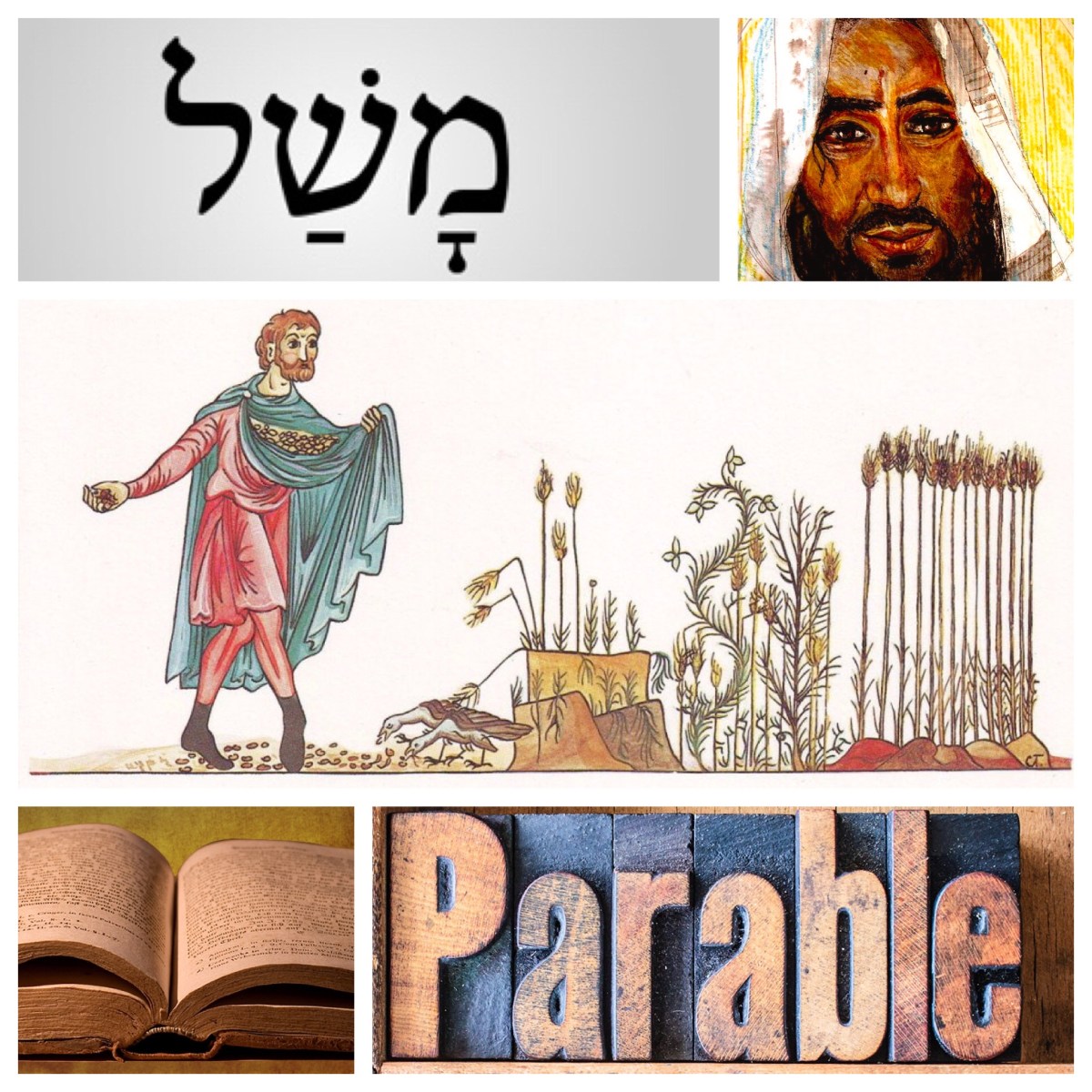
Rabbis at the time of Jesus, and later, have used parables to make their point in their teachings. The Hebrew word for this form was mashal, a word meaning “to be like” or “a comparison”. Parables were told to make a point about something that may not be easily understood, by drawing a comparison with something else that was well-known or easily understood.

The mashal also opens up the possibility of a more developed form of comparison, the similitude, of which the best example is Nathan’s parable to David concerning the stolen lamb (2 Sam 12:1–4). This form flourishes in later Judaism, both in rabbinic literature, and in the Gospel accounts of Jesus’ parables (“the kingdom of heaven is like…”). In fact, the parables told by Jesus follow the patterns and customs of the rabbinic mashal.

2 Understanding the Parable of the Seeds and the Sower

The specific parable that we hear in worship this Sunday, the parable of the seeds and the sower, is a particularly provocative parable. It leaves us with various questions. Why was the sower so extravagant in broadcasting the seeds, casting them not only onto fertile ground but also onto rocky ground and into the midst of thorns? Why did the sower not adopt good agricultural practice, culling the thorny plants as they grew, to enable the seeds to grow into healthy plants?

Other questions arise, as well, if we read the parable (13:3-9) without including the interpretation that is offered (13:18-23). That interpretation guides us to see the seeds as representing “the word of the kingdom”, and that understanding seems reasonably evident from the parable in its own right. But what does the path represent? And what about the thorns? And the rocky ground? Or the sun—is it a symbol of something?

The interpretation included in Matthew 13 closes down these questions. Many scholars believe that the interpretation did not actually come from the lips of Jesus, but, rather, was added by the author of the Gospel, drawing on interpretations that had developed over the intervening decades after the lifetime of Jesus. (This assumes, quite reasonably, that the Gospel was written some 30-50 years after the death of Jesus; and also, more controversially, perhaps, that the author was somewhat creative in reporting the actions and words of Jesus.)

One of the reasons for this view is that the interpretation really treats the parable as an allegory, rather than as a mashal-like parable. In an allegory, each and every character and event in the story is regarded as being a symbol for something else beyond the story.

Allegory literally means, “to say something other”; it comes from two Greek words, the verb agoreuo (to speak in the assembly), and the prefix allos (other). Allegories are found in ancient literature; in Greek, from the earliest literature, that of Homer, through to Plato, and on into the writings of people centuries after the time of Jesus. They were commonplace across Greek and Latin literature.

But not so, in Hebrew Scriptures, the tradition from which Jesus regularly drew. Here, there are more often parables, only rarely any fully-developed allegory. And parables are not allegories. A parable is a mashal—a story told in a specific way to make a single clear point. And the single point of a parable is given in its punchline: which, in this case, is the enigmatic, “let anyone with ears, hear!” (13:9). If the seed is the word, the demand of this parable is clear: listen!

And yet, as the verses that follow make clear (13:10-17), understanding a parable is a tricky business. Its meaning is not self-evident. As Jesus speaks in parables, “seeing, they do not perceive, and hearing, they do not listen” (13:13, quoting directly from Isaiah 6:9-10). Parables are conundrums. They contain unresolved tensions. They invite multiple understandings. They press for exploration and investigation.

The technique of a parable is not to lay everything out in plain form, in straight-forward propositions—but rather to weave a story, to draw the listeners into the story, to invite wondering, to foster creative thinking and thoughtful grappling within the story. Nothing is set in stone. All sorts of possibilities arise, from the narrative of a story that is well-crafted and persuasively-presented. As we imagine that Jesus did in creating and telling his stories in parable form.

3 The Parable of the Seeds and the Sower in the Revised Common Lectionary

So the offering of the interpretation (13:18-23) immediately after the telling of the parable (13:1-9) that the Revised Common Lectionary offers (and that the author of the book of origins includes in this chapter) skews our approach to the parable. It closes off the possibilities of understanding. It limits the range of options for clearly comprehending what Jesus was offering. In my mind, it’s something of a menace.

So here’s the challenge: this Sunday, why not simply read the parable (13:1-9)—and then, STOP. Don’t read the interpretation (13:18-23). Let the parable stand in its own right. Invite your audience to imagine, explore, interpret. Encourage them with the sense that there is “no right answer”, or “no one interpretation”. Invite people to engage in the process that the very first followers of Jesus took part in: “let anyone with ears, listen!” And then invite them to respond. And rejoice in the richness and diversity of understandings that arise!

******

This blog draws on material in MESSIAH, MOUNTAINS, AND MISSION: an exploration of the Gospel for Year A, by Elizabeth Raine and John Squires (self-published 2012).

For a gentle, poetic retelling of the parable from Sarah Agnew, see https://praythestory.blogspot.com/2020/07/falling-seeds.html?m=1

Consideration of issues raised in this blog continues in https://johntsquires.com/2020/07/14/let-anyone-with-ears-hear-matt-13/

Come to me, take my yoke, I will give you rest (Matt 11; Pentecost 6A)

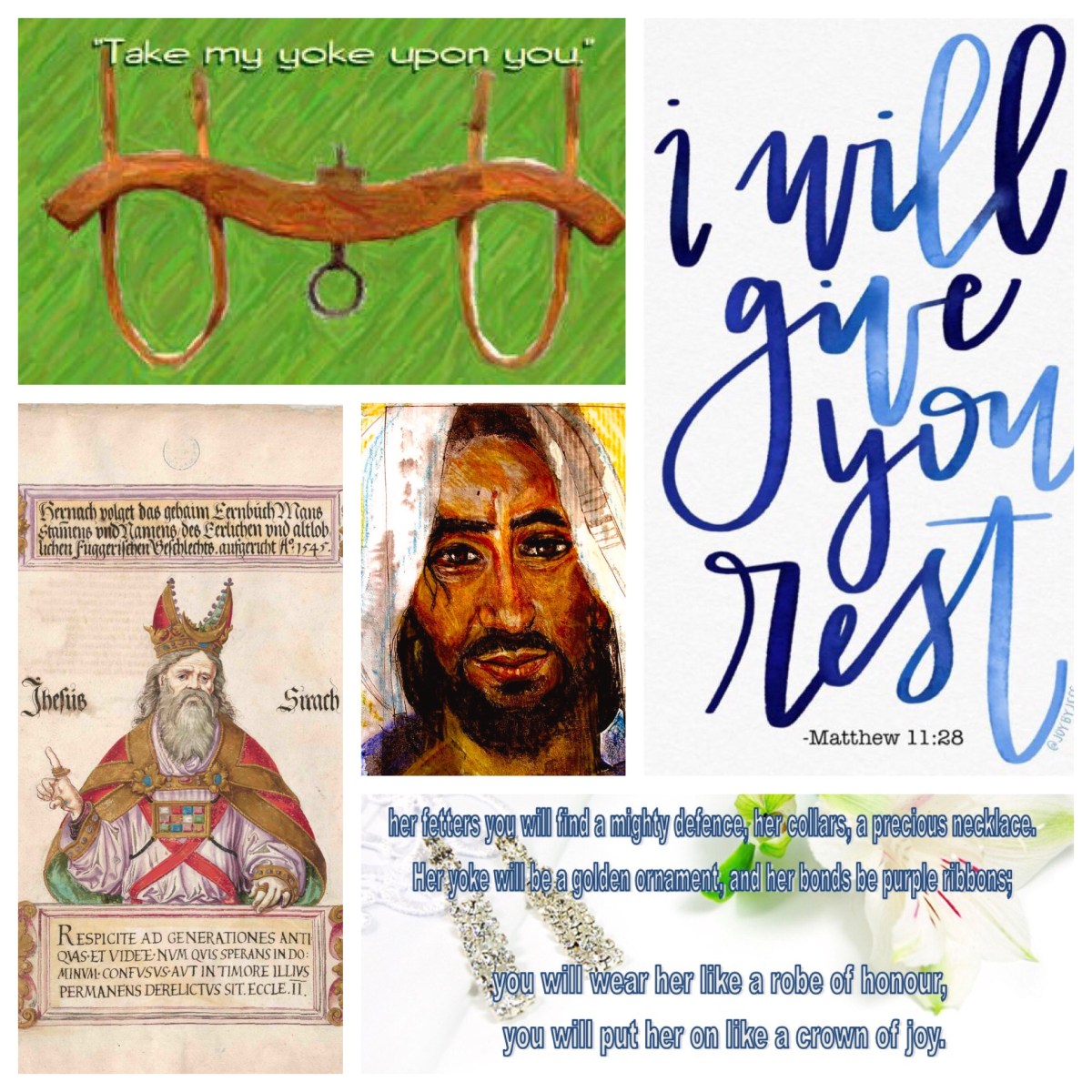
Come to me, all you that are weary and are carrying heavy burdens, and I will give you rest. Take my yoke upon you, and learn from me; for I am gentle and humble in heart, and you will find rest for your souls. For my yoke is easy, and my burden is light. (Matt 11:28-30)

The book of origins, the first of four accounts of Jesus in the New Testament (known to us as the Gospel according to Matthew), locates Jesus firmly within his historical context, as a teacher and prophet within Israel. He is the one who has come to renew the covenant, to restore Israel, to instruct them in the ways of righteous-justice. He is the one who brings the Law to fulfilment and establishes the way into the kingdom.

This book has a high view of Jesus within that Jewish context. It positions Jesus as the most authoritative teacher in his community, the one who guides, directs, and inspires those who listen to him.

It is to the words of Jesus that believers are to look for guidance in their lives (7:24–27). In this Gospel, Jesus is the one and only teacher (23:8), the one and only instructor (23:10). Whilst “heaven and earth will pass away”, the words spoken by Jesus will endure (24:35). The last words of Jesus reported in this book are the instructions from Jesus, to his disciples, to go to the nations, “teaching them to obey everything that I have commanded you” (28:20). His teachings stand supreme.

In the lectionary for this coming Sunday, we find a striking passage from Matthew’s Gospel (11:25–30) which depends this understanding of Jesus the Teacher. In this passage, Jesus offers a prayer to God in which he lays claim to this distinct, even unique, place.

The first part of this passage (11:25-27) is often nicknamed “the Johannine Thunderbolt from a Synoptic Sky”, because it seems so out of place in this Gospel; the language used (“Father” and “Son”, amongst other things) invites comparison with the Fourth Gospel, as does the insistence on Jesus as the one who “knows the will of the Father” and thus reveals “the gracious will” of the Father (11:26-27). How these verses found there way into this particular Gospel is an intriguing question. (If you have a compelling answer to this question, I would love to hear it!)

As this prayer continues (11:28-30), Jesus is depicted as laying claim to be the authoritative teacher; his words claim an absolute authority to interpret the Law, which is here portrayed as “the yoke”, a term for the Law which is found in rabbinic writings (Mishnah, Aboth 3:5, Berakoth 2:5; see also 2 Enoch 34:1 and 2 Baruch 41:3).

Jesus here is portrayed as claiming this high authority for himself; his yoke provides a sure understanding of the Law. His language is filled with scriptural words; he speaks in a way that is strongly evocative of certain passages in Sirach concerning Wisdom (Sirach 6:18–33; 24:19–22; 51:23–28). In this book (dating from around 200-250 years before the time of Jesus), Wisdom commands attention (“draw near to me”, “come to me”), offers instruction, commands submission to the yoke of her teaching, and offers rest.

A hymn on the values of Wisdom concludes that book, with the invitation to “acquire wisdom for yourself … put your neck under her yoke and let your souls receive instruction” (Sir 51:25-26). Earlier in the book, this invitation to learn from Wisdom had been issued by Wisdom herself: “come to me, you who desire me, and eat your fill of my fruits” (Sir 24:19).

And in the opening chapters of this book, an extended poem in praise of wisdom includes the invitation to “come to her like one who plots and sows … put your feet into her fetter and your neck into her collar, bend your shoulders and carry her, and do not fret under her bonds … come to her with all your soul … search out and seek … when you get hold of her, do not let her go, for at last you will find the rest she gives, and you will be changed into joy for you” (Sir 6:19, 24-28).

The poem continues, “then her fetters will become for you a strong defence and her collar a glorious robe; her yoke is a golden ornament, and her bonds a purple cord; you will wear her like a glorious robe and put her on like a splendid crown” (Sir 6:29-31).

So many of these phrases resonate in the words attributed to Jesus in the book of origins (Matt 11:28-30). As he speaks, he claims the authority of Wisdom. His words provide insight, guidance, direction, as do the words of Wisdom in earlier Jewish traditions. Indeed, just a few verses earlier, the voice of Wisdom has been invoked by Jesus as he reflects on the criticisms he has received, as “a glutton and a drunkard, a friend of tax collectors and sinners” (11:19). The proof of the pudding is in the eating—“Wisdom is vindicated by her deeds”, is what Jesus responds.

Wisdom appears in the book of Proverbs, where she is portrayed as a teacher of “good advice and sound wisdom” who offers insight and strength (Prov 8:14), leading people along “the way of righteousness, the paths of justice” (8:20). She is also portrayed as the one who worked beside God to bring the created world into being (8:22-31).

Wisdom then appears in later Jewish literature, including Sirach (Ecclesiasticus), always as the teacher, instructing people in God’s ways, instructing and guiding people of faith through their journeys in life.

We have noted in earlier blogs that this Gospel, the book of origins, came into being in a community which found itself in competition with regard to other streams of Judaism. (See the blog posts listed below.) This Gospel, it would seem, seeks to validate the interpretation of scripture promoted by the followers of Jesus over and above other understandings and interpretations of the Law.

Who better to call upon for such validating support than the master exegete, the authoritative teacher, Jesus, the one to whom “all things have been revealed by the heavenly Father”, the one who speaks with the voice of Wisdom herself?

This blog draws on material in MESSIAH, MOUNTAINS, AND MISSION: an exploration of the Gospel for Year A, by Elizabeth Raine and John Squires (self-published 2012)

See also

https://johntsquires.com/2019/11/28/leaving-luke-meeting-matthew/

https://johntsquires.com/2020/02/13/you-have-heard-it-said-but-i-say-to-you-matt-5/

https://johntsquires.com/2020/02/06/an-excess-of-righteous-justice-matt-5/

https://johntsquires.com/2020/01/30/blessed-are-you-the-beatitudes-of-matthew-5/

Black Lives Matter. Now—and Then.

#BlackLivesMatter. The importance of this hashtag has been highlighted in recent weeks.

First, it gained attention in the USA, where yet another incident of the unwarranted treatment of a black man and the resulting unjust death of that man, George Floyd, led to widespread protests, resistance, and riots across the country.

The hashtag #BlackLivesMatter originated in 2013, after Trayvon Martin, an unarmed African-American teenager, was killed in an argument in Florida. The man charged with his order was acquitted, resulting in the community response that saw #BlackLivesMatter gain traction.

See https://www.adl.org/education/educator-resources/lesson-plans/black-lives-matter-from-hashtag-to-movement

The hashtag has also had prominence in Australia, especially in recent weeks. After the death in America of George Floyd, a black man killed while in police custody in Minneapolis in early June, the BLM movement became active once again. The widespread unrest in the USA was clearly evident.

Around the same time, reports in Australia were indicating that there were 434 people—black men and women, indigenous Australians—who have died whilst in police custody, since 1991. (That was the year when the Royal Commission into Aboriginal Deaths in Custody ended.) And there had been no conviction of anyone responsible for any of those deaths over all that time.

See my blog on this at https://johntsquires.com/2020/06/09/racism-and-reconciliation/

So #BlackLivesMatter. We know this now, in our own time. This movement has generated widespread public support. The Pew Research Centre in the USA has reported their recent findings, noting that “two-thirds of U.S. adults say they support the movement, with 38% saying they strongly support it”.

See https://www.pewsocialtrends.org/2020/06/12/amid-protests-majorities-across-racial-and-ethnic-groups-express-support-for-the-black-lives-matter-movement/

All of this points to the need for ongoing, continuing, relentless lobbying, advocating for First Peoples, protesting injustices and working towards a more just situation in our society, today. Without question, this is a critical priority.

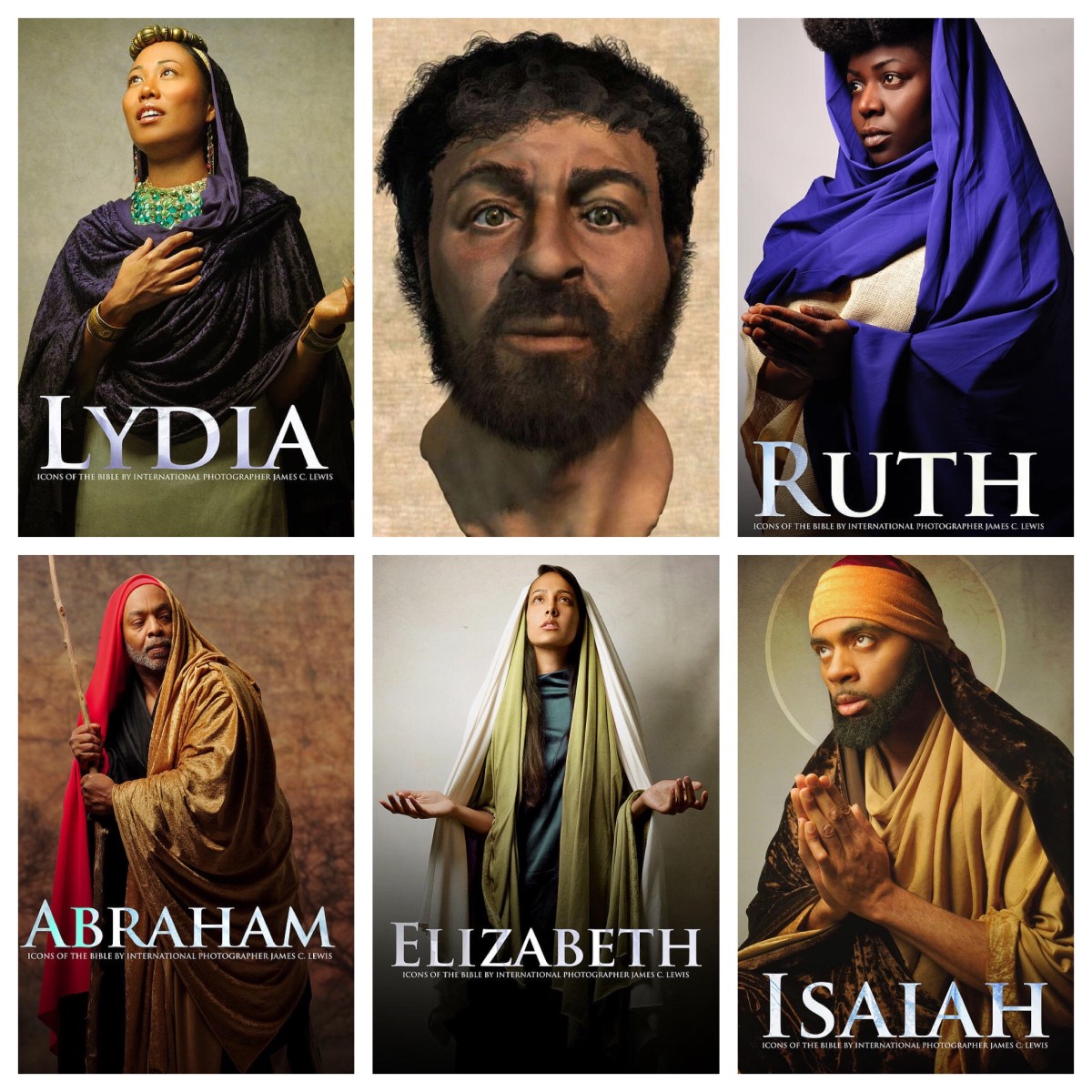
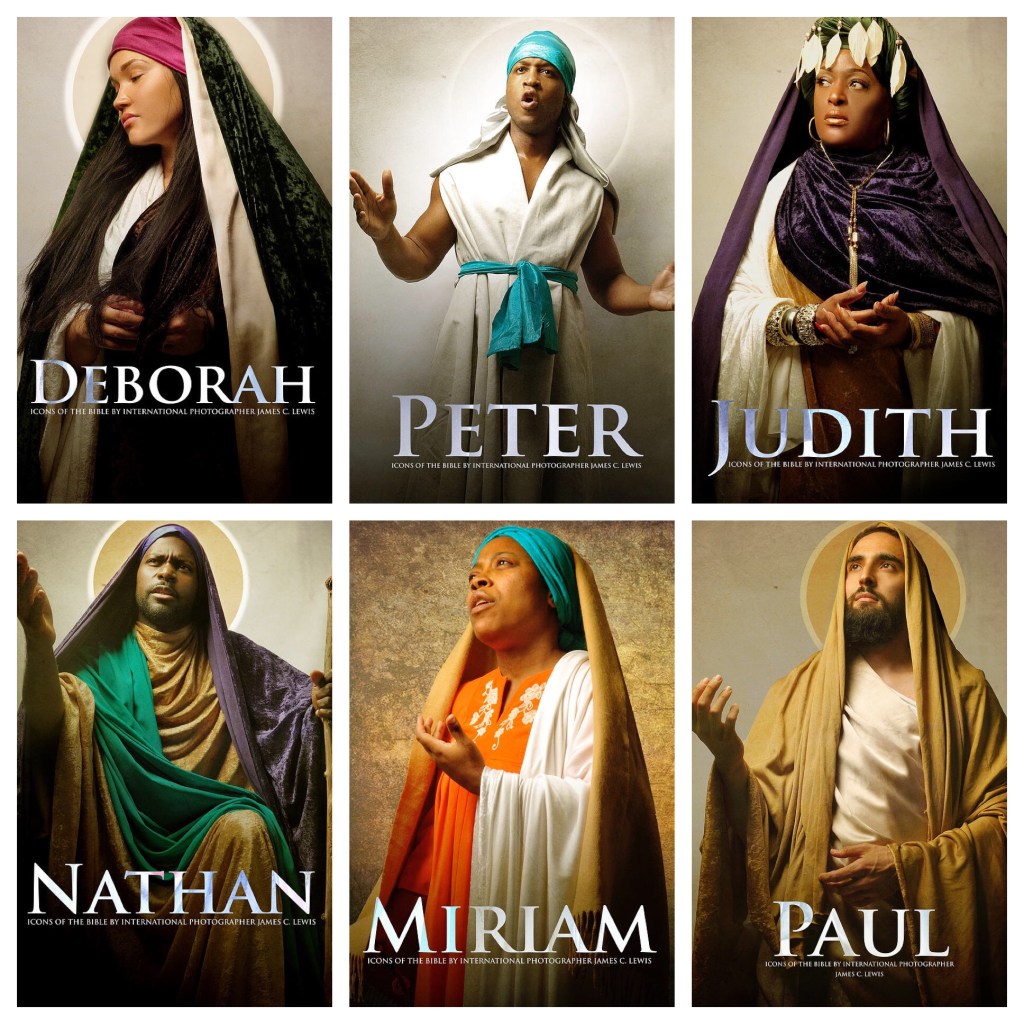
Alongside that, let me suggest the importance of remembering that #BlackLivesMatter when we turn to scripture, when we listen to the Bible being read in church or in Bible study groups, or when we open its pages ourselves and read the stories it contains. Do we imagine the skin colour of the people who are in these stories? Do we remember that the vast majority of them are dark-skinned?

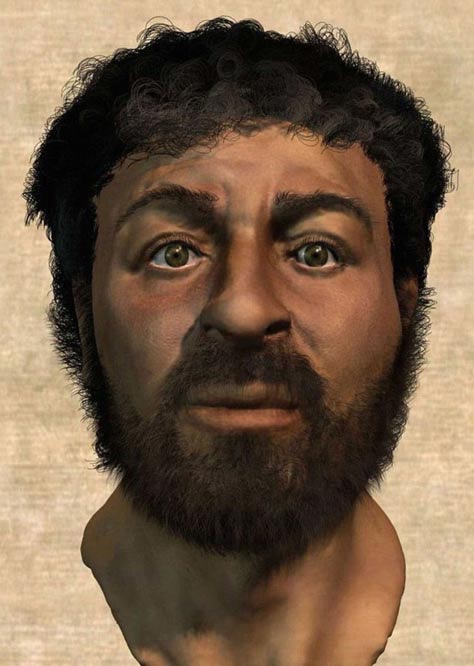
Some years back, an enterprising forensic artist, Richard Neave, created a model of a Galilean man for a BBC documentary, “Son of God”. Neave took an actual skull found in the region (not claiming that it was actually the face of Jesus) and built a model of what the person might have looked like.

The end result was not the blue-eyed, blonde-haired, “gentle Jesus meek and mild” of traditional Sunday School storytelling. The darker colouring of the skin (historically accurate) caused controversy at the time (and still does, whenever I use it with groups). The aim was to prompt people to consider how Jesus was a man of his time and place—a darker-skinned Middle Eastern man.

See https://www.ancient-origins.net/news-general/reconstructing-jesus-using-science-flesh-out-face-religion-004942

There’s a more detailed discussion of “what did Jesus look like?” by Dr Joan Taylor, of Kings College London, at https://www.bbc.com/news/magazine-35120965

Just this week I came across a fascinating art project, seeking to depict the well-known characters of the Bible as the black-skinned Middle Easterners that they were. You can see the full gallery of art created by photographer James C. Lewis in the “Icons of the Bible” gallery at

https://fineartamerica.com/profiles/2-cornelius-lewis

Take some time to explore these images. As you do, remember that just as we know that #BlackLivesMatter now, today, so as we travel back in time, in our imaginations, into the world of the Bible, #BlackLivesMatter in those stories. We learn from these tales about these ancient black people. We gain guidance for living as faithful disciples today from these dark-skinned people of these ancient stories.

#BlackLivesMatter. Now—and Then.

In memory of James Dunn (1939–2020)

Elizabeth and I heard the sad news this morning, of the death of James Dunn, at the age of 80 years. To those who read the fruits of his professional work in biblical scholarship, he was the pre-eminent New Testament scholar, J.D.G. Dunn. To those who had the fortune to know him in person, he was the gregariously ever-cheerful Jimmy Dunn.

This sad news rekindled memories for us of some times in the past when we had encounters with Jimmy and his wife, Meta. Because he was willing to take on the daunting task of supervising Elizabeth as a doctoral student, we travelled across the globe to spend the calendar year 1997 in Durham, in the north of England. It was a wonderful year for us, in so many ways.

Meeting Jimmy in person and getting to know him and Meta was an enriching experience. Participating in the weekly New Testament seminar for postgraduate students and the biblical faculty of Durham University, under the genial chairing of Jimmy, with his distinctive Scots accent and his rapier-sharp mind, was an equally enriching experience.

Having his eagle eye scrutinise our work in biblical studies (both of us—Elizabeth in her regular supervisory sessions, myself on the few occasions when I presented in the seminar) was a wonderfully deepening and expanding experience.

The controversial nature of Elizabeth’s chosen thesis topic (on Matthew’s Gospel) could have led to difficult supervisory sessions, especially as the Dunn interpretation and the Raine interpretation were not at all the same! Instead, Elizabeth had enriching and stimulating sessions with him as supervisor—a great model of how to engage in discussion across differences.

Meta Dunn, Rev Dr Philip Luscombe, Rev Elizabeth Oliver,
and Professor Jimmy Dunn, Durham, 1997

It was because Elizabeth had worked intensively with him during that year in Durham, that Jimmy agreed to include Sydney on his trip to “the Far East”, as he called it, in 2003. He planned his tour, lasting a couple of months, so that he spent a week or so in various locations in this part of the world, visiting his “Far East” students. Sydney was his only Australian stop—and that was because his student, Elizabeth Raine, was there!

Jimmy and Elizabeth, sorting “questions from the floor”
during the UTC–SCE Seminar Week 2003

So United Theological College and the School of Continuing Education benefited from Elizabeth’s connection and thus Jimmy’s presence. He gave a series of lectures on the oral traditions about Jesus, during the annual Seminar Week of the college. Rob McFarlane, Elizabeth, Jione Havea and I worked to ensure that we had a creative and productive week. Other biblical and theological minds joined in the panel discussions. Elizabeth had scored a magnificent coup for the college!

That year, 2003, Seminar Week attracted the largest number of people for many years, and probably the attendance numbers have not been matched in subsequent years. People of cautiously conservative, liberally oriented, and thoroughgoing critical perspectives, gathered each day, to listen, discuss, debate, and learn, as Professor Dunn lectured, responded to questions, and engaged in banter with people during the breaks.

Elizabeth Raine, Jimmy Dunn, Jione Havea, Jungmin Soo,
Dean Drayton, and Rob McFarlane, panel discussion
at North Parramatta, Seminar Week 2003

My earliest awareness of J.D.G. Dunn the scholar was when I was a theological student, in the late 1970s, at UTC. The people in my cohort of students candidating for ministry were, with only one exception, much more conservative than me in their theology. The charismatic renewal movement had influenced quite a number of them. Their focus was on the work of the Holy Spirit—tongues and prophecies, choruses and exorcisms, joyful and exuberant freedom in worship—these were what my fellow students appreciated. And exposure to the rigours of critical theological and biblical scholarship was hard for a number of them.

I remember that, for a time, the name of James Dunn was to the fore in many student common room discussions at that time. His work on the Spirit was gaining much attention. Here was a rigorously critical biblical scholar who took seriously the experiences of charismatic renewal and highlighted the place of the Sprit, bringing giftings and enthusiasms, in the Christian life. He was able to bridge the gulf between charismatic experience and thoughtful scholarship. That was a fine gift to possess.

Jump forward around 15 years, and I was back at UTC, as a member of the faculty, with responsibility for teaching New Testament subjects. In the intervening years, I had studied in America, been exposed to Jewish thinking, started a local Jewish-Christian dialogue group, and gained a strong interest in interfaith relationships. From those experiences, I set out to develop a new subject, grounded in the study of biblical texts, exploring the origins of the movement we know as Christianity, and tracing the ways it became a discrete entity separate from Judaism.

I gave the subject the name “The Partings of the Ways”—a deliberate choice to include two plurals, for the ways by which the emerging movement diverged from the parent body were multiple, diverse, and complex. The book by J.D.G. Dunn (with the same title) proved to be the foundation for the whole subject. If I recommended to,students that they buy any book, this was the one. Jimmy Dunn had provided the detailed exegetical and theological foundation for a subject that I loved teaching for the next 15 years.

So it was an experience with multiple levels of delight when Elizabeth and I lived in Durham, spending each day in the Theology Department of Durham University, getting to know the wonderful biblical faculty with Jimmy Dunn, Stephen Barton and Loren Stuckenbruck as New Testament professors.

How glad I was that Jimmy Dunn took on Elizabeth as student—meaning that I could spend the year researching Luke-Acts as she worked on her thesis on Matthew under his guidance. And that led, in due course, to a later invitation to me—a surprise phone call from England, quite out of the blue!—to contribute the commentary on Acts to the Eerdmans Commentary on the Bible, for which Jimmy Dunn was co-editor.

And it was a double delight when Jimmy and Meta travelled down under six years later, spending the week at UTC and then seeing the sights of Sydney with Elizabeth and myself, before heading back home to the UK. Knowing him personally, and professionally, has enriched both of our lives. It is with great sadness that we heard the news of his death.

Meta and Jimmy at Mrs Macquarie’s Chair, Sydney, in April 2003

Baptism in the Holy Spirit, 1970

Jesus and the Spirit, 1975

Christology in the making, 1980

Romans 1-8, 9-16, 1988

Unity and Diversity in the New Testament, 1990

The Partings of the Ways between Christianity and Judaism, 1991

The Epistle to the Galatians, 1993

The Epistles to the Colossians and to Philemon, 1996

The Acts of the Apostles, 1996

The Theology of Paul the Apostle, 1998

The Cambridge Companion to St. Paul (ed.), 2003

Eerdmans Commentary on the Bible, 2003

Christianity in the Making: Vol. 1, Jesus Remembered, 2003

A New Perspective On Jesus: What The Quest For The Historical Jesus Missed, 2005

The New Perspective On Paul, 2007

Christianity in the Making: Vol. 2, Beginning from Jerusalem, 2008

Jesus, Paul, and the Gospels, 2011

Christianity in the Making: Vol. 3, Neither Jew nor Greek: A Contested Identity, 2015

Paul’s vision of “One in Christ Jesus” (Gal 3:28) and the Uniting Church

A sermon on the anniversary of the Uniting Church (for the Project Reconnect resource)

Galatians 3:23–27

On 22 June every year, across this continent, people gather to celebrate the formation of the Uniting Church in Australia. Today, rather than address the passages set in the lectionary, I want to turn to a section of one of Paul’s letters, from our New Testament. It’s from the latter part of chapter 3 of his letter to the church in Galatia.

It is good to have this passage as our focus. It speaks to who we want to be, together, as the church. It is a word for our times. In fact, I think that this passage could well express the fundamental calling of the Uniting Church.

Paul’s letter to the Galatians was written in the midst of an intense and ferocious debate within the early movement that had been started by Jesus. It was a time of great transition. Things were changing. Old practices were being challenged. New practices were being proposed.

In Galatians, those who advocated Circumcision came under criticism. In that place, as in many other places where the good news of the Jesus movement had been proclaimed, baptism was being proposed as a new ritual, to mark the new faith of the growing numbers of the followers of Jesus.

The argument about circumcision has behind it the issue as to how much, or how little, of the Jewish Law should apply to believers within that movement – those whom we now call the early Christians. This was an incredibly contentious issue at the time, which caused much dispute. Galatians is a letter that was created in the heat of this intense debate; so, at many points, it bears more evidence of rash fury than it does of considered reflection.

Paul’s language in Galatians is ferocious. He accuses the Galatian believers of being fools who have been bewitched by deceivers; he accuses them of biting and devouring one another; he criticises them for urging Gentile converts to be circumcised and to adopt full adherence to the Torah. This is no gentle, reflective spiritual meditation; this is full-on partisan polemics!

And yet, right within the midst of this turbulent flow of argument and disputation, we come across comments that provide cause for reflection; ideas that do invite deeper consideration; insights that do offer the opportunity for spiritual growth to those who would read, ponder, and reflect.

One of these passages is just two well-known verses from the third chapter of this letter: “As many of you as were baptized into Christ have clothed yourselves with Christ. There is no longer Jew or Greek, there is no longer slave or free, there is no longer male and female; for all of you are one in Christ Jesus” (Gal 3:27–28).

Here, Paul sets out a vision for people of faith; a vision for believers within community; we would say, a vision for the church. It could well be our central mission statement, as the Uniting Church in Australia, for we so much value grace-filled inclusiveness, we so strongly reject divisive and judgemental stances, we so yearn to live in accord with this grand vision, where all belong to a welcoming and loving community.

The vision of the church for Paul is one of harmony, concord, unity. Paul envisages great changes within the community of faith, because of Jesus. If the reality failed to achieve this change, nevertheless the vision stood firm; Paul envisaged a community that would bring together strikingly disparate opposites.

In this community, the religious differences of Jew and Gentile would matter no more; the different levels of social status, of people living in freedom and those serving as slaves, would become irrelevant; and the societal roles and expectations associated with the gender of a person —  male or female – would no longer function as dominant. These three conditions of difference would melt away, within the community of faith, into a cohesive unity of co-operation and interconnection. This was a huge change to took place all those centuries ago.

Indeed, as we ponder these three key instances of the way in which difference would disappear, we might even push it further: is this vision not simply one for the church, but even one for society as a whole? Might it be that the vision, the hope, which Paul set out in his letter to the Galatians, could be brought about within the patterns of living and relating right across his society? Was Paul passionate, not only about partisan points of religious practice, but also – and more significantly – about visionary ideals for human society as a whole?

“There is no longer Jew or Greek, there is no longer slave or free, there is no longer male and female; for all of you are one in Christ Jesus” – this unity within the church might well become a model for harmony within society. Certainly, that is the way that the church has interpreted this statement in the centuries since Paul wrote it.

The church of the late first century continued the battle begun in the time of Paul; over time, Jews and gentiles were equally welcomed within most of the faith communities of the ancient world.

The church of the Enlightenment was at the forefront of the movement to end the slave trade, to enable black Africans to live unhindered by white masters seeking to profit from selling them as slaves.

And the western church from the later part of the 20th century has been active alongside many other community organisations to ensure that the opportunities available to women were not less than those available to men.

In each of these battles, the church at large has understood Paul’s words to the Galatians to be words for both the church, and for the society as a whole. It is a grand vision. May it be a reality for you, in your community of faith, and amongst the people of the place where you live, sleep, eat, work, and rest.

“There is no longer Jew or Greek, there is no longer slave or free, there is no longer male and female; for all of you are one in Christ Jesus” (Gal 3:27–28).

+++++++

Some questions to consider:

What did you find to be the most significant idea in this message?

Can you describe a time when you experienced the “unity in Christ” that Paul wrote about?

In what way does your congregation today model the vision of inclusive acceptance for all that Paul wrote about?

In what way might you be able to show that vision to the people where you live, sleep, eat, work, and rest?

To read more on the distinctive contributions of the Uniting Church to Australian society, you may wish to read my blogs at https://johntsquires.com/2019/06/18/the-dna-of-the-uca-part-i/ and https://johntsquires.com/2019/06/18/the-dna-of-the-uca-part-ii/

See also https://johntsquires.com/2018/08/15/what-i-really-like-about-the-basis-of-union/ and https://johntsquires.com/2018/08/20/alongside-the-basis-of-union-there-was-the-statement-to-the-nation/

“Even the hairs of your head are all counted.” (Matt 10:30; Pentecost 4A)

Who goes around counting the hairs on the heads of people? I don’t, that’s for sure! Although it would be a lot easier for anyone wanting to count my particular head of hair (or not), than for other people.

But God does, according to this week’s Gospel passage. God counts the hairs on our heads. Or so we are told. It’s part of a speech by Jesus when he assures his followers that their lives are of value (Matt 10:28-31).

Now, I think the idea of God taking time to count the number of hairs on the heads of every single person alive today beggars belief. Think about it: 7.8 billion people (that’s 7,800,000,000 people—quite a lot!), each with one head, with approximately 100,000 hairs on each of those head—that’s 7,800,000,000,000,000 hairs to count.

At one hair per second, that’s 248,015,873 years. (Thank goodness for Google!!) 248 million years! And that’s just for the current population. It doesn’t count those who have already lived. Or those who might be alive when those 248 million years of counting have been completed.

Of course, we could reduce the number by arguing that there are some (like me) with much less than 100,000 hairs on their head. But that group is still a small minority amongst the 7.8 billion alive today.

And we could reduce it further by arguing that this speech of Jesus was addressed to believers who were following him—at that time, and then on across the ensuing years up to our time. That reduces the number of hairs to be counted quite a lot. But that is a problematic principle for interpretation: it means we take everything as applicable only to those who were part of the first audience, and not to anyone else later on.

All of which goes to the point I want to make about the words of Jesus in this passage: Exaggeration! Exaggeration is a common rhetorical technique employed by Jesus. Jesus exaggerates on a number of occasions in his teachings. Think about it:

“If your right eye causes you to sin, tear it out and throw it away… and if your right hand causes you to sin, cut it off and throw it away; it is better for you to lose one of your members than for your whole body to go into hell”. (Matt 5:29) Who obeys that command?

Why do you look at the speck that is in your brother’s eye, but do not notice the log that is in your own eye? (Matt 7:3) Who has ever had a log of wood in their eye? A speck, yes; a splinter, maybe— but not a log.

Jesus condemned the Pharisees as “Blind guides, who strain out a gnat and swallow a camel!” (Matthew 23:24). Again: imagine swallowing a camel. Urgh.

For truly I say to you, if you have faith like a mustard seed, you will say to this mountain, ‘Move from here to there,’ and it will move, and nothing will be impossible for you.” (Matthew 17:20). Mountains moving? Perhaps possible in a massive seismic shift event, but not your normal run of the mill happening.

Or the Samaritan woman, who spoke of Jesus and said: “He told me all that I ever did” (John 4:39). Had Jesus really told that woman everything that she had ever done in her life? No, she was using hyperbole to make her point.

“John came baptizing in the wilderness and preaching a baptism of repentance for the remission of sins. Then all the land of Judea, and those from Jerusalem, went out to him and were all baptized by him in the Jordan River, confessing their sins” (Mark 1:4-5). What, every single person?? Again, exaggeration, overreach, hyperbole. Typical of Jesus—and typical of the Gospel writers.

We do this in our everyday speech: “He’s got tons of money.” (have you weighed it?) “He is older than the hills.” ( were talking geological eras, here) “I’m so hungry I can eat a horse.” (OK, lets not go there.) “His brain is the size of a pea.” (Or there.) “My feet are killing me.” (Says the person who is still alive.)

Get the point? Exaggeration, hyperbole, is a common rhetorical technique. We use it. We find it in scripture. It’s a reminder not to take everything spoken, or written, absolutely literally. That’s a really important principle for interpretation. For this passage—and for everyone time we turn to scripture.

“Greet one another” (2 Cor 13). But no holy kissing. And no joyful singing. (Trinity Sunday A)

“Finally, brothers and sisters, farewell. Put things in order, listen to my appeal, agree with one another, live in peace; and the God of love and peace will be with you. Greet one another with a holy kiss. All the saints greet you.” So the second (extant) letter to the Corinthians ends (2 Cor 13:11-12).

“Greet one another with a holy kiss” is also how Paul instructs the Corinthians in his first letter (1 Cor 6:20), as well as the Thessalonians (1 Thess 5:26) and the Romans (Rom 16:16). (The same instruction appears at 1 Peter 5:14). These five verses all indicate that first century worship was not just sitting formally and watching what went on at the front; it was interactive, engaging, personal.

What do we make of this instruction to kiss one another? Many people in churches that I know have interpreted “holy kiss” to mean “warm handshake”—so the “passing of the peace” has been shaking hands with as many people as possible in the Congregation. In some smaller gatherings, even, making sure that you shake hands with everybody present!

Well, not any longer. No more handshakes—not in church, not at the door after the service, not anywhere in society. COVID-19 has put paid to shaking hands for quite some time yet.

Other people have take a more literalist line of interpretation. A kiss means, well, a kiss! If not a lip-to-lip kiss, then, at least, a lip-to-cheek kiss. Yes, I have been in church gatherings where my hairy unshaven cheeks have been kissed. And even, when my hairy-encircled lips have planted a kiss on the cheek of another worshipper. I confess.

But not any longer. No more person-to-person contact; especially not any contact that involves the lips! COVID-19 has put paid to the socially-approved form of public kiss, for quite some time yet—if not forever.

One of my colleagues, Sarah Agnew, suggests that the best way to translate the reference to a “holy kiss” in these five verses, is by referring to a “holy embrace”. That understanding is premised on the fact that the Greek word which is translated as “greet” in these texts, contains elements of making personal contact which are both interpersonal (greetings) and also physical (the word can be used to signify hugging or embracing). See https://www.academia.edu/28243257/A_call_to_enact_relationships_of_mutual_embrace_Romans_16_in_performance

Given that, then, on each of the sixteen times that Paul instructs for greetings to be given to named individuals in Romans 16, he may well be saying something like, “give them a hug from me”. Such relationships were personal and intimate.

This rendering takes us to the heart of community—and to the centre of our practices during the current situation with COVID-19. The ancient practice clearly envisaged that physical contact was involved. The current situation proscribes any form of physical contact. It is just too risky.

Physical contact, in the intimacy of either a kiss (on the cheek) or an embrace (with the upper body), is now, we are told, not advisable, given the way that infectious diseases such as COVID-19 (or, indeed, the common cold—which is itself a form of a coronavirus) are spread.

How do we reconcile these current guidelines with the scriptural injunctions? Do we ignore current guidelines (and keep on meeting together) because “the Bible says…” ? Or, do we turn away from strict biblical teaching (and stop our gatherings), because of contemporary concerns about the pandemic?

Of course, we do not put our heads in the sand. We acknowledge the sense in the guidelines being proclaimed across society. We listen to those with expertise in infectious diseases and medicine. We refrain from physical contact. No kissing. No hugging. No handshakes. We look for alternatives to signify that we are greeting one another.

We aren’t yet meeting in person for worship. It will be some time before most Congregations are able to do this. But when we eventually do begin to worship in person, and it comes time to pass the peace, we might face the other person, place our right hand over our own heart, and say, “peace be with you”. That avoids direct physical contact, but incorporates a direct visual interaction.

Another option would be to clasp our hands together and place them in front of our chest, in the “praying position”, and then, as we face each other, bow in greeting.

A third option—one perhaps only utilised in a very distinctive liturgical setting—could be to “bump elbows”, using the recommended social alternative to “shaking hands”. But that option would need to be employed with care! And it may not be to everybody’s liking, to be sure.

Which brings me to singing. “Make a joyful noise to the Lord!”, the psalmist instructs us (Psalms 66:1, 95:1-2, 98:4, 6, 100:1). Sing “psalms and hymns and spiritual songs”, an early Christian writer exhorts (Col 3:16). “Be filled with the Spirit, as you sing psalms and hymns and spiritual songs among yourselves, singing and making melody to the Lord in your hearts, giving thanks to God the Father at all times and for everything in the name of our Lord Jesus Christ”, another letter writer directs (Eph 5:18-20).

So how do we interpret these passages? Do we adopt the same literalist approach—the Bible says we must worship, the Bible says we must song, so that’s what we must do! (Yes, I have heard this said, even in current times.) That is not really a satisfactory approach.

Of course, the same dilemma confronts us here. Just as direct physical contact is not advised in the current pandemic situation, so singing in a group of people is also deemed to be out of order, in the understanding of health professional and medical advisors.

Research clearly indicates that singing contributes to the spread of infectious diseases. Singing spreads droplets in aerosols which are expelled from a person’s mouth as they sing. They can carry the virus a significant distance and remain suspended in the air for some time after they have been expelled from a person’s mouth. A cloth mask is unlikely to be enough to provide protection as people sing together. This article canvasses the issues:

https://www.ctvnews.ca/health/coronavirus/does-singing-spread-coronavirus-choir-outbreaks-raise-concerns-1.4943265

So in the case of singing, as with physical touch, we need reinterpret our scripture in keeping with what we know about the spread of infectious diseases. We might have to be content with listening to a recording or watching a video of a favourite hymn or song being sung. One suggestion I have seen is to invite people to listen, then to share with a couple of other people what you have heard, what has connected with you, as you listen.

Another suggestion is to invite people to tap into their own wells of creativity, and after listening to the song, write or draw their own response. That could be in the form of a prayer, a modern psalm, an impressionistic artwork, a poem, a sketch drawing. The possibilities are endless.

Some other ideas are canvassed in this post:

https://godspacelight.com/2020/05/23/five-ways-to-worship-with-music-beyond-singing/?fbclid=IwAR07U327jYyIu8PKq3xmBnDSE3wDD56ySbiRlRxpT1Foc42o4ucgZOnHhJg

There’s another central aspect of worship that will need significant attention and careful consideration in the time ahead. Before we actually start meeting in person for worship, a decision will need to be made, in each local community of faith, with regard to holy communion.

We know that any action that involves direct physical contact is risky. We know that multiple touching of the same object is highly risky—it provides many more opportunities for a virus (any virus, not just COVID-19) to be passed from person to person. When we regather for worship, we will not be “passing the offering plate around”; it is too risky.

In the same way, we need to,consider carefully what we do when it comes to offering the bread, passing a plate of bread, drinking from the cup, or passing the small cups.

That’s a matter for future consideration. If anyone has any clear ideas or knows of useful guidelines in this regard, I would love to hear from you!

A prayer from Sarah Agnew https://praythestory.blogspot.com/

See also https://johntsquires.com/2020/05/29/worship-like-the-first-christians-what-will-our-future-look-like-3/

https://johntsquires.com/2020/05/24/its-been-two-months-under-restrictions-what-will-our-future-look-like-2/

https://johntsquires.com/2020/05/22/its-been-two-months-under-restrictions-what-will-our-future-look-like-1/

https://johntsquires.com/2020/04/22/its-been-just-over-a-month-but-there-have-been-lots-of-learnings/

https://johntsquires.com/2020/05/05/the-times-they-are-are-a-changin/

https://johntsquires.com/2020/05/04/not-this-year-so-what-about-next-year/

https://johntsquires.com/2020/05/11/when-we-come-together-2-values-and-principles-in-the-midst-of-a-pandemic/

https://johntsquires.com/2020/03/15/when-you-come-together-reflections-on-community-in-the-midst-of-a-pandemic/