For our instruction … that we might have hope (Rom 15, Isa 11, Matt 3; Advent 2A)

As Paul comes to the end of his letter to the Romans—a letter in which he quotes, time and time again, from the scriptures of his people, the Hebrew people, the books we know as the Old Testament—he makes a passing comment which, in my mind, is a penetrating insight into how he operates.

Whatever was written in former days was written for our instruction,

so that by steadfastness and by the encouragement of the scriptures

we might have hope, he writes (Rom 15:4).

We have that section of the letter included in our readings this coming Sunday, the second Sunday in Advent. I suspect that the reason that this section is included is because Paul here goes on to quote from a collection of scriptures, each of which, in his mind, justifies what he is doing as he writes to the Romans.

My understanding of this letter is that Paul writes to persuade the Jewish Christians that they are to be welcoming, hospitable, and inclusive of the Gentile Christians who are part of the various house churches in Rome; as he says,

by grace, through faith, all are saved; there is no distinction, since all have sinned and fall short of the glory of God; they are now justified by his grace as a gift, through the redemption that is in Christ Jesus, whom God put forward as a sacrifice of atonement by his blood, effective through faith. (Rom 3)

And so, the letter moves towards its close with this quotation:

I tell you that Christ has become a servant of the circumcised on behalf of the truth of God in order that he might confirm the promises given to the patriarchs, and in order that the Gentiles might glorify God for his mercy.

As it is written, “Therefore I will confess you among the Gentiles, and sing praises to your name”;

and again he says, “Rejoice, O Gentiles, with his people”;

and again, “Praise the Lord, all you Gentiles, and let all the peoples praise him”;

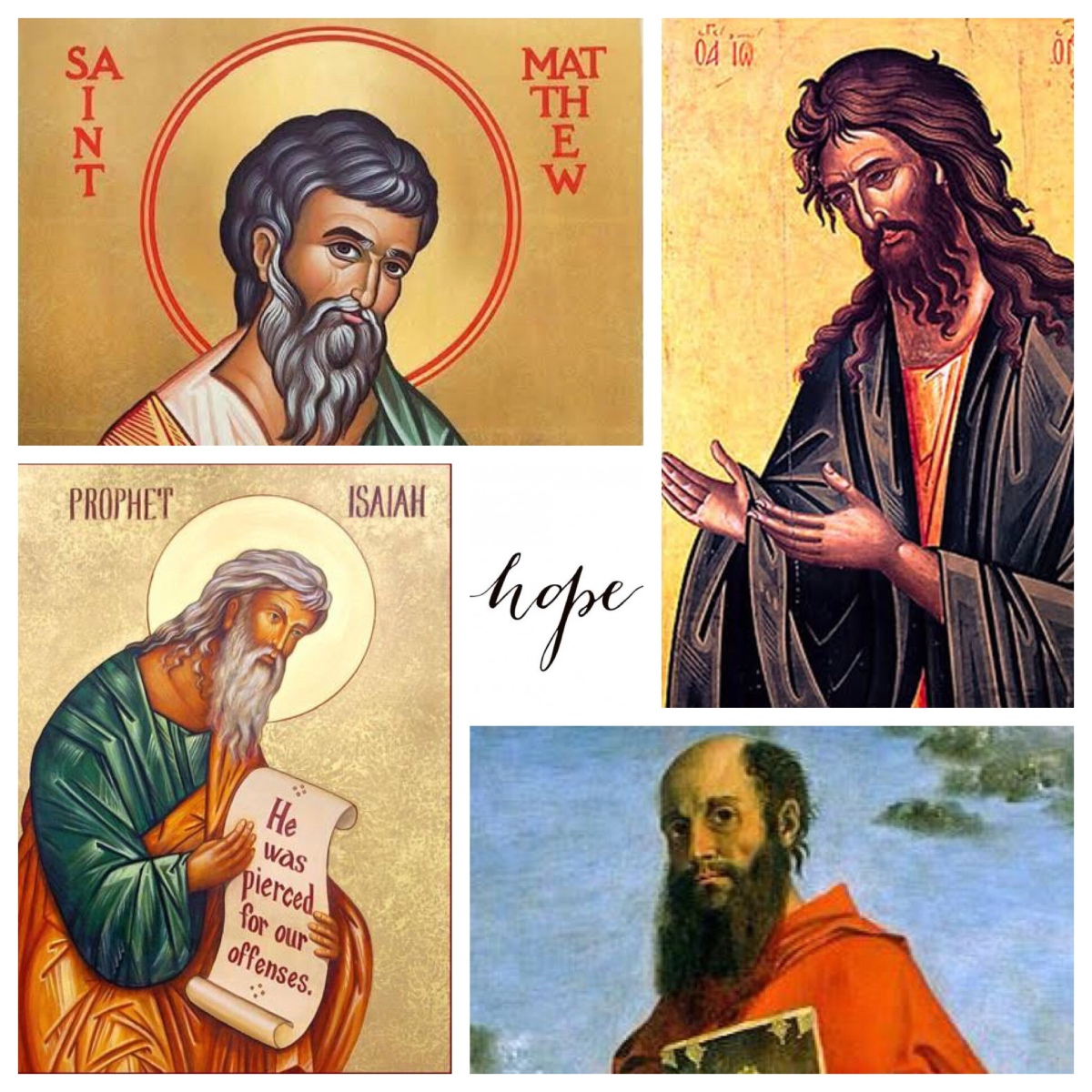
and again Isaiah says, “The root of Jesse shall come, the one who rises to rule the Gentiles; in him the Gentiles shall hope.” (Rom 15)

This passage grounds the reality of the church in the gathering of disparates, Jews and Gentiles; it also grounds our faith in the advent of Jesus, the one who draws Jews and Gentiles together; and it provides us with this seasonal word, during the season of Advent, as it points us to hope.

In the prophetic oracle set in the lectionary alongside the apostolic letter, Isaiah offers a wonderful vision of cosmic peace and universal co-operation:

The wolf shall live with the lamb,

the leopard shall lie down with the kid,

the calf and the lion and the fatling together,

and a little child shall lead them.

The cow and the bear shall graze,

their young shall lie down together;

and the lion shall eat straw like the ox.

The nursing child shall play over the hole of the asp,

and the weaned child shall put its hand on the adder’s den.

They will not hurt or destroy on all my holy mountain;

for the earth will be full of the knowledge of the LORD

as the waters cover the sea. (Isaiah 11)

However, this vision of peace appears in our lectionary alongside some harsh striking words, about the judgement that is associated with this vision. As the evangelist writes about the coming of the promised one—the one who will,presumably bring about this era of peace—he reports words spoken by John the Baptiser, which offer this sense of judgement:

His winnowing fork is in his hand, and he will clear his threshing floor and will gather his wheat into the granary; but the chaff he will burn with unquenchable fire. (Matt 3)

And again, in the Gospel for today, this message of judgement and punishment is vividly conveyed:

Even now the ax is lying at the root of the trees; every tree therefore that does not bear good fruit is cut down and thrown into the fire. (Matt 3)

This is a stern word. It seems strange for us, during Advent, as we prepare for Christmas, to be hearing such clanging, jarring sounds. Although, as one of my colleagues said to me earlier this week, as we talked about the offerings on hand in the lectionary during this season:

The soundtrack of Advent is not jingle bells;

It is the sound of a hammer on an anvil.

For the incessant message of the prophets is one which calls us to account. The hammer strikes the anvil, once, twice, repeatedly, marking the surface, forging the shape, creating the essence of the person. And the message of the prophets places before us an insistence that we need to act ethically, live responsibly, with justice and equity, as we wait with hope for the coming of the one who will bring in the promised time of peace.

Indeed the prophet, as he envisages the presence of this one, so long hoped for, as he considers how “a shoot shall come out from the stump of Jesse, and a branch shall grow out of his roots”, describes him in this way:

Righteousness shall be the belt around his waist,

and faithfulness the belt around his loins. (Isaiah 11)

The one to come will exemplify righteousness, and will assess the fruit produced by those he encounters. He will execute judgement by swinging the axe, cutting down the tree, and burning the branches in the fire; and, as the prophet declares,

He shall strike the earth with the rod of his mouth,

and with the breath of his lips he shall kill the wicked.

The soundtrack of Advent is not jingle bells;

It is the sound of a hammer on an anvil.

As we reflect on these words during this season, we do so with prayerful anticipation, with resolute hopefulness, with persistence and openness to God’s way in our midst, for we yearn to encounter afresh this chosen one:

The spirit of the LORD shall rest on him,

the spirit of wisdom and understanding,

the spirit of counsel and might,

the spirit of knowledge and the fear of the LORD.

His delight shall be in the fear of the LORD.

He shall not judge by what his eyes see,

or decide by what his ears hear;

but with righteousness he shall judge the poor,

and decide with equity for the meek of the earth;

he shall strike the earth with the rod of his mouth,

and with the breath of his lips he shall kill the wicked.

Righteousness shall be the belt around his waist,

and faithfulness the belt around his loins.

Please Leave ?? No — Please Stay !!

There has been a lot of media interest in the recent declaration by the Anglican Archbishop of Sydney, concerning the way that some dioceses, a number of ministers, and many, many people of faith are grappling with our changed understandings of gender and sexuality, and how that relates to Christian faith.

It is a complex matter, with many nuances, that deserve careful consideration, and compassionate reflection.

The words of the Sydney Diocese leader, however, cast the situation in a clear black-and-white manner, with the stinger of a sharp command to those with whom he (and many in his Diocese) disagree: “please leave”.

The full set of words from this part of his speech is instructive: “My own view is that if people wish to change the doctrine of our Church, they should start a new church or join a church more aligned to their views – but do not ruin the Anglican Church by abandoning the plain teaching of Scripture. Please leave us.”

So sayeth the Anglican Archbishop of Sydney, the Rev. Dr Glenn Davies.

(A full account of his speech to the Anglican Synod is reported on the Sydney Diocese webpage at https://sydneyanglicans.net/news/guarding-the-faith-in-a-changing-world and in Eternity News at https://www.eternitynews.com.au/australia/please-leave-us-sydneys-anglican-archbishop-tells-progressive-christians/)

But there are a number of problems with what Dr Davies said.

The Archbishop distanced himself from “people who] wish to change the doctrine of our Church”. The first problem is, that doctrine is always changing. It was changing in the early decades of the church. It changed significantly in the various Reformations of the 16th century, under the leadership of Jan Huss, Martin Luther, Jean Calvin, Huldrych Zwingli, John Knox, and then the response of the Council of Trent in the Roman Catholic Church.

It changed in 1540, when Henry VIII of England sanctioned the complete destruction of shrines to saints, and further in 1542, when Henry dissolved monasteries across the country—actions which changed doctrines and led to the formation of the very church in which Glenn Davies was ordained and then consecrated!

It changed when, during the Enlightenment, theologians and scholars applied principles of rational thinking to scriptural texts and faith concerns. It continues to change in the postmodern world, as new discoveries and insights lead Christian leaders to bring new questions to faith issues, and to formulate beliefs in ways that connect with and make sense within the changing world.

In my own denomination, the Uniting Church in Australia, we recognise this when we recall the paragraph in our Basis of Union that affirms “the continuing witness and service”, not only of evangelists, prophets, and martyrs, but also of scholars; and which notes that as we engage with “literary, historical and scientific enquiry … [of] recent centuries”, we are able to develop “an informed faith” of relevance to the current times.

Doctrine is dynamic; it is always in a state of flux. Theology is transient; it is always developing. Church teaching is constantly evolving; it is never static.

(On my take on interpreting the classic creeds of the church, see https://johntsquires.com/2018/11/02/interpreting-the-creeds-in-a-later-age/; on how the Uniting Church envisages the factors involved in this process, see https://johntsquires.com/2018/07/30/seeking-an-informed-faith/)

Second, the Archbishop referred to “the plain teaching of Scripture”. The second problem, then is that scripture does not actually have a plain teaching. There are words, written in the Bible, which need to be interpreted, if they are to be understood and applied to contemporary life. There is no plain and simple teaching in these words; they are words which always need interpretation.

This interpretation starts with the choice of text. We do not have an “original version”; we have copies of copies, some complete, many fragmented. There are always options to consider–and we all rely on experts in this matter. Then comes the matter of language. Biblical texts were written in languages other than English. We English-speakers are reliant on the careful work of translators and scholars, seeking to render the phrases of Hebrew, Aramaic, and Greek, into contemporary English. There are already multiple interpretive decisions that have been made for us, in our English Bibles.

Then, interpretation needs to take into account the differences in culture that exist, between the patriarchal, honour-shame cultures of antiquity, and the current state of play within (in our case) contemporary Australian society. We can’t just assume that something from an ancient culture “makes sense” in our contemporary culture, let alone that it can be “directly applied” into our context. There are interpretive decisions to be made.

(I have written about this dimension at https://johntsquires.com/2018/12/07/to-articulate-faith-contextually/)

The process of interpretation also needs to bear in mind how the usage of particular words and ideas has changed over time. Awful, for instance, once had a very positive sense, “full full of awe or admiration”, whilst nice had an earlier sense of “silly, foolish”. Guy (from the historical British figure Guy Fawkes) had an earlier sense of a frightening figure, not the generalised reference to men that it has today, whilst meat in earlier centuries was a catch-all term referring to food in general. (And, most pertinent to the particular issue at hand, “gay” once had a very different point of reference in English!)

These kinds of shifts in usage are also found in terms that appear in the Bible, especially in translations from some centuries ago. We need to factor that in to our interpretation.

And then, reading and interpretation of the Bible involves application, discerning how and in what ways a biblical passage is relevant for us today. That means knowing what our situation is as well as what we hear in the biblical text, and connecting the two. It is not simple or straightforward.

In an earlier interview about his view of matters of sexuality (and other issues), Dr Davies referred disparagingly to “a virus in the national church, caused by not teaching properly the word of God” (see https://www.thepastorsheart.net/podcast/2019/9/17/archbishop-davies-on-public-christian-leadership).

That’s an unfair and unhelpfully polemical characterisation of what is a complex and nuanced matter—reading biblical passages about sexuality in contemporary society. The biblical texts about sexual relationships involving people of the same gender are not simple and self-evident prohibitions on such behaviour, and should not be read as such.

Elizabeth and I have contributed a discussion of this matter which, I believe, offers more constructive lines of understanding; see https://johntsquires.com/2018/07/30/marrying-same-gender-people-a-biblical-rationale/ as well as https://johntsquires.com/2019/06/26/human-sexuality-and-the-bible/ and https://www.unitingnetworkaustralia.org.au/wp-content/uploads/2019/06/02-Human-Sexuality-in-Biblical-Perspectives.pdf.

(More generally, see https://johntsquires.com/2018/07/30/the-word-of-god-scripture-and-jesus-christ/)

Third, the Archbishop—quite strikingly—has urged certain people to leave the Anglican Church. I believe that advocating that people leave one church to start another church is not a helpful activity. Anglicans, like other mainstream denominations, have a commitment to unity in the church. So, the third problem is a lack of commitment to the unity of the church.

That’s quite an amazing position for a leader in a denomination which affirms that it is, indeed, an integral part of the One, Holy, Catholic and Apostolic Church—and which is universally recognised by other denominations as an integral part of that Church.

Each Sunday, in Anglican churches around Australia (and beyond), faithful people affirm, “I believe in one, holy, catholic and apostolic Church.” That’s a line in the Nicene Creed. And those Anglicans are joined by many Roman Catholics, members of the many Orthodox churches, and quite a number of folk in the various Protestant churches, to say these words together on regular (even weekly) occasions. Across the denominations, there is a commitment to unity.

Not in the Sydney Anglican Diocese, however. The Archbishop’s invitation to those who see things differently from him to leave the church and form their own branch is fracturing the unity of the church even more by this narrow, sectarian dogmatism.

Even his own colleagues, it seems, have recognised that Dr Davies has crossed a line with his rhetoric in recent days (see https://www.theage.com.au/national/even-conservative-rectors-shuddered-why-sydney-archbishop-s-words-hurt-20191018-p531ye.html). Such rhetoric serves only to exacerbate differences and intensify hurt. Is that really being faithful to the office into which he has been called?

The worldwide leader of the Anglican Communion, the Archbishop of Canterbury, the Most Revd Justin Welby, has affirmed that “reconciliation is the hallmark of Anglicanism, the heart of the gospel and a life to which we are all called” (see https://www.anglicancommunion.org/mission/reconciliation.aspx).

Archbishop Welby is promoting through the Anglican Communion a resource entitled Living Reconciliation, which “offers a vision of Church marked by honesty, truthfulness and love … [and] applies the teaching of the Gospel at precisely the point where we need it most today” (see http://living-reconciliation.org/thebook/).

Is the Archbishop of Sydney aware of just how contrary his words are, to the principles of reconciliation and the commitment to an honest, loving church that is being championed by the Archbishop of Canterbury?

Finally, the Archbishop of Sydney is quoted as imploring those with whom he disagrees: do not ruin the Anglican Church. The fourth problem I see is that exploring and developing ideas is not a process of ruination.

Rather, the exploration of ideas and the development of thought is a constructive process that offers a gift to the church at large: the gift of an ever-evolving, ever-refining articulation of beliefs in ways that resonate with life in the contemporary age. Questions, provocations, redefinitions, and developments in thinking and believing are wonderful gifts!

I wouldn’t characterise the process as one of causing ruin. Rather, I would celebrate it and affirm the importance of this process. The problem, it seems to me, is that if you really believe that you have The Truth, then you are impelled to convince others of that Truth. But if you believe you are called to Love others, then you will listen and learn.

Sadly, the Archbishop has demonstrated this stark difference: when we prioritise Truth, we inform, lecture, admonish, even berate; whereas when we prioritise Love, we enter into relationships, affirm, explore, nourish, question, rethink, and develop in community with each other. Quite a different ethos. Quite a different result.

Please Leave? No—Please Stay! To the people addressed by Dr Davies, I say: Please stay in the Christian church and help us to be faithful to the Gospel. Please stay in the Christian church and help us to change in ways that are positive and life-giving. Please stay and gift your distinctive contribution to the life of the church in your locality and beyond.

And to the Archbishop, if he really is committed to the process of leaving, I say: you please leave. Please leave behind homophobic fear and discriminatory rhetoric. Please leave behind your insistence on conformity to your particular dogmatic assertions. Please leave behind your criticisms of those who happen to be born different from you. That’s what I would like you to leave.

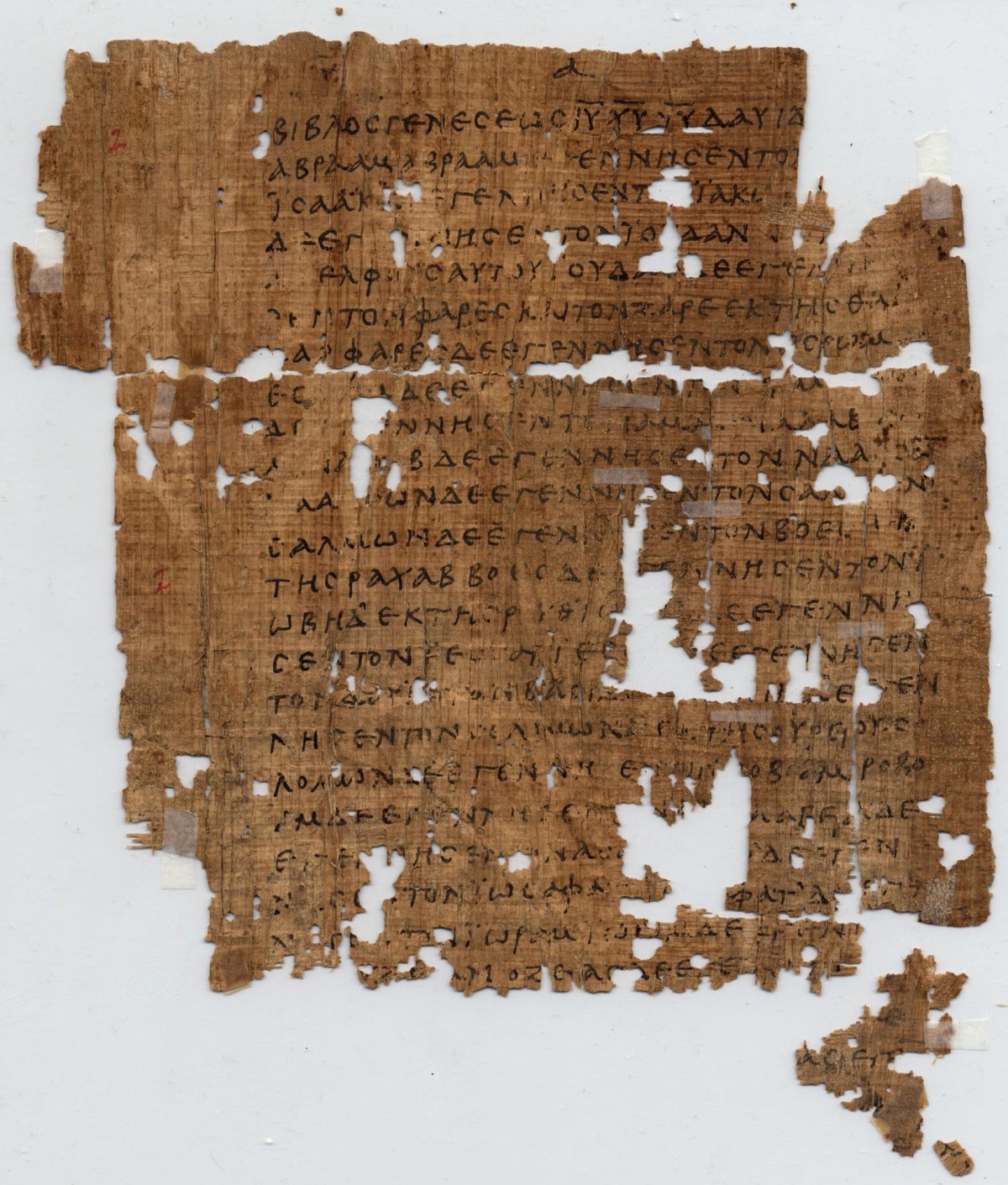
What does it mean to say that the Bible is inspired? (2 Tim 3:16; Pentecost 19C)

How many times have you heard it said, “the Bible is the inspired Word of God” ? Have you ever thought about what this phrase actually means ? Paul Achtemeier, in his book The Inspiration of Scripture, has indicated the problems that are inherent in using the terminology of “inspiration” loosely.  He points to issues related to the use (or abuse) of this term.  The matter is not quite as simple as it first appears.

 The traditional answer to the question of what this statement means, is to assert (quite correctly) that the Bible uses this concept of inspiration to define itself.  However, we need to be careful in simply lifting out one word (this is all it is, even in Greek!) and making it the lynchpin of a massive argument.  The claim that “God said it; I believe it; that settles it” is ultimately an inadequate answer if we are truly seeking understanding of our faith.

 What, then, is the biblical evidence for the claim of inspiration? 2 Timothy 3:16 is generally regarded as the “proof text” for this topic, with the claim being made that all scripture is inspired. This verse appears in the passage set for reading in churches this coming Sunday, as the epistle reading in the Revised Common Lectionary.

However, even this verse must be viewed in context.  It cannot readily be extracted from its context and pressed into service as an abstract definition; we cannot assume that it is the fundamental principle held by all biblical writers, as no other writers of other biblical books give any indication that it was adhered to in this way.  We should note a number of aspects of this verse which caution us against making it a fundamental universal principle which applies equally in every case.

Is this the last word on the matter? Some interpreters have argued that the whole of 2 Timothy should be seen as a last testament of Paul — an attempt to set out his final thoughts in a clear, systematic, programmatic manner, as his last will and testament for his followers. However, caution is again required at this point. 

The authenticity of 2 Timothy is debated. Some scholars claim that it was not written by Paul, others say that he dictated it to a secretary, while yet others argue that it does contain fragments of material written by Paul, which are placed within a larger framework of a whole letter by another writer.  (See https://johntsquires.com/2019/10/01/in-the-name-of-the-apostle/)

Whatever the origin of the letter, it is clear that it was written in a specific context; it is by no means an attempt to set out basic principles, but rather applies such principles to a given situation.

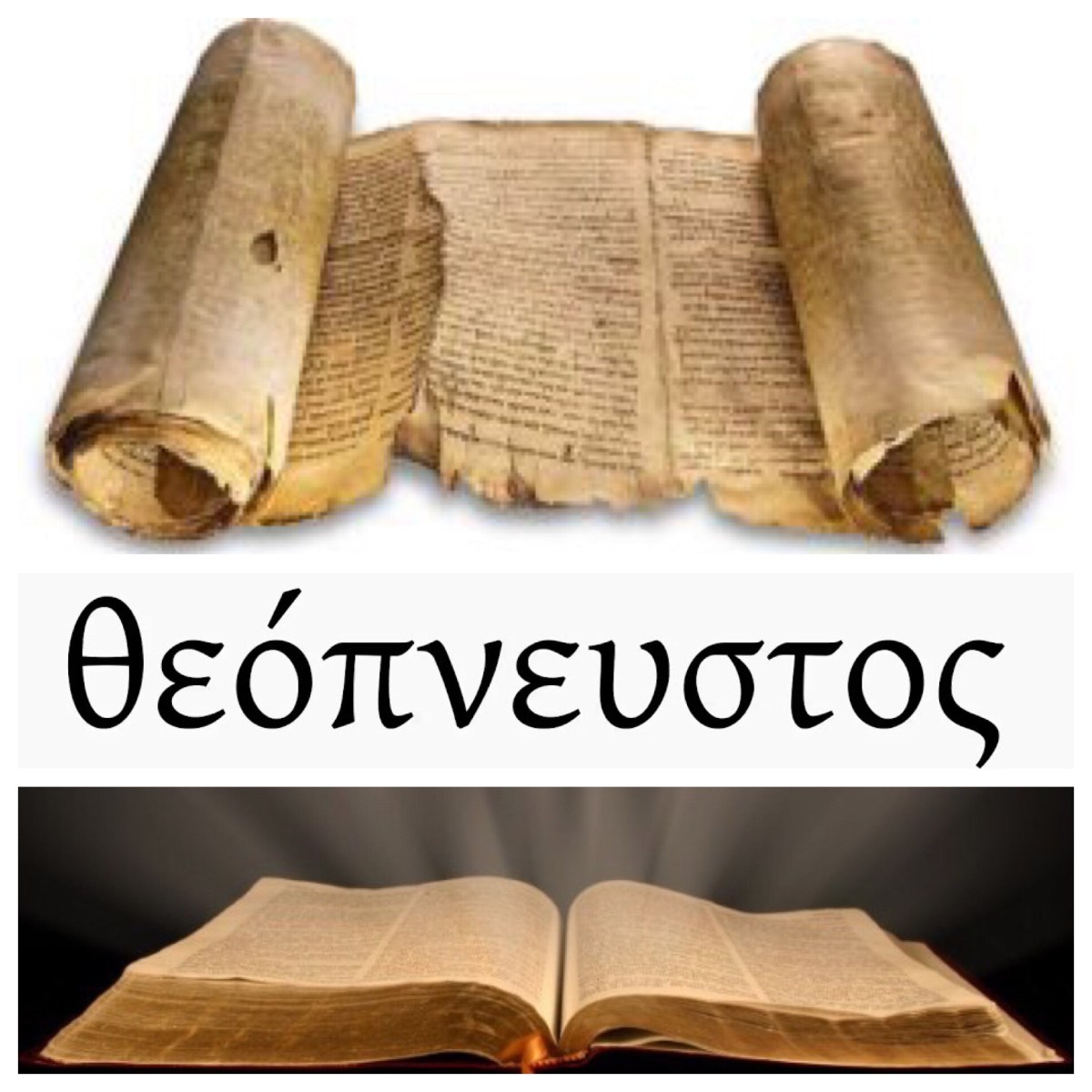
 Inspired. First, the Greek word translated “inspired” is theopneustos, which literally means, “breathed by God”.  This was not a common term in the first century CE; many other similar terms were available prior to the New Testament to describe the activity of inspiration.  So the use of this term is not in itself a clear-cut way of proposing a “doctrine of inspiration” in first century terms.

 Useful. Further, we should note that in 2 Timothy 3:16 the definition which is given is functional, not ontological that is to say, it identifies the effect scripture has, and does not define the essence of scripture in and of itself.  The emphasis is placed on the fact that scripture is “useful” or “profitable”.  Inspiration, so it seems, does not reside in the writings themselves, nor in the writer, but results from the process of using (or applying) scripture.

 Scripture. A further issue concerns the word graphe, usually translated as “scripture”.  This word literally means “writing”, and normally it applies to Old Testament books.  At the time of writing 2 Timothy, it could not yet apply to the New Testament in a direct manner, since the complete New Testament was not yet formed. 

In his authentic writings Paul himself shows little awareness of the Gospels or of Gospel traditions; and there is no evidence for the collection of Paul’s letters until early in the second century CE.  By contrast, Paul regularly cites scriptures from his own tradition, the Hebrew scriptures, and it is clear that he considers these works to be important guides for living by faith. Romans, Galatians, and both letters to the Corinthians contain numerous such instances.

(There are explicit citations of Hebrew scriptures at two places in the Pastoral Epistles: 1 Tim 5:17-20, quoting Deut 25:4 and alluding to Deut 19:5, and 2 Tim 2:19, citing Num 16:5 and Isa 26:13.)

Thus, this statement was originally NOT about the whole of the Bible; it is only by inference that we can refer it to the whole of the Bible.

 Useful for … Finally, let us note the diversity of functions here attributed to inspired writings: they can be used for teaching, reproof, correction, and training in righteousness.  Thus, a richness of meaning is perceived within scripture, indicating the diversity of ways of applying scripture.  There is no single function which is foundational; nor does this verse set out all the functions of scripture (the Psalms, for example, function in a number of different ways — for praise, lament, celebration, petition, confession, remembrance, and so on).

 Thus, 2 Timothy 3:16 itself does not offer a full and satisfactory answer to the question, what does it mean to say that the Bible is inspired?  It offers one insight, but it needs to be balanced against others.  It is not the last word on the matter.

Certainly, it is clear that this passage can refer only to the Hebrew scriptures, for the New Testament as we know it was not yet formed, even in the early decades of the second century. And it points towards a functional understanding of scripture, providing no basis for any claims about the divinely-inspired and absolutely authoritative nature of the books of the Bible.

See also https://johntsquires.com/2019/10/01/in-the-name-of-the-apostle/

https://johntsquires.com/2019/10/07/rightly-explaining-the-word-of-truth-2-tim-215/

https://johntsquires.com/2019/06/17/harness-the-passion-but-restrain-the-rhetoric-musing-on-the-role-model-which-paul-offers-in-galatians/

https://johntsquires.com/2018/11/17/let-your-gentleness-be-known-to-everyone/

Rightly explaining the word of truth (2 Tim 2:15; Pentecost 18C)

Do your best to present yourself to God as one approved by him, a worker who has no need to be ashamed, rightly explaining the word of truth. So writes Paul to his “beloved child”, Timothy, in the second letter that we have addressed to this co-worker.

(On the reasons why this letter may well not have been written by the apostle Paul himself, but by one of his followers after Paul’s lifetime, see https://johntsquires.com/2019/10/01/in-the-name-of-the-apostle/)

The letter presents a scenario that sees Paul in prison (1:8; 2:9), in contact with a group otherwise unknown from his letters—Eubulus, Pudens, Linus and Claudia (4:21). As Paul was previously in Corinth and Miletus (4:20) and is in Rome as he writes (1:17), the letter itself suggests a time near the end of his life. He writes, we are led to believe, as a mature believer, imparting wisdom to a younger co-worker.

This assumption is supported by some of the imagery used, with Paul describing his life as “poured out as a libation” (4:6) and stating that he has “fought the good fight” (4:7). We know virtually nothing of this period from Acts; the last description of Paul that we have in Acts (28:30–31) is generalized and non-specific, so we can’t cross-check with anything there.

This letter, like 1 Timothy and Titus, gives indication of disagreement and conflict within the early Christian communities, with varied understandings of faith being present in the place where the recipient of the letter is based.

 The opponents envisaged in this letter are described largely with reference to their verbal activity: they utter “profane chatter” (2:16), their “talk spreads like gangrene” (2:17), they engage in “wrangling over words” (2:14) and “stupid and senseless controversies” (2:23); they “captivate silly women” (3:6) and their “myths” are listened to by people with “itching ears” (4:3–4). The author certainly possesses a vivid vocabulary!

The author contends that these opponents are “people of corrupt mind and counterfeit faith” who oppose the truth (3:8), “wicked people and imposters” who deceive others (3:13); they have been “ensnared by the devil” (2:26). The long list of vices (3:2–5) might also be inferred as applying to these people. The rhetoric is aggressively antagonistic.

 The one specific identifying mark of these people who have “swerved from the truth” is their assertion that “the resurrection has already taken place” (2:18). Against this, the author refers to the future appearance of Jesus (4:1, using the Greek word epiphaneia, most unusually for Paul). There is also a quotation of scripture to refute the heresy (2:19, citing Num 16:5 and Isa 26:13).

Paul offers clear guidance to Timothy as to how he is to deal with such opponents. He provides Timothy with short, concise summaries of the faith that they share (2:11-13; see also 1 Tim 2:5-6 and 3:16) and advises, Remind them of this, and warn them before God that they are to avoid wrangling over words, which does no good but only ruins those who are listening. So Paul instructs Timothy, whom he charges to be an apologist (one who contends verbally, and vigorously, for the faith).

The apologetic that Timothy is to exhibit is succinctly expressed in the excerpt from the letter set in the lectionary as this Sunday’s epistle reading; Timothy is to rightly explain the word of truth (2:15).

This letter shares an apologetic quality with the first letter to Timothy, in its concern for “godliness” (2 Tim 3:5), “the truth” (2 Tim 2:18, 25; 3:7, 8; 4:4) and “the faith” (2 Tim 1:13; 2:18; 4:7). It provides various indications of the content of this faith: an epitome in three short clauses (2:8), a more discursive exposition of “the gospel” in poetic form (1:8–10) and a five-line hymn (2:11–13), introduced as yet another “sure saying” (2:11).

Paul, the nominal author of this letter, is set forth as a model for Timothy; he is described as having been “appointed a herald and an apostle and a teacher” (1:11) who provides “the standard of sound teaching” (1:13).

This “sound teaching” is entrusted to Timothy (1:12), who is exhorted to “guard the good treasure entrusted to you” (1:14). That’s the “word of truth”, direct from Paul. This word, in turn, is to be entrusted to “faithful people” (2:2) who in turn become teachers. So the letter clearly explains the way in which “the faith” is to be passed on from teacher to associate to local leaders. Paul’s authentic letters do not emphasise this line of authority in the same fashion.

 In his calling as a teacher, Paul has encountered suffering (1:12; 3:11), but he has placed his trust in Christ (1:12) and Christ has strengthened him (4:17). According to this pattern, Timothy ought then expect to suffer (2:3; 3:12) and should stand “strong in the grace that is in Christ Jesus” (2:1).

The imagery used to explain the leadership role entrusted to him refers to the soldier (2:3–4), the athlete (2:5) and the farmer (2:6); these images are consistent with the rhetoric of self-defence which Paul employs (1 Cor 3:8–9; 9:7, 10, 24–25). By contrast, the reference to household utensils (2:20–21) runs counter to the way Paul used similar imagery (“we have this treasure in clay jars”, 2 Cor 4:7).

 The author of this letter expresses a firm confidence that he has gained “the crown of righteousness” (4:8) in his eternal destiny. For Paul to write this would be unusual, as he elsewhere uses this imagery to describe other people (not his own destiny) as his crown (the Philippians, Phil 4:1; the Thessalonians, 1 Thess 2:19–20).

As the letter draws to a close, the author asserts that “the Lord will rescue me…and save me” (4:18). This heavenly rescue, assured for Paul, is promised also to those who faithfully exercise their ministry; Timothy, and other leaders, will find themselves in the company of Paul, in the heavenly kingdom (4:8). It is noteworthy that Paul regularly expresses hope in his future fate, without claiming clear certainty about it (Rom 5:1–2; 8:24–25; 1 Cor 9:10; 2 Cor 1:9–10; Gal 5:5).

It is doubtful, to me, that this element of the letter reflects Paul’s regular way of thinking. My reading of Paul’s letters is that he has much more of a concern for the present realities of life, and how the Gospel is at work in the present, than with the promise of a future off in the distance. He does not dismiss the future; but his energy and passion is oriented towards living by faith in the present.

The letter provokes us to ponder what it is that we regard as essential to the word of truth, how we go about rightly explaining that word of truth, so that others will be grasped by the good news and feel welcomed and affirmed within the community of faith.


See also https://johntsquires.com/2019/10/01/in-the-name-of-the-apostle/

https://johntsquires.com/2019/06/17/harness-the-passion-but-restrain-the-rhetoric-musing-on-the-role-model-which-paul-offers-in-galatians/

https://johntsquires.com/2018/11/17/let-your-gentleness-be-known-to-everyone/

In the name of the apostle … (2 Timothy, Pentecost 17C to 21C)

In this latter part of the season after Pentecost, in Year C, the Revised Common Lectionary is taking us through a tour of a number of letters attributed to Paul—which most likely, for various reasons, were not actually written by Paul himself. We’ve read a couple of excerpts from 1 Timothy and launch into 2 Timothy this coming Sunday, after which we move on to 2 Thessalonians.

Many scholars consider that the apostle Paul did not actually wrote any of these letters (along with some others also attributed to Paul—Titus, Ephesians, and perhaps even Colossians). They have been able to come to this view because of what is known about the widespread practice, in the ancient world, of circulating letters and other documents in the name of an eminent person from an earlier age—a great scholar, or philosopher, or religious leader, or teacher. This was done by a writer who wished to “borrow” the authority of the older figure, believing that this would give greater weight to the views and teachings included in their work.

The suggestion is that members of the church in the later decades of the first century did this, using the name of Paul, because they regarded him as a teacher of note and an apostle of the church. There were already many works like this in Jewish circles, and a number amongst the gentiles also; so this was a well-known practice. And the ancient world did not have the strict laws of copyright and intellectual property which characterise the twenty-first century!

1 and 2 Timothy are two of the three letters written in the name of Paul which are addressed to two individuals whom Paul valued as co-workers and employed as ambassadors to his churches—Timothy and Titus. The letters are commonly referred to as the Pastoral Epistles because, it is felt, they are concerned almost entirely with matters internal to the structure and governance of the churches.

Whilst Paul’s authentic letters reflect the dynamic nature of the community of faith, these letters reflect a move towards a more developed organisational structure. They point towards the institutionalised church of the second century and beyond, in which the way of Jesus would become determined by the authority of the apostle and his local representative, the bishop.

Each of these letters is addressed to a fellow-worker of Paul who is known from other references in Paul’s authentic letters. Titus accompanied Paul and Barnabas to Jerusalem (Gal 2:1, 3) and was a fellow-worker with Paul in ministry to the Corinthians (2 Cor 2:13; 7:6, 13–15; 8:6, 16, 23; 12:18).

Timothy also accompanied Paul as “co-worker” (Rom 16:21) and fellow- preacher (2 Cor 1:19) and was a regular intermediary between Paul and believers in Thessalonica (1 Thess 3:1–6), Corinth (1 Cor 4:17; 16:10) and Philippi (Phil 2:19–24). Timothy is described as the co-writer, with Paul, of three authentic letters (2 Cor 1:1; Phil 1:1; 1 Thess 1:1) as well as two debated letters (Col 1:1; 2 Thess 1:1). In Acts, he appears regularly as an associate of Paul (Acts 16:1–2, 14–15; 17:5; 19:22; 20:5).

Each letter begins with a familiar assertion that it was written by Paul, but modern scholars have identified various doubts about this claim. Indeed, strong arguments can be advanced for dating these three letters after the lifetime of Paul. Clearly, these letters were written by someone with good knowledge of Paul and his teachings.

Yet the format of the letters and the distinctive vocabulary used throws doubt on the claim that Paul was the author. Whilst they each have a traditional framework for a letter, the body of the letter often reads more like a sermon or a moral treatise.

Over one third of the words found in these three letters are not found in the authentic letters of Paul. Many words found frequently in the authentic letters do not appear anywhere in these three letters.

In addition, the situations addressed, the theology of the letters and the ecclesial structures envisaged reflect many differences between each of these three letters and the seven authentic letters of Paul.

Together, all of these elements point to the conclusion that the author wrote these letters after the lifetime of Paul. He reaches back in time to the figure of Paul in order to validate the teachings given to the community of faith in his own time. The figures of Timothy and Titus represent the leaders in the communities of faith in this later period.

As we hear excerpts from the Pastoral Epistles in worship, and reflect on what they are saying to us today, we might ask:

How important is it, for you, to affirm that Paul himself wrote each of these letters?

Can you be comfortable with the idea that a follower of Paul wrote them in his name?

What message about the life of the church comes through these letters?