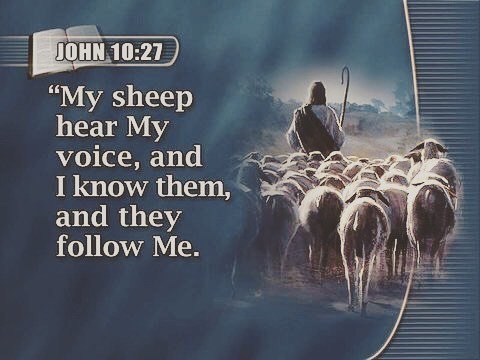
I am the good shepherd [who] lays down his life for the sheep (John 10; Easter 4B)

Each year, on the fourth Sunday of the season of Easter, the Revised Common Lectionary provides a section of John 10 as the Gospel reading for the Sunday. That chapter is where Jesus teaches about his role as “the good shepherd” who lays down his life for the sheep. The chapter is divided over the three years: 10:1–10 in Year A, then 10:11–18 in Year B, and 10:22–30 in Year C. For this reason, this particular Sunday is sometimes called the Good Shepherd Sunday.

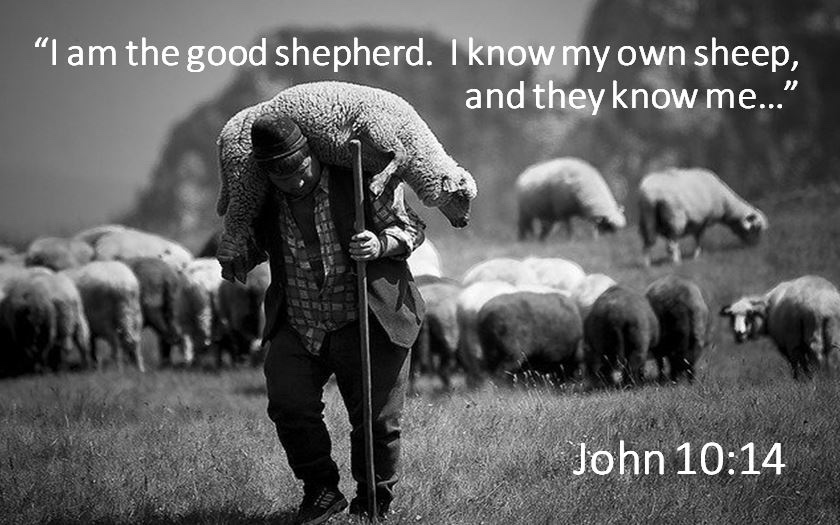
The section offered in Year A concludes with the classic claim of Jesus, “I came that they may have life, and have it abundantly” (10:10). The passage set for Year B, this year, begins with the famous affirmation, “I am the good shepherd; the good shepherd lays down his life for the sheep” (10:14-15).

Both passages develop the image of Jesus as the shepherd of the sheep, in intimate relationship with the sheep; the shepherd knows his own (10:15), calls them by name (10:3), shows them the way of salvation (10:9), and lays down his life for the sheep (10:11, 15, 17–18).

These two sections of this chapter (10:1–10, 11–18) follow on from the story of the man born blind (9:1–41), which itself has emerged out of the conflicts between Jesus and Jewish authorities (7:10—8:59), reported as taking place in Jerusalem during the Festival of Booths (7:2). That sequence of conflicts had culminated with the Jewish authorities picking up stones to throw at Jesus (8:59).

The story told in chapter 9, like the whole Gospel, reflects the situation of a group of followers of Jesus towards the end of the first century CE, inheriting the richness of the Jewish faith, convinced that they have found The Teacher of the way that God requires, in Jesus of Nazareth. As a result, they have encountered opposition, argumentation, and expulsion from their familiar faith community, and through this they have engaged in verbal warfare with those who have pushed them out.

Retelling the story of the man born blind, who encounters Jesus and claims faith in him, validates their perspective on life and faith. The story reveals what God intends and desires, through the way that an unknown member of their community has constructed this narrative. The story reinforces the views that have been developed by members of the community, as they hope that others might “come to believe that Jesus is the Messiah, the Son of God, and that through believing [they] may have life in his name” (20:31).

See

John’s Gospel is known for its series of I AM statements. In the first offering from John 10 (verses 1–10), Jesus has said, “I am the gate” (v.9)—the avenue for entry into the sheepfold, which was a place of care and protection for the sheep.

But “I am the gate” makes sense only because of what goes before it; the gatekeeper, who opens the gate for the sheep (v.3). This image then morphs into the more familiar image of the shepherd of the sheep (vv.11, 14)—the one who knows the sheep, calls them by name, and guides them in the paths that they should follow.

In fact, Jesus refers to his followers as “sheep” 13 times throughout the chapter. This draws on the common description of the people of Israel as sheep, found in a number of psalms. The exodus from Egypt is described as the time when “he led out his people like sheep, and guided them in the wilderness like a flock; he led them in safety, so that they were not afraid” (Ps 78:52–53).

The psalmist encourages the people to sing with joy, for “he is our God, and we are the people of his pasture, and the sheep of his hand” (Ps 95:7). The people rejoice that it is this God who “made us, and we are his; we are his people, and the sheep of his pasture” (Ps 100:3; see also Ps 44:11, 22; 74:1).

Alongside this, in Hebrew Scripture, God is explicitly identified as a shepherd; the psalmist declares that God is the “Shepherd of Israel, who lead[s] Joseph like a flock” (Ps 80:1). Elsewhere, the opening line of perhaps the best-known psalm is simply, “the Lord is my shepherd” (Ps 23:1).

But many other passages contain mentions of shepherds. As he was dying, with his sons gathered around him, Jacob spoke to his son Joseph, praying, “the God before whom my ancestors Abraham and Isaac walked, the God who has been my shepherd all my life to this day … bless the boys [Ephraim and Manasseh]” (Gen 48:15–16).

Later, Jacob indicated that Joseph’s strength came “by the hands of the Mighty One of Jacob, by the name of the Shepherd, the Rock of Israel, by the God of your father, who will help you, by the Almighty who will bless you” (Gen 49:24–25). Then, when David was anointed as king, Samuel said to him “it is you who shall be shepherd of my people Israel, you who shall be ruler over Israel” (2 Sam 5:2; 1 Chron 11:2).

Subsequent rulers in Israel were accorded this title; yet key prophets during the exile lamented that there had been “stupid shepherds” with “no understanding” (Jer 10:21; Isa 56:11) and had done evil (Jer 12:10–13; 23:1–2; 50:6–7; Ezek 34:1–10). Some prophets in the Exile then looked beyond this to a better kind of shepherd-leader.

The anonymous exilic figure we know as Second Isaiah declared that the Lord God “will feed his flock like a shepherd; he will gather the lambs in his arms, and carry them in his bosom, and gently lead the mother sheep” (Isa 40:11). Later, he declares that Cyrus, king of Persia, would be anointed as Messiah, to carry out God’s purpose (Isa 44:28–45:1). He is the one of whom the Lord says, “he is my shepherd and he shall carry out all my purpose” (Isa 45:28). That is a striking extension of the strong scriptural imagery of the shepherd, normally applied to the God of Israel or rulers within Israel, which is now placed onto a foreign ruler.

Also during the exile, the prophet Jeremiah looked to the time when God would restore “shepherds after my own heart” in their midst (Jer 3:15) and Ezekiel prophesied God’s intentions: “I myself will search for my sheep, and will seek them out. As shepherds seek out their flocks when they are among their scattered sheep, so I will seek out my sheep. I will rescue them from all the places to which they have been scattered on a day of clouds and thick darkness.” (Ezek 34:12). Ezekiel then extends this role to the king when he reports God’s words: “my servant David shall be king over them; and they shall all have one shepherd” (Ezek 37:24).

This is the scriptural heritage that Jesus draws on in his famous statement, “I am the good shepherd” (John 10:11, 14). Jesus refers to his followers as “sheep” 13 times throughout the chapter, drawing on the equally common description of the people of Israel as sheep, found in a number of psalms (Ps 44:11, 22; 74:1; 78:52; 95:7; 100:3).

Jews would have recognised immediately the claim that he was making for himself—and the way that he has intensified it by noting that “the good shepherd lays down his life for the sheep” (John 10:11; see also v.15). The passage thus looks forward to the death he will suffer on the cross—the example supreme of “the good shepherd”.

See also

and

He will feed his flock like a shepherd (Isa 40; Advent 2B)

As we move on in the very new year in the church’s calendar, this coming Sunday we celebrate the second Sunday in the season of Advent, and continue our preparations for Christmas—the coming of Jesus, Saviour, chosen one, and Lord (Luke 2:11). During Advent, the lectionary offers a selection of biblical passages designed to help us in our preparations, building to the climactic moment of Christmas Day, when we remember that “the Word became flesh and lived among us, and we have seen his glory, the glory as of a father’s only son, full of grace and truth” (John 1:14).

These scripture passages include a sequence of excerpts from the Hebrew Scriptures—largely from the book of Isaiah—which orient us to the saving work of God, experienced by faithful people in Israel through the ages. These scripture passages lead us along a path that brings us to the point when we can sense God’s work in the story of Jesus.

The passage proposed for this second Sunday in Advent is a very well-known one; it is cited near the beginning of all four canonical Gospels, where it is used to describe what John the baptiser was doing as he called people to repentance and baptised them by dunking them in the River Jordan (Mark 1:2–5; Matt 3:3–6; Luke 3:1–6; John 1:24–28). One reason for hearing this Hebrew Scripture passage on Advent 2 may well be that the account of John, preaching and baptising, is the Gospel reading for this Sunday (Mark 1:1–8).

Whilst the voice which cries out “in the wilderness prepare the way of the Lord” (Isa 40:3) is applied directly to John in the Gospels, it has a different reference in its original context. The words of the exilic prophet whose work forms the second section (chs. 40–55) are oriented towards the appearance of God to the people of Israel as they wait and hope for the end of their exile in Babylon. The prophet says that God will comfort the people (v.1), speaking tenderly to Jerusalem, declaring that “her penalty is paid” (v.2)—and then, that “the glory of the Lord shall be revealed, and all people shall see it together” (v.5).

In the ensuing chapters, the prophet sets out the promise of God: “I will send to Babylon and break down all the bars, and the shouting of the Chaldeans will be turned to lamentation” (Isa 43:14; 48:14; and see the extended oracle of 47:1–15). He specifically nominates Cyrus of Persia as the one chosen (or anointed) by God to bring the exiles home (Isa 44:28—45:1; 45:13).

The prophet describes the journey leaving Babylon and returning to Jerusalem in terms reminiscent of the journey that Israel undertook in the wilderness, after leaving Egypt (Isa 41:17–20; 43:16–17; 49:9–10; 50:2). Because it was the Lord who “dried up the sea, the waters of the great deep [and] made the depths of the sea a way for the redeemed to cross over”, the prophet declares exultantly, “the ransomed of the Lord shall return, and come to Zion with singing” (Isa 51:10–11).

So the voice crying out in the original prophecy is not calling the people to repentance, but noting that they have already served their time of punishment (Isa 40:2), and that God is acting now to save them (43:3, 11; 45:15, 21; 49:26). Of Jerusalem, the prophet declares, “she has served her term … her penalty is paid … she has received from the Lord’s hand double for all her sins” (Isa 40:2).

Rather than declaring the judgements that are coming from the Lord in God and sounding a call to repentance, like the earlier pre-exilic prophet had done (Isa 1:27; 2:5; 5:1–7), this exilic prophet emphasises the positive deeds of the Lord as the exiles prepare to return to the land. The Lord will gather people from nations in all four directions into the land (Isa 43:5–7, 9) and will do “a new thing” for the people (Isa 42:9; 43:19; 48:6).

It is the statement about how the Lord will act that comes in the final verse of the prophetic passage which the lectionary offers for this coming Sunday (Isa 40:1–11) which resonates with us as we hear and ponder this passage at this time of the year (the second Sunday in Advent). The Lord God, we are told, “will feed his flock like a shepherd; he will gather the lambs in his arms, and carry them in his bosom, and gently lead the mother sheep” (Isa 40:11).

God, says the psalmist, is “Shepherd of Israel, who lead[s] Joseph like a flock” (Ps 80:1). Elsewhere, a psalmist sings, “he is our God, and we are the people of his pasture, and the sheep of his hand” (Ps 95:7); and of course the opening line of perhaps the best-known psalm is simply, “the Lord is my shepherd” (Ps 23:1).

The prophet Ezekiel declares that God himself “will search for my sheep, and will seek them out. As shepherds seek out their flocks when they are among their scattered sheep, so I will seek out my sheep” (Ezek 34:11–12). Ezekiel then extends this role to the king when he reports God’s words: “my servant David shall be king over them; and they shall all have one shepherd” (Ezek 37:24).

And then another exilic prophet most dramatically describes Cyrus of a Persia as both the Lord’s anointed one (Isa 45:1) and the one of whom the Lord says, “he is my shepherd and he shall carry out all my purpose” (Isa 45:28). That is a striking extension of the strong scriptural imagery of the shepherd, normally applied to the God of Israel or rulers within Israel, which is now placed onto a foreign ruler.

In this season of Advent, as Christians anticipate the celebration of Christmas, the scriptural imagery of the shepherd caring for their flock evokes Jesus, whose birth is remembered at Christmas. The birth of Jesus was first announced to shepherds, who were the earliest visitors (according to Luke) to the newborn and his parents (Luke 2:8–20). Mark and Matthew report that Jesus, as an adult, “had compassion for [the crowd], because they were like sheep without a shepherd” (Mark 6:34; also Matt 9:36).

And in one of his famous teaching sections in John’s Gospel, Jesus declares that he is the shepherd (John 10:11)—indeed, “the good shepherd” (John 10:14), “the good shepherd [who] lays down his life for the sheep” (John 10:11). Jesus himself extends the metaphor, noting that there are “other sheep that do not belong to this fold” and promising that “I must bring them also, and they will listen to my voice; so there will be one flock, one shepherd” (John 10:16).

Many in his Judean audience were not impressed at the way that Jesus, in these words, took on a key function of God and claimed it for himself. “He has a demon and is out of his mind. Why listen to him?”, they said (John 10:20). Aggrieved by Jesus’ claim, “the Father and I are one” (John 10:30), they sought to stone him, recalling the earlier antagonism of Judeans who sought to kill Jesus when he was “calling God his own Father, thereby making himself equal to God” (John 5:18). It seems that the care shown by this shepherd for his sheep failed to evoke the same response from his audience.

So this ancient prophecy reaches out across centuries, from Babylonian exile to Roman oppression, and on into the postmodern 21st century, with a promise of compassionate care for the people of God. Whilst the prophet was describing how God would care for the people of Israel in his time, the underlying dynamic is applicable, with due care, to the relationship of Jesus to his people, centuries later. It is in this regard that we can hear and read this passage as one that is appropriate for the season of Advent.

I am the gate for the sheep (John 10; Easter 4A)

Each year, in the Sundays which are early in the season of Easter, a similar pattern occurs in the lectionary. On the evening of Easter Sunday each year, the lectionary presents us with the well-known and much beloved Emmaus Road story (Luke 24:13–49). In this story, two followers of Jesus walk towards the village of Emmaus in conversation with a stranger, discussing the events of recent days. The identity of the stranger is revealed to them only when they share a meal at table—and immediately Jesus disappears from their midst!

See

For the Second Sunday in Easter each year, the lectionary offers the same scene, of the time when Jesus appears to his followers in Jerusalem, meeting behind closed doors “for fear of the Jewish authorities” (John 20:19–31). Although the narrator reports that Jesus appeared to “the disciples”, we subsequently learn that Thomas had not been present, so a second scene, a week later, is reported.

This second scene in Jerusalem is when Thomas expresses his doubt about the appearance of Jesus, and to his astonishment, Jesus appears again, to show him his wounds. Thomas then expresses his firm belief: “My Lord and my God!” (20:28). The importance of this scene, as with the Emmaus Road scene, is indicated by its appearance in each of the three years of the lectionary.

See

On the Third Sunday in Easter, three different scenes are offered across the three year cycle of the lectionary; each scene reports on a situation when the risen Jesus appeared to his followers. The appearance to two disciples on the Emmaus Road (Luke 24) is offered again in year A, the final Lukan scene of appearance and departure (Luke 24) in year B, and the scene beside the Sea of Tiberias, which includes the restoration of Peter (John 21), in year C. Each of these scenes extends the resurrection narrative into the life of the early church.

*****

That brings us to the Fourth Sunday in Easter—this coming Sunday. The lectionary offers much of John 10, where Jesus speaks at length about “the good shepherd”, spread over the three years: John 10:1–10 in year A, 10:11–18 in year B, and 10:22–30 in year C. It omits those parts of this chapter where the antagonism against Jesus is explicit (10:19–21 and 10:31–39), as well as the concluding observation that “many believed in him” (10:40–42). After this Sunday, parts of the farewell discourses of Jesus reported in John 13–16 occur in following weeks over all three years.

The overall construction of the season of Easter across all three years can be seen with this overview, but the pattern is not evident in the week-by-week progression of each Easter season. Nor is it evident that the full teaching of Jesus about “the good shepherd” is offered over the three years of the cycle.

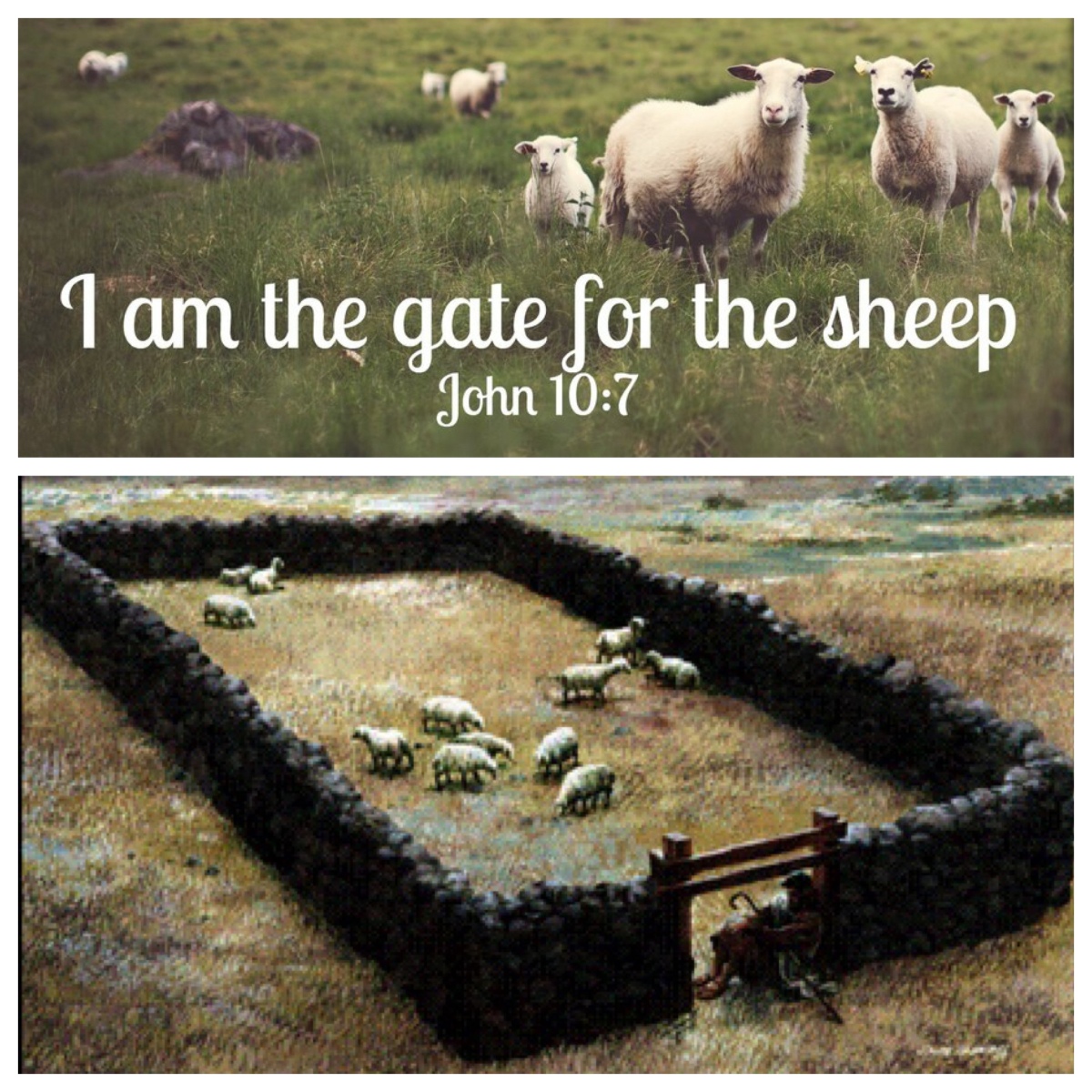
John’s Gospel is known for its series of I AM statements. In the first offering from John 10 (verses 1–10), we encounter one such claim by Jesus—but it is not quite what we expect. We expect him to say “I am the good shepherd”; and he does (but in v.11, which we will hear at this time next year!). Instead, he says, “I am the gate” (v.9)—the avenue for entry into the sheepfold, which was a place of care and protection for the sheep.

But “I am the gate” makes sense only because of what goes before it; the shepherd of the sheep is the one who knows the sheep, calls them by name, and guides them in the paths that they should follow.

In Hebrew Scripture, of course, God is identified as a shepherd; the best-known such reference is the opening phrase of Psalm 23, “The Lord is my shepherd”. As he was dying, with his sons gathered around him, Jacob spoke to his son Joseph, praying, “the God before whom my ancestors Abraham and Isaac walked, the God who has been my shepherd all my life to this day … bless the boys [Ephraim and Manasseh]” (Gen 48:15–16), amd later indicated that Joseph’s strength came “by the hands of the Mighty One of Jacob, by the name of the Shepherd, the Rock of Israel, by the God of your father, who will help you, by the Almighty who will bless you” (Gen 49:24–25).

When David was anointed as king, however, Samuel said to him “it is you who shall be shepherd of my people Israel, you who shall be ruler over Israel” (2 Sam 5:2; 1 Chron 11:2). Subsequent rulers in Israel were accorded this title; yet key prophets during the exile lamented that there had been “stupid shepherds” with “no understanding” (Jer 10:21; Isa 56:11) and had done evil (Jer 12:10–13; 23:1–2; 50:6–7; Ezek 34:1–10).

Second Isaiah declared that Cyrus, king of Persia, would be anointed as God’s shepherd, to carry out God’s purpose (Isa 44:28–45:1). Jeremiah looked to the time when God would restore “shepherds after my own heart” in their midst (Jer 3:15) and Ezekiel prophesied God’s intentions: “I myself will search for my sheep, and will seek them out. As shepherds seek out their flocks when they are among their scattered sheep, so I will seek out my sheep. I will rescue them from all the places to which they have been scattered on a day of clouds and thick darkness.” (Ezek 34:12).

The famous statement by Jesus, “I am the good shepherd” does not appear in the section of John 10 offered by the lectionary for this coming Sunday (10:1–10). It occurs twice in the second section (10:11–18) at verses 11 and 14, and Jesus refers to the “one shepherd” at 10:16. He refers to “the sheep” 13 times throughout the chapter. In the first section, by contrast, we find the striking statement that Jesus is “the gate for the sheep” (10:7). Sheep, of course, was a common description of the people of Israel as a whole in a number of psalms (see Ps 44:11, 22; 74:1; 78:52; 95:7; 100:3).

The implication of Jesus’s words in John 10:7 is that when Jesus refers to himself as “the gate for the sheep”, he has in mind the role of protecting the flock of sheep from those who would harm the sheep—thieves and wolves. If we interpret the sheep as being the disciples of Jesus (as in v.14), then they would have been in danger from persecuting Romans, hostile Pharisees, and bandits and robbers.

Gates were the means of protection for people within towns and cities, keeping at bay those who might attempt to attack from the outside (Deut 3:5; Ps 146:12–14); they were also the route by which faithful people could access the holy place of the Temple (Ps 24:9; 87:2; 100:4; 118:19; 122:2.

Certainly, there is a strand of antagonism coming towards Jesus (and his followers) from the Jewish authorities throughout the first half of the Gospel; in his farewell discourse, he warns his followers that “you do not belong to the world, but I have chosen you out of the world—therefore the world hates you” (John 15:19), and that “they will put you out of the synagogues. Indeed, an hour is coming when those who kill you will think that by doing so they are offering worship to God” (John 16:2).

See

Jesus performs the function of the good shepherds that were promised; by guarding the gate, he offers security, for he saves the sheep; indeed, he offers “life in abundance” (John 10:10) to those who follow him. As we follow Jesus today, we might well reflect, what does it mean to be offered ‘life in abundance’? What does it mean to be ‘saved’ by the good shepherd?

The Father and I are one (John 10; Easter 4C)

Each year, on the fourth Sunday of the season of Easter, the Revised Common Lectionary provides a section of John 10 as the Gospel reading for the Sunday. That chapter is where Jesus teaches about his role as “the good shepherd” who lays down his life for the sheep. The chapter is divided over the three years: 10:1–10 in Year A, then 10:11–18 in Year B, and 10:22–30 in the current year, Year C. For this reason, this particular Sunday is sometimes called the Good Shepherd Sunday.

The section offered in Year A concludes with the classic claim of Jesus, “I came that they may have life, and have it abundantly” (10:10). The passage set for Year B begins with the famous affirmation, “I am the good shepherd; the good shepherd lays down his life for the sheep” (10:14-15).

Both passages develop the image of Jesus as the shepherd of the sheep, in intimate relationship with the sheep; the shepherd knows his own (10:15), calls them by name (10:3), shows them the way of salvation (10:9), and lays down his life for the sheep (10:11, 15, 17–18).

The third section from John 10, offered in Year C, is set at a different time. The earlier sections (10:1–10, 11–18) had followed on from the story of the man born blind (9:1–41), which itself has emerged out of the conflicts between Jesus and Jewish authorities (7:10—8:59), reported as taking place in Jerusalem during the Festival of Booths (7:2). That sequence of conflicts had culminated with the Jewish authorities picking up stones to throw at Jesus (8:59).

The second moment when Jewish authorities in Jerusalem prepare to stone Jesus (10:31) is at the end of the later part of John 10, in this Sunday’s reading (10:22–31). This section, still in Jerusalem, is set during the Festival of the Dedication (10:22), some time later than the earlier Festival of Booths (7:2). It includes a further statement about the shepherd: “my sheep hear my voice. I know them, and they follow me. I give them eternal life, and they will never perish. No one will snatch them out of my hand.” (10:27–28).

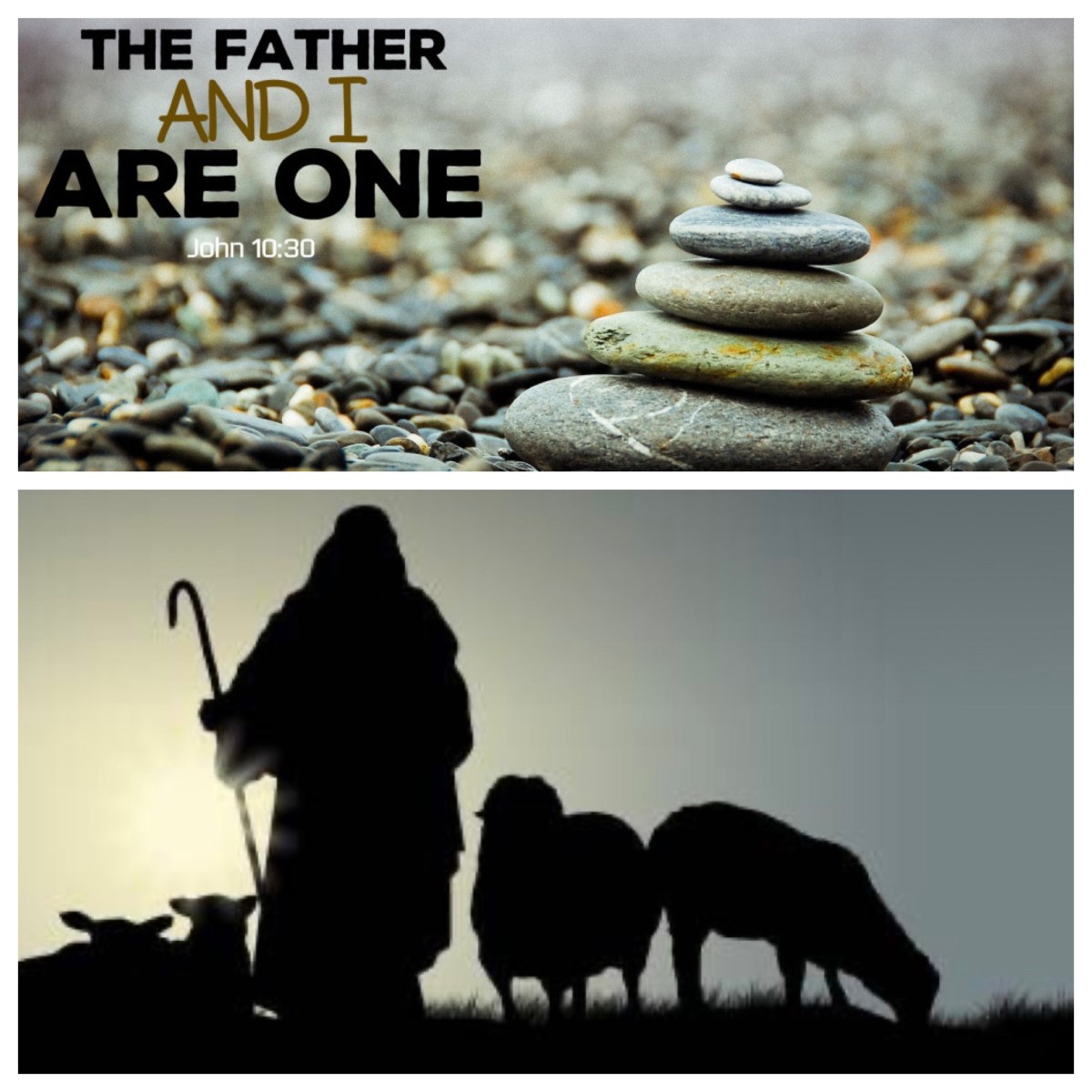
However, the focus on this section is less on the shepherd and the sheep, and more on Jesus and his relationship with the Father. Indeed, the lectionary ends the section before the climax of the conflict, when Jewish authorities pick up stones (10:31). Rather, the final verse places the emphasis in quite another direction: “The Father and I are one” (10:30). This is one of a number of key verses in this Gospel where important claims about Jesus are placed onto his lips.

Wayne Meeks (in his classic article, “The Man from Heaven in Johannine Sectarianism”, JBL 91 (1972) 44–72) notes that the claims made about Jesus in the fourth Gospel function as reinforcements of the sectarian identity of the community. As this community had come into existence because of the claims that it had made about Jesus, so the reinforcement of the life of the new community took place, to a large degree, through the strengthening and refining of its initial claim concerning Jesus.

Claims made about Jesus, the Messiah (Christ) thus function as markers of the emerging self–identity of the new community, over against the inadequate understandings of Jesus which continue to be held in the old community (the synagogue), still under the sway of the Pharisees. This function can be seen in a number of other terms which are used of Jesus in the Gospel according to John.

As Meeks notes, one of the most common self–designations of the Johannine Jesus is that he is “the one sent from God”. This is another phrase which is unique to the Gospel according to John; the nearest Synoptic equivalent is found in the parable of the vineyard (Mark 12:1–8 and parallels).

The phrase may well originate in the Jewish notion of the shaliach, or messenger (for the wordplay involved in this word, see 9:7). A recognisable form of this phrase occurs 42 times in this Gospel (for instance, at 1:33; 3:34; 4:34; 10:36; 11:42; 20:21).

This claim consolidates the link between Jesus and God, binding his mission to the mission of the Father, and making a claim for Jesus which transcends the kind of claim which could be made of a chosen messenger figure.

Jesus is clear that he belongs to the world “above”, the heavenly realm, where— according to the worldview of the time—God is to be found. He declares, “I am from above…I am not of this world” (8:23); this is in contrast to the Pharisees, who are “from below” and “of this world”.

As king, he informs Pilate, he rules over a kingdom which is “not from this world” (18:36). The distinction between Jesus and the earthly authorities of the day is firmly held; Jesus belongs with God. He comes to earth in order to bring into effect the judgement of God over “the ruler of this world” (12:30–33).

Another characteristic which dominates the Christology of this Gospel is the Father-Son relationship (3:35–36; 5:19–23, 26; 6:37–40; 8:34–38; 10:32–38; 14:8–13; 17:1–5). At the conclusion of the Prologue, the importance of this relationship is established: “it is God the only Son, who is close to the Father’s heart, who has made him known” (1:18).

In one of his disputes with the Jewish authorities, Jesus declares that he does his works “so that you may know and understand that the Father is in me, and I am in the Father” (10:38). This mutual interrelationship is brought to the pinnacle of its development in the lengthy prayer of chapter 17. The purpose of describing this relationship in this way is to strengthen the claims made for Jesus, to validate him as authoritative, in the context of debates with the Jewish authorities.

Finally, Jesus is perceived as being “equal with God” (5:18). At the narrative level, this is a polemical view of Jesus, attributed to the Jews. However, the author of the Gospel clearly wants the readers to agree with the claim. This is supported by further comments such as: it is clearly evident that he is the Messiah, for he is “doing the works of God” (10:24–25); he is one with the Father (10:30); he is “making himself a god” (10:33); “he has claimed to be the Son of God” (19:7); and he is acclaimed as “Lord and God” (20:28).

This is the strongest claim made about Jesus; it lifts him above the realm of human debate and, as a consequence, it also lifts the claims made by his disciples, in his name, above that human realm. By this means, the community of his followers lay claim to a dominant, privileged position, vis–a–vis the Jewish authorities.

The Christology which is proclaimed in the written Gospel has thus been developed and refined in the controversies and disputes of the community over the preceding decades, as each of these markers of the identity of Jesus were debated amongst Jewish groups, and as the community formed around Jesus differentiated itself in various ways from the dominant stream of Pharisaic Judaism (especially in the period after the destruction of the Temple in 70 CE).

Later Christian theology developed the doctrine of the Trinity, in which God, Jesus and the Spirit relate to one another as equals. Whilst the Gospel of John provides biblical warrant for the equality of Father and Son, the role of the Spirit is less prominent. Jesus is endowed with the Spirit at his baptism (1:32– 33) and gives the Spirit to others through the words he speaks (3:34).

However, the Spirit is clearly subordinated to the Son in this Gospel. It is not until after Jesus is glorified that the Spirit is given (7:39; 20:22). The role of the Spirit is to be the Advocate of the Son (14:16, 26; 15:26; 16:7), sent by the Son to testify on his behalf (15:26) and to represent what has already been spoken by Jesus (14:26; 16:13–15). As the Son testifies to the truth (1:14, 17; 8:32, 45–46; 14:6; 18:37), so the Spirit is “the spirit of truth” (14:17; 15:26; 16:13).

So the long, extended scene in Jerusalem ends as “they tried to arrest him again, but he escaped from their hands” (10:39). Jesus moves “across the Jordan to the place where John had been baptizing earlier” (10:40), where many expressed their belief in him. The next, more intense, conflict still lay ahead of Jesus—by raising Lazarus from the dead (11:38–44), Jesus placed himself firmly in the sights of the Jerusalem leadership; his own death was brought firmly into view (11:45–53; 12:10–11).