The spirit of glory is resting on you (1 Peter 4–5; Easter 7A)

We have been hearing a sequence of passages from 1 Peter which the lectionary offers during this Easter season. This week the passages selected from the latter part of the letter contain a series of verses that provide assorted exhortations and instructions to those who first received this letter (1 Pet 4:12–14; 5:6–11). The first of these two passages contains a wealth of riches; in this blog I will focus only on those three verses.

This section of the letter begins with encouragement (v.12), moves to offer an affirmation (v.13), returns to a word of encouragement (v.14a) and then offers a blessing to those who have received this letter (v.14b). Those recipients, as we have earlier seen, were “exiles of the Dispersion” in the five Roman provinces of Pontus, Galatia, Cappadocia, Asia, and Bithynia (1:1), so the presence of scriptural quotations and allusions in this letter is no surprise.

However, a number of verses indicate that there would also have been Gentiles in their midst (2:12; and see my earlier posts on the “household table” of 2:18–3:7). Accordingly, the exhortations and instructions draw on both Israelite and Greco-Roman ethics. My focus in this blog is on the scriptural resonances in what is here written.

This short passage (4:12–14) is introduced by the words, “Beloved, do not be surprised at the fiery ordeal that is taking place among you to test you” (4:12), before moving to an affirmation, “be glad and shout for joy” (4:13) and a blessing, “if you are reviled for the name of Christ, you are blessed” (4:14).

The “fiery ordeal” in that initial exhortation reflects the common prophetic depiction of divine judgement which would be experienced as a searing fire. Isaiah warns that the Lord executed judgement in his time by fire: “wickedness burned like a fire, consuming briers and thorns; it kindled the thickets of the forest, and they swirled upward in a column of smoke; through the wrath of the Lord of hosts the land was burned, and the people became like fuel for the fire; no one spared another” (Isa 9:18–19).

This fiery image was provided by the very actions of the invaders: “your country lies desolate, your cities are burned with fire; in your very presence aliens devour your land; it is desolate, as overthrown by foreigners” (Isa 1:7). Accordingly, the godless ask, “who among us can live with the devouring fire? who among us can live with everlasting flames?” (Isa 33:14), whilst the prophet pleads, “let the fire for your adversaries consume them” (Isa 26:11).

Jeremiah describes how the Lord God called him: “I have made you a tester and a refiner among my people so that you may know and test their ways … the bellows blow fiercely, the lead is consumed by the fire; in vain the refining goes on, for the wicked are not removed” (Jer 6:28–29). This description was also shaped, no doubt, by the actions of the invaders: “the Chaldeans who are fighting against this city shall come, set it on fire, and burn it, with the houses on whose roofs offerings have been made to Baal and libations have been poured out to other gods, to provoke me to anger” (Jer 32:29).

Ezekiel also predicts fiery carnage: “you shall take some, throw them into the fire and burn them up; from there a fire will come out against all the house of Israel” (Ezek 5:4; also 15:1–8; 19:12–14). God warns Israel, “you shall be fuel for the fire, your blood shall enter the earth” (Ezek 21:32); in a dramatic oracle, the prophet describes the gruesome fate of the people: “Woe to the bloody city! I will even make the pile great. Heap up the logs, kindle the fire; boil the meat well, mix in the spices, let the bones be burned. Stand it empty upon the coals, so that it may become hot, its copper glow, its filth melt in it, its rust be consumed. In vain I have wearied myself; its thick rust does not depart. To the fire with its rust!” (Ezek 24:9–12).

The author of Lamentations describes how God “has cut down in fierce anger all the might of Israel; he has withdrawn his right hand from them in the face of the enemy; he has burned like a flaming fire in Jacob, consuming all around” (Lam 2:3). Other prophetic references to the fire of judgement include Hos 8:14; Joel 1:19–20; 2:3–5; Amos 1:4, 7, 10, 12, 14; 2:2, 5; 5:6; Obad 1:18; Mic 1:2–7; Nah 1:6; 3:15; Zeph 1:18; Zech 2:5; 9:4. Most famously, in the predictive oracle of Malachi, the prophet looks to the coming day of the Lord’s messenger: “he is like a refiner’s fire and like fullers’ soap; he will sit as a refiner and purifier of silver, and he will purify the descendants of Levi and refine them like gold and silver” (Mal 3:1–3).

It is no surprise, then, that many psalms reflect on the use of fire to signal divine displeasure: “the voice of the Lord flashes forth flames of fire” (Ps 29:7), “on the wicked he will rain coals of fire and sulfur” (Ps 11:6), “as as wax melts before the fire, let the wicked perish before God” (Ps 68:2). Fire is listed along with hail, snow, frost, and stormy wind as “fulfilling [God’s] command” (Ps 148:8) and the psalmist affirms that “you make the winds your messengers, fire and flame your ministers” (Ps 104:4).

The vengeance of God is indeed a fearful sight. “Smoke went up from his nostrils, and devouring fire from his mouth; glowing coals flamed forth from him … he made darkness his covering around him, his canopy thick clouds dark with water; out of the brightness before him there broke through his clouds hailstones and coals of fire” (Ps 18:8–12). The psalmist pleads, seemingly in vain, “How long, O Lord? will you be angry forever? will your jealous wrath burn like fire?” (Ps 79:5; also 89:46).

This rhetoric of the “fiery ordeal” in 1 Pet 4:12 is potent language, reminding the Jews of the Diaspora of the power that God has exercised in the past, and presumably is once again manifesting in the troubling experiences of their present. That ordeal has certainly brought suffering to the people; the suffering which was being experienced by believers is a constant refrain in this letter. It is noted briefly in the opening blessing (1:6–7) and described in more detail on a number of other occasions.

*****

So, in the midst of this “fiery ordeal”, the author encourages those hearing this letter to “endure pain while suffering unjustly” (2:19–20) and says to them that “it is better to suffer for doing good, if suffering should be God’s will, than to suffer for doing evil” (3:13–17); “whoever has suffered in the flesh has finished with sin” (4:1–2); “let those suffering in accordance with God’s will entrust themselves to a faithful Creator, while continuing to do good” (4:12–19); and “you know that your brothers and sisters in all the world are undergoing the same kinds of suffering” (5:6–11).

In addressing this suffering, as we have noted, the writer offers an affirmation (4:13) and a blessing (4:14). Both affirmation and blessing sound very much like sayings of Jesus which form part of his famous Beatitudes, at Matt 5:11–12 and its parallel in Luke 6:22–23. In these sayings, Jesus refers to shouting for joy in the midst of sufferings, which resonates with the message that is set out throughout this letter.

Joy and suffering are linked in the affirmation, “rejoice insofar as you are sharing Christ’s sufferings, so that you may also be glad and shout for joy when his glory is revealed” (4:13). Being blessed is connected with being reviled in the blessing, “if you are reviled for the name of Christ, you are blessed” (4:14). They both evoke the words of Jesus, “blessed are you when people hate you, and when they exclude you, revile you, and defame you on account of the Son of Man; rejoice in that day and leap for joy” (Luke 6:22–23).

The letter continues with the statement that “the spirit of glory, which is the Spirit of God, is resting on you” (4:14). This reflects the prophetic understanding of the spirit resting on people: “the shoot shall come out from the stump of Jesse, and a branch shall grow out of his roots; the spirit of the Lord shall rest on him, the spirit of wisdom and understanding, the spirit of counsel and might, the spirit of knowledge and the fear of the Lord” ( Isa 11:1–2); or “the spirit of the Lord God is upon me, because the Lord has anointed me” (Isa 61:1).

This dynamic is also reflected in passages about leaders in Israel, recounted in narrative books, as the Spirit comes upon the seventy elders (Num 11:25), Balaam (Num 24:2), the judges Othniel (Judg 3:10) and Jephthah (Judg 11:29), the kings Saul (1 Sam 11:6) and David (1 Sam 16:13), and the chosen Servant (Isa 42:1). The Spirit came onto the messengers of Saul and led them into a prophetic frenzy (1 Sam 19:20).

Others who experienced the alighting of the Spirit included the little-known Amasai (1 Chron 12:18), Azariah son of Oded (2 Chron 15:1), and Jahaziel son of Zechariah (2 Chron 20:14), each of whom are reported as having spoken words from the Lord after that experience.

During the trials and difficulties of the Exile, the Spirit inspired the words of the priest Ezekiel, son of Buzi (Ezek 3:14; 11:5) and later inspired the unnamed post-exilic prophet to speak the oracles collected in Isa 56—66 (see Isa 59:21; 61:1). The prophets look for the outpouring of the Spirit to come upon “the house of Israel” (Ezek 39:29), upon the descendants of the house of Jacob (Isa 44:1–3), to enable them to live faithfully once more in the land (Ezek 36:26–28; and then in the famous vision of dry bones, Ezek 37:12–14).

This mirrors the experience of the people of Israel as they wandered for forty tears in the wilderness, for the Lord God “gave your good spirit to instruct them, and did not withhold your manna from their mouths, and gave them water for their thirst” whilst the people of Israel were in the wilderness (Neh 9:20; see also Isa 63:13–14).

Indeed, the retreat from Judah of the aggressors sent by King Sennacherib of Assyria was due to the fact that the Lord “put a spirit in him, so that he shall hear a rumor, and return to his own land; I will cause him to fall by the sword in his own land” (Isa 37:5–7).

So to say that “the spirit of glory, which is the Spirit of God, is resting on you” (1 Pet 4:14) is a very strong statement of affirmation for the recipients of this letter!

On suffering as a virtue (1 Peter 3; Easter 6A)

Continuing our reading from 1 Peter during this Easter season, the lectionary this week offers a section dealing with suffering (1 Pet 3:13–22). The reality of the suffering which is being experienced by believers is a constant refrain in this letter. It is noted briefly in the opening blessing (1:6–7) and described in more detail in this section, as well as four other occasions (2:19–20; 3:13–17; 4:1–2; 4:12–19; 5:6–11).

There is never any suggestion that this suffering involved the physical persecution or even death of the believers; the “abuse” referred to comprised verbal criticism of believers (2:23; 3:16), as the lengthy scriptural citation indicates (3:9–12). Relationships with the Roman state appear to be favourable (2:13–17); there is no sign of systematic persecution.

In all but one of these discussions, suffering is interpreted with reference to the sufferings of Jesus (2:21–25; 3:18; 4:1; 4:13). The Spirit testified to the sufferings of Jesus through the words of the prophets (1:11). Jesus provides an example of how to deal with suffering; slaves in particular are instructed to “follow in his steps” (2:21), for the way of Jesus involves endurance in suffering (2:19–20) and adopting a joyful approach to life (1:8; 4:13) even in the midst of sufferings.

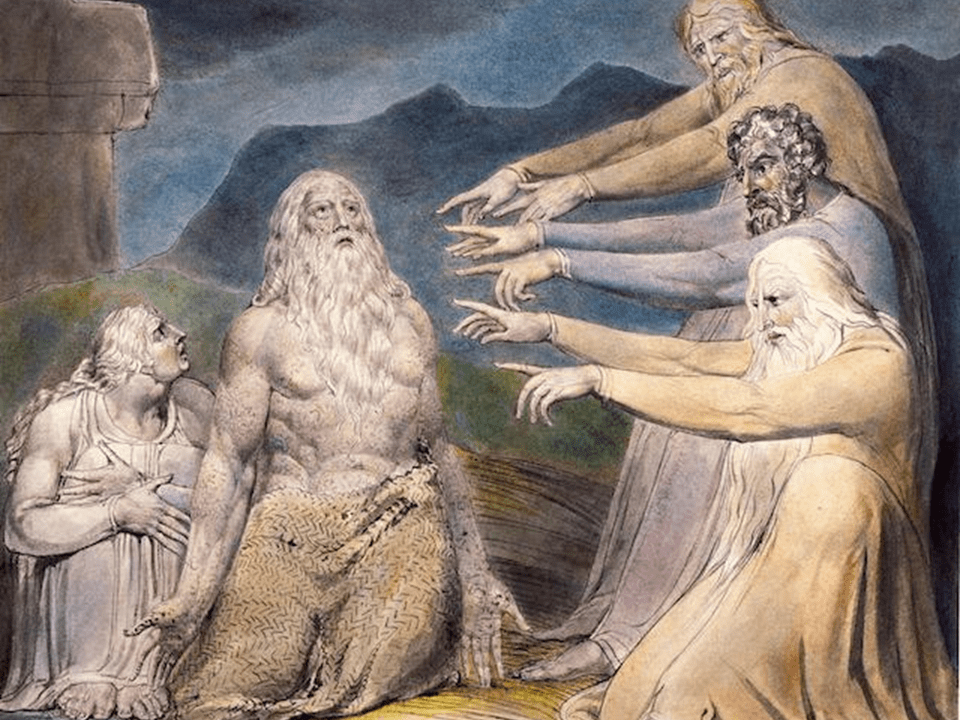
Suffering is known and addressed in the books of the Hebrew Scriptures. The archetype of suffering in those books is, of course, Job, who although “blameless and upright, one who feared God and turned away from evil” (Job 1:1), was nevertheless struck by a series of events that left his without property, without family, without animals, without servants (1:13–19).

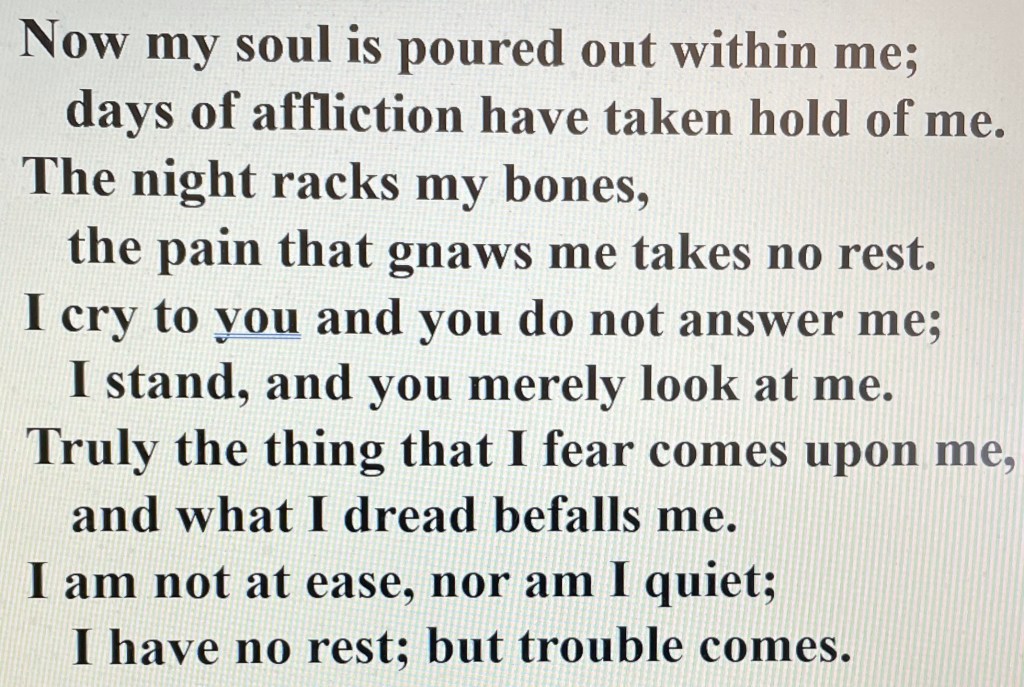
The extended series of speeches in Job 3—42 address this situation of unjust, unmerited suffering, with a variety of points of view put forward. Although Job initially laments his fate, tearing his robe, shaving his head, and falling prostrate on the ground (1:20), he maintains his faith, acknowledging that “the Lord gave, and the Lord has taken away; blessed be the name of the Lord” (1:21). Yet in subsequent chapters, whilst his friends seek to persuade him to accept his fate as God’s will, Job himself despairs at his condition: “I am not at ease, nor am I quiet; I have no rest” (3:26),

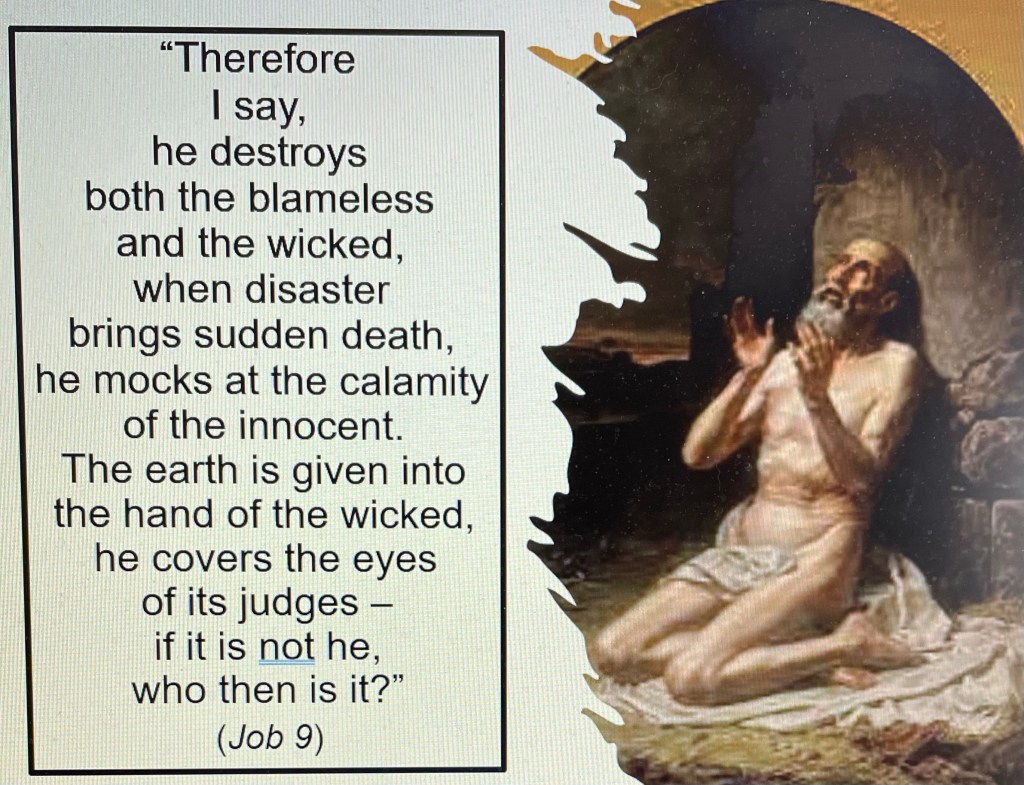
Job rails at God: “the terrors of God are arrayed against me” (6:4), “when disaster brings sudden death, [God] mocks at the calamity of the innocent” (9:23), “why did you bring me forth from the womb? would that I had died before any eye had seen me” (10:18), God “uncovers the deeps out of darkness, and brings deep darkness to light” (12:22), “you write bitter things against me” (13:26), “God gives me up to the ungodly, and casts me into the hands of the wicked … I was at ease, and he broke me in two; he seized me by the neck and dashed me to pieces; he slashes open my kidneys, and shows no mercy; he pours out my gall on the ground (16:11–13).

Mocking the words of the psalmist, “if I ascend to heaven, you are there; if I make my bed in Sheol, you are there; if I take the wings of the morning and settle at the farthest limits of the sea, even there your hand shall lead me, and your right hand shall hold me fast” (Ps 139:8–10), Job instead insists, “if I go forward, he is not there; or backward, I cannot perceive him; on the left he hides, and I cannot behold him; I turn to the right, but I cannot see him” (Job 23:8).

Although the psalmist insists, “even the darkness is not dark to you; the night is as bright as the day, for darkness is as light to you” (Ps 139:12), Job persists that God “uncovers the deeps out of darkness, and brings deep darkness to light” (Job 12:22), for “when I looked for good, evil came; and when I waited for light, darkness came” (Job 30:26). Job can see no joy in accepting his fate; he continues in perpetual lament and anger because of his suffering.

The other well-known passage in Hebrew Scripture which relates to suffering is the fourth and last of the “Servant Songs” found in Second Isaiah (Isa 42:1–9; 49:1–7; 50:4–11; and 52:13–53:12). In this long song, the “man of suffering, acquainted with infirmity” is portrayed as despised, rejected, stricken, and afflicted (53:3–4); wounded, bruised, and crushed (53:5); crushed with pain (53:10) and caught up in anguish (53:11). There can be no doubt that this figure—whether the corporate people of Israel, as in Jewish interpretation, or an individual chosen for this role, as many Christian interpreters prefer—is well acquainted with suffering.

Yet in the words of the song, the suffering of this servant is redemptive; although “we held him of no account” (53:3), yet “he has borne our infirmities and carried our diseases” (53:4), “he was wounded for our transgressions, crushed for our iniquities, upon him was the punishment that made us whole, and by his bruises we are healed” (53:5).

Since “the Lord has laid on him the iniquity of us all” (53:6), he was “stricken for the transgression of my people” (53:8), his life was made “an offering for sin” (53:10) who “bore the sin of many, and made intercession for the transgressors” (53:12). The redemptive suffering of this servant “shall make many righteous, and he shall bear their iniquities” (53:11).

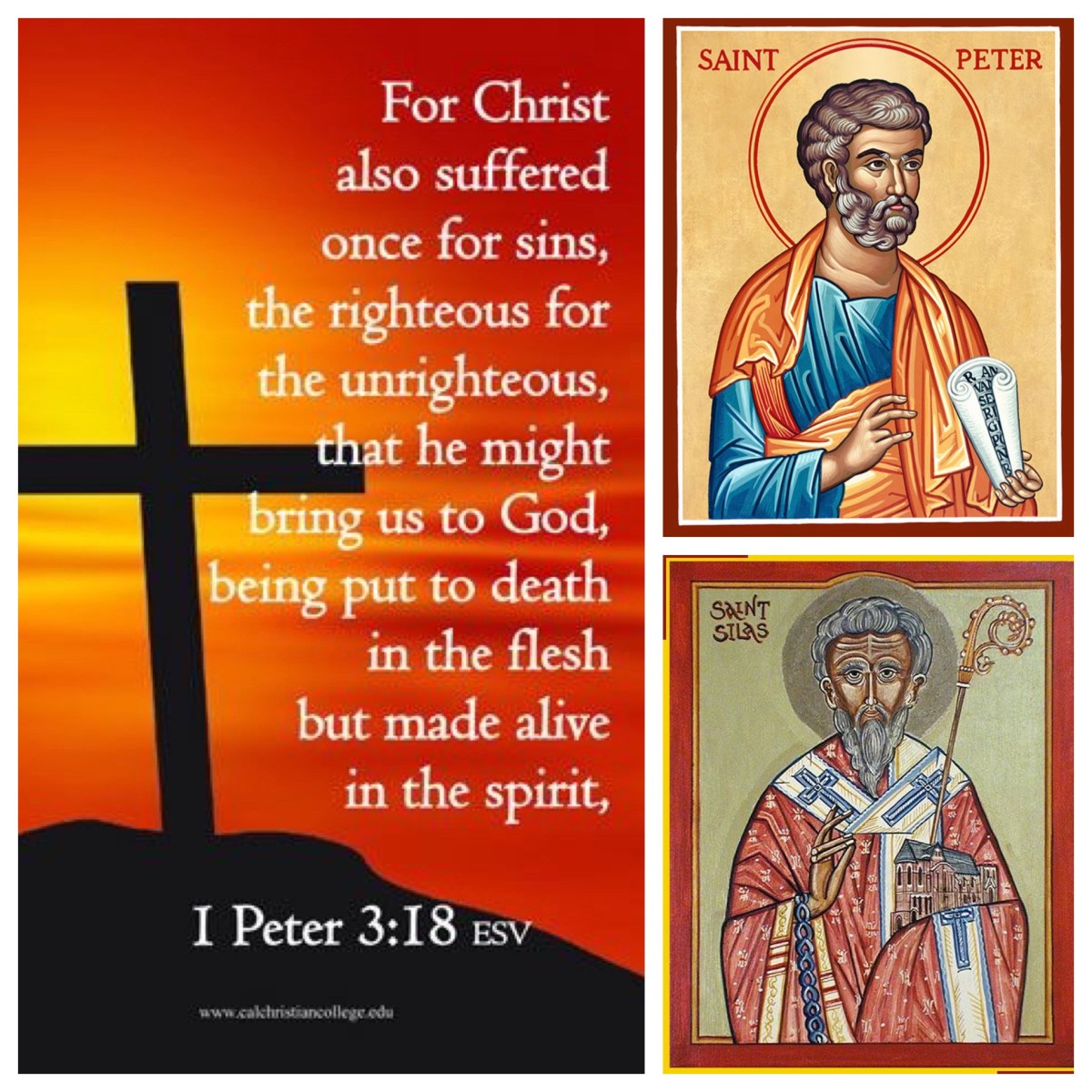
Such suffering is not in vain; and when later Christian writers drew from the rich theology of this song, they attributed to Jesus the same dynamic of redemptive suffering. This is clearly the case in this week’s epistle, where we hear, “Christ also suffered for sins once for all, the righteous for the unrighteous, in order to bring you to God” (1 Pet 3:18). The words provide a strong and clear echo of the fourth Servant Song. There is hope to be found in the midst of this suffering.

This motif of hope runs throughout this letter (1:3, 13, 21; 3:15; 4:13). What follows after suffering, the author writes with assurance, is God’s “eternal glory in Christ” (5:10); this is “the true grace of God” (5:12). Elders within the community of faith are to exercise their leadership with humility, and thereby provide “examples to the flock” (5:1–5). In this way, they will “win the crown of glory that never fades away” (5:4).

This, then, is the “inheritance that is imperishable, undefiled, and unfading, kept in heaven for you” which was promised in the initial thanksgiving (1:4). This hope is what undergirds the distinctive identity of believers seeking to remain faithful to the way of Jesus in their society.

Job: a tale for the pandemic, Part Two (Pentecost 20B to 23B)

The book of Job is a challenging and disturbing book. It takes us to a central dilemma that we all face in our lives. It provides us with a stimulus to undertake an exploration that is eminently suited to the time that we have been experiencing over the past few months in lockdown—indeed, since early in 2020. The book poses the question: why is this happening?

See https://johntsquires.com/2021/10/20/job-a-tale-for-the-pandemic-part-one-pentecost-19b-to-22b/

That’s a question many are asking about the pandemic. Why has it come upon us? Or, to be more theological about it: why are innocent people suffering? why are we caught in this current spiral? do those without a moral compass appear to prosper? why do those who seek to do good find themselves beset by problem after problem?

The question is acute for us each personally, during this time of restrictions because of a global pandemic. After all, we had nothing to do with the cause of the pandemic. Why should we suffer the frustrations of lockdowns, if we are innocent of causing the virus to spread? Why should we endure the hardships of reduced interpersonal interactions, if we have been behaving with due care? Why should we not be able to gather for worship, since we have not been in places where infections have been found?

The question is also pertinent and pressing in our current global context. For a start, the pandemic has inflicted suffering and death on millions of people around the world—suffering far more invasive than what we are experiencing in the current lockdown. How many millions of people have died? And how many millions of family members have suffered the grief and despair of not being able to say farewell to their loved ones as they die in hospital wards? And how many medical and nursing professionals have been stressed beyond limit by the incessant demands they have faced during the pandemic? And how fair is all of this?

The question also presses in terms of the climate. We have long known that the climate is changing, the high temperature averages are claiming, the arctic glaciers are melting, the sea levels are rising, the intensity and frequency of catastrophic weather events are climbing—and people around the globe are suffering. All of this presents a challenge to the way we live. We may even think that we are suffering unfairly in such a scenario.

It is clear that the science has come to a conclusive decision: we human beings have been contributing in a major way to the changes in the climate for over two centuries, now. We actually can’t lament that we are suffering unfairly, since our comfortable lifestyles in the well-to-do Western world undoubtedly mean that our carbon footprints are much larger than they should be. We are contributing to climate change, so can’t expect to be exempt from its ravages.

But what of those whose carbon footprint is minuscule, in comparison to our own? There are 16 African countries whose CO2 emissions per year are 0.15 tons per person or less. As you trace the names of countries as the figure rises, there are many more African and Asian countries, long before any European countries are noted.

By contrast, the figure is 17.10 tons per person for Australia, 15.52 for the USA, and 18.58 for Canada. That is a completely inequitable output. Should we not be suffering more deeply, in the western world, than people in Africa and Asia are? And yet the reality is that the comfortable, even extravagant, lifestyle of the western world is what is driving the incessant rate of increased CO2 in the atmosphere. And the whole world—humans, animals, fish and bird, and vegetation—suffers as a result. The questions raised by Job are acutely relevant to this issue.

(The figures come from https://www.worldometers.info/co2-emissions/co2-emissions-per-capita/)

And the question remains hanging as we reflect on levels of malnutrition and access to food in the current world. The World Food Programme of the United Nations estimates that one in three people around the world. Even before the current pandemic, each and every day of the year, 820 million people were seriously underfed and hungry.

Children bear the brunt of this inequity. 149 million children under 5 are estimated to be stunted (too short for age), 45 million are estimated to be wasted (too thin for height), and 38.9 million are overweight or obese. That is a situation that is utterly unjust. The questions press even harder on us.

(See https://www.who.int/news-room/fact-sheets/detail/malnutrition)

We have the means, we are told, to distribute food equitably around the world. And yet up to one third of food is dumped everyday in the USA—a shocking waste of resources and a completely inequitable state of affairs. So those who happen to have been born in certain areas of the world where circumstances beyond their control mean that they are suffering far more than is warranted. Injustice abounds. The questions from Job resonate—how is that fair?

And then, there are survivors of domestic violence, and—still—survivors of child sexual abuse, and those suddenly facing homelessness, and those in the long enduring grip of mental illness, and those fleeing violence and persecution in their home countries, seeking refuge and asylum in a welcoming place … and many other situations where the innocent are suffering unjustly. The list could be very long, indeed, if we give careful thought to it.

So, reflecting on these matters, in the light of the discussions that are recorded in the story of Job, we have much pause for thought. How do we reconcile our faith in God—God who is loving, God who is just, God who is overseeing all that takes place—given these terrible realities? Is the image of God that we have accurate? If God can act to change any of these terrible situations that we are facing, why does God not so act? Is God uncaring? Is God unable to act? Is God not concerned with justice?

These are the questions that Job explores. It is a book which provides us with deep resources for thinking about such matters. It is a tale that resonates with so much in the experience of contemporary people. It is a take for our times.

Job: a tale for the pandemic, Part One (Pentecost 20B to 23B)

“Why is light given to one in misery, and life to the bitter in soul, who long for death, but it does not come, and dig for it more than for hidden treasures; who rejoice exceedingly, and are glad when they find the grave? Why is light given to one who cannot see the way, whom God has fenced in?” (Job 3:20–23). Why? is the question that Job asks incessantly, as he ruminates on what fate has befallen him.

Job, the righteous, upright person, struck with tragedy and blighted with grief, laments his situation. His story provides a good tale for us to consider during this time of global pandemic. It is a tale that explores the questions that we may be pondering.

As the story begins, we learn that Job had a good, prosperous life; but through no fault of his own, his life is turned upside down; he lost stock—500 oxen, 500 donkeys, 7,000 sheep, and 3,000 camels—and all of his children—seven sons and three daughters (1:13–19). His life, once blessed and enjoyable, was utterly destroyed.

Yet “in all this”, we are told, “Job did not sin or charge God with wrongdoing” (1:22). Indeed, after each round of festivities enjoyed by his children, his practice was to sanctify all his family. He would “rise early in the morning and offer burnt offerings according to the number of them all” (1:5). He was indeed “blameless and upright, one who feared God and turned away from evil” (1:1).

Job came under attack, he felt. Through no fault of his own, his life was turned upside down. He was deeply distressed. “Why did I not die at birth, come forth from the womb and expire?”, he cried (3:11). “Why were there knees to receive me, or breasts for me to suck?” (3:12). “Why was I not buried like a stillborn child, like an infant that never sees the light?” (3:16). The joy at the prosperity which he had enjoyed had crumbled, his very being was pierced with deep grief and despair.

He turns, in his anguish, to God, whom he accuses of having brought this suffering upon him. “Why have you made me your target? Why have I become a burden to you? Why do you not pardon my transgression and take away my iniquity?” (7:20–21) “Why did you bring me forth from the womb? Would that I had died before any eye had seen me, and were as though I had not been, carried from the womb to the grave”, he laments (10:17–18).

Job berates God, whom he sees as being negligent in not intervening to save him from his fate. “Why do you hide your face, and count me as your enemy?” (13:24), he asks. Then, some time later, he presses the point: “Why should I not be impatient? Look at me, and be appalled, and lay your hand upon your mouth. When I think of it I am dismayed, and shuddering seizes my flesh.” (21:4–6). He lays the blame at God’s feet: “Why are times not kept by the Almighty, and why do those who know him never see his days?” (24:1)

Why? Why?? Why??? is Job’s constant question.

Job reflects on the quest for Wisdom, which is what is advocated in Proverbs (Prov 1:2–7; 2:1–5; 3:13–18; 4:5–9; 9:10; 15:32–33; 16:16; 17:24; 19:20; etc) and sought by The Teacher (Eccles 1:13; 7:25). Yet the search for Wisdom, who is more precious than jewels (Prov 3:15; 8:10–11), is much more difficult than mining for those precious jewels (Job 28:1–11).

Where shall Wisdom be found? Job asks (28:12). “Where does Wisdom come form?” (28:20). The answer is, “it is hidden from the eyes of all and concealed from the birds of the air” (28:21). Job despairs of ever finding Wisdom. God knows the way to Wisdom (28:23–27), but direct access to Wisdom remains elusive. All that is offered is “the fear of the Lord” (28:28–a verse attributed to Job, but which many scholars consider to be an authorial gloss on the whole speech).

Elihu rebukes Job, turning his incessant questioning back on him: “God is greater than any mortal. Why do you contend against him, saying, ‘He will answer none of my words’? For God speaks in one way, and in two, though people do not perceive it.” (33:12–14). “Far be it from God that he should do wickedness, and from the Almighty that he should do wrong”, Elihu contends (34:10). “Surely God does not hear an empty cry, nor does the Almighty regard it”, he maintains (35:13).

The claim that God is not just is an outrage to Elihu. He turns to the inscrutable nature of God: “Surely God is great, and we do not know him; the number of his years is unsearchable” (36:26). “The Almighty—we cannot find him”, Elihu maintains; “he is great in power and justice, and abundant righteousness he will not violate” (37:23).

Yet Job will not budge. Finally, after a blistering speech from the Lord himself, out of the whirlwind (38:1–41:34), in which the deity makes it clear that Job cannot pretend to have any comprehension of the ways that God operates, Job backs down. He responds, sarcastically: “I know that you can do all things, and that no purpose of yours can be thwarted” (42:2), and then delivers his coup-de-grace: “therefore I despise myself, and repent of dust and ashes” (42:6).

It should be noted that the common rendering of these final words of Job in so many translations have inevitably mistranslated a crucial word. The Hebrew here clearly states, “I repent OF dust and ashes”. The twist to repenting IN dust and ashes, found in most translations, portrays Job as meekly withdrawing his complaint and submitting to the inscrutable mysteries of God.

But he does not. In fact, his final word is another sarcastic barb, aimed directly at God: “I will give up on playing the meek-and-humble supplicant”. He has not had his questions of Why? Why?? Why???answered in any satisfactory way. So he remains defiant. He repents of repenting. He will not be sorry.

It should also be noted that the “happy ever after” ending we have in 42:7–17, in which Job is vindicated and his fortunes are restored twofold, is widely recognised as a later ending which was not part of the original saga. In the original story, Job’s probing questions remain relentlessly unresolved.

The book of Job is a challenging and disturbing book. It takes us to a central dilemma that we all face in our lives. It provides us with a stimulus to undertake an exploration that is eminently suited to the time that we have been experiencing over the past few months in lockdown—indeed, since early in 2020. The book poses the question: Why is this happening? That’s a question many are asking about the pandemic. Why has it come upon us?

Or, to be more theological about it: Why are innocent people suffering? why are we caught in this current spiral? Do those without a moral compass appear to prosper? Why do those who seek to do good find themselves beset by problem after problem?

I’ll explore these questions further in part II of this reflection in the next blogpost.

******

See also this series of sermons on Job by Elizabeth:

https://johntsquires.com/2021/10/02/living-through-lifes-problems-job-1-pentecost-19b/

https://johntsquires.com/2021/10/10/hope-in-a-broken-world-job-23-pentecost-20b/

https://johntsquires.com/2021/10/17/celebrating-creation-job-38-and-psalm-104-pentecost-21b/

https://johntsquires.com/2021/10/24/coping-with-chaos-and-death-the-wisdom-of-job-pentecost-22b/

Hope in a broken world (Job 23; Pentecost 21B)

The second in a series of sermons on the book of Job, by the Rev. Elizabeth Raine; Tuggeranong Uniting Church, 10 October 2021

***** *****

Last week, we left Job engaged in the task of theodicy, the theological examination of why a just and all-powerful God could allow suffering and evil to exist. Job had become convinced that God was not particularly reasonable and was personally responsible for the suffering of the world. Just to remind you, Job’s words about God were as follows:

To paraphrase the words of David Hume, Job seems to have accepted that God must be somehow malevolent (able, but not willing to prevent evil), as he doesn’t understand why suffering should exist if God is able and willing to prevent it.

When Job’s friends arrive to comfort him, this spirited debate continues as they all decide join in the exploration of theodicy and whether God is just, as well as defending Deuteronomy’s assertions that the wicked are punished and the righteous are rewarded.

The lectionary has made a big jump here from last week with 21 intervening chapters left out. These chapters have largely been poetic speeches by Job and his friends, where they assert Job must have some secret sins, and where Job responds by strenuously denying this. Job’s friends are convinced that God rewards the righteous and punishes the guilty, so they try to convince Job that he must repent of his secret sin. Job, however, refuses, as he believes that he is innocent, a fact we readers know is correct.

This lament of Job reveals his anger, loneliness and frustration. God has become very distant to him, and he cannot find God no matter where he looks.

His grievance at his suffering spurs him to call out to God to demand a day in court where he can put his case to God about the injustice of his treatment, and he is convinced that he will be vindicated. His well-intentioned friends have failed to satisfy him with their orthodox answers, indeed have failed to listen to him.

So even if he is being rebellious, Job decides that he needs to take a risk and deal with God directly, and he therefore becomes much more insistent and increasingly frustrated as God refuses to answer. Karl Jacobsen, in his article on Working Preacher, points out that “Job is clearly ready for his day in court. But therein lies the problem; Job can’t find his way to the courthouse…[and] God is nowhere to be found. God’s hand, it seems to Job, neither leads him nor holds him fast.”

Until God appears in the whirlwind, we have an impasse. Job has scorned the counsel of his three friends. He has decided that he they see blindly and listen deafly. They, on the other hand, cannot understand his stubbornness. They do not recognise that in his suffering, it is Job who actually approaches a closer understanding of God, as distasteful as that understanding might be. Though God might crush him, Job, almost defiantly, still declares his trust in God.

Throughout Job’s speech, there is a great sense of longing for God’s presence, for God’s attention and for God’s caring. This is surely a feeling that can resonate with us all and many of us may have experienced in tragic circumstances.

All of us have sought comfort in disturbing times through prayer, and even today, in the uncertain times of climate change, pandemics, warsand natural disasters, we continue to seek the presence of God in the midst of suffering and injustice. Suffering will always challenge a person’s sense of relationship with God, but it does not need to destroy that relationship. As Christians we believe that, in the midst of suffering God, does come to the afflicted and affirm the presence of grace.

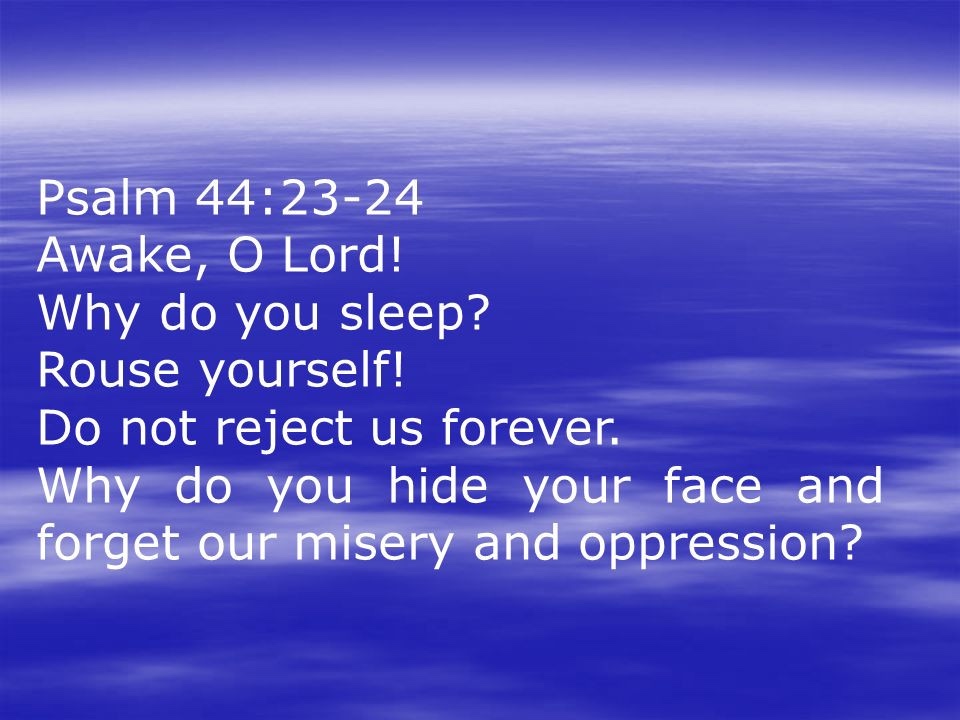
Spill the Beans this week suggests that Job’s anger, like that of the author of Psalm 44 (“Wake up, Lord! Why are you asleep?”), raises important questions about what is and is not permissible to say to God in prayer. Are we honest with God? Do we allow ourselves to lament to God about the unfairness of the tragedies we encounter in life?

Surely it is important that such questions can be voiced before God. There is an honesty in Job’s story that challenges the superficial type of faith that crumbles when tragedy strikes, and there is a freedom here that gives us permission to say what we need to say to God even if we need, like Job, toapologise later. God can take it, and surely God’s grace and love will be there waiting for us.

Part of the power of the book of Job is the fact that it realistically addresses addresses the painful questions of life. Tragedy and suffering are never simple issues; they challenge faith and can create a sense of helplessness and hopelessness. Like Job, we often find that there is no shortage of opinions from others trying to explain the pain they are not suffering, and simplistic answers are offered in response to life’s most painful questions.

The strength of Job’s book is that it allows all sides of the issue – the simple answers of the friends and the emotional turmoil of Job – to be heard and heard again. So though it seems to go on and on, repeating the same arguments over and over again, and then failing to provide any answers, this is often the way the problem of suffering is experienced, especially when it comes to the enormous issues of world poverty and economic injustice.

We need to sit as long as we can with those who have suffered and are suffering from injustice and immense suffering. And perhaps, as we ponder our own tragedies, and the fate of the uncounted and unnamed men, women and children who have died in war or ethnic violence, or pray for the current victims of poverty, famine and disease in our world, we might find our thoughts connecting with experiences and the suffering of Job.

And while we cannot measure how God heals, or answers every sufferer’s prayer, or upholds us in the experience of pain, grief or fear, as Christians who understand the grace of God we can surely still believe that God is there waiting for us, even if God seems momentarily absent, in the midst of God’s suffering people.

So from the paradox of faith, we remember:

from silence, comes the song of praise;

from darkness, shines forth the light;

from mystery, comes the kingdom of God.

It is this that allows us to continue to praise God, and to continue to seek out hope in a broken world.

For other sermons on Job, see https://johntsquires.com/2021/10/02/living-through-lifes-problems-job-1-pentecost-19b/

https://johntsquires.com/2021/10/17/celebrating-creation-job-38-and-psalm-104-pentecost-21b/

https://johntsquires.com/2021/10/24/coping-with-chaos-and-death-the-wisdom-of-job-pentecost-22b/

For other sermons on Wisdom, see https://johntsquires.com/2021/09/12/in-the-squares-she-raises-her-voice-lady-wisdom-in-proverbs-pentecost-16b/ on Lady Wisdom, and https://johntsquires.com/2021/08/17/in-order-that-all-the-peoples-of-earth-may-know-your-name-1-kings-8-pentecost-13b/ on the wisdom of Solomon