I have built you an exalted house, a place for you to dwell in forever (1 Kings 5, 8; Narrative Lectionary for Pentecost 20)

Discussion of the passages from 1 Kings 5, 8 offered by the Narrative Lectionary

Some weeks ago, the Narrative Lectionary offered the story of God calling Moses to lead his people out of slavery, into freedom (Exod 3–4), followed by another story about the way that Moses exercised this leadership during a testing time (Exod 16). Two weeks ago, we heard the story of God calling Samuel to be prophet (1 Sam 3)—the first of many who would be called to that role. Then last week, we moved on to hear the story of God calling David to be king. So we have had stories about a range of leaders in ancient Israel: the Liberator, the first Prophet, and the most beloved King. 

This coming Sunday we jump to another element that is foundational in the religion of ancient Israelite society. For many years—ever since the “wandering in the wilderness”—the people had a focal point for worshipping their God. The Tabernacle, created during the “wilderness story”, was a mobile sanctuary, travelling with the people (Exod 25:1–9). This sanctuary was faithfully served by the Levites, a group set apart for this priestly role (Num 1:48–54).

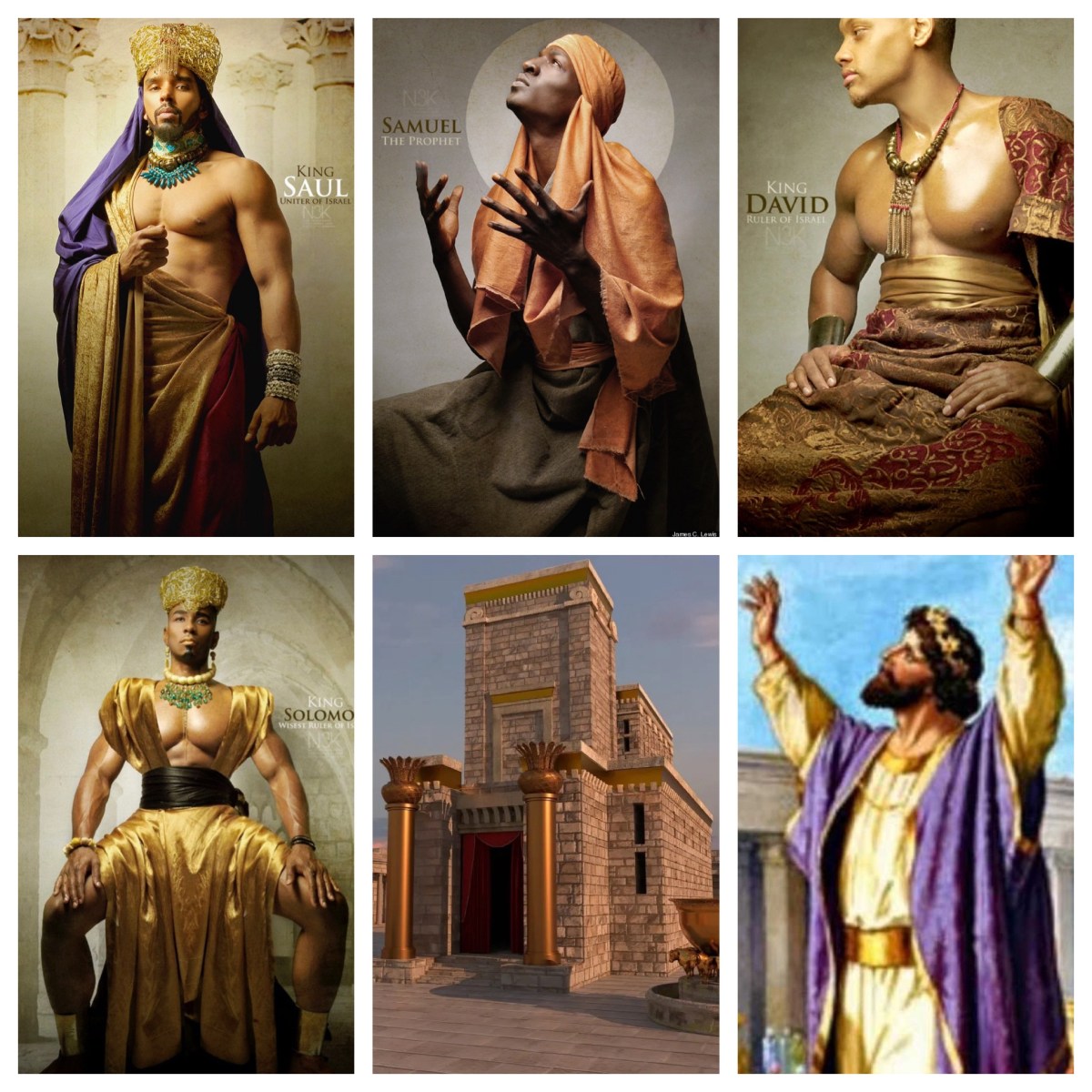
However, the central figure in this coming Sunday’s story is not a Priest, but rather a King—Solomon, one of the many offspring of David, and the one who, by all manner of machinations, succeeded his father on the throne. The lectionary deftly steps over all those stories, told with gruesome detail in the early chapters of 1 Kings.
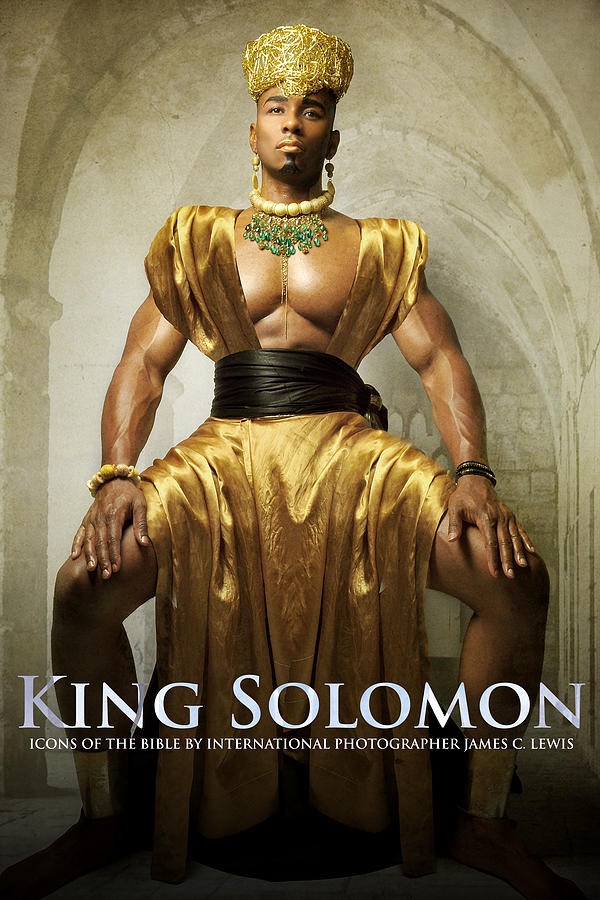
Solomon was not first in line to ascend the throne; that would lie with the eldest of his brothers still living, Adonijah. Adonijah knows this; the first book of Kings opens with the revelation that, since “David was old and advanced in years … Adonijah son of Haggith exalted himself, saying, ‘I will be king’; he prepared for himself chariots and horsemen, and fifty men to run before him” (1 Ki 1:1,5).

However, Solomon plots with his mother Bathsheba and the palace prophet Nathan to arrange for the assassination of his older brother. In addition, a number of other people also had to be eliminated to establish Solomon’s firm grip on the monarchy, and to ensure there were no other possible legitimate claimants to the throne remaining. Such was the raw and vicious nature of “life at the top” those days. (Has anything much changed?)

In fairly quick succession, after Solomon had arranged for the death of his eldest brother Adonijah (2:13–25), he banished the high priest Abiathar who had supported Adonijah (2:26–27) and replaced him with another priest loyal to himself. Next he removed Joab, a cousin who was the commander in the former king’s army (2:28–34). He achieved this via a hit man, Benaniah, who became the general of his army (2:35). 

Then, Solomon had Shimei, who was a relative of Saul, the king before David, killed (2:36–46). In this way all potential contenders for the throne and their powerful supporters were removed, mostly by violent means. As the narrator curtly comments, “so the kingdom was established in the hand of Solomon” (2:46b).
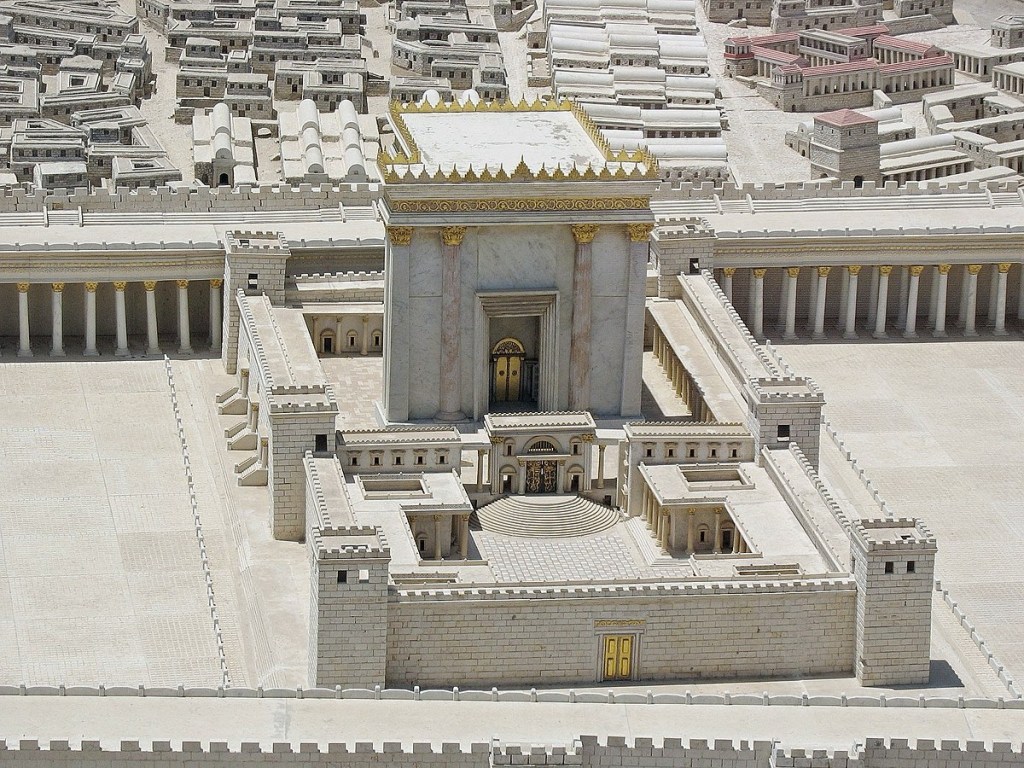
Fortunately for preachers following this lectionary, there is no expectation that there will be any need to read, reflect on, and speak about these chapters during worship. They certainly reveal the depths of degraded humanity! Rather, in the manner that characterises the Narrative Lectionary, we move from high point to high point—and so, this coming Sunday (in 1 Ki 5:1–5), we hear about the beginning steps taken by Solomon in the preparations for erecting the building which would not only sit on the highest point in Jerusalem, but would stand as a symbolic representation of the highest elements—what was best, most valued, most important—in ancient Israelite society.

Solomon, King of Israel, consults with Hiram, King of Tyre (who has a large navy and workforce) regarding the materials and labour needed to undertake this major building project (1 Sam 5); as the narrator indicates, “Solomon’s builders and Hiram’s builders and the Gebalites did the stonecutting and prepared the timber and the stone to build the house” (1 Ki 5:18). And then, after seven years of intense work, the temple is complete (7:1). Here, the lectionary (wisely) skips over the tedious detail of the items made by the artisans and craftsmen of Solomon (6:1–38).

The second part of the reading offered by the lectionary for this coming Sunday tells of how, after thirteen years, King Solomon assembled “the elders of Israel and all the heads of the tribes, the leaders of the ancestral houses of the Israelites” (8:1). Again, the lectionary skips over the detailed account of the work of Solomon’s men in building his own house: the House of the Forest of Lebanon, the Hall of Pillars, the Hall of the Throne, and the house where he would live (7:1–12).

In like manner, the lectionary jumps over the detailed account of the work of Hiram the bronze worker: pillars, stands, basins, pots, and a whole host of items to be used in the sanctuary (7:13–50). Thank goodness the lectionary compilers jumped over all of those verses!
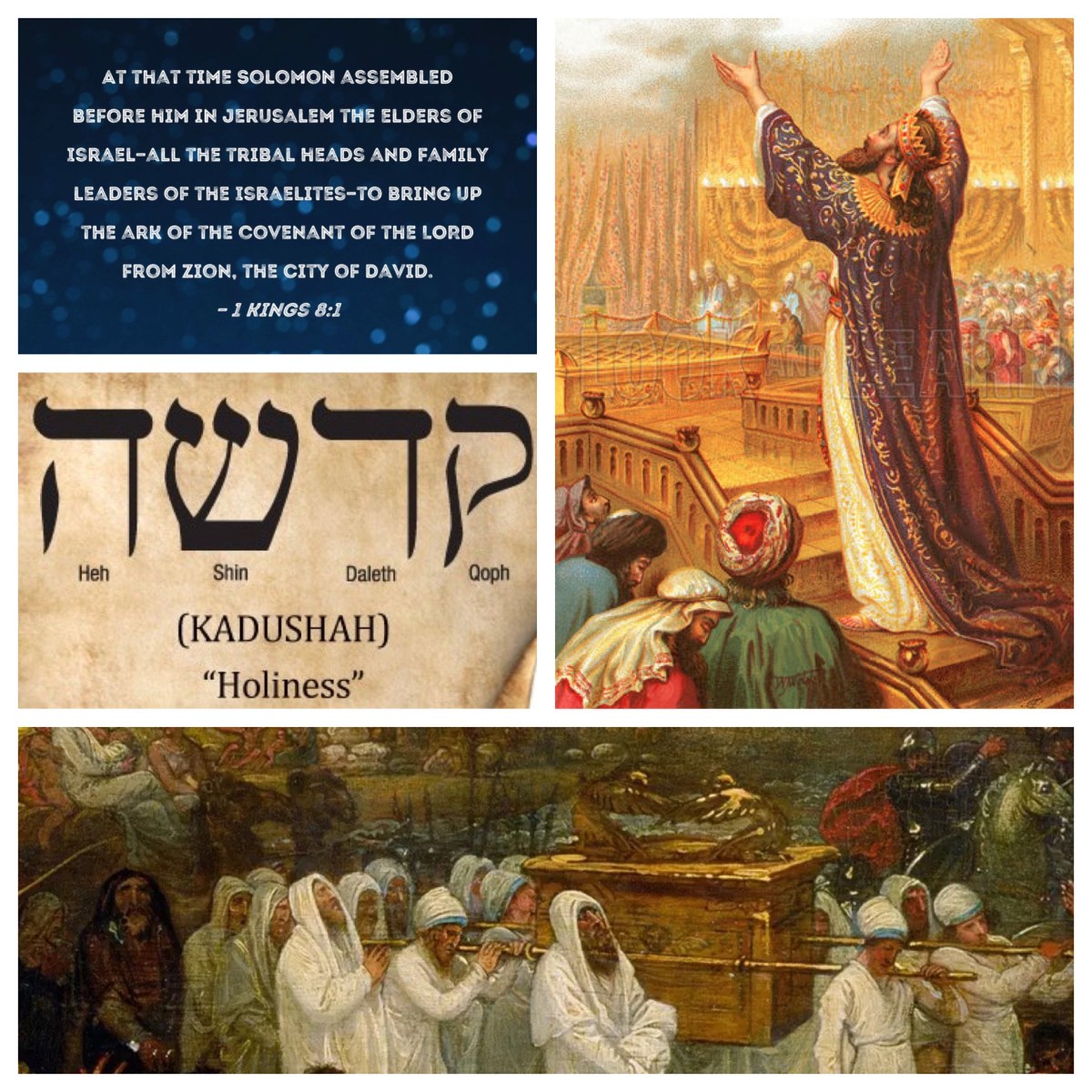
At any rate, when Solomon assembles the leaders of the nation, in the presence of “all the people of Israel” who had assembled, the priests and Levites bring forward the Ark of the Covenant, the Tent of Meeting which had housed the Ark for decades, and “all the holy vessels that were in the tent (8:1–4). It was surely an impressive majestic procession, followed by a scene of overflowing abundance, as the priests received and sacrificed “so many sheep and oxen that they could not be counted or numbered” (8:5). 

There’s no mention of the rivers of blood that must surely have flowed as these sacrifices took place. It may seem like a most unpleasant and unedifying scene to modern eyes and ears; however, the sacrificing of blood was an expression of the central Israelite belief that “the life of the flesh is in the blood … as life, it is the blood that makes atonement” (Lev 17:11). Each sacrifice of a chosen animal was a sacred offering of life that symbolised the obedience and dedication of the person, or people, who had brought the animal to be sacrificed. They were dedicating their whole life to the Lord God through this action, and in return, they were receiving atonement (the forgiveness of their sins) for all the misdeeds they had performed.
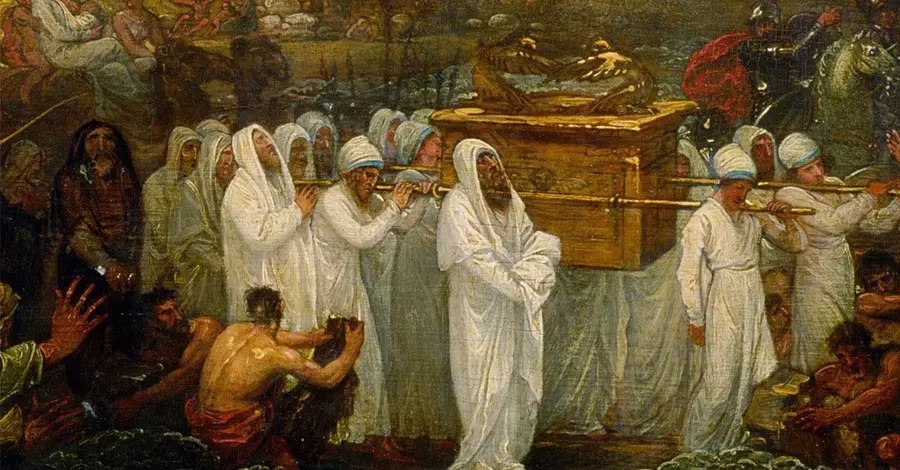
Finally, after the procession and sacrifices, the Ark was brought to “the most holy place” (8:6). The presence of the Ark evoked Solomon’s father, David, and his taking of the city from the Jebusites. Solomon was making clear that he was seen to be standing in that fine tradition.

The Ark was placed in the space known as “the Holy of Holies”, as a much later Jewish-Christian writer describes it (Heb 9:3). It was from that time to be set apart as holy for only the High Priest to enter, and at that but once a year (Heb 9:7).

The scene is presented as one of profound religious significance, for “when the priests came out of the holy place, a cloud filled the house of the Lord, so that the priests could not stand to minister because of the cloud; for the glory of the Lord filled the house of the Lord” (1 Ki 8:10–11). The Temple from that time became the fixed dwelling place of God; “O Lord, I love the house in which you dwell, and the place where your glory abides”, one psalmist sings (Ps 26:8); another sings, “bring an offering, and come into his courts; worship the Lord in holy splendour; tremble before him, all the earth” (Ps 96:8b-9). Other psalmists likewise assert the holiness of God in his temple (Ps 11:4; 24:3–4; 48:1; 99:1–5,9). 
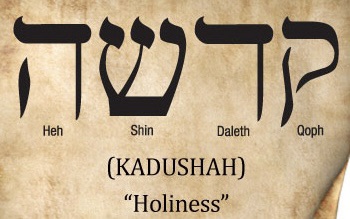
Holiness (kadushah) was central to the people of Israel. Those who ministered to God within the Temple, as priests, were to be especially concerned about holiness in their daily life and their regular activities  in the Temple (Exod 28–29; Lev 8–9). The priests oversaw the implementation of the Holiness Code, a large section of Leviticus (chapters 17–26), which explained the various applications of the word to Israel, that “you shall be holy, for I the Lord your God am holy” (Lev 19:2; also 20:7,26). The people were expected to be a holy people, dedicated to God, serving obediently by adhering to all the laws and commandments that Moses had received from the Lord God at Sinai (Exod 19:5–6).

As the glory of the Lord fills the Temple, Solomon makes the solemn declaration to his God that “I have built you an exalted house, a place for you to dwell in forever” (1 Ki 8:13). He then offers an extended prayer which stretches over the next 38 verses—another element of the whole story that the Narrative Lectionary, mercifully, does not prescribe for reading in worship!
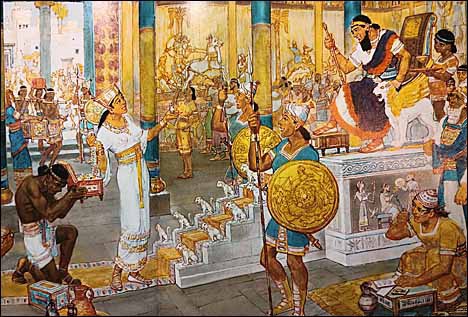

Henry J. Soulen, ‘Queen of Sheba Visits Solomon’ (1967), illustration in Everyday Life in Bible Times
(National Geographic Society, 1967), pp. 230-231

Solomon, I am sure you are thinking, is remembered as The Wise King. As the lectionary has offered this passage for this Sunday, it is worth our thinking further about Solomon. Next week we will jump forward a century or so, to the prophet Elijah. So we might, today, reflect on  the quality of Solomon he is best known for: his wisdom. In 2 Chronicles 1, God says to Solomon, “because you have asked for wisdom and knowledge for yourself … wisdom and knowledge are granted to you” (2 Chr 1:11). 

And later, King Solomon is said to have “excelled all the kings of the earth in riches and in wisdom. And all the kings of the earth sought the presence of Solomon to hear his wisdom, which God had put into his mind. Every one of [those kings] brought silver and gold, so much, year by year” (2 Chron 9:22–24). And so, Jesus relates how “the Queen of the south [the Queen of Sheba] came from the ends of the earth to hear the wisdom of Solomon” (Matt 12:42). 

This wonderfully wise, insightful, discerning man, Solomon—bearing a name derived from the Hebrew for peace, “shalom”—became a powerhouse in the ancient world. But he did not always live as a man of peace, as we have seen in tracing his rise to the throne. Indeed, as ruler he used his 4,000 horses and chariots and 12,000 horsemen to good effect; we read that “he ruled over all the kings from the Euphrates to the land of the Philistines and to the border of Egypt” (2 Chron 9:26). 

Solomon was remembered as king over the greatest expanse of land claimed by Israel in all of history. This large scope of territory noted in scripture forms the basis for the claims of zealous fundamentalist Zionists, in the 21st century, that Israel should run “from the river to the sea”. It’s a claim that has fuelled the building of illegal Jewish settlements on the West Bank and the erection by the modern state of Israel of The Wall which divides Israel from Palestinian Territories—but which divides families and friends as it seeks to separate Israelis from Palestinians.

Solomon, there can be no doubt, was a warrior. And warrior-kings were powerful, tyrannical in their exercise of power, ruthless in the way that they disposed of rivals for the throne and enemies on the battlefield alike. Think Alexander the Great. Think Charlemagne. Think Genghis Khan. Think William the Conqueror. Solomon reigned for 40 years—a long, wealthy, successful time. (Although 40 years, in Israelite time, is basically a way of saying “a heaps long time”.)

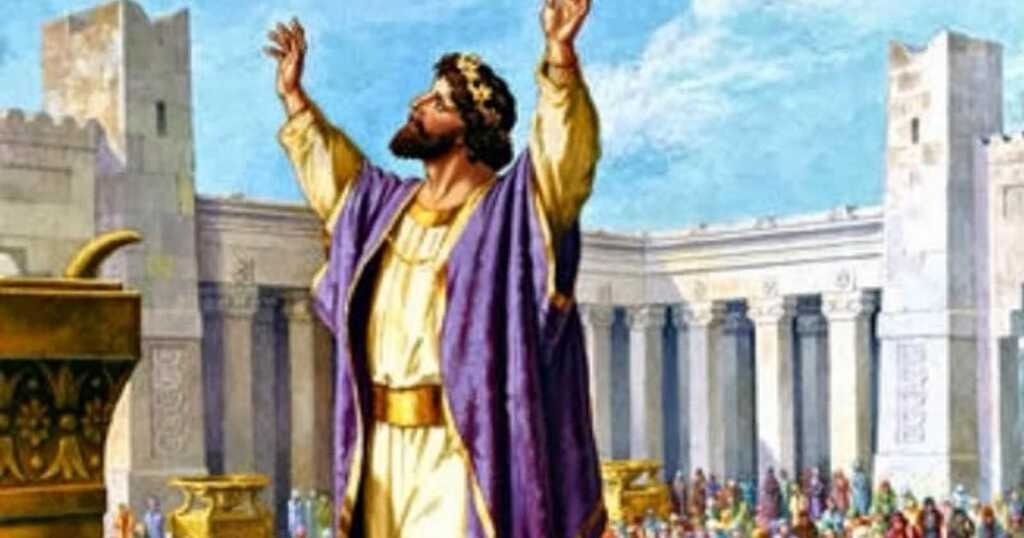
Yet in the passage we hear this Sunday Solomon appears not as a powerful king. Rather, he is a humble person of faith. He stands before all the people, raises his arms, and prays to the God who is to be worshipped in the Temple that he had erected. He is a person of faith, in the presence of his God, expressing his faith, exuding his piety.
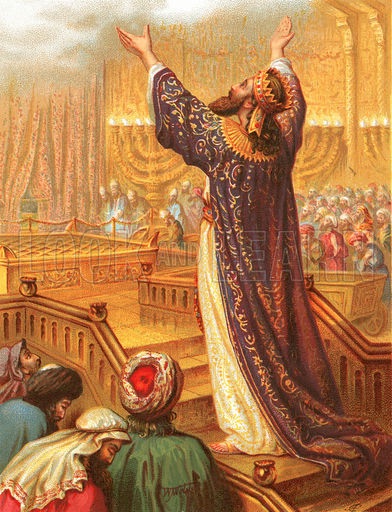
The prayer of Solomon goes for thirty-eight solid verses; there are eight different sections in this prayer. In the first two sections of this prayer, Solomon identifies two important features of the newly-erected Temple.  The first is that the fundamental reason for erecting this building is to provide a focal point, where people of faith can gather to pray to God (2 Ki 8:23–30). The second key element of Solomon’s prayer is that the Temple reaches beyond the people of Israel, covenant partners with the Lord God. He recognises that the Temple is also the place for the prayer of “a foreigner, who is not of your people Israel, [who] comes from a distant land because of your name” (2 Ki 8:41–43). 

This is a striking and dramatic element to include in this dedication prayer before all the people of Israel! Perhaps that is the best way we can remember Solomon: a man of his time, committed to his people, but open to receiving the gifts and the prayers of people from afar. Would that, in our present world of nationalistic fervour, militaristic aggression, and parochial bigotry, there were more rulers like that!

For more on the prayer of Solomon in 1 Kings 8, see
O hear in heaven, your dwelling place (1 Kings 5, 8; Narrative Lectionary for Pentecost 23C)

This blog draws heavily from a sermon that I preached at St Ninians Uniting Church in Canberra, ACT, on 22 August 2021.

*****

As we follow the Narrative Lectionary, we now come to Solomon’s prayer of dedication as the Temple is completed. The passage proposed by the lectionary begins with a short excerpt (1 Ki 5:1–5) reporting the intention that Solomon had, “to build a house for the name of the Lord my God”, referring to the instruction that God gave his father David, “your son, whom I will set on your throne in your place, shall build the house for my name” (1 Ki 5:5).

We then hear excerpts from Solomon’s long, long prayer of dedication which he offered at the opening of the temple ( 1 Kings 8:27–30, 41–43). If you have time (just a few extra minutes) it is worth reading the whole 61 verses of this chapter, which includes all of Solomon’s prayer. As you do, you might note the repeated address of Solomon to God, “O hear in heaven your dwelling place” (verses 30, 32, 36, 39, 43, 45, 49), his regular invoking of “your name” (verses 33, 35, 41–44, 48), and his petition to “forgive the sin of your people Israel” (verses 30, 34, 36, 39, 50). 

The narratives of the early decades of the United Kingdom began with Samuel in 1 Samuel; when we arrive at Solomon in 1 Kings, we have reached the zenith of this period in Israel’s history. The books of 1—2 Samuel have told about about Saul and David, the first two Kings of Israel; the prophets Samuel and Nathan; David’s battles with the Philistines, including the enemy giant Goliath, and his beloved companion Jonathan; and the unfortunate Absalom, one of David’s sons, as well as his wives Michal and Bathsheba. So this coming Sunday, we come to King Solomon, the third king of Israel.

These stories reveal the character of the leaders in Israel in telling ways. These stories reveal that these leaders were human; they acted in ways that were devious, unscrupulous, scheming, manipulative, emotional, hard-headed, self-serving, and deeply flawed. All of this, from these ancient texts—as if we didn’t already know this from our own observations of leaders in our own situation! 

When Solomon, son of David, was installed as king of Israel after the death of his father (1 Kings 2), God made a promise to Solomon: “I give you a wise and discerning mind; no one like you has been before you and no one like you shall arise after you” (1 Ki 3:12). And in the passage proposed for this coming Sunday, we see this wisdom displayed, as Solomon gathers people for the opening of the Temple (1 Ki 8).

Under Solomon, Israel was said to stretch from the Euphrates to Egypt (1 Ki 4:21), the largest amount of land of all kings (and the extent that is, controversially, claimed by extremist Zionists today). The lengthy prayer that Solomon prays is equally grand; he recalls the many acts of God and the response of God’s people, and repeatedly presses God to “hear in heaven” and forgive, judge, act, and maintain their cause. 

So this is a high, holy moment: the greatest king of Israel, Solomon, prays to dedicate the grand religious building, the Temple, on the top of the highest hill in Jerusalem, the capital city of the kingdom at the point of its greatest influence and power. At this moment of dedication “Solomon assembled the elders of Israel and all the heads of the tribes, the leaders of the ancestral houses of the Israelites, before King Solomon in Jerusalem, to bring up the ark of the covenant of the Lord out of the city of David, which is Zion” (1 Ki 8:1). The presence of then Ark evoked his father, David, and his taking of the city from the Jebusites. Solomon was making clear that he was seen to be standing in that fine tradition.

So “the priests brought the ark of the covenant of the Lord to its place, in the inner sanctuary of the house, in the most holy place, underneath the wings of the cherub. And when the priests came out of the holy place, a cloud filled the house of the Lord” (1 Ki 8:1–10). This is indeed serious stuff: the king, with all of his court, with all the elders, with the heads of each of the 12 tribes; and with the priests, with the ark of the covenant. All assembled at the place where Solomon, king in all his majesty and power, had arranged for a temple to be built. “Then Solomon stood before the altar of the Lord in the presence of all the assembly of Israel, and spread out his hands to heaven” (1 Ki 8:22), and prays a long prayer of blessing for the new edifice.

Now, Solomon, I am sure you are thinking, is remembered as the wise one. “The wisdom of Solomon”, we say. Jesus relates how “the Queen of the south [the Queen of Sheba] came from the ends of the earth to hear the wisdom of Solomon” (Matt 12:42). In 2 Chronicles 1, God says to Solomon, “because you have asked for wisdom and knowledge for yourself … wisdom and knowledge are granted to you” (2 Chr 1:11). 

And later, King Solomon is said to have “excelled all the kings of the earth in riches and in wisdom. And all the kings of the earth sought the presence of Solomon to hear his wisdom, which God had put into his mind. Every one of [those kings] brought silver and gold, so much, year by year” (2 Chron 9:22–24).

This wonderfully wise, insightful, discerning man, Solomon—bearing a name derived from the Hebrew for peace, “shalom”—became a powerhouse in the ancient world. But he did not always live as a man of peace. indeed, he used his 4,000 horses and chariots and 12,000 horsemen to good effect; we read that “he ruled over all the kings from the Euphrates to the land of the Philistines and to the border of Egypt” (2 Chron 9:26). 

Solomon was remembered as king over the greatest expanse of land claimed by Israel in all of history. Solomon was a warrior. And warrior-kings were powerful, tyrannical in their exercise of power, ruthless in the way that they disposed of rivals for the throne and enemies on the battlefield alike. Think Alexander the Great. Think Charlemagne. Think Genghis Khan. Think William the Conqueror. Solomon reigned for 40 years—a long, wealthy, successful time. 

Yet in the passage we hear this Sunday Solomon appears not as a powerful king. Rather, he is a humble person of faith. He stands before all the people, raises his arms, and prays to the God who is to be worshipped in the Temple that he had erected. He is a person of faith, in the presence of his God, expressing his faith, exuding his piety.

Now, the prayer of Solomon goes for thirty solid verses; there are eight different sections in this prayer. The lectionary has mercy on us this Sunday; we are offered just two of those sections, a mere seven of the thirty verses. We have heard the shortened version! In these two sections of this prayer, Solomon identifies two important features of the newly-erected Temple.  The first is that the fundamental reason for erecting this building is to provide a focal point, where people of faith can gather to pray to God (2 Ki 8:23–30).

Perhaps we may be used to hearing about the Temple in Jerusalem in fairly negative terms. Jesus cleared the Temple of the money changers and dove sellers who were exploring the people. He predicted the destruction of the Temple during the cataclysmic last days. For centuries, people from all over Israel were required to bring their sacrifices to the priests in the Temple, to offer up the firstborn of their animals and the firstfruits of their harvest. The Temple cult was seen as a harsh, primitive religious duty, imposing hardships on the people. The priests, the elites who ran the Temple, lived well off the benefits of all of these offerings. 

I could offer you a counter argument to each of these criticisms; but today I simply want to note that Solomon, in his prayer of dedication, makes it clear that the fundamental purpose of the Temple was to provide a house of prayer, a place where the people of God could gather, knowing that they were in the presence of God, knowing that the prayers that they offer would be heard by God and would lead to God’s offering of grace, forgiving them for their inadequacies and failures.

The Temple was to be a place of piety for the people. It was to foster the sense of connection with God. It was to deepen the life of faith of the people. It was to strengthen their covenant relationship with the Lord God.

All of which can be said for us, in our own times, about the building that we each come to each Sunday, to worship. The church is a place of piety and devotion for us, the people of God. It helps us to foster the sense of connection with God. It helps us to deepen our lives of faith. It encourages us to strengthen our covenant relationship with the Lord God through the new covenant offered in grace by Jesus. Ideally, that’s what the church is to be.

So we read in the first part of Solomon’s Temple prayer. For the people of ancient Israel, standing in the shadow of this wonderful new building, the prayer might encourage a strong sense of self identity, blessed to be part of the people of God. Of course, it could also develop narrow nationalism, a jingoistic praising of the greatness of Israel, extolling their identity as the chosen nation, the holy people, the elect of God. 

The Temple invited the people of God to meet the God of the people, to pray, to sing, to offer signs of gratitude and bring pleas and petitions—in short, to keep the covenant, to show that they are keeping the covenant, to be satisfied that they are keeping the covenant, as they worship. It had a strong, positive purpose for the people.

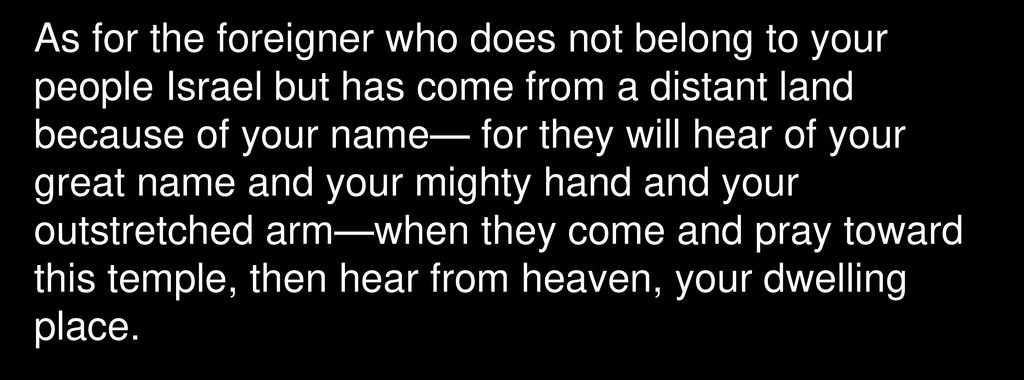
But that is not where the prayer ends. The second key element of Solomon’s prayer that the lectionary offers us today (2 Ki 8:41–43) is striking. It also relates to prayer. But it is not the prayer of the people of God, covenant partners with the Lord God. It is about the prayer of “a foreigner, who is not of your people Israel, [who] comes from a distant land because of your name”. This is a striking and dramatic element to include in this dedication prayer before all the people. 

Solomon prays to God, imploring God to “hear in heaven your dwelling place and do according to all for which the foreigner calls to you, in order that all the peoples of the earth may know your name and fear you, as do your people Israel, and that they may know that this house that I have built is called by your name.” 

Now that is an incredible prayer for the King of Israel to pray! It reflects an openness to the world beyond the nation, an engagement with the wider geopolitical and social relatives of the world at that time. Solomon was not an isolationist. He was not inwardly focussed on his nation. He had an outwards orientation. He did not want the Temple simply to foster a holy huddle, shut off from the world. He had other intentions. He wanted the Temple to be a holy place, a place of welcome and invitation, open to people from across the region, from far beyond the territory of Israel—a gathering place for all the peoples.

That was the vision that Solomon set forth for his people. That was not always the way that the Temple actually did function, we know. But that was the foundational vision—articulated by Solomon, remembered by the scribes, included in the narrative account of the kings, placed in a strategic position at the opening and dedication of the Temple. It is a vision which speaks, both to the people of Israel, but also to people of faith today, in the 21st century world.

So I have a whole cluster of questions in my mind, as a result of pondering this aspect of the prayer of Solomon. What happens in our temples? in our churches? How do we foster relationship with God in our prayers in this place? Who do we expect to find in our temples, our places of worship? Who would be most surprising to find in our places of worship? What prayers might come from those we least expect to come into our places of worship, when they do join with us in worship, to pray? How might we position ourselves, so that “foreigners”, people most unexpected to us, can feel welcomed to come into our church, be at home in our midst, make a connection with God? What do we need to do differently? What do we need to stop doing? What do we need to start doing?

We need to take seriously the claim that when we hear scripture read and expounded, we encounter God speaking to us. My own church has a Basis of Union in which it is stated that “The Word of God on whom salvation depends is to be heard and known from Scripture appropriated in the worshipping and witnessing life of the Church” (Uniting Church Basis of Union, para 5). That applies not only to Gospels and letters in the book of the new covenant, the New Testament, but also to narratives and psalms and prophetic works in Hebrew Scriptures, attesting to the earlier covenant. God speaks to us, as we hear and appropriate this scripture.

Our best response to this prayer of this discerning man of wisdom, warrior-king Solomon, offered as the Temple is dedicated, could well be for us to live our lives in response to that vision of what a place of worship and a community of worship might be—and shape a place open to all, a people welcoming of all who wish to come and make connection with God.